EP3951643A1 - Gesture trajectory recognition method, based on hand speed and trajectory distribution, for following robot - Google Patents
Gesture trajectory recognition method, based on hand speed and trajectory distribution, for following robot Download PDFInfo
- Publication number
- EP3951643A1 EP3951643A1 EP19924763.6A EP19924763A EP3951643A1 EP 3951643 A1 EP3951643 A1 EP 3951643A1 EP 19924763 A EP19924763 A EP 19924763A EP 3951643 A1 EP3951643 A1 EP 3951643A1
- Authority
- EP
- European Patent Office
- Prior art keywords
- hand
- descriptor
- mesh
- dimensional position
- trajectory
- Prior art date
- Legal status (The legal status is an assumption and is not a legal conclusion. Google has not performed a legal analysis and makes no representation as to the accuracy of the status listed.)
- Granted
Links
Images



Classifications
-
- G—PHYSICS
- G06—COMPUTING OR CALCULATING; COUNTING
- G06V—IMAGE OR VIDEO RECOGNITION OR UNDERSTANDING
- G06V40/00—Recognition of biometric, human-related or animal-related patterns in image or video data
- G06V40/20—Movements or behaviour, e.g. gesture recognition
- G06V40/28—Recognition of hand or arm movements, e.g. recognition of deaf sign language
-
- G—PHYSICS
- G06—COMPUTING OR CALCULATING; COUNTING
- G06F—ELECTRIC DIGITAL DATA PROCESSING
- G06F18/00—Pattern recognition
- G06F18/20—Analysing
- G06F18/24—Classification techniques
- G06F18/241—Classification techniques relating to the classification model, e.g. parametric or non-parametric approaches
- G06F18/2413—Classification techniques relating to the classification model, e.g. parametric or non-parametric approaches based on distances to training or reference patterns
- G06F18/24133—Distances to prototypes
- G06F18/24137—Distances to cluster centroïds
- G06F18/2414—Smoothing the distance, e.g. radial basis function networks [RBFN]
-
- G—PHYSICS
- G06—COMPUTING OR CALCULATING; COUNTING
- G06F—ELECTRIC DIGITAL DATA PROCESSING
- G06F18/00—Pattern recognition
- G06F18/20—Analysing
- G06F18/24—Classification techniques
- G06F18/241—Classification techniques relating to the classification model, e.g. parametric or non-parametric approaches
- G06F18/2413—Classification techniques relating to the classification model, e.g. parametric or non-parametric approaches based on distances to training or reference patterns
- G06F18/24147—Distances to closest patterns, e.g. nearest neighbour classification
-
- G—PHYSICS
- G06—COMPUTING OR CALCULATING; COUNTING
- G06F—ELECTRIC DIGITAL DATA PROCESSING
- G06F3/00—Input arrangements for transferring data to be processed into a form capable of being handled by the computer; Output arrangements for transferring data from processing unit to output unit, e.g. interface arrangements
- G06F3/01—Input arrangements or combined input and output arrangements for interaction between user and computer
- G06F3/017—Gesture based interaction, e.g. based on a set of recognized hand gestures
-
- G—PHYSICS
- G06—COMPUTING OR CALCULATING; COUNTING
- G06T—IMAGE DATA PROCESSING OR GENERATION, IN GENERAL
- G06T17/00—Three-dimensional [3D] modelling for computer graphics
- G06T17/20—Finite element generation, e.g. wire-frame surface description, tesselation
-
- G—PHYSICS
- G06—COMPUTING OR CALCULATING; COUNTING
- G06T—IMAGE DATA PROCESSING OR GENERATION, IN GENERAL
- G06T5/00—Image enhancement or restoration
- G06T5/70—Denoising; Smoothing
-
- G—PHYSICS
- G06—COMPUTING OR CALCULATING; COUNTING
- G06T—IMAGE DATA PROCESSING OR GENERATION, IN GENERAL
- G06T7/00—Image analysis
- G06T7/20—Analysis of motion
- G06T7/246—Analysis of motion using feature-based methods, e.g. the tracking of corners or segments
- G06T7/251—Analysis of motion using feature-based methods, e.g. the tracking of corners or segments involving models
-
- G—PHYSICS
- G06—COMPUTING OR CALCULATING; COUNTING
- G06T—IMAGE DATA PROCESSING OR GENERATION, IN GENERAL
- G06T7/00—Image analysis
- G06T7/70—Determining position or orientation of objects or cameras
- G06T7/73—Determining position or orientation of objects or cameras using feature-based methods
-
- G—PHYSICS
- G06—COMPUTING OR CALCULATING; COUNTING
- G06V—IMAGE OR VIDEO RECOGNITION OR UNDERSTANDING
- G06V20/00—Scenes; Scene-specific elements
- G06V20/60—Type of objects
- G06V20/64—Three-dimensional [3D] objects
-
- G—PHYSICS
- G06—COMPUTING OR CALCULATING; COUNTING
- G06V—IMAGE OR VIDEO RECOGNITION OR UNDERSTANDING
- G06V40/00—Recognition of biometric, human-related or animal-related patterns in image or video data
- G06V40/10—Human or animal bodies, e.g. vehicle occupants or pedestrians; Body parts, e.g. hands
- G06V40/107—Static hand or arm
-
- B—PERFORMING OPERATIONS; TRANSPORTING
- B25—HAND TOOLS; PORTABLE POWER-DRIVEN TOOLS; MANIPULATORS
- B25J—MANIPULATORS; CHAMBERS PROVIDED WITH MANIPULATION DEVICES
- B25J19/00—Accessories fitted to manipulators, e.g. for monitoring, for viewing; Safety devices combined with or specially adapted for use in connection with manipulators
- B25J19/02—Sensing devices
- B25J19/021—Optical sensing devices
- B25J19/023—Optical sensing devices including video camera means
-
- B—PERFORMING OPERATIONS; TRANSPORTING
- B25—HAND TOOLS; PORTABLE POWER-DRIVEN TOOLS; MANIPULATORS
- B25J—MANIPULATORS; CHAMBERS PROVIDED WITH MANIPULATION DEVICES
- B25J9/00—Program-controlled manipulators
- B25J9/0003—Home robots, i.e. small robots for domestic use
-
- G—PHYSICS
- G06—COMPUTING OR CALCULATING; COUNTING
- G06T—IMAGE DATA PROCESSING OR GENERATION, IN GENERAL
- G06T2207/00—Indexing scheme for image analysis or image enhancement
- G06T2207/10—Image acquisition modality
- G06T2207/10024—Color image
-
- G—PHYSICS
- G06—COMPUTING OR CALCULATING; COUNTING
- G06T—IMAGE DATA PROCESSING OR GENERATION, IN GENERAL
- G06T2207/00—Indexing scheme for image analysis or image enhancement
- G06T2207/10—Image acquisition modality
- G06T2207/10028—Range image; Depth image; 3D point clouds
-
- G—PHYSICS
- G06—COMPUTING OR CALCULATING; COUNTING
- G06T—IMAGE DATA PROCESSING OR GENERATION, IN GENERAL
- G06T2207/00—Indexing scheme for image analysis or image enhancement
- G06T2207/30—Subject of image; Context of image processing
- G06T2207/30196—Human being; Person
-
- G—PHYSICS
- G06—COMPUTING OR CALCULATING; COUNTING
- G06T—IMAGE DATA PROCESSING OR GENERATION, IN GENERAL
- G06T2207/00—Indexing scheme for image analysis or image enhancement
- G06T2207/30—Subject of image; Context of image processing
- G06T2207/30241—Trajectory
-
- G—PHYSICS
- G06—COMPUTING OR CALCULATING; COUNTING
- G06T—IMAGE DATA PROCESSING OR GENERATION, IN GENERAL
- G06T2207/00—Indexing scheme for image analysis or image enhancement
- G06T2207/30—Subject of image; Context of image processing
- G06T2207/30248—Vehicle exterior or interior
- G06T2207/30252—Vehicle exterior; Vicinity of vehicle
Definitions
- the invention relates to the field of posture recognition, in particular to a hand trajectory recognition method for a following robot based on hand velocity and trajectory distribution histograms.
- Jingren Tang et al. put forward a structured dynamic time planning method, which divided a continuous trajectory by means of an angle threshold, extracted position and velocity features of a division point by means of a sliding window, detected the velocity decrease by means of an SVM classifier to verify the division accuracy, and recognized the trajectory through a weighted dynamic time planning method.
- Mahmoud et al. calculated and dispersed the angles between a former point and a latter point of the hand trajectory, established HMM models of gesture trajectories and non-gesture trajectories, and carried out sliding window matching on the continuous trajectory; if a difference between a gesture probability and a non-gesture probability becomes positive from negative, an initial point of a meaningful gesture trajectory is detected; otherwise, an end point is detected; and finally, the meaning of the trajectory between the initial point and the end point is recognized.
- the invention provides a hand trajectory recognition method for a following robot based on hand velocity and trajectory distribution to solve the problems mentioned in the description of the related art.
- a hand movement trajectory is sampled by a kinect camera and is smoothened; velocity direction and magnitude information of the trajectory is recorded to form a hand movement velocity descriptor; distribution direction and magnitude information of trajectory points with respect to the center of gravity of the trajectory is recorded to form a hand trajectory shape descriptor; a standard description of a gesture is given according to a trajectory shape expression or an exemplary template trajectory; cosine similarities between the velocity descriptor and a standard velocity descriptor as well as between the shape descriptor and a standard shape descriptor are calculated and weighted to obtain a comprehensive similarity which is used as a criterion of the class of the gesture.
- the technical solution adopted by the invention comprises the following steps:
- Step 1 sampling and photographing an operator by a kinect camera to obtain three-dimensional positional information of bones and joints, establishing a projection plane according to the three-dimensional positional information of the bones and the joints as well as relative positions of the operator and the kinect camera, photographing the operator by the kinect camera to obtain a hand three-dimensional position of a hand of the operator, recording movement data of the hand three-dimensional position in the process from a start sign gesture to an end sign gesture performed by the operator, and projecting the movement data of the three-dimensional position onto the projection plane to obtain hand projection plane data;
- the kinect camera and an upper computer are installed on a following robot, four wheels are installed at the bottom of the following robot, continuous gesture images of the operator are obtained by the kinect camera and are sent to the upper computer for processing and judgment, and then, a hand trajectory is recognized.
- the hand three-dimensional position is a three-dimensional position of a central point of the hand.
- Step 2 carrying out moving average and smooth processing on the hand projection plane data, connecting every two adjacent hand three-dimensional positions by a vector that points from a hand three-dimensional position of a former frame to a hand three-dimensional position of a latter frame, using the vectors as velocity vectors, classifying angles of the velocity vectors into n classes through a neighborhood method, and classifying magnitudes of the velocity vectors into m classes by size, wherein each velocity vector is represented as follows: q j , q ⁇ n , j ⁇ m
- q is class results of the angles of the velocity vectors obtained through the neighborhood method
- j is class results of the magnitudes of the velocity vectors obtained by size
- Step 2 classifying the angles of the velocity vectors through the neighborhood method is carried out as follows: initial points of the velocity vectors are moved to an origin of coordinates of the projection plane, a range of all the angles of the velocity vectors between 0° to 360° on the projection plane is divided into n equal regions, and if an end point of one velocity vector lies within the qth region, a classification result of the angle of this velocity vector obtained through the neighborhood method is q.
- Step 2 classifying the magnitudes of the velocity vectors by size is carried out as follows: the magnitudes of the velocity vectors are divided into m ranges, and if the magnitude of one velocity vector lies within the jth range, the classification result of the magnitude of this velocity vector is j.
- Step 3 processing angle classes and magnitude classes of the velocity vectors to obtain a hand movement vector, and cyclically shifting components in the hand movement vector to obtain a hand movement descriptor; enabling a maximum component to be located at an initial position of the vector by means of cyclic shifting to endow the hand movement descriptor with rotation invariance.
- Step 4 establishing a hand movement area around the hand according to the hand projection plane data, meshing the hand movement area, traversing hand three-dimensional positions of all frames in an order of sampling and photographing, assigning a mesh where the hand three-dimensional position of each frame is located, and calculating centroid positions of all assigned meshes.
- Step 5 establishing a vector from each centriod position to the corresponding assigned mesh, and using the vector as a centroid directing vector; then, classifying angles and magnitudes of the centroid directing vectors in the same way as the velocity vectors in Step 2, that is, classifying the angles of the centroid directing vectors into multiple classes through the neighborhood method, and classifying the magnitudes of the centroid directing vectors into multiple classes by size; then, processing angle classes and magnitude classes of the centroid directing vectors to obtain a hand shape vector, and cyclically shifting components in the hand shape vector to obtain a hand trajectory shape descriptor; and enabling a maximum component to be located at an initial position of the vector.
- Step 6 calculating a cosine value of an angle between the hand movement descriptor and a standard hand movement descriptor, calculating a cosine value of an angle between the hand trajectory shape descriptor and a standard hand trajectory shape descriptor, processing the two cosine values to obtain a common similarity of the movement descriptor and the hand trajectory shape descriptor to a standard descriptor, and using a standard gesture with a maximum common similarity as a gesture recognition result.
- the standard hand movement descriptor and the standard hand trajectory shape descriptor are both standard descriptors which are obtained as follows: acquiring data by the kinect camera to obtain a standard template gesture, and then obtaining the standard hand movement descriptor and the standard hand trajectory shape descriptor by processing in the above steps.
- Step 2 moving average and smooth processing is carried out on the movement data of the projected hand three-dimensional positions specifically according to the following formula:
- P i ′ P i ⁇ 2 + P i ⁇ 1 + P i + P i + 1 + P i + 2 5 , 2 ⁇ i ⁇ N ⁇ 2
- P i ′ P i ⁇ 1 + P i + P i + 1 3
- i 1 , N ⁇ 1
- P i is the ith hand three-dimensional position
- P i ( x i ,y i )
- x i , y i are a horizontal coordinate and a vertical coordinate of the ith hand three-dimensional position on the projection plane, respectively
- P i ' is the ith hand three-dimensional position subjected to moving average and smooth processing
- P i ' ( x i ' , y i ')
- x i ', y i ' are a horizontal coordinate and a vertical coordinate of the ith hand three-dimensional position, subjected to moving average and smooth processing, on the projection plane, respectively
- i ⁇ N and N is the total number of hand three-dimensional positions obtained by sampling and photographing.
- Step 3 processing the angle classes and the magnitude classes of the velocity vectors to obtain the hand movement vector is carried out as follows: magnitude classification results of velocity vectors with the same angle classification result are added, and the sum is used as the ith component of the hand movement vector, wherein i is the same as the angle classification result.
- Step 4 specifically refers to processing the hand three-dimensional position of each frame as the current frame:
- a method for processing the angle classes and the magnitude classes of the centroid directing vectors to obtain the hand shape vector in Step 5 is the same as the method of processing the angle classes and the magnitude classes of the velocity vectors to obtain the hand movement vector in Step 3, that is, magnitude classification results of centroid directing vectors with the same angle classification result are added, and the sum is used as the ith component of the hand shape vector, wherein i is the same as the angle classification result.
- S 1 is the similarity of the movement descriptor to the standard descriptor
- S 2 is the similarity of the trajectory shape descriptor to the standard descriptor
- S 0 is the common similarity of the movement descriptor and the trajectory shape descriptor to the standard descriptor
- ⁇ 1 is the weight of the similarity of the movement descriptor to the standard descriptor in the common similarity of the movement descriptor and the trajectory shape descriptor to the standard descriptor
- ⁇ 2 is the weight of the similarity of the trajectory shape descriptor to the standard descriptor in the common similarity of the movement descriptor and the trajectory shape descriptor to the standard descriptor.
- the invention can accurately recognize the class of a gesture by processing data acquired by a kinect camera, is insensitive to the translation, scaling, rotation and order of hand trajectories, and is high in flexibility.
- the invention is high in recognition speed and low in resource consumption.
- Step 3 angle classes and magnitude classes of the velocity vectors are processed to obtain a hand movement vector, and components in the hand movement vector are cyclically shifted to obtain a hand movement descriptor.
- the hand movement vector obtained in this step is: [116;74;73;108;71;79;102;59], and the hand movement descriptor is: [116;74;73;108;71;79;102;59].
- a histogram corresponding to the hand movement descriptor is shown in FIG. 5 .
- Step 4 a hand movement area is established around the hand according to the hand projection plane data and is meshed, hand three-dimensional positions of all frames are traversed in an order of sampling and photographing, a mesh, where the hand three-dimensional position of each frame is located, is assigned, and centroid positions of all assigned meshes are calculated.
- a hand movement area is established around the hand according to the hand projection plane data and is meshed, hand three-dimensional positions of all frames are traversed in an order of sampling and photographing, a mesh, where the hand three-dimensional position of each frame is located, is assigned, and centroid positions of all assigned meshes are calculated.
- the assignment process is explained below, as shown in FIG. 3 and FIG. 6 .
- Table 3 Mesh columns Vertical coordinates obtain by substituting the former mesh column into the coordinate formula Row coordinates closest to the hand three-dimensional position of the current frame in the former column Assigned rows of the current mesh column Assigned row coordinates of the current mesh column 22 (first mesh column) 4 4 2 5, 6 23 5.674 6 1 7 24 7.341 7 2 8, 9
- centroid calculation result of all points is: (15.35, 25.75).
- Step 5 a vector from each centriod position to the corresponding assigned mesh is established and is used as a centroid directing vector; then, angles and magnitudes of the centroid directing vectors are classified in the same way as the velocity vectors in Step 2; then, angle classes and magnitude classes of the centroid directing vectors are processed to obtain a hand-shaped vector, and components in the hand shape vector are cyclically shifted to obtain a hand trajectory shape descriptor.
- the hand shape vector obtained in this step is: [45;137;162;50;168;136;90;136], and the hand trajectory shape descriptor is: [168;136;90;136;45;137;162;50].
- a histogram corresponding to the hand trajectory shape descriptor is shown in FIG. 6 .
- Step 6 a cosine value of an angle between the hand movement descriptor and a standard hand movement descriptor is calculated, a cosine value of an angle between the hand trajectory shape descriptor and a standard hand trajectory shape descriptor is calculated, the two cosine values are processed to obtain a common similarity of the movement descriptor and the hand trajectory shape descriptor to a standard descriptor, and a standard gesture with a maximum common similarity is used as a gesture recognition result.
- the standard hand movement descriptor is obtained as follows: a trajectory shape expression is given, points are obtained on an analytic expression at a certain density, and the points are processed according to the method in Step 1-5 to obtain the standard hand movement descriptor and the standard hand trajectory shape descriptor.
- the cosine value of the angle between the hand movement descriptor and the standard hand movement descriptor is 0.9755, and the cosine value of the angle between the hand trajectory shape descriptor and the standard hand trajectory shape descriptor is 0.9320.
- ⁇ 1 0.5
- ⁇ 2 0.5
- the common similarity of the movement descriptor and the trajectory shape descriptor to the standard descriptor is 0.9538.
- the similarities of the movement descriptor and the trajectory shape descriptor obtained in Step 1-5 to other standard gesture descriptors are obtained, and a gesture with the maximum similarity is used as a gesture trajectory recognition result.
- the gesture descriptor is compared with standard gesture descriptors of a straight line and an S-shaped curve.
- Table 4 Gesture classes circle straight line S-shape curve Similarity 0.9538 0.1812 0.4733
- the trajectory recognition result is a circle.
- the invention can accurately recognize the class of a gesture by processing data acquired by the kinect camera without training a great deal of samples, is insensitive to the translation, scaling, rotation and order of hand trajectories, is high in flexibility, can save a lot of time and energy, and is high in recognition speed and low in resource consumption.
Landscapes
- Engineering & Computer Science (AREA)
- Theoretical Computer Science (AREA)
- Physics & Mathematics (AREA)
- General Physics & Mathematics (AREA)
- Computer Vision & Pattern Recognition (AREA)
- Multimedia (AREA)
- Human Computer Interaction (AREA)
- General Engineering & Computer Science (AREA)
- Data Mining & Analysis (AREA)
- Health & Medical Sciences (AREA)
- General Health & Medical Sciences (AREA)
- Social Psychology (AREA)
- Psychiatry (AREA)
- Bioinformatics & Computational Biology (AREA)
- Artificial Intelligence (AREA)
- Evolutionary Computation (AREA)
- Life Sciences & Earth Sciences (AREA)
- Evolutionary Biology (AREA)
- Bioinformatics & Cheminformatics (AREA)
- Computer Graphics (AREA)
- Geometry (AREA)
- Software Systems (AREA)
- Image Analysis (AREA)
- Image Processing (AREA)
Abstract
Description
- The invention relates to the field of posture recognition, in particular to a hand trajectory recognition method for a following robot based on hand velocity and trajectory distribution histograms.
- Following robots have been widely used in people's daily life to assist passengers in delivering luggage or assist specific customers in purchasing. However, the following robots only having a tracking function are not competent enough in actual working environments. The determination and switching of tracked targets, the termination of tracking tasks, and the reception of instructions from the tracked objects in the tracking process put forward the requirement for a human-machine interaction function of the following robots. Remote interaction is limited by some physical instruments and is inconvenient to implement; voice interaction is inapplicable due to the noisy working environments of the following robots, the distance between tracked persons and the following robots, and serious interference from external noises; gesture interaction, as a natural human-machine interaction method, is suitable for the following robots because of its independence of external media, intuitive expressions and remote transmission.
- However, the trajectories made by different persons, even by the same person, at different times are quite different, which requires that the gesture interaction technology of the following robots should be able to distinguish hand trajectories. In recent years, many scholars had carried study on hand trajectory recognition. For example, Beh et al., segmented hand trajectories according to the fact whether or not the variation of an angle between two trajectory points exceeds a threshold and modeled the trajectories by means of a Von-mise distribution-based HMM, which makes the optimal recognition rate of letter and number gestures reach 97.11%. Jingren Tang et al., put forward a structured dynamic time planning method, which divided a continuous trajectory by means of an angle threshold, extracted position and velocity features of a division point by means of a sliding window, detected the velocity decrease by means of an SVM classifier to verify the division accuracy, and recognized the trajectory through a weighted dynamic time planning method. Mahmoud et al., calculated and dispersed the angles between a former point and a latter point of the hand trajectory, established HMM models of gesture trajectories and non-gesture trajectories, and carried out sliding window matching on the continuous trajectory; if a difference between a gesture probability and a non-gesture probability becomes positive from negative, an initial point of a meaningful gesture trajectory is detected; otherwise, an end point is detected; and finally, the meaning of the trajectory between the initial point and the end point is recognized.
- It is necessary for all these gesture classification methods to establish a training set including a great deal of data of each action, so the workload in the earlier stage is large; due to the sensitivity to the time order how the gesture is completed, the gesture should be completed in a set order to realize interaction with a robot, which makes the flexibility unsatisfying; moreover, the calculation is large, which is not beneficial to the rapidity and puts forward high requirements for hardware.
- In view of this, the invention provides a hand trajectory recognition method for a following robot based on hand velocity and trajectory distribution to solve the problems mentioned in the description of the related art.
- According to the invention, a hand movement trajectory is sampled by a kinect camera and is smoothened; velocity direction and magnitude information of the trajectory is recorded to form a hand movement velocity descriptor; distribution direction and magnitude information of trajectory points with respect to the center of gravity of the trajectory is recorded to form a hand trajectory shape descriptor; a standard description of a gesture is given according to a trajectory shape expression or an exemplary template trajectory; cosine similarities between the velocity descriptor and a standard velocity descriptor as well as between the shape descriptor and a standard shape descriptor are calculated and weighted to obtain a comprehensive similarity which is used as a criterion of the class of the gesture.
- As shown in
FIG. 1 , the technical solution adopted by the invention comprises the following steps: - Step 1: sampling and photographing an operator by a kinect camera to obtain three-dimensional positional information of bones and joints, establishing a projection plane according to the three-dimensional positional information of the bones and the joints as well as relative positions of the operator and the kinect camera, photographing the operator by the kinect camera to obtain a hand three-dimensional position of a hand of the operator, recording movement data of the hand three-dimensional position in the process from a start sign gesture to an end sign gesture performed by the operator, and projecting the movement data of the three-dimensional position onto the projection plane to obtain hand projection plane data;
- In the invention, the kinect camera and an upper computer are installed on a following robot, four wheels are installed at the bottom of the following robot, continuous gesture images of the operator are obtained by the kinect camera and are sent to the upper computer for processing and judgment, and then, a hand trajectory is recognized.
- The hand three-dimensional position is a three-dimensional position of a central point of the hand.
- Step 2: carrying out moving average and smooth processing on the hand projection plane data, connecting every two adjacent hand three-dimensional positions by a vector that points from a hand three-dimensional position of a former frame to a hand three-dimensional position of a latter frame, using the vectors as velocity vectors, classifying angles of the velocity vectors into n classes through a neighborhood method, and classifying magnitudes of the velocity vectors into m classes by size, wherein each velocity vector is represented as follows:

- Wherein, q is class results of the angles of the velocity vectors obtained through the neighborhood method, and j is class results of the magnitudes of the velocity vectors obtained by size;
- In
Step 2, classifying the angles of the velocity vectors through the neighborhood method is carried out as follows: initial points of the velocity vectors are moved to an origin of coordinates of the projection plane, a range of all the angles of the velocity vectors between 0° to 360° on the projection plane is divided into n equal regions, and if an end point of one velocity vector lies within the qth region, a classification result of the angle of this velocity vector obtained through the neighborhood method is q. - In
Step 2, classifying the magnitudes of the velocity vectors by size is carried out as follows: the magnitudes of the velocity vectors are divided into m ranges, and if the magnitude of one velocity vector lies within the jth range, the classification result of the magnitude of this velocity vector is j. - Step 3: processing angle classes and magnitude classes of the velocity vectors to obtain a hand movement vector, and cyclically shifting components in the hand movement vector to obtain a hand movement descriptor; enabling a maximum component to be located at an initial position of the vector by means of cyclic shifting to endow the hand movement descriptor with rotation invariance.
- Step 4: establishing a hand movement area around the hand according to the hand projection plane data, meshing the hand movement area, traversing hand three-dimensional positions of all frames in an order of sampling and photographing, assigning a mesh where the hand three-dimensional position of each frame is located, and calculating centroid positions of all assigned meshes.
- Step 5: establishing a vector from each centriod position to the corresponding assigned mesh, and using the vector as a centroid directing vector; then, classifying angles and magnitudes of the centroid directing vectors in the same way as the velocity vectors in
Step 2, that is, classifying the angles of the centroid directing vectors into multiple classes through the neighborhood method, and classifying the magnitudes of the centroid directing vectors into multiple classes by size; then, processing angle classes and magnitude classes of the centroid directing vectors to obtain a hand shape vector, and cyclically shifting components in the hand shape vector to obtain a hand trajectory shape descriptor; and enabling a maximum component to be located at an initial position of the vector. - Step 6: calculating a cosine value of an angle between the hand movement descriptor and a standard hand movement descriptor, calculating a cosine value of an angle between the hand trajectory shape descriptor and a standard hand trajectory shape descriptor, processing the two cosine values to obtain a common similarity of the movement descriptor and the hand trajectory shape descriptor to a standard descriptor, and using a standard gesture with a maximum common similarity as a gesture recognition result.
- The standard hand movement descriptor and the standard hand trajectory shape descriptor are both standard descriptors which are obtained as follows: acquiring data by the kinect camera to obtain a standard template gesture, and then obtaining the standard hand movement descriptor and the standard hand trajectory shape descriptor by processing in the above steps.
- In
Step 2, moving average and smooth processing is carried out on the movement data of the projected hand three-dimensional positions specifically according to the following formula:


- Wherein, Pi is the ith hand three-dimensional position, Pi = (xi,yi ), and xi, yi are a horizontal coordinate and a vertical coordinate of the ith hand three-dimensional position on the projection plane, respectively; Pi ' is the ith hand three-dimensional position subjected to moving average and smooth processing, Pi ' = (xi ', yi '), xi', yi' are a horizontal coordinate and a vertical coordinate of the ith hand three-dimensional position, subjected to moving average and smooth processing, on the projection plane, respectively, i ≤ N , and N is the total number of hand three-dimensional positions obtained by sampling and photographing.
- In
Step 3, processing the angle classes and the magnitude classes of the velocity vectors to obtain the hand movement vector is carried out as follows: magnitude classification results of velocity vectors with the same angle classification result are added, and the sum is used as the ith component of the hand movement vector, wherein i is the same as the angle classification result. - Mesh assignment in
Step 4 specifically refers to processing the hand three-dimensional position of each frame as the current frame: - 4.1: checking the hand three-dimensional positions of the current frame and a former frame; if the hand three-dimensional positions of the two frames are not located in the same mesh and the hand three-dimensional position of the former frame is not located within eight adjacent meshes of a mesh where the hand three-dimensional position of the current frame is located, connecting the hand three-dimensional positions of the two frame through a connecting segment, and assigning meshes where the connecting segment passes, specifically:
- 4.1.1: calculating the slope of the connecting segment between the hand three-dimensional positions of the two frames on the projection plane, obtaining a coordinate formula of the connecting segment y=kx+b, and assigning a mesh where the hand three-dimensional position of the former frame is located and the mesh where the three-dimensional position of the current frame is located;
- 4.1.2: from a mesh column where the hand three-dimensional position of the former frame is located, taking a column of meshes adjacent to the mesh, where the hand three-dimensional position of the current frame is located, as a first mesh column; from a mesh row, where the hand three-dimensional position of the former frame is located, to the mesh where the hand three-dimensional position of the current frame is located, assigning H meshes in the first mesh column, wherein H is an integer value obtained by rounding off the slope of the connecting segment;
- 4.1.3: then, from the first mesh column, taking a column of meshes close to the mesh, where the hand three-dimensional position of the current frame is located, as a next mesh column; from a mesh row where a mesh closest to the mesh, where the hand three-dimensional position of the current frame is located after assignment, to the mesh where the hand three-dimensional position of the current frame is located, assigning H' meshes in the next mesh column, wherein the value of H' is obtained as follows: coordinates of the mesh column closest to the mesh, where the hand three-dimensional position of the current frame is located after assignment, are substituted into a coordinate formula of the connecting segment to obtain a vertical coordinate; if a row coordinate is closer to the mesh, where the hand three-dimensional position of the current frame is located, than the vertical coordinate, H' is a maximum integer value smaller than the absolute value of the slope of the connecting segment; or, if the vertical coordinate is closer to the mesh, where the hand three-dimensional position of the current frame is located, than the row coordinate, H' is a minimum integer value greater than the absolute value of the slope of the connecting segment;
- 4.1.4: repeating Step 4.1.3 until the mesh, where the assigned mesh reaches the mesh where the hand three-dimensional position of the current frame is located;
- 4.2: constructing a movement trajectory of the gesture center by all assigned meshes, wherein in specific implementation, assignments are added as tags; then, calculating centroid positions of all the assigned meshes, wherein the centroid positions may be decimals.
- A method for processing the angle classes and the magnitude classes of the centroid directing vectors to obtain the hand shape vector in
Step 5 is the same as the method of processing the angle classes and the magnitude classes of the velocity vectors to obtain the hand movement vector inStep 3, that is, magnitude classification results of centroid directing vectors with the same angle classification result are added, and the sum is used as the ith component of the hand shape vector, wherein i is the same as the angle classification result. - In
Step 6, the common similarity of the movement descriptor and the trajectory shape descriptor to the standard descriptor is calculated according to the following formula:

- Wherein, S1 is the similarity of the movement descriptor to the standard descriptor, S2 is the similarity of the trajectory shape descriptor to the standard descriptor, S0 is the common similarity of the movement descriptor and the trajectory shape descriptor to the standard descriptor, ω1 is the weight of the similarity of the movement descriptor to the standard descriptor in the common similarity of the movement descriptor and the trajectory shape descriptor to the standard descriptor, and ω2 is the weight of the similarity of the trajectory shape descriptor to the standard descriptor in the common similarity of the movement descriptor and the trajectory shape descriptor to the standard descriptor.
- The invention has the following beneficial effects:
- The invention can accurately recognize the class of a gesture by processing data acquired by a kinect camera, is insensitive to the translation, scaling, rotation and order of hand trajectories, and is high in flexibility.
- Training of a great deal of samples is not needed, so that time and energy are saved.
- The invention is high in recognition speed and low in resource consumption.
-
-
FIG. 1 is a flow diagram of hand trajectory recognition of the invention; -
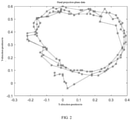
FIG. 2 is a diagram of hand movement positions captured between a start sign and an end sign; -
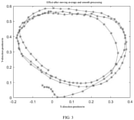
FIG. 3 is an effect diagram of the hand movement positions after moving smoothing and filtering; -
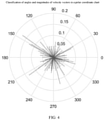
FIG. 4 is a classification effect diagram of angles and magnitudes of velocity vectors in a polar coordinate chart; -
FIG. 5 is a schematic diagram of a hand movement descriptor; -
FIG. 6 is a schematic diagram of assignments of meshes where hand three-dimensional positions are located; -
FIG. 7 is a schematic diagram of a hand trajectory shape descriptor. - The invention will be further described in conjunction with the accompanying drawings and embodiments.
- An embodiment and an implementation process thereof of the invention are as follows:
- Step 1: an operator is sampled and photographed by a kinect camera to obtain three-dimensional positional information of bones and joints, a projection plane is established according to the three-dimensional positional information of the bones and the joints as well as relative positions of the operator and the kinect camera, the operator is photographed by the kinect camera to obtain a hand three-dimensional position of a hand of the operator, movement data of the hand three-dimensional position in the process from a start sign gesture to an end sign gesture performed by the operator is recorded, and the movement data of the three-dimensional position are projected onto the projection plane to obtain hand projection plane data. The hand projection plane data obtain in
Step 1 are marked with '∗' and are then sequentially connected by lines in a time order, as shown inFIG. 2 . - Step 2: moving average and smooth processing is carried out on the hand projection plane data, and an effect after processing is shown in
FIG. 3 . Every two adjacent hand three-dimensional positions are connected by a vector that points from a hand three-dimensional position of a former frame to a hand three-dimensional position of a latter frame, the vectors are used as velocity vectors, angles of the velocity vectors are classified into n classes through a neighborhood method, and magnitudes of the velocity vectors are classified into m classes by size, wherein each velocity vector is represented as follows:

- Wherein, q is class results of the angles of the velocity vectors obtained through the neighborhood method, and j is class results of the magnitudes of the velocity vectors obtained by size;
- In this embodiment, from -22.5°, the velocity vectors are classified into eight classes between 0° to 360° with every 45° as a class from -22.5°; the magnitudes are classified into m 0 classes with every 0.01m as a class, wherein m 0 depends on the magnitude of the maximum velocity vector. The criteria of angle classification are shown in Table 1, and the criteria of magnitude classification are shown in Table 2. Initial points of all the velocity vectors are moved to the origin of a polar coordinate chart, as shown in
FIG. 4 . - Step 3: angle classes and magnitude classes of the velocity vectors are processed to obtain a hand movement vector, and components in the hand movement vector are cyclically shifted to obtain a hand movement descriptor. The hand movement vector obtained in this step is: [116;74;73;108;71;79;102;59], and the hand movement descriptor is: [116;74;73;108;71;79;102;59]. A histogram corresponding to the hand movement descriptor is shown in
FIG. 5 . - Step 4: a hand movement area is established around the hand according to the hand projection plane data and is meshed, hand three-dimensional positions of all frames are traversed in an order of sampling and photographing, a mesh, where the hand three-dimensional position of each frame is located, is assigned, and centroid positions of all assigned meshes are calculated. With two points (21, 4) and (25, 10) on the traversing as an example, the assignment process is explained below, as shown in
FIG. 3 andFIG. 6 . - The slope is calculated

- A mesh column closest to a mesh, where the hand three-dimensional position of a current frame is located after assignment, it taken as a former mesh column; from the former mesh column, a column of mesh adjacent to the mesh, where the hand three-dimensional position of the current frame is located, is taken as a current mesh column.
Table 3: Mesh columns Vertical coordinates obtain by substituting the former mesh column into the coordinate formula Row coordinates closest to the hand three-dimensional position of the current frame in the former column Assigned rows of the current mesh column Assigned row coordinates of the current mesh column 22 (first mesh column) 4 4 2 5, 6 23 5.674 6 1 7 24 7.341 7 2 8, 9 - The centroid calculation result of all points is: (15.35, 25.75).
- Step 5: a vector from each centriod position to the corresponding assigned mesh is established and is used as a centroid directing vector; then, angles and magnitudes of the centroid directing vectors are classified in the same way as the velocity vectors in
Step 2; then, angle classes and magnitude classes of the centroid directing vectors are processed to obtain a hand-shaped vector, and components in the hand shape vector are cyclically shifted to obtain a hand trajectory shape descriptor. The hand shape vector obtained in this step is: [45;137;162;50;168;136;90;136], and the hand trajectory shape descriptor is: [168;136;90;136;45;137;162;50]. A histogram corresponding to the hand trajectory shape descriptor is shown inFIG. 6 . - Step 6: a cosine value of an angle between the hand movement descriptor and a standard hand movement descriptor is calculated, a cosine value of an angle between the hand trajectory shape descriptor and a standard hand trajectory shape descriptor is calculated, the two cosine values are processed to obtain a common similarity of the movement descriptor and the hand trajectory shape descriptor to a standard descriptor, and a standard gesture with a maximum common similarity is used as a gesture recognition result.
- In this embodiment, the standard hand movement descriptor is obtained as follows: a trajectory shape expression is given, points are obtained on an analytic expression at a certain density, and the points are processed according to the method in Step 1-5 to obtain the standard hand movement descriptor and the standard hand trajectory shape descriptor. The standard hand movement descriptor of a circle obtained according to the expression x 2 + y 2 = 1 is: [1;1;1;1;1;1;1;1], and the standard hand trajectory shape descriptor is: [1,1,1,1,1,1,1,1]. The cosine value of the angle between the hand movement descriptor and the standard hand movement descriptor is 0.9755, and the cosine value of the angle between the hand trajectory shape descriptor and the standard hand trajectory shape descriptor is 0.9320.
- In specific implementation, ω 1 = 0.5,ω 2 = 0.5. The common similarity of the movement descriptor and the trajectory shape descriptor to the standard descriptor is 0.9538.
- The similarities of the movement descriptor and the trajectory shape descriptor obtained in Step 1-5 to other standard gesture descriptors are obtained, and a gesture with the maximum similarity is used as a gesture trajectory recognition result. In Table 4, the gesture descriptor is compared with standard gesture descriptors of a straight line and an S-shaped curve.
Table 4 Gesture classes circle straight line S-shape curve Similarity 0.9538 0.1812 0.4733 - The trajectory recognition result is a circle.
- As can be seen from the above embodiments, the invention can accurately recognize the class of a gesture by processing data acquired by the kinect camera without training a great deal of samples, is insensitive to the translation, scaling, rotation and order of hand trajectories, is high in flexibility, can save a lot of time and energy, and is high in recognition speed and low in resource consumption.
| Criteria of x | Criteria of y | Criteria of y/x | Classes |
| x>0 | -0.414≤y/x<0.414 | 0 | |
| x>0 | y>0 | 0.414≤y/x<2.414 | 1 |
| y>0 | 2.414≤y/x||y/x<-2.414 | 2 | |
| x<0 | y>0 | -2.414≤y/x<-0.414 | 3 |
| x<0 | -0.414≤y/x<0.414 | 4 | |
| x<0 | y<0 | 0.414≤y/x<2.414 | 5 |
| y<0 | 2.414≤y/x∥y/x<-2.414 | 6 | |
| x>0 | y<0 | -2.414≤y/x<-0.414 | 7 |
| Criteria | Classes |
 | 1 |
 | 2 |
| ... | |
 | m 0 |
Claims (6)
- A hand trajectory recognition method for a following robot based on hand velocity and trajectory distribution, comprising the following steps:Step 1: sampling and photographing an operator by a kinect camera to obtain three-dimensional positional information of bones and joints, establishing a projection plane according to the three-dimensional positional information of the bones and the joints as well as relative positions of the operator and the kinect camera, photographing the operator by the kinect camera to obtain a hand three-dimensional position of a hand of the operator, recording movement data of the hand three-dimensional position in the process from a start sign gesture to an end sign gesture performed by the operator, and projecting the movement data of the three-dimensional position onto the projection plane to obtain hand projection plane data;Step 2: carrying out moving average and smooth processing on the hand projection plane data, connecting every two adjacent hand three-dimensional positions by a vector that points from a hand three-dimensional position of a former frame to a hand three-dimensional position of a latter frame, using the vectors as velocity vectors, classifying angles of the velocity vectors into n classes through a neighborhood method, and classifying magnitudes of the velocity vectors into m classes by size, wherein each said velocity vector is represented as follows:
 Step 3: processing angle classes and magnitude classes of the velocity vectors to obtain a hand movement vector, and cyclically shifting components in the hand movement vector to obtain a hand movement descriptor;Step 4: establishing a hand movement area around the hand according to the hand projection plane data, meshing the hand movement area, traversing hand three-dimensional positions of all frames in an order of sampling and photographing, assigning a mesh where the hand three-dimensional position of each frame is located, and calculating centroid positions of all assigned meshes;Step 5: establishing a vector from each said centriod position to the corresponding assigned mesh, and using the vector as a centroid directing vector; then, classifying angles and magnitudes of the centroid directing vectors in a same way as the velocity vectors in Step 2; then, processing angle classes and magnitude classes of the centroid directing vectors to obtain a hand shape vector, and cyclically shifting components in the hand shape vector to obtain a hand trajectory shape descriptor;Step 6: calculating a cosine value of an angle between the hand movement descriptor and a standard hand movement descriptor, calculating a cosine value of an angle between the hand trajectory shape descriptor and a standard hand trajectory shape descriptor, processing the two cosine values to obtain a common similarity of the movement descriptor and the hand trajectory shape descriptor to a standard descriptor, and using a standard gesture with a maximum common similarity as a gesture recognition result.
 - The hand trajectory recognition method for a following robot based on hand velocity and trajectory distribution according to Claim 1, wherein in Step 2, moving average and smooth processing is carried out on the movement data of the projected hand three-dimensional positions specifically according to the following formula:


- The hand trajectory recognition method for a following robot based on hand velocity and trajectory distribution according to Claim 1, wherein in Step 3, processing the angle classes and the magnitude classes of the velocity vectors to obtain the hand movement vector is carried out as follows: magnitude classification results of velocity vectors with a same angle classification result are added, and the sum is used as an ith component of the hand movement vector.
- The hand trajectory recognition method for a following robot based on hand velocity and trajectory distribution according to Claim 1, wherein mesh assignment in Step 4 specifically refers to processing the hand three-dimensional position of each frame as a current frame:4.1: checking the hand three-dimensional positions of the current frame and a former frame; if the hand three-dimensional positions of the two frames are not located in a same mesh and the hand three-dimensional position of the former frame is not located within eight adjacent meshes of a mesh where the hand three-dimensional position of the current frame is located, connecting the hand three-dimensional positions of the two frame through a connecting segment, and assigning meshes where the connecting segment passes, specifically:4.1.1: calculating a slope of the connecting segment between the hand three-dimensional positions of the two frames on the projection plane, obtaining a coordinate formula of the connecting segment, and assigning a mesh where the hand three-dimensional position of the former frame is located and the mesh where the three-dimensional position of the current frame is located;4.1.2: from a mesh column where the hand three-dimensional position of the former frame is located, taking a column of meshes adjacent to the mesh, where the hand three-dimensional position of the current frame is located, as a first mesh column; from a mesh row, where the hand three-dimensional position of the former frame is located, to the mesh where the hand three-dimensional position of the current frame is located, assigning H meshes in the first mesh column, wherein H is an integer value obtained by rounding off the slope of the connecting segment;4.1.3: then, from the first mesh column, taking a column of meshes close to the mesh, where the hand three-dimensional position of the current frame is located, as a next mesh column; from a mesh row where a mesh closest to the mesh, where the hand three-dimensional position of the current frame is located after assignment, to the mesh where the hand three-dimensional position of the current frame is located, assigning H' meshes in the next mesh column, wherein the value of H' is obtained as follows: coordinates of the mesh column closest to the mesh, where the hand three-dimensional position of the current frame is located after assignment, are substituted into a coordinate formula of the connecting segment to obtain a vertical coordinate; if a row coordinate is closer to the mesh, where the hand three-dimensional position of the current frame is located, than the vertical coordinate, H' is a maximum integer value smaller than the absolute value of the slope of the connecting segment; or, if the vertical coordinate is closer to the mesh, where the hand three-dimensional position of the current frame is located, than the row coordinate, H' is a minimum integer value greater than the absolute value of the slope of the connecting segment;4.1.4: repeating Step 4.1.3 until the mesh, where the assigned mesh reaches the mesh where the hand three-dimensional position of the current frame is located;4.2: constructing a movement trajectory of a gesture center by all assigned meshes, and calculating centroid positions of all the assigned meshes.
- The hand trajectory recognition method for a following robot based on hand velocity and trajectory distribution according to Claim 1, wherein a method for processing the angle classes and the magnitude classes of the centroid directing vectors to obtain the hand shape vector in Step 5 is the same as the method of processing the angle classes and the magnitude classes of the velocity vectors to obtain the hand movement vector in Step 3.
- The hand trajectory recognition method for a following robot based on hand velocity and trajectory distribution according to Claim 1, wherein in Step 6, the common similarity of the movement descriptor and the trajectory shape descriptor to the standard descriptor is calculated according to the following formula:

Applications Claiming Priority (2)
| Application Number | Priority Date | Filing Date | Title |
|---|---|---|---|
| CN201910309591.3A CN110232308B (en) | 2019-04-17 | 2019-04-17 | Gesture trajectory recognition method for following robot based on hand speed and trajectory distribution |
| PCT/CN2019/128938 WO2020211447A1 (en) | 2019-04-17 | 2019-12-27 | Gesture trajectory recognition method, based on hand speed and trajectory distribution, for following robot |
Publications (3)
| Publication Number | Publication Date |
|---|---|
| EP3951643A1 true EP3951643A1 (en) | 2022-02-09 |
| EP3951643A4 EP3951643A4 (en) | 2023-05-03 |
| EP3951643B1 EP3951643B1 (en) | 2024-10-16 |
Family
ID=67860186
Family Applications (1)
| Application Number | Title | Priority Date | Filing Date |
|---|---|---|---|
| EP19924763.6A Active EP3951643B1 (en) | 2019-04-17 | 2019-12-27 | Gesture trajectory recognition method for a following robot, based on a histogram corresponding to a hand trajectory shape descriptor |
Country Status (4)
| Country | Link |
|---|---|
| US (1) | US11847803B2 (en) |
| EP (1) | EP3951643B1 (en) |
| CN (1) | CN110232308B (en) |
| WO (1) | WO2020211447A1 (en) |
Families Citing this family (13)
| Publication number | Priority date | Publication date | Assignee | Title |
|---|---|---|---|---|
| CN110232308B (en) * | 2019-04-17 | 2021-02-09 | 浙江大学 | Gesture trajectory recognition method for following robot based on hand speed and trajectory distribution |
| CN110956124A (en) * | 2019-11-27 | 2020-04-03 | 云南电网有限责任公司电力科学研究院 | Display device control method based on gestures and display device |
| CN111241233B (en) * | 2019-12-24 | 2022-04-29 | 浙江大学 | A service robot instruction parsing method based on full-density transfer of key verb features |
| CN111260725B (en) * | 2020-01-15 | 2022-04-19 | 浙江大学 | Dynamic environment-oriented wheel speed meter-assisted visual odometer method |
| CN111694428B (en) * | 2020-05-25 | 2021-09-24 | 电子科技大学 | Gesture and trajectory remote control robot system based on Kinect |
| CN112115853A (en) * | 2020-09-17 | 2020-12-22 | 西安羚控电子科技有限公司 | Gesture recognition method and device, computer storage medium and electronic equipment |
| CN112735030B (en) * | 2020-12-28 | 2022-08-19 | 深兰人工智能(深圳)有限公司 | Visual identification method and device for sales counter, electronic equipment and readable storage medium |
| CN112949512B (en) * | 2021-03-08 | 2022-07-08 | 豪威芯仑传感器(上海)有限公司 | Dynamic gesture recognition method, gesture interaction method and interaction system |
| CN113902057B (en) * | 2021-10-21 | 2025-02-14 | 苏州空天信息研究院 | A method for similarity analysis of target trajectories |
| CN114863549B (en) * | 2022-03-25 | 2024-10-18 | 哈尔滨工程大学 | A noise-resistant method for fast recognition of hand motion trajectories |
| CN116452433B (en) * | 2023-03-10 | 2025-10-03 | 浙江大学 | Sobel filter-based detection method for optical storage dot matrix reading |
| CN116637362A (en) * | 2023-06-05 | 2023-08-25 | 深圳十米网络科技有限公司 | Somatosensory running game method based on unity engine |
| CN117944057B (en) * | 2024-03-26 | 2024-06-21 | 北京云力境安科技有限公司 | A robot arm trajectory planning method, device, equipment and medium |
Family Cites Families (6)
| Publication number | Priority date | Publication date | Assignee | Title |
|---|---|---|---|---|
| US6552729B1 (en) * | 1999-01-08 | 2003-04-22 | California Institute Of Technology | Automatic generation of animation of synthetic characters |
| CN105579319B (en) * | 2013-03-12 | 2018-02-16 | 罗伯特·博世有限公司 | System and method for recognizing handwritten gestures in an in-vehicle information system |
| KR101682268B1 (en) * | 2013-05-14 | 2016-12-05 | 중앙대학교 산학협력단 | Apparatus and method for gesture recognition using multiclass Support Vector Machine and tree classification |
| CN105320937B (en) * | 2015-09-25 | 2018-08-14 | 北京理工大学 | Traffic police's gesture identification method based on Kinect |
| CN105807926B (en) * | 2016-03-08 | 2019-06-21 | 中山大学 | A UAV Human-Computer Interaction Method Based on 3D Continuous Dynamic Gesture Recognition |
| CN110232308B (en) * | 2019-04-17 | 2021-02-09 | 浙江大学 | Gesture trajectory recognition method for following robot based on hand speed and trajectory distribution |
-
2019
- 2019-04-17 CN CN201910309591.3A patent/CN110232308B/en active Active
- 2019-12-27 WO PCT/CN2019/128938 patent/WO2020211447A1/en not_active Ceased
- 2019-12-27 EP EP19924763.6A patent/EP3951643B1/en active Active
- 2019-12-27 US US17/279,062 patent/US11847803B2/en active Active
Also Published As
| Publication number | Publication date |
|---|---|
| EP3951643B1 (en) | 2024-10-16 |
| EP3951643A4 (en) | 2023-05-03 |
| US11847803B2 (en) | 2023-12-19 |
| WO2020211447A1 (en) | 2020-10-22 |
| CN110232308B (en) | 2021-02-09 |
| US20220083770A1 (en) | 2022-03-17 |
| CN110232308A (en) | 2019-09-13 |
Similar Documents
| Publication | Publication Date | Title |
|---|---|---|
| EP3951643B1 (en) | Gesture trajectory recognition method for a following robot, based on a histogram corresponding to a hand trajectory shape descriptor | |
| Kumar et al. | A position and rotation invariant framework for sign language recognition (SLR) using Kinect | |
| EP2344980B1 (en) | Device, method and computer program for detecting a gesture in an image, and said device, method and computer program for controlling a device | |
| Singha et al. | Hand gesture recognition using two-level speed normalization, feature selection and classifier fusion | |
| Calado et al. | A geometric model-based approach to hand gesture recognition | |
| CN104484645B (en) | A kind of " 1 " gesture identification method and system towards man-machine interaction | |
| CN108171133B (en) | A dynamic gesture recognition method based on feature covariance matrix | |
| CN107818577A (en) | A kind of Parts Recognition and localization method based on mixed model | |
| CN105739702A (en) | Multi-posture fingertip tracking method for natural man-machine interaction | |
| Sahana et al. | Hand sign recognition from depth images with multi-scale density features for deaf mute persons | |
| CN105005769A (en) | Deep information based sign language recognition method | |
| CN102024151A (en) | Training method of gesture motion recognition model and gesture motion recognition method | |
| CN111652017A (en) | Dynamic gesture recognition method and system | |
| CN104866824A (en) | Manual alphabet identification method based on Leap Motion | |
| CN103400136B (en) | Target identification method based on Elastic Matching | |
| WO2018135326A1 (en) | Image processing device, image processing system, image processing program, and image processing method | |
| CN107403167B (en) | Gesture recognition method and device | |
| CN105678241A (en) | Cascaded two dimensional image face attitude estimation method | |
| CN110598647A (en) | Head posture recognition method based on image recognition | |
| CN110390281B (en) | Sign language recognition system based on sensing equipment and working method thereof | |
| Ikram et al. | Real time hand gesture recognition using leap motion controller based on cnn-svm architechture | |
| Bhuyan et al. | Hand pose recognition using geometric features | |
| Hu et al. | Trajectory image based dynamic gesture recognition with convolutional neural networks | |
| CN110065064A (en) | A kind of robot sorting control method | |
| Singh et al. | Implementation and evaluation of DWT and MFCC based ISL gesture recognition |
Legal Events
| Date | Code | Title | Description |
|---|---|---|---|
| STAA | Information on the status of an ep patent application or granted ep patent |
Free format text: STATUS: THE INTERNATIONAL PUBLICATION HAS BEEN MADE |
|
| PUAI | Public reference made under article 153(3) epc to a published international application that has entered the european phase |
Free format text: ORIGINAL CODE: 0009012 |
|
| STAA | Information on the status of an ep patent application or granted ep patent |
Free format text: STATUS: REQUEST FOR EXAMINATION WAS MADE |
|
| 17P | Request for examination filed |
Effective date: 20211102 |
|
| AK | Designated contracting states |
Kind code of ref document: A1 Designated state(s): AL AT BE BG CH CY CZ DE DK EE ES FI FR GB GR HR HU IE IS IT LI LT LU LV MC MK MT NL NO PL PT RO RS SE SI SK SM TR |
|
| RAP1 | Party data changed (applicant data changed or rights of an application transferred) |
Owner name: ZHEJIANG UNIVERSITY |
|
| DAV | Request for validation of the european patent (deleted) | ||
| DAX | Request for extension of the european patent (deleted) | ||
| REG | Reference to a national code |
Ref legal event code: R079 Ipc: G06T0007200000 Ref country code: DE Ref legal event code: R079 Ref document number: 602019060658 Country of ref document: DE Free format text: PREVIOUS MAIN CLASS: G06K0009000000 Ipc: G06T0007200000 |
|
| A4 | Supplementary search report drawn up and despatched |
Effective date: 20230405 |
|
| RIC1 | Information provided on ipc code assigned before grant |
Ipc: G06V 20/64 20220101ALI20230330BHEP Ipc: G06V 40/20 20220101ALI20230330BHEP Ipc: G06V 40/10 20220101ALI20230330BHEP Ipc: G06T 7/246 20170101ALI20230330BHEP Ipc: G06T 7/20 20170101AFI20230330BHEP |
|
| RIN1 | Information on inventor provided before grant (corrected) |
Inventor name: TAN, JIANRONG Inventor name: ZHAN, SHUYOU Inventor name: ZHANG, BOLUN Inventor name: HE, ZAIXING Inventor name: GAO, GAN Inventor name: ZHAO, XINYUE |
|
| GRAP | Despatch of communication of intention to grant a patent |
Free format text: ORIGINAL CODE: EPIDOSNIGR1 |
|
| STAA | Information on the status of an ep patent application or granted ep patent |
Free format text: STATUS: GRANT OF PATENT IS INTENDED |
|
| RIC1 | Information provided on ipc code assigned before grant |
Ipc: G06V 20/64 20220101ALI20240718BHEP Ipc: G06V 40/20 20220101ALI20240718BHEP Ipc: G06V 40/10 20220101ALI20240718BHEP Ipc: G06T 7/246 20170101ALI20240718BHEP Ipc: G06T 7/20 20170101AFI20240718BHEP |
|
| INTG | Intention to grant announced |
Effective date: 20240725 |
|
| GRAS | Grant fee paid |
Free format text: ORIGINAL CODE: EPIDOSNIGR3 |
|
| GRAA | (expected) grant |
Free format text: ORIGINAL CODE: 0009210 |
|
| STAA | Information on the status of an ep patent application or granted ep patent |
Free format text: STATUS: THE PATENT HAS BEEN GRANTED |
|
| AK | Designated contracting states |
Kind code of ref document: B1 Designated state(s): AL AT BE BG CH CY CZ DE DK EE ES FI FR GB GR HR HU IE IS IT LI LT LU LV MC MK MT NL NO PL PT RO RS SE SI SK SM TR |
|
| REG | Reference to a national code |
Ref country code: GB Ref legal event code: FG4D |
|
| REG | Reference to a national code |
Ref country code: CH Ref legal event code: EP |
|
| REG | Reference to a national code |
Ref country code: IE Ref legal event code: FG4D |
|
| REG | Reference to a national code |
Ref country code: DE Ref legal event code: R096 Ref document number: 602019060658 Country of ref document: DE |
|
| PGFP | Annual fee paid to national office [announced via postgrant information from national office to epo] |
Ref country code: DE Payment date: 20241216 Year of fee payment: 6 |
|
| PGFP | Annual fee paid to national office [announced via postgrant information from national office to epo] |
Ref country code: GB Payment date: 20241202 Year of fee payment: 6 |
|
| REG | Reference to a national code |
Ref country code: LT Ref legal event code: MG9D |
|
| REG | Reference to a national code |
Ref country code: NL Ref legal event code: MP Effective date: 20241016 |
|
| REG | Reference to a national code |
Ref country code: AT Ref legal event code: MK05 Ref document number: 1733545 Country of ref document: AT Kind code of ref document: T Effective date: 20241016 |
|
| PG25 | Lapsed in a contracting state [announced via postgrant information from national office to epo] |
Ref country code: NL Free format text: LAPSE BECAUSE OF FAILURE TO SUBMIT A TRANSLATION OF THE DESCRIPTION OR TO PAY THE FEE WITHIN THE PRESCRIBED TIME-LIMIT Effective date: 20241016 |
|
| PG25 | Lapsed in a contracting state [announced via postgrant information from national office to epo] |
Ref country code: NL Free format text: LAPSE BECAUSE OF FAILURE TO SUBMIT A TRANSLATION OF THE DESCRIPTION OR TO PAY THE FEE WITHIN THE PRESCRIBED TIME-LIMIT Effective date: 20241016 |
|
| PG25 | Lapsed in a contracting state [announced via postgrant information from national office to epo] |
Ref country code: PT Free format text: LAPSE BECAUSE OF FAILURE TO SUBMIT A TRANSLATION OF THE DESCRIPTION OR TO PAY THE FEE WITHIN THE PRESCRIBED TIME-LIMIT Effective date: 20250217 Ref country code: IS Free format text: LAPSE BECAUSE OF FAILURE TO SUBMIT A TRANSLATION OF THE DESCRIPTION OR TO PAY THE FEE WITHIN THE PRESCRIBED TIME-LIMIT Effective date: 20250216 Ref country code: HR Free format text: LAPSE BECAUSE OF FAILURE TO SUBMIT A TRANSLATION OF THE DESCRIPTION OR TO PAY THE FEE WITHIN THE PRESCRIBED TIME-LIMIT Effective date: 20241016 |
|
| PG25 | Lapsed in a contracting state [announced via postgrant information from national office to epo] |
Ref country code: FI Free format text: LAPSE BECAUSE OF FAILURE TO SUBMIT A TRANSLATION OF THE DESCRIPTION OR TO PAY THE FEE WITHIN THE PRESCRIBED TIME-LIMIT Effective date: 20241016 |
|
| PG25 | Lapsed in a contracting state [announced via postgrant information from national office to epo] |
Ref country code: BG Free format text: LAPSE BECAUSE OF FAILURE TO SUBMIT A TRANSLATION OF THE DESCRIPTION OR TO PAY THE FEE WITHIN THE PRESCRIBED TIME-LIMIT Effective date: 20241016 |
|
| PG25 | Lapsed in a contracting state [announced via postgrant information from national office to epo] |
Ref country code: ES Free format text: LAPSE BECAUSE OF FAILURE TO SUBMIT A TRANSLATION OF THE DESCRIPTION OR TO PAY THE FEE WITHIN THE PRESCRIBED TIME-LIMIT Effective date: 20241016 |
|
| PG25 | Lapsed in a contracting state [announced via postgrant information from national office to epo] |
Ref country code: NO Free format text: LAPSE BECAUSE OF FAILURE TO SUBMIT A TRANSLATION OF THE DESCRIPTION OR TO PAY THE FEE WITHIN THE PRESCRIBED TIME-LIMIT Effective date: 20250116 |
|
| PG25 | Lapsed in a contracting state [announced via postgrant information from national office to epo] |
Ref country code: LV Free format text: LAPSE BECAUSE OF FAILURE TO SUBMIT A TRANSLATION OF THE DESCRIPTION OR TO PAY THE FEE WITHIN THE PRESCRIBED TIME-LIMIT Effective date: 20241016 Ref country code: AT Free format text: LAPSE BECAUSE OF FAILURE TO SUBMIT A TRANSLATION OF THE DESCRIPTION OR TO PAY THE FEE WITHIN THE PRESCRIBED TIME-LIMIT Effective date: 20241016 Ref country code: GR Free format text: LAPSE BECAUSE OF FAILURE TO SUBMIT A TRANSLATION OF THE DESCRIPTION OR TO PAY THE FEE WITHIN THE PRESCRIBED TIME-LIMIT Effective date: 20250117 |
|
| PG25 | Lapsed in a contracting state [announced via postgrant information from national office to epo] |
Ref country code: PL Free format text: LAPSE BECAUSE OF FAILURE TO SUBMIT A TRANSLATION OF THE DESCRIPTION OR TO PAY THE FEE WITHIN THE PRESCRIBED TIME-LIMIT Effective date: 20241016 |
|
| PG25 | Lapsed in a contracting state [announced via postgrant information from national office to epo] |
Ref country code: RS Free format text: LAPSE BECAUSE OF FAILURE TO SUBMIT A TRANSLATION OF THE DESCRIPTION OR TO PAY THE FEE WITHIN THE PRESCRIBED TIME-LIMIT Effective date: 20250116 |
|
| PG25 | Lapsed in a contracting state [announced via postgrant information from national office to epo] |
Ref country code: SM Free format text: LAPSE BECAUSE OF FAILURE TO SUBMIT A TRANSLATION OF THE DESCRIPTION OR TO PAY THE FEE WITHIN THE PRESCRIBED TIME-LIMIT Effective date: 20241016 |
|
| PG25 | Lapsed in a contracting state [announced via postgrant information from national office to epo] |
Ref country code: MC Free format text: LAPSE BECAUSE OF FAILURE TO SUBMIT A TRANSLATION OF THE DESCRIPTION OR TO PAY THE FEE WITHIN THE PRESCRIBED TIME-LIMIT Effective date: 20241016 |
|
| PG25 | Lapsed in a contracting state [announced via postgrant information from national office to epo] |
Ref country code: DK Free format text: LAPSE BECAUSE OF FAILURE TO SUBMIT A TRANSLATION OF THE DESCRIPTION OR TO PAY THE FEE WITHIN THE PRESCRIBED TIME-LIMIT Effective date: 20241016 |
|
| REG | Reference to a national code |
Ref country code: DE Ref legal event code: R097 Ref document number: 602019060658 Country of ref document: DE |
|
| PG25 | Lapsed in a contracting state [announced via postgrant information from national office to epo] |
Ref country code: EE Free format text: LAPSE BECAUSE OF FAILURE TO SUBMIT A TRANSLATION OF THE DESCRIPTION OR TO PAY THE FEE WITHIN THE PRESCRIBED TIME-LIMIT Effective date: 20241016 |
|
| PG25 | Lapsed in a contracting state [announced via postgrant information from national office to epo] |
Ref country code: RO Free format text: LAPSE BECAUSE OF FAILURE TO SUBMIT A TRANSLATION OF THE DESCRIPTION OR TO PAY THE FEE WITHIN THE PRESCRIBED TIME-LIMIT Effective date: 20241016 |
|
| PG25 | Lapsed in a contracting state [announced via postgrant information from national office to epo] |
Ref country code: SK Free format text: LAPSE BECAUSE OF FAILURE TO SUBMIT A TRANSLATION OF THE DESCRIPTION OR TO PAY THE FEE WITHIN THE PRESCRIBED TIME-LIMIT Effective date: 20241016 |
|
| PG25 | Lapsed in a contracting state [announced via postgrant information from national office to epo] |
Ref country code: CZ Free format text: LAPSE BECAUSE OF FAILURE TO SUBMIT A TRANSLATION OF THE DESCRIPTION OR TO PAY THE FEE WITHIN THE PRESCRIBED TIME-LIMIT Effective date: 20241016 |
|
| PG25 | Lapsed in a contracting state [announced via postgrant information from national office to epo] |
Ref country code: IT Free format text: LAPSE BECAUSE OF FAILURE TO SUBMIT A TRANSLATION OF THE DESCRIPTION OR TO PAY THE FEE WITHIN THE PRESCRIBED TIME-LIMIT Effective date: 20241016 |
|
| REG | Reference to a national code |
Ref country code: CH Ref legal event code: PL |
|
| PG25 | Lapsed in a contracting state [announced via postgrant information from national office to epo] |
Ref country code: LU Free format text: LAPSE BECAUSE OF NON-PAYMENT OF DUE FEES Effective date: 20241227 |
|
| PLBE | No opposition filed within time limit |
Free format text: ORIGINAL CODE: 0009261 |
|
| STAA | Information on the status of an ep patent application or granted ep patent |
Free format text: STATUS: NO OPPOSITION FILED WITHIN TIME LIMIT |
|
| PG25 | Lapsed in a contracting state [announced via postgrant information from national office to epo] |
Ref country code: SE Free format text: LAPSE BECAUSE OF FAILURE TO SUBMIT A TRANSLATION OF THE DESCRIPTION OR TO PAY THE FEE WITHIN THE PRESCRIBED TIME-LIMIT Effective date: 20241016 |
|
| 26N | No opposition filed |
Effective date: 20250717 |
|
| REG | Reference to a national code |
Ref country code: BE Ref legal event code: MM Effective date: 20241231 |
|
| PG25 | Lapsed in a contracting state [announced via postgrant information from national office to epo] |
Ref country code: BE Free format text: LAPSE BECAUSE OF NON-PAYMENT OF DUE FEES Effective date: 20241231 |
|
| PG25 | Lapsed in a contracting state [announced via postgrant information from national office to epo] |
Ref country code: CH Free format text: LAPSE BECAUSE OF NON-PAYMENT OF DUE FEES Effective date: 20241231 |
|
| PG25 | Lapsed in a contracting state [announced via postgrant information from national office to epo] |
Ref country code: IE Free format text: LAPSE BECAUSE OF NON-PAYMENT OF DUE FEES Effective date: 20241227 |
|
| PGFP | Annual fee paid to national office [announced via postgrant information from national office to epo] |
Ref country code: FR Payment date: 20251114 Year of fee payment: 7 |
|
| PG25 | Lapsed in a contracting state [announced via postgrant information from national office to epo] |
Ref country code: CY Free format text: LAPSE BECAUSE OF FAILURE TO SUBMIT A TRANSLATION OF THE DESCRIPTION OR TO PAY THE FEE WITHIN THE PRESCRIBED TIME-LIMIT Effective date: 20241016 |
|
| PG25 | Lapsed in a contracting state [announced via postgrant information from national office to epo] |
Ref country code: TR Free format text: LAPSE BECAUSE OF FAILURE TO SUBMIT A TRANSLATION OF THE DESCRIPTION OR TO PAY THE FEE WITHIN THE PRESCRIBED TIME-LIMIT Effective date: 20241016 |
|
| PG25 | Lapsed in a contracting state [announced via postgrant information from national office to epo] |
Ref country code: HU Free format text: LAPSE BECAUSE OF FAILURE TO SUBMIT A TRANSLATION OF THE DESCRIPTION OR TO PAY THE FEE WITHIN THE PRESCRIBED TIME-LIMIT; INVALID AB INITIO Effective date: 20191227 |
|
| PG25 | Lapsed in a contracting state [announced via postgrant information from national office to epo] |
Ref country code: SI Free format text: LAPSE BECAUSE OF FAILURE TO SUBMIT A TRANSLATION OF THE DESCRIPTION OR TO PAY THE FEE WITHIN THE PRESCRIBED TIME-LIMIT Effective date: 20241016 |
|
| PG25 | Lapsed in a contracting state [announced via postgrant information from national office to epo] |
Ref country code: LT Free format text: LAPSE BECAUSE OF FAILURE TO SUBMIT A TRANSLATION OF THE DESCRIPTION OR TO PAY THE FEE WITHIN THE PRESCRIBED TIME-LIMIT Effective date: 20241016 |