EP3950123B1 - Heterogeneous catalyst based on ionic liquid, and preparation method therefor and use thereof - Google Patents
Heterogeneous catalyst based on ionic liquid, and preparation method therefor and use thereof Download PDFInfo
- Publication number
- EP3950123B1 EP3950123B1 EP19934376.5A EP19934376A EP3950123B1 EP 3950123 B1 EP3950123 B1 EP 3950123B1 EP 19934376 A EP19934376 A EP 19934376A EP 3950123 B1 EP3950123 B1 EP 3950123B1
- Authority
- EP
- European Patent Office
- Prior art keywords
- ionic liquid
- reaction
- catalyst
- heterogeneous catalyst
- range
- Prior art date
- Legal status (The legal status is an assumption and is not a legal conclusion. Google has not performed a legal analysis and makes no representation as to the accuracy of the status listed.)
- Active
Links
Images


Classifications
-
- B—PERFORMING OPERATIONS; TRANSPORTING
- B01—PHYSICAL OR CHEMICAL PROCESSES OR APPARATUS IN GENERAL
- B01J—CHEMICAL OR PHYSICAL PROCESSES, e.g. CATALYSIS OR COLLOID CHEMISTRY; THEIR RELEVANT APPARATUS
- B01J31/00—Catalysts comprising hydrides, coordination complexes or organic compounds
- B01J31/02—Catalysts comprising hydrides, coordination complexes or organic compounds containing organic compounds or metal hydrides
- B01J31/0277—Catalysts comprising hydrides, coordination complexes or organic compounds containing organic compounds or metal hydrides comprising ionic liquids, as components in catalyst systems or catalysts per se, the ionic liquid compounds being used in the molten state at the respective reaction temperature
- B01J31/0292—Catalysts comprising hydrides, coordination complexes or organic compounds containing organic compounds or metal hydrides comprising ionic liquids, as components in catalyst systems or catalysts per se, the ionic liquid compounds being used in the molten state at the respective reaction temperature immobilised on a substrate
-
- B—PERFORMING OPERATIONS; TRANSPORTING
- B01—PHYSICAL OR CHEMICAL PROCESSES OR APPARATUS IN GENERAL
- B01J—CHEMICAL OR PHYSICAL PROCESSES, e.g. CATALYSIS OR COLLOID CHEMISTRY; THEIR RELEVANT APPARATUS
- B01J31/00—Catalysts comprising hydrides, coordination complexes or organic compounds
- B01J31/02—Catalysts comprising hydrides, coordination complexes or organic compounds containing organic compounds or metal hydrides
- B01J31/0277—Catalysts comprising hydrides, coordination complexes or organic compounds containing organic compounds or metal hydrides comprising ionic liquids, as components in catalyst systems or catalysts per se, the ionic liquid compounds being used in the molten state at the respective reaction temperature
- B01J31/0278—Catalysts comprising hydrides, coordination complexes or organic compounds containing organic compounds or metal hydrides comprising ionic liquids, as components in catalyst systems or catalysts per se, the ionic liquid compounds being used in the molten state at the respective reaction temperature containing nitrogen as cationic centre
- B01J31/0281—Catalysts comprising hydrides, coordination complexes or organic compounds containing organic compounds or metal hydrides comprising ionic liquids, as components in catalyst systems or catalysts per se, the ionic liquid compounds being used in the molten state at the respective reaction temperature containing nitrogen as cationic centre the nitrogen being a ring member
- B01J31/0282—Catalysts comprising hydrides, coordination complexes or organic compounds containing organic compounds or metal hydrides comprising ionic liquids, as components in catalyst systems or catalysts per se, the ionic liquid compounds being used in the molten state at the respective reaction temperature containing nitrogen as cationic centre the nitrogen being a ring member of an aliphatic ring, e.g. morpholinium
-
- B—PERFORMING OPERATIONS; TRANSPORTING
- B01—PHYSICAL OR CHEMICAL PROCESSES OR APPARATUS IN GENERAL
- B01J—CHEMICAL OR PHYSICAL PROCESSES, e.g. CATALYSIS OR COLLOID CHEMISTRY; THEIR RELEVANT APPARATUS
- B01J31/00—Catalysts comprising hydrides, coordination complexes or organic compounds
- B01J31/02—Catalysts comprising hydrides, coordination complexes or organic compounds containing organic compounds or metal hydrides
- B01J31/0277—Catalysts comprising hydrides, coordination complexes or organic compounds containing organic compounds or metal hydrides comprising ionic liquids, as components in catalyst systems or catalysts per se, the ionic liquid compounds being used in the molten state at the respective reaction temperature
- B01J31/0278—Catalysts comprising hydrides, coordination complexes or organic compounds containing organic compounds or metal hydrides comprising ionic liquids, as components in catalyst systems or catalysts per se, the ionic liquid compounds being used in the molten state at the respective reaction temperature containing nitrogen as cationic centre
- B01J31/0279—Catalysts comprising hydrides, coordination complexes or organic compounds containing organic compounds or metal hydrides comprising ionic liquids, as components in catalyst systems or catalysts per se, the ionic liquid compounds being used in the molten state at the respective reaction temperature containing nitrogen as cationic centre the cationic portion being acyclic or nitrogen being a substituent on a ring
-
- B—PERFORMING OPERATIONS; TRANSPORTING
- B01—PHYSICAL OR CHEMICAL PROCESSES OR APPARATUS IN GENERAL
- B01J—CHEMICAL OR PHYSICAL PROCESSES, e.g. CATALYSIS OR COLLOID CHEMISTRY; THEIR RELEVANT APPARATUS
- B01J31/00—Catalysts comprising hydrides, coordination complexes or organic compounds
- B01J31/02—Catalysts comprising hydrides, coordination complexes or organic compounds containing organic compounds or metal hydrides
- B01J31/0277—Catalysts comprising hydrides, coordination complexes or organic compounds containing organic compounds or metal hydrides comprising ionic liquids, as components in catalyst systems or catalysts per se, the ionic liquid compounds being used in the molten state at the respective reaction temperature
- B01J31/0278—Catalysts comprising hydrides, coordination complexes or organic compounds containing organic compounds or metal hydrides comprising ionic liquids, as components in catalyst systems or catalysts per se, the ionic liquid compounds being used in the molten state at the respective reaction temperature containing nitrogen as cationic centre
- B01J31/0281—Catalysts comprising hydrides, coordination complexes or organic compounds containing organic compounds or metal hydrides comprising ionic liquids, as components in catalyst systems or catalysts per se, the ionic liquid compounds being used in the molten state at the respective reaction temperature containing nitrogen as cationic centre the nitrogen being a ring member
- B01J31/0284—Catalysts comprising hydrides, coordination complexes or organic compounds containing organic compounds or metal hydrides comprising ionic liquids, as components in catalyst systems or catalysts per se, the ionic liquid compounds being used in the molten state at the respective reaction temperature containing nitrogen as cationic centre the nitrogen being a ring member of an aromatic ring, e.g. pyridinium
-
- B—PERFORMING OPERATIONS; TRANSPORTING
- B01—PHYSICAL OR CHEMICAL PROCESSES OR APPARATUS IN GENERAL
- B01J—CHEMICAL OR PHYSICAL PROCESSES, e.g. CATALYSIS OR COLLOID CHEMISTRY; THEIR RELEVANT APPARATUS
- B01J31/00—Catalysts comprising hydrides, coordination complexes or organic compounds
- B01J31/02—Catalysts comprising hydrides, coordination complexes or organic compounds containing organic compounds or metal hydrides
- B01J31/0277—Catalysts comprising hydrides, coordination complexes or organic compounds containing organic compounds or metal hydrides comprising ionic liquids, as components in catalyst systems or catalysts per se, the ionic liquid compounds being used in the molten state at the respective reaction temperature
- B01J31/0298—Catalysts comprising hydrides, coordination complexes or organic compounds containing organic compounds or metal hydrides comprising ionic liquids, as components in catalyst systems or catalysts per se, the ionic liquid compounds being used in the molten state at the respective reaction temperature the ionic liquids being characterised by the counter-anions
-
- C—CHEMISTRY; METALLURGY
- C07—ORGANIC CHEMISTRY
- C07C—ACYCLIC OR CARBOCYCLIC COMPOUNDS
- C07C68/00—Preparation of esters of carbonic or haloformic acids
- C07C68/06—Preparation of esters of carbonic or haloformic acids from organic carbonates
-
- B—PERFORMING OPERATIONS; TRANSPORTING
- B01—PHYSICAL OR CHEMICAL PROCESSES OR APPARATUS IN GENERAL
- B01J—CHEMICAL OR PHYSICAL PROCESSES, e.g. CATALYSIS OR COLLOID CHEMISTRY; THEIR RELEVANT APPARATUS
- B01J2231/00—Catalytic reactions performed with catalysts classified in B01J31/00
- B01J2231/40—Substitution reactions at carbon centres, e.g. C-C or C-X, i.e. carbon-hetero atom, cross-coupling, C-H activation or ring-opening reactions
- B01J2231/49—Esterification or transesterification
Definitions
- the present disclosure belongs to the field of chemistry and chemical engineering, and relates to synthesis of high-purity electrolyte for lithium ion battery, in particular to synthetic method of a new ionic liquid with strong alkalinity, an embedding-riveting immobilized method of the new ionic liquid, and use of prepared heterogeneous catalyst and heterogeneous catalyst for catalytic synthesis of ethyl methyl carbonate.
- EMC Ethyl Methyl Carbonate
- DMC dimethyl carbonate
- DEC diethyl carbonate
- EMC has high oxygen content, low toxicity and low persistent accumulation in organisms, has low solubility in water, is considered as an environment-friendly chemical, is a promising gasoline additive, can improve the octane value of gasoline, can replace methyl tert-butyl ether (MTBE), and can reduce the emission of solid particles and nitrogen oxides in automobile exhaust.
- EMC has a flash point of 26.7°C which is far higher than the average flash point (-20°C) of the gasoline. EMC added into the gasoline can obviously improve the safety of storage and transportation. EMC is more importantly and widely used as excellent electrolyte solvent for lithium ion battery. EMC has small steric hindrance and asymmetry in terms of structure, and is easy to generate a double-ion structure together with lithium ion, which is equivalent to solvation lithium ion and further assists in increasing the solubility of the lithium ion and improving the capacitance density and electric quantity of the battery. EMC has excellent thermal conductivity and low resistance in terms of physical property.
- the battery has low self-heating amount and can timely dissipate heat during use, and thus the heat cannot be accumulated in the battery to cause spontaneous combustion so that the safety of the lithium ion battery is improved.
- EMC has structural stability in electrochemical environment in terms of chemical property, and can generate solvation-like intermediate together with lithium ion, which is very stable and not easy to decompose to generate combustible gas (such as methane), and can increase the charging and discharging times of the battery, thereby prolonging the service life of the battery.
- EMC has a solidifying point of -14°C and a boiling point of 107°C, and can be used as solvent for widening the liquid phase range of the electrolyte, improving conductivity of the electrolyte in a low-temperature region and improving the low-temperature service performance of the battery, thereby facilitating widening the working temperature range of the electrolyte.
- the synthetic method of EMC mainly comprises phosgenation, oxidative carbonylation, transesterification and the like.
- the battery grade EMC is mainly prepared with the transesterification.
- the sodium methoxide with strong alkalinity catalyst is often used in industry, and the product separation is realized by catalytic distillation.
- Sodium methoxide has a higher catalytic activity, but is sensitive to water and easy to inactivate.
- the sodium salt generated due to sodium methoxide participating in reaction has lower solubility in carbonate and is easy to separate out, resulting in that the catalyst cannot be reused and is difficult to be separated.
- a small amount of sodium salt residue would result in reduced purity of produced EMC, and the generated solid waste with strong alkalinity would pollute the environment.
- Ionic Liquids have characteristics of low vapor pressure, strong solubility, good thermal stability, reusability and the like, and thus are widely paid attention to.
- the research of EMC synthesis at present mainly focuses on alkyl imidazolium ionic liquids, including imidazolium ionic liquids with different anions and cations structures such as 1,3-dimethylimidazolium chloride ([Mmim]Cl), 1-ethyl-3- methylimidazolium chloride ([Emim]Cl), 1-butyl-3-methylimidazolium chloride ([Bmim]Cl), 1-ethyl-3-methylimidazolium bromide ([Emim]Br), 1-butyl-3-methylimidazolium bromide ([Bmim]Br), 1-butyl-2- ethyl-3-methylimidazolium bromide [Bemim]Br, 1-butyl-2- ethyl-3-methyl
- alkyl imidazolium salt ionic liquids for synthesizing EMC disclosed in literatures at present have the defects of low activity, long reaction time, high reaction concentration and the like, of which fundamental reason is weak nucleophilicity of halogen or acetate anion.
- Literatures or patents further disclosed homogeneous lewis acid catalysts such as nitrates, lanthanum-containing soluble salts, titanates and organotin compounds, for example Mg(NO 3 ) 2 , La(NO 3 ) 3 , LaCl 3 , Ti(OBu) 4 , Ti(OPh) 4 or Bu 2 SnO and the like.
- the homogeneous catalysts can slowly decompose and release products such as NO x , Cl -1 or butanol and the like, thereby resulting in reduced purity of the ethyl methyl carbonate.
- catalysts for synthesizing ethyl methyl carbonate is gradually shifted to heterogeneous catalysts, for example, ion exchange resins, metal oxides and composite oxides such as MgO, CaO, MgO-Al 2 O 3 , Mg-Al-O-t-Bu or AlPO and the like, and alkaline molecular sieves or MOFs materials, such as Al-Zn-MCM-41, ZIF-8 or ZIF-67 and the like.
- Resin with super strong acidity is a copolymer of tetrafluoroethylene and perfluoro-3,6-dioxa-4-methyl-7-octenesulfonyl fluoride.
- the sulfonyl group therein has super strong acidity due to strong electron-withdrawing capability of -CF2CF2SO3H group, so that the resin has high catalytic activity with DMC conversion efficiency of 61% and a EMC yield of 52%, which is close to that of Lewatit K1221.
- the ion exchange resin with strong alkalinity has high catalytic activity, the hydroxyl group thereof is easy to lose and thus the catalyst is quickly deactivated, which is similar to potassium hydroxide-like catalyst. Both resin catalysts cannot be used industrially.
- ZIF is the zeolite imidazolate framework
- Mei et al [17] prepared Mg-Al-NO 3 HT catalyst by co-precipitation method with NaOH as precipitating reagent and nitrate as precursor, then prepared Mg-Al-O-t-BuHT catalyst by stirring Mg-Al-NO 3 HT in tetrahydrofuran solution of potassium tert-butoxide for 24h, prepared Mg-Al-CO 3 HT catalyst by urea hydrolysis method, and prepared Mg-Al HT catalyst by calcining Mg-Al-CO 3 HT at 500°C for 5h.
- CHEN Xuewei et al Solvent-free aza-Markovnikov and aza-Michael additions promoted by a catalytic amount of imidazolide basic ionic liquids
- Tetrahedron letters , vol. 52, no. 28, pages 3588-3591 relates to the synthesis of a family of imidazolide ionic liquids. These ionic liquids combined the virtues of strong basicity and relatively good thermal stability. Catalytic properties of these imidazolide ionic liquids were investigated and satisfactory yield was achieved when 2.0 mol % of [Bmim]Im was used as catalyst for aza-Markovnikov addition under solvent-free condition at room temperature in one hour.
- PAN Su-Juan et al (Synthesis of di-2-ethy hexyl carbonate using [Bmim]Im as a catalyst" DALIAN GONGYE DAXUE XUEBAO, 30(2), 129-132 CODEN: DGDXAP; ISSN: 1674-1404, 2011 ) relates to the preparation of di-2-ethy hexyl carbonate (DEHC) by transesterifying dimethyl carbonate (DMC) with 2-ethylhexanol (EHOH) in the presence of [Bmim]Im(paired by 1-butyl-3-methylimidazolium cation and imidazolide anion) as a catalyst.
- DEHC di-2-ethy hexyl carbonate
- DMC dimethyl carbonate
- EHOH 2-ethylhexanol
- CN103521263A relates to a morpholine salt ionic liquid catalyst and a preparation method thereof as well as a method for preparing biodiesel by use of morpholine salt ionic liquid catalyzing waste oil.
- the catalyst is prepared by the following steps of synthesizing an intermediate through a reaction between N-methylmorpholine and halogenated alkane; synthesizing morpholine salt through a reaction between morpholine and an alcoholic solution of inorganic base or salt; preparing the morpholine salt ionic liquid catalyst through a reaction between the intermediate and the morpholine salt.
- the biodiesel is prepared by taking the waste oil and alkyl alcohol as raw materials and the morpholine salt ionic liquid as a catalyst.
- CN108117536A relates to a method for synthesizing propylene carbonate by virtue of 1,2-propanediol and carbon dioxide.
- the method comprises the steps of blending, and reacting said components at a reaction temperature of 150-180° C and a CO 2 pressure of 1MPa-10MPa for 24 hours with a basic ionic liquid as a catalyst and acetonitrile as a solvent, wherein the mass ratio of the catalyst to 1,2-propanediol is 0.01-0.04, and the mass ratio of the solvent to 1,2-propanediol is 4-8.
- CN107162879A relates to a method for synthesizing nonylphenol from nonene and phenol through catalysis with an alkaline liquid.
- the preparation method of the present invention has advantages of environmental protection, no corrosion to equipment, low catalyst consumption, rapid reaction, high product quality, easy separation of the product and the ionic liquid catalyst, low reaction temperature, and the like.
- CN102863339B relates to a method for synthesizing methylethyl carbonate by ester exchange of dimethyl carbonate and diethyl carbonate, which is implemented by carrying out synthetic reaction of methylethyl carbonate on raw materials, dimethyl carbonate and diethyl carbonate by using an imidazole ionic liquid as a catalyst at certain reaction temperature under ordinary pressure for some reaction time.
- CN106582813A relates to an immobilized ionic liquid catalyst for synthesizing ethyl methyl carbonate through an ester exchange reaction and a preparation method of the immobilized ionic liquid catalyst.
- immobilization of basic ionic liquid on a graphene oxide can be achieved at the temperature of 0-20 °C with graphene oxide as a carrier and a dilute NaOH solution as a solvent.
- heterogeneous catalysts disclosed in literatures or patents at present all have the following drawbacks: high reaction temperature which is generally higher than 100 °C, and longer reaction time which is generally longer than 5h.
- the fundamental reason thereof is the low catalytic activity.
- a heterogeneous catalyst as defined in claim 1 is provided.
- the purpose of the present disclosure is to develop a new ionic liquid with strong alkalinity and having special structure and high-temperature resistant and high stability.
- a series of developed ionic liquids with strong alkalinity are used for synthesizing high-purity ethyl methyl carbonate product by transesterification between dimethyl carbonate and ethanol, transesterification between dimethyl carbonate and diethyl carbonate, or transesterification between methanol and diethyl carbonate, and exhibit extremely high reaction activity.
- a reaction equilibrium can be reached when the reaction time is 5 min and the reaction temperature is in a range from 76°C to 78°C, and the ionic liquids with strong alkalinity show high catalytic activity even at near room temperature 30°C.
- the synthesized ionic liquids exhibit substantially unchanged catalytic activity and show higher stability, even after reused 20 times.
- the prepared ionic liquids with strong alkalinity directly replace soluble strong alkali such as sodium hydroxide or potassium hydroxide to facilitate hydrolysis of single solution of ethyl orthosilicate, tetrabutyl titanate or aluminum silicate and the like, or hydrolysis of any mixed solution of thereof.
- the ionic liquid is embedded, by means of inlay, in silica, titanium dioxide, aluminum oxide or single/multiple oxygen-containing compound framework(s) with specific structure(s), without introducing Na+ or K+ ions at all.
- the prepared heterogeneous catalyst does not need to be baked, and can be directly applied to transesterification after being drying/vacuum drying, and exhibits excellent catalytic activity.
- the ionic liquid matrix has a double-nitrogen ring structure and can be embedded in (like a double-headed mountaineering cone) the framework of -Si-O-, -Ti-O-, -Al-O- or oxygen-containing composite compound, the immobilized heterogeneous catalyst shows higher stability, and the active component of ionic liquid with strong alkalinity is not easy to lose.
- the heterogeneous catalyst comprises an ionic liquid and a support which embeds the ionic liquid in a riveting manner.
- the ionic liquid comprises an anion and a cation; wherein the cation has a structure represented by Formula I or Formula II; the anion has a structure represented by Formula III, Formula IV or Formula V; wherein R 1 and R 2 independently from each other are C1-C6 alkyl, C2-C6 alkenyl or C3-C6 aryl.
- the ionic liquid is embedded in the framework of the support.
- At least one action of coupling and hydrogen bonding exists between the support and the ionic liquid.
- R 1 and R 2 independently from each other are -CH 3 , -CH 2 CH 3 , -(CH 2 ) 2 CH 3 , or -(CH 2 ) 3 CH 3 .
- a weight content ratio of the active ionic liquid to the support in the heterogeneous catalyst is in a range of 1%-30%: 10%-60%.
- the support is at least one selected from silica, titanium dioxide, and aluminum oxide, and the ionic liquid is embedded in the framework of the support during the preparation of the support.
- the heterogeneous catalyst further comprises a structure regulator, and the ionic liquid is embedded in a composite framework of the structure regulator and the support.
- the structure regulator has a valence of 2, 3 or 4, and is used to construct a framework structure of composite oxide(s) together with the support, so as to improve the environment where the ionic liquid is embedded, thereby enhancing acting force between the ionic liquid and the composite oxide of support.
- the structure regulator comprises at least one selected from Mg, Ca, Ba, La, Ce, Zr, Fe, Zn, Li, Cs, and Al.
- a weight content of the structure regulator is in a range from 10% to 60%.
- a method for preparing the heterogeneous catalyst comprises the following steps:
- the solvent in the solution I is at least one selected from ethanol, benzene, toluene, and xylene;
- the alkali is an organic alkali or an inorganic alkali, wherein the organic alkali comprises sodium methoxide, sodium ethoxide or sodium tert-butoxide, potassium methoxide, potassium ethoxide or potassium tert-butoxide, and the inorganic alkali comprises sodium hydroxide or potassium hydroxide;
- the ionic liquid anion metal salt is at least one selected from ionic liquid anion sodium salts and ionic liquid anion kalium salts.
- the concentration of the ionic liquid anion source in the solution I is in a range from 0.05 g/mL to 0.8 g/mL; and a molar ratio of the ionic liquid anion source to the alkali is in a range from 0.9 to 1.1.
- the ionic liquid anion source comprises imidazole, pyrrole or morpholine.
- reaction conditions are as follows: the reaction temperature is in a range from 50°C to 80°C and the reaction time is in a range from 5h to 12h.
- step a1) further comprises: after the reaction is completed, removing the solvent in the reaction system to obtain imidazole anion salt, pyrrole anion salt or morpholine anion salt.
- the solvent comprises a water-carrying agent which is at least one selected from ethanol, benzene, toluene and xylene; and the ionic liquid cation salt is at least one selected from 1-R 1 -3-methyl-imidazolium bromide, 1-R1-3-methyl-imidazolium iodide, N-methyl-N-R 2 -morpholinium bromide and N-methyl-N-R 2 -morpholinium iodide.
- the ratio of the ionic liquid anion metal salt to the solvent is in a range of 0.1-0.9: 0.05-1.2 g/mL.
- reaction conditions are as follows: the reaction temperature is in a range from 25°C to 80°C and the reaction time is in a range from 12h to 48h.
- step a2) further comprises: after the reaction is completed, removing the solvent in the reaction system to obtain the ionic liquid.
- step a) comprises:
- the imidazole-based, pyrrole-based or morpholine-based ionic liquid has the following structure, wherein the cation is 1-R-3-methyl-imidazolium or N-methyl-N-R-morpholinium, R is a normal or isomeric structure of alkane, alkene and arene, the anion is imidazole, pyrrole or morpholine anion.
- R -CH 3 , -CH 2 CH 3 , -(CH 2 ) 2 CH 3 , -(CH 2 ) 3 CH 3 or other structure of alkane, alkene and arene
- the homogeneous catalyst is prepared with any of methods described above.
- the support precursor comprises at least one selected from ethyl orthosilicate, tetrabutyl titanate, aluminum isopropoxide, and sodium aluminate.
- the mixture in step b) further comprises a solvent, wherein the adding amount of the solvent is in a range from 0.1 to 0.9, and the solvent comprises at least one selected from methanol, ethanol, propanol, butanol, methyl acetate, and ethyl acetate.
- a weight ratio of the support precursor, ionic liquid and water is in a range of 0.2-0.8: 0.03-0.4: 0.1-0.4.
- step b) after hydrolysis, an aging step is carried out, washing and drying steps are carried out to obtain the heterogeneous catalyst, wherein, the aging temperature is in a range from 40°C to 120°C and the aging time is in a range from 6h to 24h.
- step b) conditions of the drying are as follows: vacuum drying temperature is in a range from 100°C to 150°C and the vacuum drying time is in a range from 2h to 6h.
- step b) further comprises: mixing the support precursor, the structure regulator precursor with the solvent, adding the ionic liquid therein, mixing uniformly, and then adding water to carry out hydrolysis to obtain the heterogeneous catalyst.
- the structure regulator precursor comprises at least one selected from corresponding acetate, silicate, hydrochloride, and nitrate of the structure regulator.
- a weight ratio of the support precursor, the structure regulator precursor, the solvent, the ionic liquid, and water is in a range of 0.2-0.8:0.05-0.4:0.3-0.8:0.03-0.4:0.1-0.4.
- step b) comprises: mixing uniformly the support precursor, the structure regulator with the solvent, then adding a certain amount of the above single or multiple ionic liquids therein, and after mixing uniformly, adding 0.8-1.5 times water of the calculated theoretical amount, controlling the temperature during hydrolysis to be in a range from 25°C to 80°C to form uniform gel product, wherein the ionic liquid serves as both a promoter of hydrolysis and an active component in the final heterogeneous catalyst, and after aging of the gel product at a temperature ranging from 40°C to 120°C and a time ranging from 6h to 24h, rinsing the resulting solid product with solvents of alcohols or esters 3 times to 5 times to dissolve the ionic liquid attached to the surface thereof, and finally, drying in vacuum at a drying temperature ranging from 100°C to 150°C and a drying time ranging from 2h to 6h to obtain heterogeneous catalyst with strong alkalinity and having the ionic liquid embedded-riveted therein.
- a method for preparing ethyl methyl carbonate by transesterification characterized in that, the catalyst is an ionic liquid or an ionic liquid-based heterogeneous catalyst; wherein,
- the transesterification comprises at least one selected from transesterification between dimethyl carbonate and ethanol, transesterification between dimethyl carbonate and diethyl carbonate, and transesterification between methanol and diethyl carbonate.
- the conditions of the transesterification are as follows: a reaction equilibrium is reached when the reaction time is 5 min and the reaction temperature is in a range from 76°C to 78°C.
- [EmIm]Br refers to 1-ethyl-3-methylimidazolium bromide.
- [EmIm]Im refers to 1-ethyl-3-methylimidazolium imidazole salt.
- [EmIm]py” refers to 1-ethyl-3-methylimidazolium pyrrole salt.
- EtOH refers to ethanol
- DMC dimethyl carbonate
- EMC ethyl methyl carbonate
- DEC diethyl carbonate
- C1-C6 refers to the number of carbon atoms contained.
- C1-C6 alkyl refers to alkyl containing 1-6 carbon atoms.
- alkyl is a group formed from an alkane compound molecule by losing any one of hydrogen atoms.
- the alkane compound comprises straight-chain alkanes, branched-chain alkanes, cycloalkanes and branched-chain cycloalkanes.
- alkenyl is a group formed from an olefin compound molecule by losing any one of hydrogen atoms.
- an "aryl” is a group formed from an aromatic compound molecule by losing one hydrogen atom on an aromatic ring; for example, the p-tolyl is formed from toluene by losing the hydrogen atom at the para-position with respect to the methyl group on the phenyl ring.
- 1HNMR analysis 13CNMR analysis
- infrared spectrum analysis SEM analysis
- XRD analysis XRD analysis
- the conversion efficiency and selectivity are calculated based on the molar number of carbon.
- DMC conversion efficiency the molar number of produced EMC + the molar number of produced DEC / the molar number of unreacted DMC + the molar number of produced EMC + the molar number of produced DEC .
- Ethanol EtOH conversion efficiency the molar number of produced EMC + 2 ⁇ the molar number of produced DEC / the molar number of unreacted EtOH + the molar number of produced EMC + 2 ⁇ the molar number of produced DEC .
- EMC selectivity the molar number of produced EMC / the molar number of produced EMC + the molar number of produced DEC .
- DEC selectivity the molar number of produced DEC / the molar number of produced EMC + the molar number of produced DEC .
- the specific preparation method of the 1-ethyl-3-methylimidazolium imidazole salt was as follow: 0.5mol imidazole was dissolved in 60 mL ethanol solvent, and equimolar potassium ethoxide was added into a three-neck flask, and they were vigorously stirred for 6 h at 60°C; after the reaction was completed, rotary evaporation under reduced pressure was carried out at 65°C in an oil bath for 2h to remove the solvent ethanol and the product ethanol, and the remains were placed in a vacuum drying oven and dried for 12h until no weight change occurred to obtain the imidazolium potassium salt; 0.5mol commercially available [EmIm]Br was added into a three-neck flask, and under the condition that a water-carrying agent ethanol was used as solvent, equimolar imidazolium potassium was added therein, and they were stirred and reacted at room temperature for 24h; after the reaction was completed, the resulting white solid KBr was removed
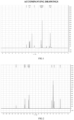
- 13CNMR spectrum of synthesized [EmIm]Im ionic liquid in FIG. 2 shows the followings: 13 C NMR (126 MHz, DMSO-d 6 ) ⁇ (ppm): 166.43 (s), 136.99 (s), 136.18 (s), 123.97 (s), 122.39 (s), 122.31 (s), 44.51 (s), 36.06 (s), 15.56 (s). Therefore, the synthesized ionic liquid was determined to be 1-ethyl-3-methylimidazolium imidazole salt.
- the specific preparation method of the 1-ethyl-3-methylimidazolium pyrrole salt is as follow: 0.5mol pyrrole was dissolved in 60 mL ethanol solvent, equimolar potassium ethoxide was added into a three-neck flask, and they were vigorously stirred for 6 h at 70°C; after the reaction was completed, rotary evaporation under reduced pressure was carried out for 2h at 65 °C in an oil bath to remove the ethanol solvent and the product ethanol, and the remains were placed into a vacuum drying oven and dried until no weight change occurred for 12h to obtain the pyrrole potassium; 0.5mol commercially available [EmIm]Br was added into a three-necked flask, and equimolar pyrrole potassium was added therein, and under the condition that a water-carrying agent ethanol is used as solvent, they were stirred at room temperature for 24h; after the reaction was completed, the resulting white solid KBr was removed by filtration,
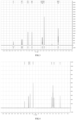
- 13CNMR spectrum of synthesized [EmIm]py ionic liquid in FIG. 4 shows the followings: 13 C NMR (126 MHz, DMSO- d 6 ) ⁇ (ppm) 136.71 (s), 123.96 (s), 122.41 (s), 117.79 (s), 107.56 (s), 44.56 (s), 36.20 (s), 15.63 (s). Therefore, the synthesized ionic liquid was determined to be 1-ethyl-3-methylimidazolium pyrrole salt.
- Table 1 shows the comparisons of the activities of commercially available ionic liquids and ionic liquids synthesized in the laboratory for the transesterification of dimethyl carbonate and ethanol. Evaluation of the catalysts was carried out as follows: 46g ethanol and 90g dimethyl carbonate as reaction raw materials (a molar ratio thereof was 1:1) were evenly mixed in a 250 mL flask with magnetic stirring, the reaction system was heated to 76-78°C, about 2.72g ionic liquid was added therein after reflux was stable and the reaction time was 30-240 min, wherein the ionic liquid was 2% of the reaction raw material by weight.
- ionic liquids are as follows: 1-ethyl-3-methylimidazolium acetate, 1-ethyl-3-methylimidazolium chloride, 1-ethyl-3-methylimidazolium bromide, 1-ethyl-3-methylimidazolium iodide, 1-butyl-3-methylimidazolium fluoroborate, 1-butyl-3-methylimidazolium chloride, 1-butyl-3-methylimidazolium bromide, 1-butyl-3-methylimidazolium iodide, 1,3-dimethylimidazolium iodide.
- the ionic liquids synthesized in the laboratory are as follows: 1-ethyl-3-methylimidazolium methoxide, 1-ethyl-3-methylimidazolium hydroxide, 1-ethyl-3-methylimidazolium imidazole salt, 1-ethyl-3-methylimidazolium pyrrole salt, 1-ethyl-3-methylimidazolium morpholine salt, 1-butyl-3-methylimidazolium imidazole salt, 1,3-dimethylimidazolium pyrrole salt, N-methyl-N-ethylmorpholinium imidazole salt, N-methyl-N-ethylmorpholinium pyrrole salt, N-methyl-N-ethylmorpholinium morpholine salt, N-methyl-N-butylmorpholinium imidazole salt and N-methyl-N-butylmorpholinium pyrrole salt.
- the preparation method of the ionic liquid listed in Table 1 is the same as that of 1-ethyl-3-methylimidazolium imidazole salt in Example 2, except that the corresponding raw materials were changed.
- Table 1 The effect of different ionic liquids on the activity in the transesterification of DMC and EtOH Catalyst Reaction time (min) EtOH conversion efficiency (%) DMC conversion efficiency (%) EMC selectivity (%) DEC selectivity (%) 1-ethyl-3-methylimidazolium acetate 180 25.37 20.43 88.88 11.12 1-ethyl-3-methylimidazolium chloride 240 3.45 4.27 88.58 11.42 1-ethyl-3-methylimidazolium bromide 120 16.46 15.35 89.99 10.01 1-ethyl-3-methylimidazolium iodide 120 25.17 22.88 89.79 10.21 1-butyl-3-methylimidazolium fluoroborate 180 0.08 0.11 79.87 20.13 1-
- the reaction conditions were as follows: a mole ratio of DMC to EtOH in the raw material was 1:1, the amount of the catalyst was 2 wt%, and the reaction temperature was in a range from 76°C to 78°C.
- 1-butyl-3-methylimidazolium pyrrole salt was used as catalyst of which the initial state was shown in FIG. 5 , and the color of the prepared ionic liquid was transparent light yellow.
- 1-butyl-3-methylimidazolium pyrrole salt catalyst was carried out as follows: 46g ethanol and 90g dimethyl carbonate as reaction raw materials (a molar ratio thereof was 1:1) were evenly mixed in a 250 mL flask with magnetic stirring, the reacting system was heated to 76-78°C, about 2.72g 1-butyl-3-methylimidazolium pyrrole salt ionic liquid (i.e., the ionic liquid was 2% of the reaction raw materials by weight) was added therein after the reflux was stable, the reaction time was 30 min; after the reaction was completed, the reaction raw materials, products and ionic liquid were subject to rotary evaporation under reduced pressure at 110 °C for 30 min, and the remaining liquid in the flask for rotary evaporation was 1-butyl-3-methylimidazolium pyrrole salt catalyst which was directly used for the next reaction evaluation.
- FIG. 6 showed remaining ionic liquid in the flask for rotary evaporation after the ionic liquid was reused 20 times, and the color thereof turned slightly yellow compared with the color of the initial ionic liquid.
- FIG.7 showed how the conversion efficiency of dimethyl carbonate and ethanol, and the selectivity of ethyl methyl carbonate and diethyl carbonate varied with reused times.
- the conversion efficiency of dimethyl carbonate was basically maintained at about 60%
- the conversion efficiency of ethanol was basically maintained at about 70%
- the selectivity of ethyl methyl carbonate was maintained at around 80%
- the selectivity of diethyl carbonate was 20%, indicating that the synthesized 1-butyl-3-methylimidazolium pyrrole salt catalyst had good stability and basically unchanged activity after reused 20 times.
- 1-ethyl-3-methylimidazolium imidazole salt was used as catalyst, and the effects of rust and iron ion on the activity and reused stability of the synthesized ionic liquid in industrial applications were investigated.
- a mixture of ferric oxide and ferroferric oxide was used to simulate the rust component, and ferric chloride was used as the source of iron ion and chloride ion.
- Table 2 showed how the activity varied with reused times when the rust existed in the ionic liquid.
- Table 2 Effects of ferric oxide and ferroferric oxide on the catalytic activity of the reused ionic liquids Reused times EtOH conversion efficiency (%) DMC conversion efficiency (%) EMC selectivity (%) DEC selectivity (%) initial 61.33 58.36 81.99 18.01 1 61.06 56.43 83.68 16.32 2 57.68 52.01 83.63 16.37 3 56.97 53.07 84.16 15.84 4 56.78 52.05 84.22 15.78 5 58.95 55.71 84.90 15.10 6 57.42 54.38 86.73 13.27
- the reaction conditions were as follows: a mole ratio of DMC to EtOH in the raw material was 1:1, the catalyst was 1wt% of the reaction solution, 0.1wt% ferric oxide and 0.1wt% ferroferric oxide were added and the reaction was carried out at a temperature ranging from 76°C to 78°C. Note: Ferric oxide and ferroferric oxide were insoluble in the solution during the reaction.
- the initial catalyst was 1wt% of the reaction solution, and the reaction temperature was in a range from 76 °C to 78°C under normal pressure for 30 min.
- Reuse of 0 time without ferric chloride was used as reference experiment.
- Ferric chloride was added for reuse of 1-3 time(s) therein, and the resulting sample became reddish brown. Except that the reuses of 0 and 1 time resulted in colorless and clear filtrate, all the rest filtrate showed lemon color (that is, pale golden yellow).
- Table 6 showed the results of chromatographic analysis when the reaction was carried out for 5 min, 15 min, 30 min, 60 min, 120 min, and 240 min, respectively. Table 6 Results of the transesterification of DMC and DEC catalyzed by 1-ethyl-3 methylimidazolium imidazole salt Reaction time /min Conversion efficiency /% Weight distribution/% DMC DEC DMC EMC DEC 5 8.19 8.96 41.75 8.61 49.64 15 33.23 33.53 29.04 33.40 37.56 30 50.41 51.22 21.65 50.86 27.49 60 53.18 54.73 20.58 54.05 25.37 120 55.33 55.26 19.31 55.29 25.40 240 54.07 55.36 20.14 54.79 25.07
- reaction conditions were as follows: a mole ratio of DMC to DEC was 1:1 (DMC 45g, DEC 59g), content of ionic liquid catalyst was 0.5wt%, and the reaction was carried out at 92-94°C in a flask.
- the conversion efficiency of DMC and DEC were approximately the same in different reaction time periods. As shown in Table 6, the conversion efficiency of DMC and DEC gradually increased with the reaction time. When the reaction time was more than 30 min, the conversion efficiency of DMC and DEC reached above 50%. When the reaction time was more than 60 min, the conversion efficiency of DMC and DEC were maintained at about 55%, basically reaching reaction equilibrium. DMC was about 20% of the equilibrium components by weight, EMC was about 54% of the equilibrium components by weight, and DEC was about 25% of the equilibrium components by weight.
- a reaction equilibrium could be basically reached when the reaction of DMC and DEC catalyzed by 0.5wt% 1-ethyl-3-methylimidazolium imidazole salt for 30 min or more, indicating that the prepared ionic liquid also had the ability to efficiently catalyze the transesterification of DMC and DEC.
- Table 7 showed the results of chromatographic analysis when the reaction was carried out for 5 min, 15 min, 30 min, 60 min, 120 min, and 240 min, respectively.
- Table 7 Results of the transesterification of DEC and MeOH catalyzed by 1-ethyl-3 methylimidazolium pyrrole salt Reaction time /min MeOH conversion efficiency(%) DEC conversion efficiency(%) EMC selectivity (%) DMC selectivity (%) 5 34.87 33.41 86.17 13.83 15 39.79 28.63 88.07 11.93 30 40.58 33.33 86.76 13.24 60 50.30 37.34 85.55 14.45 120 55.39 46.92 82.68 17.32 180 64.40 52.80 82.18 17.82 240 71.16 56.05 83.34 16.66 360 67.62 58.66 83.18 16.82
- reaction conditions were as follows: a mole ratio of MeOH to DEC was 1:1(MeOH 19.2g, DEC 70.8g), content of ionic liquid catalyst was 0.5wt%, and the reaction was carried out at 70-72°Cin a three-neck flask.
- the reaction of methanol and DEC was stepwise. In the first step, methanol and DEC were reacted to generate EMC and ethanol, while in the second step, methanol and EMC were reacted to generate DMC and ethanol. No other side reaction occurred.
- Table 7 showed the conversion efficiency of methanol and DEC, and the selectivity of EMC and DMC.
- the conversion efficiency of methanol and DEC gradually increased with the reaction time. Due to the higher proportion of methanol in the reaction system, the reaction temperature thereof was lower than that of the transesterification of DMC and ethanol or that of the transesterification of DMC and DEC, resulting in slightly lower reaction efficiency. When the reaction was carried out for 240 min, a reaction equilibrium was basically reached, and the EMC selectivity was about 83%.
- silica support 30mL ethyl orthosilicate and 21mL ethanol were respectively added into a conical flask and stirred at room temperature for 10 min, and then 9mL 0.45mol/L NaOH or 0.5mol/mL hydrochloric acid solution was added therein immediately when they were heated to 60 °C. Ethyl silicate slowly was hydrolyzed, and the system gradually gelled. After the gelled system was aged at 60°C for 12h, the resulting mixture was washed three times with 50 mL ethanol, and vacuum dried at 150°C for 3h to obtain silica support by alkali/acid-promoted hydrolysis.
- Impregnating method with ionic liquid 8g pure support was placed in a watch glass, then placed in an ultrasonic machine to carry out ultrasonic operation, and at room temperature, 12g 1-ethyl-3 methylimidazolium imidazole ionic liquid was dropped slowly to the support within 30 min with continuous stirring; after the dropping was completed, stirring was maintained for 30 min. Then the support was taken out and dried at 120°C for 10 h, then washed three times with 50 mL ethanol, and vacuum-dried at 150°C for 3 h to obtain the impregnated ionic liquid.
- 1-ethyl-3 methylimidazolium imidazole ionic liquid serves both as alkali catalyst to promote the hydrolysis of ethyl orthosilicate and as active center of carbonate transesterification.
- deionized water was added therein, the system gelled quickly.
- the gelled system was aged at 60°C for 12h, dried at 120°C for 10h, then washed with 50 mL ethanol three times, and vacuum dried at 150°C for 3h to obtain a heterogeneous catalyst with 3g, 6g or 12g ionic liquid immobilized.
- FIGS. 8 and 9 showed the physical photos of the catalysts immobilized by impregnating method with ionic liquid and prepared by embedding Ionic liquid in a riveting manner, respectively.
- the catalyst was prepared by impregnating method with ionic liquid or prepared by embedding ionic liquid in a riveting manner, the apparent color of the catalyst was uniform light yellow and the texture thereof was crunchy. The appearance of the catalyst prepared by these two methods was not much different.
- a fixed-bed reactor was used to evaluate the prepared heterogeneous catalyst. Reaction conditions were as follows: a molar ratio of DMC to EtOH as reaction raw materials was 1: 1, the reaction temperature was in a range from 76°C to 78°C, filling weight of the catalyst was 4 g, weight hourly space velocity of the reaction raw materials was 1h -1 , that is, feeding weight per hour for the raw materials was 4g, and the continuous evaluation time for each catalyst was 2300 min. Table 8 showed the catalyst activity results of chromatographic analysis at the stage of stabilization.
- the heterogeneous catalysts listed in Table 8 were as follows: silica support obtained by alkali-catalyzed hydrolysis, silica support obtained by acid-catalyzed hydrolysis, silica impregnated with 12g imidazolium potassium (the preparation method thereof was the same as the impregnating method with ionic liquid except that 12g imidazolium potassium was used), silica with 12g imidazolium potassium embedded (the preparation method thereof was the same as the method for embedding ionic liquid in a riveting manner except that 12g imidazolium potassium was used), silica impregnated with 12g imidazolium pyrrole (the preparation method thereof was the same as the impregnating method with ionic liquid except that 12g imidazolium pyrrole was used), silica with 12g imidazolium pyrrole embedded (the preparation method thereof was the same as the method for embedding ionic liquid in a riveting manner except that 12g imidazolium
- the catalytic activity of both the silica support obtained by acid-catalyzed hydrolysis and the silica support obtained by alkali-catalyzed hydrolysis was less than 5%, indicating that the silica support alone had little ability to catalyze the transesterification of DMC and EtOH.
- the catalytic activity of the silica impregnated with imidazolium potassium was also less than 5%,which was similar to that of the silica support, indicating that imidazolium potassium impregnated in the pores of the silica could be easily washed away with ethanol.
- the catalytic activity of silica with potassium imidazole embedded could be maintained at 20.99% of DMC conversion efficiency and 23.24% of EtOH conversion efficiency, indicating that imidazolium potassium, even having single ring structure, could be relatively stably embedded in the grid structure of silica. If a double-ring structure was embedded in the silica framework, the conversion efficiency of DMC and EtOH as raw materials would be significantly higher than that achieved by imidazolium potassium, and was maintained at 30%-35%. However, the impregnated double-ring structure showed an obvious phenomenon of being washed away by ethanol, and the conversion efficiency of DMC and EtOH ranged between 5%-10%.
- the catalyst prepared by embedding method exhibited superior catalytic activity and stability, indicating that in comparison with the conventional impregnating method, the developed immobilized method of ionic liquid was a more reliable immobilized method of active component.
- a fixed-bed reactor was used to evaluate the following catalysts: 12g 1-ethyl-3-methylimidazolium imidazole ionic liquid @silica prepared by impregnating method (the preparation method thereof was the same as was the same as the impregnating method with ionic liquid except that 1-ethyl-3-methylimidazolium imidazole ionic liquid was used) and 1-ethyl-3-methylimidazolium imidazole ionic liquid @silica prepared by embedding method (the preparation method thereof was the same as the method for embedding ionic liquid in a riveting manner except that 1-ethyl-3-methylimidazolium imidazole ionic liquid was used).
- a molar ratio of DMC to EtOH as reaction raw materials was 1: 1, the reaction temperature was in a range from 76°C to 78°C, the filling weight of the catalyst was 4g, and weight hourly space velocity of the reaction raw materials was 1 h -1 .
- FIG. 10 showed how the conversion efficiency of the DMC and EtOH as raw materials and EMC selectivity varied with time.
- the reaction activity of the catalyst immobilized by embedding method and selectivity of the product were also affected by the hydrolysis temperature, aging time, aging temperature and embedding weight of active component.
- Table 9 showed how conversion efficiency of DMC and ethanol and product selectivity varied with different catalyst preparation conditions.
- the specific preparation method was the same as the method for embedding ionic liquid in a riveting manner in Example 8 except for the aging time, aging temperature, and the content of the active component. Under the condition that the hydrolysis temperature was 60°C, the aging temperature was 60°C, the aging time was 12h and the embedding weight was 12g, the prepared catalyst had the best activity.
- a molar ratio of DMC to EtOH as raw materials was 1:1, the ionic liquid was 1-ethyl-3-methylimidazolium imidazole, a reaction temperature was 76-78°C, filling weight of the catalyst in the fixed-bed was 4g, weight hourly space velocity was 1h -1 , and reaction time was 2300min
- Figure 11 showed infrared spectrums of the catalysts obtained by impregnating silica as support with 6g 1-ethyl-3-methyl-imidazolium imidazole salt and the catalysts obtained by embedding 3g, 6g and 12g 1-ethyl-3-methyl-imidazolium imidazole salt in silica as support, respectively.
- the strong absorption peak at 1064cm -1 was the stretching vibration characteristic peak of Si-O-Si
- the absorption peak at 3427cm -1 was the stretching vibration peak of alcoholic O-H group
- the characteristic absorption peak of the imidazole ring was at 797cm -1 . It showed that the developed method for preparing immobilized ionic liquid catalyst in an embedding manner was reliable and feasible, and the active component ionic liquid was determined to be embedded in the heterogeneous catalyst.
- the height of the characteristic peak of imidazole in the prepared catalyst increased strictly and regularly in accordance with the law of embedding weight of 3, 6 and 12g.
- the catalyst prepared by impregnating with 6g ionic liquid also showed that characteristic peak intensity of imidazole thereof was higher than that shown by the catalysts obtained by embedding 3g ionic liquid, but lower than that shown by the catalysts obtained by embedding 6g ionic liquid, which was substantially consistent with their catalytic activity.
- Figure 12 showed SEM images of the catalysts obtained by impregnating silica as support with 6g 1-ethyl-3-methyl-imidazolium imidazole salt and the catalysts obtained by embedding 3g, 6g or 12g 1-ethyl-3-methyl-imidazolium imidazole salt in silica as support, respectively.
- Figure a shows an apparent morphology of a strip structure while Figure b shows a regular morphology of silica molecules, the reason of which is that the amount of ionic liquid added is not enough to form a messy composite structure of silane support and ionic liquid.
- Figures c and d show great changes of apparent morphology of the embedded ionic liquid, and the messy small particles accumulated on the support to form a random composite of silane support and ionic liquid, further illustrating that the ionic liquid was successfully loaded on the support via silane coupling and the cluster phenomenon was more obvious as the loading weight increased.
- N-methyl-N-butylmorpholinium imidazole salt ionic liquid was embeded in support of tetrabutyl titanate and support of the combination of ethyl orthosilicate and tetrabutyl tantalate respectively.
- a filling weight of catalyst in the fixed bed was 4g, weight hourly space velocity was 1h -1 , and reaction time was 1000min.
- Reaction raw material 1 referred to the reactant on the left of notation'/', the raw material 2 referred to the reactant on the right of notation ⁇ /', the product 1 referred to EMC, and the product 2 referred to DEC or DMC.
- the heterogeneous catalysts prepared by embedding method in which TiO 2 obtained by hydrolyzing tetrabutyl titanate, or hydrolysate obtained by hydrolyzing the combination of ethyl orthosilicate and tetrabutyl titanate was used as support, and N-methyl- N-butylmorpholinium imidazole salt ionic liquid was used as active component, exhibited high reactivity for transesterification of dimethyl carbonate and ethanol, transesterification of dimethyl carbonate and diethyl carbonate, or transesterification of methanol and diethyl carbonate, and the products were only ethyl methyl carbonate, diethyl carbonate, methanol or ethanol, and no other products were detected at all.
- the catalyst obtained by embedding N-methyl-N-butylmorpholinium imidazole salt ionic liquid in a combination of ethyl orthosilicate, tetrabutyl titanate and a variety of metal cations had slightly higher activity than the catalyst obtained by embedding N-methyl-N-butylmorpholinium imidazole salt ionic liquid in single support of tetrabutyl titanate. It was speculated that when Li + , Al 3+ , La 3+ , Fe 3+ , and Ca 2+ entered the framework of silica and titania, they could stabilize the structure thereof, increase the embedding amount of ionic liquid, and thus made the catalyst B exhibit better reactivity than the catalyst A for all the three reactions.
- Ethyl orthosilicate was used support to embed 1-ethyl-3-methylimidazolium pyrrole salt ionic liquid to prepare the catalyst.
- 31.5mL ethyl orthosilicate and 50mL ethanol were added into a conical flask, and when they were heated to 60°C, 20g 1-ethyl-3-methylimidazolium pyrrole salt ionic liquid was added therein, 8.73g magnesium acetate, 5.5g zinc acetate, 4.06g aluminum acetate were further added therein and after even mixing, 9.35g deionized water was added therein, the resulting mixture was aged at 60°C for 12 h, dried at 120°C for 10 h, then washed three times with 50mL ethanol, and vacuum dried at 150°C for 3h to obtain immobilized catalyst of the ionic liquid.
- FIG. 13 showed photos of catalyst precursors during the hydrolysis, after the hydrolysis, after drying and after baking.
- FIG. 13A during the hydrolysis, uniform brown-yellow solution was formed, and ethyl orthosilicate, 1-ethyl-3-methylimidazolium pyrrole salt ionic liquid and various acetates could be completely dissolved in the ethanol solvent.
- FIG. 13B after hydrolysis, the precursor formed completely uniform brown-yellow solid, and there was basically no liquid phase remaining in the system.
- the gelled mixture after drying had significantly lighter color than the colloid after hydrolysis, and was crunchy powder with light brown yellow.
- FIG. 13C shows that the precursor formed completely uniform brown-yellow solution was formed, and there was basically no liquid phase remaining in the system.
- FIG.13C the gelled mixture after drying had significantly lighter color than the colloid after hydrolysis, and was crunchy powder with light brown yellow.
- 1-ethyl-3-methylimidazolium pyrrole ionic liquid loaded on the surface of the support was easy to decompose and burn, wherein 1-ethyl-3-methylimidazolium pyrrole ionic liquid would start decomposing at 170°C in an air atmosphere, and decompose completely before 350°C.
- a filling weight of catalyst in the fixed bed was 4g, and the weight hourly space velocity was 1h -1 .
- Reaction raw material 1 referred to a reactant on the left of notation ⁇ /'
- the raw material 2 referred to a reactant on the right of notation '/'
- the product 1 referred to EMC
- the product 2 referred to DEC.
- the prepared ethyl orthosilicate-magnesium acetate-zinc acetate-aluminum acetate- 1-ethyl-3-methylimidazolium pyrrole salt exhibited good catalytic activity of carbonate transesterification, but the baked catalyst had activity less than 3% thereof, fully indicating that the synthesized ionic liquid was the active center of carbonate transesterification while silica and Mg 2+ , Zn 2+ and Al 3+ ions only served as support and structure regulator.
- the support could highly disperse 1-ethyl-3-methylimidazolium pyrrole ionic liquid to improve the dispersion of ionic liquid.
- Metal cations served as structure regulator and could form a variety of framework structures with four coordinations, three coordinations and two coordinations, or a mixing multi-coordination structure, which are more beneficial to increase the embedding weight of ionic liquid and the stability of immobilized ionic liquid.
- FIG. 14 showed X-ray diffraction spectrums of the catalysts in FIGS. 13D and 13C .
- the dried ethyl orthosilicate-magnesium acetate-zinc acetate-sodium aluminate-1-ethyl-3-methylimidazolium pyrrole salt catalyst had an amorphous structure, indicating that Al 3+ , Mg 2+ and Zn 2+ ions entered the framework of SiO 2 ; and the catalyst after baking at 550°C for 3h had a structure similar to that of the catalyst after drying, without obvious peaks of MgO, ZnO or Al 2 O 3 , further indicating that Al 3+ , Mg 2+ and Zn 2+ ions in the catalyst prepared with this method entered the framework of SiO 2 .
- a filling weight of catalyst in the fixed bed was 4g, and weight hourly space velocity was 1h -1 .
- Reaction raw material 1 referred to a reactant on the left of notation 7'
- the raw material 2 referred to a reactant on the right of notation '/'
- the product 1 referred to EMC
- the product 2 referred to DEC or DMC.
Landscapes
- Chemical & Material Sciences (AREA)
- Organic Chemistry (AREA)
- Engineering & Computer Science (AREA)
- Materials Engineering (AREA)
- Chemical Kinetics & Catalysis (AREA)
- Low-Molecular Organic Synthesis Reactions Using Catalysts (AREA)
- Catalysts (AREA)
- Organic Low-Molecular-Weight Compounds And Preparation Thereof (AREA)
Description
- The present disclosure belongs to the field of chemistry and chemical engineering, and relates to synthesis of high-purity electrolyte for lithium ion battery, in particular to synthetic method of a new ionic liquid with strong alkalinity, an embedding-riveting immobilized method of the new ionic liquid, and use of prepared heterogeneous catalyst and heterogeneous catalyst for catalytic synthesis of ethyl methyl carbonate.
- Ethyl Methyl Carbonate (EMC) is a linear carbonate compound with asymmetric structure, has the characteristics of both dimethyl carbonate (DMC) and diethyl carbonate (DEC), is miscible with almost all organic solvents such as alcohols, ethers and ketones and the like, and can be used as carbonylation reagent or alkylation reagent for organic synthesis reaction. EMC has high oxygen content, low toxicity and low persistent accumulation in organisms, has low solubility in water, is considered as an environment-friendly chemical, is a promising gasoline additive, can improve the octane value of gasoline, can replace methyl tert-butyl ether (MTBE), and can reduce the emission of solid particles and nitrogen oxides in automobile exhaust. Meanwhile, EMC has a flash point of 26.7°C which is far higher than the average flash point (-20°C) of the gasoline. EMC added into the gasoline can obviously improve the safety of storage and transportation. EMC is more importantly and widely used as excellent electrolyte solvent for lithium ion battery. EMC has small steric hindrance and asymmetry in terms of structure, and is easy to generate a double-ion structure together with lithium ion, which is equivalent to solvation lithium ion and further assists in increasing the solubility of the lithium ion and improving the capacitance density and electric quantity of the battery. EMC has excellent thermal conductivity and low resistance in terms of physical property. The battery has low self-heating amount and can timely dissipate heat during use, and thus the heat cannot be accumulated in the battery to cause spontaneous combustion so that the safety of the lithium ion battery is improved. EMC has structural stability in electrochemical environment in terms of chemical property, and can generate solvation-like intermediate together with lithium ion, which is very stable and not easy to decompose to generate combustible gas (such as methane), and can increase the charging and discharging times of the battery, thereby prolonging the service life of the battery. EMC has a solidifying point of -14°C and a boiling point of 107°C, and can be used as solvent for widening the liquid phase range of the electrolyte, improving conductivity of the electrolyte in a low-temperature region and improving the low-temperature service performance of the battery, thereby facilitating widening the working temperature range of the electrolyte.
- The synthetic method of EMC mainly comprises phosgenation, oxidative carbonylation, transesterification and the like. However, the battery grade EMC is mainly prepared with the transesterification. The sodium methoxide with strong alkalinity catalyst is often used in industry, and the product separation is realized by catalytic distillation. Sodium methoxide has a higher catalytic activity, but is sensitive to water and easy to inactivate. The sodium salt generated due to sodium methoxide participating in reaction has lower solubility in carbonate and is easy to separate out, resulting in that the catalyst cannot be reused and is difficult to be separated. A small amount of sodium salt residue would result in reduced purity of produced EMC, and the generated solid waste with strong alkalinity would pollute the environment.
- Some scholars studied other strong organic alkali such as sodium ethoxide or sodium tert-butoxide and the like, soluble strong alkali including potassium hydroxide or sodium hydroxide and the like, and the medium alkali or weak alkali such as potassium carbonate, sodium carbonate or potassium fluoride and the like. However, soluble and strong organic/inorganic alkali has the drawbacks of quick inactivation, and generation of salt inactivation products which are insoluble in carbonate.
- Ionic Liquids have characteristics of low vapor pressure, strong solubility, good thermal stability, reusability and the like, and thus are widely paid attention to. The research of EMC synthesis at present mainly focuses on alkyl imidazolium ionic liquids, including imidazolium ionic liquids with different anions and cations structures such as 1,3-dimethylimidazolium chloride ([Mmim]Cl), 1-ethyl-3- methylimidazolium chloride ([Emim]Cl), 1-butyl-3-methylimidazolium chloride ([Bmim]Cl), 1-ethyl-3-methylimidazolium bromide ([Emim]Br), 1-butyl-3-methylimidazolium bromide ([Bmim]Br), 1-butyl-2- ethyl-3-methylimidazolium bromide [Bemim]Br, 1-butyl-2-propyl- 3-methylimidazolium bromide ([Bpmim]Br), 1,3-dimethylimidazolium iodide ([Mmim]I), 1-ethyl-3-methylimidazolium iodide ([Emim]I), 1-butyl-3-methylimidazolium iodide ([Bmim]I), 1-butyl-3-methylimidazolium butyrate ([Bmim] CH3(CH2)2COO) and (1-(4-hydroxy) butyl-3-methylimidazolium benzoate ([OHBmim]PhCOO) and the like. However, alkyl imidazolium salt ionic liquids for synthesizing EMC disclosed in literatures at present have the defects of low activity, long reaction time, high reaction concentration and the like, of which fundamental reason is weak nucleophilicity of halogen or acetate anion.
- Literatures or patents further disclosed homogeneous lewis acid catalysts such as nitrates, lanthanum-containing soluble salts, titanates and organotin compounds, for example Mg(NO3)2, La(NO3)3, LaCl3, Ti(OBu)4, Ti(OPh)4 or Bu2SnO and the like. However, during the transesterification of carbonate, the homogeneous catalysts can slowly decompose and release products such as NOx, Cl-1 or butanol and the like, thereby resulting in reduced purity of the ethyl methyl carbonate.
- In view of many disadvantages of homogeneous catalysts, catalysts for synthesizing ethyl methyl carbonate is gradually shifted to heterogeneous catalysts, for example, ion exchange resins, metal oxides and composite oxides such as MgO, CaO, MgO-Al2O3, Mg-Al-O-t-Bu or AlPO and the like, and alkaline molecular sieves or MOFs materials, such as Al-Zn-MCM-41, ZIF-8 or ZIF-67 and the like.
- Among Lewatit K1221, Purofine PFC-100H, Dowex Marathon C, Dowex Marathon MR-3, Amberlyst 119 Wet, Lewatit K1131 and Lewatit K1461 in the sulfonic acid resins with strong acidity, Lewatit K1221 has the highest catalytic activity. Under the transesterification conditions that nDMC/nEtOH =1/2, reaction was carried out at 75°C for 26.7 h, and the catalyst is 6.75wt% of the total weight of the reaction raw materials, DMC conversion efficiency of 54% and EMC yield of 53% were achieved, wherein the reaction time was too long, and the efficiency was not high. Resin with super strong acidity, Nafion SAC-13, is a copolymer of tetrafluoroethylene and perfluoro-3,6-dioxa-4-methyl-7-octenesulfonyl fluoride. The sulfonyl group therein has super strong acidity due to strong electron-withdrawing capability of -CF2CF2SO3H group, so that the resin has high catalytic activity with DMC conversion efficiency of 61% and a EMC yield of 52%, which is close to that of Lewatit K1221. Although the ion exchange resin with strong alkalinity has high catalytic activity, the hydroxyl group thereof is easy to lose and thus the catalyst is quickly deactivated, which is similar to potassium hydroxide-like catalyst. Both resin catalysts cannot be used industrially.
- Yang Yanzhao et al synthesized the γ-Al2O3 catalyst by precipitation method with AlCl3•6H2O and ammonia water as main raw materials. Under the condition that the loading amount of Al2O3 was 12wt%, the adding amount of the catalyst was 7wt%, nDMC/nDEC =1/1 and the reaction was carried out at 120°C for 8h, EMC yield of 63.6% could be achieved, in view of which the reaction temperature was too high and the catalytic efficiency was low. Shen et al researched that self-made solid alkalis such as MgO, ZnO, La2O3, CeO2 and the like were used for transesterification of DMC and DEC in gas-phase and liquid-phase systems respectively. Under the condition that the reaction was carried out at 103°C for 4h and the adding amount of the catalyst was 2.4wt%, EMC yield was 44.2%, 26.5%, 12.6% and 7.3%, respectively, in view of which the activity of the catalyst could not meet the requirements of industrial application. Chen Ying et al synthesized MgO-Al2O3 composite metal oxide by co-precipitation method with NaOH and Na2CO3 as precipitating reagents, and found that the catalytic activity of the catalyst MgO-Al2O3 was superior to that of commercially available MgO and CaO. Under the condition that nDMC/nDEC =1/1 and the reaction was carried out at 103°C for 4 h, EMC yield of 45.8% could be achieved. Wang et al[58] synthesized mesoporous magnesium aluminate spinel MgAl2O4 (MAO) catalyst by evaporation-induced self-assembly method with aluminum isopropoxide and magnesium nitrate as main raw materials. Reaction condition were as follows: nDMC/nDEC =1/1, the reaction was carried out at 103°C for 0.5h, and the adding amount of the catalyst was 5wt%. Chen et al[59] synthesized an acid-alkali bifunctional mesoporous material MgO-Al2O3-SBA-15 by mixing unbaked SBA-15 (mesoporous silica), magnesium nitrate with aluminum nitrate, grinding them and then baking at high temperature. Under the condition that nDMC/nDEC=1/1, the reaction was carried out at 104°C for 4h and the adding amount of MgO-Al2O3-SBA-15 catalyst was 4 wt%, EMC yield of 46.1% was achieved. Wang et al[32] prepared magnetic Mg-Fe, a binary composite oxide catalyst, by co-precipitation method. Under the condition that nDMC/nDEC=1/1, the reaction was carried out at 100°C for 1.5h, and the adding amount of MgFe-400 catalyst was 1wt%, EMC yield of 51% was achieved. Miao et al[60] synthesized bimetallic Co/Zn-ZIF precursor (ZIF is the zeolite imidazolate framework) by "one-pot method". Under the condition that nDMC/nDEC=1/1, the reaction was carried out at 100°C for 7h and the adding amount of ZnCo/NC-600 catalyst was 1.0 wt%, EMC yield of 51.5% was achieved. Mei et al[17] prepared Mg-Al-NO3 HT catalyst by co-precipitation method with NaOH as precipitating reagent and nitrate as precursor, then prepared Mg-Al-O-t-BuHT catalyst by stirring Mg-Al-NO3 HT in tetrahydrofuran solution of potassium tert-butoxide for 24h, prepared Mg-Al-CO3 HT catalyst by urea hydrolysis method, and prepared Mg-Al HT catalyst by calcining Mg-Al-CO3 HT at 500°C for 5h. Under the condition that nDMC/nEtOH=1/5, the reaction was carried out at 80°C for 7h and the adding amount of the Mg-Al-O-t-BuHT catalyst was 1wt%, DMC conversion efficiency of 86.4% and EMC selectivity of 25.9% were achieved, and further the DMC conversion efficiency (87.9%) and EMC selectivity (24.3%) remained basically unchanged after the same catalyst was reused five times. Palani et al [26] synthesized a series of MCM-41 catalysts (Si/Al=50, Si/Al+Zn=100) by hydrothermal method with sodium metasilicate as silicon source, aluminum sulfate and zinc sulfate as main raw materials. A fixed-bed was used to evaluate the catalyst. Under the condition that nDMC/nDEC=1/1, a flow rate for raw materials was 1.5 mL/h, the adding amount of the catalyst was 0.5g (weight hourly space velocity for mixed raw material was 3.0h-1) and a reaction was carried out at 175°C, Al-Zn-MCM-41 (50) was found to have the best activity, with DMC conversion efficiency of 88% and EMC yield of 85%. Zhou et al[30] synthesized zeolite imidazole framework ZIF-8 ([Zn(MeIm)2], MeIm refers to 2-methylimidazole) with 2-methylimidazole, ammonia water and Zn(OH)2 as main raw materials. Under the condition that n DMC/n DEC=1/1, the reaction was carried out at 100°C for 3h, and the adding amount of catalyst was 1wt%, ZIF-8 showed the best catalytic effect with EMC yield of 50.7%. Yang et al[31] synthesized zeolite imidazole framework ZIF-67 (Co(MeIm)2) with 2-methylimidazole and cobalt nitrate hexahydrate as main raw materials. Under the condition that nDMC/nDEC=1/1, the reaction was carried out at 100°C for 24h and the adding amount of the catalyst of 2wt%, EMC yield of 50.32% was achieved with the ZIF-8 as catalyst, while EMC yield was up to 83.39% with ZIF-6 as catalyst having a higher catalytic activity.
- CHEN Xuewei et al (Solvent-free aza-Markovnikov and aza-Michael additions promoted by a catalytic amount of imidazolide basic ionic liquids", Tetrahedron letters , vol. 52, no. 28, pages 3588-3591) relates to the synthesis of a family of imidazolide ionic liquids. These ionic liquids combined the virtues of strong basicity and relatively good thermal stability. Catalytic properties of these imidazolide ionic liquids were investigated and satisfactory yield was achieved when 2.0 mol % of [Bmim]Im was used as catalyst for aza-Markovnikov addition under solvent-free condition at room temperature in one hour.
- PAN Su-Juan et al (Synthesis of di-2-ethy hexyl carbonate using [Bmim]Im as a catalyst" DALIAN GONGYE DAXUE XUEBAO, 30(2), 129-132 CODEN: DGDXAP; ISSN: 1674-1404, 2011) relates to the preparation of di-2-ethy hexyl carbonate (DEHC) by transesterifying dimethyl carbonate (DMC) with 2-ethylhexanol (EHOH) in the presence of [Bmim]Im(paired by 1-butyl-3-methylimidazolium cation and imidazolide anion) as a catalyst.
-
CN103521263A relates to a morpholine salt ionic liquid catalyst and a preparation method thereof as well as a method for preparing biodiesel by use of morpholine salt ionic liquid catalyzing waste oil. The catalyst is prepared by the following steps of synthesizing an intermediate through a reaction between N-methylmorpholine and halogenated alkane; synthesizing morpholine salt through a reaction between morpholine and an alcoholic solution of inorganic base or salt; preparing the morpholine salt ionic liquid catalyst through a reaction between the intermediate and the morpholine salt. The biodiesel is prepared by taking the waste oil and alkyl alcohol as raw materials and the morpholine salt ionic liquid as a catalyst. -
CN108117536A relates to a method for synthesizing propylene carbonate by virtue of 1,2-propanediol and carbon dioxide. The method comprises the steps of blending, and reacting said components at a reaction temperature of 150-180° C and a CO2 pressure of 1MPa-10MPa for 24 hours with a basic ionic liquid as a catalyst and acetonitrile as a solvent, wherein the mass ratio of the catalyst to 1,2-propanediol is 0.01-0.04, and the mass ratio of the solvent to 1,2-propanediol is 4-8. -
CN107162879A relates to a method for synthesizing nonylphenol from nonene and phenol through catalysis with an alkaline liquid. Compared to the traditional preparation method, the preparation method of the present invention has advantages of environmental protection, no corrosion to equipment, low catalyst consumption, rapid reaction, high product quality, easy separation of the product and the ionic liquid catalyst, low reaction temperature, and the like. -
CN102863339B relates to a method for synthesizing methylethyl carbonate by ester exchange of dimethyl carbonate and diethyl carbonate, which is implemented by carrying out synthetic reaction of methylethyl carbonate on raw materials, dimethyl carbonate and diethyl carbonate by using an imidazole ionic liquid as a catalyst at certain reaction temperature under ordinary pressure for some reaction time. -
CN106582813A relates to an immobilized ionic liquid catalyst for synthesizing ethyl methyl carbonate through an ester exchange reaction and a preparation method of the immobilized ionic liquid catalyst. According to the preparation method, immobilization of basic ionic liquid on a graphene oxide can be achieved at the temperature of 0-20 °C with graphene oxide as a carrier and a dilute NaOH solution as a solvent. - The heterogeneous catalysts disclosed in literatures or patents at present all have the following drawbacks: high reaction temperature which is generally higher than 100 °C, and longer reaction time which is generally longer than 5h. The fundamental reason thereof is the low catalytic activity.
- The process for preparing ethyl methyl carbonate by catalytic distillation of dimethyl carbonate and ethanol needs to meet the requirements that an azeotrope of dimethyl carbonate and ethanol is taken from the column top at 63.4-63.6°C, the temperature of the column bottom was kept at about 73-75 °C, and it took 20-30 min for raw materials to fall into the column bottom from the column top through the catalytic distillation column. Therefore, a heterogeneous catalyst to be developed requires to exhibit high catalytic activity at 63-80°C, and a reaction equilibrium requires to be reached within 30 min. However, the activity of the heterogeneous catalyst disclosed by literatures and patents is significantly lower than the requirement of industrial application.
- According to one aspect of the present disclosure, a heterogeneous catalyst as defined in
claim 1 is provided. Aiming at the problems such as weak alkalinity and poor nucleophilicity of ionic liquids, poor stability and easy inactivation of ionic liquids with strong alkalinity and the like disclosed in the literatures or patents, the purpose of the present disclosure is to develop a new ionic liquid with strong alkalinity and having special structure and high-temperature resistant and high stability. A series of developed ionic liquids with strong alkalinity are used for synthesizing high-purity ethyl methyl carbonate product by transesterification between dimethyl carbonate and ethanol, transesterification between dimethyl carbonate and diethyl carbonate, or transesterification between methanol and diethyl carbonate, and exhibit extremely high reaction activity. A reaction equilibrium can be reached when the reaction time is 5 min and the reaction temperature is in a range from 76°C to 78°C, and the ionic liquids with strong alkalinity show high catalytic activity even atnear room temperature 30°C. The synthesized ionic liquids exhibit substantially unchanged catalytic activity and show higher stability, even after reused 20 times. - The prepared ionic liquids with strong alkalinity directly replace soluble strong alkali such as sodium hydroxide or potassium hydroxide to facilitate hydrolysis of single solution of ethyl orthosilicate, tetrabutyl titanate or aluminum silicate and the like, or hydrolysis of any mixed solution of thereof. The ionic liquid is embedded, by means of inlay, in silica, titanium dioxide, aluminum oxide or single/multiple oxygen-containing compound framework(s) with specific structure(s), without introducing Na+ or K+ ions at all. The prepared heterogeneous catalyst does not need to be baked, and can be directly applied to transesterification after being drying/vacuum drying, and exhibits excellent catalytic activity. Because the ionic liquid matrix has a double-nitrogen ring structure and can be embedded in (like a double-headed mountaineering cone) the framework of -Si-O-, -Ti-O-, -Al-O- or oxygen-containing composite compound, the immobilized heterogeneous catalyst shows higher stability, and the active component of ionic liquid with strong alkalinity is not easy to lose.
- The heterogeneous catalyst comprises an ionic liquid and a support which embeds the ionic liquid in a riveting manner.
- The ionic liquid comprises an anion and a cation; wherein the cation has a structure represented by Formula I or Formula II;


- Optionally, the ionic liquid is embedded in the framework of the support.
- Optionally, at least one action of coupling and hydrogen bonding exists between the support and the ionic liquid.
- Optionally, R1 and R2 independently from each other are -CH3, -CH2CH3, -(CH2)2CH3, or -(CH2)3CH3.
- Optionally, a weight content ratio of the active ionic liquid to the support in the heterogeneous catalyst is in a range of 1%-30%: 10%-60%.
- Optionally, the support is at least one selected from silica, titanium dioxide, and aluminum oxide, and the ionic liquid is embedded in the framework of the support during the preparation of the support.
- Optionally, the heterogeneous catalyst further comprises a structure regulator, and the ionic liquid is embedded in a composite framework of the structure regulator and the support. The structure regulator has a valence of 2, 3 or 4, and is used to construct a framework structure of composite oxide(s) together with the support, so as to improve the environment where the ionic liquid is embedded, thereby enhancing acting force between the ionic liquid and the composite oxide of support.
- Optionally, the structure regulator comprises at least one selected from Mg, Ca, Ba, La, Ce, Zr, Fe, Zn, Li, Cs, and Al.
- Optionally, a weight content of the structure regulator is in a range from 10% to 60%.
- According to further aspect of the present disclosure, a method for preparing the heterogeneous catalyst is provided and comprises the following steps:
- a) obtaining a homogeneous catalyst; wherein the homogeneous catalyst is prepared by the method comprising the following steps:
- a1) adding an alkali into solution I comprising an ionic liquid anion source, and reacting to obtain an ionic liquid anion metal salt; and
- a2) dissolving the ionic liquid anion metal salt in a solvent, adding an ionic liquid cation salt, and reacting to obtain the ionic liquid;
- b) adding water to a mixture comprising a support precursor and an ionic liquid, and carrying out hydrolysis to obtain the heterogeneous catalyst,
- in step a1), the ionic liquid anion source comprises imidazole, pyrrole or morpholine; in step a2), the ionic liquid cation salt is at least one selected from 1-R1-3-methylimidazolium bromide, 1-R1-3-methyl-imidazolium iodide, N-methyl-N-R2-morpholinium bromide, and N-methyl-N-R2-morpholinium iodide;
- in step a2), the solvent comprises a water-carrying agent which is at least one selected from ethanol, benzene, toluene and xylene.
- Optionally, in step a1), the solvent in the solution I is at least one selected from ethanol, benzene, toluene, and xylene; the alkali is an organic alkali or an inorganic alkali, wherein the organic alkali comprises sodium methoxide, sodium ethoxide or sodium tert-butoxide, potassium methoxide, potassium ethoxide or potassium tert-butoxide, and the inorganic alkali comprises sodium hydroxide or potassium hydroxide; and the ionic liquid anion metal salt is at least one selected from ionic liquid anion sodium salts and ionic liquid anion kalium salts.
- Optionally, in step a1), the concentration of the ionic liquid anion source in the solution I is in a range from 0.05 g/mL to 0.8 g/mL; and a molar ratio of the ionic liquid anion source to the alkali is in a range from 0.9 to 1.1.
- In step a1), the ionic liquid anion source comprises imidazole, pyrrole or morpholine.
- Optionally, in step a1), reaction conditions are as follows: the reaction temperature is in a range from 50°C to 80°C and the reaction time is in a range from 5h to 12h.
- Optionally, step a1) further comprises: after the reaction is completed, removing the solvent in the reaction system to obtain imidazole anion salt, pyrrole anion salt or morpholine anion salt.
- In step a2), the solvent comprises a water-carrying agent which is at least one selected from ethanol, benzene, toluene and xylene; and the ionic liquid cation salt is at least one selected from 1-R1-3-methyl-imidazolium bromide, 1-R1-3-methyl-imidazolium iodide, N-methyl-N-R2-morpholinium bromide and N-methyl-N-R2-morpholinium iodide.
- Optionally, in step a2), the ratio of the ionic liquid anion metal salt to the solvent is in a range of 0.1-0.9: 0.05-1.2 g/mL.
- Optionally, in step a2), reaction conditions are as follows: the reaction temperature is in a range from 25°C to 80°C and the reaction time is in a range from 12h to 48h.
- Optionally, step a2) further comprises: after the reaction is completed, removing the solvent in the reaction system to obtain the ionic liquid.
- As an embodiment, step a) comprises:
- (1) dissolving commercially available imidazole, pyrrole or morpholine in a certain amount of a solvent such as ethanol, benzene, toluene, xylene and the like; slowly adding equimolar organic or inorganic strong alkali into a three-neck flask, wherein the inorganic strong alkali comprises NaOH and KOH, and the organic strong alkali comprises sodium methoxide, sodium ethoxide, sodium tert-butoxide and the like, or potassium methoxide, potassium ethoxide, potassium tert-butoxide and the like; carrying out vigorous stirring, wherein the stirring temperature is in a range from 50°C to 80°C and the stirring time is in a range from 5h to 12h; after the reaction is completed, carrying out rotary evaporation under the condition of reduced pressure and a temperature ranging from 60 °C to 120 °C in an oil bath to remove the solvent and alcohols or water produced; then drying in a vacuum drying oven until no weight change occurred to obtain the imidazole salt, the pyrrole salt or the morpholine salt, wherein the obtained imidazole salt, the pyrrole salt or the morpholine salt has sodium or kalium cation, namely the imidazole sodium or kalium salt, the pyrrole sodium or kalium salt and the morpholine sodium or kalium salt;
- (2) dissolving a certain amount of imidazole salt, pyrrole salt or morpholine salt having sodium or kalium cation in a certain amount of water-carrying agent such as ethanol, benzene, toluene, xylene and the like, adding equimolar commercially available ionic liquid of 1-R-3-methylimidazolium bromide/iodide or N-methyl-N-R-morpholinium bromide/iodide into a three-neck flask to perform cation reaction, and carrying out vigorous stirring to obtain Na/KBr or Na/KI precipitate and target ionic liquid, wherein the stirring temperature is in a range from 25°C to 80°C and the stirring time is in a range from 12h to 48h; and
- (3) filtering the mixture comprising the target ionic liquid many times, carrying out rotary evaporation under the condition of reduced pressure and a temperature ranging from 65°C to 100°C with a time ranging from 1h to 4h in an oil bath to remove the solvent, and drying in a vacuum drying oven until no weight change occurred to obtain a target product with pure components.
- The imidazole-based, pyrrole-based or morpholine-based ionic liquid has the following structure, wherein the cation is 1-R-3-methyl-imidazolium or N-methyl-N-R-morpholinium, R is a normal or isomeric structure of alkane, alkene and arene, the anion is imidazole, pyrrole or morpholine anion.

- Optionally, the homogeneous catalyst is prepared with any of methods described above.
- Optionally, in step b), the support precursor comprises at least one selected from ethyl orthosilicate, tetrabutyl titanate, aluminum isopropoxide, and sodium aluminate.
- Optionally, the mixture in step b) further comprises a solvent, wherein the adding amount of the solvent is in a range from 0.1 to 0.9, and the solvent comprises at least one selected from methanol, ethanol, propanol, butanol, methyl acetate, and ethyl acetate.
- Optionally, in step b), a weight ratio of the support precursor, ionic liquid and water is in a range of 0.2-0.8: 0.03-0.4: 0.1-0.4.
- Optionally, in step b), after hydrolysis, an aging step is carried out, washing and drying steps are carried out to obtain the heterogeneous catalyst, wherein, the aging temperature is in a range from 40°C to 120°C and the aging time is in a range from 6h to 24h.
- Optionally, in step b), conditions of the drying are as follows: vacuum drying temperature is in a range from 100°C to 150°C and the vacuum drying time is in a range from 2h to 6h.
- Optionally, step b) further comprises: mixing the support precursor, the structure regulator precursor with the solvent, adding the ionic liquid therein, mixing uniformly, and then adding water to carry out hydrolysis to obtain the heterogeneous catalyst.
- Optionally, in step b), the structure regulator precursor comprises at least one selected from corresponding acetate, silicate, hydrochloride, and nitrate of the structure regulator.
- Optionally, in step b), a weight ratio of the support precursor, the structure regulator precursor, the solvent, the ionic liquid, and water is in a range of 0.2-0.8:0.05-0.4:0.3-0.8:0.03-0.4:0.1-0.4.
- Optionally, step b) comprises: mixing uniformly the support precursor, the structure regulator with the solvent, then adding a certain amount of the above single or multiple ionic liquids therein, and after mixing uniformly, adding 0.8-1.5 times water of the calculated theoretical amount, controlling the temperature during hydrolysis to be in a range from 25°C to 80°C to form uniform gel product, wherein the ionic liquid serves as both a promoter of hydrolysis and an active component in the final heterogeneous catalyst, and after aging of the gel product at a temperature ranging from 40°C to 120°C and a time ranging from 6h to 24h, rinsing the resulting solid product with solvents of alcohols or esters 3 times to 5 times to dissolve the ionic liquid attached to the surface thereof, and finally, drying in vacuum at a drying temperature ranging from 100°C to 150°C and a drying time ranging from 2h to 6h to obtain heterogeneous catalyst with strong alkalinity and having the ionic liquid embedded-riveted therein.
- According to further aspect of the present disclosure, a method for preparing ethyl methyl carbonate by transesterification is provided, characterized in that, the catalyst is an ionic liquid or an ionic liquid-based heterogeneous catalyst; wherein,
- the ionic liquid comprises an anion and a cation; wherein, the cation has a structure represented by Formula I or Formula II;

- the anion has a structure represented by Formula III, Formula IV or Formula V;

- wherein R1 and R2 independently from each other are C1-C6 alkyl, C2-C6 alkenyl or C3-C6 aryl; and
- the ionic liquid-based heterogeneous catalyst is at least one selected from the heterogeneous catalysts described above.
- Optionally, the transesterification comprises at least one selected from transesterification between dimethyl carbonate and ethanol, transesterification between dimethyl carbonate and diethyl carbonate, and transesterification between methanol and diethyl carbonate.
- The conditions of the transesterification are as follows: a reaction equilibrium is reached when the reaction time is 5 min and the reaction temperature is in a range from 76°C to 78°C.
- In the present disclosure, "[EmIm]Br" refers to 1-ethyl-3-methylimidazolium bromide. In the present disclosure, "[EmIm]Im" refers to 1-ethyl-3-methylimidazolium imidazole salt.
- In the present disclosure, "[EmIm]py" refers to 1-ethyl-3-methylimidazolium pyrrole salt.
- In the present disclosure, "EtOH" refers to ethanol.
- In the present disclosure, "DMC" refers to dimethyl carbonate.
- In the present disclosure, "EMC" refers to ethyl methyl carbonate.
- In the present disclosure, "DEC" refers to diethyl carbonate.
- In the present disclosure, C1-C6 refers to the number of carbon atoms contained. For example, the term "C1-C6 alkyl" refers to alkyl containing 1-6 carbon atoms.
- In the present disclosure, the "alkyl" is a group formed from an alkane compound molecule by losing any one of hydrogen atoms. The alkane compound comprises straight-chain alkanes, branched-chain alkanes, cycloalkanes and branched-chain cycloalkanes.
- In the present disclosure, the "alkenyl" is a group formed from an olefin compound molecule by losing any one of hydrogen atoms.
- In the present disclosure, an "aryl" is a group formed from an aromatic compound molecule by losing one hydrogen atom on an aromatic ring; for example, the p-tolyl is formed from toluene by losing the hydrogen atom at the para-position with respect to the methyl group on the phenyl ring.
- The beneficial effects achieved by the present disclosure are as follows:
- 1) The heterogeneous catalyst provided in the present disclosure is used for synthesizing high-purity ethyl methyl carbonate products by transesterification between dimethyl carbonate and ethanol, transesterification between dimethyl carbonate and diethyl carbonate, or transesterification between methanol and diethyl carbonate, and exhibit extremely high reaction activity. A reaction equilibrium can be reached when the reaction time is 5 min and the reaction temperature is in a range from 76°C to 78°C, and the heterogeneous catalyst shows high catalytic activity even at
near room temperature 30°C; - 2) The heterogeneous catalyst provided in the present disclosure exhibit substantially unchanged catalytic activity and show higher stability, even after reused 20 times; and
- 3) For the heterogeneous catalyst provided in the present disclosure, the prepared ionic liquids with strong alkalinity is used to directly replace soluble strong alkali such as sodium hydroxide or potassium hydroxide to facilitate hydrolysis of single solution of ethyl orthosilicate, tetrabutyl titanate or aluminum silicate and the like, or hydrolysis of any mixed solution of thereof. The ionic liquid is embedded, by means of inlay, in silica, titanium dioxide, aluminum oxide or single/multiple oxygen-containing compound framework(s) with specific structure(s), without introducing Na+ or K+ ions at all. The prepared heterogeneous catalyst does not need to be baked, and can be directly applied to transesterification after being dried/vacuum dried, and exhibits excellent catalytic activity. Because the ionic liquid matrix has a double-nitrogen ring structure and can be embedded in (like a double-headed mountaineering cone) the framework of -Si-O-, - Ti-O-, -Al-O- or oxygen-containing composite compound, the immobilized heterogeneous catalyst shows higher stability, and the active component of ionic liquid with strong alkalinity is not easy to lose.
-
-
FIG. 1 is 1HNMR spectrum (Hydrogen-1 Nuclear Magnetic Resonance Spectrum) of [EmIm]Im ionic liquid synthesized by Example 1. -
FIG.2 is 13CNMR spectrum (Carbon-13 Nuclear Magnetic Resonance Spectrum) of [EmIm]Im ionic liquid synthesized by Example 1. -
FIG.3 is 1HNMR spectrum of [EmIm]py ionic liquid synthesized by Example 1. -
FIG.4 is 13CNMR spectrum of [EmIm]py ionic liquid synthesized by Example 1. -
FIG. 5 is photo of the prepared fresh 1-butyl-3-methylimidazolium pyrrole salt ionic liquid. -
FIG. 6 is photo of 1-butyl-3-methylimidazolium pyrrole salt after reused 20 times. -
FIG. 7 shows how the catalytic activity of ionic liquids varies with reused times. -
FIG. 8 shows immobilized catalyst of 1-ethyl-3-methylimidazolium imidazole ionic liquid prepared by impregnating method. -
FIG. 9 shows immobilized catalyst of 1-ethyl-3-methylimidazolium imidazole ionic liquid prepared by embedding method. -
FIG. 10 shows the effect of different immobilized methods of 1-ethyl-3-methylimidazolium imidazole ionic liquid on the transesterification. -
FIG. 11 is infrared spectrums of ionic liquid catalysts immobilized with different methods. -
FIG. 12 is SEM image of heterogeneous catalyst of immobilized ionic liquid (Figure a shows a catalyst impregnated with 6g ionic liquid, Figures b, c and d show catalysts with 3g, 6g and 12g ionic liquid embedded, respectively). -
FIG. 13 shows the physical photos of ethyl orthosilicate-magnesium acetate-zinc acetate-sodium aluminate-1-ethyl-3-methylimidazolium pyrrole salt under following states: during the hydrolysis, after the hydrolysis, after vacuum drying and after baking (A refers to during hydrolysis; B refers to after hydrolysis; C refers to after drying; and D refers to after baking). -
FIG. 14 is XRD image of ethyl orthosilicate-magnesium acetate-zinc acetate-sodium aluminate-1-ethyl-3-methylimidazolium pyrrole salt after hydrolysis, drying and baking. - The present disclosure will be described in detail below with examples, but is not limited to these examples.
- Unless otherwise specified, the raw materials and catalysts in the examples of the present disclosure are commercially available.
- In the examples of the present disclosure, 1HNMR analysis, 13CNMR analysis, infrared spectrum analysis, SEM analysis, and XRD analysis are all conventional operations, and those skilled in the art can operate according to the instructions of the instrument.
- The conversion efficiency and selectivity in the examples of the present disclosure are calculated as follows.
- In the examples of the present disclosure, the conversion efficiency and selectivity are calculated based on the molar number of carbon.


- The specific preparation method of the 1-ethyl-3-methylimidazolium imidazole salt was as follow: 0.5mol imidazole was dissolved in 60 mL ethanol solvent, and equimolar potassium ethoxide was added into a three-neck flask, and they were vigorously stirred for 6 h at 60°C; after the reaction was completed, rotary evaporation under reduced pressure was carried out at 65°C in an oil bath for 2h to remove the solvent ethanol and the product ethanol, and the remains were placed in a vacuum drying oven and dried for 12h until no weight change occurred to obtain the imidazolium potassium salt; 0.5mol commercially available [EmIm]Br was added into a three-neck flask, and under the condition that a water-carrying agent ethanol was used as solvent, equimolar imidazolium potassium was added therein, and they were stirred and reacted at room temperature for 24h; after the reaction was completed, the resulting white solid KBr was removed by filteration, rotary evaporation under reduced pressure was carried out at 65°C in an oil bath for 2h to remove the solvent, and then the remains were placed in a vacuum drying oven and dried for 12h until no weight change occurred, to obtain viscous liquid with light yellow, i.e., [EmIm]Im, of which nuclear magnetic resonance spectrums are shown in
FIGs.1 and 2 . 1HNMR spectrum of synthesized [EmIm]Im ionic liquid inFIG. 1 shows the followings: [EmIm]Im 1HNMR (500 MHz, DMSO-d6) δ (ppm): 8.61 (d, J = 1.9 Hz, 1H, NCHN), 7.75 (d, J = 1.9 Hz, 1H, NCH), 7.58 (s, 1H, NCH), 6.23 (s, 2H, NCHCHN), 4.17 (q, J = 7.3 Hz, 2H, NCH2CH3), 3.83 (s, 3H, NCH3), 1.37 (t, J = 7.3 Hz, 3H, NCH2CH3). 13CNMR spectrum of synthesized [EmIm]Im ionic liquid inFIG. 2 shows the followings: 13C NMR (126 MHz, DMSO-d6) δ (ppm): 166.43 (s), 136.99 (s), 136.18 (s), 123.97 (s), 122.39 (s), 122.31 (s), 44.51 (s), 36.06 (s), 15.56 (s). Therefore, the synthesized ionic liquid was determined to be 1-ethyl-3-methylimidazolium imidazole salt. - The specific preparation method of the 1-ethyl-3-methylimidazolium pyrrole salt is as follow: 0.5mol pyrrole was dissolved in 60 mL ethanol solvent, equimolar potassium ethoxide was added into a three-neck flask, and they were vigorously stirred for 6 h at 70°C; after the reaction was completed, rotary evaporation under reduced pressure was carried out for 2h at 65 °C in an oil bath to remove the ethanol solvent and the product ethanol, and the remains were placed into a vacuum drying oven and dried until no weight change occurred for 12h to obtain the pyrrole potassium; 0.5mol commercially available [EmIm]Br was added into a three-necked flask, and equimolar pyrrole potassium was added therein, and under the condition that a water-carrying agent ethanol is used as solvent, they were stirred at room temperature for 24h; after the reaction was completed, the resulting white solid KBr was removed by filtration, rotary evaporation under reduced pressure was carried out at 65°C in an oil bath for 2h to remove the solvent, and the remains were placed in a vacuum drying oven and dried for 12h until no weight change occurred to obtain viscous liquid with light yellow, i.e., [EmIm]py, of which nuclear magnetic resonance spectrums are shown in
FIGs.3 and 4 . 1HNMR spectrum of synthesized [EmIm]py ionic liquid inFIG. 3 shows the followings: [EmIm]Py1H NMR (500 MHz, DMSO-d 6) δ (ppm): 9.30 (s, 1H, NCHN), 7.84 (s, 1H, NCHCHN), 7.74 (s, 1H, NCHCHN), 6.74 (d, J = 1.9 Hz, 2H, NCHCH), 6.02 (d, J = 1.5 Hz, 2H, CHCHCH), 4.20 (q, J = 7.3 Hz, 2H,NCH2CH3), 3.85 (s, 3H, NCH3), 1.39 (t, J=7.3 Hz, 3H, NCH2CH3). 13CNMR spectrum of synthesized [EmIm]py ionic liquid inFIG. 4 shows the followings: 13C NMR (126 MHz, DMSO-d 6) δ (ppm) 136.71 (s), 123.96 (s), 122.41 (s), 117.79 (s), 107.56 (s), 44.56 (s), 36.20 (s), 15.63 (s). Therefore, the synthesized ionic liquid was determined to be 1-ethyl-3-methylimidazolium pyrrole salt. - Table 1 shows the comparisons of the activities of commercially available ionic liquids and ionic liquids synthesized in the laboratory for the transesterification of dimethyl carbonate and ethanol. Evaluation of the catalysts was carried out as follows: 46g ethanol and 90g dimethyl carbonate as reaction raw materials (a molar ratio thereof was 1:1) were evenly mixed in a 250 mL flask with magnetic stirring, the reaction system was heated to 76-78°C, about 2.72g ionic liquid was added therein after reflux was stable and the reaction time was 30-240 min, wherein the ionic liquid was 2% of the reaction raw material by weight. Wherein commercially available ionic liquids are as follows: 1-ethyl-3-methylimidazolium acetate, 1-ethyl-3-methylimidazolium chloride, 1-ethyl-3-methylimidazolium bromide, 1-ethyl-3-methylimidazolium iodide, 1-butyl-3-methylimidazolium fluoroborate, 1-butyl-3-methylimidazolium chloride, 1-butyl-3-methylimidazolium bromide, 1-butyl-3-methylimidazolium iodide, 1,3-dimethylimidazolium iodide. The ionic liquids synthesized in the laboratory are as follows: 1-ethyl-3-methylimidazolium methoxide, 1-ethyl-3-methylimidazolium hydroxide, 1-ethyl-3-methylimidazolium imidazole salt, 1-ethyl-3-methylimidazolium pyrrole salt, 1-ethyl-3-methylimidazolium morpholine salt, 1-butyl-3-methylimidazolium imidazole salt, 1,3-dimethylimidazolium pyrrole salt, N-methyl-N-ethylmorpholinium imidazole salt, N-methyl-N-ethylmorpholinium pyrrole salt, N-methyl-N-ethylmorpholinium morpholine salt, N-methyl-N-butylmorpholinium imidazole salt and N-methyl-N-butylmorpholinium pyrrole salt. The preparation method of the ionic liquid listed in Table 1 is the same as that of 1-ethyl-3-methylimidazolium imidazole salt in Example 2, except that the corresponding raw materials were changed.
Table 1 The effect of different ionic liquids on the activity in the transesterification of DMC and EtOH Catalyst Reaction time (min) EtOH conversion efficiency (%) DMC conversion efficiency (%) EMC selectivity (%) DEC selectivity (%) 1-ethyl-3-methylimidazolium acetate 180 25.37 20.43 88.88 11.12 1-ethyl-3-methylimidazolium chloride 240 3.45 4.27 88.58 11.42 1-ethyl-3-methylimidazolium bromide 120 16.46 15.35 89.99 10.01 1-ethyl-3-methylimidazolium iodide 120 25.17 22.88 89.79 10.21 1-butyl-3-methylimidazolium fluoroborate 180 0.08 0.11 79.87 20.13 1-butyl-3-methylimidazolium chloride 120 1.52 1.52 89.95 10.05 1-butyl-3-methylimidazolium bromide 120 8.83 8.17 89.56 10.44 1-butyl-3-methylimidazolium iodide 120 13.38 12.57 88.25 11.75 1,3-dimethylimidazolium iodide 120 6.31 7.49 85.63 14.37 1-ethyl-3-methylimidazolium methoxide 30 69.52 58.37 84.40 15.60 1-ethyl-3-methylimidazolium hydroxide 30 69.68 59.22 80.93 19.07 1-ethyl-3-methylimidazolium imidazole salt 30 69.62 61.45 75.72 24.28 1-ethyl-3-methylimidazolium pyrrole salt 30 68.94 60.57 78.25 21.75 1-ethyl-3-methylimidazolium morpholine salt 30 65.92 57.36 83.48 16.52 1-butyl-3 methylimidazolium imidazole salt 30 67.83 60.32 78.03 21.97 1,3-dimethylimidazolium pyrrole salt 30 70.02 62.42 77.36 22.64 N-methyl-N-ethylmorpholinium imidazole salt 30 70.36 62.15 77.23 22.77 N-methyl-N-ethylmorpholinium pyrrole salt 30 69.42 61.30 80.39 19.61 N-methyl-N-ethylmorpholinium morpholine salt 30 66.57 58.82 83.51 16.49 N-methyl-N-butylmorpholinium imidazole salt 30 65.68 58.75 84.33 15.67 N-methyl-N-butylmorpholinium pyrrole salt 30 65.03 57.83 85.18 14.82 - The reaction conditions were as follows: a mole ratio of DMC to EtOH in the raw material was 1:1, the amount of the catalyst was 2 wt%, and the reaction temperature was in a range from 76°C to 78°C.
- As seen from the data in Table 1, the commercially available imidazole ionic liquids have low activity, and the conversion efficiency of dimethyl carbonate was less than 25% when the reaction was carried out for 120 minutes which cannot meet the conditions of the homogeneous catalytic synthesis process of ethyl methyl carbonate (reaction temperature of 64-80°C, reaction equilibrium time of around 30 min). In contrast, under the condition that imidazole-based ionic liquids with various structures synthesized in the laboratory were used and the reaction was carried out for 30 min, the conversion efficiency of dimethyl carbonate was close to 60% and the conversion efficiency of ethanol was close to 70% which are close to the equilibrium conversion efficiency at this temperature, and the selectivity of ethyl methyl carbonate was about 80%, indicating that the new imidazole ionic liquids synthesized in the laboratory showed higher catalytic activity in the transesterification of dimethyl carbonate and ethanol ester.
- 1-butyl-3-methylimidazolium pyrrole salt was used as catalyst of which the initial state was shown in
FIG. 5 , and the color of the prepared ionic liquid was transparent light yellow. - The reuse evaluation of 1-butyl-3-methylimidazolium pyrrole salt catalyst was carried out as follows: 46g ethanol and 90g dimethyl carbonate as reaction raw materials (a molar ratio thereof was 1:1) were evenly mixed in a 250 mL flask with magnetic stirring, the reacting system was heated to 76-78°C, about 2.72g 1-butyl-3-methylimidazolium pyrrole salt ionic liquid ( i.e., the ionic liquid was 2% of the reaction raw materials by weight) was added therein after the reflux was stable, the reaction time was 30 min; after the reaction was completed, the reaction raw materials, products and ionic liquid were subject to rotary evaporation under reduced pressure at 110 °C for 30 min, and the remaining liquid in the flask for rotary evaporation was 1-butyl-3-methylimidazolium pyrrole salt catalyst which was directly used for the next reaction evaluation.
FIG. 6 showed remaining ionic liquid in the flask for rotary evaporation after the ionic liquid was reused 20 times, and the color thereof turned slightly yellow compared with the color of the initial ionic liquid.FIG.7 showed how the conversion efficiency of dimethyl carbonate and ethanol, and the selectivity of ethyl methyl carbonate and diethyl carbonate varied with reused times. The conversion efficiency of dimethyl carbonate was basically maintained at about 60%, the conversion efficiency of ethanol was basically maintained at about 70%, the selectivity of ethyl methyl carbonate was maintained at around 80%, and the selectivity of diethyl carbonate was 20%, indicating that the synthesized 1-butyl-3-methylimidazolium pyrrole salt catalyst had good stability and basically unchanged activity after reused 20 times. - 1-ethyl-3-methylimidazolium imidazole salt was used as catalyst, and the effects of rust and iron ion on the activity and reused stability of the synthesized ionic liquid in industrial applications were investigated. A mixture of ferric oxide and ferroferric oxide was used to simulate the rust component, and ferric chloride was used as the source of iron ion and chloride ion. Evaluation of the catalysts was carried out as follows: 46g ethanol and 90g dimethyl carbonate as reaction raw materials (a molar ratio thereof was 1:1) were evenly mixed with a magnetic stirring in a 250 mL flask, the reacting system was heated to a range from 76°C to 78°C, about 1.36g 1-ethyl-3-methylimidazolium imidazole salt ionic liquid (i.e., the ionic liquid was 1% of the reaction raw materials by weight) was added therein after reflux was stable, the reaction time was 30 min, 0.1wt% ferric oxide and 0.1wt% ferroferric oxide of the catalyst were added therein respectively while 0.1wt% ferric chloride of the catalyst was added in another experiment; after the reaction was completed, the reaction raw materials, products, ionic liquid, and ferric oxide, ferroferric oxide or ferric chloride were subject to rotary evaporation under reduced pressure at 110°C for 30 min, and the remains (comprising liquid and solid) in the flask for rotary evaporation were directly used for the next reaction evaluation. Table 2 showed how the activity varied with reused times when the rust existed in the ionic liquid.
Table 2 Effects of ferric oxide and ferroferric oxide on the catalytic activity of the reused ionic liquids Reused times EtOH conversion efficiency (%) DMC conversion efficiency (%) EMC selectivity (%) DEC selectivity (%) initial 61.33 58.36 81.99 18.01 1 61.06 56.43 83.68 16.32 2 57.68 52.01 83.63 16.37 3 56.97 53.07 84.16 15.84 4 56.78 52.05 84.22 15.78 5 58.95 55.71 84.90 15.10 6 57.42 54.38 86.73 13.27 - The reaction conditions were as follows: a mole ratio of DMC to EtOH in the raw material was 1:1, the catalyst was 1wt% of the reaction solution, 0.1wt% ferric oxide and 0.1wt% ferroferric oxide were added and the reaction was carried out at a temperature ranging from 76°C to 78°C. Note: Ferric oxide and ferroferric oxide were insoluble in the solution during the reaction.
- Under the condition that ferric oxide and ferroferric oxide were in the reaction system and the reaction was carried out for 30 min, the conversion efficiency of dimethyl carbonate and ethanol was slightly reduced compared with the initial use of the catalyst, significant activity change did not occur during reuse and basically remained stable, but the selectivity of ethyl methyl carbonate had an increasing trend.
Table 3 Effects of ferric chloride on the activity of reused 1-ethyl-3-methylimidazolium imidazole salt Reused times EtOH conversion efficiency(%) DMC conversion efficiency(%) EMC selectivity (%) DEC selectivity (%) initial 58.46 55.83 84.66 15.34 1 9.42 6.43 79.70 20.30 2 1.73 2.85 94.62 5.38 3 1.13 1.11 97.69 2.31 - Note: the initial catalyst was 1wt% of the reaction solution, and the reaction temperature was in a range from 76 °C to 78°C under normal pressure for 30 min. Reuse of 0 time without ferric chloride was used as reference experiment. Ferric chloride was added for reuse of 1-3 time(s) therein, and the resulting sample became reddish brown. Except that the reuses of 0 and 1 time resulted in colorless and clear filtrate, all the rest filtrate showed lemon color (that is, pale golden yellow).
- Under the condition that ferric chloride was in the reaction system, compared with initial 1-ethyl-3-methylimidazolium imidazole salt in Table 1, the conversion efficiency of dimethyl carbonate decreased by about 4%, and the conversion efficiency of ethanol decreased by about 11%, indicating that the addition of ferric chloride significantly reduced the activity of the prepared ionic liquid. When the ionic liquid was reused, the catalytic activity was significantly reduced. When the ionic liquid was reused 2 times, the conversion efficiency of dimethyl carbonate and ethanol was already below 3%. Thus, it should be noted that iron ion should be avoided for the prepared ionic liquids in the industrialization for preparing ethyl methyl carbonate and diethyl carbonate by transesterification of dimethyl carbonate and ethanol.
- 0.136
g 1,3-dimethylimidazolium pyrrole was used as catalyst, 46g ethanol and 90g dimethyl carbonate reaction raw material (a molar ratio thereof was 1:1) were mixed in a 250mL flask with a magnetic stirring, the reaction was carried out at 30°C for 1min, 3min, 5min, 7min, 10min, 15min, 20min, 30min, 45min, 60min and 90 min respectively, and the results were shown in Table 4. 0.2wt% 1,3-dimethylimidazolium pyrrole was used as catalyst, and the reaction was carried out at 50°C for 1min, 2min, 3min, 4min, 5min, 6min, 7min, 8min, 10min, 20min, and 30min respectively, and the results were shown in Table 5.Table 4 Variations of conversion efficiency of the raw materials and selectivity of the products with the reaction time (0.1%, 30°C) Time/min EtOH conversion efficiency (%) DMC conversion efficiency (%) EMC selectivity (%) DEC selectivity (%) 1 18.65 17.38 93.89 6.11 3 24.80 23.02 96.71 3.29 5 31.10 28.99 94.00 6.00 7 34.21 31.17 95.53 4.47 10 36.36 34.19 95.04 4.96 15 41.03 37.88 94.10 5.90 20 43.23 39.16 93.91 6.09 30 46.74 42.31 93.02 6.98 45 48.36 44.20 92.39 7.61 60 49.56 45.29 92.15 7.85 90 52.17 46.56 91.64 8.36 - Under the condition that 1,3-dimethylimidazolium pyrrole was used as catalyst, the content thereof was only 0.1% and the reaction was carried out at only 30°C, the conversion efficiency of dimethyl carbonate and ethanol gradually increased with the reaction time (1-90 min), the selectivity of ethyl methyl carbonate was kept above 90%, and the selectivity of diethyl carbonate was below 10%, indicating that the prepared ionic liquid also had better activity under low temperature conditions.
- Under the condition that the reaction temperature was raised to 50°C and the content of the 1,3-dimethylimidazole pyrrole catalyst was 0.2%, the catalytic activity was significantly improved. When the reaction was carried out for only 1 min, the conversion efficiency of dimethyl carbonate reached 38.35% and the ethanol conversion efficiency reached 40.18%. When the reaction time was extended to 5 min, the conversion efficiency of dimethyl carbonate reached above 50% and the conversion efficiency of ethanol was close to 60%. The selectivity of ethyl methyl carbonate basically followed the gradually decreasing trend with the reaction time.
Table 5 Variations of conversion efficiency of the raw material and selectivity of the products with the reaction time (0.2%, 50°C) Time/min EtOH conversion efficiency (%) DMC conversion efficiency (%) EMC Selectivity(%) DEC Selectivity (%) 1 40.18 38.35 94.27 5.73 2 45.56 42.75 93.16 6.84 3 51.01 46.58 93.67 3.45 4 53.95 49.50 90.76 9.24 5 58.94 51.60 86.81 13.19 6 59.21 52.20 87.60 12.41 7 59.75 53.56 88.55 11.45 8 62.68 55.86 87.81 12.19 10 63.60 56.70 87.61 12.39 20 66.74 58.94 85.13 14.87 30 66.11 57.39 85.07 14.93 - All types of prepared new ionic liquids could also be applied to the transesterification of dimethyl carbonate and diethyl carbonate to generate ethyl methyl carbonate, and the activities of the prepared ionic liquids with strong alkalinity and having different structures were not much different. Taking 1-ethyl-3 methylimidazolium imidazole salt as an example, 45g dimethyl carbonate and 59g diethyl carbonate were evenly mixed in a 250mL three-neck flask, and 0.52g (i.e., 0.5% of the total weight of the reaction raw materials) catalyst was added therein immediately when the reaction temperature reached 92-94°C. Table 6 showed the results of chromatographic analysis when the reaction was carried out for 5 min, 15 min, 30 min, 60 min, 120 min, and 240 min, respectively.
Table 6 Results of the transesterification of DMC and DEC catalyzed by 1-ethyl-3 methylimidazolium imidazole salt Reaction time /min Conversion efficiency /% Weight distribution/% DMC DEC DMC EMC DEC 5 8.19 8.96 41.75 8.61 49.64 15 33.23 33.53 29.04 33.40 37.56 30 50.41 51.22 21.65 50.86 27.49 60 53.18 54.73 20.58 54.05 25.37 120 55.33 55.26 19.31 55.29 25.40 240 54.07 55.36 20.14 54.79 25.07 - The reaction conditions were as follows: a mole ratio of DMC to DEC was 1:1 (DMC 45g, DEC 59g), content of ionic liquid catalyst was 0.5wt%, and the reaction was carried out at 92-94°C in a flask.
- Since the molar ratio of DMC and DEC in the reaction was 1:1 and no side reaction occurred, the conversion efficiency of DMC and DEC were approximately the same in different reaction time periods. As shown in Table 6, the conversion efficiency of DMC and DEC gradually increased with the reaction time. When the reaction time was more than 30 min, the conversion efficiency of DMC and DEC reached above 50%. When the reaction time was more than 60 min, the conversion efficiency of DMC and DEC were maintained at about 55%, basically reaching reaction equilibrium. DMC was about 20% of the equilibrium components by weight, EMC was about 54% of the equilibrium components by weight, and DEC was about 25% of the equilibrium components by weight. A reaction equilibrium could be basically reached when the reaction of DMC and DEC catalyzed by 0.5wt% 1-ethyl-3-methylimidazolium imidazole salt for 30 min or more, indicating that the prepared ionic liquid also had the ability to efficiently catalyze the transesterification of DMC and DEC.
- All types of prepared new ionic liquids could also be applied to the reaction of methanol and diethyl carbonate to generate ethyl methyl carbonate and ethanol, and the activities of the prepared ionic liquids with strong alkalinity and having different structures were not much different. Taking 1-ethyl-3-methylimidazolium pyrrole salt as an example, 19.2g methanol and 70.8g diethyl carbonate were evenly mixed in a 250 mL three-neck flask, 0.45g catalyst (i.e., 0.5% of the total weight of the reaction raw materials) was added therein immediately when the reaction temperature reached 70-72°C. Table 7 showed the results of chromatographic analysis when the reaction was carried out for 5 min, 15 min, 30 min, 60 min, 120 min, and 240 min, respectively.
Table 7 Results of the transesterification of DEC and MeOH catalyzed by 1-ethyl-3 methylimidazolium pyrrole salt Reaction time /min MeOH conversion efficiency(%) DEC conversion efficiency(%) EMC selectivity (%) DMC selectivity (%) 5 34.87 33.41 86.17 13.83 15 39.79 28.63 88.07 11.93 30 40.58 33.33 86.76 13.24 60 50.30 37.34 85.55 14.45 120 55.39 46.92 82.68 17.32 180 64.40 52.80 82.18 17.82 240 71.16 56.05 83.34 16.66 360 67.62 58.66 83.18 16.82 - The reaction conditions were as follows: a mole ratio of MeOH to DEC was 1:1(MeOH 19.2g, DEC 70.8g), content of ionic liquid catalyst was 0.5wt%, and the reaction was carried out at 70-72°Cin a three-neck flask.
- The reaction of methanol and DEC was stepwise. In the first step, methanol and DEC were reacted to generate EMC and ethanol, while in the second step, methanol and EMC were reacted to generate DMC and ethanol. No other side reaction occurred. Table 7 showed the conversion efficiency of methanol and DEC, and the selectivity of EMC and DMC. The conversion efficiency of methanol and DEC gradually increased with the reaction time. Due to the higher proportion of methanol in the reaction system, the reaction temperature thereof was lower than that of the transesterification of DMC and ethanol or that of the transesterification of DMC and DEC, resulting in slightly lower reaction efficiency. When the reaction was carried out for 240 min, a reaction equilibrium was basically reached, and the EMC selectivity was about 83%.
- Under a single silica obtained by hydrolyzing ethyl orthosilicate as support, the following described in detail acid-catalyzed hydrolysis of ethyl orthosilicate, alkali-catalyzed hydrolysis of ethyl orthosilicate, conventional impregnation of silica support with ionic liquid, and preparation method of heterogeneous catalyst with ionic liquid embedded in silica in a riveting manner.
- Preparation of silica support: 30mL ethyl orthosilicate and 21mL ethanol were respectively added into a conical flask and stirred at room temperature for 10 min, and then 9mL 0.45mol/L NaOH or 0.5mol/mL hydrochloric acid solution was added therein immediately when they were heated to 60 °C. Ethyl silicate slowly was hydrolyzed, and the system gradually gelled. After the gelled system was aged at 60°C for 12h, the resulting mixture was washed three times with 50 mL ethanol, and vacuum dried at 150°C for 3h to obtain silica support by alkali/acid-promoted hydrolysis.
- Impregnating method with ionic liquid: 8g pure support was placed in a watch glass, then placed in an ultrasonic machine to carry out ultrasonic operation, and at room temperature, 12g 1-ethyl-3 methylimidazolium imidazole ionic liquid was dropped slowly to the support within 30 min with continuous stirring; after the dropping was completed, stirring was maintained for 30 min. Then the support was taken out and dried at 120°C for 10 h, then washed three times with 50 mL ethanol, and vacuum-dried at 150°C for 3 h to obtain the impregnated ionic liquid.
- Method of embedding ionic liquid in a riveting manner: 30mL ethyl orthosilicate and 21mL ethanol were added into an conical flask respectively, and when they were heated to 60°C, 3g 1-ethyl-3methylimidazolium imidazole ionic liquid, 6g 1-ethyl-3methylimidazolium imidazole ionic liquid or 12g 1-ethyl-3methylimidazolium imidazole ionic liquid were immediately added therein, and after even mixing thereof, 8.9g deionized water was added therein. Among them, 1-ethyl-3 methylimidazolium imidazole ionic liquid serves both as alkali catalyst to promote the hydrolysis of ethyl orthosilicate and as active center of carbonate transesterification. After deionized water was added therein, the system gelled quickly. The gelled system was aged at 60°C for 12h, dried at 120°C for 10h, then washed with 50 mL ethanol three times, and vacuum dried at 150°C for 3h to obtain a heterogeneous catalyst with 3g, 6g or 12g ionic liquid immobilized.
-
FIGS. 8 and9 showed the physical photos of the catalysts immobilized by impregnating method with ionic liquid and prepared by embedding Ionic liquid in a riveting manner, respectively. - As can be seen from the physical photos, whether the catalyst was prepared by impregnating method with ionic liquid or prepared by embedding ionic liquid in a riveting manner, the apparent color of the catalyst was uniform light yellow and the texture thereof was crunchy. The appearance of the catalyst prepared by these two methods was not much different.
- A fixed-bed reactor was used to evaluate the prepared heterogeneous catalyst. Reaction conditions were as follows: a molar ratio of DMC to EtOH as reaction raw materials was 1: 1, the reaction temperature was in a range from 76°C to 78°C, filling weight of the catalyst was 4 g, weight hourly space velocity of the reaction raw materials was 1h-1, that is, feeding weight per hour for the raw materials was 4g, and the continuous evaluation time for each catalyst was 2300 min. Table 8 showed the catalyst activity results of chromatographic analysis at the stage of stabilization. The heterogeneous catalysts listed in Table 8 were as follows: silica support obtained by alkali-catalyzed hydrolysis, silica support obtained by acid-catalyzed hydrolysis, silica impregnated with 12g imidazolium potassium (the preparation method thereof was the same as the impregnating method with ionic liquid except that 12g imidazolium potassium was used), silica with 12g imidazolium potassium embedded (the preparation method thereof was the same as the method for embedding ionic liquid in a riveting manner except that 12g imidazolium potassium was used), silica impregnated with 12g imidazolium pyrrole (the preparation method thereof was the same as the impregnating method with ionic liquid except that 12g imidazolium pyrrole was used), silica with 12g imidazolium pyrrole embedded (the preparation method thereof was the same as the method for embedding ionic liquid in a riveting manner except that 12g imidazolium pyrrole was used), silica impregnated with 12g morpholinium imidazole (the preparation method thereof was the same as the impregnating method with ionic liquid except that 12g morpholinium imidazole was used), and silica with 12g morpholinium imidazole embedded (the preparation method thereof was the same as the method for embedding ionic liquid in a riveting manner except that 12g morpholinium imidazole was used), silica impregnated with 12g morpholinium pyrrole (the preparation method thereof was the same as the impregnating method with ionic liquid except that 12g morpholinium pyrrole was used) and silica with 12g morpholinium pyrrole embedded (the preparation method thereof was the same as the method for embedding ionic liquid in a riveting manner except that 12g morpholinium pyrrole was used).
- As shown in Table 8, the catalytic activity of both the silica support obtained by acid-catalyzed hydrolysis and the silica support obtained by alkali-catalyzed hydrolysis was less than 5%, indicating that the silica support alone had little ability to catalyze the transesterification of DMC and EtOH. The catalytic activity of the silica impregnated with imidazolium potassium was also less than 5%,which was similar to that of the silica support, indicating that imidazolium potassium impregnated in the pores of the silica could be easily washed away with ethanol. The catalytic activity of silica with potassium imidazole embedded could be maintained at 20.99% of DMC conversion efficiency and 23.24% of EtOH conversion efficiency, indicating that imidazolium potassium, even having single ring structure, could be relatively stably embedded in the grid structure of silica. If a double-ring structure was embedded in the silica framework, the conversion efficiency of DMC and EtOH as raw materials would be significantly higher than that achieved by imidazolium potassium, and was maintained at 30%-35%. However, the impregnated double-ring structure showed an obvious phenomenon of being washed away by ethanol, and the conversion efficiency of DMC and EtOH ranged between 5%-10%. In summary, compared with the catalyst prepared by impregnating method, the catalyst prepared by embedding method exhibited superior catalytic activity and stability, indicating that in comparison with the conventional impregnating method, the developed immobilized method of ionic liquid was a more reliable immobilized method of active component.
Table 8 Effect of ionic liquid catalyst immobilized by different methods on the reaction of DMC and EtOH Catalyst DMC conversion efficiency (%) Ethanol conversion efficiency (%) EMC selectivity (%) DEC selectivity (%) SiO2 support obtained by alkali-catalyzed hydrolysis 3.15 4.20 96.08 3.92 SiO2 support obtained by acid-catalyzed hydrolysis 1.28 2.24 96.98 3.02 SiO2 impregnated with imidazolium potassium 2.43 3.35 96.64 3.36 SiO2 with imidazolium potassium embedded 20.99 23.24 94.49 5.51 SiO2 impregnated with imidazolium pyrrole 8.72 10.09 90.63 9.37 SiO2 with imidazolium pyrrole embedded 34.23 35.85 88.73 11.27 SiO2 impregnated with morpholinium imidazole 8.24 9.61 90.77 9.23 SiO2 with morpholinium imidazole embedded 29.78 35.45 89.29 10.71 SiO2 impregnated with morpholinium pyrrole 5.53 5.72 97.67 2.33 SiO2 with morpholinium pyrrole embedded 29.77 36.37 82.85 17.15 DMC/EtOH=1/1, embedding weight was 6g, reaction temperature was in a range from 76°C to 78 °C, the filling weight of the catalyst was 4g, weight hourly space velocity was 1h-1, and reaction time was 2300min - A fixed-bed reactor was used to evaluate the following catalysts: 12g 1-ethyl-3-methylimidazolium imidazole ionic liquid @silica prepared by impregnating method (the preparation method thereof was the same as was the same as the impregnating method with ionic liquid except that 1-ethyl-3-methylimidazolium imidazole ionic liquid was used) and 1-ethyl-3-methylimidazolium imidazole ionic liquid @silica prepared by embedding method (the preparation method thereof was the same as the method for embedding ionic liquid in a riveting manner except that 1-ethyl-3-methylimidazolium imidazole ionic liquid was used). A molar ratio of DMC to EtOH as reaction raw materials was 1: 1, the reaction temperature was in a range from 76°C to 78°C, the filling weight of the catalyst was 4g, and weight hourly space velocity of the reaction raw materials was 1 h-1.
FIG. 10 showed how the conversion efficiency of the DMC and EtOH as raw materials and EMC selectivity varied with time. - Under the heterogeneous catalyst prepared by impregnating method was used, the conversion efficiency of both DMC and EtOH at initial stage of the reaction was close to 20% and the heterogeneous catalyst was deactivated seriously with time, the conversion efficiency of both DMC and EtOH decreased to about 15% when the reaction was carried out for 1000 min, and the conversion efficiency of both DMC and EtOH decreased to below 10% while EMC selectivity increased from 85% to about 95% when the reaction was carried out for 2000min. Under 1-ethyl-3-methylimidazolium imidazole ionic liquid@silica catalyst prepared by embedding method was used, the conversion efficiency of both DMC and EtOH reached above 60% at the initial stage of the reaction, and the catalyst activity was not decreased with time, and even the conversion efficiency of ethanol increased slightly, indicating that the catalyst prepared by embedding method had good stability.
- The reaction activity of the catalyst immobilized by embedding method and selectivity of the product were also affected by the hydrolysis temperature, aging time, aging temperature and embedding weight of active component. Table 9 showed how conversion efficiency of DMC and ethanol and product selectivity varied with different catalyst preparation conditions. The specific preparation method was the same as the method for embedding ionic liquid in a riveting manner in Example 8 except for the aging time, aging temperature, and the content of the active component. Under the condition that the hydrolysis temperature was 60°C, the aging temperature was 60°C, the aging time was 12h and the embedding weight was 12g, the prepared catalyst had the best activity.
Table 9 Effect of different embedding conditions on the carbonate transesterification Factors Variable Conditions DMC conversion efficiency (%) Ethanol conversion efficiency (%) EMC selectivity (%) DEC selectivity (%) Hydrolysis temperature 50°C 32.74 33.54 88.49 11.51 60°C 62.52 62.59 75.71 24.29 70°C 33.94 32.62 90.18 9.82 Aging temperature 50°C 25.11 27.45 86.43 13.57 60 °C 62.52 62.59 75.71 24.29 70°C 34.23 35.85 88.73 11.27 Aging time 5h 7.10 7.91 80.42 19.58 12 h 62.52 62.59 75.71 24.29 20 h 57.29 69.04 72.13 27.87 Embedding weight of active component 3 g 5.51 5.71 96.99 3.01 6 g 29.77 36.37 82.85 17.15 12 g 62.52 62.59 75.71 24.29 - A molar ratio of DMC to EtOH as raw materials was 1:1, the ionic liquid was 1-ethyl-3-methylimidazolium imidazole, a reaction temperature was 76-78°C, filling weight of the catalyst in the fixed-bed was 4g, weight hourly space velocity was 1h-1, and reaction time was 2300min
-
Figure 11 showed infrared spectrums of the catalysts obtained by impregnating silica as support with 6g 1-ethyl-3-methyl-imidazolium imidazole salt and the catalysts obtained by embedding 3g, 6g and 12g 1-ethyl-3-methyl-imidazolium imidazole salt in silica as support, respectively. The strong absorption peak at 1064cm-1 was the stretching vibration characteristic peak of Si-O-Si, the absorption peak at 3427cm-1 was the stretching vibration peak of alcoholic O-H group, the absorption peak at 1631cm-1 was the characteristic absorption peak of C=C on the imidazole ring, and the characteristic absorption peak of the imidazole ring was at 797cm-1. It showed that the developed method for preparing immobilized ionic liquid catalyst in an embedding manner was reliable and feasible, and the active component ionic liquid was determined to be embedded in the heterogeneous catalyst. The height of the characteristic peak of imidazole in the prepared catalyst increased strictly and regularly in accordance with the law of embedding weight of 3, 6 and 12g. The catalyst prepared by impregnating with 6g ionic liquid also showed that characteristic peak intensity of imidazole thereof was higher than that shown by the catalysts obtained by embedding 3g ionic liquid, but lower than that shown by the catalysts obtained by embedding 6g ionic liquid, which was substantially consistent with their catalytic activity. -
Figure 12 showed SEM images of the catalysts obtained by impregnating silica as support with 6g 1-ethyl-3-methyl-imidazolium imidazole salt and the catalysts obtained by embedding 3g, 6g or 12g 1-ethyl-3-methyl-imidazolium imidazole salt in silica as support, respectively. - As shown in
Figure 12 , Figure a shows an apparent morphology of a strip structure while Figure b shows a regular morphology of silica molecules, the reason of which is that the amount of ionic liquid added is not enough to form a messy composite structure of silane support and ionic liquid. Figures c and d show great changes of apparent morphology of the embedded ionic liquid, and the messy small particles accumulated on the support to form a random composite of silane support and ionic liquid, further illustrating that the ionic liquid was successfully loaded on the support via silane coupling and the cluster phenomenon was more obvious as the loading weight increased. These SEM images fully illustrated that the synthesized ionic liquids by embedding method were distributed in the framework of silica via silane coupling, and the apparent microstructure thereof was significant different from the apparent microstructure of silica. - N-methyl-N-butylmorpholinium imidazole salt ionic liquid was embeded in support of tetrabutyl titanate and support of the combination of ethyl orthosilicate and tetrabutyl tantalate respectively. A: 30 mL tetrabutyl titanate and 21 mL ethanol were added into a conical flask, and when they were heated to 60°C, 8g N-methyl-N-butylmorpholinium imidazole salt ionic liquid was added therein immediately, and after even mixing, 8.9g deionized water was added therein, then the resulting mixture was aged at 60°C for 12h, dried at 120°C for 10h, then washed three times with 50mL ethanol, and vacuum dried at 150°C for 3h to obtain immobilized catalyst of the ionic liquid. B: 14.5mL ethyl orthosilicate, 23 mL tetrabutyl titanate and 60mL ethanol were added into a conical flask respectively, and when they were heated to 60°C, 10g N-methyl-N-butylmorpholinium imidazole salt ionic liquid was added therein, and 2.0g calcium acetate, 3.8g lanthanum acetate, 3.6g iron acetate, 1.8g lithium acetate, and 2.5g sodium aluminate were further added therein, and after uniformly stirring, 12.34g deionized water was added therein; the resulting mixture was aged at 60°C for 12h, dried at 120°C for 10h, then washed three times with 60mL ethanol, and vacuum dried at 150°C for 3h to obtain immobilized catalyst of the ionic liquid.
Table 10 Results of three kinds of carbonate transesterifications catalyzed by ionic liquid embedded in the tetrabutyl titanate-based support Catalyst Reaction raw material and Reaction temperature (°C) Raw material 1 conversion efficiency (%)Raw material 2 conversion efficiency (%) Product 1 selectivity (%)Product 2 selectivity (%) A EtOH/DMC=1/1 (76-78) 58.39 53.35 82.83 17.17 DMC/DEC=1/1 (90-92) 43.16 43.42 100 - MeOH/DEC=1/1 (70-72) 41.24 37.98 86.76 13.24 B EtOH/DMC=1/1 (76-78) 63.17 58.46 80.30 19.70 DMC/DEC=1/1 (90-92) 48.86 49.01 100 - MeOH/DEC =1/1 (70-72) 46.25 40.17 85.55 14.45 - A filling weight of catalyst in the fixed bed was 4g, weight hourly space velocity was 1h-1, and reaction time was 1000min.
- Reaction
raw material 1 referred to the reactant on the left of notation'/', the raw material 2 referred to the reactant on the right of notation `/', theproduct 1 referred to EMC, and the product 2 referred to DEC or DMC. - As shown in Table 10, when the weight hourly space velocity of the reaction raw materials was 0.2h-1, the heterogeneous catalysts prepared by embedding method, in which TiO2 obtained by hydrolyzing tetrabutyl titanate, or hydrolysate obtained by hydrolyzing the combination of ethyl orthosilicate and tetrabutyl titanate was used as support, and N-methyl- N-butylmorpholinium imidazole salt ionic liquid was used as active component, exhibited high reactivity for transesterification of dimethyl carbonate and ethanol, transesterification of dimethyl carbonate and diethyl carbonate, or transesterification of methanol and diethyl carbonate, and the products were only ethyl methyl carbonate, diethyl carbonate, methanol or ethanol, and no other products were detected at all. The catalyst obtained by embedding N-methyl-N-butylmorpholinium imidazole salt ionic liquid in a combination of ethyl orthosilicate, tetrabutyl titanate and a variety of metal cations, had slightly higher activity than the catalyst obtained by embedding N-methyl-N-butylmorpholinium imidazole salt ionic liquid in single support of tetrabutyl titanate. It was speculated that when Li+, Al3+, La3+, Fe3+, and Ca2+ entered the framework of silica and titania, they could stabilize the structure thereof, increase the embedding amount of ionic liquid, and thus made the catalyst B exhibit better reactivity than the catalyst A for all the three reactions.
- Ethyl orthosilicate was used support to embed 1-ethyl-3-methylimidazolium pyrrole salt ionic liquid to prepare the catalyst. 31.5mL ethyl orthosilicate and 50mL ethanol were added into a conical flask, and when they were heated to 60°C, 20g 1-ethyl-3-methylimidazolium pyrrole salt ionic liquid was added therein, 8.73g magnesium acetate, 5.5g zinc acetate, 4.06g aluminum acetate were further added therein and after even mixing, 9.35g deionized water was added therein, the resulting mixture was aged at 60°C for 12 h, dried at 120°C for 10 h, then washed three times with 50mL ethanol, and vacuum dried at 150°C for 3h to obtain immobilized catalyst of the ionic liquid.
FIG. 13 showed photos of catalyst precursors during the hydrolysis, after the hydrolysis, after drying and after baking. As shown inFIG. 13A , during the hydrolysis, uniform brown-yellow solution was formed, and ethyl orthosilicate, 1-ethyl-3-methylimidazolium pyrrole salt ionic liquid and various acetates could be completely dissolved in the ethanol solvent. As shown inFIG. 13B , after hydrolysis, the precursor formed completely uniform brown-yellow solid, and there was basically no liquid phase remaining in the system. As shown inFIG.13C , the gelled mixture after drying had significantly lighter color than the colloid after hydrolysis, and was crunchy powder with light brown yellow. As shown inFIG. 13D which showed photo of colloid C after baking at 550°C for 3 h in an air atmosphere, a brown powdery product was obtained. We inferred that the reason why the solid product appeared brown was that 1-ethyl-3-methylimidazolium pyrrole ionic liquid embedded in the bulk phase (which was distributed in frameworks of silica and Mg2+, Zn2+, and Al3+) decomposed incompletely by heat, thereby resulting in a large amount of remaining carbon deposits. It just right indirectly proved that the ionic liquid was indeed embedded in the framework of supports and structural regulators, rather than loaded on the surface of the pores of solid materials. 1-ethyl-3-methylimidazolium pyrrole ionic liquid loaded on the surface of the support was easy to decompose and burn, wherein 1-ethyl-3-methylimidazolium pyrrole ionic liquid would start decomposing at 170°C in an air atmosphere, and decompose completely before 350°C.Table 11 Results of the carbonate transesterification catalyzed by ionic liquid embedded in the ethyl orthosilicate-acetate-based support Catalyst Reaction raw material and Reaction temperature (°C) Raw material 1 conversion efficiency (%)Raw material 2 conversion efficiency (%) Product 1 selectivity (%)Product 2 selectivity (%) C EtOH/DMC=1/1 (76-78) 57.17 52.69 78.35 21.65 DMC/DEC=1/1 (90-92) 46.28 46.15 100 - D EtOH/DMC=1/1 (76-78) 2.81 2.47 98.44 1.55 DMC/DEC=1/1 (90-92) 1.88 1.95 100 - - A filling weight of catalyst in the fixed bed was 4g, and the weight hourly space velocity was 1h-1. Reaction
raw material 1 referred to a reactant on the left of notation `/', the raw material 2 referred to a reactant on the right of notation '/', theproduct 1 referred to EMC, and the product 2 referred to DEC. - Under the condition that two catalysts C and D were used in the transesterification of dimethyl carbonate and ethanol, or transesterification of dimethyl carbonate and diethyl carbonate in the fixed bed respectively, and a weight hourly space velocity of the raw materials was 1.5h-1, the reaction results were shown in Table 11. The prepared ethyl orthosilicate-magnesium acetate-zinc acetate-aluminum acetate- 1-ethyl-3-methylimidazolium pyrrole salt exhibited good catalytic activity of carbonate transesterification, but the baked catalyst had activity less than 3% thereof, fully indicating that the synthesized ionic liquid was the active center of carbonate transesterification while silica and Mg2+, Zn2+ and Al3+ ions only served as support and structure regulator. The support could highly disperse 1-ethyl-3-methylimidazolium pyrrole ionic liquid to improve the dispersion of ionic liquid. Metal cations served as structure regulator and could form a variety of framework structures with four coordinations, three coordinations and two coordinations, or a mixing multi-coordination structure, which are more beneficial to increase the embedding weight of ionic liquid and the stability of immobilized ionic liquid.
- In Example 15,
FIG. 14 showed X-ray diffraction spectrums of the catalysts inFIGS. 13D and 13C . The dried ethyl orthosilicate-magnesium acetate-zinc acetate-sodium aluminate-1-ethyl-3-methylimidazolium pyrrole salt catalyst had an amorphous structure, indicating that Al3+, Mg2+ and Zn2+ ions entered the framework of SiO2; and the catalyst after baking at 550°C for 3h had a structure similar to that of the catalyst after drying, without obvious peaks of MgO, ZnO or Al2O3, further indicating that Al3+, Mg2+ and Zn2+ ions in the catalyst prepared with this method entered the framework of SiO2. - 26.61mL ethyl orthosilicate and 60mL ethanol were added into a conical flask respectively, 4.99g aluminum nitrate, 4.52g sodium silicate, 3.52g ferric sulfate and 2.36g calcium chloride were further added therein and mixed, and when they were heated to 60°C, 12g N-Methyl-N-butylmorpholinium pyrrole salt ion was added therein, then 7.89g deionized water was added therein, the resulting mixture was aged at 60°C for 12 h, and washed three times with ethanol, and vacuum dried at 150°C for 3h, to obtain heterogeneous catalyst E with ionic liquid embedded. Under the condition that the catalyst was 4g, weight hourly space velocity of the reaction materials was 0.2h-1 and a molar ratio of the raw materials was 1:1, results of the three carbonate transesterifications were shown in Table 11. Effective embedding ionic liquids could also be achieved by using precursors of different metal nitrate, different metal silicate, different metal sulfate or different metal chloride, and the prepared immobilized catalysts of the ionic liquid exhibited excellent reactivity at low space velocity.
Table 12 Results of the carbonate transesterification catalyzed by ionic liquid embedded with structure regulators of different salts Catalyst Reaction raw material and Reaction temperature (°C) Raw material 1 conversion efficiency (%)Raw material 2 conversion efficiency (%) Product 1 selectivity (%)Product 2 selectivity (%) E EtOH/DMC=1/1 (76-78) 68.62 58.65 80.39 19.61 DMC/DEC=1/1 (90-92) 55.16 55.32 100 - MeOH/DEC=1/1 (70-72) 70.38 57.55 82.49 17.51 - A filling weight of catalyst in the fixed bed was 4g, and weight hourly space velocity was 1h-1. Reaction
raw material 1 referred to a reactant on the left of notation 7', the raw material 2 referred to a reactant on the right of notation '/', theproduct 1 referred to EMC, and the product 2 referred to DEC or DMC. - The above are only a few examples of the present disclosure, and are not intended to limit the present disclosure in any way. Although the present disclosure has been described with reference to the preferred examples as above, it should be understood that the preferred examples are not intended to limit the present disclosure. Without departing from the scope of the technical solution of the present disclosure, slight changes or modifications made by any person skilled in the art, based on the technical content disclosed above, are equivalent examples and belong to the scope of the technical solution of the present disclosure. The scope of the invention is set by the appended claims.
Claims (12)
- A heterogeneous catalyst, characterized in that, the heterogeneous catalyst comprises an ionic liquid and a support which embeds the ionic liquid in a riveting manner, whereinthe ionic liquid comprises an anion and a cation; wherein, the cation has a structure represented by Formula I or Formula II;
 the anion has a structure represented by Formula III, Formula IV or Formula V;
 wherein R1 and R2 independently from each other are C1-C6 alkyl, C2-C6 alkenyl or C3-C6 aryl.
 - The heterogeneous catalyst according to claim 1, characterized in that, the ionic liquid is embedded in the framework of the support, and a weight content ratio of the active ionic liquid to the support in the heterogeneous catalyst is in a range of 1%-30%: 10%-60%.
- The heterogeneous catalyst according to claim 2, characterized in that, the heterogeneous catalyst further comprises a structure regulator, and the ionic liquid is embedded in a composite framework of the support and the structure regulator.
- The heterogeneous catalyst according to claim 3, characterized in that, the structure regulator comprises at least one selected from Mg, Ca, Ba, La, Ce, Zr, Fe, Zn, Li, Cs, and Al, and a weight content of the structure regulator in the heterogeneous catalyst is in a range from 10% to 60%.
- A method for preparing the heterogeneous catalyst according to any of claims 1-4, characterized in that, the method comprises the following steps:a) obtaining a homogeneous catalyst, wherein the homogeneous catalyst is prepared by the method comprises the following steps:a1) adding an alkali into solution I comprising an ionic liquid anion source, andreacting to obtain an ionic liquid anion metal salt; anda2) dissolving the ionic liquid anion metal salt in a solvent, adding an ionic liquid cation salt, and reacting to obtain the ionic liquid; andb) adding water to a mixture comprising a support precursor and an ionic liquid, and carrying out hydrolysis to obtain the heterogeneous catalyst,whereinin step a1), the ionic liquid anion source comprises imidazole, pyrrole or morpholine;in step a2), the ionic liquid cation salt is at least one selected from 1-R1-3-methylimidazolium bromide, 1-R1-3-methyl-imidazolium iodide, N-methyl-N-R2-morpholinium bromide, and N-methyl-N-R2-morpholinium iodide;in step a2), the solvent comprises a water-carrying agent which is at least one selected from ethanol, benzene, toluene and xylene.
- The method according to claim 5, characterized in that,
in step a2), the ratio of the ionic liquid anion metal salt to the solvent is in a range of 0.1-0.9: 0.05-1.2 g/mL. - The method according to claim 6, characterized in that,in step a1), the concentration of the ionic liquid anion source in the solution I is in a range from 0.05g/mL to 0.8 g/mL, and a molar ratio of the ionic liquid anion source to the alkali is in a range from 0.9 to 1.1, reaction conditions are as follows: the reaction temperature is in a range from 50°C to 80°C and the reaction time is in a range from 5h to 12 h;step a1) further comprises: after the reaction is completed, removing the solvent in the reaction system to obtain imidazole anion salt, pyrrole anion salt or morpholine anion salt;in step a2), reaction conditions are as follows: the reaction temperature is in a range from 25°C to 80°C and the reaction time is in a range from 12h to 48h.
- The method according to claim 5, characterized in that, in step b), the support precursor comprises at least one selected from ethyl orthosilicate, tetrabutyl titanate, aluminum isopropoxide, and sodium aluminate, and a weight ratio of the support precursor, ionic liquid and water is in a range of 0.2-0.8: 0.03-0.4: 0.1-0.4.
- The method according to claim 5, characterized in that, in step b), the hydrolysis is carried out at a hydrolysis temperature ranging from 25°C to 80°C, and after hydrolysis, an aging step is carried out to obtain the heterogeneous catalyst, wherein, the aging temperature is in a range from 40°C to 120°C and the aging time is in a range from 6h to 24h.
- The method according to claim 5, characterized in that, in step b), the mixture comprises a structure regulator precursor which comprises at least one selected from corresponding acetate, silicate, hydrochloride, and nitrate of the structure regulator.
- The method according to claim 10, characterized in that, step b) further comprises: mixing the support precursor, the structure regulator precursor with the solvent, then adding the ionic liquid therein, mixing uniformly, and then adding water to carry out hydrolysis to obtain the heterogeneous catalyst; wherein a weight ratio of the support precursor, the structure regulator precursor, the solvent, the ionic liquid, and water is in a range of 0.2-0.8:0.05-0.4:0.3-0.8:0.03-0.4:0.1-0.4.
- A method for preparing ethyl methyl carbonate by transesterification, characterized in that,the catalyst is an ionic liquid catalyst or an ionic liquid-based heterogeneous catalyst; andthe conditions of the transesterification are as follows: a reaction equilibrium is reached when the reaction time is 5 min and the reaction temperature is in a range from 76°C to 78°C;wherein, the ionic liquid comprises an anion and a cation; wherein, the cation has a structure represented by Formula I or Formula II;
 the anion has a structure represented by Formula III, Formula IV or Formula V;
 wherein R1 and R2 independently from each other are C1-C6 alkyl, C2-C6 alkenyl or C3-C6 aryl; andthe ionic liquid-based heterogeneous catalyst is at least one selected from the heterogeneous catalyst according to any of claims 1-4.
Applications Claiming Priority (2)
| Application Number | Priority Date | Filing Date | Title |
|---|---|---|---|
| CN201911253627.7A CN111804331A (en) | 2019-12-09 | 2019-12-09 | A kind of ionic liquid-based homogeneous catalyst and heterogeneous catalyst, its preparation method and application |
| PCT/CN2019/124322 WO2021114091A1 (en) | 2019-12-09 | 2019-12-10 | Homogeneous catalyst and heterogeneous catalyst based on ionic liquid, and preparation method therefor and use thereof |
Publications (4)
| Publication Number | Publication Date |
|---|---|
| EP3950123A1 EP3950123A1 (en) | 2022-02-09 |
| EP3950123A4 EP3950123A4 (en) | 2022-07-20 |
| EP3950123B1 true EP3950123B1 (en) | 2024-04-10 |
| EP3950123C0 EP3950123C0 (en) | 2024-04-10 |
Family
ID=72843679
Family Applications (1)
| Application Number | Title | Priority Date | Filing Date |
|---|---|---|---|
| EP19934376.5A Active EP3950123B1 (en) | 2019-12-09 | 2019-12-10 | Heterogeneous catalyst based on ionic liquid, and preparation method therefor and use thereof |
Country Status (5)
| Country | Link |
|---|---|
| EP (1) | EP3950123B1 (en) |
| CN (1) | CN111804331A (en) |
| HU (1) | HUE067011T2 (en) |
| PL (1) | PL3950123T3 (en) |
| WO (1) | WO2021114091A1 (en) |
Cited By (2)
| Publication number | Priority date | Publication date | Assignee | Title |
|---|---|---|---|---|
| EP4206178A4 (en) * | 2021-09-07 | 2024-06-19 | Lg Chem, Ltd. | PROCESS FOR PRODUCING ASYMMETRICAL LINEAR CARBONATE |
| EP4230614A4 (en) * | 2021-10-07 | 2024-06-19 | Lg Chem, Ltd. | ASYMMETRICAL LINEAR CARBONATE AND METHOD FOR PRODUCING ASYMMETRICAL LINEAR CARBONATE |
Families Citing this family (30)
| Publication number | Priority date | Publication date | Assignee | Title |
|---|---|---|---|---|
| CN113735805A (en) * | 2021-07-06 | 2021-12-03 | 上海昶法新材料有限公司 | Process for preparing alkenyl succinic anhydride |
| CN113797973B (en) * | 2021-08-26 | 2023-11-17 | 福州大学 | A method and application for rapid preparation of alkaline framework material catalysts |
| TWI781785B (en) * | 2021-10-07 | 2022-10-21 | 南亞塑膠工業股份有限公司 | Preparation method of ion catalyst material for pet chemical recycling and pet chemical recycling method |
| CN114149363B (en) * | 2021-10-20 | 2023-08-22 | 吉林师范大学 | A kind of pyridine acrylate crystal, its preparation method and its application in the preparation of ethyl methyl carbonate |
| CN114029049B (en) * | 2021-12-06 | 2024-06-18 | 洛阳双罗铼材料科技有限公司 | A porous rhenium catalyst and its application method |
| CN115521204B (en) * | 2021-12-23 | 2023-07-07 | 沈阳工业大学 | Method for synthesizing carbonic ester by alkaline ionic liquid one-pot catalysis |
| CN114210365B (en) * | 2021-12-23 | 2022-11-29 | 抚顺东科精细化工有限公司 | Catalyst for synthesizing methyl ethyl carbonate and diethyl carbonate and method thereof |
| CN114685773B (en) * | 2022-02-18 | 2023-06-09 | 沈阳工业大学 | Functionalized tin imidazolium salt catalyst, preparation method thereof and application of catalyst in synthesis of PES (polyether sulfone) |
| CN114534721B (en) * | 2022-02-24 | 2023-10-17 | 河南科技大学 | Preparation method and application of ultra-long nanowires with Au@Pd core-shell structure in aqueous phase |
| CN114890895A (en) * | 2022-04-20 | 2022-08-12 | 中国石油大学(华东) | Method for producing dimethyl carbonate by catalytic reaction and rectification of immobilized basic ionic liquid |
| CN114873632B (en) * | 2022-04-24 | 2023-09-22 | 湖北大学 | Double-trifluoro lithium methanesulfonimide/zeolite imidazole ester skeleton composite material and preparation method and application thereof |
| CN114790281B (en) * | 2022-05-10 | 2023-10-24 | 沈阳工业大学 | Metal-based ionic liquid catalyst for preparing polyester by coupling reaction and preparation method and application thereof |
| CN114805074B (en) * | 2022-06-06 | 2024-03-26 | 中国石油大学(华东) | Method for directly preparing methyl ethyl carbonate from ethylene carbonate or propylene carbonate |
| CN115041227B (en) * | 2022-07-22 | 2024-03-29 | 抚顺东科新能源科技有限公司 | A metal carboxylic acid-based ionic liquid catalyst and its preparation method and application |
| CN115337941B (en) * | 2022-08-09 | 2023-07-07 | 河南科技大学 | Photocatalytic fresh-keeping material and preparation method and application thereof |
| CN115340491B (en) * | 2022-08-18 | 2023-08-01 | 井冈山大学 | Electrostatic-hydrogen bond chelating ionic liquid and preparation method and application thereof |
| CN115490595B (en) * | 2022-09-28 | 2025-06-17 | 上海赛斯格恩化学技术有限公司 | A kind of preparation method of ethyl methyl carbonate |
| CN115896782B (en) * | 2022-10-28 | 2025-10-14 | 苏州大学 | A pure titanium material and its preparation method and application |
| CN116283634A (en) * | 2023-03-14 | 2023-06-23 | 江苏湘园化工有限公司 | A kind of ester group-containing aromatic diamine chain extender and preparation method thereof |
| CN118663214A (en) * | 2023-03-14 | 2024-09-20 | 中国石油化工股份有限公司 | Iron oxide-silicon dioxide composite material and preparation method and application thereof |
| CN116459820B (en) * | 2023-04-03 | 2025-03-18 | 南京工业大学 | A solid base catalyst for catalyzing the synthesis of ethyl methyl carbonate from dimethyl carbonate and ethanol |
| CN116393169A (en) * | 2023-05-22 | 2023-07-07 | 沈阳化工大学 | A kind of preparation method of immobilized ionic liquid heterogeneous catalyst by carbon-nitrogen bonding method |
| CN116730839A (en) * | 2023-06-19 | 2023-09-12 | 华东理工大学 | Method for preparing methyl ethyl carbonate and diethyl carbonate by transesterification |
| CN119186651A (en) * | 2023-06-25 | 2024-12-27 | 中国石油化工股份有限公司 | A catalyst for preparing dialkyl carbonate and its preparation method and application |
| CN117534679A (en) * | 2023-10-17 | 2024-02-09 | 广西科学院 | Method for preparing tetrandrine and analogues thereof by alkylation of tetrandrine |
| CN117463402B (en) * | 2023-10-27 | 2025-09-12 | 福州大学 | Acid-base dual-functional framework material catalyst and its preparation method and application |
| CN117920342A (en) * | 2024-01-11 | 2024-04-26 | 沈阳化工大学 | Process method for preparing dimethyl carbonate by low-temperature directional decarbonylation of dimethyl oxalate and catalyst used by process method |
| CN118874535B (en) * | 2024-07-05 | 2026-03-10 | 江苏大学 | Porous ionic liquid containing supported high-entropy metal oxide and preparation method and application thereof |
| CN118745244A (en) * | 2024-08-05 | 2024-10-08 | 中国科学院过程工程研究所 | A method for preparing polycarbonate by catalysis of proton-type ionic liquid |
| CN118751284B (en) * | 2024-09-02 | 2025-02-18 | 万华化学集团股份有限公司 | A kind of immobilized ionic liquid catalyst and its preparation method and use |
Family Cites Families (11)
| Publication number | Priority date | Publication date | Assignee | Title |
|---|---|---|---|---|
| CN102617365A (en) * | 2012-03-08 | 2012-08-01 | 闽江学院 | Synthesis method of 3-chloro-2-hydroxypropyl-trimethylammonium chloride through alkaline immobilization ion liquid catalysis |
| CN102675028B (en) * | 2012-05-07 | 2014-06-04 | 浙江大学 | Separating preparation method of acetylene by absorbing pyrolysis gas with ionic liquid |
| CN102863339B (en) * | 2012-09-18 | 2015-10-14 | 常州大学 | A method for synthesizing ethyl methyl carbonate by transesterification of dimethyl carbonate and diethyl carbonate |
| CN102978012A (en) * | 2012-11-08 | 2013-03-20 | 江南大学 | Method of biodiesel preparation catalyzed by imidazole anionic type basic ionic liquid |
| CN103521263B (en) * | 2013-10-16 | 2015-08-12 | 连云港正丰生物能源有限公司 | Morpholine salt ionic-liquid catalyst, Its Preparation Method And Use |
| CN103641720A (en) * | 2013-12-17 | 2014-03-19 | 福州大学 | Method of synthesizing diethyl carbonate by basic ionic liquid as catalyst |
| CN104311407B (en) * | 2014-09-29 | 2016-07-06 | 万华化学集团股份有限公司 | A kind of green preparation process of 3,5,5-trimethyl-3-cyclohexene-1-ketone |
| CN106582813A (en) * | 2016-11-18 | 2017-04-26 | 常州大学 | A kind of immobilized ionic liquid catalyst and preparation method thereof for synthesizing ethyl methyl carbonate by transesterification reaction |
| CN108117536B (en) * | 2016-11-30 | 2020-10-02 | 中国科学院大连化学物理研究所 | A kind of method of 1,2-propylene glycol and carbon dioxide synthesizing propylene carbonate |
| CN107162879B (en) * | 2017-06-06 | 2020-05-26 | 常州大学 | Method for synthesizing nonyl phenol by catalyzing nonene and phenol with alkaline ionic liquid |
| CN109593170A (en) * | 2018-11-29 | 2019-04-09 | 常州大学 | Using morpholine anionic species alkali ionic liquid as the method for catalyst preparation phenolic resin |
-
2019
- 2019-12-09 CN CN201911253627.7A patent/CN111804331A/en not_active Withdrawn
- 2019-12-10 WO PCT/CN2019/124322 patent/WO2021114091A1/en not_active Ceased
- 2019-12-10 EP EP19934376.5A patent/EP3950123B1/en active Active
- 2019-12-10 PL PL19934376.5T patent/PL3950123T3/en unknown
- 2019-12-10 HU HUE19934376A patent/HUE067011T2/en unknown
Cited By (2)
| Publication number | Priority date | Publication date | Assignee | Title |
|---|---|---|---|---|
| EP4206178A4 (en) * | 2021-09-07 | 2024-06-19 | Lg Chem, Ltd. | PROCESS FOR PRODUCING ASYMMETRICAL LINEAR CARBONATE |
| EP4230614A4 (en) * | 2021-10-07 | 2024-06-19 | Lg Chem, Ltd. | ASYMMETRICAL LINEAR CARBONATE AND METHOD FOR PRODUCING ASYMMETRICAL LINEAR CARBONATE |
Also Published As
| Publication number | Publication date |
|---|---|
| EP3950123A4 (en) | 2022-07-20 |
| PL3950123T3 (en) | 2024-08-19 |
| EP3950123C0 (en) | 2024-04-10 |
| HUE067011T2 (en) | 2024-09-28 |
| CN111804331A (en) | 2020-10-23 |
| WO2021114091A1 (en) | 2021-06-17 |
| EP3950123A1 (en) | 2022-02-09 |
Similar Documents
| Publication | Publication Date | Title |
|---|---|---|
| EP3950123A1 (en) | Homogeneous catalyst and heterogeneous catalyst based on ionic liquid, and preparation method therefor and use thereof | |
| EP3950660B1 (en) | Method for preparing dimethyl carbonate | |
| Huang et al. | Recent advances in dialkyl carbonates synthesis and applications | |
| US8629295B2 (en) | Method for preparing dialkyl carbonate | |
| CN109772286B (en) | A kind of solid base catalyst and its preparation method and application | |
| EP3274326B1 (en) | A process for the synthesis of dialkyl carbonates | |
| Abimanyu et al. | Synthesis of dimethyl carbonate by transesterification with various MgO–CeO2 mixed oxide catalysts | |
| CN102863339B (en) | A method for synthesizing ethyl methyl carbonate by transesterification of dimethyl carbonate and diethyl carbonate | |
| CN112495431A (en) | Method for synthesizing cyclic carbonate by mild catalysis of multi-site ionic liquid | |
| CN101863771B (en) | Method for synthesizing hydrotalcite like compound catalyst of methyl ethyl carbonate | |
| KR101200022B1 (en) | Gallium oxide catalyst supported on ceria-zirconia composite support, preparation method thereof and production method for dimethyl carbonate using said catalyst | |
| Chaemchuen et al. | Progress on catalyst development for direct synthesis of dimethyl carbonate from CO2 and methanol | |
| Liu et al. | One-pot synthesis of dimethyl carbonate over a binary catalyst of an ionic liquid and an alkali carbonate under low pressure | |
| CN105664907A (en) | Preparation method of catalyst for synthesizing glycerol carbonate through urea method | |
| Shukla et al. | Efficient synthesis of diethyl carbonate from propylene carbonate and ethanol using Mg–La catalysts: characterization, parametric, and thermodynamic analysis | |
| JP2004313984A (en) | Dimethyl carbonate synthesis catalyst | |
| US10696619B2 (en) | Method for preparing dialkyl carbonate | |
| CN106748782B (en) | A kind of method that magnesium-aluminum-lanthanum composite oxide catalyzes synthetic ethyl methyl carbonate | |
| TWI468390B (en) | Method for producing α-hydroxycarboxylic acid ester | |
| KR101477203B1 (en) | Mixed metal oxide supported alkali or alkaline-earth metal catalyst, syntheric method thereof and production method of dimethyl carbonate from methanol and ethylene carbonate using said catalyst | |
| KR101439839B1 (en) | Supported catalyst for fabricating of dimethyl carbonate, its manufacturing method, and manufacturing method of dimethyl carbonate using the same | |
| JP3159010B2 (en) | Method for producing α-phenylethyl alcohol | |
| KR101329994B1 (en) | Complex metal oxide catalyst, method of preparing the catalyst, and method of preparing dimethylcarbonate using the catalyst | |
| KR101516374B1 (en) | Pseudo Hydrotalcite Catalyst for preparing Glycerol Carbonate | |
| CN114749168A (en) | High-activity zirconium dioxide/zinc oxide catalyst and preparation method and application thereof |
Legal Events
| Date | Code | Title | Description |
|---|---|---|---|
| STAA | Information on the status of an ep patent application or granted ep patent |
Free format text: STATUS: UNKNOWN |
|
| STAA | Information on the status of an ep patent application or granted ep patent |
Free format text: STATUS: THE INTERNATIONAL PUBLICATION HAS BEEN MADE |
|
| PUAI | Public reference made under article 153(3) epc to a published international application that has entered the european phase |
Free format text: ORIGINAL CODE: 0009012 |
|
| STAA | Information on the status of an ep patent application or granted ep patent |
Free format text: STATUS: REQUEST FOR EXAMINATION WAS MADE |
|
| 17P | Request for examination filed |
Effective date: 20211102 |
|
| AK | Designated contracting states |
Kind code of ref document: A1 Designated state(s): AL AT BE BG CH CY CZ DE DK EE ES FI FR GB GR HR HU IE IS IT LI LT LU LV MC MK MT NL NO PL PT RO RS SE SI SK SM TR |
|
| RIC1 | Information provided on ipc code assigned before grant |
Ipc: C07C 69/96 20060101ALI20220530BHEP Ipc: C07C 68/06 20200101ALI20220530BHEP Ipc: B01J 31/02 20060101AFI20220530BHEP |
|
| A4 | Supplementary search report drawn up and despatched |
Effective date: 20220620 |
|
| DAV | Request for validation of the european patent (deleted) | ||
| DAX | Request for extension of the european patent (deleted) | ||
| RAP3 | Party data changed (applicant data changed or rights of an application transferred) |
Owner name: SHANDONG SHIDA SHENGHUA CHEMICAL GROUP CO., LTD Owner name: SHENYANG UNIVERSITY OF CHEMICAL TECHNOLOGY |
|
| STAA | Information on the status of an ep patent application or granted ep patent |
Free format text: STATUS: EXAMINATION IS IN PROGRESS |
|
| 17Q | First examination report despatched |
Effective date: 20230615 |
|
| GRAP | Despatch of communication of intention to grant a patent |
Free format text: ORIGINAL CODE: EPIDOSNIGR1 |
|
| STAA | Information on the status of an ep patent application or granted ep patent |
Free format text: STATUS: GRANT OF PATENT IS INTENDED |
|
| INTG | Intention to grant announced |
Effective date: 20231025 |
|
| GRAS | Grant fee paid |
Free format text: ORIGINAL CODE: EPIDOSNIGR3 |
|
| GRAA | (expected) grant |
Free format text: ORIGINAL CODE: 0009210 |
|
| STAA | Information on the status of an ep patent application or granted ep patent |
Free format text: STATUS: THE PATENT HAS BEEN GRANTED |
|
| AK | Designated contracting states |
Kind code of ref document: B1 Designated state(s): AL AT BE BG CH CY CZ DE DK EE ES FI FR GB GR HR HU IE IS IT LI LT LU LV MC MK MT NL NO PL PT RO RS SE SI SK SM TR |
|
| RAP3 | Party data changed (applicant data changed or rights of an application transferred) |
Owner name: SHINGHWA ADVANCED MATERIAL GROUP CO., LTD Owner name: SHENYANG UNIVERSITY OF CHEMICAL TECHNOLOGY |
|
| REG | Reference to a national code |
Ref country code: GB Ref legal event code: FG4D |
|
| REG | Reference to a national code |
Ref country code: CH Ref legal event code: EP |
|
| REG | Reference to a national code |
Ref country code: DE Ref legal event code: R096 Ref document number: 602019050275 Country of ref document: DE |
|
| REG | Reference to a national code |
Ref country code: IE Ref legal event code: FG4D |
|
| U01 | Request for unitary effect filed |
Effective date: 20240508 |
|
| U07 | Unitary effect registered |
Designated state(s): AT BE BG DE DK EE FI FR IT LT LU LV MT NL PT SE SI Effective date: 20240521 |
|
| REG | Reference to a national code |
Ref country code: HU Ref legal event code: AG4A Ref document number: E067011 Country of ref document: HU |
|
| PG25 | Lapsed in a contracting state [announced via postgrant information from national office to epo] |
Ref country code: IS Free format text: LAPSE BECAUSE OF FAILURE TO SUBMIT A TRANSLATION OF THE DESCRIPTION OR TO PAY THE FEE WITHIN THE PRESCRIBED TIME-LIMIT Effective date: 20240810 |
|
| PG25 | Lapsed in a contracting state [announced via postgrant information from national office to epo] |
Ref country code: HR Free format text: LAPSE BECAUSE OF FAILURE TO SUBMIT A TRANSLATION OF THE DESCRIPTION OR TO PAY THE FEE WITHIN THE PRESCRIBED TIME-LIMIT Effective date: 20240410 |
|
| PG25 | Lapsed in a contracting state [announced via postgrant information from national office to epo] |
Ref country code: GR Free format text: LAPSE BECAUSE OF FAILURE TO SUBMIT A TRANSLATION OF THE DESCRIPTION OR TO PAY THE FEE WITHIN THE PRESCRIBED TIME-LIMIT Effective date: 20240711 |
|
| PG25 | Lapsed in a contracting state [announced via postgrant information from national office to epo] |
Ref country code: ES Free format text: LAPSE BECAUSE OF FAILURE TO SUBMIT A TRANSLATION OF THE DESCRIPTION OR TO PAY THE FEE WITHIN THE PRESCRIBED TIME-LIMIT Effective date: 20240410 |
|
| PG25 | Lapsed in a contracting state [announced via postgrant information from national office to epo] |
Ref country code: NO Free format text: LAPSE BECAUSE OF FAILURE TO SUBMIT A TRANSLATION OF THE DESCRIPTION OR TO PAY THE FEE WITHIN THE PRESCRIBED TIME-LIMIT Effective date: 20240710 Ref country code: IS Free format text: LAPSE BECAUSE OF FAILURE TO SUBMIT A TRANSLATION OF THE DESCRIPTION OR TO PAY THE FEE WITHIN THE PRESCRIBED TIME-LIMIT Effective date: 20240810 Ref country code: HR Free format text: LAPSE BECAUSE OF FAILURE TO SUBMIT A TRANSLATION OF THE DESCRIPTION OR TO PAY THE FEE WITHIN THE PRESCRIBED TIME-LIMIT Effective date: 20240410 Ref country code: GR Free format text: LAPSE BECAUSE OF FAILURE TO SUBMIT A TRANSLATION OF THE DESCRIPTION OR TO PAY THE FEE WITHIN THE PRESCRIBED TIME-LIMIT Effective date: 20240711 Ref country code: ES Free format text: LAPSE BECAUSE OF FAILURE TO SUBMIT A TRANSLATION OF THE DESCRIPTION OR TO PAY THE FEE WITHIN THE PRESCRIBED TIME-LIMIT Effective date: 20240410 Ref country code: RS Free format text: LAPSE BECAUSE OF FAILURE TO SUBMIT A TRANSLATION OF THE DESCRIPTION OR TO PAY THE FEE WITHIN THE PRESCRIBED TIME-LIMIT Effective date: 20240710 |
|
| REG | Reference to a national code |
Ref country code: DE Ref legal event code: R097 Ref document number: 602019050275 Country of ref document: DE |
|
| PGFP | Annual fee paid to national office [announced via postgrant information from national office to epo] |
Ref country code: CZ Payment date: 20241210 Year of fee payment: 6 |
|
| PG25 | Lapsed in a contracting state [announced via postgrant information from national office to epo] |
Ref country code: SK Free format text: LAPSE BECAUSE OF FAILURE TO SUBMIT A TRANSLATION OF THE DESCRIPTION OR TO PAY THE FEE WITHIN THE PRESCRIBED TIME-LIMIT Effective date: 20240410 Ref country code: RO Free format text: LAPSE BECAUSE OF FAILURE TO SUBMIT A TRANSLATION OF THE DESCRIPTION OR TO PAY THE FEE WITHIN THE PRESCRIBED TIME-LIMIT Effective date: 20240410 |
|
| PG25 | Lapsed in a contracting state [announced via postgrant information from national office to epo] |
Ref country code: SM Free format text: LAPSE BECAUSE OF FAILURE TO SUBMIT A TRANSLATION OF THE DESCRIPTION OR TO PAY THE FEE WITHIN THE PRESCRIBED TIME-LIMIT Effective date: 20240410 |
|
| U20 | Renewal fee for the european patent with unitary effect paid |
Year of fee payment: 6 Effective date: 20241220 |
|
| PG25 | Lapsed in a contracting state [announced via postgrant information from national office to epo] |
Ref country code: SM Free format text: LAPSE BECAUSE OF FAILURE TO SUBMIT A TRANSLATION OF THE DESCRIPTION OR TO PAY THE FEE WITHIN THE PRESCRIBED TIME-LIMIT Effective date: 20240410 Ref country code: SK Free format text: LAPSE BECAUSE OF FAILURE TO SUBMIT A TRANSLATION OF THE DESCRIPTION OR TO PAY THE FEE WITHIN THE PRESCRIBED TIME-LIMIT Effective date: 20240410 Ref country code: RO Free format text: LAPSE BECAUSE OF FAILURE TO SUBMIT A TRANSLATION OF THE DESCRIPTION OR TO PAY THE FEE WITHIN THE PRESCRIBED TIME-LIMIT Effective date: 20240410 |
|
| PLBE | No opposition filed within time limit |
Free format text: ORIGINAL CODE: 0009261 |
|
| STAA | Information on the status of an ep patent application or granted ep patent |
Free format text: STATUS: NO OPPOSITION FILED WITHIN TIME LIMIT |
|
| PGFP | Annual fee paid to national office [announced via postgrant information from national office to epo] |
Ref country code: HU Payment date: 20250113 Year of fee payment: 6 |
|
| 26N | No opposition filed |
Effective date: 20250113 |
|
| PGFP | Annual fee paid to national office [announced via postgrant information from national office to epo] |
Ref country code: PL Payment date: 20241210 Year of fee payment: 6 |
|
| PGFP | Annual fee paid to national office [announced via postgrant information from national office to epo] |
Ref country code: TR Payment date: 20241210 Year of fee payment: 6 |
|
| PG25 | Lapsed in a contracting state [announced via postgrant information from national office to epo] |
Ref country code: MC Free format text: LAPSE BECAUSE OF FAILURE TO SUBMIT A TRANSLATION OF THE DESCRIPTION OR TO PAY THE FEE WITHIN THE PRESCRIBED TIME-LIMIT Effective date: 20240410 |
|
| REG | Reference to a national code |
Ref country code: CH Ref legal event code: PL |
|
| GBPC | Gb: european patent ceased through non-payment of renewal fee |
Effective date: 20241210 |
|
| PG25 | Lapsed in a contracting state [announced via postgrant information from national office to epo] |
Ref country code: GB Free format text: LAPSE BECAUSE OF NON-PAYMENT OF DUE FEES Effective date: 20241210 |
|
| PG25 | Lapsed in a contracting state [announced via postgrant information from national office to epo] |
Ref country code: CH Free format text: LAPSE BECAUSE OF NON-PAYMENT OF DUE FEES Effective date: 20241231 |
|
| PG25 | Lapsed in a contracting state [announced via postgrant information from national office to epo] |
Ref country code: IE Free format text: LAPSE BECAUSE OF NON-PAYMENT OF DUE FEES Effective date: 20241210 |