EP3949976A1 - Use of cyclo his-pro (chp) for preventing, alleviating or treating peritoneal fibrosis - Google Patents
Use of cyclo his-pro (chp) for preventing, alleviating or treating peritoneal fibrosis Download PDFInfo
- Publication number
- EP3949976A1 EP3949976A1 EP20776685.8A EP20776685A EP3949976A1 EP 3949976 A1 EP3949976 A1 EP 3949976A1 EP 20776685 A EP20776685 A EP 20776685A EP 3949976 A1 EP3949976 A1 EP 3949976A1
- Authority
- EP
- European Patent Office
- Prior art keywords
- peritoneal
- fibrosis
- pro
- cyclo
- inhibition
- Prior art date
- Legal status (The legal status is an assumption and is not a legal conclusion. Google has not performed a legal analysis and makes no representation as to the accuracy of the status listed.)
- Granted
Links
Images



Classifications
-
- A—HUMAN NECESSITIES
- A61—MEDICAL OR VETERINARY SCIENCE; HYGIENE
- A61K—PREPARATIONS FOR MEDICAL, DENTAL OR TOILETRY PURPOSES
- A61K38/00—Medicinal preparations containing peptides
- A61K38/01—Hydrolysed proteins; Derivatives thereof
- A61K38/011—Hydrolysed proteins; Derivatives thereof from plants
-
- A—HUMAN NECESSITIES
- A23—FOODS OR FOODSTUFFS; TREATMENT THEREOF, NOT COVERED BY OTHER CLASSES
- A23L—FOODS, FOODSTUFFS OR NON-ALCOHOLIC BEVERAGES, NOT OTHERWISE PROVIDED FOR; PREPARATION OR TREATMENT THEREOF
- A23L33/00—Modifying nutritive qualities of foods; Dietetic products; Preparation or treatment thereof
- A23L33/10—Modifying nutritive qualities of foods; Dietetic products; Preparation or treatment thereof using additives
-
- A—HUMAN NECESSITIES
- A23—FOODS OR FOODSTUFFS; TREATMENT THEREOF, NOT COVERED BY OTHER CLASSES
- A23L—FOODS, FOODSTUFFS OR NON-ALCOHOLIC BEVERAGES, NOT OTHERWISE PROVIDED FOR; PREPARATION OR TREATMENT THEREOF
- A23L33/00—Modifying nutritive qualities of foods; Dietetic products; Preparation or treatment thereof
- A23L33/10—Modifying nutritive qualities of foods; Dietetic products; Preparation or treatment thereof using additives
- A23L33/17—Amino acids, peptides or proteins
- A23L33/18—Peptides; Protein hydrolysates
-
- A—HUMAN NECESSITIES
- A61—MEDICAL OR VETERINARY SCIENCE; HYGIENE
- A61K—PREPARATIONS FOR MEDICAL, DENTAL OR TOILETRY PURPOSES
- A61K38/00—Medicinal preparations containing peptides
- A61K38/04—Peptides having up to 20 amino acids in a fully defined sequence; Derivatives thereof
- A61K38/05—Dipeptides
-
- A—HUMAN NECESSITIES
- A61—MEDICAL OR VETERINARY SCIENCE; HYGIENE
- A61K—PREPARATIONS FOR MEDICAL, DENTAL OR TOILETRY PURPOSES
- A61K38/00—Medicinal preparations containing peptides
- A61K38/04—Peptides having up to 20 amino acids in a fully defined sequence; Derivatives thereof
- A61K38/12—Cyclic peptides, e.g. bacitracins; Polymyxins; Gramicidins S, C; Tyrocidins A, B or C
-
- A—HUMAN NECESSITIES
- A61—MEDICAL OR VETERINARY SCIENCE; HYGIENE
- A61M—DEVICES FOR INTRODUCING MEDIA INTO, OR ONTO, THE BODY; DEVICES FOR TRANSDUCING BODY MEDIA OR FOR TAKING MEDIA FROM THE BODY; DEVICES FOR PRODUCING OR ENDING SLEEP OR STUPOR
- A61M1/00—Suction or pumping devices for medical purposes; Devices for carrying-off, for treatment of, or for carrying-over, body-liquids; Drainage systems
- A61M1/14—Dialysis systems; Artificial kidneys; Blood oxygenators ; Reciprocating systems for treatment of body fluids, e.g. single needle systems for hemofiltration or pheresis
- A61M1/28—Peritoneal dialysis ; Other peritoneal treatment, e.g. oxygenation
- A61M1/287—Dialysates therefor
-
- A—HUMAN NECESSITIES
- A61—MEDICAL OR VETERINARY SCIENCE; HYGIENE
- A61P—SPECIFIC THERAPEUTIC ACTIVITY OF CHEMICAL COMPOUNDS OR MEDICINAL PREPARATIONS
- A61P1/00—Drugs for disorders of the alimentary tract or the digestive system
- A61P1/16—Drugs for disorders of the alimentary tract or the digestive system for liver or gallbladder disorders, e.g. hepatoprotective agents, cholagogues, litholytics
-
- A—HUMAN NECESSITIES
- A61—MEDICAL OR VETERINARY SCIENCE; HYGIENE
- A61P—SPECIFIC THERAPEUTIC ACTIVITY OF CHEMICAL COMPOUNDS OR MEDICINAL PREPARATIONS
- A61P11/00—Drugs for disorders of the respiratory system
-
- A—HUMAN NECESSITIES
- A61—MEDICAL OR VETERINARY SCIENCE; HYGIENE
- A61P—SPECIFIC THERAPEUTIC ACTIVITY OF CHEMICAL COMPOUNDS OR MEDICINAL PREPARATIONS
- A61P19/00—Drugs for skeletal disorders
- A61P19/04—Drugs for skeletal disorders for non-specific disorders of the connective tissue
-
- A—HUMAN NECESSITIES
- A61—MEDICAL OR VETERINARY SCIENCE; HYGIENE
- A61P—SPECIFIC THERAPEUTIC ACTIVITY OF CHEMICAL COMPOUNDS OR MEDICINAL PREPARATIONS
- A61P43/00—Drugs for specific purposes, not provided for in groups A61P1/00-A61P41/00
-
- A—HUMAN NECESSITIES
- A23—FOODS OR FOODSTUFFS; TREATMENT THEREOF, NOT COVERED BY OTHER CLASSES
- A23V—INDEXING SCHEME RELATING TO FOODS, FOODSTUFFS OR NON-ALCOHOLIC BEVERAGES AND LACTIC OR PROPIONIC ACID BACTERIA USED IN FOODSTUFFS OR FOOD PREPARATION
- A23V2002/00—Food compositions, function of food ingredients or processes for food or foodstuffs
-
- A—HUMAN NECESSITIES
- A23—FOODS OR FOODSTUFFS; TREATMENT THEREOF, NOT COVERED BY OTHER CLASSES
- A23V—INDEXING SCHEME RELATING TO FOODS, FOODSTUFFS OR NON-ALCOHOLIC BEVERAGES AND LACTIC OR PROPIONIC ACID BACTERIA USED IN FOODSTUFFS OR FOOD PREPARATION
- A23V2250/00—Food ingredients
- A23V2250/54—Proteins
- A23V2250/542—Animal Protein
-
- A—HUMAN NECESSITIES
- A23—FOODS OR FOODSTUFFS; TREATMENT THEREOF, NOT COVERED BY OTHER CLASSES
- A23V—INDEXING SCHEME RELATING TO FOODS, FOODSTUFFS OR NON-ALCOHOLIC BEVERAGES AND LACTIC OR PROPIONIC ACID BACTERIA USED IN FOODSTUFFS OR FOOD PREPARATION
- A23V2250/00—Food ingredients
- A23V2250/54—Proteins
- A23V2250/548—Vegetable protein
- A23V2250/5488—Soybean protein
-
- A—HUMAN NECESSITIES
- A23—FOODS OR FOODSTUFFS; TREATMENT THEREOF, NOT COVERED BY OTHER CLASSES
- A23V—INDEXING SCHEME RELATING TO FOODS, FOODSTUFFS OR NON-ALCOHOLIC BEVERAGES AND LACTIC OR PROPIONIC ACID BACTERIA USED IN FOODSTUFFS OR FOOD PREPARATION
- A23V2250/00—Food ingredients
- A23V2250/54—Proteins
- A23V2250/55—Peptide, protein hydrolysate
Definitions
- the present invention relates to a use of cyclo(His-Pro) (CHP) for preventing, ameliorating or treating peritoneal fibrosis, and more specifically to a pharmaceutical composition for preventing or treating peritoneal fibrosis including CHP, a health functional food composition for preventing or ameliorating peritoneal fibrosis, a peritoneal dialysis solution, a method for preventing or treating peritoneal fibrosis using CHP, a method of peritoneal dialysis using CHP, a use of CHP in the preparation of a pharmaceutical composition for preventing or treating peritoneal fibrosis and/or a use of CHP in the preparation of a peritoneal dialysis solution.
- CHP cyclo(His-Pro)
- Peritoneal dialysis is one of the representative renal replacement therapies, and it is a dialysis method using the peritoneum which is the body's own filter. However, if the function of the peritoneum, which is the only dialysis membrane, is not adequate, it has a fatal disadvantage that it cannot be sustained.
- peritoneal fibrosis is a major cause of peritoneal structural changes and ultrafiltration disorders in patients with continuous ambulatory peritoneal dialysis (CAPD).
- EMT epithelial-mesenchymal transition
- PMC peritoneal mesothelial cells
- ECM extracellular matrix
- EMT is known to be characterized by a decrease in the expression of E-cadherin and an accumulation of the expression of ⁇ -SMA ( de novo ⁇ -smooth muscle actin). Since EMT is known to be a reversible process, inhibition of EMT can be considered as a therapeutic target to preserve peritoneal function.
- CHP cyclo(His-Pro)
- EMT peritoneal epithelial-to-mesenchymal transition
- Korean Patent Laid-Open No. 10-2013-0006170 discloses a composition for regulating blood sugar, including a soybean hydrolyzate containing cyclo(His-Pro) (CHP) at a high concentration, but the anti-fibrotic effect of CHP is not known.
- An object of the present invention is to provide a pharmaceutical composition for preventing or treating peritoneal fibrosis, including cyclo(His-Pro).
- Another object of the present invention is to provide a health functional food composition for preventing or ameliorating peritoneal fibrosis, including cyclo(His-Pro).
- Still another object of the present invention is to provide a peritoneal dialysis solution, including cyclo(His-Pro).
- Still another object of the present invention is to provide a method for preventing or treating peritoneal fibrosis, using cyclo(His-Pro).
- Another object of the present invention is to provide a method of peritoneal dialysis, using cyclo(His-Pro).
- Still another object of the present invention is to provide a use of cyclo(His-Pro) in the preparation of a pharmaceutical composition for preventing or treating peritoneal fibrosis.
- Another object of the present invention is to provide a use of cyclo(His-Pro) in the preparation of a peritoneal dialysis solution.
- the present invention provides a pharmaceutical composition for preventing or treating peritoneal fibrosis, including cyclo(His-Pro) or a pharmaceutically acceptable salt thereof.
- the present invention provides a health functional food composition for preventing or ameliorating peritoneal fibrosis, including cyclo(His-Pro) or a sitologically acceptable salt thereof.
- the present invention provides a peritoneal dialysis solution, including cyclo(His-Pro) or a pharmaceutically acceptable salt thereof.
- the present invention provides a method for preventing or treating peritoneal fibrosis, including administering an effective amount of cyclo(His-Pro) to a subject in need thereof.
- the present invention provides a method of peritoneal dialysis, including administering an effective amount of cyclo(His-Pro) to a subject in need thereof.
- the present invention provides a use of cyclo(His-Pro) in the preparation of a pharmaceutical composition for preventing or treating peritoneal fibrosis.
- the present invention provides a use of cyclo(His-Pro) in the preparation of a peritoneal dialysis solution.
- the peritoneal fibrosis may include any one or more selected from the group consisting of retroperitoneal fibrosis and encapsulating peritoneal sclerosis.
- cyclo(His-Pro) or a pharmaceutically acceptable salt thereof may exhibit any one or more effect selected from the group consisting of inhibition of peritoneal epithelial-to-mesenchymal transition (EMT), inhibition of peritoneal apoptosis and inhibition of immune cell infiltration into the peritoneum.
- EMT peritoneal epithelial-to-mesenchymal transition
- peritoneal fibrosis may be caused by dialysis.
- composition including cyclo(His-Pro) exhibits an effect of inhibition of epithelial-to-mesenchymal transition (EMT) in the peritoneum in which fibrosis is induced, inhibition of apoptosis or inhibition of immune cell infiltration to the peritoneum, it can effectively prevent, ameliorate or treat peritoneal fibrosis.
- EMT epithelial-to-mesenchymal transition
- CHP cyclo(His-Pro)
- EMT peritoneal epithelial-to-mesenchymal transition
- the present invention provides a pharmaceutical composition for preventing or treating peritoneal fibrosis, including cyclo(His-Pro) or a pharmaceutically acceptable salt thereof and/or a health functional food composition for preventing or ameliorating peritoneal fibrosis, including cyclo(His-Pro) or a sitologically acceptable salt thereof.
- CHP cyclo(His-Pro)
- CPP cyclo(His-Pro)
- the CHP may be synthesized or commercially obtained and used. In addition, it may be used after purification from substances containing CHP, for example, prostate extracts, soybean hydrolyzates or the like.
- purified it is intended to mean that CHP is in a concentrated form compared to a form obtainable from a natural origin such as prostate extracts.
- Purified ingredients may be concentrated from their natural sources or obtained through chemical synthesis methods.
- peritoneal fibrosis refers to a condition in which the peritoneum is fibrous and refers to abnormally formed fibrous cells in the peritoneum, for example, it is used in an inclusive sense for retroperitoneal fibrosis or encapsulating peritoneal sclerosis, but is not limited thereto. Fibrosis of the peritoneum may occur, for example, by dialysis
- cyclo(His-Pro), a pharmaceutically acceptable salt thereof or a sitologically acceptable salt thereof may exhibit any one or more effect selected from the group consisting of inhibition of peritoneal epithelial-to-mesenchymal transition (EMT), inhibition of peritoneal apoptosis and inhibition of immune cell infiltration into the peritoneum.
- EMT peritoneal epithelial-to-mesenchymal transition
- epithelial-to-mesenchymal transition refers to phenotypic transformation of epithelial cells into mesenchymal cells.
- EMT refers to a phenomenon in which tissue acquires motility as intercellular bonds are loosened and the cytoskeleton is changed, and cells lose their original cell phenotype and are converted to a phenotype of mesenchymal cells.
- Induction of EMT may lead to accumulation of fibroblasts, and induction of EMT is recognized as an important mechanism of peritoneal fibrosis.
- the anti-fibrotic effect was evaluated by confirming the expression change of EMT markers such as E-cadherin and ⁇ -smooth muscle actin (a-SMA) according to CHP administration in an animal model of peritoneal fibrosis.
- EMT markers such as E-cadherin and ⁇ -smooth muscle actin (a-SMA) according to CHP administration in an animal model of peritoneal fibrosis.
- a-SMA smooth muscle actin
- fibrosis refers to a condition, disease or disorder characterized by dysregulated proliferation or activity of fibroblasts, abnormal accumulation of fibronectin and/or pathological or excessive accumulation of collagenous tissue.
- the anti-fibrotic effect was evaluated by confirming the change in the expression of collagen 1 according to CHP administration in an animal model in which peritoneal fibrosis was induced.
- CHP significantly reduced the expression of collagen 1 increased by induction of fibrosis, and it can be seen that it exhibits an excellent anti-fibrotic effect.
- the therapeutic effect on peritoneal fibrosis was evaluated by confirming the degree of infiltration of immune cells according to CHP administration in an animal model in which peritoneal fibrosis was induced.
- CHP reduced the deposition of immune cells increased by induction of fibrosis in a concentration-dependent manner, reduced the expression level of intercellular adhesion molecule 1 (ICAM-1) which causes initial immune responses, and reduced the expression level of f4/80-positive cells, which are markers of macrophages and dendritic cells, thereby drastically reducing the infiltration of immune cells. From this, it can be seen that CHP interferes with the progression of peritoneal fibrosis by reducing the infiltration of immune cells.
- IAM-1 intercellular adhesion molecule 1
- prevention refers to all actions that inhibit or delay the onset of a disease or condition, all actions that ameliorate or beneficially alter the state of a disease or condition, and all actions that delay, interrupt or reverse the progression of a disease or condition.
- the term "pharmaceutically acceptable” means that it is physiologically acceptable and does not typically produce an allergic or similar reaction when administered to humans, and as the salt, an acid addition salt formed with a pharmaceutically acceptable free acid is preferred.
- the pharmaceutically acceptable salt may be an acid addition salt formed using an organic or inorganic acid, and the organic acid includes, for example, formic acid, acetic acid, propionic acid, lactic acid, butyric acid, isobutyric acid, trifluoroacetic acid, malic acid, maleic acid, malonic acid, fumaric acid, succinic acid, succinic acid monoamide, glutamic acid, tartaric acid, oxalic acid, citric acid, glycolic acid, glucuronic acid, ascorbic acid, benzoic acid, phthalic acid, salicylic acid, anthranilic acid, dichloroacetic acid, aminooxyacetic acid, benzenesulfonic acid, p-toluenesulfonic acid or methanesulfonic acid.
- the organic acid includes, for example, formic acid, acetic acid, propionic acid, lactic acid, butyric acid, isobutyric acid, trifluoroacetic acid, malic acid, male
- the inorganic acid includes, for example, hydrochloric acid, hydrobromic acid, sulfuric acid, phosphoric acid, nitric acid, carbonic acid or boric acid.
- the acid addition salt may preferably be in the form of a hydrochloride salt or an acetate salt, and more preferably, in the form of a hydrochloride salt.
- the additionally possible salt form includes a GABA salt, a gabapentin salt, a pregabalin salt, a nicotinate salt, an adipate salt, a hemimalonate, a cysteine salt, an acetylcysteine salt, a methionine salt, an arginine salt, a lysine salt, an ornithine salt, an aspartate salt or the like.
- the pharmaceutical composition of the present invention may further include a pharmaceutically acceptable carrier.
- the pharmaceutically acceptable carrier may further include, for example, a carrier for oral administration or a carrier for parenteral administration.
- Carriers for oral administration may include lactose, starch, cellulose derivatives, magnesium stearate, stearic acid and the like.
- Carriers for parenteral administration may include water, suitable oil, saline, aqueous glucose, glycol and the like.
- it may further include stabilizers and preservatives. Suitable stabilizers include antioxidants such as sodium bisulfite, sodium sulfite or ascorbic acid. Suitable preservatives include benzalkonium chloride, methyl- or propyl-paraben and chlorobutanol.
- Remington's Pharmaceutical Sciences 19th ed., Mack Publishing Company, Easton, PA, 1995 ).
- the pharmaceutical composition of the present invention may be administered in any manner to mammals, including humans.
- parenteral administration may be intravenous, intramuscular, intraarterial, intramedullary, intrathecal, intracardiac, transdermal, subcutaneous, intraperitoneal, intranasal, enteral, topical, sublingual or rectal administration, but is not limited thereto.
- the pharmaceutical composition of the present invention may be formulated into a preparation for oral administration or parenteral administration according to the administration route as described above.
- it may be formulated with one or more buffering agents (e.g., saline or PBS), carbohydrates (e.g., glucose, mannose, sucrose, or dextran, etc .), antioxidants, bacteriostats, chelating agents (e.g., EDTA or glutathione), fillers, extenders, binders, adjuvants (e.g., aluminum hydroxide), suspending agents, thickening agents, wetting agents, disintegrating agents or surfactants, diluents or excipients.
- buffering agents e.g., saline or PBS
- carbohydrates e.g., glucose, mannose, sucrose, or dextran, etc .
- antioxidants e.g., bacteriostats, chelating agents (e.g., EDTA or glutathione)
- fillers extenders
- Solid preparations for oral administration include tablets, pills, powders, granules, liquids, gels, syrups, slurries, suspensions or capsules, and such solid preparations may be prepared by mixing the pharmaceutical composition of the present invention with at least one or more excipients such as starch (including corn starch, wheat starch, rice starch, potato starch, etc .), calcium carbonate, sucrose, lactose, dextrose, sorbitol, mannitol, xylitol, erythritol, maltitol, cellulose, methyl cellulose, sodium carboxymethylcellulose, hydroxypropylmethyl-cellulose, gelatin or the like.
- excipients such as starch (including corn starch, wheat starch, rice starch, potato starch, etc .), calcium carbonate, sucrose, lactose, dextrose, sorbitol, mannitol, xylitol, erythritol, maltitol
- Lubricants such as magnesium stearate talc are also used in addition to simple excipients.
- Liquid formulations for oral use include suspensions, solutions, emulsions, syrups or the like, and various excipients, for example, wetting agents, sweetening agents, fragrances, preservatives or the like may be included, in addition to water or liquid paraffin which are commonly used simple diluents.
- cross-linked polyvinylpyrrolidone, agar, alginic acid, sodium alginate or the like may be added as a disintegrant, and an anti-aggregating agent, a lubricant, a wetting agent, a flavoring agent, an emulsifying agent, a preservative agent and the like may be further included.
- the pharmaceutical composition of the present invention may be formulated in the form of an injection, a transdermal administration agent and a nasal inhalation agent together with suitable parenteral carriers according to methods known in the art.
- the injection must be sterilized and protected from contamination of microorganisms such as bacteria and fungi.
- suitable carriers for injection may be solvents or dispersion media including water, ethanol, polyols (e.g., glycerol, propylene glycol, liquid polyethylene glycol, etc .), mixtures thereof and/or vegetable oils, but are not limited thereto.
- Hanks' solution Ringer's solution, phosphate buffered saline (PBS) containing triethanolamine or isotonic solutions such as sterile water for injection, 10% ethanol, 40% propylene glycol, 5% dextrose and the like may be used.
- PBS phosphate buffered saline
- isotonic agents such as sugar or sodium chloride.
- transdermal administration agents forms such as an ointment, cream, lotion, gel, an external solution, a paste preparation, a liniment, aerosol and the like are included.
- transdermal administration' means that an effective amount of the active ingredient contained in the pharmaceutical composition is delivered into the skin by topically administering the pharmaceutical composition to the skin.
- the compound used in accordance with the present invention may be conveniently delivered in the form of an aerosol spray from a pressurized pack or a nebulizer, with the use of a suitable propellant such as dichlorofluoromethane, trichlorofluoromethane, dichlorotetrafluoroethane, carbon dioxide or other suitable gas.
- a suitable propellant such as dichlorofluoromethane, trichlorofluoromethane, dichlorotetrafluoroethane, carbon dioxide or other suitable gas.
- the dosage unit may be determined by providing a valve to deliver a measured amount.
- gelatin capsules and cartridges used in inhalers or insufflators may be formulated to contain a powder mixture of the compound and a suitable powder base such as lactose or starch.
- Formulations for parenteral administration are described in the following document which is a commonly known prescription in all of pharmaceutical chemistry ( Remington's Pharmaceutical Science, 15th Edition, 1975. Mack Publishing Company, Easton, Pennsylvania 18042, Chapter 87: Blaug, Seymour ).
- the pharmaceutical composition of the present invention includes cyclo(His-Pro) in an effective amount, it is possible to provide a desirable preventive, ameliorating or therapeutic effect of peritoneal fibrosis.
- the term "effective amount" refers to an amount that exhibits a response greater than that of a negative control, and preferably refers to an amount sufficient to prevent, ameliorate or treat peritoneal fibrosis.
- the pharmaceutical composition of the present invention may include 0.01 to 99.9% of cyclo(His-Pro), and the remaining amount may be occupied by a pharmaceutically acceptable carrier.
- the effective amount of cyclo(His-Pro) included in the pharmaceutical composition of the present invention may vary depending on the form in which the composition is commercialized.
- the total effective amount of the pharmaceutical composition of the present invention may be administered to a patient in a single dose, or may also be administered by a fractionated treatment protocol in which multiple doses are administered over a long period of time.
- the pharmaceutical composition of the present invention may have a varied content of the active ingredient depending on the severity of the disease. For example, it may be administered in a single dose to several divided doses such that it is preferably administered in an amount of 0.001 to 100 mg/kg of body weight per day or more preferably, 0.01 to 10 mg/kg of body weight per day, based on cyclo(His-Pro).
- the effective dose for a patient is determined by considering various factors such as the patient's age, body weight, health status, gender, severity of the disease, diet and excretion rate, as well as the route of administration and number of treatments of the pharmaceutical composition, and thus, one of ordinary skill in the art will be able to determine the appropriate effective dose of the cyclo(His-Pro) according to the particular use for preventing, treating or ameliorating peritoneal fibrosis.
- the pharmaceutical composition according to the present invention is not particularly limited in its formulation, administration route and administration method as long as it shows the effects of the present invention.
- the pharmaceutical composition for preventing or treating peritoneal fibrosis according to the present invention may be used alone or in combination with methods using surgery, radiation therapy, hormone therapy, chemotherapy or a biological response modifier.
- health functional food includes both the meanings of "functional food” and “health food.”
- the term "functional food” is the same term as food for special health use (FoSHU), and means a food product with high medicinal and medical effects, which is processed to efficiently exhibit bioregulatory functions in addition to nutrition supply.
- health food refers to food having an active health maintenance or effect as compared with general food
- health supplement food refers to food for the purpose of health supplementation.
- functional food health food and health functional food are interchangeably used.
- the food may be prepared in various forms such as tablets, capsules, powders, granules, liquids, pills and the like.
- composition As a specific example of such functional food, by using the composition, it is possible to produce processed food with improved storage properties while modifying to take into account the characteristics of agricultural products, livestock products or aquatic products.
- the health functional food composition of the present invention may also be prepared in the form of nutritional supplements, food additives and the like, and it is intended for consumption by mammals including humans.
- This type of food compositions may be prepared in various forms according to conventional methods known in the art.
- cyclo(His-Pro) may be added to produce beverages (including alcoholic beverages), fruit and processed food thereof (e.g., canned fruit, bottled fruit, jam, marmalade, etc .), fish, meat and processed food thereof (e.g., ham, sausage, corned beef, etc .), bread and noodles ( e.g., udon, soba, ramen, spaghetti, macaroni, etc .,), fruit juice, various drinks, cookies, Korean hard taffy, dairy products ( e.g., butter, cheese, etc .), edible vegetable oils and fats, margarine, vegetable proteins, retort food, frozen food, various seasonings ( e.g., soybean paste, soy sauce, sauce, etc .) and the like, but is not limited thereto.
- beverages including alcoholic beverages
- fruit and processed food thereof e.g., canned fruit, bottled fruit, jam,
- cyclo(His-Pro) may be added to produce capsules, tablets, pills and the like, but is not limited thereto.
- the cyclo(His-Pro) may be prepared in the form of tea, juice and drink and consumed by liquefying, granulating, encapsulating and powdering such that it may be ingested (health drink), but is not limited thereto.
- the cyclo(His-Pro) in order to use the cyclo(His-Pro) in the form of food additives, it may be prepared and used in the form of powder or a concentrate.
- the cyclo(His-Pro) may be mixed with a known active ingredient known to be effective in preventing or ameliorating peritoneal fibrosis, and prepared in the form of a composition.
- the health beverage composition may contain various flavoring agents, natural carbohydrates or the like as additional components, as in conventional beverages.
- the aforementioned natural carbohydrates may be monosaccharides such as glucose and fructose; disaccharides such as maltose and sucrose; polysaccharides such as dextrin and cyclodextrin; sugar alcohols such as xylitol, sorbitol, erythritol and the like.
- sweetening agents natural sweetening agents such as thaumatin and stevia extract; synthetic sweeteners such as saccharin, aspartame and the like may be used.
- the proportion of such natural carbohydrates is generally about 0.01 to 0.04 g, preferably about 0.02 to 0.03 g per 100 mL of the composition of the present invention.
- Cyclo(His-Pro) may be contained as an active ingredient in a food composition for preventing or ameliorating peritoneal fibrosis, and the amount is an effective amount to obtain the preventive or ameliorating effect, for example, it is preferably 0.01 to 100 wt.% based on the total weight of the entire composition, but is not particularly limited thereto.
- the food composition of the present invention may be prepared by mixing cyclo(His-Pro) with other active ingredients known to be effective in preventing or ameliorating peritoneal fibrosis.
- the health functional food of the present invention may contain various nutrients, vitamins, electrolytes, flavoring agents, coloring agents, pectic acid, salts of pectic acid, alginic acid, salts of alginic acid, organic acids, protective colloid thickeners, pH regulators, stabilizers, antiseptics, glycerin, alcohols, carbonating agents or the like.
- the health food of the present invention may contain fruit flesh for the production of natural fruit juice, fruit juice beverages, or vegetable beverages. These components may be used independently or in combination. The proportion of these additives is not critically important, but is generally chosen in a range from 0.01 to 0.1 parts by weight per 100 parts by weight of the composition of the present invention.
- cyclo(His-Pro) or a pharmaceutically acceptable salt thereof of the present invention inhibits EMT and apoptosis of peritoneal cells, it may be included in a peritoneal dialysis solution to ameliorate, delay, prevent or treat peritoneal fibrosis and peritoneal fibers.
- the peritoneal dialysis solution including cyclo(His-Pro) or a pharmaceutically acceptable salt thereof according to the present invention may include any one or more selected from the group consisting of an osmotic agent, a buffer, an electrolyte and a combination thereof.
- the osmotic agent may include glucose, glucose polymers (e.g., maltodextrin and icodextrin), glucose polymer derivatives, cyclodextrins, modified starch, hydroxyethyl starch, polyols, fructose, amino acids, peptides, proteins, aminosaccharides, glycerol, N-acetyl glucosamine (NAG) or a combination thereof.
- the buffer may include bicarbonate, lactate, pyruvate, acetate, citrate, tris ( i.e., tris(hydroxymethyl)aminomethane), amino acids, peptides or a combination thereof.
- the electrolyte may include sodium, potassium, magnesium, calcium and chloride.
- the peritoneal dialysis solution of the present invention may include one or more dialysis components (elements or components of the dialysis solution) and a therapeutically effective amount of an active substance, and include cyclo(His-Pro) or a pharmaceutically acceptable salt thereof as a component for alleviating, ameliorating, preventing or treating peritoneal fibrosis and peritoneal fibers.
- the peritoneal dialysis solution may be a dialysis concentrate, and the dialysis solution may include about 0.1 ⁇ M to about 1,000 ⁇ M of cyclo(His-Pro) or a pharmaceutically acceptable salt thereof.
- the peritoneal dialysis solution may be used as a single dialysis solution in a single container or as a dialysate in a separately housed or multi-chambered container, and may be administered to a patient at the same time of or by having a time difference with the conventionally used dialysis solution in peritoneal dialysis.
- the present invention relates to a method for preventing or treating peritoneal fibrosis, including administering an effective amount of cyclo(His-Pro) to a subject in need thereof.
- the present invention also relates to a method of peritoneal dialysis, including administering an effective amount of cyclo(His-Pro) to a subject in need thereof.
- the term "subject” includes any animal (e.g., human, horse, pig, rabbit, dog, sheep, goat, non-human primate, cow, cat, guinea pig or rodent), but is not limited thereto. These terms do not denote a specific age or gender. Accordingly, these are intended to include adult/adult and neonatal subjects, whether female/female or male/male, as well as fetuses.
- a patient refers to a subject afflicted with a disease or disorder.
- patient includes human and veterinary subjects.
- the description of the composition including the effect of CHP and the administration route thereof, the number of administrations, the dosage and the like is the same as described above, and thus, the description thereof will be omitted.
- the method of peritoneal dialysis according to the present invention may be performed on all patients whose kidneys are damaged and cannot excrete water and wastes on their own, and the patient may be, for example, a chronic renal failure patient, but is not limited thereto.
- the method of peritoneal dialysis according to the present invention may be performed by a method known in the art, and for example, it may be carried out in a manner by inserting a catheter (conduit) leading to the abdominal cavity in the lower abdomen and inserting a dialysis solution therethrough to remove moisture and wastes from the body's waste products and water through diffusion and penetration into the dialysis solution, but is not limited thereto.
- the present invention provides a use of cyclo(His-Pro) in the preparation of a pharmaceutical composition for preventing or treating peritoneal fibrosis.
- the present invention provides a use of cyclo(His-Pro) in the preparation of a peritoneal dialysis solution.
- Cyclo(His-Pro) (CHP) used in the following examples was purchased from Bachem and used.
- mice 7-week-old C57BL/6 male mice were purchased from Koatech and bred under constant conditions (temperature: 22 ⁇ 2°C, relative humidity: 55 ⁇ 10%, circadian cycle: 12 hours). Five animals were grouped into one group, and water and food were freely supplied in cages, and they were used in the experiment after acclimatization for one week before the experiment. After the acclimatization period, 0.1% chlorohexidine was administered by intraperitoneal injection every 3 days for 30 days to establish an animal model of peritoneal fibrosis.
- Group 1 of the experimental animals was set as a control group (vehicle) that did not undergo peritoneal fibrosis by administering phosphate-buffered saline
- Group 2 was set as a control group (CG-PD) in which peritoneal fibrosis was progressed by administering phosphate-buffered saline.
- Group 3 was orally administrated with CHP at a concentration of 17.5 mg/kg (CG-PD + CHP(17.5)), and Group 4 was orally administered with CHP at a concentration of 35 mg/kg (CG-PD + CHP(35)) through 1 mL syringes every day for 30 days.
- the peritoneum was obtained from the mice of the groups administered with the drug and 0.1% chlorohexidine for 30 days from the xyphoid process to the upper part of the pelvic cavity, and then sacrificed with whole blood.
- the tissues of the left abdomen were excised in a size of 0.5 ⁇ 1.0 cm, and some were fixed in 10% formalin for immunostaining and then embedded in paraffin.
- the tissue sections were cut to a thickness of 4 ⁇ m and evaluated by performing Periodic acid-Schiff (PAS) staining, Masson's trichrome (MT) staining and Sirius Red staining to check the degree of peritoneal fibrosis. After observation with an optical microscope, photographs were taken (Olympus BX-50, Olympus Optical, Tokyo, Japan).
- PAS Periodic acid-Schiff
- MT Masson's trichrome
- Sirius Red staining Sirius Red staining
- FIG. 1 it was confirmed that the deposition of immune cells was increased in the fibrosis control group (CG-PD) than in the negative control (vehicle) through PAS staining, and the deposition of immune cells was significantly reduced in a concentration-dependent manner by CHP administration.
- CG-PD fibrosis control group
- MT staining it was confirmed that the peritoneal layer was thicker in the fibrosis control group (CG-PD) than in the negative control group (vehicle), and the peritoneal layer which was thickened in the CHP 35 mg/kg administration group compared to the 17.5 mg/kg administration group was significantly reduced.
- Sirius red staining it was confirmed that the accumulation of extracellular matrix (ECM) collagen was significantly reduced in a concentration-dependent manner according to the administration of CHP.
- Peritoneal tissues were extracted from the mice of each group of Example 1-1, fixed in 10% formalin for immunostaining and then embedded in paraffin. Using the streptavidin biotin peroxidase (Vector Laboratories) method, these were reacted with each of the anti-ICAM1 antibody and the anti-F40/80 antibody at 4°C for 16 hours, followed by color development with diaminobenzidine tetrahydrochloride (DAB) to confirm the expressions. After each expression level was observed with an optical microscope, photographs were taken (Olympus BX-50, Olympus Optical, Tokyo, Japan).
- DAB diaminobenzidine tetrahydrochloride
- CHP administration can inhibit the infiltration of immune cells and interfere with the progression of peritoneal sclerosis.
- Isoflurane which is necessary for anesthesia and dissection of mice in each group of Example 1-1 was purchased from Hana Pharm, and VetEquip's RC2 Rodent Circuit Controller Anesthesia System was prepared. Phosphate-buffered saline (PBS) was purchased from Hyclone. In order to isolate the peritoneal tissue of the mice, the mice were anesthetized by respiratory anesthesia with 3 to 3.5% isoflurane.
- PBS Phosphate-buffered saline
- the peritoneal tissue was immediately removed, washed with PBS, and 50 mg of the peritoneal tissue was cut out and placed in 500 ⁇ L of RIPA buffer containing protease and phosphatase inhibitors, and it was crushed using IKA's T10 homogenizer. After standing on ice for 15 minutes, centrifugation was performed at 15,000 rpm at 4°C. The supernatant was collected and the protein concentration was measured by BCA quantitation, and in the same amount of the samples, the protein was separated using the Bolt TM protein gel electrophoresis system, and then transferred to a nitrocellulose membrane.
- the membrane was blocked with 5% skim milk at room temperature for 1 hour, and then reacted with primary antibodies collagen 1, ⁇ SMA, NRF2, p16, p21 and GAPDH antibodies overnight at 4°C. After washing 3 times for 10 minutes with TBST, the reaction was performed with the secondary antibodies at room temperature for 1 hour. After washing 3 times for 10 minutes with TBST, the expression level was measured by reacting with ECL. The size of the appearing band was quantified using the ImageJ program, and each band size value was divided by the GAPDH band size value and corrected. Statistical significance was analyzed using Student's t-test statistical method with the peritoneal fibrosis control group (CG-PD) ( ⁇ p ⁇ 0.05, ⁇ p ⁇ 0.05, ⁇ p ⁇ 0.0005).
- CG-PD peritoneal fibrosis control group
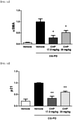
- FIGS. 3a, 3b and 3c it was observed that the extracellular matrix collagen and ⁇ -SMA, which are markers of fibroblasts, were statistically significantly decreased in the CHP-administered group, and it was confirmed that the progression of peritoneal sclerosis was inhibited.
- FIGS. 3a , 3d and 3e it was confirmed that the proteins of p16 and p21, which cause cell cycle blockade and eventually apoptosis, were significantly reduced by CHP administration.
- Isoflurane which is necessary for anesthesia and dissection of mice in each group of Example 1-1 was purchased from Hana Pharma, and VetEquip's RC2 Rodent Circuit Controller Anesthesia System was prepared.
- Phosphate-buffered saline (PBS) was purchased from Hyclone.
- PBS Phosphate-buffered saline
- the mice were anesthetized by respiratory anesthesia with 3 to 3.5% isoflurane. After blood was drawn from the heart of the anesthetized mice, the peritoneal tissue was immediately removed, 50 mg of the peritoneum was cut, 500 ⁇ L of NucleoZOL was added, and then it was crushed using IKA's T10 homogenizer.
- RNA was extracted according to NucleoZOL's total RNA isolation protocol, and cDNA was synthesized from 1 ⁇ g of RNA by reverse transcription polymerase chain reaction using the iScript cDNA synthesis kit.
- the synthesized cDNA was analyzed by real-time PCR with iQ SYBR Green Supermix using forward/reverse primer sets corresponding to each gene.
- the expression value of each gene was corrected by dividing by the expression value of GAPDH, a housekeeping gene.
- Statistical significance was analyzed using Student's t-test statistical method with the peritoneal fibrosis control group (CG-PD) ( ⁇ p ⁇ 0.05, ⁇ p ⁇ 0.05, ⁇ p ⁇ 0.0005).
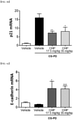
- FIG. 4a it was confirmed that the mRNA expression of the extracellular matrix collagen 1 was decreased in the CHP-administered group.
- FIG. 4b it was confirmed that the gene of p21, which induces cell cycle blockade and ultimately causes apoptosis, was significantly reduced by CHP administration, and as shown in FIG. 4c , it was confirmed that the expression level of E-cadherin, which is a cell junction marker, was significantly increased in the CHP-administered group.
- E-cadherin which is a cell junction marker
Landscapes
- Health & Medical Sciences (AREA)
- Life Sciences & Earth Sciences (AREA)
- Engineering & Computer Science (AREA)
- Chemical & Material Sciences (AREA)
- Animal Behavior & Ethology (AREA)
- Veterinary Medicine (AREA)
- Public Health (AREA)
- General Health & Medical Sciences (AREA)
- Bioinformatics & Cheminformatics (AREA)
- Medicinal Chemistry (AREA)
- Pharmacology & Pharmacy (AREA)
- Proteomics, Peptides & Aminoacids (AREA)
- General Chemical & Material Sciences (AREA)
- Chemical Kinetics & Catalysis (AREA)
- Nuclear Medicine, Radiotherapy & Molecular Imaging (AREA)
- Organic Chemistry (AREA)
- Epidemiology (AREA)
- Immunology (AREA)
- Gastroenterology & Hepatology (AREA)
- Polymers & Plastics (AREA)
- Mycology (AREA)
- Nutrition Science (AREA)
- Food Science & Technology (AREA)
- Molecular Biology (AREA)
- Botany (AREA)
- Biomedical Technology (AREA)
- Physical Education & Sports Medicine (AREA)
- Pulmonology (AREA)
- Heart & Thoracic Surgery (AREA)
- Urology & Nephrology (AREA)
- Emergency Medicine (AREA)
- Hematology (AREA)
- Anesthesiology (AREA)
- Vascular Medicine (AREA)
- Medicines That Contain Protein Lipid Enzymes And Other Medicines (AREA)
- Pharmaceuticals Containing Other Organic And Inorganic Compounds (AREA)
- Coloring Foods And Improving Nutritive Qualities (AREA)
- Acyclic And Carbocyclic Compounds In Medicinal Compositions (AREA)
- Peptides Or Proteins (AREA)
Abstract
Description
- The present invention relates to a use of cyclo(His-Pro) (CHP) for preventing, ameliorating or treating peritoneal fibrosis, and more specifically to a pharmaceutical composition for preventing or treating peritoneal fibrosis including CHP, a health functional food composition for preventing or ameliorating peritoneal fibrosis, a peritoneal dialysis solution, a method for preventing or treating peritoneal fibrosis using CHP, a method of peritoneal dialysis using CHP, a use of CHP in the preparation of a pharmaceutical composition for preventing or treating peritoneal fibrosis and/or a use of CHP in the preparation of a peritoneal dialysis solution.
- Peritoneal dialysis is one of the representative renal replacement therapies, and it is a dialysis method using the peritoneum which is the body's own filter. However, if the function of the peritoneum, which is the only dialysis membrane, is not adequate, it has a fatal disadvantage that it cannot be sustained.
- Accordingly, peritoneal fibrosis (PF) is a major cause of peritoneal structural changes and ultrafiltration disorders in patients with continuous ambulatory peritoneal dialysis (CAPD). Encapsulating peritoneal sclerosis (ESP), which is an extreme form of peritoneal fibrosis, is a representative cause that makes it difficult to continue peritoneal dialysis, and there is no clear preventive method so far, and it is impossible to return to normal function due to the nature of fibrosis-sclerosis. For this reason, once diagnosed, it has a very fatal course.
- As such, attempts to inhibit peritoneal fibrosis in patients with kidney disease not only inhibit the progression to chronic kidney disease which causes socio-economic losses, but are also recognized as an important issue that can determine the continuity of renal replacement therapy, and there is an urgent need to develop a therapeutic agent therefor.
- Meanwhile, the epithelial-mesenchymal transition (EMT) of peritoneal mesothelial cells (PMC) and the peritoneal accumulation of extracellular matrix (ECM) proteins are major features of peritoneal fibrosis, and transforming growth factor (TGF)-β1 is known to play a key role in the development of peritoneal fibrosis.
- Such EMT is known to be characterized by a decrease in the expression of E-cadherin and an accumulation of the expression of α-SMA (de novo α-smooth muscle actin). Since EMT is known to be a reversible process, inhibition of EMT can be considered as a therapeutic target to preserve peritoneal function.
- Under this background, since cyclo(His-Pro) (CHP) exhibited an effect of inhibition of peritoneal epithelial-to-mesenchymal transition (EMT), inhibition of peritoneal apoptosis or inhibition of immune cell infiltration into the peritoneum in an animal model in which peritoneal fibrosis was induced, the inventors of the present invention confirmed that peritoneal fibrosis can be effectively treated and thereby completed the present invention.
- Meanwhile,
Korean Patent Laid-Open No. 10-2013-0006170 - An object of the present invention is to provide a pharmaceutical composition for preventing or treating peritoneal fibrosis, including cyclo(His-Pro).
- Another object of the present invention is to provide a health functional food composition for preventing or ameliorating peritoneal fibrosis, including cyclo(His-Pro).
- Still another object of the present invention is to provide a peritoneal dialysis solution, including cyclo(His-Pro).
- Still another object of the present invention is to provide a method for preventing or treating peritoneal fibrosis, using cyclo(His-Pro).
- Another object of the present invention is to provide a method of peritoneal dialysis, using cyclo(His-Pro).
- Still another object of the present invention is to provide a use of cyclo(His-Pro) in the preparation of a pharmaceutical composition for preventing or treating peritoneal fibrosis.
- Another object of the present invention is to provide a use of cyclo(His-Pro) in the preparation of a peritoneal dialysis solution.
- In order to solve the aforementioned problems, the present invention provides a pharmaceutical composition for preventing or treating peritoneal fibrosis, including cyclo(His-Pro) or a pharmaceutically acceptable salt thereof.
- In addition, the present invention provides a health functional food composition for preventing or ameliorating peritoneal fibrosis, including cyclo(His-Pro) or a sitologically acceptable salt thereof.
- In addition, the present invention provides a peritoneal dialysis solution, including cyclo(His-Pro) or a pharmaceutically acceptable salt thereof.
- Additionally, the present invention provides a method for preventing or treating peritoneal fibrosis, including administering an effective amount of cyclo(His-Pro) to a subject in need thereof.
- In addition, the present invention provides a method of peritoneal dialysis, including administering an effective amount of cyclo(His-Pro) to a subject in need thereof.
- In addition, the present invention provides a use of cyclo(His-Pro) in the preparation of a pharmaceutical composition for preventing or treating peritoneal fibrosis.
- In addition, the present invention provides a use of cyclo(His-Pro) in the preparation of a peritoneal dialysis solution.
- According to a preferred exemplary embodiment of the present invention, the peritoneal fibrosis may include any one or more selected from the group consisting of retroperitoneal fibrosis and encapsulating peritoneal sclerosis.
- According to another preferred exemplary embodiment of the present invention, cyclo(His-Pro) or a pharmaceutically acceptable salt thereof may exhibit any one or more effect selected from the group consisting of inhibition of peritoneal epithelial-to-mesenchymal transition (EMT), inhibition of peritoneal apoptosis and inhibition of immune cell infiltration into the peritoneum.
- According to still another preferred exemplary embodiment of the present invention, peritoneal fibrosis may be caused by dialysis.
- Since the composition including cyclo(His-Pro) according to the present invention exhibits an effect of inhibition of epithelial-to-mesenchymal transition (EMT) in the peritoneum in which fibrosis is induced, inhibition of apoptosis or inhibition of immune cell infiltration to the peritoneum, it can effectively prevent, ameliorate or treat peritoneal fibrosis.
-
-
FIG. 1 is a set of photographs confirming the degree of fibrosis by staining the peritonea of animal models of peritoneal fibrosis administered with CHP (17.5 and 35 mg/kg, respectively) with the periodic acid Schiff (PAS), Masson's Trichrome (MT) and Sirius red, respectively. -
FIG. 2 is a set of photographs observing the degree of peritoneal fibrosis by confirming the protein expression levels of ICAM-1 and F4/80 in the peritonea of animal models of peritoneal fibrosis administered with CHP (17.5 and 35 mg/kg, respectively) through immunohistochemical (IHC) staining, respectively. -
FIG. 3a shows band results confirming the changes in the protein expression levels ofcollagen 1 and αSMA, which are markers of fibrosis, and p16 and p21, which are apoptosis markers, in the peritoneal tissues of animal models of peritoneal fibrosis administered with CHP (17.5 and 35 mg/kg, respectively) by Western blot, andFIG. 3b (collagen 1),FIG. 3c (αSMA),FIG. 3d (p21) andFIG. 3e (p16) are results obtained by quantifying the band size of each target and showing the results as graphs. -
FIG. 4a is a graph confirming the change in the gene expression level ofcollagen 1, which is a marker of fibrosis, in the peritoneal tissue of animal models of peritoneal fibrosis administered with CHP (17.5 and 35 mg/kg, respectively),FIG. 4b is a a graph confirming the change in the gene expression level of p21, which is a cell cycle blocking marker, andFIG. 4c is a graph confirming the change in the gene expression level of E-cadherin, which is a cell junction marker. - Hereinafter, the present invention will be described in more detail.
- As described above, attempts to inhibit peritoneal fibrosis in patients with renal disease not only inhibit the progression to chronic kidney disease which causes socio-economic losses, but are also recognized as an important issue that can determine the continuity of renal replacement therapy, and thus, there is an urgent need to develop a therapeutic agent therefor.
- Accordingly, since cyclo(His-Pro) (CHP) exhibited an effect of inhibition of peritoneal epithelial-to-mesenchymal transition (EMT), inhibition of peritoneal apoptosis or inhibition of immune cell infiltration into the peritoneum in an animal model in which peritoneal fibrosis was induced, the inventors of the present invention confirmed that peritoneal fibrosis can be effectively treated and thereby completed the present invention.
- Accordingly, the present invention provides a pharmaceutical composition for preventing or treating peritoneal fibrosis, including cyclo(His-Pro) or a pharmaceutically acceptable salt thereof and/or a health functional food composition for preventing or ameliorating peritoneal fibrosis, including cyclo(His-Pro) or a sitologically acceptable salt thereof.
- As used herein, the term "cyclo(His-Pro) (CHP)" refers to a naturally occurring circular dipeptide composed of histidine-proline, which is a metabolite of thyrotropin-releasing hormone (TRH) or a physiologically active dipeptide that is also synthesized in the body through TRH metabolism de novo, and it refers to a substance widely distributed in the brain, spinal cord, gastrointestinal tract and the like.
- In the composition of the present invention, the CHP may be synthesized or commercially obtained and used. In addition, it may be used after purification from substances containing CHP, for example, prostate extracts, soybean hydrolyzates or the like.
- By use of the term "purified", it is intended to mean that CHP is in a concentrated form compared to a form obtainable from a natural origin such as prostate extracts. Purified ingredients may be concentrated from their natural sources or obtained through chemical synthesis methods.
- As used herein, the term "peritoneal fibrosis" refers to a condition in which the peritoneum is fibrous and refers to abnormally formed fibrous cells in the peritoneum, for example, it is used in an inclusive sense for retroperitoneal fibrosis or encapsulating peritoneal sclerosis, but is not limited thereto. Fibrosis of the peritoneum may occur, for example, by dialysis
- In the composition for preventing, ameliorating or treating peritoneal fibrosis according to the present invention, cyclo(His-Pro), a pharmaceutically acceptable salt thereof or a sitologically acceptable salt thereof may exhibit any one or more effect selected from the group consisting of inhibition of peritoneal epithelial-to-mesenchymal transition (EMT), inhibition of peritoneal apoptosis and inhibition of immune cell infiltration into the peritoneum.
- As used herein, the term "epithelial-to-mesenchymal transition (EMT)" refers to phenotypic transformation of epithelial cells into mesenchymal cells. Specifically, EMT refers to a phenomenon in which tissue acquires motility as intercellular bonds are loosened and the cytoskeleton is changed, and cells lose their original cell phenotype and are converted to a phenotype of mesenchymal cells. Induction of EMT may lead to accumulation of fibroblasts, and induction of EMT is recognized as an important mechanism of peritoneal fibrosis.
- Accordingly, in a specific exemplary embodiment of the present invention, the anti-fibrotic effect was evaluated by confirming the expression change of EMT markers such as E-cadherin and α-smooth muscle actin (a-SMA) according to CHP administration in an animal model of peritoneal fibrosis. As confirmed in
FIGS. 3a ,3c and4c , it can be seen that CHP suppresses the expression of αSMA, which is a marker of fibrosis, in the peritoneal tissue and increases the expression of E-cadherin, which is a cell junction marker, and as a result, it exhibits an anti-fibrotic effect by suppressing EMT of the peritoneum. - In another specific exemplary embodiment of the present invention, in order to evaluate peritoneal apoptosis according to CHP administration in an animal model in which peritoneal fibrosis was induced, changes in the expressions of p16 and p21, which are apoptosis markers, were confirmed. As confirmed in
FIGS. 3a ,3d ,3e and4b , the expressions of p16 and p21 in the CHP-treated group were significantly reduced, and it was found that apoptosis was suppressed. - The term "fibrosis" refers to a condition, disease or disorder characterized by dysregulated proliferation or activity of fibroblasts, abnormal accumulation of fibronectin and/or pathological or excessive accumulation of collagenous tissue.
- Accordingly, in still another specific exemplary embodiment of the present invention, the anti-fibrotic effect was evaluated by confirming the change in the expression of
collagen 1 according to CHP administration in an animal model in which peritoneal fibrosis was induced. As confirmed inFIGS. 1 (result of Sirius red staining), 3a, 3b and 4a, CHP significantly reduced the expression ofcollagen 1 increased by induction of fibrosis, and it can be seen that it exhibits an excellent anti-fibrotic effect. - In still another specific exemplary embodiment of the present invention, the therapeutic effect on peritoneal fibrosis was evaluated by confirming the degree of infiltration of immune cells according to CHP administration in an animal model in which peritoneal fibrosis was induced. As confirmed in
FIGS. 1 (result of PAS staining) and 2, CHP reduced the deposition of immune cells increased by induction of fibrosis in a concentration-dependent manner, reduced the expression level of intercellular adhesion molecule 1 (ICAM-1) which causes initial immune responses, and reduced the expression level of f4/80-positive cells, which are markers of macrophages and dendritic cells, thereby drastically reducing the infiltration of immune cells. From this, it can be seen that CHP interferes with the progression of peritoneal fibrosis by reducing the infiltration of immune cells. - In the composition for preventing, ameliorating or treating peritoneal fibrosis according to the present invention, the terms "prevention", "amelioration" and/or "treatment" refer to all actions that inhibit or delay the onset of a disease or condition, all actions that ameliorate or beneficially alter the state of a disease or condition, and all actions that delay, interrupt or reverse the progression of a disease or condition.
- As used herein, the term "pharmaceutically acceptable" means that it is physiologically acceptable and does not typically produce an allergic or similar reaction when administered to humans, and as the salt, an acid addition salt formed with a pharmaceutically acceptable free acid is preferred.
- The pharmaceutically acceptable salt may be an acid addition salt formed using an organic or inorganic acid, and the organic acid includes, for example, formic acid, acetic acid, propionic acid, lactic acid, butyric acid, isobutyric acid, trifluoroacetic acid, malic acid, maleic acid, malonic acid, fumaric acid, succinic acid, succinic acid monoamide, glutamic acid, tartaric acid, oxalic acid, citric acid, glycolic acid, glucuronic acid, ascorbic acid, benzoic acid, phthalic acid, salicylic acid, anthranilic acid, dichloroacetic acid, aminooxyacetic acid, benzenesulfonic acid, p-toluenesulfonic acid or methanesulfonic acid. The inorganic acid includes, for example, hydrochloric acid, hydrobromic acid, sulfuric acid, phosphoric acid, nitric acid, carbonic acid or boric acid. The acid addition salt may preferably be in the form of a hydrochloride salt or an acetate salt, and more preferably, in the form of a hydrochloride salt.
- In addition to the above, the additionally possible salt form includes a GABA salt, a gabapentin salt, a pregabalin salt, a nicotinate salt, an adipate salt, a hemimalonate, a cysteine salt, an acetylcysteine salt, a methionine salt, an arginine salt, a lysine salt, an ornithine salt, an aspartate salt or the like.
- In addition, the pharmaceutical composition of the present invention may further include a pharmaceutically acceptable carrier. The pharmaceutically acceptable carrier may further include, for example, a carrier for oral administration or a carrier for parenteral administration. Carriers for oral administration may include lactose, starch, cellulose derivatives, magnesium stearate, stearic acid and the like. Carriers for parenteral administration may include water, suitable oil, saline, aqueous glucose, glycol and the like. In addition, it may further include stabilizers and preservatives. Suitable stabilizers include antioxidants such as sodium bisulfite, sodium sulfite or ascorbic acid. Suitable preservatives include benzalkonium chloride, methyl- or propyl-paraben and chlorobutanol. As other pharmaceutically acceptable carriers, reference may be made to those described in the following document (Remington's Pharmaceutical Sciences, 19th ed., Mack Publishing Company, Easton, PA, 1995).
- The pharmaceutical composition of the present invention may be administered in any manner to mammals, including humans. For example, it may be administered orally or parenterally, and parenteral administration may be intravenous, intramuscular, intraarterial, intramedullary, intrathecal, intracardiac, transdermal, subcutaneous, intraperitoneal, intranasal, enteral, topical, sublingual or rectal administration, but is not limited thereto.
- The pharmaceutical composition of the present invention may be formulated into a preparation for oral administration or parenteral administration according to the administration route as described above. When formulated, it may be formulated with one or more buffering agents (e.g., saline or PBS), carbohydrates (e.g., glucose, mannose, sucrose, or dextran, etc.), antioxidants, bacteriostats, chelating agents (e.g., EDTA or glutathione), fillers, extenders, binders, adjuvants (e.g., aluminum hydroxide), suspending agents, thickening agents, wetting agents, disintegrating agents or surfactants, diluents or excipients.
- Solid preparations for oral administration include tablets, pills, powders, granules, liquids, gels, syrups, slurries, suspensions or capsules, and such solid preparations may be prepared by mixing the pharmaceutical composition of the present invention with at least one or more excipients such as starch (including corn starch, wheat starch, rice starch, potato starch, etc.), calcium carbonate, sucrose, lactose, dextrose, sorbitol, mannitol, xylitol, erythritol, maltitol, cellulose, methyl cellulose, sodium carboxymethylcellulose, hydroxypropylmethyl-cellulose, gelatin or the like. For example, tablets or sugar tablets may be obtained by blending the active ingredient with a solid excipient, grinding it, and processing it into a granule mixture after adding suitable adjuvants.
- Lubricants such as magnesium stearate talc are also used in addition to simple excipients. Liquid formulations for oral use include suspensions, solutions, emulsions, syrups or the like, and various excipients, for example, wetting agents, sweetening agents, fragrances, preservatives or the like may be included, in addition to water or liquid paraffin which are commonly used simple diluents.
- In addition, in some cases, cross-linked polyvinylpyrrolidone, agar, alginic acid, sodium alginate or the like may be added as a disintegrant, and an anti-aggregating agent, a lubricant, a wetting agent, a flavoring agent, an emulsifying agent, a preservative agent and the like may be further included.
- For parenteral administration, the pharmaceutical composition of the present invention may be formulated in the form of an injection, a transdermal administration agent and a nasal inhalation agent together with suitable parenteral carriers according to methods known in the art. The injection must be sterilized and protected from contamination of microorganisms such as bacteria and fungi. Examples of suitable carriers for injection may be solvents or dispersion media including water, ethanol, polyols (e.g., glycerol, propylene glycol, liquid polyethylene glycol, etc.), mixtures thereof and/or vegetable oils, but are not limited thereto. More preferably, as suitable carriers, Hanks' solution, Ringer's solution, phosphate buffered saline (PBS) containing triethanolamine or isotonic solutions such as sterile water for injection, 10% ethanol, 40% propylene glycol, 5% dextrose and the like may be used. In order to protect the injection from microbial contamination, various antibacterial and antifungal agents such as paraben, chlorobutanol, phenol, sorbic acid, thimerosal and the like may be further included. In addition, in most cases, the injection may further include isotonic agents such as sugar or sodium chloride.
- In the case of transdermal administration agents, forms such as an ointment, cream, lotion, gel, an external solution, a paste preparation, a liniment, aerosol and the like are included. In the above, the term 'transdermal administration' means that an effective amount of the active ingredient contained in the pharmaceutical composition is delivered into the skin by topically administering the pharmaceutical composition to the skin.
- In the case of inhalation administration agents, the compound used in accordance with the present invention may be conveniently delivered in the form of an aerosol spray from a pressurized pack or a nebulizer, with the use of a suitable propellant such as dichlorofluoromethane, trichlorofluoromethane, dichlorotetrafluoroethane, carbon dioxide or other suitable gas. In the case of a pressurized aerosol, the dosage unit may be determined by providing a valve to deliver a measured amount. For example, gelatin capsules and cartridges used in inhalers or insufflators may be formulated to contain a powder mixture of the compound and a suitable powder base such as lactose or starch. Formulations for parenteral administration are described in the following document which is a commonly known prescription in all of pharmaceutical chemistry (Remington's Pharmaceutical Science, 15th Edition, 1975. Mack Publishing Company, Easton, Pennsylvania 18042, Chapter 87: Blaug, Seymour).
- When the pharmaceutical composition of the present invention includes cyclo(His-Pro) in an effective amount, it is possible to provide a desirable preventive, ameliorating or therapeutic effect of peritoneal fibrosis. As used herein, the term "effective amount" refers to an amount that exhibits a response greater than that of a negative control, and preferably refers to an amount sufficient to prevent, ameliorate or treat peritoneal fibrosis. The pharmaceutical composition of the present invention may include 0.01 to 99.9% of cyclo(His-Pro), and the remaining amount may be occupied by a pharmaceutically acceptable carrier. The effective amount of cyclo(His-Pro) included in the pharmaceutical composition of the present invention may vary depending on the form in which the composition is commercialized.
- The total effective amount of the pharmaceutical composition of the present invention may be administered to a patient in a single dose, or may also be administered by a fractionated treatment protocol in which multiple doses are administered over a long period of time. The pharmaceutical composition of the present invention may have a varied content of the active ingredient depending on the severity of the disease. For example, it may be administered in a single dose to several divided doses such that it is preferably administered in an amount of 0.001 to 100 mg/kg of body weight per day or more preferably, 0.01 to 10 mg/kg of body weight per day, based on cyclo(His-Pro). However, for the dose of the cyclo(His-Pro), the effective dose for a patient is determined by considering various factors such as the patient's age, body weight, health status, gender, severity of the disease, diet and excretion rate, as well as the route of administration and number of treatments of the pharmaceutical composition, and thus, one of ordinary skill in the art will be able to determine the appropriate effective dose of the cyclo(His-Pro) according to the particular use for preventing, treating or ameliorating peritoneal fibrosis. The pharmaceutical composition according to the present invention is not particularly limited in its formulation, administration route and administration method as long as it shows the effects of the present invention.
- The pharmaceutical composition for preventing or treating peritoneal fibrosis according to the present invention may be used alone or in combination with methods using surgery, radiation therapy, hormone therapy, chemotherapy or a biological response modifier.
- As used herein, the term "health functional food" includes both the meanings of "functional food" and "health food."
- As used herein, the term "functional food" is the same term as food for special health use (FoSHU), and means a food product with high medicinal and medical effects, which is processed to efficiently exhibit bioregulatory functions in addition to nutrition supply.
- As used herein, the term "health food" refers to food having an active health maintenance or effect as compared with general food, and health supplement food refers to food for the purpose of health supplementation. In some cases, the terms of functional food, health food and health functional food are interchangeably used. The food may be prepared in various forms such as tablets, capsules, powders, granules, liquids, pills and the like.
- As a specific example of such functional food, by using the composition, it is possible to produce processed food with improved storage properties while modifying to take into account the characteristics of agricultural products, livestock products or aquatic products.
- The health functional food composition of the present invention may also be prepared in the form of nutritional supplements, food additives and the like, and it is intended for consumption by mammals including humans.
- This type of food compositions may be prepared in various forms according to conventional methods known in the art. As general food, cyclo(His-Pro) may be added to produce beverages (including alcoholic beverages), fruit and processed food thereof (e.g., canned fruit, bottled fruit, jam, marmalade, etc.), fish, meat and processed food thereof (e.g., ham, sausage, corned beef, etc.), bread and noodles (e.g., udon, soba, ramen, spaghetti, macaroni, etc.,), fruit juice, various drinks, cookies, Korean hard taffy, dairy products (e.g., butter, cheese, etc.), edible vegetable oils and fats, margarine, vegetable proteins, retort food, frozen food, various seasonings (e.g., soybean paste, soy sauce, sauce, etc.) and the like, but is not limited thereto.
- In addition, as nutritional supplements, cyclo(His-Pro) may be added to produce capsules, tablets, pills and the like, but is not limited thereto.
- In addition, as health functional food, for example, the cyclo(His-Pro) may be prepared in the form of tea, juice and drink and consumed by liquefying, granulating, encapsulating and powdering such that it may be ingested (health drink), but is not limited thereto. Also, in order to use the cyclo(His-Pro) in the form of food additives, it may be prepared and used in the form of powder or a concentrate. In addition, the cyclo(His-Pro) may be mixed with a known active ingredient known to be effective in preventing or ameliorating peritoneal fibrosis, and prepared in the form of a composition.
- When the food composition of the present invention is used as a health beverage composition, the health beverage composition may contain various flavoring agents, natural carbohydrates or the like as additional components, as in conventional beverages. The aforementioned natural carbohydrates may be monosaccharides such as glucose and fructose; disaccharides such as maltose and sucrose; polysaccharides such as dextrin and cyclodextrin; sugar alcohols such as xylitol, sorbitol, erythritol and the like. As sweetening agents, natural sweetening agents such as thaumatin and stevia extract; synthetic sweeteners such as saccharin, aspartame and the like may be used. The proportion of such natural carbohydrates is generally about 0.01 to 0.04 g, preferably about 0.02 to 0.03 g per 100 mL of the composition of the present invention.
- Cyclo(His-Pro) may be contained as an active ingredient in a food composition for preventing or ameliorating peritoneal fibrosis, and the amount is an effective amount to obtain the preventive or ameliorating effect, for example, it is preferably 0.01 to 100 wt.% based on the total weight of the entire composition, but is not particularly limited thereto. The food composition of the present invention may be prepared by mixing cyclo(His-Pro) with other active ingredients known to be effective in preventing or ameliorating peritoneal fibrosis.
- In addition to the above, the health functional food of the present invention may contain various nutrients, vitamins, electrolytes, flavoring agents, coloring agents, pectic acid, salts of pectic acid, alginic acid, salts of alginic acid, organic acids, protective colloid thickeners, pH regulators, stabilizers, antiseptics, glycerin, alcohols, carbonating agents or the like. In addition, the health food of the present invention may contain fruit flesh for the production of natural fruit juice, fruit juice beverages, or vegetable beverages. These components may be used independently or in combination. The proportion of these additives is not critically important, but is generally chosen in a range from 0.01 to 0.1 parts by weight per 100 parts by weight of the composition of the present invention.
- Since cyclo(His-Pro) or a pharmaceutically acceptable salt thereof of the present invention inhibits EMT and apoptosis of peritoneal cells, it may be included in a peritoneal dialysis solution to ameliorate, delay, prevent or treat peritoneal fibrosis and peritoneal fibers.
- The peritoneal dialysis solution including cyclo(His-Pro) or a pharmaceutically acceptable salt thereof according to the present invention may include any one or more selected from the group consisting of an osmotic agent, a buffer, an electrolyte and a combination thereof. For example, the osmotic agent may include glucose, glucose polymers (e.g., maltodextrin and icodextrin), glucose polymer derivatives, cyclodextrins, modified starch, hydroxyethyl starch, polyols, fructose, amino acids, peptides, proteins, aminosaccharides, glycerol, N-acetyl glucosamine (NAG) or a combination thereof. The buffer may include bicarbonate, lactate, pyruvate, acetate, citrate, tris (i.e., tris(hydroxymethyl)aminomethane), amino acids, peptides or a combination thereof. The electrolyte may include sodium, potassium, magnesium, calcium and chloride.
- The peritoneal dialysis solution of the present invention may include one or more dialysis components (elements or components of the dialysis solution) and a therapeutically effective amount of an active substance, and include cyclo(His-Pro) or a pharmaceutically acceptable salt thereof as a component for alleviating, ameliorating, preventing or treating peritoneal fibrosis and peritoneal fibers. The peritoneal dialysis solution may be a dialysis concentrate, and the dialysis solution may include about 0.1 µM to about 1,000 µM of cyclo(His-Pro) or a pharmaceutically acceptable salt thereof.
- The peritoneal dialysis solution may be used as a single dialysis solution in a single container or as a dialysate in a separately housed or multi-chambered container, and may be administered to a patient at the same time of or by having a time difference with the conventionally used dialysis solution in peritoneal dialysis.
- In addition, the present invention relates to a method for preventing or treating peritoneal fibrosis, including administering an effective amount of cyclo(His-Pro) to a subject in need thereof.
- The present invention also relates to a method of peritoneal dialysis, including administering an effective amount of cyclo(His-Pro) to a subject in need thereof.
- In the methods of the present invention, the term "subject" includes any animal (e.g., human, horse, pig, rabbit, dog, sheep, goat, non-human primate, cow, cat, guinea pig or rodent), but is not limited thereto. These terms do not denote a specific age or gender. Accordingly, these are intended to include adult/adult and neonatal subjects, whether female/female or male/male, as well as fetuses. A patient refers to a subject afflicted with a disease or disorder. The term "patient" includes human and veterinary subjects.
- In the method for preventing or treating peritoneal fibrosis according to the present invention, the description of the composition including the effect of CHP and the administration route thereof, the number of administrations, the dosage and the like is the same as described above, and thus, the description thereof will be omitted.
- The method of peritoneal dialysis according to the present invention may be performed on all patients whose kidneys are damaged and cannot excrete water and wastes on their own, and the patient may be, for example, a chronic renal failure patient, but is not limited thereto.
- The method of peritoneal dialysis according to the present invention may be performed by a method known in the art, and for example, it may be carried out in a manner by inserting a catheter (conduit) leading to the abdominal cavity in the lower abdomen and inserting a dialysis solution therethrough to remove moisture and wastes from the body's waste products and water through diffusion and penetration into the dialysis solution, but is not limited thereto.
- Furthermore, the present invention provides a use of cyclo(His-Pro) in the preparation of a pharmaceutical composition for preventing or treating peritoneal fibrosis.
- In addition, the present invention provides a use of cyclo(His-Pro) in the preparation of a peritoneal dialysis solution.
- In the uses of the present invention, the description of the effect of CHP, the pharmaceutical composition for preventing or treating peritoneal fibrosis, and the peritoneal dialysis solution are the same as described above, and thus, the description thereof will be omitted.
- Hereinafter, the present invention will be described in more detail through examples. However, since the present invention may have various changes and forms, the specific examples and descriptions described below are only for helping the understanding of the present invention and are not intended to limit the present invention to a specific disclosed form. It should be understood that the scope of the present invention includes all modifications, equivalents and substitutes included in the spirit and scope of the present invention.
- Cyclo(His-Pro) (CHP) used in the following examples was purchased from Bachem and used.
- In order to create an animal model of peritoneal fibrosis, 7-week-old C57BL/6 male mice were purchased from Koatech and bred under constant conditions (temperature: 22 ± 2°C, relative humidity: 55 ± 10%, circadian cycle: 12 hours). Five animals were grouped into one group, and water and food were freely supplied in cages, and they were used in the experiment after acclimatization for one week before the experiment. After the acclimatization period, 0.1% chlorohexidine was administered by intraperitoneal injection every 3 days for 30 days to establish an animal model of peritoneal fibrosis. Divided into 4 groups,
Group 1 of the experimental animals was set as a control group (vehicle) that did not undergo peritoneal fibrosis by administering phosphate-buffered saline, andGroup 2 was set as a control group (CG-PD) in which peritoneal fibrosis was progressed by administering phosphate-buffered saline. Group 3 was orally administrated with CHP at a concentration of 17.5 mg/kg (CG-PD + CHP(17.5)), and Group 4 was orally administered with CHP at a concentration of 35 mg/kg (CG-PD + CHP(35)) through 1 mL syringes every day for 30 days. - Among the experimental animals designed in Example 1-1, the peritoneum was obtained from the mice of the groups administered with the drug and 0.1% chlorohexidine for 30 days from the xyphoid process to the upper part of the pelvic cavity, and then sacrificed with whole blood. From the skin to the parietal peritoneum, the tissues of the left abdomen were excised in a size of 0.5 × 1.0 cm, and some were fixed in 10% formalin for immunostaining and then embedded in paraffin. The tissue sections were cut to a thickness of 4 µm and evaluated by performing Periodic acid-Schiff (PAS) staining, Masson's trichrome (MT) staining and Sirius Red staining to check the degree of peritoneal fibrosis. After observation with an optical microscope, photographs were taken (Olympus BX-50, Olympus Optical, Tokyo, Japan).
- As a result of the experiment, as shown in
FIG. 1 , it was confirmed that the deposition of immune cells was increased in the fibrosis control group (CG-PD) than in the negative control (vehicle) through PAS staining, and the deposition of immune cells was significantly reduced in a concentration-dependent manner by CHP administration. In addition, through MT staining, it was confirmed that the peritoneal layer was thicker in the fibrosis control group (CG-PD) than in the negative control group (vehicle), and the peritoneal layer which was thickened in theCHP 35 mg/kg administration group compared to the 17.5 mg/kg administration group was significantly reduced. Through Sirius red staining, it was confirmed that the accumulation of extracellular matrix (ECM) collagen was significantly reduced in a concentration-dependent manner according to the administration of CHP. - Through the above results, it was possible to confirm the excellent therapeutic effect of CHP on peritoneal fibrosis.
- Peritoneal tissues were extracted from the mice of each group of Example 1-1, fixed in 10% formalin for immunostaining and then embedded in paraffin. Using the streptavidin biotin peroxidase (Vector Laboratories) method, these were reacted with each of the anti-ICAM1 antibody and the anti-F40/80 antibody at 4°C for 16 hours, followed by color development with diaminobenzidine tetrahydrochloride (DAB) to confirm the expressions. After each expression level was observed with an optical microscope, photographs were taken (Olympus BX-50, Olympus Optical, Tokyo, Japan).
- As a result of the experiment, as shown in
FIG. 2 , it was confirmed that the expression level of intercellular adhesion molecule 1 (ICAM-1), which induces an initial immune response, was increased in the fibrosis control group (CG-PD) than in the negative control group (vehicle), and as the severity of peritoneal sclerosis decreased by CHP administration, it was confirmed that the expression level of ICAM-1 also decreased. In addition, in the CG-PD group, the expression levels of f4/80-positive cells, which are well known as markers of macrophages and dendritic cells among immune cells, increased with an increase in peritoneal sclerosis, and then it was confirmed that the infiltration of immune cells was rapidly decreased by CHP administration. - Through the above results, it was confirmed that CHP administration can inhibit the infiltration of immune cells and interfere with the progression of peritoneal sclerosis.
- Isoflurane which is necessary for anesthesia and dissection of mice in each group of Example 1-1 was purchased from Hana Pharm, and VetEquip's RC2 Rodent Circuit Controller Anesthesia System was prepared. Phosphate-buffered saline (PBS) was purchased from Hyclone. In order to isolate the peritoneal tissue of the mice, the mice were anesthetized by respiratory anesthesia with 3 to 3.5% isoflurane. After blood was drawn from the heart of anesthetized mice, the peritoneal tissue was immediately removed, washed with PBS, and 50 mg of the peritoneal tissue was cut out and placed in 500 µL of RIPA buffer containing protease and phosphatase inhibitors, and it was crushed using IKA's T10 homogenizer. After standing on ice for 15 minutes, centrifugation was performed at 15,000 rpm at 4°C. The supernatant was collected and the protein concentration was measured by BCA quantitation, and in the same amount of the samples, the protein was separated using the Bolt™ protein gel electrophoresis system, and then transferred to a nitrocellulose membrane. The membrane was blocked with 5% skim milk at room temperature for 1 hour, and then reacted with
primary antibodies collagen 1, αSMA, NRF2, p16, p21 and GAPDH antibodies overnight at 4°C. After washing 3 times for 10 minutes with TBST, the reaction was performed with the secondary antibodies at room temperature for 1 hour. After washing 3 times for 10 minutes with TBST, the expression level was measured by reacting with ECL. The size of the appearing band was quantified using the ImageJ program, and each band size value was divided by the GAPDH band size value and corrected. Statistical significance was analyzed using Student's t-test statistical method with the peritoneal fibrosis control group (CG-PD) (∗p<0.05, ∗∗p<0.05, ∗∗∗p<0.0005). - As a result of the experiment, as shown in
FIGS. 3a, 3b and3c , it was observed that the extracellular matrix collagen and α-SMA, which are markers of fibroblasts, were statistically significantly decreased in the CHP-administered group, and it was confirmed that the progression of peritoneal sclerosis was inhibited. In addition, as shown inFIGS. 3a ,3d and3e , it was confirmed that the proteins of p16 and p21, which cause cell cycle blockade and eventually apoptosis, were significantly reduced by CHP administration. - These results mean that CHP inhibits apoptosis and ameliorates peritoneal fibrosis, and it was confirmed as a basis for application to the treatment of peritoneal fibrosis.
- Isoflurane which is necessary for anesthesia and dissection of mice in each group of Example 1-1 was purchased from Hana Pharma, and VetEquip's RC2 Rodent Circuit Controller Anesthesia System was prepared. Phosphate-buffered saline (PBS) was purchased from Hyclone. In order to isolate the peritoneal tissue of the mice, the mice were anesthetized by respiratory anesthesia with 3 to 3.5% isoflurane. After blood was drawn from the heart of the anesthetized mice, the peritoneal tissue was immediately removed, 50 mg of the peritoneum was cut, 500 µL of NucleoZOL was added, and then it was crushed using IKA's T10 homogenizer. Subsequently, RNA was extracted according to NucleoZOL's total RNA isolation protocol, and cDNA was synthesized from 1 µg of RNA by reverse transcription polymerase chain reaction using the iScript cDNA synthesis kit. The synthesized cDNA was analyzed by real-time PCR with iQ SYBR Green Supermix using forward/reverse primer sets corresponding to each gene. The expression value of each gene was corrected by dividing by the expression value of GAPDH, a housekeeping gene. Statistical significance was analyzed using Student's t-test statistical method with the peritoneal fibrosis control group (CG-PD) (∗p<0.05, ∗∗p<0.05, ∗∗∗p<0.0005).
- As a result of the experiment, as shown in
FIG. 4a , it was confirmed that the mRNA expression of theextracellular matrix collagen 1 was decreased in the CHP-administered group. In addition, as shown inFIG. 4b , it was confirmed that the gene of p21, which induces cell cycle blockade and ultimately causes apoptosis, was significantly reduced by CHP administration, and as shown inFIG. 4c , it was confirmed that the expression level of E-cadherin, which is a cell junction marker, was significantly increased in the CHP-administered group. - These results show that CHP can prevent apoptosis and inhibit the progression of peritoneal fibrosis.
Claims (22)
- A pharmaceutical composition for preventing or treating peritoneal fibrosis, comprising cyclo(His-Pro) or a pharmaceutically acceptable salt thereof.
- The pharmaceutical composition of claim 1, wherein the peritoneal fibrosis includes any one or more selected from the group consisting of retroperitoneal fibrosis and encapsulating peritoneal sclerosis.
- The pharmaceutical composition of claim 1, wherein cyclo(His-Pro) or a pharmaceutically acceptable salt thereof exhibits any one or more effect selected from the group consisting of inhibition of peritoneal epithelial-to-mesenchymal transition (EMT), inhibition of peritoneal apoptosis and inhibition of immune cell infiltration into the peritoneum.
- The pharmaceutical composition of claim 1, wherein the peritoneal fibrosis is caused by dialysis.
- A health functional food composition for preventing or ameliorating peritoneal fibrosis, comprising cyclo(His-Pro) or a sitologically acceptable salt thereof.
- The health functional food composition of claim 5, wherein the peritoneal fibrosis includes any one or more selected from the group consisting of retroperitoneal fibrosis and encapsulating peritoneal sclerosis.
- The health functional food composition of claim 5, wherein cyclo(His-Pro) or a sitologically acceptable salt thereof exhibits any one or more effect selected from the group consisting of inhibition of peritoneal epithelial-to-mesenchymal transition (EMT), inhibition of peritoneal apoptosis and inhibition of immune cell infiltration into the peritoneum.
- The health functional food composition of claim 5, wherein the peritoneal fibrosis is caused by dialysis.
- A peritoneal dialysis solution, comprising cyclo(His-Pro) or a pharmaceutically acceptable salt thereof.
- The peritoneal dialysis solution of claim 9, wherein cyclo(His-Pro) or a pharmaceutically acceptable salt thereof exhibits any one or more effect selected from the group consisting of inhibition of peritoneal epithelial-to-mesenchymal transition (EMT), inhibition of peritoneal apoptosis and inhibition of immune cell infiltration into the peritoneum.
- A method for preventing or treating peritoneal fibrosis, comprising administering an effective amount of cyclo(His-Pro) to a subject in need thereof.
- The method of claim 11, wherein the peritoneal fibrosis includes any one or more selected from the group consisting of retroperitoneal fibrosis and encapsulating peritoneal sclerosis.
- The method of claim 11, wherein cyclo(His-Pro) exhibits any one or more effect selected from the group consisting of inhibition of peritoneal epithelial-to-mesenchymal transition (EMT), inhibition of peritoneal apoptosis and inhibition of immune cell infiltration into the peritoneum.
- The method of claim 11, wherein the peritoneal fibrosis is caused by dialysis.
- A method of peritoneal dialysis, comprising administering an effective amount of cyclo(His-Pro) to a subject in need thereof.
- The method of claim 15, wherein cyclo(His-Pro) exhibits any one or more effect selected from the group consisting of inhibition of peritoneal epithelial-to-mesenchymal transition (EMT), inhibition of peritoneal apoptosis and inhibition of immune cell infiltration into the peritoneum.
- A use of cyclo(His-Pro) in the preparation of a pharmaceutical composition for preventing or treating peritoneal fibrosis.
- The use of claim 17, wherein the peritoneal fibrosis includes any one or more selected from the group consisting of retroperitoneal fibrosis and encapsulating peritoneal sclerosis.
- The use of claim 17, wherein cyclo(His-Pro) exhibits any one or more effect selected from the group consisting of inhibition of peritoneal epithelial-to-mesenchymal transition (EMT), inhibition of peritoneal apoptosis and inhibition of immune cell infiltration into the peritoneum.
- The use of claim 17, wherein the peritoneal fibrosis is caused by dialysis.
- A use of cyclo(His-Pro) in the preparation of a peritoneal dialysis solution.
- The use of claim 21, wherein cyclo(His-Pro) exhibits any one or more effect selected from the group consisting of inhibition of peritoneal epithelial-to-mesenchymal transition (EMT), inhibition of peritoneal apoptosis and inhibition of immune cell infiltration into the peritoneum.
Applications Claiming Priority (3)
| Application Number | Priority Date | Filing Date | Title |
|---|---|---|---|
| KR20190036269 | 2019-03-28 | ||
| KR1020200037858A KR102133151B1 (en) | 2019-03-28 | 2020-03-27 | Composition comprising chp (cyclo-his pro) for preventing, improving or treating of peritoneal fibrosis |
| PCT/KR2020/004343 WO2020197356A1 (en) | 2019-03-28 | 2020-03-30 | Use of cyclo his-pro (chp) for preventing, alleviating or treating peritoneal fibrosis |
Publications (3)
| Publication Number | Publication Date |
|---|---|
| EP3949976A1 true EP3949976A1 (en) | 2022-02-09 |
| EP3949976A4 EP3949976A4 (en) | 2023-02-15 |
| EP3949976B1 EP3949976B1 (en) | 2024-10-09 |
Family
ID=71570783
Family Applications (2)
| Application Number | Title | Priority Date | Filing Date |
|---|---|---|---|
| EP20776685.8A Active EP3949976B1 (en) | 2019-03-28 | 2020-03-30 | Use of cyclo his-pro (chp) for preventing, alleviating or treating peritoneal fibrosis |
| EP20777378.9A Pending EP3967321A4 (en) | 2019-03-28 | 2020-03-30 | USING CYCLO-HIS-PRO (CHP) TO PREVENT, IMPROVE OR TREAT FIBROSIS |
Family Applications After (1)
| Application Number | Title | Priority Date | Filing Date |
|---|---|---|---|
| EP20777378.9A Pending EP3967321A4 (en) | 2019-03-28 | 2020-03-30 | USING CYCLO-HIS-PRO (CHP) TO PREVENT, IMPROVE OR TREAT FIBROSIS |
Country Status (8)
| Country | Link |
|---|---|
| US (2) | US20220202897A1 (en) |
| EP (2) | EP3949976B1 (en) |
| JP (2) | JP7224006B2 (en) |
| KR (2) | KR102133151B1 (en) |
| CN (2) | CN113766925B (en) |
| BR (1) | BR112021019262A2 (en) |
| CA (1) | CA3131850A1 (en) |
| WO (2) | WO2020197356A1 (en) |
Families Citing this family (12)
| Publication number | Priority date | Publication date | Assignee | Title |
|---|---|---|---|---|
| US11820834B2 (en) | 2018-07-10 | 2023-11-21 | Novmetapharma Co., Ltd. | Polymorphic forms of Cyclo (-His-Pro) and methods of use to treat kidney disease |
| KR102133151B1 (en) * | 2019-03-28 | 2020-07-13 | 주식회사 노브메타파마 | Composition comprising chp (cyclo-his pro) for preventing, improving or treating of peritoneal fibrosis |
| US20230165855A1 (en) | 2020-03-20 | 2023-06-01 | Novmetapharma Co., Ltd. | Use of cyclo-hispro (chp) for lowering blood pressure |
| WO2022038560A1 (en) * | 2020-08-20 | 2022-02-24 | Novmetapharma Co., Ltd. | Method for treating inflammatory bowel diseases |
| US12053467B2 (en) | 2020-12-18 | 2024-08-06 | NovMeta Pharma Co., Ltd. | Method of treating fibrosis |
| CN119403560A (en) * | 2022-06-23 | 2025-02-07 | 学校法人爱知医科大学 | Composition for inhibiting peritoneal deterioration, kit for inhibiting peritoneal deterioration, peritoneal dialysis fluid, and peritoneal dialysis fluid kit |
| WO2024085325A1 (en) * | 2022-10-19 | 2024-04-25 | 이화여자대학교 산학협력단 | Composition for alleviating, preventing, or treating peritoneal fibrosis, comprising tiplaxtinin |
| WO2025084581A1 (en) * | 2023-10-18 | 2025-04-24 | 이화여자대학교 산학협력단 | Tonsil-derived mesenchymal stem cell-containing composition for alleviating, preventing, or treating peritoneal fibrosis |
| KR20250057667A (en) | 2023-10-18 | 2025-04-29 | 주식회사 노브메타파마 | Screening method for therapeutic agents for fibrosis using CLIC1 |
| KR20250093685A (en) * | 2023-12-15 | 2025-06-25 | 주식회사 노브메타파마 | Composition for improving exercise performance or muscular function, or preventing, ameliorating or treating muscle disease comprising cyclo-his pro(chp) |
| WO2025135793A1 (en) * | 2023-12-18 | 2025-06-26 | 주식회사 노브메타파마 | Cyclo-hispro derivative and use thereof for preventing, ameliorating or treating fibrosis |
| WO2025230339A1 (en) * | 2024-04-30 | 2025-11-06 | 주식회사 노브메타파마 | Use of cyclo-hispro alone or zinc and cyclo-hispro for inhibiting muscle loss or alleviating muscle function decline caused by anti-obesity drugs |
Family Cites Families (30)
| Publication number | Priority date | Publication date | Assignee | Title |
|---|---|---|---|---|
| US5576287A (en) * | 1994-04-29 | 1996-11-19 | Wake Forest University | Method for treating acute renal disease and failure |
| US7202279B1 (en) | 1998-02-11 | 2007-04-10 | Georgetown University | Cyclic dipeptides and azetidinone compounds and their use in treating CNS injury and neurodegenerative disorders |
| US6090780A (en) | 1999-04-07 | 2000-07-18 | Chandon Prasad | Histidyl-proline diketopiperazine and method of use |
| WO2002001956A1 (en) * | 2000-06-30 | 2002-01-10 | Chandan Prasad | Histidyl-proline diketopiperazine and method of use |
| AU2001279313B2 (en) * | 2000-08-04 | 2007-03-01 | Ampio Pharmaceuticals, Inc. | Method of using diketopiperazines and composition containing them |
| CA3050734A1 (en) * | 2003-05-15 | 2004-12-02 | Ampio Pharmaceuticals, Inc. | Treatment of t-cell mediated diseases |
| WO2008052295A1 (en) | 2006-10-30 | 2008-05-08 | Universidade Federal De Minas Gerais | Process for the preparation of compounds of at1 receptor antagonists with angiotensin-(1-7), analogues thereof and/or mixtures of these systems, pharmaceutical compositions thereof and use of their derivative products |
| WO2008109445A1 (en) | 2007-03-02 | 2008-09-12 | Preventive Nutrient Company, Inc. | Compositions and methods for treating alzheimer's disease and dementia |
| WO2009146320A1 (en) * | 2008-05-27 | 2009-12-03 | Dmi Life Sciences, Inc. | Therapeutic methods and compounds |
| US20090297616A1 (en) | 2008-05-28 | 2009-12-03 | William Posten | Wound Care Composition |
| US20120070520A1 (en) * | 2009-05-26 | 2012-03-22 | Hyun Jung Shin | Composition containing a bean extract for improving blood circulation and increasing vascular health |
| PH12012501300B1 (en) | 2009-12-25 | 2017-09-27 | Suntory Beverage & Food Asia Pte Ltd | Learning motivation improvers |
| US8507496B2 (en) * | 2010-09-07 | 2013-08-13 | Dmi Acquisition Corp. | Treatment of diseases |
| KR101273163B1 (en) * | 2010-11-23 | 2013-06-14 | 강릉원주대학교산학협력단 | Composition comprising the powdered salted squid, the polar solvent soluble extract or insoluble extract thereof for preventing and treating obesity or hyperlipidemia and atherosclerotic-vascular diseases |
| KR101224685B1 (en) * | 2010-11-23 | 2013-01-21 | 강릉원주대학교산학협력단 | Composition comprising the powdered salted shrimp, the polar solvent soluble extract or insoluble extract thereof for preventing and treating obesity or hyperlipidemia and atherosclerotic-vascular diseases |
| WO2013006170A1 (en) * | 2011-07-06 | 2013-01-10 | Hewlett-Packard Development Company, L.P. | Telepresence portal system |
| KR101418968B1 (en) | 2011-07-08 | 2014-07-14 | 대구대학교 산학협력단 | Composition for blood sugar regulation comprising soybean hydrololysate with high chp(cyclo(his-pro)) |
| TWI689489B (en) | 2013-03-15 | 2020-04-01 | 英商邊緣生物科技有限公司 | Substituted aromatic compounds for the treatment of pulmonary fibrosis, liver fibrosis, skin fibrosis and heart fibrosis |
| JP2018510910A (en) * | 2015-03-24 | 2018-04-19 | ザ・ニュージーランド・インスティチュート・フォー・プラント・アンド・フード・リサーチ・リミテッド | Water-soluble mussel extract |
| KR101617584B1 (en) * | 2015-05-13 | 2016-05-02 | 이화여자대학교 산학협력단 | Pharmaceutical composition for prevention or treatment of peritoneal fibrosis |
| KR102012554B1 (en) * | 2016-07-13 | 2019-08-23 | 주식회사 노브메타파마 | Cytoprotective composition for protection of cell containing Cyclo His-Pro as Active Ingredient |
| WO2018012901A1 (en) * | 2016-07-13 | 2018-01-18 | 주식회사 노브메타파마 | Composition for cell protection containing cyclo histidine-proline as active ingredient |
| KR101734986B1 (en) * | 2016-07-20 | 2017-05-12 | 부산대학교 산학협력단 | Compositions for preventing or treating fibrotic diseases comprising an Alismol |
| US20190314449A1 (en) | 2016-11-16 | 2019-10-17 | The Board Of Regents Of The University Of Texas System | Cyclic dipeptides and wound healing |
| US20200237815A1 (en) | 2017-02-24 | 2020-07-30 | Alain Martin | Methods for treatment of lung damage and for inhibition of lung fibrosis |
| CN107260730B (en) * | 2017-05-31 | 2019-10-22 | 上海市东方医院 | Use of inhibitor of histone deacetylase HDAC6 in preparation of medicine for preventing and treating peritoneal fibrosis after peritoneal dialysis |
| ES2964549T3 (en) | 2018-07-10 | 2024-04-08 | Novmetapharma Co Ltd | New polymorphic forms of cycle (-His-Pro) |
| KR102133151B1 (en) * | 2019-03-28 | 2020-07-13 | 주식회사 노브메타파마 | Composition comprising chp (cyclo-his pro) for preventing, improving or treating of peritoneal fibrosis |
| US20200345728A1 (en) | 2019-04-30 | 2020-11-05 | Novmetapharma Co., Ltd. | Compositions and methods for treatment of atherosclerosis |
| US12053467B2 (en) | 2020-12-18 | 2024-08-06 | NovMeta Pharma Co., Ltd. | Method of treating fibrosis |
-
2020
- 2020-03-27 KR KR1020200037858A patent/KR102133151B1/en active Active
- 2020-03-27 KR KR1020200037859A patent/KR102140910B1/en active Active
- 2020-03-30 CN CN202080026734.0A patent/CN113766925B/en active Active
- 2020-03-30 EP EP20776685.8A patent/EP3949976B1/en active Active
- 2020-03-30 BR BR112021019262A patent/BR112021019262A2/en unknown
- 2020-03-30 US US17/599,211 patent/US20220202897A1/en active Pending
- 2020-03-30 JP JP2021557877A patent/JP7224006B2/en active Active
- 2020-03-30 CN CN202080025936.3A patent/CN113766924B/en active Active
- 2020-03-30 WO PCT/KR2020/004343 patent/WO2020197356A1/en not_active Ceased
- 2020-03-30 WO PCT/KR2020/004354 patent/WO2020197359A1/en not_active Ceased
- 2020-03-30 EP EP20777378.9A patent/EP3967321A4/en active Pending
- 2020-03-30 US US17/599,118 patent/US12558396B2/en active Active
- 2020-03-30 JP JP2021557878A patent/JP7330471B2/en active Active
- 2020-03-30 CA CA3131850A patent/CA3131850A1/en active Pending
Also Published As
| Publication number | Publication date |
|---|---|
| JP7330471B2 (en) | 2023-08-22 |
| EP3949976B1 (en) | 2024-10-09 |
| BR112021019262A2 (en) | 2021-11-30 |
| CN113766925A (en) | 2021-12-07 |
| CN113766925B (en) | 2025-01-24 |
| EP3967321A1 (en) | 2022-03-16 |
| KR102133151B1 (en) | 2020-07-13 |
| CN113766924A (en) | 2021-12-07 |
| US12558396B2 (en) | 2026-02-24 |
| CN113766924B (en) | 2024-12-27 |
| US20220193179A1 (en) | 2022-06-23 |
| WO2020197359A1 (en) | 2020-10-01 |
| CA3131850A1 (en) | 2020-10-01 |
| JP2022528087A (en) | 2022-06-08 |
| US20220202897A1 (en) | 2022-06-30 |
| EP3967321A4 (en) | 2023-07-05 |
| JP2022528857A (en) | 2022-06-16 |
| EP3949976A4 (en) | 2023-02-15 |
| KR102140910B1 (en) | 2020-08-04 |
| WO2020197356A1 (en) | 2020-10-01 |
| JP7224006B2 (en) | 2023-02-17 |
Similar Documents
| Publication | Publication Date | Title |
|---|---|---|
| EP3949976B1 (en) | Use of cyclo his-pro (chp) for preventing, alleviating or treating peritoneal fibrosis | |
| EP3714885B1 (en) | Composition for preventing, alleviating, or treating bone loss diseases, comprising cyclo(his-pro) (chp) | |
| CN105935364B (en) | Composition comprising ginsenoside F2 for preventing or treating non-alcoholic liver disease | |
| JP2008214242A (en) | peptide | |
| EP4122484A1 (en) | Use of cyclo-hispro (chp) for lowering blood pressure | |
| CN103446166B (en) | Hepatic function remedial agent | |
| KR101830395B1 (en) | Composition comprising squalene for enhancement of muscle function and prevention of muscle damage | |
| EP3970735B1 (en) | Use of composition for preventing, ameliorating, or treating bone loss disorders, comprising cyclo-hispro (chp) and parathyroid hormone | |
| KR102427242B1 (en) | Composition for relieving fatigue comprising euscaphic acid | |
| HK40063174A (en) | Use of cyclo his-pro (chp) for preventing, alleviating or treating peritoneal fibrosis | |
| JPH11171763A (en) | Liver disease treatment | |
| WO2002098405A1 (en) | Liver fibrosis inhibitors | |
| HK40037664A (en) | Composition for preventing, alleviating, or treating bone loss diseases, comprising cyclo(his-pro) (chp) | |
| HK40092719A (en) | Use of cyclo-hispro (chp) for lowering blood pressure | |
| HK40060507A (en) | Use of composition for preventing, ameliorating, or treating bone loss disorders, comprising cyclo-hispro (chp) and parathyroid hormone |
Legal Events
| Date | Code | Title | Description |
|---|---|---|---|
| STAA | Information on the status of an ep patent application or granted ep patent |
Free format text: STATUS: THE INTERNATIONAL PUBLICATION HAS BEEN MADE |
|
| PUAI | Public reference made under article 153(3) epc to a published international application that has entered the european phase |
Free format text: ORIGINAL CODE: 0009012 |
|
| STAA | Information on the status of an ep patent application or granted ep patent |
Free format text: STATUS: REQUEST FOR EXAMINATION WAS MADE |
|
| 17P | Request for examination filed |
Effective date: 20211001 |
|
| AK | Designated contracting states |
Kind code of ref document: A1 Designated state(s): AL AT BE BG CH CY CZ DE DK EE ES FI FR GB GR HR HU IE IS IT LI LT LU LV MC MK MT NL NO PL PT RO RS SE SI SK SM TR |
|
| DAV | Request for validation of the european patent (deleted) | ||
| DAX | Request for extension of the european patent (deleted) | ||
| A4 | Supplementary search report drawn up and despatched |
Effective date: 20230116 |
|
| RIC1 | Information provided on ipc code assigned before grant |
Ipc: A61M 1/28 19850101ALI20230110BHEP Ipc: A23L 33/10 20160101ALI20230110BHEP Ipc: A23L 33/18 20160101ALI20230110BHEP Ipc: A61P 43/00 20000101ALI20230110BHEP Ipc: A61K 38/01 19950101ALI20230110BHEP Ipc: A61K 38/05 19950101ALI20230110BHEP Ipc: A61K 38/12 19950101AFI20230110BHEP |
|
| STAA | Information on the status of an ep patent application or granted ep patent |
Free format text: STATUS: EXAMINATION IS IN PROGRESS |
|
| 17Q | First examination report despatched |
Effective date: 20231120 |
|
| GRAP | Despatch of communication of intention to grant a patent |
Free format text: ORIGINAL CODE: EPIDOSNIGR1 |
|
| STAA | Information on the status of an ep patent application or granted ep patent |
Free format text: STATUS: GRANT OF PATENT IS INTENDED |
|
| INTG | Intention to grant announced |
Effective date: 20240513 |
|
| GRAS | Grant fee paid |
Free format text: ORIGINAL CODE: EPIDOSNIGR3 |
|
| GRAA | (expected) grant |
Free format text: ORIGINAL CODE: 0009210 |
|
| STAA | Information on the status of an ep patent application or granted ep patent |
Free format text: STATUS: THE PATENT HAS BEEN GRANTED |
|
| AK | Designated contracting states |
Kind code of ref document: B1 Designated state(s): AL AT BE BG CH CY CZ DE DK EE ES FI FR GB GR HR HU IE IS IT LI LT LU LV MC MK MT NL NO PL PT RO RS SE SI SK SM TR |
|
| REG | Reference to a national code |
Ref country code: CH Ref legal event code: EP |
|
| REG | Reference to a national code |
Ref country code: DE Ref legal event code: R096 Ref document number: 602020039170 Country of ref document: DE |
|
| REG | Reference to a national code |
Ref country code: IE Ref legal event code: FG4D |
|
| P01 | Opt-out of the competence of the unified patent court (upc) registered |
Free format text: CASE NUMBER: APP_53164/2024 Effective date: 20240924 |
|
| REG | Reference to a national code |
Ref country code: LT Ref legal event code: MG9D |
|
| REG | Reference to a national code |
Ref country code: NL Ref legal event code: MP Effective date: 20241009 |
|
| REG | Reference to a national code |
Ref country code: AT Ref legal event code: MK05 Ref document number: 1729853 Country of ref document: AT Kind code of ref document: T Effective date: 20241009 |
|
| PG25 | Lapsed in a contracting state [announced via postgrant information from national office to epo] |
Ref country code: NL Free format text: LAPSE BECAUSE OF FAILURE TO SUBMIT A TRANSLATION OF THE DESCRIPTION OR TO PAY THE FEE WITHIN THE PRESCRIBED TIME-LIMIT Effective date: 20241009 |
|
| PG25 | Lapsed in a contracting state [announced via postgrant information from national office to epo] |
Ref country code: NL Free format text: LAPSE BECAUSE OF FAILURE TO SUBMIT A TRANSLATION OF THE DESCRIPTION OR TO PAY THE FEE WITHIN THE PRESCRIBED TIME-LIMIT Effective date: 20241009 |
|
| PG25 | Lapsed in a contracting state [announced via postgrant information from national office to epo] |
Ref country code: PT Free format text: LAPSE BECAUSE OF FAILURE TO SUBMIT A TRANSLATION OF THE DESCRIPTION OR TO PAY THE FEE WITHIN THE PRESCRIBED TIME-LIMIT Effective date: 20250210 Ref country code: IS Free format text: LAPSE BECAUSE OF FAILURE TO SUBMIT A TRANSLATION OF THE DESCRIPTION OR TO PAY THE FEE WITHIN THE PRESCRIBED TIME-LIMIT Effective date: 20250209 Ref country code: HR Free format text: LAPSE BECAUSE OF FAILURE TO SUBMIT A TRANSLATION OF THE DESCRIPTION OR TO PAY THE FEE WITHIN THE PRESCRIBED TIME-LIMIT Effective date: 20241009 |
|
| PG25 | Lapsed in a contracting state [announced via postgrant information from national office to epo] |
Ref country code: FI Free format text: LAPSE BECAUSE OF FAILURE TO SUBMIT A TRANSLATION OF THE DESCRIPTION OR TO PAY THE FEE WITHIN THE PRESCRIBED TIME-LIMIT Effective date: 20241009 |
|
| PG25 | Lapsed in a contracting state [announced via postgrant information from national office to epo] |
Ref country code: BG Free format text: LAPSE BECAUSE OF FAILURE TO SUBMIT A TRANSLATION OF THE DESCRIPTION OR TO PAY THE FEE WITHIN THE PRESCRIBED TIME-LIMIT Effective date: 20241009 |
|
| PG25 | Lapsed in a contracting state [announced via postgrant information from national office to epo] |
Ref country code: ES Free format text: LAPSE BECAUSE OF FAILURE TO SUBMIT A TRANSLATION OF THE DESCRIPTION OR TO PAY THE FEE WITHIN THE PRESCRIBED TIME-LIMIT Effective date: 20241009 |
|
| PG25 | Lapsed in a contracting state [announced via postgrant information from national office to epo] |
Ref country code: NO Free format text: LAPSE BECAUSE OF FAILURE TO SUBMIT A TRANSLATION OF THE DESCRIPTION OR TO PAY THE FEE WITHIN THE PRESCRIBED TIME-LIMIT Effective date: 20250109 |
|
| PG25 | Lapsed in a contracting state [announced via postgrant information from national office to epo] |
Ref country code: GR Free format text: LAPSE BECAUSE OF FAILURE TO SUBMIT A TRANSLATION OF THE DESCRIPTION OR TO PAY THE FEE WITHIN THE PRESCRIBED TIME-LIMIT Effective date: 20250110 Ref country code: LV Free format text: LAPSE BECAUSE OF FAILURE TO SUBMIT A TRANSLATION OF THE DESCRIPTION OR TO PAY THE FEE WITHIN THE PRESCRIBED TIME-LIMIT Effective date: 20241009 Ref country code: AT Free format text: LAPSE BECAUSE OF FAILURE TO SUBMIT A TRANSLATION OF THE DESCRIPTION OR TO PAY THE FEE WITHIN THE PRESCRIBED TIME-LIMIT Effective date: 20241009 |
|
| PG25 | Lapsed in a contracting state [announced via postgrant information from national office to epo] |
Ref country code: PL Free format text: LAPSE BECAUSE OF FAILURE TO SUBMIT A TRANSLATION OF THE DESCRIPTION OR TO PAY THE FEE WITHIN THE PRESCRIBED TIME-LIMIT Effective date: 20241009 |
|
| PG25 | Lapsed in a contracting state [announced via postgrant information from national office to epo] |
Ref country code: RS Free format text: LAPSE BECAUSE OF FAILURE TO SUBMIT A TRANSLATION OF THE DESCRIPTION OR TO PAY THE FEE WITHIN THE PRESCRIBED TIME-LIMIT Effective date: 20250109 |
|
| PG25 | Lapsed in a contracting state [announced via postgrant information from national office to epo] |
Ref country code: SM Free format text: LAPSE BECAUSE OF FAILURE TO SUBMIT A TRANSLATION OF THE DESCRIPTION OR TO PAY THE FEE WITHIN THE PRESCRIBED TIME-LIMIT Effective date: 20241009 |
|
| PG25 | Lapsed in a contracting state [announced via postgrant information from national office to epo] |
Ref country code: DK Free format text: LAPSE BECAUSE OF FAILURE TO SUBMIT A TRANSLATION OF THE DESCRIPTION OR TO PAY THE FEE WITHIN THE PRESCRIBED TIME-LIMIT Effective date: 20241009 |
|
| REG | Reference to a national code |
Ref country code: DE Ref legal event code: R097 Ref document number: 602020039170 Country of ref document: DE |
|
| PG25 | Lapsed in a contracting state [announced via postgrant information from national office to epo] |
Ref country code: EE Free format text: LAPSE BECAUSE OF FAILURE TO SUBMIT A TRANSLATION OF THE DESCRIPTION OR TO PAY THE FEE WITHIN THE PRESCRIBED TIME-LIMIT Effective date: 20241009 |
|
| PG25 | Lapsed in a contracting state [announced via postgrant information from national office to epo] |
Ref country code: RO Free format text: LAPSE BECAUSE OF FAILURE TO SUBMIT A TRANSLATION OF THE DESCRIPTION OR TO PAY THE FEE WITHIN THE PRESCRIBED TIME-LIMIT Effective date: 20241009 |
|
| PG25 | Lapsed in a contracting state [announced via postgrant information from national office to epo] |
Ref country code: SK Free format text: LAPSE BECAUSE OF FAILURE TO SUBMIT A TRANSLATION OF THE DESCRIPTION OR TO PAY THE FEE WITHIN THE PRESCRIBED TIME-LIMIT Effective date: 20241009 |
|
| PG25 | Lapsed in a contracting state [announced via postgrant information from national office to epo] |
Ref country code: CZ Free format text: LAPSE BECAUSE OF FAILURE TO SUBMIT A TRANSLATION OF THE DESCRIPTION OR TO PAY THE FEE WITHIN THE PRESCRIBED TIME-LIMIT Effective date: 20241009 |
|
| PG25 | Lapsed in a contracting state [announced via postgrant information from national office to epo] |
Ref country code: IT Free format text: LAPSE BECAUSE OF FAILURE TO SUBMIT A TRANSLATION OF THE DESCRIPTION OR TO PAY THE FEE WITHIN THE PRESCRIBED TIME-LIMIT Effective date: 20241009 |
|
| PLBE | No opposition filed within time limit |
Free format text: ORIGINAL CODE: 0009261 |
|
| STAA | Information on the status of an ep patent application or granted ep patent |
Free format text: STATUS: NO OPPOSITION FILED WITHIN TIME LIMIT |
|
| PG25 | Lapsed in a contracting state [announced via postgrant information from national office to epo] |
Ref country code: SE Free format text: LAPSE BECAUSE OF FAILURE TO SUBMIT A TRANSLATION OF THE DESCRIPTION OR TO PAY THE FEE WITHIN THE PRESCRIBED TIME-LIMIT Effective date: 20241009 |
|
| 26N | No opposition filed |
Effective date: 20250710 |
|
| PG25 | Lapsed in a contracting state [announced via postgrant information from national office to epo] |
Ref country code: MC Free format text: LAPSE BECAUSE OF FAILURE TO SUBMIT A TRANSLATION OF THE DESCRIPTION OR TO PAY THE FEE WITHIN THE PRESCRIBED TIME-LIMIT Effective date: 20241009 |
|
| REG | Reference to a national code |
Ref country code: CH Ref legal event code: H13 Free format text: ST27 STATUS EVENT CODE: U-0-0-H10-H13 (AS PROVIDED BY THE NATIONAL OFFICE) Effective date: 20251023 |
|
| PG25 | Lapsed in a contracting state [announced via postgrant information from national office to epo] |
Ref country code: LU Free format text: LAPSE BECAUSE OF NON-PAYMENT OF DUE FEES Effective date: 20250330 |
|
| REG | Reference to a national code |
Ref country code: BE Ref legal event code: MM Effective date: 20250331 |
|
| PG25 | Lapsed in a contracting state [announced via postgrant information from national office to epo] |
Ref country code: BE Free format text: LAPSE BECAUSE OF NON-PAYMENT OF DUE FEES Effective date: 20250331 |
|
| PG25 | Lapsed in a contracting state [announced via postgrant information from national office to epo] |
Ref country code: CH Free format text: LAPSE BECAUSE OF NON-PAYMENT OF DUE FEES Effective date: 20250331 |
|
| PG25 | Lapsed in a contracting state [announced via postgrant information from national office to epo] |
Ref country code: IE Free format text: LAPSE BECAUSE OF NON-PAYMENT OF DUE FEES Effective date: 20250330 |
|
| PGFP | Annual fee paid to national office [announced via postgrant information from national office to epo] |
Ref country code: GB Payment date: 20260324 Year of fee payment: 7 |
|
| PGFP | Annual fee paid to national office [announced via postgrant information from national office to epo] |
Ref country code: DE Payment date: 20260320 Year of fee payment: 7 |
|
| PGFP | Annual fee paid to national office [announced via postgrant information from national office to epo] |
Ref country code: FR Payment date: 20260324 Year of fee payment: 7 |