EP3948998B1 - Lithium battery and use of a germanium organyl-based electrolyte additive as an electrolyte additive therein - Google Patents
Lithium battery and use of a germanium organyl-based electrolyte additive as an electrolyte additive therein Download PDFInfo
- Publication number
- EP3948998B1 EP3948998B1 EP19714652.5A EP19714652A EP3948998B1 EP 3948998 B1 EP3948998 B1 EP 3948998B1 EP 19714652 A EP19714652 A EP 19714652A EP 3948998 B1 EP3948998 B1 EP 3948998B1
- Authority
- EP
- European Patent Office
- Prior art keywords
- carbonate
- lithium
- electrolyte
- lithium battery
- group
- Prior art date
- Legal status (The legal status is an assumption and is not a legal conclusion. Google has not performed a legal analysis and makes no representation as to the accuracy of the status listed.)
- Active
Links
Images
Classifications
-
- C—CHEMISTRY; METALLURGY
- C07—ORGANIC CHEMISTRY
- C07F—ACYCLIC, CARBOCYCLIC OR HETEROCYCLIC COMPOUNDS CONTAINING ELEMENTS OTHER THAN CARBON, HYDROGEN, HALOGEN, OXYGEN, NITROGEN, SULFUR, SELENIUM OR TELLURIUM
- C07F7/00—Compounds containing elements of Groups 4 or 14 of the Periodic Table
- C07F7/30—Germanium compounds
-
- H—ELECTRICITY
- H01—ELECTRIC ELEMENTS
- H01M—PROCESSES OR MEANS, e.g. BATTERIES, FOR THE DIRECT CONVERSION OF CHEMICAL ENERGY INTO ELECTRICAL ENERGY
- H01M10/00—Secondary cells; Manufacture thereof
- H01M10/05—Accumulators with non-aqueous electrolyte
- H01M10/052—Li-accumulators
-
- H—ELECTRICITY
- H01—ELECTRIC ELEMENTS
- H01M—PROCESSES OR MEANS, e.g. BATTERIES, FOR THE DIRECT CONVERSION OF CHEMICAL ENERGY INTO ELECTRICAL ENERGY
- H01M10/00—Secondary cells; Manufacture thereof
- H01M10/05—Accumulators with non-aqueous electrolyte
- H01M10/056—Accumulators with non-aqueous electrolyte characterised by the materials used as electrolytes, e.g. mixed inorganic/organic electrolytes
- H01M10/0564—Accumulators with non-aqueous electrolyte characterised by the materials used as electrolytes, e.g. mixed inorganic/organic electrolytes the electrolyte being constituted of organic materials only
- H01M10/0566—Liquid materials
- H01M10/0567—Liquid materials characterised by the additives
-
- H—ELECTRICITY
- H01—ELECTRIC ELEMENTS
- H01M—PROCESSES OR MEANS, e.g. BATTERIES, FOR THE DIRECT CONVERSION OF CHEMICAL ENERGY INTO ELECTRICAL ENERGY
- H01M10/00—Secondary cells; Manufacture thereof
- H01M10/05—Accumulators with non-aqueous electrolyte
- H01M10/056—Accumulators with non-aqueous electrolyte characterised by the materials used as electrolytes, e.g. mixed inorganic/organic electrolytes
- H01M10/0564—Accumulators with non-aqueous electrolyte characterised by the materials used as electrolytes, e.g. mixed inorganic/organic electrolytes the electrolyte being constituted of organic materials only
- H01M10/0566—Liquid materials
- H01M10/0568—Liquid materials characterised by the solutes
-
- H—ELECTRICITY
- H01—ELECTRIC ELEMENTS
- H01M—PROCESSES OR MEANS, e.g. BATTERIES, FOR THE DIRECT CONVERSION OF CHEMICAL ENERGY INTO ELECTRICAL ENERGY
- H01M10/00—Secondary cells; Manufacture thereof
- H01M10/05—Accumulators with non-aqueous electrolyte
- H01M10/056—Accumulators with non-aqueous electrolyte characterised by the materials used as electrolytes, e.g. mixed inorganic/organic electrolytes
- H01M10/0564—Accumulators with non-aqueous electrolyte characterised by the materials used as electrolytes, e.g. mixed inorganic/organic electrolytes the electrolyte being constituted of organic materials only
- H01M10/0566—Liquid materials
- H01M10/0569—Liquid materials characterised by the solvents
-
- H—ELECTRICITY
- H01—ELECTRIC ELEMENTS
- H01M—PROCESSES OR MEANS, e.g. BATTERIES, FOR THE DIRECT CONVERSION OF CHEMICAL ENERGY INTO ELECTRICAL ENERGY
- H01M4/00—Electrodes
- H01M4/02—Electrodes composed of, or comprising, active material
- H01M4/13—Electrodes for accumulators with non-aqueous electrolyte, e.g. for lithium-accumulators; Processes of manufacture thereof
- H01M4/131—Electrodes based on mixed oxides or hydroxides, or on mixtures of oxides or hydroxides, e.g. LiCoOx
-
- H—ELECTRICITY
- H01—ELECTRIC ELEMENTS
- H01M—PROCESSES OR MEANS, e.g. BATTERIES, FOR THE DIRECT CONVERSION OF CHEMICAL ENERGY INTO ELECTRICAL ENERGY
- H01M4/00—Electrodes
- H01M4/02—Electrodes composed of, or comprising, active material
- H01M4/36—Selection of substances as active materials, active masses, active liquids
- H01M4/48—Selection of substances as active materials, active masses, active liquids of inorganic oxides or hydroxides
- H01M4/50—Selection of substances as active materials, active masses, active liquids of inorganic oxides or hydroxides of manganese
- H01M4/505—Selection of substances as active materials, active masses, active liquids of inorganic oxides or hydroxides of manganese of mixed oxides or hydroxides containing manganese for inserting or intercalating light metals, e.g. LiMn2O4 or LiMn2OxFy
-
- H—ELECTRICITY
- H01—ELECTRIC ELEMENTS
- H01M—PROCESSES OR MEANS, e.g. BATTERIES, FOR THE DIRECT CONVERSION OF CHEMICAL ENERGY INTO ELECTRICAL ENERGY
- H01M2300/00—Electrolytes
- H01M2300/0017—Non-aqueous electrolytes
- H01M2300/0025—Organic electrolyte
-
- H—ELECTRICITY
- H01—ELECTRIC ELEMENTS
- H01M—PROCESSES OR MEANS, e.g. BATTERIES, FOR THE DIRECT CONVERSION OF CHEMICAL ENERGY INTO ELECTRICAL ENERGY
- H01M2300/00—Electrolytes
- H01M2300/0017—Non-aqueous electrolytes
- H01M2300/0025—Organic electrolyte
- H01M2300/0028—Organic electrolyte characterised by the solvent
-
- H—ELECTRICITY
- H01—ELECTRIC ELEMENTS
- H01M—PROCESSES OR MEANS, e.g. BATTERIES, FOR THE DIRECT CONVERSION OF CHEMICAL ENERGY INTO ELECTRICAL ENERGY
- H01M2300/00—Electrolytes
- H01M2300/0017—Non-aqueous electrolytes
- H01M2300/0025—Organic electrolyte
- H01M2300/0028—Organic electrolyte characterised by the solvent
- H01M2300/0037—Mixture of solvents
-
- H—ELECTRICITY
- H01—ELECTRIC ELEMENTS
- H01M—PROCESSES OR MEANS, e.g. BATTERIES, FOR THE DIRECT CONVERSION OF CHEMICAL ENERGY INTO ELECTRICAL ENERGY
- H01M2300/00—Electrolytes
- H01M2300/0017—Non-aqueous electrolytes
- H01M2300/0025—Organic electrolyte
- H01M2300/0045—Room temperature molten salts comprising at least one organic ion
-
- H—ELECTRICITY
- H01—ELECTRIC ELEMENTS
- H01M—PROCESSES OR MEANS, e.g. BATTERIES, FOR THE DIRECT CONVERSION OF CHEMICAL ENERGY INTO ELECTRICAL ENERGY
- H01M4/00—Electrodes
- H01M4/02—Electrodes composed of, or comprising, active material
- H01M4/36—Selection of substances as active materials, active masses, active liquids
- H01M4/48—Selection of substances as active materials, active masses, active liquids of inorganic oxides or hydroxides
- H01M4/52—Selection of substances as active materials, active masses, active liquids of inorganic oxides or hydroxides of nickel, cobalt or iron
- H01M4/525—Selection of substances as active materials, active masses, active liquids of inorganic oxides or hydroxides of nickel, cobalt or iron of mixed oxides or hydroxides containing iron, cobalt or nickel for inserting or intercalating light metals, e.g. LiNiO2, LiCoO2 or LiCoOxFy
-
- Y—GENERAL TAGGING OF NEW TECHNOLOGICAL DEVELOPMENTS; GENERAL TAGGING OF CROSS-SECTIONAL TECHNOLOGIES SPANNING OVER SEVERAL SECTIONS OF THE IPC; TECHNICAL SUBJECTS COVERED BY FORMER USPC CROSS-REFERENCE ART COLLECTIONS [XRACs] AND DIGESTS
- Y02—TECHNOLOGIES OR APPLICATIONS FOR MITIGATION OR ADAPTATION AGAINST CLIMATE CHANGE
- Y02E—REDUCTION OF GREENHOUSE GAS [GHG] EMISSIONS, RELATED TO ENERGY GENERATION, TRANSMISSION OR DISTRIBUTION
- Y02E60/00—Enabling technologies; Technologies with a potential or indirect contribution to GHG emissions mitigation
- Y02E60/10—Energy storage using batteries
Definitions
- the present invention relates to a lithium battery and use of a germanium organyl-based electrolyte additive as an electrolyte additive therein.
- the electrolyte can be regarded as an inert component in the battery, and therefore must be stable both against cathode and anode surfaces.
- This electrochemical stability of the electrolyte which is usually realized in a kinetic (passivation) and not a thermodynamic manner in actual devices, is of particular importance for rechargeable battery systems, even though these are difficult to fulfil because of the strong oxidizing and reducing nature of the cathode and anode.
- the solvent should be in a liquid state in the service temperature range.
- a disadvantage of conventional electrolytes based on lithium hexafluorophosphate in carbonates for lithium-ion batteries is in particular the low oxidative stability of 4.5 V against Li / Li + .
- the electrolyte is stable only up to this potential, whereas outside this range the oxidative decomposition of the electrolyte and associated degradation of the cathode material occur.
- Lithium-nickel-manganese-cobalt oxides also referred to as "NMC” or “NCM” (“NCM” will be used in the following), are one preferred cathode active material for lithium-ion batteries with a high energy density or high power density.
- NMC nickel-nickel-manganese-cobalt oxide
- NCM lithium-nickel-manganese-cobalt oxides
- decomposition of the electrolyte and the degradation of the cathode material occurs at 4.4 V. The result is a low cycle stability and therefore battery life.
- EP 1 202 373 A2 relates to a nonaqueous electrolytic solution containing a specific silicon compound, an organotin compound or an organogermanium compound which provides a nonaqueous secondary battery excellent in cycle characteristics and low-temperature characteristics.
- the nonaqueous secondary battery of the invention has a reduced rate of change in capacity or internal resistance against repetition of charges and discharges and a reduced increase in internal resistance in low temperature and is therefore capable of maintaining a high capacity.
- WO 2018/224167 A1 relates to a lithium battery comprising an anode comprising an active anode material, a cathode comprising an active cathode material comprising lithium nickel manganese cobalt oxide (NMC), and an electrolyte separating anode and cathode, wherein the electrolyte comprises a solvent or solvent mixture and lithium hexafluorophosphate, wherein the electrolyte further comprises triphenylphosphine oxide.
- the present invention further relates to the use of triphenylphosphine oxide as additive in the lithium battery for enhancing one characteristic selected from the group consisting of reversible capacity, Coulombic efficiency, cyclic stability and combinations thereof.
- JP 2003 173816 A relates to a non-aqueous electrolytic solution containing an organic tin compound or an organic germanium compound, or two kinds selected from an organic tin compound, an organic germanium compound or an organic silicon compound having an unsaturated bond.
- JP H10 69915 A discloses a non-aqueous electrolyte battery comprising a positive electrode, a negative electrode made of a lithium metal, a lithium alloy or a material capable of inserting and extracting lithium, and a non-aqueous electrolyte, wherein the non-aqueous electrolyte comprises: A nonaqueous electrolyte battery to which at least one additive selected from a stannate ester, a germanate ester, and a strontate ester is added.
- JP 2008 004349 A relates to a non-aqueous electrolyte solution containing an unsaturated bond-containing compound having a specific structure and a cyclic carbonate compound, and a non-aqueous electrolyte secondary battery using the electrolyte solution.
- the object of the present invention is to provide a lithium battery with improved stability.
- lithium battery lithium ion battery
- rechargeable lithium ion battery lithium ion secondary battery
- lithium ion secondary battery lithium-ion secondary battery
- the terms also include the terms “lithium-ion accumulator” and “lithium-ion cell” as well as all lithium or alloy batteries.
- lithium battery is used as a generic term for the aforementioned terms used in the prior art. It means both rechargeable batteries (secondary batteries) as well as non-rechargeable batteries (primary batteries).
- a “battery” for the purposes of the present invention also comprises a single or only “electrochemical cell”. Preferably, two or more such electrochemical cells are connected together in a “battery”, either in series (i.e., successively) or in parallel.
- the electrochemical cell according to the invention has at least two electrodes, i. e. a positive (cathode) and a negative electrode (anode).
- Both electrodes each have at least one active material. This is capable of absorbing or emitting lithium ions and at the same time absorbing or emitting electrons.
- positive electrode means the electrode which, when the battery is connected to a load, for example to an electric motor, is capable of receiving electrons. It is the cathode in this nomenclature.
- negative electrode means the electrode which is capable of emitting electrons during operation. It represents the anode in this nomenclature.
- the electrodes comprise inorganic material or inorganic compounds or substances which can be used for or in or on an electrode or as an electrode. These compounds or substances can, under the working conditions of the lithium-ion battery, accept (insert) and also release lithium ions due to their chemical nature.
- active cathode material or “active anode material” or generally “active material”.
- this active material is preferably applied to a support or carrier, preferably to a metallic support, preferably aluminum for the cathode or copper for the anode. This support is also referred to as a "collector" or collector film.
- the active material for the positive electrode or active cathode material comprises or preferably consists of nickel manganese cobalt oxide (NCM) having the general formula (LiNi x Co y Mn 1-x-y O 2 ) with each of x and y not including zero and x + y being smaller than 1.
- NCM nickel manganese cobalt oxide
- LiNi x Co y Mn 1-x-y O 2 selected from the group consisting of LiNi 1/3 Co 1/3 Mn 1/3 O 2 (NCM-111), LiNi 0.5 Co 0.2 Mn 0.3 O 2 (NCM-523), LiNi 0.6 Co 0.2 Mn 0.2 O 2 (NCM-622), LiNi 0.7 Co 0.15 Mn 0.15 O 2 , LiNi 0.8 Co 0.1 Mn 0.1 O 2 (NCM-811), LiNi 0.85 Co 0.075 Mn 0.075 O 2 and mixtures thereof can be used.
- the active material may also contain mixtures of the above active cathode material with a second or more of, for example, one of the following active cathode materials.
- the second active material for the positive electrode or active cathode material all materials known from the related art can be used. These include, for example, LiCoO 2 , NCA, high-energy NCM or HE-NCM, lithium-iron phosphate (LFP), Li-Manganese spinel (LiMn 2 O 4 ), Li-Manganese nickel oxide (LMNO) or lithium-rich transition metal oxides of the type (Li 2 MnO 3 ) x (LiMO 2 ) 1-x .
- a material selected from a group consisting of a lithium-transition metal oxide (hereinafter also referred to as "lithium metal oxide”), layered oxides, spinels, olivine compounds, silicate compounds, and mixtures thereof is used as such a second active cathode material.
- lithium metal oxide lithium-transition metal oxide
- layered oxides, spinels, olivine compounds, silicate compounds, and mixtures thereof is used as such a second active cathode material.
- Such active cathode materials are described, for example, in Bo Xu et al. "Recent progress in cathode materials research for advanced lithium ion batteries", Materials Science and Engineering R 73 (2012) 51-65 .
- Another preferred cathode material is HE-NCM. Layered oxides and HE-NCM are also described in the patents US Pat. Nos. 6,677,082 B2 , 6,680,143 B2 and US Pat. No. 7,205,072 B2 of Argonne National Laboratory.
- lithium metal oxide, spinel compounds and layered oxides are lithium manganate, preferably LiMn 2 O 4 , lithium cobaltate, preferably LiCoO 2 , lithium nickelate, preferably LiNiO 2 , or mixtures of two or more of these oxides or mixed oxides thereof.
- further compounds may be present in the active material, preferably carbon-containing compounds, or carbon, preferably in the form of conductive carbon black or graphite.
- the carbon can also be introduced in the form of carbon nanotubes.
- Such additives are preferably applied in an amount of from 0.1 to 10% by weight, preferably from 1 to 8% by weight, based on the mass of the positive electrode applied to the support.
- the active material for the negative electrode or active anode material can be any of the materials known from the related art.
- the negative electrode there is no limitation with regard to the negative electrode.
- the active anode material may be selected from the group consisting of lithium metal oxides, such as lithium titanium oxide, metal oxides (e.g. Fe 2 O 3 , ZnO, ZnFe 2 O 4 ), carbonaceous materials such as graphite (synthetic graphite, natural graphite) graphene, mesocarbon , doped carbon, hard carbon, soft carbon, fullerenes, mixtures of silicon and carbon, silicon, lithium alloys, metallic lithium and mixtures thereof.
- Niobium pentoxide, tin alloys, titanium dioxide, tin dioxide, silicon or oxides of silicon can also be used as the electrode material for the negative electrode.
- the active anode material may also be a material alloyable with lithium.
- This may be a lithium alloy or a non-lithiated or partially lithiated precursor to this, resulting in a lithium alloy formation.
- Preferred lithium-alloyable materials are lithium alloys selected from the group consisting of silicon-based, tin-based and antimony-based alloys. Such alloys are described, for example, in the review article W.-J. Zhang, Journal of Power Sources 196 (2011) 13-24 .
- the materials used for the positive or for the negative electrode, such as the active materials, are held together by one or more binders which hold these materials on the electrode or on the current collector.
- the binder(s) may be selected from the group consisting of polyvinylidene fluoride (PVdF), polyvinylidene fluoride-hexa-fluoro-propylene co-polymer (PVdF-HFP) polyethylene oxide (PEO), polytetrafluoroethylene, polyacrylate, styrene-butadiene rubber (SBR), and (sodium-)carboxymethylcellulose (CMC), and mixtures and copolymers thereof.
- PVdF polyvinylidene fluoride
- PVdF-HFP polyvinylidene fluoride-hexa-fluoro-propylene co-polymer
- PEO polyethylene oxide
- PEO polytetrafluoroethylene
- polyacrylate styrene-butadiene rubber
- CMC sodium-)carboxymethylcellulose
- the lithium battery according to the invention preferably has a material which separates the positive electrode and the negative electrode from each other.
- This material is permeable to lithium ions, i.e. it emits lithium ions, but is a non-conductor for electrons.
- Such materials used in lithium ion batteries are also referred to as separators.
- polymers are used as separators.
- the polymers are selected from the group consisting of: cellulose, polyester, preferably polyethylene terephthalate; polyolefin, preferably polyethylene, polypropylene; polyacrylonitrile; polyvinylidene fluoride; polyvinylidene hexafluoropropylene; polyetherimide; polyimide, polyether; polyether ketone or mixtures thereof.
- the separator has porosity so that it is permeable to lithium ions.
- the separator consists of at least one polymer.
- electrolyte preferably means a liquid in which a lithium conducting salt is dissolved, preferably the liquid is a solvent for the conducting salt, and the Li conductive salt is preferably present as an electrolyte solution.
- LiPF 6 is used as lithium conductive salt. It is possible to use a second or more conductive salts, such as LiBF 4 .
- the lithium battery according to the present invention comprising NCM as active cathode material and the germanium organyl-based electrolyte additive, compared to the electrolyte without additive, exhibits higher cycle stability and service life.
- degradation of the cathode material is suppressed.
- a lower self-discharge occurs.
- the presence of the germanium organyl-based electrolyte additive in the electrolyte leads to an increase of the lithiation/delithiation potential of the cathode, expressed by an overpotential in the first and ongoing cycles.
- the cells containing 0.05 wt.% of the germanium organyl-based electrolyte additive show a superior cycling stability in comparison to those with the plain reference electrolyte.
- germanium organyl-based electrolyte additive is therefore advantageously suitable as an additive for LiPF 6 -containing electrolytes for commercial lithium-ion batteries based on NCM active cathode materials.
- the germanium organyl-based electrolyte additive is selected from the group consisting of the folowing formulas 2 to 19, with X being Ge, and R being C1 to C9 alkyl, or C1 to C9 alkoxyl: and formula 19, and a mixture thereof.
- germanium organyl-based electrolyte additive is 3,3'-((diphenylgermanediyl)bis(oxy))dipropanenitrile (DGDP) of formula 2
- the electrolyte according to the invention comprises the germanium organyl-based electrolyte additive, dissolved in an organic solvent.
- the electrolyte is, for example, obtainable by introducing and dissolving lithium hexafluorophosphate and the germanium organyl-based additive into a solvent or a solvent mixture.
- the germanium organyl-based electrolyte additive can be mixed with the cathode active material when producing the cathode. This also leads to the dissolution of the germanium organyl-based electrolyte additive into the electrolyte and the formation of a cathode passivation layer or cathode-electrolyte-interphase (CEI) on the NCM active cathode material.
- CEI cathode-electrolyte-interphase
- the concentration of lithium hexafluorophosphate in the electrolyte is in the range from > 0.1 M to ⁇ 2 M, preferably in the range from > 0.5 M to ⁇ 1.5 M, particularly preferably in the range from> 0.7 M to ⁇ 1.2 M. In a particularly preferred embodiment, the concentration of lithium hexafluorophosphate in the electrolyte is 1 M.
- the electrolyte comprises an organic solvent, an ionic liquid and / or a polymer matrix.
- the electrolyte comprises lithium hexafluorophosphate, a germanium organyl-based electrolyte additive, and an organic solvent. It has been found that the germanium organyl-based electrolyte additive has good solubility in organic solvents, especially in cyclic and / or linear carbonates. This advantageously allows the use of the germanium organyl-based electrolyte additive in LiPF 6 -containing liquid electrolytes.
- the organic solvent is selected from the group consisting of ethylene carbonate (EC), propylene carbonate (PC), diethyl carbonate (DEC), dimethyl carbonate (DMC), ethyl methyl carbonate (EMC), acetonitrile, glutaronitrile, adiponitrile, pimelonitrile, gamma-butyrolactone, gamma-valerolactone, dimethoxyethane, dioxalane, methyl acetate, ethyl methane sulfonate, dimethyl methyl phosphonate and / or mixture thereof.
- EC ethylene carbonate
- PC propylene carbonate
- DEC diethyl carbonate
- DMC dimethyl carbonate
- EMC ethyl methyl carbonate
- acetonitrile glutaronitrile, adiponitrile, pimelonitrile
- gamma-butyrolactone gamma-valerolactone
- Suitable organic solvents are, in particular, selected from the group consisting of cyclic carbonates such as ethylene carbonate and propylene carbonate and linear carbonates such as diethyl carbonate, dimethyl carbonate and ethyl methyl carbonate and mixtures thereof.
- the organic solvent is selected from the group consisting of ethylene carbonate, diethyl carbonate, dimethyl carbonate, ethyl methyl carbonate and mixtures thereof.
- a preferred solvent is ethylene carbonate.
- Ethylene carbonate is also referred to as 1,3-dioxolan-2-one according to the IUPAC nomenclature.
- Ethylene carbonate is commercially available.
- Ethylene carbonate has a high boiling point and a high flame point. It is also advantageous that ethylene carbonate allows a high conductivity due to a good salt dissociation.
- the organic solvent comprises a mixture of ethylene carbonate and at least one further organic solvent.
- the ratio of ethylene carbonate and the at least one further organic solvent, preferably ethyl methyl carbonate, is preferably in the range from >1: 99 to ⁇ 99: 1, preferably in the range from >1: 9 to ⁇ 9: 1 : 7 to ⁇ 1: 1. If not stated differently, the ratio indicated relates to the weight parts of the solvents.
- a high conductivity in a temperature range from -25 °C to +60 °C was advantageously achieved in a solvent mixture of ethylene carbonate and ethyl methyl carbonate in the ratio 3: 7.
- ternary mixtures comprising at least one carbonate as solvent.
- Particular preference is given to mixtures of ethylene carbonate with a further solvent, for example ethyl methyl carbonate, and a compound which is suitable for forming a so-called solid electrolyte interphase (SEI).
- SEI solid electrolyte interphase
- the electrolyte can therefore also comprise additives, in particular film-forming electrolyte additives.
- the electrolyte comprises a compound selected from the group consisting of chloroethylene carbonate, fluoroethylene carbonate, vinylene carbonate, vinyl ethylene carbonate, ethylene sulfite, ethylene sulfate, propane sulfonates, sulfites, preferably dimethyl sulfite and propylene sulfite, sulfates, butyrolactones, phenylethylene carbonate, vinyl acetate and trifluoropropylene carbonate.
- chlorine-substituted or fluorine-substituted carbonates are preferred, in particular fluoroethylene carbonate (FEC).
- FEC fluoroethylene carbonate
- the additives can improve the battery performance, for example the capacity or the cycle life.
- fluoroethylene carbonate can lead to improved long-term stability of a cell.
- the electrolyte contains at least one further additive, in particular a compound selected from the group consisting of chloroethylene carbonate, fluoroethylene carbonate, vinylene carbonate, vinyl ethylene carbonate, ethylene sulfite, ethylene sulfate, propane sulfonates, sulfites, preferably dimethyl sulfite and propylene sulfite, sulfates, butyrolactones optionally substituted by F, Cl or Br, phenylethylene carbonate, vinyl acetate, trifluoropropylene carbonate and mixtures thereof, preferably fluoroethylene carbonate, in the range from >0.1% by weight to ⁇ 10% by weight, preferably in the range from >1% by weight to ⁇ 5%, more preferably in the range from >2% by weight to ⁇ 3% by weight, based on the total weight of the electrolyte.
- the organic solvent preferably comprises a mixture of ethylene carbonate and at least one further organic solvent, preferably selected from the group consisting of linear carbonates, in particular ethyl methyl carbonate, and fluoroethylene carbonate.
- fluoroethylene carbonate can form a protective layer on a graphite anode and reduce excess potentials of the electrode.
- Ionic liquids have also proved to be very promising solvents because they combine a high thermal as well as electrochemical stability with a high ionic conductivity. In particular, this is advantageous for use with lithium-2-methoxy-1, 2,2-tetrafluoro-ethanesulfonate.
- Preferred ionic liquids include a cation selected from the group consisting of 1,2-dimethyl-3-propylimidazolium (DMPI +), 1,2-diethyl 3,5-dimethylimidazolium (DEDMI +), N-alkyl-N-methylpiperidinium (PIPIR +), N-alkyl-N-methylmorpholinium (MORPIR +) and mixtures thereof and an anion selected from the group consisting of trimethyl-n-hexylammonium (TMHA +) and N-alkylpyrrolidinium comprising bis (trifluoromethanesulfonyl) imide (TFSI), bis (pentafluoroethanesulfonyl) imide (BETI), bis (fluorosulfonyl) imide (FSI), 2,2,2-trifluoro-N-(trifluoromethanesulfonyl) acetamide (TSAC) Tetrafluoroborate (BF4-), pentaflu
- Preferred N-alkyl-N-methylpyrrolidinium (PYRIR +) cations are selected from the group consisting of N-butyl-N-methylpyrrolidinium (PYR14 +), N-methyl-N-propylpyrrolidinium (PYR13 +) and mixtures thereof.
- Preferred ionic liquids are selected from the group consisting of N-butyl-N-methylpyrrolidinium bis (trifluoromethanesulfonyl) imide (PYR 14 TFSI), N-methyl-N-propylpyrrolidinium bis (trifluoromethanesulfonyl) imide (PYR 13 TFSI), and mixtures thereof.
- suitable electrolyte materials are polymer electrolytes, where the polymer electrolyte can be present as gel polymer electrolyte or solid polymer electrolyte.
- Solid polymer electrolytes exhibit good properties with regard to the requirements for future accumulator generations. They allow for a solvent-free construction, which is easy to manufacture and manifold in shape. In addition, the energy density can be increased since the three-layer structure made of electrolyte separator electrolyte is omitted so that only a thin polymer film is required between the electrodes.
- Solid electrolytes are generally chemically and electrochemically stable to electrode materials and do not escape from the cell.
- Gel polymer electrolytes usually comprise an aprotic solvent and a polymer matrix.
- Preferred polymers for solid polymer electrolytes and gel polymer electrolytes are selected from the group consisting of homo- or copolymers of polyethylene oxide (PEO), polypropylene oxide (PPO), polyvinylidene fluoride (PVdF), polyvinylidenefluoridehexafluoropropylene (PVdF-HFP), polyacrylonitrile (PAN), polymethylmethacrylate (PMMA), Polyethylmethacrylate (PEMA), polyvinyl acetate (PVAc), polyvinyl chloride (PVC), polyphophazenes, polysiloxanes, polyvinyl alcohol (PVA), homo- and (block) copolymers comprising functional side chains selected from the group consisting of ethylene oxide, propylene oxide, acrylonitrile, siloxanes and mixtures thereof.
- PEO polyethylene oxide
- PPO polypropylene oxide
- PVdF polyvinylidene fluoride
- PVdF-HFP poly
- NCM lithium nickel manganese cobalt oxide
- 0 ⁇ x ⁇ 1, 0 ⁇ y ⁇ 1, 0 ⁇ z ⁇ 1, and x+y+z 1.
- the general formula (LiNi x Co y Mn 1-x-y O 2 ) with each of x and y not including zero and x + y being smaller than 1 can be used.
- LiNi x Co y Mn 1-x-y O 2 materials with 0.3 ⁇ x ⁇ 1 are preferred, such as materials selected from the group consisting of LiNi 1/3 Co 1/3 Mn 1/3 O 2 (NCM-111), LiNi 0.5 Co 0.2 Mn 0.3 O 2 (NCM-523), LiNi 0.6 Co 0.2 Mn 0.2 O 2 (NCM-622), LiNi 0.7 Co 0.15 Mn 0.15 O 2 , LiNi 0.8 Co 0.1 Mn 0.1 O 2 (NCM-811), LiNi 0.85 Co 0.075 Mn 0.075 O 2 and mixtures thereof.
- NCM-111 LiNi 1/3 Co 1/3 Mn 1/3 O 2
- NCM-523 LiNi 0.5 Co 0.2 Mn 0.3 O 2
- NCM-622 LiNi 0.6 Co 0.2 Mn 0.2 O 2
- NCM-811 LiNi 0.8 Co 0.1 Mn 0.1 O 2
- Ni-rich NMCs with 0.5 ⁇ x ⁇ 1 due to their higher specific capacity of 180-190 mAh g -1 at the upper cut-off potential of 4.3 V vs. Li/Li + , with NCM-622 and NCM-811 being still more preferred and NCM-811 being in particular preferred.
- a disproportionation and dissolution of manganese, as well as other transition metals, from the active cathode material can be further kinetically inhibited in the NCM-cathode active materials by the addition of lithium 2-pentafluoroethoxy-1,1,2-tetrafluoroethane sulfonate to the electrolyte containing LiPF 6 .
- the anode comprises an active anode material selected from a group consisting of carbon, graphite, mixtures of silicon and carbon / graphite, silicon, lithium, lithium metal oxide, lithium-alloyable materials, and mixtures thereof.
- Graphite is particularly preferred.
- the present invention is directed to the use of the germanium organyl-based electrolyte additive as additive in a lithium battery as defined in the first aspect of the present invention for enhancing one characteristic selected from the group consisting of reversible capacity, Coulombic efficiency (C Eff ), cyclic stability, capacity retention, and combinations thereof.
- C Eff Coulombic efficiency
- the lithium-ion battery according to the invention is suitable for all uses in all high-energy, long-life applications, such as electric vehicles and energy storage systems, in particular in automotives, because of its high-voltage stability.
- the additive concentration was set to 0.05 wt.% in terms of the total amount of electrolyte comprising lithium hexafluorophosphate in a solvent or solvent mixture to be consumed during the formation process and to form protective SEI (solid electrolyte interphase)/CEI-layers. Higher concentrations are in this case not necessary and in some cases even have a counter-productive effect on cell performance.
- the DGDP-containing cells outperform the cells with RE, by strongly improving the capacity retention.
- germanium organyl-based electrolyte additives in particular 3,3'-((diphenylgermanediyl)bis(oxy))dipropanenitrile (DGDP), were shown to act as a highly effective cathode electrolyte interphase (CEI)- electrolyte additive for NCM cathodes in LIBs operated at high-voltage.
- CTI cathode electrolyte interphase
- NCM523/graphite LIB cells showed a superior charge/discharge cycling performance upon cycling at high voltage (4.55 V), compared to the carbonate-based reference electrolyte. The capacity retention could be improved.
- DGDP is a very effective and therefore cost efficient compound for the application in NCM/graphite cells, as only 0.05 wt.% of DGDPare already effective.
- the present invention provides a variety of different germanium organyl-based electrolyte additives that are accessible by variation of the substituents enabling to customize the electrochemical properties.
- the electrolyte preparation and storage as well as the cell manufacturing were carried out in an argon-filled glove box (H 2 O and O 2 contents ⁇ 0.1 ppm). All indicated mixing ratios are based on the mass ratio (% by weight).
- DGDP 3,3'-((diphenylgermanediyl)bis(oxy))dipropanenitrile
- the electrodes were prepared in a large scale in cooperation with the battery line of the MEET institute.
- the cathode contains 93 wt.% LiNi 0.5 Co 0.2 Mn 0.3 O 2 (NCM-523; CATL), 4 wt.% carbon black (Super C65, Imerys) and 3 wt.% polyvinylidene difluoride (PVdF, Solef 5130, Solvay) as binder.
- N-methylpyrrolidone (NMP, ALDRICH) was used as dispersant.
- the LiNi 0.5 Co 0.2 Mn 0.3 O 2 powder was sieved (75 um) and dried under vacuum for 24 h at 60 °C to prevent agglomerates and remove residual moisture.
- PVdF and NMP were added into an air-tight container and homogenized over night by a shear mixer at 2500 rpm. Afterwards, carbon black and NCM-523 was homogenized to the solution and mixed for 1.5 h under low vacuum and water cooling. After optimization of viscosity the solid content reached 50%.
- the electrode paste was cast onto an aluminum foil (Evonik Industries) with an average mass loading of 1.5 mAh cm -2 .
- the electrode paste was coated onto copper foil (Evonik Industries) with a mass loading of 2.7 mAh cm -2 .
- the electrodes were calendered to reach a density of 1.5 g cm -3 .
- the capacity ratio between the NCM523 cathode and anode was set as 1:1.6, to avoid lithium metal plating at the graphite anode.
- EC ethylene carbonate
- EMC ethyl methyl carbonate
- RE reference electrolyte
- DGDP was added into the reference electrolyte with the desired amount (0.05%) by weight ratio in an argon filled glove box.
- NMC532/graphite LIB cells were cycled in a voltage range from 2.80 V to 4.55 V with three formation cycles with a charge and discharge rate of 40 mA g -1 , equal to a C-rate of 0.2C (based on the specific capacity of NCM523 at 4.55 V vs. Li/Li+, 200 mAh g-1, obtained from 3-electrode measurements), followed by subsequent cycles with a charge/discharge rate of 100 mA g-1 (corresponding to 0.5C).
- Each charging step included a constant voltage step at 4.55 V until the current dropped below 0.05C.
Landscapes
- Chemical & Material Sciences (AREA)
- General Chemical & Material Sciences (AREA)
- Chemical Kinetics & Catalysis (AREA)
- Electrochemistry (AREA)
- Engineering & Computer Science (AREA)
- Manufacturing & Machinery (AREA)
- Inorganic Chemistry (AREA)
- General Physics & Mathematics (AREA)
- Condensed Matter Physics & Semiconductors (AREA)
- Physics & Mathematics (AREA)
- Organic Chemistry (AREA)
- Materials Engineering (AREA)
- Secondary Cells (AREA)
- Battery Electrode And Active Subsutance (AREA)
- Primary Cells (AREA)
Description
- The present invention relates to a lithium battery and use of a germanium organyl-based electrolyte additive as an electrolyte additive therein.
- Conceptually, there should be no net chemical changes during the operation of the battery in the electrolyte, and all Faraday processes should be performed within the electrodes. Therefore, the electrolyte can be regarded as an inert component in the battery, and therefore must be stable both against cathode and anode surfaces. This electrochemical stability of the electrolyte, which is usually realized in a kinetic (passivation) and not a thermodynamic manner in actual devices, is of particular importance for rechargeable battery systems, even though these are difficult to fulfil because of the strong oxidizing and reducing nature of the cathode and anode.
- A basic prerequisite for the components used in the electrolyte for lithium-ion batteries, especially solvents, is therefore that they are anhydrous or more precisely aprotic; that is, the solvent must not contain active protons which can react with lithium and/or other cell components. In addition, the solvent should be in a liquid state in the service temperature range.
- A disadvantage of conventional electrolytes based on lithium hexafluorophosphate in carbonates for lithium-ion batteries is in particular the low oxidative stability of 4.5 V against Li / Li+. The electrolyte is stable only up to this potential, whereas outside this range the oxidative decomposition of the electrolyte and associated degradation of the cathode material occur.
- Lithium-nickel-manganese-cobalt oxides, also referred to as "NMC" or "NCM" ("NCM" will be used in the following), are one preferred cathode active material for lithium-ion batteries with a high energy density or high power density. However, also in this case decomposition of the electrolyte and the degradation of the cathode material occurs at 4.4 V. The result is a low cycle stability and therefore battery life.
-
EP 1 202 373 A2 relates to a nonaqueous electrolytic solution containing a specific silicon compound, an organotin compound or an organogermanium compound which provides a nonaqueous secondary battery excellent in cycle characteristics and low-temperature characteristics. The nonaqueous secondary battery of the invention has a reduced rate of change in capacity or internal resistance against repetition of charges and discharges and a reduced increase in internal resistance in low temperature and is therefore capable of maintaining a high capacity. -
WO 2018/224167 A1 relates to a lithium battery comprising an anode comprising an active anode material, a cathode comprising an active cathode material comprising lithium nickel manganese cobalt oxide (NMC), and an electrolyte separating anode and cathode, wherein the electrolyte comprises a solvent or solvent mixture and lithium hexafluorophosphate, wherein the electrolyte further comprises triphenylphosphine oxide. Moreover, the present invention further relates to the use of triphenylphosphine oxide as additive in the lithium battery for enhancing one characteristic selected from the group consisting of reversible capacity, Coulombic efficiency, cyclic stability and combinations thereof. -
JP 2003 173816 A -
JP H10 69915 A -
JP 2008 004349 A - The object of the present invention is to provide a lithium battery with improved stability.
- This object is achieved according to the invention in a first aspect by a lithium battery according to
claim 1, in a second aspect by the use of the germanium organyl-based electrolyte additive in a lithium battery as defined in the first aspect according to claim 12. Preferred embodiments are shown in the dependent claims. - The following definitions apply, if applicable, to all aspects of the invention.
- According to the present invention, the terms "lithium battery", "lithium ion battery", "rechargeable lithium ion battery" and "lithium ion secondary battery" are used synonymously. The terms also include the terms "lithium-ion accumulator" and "lithium-ion cell" as well as all lithium or alloy batteries. Thus, the term "lithium battery" is used as a generic term for the aforementioned terms used in the prior art. It means both rechargeable batteries (secondary batteries) as well as non-rechargeable batteries (primary batteries). In particular, a "battery" for the purposes of the present invention also comprises a single or only "electrochemical cell". Preferably, two or more such electrochemical cells are connected together in a "battery", either in series (i.e., successively) or in parallel.
- The electrochemical cell according to the invention has at least two electrodes, i. e. a positive (cathode) and a negative electrode (anode).
- Both electrodes each have at least one active material. This is capable of absorbing or emitting lithium ions and at the same time absorbing or emitting electrons.
- The term "positive electrode" means the electrode which, when the battery is connected to a load, for example to an electric motor, is capable of receiving electrons. It is the cathode in this nomenclature.
- The term "negative electrode" means the electrode which is capable of emitting electrons during operation. It represents the anode in this nomenclature.
- The electrodes comprise inorganic material or inorganic compounds or substances which can be used for or in or on an electrode or as an electrode. These compounds or substances can, under the working conditions of the lithium-ion battery, accept (insert) and also release lithium ions due to their chemical nature. In the present specification, such material is referred to as "active cathode material" or "active anode material" or generally "active material". For use in an electrochemical cell or battery, this active material is preferably applied to a support or carrier, preferably to a metallic support, preferably aluminum for the cathode or copper for the anode. This support is also referred to as a "collector" or collector film.
- According to the present invention, the active material for the positive electrode or active cathode material comprises or preferably consists of nickel manganese cobalt oxide (NCM) having the general formula (LiNixCoyMn1-x-yO2) with each of x and y not including zero and x + y being smaller than 1. By changing the content of each transition metal, for example, LiNixCoyMn1-x-yO2 selected from the group consisting of LiNi1/3Co1/3Mn1/3O2 (NCM-111), LiNi0.5Co0.2Mn0.3O2 (NCM-523), LiNi0.6Co0.2Mn0.2O2 (NCM-622), LiNi0.7Co0.15Mn0.15O2, LiNi0.8Co0.1Mn0.1O2 (NCM-811), LiNi0.85Co0.075Mn0.075O2 and mixtures thereof can be used.
- The active material may also contain mixtures of the above active cathode material with a second or more of, for example, one of the following active cathode materials.
- More specifically, as the second active material for the positive electrode or active cathode material all materials known from the related art can be used. These include, for example, LiCoO2, NCA, high-energy NCM or HE-NCM, lithium-iron phosphate (LFP), Li-Manganese spinel (LiMn2O4), Li-Manganese nickel oxide (LMNO) or lithium-rich transition metal oxides of the type (Li2MnO3)x(LiMO2)1-x. Preferably, a material selected from a group consisting of a lithium-transition metal oxide (hereinafter also referred to as "lithium metal oxide"), layered oxides, spinels, olivine compounds, silicate compounds, and mixtures thereof is used as such a second active cathode material. Such active cathode materials are described, for example, in Bo Xu et al. "Recent progress in cathode materials research for advanced lithium ion batteries", Materials Science and Engineering R 73 (2012) 51-65. Another preferred cathode material is HE-NCM. Layered oxides and HE-NCM are also described in the patents
US Pat. Nos. 6,677,082 B2 ,6,680,143 B2 andUS Pat. No. 7,205,072 B2 of Argonne National Laboratory. - Examples of olivine compounds are lithium phosphates of the sum formula LiXPO4 with X = Mn, Fe, Co or Ni, or combinations thereof.
- Examples of lithium metal oxide, spinel compounds and layered oxides are lithium manganate, preferably LiMn2O4, lithium cobaltate, preferably LiCoO2, lithium nickelate, preferably LiNiO2, or mixtures of two or more of these oxides or mixed oxides thereof.
- In order to increase the electrical conductivity, further compounds may be present in the active material, preferably carbon-containing compounds, or carbon, preferably in the form of conductive carbon black or graphite. The carbon can also be introduced in the form of carbon nanotubes. Such additives are preferably applied in an amount of from 0.1 to 10% by weight, preferably from 1 to 8% by weight, based on the mass of the positive electrode applied to the support.
- The active material for the negative electrode or active anode material can be any of the materials known from the related art. Thus, according to the present invention there is no limitation with regard to the negative electrode. In particular, it is also possible to use mixtures of different active anode materials.
- The active anode material may be selected from the group consisting of lithium metal oxides, such as lithium titanium oxide, metal oxides (e.g. Fe2O3, ZnO, ZnFe2O4), carbonaceous materials such as graphite (synthetic graphite, natural graphite) graphene, mesocarbon , doped carbon, hard carbon, soft carbon, fullerenes, mixtures of silicon and carbon, silicon, lithium alloys, metallic lithium and mixtures thereof. Niobium pentoxide, tin alloys, titanium dioxide, tin dioxide, silicon or oxides of silicon can also be used as the electrode material for the negative electrode.
- The active anode material may also be a material alloyable with lithium. This may be a lithium alloy or a non-lithiated or partially lithiated precursor to this, resulting in a lithium alloy formation. Preferred lithium-alloyable materials are lithium alloys selected from the group consisting of silicon-based, tin-based and antimony-based alloys. Such alloys are described, for example, in the review article W.-J. Zhang, Journal of Power Sources 196 (2011) 13-24.
- The materials used for the positive or for the negative electrode, such as the active materials, are held together by one or more binders which hold these materials on the electrode or on the current collector.
- The binder(s) may be selected from the group consisting of polyvinylidene fluoride (PVdF), polyvinylidene fluoride-hexa-fluoro-propylene co-polymer (PVdF-HFP) polyethylene oxide (PEO), polytetrafluoroethylene, polyacrylate, styrene-butadiene rubber (SBR), and (sodium-)carboxymethylcellulose (CMC), and mixtures and copolymers thereof. Styrene-butadiene rubber and optionally carboxymethylcellulose and / or the other binders such as PVdF are preferably present in an amount of 0.5-8% by weight based on the total amount of the active material used in the positive or negative electrode.
- The lithium battery according to the invention preferably has a material which separates the positive electrode and the negative electrode from each other. This material is permeable to lithium ions, i.e. it emits lithium ions, but is a non-conductor for electrons. Such materials used in lithium ion batteries are also referred to as separators.
- In a preferred embodiment within the meaning of the present invention, polymers are used as separators. In one embodiment, the polymers are selected from the group consisting of: cellulose, polyester, preferably polyethylene terephthalate; polyolefin, preferably polyethylene, polypropylene; polyacrylonitrile; polyvinylidene fluoride; polyvinylidene hexafluoropropylene; polyetherimide; polyimide, polyether; polyether ketone or mixtures thereof. The separator has porosity so that it is permeable to lithium ions. In a preferred embodiment within the meaning of the present invention, the separator consists of at least one polymer.
- The term "electrolyte" preferably means a liquid in which a lithium conducting salt is dissolved, preferably the liquid is a solvent for the conducting salt, and the Li conductive salt is preferably present as an electrolyte solution. According to the present invention LiPF6 is used as lithium conductive salt. It is possible to use a second or more conductive salts, such as LiBF4.
- The two aspects of the present invention will be described in more detail below.
- In a first aspect, the present invention relates to a lithium battery comprising an anode comprising an active anode material, a cathode comprising an active cathode material comprising lithium nickel manganese cobalt oxide LiNixMnyCozO2 (NCM),wherein 0<x<1, 0<y<1, 0<z<1, and x+y+z=1 (alternatively, the general formula (LiNixCoyMn1-x-yO2) with each of x and y not including zero and x + y being smaller than 1 can be used), a separator separating anode and cathode, and an electrolyte, wherein the electrolyte comprises a solvent or solvent mixture and lithium hexafluorophosphate, wherein the electrolyte further comprises a germanium organyl-based electrolyte additive, wherein the germanium organyl-based electrolyte additive is a compound of
formula 1
- Surprisingly, it has been found that the lithium battery according to the present invention comprising NCM as active cathode material and the germanium organyl-based electrolyte additive, compared to the electrolyte without additive, exhibits higher cycle stability and service life. In addition, degradation of the cathode material is suppressed. Finally, a lower self-discharge occurs.
- Without being bound to a theory, it is believed that the presence of the germanium organyl-based electrolyte additive in the electrolyte leads to an increase of the lithiation/delithiation potential of the cathode, expressed by an overpotential in the first and ongoing cycles. Upon cycling up to 4.55 V, the cells containing 0.05 wt.% of the germanium organyl-based electrolyte additive show a superior cycling stability in comparison to those with the plain reference electrolyte.
- The germanium organyl-based electrolyte additive is therefore advantageously suitable as an additive for LiPF6-containing electrolytes for commercial lithium-ion batteries based on NCM active cathode materials.
- Preferably, the germanium organyl-based electrolyte additive is selected from the group consisting of the folowing formulas 2 to 19, with X being Ge, and R being C1 to C9 alkyl, or C1 to C9 alkoxyl:


- In particular, the germanium organyl-based electrolyte additive is 3,3'-((diphenylgermanediyl)bis(oxy))dipropanenitrile (DGDP) of formula 2

- Preferably, the electrolyte according to the invention comprises the germanium organyl-based electrolyte additive, dissolved in an organic solvent. The electrolyte is, for example, obtainable by introducing and dissolving lithium hexafluorophosphate and the germanium organyl-based additive into a solvent or a solvent mixture. Alternatively, the germanium organyl-based electrolyte additive can be mixed with the cathode active material when producing the cathode. This also leads to the dissolution of the germanium organyl-based electrolyte additive into the electrolyte and the formation of a cathode passivation layer or cathode-electrolyte-interphase (CEI) on the NCM active cathode material.
- In preferred embodiments, from 0.01 to 10% by weight, preferably from 0.1 to 5% by weight, preferably from 0.2 to 1% by weight, in particular from 0.25 to 0.75% by weight of the germanium organyl-based electrolyte additive, in terms of the amount of electrolyte used comprising lithium hexafluorophosphate in a solvent or solvent mixture.
- In preferred embodiments, the concentration of lithium hexafluorophosphate in the electrolyte is in the range from > 0.1 M to < 2 M, preferably in the range from > 0.5 M to <1.5 M, particularly preferably in the range from> 0.7 M to < 1.2 M. In a particularly preferred embodiment, the concentration of lithium hexafluorophosphate in the electrolyte is 1 M.
- In preferred embodiments, the electrolyte comprises an organic solvent, an ionic liquid and / or a polymer matrix. Preferably, the electrolyte comprises lithium hexafluorophosphate, a germanium organyl-based electrolyte additive, and an organic solvent. It has been found that the germanium organyl-based electrolyte additive has good solubility in organic solvents, especially in cyclic and / or linear carbonates. This advantageously allows the use of the germanium organyl-based electrolyte additive in LiPF6-containing liquid electrolytes.
- In preferred embodiments, the organic solvent is selected from the group consisting of ethylene carbonate (EC), propylene carbonate (PC), diethyl carbonate (DEC), dimethyl carbonate (DMC), ethyl methyl carbonate (EMC), acetonitrile, glutaronitrile, adiponitrile, pimelonitrile, gamma-butyrolactone, gamma-valerolactone, dimethoxyethane, dioxalane, methyl acetate, ethyl methane sulfonate, dimethyl methyl phosphonate and / or mixture thereof. Suitable organic solvents are, in particular, selected from the group consisting of cyclic carbonates such as ethylene carbonate and propylene carbonate and linear carbonates such as diethyl carbonate, dimethyl carbonate and ethyl methyl carbonate and mixtures thereof.
- Preferably the organic solvent is selected from the group consisting of ethylene carbonate, diethyl carbonate, dimethyl carbonate, ethyl methyl carbonate and mixtures thereof. A preferred solvent is ethylene carbonate. Ethylene carbonate is also referred to as 1,3-dioxolan-2-one according to the IUPAC nomenclature. Ethylene carbonate is commercially available. Ethylene carbonate has a high boiling point and a high flame point. It is also advantageous that ethylene carbonate allows a high conductivity due to a good salt dissociation.
- In a preferred embodiment, the organic solvent comprises a mixture of ethylene carbonate and at least one further organic solvent. Preference is also given to binary mixtures of carbonates, in particular of ethylene carbonate, with a further carbonate, for example diethyl carbonate, dimethyl carbonate and / or ethyl methyl carbonate, in particular ethyl methyl carbonate.
- The ratio of ethylene carbonate and the at least one further organic solvent, preferably ethyl methyl carbonate, is preferably in the range from >1: 99 to <99: 1, preferably in the range from >1: 9 to <9: 1 : 7 to ≤1: 1. If not stated differently, the ratio indicated relates to the weight parts of the solvents. A high conductivity in a temperature range from -25 °C to +60 °C was advantageously achieved in a solvent mixture of ethylene carbonate and ethyl methyl carbonate in the ratio 3: 7.
- Preference is also given to ternary mixtures comprising at least one carbonate as solvent. Particular preference is given to mixtures of ethylene carbonate with a further solvent, for example ethyl methyl carbonate, and a compound which is suitable for forming a so-called solid electrolyte interphase (SEI). The electrolyte can therefore also comprise additives, in particular film-forming electrolyte additives. In preferred embodiments, the electrolyte comprises a compound selected from the group consisting of chloroethylene carbonate, fluoroethylene carbonate, vinylene carbonate, vinyl ethylene carbonate, ethylene sulfite, ethylene sulfate, propane sulfonates, sulfites, preferably dimethyl sulfite and propylene sulfite, sulfates, butyrolactones, phenylethylene carbonate, vinyl acetate and trifluoropropylene carbonate. Among the compounds based on carbonate, chlorine-substituted or fluorine-substituted carbonates are preferred, in particular fluoroethylene carbonate (FEC). The additives can improve the battery performance, for example the capacity or the cycle life. In particular, fluoroethylene carbonate can lead to improved long-term stability of a cell.
- Preferably, the electrolyte contains at least one further additive, in particular a compound selected from the group consisting of chloroethylene carbonate, fluoroethylene carbonate, vinylene carbonate, vinyl ethylene carbonate, ethylene sulfite, ethylene sulfate, propane sulfonates, sulfites, preferably dimethyl sulfite and propylene sulfite, sulfates, butyrolactones optionally substituted by F, Cl or Br, phenylethylene carbonate, vinyl acetate, trifluoropropylene carbonate and mixtures thereof, preferably fluoroethylene carbonate, in the range from >0.1% by weight to <10% by weight, preferably in the range from >1% by weight to <5%, more preferably in the range from >2% by weight to <3% by weight, based on the total weight of the electrolyte.
- The organic solvent preferably comprises a mixture of ethylene carbonate and at least one further organic solvent, preferably selected from the group consisting of linear carbonates, in particular ethyl methyl carbonate, and fluoroethylene carbonate.
- Thus, fluoroethylene carbonate can form a protective layer on a graphite anode and reduce excess potentials of the electrode. Ionic liquids have also proved to be very promising solvents because they combine a high thermal as well as electrochemical stability with a high ionic conductivity. In particular, this is advantageous for use with lithium-2-methoxy-1, 2,2-tetrafluoro-ethanesulfonate. Preferred ionic liquids include a cation selected from the group consisting of 1,2-dimethyl-3-propylimidazolium (DMPI +), 1,2-diethyl 3,5-dimethylimidazolium (DEDMI +), N-alkyl-N-methylpiperidinium (PIPIR +), N-alkyl-N-methylmorpholinium (MORPIR +) and mixtures thereof and an anion selected from the group consisting of trimethyl-n-hexylammonium (TMHA +) and N-alkylpyrrolidinium comprising bis (trifluoromethanesulfonyl) imide (TFSI), bis (pentafluoroethanesulfonyl) imide (BETI), bis (fluorosulfonyl) imide (FSI), 2,2,2-trifluoro-N-(trifluoromethanesulfonyl) acetamide (TSAC) Tetrafluoroborate (BF4-), pentafluoroethane trifluoroborate (C2F5BF3-), hexafluorophosphate (PF6-), tris (pentafluoroethane) trifluorophosphate ((C2F5) 3PF3-), and mixtures thereof. Preferred N-alkyl-N-methylpyrrolidinium (PYRIR +) cations are selected from the group consisting of N-butyl-N-methylpyrrolidinium (PYR14 +), N-methyl-N-propylpyrrolidinium (PYR13 +) and mixtures thereof.
- Preferred ionic liquids are selected from the group consisting of N-butyl-N-methylpyrrolidinium bis (trifluoromethanesulfonyl) imide (PYR14TFSI), N-methyl-N-propylpyrrolidinium bis (trifluoromethanesulfonyl) imide (PYR13TFSI), and mixtures thereof.
- Further suitable electrolyte materials are polymer electrolytes, where the polymer electrolyte can be present as gel polymer electrolyte or solid polymer electrolyte. Solid polymer electrolytes exhibit good properties with regard to the requirements for future accumulator generations. They allow for a solvent-free construction, which is easy to manufacture and manifold in shape. In addition, the energy density can be increased since the three-layer structure made of electrolyte separator electrolyte is omitted so that only a thin polymer film is required between the electrodes. Solid electrolytes are generally chemically and electrochemically stable to electrode materials and do not escape from the cell. Gel polymer electrolytes usually comprise an aprotic solvent and a polymer matrix.
- Preferred polymers for solid polymer electrolytes and gel polymer electrolytes are selected from the group consisting of homo- or copolymers of polyethylene oxide (PEO), polypropylene oxide (PPO), polyvinylidene fluoride (PVdF), polyvinylidenefluoridehexafluoropropylene (PVdF-HFP), polyacrylonitrile (PAN), polymethylmethacrylate (PMMA), Polyethylmethacrylate (PEMA), polyvinyl acetate (PVAc), polyvinyl chloride (PVC), polyphophazenes, polysiloxanes, polyvinyl alcohol (PVA), homo- and (block) copolymers comprising functional side chains selected from the group consisting of ethylene oxide, propylene oxide, acrylonitrile, siloxanes and mixtures thereof.
- According to the present invention, the active material for the positive electrode or active cathode material comprises or preferably consists of lithium nickel manganese cobalt oxide LiNixMnyCozO2 (NCM),wherein 0<x<1, 0<y<1, 0<z<1, and x+y+z=1. Alternatively, the general formula (LiNixCoyMn1-x-yO2) with each of x and y not including zero and x + y being smaller than 1 can be used. LiNixCoyMn1-x-yO2 materials with 0.3≤x<1 are preferred, such as materials selected from the group consisting of LiNi1/3Co1/3Mn1/3O2 (NCM-111), LiNi0.5Co0.2Mn0.3O2 (NCM-523), LiNi0.6Co0.2Mn0.2O2 (NCM-622), LiNi0.7Co0.15Mn0.15O2, LiNi0.8Co0.1Mn0.1O2 (NCM-811), LiNi0.85Co0.075Mn0.075O2 and mixtures thereof. More preferred are Ni-rich NMCs with 0.5≤x<1 due to their higher specific capacity of 180-190 mAh g-1 at the upper cut-off potential of 4.3 V vs. Li/Li+, with NCM-622 and NCM-811 being still more preferred and NCM-811 being in particular preferred.
- In addition, a disproportionation and dissolution of manganese, as well as other transition metals, from the active cathode material can be further kinetically inhibited in the NCM-cathode active materials by the addition of lithium 2-pentafluoroethoxy-1,1,2-tetrafluoroethane sulfonate to the electrolyte containing LiPF6.
- In preferred embodiments, the anode comprises an active anode material selected from a group consisting of carbon, graphite, mixtures of silicon and carbon / graphite, silicon, lithium, lithium metal oxide, lithium-alloyable materials, and mixtures thereof. Graphite is particularly preferred.
- In a second aspect of the invention, the present invention is directed to the use of the germanium organyl-based electrolyte additive as additive in a lithium battery as defined in the first aspect of the present invention for enhancing one characteristic selected from the group consisting of reversible capacity, Coulombic efficiency (CEff), cyclic stability, capacity retention, and combinations thereof.
- The lithium-ion battery according to the invention is suitable for all uses in all high-energy, long-life applications, such as electric vehicles and energy storage systems, in particular in automotives, because of its high-voltage stability.
- Examples and Figures which serve to illustrate the present invention are given below.
- The Figures show:
-
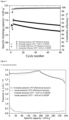
Figure 1 : Charge/discharge cycling stability data of the NCM523/graphite cells with 0.05 wt.% 3,3'-((diphenylgermanediyl)bis(oxy))dipropanenitrile (DGBP) in 1M LiPF6 in EC / EMC 3:7 wt.% (LP57)by using a cell voltage of 4.30 V (cycles 1-3) and 4.55 V (from cycle 4) in comparison to the reference electrolyte (RE). Cut-off voltages: 2.80 - 4.55 V. -
Figure 2 : Cathode and anode potential profiles for NMC532/graphite cells with RE and RE + 0.05 wt.% DGDPin the 1st charge/discharge cycle. Cut-off cell voltages: 3.00 - 4.55 V. - The mean values as well as the standard deviation of three cells for the charge/ discharge cycling performance of NMC111/graphite cells, with and without 0.05 wt.% DGDP as electrolyte additive, are shown in
Figure 1 . - The additive concentration was set to 0.05 wt.% in terms of the total amount of electrolyte comprising lithium hexafluorophosphate in a solvent or solvent mixture to be consumed during the formation process and to form protective SEI (solid electrolyte interphase)/CEI-layers. Higher concentrations are in this case not necessary and in some cases even have a counter-productive effect on cell performance.
- Already in the first three formation cycle, the cells with the DGDP-containing electrolyte show a higher discharge capacity compared to the RE-containing cell. However, both showed a similar first CEff. Thus, the reversible capacity improves and whereas there is no distinguishable improvement with respect to CEff within the formation cycles by adding DGDP into the RE.
- In the following cycles, at a charge/discharge rate of 0.5C (1C = 200 mA g-1), the DGDP-containing cells outperform the cells with RE, by strongly improving the capacity retention.
- The improvement by DGDP on the long-term cycling performance is maintained after 80 cycles and becomes even more pronounced with higher cycle numbers.
- According to the present invention, germanium organyl-based electrolyte additives, in particular 3,3'-((diphenylgermanediyl)bis(oxy))dipropanenitrile (DGDP), were shown to act as a highly effective cathode electrolyte interphase (CEI)- electrolyte additive for NCM cathodes in LIBs operated at high-voltage. With the use of only 0.05 wt.% DGDP, NCM523/graphite LIB cells showed a superior charge/discharge cycling performance upon cycling at high voltage (4.55 V), compared to the carbonate-based reference electrolyte. The capacity retention could be improved. Furthermore, DGDPis a very effective and therefore cost efficient compound for the application in NCM/graphite cells, as only 0.05 wt.% of DGDPare already effective.
- The present invention provides a variety of different germanium organyl-based electrolyte additives that are accessible by variation of the substituents enabling to customize the electrochemical properties.
-
- 1.) 5 mmol (0.34 ml) 3-hydroxypropionitriles were dissolved in 50 ml dry THF, cooled to -78 °C and 5 mmol n-BuLi (2.5 M n-BuLi in hexane, 2 ml) were added slowly over a period of 30 minutes. The cooling bath was then removed and stirred for a further 2 hours at room temperature.
- 2.) To 1.) 2.5 mmol (0.53 ml) Diphenylgermanium dichloride were slowly added at room temperature and stirred for a further 48 h at room temperature.
- 3.) The solvent was removed in a vacuum and a white solid remained as a residue. This residue was mixed with 100 ml toluene and then filtered. The filtrate was concentrated to 25 ml and stored at -25 °C, forming colourless prisms with a yield of 600 mg. These were dried at 40 °C in a vacuum.
- ESI-MS: theory: 368.06 M
measured: 391.05 M + Na+ - 1H-NMR ( 300 MHz, CDCl3, TMS): δ = 7.72 (m, 4H, Ar-H), 7.56 (m, 2H, Ar-H), 7.51 (dd, 4H, Ar-H), 4.02 (t, 4 H, CH2), 2.63 (t, 4 H, CH2).
- The electrolyte preparation and storage as well as the cell manufacturing were carried out in an argon-filled glove box (H2O and O2 contents < 0.1 ppm). All indicated mixing ratios are based on the mass ratio (% by weight).
- For the preparation of the additive electrolytes according to the invention, 3,3'-((diphenylgermanediyl)bis(oxy))dipropanenitrile (DGDP) was added to this electrolyte mixture. The proportion of the additive (A) indicated in % by weight refers to the electrolyte (E) with additive (A), not to the entire electrolyte mixture including additive, that is, W (A) = m (A) / (m (E) + m (A)).
- The electrodes were prepared in a large scale in cooperation with the battery line of the MEET institute. The cathode contains 93 wt.% LiNi0.5Co0.2Mn0.3O2 (NCM-523; CATL), 4 wt.% carbon black (Super C65, Imerys) and 3 wt.% polyvinylidene difluoride (PVdF, Solef 5130, Solvay) as binder. N-methylpyrrolidone (NMP, ALDRICH) was used as dispersant. The LiNi0.5Co0.2Mn0.3O2 powder was sieved (75 um) and dried under vacuum for 24 h at 60 °C to prevent agglomerates and remove residual moisture. PVdF and NMP were added into an air-tight container and homogenized over night by a shear mixer at 2500 rpm. Afterwards, carbon black and NCM-523 was homogenized to the solution and mixed for 1.5 h under low vacuum and water cooling. After optimization of viscosity the solid content reached 50%. The electrode paste was cast onto an aluminum foil (Evonik Industries) with an average mass loading of 1.5 mAh cm-2.
- The anode contains 94.5 wt.% graphite (FSNC-1; Shanshan Technology; D50 = 15.0 ± 2.0 µm; BET surface area = 1.3 ± 0.3 m2 g-1), 1.0 wt.% carbon black (Super C65, Imerys), 2.25 wt.% styrene butadiene rubber (SBR, Lipaton SB 5521, Polymer Latex GmbH) and 2.25 wt.% sodium carboxymethyl cellulose (Na-CMC, Walocel CRT 2000 PPA 12, Dow Wolff Cellulosics)), demineralized water was used as a dispersant. Based on the viscosity the solid loading was optimized to 54%. The electrode paste was coated onto copper foil (Evonik Industries) with a mass loading of 2.7 mAh cm-2. The electrodes were calendered to reach a density of 1.5 g cm-3. For the LIB cell investigations, the capacity ratio between the NCM523 cathode and anode was set as 1:1.6, to avoid lithium metal plating at the graphite anode.
- A mixture of ethylene carbonate (EC) and ethyl methyl carbonate (EMC) (3:7 by weight, Solvionic, purity: battery grade) containing 1 M LiPF6 was used as reference electrolyte (RE; also referred to as "LP57"). DGDPwas added into the reference electrolyte with the desired amount (0.05%) by weight ratio in an argon filled glove box.
- All electrochemical investigations were performed using three-electrode Swagelok cells in climatic chambers at 20°C. Lithium metal (Albemarle Corporation; purity: battery grade) was used as the reference electrode (REF; Ø=5 mm). A polypropylene nonwoven (Freudenberg 2190, 3 layers) was used as separator. Each cell contained in total 240 µL (160 µL + 80 µL for REF) electrolyte and were assembled in an argon filled glove box.
- Long-term charge/discharge cycling of full cells was evaluated by a battery tester Series 4000 (MACCOR). NMC532/graphite LIB cells were cycled in a voltage range from 2.80 V to 4.55 V with three formation cycles with a charge and discharge rate of 40 mA g-1, equal to a C-rate of 0.2C (based on the specific capacity of NCM523 at 4.55 V vs. Li/Li+, 200 mAh g-1, obtained from 3-electrode measurements), followed by subsequent cycles with a charge/discharge rate of 100 mA g-1 (corresponding to 0.5C). Each charging step included a constant voltage step at 4.55 V until the current dropped below 0.05C.
Claims (12)
- A lithium battery comprising:- an anode comprising an active anode material- a cathode comprising an active cathode material comprising lithium nickel manganese cobalt oxide (LiNixCoyMn1-x-yO2) (NCM) with each of x and y not including zero and x + y being smaller than 1- a separator separating anode and cathode, and an electrolyte wherein the electrolyte comprises a solvent or solvent mixture and lithium hexafluorophosphate,characterized in thatthe electrolyte further comprises a germanium organyl-based electrolyte additive, wherein the germanium organyl-based electrolyte additive is a compound of formula 1
 wherein X is Ge; Y1 and Y2 are independently (CH2)m with m being 0, 1 or 2; and Z1 and Z2 are independently selected from the group consisting of nitrile, a substituted or unsubstituted C6- to C14-aryl, and a substituted or unsubstituted C5-C12 heteroaryl with the heteroatom selected from O, N, and S, wherein the optional substituent is selected from the group consisting of C1 to C9 alkyl, and C1 to C9 alkoxyl.
 - The lithium battery according to claim 1, wherein the germanium organyl-based electrolyte additive is selected from the group consisting of the folowing formulas 2 to 19, with X being Ge, and R being C1 to C9 alkyl, or C1 to C9 alkoxyl:


- The lithium battery according to one of the preceding claims, wherein the germanium organyl-based electrolyte additive is 3,3'-((diphenylgermanediyl)bis(oxy))dipropanenitrile (DGDP) of formula 2

- The lithium battery according to one of the preceding claims, wherein the active cathode material is selected from the group consisting of NCM with 0.3≤x<1.
- The lithium battery according to one of the preceding claims, wherein, in terms of the total amount of electrolyte comprising lithium hexafluorophosphate in a solvent or solvent mixture, 0.01 to 10 wt.-%, preferably 0.1 to 5 wt.-%, more preferably 0.2 to 1 wt.-%, in particular 0.25 to 0.75 wt.-% germanium organyl-based electrolyte additive.
- The lithium battery according to one of the preceding claims, wherein the concentration of lithium hexafluorophosphate is in the range of 0.1 M to 2 M, preferably 0.5 M to 1.5 M, more preferably 0.7 M to 1.2 M.
- The lithium battery according to one of the preceding claims, wherein the solvent or solvent mixture is selected from an organic solvent or solvent mixture, an ionic liquid and/or a polymer matrix.
- The lithium battery according to one of the preceding claims, wherein the organic solvent or solvent mixture is selected from the group consisting of ethylene carbonate, propylene carbonate, diethyl carbonate, dimethyl carbonate, ethyl methyl carbonate, acetonitrile, glutaronitrile, adiponitrile, pimelonitrile, gamma-butyrolactone, gamma-valerolactone, dimethoxyethane, 1,3-dioxalane, methylacetate and/or mixtures thereof, preferably selected from the group consisting of ethylene carbonate, diethyl carbonate, dimethyl carbonate, ethyl methyl carbonate and/or mixtures thereof.
- The lithium battery according to one of the preceding claims, wherein the organic solvent mixture comprises, preferably consists of, a mixture from ethylene carbonate and at least one further solvent, preferably ethyl methyl carbonate, prefably in a ratio in terms of weight parts of > 1 :99 to < 99: 1, more preferably from > 1 :9 to < 9: 1 , in particular from ≥ 3 :7 to ≤ 1 : 1.
- The lithium battery according to one of the preceding claims, wherein the electrolyte further comprises an additive selected from the group consisting of chlorethylene carbonate, fluorethylene carbonate, vinylene carbonate, vinylethylene carbonate, ethylene sulfite, ethylene sulfate, propane sulfonate, sulfite, preferably dimethylsulfite and propylene sulfite, sulfate, butyrolactone optionally substituted with F, Cl or Br, phenylethylene carbonate, vinylacetate and trifluoropropylene carbonate.
- The lithium battery according to one of the preceding claims, wherein the active anode material is selected from the group consisting of carbon, graphite, mixtures of silicon and carbon/graphite, silicon, tin, lithium-metal oxide, materials that form alloys with lithium, composites und mixtures thereof, preferably carbon, graphite, mixtures of silicon and carbon/graphite and composites und mixtures thereof.
- Use of a germanium organyl-based electrolyte additive as additive in a lithium battery as defined in one of claims 1 to 11 for enhancing one characteristic selected from the group consisting of reversible capacity, Coulombic efficiency (CEff), cyclic stability, capacity retention and combinations thereof.
Applications Claiming Priority (1)
| Application Number | Priority Date | Filing Date | Title |
|---|---|---|---|
| PCT/EP2019/058024 WO2020200399A1 (en) | 2019-03-29 | 2019-03-29 | Lithium battery and use of a germanium organyl-based electrolyte additive as an electrolyte additive therein |
Publications (2)
| Publication Number | Publication Date |
|---|---|
| EP3948998A1 EP3948998A1 (en) | 2022-02-09 |
| EP3948998B1 true EP3948998B1 (en) | 2024-12-18 |
Family
ID=65995755
Family Applications (1)
| Application Number | Title | Priority Date | Filing Date |
|---|---|---|---|
| EP19714652.5A Active EP3948998B1 (en) | 2019-03-29 | 2019-03-29 | Lithium battery and use of a germanium organyl-based electrolyte additive as an electrolyte additive therein |
Country Status (6)
| Country | Link |
|---|---|
| US (1) | US12148927B2 (en) |
| EP (1) | EP3948998B1 (en) |
| JP (1) | JP7379521B2 (en) |
| KR (1) | KR102728885B1 (en) |
| CN (1) | CN114026724B (en) |
| WO (1) | WO2020200399A1 (en) |
Families Citing this family (3)
| Publication number | Priority date | Publication date | Assignee | Title |
|---|---|---|---|---|
| CN113013486A (en) * | 2021-02-25 | 2021-06-22 | 珠海冠宇电池股份有限公司 | Electrolyte and lithium ion battery comprising same |
| CN113013488A (en) * | 2021-02-25 | 2021-06-22 | 珠海冠宇电池股份有限公司 | Electrolyte and lithium ion battery comprising same |
| CN120366800A (en) * | 2025-06-26 | 2025-07-25 | 昌邑泰和新材料科技有限公司 | Synthetic preparation method of p-methylbenzaldehyde |
Family Cites Families (17)
| Publication number | Priority date | Publication date | Assignee | Title |
|---|---|---|---|---|
| JPH1069915A (en) * | 1996-08-27 | 1998-03-10 | Sanyo Electric Co Ltd | Non-aqueous electrolyte battery |
| US6680143B2 (en) | 2000-06-22 | 2004-01-20 | The University Of Chicago | Lithium metal oxide electrodes for lithium cells and batteries |
| US6677082B2 (en) | 2000-06-22 | 2004-01-13 | The University Of Chicago | Lithium metal oxide electrodes for lithium cells and batteries |
| US6872493B2 (en) * | 2000-10-30 | 2005-03-29 | Denso Corporation | Nonaqueous electrolytic solution and nonaqueous secondary battery |
| JP3810062B2 (en) * | 2001-01-22 | 2006-08-16 | 株式会社デンソー | Non-aqueous electrolyte and non-aqueous electrolyte secondary battery using the electrolyte |
| JP4079681B2 (en) | 2002-04-26 | 2008-04-23 | 株式会社デンソー | Nonaqueous electrolyte and nonaqueous electrolyte secondary battery using the electrolyte |
| US7205072B2 (en) | 2002-11-01 | 2007-04-17 | The University Of Chicago | Layered cathode materials for lithium ion rechargeable batteries |
| KR100477751B1 (en) | 2002-11-16 | 2005-03-21 | 삼성에스디아이 주식회사 | Non-aqueous electrolyte and lithium battery employing the same |
| CN101243576A (en) | 2005-08-22 | 2008-08-13 | 宇部兴产株式会社 | Non-aqueous electrolytic solution and lithium secondary battery using the non-aqueous electrolytic solution |
| JP4931489B2 (en) * | 2006-06-21 | 2012-05-16 | 株式会社デンソー | Non-aqueous electrolyte and secondary battery using the electrolyte |
| JP2008146963A (en) * | 2006-12-08 | 2008-06-26 | Sony Corp | Nonaqueous electrolyte secondary battery separator, nonaqueous electrolyte secondary battery, and battery pack |
| JP2010157473A (en) | 2009-01-05 | 2010-07-15 | Nissan Motor Co Ltd | Nonaqueous electrolytic secondary battery |
| EP2648253A4 (en) * | 2010-11-29 | 2017-04-19 | JSR Corporation | Binder composition for batteries, slurry for battery electrodes, solid electrolyte composition, electrodes, and all-solid-state batteries |
| US20150188125A1 (en) | 2012-07-20 | 2015-07-02 | Board Of Regents, The University Of Texas System | Anode materials for li-ion batteries |
| CN110352527B (en) | 2017-03-17 | 2022-09-20 | 旭化成株式会社 | Nonaqueous electrolyte solution, nonaqueous secondary battery, battery pack, and hybrid system |
| WO2018224167A1 (en) | 2017-06-09 | 2018-12-13 | Bayerische Motoren Werke Aktiengesellschaft | Lithium battery and use of triphenylphosphine oxide as an electrolyte additive therein |
| JP7172015B2 (en) * | 2017-09-12 | 2022-11-16 | セントラル硝子株式会社 | Additive for non-aqueous electrolyte, electrolyte for non-aqueous electrolyte battery, and non-aqueous electrolyte battery |
-
2019
- 2019-03-29 JP JP2021553796A patent/JP7379521B2/en active Active
- 2019-03-29 WO PCT/EP2019/058024 patent/WO2020200399A1/en not_active Ceased
- 2019-03-29 CN CN201980094908.4A patent/CN114026724B/en active Active
- 2019-03-29 KR KR1020217033053A patent/KR102728885B1/en active Active
- 2019-03-29 US US17/440,085 patent/US12148927B2/en active Active
- 2019-03-29 EP EP19714652.5A patent/EP3948998B1/en active Active
Also Published As
| Publication number | Publication date |
|---|---|
| US20220190331A1 (en) | 2022-06-16 |
| JP2022523446A (en) | 2022-04-22 |
| CN114026724A (en) | 2022-02-08 |
| WO2020200399A1 (en) | 2020-10-08 |
| KR20210137547A (en) | 2021-11-17 |
| KR102728885B1 (en) | 2024-11-11 |
| JP7379521B2 (en) | 2023-11-14 |
| US12148927B2 (en) | 2024-11-19 |
| CN114026724B (en) | 2024-09-06 |
| EP3948998A1 (en) | 2022-02-09 |
Similar Documents
| Publication | Publication Date | Title |
|---|---|---|
| EP2736112B1 (en) | Nonaqueous electrolyte and lithium secondary battery using same | |
| KR101938767B1 (en) | Electrolyte additives for lithium rechargeable battery and manufacturing method thereof, electrolyte including the same additives and manufacturing method thereof, and lithium rechargeable battery including the same additives | |
| KR20170034313A (en) | Electrolyte additives for lithium rechargeable battery and manufacturing method thereof, electrolyte including the same additives and manufacturing method thereof, and lithium rechargeable battery including the same additives | |
| KR20180061322A (en) | Non-aqueous electrolyte for high-energy lithium-ion batteries | |
| KR101249350B1 (en) | Nonaqueous electrolyte and lithium secondary battery using the same | |
| KR20160117370A (en) | Nonaqueous electrolyte and lithium secondary battery comprising the same | |
| JP7331123B2 (en) | Use of urea-based electrolyte additive as lithium battery and its electrolyte additive | |
| US11101500B2 (en) | Electrochemical cells comprising bifunctional phosphonic acid silylesters | |
| US20200067129A1 (en) | Lithium Ion Battery and Prelithiation Method of Anode | |
| KR101683211B1 (en) | Electrolyte for rechargeable lithium battery, and rechargeable lithium battery including the same | |
| KR20210074150A (en) | Iminodiacetonitrile additive, nonaqueous electrolyte for lithium secondary battery comprising the same, and lithium secondary battery | |
| US12148927B2 (en) | Lithium battery and use of a germanium organyl-based electrolyte additive as an electrolyte additive therein | |
| WO2018224167A1 (en) | Lithium battery and use of triphenylphosphine oxide as an electrolyte additive therein | |
| US20260074286A1 (en) | Electrolyte additive for secondary battery, non-aqueous electrolyte for lithium secondary battery including same and lithium secondary battery including same | |
| JP7763903B2 (en) | Lithium secondary battery | |
| KR20160004665A (en) | Electrolyte for rechargeable lithium battery and rechargeable lithium battery including the same | |
| KR101557486B1 (en) | Lithium secondary battery | |
| KR20220032384A (en) | Additive for electrolyte, nonaqueous electrolyte for lithium secondary battery comprising the same, and lithium secondary battery | |
| KR102919875B1 (en) | Electrolyte additive, electrolyte including the same and lithium secondary battery including the same | |
| KR20130102907A (en) | Electrolyte additive and electrolyte including the same and lithium secondary battery including the electrolyte | |
| KR102921230B1 (en) | Additive for electrolyte, nonaqueous electrolyte for lithium secondary battery comprising the same, and lithium secondary battery | |
| KR102921231B1 (en) | Additive for electrolyte, nonaqueous electrolyte for lithium secondary battery comprising the same, and lithium secondary battery | |
| CN121844427A (en) | Electrolyte additive for secondary battery, nonaqueous electrolyte for lithium secondary battery comprising same, and lithium secondary battery comprising same | |
| KR20120125144A (en) | Electrolyte for rechargeable lithium battery and rechargeable lithium battery including the same | |
| CN117529842A (en) | Non-aqueous electrolyte for lithium secondary batteries and lithium secondary batteries containing the same |
Legal Events
| Date | Code | Title | Description |
|---|---|---|---|
| STAA | Information on the status of an ep patent application or granted ep patent |
Free format text: STATUS: UNKNOWN |
|
| STAA | Information on the status of an ep patent application or granted ep patent |
Free format text: STATUS: THE INTERNATIONAL PUBLICATION HAS BEEN MADE |
|
| PUAI | Public reference made under article 153(3) epc to a published international application that has entered the european phase |
Free format text: ORIGINAL CODE: 0009012 |
|
| STAA | Information on the status of an ep patent application or granted ep patent |
Free format text: STATUS: REQUEST FOR EXAMINATION WAS MADE |
|
| 17P | Request for examination filed |
Effective date: 20210915 |
|
| AK | Designated contracting states |
Kind code of ref document: A1 Designated state(s): AL AT BE BG CH CY CZ DE DK EE ES FI FR GB GR HR HU IE IS IT LI LT LU LV MC MK MT NL NO PL PT RO RS SE SI SK SM TR |
|
| DAV | Request for validation of the european patent (deleted) | ||
| DAX | Request for extension of the european patent (deleted) | ||
| P01 | Opt-out of the competence of the unified patent court (upc) registered |
Effective date: 20230516 |
|
| GRAP | Despatch of communication of intention to grant a patent |
Free format text: ORIGINAL CODE: EPIDOSNIGR1 |
|
| STAA | Information on the status of an ep patent application or granted ep patent |
Free format text: STATUS: GRANT OF PATENT IS INTENDED |
|
| INTG | Intention to grant announced |
Effective date: 20240716 |
|
| GRAS | Grant fee paid |
Free format text: ORIGINAL CODE: EPIDOSNIGR3 |
|
| GRAA | (expected) grant |
Free format text: ORIGINAL CODE: 0009210 |
|
| STAA | Information on the status of an ep patent application or granted ep patent |
Free format text: STATUS: THE PATENT HAS BEEN GRANTED |
|
| AK | Designated contracting states |
Kind code of ref document: B1 Designated state(s): AL AT BE BG CH CY CZ DE DK EE ES FI FR GB GR HR HU IE IS IT LI LT LU LV MC MK MT NL NO PL PT RO RS SE SI SK SM TR |
|
| REG | Reference to a national code |
Ref country code: CH Ref legal event code: EP |
|
| REG | Reference to a national code |
Ref country code: DE Ref legal event code: R096 Ref document number: 602019063607 Country of ref document: DE |
|
| REG | Reference to a national code |
Ref country code: IE Ref legal event code: FG4D |
|
| REG | Reference to a national code |
Ref country code: LT Ref legal event code: MG9D |
|
| PG25 | Lapsed in a contracting state [announced via postgrant information from national office to epo] |
Ref country code: HR Free format text: LAPSE BECAUSE OF FAILURE TO SUBMIT A TRANSLATION OF THE DESCRIPTION OR TO PAY THE FEE WITHIN THE PRESCRIBED TIME-LIMIT Effective date: 20241218 |
|
| PGFP | Annual fee paid to national office [announced via postgrant information from national office to epo] |
Ref country code: DE Payment date: 20250325 Year of fee payment: 7 |
|
| PG25 | Lapsed in a contracting state [announced via postgrant information from national office to epo] |
Ref country code: FI Free format text: LAPSE BECAUSE OF FAILURE TO SUBMIT A TRANSLATION OF THE DESCRIPTION OR TO PAY THE FEE WITHIN THE PRESCRIBED TIME-LIMIT Effective date: 20241218 |
|
| PG25 | Lapsed in a contracting state [announced via postgrant information from national office to epo] |
Ref country code: BG Free format text: LAPSE BECAUSE OF FAILURE TO SUBMIT A TRANSLATION OF THE DESCRIPTION OR TO PAY THE FEE WITHIN THE PRESCRIBED TIME-LIMIT Effective date: 20241218 |
|
| PG25 | Lapsed in a contracting state [announced via postgrant information from national office to epo] |
Ref country code: NO Free format text: LAPSE BECAUSE OF FAILURE TO SUBMIT A TRANSLATION OF THE DESCRIPTION OR TO PAY THE FEE WITHIN THE PRESCRIBED TIME-LIMIT Effective date: 20250318 |
|
| REG | Reference to a national code |
Ref country code: NL Ref legal event code: MP Effective date: 20241218 |
|
| PG25 | Lapsed in a contracting state [announced via postgrant information from national office to epo] |
Ref country code: LV Free format text: LAPSE BECAUSE OF FAILURE TO SUBMIT A TRANSLATION OF THE DESCRIPTION OR TO PAY THE FEE WITHIN THE PRESCRIBED TIME-LIMIT Effective date: 20241218 Ref country code: GR Free format text: LAPSE BECAUSE OF FAILURE TO SUBMIT A TRANSLATION OF THE DESCRIPTION OR TO PAY THE FEE WITHIN THE PRESCRIBED TIME-LIMIT Effective date: 20250319 |
|
| PGFP | Annual fee paid to national office [announced via postgrant information from national office to epo] |
Ref country code: FR Payment date: 20250324 Year of fee payment: 7 |
|
| PGFP | Annual fee paid to national office [announced via postgrant information from national office to epo] |
Ref country code: GB Payment date: 20250324 Year of fee payment: 7 |
|
| PG25 | Lapsed in a contracting state [announced via postgrant information from national office to epo] |
Ref country code: RS Free format text: LAPSE BECAUSE OF FAILURE TO SUBMIT A TRANSLATION OF THE DESCRIPTION OR TO PAY THE FEE WITHIN THE PRESCRIBED TIME-LIMIT Effective date: 20250318 |
|
| PG25 | Lapsed in a contracting state [announced via postgrant information from national office to epo] |
Ref country code: NL Free format text: LAPSE BECAUSE OF FAILURE TO SUBMIT A TRANSLATION OF THE DESCRIPTION OR TO PAY THE FEE WITHIN THE PRESCRIBED TIME-LIMIT Effective date: 20241218 |
|
| REG | Reference to a national code |
Ref country code: AT Ref legal event code: MK05 Ref document number: 1752993 Country of ref document: AT Kind code of ref document: T Effective date: 20241218 |
|
| PG25 | Lapsed in a contracting state [announced via postgrant information from national office to epo] |
Ref country code: SM Free format text: LAPSE BECAUSE OF FAILURE TO SUBMIT A TRANSLATION OF THE DESCRIPTION OR TO PAY THE FEE WITHIN THE PRESCRIBED TIME-LIMIT Effective date: 20241218 |
|
| PG25 | Lapsed in a contracting state [announced via postgrant information from national office to epo] |
Ref country code: PL Free format text: LAPSE BECAUSE OF FAILURE TO SUBMIT A TRANSLATION OF THE DESCRIPTION OR TO PAY THE FEE WITHIN THE PRESCRIBED TIME-LIMIT Effective date: 20241218 |
|
| PG25 | Lapsed in a contracting state [announced via postgrant information from national office to epo] |
Ref country code: ES Free format text: LAPSE BECAUSE OF FAILURE TO SUBMIT A TRANSLATION OF THE DESCRIPTION OR TO PAY THE FEE WITHIN THE PRESCRIBED TIME-LIMIT Effective date: 20241218 |
|
| PG25 | Lapsed in a contracting state [announced via postgrant information from national office to epo] |
Ref country code: IS Free format text: LAPSE BECAUSE OF FAILURE TO SUBMIT A TRANSLATION OF THE DESCRIPTION OR TO PAY THE FEE WITHIN THE PRESCRIBED TIME-LIMIT Effective date: 20250418 |
|
| PG25 | Lapsed in a contracting state [announced via postgrant information from national office to epo] |
Ref country code: PT Free format text: LAPSE BECAUSE OF FAILURE TO SUBMIT A TRANSLATION OF THE DESCRIPTION OR TO PAY THE FEE WITHIN THE PRESCRIBED TIME-LIMIT Effective date: 20250421 |
|
| PG25 | Lapsed in a contracting state [announced via postgrant information from national office to epo] |
Ref country code: EE Free format text: LAPSE BECAUSE OF FAILURE TO SUBMIT A TRANSLATION OF THE DESCRIPTION OR TO PAY THE FEE WITHIN THE PRESCRIBED TIME-LIMIT Effective date: 20241218 |
|
| PG25 | Lapsed in a contracting state [announced via postgrant information from national office to epo] |
Ref country code: AT Free format text: LAPSE BECAUSE OF FAILURE TO SUBMIT A TRANSLATION OF THE DESCRIPTION OR TO PAY THE FEE WITHIN THE PRESCRIBED TIME-LIMIT Effective date: 20241218 Ref country code: RO Free format text: LAPSE BECAUSE OF FAILURE TO SUBMIT A TRANSLATION OF THE DESCRIPTION OR TO PAY THE FEE WITHIN THE PRESCRIBED TIME-LIMIT Effective date: 20241218 |
|
| PG25 | Lapsed in a contracting state [announced via postgrant information from national office to epo] |
Ref country code: SK Free format text: LAPSE BECAUSE OF FAILURE TO SUBMIT A TRANSLATION OF THE DESCRIPTION OR TO PAY THE FEE WITHIN THE PRESCRIBED TIME-LIMIT Effective date: 20241218 |
|
| PG25 | Lapsed in a contracting state [announced via postgrant information from national office to epo] |
Ref country code: CZ Free format text: LAPSE BECAUSE OF FAILURE TO SUBMIT A TRANSLATION OF THE DESCRIPTION OR TO PAY THE FEE WITHIN THE PRESCRIBED TIME-LIMIT Effective date: 20241218 |
|
| PG25 | Lapsed in a contracting state [announced via postgrant information from national office to epo] |
Ref country code: IT Free format text: LAPSE BECAUSE OF FAILURE TO SUBMIT A TRANSLATION OF THE DESCRIPTION OR TO PAY THE FEE WITHIN THE PRESCRIBED TIME-LIMIT Effective date: 20241218 |
|
| PG25 | Lapsed in a contracting state [announced via postgrant information from national office to epo] |
Ref country code: SE Free format text: LAPSE BECAUSE OF FAILURE TO SUBMIT A TRANSLATION OF THE DESCRIPTION OR TO PAY THE FEE WITHIN THE PRESCRIBED TIME-LIMIT Effective date: 20241218 |
|
| REG | Reference to a national code |
Ref country code: DE Ref legal event code: R097 Ref document number: 602019063607 Country of ref document: DE |
|
| PG25 | Lapsed in a contracting state [announced via postgrant information from national office to epo] |
Ref country code: DK Free format text: LAPSE BECAUSE OF FAILURE TO SUBMIT A TRANSLATION OF THE DESCRIPTION OR TO PAY THE FEE WITHIN THE PRESCRIBED TIME-LIMIT Effective date: 20241218 |
|
| PG25 | Lapsed in a contracting state [announced via postgrant information from national office to epo] |
Ref country code: MC Free format text: LAPSE BECAUSE OF FAILURE TO SUBMIT A TRANSLATION OF THE DESCRIPTION OR TO PAY THE FEE WITHIN THE PRESCRIBED TIME-LIMIT Effective date: 20241218 |
|
| PLBE | No opposition filed within time limit |
Free format text: ORIGINAL CODE: 0009261 |
|
| REG | Reference to a national code |
Ref country code: CH Ref legal event code: H13 Free format text: ST27 STATUS EVENT CODE: U-0-0-H10-H13 (AS PROVIDED BY THE NATIONAL OFFICE) Effective date: 20251024 |
|
| STAA | Information on the status of an ep patent application or granted ep patent |
Free format text: STATUS: NO OPPOSITION FILED WITHIN TIME LIMIT |
|
| PG25 | Lapsed in a contracting state [announced via postgrant information from national office to epo] |
Ref country code: LU Free format text: LAPSE BECAUSE OF NON-PAYMENT OF DUE FEES Effective date: 20250329 |
|
| 26N | No opposition filed |
Effective date: 20250919 |
|
| REG | Reference to a national code |
Ref country code: BE Ref legal event code: MM Effective date: 20250331 |
|
| PG25 | Lapsed in a contracting state [announced via postgrant information from national office to epo] |
Ref country code: BE Free format text: LAPSE BECAUSE OF NON-PAYMENT OF DUE FEES Effective date: 20250331 |
|
| PG25 | Lapsed in a contracting state [announced via postgrant information from national office to epo] |
Ref country code: CH Free format text: LAPSE BECAUSE OF NON-PAYMENT OF DUE FEES Effective date: 20250331 |
|
| PG25 | Lapsed in a contracting state [announced via postgrant information from national office to epo] |
Ref country code: IE Free format text: LAPSE BECAUSE OF NON-PAYMENT OF DUE FEES Effective date: 20250329 |