EP3946939B1 - Polymers having stable cationic pendant groups for use as anion exchange membranes - Google Patents
Polymers having stable cationic pendant groups for use as anion exchange membranes Download PDFInfo
- Publication number
- EP3946939B1 EP3946939B1 EP20778028.9A EP20778028A EP3946939B1 EP 3946939 B1 EP3946939 B1 EP 3946939B1 EP 20778028 A EP20778028 A EP 20778028A EP 3946939 B1 EP3946939 B1 EP 3946939B1
- Authority
- EP
- European Patent Office
- Prior art keywords
- polymer
- membrane
- formula
- alkyl
- independently
- Prior art date
- Legal status (The legal status is an assumption and is not a legal conclusion. Google has not performed a legal analysis and makes no representation as to the accuracy of the status listed.)
- Active
Links
Images



Classifications
-
- B—PERFORMING OPERATIONS; TRANSPORTING
- B01—PHYSICAL OR CHEMICAL PROCESSES OR APPARATUS IN GENERAL
- B01J—CHEMICAL OR PHYSICAL PROCESSES, e.g. CATALYSIS OR COLLOID CHEMISTRY; THEIR RELEVANT APPARATUS
- B01J47/00—Ion-exchange processes in general; Apparatus therefor
- B01J47/12—Ion-exchange processes in general; Apparatus therefor characterised by the use of ion-exchange material in the form of ribbons, filaments, fibres or sheets, e.g. membranes
-
- C—CHEMISTRY; METALLURGY
- C02—TREATMENT OF WATER, WASTE WATER, SEWAGE, OR SLUDGE
- C02F—TREATMENT OF WATER, WASTE WATER, SEWAGE, OR SLUDGE
- C02F1/00—Treatment of water, waste water, or sewage
- C02F1/42—Treatment of water, waste water, or sewage by ion-exchange
-
- C—CHEMISTRY; METALLURGY
- C02—TREATMENT OF WATER, WASTE WATER, SEWAGE, OR SLUDGE
- C02F—TREATMENT OF WATER, WASTE WATER, SEWAGE, OR SLUDGE
- C02F1/00—Treatment of water, waste water, or sewage
- C02F1/46—Treatment of water, waste water, or sewage by electrochemical methods
- C02F1/469—Treatment of water, waste water, or sewage by electrochemical methods by electrochemical separation, e.g. by electro-osmosis, electrodialysis, electrophoresis
- C02F1/4693—Treatment of water, waste water, or sewage by electrochemical methods by electrochemical separation, e.g. by electro-osmosis, electrodialysis, electrophoresis electrodialysis
-
- C—CHEMISTRY; METALLURGY
- C08—ORGANIC MACROMOLECULAR COMPOUNDS; THEIR PREPARATION OR CHEMICAL WORKING-UP; COMPOSITIONS BASED THEREON
- C08G—MACROMOLECULAR COMPOUNDS OBTAINED OTHERWISE THAN BY REACTIONS ONLY INVOLVING UNSATURATED CARBON-TO-CARBON BONDS
- C08G10/00—Condensation polymers of aldehydes or ketones with aromatic hydrocarbons or halogenated aromatic hydrocarbons only
-
- C—CHEMISTRY; METALLURGY
- C08—ORGANIC MACROMOLECULAR COMPOUNDS; THEIR PREPARATION OR CHEMICAL WORKING-UP; COMPOSITIONS BASED THEREON
- C08G—MACROMOLECULAR COMPOUNDS OBTAINED OTHERWISE THAN BY REACTIONS ONLY INVOLVING UNSATURATED CARBON-TO-CARBON BONDS
- C08G10/00—Condensation polymers of aldehydes or ketones with aromatic hydrocarbons or halogenated aromatic hydrocarbons only
- C08G10/02—Condensation polymers of aldehydes or ketones with aromatic hydrocarbons or halogenated aromatic hydrocarbons only of aldehydes
- C08G10/04—Chemically-modified polycondensates
-
- C—CHEMISTRY; METALLURGY
- C08—ORGANIC MACROMOLECULAR COMPOUNDS; THEIR PREPARATION OR CHEMICAL WORKING-UP; COMPOSITIONS BASED THEREON
- C08G—MACROMOLECULAR COMPOUNDS OBTAINED OTHERWISE THAN BY REACTIONS ONLY INVOLVING UNSATURATED CARBON-TO-CARBON BONDS
- C08G65/00—Macromolecular compounds obtained by reactions forming an ether link in the main chain of the macromolecule
- C08G65/02—Macromolecular compounds obtained by reactions forming an ether link in the main chain of the macromolecule from cyclic ethers by opening of the heterocyclic ring
- C08G65/26—Macromolecular compounds obtained by reactions forming an ether link in the main chain of the macromolecule from cyclic ethers by opening of the heterocyclic ring from cyclic ethers and other compounds
- C08G65/2618—Macromolecular compounds obtained by reactions forming an ether link in the main chain of the macromolecule from cyclic ethers by opening of the heterocyclic ring from cyclic ethers and other compounds the other compounds containing nitrogen
- C08G65/2621—Macromolecular compounds obtained by reactions forming an ether link in the main chain of the macromolecule from cyclic ethers by opening of the heterocyclic ring from cyclic ethers and other compounds the other compounds containing nitrogen containing amine groups
- C08G65/263—Macromolecular compounds obtained by reactions forming an ether link in the main chain of the macromolecule from cyclic ethers by opening of the heterocyclic ring from cyclic ethers and other compounds the other compounds containing nitrogen containing amine groups containing heterocyclic amine groups
-
- C—CHEMISTRY; METALLURGY
- C08—ORGANIC MACROMOLECULAR COMPOUNDS; THEIR PREPARATION OR CHEMICAL WORKING-UP; COMPOSITIONS BASED THEREON
- C08J—WORKING-UP; GENERAL PROCESSES OF COMPOUNDING; AFTER-TREATMENT NOT COVERED BY SUBCLASSES C08B, C08C, C08F, C08G or C08H
- C08J5/00—Manufacture of articles or shaped materials containing macromolecular substances
- C08J5/20—Manufacture of shaped structures of ion-exchange resins
- C08J5/22—Films, membranes or diaphragms
- C08J5/2206—Films, membranes or diaphragms based on organic and/or inorganic macromolecular compounds
- C08J5/2218—Synthetic macromolecular compounds
- C08J5/2231—Synthetic macromolecular compounds based on macromolecular compounds obtained by reactions involving unsaturated carbon-to-carbon bonds
- C08J5/2243—Synthetic macromolecular compounds based on macromolecular compounds obtained by reactions involving unsaturated carbon-to-carbon bonds obtained by introduction of active groups capable of ion-exchange into compounds of the type C08J5/2231
-
- C—CHEMISTRY; METALLURGY
- C08—ORGANIC MACROMOLECULAR COMPOUNDS; THEIR PREPARATION OR CHEMICAL WORKING-UP; COMPOSITIONS BASED THEREON
- C08J—WORKING-UP; GENERAL PROCESSES OF COMPOUNDING; AFTER-TREATMENT NOT COVERED BY SUBCLASSES C08B, C08C, C08F, C08G or C08H
- C08J5/00—Manufacture of articles or shaped materials containing macromolecular substances
- C08J5/20—Manufacture of shaped structures of ion-exchange resins
- C08J5/22—Films, membranes or diaphragms
- C08J5/2206—Films, membranes or diaphragms based on organic and/or inorganic macromolecular compounds
- C08J5/2218—Synthetic macromolecular compounds
- C08J5/2256—Synthetic macromolecular compounds based on macromolecular compounds obtained by reactions other than those involving carbon-to-carbon bonds, e.g. obtained by polycondensation
- C08J5/2262—Synthetic macromolecular compounds based on macromolecular compounds obtained by reactions other than those involving carbon-to-carbon bonds, e.g. obtained by polycondensation containing fluorine
-
- H—ELECTRICITY
- H01—ELECTRIC ELEMENTS
- H01M—PROCESSES OR MEANS, e.g. BATTERIES, FOR THE DIRECT CONVERSION OF CHEMICAL ENERGY INTO ELECTRICAL ENERGY
- H01M8/00—Fuel cells; Manufacture thereof
- H01M8/08—Fuel cells with aqueous electrolytes
- H01M8/083—Alkaline fuel cells
-
- H—ELECTRICITY
- H01—ELECTRIC ELEMENTS
- H01M—PROCESSES OR MEANS, e.g. BATTERIES, FOR THE DIRECT CONVERSION OF CHEMICAL ENERGY INTO ELECTRICAL ENERGY
- H01M8/00—Fuel cells; Manufacture thereof
- H01M8/10—Fuel cells with solid electrolytes
- H01M8/1016—Fuel cells with solid electrolytes characterised by the electrolyte material
- H01M8/1018—Polymeric electrolyte materials
- H01M8/102—Polymeric electrolyte materials characterised by the chemical structure of the main chain of the ion-conducting polymer
- H01M8/1023—Polymeric electrolyte materials characterised by the chemical structure of the main chain of the ion-conducting polymer having only carbon, e.g. polyarylenes, polystyrenes or polybutadiene-styrenes
-
- B—PERFORMING OPERATIONS; TRANSPORTING
- B01—PHYSICAL OR CHEMICAL PROCESSES OR APPARATUS IN GENERAL
- B01J—CHEMICAL OR PHYSICAL PROCESSES, e.g. CATALYSIS OR COLLOID CHEMISTRY; THEIR RELEVANT APPARATUS
- B01J41/00—Anion exchange; Use of material as anion exchangers; Treatment of material for improving the anion exchange properties
- B01J41/08—Use of material as anion exchangers; Treatment of material for improving the anion exchange properties
- B01J41/12—Macromolecular compounds
- B01J41/13—Macromolecular compounds obtained otherwise than by reactions only involving unsaturated carbon-to-carbon bonds
-
- C—CHEMISTRY; METALLURGY
- C02—TREATMENT OF WATER, WASTE WATER, SEWAGE, OR SLUDGE
- C02F—TREATMENT OF WATER, WASTE WATER, SEWAGE, OR SLUDGE
- C02F1/00—Treatment of water, waste water, or sewage
- C02F1/42—Treatment of water, waste water, or sewage by ion-exchange
- C02F2001/422—Treatment of water, waste water, or sewage by ion-exchange using anionic exchangers
-
- C—CHEMISTRY; METALLURGY
- C08—ORGANIC MACROMOLECULAR COMPOUNDS; THEIR PREPARATION OR CHEMICAL WORKING-UP; COMPOSITIONS BASED THEREON
- C08G—MACROMOLECULAR COMPOUNDS OBTAINED OTHERWISE THAN BY REACTIONS ONLY INVOLVING UNSATURATED CARBON-TO-CARBON BONDS
- C08G2261/00—Macromolecular compounds obtained by reactions forming a carbon-to-carbon link in the main chain of the macromolecule
- C08G2261/10—Definition of the polymer structure
- C08G2261/12—Copolymers
-
- C—CHEMISTRY; METALLURGY
- C08—ORGANIC MACROMOLECULAR COMPOUNDS; THEIR PREPARATION OR CHEMICAL WORKING-UP; COMPOSITIONS BASED THEREON
- C08G—MACROMOLECULAR COMPOUNDS OBTAINED OTHERWISE THAN BY REACTIONS ONLY INVOLVING UNSATURATED CARBON-TO-CARBON BONDS
- C08G2261/00—Macromolecular compounds obtained by reactions forming a carbon-to-carbon link in the main chain of the macromolecule
- C08G2261/10—Definition of the polymer structure
- C08G2261/14—Side-groups
- C08G2261/146—Side-chains containing halogens
-
- C—CHEMISTRY; METALLURGY
- C08—ORGANIC MACROMOLECULAR COMPOUNDS; THEIR PREPARATION OR CHEMICAL WORKING-UP; COMPOSITIONS BASED THEREON
- C08G—MACROMOLECULAR COMPOUNDS OBTAINED OTHERWISE THAN BY REACTIONS ONLY INVOLVING UNSATURATED CARBON-TO-CARBON BONDS
- C08G2261/00—Macromolecular compounds obtained by reactions forming a carbon-to-carbon link in the main chain of the macromolecule
- C08G2261/10—Definition of the polymer structure
- C08G2261/14—Side-groups
- C08G2261/148—Side-chains having aromatic units
-
- C—CHEMISTRY; METALLURGY
- C08—ORGANIC MACROMOLECULAR COMPOUNDS; THEIR PREPARATION OR CHEMICAL WORKING-UP; COMPOSITIONS BASED THEREON
- C08G—MACROMOLECULAR COMPOUNDS OBTAINED OTHERWISE THAN BY REACTIONS ONLY INVOLVING UNSATURATED CARBON-TO-CARBON BONDS
- C08G2261/00—Macromolecular compounds obtained by reactions forming a carbon-to-carbon link in the main chain of the macromolecule
- C08G2261/10—Definition of the polymer structure
- C08G2261/14—Side-groups
- C08G2261/149—Side-chains having heteroaromatic units
-
- C—CHEMISTRY; METALLURGY
- C08—ORGANIC MACROMOLECULAR COMPOUNDS; THEIR PREPARATION OR CHEMICAL WORKING-UP; COMPOSITIONS BASED THEREON
- C08G—MACROMOLECULAR COMPOUNDS OBTAINED OTHERWISE THAN BY REACTIONS ONLY INVOLVING UNSATURATED CARBON-TO-CARBON BONDS
- C08G2261/00—Macromolecular compounds obtained by reactions forming a carbon-to-carbon link in the main chain of the macromolecule
- C08G2261/30—Monomer units or repeat units incorporating structural elements in the main chain
- C08G2261/31—Monomer units or repeat units incorporating structural elements in the main chain incorporating aromatic structural elements in the main chain
- C08G2261/312—Non-condensed aromatic systems, e.g. benzene
-
- C—CHEMISTRY; METALLURGY
- C08—ORGANIC MACROMOLECULAR COMPOUNDS; THEIR PREPARATION OR CHEMICAL WORKING-UP; COMPOSITIONS BASED THEREON
- C08G—MACROMOLECULAR COMPOUNDS OBTAINED OTHERWISE THAN BY REACTIONS ONLY INVOLVING UNSATURATED CARBON-TO-CARBON BONDS
- C08G2261/00—Macromolecular compounds obtained by reactions forming a carbon-to-carbon link in the main chain of the macromolecule
- C08G2261/30—Monomer units or repeat units incorporating structural elements in the main chain
- C08G2261/33—Monomer units or repeat units incorporating structural elements in the main chain incorporating non-aromatic structural elements in the main chain
- C08G2261/332—Monomer units or repeat units incorporating structural elements in the main chain incorporating non-aromatic structural elements in the main chain containing only carbon atoms
- C08G2261/3326—Monomer units or repeat units incorporating structural elements in the main chain incorporating non-aromatic structural elements in the main chain containing only carbon atoms alkane-based
-
- C—CHEMISTRY; METALLURGY
- C08—ORGANIC MACROMOLECULAR COMPOUNDS; THEIR PREPARATION OR CHEMICAL WORKING-UP; COMPOSITIONS BASED THEREON
- C08G—MACROMOLECULAR COMPOUNDS OBTAINED OTHERWISE THAN BY REACTIONS ONLY INVOLVING UNSATURATED CARBON-TO-CARBON BONDS
- C08G2261/00—Macromolecular compounds obtained by reactions forming a carbon-to-carbon link in the main chain of the macromolecule
- C08G2261/30—Monomer units or repeat units incorporating structural elements in the main chain
- C08G2261/34—Monomer units or repeat units incorporating structural elements in the main chain incorporating partially-aromatic structural elements in the main chain
- C08G2261/344—Monomer units or repeat units incorporating structural elements in the main chain incorporating partially-aromatic structural elements in the main chain containing heteroatoms
-
- C—CHEMISTRY; METALLURGY
- C08—ORGANIC MACROMOLECULAR COMPOUNDS; THEIR PREPARATION OR CHEMICAL WORKING-UP; COMPOSITIONS BASED THEREON
- C08G—MACROMOLECULAR COMPOUNDS OBTAINED OTHERWISE THAN BY REACTIONS ONLY INVOLVING UNSATURATED CARBON-TO-CARBON BONDS
- C08G2261/00—Macromolecular compounds obtained by reactions forming a carbon-to-carbon link in the main chain of the macromolecule
- C08G2261/50—Physical properties
- C08G2261/51—Charge transport
-
- C—CHEMISTRY; METALLURGY
- C08—ORGANIC MACROMOLECULAR COMPOUNDS; THEIR PREPARATION OR CHEMICAL WORKING-UP; COMPOSITIONS BASED THEREON
- C08G—MACROMOLECULAR COMPOUNDS OBTAINED OTHERWISE THAN BY REACTIONS ONLY INVOLVING UNSATURATED CARBON-TO-CARBON BONDS
- C08G2261/00—Macromolecular compounds obtained by reactions forming a carbon-to-carbon link in the main chain of the macromolecule
- C08G2261/50—Physical properties
- C08G2261/51—Charge transport
- C08G2261/516—Charge transport ion-conductive
-
- C—CHEMISTRY; METALLURGY
- C08—ORGANIC MACROMOLECULAR COMPOUNDS; THEIR PREPARATION OR CHEMICAL WORKING-UP; COMPOSITIONS BASED THEREON
- C08G—MACROMOLECULAR COMPOUNDS OBTAINED OTHERWISE THAN BY REACTIONS ONLY INVOLVING UNSATURATED CARBON-TO-CARBON BONDS
- C08G2261/00—Macromolecular compounds obtained by reactions forming a carbon-to-carbon link in the main chain of the macromolecule
- C08G2261/50—Physical properties
- C08G2261/59—Stability
- C08G2261/598—Chemical stability
-
- C—CHEMISTRY; METALLURGY
- C08—ORGANIC MACROMOLECULAR COMPOUNDS; THEIR PREPARATION OR CHEMICAL WORKING-UP; COMPOSITIONS BASED THEREON
- C08G—MACROMOLECULAR COMPOUNDS OBTAINED OTHERWISE THAN BY REACTIONS ONLY INVOLVING UNSATURATED CARBON-TO-CARBON BONDS
- C08G2261/00—Macromolecular compounds obtained by reactions forming a carbon-to-carbon link in the main chain of the macromolecule
- C08G2261/50—Physical properties
- C08G2261/62—Mechanical aspects
-
- C—CHEMISTRY; METALLURGY
- C08—ORGANIC MACROMOLECULAR COMPOUNDS; THEIR PREPARATION OR CHEMICAL WORKING-UP; COMPOSITIONS BASED THEREON
- C08G—MACROMOLECULAR COMPOUNDS OBTAINED OTHERWISE THAN BY REACTIONS ONLY INVOLVING UNSATURATED CARBON-TO-CARBON BONDS
- C08G2261/00—Macromolecular compounds obtained by reactions forming a carbon-to-carbon link in the main chain of the macromolecule
- C08G2261/70—Post-treatment
- C08G2261/74—Further polymerisation of the obtained polymers, e.g. living polymerisation to obtain block-copolymers
-
- C—CHEMISTRY; METALLURGY
- C08—ORGANIC MACROMOLECULAR COMPOUNDS; THEIR PREPARATION OR CHEMICAL WORKING-UP; COMPOSITIONS BASED THEREON
- C08G—MACROMOLECULAR COMPOUNDS OBTAINED OTHERWISE THAN BY REACTIONS ONLY INVOLVING UNSATURATED CARBON-TO-CARBON BONDS
- C08G2261/00—Macromolecular compounds obtained by reactions forming a carbon-to-carbon link in the main chain of the macromolecule
- C08G2261/90—Applications
-
- C—CHEMISTRY; METALLURGY
- C08—ORGANIC MACROMOLECULAR COMPOUNDS; THEIR PREPARATION OR CHEMICAL WORKING-UP; COMPOSITIONS BASED THEREON
- C08G—MACROMOLECULAR COMPOUNDS OBTAINED OTHERWISE THAN BY REACTIONS ONLY INVOLVING UNSATURATED CARBON-TO-CARBON BONDS
- C08G2650/00—Macromolecular compounds obtained by reactions forming an ether link in the main chain of the macromolecule
- C08G2650/62—Macromolecular compounds obtained by reactions forming an ether link in the main chain of the macromolecule characterised by the nature of monomer used
- C08G2650/64—Monomer containing functional groups not involved in polymerisation
-
- C—CHEMISTRY; METALLURGY
- C08—ORGANIC MACROMOLECULAR COMPOUNDS; THEIR PREPARATION OR CHEMICAL WORKING-UP; COMPOSITIONS BASED THEREON
- C08G—MACROMOLECULAR COMPOUNDS OBTAINED OTHERWISE THAN BY REACTIONS ONLY INVOLVING UNSATURATED CARBON-TO-CARBON BONDS
- C08G61/00—Macromolecular compounds obtained by reactions forming a carbon-to-carbon link in the main chain of the macromolecule
- C08G61/02—Macromolecular compounds containing only carbon atoms in the main chain of the macromolecule, e.g. polyxylylenes
-
- C—CHEMISTRY; METALLURGY
- C08—ORGANIC MACROMOLECULAR COMPOUNDS; THEIR PREPARATION OR CHEMICAL WORKING-UP; COMPOSITIONS BASED THEREON
- C08J—WORKING-UP; GENERAL PROCESSES OF COMPOUNDING; AFTER-TREATMENT NOT COVERED BY SUBCLASSES C08B, C08C, C08F, C08G or C08H
- C08J2365/00—Characterised by the use of macromolecular compounds obtained by reactions forming a carbon-to-carbon link in the main chain; Derivatives of such polymers
-
- C—CHEMISTRY; METALLURGY
- C08—ORGANIC MACROMOLECULAR COMPOUNDS; THEIR PREPARATION OR CHEMICAL WORKING-UP; COMPOSITIONS BASED THEREON
- C08J—WORKING-UP; GENERAL PROCESSES OF COMPOUNDING; AFTER-TREATMENT NOT COVERED BY SUBCLASSES C08B, C08C, C08F, C08G or C08H
- C08J2371/00—Characterised by the use of polyethers obtained by reactions forming an ether link in the main chain; Derivatives of such polymers
-
- Y—GENERAL TAGGING OF NEW TECHNOLOGICAL DEVELOPMENTS; GENERAL TAGGING OF CROSS-SECTIONAL TECHNOLOGIES SPANNING OVER SEVERAL SECTIONS OF THE IPC; TECHNICAL SUBJECTS COVERED BY FORMER USPC CROSS-REFERENCE ART COLLECTIONS [XRACs] AND DIGESTS
- Y02—TECHNOLOGIES OR APPLICATIONS FOR MITIGATION OR ADAPTATION AGAINST CLIMATE CHANGE
- Y02E—REDUCTION OF GREENHOUSE GAS [GHG] EMISSIONS, RELATED TO ENERGY GENERATION, TRANSMISSION OR DISTRIBUTION
- Y02E60/00—Enabling technologies; Technologies with a potential or indirect contribution to GHG emissions mitigation
- Y02E60/30—Hydrogen technology
- Y02E60/50—Fuel cells
-
- Y—GENERAL TAGGING OF NEW TECHNOLOGICAL DEVELOPMENTS; GENERAL TAGGING OF CROSS-SECTIONAL TECHNOLOGIES SPANNING OVER SEVERAL SECTIONS OF THE IPC; TECHNICAL SUBJECTS COVERED BY FORMER USPC CROSS-REFERENCE ART COLLECTIONS [XRACs] AND DIGESTS
- Y02—TECHNOLOGIES OR APPLICATIONS FOR MITIGATION OR ADAPTATION AGAINST CLIMATE CHANGE
- Y02W—CLIMATE CHANGE MITIGATION TECHNOLOGIES RELATED TO WASTEWATER TREATMENT OR WASTE MANAGEMENT
- Y02W10/00—Technologies for wastewater treatment
- Y02W10/30—Wastewater or sewage treatment systems using renewable energies
- Y02W10/37—Wastewater or sewage treatment systems using renewable energies using solar energy
Definitions
- Anion exchange polymers capable of forming anion-exchange membranes (AEMs) and ionomers (AEls) are provided for use in anion exchange membrane fuel cells (AEMFCs). More specifically, hydroxide exchange polymers are provided which are capable of forming hydroxide-exchange membranes (HEMs), and ionomers (HEls) for use in various applications such as hydroxide exchange membrane fuel cells (HEMFCs) and hydroxide exchange membrane electrolyzers (HEMEL).
- PEMFCs Proton exchange membrane fuel cells
- the biggest challenge for HEMs/HEls at present is achieving a high chemical stability at desired operation temperatures of 80 °C or more, and ideally 95 °C or more (e.g., in the presence of nucleophilic hydroxide ions).
- Varcoe et al., Energ Environ Sci 2014, 7, 3135 The most commonly encountered cationic functional groups (e.g., benzyl trimethyl ammonium and alkyl chain ammonium) can undergo a number of degradation processes in the presence of hydroxide ions nucleophiles by direct nucleophilic substitution and Hofmann elimination.
- the polymer backbone of most base polymers for HEM/HEI applications (e.g., polysulfone and poly(phenylene oxide)) unavoidably contains ether linkages along the backbone, which makes the HEMs/HEIs potentially labile under high pH conditions.
- Lee et al. Acs Macro Lett 2015, 4, 453 ;
- Lee et al. Acs Macro Lett 2015, 4, 814 .
- the strongly nucleophilic hydroxide ions attack these weak bonds and degrade the polymer backbone.
- alternative cationic groups, organic tethers, and polymer backbones are needed to enhance chemical stability of HEMs/HEls.
- HEMs/HEls Another concern regarding current HEMs/HEls is their hydroxide conductivity. In comparison to Nafion, HEMs have intrinsically lower ionic conductivities under similar conditions, because the mobility of OH- is lower than that of H+. Hibbs et al., Chem Mater 2008, 20, 2566 . Greater ion-exchange capacity (IEC) is needed for HEMs/HEls to achieve greater hydroxide conductivity.
- IEC ion-exchange capacity
- high IEC usually leads to a membrane having high water uptake (i.e., a high swelling ratio), decreasing the morphological stability and mechanical strength of the membrane, especially after repeated wet-dry cycles. This highly swollen state when wet is a major reason for decreased flexibility and brittleness of HEMs when dry.
- HEMs An additional obstacle to using HEMs is achievement of mechanical flexibility and strength in an ambient dry state. Most HEMs exhibit low mechanical strength and are very brittle in a completely dry state especially after being completely swollen. It is difficult to obtain and handle thin membranes that are large in size as needed for commercial use of HEMs. Without good mechanical properties, the ionomers cannot form and keep an adequate triple phase structure in the fuel cell electrode at high temperature, such as at or above 80 °C. Li et al., J Am Chem Soc 2013, 135, 10124 .
- HEI HEI-ethylene glycol
- the polymer be soluble in a mixture of lower boiling alcohol and water but insoluble in pure alcohol or water so that the HEls can be readily incorporated into an electrode catalyst layer yet not be dissolved away by water or alcohol.
- PEMFCs have recently been deployed as zero-emission power sources in commercially sold automobiles, with demonstrated long driving range and short refuelling time, which are two features preferred for customer acceptance.
- PEMFCs use platinum electrocatalysts and are not yet cost competitive with gasoline engines.
- Major approaches to PEMFC cost reduction include development of lowplatinum-loading, high power density membrane electrode assemblies (MEAs), and platinum-group-metal-free (PGM-free) cathode catalysts.
- MEAs high power density membrane electrode assemblies
- PGM-free cathode catalysts platinum-group-metal-free cathode catalysts.
- a fundamentally different pathway to low cost fuel cells is to switch from PEMFCs to hydroxide exchange membrane fuel cells (HEMFCs) that, due to their basic operating environment, can work with PGM-free anode and cathode catalysts, and thus are potentially economically viable.
- HEMFCs hydroxide exchange membrane fuel cells
- HEMFCs have to provide a performance that matches PEMFC's, performance which in turn requires highly active anode and cathode catalysts as well as the highly chemically stable, ionically conductive, and mechanically robust hydroxide exchange membranes (HEMs)/hydroxide exchange ionomers (HEls) to build an efficient triple phase boundary and thus drastically improve the utilization of the catalyst particles and reduce the internal resistance.
- HEMs hydroxide exchange membranes
- HEls hydrooxide exchange ionomers
- HEMs/HEls are typically composed of organic cations tethered on a polymer backbone, with OH- being the balancing anion.
- a chemically stable HEM/HEI requires a stable organic cation and a stable polymer backbone.
- These hydroxide conductive organic cations have been obtained by introducing quaternary ammonium, imidazolium, guanidinium, phosphonium, sulfonium, ruthenium and cobaltocenium using chloromethylation of aromatic rings or bromination on the benzylic methyl groups of the polymers.
- CN 109 320 692 A relates to the manufacture of anion exchange membranes based on polyaryl alkylenes.
- a polymer which comprises structural units of Formulae (1A); (3'A); optionally (3A); and optionally (4A), wherein the structural units of Formulae (1A), (3A), (3'A) and (4A) have the structures: and wherein:
- a method of making an anion exchange polymer membrane comprising the anion exchange polymer is also provided.
- the method comprises:
- Another method of making an anion exchange polymer membrane comprising the anion exchange polymer comprises:
- Another method of making an anion exchange polymer membrane comprising the anion exchange polymer comprises:
- An anion exchange membrane is also provided, optionally configured and sized to be suitable for use in a fuel cell, electrolyzer, electrodialyzer, solar hydrogen generator, flow battery, desalinator, sensor, demineralizer, water purifier, waste water treatment system, ion exchanger, or CO 2 separator, and the anion exchange membrane comprising the anion exchange polymer.
- An anion exchange membrane fuel cell, electrolyzer, electrodialyzer, solar hydrogen generator, flow battery, desalinator, sensor, demineralizer, water purifier, waste water treatment system, ion exchanger, or CO 2 separator is also provided, the fuel cell, electrolyzer, electrodialyzer, solar hydrogen generator, flow battery, desalinator, sensor, demineralizer, water purifier, waste water treatment system, ion exchanger, or CO 2 separator comprising the anion exchange polymer.
- a reinforced electrolyte membrane optionally configured and sized to be suitable for use in a fuel cell, electrolyzer, electrodialyzer, solar hydrogen generator, flow battery, desalinator, sensor, demineralizer, water purifier, waste water treatment system, ion exchanger, or CO 2 separator.
- the membrane comprises a porous substrate impregnated with the anion exchange polymer.
- HEMs/HEIs formed from polymers with various pendant cationic groups and having intrinsic hydroxide conduction channels have been discovered which simultaneously provide improved chemical stability, conductivity, water uptake, good solubility in selected solvents, mechanical properties, and other attributes relevant to HEM/HEI performance.
- the attachment of the pendant side chains to the rigid aromatic polymer backbone of the polymer which is free of ether bonds allows fine tuning of the mechanical properties of the membrane and incorporation of alkaline stable cations, such as imidazoliums, phosphoniums and ammoniums, and provides enhanced stability to the polymer.
- a polymer which comprises structural units of Formulae (1A); (3'A); optionally (3A); and optionally (4A), wherein the structural unit of Formulae (1A), (3A), (3'A) and (4A) have the structures: and wherein:
- the quaternary ammonium or phosphonium group has the formula (5A):
- the nitrogen-containing heterocyclic group is an optionally substituted pyrrole, pyrroline, pyrazole, pyrazoline, imidazole, imidazoline, triazole, pyridine, triazine, pyrazine, pyridazine, pyrimidine, azepine, quinoline, piperidine, pyrrolidine, pyrazolidine, imidazolidine, azepane, isoxazole, isoxazoline, oxazole, oxazoline, oxadiazole, oxatriazole, dioxazole, oxazine, oxadiazine, isoxazolidine, morpholine, thiazole, isothiazole, oxathiazole, oxathiazine, or caprolactam, wherein each substituent is independently alkyl, alkenyl, alkynyl, aryl, or aralkyl.
- a mole ratio of a sum of the mole fractions of the structural unit of Formula (1A) and Formula (4A) to a sum of the mole fractions of Formulae (3A) and (3'A) in the polymer can be from about 0.95:1 to about 1.4:1, and the ratio of the mole fraction of the structural unit of Formula (1A) to the sum of the mole fractions of the structural units of Formulae (3A) and (3'A) can be from about 0.01 to 1.
- a polymer not being part of the invention can be: stable to degradation (as evidenced by no change in the 1 H NMR spectra) when immersed in 1 M potassium hydroxide at 130 °C for 1,200 hours; stable to degradation (as evidenced by no change in the 1 H NMR spectra) when immersed in 10 M potassium hydroxide at 80 °C for 300 hours; stable to degradation (as evidenced by no change in the 1 H NMR spectra) when kept at relative humidity of 23.3% and 50.9% at 95 °C for 300 hours; insoluble in pure water and isopropanol at 100 °C, but soluble in a 50/50 mixture by weight of water and ethanol at 100 °C. Also, a polymer not being part of the invention can have a tensile strength of at least 30 MPa and/or elongation at break of at least 250%.
- the imidazolium tethered-poly(aryl alkylene) polymer or imidazolium tethered-poly(aryl-crown ether-alkylene) polymer not being part of the invention can be an hydroxide exchange polymer comprising an imidazolium-tethered poly(aryl alkylene) or poly(aryl-crown ether-alkylene) backbone free of ether linkages, and having a peak power density of at least 130 mW/cm 2 when the polymer is used as an hydroxide exchange membrane of an hydroxide exchange membrane fuel cell and is loaded at 20% as an hydroxide exchange ionomer in cathodic and anodic catalyst layers of the fuel cell, the fuel cell having 0.4 mg Pt cm -2 PtRu/C on anode, 0.4 mg Pt cm -2 PtRu/C on cathode and test conditions being hydrogen flow rate of 1.0 L/min, oxygen flow rate of 2.0 L/min, cell temperature of 95
- the aryl linkages of the imidazolium tethered-poly(aryl alkylene) polymer backbone can be derived, for example, from biphenyl, para-terphenyl, meta-terphenyl, para-quaterphenyl, 9,9-dimethyl-9H-fluorene, or benzene monomers.
- the imidazolium tethered-poly(aryl-crown ether-alkylene) polymer backbone free of ether linkages can be derived, for example, from dibenzo-18-crown-6, dibenzo-21-crown-7 polyether, dibenzo-24-crown-8 polyether, or dibenzo-30-crown-10 polyether.
- alkylene linkages of the imidazolium tethered-poly(aryl alkylene) backbone are derived from 7-bromo-1,1,1-trifluoroheptan-2-one monomers.
- R 5 , R 6 , R 7 , R 8 , and R 100 are each independently hydrogen, alkyl, alkenyl, phenyl or alkynyl, and the alkyl, alkenyl, phenyl or alkynyl are optionally substituted with a halide;
- R 11 is phosphonium or nitrogen-containing heterocycle;
- n is the number of repeat units in the polymer; q is 0-20; and x is 0.01-1:
- R 5 , R 6 , R 7 , R 8 , and R 100 are each independently hydrogen, alkyl, alkenyl, phenyl or alkynyl, and the alkyl, alkenyl, phenyl or alkynyl are optionally substituted with a halide;
- R 11 is a quaternary ammonium or phosphonium group or nitrogen-containing heterocyclic group as defined in the first aspect of the invention;
- n is the number of repeat units in the polymer; q is 0-20; and x is 0.01-1:
- a fifth aspect of the invention is an anion exchange membrane, optionally configured and sized to be suitable for use in a fuel cell, electrolyzer, electrodialyzer, solar hydrogen generator, flow battery, desalinator, sensor, demineralizer, water purifier, waste water treatment system, ion exchanger, or CO 2 separator, and comprising the anion exchange polymer of the second aspect of the invention.
- the anion exchange polymer can be made into reinforced hydroxide exchange membranes as described below.
- Such reinforced hydroxide exchange membranes can be prepared by a method which comprises wetting a porous substrate in a liquid to form a wetted substrate; dissolving the poly(aryl alkylene) polymer in a solvent to form a homogeneous solution; applying the solution onto the wetted substrate to form the reinforced membrane; drying the reinforced membrane; and exchanging anions of the reinforced membrane with hydroxide ions to form the reinforced hydroxide exchange polymer membrane.
- the solution can be applied to the wetted substrate by any known membrane formation technique such as casting, spraying, or doctor knifing.
- An anion exchange membrane such as a hydroxide exchange membrane is also provided.
- the membrane is configured and sized to be suitable for use in a fuel cell, electrolyzer, electrodialyzer, solar hydrogen generator, flow battery, desalinator, sensor, demineralizer, water purifier, waste water treatment system, ion exchanger, or CO 2 separator, and comprises any of the poly(aryl alkylene) polymers as described herein.
- a reinforced electrolyte membrane such as a reinforced hydroxide exchange membrane is also provided to increase the mechanical robustness of the anion exchange membrane for stability through numerous wet and dry cycles (relative humidity cycling) in a fuel cell.
- the membrane is configured and sized to be suitable for use in a fuel cell, electrolyzer, electrodialyzer, solar hydrogen generator, flow battery, desalinator, sensor, demineralizer, water purifier, waste water treatment system, ion exchanger, or CO 2 separator, and comprises a porous substrate impregnated with any of the poly(aryl alkylene) polymers as described herein.
- Methods for preparing reinforced membranes are well known to those of ordinary skill in the art such as those disclosed in U.S. Patent Nos. RE37,656 and RE37,701 .
- the porous substrate can have a porous microstructure of polymeric fibrils.
- Such substrates comprised of polytetrafluoroethylene are commercially available.
- the porous substrate can comprise a microstructure of nodes interconnected by fibrils.
- the interior volume of the porous substrate can be rendered substantially occlusive by impregnation with the poly(aryl alkylene) polymer as described herein..
- the porous substrate can have a thickness from about 1 micron to about 10, 15, 20, 25, 30, 35, 40, 45, 50, 55, 60, 65, 70, 75, 80, 85, 90, 95 or 100 microns.
- the porous substrate has a thickness from about 5 microns to about 30 microns, or from about 7 microns to about 20 microns.
- the water uptake of the polymer ranges from about 20 to about 50% to maintain the mechanical strength of the membrane.
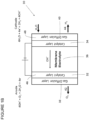
- the poly(aryl alkylene) polymers or poly(aryl-crown ether-alkylene) polymers can be used in HEMFCs such as a typical fuel cell 10 as shown in Figure 1A.
- Figure 1A illustrates a typical fuel cell 10 with an anode portion 12 (illustrated on the left) and a cathode portion 14 (illustrated on the right) which are separated by an electrolyte membrane 16.
- the electrolyte membrane 16 can be any membrane comprising any of the poly(aryl alkylene) polymers or poly(aryl-crown ether-alkylene) polymers as described herein, and can be a reinforced membrane. Supporting members are not illustrated.
- the anode half-reaction consumes fuel and OH- ions and produces waste water (as well as carbon dioxide in the case of carbon containing fuels).
- the cathode half reaction consumes oxygen and produces OH- ions, which flow from the cathode to the anode through the electrolyte membrane.
- Fuels are limited only by the oxidizing ability of the anode catalyst and typically include hydrogen gas, methanol, ethanol, ethylene glycol, and glycerol.
- the fuel is H2 or methanol.
- Catalysts are usually platinum (Pt), silver (Ag), or one or more transition metals, e.g., Ni.
- the anode half-reaction consumes fuel and produces H+ ions and electrons.
- the cathode half reaction consumes oxygen, H+ ions, and electrons and produces waste water, and H+ ions (protons) flow from the anode to the cathode through the electrolyte membrane.
- the anion/hydroxide exchange ionomers and membranes can be used for many other purposes such as use in fuel cells (e.g., hydrogen/alcohol/ammonia fuel cells); electrolyzers (e.g., water/carbon dioxide/ammonia electrolyzers), electrodialyzers; ion-exchangers; solar hydrogen generators; desalinators (e.g., desalination of sea/brackish water); demineralizers (e.g., demineralization of water); water purifiers (e.g., ultra-pure water production); waste water treatment systems; concentration of electrolyte solutions in the food, drug, chemical, and biotechnology fields; electrolysis (e.g., chlor-
- fuel cells e.g., hydrogen/alcohol/ammonia fuel cells
- electrolyzers e.g., water/carbon dioxide/ammonia electrolyzers
- electrodialyzers e.g., electrodialyzers
- the membrane (in bromide form) was peeled off from a glass plate in contact with deionized (DI) water.
- the membrane in hydroxide form was obtained by ion exchange in 1 M KOH at 60 °C for 24 hours, followed by washing and immersion in DI water for 48 hours under argon to remove residual KOH.
- the sandwich is completed by adding a rubber gasket, a GDL (SGL25CC), and a graphite flow field (ElectroChem) to each side of the MEA.
- Performance is characterized with a fuel cell test system equipped with a back pressure module (Scribner 850e)( Materials: TP100-CF3-IM-1 membrane, ionomer loading of 20 %, catalyst: 0.4 mg Pt cm -2 PtRu/C on anode, 0.4 mg Pt cm -2 PtRu/C on cathode.
- PCE-C5-IM-x 7-bromo-1,1,1-trifluoroheptan-2-one, 1,1,1-trifluoroacetone and dibenzo-18-crown-6
- PCE-C5-IM-x 7-bromo-1,1,1-trifluoroheptan-2-one, 1,1,1-trifluoroacetone and dibenzo-18-crown-6
- x is the mole ratio of 7-bromo-1,1,1-trifluoroheptan-2-one to dibenzo-18-crown-6 and is from 1 to 100.
- PCE-C5-IM-x was prepared by three major steps: (1) synthesis of a bromide-functionalized polymer, (2) synthesis of an imidazolium-functionalized polymer, and (3) membrane casting and hydroxide exchange. The reaction scheme is depicted below, wherein n is the number of repeat units in the polymer:
- PCE-C5-IM OH-1 membrane casting and hydroxide exchange Membrane was prepared by dissolving the PCE-C5-IM-Br-1 polymer (1.0 g) in NMP (10 mL) and casting on a clear glass plate at 80 °C for 8 hours. The membrane (in bromide form) was peeled off from a glass plate in contact with deionized (DI) water. The membrane in hydroxide form was obtained by ion exchange in 1 M KOH at 60 °C for 24 hours, followed by washing and immersion in DI water for 48 hours under argon to remove residual KOH.
- DI deionized
- PCE-C5-QA-x 7-bromo-1,1,1-trifluoroheptan-2-one and dibenzo-18-crown-6
- PCE-C5-QA-x 7-bromo-1,1,1-trifluoroheptan-2-one and dibenzo-18-crown-6
- x is the mole ratio of 7-bromo-1,1,1-trifluoroheptan-2-one to dibenzo-18-crown-6 and is from 1 to 100.
- PCE-C5-QA-x was prepared by three major steps: (1) synthesis of a bromide-functionalized polymer, (2) synthesis of a quaternary ammonium-functionalized polymer, and (3) membrane casting and hydroxide exchange. The reaction scheme is depicted below, wherein n is the number of repeat units in the polymer:
- alkyl refers to a linear, branched or cyclic hydrocarbon radical, preferably having 1 to 32 carbon atoms (i.e., 1, 2, 3, 4, 5, 6, 7, 8, 9, 10, 11, 12, 13, 14, 15, 16, 17, 18, 19, 20, 21, 22, 23, 24, 25, 26, 27, 28, 39, 30, 31, or 32 carbons), and more preferably having 1 to 18 carbon atoms.
- Alkyl groups include, but are not limited to, methyl, ethyl, n-propyl, isopropyl, n-butyl, iso-butyl, secondary-butyl, and tertiary-butyl. Alkyl groups can be unsubstituted or substituted by one or more suitable substituents.
- ether as used herein represents a bivalent (i.e., difunctional) group including at least one ether linkage (i.e., -O-).
- heteroaryl refers to a monocyclic, bicyclic, or tricyclic aromatic heterocyclic group containing one or more heteroatoms (e.g., 1 to 3 heteroatoms) selected from O, S and N in the ring(s).
- hydrocarbon as used herein describes a compound or radical consisting exclusively of the elements carbon and hydrogen.
- substituted means that in the group in question, at least one hydrogen atom bound to a carbon atom is replaced with one or more substituent groups such as hydroxy (-OH), alkylthio, phosphino, amido (-CON(RA)(RB), wherein RA and RB are independently hydrogen, alkyl, or aryl), amino(-N(RA)(RB), wherein RA and RB are independently hydrogen, alkyl, or aryl), halo (fluoro, chloro, bromo, or iodo), silyl, nitro (-NO2), an ether (-ORA wherein RA is alkyl or aryl), an ester (-OC(O)RA wherein RA is alkyl or aryl), keto (-C(O)RA wherein RA is alkyl or aryl), heterocyclo, and the like.
- substituent groups such as hydroxy (-OH), alkylthio, phosphino, amido (-CON(RA)(RB),
- substituted introduces or follows a list of possible substituted groups, it is intended that the term apply to every member of that group. That is, the phrase “optionally substituted alkyl or aryl” is to be interpreted as “optionally substituted alkyl or optionally substituted aryl.” Likewise, the phrase “alkyl or aryl optionally substituted with fluoride” is to be interpreted as “alkyl optionally substituted with fluoride or aryl optionally substituted with fluoride.”
- an imidazolium-tethered poly (aryl alkylene) polymer is a polymer having imidazolium groups bound to a poly (aryl alkylene) polymer backbone.
Landscapes
- Chemical & Material Sciences (AREA)
- Chemical Kinetics & Catalysis (AREA)
- Organic Chemistry (AREA)
- Engineering & Computer Science (AREA)
- Health & Medical Sciences (AREA)
- Medicinal Chemistry (AREA)
- Polymers & Plastics (AREA)
- Manufacturing & Machinery (AREA)
- Life Sciences & Earth Sciences (AREA)
- Materials Engineering (AREA)
- Inorganic Chemistry (AREA)
- General Chemical & Material Sciences (AREA)
- Electrochemistry (AREA)
- Hydrology & Water Resources (AREA)
- Environmental & Geological Engineering (AREA)
- Water Supply & Treatment (AREA)
- Sustainable Development (AREA)
- Sustainable Energy (AREA)
- Crystallography & Structural Chemistry (AREA)
- Analytical Chemistry (AREA)
- Molecular Biology (AREA)
- Polyethers (AREA)
- Manufacture Of Macromolecular Shaped Articles (AREA)
- Fuel Cell (AREA)
- Addition Polymer Or Copolymer, Post-Treatments, Or Chemical Modifications (AREA)
- Separation Using Semi-Permeable Membranes (AREA)
- Polyoxymethylene Polymers And Polymers With Carbon-To-Carbon Bonds (AREA)
- Conductive Materials (AREA)
Description
- This invention was partly made with Government support under grant
DEAR0000814 - Anion exchange polymers capable of forming anion-exchange membranes (AEMs) and ionomers (AEls) are provided for use in anion exchange membrane fuel cells (AEMFCs). More specifically, hydroxide exchange polymers are provided which are capable of forming hydroxide-exchange membranes (HEMs), and ionomers (HEls) for use in various applications such as hydroxide exchange membrane fuel cells (HEMFCs) and hydroxide exchange membrane electrolyzers (HEMEL).
- Proton exchange membrane fuel cells (PEMFCs) are considered to be clean and efficient power sources. Steele et al., Nature 2001, 414, 345. However, the high cost and unsatisfactory durability of catalysts are major barriers for large-scale commercialization of PEMFCs. Borup et al., Chem Rev 2007, 107, 3904. By switching the polymer electrolyte from an "acidic" condition to a "basic" one, HEMFCs are able to work with non-precious metal catalysts and the catalysts are expected to be more durable. Other cheaper fuel cell components are also possible such as metal bipolar plates. Varcoe, et al., Fuel Cells 2005, 5, 187; Gu et al., Angew Chem Int Edit 2009, 48, 6499; Gu et al., Chem Commun 2013, 49, 131. However, currently available HEMs and HEls exhibit low alkaline/chemical stability, low hydroxide conductivity, high water uptake, and low mechanical integrity under dry conditions, especially after wet-dry cycles.
- The biggest challenge for HEMs/HEls at present is achieving a high chemical stability at desired operation temperatures of 80 °C or more, and ideally 95 °C or more (e.g., in the presence of nucleophilic hydroxide ions). Varcoe et al., Energ Environ Sci 2014, 7, 3135. The most commonly encountered cationic functional groups (e.g., benzyl trimethyl ammonium and alkyl chain ammonium) can undergo a number of degradation processes in the presence of hydroxide ions nucleophiles by direct nucleophilic substitution and Hofmann elimination. Moreover, the polymer backbone of most base polymers for HEM/HEI applications (e.g., polysulfone and poly(phenylene oxide)) unavoidably contains ether linkages along the backbone, which makes the HEMs/HEIs potentially labile under high pH conditions. Lee et al., Acs Macro Lett 2015, 4, 453; Lee et al., Acs Macro Lett 2015, 4, 814. The strongly nucleophilic hydroxide ions attack these weak bonds and degrade the polymer backbone. Thus, alternative cationic groups, organic tethers, and polymer backbones are needed to enhance chemical stability of HEMs/HEls.
- Another concern regarding current HEMs/HEls is their hydroxide conductivity. In comparison to Nafion, HEMs have intrinsically lower ionic conductivities under similar conditions, because the mobility of OH- is lower than that of H+. Hibbs et al., Chem Mater 2008, 20, 2566. Greater ion-exchange capacity (IEC) is needed for HEMs/HEls to achieve greater hydroxide conductivity. However, high IEC usually leads to a membrane having high water uptake (i.e., a high swelling ratio), decreasing the morphological stability and mechanical strength of the membrane, especially after repeated wet-dry cycles. This highly swollen state when wet is a major reason for decreased flexibility and brittleness of HEMs when dry. The removal of the trade-off between high hydroxide conductivity and low water uptake has been a major setback in designing high-performance HEMs/HEls. Pan et al., Energ Environ Sci 2013, 6, 2912. Chemical cross-linking, physical reinforcement, side-chain polymerization, and blockcopolymer architecture have been tried to reduce water uptake while maintaining acceptable hydroxide conductivity, but these techniques bring challenging problems, e.g., reduced mechanical flexibility, decreased alkaline stability, and/or increased cost. Gu et al., Chem Commun 2011, 47, 2856; Park et al., Electrochem Solid St 2012, 15, B27; Wang et al., Chemsuschem 2015, 8, 4229; Ran et al., Sci Rep-Uk 2014, 4; Tanaka et al., J Am Chem Soc 2011, 133, 10646. Additionally, almost all side-chain or blockcopolymer HEMs are based on flexible aliphatic polymer chains due to limited available synthesis methods. As a result, the membranes still cannot provide morphological stability (low swell ratio) at high IECs and high temperature. Wang et al., Chemsuschem 2015, 8, 4229; Ran et al., Sci Rep-Uk 2014, 4; Marino et al., Chemsuschem 2015, 8, 513; Li et al, M. Macromolecules 2015, 48, 6523.
- An additional obstacle to using HEMs is achievement of mechanical flexibility and strength in an ambient dry state. Most HEMs exhibit low mechanical strength and are very brittle in a completely dry state especially after being completely swollen. It is difficult to obtain and handle thin membranes that are large in size as needed for commercial use of HEMs. Without good mechanical properties, the ionomers cannot form and keep an adequate triple phase structure in the fuel cell electrode at high temperature, such as at or above 80 °C. Li et al., J Am Chem Soc 2013, 135, 10124.
- Another highly desirable feature of an HEI is that the polymer be soluble in a mixture of lower boiling alcohol and water but insoluble in pure alcohol or water so that the HEls can be readily incorporated into an electrode catalyst layer yet not be dissolved away by water or alcohol.
- PEMFCs have recently been deployed as zero-emission power sources in commercially sold automobiles, with demonstrated long driving range and short refuelling time, which are two features preferred for customer acceptance. However, PEMFCs use platinum electrocatalysts and are not yet cost competitive with gasoline engines. Major approaches to PEMFC cost reduction include development of lowplatinum-loading, high power density membrane electrode assemblies (MEAs), and platinum-group-metal-free (PGM-free) cathode catalysts. A fundamentally different pathway to low cost fuel cells is to switch from PEMFCs to hydroxide exchange membrane fuel cells (HEMFCs) that, due to their basic operating environment, can work with PGM-free anode and cathode catalysts, and thus are potentially economically viable. To replace PEMFCs, however, HEMFCs have to provide a performance that matches PEMFC's, performance which in turn requires highly active anode and cathode catalysts as well as the highly chemically stable, ionically conductive, and mechanically robust hydroxide exchange membranes (HEMs)/hydroxide exchange ionomers (HEls) to build an efficient triple phase boundary and thus drastically improve the utilization of the catalyst particles and reduce the internal resistance.
- HEMs/HEls are typically composed of organic cations tethered on a polymer backbone, with OH- being the balancing anion. A chemically stable HEM/HEI requires a stable organic cation and a stable polymer backbone. These hydroxide conductive organic cations have been obtained by introducing quaternary ammonium, imidazolium, guanidinium, phosphonium, sulfonium, ruthenium and cobaltocenium using chloromethylation of aromatic rings or bromination on the benzylic methyl groups of the polymers. Various polymer backbone structures-poly(olefins), poly(styrenes) poly(phenylene oxides), poly(phenylenes), poly(arylene ethers) -have been investigated recently. So far, most of HEMs/HEls based on traditional cation groups (such as benzyl trimethyl ammonium) and aromatic polymer backbones (such as polysulfone) have low alkaline/chemical stability, low hydroxide conductivity, high water uptake, and poor mechanical properties when dry.
- Polymer backbones with ether linkages are generally vulnerable in alkaline medium and thus HEM/HEI having ether-free polymers backbones are highly desirable. Acid catalyzed hydroxylation reactions have been demonstrated to efficiently produce ether-free polymers backbones, and HEM/HEI with such backbones have proven to have good alkaline stability and mechanical properties. Zolotukhin et al. Chem. Comm. 2004, 1030. Diaz et al. Macromol. Rapid Commun. 2007, 28, 183. Lee et al. ACS Macro Lett. 2015, 4, 814.
Bae et al. US Patent, App. 15/527,967 -
CN 109 320 692 A relates to the manufacture of anion exchange membranes based on polyaryl alkylenes. - Warshawsky A, et al. (Warshawsky A, et al. Soluble, polymeric condensate of dibenzo-18-crown-6 and formaldehyde; synthesis, characterization and absorption of anionic copolymers. Reactive Polymers. 1990 Jun; 12(3):261-268. doi: 10.1016/0923-1137(90)90076-G) relates to polyaryl crown ether alkylenes in the context of the manufacture of membranes.
- To further enhance the alkaline stability of HEM/HEI under both high temperature and low relative humidity, cations other than the conventional ammonium cations are highly needed. Imidazolium cations, when properly substituted, have shown improved alkaline stability. Gu et al. Macromolecules, 2014, 47, 208. Wang et al. ChemSusChem 2013, 6, 2079. Hugar et al. J. Am. Chem. Soc. 2015, 137, 8730.
- The scope of the invention is defined by the appended set of claims.
- A polymer is provided which comprises structural units of Formulae (1A); (3'A); optionally (3A); and optionally (4A), wherein the structural units of Formulae (1A), (3A), (3'A) and (4A) have the structures:


- R11 are each independently a quaternary ammonium or phosphonium group or a nitrogen-containing heterocyclic group or a salt thereof, the quaternary ammonium or phosphonium group having the formula (5A):

- R20, R30, R40, R50, R60, R70, R80, R90, R130, R140, R150, R160, and R170 are each independently hydrogen, halide, alkyl, alkenyl, alkynyl or aryl, and the alkyl, alkenyl, alkynyl or aryl are optionally substituted with halide, and wherein R30 and R60 are optionally linked to form a five membered ring optionally substituted with halide or alkyl;
- each R100 is independently alkyl, alkenyl, alkynyl, or a substituent having formula (4B):

- R180 and R240 are each independently alkylene;
- R190, R200, R210, R220, and R230 are each independently alkyl, alkenyl, or alkynyl;
- q is 0, 1, 2, 3, 4, 5, 6, 7, 8, 9, 10, 11, 12, 13, 14, 15, 16, 17, 18, 19, or 20;
- m is 0, 1, 2, 3, 4, 5 or 6;
- n is 0, 1, 2 or 3;
- each m' and each n' is independently 0, 1 or 2;
- X- is an anion; and
- Z is P when the structural unit of formula (3A) is present in the polymer but the structural unit of formula (3'A) is not present in the polymer, and Z is N or P when the structural unit of formula (3'A) is present in the polymer.
- An anion exchange polymer is also provided, which comprises a reaction product of a base and the polymer of the first aspect of this invention as described above, wherein the base comprises a hydroxide-, bicarbonate-, or carbonate-containing base.
- A method of making an anion exchange polymer membrane comprising the anion exchange polymer is also provided. The method comprises:
- reacting the cation-functionalized trifluoroketone monomer, the optional trifluoromethyl ketone monomer, the crown ether monomer, and the optional aromatic monomer in the presence of an organic solvent and a polymerization catalyst to form a cation-functionalized intermediate polymer; and
- dissolving the cation-functionalized intermediate polymer in a solvent to form a polymer solution; and
- casting the polymer solution to form a polymer membrane; and
- exchanging anions of the polymer membrane with hydroxide, bicarbonate, or carbonate ions or a combination thereof to form the anion exchange polymer membrane.
- Another method of making an anion exchange polymer membrane comprising the anion exchange polymer is provided. The method comprises:
- reacting the halogenated trifluoroketone monomer, the optional trifluoromethyl ketone monomer, the crown ether monomer, and the optional aromatic monomer in the presence of an organic solvent and a polymerization catalyst to form a halogen-functionalized polymer; and
- reacting the halogen-functionalized polymer with the tertiary phosphane compound or the nitrogen-containing heterocycle or a salt thereof in the presence of an organic solvent to form a cation-functionalized polymer; and
- dissolving the cation-functionalized polymer in a solvent to form a polymer solution; and
- casting the polymer solution to form a polymer membrane; and
- exchanging anions of the polymer membrane with hydroxide, bicarbonate, or carbonate ions or a combination thereof to form the anion exchange polymer membrane.
- Another method of making an anion exchange polymer membrane comprising the anion exchange polymer is provided. The method comprises:
- reacting the halogenated trifluoroketone monomer, the optional trifluoromethyl ketone monomer, and the crown ether monomer in the presence of an organic solvent and a polymerization catalyst to form a halogen-functionalized polymer; and
- reacting the halogen-functionalized polymer with the tertiary phosphane compound or the nitrogen-containing heterocycle or a salt thereof in the presence of an organic solvent to form a cation-functionalized polymer; and
- dissolving the cation-functionalized polymer in a solvent to form a polymer solution; and
- casting the polymer solution to form a polymer membrane; and
- exchanging anions of the polymer membrane with hydroxide, bicarbonate, or carbonate ions or a combination thereof to form the anion exchange polymer membrane.
- An anion exchange membrane is also provided, optionally configured and sized to be suitable for use in a fuel cell, electrolyzer, electrodialyzer, solar hydrogen generator, flow battery, desalinator, sensor, demineralizer, water purifier, waste water treatment system, ion exchanger, or CO2 separator, and the anion exchange membrane comprising the anion exchange polymer.
- An anion exchange membrane fuel cell, electrolyzer, electrodialyzer, solar hydrogen generator, flow battery, desalinator, sensor, demineralizer, water purifier, waste water treatment system, ion exchanger, or CO2 separator is also provided, the fuel cell, electrolyzer, electrodialyzer, solar hydrogen generator, flow battery, desalinator, sensor, demineralizer, water purifier, waste water treatment system, ion exchanger, or CO2 separator comprising the anion exchange polymer.
- Also provided is a reinforced electrolyte membrane, optionally configured and sized to be suitable for use in a fuel cell, electrolyzer, electrodialyzer, solar hydrogen generator, flow battery, desalinator, sensor, demineralizer, water purifier, waste water treatment system, ion exchanger, or CO2 separator. The membrane comprises a porous substrate impregnated with the anion exchange polymer.
- Other objects and features will be in part apparent and in part pointed out hereinafter.
-
-
Figure 1A illustrates an exemplary hydroxide exchange membrane fuel cell. -
Figure 1B illustrates an exemplary hydroxide exchange membrane electrolyzer. -
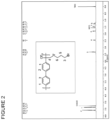
Figure 2 (not according the invention) depicts an 1H NMR spectrum of BP-CF3-Br-1 in CDCI3. -
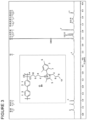
Figure 3 (not according to the invention) depicts an 1H NMR spectrum of BP-CF3-IM-1 in DMSO-d6. -
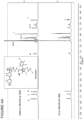
Figure 4A (not according to the invention) shows 1H NMR spectra of BP-CF3-IM-1 before and after an alkaline stability test for 1200 hours at 130 °C in 1M KOH (10% TFA in DMSO-d6). -
Figure 4B (not according to the invention) shows 1H NMR spectra of TP-CF3-IM-1 before and after an alkaline stability test for 300 hours at 80 °C in 10M KOH. (in DMSO-d6).Figure 4C (not according to the invention) shows 1H NMR spectra of TP-CF3-IM-1 before and after an alkaline stability test for 300 hours at 95 °C with RH of 50.9% and 23.3%, respectively. (10% TFA in DMSO-d6). -
Figure 5 (not according to the invention) depicts an 1H NMR spectrum of TP-CF3-Br-1 in CDCI3. -
Figure 6 (not according to the invention) shows an 1H NMR spectrum of TP-CF3-IM-1 in DMSO-d6. -
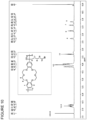
Figure 10 depicts an 1H NMR spectrum of PCE-C5-Br-1 in CDCI3. -
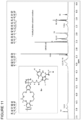
Figure 11 depicts an 1H NMR spectrum of PCE-C5-IM-Br-1 in DMSO-d6. - HEMs/HEIs formed from polymers with various pendant cationic groups and having intrinsic hydroxide conduction channels have been discovered which simultaneously provide improved chemical stability, conductivity, water uptake, good solubility in selected solvents, mechanical properties, and other attributes relevant to HEM/HEI performance. The attachment of the pendant side chains to the rigid aromatic polymer backbone of the polymer which is free of ether bonds allows fine tuning of the mechanical properties of the membrane and incorporation of alkaline stable cations, such as imidazoliums, phosphoniums and ammoniums, and provides enhanced stability to the polymer. HEMs/HEIs formed from these polymers exhibit superior chemical stability, anion conductivity, decreased water uptake, good solubility in selected solvents, and improved mechanical properties in an ambient dry state as compared to conventional HEM/HEIs. The inventive HEMFCs exhibit enhanced performance and durability at relatively high temperatures.
- As a first aspect of the invention, a polymer is provided which comprises structural units of Formulae (1A); (3'A); optionally (3A); and optionally (4A), wherein the structural unit of Formulae (1A), (3A), (3'A) and (4A) have the structures:


- R11 are each independently a quaternary ammonium or phosphonium group or a nitrogen-containing heterocyclic group or a salt thereof, the quaternary ammonium or phosphonium group having the formula (5A):

- R20, R30, R40, R50, R60, R70, R80, R90, R130, R140, R150, R160, and R170 are each independently hydrogen, halide, alkyl, alkenyl, alkynyl or aryl, and the alkyl, alkenyl, alkynyl or aryl are optionally substituted with halide, and wherein R30 and R60 are optionally linked to form a five membered ring optionally substituted with halide or alkyl;
- each R100 is independently alkyl, alkenyl, alkynyl, or a substituent having formula (4B):

- R180 and R240 are each independently alkylene;
- R190, R200, R210, R220, and R230 are each independently alkyl, alkenyl, or alkynyl;
- q is 0, 1, 2, 3, 4, 5, 6, 7, 8, 9, 10, 11, 12, 13, 14, 15, 16, 17, 18, 19, or 20;
- m is 0, 1, 2, 3, 4, 5 or 6;
- n is 0, 1, 2 or 3;
- each m' and each n' is independently 0, 1 or 2;
- each n' is independently 0, 1 or 2;
- X- is an anion; and
- Z is P when the structural unit of formula (3A) is present in the polymer but the structural unit of formula (3'A) is not present in the polymer, and Z is N or P when the structural unit of formula (3'A) is present in the polymer.
- The quaternary ammonium or phosphonium group has the formula (5A):

- wherein R180 and R240 are each independently alkylene. For example, the quaternary ammonium or the quaternary phosphonium group of the formula (5A) can have R180 and R240 each independently being C1-C22 alkylene; R190, R200, R210, R220, and R230 are each independently C1-C6 alkyl; m is 0, 1, 2, 3, 4, 5, or 6; and Z is N or P; or
- the quaternary ammonium or the quaternary phosphonium group of the formula (5A) has R180 and R240 each independently C1-C6 alkylene; R190, R200, R210, R220, and R230 are each independently C1-C6 alkyl; m is 0, 1, 2, or 3; and Z is N or P; or
- the quaternary ammonium or the quaternary phosphonium group of the formula (5A) has R180 and R240 each C8-C22 alkylene; R190, R200, R210, R220, and R230 are each independently C1-C6 alkyl; m be 0, 1, 2, or 3; and Z is N or P; or
- the quaternary ammonium or the quaternary phosphonium group of the formula (5A) has R180 and R240 each C2-C6 alkylene; R190, R200, R210, R220, and R230 are each independently methyl; m is 1; and Z is N or P; or
- the quaternary ammonium or the quaternary phosphonium group of the formula (5A) has R180 and R240 each n-hexylene; R190, R200, R210, R220, and R230 are each independently methyl; m be 1; and Z is N or P.
- The nitrogen-containing heterocyclic group is an optionally substituted pyrrole, pyrroline, pyrazole, pyrazoline, imidazole, imidazoline, triazole, pyridine, triazine, pyrazine, pyridazine, pyrimidine, azepine, quinoline, piperidine, pyrrolidine, pyrazolidine, imidazolidine, azepane, isoxazole, isoxazoline, oxazole, oxazoline, oxadiazole, oxatriazole, dioxazole, oxazine, oxadiazine, isoxazolidine, morpholine, thiazole, isothiazole, oxathiazole, oxathiazine, or caprolactam, wherein each substituent is independently alkyl, alkenyl, alkynyl, aryl, or aralkyl.
- Preferably, the nitrogen-containing heterocyclic group is unsaturated such as pyrrole, pyrroline, pyrazole, pyrazoline, imidazole, imidazoline, triazole, pyridine, triazine, pyrazine, pyridazine, pyrimidine, azepine, or quinoline, and each substitutable position of the heterocycle is substituted independently with alkyl (e.g., methyl, ethyl, propyl, n-butyl) or aryl groups (e.g., phenyl with alkyl substituents).
- The nitrogen-containing heterocyclic group can comprise an imidazolium having the formula (6A):


- The structural unit of Formulae (3A) has the structure:

- For example, in the structural unit of formula (3A), at least one of R20, R30, R40, R50, R60, R70, R80, and R90 can be halide or aryl, and the aryl can be optionally substituted with halide.
- As another example, in the structural unit of formula (3A), R30 and R60 can be linked to form a five membered ring optionally substituted with halide or alkyl.
- The structural unit of formula (3A) can be derived from an aromatic monomer comprising biphenyl, para-terphenyl, meta-terphenyl, para-quaterphenyl, 9,9-dimethyl-9H-fluorene, or benzene.
- The structural unit of formula (3'A) has the structure:

- For example, the structural unit can be derived from a dibenzo-18-crown-6 polyether as in formula (3'A-1) wherein m' and n' are 0, a dibenzo-21-crown-7 polyether as in formula (3'A-1) wherein m' is 0 and n' is 1, a dibenzo-24-crown-8 polyether as in formula (3'A-1) wherein m' and n' are 1, or a dibenzo-30-crown-10 polyether as in formula (3'A-1) wherein m' and n' are 2, and R20, R40, R50, R70, R80, and R90 are as defined for formula (3'A):


- For example, in the structural unit of any of formulae (3'A)-(3'A-2), R20, R40, R50, R70, R80, and R90, if present, can be hydrogen or halide.
- The structural unit of formula (3'A-1) can be derived from the respective dibenzo-crown ether wherein R20, R40, R50, R70, R80, and R90 are each hydrogen. Dibenzo-18-crown-6 polyether can be made from catechol and bis(chloroethyl) ether as described by Charles J. Pedersen, Org. Synth., 1972, 52, 66, and is commercially available. Dibenzo-21-crown-7 polyether, dibenzo-24-crown-8 polyether, and dibenzo-30-crown-10 polyether are also commercially available.
- The structural unit of formula (3'A-2) can be derived from benzo-18-crown-6 polyether wherein R70 and R80 are each hydrogen. Benzo-18-crown-6 polyether is commercially available.
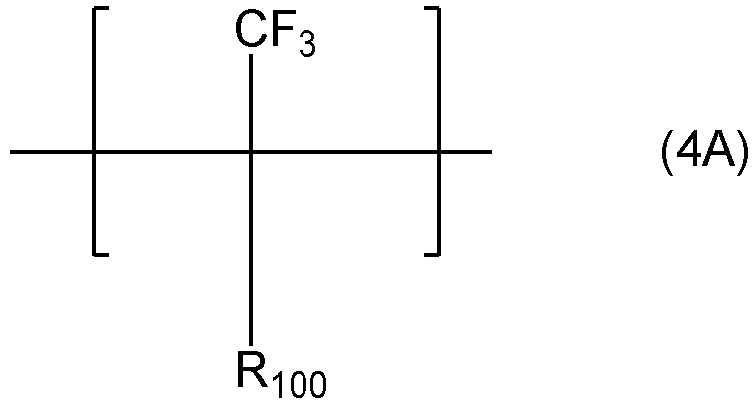
- The optional structural unit of Formula (4A) has the structure:


- For example, in the structural unit of formula (4A), R100 can be alkyl, alkenyl, or alkynyl, and the alkyl, alkenyl, or alkynyl can be optionally substituted with fluoride.
- As another example, in the structural unit of formula (4A), R100 can be the substituent of formula (4B) and at least one of R130, R140, R150, R160 and R170 can be halide or aryl, and the aryl can be optionally substituted with fluoride.
- As yet another example, R20, R40, R50, R70, R80, R90, R130, R140, R150, R160, and R170 can each independently be hydrogen, or alkyl optionally substituted with fluoride, and R100 can be alkyl optionally substituted with fluoride or the substituent of formula (4B).
- In other instances, R20, R40, R50, R70, R80, R90, R130, R140, R150, R160, and R170 can each independently be hydrogen, methyl, ethyl, propyl, butyl, pentyl, or hexyl, or methyl, ethyl, propyl, butyl, pentyl, or hexyl optionally substituted with fluoride, and R100 can be methyl, ethyl, propyl, butyl, pentyl, or hexyl optionally substituted with fluoride or the substituent of formula (4B).
- A sum of the mole fractions of the structural unit of Formula (1A) and Formula (4A) in the polymer can be about equal to a sum of the mole fractions of the structural units of Formulae (3A) and (3'A) in the polymer, and the ratio of the mole fraction of the structural unit of Formula (1A) in the polymer to the sum of the mole fractions of the structural units of Formulae (3A) and (3'A) in the polymer can be from about 0.01 to 1.
- A mole ratio of a sum of the mole fractions of the structural unit of Formula (1A) and Formula (4A) to a sum of the mole fractions of Formulae (3A) and (3'A) in the polymer can be from about 0.95:1 to about 1.4:1, and the ratio of the mole fraction of the structural unit of Formula (1A) to the sum of the mole fractions of the structural units of Formulae (3A) and (3'A) can be from about 0.01 to 1.
- The mole ratio of the sum of the mole fractions of the structural unit of Formula (1A) and Formula (4A) to the sum of the mole fractions of Formulae (3A) and (3'A) in the polymer can be from about 1:1 to about 1.2:1.
- A second aspect of the invention is an anion exchange polymer which comprises a reaction product of a base and any one of the polymers as described above in the first aspect of the invention, wherein the base comprises a hydroxide-, bicarbonate-, or carbonate-containing base.
- Preferably, the hydroxide-containing base is sodium hydroxide or potassium hydroxide; the bicarbonate-containing base such is sodium bicarbonate or potassium bicarbonate; or the carbonate-containing base is sodium carbonate or potassium carbonate.
- Representative anion exchange polymers (first six polymers not according to the invention) include the following wherein x is 0.01-1:


- An imidazolium tethered-poly(aryl alkylene) polymer or imidazolium tethered-poly(aryl-crown ether-alkylene) polymer not being part of the invention can be an hydroxide exchange polymer comprising a poly(aryl alkylene) or poly(aryl-crown ether-alkylene) backbone free of ether linkages, and having: water uptake of not more than 47% based on the dry weight of the polymer when immersed in pure water at 80 °C; or hydroxide conductivity in pure water at 20 °C of at least 31 mS/cm. Also, a polymer not being part of the invention can be: stable to degradation (as evidenced by no change in the 1H NMR spectra) when immersed in 1 M potassium hydroxide at 130 °C for 1,200 hours; stable to degradation (as evidenced by no change in the1H NMR spectra) when immersed in 10 M potassium hydroxide at 80 °C for 300 hours; stable to degradation (as evidenced by no change in the 1H NMR spectra) when kept at relative humidity of 23.3% and 50.9% at 95 °C for 300 hours; insoluble in pure water and isopropanol at 100 °C, but soluble in a 50/50 mixture by weight of water and ethanol at 100 °C. Also, a polymer not being part of the invention can have a tensile strength of at least 30 MPa and/or elongation at break of at least 250%.
- Uptake of the imidazolium tethered-poly(aryl-crown ether-alkylene) polymer not being part of the invention can be no more than 47% when the polymer is crosslinked with a crosslinking agent or is chemically bound to a membrane. For example, the water uptake of polycrownether-CF3-TMA (also known as PCE-C5-QA-1) of Example 10 was 364% and of poly(aryl-crown ether-alkylene) -CF3-IM of Example 7 was about 200% when measured, but can be decreased by crosslinking or chemically binding the polymer to a membrane.
- Crosslinking agents for use in crosslinking any of the polymers described herein include, for example, dibromoalkanes (dibromohexanes, dibromobutane), diiodoalkanes (diiodohexanes, diiodobutane), and ammonium cationcontaining dibromoalkanes and diiodoalkanes.
- The imidazolium tethered-poly(aryl alkylene) polymer or imidazolium tethered-poly(aryl-crown ether-alkylene) polymer not being part of the invention can be an hydroxide exchange polymer comprising an imidazolium-tethered poly(aryl alkylene) or poly(aryl-crown ether-alkylene) backbone free of ether linkages, and having a peak power density of at least 130 mW/cm2 when the polymer is used as an hydroxide exchange membrane of an hydroxide exchange membrane fuel cell and is loaded at 20% as an hydroxide exchange ionomer in cathodic and anodic catalyst layers of the fuel cell, the fuel cell having 0.4 mgPt cm-2 PtRu/C on anode, 0.4 mgPt cm-2 PtRu/C on cathode and test conditions being hydrogen flow rate of 1.0 L/min, oxygen flow rate of 2.0 L/min, cell temperature of 95 °C, and anode and cathode humidifier temperature at 90 °C, and 97 °C, respectively.
- Preferably, the aryl linkages of the imidazolium tethered-poly(aryl alkylene) polymer backbone free of ether linkages comprise p-phenyl, and the alkylene linkages comprise hydroxide bicarbonate, or carbonate anions, or a combination thereof. The imidazolium tethered-poly(aryl-crown ether-alkylene) polymer backbone free of ether linkages also preferably comprises dibenzo-18-crown-6, dibenzo-21-crown-7 polyether, dibenzo-24-crown-8 polyether, or dibenzo-30-crown-10 polyether.
- The aryl linkages of the imidazolium tethered-poly(aryl alkylene) polymer backbone can be derived, for example, from biphenyl, para-terphenyl, meta-terphenyl, para-quaterphenyl, 9,9-dimethyl-9H-fluorene, or benzene monomers. The imidazolium tethered-poly(aryl-crown ether-alkylene) polymer backbone free of ether linkages can be derived, for example, from dibenzo-18-crown-6, dibenzo-21-crown-7 polyether, dibenzo-24-crown-8 polyether, or dibenzo-30-crown-10 polyether.
- The alkylene linkages of the imidazolium tethered-poly(aryl alkylene) backbone are derived from 7-bromo-1,1,1-trifluoroheptan-2-one monomers.
- The imidazolium tethered-poly(aryl alkylene) polymer backbone or imidazolium tethered-poly(aryl-crown ether-alkylene) polymer backbone can further comprise 2,2,2-trifluoroethylbenzene linkages derived from 2,2,2-trifluoroacetophenone monomer, or trifluoromethyl methylene linkages derived from trifluoromethyl ketone monomer, such as 1,1, 1-trifluoropropane linkages derived from 1,1,1-trifluoroacetone.
- A third aspect of the invention is a method of making an anion exchange polymer membrane comprising the anion exchange polymer in the second aspect of the invention. The method comprises: reacting the cation-functionalized trifluoroketone monomer, the optional trifluoromethyl ketone monomer, the crown ether monomer, and the optional aromatic monomer in the presence of an organic solvent and a polymerization catalyst to form a cation-functionalized intermediate polymer; and dissolving the cation-functionalized intermediate polymer in a solvent to form a polymer solution; and casting the polymer solution to form a polymer membrane; and exchanging anions of the polymer membrane with hydroxide, bicarbonate, or carbonate ions or a combination thereof to form the anion exchange polymer membrane.
- For example, a cation-functionalized trifluoroketone monomer such as an imidazolium functionalized 7-bromo-1,1,1-trifluoroheptan-2-one, an optional trifluoromethyl ketone monomer such as 2,2,2-trifluoroacetophenone or 1,1,1-trifluoroacetone, and an aromatic monomer such as benzene, biphenyl, p-terphenyl, m-terphenyl or p-quaterphenyl or a crown ether monomer such as dibenzo-18-crown-6, dibenzo-21-crown-7 polyether, dibenzo-24-crown-8 polyether, or dibenzo-30-crown-10 polyether can be placed in a stirred container and dissolved or dispersed into an organic solvent. A polymerization catalyst in a solvent can then be added dropwise over up to 60 minutes at -78 to 60 °C. Thereafter, the reaction is continued at this temperature for about 1 to about 120 hours. The resulting solution is poured slowly into an aqueous solution of ethanol. The solid obtained is filtered, washed with water and immersed in 1 M K2CO3 at room temperature for about 1 to 48 hours. Finally, the product is filtered, washed with water and dried completely under vacuum to form a cation-functionalized polymer. The cation functionalized polymer is then subjected to anion exchange, for example in 1 M KOH for hydroxide exchange, at about 20 to 100 °C for about 12 to 48 hours, followed by washing and immersion in DI water for about 12 to 48 hours under an oxygen-free atmosphere to remove residual KOH.
- A representative reaction scheme for the third aspect of the invention is shown below, wherein R5, R6, R7, R8, and R100 are each independently hydrogen, alkyl, alkenyl, phenyl or alkynyl, and the alkyl, alkenyl, phenyl or alkynyl are optionally substituted with a halide; R11 is phosphonium or nitrogen-containing heterocycle; n is the number of repeat units in the polymer; q is 0-20; and x is 0.01-1:


- A fourth aspect of the invention is a method of making an anion exchange polymer membrane comprising the anion exchange polymer in the second aspect of the invention. The method comprises: reacting the halogenated trifluoroketone monomer, the optional trifluoromethyl ketone monomer, the crown ether monomer, and the optional aromatic monomer in the presence of an organic solvent and a polymerization catalyst to form a halogen-functionalized polymer; and reacting the halogen-functionalized polymer with the tertiary phosphane compound or the nitrogen-containing heterocycle or a salt thereof in the presence of an organic solvent to form a cation-functionalized polymer; and dissolving the cation-functionalized polymer in a solvent to form a polymer solution; and casting the polymer solution to form a polymer membrane; and exchanging anions of the polymer membrane with hydroxide, bicarbonate, or carbonate ions or a combination thereof to form the anion exchange polymer membrane.
- For example, a halogenated trifluoroketone monomer such as 7-bromo-1,1,1-trifluoroheptan-2-one, an optional trifluoromethyl ketone monomer such as 2,2,2-trifluoroacetophenone or 1,1,1-trifluoroacetone, and an aromatic monomer such as benzene, biphenyl, p-terphenyl, m-terphenyl or p-quaterphenyl or crown ether monomer such as dibenzo-18-crown-6, dibenzo-21-crown-7 polyether, dibenzo-24-crown-8 polyether, or dibenzo-30-crown-10 polyether can be placed in a stirred container and dissolved or dispersed into an organic solvent. A polymerization catalyst in a solvent can then be added dropwise over up to 60 minutes at -78 to 60 °C. Thereafter, the reaction is continued at this temperature for about 1 to about 120 hours. The resulting solution is poured slowly into an aqueous solution of ethanol. The solid obtained is filtered, washed with water and immersed in 1 M K2CO3 at room temperature for about 1 to 48 hours. Finally, the product is filtered, washed with water and dried completely under vacuum to form a halogen-functionalized polymer.
- The halogen functionalized polymer is then placed in a stirred container with the quaternary phosphonium compound or the nitrogen-containing heterocycle or a salt thereof such as a functionalized imidazole and dissolved or dispersed into an organic solvent. The reaction is continued at a temperature of about 50 to 100 °C for about 1 to about 120 hours. The resulting solution is then cast to form a polymer membrane. The polymer membrane is then subjected to anion exchange, for example in 1 M KOH for hydroxide exchange, at about 20 to 100 °C for about 12 to 48 hours, followed by washing and immersion in DI water for about 12 to 48 hours under an oxygen-free atmosphere to remove residual KOH.
- A representative reaction scheme for the fourth aspect of the invention is shown below, wherein R5, R6, R7, R8, and R100 are each independently hydrogen, alkyl, alkenyl, phenyl or alkynyl, and the alkyl, alkenyl, phenyl or alkynyl are optionally substituted with a halide; R11 is a quaternary ammonium or phosphonium group or nitrogen-containing heterocyclic group as defined in the first aspect of the invention; n is the number of repeat units in the polymer; q is 0-20; and x is 0.01-1:


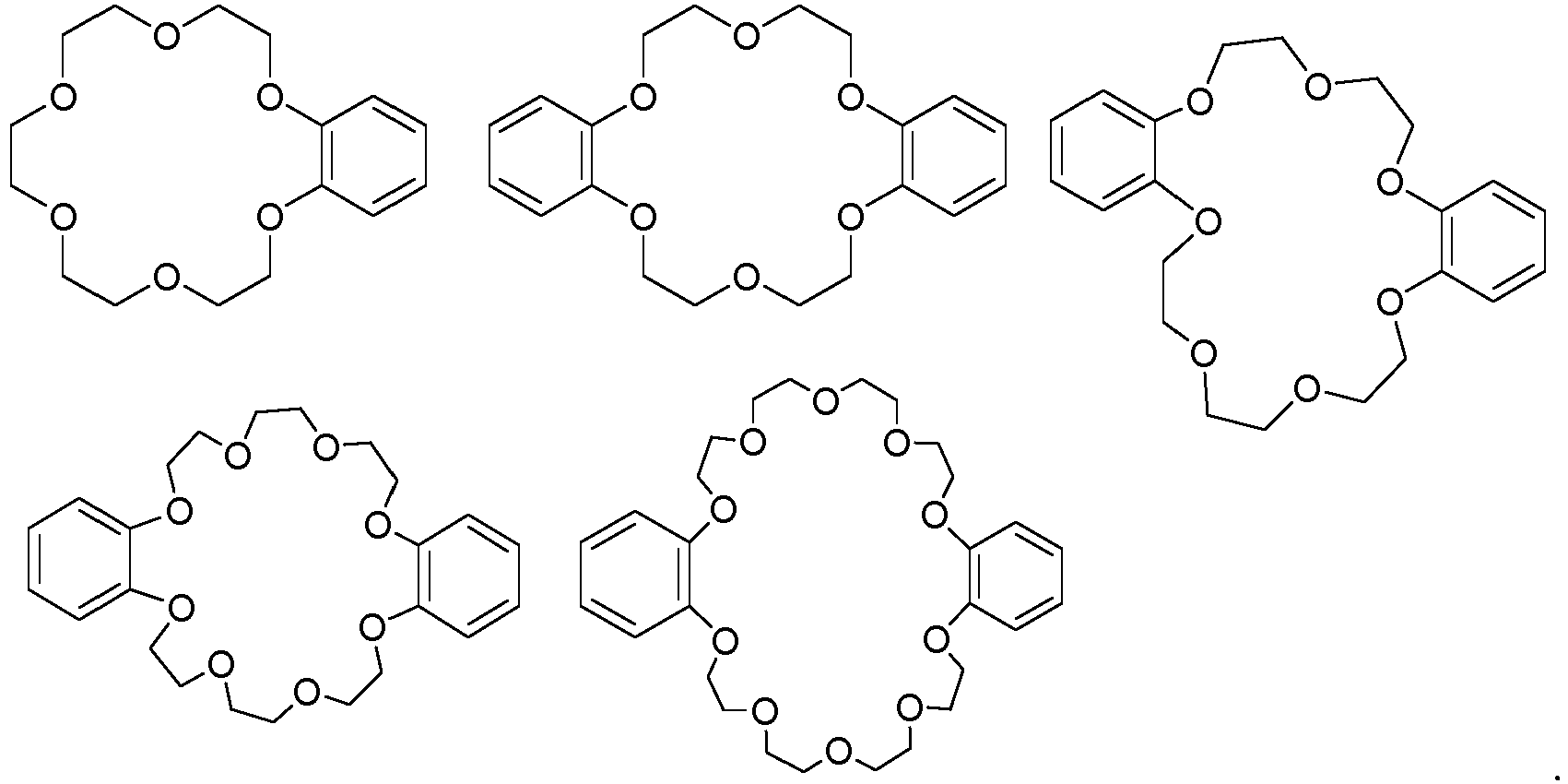
- A fifth aspect of the invention is an anion exchange membrane, optionally configured and sized to be suitable for use in a fuel cell, electrolyzer, electrodialyzer, solar hydrogen generator, flow battery, desalinator, sensor, demineralizer, water purifier, waste water treatment system, ion exchanger, or CO2 separator, and comprising the anion exchange polymer of the second aspect of the invention.
- The anion exchange polymer can be made into reinforced hydroxide exchange membranes as described below. Such reinforced hydroxide exchange membranes can be prepared by a method which comprises wetting a porous substrate in a liquid to form a wetted substrate; dissolving the poly(aryl alkylene) polymer in a solvent to form a homogeneous solution; applying the solution onto the wetted substrate to form the reinforced membrane; drying the reinforced membrane; and exchanging anions of the reinforced membrane with hydroxide ions to form the reinforced hydroxide exchange polymer membrane. The solution can be applied to the wetted substrate by any known membrane formation technique such as casting, spraying, or doctor knifing.
- The resulting reinforced membrane can be impregnated with the poly(aryl alkylene) polymer multiple times if desired by wetting the reinforced membrane again and repeating the dissolving, casting and drying steps.
- The polymerization catalyst used in forming the polymer can comprise trifluoromethanesulfonic acid, pentafluoroethanesulfonic acid, heptafluoro-1-propanesulfonic acid, trifluoroacetic acid, perfluoropropionic acid, heptafluorobutyric acid, or a combination thereof.
- Each of the organic solvents used in the any of the above methods can be independently selected from polar aprotic solvents (e.g., dimethyl sulfoxide, 1-methyl-2-pyrrolidinone, 1-methyl-2-pyrrolidone, 1-methyl-2-pyrrolidone, or dimethylformamide) or other suitable solvents including, but are not limited to, methylene chloride, trifluoroacetic acid, trifluoromethanesulfonic acid, chloroform, 1,1,2,2-tetrachloroethane, dimethylacetamide or a combination thereof.
- The solvent in the dissolving step can comprise methanol, ethanol, n-propanol, isopropanol, n-butanol, sec-butanol, tert-butanol, a pentanol, a hexanol, dimethyl sulfoxide, 1-methyl-2-pyrrolidone, dimethylformamide, chloroform, ethyl lactate, tetrahydrofuran, 2-methyltetrahydrofuran, water, phenol, acetone, or a combination thereof.
- The liquid used to wet the porous substrate can be a low boiling point solvent such as a lower alcohol (e.g., methanol, ethanol, propanol, isopropanol) and/or water. Preferably, the liquid is anhydrous ethanol.
- Additional aspects of the invention are described below.
- An anion exchange membrane such as a hydroxide exchange membrane is also provided. The membrane is configured and sized to be suitable for use in a fuel cell, electrolyzer, electrodialyzer, solar hydrogen generator, flow battery, desalinator, sensor, demineralizer, water purifier, waste water treatment system, ion exchanger, or CO2 separator, and comprises any of the poly(aryl alkylene) polymers as described herein.
- A reinforced electrolyte membrane such as a reinforced hydroxide exchange membrane is also provided to increase the mechanical robustness of the anion exchange membrane for stability through numerous wet and dry cycles (relative humidity cycling) in a fuel cell. The membrane is configured and sized to be suitable for use in a fuel cell, electrolyzer, electrodialyzer, solar hydrogen generator, flow battery, desalinator, sensor, demineralizer, water purifier, waste water treatment system, ion exchanger, or CO2 separator, and comprises a porous substrate impregnated with any of the poly(aryl alkylene) polymers as described herein. Methods for preparing reinforced membranes are well known to those of ordinary skill in the art such as those disclosed in
U.S. Patent Nos. RE37,656 andRE37,701 . - The porous substrate can comprise a membrane comprised of polytetrafluoroethylene, polypropylene, polyethylene, poly(ether ketone), polyaryletherketone, imidazolium-tethered poly(aryl alkylene), imidazole -tethered poly(aryl alkylene), polysulfone, perfluoroalkoxyalkane, or a fluorinated ethylene propylene polymer, or other porous polymers known in the art such as the dimensionally stable membrane from Giner for use in preparing reinforced membranes for fuel cells. Such porous substrates are commercially available, for example, from W.L. Gore & Associates.
- The porous substrate can have a porous microstructure of polymeric fibrils. Such substrates comprised of polytetrafluoroethylene are commercially available. The porous substrate can comprise a microstructure of nodes interconnected by fibrils.
- The interior volume of the porous substrate can be rendered substantially occlusive by impregnation with the poly(aryl alkylene) polymer as described herein..
- The porous substrate can have a thickness from about 1 micron to about 10, 15, 20, 25, 30, 35, 40, 45, 50, 55, 60, 65, 70, 75, 80, 85, 90, 95 or 100 microns. Preferably, the porous substrate has a thickness from about 5 microns to about 30 microns, or from about 7 microns to about 20 microns.
- An anion exchange membrane fuel cell, electrolyzer, electrodialyzer, solar hydrogen generator, flow battery, desalinator, sensor, demineralizer, water purifier, waste water treatment system, ion exchanger, or CO2 separator is also provided, the fuel cell, electrolyzer, electrodialyzer, solar hydrogen generator, flow battery, desalinator, sensor, demineralizer, water purifier, waste water treatment system, ion exchanger, or CO2 separator comprising the anion exchange polymer.
- Polymers of the invention having high water uptake are useful as ionomers in electrolyzers or fuel cells if the polymers are adhered to a catalyst layer so as not to be washed away during operation of the electrolyzer or fuel cell. Adherence can be achieved by chemically binding the polymer to a membrane or catalyst layer within the electrolyzer or fuel cell, or by crosslinking the polymer with crosslinkers such as those described above. For example, functional groups on a polymer of the invention such as bromoalkyl groups can be reacted with functional groups on a membrane, such as amine groups, to bind the polymer ionomer to the membrane.
- When polymers of the invention are used as a membrane, it is preferred that the water uptake of the polymer ranges from about 20 to about 50% to maintain the mechanical strength of the membrane.
- The poly(aryl alkylene) polymers or poly(aryl-crown ether-alkylene) polymers can be used in HEMFCs such as a
typical fuel cell 10 as shown inFigure 1A. Figure 1A illustrates atypical fuel cell 10 with an anode portion 12 (illustrated on the left) and a cathode portion 14 (illustrated on the right) which are separated by an electrolyte membrane 16. The electrolyte membrane 16 can be any membrane comprising any of the poly(aryl alkylene) polymers or poly(aryl-crown ether-alkylene) polymers as described herein, and can be a reinforced membrane. Supporting members are not illustrated. The anode portion carries out an anode half-reaction which oxidizes fuel releasing electrons to an external circuit and producing oxidized products. The cathode portion carries out a cathode half-reaction which reduces an oxidizer consuming electrons from the external circuit. The gas diffusion layers (GDLs) 18 and 20 serve to deliver thefuel 22 and oxidizer 24 uniformly across the respective catalyst layers 26 and 28. Charge neutrality is maintained by a flow of ions from the anode to the cathode for positive ions and from cathode to anode for negative ions. The dimensions illustrated are not representative, as the electrolyte membrane is usually selected to be as thin as possible while maintaining the membrane's structural integrity. - In the case of the illustrated hydroxide exchange membrane fuel cell (HEMFC), the anode half-reaction consumes fuel and OH- ions and produces waste water (as well as carbon dioxide in the case of carbon containing fuels). The cathode half reaction consumes oxygen and produces OH- ions, which flow from the cathode to the anode through the electrolyte membrane. Fuels are limited only by the oxidizing ability of the anode catalyst and typically include hydrogen gas, methanol, ethanol, ethylene glycol, and glycerol. Preferably, the fuel is H2 or methanol. Catalysts are usually platinum (Pt), silver (Ag), or one or more transition metals, e.g., Ni. In the case of a PEMFC, the anode half-reaction consumes fuel and produces H+ ions and electrons. The cathode half reaction consumes oxygen, H+ ions, and electrons and produces waste water, and H+ ions (protons) flow from the anode to the cathode through the electrolyte membrane.
- It can, therefore, be appreciated how an electrolyte membrane made from a poly(aryl alkylene) polymer or poly(aryl-crown ether-alkylene) polymer significantly improves fuel cell performance. First, greater fuel cell efficiency requires low internal resistance, and therefore, electrolyte membranes with greater ionic conductivity (decreased ionic resistance) are preferred. Second, greater power requires greater fuel cell currents, and therefore, electrolyte membranes with greater ion-current carrying capacity are preferred. Also, practical electrolyte membranes resist chemical degradation and are mechanically stable in a fuel cell environment, and also should be readily manufactured.
- The poly(aryl alkylene) polymers or poly(aryl-crown ether-alkylene) polymers can be used in HEMELs such as an
electrolyzer 30 as shown inFigure 1B. Figure 1B illustrates anelectrolyzer 30 with an anode portion 32 (illustrated on the left) and a cathode portion 34 (illustrated on the right) which are separated by anelectrolyte membrane 36. Theelectrolyte membrane 36 can be any membrane comprising any of the poly(aryl alkylene) polymers or poly(aryl-crown ether-alkylene) polymers as described herein, and can be a reinforced membrane. Supporting members are not illustrated. The anode portion carries out an anode half-reaction which oxidizes ions releasing electrons to an external circuit and producing oxidized products. The cathode portion carries out a cathode half-reaction which reduces an oxidizer consuming electrons from the external circuit. The gas diffusion layers (GDLs) 38 and 40 serve to release theoxidizer 42 andfuel 44 uniformly across the respective catalyst layers 46 and 48. Charge neutrality is maintained by a flow of ions from the anode to the cathode for positive ions and from cathode to anode for negative ions. The dimensions illustrated are not representative, as the electrolyte membrane is usually selected to be as thin as possible while maintaining the membrane's structural integrity. - In the case of the illustrated hydroxide exchange membrane fuel cell (HEMFC), the anode half-reaction consumes OH- ions and produces oxygen. The cathode half reaction consumes water and produces hydrogen and OH- ions, which flow from the cathode to the anode through the electrolyte membrane. Fuels are limited only by the oxidizing ability of the cathode catalyst and typically include hydrogen gas, methanol, ethanol, ethylene glycol, and glycerol. Preferably, the fuel is H2 or methanol. Catalysts are usually platinum (Pt), silver (Ag), or one or more transition metals, e.g., Ni.
- It can, therefore, be appreciated how an electrolyte membrane made from a poly(aryl alkylene) polymer or poly(aryl-crown ether-alkylene) polymer significantly improves electrolyzer performance. First, greater electrolyzer efficiency requires low internal resistance, and therefore, electrolyte membranes with greater ionic conductivity (decreased ionic resistance) are preferred. Second, greater fuel production requires greater electrolyzer currents, and therefore, electrolyte membranes with greater ion-current carrying capacity are preferred. Also, practical electrolyte membranes resist chemical degradation and are mechanically stable in an electrolyzer environment, and also should be readily manufactured.
- Although a principal application for the poly(aryl alkylene) polymers or poly(aryl-crown ether-alkylene) polymers is for energy conversion such as in use in anion exchange membranes, hydroxide exchange membranes, anion exchange membrane fuel cells, and hydroxide exchange membrane fuel cells, the anion/hydroxide exchange ionomers and membranes can be used for many other purposes such as use in fuel cells (e.g., hydrogen/alcohol/ammonia fuel cells); electrolyzers (e.g., water/carbon dioxide/ammonia electrolyzers), electrodialyzers; ion-exchangers; solar hydrogen generators; desalinators (e.g., desalination of sea/brackish water); demineralizers (e.g., demineralization of water); water purifiers (e.g., ultra-pure water production); waste water treatment systems; concentration of electrolyte solutions in the food, drug, chemical, and biotechnology fields; electrolysis (e.g., chlor-alkali production and H2/O2 production); energy storage (e.g., super capacitors, metal air batteries and redox flow batteries); sensors (e.g., pH/RH sensors); and in other applications where an anion-conductive ionomer is advantageous.
- Also provided is a reinforced electrolyte membrane, optionally configured and sized to be suitable for use in a fuel cell, electrolyzer, electrodialyzer, solar hydrogen generator, flow battery, desalinator, sensor, demineralizer, water purifier, waste water treatment system, ion exchanger, or CO2 separator. The membrane comprises a porous substrate impregnated with the anion exchange polymer.
- Having described the invention in detail, it will be apparent that modifications and variations are possible without departing from the scope of the invention defined in the appended claims.
- The following non-limiting examples are provided to further illustrate the present invention.
- An imidazolium-tethered poly(aryl alkylene) polymer was prepared from 7-bromo-1,1,1-trifluoroheptan-2-one, 1,1,1-trifluoroacetone and biphenyl (referred to as BP-CF3-IM-x, wherein x is the mole ratio of 7-bromo-1,1,1-trifluoroheptan-2-one to biphenyl and is from 1 to 100). BP-CF3-IM-x was prepared by three major steps: (1) synthesis of a bromide-functionalized polymer, (2) synthesis of an imidazolium-functionalized polymer, and (3) membrane casting and hydroxide exchange. The reaction scheme is depicted below, wherein n is the number of repeat units in the polymer:

- (1) Synthesis of the bromide-functionalized polymer (BP-CF3-Br-1). To a 100 mL three-necked flask equipped with overhead mechanical stirrer, 7-bromo-1,1,1-trifluoroheptan-2-one (3.000 g, 12.1 mmol) and biphenyl (1.560 g, 10.1 mmol) were dissolved into methylene chloride (6.7 mL). Trifluoromethanesulfonic acid (TFSA) (6.7 mL) were then added dropwise over 30 minutes at 0 °C. Thereafter, the reaction was continued at this temperature for 24 hours. The resulting viscous, brown solution was poured slowly into ethanol. The precipitated solid was filtered, washed with water and immersed in 1 M K2CO3 at room temperature for 12 hours. Finally, the product was filtered, washed with water and dried completely at 60 °C under vacuum. The yield of the polymer was nearly 100%. 1H NMR (CDCl3, δ, ppm): 7.58 (H2, 4H), 7.36 (H1, 4H), 3.33 (H3, 2H), 2.45 (H4, 2H), 1.80 (H5, 2H), 1.45 (H7, 2H) and 1.27 (H6, 2H) (see
Figure 2 ). - (2) Synthesis of imidazolium-functionalized polymer (BP-CF3-IM-1). To a 50 mL one-necked flask equipped with magnetic bar, the bromide-functionalized polymer (2.0 g, 5.2 mmol) and the imidazole (1.7 g, 6.3 mmol) were added into NMP (37 mL). The solution was stirred over 12 hours 75°C. The resulting yellow solution was used to cast a membrane. The membrane was washed consequently three times with hydrochloride solution (pH 1) and DI water, and dried completely at 60 °C under vacuum. The yield of the polymer BP-CF3-IM-1 was almost 100%. 1H NMR (DMSO-d6, δ, ppm): 7.70 (H2, 4H), 7.29 (H1, 4H), 7.02 (H3, 2H), 3.67 (H4, 4H), 2.27-2.19 (H5, H6, H12, 11H), 1.89 (H7, 6H), 1.38-1.07 (H8, H9, H10, 10H), 0.68 (H11, 3H) (see
Figure 3 ). - (3) BP-CF3-IM-1 membrane casting and hydroxide exchange. Membrane was prepared by dissolving the BP-CF3-IM-1 polymer (1.0 g) in NMP (10 mL) and casting on a clear glass plate at 80 °C for 8 hours. The membrane (in bromide form) was peeled off from a glass plate in contact with deionized (DI) water. The membrane in hydroxide form was obtained by ion exchange in 1 M KOH at 60 °C for 24 hours, followed by washing and immersion in DI water for 48 hours under argon to remove residual KOH.
- Other BP-CF3-IM-x membranes are prepared by using different mole ratios of 7-bromo-1,1,1-trifluoroheptan-2-one to biphenyl.
- (4) Alkaline stability. Alkaline stability of the imidazolium containing polymer was evaluated under various conditions to probe its high chemical stability. BP-CF3-IM-1 membrane was immersed into 1 M KOH water solution at 130 °C for 1200h and the 1H NMR spectra showed no change before and after the alkaline test (
Figure 4A ). TP-CF3-IM-1 membrane was immersed into 10 M KOH solution at 80 °C for 300h and no degradation was observed based on the 1H NMR spectra shown inFigure 4B . Moreover, TP-CF3-IM-1 membrane kept for 300h at 95°C under low relative humidity (RH) of 23.3% and 50.9%, respectively, also did not shown sign of degradation as shown inFigure 4C . These results strongly suggested that highly alkaline stable imidazolium cation tethered to a rigid poly(aryl alkylene) polymer backbone structure can indeed yield remarkable chemical stability HEMs. - (5) Water uptake and hydroxide conductivity. An ideal material for HEMs/HEls should have good ion conductivity with low water uptake. All membranes are expected to show very high conductivity in pure water. For example, at 20 °C the hydroxide conductivity of a BP-CF3-IM-x polymer is expected to be much greater than PSFQN (the benchmark HEM) which has an IEC value of 36 mS/cm. PSFQN is derived from benzyl trimethyl ammonium polysulfone and has the formula:

- Increasing the temperature also enhances the hydroxide conductivity of the membrane samples.
- (6) Solubility and mechanical properties. The BP-CF3-IM-x polymers are expected to exhibit excellent solubility in dimethylformamide, N-methylpyrrolidone, dimethyl sulfoxide, and isopropanol/water (1/1 weight ratio), but are expected not to dissolve in pure water and isopropanol.
- (7) Hydroxide exchange membrane fuel cell (HEMFC) performance. Although BP-CF3-IM-x polymer membranes are expected to have superior chemical stability, hydroxide conductivity, low water uptake, good solubility and mechanical properties, the most practical evaluation of these materials is their performance in HEMFC single cells as an HEI in the catalyst layer and as the HEM. Membrane-electrode assemblies (MEAs) can be fabricated by depositing 5 cm2 electrode onto both sides of a BP-CF3-IM-x polymer membrane with a robotic sprayer (Sono-Tek ExactaCoat). The electrode ink is prepared by adding 250 mg of catalyst (Tanaka Kikinzoku Kogyo, or TKK, 50% Pt on high-surface-area C) and a desired amount of ionomer (a BP-CF3-IM-x polymer, prepared by dissolving the BP-CF3-IM-x polymer in a water and isopropanol mixture) to 10 g of water and 10 g of isopropanol, followed by sonicating for 1 hour. The catalyst loading is 0.4 mg Pt/cm2. The sandwich is completed by adding a rubber gasket, a GDL (SGL25CC), and a graphite flow field (ElectroChem) to each side of the MEA. Performance is characterized with a fuel cell test system equipped with a back pressure module (Scribner 850e). Normally, the cell is activated for 30 minutes at 100 mA/cm2 and another 30 minutes at 200 mA/cm2. After activation, performance is recorded by scanning current.
- An imidazolium-tethered poly(aryl alkylene) polymer was prepared from 7-bromo-1,1,1-trifluoroheptan-2-one, 1,1,1-trifluoroacetone and p-terphenyl (referred to as TP-CF3-IM-x, wherein x is the mole ratio of 7-bromo-1,1,1-trifluoroheptan-2-one to p-terphenyl and is from 1 to 100). TP-CF3-IM-x was prepared by three major steps: (1) synthesis of a bromide-functionalized polymer, (2) synthesis of an imidazolium-functionalized polymer, and (3) membrane casting and hydroxide exchange. The reaction scheme is depicted below, wherein n is the number of repeat units in the polymer:

(1) Synthesis of a bromide-functionalized polymer (TP-CF3-Br-1). To a 100 mL three-necked flask equipped with overhead mechanical stirrer, 7-bromo-1,1,1-trifluoroheptan-2-one (3.600 g, 14.6 mmol) and p-terphenyl (2.797 g, 12.1 mmol) were dissolved into methylene chloride (30 mL). Trifluoromethanesulfonic acid (TFSA) (30 mL) was then added dropwise over 30 minutes at 0 °C. Thereafter, the reaction was continued at this temperature for 24 hours. The resulting viscous, brown solution was poured slowly into ethanol. The precipitated solid was filtered, washed with water and immersed in 1 M K2CO3 at room temperature for 12 hours. Finally, the product was filtered, washed with water and dried completely at 60 °C under vacuum. The yield of the polymer was nearly 100%. 1H NMR (CDCl3, δ, ppm): 7.70 (H13, 4H), 7.62 (H1, 4H), 7.40 (H2, 4H), 3.34 (H4, 2H), 2.47 (H12, 2H), 1.82 (H8, 2H), 1.47 (H10, 2H), 1.30 (H9, 2H) (Figure 5 ).
(2) Synthesis of imidazolium-functionalized polymer (TP-CF3-IM-1). To a 50 mL one-necked flask equipped with magnetic bar, the bromide-functionalized polymer (2.0 g, 4.4 mmol) and the functionalized imidazole (1.5 g, 5.5 mmol) were added into NMP (25 mL). The solution was stirred over 12 hours 75°C. The resulting yellow solution was used to cast a membrane. The membrane was washed consequently three times with hydrochloride solution (PH = 1) and DI water, and dried completely at 60 °C under vacuum. The yield of the polymer TP-CF3-IM-x was almost 100%. 1H NMR (DMSO-d6, δ, ppm): 7.80 (H13, 4H), 7.72 (H1, 4H), 7.30 (H2, 4H), 7.05 (H3, 4H), 3.69-3.67 (H4, 4H), 2.29-2.23 (H5, H6, H12, 11H), 1.91 (H7, 6H), 1.38-1.01 (H8, H9, H10, 10H), 0.68 (H11, 3H) (Figure 6 ).
(3) TP-CF3-IM-x membrane casting and hydroxide exchange. Membrane was prepared by dissolving the TP-CF3-IM-x polymer (1.0 g) in NMP (10 mL) and casting on a clear glass plate at 80 °C for 8 hours. The membrane (in bromide form) was peeled off from a glass plate in contact with deionized (DI) water. The membrane in hydroxide form was obtained by ion exchange in 1 M KOH at 60 °C for 24 hours, followed by washing and immersion in DI water for 48 hours under argon to remove residual KOH.
(4) Water uptake and hydroxide conductivity. When x =1, TP-CF3-IM-1 has conductivity of 31.4 mS/cm at 20 °C. It has low water uptake and dimensional swelling ratio in bicarbonate form (as shown in Table 1) in pure water from 20 °C to 80 °C.TABLE 1. Water uptake and dimensional swelling ratio of TP-CF3-IM-1 membrane Temperature (°C) Water uptake (%) Swelling ratio (%) 20 43 21 80 47 28
(5) Hydroxide exchange membrane fuel cell (HEMFC) performance. Although TP-CF3-IM-x polymer membranes are expected to have superior chemical stability, hydroxide conductivity, low water uptake, good solubility and mechanical properties, the most practical evaluation of these materials is their performance in HEMFC single cells as an HEI in the catalyst layer and as the HEM. Membrane-electrode assemblies (MEAs) can be fabricated by depositing 5 cm2 electrode onto both sides of a TP-CF3-IM-x polymer membrane with a robotic sprayer (Sono-Tek ExactaCoat). The electrode ink is prepared by adding 250 mg of catalyst (Tanaka Kikinzoku Kogyo, or TKK, 50% Pt on high-surface-area C) and a desired amount of ionomer (a TP-CF3-IM-x polymer, prepared by dissolving the BP-CF3-IM-x polymer in a water and isopropanol mixture) to 10 g of water and 10 g of isopropanol, followed by sonicating for 1 hour. The catalyst loading is 0.4 mgPt cm-2 PtRu/C on anode, 0.4 mgPt cm-2 PtRu/C on cathode. The sandwich is completed by adding a rubber gasket, a GDL (SGL25CC), and a graphite flow field (ElectroChem) to each side of the MEA. Performance is characterized with a fuel cell test system equipped with a back pressure module (Scribner 850e)( Materials: TP100-CF3-IM-1 membrane, ionomer loading of 20 %, catalyst: 0.4 mgPt cm-2 PtRu/C on anode, 0.4 mgPt cm-2 PtRu/C on cathode. Test conditions: 95 °C, anode humidifier temperature: 90 °C, cathode anode humidifier temperature: 97 °C, H2 flow rate: 1.0 L/min, O2 flow rate: 2.0 L/min.). Normally, the cell is activated for 30 minutes at 100 mA/cm2 and another 30 minutes at 200 mA/cm2. After activation, performance is recorded by scanning current. Results are shown in Figure 8.
(6) Hydroxide exchange membrane electrolyzer (HEMEL) performance. Although TP-CF3-IM-x polymer membranes are expected to have superior chemical stability, hydroxide conductivity, low water uptake, good solubility and mechanical properties, the most practical evaluation of these materials is their performance in HEMEL cells as an HEI in the catalyst layer and as the HEM. Membrane-electrode assemblies (MEAs) were fabricated by depositing 5 cm2 electrode onto both sides of a TP-CF3-IM-x polymer membrane with a robotic sprayer (Sono-Tek ExactaCoat). The electrode ink was prepared by adding 250 mg of catalyst (Tanaka Kikinzoku Kogyo, or TKK, 50% Pt on high-surface-area C) and a desired amount of ionomer (a TP-CF3-IM-x polymer, prepared by dissolving the TP-CF3-IM-x polymer in a water and ethanol mixture) to 10 g of water and 10 g of ethanol, followed by sonicating for 1 hour. The catalyst loading was 4 mg Pt/cm2. Pt-coated Ti plate and TGP-H-060 Toray carbon paper (5% wet proofing) were the gas diffusion layers for the anode and cathode sides, respectively. The cell and de-ionized water temperatures were kept at a constant temperature. Performance was characterized with an Arbin testing system (Materials: TP100-CF3-IM-1 membrane, ionomer loading of 30 %, catalyst: 4.0 mgPt cm-2 Pt/C on anode, 2.9 mg cm-2 IrO2 on cathode. Test conditions: 80 °C for water and electrolyzer, water flow rate: 3.0 mL/min.). Normally, the cell was activated for 30 minutes at 100 mA/cm2 and another 30 minutes at 200 mA/cm2. After activation, performance was recorded by scanning current. Results are shown in Figure 9. - Another imidazolium-tethered poly (aryl alkylene) polymer is prepared from 7-bromo-1,1,1-trifluoroheptan-2-one, 1,1,1-trifluoroacetone and m-terphenyl (referred to as mTP-CF3-IM-x, wherein x is the mole ratio of 7-bromo-1,1,1-trifluoroheptan-2-one to biphenyl and is from 1 to 100). mTP-CF3-IM-x is prepared by three major steps similar to that of TP-CF3-IM-x: (1) synthesis of a bromide-functionalized polymer, (2) synthesis of a imidazolium-functionalized polymer, and (3) membrane casting and hydroxide exchange. The reaction scheme is depicted below, wherein n is the number of repeat units in the polymer:

- Another method of preparing the BP-CF3-IM-x polymer of Example 1 is from the reaction of imidazolium functionalized 7-bromo-1,1,1-trifluoroheptan-2-one, 1,1,1-trifluoroacetone and biphenyl (referred to as BP-CF3-IM-x, wherein x is the mole ratio of imidazolium functionalized 7-bromo-1,1,1-trifluoroheptan-2-one to biphenyl and is from 1 to 100). BP-CF3-IM-x is prepared by two major steps: (1) synthesis of an imidazolium-functionalized polymer, and (2) membrane casting and hydroxide exchange. The reaction scheme is depicted below, wherein n is the number of repeat units in the polymer:

- Another method of preparing the TP-CF3-IM-x polymer of Example 2 is from the reaction of imidazolium functionalized 7-bromo-1,1,1-trifluoroheptan-2-one, 1,1,1-trifluoroacetone and p-terphenyl (referred to as TP-CF3-IM-x, wherein x is the mole ratio of imidazolium functionalized 7-bromo-1,1,1-trifluoroheptan-2-one to p-terphenyl and is from 1 to 100). TP-CF3-IM-x is prepared by two major steps: (1) synthesis of an imidazolium-functionalized polymer, and (2) membrane casting and hydroxide exchange. The reaction scheme is depicted below, wherein n is the number of repeat units in the polymer:

- Another method of preparing the m-TP-CF3-IM-x of Example 3 is from the reaction of imidazolium functionalized 7-bromo-1,1,1-trifluoroheptan-2-one, 1,1,1-trifluoroacetone and m-terphenyl (referred to as mTP-CF3-IM-x, wherein x is the mole ratio of imidazolium functionalized 7-bromo-1,1,1-trifluoroheptan-2-one to m-terphenyl and is from 1 to 100). mTP-CF3-IM-x is prepared by two major steps: (1) synthesis of an imidazolium-functionalized polymer, and (2) membrane casting and hydroxide exchange. The reaction scheme is depicted below, wherein n is the number of repeat units in the polymer:

- An imidazolium-tethered poly(crown ether) polymer was prepared from 7-bromo-1,1,1-trifluoroheptan-2-one, 1,1,1-trifluoroacetone and dibenzo-18-crown-6 (referred to as PCE-C5-IM-x, wherein x is the mole ratio of 7-bromo-1,1,1-trifluoroheptan-2-one to dibenzo-18-crown-6 and is from 1 to 100). PCE-C5-IM-x was prepared by three major steps: (1) synthesis of a bromide-functionalized polymer, (2) synthesis of an imidazolium-functionalized polymer, and (3) membrane casting and hydroxide exchange. The reaction scheme is depicted below, wherein n is the number of repeat units in the polymer:

- Synthesis of a bromide-functionalized polymer (PCE-C5-Br-1). To a 250 mL three-necked flask equipped with overhead mechanical stirrer, dibenzo-18-crown-6 (7.2082 g, 20.00 mmol) and 7-bromo-1,1,1-trifluoroheptan-2-one (5.9294 g, 24.00 mmol) were suspended into chloroform (35 mL). TFSA (30 mL) was then added dropwise slowly at -15 °C. Thereafter, the reaction was continued at 0 °C for 8 h. The resulting viscous solution was poured slowly into ethanol. The white fibrous solid was filtered, washed with water and immersed in 1 M K2CO3 at 50 °C for 12 h. Finally, the white fibrous product was filtered, washed with water and dried completely at 60 °C under vacuum. The yield of the polymer was 95%. 1H NMR (CDCl3, δ, ppm): 6.82-6.68 (6H), 4.15-3.96 (16H), 3.33(2H), 2.27 (2H), 1.76 (2H), 1.38 (2H), 1.15 (2H) (see
Figure 10 ). - Synthesis of imidazolium-functionalized polymer (PCE-C5-IM-Br-1) To a 50 mL one-necked flask equipped with magnetic bar, the bromide-functionalized polymer (1.0 g, 1.7 mmol) and the imidazole (0.5 g, 1.9 mmol) were added into DMSO (20 mL). The solution was stirred over 24
hours 60°C. The resulting yellow solution was used to cast a membrane. The membrane was washed consequently three times with hydrochloride solution (pH 1) and DI water, and dried completely at 60 °C under vacuum. The yield of the polymer PCE-C5-IM-Br-1 was 90%. 1H NMR (DMSO-d6, δ, ppm): 7.14 (2H), 6.91-6.61 (6H), 4.06-3.66 (20H), 2.34 (2H), 2.34-2.30 (9H), 1.94 (6H), 1.40-1.38 (6H), 1.16-1.14(4H), 0.72 (3H) (seeFigure 11 ) - PCE-C5-IM OH-1 membrane casting and hydroxide exchange. Membrane was prepared by dissolving the PCE-C5-IM-Br-1 polymer (1.0 g) in NMP (10 mL) and casting on a clear glass plate at 80 °C for 8 hours. The membrane (in bromide form) was peeled off from a glass plate in contact with deionized (DI) water. The membrane in hydroxide form was obtained by ion exchange in 1 M KOH at 60 °C for 24 hours, followed by washing and immersion in DI water for 48 hours under argon to remove residual KOH.
- Another imidazolium-tethered poly (crown ether) polymer is prepared from 7-bromo-1,1,1-trifluoroheptan-2-one, 1,1,1-trifluoroacetone and dibenzo-18-crown-6 (referred to as PCE-C5-IM-x, wherein x is the mole ratio of 7-bromo-1,1,1-trifluoroheptan-2-one to dibenzo-18-crown-6 and is from 1 to 100). PCE-C5-IM-x is prepared by three major steps similar to that of PCE-C5-IM-1: (1) synthesis of a bromide-functionalized polymer, (2) synthesis of an imidazolium-functionalized polymer, and (3) membrane casting and hydroxide exchange. The reaction scheme is depicted below, wherein n is the number of repeat units in the polymer.

- Another method of preparing the PCE-C5-IM-x of Example 8 is from the reaction of imidazolium functionalized 7-bromo-1,1,1-trifluoroheptan-2-one, 1,1,1-trifluoroacetone and dibenzo-18-crown-6 (referred to as PCE-C5-IM-x, wherein x is the mole ratio of imidazolium functionalized 7-bromo-1,1,1-trifluoroheptan-2-one to PCE-C5-IM-x and is from 1 to 100). PCE-C5-IM-x is prepared by two major steps: (1) synthesis of an imidazolium-functionalized polymer, and (2) membrane casting and hydroxide exchange. The reaction scheme is depicted below, wherein n is the number of repeat units in the polymer:

- A quaternary ammonium-tethered poly(crown ether) polymer was prepared from 7-bromo-1,1,1-trifluoroheptan-2-one and dibenzo-18-crown-6 (referred to as PCE-C5-QA-x, wherein x is the mole ratio of 7-bromo-1,1,1-trifluoroheptan-2-one to dibenzo-18-crown-6 and is from 1 to 100). PCE-C5-QA-x was prepared by three major steps: (1) synthesis of a bromide-functionalized polymer, (2) synthesis of a quaternary ammonium-functionalized polymer, and (3) membrane casting and hydroxide exchange. The reaction scheme is depicted below, wherein n is the number of repeat units in the polymer:

- A quaternary ammonium-tethered poly(crown ether) polymer was prepared from 7-bromo-1,1,1-trifluoroheptan-2-one, 1,1,1-trifluoroacetone and dibenzo-18-crown-6 (referred to as PCE-C5-IM-x, wherein x is the mole ratio of 7-bromo-1,1,1-trifluoroheptan-2-one to dibenzo-18-crown-6 and is from 1 to 100). PCE-C5-QA-x is prepared by three major steps: (1) synthesis of a bromide-functionalized polymer, (2) synthesis of a quaternary ammonium-functionalized polymer, and (3) membrane casting and hydroxide exchange. The reaction scheme is depicted below, wherein n is the number of repeat units in the polymer:

- The term "suitable substituent," as used herein, is intended to mean a chemically acceptable functional group, preferably a moiety that does not negate the activity of the inventive compounds. Such suitable substituents include, but are not limited to halo groups, perfluoroalkyl groups, perfluoroalkoxy groups, alkyl groups, alkenyl groups, alkynyl groups, hydroxy groups, oxo groups, mercapto groups, alkylthio groups, alkoxy groups, aryl or heteroaryl groups, aryloxy or heteroaryloxy groups, aralkyl or heteroaralkyl groups, aralkoxy or heteroaralkoxy groups, HO-(C=O)-groups, heterocylic groups, cycloalkyl groups, amino groups, alkyl - and dialkylamino groups, carbamoyl groups, alkylcarbonyl groups, alkoxycarbonyl groups, alkylaminocarbonyl groups, dialkylamino carbonyl groups, arylcarbonyl groups, aryloxycarbonyl groups, alkylsulfonyl groups, and arylsulfonyl groups. Those skilled in the art will appreciate that many substituents can be substituted by additional substituents.
- The term "alkyl," as used herein, refers to a linear, branched or cyclic hydrocarbon radical, preferably having 1 to 32 carbon atoms (i.e., 1, 2, 3, 4, 5, 6, 7, 8, 9, 10, 11, 12, 13, 14, 15, 16, 17, 18, 19, 20, 21, 22, 23, 24, 25, 26, 27, 28, 39, 30, 31, or 32 carbons), and more preferably having 1 to 18 carbon atoms. Alkyl groups include, but are not limited to, methyl, ethyl, n-propyl, isopropyl, n-butyl, iso-butyl, secondary-butyl, and tertiary-butyl. Alkyl groups can be unsubstituted or substituted by one or more suitable substituents.
- The term "alkenyl," as used herein, refers to a straight, branched or cyclic hydrocarbon radical, preferably having 2, 3, 4, 5, 6, 7, 8, 9, 10, 11, 12, 13, 14, 15, 16, 17, 18, 19, 20, 21, 22, 23, 24, 25, 26, 27, 28, 39, 30, 31, or 32 carbons, more preferably having 1 to 18 carbon atoms, and having one or more carbon-carbon double bonds. Alkenyl groups include, but are not limited to, ethenyl, 1-propenyl, 2-propenyl (allyl), iso-propenyl, 2-methyl-1-propenyl, 1-butenyl, and 2-butenyl. Alkenyl groups can be unsubstituted or substituted by one or more suitable substituents, as defined above.
- The term "alkynyl," as used herein, refers to a straight, branched or cyclic hydrocarbon radical, preferably having 2, 3, 4, 5, 6, 7, 8, 9, 10, 11, 12, 13, 14, 15, 16, 17, 18, 19, 20, 21, 22, 23, 24, 25, 26, 27, 28, 39, 30, 31, or 32 carbons, more preferably having 1 to 18 carbon atoms, and having one or more carbon-carbon triple bonds. Alkynyl groups include, but are not limited to, ethynyl, propynyl, and butynyl. Alkynyl groups can be unsubstituted or substituted by one or more suitable substituents, as defined above.
- The term "aryl" or "ar," as used herein alone or as part of another group (e.g., aralkyl), means monocyclic, bicyclic, or tricyclic aromatic radicals such as phenyl, naphthyl, tetrahydronaphthyl, indanyl and the like; optionally substituted by one or more suitable substituents, preferably 1 to 5 suitable substituents, as defined above. The term "aryl" also includes heteroaryl.
- "Arylalkyl" or "aralkyl" means an aryl group attached to the parent molecule through an alkylene group. The number of carbon atoms in the aryl group and the alkylene group is selected such that there is a total of about 6 to about 18 carbon atoms in the arylalkyl group. A preferred arylalkyl group is benzyl.
- The term "cycloalkyl," as used herein, refers to a mono, bicyclic or tricyclic carbocyclic radical (e.g., cyclopropyl, cyclobutyl, cyclopentyl, cyclohexyl, cycloheptyl, cyclooctyl, cyclononyl, cyclopentenyl, cyclohexenyl, bicyclo[2.2.1]heptanyl, bicyclo[3.2.1]octanyl and bicyclo[5.2.0]nonanyl, etc.); optionally containing 1 or 2 double bonds. Cycloalkyl groups can be unsubstituted or substituted by one or more suitable substituents, preferably 1 to 5 suitable substituents, as defined above.
- The term "-ene" as used as a suffix as part of another group denotes a bivalent radical in which a hydrogen atom is removed from each of two terminal carbons of the group, or if the group is cyclic, from each of two different carbon atoms in the ring. For example, alkylene denotes a bivalent alkyl group such as ethylene (-CH2CH2-) or isopropylene (-CH2(CH3)CH2-). For clarity, addition of the -ene suffix is not intended to alter the definition of the principal word other than denoting a bivalent radical. Thus, continuing the example above, alkylene denotes an optionally substituted linear saturated bivalent hydrocarbon radical.
- The term "ether" as used herein represents a bivalent (i.e., difunctional) group including at least one ether linkage (i.e., -O-).
- The term "heteroaryl," as used herein, refers to a monocyclic, bicyclic, or tricyclic aromatic heterocyclic group containing one or more heteroatoms (e.g., 1 to 3 heteroatoms) selected from O, S and N in the ring(s). Heteroaryl groups include, but are not limited to, pyridyl, pyrazinyl, pyrimidinyl, pyridazinyl, thienyl, furyl, imidazolyl, pyrrolyl, oxazolyl (e.g., 1,3-oxazolyl, 1,2-oxazolyl), thiazolyl (e.g., 1,2-thiazolyl, 1,3-thiazolyl), pyrazolyl, tetrazolyl, triazolyl (e.g., 1,2,3-triazolyl, 1,2,4-triazolyl), oxadiazolyl (e.g., 1,2,3-oxadiazolyl), thiadiazolyl (e.g., 1,3,4-thiadiazolyl), quinolyl, isoquinolyl, benzothienyl, benzofuryl, and indolyl. Heteroaryl groups can be unsubstituted or substituted by one or more suitable substituents, preferably 1 to 5 suitable substituents, as defined above.
- The term "hydrocarbon" as used herein describes a compound or radical consisting exclusively of the elements carbon and hydrogen.
- The term "substituted" means that in the group in question, at least one hydrogen atom bound to a carbon atom is replaced with one or more substituent groups such as hydroxy (-OH), alkylthio, phosphino, amido (-CON(RA)(RB), wherein RA and RB are independently hydrogen, alkyl, or aryl), amino(-N(RA)(RB), wherein RA and RB are independently hydrogen, alkyl, or aryl), halo (fluoro, chloro, bromo, or iodo), silyl, nitro (-NO2), an ether (-ORA wherein RA is alkyl or aryl), an ester (-OC(O)RA wherein RA is alkyl or aryl), keto (-C(O)RA wherein RA is alkyl or aryl), heterocyclo, and the like. When the term "substituted" introduces or follows a list of possible substituted groups, it is intended that the term apply to every member of that group. That is, the phrase "optionally substituted alkyl or aryl" is to be interpreted as "optionally substituted alkyl or optionally substituted aryl." Likewise, the phrase "alkyl or aryl optionally substituted with fluoride" is to be interpreted as "alkyl optionally substituted with fluoride or aryl optionally substituted with fluoride."
- The term "tethered" means that the group in question is bound to the specified polymer backbone. For example, an imidazolium-tethered poly (aryl alkylene) polymer is a polymer having imidazolium groups bound to a poly (aryl alkylene) polymer backbone.
- When introducing elements of the present invention or the preferred embodiments(s) thereof, the articles "a", "an", "the" and "said" are intended to mean that there are one or more of the elements. The terms "comprising", "including" and "having" are intended to be inclusive and mean that there may be additional elements other than the listed elements.
- In view of the above, it will be seen that the several objects of the invention are achieved and other advantageous results attained.
- As various changes could be made in the above products and methods without departing from the scope of the invention, it is intended that all matter contained in the above description and shown in the accompanying drawings shall be interpreted as illustrative and not in a limiting sense.
Claims (16)
- A polymer comprising structural units of Formulae (1A); (3'A); optionally (3A); and optionally (4A), wherein the structural units of Formulae (1A), (3A), (3'A) and (4A) have the structures:
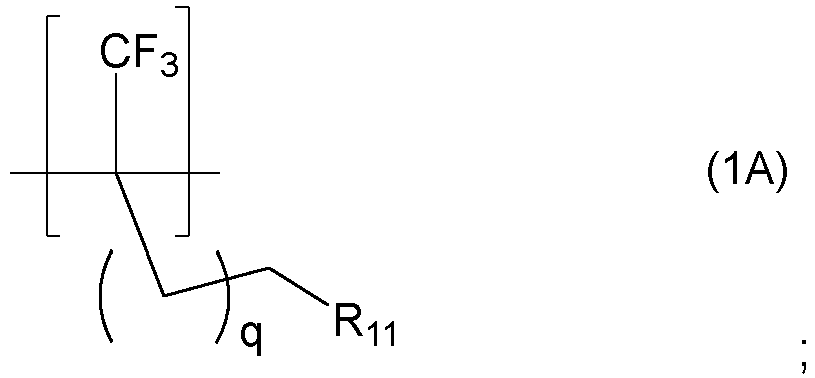

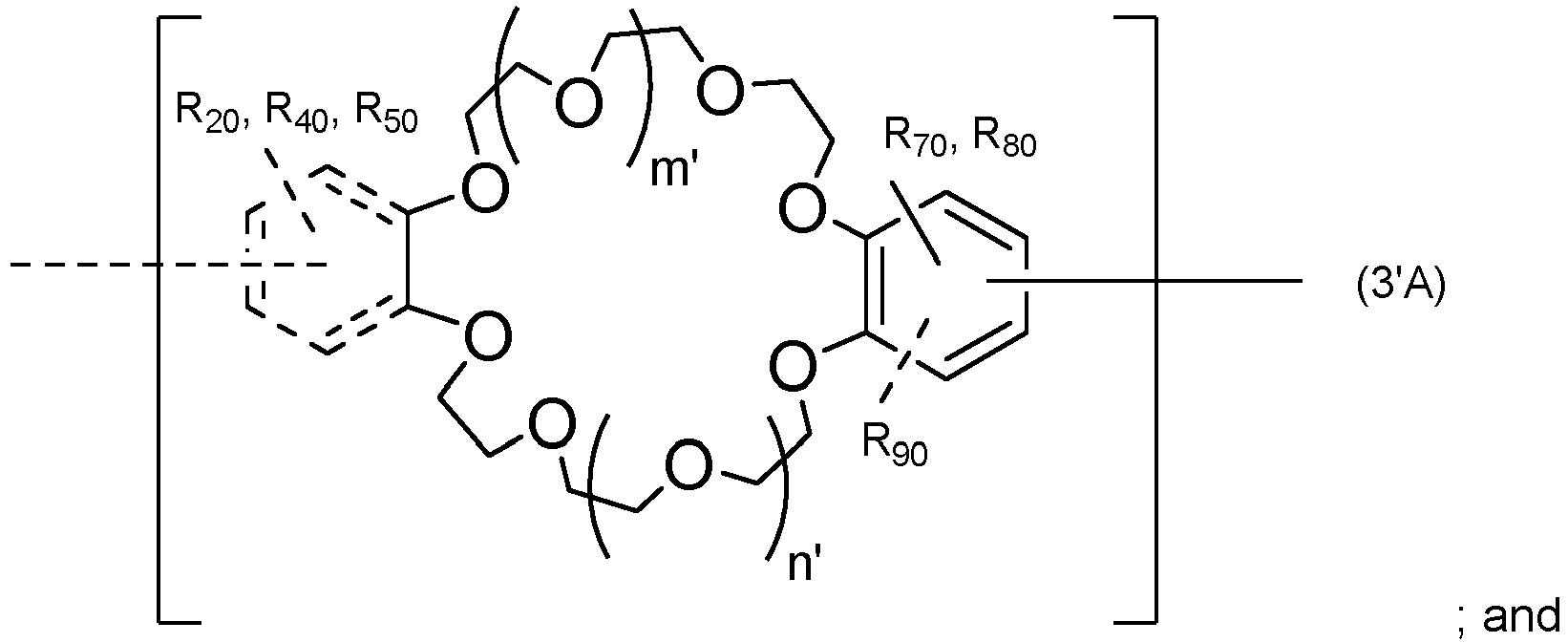
 R11 are each independently a quaternary ammonium or phosphonium group or a nitrogen-containing heterocyclic group or a salt thereof, the quaternary ammonium or phosphonium group having the formula (5A):
 R20, R30, R40, R50, R60, R70, R80, R90, R130, R140, R150, R160, and R170 are each independently hydrogen, halide, alkyl, alkenyl, alkynyl or aryl, and the alkyl, alkenyl, alkynyl or aryl are optionally substituted with halide, and wherein R30 and R60 are optionally linked to form a five membered ring optionally substituted with halide or alkyl;each R100 is independently alkyl, alkenyl, alkynyl, or a substituent having formula (4B):
 R180 and R240 are each independently alkylene;R190, R200, R210, R220, and R230 are each independently alkyl, alkenyl, or alkynyl;q is 0, 1, 2, 3, 4, 5, 6, 7, 8, 9, 10, 11, 12, 13, 14, 15, 16, 17, 18, 19, or 20; m is 0, 1, 2, 3, 4, 5 or 6;n is 0, 1, 2 or 3;each m' and each n' is independently 0, 1 or 2;each n' is independently 0, 1 or 2;X- is an anion; andZ is P when the structural unit of formula (3A) is present in the polymer but the structural unit of formula (3'A) is not present in the polymer, and Z is N or P when the structural unit of formula (3'A) is present in the polymer.
 - An anion exchange polymer comprising a reaction product of a base and the polymer of claim 1, wherein the base comprises a hydroxide-, bicarbonate-, or carbonate-containing base.
- The polymer of claim 1 or 2, wherein R11 is the nitrogen-containing heterocyclic group or salt thereof, and:the nitrogen-containing heterocyclic group comprises a fully substituted pyrrole, pyrroline, pyrazole, pyrazoline, imidazole, imidazoline, triazole, pyridine, triazine, pyrazine, pyridazine, pyrimidine, azepine, or quinoline, wherein each substituent is independently alkyl or aryl; orthe nitrogen-containing heterocyclic group comprises an imidazolium having the formula (6A):wherein R25, R26, R27, and R28 are each independently hydrogen, halide, alkyl, alkenyl, alkynyl or aryl, and the alkyl, alkenyl, alkynyl or aryl are optionally substituted with halide.

- The polymer of claim 1 or 2, wherein:the quaternary ammonium or phosphonium group of the formula (5A) has R180 and R240 each independently being C1-C22 alkylene; R190, R200, R210, R220, and R230 are each independently C1-C6 alkyl; m is 0, 1, 2, 3, 4, 5, or 6; and Z is N or P; orthe quaternary ammonium or phosphonium group of the formula (5A) has R180 and R240 each independently being C1-C6 alkylene; R190, R200, R210, R220, and R230 are each independently C1-C6 alkyl; m is 0, 1, 2, or 3; and Z is N or P; orthe quaternary ammonium or phosphonium group of the formula (5A) has R180 and R240 each independently being C8-C22 alkylene; R190, R200, R210, R220, and R230 are each independently C1-C6 alkyl; m is 0, 1, 2, or 3; and Z is N or P; orthe quaternary ammonium or phosphonium group of the formula (5A) has R180 and R240 each C2-C6 alkylene; R190, R200, R210, R220, and R230 are each independently methyl; m is 1; and Z is N or P; orthe quaternary ammonium or phosphonium group of the formula (5A) has R180 and R240 each n-hexylene; R190, R200, R210, R220, and R230 are each independently methyl; m is 1; and Z is N or P.
- The polymer of any one of claims 1, 2 and 4, wherein:R11 is the quaternary phosphonium group; orR11 is the quaternary ammonium group.
- The polymer of any one of claims 1-5, wherein:in the structural unit of formula (3A), at least one of R20, R30, R40, R50, R60, R70, R80, and R90 is halide or aryl, and the aryl is optionally substituted with halide; orin the structural unit of formula (3A), R30 and R60 are linked to form a five membered ring optionally substituted with halide or alkyl.
- The polymer of any one of claims 1-5, wherein in the structural unit of formula (3'A), R20, R40, R50, R70, R80, and R90 are each hydrogen.
- The polymer of any one of claims 1-7, wherein the polymer comprises the structural unit of formula (4A) and:in the structural unit of formula (4A), R100 is alkyl, alkenyl, or alkynyl, and the alkyl, alkenyl, or alkynyl is optionally substituted with fluoride; orin the structural unit of formula (4A), R100 is the substituent of formula (4B) and at least one of R130, R140, R150, R160 and R170 is halide or aryl, and the aryl is optionally substituted with fluoride; orR20, R30, R40, R50, R60, R70, R80, R90, R130, R140, R150, R160, and R170 are each independently hydrogen, or alkyl optionally substituted with fluoride, and R100 is alkyl optionally substituted with fluoride or the substituent of formula (4B); orR20, R30, R40, R50, R60, R70, R80, R90, R130, R140, R150, R160, and R170 are each independently hydrogen, methyl, ethyl, propyl, butyl, pentyl, or hexyl, or methyl, ethyl, propyl, butyl, pentyl, or hexyl optionally substituted with fluoride, and R100 is methyl, ethyl, propyl, butyl, pentyl, or hexyl optionally substituted with fluoride or substituent of formula (4B).
- The polymer of any one of claims 1-8, wherein X- comprises a halide, BF4 -, PF6 -, CO3 2- or HCO3 -.
- The polymer of any one of claims 1-9, wherein:a sum of the mole fractions of the structural unit of Formula (1A) and Formula (4A) in the polymer can be about equal to a sum of the mole fractions of the structural units of Formulae (3A) and (3'A) in the polymer, and the ratio of the mole fraction of the structural unit of Formula (1A) in the polymer to the sum of the mole fractions of the structural units of Formulae (3A) and (3'A) in the polymer can be from about 0.01 to 1; ora mole ratio of a sum of the mole fractions of the structural unit of Formula (1A) and Formula (4A) to a sum of the mole fractions of Formulae (3A) and (3'A) in the polymer can be from about 0.95:1 to about 1.4:1, and the ratio of the mole fraction of the structural unit of Formula (1A) to the sum of the mole fractions of the structural units of Formulae (3A) and (3'A) can be from about 0.01 to 1; ora mole ratio of the sum of the mole fractions of the structural unit of Formula (1A) and Formula (4A) to the sum of the mole fractions of Formulae (3A) and (3'A) in the polymer can be from about 1:1 to about 1.2:1.
- The polymer of any one of claims 1-8 and 10, wherein X- comprises a hydroxide.
- A method of making an anion exchange polymer membrane comprising the polymer of claim 2, the method comprising:reacting the cation-functionalized trifluoroketone monomer, the optional trifluoromethyl ketone monomer, the crown ether monomer, and the optional aromatic monomer in the presence of an organic solvent and a polymerization catalyst to form a cation-functionalized intermediate polymer; anddissolving the cation-functionalized intermediate polymer in a solvent to form a polymer solution; andcasting the polymer solution to form a polymer membrane; andexchanging anions of the polymer membrane with hydroxide, bicarbonate, or carbonate ions or a combination thereof to form the anion exchange polymer membrane; orthe method comprising:reacting the halogenated trifluoroketone monomer, the optional trifluoromethyl ketone monomer, the crown ether monomer, and the optional aromatic monomer in the presence of an organic solvent and a polymerization catalyst to form a halogen-functionalized polymer; andreacting the halogen-functionalized polymer with the tertiary phosphane compound or the nitrogen-containing heterocycle or a salt thereof in the presence of an organic solvent to form a cation-functionalized polymer; anddissolving the cation-functionalized polymer in a solvent to form a polymer solution; andcasting the polymer solution to form a polymer membrane; andexchanging anions of the polymer membrane with hydroxide, bicarbonate, or carbonate ions or a combination thereof to form the anion exchange polymer membrane.
- The method of claim 12, wherein:the polymerization catalyst comprises trifluoromethanesulfonic acid, pentafluoroethanesulfonic acid, heptafluoro-1-propanesulfonic acid, trifluoroacetic acid, perfluoropropionic acid, heptafluorobutyric acid, or a combination thereof; and/oreach of the organic solvents independently comprises dimethyl sulfoxide, 1-methyl-2-pyrrolidinone, 1-methyl-2-pyrrolidone, dimethylformamide, methylene chloride, trifluoroacetic acid, trifluoromethanesulfonic acid, chloroform, 1,1,2,2-tetrachloroethane, dimethylacetamide, or a combination thereof, and the solvent in the dissolving step comprises methanol, ethanol, n-propanol, isopropanol, n-butanol, sec-butanol, tert-butanol, a pentanol, a hexanol, dimethyl sulfoxide, 1-methyl-2pyrrolidone, dimethylformamide, chloroform, ethyl lactate, tetrahydrofuran, 2-methyltetrahydrofuran, water, phenol, acetone, or a combination thereof.
- An anion exchange membrane, optionally configured and sized to be suitable for use in a fuel cell, electrolyzer, electrodialyzer, solar hydrogen generator, flow battery, desalinator, sensor, demineralization of water, ultra-pure water production, waste water treatment, ion exchanger, or CO2 separator, and comprising the polymer of any one of claims 2-11; or an anion exchange membrane fuel cell, electrolyzer, electrodialyzer, solar hydrogen generator, flow battery, desalinator, sensor, demineralizer, water purifier, waste water treatment system, ion exchanger, or CO2 separator comprising the polymer of any one of claims 2-11.
- A reinforced electrolyte membrane, optionally configured and sized to be suitable for use in a fuel cell, electrolyzer, electrodialyzer, solar hydrogen generator, flow battery, desalinator, sensor, demineralizer, water purifier, waste water treatment system, ion exchanger, or CO2 separator, the membrane comprising a porous substrate impregnated with the polymer of any one of claims 2-11.
- The membrane of claim 15, wherein the membrane comprises the porous substrate and:the porous substrate comprises a membrane comprised of polytetrafluoroethylene, polypropylene, polyethylene, poly(ether) ketone, polyaryletherketone, imidazole-tethered poly(aryl alkylene), imidazolium-tethered poly(aryl alkylene), polysulfone, perfluoroalkoxyalkane, or a fluorinated ethylene propylene polymer, and the membrane is optionally a dimensionally stable membrane; orthe porous substrate has a porous microstructure of polymeric fibrils; oran interior volume of the porous substrate is rendered substantially occlusive by impregnation with the polymer; orthe porous substrate comprises a microstructure of nodes interconnected by fibrils; orthe porous substrate has a thickness from about 1 micron to about 100 microns; orthe membrane is prepared by multiple impregnations of the substrate with the polymer; orthe membrane is prepared by:wetting the porous substrate in a liquid to form a wetted substrate;dissolving the polymer in a solvent to form a homogeneous solution;applying the solution onto the wetted substrate to form the reinforced membrane; anddrying the membrane.
Applications Claiming Priority (2)
| Application Number | Priority Date | Filing Date | Title |
|---|---|---|---|
| US201962825551P | 2019-03-28 | 2019-03-28 | |
| PCT/US2020/025337 WO2020198627A1 (en) | 2019-03-28 | 2020-03-27 | Polymers having stable cationic pendant groups for use as anion exchange membranes |
Publications (4)
| Publication Number | Publication Date |
|---|---|
| EP3946939A1 EP3946939A1 (en) | 2022-02-09 |
| EP3946939A4 EP3946939A4 (en) | 2022-12-28 |
| EP3946939C0 EP3946939C0 (en) | 2025-07-09 |
| EP3946939B1 true EP3946939B1 (en) | 2025-07-09 |
Family
ID=72604507
Family Applications (1)
| Application Number | Title | Priority Date | Filing Date |
|---|---|---|---|
| EP20778028.9A Active EP3946939B1 (en) | 2019-03-28 | 2020-03-27 | Polymers having stable cationic pendant groups for use as anion exchange membranes |
Country Status (11)
| Country | Link |
|---|---|
| US (1) | US11827743B2 (en) |
| EP (1) | EP3946939B1 (en) |
| JP (1) | JP7591515B2 (en) |
| KR (1) | KR20210148214A (en) |
| CN (1) | CN114025957B (en) |
| AU (1) | AU2020244873A1 (en) |
| CA (1) | CA3134399A1 (en) |
| CL (1) | CL2021002478A1 (en) |
| ES (1) | ES3040095T3 (en) |
| IL (1) | IL286659A (en) |
| WO (1) | WO2020198627A1 (en) |
Families Citing this family (34)
| Publication number | Priority date | Publication date | Assignee | Title |
|---|---|---|---|---|
| EP4065753A1 (en) | 2019-11-25 | 2022-10-05 | Twelve Benefit Corporation | Membrane electrode assembly for co x reduction |
| US12421392B2 (en) * | 2020-10-20 | 2025-09-23 | Twelve Benefit Corporation | Ionic polymers and copolymers |
| CN112940226B (en) * | 2021-02-02 | 2023-10-20 | 中国科学技术大学 | Polyelectrolyte material, preparation method thereof and alkaline polyelectrolyte membrane |
| WO2022170022A1 (en) * | 2021-02-04 | 2022-08-11 | University Of Delaware | Oxidation resistant polymers for use as anion exchange membranes and ionomers |
| CN112920441B (en) * | 2021-03-23 | 2022-06-10 | 武汉理工大学 | Preparation method of cross-linked polyfluorene piperidine anion exchange membrane |
| US11339483B1 (en) | 2021-04-05 | 2022-05-24 | Alchemr, Inc. | Water electrolyzers employing anion exchange membranes |
| US11980879B2 (en) | 2021-09-14 | 2024-05-14 | Uop Llc | Anion exchange polymers and membranes for electrolysis |
| US12567598B2 (en) | 2021-10-22 | 2026-03-03 | Uop Llc | Proton exchange membranes for electrochemical reactions |
| US12179157B2 (en) | 2021-10-28 | 2024-12-31 | Saudi Arabian Oil Company | Membranes of glassy polymer blends with peg-crosslinked intrinsic microporous polymers for gas separations |
| CN113956445B (en) * | 2021-11-26 | 2024-04-19 | 合肥工业大学 | Cationic polymer containing branched structure and preparation method and application thereof |
| US12338383B2 (en) | 2021-12-14 | 2025-06-24 | Saudi Arabian Oil Company | 3D-printed polyrotaxane additives and compositions |
| US12434204B2 (en) | 2021-12-14 | 2025-10-07 | Saudi Arabian Oil Company | Membranes containing crown ether-containing polymers |
| US12269944B2 (en) | 2021-12-14 | 2025-04-08 | Saudi Arabian Oil Company | Shape memory behavior of epoxy/sliding-ring polymer composites |
| US12234356B2 (en) | 2021-12-14 | 2025-02-25 | William Marsh Rice University | Epoxy compositions containing polyrotaxane additives having improved impact strength |
| US12540269B2 (en) | 2021-12-14 | 2026-02-03 | William Marsh Rice University | Cementing a wellbore using a direct ink printing |
| CN114247310A (en) * | 2021-12-20 | 2022-03-29 | 厦门大学 | Polyaromatic Alkylene Polymer Hollow Fiber Ultrafiltration Membrane |
| US11858039B2 (en) | 2022-01-13 | 2024-01-02 | Saudi Arabian Oil Company | Direct ink printing of multi-material composite structures |
| CN114395111B (en) * | 2022-01-19 | 2023-05-30 | 武汉理工大学 | Preparation method of Nafion main side chain imitation chemical structure anion exchange membrane |
| CN114989437B (en) | 2022-05-09 | 2023-11-17 | 嘉庚创新实验室 | Polymer, process for producing the same, and anion exchange membrane |
| US12503548B2 (en) | 2022-05-10 | 2025-12-23 | Uop Llc | Anion exchange polymers and membranes for electrolysis |
| CN115044017A (en) * | 2022-06-29 | 2022-09-13 | 中国科学院长春应用化学研究所 | Hyperbranched imidazole copolymer and preparation method and application thereof |
| CN115109231B (en) * | 2022-06-29 | 2023-08-29 | 中国科学院长春应用化学研究所 | Phosphine-containing self-microporous polymer, preparation method thereof, membrane electrode and high-temperature proton exchange membrane fuel cell |
| CN115558088B (en) * | 2022-07-29 | 2023-10-10 | 西湖大学 | Piperidine tertiary amine group polymer based on carbon-based skeleton spatial entanglement structure and its application |
| CN115466422A (en) * | 2022-09-23 | 2022-12-13 | 长春工业大学 | A kind of piperidine functionalized ether bond-free polyarylindole anion exchange membrane and its preparation method and application |
| KR20240068082A (en) | 2022-11-10 | 2024-05-17 | 현대자동차주식회사 | An ionomer for a fuel cell having densed sulfonic acid group and manufacturing method thereof |
| CN116371478A (en) * | 2023-03-16 | 2023-07-04 | 同济大学 | Anion exchange membrane, preparation method and application thereof |
| WO2025070388A1 (en) * | 2023-09-25 | 2025-04-03 | 富士フイルム株式会社 | Membrane electrode assembly, hydrogen production method, and hydrogen production system |
| CN117577945B (en) * | 2024-01-16 | 2024-05-28 | 宁德时代新能源科技股份有限公司 | Electrolyte and secondary battery |
| CN118420855A (en) * | 2024-04-28 | 2024-08-02 | 广东鸣洋科技有限公司 | A polyelectrolyte material with high alkali resistance and high electrical conductivity |
| CN118562175B (en) * | 2024-05-24 | 2025-04-01 | 佛山大学 | A block all-carbon-carbon connected proton exchange membrane and its preparation method and application |
| CN119119429A (en) * | 2024-09-10 | 2024-12-13 | 碳谐科技(上海)有限公司 | Solid electrolyte membrane material, preparation method, membrane and device |
| US12603388B2 (en) | 2024-09-27 | 2026-04-14 | The Government Of The United States Of America, As Represented By The Secretary Of The Navy | Single-ion electrolytes for solid-state alkaline batteries |
| CN119775540B (en) * | 2025-03-12 | 2025-06-20 | 天津费曼动力科技有限公司 | Anion exchange membrane and preparation method and application thereof |
| CN120485868B (en) * | 2025-07-07 | 2025-10-21 | 氢辉能源(深圳)有限公司 | Side chain type polyaryl anion exchange membrane, preparation method and application thereof, and anion exchange membrane electrolytic tank |
Family Cites Families (25)
| Publication number | Priority date | Publication date | Assignee | Title |
|---|---|---|---|---|
| US37656A (en) | 1863-02-10 | Improvement in mowing-machines | ||
| US3480626A (en) | 1967-05-18 | 1969-11-25 | Chem Fab Dr R Pfleger | Certain azoniaspironortropine derivatives |
| US5268470A (en) | 1991-07-12 | 1993-12-07 | Buckman Laboratories Internation, Inc. | Diamine compounds, method of making same, method of use of same and intermediates |
| JPH0691949B2 (en) | 1992-04-23 | 1994-11-16 | 通商産業省基礎産業局長 | Separation membrane made of polyion complex |
| JPH10120730A (en) * | 1996-10-18 | 1998-05-12 | Mitsubishi Chem Corp | Solid polymer electrolyte and method for producing the same |
| CN1560117A (en) * | 2004-02-26 | 2005-01-05 | 武汉大学 | A kind of preparation method of strongly basic polymer electrolyte membrane |
| KR100612235B1 (en) * | 2004-06-16 | 2006-08-11 | 삼성에스디아이 주식회사 | Polymer membrane / electrode assembly for fuel cell and fuel cell comprising same |
| JPWO2010055889A1 (en) | 2008-11-14 | 2012-04-12 | 株式会社トクヤマ | Anion exchange membrane and method for producing the same |
| WO2016064440A1 (en) | 2014-10-21 | 2016-04-28 | Dioxide Materials | Electrolyzer and membranes |
| JP5779016B2 (en) | 2010-07-30 | 2015-09-16 | 株式会社豊田中央研究所 | Electrolyte, fuel cell, Li secondary battery, secondary battery, and primary battery |
| JP5386450B2 (en) * | 2010-07-30 | 2014-01-15 | 株式会社豊田中央研究所 | Electrolytes |
| CN102153733B (en) * | 2011-01-28 | 2012-09-26 | 华南理工大学 | Supermolecular polymer photoelectric material and application thereof |
| JP6273749B2 (en) * | 2013-10-04 | 2018-02-07 | 国立大学法人山口大学 | Network polymers and polymer gel electrolytes |
| EP3171977A4 (en) | 2014-07-22 | 2018-06-20 | Rensselaer Polytechnic Institute | Anion exchange membranes and polymers for use in same |
| CA2968110C (en) * | 2014-11-18 | 2023-10-10 | Rensselaer Polytechnic Institute | Novel polymers and methods for their manufacture |
| JP6417976B2 (en) * | 2015-01-29 | 2018-11-07 | Tdk株式会社 | Ion conductive solid electrolyte |
| ES2924998T3 (en) | 2015-04-14 | 2022-10-13 | Univ Cornell | Polymers comprising imidazolium cations with exceptional alkaline stability |
| CN104829814B (en) | 2015-04-27 | 2017-04-12 | 南阳师范学院 | Polymer containing quaternized piperidine group, preparation method thereof, anion exchange membrane, and preparation method thereof |
| GB2550018B (en) * | 2016-03-03 | 2021-11-10 | Xergy Ltd | Anion exchange polymers and anion exchange membranes incorporating same |
| KR102380604B1 (en) * | 2016-03-28 | 2022-03-30 | 유니버시티 오브 델라웨어 | Poly(aryl piperidinium) polymers for use as hydroxide exchange membranes and ionomers |
| DE102017206213A1 (en) | 2016-04-27 | 2017-11-02 | Leibniz-Institut Für Polymerforschung Dresden E.V. | Water insoluble anion exchange materials |
| JP2020033485A (en) * | 2018-08-31 | 2020-03-05 | 国立大学法人北海道大学 | Melting aid for molecular organic conductors, solid materials containing molecular organic conductors and their use |
| CN109320692B (en) * | 2018-09-21 | 2020-01-31 | 中国科学院长春应用化学研究所 | polyfluorene alkylene containing cation group and no ether bond, preparation method thereof and anion exchange membrane |
| CN109384908B (en) * | 2018-11-06 | 2020-06-16 | 浙江大学 | Polymers containing bromoalkylfluorenes in the main chain and their applications in anion exchange membranes |
| AU2019388889B2 (en) * | 2018-11-26 | 2025-05-01 | Rensselaer Polytechnic Institute | Phosphate anion-quaternary ammonium ion pair coordinated polymer membranes |
-
2020
- 2020-03-27 KR KR1020217034408A patent/KR20210148214A/en active Pending
- 2020-03-27 CA CA3134399A patent/CA3134399A1/en active Pending
- 2020-03-27 AU AU2020244873A patent/AU2020244873A1/en not_active Abandoned
- 2020-03-27 JP JP2021556830A patent/JP7591515B2/en active Active
- 2020-03-27 EP EP20778028.9A patent/EP3946939B1/en active Active
- 2020-03-27 ES ES20778028T patent/ES3040095T3/en active Active
- 2020-03-27 CN CN202080021638.7A patent/CN114025957B/en active Active
- 2020-03-27 US US16/833,312 patent/US11827743B2/en active Active
- 2020-03-27 WO PCT/US2020/025337 patent/WO2020198627A1/en not_active Ceased
-
2021
- 2021-09-23 IL IL286659A patent/IL286659A/en unknown
- 2021-09-23 CL CL2021002478A patent/CL2021002478A1/en unknown
Also Published As
| Publication number | Publication date |
|---|---|
| WO2020198627A1 (en) | 2020-10-01 |
| EP3946939C0 (en) | 2025-07-09 |
| CN114025957B (en) | 2025-05-02 |
| AU2020244873A1 (en) | 2021-10-21 |
| ES3040095T3 (en) | 2025-10-28 |
| US20200308341A1 (en) | 2020-10-01 |
| US11827743B2 (en) | 2023-11-28 |
| CL2021002478A1 (en) | 2022-05-06 |
| CA3134399A1 (en) | 2020-10-01 |
| KR20210148214A (en) | 2021-12-07 |
| IL286659A (en) | 2021-12-01 |
| BR112021019266A2 (en) | 2022-01-04 |
| EP3946939A1 (en) | 2022-02-09 |
| CN114025957A (en) | 2022-02-08 |
| JP2022526900A (en) | 2022-05-27 |
| JP7591515B2 (en) | 2024-11-28 |
| EP3946939A4 (en) | 2022-12-28 |
Similar Documents
| Publication | Publication Date | Title |
|---|---|---|
| EP3946939B1 (en) | Polymers having stable cationic pendant groups for use as anion exchange membranes | |
| US10290890B2 (en) | Poly(aryl piperidinium) polymers for use as hydroxide exchange membranes and ionomers | |
| JP7532253B2 (en) | Poly(arylpiperidinium) polymers, including those with stable cationic pendant groups, for use as anion exchange membranes and ionomers | |
| WO2019079513A1 (en) | Polymers having stable cationic pendant groups for use as anion exchange membranes and ionomers | |
| WO2022170022A1 (en) | Oxidation resistant polymers for use as anion exchange membranes and ionomers | |
| CA3077411C (en) | Poly(aryl piperidinium) polymers including those with stable cationic pendant groups for use as anion exchange membranes and ionomers | |
| HK40061357A (en) | Polymers having stable cationic pendant groups for use as anion exchange membranes | |
| HK40003169B (en) | Poly(aryl piperidinium) polymers for use as hydroxide exchange membranes and ionomers | |
| HK40003169A (en) | Poly(aryl piperidinium) polymers for use as hydroxide exchange membranes and ionomers | |
| WO2025029576A2 (en) | Piperidinium-containing polymers | |
| BR112021019266B1 (en) | ANION EXCHANGE POLYMERS, METHOD FOR PRODUCING ANION EXCHANGE POLYMER MEMBRANE, ANION EXCHANGE MEMBRANE, ANION EXCHANGE MEMBRANE FUEL CELL AND REINFORCED ELECTROLYTE MEMBRANE | |
| HK40038053A (en) | Poly(aryl piperidinium) polymers including those with stable cationic pendant groups for use as anion exchange membranes and ionomers |
Legal Events
| Date | Code | Title | Description |
|---|---|---|---|
| STAA | Information on the status of an ep patent application or granted ep patent |
Free format text: STATUS: THE INTERNATIONAL PUBLICATION HAS BEEN MADE |
|
| PUAI | Public reference made under article 153(3) epc to a published international application that has entered the european phase |
Free format text: ORIGINAL CODE: 0009012 |
|
| STAA | Information on the status of an ep patent application or granted ep patent |
Free format text: STATUS: REQUEST FOR EXAMINATION WAS MADE |
|
| 17P | Request for examination filed |
Effective date: 20210927 |
|
| AK | Designated contracting states |
Kind code of ref document: A1 Designated state(s): AL AT BE BG CH CY CZ DE DK EE ES FI FR GB GR HR HU IE IS IT LI LT LU LV MC MK MT NL NO PL PT RO RS SE SI SK SM TR |
|
| DAV | Request for validation of the european patent (deleted) | ||
| DAX | Request for extension of the european patent (deleted) | ||
| REG | Reference to a national code |
Ref country code: DE Ref legal event code: R079 Free format text: PREVIOUS MAIN CLASS: B32B0027300000 Ipc: C08G0010000000 Ref document number: 602020054238 Country of ref document: DE |
|
| A4 | Supplementary search report drawn up and despatched |
Effective date: 20221128 |
|
| RIC1 | Information provided on ipc code assigned before grant |
Ipc: H01M 8/1023 20160101ALI20221122BHEP Ipc: H01M 8/083 20160101ALI20221122BHEP Ipc: C08J 5/22 20060101ALI20221122BHEP Ipc: C08G 61/02 20060101ALI20221122BHEP Ipc: C02F 1/469 20060101ALI20221122BHEP Ipc: C02F 1/42 20060101ALI20221122BHEP Ipc: B01J 47/12 20170101ALI20221122BHEP Ipc: C08G 10/00 20060101AFI20221122BHEP |
|
| STAA | Information on the status of an ep patent application or granted ep patent |
Free format text: STATUS: EXAMINATION IS IN PROGRESS |
|
| 17Q | First examination report despatched |
Effective date: 20230926 |
|
| GRAP | Despatch of communication of intention to grant a patent |
Free format text: ORIGINAL CODE: EPIDOSNIGR1 |
|
| STAA | Information on the status of an ep patent application or granted ep patent |
Free format text: STATUS: GRANT OF PATENT IS INTENDED |
|
| INTG | Intention to grant announced |
Effective date: 20240902 |
|
| GRAJ | Information related to disapproval of communication of intention to grant by the applicant or resumption of examination proceedings by the epo deleted |
Free format text: ORIGINAL CODE: EPIDOSDIGR1 |
|
| STAA | Information on the status of an ep patent application or granted ep patent |
Free format text: STATUS: EXAMINATION IS IN PROGRESS |
|
| GRAP | Despatch of communication of intention to grant a patent |
Free format text: ORIGINAL CODE: EPIDOSNIGR1 |
|
| STAA | Information on the status of an ep patent application or granted ep patent |
Free format text: STATUS: GRANT OF PATENT IS INTENDED |
|
| INTC | Intention to grant announced (deleted) | ||
| INTG | Intention to grant announced |
Effective date: 20250123 |
|
| GRAS | Grant fee paid |
Free format text: ORIGINAL CODE: EPIDOSNIGR3 |
|
| GRAA | (expected) grant |
Free format text: ORIGINAL CODE: 0009210 |
|
| STAA | Information on the status of an ep patent application or granted ep patent |
Free format text: STATUS: THE PATENT HAS BEEN GRANTED |
|
| AK | Designated contracting states |
Kind code of ref document: B1 Designated state(s): AL AT BE BG CH CY CZ DE DK EE ES FI FR GB GR HR HU IE IS IT LI LT LU LV MC MK MT NL NO PL PT RO RS SE SI SK SM TR |
|
| REG | Reference to a national code |
Ref country code: GB Ref legal event code: FG4D |
|
| REG | Reference to a national code |
Ref country code: CH Ref legal event code: EP |
|
| REG | Reference to a national code |
Ref country code: IE Ref legal event code: FG4D |
|
| REG | Reference to a national code |
Ref country code: DE Ref legal event code: R096 Ref document number: 602020054238 Country of ref document: DE |
|
| U01 | Request for unitary effect filed |
Effective date: 20250729 |
|
| U07 | Unitary effect registered |
Designated state(s): AT BE BG DE DK EE FI FR IT LT LU LV MT NL PT RO SE SI Effective date: 20250805 |
|
| REG | Reference to a national code |
Ref country code: ES Ref legal event code: FG2A Ref document number: 3040095 Country of ref document: ES Kind code of ref document: T3 Effective date: 20251028 |
|
| PG25 | Lapsed in a contracting state [announced via postgrant information from national office to epo] |
Ref country code: IS Free format text: LAPSE BECAUSE OF FAILURE TO SUBMIT A TRANSLATION OF THE DESCRIPTION OR TO PAY THE FEE WITHIN THE PRESCRIBED TIME-LIMIT Effective date: 20251109 |
|
| PG25 | Lapsed in a contracting state [announced via postgrant information from national office to epo] |
Ref country code: NO Free format text: LAPSE BECAUSE OF FAILURE TO SUBMIT A TRANSLATION OF THE DESCRIPTION OR TO PAY THE FEE WITHIN THE PRESCRIBED TIME-LIMIT Effective date: 20251009 |
|
| PG25 | Lapsed in a contracting state [announced via postgrant information from national office to epo] |
Ref country code: HR Free format text: LAPSE BECAUSE OF FAILURE TO SUBMIT A TRANSLATION OF THE DESCRIPTION OR TO PAY THE FEE WITHIN THE PRESCRIBED TIME-LIMIT Effective date: 20250709 |
|
| PG25 | Lapsed in a contracting state [announced via postgrant information from national office to epo] |
Ref country code: GR Free format text: LAPSE BECAUSE OF FAILURE TO SUBMIT A TRANSLATION OF THE DESCRIPTION OR TO PAY THE FEE WITHIN THE PRESCRIBED TIME-LIMIT Effective date: 20251010 |
|
| PG25 | Lapsed in a contracting state [announced via postgrant information from national office to epo] |
Ref country code: PL Free format text: LAPSE BECAUSE OF FAILURE TO SUBMIT A TRANSLATION OF THE DESCRIPTION OR TO PAY THE FEE WITHIN THE PRESCRIBED TIME-LIMIT Effective date: 20250709 |
|
| PG25 | Lapsed in a contracting state [announced via postgrant information from national office to epo] |
Ref country code: RS Free format text: LAPSE BECAUSE OF FAILURE TO SUBMIT A TRANSLATION OF THE DESCRIPTION OR TO PAY THE FEE WITHIN THE PRESCRIBED TIME-LIMIT Effective date: 20251009 |
|
| U20 | Renewal fee for the european patent with unitary effect paid |
Year of fee payment: 7 Effective date: 20260219 |
|
| PG25 | Lapsed in a contracting state [announced via postgrant information from national office to epo] |
Ref country code: SM Free format text: LAPSE BECAUSE OF FAILURE TO SUBMIT A TRANSLATION OF THE DESCRIPTION OR TO PAY THE FEE WITHIN THE PRESCRIBED TIME-LIMIT Effective date: 20250709 |
|
| PGFP | Annual fee paid to national office [announced via postgrant information from national office to epo] |
Ref country code: GB Payment date: 20260220 Year of fee payment: 7 |
|
| PG25 | Lapsed in a contracting state [announced via postgrant information from national office to epo] |
Ref country code: CZ Free format text: LAPSE BECAUSE OF FAILURE TO SUBMIT A TRANSLATION OF THE DESCRIPTION OR TO PAY THE FEE WITHIN THE PRESCRIBED TIME-LIMIT Effective date: 20250709 |
|
| PG25 | Lapsed in a contracting state [announced via postgrant information from national office to epo] |
Ref country code: SK Free format text: LAPSE BECAUSE OF FAILURE TO SUBMIT A TRANSLATION OF THE DESCRIPTION OR TO PAY THE FEE WITHIN THE PRESCRIBED TIME-LIMIT Effective date: 20250709 |