EP3946277B1 - Orally disintegrating pharmaceutical compositions of apixaban - Google Patents
Orally disintegrating pharmaceutical compositions of apixaban Download PDFInfo
- Publication number
- EP3946277B1 EP3946277B1 EP20887631.8A EP20887631A EP3946277B1 EP 3946277 B1 EP3946277 B1 EP 3946277B1 EP 20887631 A EP20887631 A EP 20887631A EP 3946277 B1 EP3946277 B1 EP 3946277B1
- Authority
- EP
- European Patent Office
- Prior art keywords
- apixaban
- orally disintegrating
- dosage form
- dissolution
- mannitol
- Prior art date
- Legal status (The legal status is an assumption and is not a legal conclusion. Google has not performed a legal analysis and makes no representation as to the accuracy of the status listed.)
- Active
Links
Images



Classifications
-
- A—HUMAN NECESSITIES
- A61—MEDICAL OR VETERINARY SCIENCE; HYGIENE
- A61K—PREPARATIONS FOR MEDICAL, DENTAL OR TOILETRY PURPOSES
- A61K31/00—Medicinal preparations containing organic active ingredients
- A61K31/33—Heterocyclic compounds
- A61K31/395—Heterocyclic compounds having nitrogen as a ring hetero atom, e.g. guanethidine or rifamycins
- A61K31/435—Heterocyclic compounds having nitrogen as a ring hetero atom, e.g. guanethidine or rifamycins having six-membered rings with one nitrogen as the only ring hetero atom
- A61K31/44—Non condensed pyridines; Hydrogenated derivatives thereof
- A61K31/445—Non condensed piperidines, e.g. piperocaine
- A61K31/4523—Non condensed piperidines, e.g. piperocaine containing further heterocyclic ring systems
- A61K31/4545—Non condensed piperidines, e.g. piperocaine containing further heterocyclic ring systems containing a six-membered ring with nitrogen as a ring hetero atom, e.g. pipamperone, anabasine
-
- A—HUMAN NECESSITIES
- A61—MEDICAL OR VETERINARY SCIENCE; HYGIENE
- A61K—PREPARATIONS FOR MEDICAL, DENTAL OR TOILETRY PURPOSES
- A61K9/00—Medicinal preparations characterised by special physical form
- A61K9/0012—Galenical forms characterised by the site of application
- A61K9/0053—Mouth and digestive tract, i.e. intraoral and peroral administration
- A61K9/0056—Mouth soluble or dispersible forms; Suckable, eatable, chewable coherent forms; Forms rapidly disintegrating in the mouth; Lozenges; Lollipops; Bite capsules; Baked products; Baits or other oral forms for animals
-
- A—HUMAN NECESSITIES
- A61—MEDICAL OR VETERINARY SCIENCE; HYGIENE
- A61K—PREPARATIONS FOR MEDICAL, DENTAL OR TOILETRY PURPOSES
- A61K9/00—Medicinal preparations characterised by special physical form
- A61K9/20—Pills, tablets, discs, rods
- A61K9/2004—Excipients; Inactive ingredients
- A61K9/2013—Organic compounds, e.g. phospholipids, fats
-
- A—HUMAN NECESSITIES
- A61—MEDICAL OR VETERINARY SCIENCE; HYGIENE
- A61K—PREPARATIONS FOR MEDICAL, DENTAL OR TOILETRY PURPOSES
- A61K9/00—Medicinal preparations characterised by special physical form
- A61K9/20—Pills, tablets, discs, rods
- A61K9/2004—Excipients; Inactive ingredients
- A61K9/2013—Organic compounds, e.g. phospholipids, fats
- A61K9/2018—Sugars, or sugar alcohols, e.g. lactose, mannitol; Derivatives thereof, e.g. polysorbates
-
- A—HUMAN NECESSITIES
- A61—MEDICAL OR VETERINARY SCIENCE; HYGIENE
- A61K—PREPARATIONS FOR MEDICAL, DENTAL OR TOILETRY PURPOSES
- A61K9/00—Medicinal preparations characterised by special physical form
- A61K9/20—Pills, tablets, discs, rods
- A61K9/2004—Excipients; Inactive ingredients
- A61K9/2022—Organic macromolecular compounds
- A61K9/2027—Organic macromolecular compounds obtained by reactions only involving carbon-to-carbon unsaturated bonds, e.g. polyvinyl pyrrolidone, poly(meth)acrylates
-
- A—HUMAN NECESSITIES
- A61—MEDICAL OR VETERINARY SCIENCE; HYGIENE
- A61K—PREPARATIONS FOR MEDICAL, DENTAL OR TOILETRY PURPOSES
- A61K9/00—Medicinal preparations characterised by special physical form
- A61K9/20—Pills, tablets, discs, rods
- A61K9/2004—Excipients; Inactive ingredients
- A61K9/2022—Organic macromolecular compounds
- A61K9/205—Polysaccharides, e.g. alginate, gums; Cyclodextrin
- A61K9/2054—Cellulose; Cellulose derivatives, e.g. hydroxypropyl methylcellulose
-
- A—HUMAN NECESSITIES
- A61—MEDICAL OR VETERINARY SCIENCE; HYGIENE
- A61K—PREPARATIONS FOR MEDICAL, DENTAL OR TOILETRY PURPOSES
- A61K9/00—Medicinal preparations characterised by special physical form
- A61K9/20—Pills, tablets, discs, rods
- A61K9/2004—Excipients; Inactive ingredients
- A61K9/2022—Organic macromolecular compounds
- A61K9/205—Polysaccharides, e.g. alginate, gums; Cyclodextrin
- A61K9/2059—Starch, including chemically or physically modified derivatives; Amylose; Amylopectin; Dextrin
-
- A—HUMAN NECESSITIES
- A61—MEDICAL OR VETERINARY SCIENCE; HYGIENE
- A61P—SPECIFIC THERAPEUTIC ACTIVITY OF CHEMICAL COMPOUNDS OR MEDICINAL PREPARATIONS
- A61P7/00—Drugs for disorders of the blood or the extracellular fluid
- A61P7/02—Antithrombotic agents; Anticoagulants; Platelet aggregation inhibitors
Definitions
- the present invention relates to an orally disintegrating pharmaceutical dosage forms of apixaban as set out in the claims.
- Apixaban is a factor Xa (FXa) inhibitor represented by following chemical structure.
- the chemical name for Apixaban is 4,5,6,7-tetrahydro-1-(4-methoxyphenyl)-7-oxo-6-[4-(2-oxo-1-piperidinyl)phenyl]-1H-pyrazolo[3,4-c]pyridine-3-carboxamide (CAS name) or 1-(4-methoxyphenyl)-7-oxo-6-[4-(2-oxopiperidin-1-yl)phenyl]-4,5,6,7-tetrahydro-1H-pyrazolo[3,4-c]pyridine-3-carboxamide (IUPAC name). Its molecular formula is C 25 H 25 N 5 O 4 , which corresponds to a molecular weight of 459.5 g/mol.
- Apixaban is a white to pale-yellow powder which is non-ionizable at physiological pH from 1.2-6.8. Its aqueous solubility across the physiological pH range is 40 ⁇ g/ml. Apixaban is a selective direct inhibitor of factor Xa and has been developed for oral administration to treat variety of indications that require the use of an antithrombotic agent.
- US Patent No. US 9,326,945 discloses an immediate release apixaban pharmaceutical formulation comprising crystalline apixaban particles having a D 90 equal to or less than 89 ⁇ m and which is prepared using only dry granulation method achieves appropriate dissolution rate and optimal exposure after oral administration into human body. Tablets prepared using coarser particles of apixaban and using wet granulation method results in less than optimal exposure after oral administration.
- EP3549585 discloses an orally disintegrating tablet comprising (A) edoxaban, a pharmacologically acceptable salt thereof, or a solvate thereof, (B) an organic acid, (C) 0.1 to 2.0% by weight of a water-soluble polymer relative to the total weight of the tablet, and (D) a disintegrant.
- the dosage form has a hardness of about 10N to about 200N, preferably about 15N to about 150N, preferably about 30N to about 110N, more preferably about 40 to about 90N.
- the dosage form has hardness of about 10N to about 200N and friability of less than about 1% wherein the dosage form has disintegration time of less than about 3 minutes or less than about 2 minutes, preferably less than about 1 minute. More preferably, the dosage form has disintegration time of less than about 60, 55, 50, 40, 35, 30, 25, 20, 15 or 10 seconds.
- the present invention relates to an orally disintegrating pharmaceutical dosage form according to the present invention for use in the treatment of thromboembolic disorder, wherein the thromboembolic disorder is selected from the group consisting of arterial and venous cardiovascular thromboembolic disorders, and thromboembolic disorders of the heart.
- the present invention relates to an orally disintegrating pharmaceutical dosage form according to the present invention for use in the treatment of a thromboembolic disorder selected from deep vein thrombosis, venous thrombosis, arterial embolism, pulmonary embolism, peripheral artery disease, venous thromboembolic events in adults who have undergone elective hip or knee surgery, non-valvular arterial fibrillation.
- a thromboembolic disorder selected from deep vein thrombosis, venous thrombosis, arterial embolism, pulmonary embolism, peripheral artery disease, venous thromboembolic events in adults who have undergone elective hip or knee surgery, non-valvular arterial fibrillation.
- Apixaban as used herein is defined to mean apixaban as its base or pharmaceutically acceptable salts or solvates or non-solvates or prodrugs or ester or metabolite or analog or isomer or polymorph or pre-mix thereof. Any of these said forms can be crystalline or amorphous.
- the term "pharmaceutically acceptable” refer to those compounds, materials, compositions, and/or dosage forms which are, within the scope of sound medical judgment, suitable for use in contact with the tissues of human beings and animals without excessive toxicity, irritation, allergic response, or other problem or complication, commensurate with a reasonable benefit/risk ratio.
- the conventional non-toxic salts include inorganic or organic acids, for example those derived from inorganic acids such as hydrochloric, hydrobromic, sulfuric, sulfamic, phosphoric, nitric and the like thereof; and the salts prepared from organic acids such as acetic, propionic, succinic, glycolic, stearic, lactic, malic, tartaric, citric, ascorbic, pamoic, maleic, hydroxymaleic, phenylacetic, glutamic, benzoic, salicyclic, sulfanilic, 2-acetoxybenzoic, fumaric, toluenesulfonic, methanesulfonic, ethane disulfonic, oxalic, isethionic, and the like thereof.
- inorganic acids such as hydrochloric, hydrobromic, sulfuric, sulfamic, phosphoric, nitric and the like thereof
- organic acids such as acetic, propionic, succin
- prodrugs are intended to include any covalently bonded carriers that release an active parent drug of the present invention in vivo when such prodrug is administered to a mammalian subject.
- Prodrugs as per the present invention are prepared by modifying functional groups present in the compound in such a way that the modifications are cleaved, either in routine manipulation or in vivo, to the parent compound.
- Prodrugs include compounds of the present invention wherein a hydroxy, amino, or sulfhydryl group is bonded to any group that, when the prodrug of the present invention is administered to a mammalian subject, it cleaves to form a free hydroxyl, free amino, or free sulfhydryl group, respectively.
- Examples of prodrugs include, but are not limited to, acetate, formate, and benzoate derivatives of alcohol and amine functional groups in the compounds of the present invention.
- the term "therapeutically effective amount” refers to the amount of apixaban or a pharmaceutically acceptable salt or prodrug thereof contained in the composition administered is of sufficient quantity to achieve the intended use, in this case, to treat the patient with thromboembolic disorders.
- orally disintegrating tablet is interchangeable with the term “rapidly disintegrating tablet” (RDT) or with the term “orodispersible tablets”. It refers to a solid dosage form composed of a tablet that is designed to disintegrate or dissolve rapidly in the oral cavity when in contact with saliva without the need for chewing the tablets or swallowing with liquids.
- Preferred orally disintegrating tablets have the characteristics set forth by the U.S. Food & Drug Administration in Guidance for Industry: Orally Disintegrating Tablets (Dept. of Health and Human Services, U.S. FDA Center for Drug Evaluation and Research, December 2008).
- the preferred tablets of the invention exhibit in vitro disintegration times of 30 seconds or less when evaluated using the USP Disintegration Test described in USP 24-NF 19 or an equivalent alternative test.
- stable means a drug substance and/or pharmaceutical composition for pharmaceutical use which remains stable as per ICH guidelines.
- ICH guidelines means composition remains stable at 25 0 C/60% ⁇ 5%RH, 30 0 C/65% ⁇ 5%RH, and 40 0 C/75% ⁇ 5% RH conditions for a time period of at least 6 months.
- the terms “about” and “approximately” should be understood to mean within an acceptable range for the particular value as determined by one of ordinary skilled in the art, which will depend in part on how the value is measured or determined, i.e., the limitations of the measurement system.
- “about” can mean a range of up to 30%, preferably up to 20%, preferably up to 10%, and more preferably still up to 1% of a given value.
- the term "at least one disintegrating excipient” or “disintegrant” or “disintegrating agent” refers to any inactive excipient which cause a rapid break-up of solid dosage forms when they come into contact with moisture.
- the disintegrating excipient may include a portion which acts as disintegrating agent and another portion may contain one or more of additional excipient selected from the group consisting of diluent, binder, surfactant, lubricant, glidant or a like thereof.
- disintegrating excipient is considered to include whole mixture of disintegrating agent and other excipient mixed or co-processed with it.
- friability refers to the percentage of weight loss of powder from the surface of the tablets due to mechanical action. The test of friability is carried out as per the guidelines of the European Pharmacopeia (Ph. Eur. 6.0, pp. 278-279 ). A maximum loss of mass not greater than 1.0 % is considered acceptable for most products.
- bioequivalence is defined as a pharmacokinetic (PK) comparison of the present pharmaceutical composition to that of the approved formulation.
- the pharmaceutical composition of the present invention must display drug pharmacokinetics that fall within a range of 80-125% (0.8-1.25) when one computes the ratio of the drug PK of the present invention composition with respect to approved marketed formulation.
- the PK parameters that are used for this comparison are the maximum concentration achieved in the blood (Cmax) and the area-under-the-curve (AUC). The AUC is determined by plotting the concentration of the active ingredient in the blood over time. It is accepted that if the present invention composition PK falls within the 80- 125% range when compared to the approved marketed drug formulation PK then it is considered as bioequivalent dosage form.
- the orally disintegrating dosage forms in the present invention include but not limited to tablets, mini-tablets, pellets, granules, powders, films, beads, sachets, cachets; troches; lozenges, wafers, tablets in capsules or a like thereof.
- the orally disintegrating tablet is a drug dosage form designed to be dissolved/disintegrate rapidly within the oral cavity.
- Orally disintegrating tablets include sublingual tablets and buccal tablets, the former are placed under the tongue and the latter are placed in the buccal pouch, and allowed to be dissolved in saliva.
- the orally disintegrating dosage form of the present invention has disintegration time of less than about 3 minutes, preferably less than about 2 minutes, or more preferably less than about 1 minute. In a particular embodiment, the orally disintegrating dosage form of the invention have a disintegration time of less than about 60, 55, 50, 45, 40, 35, 30, 25, 20, 15 or 10 seconds.
- the rapid disintegration in the mouth makes it possible for a patient to be administered apixaban without the need for to simultaneously drink liquid in order to ingest the formulation. Additionally, the rapid disintegration allows the apixaban to be more easily taken into the body by patients, particularly in paediatric and elderly patients as well as other patients that may have difficulty swallowing (e.g. patients who have suffered a stroke).
- Apixaban in the present invention is usually administered in therapeutically effective amount from about 1.0 mg to 50 mg, preferably from 2.0 mg to 30 mg and more preferably from about 2.5 mg to 20 mg into the patients suffering from thromboembolic disorders.
- the orally disintegrating pharmaceutical compositions has total weight in amount from about 12.5 mg to about 1000 mg, preferably from about 50 mg to about 500 mg and more preferably about 80 mg to 300 mg.
- the orally disintegrating pharmaceutical dosage form of the present invention comprises apixaban having a particles with D 90 from about 1 to about 500 ⁇ m.
- the range of particle sizes preferred for use in the invention is D 90 from about 10 to about 400 ⁇ m, more preferably from about 25 to about 300 ⁇ m, most preferably from about 50 to about 200 ⁇ m.
- the particle size distribution of apixaban particles may be measured using any technique known in the art, e.g. by microscopy or light scattering equipment such as a Malvern Zetasizer equipment.
- the orally disintegrating pharmaceutical dosage forms of the present invention are also suitable for nasogastric delivery to a patient.
- Nasogastric delivery requires the constituents of the tablet to be suspendable or soluble in water so that the tablet contents may be administered to the patient through a nasogastric tube.
- Disintegration time for orally disintegrating pharmaceutical dosage form may be detrimentally affected by a number of factors, including exposure to gases, moisture, and light. Orally disintegrating pharmaceutical dosage form may be administered to patients for many months following their initial preparation, and the orally disintegrating pharmaceutical dosage form of the invention have been found to maintain an acceptable disintegration time following storage.
- PEARLITOL ® Flash is a spray-dried mixture of mannitol (80%) and maize starch (20%).
- the colouring agents according to the present invention include, but are not limited to natural colorants, synthetic colorants or like thereof.
- natural colorants include pigments and dyes obtained from mineral, plant, and animal sources like red ferric oxide, titanium dioxide, yellow ferric oxide, zinc oxide, indigo, and synthetic colorants include FD&C or D&C dye, an azo dye or like thereof.
- the coloring agents may present in the composition as per the quantity sufficient requirement, preferably from about 0.1 to about 1.0 w/w of the composition.
- Antioxidants may be optionally included in the compositions of the present invention and may be present in amounts effective to retard decomposition of a drug that is susceptible to oxidation.
- the antioxidants according to the present application include, but are not limited to ascorbic acid and its salts, tocopherols, sulfite salts such as sodium metabisulfite or sodium sulfite, sodium sulfide, butylated hydroxyanisole, butylated hydroxytoluene, ascorbyl palmitate, propyl gallate and mixtures thereof.
- the antioxidants may present in amount from about 0.001% w/w to about 10%w/w of the composition.
- the surfactants/solubilizers may be optionally included in the compositions of the present invention include, but are not limited to cetostearyl alcohol, lecithin, cholesterol, medium-chain glyceride, diethanolamine, ethyl oleate, ethylene glycol palmitostearate, glycerin, glyceryl monostearate, glyceryl monooleate, polyoxyethylene castor oil glycoside, isopropyl myristate, monoethanolamine, oleic acid, propylene glycol, polyethylene alkyl ether, sodium lauryl sulfate, polyoxyethylene sorbitan fatty acid ester, sodium docusate, sorbic acid, sorbitan fatty acid ester, polyoxyethylene alkyl ether, polyethylene sorbitan fatty acid ester, polyoxyethylene stearate, propylene glycol alginate, sorbitan fatty acid ester, stearic acid, sunflower oil, triethanolmine, and mixtures thereof
- the stabilizers according to the present invention include, but are not limited to citric acid, benzoic acid, sodium benzoate, and the like.
- the stabilizers may present in amount from about 0.001% w/w to about 10%w/w of the composition.
- the solvents for the purpose of film coating/granulation according to the present invention include, but are not limited to water, methanol, ethanol, acetone, diacetone, polyols, polyethers, oils, esters, alkyl ketones, methylene chloride, isopropyl alcohol, butyl alcohol, methyl acetate, ethyl acetate, isopropyl acetate, castor oil, ethylene glycol monoethyl ether, diethylene glycol monobutyl ether, diethylene glycol monoethyl ether, dimethylsulfoxide, N,N-dimethylformamide, tetrahydrofuran, and any mixtures thereof.
- compositions of the present invention comprises apixaban particles (e.g., crystals), coated with a taste-masking layer to improve palatability of the composition.
- the taste-masking layer can be applied to the apixaban particles by any suitable method, for example microencapsulation, coacervation phase separation or fluidized bed coating methods.
- the plasticizers according to the present invention include, but are not limited to, triacetin, tributyl citrate, triethyl citrate, acetyl tri-n-butyl citrate, polyethylene glycol, polypropylene glycol, diethyl phthalate, castor oil, dibutyl sebacate, acetylated monoglycerides and the like or mixtures thereof.
- the plasticizer may typically present in amount from about 10% w/w to about 30% w/w based on the weight of dry polymer.
- compositions of the present invention may be coated with one or more layers of membrane coating materials for sealing purposes, as per the process known in the art.
- An outer coating may also include one or more colorants to provide a colored dosage form as desired and/or to improve the taste of the tablet.
- These coatings may be sugar coatings, film coatings, color coatings, or the like thereof.
- Such components are typically hydrophilic, water-swellable polymers that adhere to the wet surface of the buccal mucosa and include, for instance, e.g., carbomers, hydrolyzed polyvinyl alcohol, polyethylene oxides, polyacrylates, and the like.
- Dissolvable films are often composed of an aqueous polymer matrix.
- Dissolvable film employed in buccal systems may be designed as bioerodable mono- or multilayers systems and may feature a mucoadhesive tailored for the desired dwell time.
- the size of the film may be, for example, about 4 to 10 cm 2 with a depth of 0.1 to 4 mm.
- the pharmaceutical composition of the present invention can be obtained by a known conventional methods like direct compression, wet granulation, dry granulation, roller compaction or slugging, fluidized bed granulation, rapid mixture granulation, solvent evaporation, hot-melt extrusion, freeze drying (lyophilisation), Zydis technology, molding methods, or like thereof.
- the wet granulation process may involve shear granulators (such as planetary mixers), high shear mixer granulators (such as Fielder or Diosna), twin screw granulators (such as ConsiGma) and Fluid Bed Granulators (such as Aeromatic or Glatt).
- the present invention include an orally disintegrating tablet comprising about 3.12% w/w apixaban, about 25.5% w/w lactose, about 34.3% w/w mannitol, about 8.58% w/w starch, about 15% w/w microcrystalline cellulose, about 10% w/w crospovidone, about 1% w/w sodium lauryl sulfate, about 1% w/w magnesium stearate, about 0.25% w/w of talc, about 0.75% w/w peppermint flavour, about 0.5% w/w aspartame of total composition; wherein said mannitol and said starch are present as a spray dried mixture of mannitol (80%) and maize starch (20%).
- an orally disintegrating pharmaceutical dosage form of the present invention comprises from about 2.5mg to about 10mg apixaban, from about 27.44 to about 109.76mg mannitol, from about 6.86 to about 27.44mg starch, from about 20.4mg to about 81.6mg lactose, from about 12mg to about 48mg microcrystalline cellulose, from about 8mg to about 32mg crospovidone, from about 0.8mg to about 0.32mg sodium lauryl sulfate, from about 0.6mg to about 2.4mg peppermint flavour, from about 0.4mg to about 1.6mg aspartame, from about 0.8mg to about 3.2mg magnesium stearate and from about 0.2mg to about 0.8mg talc; wherein said mannitol and said starch are present as a spray dried mixture of mannitol (80%) and maize starch (20%).
- the orally disintegrating pharmaceutical dosage form of the present invention upon an oral single-dose administration exhibits a maximum plasma concentration (C max ) from about 90 to 275 ng/ml, preferably from about 110 to 250 ng/ml, more preferably from about 150-200 ng/ml.
- C max refers to the maximum concentration of apixaban in the blood following an oral single dose administration of the composition of the present invention.
- the orally disintegrating pharmaceutical dosage form of the present invention upon an oral single-dose administration exhibits a time to maximum plasma concentration (T max ) from about 1.6h to about 4.7h, preferably from about 2h to about 3.5h, more preferably from about 2.2h to about 3.4h.
- T max refers to the time in hours when C max is achieved following an oral single- dose administration of the composition of the present invention.
- the solid oral dosage forms of the invention show equivalent pharmacokinetic parameters (e.g. C max , T max , AUC 0-t , AUC - ⁇ and T 1/2 ) on bioavailability of apixaban, to that of apixaban of the reference's product ELIQUIS ® , as set out in the European medicines Agency (EMA) "Guideline on the investigation of bioequivalence” (EMA CPMP/EWP/QWP/1401/98 Rev. 1/Corr**).
- EMA European medicines Agency
- the orally disintegrating pharmaceutical compositions of the present invention can be prepared by wet granulation method comprising the steps of: i) preparing a mixture containing apixaban or a pharmaceutically acceptable salt or prodrug thereof and at least one pharmaceutical excipient, ii) granulating the mixture obtained in step (i) with a granulation liquid to form a wet granulate, iii) drying the wet granulate obtained in step (ii) to form a dry granulate, iv) mixing the granulate obtained in step (iii) with pharmaceutical excipients as set out in the first aspect, and v) subjecting the granulate obtained in step (iii) or the mixture obtained in step (iv) to compression.
- the orally disintegrating pharmaceutical compositions of the present invention can be prepared by dry granulation method comprising the steps of: i) preparing a powder mixture containing apixaban or a pharmaceutically acceptable salt or prodrug thereof and at least one pharmaceutical excipient, ii) compacting the powder mixture obtained in step (i) to form a compact/slug/ribbon, iii) converting the compact/slug/ribbon obtained in step (ii) into a granulate, iv) mixing the granulate obtained in step (iii) with pharmaceutical excipients as set out in the first aspect, and v) subjecting the granulate obtained in step (iii) or the mixture obtained in step (iv) to compression.
- the orally disintegrating pharmaceutical compositions of the present invention can be prepared by fluid bed granulation a process comprising the steps of: (i) preparing a dry mixture of apixaban or a pharmaceutically acceptable salt or prodrug thereof with pharmaceutical excipients as set out in the first aspect, (ii) followed by solvent spray onto the powder for the granulation purpose, (iv) blending the obtained granules with extra-granular excipients and lubricating the blend, (v) at last compressing the blend obtained to form a tablet composition and (vi) optionally coating the said composition.
- Table 2 provide results of the disintegrant experiments evaluation (A1 to A11) of the orodispersible tablets.
- Table 2 Disintegrant experiment result Characteristic attributes A1 A2 A3 A4 A5 A6 A7 Disintegration time (S) 29 18 26 26 25 28 27 Flowability Good Good Good Good Good Good Good Good Picking/Sticking No No No No No No No Average (N) 50 43 49 45 47 48 42 Friability (%) 0.07% 0.15% 0.14% 0.23% 0.18% 0.01% 0.01% Dissolution at 6.8 pH at 5 min (%) 58 63 56 60 62 65 69 at 30 min (%) 82 88 81 85 85 88 86
- the orally disintegrating tablets prepared using formula of A8 & A9 showed optimum disintegration time (25 - 28 seconds), hardness (33-35 N), dissolution of at least about 55% at 5 minutes and more than about 80% at 30 minutes.
- Apixaban to disintegrating excipient weight ratios were evaluated for its effect on disintegration and dissolution time.
- Orally disintegrating tablets with apixaban to disintegrating excipient weight ratios from 1:0.1 to 1:96 were prepared (A12 to A21) and evaluated.
- Table 4 provides results of the Apixaban:Disintegrating excipient weight ratio experiments evaluation (A12 to A21) of the orodispersible tablets.
- Orally disintegrating tablet prepared using formula using 1:0.1 (A12) & 1:96 (A21) apixaban:disintegrating excipient ratio did not show disintegration time and dissolution in optimum limit.
- orally disintegrating tablet prepared using apixaban:disintegrating excipient ratio of 1:1 to 1:95 (A13 to A20) showed optimum disintegration time (23 - 28 seconds), hardness (18-75 N), dissolution of at least about 55% at 5 minutes and more than about 80% at 30 minutes.
- Orally disintegrating tablets of apixaban were prepared using 0.5% w/w to 25% w/w of apixaban content and evaluated for disintegration time, hardness and dissolution time.
- Table 5 API loading experiment batches Component A22* A23* A24 A25* A26* A27* A28* A29* A30* A31* Apixaban 2.5 5 5 5 5 5 5 10 10 Mannitol + Starch (Pearlitol Flash ® ) 205 205 68.60 50.6 40.5 30.38 25.3 12.65 25.3 20.26 Lactose 162.5 160 40.80 28 21.440 14.83 11.5 3.25 6.5 3.15 Microcrystalline Cellulose 66.5 66.5 24.00 13.3 10.600 7.95 6.65 3.325 6.65 5.35 Crospovidone 48 48 16.0 - - - - - - - - Sodium Lauryl sulphate 4.8 1.6 0.96 0.76 0.57 0.48 0.24 0.48 0.385 Flavour 2.4 2.4 1.2 0.48 0.
- Orally disintegrating tablet were prepared using micronized apixaban (D90 ⁇ 100 microns; A50-A52); unmicronized apixaban (D90 > 100 microns; A53-A55) and mixture of both; A56 to A58) and disintegrating excipient in specific ratio using dry granulation.
- apixaban to disintegrating excipient ratio between 1:0.2 to 1:95 provides optimum dissolution profile for tablets prepared using dry granulation without being limited to any particle size of apixaban.
- disintegration time and dissolution profile of orally disintegrating tablet of apixaban were improved using 0.5% to 50% w/w of apixaban, 0.5% to 95% w/w of disintegrating excipient and also using 1:0.2 to 1:95 apixaban to disintegrating excipient ratio.
- Example 3 Apixaban orally disintegrated tablets preparation by direct compression
- Table 14 Apixaban orally disintegrated tablets preparation by dry granulation Ingredients mg/tab mg/tab % w/w (%) Apixaban 2.5 5 3.12 Mannitol-Starch (Pearlitol Flash ® ) 34.30 68.60 42.88 Lactose 20.4 40.8 25.75 Microcrystalline Cellulose 12.0 24.0 15.00 Crospovidone 8.0 16.0 10.00 Sodium lauryl sulfate 0.8 1.6 1.0 Magnesium stearate 0.8 1.6 0.5 Aspartame 0.4 0.8 0.5 Flavour 0.6 1.2 1.0 Talc 0.2 0.4 0.25 Core weight 80 160 100
- Example P2 was prepared using direct compression process.
- the dissolution profiles show that the dosage forms of the invention had a very superior release profile for apixaban at 1.2, 4.5 & 6.8 pH compared to ELIQUIS ® under the same conditions.
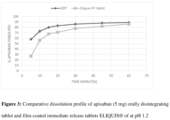
- Figure 1, 2 & 3 shows comparative dissolution profile of orally disintegrating tablet of present invention and ELIQUIS ® .
- Randomization was done using SAS ® (SAS Institute Inc., USA) Version 9.4 or higher. Randomization was done in blocks using PROC PLAN such that the design remained balanced. During the study, subjects were administered either the test product of the present invention without water (T1) and with water (T2) or the reference product (R) in respective periods according to the randomization schedule.
Landscapes
- Health & Medical Sciences (AREA)
- Life Sciences & Earth Sciences (AREA)
- Veterinary Medicine (AREA)
- Chemical & Material Sciences (AREA)
- Medicinal Chemistry (AREA)
- Pharmacology & Pharmacy (AREA)
- Animal Behavior & Ethology (AREA)
- General Health & Medical Sciences (AREA)
- Public Health (AREA)
- Epidemiology (AREA)
- Biophysics (AREA)
- Molecular Biology (AREA)
- Zoology (AREA)
- Nutrition Science (AREA)
- Physiology (AREA)
- Engineering & Computer Science (AREA)
- Bioinformatics & Cheminformatics (AREA)
- Diabetes (AREA)
- Hematology (AREA)
- Chemical Kinetics & Catalysis (AREA)
- General Chemical & Material Sciences (AREA)
- Nuclear Medicine, Radiotherapy & Molecular Imaging (AREA)
- Organic Chemistry (AREA)
- Medicinal Preparation (AREA)
- Pharmaceuticals Containing Other Organic And Inorganic Compounds (AREA)
- Medicines That Contain Protein Lipid Enzymes And Other Medicines (AREA)
Description
- This application claims the benefit of priority of our
Indian patent application 201921046107 filed on November 13, 2019 - The present invention relates to an orally disintegrating pharmaceutical dosage forms of apixaban as set out in the claims.
- Apixaban is a factor Xa (FXa) inhibitor represented by following chemical structure.

- The chemical name for Apixaban is 4,5,6,7-tetrahydro-1-(4-methoxyphenyl)-7-oxo-6-[4-(2-oxo-1-piperidinyl)phenyl]-1H-pyrazolo[3,4-c]pyridine-3-carboxamide (CAS name) or 1-(4-methoxyphenyl)-7-oxo-6-[4-(2-oxopiperidin-1-yl)phenyl]-4,5,6,7-tetrahydro-1H-pyrazolo[3,4-c]pyridine-3-carboxamide (IUPAC name). Its molecular formula is C25H25N5O4, which corresponds to a molecular weight of 459.5 g/mol.
- Apixaban is a white to pale-yellow powder which is non-ionizable at physiological pH from 1.2-6.8. Its aqueous solubility across the physiological pH range is 40 µg/ml. Apixaban is a selective direct inhibitor of factor Xa and has been developed for oral administration to treat variety of indications that require the use of an antithrombotic agent.
-
WO 00/039131 -
US Patent No. 6,967,208 discloses lactam-containing compounds and derivatives thereof as factor Xa inhibitors wherein apixaban is specifically disclosed. It also discloses immediate release pharmaceutical composition. - Apixaban has been approved under the brand name of ELIQUIS® by USFDA as an immediate release tablet dosage form since 2012. ELIQUIS® is approved in two strengths of 2.5 mg and 5 mg for the treatment of deep vein thrombosis (DVT), pulmonary embolism (PE), prophylaxis of deep vein thrombosis following hip or knee replacement surgery, reduction of risk of stroke and systemic embolism in non-valvular atrial fibrillation and reduction in the risk of recurrence of deep vein thrombosis and pulmonary embolism.
- As per reported literature, particle size has been the critical factor for obtaining consistent dissolution rate in any of the apixaban product. Moreover, the tablet formulation prepared using dry granulation technology has shown more consistent dissolution rate in comparison to other processes such as wet granulation.
-
US Patent No. US 9,326,945 - ELIQUIS® is approved for twice daily administration and specifies the administration options for patients who are unable to swallow whole tablets. The ELIQUIS® tablets 2.5 and 5 mg may be crushed and suspended in water, 5% dextrose in water (D5W) or apple juice or mixed with applesauce and promptly administered orally. Alternatively, ELIQUIS® tablets may be crushed and suspended in 60 ml of water or D5W and promptly delivered through a nasogastric tube.
- ELIQUIS® is widely prescribed medicine across all geographies and a significant proportion of patients with thromboembolic disorders have difficulty swallowing (dysphagia) in the acute phase and many have ongoing problems. This potentially can lead to a reduction in patient compliance when such patients are administered oral formulations that must be swallowed intact. Other patients may also suffer from dysphagia as this is a common problem among all age groups and has been observed in about 35% of the general population, up to 60% of the elderly institutionalized population. Hence, there is an unmet need to increase patient's compliance and provide exact required dose of drug in such diseased conditions.
- It is an unmet need and also challenge to develop and obtain a stable formulation of apixaban which can obviate problems of existing marketed immediate release tablet formulation such as particle size, formulation process and development of patient compliance dosage form.
-
PCT Application No. WO 2014/052678 discloses liquid formulation comprising apixaban and a vehicle, which includes water and at least two solubilizers selected from a non-ionic surfactant, an ionic surfactant, a hydrophilic polymer, ethanol, a polyhydric alcohol, a polyethylene glycol, and a carbohydrate. However, preparation of liquid dosage form of apixaban poses stability challenge. - Orally disintegrating dosage forms can also be an alternative dosage for these patients. Also, orally disintegrating dosage forms do not require water and can be consumed in situations without water, such as travelling, leading to improved adherence to treatment.
-
IN 201641006652 - Munavvar A. Vadaliwala et al, WJPPS, Volume 8, Issue 5, 955-974, merely discloses development of orodispersible tablets of apixaban without citing and overcoming the actual problems associated with the existing marketed immediate release tablet formulation. This article does not disclose about actual problem associated with apixaban particle size which is directly correlated to the clinical absorption after exposure into human body for orally disintegrating dosage form.
CN107661301 discloses apixaban pharmaceutical compositions having 20%-30% of mannitol and 40%-55% of microcrystalline cellulose in percentage by weight as a filler. -
EP3549585 discloses an orally disintegrating tablet comprising (A) edoxaban, a pharmacologically acceptable salt thereof, or a solvate thereof, (B) an organic acid, (C) 0.1 to 2.0% by weight of a water-soluble polymer relative to the total weight of the tablet, and (D) a disintegrant. - Further, in case of orally disintegrating dosage form where developing a clinically viable formulation by overcoming particle size and formulation challenges associated with apixaban is a major challenge, the article does not disclose any comparative preclinical or clinical studies of said orally disintegrating tablets of apixaban against comparison to existing marketed formulation and does not disclose any way forward to solve these problems.
- After an undue experiments and clinical trials, the inventors of the present invention have discovered a novel approach for solving above mentioned problems by developing a stable, easy to swallow, orally disintegrating dosage form of apixaban which overcomes particle size challenges, provides manufacturing ease and overcomes the limitation of existing marketed immediate release tablet formulation as described in prior art.
- The inventors of the present invention has developed an orally disintegrating tablet of apixaban bioequivalent to the immediate release tablet ELIQUIS® to overcome above mentioned challenges patient compliance and simultaneously solving the problems of less than optimal exposure and less dissolution of associated with particle size and manufacturing process.
- It has been found that dissolution and absorption of apixaban is impacted by particle size and manufacturing process. Apixaban of particles with D90 above 89um provides inconsistent dissolution and absorption. Also, formulations prepared using wet granulation method also resulted in lower absorption of apixaban compared to those prepared using dry granulation.
- Considering disintegration and dissolution being most important aspects of orally disintegrating dosage forms, the inventors of the present invention have surprisingly found that by using apixaban and disintegrating excipients in particular ratio helps overcome above mentioned problem by providing consistent dissolution and absorption irrespective of particle size of apixaban used and process of preparation of dosage form.
- The present invention relates to an orally disintegrating pharmaceutical dosage form comprising 2-4% w/w apixaban; 30-40% w/w mannitol; 5-10% w/w starch; 20-30% w/w lactose; 10-20% w/w microcrystalline cellulose; 5-15% w/w crospovidone; 0.5-2% w/w sodium lauryl sulfate; 0.5-5% w/w magnesium stearate; 0.1-0.5% w/w of talc; 0.1-2% w/w peppermint flavour; 0.1-2% w/w aspartame; wherein said mannitol and said starch are present as a spray dried mixture of mannitol (80%) and maize starch (20%).
- In an embodiment, the dosage form has hardness of about 10N to about 200N and a disintegration time of less than 3 minutes.
- In an embodiment, the dosage form at pH from 6.5 to 7.5 exhibits at least one of the following dissolution profile;
- (i) after 5 minutes, at least about 55% of the apixaban content is dissolved; and
- (ii) after 30 minutes, more than about 80% of the apixaban content is dissolved, wherein the dissolution profile is determined using Apparatus 2 as described in Chapter 711 (Dissolution) of the US Pharmacopeia by placing the dosage form in 900 ml dissolution media under the suitable pH conditions, at 37°C and stirring at 50 revolutions per minute.
- In an embodiment, the dosage form upon oral administration provides plasma concentration (Cmax) of apixaban from about 90 ng/ml to about 275 ng/ml and total drug exposure (AUC0-t) of apixaban from about 800 ng.hr/ml to about 2400 ng.hr/ml.
- In an embodiment, the dosage form has disintegration time of less than about 3 minutes or less than about 2 minutes, preferably less than about 1 minute. More preferably, the dosage form has disintegration time of less than about 60, 55, 50, 40, 35, 30, 25, 20, 15 or 10 seconds.
- In an embodiment, the dosage form has a hardness of about 10N to about 200N, preferably about 15N to about 150N, preferably about 30N to about 110N, more preferably about 40 to about 90N.
- In an embodiment, the dosage form has hardness of about 10N to about 200N and friability of less than about 1% wherein the dosage form has disintegration time of less than about 3 minutes or less than about 2 minutes, preferably less than about 1 minute. More preferably, the dosage form has disintegration time of less than about 60, 55, 50, 40, 35, 30, 25, 20, 15 or 10 seconds.
- In an embodiment, the orally disintegrating dosage form of the present invention can be formulated using micronized, unmicronized or mixture of micronized and unmicronized apixaban or a pharmaceutically acceptable salts or prodrugs thereof and using direct compression, wet granulation, dry granulation method or like thereof.
- The present invention relates to an orally disintegrating pharmaceutical dosage form according to the present invention for use in the treatment of thromboembolic disorder, wherein the thromboembolic disorder is selected from the group consisting of arterial and venous cardiovascular thromboembolic disorders, and thromboembolic disorders of the heart.
- The present invention relates to an orally disintegrating pharmaceutical dosage form according to the present invention for use in the treatment of a thromboembolic disorder selected from deep vein thrombosis, venous thrombosis, arterial embolism, pulmonary embolism, peripheral artery disease, venous thromboembolic events in adults who have undergone elective hip or knee surgery, non-valvular arterial fibrillation.
-
-
Figure 1 : Comparative dissolution profile of apixaban (5 mg) orally disintegrating tablet and film-coated immediate release tablets ELIQUIS® of at pH 6.8 -
Figure 2 : Comparative dissolution profile of apixaban (5 mg) orally disintegrating tablet and film-coated immediate release tablets ELIQUIS® of at pH 4.5 -
Figure 3 : Comparative dissolution profile of apixaban (5 mg) orally disintegrating tablet and film-coated immediate release tablets ELIQUIS® of at pH 1.2 -
Figure 4 : Linear and semi-logarithmic plots of mean plasma concentration (MPC) versus time (t) for Apixaban orally disintegrating tablet (T1: Without water) compared to ELIQUIS® -
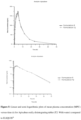
Figure 5 : Linear and semi-logarithmic plots of mean plasma concentration (MPC) versus time (t) for Apixaban orally disintegrating tablet (T2: With water) compared to ELIQUIS® -
Figure 6 : Comparative linear plot of mean plasma concentration (MPC) versus time (t) for Apixaban orally disintegrating tablet (T1: Without water; T2: With water & R: ELIQUIS®) -
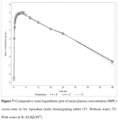
Figure 7 : Comparative semi-logarithmic plot of mean plasma concentration (MPC) versus time (t) for Apixaban orally disintegrating tablet (T1: Without water; T2: With water & R: ELIQUIS®) - The following definitions are provided to facilitate understanding of certain terms used throughout the specification. The following paragraphs detail various embodiments of the invention. It is specifically intended that any particular feature described individually in any of these paragraph can be combined with one or more other features of the invention described in other paragraphs. The skilled person will appreciate that the invention extends to such combinations of features and that these have not been recited in detail here in the interests of brevity.
- The term "Apixaban" as used herein is defined to mean apixaban as its base or pharmaceutically acceptable salts or solvates or non-solvates or prodrugs or ester or metabolite or analog or isomer or polymorph or pre-mix thereof. Any of these said forms can be crystalline or amorphous.
- As used herein, the term "pharmaceutically acceptable" refer to those compounds, materials, compositions, and/or dosage forms which are, within the scope of sound medical judgment, suitable for use in contact with the tissues of human beings and animals without excessive toxicity, irritation, allergic response, or other problem or complication, commensurate with a reasonable benefit/risk ratio.
- As used herein, the term "pharmaceutically acceptable salts" refer to derivatives of the apixaban wherein the apixaban is modified by making acid or base salts thereof. Examples of pharmaceutically acceptable salts include, but are not limited to, mineral or organic salts of basic residues such as amines, alkali or quarternary ammonium salts or organic salts of acidic residues such as carboxylic acids and the like thereof. Further, the pharmaceutically acceptable salts include the conventional non-toxic salts or the quaternary ammonium salts. The conventional non-toxic salts include inorganic or organic acids, for example those derived from inorganic acids such as hydrochloric, hydrobromic, sulfuric, sulfamic, phosphoric, nitric and the like thereof; and the salts prepared from organic acids such as acetic, propionic, succinic, glycolic, stearic, lactic, malic, tartaric, citric, ascorbic, pamoic, maleic, hydroxymaleic, phenylacetic, glutamic, benzoic, salicyclic, sulfanilic, 2-acetoxybenzoic, fumaric, toluenesulfonic, methanesulfonic, ethane disulfonic, oxalic, isethionic, and the like thereof.
- As used herein, the term "prodrugs" are intended to include any covalently bonded carriers that release an active parent drug of the present invention in vivo when such prodrug is administered to a mammalian subject. Prodrugs as per the present invention are prepared by modifying functional groups present in the compound in such a way that the modifications are cleaved, either in routine manipulation or in vivo, to the parent compound. Prodrugs include compounds of the present invention wherein a hydroxy, amino, or sulfhydryl group is bonded to any group that, when the prodrug of the present invention is administered to a mammalian subject, it cleaves to form a free hydroxyl, free amino, or free sulfhydryl group, respectively. Examples of prodrugs include, but are not limited to, acetate, formate, and benzoate derivatives of alcohol and amine functional groups in the compounds of the present invention.
- As used herein, the term "therapeutically effective amount" refers to the amount of apixaban or a pharmaceutically acceptable salt or prodrug thereof contained in the composition administered is of sufficient quantity to achieve the intended use, in this case, to treat the patient with thromboembolic disorders.
- The term "orally disintegrating" refers to a composition which disintegrates within 3 minutes in water at (37±2°C), as determined according to the disintegration test disclosed in the European Pharmacopoeia, preferably within 2 minute or preferably within 1 minute, more preferably within 30 seconds.
- The term "orally disintegrating tablet" (ODT) is interchangeable with the term "rapidly disintegrating tablet" (RDT) or with the term "orodispersible tablets". It refers to a solid dosage form composed of a tablet that is designed to disintegrate or dissolve rapidly in the oral cavity when in contact with saliva without the need for chewing the tablets or swallowing with liquids. Preferred orally disintegrating tablets have the characteristics set forth by the U.S. Food & Drug Administration in Guidance for Industry: Orally Disintegrating Tablets (Dept. of Health and Human Services, U.S. FDA Center for Drug Evaluation and Research, December 2008). Generally, the preferred tablets of the invention exhibit in vitro disintegration times of 30 seconds or less when evaluated using the USP Disintegration Test described in USP 24-NF 19 or an equivalent alternative test.
- The term "stable" means a drug substance and/or pharmaceutical composition for pharmaceutical use which remains stable as per ICH guidelines.
- The term "ICH guidelines" means composition remains stable at 250C/60%±5%RH, 300C/65%±5%RH, and 400C/75%±5% RH conditions for a time period of at least 6 months.
- As used herein, the terms "about" and "approximately" should be understood to mean within an acceptable range for the particular value as determined by one of ordinary skilled in the art, which will depend in part on how the value is measured or determined, i.e., the limitations of the measurement system. For example, "about" can mean a range of up to 30%, preferably up to 20%, preferably up to 10%, and more preferably still up to 1% of a given value.
- As used herein, the term "at least one disintegrating excipient" or "disintegrant" or "disintegrating agent" refers to any inactive excipient which cause a rapid break-up of solid dosage forms when they come into contact with moisture. The disintegrating excipient may include a portion which acts as disintegrating agent and another portion may contain one or more of additional excipient selected from the group consisting of diluent, binder, surfactant, lubricant, glidant or a like thereof. In context of the composition of present invention disintegrating excipient is considered to include whole mixture of disintegrating agent and other excipient mixed or co-processed with it.
- The term "friability" as used herein refers to the percentage of weight loss of powder from the surface of the tablets due to mechanical action. The test of friability is carried out as per the guidelines of the European Pharmacopeia (Ph. Eur. 6.0, pp. 278-279). A maximum loss of mass not greater than 1.0 % is considered acceptable for most products.
- As used herein, the terms "bioequivalence" is defined as a pharmacokinetic (PK) comparison of the present pharmaceutical composition to that of the approved formulation. The pharmaceutical composition of the present invention must display drug pharmacokinetics that fall within a range of 80-125% (0.8-1.25) when one computes the ratio of the drug PK of the present invention composition with respect to approved marketed formulation. The PK parameters that are used for this comparison are the maximum concentration achieved in the blood (Cmax) and the area-under-the-curve (AUC). The AUC is determined by plotting the concentration of the active ingredient in the blood over time. It is accepted that if the present invention composition PK falls within the 80- 125% range when compared to the approved marketed drug formulation PK then it is considered as bioequivalent dosage form.
- The orally disintegrating dosage forms in the present invention include but not limited to tablets, mini-tablets, pellets, granules, powders, films, beads, sachets, cachets; troches; lozenges, wafers, tablets in capsules or a like thereof. The orally disintegrating tablet is a drug dosage form designed to be dissolved/disintegrate rapidly within the oral cavity. Orally disintegrating tablets include sublingual tablets and buccal tablets, the former are placed under the tongue and the latter are placed in the buccal pouch, and allowed to be dissolved in saliva.
- In one embodiment, the orally disintegrating dosage form of the present invention has disintegration time of less than about 3 minutes, preferably less than about 2 minutes, or more preferably less than about 1 minute. In a particular embodiment, the orally disintegrating dosage form of the invention have a disintegration time of less than about 60, 55, 50, 45, 40, 35, 30, 25, 20, 15 or 10 seconds. The rapid disintegration in the mouth makes it possible for a patient to be administered apixaban without the need for to simultaneously drink liquid in order to ingest the formulation. Additionally, the rapid disintegration allows the apixaban to be more easily taken into the body by patients, particularly in paediatric and elderly patients as well as other patients that may have difficulty swallowing (e.g. patients who have suffered a stroke).
- Apixaban in the present invention is usually administered in therapeutically effective amount from about 1.0 mg to 50 mg, preferably from 2.0 mg to 30 mg and more preferably from about 2.5 mg to 20 mg into the patients suffering from thromboembolic disorders.
- In another embodiment, the orally disintegrating pharmaceutical compositions has total weight in amount from about 12.5 mg to about 1000 mg, preferably from about 50 mg to about 500 mg and more preferably about 80 mg to 300 mg.
- In another embodiment, the orally disintegrating pharmaceutical dosage form of the present invention comprises apixaban having a particles with D90 from about 1 to about 500 µm. The range of particle sizes preferred for use in the invention is D90 from about 10 to about 400 µm, more preferably from about 25 to about 300 µm, most preferably from about 50 to about 200 µm. The particle size distribution of apixaban particles may be measured using any technique known in the art, e.g. by microscopy or light scattering equipment such as a Malvern Zetasizer equipment.
- The orally disintegrating pharmaceutical dosage forms of the present invention are also suitable for nasogastric delivery to a patient. Nasogastric delivery requires the constituents of the tablet to be suspendable or soluble in water so that the tablet contents may be administered to the patient through a nasogastric tube.
- It is also important that orally disintegrating dosage form maintain an acceptable rate of disintegration following storage. Disintegration time for orally disintegrating pharmaceutical dosage form may be detrimentally affected by a number of factors, including exposure to gases, moisture, and light. Orally disintegrating pharmaceutical dosage form may be administered to patients for many months following their initial preparation, and the orally disintegrating pharmaceutical dosage form of the invention have been found to maintain an acceptable disintegration time following storage.
- PEARLITOL® Flash is a spray-dried mixture of mannitol (80%) and maize starch (20%)..
- The colouring agents according to the present invention include, but are not limited to natural colorants, synthetic colorants or like thereof. Examples of natural colorants include pigments and dyes obtained from mineral, plant, and animal sources like red ferric oxide, titanium dioxide, yellow ferric oxide, zinc oxide, indigo, and synthetic colorants include FD&C or D&C dye, an azo dye or like thereof. The coloring agents may present in the composition as per the quantity sufficient requirement, preferably from about 0.1 to about 1.0 w/w of the composition.
- Antioxidants may be optionally included in the compositions of the present invention and may be present in amounts effective to retard decomposition of a drug that is susceptible to oxidation. The antioxidants according to the present application include, but are not limited to ascorbic acid and its salts, tocopherols, sulfite salts such as sodium metabisulfite or sodium sulfite, sodium sulfide, butylated hydroxyanisole, butylated hydroxytoluene, ascorbyl palmitate, propyl gallate and mixtures thereof. The antioxidants may present in amount from about 0.001% w/w to about 10%w/w of the composition.
- The surfactants/solubilizers may be optionally included in the compositions of the present invention include, but are not limited to cetostearyl alcohol, lecithin, cholesterol, medium-chain glyceride, diethanolamine, ethyl oleate, ethylene glycol palmitostearate, glycerin, glyceryl monostearate, glyceryl monooleate, polyoxyethylene castor oil glycoside, isopropyl myristate, monoethanolamine, oleic acid, propylene glycol, polyethylene alkyl ether, sodium lauryl sulfate, polyoxyethylene sorbitan fatty acid ester, sodium docusate, sorbic acid, sorbitan fatty acid ester, polyoxyethylene alkyl ether, polyethylene sorbitan fatty acid ester, polyoxyethylene stearate, propylene glycol alginate, sorbitan fatty acid ester, stearic acid, sunflower oil, triethanolmine, and mixtures thereof. The surfactants/solubilizers may present in amount from about 0.001% w/w to about 10%w/w of the composition.
- The stabilizers according to the present invention include, but are not limited to citric acid, benzoic acid, sodium benzoate, and the like. The stabilizers may present in amount from about 0.001% w/w to about 10%w/w of the composition.
- The solvents for the purpose of film coating/granulation according to the present invention include, but are not limited to water, methanol, ethanol, acetone, diacetone, polyols, polyethers, oils, esters, alkyl ketones, methylene chloride, isopropyl alcohol, butyl alcohol, methyl acetate, ethyl acetate, isopropyl acetate, castor oil, ethylene glycol monoethyl ether, diethylene glycol monobutyl ether, diethylene glycol monoethyl ether, dimethylsulfoxide, N,N-dimethylformamide, tetrahydrofuran, and any mixtures thereof.
- In another embodiment, the compositions of the present invention comprises apixaban particles (e.g., crystals), coated with a taste-masking layer to improve palatability of the composition. The taste-masking layer can be applied to the apixaban particles by any suitable method, for example microencapsulation, coacervation phase separation or fluidized bed coating methods.
- The taste-masking polymers according to present invention include, but are not limited to water-soluble polymers, water-insoluble polymers, or like thereof. Examples of polymers include ethylcellulose, cellulose acetate, cellulose acetate butyrate, pullulan, methacrylate copolymers available under the trade name of Eudragit (type RL, RS and NE30D), maltrin, an aminoalkyl methacrylate copolymer available under the trade name of Eudragit (type E100 or EPO), polyvinylacetal diethylaminoacetate, sodium chloride, sucrose, povidone and mixtures thereof. The taste-masking polymers may be present in an amount from about 5 to about 70% w/w of the composition, preferably from about 10% w/w to about 40% w/w of the composition.
- The plasticizers according to the present invention include, but are not limited to, triacetin, tributyl citrate, triethyl citrate, acetyl tri-n-butyl citrate, polyethylene glycol, polypropylene glycol, diethyl phthalate, castor oil, dibutyl sebacate, acetylated monoglycerides and the like or mixtures thereof. The plasticizer may typically present in amount from about 10% w/w to about 30% w/w based on the weight of dry polymer.
- The compositions of the present invention may be coated with one or more layers of membrane coating materials for sealing purposes, as per the process known in the art. An outer coating may also include one or more colorants to provide a colored dosage form as desired and/or to improve the taste of the tablet. These coatings may be sugar coatings, film coatings, color coatings, or the like thereof.
- The dosage forms herein can be of any suitable size and shape, and the invention is not limited in this regard. For example, the dosage forms may be of triangular, round, rectangular, square, capsule, almond, oval, diamond, biconvex, multilayered, or have an irregular shape. There may also be letters or characters embossed or printed on the dosage form surface.
- The compositions of the present invention can also be adapted for sublingual or buccal administration. In the former case, somewhat smaller and/or flatter dosage forms may be desirable e.g. a thin film, or an orally disintegrable dosage form as otherwise provided herein may suffice without modifications made to size or shape. For buccal administration, the dosage form may be a tablet or film and will adhere to the oral mucosa, e.g., the gum, and, for that purpose, will contain at least one component that facilitates adhesion to the buccal mucosa until drug is released and/or dosage form disintegrates (which preferably occur roughly simultaneously). Such components are typically hydrophilic, water-swellable polymers that adhere to the wet surface of the buccal mucosa and include, for instance, e.g., carbomers, hydrolyzed polyvinyl alcohol, polyethylene oxides, polyacrylates, and the like.
- Dissolvable films are often composed of an aqueous polymer matrix. Dissolvable film employed in buccal systems may be designed as bioerodable mono- or multilayers systems and may feature a mucoadhesive tailored for the desired dwell time.
- The size of the film may be, for example, about 4 to 10 cm2 with a depth of 0.1 to 4 mm.
- The pharmaceutical composition of the present invention can be obtained by a known conventional methods like direct compression, wet granulation, dry granulation, roller compaction or slugging, fluidized bed granulation, rapid mixture granulation, solvent evaporation, hot-melt extrusion, freeze drying (lyophilisation), Zydis technology, molding methods, or like thereof. The wet granulation process may involve shear granulators (such as planetary mixers), high shear mixer granulators (such as Fielder or Diosna), twin screw granulators (such as ConsiGma) and Fluid Bed Granulators (such as Aeromatic or Glatt).
- In an another embodiment, the present invention include an orally disintegrating tablet comprising about 3.12% w/w apixaban, about 25.5% w/w lactose, about 34.3% w/w mannitol, about 8.58% w/w starch, about 15% w/w microcrystalline cellulose, about 10% w/w crospovidone, about 1% w/w sodium lauryl sulfate, about 1% w/w magnesium stearate, about 0.25% w/w of talc, about 0.75% w/w peppermint flavour, about 0.5% w/w aspartame of total composition; wherein said mannitol and said starch are present as a spray dried mixture of mannitol (80%) and maize starch (20%).
- In an another embodiment, an orally disintegrating pharmaceutical dosage form of the present invention comprises from about 2.5mg to about 10mg apixaban, from about 27.44 to about 109.76mg mannitol, from about 6.86 to about 27.44mg starch, from about 20.4mg to about 81.6mg lactose, from about 12mg to about 48mg microcrystalline cellulose, from about 8mg to about 32mg crospovidone, from about 0.8mg to about 0.32mg sodium lauryl sulfate, from about 0.6mg to about 2.4mg peppermint flavour, from about 0.4mg to about 1.6mg aspartame, from about 0.8mg to about 3.2mg magnesium stearate and from about 0.2mg to about 0.8mg talc; wherein said mannitol and said starch are present as a spray dried mixture of mannitol (80%) and maize starch (20%).
- In an another embodiment, the orally disintegrating pharmaceutical dosage form of the present invention upon an oral single-dose administration exhibits a maximum plasma concentration (Cmax) from about 90 to 275 ng/ml, preferably from about 110 to 250 ng/ml, more preferably from about 150-200 ng/ml. The term "Cmax" refers to the maximum concentration of apixaban in the blood following an oral single dose administration of the composition of the present invention.
- In an another embodiment, the orally disintegrating pharmaceutical dosage form of the present invention upon an oral single-dose administration exhibits a time to maximum plasma concentration (Tmax) from about 1.6h to about 4.7h, preferably from about 2h to about 3.5h, more preferably from about 2.2h to about 3.4h. The term "Tmax" refers to the time in hours when Cmax is achieved following an oral single- dose administration of the composition of the present invention.
- The term "AUC" refers to the area under the time/plasma concentration curve after an oral single-dose administration of the composition of the present invention. AUC0-∞ denotes the area under the plasma concentration versus time curve from time 0 to infinity and AUC0-t denotes the area under the plasma concentration versus time curve from time 0 to time t.
- In an another embodiment, after an oral single-dose administration, the composition of the present invention exhibits an area under the time/plasma concentration curve from time 0 to time t hours (AUC0-t) from about 800 ng.hr/ml to about 2400 ng.hr/ml, preferably from about 1200 ng.hr/ml to about 2000 ng.hr/ml ng-h/mL, more preferably from about 1500 ng.hr/ml to about 1800 ng.hr/ml ng-h/mL.
- In an another embodiment, after an oral single-dose administration, the composition of the present invention exhibits an area under the time/plasma concentration curve from time 0 to infinity (AUC-∞) from 800 ng.hr/ml to about 2400 ng.hr/ml, preferably from about 1200 ng.hr/ml to about 2000 ng.hr/ml ng-h/mL, more preferably from about 1500 ng.hr/ml to about 1800 ng.hr/ml ng-h/mL.
- Thus, the inventors have found that the solid oral dosage forms of the invention show equivalent pharmacokinetic parameters (e.g. Cmax, Tmax, AUC0-t, AUC-∞ and T1/2) on bioavailability of apixaban, to that of apixaban of the reference's product ELIQUIS®, as set out in the European medicines Agency (EMA) "Guideline on the investigation of bioequivalence" (EMA CPMP/EWP/QWP/1401/98 Rev. 1/Corr**). Thereby, the solid oral dosage forms of the present invention can be considered bioequivalent to the single dose administration of ELIQUIS® according to the guidelines on the European medicines Agency (EMA).
- In yet another embodiment of the present invention, the pharmaceutical composition remains stable for longer period of time in different thermo-hygrostats 250C/60%±5% RH, 300C/65%±5% RH, and 400C/75%±5% RH as per ICH guidelines.
- The orally disintegrating pharmaceutical compositions of the present invention can be prepared by wet granulation method comprising the steps of: i) preparing a mixture containing apixaban or a pharmaceutically acceptable salt or prodrug thereof and at least one pharmaceutical excipient, ii) granulating the mixture obtained in step (i) with a granulation liquid to form a wet granulate, iii) drying the wet granulate obtained in step (ii) to form a dry granulate, iv) mixing the granulate obtained in step (iii) with pharmaceutical excipients as set out in the first aspect, and v) subjecting the granulate obtained in step (iii) or the mixture obtained in step (iv) to compression.
- The orally disintegrating pharmaceutical compositions of the present invention can be prepared by direct compression method comprising the steps of: i) preparing a powder mixture containing apixaban or a pharmaceutically acceptable salt or prodrug thereof and pharmaceutical excipients as set out in the first aspect, and ii) subjecting the powder mixture obtained in step (i) to compression.
- The orally disintegrating pharmaceutical compositions of the present invention can be prepared by dry granulation method comprising the steps of: i) preparing a powder mixture containing apixaban or a pharmaceutically acceptable salt or prodrug thereof and at least one pharmaceutical excipient, ii) compacting the powder mixture obtained in step (i) to form a compact/slug/ribbon, iii) converting the compact/slug/ribbon obtained in step (ii) into a granulate, iv) mixing the granulate obtained in step (iii) with pharmaceutical excipients as set out in the first aspect, and v) subjecting the granulate obtained in step (iii) or the mixture obtained in step (iv) to compression.
- The orally disintegrating pharmaceutical compositions of the present invention can be prepared by fluid bed granulation a process comprising the steps of: (i) preparing a dry mixture of apixaban or a pharmaceutically acceptable salt or prodrug thereof with pharmaceutical excipients as set out in the first aspect, (ii) followed by solvent spray onto the powder for the granulation purpose, (iv) blending the obtained granules with extra-granular excipients and lubricating the blend, (v) at last compressing the blend obtained to form a tablet composition and (vi) optionally coating the said composition.
- The present invention is illustrated below by reference to the following examples. However, one skilled in the art will appreciate that the specific methods and results discussed are merely illustrative of the invention, and not to be construed as limiting the invention.
- Disintegration is one of the important characteristic for an orally dispersible tablet. This example evaluated qualitative and quantitative effect of different disintegrants on the orodispersible tablet of the present invention.
- For the purpose of this study, orodispersible compositions of Apixaban with different concentration of sodium carmellose and with other disintegrant were prepared and compared. The concentration of sodium carmellose (in concentration range from 0.25% to 15%; A1 to A7), ion-exchange resin and crospovidone were evaluated for its effect on disintegration time, dissolution and hardness.
Table 1: Disintegrants in tablet batches Component A1* A2* A3* A4* A5* A6* A7* Apixaban 5 5 5 5 5 5 5 Mannitol 54.56 54.56 54.56 54.56 54.56 54.56 54.56 Starch 13.64 13.64 13.64 13.64 13.64 13.64 13.64 Lactose 57.2 56.8 55.2 52.8 46.4 38.4 33.6 Microcrystalline Cellulose 24.00 24.00 24.00 24.00 24.00 24.00 24.00 Sodium carmellose 0.4 0.8 2.4 4.8 11.2 19.2 24.0 Sodium Lauryl sulphate 1.6 1.6 1.6 1.6 1.6 1.6 1.6 Flavour 0.8 0.8 0.8 0.8 0.8 0.8 0.8 Aspartame 0.8 0.8 0.8 0.8 0.8 0.8 0.8 Magnesium stearate 1.6 1.6 1.6 1.6 1.6 1.6 1.6 Talc 0.4 0.4 0.4 0.4 0.4 0.4 0.4 Core weight 160.00 160.00 160.00 160.00 160.00 160.00 160.00 All values are in mg/tablet
* comparative example - following experimental batches of orally disintegrating tablet of apixaban were prepared using mannitol-starch & crospovidone (A8), mannitol-starch & ion-exchange resin (A9), plain mannitol and sodium carmellose (A10) and mannitol-starch alone (A11) to evaluate their effect on disintegration time and dissolution.
Table 1 (Continue): Disintegrants in tablet batches Component A8 A9* A10* A11* Apixaban 5 5 5 5 Mannitol 54.88 54.88 84.20 122.4 Starch 13.72 13.72 - 30.6 Lactose 40.8 40.8 61.6 - Microcrystalline Cellulose 24.00 24.00 - - Sodium carmellose - - 4.0 - Crospovidone 16.00 - - - Ion-exchange resin - 16.00 - - Sodium Lauryl sulphate 1.6 1.6 1.6 - Flavour 1.2 1.2 0.8 - Aspartame 0.8 0.8 0.8 - Magnesium stearate 1.6 1.6 1.6 1.6 Talc 0.4 0.4 0.4 0.4 Core weight 160.00 160.00 160.00 160.00 *comparative example - Table 2 provide results of the disintegrant experiments evaluation (A1 to A11) of the orodispersible tablets.
Table 2: Disintegrant experiment result Characteristic attributes A1 A2 A3 A4 A5 A6 A7 Disintegration time (S) 29 18 26 26 25 28 27 Flowability Good Good Good Good Good Good Good Picking/Sticking No No No No No No No Average (N) 50 43 49 45 47 48 42 Friability (%) 0.07% 0.15% 0.14% 0.23% 0.18% 0.01% 0.01% Dissolution at 6.8 pH at 5 min (%) 58 63 56 60 62 65 69 at 30 min (%) 82 88 81 85 85 88 86 - The orally disintegrating tablets prepared using Sodium carmellose in concentration range from 0.25% w/w to 15% w/w showed optimum disintegration time (18 - 29 seconds), hardness (42-50 N), dissolution of at least about 55% at 5min and more than about 80% at 30 minutes.
- The orally disintegrating tablets of experiments A1 to A7 also showed less than 1% friability and the powder mixture had good flow property without any sticking or picking concern.
Table 2 (Continue): Disintegrant experiment result Characteristic attributes A8 A9 A10 A11 Disintegration time (S) 25 28 25 14 Flowability Good Good Good Good Picking/Sticking No No No No Average (N) 35 33 44 47 Friability (%) 0.03% 0.09% 0.23% 0.34% Dissolution at 6.8 pH at 5 min (%) 63 55 45 65 at 30 min (%) 83 80 65 90 - The orally disintegrating tablets prepared using formula of A8 & A9 showed optimum disintegration time (25 - 28 seconds), hardness (33-35 N), dissolution of at least about 55% at 5 minutes and more than about 80% at 30 minutes.
- However, orally disintegrating tablet of A10 did not achieved desired dissolution profile. Formulation of A11 showed more rapid disintegration time and higher dissolution at 5 & 30 minutes interval.
- The orally disintegrating tablets of experiments A8 to A11 also showed less than 1% friability and the powder mixture had good flow property without any sticking or picking concern.
- Apixaban to disintegrating excipient weight ratios were evaluated for its effect on disintegration and dissolution time. Orally disintegrating tablets with apixaban to disintegrating excipient weight ratios from 1:0.1 to 1:96 were prepared (A12 to A21) and evaluated.
Table 3: Apixaban:Disintegrating excipient weight ratio batches Component A12 A13 A14 A15 A16 A17 A18 A19 A20 A21 Apixaban 5 5 5 5 5 5 5 5 5 5 Mannitol - Starch (Pearlitol Flash®) 0.5 5 35 25 25 50 200 360 475 480 Lactose 124.9 14.4 90.4 14.4 120.4 120.4 120.4 120.4 120.4 120.4 Sodium Lauryl sulphate 1.6 1.6 1.6 1.6 1.6 1.6 1.6 1.6 1.6 1.6 Flavour 1.2 1.2 1.2 1.2 1.2 1.2 1.2 1.2 1.2 1.2 Aspartame 0.8 0.8 0.8 0.8 0.8 0.8 0.8 0.8 0.8 0.8 Magnesium stearate 1.6 1.6 1.6 1.6 1.6 1.6 1.6 1.6 1.6 1.6 Talc 0.4 0.4 0.4 0.4 0.4 0.4 0.4 0.4 0.4 0.4 Core weight 136.00 30.00 136.00 50.00 156.00 181.00 331.00 491.00 606.00 611.00 weight ratio 1:0.1 1:1 1:1 1:5 1:5 1:10 1:40 1:60 1:95 1:96 - Table 4 provides results of the Apixaban:Disintegrating excipient weight ratio experiments evaluation (A12 to A21) of the orodispersible tablets.
Table 4: Apixaban:Disintegrating excipient weight ratio experiment result Characteristic attributes A12 A13 A14 A15 A16 A17 A18 A19 A20 A21 Disintegration time (S) 215 23 25 29 27 25 24 28 29 189 Flowability Poor Good Good Good Good Good Good Good Good Good Picking/Stickin g No No No No No No No No No No Average (N) 45 18 51 29 55 49 55 63 75 125 Friability (%) 0.23% 0.57% 0.39% 0.23% 0.19% 0.15% 0.15% 0.13% 0.17% 0.25% Dissolution at 6.8 pH at 5 min (%) 45 58 56 59 63 57 55 58 60 25 at 30 min (%) 60 83 80 83 91 87 81 86 85 55 - Orally disintegrating tablet prepared using formula using 1:0.1 (A12) & 1:96 (A21) apixaban:disintegrating excipient ratio did not show disintegration time and dissolution in optimum limit. However, orally disintegrating tablet prepared using apixaban:disintegrating excipient ratio of 1:1 to 1:95 (A13 to A20) showed optimum disintegration time (23 - 28 seconds), hardness (18-75 N), dissolution of at least about 55% at 5 minutes and more than about 80% at 30 minutes.
- Orally disintegrating tablets of apixaban were prepared using 0.5% w/w to 25% w/w of apixaban content and evaluated for disintegration time, hardness and dissolution time.
Table 5: API loading experiment batches Component A22* A23* A24 A25* A26* A27* A28* A29* A30* A31* Apixaban 2.5 5 5 5 5 5 5 5 10 10 Mannitol + Starch (Pearlitol Flash®) 205 205 68.60 50.6 40.5 30.38 25.3 12.65 25.3 20.26 Lactose 162.5 160 40.80 28 21.440 14.83 11.5 3.25 6.5 3.15 Microcrystalline Cellulose 66.5 66.5 24.00 13.3 10.600 7.95 6.65 3.325 6.65 5.35 Crospovidone 48 48 16.0 - - - - - - - Sodium Lauryl sulphate 4.8 4.8 1.6 0.96 0.76 0.57 0.48 0.24 0.48 0.385 Flavour 2.4 2.4 1.2 0.48 0.38 0.285 0.24 0.12 0.24 0.19 Aspartame 2.4 2.4 0.8 0.48 0.38 0.285 0.24 0.12 0.24 0.19 Magnesium stearate 4.8 4.8 1.6 0.96 0.76 0.57 0.48 0.24 0.48 0.385 Talc 1.1 1.1 0.4 0.22 0.18 0.13 0.11 0.055 0.11 0.09 Core weight 500 500 160 100 80 60 50 25 50 40 %w/w of API 0.5% 1% 3.12% 5% 6.25% 8.33% 10% 20% 20% 25% All values are in mg/tablet
* comparative example - Table 6 provides Apixaban API loading experiment evaluation (A22 to A31) of the orodispersible tablets.
- Orally disintegrating tablet prepared using formula using 0.5% w/w to 25% w/w of apixaban (A22 to A31) showed disintegration time (22-29 seconds), hardness (23-75N) and dissolution of at least about 55% at 5 minutes and more than about 80% at 30 minutes.
- The orally disintegrating tablets of experiments A22 to A31 also showed less than 1% friability and the powder mixture had good flow property without any sticking or picking concern.
Table 6: Apixaban API loading experiment result Characteristic attributes A22 A23 A24 A25 A26 A27 A28 A29 A30 A31 Disintegration time (S) 29 26 22 29 25 25 24 28 24 29 Flowability Good Good Good Good Good Good Good Good Good Good Picking/Stickin g No No No No No No No No No No Hardness (N) 75 83 55 45 44 52 31 23 43 39 Friability (%) 0.23 % 0.19% 0.13% 0.14% 0.23% 0.09% 0.17% 0.69% 0.29% 0.17% Dissolution at 6.8 pH at 5 min (%) 58 57 65 61 59 58 60 55 62 58 at 30 min (%) 85 83 91 86 87 80 82 83 90 87 - Orally disintegrating tablets of apixaban were prepared using 0.8% w/w to 95.9% w/w of disintegrating excipient content (A32-A40) and evaluated for disintegration time, hardness and dissolution time.
Table 7: Disintegrating excipient content experiment batches Component A32 A33 A34 A35 A36 A37 A38 A39 A40 Apixaban 2.5 5 5 5 5 5 5 5 5 Mannitol - Starch* 239.75 479.5 237.25 200 125 25 5 4 0.5 Starch - - - - - - - - - Lactose - - - 37.25 112.25 212.25 232.25 233.25 236.75 Sodium Lauryl sulphate 2.4 4.8 2.4 2.4 2.4 2.4 2.4 2.4 2.4 Flavour 1.2 2.4 1.2 1.2 1.2 1.2 1.2 1.2 1.2 Aspartame 1.2 2.4 1.2 1.2 1.2 1.2 1.2 1.2 1.2 Magnesium stearate 2.4 4.8 2.4 2.4 2.4 2.4 2.4 2.4 2.4 Talc 0.55 1.1 0.55 0.55 0.55 0.55 0.55 0.55 0.55 Core weight 250 500 250.00 250.00 250.00 250.00 250.00 250.00 250 %w/w DT excipient# 95.9% 95.9% 94.9% 80% 50% 10% 2% 1.6% 0.36% *Pearlitol Flash® is used as Mannitol-starch
#DT = Disintegrating excipient - Table 8 provides Disintegrating excipient content experiment evaluation (A32 to A40) of the orodispersible tablets.
Table 8: Disintegrating excipient content experiment result Characteristic attributes A32 A33 A34 A35 A36 A37 A38 A39 A40 Disintegration time (S) 145 205 19 24 25 28 28 29 197 Flowability Good Good Good Good Good Good Good Good Good Picking/Stickin g No No No No No No No No No Hardness (N) 89 78 52 49 59 53 57 55 43 Friability (%) 0.17% 0.23% 0.59% 0.24% 0.29% 0.15% 0.09% 0.2% 0.27 % Dissolution at 6.8 pH at 5 min (%) 52 49 58 59 63 60 59 57 45 at 30 min (%) 73 70 81 81 91 85 87 83 65 - The orally disintegrating tablets prepared using formula of A34 & A39 having 1.6% to 94.9% w/w of disintegrating excipient showed optimum disintegration time (19 - 29 seconds), hardness (49-59 N), dissolution of at least about 55% at 5 minutes and more than about 80% at 30 minutes.
- However, orally disintegrating tablet of A32 & A33 (having 95.9% w/w disintegrating excipient) and A40 (having 0.36% w/w disintegrating excipient) did not achieved desired dissolution profile.
- Orally disintegrating tablet were prepared using micronized apixaban (D90 < 100 microns; A41-A43); unmicronized apixaban (D90 > 100 microns; A44-A46) and mixture of both; A47 to A49) and disintegrating excipient in specific ratio using direct compression.
- As experiments of example 6 showed that apixaban to disintegrating excipient ratio of 1:1 to 1:95 showed optimum result for disintegration time and dissolution of apixaban, the above (1:0.1) and below (1:96) ratio limits were evaluated for the purpose of this example.
Table 9: Drug-excipient ratio experiment batches by direct compression and results Component Micronized API D90: 1-100 micron Non-micronized API D90: above 100 micron Micronized + Non-micronized API mixture A41 A42 A43 A44 A45 A46 A47 A48 A49 Apixaban 5 5 5 5 5 5 5 5 5 Mannitol + Starch (Pearlitol®Flash) 0.5 109.6 480 0.5 109.6 480 0.5 109.6 480 Lactose 148.9 39.8 9.4 148.9 39.8 9.4 148.9 39.8 9.4 Sodium Lauryl sulphate 1.6 1.6 1.6 1.6 1.6 1.6 1.6 1.6 1.6 Flavour 1.2 1.2 1.2 1.2 1.2 1.2 1.2 1.2 1.2 Aspartame 0.8 0.8 0.8 0.8 0.8 0.8 0.8 0.8 0.8 Ma stearate 1.6 1.6 1.6 1.6 1.6 1.6 1.6 1.6 1.6 Talc 0.4 0.4 0.4 0.4 0.4 0.4 0.4 0.4 0.4 Core weight 160.00 160.00 500.00 160.00 160.00 500.00 160.00 160.00 500.00 Weight ratio 1:0.1 1:21.92 1:96 1:0.1 1:21.92 1:96 1:0.1 1:21.92 1:96 DT time (S) 75 29 196 105 28 185 101 29 199 Dissolution at 6.8 pH at 5 min (%) 50 58 49 52 60 48 45 63 51 at 30 min (%) 65 83 65 63 83 60 60 91 67 - The only diintegrating tablets prepared using apixaban to drug excipient ration of 1:0.1 and 1:96 did not result in optimum disintegration time and dissolution profile at 5 & 30 minutes for tablets containing micronized particles, unmicronized particles and micronized + unmicronized particle mixture of apixaban.
- This showed that apixaban to disintegrating excipient ratio between 1:0.2 to 1:95 provides optimum dissolution profile for tablets prepared using direct compression.
- Orally disintegrating tablet were prepared using micronized apixaban (D90 < 100 microns; A50-A52); unmicronized apixaban (D90 > 100 microns; A53-A55) and mixture of both; A56 to A58) and disintegrating excipient in specific ratio using dry granulation.
- As experiments of example 6 showed that apixaban to disintegrating excipient ratio of 1:0.2 to 1:95 showed optimum result for disintegration time and dissolution of apixaban, the above (1:0.1) and below (1:96) ratio limits were evaluated for the purpose of this example.
Table 10: Drug-excipient ratio experiment batches by dry granulation Component Micronized API D90: 1-100 micron Non-micronized API D90: above 100 micron Micronized + Non-micronized API mixture A50 A51 A52 A53 A54 A55 A56 A57 A58 Apixaban 5 5 5 5 5 5 5 5 5 Mannitol + Starch (Pearlitol®Flash) 0.5 109.6 480 0.5 109.6 480 0.5 109.6 480 Lactose 148.9 39.8 9.4 148.9 39.8 9.4 148.9 39.8 9.4 Sodium Lauryl sulphate 1.6 1.6 1.6 1.6 1.6 1.6 1.6 1.6 1.6 Flavour 1.2 1.2 1.2 1.2 1.2 1.2 1.2 1.2 1.2 Aspartame 0.8 0.8 0.8 0.8 0.8 0.8 0.8 0.8 0.8 Mg stearate 1.6 1.6 1.6 1.6 1.6 1.6 1.6 1.6 1.6 Talc 0.4 0.4 0.4 0.4 0.4 0.4 0.4 0.4 0.4 Core weight 160.00 160.00 500.00 160.00 160.00 500.00 160.00 160.00 500.00 Weight ratio 1:0.1 1:21.92 1:96 1:0.1 1:21.92 1:96 1:0.1 1:21.92 1:96 DT time (S) 85 27 185 95 26 210 75 29 190 Dissolution at 6.8 pH at 5 min (%) 48 63 51 49 60 48 48 65 52 at 30 min (%) 69 89 71 61 86 65 63 93 60 - The orally disintegrating tablets prepared using apixaban to drug excipient ration of 1:0.1 and 1:96 did not result in optimum disintegration time and dissolution profile at 5 & 30 minutes for tablets containing micronized particles, unmicronized particles and micronized + unmicronized particle mixture of apixaban.
- This showed that apixaban to disintegrating excipient ratio between 1:0.2 to 1:95 provides optimum dissolution profile for tablets prepared using dry granulation without being limited to any particle size of apixaban.
- Orally disintegrating tablet were prepared using micronized apixaban (D90 < 100 microns; A59-A61); unmicronized apixaban (D90 > 100 microns; A62-A64) and mixture of both; A65 to A67) and disintegrating excipient in specific ratio using wet granulation.
- As experiments of comparative example 4 showed that apixaban to disintegrating excipient ratio of 1:0.2 to 1:95 showed optimum result for disintegration time and dissolution of apixaban, the above (1:0.1) and below (1:96) ratio limits were evaluated for the purpose of this example.
Table 11: Drug-excipient ratio experiment batches by wet granulation Component Micronized API D90: 1-100 micron Non-micronized API D90: above 100 micron Micronized + Non-micronized API mixture A59 A60 A61 A62 A63 A64 A65 A66 A67 Intragranular Apixaban 5 5 5 5 5 5 5 5 5 Mannitol + Starch (Pearlitol®Flash) 0.25 82.2 360 0.25 82.2 360 0.25 82.2 360 Lactose 148.9 39.8 9.4 148.9 39.8 9.4 148.9 39.8 9.4 Granulating liquid q.s. q.s. q.s. q.s. q.s. q.s. q.s. q.s. q.s. Extragranular Mannitol + Starch 0.25 27.4 120 0.25 27.4 120 0.25 27.4 120 Sodium Lauryl sulphate 1.6 1.6 1.6 1.6 1.6 1.6 1.6 1.6 1.6 Flavour 1.2 1.2 1.2 1.2 1.2 1.2 1.2 1.2 1.2 Aspartame 0.8 0.8 0.8 0.8 0.8 0.8 0.8 0.8 0.8 Magnesium stearate 1.6 1.6 1.6 1.6 1.6 1.6 1.6 1.6 1.6 Talc 0.4 0.4 0.4 0.4 0.4 0.4 0.4 0.4 0.4 Core weight 160.00 160.00 500.00 160.00 160.00 500.00 160.00 160.00 500.00 Weight ratio 1:0.1 1:21.92 1:96 1:0.1 1:21.92 1:96 1:0.1 1:21.92 1:96 DT time (S) 95 29 205 88 25 194 101 28 183 Dissolution at 6.8 pH at 5 min (%) 51 61 49 52 66 53 45 70 48 at 30 min (%) 70 92 75 68 93 60 72 92 69 - The orally disintegrating tablets prepared using apixaban to drug excipient ratio of 1:0.1 and 1:96 did not result in optimum disintegration time and dissolution profile at 5 & 30 minutes for tablets containing micronized particles, unmicronized particles and micronized + unmicronized particle mixture of apixaban.
- This showed that apixaban to disintegrating excipient ratio between 1:0.2 to 1:95 provides optimum dissolution profile for tablets prepared using wet granulation without being limited to any particle size of apixaban.
- In summary, disintegration time and dissolution profile of orally disintegrating tablet of apixaban were improved using 0.5% to 50% w/w of apixaban, 0.5% to 95% w/w of disintegrating excipient and also using 1:0.2 to 1:95 apixaban to disintegrating excipient ratio. These parameters provided orally disintegrating tablet with optimum disintegration time and dissolution profile with all range of particle size of apixaban and with all types of manufacturing process.
- Based on these results, following formulation was selected for further evaluation:
Table 12 - 2.5 mg / 5 mg Apixaban orodispersible tablet composition Components Mg/Tablet P1 P2 P3 Apixaban 2.5 5 10 Mannitol 27.44 54.88 109.76 Starch 6.86 13.72 27.44 Lactose 20.4 40.8 81.6 Microcrystalline Cellulose 12 24.00 48 Crospovidone 8 16.00 32 Sodium Lauryl sulphate 0.8 1.6 3.2 Flavour 0.6 1.2 2.4 Aspartame 0.4 0.8 1.6 Magnesium stearate 0.8 1.6 3.2 Talc 0.2 0.4 0.8 Core weight 80.00 160.00 320.00 - The orally disintegrating tablet of apixaban was prepared by direct compression method.
Table 13: Apixaban orally disintegrated tablets prepared by direct compression Component mg/tab mg/tab % w/w (%) Apixaban 2.5 5 3.12 Mannitol 34.30 68.60 42.88 Lactose 20.40 40.80 25.75 Microcrystalline Cellulose 12.00 24.00 15.00 Crospovidone 8.00 16.00 10.00 Sodium Lauryl sulphate 0.8 1.6 1.0 Flavour 0.6 1.2 0.5 Aspartame 0.4 0.8 0.5 Magnesium stearate 0.8 1.6 1.0 Talc 0.2 0.4 0.25 Core weight 80.00 160.00 100 -
- 1. Co-sift Apixaban, microcrystalline cellulose, sodium lauryl sulphate, Crospovidone through #40 sieve
- 2. Co-sift lactose monohydrate, mannitol and step-1 sifted material through #40 sieve
- 3. Co-sift mannitol, aspartame powder and flavour through #40 sieve
- 4. Co-sift magnesium stearate and talc through #60 sieve
- 5. Load the material of step-3 into the blender and mix it for 10 minutes at 12 RPM
- 6. Load the material of step-4 into the blender containing blend of step-6 and mix it for 20 minutes at 12 RPM
- 7. Load the material of step-5 into the blender containing pre-lubricated blend of step-7 and mix it for 5 minutes at 12 RPM
- 8. Lubricated blend of step-8 was compressed into tablets.
-
Table 14: Apixaban orally disintegrated tablets preparation by dry granulation Ingredients mg/tab mg/tab % w/w (%) Apixaban 2.5 5 3.12 Mannitol-Starch (Pearlitol Flash®) 34.30 68.60 42.88 Lactose 20.4 40.8 25.75 Microcrystalline Cellulose 12.0 24.0 15.00 Crospovidone 8.0 16.0 10.00 Sodium lauryl sulfate 0.8 1.6 1.0 Magnesium stearate 0.8 1.6 0.5 Aspartame 0.4 0.8 0.5 Flavour 0.6 1.2 1.0 Talc 0.2 0.4 0.25 Core weight 80 160 100 -
- 1. Blend the raw materials, with apixaban of controlled particle size;
- 2. Include Intragranular portions of Disintegrant and other fillers in the mix from step (1) and granulate the materials using process mentioned below.
- 3. Delump the Intragranular lubricant using a suitable screen or mill. Add the lubricant to the blend from step (2). Compact the lubricated blend to ribbons of suitable density and size the compacted ribbons using a roller compactor.
- 4. Blend the sized granules from step (3) and extragranular disintegrant including other required excipients in a suitable blender.
- 5. Delump the extragranular lubricant using a suitable screen/mill and blend with granules from step (4).
- 6. Compress the blend from step (5) into tablets.
-
Table 15: Apixaban orally disintegrated tablets preparation by wet granulation Ingredients mg/tab mg/tab % w/w (%) Intragranular Apixaban 2.5 5 3.12 Mannitol-Starch 41.1 82.2 51.75 Lactose Anhydrous 19.9 39.8 24.88 Granulating fluid q.s. q. s. - Extragranular Mannitol-Starch 13.7 27.4 17.12 Sodium lauryl sulfate 0.8 1.6 1.0 Flavour 0.6 1.2 0.75 Aspartame 0.4 0.8 0.5 Magnesium stearate 0.8 1.6 1.0 Talc 0.2 0.4 0.25 Core weight 80.0 160.00 100 -
- 1. Co-Sift apixaban, lactose, mannitol, crospovidone and sodium lauryl sulphate through #40 sieve.
- 2. Co- Sift flavour and sweetener with mannitol through #40 sieve.
- 3. Sift talc and magnesium stearate through #60 mesh and collect in separate polybag.
- 4. Granulate the material of step 3 using appropriate binder. Knead the wet mass to achieve desired granulation and if required add extra amount of binder.
- 5. Dry wet granules of step 4 at inlet temperature of 60°C ±10°C in fluidized bed dryer. Loss on drying of granules should be between 1.00% to 3.00% w/w at 105°C by halogen moisture analyzer.
- 6. Sift the dried granules. Mill the retained granules if required.
- 7. Load the dried granules blender and mix properly.
- 8. Add sifted mannitol, sweetener and flavour to above mixture and mix it properly.
- 9. Add sifted magnesium stearate and talc and lubricate it.
- 10. Compress the lubricated granules.
- Dissolution profiles of 5 mg Formulation Example P2 and a commercial immediate release film coated tablet of ELIQUIS® were measured.
- Example P2 was prepared using direct compression process.
- The dissolution test is performed on the tablets to be tested using Apparatus 2 as described in Chapter 711 (Dissolution) of the US Pharmacopeia under the following conditions:
- Stirring speed: 50 rpm, Temperature: 37° C.-0.5° C,
- Solvent:
- a. pH 1.0-1.2: Hydrochloric Acid (HCl), water
- b. pH 4.5: sodium acetate triydrate (C2H9NaO5 ), acetic acid(CH3COOH), and water
- c. pH 6.8: Potassium dihydrogen phosphate(KH2PO4), Sodium Hydroxide(NaOH) and water,
- Volume of solvent: 900 ml, Total time: 60 minutes
- Sampling interval: 5, 10, 15, 20, 30, 45 and 60 minutes
- The dissolution profiles show that the dosage forms of the invention had a very superior release profile for apixaban at 1.2, 4.5 & 6.8 pH compared to ELIQUIS® under the same conditions.
Figure 1, 2 &3 shows comparative dissolution profile of orally disintegrating tablet of present invention and ELIQUIS®. - A bioequivalence study was carried out to compare and evaluate the single-dose oral bioavailability of orally disintegrating tablet of composition P2 as disclosed in table 12 when given without water (T1) and with water (T2) against film-coated tablet containing apixaban 5 mg in healthy, adult, human subjects under fasting conditions as well as to monitor the safety and tolerability of subjects.
- An Open Label, Balanced, Randomized, Single-Dose, Three-treatment, Six-Sequence, Three-period, crossover oral Bioequivalence Study in Healthy, Adult, Human Subjects under Fasting Condition.
- In the present study, the two formulations of test (T1 and T2) and the Reference (R) i.e. ELIQUIS® IR tablets were administered as a single 5 mg oral dose to 18 healthy subjects under fasting conditions according to the following randomized, six-sequence, three-period, three way crossover design:
Table 17: Bioavailability study design Period 1 Period 2 Period 3 Sequence 1 (n=3) Test (T1) Test (T2) Reference (R) Sequence 2 (n=3) Test (T2) Reference (R) Test (T1) Sequence 3 (n=3) Reference (R) Test (T1) Test (T2) Sequence 4 (n=3) Test (T1) Reference (R) Test (T2) Sequence 5 (n=3) Test (T2) Test (T1) Reference (R) Sequence 6 (n=3) Reference (R) Test (T2) Test (T1) (Where T1 = Test Product without Water; T2 = Test Product with Water; R = Reference Product). - This study was conducted to characterize the pharmacokinetic profile of the composition P2 when given without water (T1) and with water (T2) in comparison to the reference product after a single oral dose administration to healthy, adult, human subjects under fasting conditions. Single doses of ODT composition of P2 when given without water (T1) and with water (T2) and film coated reference (R) product were administered at a dose of 5 mg.
- The dose was chosen to achieve sufficient analyte plasma levels to characterize the pharmacokinetic profile accurately; this dose and fasting study was expected to be well tolerated.
- A total of 18 healthy, adult, human subjects were enrolled in the study.
- Randomization was done using SAS® (SAS Institute Inc., USA) Version 9.4 or higher. Randomization was done in blocks using PROC PLAN such that the design remained balanced. During the study, subjects were administered either the test product of the present invention without water (T1) and with water (T2) or the reference product (R) in respective periods according to the randomization schedule.
- Total duration of the study was at least 18 days from day of admission of first period till end of the second period. The actual overall study duration may vary.
- Subjects underwent a screening procedure not more than 21 days before first day of dosing. On entering the study, subjects were housed for at least 11:00 hours prior to dosing to ensure 10.00 hours of overnight fasting before dosing and continued to be housed in the clinical facility till 24.00 hours post-dose in each study period.
- A washout period of at least 07 days were kept between each dosing periods which is sufficient enough to ensure complete elimination of the drug.
- Blood sample will be collected in-house up to 24.00 hours post-dose in each period and subjects will return to the clinical facility for the 48.00 hour ambulatory blood sample in each study period.
-
Test Product Apixaban Tablets 5 mg Label Claim: Each Orodispersible Tablet contains: Apixaban...................5 mg Manufactured by: Unison Pharmaceuticals Pvt. Ltd., India Reference Product (R): ELIQUIS® 5 mg film-coated tablets. Label Claim: Each tablet contains 5 mg apixaban. Marketing Authorization Holder: Bristol-Myers Squibb/Pfizer EEIG. - Subjects were selected for study participation, if they meet the following criteria:
- 1. Healthy, non-smokers, literate subjects aged between 18 and 45 years (both inclusive) that were able to understand and comply with the study procedures and having given their written informed consent were checked in for the study. They did not have any clinical abnormal findings as determined by personal medical history, clinical examination and laboratory examinations such as 12-lead electrocardiogram (ECG), X-Ray (PA view), within the clinically acceptable normal range.
- 2. Subjects weighing within normal values for Body Mass Index [18.50 to 30.00 kg/m2 (both inclusive)] with ≥ 60 kg weight.
- 3. Subject with Hemoglobin level ≥11.5 G% at the time of screening.
- 4. Subjects having negative urine screen for drugs of abuse (including amphetamines, barbiturates, benzodiazepines, tetrahydrocannabinol (THC), cocaine, and morphine).
- The subjects were fasted overnight for at least 10.00 hours before schedule dosing time.
- The Subjects were fasted overnight for at least 10 hours prior to scheduled time for dosing, just prior to drug administration, each subject was instructed to wet his/her mouth with approximately 20±2 mL of water at ambient temperature in sitting posture, followed by swallowing of this water. Subsequently, one tablet of the test Investigational product (allocated as per the randomization schedule) was placed on the subject's tongue at scheduled dosing time and was allowed to disintegrate for 30 seconds.
- The Subjects were fasted overnight for at least 10 hours prior to scheduled time for dosing, just prior to drug administration, each subject was instructed to wet his/her mouth with approximately 20±2 mL of water at ambient temperature in sitting posture, followed by swallowing of this water. Subsequently, one tablet of the test Investigational product (allocated as per the randomization schedule) will be placed on the subject's tongue at scheduled dosing time and will be allowed to disintegrate for 30 seconds. Thereafter, remaining 220 ± 2 mL of water will be administered. Note: Total 240 ± 2 mL of water will be used to complete the dosing procedure.
- The Subjects will be fasted overnight for at least 10 hours prior to scheduled time for dosing, one tablet will be administered orally to the subjects at scheduled dosing time in a sitting posture with about 240 ± 2 mL of water at ambient temperature as per the randomization schedule in each period under the supervision of trained study personnel.
- The sampling schedule was planned to provide an adequate estimation of Cmax and to cover the plasma concentration-time curve long enough to provide a reliable estimate of the extent of absorption. A total of 25 blood samples were collected during each study period.
- Samples were collected through an indwelling cannula placed in a forearm vein. The Pre-dose blood sample were collected within one hour prior to dosing and the post-dose in house blood samples were collected within 2 minutes from the scheduled sampling time.
- Pre-dose (00.00 hour) blood sample of 4.0 mL was collected within one hour prior to dosing of each period. Post dose samples of 4.0 mL were drawn at 0.17, 0.33, 0.50, 0.67, 0.83, 1.00, 1.33, 1.67, 2.00, 2.33, 2.67, 3.00, 3.33, 3.67, 4.00, 4.33, 4.67, 5.00, 6.00, 8.00, 12.00, 18.00, 24.00 and 48.00 hours following drug administration in each study period. All collected samples were centrifuged at 4000 rpm for 10 minutes at 4°C (short term excursion permitted up to 8°C). Blood sample that were collected will be placed on wet ice bath from the point of collection until storage of plasma samples.
- For all the blood samples, the plasma obtained after centrifugation were aliquoted into two pre-labelled Cryo vials. In first Cryo vial (Aliquot 1), approximately 0.8 mL of plasma was transferred and remaining plasma was transferred in second Cryo vial (Aliquot 2). Cryo vials were stored below -15°C at clinical site till the completion of each period and then transferred to the Bioanalytical facility and stored at -78 ± 8°C until analysis.
- Pharmacokinetic parameters such as Cmax (Maximum observed plasma concentration), AUC0-t (Area under the plasma concentration-time curve from time zero to time of last quantifiable analyte concentration), Tmax (Time to reach maximum observed concentration), AUC0-∞, AUC_%Extrap_obs, t1/2, AUC0-t/AUC0-∞ and λz were calculated using plasma concentration vs. time profile (Actual time of sample collection) data of the investigational products in individual subjects using Non-Compartment Model of Phoenix WinNonlin® Software Version 8.0 or higher.
- Out of 18 subjects, 2 did not complete the study.
- The relative bioavailability analyses of Test Product vs. Reference Product-R for Apixaban are summarized in the following table:
Table 18: Relative Bioavailability Results for Apixaban (N = 16) Pair (Test/ Reference) Parameters Geometric mean T/ R Ratio 90% Confidence interval Intra subject CV (%) Test Product Reference Product ODT without water/IR (T1) (N=16) Cmax (ng/mL) 174.976 184.772 94.53 87.45-102.19 12.45 AUC0-t (hr*ng/mL) 1671.227 1719.578 97.1 91.30-103.26 9.82 AUC0-∞ (hr*ng/mL) 1748.709 1799.747 97.02 91.94 -102.38 8.57 Tmax (hr) 3.165 4.33 - - - ODT with water/IR (T2) (N=16) Cmax (ng/mL) 178.257 184.772 96.33 91.12-101.83 8.85 AUC0-t (hr*ng/mL) 1735.937 1719.578 100.58 95.48-105.94 8.28 AUC0-∞ (hr*ng/mL) 1822.285 1799.747 100.99 96.40 -105.81 7.42 Tmax (hr) 4.33 4.33 - - - - Results of Table 18 show that orally disintegrating tablet of the present invention (Test Product-in studies T1 (without water) & T2 (with water)) when compared with ELIQUIS® 5mg (Reference Product-R) under fasting condition meets the bioavailability criteria with respect to Cmax, AUC0-t, AUC0-∞ & Tmax for apixaban as per criteria set in the protocol. The, orally disintegrating tablet of the present invention is bioequivalent to the reference product (ELIQUIS®).
| t (min) | Drug release (%) | |||||
| pH 1.2 | pH 4.5 | pH 6.8 | ||||
| P2 | ELIQUIS® | P2 | ELIQUIS® | P2 | ELIQUIS® | |
| 5 | 58 | 27 | 72 | 25 | 63 | 26 |
| 10 | 73 | 56 | 78 | 51 | 73 | 49 |
| 15 | 80 | 68 | 83 | 63 | 78 | 61 |
| 20 | 83 | 71 | 85 | 68 | 81 | 66 |
| 30 | 86 | 78 | 88 | 75 | 83 | 73 |
| 45 | 88 | 82 | 90 | 80 | 85 | 79 |
| 60 | 89 | 86 | 96 | 84 | 85 | 82 |
Claims (4)
- An orally disintegrating pharmaceutical dosage form comprising 2-4% w/w apixaban; 30-40% w/w mannitol; 5-10% w/w starch; 20-30% w/w lactose; 10-20% w/w microcrystalline cellulose; 5-15% w/w crospovidone; 0.5-2% w/w sodium lauryl sulfate; 0.5-5% w/w magnesium stearate; 0.1-0.5% w/w of talc; 0.1-2% w/w peppermint flavour; 0.1-2% w/w aspartame; wherein said mannitol and said starch are present as a spray dried mixture of mannitol (80%) and maize starch (20%).
- The orally disintegrating pharmaceutical dosage form according to claim 1, wherein the dosage form at pH from 6.5 to 7.5 exhibits at least one of the following dissolution profile:after 5 minutes, at least 55% of the apixaban content is dissolved; andafter 30 minutes, more than 80% of the apixaban content is dissolved;wherein the dissolution profile is determined using Apparatus 2 as described in Chapter 711 (Dissolution) of the US Pharmacopeia by placing the dosage form in 900 ml dissolution media under the suitable pH conditions, at 37°C and stirring at 50 revolutions per minute.
- An orally disintegrating pharmaceutical dosage form according to any preceding claim, for use in the treatment of thromboembolic disorder, wherein the thromboembolic disorder is selected from the group consisting of arterial and venous cardiovascular thromboembolic disorders, and thromboembolic disorders of the heart.
- The orally disintegrating pharmaceutical dosage form for use in the treatment of thromboembolic disorder according to claim 3, wherein the thromboembolic disorder is selected from deep vein thrombosis, venous thrombosis, arterial embolism, pulmonary embolism, peripheral artery disease, venous thromboembolic events in adults who have undergone elective hip or knee surgery, non-valvular arterial fibrillation.
Priority Applications (4)
| Application Number | Priority Date | Filing Date | Title |
|---|---|---|---|
| EP25188183.5A EP4640220A3 (en) | 2019-11-13 | 2020-10-31 | Orally disintegrating pharmaceutical compositions of apixaban |
| SM20250292T SMT202500292T1 (en) | 2019-11-13 | 2020-10-31 | Orally disintegrating pharmaceutical compositions of apixaban |
| RS20250767A RS67114B1 (en) | 2019-11-13 | 2020-10-31 | Orally disintegrating pharmaceutical compositions of apixaban |
| HRP20250950TT HRP20250950T1 (en) | 2019-11-13 | 2020-10-31 | ORALLY DISSOLVED PHARMACEUTICAL PREPARATIONS OF APIXABANE |
Applications Claiming Priority (2)
| Application Number | Priority Date | Filing Date | Title |
|---|---|---|---|
| IN201921046107 | 2019-11-13 | ||
| PCT/IN2020/050919 WO2021095048A1 (en) | 2019-11-13 | 2020-10-31 | Orally disintegrating pharmaceutical compositions of apixaban |
Related Child Applications (1)
| Application Number | Title | Priority Date | Filing Date |
|---|---|---|---|
| EP25188183.5A Division EP4640220A3 (en) | 2019-11-13 | 2020-10-31 | Orally disintegrating pharmaceutical compositions of apixaban |
Publications (4)
| Publication Number | Publication Date |
|---|---|
| EP3946277A1 EP3946277A1 (en) | 2022-02-09 |
| EP3946277A4 EP3946277A4 (en) | 2022-06-15 |
| EP3946277B1 true EP3946277B1 (en) | 2025-07-09 |
| EP3946277C0 EP3946277C0 (en) | 2025-07-09 |
Family
ID=75911423
Family Applications (2)
| Application Number | Title | Priority Date | Filing Date |
|---|---|---|---|
| EP25188183.5A Withdrawn EP4640220A3 (en) | 2019-11-13 | 2020-10-31 | Orally disintegrating pharmaceutical compositions of apixaban |
| EP20887631.8A Active EP3946277B1 (en) | 2019-11-13 | 2020-10-31 | Orally disintegrating pharmaceutical compositions of apixaban |
Family Applications Before (1)
| Application Number | Title | Priority Date | Filing Date |
|---|---|---|---|
| EP25188183.5A Withdrawn EP4640220A3 (en) | 2019-11-13 | 2020-10-31 | Orally disintegrating pharmaceutical compositions of apixaban |
Country Status (18)
| Country | Link |
|---|---|
| US (1) | US12508254B2 (en) |
| EP (2) | EP4640220A3 (en) |
| JP (1) | JP2023502209A (en) |
| KR (1) | KR20220101103A (en) |
| AU (3) | AU2020384737A1 (en) |
| BR (1) | BR112022008551A2 (en) |
| ES (1) | ES3037688T3 (en) |
| HR (1) | HRP20250950T1 (en) |
| HU (1) | HUE073416T2 (en) |
| MA (1) | MA55568A (en) |
| MD (1) | MD3946277T2 (en) |
| MX (1) | MX2022005503A (en) |
| PH (1) | PH12022551126A1 (en) |
| PL (1) | PL3946277T3 (en) |
| RS (1) | RS67114B1 (en) |
| SM (1) | SMT202500292T1 (en) |
| WO (1) | WO2021095048A1 (en) |
| ZA (1) | ZA202204907B (en) |
Families Citing this family (4)
| Publication number | Priority date | Publication date | Assignee | Title |
|---|---|---|---|---|
| PL3946277T3 (en) | 2019-11-13 | 2025-10-06 | Unison Pharmaceuticals Pvt. Ltd. | Orally disintegrating pharmaceutical compositions of apixaban |
| JP7834007B2 (en) * | 2022-10-12 | 2026-03-23 | 日本ジェネリック株式会社 | Tablets containing apixaban |
| AU2024227385A1 (en) * | 2024-03-28 | 2025-10-16 | Athena Pharmaceutiques Sas | Lisdexamfetamine dimesylate orodispersible tablet and process for preparation thereof |
| JP7854233B2 (en) * | 2024-10-10 | 2026-05-01 | 富士化学工業株式会社 | Apixaban-containing composition, apixaban-containing solid preparation, and method for producing apixaban-containing solid preparation. |
Citations (3)
| Publication number | Priority date | Publication date | Assignee | Title |
|---|---|---|---|---|
| CN102908324A (en) * | 2012-10-31 | 2013-02-06 | 南京正科制药有限公司 | Apixaban tablet |
| CN104173313A (en) * | 2014-08-25 | 2014-12-03 | 杭州朱养心药业有限公司 | Rivaroxaban troche pharmaceutical composition |
| IN201641006652A (en) * | 2016-02-25 | 2017-11-24 |
Family Cites Families (56)
| Publication number | Priority date | Publication date | Assignee | Title |
|---|---|---|---|---|
| CN100340559C (en) | 1998-12-23 | 2007-10-03 | 布里斯托尔-迈尔斯斯奎布药品公司 | Nitrogen containing heterobicycles as factor XA inhibitors |
| TWI331526B (en) | 2001-09-21 | 2010-10-11 | Bristol Myers Squibb Pharma Co | Lactam-containing compounds and derivatives thereof as factor xa inhibitors |
| SMT201900650T1 (en) | 2010-02-25 | 2020-01-14 | Pfizer | Apixaban formulations |
| CN102058889A (en) | 2010-11-05 | 2011-05-18 | 王定豪 | Dispersible tablet containing anticoagulants and application thereof |
| EP2554159A1 (en) * | 2011-08-04 | 2013-02-06 | ratiopharm GmbH | Dosage forms comprising apixaban and content uniformity enhancer |
| WO2013022924A1 (en) | 2011-08-08 | 2013-02-14 | Teva Pharmaceutical Industries Ltd. | Pharmaceutical formulations |
| JP6248112B2 (en) | 2012-09-26 | 2017-12-13 | ブリストル−マイヤーズ・スクイブ・ホールディングス・アイルランドBristol−Myers Squibb Holdings Ireland | Apixaban liquid formulation |
| EP3050560B1 (en) * | 2013-09-27 | 2025-01-08 | Daicel Corporation | Intraorally disintegrable tablet comprising disintegrable granular composition |
| WO2015045604A1 (en) * | 2013-09-30 | 2015-04-02 | 富士フイルム株式会社 | Orally disintegrating tablet |
| CN104644593A (en) | 2013-11-23 | 2015-05-27 | 天津市汉康医药生物技术有限公司 | Apixaban composition and preparation method thereof |
| EP3086778A1 (en) | 2013-12-23 | 2016-11-02 | Laboratorios Del. Dr. Esteve, S.A. | Oral pharmaceutical composition |
| EP3089736B1 (en) | 2013-12-31 | 2025-07-23 | Ascendia Pharmaceuticals, LLC | Pharmaceutical compositions for poorly water-soluble compounds |
| EP2907507A1 (en) | 2014-02-17 | 2015-08-19 | Sandoz Ag | Pharmaceutical composition comprising apixaban |
| CN103830199A (en) | 2014-03-24 | 2014-06-04 | 重庆东得医药科技有限公司 | Medicine preparation containing apixaban and preparation method of medicine preparation |
| CN104095823A (en) | 2014-07-08 | 2014-10-15 | 成都克莱蒙医药科技有限公司 | Method for preparing Apixaban tablets |
| CN104523619A (en) | 2014-12-13 | 2015-04-22 | 天津宜耀科技有限公司 | Apixaban tablet and preparation method thereof |
| CN104490834A (en) | 2014-12-13 | 2015-04-08 | 天津宜耀科技有限公司 | Method for preparing apixaban tablets |
| CN104490841B (en) | 2014-12-19 | 2017-06-30 | 河南润弘制药股份有限公司 | A kind of Apixaban tablet and preparation method thereof |
| CN105982870B (en) | 2015-02-03 | 2020-05-01 | 山东新时代药业有限公司 | A kind of apixaban tablet |
| CN106913528A (en) | 2015-12-25 | 2017-07-04 | 中美华世通生物医药科技(武汉)有限公司 | Eliquis micropill and preparation method thereof |
| WO2017121340A1 (en) | 2016-01-12 | 2017-07-20 | 广东东阳光药业有限公司 | Araxaban solid composition and preparation method therefor |
| EP3195860A1 (en) | 2016-01-22 | 2017-07-26 | STADA Arzneimittel AG | Method for producing an apixaban granulate |
| WO2017163170A1 (en) | 2016-03-21 | 2017-09-28 | Sun Pharmaceutical Industries Limited | Pharmaceutical composition comprising apixaban |
| WO2017182908A1 (en) | 2016-04-18 | 2017-10-26 | Emcure Pharmaceuticals Limited | Pharmaceutical compositions of apixaban |
| CN105832672A (en) | 2016-05-06 | 2016-08-10 | 杭州容立医药科技有限公司 | Preparation method and application of solid dispersoid |
| CN105943536A (en) | 2016-05-06 | 2016-09-21 | 杭州容立医药科技有限公司 | Preparation method and application of solid dispersion |
| EP3243505A1 (en) | 2016-05-13 | 2017-11-15 | Zaklady Farmaceutyczne Polpharma SA | A pharmaceutical composition comprising amorphous apixaban |
| CN106822006B (en) | 2016-06-08 | 2020-08-28 | 北京普德康利医药科技发展有限公司 | Apixaban tablet and preparation method thereof |
| WO2017221209A1 (en) | 2016-06-23 | 2017-12-28 | Lupin Limited | Pharmaceutical formulations of apixaban |
| CN107661301A (en) * | 2016-07-29 | 2018-02-06 | 天津市汉康医药生物技术有限公司 | A kind of Eliquis pharmaceutical composition and preparation method thereof |
| CN107773549A (en) | 2016-08-24 | 2018-03-09 | 天津市汉康医药生物技术有限公司 | A kind of Apixaban tablet and preparation method |
| CN106420651B (en) | 2016-09-28 | 2019-03-08 | 乐普药业股份有限公司 | A kind of preparation method of Apixaban tablet |
| TWI812602B (en) * | 2016-12-01 | 2023-08-21 | 日商第一三共股份有限公司 | Orally disintegrating tablet containing diamine derivative and producing method thereof |
| WO2018150286A1 (en) | 2017-02-17 | 2018-08-23 | Unichem Laboratories Ltd | Pharmaceutical composition of apixaban |
| JP6832753B2 (en) * | 2017-03-09 | 2021-02-24 | 旭化成株式会社 | Cellulose complex |
| TR201722523A2 (en) | 2017-12-28 | 2019-07-22 | Sanovel Ilac Sanayi Ve Ticaret Anonim Sirketi | SOLID ORAL PHARMACEUTICAL COMPOSITIONS CONTAINING APIXABAN |
| CN107898824A (en) | 2017-12-28 | 2018-04-13 | 广东伊茗药业有限公司 | A kind of Eliquis tablet |
| CN108096205A (en) | 2018-02-27 | 2018-06-01 | 南京正科医药股份有限公司 | A kind of Apixaban tablet and preparation method thereof |
| KR102128321B1 (en) | 2018-03-13 | 2020-06-30 | 주식회사 종근당 | Solubilization formulation comprising apixaban and preparation method for the same |
| RS65428B1 (en) | 2018-04-16 | 2024-05-31 | Bristol Myers Squibb Co | Apixaban formulations |
| CN108553441B (en) | 2018-06-08 | 2019-11-08 | 北京阳光诺和药物研究有限公司 | A kind of Apixaban tablet and preparation method thereof |
| WO2020030991A1 (en) | 2018-08-09 | 2020-02-13 | Nal Pharmaceutical Group Limited | Dosage form for insertion into the mouth |
| CN108904461A (en) | 2018-09-07 | 2018-11-30 | 无锡凯夫制药有限公司 | A kind of preparation method of Apixaban tablet |
| CN109010273B (en) | 2018-10-08 | 2021-03-19 | 中国药科大学 | A kind of apixaban nano suspension and preparation method thereof |
| EP3669866A1 (en) | 2018-12-19 | 2020-06-24 | KRKA, d.d., Novo mesto | Pharmaceutical composition comprising apixaban |
| CN109528674A (en) | 2018-12-20 | 2019-03-29 | 南京海辰药业股份有限公司 | A kind of Eliquis pharmaceutical composition and preparation method thereof containing hydrophilic version |
| CN109464415B (en) | 2019-01-09 | 2021-08-17 | 常州恒邦药业有限公司 | Apixaban pharmaceutical composition and preparation method thereof |
| CN109793715B (en) | 2019-03-15 | 2022-02-15 | 南京卡文迪许生物工程技术有限公司 | Apixaban oral solid preparation and preparation method thereof |
| CN110123770A (en) | 2019-06-20 | 2019-08-16 | 常州恒邦药业有限公司 | A kind of Eliquis pharmaceutical composition and preparation method thereof |
| CN110772490A (en) | 2019-10-31 | 2020-02-11 | 宁波高新区美诺华医药创新研究院有限公司 | Preparation method of apixaban tablets |
| PL3946277T3 (en) | 2019-11-13 | 2025-10-06 | Unison Pharmaceuticals Pvt. Ltd. | Orally disintegrating pharmaceutical compositions of apixaban |
| CN110934839B (en) | 2019-12-31 | 2022-02-25 | 常州恒邦药业有限公司 | Apixaban oral tablet and preparation method thereof |
| CN111000820A (en) | 2020-01-09 | 2020-04-14 | 新发药业有限公司 | Apixaban tablet |
| CN111214442B (en) | 2020-02-13 | 2021-12-10 | 山东百诺医药股份有限公司 | Apixaban co-micropowder |
| CN111494326A (en) | 2020-04-11 | 2020-08-07 | 南京正大天晴制药有限公司 | Apixaban tablet and preparation method thereof |
| CN113041227A (en) | 2021-03-03 | 2021-06-29 | 河北常山生化药业股份有限公司 | Apixaban tablet and preparation method thereof |
-
2020
- 2020-10-31 PL PL20887631.8T patent/PL3946277T3/en unknown
- 2020-10-31 PH PH1/2022/551126A patent/PH12022551126A1/en unknown
- 2020-10-31 RS RS20250767A patent/RS67114B1/en unknown
- 2020-10-31 JP JP2022526757A patent/JP2023502209A/en active Pending
- 2020-10-31 EP EP25188183.5A patent/EP4640220A3/en not_active Withdrawn
- 2020-10-31 HR HRP20250950TT patent/HRP20250950T1/en unknown
- 2020-10-31 MD MDE20220177T patent/MD3946277T2/en unknown
- 2020-10-31 US US17/605,825 patent/US12508254B2/en active Active
- 2020-10-31 ES ES20887631T patent/ES3037688T3/en active Active
- 2020-10-31 MX MX2022005503A patent/MX2022005503A/en unknown
- 2020-10-31 WO PCT/IN2020/050919 patent/WO2021095048A1/en not_active Ceased
- 2020-10-31 EP EP20887631.8A patent/EP3946277B1/en active Active
- 2020-10-31 BR BR112022008551A patent/BR112022008551A2/en unknown
- 2020-10-31 SM SM20250292T patent/SMT202500292T1/en unknown
- 2020-10-31 AU AU2020384737A patent/AU2020384737A1/en not_active Abandoned
- 2020-10-31 MA MA055568A patent/MA55568A/en unknown
- 2020-10-31 HU HUE20887631A patent/HUE073416T2/en unknown
- 2020-10-31 KR KR1020227016537A patent/KR20220101103A/en not_active Withdrawn
-
2022
- 2022-05-04 ZA ZA2022/04907A patent/ZA202204907B/en unknown
-
2023
- 2023-06-21 AU AU2023203908A patent/AU2023203908B2/en active Active
-
2025
- 2025-04-22 AU AU2025202791A patent/AU2025202791A1/en not_active Withdrawn
Patent Citations (3)
| Publication number | Priority date | Publication date | Assignee | Title |
|---|---|---|---|---|
| CN102908324A (en) * | 2012-10-31 | 2013-02-06 | 南京正科制药有限公司 | Apixaban tablet |
| CN104173313A (en) * | 2014-08-25 | 2014-12-03 | 杭州朱养心药业有限公司 | Rivaroxaban troche pharmaceutical composition |
| IN201641006652A (en) * | 2016-02-25 | 2017-11-24 |
Also Published As
| Publication number | Publication date |
|---|---|
| HRP20250950T1 (en) | 2025-10-24 |
| JP2023502209A (en) | 2023-01-23 |
| HUE073416T2 (en) | 2026-01-28 |
| CA3156572A1 (en) | 2021-05-20 |
| BR112022008551A2 (en) | 2022-08-09 |
| RS67114B1 (en) | 2025-09-30 |
| MA55568A (en) | 2022-02-09 |
| SMT202500292T1 (en) | 2025-09-12 |
| WO2021095048A1 (en) | 2021-05-20 |
| US12508254B2 (en) | 2025-12-30 |
| MD3946277T2 (en) | 2025-11-30 |
| MX2022005503A (en) | 2022-06-02 |
| AU2023203908B2 (en) | 2025-01-23 |
| ZA202204907B (en) | 2024-03-27 |
| PL3946277T3 (en) | 2025-10-06 |
| EP3946277A1 (en) | 2022-02-09 |
| EP4640220A2 (en) | 2025-10-29 |
| EP3946277A4 (en) | 2022-06-15 |
| EP4640220A3 (en) | 2026-01-28 |
| AU2020384737A1 (en) | 2022-05-26 |
| US20220211689A1 (en) | 2022-07-07 |
| KR20220101103A (en) | 2022-07-19 |
| ES3037688T3 (en) | 2025-10-06 |
| PH12022551126A1 (en) | 2023-08-23 |
| AU2023203908A1 (en) | 2023-07-06 |
| EP3946277C0 (en) | 2025-07-09 |
| AU2025202791A1 (en) | 2025-05-08 |
Similar Documents
| Publication | Publication Date | Title |
|---|---|---|
| AU2023203908B2 (en) | Orally disintegrating pharmaceutical compositions of apixaban | |
| ES2739888T3 (en) | Compositions and pharmaceutical tablets with compressible coating and manufacturing methods | |
| EP2646003B1 (en) | Rapidly dispersing granules, orally disintegrating tablets and methods | |
| KR20210147082A (en) | Pharmaceutical composition containing dimethyl fumarate for administration at a low daily dose | |
| EP2319498A1 (en) | Taste-masked multiparticulate pharmaceutical composition comprising a drug-containing core particle and a solvent-coacervated membrane | |
| EP2825159B1 (en) | Pharmaceutical tablet formulation for the veterinary medical sector, method of production and use thereof | |
| PL213325B1 (en) | Deferacirox dispersible tablets | |
| US20210161823A1 (en) | Solid oral dosage forms of eslicarbazepine | |
| EP4415723A1 (en) | A pharmaceutical composition comprising combination of sitagliptin and empagliflozin | |
| US20070059368A1 (en) | Modified release formulations of anti-irritability drugs | |
| EP3733167A1 (en) | Novel fine particle coating (drug-containing hollow particle and method for manufacturing same) | |
| EP4076381B1 (en) | Transmucosal therapeutic system containing agomelatine | |
| AU2005263958B2 (en) | Anti-histaminic composition | |
| US20180344653A1 (en) | Extended release multiparticulates of ranolazine | |
| CA3156572C (en) | Orally disintegrating pharmaceutical compositions of apixaban | |
| HK40062213B (en) | Orally disintegrating pharmaceutical compositions of apixaban | |
| HK40062213A (en) | Orally disintegrating pharmaceutical compositions of apixaban | |
| AU2012241189A1 (en) | Fast Dissolving Solid Dosage Form | |
| EP3251661B1 (en) | Raloxifene sprinkle composition | |
| RU2734970C1 (en) | System for delivery of 2-ethyl-6-methyl-3-hydroxypyridine succinate for oral administration in form of gastroretentive tablet | |
| RU2773029C2 (en) | Galenic compositions of organic compounds | |
| WO2024200335A1 (en) | Pharmaceutical dosage forms comprising (4s)-24-chloro-4-ethyl-73-fluoro-35-methoxy-32,5- dioxo-14-(trifluoromethyl)-32 h-6-aza-3(4,1)-pyridina-1(1)-[1,2,3]triazola-2(1,2),7(1)-dibenzenaheptaphane-74-carboxamide | |
| HK40031570A (en) | Novel fine particle coating (drug-containing hollow particle and method for manufacturing same) | |
| CZ23089U1 (en) | Stable, granulated pharmaceutical composition of solifenacin or a salt thereof | |
| HK1154515A (en) | Taste-masked multiparticulate pharmaceutical composition comprising a drug-containing core particle and a solvent-coacervated membrane |
Legal Events
| Date | Code | Title | Description |
|---|---|---|---|
| REG | Reference to a national code |
Ref country code: HR Ref legal event code: TUEP Ref document number: P20250950T Country of ref document: HR |
|
| STAA | Information on the status of an ep patent application or granted ep patent |
Free format text: STATUS: THE INTERNATIONAL PUBLICATION HAS BEEN MADE |
|
| PUAI | Public reference made under article 153(3) epc to a published international application that has entered the european phase |
Free format text: ORIGINAL CODE: 0009012 |
|
| STAA | Information on the status of an ep patent application or granted ep patent |
Free format text: STATUS: REQUEST FOR EXAMINATION WAS MADE |
|
| 17P | Request for examination filed |
Effective date: 20211028 |
|
| AK | Designated contracting states |
Kind code of ref document: A1 Designated state(s): AL AT BE BG CH CY CZ DE DK EE ES FI FR GB GR HR HU IE IS IT LI LT LU LV MC MK MT NL NO PL PT RO RS SE SI SK SM TR |
|
| RIC1 | Information provided on ipc code assigned before grant |
Ipc: A61K 31/4545 20060101ALI20220504BHEP Ipc: A61K 31/4162 20060101ALI20220504BHEP Ipc: A61K 9/16 20060101ALI20220504BHEP Ipc: A61K 47/00 20060101ALI20220504BHEP Ipc: A61K 31/4412 20060101ALI20220504BHEP Ipc: A61K 31/437 20060101ALI20220504BHEP Ipc: A61K 9/20 20060101AFI20220504BHEP |
|
| REG | Reference to a national code |
Ref country code: HK Ref legal event code: DE Ref document number: 40062213 Country of ref document: HK |
|
| A4 | Supplementary search report drawn up and despatched |
Effective date: 20220517 |
|
| RIC1 | Information provided on ipc code assigned before grant |
Ipc: A61K 31/4545 20060101ALI20220511BHEP Ipc: A61K 31/4162 20060101ALI20220511BHEP Ipc: A61K 9/16 20060101ALI20220511BHEP Ipc: A61K 47/00 20060101ALI20220511BHEP Ipc: A61K 31/4412 20060101ALI20220511BHEP Ipc: A61K 31/437 20060101ALI20220511BHEP Ipc: A61K 9/20 20060101AFI20220511BHEP |
|
| STAA | Information on the status of an ep patent application or granted ep patent |
Free format text: STATUS: EXAMINATION IS IN PROGRESS |
|
| 17Q | First examination report despatched |
Effective date: 20230113 |
|
| RAV | Requested validation state of the european patent: fee paid |
Extension state: TN Effective date: 20211118 Extension state: MD Effective date: 20211118 Extension state: MA Effective date: 20211118 |
|
| GRAJ | Information related to disapproval of communication of intention to grant by the applicant or resumption of examination proceedings by the epo deleted |
Free format text: ORIGINAL CODE: EPIDOSDIGR1 |
|
| GRAP | Despatch of communication of intention to grant a patent |
Free format text: ORIGINAL CODE: EPIDOSNIGR1 |
|
| GRAP | Despatch of communication of intention to grant a patent |
Free format text: ORIGINAL CODE: EPIDOSNIGR1 |
|
| STAA | Information on the status of an ep patent application or granted ep patent |
Free format text: STATUS: GRANT OF PATENT IS INTENDED |
|
| INTG | Intention to grant announced |
Effective date: 20250205 |
|
| GRAS | Grant fee paid |
Free format text: ORIGINAL CODE: EPIDOSNIGR3 |
|
| GRAA | (expected) grant |
Free format text: ORIGINAL CODE: 0009210 |
|
| STAA | Information on the status of an ep patent application or granted ep patent |
Free format text: STATUS: THE PATENT HAS BEEN GRANTED |
|
| AK | Designated contracting states |
Kind code of ref document: B1 Designated state(s): AL AT BE BG CH CY CZ DE DK EE ES FI FR GB GR HR HU IE IS IT LI LT LU LV MC MK MT NL NO PL PT RO RS SE SI SK SM TR |
|
| REG | Reference to a national code |
Ref country code: TN Ref legal event code: VAGR Ref document number: TN/P/2025/0264 Country of ref document: TN Ref country code: GB Ref legal event code: FG4D |
|
| REG | Reference to a national code |
Ref country code: CH Ref legal event code: EP |
|
| REG | Reference to a national code |
Ref country code: IE Ref legal event code: FG4D |
|
| REG | Reference to a national code |
Ref country code: DE Ref legal event code: R096 Ref document number: 602020054376 Country of ref document: DE |
|
| U01 | Request for unitary effect filed |
Effective date: 20250807 |
|
| U07 | Unitary effect registered |
Designated state(s): AT BE BG DE DK EE FI FR IT LT LU LV MT NL PT RO SE SI Effective date: 20250820 |
|
| REG | Reference to a national code |
Ref country code: ES Ref legal event code: FG2A Ref document number: 3037688 Country of ref document: ES Kind code of ref document: T3 Effective date: 20251006 |
|
| REG | Reference to a national code |
Ref country code: SK Ref legal event code: T3 Ref document number: E 46886 Country of ref document: SK |
|
| REG | Reference to a national code |
Ref country code: HR Ref legal event code: T1PR Ref document number: P20250950 Country of ref document: HR |
|
| REG | Reference to a national code |
Ref country code: GR Ref legal event code: EP Ref document number: 20250401677 Country of ref document: GR Effective date: 20251009 |
|
| REG | Reference to a national code |
Ref country code: CH Ref legal event code: U11 Free format text: ST27 STATUS EVENT CODE: U-0-0-U10-U11 (AS PROVIDED BY THE NATIONAL OFFICE) Effective date: 20251111 |
|
| PGFP | Annual fee paid to national office [announced via postgrant information from national office to epo] |
Ref country code: HU Payment date: 20251023 Year of fee payment: 6 |
|
| REG | Reference to a national code |
Ref country code: HR Ref legal event code: ODRP Ref document number: P20250950 Country of ref document: HR Payment date: 20251021 Year of fee payment: 6 |
|
| REG | Reference to a national code |
Ref country code: MD Ref legal event code: VAGR Ref document number: 3946277 Country of ref document: MD Date of ref document: 20251130 Kind code of ref document: T2 |
|
| U20 | Renewal fee for the european patent with unitary effect paid |
Year of fee payment: 6 Effective date: 20251024 |
|
| PGFP | Annual fee paid to national office [announced via postgrant information from national office to epo] |
Ref country code: IS Payment date: 20251021 Year of fee payment: 6 |
|
| PGFP | Annual fee paid to national office [announced via postgrant information from national office to epo] |
Ref country code: GB Payment date: 20251021 Year of fee payment: 6 |
|
| PGFP | Annual fee paid to national office [announced via postgrant information from national office to epo] |
Ref country code: NO Payment date: 20251023 Year of fee payment: 6 Ref country code: MC Payment date: 20251028 Year of fee payment: 6 |
|
| PGFP | Annual fee paid to national office [announced via postgrant information from national office to epo] |
Ref country code: SM Payment date: 20251023 Year of fee payment: 6 Ref country code: MK Payment date: 20251021 Year of fee payment: 6 |
|
| PGFP | Annual fee paid to national office [announced via postgrant information from national office to epo] |
Ref country code: HR Payment date: 20251021 Year of fee payment: 6 |
|
| VSFP | Annual fee paid to validation state [announced via postgrant information from national office to epo] |
Ref country code: MD Payment date: 20251024 Year of fee payment: 6 |
|
| PGFP | Annual fee paid to national office [announced via postgrant information from national office to epo] |
Ref country code: AL Payment date: 20251022 Year of fee payment: 6 Ref country code: TR Payment date: 20251021 Year of fee payment: 6 Ref country code: GR Payment date: 20251022 Year of fee payment: 6 |
|
| PGFP | Annual fee paid to national office [announced via postgrant information from national office to epo] |
Ref country code: CH Payment date: 20251111 Year of fee payment: 6 |
|
| PGFP | Annual fee paid to national office [announced via postgrant information from national office to epo] |
Ref country code: CY Payment date: 20251024 Year of fee payment: 6 Ref country code: IE Payment date: 20251021 Year of fee payment: 6 Ref country code: CZ Payment date: 20251021 Year of fee payment: 6 |
|
| PGFP | Annual fee paid to national office [announced via postgrant information from national office to epo] |
Ref country code: PL Payment date: 20251021 Year of fee payment: 6 |
|
| PGFP | Annual fee paid to national office [announced via postgrant information from national office to epo] |
Ref country code: SK Payment date: 20251021 Year of fee payment: 6 |
|
| PGFP | Annual fee paid to national office [announced via postgrant information from national office to epo] |
Ref country code: RS Payment date: 20251022 Year of fee payment: 6 |
|
| REG | Reference to a national code |
Ref country code: HU Ref legal event code: AG4A Ref document number: E073416 Country of ref document: HU |
|
| PGFP | Annual fee paid to national office [announced via postgrant information from national office to epo] |
Ref country code: ES Payment date: 20251112 Year of fee payment: 6 |
|
| VS25 | Lapsed in a validation state [announced via postgrant information from nat. office to epo] |
Ref country code: MA Free format text: FAILURE TO ELECT DOMICILE IN THE NATIONAL COUNTRY Effective date: 20251010 |
|
| VS25 | Lapsed in a validation state [announced via postgrant information from nat. office to epo] |
Ref country code: MA Free format text: LAPSE BECAUSE OF FAILURE TO SUBMIT A TRANSLATION OF THE DESCRIPTION OR TO PAY THE FEE WITHIN THE PRESCRIBED TIME-LIMIT Effective date: 20250709 |
|
| PLBE | No opposition filed within time limit |
Free format text: ORIGINAL CODE: 0009261 |
|
| STAA | Information on the status of an ep patent application or granted ep patent |
Free format text: STATUS: NO OPPOSITION FILED WITHIN TIME LIMIT |