EP3945722A1 - Method for processing hybrid playing of multi-type multimedia data, playing apparatus and storage medium - Google Patents
Method for processing hybrid playing of multi-type multimedia data, playing apparatus and storage medium Download PDFInfo
- Publication number
- EP3945722A1 EP3945722A1 EP21171447.2A EP21171447A EP3945722A1 EP 3945722 A1 EP3945722 A1 EP 3945722A1 EP 21171447 A EP21171447 A EP 21171447A EP 3945722 A1 EP3945722 A1 EP 3945722A1
- Authority
- EP
- European Patent Office
- Prior art keywords
- playing
- vod
- state switching
- video
- broadcast
- Prior art date
- Legal status (The legal status is an assumption and is not a legal conclusion. Google has not performed a legal analysis and makes no representation as to the accuracy of the status listed.)
- Pending
Links
Images


Classifications
-
- H—ELECTRICITY
- H04—ELECTRIC COMMUNICATION TECHNIQUE
- H04N—PICTORIAL COMMUNICATION, e.g. TELEVISION
- H04N21/00—Selective content distribution, e.g. interactive television or video on demand [VOD]
- H04N21/60—Network structure or processes for video distribution between server and client or between remote clients; Control signalling between clients, server and network components; Transmission of management data between server and client, e.g. sending from server to client commands for recording incoming content stream; Communication details between server and client
- H04N21/61—Network physical structure; Signal processing
- H04N21/6106—Network physical structure; Signal processing specially adapted to the downstream path of the transmission network
- H04N21/6112—Network physical structure; Signal processing specially adapted to the downstream path of the transmission network involving terrestrial transmission, e.g. DVB-T
-
- H—ELECTRICITY
- H04—ELECTRIC COMMUNICATION TECHNIQUE
- H04N—PICTORIAL COMMUNICATION, e.g. TELEVISION
- H04N21/00—Selective content distribution, e.g. interactive television or video on demand [VOD]
- H04N21/40—Client devices specifically adapted for the reception of or interaction with content, e.g. set-top-box [STB]; Operations thereof
- H04N21/45—Management operations performed by the client for facilitating the reception of or the interaction with the content or administrating data related to the end-user or to the client device itself, e.g. learning user preferences for recommending movies, resolving scheduling conflicts
- H04N21/462—Content or additional data management e.g. creating a master electronic programme guide from data received from the Internet and a Head-end or controlling the complexity of a video stream by scaling the resolution or bit-rate based on the client capabilities
- H04N21/4622—Retrieving content or additional data from different sources, e.g. from a broadcast channel and the Internet
-
- H—ELECTRICITY
- H04—ELECTRIC COMMUNICATION TECHNIQUE
- H04N—PICTORIAL COMMUNICATION, e.g. TELEVISION
- H04N21/00—Selective content distribution, e.g. interactive television or video on demand [VOD]
- H04N21/40—Client devices specifically adapted for the reception of or interaction with content, e.g. set-top-box [STB]; Operations thereof
- H04N21/43—Processing of content or additional data, e.g. demultiplexing additional data from a digital video stream; Elementary client operations, e.g. monitoring of home network or synchronising decoder's clock; Client middleware
- H04N21/443—OS processes, e.g. booting an STB, implementing a Java virtual machine in an STB or power management in an STB
- H04N21/4433—Implementing client middleware, e.g. Multimedia Home Platform [MHP]
-
- H—ELECTRICITY
- H04—ELECTRIC COMMUNICATION TECHNIQUE
- H04N—PICTORIAL COMMUNICATION, e.g. TELEVISION
- H04N21/00—Selective content distribution, e.g. interactive television or video on demand [VOD]
- H04N21/40—Client devices specifically adapted for the reception of or interaction with content, e.g. set-top-box [STB]; Operations thereof
- H04N21/47—End-user applications
- H04N21/472—End-user interface for requesting content, additional data or services; End-user interface for interacting with content, e.g. for content reservation or setting reminders, for requesting event notification, for manipulating displayed content
- H04N21/47202—End-user interface for requesting content, additional data or services; End-user interface for interacting with content, e.g. for content reservation or setting reminders, for requesting event notification, for manipulating displayed content for requesting content on demand, e.g. video on demand
-
- H—ELECTRICITY
- H04—ELECTRIC COMMUNICATION TECHNIQUE
- H04N—PICTORIAL COMMUNICATION, e.g. TELEVISION
- H04N21/00—Selective content distribution, e.g. interactive television or video on demand [VOD]
- H04N21/40—Client devices specifically adapted for the reception of or interaction with content, e.g. set-top-box [STB]; Operations thereof
- H04N21/47—End-user applications
- H04N21/478—Supplemental services, e.g. displaying phone caller identification, shopping application
- H04N21/4782—Web browsing, e.g. WebTV
-
- H—ELECTRICITY
- H04—ELECTRIC COMMUNICATION TECHNIQUE
- H04N—PICTORIAL COMMUNICATION, e.g. TELEVISION
- H04N21/00—Selective content distribution, e.g. interactive television or video on demand [VOD]
- H04N21/40—Client devices specifically adapted for the reception of or interaction with content, e.g. set-top-box [STB]; Operations thereof
- H04N21/47—End-user applications
- H04N21/482—End-user interface for programme selection
-
- H—ELECTRICITY
- H04—ELECTRIC COMMUNICATION TECHNIQUE
- H04N—PICTORIAL COMMUNICATION, e.g. TELEVISION
- H04N21/00—Selective content distribution, e.g. interactive television or video on demand [VOD]
- H04N21/60—Network structure or processes for video distribution between server and client or between remote clients; Control signalling between clients, server and network components; Transmission of management data between server and client, e.g. sending from server to client commands for recording incoming content stream; Communication details between server and client
- H04N21/61—Network physical structure; Signal processing
- H04N21/6106—Network physical structure; Signal processing specially adapted to the downstream path of the transmission network
- H04N21/6125—Network physical structure; Signal processing specially adapted to the downstream path of the transmission network involving transmission via Internet
Definitions
- the present disclosure relates to a field of computer processing, and particularly to a method for processing hybrid playing of multi-type multimedia data, a playing apparatus and a storage medium.
- hybrid playing of multi-type multimedia is a common playing service.
- an HbbTV Hybrid broadcast broadband TV
- a network video When switching between hybrid playing of multi-type multimedia, especially when returning to playing of a broadcast TV video, data of a video on demand (Vod) are not cleaned up completely may result in a problem that the residual data of the Vod affects playing of the broadcast TV video when returning to continue to play the broadcast TV video. It is an urgent problem to be solved How to ensure the residual data of the Vod not to affect subsequent playing and when to clean up the residual data is an urgent problem to be solved.
- the present invention provides a method for processing hybrid playing of multi-type multimedia data, an apparatus and a storage medium.
- a method for processing hybrid playing of multi-type multimedia data is provided.
- the method is applied to a playing apparatus.
- the playing apparatus is capable to play a broadcast TV video and a video on demand (Vod).
- the method includes: receiving a return instruction; determining whether a current address is a homepage address of the playing apparatus; in response to the current address being the homepage address, obtaining state switching information of playing the broadcast TV video and the Vod by the playing apparatus; determining whether the obtained state switching information meets a preset condition; and in response to the state switching information meeting the preset condition, cleaning up residual data of playing the Vod.
- obtaining the state switching information of playing the broadcast TV video and the Vod by the playing apparatus includes: obtaining a playing state switching record of the playing apparatus. Determining whether the obtained state switching information meets the preset condition includes: determining whether the playing state switching record obtained before receiving the return instruction is to exit the Vod after opening the Vod; and in response to determining that the playing state switching record obtained before receiving the return instruction is to exit the Vod after opening the Vod, determining that the state switching information meets the preset condition.
- determining whether the obtained state switching information meets the preset condition further includes: determining whether the playing state switching record, obtained after opening the Vod and before exiting the Vod, is closing the broadcast TV video after opening the broadcast TV video; and in response to determining that the playing state switching record obtained after opening the Vod and before exiting the Vod is closing the broadcast TV video after opening the broadcast TV video, determining that the state switching information meets the preset condition.
- the method further includes: playing the broadcast TV video after cleaning up the residual data.
- the playing apparatus is a hybrid broadcast broadband TV (HbbTV)
- receiving the return instruction includes: receiving a trigger message of an Exit key or a Back key on a controller of the HbbTV
- cleaning up residual data of currently played multimedia data includes: calling an engine of a browser playing the Vod to clean up a residual HTML page.
- a playing apparatus for hybrid playing of multi-type multimedia data.
- T the playing apparatus is capable to play a broadcast TV video and a video on demand (Vod).
- the playing apparatus includes: a receiving module, configured to receive a return instruction; a determining module, configured to determine whether a current address is a homepage address of the playing apparatus; an obtaining module, configured to, in response to the current address being the homepage address, obtain state switching information of playing the broadcast TV video and the Vod by the playing apparatus; the determining module is further configured to determine whether the obtained state switching information meets a preset condition; and a cleaning module, configured to clean up the residual data of the Vod in response to the state switching information meeting the preset condition.
- the obtaining module is configured to obtain a playing state switching record of the playing apparatus; the determining module is configured to determine whether the playing state switching record obtained before receiving the return instruction is to exit the Vod after opening the Vod, and determine that the state switching information meets the preset condition in response to determining that the playing state switching record obtained before receiving the return instruction is to exit the Vod after opening the Vod.
- the determining module is further configured to determine whether the playing state switching record, obtained after opening the Vod and before exiting the Vod, is closing the broadcast TV video after opening the broadcast TV video, and determine that the state switching information meets the preset condition in response to determining that the playing state switching record, obtained after opening the Vod and before exiting the Vod, is closing the broadcast TV video after opening the broadcast TV video.
- the playing apparatus further includes: a playing module, configured to play the broadcast TV video after cleaning up the residual data.
- the playing apparatus is a hybrid broadcast broadband TV (HbbTV)
- the receiving module is further configured to receive a trigger message of an Exit key or a Back key on a controller of the HbbTV
- the cleaning module is configured to call an engine of a browser playing the Vod to clean up a residual HTML page.
- a playing apparatus for hybrid playing of multi-type multimedia data
- the playing apparatus includes: a processor; a memory configured to store instructions executable by the processor.
- the processor is configured to: receive a return instruction; determine whether a current address is a homepage address of the playing apparatus; in response to the current address being the homepage address, obtain state switching information of playing a broadcast TV video and a video on demand (Vod) by the playing apparatus; determine whether the obtained state switching information meets a preset condition; and clean up the residual data of the Vod in response to the state switching information meeting the preset condition.
- Vod video on demand
- a non-transitory computer readable storage medium When instructions in the storage medium is executed by a processor of a mobile terminal, the mobile terminal is caused to perform a method for processing hybrid playing of multi-type multimedia data.
- the method includes: receiving a return instruction; determining whether a current address is a homepage address of the playing apparatus; in response to the current address being the homepage address, obtaining state switching information of playing a broadcast TV video and a video on demand (Vod) by the playing apparatus; determining whether the obtained state switching information meets a preset condition; and in response to the state switching information meeting the preset condition, cleaning up residual data of playing the Vod.
- the technical solution provided in the embodiments of the present disclosure may include the following beneficial effects.
- the method for processing hybrid playing of multi-type multimedia data provided by the present disclosure, when returning to broadcast TV video to continue playing, it is determined whether the residual data of playing the Vod needs to be cleaned up by determining whether the state switching information of playing the broadcast TV video and the Vod by the playing apparatus meets the preset condition, so as to clean up the residual data of the Vod, and to effectively ensure that the residual data of playing the Vod is cleaned up in time without affecting subsequent playing.
- the embodiments of the present disclosure provide a method for processing hybrid playing of multi-type multimedia data.
- the method for processing hybrid playing of multi-type multimedia data is applied to a playing apparatus.
- the playing apparatus is capable to play a broadcast TV video and a video on demand (Vod).
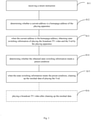
- Fig. 1 is a flowchart illustrating a method for processing hybrid playing of multi-type multimedia data according to an example embodiment:
- the return instruction is received, it is determined whether the current address is the homepage address of the playing apparatus, when the current address is the homepage address, the state switching information of playing the broadcast TV video and the network on-demand vide by the playing apparatus is obtained, it is determined whether the obtained state switching information meets the preset condition, when the state switching information meets the preset condition, the residual data of playing the Vod is cleaned up.
- the return instruction may be an instruction that may instruct the playing apparatus to return to the homepage address.
- the return instruction may be a trigger message on a BACK key or an Exit key set on a controller.
- the residual data of playing the Vod need to be cleaned up by determining whether the current address is the homepage address of the playing apparatus and whether the state switching information of the broadcast TV video and the Vod meets the preset condition, so as to clean up the residual data of playing the Vod and to effectively ensure that the residual data of playing the Vod is cleaned up in time without affecting subsequent playing.
- FIG. 2 is a flowchart illustrating a method for obtaining the state switching information of playing the broadcast TV video and the Vod at block S13 of Fig. 1 .
- Determining whether the obtained state switching information meets the preset condition at block S14 includes following.
- the playing state switching record of the playing apparatus in order to determine the time to clean up the residual data of the Vod, the playing state switching record of the playing apparatus is obtained.
- the playing state switching record records a switching record when the playing apparatus switches different types of video playing data each time for playing switching.
- a hybrid broadcast broadband TV HbbTV
- the HbbTV starts a broadcast TV (also called a digital TV) to play a broadcast TV video.
- the playing state switching record of the playing apparatus playing the broadcast TV video and the Vod is recorded as DTV Start.
- a prompt message of a Vod is received in a process of watching a DTV video, skipping to play a Vod is selected.
- the playing state switching record is: DTV start-> DTV stop-> Vod Start.
- the playing state switching record is: DTV Start -> DTV Stop -> Vod Start -> Vod Stop -> DTV Start, indicating that it's necessary to return to the DTV video to continue to play and there may be the residual data of the Vod.
- the playing apparatus receives the return instruction, it is determined whether the current address is the homepage address of the playing apparatus. If yes, the state switching information of the DTV video and the Vod played by the playing apparatus is obtained, that is a playing state switching record is obtained.
- the playing state switching record obtained before receiving the return instruction is "exiting the Vod after opening the Vod"
- the state switching information meets the preset condition, and the residual data of playing the Vod is cleaned up.
- FIG. 3 is a flowchart illustrating a method for determining whether the obtained state switching information meets the preset condition at block S14 of Fig. 1 .
- the present disclosure in order to further confirm that the residual data of the Vod needs to be cleaned up, before determining whether the playing state switching record, obtained after opening the Vod and before exiting the Vod is "closing the broadcast TV video after opening the broadcast TV video". If so, the residual data of the Vod is cleaned up.
- the state switching information obtained after opening the Vod and before exiting the Vod, is closing the broadcast TV video after opening the broadcast TV video. If so, the state switching information meets the preset condition, and the residual data of the Vod is cleaned up.
- An exemplary embodiment of the present disclosure provides a method for processing hybrid playing of multi-type multimedia.
- the method provided in the present disclosure further includes following.
- a broadcast TV video is played after the residual data is cleaned up.
- the broadcast TV video is played after the residual data is cleaned up.
- the current address is the homepage address of the playing apparatus. If yes, the state switching information of the broadcast TV video and the Vod played by the playing apparatus is obtained. It is determined whether the obtained state switching information meets the preset condition. If yes, the residual data of playing the Vod is cleaned up. The broadcast TV video is played after cleaning up the residual data is finished.
- An exemplary embodiment of the present disclosure provides a method for processing hybrid playing of multi-type multimedia data, which is applied to an HbbTV, that is, the playing apparatus is the HbbTV.
- interaction information display of the HBBTV is to implement system function calls based on hypertext markup language (HTML) page display and JavaScript scripts, the browser engine performs rendering and running.
- HTML hypertext markup language
- JavaScript scripts are provided by a third party application developer, some application development does not comply with HbbTV specifications, and the management and control of the life cycle of HbbTV applications is inaccurate, which leads to using problems.
- the user clicks on a VOD playing finish key or actively stop the playing, a selection page is entered.
- a BACK key is clicked to exit the HbbTV application page.
- a JavaScript script of the application page does not perform a thorough page deletion action, and there is residual data, which causes that the TV has sound but with a black screen, that is a black screen with sound, when returning to a channel of the broadcast TV video for further playing. In order to avoid black screen, it may be determined when to clean up the residual data.
- the residual data of the Vod is cleaned up when the return instruction is received, the state switching information of the playing apparatus is obtained, and after the state switching information meets the preset condition.
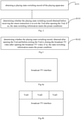
- Fig. 4a illustrates a playing interface that an HBBTV playing apparatus plays the broadcast TV video.
- a prompt message of Vod information the prompt message is clicked, and a selection interface.
- Fig. 4b illustrates a selection interface of an HBBTV playing apparatus, and a user may select to watch a Vod that he wants to watch, for example, a Vod1. Entering the selection interface may also be performed in other operating modes, for example, entering the selection interface through a corresponding button of a controller of the HBBTV playing apparatus.
- the user selects the Vod1 and enters a playing interface of the Vod1, as shown in Fig.
- Fig. 4c illustrates a playing screen of an HBBTV playing apparatus playing the Vod 1.
- the selection interface shown in Fig. 4b is entered.
- the user may further select to watch a Vod or select to return to the broadcast TV to continue playing.
- the user may click a BACK key or an Exit key to return to the broadcast TV for further playing the broadcast TV video.
- a black screen may appear, having sound but no picture.
- Fig. 4d illustrates a playing interface of an HbbTV playing apparatus having a black screen.
- reboot and channel switching may be used to exit a black screen state, and a normal playing of the broadcast TV is entered.
- a black screen may no longer appear and the current video playing interface of the broadcast TV may be directly entered.
- FIG. 5 is a flowchart illustrating a method for receiving the return instruction at block S111 of Fig. 1 .
- a trigger message of an Exit key or a Back key on a controller of the HbbTV is received.
- the Exit key or the Back key is set on the controller of the TV, and their function is to return to the broadcast TV from the playing state of the currently played Vod for further playing.
- the trigger message from the Exit key or the Back key is received, it indicates that it may return to playing of the broadcast TV from the state of playing the Vod.
- FIG. 6 is a flowchart illustrating a method for cleaning up the residual data of playing the Vod at block S15 of Fig. 1 .
- an engine of a browser playing the Vod is called to clean up a residual HTML page.
- interaction information display of the HbbTV is to achieve system function calls based on HTML page display and JavaScript scripts, and to render and run by an engine of a browser.
- the residual data is an HTML page.
- the residual HTML page is cleaned up.
- the state switching information such as the playing state switching record, of playing the broadcast TV video and the Vod of the playing apparatus
- the state switching information in combination with the return instruction is used to determine whether it is necessary to clean up the residual data of multimedia data of the Vod, so as to effectively ensure the residual data of playing the Vod is cleaned up in time without affecting subsequent playing.
- FIG. 7 is a block diagram illustrating a playing apparatus for hybrid playing of multi-type multimedia data according to an exemplary embodiment.
- the playing apparatus for hybrid playing of multi-type multimedia data includes a receiving module 701, a determining module 702, an obtaining module 703, and a cleaning module 704.
- the receiving module 701 is configured to receive a return instruction.
- the determining module 702 is configured to determine whether a current address is a homepage address of the playing apparatus.
- the obtaining module 703 is configured to, obtain state switching information of playing the broadcast TV video and the Vod by the playing apparatus when the current address is the homepage address.
- the determining module is further configured to determine whether the obtained state switching information meets a preset condition.
- the cleaning module 704 is configured to clean up the residual data of the Vod in response to the state switching information meeting the preset condition.
- the obtaining module 703 is configured to obtain a playing state switching record of the playing apparatus.
- the determining module 702 is configured to determine whether the playing state switching record obtained before receiving the return instruction is to exit the Vod after opening the Vod, and determine that the state switching information meets the preset condition when the playing state switching record obtained before receiving the return instruction is to exit the Vod after opening the Vod.
- the determining module 702 is further configured to determine whether the playing state switching record btained after opening the Vod and before exiting the Vod is closing the broadcast TV video after opening the broadcast TV video, and determine that the state switching information meets the preset condition when the playing state switching record obtained after opening the Vod and before exiting the Vod is closing the broadcast TV video after opening the broadcast TV video.
- the playing apparatus further includes: a playing module 705, configured to play the broadcast TV video after cleaning up the residual data.
- the playing apparatus is an HbbTV (Hybrid broadcast broadband TV)
- the receiving module is further configured to receive a trigger message of an Exit key or a Back key on a controller of the HbbTVreceive a trigger message of an Exit or Back key on the controller of the HbbTV
- the cleaning module 704 is configured to call an engine of a browser playing a Vod to clean up the residual HTML page.
- Fig. 8 is a block diagram illustrating a playing apparatus 800 for hybrid playing of multi-type multimedia data according to an exemplary embodiment.
- the apparatus 800 may be a mobile phone, a computer, a digital broadcasting terminal, a messaging device, a game console, a tablet device, a medical device, exercise equipment, a personal digital assistant, etc.
- the apparatus 800 may include one or more of the following components: a processing component 802, a memory 804, a power component 806, a multimedia component 808, an audio component 810, an input/output (I/O) interface 812, a sensor component 814, and a communication component 816.
- a processing component 802 a memory 804, a power component 806, a multimedia component 808, an audio component 810, an input/output (I/O) interface 812, a sensor component 814, and a communication component 816.
- the processing component 802 generally controls the overall operations of the apparatus 800, such as the operations related to display, phone calls, data communications, camera operations and recording operations.
- the processing component 802 may include one or more processors 820 to perform instructions, to complete all or part of the steps in the above described methods.
- the processing component 802 may include one or more modules for the convenience of interaction between the processing component 802 and other components.
- the processing component 802 may include a multimedia module for the convenience of interaction between the multimedia component 808 and the processing component 802.
- the memory 804 is configured to store various types of data to support the operation of the apparatus 800. Examples of the data include instructions for any applications or methods operated on apparatus 800, contact data, phone book data, messages, pictures, videos, etc.
- the memory 804 may be implemented using any type of volatile or non-volatile memory devices or their combination, such as a static random access memory (SRAM), an electrically erasable programmable read-only memory (EEPROM), an erasable programmable read-only memory (EPROM), Programmable Read-Only Memory a programmable read-only memory (PROM), a read-only memory (ROM), a magnetic memory, a flash memory, a magnetic or optical disk.
- SRAM static random access memory
- EEPROM electrically erasable programmable read-only memory
- EPROM erasable programmable read-only memory
- PROM programmable read-only memory
- ROM read-only memory
- magnetic memory a magnetic memory
- flash memory a flash memory
- magnetic or optical disk a
- the power component 806 may provide power to various components of the apparatus 800.
- the power component 806 may include a power management system, one or more power sources, and any other components related to the generation, management, and distribution of power for the apparatus 800.
- the multimedia component 808 includes a screen providing an output interface between the apparatus 800 and the user.
- the screen may include a liquid crystal display (LCD) and a touch panel (TP). If the screen includes the touch panel, the screen may be implemented as a touch screen to receive input signals from the user.
- the touch panel includes one or more touch sensors to sense touches, swipes and gestures on the touch panel. The touch sensor may not only sense a boundary of a touch or swipe action, but also detect the duration and a pressure related to the touch or swipe action.
- the multimedia component 808 includes a front camera and/or a rear camera. When the apparatus 800 is in operation mode, such as a photographing mode or a video mode, the front camera and/or the rear camera may receive an external multimedia data. Each of the front camera and the rear camera may be a fixed optical lens system or have focus and optical zoom capability.
- the audio component 810 is configured to output and/or input audio signals.
- the audio component 810 includes a microphone (MIC).
- the microphone When the apparatus 800 is in operation mode, such as call mode, a record mode, and a speech recognition mode, the microphone is configured to receive an external audio signal.
- the audio signals received may be further stored in the memory 804 or sent via the communication component 816.
- the audio component 810 further includes a speaker configured to output audio signals.
- the I/O interface 812 provides an interface between the processing component 802 and the peripheral interface modules, such as a keyboard, a click wheel, a button, etc.
- the buttons may include but are not limited to a home button, a volume button, a start button and a lock button.
- the sensor component 814 includes one or more sensors, configured to provide status assessments of various aspects of the apparatus 800.
- the sensor component 814 may detect the on/off state of the apparatus 800 and elative positioning of the components, e.g., the display and the keypad of the apparatus 800.
- the sensor component 814 may further detect a location change of the apparatus 800 or a component of the apparatus 800, a presence or absence of contact between the user and the apparatus 800, an orientation or an acceleration/deceleration of the apparatus 800, and a temperature change of the apparatus 800.
- the sensor component 814 may include a proximity sensor, which is configured to detect the existence of the objects nearby without any physical contact.
- the sensor component 814 may further include a light sensor, such as a CMOS or CCD image sensor, which is configured to use in imaging applications.
- the sensor component 814 may further include an acceleration transducer, a gyroscope sensor, a magnetic sensor, a pressure sensor or a temperature sensor.
- the communication component 816 is configured for the convenience of wired or wireless communication between the apparatus 800 and other devices.
- the apparatus 800 may access wireless networks based on a communication standard, such as Wi-Fi, 2G, 3G, 4G, 5G, or their combinations.
- the communication component 816 receives broadcast signals or broadcast-related information from an external broadcast management system via a broadcast channel.
- the communication component 816 further includes a near field communication (NFC) module to facilitate short-range communication.
- NFC near field communication
- an NFC module may be implemented based on a radio frequency identification (RFID) technology, an infrared data association (IRDA) technology, an ultra-wideband (UWB) technology, a Bluetooth (BT) technology and other technologies.
- RFID radio frequency identification
- IRDA infrared data association
- UWB ultra-wideband
- BT Bluetooth
- the apparatus 800 may be implemented by one or more application specific integrated circuits(ASICs), digital signal processors (DSPs), digital signal processing devices (DSPDs), programmable logic devices (PLDs), field programmable gate arrays (FPGAs), controllers, microcontrollers, microprocessors or other electronics components, which is configured to perform the above methods.
- ASICs application specific integrated circuits
- DSPs digital signal processors
- DSPDs digital signal processing devices
- PLDs programmable logic devices
- FPGAs field programmable gate arrays
- controllers microcontrollers, microprocessors or other electronics components, which is configured to perform the above methods.
- a non-transitory computer readable storage medium is further provided which includes instructions, such as the memory 804 including instructions.
- the instructions may be executed by the processor 820 of the apparatus 800 to perform the above methods.
- the non-transitory computer readable storage medium may be a ROM, a RAM, a CD-ROM, a magnetic tape, a floppy disk, an optical data storage device, etc.
- a non-transitory computer readable storage medium is provided.
- the mobile terminal may perform a method for processing hybrid playing of multi-type multimedia data, and the method includes: receiving a return instruction; determining whether a current address is a homepage address of the playing apparatus; in response to the current address being the homepage address, obtaining state switching information of a broadcast TV video and a video on demand (Vod) played by the playing apparatus; determining whether the obtained state switching information meets a preset condition; and in response to the state switching information meeting the preset condition, cleaning up residual data of playing the Vod.
- a return instruction determining whether a current address is a homepage address of the playing apparatus; in response to the current address being the homepage address, obtaining state switching information of a broadcast TV video and a video on demand (Vod) played by the playing apparatus; determining whether the obtained state switching information meets a preset condition; and in response to the state switching information meeting the preset condition, cleaning up residual data of playing the Vod.
Landscapes
- Engineering & Computer Science (AREA)
- Multimedia (AREA)
- Signal Processing (AREA)
- Databases & Information Systems (AREA)
- Human Computer Interaction (AREA)
- Software Systems (AREA)
- Two-Way Televisions, Distribution Of Moving Picture Or The Like (AREA)
Abstract
Description
- The present disclosure relates to a field of computer processing, and particularly to a method for processing hybrid playing of multi-type multimedia data, a playing apparatus and a storage medium.
- In related art, hybrid playing of multi-type multimedia is a common playing service. For example, an HbbTV (Hybrid broadcast broadband TV) realizes mixed playing of a broadcast TV and a network video. When switching between hybrid playing of multi-type multimedia, especially when returning to playing of a broadcast TV video, data of a video on demand (Vod) are not cleaned up completely may result in a problem that the residual data of the Vod affects playing of the broadcast TV video when returning to continue to play the broadcast TV video. It is an urgent problem to be solved How to ensure the residual data of the Vod not to affect subsequent playing and when to clean up the residual data is an urgent problem to be solved.
- To overcome the problems in the related art, the present invention provides a method for processing hybrid playing of multi-type multimedia data, an apparatus and a storage medium.
- According to a first aspect of the present invention, a method for processing hybrid playing of multi-type multimedia data is provided. The method is applied to a playing apparatus. The playing apparatus is capable to play a broadcast TV video and a video on demand (Vod). The method includes: receiving a return instruction; determining whether a current address is a homepage address of the playing apparatus; in response to the current address being the homepage address, obtaining state switching information of playing the broadcast TV video and the Vod by the playing apparatus; determining whether the obtained state switching information meets a preset condition; and in response to the state switching information meeting the preset condition, cleaning up residual data of playing the Vod.
- In an embodiment, obtaining the state switching information of playing the broadcast TV video and the Vod by the playing apparatus includes: obtaining a playing state switching record of the playing apparatus. Determining whether the obtained state switching information meets the preset condition includes: determining whether the playing state switching record obtained before receiving the return instruction is to exit the Vod after opening the Vod; and in response to determining that the playing state switching record obtained before receiving the return instruction is to exit the Vod after opening the Vod, determining that the state switching information meets the preset condition.
- In an embodiment, determining whether the obtained state switching information meets the preset condition further includes: determining whether the playing state switching record, obtained after opening the Vod and before exiting the Vod, is closing the broadcast TV video after opening the broadcast TV video; and in response to determining that the playing state switching record obtained after opening the Vod and before exiting the Vod is closing the broadcast TV video after opening the broadcast TV video, determining that the state switching information meets the preset condition.
- In an embodiment, the method further includes: playing the broadcast TV video after cleaning up the residual data.
- In an embodiment, the playing apparatus is a hybrid broadcast broadband TV (HbbTV), and receiving the return instruction includes: receiving a trigger message of an Exit key or a Back key on a controller of the HbbTV
- In an embodiment, cleaning up residual data of currently played multimedia data includes: calling an engine of a browser playing the Vod to clean up a residual HTML page.
- According to a second aspect of the present invention, a playing apparatus for hybrid playing of multi-type multimedia data is provided. T the playing apparatus is capable to play a broadcast TV video and a video on demand (Vod). The playing apparatus includes: a receiving module, configured to receive a return instruction; a determining module, configured to determine whether a current address is a homepage address of the playing apparatus; an obtaining module, configured to, in response to the current address being the homepage address, obtain state switching information of playing the broadcast TV video and the Vod by the playing apparatus; the determining module is further configured to determine whether the obtained state switching information meets a preset condition; and a cleaning module, configured to clean up the residual data of the Vod in response to the state switching information meeting the preset condition.
- In an embodiment, the obtaining module is configured to obtain a playing state switching record of the playing apparatus; the determining module is configured to determine whether the playing state switching record obtained before receiving the return instruction is to exit the Vod after opening the Vod, and determine that the state switching information meets the preset condition in response to determining that the playing state switching record obtained before receiving the return instruction is to exit the Vod after opening the Vod.
- In an embodiment, the determining module is further configured to determine whether the playing state switching record, obtained after opening the Vod and before exiting the Vod, is closing the broadcast TV video after opening the broadcast TV video, and determine that the state switching information meets the preset condition in response to determining that the playing state switching record, obtained after opening the Vod and before exiting the Vod, is closing the broadcast TV video after opening the broadcast TV video.
- In an embodiment, the playing apparatus further includes: a playing module, configured to play the broadcast TV video after cleaning up the residual data.
- In an embodiment, the playing apparatus is a hybrid broadcast broadband TV (HbbTV), and the receiving module is further configured to receive a trigger message of an Exit key or a Back key on a controller of the HbbTV
- In an embodiment, the cleaning module is configured to call an engine of a browser playing the Vod to clean up a residual HTML page.
- According to a third aspect of the present invention, a playing apparatus for hybrid playing of multi-type multimedia data is provided, and the playing apparatus includes: a processor; a memory configured to store instructions executable by the processor. The processor is configured to: receive a return instruction; determine whether a current address is a homepage address of the playing apparatus; in response to the current address being the homepage address, obtain state switching information of playing a broadcast TV video and a video on demand (Vod) by the playing apparatus; determine whether the obtained state switching information meets a preset condition; and clean up the residual data of the Vod in response to the state switching information meeting the preset condition.
- According to a fourth aspect of the present invention, a non-transitory computer readable storage medium is provided. When instructions in the storage medium is executed by a processor of a mobile terminal, the mobile terminal is caused to perform a method for processing hybrid playing of multi-type multimedia data. The method includes: receiving a return instruction; determining whether a current address is a homepage address of the playing apparatus; in response to the current address being the homepage address, obtaining state switching information of playing a broadcast TV video and a video on demand (Vod) by the playing apparatus; determining whether the obtained state switching information meets a preset condition; and in response to the state switching information meeting the preset condition, cleaning up residual data of playing the Vod.
- The technical solution provided in the embodiments of the present disclosure may include the following beneficial effects. With the method for processing hybrid playing of multi-type multimedia data provided by the present disclosure, when returning to broadcast TV video to continue playing, it is determined whether the residual data of playing the Vod needs to be cleaned up by determining whether the state switching information of playing the broadcast TV video and the Vod by the playing apparatus meets the preset condition, so as to clean up the residual data of the Vod, and to effectively ensure that the residual data of playing the Vod is cleaned up in time without affecting subsequent playing.
- It is to be understood that both the foregoing general description and the following detailed description are exemplary and explanatory only and are not restrictive of the present disclosure.
- The accompanying drawings, which are incorporated in and constitute a part of this specification, illustrate embodiments consistent with the present disclosure and, together with the description, serve to explain the principles of the present disclosure.
-
Fig. 1 is a flowchart illustrating a method for processing hybrid playing of multi-type multimedia data according to an example embodiment; -
Fig. 2 is a flowchart illustrating a method for obtaining state switching information of playing a broadcast TV video and a video on demand (Vod) at block S13 ofFig. 1 ; -
Fig. 3 is a flowchart illustrating a method for determining whether the obtained state switching information meets a preset condition at block S14 ofFig. 1 ; -
Fig. 4a illustrates a playing interface that an HBBTV playing apparatus starts playing to enter a broadcast TV for the first time; -
Fig. 4b illustrates a selection interface of an HBBTV playing apparatus; -
Fig. 4c illustrates a playing interface of an HBBTV playing apparatus playing a video on demand Vod1; -
Fig. 4d illustrates a playing interface of an HBBTV playing apparatus having a black screen; -
Fig. 5 is a flowchart illustrating a method for receiving a return instruction at block S11 ofFig. 1 ; -
Fig. 6 is a flowchart illustrating a method for cleaning up residual data of playing a video on demand at block S15 ofFig. 1 ; -
Fig. 7 is a block diagram illustrating a playing apparatus for hybrid playing of multi-type multimedia data according to an example embodiment; -
Fig. 8 is a schematic diagram illustrating a playing apparatus for hybrid playing of multi-type multimedia data according to an example embodiment. - Reference will now be made in detail to exemplary embodiments, examples of which are illustrated in the accompanying drawings. The following description refers to the accompanying drawings in which the same numbers in different drawings represent the same or similar elements unless otherwise represented. The implementations set forth in the following description of exemplary embodiments do not represent all implementations consistent with the present disclosure. Instead, they are merely examples of apparatuses and methods consistent with aspects related to the present disclosure as recited in the appended claims.
- The embodiments of the present disclosure provide a method for processing hybrid playing of multi-type multimedia data. The method for processing hybrid playing of multi-type multimedia data is applied to a playing apparatus. The playing apparatus is capable to play a broadcast TV video and a video on demand (Vod).
Fig. 1 is a flowchart illustrating a method for processing hybrid playing of multi-type multimedia data according to an example embodiment: - At block S11, a return instruction is received.
- At block S12, it is determined whether a current address is a homepage address of the playing apparatus.
- At block S13, when the current address is the homepage address, obtaining state switching information of playing the broadcast TV video and the Vod.
- At block S14, it is determined whether the obtained state switching information meets a preset condition.
- At block S15, when the state switching information meets the preset condition, the residual data of playing the Vod is cleaned up.
- To solve the defects in the related art, in the method for processing hybrid playing of multi-type multimedia data, the return instruction is received, it is determined whether the current address is the homepage address of the playing apparatus, when the current address is the homepage address, the state switching information of playing the broadcast TV video and the network on-demand vide by the playing apparatus is obtained, it is determined whether the obtained state switching information meets the preset condition, when the state switching information meets the preset condition, the residual data of playing the Vod is cleaned up. The return instruction may be an instruction that may instruct the playing apparatus to return to the homepage address. For example, the return instruction may be a trigger message on a BACK key or an Exit key set on a controller.
- With the method for processing hybrid playing of multi-type multimedia data provided by the present disclosure, when the return instruction is received, it is determined whether the residual data of playing the Vod need to be cleaned up by determining whether the current address is the homepage address of the playing apparatus and whether the state switching information of the broadcast TV video and the Vod meets the preset condition, so as to clean up the residual data of playing the Vod and to effectively ensure that the residual data of playing the Vod is cleaned up in time without affecting subsequent playing.
- An exemplary embodiment of the present disclosure provides a method for processing hybrid playing of multi-type multimedia data. As shown in
Fig. 2, Fig. 2 is a flowchart illustrating a method for obtaining the state switching information of playing the broadcast TV video and the Vod at block S13 ofFig. 1 . - At block S131, a playing state switching record of the playing apparatus is obtained.
- Determining whether the obtained state switching information meets the preset condition at block S14 includes following.
- At block S141, it is determined whether the playing state switching record obtained before receiving the return instruction is to exit the Vod after opening the Vod. When the playing state switching record obtained before receiving the return instruction is to exit the Vod after opening the Vod, the state switching information meets the preset condition.
- In the present disclosure, in order to determine the time to clean up the residual data of the Vod, the playing state switching record of the playing apparatus is obtained. The playing state switching record records a switching record when the playing apparatus switches different types of video playing data each time for playing switching. Taking a hybrid broadcast broadband TV (HbbTV) as an example, when turning on the HbbTV, the HbbTV starts a broadcast TV (also called a digital TV) to play a broadcast TV video. The playing state switching record of the playing apparatus playing the broadcast TV video and the Vod is recorded as DTV Start. When a prompt message of a Vod is received in a process of watching a DTV video, skipping to play a Vod is selected. At this time, the playing state switching record is: DTV start-> DTV stop-> Vod Start. When the Vod completes playing or a user actively terminates the playing and returns to a DTV to continue to play a DTV video, the playing state switching record is: DTV Start -> DTV Stop -> Vod Start -> Vod Stop -> DTV Start, indicating that it's necessary to return to the DTV video to continue to play and there may be the residual data of the Vod. When the playing apparatus receives the return instruction, it is determined whether the current address is the homepage address of the playing apparatus. If yes, the state switching information of the DTV video and the Vod played by the playing apparatus is obtained, that is a playing state switching record is obtained. When it is determined the playing state switching record obtained before receiving the return instruction is "exiting the Vod after opening the Vod", the state switching information meets the preset condition, and the residual data of playing the Vod is cleaned up.
- An exemplary embodiment of the present disclosure provides a method for processing hybrid playing of multi-type multimedia data. As shown in
Fig. 3, Fig. 3 is a flowchart illustrating a method for determining whether the obtained state switching information meets the preset condition at block S14 ofFig. 1 . - At block S142, it is determined whether the playing state switching record, obtained after opening the Vod and before exiting the Vod is closing the broadcast TV video after opening the broadcast TV video. If yes, the state switching information meets the preset condition.
- In the present disclosure, in order to further confirm that the residual data of the Vod needs to be cleaned up, before determining whether the playing state switching record, obtained after opening the Vod and before exiting the Vod is "closing the broadcast TV video after opening the broadcast TV video". If so, the residual data of the Vod is cleaned up. Taking the HbbTV for an example, when the Vod completes playing or a user terminates playing the Vod, and when the playing apparatus receives a return instruction, it is determined whether the state switching information, obtained after opening the Vod and before exiting the Vod, is closing the broadcast TV video after opening the broadcast TV video. If so, the state switching information meets the preset condition, and the residual data of the Vod is cleaned up.
- An exemplary embodiment of the present disclosure provides a method for processing hybrid playing of multi-type multimedia. The method provided in the present disclosure further includes following.
- At block S16, a broadcast TV video is played after the residual data is cleaned up.
- As shown in
Fig. 1 , at block S16 as shown in a dashed box ofFig. 1 , the broadcast TV video is played after the residual data is cleaned up. Taking an HbbTV for an example, when the Vod completes playing or the user terminates playing the Vod and when returning to continue to play the broadcast DTV video, it is determined whether the current address is the homepage address of the playing apparatus. If yes, the state switching information of the broadcast TV video and the Vod played by the playing apparatus is obtained. It is determined whether the obtained state switching information meets the preset condition. If yes, the residual data of playing the Vod is cleaned up. The broadcast TV video is played after cleaning up the residual data is finished. - An exemplary embodiment of the present disclosure provides a method for processing hybrid playing of multi-type multimedia data, which is applied to an HbbTV, that is, the playing apparatus is the HbbTV.
- When the HbbTV playing apparatus plays the broadcast TV, a prompt message of a Vod is received, skipping to the Vod for playing is selected. Since interaction information display of the HBBTV is to implement system function calls based on hypertext markup language (HTML) page display and JavaScript scripts, the browser engine performs rendering and running.
- Since JavaScript scripts are provided by a third party application developer, some application development does not comply with HbbTV specifications, and the management and control of the life cycle of HbbTV applications is inaccurate, which leads to using problems. For example, when the user starts an HbbTV application page, the user clicks on a VOD playing finish key or actively stop the playing, a selection page is entered. When a BACK key is clicked to exit the HbbTV application page. A JavaScript script of the application page does not perform a thorough page deletion action, and there is residual data, which causes that the TV has sound but with a black screen, that is a black screen with sound, when returning to a channel of the broadcast TV video for further playing. In order to avoid black screen, it may be determined when to clean up the residual data. In the method provided by the present disclosure, the residual data of the Vod is cleaned up when the return instruction is received, the state switching information of the playing apparatus is obtained, and after the state switching information meets the preset condition.
- When the HbbTV playing apparatus plays the broadcast TV video, as shown in
Fig. 4a, Fig. 4a illustrates a playing interface that an HBBTV playing apparatus plays the broadcast TV video. When a prompt message of Vod information, the prompt message is clicked, and a selection interface. As shown inFig. 4b, Fig. 4b illustrates a selection interface of an HBBTV playing apparatus, and a user may select to watch a Vod that he wants to watch, for example, a Vod1. Entering the selection interface may also be performed in other operating modes, for example, entering the selection interface through a corresponding button of a controller of the HBBTV playing apparatus. When the user selects the Vod1 and enters a playing interface of the Vod1, as shown inFig. 4c, Fig. 4c illustrates a playing screen of an HBBTV playing apparatus playing the Vod 1. After the Vod 1 completes playing or the user actively terminates playing, the selection interface shown inFig. 4b is entered. The user may further select to watch a Vod or select to return to the broadcast TV to continue playing. For example, the user may click a BACK key or an Exit key to return to the broadcast TV for further playing the broadcast TV video. When the user selects to return to the broadcast TV for further playing, in the related art, since there is residual data due to the above reasons, a black screen may appear, having sound but no picture. As shown inFig. 4d, Fig. 4d illustrates a playing interface of an HbbTV playing apparatus having a black screen. Other operations such as reboot and channel switching may be used to exit a black screen state, and a normal playing of the broadcast TV is entered. When the processing method in the present disclosure is adopted, a black screen may no longer appear and the current video playing interface of the broadcast TV may be directly entered. - An exemplary embodiment of the present disclosure provides a method for processing hybrid playing of multi-type multimedia data. When the playing apparatus is an HbbTV, as shown in
Fig. 5, Fig. 5 is a flowchart illustrating a method for receiving the return instruction at block S111 ofFig. 1 . - At block S111, a trigger message of an Exit key or a Back key on a controller of the HbbTV is received.
- When the playing apparatus is the HbbTV in the present disclosure, the Exit key or the Back key is set on the controller of the TV, and their function is to return to the broadcast TV from the playing state of the currently played Vod for further playing. When the trigger message from the Exit key or the Back key is received, it indicates that it may return to playing of the broadcast TV from the state of playing the Vod.
- An exemplary embodiment of the present disclosure provides a method for processing hybrid playing of multi-type multimedia data. When the playing apparatus is an HbbTV, as shown in
Fig. 6, Fig. 6 is a flowchart illustrating a method for cleaning up the residual data of playing the Vod at block S15 ofFig. 1 . - At block S151, an engine of a browser playing the Vod is called to clean up a residual HTML page.
- As described above, interaction information display of the HbbTV is to achieve system function calls based on HTML page display and JavaScript scripts, and to render and run by an engine of a browser. When the user starts an HbbTV application page, clicks on a VOD playing finish key to or actively stop the playing, and clicks on a BACK key to exit the HbbTV application page, the residual data is an HTML page. In order to avoid black screen due to the residual HTML page, the residual HTML page is cleaned up.
- With the method for processing hybrid playing of multi-type multimedia data provided by the present disclosure, by obtaining the state switching information, such as the playing state switching record, of playing the broadcast TV video and the Vod of the playing apparatus, the state switching information in combination with the return instruction is used to determine whether it is necessary to clean up the residual data of multimedia data of the Vod, so as to effectively ensure the residual data of playing the Vod is cleaned up in time without affecting subsequent playing.
- An exemplary embodiment of the present disclosure provides a playing apparatus for hybrid playing of multi-type multimedia data. As shown in
Fig. 7, Fig. 7 is a block diagram illustrating a playing apparatus for hybrid playing of multi-type multimedia data according to an exemplary embodiment. The playing apparatus for hybrid playing of multi-type multimedia data includes a receivingmodule 701, a determiningmodule 702, an obtainingmodule 703, and acleaning module 704. - The receiving
module 701 is configured to receive a return instruction. - The determining
module 702 is configured to determine whether a current address is a homepage address of the playing apparatus. - The obtaining
module 703 is configured to, obtain state switching information of playing the broadcast TV video and the Vod by the playing apparatus when the current address is the homepage address. - The determining module is further configured to determine whether the obtained state switching information meets a preset condition.
- The
cleaning module 704 is configured to clean up the residual data of the Vod in response to the state switching information meeting the preset condition. - The obtaining
module 703 is configured to obtain a playing state switching record of the playing apparatus. - The determining
module 702 is configured to determine whether the playing state switching record obtained before receiving the return instruction is to exit the Vod after opening the Vod, and determine that the state switching information meets the preset condition when the playing state switching record obtained before receiving the return instruction is to exit the Vod after opening the Vod. - The determining
module 702 is further configured to determine whether the playing state switching record btained after opening the Vod and before exiting the Vod is closing the broadcast TV video after opening the broadcast TV video, and determine that the state switching information meets the preset condition when the playing state switching record obtained after opening the Vod and before exiting the Vod is closing the broadcast TV video after opening the broadcast TV video. - The playing apparatus further includes: a playing
module 705, configured to play the broadcast TV video after cleaning up the residual data. - In an embodiment, the playing apparatus is an HbbTV (Hybrid broadcast broadband TV), and the receiving module is further configured to receive a trigger message of an Exit key or a Back key on a controller of the HbbTVreceive a trigger message of an Exit or Back key on the controller of the HbbTV
- The
cleaning module 704 is configured to call an engine of a browser playing a Vod to clean up the residual HTML page. - With regard to the apparatus in the above embodiments, the specific way in which each module performs the operation has been described in detail in the embodiments of the method and will not be elaborated here.
-
Fig. 8 is a block diagram illustrating aplaying apparatus 800 for hybrid playing of multi-type multimedia data according to an exemplary embodiment. For example, theapparatus 800 may be a mobile phone, a computer, a digital broadcasting terminal, a messaging device, a game console, a tablet device, a medical device, exercise equipment, a personal digital assistant, etc. - Referring to
Fig. 8 , theapparatus 800 may include one or more of the following components: aprocessing component 802, amemory 804, apower component 806, amultimedia component 808, anaudio component 810, an input/output (I/O)interface 812, asensor component 814, and acommunication component 816. - The
processing component 802 generally controls the overall operations of theapparatus 800, such as the operations related to display, phone calls, data communications, camera operations and recording operations. Theprocessing component 802 may include one ormore processors 820 to perform instructions, to complete all or part of the steps in the above described methods. In addition, theprocessing component 802 may include one or more modules for the convenience of interaction between theprocessing component 802 and other components. For example, theprocessing component 802 may include a multimedia module for the convenience of interaction between themultimedia component 808 and theprocessing component 802. - The
memory 804 is configured to store various types of data to support the operation of theapparatus 800. Examples of the data include instructions for any applications or methods operated onapparatus 800, contact data, phone book data, messages, pictures, videos, etc. Thememory 804 may be implemented using any type of volatile or non-volatile memory devices or their combination, such as a static random access memory (SRAM), an electrically erasable programmable read-only memory (EEPROM), an erasable programmable read-only memory (EPROM), Programmable Read-Only Memory a programmable read-only memory (PROM), a read-only memory (ROM), a magnetic memory, a flash memory, a magnetic or optical disk. - The
power component 806 may provide power to various components of theapparatus 800. Thepower component 806 may include a power management system, one or more power sources, and any other components related to the generation, management, and distribution of power for theapparatus 800. - The
multimedia component 808 includes a screen providing an output interface between theapparatus 800 and the user. In some embodiments, the screen may include a liquid crystal display (LCD) and a touch panel (TP). If the screen includes the touch panel, the screen may be implemented as a touch screen to receive input signals from the user. The touch panel includes one or more touch sensors to sense touches, swipes and gestures on the touch panel. The touch sensor may not only sense a boundary of a touch or swipe action, but also detect the duration and a pressure related to the touch or swipe action. In some embodiments, themultimedia component 808 includes a front camera and/or a rear camera. When theapparatus 800 is in operation mode, such as a photographing mode or a video mode, the front camera and/or the rear camera may receive an external multimedia data. Each of the front camera and the rear camera may be a fixed optical lens system or have focus and optical zoom capability. - The
audio component 810 is configured to output and/or input audio signals. For example, theaudio component 810 includes a microphone (MIC). When theapparatus 800 is in operation mode, such as call mode, a record mode, and a speech recognition mode, the microphone is configured to receive an external audio signal. The audio signals received may be further stored in thememory 804 or sent via thecommunication component 816. In some embodiments, theaudio component 810 further includes a speaker configured to output audio signals. - The I/
O interface 812 provides an interface between theprocessing component 802 and the peripheral interface modules, such as a keyboard, a click wheel, a button, etc. The buttons may include but are not limited to a home button, a volume button, a start button and a lock button. - The
sensor component 814 includes one or more sensors, configured to provide status assessments of various aspects of theapparatus 800. For example, thesensor component 814 may detect the on/off state of theapparatus 800 and elative positioning of the components, e.g., the display and the keypad of theapparatus 800. Thesensor component 814 may further detect a location change of theapparatus 800 or a component of theapparatus 800, a presence or absence of contact between the user and theapparatus 800, an orientation or an acceleration/deceleration of theapparatus 800, and a temperature change of theapparatus 800. Thesensor component 814 may include a proximity sensor, which is configured to detect the existence of the objects nearby without any physical contact. Thesensor component 814 may further include a light sensor, such as a CMOS or CCD image sensor, which is configured to use in imaging applications. In some embodiments, thesensor component 814 may further include an acceleration transducer, a gyroscope sensor, a magnetic sensor, a pressure sensor or a temperature sensor. - The
communication component 816 is configured for the convenience of wired or wireless communication between theapparatus 800 and other devices. Theapparatus 800 may access wireless networks based on a communication standard, such as Wi-Fi, 2G, 3G, 4G, 5G, or their combinations. In an exemplary embodiment, thecommunication component 816 receives broadcast signals or broadcast-related information from an external broadcast management system via a broadcast channel. In an exemplary embodiment, thecommunication component 816 further includes a near field communication (NFC) module to facilitate short-range communication. For example, an NFC module may be implemented based on a radio frequency identification (RFID) technology, an infrared data association (IRDA) technology, an ultra-wideband (UWB) technology, a Bluetooth (BT) technology and other technologies. - In an exemplary embodiment, the
apparatus 800 may be implemented by one or more application specific integrated circuits(ASICs), digital signal processors (DSPs), digital signal processing devices (DSPDs), programmable logic devices (PLDs), field programmable gate arrays (FPGAs), controllers, microcontrollers, microprocessors or other electronics components, which is configured to perform the above methods. - In an exemplary embodiment, a non-transitory computer readable storage medium is further provided which includes instructions, such as the
memory 804 including instructions. The instructions may be executed by theprocessor 820 of theapparatus 800 to perform the above methods. For example, the non-transitory computer readable storage medium may be a ROM, a RAM, a CD-ROM, a magnetic tape, a floppy disk, an optical data storage device, etc. - A non-transitory computer readable storage medium is provided. When the instruction in the storage medium is performed by a processor of a mobile terminal, the mobile terminal may perform a method for processing hybrid playing of multi-type multimedia data, and the method includes: receiving a return instruction; determining whether a current address is a homepage address of the playing apparatus; in response to the current address being the homepage address, obtaining state switching information of a broadcast TV video and a video on demand (Vod) played by the playing apparatus; determining whether the obtained state switching information meets a preset condition; and in response to the state switching information meeting the preset condition, cleaning up residual data of playing the Vod.
- Other embodiments of the invention will be apparent to those skilled in the art from consideration of the specification and practice of the invention disclosed here. This application is intended to cover any variations, uses, or adaptations of the invention following the general principles thereof and including such departures from the present disclosure as come within known or customary practice in the art.
- It will be appreciated that the present invention is not limited to the exact construction that has been described above and illustrated in the accompanying drawings, and that various modifications and changes can be made. It is intended that the scope of the invention only be limited by the appended claims.
Claims (15)
- A method for processing hybrid playing of multi-type multimedia data, applied to a playing apparatus, wherein the playing apparatus is capable to play a broadcast TV video and a video on demand, Vod, the method comprising:receiving (S11) a return instruction;determining (S12) whether a current address is a homepage address of the playing apparatus;in response to the current address being the homepage address, obtaining (S13) state switching information of playing the broadcast TV video and the Vod by the playing apparatus;determining (S14) whether the obtained state switching information meets a preset condition; andin response to the state switching information meeting the preset condition, cleaning up (S15) residual data of playing the Vod.
- The method of claim 1, wherein,
obtaining (S13) the state switching information of playing the broadcast TV video and the Vod by the playing apparatus comprises:obtaining (S131) a playing state switching record of the playing apparatus;determining (S14) whether the obtained state switching information meets the preset condition comprises:determining (S141) whether the playing state switching record obtained before receiving the return instruction is to exit the Vod after opening the Vod; andin response to the playing state switching record obtained before receiving the return instruction being to exit the Vod after opening the Vod, confirming that the state switching information meets the preset condition. - The method of claim 2, wherein determining (S14) whether the obtained state switching information meets the preset condition further comprises:determining (S142) whether the playing state switching record, obtained after opening the Vod and before exiting the Vod, is closing the broadcast TV video after opening the broadcast TV video; andin response to the playing state switching record obtained after opening the Vod and before exiting the Vod being closing the broadcast TV video after opening the broadcast TV video, confirming that the state switching information meets the preset condition.
- The method of any of claims 1 to 3, further comprising:
playing (S16) the broadcast TV video after cleaning up the residual data. - The method of any of claims 1 to 4, wherein, the playing apparatus is a hybrid broadcast broadband TV, HbbTV, receiving (S11) the return instruction comprises:
receiving (S111) a trigger message of an Exit key or a Back key on a controller of the HbbTV. - The method of claim 5, wherein cleaning up the residual data of playing the Vod comprises:
calling (S151) an engine of a browser playing the Vod to clean up a residual HTML page. - A playing apparatus for hybrid playing of multi-type multimedia data, wherein the playing apparatus is capable to play a broadcast TV video and a video on demand, Vod, the apparatus comprising:a receiving module (S701), configured to receive a return instruction;a determining module (S702), configured to determine whether a current address is a homepage address of the playing apparatus;an obtaining module (S703), configured to, in response to the current address being the homepage address, obtain state switching information of playing the broadcast TV video and the Vod by the playing apparatus;the determining module (S702) is further configured to determine whether the obtained state switching information meets a preset condition; anda cleaning module (S704), configured to clean up the residual data of the Vod in response to the state switching information meeting the preset condition.
- The playing apparatus of claim 7, wherein,
the obtaining module (S703) is configured to obtain a playing state switching record of the playing apparatus;
the determining module (S702) is configured to determine whether the playing state switching record obtained before receiving the return instruction is to exit the Vod after opening the Vod, and determine that the state switching information meets the preset condition when the playing state switching record obtained before receiving the return instruction is to exit the Vod after opening the Vod. - The playing apparatus of claim 8, wherein,
the determining module (S703) is further configured to determine whether the playing state switching record, obtained after opening the Vod and before exiting the Vod, is closing the broadcast TV video after opening the broadcast TV video, and determine that the state switching information meets the preset condition when the playing state switching record obtained after opening the Vod and before exiting the Vod is closing the broadcast TV video after opening the broadcast TV video. - The playing apparatus of any of claims 7 to 9, further comprising:
a playing module (S705), configured to play the broadcast TV video after cleaning up the residual data. - The playing apparatus of any of claims 7 to 10, wherein, the playing apparatus is a hybrid broadcast broadband TV, HbbTV, the receiving module (S701) is configured to:
receive a trigger message of an Exit key or a Back key on a controller of the HbbTV - The playing apparatus of claim 11, wherein, the cleaning module (S704) is configured to:
call an engine of a browser playing the Vod to clean up a residual HTML page. - A playing apparatus for hybrid playing of multi-type multimedia data, comprising:a processor;a memory configured to store instructions executable by the processor;wherein the processor is configured to implement the method for hybrid playing of multi-type multimedia data according to any of claims 1 to 6.
- A non-transitory computer readable storage medium, wherein, when instructions in the storage medium is executed by a processor of a mobile terminal, the mobile terminal is caused to perform the method for processing hybrid playing of multi-type multimedia data according to any of claims 1 to 6.
- A computer program product having instructions stored therein that, when executed by a processor of a mobile terminal, the mobile terminal is caused to perform the method for processing hybrid playing of multi-type multimedia data according to any of claims 1 to 6.
Applications Claiming Priority (1)
| Application Number | Priority Date | Filing Date | Title |
|---|---|---|---|
| CN202010762931.0A CN111787408B (en) | 2020-07-31 | 2020-07-31 | Processing method, playing device and storage medium for multi-type multimedia mixed playing |
Publications (1)
| Publication Number | Publication Date |
|---|---|
| EP3945722A1 true EP3945722A1 (en) | 2022-02-02 |
Family
ID=72765650
Family Applications (1)
| Application Number | Title | Priority Date | Filing Date |
|---|---|---|---|
| EP21171447.2A Pending EP3945722A1 (en) | 2020-07-31 | 2021-04-30 | Method for processing hybrid playing of multi-type multimedia data, playing apparatus and storage medium |
Country Status (3)
| Country | Link |
|---|---|
| US (1) | US11381877B2 (en) |
| EP (1) | EP3945722A1 (en) |
| CN (1) | CN111787408B (en) |
Families Citing this family (2)
| Publication number | Priority date | Publication date | Assignee | Title |
|---|---|---|---|---|
| CN115278339B (en) * | 2022-08-02 | 2024-03-15 | 上海哔哩哔哩科技有限公司 | Mixcast processing method and system |
| CN116423195A (en) | 2023-02-21 | 2023-07-14 | 江西奈尔斯西蒙斯赫根赛特中机有限公司 | Wheelset press-fit disassembly machine and press-fit method suitable for multi-gauge and multi-type wheel sets |
Family Cites Families (19)
| Publication number | Priority date | Publication date | Assignee | Title |
|---|---|---|---|---|
| CN101119169B (en) * | 2006-08-01 | 2012-10-03 | 深圳Tcl新技术有限公司 | Digital broadcasting television service switching mechanism and switching method |
| WO2010133747A1 (en) * | 2009-05-21 | 2010-11-25 | Montane Folch Joan | Addressing system for dvb-t or dvb-c digital multiplex television services for the headends of hotels, hospitals and the like, and an anti-intrusion system for said addressing system. |
| JP5493627B2 (en) * | 2009-09-15 | 2014-05-14 | ソニー株式会社 | Information processing apparatus, data management method, and program |
| CN102170588B (en) * | 2010-02-26 | 2015-12-02 | 康佳集团股份有限公司 | A kind of have the Set Top Box of remote controller and the method for switch operating state thereof |
| CN101938631A (en) * | 2010-08-31 | 2011-01-05 | 中山大学 | A video-on-demand system and method based on SDF middleware |
| US9219950B2 (en) * | 2011-11-01 | 2015-12-22 | Sony Corporation | Reproduction apparatus, reproduction method, and program |
| CN102595196A (en) * | 2012-01-12 | 2012-07-18 | 华为技术有限公司 | Method and device for receiving application data |
| CN103327267B (en) * | 2013-06-26 | 2017-12-15 | Tcl集团股份有限公司 | A kind of video broadcasting method, device and television set |
| KR102396034B1 (en) * | 2013-12-24 | 2022-05-10 | 엘지전자 주식회사 | Digital device and method for controlling the same |
| US20150237398A1 (en) * | 2014-02-18 | 2015-08-20 | Kylintv, Inc. | Internet protocol television |
| CN105872796A (en) * | 2015-11-27 | 2016-08-17 | 乐视网信息技术(北京)股份有限公司 | Method and device for switching broadcast television program to on-demand program |
| CN105828098B (en) * | 2016-05-13 | 2019-05-21 | 康佳集团股份有限公司 | A kind of method and system of intelligence switching programme televised live and request program |
| US20200099964A1 (en) * | 2016-08-04 | 2020-03-26 | Smardtv S.A. | Method and device for checking authenticity of a hbbtv related application |
| KR102388082B1 (en) * | 2017-05-23 | 2022-04-19 | 엘지전자 주식회사 | Display device and operating method thereof |
| CN107707969A (en) * | 2017-09-04 | 2018-02-16 | 深圳市屯奇尔科技有限公司 | Video broadcasting method, device and terminal device |
| DE112018007257T5 (en) * | 2018-03-09 | 2020-12-24 | Lg Electronics Inc. | Display device |
| US11978448B2 (en) * | 2019-02-26 | 2024-05-07 | Lg Electronics Inc. | Display device and method of operating the same |
| CN115968548B (en) * | 2020-06-10 | 2025-06-17 | Lg电子株式会社 | Display device and operation method thereof |
| KR102364317B1 (en) * | 2020-07-14 | 2022-02-18 | 엘지전자 주식회사 | Display device |
-
2020
- 2020-07-31 CN CN202010762931.0A patent/CN111787408B/en active Active
-
2021
- 2021-04-27 US US17/241,624 patent/US11381877B2/en active Active
- 2021-04-30 EP EP21171447.2A patent/EP3945722A1/en active Pending
Non-Patent Citations (1)
| Title |
|---|
| DVB ORGANIZATION: "HbbTV_v202_specification_2018_02_16.pdf", DVB, DIGITAL VIDEO BROADCASTING, C/O EBU - 17A ANCIENNE ROUTE - CH-1218 GRAND SACONNEX, GENEVA - SWITZERLAND, 18 February 2018 (2018-02-18), XP017855524 * |
Also Published As
| Publication number | Publication date |
|---|---|
| US11381877B2 (en) | 2022-07-05 |
| CN111787408B (en) | 2022-07-22 |
| CN111787408A (en) | 2020-10-16 |
| US20220038779A1 (en) | 2022-02-03 |
Similar Documents
| Publication | Publication Date | Title |
|---|---|---|
| US20210405952A1 (en) | Screen projection method, screen projection device, and storage medium | |
| US10530836B2 (en) | Methods and apparatuses for acquiring image | |
| US20170344192A1 (en) | Method and device for playing live videos | |
| US20170178289A1 (en) | Method, device and computer-readable storage medium for video display | |
| US11545188B2 (en) | Video processing method, video playing method, devices and storage medium | |
| US11146854B2 (en) | Method for playing videos and electronic device | |
| CN110113256B (en) | Information interaction method and device, server, user terminal and readable storage medium | |
| CN111031177A (en) | Screen recording method, device and readable storage medium | |
| CN112291631A (en) | Information acquisition method, device, terminal and storage medium | |
| CN105847936A (en) | Display control method and device, and terminal | |
| US11381877B2 (en) | Method for processing hybrid playing of multi-type multimedia data, playing apparatus and storage medium | |
| CN109413157B (en) | Message shielding method and device | |
| CN111147882B (en) | Video processing method and device, terminal equipment and storage medium | |
| CN106454462B (en) | The viewing authority control method and device of smart television | |
| CN113556614A (en) | Information issuing method and device and electronic equipment | |
| CN112261453A (en) | Method, device and storage medium for transmitting subtitle splicing map | |
| CN110162366B (en) | Information display method and device, electronic equipment and storage medium | |
| CN107835458A (en) | Player method, device and the electronic equipment of content of multimedia | |
| CN105049899B (en) | television projection control method, device and terminal device | |
| CN109831538B (en) | Message processing method, device, server, terminal and medium | |
| CN112685599A (en) | Video recommendation method and device | |
| CN106205621A (en) | Method and device for determining keywords | |
| CN114428563B (en) | Method and device for determining display frame rate and touch sampling rate and storage medium | |
| CN116301515A (en) | Playing control method and device, electronic equipment and storage medium | |
| CN114125545B (en) | Video information processing method, device, electronic equipment and storage medium |
Legal Events
| Date | Code | Title | Description |
|---|---|---|---|
| PUAI | Public reference made under article 153(3) epc to a published international application that has entered the european phase |
Free format text: ORIGINAL CODE: 0009012 |
|
| STAA | Information on the status of an ep patent application or granted ep patent |
Free format text: STATUS: THE APPLICATION HAS BEEN PUBLISHED |
|
| AK | Designated contracting states |
Kind code of ref document: A1 Designated state(s): AL AT BE BG CH CY CZ DE DK EE ES FI FR GB GR HR HU IE IS IT LI LT LU LV MC MK MT NL NO PL PT RO RS SE SI SK SM TR |
|
| STAA | Information on the status of an ep patent application or granted ep patent |
Free format text: STATUS: REQUEST FOR EXAMINATION WAS MADE |
|
| 17P | Request for examination filed |
Effective date: 20220728 |
|
| RBV | Designated contracting states (corrected) |
Designated state(s): AL AT BE BG CH CY CZ DE DK EE ES FI FR GB GR HR HU IE IS IT LI LT LU LV MC MK MT NL NO PL PT RO RS SE SI SK SM TR |
|
| STAA | Information on the status of an ep patent application or granted ep patent |
Free format text: STATUS: EXAMINATION IS IN PROGRESS |
|
| 17Q | First examination report despatched |
Effective date: 20230510 |