EP3945061B1 - Beam climber battery charging in transfer station - Google Patents
Beam climber battery charging in transfer station Download PDFInfo
- Publication number
- EP3945061B1 EP3945061B1 EP21188933.2A EP21188933A EP3945061B1 EP 3945061 B1 EP3945061 B1 EP 3945061B1 EP 21188933 A EP21188933 A EP 21188933A EP 3945061 B1 EP3945061 B1 EP 3945061B1
- Authority
- EP
- European Patent Office
- Prior art keywords
- energy management
- board energy
- management system
- elevator
- station
- Prior art date
- Legal status (The legal status is an assumption and is not a legal conclusion. Google has not performed a legal analysis and makes no representation as to the accuracy of the status listed.)
- Active
Links
Images


Classifications
-
- B—PERFORMING OPERATIONS; TRANSPORTING
- B66—HOISTING; LIFTING; HAULING
- B66B—ELEVATORS; ESCALATORS OR MOVING WALKWAYS
- B66B11/00—Main component parts of lifts in, or associated with, buildings or other structures
- B66B11/0035—Arrangement of driving gear, e.g. location or support
- B66B11/0045—Arrangement of driving gear, e.g. location or support in the hoistway
- B66B11/005—Arrangement of driving gear, e.g. location or support in the hoistway on the car
-
- B—PERFORMING OPERATIONS; TRANSPORTING
- B66—HOISTING; LIFTING; HAULING
- B66B—ELEVATORS; ESCALATORS OR MOVING WALKWAYS
- B66B1/00—Control systems of elevators in general
- B66B1/34—Details, e.g. call counting devices, data transmission from car to control system, devices giving information to the control system
-
- B—PERFORMING OPERATIONS; TRANSPORTING
- B66—HOISTING; LIFTING; HAULING
- B66B—ELEVATORS; ESCALATORS OR MOVING WALKWAYS
- B66B7/00—Other common features of elevators
- B66B7/06—Arrangements of ropes or cables
- B66B7/064—Power supply or signal cables
-
- B—PERFORMING OPERATIONS; TRANSPORTING
- B66—HOISTING; LIFTING; HAULING
- B66B—ELEVATORS; ESCALATORS OR MOVING WALKWAYS
- B66B11/00—Main component parts of lifts in, or associated with, buildings or other structures
- B66B11/04—Driving gear ; Details thereof, e.g. seals
- B66B11/043—Driving gear ; Details thereof, e.g. seals actuated by rotating motor; Details, e.g. ventilation
-
- B—PERFORMING OPERATIONS; TRANSPORTING
- B66—HOISTING; LIFTING; HAULING
- B66B—ELEVATORS; ESCALATORS OR MOVING WALKWAYS
- B66B11/00—Main component parts of lifts in, or associated with, buildings or other structures
- B66B11/04—Driving gear ; Details thereof, e.g. seals
- B66B11/043—Driving gear ; Details thereof, e.g. seals actuated by rotating motor; Details, e.g. ventilation
- B66B11/0438—Driving gear ; Details thereof, e.g. seals actuated by rotating motor; Details, e.g. ventilation with a gearless driving, e.g. integrated sheave, drum or winch in the stator or rotor of the cage motor
-
- B—PERFORMING OPERATIONS; TRANSPORTING
- B66—HOISTING; LIFTING; HAULING
- B66B—ELEVATORS; ESCALATORS OR MOVING WALKWAYS
- B66B9/00—Kinds or types of lifts in, or associated with, buildings or other structures
- B66B9/003—Kinds or types of lifts in, or associated with, buildings or other structures for lateral transfer of car or frame, e.g. between vertical hoistways or to/from a parking position
-
- B—PERFORMING OPERATIONS; TRANSPORTING
- B66—HOISTING; LIFTING; HAULING
- B66B—ELEVATORS; ESCALATORS OR MOVING WALKWAYS
- B66B9/00—Kinds or types of lifts in, or associated with, buildings or other structures
- B66B9/02—Kinds or types of lifts in, or associated with, buildings or other structures actuated mechanically otherwise than by rope or cable
-
- H—ELECTRICITY
- H02—GENERATION; CONVERSION OR DISTRIBUTION OF ELECTRIC POWER
- H02J—ELECTRIC POWER NETWORKS; CIRCUIT ARRANGEMENTS OR SYSTEMS FOR SUPPLYING OR DISTRIBUTING ELECTRIC POWER; SYSTEMS FOR STORING ELECTRIC ENERGY
- H02J7/00—Circuit arrangements for charging or discharging batteries or for supplying loads from batteries
- H02J7/50—Circuit arrangements for charging or discharging batteries or for supplying loads from batteries acting upon multiple batteries simultaneously or sequentially
Definitions
- the subject matter disclosed herein relates generally to the field of elevator systems, and specifically to a method and apparatus for charging an on-board energy management system of a propulsion system for an elevator car.
- Elevator cars are conventionally operated by ropes and counter weights, which typically only allow one elevator car in an elevator shaft at a single time.
- EP1864932A1 discloses a power supplying system for an elevator. This document discloses the preamble of claims 1 and 7.
- US2019/0047816A1 discloses an elevator installation comprising an interchange arrangement configured to remove and/or attach one or more supply units from the car during a regular door-opening cycle.
- an elevator system as claimed in claim 1.
- the propulsion system is a beam climber system comprising: a first wheel in contact with the first surface; and a first electric motor configured to rotate the first wheel
- the first on-board energy management system is configured to be recharged while attached to the propulsion system.
- the first on-board energy management system is configured to be recharged when the first on-board energy management system is located within a station or while the first on-board energy management system is traveling with the elevator car and the propulsion system through the station of the elevator system.
- the elevator car, the first on-board energy management system, the propulsion system, and the first guide beam are configured to transfer from a first vertical section of the elevator shaft to a second vertical section of the elevator shaft when the elevator car, the propulsion system, and the first on-board energy management system is located in the station.
- the propulsion system is configured to move the elevator car, the propulsion system, and the first on-board energy management system to the station when a state of charge of the first on-board energy management system is below a selected low state of charge.
- the first on-board energy management system is configured to be removed when the first on-board energy management system is located within a station or while the first on-board energy management system is traveling with the elevator car and the propulsion system through the station of the elevator system.
- the second on-board energy management system is configured to be replace the first on-board energy management system when the first on-board energy management system is located within the station or while the first on-board energy management system is traveling with the elevator car and the propulsion system through a station of the elevator system.
- Some embodiments include a hard automation device configured to remove the first on-board energy management system.
- Some embodiments include a hard automation device configured to replace the first on-board energy management system with the second on-board energy management system.
- the station is at least one of a transfer station, a service station, or a parking area.
- the propulsion system is a beam climber system and the moving, using a propulsion system, an elevator car through an elevator shaft further comprises: rotating, using a first electric motor of a beam climber system, a first wheel, the first wheel being in contact with a first surface of a first guide beam that extends vertically through the elevator shaft.
- Some embodiments include recharging the first on-board energy management system.
- Some embodiments include moving the beam climber system, the elevator car and the first on-board energy management system to a station to recharge the first on-board energy management system.
- inventions of the present invention include charging an on-board energy management system or changing out the on-board energy management system when the elevator car is located in the transfer station or any other station, such as, for example, a service station or a parking area.
- FIG. 1 is a perspective view of an elevator system 101 including an elevator car 103, a beam climber system 130, a controller 115, and a power source 120.
- the embodiments described herein may be applicable to a controller 115 included in the beam climber system 130 (i.e., moving through an elevator shaft 117 with the beam climber system 130) and may also be applicable to a controller located off of the beam climber system 130 (i.e., remotely connected to the beam climber system 130 and stationary relative to the beam climber system 130).
- a controller 115 included in the beam climber system 130 i.e., moving through an elevator shaft 117 with the beam climber system 130
- a controller located off of the beam climber system 130 i.e., remotely connected to the beam climber system 130 and stationary relative to the beam climber system 130.
- the embodiments described herein may be applicable to a power source 120 included in the beam climber system 130 (i.e., moving through the elevator shaft 117 with the beam climber system 130) and may also be applicable to a power source located off of the beam climber system 130 (i.e., remotely connected to the beam climber system 130 and stationary relative to the beam climber system 130).
- the beam climber system 130 is configured to move the elevator car 103 within the elevator shaft 117 and along guide rails 109a, 109b that extend vertically through the elevator shaft 117.
- the guide rails 109a, 109b are T-beams.
- the beam climber system 130 includes one or more electric motors 132a, 132b.
- the electric motors 132a, 132b are configured to move the beam climber system 130 within the elevator shaft 117 by rotating one or more wheels 134a, 134b that are pressed against a guide beam 111a, 111b.
- the guide beams 111a, 111b are I-beams.
- any beam or similar structure may be utilized with the embodiment described herein. Friction between the wheels 134a, 134b, 134c, 134d driven by the electric motors 132a, 132b allows the wheels 134a, 134b, 134c, 134d to climb up 21 and down 22 the guide beams 111a, 111b.
- the guide beam extends vertically through the elevator shaft 117. It is understood that while two guide beams 111a, 111b are illustrated, the embodiments disclosed herein may be utilized with one or more guide beams. It is also understood that while two electric motors 132a, 132b are illustrated, the embodiments disclosed herein may be applicable to beam climber systems 130 having one or more electric motors.
- the beam climber system 130 may have one electric motor for each of the four wheels 134a, 134b, 134c, 134d.
- the electrical motors 132a, 132b may be permanent magnet electrical motors, asynchronous motor, or any electrical motor known to one of skill in the art.
- another configuration could have the powered wheels at two different vertical locations (i.e., at bottom and top of an elevator car 103).
- the first guide beam 111a includes a web portion 113a and two flange portions 114a.
- the web portion 113a of the first guide beam 111a includes a first surface 112a and a second surface 112b opposite the first surface 112a.
- a first wheel 134a is in contact with the first surface 112a and a second wheel 134b is in contact with the second surface 112b.
- the first wheel 134a may be in contact with the first surface 112a through a tire 135 and the second wheel 134b may be in contact with the second surface 112b through a tire 135.
- the first wheel 134a is compressed against the first surface 112a of the first guide beam 111a by a first compression mechanism 150a and the second wheel 134b is compressed against the second surface 112b of the first guide beam 111a by the first compression mechanism 150a.
- the first compression mechanism 150a compresses the first wheel 134a and the second wheel 134b together to clamp onto the web portion 113a of the first guide beam 111a.
- the first compression mechanism 150a may be a metallic or elastomeric spring mechanism, a pneumatic mechanism, a hydraulic mechanism, a turnbuckle mechanism, an electromechanical actuator mechanism, a spring system, a hydraulic cylinder, a motorized spring setup, or any other known force actuation method.
- the first compression mechanism 150a may be adjustable in real-time during operation of the elevator system 101 to control compression of the first wheel 134a and the second wheel 134b on the first guide beam 111a.
- the first wheel 134a and the second wheel 134b may each include a tire 135 to increase traction with the first guide beam 111a.
- the first surface 112a and the second surface 112b extend vertically through the shaft 117, thus creating a track for the first wheel 134a and the second wheel 134b to ride on.
- the flange portions 114a may work as guardrails to help guide the wheels 134a, 134b along this track and thus help prevent the wheels 134a, 134b from running off track.
- the first electric motor 132a is configured to rotate the first wheel 134a to climb up 21 or down 22 the first guide beam 111a.
- the first electric motor 132a may also include a first motor brake 137a to slow and stop rotation of the first electric motor 132a.
- the first motor brake 137a may be mechanically connected to the first electric motor 132a.
- the first motor brake 137a may be a clutch system, a disc brake system, a drum brake system, a brake on a rotor of the first electric motor 132a, an electronic braking, an Eddy current brakes, a Magnetorheological fluid brake or any other known braking system.
- the beam climber system 130 may also include a first guide rail brake 138a operably connected to the first guide rail 109a.
- the first guide rail brake 138a is configured to slow movement of the beam climber system 130 by clamping onto the first guide rail 109a.
- the first guide rail brake 138a may be a caliper brake acting on the first guide rail 109a on the beam climber system 130, or caliper brakes acting on the first guide rail 109 proximate the elevator car 103.
- the second guide beam 111b includes a web portion 113b and two flange portions 114b.
- the web portion 113b of the second guide beam 111b includes a first surface 112c and a second surface 112d opposite the first surface 112c.
- a third wheel 134c is in contact with the first surface 112c and a fourth wheel 134d is in contact with the second surface 112d.
- the third wheel 134c may be in contact with the first surface 112c through a tire 135 and the fourth wheel 134d may be in contact with the second surface 112d through a tire 135.
- a third wheel 134c is compressed against the first surface 112c of the second guide beam 111b by a second compression mechanism 150b and a fourth wheel 134d is compressed against the second surface 112d of the second guide beam 111b by the second compression mechanism 150b.
- the second compression mechanism 150b compresses the third wheel 134c and the fourth wheel 134d together to clamp onto the web portion 113b of the second guide beam 111b.
- the second compression mechanism 150b may be a spring mechanism, turnbuckle mechanism, an actuator mechanism, a spring system, a hydraulic cylinder, and/or a motorized spring setup.
- the second compression mechanism 150b may be adjustable in real-time during operation of the elevator system 101 to control compression of the third wheel 134c and the fourth wheel 134d on the second guide beam 111b.
- the third wheel 134c and the fourth wheel 134d may each include a tire 135 to increase traction with the second guide beam 111b.
- the first surface 112c and the second surface 112d extend vertically through the shaft 117, thus creating a track for the third wheel 134c and the fourth wheel 134d to ride on.
- the flange portions 114b may work as guardrails to help guide the wheels 134c, 134d along this track and thus help prevent the wheels 134c, 134d from running off track.
- the second electric motor 132b is configured to rotate the third wheel 134c to climb up 21 or down 22 the second guide beam 111b.
- the second electric motor 132b may also include a second motor brake 137b to slow and stop rotation of the second motor 132b.
- the second motor brake 137b may be mechanically connected to the second motor 132b.
- the second motor brake 137b may be a clutch system, a disc brake system, drum brake system, a brake on a rotor of the second electric motor 132b, an electronic braking, an Eddy current brake, a Magnetorheological fluid brake, or any other known braking system.
- the beam climber system 130 includes a second guide rail brake 138b operably connected to the second guide rail 109b.
- the second guide rail brake 138b is configured to slow movement of the beam climber system 130 by clamping onto the second guide rail 109b.
- the second guide rail brake 138b may be a caliper brake acting on the first guide rail 109a on the beam climber system 130, or caliper brakes acting on the first guide rail 109 proximate the elevator car 103.
- the elevator system 101 may also include a position reference system 113.
- the position reference system 113 may be mounted on a fixed part at the top of the elevator shaft 117, such as on a support or guide rail 109, and may be configured to provide position signals related to a position of the elevator car 103 within the elevator shaft 117.
- the position reference system 113 may be directly mounted to a moving component of the elevator system (e.g., the elevator car 103 or the beam climber system 130), or may be located in other positions and/or configurations as known in the art.
- the position reference system 113 can be any device or mechanism for monitoring a position of an elevator car within the elevator shaft 117, as known in the art.
- the position reference system 113 can be an encoder, sensor, accelerometer, altimeter, pressure sensor, range finder, or other system and can include velocity sensing, absolute position sensing, etc., as will be appreciated by those of skill in the art.
- the controller 115 may be an electronic controller including a processor 116 and an associated memory 119 comprising computer-executable instructions that, when executed by the processor 116, cause the processor 116 to perform various operations.
- the processor 116 may be, but is not limited to, a single-processor or multiprocessor system of any of a wide array of possible architectures, including field programmable gate array (FPGA), central processing unit (CPU), application specific integrated circuits (ASIC), digital signal processor (DSP) or graphics processing unit (GPU) hardware arranged homogenously or heterogeneously.
- the memory 119 may be but is not limited to a random access memory (RAM), read only memory (ROM), or other electronic, optical, magnetic or any other computer readable medium.
- the controller 115 is configured to control the operation of the elevator car 103 and the beam climber system 130.
- the controller 115 may provide drive signals to the beam climber system 130 to control the acceleration, deceleration, leveling, stopping, etc. of the elevator car 103.
- the controller 115 may also be configured to receive position signals from the position reference system 113 or any other desired position reference device.
- the elevator car 103 may stop at one or more landings 125 as controlled by the controller 115.
- the controller 115 may be located remotely or in the cloud.
- the controller 115 may be located on the beam climber system 130.
- the controller 130 controls on-board motion control of the beam climber system 115 (e.g., a supervisory function above the individual motor controllers).
- the power supply 120 for the elevator system 101 may be any power source, including a power grid and/or battery power which, in combination with other components, is supplied to the beam climber system 130.
- power source 120 may be located on the beam climber system 130.
- the power supply 120 is a battery that is included in the beam climber system 130.
- the elevator system 101 may also include an accelerometer 107 attached to the elevator car 103 or the beam climber system 130.
- the accelerometer 107 is configured to detect an acceleration and/or a speed of the elevator car 103 and the beam climber system 130.
- a beam climber system 130 is illustrated herein for exemplary discussion, the embodiments disclosed herein may be applicable to other multi-car linear motor based propulsion systems, such as, for example, a permanent magnet motor propulsion system.
- the beam climber system 130 may not include a trailing electrical cable, such that, no electrical cords extend between the beam climber system 130 and the elevator shaft during normal operation.
- the beam climber system 130 may not include a trailing electrical cable, such that, no electrical cords extend between the beam climber system 130 and the elevator shaft during normal operation.
- the use of permanently attached trailing electrical cables in the elevator shaft 117 becomes difficult and complex. This becomes even more complex as the multiple different elevator cars 103a need to move between multiple different elevator shafts 117 or vertical sections (e.g., first vertical sections 117a, 117b, see discussed herein).
- the power supply 120 be contained onboard the elevator car 103 or the beam climber system 130 (i.e., attached in some way to the beam climber system 130, such that the power supply 120 may be electrically connected to the beam climber system 130). Since the power supply 120 may be finite, it will eventually need to be exchanged for a new power supply 120 or recharged.
- the embodiments described herein provide a method and apparatus for replenishing power to a power supply 120 to power the elevator car 103 and the beam climber system 130.
- the power supply is an on-board energy management system 120a, 120b.
- the on-board energy management system 120a, 120b may consist of a battery pack, supercapacitors, and/or any other energy storage device known to one of skill in the art.
- the battery pack may include one or more lithium ion batteries or similar battery type know to one of skill in the art.
- the on-board energy management system 120a, 120b is configured to travel with the elevator car 103 and the beam climber system 130.
- the on-board energy management system 120a, 120b is electrically connected to the beam climber system 130.
- the on-board energy management system 120a, 120b may be attached to the elevator car 103 or the beam climber system 130.
- the beam climber system 130 may be configured to move the on-board energy management system 120a, 120b along with the beam climber system 130 and the elevator car 103 to a transfer station 310 when a state of charge of the on-board energy management system 120a, 120b, is below a selected low state of charge or when the elevator system 101 requires the elevator car 103 to go through the transfer station 310.
- the battery replenishment system 200 is configured to charge and or transfer the on-board energy management systems 120a, 120b of the beam climber system 130 when the beam climber system 130 and the elevator car 103 is moving through a transfer station 310.
- the transfer station 310 may be located at the top of the elevator shaft 117 or the bottom of the elevator shaft 117.
- the transfer station 310 is configured to move elevator car 103, the beam climber system 130, the guide beams 111a, 111b, the guide rails 109a, 109b, from a first vertical section 117a of the elevator shaft 117 to a second vertical section 117b of the elevator shaft 117 when the elevator car 103 and the beam climber system 130 are located in the transfer station 310.
- This may be accomplished with the use of transfer beams 170 operably connected guide beams 111a, 111b or any similar technology.
- the guide beams 111a, 111b may be interconnected to the transfer beams 170 through a series of interconnected crossbeams 172.
- the crossbeams 172 may roll or glide along the transfer beams 170 to transfer from the first vertical section 117a to the second vertical section 117b of the elevator shaft 117.
- the first on-board energy management system 120a is configured to be recharged while attached to the beam climber system 130 or in other words while being electrically connected to the beam climber system 130.
- the first on-board energy management system 120a is charged as the elevator car 103, the beam climber system 130, the guide beams 111a, 11 1b, and the guide rails 109a, 109 are located within the transfer station 310.
- the first on-board energy management system 120a is charged within the transfer station 310 as the elevator car 103, the beam climber system 130, the guide beams 111a, 111b, and the guide rails 109a, 109 are moved from the first vertical section 117a of the elevator shaft 117 to the second vertical section 117b of the elevator shaft 117 in the transfer station 310.
- the transfer station 310 is configured to move elevator car 103, the beam climber system 130, the first on-board energy management system 120a, the guide beams 111a, 111b, the guide rails 109a, 109b, from a first vertical section 117a of the elevator shaft 117 to a second vertical section 117b of the elevator shaft 117 when the elevator car 103 and the beam climber system 130 are located in the transfer station 310.
- the first on-board energy management system 120a may be charged by a trailing cable 330, or similar device known to one of skill in the art, that plugs into the first on-board energy management system 120a in the transfer station 310 and moves with the first on-board energy management system 120a as the first on-board energy management system 120a is moved from the first vertical section 117a of the elevator shaft 117 to the second vertical section 117b of the elevator shaft 117.
- the trailing cable 330 electrically connects the first on-board energy management system 120a to a power grid 340 and the power grid 340 charges the first on-board energy management system 120a through the trailing cable 330. Adequate checks and confirmation signals may be utilized by the controller 115 to ensure proper and safe charging.
- the trailing cable 330 is plugged into the first on-board energy management system 120a by a hard automation device that is a mechanism with the dedicated degrees of freedom required to grab, pull, release, remove, and/or insert the on-board energy management systems 120a, 120b.
- the hard automation device may be a robotic arm 350.
- the trailing cable 330 may be plugged into the first on-board energy management system 120a and the trailing cable 330 may remained plugged into the first on-board energy management system 120a to charge the first on-board energy management system 120a as the first on-board energy management system 120a, elevator car 103, and the beam climber system 130 move horizontally through the transfer station 131 to the second vertical section 117b where the trailing cable 330 is removed from the first on-board energy management system 120.
- the first on-board energy management system 120a may contact a charging strip connected to the power grid 340 in the transfer station 131 and the metallic contacts on the first on-board energy management system 120a slide along the charge strip to receive charge.
- the wireless power charging system may utilize wireless induction charging or any other type of wireless charging known to one of skill in the art.
- the first on-board energy management system 120a is configured to be detached from the beam climber system and recharged when detached from the beam climber system 130.
- the first on-board energy management system 120a is removed from the elevator system and replaced by a second on-board energy management system 120b as the elevator car 103, the beam climber system 130, the guide beams 111a, 111b, and the guide rails 109a, 109 are moved from the first vertical section 117a of the elevator shaft 117 to the second vertical section 117b of the elevator shaft 117 in the transfer station 310.
- the second on-board energy management system 120b may be fully charged or charged to a state of charge that is greater than a selected upper state of charge.
- the first on-board energy management system 120a may be removed by a hard automation device that is a mechanism with the dedicated degrees of freedom required to grab, pull, release, remove, and/or insert the on-board energy management systems 120a, 120b.
- the hard automation device may be a robotic arm 350, or similar device known to one of skill in the art, that removes the first on-board energy management system 120a from the beam climber system 130 in the transfer station 310 and inserts the second on-board energy management system 120b into the beam climber system 130 as the beam climber system 130 and elevator car 103 is moved from the first vertical section 117a of the elevator shaft 117 to the second vertical section 117b of the elevator shaft 117.
- the first on-board energy management system 120a will remain in the transfer station 310 to be charged by grid power 340 until a beam climber system 130 requires the first on-board energy management system 120s. It is understood that there may be multiple beam climber systems 130 and elevator cars 103 in a single elevator shaft 117, thus the first on-board energy management system 120a and the second on-board energy management system 120b may operate as a communal or any number of shared on-board energy management system from multiple different elevator cars 103 to utilize. There may multiple shared on-board energy management systems held in reserve for some to be in use while others charge.
- the elevator system 101 may be required to determine whether the elevator car 103 is empty of humans.
- the elevator car 103 may be prevented from entering the transfer station 310 if humans are detected in the elevator car 103.
- the elevator car 103 must be free of humans prior to the elevator car 103 entering the transfer station 310. It is understood that the embodiments disclosed herein are not limited to the elevator car 103 being free of humans with the transfer station 310. This is dependent of the intensity of movement of the elevator car 103 movement within the transfer station 310 and/or duration of the elevator car 103 being with the transfer station 310. If the movement of the elevator car 103 is intense the elevator car 103 would have to be free of humans but if the movement is at or below normal intensity then humans may be located in the elevator car 103. Normal intensity of movement would be the movement utilized when normally carrying humans during normal operations.
- the elevator system 101 may include a human sensing device 190.
- the human sensing device 190 may be composed of at least one of a camera, a depth sensing device, a RADAR device, a thermal detection device, a floor pressure sensor, a microphone, or any similar human detection device known to one of skill in the art.
- the human sensing device 190 may also comprise any other device capable of sensing the presence of humans, as known to one of skill in the art.
- the human sensing device 190 may utilize the camera to detect a human and/or an object within the elevator car 103.
- the camera may be configured to capture an image or video within the elevator car 103.
- the depth sensing device may be a 2-D, 3-D or other depth/distance detecting camera that utilizes detected distance to an object and/or a human to detect a human and/or an object within the elevator car 103.
- the depth sensing device generates depth maps for analysis.
- the RADAR device may utilize radio waves to detect a human and/or an object within the elevator car 103.
- the RADAR device generates RADAR signals for analysis.
- the thermal detection device may be an infrared or other heat sensing camera that utilizes detected temperature to detect a human and/or an object within the elevator car 103.
- the thermal detection device generates thermal images for analysis.
- the floor pressure sensor may be one or more pressure sensors located in the floor of an elevator car 103 that utilizes pressure data on the floor to detect a human and/or an object within the elevator car 103.
- the floor pressure sensor generates a pressure map for analysis.
- the human sensing device 190 may additionally include a microphone configured to capture sound data within the elevator car 103.
- additional methods may exist to detect humans and objects, thus one or any combination of these methods may be used to determine the presence of humans or objects in an elevator car 103.
- the human sensing device 190 may utilize a cognitive service that is configured to detect an individual and/or an object within the elevator car 103 through image recognition, video analytics, neural networks, machine learning, deep learning, artificial intelligence, speech recognition, computer vision, video indexer or any other known method to one of skill in the art.
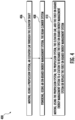
- FIG. 4 a flow chart of method 400 of operating an elevator systems 101 is illustrated, in accordance with an embodiment of the invention.
- Block 404 may further comprise that a first electric motor 132a of a beam climber system 130 rotates a first wheel 134a to move the elevator car 103 through the elevator shaft 117.
- the first wheel 134a being in contact with a first surface 112a of a first guide beam 111a that extends vertically through an elevator shaft 117.
- the first on-board energy management system 120a powers the beam climber system 130.
- the propulsion system moves the propulsion system, the elevator car 103, and the first on-board energy management system 120a to a station to recharge the first on-board energy management system 120a or replace the first on-board energy management system 120a.
- the controller 115 may confirm that the on-board energy management system currently installed in the propulsion is healthy and free to move away from the station and thus resume normal operations.
- the station is at least one of a transfer station 310, a service station, or a parking area.
- the method 400 may further comprise that the first on-board energy management system 120a is recharged.
- the beam climber system 130, the elevator car 103, and the first on-board energy management system 120a may be moved to a station 310 to recharge the first on-board energy management system 120a.
- the method 400 may further comprise that a trailing cable 330 is electrically connected to the first on-board energy management system 120a.
- the first on-board energy management system 120a is electrically connected to a power grid 340 and the power grid 340 is configured to charge the first on-board energy management system 120a through the trailing cable 330 when the first on-board energy management system 120a is within the station.
- the method 400 may further comprise that the beam climber system 130, the elevator car 103, and the first on-board energy management system 120a are moved through the station while recharging the first on-board energy management system 120a.
- the method 400 may additionally comprise that the first on-board energy management system 120a is removed from the beam climber system 130 and a second on-board energy management system 120b is electrically connected to the beam climber system 130.
- the second on-board energy management system 120b powers the beam climber system 120a.
- the present invention may be a system, a method, and/or a computer program product at any possible technical detail level of integration
- the computer program product may include a computer readable storage medium (or media) having computer readable program instructions thereon for causing a processor to carry out aspects of the present invention
- embodiments can be in the form of processor-implemented processes and devices for practicing those processes, such as processor.
- Embodiments can also be in the form of computer program code (e.g., computer program product) containing instructions embodied in tangible media (e.g., non-transitory computer readable medium), such as floppy diskettes, CD ROMs, hard drives, or any other non-transitory computer readable medium, wherein, when the computer program code is loaded into and executed by a computer, the computer becomes a device for practicing the embodiments.
- Embodiments can also be in the form of computer program code, for example, whether stored in a storage medium, loaded into and/or executed by a computer, or transmitted over some transmission medium, loaded into and/or executed by a computer, or transmitted over some transmission medium, such as over electrical wiring or cabling, through fiber optics, or via electromagnetic radiation, wherein, when the computer program code is loaded into and executed by a computer, the computer becomes an device for practicing the exemplary embodiments.
- the computer program code segments configure the microprocessor to create specific logic circuits.
Landscapes
- Engineering & Computer Science (AREA)
- Structural Engineering (AREA)
- Automation & Control Theory (AREA)
- Mechanical Engineering (AREA)
- Civil Engineering (AREA)
- Computer Networks & Wireless Communication (AREA)
- Power Engineering (AREA)
- Elevator Control (AREA)
- Types And Forms Of Lifts (AREA)
- Cage And Drive Apparatuses For Elevators (AREA)
Description
- The subject matter disclosed herein relates generally to the field of elevator systems, and specifically to a method and apparatus for charging an on-board energy management system of a propulsion system for an elevator car.
- Elevator cars are conventionally operated by ropes and counter weights, which typically only allow one elevator car in an elevator shaft at a single time.
-
EP1864932A1 discloses a power supplying system for an elevator. This document discloses the preamble of claims 1 and 7.US2019/0047816A1 discloses an elevator installation comprising an interchange arrangement configured to remove and/or attach one or more supply units from the car during a regular door-opening cycle. - According to a first aspect of the present invention, there is provided an elevator system as claimed in claim 1.
- In some embodiments the propulsion system is a beam climber system comprising: a first wheel in contact with the first surface; and a first electric motor configured to rotate the first wheel
- In some embodiments the first on-board energy management system is configured to be recharged while attached to the propulsion system.
- In some embodiments the first on-board energy management system is configured to be recharged when the first on-board energy management system is located within a station or while the first on-board energy management system is traveling with the elevator car and the propulsion system through the station of the elevator system.
- In some embodiments the elevator car, the first on-board energy management system, the propulsion system, and the first guide beam are configured to transfer from a first vertical section of the elevator shaft to a second vertical section of the elevator shaft when the elevator car, the propulsion system, and the first on-board energy management system is located in the station.
- In some embodiments the propulsion system is configured to move the elevator car, the propulsion system, and the first on-board energy management system to the station when a state of charge of the first on-board energy management system is below a selected low state of charge.
- Still according to the first aspect of the present invention, there is provided an elevator system as claimed in claim 7.
- In some embodiments the first on-board energy management system is configured to be removed when the first on-board energy management system is located within a station or while the first on-board energy management system is traveling with the elevator car and the propulsion system through the station of the elevator system.
- In some embodiments the second on-board energy management system is configured to be replace the first on-board energy management system when the first on-board energy management system is located within the station or while the first on-board energy management system is traveling with the elevator car and the propulsion system through a station of the elevator system.
- Some embodiments include a hard automation device configured to remove the first on-board energy management system.
- Some embodiments include a hard automation device configured to replace the first on-board energy management system with the second on-board energy management system.
- According to a second aspect of the present invention, there is provided a method of operating an elevator system as claimed in claims 12 and 13.
- In the first aspect and the second aspect, the station is at least one of a transfer station, a service station, or a parking area.
- In some embodiments the propulsion system is a beam climber system and the moving, using a propulsion system, an elevator car through an elevator shaft further comprises: rotating, using a first electric motor of a beam climber system, a first wheel, the first wheel being in contact with a first surface of a first guide beam that extends vertically through the elevator shaft.
- Some embodiments include recharging the first on-board energy management system.
- Some embodiments include moving the beam climber system, the elevator car and the first on-board energy management system to a station to recharge the first on-board energy management system.
- Technical effects of embodiments of the present invention include charging an on-board energy management system or changing out the on-board energy management system when the elevator car is located in the transfer station or any other station, such as, for example, a service station or a parking area.
- The foregoing features and elements may be combined in various combinations within the scope of the appended claims. These features and elements as well as the operation thereof will become more apparent in light of the following description and the accompanying drawings. It should be understood, however, that the following description and drawings are intended to be illustrative and explanatory in nature and non-limiting.
- The present invention is illustrated by way of example and not limited in the accompanying figures in which like reference numerals indicate similar elements.
-
FIG. 1 is a schematic illustration of an elevator system with a beam climber system, in accordance with an embodiment of the invention; -
FIG. 2A illustrates a schematic top view of a battery replenishment system that charges a first on-board energy management system, in accordance with an embodiment of the invention; -
FIG. 2B illustrates a schematic side view of a battery replenishment system that charges the first on-board energy management system, in accordance with an embodiment of the invention; -
FIG. 3A illustrates a schematic top view of a battery replenishment system that replaces the first on-board energy management system with a second on-board energy management system, in accordance with an embodiment of the invention; -
FIG. 3B illustrates a schematic side view of a battery replenishment system that charges the first on-board energy management system with a second on-board energy management system, in accordance with an embodiment of the invention; and -
FIG. 4 is a flow chart of method of operating an elevator system, in accordance with the invention. -
FIG. 1 is a perspective view of anelevator system 101 including anelevator car 103, abeam climber system 130, acontroller 115, and apower source 120. Although illustrated inFIG. 1 as separate from thebeam climber system 130, the embodiments described herein may be applicable to acontroller 115 included in the beam climber system 130 (i.e., moving through anelevator shaft 117 with the beam climber system 130) and may also be applicable to a controller located off of the beam climber system 130 (i.e., remotely connected to thebeam climber system 130 and stationary relative to the beam climber system 130). Although illustrated inFIG. 1 as separate from thebeam climber system 130, the embodiments described herein may be applicable to apower source 120 included in the beam climber system 130 (i.e., moving through theelevator shaft 117 with the beam climber system 130) and may also be applicable to a power source located off of the beam climber system 130 (i.e., remotely connected to thebeam climber system 130 and stationary relative to the beam climber system 130). - The
beam climber system 130 is configured to move theelevator car 103 within theelevator shaft 117 and alongguide rails elevator shaft 117. In an embodiment, theguide rails beam climber system 130 includes one or moreelectric motors electric motors beam climber system 130 within theelevator shaft 117 by rotating one ormore wheels guide beam guide beams wheels electric motors wheels guide beams elevator shaft 117. It is understood that while twoguide beams electric motors beam climber systems 130 having one or more electric motors. For example, thebeam climber system 130 may have one electric motor for each of the fourwheels electrical motors - The
first guide beam 111a includes aweb portion 113a and twoflange portions 114a. Theweb portion 113a of thefirst guide beam 111a includes afirst surface 112a and asecond surface 112b opposite thefirst surface 112a. Afirst wheel 134a is in contact with thefirst surface 112a and asecond wheel 134b is in contact with thesecond surface 112b. Thefirst wheel 134a may be in contact with thefirst surface 112a through atire 135 and thesecond wheel 134b may be in contact with thesecond surface 112b through atire 135. Thefirst wheel 134a is compressed against thefirst surface 112a of thefirst guide beam 111a by afirst compression mechanism 150a and thesecond wheel 134b is compressed against thesecond surface 112b of thefirst guide beam 111a by thefirst compression mechanism 150a. Thefirst compression mechanism 150a compresses thefirst wheel 134a and thesecond wheel 134b together to clamp onto theweb portion 113a of thefirst guide beam 111a. Thefirst compression mechanism 150a may be a metallic or elastomeric spring mechanism, a pneumatic mechanism, a hydraulic mechanism, a turnbuckle mechanism, an electromechanical actuator mechanism, a spring system, a hydraulic cylinder, a motorized spring setup, or any other known force actuation method. Thefirst compression mechanism 150a may be adjustable in real-time during operation of theelevator system 101 to control compression of thefirst wheel 134a and thesecond wheel 134b on thefirst guide beam 111a. Thefirst wheel 134a and thesecond wheel 134b may each include atire 135 to increase traction with thefirst guide beam 111a. - The
first surface 112a and thesecond surface 112b extend vertically through theshaft 117, thus creating a track for thefirst wheel 134a and thesecond wheel 134b to ride on. Theflange portions 114a may work as guardrails to help guide thewheels wheels - The first
electric motor 132a is configured to rotate thefirst wheel 134a to climb up 21 or down 22 thefirst guide beam 111a. The firstelectric motor 132a may also include afirst motor brake 137a to slow and stop rotation of the firstelectric motor 132a. Thefirst motor brake 137a may be mechanically connected to the firstelectric motor 132a. Thefirst motor brake 137a may be a clutch system, a disc brake system, a drum brake system, a brake on a rotor of the firstelectric motor 132a, an electronic braking, an Eddy current brakes, a Magnetorheological fluid brake or any other known braking system. Thebeam climber system 130 may also include a first guide rail brake 138a operably connected to thefirst guide rail 109a. The first guide rail brake 138a is configured to slow movement of thebeam climber system 130 by clamping onto thefirst guide rail 109a. The first guide rail brake 138a may be a caliper brake acting on thefirst guide rail 109a on thebeam climber system 130, or caliper brakes acting on thefirst guide rail 109 proximate theelevator car 103. - The
second guide beam 111b includes aweb portion 113b and twoflange portions 114b. Theweb portion 113b of thesecond guide beam 111b includes afirst surface 112c and asecond surface 112d opposite thefirst surface 112c. Athird wheel 134c is in contact with thefirst surface 112c and afourth wheel 134d is in contact with thesecond surface 112d. Thethird wheel 134c may be in contact with thefirst surface 112c through atire 135 and thefourth wheel 134d may be in contact with thesecond surface 112d through atire 135. Athird wheel 134c is compressed against thefirst surface 112c of thesecond guide beam 111b by asecond compression mechanism 150b and afourth wheel 134d is compressed against thesecond surface 112d of thesecond guide beam 111b by thesecond compression mechanism 150b. Thesecond compression mechanism 150b compresses thethird wheel 134c and thefourth wheel 134d together to clamp onto theweb portion 113b of thesecond guide beam 111b. Thesecond compression mechanism 150b may be a spring mechanism, turnbuckle mechanism, an actuator mechanism, a spring system, a hydraulic cylinder, and/or a motorized spring setup. Thesecond compression mechanism 150b may be adjustable in real-time during operation of theelevator system 101 to control compression of thethird wheel 134c and thefourth wheel 134d on thesecond guide beam 111b. Thethird wheel 134c and thefourth wheel 134d may each include atire 135 to increase traction with thesecond guide beam 111b. - The
first surface 112c and thesecond surface 112d extend vertically through theshaft 117, thus creating a track for thethird wheel 134c and thefourth wheel 134d to ride on. Theflange portions 114b may work as guardrails to help guide thewheels wheels - The second
electric motor 132b is configured to rotate thethird wheel 134c to climb up 21 or down 22 thesecond guide beam 111b. The secondelectric motor 132b may also include asecond motor brake 137b to slow and stop rotation of thesecond motor 132b. Thesecond motor brake 137b may be mechanically connected to thesecond motor 132b. Thesecond motor brake 137b may be a clutch system, a disc brake system, drum brake system, a brake on a rotor of the secondelectric motor 132b, an electronic braking, an Eddy current brake, a Magnetorheological fluid brake, or any other known braking system. Thebeam climber system 130 includes a secondguide rail brake 138b operably connected to thesecond guide rail 109b. The secondguide rail brake 138b is configured to slow movement of thebeam climber system 130 by clamping onto thesecond guide rail 109b. The secondguide rail brake 138b may be a caliper brake acting on thefirst guide rail 109a on thebeam climber system 130, or caliper brakes acting on thefirst guide rail 109 proximate theelevator car 103. - The
elevator system 101 may also include aposition reference system 113. Theposition reference system 113 may be mounted on a fixed part at the top of theelevator shaft 117, such as on a support orguide rail 109, and may be configured to provide position signals related to a position of theelevator car 103 within theelevator shaft 117. In other embodiments, theposition reference system 113 may be directly mounted to a moving component of the elevator system (e.g., theelevator car 103 or the beam climber system 130), or may be located in other positions and/or configurations as known in the art. Theposition reference system 113 can be any device or mechanism for monitoring a position of an elevator car within theelevator shaft 117, as known in the art. For example, without limitation, theposition reference system 113 can be an encoder, sensor, accelerometer, altimeter, pressure sensor, range finder, or other system and can include velocity sensing, absolute position sensing, etc., as will be appreciated by those of skill in the art. - The
controller 115 may be an electronic controller including aprocessor 116 and an associatedmemory 119 comprising computer-executable instructions that, when executed by theprocessor 116, cause theprocessor 116 to perform various operations. Theprocessor 116 may be, but is not limited to, a single-processor or multiprocessor system of any of a wide array of possible architectures, including field programmable gate array (FPGA), central processing unit (CPU), application specific integrated circuits (ASIC), digital signal processor (DSP) or graphics processing unit (GPU) hardware arranged homogenously or heterogeneously. Thememory 119 may be but is not limited to a random access memory (RAM), read only memory (ROM), or other electronic, optical, magnetic or any other computer readable medium. - The
controller 115 is configured to control the operation of theelevator car 103 and thebeam climber system 130. For example, thecontroller 115 may provide drive signals to thebeam climber system 130 to control the acceleration, deceleration, leveling, stopping, etc. of theelevator car 103. - The
controller 115 may also be configured to receive position signals from theposition reference system 113 or any other desired position reference device. - When moving up 21 or down 22 within the
elevator shaft 117 along theguide rails elevator car 103 may stop at one ormore landings 125 as controlled by thecontroller 115. In one embodiment, thecontroller 115 may be located remotely or in the cloud. In another embodiment, thecontroller 115 may be located on thebeam climber system 130. In embodiment, thecontroller 130 controls on-board motion control of the beam climber system 115 (e.g., a supervisory function above the individual motor controllers). - The
power supply 120 for theelevator system 101 may be any power source, including a power grid and/or battery power which, in combination with other components, is supplied to thebeam climber system 130. In one embodiment,power source 120 may be located on thebeam climber system 130. In an embodiment, thepower supply 120 is a battery that is included in thebeam climber system 130. - The
elevator system 101 may also include anaccelerometer 107 attached to theelevator car 103 or thebeam climber system 130. Theaccelerometer 107 is configured to detect an acceleration and/or a speed of theelevator car 103 and thebeam climber system 130. - It is understood that while a
beam climber system 130 is illustrated herein for exemplary discussion, the embodiments disclosed herein may be applicable to other multi-car linear motor based propulsion systems, such as, for example, a permanent magnet motor propulsion system. - Referring now to
FIGS. 2A, 2B, 3A and 3B , with continued reference toFIG. 1 , abattery replenishment system 200 is illustrated, in accordance with an embodiment of the present invention. Thebeam climber system 130 may not include a trailing electrical cable, such that, no electrical cords extend between thebeam climber system 130 and the elevator shaft during normal operation. When utilizingmultiple elevator cars 103 in asingle elevator shaft 117, the use of permanently attached trailing electrical cables in theelevator shaft 117 becomes difficult and complex. This becomes even more complex as the multiple different elevator cars 103a need to move between multipledifferent elevator shafts 117 or vertical sections (e.g., firstvertical sections power supply 120 be contained onboard theelevator car 103 or the beam climber system 130 (i.e., attached in some way to thebeam climber system 130, such that thepower supply 120 may be electrically connected to the beam climber system 130). Since thepower supply 120 may be finite, it will eventually need to be exchanged for anew power supply 120 or recharged. The embodiments described herein provide a method and apparatus for replenishing power to apower supply 120 to power theelevator car 103 and thebeam climber system 130. - In an embodiment, the power supply is an on-board
energy management system energy management system energy management system elevator car 103 and thebeam climber system 130. The on-boardenergy management system beam climber system 130. The on-boardenergy management system elevator car 103 or thebeam climber system 130. Thebeam climber system 130 may be configured to move the on-boardenergy management system beam climber system 130 and theelevator car 103 to atransfer station 310 when a state of charge of the on-boardenergy management system elevator system 101 requires theelevator car 103 to go through thetransfer station 310. Thebattery replenishment system 200 is configured to charge and or transfer the on-boardenergy management systems beam climber system 130 when thebeam climber system 130 and theelevator car 103 is moving through atransfer station 310. Thetransfer station 310 may be located at the top of theelevator shaft 117 or the bottom of theelevator shaft 117. Thetransfer station 310 is configured to moveelevator car 103, thebeam climber system 130, theguide beams guide rails vertical section 117a of theelevator shaft 117 to a secondvertical section 117b of theelevator shaft 117 when theelevator car 103 and thebeam climber system 130 are located in thetransfer station 310. This may be accomplished with the use oftransfer beams 170 operably connectedguide beams interconnected crossbeams 172. Thecrossbeams 172 may roll or glide along the transfer beams 170 to transfer from the firstvertical section 117a to the secondvertical section 117b of theelevator shaft 117. - In the embodiment illustrated in
FIGS. 2A and 2B , the first on-boardenergy management system 120a is configured to be recharged while attached to thebeam climber system 130 or in other words while being electrically connected to thebeam climber system 130. In an embodiment, the first on-boardenergy management system 120a is charged as theelevator car 103, thebeam climber system 130, theguide beams 111a, 11 1b, and theguide rails transfer station 310. In another embodiment, the first on-boardenergy management system 120a is charged within thetransfer station 310 as theelevator car 103, thebeam climber system 130, theguide beams guide rails vertical section 117a of theelevator shaft 117 to the secondvertical section 117b of theelevator shaft 117 in thetransfer station 310. Thetransfer station 310 is configured to moveelevator car 103, thebeam climber system 130, the first on-boardenergy management system 120a, theguide beams guide rails vertical section 117a of theelevator shaft 117 to a secondvertical section 117b of theelevator shaft 117 when theelevator car 103 and thebeam climber system 130 are located in thetransfer station 310. - The first on-board
energy management system 120a may be charged by a trailingcable 330, or similar device known to one of skill in the art, that plugs into the first on-boardenergy management system 120a in thetransfer station 310 and moves with the first on-boardenergy management system 120a as the first on-boardenergy management system 120a is moved from the firstvertical section 117a of theelevator shaft 117 to the secondvertical section 117b of theelevator shaft 117. The trailingcable 330 electrically connects the first on-boardenergy management system 120a to apower grid 340 and thepower grid 340 charges the first on-boardenergy management system 120a through the trailingcable 330. Adequate checks and confirmation signals may be utilized by thecontroller 115 to ensure proper and safe charging. The trailingcable 330 is plugged into the first on-boardenergy management system 120a by a hard automation device that is a mechanism with the dedicated degrees of freedom required to grab, pull, release, remove, and/or insert the on-boardenergy management systems robotic arm 350. In one example, when the first on-boardenergy management system 120a,elevator car 103, and thebeam climber system 130 enter thetransfer station 310 in the firstvertical section 117a of theelevator shaft 117, the trailingcable 330 may be plugged into the first on-boardenergy management system 120a and the trailingcable 330 may remained plugged into the first on-boardenergy management system 120a to charge the first on-boardenergy management system 120a as the first on-boardenergy management system 120a,elevator car 103, and thebeam climber system 130 move horizontally through the transfer station 131 to the secondvertical section 117b where the trailingcable 330 is removed from the first on-boardenergy management system 120. Alternatively, rather than a trailing cable, there be metallic contacts on the first on-boardenergy management system 120a that contact a charging strip connected to thepower grid 340 in the transfer station 131 and the metallic contacts on the first on-boardenergy management system 120a slide along the charge strip to receive charge. Alternatively, there may be a wireless power charging system in the transfer station 131 to wirelessly transfer power between thepower grid 340 and the first on-boardenergy management system 120a. The wireless power charging system may utilize wireless induction charging or any other type of wireless charging known to one of skill in the art. - In the embodiment illustrated in
FIGS. 3A and 3B , the first on-boardenergy management system 120a is configured to be detached from the beam climber system and recharged when detached from thebeam climber system 130. The first on-boardenergy management system 120a is removed from the elevator system and replaced by a second on-boardenergy management system 120b as theelevator car 103, thebeam climber system 130, theguide beams guide rails vertical section 117a of theelevator shaft 117 to the secondvertical section 117b of theelevator shaft 117 in thetransfer station 310. The second on-boardenergy management system 120b may be fully charged or charged to a state of charge that is greater than a selected upper state of charge. The first on-boardenergy management system 120a may be removed by a hard automation device that is a mechanism with the dedicated degrees of freedom required to grab, pull, release, remove, and/or insert the on-boardenergy management systems robotic arm 350, or similar device known to one of skill in the art, that removes the first on-boardenergy management system 120a from thebeam climber system 130 in thetransfer station 310 and inserts the second on-boardenergy management system 120b into thebeam climber system 130 as thebeam climber system 130 andelevator car 103 is moved from the firstvertical section 117a of theelevator shaft 117 to the secondvertical section 117b of theelevator shaft 117. The first on-boardenergy management system 120a will remain in thetransfer station 310 to be charged bygrid power 340 until abeam climber system 130 requires the first on-board energy management system 120s. It is understood that there may be multiplebeam climber systems 130 andelevator cars 103 in asingle elevator shaft 117, thus the first on-boardenergy management system 120a and the second on-boardenergy management system 120b may operate as a communal or any number of shared on-board energy management system from multipledifferent elevator cars 103 to utilize. There may multiple shared on-board energy management systems held in reserve for some to be in use while others charge. - Prior to entering the
transfer station 310, theelevator system 101 may be required to determine whether theelevator car 103 is empty of humans. In an embodiment, theelevator car 103 may be prevented from entering thetransfer station 310 if humans are detected in theelevator car 103. In other words, in an embodiment, theelevator car 103 must be free of humans prior to theelevator car 103 entering thetransfer station 310. It is understood that the embodiments disclosed herein are not limited to theelevator car 103 being free of humans with thetransfer station 310. This is dependent of the intensity of movement of theelevator car 103 movement within thetransfer station 310 and/or duration of theelevator car 103 being with thetransfer station 310. If the movement of theelevator car 103 is intense theelevator car 103 would have to be free of humans but if the movement is at or below normal intensity then humans may be located in theelevator car 103. Normal intensity of movement would be the movement utilized when normally carrying humans during normal operations. - The
elevator system 101 may include ahuman sensing device 190. Thehuman sensing device 190 may be composed of at least one of a camera, a depth sensing device, a RADAR device, a thermal detection device, a floor pressure sensor, a microphone, or any similar human detection device known to one of skill in the art. Thehuman sensing device 190 may also comprise any other device capable of sensing the presence of humans, as known to one of skill in the art. Thehuman sensing device 190 may utilize the camera to detect a human and/or an object within theelevator car 103. The camera may be configured to capture an image or video within theelevator car 103. The depth sensing device may be a 2-D, 3-D or other depth/distance detecting camera that utilizes detected distance to an object and/or a human to detect a human and/or an object within theelevator car 103. The depth sensing device generates depth maps for analysis. The RADAR device may utilize radio waves to detect a human and/or an object within theelevator car 103. The RADAR device generates RADAR signals for analysis. The thermal detection device may be an infrared or other heat sensing camera that utilizes detected temperature to detect a human and/or an object within theelevator car 103. The thermal detection device generates thermal images for analysis. The floor pressure sensor may be one or more pressure sensors located in the floor of anelevator car 103 that utilizes pressure data on the floor to detect a human and/or an object within theelevator car 103. The floor pressure sensor generates a pressure map for analysis. Thehuman sensing device 190 may additionally include a microphone configured to capture sound data within theelevator car 103. As may be appreciated by one of skill in the art, in addition to the stated methods, additional methods may exist to detect humans and objects, thus one or any combination of these methods may be used to determine the presence of humans or objects in anelevator car 103. - The
human sensing device 190 may utilize a cognitive service that is configured to detect an individual and/or an object within theelevator car 103 through image recognition, video analytics, neural networks, machine learning, deep learning, artificial intelligence, speech recognition, computer vision, video indexer or any other known method to one of skill in the art. - Referring now to
FIG. 4 , with continued reference to the previous FIGS., a flow chart ofmethod 400 of operating anelevator systems 101 is illustrated, in accordance with an embodiment of the invention. - At
block 406, thebeam climber system 130 moves anelevator car 103 through the elevator shaft when thefirst wheel 134a of thebeam climber system 130 rotates along thefirst surface 112a of thefirst guide beam 111a. Block 404 may further comprise that a firstelectric motor 132a of abeam climber system 130 rotates afirst wheel 134a to move theelevator car 103 through theelevator shaft 117. Thefirst wheel 134a being in contact with afirst surface 112a of afirst guide beam 111a that extends vertically through anelevator shaft 117. - At
block 408, the first on-boardenergy management system 120a powers thebeam climber system 130. - At
block 410, the propulsion system moves the propulsion system, theelevator car 103, and the first on-boardenergy management system 120a to a station to recharge the first on-boardenergy management system 120a or replace the first on-boardenergy management system 120a. - Once the first on-board
energy management system 120a is recharged or replaced thecontroller 115 may confirm that the on-board energy management system currently installed in the propulsion is healthy and free to move away from the station and thus resume normal operations. - In the present invention, the station is at least one of a
transfer station 310, a service station, or a parking area. - The
method 400 may further comprise that the first on-boardenergy management system 120a is recharged. Thebeam climber system 130, theelevator car 103, and the first on-boardenergy management system 120a may be moved to astation 310 to recharge the first on-boardenergy management system 120a. - The
method 400 may further comprise that a trailingcable 330 is electrically connected to the first on-boardenergy management system 120a. The first on-boardenergy management system 120a is electrically connected to apower grid 340 and thepower grid 340 is configured to charge the first on-boardenergy management system 120a through the trailingcable 330 when the first on-boardenergy management system 120a is within the station. - The
method 400 may further comprise that thebeam climber system 130, theelevator car 103, and the first on-boardenergy management system 120a are moved through the station while recharging the first on-boardenergy management system 120a. - The
method 400 may additionally comprise that the first on-boardenergy management system 120a is removed from thebeam climber system 130 and a second on-boardenergy management system 120b is electrically connected to thebeam climber system 130. The second on-boardenergy management system 120b powers thebeam climber system 120a. - While the above description has described the flow process of
FIG. 3 in a particular order, it should be appreciated that unless otherwise specifically required in the attached claims that the ordering of the steps may be varied. - The present invention may be a system, a method, and/or a computer program product at any possible technical detail level of integration. The computer program product may include a computer readable storage medium (or media) having computer readable program instructions thereon for causing a processor to carry out aspects of the present invention.
- As described above, embodiments can be in the form of processor-implemented processes and devices for practicing those processes, such as processor. Embodiments can also be in the form of computer program code (e.g., computer program product) containing instructions embodied in tangible media (e.g., non-transitory computer readable medium), such as floppy diskettes, CD ROMs, hard drives, or any other non-transitory computer readable medium, wherein, when the computer program code is loaded into and executed by a computer, the computer becomes a device for practicing the embodiments. Embodiments can also be in the form of computer program code, for example, whether stored in a storage medium, loaded into and/or executed by a computer, or transmitted over some transmission medium, loaded into and/or executed by a computer, or transmitted over some transmission medium, such as over electrical wiring or cabling, through fiber optics, or via electromagnetic radiation, wherein, when the computer program code is loaded into and executed by a computer, the computer becomes an device for practicing the exemplary embodiments. When implemented on a general-purpose microprocessor, the computer program code segments configure the microprocessor to create specific logic circuits.
- The term "about" is intended to include the degree of error associated with measurement of the particular quantity and/or manufacturing tolerances based upon the equipment available at the time of filing the application.
- The terminology used herein is for the purpose of describing particular embodiments only and is not intended to be limiting of the present invention. As used herein, the singular forms "a", "an" and "the" are intended to include the plural forms as well, unless the context clearly indicates otherwise. It will be further understood that the terms "comprises" and/or "comprising," when used in this specification, specify the presence of stated features, integers, steps, operations, elements, and/or components, but do not preclude the presence or addition of one or more other features, integers, steps, operations, element components, and/or groups thereof.
- Those of skill in the art will appreciate that various example embodiments are shown and described herein, each having certain features in the particular embodiments, but the present invention is not thus limited. Rather, the present invention can be modified within the scope of the appended claims Accordingly, the present invention is not to be seen as limited by the foregoing description, but is only limited by the scope of the appended claims.
Claims (15)
- An elevator system (101) comprising:an elevator car (103) configured to travel through an elevator shaft (117);a first guide beam (111a) extending vertically through the elevator shaft (117), the first guide beam (111a) comprising a first surface (112a) and a second surface (112b) opposite the first surface (112a);a propulsion system (130) configured to move the elevator car (103) through the elevator shaft (117);a first on-board energy management system (120a) configured to power the propulsion system (130), the first on-board energy management system (120a) being attached to the propulsion system (130) and configured to travel with the propulsion system (130);a trailing cable (330) electrically connected to a power grid (340), wherein the power grid (340) is configured to charge the first on-board energy management system (120a) through the trailing cable (330) when the first on-board energy management system (120a) is within a station (310),characterized in that the station (310) is at least one of a transfer station, a service station, or a parking area; andfurther characterized by comprising a hard automation device (350) configured to connect the trailing cable (330) to the first on-board energy management system (120a), wherein the hard automation device (350) is a mechanism with the dedicated degrees of freedom required to grab, pull, release, remove, and/or insert the first on-board energy management system.
- The elevator system (101) of claim 1, wherein the propulsion system (130) is a beam climber system (130) comprising:a first wheel (134a) in contact with the first surface (112a); anda first electric motor (132a) configured to rotate the first wheel (134a).
- The elevator system (101) of claim 1 or 2, wherein the first on-board energy management system (120a) is configured to be recharged while attached to the propulsion system (130).
- The elevator system (101) of any preceding claim, wherein the first on-board energy management system (120a) is configured to be recharged when the first on-board energy management system (120a) is located within the station (310) or while the first on-board energy management system (120a) is traveling with the elevator car (103) and the propulsion system (130) through the station (310) of the elevator system (101).
- The elevator system (101) of any preceding claim, wherein the elevator car (103), the first on-board energy management system (120a), the propulsion system (130), and the first guide beam (111a) are configured to transfer from a first vertical section (117a) of the elevator shaft (117) to a second vertical section (117b) of the elevator shaft (117) when the elevator car (103), the propulsion system (130), and the first on-board energy management system (120a) are located in the station (310).
- The elevator system (101) of any preceding claim, wherein the propulsion system (130) is configured to move the elevator car (103), the propulsion system (130), and the first on-board energy management system (120a) to the station (310) when a state of charge of the first on-board energy management system (120a) is below a selected low state of charge.
- An elevator system (101) comprising:an elevator car (103) configured to travel through an elevator shaft (117);a first guide beam (111a) extending vertically through the elevator shaft (117), the first guide beam (111a) comprising a first surface (112a) and a second surface (112b) opposite the first surface (112a);a propulsion system (130) configured to move the elevator car (103) through the elevator shaft (117);a first on-board energy management system (120a) configured to power the propulsion system (130), the first on-board energy management system (120a) being attached to the propulsion system (130) and configured to travel with the propulsion system (130);characterized in that the first on-board energy management system (120a) is configured to be recharged when detached from the propulsion system (130) and replaced by a second on-board energy management system (120b), the second on-board energy management system (120b) being configured to power the propulsion system (130) when the first on-board energy management system (120a) is detached;wherein the elevator car (103), the propulsion system (130), and the first guide beam (111a) are configured to transfer from a first vertical section (117a) of the elevator shaft (117) to a second vertical section (117b) of the elevator shaft (117) when the elevator car (103) and the propulsion system (130) are located in a station (310), wherein the station (310) is at least one of a transfer station, a service station, or a parking area.
- The elevator system (101) of claim 7, wherein:the first on-board energy management system (120a) is configured to be removed when the first on-board energy management system (120a) is located within the station (310) or while the first on-board energy management system (120a) is traveling with the elevator car (103) and the propulsion system (130) through the station (310) of the elevator system (101); and/orthe second on-board energy management system (120b) is configured to replace the first on-board energy management system (120a) when the first on-board energy management system (120a) is located within the station (310) or while the first on-board energy management system (120a) is traveling with the elevator car (103) and the propulsion system (130) through the station (310) of the elevator system (101).
- The elevator system (101) of claim 7 or 8, further comprising:a hard automation device (350) configured to remove the first on-board energy management system (120a); and/ora hard automation device (350) configured to replace the first on-board energy management system (120a) with the second on-board energy management system (120b);wherein the hard automation device (350) is a mechanism with the dedicated degrees of freedom required to grab, pull, release, remove, and/or insert the on-board energy management systems.
- The elevator system (101) of any of claims 7 to 9, wherein the propulsion system (130) is a beam climber system (130) comprising:a first wheel (134a) in contact with the first surface (112a); anda first electric motor (132a) configured to rotate the first wheel (134a).
- The elevator system (101) of any of claims 7 to 10, wherein the propulsion system (130) is configured to move the elevator car (103), the propulsion system (130), and the first on-board energy management system (120a) to the station (310) when a state of charge of the first on-board energy management system (120a) is below a selected low state of charge.
- A method of operating an elevator system (101) comprising:moving, using a propulsion system (130), an elevator car (103) through an elevator shaft (117);powering, using a first on-board energy management system (120a), the propulsion system (130); andmoving, using the propulsion system (130), the propulsion system (130), the elevator car (103), and the first on-board energy management system (120a) to a station (310) to recharge the first on-board energy management system (120a), wherein the station (310) is at least one of a transfer station (310), a service station, or a parking area, the elevator system comprising a trailing cable (330) electrically connected to a power grid (340), wherein the power grid (340) is configured to charge the first on-board energy management system (120a) through the trailing cable (330) when the first on-board energy management system (120a) is within the station (130), and comprising a hard automation device (350) configured to connect the trailing cable (330) to the first on-board energy management system (120a), wherein the hard automation device (350) is a mechanism with the dedicated degrees of freedom required to grab, pull, release, remove, and/or insert the first on-board energy management system.
- A method of operating an elevator system (101) comprising:moving, using a propulsion system (130), an elevator car (103) through an elevator shaft (117);powering, using a first on-board energy management system (120a), the propulsion system (130); andmoving, using the propulsion system (130), the propulsion system (130), the elevator car (103), and the first on-board energy management system (120a) to a station (310) to replace the first on-board energy management system (120a), wherein the first on-board energy management system (120a) is configured to be recharged when detached from the propulsion system (130) and replaced by a second on-board energy management system (120b), the second on-board energy management system (120b) being configured to power the propulsion system (130) when the first on-board energy management system (120a) is detached, wherein the elevator car (103), the propulsion system (130), and the first guide beam (111a) are configured to transfer from a first vertical section (117a) of the elevator shaft (117) to a second vertical section (117b) of the elevator shaft (117) when the elevator car (103) and the propulsion system (130) are located in a station (310), wherein the station (310) is at least one of a transfer station, a service station, or a parking area.
- The method of claim 12 or 13, wherein the propulsion system (130) is a beam climber system (130) and the moving, using a propulsion system (130), an elevator car (103) through an elevator shaft (117) further comprises:
rotating, using a first electric motor (132a) of a beam climber system (130), a first wheel (134a), the first wheel (134a) being in contact with a first surface (112a) of a first guide beam (111a) that extends vertically through the elevator shaft (117). - The elevator system of claim 1 or 9, or the method of claim 12, wherein the hard automation device is a robotic arm.
Applications Claiming Priority (1)
| Application Number | Priority Date | Filing Date | Title |
|---|---|---|---|
| US16/944,804 US11970369B2 (en) | 2020-07-31 | 2020-07-31 | Beam climber battery charging in transfer station |
Publications (2)
| Publication Number | Publication Date |
|---|---|
| EP3945061A1 EP3945061A1 (en) | 2022-02-02 |
| EP3945061B1 true EP3945061B1 (en) | 2024-09-04 |
Family
ID=77168011
Family Applications (1)
| Application Number | Title | Priority Date | Filing Date |
|---|---|---|---|
| EP21188933.2A Active EP3945061B1 (en) | 2020-07-31 | 2021-07-30 | Beam climber battery charging in transfer station |
Country Status (4)
| Country | Link |
|---|---|
| US (1) | US11970369B2 (en) |
| EP (1) | EP3945061B1 (en) |
| KR (1) | KR20220015973A (en) |
| CN (1) | CN114057067A (en) |
Families Citing this family (3)
| Publication number | Priority date | Publication date | Assignee | Title |
|---|---|---|---|---|
| US12466697B2 (en) * | 2020-08-24 | 2025-11-11 | Otis Elevator Company | Ropeless elevator robotic transporters for vehicle parking |
| US20230278831A1 (en) * | 2022-03-03 | 2023-09-07 | Brandsafway Services Llc | Ultracapacitor powered construction elevator |
| US20230356979A1 (en) * | 2022-05-05 | 2023-11-09 | Otis Elevator Company | Elevator power supply |
Family Cites Families (9)
| Publication number | Priority date | Publication date | Assignee | Title |
|---|---|---|---|---|
| CN101146729B (en) | 2005-04-01 | 2011-02-02 | 三菱电机株式会社 | Elevator power supply system |
| GB0817076D0 (en) * | 2008-09-17 | 2008-10-22 | Godwin Adrian | Autonomous capsule |
| CN106477435B (en) | 2015-08-25 | 2019-12-10 | 奥的斯电梯公司 | Elevator car power supply |
| DE102016202363A1 (en) | 2016-02-16 | 2017-08-17 | Thyssenkrupp Ag | elevator system |
| US11027944B2 (en) | 2017-09-08 | 2021-06-08 | Otis Elevator Company | Climbing elevator transfer system and methods |
| US11218024B2 (en) | 2018-12-14 | 2022-01-04 | Otis Elevator Company | Multi-shaft power charging |
| CN114174208A (en) | 2019-07-19 | 2022-03-11 | 三菱电机株式会社 | Wireless power supply system for elevator and elevator system |
| CN112299201A (en) * | 2019-07-31 | 2021-02-02 | 爱默生电梯(上海)有限公司 | Rechargeable four-wheel drive elevator |
| US20210221647A1 (en) * | 2020-01-21 | 2021-07-22 | Otis Elevator Company | Climbing elevator with load-based traction force |
-
2020
- 2020-07-31 US US16/944,804 patent/US11970369B2/en active Active
-
2021
- 2021-07-15 CN CN202110800297.XA patent/CN114057067A/en active Pending
- 2021-07-29 KR KR1020210099565A patent/KR20220015973A/en active Pending
- 2021-07-30 EP EP21188933.2A patent/EP3945061B1/en active Active
Also Published As
| Publication number | Publication date |
|---|---|
| US20220033221A1 (en) | 2022-02-03 |
| KR20220015973A (en) | 2022-02-08 |
| US11970369B2 (en) | 2024-04-30 |
| CN114057067A (en) | 2022-02-18 |
| EP3945061A1 (en) | 2022-02-02 |
Similar Documents
| Publication | Publication Date | Title |
|---|---|---|
| EP3945061B1 (en) | Beam climber battery charging in transfer station | |
| KR102502564B1 (en) | Device for simulating an exchange between a train, especially an automatic underground train, and a dynamic test rig provided with such a device | |
| CN110550512B (en) | Elevator door sensor integrated with long-range communication gateway | |
| CN113979266B (en) | Monitoring system based on brake condition of beam climbing device | |
| EP4008669B1 (en) | Ropeless elevator vehicle workstation | |
| EP3945057B1 (en) | Beam climber assembly pod for guide rail and guide beam installation | |
| CN114074881B (en) | Elevator car mover that provides intelligent control based on battery state of charge | |
| CN114590680B (en) | Autonomous elevator car mover configured to prevent derailment | |
| US11524873B2 (en) | Ropeless elevator wheel force releasing system | |
| US11673773B2 (en) | Ropeless elevator propulsion system | |
| EP3960679A1 (en) | System and method for transferring elevator cars from a first elevator shaft to a second elevator shaft | |
| EP4008671A1 (en) | Method and apparatus for releasing normal force applied on wheels of a ropeless elevator car propulsion system | |
| US12466697B2 (en) | Ropeless elevator robotic transporters for vehicle parking | |
| EP3960678A1 (en) | Ropeless elevator building to building mobility system | |
| EP3945054B1 (en) | Beam climber active brake health monitoring system |
Legal Events
| Date | Code | Title | Description |
|---|---|---|---|
| PUAI | Public reference made under article 153(3) epc to a published international application that has entered the european phase |
Free format text: ORIGINAL CODE: 0009012 |
|
| STAA | Information on the status of an ep patent application or granted ep patent |
Free format text: STATUS: THE APPLICATION HAS BEEN PUBLISHED |
|
| AK | Designated contracting states |
Kind code of ref document: A1 Designated state(s): AL AT BE BG CH CY CZ DE DK EE ES FI FR GB GR HR HU IE IS IT LI LT LU LV MC MK MT NL NO PL PT RO RS SE SI SK SM TR |
|
| STAA | Information on the status of an ep patent application or granted ep patent |
Free format text: STATUS: REQUEST FOR EXAMINATION WAS MADE |
|
| 17P | Request for examination filed |
Effective date: 20220223 |
|
| RBV | Designated contracting states (corrected) |
Designated state(s): AL AT BE BG CH CY CZ DE DK EE ES FI FR GB GR HR HU IE IS IT LI LT LU LV MC MK MT NL NO PL PT RO RS SE SI SK SM TR |
|
| STAA | Information on the status of an ep patent application or granted ep patent |
Free format text: STATUS: EXAMINATION IS IN PROGRESS |
|
| 17Q | First examination report despatched |
Effective date: 20230424 |
|
| GRAP | Despatch of communication of intention to grant a patent |
Free format text: ORIGINAL CODE: EPIDOSNIGR1 |
|
| STAA | Information on the status of an ep patent application or granted ep patent |
Free format text: STATUS: GRANT OF PATENT IS INTENDED |
|
| INTG | Intention to grant announced |
Effective date: 20240405 |
|
| GRAS | Grant fee paid |
Free format text: ORIGINAL CODE: EPIDOSNIGR3 |
|
| GRAA | (expected) grant |
Free format text: ORIGINAL CODE: 0009210 |
|
| STAA | Information on the status of an ep patent application or granted ep patent |
Free format text: STATUS: THE PATENT HAS BEEN GRANTED |
|
| AK | Designated contracting states |
Kind code of ref document: B1 Designated state(s): AL AT BE BG CH CY CZ DE DK EE ES FI FR GB GR HR HU IE IS IT LI LT LU LV MC MK MT NL NO PL PT RO RS SE SI SK SM TR |
|
| REG | Reference to a national code |
Ref country code: GB Ref legal event code: FG4D |
|
| REG | Reference to a national code |
Ref country code: CH Ref legal event code: EP |
|
| REG | Reference to a national code |
Ref country code: IE Ref legal event code: FG4D |
|
| REG | Reference to a national code |
Ref country code: DE Ref legal event code: R096 Ref document number: 602021018213 Country of ref document: DE |
|
| REG | Reference to a national code |
Ref country code: LT Ref legal event code: MG9D |
|
| REG | Reference to a national code |
Ref country code: NL Ref legal event code: MP Effective date: 20240904 |
|
| PG25 | Lapsed in a contracting state [announced via postgrant information from national office to epo] |
Ref country code: NO Free format text: LAPSE BECAUSE OF FAILURE TO SUBMIT A TRANSLATION OF THE DESCRIPTION OR TO PAY THE FEE WITHIN THE PRESCRIBED TIME-LIMIT Effective date: 20241204 |
|
| PG25 | Lapsed in a contracting state [announced via postgrant information from national office to epo] |
Ref country code: GR Free format text: LAPSE BECAUSE OF FAILURE TO SUBMIT A TRANSLATION OF THE DESCRIPTION OR TO PAY THE FEE WITHIN THE PRESCRIBED TIME-LIMIT Effective date: 20241205 Ref country code: PL Free format text: LAPSE BECAUSE OF FAILURE TO SUBMIT A TRANSLATION OF THE DESCRIPTION OR TO PAY THE FEE WITHIN THE PRESCRIBED TIME-LIMIT Effective date: 20240904 Ref country code: FI Free format text: LAPSE BECAUSE OF FAILURE TO SUBMIT A TRANSLATION OF THE DESCRIPTION OR TO PAY THE FEE WITHIN THE PRESCRIBED TIME-LIMIT Effective date: 20240904 |
|
| PG25 | Lapsed in a contracting state [announced via postgrant information from national office to epo] |
Ref country code: BG Free format text: LAPSE BECAUSE OF FAILURE TO SUBMIT A TRANSLATION OF THE DESCRIPTION OR TO PAY THE FEE WITHIN THE PRESCRIBED TIME-LIMIT Effective date: 20240904 |
|
| PG25 | Lapsed in a contracting state [announced via postgrant information from national office to epo] |
Ref country code: LV Free format text: LAPSE BECAUSE OF FAILURE TO SUBMIT A TRANSLATION OF THE DESCRIPTION OR TO PAY THE FEE WITHIN THE PRESCRIBED TIME-LIMIT Effective date: 20240904 |
|
| PG25 | Lapsed in a contracting state [announced via postgrant information from national office to epo] |
Ref country code: HR Free format text: LAPSE BECAUSE OF FAILURE TO SUBMIT A TRANSLATION OF THE DESCRIPTION OR TO PAY THE FEE WITHIN THE PRESCRIBED TIME-LIMIT Effective date: 20240904 |
|
| PG25 | Lapsed in a contracting state [announced via postgrant information from national office to epo] |
Ref country code: ES Free format text: LAPSE BECAUSE OF FAILURE TO SUBMIT A TRANSLATION OF THE DESCRIPTION OR TO PAY THE FEE WITHIN THE PRESCRIBED TIME-LIMIT Effective date: 20240904 Ref country code: RS Free format text: LAPSE BECAUSE OF FAILURE TO SUBMIT A TRANSLATION OF THE DESCRIPTION OR TO PAY THE FEE WITHIN THE PRESCRIBED TIME-LIMIT Effective date: 20241204 |
|
| PG25 | Lapsed in a contracting state [announced via postgrant information from national office to epo] |
Ref country code: RS Free format text: LAPSE BECAUSE OF FAILURE TO SUBMIT A TRANSLATION OF THE DESCRIPTION OR TO PAY THE FEE WITHIN THE PRESCRIBED TIME-LIMIT Effective date: 20241204 Ref country code: PL Free format text: LAPSE BECAUSE OF FAILURE TO SUBMIT A TRANSLATION OF THE DESCRIPTION OR TO PAY THE FEE WITHIN THE PRESCRIBED TIME-LIMIT Effective date: 20240904 Ref country code: NO Free format text: LAPSE BECAUSE OF FAILURE TO SUBMIT A TRANSLATION OF THE DESCRIPTION OR TO PAY THE FEE WITHIN THE PRESCRIBED TIME-LIMIT Effective date: 20241204 Ref country code: LV Free format text: LAPSE BECAUSE OF FAILURE TO SUBMIT A TRANSLATION OF THE DESCRIPTION OR TO PAY THE FEE WITHIN THE PRESCRIBED TIME-LIMIT Effective date: 20240904 Ref country code: HR Free format text: LAPSE BECAUSE OF FAILURE TO SUBMIT A TRANSLATION OF THE DESCRIPTION OR TO PAY THE FEE WITHIN THE PRESCRIBED TIME-LIMIT Effective date: 20240904 Ref country code: GR Free format text: LAPSE BECAUSE OF FAILURE TO SUBMIT A TRANSLATION OF THE DESCRIPTION OR TO PAY THE FEE WITHIN THE PRESCRIBED TIME-LIMIT Effective date: 20241205 Ref country code: FI Free format text: LAPSE BECAUSE OF FAILURE TO SUBMIT A TRANSLATION OF THE DESCRIPTION OR TO PAY THE FEE WITHIN THE PRESCRIBED TIME-LIMIT Effective date: 20240904 Ref country code: ES Free format text: LAPSE BECAUSE OF FAILURE TO SUBMIT A TRANSLATION OF THE DESCRIPTION OR TO PAY THE FEE WITHIN THE PRESCRIBED TIME-LIMIT Effective date: 20240904 Ref country code: BG Free format text: LAPSE BECAUSE OF FAILURE TO SUBMIT A TRANSLATION OF THE DESCRIPTION OR TO PAY THE FEE WITHIN THE PRESCRIBED TIME-LIMIT Effective date: 20240904 |
|
| REG | Reference to a national code |
Ref country code: AT Ref legal event code: MK05 Ref document number: 1720217 Country of ref document: AT Kind code of ref document: T Effective date: 20240904 |
|
| PG25 | Lapsed in a contracting state [announced via postgrant information from national office to epo] |
Ref country code: NL Free format text: LAPSE BECAUSE OF FAILURE TO SUBMIT A TRANSLATION OF THE DESCRIPTION OR TO PAY THE FEE WITHIN THE PRESCRIBED TIME-LIMIT Effective date: 20240904 |
|
| PG25 | Lapsed in a contracting state [announced via postgrant information from national office to epo] |
Ref country code: PT Free format text: LAPSE BECAUSE OF FAILURE TO SUBMIT A TRANSLATION OF THE DESCRIPTION OR TO PAY THE FEE WITHIN THE PRESCRIBED TIME-LIMIT Effective date: 20250106 Ref country code: IS Free format text: LAPSE BECAUSE OF FAILURE TO SUBMIT A TRANSLATION OF THE DESCRIPTION OR TO PAY THE FEE WITHIN THE PRESCRIBED TIME-LIMIT Effective date: 20250104 |
|
| PG25 | Lapsed in a contracting state [announced via postgrant information from national office to epo] |
Ref country code: RO Free format text: LAPSE BECAUSE OF FAILURE TO SUBMIT A TRANSLATION OF THE DESCRIPTION OR TO PAY THE FEE WITHIN THE PRESCRIBED TIME-LIMIT Effective date: 20240904 Ref country code: SM Free format text: LAPSE BECAUSE OF FAILURE TO SUBMIT A TRANSLATION OF THE DESCRIPTION OR TO PAY THE FEE WITHIN THE PRESCRIBED TIME-LIMIT Effective date: 20240904 |
|
| PG25 | Lapsed in a contracting state [announced via postgrant information from national office to epo] |
Ref country code: EE Free format text: LAPSE BECAUSE OF FAILURE TO SUBMIT A TRANSLATION OF THE DESCRIPTION OR TO PAY THE FEE WITHIN THE PRESCRIBED TIME-LIMIT Effective date: 20240904 Ref country code: AT Free format text: LAPSE BECAUSE OF FAILURE TO SUBMIT A TRANSLATION OF THE DESCRIPTION OR TO PAY THE FEE WITHIN THE PRESCRIBED TIME-LIMIT Effective date: 20240904 |
|
| PG25 | Lapsed in a contracting state [announced via postgrant information from national office to epo] |
Ref country code: CZ Free format text: LAPSE BECAUSE OF FAILURE TO SUBMIT A TRANSLATION OF THE DESCRIPTION OR TO PAY THE FEE WITHIN THE PRESCRIBED TIME-LIMIT Effective date: 20240904 |
|
| PG25 | Lapsed in a contracting state [announced via postgrant information from national office to epo] |
Ref country code: IT Free format text: LAPSE BECAUSE OF FAILURE TO SUBMIT A TRANSLATION OF THE DESCRIPTION OR TO PAY THE FEE WITHIN THE PRESCRIBED TIME-LIMIT Effective date: 20240904 Ref country code: SK Free format text: LAPSE BECAUSE OF FAILURE TO SUBMIT A TRANSLATION OF THE DESCRIPTION OR TO PAY THE FEE WITHIN THE PRESCRIBED TIME-LIMIT Effective date: 20240904 |
|
| REG | Reference to a national code |
Ref country code: DE Ref legal event code: R097 Ref document number: 602021018213 Country of ref document: DE |
|
| PG25 | Lapsed in a contracting state [announced via postgrant information from national office to epo] |
Ref country code: DK Free format text: LAPSE BECAUSE OF FAILURE TO SUBMIT A TRANSLATION OF THE DESCRIPTION OR TO PAY THE FEE WITHIN THE PRESCRIBED TIME-LIMIT Effective date: 20240904 |
|
| PGFP | Annual fee paid to national office [announced via postgrant information from national office to epo] |
Ref country code: GB Payment date: 20250619 Year of fee payment: 5 |
|
| PLBE | No opposition filed within time limit |
Free format text: ORIGINAL CODE: 0009261 |
|
| STAA | Information on the status of an ep patent application or granted ep patent |
Free format text: STATUS: NO OPPOSITION FILED WITHIN TIME LIMIT |
|
| PGFP | Annual fee paid to national office [announced via postgrant information from national office to epo] |
Ref country code: FR Payment date: 20250620 Year of fee payment: 5 |
|
| 26N | No opposition filed |
Effective date: 20250605 |
|
| PG25 | Lapsed in a contracting state [announced via postgrant information from national office to epo] |
Ref country code: SE Free format text: LAPSE BECAUSE OF FAILURE TO SUBMIT A TRANSLATION OF THE DESCRIPTION OR TO PAY THE FEE WITHIN THE PRESCRIBED TIME-LIMIT Effective date: 20240904 |
|
| REG | Reference to a national code |
Ref country code: DE Ref legal event code: R119 Ref document number: 602021018213 Country of ref document: DE |
|
| REG | Reference to a national code |
Ref country code: CH Ref legal event code: H13 Free format text: ST27 STATUS EVENT CODE: U-0-0-H10-H13 (AS PROVIDED BY THE NATIONAL OFFICE) Effective date: 20260224 |
|
| PG25 | Lapsed in a contracting state [announced via postgrant information from national office to epo] |
Ref country code: LU Free format text: LAPSE BECAUSE OF NON-PAYMENT OF DUE FEES Effective date: 20250730 |
|
| REG | Reference to a national code |
Ref country code: BE Ref legal event code: MM Effective date: 20250731 |
|
| PG25 | Lapsed in a contracting state [announced via postgrant information from national office to epo] |
Ref country code: DE Free format text: LAPSE BECAUSE OF NON-PAYMENT OF DUE FEES Effective date: 20260203 |
|
| PG25 | Lapsed in a contracting state [announced via postgrant information from national office to epo] |
Ref country code: BE Free format text: LAPSE BECAUSE OF NON-PAYMENT OF DUE FEES Effective date: 20250731 |
|
| PG25 | Lapsed in a contracting state [announced via postgrant information from national office to epo] |
Ref country code: CH Free format text: LAPSE BECAUSE OF NON-PAYMENT OF DUE FEES Effective date: 20250731 |