EP3944763A1 - Ensemble d atomes de carbone a l etat d hybridation sp2 fonctionnalisé, son procede de preparation et ses utilisations, notamment pour rendre une surface antibacterienne - Google Patents
Ensemble d atomes de carbone a l etat d hybridation sp2 fonctionnalisé, son procede de preparation et ses utilisations, notamment pour rendre une surface antibacterienne Download PDFInfo
- Publication number
- EP3944763A1 EP3944763A1 EP21186872.4A EP21186872A EP3944763A1 EP 3944763 A1 EP3944763 A1 EP 3944763A1 EP 21186872 A EP21186872 A EP 21186872A EP 3944763 A1 EP3944763 A1 EP 3944763A1
- Authority
- EP
- European Patent Office
- Prior art keywords
- carbon atoms
- hybridization
- formula
- state
- compounds
- Prior art date
- Legal status (The legal status is an assumption and is not a legal conclusion. Google has not performed a legal analysis and makes no representation as to the accuracy of the status listed.)
- Granted
Links
Images

Classifications
-
- A—HUMAN NECESSITIES
- A01—AGRICULTURE; FORESTRY; ANIMAL HUSBANDRY; HUNTING; TRAPPING; FISHING
- A01N—PRESERVATION OF BODIES OF HUMANS OR ANIMALS OR PLANTS OR PARTS THEREOF; BIOCIDES, e.g. AS DISINFECTANTS, AS PESTICIDES OR AS HERBICIDES; PEST REPELLANTS OR ATTRACTANTS; PLANT GROWTH REGULATORS
- A01N25/00—Biocides, pest repellants or attractants, or plant growth regulators, characterised by their forms, or by their non-active ingredients or by their methods of application, e.g. seed treatment or sequential application; Substances for reducing the noxious effect of the active ingredients to organisms other than pests
- A01N25/24—Biocides, pest repellants or attractants, or plant growth regulators, characterised by their forms, or by their non-active ingredients or by their methods of application, e.g. seed treatment or sequential application; Substances for reducing the noxious effect of the active ingredients to organisms other than pests containing ingredients to enhance the sticking of the active ingredients
-
- A—HUMAN NECESSITIES
- A01—AGRICULTURE; FORESTRY; ANIMAL HUSBANDRY; HUNTING; TRAPPING; FISHING
- A01N—PRESERVATION OF BODIES OF HUMANS OR ANIMALS OR PLANTS OR PARTS THEREOF; BIOCIDES, e.g. AS DISINFECTANTS, AS PESTICIDES OR AS HERBICIDES; PEST REPELLANTS OR ATTRACTANTS; PLANT GROWTH REGULATORS
- A01N25/00—Biocides, pest repellants or attractants, or plant growth regulators, characterised by their forms, or by their non-active ingredients or by their methods of application, e.g. seed treatment or sequential application; Substances for reducing the noxious effect of the active ingredients to organisms other than pests
- A01N25/08—Biocides, pest repellants or attractants, or plant growth regulators, characterised by their forms, or by their non-active ingredients or by their methods of application, e.g. seed treatment or sequential application; Substances for reducing the noxious effect of the active ingredients to organisms other than pests containing solids as carriers or diluents
-
- A—HUMAN NECESSITIES
- A01—AGRICULTURE; FORESTRY; ANIMAL HUSBANDRY; HUNTING; TRAPPING; FISHING
- A01N—PRESERVATION OF BODIES OF HUMANS OR ANIMALS OR PLANTS OR PARTS THEREOF; BIOCIDES, e.g. AS DISINFECTANTS, AS PESTICIDES OR AS HERBICIDES; PEST REPELLANTS OR ATTRACTANTS; PLANT GROWTH REGULATORS
- A01N25/00—Biocides, pest repellants or attractants, or plant growth regulators, characterised by their forms, or by their non-active ingredients or by their methods of application, e.g. seed treatment or sequential application; Substances for reducing the noxious effect of the active ingredients to organisms other than pests
- A01N25/08—Biocides, pest repellants or attractants, or plant growth regulators, characterised by their forms, or by their non-active ingredients or by their methods of application, e.g. seed treatment or sequential application; Substances for reducing the noxious effect of the active ingredients to organisms other than pests containing solids as carriers or diluents
- A01N25/10—Macromolecular compounds
-
- A—HUMAN NECESSITIES
- A01—AGRICULTURE; FORESTRY; ANIMAL HUSBANDRY; HUNTING; TRAPPING; FISHING
- A01N—PRESERVATION OF BODIES OF HUMANS OR ANIMALS OR PLANTS OR PARTS THEREOF; BIOCIDES, e.g. AS DISINFECTANTS, AS PESTICIDES OR AS HERBICIDES; PEST REPELLANTS OR ATTRACTANTS; PLANT GROWTH REGULATORS
- A01N25/00—Biocides, pest repellants or attractants, or plant growth regulators, characterised by their forms, or by their non-active ingredients or by their methods of application, e.g. seed treatment or sequential application; Substances for reducing the noxious effect of the active ingredients to organisms other than pests
- A01N25/34—Shaped forms, e.g. sheets, not provided for in any other sub-group of this main group
-
- A—HUMAN NECESSITIES
- A01—AGRICULTURE; FORESTRY; ANIMAL HUSBANDRY; HUNTING; TRAPPING; FISHING
- A01N—PRESERVATION OF BODIES OF HUMANS OR ANIMALS OR PLANTS OR PARTS THEREOF; BIOCIDES, e.g. AS DISINFECTANTS, AS PESTICIDES OR AS HERBICIDES; PEST REPELLANTS OR ATTRACTANTS; PLANT GROWTH REGULATORS
- A01N63/00—Biocides, pest repellants or attractants, or plant growth regulators containing microorganisms, viruses, microbial fungi, animals or substances produced by, or obtained from, microorganisms, viruses, microbial fungi or animals, e.g. enzymes or fermentates
- A01N63/50—Isolated enzymes; Isolated proteins
-
- A—HUMAN NECESSITIES
- A01—AGRICULTURE; FORESTRY; ANIMAL HUSBANDRY; HUNTING; TRAPPING; FISHING
- A01P—BIOCIDAL, PEST REPELLANT, PEST ATTRACTANT OR PLANT GROWTH REGULATORY ACTIVITY OF CHEMICAL COMPOUNDS OR PREPARATIONS
- A01P1/00—Disinfectants; Antimicrobial compounds or mixtures thereof
-
- C—CHEMISTRY; METALLURGY
- C07—ORGANIC CHEMISTRY
- C07K—PEPTIDES
- C07K19/00—Hybrid peptides, i.e. peptides covalently bound to nucleic acids, or non-covalently bound protein-protein complexes
-
- C—CHEMISTRY; METALLURGY
- C09—DYES; PAINTS; POLISHES; NATURAL RESINS; ADHESIVES; COMPOSITIONS NOT OTHERWISE PROVIDED FOR; APPLICATIONS OF MATERIALS NOT OTHERWISE PROVIDED FOR
- C09D—COATING COMPOSITIONS, e.g. PAINTS, VARNISHES OR LACQUERS; FILLING PASTES; CHEMICAL PAINT OR INK REMOVERS; INKS; CORRECTING FLUIDS; WOODSTAINS; PASTES OR SOLIDS FOR COLOURING OR PRINTING; USE OF MATERIALS THEREFOR
- C09D189/00—Coating compositions based on proteins; Coating compositions based on derivatives thereof
Definitions
- the present invention relates to a set of carbon atoms in the state of sp 2 hybridization functionalized by an antibacterial antibody or a lectin, and an antibacterial peptide, its method of preparation, and its uses, in particular for making a surface antibacterial.
- the present invention also relates to a material covered with such a functionalized assembly, as well as its method of preparation.
- the object of the invention is to allow the implementation of a method of functionalizing a surface to make it antibacterial which avoids the aforementioned drawbacks.
- an object of the invention is to provide a method allowing antibacterial treatment of any type of surface, whether in terms of physico-chemical nature and/or shape, topography.
- Another object of the invention is to provide a method which allows, if necessary, depending on the intended application, fine and easy adjustment of the antibacterial properties of the treated surface, for example a bactericidal or bacteriostatic character.
- Another object of the invention is to provide an antibacterial functionalized surface, the functionalization of which can be transparent to visible wavelengths.
- in contact it is meant in particular that the aromatic hydrocarbons (R) of the compounds of formula (I) and (II) form with the set of carbon atoms in the sp 2 hybridization state bonds of the type stacking-Pi. These bonds, also called ⁇ - ⁇ stacking or Pi-stacking in English, are non-covalent bonds, among the strongest non-covalent bonds.
- said set of carbon atoms in the sp 2 hybridization state is chosen from graphene, graphene oxide, graphite, carbon nanotubes, fullerenes and fullerites, said together being in particular graphene, more particularly in sheet or flake form.
- sheet is meant in particular graphene, in particular single-layer, of which two of the dimensions are greater than 1 mm.
- “flake” is meant in particular graphene, in particular having from 1 to 10 layers, for example single-layer, one or even two of the dimensions of which is (are) less than or equal to 1 mm , in particular 500 ⁇ m, 100 ⁇ m or 10 ⁇ m.
- said set of carbon atoms in the sp 2 hybridization state is supported by a substrate, chosen in particular from metals, metal oxides, glasses and polymers.
- the R, L 1 , W, V, L 2 and optionally X groups of compound (I) are identical to those of the compound of formula (II).
- R is 1-pyrenyl or 2-pyrenyl, in particular 1-pyrenyl.
- L 1 is a C 2 -C 8 alkane diyl group, in particular butane diyl.
- W represents a group ⁇ O-Ar 1 - where Ar 1 is an arene or a heteroarene, in particular a benzene, more particularly a para-substituted benzene.
- i and j are both equal to 1.
- L 2a is a C 2 -C 12 alkynediyl group, in particular ⁇ C ⁇ C-.
- L 2b is an arene diyl group, in particular a benzene diyl, more particularly a para-substituted benzene diyl.
- R, L 1 , W, V, L 2 are as defined by the following formula:
- Y is chosen from anti-Escherichia coli antibodies, anti-gram positive bacteria antibodies, anti-gram negative bacteria antibodies, Y being in particular an anti-Escherichia coli antibody.
- Anti-Escherichia coli antibodies are well known to those skilled in the art. These are, for example, polyclonal antibodies, in particular of goat or rabbit, in particular those recognizing numerous “O” and “K” antigenic serotypes of Escherichia coli, in particular those marketed by LifeSpan BioSciences (for example under the reference LS-C58854) or by Abcam (for example under the reference ab137967).
- They may also be anti-Escherichia coli antibodies, preferably monoclonal, in particular mice, directed specifically against particular strains of E. coli, for example particularly pathogenic strains such as strain 0157. This is particularly the case anti E Coli O157 antibodies marketed by MyBioSource (for example under the reference MBS568193).
- Anti-gram positive bacteria antibodies and anti-gram negative bacteria antibodies are also well known to those skilled in the art. They may in particular be monoclonal antibodies directed against the endotoxins of Gram-negative bacteria, in particular those marketed by ThermoFisher Scientific (for example under the reference MAI-10685).
- Y is chosen from lectins, in particular those binding to sugars of the bacterial walls, more particularly the sugars present on the wall of Gram-positive bacteria.
- Y is concanavalin A.
- This compound is marketed in particular by Sigma-Aldrich (for example under the reference C5275).
- Z is chosen from cecropins, defensins, magainins and dermaseptins, Z being in particular a cecropin.
- Z is chosen from cecropins, in particular cecropin A (SEQ ID NO: 1), cecropin B (SEQ ID NO: 2), cecropin P1 (SEQ ID NO: 3), cecropin cecropin 1 (SEQ ID NO:4) and cecropin from Bombyx mori (SEQ ID NO:5), defensins, in particular defensin 6 (SEQ ID NO:6) and defensin 5 (SEQ ID NO:7), magainins, in particular magainin B2 (SEQ ID NO:8) and magainin R2 (SEQ ID NO:9) and dermaseptins, in particular dermaseptin H3 (SEQ ID NO:10) and dermaseptin SI (SEQ ID NO:11) .
- cecropins in particular cecropin A (SEQ ID NO: 1), cecropin B (SEQ ID NO: 2), cecropin P1 (SEQ ID NO: 3), cecropin cecropin 1 (SEQ ID NO:4) and cecropin from Bombyx
- Cecropins A, B and P1 are marketed in particular by Sigma Aldrich.
- the density of compounds of formula (I) and (II) at the surface of the set of carbon atoms in the sp 2 hybridization state is approximately 1 of these compounds per area of 300 nm 2 to approximately 1 of these compounds per area of 2 nm 2 , in particular approximately 1 compound per area of approximately 2.7 nm 2 .
- the molar ratio of the quantity of compounds of formula (I) to that of compounds of formula (II) is comprised from 0.01 to 100, in particular from 0.1 to 10, in particular from 0 .33 to 1.5, more particularly from 0.33 to 0.66 or from 0.66 to 1.5, for example about 0.5 or about 1.0.
- the set of carbon atoms in the sp 2 hybridization state is graphene in sheet form, the molar ratio of the amount of compounds of formula (I) over that of compounds of formula (II) being between 0.66 and 1.5, for example about 1.0.
- the set of carbon atoms in the sp 2 hybridization state is graphene in the form of flakes, the molar ratio of the quantity of compounds of formula (I) to that of compounds of formula (II) being comprised from 0.33 to 0.66, for example approximately 0.5.
- step (ii) can be done sequentially, that is to say comprising a first contacting with a composition comprising an antibacterial antibody or a lectin then a second contacting. contact with a composition comprising an antibacterial peptide, or a first contact with a composition comprising an antibacterial peptide then a second contact with a composition comprising an antibacterial antibody or a lectin.
- This method allows the antibacterial treatment of any set of carbon atoms in the state of sp 2 hybridization, in particular of graphene, in particular the graphene of graphene biosensors.
- the invention also relates to the use of a set of carbon atoms in the sp 2 hybridization state as defined above, to make a surface antibacterial, in particular bactericidal or bacteriostatic.
- the invention also relates to a material comprising a substrate all or part of the surface of which is covered with a set of carbon atoms in the functionalized sp 2 hybridization state (i.e. say in contact with compounds of formula (I) and (II)) as defined above.
- the substrate is chosen from metals, metal oxides, glasses and polymers.
- step (i) the bringing into contact of step (i) is carried out using a solution of the compound of formula (III) in a solvent.
- said solvent is chosen from apolar aprotic solvents, in particular tetrahydrofuran, n-hexane, cyclohexane, 1,4-dioxane, toluene, diethyl ether, ethyl acetate , dichloromethane, in particular tetrahydrofuran.
- apolar aprotic solvents in particular tetrahydrofuran, n-hexane, cyclohexane, 1,4-dioxane, toluene, diethyl ether, ethyl acetate , dichloromethane, in particular tetrahydrofuran.
- the compound of formula (III) is present in the solution at a concentration of 1 nM to 100 ⁇ M, for example at approximately 1 ⁇ M.
- the bringing into contact of step (i) is done for a period of 10 seconds to 300 seconds, for example about 60 seconds.
- step (i) is followed, prior to step (ii), by a step of washing the set of carbon atoms in the activated sp 2 hybridization state, especially in water.
- the bringing into contact of step (ii) is done using a solution of the antibacterial antibody or of the lectin and of the antibacterial peptide in a solvent.
- said solvent is chosen from saline solutions buffered with phosphate, in particular 1X PBS.
- the antibacterial antibody or the lectin and the antibacterial peptide are present in the solution at a total concentration comprised from 10 pM to 10 ⁇ M, for example at about 10 nM.
- the bringing into contact of step (ii) is done for a period of 10 minutes to 100 minutes, for example approximately 30 minutes.
- step (ii) is followed, prior to step (iii), by a step of washing the set of carbon atoms in the functionalized sp 2 hybridization state, in particular using a phosphate-buffered saline solution, in particular 1X PBS.
- a step of washing the set of carbon atoms in the functionalized sp 2 hybridization state in particular using a phosphate-buffered saline solution, in particular 1X PBS.
- the deposition of the set of carbon atoms in the functionalized sp 2 hybridization state of step (iii) is done by transferring a substrate to said surface, in particular a copper substrate, in particular using a wet process (“wet transfer”), for example according to Won Suk et al. (ACS Nano 2011, 5(9), 6916-6924 ), or by a dry process (“dry transfer”), for example according to Vaziri et al. (PDMS-supported graphene transfer using intermediary polymer layers, 2014 44th European Solid State Device Research Conference (ESSDERC), 309-312 ) Where Caldwell et al. (ACS Nano 2010, 4(2), 1108-1114 ).
- wet transfer wet process
- dry transfer dry process
- the copper layer used to grow the graphene can in particular be dissolved on the surface of a copper etching bath (liquid) then the graphene is brought into contact with the surface of said support to obtain said material.
- the graphene during a transfer by dry process, can in particular be detached from the copper growth substrate by adding a polymer (for example parylene PDMS), then the whole polymer + Graphene is affixed to the desired surface by mechanical action (mechanical peeling). The polymer is then removed.
- a polymer for example parylene PDMS
- mechanical action mechanical peeling
- This method thus makes it possible to treat any material carrying a set of carbon atoms in the sp 2 hybridization state, for example graphene, and the devices comprising said material.
- this method allows the antibacterial treatment of graphene biosensors.
- the set of carbon atoms in the sp 2 hybridization state carried by the surface of the material is previously deposited on said surface by means of any technique well known to those skilled in the art.
- said sheet can in particular be obtained by any technique known to those skilled in the art, for example by chemical vapor phase (CVD), in particular on a copper substrate, in particular as described by Li et al. (Journal of the American Chemical Society 2011, 133, 2816-2819 ), then by transferring the sheet thus obtained onto said surface, by any technique known to those skilled in the art, for example by the liquid route, in particular as described by Reina et al. (Journal of the American Chemical Society 2011, 133, 17614-17617 ).
- CVD chemical vapor phase
- the term “about” refers to a range of values within ⁇ 10% of a specific value.
- the expression “approximately 20” includes values of 20 ⁇ 10%, i.e. values of 18 to 22.
- percentages refer to percentages by mass relative to the total mass of the formulation, unless otherwise indicated.
- ranges of values in the form of "x-y” or “from x to y” or “between x and y” include the limits x and y as well as the integers included between these limits.
- “1-5”, or “from 1 to 5" or “between 1 and 5" designates the integers 1, 2, 3, 4 and 5.
- Preferred embodiments include each integer taken individually in the range of values, as well as any sub-combination of these integers.
- preferred values for "1-5" may include the integers 1, 2, 3, 4, 5, 1-2, 1-3, 1-4, 1-5, 2-3, 2 -4, 2-5, etc.
- alkyl means a straight or branched chain alkyl group having the number of carbon atoms indicated before said term, including 1 to 8 carbon atoms, such as methyl, ethyl, propyl , isopropyl, butyl, isobutyl, sec-butyl, tert-butyl, pentyl, isoamyl, neopentyl, 1-ethylpropyl, 3-methylpentyl, 2,2-dimethylbutyl, 2,3-dimethylbutyl, hexyl, octyl, etc.
- C1-C4 alkyl designates an alkyl radical containing from 1 to 4 carbon atoms.
- alkane means a mono- or bicyclic, substituted or unsubstituted aromatic hydrocarbon ring system having 6 to 10 carbon atoms in the ring. Examples include benzene and naphthalene. Preferred arenes include unsubstituted or substituted benzene and naphthalene. Included within the definition of "arene” are fused ring systems, including, for example, ring systems in which an aromatic ring is fused to a cycloalkyl ring. Examples of such fused ring systems include, for example, indan, indene and tetrahydronaphthalene.
- heteroene means a ring aromatic system containing 5 to 10 carbon atoms in which one or more ring carbon atoms are replaced by at least one heteroatom such as -O-, -N - or -S-.
- heteroarenes examples include pyrrole, furan, thiophene, pyrazole, imidazole, thiazole, isothiazole, isoxazole, oxazole, oxathiol, oxadiazole, triazole, oxatriazole, furazan, tetrazole, pyridine, pyrazine, pyrimidine, pyridazine, triazine, indole, isoindole, indazole, benzofuran, isobenzofuran, purine, quinazoline, quinoline, isoquinoline, benzoimidazole, benzothiazole, benzothiophene, thianaphthene, benzoxazole, benzisoxazole, cinnoline, phthalazine, naphthyridine and quinoxaline.
- fused ring systems including, for example, ring systems in which an aromatic ring is fused to a heterocycloalkyl ring.
- fused ring systems include, for example, phthalamide, phthalic anhydride, indoline, isoindoline, tetrahydroisoquinoline, chromane, isochromane, chromene and isochromene.
- SEQ ID NO:1 SEQ ID NO:2 SEQ ID NO:3 SEQ ID NO:4 SEQ ID NO:5 SEQ ID NO:6 SEQ ID NO:7 SEQ ID NO:8 SEQ ID NO:9 SEQ ID NO:10 SEQ ID NO: 11
- Example 1 preparation of a set of carbon atoms in the state of sp 2 hybridization functionalized by an antibacterial antibody or a lectin and an antibacterial peptide
- a set of carbon atoms in the sp 2 hybridization state for example a layer of graphene, is synthesized according to any technique well known to those skilled in the art, in particular by CVD, then optionally deposited on a surface to be treated. by any technique well known to those skilled in the art, in particular by a liquid transfer method.
- the graphene layer is soaked in a 1 ⁇ M solution in tetrahydrofuran (THF) of a tripod of the following formula (as described for example by Mann et al., Angewandte Chemie International Edition 2013, 52, 3177-3180 ): and this for one minute. After which the sample is soaked in water in order to wash away the excess THF.
- THF tetrahydrofuran
- a monolayer of tripods is thus obtained on the surface of the graphene with a density of approximately 1 molecule of tripod per 2.7 nm 2 .
- the sample thus obtained is incubated in a 1X PBS solution.
- Anti-Escherichia coli antibodies which have the ability to specifically bind Escherichia coli-type bacteria
- LifeSpan BioSciences LS-C58854, Abcam ab137967 or MyBioSource MBS568193 antibodies are then added to this solution, as well as cecropin molecules (which have the particularity of creating holes in the cell membrane of bacteria and causing their cell death), such as cecropin A, cecropin B or cecropin P1 marketed by Sigma Aldrich (under the reference C6830 for cecropin A), in precise molar proportions, which are in particular discussed in the following example.
- the tripod is designed in such a way that the N-Hydroxysuccinimide ester present at the top of the molecule will engage covalent bonds with any type of peptide
- Example 2 evaluation of the antibacterial nature of a set of carbon atoms in the state of hybridization sp 2 functionalized according to the invention
- a layer of graphene for example produced by CVD Li et al., Journal of the American Chemical Society 2011, 133, 2816-2819 ) is deposited (for example according to Reina et al. Journal of the American Chemical Society 2011, 133, 17614-17617 ) on the surface of a glass microscope slide.
- This graphene layer is functionalized according to the invention, in particular according to example 1. Then, bacteria of the Escherichia coli K12 type, which have been modified with a plasmid which allows them to synthesize, in addition to their metabolism, the fluorescent protein Green Fluorescent Protein (which allows bacteria to be observed by fluorescence microscopy), are incubated on the surface for 30 min.
- the bacteria that are not attached to the surface are then rinsed with a solution of PBS1X for 5 min.
- a bacterial nutrient solution (Luria Bertani solution, also known as LB culture medium) is added. The temperature is maintained at 37°C. The bacteria attached to the surface of the graphene are therefore thus, antibacterial surface aside, under conditions of exponential growth and proliferation.
- a control outside the invention surface with an A:B ratio (antibody:antimicrobial peptide) of 1:0 shows exponential growth of bacteria on the surface which begin to form a biofilm.
- A:B ratio ranging from 0.25:0.75 to 0.40:0.60, including 0.35:0.65 (7:13)
- the functionalized layer of the invention causes not only the stopping of the growth of the bacteria on the surface but also their cell death. This is confirmed by analysis of the fluorescence signal over time ( figure 1 ). This signal decreases, which means that the cell membrane is damaged to such an extent that the GFP proteins come out of the bacterium which is therefore considered dead (or lysed).
- A:B ratio ranging from 0.40:0.60 to 0.60:0.40, including 0.5:0.5 (1:1)
- the functionalized layer of the invention causes the growth of the bacteria on the surface to stop but that the bacteria are not dead.
- the signal related to the total GFP fluorescence intensity is constant over time ( picture 2 ).
- the layer still has a property of limiting the growth of biofilms but the bacteria are no longer killed. It is therefore a bacteriostatic effect.
Landscapes
- Life Sciences & Earth Sciences (AREA)
- General Health & Medical Sciences (AREA)
- Health & Medical Sciences (AREA)
- Engineering & Computer Science (AREA)
- Zoology (AREA)
- Wood Science & Technology (AREA)
- Chemical & Material Sciences (AREA)
- Plant Pathology (AREA)
- Pest Control & Pesticides (AREA)
- Environmental Sciences (AREA)
- Dentistry (AREA)
- Agronomy & Crop Science (AREA)
- Toxicology (AREA)
- Organic Chemistry (AREA)
- Proteomics, Peptides & Aminoacids (AREA)
- General Chemical & Material Sciences (AREA)
- Chemical Kinetics & Catalysis (AREA)
- Biochemistry (AREA)
- Biotechnology (AREA)
- Microbiology (AREA)
- Virology (AREA)
- Molecular Biology (AREA)
- Medicinal Chemistry (AREA)
- Genetics & Genomics (AREA)
- Biophysics (AREA)
- Materials Engineering (AREA)
- Peptides Or Proteins (AREA)
- Agricultural Chemicals And Associated Chemicals (AREA)
- Pharmaceuticals Containing Other Organic And Inorganic Compounds (AREA)
Abstract
Description
- La présente invention concerne un ensemble d'atomes de carbone à l'état d'hybridation sp2 fonctionnalisé par un anticorps antibactérien ou une lectine, et un peptide antibactérien, son procédé de préparation, et ses utilisations, notamment pour rendre une surface antibactérienne. La présente invention vise également un matériau recouvert d'un tel ensemble fonctionnalisé, ainsi que son procédé de préparation.
- Outre les produits dits « désinfectants », et les usages que l'on en fait pour nettoyer ou même stériliser les sols, les mains, des surfaces diverses, il existe une autre approche pour éviter le développement bactérien, consistant à rendre directement les surfaces antibactériennes. Cette approche s'avère durable et peu coûteuse, car elle ne nécessite que des quantités de matière active très faibles. Ces traitements résistent généralement bien aux agressions extérieures et ont donc de nombreuses utilisations potentielles (bloc opératoire, agroalimentaire, habitations...).
- Des ensembles d'atome de carbone à l'état d'hybridation sp2, par exemple des flocons de graphène ou d'oxyde de graphène, ont un effet bactéricide avéré. Cependant, il a été montré que l'effet bactéricide des flocons de graphène ou d'oxyde de graphène, ne provenait que des bords des flocons. Les bords des flocons sont tellement rugueux qu'ils provoquent le déchirement de la membrane cellulaire des bactéries et donc la mort cellulaire de celles-ci. Ainsi, le pouvoir bactéricide d'une surface recouverte de flocon de graphène ou d'oxyde de graphène sera inversement proportionnel à la taille des flocons. Or, plus les flocons de graphène ou d'oxyde de graphène sont petits, plus ils sont toxiques, notamment en cas d'ingestion.
- Les ensembles d'atomes de carbone à l'état d'hybridation sp2 en couche continue, notamment le graphène en couche continue, sont à l'inverse extrêmement peu toxiques, mais aucun caractère antibactérien en provenance de la partie basale plane n'a été relevée.
- Des fonctionnalisations chimiques de surfaces pour les rendre antibactériennes ont notamment été décrites, généralement à base de polymères, mais ces polymères ne sont pas transparents (ce qui peut être gênant pour certaines applications) et/ou ne s'adaptent pas à toutes les surfaces à traiter, et/ou ne confèrent à la surface traitée qu'un caractère bactéricide, alors que des surfaces aux propriétés bactériostatiques sont parfois préférées en fonction des applications visées.
- L'invention a pour but de permettre la mise en œuvre d'une méthode de fonctionnalisation d'une surface pour la rendre antibactérienne qui évite les inconvénients précités.
- Ainsi, un but de l'invention est de fournir une méthode permettant un traitement antibactérien de tout type de surface, que ce soit en termes de nature physico-chimique et/ou de forme, de topographie.
- Un autre but de l'invention est de fournir une méthode qui permet si nécessaire, en fonction de l'application visée, un réglage fin et aisé des propriétés antibactérienne de la surface traitée, par exemple un caractère bactéricide ou bactériostatique.
- Un autre but de l'invention est de fournir une surface fonctionnalisée antibactérienne, dont la fonctionnalisation peut être transparente aux longueurs d'onde du visible.
- Ainsi, selon un premier aspect, l'invention concerne un ensemble d'atomes de carbone à l'état d'hybridation sp2, ledit ensemble étant en contact avec :
- une pluralité de composés de formule (I) suivante :
(R-L1-W)n-V-L2-X-Y (I),
dans laquelle :- n est égal à 1, 2, ou 3, notamment 3 ;
- V représente, pour tout n, -C(H)3-n- ou encore:
- lorsque n est égal à 2, -C(H)=, C étant dans ce cas lié à L2 par une liaison double ;
- lorsque n est égal à 1, -C≡, C étant dans ce cas lié à L2 par une liaison triple ;
- R est un hydrocarbure aromatique comprenant de 2 à 6 cycles aromatiques condensés, en particulier à chaque occurrence indépendamment choisi parmi les groupes pyrènyle, benzopyrènyle, anthracènyle, chrystènyle, coronènyle, corannulènyle, naphtyle, tétracènyle, pentacènyle, phénathrènyle, triphénylènyle et ovalènyle, plus particulièrement parmi les groupes pyrènyle, benzopyrènyle, anthracènyle ;
- L1 un groupe C1-C12 alcane diyle ;
- W représente une liaison simple, un groupe arène diyle, un groupe hétéroarène diyle ou un groupe ―O-Ar1- où Ar1 est un arène ou un hétéroarène ;
- L2 est un groupe de formule (A) suivante ―(L2a)i-(L2b)j- dans laquelle :
- i et j sont indépendamment l'un de l'autre choisis parmi 0 et 1, avec i + j = 1 ou 2 ;
- L2a est un groupe C1-C12 alcane diyle, C2-C12 alcène diyle ou C2-C12 alcyne diyle ;
- L2b est un groupe arène diyle, un groupe hétéroarène diyle ou un groupe ―O-Ar2- où
- Ar2 est un arène ou un hétéroarène ;
- X est un groupe ―C(=O)N-, ―C(=O)O- ou ―C(=O)S- ;
- Y est un anticorps antibactérien ou une lectine ;
- une pluralité de composés de formule (II) suivante :
(R-L1-W)n-V-L2-X-Z (II),
dans laquelle :- n, R, L1, W, V, L2 et X sont tels que définis plus haut ;
- Z est un peptide antibactérien.
- Ainsi, dans les deux formules (I) et (II), C représente un atome de carbone tétravalent dans le cas où V représente -C(H)3-n- (-C-, -CH-, ou -CH2- suivant la valeur de n); un atome de carbone trivalent lorsque V représente -C(H)= ; ou un atome de carbone divalent lorsque V représente -C≡.
- Par « en contact », on entend notamment que les hydrocarbures aromatiques (R) des composés de formule (I) et (II) forment avec l'ensemble d'atomes de carbone à l'état d'hybridation sp2 des liaisons de type empilement-Pi. Ces liaisons, appelées également empilement π- π ou Pi-stacking en anglais, sont des liaisons non covalentes, parmi les plus fortes des liaisons non covalentes.
- Selon un mode de réalisation particulier, ledit ensemble d'atomes de carbone à l'état d'hybridation sp2 est choisi parmi le graphène, l'oxyde de graphène, le graphite, les nanotubes de carbones, les fullerènes et les fullerites, ledit ensemble étant en particulier du graphène, plus particulièrement sous la forme de feuille ou de flocons.
- Par « feuille », on entend notamment du graphène, en particulier mono-couche, dont deux des dimensions sont supérieures à 1 mm.
- Par « flocon », on entend notamment du graphène, en particulier ayant de 1 à 10 couches, par exemple mono-couche, dont l'une voire deux des dimensions est(sont) inférieure(s) ou égale(s) à 1 mm, en particulier 500µm, 100 µm ou 10 µm.
- Selon un mode de réalisation particulier, l'invention concerne un ensemble d'atomes de carbone à l'état d'hybridation sp2, ledit ensemble étant en contact avec :
- une pluralité de composés de formule (la) suivante :
(Py-L1-W)3-C-L2-X-Y (la),
dans laquelle :- Py est un groupe pyrènyle ;
- L1 un groupe C1-C12 alcane diyle ;
- W représente une liaison simple, un groupe arène diyle, un groupe hétéroarène diyle ou un groupe ―O-Ar1- où Ar1 est un arène ou un hétéroarène ;
- L2 est un groupe de formule (A) suivante ―(L2a)i-(L2b)j- dans laquelle :
- i et j sont indépendamment l'un de l'autre choisis parmi 0 et 1, avec i + j = 1 ou 2 ;
- L2a est un groupe C1-C12 alcane diyle, C2-C12 alcène diyle ou C2-C12 alcyne diyle ;
- L2b est un groupe arène diyle, un groupe hétéroarène diyle ou un groupe ―O-Ar2- où
- Ar2 est un arène ou un hétéroarène ;
- X est un groupe ―C(=O)N-, ―C(=O)O- ou ―C(=O)S- ;
- Y est un anticorps antibactérien ; et
- une pluralité de composés de formule (IIa) suivante :
(Py-L1-W)3-C-L2-X-Z (IIa),
dans laquelle :- Py, L1, W, L2 et X sont tels que définis plus haut ;
- Z est un peptide antibactérien.
- Selon un mode de réalisation particulier, ledit ensemble d'atomes de carbone à l'état d'hybridation sp2 est supporté par un substrat, notamment choisi parmi les métaux, les oxydes métalliques, les verres et les polymères.
- Selon un mode de réalisation particulier, les groupes R, L1, W, V, L2 et éventuellement X du composé (I) sont identiques à ceux du composé de formule (II).
- Selon un mode de réalisation particulier, R est le 1-pyrènyle ou le 2-pyrènyle, en particulier le 1-pyrènyle.
- Selon un mode de réalisation particulier, L1 un groupe C2-C8 alcane diyle, notamment le butane diyle.
- Selon un mode de réalisation particulier, W représente un groupe ―O-Ar1- où Ar1 est un arène ou un hétéroarène, en particulier un benzène, plus particulièrement un benzène substitué en para.
- Selon un mode de réalisation particulier, i et j sont tous deux égaux à 1.
- Selon un mode de réalisation particulier, L2a est un groupe C2-C12 alcyne diyle, en particulier ―C≡C-.
- Selon un mode de réalisation particulier, L2b est un groupe arène diyle, en particulier un benzène diyle, plus particulièrement un benzène diyle substitué en para.
- Selon un mode de réalisation particulier, R, L1, W, V, L2 sont tels que définis par la formule suivante :

- Selon un mode de réalisation particulier, Y est choisi parmi les anticorps anti Escherichia coli, les anticorps anti bactéries gram positives, les anticorps anti bactéries gram négatives, Y étant notamment un anticorps anti Escherichia coli.
- Les anticorps anti Escherichia coli sont bien connus de l'homme du métier. Il s'agit par exemple d'anticorps polyclonaux, notamment de chèvre ou de lapin, en particulier ceux reconnaissant de nombreux sérotypes antigéniques « O » et « K » d' Escherichia coli, notamment ceux commercialisés par LifeSpan BioSciences (par exemple sous la référence LS-C58854) ou par Abcam (par exemple sous la référence ab137967).
- Il peut également s'agir d'anticorps anti Escherichia coli, de préférence monoclonaux, notamment de souris, dirigés spécifiquement contre des souches particulières d' E. coli, par exemple des souches particulièrement pathogènes comme la souche 0157. C'est notamment le cas des anticorps anti E Coli O157 commercialisés par MyBioSource (par exemple sous la référence MBS568193).
- Les anticorps anti bactéries gram positives et les anticorps anti bactéries gram négatives sont également bien connus de l'homme du métier. Il peut notamment s'agir d'anticorps monoclonaux dirigés contre les endotoxines des bactéries à Gram négatif, notamment ceux commercialisés par ThermoFisher Scientific (par exemple sous la référence MAI-10685).
- Selon un mode de réalisation particulier, Y est choisi parmi les lectines, en particulier celles se liant à des sucres des parois bactériennes, plus particulièrement les sucres présents sur la paroi des bactéries Gram positif.
- Selon un mode de réalisation particulier, Y est la concanavaline A. Ce composé est notamment commercialisé par Sigma-Aldrich (par exemple sous la référence C5275).
- Selon un mode de réalisation particulier, Z est choisi parmi les cécropines, les défensines, les magainines et les dermaseptines, Z étant notamment une cécropine.
- Selon un mode de réalisation plus particulier, Z est choisi parmi les cécropines, notamment la cécropine A (SEQ ID NO :1), la cécropine B (SEQ ID NO :2), la cécropine P1 (SEQ ID NO :3), la cécropine 1 (SEQ ID NO :4) et la cécropine de Bombyx mori (SEQ ID NO :5), les défensines, notamment la défensine 6 (SEQ ID NO :6) et la défensine 5 (SEQ ID NO :7), les magainines, notamment la magainine B2 (SEQ ID NO :8) et la magainine R2 (SEQ ID NO :9) et les dermaseptines, notamment la dermaseptine H3 (SEQ ID NO :10) et la dermaseptine SI (SEQ ID NO :11).
- Les cécropines A, B et P1 sont notamment commercialisées par Sigma Aldrich.
- Selon un mode de réalisation particulier, la densité en composés de formule (I) et (II) à la surface de l'ensemble d'atomes de carbone à l'état d'hybridation sp2 est comprise d'environ 1 de ces composés par surface de 300 nm2 à environ 1 de ces composés par surface de 2 nm2, notamment environ 1 composé par surface d'environ 2,7 nm2.
- Selon un mode de réalisation particulier, le rapport molaire de la quantité de composés de formule (I) sur celle de composés de formule (II) est compris de 0,01 à 100, notamment de 0,1 à 10, en particulier de 0,33 à 1,5, plus particulièrement de 0,33 à 0,66 ou de 0,66 à 1,5, par exemple environ 0,5 ou environ 1,0.
- Selon un mode de réalisation plus particulier, l'ensemble d'atomes de carbone à l'état d'hybridation sp2 est du graphène sous la forme de feuille, le rapport molaire de la quantité de composés de formule (I) sur celle de composés de formule (II) étant compris de 0,66 à 1,5, par exemple environ 1,0.
- Selon un mode de réalisation plus particulier, l'ensemble d'atomes de carbone à l'état d'hybridation sp2 est du graphène sous la forme de flocons, le rapport molaire de la quantité de composés de formule (I) sur celle de composés de formule (II) étant compris de 0,33 à 0,66, par exemple environ 0,5.
- Selon un autre aspect, l'invention concerne également un procédé de préparation d'un ensemble d'atomes de carbone à l'état d'hybridation sp2 fonctionnalisé tel que défini précédemment, comprenant les étapes suivantes :
- (i) Mise en contact d'un ensemble d'atomes de carbone à l'état d'hybridation sp2 avec un composé de formule (III) suivante :
(R-L1-W)n-V-L2-X-Q (III),
dans laquelle :- R, L1, W, V et L2 sont définis comme précédemment;
- X-Q est un groupe choisi parmi ―C(=O)O-N-succinimidyle, ―C(=O)-halogènure, en particulier ―C(=O)-Cl, ―C(=O)-N3, ―C(=O)-O-N-imidazolyle, ―C(=O)-O-C(=O)-R', avec R' étant un C1-C12 alkyle linéaire, ramifié ou cyclique, ―C(=O)-O-catécholborane, ―C(=O)-O-benzotriazole, en particulier ―C(=O)O-N-succinimidyle,
- pour obtenir un ensemble d'atomes de carbone à l'état d'hybridation sp2 activé ;
- (ii) Mise en contact de l'ensemble d'atomes de carbone à l'état d'hybridation sp2 activé tel qu'obtenu à l'étape précédente avec une composition comprenant un anticorps antibactérien ou une lectine et un peptide antibactérien, pour obtenir un ensemble d'atomes de carbone à l'état d'hybridation sp2 fonctionnalisé.
- De façon alternative, la mise en contact de l'étape (ii) peut se faire de façon séquentielle, c'est-à-dire comprendre une première mise en contact avec une composition comprenant un anticorps antibactérien ou une lectine puis une deuxième mise en contact avec une composition comprenant un peptide antibactérien, ou une première mise en contact avec une composition comprenant un peptide antibactérien puis une deuxième mise en contact avec une composition comprenant un anticorps antibactérien ou une lectine.
- Ce procédé permet le traitement antibactérien de tout ensemble d'atomes de carbone à l'état d'hybridation sp2, notamment de graphène, en particulier le graphène des biocapteurs au graphène.
- Tous les modes de réalisation définis plus haut à propos de l'ensemble d'atomes de carbone à l'état d'hybridation sp2 (fonctionnalisé) s'appliquent également ici, seuls ou en combinaison.
- Selon un autre aspect, l'invention concerne également l'utilisation d'un ensemble d'atomes de carbone à l'état d'hybridation sp2 tel que défini plus haut, pour rendre une surface antibactérienne, en particulier bactéricide ou bactériostatique.
- Tous les modes de réalisation définis plus haut à propos de l'ensemble d'atomes de carbone à l'état d'hybridation sp2 s'appliquent également ici, seuls ou en combinaison.
- Selon un autre aspect, l'invention concerne également un matériau comprenant un substrat dont tout ou partie de la surface est recouverte d'un ensemble d'atomes de carbone à l'état d'hybridation sp2 fonctionnalisé (c'est-à-dire au contact de composés de formule (I) et (II)) tel que défini précédemment.
- Tous les modes de réalisation définis plus haut à propos de l'ensemble d'atomes de carbone à l'état d'hybridation sp2 s'appliquent également ici, seuls ou en combinaison.
- Selon un mode de réalisation particulier, le substrat est choisi parmi les métaux, les oxydes métalliques, les verres et les polymères.
- Selon un autre aspect, l'invention concerne également un procédé de préparation d'un matériau tel que défini plus haut, comprenant les étapes suivantes :
- (i) Mise en contact d'un ensemble d'atomes de carbone à l'état d'hybridation sp2 avec un composé de formule (III) suivante :
(R-L1-W)n-V-L2-X-Q (III),
dans laquelle :- R, L1, W, V et L2 sont tels que définis plus haut;
- X-Q est un groupe choisi parmi ―C(=O)O-N-succinimidyle, ―C(=O)-halogènure, en particulier ―C(=O)-Cl, ―C(=O)-N3, ―C(=O)-O-N-imidazolyle, ―C(=O)-O-C(=O)-R', avec R' étant un C1-C12 alkyle linéaire, ramifié ou cyclique, ―C(=O)-O-catécholborane, ―C(=O)-O-benzotriazole, en particulier ―C(=O)O-N-succinimidyle,
- pour obtenir ensemble d'atomes de carbone à l'état d'hybridation sp2 activé;
- (ii) Mise en contact de l'ensemble d'atomes de carbone à l'état d'hybridation sp2 activé tel qu'obtenu à l'étape précédente avec une composition comprenant un anticorps antibactérien ou une lectine et un peptide antibactérien, pour obtenir un ensemble d'atomes de carbone à l'état d'hybridation sp2 fonctionnalisé ;
- (iii) Dépôt de l'ensemble d'atomes de carbone à l'état d'hybridation sp2 fonctionnalisé tel qu'obtenu à l'étape précédente sur la surface d'un support pour obtenir ledit matériau.
- Tous les modes de réalisation définis plus haut à propos de l'ensemble d'atomes de carbone à l'état d'hybridation sp2 et d'un procédé s'appliquent également ici, seuls ou en combinaison.
- Selon un mode de réalisation particulier, la mise en contact de l'étape (i) se fait à l'aide d'une solution du composé de formule (III) dans un solvant.
- Selon un mode de réalisation plus particulier, ledit solvant est choisi parmi les solvants apolaires aprotiques, notamment le tétrahydrofurane, le n-hexane, le cyclohexane, le 1,4-dioxane, le toluène, le diéthyl éther, l'acétate d'éthyle, le dichlorométhane, en particulier le tétrahydrofurane.
- Selon un mode de réalisation plus particulier, le composé de formule (III) est présent dans la solution à une concentration comprise de 1 nM à 100 µM, par exemple à environ 1µM.
- Selon un mode de réalisation particulier, la mise en contact de l'étape (i) se fait pendant une durée de 10 secondes à 300 secondes, par exemple environ 60 secondes.
- Selon un mode de réalisation particulier, l'étape (i) est suivie, préalablement à l'étape (ii) d'une étape de lavage de l'ensemble d'atomes de carbone à l'état d'hybridation sp2 activé, en particulier à l'eau.
- Selon un mode de réalisation particulier, la mise en contact de l'étape (ii) se fait à l'aide d'une solution de l'anticorps antibactérien ou de la lectine et du peptide antibactérien dans un solvant.
- Selon un mode de réalisation plus particulier, ledit solvant est choisi parmi les solutions salines tamponnées au phosphate, notamment le PBS 1X.
- Selon un mode de réalisation plus particulier, l'anticorps antibactérien ou la lectine et le peptide antibactérien sont présents dans la solution à une concentration totale comprise de 10 pM à 10 µM, par exemple à environ 10 nM.
- Selon un mode de réalisation particulier, la mise en contact de l'étape (ii) se fait pendant une durée de 10 minutes à 100 minutes, par exemple environ 30 minutes.
- Selon un mode de réalisation particulier, l'étape (ii) est suivie, préalablement à l'étape (iii) d'une étape de lavage de l'ensemble d'atomes de carbone à l'état d'hybridation sp2 fonctionnalisé, en particulier à l'aide d'une solution saline tamponnée au phosphate, notamment le PBS 1X.
- Selon un mode de réalisation particulier, le dépôt de l'ensemble d'atomes de carbone à l'état d'hybridation sp2 fonctionnalisé de l'étape (iii) se fait par transfert d'un substrat vers ladite surface, notamment d'un substrat cuivre, en particulier par voie humide (« wet transfert »), par exemple selon Won Suk et al. (ACS Nano 2011, 5(9), 6916-6924), ou par voie sèche (« dry transfert »), par exemple selon Vaziri et al. (PDMS-supported graphene transfer using intermediary polymer layers, 2014 44th European Solid State Device Research Conference (ESSDERC), 309-312) ou Caldwell et al. (ACS Nano 2010, 4(2), 1108-1114).
- A titre d'exemple pour le graphène, lors d'un transfert par voie humide, la couche de cuivre ayant servi à faire croître le graphène peut notamment être dissoute à la surface d'un bain de gravure du cuivre (liquide) puis le graphène est mis en contact avec la surface dudit support pour obtenir ledit matériau.
- Egalement à titre d'exemple pour le graphène, lors d'un transfert par voie sèche, le graphène peut notamment être détaché du substrat cuivre de croissance par ajout d'un polymère (par exemple le parylène PDMS), puis l'ensemble polymère+graphène est apposé sur la surface désirée par action mécanique (peeling mécanique). Le polymère étant ensuite retiré.
- Selon un autre aspect, l'invention concerne un procédé de préparation d'un matériau tel que défini précédemment, comprenant les étapes suivantes :
- (i) Mise en contact d'un ensemble d'atomes de carbone à l'état d'hybridation sp2 porté par la surface d'un matériau avec un composé de formule (III) suivante :
(R-L1-W)n-V-L2-X-Q (III),
dans laquelle :- R, L1, W, V et L2 sont tels que définis plus haut;
- X-Q est un groupe choisi parmi ―C(=O)O-N-succinimidyle, ―C(=O)-halogènure, en particulier ―C(=O)-Cl, ―C(=O)-N3, ―C(=O)-O-N-imidazolyle, ―C(=O)-O-C(=O)-R', avec R' étant un C1-C12 alkyle linéaire, ramifié ou cyclique, ―C(=O)-O-catécholborane, ―C(=O)-O-benzotriazole, en particulier ―C(=O)O-N-succinimidyle,
- pour obtenir un matériau activé ;
- (ii) Mise en contact du matériau activé tel qu'obtenu à l'étape précédente avec une composition comprenant un anticorps antibactérien ou une lectine et un peptide antibactérien, pour obtenir ledit matériau, fonctionnalisé.
- Ce procédé permet ainsi de traiter tout matériau portant un ensemble d'atomes de carbone à l'état d'hybridation sp2, par exemple du graphène, et les dispositifs comprenant ledit matériau.
- Par exemple, ce procédé permet le traitement antibactérien de biocapteurs au graphène.
- Tous les modes de réalisation définis plus haut à propos de l'ensemble d'atomes de carbone à l'état d'hybridation sp2 et d'un procédé s'appliquent également ici, seuls ou en combinaison.
- Selon un mode de réalisation particulier, l'ensemble d'atomes de carbone à l'état d'hybridation sp2 porté par la surface du matériau est préalablement déposé sur ladite surface au moyen de toute technique bien connue de l'homme du métier.
- Dans le cas du graphène sous forme de feuille, ladite feuille peut notamment être obtenue par toute technique connue de l'homme du métier, par exemple par voie chimique en phase vapeur (CVD), notamment sur substrat de cuivre, en particulier comme décrit par Li et al. (Journal of the American Chemical Society 2011, 133, 2816-2819), puis par transfert de la feuille ainsi obtenue sur ladite surface, par toute technique connue de l'homme du métier, par exemple par voie liquide, en particulier comme décrit par Reina et al. (Journal of the American Chemical Society 2011, 133, 17614-17617).
- Tel qu'on l'utilise dans la présente description, le terme « environ » se réfère à un intervalle de valeurs de ± 10 % d'une valeur spécifique. A titre d'exemple, l'expression « environ 20 » comprend les valeurs de 20 ± 10 %, soit les valeurs de 18 à 22.
- Au sens de la présente description, les pourcentages se réfèrent à des pourcentages en masse par rapport à la masse totale de la formulation, sauf indication contraire.
- Tel qu'on l'entend ici, les plages de valeur sous forme de « x-y » ou « de x à y » ou « entre x et y » incluent les bornes x et y ainsi que les entiers compris entre ces bornes. A titre d'exemple, « 1-5 », ou « de 1 à 5 » ou « entre 1 et 5 » désignent les entiers 1, 2, 3, 4 et 5. Les modes de réalisations préférés incluent chaque entier pris individuellement dans la plage de valeur, ainsi que toute sous-combinaison de ces entiers. A titre d'exemple, les valeurs préférées pour « 1-5 » peuvent comprendre les entiers 1, 2, 3, 4, 5, 1-2, 1-3, 1-4, 1-5, 2-3, 2-4, 2-5, etc.
- Tel qu'il est utilisé ici, le terme "alkyle" désigne un groupe alkyle à chaîne linéaire ou ramifiée ayant le nombre d'atomes de carbone indiqué avant ledit terme, notamment 1 à 8 atomes de carbone, tel que méthyle, éthyle, propyle, isopropyle, butyle, isobutyle, sec-butyle, tert-butyle, pentyle, isoamyle, néopentyle, 1-éthylpropyle, 3-méthylpentyle, 2,2-diméthylbutyle, 2,3-diméthylbutyle, hexyle, octyle, etc. Ainsi, une expression telle que "alkyle en C1-C4" désigne un radical alkyle contenant de 1 à 4 atomes de carbone. Il en est de même pour le terme « alcane ». Tel qu'utilisé ici, le terme "arène" désigne un système cyclique aromatique hydrocarboné mono-ou bicyclique, substitué ou non substitué, ayant 6 à 10 atomes de carbone dans le cycle. Les exemples incluent le benzène et le naphtalène. Les arènes préférés comprennent le benzène et le naphtalène non substitués ou substitués. Sont inclus dans la définition d'"arène" les systèmes cycliques condensés, y compris, par exemple, les systèmes cycliques dans lesquels un cycle aromatique est condensé à un cycle cycloalkyle. Les exemples de tels systèmes cycliques condensés comprennent, par exemple, l'indane, l'indène et le tétrahydronaphtalène.
- Tel qu'il est utilisé ici, le terme "hétéroarène" désigne un système aromatique cyclique contenant 5 à 10 atomes de carbone dans lequel un ou plusieurs atomes de carbone du cycle sont remplacés par au moins un hétéroatome tel que -O-, -N- ou -S-. Les exemples d'hétéroarènes comprennent pyrrole, furane, thiophène, pyrazole, imidazole, thiazole, isothiazole, isoxazole, oxazole, oxathiol, oxadiazole, triazole, oxatriazole, furazane, tétrazole, pyridine, pyrazine, pyrimidine, pyridazine, triazine, indole, isoindole, indazole, benzofurane, isobenzofurane, purine, quinazoline, quinoline, isoquinoline, benzoimidazole, benzothiazole, benzothiophène, thianaphtène, benzoxazole, benzisoxazole, cinnoline, phtalazine, naphtyridine et quinoxaline. Sont inclus dans la définition d'"hétéroarène" les systèmes cycliques condensés, y compris, par exemple, les systèmes cycliques dans lesquels un cycle aromatique est condensé à un cycle hétérocycloalkyle. Les exemples de tels systèmes cycliques fusionnés comprennent, par exemple, le phtalamide, l'anhydride phtalique, l'indoline, l'isoindoline, la tétrahydroisoquinoline, le chromane, l'isochromane, le chromène et l'isochromène.
SEQ ID NO :1 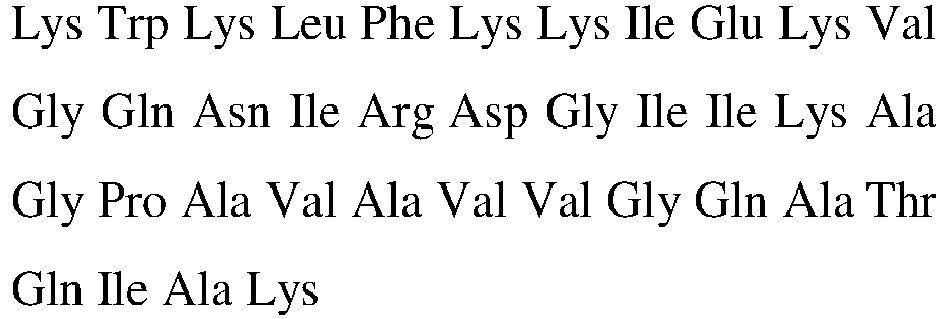
SEQ ID NO :2 

SEQ ID NO :3 
SEQ ID NO :4 
SEQ ID NO :5 
SEQ ID NO :6 
SEQ ID NO :7 
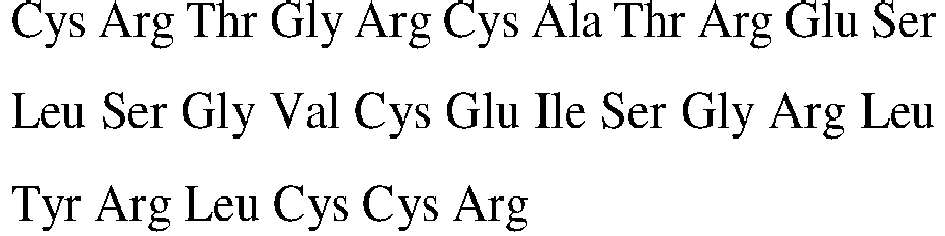
SEQ ID NO :8 
SEQ ID NO :9 
SEQ ID NO :10 
SEQ ID NO : 11 
-
- La
figure 1 montre des images optiques relatives à la croissance de E. coli en fonction du temps, selon l'exemple 2, avec une surface telle que le ratio A:B est de 0,35:0,65 (7:13). - La
figure 2 montre des images optiques relatives à la croissance de E. coli en fonction du temps, selon l'exemple 2, avec une surface telle que le ratio A:B est de 0,5:0,5 (1:1). - Un ensemble d'atomes de carbone à l'état d'hybridation sp2, par exemple une couche de graphène, est synthétisé selon toute technique bien connue de l'homme du métier, notamment par CVD, puis optionnellement déposée sur une surface à traiter par toute technique bien connue de l'homme du métier, notamment par une méthode de transfert par voie liquide.
La couche de graphène est trempée dans une solution à 1 µM dans le tétrahydrofurane (THF) d'un tripode de formule suivante (tel que décrit par exemple par Mann et al., Angewandte Chemie International Edition 2013, 52, 3177-3180):
L'échantillon ainsi obtenu est incubé dans une solution de PBS 1X. Puis sont ajoutés dans cette solution des anticorps anti-Escherichia coli (qui ont la capacité de lier spécifiquement des bactéries de type Escherichia coli) tels que les anticorps LifeSpan BioSciences LS-C58854, Abcam ab137967 ou MyBioSource MBS568193, ainsi que des molécules de cécropines (qui ont la particularité de créer des trous dans la membrane cellulaire de bactéries et de provoquer leur mort cellulaire), comme la cécropine A, la cécropine B ou la cécropine P1 commercialisées par Sigma Aldrich (sous la référence C6830 pour la cécropine A), dans des proportions molaires précises, qui sont notamment discutées dans l'exemple suivant.
Le tripode est conçu de telle manière que l'ester N-Hydroxysuccinimide présent au sommet de la molécule va engager des liaisons covalentes avec tout type de peptides ou protéines. - Ainsi en injectant la solution anticorps : cécropine dans un mélange stœchiométrique A:B, ces molécules vont s'attacher de façon covalente une à une au sommet d'un tripode. Au bout de 30 minutes d'incubation, il y a à la surface du graphène une proportion A:B d'anticorps et de cécropine.
Suite à la déposition de ces molécules, les molécules non greffées à un tripode, sont rincés avec une solution fraiche de PBS1X (solution tampon) pendant 5 min. - Une couche de graphène par exemple produite par CVD (Li et al., Journal of the American Chemical Society 2011, 133, 2816-2819) est déposée (par exemple selon Reina et al. Journal of the American Chemical Society 2011, 133, 17614-17617) sur la surface d'une lame en verre de microscope.
- Cette couche de graphène est fonctionnalisée selon l'invention, en particulier selon l'exemple 1. Puis, des bactéries de type Escherichia coli K12, qui ont été modifiées avec un plasmide qui leur permet de synthétiser en plus de leur métabolisme la protéine fluorescente Green Fluorescent Protein (ce qui permet d'observer les bactéries par microscopie en fluorescence), sont incubées à la surface pendant 30 min.
- Les bactéries qui ne sont pas attachés à la surface sont ensuite rincées grâce à une solution de PBS1X pendant 5 min. Ensuite, on verse une solution nutritive pour bactéries (solution Luria Bertani, également connue sous le nom de milieu de culture LB). La température est maintenue à 37°C. Les bactéries attachées à la surface du graphène sont donc ainsi, surface antibactérienne mise à part, dans des conditions de croissance et de prolifération exponentielle.
- Un témoin hors invention (surface avec un ratio A:B (anticorps :peptide antimicrobien) de 1:0) montre une croissance exponentielle des bactéries a la surface qui se mettent à former un biofilm.
- Avec un tel ratio, il est observé que la couche fonctionnalisée de l'invention provoque non seulement l'arrêt de la croissance des bactéries à la surface mais également leur mort cellulaire. Ceci est confirmé par l'analyse du signal de fluorescence au cours du temps (
figure 1 ). Ce signal décroît, ce qui signifie que la membrane cellulaire est endommagée à un point tel que les protéines de GFP sortent de la bactérie qui est donc considérée comme morte (ou lysée). - Ainsi un tel ratio permet l'obtention d'une surface bactéricide.
- Avec un tel ratio, il est observé que la couche fonctionnalisée de l'invention provoque l'arrêt de la croissance des bactéries à la surface mais que les bactéries ne sont pas mortes. En effet, le signal lié à l'intensité de fluorescence GFP totale est constant dans le temps (
figure 2 ). - Ainsi, avec ce ratio, la couche a toujours une propriété de limitation de la croissance de biofilms mais les bactéries ne sont plus tuées. Il s'agit donc d'un effet bactériostatique.


Claims (12)
- Ensemble d'atomes de carbone à l'état d'hybridation sp2, ledit ensemble étant en contact avec :- une pluralité de composés de formule (I) suivante :
(R-L1-W)n-V-L2-X-Y (I),
dans laquelle :n est égal à 1,2, ou 3, notamment 3 ;V représente, pour tout n, -C(H) 3-n- ou encore:- lorsque n est égal à 2, -C(H)=, C étant dans ce cas lié à L2 par une liaison double ;- lorsque n est égal à 1, -C≡, C étant dans ce cas lié à L2 par une liaison triple ;R est un hydrocarbure aromatique comprenant de 2 à 6 cycles aromatiques condensés;L1 un groupe C1-C12 alcane diyle ;W représente une liaison simple, un groupe arène diyle, un groupe hétéroarène diyle ou un groupe ―O-Ar1- où Ar1 est un arène ou un hétéroarène ;L2 est un groupe de formule (A) suivante ―(L2a)i-(L2b)j- dans laquelle :i et j sont indépendamment l'un de l'autre choisis parmi 0 et 1, avec i + j = 1 ou 2 ;L2a est un groupe C1-C12 alcane diyle, C2-C12 alcène diyle ou C2-C12 alcyne diyle ;L2b est un groupe arène diyle, un groupe hétéroarène diyle ou un groupe ―O-Ar2- oùAr2 est un arène ou un hétéroarène ;X est un groupe ―C(=O)N-, ―C(=O)O- ou ―C(=O)S- ;Y est un anticorps antibactérien ou une lectine;et- une pluralité de composés de formule (II) suivante :
(R-L1-W)n-V-L2-X-Z (II),
dans laquelle :R, L1, W, V, L2 et X sont tels que définis plus haut ;Z est un peptide antibactérien. - Ensemble selon la revendication 1, dans lequel ledit ensemble d'atomes de carbone à l'état d'hybridation sp2 est choisi parmi le graphène, l'oxyde de graphène, le graphite, les nanotubes de carbones, les fullerènes et les fullerites, ledit ensemble étant en particulier du graphène, plus particulièrement sous la forme de feuille ou de flocons.
- Ensemble selon l'une quelconque des revendications précédentes, dans lequel :- R est le 1-pyrènyle ou le 2-pyrènyle, en particulier le 1-pyrènyle ;- L1 un groupe C2-C8 alcane diyle ; et/ou- W représente un groupe ―O-Ar1- où Ar1 est un arène ou un hétéroarène, en particulier un benzène ; et/ou- i et j sont égaux à 1 ; et/ou- L2a est un groupe C2-C12 alcyne diyle, en particulier ―C≡C- ; et/ou- L2b est un groupe arène diyle, en particulier un benzène diyle ; et/ou- R, L1, W, V et L2 sont tels que définis par la formule suivante :

- Ensemble selon l'une quelconque des revendications précédentes, dans lequel :- Y est choisi parmi les anticorps anti Escherichia coli, les anticorps anti bactéries gram positives, les anticorps anti bactéries gram négatives et la concanavaline A, Y étant notamment un anticorps anti Escherichia coli ; et/ou- Z est choisi parmi les cécropines, les défensines, les magainines et les dermaseptines, Z étant notamment une cécropine.
- Ensemble selon l'une quelconque des revendications précédentes, dans lequel la densité en composés de formule (I) et (II) à la surface de l'ensemble d'atomes de carbone à l'état d'hybridation sp2 est comprise d'environ 1 de ces composés par surface de 300 nm2 à environ 1 de ces composés par surface de 2 nm2, notamment environ 1 composé par surface d'environ 2,7 nm2.
- Ensemble selon l'une quelconque des revendications précédentes, dans lequel :- le rapport molaire de la quantité de composés de formule (I) sur celle de composés de formule (II) est compris de 0,01 à 100, notamment de 0,1 à 10, en particulier de 0,33 à 1,5, plus particulièrement de 0,33 à 0,66 ou de 0,66 à 1,5, par exemple environ 0,5 ou environ 1,0 ;- l'ensemble d'atomes de carbone à l'état d'hybridation sp2 est du graphène sous la forme de feuille, le rapport molaire de la quantité de composés de formule (I) sur celle de composés de formule (II) étant compris de 0,66 à 1,5, par exemple environ 1,0 ; et/ou- l'ensemble d'atomes de carbone à l'état d'hybridation sp2 est du graphène sous la forme de flocons, le rapport molaire de la quantité de composés de formule (I) sur celle de composés de formule (II) étant compris de 0,33 à 0,66, par exemple environ 0,5.
- Procédé de préparation d'un ensemble d'atomes de carbone à l'état d'hybridation sp2 selon l'une quelconque des revendications 1 à 6, comprenant les étapes suivantes :(i) Mise en contact d'un ensemble d'atomes de carbone à l'état d'hybridation sp2 avec un composé de formule (III) suivante :
(R-L1-W)n-V-L2-X-Q (III),
dans laquelle :R, L1, W, V et L2 sont tels que définis dans la revendication 1;X-Q est un groupe choisi parmi ―C(=O)O-N-succinimidyle, ―C(=O)-halogènure, en particulier ―C(=O)-Cl, ―C(=O)-N3, ―C(=O)-O-N-imidazolyle, ―C(=O)-O-C(=O)-R', avec R' étant un C1-C12 alkyle linéaire, ramifié ou cyclique, ―C(=O)-O-catécholborane, ―C(=O)-O-benzotriazole, en particulier ―C(=O)O-N-succinimidyle,pour obtenir un ensemble d'atomes de carbone à l'état d'hybridation sp2 activé ;(ii) Mise en contact de l'ensemble d'atomes de carbone à l'état d'hybridation sp2 activé tel qu'obtenu à l'étape précédente avec une composition comprenant un anticorps antibactérien ou une lectine et un peptide antibactérien, pour obtenir un ensemble d'atomes de carbone à l'état d'hybridation sp2 fonctionnalisé. - Utilisation d'un ensemble d'atomes de carbone à l'état d'hybridation sp2 selon l'une quelconque des revendications 1 à 6, pour rendre une surface antibactérienne, en particulier bactéricide ou bactériostatique.
- Matériau comprenant un substrat dont tout ou partie de la surface est recouverte d'un ensemble d'atomes de carbone à l'état d'hybridation sp2 au contact de composés de formule (I) et (II) selon l'une quelconque des revendications 1 à 6.
- Matériau selon la revendication 9, dans lequel ledit ensemble d'atomes de carbone à l'état d'hybridation sp2 est supporté par un substrat, notamment choisi parmi les métaux, les oxydes métalliques, les verres et les polymères.
- Procédé de préparation d'un matériau selon l'une quelconque des revendications 9 à 10, comprenant les étapes suivantes :(i) Mise en contact d'un ensemble d'atomes de carbone à l'état d'hybridation sp2 avec un composé de formule (III) suivante :
(R-L1-W)n-V-L2-X-Q (III),
dans laquelle :R, L1, W, V et L2 sont tels que définis dans la revendication 1;X-Q est un groupe choisi parmi ―C(=O)O-N-succinimidyle, ―C(=O)-halogènure, en particulier ―C(=O)-Cl, ―C(=O)-N3, ―C(=O)-O-N-imidazolyle, ―C(=O)-O-C(=O)-R', avec R' étant un C1-C12 alkyle linéaire, ramifié ou cyclique, ―C(=O)-O-catécholborane, ―C(=O)-O-benzotriazole, en particulier ―C(=O)O-N-succinimidyle,pour obtenir ensemble d'atomes de carbone à l'état d'hybridation sp2 activé;(ii) Mise en contact de l'ensemble d'atomes de carbone à l'état d'hybridation sp2 activé tel qu'obtenu à l'étape précédente avec une composition comprenant un anticorps antibactérien ou une lectine et un peptide antibactérien, pour obtenir un ensemble d'atomes de carbone à l'état d'hybridation sp2 fonctionnalisé ;(iii) Dépôt de l'en ensemble d'atomes de carbone à l'état d'hybridation sp2 fonctionnalisé tel qu'obtenu à l'étape précédente sur la surface d'un support pour obtenir ledit matériau. - Procédé de préparation d'un matériau selon l'une quelconque des revendications 9 à 10, comprenant les étapes suivantes :(i) Mise en contact d'un ensemble d'atomes de carbone à l'état d'hybridation sp2 porté par la surface d'un matériau avec un composé de formule (III) suivante :
(R-L1-W)n-V-L2-X-Q (III),
dans laquelle :R, L1, W, V et L2 sont tels que définis dans la revendication 1;X-Q est un groupe choisi parmi ―O-N-succinimidyle, -halogènure, en particulier -Cl, -N3, -O-N-imidazolyle, -O-C(=O)-R', avec R' étant un C1-C12 alkyle linéaire, ramifié ou cyclique, -O-catécholborane, -O-benzotriazole,pour obtenir un matériau activé ;(ii) Mise en contact du matériau activé tel qu'obtenu à l'étape précédente avec une composition comprenant un anticorps antibactérien ou une lectine et un peptide antibactérien, pour obtenir ledit matériau, fonctionnalisé.
Applications Claiming Priority (1)
| Application Number | Priority Date | Filing Date | Title |
|---|---|---|---|
| FR2008040A FR3113053B1 (fr) | 2020-07-29 | 2020-07-29 | Ensemble d’atomes de carbone a l’etat d’hybridation sp2fonctionnalisé, son procede de preparation et ses utilisations, notamment pour rendre une surface antibacterienne |
Publications (2)
| Publication Number | Publication Date |
|---|---|
| EP3944763A1 true EP3944763A1 (fr) | 2022-02-02 |
| EP3944763B1 EP3944763B1 (fr) | 2024-07-17 |
Family
ID=73038171
Family Applications (1)
| Application Number | Title | Priority Date | Filing Date |
|---|---|---|---|
| EP21186872.4A Active EP3944763B1 (fr) | 2020-07-29 | 2021-07-21 | Ensemble d atomes de carbone a l etat d hybridation sp2 fonctionnalisé, son procede de preparation et ses utilisations, notamment pour rendre une surface antibacterienne |
Country Status (3)
| Country | Link |
|---|---|
| US (1) | US20220030855A1 (fr) |
| EP (1) | EP3944763B1 (fr) |
| FR (1) | FR3113053B1 (fr) |
Cited By (2)
| Publication number | Priority date | Publication date | Assignee | Title |
|---|---|---|---|---|
| US20220316064A1 (en) * | 2019-06-18 | 2022-10-06 | Molecular Plasma Group S.A. | Antimicrobial and/or antiviral polymer surfaces |
| EP4283298A1 (fr) * | 2022-05-25 | 2023-11-29 | Commissariat à l'énergie atomique et aux énergies alternatives | Biocapteur comprenant une pluralite d' ensembles d' atomes de carbone a l' etat d' hybridation sp2 fonctionnalisés, son procede de preparation et son utilisation, notamment pour la detection de risques eco-toxicologiques |
Citations (2)
| Publication number | Priority date | Publication date | Assignee | Title |
|---|---|---|---|---|
| KR20150143174A (ko) * | 2014-06-13 | 2015-12-23 | (주)콜로디스 바이오사이언스 | 분산성이 우수한 항균 탄소 나노튜브 |
| CN109125708A (zh) * | 2018-09-12 | 2019-01-04 | 苏州大学 | 一种抗菌肽复合材料及其制备方法与应用 |
-
2020
- 2020-07-29 FR FR2008040A patent/FR3113053B1/fr active Active
-
2021
- 2021-07-21 EP EP21186872.4A patent/EP3944763B1/fr active Active
- 2021-07-23 US US17/383,817 patent/US20220030855A1/en not_active Abandoned
Patent Citations (2)
| Publication number | Priority date | Publication date | Assignee | Title |
|---|---|---|---|---|
| KR20150143174A (ko) * | 2014-06-13 | 2015-12-23 | (주)콜로디스 바이오사이언스 | 분산성이 우수한 항균 탄소 나노튜브 |
| CN109125708A (zh) * | 2018-09-12 | 2019-01-04 | 苏州大学 | 一种抗菌肽复合材料及其制备方法与应用 |
Non-Patent Citations (9)
| Title |
|---|
| BATTIGELLI ALESSIA ET AL: "Endowing carbon nanotubes with biological and biomedical properties by chemical modifications", ADVANCED DRUG DELIVERY REVIEWS, ELSEVIER, AMSTERDAM , NL, vol. 65, no. 15, 13 July 2013 (2013-07-13), pages 1899 - 1920, XP028791634, ISSN: 0169-409X, DOI: 10.1016/J.ADDR.2013.07.006 * |
| CALDWELL ET AL., ACS NANO, vol. 4, no. 2, 2010, pages 1108 - 1114 |
| CHEN R J ET AL: "Noncovalent Sidewall Functionalization of Single-Walled Carbon Nanotubes for Protein Immobilization", JOURNAL OF THE AMERICAN CHEMICAL SOCIETY, AMERICAN CHEMICAL SOCIETY, US, vol. 123, 1 January 2001 (2001-01-01), pages 3838 - 3839, XP002350390, ISSN: 0002-7863, DOI: 10.1021/JA010172B * |
| JASON A. MANN ET AL: "Preservation of Antibody Selectivity on Graphene by Conjugation to a Tripod Monolayer", ANGEWANDTE CHEMIE INTERNATIONAL EDITION, vol. 52, no. 11, 11 March 2013 (2013-03-11), pages 3177 - 3180, XP055098219, ISSN: 1433-7851, DOI: 10.1002/anie.201209149 * |
| MANN ET AL., ANGEWANDTE CHEMIE INTERNATIONAL EDITION, vol. 52, 2013, pages 3177 - 3180 |
| PANDEY ASHISH ET AL: "Graphene-interfaced electrical biosensor for label-free and sensitive detection of foodborne pathogenicE. coliO157:H7", BIOSENSORS AND BIOELECTRONICS, ELSEVIER SCIENCE LTD. UK, AMSTERDAM, NL, vol. 91, 16 December 2016 (2016-12-16), pages 225 - 231, XP029920732, ISSN: 0956-5663, DOI: 10.1016/J.BIOS.2016.12.041 * |
| REINA ET AL., JOURNAL OF THE AMERICAN CHEMICAL SOCIETY, vol. 133, 2011, pages 17614 - 17617 |
| VAZIRI ET AL.: "PDMS-supported graphene transfer using intermediary polymer layers", 44TH EUROPEAN SOLID STATE DEVICE RESEARCH CONFÉRENCE (ESSDERC, 2014, pages 309 - 312, XP032677132, DOI: 10.1109/ESSDERC.2014.6948822 |
| WON SUK ET AL., ACS NANO, vol. 5, no. 9, 2011, pages 6916 - 6924 |
Cited By (4)
| Publication number | Priority date | Publication date | Assignee | Title |
|---|---|---|---|---|
| US20220316064A1 (en) * | 2019-06-18 | 2022-10-06 | Molecular Plasma Group S.A. | Antimicrobial and/or antiviral polymer surfaces |
| US12146221B2 (en) * | 2019-06-18 | 2024-11-19 | Molecular Plasma Group S.A. | Antimicrobial and/or antiviral polymer surfaces and methods for the preparation thereof |
| EP4283298A1 (fr) * | 2022-05-25 | 2023-11-29 | Commissariat à l'énergie atomique et aux énergies alternatives | Biocapteur comprenant une pluralite d' ensembles d' atomes de carbone a l' etat d' hybridation sp2 fonctionnalisés, son procede de preparation et son utilisation, notamment pour la detection de risques eco-toxicologiques |
| FR3135990A1 (fr) * | 2022-05-25 | 2023-12-01 | Commissariat A L'energie Atomique Et Aux Energies Alternatives | Biocapteur comprenant une pluralite d’ensembles d’atomes de carbone a l’etat d’hybridation sp2 fonctionnalisés, son procede de preparation et son utilisation, notamment pour la detection de risques eco-toxicologiques |
Also Published As
| Publication number | Publication date |
|---|---|
| FR3113053A1 (fr) | 2022-02-04 |
| US20220030855A1 (en) | 2022-02-03 |
| FR3113053B1 (fr) | 2023-11-24 |
| EP3944763B1 (fr) | 2024-07-17 |
Similar Documents
| Publication | Publication Date | Title |
|---|---|---|
| EP3944763B1 (fr) | Ensemble d atomes de carbone a l etat d hybridation sp2 fonctionnalisé, son procede de preparation et ses utilisations, notamment pour rendre une surface antibacterienne | |
| Yu | Effects of interfacial redox in mussel adhesive protein films on mica | |
| Qin et al. | Biofunctionalization on alkylated silicon substrate surfaces via “click” chemistry | |
| Humblot et al. | The antibacterial activity of Magainin I immobilized onto mixed thiols Self-Assembled Monolayers | |
| García-Fernández et al. | Antibacterial strategies from the sea: polymer-bound cl-catechols for prevention of biofilm formation | |
| EP0179007B1 (fr) | Produits pour la séparation applicable à des cellules dans le domaine de l'immunopurification | |
| EP2054165B1 (fr) | Procede de recouvrement de surfaces metalliques ou minerales par des couches de composes gem-bisphosphoniques et leurs utilisations | |
| Gole et al. | Encapsulation and biocatalytic activity of the enzyme pepsin in fatty lipid films by selective electrostatic interactions | |
| Yamamoto et al. | Surfactant-induced polymer segregation to produce antifouling surfaces via dip-coating with an amphiphilic polymer | |
| FR2777355A1 (fr) | Procede de fixation d'une molecule biologique sur la surface d'un support constitue de silice ou d'oxyde metallique | |
| Parveen et al. | Supramolecular Gels by Design: Towards the Development of Topical Gels for Self‐Delivery Application | |
| FR2666092A1 (fr) | Membranes organiques bidimensionnelles et leurs procedes de preparation. | |
| EP3326466B1 (fr) | Materiau cellulosique antimicrobien | |
| FR2697028A1 (fr) | Milieu de culture pour la mise en évidence de Salmonella et procédé pour son utilisation. | |
| Norouzi et al. | Antimicrobial Studies of Black Silicon and Black Diamond Using Gram‐Positive Bacteria | |
| EP2440552B1 (fr) | Semi-conducteurs organiques de type n incorporant au moins deux groupements 2-dicyanomethylene-3-cyano-2,5-dihydrofurane | |
| van der Veen et al. | Listeria monocytogenes repellence by enzymatically modified PES surfaces | |
| EP1316532A1 (fr) | Obtention à basse température de dépôts à effets photocatalytiques | |
| WO2008125637A1 (fr) | Procede de preparation d'un support pour l'immobilisation d'une cellule, ledit support et ses utilisations | |
| FR3135990A1 (fr) | Biocapteur comprenant une pluralite d’ensembles d’atomes de carbone a l’etat d’hybridation sp2 fonctionnalisés, son procede de preparation et son utilisation, notamment pour la detection de risques eco-toxicologiques | |
| EP2720806B1 (fr) | Procédé pour fonctionnaliser une surface avec un objet ou une molécule d'intérêt | |
| WO2010120293A1 (fr) | Surfaces de biodétection non planes | |
| JP2021005601A (ja) | グラフェン膜の保持方法、構造体 | |
| WO2010106244A2 (fr) | Memoire hybride moleculaire a retention de charge elevee | |
| FR2843759A1 (fr) | Procede pour le traitement en surface des fibres hydrophiles d'un substrat, naturel ou synthetique |
Legal Events
| Date | Code | Title | Description |
|---|---|---|---|
| PUAI | Public reference made under article 153(3) epc to a published international application that has entered the european phase |
Free format text: ORIGINAL CODE: 0009012 |
|
| STAA | Information on the status of an ep patent application or granted ep patent |
Free format text: STATUS: THE APPLICATION HAS BEEN PUBLISHED |
|
| AK | Designated contracting states |
Kind code of ref document: A1 Designated state(s): AL AT BE BG CH CY CZ DE DK EE ES FI FR GB GR HR HU IE IS IT LI LT LU LV MC MK MT NL NO PL PT RO RS SE SI SK SM TR |
|
| STAA | Information on the status of an ep patent application or granted ep patent |
Free format text: STATUS: REQUEST FOR EXAMINATION WAS MADE |
|
| 17P | Request for examination filed |
Effective date: 20220718 |
|
| RBV | Designated contracting states (corrected) |
Designated state(s): AL AT BE BG CH CY CZ DE DK EE ES FI FR GB GR HR HU IE IS IT LI LT LU LV MC MK MT NL NO PL PT RO RS SE SI SK SM TR |
|
| GRAP | Despatch of communication of intention to grant a patent |
Free format text: ORIGINAL CODE: EPIDOSNIGR1 |
|
| STAA | Information on the status of an ep patent application or granted ep patent |
Free format text: STATUS: GRANT OF PATENT IS INTENDED |
|
| INTG | Intention to grant announced |
Effective date: 20240212 |
|
| GRAS | Grant fee paid |
Free format text: ORIGINAL CODE: EPIDOSNIGR3 |
|
| GRAA | (expected) grant |
Free format text: ORIGINAL CODE: 0009210 |
|
| STAA | Information on the status of an ep patent application or granted ep patent |
Free format text: STATUS: THE PATENT HAS BEEN GRANTED |
|
| AK | Designated contracting states |
Kind code of ref document: B1 Designated state(s): AL AT BE BG CH CY CZ DE DK EE ES FI FR GB GR HR HU IE IS IT LI LT LU LV MC MK MT NL NO PL PT RO RS SE SI SK SM TR |
|
| REG | Reference to a national code |
Ref country code: CH Ref legal event code: EP |
|
| REG | Reference to a national code |
Ref country code: DE Ref legal event code: R096 Ref document number: 602021015699 Country of ref document: DE |
|
| REG | Reference to a national code |
Ref country code: IE Ref legal event code: FG4D Free format text: LANGUAGE OF EP DOCUMENT: FRENCH |
|
| RAP4 | Party data changed (patent owner data changed or rights of a patent transferred) |
Owner name: COMMISSARIAT A L'ENERGIE ATOMIQUE ET AUX ENERGIESALTERNATIVES |
|
| REG | Reference to a national code |
Ref country code: LT Ref legal event code: MG9D |
|
| REG | Reference to a national code |
Ref country code: NL Ref legal event code: MP Effective date: 20240717 |
|
| PG25 | Lapsed in a contracting state [announced via postgrant information from national office to epo] |
Ref country code: PT Free format text: LAPSE BECAUSE OF FAILURE TO SUBMIT A TRANSLATION OF THE DESCRIPTION OR TO PAY THE FEE WITHIN THE PRESCRIBED TIME-LIMIT Effective date: 20241118 |
|
| REG | Reference to a national code |
Ref country code: AT Ref legal event code: MK05 Ref document number: 1703235 Country of ref document: AT Kind code of ref document: T Effective date: 20240717 |
|
| PG25 | Lapsed in a contracting state [announced via postgrant information from national office to epo] |
Ref country code: NL Free format text: LAPSE BECAUSE OF FAILURE TO SUBMIT A TRANSLATION OF THE DESCRIPTION OR TO PAY THE FEE WITHIN THE PRESCRIBED TIME-LIMIT Effective date: 20240717 |
|
| PG25 | Lapsed in a contracting state [announced via postgrant information from national office to epo] |
Ref country code: PT Free format text: LAPSE BECAUSE OF FAILURE TO SUBMIT A TRANSLATION OF THE DESCRIPTION OR TO PAY THE FEE WITHIN THE PRESCRIBED TIME-LIMIT Effective date: 20241118 Ref country code: NL Free format text: LAPSE BECAUSE OF FAILURE TO SUBMIT A TRANSLATION OF THE DESCRIPTION OR TO PAY THE FEE WITHIN THE PRESCRIBED TIME-LIMIT Effective date: 20240717 |
|
| PG25 | Lapsed in a contracting state [announced via postgrant information from national office to epo] |
Ref country code: NO Free format text: LAPSE BECAUSE OF FAILURE TO SUBMIT A TRANSLATION OF THE DESCRIPTION OR TO PAY THE FEE WITHIN THE PRESCRIBED TIME-LIMIT Effective date: 20241017 |
|
| PG25 | Lapsed in a contracting state [announced via postgrant information from national office to epo] |
Ref country code: FI Free format text: LAPSE BECAUSE OF FAILURE TO SUBMIT A TRANSLATION OF THE DESCRIPTION OR TO PAY THE FEE WITHIN THE PRESCRIBED TIME-LIMIT Effective date: 20240717 Ref country code: PL Free format text: LAPSE BECAUSE OF FAILURE TO SUBMIT A TRANSLATION OF THE DESCRIPTION OR TO PAY THE FEE WITHIN THE PRESCRIBED TIME-LIMIT Effective date: 20240717 Ref country code: GR Free format text: LAPSE BECAUSE OF FAILURE TO SUBMIT A TRANSLATION OF THE DESCRIPTION OR TO PAY THE FEE WITHIN THE PRESCRIBED TIME-LIMIT Effective date: 20241018 |
|
| PG25 | Lapsed in a contracting state [announced via postgrant information from national office to epo] |
Ref country code: BG Free format text: LAPSE BECAUSE OF FAILURE TO SUBMIT A TRANSLATION OF THE DESCRIPTION OR TO PAY THE FEE WITHIN THE PRESCRIBED TIME-LIMIT Effective date: 20240717 |
|
| PG25 | Lapsed in a contracting state [announced via postgrant information from national office to epo] |
Ref country code: LV Free format text: LAPSE BECAUSE OF FAILURE TO SUBMIT A TRANSLATION OF THE DESCRIPTION OR TO PAY THE FEE WITHIN THE PRESCRIBED TIME-LIMIT Effective date: 20240717 |
|
| PG25 | Lapsed in a contracting state [announced via postgrant information from national office to epo] |
Ref country code: IS Free format text: LAPSE BECAUSE OF FAILURE TO SUBMIT A TRANSLATION OF THE DESCRIPTION OR TO PAY THE FEE WITHIN THE PRESCRIBED TIME-LIMIT Effective date: 20241117 Ref country code: AT Free format text: LAPSE BECAUSE OF FAILURE TO SUBMIT A TRANSLATION OF THE DESCRIPTION OR TO PAY THE FEE WITHIN THE PRESCRIBED TIME-LIMIT Effective date: 20240717 |
|
| PG25 | Lapsed in a contracting state [announced via postgrant information from national office to epo] |
Ref country code: HR Free format text: LAPSE BECAUSE OF FAILURE TO SUBMIT A TRANSLATION OF THE DESCRIPTION OR TO PAY THE FEE WITHIN THE PRESCRIBED TIME-LIMIT Effective date: 20240717 |
|
| PG25 | Lapsed in a contracting state [announced via postgrant information from national office to epo] |
Ref country code: RS Free format text: LAPSE BECAUSE OF FAILURE TO SUBMIT A TRANSLATION OF THE DESCRIPTION OR TO PAY THE FEE WITHIN THE PRESCRIBED TIME-LIMIT Effective date: 20241017 Ref country code: ES Free format text: LAPSE BECAUSE OF FAILURE TO SUBMIT A TRANSLATION OF THE DESCRIPTION OR TO PAY THE FEE WITHIN THE PRESCRIBED TIME-LIMIT Effective date: 20240717 |
|
| PG25 | Lapsed in a contracting state [announced via postgrant information from national office to epo] |
Ref country code: RS Free format text: LAPSE BECAUSE OF FAILURE TO SUBMIT A TRANSLATION OF THE DESCRIPTION OR TO PAY THE FEE WITHIN THE PRESCRIBED TIME-LIMIT Effective date: 20241017 Ref country code: PL Free format text: LAPSE BECAUSE OF FAILURE TO SUBMIT A TRANSLATION OF THE DESCRIPTION OR TO PAY THE FEE WITHIN THE PRESCRIBED TIME-LIMIT Effective date: 20240717 Ref country code: NO Free format text: LAPSE BECAUSE OF FAILURE TO SUBMIT A TRANSLATION OF THE DESCRIPTION OR TO PAY THE FEE WITHIN THE PRESCRIBED TIME-LIMIT Effective date: 20241017 Ref country code: LV Free format text: LAPSE BECAUSE OF FAILURE TO SUBMIT A TRANSLATION OF THE DESCRIPTION OR TO PAY THE FEE WITHIN THE PRESCRIBED TIME-LIMIT Effective date: 20240717 Ref country code: IS Free format text: LAPSE BECAUSE OF FAILURE TO SUBMIT A TRANSLATION OF THE DESCRIPTION OR TO PAY THE FEE WITHIN THE PRESCRIBED TIME-LIMIT Effective date: 20241117 Ref country code: HR Free format text: LAPSE BECAUSE OF FAILURE TO SUBMIT A TRANSLATION OF THE DESCRIPTION OR TO PAY THE FEE WITHIN THE PRESCRIBED TIME-LIMIT Effective date: 20240717 Ref country code: GR Free format text: LAPSE BECAUSE OF FAILURE TO SUBMIT A TRANSLATION OF THE DESCRIPTION OR TO PAY THE FEE WITHIN THE PRESCRIBED TIME-LIMIT Effective date: 20241018 Ref country code: FI Free format text: LAPSE BECAUSE OF FAILURE TO SUBMIT A TRANSLATION OF THE DESCRIPTION OR TO PAY THE FEE WITHIN THE PRESCRIBED TIME-LIMIT Effective date: 20240717 Ref country code: ES Free format text: LAPSE BECAUSE OF FAILURE TO SUBMIT A TRANSLATION OF THE DESCRIPTION OR TO PAY THE FEE WITHIN THE PRESCRIBED TIME-LIMIT Effective date: 20240717 Ref country code: BG Free format text: LAPSE BECAUSE OF FAILURE TO SUBMIT A TRANSLATION OF THE DESCRIPTION OR TO PAY THE FEE WITHIN THE PRESCRIBED TIME-LIMIT Effective date: 20240717 Ref country code: AT Free format text: LAPSE BECAUSE OF FAILURE TO SUBMIT A TRANSLATION OF THE DESCRIPTION OR TO PAY THE FEE WITHIN THE PRESCRIBED TIME-LIMIT Effective date: 20240717 |
|
| REG | Reference to a national code |
Ref country code: CH Ref legal event code: PL |
|
| PG25 | Lapsed in a contracting state [announced via postgrant information from national office to epo] |
Ref country code: LU Free format text: LAPSE BECAUSE OF NON-PAYMENT OF DUE FEES Effective date: 20240721 |
|
| PG25 | Lapsed in a contracting state [announced via postgrant information from national office to epo] |
Ref country code: LU Free format text: LAPSE BECAUSE OF NON-PAYMENT OF DUE FEES Effective date: 20240721 |
|
| PG25 | Lapsed in a contracting state [announced via postgrant information from national office to epo] |
Ref country code: SM Free format text: LAPSE BECAUSE OF FAILURE TO SUBMIT A TRANSLATION OF THE DESCRIPTION OR TO PAY THE FEE WITHIN THE PRESCRIBED TIME-LIMIT Effective date: 20240717 Ref country code: RO Free format text: LAPSE BECAUSE OF FAILURE TO SUBMIT A TRANSLATION OF THE DESCRIPTION OR TO PAY THE FEE WITHIN THE PRESCRIBED TIME-LIMIT Effective date: 20240717 Ref country code: DK Free format text: LAPSE BECAUSE OF FAILURE TO SUBMIT A TRANSLATION OF THE DESCRIPTION OR TO PAY THE FEE WITHIN THE PRESCRIBED TIME-LIMIT Effective date: 20240717 |
|
| REG | Reference to a national code |
Ref country code: DE Ref legal event code: R097 Ref document number: 602021015699 Country of ref document: DE |
|
| PG25 | Lapsed in a contracting state [announced via postgrant information from national office to epo] |
Ref country code: MC Free format text: LAPSE BECAUSE OF FAILURE TO SUBMIT A TRANSLATION OF THE DESCRIPTION OR TO PAY THE FEE WITHIN THE PRESCRIBED TIME-LIMIT Effective date: 20240717 Ref country code: CH Free format text: LAPSE BECAUSE OF NON-PAYMENT OF DUE FEES Effective date: 20240731 Ref country code: BE Free format text: LAPSE BECAUSE OF NON-PAYMENT OF DUE FEES Effective date: 20240731 Ref country code: EE Free format text: LAPSE BECAUSE OF FAILURE TO SUBMIT A TRANSLATION OF THE DESCRIPTION OR TO PAY THE FEE WITHIN THE PRESCRIBED TIME-LIMIT Effective date: 20240717 |
|
| PG25 | Lapsed in a contracting state [announced via postgrant information from national office to epo] |
Ref country code: CZ Free format text: LAPSE BECAUSE OF FAILURE TO SUBMIT A TRANSLATION OF THE DESCRIPTION OR TO PAY THE FEE WITHIN THE PRESCRIBED TIME-LIMIT Effective date: 20240717 |
|
| PG25 | Lapsed in a contracting state [announced via postgrant information from national office to epo] |
Ref country code: SK Free format text: LAPSE BECAUSE OF FAILURE TO SUBMIT A TRANSLATION OF THE DESCRIPTION OR TO PAY THE FEE WITHIN THE PRESCRIBED TIME-LIMIT Effective date: 20240717 |
|
| PLBE | No opposition filed within time limit |
Free format text: ORIGINAL CODE: 0009261 |
|
| STAA | Information on the status of an ep patent application or granted ep patent |
Free format text: STATUS: NO OPPOSITION FILED WITHIN TIME LIMIT |
|
| REG | Reference to a national code |
Ref country code: BE Ref legal event code: MM Effective date: 20240731 |
|
| 26N | No opposition filed |
Effective date: 20250422 |
|
| PG25 | Lapsed in a contracting state [announced via postgrant information from national office to epo] |
Ref country code: IE Free format text: LAPSE BECAUSE OF NON-PAYMENT OF DUE FEES Effective date: 20240721 |
|
| PG25 | Lapsed in a contracting state [announced via postgrant information from national office to epo] |
Ref country code: SE Free format text: LAPSE BECAUSE OF FAILURE TO SUBMIT A TRANSLATION OF THE DESCRIPTION OR TO PAY THE FEE WITHIN THE PRESCRIBED TIME-LIMIT Effective date: 20240717 |
|
| PGFP | Annual fee paid to national office [announced via postgrant information from national office to epo] |
Ref country code: DE Payment date: 20250722 Year of fee payment: 5 |
|
| PGFP | Annual fee paid to national office [announced via postgrant information from national office to epo] |
Ref country code: GB Payment date: 20250724 Year of fee payment: 5 |
|
| PGFP | Annual fee paid to national office [announced via postgrant information from national office to epo] |
Ref country code: FR Payment date: 20250722 Year of fee payment: 5 |
|
| PG25 | Lapsed in a contracting state [announced via postgrant information from national office to epo] |
Ref country code: IT Free format text: LAPSE BECAUSE OF FAILURE TO SUBMIT A TRANSLATION OF THE DESCRIPTION OR TO PAY THE FEE WITHIN THE PRESCRIBED TIME-LIMIT Effective date: 20240717 Ref country code: CY Free format text: LAPSE BECAUSE OF FAILURE TO SUBMIT A TRANSLATION OF THE DESCRIPTION OR TO PAY THE FEE WITHIN THE PRESCRIBED TIME-LIMIT; INVALID AB INITIO Effective date: 20210721 |
|
| PG25 | Lapsed in a contracting state [announced via postgrant information from national office to epo] |
Ref country code: HU Free format text: LAPSE BECAUSE OF FAILURE TO SUBMIT A TRANSLATION OF THE DESCRIPTION OR TO PAY THE FEE WITHIN THE PRESCRIBED TIME-LIMIT; INVALID AB INITIO Effective date: 20210721 |
|
| PG25 | Lapsed in a contracting state [announced via postgrant information from national office to epo] |
Ref country code: TR Free format text: LAPSE BECAUSE OF FAILURE TO SUBMIT A TRANSLATION OF THE DESCRIPTION OR TO PAY THE FEE WITHIN THE PRESCRIBED TIME-LIMIT Effective date: 20240717 |
|
| PG25 | Lapsed in a contracting state [announced via postgrant information from national office to epo] |
Ref country code: SI Free format text: LAPSE BECAUSE OF FAILURE TO SUBMIT A TRANSLATION OF THE DESCRIPTION OR TO PAY THE FEE WITHIN THE PRESCRIBED TIME-LIMIT Effective date: 20240717 |
|
| PG25 | Lapsed in a contracting state [announced via postgrant information from national office to epo] |
Ref country code: LT Free format text: LAPSE BECAUSE OF FAILURE TO SUBMIT A TRANSLATION OF THE DESCRIPTION OR TO PAY THE FEE WITHIN THE PRESCRIBED TIME-LIMIT Effective date: 20240717 |