EP3944668A1 - Handover processing method, terminal device and network device - Google Patents
Handover processing method, terminal device and network device Download PDFInfo
- Publication number
- EP3944668A1 EP3944668A1 EP19922101.1A EP19922101A EP3944668A1 EP 3944668 A1 EP3944668 A1 EP 3944668A1 EP 19922101 A EP19922101 A EP 19922101A EP 3944668 A1 EP3944668 A1 EP 3944668A1
- Authority
- EP
- European Patent Office
- Prior art keywords
- terminal device
- network device
- drb
- srb
- target network
- Prior art date
- Legal status (The legal status is an assumption and is not a legal conclusion. Google has not performed a legal analysis and makes no representation as to the accuracy of the status listed.)
- Granted
Links
Images


Classifications
-
- H—ELECTRICITY
- H04—ELECTRIC COMMUNICATION TECHNIQUE
- H04W—WIRELESS COMMUNICATION NETWORKS
- H04W36/00—Hand-off or reselection arrangements
- H04W36/0005—Control or signalling for completing the hand-off
- H04W36/0011—Control or signalling for completing the hand-off for data sessions of end-to-end connection
-
- H—ELECTRICITY
- H04—ELECTRIC COMMUNICATION TECHNIQUE
- H04W—WIRELESS COMMUNICATION NETWORKS
- H04W74/00—Wireless channel access
- H04W74/08—Non-scheduled access, e.g. ALOHA
- H04W74/0833—Random access procedures, e.g. with 4-step access
-
- H—ELECTRICITY
- H04—ELECTRIC COMMUNICATION TECHNIQUE
- H04W—WIRELESS COMMUNICATION NETWORKS
- H04W36/00—Hand-off or reselection arrangements
- H04W36/0005—Control or signalling for completing the hand-off
- H04W36/0055—Transmission or use of information for re-establishing the radio link
- H04W36/0069—Transmission or use of information for re-establishing the radio link in case of dual connectivity, e.g. decoupled uplink/downlink
-
- H—ELECTRICITY
- H04—ELECTRIC COMMUNICATION TECHNIQUE
- H04W—WIRELESS COMMUNICATION NETWORKS
- H04W36/00—Hand-off or reselection arrangements
- H04W36/0005—Control or signalling for completing the hand-off
- H04W36/0055—Transmission or use of information for re-establishing the radio link
- H04W36/0072—Transmission or use of information for re-establishing the radio link of resource information of target access point
- H04W36/00725—Random access channel [RACH]-less handover
-
- H—ELECTRICITY
- H04—ELECTRIC COMMUNICATION TECHNIQUE
- H04W—WIRELESS COMMUNICATION NETWORKS
- H04W36/00—Hand-off or reselection arrangements
- H04W36/08—Reselecting an access point
-
- H—ELECTRICITY
- H04—ELECTRIC COMMUNICATION TECHNIQUE
- H04W—WIRELESS COMMUNICATION NETWORKS
- H04W36/00—Hand-off or reselection arrangements
- H04W36/16—Performing reselection for specific purposes
- H04W36/18—Performing reselection for specific purposes for allowing seamless reselection, e.g. soft reselection
- H04W36/185—Performing reselection for specific purposes for allowing seamless reselection, e.g. soft reselection using make before break
-
- H—ELECTRICITY
- H04—ELECTRIC COMMUNICATION TECHNIQUE
- H04W—WIRELESS COMMUNICATION NETWORKS
- H04W76/00—Connection management
- H04W76/20—Manipulation of established connections
- H04W76/27—Transitions between radio resource control [RRC] states
-
- H—ELECTRICITY
- H04—ELECTRIC COMMUNICATION TECHNIQUE
- H04W—WIRELESS COMMUNICATION NETWORKS
- H04W74/00—Wireless channel access
- H04W74/08—Non-scheduled access, e.g. ALOHA
- H04W74/0833—Random access procedures, e.g. with 4-step access
- H04W74/0838—Random access procedures, e.g. with 4-step access using contention-free random access [CFRA]
-
- H—ELECTRICITY
- H04—ELECTRIC COMMUNICATION TECHNIQUE
- H04W—WIRELESS COMMUNICATION NETWORKS
- H04W76/00—Connection management
- H04W76/30—Connection release
Definitions
- the present disclosure relates to the technical field of information processing, and particularly to a handover processing method, a terminal device, a network device, a computer storage medium, a chip, a computer readable storage medium, a computer program product, and computer programs.
- Procedures of a handover processing mainly include the following operations.
- a source base station transmits, based on a report result of a terminal device, a handover request to a target base station. After the target base station agrees to the handover request, the target base station configures the related information for the terminal device. Further, the source base station forwards mobility control information (mobilityControlInformation) to the terminal device, and the terminal device initiates a random access procedure to the target base station.
- mobilityControlInformation mobility control information
- the terminal device successfully accesses the target base station i.e., random access succeeds
- a path switch is performed and the handover is finally completed.
- an embodiment of the present disclosure provides a handover processing method, a terminal device, a network device, a computer storage medium, a chip, a computer readable storage medium, a computer program product, and computer programs.
- a handover processing method applied to a terminal device, the method including the following operations.
- a handover command is received.
- a handover is performed based on the handover command, during performing the handover, interaction with a target network device being performed through at least one of a signaling radio bearer (SRB) or a data radio bearer (DRB) between the terminal device and the target network device.
- SRB signaling radio bearer
- DRB data radio bearer
- the method further includes the following operations. After receiving the handover command, performing at least one of:
- a handover processing method applied to a target network device, the method including the following operations.
- Interaction with a terminal device is performed through at least one of a data radio bearer (DRB) between the target network device and the terminal device or a signaling radio bearer (SRB) between the target network device and the terminal device.
- DRB data radio bearer
- SRB signaling radio bearer
- a terminal device including a first communication unit and a first processing unit.
- the first communication unit is configured to receive a handover command.
- the first processing unit is configured to: perform, based on the handover command, a handover, during performing the handover, interaction with a target network device being performed through at least one of a signaling radio bearer (SRB) or a data radio bearer (DRB) between the terminal device and the target network device.
- SRB signaling radio bearer
- DRB data radio bearer
- the first processing unit is further configured to perform at least one of: determining whether to release an SRB between the terminal device and a source network device based on an SRB release condition; or determining whether to release a DRB between the terminal device and a source network device based on a DRB release condition.
- a target network device including a second communication unit.
- the second communication unit is configured to interact with a terminal device through at least one of a data radio bearer (DRB) between the target network device and the terminal device or a signaling radio bearer (SRB) between the target network device and the terminal device.
- DRB data radio bearer
- SRB signaling radio bearer
- a terminal device including a processor and a memory.
- the memory is configured to store computer programs
- the processor is configured to invoke and run the computer programs stored in the memory to perform the method of the first aspect or various implementations thereof.
- a network device including a processor and a memory.
- the memory is configured to store computer programs
- the processor is configured to invoke and run the computer programs stored in the memory to perform the method of the second aspect or various implementations thereof.
- a chip configured to implement the method of any one of the first aspect and the second aspect, or various implementations thereof.
- the chip includes a processor configured to invoke and run computer programs from a memory, so as to enable a device installed with the chip to perform the method of any one of the first aspect and the second aspect described above, or various implementations thereof.
- a computer readable storage medium configured to store computer programs causing a computer to perform the method of any one of the first aspect and the second aspect described above, or various implementations thereof.
- a computer program product including computer program instructions causing a computer to perform the method of any one of the first aspect and the second aspect, or various implementations thereof.
- a computer program that, when running on a computer, causes the computer to perform the method of any one of the first aspect and the second aspect described above, or implementations thereof.
- the terminal device determines whether to release the SRB and/or the DRB established between the terminal device and the source network device according to the release condition, and at the same time, perform interaction through the SRB and/or the DRB between the terminal device and the target network device during performing a handover, so that the complexity of the terminal device is reduced to the maximum extent while the reduction of the interruption time during the handover is ensured, thereby ensuring the continuity of the service.
- GSM Global System of Mobile communication
- CDMA Code Division Multiple Access
- WCDMA Wideband Code Division Multiple Access
- GPRS General Packet Radio Service
- LTE Long Term Evolution
- FDD Frequency Division Duplex
- TDD Time Division Duplex
- UMTS Universal Mobile Telecommunication System
- WiMAX Worldwide Interoperability for Microwave Access
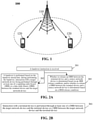
- the communication system 100 may include a network device 110, herein the network device 110 may be a device that communicates with a terminal 120 (or called a communication terminal or terminal).
- the network device 110 may provide communication coverage for a specific geographic area, and may communicate with terminals located within the coverage area.
- the network device 110 may be a Base Transceiver Station (BTS) in a GSM system or a CDMA system, or a NodeB (NB) in a WCDMA system, an Evolutional Node B (eNB or eNodeB) in an LTE system, or a wireless controller in the Cloud Radio Access Network (CRAN), or the network device may be a mobile switching center, a relay station, an access point, an in-vehicle device, a wearable device, a hub, a switch, a bridge, a router, a network-side device in 5G networks or a network device in the future enhanced Public Land Mobile Network (PLMN), etc.
- BTS Base Transceiver Station
- NB NodeB
- eNB or eNodeB Evolutional Node B
- CRAN Cloud Radio Access Network
- the network device may be a mobile switching center, a relay station, an access point, an in-vehicle device, a wearable device, a hub, a switch,
- the communication system 100 further includes at least one terminal 120 located within the coverage of the network device 110.
- Terminal includes but is not limited to an apparatus that is configured to receive or send communication signals via wired line connections, such as via Public Switched Telephone Networks (PSTN), Digital Subscriber Lines (DSL), digital cables, direct cable connections and/or another data connections/networks; and/or via wireless interfaces, such as wireless interfaces configured for cellular networks, wireless local area networks (WLAN), like digital TV network of DVB-H networks, satellite networks, AM-FM broadcast transmitters and/or another terminal and/or Internet of Things (IoT) device.
- PSTN Public Switched Telephone Networks
- DSL Digital Subscriber Lines
- WLAN wireless local area networks
- IoT Internet of Things
- a terminal set to communicate via a wireless interface may be referred to as a "wireless communication terminal", a “wireless terminal” or a “mobile terminal”.
- mobile terminals include but are not limited to satellites or cellular phones; Personal Communications System (PCS) terminals that can combine cellular radio phones with data processing, fax, and data communication capabilities; PDA that includes radio phones, pagers, Internet/intranet access, Web browser, memo pad, calendar, and/or Global Positioning System (GPS) receiver; and conventional laptop and/or palmtop receivers or other electronic apparatuses including radio telephone transceivers.
- PCS Personal Communications System
- GPS Global Positioning System
- the terminal may refer to access terminals, user equipment (UE), user units, user stations, mobile stations, mobile platforms, remote stations, remote terminals, mobile device, user terminals, terminals, wireless communication device, user agents or user apparatuses.
- the access terminal may be cellular phones, cordless phones, Session Initiation Protocol (SIP) phones, Wireless Local Loop (WLL) stations, personal digital assistants (PDA), handheld devices with wireless communication functions, computing devices or other processing devices connected to wireless modems, in-vehicle devices, wearable devices, terminals in 5G networks, or terminals in the future enhanced PLMN, etc.
- a communication mode of Device to Device may be performed between the terminals 120.
- the 5G system or the 5G network may also be referred to as a New Radio (NR) system or an NR network.
- NR New Radio
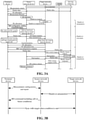
- An embodiment of the present disclosure provides a handover processing method applied to a terminal device, as illustrated in FIG. 2(A) , including the following operations.
- a handover command is received.
- a handover is performed based on the handover command, during performing the handover, interaction with a target network device being performed through at least one of a signaling radio bearer (SRB) or a data radio bearer (DRB) between the terminal device and the target network device.
- SRB signaling radio bearer
- DRB data radio bearer
- the method further includes the following operations. After receiving the handover command, at least one of the following is performed.
- whether to release an SRB between the terminal device and a source network device is determined based on an SRB release condition; or whether to release a DRB between the terminal device and a source network device is determined based on a DRB release condition.
- a sequence of execution of the foregoing operation 202 and the operation 203 is not limited.
- the operation 202 and the operation 203 may be performed at the same time.
- the operation 202 may be performed first and then the operation 203 may be performed, or the operation 203 may be performed first and then the operation 202 may be performed.
- This embodiment is not exhaustive.
- the terminal device When performing the operation 203, it may be that during performing the handover, the terminal device performs at least one of: determining whether to release an SRB between the terminal device and a source network device based on an SRB release condition; or determining whether to release a DRB between the terminal device and a source network device based on a DRB release condition.
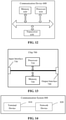
- Handover preparation includes the following operations.
- a source network device configures a terminal device to perform measurement reporting and transmits a handover request to a target network device based on the reporting result of the terminal device.
- a radio resource control (RRC) message mobilityControlInformation is configured for the terminal device.
- the RRC message mobilityControlInformation includes a random access channel (RACH) resource, a cell-radio network temporary identifier (C-RNTI), a target network device security algorithm, system messages of a target network device, and the like.
- RACH random access channel
- C-RNTI cell-radio network temporary identifier
- target network device security algorithm system messages of a target network device, and the like.
- Handover execution includes the following operations.
- the source network device forwards the mobilityControlInformation to the terminal device.
- the terminal device After receiving the handover command, the terminal device initiates a random access to the target network device.
- the source network device transmits a sequence number status transfer (SN STATUS TRANSFER) to the target network device for informing the target network device of an uplink packet data convergence protocol (PDCP) sequence number reception state and a downlink PDCP sequence number transmission state.
- SN STATUS TRANSFER sequence number status transfer
- Handover completion includes the following operations. After the terminal device successfully accesses the target network device (random access succeeds), the target network device transmits a PATH SWITCH REQUEST to request a mobility management entity (MME) to switch a downlink path. After the path switch is completed, the target network device instructs the source network device to release the terminal device context, and the handover is completed.
- MME mobility management entity
- Conditional handover avoids the problem that it is late when the UE performs a handover because time for the handover preparation is too long, and configures handover command (HO command) for the terminal device in advance.
- the moving trajectory of the terminal device is specific, so that the network device may allocate the target network device to the UE in advance, and includes a condition for triggering the terminal device to perform a handover in the HO command, and when the configured condition is satisfied, the terminal device initiates an access request to the target network device.
- eMBB Enhanced Mobile Broadband
- the SRB release condition includes at least one of:
- the MSG1, the RAR, the MSG3, and the MSG4 are understood to be information transmitted and received at the time of initiating a random access, and the RAR is an MSG2.
- the MSG1 refers to an open-loop power control process in which a terminal device gradually boosts a power to transmit probe.
- the RAR that is, the MSG2, refers to an ACK returned by the network device side according to the received MSG1 at a certain moment.
- the MSG3 refers to an RRC setup request or a re-establishment request transmitted by a terminal device.
- the MSG4 refers to an RRC setup or re-establishment command transmitted by the network device on the network side to the terminal device.
- SRB release conditions are described as follows.
- the SRB of the source network device may be released when the terminal device transmits the MSG1.
- the SRB of the source network device may be released when a first preset period of time after the terminal device transmits the MSG1 is reached.
- the first preset period of time is set according to the actual situation.
- the SRB of the source network device may be released when the terminal device receives the RAR. That is, the SRB of the source network device is released when the terminal device receives the MSG2.
- the SRB between the source network device and the terminal device is released when a second preset period of time after the terminal device receives the MSG2 is reached. The second preset period of time is set according to the actual situation.
- the terminal device receiving the RAR represents accessing the target network device successfully.
- CBRA Contention Based Random Access
- the terminal device receiving the RAR only represents receiving the MSG2 successfully.
- the SRB for the source network device may be released after the MSG3 is transmitted.
- the terminal device transmits RRC reconfiguration completion messages.
- the SRB of the source network device may be released when a third preset period of time after the MSG3 is transmitted is reached. The third preset period of time is set according to the actual situation.
- the SRB for the source network device is released when the handover is completed.
- the SRB for the source network device is released after switching to the target network device.
- a moment when the handover is completed may be interpreted as a moment when it is determined that the handover is successful, for example, a moment when it is confirmed that a connection is established with the target network device.
- a moment after switching to the target network device can be interpreted as a moment when a period of time after it is determined that the handover is successful is reached.
- a timer may be started at a moment when it is determined that the handover is completed, and a moment when the timer stops or reaches a preset period of time may be used as the moment after the handover is completed.
- the SRB may be released when the MSG4 is received, or the SRB may be released when a fourth preset period of time after the MSG4 is received is reached.
- the fourth preset period of time is set according to actual conditions.
- the DRB release condition includes at least one of:
- the DRB release condition includes at least one of the followings.
- the DRB for the source network device may be released when the terminal device transmits the MSG1.
- the DRB for the source network device may be released when a first preset period of time after the terminal device transmits the MSG1 is reached. The first preset period of time is set according to the actual situation.
- the DRB for the source network device may be released when the terminal device receives the RAR. That is, the DRB for the source network device is released when the terminal device receives the MSG2.
- the DRB between the source network device and the terminal device may be released when a second preset period of time after the terminal device receives the MSG2 is reached. The second preset period of time is set according to the actual situation.
- the terminal device receiving the RAR represents accessing the target network device successfully.
- CBRA Contention Based Random Access
- the terminal device receiving the RAR only represents receiving the MSG2 successfully.
- the DRB for the source network device may be released after the MSG3 is transmitted.
- the terminal device transmits RRC reconfiguration completion messages.
- the DRB for the source network device may be released when a third preset period of time after the MSG3 is transmitted is reached. The third preset period of time is set according to the actual situation.
- the DRB for the source network device is released when the handover is completed.
- the DRB for the source network device is released after switching to the target network device.
- a moment when the handover is completed may be interpreted as a moment when it is determined that the handover is successful, for example, a moment when it is confirmed that a connection is established with the target network device.
- a timer may be started at a moment when it is determined that the handover is completed, and a moment when the timer stops or reaches a preset period of time may be used as the moment after the handover is completed.
- the DRB is released when the MSG4 is received, or the DRB is released when a fourth preset period of time after the MSG4 is received is reached.
- the fourth preset period of time is set according to actual conditions.
- the handover command includes configuration information.
- the configuration information includes at least one of an SRB release condition or a DRB release condition configured by the network side for the terminal device.
- the SRB release condition and the DRB release condition included in the handover command may be at least one of: at least part of the above-described SRB release conditions, that is, one or more of the SRB release conditions, or at least part of the DRB release conditions, that is, one or more of the DRB release conditions.
- the SRB release condition and the DRB release condition included in the configuration information in the handover command may be different.
- the SRB release condition is releasing the SRB between the terminal device and the source network device in response to transmission of an MSG1
- the DRB release condition is releasing the DRB between the terminal device and the source network device in response to the handover being completed.
- the time for releasing the SRB and the DRB between the terminal device and the source network device may be different, and of course, may be the same.
- the SRB and the DRB are both released at the completion of the handover.
- the time for releasing the SRB and the DRB between the terminal device and the source network device may be configured according to the actual situation, and the present embodiment will not be exhaustive.
- the condition for performing at least one of establishing the SRB between the terminal device and the target network device or activating the SRB between the terminal device and the target network device and the condition for performing at least one of establishing the DRB between the terminal device and the target network device or activating the DRB between the terminal device and the target network device will be described as follows.
- the method further includes at least one of:
- the receipt of the handover command may be a moment when the handover command is received, or a period of time after the handover command is received.
- the receipt of the RAR may be a moment when the RAR is received, or a period of time after the RAR is received.
- the transmission of the MSG3 may be a moment when the MSG3 is transmitted, or a period of time after the MSG3 is transmitted, or a period of time before the MSG3 is transmitted.
- the period of time before the MSG3 is transmitted and the period of time after the MSG3 is transmitted may be the same or different, which is set according to actual conditions.
- the difference between establishing an SRB and activating an SRB can be understood as follows. Establishing an SRB means that an SRB has been configured for a terminal device by a network, and the terminal device has configured/established the SRB according to network configuration information, but the SRB has not been activated at this time. Activating the SRB means that the SRB has been established and has been used for signaling interaction between the terminal and the network, i.e. activated. In addition, the differences between establishing a DRB and activating a DRB are similar to those of the SRB, which will not be described later.
- the timing or condition for establishing the SRB may be interpreted as establishing the SRB for the target network device upon receipt of the handover command (HO command), or establishing the SRB after the RAR is received.
- HO command handover command
- the timing or condition for activating the SRB may be interpreted as activating the SRB when the terminal device transmits the MSG3, or activating the SRB after the RAR is received.
- both the SRB and the DRB for the target network device are established upon receipt of the handover command (HO command).
- HO command handover command
- the method further includes at least one of:
- the receipt of the handover command may be a moment when the handover command is received, or a period of time after the handover command is received.
- the transmission of the MSG1 may be a moment when the MSG1 is transmitted, or a period of time after the MSG1 is transmitted, or a period of time before the MSG1 is transmitted.
- the period of time before the MSG1 is transmitted and the period of time after the MSG1 is transmitted may be the same or different, which is set according to actual conditions.
- the receipt of the MSG2 may be a moment when the RAR is received, or a period of time after the RAR is received.
- the transmission of the MSG3 may be a moment when the MSG3 is transmitted, or a period of time after the MSG3 is transmitted, or a period of time before the MSG3 is transmitted.
- the period of time before the MSG3 is transmitted and the period of time after the MSG3 is transmitted may be the same or different, which is set according to actual conditions.
- the DRB establishing condition is establishing the DRB for the target network device upon receipt of the handover command (HO command).
- the timing or condition for activating a DRB is one of the following.
- timing or condition for establishing and activating a DRB may be the same or different, which will not be exhaustive here.
- DRB and the SRB between the terminal device and the target network device may be established or activated at different times, or may be established or activated at the same time.
- the present embodiment further describes in detail how to perform data transmission.
- the method further includes one of the followings.
- both the DRB between the terminal device and the source network device and the DRB between the terminal device and the target network device are activated, data transmission is performed through the DRB between the terminal device and the source network device and the DRB between the terminal device and the target network device. That is, in a case that both the DRB for the source network device and the DRB for the target network device exist, data interaction with the network device side can be performed through both the DRB for the source network device and the DRB for the target network device.
- the SRB between the terminal device and the source network device may be in an active state or may has been released; and similarly, the SRB between the terminal device and the target network device may be in an active state or in a released state, which does not affect the interaction with the network device side through the DRB.
- both the SRB between the terminal device and the source network device and the SRB between the terminal device and the target network device are activated, data transmission is performed through the SRB between the terminal device and the source network device and the SRB between the terminal device and the target network device. That is, in a case that both the SRB for the source network device and the SRB for the target network device exist, signaling interaction with the network device side is performed through both the SRB for the source network device and the SRB for the target network device.
- the DRB between the terminal device and the source network device may be in an active state or may have been released; and similarly, the DRB between the terminal device and the target network device may be in an active state or in a released state, which does not affect the signaling interaction with the network device side through the SRB.
- DRB between the terminal device and the source network device and the SRB between the terminal device and the target network device When both the DRB between the terminal device and the source network device and the SRB between the terminal device and the target network device are activated, data transmission is performed through the DRB between the terminal device and the source network device and the SRB between the terminal device and the target network device. That is, data interaction is performed with the source network device side through the DRB, and signaling interaction is performed with the target network device through the DRB between the terminal device and the target network device.
- the method further includes at least one of:
- the foregoing several cases may exist separately or simultaneously.
- the SRB for the source network device is in an active state
- the SRB for the target network device is not activated, but the DRB for the source network device is released, and the DRB for the target network device is in an active state
- signaling interaction is performed through the SRB between the terminal device and the source network device and the data transmission is performed through the DRB between the terminal device and the target network device.
- the DRB for the target network device is in an active state
- signaling interaction is performed through the SRB between the terminal device and the source network device and the data transmission is performed through the DRB between the terminal device and the target network device.
- the data transmission is performed through the DRB between the terminal device and the target network device.
- data and/or signaling interaction is/are performed based on the currently activated SRB and/or DRB of the target network device side, and data and/or signaling interaction is/are performed based on the currently activated SRB and/or DRB for the source network device side.
- the method further includes the following operations.
- At least one of configured SRB between the terminal device and the target network device or configured DRB between the terminal device and the target network device is determined via the handover command or via a system message. That is, a bearer to be established may be issued by a handover command, or may be acquired in advance when a system message is received.
- the capability of the terminal device may include the capability information on whether the terminal device is capable of establishing the DRB and/or the SRB with the source network device and the target network device at the same time. Of course, other capabilities may be included, which will not be exhaustive in this embodiment.
- the network side may perform bearer configuration for the terminal device according to the capability information reported by the terminal device, the bearer configuration including at least one of an SRB configuration between the terminal device and the target network device or a DRB configuration between the terminal device and the target network device, and the like.
- the processing on the target network device side includes an operation 301 of interacting with a terminal device through at least one of a data radio bearer (DRB) between the target network device and the terminal device or a signaling radio bearer (SRB) between the target network device and the terminal device.
- DRB data radio bearer
- SRB signaling radio bearer
- establishment and activation of at least one of the DRB or the SRB can be performed with the terminal device, and finally data and signaling interaction can be performed through at least one of the DRB or the SRB.
- the time for establishing and activating at least one of the DRB or the SRB between the target network device and the terminal device may be the same as those described above, which will not be repeated herein.
- the target network device configures at least one of the SRB or the DRB for the terminal device.
- the target network device receives capability reported by the terminal device and determines at least one of the SRB or the DRB to be configured for the terminal device based on the received capability of the terminal device.
- the method performed by the target network device for transmitting at least one of the configured SRB or the DRB corresponds to the method performed at the terminal device side. That is, at least one of the SRB or the DRB is configured for the terminal device via a handover command or via a system message.
- the processing on the source network device side includes forwarding a handover command for the terminal device.
- the handover command may include configuration information.
- the configuration information may include at least one of an SRB release condition or a DRB release condition configured by the network side for the terminal device. A specific release condition is described above, which will not be repeated herein.
- the source network device retains at least one of data interaction or signaling interaction with the terminal device before the terminal device releases the at least one of the SRB or DRB between the terminal device and the source device.
- a network device is interpreted as a base station device on a network side. That is, a source network device may be a source base station, and a target network device may be a target base station.
- the terminal device when performing a handover, only one SRB is established and the DRB between the terminal device and the source network device and the DRB between the terminal device and the target network device are established.
- the terminal device establishes bearers (including the DRB and the SRB) between the terminal device and the target network device based on the configuration information of the mobility control information in the HO command upon receiving the HO command.
- the UE Based on the configuration information in the HO command, the UE initiates a random access to the target network device, and bearer configurations (including establishment, activation and release) between the UE and the source network device and between the UE and the target network device during performing the handover are as illustrated in FIG. 4 and FIG. 5 .
- the establishment and release of the DRB includes the following operations.
- the establishment and release of the SRB includes the following operations.
- the terminal device when performing a handover, there are a single SRB and a single DRB.
- the terminal device establishes bearers (including the DRB and the SRB) between the terminal device and the target network device based on the configuration information of the mobility control information in the HO command upon receiving the HO command.
- the UE Based on the configuration information in the HO command, the UE initiates a random access to the target network device, and bearer configurations (including establishment, activation and release) between the terminal device and the source network device and between the terminal device and the target network device during performing the handover are as illustrated in FIG. 6 and FIG. 7 .
- the terminal device establishes bearers (including the DRB and the SRB) between the terminal device and the target network device based on the configuration information of the mobility control information in the HO command upon receiving the HO command. Based on the configuration information in the HO command, the UE initiates a random access to the target network device, and bearer configurations (including establishment, activation and release) between the terminal device and the source network device and between the terminal device and the target network device during performing the handover are as illustrated in FIG. 8 and FIG. 9 .
- the present example is described with respect to a situation that the SRB and the DRB for the source network device are not released at the same time, which includes the following operations.
- the present example provides only an explanation of the timing for releasing the SRB and the DRB between the terminal device and the source network device. In fact, there may be more combinations of different timing for releasing the SRB and the DRB. Reference is made to the description of the foregoing SRB release condition and the DRB release condition in the present embodiment, which is no exhaustive herein.
- a fifth example differs from the fourth example in that the present example describes a situation that the DRB and the SRB between the terminal device and a target network device are not established at the same time, which includes the following operations.
- the present example describes a situation that the SRB and the DRB between the UE and the source network device are released at the same time, and the SRB and the DRB between the UE and the target base station are established at the same time.
- the SRB between the UE and the target base station and the DRB between the UE and the target base station are established at different times, and the SRB between the UE and the source base station and the DRB between the UE and the source base station are related at different times, except that the present embodiment will not be exhaustive.
- the terminal device during performing a handover it is possible to for the terminal device to determine, according to the release condition, whether to release the SRB and/or the DRB established between the terminal device and the source network device, and at the same time, perform interaction through the SRB and/or the DRB between the terminal device and the target network device, so that the complexity of the terminal device is reduced to the maximum extent while the reduction of the interruption time during the handover is ensured, thereby ensuring the continuity of the service.
- the present embodiment further provides a terminal device, as illustrated in FIG. 10 , the terminal device includes a first communication unit 41 and a first processing unit 42.
- the first communication unit 41 is configured to receive a handover command.
- the first processing unit 42 is configured to perform, based on the handover command, a handover, during performing the handover, based on the first communication unit 41, interaction with a target network device is performed through at least one of a signaling radio bearer (SRB) or a data radio bearer (DRB) between the terminal device and the target network device.
- SRB signaling radio bearer
- DRB data radio bearer
- the first processing unit 42 is further configured to perform at least one of: determining whether to release an SRB between the terminal device and a source network device based on an SRB release condition; or determining whether to release a DRB between the terminal device and a source network device based on a DRB release condition.
- the first processing unit 42 is configured to: during performing a handover, perform at least one of: determining whether to release an SRB between the terminal device and a source network device based on an SRB release condition; or determining whether to release a DRB between the terminal device and a source network device based on a DRB release condition.
- eMBB Enhanced Mobile Broadband
- the SRB release condition includes at least one of:
- the MSG1, the RAR, the MSG3, and the MSG4 are understood to be information transmitted and received at the time of initiating a random access, and the RAR is an MSG2.
- the MSG1 refers to an open-loop power control process in which a terminal device gradually boosts a power to transmit probe.
- the RAR that is, the MSG2, refers to an ACK returned by the network device side according to the received MSG1 at a certain moment.
- the MSG3 refers to an RRC setup request or a re-establishment request transmitted by a terminal device.
- the MSG4 refers to an RRC setup or re-establishment command transmitted by the network device on the network side to the terminal device.
- the DRB release condition includes at least one of:
- the handover command includes configuration information.
- the configuration information includes at least one of the SRB release condition or the DRB release condition configured by a network side for the terminal device.
- the SRB release condition and the DRB release condition included in the handover command may be at least one of: at least part of the above-described SRB release conditions, that is, one or more of the SRB release conditions, or at least part of the above-described DRB release conditions, that is, one or more of the DRB release conditions.
- the SRB release condition and the DRB release condition included in the configuration information in the handover command may be different.
- the SRB release condition is releasing the SRB between the terminal device and the source network device in response to transmission of an MSG1
- the DRB release condition is releasing the DRB between the terminal device and the source network device in response to the handover being completed.
- the times for releasing the SRB and the DRB between the terminal device and the source network device may be different, and of course, may be the same.
- the SRB and the DRB are both released at the completion of the handover.
- the time for releasing the SRB and the DRB between the terminal device and the source network device is configured according to the actual situation, and the present embodiment will not be exhaustive.
- the condition for performing at least one of establishing the SRB between the terminal device and the target network device or activating the SRB between the terminal device and the target network device and the condition for performing at least one of establishing the DRB between the terminal device and the target network device or activating the DRB between the terminal device and the target network device will be described as follows.
- the first processing unit 42 is further configured to perform at least one of:
- the receipt of the handover command may be a moment when the handover command is received, or a period of time after the handover command is received.
- the receipt of the RAR may be a moment when the RAR is received, or a period of time after the RAR is received.
- the transmission of the MSG3 may be a moment when the MSG3 is transmitted, or a period of time after the MSG3 is transmitted, or a period of time before the MSG3 is transmitted.
- the period of time before the MSG3 is transmitted and the period of time after the MSG3 is transmitted may be the same or different, which is set according to actual conditions.
- the difference between establishing an SRB and activating an SRB can be understood as follows. Establishing an SRB means that an SRB has been configured for a terminal device by a network, and the terminal device has configuree/established the SRB according to network configuration information, but the SRB has not been activated at this time. Activating the SRB means that the SRB has been established and has been used for signaling interaction between the terminal and the network, i.e. activated. In addition, the differences between establishing a DRB and activating a DRB are similar to those of the SRB, which will not be described later.
- the timing or condition for establishing the SRB may be interpreted as establishing the SRB for the target network device upon receipt of the handover command (HO command), or establishing the SRB after the RAR is received.
- HO command handover command
- the timing or condition for activating the SRB may be interpreted as activating the SRB when the terminal device transmits the MSG3, or activating the SRB after the RAR is received.
- the foregoing case is merely an example, and the timing or the condition of establishment and activation may be the same in practice.
- the SRB and the DRB for the target network device are established upon receipt of the handover command (HO command). This embodiment will not be exhaustive.
- the first processing unit 42 is further configured to perform at least one of:
- the receipt of the handover command may be a moment when the handover command is received, or a period of time after the handover command is received.
- the transmission of the MSG1 may be a moment when the MSG1 is transmitted, or a period of time after the MSG1 is transmitted, or a period of time before the MSG1 is transmitted.
- the period of time before the MSG1 is transmitted and the period of time after the MSG1 is transmitted may be the same or different, which is set according to actual conditions.
- the receipt of the MSG2 may be a moment when the RAR is received, or a period of time after the RAR is received.
- the transmission of the MSG3 may be a moment when the MSG3 is transmitted, or a period of time after the MSG3 is transmitted, or a period of time before the MSG3 is transmitted.
- the period of time before the MSG3 is transmitted and the period of time after the MSG3 is transmitted may be the same or different, which is set according to actual conditions.
- the DRB establishing condition may be establishing the DRB between the terminal device and the target network device upon receipt of the handover command (HO command).
- HO command handover command
- the timing or condition for activating a DRB is one of the following.
- timing or condition for establishing and activating a DRB may be the same or different, which will not be exhaustive here.
- DRB and the SRB between the terminal device and the target network device may be established or activated at different times, or may be established or activated at the same time.
- the present embodiment further describes in detail how to perform data transmission.
- the first processing unit 42 is further configured to perform at least one of the following operations.
- both the DRB between the terminal device and the source network device and the DRB between the terminal device and the target network device are activated, based on the first communication unit 41, data transmission is performed through the DRB between the terminal device and the source network device and the DRB between the terminal device and the target network device. That is, in a case that both the DRB for the source network device and the DRB for the target network device exist, data interaction with the network device side can be performed through both the DRB for the source network device and the DRB for the target network device.
- the SRB between the terminal device and the source network device may be in an active state or may have been released; and similarly, the SRB between the terminal device and the target network device may be in an active state or in a released state, which does not affect the interaction with the network device side through the DRB.
- both the SRB between the terminal device and the source network device and the SRB between the terminal device and the target network device are activated, based on the first communication unit 41, data transmission is performed through the SRB between the terminal device and the source network device and the SRB between the terminal device and the target network device. That is, in a case that both the SRB for the source network device and the SRB for the target network device exist, signaling interaction with the network device side is performed through both the SRB for the source network device and the SRB for the target network device.
- the DRB between the terminal device and the source network device may be in an active state or may have been released; and similarly, the DRB between the terminal device and the target network device may be in an active state or in a released state, which does not affect the signaling interaction with the network device side through the SRB.
- both the DRB between the terminal device and the source network device and the SRB between the terminal device and the target network device are activated, based on the first communication unit 41, data transmission is performed through the DRB between the terminal device and the source network device and the SRB between the terminal device and the target network device. That is, data interaction is performed with the source network device side through the DRB, and signaling interaction is performed with the target network device through the DRB between the terminal device and the target network device.
- both the SRB between the terminal device and the source network device and the DRB between the terminal device and the target network device are activated, based on the first communication unit 41, data transmission is performed through the SRB between the terminal device and the source network device and the DRB between the terminal device and the target network device. That is, signaling interaction with the source network device side is performed through the SRB, and data interaction with the target network device side is performed through the DRB between the terminal device and the target network device.
- the first processing unit 42 is further configured to perform at least one of:
- the foregoing several cases may exist separately or simultaneously.
- the SRB for the source network device is in an active state
- the SRB for the target network device is not activated, but the DRB between for the source network device is released, and the DRB for the target network device is in an active state
- signaling interaction is performed through the SRB between the terminal device and the source network device and the data transmission is performed through the DRB between the terminal device and the target network device.
- data and/or signaling interaction is/are performed based on the currently activated SRB and/or DRB of the target network device side, and data and/or signaling interaction is/are performed based on the currently activated SRB and/or DRB of the source network device side.
- the first communication unit 41 is configured to receive a handover command or a system message.
- the first processing unit 42 is configured to determine at least one of configured SRB between the terminal device and the target network device or configured DRB between the terminal device and the target network device through the handover command or the system message. That is, a bearer to be established may be issued by a handover command, or may be acquired in advance when a system message is received.
- the capability of the terminal device may include the capability information on whether the terminal device is capable of establishing the DRB and/or the SRB with the source network device and the target network device at the same time. Of course, other capabilities may be included, which will not be exhaustive in this embodiment.
- the network side may perform bearer configuration for the terminal device according to the capability information reported by the terminal device, the bearer configuration including at least one of an SRB configuration between the terminal device and the target network device or a DRB configuration between the terminal device and the target network device, and the like.
- the target network device includes a second communication unit 51 configured to interact with the terminal device through at least one of a DRB between the target network device and the terminal device or an SRB between the target network device and the terminal device.
- establishment and activation of at least one of the DRB or the SRB can be performed with the terminal device, and finally data and signaling interaction can be performed through at least one of the DRB or the SRB.
- the time for establishing and activating at least one of the DRB or the SRB between the second communication unit 51 and the terminal device may be the same as those described above, which will not be repeated herein.
- the target network device configures at least one of the SRB or the DRB for the terminal device.
- the target network device further includes a second processing unit 52.
- the second processing unit 52 is configured to determine at least one of the SRB or the DRB to be configured for the terminal device based on the capability of the terminal device.
- the second communication unit 51 is configured to receive capability reported by the terminal device.
- the manner in which the second communication unit 51 transmits the at least one of configuration of the SRB or configuration of the DRB corresponds to the method performed at the terminal device side. That is to say, the second communication unit 51 may configure at least one of the SRB or the DRB for the terminal device via a handover command or via a system message.
- the processing on the source network device side includes forwarding a handover command to the terminal device.
- the handover command includes configuration information.
- the configuration information includes at least one of an SRB release condition or a DRB release condition configured by the network side for the terminal device. A specific release condition is described above, which will not be repeated herein.
- the source network device retains at least one of data interaction or signaling interaction with the terminal device before the terminal device releases the at least one of the SRB or DRB between the terminal device and the source device.
- the terminal device determines whether to release the SRB and/or the DRB established between the terminal device and the source network device according to the release condition, and at the same time, perform interaction through the SRB and/or the DRB between the terminal device and the target network device during performing a handover, so that the complexity of the terminal device is reduced to the maximum extent while the reduction of the interruption time during the handover is ensured, thereby ensuring the continuity of the service.
- FIG. 12 is a schematic structural diagram of a communication device 600 according to an embodiment of the present disclosure.
- the communication device is a terminal device or a network device according to the embodiment.
- the communication device 600 illustrated in FIG. 12 includes a processor 610 configured to invoke and run computer programs from a memory to implement the methods in embodiments of the present disclosure.
- the communication device 600 further includes a memory 620.
- the processor 610 is configured to invoke and run computer programs from the memory 620 to implement the method in the embodiments of the present disclosure.
- the memory 620 is a separate device independent of the processor 610, or is integrated in the processor 610.
- the communication device 600 further includes a transceiver 630 that may be controlled by the processor 610 to communicate with other devices, specifically, to transmit information or data to other devices or receive information or data transmitted by other devices.
- a transceiver 630 may be controlled by the processor 610 to communicate with other devices, specifically, to transmit information or data to other devices or receive information or data transmitted by other devices.
- the transceiver 630 includes a transmitter and a receiver.
- the transceiver 630 further includes antennas, and the number of the antennas may be one or more.
- the communication device 600 may be specifically a network device according to an embodiment of the present disclosure, and the communication device 600 may implement corresponding procedures implemented by the network device in each method according to the embodiment of the present disclosure. For brevity, details are not described herein.
- the communication device 600 may be specifically a terminal device or a network device according to an embodiment of the present disclosure, and the communication device 600 may implement corresponding procedures implemented by a mobile terminal/terminal device in each method in the embodiment of the present disclosure. For brevity, details are not described herein.
- FIG. 13 is a schematic structural diagram of a chip according to an embodiment of the present disclosure.
- the chip 700 illustrated in FIG. 13 includes a processor 710 configured to invoke and run computer programs from memory to implement the methods according to the embodiments of the present disclosure.
- the chip 700 further includes a memory 720.
- the processor 710 is configured to invoke and run computer programs from the memory 720 to implement the method in the embodiments of the present disclosure.
- the memory 720 is a separate device independent of the processor 710, or is integrated in the processor 710.
- the chip 700 further includes an input interface 730.
- the processor 710 controls the input interface 730 to communicate with other devices or chips, and specifically, may acquire information or data transmitted by other devices or chips.
- the chip 700 further includes an output interface 740.
- the processor 710 controls the output interface 740 to communicate with other devices or chips, and specifically outputs information or data to other devices or chips.
- the chip is applied to the network device in the embodiment of the present disclosure, and the chip implements corresponding procedures implemented by the network device in the various methods in the embodiment of the present disclosure. For brevity, details are not described herein.
- the chip is applied to the terminal device in the embodiment of the present disclosure, and the chip implements corresponding procedures implemented by the terminal device in each method in the embodiment of the present disclosure. For brevity, details are not described herein.
- chips mentioned in the embodiments of the present disclosure may also be referred to as system-level chips, system chips, chip systems or system-on-chip chips.
- FIG. 14 is a schematic block diagram of a communication system 800 according to an embodiment of the present disclosure. As illustrated in FIG. 14 , the communication system 800 includes a terminal device 810 and a network device 820.
- the terminal device 810 may be used to implement the corresponding functions implemented by the terminal device in the above method
- the network device 820 may be used to implement the corresponding functions implemented by the network device in the above method.
- details are not described herein.
- the processor of the embodiment of the disclosure may be an integrated circuit chip with signal processing capability.
- the operations of the foregoing method embodiments may be completed by indications in the form of software or the integrated logic circuits of the hardware in the processor.
- the above-mentioned processor may be a general-purpose processor, a digital signal processor (DSP), an application specific integrated circuit (ASIC), a field programmable gate array (FPGA) or other programming logic devices, discrete gates or transistor logic devices, or discrete hardware components.
- DSP digital signal processor
- ASIC application specific integrated circuit
- FPGA field programmable gate array
- the methods, operations, and logical block diagrams disclosed in the embodiments of the disclosure may be implemented or executed.
- the general-purpose processor may be a microprocessor or the processor may further be any conventional processor or the like.
- the operations of the method disclosed in the embodiments of the disclosure may be directly embodied as being executed and completed by a hardware decoding processor, or executed and completed by a combination of hardware and software modules in the decoding processor.
- the software module may be located in a mature storage medium in the field such as a random access memory, a flash memory, a read-only memory, a programmable read-only memory, or an electrically erasable programmable memory or a register.
- the storage medium is located in the memory, and the processor reads the information in the memory and completes the operations of the above-mentioned method in combination with its hardware.
- the memory in the embodiment of the disclosure may be a volatile memory or a non-volatile memory, or may include both volatile and non-volatile memory.
- the non-volatile memory may be a read-only memory (ROM), a programmable ROM (PROM), an erasable PROM (EPROM), an electrically EPROM (EEPROM) or a flash memory.
- the volatile memory may be a random access memory (RAM), which is used as an external cache.
- RAM direct rambus RAMs
- SRAM static RAMs
- DRAM dynamic RAMs
- SDRAM synchronous DRAMs
- DDR SDRAM double data rate SDRAMs
- ESDRAM enhanced SDRAMs
- SLDRAM synchlink DRAMs
- DR RAM direct rambus RAMs
- the memory in the embodiment of the disclosure may further be a static RAM (SRAM), a dynamic RAM (DRAM), a synchronous DRAM (SDRAM), a double data rate SDRAM (DDR SDRAM), an enhanced SDRAM (ESDRAM), a synch link DRAM (SLDRAM) or a direct rambus RAM (DR RAM), etc. That is to say, the memory in the embodiments of the disclosure is intended to include but is not limited to these and any other suitable types of memory.
- SRAM static RAM
- DRAM dynamic RAM
- SDRAM synchronous DRAM
- DDR SDRAM double data rate SDRAM
- ESDRAM enhanced SDRAM
- SLDRAM synch link DRAM
- DR RAM direct rambus RAM
- the embodiment of the disclosure further provides a computer-readable storage medium for storing computer programs.
- the computer-readable storage medium may be applied to the network device in the embodiment of the disclosure, and computer programs cause the computer to execute the corresponding procedures implemented by the network device in each method of the embodiment of the disclosure. For the sake of brevity, details are not repeated here.
- the computer-readable storage medium may be applied to the mobile terminal/terminal device in the embodiments of the disclosure, and the computer programs cause the computer to execute the corresponding procedures implemented by the mobile terminal/terminal device in each method of the embodiment of the disclosure. For the sake of brevity, details are not repeated here.
- the embodiment of the disclosure further provides computer program product, including computer program instructions.
- the computer program product may be applied to the network device in the embodiment of the disclosure, and the computer program instructions cause the computer to execute the corresponding procedures implemented by the network device in each method of the embodiment of the disclosure.
- the computer program instructions cause the computer to execute the corresponding procedures implemented by the network device in each method of the embodiment of the disclosure.
- the computer program product may be applied to the mobile terminal/terminal device in the embodiments of the disclosure, and the computer program instructions cause the computer to execute the corresponding procedures implemented by the mobile terminal/terminal device in each method of the embodiment of the disclosure.
- the computer program instructions cause the computer to execute the corresponding procedures implemented by the mobile terminal/terminal device in each method of the embodiment of the disclosure.
- the embodiment of the disclosure further provides a computer program.
- the computer program may be applied to the network device in the embodiment of the disclosure.
- the computer program runs on the computer, the computer is caused to execute the corresponding procedures implemented by the network device in each method of the embodiment of the disclosure. For the sake of brevity, details are not repeated here.
- the computer program may be applied to the mobile terminal/terminal device in the embodiment of the disclosure.
- the computer program runs on the computer, the computer can execute the corresponding procedures implemented by the mobile terminal/terminal device in each method of the embodiment of the disclosure. For the sake of brevity, details are not repeated here.
- the disclosed system, apparatus and method may be implemented in other ways.
- the apparatus embodiments described above are only illustrative.
- the division of the units is only a logical function division, and there may be other divisions in actual implementation.
- multiple units or components may be combined or integrated into another system, or some features may be ignored or not implemented.
- the displayed or discussed mutual coupling or direct coupling or communication connection may be indirect coupling or communication connection through some interfaces, apparatuses or units, and may be in electrical, mechanical or other forms.
- the units described as separate components may or may not be physically separated, and the components displayed as units may or may not be physical units, that is, they may be located in one place, or they may be distributed on multiple network units. Some or all of the units may be selected according to actual needs to achieve the objectives of the solutions of the present embodiments.
- each embodiment of the disclosure may be integrated into one processing unit, or each unit may exist separately and physically, or two or more units may be integrated into one unit.
- the function is implemented in the form of a software functional unit and is sold or used as an independent product, it can be stored in a computer readable storage medium.
- the technical solution of the disclosure or the part that contributes to the related art or the part of the technical solution may be embodied in the form of a software product essentially, and the computer software product is stored in a storage medium including several indications to make a computer device (which may be a personal computer, a server or a network device, etc.) execute all or part of the operations of the methods described in the each embodiment of the disclosure.
- the aforementioned storage medium includes: U disks, mobile hard disks, read-only memories (ROM), random access memories (RAM), magnetic disks or optical disks and other media that can store program codes.
Landscapes
- Engineering & Computer Science (AREA)
- Computer Networks & Wireless Communication (AREA)
- Signal Processing (AREA)
- Mobile Radio Communication Systems (AREA)
Abstract
Description
- The present disclosure relates to the technical field of information processing, and particularly to a handover processing method, a terminal device, a network device, a computer storage medium, a chip, a computer readable storage medium, a computer program product, and computer programs.
- Procedures of a handover processing mainly include the following operations. A source base station transmits, based on a report result of a terminal device, a handover request to a target base station. After the target base station agrees to the handover request, the target base station configures the related information for the terminal device. Further, the source base station forwards mobility control information (mobilityControlInformation) to the terminal device, and the terminal device initiates a random access procedure to the target base station. When the terminal device successfully accesses the target base station (i.e., random access succeeds), a path switch is performed and the handover is finally completed.
- However, a certain interruption time may exist in the above-mentioned procedures of a handover processing, so that service continuity cannot be ensured.
- To solve the above technical problem, an embodiment of the present disclosure provides a handover processing method, a terminal device, a network device, a computer storage medium, a chip, a computer readable storage medium, a computer program product, and computer programs.
- According to a first aspect, there is provided a handover processing method, applied to a terminal device, the method including the following operations.
- A handover command is received.
- A handover is performed based on the handover command, during performing the handover, interaction with a target network device being performed through at least one of a signaling radio bearer (SRB) or a data radio bearer (DRB) between the terminal device and the target network device.
- The method further includes the following operations. After receiving the handover command, performing at least one of:
- determining whether to release an SRB between the terminal device and a source network device based on an SRB release condition; or determining whether to release a DRB between the terminal device and a source network device based on a DRB release condition.
- According to a second aspect, there is provided a handover processing method, applied to a target network device, the method including the following operations.
- Interaction with a terminal device is performed through at least one of a data radio bearer (DRB) between the target network device and the terminal device or a signaling radio bearer (SRB) between the target network device and the terminal device.
- According to a third aspect, there is provided a terminal device, including a first communication unit and a first processing unit.
- The first communication unit is configured to receive a handover command.
- The first processing unit is configured to: perform, based on the handover command, a handover, during performing the handover, interaction with a target network device being performed through at least one of a signaling radio bearer (SRB) or a data radio bearer (DRB) between the terminal device and the target network device.
- The first processing unit is further configured to perform at least one of: determining whether to release an SRB between the terminal device and a source network device based on an SRB release condition; or determining whether to release a DRB between the terminal device and a source network device based on a DRB release condition.
- According to a fourth aspect, there is provided a target network device, including a second communication unit.
- The second communication unit is configured to interact with a terminal device through at least one of a data radio bearer (DRB) between the target network device and the terminal device or a signaling radio bearer (SRB) between the target network device and the terminal device.
- According to a fifth aspect, there is provided a terminal device, including a processor and a memory. The memory is configured to store computer programs, and the processor is configured to invoke and run the computer programs stored in the memory to perform the method of the first aspect or various implementations thereof.
- In a sixth aspect, a network device is provided including a processor and a memory. The memory is configured to store computer programs, and the processor is configured to invoke and run the computer programs stored in the memory to perform the method of the second aspect or various implementations thereof.
- In a seventh aspect, there is provided a chip, configured to implement the method of any one of the first aspect and the second aspect, or various implementations thereof.
- In particular, the chip includes a processor configured to invoke and run computer programs from a memory, so as to enable a device installed with the chip to perform the method of any one of the first aspect and the second aspect described above, or various implementations thereof.
- In an eighth aspect, there is provided a computer readable storage medium, configured to store computer programs causing a computer to perform the method of any one of the first aspect and the second aspect described above, or various implementations thereof.
- In a ninth aspect, there is provided a computer program product including computer program instructions causing a computer to perform the method of any one of the first aspect and the second aspect, or various implementations thereof.
- In a tenth aspect, there is provided a computer program that, when running on a computer, causes the computer to perform the method of any one of the first aspect and the second aspect described above, or implementations thereof.
- By adopting the above-described solution, it is possible to for the terminal device to determine whether to release the SRB and/or the DRB established between the terminal device and the source network device according to the release condition, and at the same time, perform interaction through the SRB and/or the DRB between the terminal device and the target network device during performing a handover, so that the complexity of the terminal device is reduced to the maximum extent while the reduction of the interruption time during the handover is ensured, thereby ensuring the continuity of the service.
-
-
FIG. 1 is a first schematic diagram of a communication system architecture according to an embodiment of the present disclosure. -
FIG. 2(A) is a first schematic flowchart of a handover processing method according to an embodiment of the present disclosure. -
FIG. 2(B) is a second schematic flowchart of a handover processing method according to an embodiment of the present disclosure. -
FIG. 3(A) is a first schematic flowchart of a handover processing. -
FIG. 3(B) is a second schematic flowchart of a handover processing. -
FIG. 4 is a first schematic diagram of a bearer establishing and releasing scenario in a handover processing according to an embodiment of the present disclosure. -
FIG. 5 is a second schematic diagram of a bearer establishing and releasing scenario in a handover processing according to an embodiment of the present disclosure. -
FIG. 6 is a third schematic diagram of a bearer establishing and releasing scenario in a handover processing according to an embodiment of the present disclosure. -
FIG. 7 is a fourth schematic diagram of a bearer establishing and releasing scenario in a handover processing according to an embodiment of the present disclosure. -
FIG. 8 is a fifth schematic diagram of a bearer establishing and releasing scenario in a handover processing according to an embodiment of the present disclosure. -
FIG. 9 is a sixth schematic diagram of bearer establishing and releasing scenario in a handover processing according to an embodiment of the present disclosure. -
FIG. 10 is a schematic structural diagram of a terminal device according to an embodiment of the present disclosure. -
FIG. 11 is a schematic structural diagram of a network device according to an embodiment of the present disclosure. -
FIG. 12 is a schematic structural diagram of a communication device according to an embodiment of the present disclosure. -
FIG. 13 is a schematic block diagram of a chip according to an embodiment of the present disclosure. -
FIG. 14 is a second schematic diagram of a communication system architecture according to an embodiment of the present disclosure. - In order to have a more detailed understanding of the characteristics and technical content of the embodiment of the present disclosure, the implementation of the embodiment of the present disclosure is described in detail in combination with the accompany drawings below. The accompany drawings are only for reference and not for limiting the embodiment of the present disclosure.
- The technical solutions in the embodiments of the disclosure will be described below in conjunction with the drawings in the embodiments of the disclosure. Obviously, the described embodiments are a part of the embodiments of the disclosure, not all of the embodiments. Based on the embodiments in the disclosure, all other embodiments obtained by those of ordinary skilled in the art without creative work shall fall within the protection scope of the disclosure.
- The technical solutions of the embodiments of the disclosure may be applied to various communication systems, such as a Global System of Mobile communication (GSM), a Code Division Multiple Access (CDMA) system, a Wideband Code Division Multiple Access (WCDMA) system, a General Packet Radio Service (GPRS), a Long Term Evolution (LTE) system, an LTE Frequency Division Duplex (FDD) system, an LTE Time Division Duplex (TDD), a Universal Mobile Telecommunication System (UMTS), a Worldwide Interoperability for Microwave Access (WiMAX) communication system or a 5G system, etc.
- Exemplarily, the
communication system 100 to which the embodiment of the present disclosure is applied is illustrated inFIG. 1 . Thecommunication system 100 may include anetwork device 110, herein thenetwork device 110 may be a device that communicates with a terminal 120 (or called a communication terminal or terminal). Thenetwork device 110 may provide communication coverage for a specific geographic area, and may communicate with terminals located within the coverage area. In an embodiment, thenetwork device 110 may be a Base Transceiver Station (BTS) in a GSM system or a CDMA system, or a NodeB (NB) in a WCDMA system, an Evolutional Node B (eNB or eNodeB) in an LTE system, or a wireless controller in the Cloud Radio Access Network (CRAN), or the network device may be a mobile switching center, a relay station, an access point, an in-vehicle device, a wearable device, a hub, a switch, a bridge, a router, a network-side device in 5G networks or a network device in the future enhanced Public Land Mobile Network (PLMN), etc. - The
communication system 100 further includes at least oneterminal 120 located within the coverage of thenetwork device 110. "Terminal" as used herein includes but is not limited to an apparatus that is configured to receive or send communication signals via wired line connections, such as via Public Switched Telephone Networks (PSTN), Digital Subscriber Lines (DSL), digital cables, direct cable connections and/or another data connections/networks; and/or via wireless interfaces, such as wireless interfaces configured for cellular networks, wireless local area networks (WLAN), like digital TV network of DVB-H networks, satellite networks, AM-FM broadcast transmitters and/or another terminal and/or Internet of Things (IoT) device. A terminal set to communicate via a wireless interface may be referred to as a "wireless communication terminal", a "wireless terminal" or a "mobile terminal". Examples of mobile terminals include but are not limited to satellites or cellular phones; Personal Communications System (PCS) terminals that can combine cellular radio phones with data processing, fax, and data communication capabilities; PDA that includes radio phones, pagers, Internet/intranet access, Web browser, memo pad, calendar, and/or Global Positioning System (GPS) receiver; and conventional laptop and/or palmtop receivers or other electronic apparatuses including radio telephone transceivers. The terminal may refer to access terminals, user equipment (UE), user units, user stations, mobile stations, mobile platforms, remote stations, remote terminals, mobile device, user terminals, terminals, wireless communication device, user agents or user apparatuses. The access terminal may be cellular phones, cordless phones, Session Initiation Protocol (SIP) phones, Wireless Local Loop (WLL) stations, personal digital assistants (PDA), handheld devices with wireless communication functions, computing devices or other processing devices connected to wireless modems, in-vehicle devices, wearable devices, terminals in 5G networks, or terminals in the future enhanced PLMN, etc. - In an embodiment, a communication mode of Device to Device (D2D) may be performed between the
terminals 120. - In an embodiment, the 5G system or the 5G network may also be referred to as a New Radio (NR) system or an NR network.
- It should be understood that the terms "system" and "network" herein are often used interchangeably. The term "and/or" herein is only an association relationship describing associated objects, which means that there may be three relationships. For example "A and/or B" may have three meanings: A exists alone, A and B exist at the same time and B exists alone. In addition, the character "/" herein generally indicates that the associated objects before and after the character "/" are in an "or" relationship.
- In order that the features and technical contents of the embodiments of the present disclosure may be more fully understood, an implementation of the embodiments of the present disclosure will be described in detail with reference to the accompanying drawings, which are provided for purposes of illustration only and are not intended to limit the embodiments of the present disclosure.
- An embodiment of the present disclosure provides a handover processing method applied to a terminal device, as illustrated in
FIG. 2(A) , including the following operations. - In
operation 201, a handover command is received. - In
operation 202, a handover is performed based on the handover command, during performing the handover, interaction with a target network device being performed through at least one of a signaling radio bearer (SRB) or a data radio bearer (DRB) between the terminal device and the target network device. - The method further includes the following operations. After receiving the handover command, at least one of the following is performed.
- In
operation 203, whether to release an SRB between the terminal device and a source network device is determined based on an SRB release condition; or whether to release a DRB between the terminal device and a source network device is determined based on a DRB release condition. - It should be noted that a sequence of execution of the foregoing
operation 202 and theoperation 203 is not limited. Theoperation 202 and theoperation 203 may be performed at the same time. Alternatively, theoperation 202 may be performed first and then theoperation 203 may be performed, or theoperation 203 may be performed first and then theoperation 202 may be performed. This embodiment is not exhaustive. - When performing the
operation 203, it may be that during performing the handover, the terminal device performs at least one of: determining whether to release an SRB between the terminal device and a source network device based on an SRB release condition; or determining whether to release a DRB between the terminal device and a source network device based on a DRB release condition. - In this embodiment, the procedure of the handover processing will be described with reference to
FIG. 3(A) . - Handover preparation includes the following operations. A source network device configures a terminal device to perform measurement reporting and transmits a handover request to a target network device based on the reporting result of the terminal device. After the target network device agrees to the handover request, a radio resource control (RRC) message mobilityControlInformation is configured for the terminal device. The RRC message mobilityControlInformation includes a random access channel (RACH) resource, a cell-radio network temporary identifier (C-RNTI), a target network device security algorithm, system messages of a target network device, and the like.
- Handover execution includes the following operations. The source network device forwards the mobilityControlInformation to the terminal device. After receiving the handover command, the terminal device initiates a random access to the target network device. At the same time, the source network device transmits a sequence number status transfer (SN STATUS TRANSFER) to the target network device for informing the target network device of an uplink packet data convergence protocol (PDCP) sequence number reception state and a downlink PDCP sequence number transmission state.
- Handover completion includes the following operations. After the terminal device successfully accesses the target network device (random access succeeds), the target network device transmits a PATH SWITCH REQUEST to request a mobility management entity (MME) to switch a downlink path. After the path switch is completed, the target network device instructs the source network device to release the terminal device context, and the handover is completed.
- For a special scenario, as illustrated in
FIG. 3(B) , for example, in a high-speed moving or high-frequency condition of the UE, frequent handover is required. Conditional handover avoids the problem that it is late when the UE performs a handover because time for the handover preparation is too long, and configures handover command (HO command) for the terminal device in advance. On the other hand, for the high-speed railway scenario, the moving trajectory of the terminal device is specific, so that the network device may allocate the target network device to the UE in advance, and includes a condition for triggering the terminal device to perform a handover in the HO command, and when the configured condition is satisfied, the terminal device initiates an access request to the target network device. - Based on the above scenario description, the following describes in detail the solution provided in the present embodiment, and it is to be understood that the present embodiment can be applied to Enhanced Mobile Broadband (eMBB), and of course can be applied to other scenarios, except that the present embodiment is not exhaustive.
- The SRB release condition includes at least one of:
- in response to transmission of a signaling MSG1, releasing the SRB between the terminal device and the source network device;
- in response to receipt of a random access response (RAR), releasing the SRB between the terminal device and the source network device;
- in response to transmission of an MSG3 being completed, releasing the SRB between the terminal device and the source network device;
- in response to the handover being completed, releasing the SRB between the terminal device and the source network device; or
- in response to receipt of an MSG4, releasing the SRB between the terminal device and the source network device.
- The MSG1, the RAR, the MSG3, and the MSG4 are understood to be information transmitted and received at the time of initiating a random access, and the RAR is an MSG2. The MSG1 refers to an open-loop power control process in which a terminal device gradually boosts a power to transmit probe. The RAR, that is, the MSG2, refers to an ACK returned by the network device side according to the received MSG1 at a certain moment. The MSG3 refers to an RRC setup request or a re-establishment request transmitted by a terminal device. The MSG4 refers to an RRC setup or re-establishment command transmitted by the network device on the network side to the terminal device.
- Specifically, the SRB release conditions are described as follows.
- The SRB of the source network device may be released when the terminal device transmits the MSG1. Alternatively, the SRB of the source network device may be released when a first preset period of time after the terminal device transmits the MSG1 is reached. The first preset period of time is set according to the actual situation.
- Alternatively, the SRB of the source network device may be released when the terminal device receives the RAR. That is, the SRB of the source network device is released when the terminal device receives the MSG2. Alternatively, the SRB between the source network device and the terminal device is released when a second preset period of time after the terminal device receives the MSG2 is reached. The second preset period of time is set according to the actual situation.
- For Contention Free Random Access (CFRA), the terminal device receiving the RAR represents accessing the target network device successfully. For Contention Based Random Access (CBRA), the terminal device receiving the RAR only represents receiving the MSG2 successfully.
- The SRB for the source network device may be released after the MSG3 is transmitted. For example, for the CFRA and the CBRA, the terminal device transmits RRC reconfiguration completion messages. Alternatively, the SRB of the source network device may be released when a third preset period of time after the MSG3 is transmitted is reached. The third preset period of time is set according to the actual situation.
- The SRB for the source network device is released when the handover is completed.
- The SRB for the source network device is released after switching to the target network device.
- It should be noted that a moment when the handover is completed may be interpreted as a moment when it is determined that the handover is successful, for example, a moment when it is confirmed that a connection is established with the target network device.
- A moment after switching to the target network device can be interpreted as a moment when a period of time after it is determined that the handover is successful is reached. For example, a timer may be started at a moment when it is determined that the handover is completed, and a moment when the timer stops or reaches a preset period of time may be used as the moment after the handover is completed.
- The SRB may be released when the MSG4 is received, or the SRB may be released when a fourth preset period of time after the MSG4 is received is reached. The fourth preset period of time is set according to actual conditions.
- In addition, the DRB release condition includes at least one of:
- in response to transmission of an MSG1, releasing the DRB between the terminal device and the source network device;
- in response to receipt of a random access response (RAR), releasing the DRB between the terminal device and the source network device;
- in response to transmission of an MSG3 being completed, releasing the DRB between the terminal device and the source network device;
- in response to the handover being completed, releasing the DRB between the terminal device and the source network device; or
- in response to receipt of an MSG4, releasing the DRB between the terminal device and the source network device.
- Similar to the foregoing SRB release conditions, the DRB release condition includes at least one of the followings.
- The DRB for the source network device may be released when the terminal device transmits the MSG1. Alternatively, the DRB for the source network device may be released when a first preset period of time after the terminal device transmits the MSG1 is reached. The first preset period of time is set according to the actual situation.
- Alternatively, the DRB for the source network device may be released when the terminal device receives the RAR. That is, the DRB for the source network device is released when the terminal device receives the MSG2. Alternatively, the DRB between the source network device and the terminal device may be released when a second preset period of time after the terminal device receives the MSG2 is reached. The second preset period of time is set according to the actual situation.
- For Contention Free Random Access (CFRA), the terminal device receiving the RAR represents accessing the target network device successfully. For Contention Based Random Access (CBRA), the terminal device receiving the RAR only represents receiving the MSG2 successfully.
- The DRB for the source network device may be released after the MSG3 is transmitted. For example, for the CFRA and the CBRA, the terminal device transmits RRC reconfiguration completion messages. Alternatively, the DRB for the source network device may be released when a third preset period of time after the MSG3 is transmitted is reached. The third preset period of time is set according to the actual situation.
- The DRB for the source network device is released when the handover is completed.
- The DRB for the source network device is released after switching to the target network device.
- It should be noted that a moment when the handover is completed may be interpreted as a moment when it is determined that the handover is successful, for example, a moment when it is confirmed that a connection is established with the target network device.
- After switching to the target network device can be interpreted as a moment when a period of time after it is determined that the handover is successful is reached. For example, a timer may be started at a moment when it is determined that the handover is completed, and a moment when the timer stops or reaches a preset period of time may be used as the moment after the handover is completed.
- The DRB is released when the MSG4 is received, or the DRB is released when a fourth preset period of time after the MSG4 is received is reached. The fourth preset period of time is set according to actual conditions.
- It should be noted that the handover command includes configuration information.
- The configuration information includes at least one of an SRB release condition or a DRB release condition configured by the network side for the terminal device.
- The SRB release condition and the DRB release condition included in the handover command may be at least one of: at least part of the above-described SRB release conditions, that is, one or more of the SRB release conditions, or at least part of the DRB release conditions, that is, one or more of the DRB release conditions.
- Further, the SRB release condition and the DRB release condition included in the configuration information in the handover command may be different. For example, the SRB release condition is releasing the SRB between the terminal device and the source network device in response to transmission of an MSG1, and the DRB release condition is releasing the DRB between the terminal device and the source network device in response to the handover being completed.
- In other words, the time for releasing the SRB and the DRB between the terminal device and the source network device may be different, and of course, may be the same. For example, the SRB and the DRB are both released at the completion of the handover. The time for releasing the SRB and the DRB between the terminal device and the source network device may be configured according to the actual situation, and the present embodiment will not be exhaustive.
- The condition for performing at least one of establishing the SRB between the terminal device and the target network device or activating the SRB between the terminal device and the target network device, and the condition for performing at least one of establishing the DRB between the terminal device and the target network device or activating the DRB between the terminal device and the target network device will be described as follows.
- The method further includes at least one of:
- in response to receipt of the handover command, performing at least one of establishing the SRB between the terminal device and the target network device or activating the SRB between the terminal device and the target network device;
- in response to receipt of a random access response (RAR), performing at least one of establishing the SRB between the terminal device and the target network device or activating the SRB between the terminal device and the target network device; or
- in response to transmission of an MSG3, performing at least one of establishing the SRB between the terminal device and the target network device or activating the SRB between the terminal device and the target network device.
- The receipt of the handover command may be a moment when the handover command is received, or a period of time after the handover command is received. The receipt of the RAR may be a moment when the RAR is received, or a period of time after the RAR is received. The transmission of the MSG3 may be a moment when the MSG3 is transmitted, or a period of time after the MSG3 is transmitted, or a period of time before the MSG3 is transmitted. The period of time before the MSG3 is transmitted and the period of time after the MSG3 is transmitted may be the same or different, which is set according to actual conditions.
- The difference between establishing an SRB and activating an SRB can be understood as follows. Establishing an SRB means that an SRB has been configured for a terminal device by a network, and the terminal device has configured/established the SRB according to network configuration information, but the SRB has not been activated at this time. Activating the SRB means that the SRB has been established and has been used for signaling interaction between the terminal and the network, i.e. activated. In addition, the differences between establishing a DRB and activating a DRB are similar to those of the SRB, which will not be described later.
- For example, the timing or condition for establishing the SRB may be interpreted as establishing the SRB for the target network device upon receipt of the handover command (HO command), or establishing the SRB after the RAR is received.
- The timing or condition for activating the SRB may be interpreted as activating the SRB when the terminal device transmits the MSG3, or activating the SRB after the RAR is received.
- Of course, the foregoing case is merely an example, and the timing or the condition for establishment and activation may be the same in practice. For example, both the SRB and the DRB for the target network device are established upon receipt of the handover command (HO command). This embodiment will not be exhaustive.
- The method further includes at least one of:
- in response to receipt of the handover command, performing at least one of establishing the DRB between the terminal device and the target network device or activating the DRB between the terminal device and the target network device;
- in response to transmission of an MSG1, performing at least one of establishing the DRB between the terminal device and the target network device or activating the DRB between the terminal device and the target network device;
- in response to receipt of an MSG2, performing at least one of establishing the DRB between the terminal device and the target network device or activating the DRB between the terminal device and the target network device;
- in response to transmission of an MSG3, performing at least one of establishing the DRB between the terminal device and the target network device or activating the DRB between the terminal device and the target network device;
- in response to receipt of an MSG4, performing at least one of establishing the DRB between the terminal device and the target network device or activating the DRB between the terminal device and the target network device; or
- in response to receipt of a physical downlink control channel (PDCCH), performing at least one of establishing the DRB between the terminal device and the target network device or activating the DRB between the terminal device and the target network device.
- The receipt of the handover command may be a moment when the handover command is received, or a period of time after the handover command is received. The transmission of the MSG1 may be a moment when the MSG1 is transmitted, or a period of time after the MSG1 is transmitted, or a period of time before the MSG1 is transmitted. The period of time before the MSG1 is transmitted and the period of time after the MSG1 is transmitted may be the same or different, which is set according to actual conditions. The receipt of the MSG2 may be a moment when the RAR is received, or a period of time after the RAR is received. The transmission of the MSG3 may be a moment when the MSG3 is transmitted, or a period of time after the MSG3 is transmitted, or a period of time before the MSG3 is transmitted. The period of time before the MSG3 is transmitted and the period of time after the MSG3 is transmitted may be the same or different, which is set according to actual conditions.
- For example, the DRB establishing condition is establishing the DRB for the target network device upon receipt of the handover command (HO command).
- The timing or condition for activating a DRB is one of the following.
- Upon transmission of the MSG1, upon receipt of the MSG2, upon transmission of the MSG3, upon receipt of the MSG4; or upon receipt of the PDCCH.
- Similarly, the timing or condition for establishing and activating a DRB may be the same or different, which will not be exhaustive here.
- It will also be appreciated that the DRB and the SRB between the terminal device and the target network device may be established or activated at different times, or may be established or activated at the same time.
- Based on the foregoing solution, the present embodiment further describes in detail how to perform data transmission.
- The method further includes one of the followings.
- When both the DRB between the terminal device and the source network device and the DRB between the terminal device and the target network device are activated, data transmission is performed through the DRB between the terminal device and the source network device and the DRB between the terminal device and the target network device. That is, in a case that both the DRB for the source network device and the DRB for the target network device exist, data interaction with the network device side can be performed through both the DRB for the source network device and the DRB for the target network device. In this case, the SRB between the terminal device and the source network device may be in an active state or may has been released; and similarly, the SRB between the terminal device and the target network device may be in an active state or in a released state, which does not affect the interaction with the network device side through the DRB.
- When both the SRB between the terminal device and the source network device and the SRB between the terminal device and the target network device are activated, data transmission is performed through the SRB between the terminal device and the source network device and the SRB between the terminal device and the target network device. That is, in a case that both the SRB for the source network device and the SRB for the target network device exist, signaling interaction with the network device side is performed through both the SRB for the source network device and the SRB for the target network device. In this case, the DRB between the terminal device and the source network device may be in an active state or may have been released; and similarly, the DRB between the terminal device and the target network device may be in an active state or in a released state, which does not affect the signaling interaction with the network device side through the SRB.
- When both the DRB between the terminal device and the source network device and the SRB between the terminal device and the target network device are activated, data transmission is performed through the DRB between the terminal device and the source network device and the SRB between the terminal device and the target network device. That is, data interaction is performed with the source network device side through the DRB, and signaling interaction is performed with the target network device through the DRB between the terminal device and the target network device.
- When both the SRB between the terminal device and the source network device and the DRB between the terminal device and the target network device are activated, data transmission is performed through the SRB between the terminal device and the source network device and the DRB between the terminal device and the target network device. That is, signaling interaction with the source network device side is performed through the SRB, and data interaction with the target network device side is performed through the DRB between the terminal device and the target network device.
- The method further includes at least one of:
- when the DRB between the terminal device and the source network device is released and the DRB between the terminal device and the target network device is in an active state, performing data transmission with the target network device through the DRB;
- when the DRB between the terminal device and the source network device is in an active state and the DRB between the terminal device and the target network device is not activated, performing data transmission with the source network device through the DRB;
- when the SRB between the terminal device and the source network device is released and the SRB between the terminal device and the target network device is in an active state, performing signaling interaction with the target network device through the SRB; or
- when the SRB between the terminal device and the source network device is in an active state and the SRB between the terminal device and the target network device is not activated, performing signaling interaction with the source network device through the SRB.
- It should be noted that the foregoing several cases may exist separately or simultaneously. For example, in a case that the SRB for the source network device is in an active state, the SRB for the target network device is not activated, but the DRB for the source network device is released, and the DRB for the target network device is in an active state, signaling interaction is performed through the SRB between the terminal device and the source network device and the data transmission is performed through the DRB between the terminal device and the target network device. Of course, there may be other cases, which will not be exhaustive here. In general, data and/or signaling interaction is/are performed based on the currently activated SRB and/or DRB of the target network device side, and data and/or signaling interaction is/are performed based on the currently activated SRB and/or DRB for the source network device side.
- It is also noted that the method further includes the following operations.
- At least one of configured SRB between the terminal device and the target network device or configured DRB between the terminal device and the target network device is determined via the handover command or via a system message. That is, a bearer to be established may be issued by a handover command, or may be acquired in advance when a system message is received.
- Further, regarding the network side, it is also necessary to acquire the capability information of the terminal device, and therefore, it is necessary for the terminal device to transmit the capability of the terminal device. The capability of the terminal device may include the capability information on whether the terminal device is capable of establishing the DRB and/or the SRB with the source network device and the target network device at the same time. Of course, other capabilities may be included, which will not be exhaustive in this embodiment. Accordingly, the network side may perform bearer configuration for the terminal device according to the capability information reported by the terminal device, the bearer configuration including at least one of an SRB configuration between the terminal device and the target network device or a DRB configuration between the terminal device and the target network device, and the like.
- Referring to
FIG. 2(B) , the processing on the target network device side includes anoperation 301 of interacting with a terminal device through at least one of a data radio bearer (DRB) between the target network device and the terminal device or a signaling radio bearer (SRB) between the target network device and the terminal device. - That is, in the foregoing handover procedures, establishment and activation of at least one of the DRB or the SRB can be performed with the terminal device, and finally data and signaling interaction can be performed through at least one of the DRB or the SRB.
- Specifically, the time for establishing and activating at least one of the DRB or the SRB between the target network device and the terminal device may be the same as those described above, which will not be repeated herein.
- Accordingly, the target network device configures at least one of the SRB or the DRB for the terminal device. The target network device receives capability reported by the terminal device and determines at least one of the SRB or the DRB to be configured for the terminal device based on the received capability of the terminal device. The method performed by the target network device for transmitting at least one of the configured SRB or the DRB corresponds to the method performed at the terminal device side. That is, at least one of the SRB or the DRB is configured for the terminal device via a handover command or via a system message.
- The processing on the source network device side includes forwarding a handover command for the terminal device. The handover command may include configuration information. The configuration information may include at least one of an SRB release condition or a DRB release condition configured by the network side for the terminal device. A specific release condition is described above, which will not be repeated herein.
- In addition, the source network device retains at least one of data interaction or signaling interaction with the terminal device before the terminal device releases the at least one of the SRB or DRB between the terminal device and the source device.
- The above-described solutions are described below in connection with examples. It should be understood that in the solution provided by the present embodiment, a network device is interpreted as a base station device on a network side. That is, a source network device may be a source base station, and a target network device may be a target base station.
- In a first example, when performing a handover, only one SRB is established and the DRB between the terminal device and the source network device and the DRB between the terminal device and the target network device are established. Specifically, the terminal device establishes bearers (including the DRB and the SRB) between the terminal device and the target network device based on the configuration information of the mobility control information in the HO command upon receiving the HO command. Based on the configuration information in the HO command, the UE initiates a random access to the target network device, and bearer configurations (including establishment, activation and release) between the UE and the source network device and between the UE and the target network device during performing the handover are as illustrated in
FIG. 4 and FIG. 5 . - Herein, the establishment and release of the DRB, the reference of which may be made to
FIG. 4 , includes the following operations. - 1. Before performing the handover, the terminal device performs data interaction with the source network device through the DRB.
- 2. When the HO command is received, the terminal device establishes a DRB between the terminal device and the target network device.
- 3. During performing the handover, random access (transmission of an MSG1 and receipt of an MSG2) is performed using the MAC and PHY of the target network device.
- 4. From a time when the handover is completed (MSG4 received) to a time before the source network device is realeased, data transmission between the terminal device and the source network device and between the terminal device and the target network device can be performed at the same time. At this time, both the DRB for the source network device and the DRB for the target network device are retained.
- 5. After the handover is completed, the terminal device releases the connection with the source network device and only performs data transmission with the target network device.
- The establishment and release of the SRB, reference of which may be made to
FIG. 5 , includes the following operations. - 1. Before performing the handover, the terminal device performs signaling interaction with the source network device through the SRB.
- 2. When the HO command is received, the terminal device establishes an SRB between the terminal device and the target network device.
- 3. During performing the handover, random access (transmission of an MSG1 and receipt of an MSG2) is performed using the MAC and PHY of the target network device.
- 4. The handover completion message (MSG3), the terminal device performs signaling interaction with the target network device only through the SRB between the terminal device and the target network device, while the SRB between the terminal device and the source network device has been released at this time.
- In a second example, when performing a handover, there are a single SRB and a single DRB. The terminal device establishes bearers (including the DRB and the SRB) between the terminal device and the target network device based on the configuration information of the mobility control information in the HO command upon receiving the HO command. Based on the configuration information in the HO command, the UE initiates a random access to the target network device, and bearer configurations (including establishment, activation and release) between the terminal device and the source network device and between the terminal device and the target network device during performing the handover are as illustrated in
FIG. 6 and FIG. 7 . - For the DRB, as illustrated in
FIG. 6 , the following operations are included. - 1. Before performing the handover, the terminal device performs data interaction with the source network device through the DRB.
- 2. When the HO command is received, the terminal device establishes a DRB between the terminal device and the target network device.
- 3. During performing the handover, random access (transmission of an MSG1 and receipt of an MSG2) is performed using the MAC and PHY of the target network device.
- 4. The handover completion (MSG3/MSG2 received) is transmitted , the terminal device releases the connection with the source network device and only performs data transmission with the target network device.
- For the SRB, as illustrated in
FIG. 7 , the following operations are included. - 1. Before performing the handover, the terminal device performs signaling interaction with the source network device through the SRB.
- 2. When the HO command is received, the terminal device establishes an SRB between the terminal device and the target network device.
- 3. During performing the handover, random access (transmission of an MSG1 and receipt of an MSG2) is performed using the MAC and PHY of the target network device.
- 4. The handover completion message (MSG3/ after MSG2 received), the terminal device performs signaling interaction with the target network device only through the SRB between the terminal device and the target network device, while the SRB between the terminal device and the source network device has been released at this time.
- In a third example, when performing a handover, there are dual SRB and dual DRB.
- The terminal device establishes bearers (including the DRB and the SRB) between the terminal device and the target network device based on the configuration information of the mobility control information in the HO command upon receiving the HO command. Based on the configuration information in the HO command, the UE initiates a random access to the target network device, and bearer configurations (including establishment, activation and release) between the terminal device and the source network device and between the terminal device and the target network device during performing the handover are as illustrated in
FIG. 8 and FIG. 9 . - For the DRB, as illustrated in
FIG. 8 , the following operations are included. - 1. Before performing the handover, the UE performs data interaction with the source network device through the DRB.
- 2. When the HO command is received, the UE establishes a DRB between the terminal device and the target network device.
- 3. During performing the handover, random access (transmission of an MSG1 and receipt of an MSG2) is performed using the MAC and PHY of the target network device.
- 4. From a time when the handover is completed (MSG3) to a time before the source network device is released, data transmission between the UE and the source network device and between the UE and the target network device can be performed at the same time.
- 5. After the handover is completed, the UE releases the connection with the source network device and only performs data transmission with the target network device.
- For the SRB, as illustrated in
FIG. 9 , the following operations are included. - 1. Before performing the handover, the UE performs signaling interaction with the source network device through the SRB.
- 2. When the HO command is received, the UE establishes an SRB between the UE and the target network device.
- 3. During performing the handover, random access (transmission of an MSG1 and receipt of an MSG2) is performed using the MAC and PHY of the target network device.
- 4. The handover completion message (MSG3), the SRB between the UE and the target network device is activated successfully, thus the UE performs signaling interaction with the target network device, and the UE is capable of performing signaling interaction with the source network device because the SRB between the UE and the source network device is not released.
- 5. After the handover is completed, the UE releases the SRB between the UE and the source network device.
- In a fourth example, unlike the foregoing several examples, the present example is described with respect to a situation that the SRB and the DRB for the source network device are not released at the same time, which includes the following operations.
- 1. Before performing the handover, the UE performs signaling interaction with the source network device through the SRB, and performs data interaction with the source network device is performed through the DRB.
- 2. In response to receipt of the handover command HO command, an SRB between the UE and the target network device and a DRB between the UE and the target network device are established. At this time, a DRB between the UE and the source network device is released and an SRB between the UE and the source network device is retained.
- 3. During performing the handover, random access (transmission of MSG1 and receipt of an MSG2) is performed using the MAC and PHY of the target network device.
- 4. After the handover completion message (MSG3) is received, the SRB between the UE and the target network device is activated successfully, the UE performs signaling interaction with the target network device, and the UE also performs signaling interaction with the source network device because the SRB between the UE and the source network device is not released. After the handover is completed, the UE releases the SRB between the UE and the source network device.
- It should be understood that the present example provides only an explanation of the timing for releasing the SRB and the DRB between the terminal device and the source network device. In fact, there may be more combinations of different timing for releasing the SRB and the DRB. Reference is made to the description of the foregoing SRB release condition and the DRB release condition in the present embodiment, which is no exhaustive herein.
- A fifth example differs from the fourth example in that the present example describes a situation that the DRB and the SRB between the terminal device and a target network device are not established at the same time, which includes the following operations.
- 1. Before performing the handover, the UE performs data interaction with the source network device through the DRB and performs signaling interaction with the source network device through the SRB.
- 2. When the HO command is received, the UE establishes a DRB between the UE and the target network device, and at this time, retains the SRB and the DRB between the UE and the source network device, and performs signaling interaction and data interaction.
- 3. During performing the handover, random access (transmission of an MSG1 and receipt of an MSG2) is performed using the MAC and PHY of the target network device.
- 4. From a time when the handover is completed (MSG3) to a time before the source network device is released, data transmission between the UE and the source network device and between the UE and the target network device can be performed at the same time and an SRB between the UE and the target network device is established.
- 5. After the handover is completed, the UE releases the SRB and the DRB between the UE and the source network device and performs data transmission only through the SRB and the DRB between the UE and the target network device.
- It should be noted that, in this example, only a combination of the timings for establishing the SRB and the DRB between the UE and the target network device is illustrated. In fact, there may be more situations which have been described respectively above and details are not described herein.
- In a sixth example, the present example describes a situation that the SRB and the DRB between the UE and the source network device are released at the same time, and the SRB and the DRB between the UE and the target base station are established at the same time.
- 1. Before performing the handover, the UE performs data interaction with the source network device through the DRB and performs signaling interaction with the source network device through the SRB.
- 2. When the HO command is received, the UE establishes a DRB between the UE and the target network device and establishes a SRB between the UE and the target network device, and at this time, retains the SRB and the DRB between the UE and the source network device, and performs signaling interaction and data interaction.
- 3. During performing the handover, random access (transmission of an MSG1 and receipt of an MSG2) is performed using the MAC and PHY of the target network device. At this time, the SRB and the DRB between the UE and the source network device are released.
- 4. After the handover is completed (MSG3), the UE performs data transmission only through the SRB and the DRB between the UE and the target network device.
- It should be understood that, in practice, there may be a combination of more situations. For example, the SRB between the UE and the target base station and the DRB between the UE and the target base station are established at different times, and the SRB between the UE and the source base station and the DRB between the UE and the source base station are related at different times, except that the present embodiment will not be exhaustive.
- It can be seen that by adopting the above-described solution, during performing a handover it is possible to for the terminal device to determine, according to the release condition, whether to release the SRB and/or the DRB established between the terminal device and the source network device, and at the same time, perform interaction through the SRB and/or the DRB between the terminal device and the target network device, so that the complexity of the terminal device is reduced to the maximum extent while the reduction of the interruption time during the handover is ensured, thereby ensuring the continuity of the service.
- The present embodiment further provides a terminal device, as illustrated in
FIG. 10 , the terminal device includes afirst communication unit 41 and afirst processing unit 42. - The
first communication unit 41 is configured to receive a handover command. - The
first processing unit 42 is configured to perform, based on the handover command, a handover, during performing the handover, based on thefirst communication unit 41, interaction with a target network device is performed through at least one of a signaling radio bearer (SRB) or a data radio bearer (DRB) between the terminal device and the target network device. - The
first processing unit 42 is further configured to perform at least one of: determining whether to release an SRB between the terminal device and a source network device based on an SRB release condition; or determining whether to release a DRB between the terminal device and a source network device based on a DRB release condition. - The
first processing unit 42 is configured to: during performing a handover, perform at least one of: determining whether to release an SRB between the terminal device and a source network device based on an SRB release condition; or determining whether to release a DRB between the terminal device and a source network device based on a DRB release condition. - The solution provided by the present embodiment will be described in detail. It should be understood that the present embodiment can be applied to an Enhanced Mobile Broadband (eMBB) and, of course, to other scenarios, except that the present embodiment will not be exhaustive.
- The SRB release condition includes at least one of:
- in response to transmission of a signaling MSG1, releasing the SRB between the terminal device and the source network device;
- in response to receipt of a random access response (RAR), releasing the SRB between the terminal device and the source network device;
- in response to transmission of an MSG3 being completed, releasing the SRB between the terminal device and the source network device;
- in response to the handover being completed, releasing the SRB between the terminal device and the source network device; or
- in response to receipt of an MSG4, releasing the SRB between the terminal device and the source network device.
- The MSG1, the RAR, the MSG3, and the MSG4 are understood to be information transmitted and received at the time of initiating a random access, and the RAR is an MSG2. The MSG1 refers to an open-loop power control process in which a terminal device gradually boosts a power to transmit probe. The RAR, that is, the MSG2, refers to an ACK returned by the network device side according to the received MSG1 at a certain moment. The MSG3 refers to an RRC setup request or a re-establishment request transmitted by a terminal device. The MSG4 refers to an RRC setup or re-establishment command transmitted by the network device on the network side to the terminal device.
- In addition, the DRB release condition includes at least one of:
- in response to transmission of an MSG1, releasing the DRB between the terminal device and the source network device;
- in response to receipt of a random access response (RAR), releasing the DRB between the terminal device and the source network device;
- in response to transmission of an MSG3 being completed, releasing the DRB between the terminal device and the source network device;
- in response to the handover being completed, releasing the DRB between the terminal device and the source network device; or
- in response to receipt of an MSG4, releasing the DRB between the terminal device and the source network device.
- Note that the handover command includes configuration information.
- The configuration information includes at least one of the SRB release condition or the DRB release condition configured by a network side for the terminal device.
- The SRB release condition and the DRB release condition included in the handover command may be at least one of: at least part of the above-described SRB release conditions, that is, one or more of the SRB release conditions, or at least part of the above-described DRB release conditions, that is, one or more of the DRB release conditions.
- Further, the SRB release condition and the DRB release condition included in the configuration information in the handover command may be different. For example, the SRB release condition is releasing the SRB between the terminal device and the source network device in response to transmission of an MSG1, and the DRB release condition is releasing the DRB between the terminal device and the source network device in response to the handover being completed. In other words, the times for releasing the SRB and the DRB between the terminal device and the source network device may be different, and of course, may be the same. For example, the SRB and the DRB are both released at the completion of the handover. The time for releasing the SRB and the DRB between the terminal device and the source network device is configured according to the actual situation, and the present embodiment will not be exhaustive.
- The condition for performing at least one of establishing the SRB between the terminal device and the target network device or activating the SRB between the terminal device and the target network device, and the condition for performing at least one of establishing the DRB between the terminal device and the target network device or activating the DRB between the terminal device and the target network device will be described as follows.
- The
first processing unit 42 is further configured to perform at least one of: - in response to receipt of the handover command, performing at least one of establishing the SRB between the terminal device and the target network device or activating the SRB between the terminal device and the target network device;
- in response to receipt of a random access response (RAR), performing at least one of establishing the SRB between the terminal device and the target network device or activating the SRB between the terminal device and the target network device; or
- in response to transmission of an MSG3, performing at least one of establishing the SRB between the terminal device and the target network device or activating the SRB between the terminal device and the target network device.
- The receipt of the handover command may be a moment when the handover command is received, or a period of time after the handover command is received. The receipt of the RAR may be a moment when the RAR is received, or a period of time after the RAR is received. The transmission of the MSG3 may be a moment when the MSG3 is transmitted, or a period of time after the MSG3 is transmitted, or a period of time before the MSG3 is transmitted. The period of time before the MSG3 is transmitted and the period of time after the MSG3 is transmitted may be the same or different, which is set according to actual conditions.
- The difference between establishing an SRB and activating an SRB can be understood as follows. Establishing an SRB means that an SRB has been configured for a terminal device by a network, and the terminal device has configuree/established the SRB according to network configuration information, but the SRB has not been activated at this time. Activating the SRB means that the SRB has been established and has been used for signaling interaction between the terminal and the network, i.e. activated. In addition, the differences between establishing a DRB and activating a DRB are similar to those of the SRB, which will not be described later.
- For example, the timing or condition for establishing the SRB may be interpreted as establishing the SRB for the target network device upon receipt of the handover command (HO command), or establishing the SRB after the RAR is received.
- The timing or condition for activating the SRB may be interpreted as activating the SRB when the terminal device transmits the MSG3, or activating the SRB after the RAR is received.
- Of course, the foregoing case is merely an example, and the timing or the condition of establishment and activation may be the same in practice. For example, the SRB and the DRB for the target network device are established upon receipt of the handover command (HO command). This embodiment will not be exhaustive.
- The
first processing unit 42 is further configured to perform at least one of: - in response to receipt of the handover command, performing at least one of establishing the DRB between the terminal device and the target network device or activating the DRB between the terminal device and the target network device;
- in response to transmission of an MSG1, performing at least one of establishing the DRB between the terminal device and the target network device or activating the DRB between the terminal device and the target network device;
- in response to receipt of an MSG2, performing at least one of establishing the DRB between the terminal device and the target network device or activating the DRB between the terminal device and the target network device;
- in response to transmission of an MSG3, performing at least one of establishing the DRB between the terminal device and the target network device or activating the DRB between the terminal device and the target network device;
- in response to receipt of an MSG4, performing at least one of establishing the DRB between the terminal device and the target network device or activating the DRB between the terminal device and the target network device; or
- in response to receipt of a physical downlink control channel (PDCCH), performing at least one of establishing the DRB between the terminal device and the target network device or activating the DRB between the terminal device and the target network device.
- The receipt of the handover command may be a moment when the handover command is received, or a period of time after the handover command is received. The transmission of the MSG1 may be a moment when the MSG1 is transmitted, or a period of time after the MSG1 is transmitted, or a period of time before the MSG1 is transmitted. The period of time before the MSG1 is transmitted and the period of time after the MSG1 is transmitted may be the same or different, which is set according to actual conditions. The receipt of the MSG2 may be a moment when the RAR is received, or a period of time after the RAR is received. The transmission of the MSG3 may be a moment when the MSG3 is transmitted, or a period of time after the MSG3 is transmitted, or a period of time before the MSG3 is transmitted. The period of time before the MSG3 is transmitted and the period of time after the MSG3 is transmitted may be the same or different, which is set according to actual conditions.
- For example, the DRB establishing condition may be establishing the DRB between the terminal device and the target network device upon receipt of the handover command (HO command).
- The timing or condition for activating a DRB is one of the following.
- Upon transmission of the MSG1, upon receipt of the MSG2, upon transmission of the MSG3, upon receipt of the MSG4; and upon receipt of the PDCCH.
- Similarly, the timing or condition for establishing and activating a DRB may be the same or different, which will not be exhaustive here.
- It will also be appreciated that the DRB and the SRB between the terminal device and the target network device may be established or activated at different times, or may be established or activated at the same time.
- Based on the foregoing solution, the present embodiment further describes in detail how to perform data transmission.
- The
first processing unit 42 is further configured to perform at least one of the following operations. - When both the DRB between the terminal device and the source network device and the DRB between the terminal device and the target network device are activated, based on the
first communication unit 41, data transmission is performed through the DRB between the terminal device and the source network device and the DRB between the terminal device and the target network device. That is, in a case that both the DRB for the source network device and the DRB for the target network device exist, data interaction with the network device side can be performed through both the DRB for the source network device and the DRB for the target network device. In this case, the SRB between the terminal device and the source network device may be in an active state or may have been released; and similarly, the SRB between the terminal device and the target network device may be in an active state or in a released state, which does not affect the interaction with the network device side through the DRB. - When both the SRB between the terminal device and the source network device and the SRB between the terminal device and the target network device are activated, based on the
first communication unit 41, data transmission is performed through the SRB between the terminal device and the source network device and the SRB between the terminal device and the target network device. That is, in a case that both the SRB for the source network device and the SRB for the target network device exist, signaling interaction with the network device side is performed through both the SRB for the source network device and the SRB for the target network device. In this case, the DRB between the terminal device and the source network device may be in an active state or may have been released; and similarly, the DRB between the terminal device and the target network device may be in an active state or in a released state, which does not affect the signaling interaction with the network device side through the SRB. - When both the DRB between the terminal device and the source network device and the SRB between the terminal device and the target network device are activated, based on the
first communication unit 41, data transmission is performed through the DRB between the terminal device and the source network device and the SRB between the terminal device and the target network device. That is, data interaction is performed with the source network device side through the DRB, and signaling interaction is performed with the target network device through the DRB between the terminal device and the target network device. - When both the SRB between the terminal device and the source network device and the DRB between the terminal device and the target network device are activated, based on the
first communication unit 41, data transmission is performed through the SRB between the terminal device and the source network device and the DRB between the terminal device and the target network device. That is, signaling interaction with the source network device side is performed through the SRB, and data interaction with the target network device side is performed through the DRB between the terminal device and the target network device. - The
first processing unit 42 is further configured to perform at least one of: - when the DRB between the terminal device and the source network device is released and the DRB between the terminal device and the target network device is in an active state, based on the
first communication unit 41, performing data transmission with the target network device through the DRB; - when the DRB between the terminal device and the source network device is in an active state and the DRB between the terminal device and the target network device is not activated, based on the
first communication unit 41, performing data transmission with the source network device through the DRB; - when the SRB between the terminal device and the source network device is released and the SRB between the terminal device and the target network device is in an active state, based on the
first communication unit 41, performing signaling interaction with the target network device through the SRB; or - when the SRB between the terminal device and the source network device is in an active state and the SRB between the terminal device and the target network device is not activated, based on the
first communication unit 41, performing signaling interaction with the source network device through the SRB. - It should be noted that the foregoing several cases may exist separately or simultaneously. For example, in a case that the SRB for the source network device is in an active state, the SRB for the target network device is not activated, but the DRB between for the source network device is released, and the DRB for the target network device is in an active state, signaling interaction is performed through the SRB between the terminal device and the source network device and the data transmission is performed through the DRB between the terminal device and the target network device. Of course, there may be other cases, which will not be exhaustive here. In general, data and/or signaling interaction is/are performed based on the currently activated SRB and/or DRB of the target network device side, and data and/or signaling interaction is/are performed based on the currently activated SRB and/or DRB of the source network device side.
- It should also be noted that the
first communication unit 41 is configured to receive a handover command or a system message. Thefirst processing unit 42 is configured to determine at least one of configured SRB between the terminal device and the target network device or configured DRB between the terminal device and the target network device through the handover command or the system message. That is, a bearer to be established may be issued by a handover command, or may be acquired in advance when a system message is received. - Further, regarding the network side, it is also necessary to acquire the capability information of the terminal device, and therefore, it is necessary for the terminal device to transmit the capability of the terminal device. The capability of the terminal device may include the capability information on whether the terminal device is capable of establishing the DRB and/or the SRB with the source network device and the target network device at the same time. Of course, other capabilities may be included, which will not be exhaustive in this embodiment. Accordingly, the network side may perform bearer configuration for the terminal device according to the capability information reported by the terminal device, the bearer configuration including at least one of an SRB configuration between the terminal device and the target network device or a DRB configuration between the terminal device and the target network device, and the like.
- As illustrated in
FIG. 11 , the target network device includes asecond communication unit 51 configured to interact with the terminal device through at least one of a DRB between the target network device and the terminal device or an SRB between the target network device and the terminal device. - That is, in the foregoing handover procedures, establishment and activation of at least one of the DRB or the SRB can be performed with the terminal device, and finally data and signaling interaction can be performed through at least one of the DRB or the SRB.
- Specifically, the time for establishing and activating at least one of the DRB or the SRB between the
second communication unit 51 and the terminal device may be the same as those described above, which will not be repeated herein. - Accordingly, the target network device configures at least one of the SRB or the DRB for the terminal device. The target network device further includes a
second processing unit 52. - The
second processing unit 52 is configured to determine at least one of the SRB or the DRB to be configured for the terminal device based on the capability of the terminal device. Thesecond communication unit 51 is configured to receive capability reported by the terminal device. The manner in which thesecond communication unit 51 transmits the at least one of configuration of the SRB or configuration of the DRB corresponds to the method performed at the terminal device side. That is to say, thesecond communication unit 51 may configure at least one of the SRB or the DRB for the terminal device via a handover command or via a system message. - The processing on the source network device side includes forwarding a handover command to the terminal device. The handover command includes configuration information. The configuration information includes at least one of an SRB release condition or a DRB release condition configured by the network side for the terminal device. A specific release condition is described above, which will not be repeated herein.
- In addition, the source network device retains at least one of data interaction or signaling interaction with the terminal device before the terminal device releases the at least one of the SRB or DRB between the terminal device and the source device.
- It can be seen that by adopting the above-described solution, it is possible to for the terminal device to determine whether to release the SRB and/or the DRB established between the terminal device and the source network device according to the release condition, and at the same time, perform interaction through the SRB and/or the DRB between the terminal device and the target network device during performing a handover, so that the complexity of the terminal device is reduced to the maximum extent while the reduction of the interruption time during the handover is ensured, thereby ensuring the continuity of the service.
-
FIG. 12 is a schematic structural diagram of acommunication device 600 according to an embodiment of the present disclosure. The communication device is a terminal device or a network device according to the embodiment. Thecommunication device 600 illustrated inFIG. 12 includes aprocessor 610 configured to invoke and run computer programs from a memory to implement the methods in embodiments of the present disclosure. - Alternatively, as illustrated in
FIG. 12 , thecommunication device 600 further includes amemory 620. Theprocessor 610 is configured to invoke and run computer programs from thememory 620 to implement the method in the embodiments of the present disclosure. - The
memory 620 is a separate device independent of theprocessor 610, or is integrated in theprocessor 610. - Alternatively, as illustrated in
FIG. 12 , thecommunication device 600 further includes atransceiver 630 that may be controlled by theprocessor 610 to communicate with other devices, specifically, to transmit information or data to other devices or receive information or data transmitted by other devices. - The
transceiver 630 includes a transmitter and a receiver. Thetransceiver 630 further includes antennas, and the number of the antennas may be one or more. - Alternatively, the
communication device 600 may be specifically a network device according to an embodiment of the present disclosure, and thecommunication device 600 may implement corresponding procedures implemented by the network device in each method according to the embodiment of the present disclosure. For brevity, details are not described herein. - Alternatively, the
communication device 600 may be specifically a terminal device or a network device according to an embodiment of the present disclosure, and thecommunication device 600 may implement corresponding procedures implemented by a mobile terminal/terminal device in each method in the embodiment of the present disclosure. For brevity, details are not described herein. -
FIG. 13 is a schematic structural diagram of a chip according to an embodiment of the present disclosure. Thechip 700 illustrated inFIG. 13 includes aprocessor 710 configured to invoke and run computer programs from memory to implement the methods according to the embodiments of the present disclosure. - Alternatively, as illustrated in
FIG. 13 , thechip 700 further includes amemory 720. Theprocessor 710 is configured to invoke and run computer programs from thememory 720 to implement the method in the embodiments of the present disclosure. - The
memory 720 is a separate device independent of theprocessor 710, or is integrated in theprocessor 710. - Alternatively, the
chip 700 further includes aninput interface 730. Theprocessor 710 controls theinput interface 730 to communicate with other devices or chips, and specifically, may acquire information or data transmitted by other devices or chips. - Alternatively, the
chip 700 further includes anoutput interface 740. Theprocessor 710 controls theoutput interface 740 to communicate with other devices or chips, and specifically outputs information or data to other devices or chips. - Alternatively, the chip is applied to the network device in the embodiment of the present disclosure, and the chip implements corresponding procedures implemented by the network device in the various methods in the embodiment of the present disclosure. For brevity, details are not described herein.
- Alternatively, the chip is applied to the terminal device in the embodiment of the present disclosure, and the chip implements corresponding procedures implemented by the terminal device in each method in the embodiment of the present disclosure. For brevity, details are not described herein.
- It should be understood that the chips mentioned in the embodiments of the present disclosure may also be referred to as system-level chips, system chips, chip systems or system-on-chip chips.
-
FIG. 14 is a schematic block diagram of acommunication system 800 according to an embodiment of the present disclosure. As illustrated inFIG. 14 , thecommunication system 800 includes aterminal device 810 and anetwork device 820. - Here, the
terminal device 810 may be used to implement the corresponding functions implemented by the terminal device in the above method, and thenetwork device 820 may be used to implement the corresponding functions implemented by the network device in the above method. For brevity, details are not described herein. - It should be understood that the processor of the embodiment of the disclosure may be an integrated circuit chip with signal processing capability. In the implementation process, the operations of the foregoing method embodiments may be completed by indications in the form of software or the integrated logic circuits of the hardware in the processor. The above-mentioned processor may be a general-purpose processor, a digital signal processor (DSP), an application specific integrated circuit (ASIC), a field programmable gate array (FPGA) or other programming logic devices, discrete gates or transistor logic devices, or discrete hardware components. The methods, operations, and logical block diagrams disclosed in the embodiments of the disclosure may be implemented or executed. The general-purpose processor may be a microprocessor or the processor may further be any conventional processor or the like. The operations of the method disclosed in the embodiments of the disclosure may be directly embodied as being executed and completed by a hardware decoding processor, or executed and completed by a combination of hardware and software modules in the decoding processor. The software module may be located in a mature storage medium in the field such as a random access memory, a flash memory, a read-only memory, a programmable read-only memory, or an electrically erasable programmable memory or a register. The storage medium is located in the memory, and the processor reads the information in the memory and completes the operations of the above-mentioned method in combination with its hardware.
- It can be understood that the memory in the embodiment of the disclosure may be a volatile memory or a non-volatile memory, or may include both volatile and non-volatile memory. Among them, the non-volatile memory may be a read-only memory (ROM), a programmable ROM (PROM), an erasable PROM (EPROM), an electrically EPROM (EEPROM) or a flash memory. The volatile memory may be a random access memory (RAM), which is used as an external cache. By way of exemplary but not restrictive description, many forms of RAM are available, such as static RAMs (SRAM), dynamic RAMs (DRAM), synchronous DRAMs (SDRAM), double data rate SDRAMs (DDR SDRAM), enhanced SDRAMs (ESDRAM), synchlink DRAMs (SLDRAM)) and direct rambus RAMs (DR RAM). It should be noted that the memories of the systems and methods described herein are intended to include, but are not limited to these and any other suitable types of memory.
- It should be understood that the foregoing memory is exemplary but not restrictive. For example, the memory in the embodiment of the disclosure may further be a static RAM (SRAM), a dynamic RAM (DRAM), a synchronous DRAM (SDRAM), a double data rate SDRAM (DDR SDRAM), an enhanced SDRAM (ESDRAM), a synch link DRAM (SLDRAM) or a direct rambus RAM (DR RAM), etc. That is to say, the memory in the embodiments of the disclosure is intended to include but is not limited to these and any other suitable types of memory.
- The embodiment of the disclosure further provides a computer-readable storage medium for storing computer programs.
- In an embodiment, the computer-readable storage medium may be applied to the network device in the embodiment of the disclosure, and computer programs cause the computer to execute the corresponding procedures implemented by the network device in each method of the embodiment of the disclosure. For the sake of brevity, details are not repeated here.
- In an embodiment, the computer-readable storage medium may be applied to the mobile terminal/terminal device in the embodiments of the disclosure, and the computer programs cause the computer to execute the corresponding procedures implemented by the mobile terminal/terminal device in each method of the embodiment of the disclosure. For the sake of brevity, details are not repeated here.
- The embodiment of the disclosure further provides computer program product, including computer program instructions.
- In an embodiment, the computer program product may be applied to the network device in the embodiment of the disclosure, and the computer program instructions cause the computer to execute the corresponding procedures implemented by the network device in each method of the embodiment of the disclosure. For the sake of brevity, details are not repeated here.
- In an embodiment, the computer program product may be applied to the mobile terminal/terminal device in the embodiments of the disclosure, and the computer program instructions cause the computer to execute the corresponding procedures implemented by the mobile terminal/terminal device in each method of the embodiment of the disclosure. For the sake of brevity, details are not repeated here.
- The embodiment of the disclosure further provides a computer program.
- In an embodiment, the computer program may be applied to the network device in the embodiment of the disclosure. When the computer program runs on the computer, the computer is caused to execute the corresponding procedures implemented by the network device in each method of the embodiment of the disclosure. For the sake of brevity, details are not repeated here.
- In an embodiment, the computer program may be applied to the mobile terminal/terminal device in the embodiment of the disclosure. When the computer program runs on the computer, the computer can execute the corresponding procedures implemented by the mobile terminal/terminal device in each method of the embodiment of the disclosure. For the sake of brevity, details are not repeated here.
- A person of ordinary skilled in the art may be aware that the units and algorithm operations of the examples described in the embodiments disclosed herein may be implemented by electronic hardware or a combination of computer software and electronic hardware. Whether these functions are executed by hardware or software depends on the specific application and design constraints of the technical solution. Professionals and technicians can use different methods to implement the described functions of each specific application, but such implementation should not be considered beyond the scope of the disclosure.
- Those skilled in the art may clearly understand that, for the convenience and conciseness of the description, the specific working process of the above-described system, apparatus and unit may refer to the corresponding procedures in the foregoing method embodiments, which will not be repeated here.
- In the several embodiments provided by the disclosure, it should be understood that the disclosed system, apparatus and method may be implemented in other ways. For example, the apparatus embodiments described above are only illustrative. For example, the division of the units is only a logical function division, and there may be other divisions in actual implementation. For example, multiple units or components may be combined or integrated into another system, or some features may be ignored or not implemented. In addition, the displayed or discussed mutual coupling or direct coupling or communication connection may be indirect coupling or communication connection through some interfaces, apparatuses or units, and may be in electrical, mechanical or other forms.
- The units described as separate components may or may not be physically separated, and the components displayed as units may or may not be physical units, that is, they may be located in one place, or they may be distributed on multiple network units. Some or all of the units may be selected according to actual needs to achieve the objectives of the solutions of the present embodiments.
- In addition, the functional units in each embodiment of the disclosure may be integrated into one processing unit, or each unit may exist separately and physically, or two or more units may be integrated into one unit.
- If the function is implemented in the form of a software functional unit and is sold or used as an independent product, it can be stored in a computer readable storage medium. Based on such an understanding, the technical solution of the disclosure or the part that contributes to the related art or the part of the technical solution may be embodied in the form of a software product essentially, and the computer software product is stored in a storage medium including several indications to make a computer device (which may be a personal computer, a server or a network device, etc.) execute all or part of the operations of the methods described in the each embodiment of the disclosure. The aforementioned storage medium includes: U disks, mobile hard disks, read-only memories (ROM), random access memories (RAM), magnetic disks or optical disks and other media that can store program codes.
- The foregoing is only the specific implementation mode of the disclosure. However, the protection scope of the disclosure is not limited thereto. Any variations or replacements apparent to those skilled in the art within the technical scope disclosed by the present disclosure shall fall within the protection scope of the present disclosure. Therefore, the protection scope of the disclosure shall be subject to the protection scope of the claims.
Claims (35)
- A handover processing method, applied to a terminal device, comprising:receiving a handover command; andperforming, based on the handover command, a handover, during performing the handover, interaction with a target network device being performed through at least one of a signaling radio bearer (SRB) or a data radio bearer (DRB) between the terminal device and the target network device;the method further comprising: after receiving the handover command, performing at least one of:determining whether to release an SRB between the terminal device and a source network device based on an SRB release condition; ordetermining whether to release a DRB between the terminal device and a source network device based on a DRB release condition.
- The method of claim 1, wherein the SRB release condition comprises at least one of:in response to transmission of a signaling MSG1, releasing the SRB between the terminal device and the source network device;in response to receipt of a random access response (RAR), releasing the SRB between the terminal device and the source network device;in response to transmission of an MSG3 being completed, releasing the SRB between the terminal device and the source network device;in response to the handover being completed, releasing the SRB between the terminal device and the source network device; orin response to receipt of an MSG4, releasing the SRB between the terminal device and the source network device.
- The method of claim 1, wherein the DRB release condition comprises at least one of:in response to transmission of an MSG1, releasing the DRB between the terminal device and the source network device;in response to receipt of a random access response (RAR), releasing the DRB between the terminal device and the source network device;in response to transmission of an MSG3 being completed, releasing the DRB between the terminal device and the source network device;in response to the handover being completed, releasing the DRB between the terminal device and the source network device; orin response to receipt of an MSG4, releasing the DRB between the terminal device and the source network device.
- The method of claim 2 or 3, wherein the handover command comprises configuration information,
wherein the configuration information comprises at least one of the SRB release condition or the DRB release condition configured by a network side for the terminal device. - The method of claim 1, further comprising at least one of:in response to receipt of the handover command, performing at least one of establishing the SRB between the terminal device and the target network device or activating the SRB between the terminal device and the target network device;in response to receipt of a random access response (RAR), performing at least one of establishing the SRB between the terminal device and the target network device or activating the SRB between the terminal device and the target network device; orin response to transmission of an MSG3, performing at least one of establishing the SRB between the terminal device and the target network device or activating the SRB between the terminal device and the target network device.
- The method of claim 1, further comprising at least one of:in response to receipt of the handover command, performing at least one of establishing the DRB between the terminal device and the target network device or activating the DRB between the terminal device and the target network device;in response to transmission of an MSG1, performing at least one of establishing the DRB between the terminal device and the target network device or activating the DRB between the terminal device and the target network device;in response to receipt of an MSG2, performing at least one of establishing the DRB between the terminal device and the target network device or activating the DRB between the terminal device and the target network device;in response to transmission of an MSG3, performing at least one of establishing the DRB between the terminal device and the target network device or activating the DRB between the terminal device and the target network device;in response to receipt of an MSG4, performing at least one of establishing the DRB between the terminal device and the target network device or activating the DRB between the terminal device and the target network device; orin response to receipt of a physical downlink control channel (PDCCH), performing at least one of establishing the DRB between the terminal device and the target network device or activating the DRB between the terminal device and the target network device.
- The method of any one of claims 1 to 6, further comprising at least one of:when both the DRB between the terminal device and the source network device and the DRB between the terminal device and the target network device are activated, performing data transmission through the DRB between the terminal device and the source network device and the DRB between the terminal device and the target network device;when both the SRB between the terminal device and the source network device and the SRB between the terminal device and the target network device are activated, performing data transmission through the SRB between the terminal device and the source network device and the SRB between the terminal device and the target network device;when both the DRB between the terminal device and the source network device and the SRB between the terminal device and the target network device are activated, performing data transmission through the DRB between the terminal device and the source network device and the SRB between the terminal device and the target network device; orwhen both the SRB between the terminal device and the source network device and the DRB between the terminal device and the target network device are activated, performing data transmission through the SRB between the terminal device and the source network device and the DRB between the terminal device and the target network device.
- The method of any one of claims 1 to 6, further comprising at least one of:when the DRB between the terminal device and the source network device is released and the DRB between the terminal device and the target network device is in an active state, performing data transmission with the target network device through the DRB;when the DRB between the terminal device and the source network device is in an active state and the DRB between the terminal device and the target network device is not activated, performing data transmission with the source network device through the DRB;when the SRB between the terminal device and the source network device is released and the SRB between the terminal device and the target network device is in an active state, performing signaling interaction with the target network device through the SRB; orwhen the SRB between the terminal device and the source network device is in an active state and the SRB between the terminal device and the target network device is not activated, performing signaling interaction with the source network device through the SRB.
- The method of claim 1, further comprising:
determining, via the handover command or via a system message, at least one of configured SRB between the terminal device and the target network device or configured DRB between the terminal device and the target network device. - The method of claim 1, further comprising: transmitting capability of the terminal device.
- A handover processing method, applied to a target network device, comprising:
interacting with a terminal device through at least one of a data radio bearer (DRB) between the target network device and the terminal device or a signaling radio bearer (SRB) between the target network device and the terminal device. - The method of claim 11, further comprising:
performing at least one of establishing the DRB between the terminal device and the target network device or activating the DRB between the terminal device and the target network device. - The method of claim 11, further comprising:
configuring at least one of the SRB or the DRB for the terminal device via a handover command or via a system message. - The method of claim 13, further comprising:
receiving capability of the terminal device, and determining, based on the capability of the terminal device, at least one of the SRB or the DRB to be configured for the terminal device. - A terminal device, comprising:a first communication unit, configured to receive a handover command;a first processing unit, configured to: perform, based on the handover command, a handover, during performing the handover, interaction with a target network device being performed based on the first communication unit through at least one of a signaling radio bearer (SRB) or a data radio bearer (DRB) between the terminal device and the target network device, whereinthe first processing unit is further configured to perform at least one of: determining whether to release an SRB between the terminal device and a source network device based on an SRB release condition; or determining whether to release a DRB between the terminal device and a source network device based on a DRB release condition.
- The terminal device of claim 15, wherein the SRB release condition comprises at least one of:in response to transmission of a signaling MSG1, releasing the SRB between the terminal device and the source network device;in response to receipt of a random access response (RAR), releasing the SRB between the terminal device and the source network device;in response to transmission of an MSG3 being completed, releasing the SRB between the terminal device and the source network device;in response to the handover being completed, releasing the SRB between the terminal device and the source network device; orin response to receipt of an MSG4, releasing the SRB between the terminal device and the source network device.
- The terminal device of claim 15, wherein the DRB release condition comprises at least one of:in response to transmission of an MSG1, releasing the DRB between the terminal device and the source network device;in response to receipt of a random access response (RAR), releasing the DRB between the terminal device and the source network device;in response to transmission of an MSG3 being completed, releasing the DRB between the terminal device and the source network device;in response to the handover being completed, releasing the DRB between the terminal device and the source network device; orin response to receipt of an MSG4, releasing the DRB between the terminal device and the source network device.
- The terminal device of claim 16 or 17, wherein the handover command comprises configuration information,
wherein the configuration information comprises at least one of the SRB release condition or the DRB release condition configured by a network side for the terminal device. - The terminal device of claim 15, wherein the first processing unit is further configured to perform at least one of:in response to receipt of the handover command, performing at least one of establishing the SRB between the terminal device and the target network device or activating the SRB between the terminal device and the target network device;in response to receipt of a random access response (RAR), performing at least one of establishing the SRB between the terminal device and the target network device or activating the SRB between the terminal device and the target network device; orin response to transmission of an MSG3, performing at least one of establishing the SRB between the terminal device and the target network device or activating the SRB between the terminal device and the target network device.
- The terminal device of claim 15, wherein the first processing unit is further configured to perform at least one of:in response to receipt of the handover command, performing at least one of establishing the DRB between the terminal device and the target network device or activating the DRB between the terminal device and the target network device;in response to transmission of an MSG1, performing at least one of establishing the DRB between the terminal device and the target network device or activating the DRB between the terminal device and the target network device;in response to receipt of an MSG2, performing at least one of establishing the DRB between the terminal device and the target network device or activating the DRB between the terminal device and the target network device;in response to transmission of an MSG3, performing at least one of establishing the DRB between the terminal device and the target network device or activating the DRB between the terminal device and the target network device;in response to receipt of an MSG4, performing at least one of establishing the DRB between the terminal device and the target network device or activating the DRB between the terminal device and the target network device; orin response to receipt of a physical downlink control channel (PDCCH), performing at least one of establishing the DRB between the terminal device and the target network device or activating the DRB between the terminal device and the target network device.
- The terminal device of any one of claims 15 to 20, wherein the first processing unit is further configured to perform at least one of:when both the DRB between the terminal device and the source network device and the DRB between the terminal device and the target network device are activated, performing, based on the first communication unit, data transmission through the DRB between the terminal device and the source network device and the DRB between the terminal device and the target network device;when both the SRB between the terminal device and the source network device and the SRB between the terminal device and the target network device are activated, performing, based on the first communication unit, data transmission through the SRB between the terminal device and the source network device and the SRB between the terminal device and the target network device;when both the DRB between the terminal device and the source network device and the SRB between the terminal device and the target network device are activated, performing, based on the first communication unit, data transmission through the DRB between the terminal device and the source network device and the SRB between the terminal device and the target network device; orwhen both the SRB between the terminal device and the source network device and the DRB between the terminal device and the target network device are activated, performing, based on the first communication unit, data transmission through the SRB between the terminal device and the source network device and the DRB between the terminal device and the target network device.
- The terminal device of any one of claims 15 to 20, wherein the first processing unit is further configured to perform at least one of:when the DRB between the terminal device and the source network device is released and the DRB between the terminal device and the target network device is in an active state, performing, based on the first communication unit, data transmission with the target network device through the DRB based on the first communication unit;when the DRB between the terminal device and the source network device is in an active state and the DRB between the terminal device and the target network device is not activated, performing, based on the first communication unit, data transmission with the source network device through the DRB;when the SRB between the terminal device and the source network device is released and the SRB between the terminal device and the target network device is in an active state, performing, based on the first communication unit, signaling interaction with the target network device through the SRB; orwhen the SRB between the terminal device and the source network device is in an active state and the SRB between the terminal device and the target network device is not activated, performing, based on the first communication unit, signaling interaction with the source network device through the SRB.
- The terminal device of claim 15, wherein the first communication unit is configured to further receive the handover command or a system message; and
the first processing unit is further configured to determine, via the handover command or via the system message, at least one of configured SRB between the terminal device and the target network device or configured DRB between the terminal device and the target network device. - The terminal device of claim 15, wherein the first communication unit is further configured to transmit capability of the terminal device.
- A target network device, comprising:
a second communication unit, configured to interact with a terminal device through at least one of a data radio bearer (DRB) between the target network device and the terminal device or a signaling radio bearer (SRB) between the target network device and the terminal device. - The target network device of claim 25, wherein the second communication unit is further configured to perform at least one of establishing the DRB between the terminal device and the target network device or activating the DRB between the terminal device and the target network device.
- The target network device of claim 25, wherein the second communication unit is further configured to configure, via a handover command or via a system message, at least one of the SRB or the DRB for the terminal device.
- The target network device of claim 27, wherein the target network device further comprises a second processing unit configured to determine, based on capability of the terminal device, at least one of the SRB or the DRB configured for the terminal device, and wherein the second communication unit is further configured to receive the capability of the terminal device.
- A terminal device, comprising:a processor; anda memory for storing computer programs capable of running on the processor,wherein the memory is configured to store computer programs, and the processor is configured to invoke and run the computer programs stored in the memory to perform the steps of the method of any one of claims 1 to 10.
- A network device, comprising:a processor; anda memory for storing computer programs capable of running on the processor,wherein the memory is configured to store computer programs, and the processor is configured to invoke and run the computer programs stored in the memory to perform the steps of the method of any one of claims 11 to 14.
- A chip, comprising a processor configured to invoke and run computer programs from a memory, so as to enable a device installed with the chip to perform the steps of the method of any one of claims 1 to 10.
- A chip, comprising a processor configured to invoke and run computer programs from a memory, so as to enable a device installed with the chip to perform the steps of the method of any one of claims 11 to 14.
- A computer readable storage medium, configured to store computer programs causing a computer to perform the steps of the method of any one of claims 1 to 14.
- A computer program product, comprising computer program instructions causing a computer to perform the method of any one of claims 1 to 14.
- A computer program causing a computer to perform the method of any one of claims 1 to 14.
Applications Claiming Priority (1)
| Application Number | Priority Date | Filing Date | Title |
|---|---|---|---|
| PCT/CN2019/079358 WO2020191556A1 (en) | 2019-03-22 | 2019-03-22 | Handover processing method, terminal device and network device |
Publications (3)
| Publication Number | Publication Date |
|---|---|
| EP3944668A1 true EP3944668A1 (en) | 2022-01-26 |
| EP3944668A4 EP3944668A4 (en) | 2022-03-30 |
| EP3944668B1 EP3944668B1 (en) | 2024-12-04 |
Family
ID=72610437
Family Applications (1)
| Application Number | Title | Priority Date | Filing Date |
|---|---|---|---|
| EP19922101.1A Active EP3944668B1 (en) | 2019-03-22 | 2019-03-22 | Handover processing method, terminal device and network device |
Country Status (5)
| Country | Link |
|---|---|
| US (1) | US12185377B2 (en) |
| EP (1) | EP3944668B1 (en) |
| KR (1) | KR20210154165A (en) |
| CN (2) | CN114641046B (en) |
| WO (1) | WO2020191556A1 (en) |
Families Citing this family (2)
| Publication number | Priority date | Publication date | Assignee | Title |
|---|---|---|---|---|
| CN116158117A (en) * | 2020-06-25 | 2023-05-23 | 交互数字专利控股公司 | Method, apparatus and system for multiplexing sensing and measurement data between control plane and user plane |
| CN115884280A (en) * | 2021-09-26 | 2023-03-31 | 展讯通信(上海)有限公司 | A cell handover method and communication device |
Family Cites Families (13)
| Publication number | Priority date | Publication date | Assignee | Title |
|---|---|---|---|---|
| CN102123457B (en) * | 2010-01-11 | 2016-04-13 | 中兴通讯股份有限公司 | Changing method and terminal |
| CN103889009A (en) * | 2012-12-21 | 2014-06-25 | 华为技术有限公司 | Switching method and device |
| US10470090B2 (en) * | 2014-11-14 | 2019-11-05 | Qualcomm Incorporated | Data compression techniques for handover and radio link failure recovery |
| US10602411B2 (en) * | 2015-07-02 | 2020-03-24 | Qualcomm Incorporated | Redirection in a neutral-host network |
| HK1258365A1 (en) * | 2016-02-12 | 2019-11-08 | 苹果公司 | Systems and methods for reducing interruptions in data transmissions due to handover operations |
| CN107371208B (en) * | 2016-05-13 | 2022-04-29 | 中兴通讯股份有限公司 | Switching method and device |
| US20180084539A1 (en) * | 2016-09-21 | 2018-03-22 | Qualcomm Incorporated | User equipment capability determination for multiple radio capability groups |
| US10292081B2 (en) * | 2017-02-03 | 2019-05-14 | Lg Electronics Inc. | Method and apparatus for performing partial handover for continuous data transmission in wireless communication system |
| CN111183706B (en) * | 2017-06-16 | 2023-11-14 | 苹果公司 | Device enabling gNB in inactive mode in dual connectivity |
| US11032783B2 (en) * | 2017-08-11 | 2021-06-08 | Qualcomm Incorporated | Per frequency indication of deployment schemes |
| CN109429285B (en) * | 2017-09-04 | 2021-03-30 | 中国移动通信有限公司研究院 | Data processing method, network equipment and computer storage medium |
| CN110351896B (en) * | 2018-04-04 | 2021-07-09 | 华为技术有限公司 | A connection re-establishment method and device |
| CN109543745B (en) | 2018-11-20 | 2021-08-24 | 江南大学 | Feature Learning Method and Image Recognition Method Based on Conditional Adversarial Autoencoder Network |
-
2019
- 2019-03-22 CN CN202210245343.9A patent/CN114641046B/en active Active
- 2019-03-22 EP EP19922101.1A patent/EP3944668B1/en active Active
- 2019-03-22 CN CN201980080002.7A patent/CN113261342A/en active Pending
- 2019-03-22 KR KR1020217034153A patent/KR20210154165A/en not_active Withdrawn
- 2019-03-22 WO PCT/CN2019/079358 patent/WO2020191556A1/en not_active Ceased
-
2021
- 2021-09-20 US US17/479,759 patent/US12185377B2/en active Active
Also Published As
| Publication number | Publication date |
|---|---|
| EP3944668A4 (en) | 2022-03-30 |
| EP3944668B1 (en) | 2024-12-04 |
| US20220007249A1 (en) | 2022-01-06 |
| KR20210154165A (en) | 2021-12-20 |
| US12185377B2 (en) | 2024-12-31 |
| CN114641046B (en) | 2023-06-02 |
| CN113261342A (en) | 2021-08-13 |
| WO2020191556A1 (en) | 2020-10-01 |
| CN114641046A (en) | 2022-06-17 |
Similar Documents
| Publication | Publication Date | Title |
|---|---|---|
| US12160903B2 (en) | Random access method, terminal device, network device, and storage medium | |
| US20200196204A1 (en) | Method and device for anchor replacement | |
| EP3820229A1 (en) | Resource configuration method and device, terminal device and network device | |
| US11736994B2 (en) | Network device handover method and terminal device | |
| US12004033B2 (en) | Method for switching between access network devices, terminal device, and network device | |
| US20210289560A1 (en) | Method for selecting random access procedure, terminal device and network device | |
| US20210153247A1 (en) | Random access method and terminal device | |
| US12185377B2 (en) | Handover processing method, terminal device and network device | |
| US11611925B2 (en) | Switching processing method, terminal device and network device | |
| CN112106403B (en) | Switching timing method, terminal equipment and network equipment | |
| US11930408B2 (en) | Timer-based processing method, terminal device, and non-transitory computer-readable storage medium | |
| US20220053395A1 (en) | Event processing method and user equipment | |
| US20240340722A1 (en) | Wireless communication method, terminal device, and network device | |
| CN114258706B (en) | A switching processing method, terminal device, and network device | |
| US20250106724A1 (en) | Conditional fallback configuration for mcg-rlf | |
| CN113632530A (en) | Information processing method and terminal equipment | |
| EP4007369B1 (en) | Information processing method and terminal device | |
| CN114586466B (en) | Communication method and device |
Legal Events
| Date | Code | Title | Description |
|---|---|---|---|
| STAA | Information on the status of an ep patent application or granted ep patent |
Free format text: STATUS: THE INTERNATIONAL PUBLICATION HAS BEEN MADE |
|
| PUAI | Public reference made under article 153(3) epc to a published international application that has entered the european phase |
Free format text: ORIGINAL CODE: 0009012 |
|
| STAA | Information on the status of an ep patent application or granted ep patent |
Free format text: STATUS: REQUEST FOR EXAMINATION WAS MADE |
|
| 17P | Request for examination filed |
Effective date: 20211022 |
|
| AK | Designated contracting states |
Kind code of ref document: A1 Designated state(s): AL AT BE BG CH CY CZ DE DK EE ES FI FR GB GR HR HU IE IS IT LI LT LU LV MC MK MT NL NO PL PT RO RS SE SI SK SM TR |
|
| A4 | Supplementary search report drawn up and despatched |
Effective date: 20220302 |
|
| RIC1 | Information provided on ipc code assigned before grant |
Ipc: H04W 74/08 20090101ALN20220224BHEP Ipc: H04W 36/18 20090101ALI20220224BHEP Ipc: H04W 36/08 20090101AFI20220224BHEP |
|
| DAV | Request for validation of the european patent (deleted) | ||
| DAX | Request for extension of the european patent (deleted) | ||
| STAA | Information on the status of an ep patent application or granted ep patent |
Free format text: STATUS: EXAMINATION IS IN PROGRESS |
|
| 17Q | First examination report despatched |
Effective date: 20221223 |
|
| GRAP | Despatch of communication of intention to grant a patent |
Free format text: ORIGINAL CODE: EPIDOSNIGR1 |
|
| STAA | Information on the status of an ep patent application or granted ep patent |
Free format text: STATUS: GRANT OF PATENT IS INTENDED |
|
| RIC1 | Information provided on ipc code assigned before grant |
Ipc: H04W 74/0833 20240101ALN20240710BHEP Ipc: H04W 36/18 20090101ALI20240710BHEP Ipc: H04W 36/08 20090101AFI20240710BHEP |
|
| RIC1 | Information provided on ipc code assigned before grant |
Ipc: H04W 74/0833 20240101ALN20240801BHEP Ipc: H04W 36/18 20090101ALI20240801BHEP Ipc: H04W 36/08 20090101AFI20240801BHEP |
|
| INTG | Intention to grant announced |
Effective date: 20240813 |
|
| GRAS | Grant fee paid |
Free format text: ORIGINAL CODE: EPIDOSNIGR3 |
|
| GRAA | (expected) grant |
Free format text: ORIGINAL CODE: 0009210 |
|
| STAA | Information on the status of an ep patent application or granted ep patent |
Free format text: STATUS: THE PATENT HAS BEEN GRANTED |
|
| AK | Designated contracting states |
Kind code of ref document: B1 Designated state(s): AL AT BE BG CH CY CZ DE DK EE ES FI FR GB GR HR HU IE IS IT LI LT LU LV MC MK MT NL NO PL PT RO RS SE SI SK SM TR |
|
| REG | Reference to a national code |
Ref country code: CH Ref legal event code: EP |
|
| REG | Reference to a national code |
Ref country code: DE Ref legal event code: R096 Ref document number: 602019063222 Country of ref document: DE |
|
| REG | Reference to a national code |
Ref country code: IE Ref legal event code: FG4D |
|
| REG | Reference to a national code |
Ref country code: LT Ref legal event code: MG9D |
|
| REG | Reference to a national code |
Ref country code: NL Ref legal event code: MP Effective date: 20241204 |
|
| PG25 | Lapsed in a contracting state [announced via postgrant information from national office to epo] |
Ref country code: HR Free format text: LAPSE BECAUSE OF FAILURE TO SUBMIT A TRANSLATION OF THE DESCRIPTION OR TO PAY THE FEE WITHIN THE PRESCRIBED TIME-LIMIT Effective date: 20241204 |
|
| PG25 | Lapsed in a contracting state [announced via postgrant information from national office to epo] |
Ref country code: FI Free format text: LAPSE BECAUSE OF FAILURE TO SUBMIT A TRANSLATION OF THE DESCRIPTION OR TO PAY THE FEE WITHIN THE PRESCRIBED TIME-LIMIT Effective date: 20241204 |
|
| PG25 | Lapsed in a contracting state [announced via postgrant information from national office to epo] |
Ref country code: BG Free format text: LAPSE BECAUSE OF FAILURE TO SUBMIT A TRANSLATION OF THE DESCRIPTION OR TO PAY THE FEE WITHIN THE PRESCRIBED TIME-LIMIT Effective date: 20241204 |
|
| PG25 | Lapsed in a contracting state [announced via postgrant information from national office to epo] |
Ref country code: ES Free format text: LAPSE BECAUSE OF FAILURE TO SUBMIT A TRANSLATION OF THE DESCRIPTION OR TO PAY THE FEE WITHIN THE PRESCRIBED TIME-LIMIT Effective date: 20241204 |
|
| PG25 | Lapsed in a contracting state [announced via postgrant information from national office to epo] |
Ref country code: NO Free format text: LAPSE BECAUSE OF FAILURE TO SUBMIT A TRANSLATION OF THE DESCRIPTION OR TO PAY THE FEE WITHIN THE PRESCRIBED TIME-LIMIT Effective date: 20250304 |
|
| PG25 | Lapsed in a contracting state [announced via postgrant information from national office to epo] |
Ref country code: GR Free format text: LAPSE BECAUSE OF FAILURE TO SUBMIT A TRANSLATION OF THE DESCRIPTION OR TO PAY THE FEE WITHIN THE PRESCRIBED TIME-LIMIT Effective date: 20250305 Ref country code: LV Free format text: LAPSE BECAUSE OF FAILURE TO SUBMIT A TRANSLATION OF THE DESCRIPTION OR TO PAY THE FEE WITHIN THE PRESCRIBED TIME-LIMIT Effective date: 20241204 |
|
| PG25 | Lapsed in a contracting state [announced via postgrant information from national office to epo] |
Ref country code: RS Free format text: LAPSE BECAUSE OF FAILURE TO SUBMIT A TRANSLATION OF THE DESCRIPTION OR TO PAY THE FEE WITHIN THE PRESCRIBED TIME-LIMIT Effective date: 20250304 |
|
| PG25 | Lapsed in a contracting state [announced via postgrant information from national office to epo] |
Ref country code: NL Free format text: LAPSE BECAUSE OF FAILURE TO SUBMIT A TRANSLATION OF THE DESCRIPTION OR TO PAY THE FEE WITHIN THE PRESCRIBED TIME-LIMIT Effective date: 20241204 |
|
| REG | Reference to a national code |
Ref country code: AT Ref legal event code: MK05 Ref document number: 1749464 Country of ref document: AT Kind code of ref document: T Effective date: 20241204 |
|
| PG25 | Lapsed in a contracting state [announced via postgrant information from national office to epo] |
Ref country code: SM Free format text: LAPSE BECAUSE OF FAILURE TO SUBMIT A TRANSLATION OF THE DESCRIPTION OR TO PAY THE FEE WITHIN THE PRESCRIBED TIME-LIMIT Effective date: 20241204 |
|
| PG25 | Lapsed in a contracting state [announced via postgrant information from national office to epo] |
Ref country code: PL Free format text: LAPSE BECAUSE OF FAILURE TO SUBMIT A TRANSLATION OF THE DESCRIPTION OR TO PAY THE FEE WITHIN THE PRESCRIBED TIME-LIMIT Effective date: 20241204 |
|
| PG25 | Lapsed in a contracting state [announced via postgrant information from national office to epo] |
Ref country code: IS Free format text: LAPSE BECAUSE OF FAILURE TO SUBMIT A TRANSLATION OF THE DESCRIPTION OR TO PAY THE FEE WITHIN THE PRESCRIBED TIME-LIMIT Effective date: 20250404 |
|
| PG25 | Lapsed in a contracting state [announced via postgrant information from national office to epo] |
Ref country code: PT Free format text: LAPSE BECAUSE OF FAILURE TO SUBMIT A TRANSLATION OF THE DESCRIPTION OR TO PAY THE FEE WITHIN THE PRESCRIBED TIME-LIMIT Effective date: 20250404 |
|
| PG25 | Lapsed in a contracting state [announced via postgrant information from national office to epo] |
Ref country code: EE Free format text: LAPSE BECAUSE OF FAILURE TO SUBMIT A TRANSLATION OF THE DESCRIPTION OR TO PAY THE FEE WITHIN THE PRESCRIBED TIME-LIMIT Effective date: 20241204 |
|
| PG25 | Lapsed in a contracting state [announced via postgrant information from national office to epo] |
Ref country code: RO Free format text: LAPSE BECAUSE OF FAILURE TO SUBMIT A TRANSLATION OF THE DESCRIPTION OR TO PAY THE FEE WITHIN THE PRESCRIBED TIME-LIMIT Effective date: 20241204 Ref country code: AT Free format text: LAPSE BECAUSE OF FAILURE TO SUBMIT A TRANSLATION OF THE DESCRIPTION OR TO PAY THE FEE WITHIN THE PRESCRIBED TIME-LIMIT Effective date: 20241204 |
|
| PG25 | Lapsed in a contracting state [announced via postgrant information from national office to epo] |
Ref country code: SK Free format text: LAPSE BECAUSE OF FAILURE TO SUBMIT A TRANSLATION OF THE DESCRIPTION OR TO PAY THE FEE WITHIN THE PRESCRIBED TIME-LIMIT Effective date: 20241204 |
|
| PG25 | Lapsed in a contracting state [announced via postgrant information from national office to epo] |
Ref country code: CZ Free format text: LAPSE BECAUSE OF FAILURE TO SUBMIT A TRANSLATION OF THE DESCRIPTION OR TO PAY THE FEE WITHIN THE PRESCRIBED TIME-LIMIT Effective date: 20241204 |
|
| PG25 | Lapsed in a contracting state [announced via postgrant information from national office to epo] |
Ref country code: IT Free format text: LAPSE BECAUSE OF FAILURE TO SUBMIT A TRANSLATION OF THE DESCRIPTION OR TO PAY THE FEE WITHIN THE PRESCRIBED TIME-LIMIT Effective date: 20241204 |
|
| REG | Reference to a national code |
Ref country code: DE Ref legal event code: R097 Ref document number: 602019063222 Country of ref document: DE |
|
| PG25 | Lapsed in a contracting state [announced via postgrant information from national office to epo] |
Ref country code: SE Free format text: LAPSE BECAUSE OF FAILURE TO SUBMIT A TRANSLATION OF THE DESCRIPTION OR TO PAY THE FEE WITHIN THE PRESCRIBED TIME-LIMIT Effective date: 20241204 |
|
| PG25 | Lapsed in a contracting state [announced via postgrant information from national office to epo] |
Ref country code: DK Free format text: LAPSE BECAUSE OF FAILURE TO SUBMIT A TRANSLATION OF THE DESCRIPTION OR TO PAY THE FEE WITHIN THE PRESCRIBED TIME-LIMIT Effective date: 20241204 |
|
| PLBE | No opposition filed within time limit |
Free format text: ORIGINAL CODE: 0009261 |
|
| STAA | Information on the status of an ep patent application or granted ep patent |
Free format text: STATUS: NO OPPOSITION FILED WITHIN TIME LIMIT |
|
| PG25 | Lapsed in a contracting state [announced via postgrant information from national office to epo] |
Ref country code: MC Free format text: LAPSE BECAUSE OF FAILURE TO SUBMIT A TRANSLATION OF THE DESCRIPTION OR TO PAY THE FEE WITHIN THE PRESCRIBED TIME-LIMIT Effective date: 20241204 |
|
| REG | Reference to a national code |
Ref country code: CH Ref legal event code: L10 Free format text: ST27 STATUS EVENT CODE: U-0-0-L10-L00 (AS PROVIDED BY THE NATIONAL OFFICE) Effective date: 20251015 |
|
| REG | Reference to a national code |
Ref country code: CH Ref legal event code: H13 Free format text: ST27 STATUS EVENT CODE: U-0-0-H10-H13 (AS PROVIDED BY THE NATIONAL OFFICE) Effective date: 20251024 |
|
| 26N | No opposition filed |
Effective date: 20250905 |
|
| PG25 | Lapsed in a contracting state [announced via postgrant information from national office to epo] |
Ref country code: LU Free format text: LAPSE BECAUSE OF NON-PAYMENT OF DUE FEES Effective date: 20250322 |
|
| REG | Reference to a national code |
Ref country code: BE Ref legal event code: MM Effective date: 20250331 |
|
| PG25 | Lapsed in a contracting state [announced via postgrant information from national office to epo] |
Ref country code: FR Free format text: LAPSE BECAUSE OF NON-PAYMENT OF DUE FEES Effective date: 20250331 |
|
| PG25 | Lapsed in a contracting state [announced via postgrant information from national office to epo] |
Ref country code: BE Free format text: LAPSE BECAUSE OF NON-PAYMENT OF DUE FEES Effective date: 20250331 |
|
| PG25 | Lapsed in a contracting state [announced via postgrant information from national office to epo] |
Ref country code: CH Free format text: LAPSE BECAUSE OF NON-PAYMENT OF DUE FEES Effective date: 20250331 |
|
| PG25 | Lapsed in a contracting state [announced via postgrant information from national office to epo] |
Ref country code: IE Free format text: LAPSE BECAUSE OF NON-PAYMENT OF DUE FEES Effective date: 20250322 |
|
| PGFP | Annual fee paid to national office [announced via postgrant information from national office to epo] |
Ref country code: GB Payment date: 20260325 Year of fee payment: 8 |
|
| PGFP | Annual fee paid to national office [announced via postgrant information from national office to epo] |
Ref country code: DE Payment date: 20260324 Year of fee payment: 8 |