EP3944235A1 - Speaker identification program, speaker identification method, and speaker identification device - Google Patents
Speaker identification program, speaker identification method, and speaker identification device Download PDFInfo
- Publication number
- EP3944235A1 EP3944235A1 EP19920310.0A EP19920310A EP3944235A1 EP 3944235 A1 EP3944235 A1 EP 3944235A1 EP 19920310 A EP19920310 A EP 19920310A EP 3944235 A1 EP3944235 A1 EP 3944235A1
- Authority
- EP
- European Patent Office
- Prior art keywords
- speaker
- person
- voice
- persons
- speech
- Prior art date
- Legal status (The legal status is an assumption and is not a legal conclusion. Google has not performed a legal analysis and makes no representation as to the accuracy of the status listed.)
- Withdrawn
Links
Images





Classifications
-
- G—PHYSICS
- G10—MUSICAL INSTRUMENTS; ACOUSTICS
- G10L—SPEECH ANALYSIS TECHNIQUES OR SPEECH SYNTHESIS; SPEECH RECOGNITION; SPEECH OR VOICE PROCESSING TECHNIQUES; SPEECH OR AUDIO CODING OR DECODING
- G10L17/00—Speaker identification or verification techniques
- G10L17/04—Training, enrolment or model building
-
- G—PHYSICS
- G10—MUSICAL INSTRUMENTS; ACOUSTICS
- G10L—SPEECH ANALYSIS TECHNIQUES OR SPEECH SYNTHESIS; SPEECH RECOGNITION; SPEECH OR VOICE PROCESSING TECHNIQUES; SPEECH OR AUDIO CODING OR DECODING
- G10L17/00—Speaker identification or verification techniques
- G10L17/06—Decision making techniques; Pattern matching strategies
-
- G—PHYSICS
- G10—MUSICAL INSTRUMENTS; ACOUSTICS
- G10L—SPEECH ANALYSIS TECHNIQUES OR SPEECH SYNTHESIS; SPEECH RECOGNITION; SPEECH OR VOICE PROCESSING TECHNIQUES; SPEECH OR AUDIO CODING OR DECODING
- G10L17/00—Speaker identification or verification techniques
- G10L17/18—Artificial neural networks; Connectionist approaches
-
- G—PHYSICS
- G10—MUSICAL INSTRUMENTS; ACOUSTICS
- G10L—SPEECH ANALYSIS TECHNIQUES OR SPEECH SYNTHESIS; SPEECH RECOGNITION; SPEECH OR VOICE PROCESSING TECHNIQUES; SPEECH OR AUDIO CODING OR DECODING
- G10L17/00—Speaker identification or verification techniques
- G10L17/22—Interactive procedures; Man-machine interfaces
Definitions
- the present invention relates to a speaker identification program, a speaker identification method, and a speaker identification device.
- Non-Patent Document 1 " Speaker Recognition API”, [online], [Searched on March 14, 2019], Internet ⁇ URL: https://docs.microsoft.com/en-us/azure/cognitive-services/speaker-recognition/home>
- the present invention aims to make a speaker accurately identifiable.
- a speaker identification program, a speaker identification method, and a speaker identification device includes, generating a first identification model by executing learning processing for an identification model that identifies a speaker from input voice information using first learning data and second learning data, the first learning data being for each person of one or more persons and in which voice information that indicates a speech voice of the each person and label information that indicates the each person are associated, and the second learning data being for each another person different from the one or more persons and in which voice information that indicates a speech voice of the each another person and label information that indicates that the each another person is different from the one or more persons are associated; inputting voice information that indicates a conversation voice to the generated first identification model, and identifying a speaker who has spoken in each speech section of a plurality of speech sections included in the conversation voice as one of the one or more persons or the different person; classifying the speech section in which the speaker is identified as the different person into each group of one or more groups based on a voice characteristic of the speech section; and outputting the speech section in
- a speaker is made accurately identifiable.
- FIG. 1 is an explanatory diagram illustrating an example of a speaker identification method according to an embodiment.
- a speaker identification device 100 is a computer for making a speaker identifiable from voice.
- the speaker identification device 100 is used by, for example, a worker who tries to identify a speaker.
- the speaker identification device 100 is, for example, a server, a personal computer (PC), or the like.
- one method of the specific speaker identification method which causes an identification model to learn a voice of a specific phrase spoken by a specific person in advance, and makes whether a speaker in one of speech sections of a conversation voice is a specific person identifiable, using the identification model.
- this method whether a speaker in a speech section is a specific person is not able to be made identifiable unless the voice of a specific phrase spoken by the specific person is prepared in advance and the identification model learns the voice.
- one method of the unspecified speaker identification method which classifies each speech section of the conversation voice into one of one or more groups corresponding to unspecified persons on the basis of a voice characteristic of the each speech section of the conversation voice, and assigns an ID.
- this method is not able to specify that a group specifically corresponds to which person and thus is not able to identify that a speaker in a speech section is a specific person. For this reason, the worker is not able to identify that the speaker in the speech section is specifically which person unless the worker hears the voice of the speech section, which increases the work load on the worker.
- a speaker identification method of making a speaker accurately identifiable and reducing a work load on a worker by enabling combination of one method regarding specific speaker identification with one method regarding unspecified speaker identification will be described.
- the speaker identification device 100 has an identification model.
- the identification model identifies a speaker from input voice information.
- the identification model is, for example, a neural network.
- the neural network may be referred to as "NN".
- the identification model is a learned model generated on the basis of learning data for 100 to 200 people, in which voice information indicating a speech voice of a person and label information indicating the person are associated with each other.
- the speaker identification device 100 has a learned model 110.
- the speaker identification device 100 has first learning data for each specific person of one or more specific persons.
- the first learning data is learning data in which voice information indicating a speech voice of a specific person and label information indicating the specific person are associated with each other.
- the specific person is a person whose learning data can be prepared in advance.
- the specific persons are Mr. A, Mr. B, and Mr. C.
- the speaker identification device 100 has first learning data 101 to 103.
- the speaker identification device 100 has second learning data for each of other persons different from the one or more specific persons.
- the second learning data is learning data in which voice information indicating a speech voice of another person and label information indicating that the another person is different from the one or more specific persons are associated with each other.
- the label information does not indicate a specific person but indicates a dummy person.
- the speaker identification device 100 has second learning data 104 to 107.
- the speaker identification device 100 executes learning processing for the identification model using the first learning data for each specific person of the one or more specific persons and the second learning data for each of the other persons different from the one or more specific persons.
- the speaker identification device 100 generates a first identification model as a result of the learning processing.
- the first identification model identifies a speaker who has spoken in a speech section as one of the one or more specific persons and the persons different from the one or more specific persons.
- the first identification model is, for example, an updated model after the learned model is updated by the learning processing. In the example of FIG. 1 , the speaker identification device 100 generates an updated model 111.
- the speaker identification device 100 acquires voice information indicating a conversation voice.
- the speaker identification device 100 inputs the acquired voice information into the generated first identification model, and identifies the speaker who has spoken in each speech section of a plurality of speech sections included in the conversation voice as one of the one or more specific persons and the persons different from the one or more specific persons.
- the speaker identification device 100 acquires voice information 120 indicating the conversation voice, inputs the voice information 120 to the updated model 111, and identifies the speaker who has spoken in each speech section of the plurality of speech sections.
- the conversation voice includes, for example, speech sections 131 to 135.
- the speaker identification device 100 identifies the speaker who has spoken in the speech section 131 as Mr. A, the speaker who has spoken in the speech section 132 as Mr. B, and the speaker who has spoken in the speech section 133 as Mr. C.
- the speaker identification device 100 identifies the speaker who has spoken in the speech section 134 as a dummy person and the speaker who has spoken in the speech section 135 as a dummy person.
- the speaker identification device 100 accurately identifies the speaker who has spoken in a speech section even if the conversation voice includes a speech section in which a person different from the one or more specific persons has spoken. For example, when the speaker who has spoken in a speech section is actually a person different from the one or more specific persons, the speaker identification device 100 can prevent the speaker from being erroneously identified as one of the one or more specific persons.
- the speaker identification device 100 can prevent the speech section in which the speaker is actually a person different from the specific persons from being mixed in the speech sections in which the speaker is identified as a specific person, and can accurately identify the speaker.
- the speaker identification device 100 identifies the speakers who have spoken in the speech sections 134 and 135 as dummy persons without identifying the speakers as one of the specific persons of Mr. A, Mr. B, and Mr. C.
- the speaker identification device (100) classifies a speech section in which the speaker is identified as a person different from the one or more specific persons into each group of one or more groups on the basis of a voice characteristic of the speech section.
- a group corresponds to an unspecified person and exists by person.
- a group is given a label indicating a person as an ID, for example.
- the label indicating a person given as an ID is a label for convenience and may not correspond to a person speaking in the conversation voice other than the one or more specific persons.
- the voice characteristic is acquired using, for example, a learned model.
- the speaker identification device 100 inputs the voice information of the speech sections 134 and 135 into a learned model 140, and acquires the voice characteristics of the speech sections 134 and 135.
- the learned model 140 may be the same as the learned model 110, for example.
- the speaker identification device 100 classifies the speech section 134 into the group to which the label indicating Mr. D is assigned as an ID and the speech section 135 into the group to which the label indicating Mr. E is assigned as an ID on the basis of the acquired voice characteristics of the speech sections 134 and 135.
- the speaker identification device 100 can classify the speech sections in which a person different from the one or more specific persons has spoken, for which preparation of the first learning data in advance is difficult, into groups by person, and can easily and specifically identify the speaker. Furthermore, since the speaker identification device 100 has already specified the speech sections in which the speaker is one of the one or more specific persons and can reduce the number of speech sections to be classified, the speaker identification device 100 can accurately classify the speech sections.
- the speaker identification device 100 outputs an identification result of identifying the speaker as one of the one or more specific persons and a classification result of classifying the speech section regarding a person different from the one or more specific persons.
- An output destination is, for example, a display unit included in the speaker identification device 100.
- the speaker identification device 100 outputs, for example, the speech section in which the speaker is identified as one of the one or more specific persons in association with the one specific person. Furthermore, the speaker identification device 100 outputs, for example, the result of classifying the speech section in which the speaker is identified as a person different from the one or more specific persons.
- the speaker identification device 100 displays the speech section 131 in which the speaker is identified as Mr. A in association with Mr. A, the speech section 132 in which the speaker is identified as Mr. B in association with Mr. B, and the speech section 133 in which the speaker is identified as Mr. C in association with Mr. C. Furthermore, the speaker identification device 100 displays the speech section 134 classified into the group to which the label indicating Mr. D is assigned as an ID in association with Mr. D, and the speech section 135 classified into the group to which the label indicating Mr. E as an ID in association with Mr. E.
- the speaker identification device 100 can make the speaker who has spoken in each speech section of the plurality of speech sections included in the conversation voice accurately identifiable. For example, when the speaker who has spoken in a speech section is actually one of the one or more specific persons, the speaker identification device 100 can accurately identify the speaker as one of the one or more specific persons.
- the speaker identification device 100 can accurately classify the speech section in which the speaker is identified as a person different from the one or more specific persons into a group by person, for example. Therefore, when the worker attempts to identify the speaker who has spoken in a speech section classified into a group as a specific person by listening to the voice of the speech section classified into the group, the speaker identification device 100 can reduce the work load on the worker.
- the speaker identification device 100 has the first learning data for each specific person of the one or more specific persons, but the present embodiment is not limited to the case.
- the speaker identification device 100 has the first learning data for each specific person of a plurality of specific persons, and when generating the first identification model, the speaker identification device 100 may extract the first learning data for each specific person of designated one or more specific persons.
- the speaker identification device 100 generates the first identification model
- the embodiment is not limited to the case.
- a device different from the speaker identification device 100 may generate the first identification model.
- the speaker identification device 100 acquires the first identification model from the device that has generated the first identification model.
- the speaker identification device 100 displays, on the display unit of its own device, the identification result of identifying the speaker as one of the one or more specific persons and the classification result of classifying the speech section regarding a person different from the one or more specific persons has been described, but the embodiment is not limited to the case.
- the speaker identification device 100 transmits, to a device different from the speaker identification device 100, the identification result of identifying the speaker as one of the one or more specific persons and the classification result of classifying the speech section regarding a person different from the one or more specific persons.
- the speaker identification device 100 transmits, to a client device 201 illustrated in FIG. 2 , the identification result of identifying the speaker as one of the one or more specific persons and the classification result of classifying the speech section regarding a person different from the one or more specific persons.
- the client device 201 displays the identification result of identifying the speaker as one of the one or more specific persons and the classification result of classifying the speech section regarding a person different from the one or more specific persons to enable the worker to grasp the results.
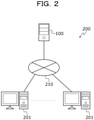
- FIG. 2 is an explanatory diagram illustrating an example of the speaker identification system 200.
- the speaker identification system 200 includes the speaker identification device 100 and client devices 201.
- the speaker identification device 100 and the client devices 201 are connected via a wired or wireless network 210.
- the network 210 is, for example, a local area network (LAN), a wide area network (WAN), the Internet, or the like.
- the speaker identification device 100 receives designation of one or more specific persons from the client device 201.
- the speaker identification device 100 generates the first identification model using the first learning data for each specific person of the designated one or more specific persons and the second learning data for a person different from the designated one or more specific persons.
- the speaker identification device 100 receives the voice information indicating a conversation voice from the client device 201.
- the speaker identification device 100 generates the identification result regarding each specific person of the one or more specific persons and the classification result regarding a person different from the one or more specific persons on the basis of the received voice information using the generated first identification model.
- the speaker identification device 100 transmits, to the client device 201, the identification result regarding each specific person of the one or more specific persons and the classification result regarding a person different from the one or more specific persons.
- the client device 201 is a computer used by the worker.
- the client device 201 displays the received identification result regarding each specific person of the one or more specific persons and the received classification result regarding a person different from the one or more specific persons.
- the speaker identification device 100 may implement a service of providing, to the client device 201, the identification result regarding each specific person of the one or more specific persons and the classification result regarding a person different from the one or more specific persons.
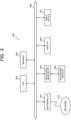
- FIG. 3 is a block diagram illustrating a hardware configuration example of the speaker identification device 100.
- the speaker identification device 100 includes a central processing unit (CPU) 301, a memory 302, a network interface (I/F) 303, a recording medium I/F 304, a recording medium 305, a display 306, and an input device 307. Furthermore, the individual components are connected to one another by a bus 300.
- the CPU 301 is in charge of overall control of the speaker identification device 100.
- the memory 302 includes a read only memory (ROM), a random access memory (RAM), a flash ROM, and the like.
- the flash ROM or the ROM stores various programs, and the RAM is used as a work area for the CPU 301.
- the programs stored in the memory 302 are loaded into the CPU 301 to cause the CPU 301 to execute coded processing.
- the network I/F 303 is connected to the network 210 through a communication line, and is connected to another computer through the network 210. Then, the network I/F 303 is in charge of an interface between the network 210 and the inside, and controls input and output of data to and from another computer.
- the network I/F 303 is, for example, a modem, a LAN adapter, or the like.
- the recording medium I/F 304 controls read/write of data to/from the recording medium 305 under the control of the CPU 301.
- Examples of the recording medium I/F 304 include a disk drive, a solid state drive (SSD), a universal serial bus (USB) port, and the like.
- the recording medium 305 is a nonvolatile memory that stores data written under the control of the recording medium I/F 304.
- Examples of the recording medium 305 include a disk, a semiconductor memory, a USB memory, and the like.
- the recording medium 305 may be removably installed on the speaker identification device 100.
- the display 306 displays data such as a document, an image, and function information, as well as a cursor, an icon, or a tool box.
- the display 306 is, for example, a cathode ray tube (CRT), a liquid crystal display, an organic electroluminescence (EL) display, or the like.
- the input device 307 has keys for inputting characters, numbers, various instructions, and the like, and inputs data.
- the input device 307 may be a keyboard, a mouse, or the like, or may be a touch-panel input pad, a numeric keypad, or the like.
- the speaker identification device 100 may include, for example, a printer, a scanner, a microphone, a speaker, and the like, in addition to the above-described components. Furthermore, the speaker identification device 100 may include a plurality of the recording medium I/F 304 and the recording media 305. Furthermore, the speaker identification device 100 may not include the recording medium I/F 304 and the recording medium 305.
- the hardware configuration example of the client device 201 is similar to the hardware configuration example of the speaker identification device 100 illustrated in FIG. 3 , for example, description thereof is omitted.
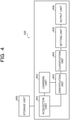
- FIG. 4 is a block diagram illustrating a functional configuration example of the speaker identification device 100.
- the speaker identification device 100 includes a storage unit 400, an acquisition unit 401, a learning unit 402, an identification unit 403, a classification unit 404, a setting unit 405, and an output unit 406.
- the storage unit 400 is implemented by a storage area of the memory 302, the recording medium 305, or the like illustrated in FIG. 3 , for example.
- a case where the storage unit 400 is included in the speaker identification device 100 will be described.
- the present embodiment is not limited to this case.
- the storage unit 400 is included in a device different from the speaker identification device 100, and the speaker identification device 100 can refer to content stored in the storage unit 400.
- the acquisition unit 401 to the output unit 406 function as an example of a control unit. Specifically, for example, the acquisition unit 401 to the output unit 406 implement functions thereof by causing the CPU 301 to execute a program stored in the storage area of the memory 302, the recording medium 305, or the like or by the network I/F 303 illustrated in FIG. 3 . A processing result of each functional unit is stored in the storage area of the memory 302, the recording medium 305, or the like illustrated in FIG. 3 , for example.
- the storage unit 400 stores various sorts of information to be referred to or updated in the processing of each functional unit.
- the storage unit 400 stores the identification model for identifying a speaker from the input voice information.
- the identification model identifies a speaker from input voice information.
- the identification model is, for example, an NN.
- the identification model is generated on the basis of learning data in which voice information indicating a speech voice of a person and label information indicating the person are associated with each other.
- the learning data used to generate the identification model is, for example, for 100 to 200 people.
- the storage unit 400 stores, for example, a network topology and parameters representing the identification model.
- the storage unit 400 stores the learning data to be used in the learning processing for updating the identification model.
- the learning processing is, for example, processing of updating an output layer in the case where the identification model is an NN.
- the storage unit 400 has, for example, the first learning data for each specific person of a plurality of specific persons.
- the first learning data is learning data in which voice information indicating a speech voice of a specific person and label information indicating the specific person are associated with each other.
- the storage unit 400 has the second learning data for each of other persons different from the one or more specific persons.
- the second learning data is learning data in which voice information indicating a speech voice of another person and label information indicating that the another person is different from the specific persons are associated with each other.
- the label information does not indicate a specific person but indicates a dummy person.
- the storage unit 400 stores the first identification model generated by updating the identification model.
- the first identification model identifies a speaker from the input voice information.
- the first identification model is, for example, an NN.
- the storage unit 400 stores, for example, a network topology and parameters representing the first identification model.
- the acquisition unit 401 acquires various sorts of information to be used for the processing of each functional unit.
- the acquisition unit 401 stores the acquired various sorts of information in the storage unit 400 or outputs the acquired various sorts of information to each functional unit. Furthermore, the acquisition unit 401 may output the various sorts of information stored in the storage unit 400 to each functional unit.
- the acquisition unit 401 acquires the various types of information on the basis of, for example, an operating input by a user.
- the acquisition unit 401 may receive the various sorts of information from a device different from the speaker identification device 100, for example.
- the acquisition unit 401 acquires the voice information indicating a conversation voice.
- the conversation voice is a conversation voice to be processed for identifying a speaker for each speech section.
- the acquisition unit 401 can provide the identification unit 403 with the voice information indicating a conversation voice to cause the identification unit 403 to identify a speaker who has spoken in a speech section included in the conversation voice.
- the acquisition unit 401 acquires the first learning data and the second learning data.
- the acquisition unit 401 acquires, for example, the first learning data for each specific person of the one or more specific persons and the second learning data for each of the other persons different from the specific persons.
- the first learning data for each specific person of the one or more specific persons is, for example, the first learning data for each specific person of a plurality of specific persons stored in the storage unit 400.
- the acquisition unit 401 can provide the learning unit 402 with the first learning data and the second learning data to enable the learning unit 402 to generate the first identification model capable of identifying the speaker from each specific person of the one or more specific persons on the basis of the identification model.
- the acquisition unit 401 may receive designation of one or more specific persons and extract the first learning data for each specific person of the designated one or more specific persons from the first learning data for each specific person of the plurality of specific persons stored in the storage unit 400.
- the specific person is a person whose learning data can be prepared in advance.
- the designated specific person is favorably a specific person who is speaking in the conversation voice acquired by the acquisition unit 401 among the plurality of persons.
- the acquisition unit 401 can provide the learning unit 402 with the first learning data and the second learning data to enable the learning unit 402 to generate the first identification model capable of identifying the speaker from each specific person of the designated one or more specific persons on the basis of the identification model.
- the acquisition unit 401 may acquire the voice information indicating the speech voice of a specific person or another person and generate the first learning data or the second learning data.
- the acquisition unit 401 acquires, for example, the voice information indicating the speech voice of a specific person or another person and processes the acquired voice information according to a predetermined recording environment.
- the predetermined recording environment is a recording environment in which the conversation voice to be processed is predicted to be recorded.
- the acquisition unit 401 creates the first learning data in which the processed voice information of the specific person and the label information indicating the specific person are associated with each other.
- the acquisition unit 401 creates the second learning data in which the processed voice information of the another person and the label information indicating that the another person is different from the specific person are associated with each other.
- the acquisition unit 401 can enable the learning unit 402 to generate the first identification model capable of accurately identifying the speaker.
- the learning unit 402 executes the learning processing for the identification model using various learning data to generate the first identification model.
- the learning unit 402 executes the learning processing for the identification model using the first learning data for each specific person of the one or more specific persons and the second learning data for each of the other persons different from the specific persons to generate the first identification model.
- the learning unit 402 updates the identification model such that the specific person indicated by the label information included in the first learning data is identifiable. Furthermore, for example, in a case where the voice information included in the second learning data is input to the identification model, the learning unit 402 updates the identification model such that the speaker is identified as another person different from the specific person. As a result, the learning unit 402 can generate the first identification model capable of identifying the speaker as each specific person of the one or more specific persons on the basis of the identification model.
- the learning unit 402 executes the learning processing for the identification model using the first learning data for each specific person of the designated one or more specific persons and the second learning data for each of the other persons different from the specific persons to generate the first identification model.
- the learning unit 402 updates the identification model such that the specific person indicated by the label information included in the first learning data is identifiable. Furthermore, for example, in a case where the voice information included in the second learning data is input to the identification model, the learning unit 402 updates the identification model such that the speaker is identified as another person different from the specific person.
- the learning unit 402 generates the first identification model, as will be described below in FIG. 8 .
- the learning unit 402 can generate the first identification model capable of identifying the speaker from each specific person of the designated one or more specific persons, of the plurality of specific persons, and incapable of identifying the speaker from undesignated specific persons, on the basis of the identification model. Therefore, the learning unit 402 can enable the first identification model to be generatable, which does not identify the speaker from a specific person not speaking in the conversation voice, of the plurality of specific persons.
- the learning unit 402 can enable the identification unit 403 to accurately identify the speaker who has spoken in a speech section of the conversation voice using the first identification model.
- the identification unit 403 inputs the voice information indicating the conversation voice into the generated first identification model, and identifies the speaker who has spoken in each speech section of a plurality of speech sections included in the conversation voice as one of the one or more specific persons and the persons different from the specific persons.
- the identification unit 403 accurately identifies the speaker who has spoken in a speech section even if the conversation voice includes a speech section in which a person different from the specific persons has spoken. For example, when the speaker who has spoken in a speech section is actually a person different from the specific persons, the identification unit 403 can prevent the speaker from being erroneously identified as one of the one or more specific persons. Therefore, the identification unit 403 can prevent the speech section in which the speaker is actually a person different from the specific persons from being mixed in the speech sections in which the speaker is identified as a specific person, and accurately identify the speaker who has spoken in a speech section.
- the classification unit 404 classifies the speech section in which the speaker is identified as a person different from the specific persons into each group of one or more groups on the basis of the voice characteristic of the speech section. For example, the classification unit 404 inputs the voice information of the speech section in which the speaker is identified as a person different from the specific persons into the identification model, and acquires the voice characteristic of the speech section. The classification unit 404 classifies the speech section in which the speaker is identified as a person different from the specific persons into each group of one or more groups on the basis of the acquired voice characteristic. Specifically, the classification unit 404 classifies the speech section into each group of the one or more groups by clustering the voice characteristic of the speech section.
- the classification unit 404 can classify the speech sections in which a person different from the specific persons has spoken, for which preparation of the first learning data in advance is difficult, into groups by person, and the worker can easily and specifically identify the speaker. Furthermore, since the speech sections in which the speaker is one of the one or more specific persons have already been specified and the number of speech sections to be classified is reduced, the classification unit 404 can accurately classify the speech sections.
- the setting unit 405 receives designation of a person to be associated with the speech section in which the speaker is identified as a person different from the specific persons. After the output unit 406 outputs the result of classifying the speech section in which the speaker is identified as a person different from the specific persons, the setting unit 405 receives designation of the person to be associated with the speech section in which the speaker is identified as a person different from the specific persons on the basis of an operation input of the user. As a result, the setting unit 405 can acquire the result of the worker specifically identifying the speaker.
- the output unit 406 outputs a processing result of one of the function units.
- An output format is, for example, display on the display 306, print output to a printer, transmission to an external device by the network I/F 303, or storage to the storage area of the memory 302, the recording medium 305, or the like.
- the output unit 406 outputs the speech section in which the speaker is identified as one of the one or more specific persons in association with the one person, and outputs the result of classifying the speech section in which the speaker is identified as a person different from the specific persons.
- the output unit 406 outputs, for example, the speech section in which the speaker is identified as one of the one or more specific persons in association with the one specific person on the display 306.
- the output unit 406 outputs, for example, the result of classifying the speech section in which the speaker is identified as a person different from the specific persons on the display 306.
- the output unit 406 can enable the worker to grasp the identification result of identifying the speaker as one of the one or more specific persons and can reduce the work load on the worker. Furthermore, the output unit 406 can enable the worker to grasp the classification result of classifying the speech section regarding a person different from the one or more specific person. Then, the output unit 406 can enable the worker to identify the speaker who has spoken in a speech section classified into a group as a specific person by listening to the voice of the speech section classified into the group, and can reduce the work load on the worker.
- the output unit 406 may output the speech section in which the speaker is identified as a person different from the specific persons in association with the designated person.
- the output unit 406 displays, on the display 306, the speech section in which the speaker is identified as a person different from the specific persons in association with the designated person, for example.
- the output unit 406 can enable the worker to refer to the result of identifying the speaker who has spoken in a speech section classified into a group as a specific person, and can improve the convenience of the worker.
- FIG. 5 is an explanatory diagram illustrating an example of the learned NN 500.
- the learned NN 500 has an input layer, one or more intermediate layers, and an output layer. Each layer of the input layer, the intermediate layer, and the output layer has one or more nodes.
- the node executes predetermined processing for a value input to its own node, and outputs a value obtained by the predetermined processing.
- the learned NN 500 receives input of the voice information for a unit time at one or more nodes in the input layer.
- the learned NN 500 receives, for example, input of a characteristic amount of each time in the voice information for a unit time at each node of the one or more nodes in the input layer.
- the learned NN 500 executes processing specified for the nodes of the intermediate layer and the output layer in response to the input of the voice information for a unit time, and expresses the identification result of the speaker who has spoken in the unit time using an output value of the one or more nodes of the output layer.
- the learned NN 500 is generated on the basis of, for example, the learning data for 100 to 200 people, in which the voice information indicating the speech voice of a person and the label information indicating the person are associated with each other. Therefore, the learned NN 500 tends to form a network topology suitable for the purpose of identifying the speaker. Furthermore, the learned NN 500 can identify the speaker as one of the 100 to 200 people. In other words, the output layer has nodes respectively corresponding to the 100 to 200 people and can express an identification result of identifying the speaker as one of the 100 to 200 people.
- the speaker identification device 100 can store the learned NN 500 that forms the network topology suitable for the purpose of identifying the speaker.
- the speaker identification device 100 can enable an updated NN 910 as will be described below in FIG. 9 to be generatable, which uses the network topology suitable for the purpose of identifying the speaker on the basis of the learned NN 500.
- the updated NN 910 is used when actually trying to identify the speaker who has spoken in one of the speech sections of the conference voice to be described below.
- FIG. 6 an example of the learning data stored in the speaker identification device 100 will be described with reference to FIG. 6 .
- FIG. 6 is an explanatory diagram illustrating an example of the learning data.
- the learning data is a set of input data and correct answer data.
- the input data is the voice information indicating a speech voice.
- the correct answer data is the label information indicating the speaker.
- the speaker identification device 100 stores learning data 610, learning data 620, learning data 630, learning data 640, learning data 650, learning data 660, and the like.
- the learning data 610, the learning data 620, and the learning data 630 are the learning data about specific persons for making the speaker identifiable from the specific persons.
- the specific person is a person whose learning data can be prepared in advance.
- the learning data 610 associates voice information 611 with label information 612 indicating Mr. A.
- the learning data 620 associates voice information 621 with label information 622 indicating Mr. B.
- the learning data 630 associates voice information 631 with label information 632 indicating Mr. C.
- the speaker identification device 100 may store learning data about a specific person other than Mr. A, Mr. B, and Mr. C.
- the learning data 640, the learning data 650, and the learning data 660 are the learning data for making the speaker identifiable from dummies.
- the learning data 640 associates voice information 641 with label information 642 indicating a dummy.
- the learning data 650 associates voice information 651 with label information 652 indicating a dummy.
- the learning data 660 associates voice information 661 with label information 662 indicating a dummy.
- the speaker identification device 100 may store learning data for making the speaker identifiable from dummies in addition to the learning data 640, the learning data 650, and the learning data 660.
- the speaker identification device 100 can enable the updated NN 910 as will be described below in FIG. 9 to be generatable, which is used to actually try to identify the speaker who has spoken in any of the speech sections of the conference voice to be described below on the basis of the learning data.
- the speaker identification device 100 receives designation of a specific person will be described with reference to FIG. 7 .
- FIG. 7 is an explanatory diagram illustrating an example of receiving designation of a specific person.
- the speaker identification device 100 displays a participant addition screen 700 on the display 306.
- the speaker identification device 100 receives designation of a specific person who will be a participant of a conference through the participant addition screen 700.
- the speaker identification device 100 receives designation of Mr. A, Mr. B, and Mr. C, who are specific persons.
- the speaker identification device 100 becomes a participant of the conference and can receive designation of the specific person determined to speak in one of the speech sections of the conference voice to be described below by the worker. Therefore, the speaker identification device 100 can determine which specific person's learning data should be used when generating the updated NN 910 as will be described below in FIG. 9 . Then, the speaker identification device 100 can enable the updated NN 910 as will be described below in FIG. 9 suitable for identifying the speaker who has spoken in a speech section of a conference voice 900 as will be described below in FIG. 9 . Furthermore, the speaker identification device 100 can reduce the amount of processing needed when generating the updated NN 910 as will be described below in FIG. 9 as compared with a case of using all the stored learning data.
- the speaker identification device 100 may receive designation of a person who is not a specific person but a person who will be a participant of the conference for which learning data is not prepared in advance.
- the speaker identification device 100 may receive, for example, designation of Mr. D and Mr. E. Thereby, the speaker identification device 100 can acquire a label indicating a person that can be used as an ID of a group when speech sections are classified into groups.
- the speaker identification device 100 updates the learned NN 500 and generates the updated NN 910 on the basis of the learning data about the designated specific persons will be described with reference to FIG. 8 .
- FIG. 8 is an explanatory diagram illustrating an example of updating the learned NN 500.
- the speaker identification device 100 extracts the learning data of each specific person of one or more specific persons designated in FIG. 7 from the learning data illustrated in FIG. 6 .
- the speaker identification device 100 extracts the learning data 610 and inputs the voice information 611 to the input layer of the learned NN 500
- the output layer of the learned NN 500 is updated such that the output layer of the learned NN 500 expresses Mr. A indicated by the label information 612.
- the speaker identification device 100 extracts the learning data 620 and the learning data 630, and updates the output layers of the learned NNs 500.
- the speaker identification device 100 extracts the learning data 640, the learning data 650, and the learning data 660, and updates the output layers of the learned NNs 500.
- the speaker identification device 100 can update the learned NN 500 such that the speaker is identifiable as the designated specific person in the case where the speaker is the specific person, and the speaker is identifiable as a dummy in the case where the speaker is not a designated specific person. Then, the speaker identification device 100 can generate the updated NN 910 as will be described below in FIG. 9 .
- the speaker identification device 100 identifies the speaker who has spoken in one of the speech sections of the conference voice to be described below using the updated NN 910 by the specific speaker identification processing, and assigns a label to one of the speech sections of the conference voice to be performed will be described with reference to FIG. 9 .
- FIG. 9 is an explanatory diagram illustrating an example of assigning a label to a speech section.
- the speaker identification device 100 acquires the conference voice 900.
- the speaker identification device 100 removes a noise section from the conference voice 900 and extracts the speech sections.
- the speaker identification device 100 inputs voice information 901 of a speech section into the updated NN 910, identifies the speaker who has spoken in the speech section, and assigns the label of the identified speaker to the speech section.
- the speaker identification device 100 divides the voice information 901 of the speech section into voice information for each unit time.
- the speaker identification device 100 inputs the voice information for each unit time into the input layer of the updated NN 910, and identifies the speaker who has spoken for each unit time.
- the speaker identification device 100 identifies a person who has been identified as the speaker who has spoken in the unit time most frequently in the speech section as the speaker who has spoken in the speech section.
- the speaker identification device 100 assigns the label indicating the person identified as the speaker who has spoken in the speech section to the speech section.
- the speaker identification device 100 can add the label indicating the specific person to the speech section in the case where the speaker who has spoken in the speech section extracted from the conference voice 900 is the designated specific person. Furthermore, the speaker identification device 100 can add the label indicating a dummy to the speech section in the case where the speaker who has spoken in the speech section extracted from the conference voice 900 is another person different from the designated specific person. Therefore, the speaker identification device 100 can accurately identify the speaker who has spoken in the speech section.
- the speaker identification device 100 further classifies the speech section to which the label indicating a dummy is assigned by the unspecified speaker identification processing will be described with reference to FIG. 10 .
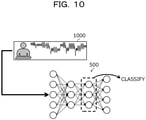
- FIG. 10 is an explanatory diagram illustrating an example of classifying speech sections.
- the speaker identification device 100 inputs the voice information 1000 of the speech section to which a label indicating a dummy is assigned to the learned NN 500. Then, the speaker identification device 100 acquires the output value of each node of one or more nodes included in the last intermediate layer among the one or more intermediate layers as the voice characteristic of voice information 1000.
- the speaker identification device 100 divides the voice information 1000 of the speech section to which the label indicating a dummy is assigned into voice information for each unit time.
- the speaker identification device 100 inputs the voice information for each unit time into the input layer of the learned NN 500, and acquires the output value of each node of the one or more nodes included in the last intermediate layer of the one or more intermediate layers as the voice characteristic.
- the speaker identification device 100 clusters the voice characteristics and classifies the speech sections to which the label indicating a dummy is assigned into groups.
- the speaker identification device 100 assigns the ID of the group into which the speech section to which the label indicating a dummy is assigned is classified to the speech section to which the label indicating a dummy is assigned. For example, in FIG. 7 , in the case where the speaker identification device 100 has received designation of Mr. D and Mr. E as persons who will be participants in the conference that are not specific persons, the label indicating Mr. D and the label indicating Mr. E may be used as the IDs of the groups. The speaker identification device 100 may use a number assigned to the group as the ID of the group.
- the speaker identification device 100 can classify the speech section spoken by a person who is not a specific person and whose learning data is difficult to prepare in advance into a group by person and assign an ID. Furthermore, since the speaker identification device 100 classifies the speech section excluding the speech section in which the speaker is identified as a specific person, the speech section can be easily and accurately classified.
- the speaker identification device 100 displays a correspondence result screen 1100 displaying a result of assigning the label to the speech section in FIG. 9 and a result of classifying the speech section in FIG. 10 will be described with reference to FIG. 11 .
- FIG. 11 is an explanatory diagram illustrating an example of displaying the correspondence result screen 1100.
- the speaker identification device 100 displays the correspondence result screen 1100 on the display 306.
- the correspondence result screen 1100 includes a field 1101 for displaying participant information and a field 1102 for displaying the speech sections in the conference voice 900.
- the label indicating a specific person who is a participant of the conference and a label indicating a person other than specific persons who is a participant of the conference, which are designated in FIG. 7 are displayed as the participant information.
- the number assigned to the group may be displayed instead of the label indicating a person other than specific persons who is a participant of the conference if a person other than specific persons who is a participant of the conference is not specified in FIG. 7 .
- the speech section in which the specific person is identified as the speaker is displayed in association with the same line as the label indicating the specific person who is a participant of the conference displayed in the field 1101.
- the speech section is displayed such that the position of the conference voice within a reproduction time is displayed in a specifiable manner, for example.
- the reproduction time is 0 to 90 minutes.
- the speaker identification device 100 may reproduce the voice of the speech section in which the specific person is identified as the speaker in response to a click on the label indicating the specific person who is a participant of the conference displayed in the field 1101.
- the speech section belonging to the group to which the label indicating a person other than specific persons is displayed in association with the same line as the label indicating a person other than the specific persons who are participants of the conference displayed in the field 1101.
- the speech section is displayed such that the position of the conference voice within a reproduction time is displayed in a specifiable manner, for example.
- the speaker identification device 100 may reproduce the voice of the speech section belonging to the group to which the label indicating a person other than the specific persons in response to a click on the label indicating a person other than the specific persons who is a participant of the conference displayed in the field 1102. Thereby, the speaker identification device 100 allows the worker to hear the voice of the speech section belonging to the group and easily identify who is specifically the speaker who has spoken in the speech section belonging to the group.
- the speaker identification device 100 may receive an operation input for replacing the label indicating a person other than the specific persons who is a participant of the conference displayed in the field 1101. Then, the speaker identification device 100 may replace the label assigned to the group on the basis of the operation input. Thereby, the speaker identification device 100 can associate the label indicating the speaker specifically identified by the worker with the speech section belonging to the group, and can store the result of accurately identifying the speaker who has spoken in the speech section.
- the speaker identification device 100 may specify the speech section by collecting the unit times identified as the same speaker after specifying the speaker using the updated NN 910 for each unit time from the beginning of the conference voice.
- the speaker identification device 100 identifies a person who has been identified as the speaker who has spoken in the unit time most frequently in the speech section as the speaker who has spoken in the speech section has been described, but the present embodiment is not limited to the case.
- the speaker identification device 100 groups the unit times identified as the same speaker in one of the speech sections, and divides the speech section into two or more speech sections in which different speakers have spoken.
- the overall processing is implemented by, for example, the CPU 301, the storage area of the memory 302, the recording medium 305, or the like, and the network I/F 303 illustrated in FIG. 3 .
- FIG. 12 is a flowchart illustrating an example of an overall processing procedure.
- the speaker identification device 100 receives designation of a plurality of persons via a graphical user interface (GUI) screen (step S1201). Then, the speaker identification device 100 generates a label indicating a person whose learning data is not present among the plurality of designated persons, and stores the label as the ID assigned to the group (step S1202).
- GUI graphical user interface
- the speaker identification device 100 acquires the learning data including the voice information indicating the speech voice of each specific person of one or more specific persons whose learning data are present among the plurality of designated persons (step S1203). Then, the speaker identification device 100 acquires the learning data including the voice information indicating the speech voice of a dummy person (step S1204).
- the speaker identification device 100 receives the input of the voice information indicating the conversation voice (step S1205). Then, the speaker identification device 100 executes hybrid speaker identification processing to be described below in FIG. 13 (step S1206). Next, the speaker identification device 100 displays each person of the plurality of designated persons with the speech section on the GUI screen in association with each other on the basis of the result of the hybrid speaker identification processing (step S1207). Then, the speaker identification device 100 terminates the overall processing.
- the hybrid speaker identification processing is implemented by, for example, the CPU 301, a storage area of the memory 302, the recording medium 305, or the like, and the network I/F 303 illustrated in FIG. 3 .
- FIG. 13 is a flowchart illustrating an example of the hybrid speaker identification processing procedure.
- the speaker identification device 100 updates the learned model using the learning data including the voice information indicating the speech voice of each specific person of the one or more specific persons, and the learning data including the voice information indicating the speech voice of a dummy person (step S1301).
- the speaker identification device 100 executes the specific person identification processing as illustrated in FIG. 9 on the basis of the voice information indicating the conversation voice using the updated model obtained by the update (step S1302). Then, as a result of the specific person identification processing, the speaker identification device 100 stores the speech section in which one of the one or more specific persons is identified as the speaker in association with the one specific person, and stores the speech section in which a dummy person is identified as the speaker (step S1303).
- the speaker identification device 100 executes the unspecified speaker identification processing as illustrated in FIG. 10 on the basis of the voice information of the speech section in which a dummy person is identified as the speaker using the learned model (step S1304). Then, the speaker identification device 100 stores the speech section in which a dummy person is identified as the speaker in association with the label indicating a person whose learning data is not present as a result of the unspecified speaker identification processing (step S1305). Thereafter, the speaker identification device 100 terminates the hybrid speaker identification processing.
- the speaker identification device 100 may change the order of some steps in the flowcharts of FIGs. 12 and 13 and execute the processing. For example, steps S1202 to S1205 may be exchanged in the processing order. Furthermore, the speaker identification device 100 may omit the processing of some steps of the flowcharts illustrated in FIGs. 12 and 13 . For example, the processing of step S1202 can be omitted.
- the learning processing is executed for the identification model using the first learning data for a specific person and the second learning data for another person different from the specific person, and the first identification model can be generated.
- the voice information indicating the conversation voice is input to the generated first identification model, and the speaker who has spoken in each speech section of a plurality of speech sections included in the conversation voice can be identified as either the specific person or the person different from the specific person.
- the speech section in which the speaker is identified as a person different from the specific person can be classified into each group of one or more groups on the basis of the voice characteristic of the speech section.
- the speech section in which the speaker is identified as specific person can be output in association with the specific person, and the result of classifying the speech section in which the speaker is identified as a person different from the specific person can be output.
- the speaker identification device can make the speaker who has spoken in each speech section of the plurality of speech sections included in the conversation voice accurately identifiable.
- the speaker identification device 100 designation of one or more specific persons can be received. According to the speaker identification device 100, the learning processing can be executed for the identification model using the first learning data for each specific person of the designated one or more specific persons and the second learning data for each of the other persons different from the specific persons. Thereby, the speaker identification device 100 can generate the first identification model capable of accurately identifying a specific person who speaks in the conversation voice.
- the voice information of the speech section in which the speaker is identified as a person different from the specific persons can be input to the identification model, and the voice characteristic of the speech section can be acquired.
- the speech section in which the speaker is identified as a person different from the specific person can be classified into each group of one or more groups on the basis of the acquired voice characteristic. Thereby, the speaker identification device 100 can accurately classify the speech section.
- the speaker identification device 100 designation of a person to be associated with the speech section in which the speaker is identified as a person different from the specific persons can be received. According to the speaker identification device 100, the speech section in which the speaker is identified as a person different from the specific persons, and the designated person can be output in association with each other. Thereby, the speaker identification device 100 can store the result of the worker specifically identifying the speaker.
- the voice information indicating the speech voice of another person different from specific persons can be acquired, and the acquired voice information can be processed according to a predetermined recording environment.
- the second learning data in which the processed voice information of the another person different from specific persons and the label information indicating that the another person is different from the specific persons are associated with each other can be created.
- the speaker identification device 100 can enables the first identification model to be generatable, which can accurately identify the speaker who has spoken in the speech section included in the conversation voice.
- the speaker identification method described in the present embodiment may be implemented by executing a program prepared in advance on a computer such as a personal computer or a workstation.
- the speaker identification program described in the present embodiment is recorded on a computer-readable recording medium such as a hard disk, flexible disk, compact disk read only memory (CD-ROM), magneto-optical disk (MO), or digital versatile disc (DVD), and is read from the recording medium to be executed by the computer.
- the speaker identification program described in the present embodiment may be distributed via a network such as the Internet.
Landscapes
- Engineering & Computer Science (AREA)
- Health & Medical Sciences (AREA)
- Audiology, Speech & Language Pathology (AREA)
- Human Computer Interaction (AREA)
- Physics & Mathematics (AREA)
- Acoustics & Sound (AREA)
- Multimedia (AREA)
- Business, Economics & Management (AREA)
- Computer Vision & Pattern Recognition (AREA)
- Game Theory and Decision Science (AREA)
- Information Retrieval, Db Structures And Fs Structures Therefor (AREA)
- Image Analysis (AREA)
Abstract
Description
- The present invention relates to a speaker identification program, a speaker identification method, and a speaker identification device.
- Conventionally, there is a technique for identifying a speaker who is speaking in one of speech sections of a conversation voice. There is a prior art of learning a voice of a specific phrase spoken by a specific person in advance and making whether a speaker who is speaking in one of speech sections of a conversation voice is the specific person identifiable, for example.
- Non-Patent Document 1: "Speaker Recognition API", [online], [Searched on March 14, 2019], Internet <URL: https://docs.microsoft.com/en-us/azure/cognitive-services/speaker-recognition/home>
- However, in the prior art, it is difficult to identify the speaker. For example, if a voice of a specific phrase spoken by a specific person is not learned in advance, whether the speaker who is speaking in one of speech sections of a conversation voice is the specific person is not able to be identified.
- In one aspect, the present invention aims to make a speaker accurately identifiable.
- According to one embodiment aspect, proposed are a speaker identification program, a speaker identification method, and a speaker identification device includes, generating a first identification model by executing learning processing for an identification model that identifies a speaker from input voice information using first learning data and second learning data, the first learning data being for each person of one or more persons and in which voice information that indicates a speech voice of the each person and label information that indicates the each person are associated, and the second learning data being for each another person different from the one or more persons and in which voice information that indicates a speech voice of the each another person and label information that indicates that the each another person is different from the one or more persons are associated; inputting voice information that indicates a conversation voice to the generated first identification model, and identifying a speaker who has spoken in each speech section of a plurality of speech sections included in the conversation voice as one of the one or more persons or the different person; classifying the speech section in which the speaker is identified as the different person into each group of one or more groups based on a voice characteristic of the speech section; and outputting the speech section in which the speaker is identified as one of the one or more persons in association with the identified person, and outputting a result of classifying the speech section in which the speaker is identified as the different person.
- According to one aspect, a speaker is made accurately identifiable.
-
-
FIG. 1 is an explanatory diagram illustrating an example of a speaker identification method according to an embodiment. -
FIG. 2 is an explanatory diagram illustrating an example of aspeaker identification system 200. -
FIG. 3 is a block diagram illustrating a hardware configuration example of aspeaker identification device 100. -
FIG. 4 is a block diagram illustrating a functional configuration example of thespeaker identification device 100. -
FIG. 5 is an explanatory diagram illustrating an example of a learnedNN 500. -
FIG. 6 is an explanatory diagram illustrating an example of learning data. -
FIG. 7 is an explanatory diagram illustrating an example of receiving designation of a specific person. -
FIG. 8 is an explanatory diagram illustrating an example of updating the learnedNN 500. -
FIG. 9 is an explanatory diagram illustrating an example of assigning a label to a speech section. -
FIG. 10 is an explanatory diagram illustrating an example of classifying speech sections. -
FIG. 11 is an explanatory diagram illustrating an example of displaying acorrespondence result screen 1100. -
FIG. 12 is a flowchart illustrating an example of an overall processing procedure. -
FIG. 13 is a flowchart illustrating an example of a hybrid speaker identification processing procedure. - Hereinafter, embodiments of a speaker identification program, a speaker identification method, and a speaker identification device according to the present invention will be described in detail with reference to the drawings.
-
FIG. 1 is an explanatory diagram illustrating an example of a speaker identification method according to an embodiment. Aspeaker identification device 100 is a computer for making a speaker identifiable from voice. Thespeaker identification device 100 is used by, for example, a worker who tries to identify a speaker. Thespeaker identification device 100 is, for example, a server, a personal computer (PC), or the like. - Here, conventionally, there is a problem that accurately identifying a speaker from voice is difficult. For example, a specific speaker identification method that makes whether a speaker is a specific person registered in advance identifiable, an unspecified speaker identification method that assigns an ID instead of a specific person to a speaker to make the speaker identifiable, and the like are conceivable but accurately identifying a speaker is difficult.
- Specifically, one method of the specific speaker identification method is conceivable, which causes an identification model to learn a voice of a specific phrase spoken by a specific person in advance, and makes whether a speaker in one of speech sections of a conversation voice is a specific person identifiable, using the identification model. However, in this method, whether a speaker in a speech section is a specific person is not able to be made identifiable unless the voice of a specific phrase spoken by the specific person is prepared in advance and the identification model learns the voice.
- Therefore, in a case of specifying that a speaker in one of speech sections of a conversation voice that a plurality of persons is making is which of the plurality of persons, the voice of a specific phrase spoken by each person of the plurality of persons needs to be prepared and the identification model needs to learn the voice in advance. For this reason, a work load on the worker who tries to identify a speaker increases.
- Moreover, there is a situation in which the voice of a specific phrase spoken by one of a plurality of persons is not able to be prepared and the identification model is not able to learn the voice. For example, in a situation of identifying a speaker in one of speech sections of a conversation voice in a conference in which some people inside a company and some people outside the company participate, it is difficult to prepare the voice of a specific phrase spoken by a person outside the company in advance. For this reason, if the voice of a specific phrase spoken by a person outside the company is not able to be learned by the identification model, a speaker in one of the speech sections of the conversation voice is identified as a person inside the company even if the speaker is actually a person outside the company, and the speaker is not able to be accurately identified.
- Specifically, one method of the unspecified speaker identification method is conceivable, which classifies each speech section of the conversation voice into one of one or more groups corresponding to unspecified persons on the basis of a voice characteristic of the each speech section of the conversation voice, and assigns an ID. However, this method is not able to specify that a group specifically corresponds to which person and thus is not able to identify that a speaker in a speech section is a specific person. For this reason, the worker is not able to identify that the speaker in the speech section is specifically which person unless the worker hears the voice of the speech section, which increases the work load on the worker.
- Furthermore, with this method, it is difficult to accurately classify the speech sections into groups, and there is a possibility to classify speech sections corresponding to different persons into the same group or classify speech sections corresponding to the same person into different groups. For example, it is more difficult to accurately classify the speech sections into groups as a bias in the amount of speeches among people in the conversation voice is larger. Furthermore, for example, it is more difficult to accurately classify the speech sections into groups as the number of people who have spoken in the conversation voice is larger. As a result, the worker is not able to accurately identify that the speaker in the speech section is specifically which person, which increases the work load on the worker.
- Therefore, in the present embodiment, a speaker identification method of making a speaker accurately identifiable and reducing a work load on a worker by enabling combination of one method regarding specific speaker identification with one method regarding unspecified speaker identification will be described.
- In
FIG. 1 , thespeaker identification device 100 has an identification model. The identification model identifies a speaker from input voice information. The identification model is, for example, a neural network. In the following description, the neural network may be referred to as "NN". Specifically, the identification model is a learned model generated on the basis of learning data for 100 to 200 people, in which voice information indicating a speech voice of a person and label information indicating the person are associated with each other. In the example ofFIG. 1 , thespeaker identification device 100 has a learnedmodel 110. - Furthermore, the
speaker identification device 100 has first learning data for each specific person of one or more specific persons. The first learning data is learning data in which voice information indicating a speech voice of a specific person and label information indicating the specific person are associated with each other. The specific person is a person whose learning data can be prepared in advance. In the example ofFIG. 1 , the specific persons are Mr. A, Mr. B, and Mr. C. In the example ofFIG. 1 , thespeaker identification device 100 hasfirst learning data 101 to 103. - The
speaker identification device 100 has second learning data for each of other persons different from the one or more specific persons. The second learning data is learning data in which voice information indicating a speech voice of another person and label information indicating that the another person is different from the one or more specific persons are associated with each other. The label information does not indicate a specific person but indicates a dummy person. In the example ofFIG. 1 , thespeaker identification device 100 has second learningdata 104 to 107. - (1-1) The
speaker identification device 100 executes learning processing for the identification model using the first learning data for each specific person of the one or more specific persons and the second learning data for each of the other persons different from the one or more specific persons. Thespeaker identification device 100 generates a first identification model as a result of the learning processing. The first identification model identifies a speaker who has spoken in a speech section as one of the one or more specific persons and the persons different from the one or more specific persons. The first identification model is, for example, an updated model after the learned model is updated by the learning processing. In the example ofFIG. 1 , thespeaker identification device 100 generates an updatedmodel 111. - (1-2) The
speaker identification device 100 acquires voice information indicating a conversation voice. Thespeaker identification device 100 inputs the acquired voice information into the generated first identification model, and identifies the speaker who has spoken in each speech section of a plurality of speech sections included in the conversation voice as one of the one or more specific persons and the persons different from the one or more specific persons. - In the example of
FIG. 1 , thespeaker identification device 100 acquiresvoice information 120 indicating the conversation voice, inputs thevoice information 120 to the updatedmodel 111, and identifies the speaker who has spoken in each speech section of the plurality of speech sections. Here, the conversation voice includes, for example,speech sections 131 to 135. Specifically, thespeaker identification device 100 identifies the speaker who has spoken in thespeech section 131 as Mr. A, the speaker who has spoken in thespeech section 132 as Mr. B, and the speaker who has spoken in thespeech section 133 as Mr. C. Furthermore, thespeaker identification device 100 identifies the speaker who has spoken in thespeech section 134 as a dummy person and the speaker who has spoken in thespeech section 135 as a dummy person. - According to this processing, the
speaker identification device 100 accurately identifies the speaker who has spoken in a speech section even if the conversation voice includes a speech section in which a person different from the one or more specific persons has spoken. For example, when the speaker who has spoken in a speech section is actually a person different from the one or more specific persons, thespeaker identification device 100 can prevent the speaker from being erroneously identified as one of the one or more specific persons. - Therefore, the
speaker identification device 100 can prevent the speech section in which the speaker is actually a person different from the specific persons from being mixed in the speech sections in which the speaker is identified as a specific person, and can accurately identify the speaker. In the example ofFIG. 1 , thespeaker identification device 100 identifies the speakers who have spoken in thespeech sections - (1-3) The speaker identification device (100) classifies a speech section in which the speaker is identified as a person different from the one or more specific persons into each group of one or more groups on the basis of a voice characteristic of the speech section. A group corresponds to an unspecified person and exists by person. A group is given a label indicating a person as an ID, for example. The label indicating a person given as an ID is a label for convenience and may not correspond to a person speaking in the conversation voice other than the one or more specific persons. The voice characteristic is acquired using, for example, a learned model.
- In the example of
FIG. 1 , there are a group to which the label indicating Mr. D is assigned as an ID and a group to which the label indicating Mr. E is assigned as an ID. Thespeaker identification device 100 inputs the voice information of thespeech sections model 140, and acquires the voice characteristics of thespeech sections model 140 may be the same as the learnedmodel 110, for example. Thespeaker identification device 100 classifies thespeech section 134 into the group to which the label indicating Mr. D is assigned as an ID and thespeech section 135 into the group to which the label indicating Mr. E is assigned as an ID on the basis of the acquired voice characteristics of thespeech sections - According to this processing, the
speaker identification device 100 can classify the speech sections in which a person different from the one or more specific persons has spoken, for which preparation of the first learning data in advance is difficult, into groups by person, and can easily and specifically identify the speaker. Furthermore, since thespeaker identification device 100 has already specified the speech sections in which the speaker is one of the one or more specific persons and can reduce the number of speech sections to be classified, thespeaker identification device 100 can accurately classify the speech sections. - (1-4) The
speaker identification device 100 outputs an identification result of identifying the speaker as one of the one or more specific persons and a classification result of classifying the speech section regarding a person different from the one or more specific persons. An output destination is, for example, a display unit included in thespeaker identification device 100. Thespeaker identification device 100 outputs, for example, the speech section in which the speaker is identified as one of the one or more specific persons in association with the one specific person. Furthermore, thespeaker identification device 100 outputs, for example, the result of classifying the speech section in which the speaker is identified as a person different from the one or more specific persons. - In the example of
FIG. 1 , thespeaker identification device 100 displays thespeech section 131 in which the speaker is identified as Mr. A in association with Mr. A, thespeech section 132 in which the speaker is identified as Mr. B in association with Mr. B, and thespeech section 133 in which the speaker is identified as Mr. C in association with Mr. C. Furthermore, thespeaker identification device 100 displays thespeech section 134 classified into the group to which the label indicating Mr. D is assigned as an ID in association with Mr. D, and thespeech section 135 classified into the group to which the label indicating Mr. E as an ID in association with Mr. E. - As a result, the
speaker identification device 100 can make the speaker who has spoken in each speech section of the plurality of speech sections included in the conversation voice accurately identifiable. For example, when the speaker who has spoken in a speech section is actually one of the one or more specific persons, thespeaker identification device 100 can accurately identify the speaker as one of the one or more specific persons. - Furthermore, the
speaker identification device 100 can accurately classify the speech section in which the speaker is identified as a person different from the one or more specific persons into a group by person, for example. Therefore, when the worker attempts to identify the speaker who has spoken in a speech section classified into a group as a specific person by listening to the voice of the speech section classified into the group, thespeaker identification device 100 can reduce the work load on the worker. - Here, the case where the
speaker identification device 100 has the first learning data for each specific person of the one or more specific persons has been described, but the present embodiment is not limited to the case. For example, thespeaker identification device 100 has the first learning data for each specific person of a plurality of specific persons, and when generating the first identification model, thespeaker identification device 100 may extract the first learning data for each specific person of designated one or more specific persons. - Here, the case where the
speaker identification device 100 generates the first identification model has been described, but the embodiment is not limited to the case. For example, a device different from thespeaker identification device 100 may generate the first identification model. In this case, thespeaker identification device 100 acquires the first identification model from the device that has generated the first identification model. - Here, the case in which the
speaker identification device 100 displays, on the display unit of its own device, the identification result of identifying the speaker as one of the one or more specific persons and the classification result of classifying the speech section regarding a person different from the one or more specific persons has been described, but the embodiment is not limited to the case. For example, there may be a case in which thespeaker identification device 100 transmits, to a device different from thespeaker identification device 100, the identification result of identifying the speaker as one of the one or more specific persons and the classification result of classifying the speech section regarding a person different from the one or more specific persons. - Specifically, there may be a case in which the
speaker identification device 100 transmits, to aclient device 201 illustrated inFIG. 2 , the identification result of identifying the speaker as one of the one or more specific persons and the classification result of classifying the speech section regarding a person different from the one or more specific persons. In this case, theclient device 201 displays the identification result of identifying the speaker as one of the one or more specific persons and the classification result of classifying the speech section regarding a person different from the one or more specific persons to enable the worker to grasp the results. - Next, an example of a
speaker identification system 200 to which thespeaker identification device 100 illustrated inFIG. 1 is applied will be described with reference toFIG. 2 . -
FIG. 2 is an explanatory diagram illustrating an example of thespeaker identification system 200. InFIG. 2 , thespeaker identification system 200 includes thespeaker identification device 100 andclient devices 201. - In the
speaker identification system 200, thespeaker identification device 100 and theclient devices 201 are connected via a wired orwireless network 210. Thenetwork 210 is, for example, a local area network (LAN), a wide area network (WAN), the Internet, or the like. - The
speaker identification device 100 receives designation of one or more specific persons from theclient device 201. Thespeaker identification device 100 generates the first identification model using the first learning data for each specific person of the designated one or more specific persons and the second learning data for a person different from the designated one or more specific persons. - The
speaker identification device 100 receives the voice information indicating a conversation voice from theclient device 201. Thespeaker identification device 100 generates the identification result regarding each specific person of the one or more specific persons and the classification result regarding a person different from the one or more specific persons on the basis of the received voice information using the generated first identification model. Thespeaker identification device 100 transmits, to theclient device 201, the identification result regarding each specific person of the one or more specific persons and the classification result regarding a person different from the one or more specific persons. - The
client device 201 is a computer used by the worker. Theclient device 201 displays the received identification result regarding each specific person of the one or more specific persons and the received classification result regarding a person different from the one or more specific persons. In this way, thespeaker identification device 100 may implement a service of providing, to theclient device 201, the identification result regarding each specific person of the one or more specific persons and the classification result regarding a person different from the one or more specific persons. - Next, a hardware configuration example of the
speaker identification device 100 included in thespeaker identification system 200 illustrated inFIG. 2 will be described with reference toFIG. 3 . -
FIG. 3 is a block diagram illustrating a hardware configuration example of thespeaker identification device 100. InFIG. 3 , thespeaker identification device 100 includes a central processing unit (CPU) 301, amemory 302, a network interface (I/F) 303, a recording medium I/F 304, arecording medium 305, adisplay 306, and aninput device 307. Furthermore, the individual components are connected to one another by abus 300. - Here, the
CPU 301 is in charge of overall control of thespeaker identification device 100. For example, thememory 302 includes a read only memory (ROM), a random access memory (RAM), a flash ROM, and the like. Specifically, for example, the flash ROM or the ROM stores various programs, and the RAM is used as a work area for theCPU 301. The programs stored in thememory 302 are loaded into theCPU 301 to cause theCPU 301 to execute coded processing. - The network I/
F 303 is connected to thenetwork 210 through a communication line, and is connected to another computer through thenetwork 210. Then, the network I/F 303 is in charge of an interface between thenetwork 210 and the inside, and controls input and output of data to and from another computer. The network I/F 303 is, for example, a modem, a LAN adapter, or the like. - The recording medium I/
F 304 controls read/write of data to/from therecording medium 305 under the control of theCPU 301. Examples of the recording medium I/F 304 include a disk drive, a solid state drive (SSD), a universal serial bus (USB) port, and the like. Therecording medium 305 is a nonvolatile memory that stores data written under the control of the recording medium I/F 304. Examples of therecording medium 305 include a disk, a semiconductor memory, a USB memory, and the like. Therecording medium 305 may be removably installed on thespeaker identification device 100. - The
display 306 displays data such as a document, an image, and function information, as well as a cursor, an icon, or a tool box. Thedisplay 306 is, for example, a cathode ray tube (CRT), a liquid crystal display, an organic electroluminescence (EL) display, or the like. Theinput device 307 has keys for inputting characters, numbers, various instructions, and the like, and inputs data. Theinput device 307 may be a keyboard, a mouse, or the like, or may be a touch-panel input pad, a numeric keypad, or the like. - The
speaker identification device 100 may include, for example, a printer, a scanner, a microphone, a speaker, and the like, in addition to the above-described components. Furthermore, thespeaker identification device 100 may include a plurality of the recording medium I/F 304 and therecording media 305. Furthermore, thespeaker identification device 100 may not include the recording medium I/F 304 and therecording medium 305. - Since the hardware configuration example of the
client device 201 is similar to the hardware configuration example of thespeaker identification device 100 illustrated inFIG. 3 , for example, description thereof is omitted. - Next, a functional configuration example of the
speaker identification device 100 will be described with reference toFIG. 4 . -
FIG. 4 is a block diagram illustrating a functional configuration example of thespeaker identification device 100. Thespeaker identification device 100 includes astorage unit 400, anacquisition unit 401, alearning unit 402, anidentification unit 403, aclassification unit 404, asetting unit 405, and anoutput unit 406. - The
storage unit 400 is implemented by a storage area of thememory 302, therecording medium 305, or the like illustrated inFIG. 3 , for example. Hereinafter, a case where thestorage unit 400 is included in thespeaker identification device 100 will be described. However, the present embodiment is not limited to this case. For example, there may be a case where thestorage unit 400 is included in a device different from thespeaker identification device 100, and thespeaker identification device 100 can refer to content stored in thestorage unit 400. - The
acquisition unit 401 to theoutput unit 406 function as an example of a control unit. Specifically, for example, theacquisition unit 401 to theoutput unit 406 implement functions thereof by causing theCPU 301 to execute a program stored in the storage area of thememory 302, therecording medium 305, or the like or by the network I/F 303 illustrated inFIG. 3 . A processing result of each functional unit is stored in the storage area of thememory 302, therecording medium 305, or the like illustrated inFIG. 3 , for example. - The
storage unit 400 stores various sorts of information to be referred to or updated in the processing of each functional unit. Thestorage unit 400 stores the identification model for identifying a speaker from the input voice information. The identification model identifies a speaker from input voice information. The identification model is, for example, an NN. Specifically, the identification model is generated on the basis of learning data in which voice information indicating a speech voice of a person and label information indicating the person are associated with each other. The learning data used to generate the identification model is, for example, for 100 to 200 people. Thestorage unit 400 stores, for example, a network topology and parameters representing the identification model. - The
storage unit 400 stores the learning data to be used in the learning processing for updating the identification model. The learning processing is, for example, processing of updating an output layer in the case where the identification model is an NN. Thestorage unit 400 has, for example, the first learning data for each specific person of a plurality of specific persons. The first learning data is learning data in which voice information indicating a speech voice of a specific person and label information indicating the specific person are associated with each other. - The
storage unit 400 has the second learning data for each of other persons different from the one or more specific persons. The second learning data is learning data in which voice information indicating a speech voice of another person and label information indicating that the another person is different from the specific persons are associated with each other. The label information does not indicate a specific person but indicates a dummy person. - The
storage unit 400 stores the first identification model generated by updating the identification model. The first identification model identifies a speaker from the input voice information. The first identification model is, for example, an NN. Thestorage unit 400 stores, for example, a network topology and parameters representing the first identification model. - The
acquisition unit 401 acquires various sorts of information to be used for the processing of each functional unit. Theacquisition unit 401 stores the acquired various sorts of information in thestorage unit 400 or outputs the acquired various sorts of information to each functional unit. Furthermore, theacquisition unit 401 may output the various sorts of information stored in thestorage unit 400 to each functional unit. Theacquisition unit 401 acquires the various types of information on the basis of, for example, an operating input by a user. Theacquisition unit 401 may receive the various sorts of information from a device different from thespeaker identification device 100, for example. - The
acquisition unit 401 acquires the voice information indicating a conversation voice. The conversation voice is a conversation voice to be processed for identifying a speaker for each speech section. As a result, theacquisition unit 401 can provide theidentification unit 403 with the voice information indicating a conversation voice to cause theidentification unit 403 to identify a speaker who has spoken in a speech section included in the conversation voice. - The
acquisition unit 401 acquires the first learning data and the second learning data. Theacquisition unit 401 acquires, for example, the first learning data for each specific person of the one or more specific persons and the second learning data for each of the other persons different from the specific persons. The first learning data for each specific person of the one or more specific persons is, for example, the first learning data for each specific person of a plurality of specific persons stored in thestorage unit 400. As a result, theacquisition unit 401 can provide thelearning unit 402 with the first learning data and the second learning data to enable thelearning unit 402 to generate the first identification model capable of identifying the speaker from each specific person of the one or more specific persons on the basis of the identification model. - The
acquisition unit 401 may receive designation of one or more specific persons and extract the first learning data for each specific person of the designated one or more specific persons from the first learning data for each specific person of the plurality of specific persons stored in thestorage unit 400. The specific person is a person whose learning data can be prepared in advance. The designated specific person is favorably a specific person who is speaking in the conversation voice acquired by theacquisition unit 401 among the plurality of persons. As a result, theacquisition unit 401 can provide thelearning unit 402 with the first learning data and the second learning data to enable thelearning unit 402 to generate the first identification model capable of identifying the speaker from each specific person of the designated one or more specific persons on the basis of the identification model. - The
acquisition unit 401 may acquire the voice information indicating the speech voice of a specific person or another person and generate the first learning data or the second learning data. Theacquisition unit 401 acquires, for example, the voice information indicating the speech voice of a specific person or another person and processes the acquired voice information according to a predetermined recording environment. The predetermined recording environment is a recording environment in which the conversation voice to be processed is predicted to be recorded. - Then, the
acquisition unit 401 creates the first learning data in which the processed voice information of the specific person and the label information indicating the specific person are associated with each other. Alternatively, theacquisition unit 401 creates the second learning data in which the processed voice information of the another person and the label information indicating that the another person is different from the specific person are associated with each other. As a result, theacquisition unit 401 can enable thelearning unit 402 to generate the first identification model capable of accurately identifying the speaker. - The
learning unit 402 executes the learning processing for the identification model using various learning data to generate the first identification model. Thelearning unit 402 executes the learning processing for the identification model using the first learning data for each specific person of the one or more specific persons and the second learning data for each of the other persons different from the specific persons to generate the first identification model. - For example, in a case where the voice information included in the first learning data is input to the identification model, the
learning unit 402 updates the identification model such that the specific person indicated by the label information included in the first learning data is identifiable. Furthermore, for example, in a case where the voice information included in the second learning data is input to the identification model, thelearning unit 402 updates the identification model such that the speaker is identified as another person different from the specific person. As a result, thelearning unit 402 can generate the first identification model capable of identifying the speaker as each specific person of the one or more specific persons on the basis of the identification model. - The
learning unit 402 executes the learning processing for the identification model using the first learning data for each specific person of the designated one or more specific persons and the second learning data for each of the other persons different from the specific persons to generate the first identification model. - For example, in a case where the voice information included in the first learning data is input to the identification model, the
learning unit 402 updates the identification model such that the specific person indicated by the label information included in the first learning data is identifiable. Furthermore, for example, in a case where the voice information included in the second learning data is input to the identification model, thelearning unit 402 updates the identification model such that the speaker is identified as another person different from the specific person. - Specifically, the
learning unit 402 generates the first identification model, as will be described below inFIG. 8 . Thereby, thelearning unit 402 can generate the first identification model capable of identifying the speaker from each specific person of the designated one or more specific persons, of the plurality of specific persons, and incapable of identifying the speaker from undesignated specific persons, on the basis of the identification model. Therefore, thelearning unit 402 can enable the first identification model to be generatable, which does not identify the speaker from a specific person not speaking in the conversation voice, of the plurality of specific persons. As a result, thelearning unit 402 can enable theidentification unit 403 to accurately identify the speaker who has spoken in a speech section of the conversation voice using the first identification model. - The
identification unit 403 inputs the voice information indicating the conversation voice into the generated first identification model, and identifies the speaker who has spoken in each speech section of a plurality of speech sections included in the conversation voice as one of the one or more specific persons and the persons different from the specific persons. - Thereby, the
identification unit 403 accurately identifies the speaker who has spoken in a speech section even if the conversation voice includes a speech section in which a person different from the specific persons has spoken. For example, when the speaker who has spoken in a speech section is actually a person different from the specific persons, theidentification unit 403 can prevent the speaker from being erroneously identified as one of the one or more specific persons. Therefore, theidentification unit 403 can prevent the speech section in which the speaker is actually a person different from the specific persons from being mixed in the speech sections in which the speaker is identified as a specific person, and accurately identify the speaker who has spoken in a speech section. - The
classification unit 404 classifies the speech section in which the speaker is identified as a person different from the specific persons into each group of one or more groups on the basis of the voice characteristic of the speech section. For example, theclassification unit 404 inputs the voice information of the speech section in which the speaker is identified as a person different from the specific persons into the identification model, and acquires the voice characteristic of the speech section. Theclassification unit 404 classifies the speech section in which the speaker is identified as a person different from the specific persons into each group of one or more groups on the basis of the acquired voice characteristic. Specifically, theclassification unit 404 classifies the speech section into each group of the one or more groups by clustering the voice characteristic of the speech section. - Thereby, the
classification unit 404 can classify the speech sections in which a person different from the specific persons has spoken, for which preparation of the first learning data in advance is difficult, into groups by person, and the worker can easily and specifically identify the speaker. Furthermore, since the speech sections in which the speaker is one of the one or more specific persons have already been specified and the number of speech sections to be classified is reduced, theclassification unit 404 can accurately classify the speech sections. - The
setting unit 405 receives designation of a person to be associated with the speech section in which the speaker is identified as a person different from the specific persons. After theoutput unit 406 outputs the result of classifying the speech section in which the speaker is identified as a person different from the specific persons, thesetting unit 405 receives designation of the person to be associated with the speech section in which the speaker is identified as a person different from the specific persons on the basis of an operation input of the user. As a result, thesetting unit 405 can acquire the result of the worker specifically identifying the speaker. - The
output unit 406 outputs a processing result of one of the function units. An output format is, for example, display on thedisplay 306, print output to a printer, transmission to an external device by the network I/F 303, or storage to the storage area of thememory 302, therecording medium 305, or the like. - The
output unit 406 outputs the speech section in which the speaker is identified as one of the one or more specific persons in association with the one person, and outputs the result of classifying the speech section in which the speaker is identified as a person different from the specific persons. Theoutput unit 406 outputs, for example, the speech section in which the speaker is identified as one of the one or more specific persons in association with the one specific person on thedisplay 306. Furthermore, theoutput unit 406 outputs, for example, the result of classifying the speech section in which the speaker is identified as a person different from the specific persons on thedisplay 306. - Thereby, the
output unit 406 can enable the worker to grasp the identification result of identifying the speaker as one of the one or more specific persons and can reduce the work load on the worker. Furthermore, theoutput unit 406 can enable the worker to grasp the classification result of classifying the speech section regarding a person different from the one or more specific person. Then, theoutput unit 406 can enable the worker to identify the speaker who has spoken in a speech section classified into a group as a specific person by listening to the voice of the speech section classified into the group, and can reduce the work load on the worker. - The
output unit 406 may output the speech section in which the speaker is identified as a person different from the specific persons in association with the designated person. Theoutput unit 406 displays, on thedisplay 306, the speech section in which the speaker is identified as a person different from the specific persons in association with the designated person, for example. Thereby, theoutput unit 406 can enable the worker to refer to the result of identifying the speaker who has spoken in a speech section classified into a group as a specific person, and can improve the convenience of the worker. - Next, an operation example of the
speaker identification device 100 will be described with reference toFIGs. 5 to 11 . First, an example of a learnedNN 500 stored in thespeaker identification device 100 will be described with reference toFIG. 5 . -
FIG. 5 is an explanatory diagram illustrating an example of the learnedNN 500. InFIG. 5 , the learnedNN 500 has an input layer, one or more intermediate layers, and an output layer. Each layer of the input layer, the intermediate layer, and the output layer has one or more nodes. The node executes predetermined processing for a value input to its own node, and outputs a value obtained by the predetermined processing. - The learned
NN 500 receives input of the voice information for a unit time at one or more nodes in the input layer. The learnedNN 500 receives, for example, input of a characteristic amount of each time in the voice information for a unit time at each node of the one or more nodes in the input layer. The learnedNN 500 executes processing specified for the nodes of the intermediate layer and the output layer in response to the input of the voice information for a unit time, and expresses the identification result of the speaker who has spoken in the unit time using an output value of the one or more nodes of the output layer. - The learned
NN 500 is generated on the basis of, for example, the learning data for 100 to 200 people, in which the voice information indicating the speech voice of a person and the label information indicating the person are associated with each other. Therefore, the learnedNN 500 tends to form a network topology suitable for the purpose of identifying the speaker. Furthermore, the learnedNN 500 can identify the speaker as one of the 100 to 200 people. In other words, the output layer has nodes respectively corresponding to the 100 to 200 people and can express an identification result of identifying the speaker as one of the 100 to 200 people. - Thereby, the
speaker identification device 100 can store the learnedNN 500 that forms the network topology suitable for the purpose of identifying the speaker. Thespeaker identification device 100 can enable an updatedNN 910 as will be described below inFIG. 9 to be generatable, which uses the network topology suitable for the purpose of identifying the speaker on the basis of the learnedNN 500. The updatedNN 910 is used when actually trying to identify the speaker who has spoken in one of the speech sections of the conference voice to be described below. Next, an example of the learning data stored in thespeaker identification device 100 will be described with reference toFIG. 6 . -
FIG. 6 is an explanatory diagram illustrating an example of the learning data. InFIG. 6 , the learning data is a set of input data and correct answer data. The input data is the voice information indicating a speech voice. The correct answer data is the label information indicating the speaker. In the example ofFIG. 6 , thespeaker identification device 100stores learning data 610, learningdata 620, learningdata 630, learningdata 640, learningdata 650, learningdata 660, and the like. - The learning
data 610, the learningdata 620, and the learningdata 630 are the learning data about specific persons for making the speaker identifiable from the specific persons. The specific person is a person whose learning data can be prepared in advance. The learningdata 610 associates voiceinformation 611 withlabel information 612 indicating Mr. A. The learningdata 620 associates voiceinformation 621 withlabel information 622 indicating Mr. B. The learningdata 630 associates voiceinformation 631 withlabel information 632 indicating Mr. C. Thespeaker identification device 100 may store learning data about a specific person other than Mr. A, Mr. B, and Mr. C. - The learning
data 640, the learningdata 650, and the learningdata 660 are the learning data for making the speaker identifiable from dummies. The learningdata 640 associates voiceinformation 641 withlabel information 642 indicating a dummy. The learningdata 650 associates voiceinformation 651 withlabel information 652 indicating a dummy. The learningdata 660 associates voiceinformation 661 withlabel information 662 indicating a dummy. Thespeaker identification device 100 may store learning data for making the speaker identifiable from dummies in addition to the learningdata 640, the learningdata 650, and the learningdata 660. - Thereby, the
speaker identification device 100 can enable the updatedNN 910 as will be described below inFIG. 9 to be generatable, which is used to actually try to identify the speaker who has spoken in any of the speech sections of the conference voice to be described below on the basis of the learning data. Next, an example in which thespeaker identification device 100 receives designation of a specific person will be described with reference toFIG. 7 . -
FIG. 7 is an explanatory diagram illustrating an example of receiving designation of a specific person. InFIG. 7 , thespeaker identification device 100 displays aparticipant addition screen 700 on thedisplay 306. Thespeaker identification device 100 receives designation of a specific person who will be a participant of a conference through theparticipant addition screen 700. In the example ofFIG. 7 , thespeaker identification device 100 receives designation of Mr. A, Mr. B, and Mr. C, who are specific persons. - Thereby, the
speaker identification device 100 becomes a participant of the conference and can receive designation of the specific person determined to speak in one of the speech sections of the conference voice to be described below by the worker. Therefore, thespeaker identification device 100 can determine which specific person's learning data should be used when generating the updatedNN 910 as will be described below inFIG. 9 . Then, thespeaker identification device 100 can enable the updatedNN 910 as will be described below inFIG. 9 suitable for identifying the speaker who has spoken in a speech section of aconference voice 900 as will be described below inFIG. 9 . Furthermore, thespeaker identification device 100 can reduce the amount of processing needed when generating the updatedNN 910 as will be described below inFIG. 9 as compared with a case of using all the stored learning data. - Furthermore, the
speaker identification device 100 may receive designation of a person who is not a specific person but a person who will be a participant of the conference for which learning data is not prepared in advance. Thespeaker identification device 100 may receive, for example, designation of Mr. D and Mr. E. Thereby, thespeaker identification device 100 can acquire a label indicating a person that can be used as an ID of a group when speech sections are classified into groups. Next, an example in which thespeaker identification device 100 updates the learned NN 500 and generates the updatedNN 910 on the basis of the learning data about the designated specific persons will be described with reference toFIG. 8 . -
FIG. 8 is an explanatory diagram illustrating an example of updating the learnedNN 500. InFIG. 8 , thespeaker identification device 100 extracts the learning data of each specific person of one or more specific persons designated inFIG. 7 from the learning data illustrated inFIG. 6 . - For example, in a case where the
speaker identification device 100 extracts the learningdata 610 and inputs thevoice information 611 to the input layer of the learnedNN 500, the output layer of the learnedNN 500 is updated such that the output layer of the learnedNN 500 expresses Mr. A indicated by thelabel information 612. Similarly, thespeaker identification device 100 extracts the learningdata 620 and the learningdata 630, and updates the output layers of the learnedNNs 500. Furthermore, similarly, thespeaker identification device 100 extracts the learningdata 640, the learningdata 650, and the learningdata 660, and updates the output layers of the learnedNNs 500. - Thereby, the
speaker identification device 100 can update the learnedNN 500 such that the speaker is identifiable as the designated specific person in the case where the speaker is the specific person, and the speaker is identifiable as a dummy in the case where the speaker is not a designated specific person. Then, thespeaker identification device 100 can generate the updatedNN 910 as will be described below inFIG. 9 . Next, an example in which thespeaker identification device 100 identifies the speaker who has spoken in one of the speech sections of the conference voice to be described below using the updatedNN 910 by the specific speaker identification processing, and assigns a label to one of the speech sections of the conference voice to be performed will be described with reference toFIG. 9 . -
FIG. 9 is an explanatory diagram illustrating an example of assigning a label to a speech section. InFIG. 9 , thespeaker identification device 100 acquires theconference voice 900. Thespeaker identification device 100 removes a noise section from theconference voice 900 and extracts the speech sections. Thespeaker identification device 100 inputs voiceinformation 901 of a speech section into the updatedNN 910, identifies the speaker who has spoken in the speech section, and assigns the label of the identified speaker to the speech section. - Specifically, the
speaker identification device 100 divides thevoice information 901 of the speech section into voice information for each unit time. Thespeaker identification device 100 inputs the voice information for each unit time into the input layer of the updatedNN 910, and identifies the speaker who has spoken for each unit time. Thespeaker identification device 100 identifies a person who has been identified as the speaker who has spoken in the unit time most frequently in the speech section as the speaker who has spoken in the speech section. Thespeaker identification device 100 assigns the label indicating the person identified as the speaker who has spoken in the speech section to the speech section. - As a result, the
speaker identification device 100 can add the label indicating the specific person to the speech section in the case where the speaker who has spoken in the speech section extracted from theconference voice 900 is the designated specific person. Furthermore, thespeaker identification device 100 can add the label indicating a dummy to the speech section in the case where the speaker who has spoken in the speech section extracted from theconference voice 900 is another person different from the designated specific person. Therefore, thespeaker identification device 100 can accurately identify the speaker who has spoken in the speech section. Next, an example in which thespeaker identification device 100 further classifies the speech section to which the label indicating a dummy is assigned by the unspecified speaker identification processing will be described with reference toFIG. 10 . -
FIG. 10 is an explanatory diagram illustrating an example of classifying speech sections. InFIG. 10 , thespeaker identification device 100 inputs thevoice information 1000 of the speech section to which a label indicating a dummy is assigned to the learnedNN 500. Then, thespeaker identification device 100 acquires the output value of each node of one or more nodes included in the last intermediate layer among the one or more intermediate layers as the voice characteristic ofvoice information 1000. - Specifically, the
speaker identification device 100 divides thevoice information 1000 of the speech section to which the label indicating a dummy is assigned into voice information for each unit time. Thespeaker identification device 100 inputs the voice information for each unit time into the input layer of the learnedNN 500, and acquires the output value of each node of the one or more nodes included in the last intermediate layer of the one or more intermediate layers as the voice characteristic. Thespeaker identification device 100 clusters the voice characteristics and classifies the speech sections to which the label indicating a dummy is assigned into groups. - The
speaker identification device 100 assigns the ID of the group into which the speech section to which the label indicating a dummy is assigned is classified to the speech section to which the label indicating a dummy is assigned. For example, inFIG. 7 , in the case where thespeaker identification device 100 has received designation of Mr. D and Mr. E as persons who will be participants in the conference that are not specific persons, the label indicating Mr. D and the label indicating Mr. E may be used as the IDs of the groups. Thespeaker identification device 100 may use a number assigned to the group as the ID of the group. - Thereby, the
speaker identification device 100 can classify the speech section spoken by a person who is not a specific person and whose learning data is difficult to prepare in advance into a group by person and assign an ID. Furthermore, since thespeaker identification device 100 classifies the speech section excluding the speech section in which the speaker is identified as a specific person, the speech section can be easily and accurately classified. Next, an example in which thespeaker identification device 100 displays acorrespondence result screen 1100 displaying a result of assigning the label to the speech section inFIG. 9 and a result of classifying the speech section inFIG. 10 will be described with reference toFIG. 11 . -
FIG. 11 is an explanatory diagram illustrating an example of displaying thecorrespondence result screen 1100. Thespeaker identification device 100 displays thecorrespondence result screen 1100 on thedisplay 306. Thecorrespondence result screen 1100 includes afield 1101 for displaying participant information and afield 1102 for displaying the speech sections in theconference voice 900. In thefield 1101, the label indicating a specific person who is a participant of the conference and a label indicating a person other than specific persons who is a participant of the conference, which are designated inFIG. 7 , are displayed as the participant information. Furthermore, in thefield 1101, the number assigned to the group may be displayed instead of the label indicating a person other than specific persons who is a participant of the conference if a person other than specific persons who is a participant of the conference is not specified inFIG. 7 . - In the
field 1102, the speech section in which the specific person is identified as the speaker is displayed in association with the same line as the label indicating the specific person who is a participant of the conference displayed in thefield 1101. At this time, the speech section is displayed such that the position of the conference voice within a reproduction time is displayed in a specifiable manner, for example. In the example ofFIG. 11 , the reproduction time is 0 to 90 minutes. Thespeaker identification device 100 may reproduce the voice of the speech section in which the specific person is identified as the speaker in response to a click on the label indicating the specific person who is a participant of the conference displayed in thefield 1101. - Furthermore, in the
field 1102, the speech section belonging to the group to which the label indicating a person other than specific persons is displayed in association with the same line as the label indicating a person other than the specific persons who are participants of the conference displayed in thefield 1101. At this time, the speech section is displayed such that the position of the conference voice within a reproduction time is displayed in a specifiable manner, for example. Thespeaker identification device 100 may reproduce the voice of the speech section belonging to the group to which the label indicating a person other than the specific persons in response to a click on the label indicating a person other than the specific persons who is a participant of the conference displayed in thefield 1102. Thereby, thespeaker identification device 100 allows the worker to hear the voice of the speech section belonging to the group and easily identify who is specifically the speaker who has spoken in the speech section belonging to the group. - Furthermore, the
speaker identification device 100 may receive an operation input for replacing the label indicating a person other than the specific persons who is a participant of the conference displayed in thefield 1101. Then, thespeaker identification device 100 may replace the label assigned to the group on the basis of the operation input. Thereby, thespeaker identification device 100 can associate the label indicating the speaker specifically identified by the worker with the speech section belonging to the group, and can store the result of accurately identifying the speaker who has spoken in the speech section. - Here, the case in which the
speaker identification device 100 identifies the speaker who has spoken in the speech section using the updatedNN 910 after specifying the speech section has been described, but the present embodiment is not limited to the case. For example, thespeaker identification device 100 may specify the speech section by collecting the unit times identified as the same speaker after specifying the speaker using the updatedNN 910 for each unit time from the beginning of the conference voice. - Furthermore, here, the case in which the
speaker identification device 100 identifies a person who has been identified as the speaker who has spoken in the unit time most frequently in the speech section as the speaker who has spoken in the speech section has been described, but the present embodiment is not limited to the case. For example, there may be a case where thespeaker identification device 100 groups the unit times identified as the same speaker in one of the speech sections, and divides the speech section into two or more speech sections in which different speakers have spoken. - Next, an example of an overall processing procedure executed by the
speaker identification device 100 will be described with reference toFIG. 12 . The overall processing is implemented by, for example, theCPU 301, the storage area of thememory 302, therecording medium 305, or the like, and the network I/F 303 illustrated inFIG. 3 . -
FIG. 12 is a flowchart illustrating an example of an overall processing procedure. InFIG. 12 , thespeaker identification device 100 receives designation of a plurality of persons via a graphical user interface (GUI) screen (step S1201). Then, thespeaker identification device 100 generates a label indicating a person whose learning data is not present among the plurality of designated persons, and stores the label as the ID assigned to the group (step S1202). - Next, the
speaker identification device 100 acquires the learning data including the voice information indicating the speech voice of each specific person of one or more specific persons whose learning data are present among the plurality of designated persons (step S1203). Then, thespeaker identification device 100 acquires the learning data including the voice information indicating the speech voice of a dummy person (step S1204). - Next, the
speaker identification device 100 receives the input of the voice information indicating the conversation voice (step S1205). Then, thespeaker identification device 100 executes hybrid speaker identification processing to be described below inFIG. 13 (step S1206). Next, thespeaker identification device 100 displays each person of the plurality of designated persons with the speech section on the GUI screen in association with each other on the basis of the result of the hybrid speaker identification processing (step S1207). Then, thespeaker identification device 100 terminates the overall processing. - Next, an example of the hybrid speaker identification procedure executed by the
speaker identification device 100 will be described with reference toFIG. 13 . The hybrid speaker identification processing is implemented by, for example, theCPU 301, a storage area of thememory 302, therecording medium 305, or the like, and the network I/F 303 illustrated inFIG. 3 . -
FIG. 13 is a flowchart illustrating an example of the hybrid speaker identification processing procedure. InFIG. 13 , thespeaker identification device 100 updates the learned model using the learning data including the voice information indicating the speech voice of each specific person of the one or more specific persons, and the learning data including the voice information indicating the speech voice of a dummy person (step S1301). - Next, the
speaker identification device 100 executes the specific person identification processing as illustrated inFIG. 9 on the basis of the voice information indicating the conversation voice using the updated model obtained by the update (step S1302). Then, as a result of the specific person identification processing, thespeaker identification device 100 stores the speech section in which one of the one or more specific persons is identified as the speaker in association with the one specific person, and stores the speech section in which a dummy person is identified as the speaker (step S1303). - Next, the
speaker identification device 100 executes the unspecified speaker identification processing as illustrated inFIG. 10 on the basis of the voice information of the speech section in which a dummy person is identified as the speaker using the learned model (step S1304). Then, thespeaker identification device 100 stores the speech section in which a dummy person is identified as the speaker in association with the label indicating a person whose learning data is not present as a result of the unspecified speaker identification processing (step S1305). Thereafter, thespeaker identification device 100 terminates the hybrid speaker identification processing. - Here, the
speaker identification device 100 may change the order of some steps in the flowcharts ofFIGs. 12 and13 and execute the processing. For example, steps S1202 to S1205 may be exchanged in the processing order. Furthermore, thespeaker identification device 100 may omit the processing of some steps of the flowcharts illustrated inFIGs. 12 and13 . For example, the processing of step S1202 can be omitted. - As described above, according to the
speaker identification device 100, the learning processing is executed for the identification model using the first learning data for a specific person and the second learning data for another person different from the specific person, and the first identification model can be generated. According to thespeaker identification device 100, the voice information indicating the conversation voice is input to the generated first identification model, and the speaker who has spoken in each speech section of a plurality of speech sections included in the conversation voice can be identified as either the specific person or the person different from the specific person. According to thespeaker identification device 100, the speech section in which the speaker is identified as a person different from the specific person can be classified into each group of one or more groups on the basis of the voice characteristic of the speech section. According to thespeaker identification device 100, the speech section in which the speaker is identified as specific person can be output in association with the specific person, and the result of classifying the speech section in which the speaker is identified as a person different from the specific person can be output. Thereby, the speaker identification device can make the speaker who has spoken in each speech section of the plurality of speech sections included in the conversation voice accurately identifiable. - According to the
speaker identification device 100, designation of one or more specific persons can be received. According to thespeaker identification device 100, the learning processing can be executed for the identification model using the first learning data for each specific person of the designated one or more specific persons and the second learning data for each of the other persons different from the specific persons. Thereby, thespeaker identification device 100 can generate the first identification model capable of accurately identifying a specific person who speaks in the conversation voice. - According to the
speaker identification device 100, the voice information of the speech section in which the speaker is identified as a person different from the specific persons can be input to the identification model, and the voice characteristic of the speech section can be acquired. According to thespeaker identification device 100, the speech section in which the speaker is identified as a person different from the specific person can be classified into each group of one or more groups on the basis of the acquired voice characteristic. Thereby, thespeaker identification device 100 can accurately classify the speech section. - According to the
speaker identification device 100, designation of a person to be associated with the speech section in which the speaker is identified as a person different from the specific persons can be received. According to thespeaker identification device 100, the speech section in which the speaker is identified as a person different from the specific persons, and the designated person can be output in association with each other. Thereby, thespeaker identification device 100 can store the result of the worker specifically identifying the speaker. - According to the
speaker identification device 100, for example, the voice information indicating the speech voice of another person different from specific persons can be acquired, and the acquired voice information can be processed according to a predetermined recording environment. According to thespeaker identification device 100, the second learning data in which the processed voice information of the another person different from specific persons and the label information indicating that the another person is different from the specific persons are associated with each other can be created. Thereby, in a case where the conversation voice is recorded in a predetermined recording environment, thespeaker identification device 100 can enables the first identification model to be generatable, which can accurately identify the speaker who has spoken in the speech section included in the conversation voice. - Note that the speaker identification method described in the present embodiment may be implemented by executing a program prepared in advance on a computer such as a personal computer or a workstation. The speaker identification program described in the present embodiment is recorded on a computer-readable recording medium such as a hard disk, flexible disk, compact disk read only memory (CD-ROM), magneto-optical disk (MO), or digital versatile disc (DVD), and is read from the recording medium to be executed by the computer. Furthermore, the speaker identification program described in the present embodiment may be distributed via a network such as the Internet.
Claims (7)
- A speaker identification program for causing a computer to execute processing of:generating a first identification model by executing learning processing for an identification model that identifies a speaker from input voice information using first learning data and second learning data, the first learning data being for each person of one or more persons and in which voice information that indicates a speech voice of the each person and label information that indicates the each person are associated, and the second learning data being for each another person different from the one or more persons and in which voice information that indicates a speech voice of the each another person and label information that indicates that the each another person is different from the one or more persons are associated;inputting voice information that indicates a conversation voice to the generated first identification model, and identifying a speaker who has spoken in each speech section of a plurality of speech sections included in the conversation voice as one of the one or more persons or the different person;classifying the speech section in which the speaker is identified as the different person into each group of one or more groups based on a voice characteristic of the speech section; andoutputting the speech section in which the speaker is identified as one of the one or more persons in association with the identified person, and outputting a result of classifying the speech section in which the speaker is identified as the different person.
- The speaker identification program according to claim 1, for causing the computer to execute processing of:receiving designation of the one or more persons, whereinthe processing of generating includesgenerating the first identification model by executing the learning processing for the identification model using the first learning data for each person of the designated one or more persons and the second learning data for the each another person.
- The speaker identification program according to claim 1 or 2, for causing the computer to execute processing of:inputting voice information of the speech section in which the speaker is identified as the different person to the identification model and acquiring the voice characteristic of the speech section, whereinthe processing of classifying includesclassifying the speech section in which the speaker is identified as the different person into the each group of one or more groups based on the acquired voice characteristic.
- The speaker identification program according to any one of claims 1 to 3, for causing the computer to execute processing of:receiving designation of a person to be associated with the speech section in which the speaker is identified as the different person, whereinthe processing of outputting includesoutputting the speech section in which the speaker is identified as the different person and the designated person in association with each other.
- The speaker identification program according to any one of claims 1 to 4, for causing the computer to execute processing of:acquiring the voice information that indicates the speech voice of the each another person;processing the acquired voice information according to a predetermined recording environment; andcreating second learning data in which the processed voice information of the each another person and the label information that indicates that the each another person is the different person are associated with each other.
- A speaker identification method for a computer to execute a process comprising:generating a first identification model by executing learning processing for an identification model that identifies a speaker from input voice information using first learning data and second learning data, the first learning data being for each person of one or more persons and in which voice information that indicates a speech voice of the each person and label information that indicates the each person are associated, and the second learning data being for each another person different from the one or more persons and in which voice information that indicates a speech voice of the each another person and label information that indicates that the each another person is different from the one or more persons are associated;inputting voice information that indicates a conversation voice to the generated first identification model, and identifying a speaker who has spoken in each speech section of a plurality of speech sections included in the conversation voice as one of the one or more persons or the different person;classifying the speech section in which the speaker is identified as the different person into each group of one or more groups based on a voice characteristic of the speech section; andoutputting the speech section in which the speaker is identified as one of the one or more persons in association with the identified person, and outputting a result of classifying the speech section in which the speaker is identified as the different person.
- A speaker identification device comprising:
a processor unit configured to:generate a first identification model by executing learning processing for an identification model that identifies a speaker from input voice information using first learning data and second learning data, the first learning data being for each person of one or more persons and in which voice information that indicates a speech voice of the each person and label information that indicates the each person are associated, and the second learning data being for each another person different from the one or more persons and in which voice information that indicates a speech voice of the each another person and label information that indicates that the each another person is different from the one or more persons are associated,input voice information that indicates a conversation voice to the generated first identification model, to identify a speaker who has spoken in each speech section of a plurality of speech sections included in the conversation voice as one of the one or more persons or the different person,classify the speech section in which the speaker is identified as the different person into each group of one or more groups based on a voice characteristic of the speech section, andoutput the speech section in which the speaker is identified as one of the one or more persons in association with the identified person, and outputting a result of classifying the speech section in which the speaker is identified as the different person.
Applications Claiming Priority (1)
| Application Number | Priority Date | Filing Date | Title |
|---|---|---|---|
| PCT/JP2019/011295 WO2020188724A1 (en) | 2019-03-18 | 2019-03-18 | Speaker identification program, speaker identification method, and speaker identification device |
Publications (2)
| Publication Number | Publication Date |
|---|---|
| EP3944235A1 true EP3944235A1 (en) | 2022-01-26 |
| EP3944235A4 EP3944235A4 (en) | 2022-03-23 |
Family
ID=72519707
Family Applications (1)
| Application Number | Title | Priority Date | Filing Date |
|---|---|---|---|
| EP19920310.0A Withdrawn EP3944235A4 (en) | 2019-03-18 | 2019-03-18 | SPEAKER IDENTIFICATION PROGRAM, SPEAKER IDENTIFICATION METHOD AND SPEAKER IDENTIFICATION DEVICE |
Country Status (4)
| Country | Link |
|---|---|
| US (1) | US20210398540A1 (en) |
| EP (1) | EP3944235A4 (en) |
| JP (1) | JP7458371B2 (en) |
| WO (1) | WO2020188724A1 (en) |
Families Citing this family (6)
| Publication number | Priority date | Publication date | Assignee | Title |
|---|---|---|---|---|
| JP7103681B2 (en) * | 2020-12-18 | 2022-07-20 | 株式会社ミルプラトー | Speech recognition program, speech recognition method, speech recognition device and speech recognition system |
| KR102560019B1 (en) * | 2021-01-15 | 2023-07-27 | 네이버 주식회사 | Method, computer device, and computer program for speaker diarization combined with speaker identification |
| JP2022110375A (en) * | 2021-01-18 | 2022-07-29 | 富士通株式会社 | Machine learning program, device and method |
| JP7664548B2 (en) * | 2021-03-01 | 2025-04-18 | パナソニックIpマネジメント株式会社 | Speech classification device and method |
| JP2022133119A (en) * | 2021-03-01 | 2022-09-13 | パナソニックIpマネジメント株式会社 | Speech feature quantity extraction unit and speech feature quantity extraction method |
| JP7664549B2 (en) * | 2021-03-01 | 2025-04-18 | パナソニックIpマネジメント株式会社 | Speech classification device and method |
Family Cites Families (13)
| Publication number | Priority date | Publication date | Assignee | Title |
|---|---|---|---|---|
| JP3886024B2 (en) * | 1997-11-19 | 2007-02-28 | 富士通株式会社 | Voice recognition apparatus and information processing apparatus using the same |
| JP3670180B2 (en) * | 1999-02-16 | 2005-07-13 | 有限会社ジーエムアンドエム | hearing aid |
| JP2000250594A (en) * | 1999-03-01 | 2000-09-14 | Oki Electric Ind Co Ltd | Speaker recognition device |
| US6424946B1 (en) * | 1999-04-09 | 2002-07-23 | International Business Machines Corporation | Methods and apparatus for unknown speaker labeling using concurrent speech recognition, segmentation, classification and clustering |
| JP2007057714A (en) * | 2005-08-23 | 2007-03-08 | Nec Corp | Generating apparatus of speaker identification device updating data, method and program, and updating apparatus of speaker identificaion device, method and program |
| WO2009110613A1 (en) * | 2008-03-07 | 2009-09-11 | 日本電気株式会社 | Personal collation device and speaker registration device, and method and program |
| JP6350148B2 (en) * | 2014-09-09 | 2018-07-04 | 富士通株式会社 | SPEAKER INDEXING DEVICE, SPEAKER INDEXING METHOD, AND SPEAKER INDEXING COMPUTER PROGRAM |
| US20180197548A1 (en) * | 2017-01-09 | 2018-07-12 | Onu Technology Inc. | System and method for diarization of speech, automated generation of transcripts, and automatic information extraction |
| JP6677796B2 (en) * | 2017-06-13 | 2020-04-08 | ベイジン ディディ インフィニティ テクノロジー アンド ディベロップメント カンパニー リミティッド | Speaker verification method, apparatus, and system |
| US11100943B1 (en) * | 2017-07-09 | 2021-08-24 | Otter.ai, Inc. | Systems and methods for processing and presenting conversations |
| US10325602B2 (en) * | 2017-08-02 | 2019-06-18 | Google Llc | Neural networks for speaker verification |
| US10580414B2 (en) * | 2018-05-07 | 2020-03-03 | Microsoft Technology Licensing, Llc | Speaker recognition/location using neural network |
| US10957320B2 (en) * | 2019-01-25 | 2021-03-23 | International Business Machines Corporation | End-of-turn detection in spoken dialogues |
-
2019
- 2019-03-18 EP EP19920310.0A patent/EP3944235A4/en not_active Withdrawn
- 2019-03-18 JP JP2021506872A patent/JP7458371B2/en active Active
- 2019-03-18 WO PCT/JP2019/011295 patent/WO2020188724A1/en not_active Ceased
-
2021
- 2021-08-31 US US17/463,176 patent/US20210398540A1/en not_active Abandoned
Also Published As
| Publication number | Publication date |
|---|---|
| WO2020188724A1 (en) | 2020-09-24 |
| JP7458371B2 (en) | 2024-03-29 |
| JPWO2020188724A1 (en) | 2021-10-14 |
| EP3944235A4 (en) | 2022-03-23 |
| US20210398540A1 (en) | 2021-12-23 |
Similar Documents
| Publication | Publication Date | Title |
|---|---|---|
| EP3944235A1 (en) | Speaker identification program, speaker identification method, and speaker identification device | |
| KR102633499B1 (en) | Fully supervised speaker diarization | |
| CN112614478B (en) | Audio training data processing method, device, equipment and storage medium | |
| US8825478B2 (en) | Real time generation of audio content summaries | |
| US20130035929A1 (en) | Information processing apparatus and method | |
| US20180033434A1 (en) | System and method for eliciting open-ended natural language responses to questions to train natural language processors | |
| JP6233798B2 (en) | Apparatus and method for converting data | |
| US12380879B2 (en) | Distilling to a target device based on observed query patterns | |
| JP5919752B2 (en) | Minutes creation system, minutes creation device, minutes creation program, minutes creation terminal, and minutes creation terminal program | |
| WO2021010744A1 (en) | Method and device for analyzing sales conversation based on speech recognition | |
| US11792468B1 (en) | Sign language interpreter view within a communication session | |
| CN103956167A (en) | Visual sign language interpretation method and device based on Web | |
| US20250086317A1 (en) | Personal information redaction and voice deidentification | |
| CN110084317A (en) | The method and apparatus of image for identification | |
| JP2014206896A (en) | Information processing apparatus, and program | |
| CN113326678A (en) | Method and device for generating conference summary, terminal equipment and computer storage medium | |
| JP2019220115A (en) | Voice interactive system, and model creation device and method thereof | |
| US20230186198A1 (en) | Building A Pragmatic Action-Item System | |
| CN112906358B (en) | Information processing device, information processing method, and recording medium | |
| EP3951775A1 (en) | Method for generating speaker-marked text | |
| JP2022121643A (en) | Speech recognition program, speech recognition method, speech recognition device and speech recognition system | |
| KR20220089367A (en) | Conference recoring system | |
| CN105988992A (en) | Icon pushing method and device | |
| US20220398269A1 (en) | Communication management method and information processing apparatus | |
| KR102291113B1 (en) | Apparatus and method for producing conference record |
Legal Events
| Date | Code | Title | Description |
|---|---|---|---|
| STAA | Information on the status of an ep patent application or granted ep patent |
Free format text: STATUS: THE INTERNATIONAL PUBLICATION HAS BEEN MADE |
|
| PUAI | Public reference made under article 153(3) epc to a published international application that has entered the european phase |
Free format text: ORIGINAL CODE: 0009012 |
|
| STAA | Information on the status of an ep patent application or granted ep patent |
Free format text: STATUS: REQUEST FOR EXAMINATION WAS MADE |
|
| 17P | Request for examination filed |
Effective date: 20210824 |
|
| AK | Designated contracting states |
Kind code of ref document: A1 Designated state(s): AL AT BE BG CH CY CZ DE DK EE ES FI FR GB GR HR HU IE IS IT LI LT LU LV MC MK MT NL NO PL PT RO RS SE SI SK SM TR |
|
| A4 | Supplementary search report drawn up and despatched |
Effective date: 20220218 |
|
| RIC1 | Information provided on ipc code assigned before grant |
Ipc: G10L 17/22 20130101ALN20220215BHEP Ipc: G10L 17/18 20130101ALN20220215BHEP Ipc: G10L 17/02 20130101ALI20220215BHEP Ipc: G10L 17/04 20130101AFI20220215BHEP |
|
| DAV | Request for validation of the european patent (deleted) | ||
| DAX | Request for extension of the european patent (deleted) | ||
| STAA | Information on the status of an ep patent application or granted ep patent |
Free format text: STATUS: EXAMINATION IS IN PROGRESS |
|
| 17Q | First examination report despatched |
Effective date: 20231023 |
|
| GRAP | Despatch of communication of intention to grant a patent |
Free format text: ORIGINAL CODE: EPIDOSNIGR1 |
|
| STAA | Information on the status of an ep patent application or granted ep patent |
Free format text: STATUS: GRANT OF PATENT IS INTENDED |
|
| INTG | Intention to grant announced |
Effective date: 20250321 |
|
| RIC1 | Information provided on ipc code assigned before grant |
Ipc: G10L 17/22 20130101ALN20250314BHEP Ipc: G10L 17/18 20130101ALN20250314BHEP Ipc: G10L 17/02 20130101ALI20250314BHEP Ipc: G10L 17/04 20130101AFI20250314BHEP |
|
| STAA | Information on the status of an ep patent application or granted ep patent |
Free format text: STATUS: THE APPLICATION IS DEEMED TO BE WITHDRAWN |
|
| 18D | Application deemed to be withdrawn |
Effective date: 20250722 |