EP3944141B1 - Lane keeping assist system of vehicle and lane keeping method using the same - Google Patents
Lane keeping assist system of vehicle and lane keeping method using the same Download PDFInfo
- Publication number
- EP3944141B1 EP3944141B1 EP21186877.3A EP21186877A EP3944141B1 EP 3944141 B1 EP3944141 B1 EP 3944141B1 EP 21186877 A EP21186877 A EP 21186877A EP 3944141 B1 EP3944141 B1 EP 3944141B1
- Authority
- EP
- European Patent Office
- Prior art keywords
- information
- image
- lane
- reliability
- generate
- Prior art date
- Legal status (The legal status is an assumption and is not a legal conclusion. Google has not performed a legal analysis and makes no representation as to the accuracy of the status listed.)
- Active
Links
Images

Classifications
-
- B—PERFORMING OPERATIONS; TRANSPORTING
- B62—LAND VEHICLES FOR TRAVELLING OTHERWISE THAN ON RAILS
- B62D—MOTOR VEHICLES; TRAILERS
- B62D15/00—Steering not otherwise provided for
- B62D15/02—Steering position indicators ; Steering position determination; Steering aids
- B62D15/025—Active steering aids, e.g. helping the driver by actively influencing the steering system after environment evaluation
-
- B—PERFORMING OPERATIONS; TRANSPORTING
- B60—VEHICLES IN GENERAL
- B60W—CONJOINT CONTROL OF VEHICLE SUB-UNITS OF DIFFERENT TYPE OR DIFFERENT FUNCTION; CONTROL SYSTEMS SPECIALLY ADAPTED FOR HYBRID VEHICLES; ROAD VEHICLE DRIVE CONTROL SYSTEMS FOR PURPOSES NOT RELATED TO THE CONTROL OF A PARTICULAR SUB-UNIT
- B60W30/00—Purposes of road vehicle drive control systems not related to the control of a particular sub-unit, e.g. of systems using conjoint control of vehicle sub-units
- B60W30/10—Path keeping
- B60W30/12—Lane keeping
-
- B—PERFORMING OPERATIONS; TRANSPORTING
- B60—VEHICLES IN GENERAL
- B60W—CONJOINT CONTROL OF VEHICLE SUB-UNITS OF DIFFERENT TYPE OR DIFFERENT FUNCTION; CONTROL SYSTEMS SPECIALLY ADAPTED FOR HYBRID VEHICLES; ROAD VEHICLE DRIVE CONTROL SYSTEMS FOR PURPOSES NOT RELATED TO THE CONTROL OF A PARTICULAR SUB-UNIT
- B60W10/00—Conjoint control of vehicle sub-units of different type or different function
- B60W10/20—Conjoint control of vehicle sub-units of different type or different function including control of steering systems
-
- B—PERFORMING OPERATIONS; TRANSPORTING
- B60—VEHICLES IN GENERAL
- B60W—CONJOINT CONTROL OF VEHICLE SUB-UNITS OF DIFFERENT TYPE OR DIFFERENT FUNCTION; CONTROL SYSTEMS SPECIALLY ADAPTED FOR HYBRID VEHICLES; ROAD VEHICLE DRIVE CONTROL SYSTEMS FOR PURPOSES NOT RELATED TO THE CONTROL OF A PARTICULAR SUB-UNIT
- B60W40/00—Estimation or calculation of non-directly measurable driving parameters for road vehicle drive control systems not related to the control of a particular sub unit, e.g. by using mathematical models
- B60W40/02—Estimation or calculation of non-directly measurable driving parameters for road vehicle drive control systems not related to the control of a particular sub unit, e.g. by using mathematical models related to ambient conditions
- B60W40/06—Road conditions
-
- B—PERFORMING OPERATIONS; TRANSPORTING
- B60—VEHICLES IN GENERAL
- B60W—CONJOINT CONTROL OF VEHICLE SUB-UNITS OF DIFFERENT TYPE OR DIFFERENT FUNCTION; CONTROL SYSTEMS SPECIALLY ADAPTED FOR HYBRID VEHICLES; ROAD VEHICLE DRIVE CONTROL SYSTEMS FOR PURPOSES NOT RELATED TO THE CONTROL OF A PARTICULAR SUB-UNIT
- B60W40/00—Estimation or calculation of non-directly measurable driving parameters for road vehicle drive control systems not related to the control of a particular sub unit, e.g. by using mathematical models
- B60W40/02—Estimation or calculation of non-directly measurable driving parameters for road vehicle drive control systems not related to the control of a particular sub unit, e.g. by using mathematical models related to ambient conditions
- B60W40/06—Road conditions
- B60W40/072—Curvature of the road
-
- B—PERFORMING OPERATIONS; TRANSPORTING
- B62—LAND VEHICLES FOR TRAVELLING OTHERWISE THAN ON RAILS
- B62D—MOTOR VEHICLES; TRAILERS
- B62D15/00—Steering not otherwise provided for
- B62D15/02—Steering position indicators ; Steering position determination; Steering aids
- B62D15/025—Active steering aids, e.g. helping the driver by actively influencing the steering system after environment evaluation
- B62D15/0255—Automatic changing of lane, e.g. for passing another vehicle
-
- B—PERFORMING OPERATIONS; TRANSPORTING
- B62—LAND VEHICLES FOR TRAVELLING OTHERWISE THAN ON RAILS
- B62D—MOTOR VEHICLES; TRAILERS
- B62D15/00—Steering not otherwise provided for
- B62D15/02—Steering position indicators ; Steering position determination; Steering aids
- B62D15/025—Active steering aids, e.g. helping the driver by actively influencing the steering system after environment evaluation
- B62D15/0265—Automatic obstacle avoidance by steering
-
- B—PERFORMING OPERATIONS; TRANSPORTING
- B62—LAND VEHICLES FOR TRAVELLING OTHERWISE THAN ON RAILS
- B62D—MOTOR VEHICLES; TRAILERS
- B62D6/00—Arrangements for automatically controlling steering depending on driving conditions sensed and responded to, e.g. control circuits
- B62D6/001—Arrangements for automatically controlling steering depending on driving conditions sensed and responded to, e.g. control circuits the torque NOT being among the input parameters
-
- G—PHYSICS
- G06—COMPUTING OR CALCULATING; COUNTING
- G06N—COMPUTING ARRANGEMENTS BASED ON SPECIFIC COMPUTATIONAL MODELS
- G06N3/00—Computing arrangements based on biological models
- G06N3/02—Neural networks
- G06N3/04—Architecture, e.g. interconnection topology
- G06N3/044—Recurrent networks, e.g. Hopfield networks
-
- G—PHYSICS
- G06—COMPUTING OR CALCULATING; COUNTING
- G06N—COMPUTING ARRANGEMENTS BASED ON SPECIFIC COMPUTATIONAL MODELS
- G06N3/00—Computing arrangements based on biological models
- G06N3/02—Neural networks
- G06N3/04—Architecture, e.g. interconnection topology
- G06N3/044—Recurrent networks, e.g. Hopfield networks
- G06N3/0442—Recurrent networks, e.g. Hopfield networks characterised by memory or gating, e.g. long short-term memory [LSTM] or gated recurrent units [GRU]
-
- G—PHYSICS
- G06—COMPUTING OR CALCULATING; COUNTING
- G06N—COMPUTING ARRANGEMENTS BASED ON SPECIFIC COMPUTATIONAL MODELS
- G06N3/00—Computing arrangements based on biological models
- G06N3/02—Neural networks
- G06N3/04—Architecture, e.g. interconnection topology
- G06N3/045—Combinations of networks
-
- G—PHYSICS
- G06—COMPUTING OR CALCULATING; COUNTING
- G06N—COMPUTING ARRANGEMENTS BASED ON SPECIFIC COMPUTATIONAL MODELS
- G06N3/00—Computing arrangements based on biological models
- G06N3/02—Neural networks
- G06N3/04—Architecture, e.g. interconnection topology
- G06N3/0464—Convolutional networks [CNN, ConvNet]
-
- G—PHYSICS
- G06—COMPUTING OR CALCULATING; COUNTING
- G06N—COMPUTING ARRANGEMENTS BASED ON SPECIFIC COMPUTATIONAL MODELS
- G06N3/00—Computing arrangements based on biological models
- G06N3/02—Neural networks
- G06N3/08—Learning methods
-
- G—PHYSICS
- G06—COMPUTING OR CALCULATING; COUNTING
- G06N—COMPUTING ARRANGEMENTS BASED ON SPECIFIC COMPUTATIONAL MODELS
- G06N3/00—Computing arrangements based on biological models
- G06N3/02—Neural networks
- G06N3/08—Learning methods
- G06N3/09—Supervised learning
-
- G—PHYSICS
- G06—COMPUTING OR CALCULATING; COUNTING
- G06V—IMAGE OR VIDEO RECOGNITION OR UNDERSTANDING
- G06V10/00—Arrangements for image or video recognition or understanding
- G06V10/40—Extraction of image or video features
- G06V10/44—Local feature extraction by analysis of parts of the pattern, e.g. by detecting edges, contours, loops, corners, strokes or intersections; Connectivity analysis, e.g. of connected components
- G06V10/443—Local feature extraction by analysis of parts of the pattern, e.g. by detecting edges, contours, loops, corners, strokes or intersections; Connectivity analysis, e.g. of connected components by matching or filtering
- G06V10/449—Biologically inspired filters, e.g. difference of Gaussians [DoG] or Gabor filters
-
- G—PHYSICS
- G06—COMPUTING OR CALCULATING; COUNTING
- G06V—IMAGE OR VIDEO RECOGNITION OR UNDERSTANDING
- G06V10/00—Arrangements for image or video recognition or understanding
- G06V10/70—Arrangements for image or video recognition or understanding using pattern recognition or machine learning
- G06V10/82—Arrangements for image or video recognition or understanding using pattern recognition or machine learning using neural networks
-
- G—PHYSICS
- G06—COMPUTING OR CALCULATING; COUNTING
- G06V—IMAGE OR VIDEO RECOGNITION OR UNDERSTANDING
- G06V20/00—Scenes; Scene-specific elements
- G06V20/50—Context or environment of the image
- G06V20/56—Context or environment of the image exterior to a vehicle by using sensors mounted on the vehicle
- G06V20/588—Recognition of the road, e.g. of lane markings; Recognition of the vehicle driving pattern in relation to the road
-
- B—PERFORMING OPERATIONS; TRANSPORTING
- B60—VEHICLES IN GENERAL
- B60W—CONJOINT CONTROL OF VEHICLE SUB-UNITS OF DIFFERENT TYPE OR DIFFERENT FUNCTION; CONTROL SYSTEMS SPECIALLY ADAPTED FOR HYBRID VEHICLES; ROAD VEHICLE DRIVE CONTROL SYSTEMS FOR PURPOSES NOT RELATED TO THE CONTROL OF A PARTICULAR SUB-UNIT
- B60W2420/00—Indexing codes relating to the type of sensors based on the principle of their operation
- B60W2420/40—Photo, light or radio wave sensitive means, e.g. infrared sensors
- B60W2420/403—Image sensing, e.g. optical camera
-
- B—PERFORMING OPERATIONS; TRANSPORTING
- B60—VEHICLES IN GENERAL
- B60W—CONJOINT CONTROL OF VEHICLE SUB-UNITS OF DIFFERENT TYPE OR DIFFERENT FUNCTION; CONTROL SYSTEMS SPECIALLY ADAPTED FOR HYBRID VEHICLES; ROAD VEHICLE DRIVE CONTROL SYSTEMS FOR PURPOSES NOT RELATED TO THE CONTROL OF A PARTICULAR SUB-UNIT
- B60W2520/00—Input parameters relating to overall vehicle dynamics
- B60W2520/06—Direction of travel
-
- B—PERFORMING OPERATIONS; TRANSPORTING
- B60—VEHICLES IN GENERAL
- B60Y—INDEXING SCHEME RELATING TO ASPECTS CROSS-CUTTING VEHICLE TECHNOLOGY
- B60Y2300/00—Purposes or special features of road vehicle drive control systems
- B60Y2300/10—Path keeping
- B60Y2300/12—Lane keeping
Definitions
- the present disclosure relates to a lane keeping assist system of a vehicle and a lane keeping method using the same.
- An advanced driver assistance system is a system for allowing a driver to more conveniently and safely drive by providing a risk alert or by means of active intervention using obtained driving information.
- FIG. 1 is a block diagram illustrating a configuration of a lane keeping assist system according to an embodiment of the present disclosure.
- the sensor module 10 may include various sensors used in an advanced driver assistance system (ADAS), which may convert sensing information provided from the sensors into data and may provide the control units in the vehicle with the converted information into data.
- ADAS advanced driver assistance system
- the sensor module 10 may include a camera 11 and a lane information generator 12.
- the camera 11 may obtain an image around the vehicle to provide image information II.
- the lane information generator 12 may generate first lane information L_IA for controlling a driving direction of the vehicle based on the image information provided from the camera 11 and may provide the steering controller 40 with the first lane information L_IA.
- the lane information generator 12 may detect a lane included in an image based on the image information II and may generate information for steering control of the vehicle based on a form of the detected lane, thus providing the steering controller 40 with the generated information as the first lane information L_IA.
- the lane information generator 12 may detect the lane included in the image based on the image information II and may generate reliability information according to the detected result, thus providing the steering controller 40 with the generated reliability information as image reliability information II_R.
- the lane information generator 12 may determine how well it detects the lane from the image based on the image information II and may provide the steering controller 40 with the determined result as the image reliability information II_R.
- the lane information generator 12 may generate image reliability information II_R indicating that the image information II is unreliable and may provide the steering controller 40 with the image reliability information II_R.
- the image storage 20 may store the image information II provided from the camera 11.
- the image storage 20 may store the image information II provided from the camera 11 for each predetermined time.
- the image storage 20 may simultaneously store the image information II and information about a time when the image information II is stored.
- the image storage 20 may classify pieces of the image information II stored for each predetermined time in an order where they are stored and may provide the neural network learning device 30 with the classified pieces of image information II as a plurality of pieces of storage image information I_s1 to I_sn.
- the neural network learning device 30 may receive the image reliability information II_R from the lane information generator 12, may receive the plurality of pieces of storage image information I_s1 to I_sn from the image storage 20 to generate second lane information L_IB, and may provide the steering controller 40 with the generated second lane information L_IB.
- the neural network learning device 30 may be activated or deactivated based on the image reliability information II_R.
- the neural network learning device 30 may be activated when the reliability level of the image reliability information II_R is lower than a predetermined reliability level.
- the activated neural network learning device 30 may generate the second lane information L_IB based on the plurality of storage image information I_s1 to I_sn.
- the image reliability information II_R may refer to including the result of determining that it is impossible for the lane information generator 12 to detect the lane from the image based on the image information II.
- the neural network learning device 30 may be deactivated when the reliability level of the image reliability information II_R is higher than the predetermined reliability level.
- the deactivated neural network learning device 30 may stop generating the second lane information L_IB based on the plurality of storage image information I_s1 to I_sn.
- the neural network learning device 30 of the lane keeping assist system may learn the plurality of storage image information I_s1 to I_sn, using convolution neural networks (CNNs) 31-1 to 31-n specialized in image learning and a long short term memory (LSTM) 32 specialized in time series data learning, and may generate the second lane information L_IB based on the leamed result.
- CNNs convolution neural networks
- LSTM long short term memory
- the neural network learning device 30 may include the plurality of CNNs 31-1 to 31-n for respectively receiving and learning the plurality of pieces of storage image information I_s1 to I_sn and the LSTM 32 for receiving and learning the leamed results from the plurality of CNNs 31-1 to 31-n.
- the neural network learning device 30 of the lane keeping assist system may be activated or deactivated based on the image reliability information II_R.
- At least one of the plurality of CNNs 31-1 to 31-n and the LSTM 32 included in the neural network learning device 30 may be activated or deactivated based on the image reliability information II_R.
- the LSTM 32 included in the neural network learning device 30 of the lane keeping assist system is activated or deactivated according to the image reliability information II_R.
- the plurality of CNNs 31-1 to 31-n may be activated or deactivated according to the image reliability information II_R and all of the plurality of CNNs 31-1 to 31-n and the LSTM 32 may be activated or deactivated according to the image reliability information II_R.
- Each of the plurality of CNNs 31-1 to 31-n may convert the storage image information I_s1 to I_sn respectively provided thereto into data, may extract data patterns necessary for lane detection, and may leam the extracted data patterns to generate a learning model.
- the plurality of storage image information I_s1 to I_sn include images stored for each predetermined time
- the plurality of storage image information I_s1 to I_sn may include lane images from the past to the present.
- the plurality of CNNs 31-1 to 31-n may generate a learning model for lanes from the past to the present based on the plurality of pieces of storage image information I_s1 to I_sn and may provide the LSTM 32 with the learning model.
- the LSTM 32 may be activated or deactivated based on the image reliability information II_R.
- the LSTM 32 may be activated.
- the LSTM 32 may be deactivated.
- the image reliability information II_R may refer to including the result of determining that it is impossible for the lane information generator 12 to detect the lane from the image based on the image information II.
- the activated LSTM 32 may receive a learning model for the lanes from the past to the present as time series data, may learn the learning model to generate a prediction model of the lane, may generate information for steering control of the vehicle based on a form of the lane according to the prediction model of the lane, and may provide the steering controller 40 with the generated information as the second lane information L_IB.
- the steering controller 40 may receive the first lane information L_IA and the image reliability information II_R from the lane information generator 12 and may receive the second lane information L_IB from the neural network learning device 30, thus generating steering information ST_C.
- the steering controller 40 may select one of the first lane information L_IA and the second lane information L_IB based on the image reliability information II_R and may generate the steering information ST_C based on the selected lane information.
- the steering information ST_C may include a steering angle for determining a driving direction of the vehicle.
- the steering controller 40 may generate the steering information ST_C based on the first lane information L_IA.
- the steering controller 40 may generate the steering information ST_C based on the second lane information LIB.
- the image reliability information II_R may refer to including the result of determining that it is impossible for the lane information generator 12 to detect the lane from the image based on the image information II.
- the image reliability information II_R may include the result of determining that it is possible for the lane information generator 12 to detect the lane from the image based on the image information II.
- the lane keeping assist system may approximate the image obtained from the camera to a tertiary function of performing curve fitting of a form of the lane using an image processing technique, may calculate a steering angle necessary for lane keeping per control period using a coefficient and a constant term of the obtained function, and may provide a steering device (not shown) with the calculated steering angle as the steering information ST_C, such that the vehicle may follow the lane to travel.
- the steering controller 40 may include an algorithm for the tertiary function of performing curve fitting of the lane form. Receiving the image obtained from the camera 11, the lane information generator 12 and the LSTM 32 may provide the steering controller 40 with information corresponding to the coefficient and the constant term of the tertiary function as the first lane information L_IA and the second lane information L_IB.
- the lane information generator 12 and the LSTM 32 may generate position information between the vehicle and the lane, a curvature of the lane, and information about an angle difference between a vehicle driving direction and a lane direction based on the image obtained from the camera 11 and may convert the generated information to correspond to the coefficient and the constant term of the tertiary function to generate the first lane information L_IA and the second lane information L_IB.
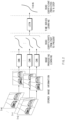
- FIG. 2 is a drawing illustrating an operation of a lane keeping assist system according to an embodiment of the present disclosure.
- FIG. 2 is a drawing illustrating an operation of a neural network learning device 30 included in a lane keeping assist system according to an embodiment of the present disclosure.
- the neural network learning device 30 may include a plurality of CNNs 31-1 to 31-n and an LSTM 32.
- Image information II including an image obtained from a camera 11 of FIG. 1 may be stored in an image storage 20 for each predetermined time T.
- the data patterns necessary for the lane detection may be obtained by datatizing a road coefficient, that is, a form of the lane.
- the plurality of CNNs 31-1 to 31-n may provide the LSTM 32 with the road coefficients (e.g., lane forms) from the past to the present.
- the LSTM 32 may receive the road coefficients from the past to the present as time series data from the plurality of CNNs 31-1 to 31-n and may learn the road coefficients to predict a road coefficient in the future (N step).
- the LSTM 32 may provide the steering controller 40 with the predicted road coefficient as second lane information L_IB of FIG. 1 .
- the second lane information L_IB may include pieces of information for calculating a steering angle at a steering controller 40 of FIG. 1 .
- An image of the road on which the vehicle is traveling may be provided from a camera 11 of FIG. 1 to a lane information generator 12 and an image storage 20 of FIG. 1 .
- the lane information generator 12 may generate position information between the vehicle and the lane based on image information II of FIG. 1 , a curvature of the lane, and information about an angle difference between a vehicle driving direction and a lane direction and may provide the steering controller 40 with the generated information as the first lane information L_IA.
- the lane information generator 12 may generate a degree to which it is able to detect a lane from an image included in the image information II as image reliability information II_R and may provide a neural network learning device 30 and a steering controller 40 of FIG. 1 with the image reliability information II_R.
- the image storage 20 may store the image information II for each predetermined time and may provide the neural network learning device 30 with the image information II stored for each time as pieces of storage image information I_s1 to I_sn.
- the activated neural network learning device 30 may convert the image information II stored for each time, that is, the storage image information I_s1 to I_sn from the past to the present into data, may extract a data pattern capable of detecting a lane, and may leam the extracted data pattern.
- the activated neural network learning device 30 may predict position information between the vehicle and the lane, a curvature of the lane, and information about an angle difference between a vehicle driving direction and a lane direction based on the data patterns learned from the past to the present and may provide the steering controller 40 with the predicted information as the second lane information L_IB.
- the neural network learning device 30 may activated when receiving the image reliability information indicating that the image information II obtained from the camera 11 is unreliable and may be deactivated when receiving the image reliability information II_R indicating that the image information II is reliable.
- the steering controller40 may generate steering information ST_C based on the first lane information L_IA.
- the steering controller 40 may generate steering information ST_C based on the second lane information L_IB.
- the lane keeping assist system may determine reliability of a current image obtained from the camera 11, may generate steering information ST-C depending on the current image obtained from the camera 11, when it is determined that the current image is reliable, and may determine a driving direction of the vehicle based on the steering information ST_C, such that the vehicle may follows the lane to travel.
- the lane keeping assist system may determine the reliability of the current image obtained from the camera 11, may perform neural network learning of images stored from the past to the present to predict a lane, when it is determined that the current image is unreliable, may generate steering information ST-C depending on the predicted lane, and may determine a driving direction of the vehicle based on the steering information ST_C, such that the vehicle may follows the lane to travel.
- the lane keeping assist system may allow the vehicle to follow the lane to travel in a situation where the image obtained from the camera 11 is unreliable, thus improving driving stability of the lane keeping assist system and increasing convenience of a driver.
- the present technology may maintain a lane keeping function although lane information obtained from the camera is temporarily inaccurately recognized, thus improving stability of the lane keeping assist system and increasing utilization.
Landscapes
- Engineering & Computer Science (AREA)
- Physics & Mathematics (AREA)
- Theoretical Computer Science (AREA)
- General Physics & Mathematics (AREA)
- Mathematical Physics (AREA)
- Health & Medical Sciences (AREA)
- General Health & Medical Sciences (AREA)
- Evolutionary Computation (AREA)
- Artificial Intelligence (AREA)
- Molecular Biology (AREA)
- Computing Systems (AREA)
- Biomedical Technology (AREA)
- Software Systems (AREA)
- Life Sciences & Earth Sciences (AREA)
- Transportation (AREA)
- Mechanical Engineering (AREA)
- Data Mining & Analysis (AREA)
- General Engineering & Computer Science (AREA)
- Computational Linguistics (AREA)
- Biophysics (AREA)
- Chemical & Material Sciences (AREA)
- Combustion & Propulsion (AREA)
- Multimedia (AREA)
- Automation & Control Theory (AREA)
- Computer Vision & Pattern Recognition (AREA)
- Biodiversity & Conservation Biology (AREA)
- Databases & Information Systems (AREA)
- Medical Informatics (AREA)
- Image Analysis (AREA)
- Steering Control In Accordance With Driving Conditions (AREA)
- Traffic Control Systems (AREA)
- Image Processing (AREA)
Description
- This application claims the benefit of
Korean Patent Application No. 10-2020-0092459 filed on July 24, 2020 - The present disclosure relates to a lane keeping assist system of a vehicle and a lane keeping method using the same.
- An advanced driver assistance system (ADAS) is a system for allowing a driver to more conveniently and safely drive by providing a risk alert or by means of active intervention using obtained driving information.
- The ADAS is a navigation-based smart cruise control (NSCC), a smart cruise control (SCC), a lane departure warning system (LDWS), a lane keeping assist system (LKAS), a forward collision avoidance assist system (FCAS), a driver status monitoring system (DSMS), or the like.
- The LKAS which is the ADAS is a device for allowing the vehicle to keep the lane itself and travel, which is configured generally such that the vehicle follows the center between the lane to travel based on image information obtained by means of a camera.
- However, the LKAS has a difference in performance of detecting lane depending on weather, illumination, a road surface, and the like upon traveling, because of using the camera.
- Particularly, when lane information is temporarily inaccurately recognized due to an intersection or a section of road construction, pollution of the road surface, and the like, the lane keeping function of the LKAS may be released. YANG WEI ET AL, "Lane Position Detection Based on Long Short-Term Memory (LSTM)", SENSORS, (20200531), vol. 20, no. 11, discloses a lane keeping assist system, comprising: a camera configured to provide an image around a vehicle as image information; a lane information generator configured to generate lane information, based on the image information and an image storage configured to store the image information. To ensure the accuracy of final lane information, the generated lane information and the result of a prediction model are integrated to obtain the optimal position information.
- This Summary is provided to introduce a selection of concepts in a simplified form that are further described below in the Detailed Description. This Summary is not intended to identify key features or essential features of the claimed subject matter, nor is it intended to be used as an aid in determining the scope of the claimed subject matter.
- A lane keeping assist system according to the invention is defined by the features of
claim 1. The lane keeping assist system includes: a camera configured to provide an image around a vehicle as image information; a lane information generator configured to generate image reliability information and first lane information for controlling a driving direction of the vehicle, based on the image information; an image storage configured to store the image information for each predetermined time among predetermined times; a neural network learning device configured to generate second lane information based on the image reliability information and the image information stored for each predetermined time, the image storage is further configured to provide the neural network learning device (30) with the image information; and a steering controller configured to select either one of the first lane information and the second lane information as lane information, based on the image reliability information provided by the lane information generator, and generate steering information based on the selected lane information. - The lane information generator is further configured to detect the lane included in the image based on the image information and to generate a degree to which it is able to detect a lane from an image included in the image information as the image reliability information, wherein when it is impossible to detect the lane from the image based on the image information, the lane information generator is further configured to generate image reliability information indicating that the image information is unreliable, and the lane information generator is further configured to generate position information between the vehicle and the lane, a curvature of the lane, and information about an angle difference between a vehicle driving direction and a lane direction as the first lane information, based on the image information.
- The neural network learning device is further configured to be activated in response to it being determined that the image information is unreliable based on the image reliability information, the image information being unreliable when the reliability level of the image reliability information is lower than a predetermined reliability level, and further configured to be deactivated in response to it being determined that the image information is reliable based on the image reliability information, the image information being reliable when the reliability level of the image reliability information is higher than the predetermined reliability level.
- The neural network learning device is further configured to generate the second lane information based on the image information stored for each predetermined time, in response to the neural network learning device being activated.
- The neural network learning device is further configured to: convert the image information stored for each predetermined time into data; extract data patterns necessary for lane detection; learn the data patterns to generate a learning model; predict position information between the vehicle and the lane, a curvature of the lane, and information about an angle difference between a vehicle driving direction and a lane direction, based on the learning model; and output the predicted position information, the curvature of the lane, and the information about the angle difference, as the second lane information.
- The steering controller may be further configured to: generate the steering information based on the first lane information, in response to it being determined that the image information is reliable based on the image reliability information; and generate the steering information based on the second lane information, in response to it being determined that the image information is unreliable based on the image reliability information.
- In another general aspect, not claimed in the claims, a lane keeping assist system includes: an image storage configured to store image information obtained from a camera for each predetermined time among predetermined times; a neural network learning device configured to convert the image information stored for each predetermined time into data, extract and leam a data pattern necessary for lane detection, predict position information between a vehicle and a lane, a curvature of the lane, and information about an angle difference between a vehicle driving direction and a lane direction, based on the learned result, and output the predicted information as lane information; and a steering controller configured to generate steering information based on the lane information, in response to it being determined that the image information is unreliable based on image reliability information obtained by determining reliability of the image information.
- According to the invention the neural network learning device includes: a plurality of convolution neural networks (CNNs) specialized in image learning and configured to convert each of pieces of the image information stored for each predetermined time into data, extract the data pattern, and learn the data pattern to generate a learning model; and a long short term memory (LSTM) specialized in time series data learning and configured to predict the lane information through time series learning based on the learning model, the LSTM being further configured to receive and learn the leamed results from the plurality of CNNs.
- The steering controller may be further configured to: generate the steering information based on the lane information, in response to it being determined that the image information is unreliable based on the image reliability information; and generate the steering information based on the image information obtained from the camera, in response to it being determined that the image information is reliable based on the image reliability information.
- A lane keeping method according to the invention is defined by the features of claim 5. The lane keeping method includes: obtaining an image around a vehicle as image information from a camera; generating first lane information based on the obtained image information; storing the obtained image information for each predetermined time among predetermined times; determining reliability of the obtained image information; datatizing the image information stored for each determined time and learning the converted image information into data, to predict and generate second lane information; and selecting either one of the first lane information and the second lane information as lane information, based on the determined reliability of the image information, and generating steering information based on the selected lane information.
- The predicting and generating of the second lane information includes: datatizing and learning the image information obtained from the camera using a convolution neural networks (CNNs) specialized in image learning; and predicting the second lane information from a result of the learning of the image information obtained from the camera using the CNNs, by using a long short term memory (LSTM) specialized in time series data learning.
- The generating of the steering information may include: generating the steering information based on the first lane information, in response to it being determined that the image information obtained from the camera is reliable based on the determined reliability of the image; and generating the steering information based on the second lane information, in response to it being determined that the image information obtained from the camera is unreliable based on the determined reliability of the image.
- In another general aspect, a non-transitory computer-readable storage medium stores instructions that, when executed by a processor, cause the processor to perform the lane keeping method described above.
- Other features and aspects will be apparent from the following detailed description, the drawings, and the claims.
- The above and other objects, features and advantages of the present disclosure will be more apparent from the following detailed description taken in conjunction with the accompanying drawings:
-
FIG. 1 is a block diagram illustrating a configuration of a lane keeping assist system according to an embodiment of the present disclosure; and -
FIG. 2 is a drawing illustrating an operation of a lane keeping assist system according to an embodiment of the present disclosure. - Hereinafter, some embodiments of the present disclosure will be described in detail with reference to the exemplary drawings. In adding the reference numerals to the components of each drawing, it should be noted that the identical or equivalent component is designated by the identical numeral even when they are displayed on other drawings. Further, in describing the embodiment of the present disclosure, a detailed description of well-known features or functions will be ruled out in order not to unnecessarily obscure the gist of the present disclosure.
- In describing the components of the embodiment according to the present disclosure, terms such as first, second, "A", "B", (a), (b), and the like may be used. These terms are merely intended to distinguish one component from another component, and the terms do not limit the nature, sequence or order of the constituent components. Unless otherwise defined, all terms used herein, including technical or scientific terms, have the same meanings as those generally understood by those skilled in the art to which the present disclosure pertains. Such terms as those defined in a generally used dictionary are to be interpreted as having meanings equal to the contextual meanings in the relevant field of art, and are not to be interpreted as having ideal or excessively formal meanings unless clearly defined as having such in the present application.
- Hereinafter, embodiments of the present disclosure will be described in detail with reference to
FIGS. 1 and2 . -
FIG. 1 is a block diagram illustrating a configuration of a lane keeping assist system according to an embodiment of the present disclosure. - Referring to
FIG. 1 , asensor module 10, animage storage 20, a neuralnetwork learning device 30, and asteering controller 40 according to an embodiment of the present disclosure may be implemented in a vehicle. In this case, each of thesensor module 10, theimage storage 20, the neuralnetwork learning device 30, and thesteering controller 40 may be integrally configured with control units in the vehicle or may be implemented as a separate device to be connected with the control units of the vehicle by a separate connection means. - The
sensor module 10 may include various sensors used in an advanced driver assistance system (ADAS), which may convert sensing information provided from the sensors into data and may provide the control units in the vehicle with the converted information into data. - In this case, the
sensor module 10 according to an embodiment of the present disclosure may include acamera 11 and alane information generator 12. - The
camera 11 may obtain an image around the vehicle to provide image information II. - The
lane information generator 12 may generate first lane information L_IA for controlling a driving direction of the vehicle based on the image information provided from thecamera 11 and may provide thesteering controller 40 with the first lane information L_IA. - For example, the
lane information generator 12 may detect a lane included in an image based on the image information II and may generate information for steering control of the vehicle based on a form of the detected lane, thus providing thesteering controller 40 with the generated information as the first lane information L_IA. - Furthermore, the
lane information generator 12 may detect the lane included in the image based on the image information II and may generate reliability information according to the detected result, thus providing thesteering controller 40 with the generated reliability information as image reliability information II_R. - For example, the
lane information generator 12 may determine how well it detects the lane from the image based on the image information II and may provide thesteering controller 40 with the determined result as the image reliability information II_R. - In detail, when it is impossible to detect the lane from the image based on the image information II, the
lane information generator 12 may generate image reliability information II_R indicating that the image information II is unreliable and may provide thesteering controller 40 with the image reliability information II_R. - The
image storage 20 may store the image information II provided from thecamera 11. - For example, the
image storage 20 may store the image information II provided from thecamera 11 for each predetermined time. - In this case, the
image storage 20 may simultaneously store the image information II and information about a time when the image information II is stored. - Furthermore, the
image storage 20 may classify pieces of the image information II stored for each predetermined time in an order where they are stored and may provide the neuralnetwork learning device 30 with the classified pieces of image information II as a plurality of pieces of storage image information I_s1 to I_sn. - The neural
network learning device 30 may receive the image reliability information II_R from thelane information generator 12, may receive the plurality of pieces of storage image information I_s1 to I_sn from theimage storage 20 to generate second lane information L_IB, and may provide thesteering controller 40 with the generated second lane information L_IB. - In this case, the neural
network learning device 30 may be activated or deactivated based on the image reliability information II_R. - For example, the neural
network learning device 30 may be activated when the reliability level of the image reliability information II_R is lower than a predetermined reliability level. The activated neuralnetwork learning device 30 may generate the second lane information L_IB based on the plurality of storage image information I_s1 to I_sn. - In this case, when the reliability level of the image reliability information II_R is lower than the predetermined reliability level, the image reliability information II_R may refer to including the result of determining that it is impossible for the
lane information generator 12 to detect the lane from the image based on the image information II. - Meanwhile, the neural
network learning device 30 may be deactivated when the reliability level of the image reliability information II_R is higher than the predetermined reliability level. The deactivated neuralnetwork learning device 30 may stop generating the second lane information L_IB based on the plurality of storage image information I_s1 to I_sn. - When activated, the neural
network learning device 30 of the lane keeping assist system according to an embodiment of the present disclosure may learn the plurality of storage image information I_s1 to I_sn, using convolution neural networks (CNNs) 31-1 to 31-n specialized in image learning and a long short term memory (LSTM) 32 specialized in time series data learning, and may generate the second lane information L_IB based on the leamed result. - Thus, the neural
network learning device 30 may include the plurality of CNNs 31-1 to 31-n for respectively receiving and learning the plurality of pieces of storage image information I_s1 to I_sn and theLSTM 32 for receiving and learning the leamed results from the plurality of CNNs 31-1 to 31-n. - As described above, the neural
network learning device 30 of the lane keeping assist system according to an embodiment of the present disclosure may be activated or deactivated based on the image reliability information II_R. - At least one of the plurality of CNNs 31-1 to 31-n and the
LSTM 32 included in the neuralnetwork learning device 30 may be activated or deactivated based on the image reliability information II_R. - It is shown and described that the
LSTM 32 included in the neuralnetwork learning device 30 of the lane keeping assist system according to an embodiment of the present disclosure is activated or deactivated according to the image reliability information II_R. However, it is obvious that the plurality of CNNs 31-1 to 31-n may be activated or deactivated according to the image reliability information II_R and all of the plurality of CNNs 31-1 to 31-n and theLSTM 32 may be activated or deactivated according to the image reliability information II_R. - Each of the plurality of CNNs 31-1 to 31-n may convert the storage image information I_s1 to I_sn respectively provided thereto into data, may extract data patterns necessary for lane detection, and may leam the extracted data patterns to generate a learning model.
- Because the plurality of storage image information I_s1 to I_sn include images stored for each predetermined time, the plurality of storage image information I_s1 to I_sn may include lane images from the past to the present.
- Thus, the plurality of CNNs 31-1 to 31-n may generate a learning model for lanes from the past to the present based on the plurality of pieces of storage image information I_s1 to I_sn and may provide the
LSTM 32 with the learning model. - The
LSTM 32 may be activated or deactivated based on the image reliability information II_R. - For example, when the reliability level of the image reliability information II_R is lower than the predetermined reliability level, the
LSTM 32 may be activated. - Meanwhile, when the reliability level of the image reliability information ll_R is higher than the predetermined reliability level, the
LSTM 32 may be deactivated. - In this case, when the reliability level of the image reliability information II_R is lower than the predetermined reliability level, the image reliability information II_R may refer to including the result of determining that it is impossible for the
lane information generator 12 to detect the lane from the image based on the image information II. - The activated
LSTM 32 may receive a learning model for the lanes from the past to the present as time series data, may learn the learning model to generate a prediction model of the lane, may generate information for steering control of the vehicle based on a form of the lane according to the prediction model of the lane, and may provide thesteering controller 40 with the generated information as the second lane information L_IB. - The steering
controller 40 may receive the first lane information L_IA and the image reliability information II_R from thelane information generator 12 and may receive the second lane information L_IB from the neuralnetwork learning device 30, thus generating steering information ST_C. - For example, the steering
controller 40 may select one of the first lane information L_IA and the second lane information L_IB based on the image reliability information II_R and may generate the steering information ST_C based on the selected lane information. - In this case, the steering information ST_C may include a steering angle for determining a driving direction of the vehicle.
- In detail, when the reliability level of the image reliability information II_R is higher than the predetermined reliability level, the steering
controller 40 may generate the steering information ST_C based on the first lane information L_IA. - Meanwhile, when the reliability level of the image reliability information II_R is lower than the predetermined reliability level, the steering
controller 40 may generate the steering information ST_C based on the second lane information LIB. - In this case, when the reliability level of the image reliability information II_R is lower than the predetermined reliability level, the image reliability information II_R may refer to including the result of determining that it is impossible for the
lane information generator 12 to detect the lane from the image based on the image information II. - Furthermore, when the reliability level of the image reliability information II_R is higher than the predetermined reliability level, the image reliability information II_R may include the result of determining that it is possible for the
lane information generator 12 to detect the lane from the image based on the image information II. - A description will be given of an example of a process where the
steering controller 40 generates the steering information ST_C including a steering angle based on one selected between the first lane information L_IB and the second lane information L_IB. - The lane keeping assist system according to an embodiment of the present disclosure may approximate the image obtained from the camera to a tertiary function of performing curve fitting of a form of the lane using an image processing technique, may calculate a steering angle necessary for lane keeping per control period using a coefficient and a constant term of the obtained function, and may provide a steering device (not shown) with the calculated steering angle as the steering information ST_C, such that the vehicle may follow the lane to travel.
- In this case, the steering
controller 40 may include an algorithm for the tertiary function of performing curve fitting of the lane form. Receiving the image obtained from thecamera 11, thelane information generator 12 and theLSTM 32 may provide thesteering controller 40 with information corresponding to the coefficient and the constant term of the tertiary function as the first lane information L_IA and the second lane information L_IB. - As a result, the
lane information generator 12 and theLSTM 32 may generate position information between the vehicle and the lane, a curvature of the lane, and information about an angle difference between a vehicle driving direction and a lane direction based on the image obtained from thecamera 11 and may convert the generated information to correspond to the coefficient and the constant term of the tertiary function to generate the first lane information L_IA and the second lane information L_IB. -
FIG. 2 is a drawing illustrating an operation of a lane keeping assist system according to an embodiment of the present disclosure. -
FIG. 2 is a drawing illustrating an operation of a neuralnetwork learning device 30 included in a lane keeping assist system according to an embodiment of the present disclosure. - As described above, the neural
network learning device 30 may include a plurality of CNNs 31-1 to 31-n and anLSTM 32. - Image information II including an image obtained from a
camera 11 ofFIG. 1 may be stored in animage storage 20 for each predetermined time T. - Thus, the
image storage 20 may store road image as the image information II for each predetermined time T (= 0 to K) and may provide the corresponding CNN with stored images I_s1 to I_sn for each time. - Thus, the plurality of CNNs 31-1 to 31-n may receive road images from the past (T=0) to the present (T=k) as the storage image information I_s1 to I_sn, may convert (e.g., image processing) the storage image information I_s1 to I_sn into data, may extract data patterns necessary for lane detection, and may leam the extracted data patterns.
- In this case, the data patterns necessary for the lane detection may be obtained by datatizing a road coefficient, that is, a form of the lane.
- As a result, the plurality of CNNs 31-1 to 31-n may provide the
LSTM 32 with the road coefficients (e.g., lane forms) from the past to the present. - The
LSTM 32 may receive the road coefficients from the past to the present as time series data from the plurality of CNNs 31-1 to 31-n and may learn the road coefficients to predict a road coefficient in the future (N step). - The
LSTM 32 may provide thesteering controller 40 with the predicted road coefficient as second lane information L_IB ofFIG. 1 . - In this case, like first lane information L_IA of
FIG. 1 , the second lane information L_IB may include pieces of information for calculating a steering angle at asteering controller 40 ofFIG. 1 . - A description will be given of an operation of the lane keeping assist system according to an embodiment of the present disclosure, which has the above configuration.
- An image of the road on which the vehicle is traveling may be provided from a
camera 11 ofFIG. 1 to alane information generator 12 and animage storage 20 ofFIG. 1 . - The
lane information generator 12 may generate position information between the vehicle and the lane based on image information II ofFIG. 1 , a curvature of the lane, and information about an angle difference between a vehicle driving direction and a lane direction and may provide thesteering controller 40 with the generated information as the first lane information L_IA. - In this case, the
lane information generator 12 may generate a degree to which it is able to detect a lane from an image included in the image information II as image reliability information II_R and may provide a neuralnetwork learning device 30 and asteering controller 40 ofFIG. 1 with the image reliability information II_R. - The
image storage 20 may store the image information II for each predetermined time and may provide the neuralnetwork learning device 30 with the image information II stored for each time as pieces of storage image information I_s1 to I_sn. - It may be determined whether the neural
network learning device 30 is activated based on the image reliability information II_R. - The activated neural
network learning device 30 may convert the image information II stored for each time, that is, the storage image information I_s1 to I_sn from the past to the present into data, may extract a data pattern capable of detecting a lane, and may leam the extracted data pattern. - Furthermore, the activated neural
network learning device 30 may predict position information between the vehicle and the lane, a curvature of the lane, and information about an angle difference between a vehicle driving direction and a lane direction based on the data patterns learned from the past to the present and may provide thesteering controller 40 with the predicted information as the second lane information L_IB. - In this case, the neural
network learning device 30 may activated when receiving the image reliability information indicating that the image information II obtained from thecamera 11 is unreliable and may be deactivated when receiving the image reliability information II_R indicating that the image information II is reliable. - When receiving the image reliability information II_R indicating that the image information II is reliable, the steering controller40 may generate steering information ST_C based on the first lane information L_IA.
- When receiving the image reliability information II_R indicating that the image information II is unreliable, the steering
controller 40 may generate steering information ST_C based on the second lane information L_IB. - Thus, the lane keeping assist system according to an embodiment of the present disclosure may determine reliability of a current image obtained from the
camera 11, may generate steering information ST-C depending on the current image obtained from thecamera 11, when it is determined that the current image is reliable, and may determine a driving direction of the vehicle based on the steering information ST_C, such that the vehicle may follows the lane to travel. - Furthermore, the lane keeping assist system according to an embodiment of the present disclosure may determine the reliability of the current image obtained from the
camera 11, may perform neural network learning of images stored from the past to the present to predict a lane, when it is determined that the current image is unreliable, may generate steering information ST-C depending on the predicted lane, and may determine a driving direction of the vehicle based on the steering information ST_C, such that the vehicle may follows the lane to travel. - As a result, the lane keeping assist system according to an embodiment of the present disclosure may allow the vehicle to follow the lane to travel in a situation where the image obtained from the
camera 11 is unreliable, thus improving driving stability of the lane keeping assist system and increasing convenience of a driver. - The present technology may maintain a lane keeping function although lane information obtained from the camera is temporarily inaccurately recognized, thus improving stability of the lane keeping assist system and increasing utilization.
Claims (6)
- A lane keeping assist system, comprising:a camera (11) configured to provide an image around a vehicle as image information;a lane information generator (12) configured to generate image reliability information and first lane information for controlling a driving direction of the vehicle, based on the image information;an image storage (20) configured to store the image information for each predetermined time among predetermined times;a neural network learning device (30) configured to generate second lane information based on the image reliability information and the image information stored for each predetermined time, the image storage (20) is further configured to provide the neural network learning device (30) with the image information; anda steering controller (40) configured to select either one of the first lane information and the second lane information as lane information, based on the image reliability information provided by the lane information generator (12), and generate steering information based on the selected lane information,wherein the lane information generator (12) is further configured to detect the lane included in the image based on the image information and to generate a degree to which it is able to detect a lane from an image included in the image information as the image reliability information, wherein when it is impossible to detect the lane from the image based on the image information, the lane information generator (12) is further configured to generate image reliability information indicating that the image information is unreliable, and the lane information generator (12) is further configured to generate position information between the vehicle and the lane, a curvature of the lane, and information about an angle difference between a vehicle driving direction and a lane direction as the first lane information, based on the image information, andwherein the neural network learning device (30) is further configured to be activated in response to it being determined that the image information is unreliable based on the image reliability information, the image information being unreliable when the reliability level of the image reliability information is lower than a predetermined reliability level, and is further configured to be deactivated in response to it being determined that the image information is reliable based on the image reliability information, the image information being reliable when the reliability level of the image reliability information is higher than the predetermined reliability level, andwherein the neural network learning device (30) is further configured to generate the second lane information based on the image information stored for each predetermined time, in response to the neural network learning device (30) being activated, andwherein the neural network learning device (30) is further configured to:convert the image information stored for each predetermined time into data;extract data patterns necessary for lane detection;leam the data patterns to generate a learning model;predict position information between the vehicle and the lane, a curvature of the lane, and information about an angle difference between a vehicle driving direction and a lane direction, based on the learning model; andoutput the predicted position information, the curvature of the lane, and the information about the angle difference, as the second lane information, characterised in that the neural network learning device (30) includes:
a plurality of convolution neural networks (CNNs, 31-1 to 31-n) specialized in image learning and configured to convert each of pieces of the image information stored for each predetermined time into data, extract the data pattern, and leam the data pattern to generate a learning model; and
a long short term memory (LSTM, 32) specialized in time series data learning and configured to predict the lane information through time series learning based on the learning model, the LSTM (32) being further configured to receive and leam the leamed results from the plurality of CNNs (31-1 to 31-n). - The lane keeping assist system of claim 1, wherein the steering controller (40) is further configured to:generate the steering information based on the first lane information, in response to it being determined that the image information is reliable based on the image reliability information; andgenerate the steering information based on the second lane information, in response to it being determined that the image information is unreliable based on the image reliability information.
- The lane keeping assist system of claim 1, wherein the steering controller is further configured to:generate the steering information based on the lane information, in response to it being determined that the image information is unreliable based on the image reliability information; andgenerate the steering information based on the image information obtained from the camera (11), in response to it being determined that the image information is reliable based on the image reliability information.
- A lane keeping method using a lane keeping assist system according to one of the claims 1 to 3, comprising:
obtaining an image around a vehicle as image information from the camera (11);generating first lane information based on the obtained image information;storing the obtained image information for each predetermined time among predetermined times;determining reliability of the obtained image information;datatizing the image information stored for each determined time and learning the converted image information into data, to predict and generate second lane information; andselecting either one of the first lane information and the second lane information as lane information, based on the determined reliability of the image information, and generating steering information based on the selected lane information, wherein the predicting and generating of the second lane information includes:datatizing and learning the image information obtained from the camera (11) using the plurality of convolution neural networks (CNNs, 31-1 to 31-n) specialized in image learning; andpredicting the second lane information from a result of the learning of the image information obtained from the camera using the CNNs (31-1 to 31-n), by using a long short term memory (LSTM, 32) specialized in time series data learning. - The lane keeping method of claim 4, wherein the generating of the steering information includes:generating the steering information based on the first lane information, in response to it being determined that the image information obtained from the camera is reliable based on the determined reliability of the image; andgenerating the steering information based on the second lane information, in response to it being determined that the image information obtained from the camera (11) is unreliable based on the determined reliability of the image.
- A non-transitory computer-readable storage medium storing instructions that, when executed by a processor, cause the processor to perform the lane keeping method of claim 4.
Applications Claiming Priority (1)
| Application Number | Priority Date | Filing Date | Title |
|---|---|---|---|
| KR1020200092459A KR20220013203A (en) | 2020-07-24 | 2020-07-24 | Lane keeping assist system and method using the same |
Publications (2)
| Publication Number | Publication Date |
|---|---|
| EP3944141A1 EP3944141A1 (en) | 2022-01-26 |
| EP3944141B1 true EP3944141B1 (en) | 2024-10-16 |
Family
ID=77021105
Family Applications (1)
| Application Number | Title | Priority Date | Filing Date |
|---|---|---|---|
| EP21186877.3A Active EP3944141B1 (en) | 2020-07-24 | 2021-07-21 | Lane keeping assist system of vehicle and lane keeping method using the same |
Country Status (4)
| Country | Link |
|---|---|
| US (1) | US11820427B2 (en) |
| EP (1) | EP3944141B1 (en) |
| KR (1) | KR20220013203A (en) |
| CN (1) | CN113971786A (en) |
Families Citing this family (4)
| Publication number | Priority date | Publication date | Assignee | Title |
|---|---|---|---|---|
| EP4138048B1 (en) * | 2021-08-17 | 2025-11-12 | Zenseact AB | Training of 3d lane detection models for automotive applications |
| KR102660433B1 (en) * | 2022-03-10 | 2024-04-25 | 주식회사 에이치엘클레무브 | Driver assistance apparatus and driver assistance method |
| CN116834825B (en) * | 2022-03-24 | 2026-01-16 | 本田技研工业株式会社 | Electric power steering apparatus and assist method thereof |
| CN117994341B (en) * | 2024-02-06 | 2025-06-17 | 北京钢铁侠科技有限公司 | Method, device and electronic device for determining steering angle of vehicle |
Family Cites Families (16)
| Publication number | Priority date | Publication date | Assignee | Title |
|---|---|---|---|---|
| KR20140075504A (en) * | 2012-12-11 | 2014-06-19 | 현대자동차주식회사 | System and method for recognizing lane |
| US10210406B2 (en) * | 2016-08-19 | 2019-02-19 | Dura Operating, Llc | System and method of simultaneously generating a multiple lane map and localizing a vehicle in the generated map |
| US11501105B2 (en) * | 2018-03-02 | 2022-11-15 | Zoox, Inc. | Automatic creation and updating of maps |
| US11966838B2 (en) * | 2018-06-19 | 2024-04-23 | Nvidia Corporation | Behavior-guided path planning in autonomous machine applications |
| SG11202108455PA (en) * | 2019-02-28 | 2021-09-29 | Shenzhen Sensetime Technology Co Ltd | Vehicle intelligent driving control method and apparatus, electronic device and storage medium |
| KR102763116B1 (en) * | 2019-07-05 | 2025-02-10 | 현대자동차주식회사 | Advanced Driver Assistance System, Vehicle having the same and method for controlling the vehicle |
| CN110379160A (en) * | 2019-07-09 | 2019-10-25 | 广州小鹏汽车科技有限公司 | A kind of automatic lane change householder method of the vehicle of traffic intersection, system and vehicle |
| CN110738200A (en) * | 2019-12-23 | 2020-01-31 | 广州赛特智能科技有限公司 | Lane line 3D point cloud map construction method, electronic device and storage medium |
| EP4130668A4 (en) * | 2020-04-18 | 2023-05-31 | Huawei Technologies Co., Ltd. | Method for determining lane line recognition abnormal event, and lane line recognition apparatus and system |
| JP2022014729A (en) * | 2020-07-07 | 2022-01-20 | 株式会社デンソー | Adverse environment determination device, and adverse environment determination method |
| JP7286691B2 (en) * | 2021-02-19 | 2023-06-05 | 本田技研工業株式会社 | Determination device, vehicle control device, determination method, and program |
| JP2023531759A (en) * | 2021-04-28 | 2023-07-25 | ベイジン バイドゥ ネットコム サイエンス テクノロジー カンパニー リミテッド | Lane boundary detection model training method, lane boundary detection model training device, electronic device, storage medium and computer program |
| US12026955B2 (en) * | 2021-09-29 | 2024-07-02 | Nvidia Corporation | Assigning obstacles to lanes using neural networks for autonomous machine applications |
| DE102021210924B4 (en) * | 2021-09-29 | 2026-05-07 | Volkswagen Aktiengesellschaft | Method for guiding a motor vehicle across a road with at least two lanes, and motor vehicle |
| JP7720798B2 (en) * | 2022-01-31 | 2025-08-08 | 本田技研工業株式会社 | Mobile object control device, mobile object control method, and program |
| US11699282B1 (en) * | 2022-06-30 | 2023-07-11 | Plusai, Inc. | Data augmentation for vehicle control |
-
2020
- 2020-07-24 KR KR1020200092459A patent/KR20220013203A/en not_active Ceased
-
2021
- 2021-07-21 EP EP21186877.3A patent/EP3944141B1/en active Active
- 2021-07-21 US US17/381,638 patent/US11820427B2/en active Active
- 2021-07-23 CN CN202110841837.9A patent/CN113971786A/en active Pending
Also Published As
| Publication number | Publication date |
|---|---|
| EP3944141A1 (en) | 2022-01-26 |
| US20220024518A1 (en) | 2022-01-27 |
| KR20220013203A (en) | 2022-02-04 |
| US11820427B2 (en) | 2023-11-21 |
| CN113971786A (en) | 2022-01-25 |
Similar Documents
| Publication | Publication Date | Title |
|---|---|---|
| US11661068B2 (en) | Vehicle system for recognizing objects | |
| US11820427B2 (en) | Lane keeping assist system of vehicle and lane keeping method using the same | |
| US11740352B2 (en) | Obstacle recognition device, vehicle system including the same, and method thereof | |
| US9400897B2 (en) | Method for classifying parking scenarios for a system for parking a motor vehicle | |
| CN112660128B (en) | Apparatus for determining lane change path of autonomous vehicle and method thereof | |
| JP5178276B2 (en) | Image recognition device | |
| CN111352414B (en) | False target removal device and method for vehicle and vehicle including the device | |
| JP6911312B2 (en) | Object identification device | |
| US20230271621A1 (en) | Driving assistance device, learning device, driving assistance method, medium with driving assistance program, learned model generation method, and medium with learned model generation program | |
| US11654927B2 (en) | Method for monitoring a vehicle system for detecting an environment of a vehicle | |
| JP2018063476A (en) | Apparatus, method and computer program for driving support | |
| US12428034B2 (en) | Method for classifying a behavior of a road user and method for controlling an ego vehicle | |
| CN117087685A (en) | Methods, computer programs and devices for environment sensing in vehicles | |
| US20210190509A1 (en) | Position estimating apparatus and position estimating method | |
| CN116902007A (en) | Steering control method and device for automatic driving vehicle, vehicle and medium | |
| KR20240048575A (en) | Apparatus, method, computer-readable storage medium and computer program for tracking object based on point cloud of lidar using adaptive prediction area | |
| US20200097005A1 (en) | Object detection device, object detection method, and vehicle controller | |
| KR102443142B1 (en) | Steering control device and method with improved lane recognition function | |
| US12485907B2 (en) | Control system | |
| US20250022326A1 (en) | Automated driving system | |
| CN116968493B (en) | Suspension control method and device for automatic driving vehicle, vehicle and medium | |
| US20200370893A1 (en) | Device and method for compensating for route of autonomous vehicle | |
| US20240132100A1 (en) | Method for assistive or automated vehicle control | |
| CN119796250B (en) | Vehicle lane-changing decision-making methods, devices, electronic equipment and storage media | |
| CN117167152B (en) | Throttle control method and device for automatic driving vehicle, vehicle and medium |
Legal Events
| Date | Code | Title | Description |
|---|---|---|---|
| PUAI | Public reference made under article 153(3) epc to a published international application that has entered the european phase |
Free format text: ORIGINAL CODE: 0009012 |
|
| STAA | Information on the status of an ep patent application or granted ep patent |
Free format text: STATUS: REQUEST FOR EXAMINATION WAS MADE |
|
| 17P | Request for examination filed |
Effective date: 20210721 |
|
| AK | Designated contracting states |
Kind code of ref document: A1 Designated state(s): AL AT BE BG CH CY CZ DE DK EE ES FI FR GB GR HR HU IE IS IT LI LT LU LV MC MK MT NL NO PL PT RO RS SE SI SK SM TR |
|
| RBV | Designated contracting states (corrected) |
Designated state(s): AL AT BE BG CH CY CZ DE DK EE ES FI FR GB GR HR HU IE IS IT LI LT LU LV MC MK MT NL NO PL PT RO RS SE SI SK SM TR |
|
| STAA | Information on the status of an ep patent application or granted ep patent |
Free format text: STATUS: EXAMINATION IS IN PROGRESS |
|
| 17Q | First examination report despatched |
Effective date: 20221024 |
|
| REG | Reference to a national code |
Ref country code: DE Ref legal event code: R079 Free format text: PREVIOUS MAIN CLASS: G06K0009000000 Ipc: G06V0020560000 Ref country code: DE Ref legal event code: R079 Ref document number: 602021020251 Country of ref document: DE Free format text: PREVIOUS MAIN CLASS: G06K0009000000 Ipc: G06V0020560000 |
|
| GRAP | Despatch of communication of intention to grant a patent |
Free format text: ORIGINAL CODE: EPIDOSNIGR1 |
|
| STAA | Information on the status of an ep patent application or granted ep patent |
Free format text: STATUS: GRANT OF PATENT IS INTENDED |
|
| INTG | Intention to grant announced |
Effective date: 20240621 |
|
| RIC1 | Information provided on ipc code assigned before grant |
Ipc: G06V 10/44 20220101ALI20240611BHEP Ipc: G06V 10/82 20220101ALI20240611BHEP Ipc: G06V 20/56 20220101AFI20240611BHEP |
|
| P01 | Opt-out of the competence of the unified patent court (upc) registered |
Free format text: CASE NUMBER: APP_39933/2024 Effective date: 20240704 |
|
| GRAS | Grant fee paid |
Free format text: ORIGINAL CODE: EPIDOSNIGR3 |
|
| GRAA | (expected) grant |
Free format text: ORIGINAL CODE: 0009210 |
|
| STAA | Information on the status of an ep patent application or granted ep patent |
Free format text: STATUS: THE PATENT HAS BEEN GRANTED |
|
| AK | Designated contracting states |
Kind code of ref document: B1 Designated state(s): AL AT BE BG CH CY CZ DE DK EE ES FI FR GB GR HR HU IE IS IT LI LT LU LV MC MK MT NL NO PL PT RO RS SE SI SK SM TR |
|
| REG | Reference to a national code |
Ref country code: GB Ref legal event code: FG4D |
|
| REG | Reference to a national code |
Ref country code: CH Ref legal event code: EP Ref country code: DE Ref legal event code: R096 Ref document number: 602021020251 Country of ref document: DE |
|
| REG | Reference to a national code |
Ref country code: IE Ref legal event code: FG4D |
|
| REG | Reference to a national code |
Ref country code: LT Ref legal event code: MG9D |
|
| REG | Reference to a national code |
Ref country code: NL Ref legal event code: MP Effective date: 20241016 |
|
| REG | Reference to a national code |
Ref country code: AT Ref legal event code: MK05 Ref document number: 1733564 Country of ref document: AT Kind code of ref document: T Effective date: 20241016 |
|
| PG25 | Lapsed in a contracting state [announced via postgrant information from national office to epo] |
Ref country code: NL Free format text: LAPSE BECAUSE OF FAILURE TO SUBMIT A TRANSLATION OF THE DESCRIPTION OR TO PAY THE FEE WITHIN THE PRESCRIBED TIME-LIMIT Effective date: 20241016 |
|
| PG25 | Lapsed in a contracting state [announced via postgrant information from national office to epo] |
Ref country code: NL Free format text: LAPSE BECAUSE OF FAILURE TO SUBMIT A TRANSLATION OF THE DESCRIPTION OR TO PAY THE FEE WITHIN THE PRESCRIBED TIME-LIMIT Effective date: 20241016 |
|
| PG25 | Lapsed in a contracting state [announced via postgrant information from national office to epo] |
Ref country code: PT Free format text: LAPSE BECAUSE OF FAILURE TO SUBMIT A TRANSLATION OF THE DESCRIPTION OR TO PAY THE FEE WITHIN THE PRESCRIBED TIME-LIMIT Effective date: 20250217 Ref country code: IS Free format text: LAPSE BECAUSE OF FAILURE TO SUBMIT A TRANSLATION OF THE DESCRIPTION OR TO PAY THE FEE WITHIN THE PRESCRIBED TIME-LIMIT Effective date: 20250216 Ref country code: HR Free format text: LAPSE BECAUSE OF FAILURE TO SUBMIT A TRANSLATION OF THE DESCRIPTION OR TO PAY THE FEE WITHIN THE PRESCRIBED TIME-LIMIT Effective date: 20241016 |
|
| PG25 | Lapsed in a contracting state [announced via postgrant information from national office to epo] |
Ref country code: FI Free format text: LAPSE BECAUSE OF FAILURE TO SUBMIT A TRANSLATION OF THE DESCRIPTION OR TO PAY THE FEE WITHIN THE PRESCRIBED TIME-LIMIT Effective date: 20241016 |
|
| PG25 | Lapsed in a contracting state [announced via postgrant information from national office to epo] |
Ref country code: BG Free format text: LAPSE BECAUSE OF FAILURE TO SUBMIT A TRANSLATION OF THE DESCRIPTION OR TO PAY THE FEE WITHIN THE PRESCRIBED TIME-LIMIT Effective date: 20241016 |
|
| PG25 | Lapsed in a contracting state [announced via postgrant information from national office to epo] |
Ref country code: ES Free format text: LAPSE BECAUSE OF FAILURE TO SUBMIT A TRANSLATION OF THE DESCRIPTION OR TO PAY THE FEE WITHIN THE PRESCRIBED TIME-LIMIT Effective date: 20241016 |
|
| PG25 | Lapsed in a contracting state [announced via postgrant information from national office to epo] |
Ref country code: NO Free format text: LAPSE BECAUSE OF FAILURE TO SUBMIT A TRANSLATION OF THE DESCRIPTION OR TO PAY THE FEE WITHIN THE PRESCRIBED TIME-LIMIT Effective date: 20250116 |
|
| PG25 | Lapsed in a contracting state [announced via postgrant information from national office to epo] |
Ref country code: LV Free format text: LAPSE BECAUSE OF FAILURE TO SUBMIT A TRANSLATION OF THE DESCRIPTION OR TO PAY THE FEE WITHIN THE PRESCRIBED TIME-LIMIT Effective date: 20241016 Ref country code: AT Free format text: LAPSE BECAUSE OF FAILURE TO SUBMIT A TRANSLATION OF THE DESCRIPTION OR TO PAY THE FEE WITHIN THE PRESCRIBED TIME-LIMIT Effective date: 20241016 Ref country code: GR Free format text: LAPSE BECAUSE OF FAILURE TO SUBMIT A TRANSLATION OF THE DESCRIPTION OR TO PAY THE FEE WITHIN THE PRESCRIBED TIME-LIMIT Effective date: 20250117 |
|
| PG25 | Lapsed in a contracting state [announced via postgrant information from national office to epo] |
Ref country code: PL Free format text: LAPSE BECAUSE OF FAILURE TO SUBMIT A TRANSLATION OF THE DESCRIPTION OR TO PAY THE FEE WITHIN THE PRESCRIBED TIME-LIMIT Effective date: 20241016 |
|
| PG25 | Lapsed in a contracting state [announced via postgrant information from national office to epo] |
Ref country code: RS Free format text: LAPSE BECAUSE OF FAILURE TO SUBMIT A TRANSLATION OF THE DESCRIPTION OR TO PAY THE FEE WITHIN THE PRESCRIBED TIME-LIMIT Effective date: 20250116 |
|
| PG25 | Lapsed in a contracting state [announced via postgrant information from national office to epo] |
Ref country code: SM Free format text: LAPSE BECAUSE OF FAILURE TO SUBMIT A TRANSLATION OF THE DESCRIPTION OR TO PAY THE FEE WITHIN THE PRESCRIBED TIME-LIMIT Effective date: 20241016 |
|
| PG25 | Lapsed in a contracting state [announced via postgrant information from national office to epo] |
Ref country code: DK Free format text: LAPSE BECAUSE OF FAILURE TO SUBMIT A TRANSLATION OF THE DESCRIPTION OR TO PAY THE FEE WITHIN THE PRESCRIBED TIME-LIMIT Effective date: 20241016 |
|
| PGFP | Annual fee paid to national office [announced via postgrant information from national office to epo] |
Ref country code: GB Payment date: 20250610 Year of fee payment: 5 |
|
| REG | Reference to a national code |
Ref country code: DE Ref legal event code: R097 Ref document number: 602021020251 Country of ref document: DE |
|
| PG25 | Lapsed in a contracting state [announced via postgrant information from national office to epo] |
Ref country code: EE Free format text: LAPSE BECAUSE OF FAILURE TO SUBMIT A TRANSLATION OF THE DESCRIPTION OR TO PAY THE FEE WITHIN THE PRESCRIBED TIME-LIMIT Effective date: 20241016 |
|
| PGFP | Annual fee paid to national office [announced via postgrant information from national office to epo] |
Ref country code: FR Payment date: 20250611 Year of fee payment: 5 |
|
| PG25 | Lapsed in a contracting state [announced via postgrant information from national office to epo] |
Ref country code: RO Free format text: LAPSE BECAUSE OF FAILURE TO SUBMIT A TRANSLATION OF THE DESCRIPTION OR TO PAY THE FEE WITHIN THE PRESCRIBED TIME-LIMIT Effective date: 20241016 |
|
| PG25 | Lapsed in a contracting state [announced via postgrant information from national office to epo] |
Ref country code: SK Free format text: LAPSE BECAUSE OF FAILURE TO SUBMIT A TRANSLATION OF THE DESCRIPTION OR TO PAY THE FEE WITHIN THE PRESCRIBED TIME-LIMIT Effective date: 20241016 |
|
| PG25 | Lapsed in a contracting state [announced via postgrant information from national office to epo] |
Ref country code: CZ Free format text: LAPSE BECAUSE OF FAILURE TO SUBMIT A TRANSLATION OF THE DESCRIPTION OR TO PAY THE FEE WITHIN THE PRESCRIBED TIME-LIMIT Effective date: 20241016 |
|
| PG25 | Lapsed in a contracting state [announced via postgrant information from national office to epo] |
Ref country code: IT Free format text: LAPSE BECAUSE OF FAILURE TO SUBMIT A TRANSLATION OF THE DESCRIPTION OR TO PAY THE FEE WITHIN THE PRESCRIBED TIME-LIMIT Effective date: 20241016 |
|
| PLBE | No opposition filed within time limit |
Free format text: ORIGINAL CODE: 0009261 |
|
| STAA | Information on the status of an ep patent application or granted ep patent |
Free format text: STATUS: NO OPPOSITION FILED WITHIN TIME LIMIT |
|
| PG25 | Lapsed in a contracting state [announced via postgrant information from national office to epo] |
Ref country code: SE Free format text: LAPSE BECAUSE OF FAILURE TO SUBMIT A TRANSLATION OF THE DESCRIPTION OR TO PAY THE FEE WITHIN THE PRESCRIBED TIME-LIMIT Effective date: 20241016 |
|
| 26N | No opposition filed |
Effective date: 20250717 |
|
| PGFP | Annual fee paid to national office [announced via postgrant information from national office to epo] |
Ref country code: DE Payment date: 20250609 Year of fee payment: 5 |
|
| REG | Reference to a national code |
Ref country code: CH Ref legal event code: H13 Free format text: ST27 STATUS EVENT CODE: U-0-0-H10-H13 (AS PROVIDED BY THE NATIONAL OFFICE) Effective date: 20260224 |
|
| PG25 | Lapsed in a contracting state [announced via postgrant information from national office to epo] |
Ref country code: LU Free format text: LAPSE BECAUSE OF NON-PAYMENT OF DUE FEES Effective date: 20250721 |
|
| REG | Reference to a national code |
Ref country code: BE Ref legal event code: MM Effective date: 20250731 |
|
| PG25 | Lapsed in a contracting state [announced via postgrant information from national office to epo] |
Ref country code: BE Free format text: LAPSE BECAUSE OF NON-PAYMENT OF DUE FEES Effective date: 20250731 |
|
| PG25 | Lapsed in a contracting state [announced via postgrant information from national office to epo] |
Ref country code: CH Free format text: LAPSE BECAUSE OF NON-PAYMENT OF DUE FEES Effective date: 20250731 |