EP3944101A1 - Information processing program, information processing method, and information processing device - Google Patents
Information processing program, information processing method, and information processing device Download PDFInfo
- Publication number
- EP3944101A1 EP3944101A1 EP19921112.9A EP19921112A EP3944101A1 EP 3944101 A1 EP3944101 A1 EP 3944101A1 EP 19921112 A EP19921112 A EP 19921112A EP 3944101 A1 EP3944101 A1 EP 3944101A1
- Authority
- EP
- European Patent Office
- Prior art keywords
- rowid
- data
- update
- partition
- deletion
- Prior art date
- Legal status (The legal status is an assumption and is not a legal conclusion. Google has not performed a legal analysis and makes no representation as to the accuracy of the status listed.)
- Granted
Links
Images












Classifications
-
- G—PHYSICS
- G06—COMPUTING OR CALCULATING; COUNTING
- G06F—ELECTRIC DIGITAL DATA PROCESSING
- G06F16/00—Information retrieval; Database structures therefor; File system structures therefor
- G06F16/20—Information retrieval; Database structures therefor; File system structures therefor of structured data, e.g. relational data
- G06F16/27—Replication, distribution or synchronisation of data between databases or within a distributed database system; Distributed database system architectures therefor
- G06F16/278—Data partitioning, e.g. horizontal or vertical partitioning
-
- G—PHYSICS
- G06—COMPUTING OR CALCULATING; COUNTING
- G06F—ELECTRIC DIGITAL DATA PROCESSING
- G06F11/00—Error detection; Error correction; Monitoring
- G06F11/07—Responding to the occurrence of a fault, e.g. fault tolerance
- G06F11/14—Error detection or correction of the data by redundancy in operations
- G06F11/1446—Point-in-time backing up or restoration of persistent data
- G06F11/1458—Management of the backup or restore process
- G06F11/1469—Backup restoration techniques
-
- G—PHYSICS
- G06—COMPUTING OR CALCULATING; COUNTING
- G06F—ELECTRIC DIGITAL DATA PROCESSING
- G06F16/00—Information retrieval; Database structures therefor; File system structures therefor
- G06F16/20—Information retrieval; Database structures therefor; File system structures therefor of structured data, e.g. relational data
- G06F16/23—Updating
- G06F16/2358—Change logging, detection, and notification
-
- G—PHYSICS
- G06—COMPUTING OR CALCULATING; COUNTING
- G06F—ELECTRIC DIGITAL DATA PROCESSING
- G06F16/00—Information retrieval; Database structures therefor; File system structures therefor
- G06F16/20—Information retrieval; Database structures therefor; File system structures therefor of structured data, e.g. relational data
- G06F16/23—Updating
- G06F16/2365—Ensuring data consistency and integrity
-
- G—PHYSICS
- G06—COMPUTING OR CALCULATING; COUNTING
- G06F—ELECTRIC DIGITAL DATA PROCESSING
- G06F11/00—Error detection; Error correction; Monitoring
- G06F11/07—Responding to the occurrence of a fault, e.g. fault tolerance
- G06F11/14—Error detection or correction of the data by redundancy in operations
- G06F11/1402—Saving, restoring, recovering or retrying
- G06F11/1415—Saving, restoring, recovering or retrying at system level
- G06F11/1417—Boot up procedures
-
- G—PHYSICS
- G06—COMPUTING OR CALCULATING; COUNTING
- G06F—ELECTRIC DIGITAL DATA PROCESSING
- G06F11/00—Error detection; Error correction; Monitoring
- G06F11/07—Responding to the occurrence of a fault, e.g. fault tolerance
- G06F11/14—Error detection or correction of the data by redundancy in operations
- G06F11/1402—Saving, restoring, recovering or retrying
- G06F11/1415—Saving, restoring, recovering or retrying at system level
- G06F11/1433—Saving, restoring, recovering or retrying at system level during software upgrading
-
- G—PHYSICS
- G06—COMPUTING OR CALCULATING; COUNTING
- G06F—ELECTRIC DIGITAL DATA PROCESSING
- G06F2201/00—Indexing scheme relating to error detection, to error correction, and to monitoring
- G06F2201/80—Database-specific techniques
Definitions
- the present invention relates to an information processing program, an information processing method, and an information processing apparatus.
- a database that stores data such as extensible markup language (XML) data as records holds a RowID file that records operations on the records.
- XML extensible markup language
- FIG. 14 is a diagram for explaining the RowID file.
- operation information includes an instruction classification, a RowID, and a physical position of a record.
- the instruction classification is "addition (ADD)", “update (UPD)” or “deletion (DEL)”.
- the RowID is an identifier that identifies an operation.
- the physical position of a record is information regarding a physical storage position where the record is stored in a hard disk drive (HDD) or a solid state drive (SSD).
- HDD hard disk drive
- SSD solid state drive
- the RowID file 9 is used to restore, when a database is restarted, a RowID hydra 36 that holds the latest state of each record on a memory 51.
- the RowID hydra 36 is tree-structured data related to a RowID, and a leaf portion of the tree is called a RowID hydra leaf, and stores record information including a physical position of a record.
- the RowID hydra 36 is used to acquire a physical position of a record from a RowID.
- a first hierarchy includes ten nodes corresponding to 0 to 9 of the hundreds-place numeral of the RowID.
- a second hierarchy includes a total of 100 nodes corresponding to 0 to 9 of the tens-place numeral of the RowID for each node of the first hierarchy.
- a third hierarchy for example, a leaf hierarchy includes a total of 1000 nodes corresponding to 0 to 9 of the ones-place numeral of the RowID for each node of the second hierarchy. Note that details of the RowID hydra 36 are described in Japanese Laid-open Patent Publication No. 2003-44267 .
- RowID file 9 In the example of the RowID file 9 illustrated in FIG. 14 , a record with a RowID of "#1" and a record with a RowID of "#2" are added to the database, the record with the RowID of "#2" is updated, and the record with the RowID of "#1" is deleted.
- RowID file 9 When the RowID file 9 is read at the time of restart, RowID hydra leaves that store information regarding the record with the RowID of "#1" and information regarding the record with the RowID of "#2" are created in the RowID hydra 36. Then, the RowID hydra leaf that stores the information regarding the record with the RowID of "#2" is updated, and the RowID hydra leaf that stores the information regarding the record with the RowID of "#1" is deleted.
- the prior art system includes a database file, a database management system, and a database management information input/output device.
- the database management system manages a series of operations on the database file, including data retrieval, data update, and data deletion.
- the database management information input/output device specifies and instructs the database management system to update optional latest data and delete optional data among the updated data stored according to time series.
- a database management processing method that includes a safe log area, a buffer area, a database storage area, a database access unit, a commit record collection unit, and a buffer control unit, and is suitable for historical data accumulation processing.
- the safe log area stores a log of an additional record.
- the buffer area stores a committed record.
- the database storage area is provided on a secondary storage.
- the database access unit collects, when a record is added, log data of the record in the safe log area.
- the commit record collection unit fetches committed log data from the safe log area, and stores the committed log data in the buffer area.
- the buffer control unit writes contents of the buffer area to the database storage area asynchronously with transaction processing.
- the database management processing method performs disclosure of an additional record by transferring to the buffer area.
- a partitioning function is needed in which data is classified and stored in a database, and a retrieval object is narrowed down by using the classification at the time of retrieval.
- FIG. 15 is a diagram for explaining the partitioning function.
- FIG. 15 illustrates a case where XML data is stored in a database.
- a user defines a partition by using a partition definition.
- the XML data is divided and managed by using a /root/month tag. For example, the XML data is divided into data in which ⁇ month> is "1", data in which ⁇ month> is "2",..., and data in which ⁇ month> is "12" and managed.
- a partition is specified in retrieval. In FIG. 15 , it is specified by a retrieval expression 4 that ⁇ month> is "4".
- the database management system may specify a partition from the retrieval expression 4 and execute retrieval within a range of the specified partition.
- FIG. 16 illustrates restoration of the RowID hydra 36.
- the database management system reads the RowID file 9 sequentially, and restores the RowID hydra 36.
- the partitioning function operations of operating a large number of records at one time by deletion or movement in partition units increase, and the number of pieces of operation information of the RowID file 9 increases.
- an object of the present invention is to shorten restoration time of a RowID hydra 36 and improve restart performance.
- an information processing program causes a computer to execute processing of dividing data into a plurality of data areas and storing the data areas in a database. Furthermore, the information processing program causes the computer to execute addition operation processing when an operation of any one of addition, update, and deletion for at least one of the data areas is received, in a case where the received operation is the operation of the addition. In the addition operation processing, information regarding the operation of the addition is stored in association with the data area for which the addition is performed. Furthermore, the information processing program causes the computer to execute processing of storing, in a case where the received operation is either the operation of the update or the deletion, information regarding the operation of the update or the deletion in association with the data.
- the information processing program causes the computer to execute processing of executing, when all storage position information that indicates storage positions of all pieces of data is restored, restoration processing related to the addition in parallel for the plurality of data areas.
- the restoration processing related to the addition is executed on the basis of information regarding an operation associated with each of the plurality of data areas.
- the information processing program causes the computer to execute processing of executing, after the restoration processing related to the addition is executed, restoration processing related to the update or the deletion on the basis of the information regarding the operation of the update or the deletion.
- the present invention may shorten restoration time of a RowID hydra 36 and improve restart performance.
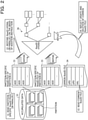
- FIG. 1 is a diagram for explaining the RowID file managed by the database management system according to the embodiment.
- the database management system according to the embodiment manages accumulated data 32 by dividing the accumulated data 32 into partitions, and has a partition-specific RowID file 33 associated with each partition.
- the database management system stores, for an addition instruction, operation information in the partition-specific RowID file 33.
- operation information of an addition instruction of a record included in a partition A is stored in a partition-specific RowID file 33 of the partition A.
- Operation information of an addition instruction of a record included in a partition B is stored in a partition-specific RowID file 33 of the partition B.
- the database management system according to the embodiment has a common RowID file 34, and stores, for an update instruction and a deletion instruction, operation information in the common RowID file 34. Furthermore, the database management system according to the embodiment includes, for the update instruction, updated partition information in the operation information as a belonging partition. Note that processing of controlling update of a RowID hydra 36 by using the belonging partition will be described later.
- the database management system restores the RowID hydra 36 in parallel on the basis of the partition-specific RowID file 33, and then updates the RowID hydra 36 on the basis of the common RowID file 34.
- FIG. 2 is a diagram for explaining restoration of the RowID hydra 36 by the database management system according to the embodiment.
- the database management system according to the embodiment reads the partition-specific RowID files 33 in parallel (t1), and restores the RowID hydra 36 in parallel on the basis of an addition instruction (t2). For example, a thread for performing processing of reading the partition-specific RowID file 33 and restoring the RowID hydra 36 is generated for each partition and executed in a multi-core CPU, whereby restoration of the RowID hydra 36 in parallel is implemented.
- the database management system according to the embodiment reads the common RowID file 34 (t3) and reflects update and deletion in the RowID hydra 36 (t4).
- the database management system according to the embodiment restores the RowID hydra 36 based on the plurality of partition-specific RowID files 33 in parallel.
- the database management system according to the embodiment may shorten restoration time of the RowID hydra 36.
- the database management system according to the embodiment may eliminate operation information of an addition instruction and deletion instruction by deleting the partition-specific RowID file 33 corresponding to the partition.
- the database management system according to the embodiment may reduce the number of pieces of operation information and shorten the restoration time of the RowID hydra 36.
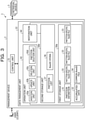
- FIG. 3 illustrates the configuration of the database management system according to the embodiment.
- a database management system 1 according to the embodiment includes a management device 2 and three retrieval devices 3. Note that the database management system 1 may have a number of the retrieval devices 3 other than three as long as the number is one or more.
- the management device 2 is an information processing apparatus that receives an operation request, a retrieval request, or the like from a user, performs processing corresponding thereto, and notifies the user of a processing result.
- the retrieval device 3 creates a list of RowIDs that satisfy a retrieval condition included in the retrieval request on the basis of an instruction of the management device 2, and responds to the management device 2.
- the three retrieval devices 3 perform processing in parallel.
- the management device 2 retrieves the accumulated data 32 by using the lists of the RowIDs received from the retrieval devices 3, and responds to the user.
- the management device 2 includes a control unit 21 and a data management unit 22.
- the control unit 21 receives an operation request, a retrieval request, or the like from a user, controls processing for the received request, and notifies the user of a processing result.
- the data management unit 22 process an operation request, a retrieval request, or the like received by the control unit 21.
- the data management unit 22 includes a first storage unit 30a (may be referred to as a first storage unit 30), a second storage unit 30b (may be referred to as a second storage unit 40), an operation unit 43, and a restoration unit 44.
- the first storage unit 30a stores a partition definition 31, the accumulated data 32, partition-specific RowID files 33 corresponding to the number of partitions, and the common RowID file 34.
- the accumulated data 32 is divided into partitions and managed.
- the first storage unit 30a is provided in a non-volatile storage device such as an HDD or SSD.
- the second storage unit 30b stores the RowID hydra 36 and a partition list 37.
- the partition list 37 is information regarding partitions.
- the second storage unit 30b is provided on a memory 51.
- the operation unit 43 processes an operation request.
- the operation unit 43 includes an addition unit 43a, an update unit 43b, a deletion unit 43c, and a partition deletion unit 43d.
- the addition unit 43a determines a partition of a record to be added, assigns a RowID, and stores the record in the first storage unit 30a.
- the record stored in the first storage unit 30a is managed as the accumulated data 32.
- the addition unit 43a writes operation information to the partition-specific RowID file 33 of the determined partition.
- the addition unit 43a adds information regarding the record stored in the first storage unit 30a to the RowID hydra 36.
- the update unit 43b determines a partition to which a record to be updated belongs, and stores the update record in the first storage unit 30a. Note that the record before the update is deleted from the first storage unit 30a at another timing. Furthermore, the update unit 43b writes operation information to the common RowID file 34. At that time, the update unit 43b includes information regarding the belonging partition in the operation information. Furthermore, the update unit 43b updates the RowID hydra 36 with information regarding the update record stored in the first storage unit 30a.
- the deletion unit 43c writes operation information to the common RowID file 34. Furthermore, the deletion unit 43c deletes information regarding a deletion record from the RowID hydra 36. Note that the deletion record is deleted from the first storage unit 30a at another timing.
- the partition deletion unit 43d deletes a partition specified in a partition deletion request from the accumulated data 32, and deletes a corresponding partition-specific RowID file 33. Furthermore, the partition deletion unit 43d deletes a corresponding portion in the RowID hydra 36.
- the restoration unit 44 restores the RowID hydra 36 when a database is restarted. First, the restoration unit 44 executes processing of reading the partition-specific RowID file 33 and creating the RowID hydra 36 in parallel for each partition.
- the restoration unit 44 reads the common RowID file 34, and in the case of an update instruction, processing is performed on the RowID hydra 36 on the basis of presence or absence of a RowID hydra leaf of a record to be updated and presence or absence of a partition to which the record to be updated belongs.
- the restoration unit 44 updates the RowID hydra leaf. In a case where there is the RowID hydra leaf of the record to be updated and there is no partition to which the record to be updated belongs, the restoration unit 44 deletes the RowID hydra leaf from the RowID hydra 36. In a case where there is no RowID hydra leaf of the record to be updated and there is the partition to which the record to be updated belongs, the restoration unit 44 adds a RowID hydra leaf to the RowID hydra 36. In a case where there is no RowID hydra leaf of the record to be updated and there is no partition to which the record to be updated belongs, the restoration unit 44 does not perform processing on the RowID hydra 36.
- the restoration unit 44 determines the presence or absence of the partition to which the record to be updated belongs by using a belonging partition included in operation information.
- the restoration unit 44 deletes a RowID hydra leaf of a record to be deleted from the RowID hydra 36.
- FIG. 4 is a flowchart illustrating the flow of the processing by the operation unit 43.
- the operation unit 43 determines an instruction classification of an operation request (Step S1).
- the operation unit 43 determines a partition to which a record to be added belongs (Step S2), and assigns a RowID to the record to be added (Step S3). Then, the operation unit 43 stores the record to be added on the basis of the determined partition (Step S4), and writes operation information to the partition-specific RowID file 33 of the corresponding partition (Step S5). Then, the operation unit 43 adds a RowID hydra leaf of the record to be added to the RowID hydra 36 (Step S6).
- the operation unit 43 determines a partition to which a record to be updated belongs (Step S7), and stores the record to be updated on the basis of the determined partition (Step S8). Then, the operation unit 43 writes operation information to the common RowID file 34 (Step S9), and updates a RowID hydra leaf with information regarding the record to be updated (Step S10).
- the operation unit 43 writes operation information to the common RowID file 34 (Step S11), and deletes a RowID hydra leaf of a record to be deleted from the RowID hydra 36 (Step S12).
- the operation unit 43 writes the operation information to the partition-specific RowID file 33 of the partition to which the record to be added belongs.
- the restoration unit 44 may restore the RowID hydra 36 regarding the addition instruction in parallel for each partition.
- FIG. 5 is a flowchart illustrating the flow of the processing by the restoration unit 44.
- the restoration unit 44 reads the partition-specific RowID file 33 (Step S21), and creates the RowID hydra 36 (Step S22).
- the restoration unit 44 creates the RowID hydra 36 by performing the processing of Steps S21 and S22 in parallel for each partition.
- the restoration unit 44 reads the common RowID file 34 (Step S23), and performs the following processing of Steps S24 to S31 on each piece of operation information.
- the restoration unit 44 determines an instruction classification included in operation information (Step S24), and in a case where the instruction classification is "update", determines presence or absence of a RowID hydra leaf of a record to be updated (Step S25).
- the restoration unit 44 determines presence or absence of a belonging partition of the record to be updated (Step S26). Then, in a case where the belonging partition of the record to be updated is present, the restoration unit 44 updates the RowID hydra leaf (Step S27), and in a case where the belonging partition is absent, deletes the RowID hydra leaf from the RowID hydra 36 (Step S28).
- the restoration unit 44 determines presence or absence of the belonging partition of the record to be updated (Step S29). Then, in a case where the belonging partition of the record to be updated is present, the restoration unit 44 adds the RowID hydra leaf to the RowID hydra 36 (Step S30), and in a case where the belonging partition is absent, performs no processing on the RowID hydra 36.
- Step S24 in a case where the instruction classification is "deletion", the restoration unit 44 deletes a RowID hydra leaf of a record to be deleted from the RowID hydra 36 (Step S31).
- the restoration unit 44 may shorten the restoration time of the RowID hydra 36.
- FIGs. 6 to 8 10A to 10C , and 12A to 12E , S2, S3, and the like indicate steps of the flowchart illustrated in FIGs. 4 and 5 .
- FIG. 6 illustrates an example of record addition processing.
- the data management unit 22 determines a storage destination partition on the basis of the partition definition 31 specified in advance by a user and records to be added (Step S2).
- the storage destination partition is determined to be an April partition.
- the data management unit 22 assigns RowIDs to the additional records (Step S3). Here, "41” and “42” are assigned. Then, the data management unit 22 reads the additional records and stores the additional records in the April partition of the accumulated data 32 (Step S4).
- the data management unit 22 writes "ADD" as an instruction classification, "41” as the RowID, and storage position information of the storage destination as a physical position in the partition-specific RowID file 33 of the April partition. Furthermore, the data management unit 22 writes "ADD" as the instruction classification, "42” as the RowID, and storage position information of the storage destination as the physical position in the partition-specific RowID file 33 of the April partition (Step S5). Then, the data management unit 22 adds RowID hydra leaves (information regarding the additional records) to the RowID hydra 36 on the second storage unit 30b (Step S6).
- FIG. 7 illustrates an example of record update processing.
- the data management unit 22 determines a storage destination partition on the basis of the partition definition 31 specified in advance by a user and an update record (Step S7).
- the storage destination partition is determined to be the April partition.
- the data management unit 22 reads the update record and stores the update record in the April partition of the accumulated data 32 (Step S8).
- the data management unit 22 writes "UPD” as the instruction classification, "41” as the RowID, storage position information of the storage destination as the physical position, and "April” as a belonging partition after the update in the common RowID file 34 (Step S9). Then, the data management unit 22 updates a RowID hydra leaf corresponding to the update record of the RowID hydra 36 of the second storage unit 30b with information regarding the update record (Step S10).
- the RowID of the record with the /root/ID tag value of "AAA" is "41”
- a RowID hydra leaf with the RowID of "41” is updated.
- FIG. 8 illustrates an example of record deletion processing.
- the data management unit 22 writes "DEL" as the instruction classification and "41" as the RowID in the common RowID file 34 (Step S11). Then, the data management unit 22 deletes a RowID hydra leaf corresponding to a deletion record from the RowID hydra 36 of the second storage unit 30b (Step S12).
- FIG. 9 illustrates an example of partition deletion processing.
- the data management unit 22 when the data management unit 22 is instructed to delete a January partition, the data management unit 22 deletes the accumulated data 32 of the January partition (u1), and deletes the partition-specific RowID file 33 of the January partition (u2). Then, the data management unit 22 deletes RowID hydra leaves of the January partition (u3).
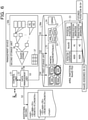
- FIGs. 10A to 10C illustrate an example of processing of restoring the RowID hydra 36 at the time of restart.
- FIG. 10A illustrates restoration of the RowID hydra 36 by using operation information of an addition instruction.
- the data management unit 22 reads the partition-specific RowID files 33 of February, March, and April (Step S21), and creates the RowID hydra 36 (Step S22). At this time, the data management unit 22 restores the RowID hydra 36 in parallel for each partition. Furthermore, as illustrated in FIG. 9 , since the January partition has been deleted, there is no partition-specific RowID file 33 of January, and record information of January is not restored in the RowID hydra 36.
- FIG. 10B illustrates reflection of operation information of an update instruction in the RowID hydra 36.
- the data management unit 22 reads the common RowID file 34 (Step S23), and performs update processing because the instruction classification of a first piece of the operation information is "UPD".
- the data management unit 22 updates a RowID hydra leaf for the record with the RowID of "41” because the record has the RowID hydra leaf and has "April" as the belonging partition (Step S27).
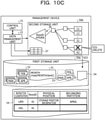
- FIG. 10C illustrates reflection of operation information of a deletion instruction in the RowID hydra 36.
- the data management unit 22 reads the common RowID file 34 (Step S23), and performs deletion processing because the instruction classification of the next piece of the operation information is "DEL". For example, the data management unit 22 deletes a RowID hydra leaf with the RowID of "41" from the RowID hydra 36 (Step S31).
- FIGs. 11A to 11D illustrate update examples accompanied by partition movement.
- FIG. 11A illustrates an example of registration data.
- the record #1 and the record #2 are stored in a Tokyo partition of the accumulated data 32.
- the partition-specific RowID file 33 of the Tokyo partition two pieces of operation information with the instruction classifications of "ADD" and the RowIDs of "01" and "02" are stored.
- FIG. 11B illustrates update of the record #1.
- the record #1 is moved from the Tokyo partition of the accumulated data 32 to an Osaka partition.
- operation information with the instruction classification of "UPD”, the RowID of "01”, and the belonging partition of "Osaka” is stored.
- FIG. 11C illustrates update of the record #2.
- the work location of the record #2 is changed from “Tokyo” to "Osaka” and then from "Osaka” to "Tokyo”.
- the record #2 is moved from the Tokyo partition of the accumulated data 32 to the Osaka partition, and then moved from the Osaka partition to the Tokyo partition.
- operation information with the instruction classification of "UPD”, the RowID of "02", and the belonging partition of "Osaka” and operation information with the instruction classification of "UPD”, the RowID of "02", and the belonging partition of "Tokyo" are stored.
- FIG. 11D illustrates deletion of the Tokyo partition. As illustrated in FIG. 11D , when the Tokyo partition is deleted, the accumulated data 32 of the Tokyo partition is deleted, and the partition-specific RowID file 33 of the Tokyo partition is deleted.
- FIGs. 12A to 12E illustrate restoration processing of the RowID hydra 36 in cases where the update illustrated in FIGs. 11A to 11D is performed.
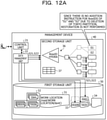
- FIG. 12A illustrates restoration processing using operation information of an addition instruction.
- the data management unit 22 reads the partition-specific RowID file 33 (Step S21). Note that, since the partition-specific RowID file 33 of the Tokyo partition has been deleted, the data management unit 22 does not restore RowID hydra leaves for the records with the RowIDs of "01" and "02".
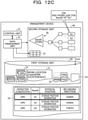
- FIGs. 12B and 12C illustrate restoration processing using operation information of an update instruction of the record #1.
- the data management unit 22 reads the common RowID file 34 (Step S23), and performs update processing because the instruction classification of the first piece of the operation information is "UPD".
- the data management unit 22 adds a RowID hydra leaf for the record with the RowID of "01" because the record has no RowID hydra leaf and has "Osaka" as the belonging partition (Step S30).
- FIGs. 12D and 12E illustrate restoration processing using operation information of an update instruction of the record #2.
- the data management unit 22 reads the common RowID file 34 (Step S23), and performs update processing because the instruction classification of the next piece of the operation information is "UPD". For example, the data management unit 22 adds a RowID hydra leaf for the record with the RowID of "02" because the record has no RowID hydra leaf and has "Osaka" as the belonging partition (Step S30).
- the data management unit 22 reads the common RowID file 34 (step S23), and performs update processing because the instruction classification of the next operation information is "UPD". For example, the data management unit 22 deletes the RowID hydra leaf for the record with the RowID of "02" because the record has the RowID hydra leaf and does not have "Tokyo" as the belonging partition (Step S30).
- the addition unit 43a writes the operation information of the addition instruction to the partition-specific RowID file 33
- the update unit 43b and the deletion unit 43c write the operation information of the update instruction and the deletion instruction to the common RowID file 34, respectively.
- the restoration unit 44 performs the processing of reading the partition-specific RowID file 33 and creating the RowID hydra 36 in parallel for each partition.
- the restoration unit 44 reads the common RowID file 34 and reflects the update instruction and the deletion instruction in the RowID hydra 36. Therefore, the data management unit 22 may shorten the restoration time of the RowID hydra 36 and improve restart performance.
- the partition deletion unit 43d deletes the partition-specific RowID file 33 corresponding to the partition specified in the partition deletion request, the number of pieces of operation information may be reduced and the restoration time of the RowID hydra 36 may be shortened.
- the operation information of the update instruction includes the belonging partition
- the restoration unit 44 restores the RowID hydra 36 by using the belonging partition. Specifically, in a case where there is a RowID hydra leaf of a record to be updated and there is a partition to which the record to be updated belongs, the restoration unit 44 updates the RowID hydra leaf. In a case where there is the RowID hydra leaf of the record to be updated and there is no partition to which the record to be updated belongs, the restoration unit 44 deletes the RowID hydra leaf from the RowID hydra 36.
- the restoration unit 44 adds a RowID hydra leaf to the RowID hydra 36.
- the restoration unit 44 does not perform processing on the RowID hydra 36. Therefore, even in a case where update accompanied by partition movement or deletion of a partition is performed, the restoration unit 44 may restore the RowID hydra 36 that is consistent with the update or deletion on the basis of the operation information of the update instruction.
- the management device 2 has been described. However, by implementing the configuration of the management device 2 by software, it is possible to obtain a management program that has a similar function. Therefore, a computer that executes the management program will be described.
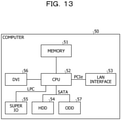
- FIG. 13 illustrates a hardware configuration of the computer that executes the management program according to the embodiment.
- a computer 50 includes the memory 51, a central processing unit (CPU) 52, a local area network (LAN) interface 53, and a hard disk drive (HDD) 54.
- the computer 50 includes a super input output (IO) 55, a digital visual interface (DVI) 56, and an optical disk drive (ODD) 57.
- IO super input output
- DVI digital visual interface
- ODD optical disk drive
- the memory 51 is a memory that stores a program, a halfway result of execution of the program, and the like.
- the CPU 52 is a central processing unit that reads and executes a program from the memory 51.
- the CPU 52 includes a chipset having a memory controller.
- the LAN interface 53 is an interface for connecting the computer 50 to another computer via a LAN.
- the HDD 54 is a disk device that stores a program and data
- the super IO 55 is an interface for connecting an input device such as a mouse and a keyboard.
- the DVI 56 is an interface that connects a liquid crystal display device
- the ODD 57 is a device that reads and writes a DVD.
- the LAN interface 53 is connected to the CPU 52 by PCI Express (PCIe), and the HDD 54 and the ODD 57 are connected to the CPU 52 by serial advanced technology attachment (SATA).
- the super IO 55 is connected to the CPU 52 by low pin count (LPC).
- the management program executed by the computer 50 is stored in a DVD that is an example of a recording medium that may be read by the computer 50, and is read from the DVD by the ODD 57 to be installed to the computer 50.
- the management program is stored in a database or the like of another computer system connected via the LAN interface 53 and is read from these databases and is installed to the computer 50.
- the installed management program is stored in the HDD 54, is read to the memory 51, and is executed by the CPU 52.
- the management device 2 may manage another data. Furthermore, in the embodiment, the case of using the RowID hydra 36 has been described. However, the management device 2 may use another data structure as long as the information associates a RowID with a physical position of a record.
Landscapes
- Engineering & Computer Science (AREA)
- Theoretical Computer Science (AREA)
- Databases & Information Systems (AREA)
- Physics & Mathematics (AREA)
- General Engineering & Computer Science (AREA)
- General Physics & Mathematics (AREA)
- Data Mining & Analysis (AREA)
- Computing Systems (AREA)
- Computer Security & Cryptography (AREA)
- Quality & Reliability (AREA)
- Information Retrieval, Db Structures And Fs Structures Therefor (AREA)
Abstract
Description
- The present invention relates to an information processing program, an information processing method, and an information processing apparatus.
- A database that stores data such as extensible markup language (XML) data as records holds a RowID file that records operations on the records.
-
FIG. 14 is a diagram for explaining the RowID file. As illustrated inFIG. 14 , when an operation of adding, updating, or deleting a record is performed, operation information is added to aRowID file 9. The operation information includes an instruction classification, a RowID, and a physical position of a record. The instruction classification is "addition (ADD)", "update (UPD)" or "deletion (DEL)". The RowID is an identifier that identifies an operation. The physical position of a record is information regarding a physical storage position where the record is stored in a hard disk drive (HDD) or a solid state drive (SSD). - The
RowID file 9 is used to restore, when a database is restarted, a RowIDhydra 36 that holds the latest state of each record on amemory 51. TheRowID hydra 36 is tree-structured data related to a RowID, and a leaf portion of the tree is called a RowID hydra leaf, and stores record information including a physical position of a record. The RowIDhydra 36 is used to acquire a physical position of a record from a RowID. - For example, when it is assumed that a RowID is a number from 000 to 999 and that the
RowID hydra 36 has three hierarchies excluding a root, a first hierarchy includes ten nodes corresponding to 0 to 9 of the hundreds-place numeral of the RowID. A second hierarchy includes a total of 100 nodes corresponding to 0 to 9 of the tens-place numeral of the RowID for each node of the first hierarchy. A third hierarchy, for example, a leaf hierarchy includes a total of 1000 nodes corresponding to 0 to 9 of the ones-place numeral of the RowID for each node of the second hierarchy. Note that details of the RowIDhydra 36 are described inJapanese Laid-open Patent Publication No. 2003-44267 - In the example of the
RowID file 9 illustrated inFIG. 14 , a record with a RowID of "#1" and a record with a RowID of "#2" are added to the database, the record with the RowID of "#2" is updated, and the record with the RowID of "#1" is deleted. When theRowID file 9 is read at the time of restart, RowID hydra leaves that store information regarding the record with the RowID of "#1" and information regarding the record with the RowID of "#2" are created in theRowID hydra 36. Then, the RowID hydra leaf that stores the information regarding the record with the RowID of "#2" is updated, and the RowID hydra leaf that stores the information regarding the record with the RowID of "#1" is deleted. - Note that there is a prior art in which time series data at a desired time point is automatically held in the same database file, when unnecessary time series data is deleted from a database file that stores updated data according to time series each time data with the same origin from the past to the present is updated. The prior art system includes a database file, a database management system, and a database management information input/output device. The database management system manages a series of operations on the database file, including data retrieval, data update, and data deletion. The database management information input/output device specifies and instructs the database management system to update optional latest data and delete optional data among the updated data stored according to time series.
- Furthermore, as a prior art, there is a database management processing method that includes a safe log area, a buffer area, a database storage area, a database access unit, a commit record collection unit, and a buffer control unit, and is suitable for historical data accumulation processing. The safe log area stores a log of an additional record. The buffer area stores a committed record. The database storage area is provided on a secondary storage. The database access unit collects, when a record is added, log data of the record in the safe log area. The commit record collection unit fetches committed log data from the safe log area, and stores the committed log data in the buffer area. The buffer control unit writes contents of the buffer area to the database storage area asynchronously with transaction processing. In addition, the database management processing method performs disclosure of an additional record by transferring to the buffer area.
- As the number of pieces of data to be stored increases, retrieval performance deteriorates and resource usage increases in a method of retrieving all pieces of data. Thus, a partitioning function is needed in which data is classified and stored in a database, and a retrieval object is narrowed down by using the classification at the time of retrieval.
-
FIG. 15 is a diagram for explaining the partitioning function.FIG. 15 illustrates a case where XML data is stored in a database. A user defines a partition by using a partition definition. InFIG. 15 , the XML data is divided and managed by using a /root/month tag. For example, the XML data is divided into data in which <month> is "1", data in which <month> is "2",..., and data in which <month> is "12" and managed. - A partition is specified in retrieval. In
FIG. 15 , it is specified by aretrieval expression 4 that <month> is "4". The database management system may specify a partition from theretrieval expression 4 and execute retrieval within a range of the specified partition. - However, even if the partitioning function is provided, there is a problem that when the number of pieces of data increases, it takes time to restore the
RowID hydra 36 at the time of restart, and it takes time to perform restart.FIG. 16 illustrates restoration of the RowIDhydra 36. As illustrated inFIG. 16 , the database management system reads theRowID file 9 sequentially, and restores theRowID hydra 36. Thus, in a case where a large number of records are stored in a database by addition, it takes time to restore the RowIDhydra 36. In particular, in a case where the partitioning function is provided, operations of operating a large number of records at one time by deletion or movement in partition units increase, and the number of pieces of operation information of theRowID file 9 increases. - In one aspect, an object of the present invention is to shorten restoration time of a RowID
hydra 36 and improve restart performance. - In one aspect, an information processing program causes a computer to execute processing of dividing data into a plurality of data areas and storing the data areas in a database. Furthermore, the information processing program causes the computer to execute addition operation processing when an operation of any one of addition, update, and deletion for at least one of the data areas is received, in a case where the received operation is the operation of the addition. In the addition operation processing, information regarding the operation of the addition is stored in association with the data area for which the addition is performed. Furthermore, the information processing program causes the computer to execute processing of storing, in a case where the received operation is either the operation of the update or the deletion, information regarding the operation of the update or the deletion in association with the data. Then, the information processing program causes the computer to execute processing of executing, when all storage position information that indicates storage positions of all pieces of data is restored, restoration processing related to the addition in parallel for the plurality of data areas. The restoration processing related to the addition is executed on the basis of information regarding an operation associated with each of the plurality of data areas. Then, the information processing program causes the computer to execute processing of executing, after the restoration processing related to the addition is executed, restoration processing related to the update or the deletion on the basis of the information regarding the operation of the update or the deletion.
- In one aspect, the present invention may shorten restoration time of a RowID
hydra 36 and improve restart performance. -
-
FIG. 1 is a diagram for explaining a RowID file managed by a database management system according to an embodiment; -
FIG. 2 is a diagram for explaining restoration of a RowID hydra by the database management system according to the embodiment; -
FIG. 3 illustrates a configuration of the database management system according to the embodiment; -
FIG. 4 is a flowchart illustrating a flow of processing by an operation unit; -
FIG. 5 is a flowchart illustrating a flow of processing by a restoration unit; -
FIG. 6 illustrates an example of record addition processing; -
FIG. 7 illustrates an example of record update processing; -
FIG. 8 illustrates an example of record deletion processing; -
FIG. 9 illustrates an example of partition deletion processing; -
FIG. 10A illustrates restoration of the RowID hydra by using operation information of an addition instruction; -
FIG. 10B illustrates reflection of operation information of an update instruction in the RowID hydra; -
FIG. 10C illustrates reflection of operation information of a deletion instruction in the RowID hydra; -
FIG. 11A illustrates an example of registration data; -
FIG. 11B illustrates update of arecord # 1; -
FIG. 11C illustrates update of arecord # 2; -
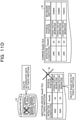
FIG. 11D illustrates deletion of a Tokyo partition; -
FIG. 12A illustrates restoration processing using the operation information of the addition instruction; -
FIG. 12B is a first diagram illustrating restoration processing using operation information of an update instruction of therecord # 1; -
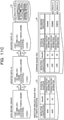
FIG. 12C is a second diagram illustrating the restoration processing using the operation information of the update instruction of therecord # 1; -
FIG. 12D is a first diagram illustrating restoration processing using operation information of an update instruction of therecord # 2; -
FIG. 12E is a second diagram illustrating the restoration processing using the operation information of the update instruction of therecord # 2; -
FIG. 13 illustrates a hardware configuration of a computer that executes a management program according to the embodiment; -
FIG. 14 is a diagram for explaining the RowID file; -
FIG. 15 is a diagram for explaining a partitioning function; and -
FIG. 16 illustrates restoration of the RowID hydra. - Hereinafter, embodiments of an information processing program, an information processing method, and an information processing apparatus disclosed in the present application will be described in detail with reference to the drawings. Note that the embodiments do not limit the technology disclosed.
- First, a RowID file managed by a database management system according to an embodiment will be described.
FIG. 1 is a diagram for explaining the RowID file managed by the database management system according to the embodiment. As illustrated inFIG. 1 , the database management system according to the embodiment manages accumulateddata 32 by dividing the accumulateddata 32 into partitions, and has a partition-specific RowID file 33 associated with each partition. - The database management system according to the embodiment stores, for an addition instruction, operation information in the partition-
specific RowID file 33. For example, operation information of an addition instruction of a record included in a partition A is stored in a partition-specific RowID file 33 of the partition A. Operation information of an addition instruction of a record included in a partition B is stored in a partition-specific RowID file 33 of the partition B. - Furthermore, the database management system according to the embodiment has a
common RowID file 34, and stores, for an update instruction and a deletion instruction, operation information in thecommon RowID file 34. Furthermore, the database management system according to the embodiment includes, for the update instruction, updated partition information in the operation information as a belonging partition. Note that processing of controlling update of aRowID hydra 36 by using the belonging partition will be described later. - At the time of restart, the database management system according to the embodiment restores the
RowID hydra 36 in parallel on the basis of the partition-specific RowID file 33, and then updates theRowID hydra 36 on the basis of thecommon RowID file 34. -
FIG. 2 is a diagram for explaining restoration of theRowID hydra 36 by the database management system according to the embodiment. As illustrated inFIG. 2 , the database management system according to the embodiment reads the partition-specific RowID files 33 in parallel (t1), and restores theRowID hydra 36 in parallel on the basis of an addition instruction (t2). For example, a thread for performing processing of reading the partition-specific RowID file 33 and restoring theRowID hydra 36 is generated for each partition and executed in a multi-core CPU, whereby restoration of theRowID hydra 36 in parallel is implemented. Then, the database management system according to the embodiment reads the common RowID file 34 (t3) and reflects update and deletion in the RowID hydra 36 (t4). - In this way, by storing only operation information of addition instructions that are not in order in the partition-
specific RowID file 33, the database management system according to the embodiment restores theRowID hydra 36 based on the plurality of partition-specific RowID files 33 in parallel. Thus, the database management system according to the embodiment may shorten restoration time of theRowID hydra 36. - Furthermore, in a case where records are deleted in partition units, the database management system according to the embodiment may eliminate operation information of an addition instruction and deletion instruction by deleting the partition-
specific RowID file 33 corresponding to the partition. Thus, the database management system according to the embodiment may reduce the number of pieces of operation information and shorten the restoration time of theRowID hydra 36. - Next, a configuration of the database management system according to the embodiment will be described.
FIG. 3 illustrates the configuration of the database management system according to the embodiment. As illustrated inFIG. 3 , adatabase management system 1 according to the embodiment includes amanagement device 2 and three retrieval devices 3. Note that thedatabase management system 1 may have a number of the retrieval devices 3 other than three as long as the number is one or more. - The
management device 2 is an information processing apparatus that receives an operation request, a retrieval request, or the like from a user, performs processing corresponding thereto, and notifies the user of a processing result. The retrieval device 3 creates a list of RowIDs that satisfy a retrieval condition included in the retrieval request on the basis of an instruction of themanagement device 2, and responds to themanagement device 2. The three retrieval devices 3 perform processing in parallel. Themanagement device 2 retrieves the accumulateddata 32 by using the lists of the RowIDs received from the retrieval devices 3, and responds to the user. - The
management device 2 includes acontrol unit 21 and adata management unit 22. Thecontrol unit 21 receives an operation request, a retrieval request, or the like from a user, controls processing for the received request, and notifies the user of a processing result. - The
data management unit 22 process an operation request, a retrieval request, or the like received by thecontrol unit 21. Thedata management unit 22 includes afirst storage unit 30a (may be referred to as a first storage unit 30), asecond storage unit 30b (may be referred to as a second storage unit 40), an operation unit 43, and a restoration unit 44. - The
first storage unit 30a stores apartition definition 31, the accumulateddata 32, partition-specific RowID files 33 corresponding to the number of partitions, and thecommon RowID file 34. The accumulateddata 32 is divided into partitions and managed. Thefirst storage unit 30a is provided in a non-volatile storage device such as an HDD or SSD. - The
second storage unit 30b stores theRowID hydra 36 and apartition list 37. Thepartition list 37 is information regarding partitions. Thesecond storage unit 30b is provided on amemory 51. - The operation unit 43 processes an operation request. The operation unit 43 includes an
addition unit 43a, anupdate unit 43b, adeletion unit 43c, and apartition deletion unit 43d. - The
addition unit 43a determines a partition of a record to be added, assigns a RowID, and stores the record in thefirst storage unit 30a. The record stored in thefirst storage unit 30a is managed as the accumulateddata 32. Furthermore, theaddition unit 43a writes operation information to the partition-specific RowID file 33 of the determined partition. Furthermore, theaddition unit 43a adds information regarding the record stored in thefirst storage unit 30a to theRowID hydra 36. - The
update unit 43b determines a partition to which a record to be updated belongs, and stores the update record in thefirst storage unit 30a. Note that the record before the update is deleted from thefirst storage unit 30a at another timing. Furthermore, theupdate unit 43b writes operation information to thecommon RowID file 34. At that time, theupdate unit 43b includes information regarding the belonging partition in the operation information. Furthermore, theupdate unit 43b updates theRowID hydra 36 with information regarding the update record stored in thefirst storage unit 30a. - The
deletion unit 43c writes operation information to thecommon RowID file 34. Furthermore, thedeletion unit 43c deletes information regarding a deletion record from theRowID hydra 36. Note that the deletion record is deleted from thefirst storage unit 30a at another timing. - The
partition deletion unit 43d deletes a partition specified in a partition deletion request from the accumulateddata 32, and deletes a corresponding partition-specific RowID file 33. Furthermore, thepartition deletion unit 43d deletes a corresponding portion in theRowID hydra 36. - The restoration unit 44 restores the
RowID hydra 36 when a database is restarted. First, the restoration unit 44 executes processing of reading the partition-specific RowID file 33 and creating theRowID hydra 36 in parallel for each partition. - Then, the restoration unit 44 reads the
common RowID file 34, and in the case of an update instruction, processing is performed on theRowID hydra 36 on the basis of presence or absence of a RowID hydra leaf of a record to be updated and presence or absence of a partition to which the record to be updated belongs. - Specifically, in a case where there is a RowID hydra leaf of a record to be updated and there is a partition to which the record to be updated belongs, the restoration unit 44 updates the RowID hydra leaf. In a case where there is the RowID hydra leaf of the record to be updated and there is no partition to which the record to be updated belongs, the restoration unit 44 deletes the RowID hydra leaf from the
RowID hydra 36. In a case where there is no RowID hydra leaf of the record to be updated and there is the partition to which the record to be updated belongs, the restoration unit 44 adds a RowID hydra leaf to theRowID hydra 36. In a case where there is no RowID hydra leaf of the record to be updated and there is no partition to which the record to be updated belongs, the restoration unit 44 does not perform processing on theRowID hydra 36. - Note that the restoration unit 44 determines the presence or absence of the partition to which the record to be updated belongs by using a belonging partition included in operation information.
- In the case of a deletion instruction, the restoration unit 44 deletes a RowID hydra leaf of a record to be deleted from the
RowID hydra 36. - Next, a flow of processing by the operation unit 43 will be described.
FIG. 4 is a flowchart illustrating the flow of the processing by the operation unit 43. As illustrated inFIG. 4 , the operation unit 43 determines an instruction classification of an operation request (Step S1). - Then, in a case where the instruction classification is "addition", the operation unit 43 determines a partition to which a record to be added belongs (Step S2), and assigns a RowID to the record to be added (Step S3). Then, the operation unit 43 stores the record to be added on the basis of the determined partition (Step S4), and writes operation information to the partition-
specific RowID file 33 of the corresponding partition (Step S5). Then, the operation unit 43 adds a RowID hydra leaf of the record to be added to the RowID hydra 36 (Step S6). - Furthermore, in a case where the instruction classification is "update", the operation unit 43 determines a partition to which a record to be updated belongs (Step S7), and stores the record to be updated on the basis of the determined partition (Step S8). Then, the operation unit 43 writes operation information to the common RowID file 34 (Step S9), and updates a RowID hydra leaf with information regarding the record to be updated (Step S10).
- Furthermore, in a case where the instruction classification is "deletion", the operation unit 43 writes operation information to the common RowID file 34 (Step S11), and deletes a RowID hydra leaf of a record to be deleted from the RowID hydra 36 (Step S12).
- In this way, in the case where the instruction classification is "addition", the operation unit 43 writes the operation information to the partition-
specific RowID file 33 of the partition to which the record to be added belongs. Thus, the restoration unit 44 may restore theRowID hydra 36 regarding the addition instruction in parallel for each partition. - Next, a flow of processing by the restoration unit 44 will be described.
FIG. 5 is a flowchart illustrating the flow of the processing by the restoration unit 44. As illustrated inFIG. 5 , the restoration unit 44 reads the partition-specific RowID file 33 (Step S21), and creates the RowID hydra 36 (Step S22). The restoration unit 44 creates theRowID hydra 36 by performing the processing of Steps S21 and S22 in parallel for each partition. - Then, the restoration unit 44 reads the common RowID file 34 (Step S23), and performs the following processing of Steps S24 to S31 on each piece of operation information. The restoration unit 44 determines an instruction classification included in operation information (Step S24), and in a case where the instruction classification is "update", determines presence or absence of a RowID hydra leaf of a record to be updated (Step S25).
- Then, in a case where the RowID hydra leaf of the record to be updated is present, the restoration unit 44 determines presence or absence of a belonging partition of the record to be updated (Step S26). Then, in a case where the belonging partition of the record to be updated is present, the restoration unit 44 updates the RowID hydra leaf (Step S27), and in a case where the belonging partition is absent, deletes the RowID hydra leaf from the RowID hydra 36 (Step S28).
- On the other hand, in a case where the RowID hydra leaf of the record to be updated is absent, the restoration unit 44 determines presence or absence of the belonging partition of the record to be updated (Step S29). Then, in a case where the belonging partition of the record to be updated is present, the restoration unit 44 adds the RowID hydra leaf to the RowID hydra 36 (Step S30), and in a case where the belonging partition is absent, performs no processing on the
RowID hydra 36. - Furthermore, in Step S24, in a case where the instruction classification is "deletion", the restoration unit 44 deletes a RowID hydra leaf of a record to be deleted from the RowID hydra 36 (Step S31).
- In this way, by performing the processing of reading the partition-
specific RowID file 33 and creating theRowID hydra 36 in parallel for each partition, the restoration unit 44 may shorten the restoration time of theRowID hydra 36. - Next, examples of processing by the
data management unit 22 will be described with reference toFIGs. 6 to 12E . Note that, inFIGs. 6 to 8 ,10A to 10C , and12A to 12E , S2, S3, and the like indicate steps of the flowchart illustrated inFIGs. 4 and5 . -
FIG. 6 illustrates an example of record addition processing. As illustrated inFIG. 6 , thedata management unit 22 determines a storage destination partition on the basis of thepartition definition 31 specified in advance by a user and records to be added (Step S2). Here, since a /root/month tag value is "4" in the additional records, the storage destination partition is determined to be an April partition. - Then, the
data management unit 22 assigns RowIDs to the additional records (Step S3). Here, "41" and "42" are assigned. Then, thedata management unit 22 reads the additional records and stores the additional records in the April partition of the accumulated data 32 (Step S4). - Then, the
data management unit 22 writes "ADD" as an instruction classification, "41" as the RowID, and storage position information of the storage destination as a physical position in the partition-specific RowID file 33 of the April partition. Furthermore, thedata management unit 22 writes "ADD" as the instruction classification, "42" as the RowID, and storage position information of the storage destination as the physical position in the partition-specific RowID file 33 of the April partition (Step S5). Then, thedata management unit 22 adds RowID hydra leaves (information regarding the additional records) to theRowID hydra 36 on thesecond storage unit 30b (Step S6). -
FIG. 7 illustrates an example of record update processing. As illustrated inFIG. 7 , thedata management unit 22 determines a storage destination partition on the basis of thepartition definition 31 specified in advance by a user and an update record (Step S7). Here, since a /root/month tag value is "4", the storage destination partition is determined to be the April partition. Then, thedata management unit 22 reads the update record and stores the update record in the April partition of the accumulated data 32 (Step S8). - Then, the
data management unit 22 writes "UPD" as the instruction classification, "41" as the RowID, storage position information of the storage destination as the physical position, and "April" as a belonging partition after the update in the common RowID file 34 (Step S9). Then, thedata management unit 22 updates a RowID hydra leaf corresponding to the update record of theRowID hydra 36 of thesecond storage unit 30b with information regarding the update record (Step S10). Here, since the RowID of the record with the /root/ID tag value of "AAA" is "41", a RowID hydra leaf with the RowID of "41" is updated. -
FIG. 8 illustrates an example of record deletion processing. As illustrated inFIG. 8 , thedata management unit 22 writes "DEL" as the instruction classification and "41" as the RowID in the common RowID file 34 (Step S11). Then, thedata management unit 22 deletes a RowID hydra leaf corresponding to a deletion record from theRowID hydra 36 of thesecond storage unit 30b (Step S12). -
FIG. 9 illustrates an example of partition deletion processing. As illustrated inFIG. 9 , when thedata management unit 22 is instructed to delete a January partition, thedata management unit 22 deletes the accumulateddata 32 of the January partition (u1), and deletes the partition-specific RowID file 33 of the January partition (u2). Then, thedata management unit 22 deletes RowID hydra leaves of the January partition (u3). -
FIGs. 10A to 10C illustrate an example of processing of restoring theRowID hydra 36 at the time of restart.FIG. 10A illustrates restoration of theRowID hydra 36 by using operation information of an addition instruction. As illustrated inFIG. 10A , thedata management unit 22 reads the partition-specific RowID files 33 of February, March, and April (Step S21), and creates the RowID hydra 36 (Step S22). At this time, thedata management unit 22 restores theRowID hydra 36 in parallel for each partition. Furthermore, as illustrated inFIG. 9 , since the January partition has been deleted, there is no partition-specific RowID file 33 of January, and record information of January is not restored in theRowID hydra 36. -
FIG. 10B illustrates reflection of operation information of an update instruction in theRowID hydra 36. As illustrated inFIG. 10B , thedata management unit 22 reads the common RowID file 34 (Step S23), and performs update processing because the instruction classification of a first piece of the operation information is "UPD". For example, thedata management unit 22 updates a RowID hydra leaf for the record with the RowID of "41" because the record has the RowID hydra leaf and has "April" as the belonging partition (Step S27). -
FIG. 10C illustrates reflection of operation information of a deletion instruction in theRowID hydra 36. As illustrated inFIG. 10C , thedata management unit 22 reads the common RowID file 34 (Step S23), and performs deletion processing because the instruction classification of the next piece of the operation information is "DEL". For example, thedata management unit 22 deletes a RowID hydra leaf with the RowID of "41" from the RowID hydra 36 (Step S31). -
FIGs. 11A to 11D illustrate update examples accompanied by partition movement.FIG. 11A illustrates an example of registration data. As illustrated inFIG. 11A , when arecord # 1 and arecord # 2 are added to employee data partitioned by a work location, therecord # 1 and therecord # 2 are stored in a Tokyo partition of the accumulateddata 32. Furthermore, in the partition-specific RowID file 33 of the Tokyo partition, two pieces of operation information with the instruction classifications of "ADD" and the RowIDs of "01" and "02" are stored. -
FIG. 11B illustrates update of therecord # 1. As illustrated inFIG. 11B , when the work location of therecord # 1 is changed from "Tokyo" to "Osaka", therecord # 1 is moved from the Tokyo partition of the accumulateddata 32 to an Osaka partition. Furthermore, in thecommon RowID file 34, operation information with the instruction classification of "UPD", the RowID of "01", and the belonging partition of "Osaka" is stored. -
FIG. 11C illustrates update of therecord # 2. As illustrated inFIG. 11C , the work location of therecord # 2 is changed from "Tokyo" to "Osaka" and then from "Osaka" to "Tokyo". Then, therecord # 2 is moved from the Tokyo partition of the accumulateddata 32 to the Osaka partition, and then moved from the Osaka partition to the Tokyo partition. Furthermore, in thecommon RowID file 34, operation information with the instruction classification of "UPD", the RowID of "02", and the belonging partition of "Osaka", and operation information with the instruction classification of "UPD", the RowID of "02", and the belonging partition of "Tokyo" are stored. -
FIG. 11D illustrates deletion of the Tokyo partition. As illustrated inFIG. 11D , when the Tokyo partition is deleted, the accumulateddata 32 of the Tokyo partition is deleted, and the partition-specific RowID file 33 of the Tokyo partition is deleted. -
FIGs. 12A to 12E illustrate restoration processing of theRowID hydra 36 in cases where the update illustrated inFIGs. 11A to 11D is performed.FIG. 12A illustrates restoration processing using operation information of an addition instruction. As illustrated inFIG. 12A , thedata management unit 22 reads the partition-specific RowID file 33 (Step S21). Note that, since the partition-specific RowID file 33 of the Tokyo partition has been deleted, thedata management unit 22 does not restore RowID hydra leaves for the records with the RowIDs of "01" and "02". -
FIGs. 12B and12C illustrate restoration processing using operation information of an update instruction of therecord # 1. As illustrated inFIG. 12B , thedata management unit 22 reads the common RowID file 34 (Step S23), and performs update processing because the instruction classification of the first piece of the operation information is "UPD". For example, as illustrated inFIG. 12C , thedata management unit 22 adds a RowID hydra leaf for the record with the RowID of "01" because the record has no RowID hydra leaf and has "Osaka" as the belonging partition (Step S30). -
FIGs. 12D and12E illustrate restoration processing using operation information of an update instruction of therecord # 2. As illustrated inFIG. 12D , thedata management unit 22 reads the common RowID file 34 (Step S23), and performs update processing because the instruction classification of the next piece of the operation information is "UPD". For example, thedata management unit 22 adds a RowID hydra leaf for the record with the RowID of "02" because the record has no RowID hydra leaf and has "Osaka" as the belonging partition (Step S30). - Then, as illustrated in
FIG. 12E , thedata management unit 22 reads the common RowID file 34 (step S23), and performs update processing because the instruction classification of the next operation information is "UPD". For example, thedata management unit 22 deletes the RowID hydra leaf for the record with the RowID of "02" because the record has the RowID hydra leaf and does not have "Tokyo" as the belonging partition (Step S30). - As described above, in the embodiment, the
addition unit 43a writes the operation information of the addition instruction to the partition-specific RowID file 33, and theupdate unit 43b and thedeletion unit 43c write the operation information of the update instruction and the deletion instruction to thecommon RowID file 34, respectively. Then, when restoring theRowID hydra 36, the restoration unit 44 performs the processing of reading the partition-specific RowID file 33 and creating theRowID hydra 36 in parallel for each partition. Then, the restoration unit 44 reads thecommon RowID file 34 and reflects the update instruction and the deletion instruction in theRowID hydra 36. Therefore, thedata management unit 22 may shorten the restoration time of theRowID hydra 36 and improve restart performance. - Furthermore, in the embodiment, since the
partition deletion unit 43d deletes the partition-specific RowID file 33 corresponding to the partition specified in the partition deletion request, the number of pieces of operation information may be reduced and the restoration time of theRowID hydra 36 may be shortened. - Furthermore, in the embodiment, the operation information of the update instruction includes the belonging partition, and the restoration unit 44 restores the
RowID hydra 36 by using the belonging partition. Specifically, in a case where there is a RowID hydra leaf of a record to be updated and there is a partition to which the record to be updated belongs, the restoration unit 44 updates the RowID hydra leaf. In a case where there is the RowID hydra leaf of the record to be updated and there is no partition to which the record to be updated belongs, the restoration unit 44 deletes the RowID hydra leaf from theRowID hydra 36. In a case where there is no RowID hydra leaf of the record to be updated and there is the partition to which the record to be updated belongs, the restoration unit 44 adds a RowID hydra leaf to theRowID hydra 36. In a case where there is no RowID hydra leaf of the record to be updated and there is no partition to which the record to be updated belongs, the restoration unit 44 does not perform processing on theRowID hydra 36. Therefore, even in a case where update accompanied by partition movement or deletion of a partition is performed, the restoration unit 44 may restore theRowID hydra 36 that is consistent with the update or deletion on the basis of the operation information of the update instruction. - Note that, in the embodiment, the
management device 2 has been described. However, by implementing the configuration of themanagement device 2 by software, it is possible to obtain a management program that has a similar function. Therefore, a computer that executes the management program will be described. -
FIG. 13 illustrates a hardware configuration of the computer that executes the management program according to the embodiment. As illustrated inFIG. 13 , acomputer 50 includes thememory 51, a central processing unit (CPU) 52, a local area network (LAN)interface 53, and a hard disk drive (HDD) 54. Furthermore, thecomputer 50 includes a super input output (IO) 55, a digital visual interface (DVI) 56, and an optical disk drive (ODD) 57. - The
memory 51 is a memory that stores a program, a halfway result of execution of the program, and the like. TheCPU 52 is a central processing unit that reads and executes a program from thememory 51. TheCPU 52 includes a chipset having a memory controller. - The
LAN interface 53 is an interface for connecting thecomputer 50 to another computer via a LAN. TheHDD 54 is a disk device that stores a program and data, and thesuper IO 55 is an interface for connecting an input device such as a mouse and a keyboard. TheDVI 56 is an interface that connects a liquid crystal display device, and theODD 57 is a device that reads and writes a DVD. - The
LAN interface 53 is connected to theCPU 52 by PCI Express (PCIe), and theHDD 54 and theODD 57 are connected to theCPU 52 by serial advanced technology attachment (SATA). Thesuper IO 55 is connected to theCPU 52 by low pin count (LPC). - Then, the management program executed by the
computer 50 is stored in a DVD that is an example of a recording medium that may be read by thecomputer 50, and is read from the DVD by theODD 57 to be installed to thecomputer 50. Alternatively, the management program is stored in a database or the like of another computer system connected via theLAN interface 53 and is read from these databases and is installed to thecomputer 50. Then, the installed management program is stored in theHDD 54, is read to thememory 51, and is executed by theCPU 52. - Furthermore, in the embodiment, the case of managing XML data has been described. However, the
management device 2 may manage another data. Furthermore, in the embodiment, the case of using theRowID hydra 36 has been described. However, themanagement device 2 may use another data structure as long as the information associates a RowID with a physical position of a record. -
- 1
- Database management system
- 2
- Management device
- 3
- Retrieval device
- 4
- Retrieval expression
- 9
- RowID file
- 21
- Control unit
- 22
- Data management unit
- 30a, 30
- First storage unit
- 30b, 40
- Second storage unit
- 31
- Partition definition
- 32
- Accumulated data
- 33
- Partition-specific RowID file
- 34
- Common RowID file
- 36
- RowID hydra
- 37
- Partition list
- 43
- Operation unit
- 43a
- Addition unit
- 43b
- Update unit
- 43c
- Deletion unit
- 43d
- Partition deletion unit
- 44
- Restoration unit
-
- 50
- Computer
- 51
- Memory
- 52
- CPU
- 53
- LAN interface
- 54
- HDD
- 55
- Super IO
- 56
- DVI
- 57
- ODD
-
-
Japanese Laid-open Patent Publication No. 7-73086 -
Japanese Laid-open Patent Publication No. 4-24750 -
Japanese Laid-open Patent Publication No. 2003-44267
Claims (10)
- An information processing program that causes a computer to execute processing of:dividing data into a plurality of data areas and storing the data areas in a database;storing, when an operation of any one of addition, update, and deletion for at least one of the data areas is received, in a case where the received operation is the operation of the addition, information regarding the operation of the addition in association with the data area for which the addition is performed;storing, in a case where the received operation is either the operation of the update or the deletion, information regarding the operation of the update or the deletion in association with the data;executing, when all storage position information that indicates storage positions of all pieces of data is restored, restoration processing related to the addition in parallel for the plurality of data areas on the basis of information regarding an operation associated with each of the plurality of data areas; andexecuting, after the restoration processing related to the addition is executed, restoration processing related to the update or the deletion on the basis of the information regarding the operation of the update or the deletion.
- The information processing program according to claim 1, wherein the information processing program causes the computer to execute processing of deleting, when a certain data area included in the plurality of data areas is deleted, information regarding an operation associated with the data area.
- The information processing program according to claim 1 or 2,
wherein
the information regarding the operation of the update includes data area identification information that identifies an updated data area, and
the restoration processing related to the update uses the data area identification information. - The information processing program according to claim 3, wherein, in the restoration processing related to the update, in the all storage position information, in a case where storage position information that corresponds to data to be updated is restored, when there is a data area identified by the data area identification information, the storage position information is updated, and when there is no data area identified by the data area identification information, the storage position information is deleted, and in a case where data information that corresponds to data to be updated is not restored, when there is a data area identified by the data area identification information, the storage position information is added.
- A computer-implemented method comprising:dividing data into a plurality of data areas and storing the data areas in a database;storing, when an operation of any one of addition, update, and deletion for at least one of the data areas is received, in a case where the received operation is the operation of the addition, information regarding the operation of the addition in association with the data area for which the addition is performed;storing, in a case where the received operation is either the operation of the update or the deletion, information regarding the operation of the update or the deletion in association with the data;executing, when all storage position information that indicates storage positions of all pieces of data is restored, restoration processing related to the addition in parallel for the plurality of data areas on the basis of information regarding an operation associated with each of the plurality of data areas; andexecuting, after the restoration processing related to the addition is executed, restoration processing related to the update or the deletion on the basis of the information regarding the operation of the update or the deletion.
- The computer-implemented method according to claim 5, wherein the information processing program causes the computer to execute processing of deleting, when a certain data area included in the plurality of data areas is deleted, information regarding an operation associated with the data area.
- The computer-implemented method according to claim 5, wherein the information regarding the operation of the update includes data area identification information that identifies an updated data area, and
the restoration processing related to the update uses the data area identification information. - An information processing apparatus comprising:a database that divides data into a plurality of data areas and stores the data areas;an addition unit that stores, when an operation of any one of addition, update, and deletion for at least one of the data areas is received, in a case where the received operation is the operation of the addition, information regarding the operation of the addition in association with the data area for which the addition is performed;an update deletion unit that stores, in a case where the received operation is either the operation of the update or the deletion, information regarding the operation of the update or the deletion in association with the data; anda restoration unit that executes, when all storage position information that indicates storage positions of all pieces of data is restored, restoration processing related to the addition in parallel for the plurality of data areas on the basis of information regarding an operation associated with each of the plurality of data areas, and executes, after the restoration processing related to the addition is executed, restoration processing related to the update or the deletion on the basis of the information regarding the operation of the update or the deletion.
- The information processing apparatus according to claim 8, further comprising an area deletion unit that deletes, when a certain data area included in the plurality of data areas is deleted, information regarding an operation associated with the data area.
- The information processing apparatus according to claim 8 or 9,
wherein
the information regarding the operation of the update includes data area identification information that identifies an updated data area, and
the restoration unit executes the restoration processing related to the update by using the data area identification information.
Applications Claiming Priority (1)
| Application Number | Priority Date | Filing Date | Title |
|---|---|---|---|
| PCT/JP2019/012218 WO2020194403A1 (en) | 2019-03-22 | 2019-03-22 | Information processing program, information processing method, and information processing device |
Publications (3)
| Publication Number | Publication Date |
|---|---|
| EP3944101A1 true EP3944101A1 (en) | 2022-01-26 |
| EP3944101A4 EP3944101A4 (en) | 2022-03-23 |
| EP3944101B1 EP3944101B1 (en) | 2024-01-10 |
Family
ID=72610400
Family Applications (1)
| Application Number | Title | Priority Date | Filing Date |
|---|---|---|---|
| EP19921112.9A Active EP3944101B1 (en) | 2019-03-22 | 2019-03-22 | Information processing program, information processing method, and information processing device |
Country Status (4)
| Country | Link |
|---|---|
| US (1) | US20210406243A1 (en) |
| EP (1) | EP3944101B1 (en) |
| JP (1) | JP7095800B2 (en) |
| WO (1) | WO2020194403A1 (en) |
Families Citing this family (1)
| Publication number | Priority date | Publication date | Assignee | Title |
|---|---|---|---|---|
| CN115422152B (en) * | 2022-08-23 | 2025-10-31 | 上海沄熹科技有限公司 | Self-adaptive time sequence data management system and method of time sequence database |
Family Cites Families (8)
| Publication number | Priority date | Publication date | Assignee | Title |
|---|---|---|---|---|
| JP2503289B2 (en) | 1990-05-15 | 1996-06-05 | 富士通株式会社 | Database management processing method |
| JPH0773086A (en) | 1993-09-02 | 1995-03-17 | Nec Corp | Time sequential data holding system |
| JP3772704B2 (en) | 2001-07-27 | 2006-05-10 | 富士通株式会社 | Data sort method, data sort device, and data sort program |
| KR101259557B1 (en) * | 2008-12-18 | 2013-04-30 | 한국전자통신연구원 | Cluster data management system and method for data recovery using parallel processing in cluster data management system |
| JP2014089646A (en) * | 2012-10-31 | 2014-05-15 | Hitachi Solutions Ltd | Electronic data processor and electronic data processing method |
| US11030055B2 (en) * | 2013-03-15 | 2021-06-08 | Amazon Technologies, Inc. | Fast crash recovery for distributed database systems |
| US9779104B2 (en) * | 2014-11-25 | 2017-10-03 | Sap Se | Efficient database undo / redo logging |
| JP6662169B2 (en) * | 2016-04-18 | 2020-03-11 | 富士通株式会社 | Encoding program, encoding method, encoding device, search program, search method, and search device |
-
2019
- 2019-03-22 EP EP19921112.9A patent/EP3944101B1/en active Active
- 2019-03-22 JP JP2021508385A patent/JP7095800B2/en active Active
- 2019-03-22 WO PCT/JP2019/012218 patent/WO2020194403A1/en not_active Ceased
-
2021
- 2021-09-15 US US17/475,927 patent/US20210406243A1/en not_active Abandoned
Also Published As
| Publication number | Publication date |
|---|---|
| EP3944101A4 (en) | 2022-03-23 |
| JPWO2020194403A1 (en) | 2020-10-01 |
| EP3944101B1 (en) | 2024-01-10 |
| JP7095800B2 (en) | 2022-07-05 |
| US20210406243A1 (en) | 2021-12-30 |
| WO2020194403A1 (en) | 2020-10-01 |
Similar Documents
| Publication | Publication Date | Title |
|---|---|---|
| US11429641B2 (en) | Copying data changes to a target database | |
| EP2452261B1 (en) | Apparatus and method for read optimized bulk data storage | |
| US8965850B2 (en) | Method of and system for merging, storing and retrieving incremental backup data | |
| EP2936352B1 (en) | Filtered reference copy of secondary storage data in a data storage system | |
| US10452629B2 (en) | Automatic maintenance of a set of indexes with different currency characteristics in a database management system | |
| US8392423B2 (en) | Data set index record preservation | |
| US9268804B2 (en) | Managing a multi-version database | |
| US10133618B2 (en) | Diagnostic data set component | |
| US20150277966A1 (en) | Transaction system | |
| CN103377090B (en) | Multicomputer system is shared the method and system of multiple cataloguings of different pieces of information collection | |
| EP3944101B1 (en) | Information processing program, information processing method, and information processing device | |
| US20180011897A1 (en) | Data processing method having structure of cache index specified to transaction in mobile environment dbms | |
| CN115220958A (en) | System and method for extracting and cataloguing specified file activity data | |
| US20180081942A1 (en) | Managing Data Obsolescence in Relational Databases | |
| JP6707754B2 (en) | Database management system and method | |
| US20170090790A1 (en) | Control program, control method and information processing device | |
| JP7654585B2 (en) | Database system and data management method | |
| JP5108637B2 (en) | Data update method and data update system | |
| HK1216931B (en) | Filtered reference copy of secondary storage data in a data storage system |
Legal Events
| Date | Code | Title | Description |
|---|---|---|---|
| STAA | Information on the status of an ep patent application or granted ep patent |
Free format text: STATUS: THE INTERNATIONAL PUBLICATION HAS BEEN MADE |
|
| PUAI | Public reference made under article 153(3) epc to a published international application that has entered the european phase |
Free format text: ORIGINAL CODE: 0009012 |
|
| STAA | Information on the status of an ep patent application or granted ep patent |
Free format text: STATUS: REQUEST FOR EXAMINATION WAS MADE |
|
| 17P | Request for examination filed |
Effective date: 20210917 |
|
| AK | Designated contracting states |
Kind code of ref document: A1 Designated state(s): AL AT BE BG CH CY CZ DE DK EE ES FI FR GB GR HR HU IE IS IT LI LT LU LV MC MK MT NL NO PL PT RO RS SE SI SK SM TR |
|
| A4 | Supplementary search report drawn up and despatched |
Effective date: 20220223 |
|
| RIC1 | Information provided on ipc code assigned before grant |
Ipc: G06F 16/23 20190101ALI20220217BHEP Ipc: G06F 11/14 20060101AFI20220217BHEP |
|
| DAV | Request for validation of the european patent (deleted) | ||
| DAX | Request for extension of the european patent (deleted) | ||
| REG | Reference to a national code |
Ref country code: DE Ref legal event code: R079 Free format text: PREVIOUS MAIN CLASS: G06F0016800000 Ipc: G06F0016270000 Ref country code: DE Ref legal event code: R079 Ref document number: 602019045081 Country of ref document: DE Free format text: PREVIOUS MAIN CLASS: G06F0016800000 Ipc: G06F0016270000 |
|
| GRAP | Despatch of communication of intention to grant a patent |
Free format text: ORIGINAL CODE: EPIDOSNIGR1 |
|
| STAA | Information on the status of an ep patent application or granted ep patent |
Free format text: STATUS: GRANT OF PATENT IS INTENDED |
|
| RIC1 | Information provided on ipc code assigned before grant |
Ipc: G06F 11/14 20060101ALI20230922BHEP Ipc: G06F 16/23 20190101ALI20230922BHEP Ipc: G06F 16/27 20190101AFI20230922BHEP |
|
| INTG | Intention to grant announced |
Effective date: 20231027 |
|
| GRAS | Grant fee paid |
Free format text: ORIGINAL CODE: EPIDOSNIGR3 |
|
| GRAA | (expected) grant |
Free format text: ORIGINAL CODE: 0009210 |
|
| STAA | Information on the status of an ep patent application or granted ep patent |
Free format text: STATUS: THE PATENT HAS BEEN GRANTED |
|
| AK | Designated contracting states |
Kind code of ref document: B1 Designated state(s): AL AT BE BG CH CY CZ DE DK EE ES FI FR GB GR HR HU IE IS IT LI LT LU LV MC MK MT NL NO PL PT RO RS SE SI SK SM TR |
|
| REG | Reference to a national code |
Ref country code: GB Ref legal event code: FG4D |
|
| REG | Reference to a national code |
Ref country code: CH Ref legal event code: EP |
|
| REG | Reference to a national code |
Ref country code: DE Ref legal event code: R096 Ref document number: 602019045081 Country of ref document: DE |
|
| REG | Reference to a national code |
Ref country code: IE Ref legal event code: FG4D |
|
| REG | Reference to a national code |
Ref country code: LT Ref legal event code: MG9D |
|
| REG | Reference to a national code |
Ref country code: NL Ref legal event code: MP Effective date: 20240110 |
|
| REG | Reference to a national code |
Ref country code: AT Ref legal event code: MK05 Ref document number: 1649458 Country of ref document: AT Kind code of ref document: T Effective date: 20240110 |
|
| PG25 | Lapsed in a contracting state [announced via postgrant information from national office to epo] |
Ref country code: NL Free format text: LAPSE BECAUSE OF FAILURE TO SUBMIT A TRANSLATION OF THE DESCRIPTION OR TO PAY THE FEE WITHIN THE PRESCRIBED TIME-LIMIT Effective date: 20240110 |
|
| PG25 | Lapsed in a contracting state [announced via postgrant information from national office to epo] |
Ref country code: NL Free format text: LAPSE BECAUSE OF FAILURE TO SUBMIT A TRANSLATION OF THE DESCRIPTION OR TO PAY THE FEE WITHIN THE PRESCRIBED TIME-LIMIT Effective date: 20240110 |
|
| PG25 | Lapsed in a contracting state [announced via postgrant information from national office to epo] |
Ref country code: IS Free format text: LAPSE BECAUSE OF FAILURE TO SUBMIT A TRANSLATION OF THE DESCRIPTION OR TO PAY THE FEE WITHIN THE PRESCRIBED TIME-LIMIT Effective date: 20240510 |
|
| PG25 | Lapsed in a contracting state [announced via postgrant information from national office to epo] |
Ref country code: LT Free format text: LAPSE BECAUSE OF FAILURE TO SUBMIT A TRANSLATION OF THE DESCRIPTION OR TO PAY THE FEE WITHIN THE PRESCRIBED TIME-LIMIT Effective date: 20240110 |
|
| PG25 | Lapsed in a contracting state [announced via postgrant information from national office to epo] |
Ref country code: GR Free format text: LAPSE BECAUSE OF FAILURE TO SUBMIT A TRANSLATION OF THE DESCRIPTION OR TO PAY THE FEE WITHIN THE PRESCRIBED TIME-LIMIT Effective date: 20240411 |
|
| PG25 | Lapsed in a contracting state [announced via postgrant information from national office to epo] |
Ref country code: HR Free format text: LAPSE BECAUSE OF FAILURE TO SUBMIT A TRANSLATION OF THE DESCRIPTION OR TO PAY THE FEE WITHIN THE PRESCRIBED TIME-LIMIT Effective date: 20240110 Ref country code: RS Free format text: LAPSE BECAUSE OF FAILURE TO SUBMIT A TRANSLATION OF THE DESCRIPTION OR TO PAY THE FEE WITHIN THE PRESCRIBED TIME-LIMIT Effective date: 20240410 |
|
| PG25 | Lapsed in a contracting state [announced via postgrant information from national office to epo] |
Ref country code: ES Free format text: LAPSE BECAUSE OF FAILURE TO SUBMIT A TRANSLATION OF THE DESCRIPTION OR TO PAY THE FEE WITHIN THE PRESCRIBED TIME-LIMIT Effective date: 20240110 |
|
| PG25 | Lapsed in a contracting state [announced via postgrant information from national office to epo] |
Ref country code: AT Free format text: LAPSE BECAUSE OF FAILURE TO SUBMIT A TRANSLATION OF THE DESCRIPTION OR TO PAY THE FEE WITHIN THE PRESCRIBED TIME-LIMIT Effective date: 20240110 |
|
| PG25 | Lapsed in a contracting state [announced via postgrant information from national office to epo] |
Ref country code: RS Free format text: LAPSE BECAUSE OF FAILURE TO SUBMIT A TRANSLATION OF THE DESCRIPTION OR TO PAY THE FEE WITHIN THE PRESCRIBED TIME-LIMIT Effective date: 20240410 Ref country code: NO Free format text: LAPSE BECAUSE OF FAILURE TO SUBMIT A TRANSLATION OF THE DESCRIPTION OR TO PAY THE FEE WITHIN THE PRESCRIBED TIME-LIMIT Effective date: 20240410 Ref country code: LT Free format text: LAPSE BECAUSE OF FAILURE TO SUBMIT A TRANSLATION OF THE DESCRIPTION OR TO PAY THE FEE WITHIN THE PRESCRIBED TIME-LIMIT Effective date: 20240110 Ref country code: IS Free format text: LAPSE BECAUSE OF FAILURE TO SUBMIT A TRANSLATION OF THE DESCRIPTION OR TO PAY THE FEE WITHIN THE PRESCRIBED TIME-LIMIT Effective date: 20240510 Ref country code: HR Free format text: LAPSE BECAUSE OF FAILURE TO SUBMIT A TRANSLATION OF THE DESCRIPTION OR TO PAY THE FEE WITHIN THE PRESCRIBED TIME-LIMIT Effective date: 20240110 Ref country code: GR Free format text: LAPSE BECAUSE OF FAILURE TO SUBMIT A TRANSLATION OF THE DESCRIPTION OR TO PAY THE FEE WITHIN THE PRESCRIBED TIME-LIMIT Effective date: 20240411 Ref country code: ES Free format text: LAPSE BECAUSE OF FAILURE TO SUBMIT A TRANSLATION OF THE DESCRIPTION OR TO PAY THE FEE WITHIN THE PRESCRIBED TIME-LIMIT Effective date: 20240110 Ref country code: BG Free format text: LAPSE BECAUSE OF FAILURE TO SUBMIT A TRANSLATION OF THE DESCRIPTION OR TO PAY THE FEE WITHIN THE PRESCRIBED TIME-LIMIT Effective date: 20240110 Ref country code: AT Free format text: LAPSE BECAUSE OF FAILURE TO SUBMIT A TRANSLATION OF THE DESCRIPTION OR TO PAY THE FEE WITHIN THE PRESCRIBED TIME-LIMIT Effective date: 20240110 |
|
| PG25 | Lapsed in a contracting state [announced via postgrant information from national office to epo] |
Ref country code: PL Free format text: LAPSE BECAUSE OF FAILURE TO SUBMIT A TRANSLATION OF THE DESCRIPTION OR TO PAY THE FEE WITHIN THE PRESCRIBED TIME-LIMIT Effective date: 20240110 Ref country code: PT Free format text: LAPSE BECAUSE OF FAILURE TO SUBMIT A TRANSLATION OF THE DESCRIPTION OR TO PAY THE FEE WITHIN THE PRESCRIBED TIME-LIMIT Effective date: 20240510 |
|
| PG25 | Lapsed in a contracting state [announced via postgrant information from national office to epo] |
Ref country code: SE Free format text: LAPSE BECAUSE OF FAILURE TO SUBMIT A TRANSLATION OF THE DESCRIPTION OR TO PAY THE FEE WITHIN THE PRESCRIBED TIME-LIMIT Effective date: 20240110 Ref country code: PT Free format text: LAPSE BECAUSE OF FAILURE TO SUBMIT A TRANSLATION OF THE DESCRIPTION OR TO PAY THE FEE WITHIN THE PRESCRIBED TIME-LIMIT Effective date: 20240510 Ref country code: PL Free format text: LAPSE BECAUSE OF FAILURE TO SUBMIT A TRANSLATION OF THE DESCRIPTION OR TO PAY THE FEE WITHIN THE PRESCRIBED TIME-LIMIT Effective date: 20240110 Ref country code: LV Free format text: LAPSE BECAUSE OF FAILURE TO SUBMIT A TRANSLATION OF THE DESCRIPTION OR TO PAY THE FEE WITHIN THE PRESCRIBED TIME-LIMIT Effective date: 20240110 |
|
| PG25 | Lapsed in a contracting state [announced via postgrant information from national office to epo] |
Ref country code: DK Free format text: LAPSE BECAUSE OF FAILURE TO SUBMIT A TRANSLATION OF THE DESCRIPTION OR TO PAY THE FEE WITHIN THE PRESCRIBED TIME-LIMIT Effective date: 20240110 |
|
| REG | Reference to a national code |
Ref country code: DE Ref legal event code: R097 Ref document number: 602019045081 Country of ref document: DE |
|
| PG25 | Lapsed in a contracting state [announced via postgrant information from national office to epo] |
Ref country code: SM Free format text: LAPSE BECAUSE OF FAILURE TO SUBMIT A TRANSLATION OF THE DESCRIPTION OR TO PAY THE FEE WITHIN THE PRESCRIBED TIME-LIMIT Effective date: 20240110 |
|
| PG25 | Lapsed in a contracting state [announced via postgrant information from national office to epo] |
Ref country code: CZ Free format text: LAPSE BECAUSE OF FAILURE TO SUBMIT A TRANSLATION OF THE DESCRIPTION OR TO PAY THE FEE WITHIN THE PRESCRIBED TIME-LIMIT Effective date: 20240110 Ref country code: EE Free format text: LAPSE BECAUSE OF FAILURE TO SUBMIT A TRANSLATION OF THE DESCRIPTION OR TO PAY THE FEE WITHIN THE PRESCRIBED TIME-LIMIT Effective date: 20240110 |
|
| PG25 | Lapsed in a contracting state [announced via postgrant information from national office to epo] |
Ref country code: SK Free format text: LAPSE BECAUSE OF FAILURE TO SUBMIT A TRANSLATION OF THE DESCRIPTION OR TO PAY THE FEE WITHIN THE PRESCRIBED TIME-LIMIT Effective date: 20240110 |
|
| PG25 | Lapsed in a contracting state [announced via postgrant information from national office to epo] |
Ref country code: SM Free format text: LAPSE BECAUSE OF FAILURE TO SUBMIT A TRANSLATION OF THE DESCRIPTION OR TO PAY THE FEE WITHIN THE PRESCRIBED TIME-LIMIT Effective date: 20240110 Ref country code: SK Free format text: LAPSE BECAUSE OF FAILURE TO SUBMIT A TRANSLATION OF THE DESCRIPTION OR TO PAY THE FEE WITHIN THE PRESCRIBED TIME-LIMIT Effective date: 20240110 Ref country code: RO Free format text: LAPSE BECAUSE OF FAILURE TO SUBMIT A TRANSLATION OF THE DESCRIPTION OR TO PAY THE FEE WITHIN THE PRESCRIBED TIME-LIMIT Effective date: 20240110 Ref country code: EE Free format text: LAPSE BECAUSE OF FAILURE TO SUBMIT A TRANSLATION OF THE DESCRIPTION OR TO PAY THE FEE WITHIN THE PRESCRIBED TIME-LIMIT Effective date: 20240110 Ref country code: DK Free format text: LAPSE BECAUSE OF FAILURE TO SUBMIT A TRANSLATION OF THE DESCRIPTION OR TO PAY THE FEE WITHIN THE PRESCRIBED TIME-LIMIT Effective date: 20240110 Ref country code: CZ Free format text: LAPSE BECAUSE OF FAILURE TO SUBMIT A TRANSLATION OF THE DESCRIPTION OR TO PAY THE FEE WITHIN THE PRESCRIBED TIME-LIMIT Effective date: 20240110 |
|
| REG | Reference to a national code |
Ref country code: CH Ref legal event code: PL |
|
| PLBE | No opposition filed within time limit |
Free format text: ORIGINAL CODE: 0009261 |
|
| STAA | Information on the status of an ep patent application or granted ep patent |
Free format text: STATUS: NO OPPOSITION FILED WITHIN TIME LIMIT |
|
| PG25 | Lapsed in a contracting state [announced via postgrant information from national office to epo] |
Ref country code: LU Free format text: LAPSE BECAUSE OF NON-PAYMENT OF DUE FEES Effective date: 20240322 |
|
| PG25 | Lapsed in a contracting state [announced via postgrant information from national office to epo] |
Ref country code: MC Free format text: LAPSE BECAUSE OF FAILURE TO SUBMIT A TRANSLATION OF THE DESCRIPTION OR TO PAY THE FEE WITHIN THE PRESCRIBED TIME-LIMIT Effective date: 20240110 |
|
| PG25 | Lapsed in a contracting state [announced via postgrant information from national office to epo] |
Ref country code: MC Free format text: LAPSE BECAUSE OF FAILURE TO SUBMIT A TRANSLATION OF THE DESCRIPTION OR TO PAY THE FEE WITHIN THE PRESCRIBED TIME-LIMIT Effective date: 20240110 Ref country code: LU Free format text: LAPSE BECAUSE OF NON-PAYMENT OF DUE FEES Effective date: 20240322 |
|
| PG25 | Lapsed in a contracting state [announced via postgrant information from national office to epo] |
Ref country code: IT Free format text: LAPSE BECAUSE OF FAILURE TO SUBMIT A TRANSLATION OF THE DESCRIPTION OR TO PAY THE FEE WITHIN THE PRESCRIBED TIME-LIMIT Effective date: 20240110 |
|
| REG | Reference to a national code |
Ref country code: BE Ref legal event code: MM Effective date: 20240331 |
|
| 26N | No opposition filed |
Effective date: 20241011 |
|
| PG25 | Lapsed in a contracting state [announced via postgrant information from national office to epo] |
Ref country code: IT Free format text: LAPSE BECAUSE OF FAILURE TO SUBMIT A TRANSLATION OF THE DESCRIPTION OR TO PAY THE FEE WITHIN THE PRESCRIBED TIME-LIMIT Effective date: 20240110 |
|
| PG25 | Lapsed in a contracting state [announced via postgrant information from national office to epo] |
Ref country code: BE Free format text: LAPSE BECAUSE OF NON-PAYMENT OF DUE FEES Effective date: 20240331 |
|
| PG25 | Lapsed in a contracting state [announced via postgrant information from national office to epo] |
Ref country code: IE Free format text: LAPSE BECAUSE OF NON-PAYMENT OF DUE FEES Effective date: 20240322 |
|
| PG25 | Lapsed in a contracting state [announced via postgrant information from national office to epo] |
Ref country code: IE Free format text: LAPSE BECAUSE OF NON-PAYMENT OF DUE FEES Effective date: 20240322 Ref country code: BE Free format text: LAPSE BECAUSE OF NON-PAYMENT OF DUE FEES Effective date: 20240331 Ref country code: CH Free format text: LAPSE BECAUSE OF NON-PAYMENT OF DUE FEES Effective date: 20240331 |
|
| PG25 | Lapsed in a contracting state [announced via postgrant information from national office to epo] |
Ref country code: SI Free format text: LAPSE BECAUSE OF FAILURE TO SUBMIT A TRANSLATION OF THE DESCRIPTION OR TO PAY THE FEE WITHIN THE PRESCRIBED TIME-LIMIT Effective date: 20240110 |
|
| PG25 | Lapsed in a contracting state [announced via postgrant information from national office to epo] |
Ref country code: CY Free format text: LAPSE BECAUSE OF FAILURE TO SUBMIT A TRANSLATION OF THE DESCRIPTION OR TO PAY THE FEE WITHIN THE PRESCRIBED TIME-LIMIT; INVALID AB INITIO Effective date: 20190322 |
|
| PG25 | Lapsed in a contracting state [announced via postgrant information from national office to epo] |
Ref country code: HU Free format text: LAPSE BECAUSE OF FAILURE TO SUBMIT A TRANSLATION OF THE DESCRIPTION OR TO PAY THE FEE WITHIN THE PRESCRIBED TIME-LIMIT; INVALID AB INITIO Effective date: 20190322 |
|
| PG25 | Lapsed in a contracting state [announced via postgrant information from national office to epo] |
Ref country code: FI Free format text: LAPSE BECAUSE OF FAILURE TO SUBMIT A TRANSLATION OF THE DESCRIPTION OR TO PAY THE FEE WITHIN THE PRESCRIBED TIME-LIMIT Effective date: 20240110 |
|
| PG25 | Lapsed in a contracting state [announced via postgrant information from national office to epo] |
Ref country code: TR Free format text: LAPSE BECAUSE OF FAILURE TO SUBMIT A TRANSLATION OF THE DESCRIPTION OR TO PAY THE FEE WITHIN THE PRESCRIBED TIME-LIMIT Effective date: 20240110 |
|
| PGFP | Annual fee paid to national office [announced via postgrant information from national office to epo] |
Ref country code: GB Payment date: 20260219 Year of fee payment: 8 |
|
| PGFP | Annual fee paid to national office [announced via postgrant information from national office to epo] |
Ref country code: DE Payment date: 20260219 Year of fee payment: 8 |
|
| PGFP | Annual fee paid to national office [announced via postgrant information from national office to epo] |
Ref country code: FR Payment date: 20260219 Year of fee payment: 8 |