EP3944048B1 - Charging control system, charging station, autonomous traveling work machine, and charging control system control method - Google Patents
Charging control system, charging station, autonomous traveling work machine, and charging control system control method Download PDFInfo
- Publication number
- EP3944048B1 EP3944048B1 EP19921024.6A EP19921024A EP3944048B1 EP 3944048 B1 EP3944048 B1 EP 3944048B1 EP 19921024 A EP19921024 A EP 19921024A EP 3944048 B1 EP3944048 B1 EP 3944048B1
- Authority
- EP
- European Patent Office
- Prior art keywords
- charging
- battery
- current
- switch
- power
- Prior art date
- Legal status (The legal status is an assumption and is not a legal conclusion. Google has not performed a legal analysis and makes no representation as to the accuracy of the status listed.)
- Active
Links
Images




Classifications
-
- B—PERFORMING OPERATIONS; TRANSPORTING
- B60—VEHICLES IN GENERAL
- B60L—PROPULSION OF ELECTRICALLY-PROPELLED VEHICLES; SUPPLYING ELECTRIC POWER FOR AUXILIARY EQUIPMENT OF ELECTRICALLY-PROPELLED VEHICLES; ELECTRODYNAMIC BRAKE SYSTEMS FOR VEHICLES IN GENERAL; MAGNETIC SUSPENSION OR LEVITATION FOR VEHICLES; MONITORING OPERATING VARIABLES OF ELECTRICALLY-PROPELLED VEHICLES; ELECTRIC SAFETY DEVICES FOR ELECTRICALLY-PROPELLED VEHICLES
- B60L53/00—Methods of charging batteries, specially adapted for electric vehicles; Charging stations or on-board charging equipment therefor; Exchange of energy storage elements in electric vehicles
- B60L53/30—Constructional details of charging stations
-
- G—PHYSICS
- G05—CONTROLLING; REGULATING
- G05D—SYSTEMS FOR CONTROLLING OR REGULATING NON-ELECTRIC VARIABLES
- G05D1/00—Control of position, course, altitude or attitude of land, water, air or space vehicles, e.g. using automatic pilots
- G05D1/60—Intended control result
- G05D1/656—Interaction with payloads or external entities
- G05D1/661—Docking at a base station
-
- A—HUMAN NECESSITIES
- A01—AGRICULTURE; FORESTRY; ANIMAL HUSBANDRY; HUNTING; TRAPPING; FISHING
- A01D—HARVESTING; MOWING
- A01D34/00—Mowers; Mowing apparatus of harvesters
- A01D34/006—Control or measuring arrangements
- A01D34/008—Control or measuring arrangements for automated or remotely controlled operation
-
- B—PERFORMING OPERATIONS; TRANSPORTING
- B60—VEHICLES IN GENERAL
- B60L—PROPULSION OF ELECTRICALLY-PROPELLED VEHICLES; SUPPLYING ELECTRIC POWER FOR AUXILIARY EQUIPMENT OF ELECTRICALLY-PROPELLED VEHICLES; ELECTRODYNAMIC BRAKE SYSTEMS FOR VEHICLES IN GENERAL; MAGNETIC SUSPENSION OR LEVITATION FOR VEHICLES; MONITORING OPERATING VARIABLES OF ELECTRICALLY-PROPELLED VEHICLES; ELECTRIC SAFETY DEVICES FOR ELECTRICALLY-PROPELLED VEHICLES
- B60L53/00—Methods of charging batteries, specially adapted for electric vehicles; Charging stations or on-board charging equipment therefor; Exchange of energy storage elements in electric vehicles
- B60L53/10—Methods of charging batteries, specially adapted for electric vehicles; Charging stations or on-board charging equipment therefor; Exchange of energy storage elements in electric vehicles characterised by the energy transfer between the charging station and the vehicle
- B60L53/14—Conductive energy transfer
-
- B—PERFORMING OPERATIONS; TRANSPORTING
- B60—VEHICLES IN GENERAL
- B60L—PROPULSION OF ELECTRICALLY-PROPELLED VEHICLES; SUPPLYING ELECTRIC POWER FOR AUXILIARY EQUIPMENT OF ELECTRICALLY-PROPELLED VEHICLES; ELECTRODYNAMIC BRAKE SYSTEMS FOR VEHICLES IN GENERAL; MAGNETIC SUSPENSION OR LEVITATION FOR VEHICLES; MONITORING OPERATING VARIABLES OF ELECTRICALLY-PROPELLED VEHICLES; ELECTRIC SAFETY DEVICES FOR ELECTRICALLY-PROPELLED VEHICLES
- B60L53/00—Methods of charging batteries, specially adapted for electric vehicles; Charging stations or on-board charging equipment therefor; Exchange of energy storage elements in electric vehicles
- B60L53/60—Monitoring or controlling charging stations
-
- B—PERFORMING OPERATIONS; TRANSPORTING
- B60—VEHICLES IN GENERAL
- B60L—PROPULSION OF ELECTRICALLY-PROPELLED VEHICLES; SUPPLYING ELECTRIC POWER FOR AUXILIARY EQUIPMENT OF ELECTRICALLY-PROPELLED VEHICLES; ELECTRODYNAMIC BRAKE SYSTEMS FOR VEHICLES IN GENERAL; MAGNETIC SUSPENSION OR LEVITATION FOR VEHICLES; MONITORING OPERATING VARIABLES OF ELECTRICALLY-PROPELLED VEHICLES; ELECTRIC SAFETY DEVICES FOR ELECTRICALLY-PROPELLED VEHICLES
- B60L53/00—Methods of charging batteries, specially adapted for electric vehicles; Charging stations or on-board charging equipment therefor; Exchange of energy storage elements in electric vehicles
- B60L53/60—Monitoring or controlling charging stations
- B60L53/62—Monitoring or controlling charging stations in response to charging parameters, e.g. current, voltage or electrical charge
-
- H—ELECTRICITY
- H02—GENERATION; CONVERSION OR DISTRIBUTION OF ELECTRIC POWER
- H02J—ELECTRIC POWER NETWORKS; CIRCUIT ARRANGEMENTS OR SYSTEMS FOR SUPPLYING OR DISTRIBUTING ELECTRIC POWER; SYSTEMS FOR STORING ELECTRIC ENERGY
- H02J7/00—Circuit arrangements for charging or discharging batteries or for supplying loads from batteries
- H02J7/40—Circuit arrangements for charging or discharging batteries or for supplying loads from batteries characterised by the exchange of charge or discharge related data
- H02J7/42—Circuit arrangements for charging or discharging batteries or for supplying loads from batteries characterised by the exchange of charge or discharge related data with electronic devices having internal batteries, e.g. mobile phones
-
- H—ELECTRICITY
- H02—GENERATION; CONVERSION OR DISTRIBUTION OF ELECTRIC POWER
- H02J—ELECTRIC POWER NETWORKS; CIRCUIT ARRANGEMENTS OR SYSTEMS FOR SUPPLYING OR DISTRIBUTING ELECTRIC POWER; SYSTEMS FOR STORING ELECTRIC ENERGY
- H02J7/00—Circuit arrangements for charging or discharging batteries or for supplying loads from batteries
- H02J7/70—Circuit arrangements for charging or discharging batteries or for supplying loads from batteries characterised by the mechanical construction
- H02J7/731—Circuit arrangements for charging or discharging batteries or for supplying loads from batteries characterised by the mechanical construction specially adapted for holding portable devices containing batteries
-
- H—ELECTRICITY
- H02—GENERATION; CONVERSION OR DISTRIBUTION OF ELECTRIC POWER
- H02J—ELECTRIC POWER NETWORKS; CIRCUIT ARRANGEMENTS OR SYSTEMS FOR SUPPLYING OR DISTRIBUTING ELECTRIC POWER; SYSTEMS FOR STORING ELECTRIC ENERGY
- H02J7/00—Circuit arrangements for charging or discharging batteries or for supplying loads from batteries
- H02J7/80—Circuit arrangements for charging or discharging batteries or for supplying loads from batteries including monitoring or indicating arrangements
-
- H—ELECTRICITY
- H02—GENERATION; CONVERSION OR DISTRIBUTION OF ELECTRIC POWER
- H02J—ELECTRIC POWER NETWORKS; CIRCUIT ARRANGEMENTS OR SYSTEMS FOR SUPPLYING OR DISTRIBUTING ELECTRIC POWER; SYSTEMS FOR STORING ELECTRIC ENERGY
- H02J7/00—Circuit arrangements for charging or discharging batteries or for supplying loads from batteries
- H02J7/80—Circuit arrangements for charging or discharging batteries or for supplying loads from batteries including monitoring or indicating arrangements
- H02J7/82—Control of state of charge [SOC]
- H02J7/825—Detection of fully charged condition
-
- H—ELECTRICITY
- H02—GENERATION; CONVERSION OR DISTRIBUTION OF ELECTRIC POWER
- H02J—ELECTRIC POWER NETWORKS; CIRCUIT ARRANGEMENTS OR SYSTEMS FOR SUPPLYING OR DISTRIBUTING ELECTRIC POWER; SYSTEMS FOR STORING ELECTRIC ENERGY
- H02J7/00—Circuit arrangements for charging or discharging batteries or for supplying loads from batteries
- H02J7/90—Regulation of charging or discharging current or voltage
- H02J7/92—Regulation of charging or discharging current or voltage with prioritisation of loads or sources
-
- H—ELECTRICITY
- H02—GENERATION; CONVERSION OR DISTRIBUTION OF ELECTRIC POWER
- H02J—ELECTRIC POWER NETWORKS; CIRCUIT ARRANGEMENTS OR SYSTEMS FOR SUPPLYING OR DISTRIBUTING ELECTRIC POWER; SYSTEMS FOR STORING ELECTRIC ENERGY
- H02J7/00—Circuit arrangements for charging or discharging batteries or for supplying loads from batteries
- H02J7/90—Regulation of charging or discharging current or voltage
- H02J7/94—Regulation of charging or discharging current or voltage in response to battery current
- H02J7/947—Regulation of charging or discharging current or voltage in response to battery current in response to integrated charge or discharge current
-
- H—ELECTRICITY
- H02—GENERATION; CONVERSION OR DISTRIBUTION OF ELECTRIC POWER
- H02J—ELECTRIC POWER NETWORKS; CIRCUIT ARRANGEMENTS OR SYSTEMS FOR SUPPLYING OR DISTRIBUTING ELECTRIC POWER; SYSTEMS FOR STORING ELECTRIC ENERGY
- H02J7/00—Circuit arrangements for charging or discharging batteries or for supplying loads from batteries
- H02J7/90—Regulation of charging or discharging current or voltage
- H02J7/971—Regulation of charging or discharging current or voltage the charge cycle being controlled or terminated in response to non-electric parameters
-
- A—HUMAN NECESSITIES
- A01—AGRICULTURE; FORESTRY; ANIMAL HUSBANDRY; HUNTING; TRAPPING; FISHING
- A01D—HARVESTING; MOWING
- A01D2101/00—Lawn-mowers
-
- B—PERFORMING OPERATIONS; TRANSPORTING
- B60—VEHICLES IN GENERAL
- B60L—PROPULSION OF ELECTRICALLY-PROPELLED VEHICLES; SUPPLYING ELECTRIC POWER FOR AUXILIARY EQUIPMENT OF ELECTRICALLY-PROPELLED VEHICLES; ELECTRODYNAMIC BRAKE SYSTEMS FOR VEHICLES IN GENERAL; MAGNETIC SUSPENSION OR LEVITATION FOR VEHICLES; MONITORING OPERATING VARIABLES OF ELECTRICALLY-PROPELLED VEHICLES; ELECTRIC SAFETY DEVICES FOR ELECTRICALLY-PROPELLED VEHICLES
- B60L2200/00—Type of vehicles
- B60L2200/40—Working vehicles
-
- B—PERFORMING OPERATIONS; TRANSPORTING
- B60—VEHICLES IN GENERAL
- B60L—PROPULSION OF ELECTRICALLY-PROPELLED VEHICLES; SUPPLYING ELECTRIC POWER FOR AUXILIARY EQUIPMENT OF ELECTRICALLY-PROPELLED VEHICLES; ELECTRODYNAMIC BRAKE SYSTEMS FOR VEHICLES IN GENERAL; MAGNETIC SUSPENSION OR LEVITATION FOR VEHICLES; MONITORING OPERATING VARIABLES OF ELECTRICALLY-PROPELLED VEHICLES; ELECTRIC SAFETY DEVICES FOR ELECTRICALLY-PROPELLED VEHICLES
- B60L2240/00—Control parameters of input or output; Target parameters
- B60L2240/40—Drive Train control parameters
- B60L2240/52—Drive Train control parameters related to converters
- B60L2240/529—Current
-
- B—PERFORMING OPERATIONS; TRANSPORTING
- B60—VEHICLES IN GENERAL
- B60L—PROPULSION OF ELECTRICALLY-PROPELLED VEHICLES; SUPPLYING ELECTRIC POWER FOR AUXILIARY EQUIPMENT OF ELECTRICALLY-PROPELLED VEHICLES; ELECTRODYNAMIC BRAKE SYSTEMS FOR VEHICLES IN GENERAL; MAGNETIC SUSPENSION OR LEVITATION FOR VEHICLES; MONITORING OPERATING VARIABLES OF ELECTRICALLY-PROPELLED VEHICLES; ELECTRIC SAFETY DEVICES FOR ELECTRICALLY-PROPELLED VEHICLES
- B60L2240/00—Control parameters of input or output; Target parameters
- B60L2240/80—Time limits
-
- B—PERFORMING OPERATIONS; TRANSPORTING
- B60—VEHICLES IN GENERAL
- B60L—PROPULSION OF ELECTRICALLY-PROPELLED VEHICLES; SUPPLYING ELECTRIC POWER FOR AUXILIARY EQUIPMENT OF ELECTRICALLY-PROPELLED VEHICLES; ELECTRODYNAMIC BRAKE SYSTEMS FOR VEHICLES IN GENERAL; MAGNETIC SUSPENSION OR LEVITATION FOR VEHICLES; MONITORING OPERATING VARIABLES OF ELECTRICALLY-PROPELLED VEHICLES; ELECTRIC SAFETY DEVICES FOR ELECTRICALLY-PROPELLED VEHICLES
- B60L2260/00—Operating Modes
- B60L2260/20—Drive modes; Transition between modes
- B60L2260/32—Auto pilot mode
-
- H—ELECTRICITY
- H02—GENERATION; CONVERSION OR DISTRIBUTION OF ELECTRIC POWER
- H02J—ELECTRIC POWER NETWORKS; CIRCUIT ARRANGEMENTS OR SYSTEMS FOR SUPPLYING OR DISTRIBUTING ELECTRIC POWER; SYSTEMS FOR STORING ELECTRIC ENERGY
- H02J2105/00—Networks for supplying or distributing electric power characterised by their spatial reach or by the load
- H02J2105/40—Networks for supplying or distributing electric power characterised by their spatial reach or by the load characterised by the loads connecting to the networks or being supplied by the networks
- H02J2105/42—Home appliances
-
- H—ELECTRICITY
- H02—GENERATION; CONVERSION OR DISTRIBUTION OF ELECTRIC POWER
- H02J—ELECTRIC POWER NETWORKS; CIRCUIT ARRANGEMENTS OR SYSTEMS FOR SUPPLYING OR DISTRIBUTING ELECTRIC POWER; SYSTEMS FOR STORING ELECTRIC ENERGY
- H02J9/00—Circuit arrangements for emergency or stand-by power supply, e.g. for emergency lighting
- H02J9/005—Circuit arrangements for emergency or stand-by power supply, e.g. for emergency lighting using a power saving mode
-
- Y—GENERAL TAGGING OF NEW TECHNOLOGICAL DEVELOPMENTS; GENERAL TAGGING OF CROSS-SECTIONAL TECHNOLOGIES SPANNING OVER SEVERAL SECTIONS OF THE IPC; TECHNICAL SUBJECTS COVERED BY FORMER USPC CROSS-REFERENCE ART COLLECTIONS [XRACs] AND DIGESTS
- Y02—TECHNOLOGIES OR APPLICATIONS FOR MITIGATION OR ADAPTATION AGAINST CLIMATE CHANGE
- Y02B—CLIMATE CHANGE MITIGATION TECHNOLOGIES RELATED TO BUILDINGS, e.g. HOUSING, HOUSE APPLIANCES OR RELATED END-USER APPLICATIONS
- Y02B70/00—Technologies for an efficient end-user side electric power management and consumption
- Y02B70/30—Systems integrating technologies related to power network operation and communication or information technologies for improving the carbon footprint of the management of residential or tertiary loads, i.e. smart grids as climate change mitigation technology in the buildings sector, including also the last stages of power distribution and the control, monitoring or operating management systems at local level
-
- Y—GENERAL TAGGING OF NEW TECHNOLOGICAL DEVELOPMENTS; GENERAL TAGGING OF CROSS-SECTIONAL TECHNOLOGIES SPANNING OVER SEVERAL SECTIONS OF THE IPC; TECHNICAL SUBJECTS COVERED BY FORMER USPC CROSS-REFERENCE ART COLLECTIONS [XRACs] AND DIGESTS
- Y02—TECHNOLOGIES OR APPLICATIONS FOR MITIGATION OR ADAPTATION AGAINST CLIMATE CHANGE
- Y02B—CLIMATE CHANGE MITIGATION TECHNOLOGIES RELATED TO BUILDINGS, e.g. HOUSING, HOUSE APPLIANCES OR RELATED END-USER APPLICATIONS
- Y02B70/00—Technologies for an efficient end-user side electric power management and consumption
- Y02B70/30—Systems integrating technologies related to power network operation and communication or information technologies for improving the carbon footprint of the management of residential or tertiary loads, i.e. smart grids as climate change mitigation technology in the buildings sector, including also the last stages of power distribution and the control, monitoring or operating management systems at local level
- Y02B70/3225—Demand response systems, e.g. load shedding, peak shaving
-
- Y—GENERAL TAGGING OF NEW TECHNOLOGICAL DEVELOPMENTS; GENERAL TAGGING OF CROSS-SECTIONAL TECHNOLOGIES SPANNING OVER SEVERAL SECTIONS OF THE IPC; TECHNICAL SUBJECTS COVERED BY FORMER USPC CROSS-REFERENCE ART COLLECTIONS [XRACs] AND DIGESTS
- Y02—TECHNOLOGIES OR APPLICATIONS FOR MITIGATION OR ADAPTATION AGAINST CLIMATE CHANGE
- Y02T—CLIMATE CHANGE MITIGATION TECHNOLOGIES RELATED TO TRANSPORTATION
- Y02T10/00—Road transport of goods or passengers
- Y02T10/60—Other road transportation technologies with climate change mitigation effect
- Y02T10/70—Energy storage systems for electromobility, e.g. batteries
-
- Y—GENERAL TAGGING OF NEW TECHNOLOGICAL DEVELOPMENTS; GENERAL TAGGING OF CROSS-SECTIONAL TECHNOLOGIES SPANNING OVER SEVERAL SECTIONS OF THE IPC; TECHNICAL SUBJECTS COVERED BY FORMER USPC CROSS-REFERENCE ART COLLECTIONS [XRACs] AND DIGESTS
- Y02—TECHNOLOGIES OR APPLICATIONS FOR MITIGATION OR ADAPTATION AGAINST CLIMATE CHANGE
- Y02T—CLIMATE CHANGE MITIGATION TECHNOLOGIES RELATED TO TRANSPORTATION
- Y02T10/00—Road transport of goods or passengers
- Y02T10/60—Other road transportation technologies with climate change mitigation effect
- Y02T10/7072—Electromobility specific charging systems or methods for batteries, ultracapacitors, supercapacitors or double-layer capacitors
-
- Y—GENERAL TAGGING OF NEW TECHNOLOGICAL DEVELOPMENTS; GENERAL TAGGING OF CROSS-SECTIONAL TECHNOLOGIES SPANNING OVER SEVERAL SECTIONS OF THE IPC; TECHNICAL SUBJECTS COVERED BY FORMER USPC CROSS-REFERENCE ART COLLECTIONS [XRACs] AND DIGESTS
- Y02—TECHNOLOGIES OR APPLICATIONS FOR MITIGATION OR ADAPTATION AGAINST CLIMATE CHANGE
- Y02T—CLIMATE CHANGE MITIGATION TECHNOLOGIES RELATED TO TRANSPORTATION
- Y02T90/00—Enabling technologies or technologies with a potential or indirect contribution to GHG emissions mitigation
- Y02T90/10—Technologies relating to charging of electric vehicles
- Y02T90/12—Electric charging stations
-
- Y—GENERAL TAGGING OF NEW TECHNOLOGICAL DEVELOPMENTS; GENERAL TAGGING OF CROSS-SECTIONAL TECHNOLOGIES SPANNING OVER SEVERAL SECTIONS OF THE IPC; TECHNICAL SUBJECTS COVERED BY FORMER USPC CROSS-REFERENCE ART COLLECTIONS [XRACs] AND DIGESTS
- Y02—TECHNOLOGIES OR APPLICATIONS FOR MITIGATION OR ADAPTATION AGAINST CLIMATE CHANGE
- Y02T—CLIMATE CHANGE MITIGATION TECHNOLOGIES RELATED TO TRANSPORTATION
- Y02T90/00—Enabling technologies or technologies with a potential or indirect contribution to GHG emissions mitigation
- Y02T90/10—Technologies relating to charging of electric vehicles
- Y02T90/14—Plug-in electric vehicles
-
- Y—GENERAL TAGGING OF NEW TECHNOLOGICAL DEVELOPMENTS; GENERAL TAGGING OF CROSS-SECTIONAL TECHNOLOGIES SPANNING OVER SEVERAL SECTIONS OF THE IPC; TECHNICAL SUBJECTS COVERED BY FORMER USPC CROSS-REFERENCE ART COLLECTIONS [XRACs] AND DIGESTS
- Y02—TECHNOLOGIES OR APPLICATIONS FOR MITIGATION OR ADAPTATION AGAINST CLIMATE CHANGE
- Y02T—CLIMATE CHANGE MITIGATION TECHNOLOGIES RELATED TO TRANSPORTATION
- Y02T90/00—Enabling technologies or technologies with a potential or indirect contribution to GHG emissions mitigation
- Y02T90/10—Technologies relating to charging of electric vehicles
- Y02T90/16—Information or communication technologies improving the operation of electric vehicles
-
- Y—GENERAL TAGGING OF NEW TECHNOLOGICAL DEVELOPMENTS; GENERAL TAGGING OF CROSS-SECTIONAL TECHNOLOGIES SPANNING OVER SEVERAL SECTIONS OF THE IPC; TECHNICAL SUBJECTS COVERED BY FORMER USPC CROSS-REFERENCE ART COLLECTIONS [XRACs] AND DIGESTS
- Y04—INFORMATION OR COMMUNICATION TECHNOLOGIES HAVING AN IMPACT ON OTHER TECHNOLOGY AREAS
- Y04S—SYSTEMS INTEGRATING TECHNOLOGIES RELATED TO POWER NETWORK OPERATION, COMMUNICATION OR INFORMATION TECHNOLOGIES FOR IMPROVING THE ELECTRICAL POWER GENERATION, TRANSMISSION, DISTRIBUTION, MANAGEMENT OR USAGE, i.e. SMART GRIDS
- Y04S20/00—Management or operation of end-user stationary applications or the last stages of power distribution; Controlling, monitoring or operating thereof
- Y04S20/20—End-user application control systems
- Y04S20/222—Demand response systems, e.g. load shedding, peak shaving
-
- Y—GENERAL TAGGING OF NEW TECHNOLOGICAL DEVELOPMENTS; GENERAL TAGGING OF CROSS-SECTIONAL TECHNOLOGIES SPANNING OVER SEVERAL SECTIONS OF THE IPC; TECHNICAL SUBJECTS COVERED BY FORMER USPC CROSS-REFERENCE ART COLLECTIONS [XRACs] AND DIGESTS
- Y04—INFORMATION OR COMMUNICATION TECHNOLOGIES HAVING AN IMPACT ON OTHER TECHNOLOGY AREAS
- Y04S—SYSTEMS INTEGRATING TECHNOLOGIES RELATED TO POWER NETWORK OPERATION, COMMUNICATION OR INFORMATION TECHNOLOGIES FOR IMPROVING THE ELECTRICAL POWER GENERATION, TRANSMISSION, DISTRIBUTION, MANAGEMENT OR USAGE, i.e. SMART GRIDS
- Y04S20/00—Management or operation of end-user stationary applications or the last stages of power distribution; Controlling, monitoring or operating thereof
- Y04S20/20—End-user application control systems
- Y04S20/242—Home appliances
Definitions
- the present invention relates to a charging control system, a charging station, an autonomous traveling work machine and a charging control system control method.
- a lawn mower that autonomously travels in a lawn area and cuts lawn grass is known as one of autonomous traveling work machines that work while autonomously traveling (for example, see JP 2017-10161 A ).
- a lawn mower described in Patent Literature 1 is driven by a battery, and the battery is connected to a charging station to be charged.
- US 5650710 A shows a charging control system including features according to the preamble of claim 1.
- the battery is connected to the charging station, which may cause power to be consumed.
- the present invention has an object to provide a charging control system, a charging station, an autonomous traveling work machine, and a charging control system control method, which are capable of reducing power consumption.
- the invention provides a charging control system and method according to claims 1 and 5. Preferred embodiments are defined in the dependent claims.
- Fig. 1 is a diagram showing a configuration of an unmanned lawn mowing system 1 according to an embodiment.
- An unmanned lawn mowing system 1 includes a robot lawn mower 2, an area wire 5 for defining a lawn mowing area AR that is a target to be subjected to a lawn mowing work, and a charging station 3.
- the robot lawn mower 2 is an autonomous traveling type work machine that mows lawn grass while autonomously performs unmanned traveling in the lawn mowing area AR.
- the area wire 5 is a member to be laid along a boundary A by a trader or the like so as to enable the robot lawn mower 2 to detect the boundary A of the lawn mowing area AR.
- the laid area wire 5 is magnetized, and the robot lawn mower 2 detects the boundary A of the lawn mowing area AR by detecting the magnetism of the area wire 5.
- the robot lawn mower 2 corresponds to an example of "autonomous traveling work machine".
- the charging station 3 includes a control board 31 for charging the robot lawn mower 2, and is installed inside the lawn mowing area AR.
- the control board 31 will be described in detail with reference to Fig. 4 .
- the charging station 3 is also a standby place for the robot lawn mower 2 under a non-working condition.
- the robot lawn mower 2 is configured to return to the charging station 3 by autonomous traveling when a lawn mowing work has been finished, and receive charging appropriately at the charging station 3.
- Fig. 2 is a side view showing an example of a configuration of the robot lawn mower 2 according to the present embodiment.
- the robot lawn mower 2 may be referred to as the lawn mower 2 in the following description.
- the lawn mower 2 includes a housing 11, right and left front wheels 12 provided at a front portion of the housing 11, right and left rear wheels 13 provided at a rear portion of the housing 11, and a working unit 14 provided at a center lower portion of the housing 11.
- the working unit 14 is a cutting blade disc provided with a cutting blade, and can cut grass by rotating the cutting blade disc.
- the lawn mower 2 includes right and left traveling motors 15, a working unit driving motor 16, a battery 17, a wheel speed sensor 18, and a first controller 20.
- the housing 11 accommodates the right and left traveling motors 15, the working unit driving motor 16, the battery 17, the wheel speed sensor 18, and the first controller 20.
- the respective right and left traveling motors 15 individually drive the right and left rear wheels 13, respectively.
- the traveling motors 15 drive the rear wheels 13 in accordance with an instruction from the first controller 20, whereby the lawn mower 2 travels.
- the working unit driving motor 16 drives the working unit 14.
- the working unit driving motor 16 drives the working unit 14 in accordance with an instruction from the first controller 20, whereby the lawn mowing work is performed.
- the battery 17 supplies operating power to each unit of the lawn mower 2.
- the wheel speed sensor 18 detects the rotational speed of the right and left rear wheels 13 serving as driving wheels. A detection signal of the wheel speed sensor 18 is transmitted to the first controller 20.
- the first controller 20 controls the operation of each unit of the lawn mower 2.
- the first controller 20 includes, for example, a processor such as a central processing unit (CPU), and a memory such as a random access memory (RAM) or a read only memory (ROM). Data such as map data related to a working target area, and control program are stored in the memory.
- a processor such as a central processing unit (CPU)
- a memory such as a random access memory (RAM) or a read only memory (ROM).
- RAM random access memory
- ROM read only memory
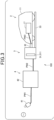
- Fig. 3 is a diagram showing an example of a power supply path of the battery 17 in a charging control system 100.
- the charging control system 100 includes a conversion device 4, a charging station 3, and a robot lawn mower 2.
- the charging control system 100 controls charging of the battery 17 of the robot lawn mower 2.
- power supplied from a commercial power supply is supplied to the battery 17 via the conversion device 4 and the charging station 3.
- the conversion device 4 includes a connection plug 41 and an AC/DC adapter 42.
- the connection plug 41 is connected to the commercial power supply.
- the AC/DC adapter 42 converts an AC voltage supplied from the commercial power supply into a DC voltage.
- the connection plug 41 and the AC/DC adapter 42 are connected to each other by a power wire PW1.
- the charging station 3 includes a control board 31, a connection unit 32, and a mount table 33.
- a second controller 311 is mounted on the control board 31.
- the second controller 311 controls the operation of the charging station 3.
- the second controller 311 includes, for example, a processor such as CPU and a memory such as RAM or ROM. Data such as a control program are stored in the memory.
- the second controller 311 will be described in detail with reference to Figs. 4 and 5 .
- the conversion device 4 and the charging station 3 are connected to each other by a power wire PW2.
- the connection unit 32 connects the charging station 3 and the lawn mower 2 so that energization is possible therebetween.
- the lawn mower 2 is placed on the mount table 33.
- the connection unit 32 is configured to connect the charging station 3 and the lawn mower 2 so that energization is possible between the charging station 3 and the lawn mower 2 when the lawn mower 2 is placed on the mount table 33. That is, when the lawn mower 2 is placed on the mount table 33, power can be supplied from the charging station 3 to the lawn mower 2.
- the connection unit 32 and the battery 17 are connected to each other by a power wire PW3. In other words, when the lawn mower 2 is placed on the mount table 33, power can be supplied from the charging station 3 to the battery 17.
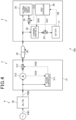
- Fig. 4 is a diagram showing an example of a configuration of the charging control system 100.
- a path for supplying power is indicated by a solid line
- a path for transmitting a signal is indicated by broken lines.
- the second controller 311, a third switch 312, and a current detection circuit 313 are mounted on the control board 31 of the charging station 3.
- a current detection circuit 313 is arranged between the AC/DC adapter 42 and the connection unit 32.
- the current detection circuit 313 detects a current value of a charging current JB supplied from the AC/DC adapter 42 to the battery 17.
- a fourth signal SG4 indicating the current value detected by the current detection circuit 313 is transmitted to the second controller 311.
- the third switch 312 is arranged between the current detection circuit 313 and the connection unit 32.
- the third switch 312 is switched between ON and OFF according to a fifth signal SG5 from the second controller 311.
- a fifth signal SG5 from the second controller 311.
- the third switch 312 corresponds to an example of a "shutoff unit".
- the lawn mower 2 includes a first controller 20, a charging control IC (Integrated Circuit) 22, a first switch 23, a second switch 24, and an internal power supply circuit 25.
- IC Integrated Circuit
- the charging control IC 22 is arranged between the connection unit 32 and the battery 17.
- the charging control IC 22 regulates the charging current JB according to a second signal SG2 from the first controller 20.
- the charging current JB indicates a current to be supplied from the charging station 3 to the battery 17 during charging.
- the first switch 23 is arranged between the charging control IC 22 and the battery 17.
- the first switch 23 is switched between ON and OFF according to a first signal SG1 from the first controller 20.
- the third switch 312 is set to ON and the first switch 23 is set to ON, power is allowed to be supplied from the charging station 3 to the battery 17. In other words, the battery 17 can be charged.
- the second switch 24 is arranged between the battery 17 and the internal power supply circuit 25.
- the second switch 24 is switched between ON and OFF in accordance with a third signal SG3 from the first controller 20.
- a third signal SG3 from the first controller 20.
- the second switch 24 is set to ON, power is allowed to be supplied from the battery 17 to the internal power supply circuit 25. In this case, electric power can be supplied from the internal power supply circuit 25 to each unit of the lawn mower 2.
- the internal power supply circuit 25 is connected to the connection unit 32 and is connected to the battery 17 via the second switch 24.
- the second switch 24 When the second switch 24 is set to ON, power is supplied from the battery 17 to the internal power supply circuit 25 via the second switch 24.
- the internal power supply circuit 25 supplies power to each unit of the lawn mower 2.
- the internal power supply circuit 25 supplies a DC voltage of 3 V to the first controller 20.
- the internal power supply circuit 25 supplies a DC voltage of 5V to the charging control IC 22.
- the internal power supply circuit 25 generates DC voltages having a plurality of voltage values from the DC voltage supplied from the battery 17, and supplies each unit of the lawn mower 2 with a DC voltage having a voltage value suitable for the operation of each unit.
- the internal power supply circuit 25 since the internal power supply circuit 25 is connected to the connection unit 32, power is supplied from the charging station 3 to the internal power supply circuit 25 when the third switch 312 is set to ON.
- the internal power supply circuit 25 will be further described with reference to Fig. 5 .
- Fig. 5 is a diagram showing an example of the configuration of the first controller 20 and the configuration of the second controller 311.
- the first controller 20 includes a first calculator 201, a second calculator 202, a superimposing unit 203, a regulation controller 204, and a transition unit 205.
- the processor of the first controller 20 executes a control program stored in the memory to function as the first calculator 201, the second calculator 202, the superimposing unit 203, the regulation controller 204, and the transition unit 205.
- the second controller 311 includes a current detector 311A, an information acquisition unit 311B, and a shutoff controller 311C. Specifically, the processor of the second controller 311 executes a control program stored in the memory, whereby the second controller 311 functions as the current detector 311A, the information acquisition unit 311B, and the shutoff controller 311C.
- the first calculator 201 calculates a charging time TF required to complete charging of the battery 17 based on a residual amount QR of the battery 17. For example, the first calculator 201 detects the battery voltage VB of the battery 17, and calculates the residual amount QR of the battery 17 based on the battery voltage VB. Then, the first calculator 201 calculates a charging time TF required to complete charging of the battery 17 based on the residual amount QR of the battery 17.
- the first calculator 201 detects the battery voltage VB and calculates the residual amount QR of the battery 17 based on the battery voltage VB, but the present invention is not limited to this mode.
- the first calculator 201 may calculate the residual amount QR of the battery 17.
- the first calculator 201 may calculate the residual amount QR of the battery 17 based on the charging current JB.
- the second calculator 202 calculates a shutoff period PC based on a charging time TF and a date and time when a lawn mowing work is started.
- the shutoff period PC defines a period during which supply power PS is shutoff. Specifically, the shutoff period PC indicates a period from a charging start time point until the date and time when the lawn mowing work is started. In other words, the shutoff period PC indicates a period from the charging start time point until the time point when the shutoff of the supply power PS is released.
- the lawn mowing work corresponds to an example of "predetermined work”.
- the date and time when the lawn mowing work is started is stored in the memory of the first controller 20 in advance.
- the "supply power PS" indicates the power to be supplied from the charging station 3 to the lawn mower 2.
- the superimposing unit 203 superimposes the current JA indicating the period information DP on the charging current JB with at least one of the current value, the pulse width, and the number of pulses of the charging current JB.
- the period information DP defines a shutoff period PC of the supply power PS.
- the superimposing unit 203 causes the regulation controller 204 to regulate the current value of the charging current JB, thereby superimposing the current JA indicating the period information DP on the charging current JB with at least one of the current value, the pulse width, and the number of pulses of the charging current JB.
- the superimposing unit 203 causes the regulation controller 204 to regulate the current value of the charging current JB, thereby superimposing the current JA indicating the period information DP on the charging current JB with the number of pulses of the charging current JB.
- the charging current JB on which the current JA indicating the period information DP is superimposed will be described in detail with reference to Fig. 6 .
- the superimposing unit 203 causes the regulation controller 204 to regulate the current value of the charging current JB, thereby superimposing the current JA indicating the period information DP on the charging current JB with the number of pulses of the charging current JB.
- the superimposing unit 203 may cause the regulation controller 204 to regulate the current value of the charging current JB, thereby superimposing the current JA indicating the period information DP on the charging current JB with at least one of the current value, the pulse width, and the number of pulses of the charging current JB.
- the regulation controller 204 regulates the current value of the charging current JB. Specifically, the regulation controller 204 transmits a second signal SG2 instructing the charging control IC to regulate the current value of the charging current JB.
- the charging control IC regulates the current value of the charging current JB according to an instruction based on the second signal SG2 from the regulation controller 204. Specifically, the charging control IC reduces the current value of the charging current JB to a current value less than the current value of a normal charging current JB. "The current value of the normal charging current JB" indicates the current value of the charging current JB when the regulation controller 204 does not regulate the current value of the charging current JB.
- the transition unit 205 causes the lawn mower 2 to transition from a normal state to a power saving state when the charging of the battery 17 has been completed. In addition, the transition unit 205 causes the lawn mower 2 to transition from the power saving state to the normal state when the shutoff period PC has elapsed.
- the "normal state” indicates a state in which the lawn mower 2 can execute the lawn mowing work.
- the "normal state” indicates a state in which power is supplied from the battery 17 to the internal power supply circuit 25 and power is supplied from the internal power supply circuit 25 to each unit of the lawn mower 2.
- the “power saving state” indicates a state in which power to be consumed by the lawn mower 2 is less than that in the "normal state".
- the "power saving state” indicates a state where no power is supplied from the charging station 3 to the battery 17 and no power is supplied from the battery 17 to the internal power supply circuit 25. In this case, no power is supplied from the internal power supply circuit 25 to each unit of the lawn mower 2.
- the "power saving state” is a so-called shutdown state.
- the transition unit 205 transmits the first signal SG1 instructing execution of "OFF" to the first switch 23.
- the first switch 23 is set to OFF according to the instruction based on the first signal SG1 from the transition unit 205.
- the first switch 23 is set to OFF, power supply from the charging station 3 to the battery 17 is interrupted.
- the transition unit 205 transmits a third signal SG3 instructing execution of "OFF" to the second switch 24.
- the second switch 24 is set to OFF according to the instruction based on the third signal SG3 from the transition unit 205.
- the second switch 24 is set to OFF, whereby power supply from the battery 17 to the internal power supply circuit 25 is interrupted.
- the transition unit 205 transmits the third signal SG3 instructing execution of "ON" to the second switch 24.
- the second switch 24 is set to ON according to the instruction based on the third signal SG3 from the transition unit 205. Since the second switch 24 is set to ON, power is supplied from the battery 17 to the internal power supply circuit 25.
- the transition unit 205 transmits the first signal SG1 instructing execution of "ON" to the first switch 23.
- the first switch 23 is set to ON according to the instruction based on the first signal SG1 from the transition unit 205.
- the current detector 311A detects the charging current JB. Specifically, the current detector 311A detects the current value of the charging current JB based on the fourth signal SG4 from the current detection circuit 313. The fourth signal SG4 indicates the current value of the charging current JB.
- the information acquisition unit 311B acquires the period information DP based on a detection result of the current detector 311A.
- the period information DP defines a shutoff period PC of the supply power PS.
- the information acquisition unit 311B acquires the period information DP as follows. In other words, the information acquisition unit 311B acquires the number of pulses of the charging current JB as he period information DP based on the detection result of the current detector 311A.
- the shutoff controller 311C shuts off the supply power PS supplied from the charging station 3 to the lawn mower 2 when the charging of the battery 17 has been completed. Specifically, the shutoff controller 311C determines based on a detection result of current detector 311A whether the charging of the battery 17 has been completed. More specifically, the shutoff controller 311C determines that the charging of the battery 17 has been completed when the current value of the charging current JB is equal to or less than a threshold value.
- the shutoff controller 311C transmits a fifth signal SG5 instructing execution of "OFF" to the third switch 312.
- the third switch 312 is set to OFF according to the instruction based on the fifth signal SG5 from the shutoff controller 311C. Since the third switch 312 is set to OFF, the supply power PS supplied from the charging station 3 to the lawn mower 2 is shut off. As a result, the supply of power from the charging station 3 to the internal power supply circuit 25 is shut off.
- the shutoff controller 311C releases the shutoff of the supply power PS supplied from the charging station 3 to the lawn mower 2 based on the period information DP acquired by the information acquisition unit 311B. Specifically, the shutoff controller 311C determines whether the shutoff period PC indicated by the period information DP has elapsed. When it is determined that the shutoff period PC has elapsed, the shutoff controller 311C transmits the fifth signal SG5 instructing execution of "ON" to the third switch 312. The third switch 312 is set to ON according to the instruction based on the fifth signal SG5 from the shutoff controller 311C. Since the third switch 312 is set to ON, the shutoff of the supply power PS supplied from the charging station 3 to the lawn mower 2 is released. In other words, the supply power PS is supplied from the charging station 3 to the lawn mower 2. As a result, power is supplied from the charging station 3 to the internal power supply circuit 25.
- the internal power supply circuit 25 When the supply of power from the charging station 3 to the internal power supply circuit 25 is started during the period when the supply of power from the battery 17 is shut off, the internal power supply circuit 25 generates power for causing the transition unit 205 to operate from the power supplied from the charging station 3.
- the internal power supply circuit 25 when charging of the battery 17 has been completed and the shutoff period PC has elapsed, the internal power supply circuit 25 generates power for causing the first controller 20 to operate from the power supplied from the charging station 3, and supplies the power to the first controller 20.
- the second switch 24 is set to OFF according to an instruction of the transition unit 205.
- the third switch 312 is set to ON according to an instruction from the shutoff controller 311C. Therefore, when the charging of the battery 17 has been completed and the shutoff period PC has elapsed, the supply of power from the charging station 3 to the internal power supply circuit 25 is started during the period when the supply of power from the battery 17 is shut off.
- the internal power supply circuit 25 when the power supply from the charging station 3 to the internal power supply circuit 25 is started, the internal power supply circuit 25 generates power for causing the transition unit 205 to operate from the power supplied from the charging station 3, so that the transition unit 205 is allowed to operate.
- the transition unit 205 causes the lawn mower 2 to transition from the power saving state to the normal state when the shutoff period PC has elapsed. As a result, the lawn mower 2 is allowed to perform a lawn mowing work.
- Fig. 6 is a diagram showing an example of the charging current JB on which the current JA indicating the period information DP is superimposed.
- the current JA indicating the period information DP is superimposed on the charging current JB with the number of pulses of the charging current JB will be described.
- the horizontal axis of Fig. 6 indicates a time T, and the vertical axis of Fig. 6 indicates the current value of the charging current JB.
- the lawn mower 2 is placed on the mount table 33, and the connection unit 32 connects the charging station 3 and the lawn mower 2 so that energization is possible therebetween.
- the charging current JB changes from zero to a first current value JB1, and charging of the battery 17 is started.
- the first current value JB1 indicates the current value of the charging current JB when the regulation controller 204 does not regulate the current value of the charging current JB.
- the regulation controller 204 regulates the current value of the charging current JB.
- the charging current JB changes from the first current value JB1 to a second current value JB2.
- the second current value JB2 is smaller than the first current value JB1 by only the current value of the current JA.
- the second current value JB2 indicates the current value of the charging current JB when the regulation controller 204 regulates the current value of the charging current JB.
- the regulation controller 204 releases the regulation of the current value of the charging current JB.
- the charging current JB changes from the second current value JB2 to the first current value JB1.
- the superimposing unit 203 causes the regulation controller 204 to regulate the current value of the charging current JB, thereby superimposing a first pulse P1 on the charging current JB.
- the first pulse P1 indicates that the first controller 20 starts transmission of the period information DP to the second controller 311.
- the first pulse P1 corresponds to an example of a "charging start signal".
- the "charging start signal” is a signal indicating that charging has started. Further, the “charging start signal” is a signal for notifying the second controller 311 that a shutoff period signal is transmitted.
- the second controller 311 generates a second pulse P2 indicating that the first pulse P1 has been detected. Specifically, the second controller 311 transmits a fifth signal SG5 instructing execution of OFF to the third switch 312, thereby setting the third switch 312 to OFF. As a result, the charging current JB is equal to zero.
- the second controller 311 transmits a fifth signal SG5 instructing execution of ON to the third switch 312, thereby setting the third switch 312 to ON.
- the charging current JB is equal to the first current value JB1.
- the information acquisition unit 311B generates the second pulse P2.
- the second pulse P2 corresponds to an example of "reception response signal".
- the "reception response signal” is a signal indicating that the second controller 311 has received the charging start signal.
- the superimposing unit 203 causes the regulation controller 204 to regulate the current value of the charging current JB, thereby superimposing the current JA indicating the period information DP on the charging current JB with the number of pulses of the charging current JB.
- the regulation controller 204 regulates the current value of the charging current JB.
- the charging current JB changes from the first current value JB1 to the second current value JB2.
- the regulation controller 204 releases the regulation of the current value of the charging current JB.
- the charging current JB changes from the second current value JB2 to the first current value JB1.
- the superimposing unit 203 generates a third pulse P3.
- the regulation controller 204 regulates the current value of the charging current JB.
- the charging current JB changes from the first current value JB1 to the second current value JB2.
- the regulation controller 204 releases the regulation of the current value of the charging current JB.
- the charging current JB changes from the second current value JB2 to the first current value JB1.
- the superimposing unit 203 generates a fourth pulse P4.
- the regulation controller 204 regulates the current value of the charging current JB.
- the charging current JB changes from the first current value JB1 to the second current value JB2.
- the regulation controller 204 releases the regulation of the current value of the charging current JB.
- the charging current JB changes from the second current value JB2 to the first current value JB1.
- the superimposing unit 203 generates a fifth pulse P5.
- the third pulse P3 to the fifth pulse P5 indicate the period information DP.
- the number of pulses of the charging current JB is "3".
- the superimposing unit 203 determines the number of pulses of the charging current JB according to the shutoff period PC indicated by the period information DP. For example, one pulse indicates 2 hours.
- the third pulse P3 to the fifth pulse P5 correspond to an example of the "shutoff period signal".
- the "shutoff period signal” is a signal indicating the shutoff period PC.
- Fig. 7 is a timing chart showing an example of operations of the first switch 23, the second switch 24, and the third switch 312.
- Fig. 7 the timing chart of the first switch 23 is shown at an upper portion, the timing chart of the second switch 24 is shown at a center portion, and the timing chart of the third switch 312 is shown at a lower portion.
- the horizontal axis of each timing chart represents time T, and the vertical axis represents whether the switch is set to ON or OFF.
- the lawn mower 2 is placed on the mount table 33, and the connection unit 32 connects the charging station 3 and the lawn mower 2 so that energization is possible therebetween.
- the second controller 311 detects that the charging station 3 and the lawn mower 2 are connected to each other so that energization is possible therebetween, the second controller 311 transmits the fifth signal SG5 instructing execution of "ON" to the third switch 312.
- the third switch 312 is set to ON according to the instruction based on the fifth signal SG5 from the second controller 311.
- the third switch 312 is set to ON, whereby charging of the battery 17 is started.
- the transition unit 205 determines that the charging of the battery 17 has been completed, and causes the lawn mower 2 to transition from the normal state to the power saving state. Specifically, the transition unit 205 transmits the first signal SG1 instructing execution of "OFF" the first switch 23.
- the first switch 23 is set to OFF according to the instruction based on the first signal SG1 from the transition unit 205.
- the first switch 23 is set to OFF, whereby supply of power from the charging station 3 to the battery 17 is shut off.
- the transition unit 205 transmits the third signal SG3 instructing execution of "OFF" to the second switch 24.
- the second switch 24 is set to OFF according to the instruction based on the third signal SG3 from the transition unit 205.
- the second switch 24 is set to OFF, whereby power supply from the battery 17 to the internal power supply circuit 25 is shut off.
- the shutoff controller 311C determines that the charging of the battery 17 has been completed, and transmits the fifth signal SG5 instructing execution of "OFF" to the third switch 312.
- the third switch 312 is set to OFF according to the instruction based on the fifth signal SG5 from the shutoff controller 311C.
- the third switch 312 is set to OFF, whereby supply power PS supplied from the charging station 3 to the lawn mower 2 is shut off.
- the shutoff controller 311C determines that the shutoff period PC has elapsed, and transmits the fifth signal SG5 instructing execution of "ON" to the third switch 312.
- the third switch 312 is set to ON according to the instruction based on the fifth signal SG5 from the shutoff controller 311C.
- the third switch 312 is set to ON, whereby the shutoff of the supply power PS supplied from the charging station 3 to the lawn mower 2 is released. In other words, the supply power PS is supplied from the charging station 3 to the lawn mower 2.
- the transition unit 205 determines that the shutoff period PC has elapsed, and transmits the first signal SG1 instructing execution of "ON" to the first switch 23.
- the first switch 23 is set to ON according to the instruction based on the first signal SG1 from the transition unit 205.
- the first switch 23 is set to ON, whereby power is supplied from the charging station 3 to the battery 17.
- the transition unit 205 transmits the third signal SG3 instructing execution of "ON" to the second switch 24.
- the second switch 24 is set to ON according to the instruction based on the third signal SG3 from the transition unit 205.
- the second switch 24 is set to ON, whereby power is supplied from the battery 17 to the internal power supply circuit 25.
- Fig. 8 is a flowchart showing an example of the processing of the first controller 20.
- step SA101 the first controller 20 first determines whether charging of the battery 17 is started. For example, according to whether a charging current JB is flowing through the charging control IC, the first controller 20 determines whether the charging of the battery 17 is started.
- step SA101: NO the processing is set to a standby state.
- step SA101: YES the processing proceeds to step SA103.
- step SA103 the first controller 20 transmits a charging start signal SGA to the second controller 311.
- the charging start signal SGA is a signal indicating that charging has started, and corresponds to, for example, the first pulse P1 shown in Fig. 6 .
- step SA105 the first controller 20 determines whether a reception response signal SGB has been detected.
- the reception response signal SGB is a signal indicating that the second controller 311 has received the charging start signal SGA, and corresponds to, for example, the second pulse P2 shown in Fig. 6 .
- step SA105 determines that the reception response signal SGB has not been detected (step SA105: NO). the processing proceeds to step SA107.
- step SA107 the first controller 20 determines whether the charging start signal SGA has been transmitted to the second controller 311 at only a predetermined number of times.
- the predetermined number of times is, for example, three times.
- step SA107: YES When the first controller 20 determines that the charging start signal SGA has been transmitted to the second controller 311 at only the predetermined number of times (step SA107: YES), the processing terminates. When the first controller 20 determines that the charging start signal SGA has not been transmitted to the second controller 311 at only the predetermined number of times (step SA107: NO), the processing returns to step SA103.
- step SA105 determines that the reception response signal SGB has been detected (step SA105: YES).
- the processing proceeds to step SA109.
- step SA109 the first calculator 201 calculates the charging time TF required to complete the charging of the battery 17 based on the residual amount QR of the battery 17.
- the second calculator 202 calculates the shutoff period PC based on a charging time TF and a date and time when a lawn mowing work is started.
- the shutoff period PC indicates a period of time from a time point when charging is started until a time point when the shutoff of the supply power PS is released.
- the superimposing unit 203 superimposes the current JA indicating the period information DP on the charging current JB with the number of pulses of the charging current JB. As a result, the superimposing unit 203 transmits a shutoff period signal SGC to the second controller 311.
- the shutoff period signal SGC is a signal indicating the period information DP, and corresponds to, for example, the third pulse P3 to the fifth pulse P5 shown in Fig. 6 .
- step SA115 the transition unit 205 determines whether charging of the battery 17 has been completed and the supply power PS has been shut off. For example, the transition unit 205 determines based on the charging current JB whether the supply power PS has been shut off. Specifically, when the charging current JB is zero, the transition unit 205 determines that the supply power PS has been shut off.
- step SA115: NO When the transition unit 205 determines that the supply power PS is not shut off (step SA115: NO), the processing is set to a standby state. When the transition unit 205 determines that the supply power PS has been shut off (step SA115: YES), the processing proceeds to step SA117.
- step SA117 the transition unit 205 causes the lawn mower 2 to transition from the normal state to the power saving state. Specifically, the transition unit 205 sets the first switch 23 to OFF, and sets the second switch 24 to OFF.
- step SA119 the internal power supply circuit 25 determines whether supply of power from the charging station 3 to the internal power supply circuit 25 is started.
- step SA119: NO the processing is set to a standby state.
- step SA119: YES the processing proceeds to step SA121.
- step SA121 the internal power supply circuit 25 generates power for causing the first controller 20 to operate from power supplied from the charging station 3, and supplies the power to the first controller 20.
- the transition unit 205 starts to supply power from the battery 17 to the internal power supply circuit 25. Specifically, the transition unit 205 starts the supply of power from the battery 17 to the internal power supply circuit 25 by setting the second switch 24 to ON.
- step SA123 the transition unit 205 causes the lawn mower 2 to transition from the power saving state to the normal state, and the processing terminates. Specifically, the transition unit 205 sets the first switch 23 to ON.
- Fig. 9 is a flowchart showing an example of processing of the second controller 311.
- step SB101 the second controller 311 first determines whether a connection with the lawn mower 2 has been detected. For example, by detecting electrical conduction at the connection unit 32, the second controller 311 determines whether the connection with the lawn mower 2 has been detected.
- step SB101: NO the processing is set to a standby state.
- step SB101: YES the processing proceeds to step SB103.
- step SB103 the second controller 311 starts charging of the battery 17.
- step SB105 the second controller 311 determines whether the charging start signal SGA has been detected.
- the charging start signal SGA indicates that the first controller 20 starts to transmit the period information DP to the second controller 311.
- the charging start signal SGA corresponds to, for example, the first pulse P1 in Fig. 6 .
- step SB105: NO When the second controller 311 determines that the charging start signal SGA has not been detected (step SB105: NO), the processing is set to a standby state. When the second controller 311 determines that the charging start signal SGA has been detected (step SB105: NO), the processing proceeds to step SB107.
- the second controller 311 transmits the reception response signal SGB to the first controller 20.
- the reception response signal SGB indicates that the charging start signal SGA has been detected. Further, the reception response signal SGB corresponds to, for example, the second pulse P2 in Fig. 6 .
- step SB109 the information acquisition unit 311B determines whether the shutoff period signal SGC has been detected.
- the shutoff period signal SGC indicates the period information DP.
- the shutoff period signal SGC corresponds to, for example, the third pulse P3 to the fifth pulse P5 in Fig. 6 .
- step SB109: NO the processing is set to a standby state.
- step SB109: YES the processing proceeds to step SB111.
- step SB111 the information acquisition unit 311B acquires the period information DP based on a detection result of the current detector 311A.
- the period information DP defines the shutoff period PC of the supply power PS.
- the shutoff period PC indicates a period from a time point when charging is started until a time point when the shutoff of the supply power PS is released.
- step SB113 the shutoff controller 311C starts counting of the shutoff period PC.
- step SB115 the shutoff controller 311C determines whether the charging of the battery 17 has been completed.
- step SB115: NO When the shutoff controller 311C determines that the charging of the battery 17 has not been completed (step SB115: NO), the processing is set to a standby state. When the shutoff controller 311C determines that the charging of the battery 17 has been completed (step SB115: YES), the processing proceeds to step SB117.
- step SB117 the shutoff controller 311C shuts off the supply power PS.
- the shutoff controller 311C shuts off the supply of power from the charging station 3 to the battery 17 and the internal power supply circuit 25.
- step SB119 the shutoff controller 311C determines whether the shutoff period PC has elapsed.
- step SB119 NO
- step SB119: YES the processing is set to a standby state.
- step SB119: YES the processing proceeds to step SB121.
- step SB121 the shutoff controller 311C releases the shutoff of the supply power PS.
- the shutoff controller 311C starts to supply power from the charging station 3 to the battery 17 and the internal power supply circuit 25. Thereafter, the processing terminates.
- Step SA113 in Fig. 8 corresponds to an example of "superimposing step”.
- Step SB109 in Fig. 9 corresponds to an example of "current detection step”.
- Step SB111 in Fig. 9 corresponds to an example of "information acquisition step”.
- Step SB117 in Fig. 9 corresponds to an example of "shutoff step”.
- Steps SB119 and SB121 in Fig. 9 correspond to an example of "release step”.
- the charging control system 100 includes the battery 17, and also includes the lawn mower 2 that performs a lawn mowing work while autonomously traveling, and the charging station 3 for charging the battery 17.
- the lawn mower 2 includes the superimposing unit 203 for superimposing, on the charging current JB, the current indicating period information DP for defining the shutoff period PC of the supply power PS to be supplied from the charging station 3.
- the charging station 3 includes the current detector 311A for detecting the charging current JB, the information acquisition unit 311B for acquiring the period information DP based on the detection result of the current detector 311A, and the shutoff controller 311C for shutting off the power supply PS.
- the shutoff controller 311C releases the shutoff of power supply to the lawn mower 2 based on the period information DP acquired by the information acquisition unit 311B.
- the superimposing unit 203 superimposes, on the charging current JB, the current indicating the period information DP for defining the shutoff period PC of supply power
- the current detector 311A detects the charging current JB
- the information acquisition unit 311B acquires the period information DP based on the detection result of the current detector 311A. Therefore, the period information DP can be transmitted from the lawn mower 2 to the charging station 3 with the charging current JB.
- the shutoff controller 311C shuts off the supply power PS, and releases the shutoff of the supply power PS based on the period information DP acquired by the information acquisition unit 311B.
- the power consumption of the lawn mower 2 can be reduced.
- the shutoff controller 311C shuts off the supply power PS, and when the shutoff period PC has elapsed, the shutoff controller 311C releases the shutoff of the supply power PS. In this case, the power consumption of the lawn mower 2 can be effectively reduced.
- a control method for the charging station 3, the lawn mower 2, and the charging control system 100 according to the present embodiment can obtain the same effect as described above.
- the lawn mower 2 includes the first calculator 201 for calculating, based on the remaining amount of the battery 17, the charging time TF required until charging of the battery 17 is completed, and the second calculator for calculating the shutoff period PC based on the charging time TF and the date and time when the lawn mower work is started.
- the superimposing unit 203 superimposes the current indicating the period information DP on the charging current JB with at least one of the current value, the pulse width, and the number of pulses of the charging current JB.
- the information acquisition unit 311B can easily acquire the period information DP based on the detection result of the current detector 311A.
- the lawn mower 2 includes the regulation controller 204 for regulating the current value of the charging current JB.
- the superimposing unit 203 causes the regulation controller 204 to regulate the current value of the charging current JB, thereby superimposing the current indicating the period information DP on the charging current JB with at least one of the current value, the pulse width, and the number of pulses of the charging current JB.
- the current indicating the period information DP is superimposed on the charging current JB by causing the regulation controller 204 to regulate the current value of the charging current JB, the current indicating the period information DP can be superimposed on the charging current JB with a simple configuration.
- shutoff controller 311C shuts off the supply power PS.
- shutoff controller 311C releases the shutoff of the supply power PS.
- the lawn mower 2 can be started up at an appropriate timing.
- the lawn mower 2 includes the transition unit 205 for causing the lawn mower 2 to transition from the normal state to the power saving state when the charging of the battery 17 has been completed.
- the lawn mower 2 is transitioned from the normal state to the power saving state. Therefore, the power consumption of the lawn mower 2 can be reduced.
- the transition unit 205 causes the lawn mower 2 to transition from the power saving state to the normal state.
- the lawn mower 2 is kept in a power saving state until the shutoff period PC has elapsed. Therefore, the power consumption of the lawn mower 2 can be reduced. Moreover, since the lawn mower 2 is transitioned from the power saving state to the normal state when the shutoff period PC has elapsed, the lawn mower 2 can be transitioned to a state in which it can operate at an appropriate timing.
- the lawn mower 2 also includes the internal power supply circuit 25 for generating operating power for the lawn mower 2 based on stored power of the battery 17.
- the transition unit 205 shuts off the supply of power from the battery 17 to the internal power supply circuit 25 when the charging of the battery 17 has been completed.
- the power supply from the battery 17 to the internal power supply circuit 25 for generating the operating power of the lawn mower 2 is shut off, so that the consumption amount of power stored in the battery 17 can be reduced. Therefore, the power consumption of the lawn mower 2 can be reduced.
- the charging control system 100 is configured so that power can be supplied from the charging station 3 to the internal power supply circuit 25.
- the internal power supply circuit 25 When the supply of power from the charging station 3 to the internal power supply circuit 25 is started during the period when the supply of power from the battery 17 is shut off, the internal power supply circuit 25 generates power for causing the transition unit 205 to operate from the power supplied from the charging station 3.
- the transition unit 205 can be caused to operate by the power supplied from the charging station 3. Accordingly, the transition unit 205 can be operated even during the period when power supply from the battery 17 to the internal power supply circuit 25 is shut off. As a result, it is possible to reduce the power consumption of the lawn mower 2 during the period when the power supply from the battery 17 to the internal power supply circuit 25 is shut off.
- the "autonomous traveling work machine” is the robot lawn mower 2, but the present invention is not limited to this mode.
- the "autonomous traveling work machine” may perform predetermined work while traveling autonomously.
- the “autonomous traveling work machine” may be a security robot that performs a monitoring work while autonomously traveling.
- the "power saving state” is a so-called shutdown state, but the present invention is not limited to this mode.
- the "power saving state” may be a so-called sleep state.
- the configuration of the lawn mower 2 can be simplified. Specifically, the second switch 24 of the lawn mower 2 is unnecessary. Even in a state where the supply power PS is shut off, power is supplied from the battery 17 to the internal power supply circuit 25, so that the lawn mower 2 can be easily transitioned to the "normal state". As a result, the processing of the first controller 20 can be simplified.
- the shutoff controller 311C shuts off the power supply to the lawn mower 2 from the time when charging of the battery 17 has been completed until the time when the shutoff period PC has elapsed, but the present invention is not limited to this mode.
- the shutoff of power supply to the lawn mower 2 may be released based on the shutoff period PC.
- the power supply to the lawn mower 2 may be shut off after the amount of power stored in the battery 17 has reached a predetermined amount.
- the predetermined amount is set to, for example, 80% of the amount of stored power when fully charged. In this case, it is possible to effectively reduce the consumption of power supplied from the charging station 3 to the lawn mower 2.
- the first calculator 201 does not have to calculate the charging time TF.
- the second calculator 202 calculates the shutoff period PC based on the date and time when a lawn mowing work is started.
- the date and time when the lawn mowing work is started is stored in a memory of the first controller 20 of the lawn mower 2 by inputting of the user.
- a working time zone for starting the lawn mowing work is stored for each day of the week in the memory.
- the working time zone may exist several times a day.
- the second calculator 202 may calculate, as the "shutoff period PC", the time from a "current time” to a "working time zone that will come next among a plurality of working time zones” stored in the memory.
- the power supply to the lawn mower 2 may be shut off until a predetermined time before the shutoff period PC has elapsed.
- the predetermined time is, for example, the time required for starting the lawn mower 2.
- the lawn mower 2 can be operated immediately when the shutoff period PC has elapsed.
- At least a part of the functional blocks shown in Figs. 2 to 4 and the like may be configured to be implemented by hardware or to be implemented by cooperation of hardware and software.
- the present invention is not limited to a configuration in which independent hardware resources are arranged as shown in the figures.
- each of the first controller 20 and the second controller 311 may be stored in another storage unit in the memory. Moreover, each of the first controller 20 and the second controller 311 may be configured to acquire a control program stored in an external device via the communication unit or the like and execute the control program.
- the charging current JB shown in Fig. 6 is merely an example, and is not limited to this example.
- the shutoff period signal SGC corresponds to the third pulse P3 to the fifth pulse P5 shown in Fig. 6 , but the shutoff period signal SGC may be a signal indicating the period information DP.
- the reception response signal SGB corresponds to the second pulse P2 shown in Fig. 6 , but the reception response signal SGB may be a signal indicating that the second controller 311 has received the charging start signal.
- the timing chart shown in Fig. 7 is merely an example, and is not limited to this example.
- the first switch 23 is set to OFF
- the second switch 24 is set to OFF
- the third switch 312 is set to OFF at the time point TB to the time point TC, but the present invention is not limited to this mode.
- the first switch 23 may be set to OFF
- the third switch 312 may be set to OFF
- the second switch 24 may be set to OFF.
- the processing units of the flowcharts shown in Figs. 8 and 9 are obtained by dividing the processing of each of the first controller 20 and the second controller 311 according to main processing contents in order to facilitate understanding of the processing of each of the first controller 20 and the second controller 311.
- the embodiments are not limited by a dividing manner and names of the processing units shown in the flowcharts shown in Figs. 8 and 9 .
- the processing of the first controller 20 and the second controller 311 may be divided into more processing units according to the processing contents, or may be divided so that one processing unit includes more processing pieces.
- the processing orders of the above-described flowcharts are not limited to the examples shown in the figures.
- step SA109 in Fig. 8 and the step SB105 in Fig. 9 are unnecessary. Further, in Fig. 8 , the processing of step SA103 to step SA107 may be executed after step SA113. The processing of step SB107 in Fig. 9 may be executed after step SB111.
Landscapes
- Engineering & Computer Science (AREA)
- Power Engineering (AREA)
- Transportation (AREA)
- Mechanical Engineering (AREA)
- Remote Sensing (AREA)
- Environmental Sciences (AREA)
- Aviation & Aerospace Engineering (AREA)
- Radar, Positioning & Navigation (AREA)
- Life Sciences & Earth Sciences (AREA)
- Physics & Mathematics (AREA)
- General Physics & Mathematics (AREA)
- Automation & Control Theory (AREA)
- Charge And Discharge Circuits For Batteries Or The Like (AREA)
- Harvester Elements (AREA)
- Electric Propulsion And Braking For Vehicles (AREA)
- Control Of Position, Course, Altitude, Or Attitude Of Moving Bodies (AREA)
- Secondary Cells (AREA)
Description
- The present invention relates to a charging control system, a charging station, an autonomous traveling work machine and a charging control system control method.
- A lawn mower that autonomously travels in a lawn area and cuts lawn grass is known as one of autonomous traveling work machines that work while autonomously traveling (for example, see
JP 2017-10161 A - A lawn mower described in Patent Literature 1 is driven by a battery, and the battery is connected to a charging station to be charged.
-
US 5650710 A shows a charging control system including features according to the preamble of claim 1. - However, the lawn mower described in
JP 2017-10161 A - In the lawn mower, for example, even when the battery has been fully charged, the battery is connected to the charging station, which may cause power to be consumed.
- The present invention has an object to provide a charging control system, a charging station, an autonomous traveling work machine, and a charging control system control method, which are capable of reducing power consumption.
- The invention provides a charging control system and method according to
claims 1 and 5. Preferred embodiments are defined in the dependent claims. - According to the aspects of the present invention, power consumption can be reduced.
-
- [
Fig. 1] Fig. 1 is a diagram showing an example of a configuration of an unmanned lawn mowing system according to an embodiment of the present invention. - [
Fig. 2] Fig. 2 is a side view showing an example of a configuration of an autonomous traveling work machine. - [
Fig. 3] Fig. 3 is a diagram showing an example of a power supply path for a battery. - [
Fig. 4] Fig. 4 is a diagram showing an example of a configuration of a charging control system. - [
Fig. 5] Fig. 5 is a diagram showing an example of a configuration of a first controller and an example of a configuration of a second controller. - [
Fig. 6] Fig. 6 is a diagram showing an example of a charging current. - [
Fig. 7] Fig. 7 is a timing chart showing an example of an operation of a switch. - [
Fig. 8] Fig. 8 is a flowchart showing an example of processing of the first controller. - [
Fig. 9] Fig. 9 is a flowchart showing an example of processing of the second controller. - An embodiment will be described hereinafter with reference to the drawings.
-
Fig. 1 is a diagram showing a configuration of an unmanned lawn mowing system 1 according to an embodiment. - An unmanned lawn mowing system 1 includes a
robot lawn mower 2, anarea wire 5 for defining a lawn mowing area AR that is a target to be subjected to a lawn mowing work, and acharging station 3. - The
robot lawn mower 2 is an autonomous traveling type work machine that mows lawn grass while autonomously performs unmanned traveling in the lawn mowing area AR. Thearea wire 5 is a member to be laid along a boundary A by a trader or the like so as to enable therobot lawn mower 2 to detect the boundary A of the lawn mowing area AR. In the present embodiment, thelaid area wire 5 is magnetized, and therobot lawn mower 2 detects the boundary A of the lawn mowing area AR by detecting the magnetism of thearea wire 5. Therobot lawn mower 2 corresponds to an example of "autonomous traveling work machine". - The
charging station 3 includes acontrol board 31 for charging therobot lawn mower 2, and is installed inside the lawn mowing area AR. Thecontrol board 31 will be described in detail with reference toFig. 4 . Thecharging station 3 is also a standby place for therobot lawn mower 2 under a non-working condition. Therobot lawn mower 2 is configured to return to thecharging station 3 by autonomous traveling when a lawn mowing work has been finished, and receive charging appropriately at thecharging station 3. -
Fig. 2 is a side view showing an example of a configuration of therobot lawn mower 2 according to the present embodiment. - The
robot lawn mower 2 may be referred to as thelawn mower 2 in the following description. - The
lawn mower 2 includes ahousing 11, right and leftfront wheels 12 provided at a front portion of thehousing 11, right and leftrear wheels 13 provided at a rear portion of thehousing 11, and a workingunit 14 provided at a center lower portion of thehousing 11. The workingunit 14 is a cutting blade disc provided with a cutting blade, and can cut grass by rotating the cutting blade disc. - The
lawn mower 2 includes right andleft traveling motors 15, a workingunit driving motor 16, abattery 17, awheel speed sensor 18, and afirst controller 20. Thehousing 11 accommodates the right and left travelingmotors 15, the workingunit driving motor 16, thebattery 17, thewheel speed sensor 18, and thefirst controller 20. - The respective right and left traveling
motors 15 individually drive the right and leftrear wheels 13, respectively. Thetraveling motors 15 drive therear wheels 13 in accordance with an instruction from thefirst controller 20, whereby the lawn mower 2 travels. The workingunit driving motor 16 drives theworking unit 14. The workingunit driving motor 16 drives theworking unit 14 in accordance with an instruction from thefirst controller 20, whereby the lawn mowing work is performed. Thebattery 17 supplies operating power to each unit of thelawn mower 2. Thewheel speed sensor 18 detects the rotational speed of the right and leftrear wheels 13 serving as driving wheels. A detection signal of thewheel speed sensor 18 is transmitted to thefirst controller 20. - The
first controller 20 controls the operation of each unit of thelawn mower 2. Thefirst controller 20 includes, for example, a processor such as a central processing unit (CPU), and a memory such as a random access memory (RAM) or a read only memory (ROM). Data such as map data related to a working target area, and control program are stored in the memory. Thefirst controller 20 will be described in detail with reference toFigs. 4 and5 . -
Fig. 3 is a diagram showing an example of a power supply path of thebattery 17 in acharging control system 100. - The
charging control system 100 includes aconversion device 4, acharging station 3, and arobot lawn mower 2. Thecharging control system 100 controls charging of thebattery 17 of therobot lawn mower 2. - As shown in
Fig. 3 , power supplied from a commercial power supply is supplied to thebattery 17 via theconversion device 4 and thecharging station 3. - The
conversion device 4 includes aconnection plug 41 and an AC/DC adapter 42. The connection plug 41 is connected to the commercial power supply. The AC/DC adapter 42 converts an AC voltage supplied from the commercial power supply into a DC voltage. Theconnection plug 41 and the AC/DC adapter 42 are connected to each other by a power wire PW1. - The charging
station 3 includes acontrol board 31, aconnection unit 32, and a mount table 33. Asecond controller 311 is mounted on thecontrol board 31. Thesecond controller 311 controls the operation of the chargingstation 3. Thesecond controller 311 includes, for example, a processor such as CPU and a memory such as RAM or ROM. Data such as a control program are stored in the memory. Thesecond controller 311 will be described in detail with reference toFigs. 4 and5 . Theconversion device 4 and the chargingstation 3 are connected to each other by a power wire PW2. - The
connection unit 32 connects the chargingstation 3 and thelawn mower 2 so that energization is possible therebetween. Thelawn mower 2 is placed on the mount table 33. Theconnection unit 32 is configured to connect the chargingstation 3 and thelawn mower 2 so that energization is possible between the chargingstation 3 and thelawn mower 2 when thelawn mower 2 is placed on the mount table 33. That is, when thelawn mower 2 is placed on the mount table 33, power can be supplied from the chargingstation 3 to thelawn mower 2. When thelawn mower 2 is placed on the mount table 33, theconnection unit 32 and thebattery 17 are connected to each other by a power wire PW3. In other words, when thelawn mower 2 is placed on the mount table 33, power can be supplied from the chargingstation 3 to thebattery 17. -
Fig. 4 is a diagram showing an example of a configuration of the chargingcontrol system 100. InFig. 4 , a path for supplying power is indicated by a solid line, and a path for transmitting a signal is indicated by broken lines. - The
second controller 311, athird switch 312, and acurrent detection circuit 313 are mounted on thecontrol board 31 of the chargingstation 3. - A
current detection circuit 313 is arranged between the AC/DC adapter 42 and theconnection unit 32. Thecurrent detection circuit 313 detects a current value of a charging current JB supplied from the AC/DC adapter 42 to thebattery 17. A fourth signal SG4 indicating the current value detected by thecurrent detection circuit 313 is transmitted to thesecond controller 311. - The
third switch 312 is arranged between thecurrent detection circuit 313 and theconnection unit 32. Thethird switch 312 is switched between ON and OFF according to a fifth signal SG5 from thesecond controller 311. When thethird switch 312 is set to ON, power is allowed to be supplied from the chargingstation 3 to thelawn mower 2. Thethird switch 312 corresponds to an example of a "shutoff unit". - The
lawn mower 2 includes afirst controller 20, a charging control IC (Integrated Circuit) 22, afirst switch 23, asecond switch 24, and an internalpower supply circuit 25. - The charging
control IC 22 is arranged between theconnection unit 32 and thebattery 17. The chargingcontrol IC 22 regulates the charging current JB according to a second signal SG2 from thefirst controller 20. The charging current JB indicates a current to be supplied from the chargingstation 3 to thebattery 17 during charging. - The
first switch 23 is arranged between the chargingcontrol IC 22 and thebattery 17. Thefirst switch 23 is switched between ON and OFF according to a first signal SG1 from thefirst controller 20. When thethird switch 312 is set to ON and thefirst switch 23 is set to ON, power is allowed to be supplied from the chargingstation 3 to thebattery 17. In other words, thebattery 17 can be charged. - The
second switch 24 is arranged between thebattery 17 and the internalpower supply circuit 25. Thesecond switch 24 is switched between ON and OFF in accordance with a third signal SG3 from thefirst controller 20. When thesecond switch 24 is set to ON, power is allowed to be supplied from thebattery 17 to the internalpower supply circuit 25. In this case, electric power can be supplied from the internalpower supply circuit 25 to each unit of thelawn mower 2. - The internal
power supply circuit 25 is connected to theconnection unit 32 and is connected to thebattery 17 via thesecond switch 24. When thesecond switch 24 is set to ON, power is supplied from thebattery 17 to the internalpower supply circuit 25 via thesecond switch 24. - The internal
power supply circuit 25 supplies power to each unit of thelawn mower 2. For example, the internalpower supply circuit 25 supplies a DC voltage of 3 V to thefirst controller 20. Further, for example, the internalpower supply circuit 25 supplies a DC voltage of 5V to the chargingcontrol IC 22. In other words, the internalpower supply circuit 25 generates DC voltages having a plurality of voltage values from the DC voltage supplied from thebattery 17, and supplies each unit of thelawn mower 2 with a DC voltage having a voltage value suitable for the operation of each unit. Further, since the internalpower supply circuit 25 is connected to theconnection unit 32, power is supplied from the chargingstation 3 to the internalpower supply circuit 25 when thethird switch 312 is set to ON. The internalpower supply circuit 25 will be further described with reference toFig. 5 . -
Fig. 5 is a diagram showing an example of the configuration of thefirst controller 20 and the configuration of thesecond controller 311. - The
first controller 20 includes afirst calculator 201, asecond calculator 202, a superimposingunit 203, aregulation controller 204, and atransition unit 205. Specifically, the processor of thefirst controller 20 executes a control program stored in the memory to function as thefirst calculator 201, thesecond calculator 202, the superimposingunit 203, theregulation controller 204, and thetransition unit 205. - The
second controller 311 includes acurrent detector 311A, aninformation acquisition unit 311B, and ashutoff controller 311C. Specifically, the processor of thesecond controller 311 executes a control program stored in the memory, whereby thesecond controller 311 functions as thecurrent detector 311A, theinformation acquisition unit 311B, and theshutoff controller 311C. - The
first calculator 201 calculates a charging time TF required to complete charging of thebattery 17 based on a residual amount QR of thebattery 17. For example, thefirst calculator 201 detects the battery voltage VB of thebattery 17, and calculates the residual amount QR of thebattery 17 based on the battery voltage VB. Then, thefirst calculator 201 calculates a charging time TF required to complete charging of thebattery 17 based on the residual amount QR of thebattery 17. - In the present embodiment, the
first calculator 201 detects the battery voltage VB and calculates the residual amount QR of thebattery 17 based on the battery voltage VB, but the present invention is not limited to this mode. Thefirst calculator 201 may calculate the residual amount QR of thebattery 17. For example, thefirst calculator 201 may calculate the residual amount QR of thebattery 17 based on the charging current JB. - The
second calculator 202 calculates a shutoff period PC based on a charging time TF and a date and time when a lawn mowing work is started. The shutoff period PC defines a period during which supply power PS is shutoff. Specifically, the shutoff period PC indicates a period from a charging start time point until the date and time when the lawn mowing work is started. In other words, the shutoff period PC indicates a period from the charging start time point until the time point when the shutoff of the supply power PS is released. The lawn mowing work corresponds to an example of "predetermined work". The date and time when the lawn mowing work is started is stored in the memory of thefirst controller 20 in advance. The "supply power PS" indicates the power to be supplied from the chargingstation 3 to thelawn mower 2. - The superimposing
unit 203 superimposes the current JA indicating the period information DP on the charging current JB with at least one of the current value, the pulse width, and the number of pulses of the charging current JB. The period information DP defines a shutoff period PC of the supply power PS. - Specifically, the superimposing
unit 203 causes theregulation controller 204 to regulate the current value of the charging current JB, thereby superimposing the current JA indicating the period information DP on the charging current JB with at least one of the current value, the pulse width, and the number of pulses of the charging current JB. - For example, the superimposing
unit 203 causes theregulation controller 204 to regulate the current value of the charging current JB, thereby superimposing the current JA indicating the period information DP on the charging current JB with the number of pulses of the charging current JB. An example of the charging current JB on which the current JA indicating the period information DP is superimposed will be described in detail with reference toFig. 6 . - In the present embodiment, the superimposing
unit 203 causes theregulation controller 204 to regulate the current value of the charging current JB, thereby superimposing the current JA indicating the period information DP on the charging current JB with the number of pulses of the charging current JB. However, the invention is not limited to this manner. The superimposingunit 203 may cause theregulation controller 204 to regulate the current value of the charging current JB, thereby superimposing the current JA indicating the period information DP on the charging current JB with at least one of the current value, the pulse width, and the number of pulses of the charging current JB. - The
regulation controller 204 regulates the current value of the charging current JB. Specifically, theregulation controller 204 transmits a second signal SG2 instructing the charging control IC to regulate the current value of the charging current JB. The charging control IC regulates the current value of the charging current JB according to an instruction based on the second signal SG2 from theregulation controller 204. Specifically, the charging control IC reduces the current value of the charging current JB to a current value less than the current value of a normal charging current JB. "The current value of the normal charging current JB" indicates the current value of the charging current JB when theregulation controller 204 does not regulate the current value of the charging current JB. - The
transition unit 205 causes thelawn mower 2 to transition from a normal state to a power saving state when the charging of thebattery 17 has been completed. In addition, thetransition unit 205 causes thelawn mower 2 to transition from the power saving state to the normal state when the shutoff period PC has elapsed. - Note that the "normal state" indicates a state in which the
lawn mower 2 can execute the lawn mowing work. For example, the "normal state" indicates a state in which power is supplied from thebattery 17 to the internalpower supply circuit 25 and power is supplied from the internalpower supply circuit 25 to each unit of thelawn mower 2. - The "power saving state" indicates a state in which power to be consumed by the
lawn mower 2 is less than that in the "normal state". For example, the "power saving state" indicates a state where no power is supplied from the chargingstation 3 to thebattery 17 and no power is supplied from thebattery 17 to the internalpower supply circuit 25. In this case, no power is supplied from the internalpower supply circuit 25 to each unit of thelawn mower 2. In the present embodiment, the "power saving state" is a so-called shutdown state. - Specifically, when charging of the
battery 17 has been completed, thetransition unit 205 transmits the first signal SG1 instructing execution of "OFF" to thefirst switch 23. Thefirst switch 23 is set to OFF according to the instruction based on the first signal SG1 from thetransition unit 205. When thefirst switch 23 is set to OFF, power supply from the chargingstation 3 to thebattery 17 is interrupted. - When the charging of the
battery 17 has been completed, thetransition unit 205 transmits a third signal SG3 instructing execution of "OFF" to thesecond switch 24. Thesecond switch 24 is set to OFF according to the instruction based on the third signal SG3 from thetransition unit 205. Thesecond switch 24 is set to OFF, whereby power supply from thebattery 17 to the internalpower supply circuit 25 is interrupted. - When the shutoff period PC has elapsed, the
transition unit 205 transmits the third signal SG3 instructing execution of "ON" to thesecond switch 24. Thesecond switch 24 is set to ON according to the instruction based on the third signal SG3 from thetransition unit 205. Since thesecond switch 24 is set to ON, power is supplied from thebattery 17 to the internalpower supply circuit 25. - When the shutoff period PC has elapsed, the
transition unit 205 transmits the first signal SG1 instructing execution of "ON" to thefirst switch 23. Thefirst switch 23 is set to ON according to the instruction based on the first signal SG1 from thetransition unit 205. - The
current detector 311A detects the charging current JB. Specifically, thecurrent detector 311A detects the current value of the charging current JB based on the fourth signal SG4 from thecurrent detection circuit 313. The fourth signal SG4 indicates the current value of the charging current JB. - The
information acquisition unit 311B acquires the period information DP based on a detection result of thecurrent detector 311A. The period information DP defines a shutoff period PC of the supply power PS. - For example, when the superimposing
unit 203 causes theregulation controller 204 to regulate the current value of the charging current JB, thereby superimposing the current JA indicating the period information DP on the charging current JB with the number of pulses of the charging current JB, theinformation acquisition unit 311B acquires the period information DP as follows. In other words, theinformation acquisition unit 311B acquires the number of pulses of the charging current JB as he period information DP based on the detection result of thecurrent detector 311A. - The
shutoff controller 311C shuts off the supply power PS supplied from the chargingstation 3 to thelawn mower 2 when the charging of thebattery 17 has been completed. Specifically, theshutoff controller 311C determines based on a detection result ofcurrent detector 311A whether the charging of thebattery 17 has been completed. More specifically, theshutoff controller 311C determines that the charging of thebattery 17 has been completed when the current value of the charging current JB is equal to or less than a threshold value. - Further, when it is determined that the charging of the
battery 17 has been completed, theshutoff controller 311C transmits a fifth signal SG5 instructing execution of "OFF" to thethird switch 312. Thethird switch 312 is set to OFF according to the instruction based on the fifth signal SG5 from theshutoff controller 311C. Since thethird switch 312 is set to OFF, the supply power PS supplied from the chargingstation 3 to thelawn mower 2 is shut off. As a result, the supply of power from the chargingstation 3 to the internalpower supply circuit 25 is shut off. - Further, the
shutoff controller 311C releases the shutoff of the supply power PS supplied from the chargingstation 3 to thelawn mower 2 based on the period information DP acquired by theinformation acquisition unit 311B. Specifically, theshutoff controller 311C determines whether the shutoff period PC indicated by the period information DP has elapsed. When it is determined that the shutoff period PC has elapsed, theshutoff controller 311C transmits the fifth signal SG5 instructing execution of "ON" to thethird switch 312. Thethird switch 312 is set to ON according to the instruction based on the fifth signal SG5 from theshutoff controller 311C. Since thethird switch 312 is set to ON, the shutoff of the supply power PS supplied from the chargingstation 3 to thelawn mower 2 is released. In other words, the supply power PS is supplied from the chargingstation 3 to thelawn mower 2. As a result, power is supplied from the chargingstation 3 to the internalpower supply circuit 25. - When the supply of power from the charging
station 3 to the internalpower supply circuit 25 is started during the period when the supply of power from thebattery 17 is shut off, the internalpower supply circuit 25 generates power for causing thetransition unit 205 to operate from the power supplied from the chargingstation 3. - Specifically, when charging of the
battery 17 has been completed and the shutoff period PC has elapsed, the internalpower supply circuit 25 generates power for causing thefirst controller 20 to operate from the power supplied from the chargingstation 3, and supplies the power to thefirst controller 20. - In other words, when the charging of the
battery 17 has been completed, thesecond switch 24 is set to OFF according to an instruction of thetransition unit 205. When the shutoff period PC has elapsed, thethird switch 312 is set to ON according to an instruction from theshutoff controller 311C. Therefore, when the charging of thebattery 17 has been completed and the shutoff period PC has elapsed, the supply of power from the chargingstation 3 to the internalpower supply circuit 25 is started during the period when the supply of power from thebattery 17 is shut off. - In this way, when the power supply from the charging
station 3 to the internalpower supply circuit 25 is started, the internalpower supply circuit 25 generates power for causing thetransition unit 205 to operate from the power supplied from the chargingstation 3, so that thetransition unit 205 is allowed to operate. Thetransition unit 205 causes thelawn mower 2 to transition from the power saving state to the normal state when the shutoff period PC has elapsed. As a result, thelawn mower 2 is allowed to perform a lawn mowing work. -
Fig. 6 is a diagram showing an example of the charging current JB on which the current JA indicating the period information DP is superimposed. In the present embodiment, a case where the current JA indicating the period information DP is superimposed on the charging current JB with the number of pulses of the charging current JB will be described. - The horizontal axis of
Fig. 6 indicates a time T, and the vertical axis ofFig. 6 indicates the current value of the charging current JB. - At a time point T1, the
lawn mower 2 is placed on the mount table 33, and theconnection unit 32 connects the chargingstation 3 and thelawn mower 2 so that energization is possible therebetween. As a result, the charging current JB changes from zero to a first current value JB1, and charging of thebattery 17 is started. The first current value JB1 indicates the current value of the charging current JB when theregulation controller 204 does not regulate the current value of the charging current JB. - Next, at a time point T2, the
regulation controller 204 regulates the current value of the charging current JB. As a result, the charging current JB changes from the first current value JB1 to a second current value JB2. The second current value JB2 is smaller than the first current value JB1 by only the current value of the current JA. The second current value JB2 indicates the current value of the charging current JB when theregulation controller 204 regulates the current value of the charging current JB. - Next, at a time point T3, the
regulation controller 204 releases the regulation of the current value of the charging current JB. As a result, the charging current JB changes from the second current value JB2 to the first current value JB1. In this way, the superimposingunit 203 causes theregulation controller 204 to regulate the current value of the charging current JB, thereby superimposing a first pulse P1 on the charging current JB. - The first pulse P1 indicates that the
first controller 20 starts transmission of the period information DP to thesecond controller 311. The first pulse P1 corresponds to an example of a "charging start signal". The "charging start signal" is a signal indicating that charging has started. Further, the "charging start signal" is a signal for notifying thesecond controller 311 that a shutoff period signal is transmitted. - Next, at a time point T4, the
second controller 311 generates a second pulse P2 indicating that the first pulse P1 has been detected. Specifically, thesecond controller 311 transmits a fifth signal SG5 instructing execution of OFF to thethird switch 312, thereby setting thethird switch 312 to OFF. As a result, the charging current JB is equal to zero. - Next, at a time point T5, the
second controller 311 transmits a fifth signal SG5 instructing execution of ON to thethird switch 312, thereby setting thethird switch 312 to ON. As a result, the charging current JB is equal to the first current value JB1. In this way, theinformation acquisition unit 311B generates the second pulse P2. - The second pulse P2 corresponds to an example of "reception response signal". The "reception response signal" is a signal indicating that the
second controller 311 has received the charging start signal. - Next, from a time point T6 to a time point T11, the superimposing
unit 203 causes theregulation controller 204 to regulate the current value of the charging current JB, thereby superimposing the current JA indicating the period information DP on the charging current JB with the number of pulses of the charging current JB. - Specifically, at the time point T6, the
regulation controller 204 regulates the current value of the charging current JB. As a result, the charging current JB changes from the first current value JB1 to the second current value JB2. - Next, at the time point T7, the
regulation controller 204 releases the regulation of the current value of the charging current JB. As a result, the charging current JB changes from the second current value JB2 to the first current value JB1. In this way, the superimposingunit 203 generates a third pulse P3. - Next, at a time point T8, the
regulation controller 204 regulates the current value of the charging current JB. As a result, the charging current JB changes from the first current value JB1 to the second current value JB2. - Next, at a time point T9, the
regulation controller 204 releases the regulation of the current value of the charging current JB. As a result, the charging current JB changes from the second current value JB2 to the first current value JB1. In this way, the superimposingunit 203 generates a fourth pulse P4. - Next, at a time point T10, the
regulation controller 204 regulates the current value of the charging current JB. As a result, the charging current JB changes from the first current value JB1 to the second current value JB2. - Next, at a time point T11, the
regulation controller 204 releases the regulation of the current value of the charging current JB. As a result, the charging current JB changes from the second current value JB2 to the first current value JB1. In this way, the superimposingunit 203 generates a fifth pulse P5. - The third pulse P3 to the fifth pulse P5 indicate the period information DP. In other words, the number of pulses of the charging current JB is "3". For example, the superimposing
unit 203 determines the number of pulses of the charging current JB according to the shutoff period PC indicated by the period information DP. For example, one pulse indicates 2 hours. In this case, the third pulse P3 to the fifth pulse P5 indicate that the shutoff period PC is 6 hours (= 2 hours x 3). The third pulse P3 to the fifth pulse P5 correspond to an example of the "shutoff period signal". The "shutoff period signal" is a signal indicating the shutoff period PC. -
Fig. 7 is a timing chart showing an example of operations of thefirst switch 23, thesecond switch 24, and thethird switch 312. - In
Fig. 7 , the timing chart of thefirst switch 23 is shown at an upper portion, the timing chart of thesecond switch 24 is shown at a center portion, and the timing chart of thethird switch 312 is shown at a lower portion. The horizontal axis of each timing chart represents time T, and the vertical axis represents whether the switch is set to ON or OFF. - First, at a time point TA, the
lawn mower 2 is placed on the mount table 33, and theconnection unit 32 connects the chargingstation 3 and thelawn mower 2 so that energization is possible therebetween. When thesecond controller 311 detects that the chargingstation 3 and thelawn mower 2 are connected to each other so that energization is possible therebetween, thesecond controller 311 transmits the fifth signal SG5 instructing execution of "ON" to thethird switch 312. Thethird switch 312 is set to ON according to the instruction based on the fifth signal SG5 from thesecond controller 311. Thethird switch 312 is set to ON, whereby charging of thebattery 17 is started. - Next, at a time point TB, the
transition unit 205 determines that the charging of thebattery 17 has been completed, and causes thelawn mower 2 to transition from the normal state to the power saving state. Specifically, thetransition unit 205 transmits the first signal SG1 instructing execution of "OFF" thefirst switch 23. Thefirst switch 23 is set to OFF according to the instruction based on the first signal SG1 from thetransition unit 205. Thefirst switch 23 is set to OFF, whereby supply of power from the chargingstation 3 to thebattery 17 is shut off. - Further, at the time point TB, the
transition unit 205 transmits the third signal SG3 instructing execution of "OFF" to thesecond switch 24. Thesecond switch 24 is set to OFF according to the instruction based on the third signal SG3 from thetransition unit 205. Thesecond switch 24 is set to OFF, whereby power supply from thebattery 17 to the internalpower supply circuit 25 is shut off. - Next, at a time point TC, the
shutoff controller 311C determines that the charging of thebattery 17 has been completed, and transmits the fifth signal SG5 instructing execution of "OFF" to thethird switch 312. Thethird switch 312 is set to OFF according to the instruction based on the fifth signal SG5 from theshutoff controller 311C. Thethird switch 312 is set to OFF, whereby supply power PS supplied from the chargingstation 3 to thelawn mower 2 is shut off. - Next, at a time point TD, the
shutoff controller 311C determines that the shutoff period PC has elapsed, and transmits the fifth signal SG5 instructing execution of "ON" to thethird switch 312. Thethird switch 312 is set to ON according to the instruction based on the fifth signal SG5 from theshutoff controller 311C. Thethird switch 312 is set to ON, whereby the shutoff of the supply power PS supplied from the chargingstation 3 to thelawn mower 2 is released. In other words, the supply power PS is supplied from the chargingstation 3 to thelawn mower 2. - Next, at a time point TE, the
transition unit 205 determines that the shutoff period PC has elapsed, and transmits the first signal SG1 instructing execution of "ON" to thefirst switch 23. Thefirst switch 23 is set to ON according to the instruction based on the first signal SG1 from thetransition unit 205. Thefirst switch 23 is set to ON, whereby power is supplied from the chargingstation 3 to thebattery 17. - Further, the
transition unit 205 transmits the third signal SG3 instructing execution of "ON" to thesecond switch 24. Thesecond switch 24 is set to ON according to the instruction based on the third signal SG3 from thetransition unit 205. Thesecond switch 24 is set to ON, whereby power is supplied from thebattery 17 to the internalpower supply circuit 25. -
Fig. 8 is a flowchart showing an example of the processing of thefirst controller 20. - Note that a case where each of the
first switch 23, thesecond switch 24, and thethird switch 312 is set to ON in an initial state ofFig. 8 will be described. - As shown in
Fig. 8 , in step SA101, thefirst controller 20 first determines whether charging of thebattery 17 is started. For example, according to whether a charging current JB is flowing through the charging control IC, thefirst controller 20 determines whether the charging of thebattery 17 is started. - When the
first controller 20 determines that the charging of thebattery 17 has not started (step SA101: NO), the processing is set to a standby state. When thefirst controller 20 determines that the charging of thebattery 17 has started (step SA101: YES), the processing proceeds to step SA103. - Then, in step SA103, the
first controller 20 transmits a charging start signal SGA to thesecond controller 311. The charging start signal SGA is a signal indicating that charging has started, and corresponds to, for example, the first pulse P1 shown inFig. 6 . - Next, in step SA105, the
first controller 20 determines whether a reception response signal SGB has been detected. The reception response signal SGB is a signal indicating that thesecond controller 311 has received the charging start signal SGA, and corresponds to, for example, the second pulse P2 shown inFig. 6 . - When the
first controller 20 determines that the reception response signal SGB has not been detected (step SA105: NO), the processing proceeds to step SA107. - In step SA107, the
first controller 20 determines whether the charging start signal SGA has been transmitted to thesecond controller 311 at only a predetermined number of times. The predetermined number of times is, for example, three times. - When the
first controller 20 determines that the charging start signal SGA has been transmitted to thesecond controller 311 at only the predetermined number of times (step SA107: YES), the processing terminates. When thefirst controller 20 determines that the charging start signal SGA has not been transmitted to thesecond controller 311 at only the predetermined number of times (step SA107: NO), the processing returns to step SA103. - When the
first controller 20 determines that the reception response signal SGB has been detected (step SA105: YES), the processing proceeds to step SA109. - In step SA109, the
first calculator 201 calculates the charging time TF required to complete the charging of thebattery 17 based on the residual amount QR of thebattery 17. - Next, in step SA111, the
second calculator 202 calculates the shutoff period PC based on a charging time TF and a date and time when a lawn mowing work is started. The shutoff period PC indicates a period of time from a time point when charging is started until a time point when the shutoff of the supply power PS is released. - Next, the superimposing
unit 203 superimposes the current JA indicating the period information DP on the charging current JB with the number of pulses of the charging current JB. As a result, the superimposingunit 203 transmits a shutoff period signal SGC to thesecond controller 311. The shutoff period signal SGC is a signal indicating the period information DP, and corresponds to, for example, the third pulse P3 to the fifth pulse P5 shown inFig. 6 . - Next, in step SA115, the
transition unit 205 determines whether charging of thebattery 17 has been completed and the supply power PS has been shut off. For example, thetransition unit 205 determines based on the charging current JB whether the supply power PS has been shut off. Specifically, when the charging current JB is zero, thetransition unit 205 determines that the supply power PS has been shut off. - When the
transition unit 205 determines that the supply power PS is not shut off (step SA115: NO), the processing is set to a standby state. When thetransition unit 205 determines that the supply power PS has been shut off (step SA115: YES), the processing proceeds to step SA117. - In step SA117, the
transition unit 205 causes thelawn mower 2 to transition from the normal state to the power saving state. Specifically, thetransition unit 205 sets thefirst switch 23 to OFF, and sets thesecond switch 24 to OFF. - Next, in step SA119, the internal
power supply circuit 25 determines whether supply of power from the chargingstation 3 to the internalpower supply circuit 25 is started. - When the internal
power supply circuit 25 determines that the supply of power from the chargingstation 3 to the internalpower supply circuit 25 has not been started (step SA119: NO), the processing is set to a standby state. When the internalpower supply circuit 25 determines that the supply of power from the chargingstation 3 to the internalpower supply circuit 25 is started (step SA119: YES), the processing proceeds to step SA121. - In step SA121, the internal
power supply circuit 25 generates power for causing thefirst controller 20 to operate from power supplied from the chargingstation 3, and supplies the power to thefirst controller 20. Thetransition unit 205 starts to supply power from thebattery 17 to the internalpower supply circuit 25. Specifically, thetransition unit 205 starts the supply of power from thebattery 17 to the internalpower supply circuit 25 by setting thesecond switch 24 to ON. - Next, in step SA123, the
transition unit 205 causes thelawn mower 2 to transition from the power saving state to the normal state, and the processing terminates. Specifically, thetransition unit 205 sets thefirst switch 23 to ON. -
Fig. 9 is a flowchart showing an example of processing of thesecond controller 311. - Note that a case where each of the
first switch 23, thesecond switch 24, and thethird switch 312 is set to ON in an initial state ofFig. 9 will be described. - In step SB101, the
second controller 311 first determines whether a connection with thelawn mower 2 has been detected. For example, by detecting electrical conduction at theconnection unit 32, thesecond controller 311 determines whether the connection with thelawn mower 2 has been detected. - When the
second controller 311 determines that the connection with thelawn mower 2 has not been detected (step SB101: NO), the processing is set to a standby state. When thesecond controller 311 determines that the connection with thelawn mower 2 has been detected (step SB101: YES), the processing proceeds to step SB103. - Next, in step SB103, the
second controller 311 starts charging of thebattery 17. - Next, in step SB105, the
second controller 311 determines whether the charging start signal SGA has been detected. The charging start signal SGA indicates that thefirst controller 20 starts to transmit the period information DP to thesecond controller 311. The charging start signal SGA corresponds to, for example, the first pulse P1 inFig. 6 . - When the
second controller 311 determines that the charging start signal SGA has not been detected (step SB105: NO), the processing is set to a standby state. When thesecond controller 311 determines that the charging start signal SGA has been detected (step SB105: NO), the processing proceeds to step SB107. - Then, in step SB107, the
second controller 311 transmits the reception response signal SGB to thefirst controller 20. The reception response signal SGB indicates that the charging start signal SGA has been detected. Further, the reception response signal SGB corresponds to, for example, the second pulse P2 inFig. 6 . - Next, in step SB109, the
information acquisition unit 311B determines whether the shutoff period signal SGC has been detected. The shutoff period signal SGC indicates the period information DP. The shutoff period signal SGC corresponds to, for example, the third pulse P3 to the fifth pulse P5 inFig. 6 . - When the
information acquisition unit 311B determines that the shutoff period signal SGC has not been detected (step SB109: NO), the processing is set to a standby state. When theinformation acquisition unit 311B determines that the shutoff period signal SGC has been detected (step SB109: YES), the processing proceeds to step SB111. - Then, in step SB111, the
information acquisition unit 311B acquires the period information DP based on a detection result of thecurrent detector 311A. The period information DP defines the shutoff period PC of the supply power PS. The shutoff period PC indicates a period from a time point when charging is started until a time point when the shutoff of the supply power PS is released. - Next, in step SB113, the
shutoff controller 311C starts counting of the shutoff period PC. - Next, in step SB115, the
shutoff controller 311C determines whether the charging of thebattery 17 has been completed. - When the
shutoff controller 311C determines that the charging of thebattery 17 has not been completed (step SB115: NO), the processing is set to a standby state. When theshutoff controller 311C determines that the charging of thebattery 17 has been completed (step SB115: YES), the processing proceeds to step SB117. - In step SB117, the
shutoff controller 311C shuts off the supply power PS. In other words, theshutoff controller 311C shuts off the supply of power from the chargingstation 3 to thebattery 17 and the internalpower supply circuit 25. - Next, in step SB119, the
shutoff controller 311C determines whether the shutoff period PC has elapsed. - When the
shutoff controller 311C determines that the shutoff period PC has not elapsed (step SB119: NO), the processing is set to a standby state. When theshutoff controller 311C determines that the shutoff period PC has elapsed (step SB119: YES), the processing proceeds to step SB121. - In step SB121, the
shutoff controller 311C releases the shutoff of the supply power PS. In other words, theshutoff controller 311C starts to supply power from the chargingstation 3 to thebattery 17 and the internalpower supply circuit 25. Thereafter, the processing terminates. - Step SA113 in
Fig. 8 corresponds to an example of "superimposing step". Step SB109 inFig. 9 corresponds to an example of "current detection step". Step SB111 inFig. 9 corresponds to an example of "information acquisition step". Step SB117 inFig. 9 corresponds to an example of "shutoff step". Steps SB119 and SB121 inFig. 9 correspond to an example of "release step". - As described above, in the present embodiment, the charging
control system 100 includes thebattery 17, and also includes thelawn mower 2 that performs a lawn mowing work while autonomously traveling, and the chargingstation 3 for charging thebattery 17. Thelawn mower 2 includes the superimposingunit 203 for superimposing, on the charging current JB, the current indicating period information DP for defining the shutoff period PC of the supply power PS to be supplied from the chargingstation 3. The chargingstation 3 includes thecurrent detector 311A for detecting the charging current JB, theinformation acquisition unit 311B for acquiring the period information DP based on the detection result of thecurrent detector 311A, and theshutoff controller 311C for shutting off the power supply PS. Theshutoff controller 311C releases the shutoff of power supply to thelawn mower 2 based on the period information DP acquired by theinformation acquisition unit 311B. - In other words, the superimposing
unit 203 superimposes, on the charging current JB, the current indicating the period information DP for defining the shutoff period PC of supply power, thecurrent detector 311A detects the charging current JB, and theinformation acquisition unit 311B acquires the period information DP based on the detection result of thecurrent detector 311A. Therefore, the period information DP can be transmitted from thelawn mower 2 to the chargingstation 3 with the charging current JB. Further, theshutoff controller 311C shuts off the supply power PS, and releases the shutoff of the supply power PS based on the period information DP acquired by theinformation acquisition unit 311B. - Accordingly, the power consumption of the
lawn mower 2 can be reduced. For example, when charging has been completed, theshutoff controller 311C shuts off the supply power PS, and when the shutoff period PC has elapsed, theshutoff controller 311C releases the shutoff of the supply power PS. In this case, the power consumption of thelawn mower 2 can be effectively reduced. - Moreover, a control method for the charging
station 3, thelawn mower 2, and the chargingcontrol system 100 according to the present embodiment can obtain the same effect as described above. - Further, the
lawn mower 2 includes thefirst calculator 201 for calculating, based on the remaining amount of thebattery 17, the charging time TF required until charging of thebattery 17 is completed, and the second calculator for calculating the shutoff period PC based on the charging time TF and the date and time when the lawn mower work is started. - Therefore, an appropriate shutoff period PC can be calculated. Accordingly, the power consumption of the
lawn mower 2 can be effectively reduced. - Further, the superimposing
unit 203 superimposes the current indicating the period information DP on the charging current JB with at least one of the current value, the pulse width, and the number of pulses of the charging current JB. - Therefore, since the period information DP is represented by at least one of the current value, the pulse width, and the number of pulses of the charging current JB, the
information acquisition unit 311B can easily acquire the period information DP based on the detection result of thecurrent detector 311A. - The
lawn mower 2 includes theregulation controller 204 for regulating the current value of the charging current JB. The superimposingunit 203 causes theregulation controller 204 to regulate the current value of the charging current JB, thereby superimposing the current indicating the period information DP on the charging current JB with at least one of the current value, the pulse width, and the number of pulses of the charging current JB. - Therefore, since the current indicating the period information DP is superimposed on the charging current JB by causing the
regulation controller 204 to regulate the current value of the charging current JB, the current indicating the period information DP can be superimposed on the charging current JB with a simple configuration. - Further, when charging of the
battery 17 has been completed, theshutoff controller 311C shuts off the supply power PS. - Accordingly, power consumption can be effectively reduced.
- Further, when the shutoff period PC has elapsed, the
shutoff controller 311C releases the shutoff of the supply power PS. - Therefore, it can be notified to the
lawn mower 2 with a simple configuration that the shutoff period PC has elapsed. Therefore, thelawn mower 2 can be started up at an appropriate timing. - Further, the
lawn mower 2 includes thetransition unit 205 for causing thelawn mower 2 to transition from the normal state to the power saving state when the charging of thebattery 17 has been completed. - Therefore, when the charging of the
battery 17 has been completed, thelawn mower 2 is transitioned from the normal state to the power saving state. Therefore, the power consumption of thelawn mower 2 can be reduced. - Moreover, when the shutoff period PC has elapsed, the
transition unit 205 causes thelawn mower 2 to transition from the power saving state to the normal state. - Accordingly, the
lawn mower 2 is kept in a power saving state until the shutoff period PC has elapsed. Therefore, the power consumption of thelawn mower 2 can be reduced. Moreover, since thelawn mower 2 is transitioned from the power saving state to the normal state when the shutoff period PC has elapsed, thelawn mower 2 can be transitioned to a state in which it can operate at an appropriate timing. - The
lawn mower 2 also includes the internalpower supply circuit 25 for generating operating power for thelawn mower 2 based on stored power of thebattery 17. Thetransition unit 205 shuts off the supply of power from thebattery 17 to the internalpower supply circuit 25 when the charging of thebattery 17 has been completed. - Therefore, when the charging of the
battery 17 has been completed, the power supply from thebattery 17 to the internalpower supply circuit 25 for generating the operating power of thelawn mower 2 is shut off, so that the consumption amount of power stored in thebattery 17 can be reduced. Therefore, the power consumption of thelawn mower 2 can be reduced. - Further, the charging
control system 100 is configured so that power can be supplied from the chargingstation 3 to the internalpower supply circuit 25. When the supply of power from the chargingstation 3 to the internalpower supply circuit 25 is started during the period when the supply of power from thebattery 17 is shut off, the internalpower supply circuit 25 generates power for causing thetransition unit 205 to operate from the power supplied from the chargingstation 3. - Therefore, even during the period when the supply of power from the
battery 17 to the internalpower supply circuit 25 is shut off, thetransition unit 205 can be caused to operate by the power supplied from the chargingstation 3. Accordingly, thetransition unit 205 can be operated even during the period when power supply from thebattery 17 to the internalpower supply circuit 25 is shut off. As a result, it is possible to reduce the power consumption of thelawn mower 2 during the period when the power supply from thebattery 17 to the internalpower supply circuit 25 is shut off. - The present invention is not limited to the configuration of the embodiment described above, and may be implemented in various modes without departing from the subject matter of the invention.
- For example, in the present embodiment, the "autonomous traveling work machine" is the
robot lawn mower 2, but the present invention is not limited to this mode. The "autonomous traveling work machine" may perform predetermined work while traveling autonomously. For example, the "autonomous traveling work machine" may be a security robot that performs a monitoring work while autonomously traveling. - In the present embodiment, the "power saving state" is a so-called shutdown state, but the present invention is not limited to this mode. The "power saving state" may be a so-called sleep state. In this case, the configuration of the
lawn mower 2 can be simplified. Specifically, thesecond switch 24 of thelawn mower 2 is unnecessary. Even in a state where the supply power PS is shut off, power is supplied from thebattery 17 to the internalpower supply circuit 25, so that thelawn mower 2 can be easily transitioned to the "normal state". As a result, the processing of thefirst controller 20 can be simplified. - In the present embodiment, the
shutoff controller 311C shuts off the power supply to thelawn mower 2 from the time when charging of thebattery 17 has been completed until the time when the shutoff period PC has elapsed, but the present invention is not limited to this mode. - The shutoff of power supply to the
lawn mower 2 may be released based on the shutoff period PC. - For example, the power supply to the
lawn mower 2 may be shut off after the amount of power stored in thebattery 17 has reached a predetermined amount. The predetermined amount is set to, for example, 80% of the amount of stored power when fully charged. In this case, it is possible to effectively reduce the consumption of power supplied from the chargingstation 3 to thelawn mower 2. In this case, thefirst calculator 201 does not have to calculate the charging time TF. In this case, thesecond calculator 202 calculates the shutoff period PC based on the date and time when a lawn mowing work is started. - For example, "the date and time when the lawn mowing work is started" is stored in a memory of the
first controller 20 of thelawn mower 2 by inputting of the user. For example, a working time zone for starting the lawn mowing work is stored for each day of the week in the memory. The working time zone may exist several times a day. Thesecond calculator 202 may calculate, as the "shutoff period PC", the time from a "current time" to a "working time zone that will come next among a plurality of working time zones" stored in the memory. - Further, for example, the power supply to the
lawn mower 2 may be shut off until a predetermined time before the shutoff period PC has elapsed. The predetermined time is, for example, the time required for starting thelawn mower 2. In this case, thelawn mower 2 can be operated immediately when the shutoff period PC has elapsed. - At least a part of the functional blocks shown in
Figs. 2 to 4 and the like may be configured to be implemented by hardware or to be implemented by cooperation of hardware and software. The present invention is not limited to a configuration in which independent hardware resources are arranged as shown in the figures. - The control program executed by each of the
first controller 20 and thesecond controller 311 may be stored in another storage unit in the memory. Moreover, each of thefirst controller 20 and thesecond controller 311 may be configured to acquire a control program stored in an external device via the communication unit or the like and execute the control program. - The charging current JB shown in
Fig. 6 is merely an example, and is not limited to this example. For example, the shutoff period signal SGC corresponds to the third pulse P3 to the fifth pulse P5 shown inFig. 6 , but the shutoff period signal SGC may be a signal indicating the period information DP. Further, the reception response signal SGB corresponds to the second pulse P2 shown inFig. 6 , but the reception response signal SGB may be a signal indicating that thesecond controller 311 has received the charging start signal. - The timing chart shown in
Fig. 7 is merely an example, and is not limited to this example. For example, inFig. 7 , thefirst switch 23 is set to OFF, thesecond switch 24 is set to OFF, and thethird switch 312 is set to OFF at the time point TB to the time point TC, but the present invention is not limited to this mode. Thefirst switch 23 may be set to OFF, thethird switch 312 may be set to OFF, and thesecond switch 24 may be set to OFF. - The processing units of the flowcharts shown in
Figs. 8 and9 are obtained by dividing the processing of each of thefirst controller 20 and thesecond controller 311 according to main processing contents in order to facilitate understanding of the processing of each of thefirst controller 20 and thesecond controller 311. The embodiments are not limited by a dividing manner and names of the processing units shown in the flowcharts shown inFigs. 8 and9 . Further, the processing of thefirst controller 20 and thesecond controller 311 may be divided into more processing units according to the processing contents, or may be divided so that one processing unit includes more processing pieces. Further, the processing orders of the above-described flowcharts are not limited to the examples shown in the figures. - Further, when the
first calculator 201 does not calculate the charging time TF, the step SA109 inFig. 8 and the step SB105 inFig. 9 are unnecessary. Further, inFig. 8 , the processing of step SA103 to step SA107 may be executed after step SA113. The processing of step SB107 inFig. 9 may be executed after step SB111. -
- 100
- charging control system
- 2
- robot lawn mower, lawn mower (autonomous traveling work machine)
- 17
- battery
- 20
- first controller
- 201
- first calculator
- 202
- second calculator
- 203
- superimposing unit
- 204
- regulation controller
- 205
- transition unit
- 22
- charging control IC
- 23
- first switch
- 24
- second switch
- 25
- internal power supply circuit
- 3
- charging station
- 31
- control board
- 311
- second controller
- 311A
- current detector
- 311B
- information acquisition unit
- 311C
- shutoff controller
- 312
- third switch (shutoff unit)
- 32
- connection unit
- 4
- conversion device
- 42
- AC/DC adapter
- DP
- period information
- JB
- charging current
- PC
- shutoff period
- PS
- supply power
- SGA
- charging start signal
- SGB
- reception response signal
- SGC
- shutoff period signal
- TF
- charging time
- VB
- battery voltage
Claims (5)
- A charging control system comprising:an autonomous traveling work machine (2) that includes a battery (17) and is configured to perform predetermined work while traveling autonomously; anda charging station (3) configured to charge the battery, wherein the autonomous traveling work machine comprises:characterized in thata regulation controller (22) configured to regulate a current supplied from the charging station (3) to the battery (17) during charging;a first switch (23) that is arranged between the regulation controller (22) and the battery (17);a second switch (24) that is arranged between the battery (17) and an internal power supply circuit (25) configured to generate operation power for the autonomous traveling work machine based on stored power of the battery;a first calculator (201) configured to calculate based on a remaining amount of the battery, a charging time required until charging of the battery is completed;a second calculator (202) configured to calculate a shutoff period of supply power to be supplied from the charging station based on the charging time, a current time and a date, and time when the predetermined work is started;a superimposing unit (203) configured to superimpose a current indicating a period information on a charging current with at least one of a current value, a pulse width, and a number of pulses of the charging current; anda transition unit (205) configured to transmit a signal instructing execution of "ON" or "OFF" to the first switch and the second switch, wherein the charging station comprises:a connection unit (32) configured to connect the charging station (3) and the autonomous traveling work machine (2) so that energization is possible therebetween;a current detector (311A) configured to detect the charging current;an information acquisition unit (311B) configured to acquire the period information based on a detection result of the current detector;a third switch (312) that is arranged between the current detector (311A) and the connection unit (32); anda shutoff controller (311C) configured to control an operation of the third switch (312),when charging of the battery (17) has been completed, the transition unit (205) is configured to transmit the signal instructing execution of "OFF" to the first switch and the second switch, and is configured to interrupt power supply from the charging station to the battery and power supply from the battery to the internal power supply circuit,when the shutoff period has elapsed, the transition unit (205) is configured to transmit the signal instructing execution of "ON" to the first switch and the second switch, and is configured to supply power from the charging station to the battery and from the battery to the internal power supply circuit,the current detector (311A) is configured to detect the current value of the charging current supplied from the charging station to the connection unit (32),the shutoff controller (311C) is configured to determine based on a detection result of current detector (311A) whether the charging of the battery (17) has been completed, when it is determined that the charging of the battery (17) has been completed, the shutoff controller (311C) is configured to transmit the signal instructing execution of "OFF" to the third switch (312), and is configured to shut off the supply of power from the charging station (3) to the autonomous traveling work machine, andthe shutoff controller (311C) is configured to transmit the signal instructing execution of "ON" to the third switch (312), and is configured to start supply of power from the charging station to the autonomous traveling work machine when it is determined that the charging of the battery (17) has been completed and the shutoff period indicated by the period information obtained by the information acquisition unit has elapsed.
- The charging control system according to claim 1, wherein the transition unit is configured to shift the autonomous traveling work machine from a normal state, in which the autonomous traveling work machine is capable of executing the predetermined work, to a power saving state, in which the autonomous traveling work machine is in a shutdown state, when the charging of the battery is completed.
- The charging control system according to claim 2, wherein when the shutoff period has elapsed, the transition unit is configured to shift the autonomous traveling work machine from the power saving state to the normal state.
- The charging control system according to claim 1, wherein the charging control system is configured so that power can be supplied from the charging station to the internal power supply circuit, and when supply of power from the charging station to the internal power supply circuit is started during a period of time when supply of power from the battery is shut off, the internal power supply circuit is configured to generate power for operating the transition unit with power supplied from the charging station.
- A charging control system control method for a charging control system including an autonomous traveling work machine (2) that includes a battery (17) and performs predetermined work while traveling autonomously, and a charging station (3) for charging the battery, the method comprising:a regulation controlling step of regulating a current supplied from the charging station (3) to the battery (17) during charging;a first calculation step of calculating, based on a remaining amount of the battery, a charging time required until charging of the battery is completed;a second calculation step of calculating a shutoff period of supply power to be supplied from the charging station based on the charging time, a current time and a date, and time when the predetermined work is started;a superimposing step of superimposing a current indicating a period information on a charging current with at least one of a current value, a pulse width, and a number of pulses of the charging current;a transition step of transmitting a signal instructing execution of "ON" or "OFF" to a first switch that is arranged between the regulation controller (22) for regulating a current supplied to the battery (17) and a second switch (24) that is arranged between the battery (17) and an internal power supply circuit (25) for generating operation power for the autonomous traveling work machine based on stored power of the battery;a connection step of connecting the charging station (3) and the autonomous traveling work machine (2) so that energization is possible therebetween;a current detection step in which the charging station detects the charging current;an information acquisition step in which the charging station acquires the period information based on a detection result in the current detection step;a shutoff step of shutting off the supply power by controlling an operation of the third switch (312) that is arranged between a current detector (311A) for detecting the charging current and a connection unit (32) for connecting the charging station (3) and the autonomous traveling work machine (2) so that energization is possible therebetween;a release step in which the charging station starts supply of the supply power from the charging station to the autonomous traveling work machine based on the period information acquired in the information acquisition step, characterized in thatwhen charging of the battery (17) has been completed, transmits the signal instructing execution of "OFF" to the first switch and the second switch, and interrupts power supply from the charging station to the battery and power supply from the battery to the internal power supply circuit,when the shutoff period has elapsed, transmits the signal instructing execution of "ON" to the first switch and the second switch, and supplies power from the charging station to the battery and from the battery to the internal power supply circuit,detects the current value of the charging current supplied from the charging station to the connection unit (32),determines based on a detection result of the current value, whether the charging of the battery (17) has been completed, when it is determined that the charging of the battery (17) has been completed, transmits the signal instructing execution of "OFF" to the third switch (312), and shuts off the supply of power from the charging station (3) to the autonomous traveling work machine, andtransmits the signal instructing execution of "ON" to the third switch (312), and starts supply of power from the charging station to the autonomous traveling work machine when it is determined that the charging of the battery (17) has been completed and the shutoff period indicated by the period information has elapsed.
Applications Claiming Priority (1)
| Application Number | Priority Date | Filing Date | Title |
|---|---|---|---|
| PCT/JP2019/012116 WO2020194383A1 (en) | 2019-03-22 | 2019-03-22 | Charging control system, charging station, autonomous traveling work machine, and charging control system control method |
Publications (3)
| Publication Number | Publication Date |
|---|---|
| EP3944048A1 EP3944048A1 (en) | 2022-01-26 |
| EP3944048A4 EP3944048A4 (en) | 2022-04-06 |
| EP3944048B1 true EP3944048B1 (en) | 2023-05-31 |
Family
ID=72609304
Family Applications (1)
| Application Number | Title | Priority Date | Filing Date |
|---|---|---|---|
| EP19921024.6A Active EP3944048B1 (en) | 2019-03-22 | 2019-03-22 | Charging control system, charging station, autonomous traveling work machine, and charging control system control method |
Country Status (4)
| Country | Link |
|---|---|
| US (1) | US11934195B2 (en) |
| EP (1) | EP3944048B1 (en) |
| JP (1) | JP7623276B2 (en) |
| WO (1) | WO2020194383A1 (en) |
Family Cites Families (11)
| Publication number | Priority date | Publication date | Assignee | Title |
|---|---|---|---|---|
| JP3554057B2 (en) * | 1995-02-06 | 2004-08-11 | 本田技研工業株式会社 | Battery charging control device for electric vehicles |
| JP2000060034A (en) * | 1998-08-07 | 2000-02-25 | Shinko Electric Co Ltd | Transport system |
| JP2000207026A (en) | 1999-01-08 | 2000-07-28 | Toyota Autom Loom Works Ltd | Unmanned vehicle operation system |
| US7133746B2 (en) * | 2003-07-11 | 2006-11-07 | F Robotics Acquistions, Ltd. | Autonomous machine for docking with a docking station and method for docking |
| GB201005259D0 (en) * | 2010-03-29 | 2010-05-12 | F Robotics Acquisitions Ltd | Improvements relating to lawnmowers |
| JP5447450B2 (en) * | 2011-01-25 | 2014-03-19 | 株式会社デンソー | Communication device |
| EP2894532B1 (en) * | 2014-01-10 | 2018-12-26 | Honda Research Institute Europe GmbH | Sensor cleaning system for an autonomous robot device, base station and corresponding method |
| JP2017010161A (en) * | 2015-06-18 | 2017-01-12 | 本田技研工業株式会社 | Control device for unmanned work machines |
| US10034421B2 (en) * | 2015-07-24 | 2018-07-31 | Irobot Corporation | Controlling robotic lawnmowers |
| WO2018000922A1 (en) * | 2016-06-30 | 2018-01-04 | Tti (Macao Commercial Offshore) Limited | An autonomous lawn mower and a system for navigating thereof |
| US11197414B2 (en) * | 2018-01-26 | 2021-12-14 | Briggs & Stratton, Llc | Systems and devices for autonomous lawn care |
-
2019
- 2019-03-22 US US17/440,381 patent/US11934195B2/en active Active
- 2019-03-22 JP JP2021508366A patent/JP7623276B2/en active Active
- 2019-03-22 EP EP19921024.6A patent/EP3944048B1/en active Active
- 2019-03-22 WO PCT/JP2019/012116 patent/WO2020194383A1/en not_active Ceased
Also Published As
| Publication number | Publication date |
|---|---|
| JPWO2020194383A1 (en) | 2021-12-02 |
| US20220155792A1 (en) | 2022-05-19 |
| EP3944048A1 (en) | 2022-01-26 |
| US11934195B2 (en) | 2024-03-19 |
| JP7623276B2 (en) | 2025-01-28 |
| EP3944048A4 (en) | 2022-04-06 |
| WO2020194383A1 (en) | 2020-10-01 |
Similar Documents
| Publication | Publication Date | Title |
|---|---|---|
| US11576302B2 (en) | Charging control system, charging station, autonomous traveling working machine and control method for charging control system | |
| EP2821874B1 (en) | Automatically travelling device and control method therefor | |
| EP3226094B1 (en) | Control apparatus for utility vehicle | |
| US9939786B2 (en) | Device for motor-driven appliance | |
| US20100085020A1 (en) | Charging system for electric power tool, battery pack for electric power tool, and battery charger for electric power tool | |
| EP3232291B1 (en) | Control apparatus for utility robot | |
| US9645599B2 (en) | Power supply management device and machine tool having the power-supply management device | |
| EP2249324B1 (en) | Remote operation apparatus of working machine | |
| CN103294056A (en) | Automatic walking device and control method thereof | |
| JP3956694B2 (en) | In-vehicle information communication system and in-vehicle power supply control unit | |
| WO2019144916A1 (en) | Self-mobile device and control method therefor | |
| US12021399B2 (en) | Battery pack with control circuit configured to be switched from a controlled-operation state to a lower power state in response to a communication-stop time exceeding a stored state switching threshold | |
| CN112977146A (en) | Charging method and system for automatic driving vehicle and charging pile | |
| JPWO2020054775A1 (en) | Electric work machine | |
| US20200280106A1 (en) | Method for controlling a rechargeable battery on a machine tool | |
| EP3944048B1 (en) | Charging control system, charging station, autonomous traveling work machine, and charging control system control method | |
| US20050229338A1 (en) | Cleaner | |
| AU2023206130A1 (en) | Battery management circuit, battery assembly, and power tool system | |
| EP3156189A1 (en) | Information setting apparatus, battery pack, and electrically-driven working machine | |
| CN114762474A (en) | Self-driven device and electronic system thereof | |
| CN114679951B (en) | Self-driven equipment system | |
| CN114679950B (en) | Data interaction system and data interaction method for self-driving equipment | |
| CN116729614B (en) | Multi-mode switching security joint control method, system, device and storage medium suitable for hybrid power system ships | |
| US20240255936A1 (en) | Automated guided vehicle with wakeup circuit | |
| CN114762475A (en) | Electronic system for self-driven device |
Legal Events
| Date | Code | Title | Description |
|---|---|---|---|
| STAA | Information on the status of an ep patent application or granted ep patent |
Free format text: STATUS: THE INTERNATIONAL PUBLICATION HAS BEEN MADE |
|
| PUAI | Public reference made under article 153(3) epc to a published international application that has entered the european phase |
Free format text: ORIGINAL CODE: 0009012 |
|
| STAA | Information on the status of an ep patent application or granted ep patent |
Free format text: STATUS: REQUEST FOR EXAMINATION WAS MADE |
|
| 17P | Request for examination filed |
Effective date: 20211012 |
|
| AK | Designated contracting states |
Kind code of ref document: A1 Designated state(s): AL AT BE BG CH CY CZ DE DK EE ES FI FR GB GR HR HU IE IS IT LI LT LU LV MC MK MT NL NO PL PT RO RS SE SI SK SM TR |
|
| A4 | Supplementary search report drawn up and despatched |
Effective date: 20220310 |
|
| RIC1 | Information provided on ipc code assigned before grant |
Ipc: H02J 7/00 20060101ALI20220303BHEP Ipc: G05D 1/02 20200101AFI20220303BHEP |
|
| DAV | Request for validation of the european patent (deleted) | ||
| DAX | Request for extension of the european patent (deleted) | ||
| REG | Reference to a national code |
Ref country code: DE Ref legal event code: R079 Ref document number: 602019029666 Country of ref document: DE Free format text: PREVIOUS MAIN CLASS: G05D0001020000 Ipc: B60L0053300000 |
|
| GRAP | Despatch of communication of intention to grant a patent |
Free format text: ORIGINAL CODE: EPIDOSNIGR1 |
|
| STAA | Information on the status of an ep patent application or granted ep patent |
Free format text: STATUS: GRANT OF PATENT IS INTENDED |
|
| RIC1 | Information provided on ipc code assigned before grant |
Ipc: H02J 7/00 20060101ALI20221212BHEP Ipc: B60L 53/62 20190101ALI20221212BHEP Ipc: B60L 53/14 20190101ALI20221212BHEP Ipc: H02J 9/00 20060101ALI20221212BHEP Ipc: B60L 53/60 20190101ALI20221212BHEP Ipc: B60L 53/30 20190101AFI20221212BHEP |
|
| INTG | Intention to grant announced |
Effective date: 20230104 |
|
| GRAS | Grant fee paid |
Free format text: ORIGINAL CODE: EPIDOSNIGR3 |
|
| GRAA | (expected) grant |
Free format text: ORIGINAL CODE: 0009210 |
|
| STAA | Information on the status of an ep patent application or granted ep patent |
Free format text: STATUS: THE PATENT HAS BEEN GRANTED |
|
| AK | Designated contracting states |
Kind code of ref document: B1 Designated state(s): AL AT BE BG CH CY CZ DE DK EE ES FI FR GB GR HR HU IE IS IT LI LT LU LV MC MK MT NL NO PL PT RO RS SE SI SK SM TR |
|
| REG | Reference to a national code |
Ref country code: GB Ref legal event code: FG4D Ref country code: CH Ref legal event code: EP |
|
| REG | Reference to a national code |
Ref country code: AT Ref legal event code: REF Ref document number: 1570741 Country of ref document: AT Kind code of ref document: T Effective date: 20230615 Ref country code: DE Ref legal event code: R096 Ref document number: 602019029666 Country of ref document: DE |
|
| REG | Reference to a national code |
Ref country code: IE Ref legal event code: FG4D |
|
| REG | Reference to a national code |
Ref country code: LT Ref legal event code: MG9D |
|
| REG | Reference to a national code |
Ref country code: NL Ref legal event code: MP Effective date: 20230531 |
|
| REG | Reference to a national code |
Ref country code: AT Ref legal event code: MK05 Ref document number: 1570741 Country of ref document: AT Kind code of ref document: T Effective date: 20230531 |
|
| PG25 | Lapsed in a contracting state [announced via postgrant information from national office to epo] |
Ref country code: SE Free format text: LAPSE BECAUSE OF FAILURE TO SUBMIT A TRANSLATION OF THE DESCRIPTION OR TO PAY THE FEE WITHIN THE PRESCRIBED TIME-LIMIT Effective date: 20230531 Ref country code: NO Free format text: LAPSE BECAUSE OF FAILURE TO SUBMIT A TRANSLATION OF THE DESCRIPTION OR TO PAY THE FEE WITHIN THE PRESCRIBED TIME-LIMIT Effective date: 20230831 Ref country code: ES Free format text: LAPSE BECAUSE OF FAILURE TO SUBMIT A TRANSLATION OF THE DESCRIPTION OR TO PAY THE FEE WITHIN THE PRESCRIBED TIME-LIMIT Effective date: 20230531 Ref country code: AT Free format text: LAPSE BECAUSE OF FAILURE TO SUBMIT A TRANSLATION OF THE DESCRIPTION OR TO PAY THE FEE WITHIN THE PRESCRIBED TIME-LIMIT Effective date: 20230531 |
|
| PG25 | Lapsed in a contracting state [announced via postgrant information from national office to epo] |
Ref country code: RS Free format text: LAPSE BECAUSE OF FAILURE TO SUBMIT A TRANSLATION OF THE DESCRIPTION OR TO PAY THE FEE WITHIN THE PRESCRIBED TIME-LIMIT Effective date: 20230531 Ref country code: PL Free format text: LAPSE BECAUSE OF FAILURE TO SUBMIT A TRANSLATION OF THE DESCRIPTION OR TO PAY THE FEE WITHIN THE PRESCRIBED TIME-LIMIT Effective date: 20230531 Ref country code: NL Free format text: LAPSE BECAUSE OF FAILURE TO SUBMIT A TRANSLATION OF THE DESCRIPTION OR TO PAY THE FEE WITHIN THE PRESCRIBED TIME-LIMIT Effective date: 20230531 Ref country code: LV Free format text: LAPSE BECAUSE OF FAILURE TO SUBMIT A TRANSLATION OF THE DESCRIPTION OR TO PAY THE FEE WITHIN THE PRESCRIBED TIME-LIMIT Effective date: 20230531 Ref country code: LT Free format text: LAPSE BECAUSE OF FAILURE TO SUBMIT A TRANSLATION OF THE DESCRIPTION OR TO PAY THE FEE WITHIN THE PRESCRIBED TIME-LIMIT Effective date: 20230531 Ref country code: IS Free format text: LAPSE BECAUSE OF FAILURE TO SUBMIT A TRANSLATION OF THE DESCRIPTION OR TO PAY THE FEE WITHIN THE PRESCRIBED TIME-LIMIT Effective date: 20230930 Ref country code: HR Free format text: LAPSE BECAUSE OF FAILURE TO SUBMIT A TRANSLATION OF THE DESCRIPTION OR TO PAY THE FEE WITHIN THE PRESCRIBED TIME-LIMIT Effective date: 20230531 Ref country code: GR Free format text: LAPSE BECAUSE OF FAILURE TO SUBMIT A TRANSLATION OF THE DESCRIPTION OR TO PAY THE FEE WITHIN THE PRESCRIBED TIME-LIMIT Effective date: 20230901 |
|
| PG25 | Lapsed in a contracting state [announced via postgrant information from national office to epo] |
Ref country code: FI Free format text: LAPSE BECAUSE OF FAILURE TO SUBMIT A TRANSLATION OF THE DESCRIPTION OR TO PAY THE FEE WITHIN THE PRESCRIBED TIME-LIMIT Effective date: 20230531 |
|
| PG25 | Lapsed in a contracting state [announced via postgrant information from national office to epo] |
Ref country code: SK Free format text: LAPSE BECAUSE OF FAILURE TO SUBMIT A TRANSLATION OF THE DESCRIPTION OR TO PAY THE FEE WITHIN THE PRESCRIBED TIME-LIMIT Effective date: 20230531 |
|
| PG25 | Lapsed in a contracting state [announced via postgrant information from national office to epo] |
Ref country code: SM Free format text: LAPSE BECAUSE OF FAILURE TO SUBMIT A TRANSLATION OF THE DESCRIPTION OR TO PAY THE FEE WITHIN THE PRESCRIBED TIME-LIMIT Effective date: 20230531 Ref country code: SK Free format text: LAPSE BECAUSE OF FAILURE TO SUBMIT A TRANSLATION OF THE DESCRIPTION OR TO PAY THE FEE WITHIN THE PRESCRIBED TIME-LIMIT Effective date: 20230531 Ref country code: RO Free format text: LAPSE BECAUSE OF FAILURE TO SUBMIT A TRANSLATION OF THE DESCRIPTION OR TO PAY THE FEE WITHIN THE PRESCRIBED TIME-LIMIT Effective date: 20230531 Ref country code: PT Free format text: LAPSE BECAUSE OF FAILURE TO SUBMIT A TRANSLATION OF THE DESCRIPTION OR TO PAY THE FEE WITHIN THE PRESCRIBED TIME-LIMIT Effective date: 20231002 Ref country code: EE Free format text: LAPSE BECAUSE OF FAILURE TO SUBMIT A TRANSLATION OF THE DESCRIPTION OR TO PAY THE FEE WITHIN THE PRESCRIBED TIME-LIMIT Effective date: 20230531 Ref country code: DK Free format text: LAPSE BECAUSE OF FAILURE TO SUBMIT A TRANSLATION OF THE DESCRIPTION OR TO PAY THE FEE WITHIN THE PRESCRIBED TIME-LIMIT Effective date: 20230531 Ref country code: CZ Free format text: LAPSE BECAUSE OF FAILURE TO SUBMIT A TRANSLATION OF THE DESCRIPTION OR TO PAY THE FEE WITHIN THE PRESCRIBED TIME-LIMIT Effective date: 20230531 |
|
| REG | Reference to a national code |
Ref country code: DE Ref legal event code: R097 Ref document number: 602019029666 Country of ref document: DE |
|
| PLBE | No opposition filed within time limit |
Free format text: ORIGINAL CODE: 0009261 |
|
| STAA | Information on the status of an ep patent application or granted ep patent |
Free format text: STATUS: NO OPPOSITION FILED WITHIN TIME LIMIT |
|
| PG25 | Lapsed in a contracting state [announced via postgrant information from national office to epo] |
Ref country code: SI Free format text: LAPSE BECAUSE OF FAILURE TO SUBMIT A TRANSLATION OF THE DESCRIPTION OR TO PAY THE FEE WITHIN THE PRESCRIBED TIME-LIMIT Effective date: 20230531 |
|
| 26N | No opposition filed |
Effective date: 20240301 |
|
| PG25 | Lapsed in a contracting state [announced via postgrant information from national office to epo] |
Ref country code: SI Free format text: LAPSE BECAUSE OF FAILURE TO SUBMIT A TRANSLATION OF THE DESCRIPTION OR TO PAY THE FEE WITHIN THE PRESCRIBED TIME-LIMIT Effective date: 20230531 Ref country code: IT Free format text: LAPSE BECAUSE OF FAILURE TO SUBMIT A TRANSLATION OF THE DESCRIPTION OR TO PAY THE FEE WITHIN THE PRESCRIBED TIME-LIMIT Effective date: 20230531 |
|
| PGFP | Annual fee paid to national office [announced via postgrant information from national office to epo] |
Ref country code: FR Payment date: 20240328 Year of fee payment: 6 |
|
| REG | Reference to a national code |
Ref country code: CH Ref legal event code: PL |
|
| PG25 | Lapsed in a contracting state [announced via postgrant information from national office to epo] |
Ref country code: BG Free format text: LAPSE BECAUSE OF FAILURE TO SUBMIT A TRANSLATION OF THE DESCRIPTION OR TO PAY THE FEE WITHIN THE PRESCRIBED TIME-LIMIT Effective date: 20230531 |
|
| PG25 | Lapsed in a contracting state [announced via postgrant information from national office to epo] |
Ref country code: LU Free format text: LAPSE BECAUSE OF NON-PAYMENT OF DUE FEES Effective date: 20240322 |
|
| PG25 | Lapsed in a contracting state [announced via postgrant information from national office to epo] |
Ref country code: MC Free format text: LAPSE BECAUSE OF FAILURE TO SUBMIT A TRANSLATION OF THE DESCRIPTION OR TO PAY THE FEE WITHIN THE PRESCRIBED TIME-LIMIT Effective date: 20230531 |
|
| GBPC | Gb: european patent ceased through non-payment of renewal fee |
Effective date: 20240322 |
|
| PG25 | Lapsed in a contracting state [announced via postgrant information from national office to epo] |
Ref country code: MC Free format text: LAPSE BECAUSE OF FAILURE TO SUBMIT A TRANSLATION OF THE DESCRIPTION OR TO PAY THE FEE WITHIN THE PRESCRIBED TIME-LIMIT Effective date: 20230531 Ref country code: LU Free format text: LAPSE BECAUSE OF NON-PAYMENT OF DUE FEES Effective date: 20240322 Ref country code: BG Free format text: LAPSE BECAUSE OF FAILURE TO SUBMIT A TRANSLATION OF THE DESCRIPTION OR TO PAY THE FEE WITHIN THE PRESCRIBED TIME-LIMIT Effective date: 20230531 |
|
| REG | Reference to a national code |
Ref country code: BE Ref legal event code: MM Effective date: 20240331 |
|
| PG25 | Lapsed in a contracting state [announced via postgrant information from national office to epo] |
Ref country code: BE Free format text: LAPSE BECAUSE OF NON-PAYMENT OF DUE FEES Effective date: 20240331 |
|
| PG25 | Lapsed in a contracting state [announced via postgrant information from national office to epo] |
Ref country code: GB Free format text: LAPSE BECAUSE OF NON-PAYMENT OF DUE FEES Effective date: 20240322 |
|
| PG25 | Lapsed in a contracting state [announced via postgrant information from national office to epo] |
Ref country code: IE Free format text: LAPSE BECAUSE OF NON-PAYMENT OF DUE FEES Effective date: 20240322 |
|
| PG25 | Lapsed in a contracting state [announced via postgrant information from national office to epo] |
Ref country code: IE Free format text: LAPSE BECAUSE OF NON-PAYMENT OF DUE FEES Effective date: 20240322 Ref country code: GB Free format text: LAPSE BECAUSE OF NON-PAYMENT OF DUE FEES Effective date: 20240322 Ref country code: BE Free format text: LAPSE BECAUSE OF NON-PAYMENT OF DUE FEES Effective date: 20240331 Ref country code: CH Free format text: LAPSE BECAUSE OF NON-PAYMENT OF DUE FEES Effective date: 20240331 |
|
| PG25 | Lapsed in a contracting state [announced via postgrant information from national office to epo] |
Ref country code: CY Free format text: LAPSE BECAUSE OF FAILURE TO SUBMIT A TRANSLATION OF THE DESCRIPTION OR TO PAY THE FEE WITHIN THE PRESCRIBED TIME-LIMIT; INVALID AB INITIO Effective date: 20190322 |
|
| PG25 | Lapsed in a contracting state [announced via postgrant information from national office to epo] |
Ref country code: HU Free format text: LAPSE BECAUSE OF FAILURE TO SUBMIT A TRANSLATION OF THE DESCRIPTION OR TO PAY THE FEE WITHIN THE PRESCRIBED TIME-LIMIT; INVALID AB INITIO Effective date: 20190322 |
|
| PG25 | Lapsed in a contracting state [announced via postgrant information from national office to epo] |
Ref country code: TR Free format text: LAPSE BECAUSE OF FAILURE TO SUBMIT A TRANSLATION OF THE DESCRIPTION OR TO PAY THE FEE WITHIN THE PRESCRIBED TIME-LIMIT Effective date: 20230531 |
|
| PG25 | Lapsed in a contracting state [announced via postgrant information from national office to epo] |
Ref country code: FR Free format text: LAPSE BECAUSE OF NON-PAYMENT OF DUE FEES Effective date: 20250331 |
|
| PGFP | Annual fee paid to national office [announced via postgrant information from national office to epo] |
Ref country code: DE Payment date: 20260219 Year of fee payment: 8 |