EP3943270B1 - Verfahren zur herstellung eines mehrkomponenten-verbundbauteils - Google Patents
Verfahren zur herstellung eines mehrkomponenten-verbundbauteils Download PDFInfo
- Publication number
- EP3943270B1 EP3943270B1 EP21186539.9A EP21186539A EP3943270B1 EP 3943270 B1 EP3943270 B1 EP 3943270B1 EP 21186539 A EP21186539 A EP 21186539A EP 3943270 B1 EP3943270 B1 EP 3943270B1
- Authority
- EP
- European Patent Office
- Prior art keywords
- thermoplastic
- plastics
- adhesion interlayer
- plastic
- plastics element
- Prior art date
- Legal status (The legal status is an assumption and is not a legal conclusion. Google has not performed a legal analysis and makes no representation as to the accuracy of the status listed.)
- Active
Links
Images



Classifications
-
- B—PERFORMING OPERATIONS; TRANSPORTING
- B29—WORKING OF PLASTICS; WORKING OF SUBSTANCES IN A PLASTIC STATE IN GENERAL
- B29C—SHAPING OR JOINING OF PLASTICS; SHAPING OF MATERIAL IN A PLASTIC STATE, NOT OTHERWISE PROVIDED FOR; AFTER-TREATMENT OF THE SHAPED PRODUCTS, e.g. REPAIRING
- B29C43/00—Compression moulding, i.e. applying external pressure to flow the moulding material; Apparatus therefor
- B29C43/02—Compression moulding, i.e. applying external pressure to flow the moulding material; Apparatus therefor of articles of definite length, i.e. discrete articles
- B29C43/20—Making multilayered or multicoloured articles
- B29C43/203—Making multilayered articles
-
- B—PERFORMING OPERATIONS; TRANSPORTING
- B29—WORKING OF PLASTICS; WORKING OF SUBSTANCES IN A PLASTIC STATE IN GENERAL
- B29B—PREPARATION OR PRETREATMENT OF THE MATERIAL TO BE SHAPED; MAKING GRANULES OR PREFORMS; RECOVERY OF PLASTICS OR OTHER CONSTITUENTS OF WASTE MATERIAL CONTAINING PLASTICS
- B29B17/00—Recovery of plastics or other constituents of waste material containing plastics
- B29B17/02—Separating plastics from other materials
-
- B—PERFORMING OPERATIONS; TRANSPORTING
- B29—WORKING OF PLASTICS; WORKING OF SUBSTANCES IN A PLASTIC STATE IN GENERAL
- B29C—SHAPING OR JOINING OF PLASTICS; SHAPING OF MATERIAL IN A PLASTIC STATE, NOT OTHERWISE PROVIDED FOR; AFTER-TREATMENT OF THE SHAPED PRODUCTS, e.g. REPAIRING
- B29C35/00—Heating, cooling or curing, e.g. crosslinking or vulcanising; Apparatus therefor
- B29C35/02—Heating or curing, e.g. crosslinking or vulcanizing during moulding, e.g. in a mould
- B29C35/0272—Heating or curing, e.g. crosslinking or vulcanizing during moulding, e.g. in a mould using lost heating elements, i.e. heating means incorporated and remaining in the formed article
-
- B—PERFORMING OPERATIONS; TRANSPORTING
- B29—WORKING OF PLASTICS; WORKING OF SUBSTANCES IN A PLASTIC STATE IN GENERAL
- B29C—SHAPING OR JOINING OF PLASTICS; SHAPING OF MATERIAL IN A PLASTIC STATE, NOT OTHERWISE PROVIDED FOR; AFTER-TREATMENT OF THE SHAPED PRODUCTS, e.g. REPAIRING
- B29C45/00—Injection moulding, i.e. forcing the required volume of moulding material through a nozzle into a closed mould; Apparatus therefor
- B29C45/14—Injection moulding, i.e. forcing the required volume of moulding material through a nozzle into a closed mould; Apparatus therefor incorporating preformed parts or layers, e.g. injection moulding around inserts or for coating articles
- B29C45/14311—Injection moulding, i.e. forcing the required volume of moulding material through a nozzle into a closed mould; Apparatus therefor incorporating preformed parts or layers, e.g. injection moulding around inserts or for coating articles using means for bonding the coating to the articles
-
- B—PERFORMING OPERATIONS; TRANSPORTING
- B29—WORKING OF PLASTICS; WORKING OF SUBSTANCES IN A PLASTIC STATE IN GENERAL
- B29C—SHAPING OR JOINING OF PLASTICS; SHAPING OF MATERIAL IN A PLASTIC STATE, NOT OTHERWISE PROVIDED FOR; AFTER-TREATMENT OF THE SHAPED PRODUCTS, e.g. REPAIRING
- B29C45/00—Injection moulding, i.e. forcing the required volume of moulding material through a nozzle into a closed mould; Apparatus therefor
- B29C45/16—Making multilayered or multicoloured articles
- B29C45/1657—Making multilayered or multicoloured articles using means for adhering or bonding the layers or parts to each other
-
- B—PERFORMING OPERATIONS; TRANSPORTING
- B29—WORKING OF PLASTICS; WORKING OF SUBSTANCES IN A PLASTIC STATE IN GENERAL
- B29C—SHAPING OR JOINING OF PLASTICS; SHAPING OF MATERIAL IN A PLASTIC STATE, NOT OTHERWISE PROVIDED FOR; AFTER-TREATMENT OF THE SHAPED PRODUCTS, e.g. REPAIRING
- B29C45/00—Injection moulding, i.e. forcing the required volume of moulding material through a nozzle into a closed mould; Apparatus therefor
- B29C45/16—Making multilayered or multicoloured articles
- B29C45/1671—Making multilayered or multicoloured articles with an insert
-
- B—PERFORMING OPERATIONS; TRANSPORTING
- B29—WORKING OF PLASTICS; WORKING OF SUBSTANCES IN A PLASTIC STATE IN GENERAL
- B29C—SHAPING OR JOINING OF PLASTICS; SHAPING OF MATERIAL IN A PLASTIC STATE, NOT OTHERWISE PROVIDED FOR; AFTER-TREATMENT OF THE SHAPED PRODUCTS, e.g. REPAIRING
- B29C48/00—Extrusion moulding, i.e. expressing the moulding material through a die or nozzle which imparts the desired form; Apparatus therefor
- B29C48/001—Combinations of extrusion moulding with other shaping operations
- B29C48/0011—Combinations of extrusion moulding with other shaping operations combined with compression moulding
-
- B—PERFORMING OPERATIONS; TRANSPORTING
- B29—WORKING OF PLASTICS; WORKING OF SUBSTANCES IN A PLASTIC STATE IN GENERAL
- B29C—SHAPING OR JOINING OF PLASTICS; SHAPING OF MATERIAL IN A PLASTIC STATE, NOT OTHERWISE PROVIDED FOR; AFTER-TREATMENT OF THE SHAPED PRODUCTS, e.g. REPAIRING
- B29C48/00—Extrusion moulding, i.e. expressing the moulding material through a die or nozzle which imparts the desired form; Apparatus therefor
- B29C48/001—Combinations of extrusion moulding with other shaping operations
- B29C48/0022—Combinations of extrusion moulding with other shaping operations combined with cutting
-
- B—PERFORMING OPERATIONS; TRANSPORTING
- B29—WORKING OF PLASTICS; WORKING OF SUBSTANCES IN A PLASTIC STATE IN GENERAL
- B29C—SHAPING OR JOINING OF PLASTICS; SHAPING OF MATERIAL IN A PLASTIC STATE, NOT OTHERWISE PROVIDED FOR; AFTER-TREATMENT OF THE SHAPED PRODUCTS, e.g. REPAIRING
- B29C48/00—Extrusion moulding, i.e. expressing the moulding material through a die or nozzle which imparts the desired form; Apparatus therefor
- B29C48/03—Extrusion moulding, i.e. expressing the moulding material through a die or nozzle which imparts the desired form; Apparatus therefor characterised by the shape of the extruded material at extrusion
- B29C48/07—Flat, e.g. panels
- B29C48/08—Flat, e.g. panels flexible, e.g. films
-
- B—PERFORMING OPERATIONS; TRANSPORTING
- B29—WORKING OF PLASTICS; WORKING OF SUBSTANCES IN A PLASTIC STATE IN GENERAL
- B29C—SHAPING OR JOINING OF PLASTICS; SHAPING OF MATERIAL IN A PLASTIC STATE, NOT OTHERWISE PROVIDED FOR; AFTER-TREATMENT OF THE SHAPED PRODUCTS, e.g. REPAIRING
- B29C48/00—Extrusion moulding, i.e. expressing the moulding material through a die or nozzle which imparts the desired form; Apparatus therefor
- B29C48/16—Articles comprising two or more components, e.g. co-extruded layers
- B29C48/18—Articles comprising two or more components, e.g. co-extruded layers the components being layers
- B29C48/21—Articles comprising two or more components, e.g. co-extruded layers the components being layers the layers being joined at their surfaces
-
- B—PERFORMING OPERATIONS; TRANSPORTING
- B29—WORKING OF PLASTICS; WORKING OF SUBSTANCES IN A PLASTIC STATE IN GENERAL
- B29C—SHAPING OR JOINING OF PLASTICS; SHAPING OF MATERIAL IN A PLASTIC STATE, NOT OTHERWISE PROVIDED FOR; AFTER-TREATMENT OF THE SHAPED PRODUCTS, e.g. REPAIRING
- B29C48/00—Extrusion moulding, i.e. expressing the moulding material through a die or nozzle which imparts the desired form; Apparatus therefor
- B29C48/25—Component parts, details or accessories; Auxiliary operations
- B29C48/36—Means for plasticising or homogenising the moulding material or forcing it through the nozzle or die
- B29C48/49—Means for plasticising or homogenising the moulding material or forcing it through the nozzle or die using two or more extruders to feed one die or nozzle
-
- B—PERFORMING OPERATIONS; TRANSPORTING
- B29—WORKING OF PLASTICS; WORKING OF SUBSTANCES IN A PLASTIC STATE IN GENERAL
- B29C—SHAPING OR JOINING OF PLASTICS; SHAPING OF MATERIAL IN A PLASTIC STATE, NOT OTHERWISE PROVIDED FOR; AFTER-TREATMENT OF THE SHAPED PRODUCTS, e.g. REPAIRING
- B29C65/00—Joining or sealing of preformed parts, e.g. welding of plastics materials; Apparatus therefor
- B29C65/02—Joining or sealing of preformed parts, e.g. welding of plastics materials; Apparatus therefor by heating, with or without pressure
- B29C65/34—Joining or sealing of preformed parts, e.g. welding of plastics materials; Apparatus therefor by heating, with or without pressure using heated elements which remain in the joint, e.g. "verlorenes Schweisselement"
- B29C65/36—Joining or sealing of preformed parts, e.g. welding of plastics materials; Apparatus therefor by heating, with or without pressure using heated elements which remain in the joint, e.g. "verlorenes Schweisselement" heated by induction
-
- B—PERFORMING OPERATIONS; TRANSPORTING
- B29—WORKING OF PLASTICS; WORKING OF SUBSTANCES IN A PLASTIC STATE IN GENERAL
- B29C—SHAPING OR JOINING OF PLASTICS; SHAPING OF MATERIAL IN A PLASTIC STATE, NOT OTHERWISE PROVIDED FOR; AFTER-TREATMENT OF THE SHAPED PRODUCTS, e.g. REPAIRING
- B29C65/00—Joining or sealing of preformed parts, e.g. welding of plastics materials; Apparatus therefor
- B29C65/76—Making non-permanent or releasable joints
-
- B—PERFORMING OPERATIONS; TRANSPORTING
- B32—LAYERED PRODUCTS
- B32B—LAYERED PRODUCTS, i.e. PRODUCTS BUILT-UP OF STRATA OF FLAT OR NON-FLAT, e.g. CELLULAR OR HONEYCOMB, FORM
- B32B1/00—Layered products having a non-planar shape
- B32B1/08—Tubular products
-
- B—PERFORMING OPERATIONS; TRANSPORTING
- B32—LAYERED PRODUCTS
- B32B—LAYERED PRODUCTS, i.e. PRODUCTS BUILT-UP OF STRATA OF FLAT OR NON-FLAT, e.g. CELLULAR OR HONEYCOMB, FORM
- B32B27/00—Layered products comprising a layer of synthetic resin
- B32B27/06—Layered products comprising a layer of synthetic resin as the main or only constituent of a layer, which is next to another layer of the same or of a different material
- B32B27/08—Layered products comprising a layer of synthetic resin as the main or only constituent of a layer, which is next to another layer of the same or of a different material of synthetic resin
-
- B—PERFORMING OPERATIONS; TRANSPORTING
- B32—LAYERED PRODUCTS
- B32B—LAYERED PRODUCTS, i.e. PRODUCTS BUILT-UP OF STRATA OF FLAT OR NON-FLAT, e.g. CELLULAR OR HONEYCOMB, FORM
- B32B27/00—Layered products comprising a layer of synthetic resin
- B32B27/18—Layered products comprising a layer of synthetic resin characterised by the use of special additives
-
- B—PERFORMING OPERATIONS; TRANSPORTING
- B32—LAYERED PRODUCTS
- B32B—LAYERED PRODUCTS, i.e. PRODUCTS BUILT-UP OF STRATA OF FLAT OR NON-FLAT, e.g. CELLULAR OR HONEYCOMB, FORM
- B32B27/00—Layered products comprising a layer of synthetic resin
- B32B27/30—Layered products comprising a layer of synthetic resin comprising vinyl (co)polymers; comprising acrylic (co)polymers
- B32B27/302—Layered products comprising a layer of synthetic resin comprising vinyl (co)polymers; comprising acrylic (co)polymers comprising aromatic vinyl (co)polymers, e.g. styrenic (co)polymers
-
- B—PERFORMING OPERATIONS; TRANSPORTING
- B32—LAYERED PRODUCTS
- B32B—LAYERED PRODUCTS, i.e. PRODUCTS BUILT-UP OF STRATA OF FLAT OR NON-FLAT, e.g. CELLULAR OR HONEYCOMB, FORM
- B32B27/00—Layered products comprising a layer of synthetic resin
- B32B27/30—Layered products comprising a layer of synthetic resin comprising vinyl (co)polymers; comprising acrylic (co)polymers
- B32B27/308—Layered products comprising a layer of synthetic resin comprising vinyl (co)polymers; comprising acrylic (co)polymers comprising acrylic (co)polymers
-
- B—PERFORMING OPERATIONS; TRANSPORTING
- B32—LAYERED PRODUCTS
- B32B—LAYERED PRODUCTS, i.e. PRODUCTS BUILT-UP OF STRATA OF FLAT OR NON-FLAT, e.g. CELLULAR OR HONEYCOMB, FORM
- B32B27/00—Layered products comprising a layer of synthetic resin
- B32B27/32—Layered products comprising a layer of synthetic resin comprising polyolefins
-
- B—PERFORMING OPERATIONS; TRANSPORTING
- B32—LAYERED PRODUCTS
- B32B—LAYERED PRODUCTS, i.e. PRODUCTS BUILT-UP OF STRATA OF FLAT OR NON-FLAT, e.g. CELLULAR OR HONEYCOMB, FORM
- B32B27/00—Layered products comprising a layer of synthetic resin
- B32B27/34—Layered products comprising a layer of synthetic resin comprising polyamides
-
- B—PERFORMING OPERATIONS; TRANSPORTING
- B32—LAYERED PRODUCTS
- B32B—LAYERED PRODUCTS, i.e. PRODUCTS BUILT-UP OF STRATA OF FLAT OR NON-FLAT, e.g. CELLULAR OR HONEYCOMB, FORM
- B32B27/00—Layered products comprising a layer of synthetic resin
- B32B27/36—Layered products comprising a layer of synthetic resin comprising polyesters
- B32B27/365—Layered products comprising a layer of synthetic resin comprising polyesters comprising polycarbonates
-
- B—PERFORMING OPERATIONS; TRANSPORTING
- B32—LAYERED PRODUCTS
- B32B—LAYERED PRODUCTS, i.e. PRODUCTS BUILT-UP OF STRATA OF FLAT OR NON-FLAT, e.g. CELLULAR OR HONEYCOMB, FORM
- B32B27/00—Layered products comprising a layer of synthetic resin
- B32B27/40—Layered products comprising a layer of synthetic resin comprising polyurethanes
-
- B—PERFORMING OPERATIONS; TRANSPORTING
- B32—LAYERED PRODUCTS
- B32B—LAYERED PRODUCTS, i.e. PRODUCTS BUILT-UP OF STRATA OF FLAT OR NON-FLAT, e.g. CELLULAR OR HONEYCOMB, FORM
- B32B5/00—Layered products characterised by the non- homogeneity or physical structure, i.e. comprising a fibrous, filamentary, particulate or foam layer; Layered products characterised by having a layer differing constitutionally or physically in different parts
- B32B5/02—Layered products characterised by the non- homogeneity or physical structure, i.e. comprising a fibrous, filamentary, particulate or foam layer; Layered products characterised by having a layer differing constitutionally or physically in different parts characterised by structural features of a fibrous or filamentary layer
-
- B—PERFORMING OPERATIONS; TRANSPORTING
- B32—LAYERED PRODUCTS
- B32B—LAYERED PRODUCTS, i.e. PRODUCTS BUILT-UP OF STRATA OF FLAT OR NON-FLAT, e.g. CELLULAR OR HONEYCOMB, FORM
- B32B7/00—Layered products characterised by the relation between layers; Layered products characterised by the relative orientation of features between layers, or by the relative values of a measurable parameter between layers, i.e. products comprising layers having different physical, chemical or physicochemical properties; Layered products characterised by the interconnection of layers
- B32B7/02—Physical, chemical or physicochemical properties
- B32B7/022—Mechanical properties
-
- B—PERFORMING OPERATIONS; TRANSPORTING
- B32—LAYERED PRODUCTS
- B32B—LAYERED PRODUCTS, i.e. PRODUCTS BUILT-UP OF STRATA OF FLAT OR NON-FLAT, e.g. CELLULAR OR HONEYCOMB, FORM
- B32B7/00—Layered products characterised by the relation between layers; Layered products characterised by the relative orientation of features between layers, or by the relative values of a measurable parameter between layers, i.e. products comprising layers having different physical, chemical or physicochemical properties; Layered products characterised by the interconnection of layers
- B32B7/02—Physical, chemical or physicochemical properties
- B32B7/027—Thermal properties
-
- B—PERFORMING OPERATIONS; TRANSPORTING
- B32—LAYERED PRODUCTS
- B32B—LAYERED PRODUCTS, i.e. PRODUCTS BUILT-UP OF STRATA OF FLAT OR NON-FLAT, e.g. CELLULAR OR HONEYCOMB, FORM
- B32B7/00—Layered products characterised by the relation between layers; Layered products characterised by the relative orientation of features between layers, or by the relative values of a measurable parameter between layers, i.e. products comprising layers having different physical, chemical or physicochemical properties; Layered products characterised by the interconnection of layers
- B32B7/04—Interconnection of layers
- B32B7/06—Interconnection of layers permitting easy separation
-
- B—PERFORMING OPERATIONS; TRANSPORTING
- B32—LAYERED PRODUCTS
- B32B—LAYERED PRODUCTS, i.e. PRODUCTS BUILT-UP OF STRATA OF FLAT OR NON-FLAT, e.g. CELLULAR OR HONEYCOMB, FORM
- B32B7/00—Layered products characterised by the relation between layers; Layered products characterised by the relative orientation of features between layers, or by the relative values of a measurable parameter between layers, i.e. products comprising layers having different physical, chemical or physicochemical properties; Layered products characterised by the interconnection of layers
- B32B7/04—Interconnection of layers
- B32B7/12—Interconnection of layers using interposed adhesives or interposed materials with bonding properties
-
- C—CHEMISTRY; METALLURGY
- C09—DYES; PAINTS; POLISHES; NATURAL RESINS; ADHESIVES; COMPOSITIONS NOT OTHERWISE PROVIDED FOR; APPLICATIONS OF MATERIALS NOT OTHERWISE PROVIDED FOR
- C09J—ADHESIVES; NON-MECHANICAL ASPECTS OF ADHESIVE PROCESSES IN GENERAL; ADHESIVE PROCESSES NOT PROVIDED FOR ELSEWHERE; USE OF MATERIALS AS ADHESIVES
- C09J5/00—Adhesive processes in general; Adhesive processes not provided for elsewhere, e.g. relating to primers
- C09J5/06—Adhesive processes in general; Adhesive processes not provided for elsewhere, e.g. relating to primers involving heating of the applied adhesive
-
- B—PERFORMING OPERATIONS; TRANSPORTING
- B29—WORKING OF PLASTICS; WORKING OF SUBSTANCES IN A PLASTIC STATE IN GENERAL
- B29B—PREPARATION OR PRETREATMENT OF THE MATERIAL TO BE SHAPED; MAKING GRANULES OR PREFORMS; RECOVERY OF PLASTICS OR OTHER CONSTITUENTS OF WASTE MATERIAL CONTAINING PLASTICS
- B29B17/00—Recovery of plastics or other constituents of waste material containing plastics
- B29B17/02—Separating plastics from other materials
- B29B2017/0203—Separating plastics from plastics
-
- B—PERFORMING OPERATIONS; TRANSPORTING
- B29—WORKING OF PLASTICS; WORKING OF SUBSTANCES IN A PLASTIC STATE IN GENERAL
- B29B—PREPARATION OR PRETREATMENT OF THE MATERIAL TO BE SHAPED; MAKING GRANULES OR PREFORMS; RECOVERY OF PLASTICS OR OTHER CONSTITUENTS OF WASTE MATERIAL CONTAINING PLASTICS
- B29B17/00—Recovery of plastics or other constituents of waste material containing plastics
- B29B17/02—Separating plastics from other materials
- B29B2017/0213—Specific separating techniques
- B29B2017/0255—Specific separating techniques using different melting or softening temperatures of the materials to be separated
-
- B—PERFORMING OPERATIONS; TRANSPORTING
- B29—WORKING OF PLASTICS; WORKING OF SUBSTANCES IN A PLASTIC STATE IN GENERAL
- B29C—SHAPING OR JOINING OF PLASTICS; SHAPING OF MATERIAL IN A PLASTIC STATE, NOT OTHERWISE PROVIDED FOR; AFTER-TREATMENT OF THE SHAPED PRODUCTS, e.g. REPAIRING
- B29C35/00—Heating, cooling or curing, e.g. crosslinking or vulcanising; Apparatus therefor
- B29C35/02—Heating or curing, e.g. crosslinking or vulcanizing during moulding, e.g. in a mould
- B29C35/08—Heating or curing, e.g. crosslinking or vulcanizing during moulding, e.g. in a mould by wave energy or particle radiation
- B29C35/0805—Heating or curing, e.g. crosslinking or vulcanizing during moulding, e.g. in a mould by wave energy or particle radiation using electromagnetic radiation
- B29C2035/0811—Heating or curing, e.g. crosslinking or vulcanizing during moulding, e.g. in a mould by wave energy or particle radiation using electromagnetic radiation using induction
-
- B—PERFORMING OPERATIONS; TRANSPORTING
- B29—WORKING OF PLASTICS; WORKING OF SUBSTANCES IN A PLASTIC STATE IN GENERAL
- B29C—SHAPING OR JOINING OF PLASTICS; SHAPING OF MATERIAL IN A PLASTIC STATE, NOT OTHERWISE PROVIDED FOR; AFTER-TREATMENT OF THE SHAPED PRODUCTS, e.g. REPAIRING
- B29C35/00—Heating, cooling or curing, e.g. crosslinking or vulcanising; Apparatus therefor
- B29C35/02—Heating or curing, e.g. crosslinking or vulcanizing during moulding, e.g. in a mould
- B29C35/08—Heating or curing, e.g. crosslinking or vulcanizing during moulding, e.g. in a mould by wave energy or particle radiation
- B29C35/0805—Heating or curing, e.g. crosslinking or vulcanizing during moulding, e.g. in a mould by wave energy or particle radiation using electromagnetic radiation
- B29C2035/0822—Heating or curing, e.g. crosslinking or vulcanizing during moulding, e.g. in a mould by wave energy or particle radiation using electromagnetic radiation using IR radiation
-
- B—PERFORMING OPERATIONS; TRANSPORTING
- B29—WORKING OF PLASTICS; WORKING OF SUBSTANCES IN A PLASTIC STATE IN GENERAL
- B29C—SHAPING OR JOINING OF PLASTICS; SHAPING OF MATERIAL IN A PLASTIC STATE, NOT OTHERWISE PROVIDED FOR; AFTER-TREATMENT OF THE SHAPED PRODUCTS, e.g. REPAIRING
- B29C43/00—Compression moulding, i.e. applying external pressure to flow the moulding material; Apparatus therefor
- B29C43/02—Compression moulding, i.e. applying external pressure to flow the moulding material; Apparatus therefor of articles of definite length, i.e. discrete articles
- B29C43/18—Compression moulding, i.e. applying external pressure to flow the moulding material; Apparatus therefor of articles of definite length, i.e. discrete articles incorporating preformed parts or layers, e.g. compression moulding around inserts or for coating articles
- B29C2043/185—Compression moulding, i.e. applying external pressure to flow the moulding material; Apparatus therefor of articles of definite length, i.e. discrete articles incorporating preformed parts or layers, e.g. compression moulding around inserts or for coating articles using adhesives
- B29C2043/186—Compression moulding, i.e. applying external pressure to flow the moulding material; Apparatus therefor of articles of definite length, i.e. discrete articles incorporating preformed parts or layers, e.g. compression moulding around inserts or for coating articles using adhesives hot-melt or heat activated adhesives
-
- B—PERFORMING OPERATIONS; TRANSPORTING
- B29—WORKING OF PLASTICS; WORKING OF SUBSTANCES IN A PLASTIC STATE IN GENERAL
- B29C—SHAPING OR JOINING OF PLASTICS; SHAPING OF MATERIAL IN A PLASTIC STATE, NOT OTHERWISE PROVIDED FOR; AFTER-TREATMENT OF THE SHAPED PRODUCTS, e.g. REPAIRING
- B29C43/00—Compression moulding, i.e. applying external pressure to flow the moulding material; Apparatus therefor
- B29C43/02—Compression moulding, i.e. applying external pressure to flow the moulding material; Apparatus therefor of articles of definite length, i.e. discrete articles
- B29C43/18—Compression moulding, i.e. applying external pressure to flow the moulding material; Apparatus therefor of articles of definite length, i.e. discrete articles incorporating preformed parts or layers, e.g. compression moulding around inserts or for coating articles
- B29C2043/189—Compression moulding, i.e. applying external pressure to flow the moulding material; Apparatus therefor of articles of definite length, i.e. discrete articles incorporating preformed parts or layers, e.g. compression moulding around inserts or for coating articles the parts being joined
-
- B—PERFORMING OPERATIONS; TRANSPORTING
- B29—WORKING OF PLASTICS; WORKING OF SUBSTANCES IN A PLASTIC STATE IN GENERAL
- B29C—SHAPING OR JOINING OF PLASTICS; SHAPING OF MATERIAL IN A PLASTIC STATE, NOT OTHERWISE PROVIDED FOR; AFTER-TREATMENT OF THE SHAPED PRODUCTS, e.g. REPAIRING
- B29C45/00—Injection moulding, i.e. forcing the required volume of moulding material through a nozzle into a closed mould; Apparatus therefor
- B29C45/14—Injection moulding, i.e. forcing the required volume of moulding material through a nozzle into a closed mould; Apparatus therefor incorporating preformed parts or layers, e.g. injection moulding around inserts or for coating articles
- B29C45/14311—Injection moulding, i.e. forcing the required volume of moulding material through a nozzle into a closed mould; Apparatus therefor incorporating preformed parts or layers, e.g. injection moulding around inserts or for coating articles using means for bonding the coating to the articles
- B29C2045/14319—Injection moulding, i.e. forcing the required volume of moulding material through a nozzle into a closed mould; Apparatus therefor incorporating preformed parts or layers, e.g. injection moulding around inserts or for coating articles using means for bonding the coating to the articles bonding by a fusion bond
-
- B—PERFORMING OPERATIONS; TRANSPORTING
- B29—WORKING OF PLASTICS; WORKING OF SUBSTANCES IN A PLASTIC STATE IN GENERAL
- B29C—SHAPING OR JOINING OF PLASTICS; SHAPING OF MATERIAL IN A PLASTIC STATE, NOT OTHERWISE PROVIDED FOR; AFTER-TREATMENT OF THE SHAPED PRODUCTS, e.g. REPAIRING
- B29C45/00—Injection moulding, i.e. forcing the required volume of moulding material through a nozzle into a closed mould; Apparatus therefor
- B29C45/16—Making multilayered or multicoloured articles
- B29C45/1657—Making multilayered or multicoloured articles using means for adhering or bonding the layers or parts to each other
- B29C2045/1659—Fusion bonds
-
- B—PERFORMING OPERATIONS; TRANSPORTING
- B29—WORKING OF PLASTICS; WORKING OF SUBSTANCES IN A PLASTIC STATE IN GENERAL
- B29C—SHAPING OR JOINING OF PLASTICS; SHAPING OF MATERIAL IN A PLASTIC STATE, NOT OTHERWISE PROVIDED FOR; AFTER-TREATMENT OF THE SHAPED PRODUCTS, e.g. REPAIRING
- B29C48/00—Extrusion moulding, i.e. expressing the moulding material through a die or nozzle which imparts the desired form; Apparatus therefor
- B29C48/03—Extrusion moulding, i.e. expressing the moulding material through a die or nozzle which imparts the desired form; Apparatus therefor characterised by the shape of the extruded material at extrusion
- B29C48/07—Flat, e.g. panels
-
- B—PERFORMING OPERATIONS; TRANSPORTING
- B29—WORKING OF PLASTICS; WORKING OF SUBSTANCES IN A PLASTIC STATE IN GENERAL
- B29C—SHAPING OR JOINING OF PLASTICS; SHAPING OF MATERIAL IN A PLASTIC STATE, NOT OTHERWISE PROVIDED FOR; AFTER-TREATMENT OF THE SHAPED PRODUCTS, e.g. REPAIRING
- B29C48/00—Extrusion moulding, i.e. expressing the moulding material through a die or nozzle which imparts the desired form; Apparatus therefor
- B29C48/25—Component parts, details or accessories; Auxiliary operations
- B29C48/88—Thermal treatment of the stream of extruded material, e.g. cooling
- B29C48/90—Thermal treatment of the stream of extruded material, e.g. cooling with calibration or sizing, i.e. combined with fixing or setting of the final dimensions of the extruded article
-
- B—PERFORMING OPERATIONS; TRANSPORTING
- B29—WORKING OF PLASTICS; WORKING OF SUBSTANCES IN A PLASTIC STATE IN GENERAL
- B29K—INDEXING SCHEME ASSOCIATED WITH SUBCLASSES B29B, B29C OR B29D, RELATING TO MOULDING MATERIALS OR TO MATERIALS FOR MOULDS, REINFORCEMENTS, FILLERS OR PREFORMED PARTS, e.g. INSERTS
- B29K2023/00—Use of polyalkenes or derivatives thereof as moulding material
- B29K2023/10—Polymers of propylene
- B29K2023/12—PP, i.e. polypropylene
-
- B—PERFORMING OPERATIONS; TRANSPORTING
- B29—WORKING OF PLASTICS; WORKING OF SUBSTANCES IN A PLASTIC STATE IN GENERAL
- B29K—INDEXING SCHEME ASSOCIATED WITH SUBCLASSES B29B, B29C OR B29D, RELATING TO MOULDING MATERIALS OR TO MATERIALS FOR MOULDS, REINFORCEMENTS, FILLERS OR PREFORMED PARTS, e.g. INSERTS
- B29K2075/00—Use of PU, i.e. polyureas or polyurethanes or derivatives thereof, as moulding material
-
- B—PERFORMING OPERATIONS; TRANSPORTING
- B29—WORKING OF PLASTICS; WORKING OF SUBSTANCES IN A PLASTIC STATE IN GENERAL
- B29K—INDEXING SCHEME ASSOCIATED WITH SUBCLASSES B29B, B29C OR B29D, RELATING TO MOULDING MATERIALS OR TO MATERIALS FOR MOULDS, REINFORCEMENTS, FILLERS OR PREFORMED PARTS, e.g. INSERTS
- B29K2077/00—Use of PA, i.e. polyamides, e.g. polyesteramides or derivatives thereof, as moulding material
-
- B—PERFORMING OPERATIONS; TRANSPORTING
- B32—LAYERED PRODUCTS
- B32B—LAYERED PRODUCTS, i.e. PRODUCTS BUILT-UP OF STRATA OF FLAT OR NON-FLAT, e.g. CELLULAR OR HONEYCOMB, FORM
- B32B2250/00—Layers arrangement
- B32B2250/03—3 layers
-
- B—PERFORMING OPERATIONS; TRANSPORTING
- B32—LAYERED PRODUCTS
- B32B—LAYERED PRODUCTS, i.e. PRODUCTS BUILT-UP OF STRATA OF FLAT OR NON-FLAT, e.g. CELLULAR OR HONEYCOMB, FORM
- B32B2250/00—Layers arrangement
- B32B2250/24—All layers being polymeric
-
- B—PERFORMING OPERATIONS; TRANSPORTING
- B32—LAYERED PRODUCTS
- B32B—LAYERED PRODUCTS, i.e. PRODUCTS BUILT-UP OF STRATA OF FLAT OR NON-FLAT, e.g. CELLULAR OR HONEYCOMB, FORM
- B32B2260/00—Layered product comprising an impregnated, embedded, or bonded layer wherein the layer comprises an impregnation, embedding, or binder material
- B32B2260/02—Composition of the impregnated, bonded or embedded layer
- B32B2260/021—Fibrous or filamentary layer
-
- B—PERFORMING OPERATIONS; TRANSPORTING
- B32—LAYERED PRODUCTS
- B32B—LAYERED PRODUCTS, i.e. PRODUCTS BUILT-UP OF STRATA OF FLAT OR NON-FLAT, e.g. CELLULAR OR HONEYCOMB, FORM
- B32B2260/00—Layered product comprising an impregnated, embedded, or bonded layer wherein the layer comprises an impregnation, embedding, or binder material
- B32B2260/04—Impregnation, embedding, or binder material
- B32B2260/046—Synthetic resin
-
- B—PERFORMING OPERATIONS; TRANSPORTING
- B32—LAYERED PRODUCTS
- B32B—LAYERED PRODUCTS, i.e. PRODUCTS BUILT-UP OF STRATA OF FLAT OR NON-FLAT, e.g. CELLULAR OR HONEYCOMB, FORM
- B32B2262/00—Composition or structural features of fibres which form a fibrous or filamentary layer or are present as additives
- B32B2262/10—Inorganic fibres
- B32B2262/101—Glass fibres
-
- B—PERFORMING OPERATIONS; TRANSPORTING
- B32—LAYERED PRODUCTS
- B32B—LAYERED PRODUCTS, i.e. PRODUCTS BUILT-UP OF STRATA OF FLAT OR NON-FLAT, e.g. CELLULAR OR HONEYCOMB, FORM
- B32B2270/00—Resin or rubber layer containing a blend of at least two different polymers
-
- C—CHEMISTRY; METALLURGY
- C09—DYES; PAINTS; POLISHES; NATURAL RESINS; ADHESIVES; COMPOSITIONS NOT OTHERWISE PROVIDED FOR; APPLICATIONS OF MATERIALS NOT OTHERWISE PROVIDED FOR
- C09J—ADHESIVES; NON-MECHANICAL ASPECTS OF ADHESIVE PROCESSES IN GENERAL; ADHESIVE PROCESSES NOT PROVIDED FOR ELSEWHERE; USE OF MATERIALS AS ADHESIVES
- C09J2203/00—Applications of adhesives in processes or use of adhesives in the form of films or foils
- C09J2203/346—Applications of adhesives in processes or use of adhesives in the form of films or foils for building applications e.g. wrap foil
-
- C—CHEMISTRY; METALLURGY
- C09—DYES; PAINTS; POLISHES; NATURAL RESINS; ADHESIVES; COMPOSITIONS NOT OTHERWISE PROVIDED FOR; APPLICATIONS OF MATERIALS NOT OTHERWISE PROVIDED FOR
- C09J—ADHESIVES; NON-MECHANICAL ASPECTS OF ADHESIVE PROCESSES IN GENERAL; ADHESIVE PROCESSES NOT PROVIDED FOR ELSEWHERE; USE OF MATERIALS AS ADHESIVES
- C09J2301/00—Additional features of adhesives in the form of films or foils
- C09J2301/30—Additional features of adhesives in the form of films or foils characterized by the chemical, physicochemical or physical properties of the adhesive or the carrier
- C09J2301/304—Additional features of adhesives in the form of films or foils characterized by the chemical, physicochemical or physical properties of the adhesive or the carrier the adhesive being heat-activatable, i.e. not tacky at temperatures inferior to 30°C
-
- C—CHEMISTRY; METALLURGY
- C09—DYES; PAINTS; POLISHES; NATURAL RESINS; ADHESIVES; COMPOSITIONS NOT OTHERWISE PROVIDED FOR; APPLICATIONS OF MATERIALS NOT OTHERWISE PROVIDED FOR
- C09J—ADHESIVES; NON-MECHANICAL ASPECTS OF ADHESIVE PROCESSES IN GENERAL; ADHESIVE PROCESSES NOT PROVIDED FOR ELSEWHERE; USE OF MATERIALS AS ADHESIVES
- C09J2400/00—Presence of inorganic and organic materials
- C09J2400/20—Presence of organic materials
- C09J2400/22—Presence of unspecified polymer
- C09J2400/228—Presence of unspecified polymer in the pretreated surface to be joined
-
- Y—GENERAL TAGGING OF NEW TECHNOLOGICAL DEVELOPMENTS; GENERAL TAGGING OF CROSS-SECTIONAL TECHNOLOGIES SPANNING OVER SEVERAL SECTIONS OF THE IPC; TECHNICAL SUBJECTS COVERED BY FORMER USPC CROSS-REFERENCE ART COLLECTIONS [XRACs] AND DIGESTS
- Y02—TECHNOLOGIES OR APPLICATIONS FOR MITIGATION OR ADAPTATION AGAINST CLIMATE CHANGE
- Y02W—CLIMATE CHANGE MITIGATION TECHNOLOGIES RELATED TO WASTEWATER TREATMENT OR WASTE MANAGEMENT
- Y02W30/00—Technologies for solid waste management
- Y02W30/50—Reuse, recycling or recovery technologies
- Y02W30/62—Plastics recycling; Rubber recycling
Definitions
- the invention relates to a method for producing a multi-component composite component, with the features of the preamble of claim 1.
- the recycling of plastics is extremely important given the high global consumption of such materials.
- the recycling of technical components is also the subject of current research work.
- the trend to produce components in multi-material composites for increased functional integration goes against the demand for pure material flows for recycling.
- the cohesive combination of several types of plastic is achieved in the injection molding process using, among other things, the overmolding process and in extrusion using multi-layer extrusion. It is also reflected in the pressing process for combining plate-shaped semi-finished products.
- thermoplastic carrier and an overmolded, thin layer of a thermoplastic elastomer (TPE)
- TPE thermoplastic elastomer
- the material combination of the thermoplastic and the TPE is selected such that the best possible adhesion is achieved.
- the problem here is that at the end of the product life cycle it is not possible to separate this composite during recycling. The component is therefore either sent for thermal recycling (burning) or is shredded and brought into applications with low material requirements.
- the market for the latter applications is already largely occupied by the large number of packaging returns.
- PE Polyamide
- the US 8,905,861 B1 concerns the recycling of a golf ball.
- an intermediate layer is provided which, when stimulated from the outside, reacts in such a way that the outer shell can be separated from the core.
- hydrophilic materials that expand when a fluid is introduced, two materials that react chemically or a shape memory element that changes shape under the influence of temperature. However, this is not comparable to melting an intermediate layer.
- US 20120061344 describes an overmolding process for producing a container, especially a bottle.
- the container can consist of several layers that can act as a gas barrier.
- a recycling process is also specified in which the layer that was applied using the overmolding process is is removed again. Details on the manner of removal and separation are not disclosed.
- the WO 1999 058328 A1 describes a material made up of several layers that are connected in such a way that the layers mentioned remain connected during use or even have an improved connection, but can then be separated from each other again for recycling.
- the layers can be produced using common processes such as extrusion, blow molding, injection molding, etc. A number of processes are also known for producing multi-layer parts, including overmolding.
- the connecting layer here consists of water-soluble polymers, which become unstable under recycling conditions.
- the object of the invention is therefore to enable the production of multi-component composite components from different thermoplastics and to improve or even create their recyclability.
- the solution consists in the application of a thermoplastic intermediate layer between two plastic components, which ensures that in a recycling process a later conscious stimulation of this intermediate layer on a physical basis for the purpose of softening and/or melting and, above all, a separation of the plastic components can be achieved.
- the two plastic components to be connected can be different or identical.
- the only important thing is that the intermediate layer differs from the two plastic components to such an extent that it can be heated without softening or melting the plastic components - except in areas directly on the contact surfaces.
- the intermediate layer becomes softened or liquid, and the bonding partners can be separated from each other.
- thermoplastic for a hard component
- PC/ABS polypropylene as the first thermoplastic for a hard component
- TPU thermoplastic for a soft component
- An intermediate layer must be used here that consists of the same material and has fillers with an affinity for induction in order not to weaken the good heat resistance that the material composite brings with it. The same material strain ultimately leads to a higher varietal purity.
- the intermediate layer is realized by a third thermoplastic in the form of polyethylene-n-butyl acrylate (EBA) grafted with maleic anhydride, which ensures, on the one hand, the adhesion of the composite partners during use and, on the other hand, composite separation through thermal action.
- EBA polyethylene-n-butyl acrylate
- An example of material composites in which the intermediate layer can be used is, for example, a composite made of a polypropylene (PP) and a TPU.
- PP polypropylene
- TPU thermoplastic urethane
- the physical effect can be a heating of the entire composite.
- the thermal properties must be coordinated with the composite partners in order to avoid simultaneous melting of the composite partners.
- induction-affinous additives e.g. ferrite particles
- ferrite particles which are activated via induction from the outside and lead to heating and thus melting of the intermediate layer. It is also possible to make at least one of the components transparent and to provide particles that absorb infrared radiation in the intermediate layer.
- the third thermoplastic material of the adhesion intermediate layer has a lower melting temperature than the plastics from which the parts to be connected are formed, because this means that clear material separation is possible directly on the joining surfaces during later recycling.
- thermoplastics used in the composite component can be reused according to type and processed again into high-quality products.
- the result is that the plastic used is in circulation for significantly longer, which means conservation of resources and sustainable use of the plastic.
- the intermediate layer can consist of a hot melt that has sufficient adhesion to the two composite partners and the necessary cohesive strength in the service temperature range.
- the implementation of the process as multi-component injection molding involves either injecting the intermediate layer as a further component or spraying on the hot melt/liquid after injecting the first component, onto which the second component is then sprayed. Solidification or evaporation of the hot melt/liquid before the second component is injected prevents the layer from being removed during the injection process. During the recycling process, the two components can be separated from each other by melting the intermediate layer.
- a multi-layer extrusion process is intended for extruded composite components, in which co-extrusion of the hot melt is provided between the plastic layers.
- the layers can be moved against each other during the recycling process by the melt-like intermediate layer and the inner pipe can be pressed out of the outer pipe.
- separation can take place by activating the intermediate layer and simultaneous impact stress or shaking movement, for example in converted, conventional shakers for bulk materials.
- the intermediate layer can not only serve recyclability, but also create adhesion between the layers, that is, serve as a so-called coupling agent , and can at the same time function as a recycling layer by being heated by external activation during separation.
- a further embodiment of the method according to the invention provides for a pressing process in which a hot melt or a film section is applied as an intermediate layer between plate-shaped semi-finished products. During the later recycling process, the individual panels can be separated from each other by melting the intermediate layer.
- the intermediate layer is formed by a thermoplastic material which consists of one or more homo- or copolymers, which in the case of several homo- or copolymers represents a layer composite or a polymer blend, and of none, one or more additives or fillers to adjust the viscosity, the melting temperature, the adhesion to the composite partners, the conductivity and the excitation by induction coils.
- the intermediate layer must have sufficiently high adhesion to the composite partners.
- a sufficiently high cohesive strength is necessary.
- the latter can be achieved, for example, through fiber reinforcement or by using higher-strength polymers.
- the intermediate layer In order to separate the composite, the intermediate layer must have a lower melting temperature than the composite partners. This must not be too low so that softening of the composite during use does not lead to component failure. If additives with an affinity for induction are used, the melting temperature does not have to be chosen so low, since local melting of the intermediate layer does not cause the composite partners to melt directly.
- a multi-component composite component 100 produced according to the invention comprises a plastic body 10 made of a hard thermoplastic, which is partially covered in the area of its upper side with a second plastic body 20 made of a thermoplastic elastomer.
- the contact zone between the plastic bodies 10, 20 is formed by a thermoplastic adhesion intermediate layer 30.
- the adhesion intermediate layer 30 acts like an adhesive layer and creates a material connection between the plastic bodies 10, 20.
- the multi-component composite component 100 can in particular be produced in a multiple injection molding process, in a first process step the plastic body 10 is made from the hard component. In the area that is provided as a contact zone to the plastic body 20 to be produced later, the plastic body 10 has a recess which can accommodate the intermediate layer 30.
- the intermediate step after application of the intermediate layer 30 is in Figure 2 shown.
- the intermediate layer 30 can be heated well in a later recycling process in order to dissolve the composite, while the heat input into the plastic bodies 10, 20 is low and their softening or melting temperature is not or at most in edge zones that are in contact with the intermediate layer 30. is achieved.
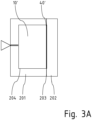
- FIG. 3A and 3B Another method for producing a multi-component composite component is in the Figures 3A and 3B shown.
- an injection molding tool is provided which has a tool half 201 with a first mold cavity and a second tool half which covers the mold cavity.
- a film blank is arranged in the parting plane between the tool halves 201, 202, which forms the adhesive intermediate layer 30. This is first molded on from the left in order to form a plastic body 10 'made of a hard thermoplastic, as in Figure 3A shown.
- the adhesion intermediate layer 30 adjacent to it is prevented from being melted.
- the plastic bodies 10', 20' are thus cohesively connected to one another via the film which is back-injected on both sides, so that a multi-component composite component 100' is formed from three components, see Figure 3C .
Landscapes
- Engineering & Computer Science (AREA)
- Mechanical Engineering (AREA)
- Manufacturing & Machinery (AREA)
- Physics & Mathematics (AREA)
- Thermal Sciences (AREA)
- Health & Medical Sciences (AREA)
- Oral & Maxillofacial Surgery (AREA)
- Chemical & Material Sciences (AREA)
- Organic Chemistry (AREA)
- Environmental & Geological Engineering (AREA)
- Injection Moulding Of Plastics Or The Like (AREA)
- Laminated Bodies (AREA)
Description
- Die Erfindung betrifft ein Verfahren zur Herstellung eines Mehrkomponenten-Verbundbauteils, mit den Merkmalen des Oberbegriffs des Anspruchs 1.
- Dem Recycling von Kunststoffen kommt angesichts des hohen weltweiten Verbrauchs an solchen Werkstoffen eine wesentliche Bedeutung zu. Neben dem Recycling von Verpackungen ist auch das Recycling von technischen Bauteilen Gegenstand aktueller Forschungsarbeiten. Der Trend, Bauteile im Multi-Materialverbund für eine erhöhte Funktionsintegration herzustellen, geht konträr mit der Forderung nach sortenreinen Stoffströmen für das Recycling. Die stoffschlüssige Kombination mehrerer Kunststoffsorten wird im Spritzgießverfahren u.a. durch das Overmolding-Verfahren und in der Extrusion durch die Mehrschichtextrusion realisiert. Sie spiegelt sich zudem im Pressverfahren zur Kombination von plattenförmigen Halbzeugen wider.
- Bei einem thermoplastischen Träger und einer überspritzten, dünnen Schicht aus einem thermoplastischen Elastomer (TPE) beispielsweise wird die Materialkombination aus dem thermoplastischen Kunststoff und dem TPE derart ausgewählt, dass eine möglichst gute Haftung erzielt wird. Problematisch ist hierbei, dass am Ende des Produktlebenszyklus eine Auftrennung dieses Verbunds im Zuge des Recyclings nicht möglich ist. Das Bauteil wird daher entweder der thermischen Verwertung (Verbrennen) zugeführt oder wird zerkleinert in Anwendungen mit niedriger Materialanforderung gebracht. Der Markt für letztere Anwendungen ist allerdings bereits durch die Vielzahl der Verpackungsrückläufer weitestgehend besetzt.
- Der Nachteil am aktuellen Stand der Technik liegt somit in der Entwertung thermoplastischer Kunststoffe aufgrund fehlender Trennmöglichkeiten, insbesondere für überspritzte Bauteile.
- Ein Auftrennen mittels Lösungsmittel ist teuer und aufgrund der chemischen Struktur in vielen Fällen nicht möglich.
- Eine weitere Anwendung zielt auf den Bereich der Rohrextrusion ab. Unterirdisch verlegte Gasrohre bestehen hauptsächlich aus dem Werkstoff PE, der kostengünstig und für den Zweck des Gastransports geeignet ist. Allerdings kann das darin transportierte Gas in geringen, aber nicht zu vernachlässigenden Mengen durch die Rohrwand diffundieren, und so zu einer Umweltbelastung führen. Es gibt Ansätze, die Rohre mit einer zweiten Schicht zu versehen, die eine höhere Gasdichtigkeit aufweist. Polyamid (PA) ist ein Material, welches für die Funktion geeignet ist, sich jedoch als inkompatibel zu dem PE erweist.
- In der
US 2005 0005 890 A1 wird ein Verfahren zur Produktion eines Ansaugkrümmers beschrieben, bei dem die Teile aus verschiedenen Materialien platziert und anschließend miteinander verklebt werden. Es werden verschiedene Möglichkeiten der Verklebung beschrieben, u.a. durch ein Hotmelt. wobei das beschriebene Verfahren eine chemische Verbindung zwischen den Materialien impliziert. Angegeben ist, dass die Teile zu Recyclingzwecken wieder voneinander getrennt werden können, wie dies erfolgen kann, ist allerdings nicht beschrieben. - Die
US 8 905 861 B1 betrifft das Recycling eines Golfballs. Um die Außenhülle vom Kern trennen zu können ist eine Zwischenschicht vorgesehen, die bei Anregung von außen derart reagiert, dass die Außenhülle vom Kern getrennt werden kann. Als Beispiele sind dort u.a. hydrophile Materialien genannt, die beim Einführen eines Fluids expandieren, zwei Materialien, die chemisch reagieren oder ein Formgedächtniselement, das unter Temperatureinfluss eine Formänderung erfährt. Dies ist allerdings nicht mit dem Schmelzen einer Zwischenschicht vergleichbar. -
US 20120061344 beschreibt ein Overmolding-Verfahren zur Herstellung eines Behälters, insbesondere einer Flasche. Der Behälter kann aus mehreren Schichten bestehen, die als Gasbarriere fungieren können. Angegeben ist auch ein RecyclingVerfahren, bei dem die Schicht, die per Overmolding-Verfahren aufgebacht wurde, wieder entfernt wird. Details zur Art und Weise des Entfernens und Auftrennens sind nicht offenbart. - Die
WO 1999 058328 A1 beschreibt ein Material aus mehreren Schichten, die derart verbunden sind, dass während des Gebrauchs die genannten Schichten verbunden bleiben bzw. sogar eine verbesserte Verbindung haben, dann aber für das Recycling wieder voneinander getrennt werden können. Die Schichten können dabei durch gängige Verfahren wie Extrusion, Blasformen, Spritzgießen u.a. hergestellt werden. Auch für das Herstellen von mehrschichtigen Teilen sind eine Reihe von Verfahren bekannt, hier wird u.a. auch auf das Overmolding hingewiesen. Die Verbindungsschicht besteht hier aus wasserlöslichen Polymeren, die unter Recycling-Konditionen instabil werden. - In
US 6 048 599 A ist die Verwendung von Polyethylen (PE), insbesondere LDPE, und von Polypropylen (PP) angegeben, wobei thermoplastische Elastomere nicht verwendet werden. Die Zwischenschicht unterscheidet sich von den anderen Schichten vor allem durch die ferromagnetischen Partikel. Nur im Falle einer Verbindung von PE mit PP ist Ethylenvinylacetat (EVA) als ein nicht-polyolefinischer Kunststoff zur Ausbildung einer Zwischenschicht angegeben. Die Herstellung der Verbindung zwischen den Fügepartnern, nicht nur die spätere Trennung beim Recycling, soll durch Aktivierung der Zwischenschicht erreicht werden. - Das in
DE 2839640 C2 offenbarte Verfahren geht ebenfalls vom Schmelzverbinden von zwei Hartkomponenten aus, das heißt, die Zwischenschicht wird für die Herstellung der Verbindung aktiviert und erwärmt. Damit scheiden normale Kunststoffverarbeitungsverfahren wie Extrusion oder Spritzguss aus. Die Herstellung einer Verbindung einer Hart- und einer Weichkomponente aus einem TPE mit der Option, diese Verbindung später wieder lösen zu können, ist nicht offenbart. - Die Aufgabe der Erfindung besteht somit darin, die Herstellung von Mehrkomponenten-Verbundbauteilen aus unterschiedlichen thermoplastischen Kunststoffen zu ermöglichen und deren Recyclingfähigkeit zu verbessern oder erst zu schaffen.
- Diese Aufgabe wird durch ein Verfahren mit den Merkmalen des Anspruchs 1 gelöst.
- Die Lösung besteht in der Aufbringung einer thermoplastischen Zwischenschicht zwischen zwei Kunststoffkomponenten, die gewährleistet, dass in einem Recyclingprozess eine spätere bewusste Anregung dieser Zwischenschicht auf physikalischer Basis zwecks Erweichung und/oder Aufschmelzung und darüber eine Trennung der Kunststoffkomponenten erreicht werden kann.
- Die beiden miteinander zu verbindenden Kunststoffkomponenten können verschieden oder identisch sein. Wesentlich ist nur, dass die Zwischenschicht sich von beiden Kunststoffkomponenten so weit unterscheidet, dass sie erwärmbar ist, ohne die Kunststoffkomponenten - außer in Bereichen unmittelbar an den Kontaktflächen - mit zu erweichen oder aufzuschmelzen.
- Durch eine physikalische Einwirkung von außen wird die Zwischenschicht erweicht bzw. flüssig, und die Verbundpartner lassen sich voneinander lösen.
- Neben Polypropylen als erstem thermoplastischen Kunststoff für eine Hartkomponente kann auch PC/ABS ein typisches Material für den Träger eines TPE-Materials, insbesondere TPU, als zweitem thermoplastischem Kunststoff für eine Weichkomponente fungieren. Hier muss eine Zwischenschicht eingesetzt werden, die aus dem gleichen Materialstamm besteht und über induktionsaffine Füllstoffe verfügt, um die gute Wärmeformbeständigkeit, die der Materialverbund mit sich bringt, nicht zu schwächen. Der gleiche Materialstamm führt am Ende zu einer höheren Sortenreinheit.
- Die Zwischenschicht wird durch einen dritten thermoplastischen Kunststoff in Form eines mit Maleinsäureanhydrid gepfropftes Polyethylen-n-butylacrylat (EBA) realisiert, der zum einen die Haftung der Verbundpartner im Gebrauch und zum anderen eine Verbundtrennung durch thermische Einwirkung gewährleistet.
- Ein Beispiel für Materialverbunde, in denen die Zwischenschicht eingesetzt werden kann, ist zum Beispiel ein Verbund aus einem Polypropylen (PP) und einem TPU. Die Verbindung aus diesen Materialien weist ohne Vorbehandlung keine Haftung auf.
- Die physikalische Einwirkung kann im einfachsten Fall ein Durchwärmen des gesamten Verbunds sein. Die thermischen Eigenschaften müssen dabei auf die Verbundpartner abgestimmt werden, um ein gleichzeitiges Aufschmelzen der Verbundpartner zu vermeiden.
- Eine weitere Variante des physikalischen Einwirkens besteht in der Einbringung von induktionsaffinen Additiven (z.B. Partikel von Ferriten), die über Induktion von außen aktiviert werden und zur Erwärmung und damit zum Aufschmelzen der Zwischenschicht führen. Möglich ist auch, wenigstens eine der Komponenten transparent auszubilden und Infrarotstrahlung absorbierende Partikel in der Zwischenschicht vorzusehen.
- Besser ist jedoch, wenn der dritte thermoplastische Kunststoff der Adhäsions-Zwischenschicht eine niedrigere Schmelztemperatur hat als die Kunststoffe, aus denen die zu verbindenden Teile gebildet sind, weil dadurch beim späteren Recycling auch direkt an den Fügeflächen eine eindeutige stoffliche Trennung möglich ist.
- Durch die einfache und sortenreine Trennmöglichkeit können die bei dem Verbundbauteil eingesetzten thermoplastischen Kunststoffe sortenrein erneut verwendet und wieder zu hochwertigen Produkten verarbeitet werden. Die Folge ist, dass der eingesetzte Kunststoff deutlich länger im Umlauf ist, was eine Schonung der Ressourcen und ein nachhaltiger Umgang mit dem Kunststoff bedeutet.
- Die Zwischenschicht kann aus einem Hotmelt bestehen, der eine ausreichende Haftung zu den beiden Verbundpartnern und im Gebrauchstemperaturbereich die notwendige Kohäsionsfestigkeit aufweist.
- Die Umsetzung des Verfahrens als Mehrkomponentenspritzgießen sieht entweder das Einspritzen der Zwischenschicht als weitere Komponente oder ein Aufsprühen des Hotmelts/der Flüssigkeit nach Einspritzen der ersten Komponente vor, auf das dann die zweite Komponente gespritzt wird. Ein Erstarren bzw. Abdunsten des Hotmelts/der Flüssigkeit vor dem Einspritzen der zweiten Komponente verhindert ein Abtrag der Schicht durch den Einspritzvorgang. Bei dem Recyclingvorgang können durch Aufschmelzen der Zwischenschicht die beiden Komponenten voneinander getrennt werden.
- Für extrudierte Verbundbauteile ist ein Mehrschichtextrusionsverfahren vorgesehen, bei dem eine Coextrusion des Hotmelts zwischen den Kunststoffschichten vorgesehen ist. Im Falle eines Mehrschichtrohres lassen sich bei dem Recyclingvorgang die Schichten durch die schmelzeförmige Zwischenschicht gegeneinander verschieben und das Innenrohr kann aus dem Außenrohr gedrückt werden. Alternativ kann auch nach einer Vorzerkleinerung des Mehrschichtrohres eine Trennung über Aktivierung der Zwischenschicht und gleichzeitiger Prallbeanspruchung oder Rüttelbewegung beispielsweise in umgebauten, herkömmlichen Rüttlern für Schüttgüter, erfolgen.
- Bei einem Rohr kann die Zwischenschicht nicht nur der Recyclingfähigkeit dienen, sondern auch eine Haftung zwischen den Schichten herstellen, das heißt, als sogenannter Coupling Agent dienen, und kann gleichzeitig als Recycling-Schicht fungieren, indem sie durch äußere Aktivierung während des Trennens erwärmt wird.
- Eine weitere Ausbildung des erfindungsgemäßen Verfahrens sieht einen Pressvorgang vor, bei dem ein Hotmelt oder ein Folienabschnitt als Zwischenschicht zwischen plattenförmigen Halbzeugen aufgebracht wird. Bei dem späteren Recyclingvorgang können durch Aufschmelzen der Zwischenschicht die einzelnen Platten voneinander getrennt werden.
- Die Zwischenschicht wird durch ein thermoplastisches Kunststoffmaterial gebildet, das aus einem oder mehreren Homo- oder Copolymeren, die im Fall mehrerer Homo- oder Copolymere ein Schichtverbund oder ein Polymerblend darstellt, und aus keinem, einem oder mehreren Additiven bzw. Füllstoffen zur Einstellung der Viskosität, der Schmelztemperatur, der Haftung zu den Verbundpartnern, der Leitfähigkeit und der Anregung durch Induktionsspulen besteht.
- Die Zwischenschicht wird je nach Verarbeitungsart unterschiedlich eingestellt:
- Für das Spritzgießen wird entweder im 3K-Spritzgießprozess die Zwischenschicht als Spritzgieß-Kunststofftype eingestellt.
- Für das Aufsprühen wird die Viskosität des Materials reduziert, damit ein Aufsprühen möglich ist.
- Für das Extrusionsverfahren wird eine höhere Viskosität verlangt.
- Für den Einsatz in Pressen ist ein Sprüh-, oder Rakelauftrag notwendig oder es wird eine vorextrudierte Folie als Zwischenschicht verwendet.
- Für den Gebrauch des Bauteils muss die Zwischenschicht eine ausreichend große Haftung zu den Verbundpartnern aufweisen. Zudem ist eine ausreichend hohe Kohäsionsfestigkeit notwendig. Letzteres kann zum Beispiel durch Faserverstärkung erreicht werden oder durch Verwendung von höherfesten Polymeren.
- Für die Trennung des Verbunds muss die Zwischenschicht eine geringere Schmelztemperatur als die Verbundpartner aufweisen. Diese darf auch nicht zu niedrig sein, damit eine Erweichung des Verbunds im Gebrauch nicht zum Versagen des Bauteils führt. Wenn induktionsaffine Additive eingesetzt werden, muss die Schmelztemperatur nicht derart niedrig gewählt werden, da ein lokales Aufschmelzen der Zwischenschicht die Verbundpartner nicht direkt zum Aufschmelzen bringt.
- Die Erfindung wird nachfolgend mit Bezug auf die Zeichnungen näher erläutert. Die Figuren zeigen im Einzelnen:
- Fig. 1
- ein Mehrkomponenten-Verbundbauteil in schematischer Schnittansicht;
- Fig. 2
- ein Zwischenschritt bei der Herstellung des Verbundbauteils nach einer ersten Ausführungsform des Verfahrens;
- Fig. 3A-3C
- die Herstellung eines Verbundbauteils nach einer zweiten Ausführungsform des Verfahrens;
- In
Figur 1 ist ein nach der Erfindung hergestelltes Mehrkomponenten-Verbundbauteil 100 dargestellt. Es umfasst einen Kunststoffkörper 10 aus einem harten thermoplastischen Kunststoff, der im Bereich seiner Oberseite teilweise mit einem zweiten Kunststoffkörper 20 aus einem thermoplastischen Elastomer überdeckt ist. Die Kontaktzone zwischen den Kunststoffkörpern 10, 20 wird durch eine thermoplastische Adhäsionszwischenschicht 30 gebildet. Die Adhäsionszwischenschicht 30 wirkt wie eine Klebschicht und stellt eine stoffschlüssige Verbindung der Kunststoffkörper 10, 20 her. Das Mehrkomponenten-Verbundbauteil 100 kann insbesondere in einem Mehrfach-Spritzgießverfahren hergestellt werden, wobei in einem ersten Verfahrensschritt der Kunststoffkörper 10 aus der Hartkomponente hergestellt wird. In dem Bereich, der als Kontaktzone zu dem später herzustellenden Kunststoffkörper 20 vorgesehen ist, weist der Kunststoffkörper 10 eine Vertiefung auf, welche die Zwischenschicht 30 aufnehmen kann. Der Zwischenschritt nach Aufbringung der Zwischenschicht 30 ist inFigur 2 gezeigt. - Für die insgesamt drei Komponenten werden in dem Ausführungsbeispiel folgende Werkstoffe verwendet:
Anteil Kunststoff Vicat-Erweichungstemperatur A50 Schmelztemperatur Ts Kunststoffkörper 10 (Hartkomponente) TK1: Polypropylen (PP) 154 °C 165 °C Zwischenschicht 30 TK3: chemisch modifiziertes, mit Maleinsäureanhydrid gepfropftes EBA (Polyethylen-n-butylacrylat) 70 °C 97 °C Kunststoffkörper 20 (Weichkomponente) TTK2. PU 76 °C 117 °C - Zwischen der Zwischenschicht 30 und den darüber verbundenen Kunststoffkörpern 10, 20 besteht bei der Erweichungstemperatur eine Temperaturdifferenz von 6 °C bzw. 84 °C und bei der Schmelztemperatur eine Temperaturdifferenz von mehr als 20 °C. Daher kann die Zwischenschicht 30 in einem späteren Recyclingprozess gut erwärmt werden, um den Verbund aufzulösen, während der Wärmeeintrag in die Kunststoffkörper 10, 20 gering ist und deren Erweichungs- bzw. Schmelztemperatur nicht oder allenfalls in Randzonen, die in Kontakt zur Zwischenschicht 30 sind, erreicht wird.
- Ein anderes Verfahren zur Herstellung eines Mehrkomponenten-Verbundbauteils ist in den
Figuren 3A und3B dargestellt. Dafür wird ein Spritzgießwerkzeug bereitgestellt, das eine Werkzeughälfte 201 mit einer ersten Formkavität besitzt und eine zweite Werkzeughälfte, die die Formkavität abdeckt. In der Trennebene zwischen den Werkzeughälften 201, 202 wird ein Folienzuschnitt angeordnet, welcher die Adhäsions-Zwischenschicht 30 ausbildet. Diese wird zunächst von links angespritzt, um einen Kunststoffkörper 10' aus einem harten thermoplastischen Kunststoff zu bilden, wie inFigur 3A dargestellt. Durch Kühlung der Werkzeughälfte 202 wird verhindert, dass die an dieser anliegende Adhäsions-Zwischenschicht 30 aufgeschmolzen wird. Anschließend wird an der anderen Seite der Adhäsions-Zwischenschicht 30 eine andere Werkzeughälfte 205 mit einer weiteren Formkavität 206 platziert, so dass die Adhäsions-Zwischenschicht 30 von deren anderen Seite mit einer Weichkomponenten hinterspritzt werden kann, um einen zweiten Kunststoffkörper 20' auszubilden Der Kontakt mit der heißen Schmelze während des Einspritzens und der damit verbundene Schereintrag ist nur sehr kurz, sodass die Folie nicht verschoben wird. Ein leichtes Anschmelzen während der Nachdruck- und Kühlphase ist nicht nachteilig. Die Folie kühlt mit der Abkühlung der Kunststoffkörper im Werkzeug auch selbst ab. - Die Kunststoffkörper 10', 20' sind somit über die beidseitig hinterspritzte Folie stoffschlüssig miteinander verbunden, so dass ein Mehrkomponenten-Verbundbauteil 100' aus drei Komponenten gebildet ist, siehe
Figur 3C .
Claims (15)
- Verfahren zur Herstellung eines Mehrkomponenten-Verbundbauteils, (100; 100') mit wenigstens zwei stoffschlüssig miteinander verbundenen Kunststoffkörpern (10, 20; 10', 20'), welche jeweils aus unterschiedlichen thermoplastischen Kunststoffen TK1, TK2 bestehen, von denen einer eine Hartkomponente des Verbundbauteils bildet und der andere eine Weichkomponente des Verbundbauteils,
wobei- ein erster Kunststoffkörper (10; 10') hergestellt wird, der aus einem ersten thermoplastischen Kunststoff TK1 besteht, und ein zweiter Kunststoffkörper (20; 20'), der aus einem zweiten, von dem ersten Kunststoff unterschiedlichen thermoplastischen Kunststoff TK2 besteht und der stoffschlüssig mit dem ersten Kunststoffkörper (10; 10') verbunden ist,- zwischen den Kunststoffkörpern (10, 10'; 20, 20') eine thermoplastische Adhäsions-Zwischenschicht (30; 30') eingefügt wird, über welche der erste und der zweite Kunststoffkörper (10, 20; 10', 20') stoffschlüssig miteinander verbunden werden und- die Adhäsions-Zwischenschicht (30; 30') aus einem dritten thermoplastischen Kunststoff TK3 gebildet ist, der bei einer Temperatur erweichbar oder aufschmelzbar ist, bei welcher bei den beiden Kunststoffkörpern (10, 20; 10', 20') die jeweilige Erweichungstemperatur oder Schmelztemperatur nicht erreicht wird,dadurch gekennzeichnet,- dass der erste thermoplastische Kunststoff TK1 für die Hartkomponente Polypropylen (PP) oder ein Polycarbonat-Acrylnitrilbutadienstyrol-Blend (PC/ABS) ist,- dass der zweite thermoplastische Kunststoff TK2 für eine Weichkomponente ein thermoplastisches Elastomer (TPE) ist und- dass der dritte thermoplastische Kunststoff TK3 ein mit Maleinsäureanhydrid gepfropftes Polyethylen-n-butylacrylat (EBA) ist - Verfahren nach Anspruch 1, dadurch gekennzeichnet, dass die Adhäsions-Zwischenschicht (30; 30') aus einem dritten thermoplastischen Kunststoff TK3 gebildet ist, dessen Erweichungstemperatur TE3 kleiner als die Schmelztemperatur TS1 , TS2 der beiden Kunststoffkörper (10, 20; 10', 20') ist.
- Verfahren nach Anspruch 2, dadurch gekennzeichnet, dass die Schmelztemperatur TS3 der Adhäsions-Zwischenschicht (30; 30') kleiner als die Schmelztemperatur TS1 , TS2 der beiden Kunststoffkörper (10, 20; 10', 20') ist.
- Verfahren nach einem der Ansprüche 1 bis 3, dadurch gekennzeichnet, dass die Adhäsions-Zwischenschicht (30; 30') eine aus dem dritten thermoplastischen Kunststoff TK3 gebildete thermoplastische Matrix und darin eingebettete Partikel zur Absorption einer von außen auf das Verbundbauteil (100; 100') wirkenden elektromagnetischen Strahlung umfasst.
- Verfahren nach Anspruch 4, dadurch gekennzeichnet, dass die Adhäsions-Zwischenschicht (30; 30') eine aus dem dritten thermoplastischen Kunststoff TK3 gebildete thermoplastische Matrix und darin eingebettete magnetisch suszeptible Partikel umfasst.
- Verfahren nach Anspruch 4 oder 5, dadurch gekennzeichnet,- dass der erste und/oder der zweite Kunststoffkörper (10; 10') aus einem für Infrarotstrahlung durchlässigen Kunststoff ausgebildet sind und- dass die Adhäsions-Zwischenschicht (30; 30') aus einem Infrarotstrahlung absorbierenden Kunststoff gebildet ist.
- Verfahren nach einem der vorhergehenden Ansprüche, dadurch gekennzeichnet, dass der zweite thermoplastische Kunststoff TK2 ein thermoplastisches Polyurethan (TPU) ist.
- Verfahren nach einem der vorhergehenden Ansprüche, gekennzeichnet durch folgende Schritte:- Herstellen des ersten Kunststoffkörpers (10) mit wenigstens einer Fügefläche (11) durch Spritzgießen des ersten thermoplastischen Kunststoffs TK1;- Aufbringen der Adhäsions-Zwischenschicht (30; 30') auf die Fügefläche;- Herstellen des zweiten Kunststoffkörpers (20) mit wenigstens einer Fügefläche (21), die sich an die mit der Adhäsions-Zwischenschicht (30; 30') bedeckte Fügefläche des ersten Kunststoffkörpers (10) anlegt, durch Spritzgießen des zweiten thermoplastischen Kunststoffs TK2.
- Verfahren nach Anspruch 8, dadurch gekennzeichnet, dass die Adhäsions-Zwischenschicht (30; 30') als Hotmelt auf die Fügefläche aufgesprüht wird.
- Verfahren nach Anspruch 8, dadurch gekennzeichnet, dass die Adhäsions-Zwischenschicht (30; 30') durch Spritzgießen auf die Fügefläche aufgespritzt wird.
- Verfahren nach Anspruch 8, dadurch gekennzeichnet, dass die Adhäsions-Zwischenschicht (30') als Folienabschnitt (40') ausgebildet ist, der auf der einen Seite mit dem ersten thermoplastischen Kunststoffs TK1 zur Ausbildung des ersten Kunststoffkörpers (10') hinterspritzt wird und auf der anderen Seite mit dem zweiten thermoplastischen Kunststoff TK2 zur Ausbildung des zweiten Kunststoffkörpers (20') hinterspritzt wird.
- Verfahren nach Anspruch 8, gekennzeichnet durch folgende Schritte:- Herstellen des ersten Kunststoffkörpers mit wenigstens einer Fügefläche durch Spritzgießen des ersten thermoplastischen Kunststoffs TK1;- Herstellen des zweiten Kunststoffkörpers mit wenigstens einer Fügefläche durch Spritzgießen des zweiten thermoplastischen Kunststoffs TK2;- Einfügen einer aus dem dritten thermoplastischen Kunststoff TK3 gebildeten Folie zwischen den Fügeflächen;- Verpressen des ersten Kunststoffkörpers und des zweiten Kunststoffkörpers mitsamt der zur Ausbildung der Adhäsions-Zwischenschicht eingefügten Folie.
- Verfahren nach einem der Ansprüche 1 bis 7, gekennzeichnet durch folgende Schritte:- Herstellen des ersten Kunststoffkörpers als Folie oder Tafel mit wenigstens einer Fügefläche durch Extrusion des ersten thermoplastischen Kunststoffs TK1 oder Pressen eines Halbzeugs;- Herstellen des zweiten Kunststoffkörpers als Folie oder Tafel mit wenigstens einer Fügefläche durch Extrusion des zweiten thermoplastischen Kunststoffs TK2 oder Pressen eines Halbzeugs;- Einfügen einer aus dem dritten thermoplastischen Kunststoff TK3 gebildeten Folie zwischen den Fügeflächen;- Verpressen des ersten Kunststoffkörpers und des zweiten Kunststoffkörpers mitsamt der zur Ausbildung der Adhäsions-Zwischenschicht eingefügten Folie.
- Verfahren nach einem der Ansprüche 1 bis 7, gekennzeichnet durch folgende Schritte:- Bereitstellen einer Folie oder Tafel aus dem ersten thermoplastischen Kunststoff TK1;- Auflegen einer aus dem dritten thermoplastischen Kunststoff TK3 gebildeten Folie;- Auflegen einer Folie oder Tafel aus dem zweiten thermoplastischen Kunststoff TK2;- Verpressen des Verbundes der Folien und/oder Tafeln zur Ausbildung des mehrschichtigen Verbundbauteils.
- Verfahren nach einem der vorhergehenden Ansprüche 1 bis 7, gekennzeichnet durch folgende Schritte:- Bereitstellen einer Schmelze aus dem ersten thermoplastischen Kunststoff TK1 mittels eines Extruders und Zuführung zu einem Extrusionsdüsenwerkzeug;- Bereitstellen einer Schmelze aus dem zweiten thermoplastischen Kunststoff TK2 mittels eines Extruders und Zuführung zu einem Extrusionsdüsenwerkzeug;- Bereitstellen einer Schmelze aus dem dritten thermoplastischen Kunststoff TK3 mittels eines Extruders und Zuführung zu einem Extrusionsdüsenwerkzeug;- Ausformen eines Profilstrangs, wobei wenigstens ein erster Profilbereich aus dem ersten Kunststoff TK1 gebildet ist und wenigstens ein zweiter Profilbereich aus dem zweiten Kunststoff TK2 gebildet ist, wobei die Profilbereiche durch wenigstens eine Adhäsions-Zwischenschickt aus dem dritten Kunststoff TK3 miteinander verbunden sind.- Kühlen und/oder Kalibrieren des Profilstrangs;- Ablängen des Profilstrangs zum Erhalt des Mehrkomponenten-Verbundbauteils.
Applications Claiming Priority (1)
| Application Number | Priority Date | Filing Date | Title |
|---|---|---|---|
| DE102020119413.7A DE102020119413A1 (de) | 2020-07-22 | 2020-07-22 | Verfahren zur Herstellung eines Mehrkomponenten-Verbundbauteils |
Publications (3)
| Publication Number | Publication Date |
|---|---|
| EP3943270A1 EP3943270A1 (de) | 2022-01-26 |
| EP3943270B1 true EP3943270B1 (de) | 2023-11-29 |
| EP3943270C0 EP3943270C0 (de) | 2023-11-29 |
Family
ID=77274653
Family Applications (1)
| Application Number | Title | Priority Date | Filing Date |
|---|---|---|---|
| EP21186539.9A Active EP3943270B1 (de) | 2020-07-22 | 2021-07-20 | Verfahren zur herstellung eines mehrkomponenten-verbundbauteils |
Country Status (2)
| Country | Link |
|---|---|
| EP (1) | EP3943270B1 (de) |
| DE (1) | DE102020119413A1 (de) |
Families Citing this family (6)
| Publication number | Priority date | Publication date | Assignee | Title |
|---|---|---|---|---|
| EP4568822A2 (de) * | 2022-08-11 | 2025-06-18 | Avient Corporation | Übergossene thermoplastische artikel aus hochreinen wiederhergestellten thermoplastischen elastomermaterialien |
| DE102022121489A1 (de) | 2022-08-25 | 2024-03-07 | Krones Aktiengesellschaft | Verfahren zum Herstellen eines Fasern umfassenden Behälters und Vorrichtung zum Ausführen des Verfahrens |
| WO2025082842A1 (de) * | 2023-10-17 | 2025-04-24 | Covestro Deutschland Ag | Verfahren zur herstellung eines verbundbauteils umfassend den schritt des kontaktlosen aufbringens eines flüssigen beschichtungsmittels |
| CN117301422B (zh) * | 2023-11-28 | 2024-03-08 | 广州市勇源运动用品科技有限公司 | 一体成型式冰球鞋生产工艺 |
| DE102024110725A1 (de) | 2024-04-17 | 2025-10-23 | Universität Paderborn, Körperschaft des öffentlichen Rechts | Extrusionsvorrichtung zum Trennen eines Kunststoffverbunds mit unterschiedlich aufschmelzenden thermoplastischen Kunststoffen und Verfahren dafür |
| DE102024123734A1 (de) | 2024-08-20 | 2026-02-26 | Schaeffler Technologies AG & Co. KG | Kunststoffbauteil und Verfahren zu dessen Herstellung |
Family Cites Families (7)
| Publication number | Priority date | Publication date | Assignee | Title |
|---|---|---|---|---|
| AU3951678A (en) | 1977-09-13 | 1980-03-13 | Heller, William C. Jr. | Fusion bonding non-elastomeric thermoplastic elements |
| US6048599A (en) * | 1997-01-17 | 2000-04-11 | 3M Innovative Properties Company | Susceptor composite material patterned in neat polymer |
| AU4071799A (en) | 1998-05-11 | 1999-11-29 | Eastman Chemical Company | Multilayer polymer compositions displaying imroved recyclability |
| US7360519B2 (en) | 2003-07-10 | 2008-04-22 | Dow Global Technologies, Inc. | Engine intake manifold assembly |
| ATE424288T1 (de) | 2004-04-16 | 2009-03-15 | Advanced Plastics Technologies | Vorformling und verfahren zur herstellung der vorformling und eine flasche |
| US8905861B2 (en) | 2012-02-27 | 2014-12-09 | Nike, Inc. | Ball incorporating element to remove cover |
| US10099458B2 (en) * | 2015-03-23 | 2018-10-16 | Board Of Trustees Of Michigan State University | Reversible adhesive compositions and related methods |
-
2020
- 2020-07-22 DE DE102020119413.7A patent/DE102020119413A1/de not_active Withdrawn
-
2021
- 2021-07-20 EP EP21186539.9A patent/EP3943270B1/de active Active
Also Published As
| Publication number | Publication date |
|---|---|
| DE102020119413A1 (de) | 2022-01-27 |
| EP3943270C0 (de) | 2023-11-29 |
| EP3943270A1 (de) | 2022-01-26 |
Similar Documents
| Publication | Publication Date | Title |
|---|---|---|
| EP3943270A1 (de) | Verfahren zur herstellung eines mehrkomponenten-verbundbauteils | |
| DE69131459T2 (de) | Verfahren zur Herstellung eines mehrschichtigen Formkörpers | |
| DE4336878C2 (de) | Verfahren zum Herstellen eines Kunstharzbauteils | |
| DE102010019625B4 (de) | Verfahren zur Herstellung einer Verbund- oder Hybridkonstruktion | |
| DE10331657B4 (de) | Verfahren zur Herstellung eines Formteiles aus geschäumtem Kunststoff und Formteil aus geschäumtem Kunststoff | |
| WO2013017278A1 (de) | Verfahren zur herstellung eines dreidimensionalen gegenstandes aus verfestigbarem material sowie damit hergestellter gegenstand | |
| EP1938944B1 (de) | Verfahren zur Herstellung eines mehrschichtigen Kunststoffkörpers | |
| DE19754180A1 (de) | Verfahren zum Herstellen eines Stückes mit einer Erscheinungsoberfläche, welche eine Schaumschicht aus Kunststoffmaterial bedeckt und eine Spritzgießform zum Herstellen dieses Stückes | |
| DE69521112T2 (de) | Verfahren zum Dekorieren von extrudierten Gummikörpern | |
| DE4406039C1 (de) | Formkörper aus Verbundmaterial und Verfahren zur Herstellung eines solchen Verbundmaterials | |
| EP0923442B1 (de) | Verfahren zur herstellung von verbundkörpern aus kunststoff | |
| EP2416945A2 (de) | Verfahren zur herstellung eines hochsteifen, hybriden endlosprofils sowie hochsteifes, hybrides endlosprofil | |
| DE102017122584B4 (de) | Formwerkzeug für eine Formgebungsmaschine, Formgebungsmaschine und Verfahren zum Herstellen eines Formgebungsteils | |
| DE202020103525U1 (de) | Dekorteil | |
| DE102014011135A1 (de) | Verfahren und Vorrichtung zur Herstellung eines Dekorteils | |
| DE102004060009B4 (de) | Verfahren zur Herstellung eines Schichtkörpers | |
| DE69407815T2 (de) | Verfahren zum formen und mit diesem verfahren hergestelltes formteil | |
| DE4443145C1 (de) | Verfahren und Vorrichtung zur Beschichtung warm verformter thermoplastischer Bauteile mit thermoplastischen Oberflächenmaterialien | |
| DE102007009384B4 (de) | Verfahren zum Hinterspritzen einer Folie | |
| EP0253909B1 (de) | Verfahren und Vorrichtung zur Herstellung von Formpressteilen | |
| DE102004009244A1 (de) | Kunststoffformteil mit einer Dekorschicht | |
| DE2649526A1 (de) | Verfahren zum herstellen eines hauptsaechlich aus thermoplastischem material bestehendem mehrschichtigen behaelters und form zur ausfuehrung des verfahrens | |
| EP4140691B1 (de) | Behälter bestehend aus einem steifen aussenbehälter und einem verformbaren innenbeutel sowie verfahren zur herstellung eines derartigen behälters | |
| WO2000034023A1 (de) | Verfahren zur herstellung von mehrstoffigen vorformlingen sowie danach hergestellter vorformling | |
| DE102011108942B4 (de) | Verfahren zur Herstellung eines Bauteils aus einem ersten und einem zweiten Material |
Legal Events
| Date | Code | Title | Description |
|---|---|---|---|
| PUAI | Public reference made under article 153(3) epc to a published international application that has entered the european phase |
Free format text: ORIGINAL CODE: 0009012 |
|
| STAA | Information on the status of an ep patent application or granted ep patent |
Free format text: STATUS: THE APPLICATION HAS BEEN PUBLISHED |
|
| AK | Designated contracting states |
Kind code of ref document: A1 Designated state(s): AL AT BE BG CH CY CZ DE DK EE ES FI FR GB GR HR HU IE IS IT LI LT LU LV MC MK MT NL NO PL PT RO RS SE SI SK SM TR |
|
| STAA | Information on the status of an ep patent application or granted ep patent |
Free format text: STATUS: REQUEST FOR EXAMINATION WAS MADE |
|
| 17P | Request for examination filed |
Effective date: 20220725 |
|
| RBV | Designated contracting states (corrected) |
Designated state(s): AL AT BE BG CH CY CZ DE DK EE ES FI FR GB GR HR HU IE IS IT LI LT LU LV MC MK MT NL NO PL PT RO RS SE SI SK SM TR |
|
| GRAP | Despatch of communication of intention to grant a patent |
Free format text: ORIGINAL CODE: EPIDOSNIGR1 |
|
| STAA | Information on the status of an ep patent application or granted ep patent |
Free format text: STATUS: GRANT OF PATENT IS INTENDED |
|
| RIC1 | Information provided on ipc code assigned before grant |
Ipc: B29C 48/00 20190101ALN20230606BHEP Ipc: B29C 35/08 20060101ALN20230606BHEP Ipc: B29K 77/00 20060101ALN20230606BHEP Ipc: B29K 75/00 20060101ALN20230606BHEP Ipc: B29K 23/00 20060101ALN20230606BHEP Ipc: B29B 17/02 20060101ALN20230606BHEP Ipc: B29C 43/18 20060101ALN20230606BHEP Ipc: B29C 35/02 20060101ALN20230606BHEP Ipc: B29C 48/49 20190101ALI20230606BHEP Ipc: B29C 48/21 20190101ALI20230606BHEP Ipc: B29C 48/08 20190101ALI20230606BHEP Ipc: C09J 5/06 20060101ALI20230606BHEP Ipc: B32B 27/34 20060101ALI20230606BHEP Ipc: B32B 27/32 20060101ALI20230606BHEP Ipc: B32B 27/08 20060101ALI20230606BHEP Ipc: B29C 65/76 20060101ALI20230606BHEP Ipc: B29C 65/36 20060101ALI20230606BHEP Ipc: B32B 7/12 20060101ALI20230606BHEP Ipc: B32B 7/06 20190101ALI20230606BHEP Ipc: B29C 65/70 20060101ALI20230606BHEP Ipc: B29C 48/16 20190101ALI20230606BHEP Ipc: B29C 48/07 20190101ALI20230606BHEP Ipc: B29C 45/14 20060101ALI20230606BHEP Ipc: B29C 45/16 20060101ALI20230606BHEP Ipc: B29C 43/20 20060101AFI20230606BHEP |
|
| INTG | Intention to grant announced |
Effective date: 20230623 |
|
| GRAS | Grant fee paid |
Free format text: ORIGINAL CODE: EPIDOSNIGR3 |
|
| GRAA | (expected) grant |
Free format text: ORIGINAL CODE: 0009210 |
|
| STAA | Information on the status of an ep patent application or granted ep patent |
Free format text: STATUS: THE PATENT HAS BEEN GRANTED |
|
| AK | Designated contracting states |
Kind code of ref document: B1 Designated state(s): AL AT BE BG CH CY CZ DE DK EE ES FI FR GB GR HR HU IE IS IT LI LT LU LV MC MK MT NL NO PL PT RO RS SE SI SK SM TR |
|
| REG | Reference to a national code |
Ref country code: GB Ref legal event code: FG4D Free format text: NOT ENGLISH |
|
| REG | Reference to a national code |
Ref country code: CH Ref legal event code: EP |
|
| REG | Reference to a national code |
Ref country code: DE Ref legal event code: R081 Ref document number: 502021002058 Country of ref document: DE Owner name: UNIVERSITAET PADERBORN, KOERPERSCHAFT DES OEFF, DE Free format text: FORMER OWNER: ANMELDERANGABEN UNKLAR / UNVOLLSTAENDIG, 80297 MUENCHEN, DE Ref country code: DE Ref legal event code: R096 Ref document number: 502021002058 Country of ref document: DE |
|
| REG | Reference to a national code |
Ref country code: IE Ref legal event code: FG4D Free format text: LANGUAGE OF EP DOCUMENT: GERMAN |
|
| U01 | Request for unitary effect filed |
Effective date: 20231223 |
|
| U07 | Unitary effect registered |
Designated state(s): AT BE BG DE DK EE FI FR IT LT LU LV MT NL PT SE SI Effective date: 20240109 |
|
| U1N | Appointed representative for the unitary patent procedure changed after the registration of the unitary effect |
Representative=s name: TARVENKORN, OLIVER; DE |
|
| PG25 | Lapsed in a contracting state [announced via postgrant information from national office to epo] |
Ref country code: GR Free format text: LAPSE BECAUSE OF FAILURE TO SUBMIT A TRANSLATION OF THE DESCRIPTION OR TO PAY THE FEE WITHIN THE PRESCRIBED TIME-LIMIT Effective date: 20240301 |
|
| PG25 | Lapsed in a contracting state [announced via postgrant information from national office to epo] |
Ref country code: IS Free format text: LAPSE BECAUSE OF FAILURE TO SUBMIT A TRANSLATION OF THE DESCRIPTION OR TO PAY THE FEE WITHIN THE PRESCRIBED TIME-LIMIT Effective date: 20240329 |
|
| PG25 | Lapsed in a contracting state [announced via postgrant information from national office to epo] |
Ref country code: ES Free format text: LAPSE BECAUSE OF FAILURE TO SUBMIT A TRANSLATION OF THE DESCRIPTION OR TO PAY THE FEE WITHIN THE PRESCRIBED TIME-LIMIT Effective date: 20231129 |
|
| PG25 | Lapsed in a contracting state [announced via postgrant information from national office to epo] |
Ref country code: IS Free format text: LAPSE BECAUSE OF FAILURE TO SUBMIT A TRANSLATION OF THE DESCRIPTION OR TO PAY THE FEE WITHIN THE PRESCRIBED TIME-LIMIT Effective date: 20240329 Ref country code: GR Free format text: LAPSE BECAUSE OF FAILURE TO SUBMIT A TRANSLATION OF THE DESCRIPTION OR TO PAY THE FEE WITHIN THE PRESCRIBED TIME-LIMIT Effective date: 20240301 Ref country code: ES Free format text: LAPSE BECAUSE OF FAILURE TO SUBMIT A TRANSLATION OF THE DESCRIPTION OR TO PAY THE FEE WITHIN THE PRESCRIBED TIME-LIMIT Effective date: 20231129 |
|
| PG25 | Lapsed in a contracting state [announced via postgrant information from national office to epo] |
Ref country code: RS Free format text: LAPSE BECAUSE OF FAILURE TO SUBMIT A TRANSLATION OF THE DESCRIPTION OR TO PAY THE FEE WITHIN THE PRESCRIBED TIME-LIMIT Effective date: 20231129 Ref country code: PL Free format text: LAPSE BECAUSE OF FAILURE TO SUBMIT A TRANSLATION OF THE DESCRIPTION OR TO PAY THE FEE WITHIN THE PRESCRIBED TIME-LIMIT Effective date: 20231129 Ref country code: NO Free format text: LAPSE BECAUSE OF FAILURE TO SUBMIT A TRANSLATION OF THE DESCRIPTION OR TO PAY THE FEE WITHIN THE PRESCRIBED TIME-LIMIT Effective date: 20240229 Ref country code: HR Free format text: LAPSE BECAUSE OF FAILURE TO SUBMIT A TRANSLATION OF THE DESCRIPTION OR TO PAY THE FEE WITHIN THE PRESCRIBED TIME-LIMIT Effective date: 20231129 |
|
| PG25 | Lapsed in a contracting state [announced via postgrant information from national office to epo] |
Ref country code: CZ Free format text: LAPSE BECAUSE OF FAILURE TO SUBMIT A TRANSLATION OF THE DESCRIPTION OR TO PAY THE FEE WITHIN THE PRESCRIBED TIME-LIMIT Effective date: 20231129 |
|
| PG25 | Lapsed in a contracting state [announced via postgrant information from national office to epo] |
Ref country code: SK Free format text: LAPSE BECAUSE OF FAILURE TO SUBMIT A TRANSLATION OF THE DESCRIPTION OR TO PAY THE FEE WITHIN THE PRESCRIBED TIME-LIMIT Effective date: 20231129 |
|
| PG25 | Lapsed in a contracting state [announced via postgrant information from national office to epo] |
Ref country code: SM Free format text: LAPSE BECAUSE OF FAILURE TO SUBMIT A TRANSLATION OF THE DESCRIPTION OR TO PAY THE FEE WITHIN THE PRESCRIBED TIME-LIMIT Effective date: 20231129 Ref country code: SK Free format text: LAPSE BECAUSE OF FAILURE TO SUBMIT A TRANSLATION OF THE DESCRIPTION OR TO PAY THE FEE WITHIN THE PRESCRIBED TIME-LIMIT Effective date: 20231129 Ref country code: RO Free format text: LAPSE BECAUSE OF FAILURE TO SUBMIT A TRANSLATION OF THE DESCRIPTION OR TO PAY THE FEE WITHIN THE PRESCRIBED TIME-LIMIT Effective date: 20231129 Ref country code: CZ Free format text: LAPSE BECAUSE OF FAILURE TO SUBMIT A TRANSLATION OF THE DESCRIPTION OR TO PAY THE FEE WITHIN THE PRESCRIBED TIME-LIMIT Effective date: 20231129 |
|
| U20 | Renewal fee for the european patent with unitary effect paid |
Year of fee payment: 4 Effective date: 20240717 |
|
| REG | Reference to a national code |
Ref country code: DE Ref legal event code: R097 Ref document number: 502021002058 Country of ref document: DE |
|
| PLBE | No opposition filed within time limit |
Free format text: ORIGINAL CODE: 0009261 |
|
| STAA | Information on the status of an ep patent application or granted ep patent |
Free format text: STATUS: NO OPPOSITION FILED WITHIN TIME LIMIT |
|
| 26N | No opposition filed |
Effective date: 20240830 |
|
| PG25 | Lapsed in a contracting state [announced via postgrant information from national office to epo] |
Ref country code: MC Free format text: LAPSE BECAUSE OF FAILURE TO SUBMIT A TRANSLATION OF THE DESCRIPTION OR TO PAY THE FEE WITHIN THE PRESCRIBED TIME-LIMIT Effective date: 20231129 |
|
| REG | Reference to a national code |
Ref country code: CH Ref legal event code: PL |
|
| PG25 | Lapsed in a contracting state [announced via postgrant information from national office to epo] |
Ref country code: CH Free format text: LAPSE BECAUSE OF NON-PAYMENT OF DUE FEES Effective date: 20240731 |
|
| PG25 | Lapsed in a contracting state [announced via postgrant information from national office to epo] |
Ref country code: IE Free format text: LAPSE BECAUSE OF NON-PAYMENT OF DUE FEES Effective date: 20240720 |
|
| U20 | Renewal fee for the european patent with unitary effect paid |
Year of fee payment: 5 Effective date: 20250729 |
|
| PG25 | Lapsed in a contracting state [announced via postgrant information from national office to epo] |
Ref country code: CY Free format text: LAPSE BECAUSE OF FAILURE TO SUBMIT A TRANSLATION OF THE DESCRIPTION OR TO PAY THE FEE WITHIN THE PRESCRIBED TIME-LIMIT; INVALID AB INITIO Effective date: 20210720 |
|
| PG25 | Lapsed in a contracting state [announced via postgrant information from national office to epo] |
Ref country code: HU Free format text: LAPSE BECAUSE OF FAILURE TO SUBMIT A TRANSLATION OF THE DESCRIPTION OR TO PAY THE FEE WITHIN THE PRESCRIBED TIME-LIMIT; INVALID AB INITIO Effective date: 20210720 |
|
| GBPC | Gb: european patent ceased through non-payment of renewal fee |
Effective date: 20250720 |
|
| PG25 | Lapsed in a contracting state [announced via postgrant information from national office to epo] |
Ref country code: GB Free format text: LAPSE BECAUSE OF NON-PAYMENT OF DUE FEES Effective date: 20250720 |