EP3943103A1 - Polypeptides with antibacterial activity - Google Patents
Polypeptides with antibacterial activity Download PDFInfo
- Publication number
- EP3943103A1 EP3943103A1 EP20382666.4A EP20382666A EP3943103A1 EP 3943103 A1 EP3943103 A1 EP 3943103A1 EP 20382666 A EP20382666 A EP 20382666A EP 3943103 A1 EP3943103 A1 EP 3943103A1
- Authority
- EP
- European Patent Office
- Prior art keywords
- polypeptide
- amino acid
- acid sequence
- vector
- sequence seq
- Prior art date
- Legal status (The legal status is an assumption and is not a legal conclusion. Google has not performed a legal analysis and makes no representation as to the accuracy of the status listed.)
- Withdrawn
Links
- 108090000765 processed proteins & peptides Proteins 0.000 title claims abstract description 116
- 102000004196 processed proteins & peptides Human genes 0.000 title claims abstract description 112
- 229920001184 polypeptide Polymers 0.000 title claims abstract description 109
- 230000000844 anti-bacterial effect Effects 0.000 title claims abstract description 39
- 241000894006 Bacteria Species 0.000 claims abstract description 49
- 208000037265 diseases, disorders, signs and symptoms Diseases 0.000 claims abstract description 23
- 201000010099 disease Diseases 0.000 claims abstract description 19
- 241000588655 Moraxella catarrhalis Species 0.000 claims abstract description 16
- 206010057190 Respiratory tract infections Diseases 0.000 claims abstract description 16
- 241000588626 Acinetobacter baumannii Species 0.000 claims abstract description 9
- 238000011282 treatment Methods 0.000 claims abstract description 9
- 210000004027 cell Anatomy 0.000 claims description 47
- 239000013598 vector Substances 0.000 claims description 46
- 125000003275 alpha amino acid group Chemical group 0.000 claims description 38
- 102000040430 polynucleotide Human genes 0.000 claims description 33
- 108091033319 polynucleotide Proteins 0.000 claims description 33
- 239000002157 polynucleotide Substances 0.000 claims description 33
- 239000000203 mixture Substances 0.000 claims description 24
- 210000004899 c-terminal region Anatomy 0.000 claims description 17
- FWMNVWWHGCHHJJ-SKKKGAJSSA-N 4-amino-1-[(2r)-6-amino-2-[[(2r)-2-[[(2r)-2-[[(2r)-2-amino-3-phenylpropanoyl]amino]-3-phenylpropanoyl]amino]-4-methylpentanoyl]amino]hexanoyl]piperidine-4-carboxylic acid Chemical compound C([C@H](C(=O)N[C@H](CC(C)C)C(=O)N[C@H](CCCCN)C(=O)N1CCC(N)(CC1)C(O)=O)NC(=O)[C@H](N)CC=1C=CC=CC=1)C1=CC=CC=C1 FWMNVWWHGCHHJJ-SKKKGAJSSA-N 0.000 claims description 14
- 102000005701 Calcium-Binding Proteins Human genes 0.000 claims description 14
- 108010045403 Calcium-Binding Proteins Proteins 0.000 claims description 14
- 239000003242 anti bacterial agent Substances 0.000 claims description 11
- 239000000546 pharmaceutical excipient Substances 0.000 claims description 10
- 241000589517 Pseudomonas aeruginosa Species 0.000 claims description 9
- 239000008194 pharmaceutical composition Substances 0.000 claims description 8
- 230000001225 therapeutic effect Effects 0.000 claims description 8
- 239000003814 drug Substances 0.000 claims description 4
- 239000003937 drug carrier Substances 0.000 claims description 4
- 239000004599 antimicrobial Substances 0.000 abstract description 5
- 230000000694 effects Effects 0.000 description 25
- 238000000034 method Methods 0.000 description 19
- 239000013604 expression vector Substances 0.000 description 18
- 108090000623 proteins and genes Proteins 0.000 description 18
- KDXKERNSBIXSRK-UHFFFAOYSA-N Lysine Natural products NCCCCC(N)C(O)=O KDXKERNSBIXSRK-UHFFFAOYSA-N 0.000 description 16
- KDXKERNSBIXSRK-YFKPBYRVSA-N L-lysine Chemical compound NCCCC[C@H](N)C(O)=O KDXKERNSBIXSRK-YFKPBYRVSA-N 0.000 description 15
- 230000001580 bacterial effect Effects 0.000 description 15
- 230000002209 hydrophobic effect Effects 0.000 description 15
- 101710126949 Lysin Proteins 0.000 description 14
- 244000034356 Aframomum angustifolium Species 0.000 description 13
- 230000000845 anti-microbial effect Effects 0.000 description 11
- 230000002147 killing effect Effects 0.000 description 11
- 239000013612 plasmid Substances 0.000 description 11
- 102000004169 proteins and genes Human genes 0.000 description 10
- 229940024606 amino acid Drugs 0.000 description 9
- 150000001413 amino acids Chemical class 0.000 description 9
- FAPWRFPIFSIZLT-UHFFFAOYSA-M Sodium chloride Chemical compound [Na+].[Cl-] FAPWRFPIFSIZLT-UHFFFAOYSA-M 0.000 description 8
- 230000001965 increasing effect Effects 0.000 description 8
- 108010062010 N-Acetylmuramoyl-L-alanine Amidase Proteins 0.000 description 7
- 230000014509 gene expression Effects 0.000 description 7
- 208000020029 respiratory tract infectious disease Diseases 0.000 description 7
- 239000003795 chemical substances by application Substances 0.000 description 6
- RAXXELZNTBOGNW-UHFFFAOYSA-N imidazole Natural products C1=CNC=N1 RAXXELZNTBOGNW-UHFFFAOYSA-N 0.000 description 6
- 239000012528 membrane Substances 0.000 description 6
- 230000035772 mutation Effects 0.000 description 6
- 102000039446 nucleic acids Human genes 0.000 description 6
- 108020004707 nucleic acids Proteins 0.000 description 6
- 150000007523 nucleic acids Chemical class 0.000 description 6
- 244000052769 pathogen Species 0.000 description 6
- 241000588724 Escherichia coli Species 0.000 description 5
- 206010024971 Lower respiratory tract infections Diseases 0.000 description 5
- 206010046306 Upper respiratory tract infection Diseases 0.000 description 5
- 229940088710 antibiotic agent Drugs 0.000 description 5
- 150000001875 compounds Chemical class 0.000 description 5
- 230000034994 death Effects 0.000 description 5
- 231100000517 death Toxicity 0.000 description 5
- 230000000670 limiting effect Effects 0.000 description 5
- 239000000463 material Substances 0.000 description 5
- 238000000746 purification Methods 0.000 description 5
- 239000000126 substance Substances 0.000 description 5
- 208000024891 symptom Diseases 0.000 description 5
- 235000014469 Bacillus subtilis Nutrition 0.000 description 4
- 241001198387 Escherichia coli BL21(DE3) Species 0.000 description 4
- 241001464947 Streptococcus milleri Species 0.000 description 4
- 241000700605 Viruses Species 0.000 description 4
- 238000003556 assay Methods 0.000 description 4
- 239000011575 calcium Substances 0.000 description 4
- 208000035475 disorder Diseases 0.000 description 4
- 108020001507 fusion proteins Proteins 0.000 description 4
- 102000037865 fusion proteins Human genes 0.000 description 4
- 229930027917 kanamycin Natural products 0.000 description 4
- 229960000318 kanamycin Drugs 0.000 description 4
- SBUJHOSQTJFQJX-NOAMYHISSA-N kanamycin Chemical compound O[C@@H]1[C@@H](O)[C@H](O)[C@@H](CN)O[C@@H]1O[C@H]1[C@H](O)[C@@H](O[C@@H]2[C@@H]([C@@H](N)[C@H](O)[C@@H](CO)O2)O)[C@H](N)C[C@@H]1N SBUJHOSQTJFQJX-NOAMYHISSA-N 0.000 description 4
- 229930182823 kanamycin A Natural products 0.000 description 4
- 235000010335 lysozyme Nutrition 0.000 description 4
- 230000008520 organization Effects 0.000 description 4
- 230000009467 reduction Effects 0.000 description 4
- 239000011780 sodium chloride Substances 0.000 description 4
- 108700042778 Antimicrobial Peptides Proteins 0.000 description 3
- 102000044503 Antimicrobial Peptides Human genes 0.000 description 3
- 244000063299 Bacillus subtilis Species 0.000 description 3
- 108020004414 DNA Proteins 0.000 description 3
- 102000004190 Enzymes Human genes 0.000 description 3
- 108090000790 Enzymes Proteins 0.000 description 3
- 206010035664 Pneumonia Diseases 0.000 description 3
- 241000589516 Pseudomonas Species 0.000 description 3
- 241001240958 Pseudomonas aeruginosa PAO1 Species 0.000 description 3
- 125000003178 carboxy group Chemical group [H]OC(*)=O 0.000 description 3
- 125000002091 cationic group Chemical group 0.000 description 3
- 239000006285 cell suspension Substances 0.000 description 3
- 210000002421 cell wall Anatomy 0.000 description 3
- 230000000875 corresponding effect Effects 0.000 description 3
- 229940088598 enzyme Drugs 0.000 description 3
- 230000012010 growth Effects 0.000 description 3
- 238000001597 immobilized metal affinity chromatography Methods 0.000 description 3
- 238000004255 ion exchange chromatography Methods 0.000 description 3
- 238000004519 manufacturing process Methods 0.000 description 3
- 238000012986 modification Methods 0.000 description 3
- 230000004048 modification Effects 0.000 description 3
- 230000008569 process Effects 0.000 description 3
- 230000017854 proteolysis Effects 0.000 description 3
- 230000004044 response Effects 0.000 description 3
- 238000012360 testing method Methods 0.000 description 3
- 108091026890 Coding region Proteins 0.000 description 2
- 241000196324 Embryophyta Species 0.000 description 2
- 102000004533 Endonucleases Human genes 0.000 description 2
- 108010042407 Endonucleases Proteins 0.000 description 2
- PEDCQBHIVMGVHV-UHFFFAOYSA-N Glycerine Chemical compound OCC(O)CO PEDCQBHIVMGVHV-UHFFFAOYSA-N 0.000 description 2
- 241000238631 Hexapoda Species 0.000 description 2
- 241001465754 Metazoa Species 0.000 description 2
- 102000016943 Muramidase Human genes 0.000 description 2
- 108010014251 Muramidase Proteins 0.000 description 2
- MSFSPUZXLOGKHJ-UHFFFAOYSA-N Muraminsaeure Natural products OC(=O)C(C)OC1C(N)C(O)OC(CO)C1O MSFSPUZXLOGKHJ-UHFFFAOYSA-N 0.000 description 2
- 102100030397 N-acetylmuramoyl-L-alanine amidase Human genes 0.000 description 2
- PXHVJJICTQNCMI-UHFFFAOYSA-N Nickel Chemical compound [Ni] PXHVJJICTQNCMI-UHFFFAOYSA-N 0.000 description 2
- 108010013639 Peptidoglycan Proteins 0.000 description 2
- 108020004511 Recombinant DNA Proteins 0.000 description 2
- VYPSYNLAJGMNEJ-UHFFFAOYSA-N Silicium dioxide Chemical compound O=[Si]=O VYPSYNLAJGMNEJ-UHFFFAOYSA-N 0.000 description 2
- 229920002472 Starch Polymers 0.000 description 2
- 241000193998 Streptococcus pneumoniae Species 0.000 description 2
- 108700005078 Synthetic Genes Proteins 0.000 description 2
- 238000010521 absorption reaction Methods 0.000 description 2
- 230000009471 action Effects 0.000 description 2
- 238000004458 analytical method Methods 0.000 description 2
- 230000008901 benefit Effects 0.000 description 2
- 238000007622 bioinformatic analysis Methods 0.000 description 2
- 230000008033 biological extinction Effects 0.000 description 2
- 239000000872 buffer Substances 0.000 description 2
- 230000001413 cellular effect Effects 0.000 description 2
- 230000002759 chromosomal effect Effects 0.000 description 2
- 239000003086 colorant Substances 0.000 description 2
- 238000007796 conventional method Methods 0.000 description 2
- 238000011033 desalting Methods 0.000 description 2
- 238000011161 development Methods 0.000 description 2
- -1 disintegrators Substances 0.000 description 2
- 238000009826 distribution Methods 0.000 description 2
- 230000002708 enhancing effect Effects 0.000 description 2
- 230000002255 enzymatic effect Effects 0.000 description 2
- 239000000945 filler Substances 0.000 description 2
- 239000000796 flavoring agent Substances 0.000 description 2
- 150000004676 glycans Chemical group 0.000 description 2
- 230000036541 health Effects 0.000 description 2
- 238000000338 in vitro Methods 0.000 description 2
- 238000011534 incubation Methods 0.000 description 2
- 208000015181 infectious disease Diseases 0.000 description 2
- 230000002401 inhibitory effect Effects 0.000 description 2
- 230000003993 interaction Effects 0.000 description 2
- 201000009240 nasopharyngitis Diseases 0.000 description 2
- 239000002773 nucleotide Substances 0.000 description 2
- 125000003729 nucleotide group Chemical group 0.000 description 2
- 230000001717 pathogenic effect Effects 0.000 description 2
- 238000002360 preparation method Methods 0.000 description 2
- 125000002924 primary amino group Chemical group [H]N([H])* 0.000 description 2
- 230000010076 replication Effects 0.000 description 2
- 210000002345 respiratory system Anatomy 0.000 description 2
- 238000012216 screening Methods 0.000 description 2
- 238000002415 sodium dodecyl sulfate polyacrylamide gel electrophoresis Methods 0.000 description 2
- 235000019698 starch Nutrition 0.000 description 2
- 229940031000 streptococcus pneumoniae Drugs 0.000 description 2
- 235000000346 sugar Nutrition 0.000 description 2
- 150000008163 sugars Chemical class 0.000 description 2
- 239000000725 suspension Substances 0.000 description 2
- 241001430294 unidentified retrovirus Species 0.000 description 2
- BFSVOASYOCHEOV-UHFFFAOYSA-N 2-diethylaminoethanol Chemical compound CCN(CC)CCO BFSVOASYOCHEOV-UHFFFAOYSA-N 0.000 description 1
- 241000589291 Acinetobacter Species 0.000 description 1
- 206010001076 Acute sinusitis Diseases 0.000 description 1
- 108010004743 Art-175 Proteins 0.000 description 1
- 241000193744 Bacillus amyloliquefaciens Species 0.000 description 1
- 241000193738 Bacillus anthracis Species 0.000 description 1
- 208000031729 Bacteremia Diseases 0.000 description 1
- 201000001178 Bacterial Pneumonia Diseases 0.000 description 1
- 208000035143 Bacterial infection Diseases 0.000 description 1
- 239000002028 Biomass Substances 0.000 description 1
- 206010006448 Bronchiolitis Diseases 0.000 description 1
- 240000008213 Brosimum alicastrum Species 0.000 description 1
- 241000589513 Burkholderia cepacia Species 0.000 description 1
- 241000606161 Chlamydia Species 0.000 description 1
- 108020004638 Circular DNA Proteins 0.000 description 1
- 208000035473 Communicable disease Diseases 0.000 description 1
- 241000606678 Coxiella burnetii Species 0.000 description 1
- 206010011409 Cross infection Diseases 0.000 description 1
- FBPFZTCFMRRESA-FSIIMWSLSA-N D-Glucitol Natural products OC[C@H](O)[C@H](O)[C@@H](O)[C@H](O)CO FBPFZTCFMRRESA-FSIIMWSLSA-N 0.000 description 1
- FBPFZTCFMRRESA-JGWLITMVSA-N D-glucitol Chemical compound OC[C@H](O)[C@@H](O)[C@H](O)[C@H](O)CO FBPFZTCFMRRESA-JGWLITMVSA-N 0.000 description 1
- 229920002271 DEAE-Sepharose Polymers 0.000 description 1
- 102000053602 DNA Human genes 0.000 description 1
- 241000702421 Dependoparvovirus Species 0.000 description 1
- 108010059378 Endopeptidases Proteins 0.000 description 1
- 102000005593 Endopeptidases Human genes 0.000 description 1
- 101000925646 Enterobacteria phage T4 Endolysin Proteins 0.000 description 1
- 241001302160 Escherichia coli str. K-12 substr. DH10B Species 0.000 description 1
- 241000206602 Eukaryota Species 0.000 description 1
- 102000005744 Glycoside Hydrolases Human genes 0.000 description 1
- 108010031186 Glycoside Hydrolases Proteins 0.000 description 1
- 241000606768 Haemophilus influenzae Species 0.000 description 1
- 208000008745 Healthcare-Associated Pneumonia Diseases 0.000 description 1
- 108010000540 Hexosaminidases Proteins 0.000 description 1
- 102000002268 Hexosaminidases Human genes 0.000 description 1
- 241000588747 Klebsiella pneumoniae Species 0.000 description 1
- 201000008197 Laryngitis Diseases 0.000 description 1
- 241000589248 Legionella Species 0.000 description 1
- 208000007764 Legionnaires' Disease Diseases 0.000 description 1
- 239000006142 Luria-Bertani Agar Substances 0.000 description 1
- 241000124008 Mammalia Species 0.000 description 1
- 241000736262 Microbiota Species 0.000 description 1
- 241000187479 Mycobacterium tuberculosis Species 0.000 description 1
- 241000202934 Mycoplasma pneumoniae Species 0.000 description 1
- 101710163270 Nuclease Proteins 0.000 description 1
- 108091028043 Nucleic acid sequence Proteins 0.000 description 1
- 102000015636 Oligopeptides Human genes 0.000 description 1
- 108010038807 Oligopeptides Proteins 0.000 description 1
- 201000007100 Pharyngitis Diseases 0.000 description 1
- 241000235648 Pichia Species 0.000 description 1
- 240000004808 Saccharomyces cerevisiae Species 0.000 description 1
- 241000293871 Salmonella enterica subsp. enterica serovar Typhi Species 0.000 description 1
- 238000012300 Sequence Analysis Methods 0.000 description 1
- 241000191967 Staphylococcus aureus Species 0.000 description 1
- 241000194017 Streptococcus Species 0.000 description 1
- 241000193996 Streptococcus pyogenes Species 0.000 description 1
- 241000194022 Streptococcus sp. Species 0.000 description 1
- 206010044302 Tracheitis Diseases 0.000 description 1
- 208000009470 Ventilator-Associated Pneumonia Diseases 0.000 description 1
- TVXBFESIOXBWNM-UHFFFAOYSA-N Xylitol Natural products OCCC(O)C(O)C(O)CCO TVXBFESIOXBWNM-UHFFFAOYSA-N 0.000 description 1
- 230000002159 abnormal effect Effects 0.000 description 1
- 238000002835 absorbance Methods 0.000 description 1
- 238000009825 accumulation Methods 0.000 description 1
- 125000002777 acetyl group Chemical class [H]C([H])([H])C(*)=O 0.000 description 1
- 239000004480 active ingredient Substances 0.000 description 1
- 208000021240 acute bronchiolitis Diseases 0.000 description 1
- 239000000654 additive Substances 0.000 description 1
- 230000002776 aggregation Effects 0.000 description 1
- 238000004220 aggregation Methods 0.000 description 1
- 150000001336 alkenes Chemical group 0.000 description 1
- 125000003342 alkenyl group Chemical group 0.000 description 1
- 125000003368 amide group Chemical class 0.000 description 1
- 125000000539 amino acid group Chemical group 0.000 description 1
- 125000003277 amino group Chemical group 0.000 description 1
- 229960000723 ampicillin Drugs 0.000 description 1
- AVKUERGKIZMTKX-NJBDSQKTSA-N ampicillin Chemical compound C1([C@@H](N)C(=O)N[C@H]2[C@H]3SC([C@@H](N3C2=O)C(O)=O)(C)C)=CC=CC=C1 AVKUERGKIZMTKX-NJBDSQKTSA-N 0.000 description 1
- 238000000540 analysis of variance Methods 0.000 description 1
- 210000004102 animal cell Anatomy 0.000 description 1
- 210000004507 artificial chromosome Anatomy 0.000 description 1
- 230000002238 attenuated effect Effects 0.000 description 1
- 208000022362 bacterial infectious disease Diseases 0.000 description 1
- 244000052616 bacterial pathogen Species 0.000 description 1
- 230000001420 bacteriolytic effect Effects 0.000 description 1
- 239000007621 bhi medium Substances 0.000 description 1
- 125000006367 bivalent amino carbonyl group Chemical group [H]N([*:1])C([*:2])=O 0.000 description 1
- 239000006161 blood agar Substances 0.000 description 1
- 210000003123 bronchiole Anatomy 0.000 description 1
- 206010006451 bronchitis Diseases 0.000 description 1
- 239000007853 buffer solution Substances 0.000 description 1
- FUFJGUQYACFECW-UHFFFAOYSA-L calcium hydrogenphosphate Chemical compound [Ca+2].OP([O-])([O-])=O FUFJGUQYACFECW-UHFFFAOYSA-L 0.000 description 1
- 239000001506 calcium phosphate Substances 0.000 description 1
- 229910000389 calcium phosphate Inorganic materials 0.000 description 1
- 235000011010 calcium phosphates Nutrition 0.000 description 1
- 239000002775 capsule Substances 0.000 description 1
- 108020001778 catalytic domains Proteins 0.000 description 1
- 230000003197 catalytic effect Effects 0.000 description 1
- 150000001768 cations Chemical class 0.000 description 1
- 229920002678 cellulose Polymers 0.000 description 1
- 235000010980 cellulose Nutrition 0.000 description 1
- 230000008859 change Effects 0.000 description 1
- 239000012707 chemical precursor Substances 0.000 description 1
- 210000004978 chinese hamster ovary cell Anatomy 0.000 description 1
- 210000000349 chromosome Anatomy 0.000 description 1
- 238000010367 cloning Methods 0.000 description 1
- 230000000052 comparative effect Effects 0.000 description 1
- 230000001010 compromised effect Effects 0.000 description 1
- 238000010276 construction Methods 0.000 description 1
- 230000001276 controlling effect Effects 0.000 description 1
- 230000002596 correlated effect Effects 0.000 description 1
- 201000003740 cowpox Diseases 0.000 description 1
- 210000003685 cricoid cartilage Anatomy 0.000 description 1
- 238000004132 cross linking Methods 0.000 description 1
- 230000009089 cytolysis Effects 0.000 description 1
- 238000007418 data mining Methods 0.000 description 1
- 238000005202 decontamination Methods 0.000 description 1
- 230000003588 decontaminative effect Effects 0.000 description 1
- 238000013461 design Methods 0.000 description 1
- 235000019700 dicalcium phosphate Nutrition 0.000 description 1
- 229940095079 dicalcium phosphate anhydrous Drugs 0.000 description 1
- 238000007865 diluting Methods 0.000 description 1
- 239000003085 diluting agent Substances 0.000 description 1
- 230000008034 disappearance Effects 0.000 description 1
- 231100000676 disease causative agent Toxicity 0.000 description 1
- 238000004090 dissolution Methods 0.000 description 1
- 230000008030 elimination Effects 0.000 description 1
- 238000003379 elimination reaction Methods 0.000 description 1
- 229940066758 endopeptidases Drugs 0.000 description 1
- 239000002158 endotoxin Substances 0.000 description 1
- 239000003925 fat Substances 0.000 description 1
- 235000019634 flavors Nutrition 0.000 description 1
- 238000002073 fluorescence micrograph Methods 0.000 description 1
- 238000009920 food preservation Methods 0.000 description 1
- 235000003599 food sweetener Nutrition 0.000 description 1
- 238000009472 formulation Methods 0.000 description 1
- 230000002538 fungal effect Effects 0.000 description 1
- 230000004927 fusion Effects 0.000 description 1
- 210000004704 glottis Anatomy 0.000 description 1
- 235000011187 glycerol Nutrition 0.000 description 1
- 229940047650 haemophilus influenzae Drugs 0.000 description 1
- 125000001165 hydrophobic group Chemical group 0.000 description 1
- 238000001727 in vivo Methods 0.000 description 1
- 238000010348 incorporation Methods 0.000 description 1
- 208000022760 infectious otitis media Diseases 0.000 description 1
- 238000003780 insertion Methods 0.000 description 1
- 230000037431 insertion Effects 0.000 description 1
- 210000000936 intestine Anatomy 0.000 description 1
- BPHPUYQFMNQIOC-NXRLNHOXSA-N isopropyl beta-D-thiogalactopyranoside Chemical compound CC(C)S[C@@H]1O[C@H](CO)[C@H](O)[C@H](O)[C@H]1O BPHPUYQFMNQIOC-NXRLNHOXSA-N 0.000 description 1
- 210000000867 larynx Anatomy 0.000 description 1
- 239000003446 ligand Substances 0.000 description 1
- 229920006008 lipopolysaccharide Polymers 0.000 description 1
- 239000007788 liquid Substances 0.000 description 1
- 239000000314 lubricant Substances 0.000 description 1
- 210000004072 lung Anatomy 0.000 description 1
- 229960000274 lysozyme Drugs 0.000 description 1
- 239000004325 lysozyme Substances 0.000 description 1
- 230000001404 mediated effect Effects 0.000 description 1
- 239000002609 medium Substances 0.000 description 1
- HEBKCHPVOIAQTA-UHFFFAOYSA-N meso ribitol Natural products OCC(O)C(O)C(O)CO HEBKCHPVOIAQTA-UHFFFAOYSA-N 0.000 description 1
- 230000002906 microbiologic effect Effects 0.000 description 1
- 238000001823 molecular biology technique Methods 0.000 description 1
- 238000010369 molecular cloning Methods 0.000 description 1
- 229910052759 nickel Inorganic materials 0.000 description 1
- 230000008634 non enzymatic mechanism Effects 0.000 description 1
- 238000005457 optimization Methods 0.000 description 1
- 230000036961 partial effect Effects 0.000 description 1
- 239000008188 pellet Substances 0.000 description 1
- 230000008823 permeabilization Effects 0.000 description 1
- 238000001066 phage therapy Methods 0.000 description 1
- 210000003800 pharynx Anatomy 0.000 description 1
- 230000035790 physiological processes and functions Effects 0.000 description 1
- 229920000642 polymer Polymers 0.000 description 1
- 230000003389 potentiating effect Effects 0.000 description 1
- 230000003449 preventive effect Effects 0.000 description 1
- 238000012913 prioritisation Methods 0.000 description 1
- 239000000047 product Substances 0.000 description 1
- 238000011321 prophylaxis Methods 0.000 description 1
- 230000005180 public health Effects 0.000 description 1
- 235000005828 ramon Nutrition 0.000 description 1
- 238000003259 recombinant expression Methods 0.000 description 1
- 230000006798 recombination Effects 0.000 description 1
- 230000002829 reductive effect Effects 0.000 description 1
- 230000003362 replicative effect Effects 0.000 description 1
- 238000012827 research and development Methods 0.000 description 1
- 230000000284 resting effect Effects 0.000 description 1
- 206010039083 rhinitis Diseases 0.000 description 1
- 238000002864 sequence alignment Methods 0.000 description 1
- 210000002966 serum Anatomy 0.000 description 1
- 239000000377 silicon dioxide Substances 0.000 description 1
- 201000009890 sinusitis Diseases 0.000 description 1
- 239000012064 sodium phosphate buffer Substances 0.000 description 1
- 239000000600 sorbitol Substances 0.000 description 1
- 235000010356 sorbitol Nutrition 0.000 description 1
- 241000894007 species Species 0.000 description 1
- 238000001228 spectrum Methods 0.000 description 1
- 230000002269 spontaneous effect Effects 0.000 description 1
- 238000010561 standard procedure Methods 0.000 description 1
- 238000007619 statistical method Methods 0.000 description 1
- 150000003431 steroids Chemical class 0.000 description 1
- 239000006228 supernatant Substances 0.000 description 1
- 239000003765 sweetening agent Substances 0.000 description 1
- 238000003786 synthesis reaction Methods 0.000 description 1
- 239000000454 talc Substances 0.000 description 1
- 229910052623 talc Inorganic materials 0.000 description 1
- 238000002560 therapeutic procedure Methods 0.000 description 1
- 210000001519 tissue Anatomy 0.000 description 1
- 206010044008 tonsillitis Diseases 0.000 description 1
- 239000003053 toxin Substances 0.000 description 1
- 231100000765 toxin Toxicity 0.000 description 1
- 210000003437 trachea Anatomy 0.000 description 1
- 238000010361 transduction Methods 0.000 description 1
- 230000026683 transduction Effects 0.000 description 1
- 238000001890 transfection Methods 0.000 description 1
- 230000009466 transformation Effects 0.000 description 1
- QORWJWZARLRLPR-UHFFFAOYSA-H tricalcium bis(phosphate) Chemical compound [Ca+2].[Ca+2].[Ca+2].[O-]P([O-])([O-])=O.[O-]P([O-])([O-])=O QORWJWZARLRLPR-UHFFFAOYSA-H 0.000 description 1
- 201000008827 tuberculosis Diseases 0.000 description 1
- 241000701161 unidentified adenovirus Species 0.000 description 1
- 241000701447 unidentified baculovirus Species 0.000 description 1
- 230000035899 viability Effects 0.000 description 1
- 210000002845 virion Anatomy 0.000 description 1
- 230000003612 virological effect Effects 0.000 description 1
- 210000001260 vocal cord Anatomy 0.000 description 1
- XLYOFNOQVPJJNP-UHFFFAOYSA-N water Substances O XLYOFNOQVPJJNP-UHFFFAOYSA-N 0.000 description 1
- 239000000811 xylitol Substances 0.000 description 1
- 235000010447 xylitol Nutrition 0.000 description 1
- HEBKCHPVOIAQTA-SCDXWVJYSA-N xylitol Chemical compound OC[C@H](O)[C@@H](O)[C@H](O)CO HEBKCHPVOIAQTA-SCDXWVJYSA-N 0.000 description 1
- 229960002675 xylitol Drugs 0.000 description 1
Images




Classifications
-
- C—CHEMISTRY; METALLURGY
- C07—ORGANIC CHEMISTRY
- C07K—PEPTIDES
- C07K14/00—Peptides having more than 20 amino acids; Gastrins; Somatostatins; Melanotropins; Derivatives thereof
- C07K14/435—Peptides having more than 20 amino acids; Gastrins; Somatostatins; Melanotropins; Derivatives thereof from animals; from humans
- C07K14/46—Peptides having more than 20 amino acids; Gastrins; Somatostatins; Melanotropins; Derivatives thereof from animals; from humans from vertebrates
- C07K14/47—Peptides having more than 20 amino acids; Gastrins; Somatostatins; Melanotropins; Derivatives thereof from animals; from humans from vertebrates from mammals
- C07K14/4701—Peptides having more than 20 amino acids; Gastrins; Somatostatins; Melanotropins; Derivatives thereof from animals; from humans from vertebrates from mammals not used
- C07K14/4728—Calcium binding proteins, e.g. calmodulin
-
- A—HUMAN NECESSITIES
- A61—MEDICAL OR VETERINARY SCIENCE; HYGIENE
- A61K—PREPARATIONS FOR MEDICAL, DENTAL OR TOILETRY PURPOSES
- A61K38/00—Medicinal preparations containing peptides
- A61K38/16—Peptides having more than 20 amino acids; Gastrins; Somatostatins; Melanotropins; Derivatives thereof
- A61K38/43—Enzymes; Proenzymes; Derivatives thereof
- A61K38/46—Hydrolases (3)
- A61K38/47—Hydrolases (3) acting on glycosyl compounds (3.2), e.g. cellulases, lactases
-
- A—HUMAN NECESSITIES
- A61—MEDICAL OR VETERINARY SCIENCE; HYGIENE
- A61P—SPECIFIC THERAPEUTIC ACTIVITY OF CHEMICAL COMPOUNDS OR MEDICINAL PREPARATIONS
- A61P31/00—Antiinfectives, i.e. antibiotics, antiseptics, chemotherapeutics
- A61P31/04—Antibacterial agents
-
- C—CHEMISTRY; METALLURGY
- C07—ORGANIC CHEMISTRY
- C07K—PEPTIDES
- C07K14/00—Peptides having more than 20 amino acids; Gastrins; Somatostatins; Melanotropins; Derivatives thereof
- C07K14/005—Peptides having more than 20 amino acids; Gastrins; Somatostatins; Melanotropins; Derivatives thereof from viruses
-
- C—CHEMISTRY; METALLURGY
- C12—BIOCHEMISTRY; BEER; SPIRITS; WINE; VINEGAR; MICROBIOLOGY; ENZYMOLOGY; MUTATION OR GENETIC ENGINEERING
- C12Y—ENZYMES
- C12Y302/00—Hydrolases acting on glycosyl compounds, i.e. glycosylases (3.2)
- C12Y302/01—Glycosidases, i.e. enzymes hydrolysing O- and S-glycosyl compounds (3.2.1)
- C12Y302/01017—Lysozyme (3.2.1.17)
-
- C—CHEMISTRY; METALLURGY
- C07—ORGANIC CHEMISTRY
- C07K—PEPTIDES
- C07K2319/00—Fusion polypeptide
-
- C—CHEMISTRY; METALLURGY
- C12—BIOCHEMISTRY; BEER; SPIRITS; WINE; VINEGAR; MICROBIOLOGY; ENZYMOLOGY; MUTATION OR GENETIC ENGINEERING
- C12N—MICROORGANISMS OR ENZYMES; COMPOSITIONS THEREOF; PROPAGATING, PRESERVING, OR MAINTAINING MICROORGANISMS; MUTATION OR GENETIC ENGINEERING; CULTURE MEDIA
- C12N2795/00—Bacteriophages
- C12N2795/00011—Details
- C12N2795/10011—Details dsDNA Bacteriophages
- C12N2795/10111—Myoviridae
- C12N2795/10122—New viral proteins or individual genes, new structural or functional aspects of known viral proteins or genes
Definitions
- the invention relates to proteinaceous antimicrobials derivates of the polypeptide Pae87, and more particularly, to Pae87F enzybiotic, P87 and P88 polypeptides from a Pseudomonas aeruginosa phage with bactericidal activity, particularly active against Gram-negative bacteria, such as P. aeruginosa, Acinetobacter baumannii and Moraxella catarrhalis.
- Streptococcus pneumoniae is the leading cause for most of the bacterial pneumonia cases in children, as well as for the community-acquired pneumonia in elderly patients with comorbidities ( A. Torres et al 2018, RespirMed, 137:6-13 ).
- hospital-acquired pneumonia and ventilator-associated pneumonia are among the leading nosocomial infections worldwide, with an increasing frequency of multidrug resistant (MDR) Gram-negative bacteria (G-), like Pseudomonas aeruginosa and Acinetobacter baumannii ( J.M. Kidd, et al 2018, Expert Opin Pharmacother, 19:397-408 ).
- MDR multidrug resistant
- G- multidrug resistant Gram-negative bacteria
- AMR antimicrobial resistance
- ESKAPE bugs a group of MDR bacteria known as "the ESKAPE bugs” that are of particular concern: "A” is for A. baumannii and "P” for P. aeruginosa ( W.H. Organization, Prioritization of Pathogens to Guide Discovery, Research and Development of New Antibiotics for Drug-Resistant Bacterial Infections, Including Tuberculosis, in, World Health Organization, 2017 ).
- phage therapy has emerged as a promising alternative to conventional antibiotics, encompassing not only the use of entire virions but also some of their gene products.
- phage lysins have been extensively tested as antibacterial agents. These enzymes break specific bonds of the bacterial peptidoglycan and, when added exogenously, provoke a rapid osmotic lysis and death, displaying potent bactericidal activity. This enzymatic activity of lysins was the basis for their exploration as antibacterial agents, also named "enzybiotics” ( Nelson D., et al 2001, Proc Natl Acad Sci U S A, 98:4107-4112 ).
- Lysins are usually classified as glycosidases (glucosaminidases, transglycosylases, and lysozymes or muramidases), if they break any of the bonds of the glycan chain; N-acetylmuramoyl-L-alanine amidases (NAM-amidases), if they break the amide bonds between the glycan strands and peptide chains; or endopeptidases, if they hydrolyze different bonds within peptide chains.
- glycosidases glucosaminidases, transglycosylases, and lysozymes or muramidases
- Lysins possess several advantages over antibiotics: (a) they rapidly kill bacteria, practically upon contact; (b) they can be specific to the target pathogen, particularly against Gram-positive (G+) bacteria, which allows to preserve the normal microbiota ( Cheng M., et al 2017, Sci Rep, 7:10164 ); (c) development of resistance seems very unlikely ( Gilmer D.B., et al 2013, Antimicrob Agents Chemother, 57;2743-2750 ); (d) lysins are active independently of the bacterial physiological state and are effective against MDR bacteria ( Briers Y., et al 2014, Antimicrob Agents Chemother, 58;3774-3784 ); (f) they can act synergistically with other lysins or antibiotics and reduce the development of resistance while increasing therapeutic efficiency; and (g) lysins are also effective killing colonizing pathogens growing on mucosal surfaces and/or in biofilms.
- Lysins encoded by phages infecting G+ bacteria generally display a modular structure, comprising one or more catalytic domains and one or more cell wall binding domains, whereas phages from G- bacteria usually encode globular lysins with a single catalytic domain, with several exceptions ( Walmagh M., et al 2012, PLoS One, 7; e36991 ).
- lysins have showed lesser bactericidal effect against G- bacteria, due to the presence of the outer membrane (OM). For this reason, most recent efforts have been directed toward the engineering of the enzymes themselves, giving rise to the "artilysin" concept ( Briers Y., et al 2014, mBio, 5;e01379-01314 .), wherein lysins were fused to cationic, antimicrobial peptides (AMPs), and these fusions were able to exert a permeabilizing activity that allowed them to cross P. aeruginosa OM to degrade the peptidoglycan layer both in vitro and in vivo.
- AMPs cationic, antimicrobial peptides
- T4 lysozyme these regions account for the bactericidal activity of the enzyme to a higher extent than the enzymatic activity itself.
- a lysin with a natural cationic peptide exploited as an enzybiotic was the Bacillus amyloliquefaciens phage lysin, Lys1521, which was indeed able to lyse P . aeruginosa cells ( Morita M., et al2001, J Biosci Bioeng, 91;469-473 ).
- aeruginosa lysins with intrinsic anti-G- activity include OBPgp279 ( Walmagh M., et al 2012, PLoS One, 7; e36991 ) and LysPA26 ( Guo M., et al 2017, Front Microbiol, 8;293 ).
- lysins against G- bacteria appear to be less specific than their G+ counterparts, possibly due to the simpler organization of the former sacculi ( M.A. de Pedro, et al 2015, Front Microbiol, 6;449 ).
- This broader spectrum allows some lysins to kill several pathogenic genera, like the already mentioned lysin LysPA26, which besides P. aeruginosa can also lyse other G- pathogens such as E. coli, K. pneumoniae or A. baumannii, or Art-175, which also kills A. baumannii ( Briers Y., et al 2014, Antimicrob Agents Chemother, 58;3774-3784 ).
- PlyF307 from an Acinetobacter phage, was capable of killing A. baumannii isolates, including MDR strains, both in planktonic and biofilm cultures and represents the first example of an intact lysin with intrinsic anti-G- activity tested in a mammalian (mouse bacteremia) model ( Lood R., et al 2015, Antimicrob Agents Chemother, 59;1983-1991 ). Unsurprisingly, it was later determined that such intrinsic activity from without partly resided in a cationic peptide located in the C-terminal domain of the lysin ( Thandar M., et al 2016, Antimicrob Agents Chemother, 60;2671-2679 ).
- the present invention discloses proteinaceous antimicrobials derivates of the polypeptide Pae87 with high antimicrobial activity, particularly against Gram-negative bacteria.
- the inventors have analysed lysin sequences with putative antibacterial activity by means of a bioinformatic procedure to screen plausible lysin candidates able to interact with Gram-negative (G-) outer membrane.
- G- Gram-negative
- the inventors observed that a lysin from a Pseudomonas aeruginosa phage JG004, Pae87 with amino acid sequence SEQ ID NO: 1, have a bactericidal activity, particularly active both against P. aeruginosa and A. baumannii, as well as other relevant pathogens such as M . catarrhalis or Streptococcus milleri group (SMG) bacteria ( Figure 3 ).
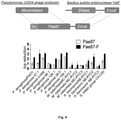
- Pae87 with a calcium-binding domain derived from Bacillus subtilis nuclease YokF (termed 'F', with amino acid sequence SEQ ID NO: 3), resulting molecule Pae87F with amino acid sequence SEQ ID NO: 5, which displayed an improved activity against the same range of bacteria ( Figure 4 ).
- the inventors defined a putative AMP-like region, based on wild-type Pae87 sequence analysis, and this way obtained antibacterial polypeptide P87 with amino acid sequence SEQ ID NO: 2. Further, the inventors designed and synthesized a novel polypeptide P88, based on P87 polypeptide with five mutations intended to maximize net charge and hydrophobic moment, yielding amino acid sequence SEQ ID NO: 4.
- P87 and P88 tested the bactericidal activity of P87 and P88.
- P87 had a bactericidal activity, especially against P. aeruginosa (up to 4-log killing) and A. baumannii (up to 2-log killing), and P88 activity was much higher with a killing activity ranging between 4 and 6 logarithmic units of viable cells reduction in all of the three tested Gram-negative bacteria, P. aeruginosa, M. catarrhalis and A. baumannii ( Figure 6 ).
- the inventors have obtained proteinaceous antimicrobials derivates of the polypeptide Pae87; P87, P88 and Pae87F polypeptides, with high antimicrobial activity, particularly against a wider range of Gram-negative bacteria than expected for a Pseudomonas lysin.
- a first aspect of the present invention related to an isolated polypeptide with antibacterial activity comprising an amino acid sequence with at least 70% identity with the amino acid sequence SEQ ID NO: 2, hereinafter the polypeptide of the invention, wherein the amino acid sequence is not SEQ ID NO: 1.
- polypeptide refers to a polymer with a length of between 8 to 250 amino acids linked via amide bonds that are formed between an amino group of one amino acid and a carboxyl group of another amino acid.
- amino acid sequence refers to a polymer with a length of between 8 to 250 amino acids linked via amide bonds that are formed between an amino group of one amino acid and a carboxyl group of another amino acid.
- amino acid sequence refers to a polymer with a length of between 8 to 250 amino acids linked via amide bonds that are formed between an amino group of one amino acid and a carboxyl group of another amino acid.
- isolated or “purified” means a polypeptide that is removed from at least one component with which it is naturally associated and, consequently, it is substantially free of cellular material or other contaminating polypeptides from the cell or tissue source from which the agent is derived, or substantially free from chemical precursors or other chemicals when chemically synthesized.
- polypeptide of the invention can be obtained by techniques widely known in the state of the art, such as chemical synthesis, genetic recombination, expression of the polynucleotide that encodes the polypeptide of the invention. All of these techniques are routine practice for the skilled in the art.
- the carboxyl and amino terminal ends of the polypeptide of the invention can be protected against proteolysis.
- the amino terminal end may be in the form of an acetyl group (Ac) and/or the carboxyl terminal end may be in the form of an amide group (Am). It is also possible to carry out internal modifications of the polypeptides so that they are resistant to proteolysis.
- polypeptides can also be stabilized by intramolecular crossing, for example, by modifying at least two amino acid residues with olefin side chains, preferably C3-C8 alkenyl chains, preferably pentel-2-yl chains, followed by crosslinking chains. All of these polypeptides chemically modified to resist proteolysis are also contemplated within the present invention.
- the polypeptide of the invention comprises at least 70% identity with the sequence SEQ ID NO: 2.
- identity or “sequence identity” refers to the degree of similarity between two nucleotide sequences or the amino acids obtained by aligning the two sequences. Depending on the number of common residues between the aligned sequences, a degree of identity is expressed as a percentage.
- the degree of identity between two parameter sequences can be determined by standard methods, for example, by standard sequence alignment algorithms known in the state of the art, such as BLAST.
- the BLAST programs for example, BLASTN, BLASTX and TBLASTX, BLASTP and TBLASTN, are in the public domain on the website of the National Center for Biotechnology Information (NCBI).
- the polypeptide of the invention comprises an identity of at least 80%, preferably comprises an identity of at least 81, 82, 83, 84, 85, 86, 87, 88, 89, 90, 91, 92, 93, 94, 95, 96, 97, 98 or 99% with the sequence SEQ ID NO: 2.
- the polypeptide of the invention comprises a sequence identity of 82% with the sequence SEQ ID NO: 2.
- the polypeptide of the invention comprises a sequence identity of 100% with the sequence SEQ ID NO: 2.
- polypeptides that have an identity of at least 70% with the sequence SEQ ID NO: 2, and which have the same function as SEQ ID NO: 2, that is, they have antibacterial activity they are functionally equivalent variants of the polypeptide of the invention.
- Assays to identify polypeptides functionally equivalent to the polypeptide of the invention are routine practice for the skilled in the art.
- bactericidal activity refers to the capacity or ability to the polypeptide of the invention or polypeptides functionally equivalent to the polypeptide of the invention for preventing, reducing or inhibiting the growth of bacteria or killing bacteria, preferably Gram-negative bacteria.
- the bactericidal activity or antibacterial activity of the polypeptide of the invention may be influenced by growth conditions, bacterial density, test duration, and extent of reduction in bacterial numbers.
- the in vitro microbiological techniques to determine the bactericidal activity of the polypeptide of the invention can be tested by techniques widely known in the state of the art. Examples of techniques for determining the antibacterial activity include, without limitation to, Minimum Bactericidal Concentration (MBC), turbidity decrease bacteriolytic assay, checkerboard/synergy assay, Minimum Inhibitory Concentration (MIC), viable cell counts, time-kill curve, and serum bactericidal titer (SBT). All of these techniques are routine practice for the skilled in the art.
- MBC Minimum Bactericidal Concentration
- MIC Minimum Inhibitory Concentration
- SBT serum bactericidal titer
- the inventors designed a fusion protein with the Pae87 polypeptide (SEQ ID NO:1) with a C-terminal calcium binding domain (F) for increasing the ability of Pae87 to interact with the Gram-negative outer membrane.
- the fusion protein Pae87F (SEQ ID NO: 5) displayed an increased bactericidal activity compared with Pae87, which strongly suggested that the C-terminal calcium binding domain interact with the Ca-rich interface of the bacterial surface enhancing antibacterial potential.
- a second aspect of the present invention related to an isolated polypeptide with antibacterial activity comprising an amino acid sequence with at least 70% identity with the amino acid sequence SEQ ID NO: 2 and a C-terminal calcium binding domain.
- the C-terminal calcium binding domain comprising an amino acid sequence SEQ ID NO: 3.
- the polypeptide of the invention comprises an amino acid sequence with at least 70% identity with the amino acid sequence SEQ ID NO: 2 and a C-terminal calcium binding domain wherein the C-terminal calcium binding domain comprises the amino acid sequence SEQ ID NO: 3.
- the inventors devised five mutations in the sequence of the polypeptide of the invention, obtaining the polypeptide P88 that comprises the amino acid sequence SEQ ID NO: 4, which exerted an improved killing activity on the tested Gram-negative bacteria.
- polypeptide of the invention comprises the amino acid sequence SEQ ID NO: 4.
- the polypeptides and derivates with high antimicrobial activity, particularly against Gram-negative bacteria are the P87, P88 and Pae87F polypeptides.
- the polypeptide of the invention consists of the amino acid sequence SEQ ID NO: 2, SEQ ID NO: 4 or SEQ ID NO: 5.
- the invention in another aspect, relates to a polynucleotide, hereinafter "polynucleotide of the invention", encoding the polypeptide of the invention.
- polynucleotide of the invention is the coding sequence of the polypeptide of the invention.
- coding sequence means a polynucleotide, which directly specifies the amino acid sequence of a polypeptide.
- nucleic acid construct means a nucleic acid molecule, either single- or doublestranded, which is isolated from a naturally occurring gene or is modified to contain segments of nucleic acids in a manner that would not otherwise exist in nature or which is synthetic.
- the present invention relates to a vector comprising the polynucleotide of the invention, hereinafter the vector of the invention.
- the vector is an expression vector.
- expression vector means a linear or circular DNA molecule that comprises a polynucleotide encoding a polypeptide and is operably linked to additional nucleotides (control sequences) that provide for its expression.
- the recombinant expression vector may be any vector (e.g., a plasmid or virus) that can be conveniently subjected to recombinant DNA procedures and can bring about expression of the nucleotide sequence.
- the choice of the vector will typically depend on the compatibility of the vector with the host cell into which the vector is to be introduced.
- the vectors may be linear or closed circular plasmids.
- useful vectors include, without limiting to, mammal cell-derived expression vectors (e.g., pcDNA3 (Invitrogen) and pEGF-BOS ( Mizushima S., Nucleic Acids Res 18(17): 5322 (1990 )), pEF, pCDM8), insect cell-derived expression vectors (e.g., "Bac-to-BAC baculovirus expression system” (GIBCO BRL), pBacPAK8), plant-derived expression vectors (e.g., pMH1, pMH2), animal virus-derived expression vectors (e.g., pHSV, pMV, pAdexLcw), retrovirus-derived expression vectors (e.g., pZlpneo), yeast-derived expression vectors (e.g., "Pichia expression kit” (Invitrogen), pNV11, SP-Q01), and Bacillus subtilis -
- mammal cell-derived expression vectors
- vectors to express a polynucleotide in animal cells include, without limiting to, pMAM, pDR2, pBK-RSV, pBK-CMV, pOPRSV, or pOP13.
- virus expression vectors include, without limiting to, attenuated virus hosts such as cowpox or avianpox, Bacille Calmette Guerin (BCG), adenovirus vectors and adeno - associated virus vectors, retrovirus vectors, Salmonella typhi vectors or detoxicated anthrax toxin vectors.
- the vector may be an autonomously replicating vector, i.e., a vector that exists as an extrachromosomal entity, the replication of which is independent of chromosomal replication, e.g., a plasmid, an extrachromosomal element, a minichromosome, or an artificial chromosome.
- the vector may contain any means for assuring self-replication.
- the vector may be one that, when introduced into the host cell, is integrated into the genome and replicated together with the chromosome(s) into which it has been integrated.
- a single vector or plasmid or two or more vectors or plasmids that together contain the total DNA to be introduced into the genome of the host cell, or a transposon may be used.
- a host cell comprising the polypeptide of the invention, the polynucleotide of the invention or the vector of the invention.
- host cell means any cell type that is susceptible to transformation, transfection, transduction, and the like with a nucleic acid construct or expression vector comprising a polynucleotide of the present invention.
- the present invention also relates to recombinant host cells, comprising the isolated polynucleotide of the invention, which are advantageously used in the recombinant production of the polypeptides.
- a vector is introduced into a host cell so that the vector is maintained as a chromosomal integrant or as a self-replicating extra-chromosomal vector as described earlier.
- the term "host cell” encompasses any progeny of a parent cell that is not identical to the parent cell due to spontaneous mutations.
- the host cell may be any cell useful in the recombinant production of a polypeptide of the present invention, e.g., a prokaryote or a eukaryote such as a mammalian, insect, plant, or fungal cell.
- a prokaryote or a eukaryote such as a mammalian, insect, plant, or fungal cell.
- composition of the invention comprising the polypeptide, the polynucleotide, the vector or the host cell of the invention.
- composition of the invention is a pharmaceutical composition and more preferably the composition of the invention comprises a therapeutically effective amount of the polypeptide, polynucleotide, vector or host cell of the invention.
- therapeutically effective amount refers to an amount capable of providing a therapeutic effect, and which can be determined by the person skilled in the art by commonly used means.
- the amount of the polypeptide, polynucleotide, vector or cell of the invention that can be included in the pharmaceutical compositions according to the invention will vary depending on the subject and the particular mode of administration.
- the therapeutically effective amount will depend on the type of disease caused by a bacterium of the respiratory tract infection, the severity and course of the disease or damage, medical history of the patient and response to the polypeptide, and the discretion of the treating physician.
- the amount of polypeptide, polynucleotide, vector or cell of the invention is suitably administered to the patient or subject at one time or during a series of treatments. Determining the therapeutically effective amount is routine practice for a person skilled in the art.
- the pharmaceutical composition according to the present invention may be formulated with pharmaceutically acceptable excipient and/or carrier.
- the composition of the invention comprises a pharmaceutically acceptable excipient and/or carrier.
- excipient refers to a substance which helps to absorb any of the components of the composition of the invention, stabilizes said components or helps in the preparation of the pharmaceutical composition in the sense of giving it consistency or providing flavours which make them more pleasant.
- excipients could have the function of keeping the components bound together, such as for example starches, sugars or celluloses, a sweetening function, a colorant function, the function of protecting the medicament, such as for example isolating it from the air and/or moisture, a filler function for a tablet, capsule or any other form of formulation, such as for example dibasic calcium phosphate, a disintegrating function to facilitate the dissolution of the components and their absorption in the intestine, without excluding other types of excipients not mentioned in this paragraph.
- excipient is defined as any material which, included in the galenic forms, is added to the active ingredients or to its associations to enable its preparation and stability, modify its organoleptic properties or determine the physical/chemical properties of the pharmaceutical composition and its bioavailability.
- pharmaceutically acceptable excipient should allow for the activity of the compounds of the pharmaceutical composition, that is to say, for it to be compatible with said components.
- excipients are agglutinants, fillers, disintegrators, lubricants, coaters, sweeteners, flavourings and colorants.
- Non-limiting, more specific examples of acceptable excipients are starches, sugars, xylitol, sorbitol, calcium phosphate, steroid fats, talc, silica or glycerine, amongst others.
- carrier is preferably an inert substance.
- the function of the carrier is to facilitate the incorporation of other compounds, to allow a better dosing and administration or to give consistency and form to the pharmaceutical composition. Therefore, the carrier is a substance which is used to dilute any of the components of the composition of the present invention to a determined volume or weight, or even without diluting said components, capable of allowing better dosing and administration or giving consistency and form to the medicament.
- the carrier is pharmaceutically acceptable. When the form of presentation is liquid, the pharmaceutically acceptable carrier is the diluent.
- composition provided by this invention may be administered by any appropriate administration route; to this end, said composition will be formulated in the suitable pharmaceutical form for the selected administration route.
- the inventors have observed that the polypeptide of the invention and the polypeptide Pae87 that comprises the amino acid sequence SEQ ID NO: 1, are able to inhibit the growth or kill bacteria, specially Gram-negative ones, which cause infections and deaths in patients particularly by means of respiratory tract infections. Therefore, the polypeptide of the invention, as well as all the aspects derived from it, and the polypeptide Pae87 comprising the amino acid sequence SEQ ID NO: 1, may be effectively used for the treatment of diseases caused by a bacterium, preferably respiratory tract infections.
- the present invention relates to the polypeptide of the invention or a polypeptide with an amino acid sequence SEQ ID NO: 1, the polynucleotide encoding any of these polypeptides, the vector, the cell, or the composition comprising any of these polypeptides or polynucleotides for use as a medicament.
- the present invention relates to the polypeptide of the invention or a polypeptide with an amino acid sequence SEQ ID NO: 1, the polynucleotide, the vector, the cell, or the composition of the invention for use in the treatment of a disease caused by a bacterium, preferably an infectious disease, more preferably the disease is a respiratory tract infection.
- polypeptide polypeptide
- vector polynucleotide
- host cell host cell
- composition composition
- treating refers to processes involving a slowing, interrupting, arresting, controlling, stopping, reducing, or reversing the progression or severity of an existing symptom, disorder, condition, or disease, but does not necessarily involve a total elimination of all disease-related symptoms, conditions, or disorders associated with disease caused by a bacterium, being such disease preferably a respiratory tract infection.
- the "treatment” of a disorder or disease may also lead to a partial response (e.g., amelioration of symptoms) or complete response (e.g., disappearance of symptoms) of the subject/patient suffering from the disorder or disease.
- RTI respiratory tract infection
- the respiratory tract infections are classified as an upper respiratory tract infection (URI or URTI) or a lower respiratory tract infection (LRI or LRTI).
- the upper respiratory tract is the airway above the glottis or vocal cords, sometimes it is taken as the tract above the cricoid cartilage. This part of the tract includes the nose, sinuses, pharynx, and larynx.
- the lower respiratory tract consists of the trachea (wind pipe), bronchial tubes, the bronchioles, and the lungs.
- URTIs upper respiratory tract infections
- LRTIs lower respiratory tract infections
- URTIs upper respiratory tract infections
- LRTIs lower respiratory tract infections
- Causative agents of respiratory tract infections are viral or bacterial, particularly Gram-negative bacteria.
- bacteria that cause respiratory tract infections include, without limitation to, Streptococcus pneumoniae, Mycoplasma pneumoniae, Chlamydia spp, Legionella, Coxiella burnetii, Haemophilus influenzae, Staphylococcus aureus, Streptococcus pyogenes, Pseudomonas aeruginosa, Acinetobacter baumannii, Moraxella catarrhalis, Klebsiella pneumoniae, Escherichia coli, Burkholderia cepacia, milleri group streptococci and Mycobacterium tuberculosis.
- polypeptide of the invention or polypeptide Pae87 with an amino acid sequence SEQ ID NO: 1 have bactericidal activity, particularly active against Gram-negative bacteria, and more particularly, P. aeruginosa, A. baumannii, and M. catarrhalis.
- a preferred embodiment of the invention relates to the polypeptide of the invention or a polypeptide with an amino acid sequence SEQ ID NO: 1, the polynucleotide, the vector, the cell, or the composition of the invention for use in the treatment of a disease caused by a bacterium, wherein the bacterium is Gram-negative, and preferably is selected from the list consisting of Pseudomonas aeruginosa, Acinetobacter baumannii and Moraxella catarrhalis.
- the antibacterial activity can be non-therapeutically used.
- the present invention relates to a non-therapeutic use of the polypeptide of the invention or a polypeptide with an amino acid sequence SEQ ID NO: 1, the polynucleotide, the vector, the cell, or the composition of the invention as antibacterial agent.
- non-therapeutic use refers to use not relating or providing to therapy processes, particularly not relating to diseases caused by a bacterium.
- non-therapeutic use include, without limitation to, food preservation, decontamination, prophylaxis applied to materials, surfaces or devices for different purposes, e.g., medical uses, preventive uses on humans or farm animals, or any other bacterial clearance of certain niches.
- the invention in a preferred embodiment, relates to non-therapeutic use of the polypeptide of the invention or a polypeptide with an amino acid sequence SEQ ID NO: 1, the polynucleotide, the vector, the cell, or the composition of the invention as antibacterial agent wherein the bacterium is selected from the list consisting of Pseudomonas aeruginosa, Acinetobacter baumannii and Moraxella catarrhalis.
- Bacterial strains used throughout this work are listed in Table 1, whereas plasmids are in Table 2. Table 1. Bacterial strains used in this work. a Hospital Ramon y Cajal (Madrid), donated by Rosa del Campo; b Centro de Investigaations Biológicas Margarita Salas; c Hospital Universitari de Bellvitge (Hospitalet de Llobregat), donated by Carmen Ardanuy; d Universidad Complutense de Madrid, Facultad de Veterinaria, donated by Juan Miguel Rodr ⁇ guez.
- Source pUCPA87 Synthetic construct bearing pae87 gene between Ndel and HindIII restriction sites. Encodes ampicillin resistance.
- GenScript pET28a Expression vector with N-terminal 6 ⁇ His tag. Encodes kanamycin resistance.
- Invitrogen pETPA87 Expression vector containing N-terminal 6 ⁇ His tag fused to pae87. Encodes kanamycin resistance.
- All Gram-negative bacteria ( A. baumannii, E. coli, M. catarrhalis, P. aeruginosa ) were cultured in LB medium at 37 °C with 200 rpm shaking, except for M . catarrhalis which was incubated in the same conditions but in a 5% CO 2 atmosphere.
- S . milleri group (SMG) C5-C20 was cultured in BHI medium at 37 °C without shaking.
- a set of 1252 Pseudomonas phage genomes was retrieved from NCBI Nuccore database. Such genomes were screened for genes annotated as "lysins, lysozymes, endolysins” and so forth in order to obtain plausible lysin candidate genes (138 in total). Such candidates were subjected to a protein length cutoff to eliminate outliers (only sequences between 50 and 400 amino acids length were kept). Finally, two properties of interest were predicted on the C-terminal 40 amino acids of each sequence, namely net charge and hydrophobic moment. Such properties were calculated using the implementation in R package 'Peptides'.
- Bactericidal activity of the compounds was assessed by checking viable cell counts after incubation of resting cell suspensions together with each compound with respect to an untreated control. Briefly, OD600 ⁇ 0.6 cultures were centrifuged and pellets washed with 20 mM NaPiB pH 6.5, 150 mM NaCl and finally resuspended in the same buffer adjusting to an OD600 ⁇ 1.2. One hundred ⁇ l of these suspensions were mixed together with 100 ⁇ l a buffer solution containing or not 20 ⁇ M of the corresponding compound (Pae87, Pae87-F, P87 or P88) for a final concentration of 10 ⁇ M, in a 96-well plate. Plates were incubated at 37 °C for 2 h and then samples from each well were serially diluted and plated in LB agar or blood agar to asses viable counts.
- a dataset comprising 138 Pseudomonas phage lysin candidates was examined to obtain the most promising antimicrobial molecules candidates. This was accomplished by predicting net charge and hydrophobic moment along the C-terminal end of such amino acid sequences and then selecting appropriate cutoffs for both properties. The rationale was to maximize positive net charge in order to obtain a molecule able to interact with the negatively charged lipopolysaccharides in the outer surface of Gram-negative bacteria while, at the same time, containing hydrophobic residues that could insert into the outer membrane. In this sense, hydrophobic moment seemed a good variable to optimize, since higher hydrophobic moment values would assure that an increased presence of positively charged, polar residues would be correlated with a geometrically distal accumulation of nonpolar residues.
- Pae87 showed a rather apparent activity against a cellular suspension of P. aeruginosa PAO1 ( Figure 3 ). Such activity included some sort of cell wall permeabilization effect that was observed because of the red fluorescence displayed by Pae87-treated cells, as well as their abnormal morphology (with more spheroid-like shapes) and a certain aggregation (which is a symptom of surface interaction mediated by Pae87). This activity caused a decrease of at least 1 logarithmic unit in viable cells with respect to the control when treating with 10 ⁇ M protein. All of the clinical P. aeruginosa strains tested were susceptible to Pae87 activity, although with varying killing effects, ranging between 1 and 2.5 logs death ( Figure 3B ). Other relevant pathogenic bacteria were also susceptible, such as A. baumannii or M . catarrhalis, as well as Streptococcus from milleri group.
- a fusion protein was designed bearing a C-terminal calcium binding domain.
- the Gram-negative outer membrane is stabilized by divalent cations, the Ca-binding domain interact with the Ca-rich interface of the bacterial surface or that, at least, the protein bearing a Ca ++ have a higher positive net charge and thus its approximation to the negatively charged bacterial surface would be more favoured.
- a bacterial Ca-binding domain was chosen ( Excalibur ) from a Bacillus subtilis endonuclease ( Figure 4A-B).
- the novel fusion protein displayed a similar activity range among our collection of bacteria but an increased bactericidal power compared with Pae87.
- a 2-fold (and in some cases 3-fold) increase in the logarithmic reduction of viability with respect to the control was observed ( Figure 4C), which confirms the superior antibacterial potential of Pae87F.
- P87 had a bactericidal activity of its own, especially against P. aeruginosa (up to 4-log killing) and A. baumannii (up to 2-log killing), but P88 activity was much higher. P88 exerted a killing activity ranging between 4 and 6 logarithmic units of viable cells reduction in all of the three tested Gram-negative susceptible bacteria ( P. aeruginosa, M. catarrhalis and A. baumannii ). Therefore, the mutations introduced in P88 increased its bactericidal activity, suggesting that the maximization of such physicochemical properties is a valid way to improve the interaction with the bacterial surface.
- lysin from a Pseudomonas aeruginosa phage, Pae87 has been proposed as an antimicrobial, active both against P. aeruginosa and A. baumannii, as well as other relevant pathogens such as M. catarrhalis or milleri group streptococci.
- a novel enhancement strategy of lysins activity was proposed, fusing Pae87 to a calcium-binding domain.
- the resulting molecule, Pae87F displayed an improved activity against the same range of bacteria.
- an AMP-like region was defined from Pae87 and polypeptides derived from it were synthesized and tested for antimicrobial abilities.
- the wild type P87 polypeptide was proved to have an antimicrobial activity of its own.
- a procedure based on positive net charge and hydrophobic moment optimization was used to improve P87 activity, yielding the much more active polypeptide P88.
Landscapes
- Health & Medical Sciences (AREA)
- Chemical & Material Sciences (AREA)
- Life Sciences & Earth Sciences (AREA)
- Organic Chemistry (AREA)
- General Health & Medical Sciences (AREA)
- Medicinal Chemistry (AREA)
- Gastroenterology & Hepatology (AREA)
- Proteomics, Peptides & Aminoacids (AREA)
- Biochemistry (AREA)
- Genetics & Genomics (AREA)
- Molecular Biology (AREA)
- Pharmacology & Pharmacy (AREA)
- Veterinary Medicine (AREA)
- Public Health (AREA)
- Biophysics (AREA)
- Animal Behavior & Ethology (AREA)
- Bioinformatics & Cheminformatics (AREA)
- Engineering & Computer Science (AREA)
- Zoology (AREA)
- Epidemiology (AREA)
- Oncology (AREA)
- Virology (AREA)
- General Engineering & Computer Science (AREA)
- Wood Science & Technology (AREA)
- Toxicology (AREA)
- Communicable Diseases (AREA)
- Immunology (AREA)
- Chemical Kinetics & Catalysis (AREA)
- General Chemical & Material Sciences (AREA)
- Nuclear Medicine, Radiotherapy & Molecular Imaging (AREA)
- Medicines That Contain Protein Lipid Enzymes And Other Medicines (AREA)
- Peptides Or Proteins (AREA)
- Micro-Organisms Or Cultivation Processes Thereof (AREA)
Abstract
The invention relates to a proteinaceous antimicrobials derivates of the polypeptide Pae87, and more particularly, to Pae87F enzybiotic, P87 and P88 polypeptides with bactericidal activity, particularly active against Gram-negative bacteria, such as P. aeruginosa, A. baumannii and M. catarrhalis. The invention relates to these polypeptides for use in the treatment of a disease caused by a bacterium, and preferably the disease is a respiratory tract infection.
Description
- The invention relates to proteinaceous antimicrobials derivates of the polypeptide Pae87, and more particularly, to Pae87F enzybiotic, P87 and P88 polypeptides from a Pseudomonas aeruginosa phage with bactericidal activity, particularly active against Gram-negative bacteria, such as P. aeruginosa, Acinetobacter baumannii and Moraxella catarrhalis.
- Lower respiratory tract infections caused about 3.2 million deaths worldwide in 2015 and they remain the deadliest reported diseases. Streptococcus pneumoniae is the leading cause for most of the bacterial pneumonia cases in children, as well as for the community-acquired pneumonia in elderly patients with comorbidities (A. Torres et al 2018, RespirMed, 137:6-13). In addition, hospital-acquired pneumonia and ventilator-associated pneumonia are among the leading nosocomial infections worldwide, with an increasing frequency of multidrug resistant (MDR) Gram-negative bacteria (G-), like Pseudomonas aeruginosa and Acinetobacter baumannii (J.M. Kidd, et al 2018, Expert Opin Pharmacother, 19:397-408).
- Concerning public health issue, antimicrobial resistance (AMR) and associated morbidity and mortality data have been increasing globally. In this regard, has been estimated that AMR could produce about 10 million deaths a year by 2050. In this scenario, the World Health Organization has called for global action on AMR, which has encouraged several actions, one of them the search for alternatives to the currently used antibiotics. In particular, interest has been mainly focused against a group of MDR bacteria known as "the ESKAPE bugs" that are of particular concern: "A" is for A. baumannii and "P" for P. aeruginosa ( W.H. Organization, Prioritization of Pathogens to Guide Discovery, Research and Development of New Antibiotics for Drug-Resistant Bacterial Infections, Including Tuberculosis, in, World Health Organization, 2017 ).
- A few decades ago, phage therapy has emerged as a promising alternative to conventional antibiotics, encompassing not only the use of entire virions but also some of their gene products. In this context, since the beginning of twenty-first century, phage lysins have been extensively tested as antibacterial agents. These enzymes break specific bonds of the bacterial peptidoglycan and, when added exogenously, provoke a rapid osmotic lysis and death, displaying potent bactericidal activity. This enzymatic activity of lysins was the basis for their exploration as antibacterial agents, also named "enzybiotics" (Nelson D., et al 2001, Proc Natl Acad Sci U S A, 98:4107-4112).
- Lysins are usually classified as glycosidases (glucosaminidases, transglycosylases, and lysozymes or muramidases), if they break any of the bonds of the glycan chain; N-acetylmuramoyl-L-alanine amidases (NAM-amidases), if they break the amide bonds between the glycan strands and peptide chains; or endopeptidases, if they hydrolyze different bonds within peptide chains. Lysins possess several advantages over antibiotics: (a) they rapidly kill bacteria, practically upon contact; (b) they can be specific to the target pathogen, particularly against Gram-positive (G+) bacteria, which allows to preserve the normal microbiota (Cheng M., et al 2017, Sci Rep, 7:10164); (c) development of resistance seems very unlikely (Gilmer D.B., et al 2013, Antimicrob Agents Chemother, 57;2743-2750); (d) lysins are active independently of the bacterial physiological state and are effective against MDR bacteria (Briers Y., et al 2014, Antimicrob Agents Chemother, 58;3774-3784); (f) they can act synergistically with other lysins or antibiotics and reduce the development of resistance while increasing therapeutic efficiency; and (g) lysins are also effective killing colonizing pathogens growing on mucosal surfaces and/or in biofilms.
- Lysins encoded by phages infecting G+ bacteria generally display a modular structure, comprising one or more catalytic domains and one or more cell wall binding domains, whereas phages from G- bacteria usually encode globular lysins with a single catalytic domain, with several exceptions (Walmagh M., et al 2012, PLoS One, 7; e36991 ).
- In general, lysins have showed lesser bactericidal effect against G- bacteria, due to the presence of the outer membrane (OM). For this reason, most recent efforts have been directed toward the engineering of the enzymes themselves, giving rise to the "artilysin" concept (Briers Y., et al 2014, mBio, 5;e01379-01314.), wherein lysins were fused to cationic, antimicrobial peptides (AMPs), and these fusions were able to exert a permeabilizing activity that allowed them to cross P. aeruginosa OM to degrade the peptidoglycan layer both in vitro and in vivo.
- Typically, this intrinsic activity from without relies on non-enzymatic mechanisms, which were first described for the T4 phage lysozyme (During K., et al 1999, FEBS Lett, 449;93-100) and then in several P. aeruginosa phage lysins (Rotem S., et al 2006, Peptides, 27;18-26). These lysins harbor AMP-like elements (peptides with an amphipathic secondary structure and a positive net charge) that destabilize the OM.
- In some cases, as for T4 lysozyme, these regions account for the bactericidal activity of the enzyme to a higher extent than the enzymatic activity itself. One of the first examples of a lysin with a natural cationic peptide exploited as an enzybiotic was the Bacillus amyloliquefaciens phage lysin, Lys1521, which was indeed able to lyse P. aeruginosa cells (Morita M., et al2001, J Biosci Bioeng, 91;469-473). Other examples of P. aeruginosa lysins with intrinsic anti-G- activity include OBPgp279 (Walmagh M., et al 2012, PLoS One, 7; e36991) and LysPA26 (Guo M., et al 2017, Front Microbiol, 8;293).
- In general, lysins against G- bacteria appear to be less specific than their G+ counterparts, possibly due to the simpler organization of the former sacculi (M.A. de Pedro, et al 2015, Front Microbiol, 6;449). This broader spectrum allows some lysins to kill several pathogenic genera, like the already mentioned lysin LysPA26, which besides P. aeruginosa can also lyse other G- pathogens such as E. coli, K. pneumoniae or A. baumannii, or Art-175, which also kills A. baumannii (Briers Y., et al 2014, Antimicrob Agents Chemother, 58;3774-3784).
- PlyF307, from an Acinetobacter phage, was capable of killing A. baumannii isolates, including MDR strains, both in planktonic and biofilm cultures and represents the first example of an intact lysin with intrinsic anti-G- activity tested in a mammalian (mouse bacteremia) model (Lood R., et al 2015, Antimicrob Agents Chemother, 59;1983-1991). Unsurprisingly, it was later determined that such intrinsic activity from without partly resided in a cationic peptide located in the C-terminal domain of the lysin (Thandar M., et al 2016, Antimicrob Agents Chemother, 60;2671-2679).
- However, therapeutically relevant lysins with a high broad-spectrum antimicrobial activity are still necessary.
- The present invention discloses proteinaceous antimicrobials derivates of the polypeptide Pae87 with high antimicrobial activity, particularly against Gram-negative bacteria.
- The inventors have analysed lysin sequences with putative antibacterial activity by means of a bioinformatic procedure to screen plausible lysin candidates able to interact with Gram-negative (G-) outer membrane. First, the inventors observed that a lysin from a Pseudomonas aeruginosa phage JG004, Pae87 with amino acid sequence SEQ ID NO: 1, have a bactericidal activity, particularly active both against P. aeruginosa and A. baumannii, as well as other relevant pathogens such as M. catarrhalis or Streptococcus milleri group (SMG) bacteria (
Figure 3 ). Then, they fused Pae87 with a calcium-binding domain derived from Bacillus subtilis nuclease YokF (termed 'F', with amino acid sequence SEQ ID NO: 3), resulting molecule Pae87F with amino acid sequence SEQ ID NO: 5, which displayed an improved activity against the same range of bacteria (Figure 4 ). - Additionally, the inventors defined a putative AMP-like region, based on wild-type Pae87 sequence analysis, and this way obtained antibacterial polypeptide P87 with amino acid sequence SEQ ID NO: 2. Further, the inventors designed and synthesized a novel polypeptide P88, based on P87 polypeptide with five mutations intended to maximize net charge and hydrophobic moment, yielding amino acid sequence SEQ ID NO: 4.
- Finally, the inventors tested the bactericidal activity of P87 and P88. P87 had a bactericidal activity, especially against P. aeruginosa (up to 4-log killing) and A. baumannii (up to 2-log killing), and P88 activity was much higher with a killing activity ranging between 4 and 6 logarithmic units of viable cells reduction in all of the three tested Gram-negative bacteria, P. aeruginosa, M. catarrhalis and A. baumannii (
Figure 6 ). So, the inventors have obtained proteinaceous antimicrobials derivates of the polypeptide Pae87; P87, P88 and Pae87F polypeptides, with high antimicrobial activity, particularly against a wider range of Gram-negative bacteria than expected for a Pseudomonas lysin. - A first aspect of the present invention related to an isolated polypeptide with antibacterial activity comprising an amino acid sequence with at least 70% identity with the amino acid sequence SEQ ID NO: 2, hereinafter the polypeptide of the invention, wherein the amino acid sequence is not SEQ ID NO: 1.
- In the context of the present invention, the term "polypeptide" refers to a polymer with a length of between 8 to 250 amino acids linked via amide bonds that are formed between an amino group of one amino acid and a carboxyl group of another amino acid. The terms "amino acid sequence", "polypeptide", "peptide" and "oligopeptide" are used interchangeably.
- The term "isolated" or "purified" means a polypeptide that is removed from at least one component with which it is naturally associated and, consequently, it is substantially free of cellular material or other contaminating polypeptides from the cell or tissue source from which the agent is derived, or substantially free from chemical precursors or other chemicals when chemically synthesized.
- The polypeptide of the invention can be obtained by techniques widely known in the state of the art, such as chemical synthesis, genetic recombination, expression of the polynucleotide that encodes the polypeptide of the invention. All of these techniques are routine practice for the skilled in the art.
- Additionally, it is common general knowledge that the carboxyl and amino terminal ends of the polypeptide of the invention can be protected against proteolysis. For example, the amino terminal end may be in the form of an acetyl group (Ac) and/or the carboxyl terminal end may be in the form of an amide group (Am). It is also possible to carry out internal modifications of the polypeptides so that they are resistant to proteolysis. Examples of these internal modifications include, without limiting to, modifications in which at least one polypeptide bridge -CONH- is modified and replaced by a reduced bond (CH2NH), a retroverse bond (NHCO), an oxymethylene bond (CH2-O), a thiomethylene bond (CH2-S), a ketomethylene bond (CO-CH2), a hydroxyethylene bond (CHOH-CH2), a bond (NN), an E-alkene bond or a -CH=CH- bond. The polypeptides can also be stabilized by intramolecular crossing, for example, by modifying at least two amino acid residues with olefin side chains, preferably C3-C8 alkenyl chains, preferably pentel-2-yl chains, followed by crosslinking chains. All of these polypeptides chemically modified to resist proteolysis are also contemplated within the present invention.
- The polypeptide of the invention comprises at least 70% identity with the sequence SEQ ID NO: 2. In the present invention, "identity" or "sequence identity" refers to the degree of similarity between two nucleotide sequences or the amino acids obtained by aligning the two sequences. Depending on the number of common residues between the aligned sequences, a degree of identity is expressed as a percentage. The degree of identity between two parameter sequences can be determined by standard methods, for example, by standard sequence alignment algorithms known in the state of the art, such as BLAST. The BLAST programs, for example, BLASTN, BLASTX and TBLASTX, BLASTP and TBLASTN, are in the public domain on the website of the National Center for Biotechnology Information (NCBI). In a particular embodiment, the polypeptide of the invention comprises an identity of at least 80%, preferably comprises an identity of at least 81, 82, 83, 84, 85, 86, 87, 88, 89, 90, 91, 92, 93, 94, 95, 96, 97, 98 or 99% with the sequence SEQ ID NO: 2. In another more particular embodiment, the polypeptide of the invention comprises a sequence identity of 82% with the sequence SEQ ID NO: 2. In another more particular embodiment, the polypeptide of the invention comprises a sequence identity of 100% with the sequence SEQ ID NO: 2. As understood by the person skilled in the art, all polypeptides that have an identity of at least 70% with the sequence SEQ ID NO: 2, and which have the same function as SEQ ID NO: 2, that is, they have antibacterial activity, they are functionally equivalent variants of the polypeptide of the invention. Assays to identify polypeptides functionally equivalent to the polypeptide of the invention are routine practice for the skilled in the art.
- The inventors have tested bactericidal activity of P87 against Gram-negative bacteria. The term "bactericidal activity", "activity against bacteria" or "antimicrobial activity" used interchangeably in the present invention, refers to the capacity or ability to the polypeptide of the invention or polypeptides functionally equivalent to the polypeptide of the invention for preventing, reducing or inhibiting the growth of bacteria or killing bacteria, preferably Gram-negative bacteria.
- The bactericidal activity or antibacterial activity of the polypeptide of the invention may be influenced by growth conditions, bacterial density, test duration, and extent of reduction in bacterial numbers. The in vitro microbiological techniques to determine the bactericidal activity of the polypeptide of the invention can be tested by techniques widely known in the state of the art. Examples of techniques for determining the antibacterial activity include, without limitation to, Minimum Bactericidal Concentration (MBC), turbidity decrease bacteriolytic assay, checkerboard/synergy assay, Minimum Inhibitory Concentration (MIC), viable cell counts, time-kill curve, and serum bactericidal titer (SBT). All of these techniques are routine practice for the skilled in the art.
- The inventors designed a fusion protein with the Pae87 polypeptide (SEQ ID NO:1) with a C-terminal calcium binding domain (F) for increasing the ability of Pae87 to interact with the Gram-negative outer membrane. The fusion protein Pae87F (SEQ ID NO: 5) displayed an increased bactericidal activity compared with Pae87, which strongly suggested that the C-terminal calcium binding domain interact with the Ca-rich interface of the bacterial surface enhancing antibacterial potential.
- So, a second aspect of the present invention related to an isolated polypeptide with antibacterial activity comprising an amino acid sequence with at least 70% identity with the amino acid sequence SEQ ID NO: 2 and a C-terminal calcium binding domain.
- The terms "polypeptide", "isolated" and "antibacterial activity" have been previously defined and are fully applicable to this aspect of the invention, as well as all particular and preferred embodiments.
- Particularly, the C-terminal calcium binding domain comprising an amino acid sequence SEQ ID NO: 3. So, in a preferred embodiment the polypeptide of the invention comprises an amino acid sequence with at least 70% identity with the amino acid sequence SEQ ID NO: 2 and a C-terminal calcium binding domain wherein the C-terminal calcium binding domain comprises the amino acid sequence SEQ ID NO: 3.
- Additionally, the inventors devised five mutations in the sequence of the polypeptide of the invention, obtaining the polypeptide P88 that comprises the amino acid sequence SEQ ID NO: 4, which exerted an improved killing activity on the tested Gram-negative bacteria.
- Therefore, in other more preferred embodiment, the polypeptide of the invention comprises the amino acid sequence SEQ ID NO: 4.
- Preferably, the polypeptides and derivates with high antimicrobial activity, particularly against Gram-negative bacteria, are the P87, P88 and Pae87F polypeptides. Thus, in another more preferred embodiment, the polypeptide of the invention consists of the amino acid sequence SEQ ID NO: 2, SEQ ID NO: 4 or SEQ ID NO: 5.
- In another aspect, the invention relates to a polynucleotide, hereinafter "polynucleotide of the invention", encoding the polypeptide of the invention. Thus, the polynucleotide of the invention is the coding sequence of the polypeptide of the invention. The term "coding sequence" means a polynucleotide, which directly specifies the amino acid sequence of a polypeptide.
- The polynucleotide of the invention can be inserted into a nucleic acid construct. The term "nucleic acid construct" means a nucleic acid molecule, either single- or doublestranded, which is isolated from a naturally occurring gene or is modified to contain segments of nucleic acids in a manner that would not otherwise exist in nature or which is synthetic.
- Manipulation of the polynucleotide's sequence prior to its insertion into a vector may be desirable or necessary depending on the expression vector. The techniques for modifying polynucleotide sequences utilizing recombinant DNA methods are well known in the art. Thus, in another aspect, the present invention relates to a vector comprising the polynucleotide of the invention, hereinafter the vector of the invention. Preferably, the vector is an expression vector. The term "expression vector" means a linear or circular DNA molecule that comprises a polynucleotide encoding a polypeptide and is operably linked to additional nucleotides (control sequences) that provide for its expression.
- The recombinant expression vector may be any vector (e.g., a plasmid or virus) that can be conveniently subjected to recombinant DNA procedures and can bring about expression of the nucleotide sequence. The choice of the vector will typically depend on the compatibility of the vector with the host cell into which the vector is to be introduced. The vectors may be linear or closed circular plasmids.
- Besides Escherichia coli, for example, useful vectors include, without limiting to, mammal cell-derived expression vectors (e.g., pcDNA3 (Invitrogen) and pEGF-BOS (Mizushima S., Nucleic Acids Res 18(17): 5322 (1990)), pEF, pCDM8), insect cell-derived expression vectors (e.g., "Bac-to-BAC baculovirus expression system" (GIBCO BRL), pBacPAK8), plant-derived expression vectors (e.g., pMH1, pMH2), animal virus-derived expression vectors (e.g., pHSV, pMV, pAdexLcw), retrovirus-derived expression vectors (e.g., pZlpneo), yeast-derived expression vectors (e.g., "Pichia expression kit" (Invitrogen), pNV11, SP-Q01), and Bacillus subtilis-derived expression vectors (e.g., pPL608, pKTH50). Examples of vectors to express a polynucleotide in animal cells, such as CHO cells, COS cells or NIH3T3 cells, include, without limiting to, pMAM, pDR2, pBK-RSV, pBK-CMV, pOPRSV, or pOP13. Examples of the virus expression vectors include, without limiting to, attenuated virus hosts such as cowpox or avianpox, Bacille Calmette Guerin (BCG), adenovirus vectors and adeno - associated virus vectors, retrovirus vectors, Salmonella typhi vectors or detoxicated anthrax toxin vectors.
- The vector may be an autonomously replicating vector, i.e., a vector that exists as an extrachromosomal entity, the replication of which is independent of chromosomal replication, e.g., a plasmid, an extrachromosomal element, a minichromosome, or an artificial chromosome. The vector may contain any means for assuring self-replication. Alternatively, the vector may be one that, when introduced into the host cell, is integrated into the genome and replicated together with the chromosome(s) into which it has been integrated.
- Furthermore, a single vector or plasmid or two or more vectors or plasmids that together contain the total DNA to be introduced into the genome of the host cell, or a transposon, may be used. Thus, other aspect of the present invention relates to a host cell comprising the polypeptide of the invention, the polynucleotide of the invention or the vector of the invention.
- The term "host cell" means any cell type that is susceptible to transformation, transfection, transduction, and the like with a nucleic acid construct or expression vector comprising a polynucleotide of the present invention.
- The present invention also relates to recombinant host cells, comprising the isolated polynucleotide of the invention, which are advantageously used in the recombinant production of the polypeptides. A vector is introduced into a host cell so that the vector is maintained as a chromosomal integrant or as a self-replicating extra-chromosomal vector as described earlier. The term "host cell" encompasses any progeny of a parent cell that is not identical to the parent cell due to spontaneous mutations.
- The host cell may be any cell useful in the recombinant production of a polypeptide of the present invention, e.g., a prokaryote or a eukaryote such as a mammalian, insect, plant, or fungal cell.
- In another aspect, the present invention relates to a composition, hereinafter "composition of the invention", comprising the polypeptide, the polynucleotide, the vector or the host cell of the invention. Preferably, the composition of the invention is a pharmaceutical composition and more preferably the composition of the invention comprises a therapeutically effective amount of the polypeptide, polynucleotide, vector or host cell of the invention.
- The term "therapeutically effective amount", as used herein, refers to an amount capable of providing a therapeutic effect, and which can be determined by the person skilled in the art by commonly used means. The amount of the polypeptide, polynucleotide, vector or cell of the invention that can be included in the pharmaceutical compositions according to the invention will vary depending on the subject and the particular mode of administration. The therapeutically effective amount will depend on the type of disease caused by a bacterium of the respiratory tract infection, the severity and course of the disease or damage, medical history of the patient and response to the polypeptide, and the discretion of the treating physician. The amount of polypeptide, polynucleotide, vector or cell of the invention is suitably administered to the patient or subject at one time or during a series of treatments. Determining the therapeutically effective amount is routine practice for a person skilled in the art.
- According to the conventional techniques known to those skilled in the art, the pharmaceutical composition according to the present invention may be formulated with pharmaceutically acceptable excipient and/or carrier. Thus, in a particular embodiment, the composition of the invention comprises a pharmaceutically acceptable excipient and/or carrier.
- The term "excipient" refers to a substance which helps to absorb any of the components of the composition of the invention, stabilizes said components or helps in the preparation of the pharmaceutical composition in the sense of giving it consistency or providing flavours which make them more pleasant. Thus, excipients could have the function of keeping the components bound together, such as for example starches, sugars or celluloses, a sweetening function, a colorant function, the function of protecting the medicament, such as for example isolating it from the air and/or moisture, a filler function for a tablet, capsule or any other form of formulation, such as for example dibasic calcium phosphate, a disintegrating function to facilitate the dissolution of the components and their absorption in the intestine, without excluding other types of excipients not mentioned in this paragraph. Therefore, the term "excipient" is defined as any material which, included in the galenic forms, is added to the active ingredients or to its associations to enable its preparation and stability, modify its organoleptic properties or determine the physical/chemical properties of the pharmaceutical composition and its bioavailability. The "pharmaceutically acceptable" excipient should allow for the activity of the compounds of the pharmaceutical composition, that is to say, for it to be compatible with said components. Examples of excipients are agglutinants, fillers, disintegrators, lubricants, coaters, sweeteners, flavourings and colorants. Non-limiting, more specific examples of acceptable excipients are starches, sugars, xylitol, sorbitol, calcium phosphate, steroid fats, talc, silica or glycerine, amongst others.
- The term "carrier" is preferably an inert substance. The function of the carrier is to facilitate the incorporation of other compounds, to allow a better dosing and administration or to give consistency and form to the pharmaceutical composition. Therefore, the carrier is a substance which is used to dilute any of the components of the composition of the present invention to a determined volume or weight, or even without diluting said components, capable of allowing better dosing and administration or giving consistency and form to the medicament. The carrier is pharmaceutically acceptable. When the form of presentation is liquid, the pharmaceutically acceptable carrier is the diluent.
- According to the conventional techniques known to those skilled in the art, the composition provided by this invention may be administered by any appropriate administration route; to this end, said composition will be formulated in the suitable pharmaceutical form for the selected administration route.
- As previously explained herein, the inventors have observed that the polypeptide of the invention and the polypeptide Pae87 that comprises the amino acid sequence SEQ ID NO: 1, are able to inhibit the growth or kill bacteria, specially Gram-negative ones, which cause infections and deaths in patients particularly by means of respiratory tract infections. Therefore, the polypeptide of the invention, as well as all the aspects derived from it, and the polypeptide Pae87 comprising the amino acid sequence SEQ ID NO: 1, may be effectively used for the treatment of diseases caused by a bacterium, preferably respiratory tract infections.
- Consequently, in another aspect the present invention relates to the polypeptide of the invention or a polypeptide with an amino acid sequence SEQ ID NO: 1, the polynucleotide encoding any of these polypeptides, the vector, the cell, or the composition comprising any of these polypeptides or polynucleotides for use as a medicament.
- In another aspect the present invention relates to the polypeptide of the invention or a polypeptide with an amino acid sequence SEQ ID NO: 1, the polynucleotide, the vector, the cell, or the composition of the invention for use in the treatment of a disease caused by a bacterium, preferably an infectious disease, more preferably the disease is a respiratory tract infection.
- The terms "polypeptide", "polynucleotide", "vector", "host cell" and "composition" have been previously defined and are fully applicable to these aspects of the invention, as well as all particular and preferred embodiments.
- The term "treating", "treat" or "treatment" used interchangeably in the present invention, refers to processes involving a slowing, interrupting, arresting, controlling, stopping, reducing, or reversing the progression or severity of an existing symptom, disorder, condition, or disease, but does not necessarily involve a total elimination of all disease-related symptoms, conditions, or disorders associated with disease caused by a bacterium, being such disease preferably a respiratory tract infection. The "treatment" of a disorder or disease may also lead to a partial response (e.g., amelioration of symptoms) or complete response (e.g., disappearance of symptoms) of the subject/patient suffering from the disorder or disease.
- The term "respiratory tract infection" or "RTI" used herein, refers to a disease involving the respiratory tract infection. The respiratory tract infections are classified as an upper respiratory tract infection (URI or URTI) or a lower respiratory tract infection (LRI or LRTI). The upper respiratory tract is the airway above the glottis or vocal cords, sometimes it is taken as the tract above the cricoid cartilage. This part of the tract includes the nose, sinuses, pharynx, and larynx. The lower respiratory tract consists of the trachea (wind pipe), bronchial tubes, the bronchioles, and the lungs.
- Examples of upper respiratory tract infections (URTIs) include, without limitation to, the common cold, laryngitis, pharyngitis/tonsillitis, sinusitis, acute rhinitis, acute rhinosinusitis and acute otitis media. Examples of lower respiratory tract infections (LRTIs) include, without limitation to, acute bronchitis, bronchiolitis, pneumonia and tracheitis.
- Causative agents of respiratory tract infections are viral or bacterial, particularly Gram-negative bacteria. Examples of bacteria that cause respiratory tract infections include, without limitation to, Streptococcus pneumoniae, Mycoplasma pneumoniae, Chlamydia spp, Legionella, Coxiella burnetii, Haemophilus influenzae, Staphylococcus aureus, Streptococcus pyogenes, Pseudomonas aeruginosa, Acinetobacter baumannii, Moraxella catarrhalis, Klebsiella pneumoniae, Escherichia coli, Burkholderia cepacia, milleri group streptococci and Mycobacterium tuberculosis.
- The inventors observed that the polypeptide of the invention or polypeptide Pae87 with an amino acid sequence SEQ ID NO: 1, have bactericidal activity, particularly active against Gram-negative bacteria, and more particularly, P. aeruginosa, A. baumannii, and M. catarrhalis. Therefore, a preferred embodiment of the invention relates to the polypeptide of the invention or a polypeptide with an amino acid sequence SEQ ID NO: 1, the polynucleotide, the vector, the cell, or the composition of the invention for use in the treatment of a disease caused by a bacterium, wherein the bacterium is Gram-negative, and preferably is selected from the list consisting of Pseudomonas aeruginosa, Acinetobacter baumannii and Moraxella catarrhalis.
- As the skilled in the art knows, the antibacterial activity can be non-therapeutically used. Thus, in another aspect the present invention relates to a non-therapeutic use of the polypeptide of the invention or a polypeptide with an amino acid sequence SEQ ID NO: 1, the polynucleotide, the vector, the cell, or the composition of the invention as antibacterial agent.
- The terms "polypeptide", "polynucleotide", "vector", "host cell", "composition" and "antibacterial agent" have been previously defined and are fully applicable to the aspect of the invention, as well as all particular and preferred embodiments.
- The term "non-therapeutic use" or "not therapeutic use" used herein, refers to use not relating or providing to therapy processes, particularly not relating to diseases caused by a bacterium.
- Examples of non-therapeutic use include, without limitation to, food preservation, decontamination, prophylaxis applied to materials, surfaces or devices for different purposes, e.g., medical uses, preventive uses on humans or farm animals, or any other bacterial clearance of certain niches.
- In a preferred embodiment of the invention relates to non-therapeutic use of the polypeptide of the invention or a polypeptide with an amino acid sequence SEQ ID NO: 1, the polynucleotide, the vector, the cell, or the composition of the invention as antibacterial agent wherein the bacterium is selected from the list consisting of Pseudomonas aeruginosa, Acinetobacter baumannii and Moraxella catarrhalis.
- Unless otherwise defined, all technical and scientific terms used herein have the same meaning as commonly understood by one of ordinary skilled in the art to which this invention belongs. Methods and materials similar or equivalent to those described herein can be used in the practice of the present invention. Throughout the description and claims the word "comprise" and its variations are not intended to exclude other technical features, additives, components, or steps. Additional objects, advantages and features of the invention will become apparent to those skilled in the art upon examination of the description or may be learned by practice of the invention. The following examples, drawings are provided by way of illustration and are not intended to be limiting of the present invention.
-
-
Figure 1 . Bioinformatic screening process of suitable anti-Gram-negative phage lysins. Result from the C-terminal physicochemical properties prediction analysis. Each dot represents a single sequence, located within the result space according to its net charge and its hydrophobic moment. The insert shows the final candidates selected according to net charge and hydrophobic moment cutoff values (+4.0 and 0.56, respectively); and table depicting basic information on the final candidates. The endolysin corresponding to Pae87 is highlighted in dark grey. -
Figure 2 . Purification strategy of Pae87. The synthetic gene of JG004 endolysin was synthesized and cloned into a pET28 vector, fusing it to an N-terminal 6xHis tag. A: chromatogram of Pae87 purification process. B: SDS-PAGE of Pae87 purification process. 1: crude expression extract, 2: protein after IMAC, 3: protein after IEC. The purified Pae87 showed an expected molecular mass of around 23 kDa. -
Figure 3 . Bactericidal activity of Pae87. A: fluorescence microscopy image of the effect of 10 µM Pae87 on a cell suspension of P. aeruginosa PAO1 (up) in comparison with the untreated control (down); B: activity range of Pae87. The bactericidal effect of 10 µM Pae87 in terms of logarithmic viable cell count difference with respect to the control is displayed for a range of clinically relevant bacteria. -
Figure 4 . Pae87 activity enhancing by fusing a calcium binding domain. A: scheme of the design strategy for an enhanced, calcium-binding variant of Pae87. A C-terminal Excalibur calcium-binding domain from B. subtilis endonuclease YokF was fused at the C-terminal of Pae87 to yield Pae87F synthetic lysin. B: Comparative range of activity of Pae87 and Pae87F. -
Figure 5 . Definition of candidate AMPs P87 and P88 from Pae87 sequence. A: local physicochemical properties profile for Pae87. Hydrophobic moment (left axis) and net charge (right axis) are depicted as calculated in contiguous 11 amino acids windows along Pae87 sequence. The postulated P87 sequence is indicated, as well as the polypeptide sequence and properties. B: possible helices within P87 structure and mutations proposed for net charge and hydrophobic moment maximization in new, synthetic polypeptide P88. -
Figure 6 . Bactericidal activity of P87 and P88. The bactericidal effect of 10 µM P87/P88 in terms of logarithmic viable cell count difference with respect to the control is displayed for a range of clinically relevant bacteria. - Bacterial strains used throughout this work are listed in Table 1, whereas plasmids are in Table 2.
Table 1. Bacterial strains used in this work. aHospital Ramon y Cajal (Madrid), donated by Rosa del Campo; bCentro de Investigaciones Biológicas Margarita Salas; cHospital Universitari de Bellvitge (Hospitalet de Llobregat), donated by Carmen Ardanuy; dUniversidad Complutense de Madrid, Facultad de Veterinaria, donated by Juan Miguel Rodríguez. Species Strain Source Acinetobacter baumannii AB-RYC1 HRCa AB-RYC2 HRC AB-RYC3 HRC Escherichia coli BL21(DE3) CIBb Moraxella catarrhalis MC-RYC1 HRC MC-RYC2 HRC MC-RYC3 HRC Pseudomonas aeruginosa PAO1 CIB 57.1 HUBc 2-006 HUB 68.1 HUB 126.1 HUB 39.5 HUB 109.1 HUB Streptococcus sp. (milleri group) C5-C20 UCMd Table 2. List of plasmids used. Name Description Source pUCPA87 Synthetic construct bearing pae87 gene between Ndel and HindIII restriction sites. Encodes ampicillin resistance. GenScript pET28a Expression vector with N-terminal 6×His tag. Encodes kanamycin resistance. Invitrogen pETPA87 Expression vector containing N-terminal 6×His tag fused to pae87. Encodes kanamycin resistance. This work pETPA87-F Expression vector containing N-terminal 6×His tag fused to pae87F. Encodes kanamycin resistance. GenScript, This work - All Gram-negative bacteria (A. baumannii, E. coli, M. catarrhalis, P. aeruginosa) were cultured in LB medium at 37 °C with 200 rpm shaking, except for M. catarrhalis which was incubated in the same conditions but in a 5% CO2 atmosphere. S. milleri group (SMG) C5-C20 was cultured in BHI medium at 37 °C without shaking.
- All DNA molecular biology techniques were performed essentially as described in J. Sambrook, Molecular Cloning: a Laboratory Manual, Cold Spring Harbor Laboratory Press, 2001. Genes encoding pae87 and pae87F were chemically synthesized by GenScript and provided cloned at Ndel-HindIII restrictions sites in pUCPA87 plasmid or in expression vector pETPA87-F, respectively. The pae87 gene was subsequently cloned, by Ndel-HindIII restriction sites, into pET28a, yielding pETPA87 plasmid. Plasmids were routinely transformed in E. coli DH10B or BL21(DE3) strains for production.
- A set of 1252 Pseudomonas phage genomes was retrieved from NCBI Nuccore database. Such genomes were screened for genes annotated as "lysins, lysozymes, endolysins" and so forth in order to obtain plausible lysin candidate genes (138 in total). Such candidates were subjected to a protein length cutoff to eliminate outliers (only sequences between 50 and 400 amino acids length were kept). Finally, two properties of interest were predicted on the C-
terminal 40 amino acids of each sequence, namely net charge and hydrophobic moment. Such properties were calculated using the implementation in R package 'Peptides'. - All proteins used were produced in E. coli BL21(DE3) transformed with the corresponding expression vector. One litre cultures were grown with 50 µg/ml kanamycin until reaching OD600 ≈ 0.6, when cultures were induced with 0.1 mM isopropyl-β-D-thiogalactopyranoside and incubation was resumed overnight at room temperature. Then, cultures were collected and centrifuged (18000 × g, 20 min, 4 °C). Sedimented biomass was resuspended in 20 mM sodium phosphate buffer (NaPiB), pH 7.4, 300 mM NaCl, 40 mM imidazole. Cells were disrupted using a French Press and then centrifuged again in the same conditions to remove cell debris. Proteins were then purified from supernatants by a three-step chromatographic procedure performed in an AKTA start machine: 1) immobilized metal affinity chromatography (IMAC) with nickel as immobilized ligand (
HisTrap FF 5 ml columns, GE Healthcare), eluting with 20 mM NaPiB, pH 7.4, 300 mM NaCl, 300 mM imidazole; 2) desalting step (HiTrap Desalting columns 5 ml, GE Healthcare) to change buffer to 20 mM NaPiB, pH 7.4, 150 mM NaCl; 3) ion exchange chromatography (IEC) with DEAE-sepharose columns (HiTrap DEAE FF 5 ml, GE Healthcare). Purified fractions were subjected to SDS-PAGE to check purity and then concentration was calculated by measuring absorbance at 280 nm with the predicted molar extinction coefficients of each protein. - Polypeptides used in this work (i.e., P87 and P88) were purchased from GenScript with a minimum purity of 95%. Polypeptides were diluted in water and their concentration was estimated by measuring UV absorption at 280 nm, taking into account the molar extinction coefficient computed for each polypeptide using ProtParam (ε = 5500 M-1cm-1).
- Bactericidal activity of the compounds was assessed by checking viable cell counts after incubation of resting cell suspensions together with each compound with respect to an untreated control. Briefly, OD600 ≈ 0.6 cultures were centrifuged and pellets washed with 20 mM NaPiB pH 6.5, 150 mM NaCl and finally resuspended in the same buffer adjusting to an OD600 ≈ 1.2. One hundred µl of these suspensions were mixed together with 100 µl a buffer solution containing or not 20 µM of the corresponding compound (Pae87, Pae87-F, P87 or P88) for a final concentration of 10 µM, in a 96-well plate. Plates were incubated at 37 °C for 2 h and then samples from each well were serially diluted and plated in LB agar or blood agar to asses viable counts.
- Cell suspensions after the 2 h treatment were also sampled for microscopic observation. For this purpose, samples were dyed with BacLight LIVE/DEAD kit according to the manufacturer instructions to distinguish between cells with their cell wall compromised and those intact. A Leica DM4000B fluorescence microscope equipped with an L5 (bandpass 480/40) and an N2.1 filter (bandpass 515/60) was used, viewing samples under an HC PL APO 63×/1.40-0.60 oil objective.
- Further bioinformatic analysis to define potential AMP regions within Pae87 were performed using HeliQuest server to produce local predictions of such properties as net charge, hydrophobicity and hydrophobic moment. A three-dimensional model of Pae87 was produced using homology-guided modelling with SwissProt.
- All experimental data shown displays a mean ± standard deviation of at least three replicates. Mean comparisons were performed using ANOVA followed by Tukey post-test to asses statistical significance of differences.
- A dataset comprising 138 Pseudomonas phage lysin candidates was examined to obtain the most promising antimicrobial molecules candidates. This was accomplished by predicting net charge and hydrophobic moment along the C-terminal end of such amino acid sequences and then selecting appropriate cutoffs for both properties. The rationale was to maximize positive net charge in order to obtain a molecule able to interact with the negatively charged lipopolysaccharides in the outer surface of Gram-negative bacteria while, at the same time, containing hydrophobic residues that could insert into the outer membrane. In this sense, hydrophobic moment seemed a good variable to optimize, since higher hydrophobic moment values would assure that an increased presence of positively charged, polar residues would be correlated with a geometrically distal accumulation of nonpolar residues. For choosing the cutoff values, net charge and hydrophobic moment distributions were considered as well as properties of previously reported lysins with inherent activity on Gram-negative bacteria from without. A net charge cutoff of ≥ + 4.0 was chosen, which coincides with the third quartile of net charge distribution, and hydrophobic moment cutoff was set in 0.56 (
Figure 1 ). The resulting candidates are shown inFigure 1 . - Of such candidates, some of them had been already tested (e.g., ϕKZ phage lysin) and some others were not easily expressed in a soluble form in E. coli BL21(DE3) (data not shown). Among those that were well expressed in E. coli was phage JG004 phage lysin (YP_007002453), which was subsequently named Pae87. The Pae87 encoding gene was chemically synthesized and purchased from GenScript, and then expressed fused to a 6×His tag from pETPA87 vector. Purification was accomplished by a three-step chromatographic procedure (
Figure 2B-C ). - Pae87 showed a rather apparent activity against a cellular suspension of P. aeruginosa PAO1 (
Figure 3 ). Such activity included some sort of cell wall permeabilization effect that was observed because of the red fluorescence displayed by Pae87-treated cells, as well as their abnormal morphology (with more spheroid-like shapes) and a certain aggregation (which is a symptom of surface interaction mediated by Pae87). This activity caused a decrease of at least 1 logarithmic unit in viable cells with respect to the control when treating with 10 µM protein. All of the clinical P. aeruginosa strains tested were susceptible to Pae87 activity, although with varying killing effects, ranging between 1 and 2.5 logs death (Figure 3B ). Other relevant pathogenic bacteria were also susceptible, such as A. baumannii or M. catarrhalis, as well as Streptococcus from milleri group. - To try and increase the ability of Pae87 to interact with the Gram-negative outer membrane, a fusion protein was designed bearing a C-terminal calcium binding domain. The Gram-negative outer membrane is stabilized by divalent cations, the Ca-binding domain interact with the Ca-rich interface of the bacterial surface or that, at least, the protein bearing a Ca++ have a higher positive net charge and thus its approximation to the negatively charged bacterial surface would be more favoured. A bacterial Ca-binding domain was chosen (Excalibur) from a Bacillus subtilis endonuclease (Figure 4A-B). The novel fusion protein displayed a similar activity range among our collection of bacteria but an increased bactericidal power compared with Pae87. A 2-fold (and in some cases 3-fold) increase in the logarithmic reduction of viability with respect to the control was observed (Figure 4C), which confirms the superior antibacterial potential of Pae87F.
- Finally, the activity of Pae87 towards Gram-negative bacterial surface suggested in
Figure 2 was thought to be the result of AMP-like subdomains present at the C-terminal of the protein, motifs that were positively selected in our bioinformatic screening (Figure 1 ). Indeed, Pae87 seems to contain a C-terminal region of 29 amino acids length in which there is a local maximization of both hydrophobic moment and positive charge (Figure 5A). Such region was termed P87, and a polypeptide with its sequence was synthesized (purchased from GenScript) to test its potential antimicrobial activity. Additionally, P87 possible helices were examined to propose a series of five mutations designed to maximize net charge and hydrophobic moment, yielding polypeptide P88, which was also obtained (Figure 5B). - Both polypeptides were tested on a collection of relevant bacteria (
Figure 6 ). P87 had a bactericidal activity of its own, especially against P. aeruginosa (up to 4-log killing) and A. baumannii (up to 2-log killing), but P88 activity was much higher. P88 exerted a killing activity ranging between 4 and 6 logarithmic units of viable cells reduction in all of the three tested Gram-negative susceptible bacteria (P. aeruginosa, M. catarrhalis and A. baumannii). Therefore, the mutations introduced in P88 increased its bactericidal activity, suggesting that the maximization of such physicochemical properties is a valid way to improve the interaction with the bacterial surface. - An effective bioinformatic procedure for data mining of therapeutically relevant lysins was devised. This way, a lysin from a Pseudomonas aeruginosa phage, Pae87, has been proposed as an antimicrobial, active both against P. aeruginosa and A. baumannii, as well as other relevant pathogens such as M. catarrhalis or milleri group streptococci. A novel enhancement strategy of lysins activity was proposed, fusing Pae87 to a calcium-binding domain. The resulting molecule, Pae87F, displayed an improved activity against the same range of bacteria. Finally, an AMP-like region was defined from Pae87 and polypeptides derived from it were synthesized and tested for antimicrobial abilities. The wild type P87 polypeptide was proved to have an antimicrobial activity of its own. A procedure based on positive net charge and hydrophobic moment optimization was used to improve P87 activity, yielding the much more active polypeptide P88.


Claims (15)
- An isolated polypeptide with antibacterial activity comprising an amino acid sequence with at least 70% identity with the amino acid sequence SEQ ID NO: 2 wherein the amino acid sequence is not SEQ ID NO: 1.
- An isolated polypeptide with antibacterial activity comprising an amino acid sequence with at least 70% identity with the amino acid sequence SEQ ID NO: 2 and a C-terminal calcium binding domain.
- The polypeptide according to claim 2, wherein the C-terminal calcium binding domain comprising the amino acid sequence SEQ ID NO: 3.
- The polypeptide according to any one of claims 1 to 3, wherein the polypeptide comprising the amino acid sequence SEQ ID NO: 4.
- The polypeptide according to any one of claims 1 to 4, wherein the polypeptide consisting of the amino acid sequence SEQ ID NO: 2, SEQ ID NO: 4 or SEQ ID NO: 5.
- A polynucleotide encoding the polypeptide according to any one of claims 1 to 5.
- A vector comprising the polynucleotide according to claim 6.
- A host cell comprising the polypeptide according to any one of claims 1 to 5, the polynucleotide according to claim 6 or the vector according to claim 7.
- A composition comprising the polypeptide according to any one of claims 1 to 5, the polynucleotide according to claim 6, the vector according to claim 7 or the host cell according to claim 8.
- The composition according to claim 9 wherein the composition is a pharmaceutical composition, preferably the composition further comprising a pharmaceutically acceptable excipient and/or carrier.
- A polypeptide according to any one of claims 1 to 5 or a polypeptide with an amino acid sequence SEQ ID NO: 1, the polynucleotide according to claim 6, the vector according to claim 7, the host cell according to claim 8 or the composition according to claim 9 or 10 for use as a medicament.
- A polypeptide according to any one of claims 1 to 5 or a polypeptide with an amino acid sequence SEQ ID NO: 1, the polynucleotide according to claim 6, the vector according to claim 7, the host cell according to claim 8 or the composition according to claim 9 or 10 for use in the treatment of a disease caused by a bacterium, preferably the disease is a respiratory tract infection.
- The polypeptide for use according to claim 12, wherein the bacterium is selected from the list consisting of Pseudomonas aeruginosa, Acinetobacter baumannii and Moraxella catarrhalis.
- Non therapeutic use of the polypeptide according to any one of claims 1 to 5 or a polypeptide with an amino acid sequence SEQ ID NO: 1, the polynucleotide according to claim 6, the vector according to claim 7, the host cell according to claim 8 or the composition according to claim 9 or 10 as antibacterial agent.
- Use according to claim 14 wherein the bacterium is selected from the list consisting of Pseudomonas aeruginosa, Acinetobacter baumannii and Moraxella catarrhalis.
Priority Applications (2)
| Application Number | Priority Date | Filing Date | Title |
|---|---|---|---|
| EP20382666.4A EP3943103A1 (en) | 2020-07-24 | 2020-07-24 | Polypeptides with antibacterial activity |
| PCT/EP2021/069427 WO2022017867A1 (en) | 2020-07-24 | 2021-07-13 | Polypeptides with antibacterial activity |
Applications Claiming Priority (1)
| Application Number | Priority Date | Filing Date | Title |
|---|---|---|---|
| EP20382666.4A EP3943103A1 (en) | 2020-07-24 | 2020-07-24 | Polypeptides with antibacterial activity |
Publications (1)
| Publication Number | Publication Date |
|---|---|
| EP3943103A1 true EP3943103A1 (en) | 2022-01-26 |
Family
ID=71995932
Family Applications (1)
| Application Number | Title | Priority Date | Filing Date |
|---|---|---|---|
| EP20382666.4A Withdrawn EP3943103A1 (en) | 2020-07-24 | 2020-07-24 | Polypeptides with antibacterial activity |
Country Status (2)
| Country | Link |
|---|---|
| EP (1) | EP3943103A1 (en) |
| WO (1) | WO2022017867A1 (en) |
-
2020
- 2020-07-24 EP EP20382666.4A patent/EP3943103A1/en not_active Withdrawn
-
2021
- 2021-07-13 WO PCT/EP2021/069427 patent/WO2022017867A1/en not_active Ceased
Non-Patent Citations (23)
| Title |
|---|
| "Research and Development of New Antibiotics for Drug-Resistant Bacterial Infections, Including Tuberculosis", 2017, WORLD HEALTH ORGANIZATION, article "W.H. Organization, Prioritization of Pathogens to Guide Discovery" |
| A. TORRES ET AL., RESPIRMED, vol. 137, 2018, pages 6 - 13 |
| ANONYMOUS: "Putative peptidoglycan binding protein from Pseudomonas phage vB_PaeM_LCK69", 11 December 2019 (2019-12-11), XP055760161, Retrieved from the Internet <URL:https://www.uniprot.org/uniprot/A0A3G8F5D9.txt?version=4> [retrieved on 20201215] * |
| BRIERS Y. ET AL., ANTIMICROB AGENTS CHEMOTHER, vol. 58, 2014, pages 3774 - 3784 |
| BRIERS Y. ET AL., MBIO, vol. 5, 2014, pages e01379 - 01314 |
| CHENG M. ET AL., SCI REP, vol. 7, 2017, pages 10164 |
| DANIEL J. RIGDEN ET AL: "An extracellular calcium-binding domain in bacteria with a distant relationship to EF-hands", FEMS MICROBIOLOGY LETTERS, vol. 221, no. 1, 1 April 2003 (2003-04-01), pages 103 - 110, XP055760021, ISSN: 0378-1097, DOI: 10.1016/S0378-1097(03)00160-5 * |
| DURING K. ET AL., FEBS LETT, vol. 449, 1999, pages 93 - 100 |
| GILMER D.B. ET AL., ANTIMICROB AGENTS CHEMOTHER, vol. 57, 2013, pages 2743 - 2750 |
| GUO M. ET AL., FRONT MICROBIOL, vol. 8, 2017, pages 293 |
| HANG YANG ET AL: "Engineered bacteriophage lysins as novel anti-infectives", FRONTIERS IN MICROBIOLOGY, vol. 5, 16 October 2014 (2014-10-16), XP055434202, DOI: 10.3389/fmicb.2014.00542 * |
| J. SAMBROOK: "Molecular Cloning: a Laboratory Manual", 2001, COLD SPRING HARBOR LABORATORY PRESS |
| J.M. KIDD ET AL., EXPERT OPIN PHARMACOTHER, vol. 19, 2018, pages 397 - 408 |
| JULIA GARBE ET AL: "Sequencing and Characterization of Pseudomonas aeruginosa phage JG004", BMC MICROBIOLOGY, BIOMED CENTRAL LTD, GB, vol. 11, no. 1, 14 May 2011 (2011-05-14), pages 102, XP021099657, ISSN: 1471-2180, DOI: 10.1186/1471-2180-11-102 * |
| LOOD R. ET AL., ANTIMICROB AGENTS CHEMOTHER, vol. 59, 2015, pages 1983 - 1991 |
| M.A. DE PEDRO ET AL., FRONT MICROBIOL, vol. 6, 2015, pages 449 |
| MARTA SANZ-GAITERO ET AL: "Crystal structure of the lytic CHAPK domain of the endolysin LysK from Staphylococcus aureus bacteriophage K", VIROLOGY JOURNAL, BIOMED CENTRAL, LONDON, GB, vol. 11, no. 1, 26 July 2014 (2014-07-26), pages 133, XP021192130, ISSN: 1743-422X, DOI: 10.1186/1743-422X-11-133 * |
| MIZUSHIMA S., NUCLEIC ACIDS RES, vol. 18, no. 17, 1990, pages 5322 |
| MORITA M., J BIOSCI BIOENG, vol. 91, 2001, pages 469 - 473 |
| NELSON D. ET AL., PROC NATL ACAD SCI U S A, vol. 98, 2001, pages 4107 - 4112 |
| ROTEM S. ET AL., PEPTIDES, vol. 27, 2006, pages 18 - 26 |
| THANDAR M. ET AL., ANTIMICROB AGENTS CHEMOTHER, vol. 60, 2016, pages 2671 - 2679 |
| WALMAGH M. ET AL., PLOS ONE, vol. 7, 2012, pages e36991 |
Also Published As
| Publication number | Publication date |
|---|---|
| WO2022017867A1 (en) | 2022-01-27 |
Similar Documents
| Publication | Publication Date | Title |
|---|---|---|
| KR101711062B1 (en) | Antimicrobial agents | |
| Díez-Martínez et al. | A novel chimeric phage lysin with high in vitro and in vivo bactericidal activity against Streptococcus pneumoniae | |
| CN102575240B (en) | new endolysin OBPgpLYS | |
| Wang et al. | The antibacterial activity of E. coli bacteriophage lysin lysep3 is enhanced by fusing the Bacillus amyloliquefaciens bacteriophage endolysin binding domain D8 to the C-terminal region | |
| ES2956367T3 (en) | Antibacterial phage, phage peptides and their methods of use | |
| Huang et al. | Antibacterial properties of Acinetobacter baumannii phage Abp1 endolysin (PlyAB1) | |
| US12121568B2 (en) | Identification of lysins and derivatives thereof with bactericidal activity against Pseudomonas aeruginosa | |
| AU2013369042B2 (en) | Cyclic cationic peptides with antibmicrobial activity | |
| KR101016918B1 (en) | Novel Lysine Proteins with Bacteria Specific Wide Antibacterial Activity | |
| CN115605587B (en) | Novel recombinant lysin and its use in the treatment of Gram-negative bacterial infections | |
| CN115397994B (en) | Novel polypeptide, fusion polypeptide and antibiotic against gram-negative bacteria comprising same | |
| Lim et al. | Eradication of drug-resistant Acinetobacter baumannii by cell-penetrating peptide fused endolysin | |
| US20220073567A1 (en) | Acinetobacter baumannii bacteriophage mikab48 or lytic protein derived from the bacteriophage | |
| CN114908077A (en) | Phage lyase, its chimera and application | |
| Amini et al. | Insect venom peptides as potent inhibitors of Escherichia coli ATP synthase | |
| KR20100035879A (en) | Novel lysin protein having killing activity specific to enterococcus and streptococcus | |
| Chen et al. | Engineered endolysin of Klebsiella pneumoniae phage is a potent and broad-spectrum bactericidal agent against “ESKAPEE” pathogens | |
| KR102534221B1 (en) | Antibiotics against novel polypeptides and Gram-negative bacteria containing the same | |
| Balko | Interaction between S-Type Pyocins and Microcin-II-Like Bacteriocins in Pseudomonas aeruginosa | |
| WO2022017867A1 (en) | Polypeptides with antibacterial activity | |
| CA3071713A1 (en) | Proteins having pneumococcal capsule degrading activity and methods of use | |
| US20220160843A1 (en) | Lysins and derivatives thereof with bactericidal activity against pseudomonas aeruginosa, in the presence of human serum | |
| CN115927255B (en) | Polypeptides and antibiotics against gram-negative bacteria containing same | |
| Vázquez Fernández | New strategies for the design and development of protein antimicrobials based on phage products | |
| ES2525954B1 (en) | ENHANCED BACTERICID ENZIBITICS AGAINST PNEUMOCOCO AND OTHER BACTERIA |
Legal Events
| Date | Code | Title | Description |
|---|---|---|---|
| PUAI | Public reference made under article 153(3) epc to a published international application that has entered the european phase |
Free format text: ORIGINAL CODE: 0009012 |
|
| STAA | Information on the status of an ep patent application or granted ep patent |
Free format text: STATUS: THE APPLICATION HAS BEEN PUBLISHED |
|
| AK | Designated contracting states |
Kind code of ref document: A1 Designated state(s): AL AT BE BG CH CY CZ DE DK EE ES FI FR GB GR HR HU IE IS IT LI LT LU LV MC MK MT NL NO PL PT RO RS SE SI SK SM TR |
|
| STAA | Information on the status of an ep patent application or granted ep patent |
Free format text: STATUS: THE APPLICATION IS DEEMED TO BE WITHDRAWN |
|
| 18D | Application deemed to be withdrawn |
Effective date: 20220727 |