EP3940580A1 - Multi-modal pre-training model acquisition method and apparatus, electrnonic device and storage medium - Google Patents
Multi-modal pre-training model acquisition method and apparatus, electrnonic device and storage medium Download PDFInfo
- Publication number
- EP3940580A1 EP3940580A1 EP21173093.2A EP21173093A EP3940580A1 EP 3940580 A1 EP3940580 A1 EP 3940580A1 EP 21173093 A EP21173093 A EP 21173093A EP 3940580 A1 EP3940580 A1 EP 3940580A1
- Authority
- EP
- European Patent Office
- Prior art keywords
- words
- attribute
- relationship
- text
- entity
- Prior art date
- Legal status (The legal status is an assumption and is not a legal conclusion. Google has not performed a legal analysis and makes no representation as to the accuracy of the status listed.)
- Ceased
Links
Images

Classifications
-
- G—PHYSICS
- G06—COMPUTING OR CALCULATING; COUNTING
- G06F—ELECTRIC DIGITAL DATA PROCESSING
- G06F40/00—Handling natural language data
- G06F40/20—Natural language analysis
- G06F40/279—Recognition of textual entities
- G06F40/284—Lexical analysis, e.g. tokenisation or collocates
-
- G—PHYSICS
- G06—COMPUTING OR CALCULATING; COUNTING
- G06F—ELECTRIC DIGITAL DATA PROCESSING
- G06F16/00—Information retrieval; Database structures therefor; File system structures therefor
- G06F16/50—Information retrieval; Database structures therefor; File system structures therefor of still image data
- G06F16/58—Retrieval characterised by using metadata, e.g. metadata not derived from the content or metadata generated manually
- G06F16/5866—Retrieval characterised by using metadata, e.g. metadata not derived from the content or metadata generated manually using information manually generated, e.g. tags, keywords, comments, manually generated location and time information
-
- G—PHYSICS
- G06—COMPUTING OR CALCULATING; COUNTING
- G06F—ELECTRIC DIGITAL DATA PROCESSING
- G06F18/00—Pattern recognition
- G06F18/20—Analysing
- G06F18/25—Fusion techniques
- G06F18/254—Fusion techniques of classification results, e.g. of results related to same input data
- G06F18/256—Fusion techniques of classification results, e.g. of results related to same input data of results relating to different input data, e.g. multimodal recognition
-
- G—PHYSICS
- G06—COMPUTING OR CALCULATING; COUNTING
- G06F—ELECTRIC DIGITAL DATA PROCESSING
- G06F40/00—Handling natural language data
- G06F40/30—Semantic analysis
-
- G—PHYSICS
- G06—COMPUTING OR CALCULATING; COUNTING
- G06F—ELECTRIC DIGITAL DATA PROCESSING
- G06F40/00—Handling natural language data
- G06F40/40—Processing or translation of natural language
- G06F40/55—Rule-based translation
- G06F40/56—Natural language generation
-
- G—PHYSICS
- G06—COMPUTING OR CALCULATING; COUNTING
- G06N—COMPUTING ARRANGEMENTS BASED ON SPECIFIC COMPUTATIONAL MODELS
- G06N20/00—Machine learning
-
- G—PHYSICS
- G06—COMPUTING OR CALCULATING; COUNTING
- G06N—COMPUTING ARRANGEMENTS BASED ON SPECIFIC COMPUTATIONAL MODELS
- G06N5/00—Computing arrangements using knowledge-based models
- G06N5/04—Inference or reasoning models
-
- G—PHYSICS
- G06—COMPUTING OR CALCULATING; COUNTING
- G06V—IMAGE OR VIDEO RECOGNITION OR UNDERSTANDING
- G06V10/00—Arrangements for image or video recognition or understanding
- G06V10/70—Arrangements for image or video recognition or understanding using pattern recognition or machine learning
- G06V10/77—Processing image or video features in feature spaces; using data integration or data reduction, e.g. principal component analysis [PCA] or independent component analysis [ICA] or self-organising maps [SOM]; Blind source separation
- G06V10/80—Fusion, i.e. combining data from various sources at the sensor level, preprocessing level, feature extraction level or classification level
- G06V10/809—Fusion, i.e. combining data from various sources at the sensor level, preprocessing level, feature extraction level or classification level of classification results, e.g. where the classifiers operate on the same input data
- G06V10/811—Fusion, i.e. combining data from various sources at the sensor level, preprocessing level, feature extraction level or classification level of classification results, e.g. where the classifiers operate on the same input data the classifiers operating on different input data, e.g. multi-modal recognition
-
- G—PHYSICS
- G06—COMPUTING OR CALCULATING; COUNTING
- G06V—IMAGE OR VIDEO RECOGNITION OR UNDERSTANDING
- G06V20/00—Scenes; Scene-specific elements
- G06V20/30—Scenes; Scene-specific elements in albums, collections or shared content, e.g. social network photos or video
Definitions
- the present disclosure relates to computer application technologies, particularly to the fields of deep learning and natural language processing (NLP), and more particularly to a multi-modal pre-training model acquisition method and apparatus, an electronic device, a storage medium and a computer program product.
- NLP deep learning and natural language processing
- a current multi-modal pre-training model generally uses aligned image-text pairs (corpus) for training, without distinguishing common words and fine-grained semantic words in the text, which leads to a poor training effect of the model.
- the present disclosure provides a multi-modal pre-training model acquisition method and apparatus, an electronic device, a storage medium and a computer program product.
- a multi-modal pre-training model acquisition method includes:
- a multi-modal pre-training model acquisition apparatus includes:
- An electronic device includes:
- a non-transitory computer-readable storage medium including instructions, which, when executed by a computer, cause the computer to carry out the method as described above.
- a computer program product including instructions which, when the program is executed by a computer, cause the computer to carry out the method as described above.
- the model can learn fine-grained semantic words which are crucial for cross-modal alignment, thereby improving model training effects, model performance and the like.
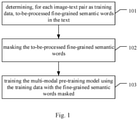
- Fig. 1 is a flow chart of a multi-modal pre-training model acquisition method according to an embodiment of the present disclosure. As shown in Fig. 1 , following specific implementations are included.
- to-be-processed fine-grained semantic words also may be referred to as tokens.
- the fine-grained semantic words in the text may be replaced with special characters or other random tokens by masking, and the specific manner is not limited.
- the multi-modal pre-training model may be trained by using the training data after masking the fine-grained semantic words.
- Common words and fine-grained semantic words in text are not distinguished during training of an existing multi-modal pre-training model.
- some words may be randomly selected for masking, and the selected words are likely to be some common words with little meaning, thereby reducing a model training effect.
- the fine-grained semantic words are important words containing key information to distinguish different scenes.
- the fine-grained semantic words may include entity words, attribute words and relationship words, which are crucial for cross-modal alignment.
- the model can learn fine-grained semantic words, thereby improving model training effects, model performance and the like.
- to-be-processed fine-grained semantic words in the text may be determined first.
- the to-be-processed fine-grained semantic words may include: entity words, attribute words and relationship words, and the attribute represents the attribute of each entity, and the relationship represents the relationship between entities.
- the text in the image-text pair is "A woman in a blue dress is putting her little white cat on top of a brown car in front of her house”
- the entity words may include “woman”, “cat”, “dress”, “car” and “house”
- the attribute words may include “blue”, “white”, “little” and “brown”
- the relationship words may include “in”, “putting”, “on top of' and "in front of'.
- a scene graph corresponding to the text may be acquired, and the to-be-processed fine-grained semantic words are determined according to the acquired scene graph.
- the scene graph may be parsed from the text by using an existing Scene Graph Parser technology.
- the scene graph may include: entity nodes (O), attribute tuples (E) and relationship triples (K), each attribute tuple is composed of one entity node and one attribute node, and each relationship triple is composed of two entity nodes and one relationship node.
- entity nodes may correspond to the entity words in the text
- attribute nodes may correspond to the attribute words in the text
- relationship nodes may correspond to the relationship words in the text.
- the entity nodes in the corresponding scene graph may include “ woman”, “cat”, “dress”, “car” and “house”
- the attribute tuples may include “blue dress”, “white cat”, “little cat” and “brown car”
- the relationship triples may include “ woman in dress”, “ woman putting cat”, “cat on-top-of car” and "car in-front-of house”.
- Fig. 2 is a schematic diagram of three kinds of nodes included in a scene graph according to an embodiment of the present disclosure. As shown in Fig. 2 , the corresponding text is "A woman in a blue dress is putting her little white cat on top of a brown car in front of her house”.
- a predetermined number of entity nodes, attribute tuples and relationship triples may be selected from the scene graph, and then entity words in the text corresponding to the selected entity nodes, attribute words in the text corresponding to attribute nodes in the selected attribute tuples and relationship words in the text corresponding to relationship nodes in the selected relationship triples may be taken as the to-be-processed fine-grained semantic words.
- the number of nodes to be selected may be determined according to the total number of nodes included in the scene graph as the predetermined number; and the predetermined number of entity nodes, attribute tuples and relationship triples are randomly selected from the scene graph. For example, the total number of nodes included in the scene graph multiplied by 30% may be calculated, and the calculation result after rounding down or up may be taken as the number of the nodes to be selected, that is, the predetermined number.
- Fig. 3 is a schematic diagram of nodes selected from a scene graph according to an embodiment of the present disclosure. As shown in Fig. 3 , it is assumed that the selected nodes include "blue", "house” and "on top of', which are an attributed node, an entity node and a relationship node respectively.
- the to-be-processed fine-grained semantic words can be acquired conveniently and accurately, and structured knowledge in the scene graph can be integrated into the training of the multi-modal pre-training model, thereby further improving the model training effects, the model performance and the like.
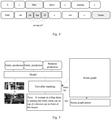
- Fig. 4 is a schematic diagram after masking of the text according to an embodiment of the present disclosure. As shown in Fig. 4 , the to-be-processed fine-grained semantic words "blue", "house” and "on top of' in the text may be masked respectively.
- a multi-modal pre-training model may be further trained using the training data with the fine-grained semantic words masked.
- training tasks of the multi-modal pre-training model may include: entity prediction, attribute prediction and relationship prediction.
- the multi-modal pre-training model may predict masked words in the text according to a context of the text and corresponding image content, that is, the masked words are restored. Then, the predicted words can be compared with real words (i.e., original words in the text), and model parameters may be updated according to comparison results.
- the training of the multi-modal pre-training model is not limited to the entity prediction, the attribute prediction and the relationship prediction.
- other training tasks such as an existing masked region prediction task, may be further included.
- an image-text matching task may be further introduced to model multi-modal representation.
- Fig. 5 is a schematic diagram of a process of acquiring a multi-modal pre-training model according to an embodiment of the present disclosure.
- the text in the image-text pair is "A woman in a blue dress is putting her little white cat on top of a brown car in front of her house”
- the corresponding image is shown in the lower left corner of Fig. 5
- a scene graph may be parsed for the text "A woman in a blue dress is putting her little white cat on top of a brown car in front of her house”
- three nodes "blue”, "house” and "on top of' may be randomly selected from the scene graph.
- the to-be-processed fine-grained semantic words "blue”, “house” and “on top of' in the text may be masked.
- the multi-modal pre-training model may be trained by taking entity prediction, attribute prediction and relationship prediction as training tasks.
- the multi-modal pre-training model may also be fine-tuned according to the training data corresponding to the downstream task.
- visual question-and-answer refers to a given image and a question
- the answer is given by the model.
- Characteristics of the downstream task may be continuously learned based on initialization of the multi-modal pre-training model, and training data corresponding to the downstream task is used for fine tuning.
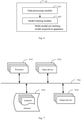
- Fig. 6 is a schematic diagram of a composition structure of a multi-modal pre-training model acquisition apparatus 60 according to an embodiment of the present disclosure. As shown in Fig. 6 , a data processing module 601 and a model training module 602 are included.
- the data processing module 601 is configured to determine, for each image-text pair as training data, to-be-processed fine-grained semantic words in the text, and mask the to-be-processed fine-grained semantic words.
- the model training module 602 is configured to train the multi-modal pre-training model using the training data with the fine-grained semantic words masked.
- to-be-processed fine-grained semantic words which may include: entity words, attribute words and relative words, herein the attributes represents the attribute of each entity, and the relationship represents the relationship between entities.
- the data processing module 601 may acquire a scene graph corresponding to the text, and determine the to-be-processed fine-grained semantic words according to the acquired scene graph.
- the scene graph may include: entity nodes, attribute tuples and relationship triples, each attribute tuple is composed of one entity node and one attribute node, and each relationship triple is composed of two entity nodes and one relationship node.
- the data processing module 601 may select a predetermined number of entity nodes, attribute tuples and relationship triples from the scene graph, and take entity words in the text corresponding to the selected entity nodes, attribute words in the text corresponding to attribute nodes the selected attribute tuples and relationship words in the text corresponding to relationship words in the selected relationship triples as the to-be-processed fine-grained semantic words.
- the data processing module 601 may determine the number of nodes to be selected according to the total number of nodes included in the scene graph as the predetermined number, and randomly select the predetermined number of entity nodes, attribute tuples and relationship triples from the scene graph. For example, the total number of nodes included in the scene graph multiplied by 30% may be calculated, and the calculation result rounding down or up may be taken as the number of the nodes to be selected, that is, the predetermined number.
- the data processing module 601 may further mask the to-be-processed fine-grained semantic words in the text.
- the to-be-processed fine-grained semantic words may be replaced with special characters or other random tokens by masking.
- the model training module 602 may train the multi-modal pre-training model using the training data with the fine-grained semantic words masked.
- training tasks of the multi-modal pre-training model include: entity prediction, attribute prediction and relationship prediction.
- the multi-modal pre-training model may predict masked words in the text according to a context of the text and corresponding image content, that is, the masked words are restored. The predicted words can be compared with real words, and model parameters may be updated according to comparison results.
- the model training module 602 may further fine-tune, for any/each downstream task, the multi-modal pre-training model according to the training data corresponding to the downstream task.
- the model can learn to-be-processed fine-grained semantic words, and can integrate structured knowledge in a scene graph into the training of the multi-modal pre-training model, thereby improving model training effects, model performance and the like.
- an electronic device a readable storage medium and a computer program product are proposed.
- FIG. 7 it is a block diagram of an electronic device for a method according to an embodiment of the present disclosure.
- the electronic device is intended to represent various forms of digital computers, such as laptops, desktops, workbenches, personal digital assistants, servers, blade servers, mainframe computers and other suitable computers.
- the electronic device may further represent various forms of mobile devices, such as personal digital processing, cellular phones, smart phones, wearable devices and other similar computing devices.
- the components, their connections and relationships, and their functions shown herein are examples only, and are not intended to limit the implementation of the present disclosure as described and/or required herein.
- the electronic device includes: one or more processors Y01, a memory Y02, and interfaces for connecting various components, including high-speed interfaces and low-speed interfaces.
- the components are connected to each other by using different buses and may be installed on a common motherboard or otherwise as required.
- the processor may process instructions executed in the electronic device, including instructions stored in the memory or on the memory to display graphical information of a graphical user interface on an external input/output device (such as a display device coupled to the interfaces).
- a plurality of processors and/or buses may be used together with a plurality of memories and a plurality of memories, if necessary.
- a plurality of electronic devices may be connected, each of which provides some necessary operations (for example, as a server array, a set of blade servers, or a multiprocessor system).
- One processor Y01 is taken as an example is Fig. 7 .
- the memory Y02 is the non-instantaneous computer-readable storage medium according to the present disclosure.
- the memory stores instructions executable by at least one processor to make the at least one processor perform the method according to the present disclosure.
- the non-instantaneous computer-readable storage medium according to the present disclosure stores computer instructions. The computer instructions are used to make a computer perform the method according to the present disclosure.
- the memory Y02 may be configured to store non-instantaneous software programs, non-instantaneous computer executable programs and modules, for example, program instructions/modules corresponding to the method in the embodiment of the present disclosure.
- the processor Y01 runs the non-instantaneous software programs, instructions and modules stored in the memory Y02 to execute various functional applications and data processing of a server, that is, to implement the method in the above method embodiment.
- the memory Y02 may include a program storage area and a data storage area.
- the program storage area may store an operating system and an application required by at least one function; and the data storage area may store data created according to use of the electronic device.
- the memory Y02 may include a high-speed random access memory, and may further include a non-instantaneous memory, for example, at least one disk storage device, a flash memory device, or other non-instantaneous solid-state storage devices.
- the memory Y02 optionally includes memories remotely disposed relative to the processor Y01. The remote memories may be connected to the electronic device over a network. Examples of the network include, but are not limited to, the Internet, intranets, blockchain networks, local area networks, mobile communication networks and combinations thereof.
- the electronic device may further include: an input device Y03 and an output device Y04.
- the processor Y01, the memory Y02, the input device Y03 and the output device Y04 may be connected through a bus or in other manners. In Fig. 7 , the connection through a bus is taken as an example.
- the input device Y03 may receive input numerical information or character information, and generate key signal input related to user setting and function control of the electronic device, for example, input devices such as a touch screen, a keypad, a mouse, a trackpad, a touch pad, a pointer, one or more mouse buttons, a trackball, and a joystick.
- the output device Y04 may include a display device, an auxiliary lighting device and a tactile feedback device (e.g., a vibration motor).
- the display device may include, but is not limited to, a liquid crystal display, a light-emitting diode display, and a plasma display. In some implementations, the display device may be a touch screen.
- Various implementations of the systems and technologies described herein may be implemented in a digital electronic circuit system, an integrated circuit system, an application-specific integrated circuit, computer hardware, firmware, software, and/or combinations thereof.
- the various implementations may include: being implemented in one or more computer programs.
- the one or more computer programs may be executed and/or interpreted on a programmable system including at least one programmable processor.
- the programmable processor may be a special-purpose or general-purpose programmable processor, receive data and instructions from a storage system, at least one input device and at least one output device, and transmit the data and the instructions to the storage system, the at least one input device and the at least one output device.
- the computing programs include machine instructions for programmable processors, and may be implemented by using high-level procedural and/or object-oriented programming languages, and/or assembly/machine languages.
- machine-readable medium and “computer-readable medium” refer to any computer program product, device, and/or apparatus (e.g., a magnetic disk, an optical disc, a memory, and a programmable logic device) configured to provide machine instructions and/or data to a programmable processor, including a machine-readable medium that receives machine instructions serving as machine-readable signals.
- machine-readable signal refers to any signal for providing the machine instructions and/or data to the programmable processor.
- the computer has: a display device (e.g., a cathode-ray tube or a liquid crystal display monitor) for displaying information to the user; and a keyboard and a pointing device (e.g., a mouse or trackball) through which the user may provide input for the computer.
- a display device e.g., a cathode-ray tube or a liquid crystal display monitor
- a keyboard and a pointing device e.g., a mouse or trackball
- Other kinds of devices may also be configured to provide interaction with the user.
- a feedback provided for the user may be any form of sensory feedback (e.g., visual, auditory, or tactile feedback); and input from the user may be received in any form (including sound input, voice input, or tactile input).
- the systems and technologies described herein can be implemented in a computing system including background components (e.g., as a data server), or a computing system including middleware components (e.g., an application server), or a computing system including front-end components (e.g., a user computer with a graphical user interface or web browser through which the user can interact with the implementation mode of the systems and technologies described here), or a computing system including any combination of such background components, middleware components or front-end components.
- the components of the system can be connected to each other through any form or medium of digital data communication (e.g., a communication network). Examples of the communication network include: a local area network, a wide area network, a blockchain network and the Internet.
- the computer system may include a client and a server.
- the client and the server are generally far away from each other and generally interact via the communication network.
- a relationship between the client and the server is generated through computer programs that run on a corresponding computer and have a client-server relationship with each other.
- the server may be a cloud server, also known as a cloud computing server or cloud host, which is a host product in the cloud computing service system to solve the problems of difficult management and weak business scalability in the traditional physical host and VPS services.
Landscapes
- Engineering & Computer Science (AREA)
- Theoretical Computer Science (AREA)
- Physics & Mathematics (AREA)
- General Physics & Mathematics (AREA)
- Artificial Intelligence (AREA)
- General Engineering & Computer Science (AREA)
- General Health & Medical Sciences (AREA)
- Health & Medical Sciences (AREA)
- Computational Linguistics (AREA)
- Software Systems (AREA)
- Audiology, Speech & Language Pathology (AREA)
- Computer Vision & Pattern Recognition (AREA)
- Data Mining & Analysis (AREA)
- Evolutionary Computation (AREA)
- Computing Systems (AREA)
- Medical Informatics (AREA)
- Mathematical Physics (AREA)
- Multimedia (AREA)
- Databases & Information Systems (AREA)
- Library & Information Science (AREA)
- Life Sciences & Earth Sciences (AREA)
- Bioinformatics & Cheminformatics (AREA)
- Bioinformatics & Computational Biology (AREA)
- Evolutionary Biology (AREA)
- Information Retrieval, Db Structures And Fs Structures Therefor (AREA)
- Machine Translation (AREA)
Abstract
Description
- The present disclosure relates to computer application technologies, particularly to the fields of deep learning and natural language processing (NLP), and more particularly to a multi-modal pre-training model acquisition method and apparatus, an electronic device, a storage medium and a computer program product.
- In recent years, the learning paradigm of pre-training large-scale data to learn generic semantic representation and fine-tuning various downstream tasks has been widely applied to the field of NLP.
- Many real scenes involve information of multiple modes at the same time, for example, image-text pre-training models and the like gradually attract attention. A current multi-modal pre-training model generally uses aligned image-text pairs (corpus) for training, without distinguishing common words and fine-grained semantic words in the text, which leads to a poor training effect of the model.
- The present disclosure provides a multi-modal pre-training model acquisition method and apparatus, an electronic device, a storage medium and a computer program product.
- A multi-modal pre-training model acquisition method includes:
- determining, for each image-text pair as training data, to-be-processed fine-grained semantic words in the text;
- masking the to-be-processed fine-grained semantic words; and
- training the multi-modal pre-training model using the training data with the fine-grained semantic words masked.
- A multi-modal pre-training model acquisition apparatus includes:
- a data processing module configured for determining, for each image-text pair as training data, to-be-processed fine-grained semantic words in the text, and masking the to-be-processed fine-grained semantic words; and
- the model training module being configured to train the multi-modal pre-training model using the training data with the fine-grained semantic words masked.
- An electronic device includes:
- at least one processor; and
- a memory in communication connection with the at least one processor;
- the memory stores instructions executable by the at least one processor, and the instructions are executed by the at least one processor to enable the at least one processor to perform the method as described above.
- A non-transitory computer-readable storage medium including instructions, which, when executed by a computer, cause the computer to carry out the method as described above.
- A computer program product including instructions which, when the program is executed by a computer, cause the computer to carry out the method as described above.
- One or more embodiments in the present disclosure has the following advantages or beneficial effects: the model can learn fine-grained semantic words which are crucial for cross-modal alignment, thereby improving model training effects, model performance and the like.
- It shall be understood that the content described in this part is neither intended to identify key or important features of embodiments of the present disclosure and nor intended to limit the scope of the present disclosure. Other effects of the above alternatives will be described below with reference to specific embodiments.
- The accompanying drawings are intended to better understand the solution and do not constitute limitations on the present disclosure. In the drawings,
-
Fig. 1 is a flow chart of a multi-modal pre-training model acquisition method according to an embodiment of the present disclosure; -
Fig. 2 is a schematic diagram of three kinds of nodes included in a scene graph according to an embodiment of the present disclosure; -
Fig. 3 is a schematic diagram of nodes selected from a scene graph according to an embodiment of the present disclosure; -
Fig. 4 is a schematic diagram after masking of the text according to an embodiment of the present disclosure; -
Fig. 5 is a schematic diagram of a process of acquiring a multi-modal pre-training model according to an embodiment of the present disclosure; -
Fig. 6 is a schematic diagram of a composition structure of a multi-modal pre-trainingmodel acquisition apparatus 60 according to an embodiment of the present disclosure; and -
Fig. 7 is a block diagram of an electronic device for the method according to an embodiment of the present disclosure. - Exemplary embodiments of the present disclosure are described below with reference to the accompanying drawings, including various details of the embodiments of the present disclosure to facilitate understanding, and should be considered as exemplary only. Therefore, those of ordinary skill in the art should be aware that various changes and modifications can be made to the embodiments described herein without departing from the scope and spirit of the present disclosure. Similarly, for clarity and simplicity, descriptions of well-known functions and structures are omitted in the following description.
- In addition, it shall be understood that the word "and/or" herein is merely an association relationship describing associated objects, indicating that three relationships may exist. For example, A and/or B indicates that there are three cases of A alone, A and B together, and B alone. In addition, the character "/" herein generally means that associated objects before and after it are in an "or" relationship.
-
Fig. 1 is a flow chart of a multi-modal pre-training model acquisition method according to an embodiment of the present disclosure. As shown inFig. 1 , following specific implementations are included. - In 101, determining, for each image-text pair as training data, to-be-processed fine-grained semantic words in the text.
- Generally, there are a plurality of to-be-processed fine-grained semantic words (also may be referred to as tokens).
- In 102, masking the to-be-processed fine-grained semantic words.
- The fine-grained semantic words in the text may be replaced with special characters or other random tokens by masking, and the specific manner is not limited.
- In 103, training the multi-modal pre-training model using the training data with the fine-grained semantic words masked.
- The multi-modal pre-training model may be trained by using the training data after masking the fine-grained semantic words.
- Common words and fine-grained semantic words in text are not distinguished during training of an existing multi-modal pre-training model. Generally, some words may be randomly selected for masking, and the selected words are likely to be some common words with little meaning, thereby reducing a model training effect.
- The fine-grained semantic words are important words containing key information to distinguish different scenes. The fine-grained semantic words may include entity words, attribute words and relationship words, which are crucial for cross-modal alignment.
- In the above embodiment, the model can learn fine-grained semantic words, thereby improving model training effects, model performance and the like.
- As described in 101, for any/each image-text pair as training data, to-be-processed fine-grained semantic words in the text may be determined first. The to-be-processed fine-grained semantic words may include: entity words, attribute words and relationship words, and the attribute represents the attribute of each entity, and the relationship represents the relationship between entities.
- For example, the text in the image-text pair is "A woman in a blue dress is putting her little white cat on top of a brown car in front of her house", here the entity words may include "woman", "cat", "dress", "car" and "house", the attribute words may include "blue", "white", "little" and "brown", and the relationship words may include "in", "putting", "on top of' and "in front of'.
- A scene graph corresponding to the text may be acquired, and the to-be-processed fine-grained semantic words are determined according to the acquired scene graph. The scene graph may be parsed from the text by using an existing Scene Graph Parser technology.
- The scene graph may include: entity nodes (O), attribute tuples (E) and relationship triples (K), each attribute tuple is composed of one entity node and one attribute node, and each relationship triple is composed of two entity nodes and one relationship node. The entity nodes may correspond to the entity words in the text, the attribute nodes may correspond to the attribute words in the text, and the relationship nodes may correspond to the relationship words in the text. For example, for the text "A woman in a blue dress is putting her little white cat on top of a brown car in front of her house", the entity nodes in the corresponding scene graph may include "woman", "cat", "dress", "car" and "house", the attribute tuples may include "blue dress", "white cat", "little cat" and "brown car", and the relationship triples may include "woman in dress", "woman putting cat", "cat on-top-of car" and "car in-front-of house".
-
Fig. 2 is a schematic diagram of three kinds of nodes included in a scene graph according to an embodiment of the present disclosure. As shown inFig. 2 , the corresponding text is "A woman in a blue dress is putting her little white cat on top of a brown car in front of her house". - When the to-be-processed fine-grained semantic words are determined according to the scene graph, a predetermined number of entity nodes, attribute tuples and relationship triples may be selected from the scene graph, and then entity words in the text corresponding to the selected entity nodes, attribute words in the text corresponding to attribute nodes in the selected attribute tuples and relationship words in the text corresponding to relationship nodes in the selected relationship triples may be taken as the to-be-processed fine-grained semantic words.
- The number of nodes to be selected may be determined according to the total number of nodes included in the scene graph as the predetermined number; and the predetermined number of entity nodes, attribute tuples and relationship triples are randomly selected from the scene graph. For example, the total number of nodes included in the scene graph multiplied by 30% may be calculated, and the calculation result after rounding down or up may be taken as the number of the nodes to be selected, that is, the predetermined number.
- As described above, entity words in the text corresponding to the selected entity nodes, attribute words in the text corresponding to attribute nodes in the selected attribute tuples and relationship words in the text corresponding to relationship nodes in the selected relationship triples may be taken as the to-be-processed fine-grained semantic words.
Fig. 3 is a schematic diagram of nodes selected from a scene graph according to an embodiment of the present disclosure. As shown inFig. 3 , it is assumed that the selected nodes include "blue", "house" and "on top of', which are an attributed node, an entity node and a relationship node respectively. - It may be seen that with the scene graph, the to-be-processed fine-grained semantic words can be acquired conveniently and accurately, and structured knowledge in the scene graph can be integrated into the training of the multi-modal pre-training model, thereby further improving the model training effects, the model performance and the like.
- As described in 102, the to-be-processed fine-grained semantic words in the text may be masked. How to perform masking is the prior art. By masking, the to-be-processed fine-grained semantic words in the text may be replaced with special characters [MASK] or other random tokens.
Fig. 4 is a schematic diagram after masking of the text according to an embodiment of the present disclosure. As shown inFig. 4 , the to-be-processed fine-grained semantic words "blue", "house" and "on top of' in the text may be masked respectively. - Further, as described in 103, a multi-modal pre-training model may be further trained using the training data with the fine-grained semantic words masked. Corresponding to types of the masked words, training tasks of the multi-modal pre-training model may include: entity prediction, attribute prediction and relationship prediction.
- The multi-modal pre-training model may predict masked words in the text according to a context of the text and corresponding image content, that is, the masked words are restored. Then, the predicted words can be compared with real words (i.e., original words in the text), and model parameters may be updated according to comparison results.
- It is to be noted that in the present disclosure, the training of the multi-modal pre-training model is not limited to the entity prediction, the attribute prediction and the relationship prediction. Generally, other training tasks, such as an existing masked region prediction task, may be further included. In addition, an image-text matching task may be further introduced to model multi-modal representation.
- Based on the above introduction,
Fig. 5 is a schematic diagram of a process of acquiring a multi-modal pre-training model according to an embodiment of the present disclosure. As shown inFig. 5 , assuming that the text in the image-text pair is "A woman in a blue dress is putting her little white cat on top of a brown car in front of her house", the corresponding image is shown in the lower left corner ofFig. 5 , a scene graph may be parsed for the text "A woman in a blue dress is putting her little white cat on top of a brown car in front of her house", and three nodes "blue", "house" and "on top of' may be randomly selected from the scene graph. Correspondingly, the to-be-processed fine-grained semantic words "blue", "house" and "on top of' in the text may be masked. As shown inFig. 4 , the multi-modal pre-training model may be trained by taking entity prediction, attribute prediction and relationship prediction as training tasks. - After the completion of the training of the multi-modal pre-training model, for any/each downstream task, the multi-modal pre-training model may also be fine-tuned according to the training data corresponding to the downstream task.
- Taking a visual question-and-answer downstream task as an example, visual question-and-answer refers to a given image and a question, the answer is given by the model. Characteristics of the downstream task may be continuously learned based on initialization of the multi-modal pre-training model, and training data corresponding to the downstream task is used for fine tuning.
- Since the amount of data in the downstream task is usually small, the effect of each downstream task can be significantly improved based on semantic information learned by the multi-modal pre-training model.
- It is to be noted that, for ease of description, the foregoing method embodiment is described as a series of action combinations. However, those skilled in the art should understand that the embodiments of the present disclosure are not limited to the sequence of actions described, as some steps may be performed in another sequence or simultaneously according to the present disclosure. Next, those skilled in the art should also understand that the embodiments described in this specification are merely exemplarily, and actions and modules involved are not necessarily mandatory to the present disclosure.
- The above is an introduction to the method embodiment, and the following is a further description of the solution according to the present disclosure through an apparatus embodiment.
-
Fig. 6 is a schematic diagram of a composition structure of a multi-modal pre-trainingmodel acquisition apparatus 60 according to an embodiment of the present disclosure. As shown inFig. 6 , adata processing module 601 and amodel training module 602 are included. - The
data processing module 601 is configured to determine, for each image-text pair as training data, to-be-processed fine-grained semantic words in the text, and mask the to-be-processed fine-grained semantic words. - The
model training module 602 is configured to train the multi-modal pre-training model using the training data with the fine-grained semantic words masked. - There are generally a plurality of to-be-processed fine-grained semantic words, which may include: entity words, attribute words and relative words, herein the attributes represents the attribute of each entity, and the relationship represents the relationship between entities.
- The
data processing module 601 may acquire a scene graph corresponding to the text, and determine the to-be-processed fine-grained semantic words according to the acquired scene graph. - The scene graph may include: entity nodes, attribute tuples and relationship triples, each attribute tuple is composed of one entity node and one attribute node, and each relationship triple is composed of two entity nodes and one relationship node.
- The
data processing module 601 may select a predetermined number of entity nodes, attribute tuples and relationship triples from the scene graph, and take entity words in the text corresponding to the selected entity nodes, attribute words in the text corresponding to attribute nodes the selected attribute tuples and relationship words in the text corresponding to relationship words in the selected relationship triples as the to-be-processed fine-grained semantic words. - The
data processing module 601 may determine the number of nodes to be selected according to the total number of nodes included in the scene graph as the predetermined number, and randomly select the predetermined number of entity nodes, attribute tuples and relationship triples from the scene graph. For example, the total number of nodes included in the scene graph multiplied by 30% may be calculated, and the calculation result rounding down or up may be taken as the number of the nodes to be selected, that is, the predetermined number. - The
data processing module 601 may further mask the to-be-processed fine-grained semantic words in the text. The to-be-processed fine-grained semantic words may be replaced with special characters or other random tokens by masking. - The
model training module 602 may train the multi-modal pre-training model using the training data with the fine-grained semantic words masked. Corresponding to types of the masked words, training tasks of the multi-modal pre-training model include: entity prediction, attribute prediction and relationship prediction. The multi-modal pre-training model may predict masked words in the text according to a context of the text and corresponding image content, that is, the masked words are restored. The predicted words can be compared with real words, and model parameters may be updated according to comparison results. - The
model training module 602 may further fine-tune, for any/each downstream task, the multi-modal pre-training model according to the training data corresponding to the downstream task. - The specific workflow of the apparatus embodiment shown in
Fig. 6 can be obtained with reference to the related description in the above method embodiment and is not repeated. - In conclusion, by the technical solution in the apparatus embodiment of the present disclosure, the model can learn to-be-processed fine-grained semantic words, and can integrate structured knowledge in a scene graph into the training of the multi-modal pre-training model, thereby improving model training effects, model performance and the like.
- According to an embodiment of the present disclosure, an electronic device, a readable storage medium and a computer program product are proposed.
- As shown in
Fig. 7 , it is a block diagram of an electronic device for a method according to an embodiment of the present disclosure. The electronic device is intended to represent various forms of digital computers, such as laptops, desktops, workbenches, personal digital assistants, servers, blade servers, mainframe computers and other suitable computers. The electronic device may further represent various forms of mobile devices, such as personal digital processing, cellular phones, smart phones, wearable devices and other similar computing devices. The components, their connections and relationships, and their functions shown herein are examples only, and are not intended to limit the implementation of the present disclosure as described and/or required herein. - As shown in
Fig. 7 , the electronic device includes: one or more processors Y01, a memory Y02, and interfaces for connecting various components, including high-speed interfaces and low-speed interfaces. The components are connected to each other by using different buses and may be installed on a common motherboard or otherwise as required. The processor may process instructions executed in the electronic device, including instructions stored in the memory or on the memory to display graphical information of a graphical user interface on an external input/output device (such as a display device coupled to the interfaces). In other implementations, a plurality of processors and/or buses may be used together with a plurality of memories and a plurality of memories, if necessary. Similarly, a plurality of electronic devices may be connected, each of which provides some necessary operations (for example, as a server array, a set of blade servers, or a multiprocessor system). One processor Y01 is taken as an example isFig. 7 . - The memory Y02 is the non-instantaneous computer-readable storage medium according to the present disclosure. The memory stores instructions executable by at least one processor to make the at least one processor perform the method according to the present disclosure. The non-instantaneous computer-readable storage medium according to the present disclosure stores computer instructions. The computer instructions are used to make a computer perform the method according to the present disclosure.
- The memory Y02, as a non-instantaneous computer-readable storage medium, may be configured to store non-instantaneous software programs, non-instantaneous computer executable programs and modules, for example, program instructions/modules corresponding to the method in the embodiment of the present disclosure. The processor Y01 runs the non-instantaneous software programs, instructions and modules stored in the memory Y02 to execute various functional applications and data processing of a server, that is, to implement the method in the above method embodiment.
- The memory Y02 may include a program storage area and a data storage area. The program storage area may store an operating system and an application required by at least one function; and the data storage area may store data created according to use of the electronic device. In addition, the memory Y02 may include a high-speed random access memory, and may further include a non-instantaneous memory, for example, at least one disk storage device, a flash memory device, or other non-instantaneous solid-state storage devices. In some embodiments, the memory Y02 optionally includes memories remotely disposed relative to the processor Y01. The remote memories may be connected to the electronic device over a network. Examples of the network include, but are not limited to, the Internet, intranets, blockchain networks, local area networks, mobile communication networks and combinations thereof.
- The electronic device may further include: an input device Y03 and an output device Y04. The processor Y01, the memory Y02, the input device Y03 and the output device Y04 may be connected through a bus or in other manners. In
Fig. 7 , the connection through a bus is taken as an example. - The input device Y03 may receive input numerical information or character information, and generate key signal input related to user setting and function control of the electronic device, for example, input devices such as a touch screen, a keypad, a mouse, a trackpad, a touch pad, a pointer, one or more mouse buttons, a trackball, and a joystick. The output device Y04 may include a display device, an auxiliary lighting device and a tactile feedback device (e.g., a vibration motor). The display device may include, but is not limited to, a liquid crystal display, a light-emitting diode display, and a plasma display. In some implementations, the display device may be a touch screen.
- Various implementations of the systems and technologies described herein may be implemented in a digital electronic circuit system, an integrated circuit system, an application-specific integrated circuit, computer hardware, firmware, software, and/or combinations thereof. The various implementations may include: being implemented in one or more computer programs. The one or more computer programs may be executed and/or interpreted on a programmable system including at least one programmable processor. The programmable processor may be a special-purpose or general-purpose programmable processor, receive data and instructions from a storage system, at least one input device and at least one output device, and transmit the data and the instructions to the storage system, the at least one input device and the at least one output device.
- The computing programs (also referred to as programs, software, software applications, or code) include machine instructions for programmable processors, and may be implemented by using high-level procedural and/or object-oriented programming languages, and/or assembly/machine languages. As used herein, the words "machine-readable medium" and "computer-readable medium" refer to any computer program product, device, and/or apparatus (e.g., a magnetic disk, an optical disc, a memory, and a programmable logic device) configured to provide machine instructions and/or data to a programmable processor, including a machine-readable medium that receives machine instructions serving as machine-readable signals. The word "machine-readable signal" refers to any signal for providing the machine instructions and/or data to the programmable processor.
- To provide interaction with a user, the systems and technologies described here can be implemented on a computer. The computer has: a display device (e.g., a cathode-ray tube or a liquid crystal display monitor) for displaying information to the user; and a keyboard and a pointing device (e.g., a mouse or trackball) through which the user may provide input for the computer. Other kinds of devices may also be configured to provide interaction with the user. For example, a feedback provided for the user may be any form of sensory feedback (e.g., visual, auditory, or tactile feedback); and input from the user may be received in any form (including sound input, voice input, or tactile input).
- The systems and technologies described herein can be implemented in a computing system including background components (e.g., as a data server), or a computing system including middleware components (e.g., an application server), or a computing system including front-end components (e.g., a user computer with a graphical user interface or web browser through which the user can interact with the implementation mode of the systems and technologies described here), or a computing system including any combination of such background components, middleware components or front-end components. The components of the system can be connected to each other through any form or medium of digital data communication (e.g., a communication network). Examples of the communication network include: a local area network, a wide area network, a blockchain network and the Internet.
- The computer system may include a client and a server. The client and the server are generally far away from each other and generally interact via the communication network. A relationship between the client and the server is generated through computer programs that run on a corresponding computer and have a client-server relationship with each other. The server may be a cloud server, also known as a cloud computing server or cloud host, which is a host product in the cloud computing service system to solve the problems of difficult management and weak business scalability in the traditional physical host and VPS services.
- It shall be understood that the steps can be reordered, added, or deleted using the various forms of processes shown above. For example, the steps described in the present disclosure may be executed in parallel or sequentially or in different sequences, provided that desired results of the technical solutions disclosed in the present disclosure are achieved, which is not limited herein.
- The above specific implementations do not limit the extent of protection of the present disclosure. Those skilled in the art should understand that various modifications, combinations, sub-combinations, and replacements can be made according to design requirements and other factors. Any modifications, equivalent substitutions and improvements made within the spirit and principle of the present disclosure all should be included in the extent of protection of the present disclosure.
Claims (15)
- A multi-modal pre-training model acquisition method, comprising:determining (101), for each image-text pair as training data, to-be-processed fine-grained semantic words in the text;masking (102) the to-be-processed fine-grained semantic words; andtraining (103) the multi-modal pre-training model using the training data with the fine-grained semantic words masked.
- The method according to claim 1, wherein the to-be-processed fine-grained semantic words comprise: entity words, attribute words and relationship words, wherein the attribute represents the attribute of each entity, and the relationship represents the relationship between entities.
- The method according to claim 2, wherein the determining (101) to-be-processed fine-grained semantic words in the text comprises: acquiring a scene graph corresponding to the text, and determining the to-be-processed fine-grained semantic words according to the scene graph.
- The method according to claim 3, wherein the scene graph comprises: entity nodes, attribute tuples and relationship triples, each attribute tuple is composed of one entity node and one attribute node, and each relationship triple is composed of two entity nodes and one relationship node; and
wherein the determining the to-be-processed fine-grained semantic words according to the scene graph comprises:
selecting a predetermined number of entity nodes, attribute tuples and relationship triples from the scene graph, and taking entity words in the text corresponding to the selected entity nodes, attribute words in the text corresponding to attribute nodes in the selected attribute tuples, and relationship words in the text corresponding to relationship nodes in the selected relationship triples, as the to-be-processed fine-grained semantic words. - The method according to claim 4, wherein the selecting the predetermined number of entity nodes, attribute tuples and relationship triples from the scene graph comprises:
determining a number of nodes to be selected according to a total number of nodes comprised in the scene graph as the predetermined number; and randomly selecting the predetermined number of entity nodes, attribute tuples and relationship triples from the scene graph. - The method according to any one of claims 2 to 5, wherein training tasks of the multi-modal pre-training model comprise: entity prediction, attribute prediction and relationship prediction; and
wherein the multi-modal pre-training model predicts masked words in the text according to a context of the text and corresponding image content. - The method according to any one of claims 1 to 6, further comprising:
after completion of the training of the multi-modal pre-training model, fine-tuning, for any downstream task, the multi-modal pre-training model according to the training data corresponding to the downstream task. - A multi-modal pre-training model acquisition apparatus, comprising:means for determining (101), for each image-text pair as training data, to-be-processed fine-grained semantic word in the text, andmeans for masking (102) the to-be-processed fine-grained semantic words; andmeans for training (103) the multi-modal pre-training model using the training data with the fine-grained semantic words masked.
- The apparatus according to claim 8, wherein the to-be-processed fine-grained semantic words comprise: entity words, attribute words and relationship words, wherein the attribute represents the attribute of each entity, and the relationship represents the relationship between entities, and
wherein the means for determining (101) comprises: means for acquiring a scene graph corresponding to the text, and means for determining the to-be-processed fine-grained semantic words according to the scene graph. - The apparatus according to claim 9, wherein the scene graph comprises: entity nodes, attribute tuples and relationship triples, each attribute tuple is composed of one entity node and one attribute node, and each relationship triple is composed of two entity nodes and one relationship node; and
wherein the means for determining the to-be-processed fine-grained semantic words according to the scene graph comprises:means for selecting a predetermined number of entity nodes, attribute tuples and relationship triples from the scene graph, andmeans for taking entity words in the text corresponding to the selected entity nodes, attribute words in the text corresponding to attribute nodes in the selected attribute tuples and relationship words in the text corresponding to relationship nodes in the selected relationship triples as the to-be-processed fine-grained semantic words. - The apparatus according to claim 10, wherein the means for selecting comprises: means for determining a number of nodes to be selected according to a total number of nodes comprised in the scene graph as the predetermined number; and means for randomly selecting the predetermined number of entity nodes, attribute tuples and relationship triples from the scene graph.
- The apparatus according to any one of claims 9 to 11, wherein training tasks of the multi-modal pre-training model comprise: entity prediction, attribute prediction and relationship prediction; and
wherein the multi-modal pre-training model predicts masked words in the text according to a context of the text and corresponding image content. - An electronic device, comprising:at least one processor (Y01); anda memory (Y02) in communication connection with the at least one processor (Y01); whereinthe memory (Y02) stores instructions executable by the at least one processor (Y01), and the instructions are executed by the at least one processor (Y01) to enable the at least one processor (Y01) to carry out the method according to any one of claims 1 to 7.
- A non-transitory computer-readable storage medium comprising instructions, which, when executed by a computer, cause the computer to carry out the method according to any one of claims 1 to 7.
- A computer program product comprising instructions which, when the program is executed by a computer, cause the computer to carry out the method according to any one of claims 1 to 7.
Applications Claiming Priority (1)
| Application Number | Priority Date | Filing Date | Title |
|---|---|---|---|
| CN202010676107.3A CN112001180A (en) | 2020-07-14 | 2020-07-14 | Multi-mode pre-training model acquisition method and device, electronic equipment and storage medium |
Publications (1)
| Publication Number | Publication Date |
|---|---|
| EP3940580A1 true EP3940580A1 (en) | 2022-01-19 |
Family
ID=73466458
Family Applications (1)
| Application Number | Title | Priority Date | Filing Date |
|---|---|---|---|
| EP21173093.2A Ceased EP3940580A1 (en) | 2020-07-14 | 2021-05-10 | Multi-modal pre-training model acquisition method and apparatus, electrnonic device and storage medium |
Country Status (5)
| Country | Link |
|---|---|
| US (1) | US11928432B2 (en) |
| EP (1) | EP3940580A1 (en) |
| JP (1) | JP2022018095A (en) |
| KR (1) | KR102648232B1 (en) |
| CN (1) | CN112001180A (en) |
Cited By (1)
| Publication number | Priority date | Publication date | Assignee | Title |
|---|---|---|---|---|
| CN115631251A (en) * | 2022-09-07 | 2023-01-20 | 北京百度网讯科技有限公司 | Method, device, electronic device and medium for generating image based on text |
Families Citing this family (29)
| Publication number | Priority date | Publication date | Assignee | Title |
|---|---|---|---|---|
| US11123639B2 (en) | 2019-11-18 | 2021-09-21 | Sony Interactive Entertainment Inc. | Server-based mechanics help determination from aggregated user data |
| CN112507706B (en) * | 2020-12-21 | 2023-01-31 | 北京百度网讯科技有限公司 | Training method and device for knowledge pre-training model and electronic equipment |
| US20240185545A1 (en) * | 2021-04-21 | 2024-06-06 | Sony Group Corporation | Display control device, display control method, and program |
| CN113590844A (en) * | 2021-08-09 | 2021-11-02 | 北京智源人工智能研究院 | Knowledge graph-based question-answer library generation method and device, electronic equipment and storage medium |
| CN113780194B (en) * | 2021-09-15 | 2026-03-20 | 北京京东尚科信息技术有限公司 | Multimodal pre-training methods and devices |
| US11989318B2 (en) * | 2022-01-04 | 2024-05-21 | Bank Of America Corporation | System and method for dynamic masking of data in a network |
| CN114610878B (en) * | 2022-02-25 | 2024-11-22 | 阿里云计算有限公司 | Model training method, computer device and computer readable storage medium |
| CN114565104B (en) * | 2022-03-01 | 2025-08-15 | 腾讯科技(深圳)有限公司 | Pre-training method, result recommending method and related device of language model |
| CN114626371B (en) * | 2022-03-22 | 2024-05-10 | 鼎富智能科技有限公司 | Training method and device for pre-training language model |
| CN114821223B (en) * | 2022-03-30 | 2025-07-08 | 杭州阿里巴巴海外互联网产业有限公司 | Pre-training image text model processing method and image-text retrieval system |
| CN114461839B (en) * | 2022-04-12 | 2023-02-07 | 智者四海(北京)技术有限公司 | Multi-mode pre-training-based similar picture retrieval method and device and electronic equipment |
| CN114692778B (en) * | 2022-04-13 | 2023-07-25 | 北京百度网讯科技有限公司 | Multi-mode sample set generation method, training method and device for intelligent inspection |
| CN114972910B (en) * | 2022-05-20 | 2023-05-23 | 北京百度网讯科技有限公司 | Training method and device for image-text recognition model, electronic equipment and storage medium |
| CN114792424B (en) * | 2022-05-30 | 2024-08-30 | 北京百度网讯科技有限公司 | Document image processing method, device and electronic equipment |
| CN115131638B (en) * | 2022-05-31 | 2024-03-15 | 腾讯科技(深圳)有限公司 | Training methods, devices, media and equipment for visual text pre-training models |
| CN115048996B (en) * | 2022-06-10 | 2025-07-01 | 五八同城信息技术有限公司 | Quality assessment model training and use method, equipment and storage medium |
| CN115082602B (en) * | 2022-06-15 | 2023-06-09 | 北京百度网讯科技有限公司 | Method for generating digital person, training method, training device, training equipment and training medium for model |
| CN114973294B (en) * | 2022-07-28 | 2022-10-21 | 平安科技(深圳)有限公司 | Image-text matching method, device, equipment and storage medium |
| CN115660036B (en) * | 2022-09-22 | 2024-05-24 | 北京百度网讯科技有限公司 | Model pre-training and task processing method, device, electronic device and storage medium |
| KR20240097005A (en) | 2022-12-19 | 2024-06-27 | 한국전자통신연구원 | Method for domain adaptation of large-capacity pre-trained language model using semantic chunk dynamic weight masking |
| CN116150623B (en) * | 2023-02-24 | 2026-05-01 | 北京爱奇艺科技有限公司 | Training method and device of cross-modal retrieval model |
| CN116561570A (en) * | 2023-03-31 | 2023-08-08 | 北京京东方技术开发有限公司 | A multi-modal model training method, device, equipment and readable storage medium |
| US20240408484A1 (en) * | 2023-06-09 | 2024-12-12 | Sony Interactive Entertainment LLC | Ai highlight detection trained on shared video |
| US12521627B2 (en) | 2023-06-09 | 2026-01-13 | Sony Interactive Entertainment Inc. | Indirect video game context determination based on game I/O |
| US12496529B2 (en) | 2023-07-07 | 2025-12-16 | Sony Interactive Entertainment Inc. | Method for personalizing a video game trophy |
| US12491436B2 (en) | 2023-07-31 | 2025-12-09 | Sony Interactive Entertainment Inc. | Virtual assistant for game discovery |
| CN117115835A (en) * | 2023-09-21 | 2023-11-24 | 北京字跳网络技术有限公司 | Training methods, devices, equipment and storage media for target detection models |
| CN118864802B (en) * | 2024-09-25 | 2024-12-24 | 中国科学院自动化研究所 | Training method and device for vehicle re-identification model and vehicle re-identification method |
| CN119359850B (en) * | 2024-12-26 | 2025-05-02 | 科大讯飞(苏州)科技有限公司 | Image generation method, device, electronic equipment and storage medium |
Citations (1)
| Publication number | Priority date | Publication date | Assignee | Title |
|---|---|---|---|---|
| CN112668671A (en) * | 2021-03-15 | 2021-04-16 | 北京百度网讯科技有限公司 | Method and device for acquiring pre-training model |
Family Cites Families (16)
| Publication number | Priority date | Publication date | Assignee | Title |
|---|---|---|---|---|
| US10089742B1 (en) | 2017-03-14 | 2018-10-02 | Adobe Systems Incorporated | Automatically segmenting images based on natural language phrases |
| KR20190040825A (en) * | 2017-10-11 | 2019-04-19 | 주식회사 씨세론 | Apparatus and method for processing data |
| JP6789601B2 (en) | 2017-10-26 | 2020-11-25 | Kddi株式会社 | A learning video selection device, program, and method for selecting a captured video masking a predetermined image area as a learning video. |
| US11042922B2 (en) | 2018-01-03 | 2021-06-22 | Nec Corporation | Method and system for multimodal recommendations |
| CN108304911B (en) * | 2018-01-09 | 2020-03-13 | 中国科学院自动化研究所 | Knowledge extraction method, system and equipment based on memory neural network |
| CN108256070B (en) * | 2018-01-17 | 2022-07-15 | 北京百度网讯科技有限公司 | Method and apparatus for generating information |
| CN108280061B (en) * | 2018-01-17 | 2021-10-26 | 北京百度网讯科技有限公司 | Text processing method and device based on ambiguous entity words |
| US11093560B2 (en) * | 2018-09-21 | 2021-08-17 | Microsoft Technology Licensing, Llc | Stacked cross-modal matching |
| CN111078844B (en) * | 2018-10-18 | 2023-03-14 | 上海交通大学 | Task-based dialog system and method for software crowdsourcing |
| KR102797062B1 (en) * | 2018-11-05 | 2025-04-18 | 삼성전자주식회사 | Electronic apparatus and control method thereof |
| CN110442684B (en) * | 2019-08-14 | 2020-06-30 | 山东大学 | A text content-based recommendation method for similar cases |
| US11238631B2 (en) * | 2019-08-19 | 2022-02-01 | Sri International | Align-to-ground, weakly supervised phrase grounding guided by image-caption alignment |
| CN110705301B (en) * | 2019-09-30 | 2021-01-26 | 北京京东智能城市大数据研究院 | Entity relationship extraction method and device, storage medium and electronic equipment |
| CN110688857B (en) * | 2019-10-08 | 2023-04-21 | 北京金山数字娱乐科技有限公司 | Article generation method and device |
| CN111144108B (en) * | 2019-12-26 | 2023-06-27 | 北京百度网讯科技有限公司 | Modeling method and device of emotion tendentiousness analysis model and electronic equipment |
| CN111339774B (en) * | 2020-02-07 | 2022-11-29 | 腾讯科技(深圳)有限公司 | Text entity relation extraction method and model training method |
-
2020
- 2020-07-14 CN CN202010676107.3A patent/CN112001180A/en active Pending
-
2021
- 2021-05-10 EP EP21173093.2A patent/EP3940580A1/en not_active Ceased
- 2021-05-13 US US17/319,189 patent/US11928432B2/en active Active
- 2021-07-05 KR KR1020210087885A patent/KR102648232B1/en active Active
- 2021-07-09 JP JP2021114210A patent/JP2022018095A/en active Pending
Patent Citations (1)
| Publication number | Priority date | Publication date | Assignee | Title |
|---|---|---|---|---|
| CN112668671A (en) * | 2021-03-15 | 2021-04-16 | 北京百度网讯科技有限公司 | Method and device for acquiring pre-training model |
Non-Patent Citations (3)
| Title |
|---|
| "Advances in Cryptology - CRYPTO 2013", 13 April 2020, SPRINGER BERLIN HEIDELBERG, ISSN: 0302-9743, article LI XIUJUN ET AL: "Oscar: Object-Semantics Aligned Pre-training for Vision-Language Tasks", pages: 121 - 137, XP055854484, 032528, DOI: 10.1007/978-3-030-58577-8_8 * |
| FEI YU ET AL: "ERNIE-ViL: Knowledge Enhanced Vision-Language Representations Through Scene Graph", ARXIV.ORG, CORNELL UNIVERSITY LIBRARY, 201 OLIN LIBRARY CORNELL UNIVERSITY ITHACA, NY 14853, 30 June 2020 (2020-06-30), XP081701129 * |
| HU XIAOWEI ET AL: "VIVO: Surpassing Human Performance in Novel Object Captioning with Visual Vocabulary Pre-Training", 28 September 2020 (2020-09-28), XP055854501, Retrieved from the Internet <URL:https://arxiv.org/pdf/2009.13682v1.pdf> [retrieved on 20211025] * |
Cited By (2)
| Publication number | Priority date | Publication date | Assignee | Title |
|---|---|---|---|---|
| CN115631251A (en) * | 2022-09-07 | 2023-01-20 | 北京百度网讯科技有限公司 | Method, device, electronic device and medium for generating image based on text |
| CN115631251B (en) * | 2022-09-07 | 2023-09-22 | 北京百度网讯科技有限公司 | Methods, devices, electronic devices and media for generating images based on text |
Also Published As
| Publication number | Publication date |
|---|---|
| CN112001180A (en) | 2020-11-27 |
| JP2022018095A (en) | 2022-01-26 |
| US11928432B2 (en) | 2024-03-12 |
| KR20220008768A (en) | 2022-01-21 |
| KR102648232B1 (en) | 2024-03-14 |
| US20220019744A1 (en) | 2022-01-20 |
Similar Documents
| Publication | Publication Date | Title |
|---|---|---|
| US11928432B2 (en) | Multi-modal pre-training model acquisition method, electronic device and storage medium | |
| JP7269913B2 (en) | Knowledge graph construction method, device, electronic device, storage medium and computer program | |
| US12175379B2 (en) | Method, apparatus, device and storage medium for training model | |
| US20210201198A1 (en) | Method, electronic device, and storage medium for generating node representations in heterogeneous graph | |
| US11573992B2 (en) | Method, electronic device, and storage medium for generating relationship of events | |
| EP3828719A2 (en) | Method and apparatus for generating model for representing heterogeneous graph node, electronic device, storage medium, and computer program product | |
| EP3885963A1 (en) | Method and apparatus for determining causality, electronic device and storage medium | |
| EP3926548A1 (en) | Method and apparatus for pre-training graph neural network | |
| US20210374343A1 (en) | Method and apparatus for obtaining word vectors based on language model, device and storage medium | |
| EP3828774A1 (en) | Method, apparatus, electronic device and storage medium for obtaining question-answer reading comprehension model | |
| EP3916630A1 (en) | Method and apparatus for identifying video | |
| US12229667B2 (en) | Method and apparatus for generating shared encoder | |
| JP7198800B2 (en) | Intention Recognition Optimization Processing Method, Apparatus, Equipment and Storage Medium | |
| US12105750B2 (en) | Method and apparatus for mining entity relationship, electronic device, and storage medium | |
| US11216615B2 (en) | Method, device and storage medium for predicting punctuation in text | |
| CN111681647B (en) | Method, device, equipment and storage medium for identifying word slots | |
| US11182648B2 (en) | End-to-end model training method and apparatus, and non-transitory computer-readable medium | |
| CN111638787B (en) | Method and device for displaying information | |
| EP3799036A1 (en) | Speech control method, speech control device, electronic device, and readable storage medium | |
| CN118363977A (en) | Structured query language statement generation method, device, equipment and storage medium | |
| CN112561059B (en) | Method and apparatus for model distillation | |
| CN110427436B (en) | Entity similarity calculation method and device | |
| CN111680599B (en) | Face recognition model processing method, device, device and storage medium | |
| CN112559716A (en) | Recognition method and device of conversation state, electronic equipment and storage medium | |
| CN112560928B (en) | Negative sample mining method and device, electronic equipment and storage medium |
Legal Events
| Date | Code | Title | Description |
|---|---|---|---|
| PUAI | Public reference made under article 153(3) epc to a published international application that has entered the european phase |
Free format text: ORIGINAL CODE: 0009012 |
|
| STAA | Information on the status of an ep patent application or granted ep patent |
Free format text: STATUS: REQUEST FOR EXAMINATION WAS MADE |
|
| 17P | Request for examination filed |
Effective date: 20210510 |
|
| AK | Designated contracting states |
Kind code of ref document: A1 Designated state(s): AL AT BE BG CH CY CZ DE DK EE ES FI FR GB GR HR HU IE IS IT LI LT LU LV MC MK MT NL NO PL PT RO RS SE SI SK SM TR |
|
| STAA | Information on the status of an ep patent application or granted ep patent |
Free format text: STATUS: EXAMINATION IS IN PROGRESS |
|
| 17Q | First examination report despatched |
Effective date: 20220719 |
|
| STAA | Information on the status of an ep patent application or granted ep patent |
Free format text: STATUS: THE APPLICATION HAS BEEN REFUSED |
|
| 18R | Application refused |
Effective date: 20230521 |