EP3939954A1 - Method for introducing deuterated lower alkyl into amine moiety of compound containing secondary amine - Google Patents
Method for introducing deuterated lower alkyl into amine moiety of compound containing secondary amine Download PDFInfo
- Publication number
- EP3939954A1 EP3939954A1 EP20770660.7A EP20770660A EP3939954A1 EP 3939954 A1 EP3939954 A1 EP 3939954A1 EP 20770660 A EP20770660 A EP 20770660A EP 3939954 A1 EP3939954 A1 EP 3939954A1
- Authority
- EP
- European Patent Office
- Prior art keywords
- deuterated
- methyl
- ethyl
- amine
- mixture
- Prior art date
- Legal status (The legal status is an assumption and is not a legal conclusion. Google has not performed a legal analysis and makes no representation as to the accuracy of the status listed.)
- Granted
Links
- 0 *N(CC1)CCC1O Chemical compound *N(CC1)CCC1O 0.000 description 7
- AOVBQTMTHDBSCG-UHFFFAOYSA-N CC(C)[n]1c2cc(-c(nc(Nc3ccc(C=O)cn3)nc3)c3F)cc(F)c2nc1C Chemical compound CC(C)[n]1c2cc(-c(nc(Nc3ccc(C=O)cn3)nc3)c3F)cc(F)c2nc1C AOVBQTMTHDBSCG-UHFFFAOYSA-N 0.000 description 1
- TZIGDMJUXPXLPD-UHFFFAOYSA-N CC(C)[n]1c2cc(-c(nc(Nc3ncc(CN4CCN(C)CC4)cc3)nc3)c3F)cc(F)c2nc1C Chemical compound CC(C)[n]1c2cc(-c(nc(Nc3ncc(CN4CCN(C)CC4)cc3)nc3)c3F)cc(F)c2nc1C TZIGDMJUXPXLPD-UHFFFAOYSA-N 0.000 description 1
- PVOAHINGSUIXLS-UHFFFAOYSA-N CN1CCNCC1 Chemical compound CN1CCNCC1 PVOAHINGSUIXLS-UHFFFAOYSA-N 0.000 description 1
- GASHKCRNJZBFBE-UHFFFAOYSA-N COc(c(OCCCCl)cc1ncc2C#N)cc1c2Nc(c(Cl)c1)cc(OC)c1Cl Chemical compound COc(c(OCCCCl)cc1ncc2C#N)cc1c2Nc(c(Cl)c1)cc(OC)c1Cl GASHKCRNJZBFBE-UHFFFAOYSA-N 0.000 description 1
- PWYYKWZKLRXRSM-UHFFFAOYSA-N Fc(cc1)ccc1-c1c(CCCCCC2)c2nc(Cl)c1 Chemical compound Fc(cc1)ccc1-c1c(CCCCCC2)c2nc(Cl)c1 PWYYKWZKLRXRSM-UHFFFAOYSA-N 0.000 description 1
- SJZKULRDWHPHGG-UHFFFAOYSA-N O=C1CCN(Cc2ccccc2)CC1 Chemical compound O=C1CCN(Cc2ccccc2)CC1 SJZKULRDWHPHGG-UHFFFAOYSA-N 0.000 description 1
- DHGMDHQNUNRMIN-UHFFFAOYSA-N O=C1CN(Cc2ccccc2)CC1 Chemical compound O=C1CN(Cc2ccccc2)CC1 DHGMDHQNUNRMIN-UHFFFAOYSA-N 0.000 description 1
- IBAPLKNRAWIWAI-UHFFFAOYSA-N OC(CC1)=CC2C1N(Cc1ccccc1)CCC2 Chemical compound OC(CC1)=CC2C1N(Cc1ccccc1)CCC2 IBAPLKNRAWIWAI-UHFFFAOYSA-N 0.000 description 1
Classifications
-
- C—CHEMISTRY; METALLURGY
- C07—ORGANIC CHEMISTRY
- C07D—HETEROCYCLIC COMPOUNDS
- C07D205/00—Heterocyclic compounds containing four-membered rings with one nitrogen atom as the only ring hetero atom
- C07D205/02—Heterocyclic compounds containing four-membered rings with one nitrogen atom as the only ring hetero atom not condensed with other rings
- C07D205/04—Heterocyclic compounds containing four-membered rings with one nitrogen atom as the only ring hetero atom not condensed with other rings having no double bonds between ring members or between ring members and non-ring members
-
- C—CHEMISTRY; METALLURGY
- C07—ORGANIC CHEMISTRY
- C07B—GENERAL METHODS OF ORGANIC CHEMISTRY; APPARATUS THEREFOR
- C07B59/00—Introduction of isotopes of elements into organic compounds ; Labelled organic compounds per se
- C07B59/001—Acyclic or carbocyclic compounds
-
- C—CHEMISTRY; METALLURGY
- C07—ORGANIC CHEMISTRY
- C07B—GENERAL METHODS OF ORGANIC CHEMISTRY; APPARATUS THEREFOR
- C07B59/00—Introduction of isotopes of elements into organic compounds ; Labelled organic compounds per se
- C07B59/002—Heterocyclic compounds
-
- C—CHEMISTRY; METALLURGY
- C07—ORGANIC CHEMISTRY
- C07C—ACYCLIC OR CARBOCYCLIC COMPOUNDS
- C07C253/00—Preparation of carboxylic acid nitriles
- C07C253/30—Preparation of carboxylic acid nitriles by reactions not involving the formation of cyano groups
-
- C—CHEMISTRY; METALLURGY
- C07—ORGANIC CHEMISTRY
- C07D—HETEROCYCLIC COMPOUNDS
- C07D207/00—Heterocyclic compounds containing five-membered rings not condensed with other rings, with one nitrogen atom as the only ring hetero atom
- C07D207/02—Heterocyclic compounds containing five-membered rings not condensed with other rings, with one nitrogen atom as the only ring hetero atom with only hydrogen or carbon atoms directly attached to the ring nitrogen atom
- C07D207/04—Heterocyclic compounds containing five-membered rings not condensed with other rings, with one nitrogen atom as the only ring hetero atom with only hydrogen or carbon atoms directly attached to the ring nitrogen atom having no double bonds between ring members or between ring members and non-ring members
- C07D207/08—Heterocyclic compounds containing five-membered rings not condensed with other rings, with one nitrogen atom as the only ring hetero atom with only hydrogen or carbon atoms directly attached to the ring nitrogen atom having no double bonds between ring members or between ring members and non-ring members with hydrocarbon radicals, substituted by hetero atoms, attached to ring carbon atoms
- C07D207/09—Radicals substituted by nitrogen atoms, not forming part of a nitro radical
-
- C—CHEMISTRY; METALLURGY
- C07—ORGANIC CHEMISTRY
- C07D—HETEROCYCLIC COMPOUNDS
- C07D207/00—Heterocyclic compounds containing five-membered rings not condensed with other rings, with one nitrogen atom as the only ring hetero atom
- C07D207/02—Heterocyclic compounds containing five-membered rings not condensed with other rings, with one nitrogen atom as the only ring hetero atom with only hydrogen or carbon atoms directly attached to the ring nitrogen atom
- C07D207/18—Heterocyclic compounds containing five-membered rings not condensed with other rings, with one nitrogen atom as the only ring hetero atom with only hydrogen or carbon atoms directly attached to the ring nitrogen atom having one double bond between ring members or between a ring member and a non-ring member
- C07D207/22—Heterocyclic compounds containing five-membered rings not condensed with other rings, with one nitrogen atom as the only ring hetero atom with only hydrogen or carbon atoms directly attached to the ring nitrogen atom having one double bond between ring members or between a ring member and a non-ring member with hetero atoms or with carbon atoms having three bonds to hetero atoms with at the most one bond to halogen, e.g. ester or nitrile radicals, directly attached to ring carbon atoms
- C07D207/24—Oxygen or sulfur atoms
-
- C—CHEMISTRY; METALLURGY
- C07—ORGANIC CHEMISTRY
- C07D—HETEROCYCLIC COMPOUNDS
- C07D209/00—Heterocyclic compounds containing five-membered rings, condensed with other rings, with one nitrogen atom as the only ring hetero atom
- C07D209/02—Heterocyclic compounds containing five-membered rings, condensed with other rings, with one nitrogen atom as the only ring hetero atom condensed with one carbocyclic ring
- C07D209/04—Indoles; Hydrogenated indoles
- C07D209/08—Indoles; Hydrogenated indoles with only hydrogen atoms or radicals containing only hydrogen and carbon atoms, directly attached to carbon atoms of the hetero ring
-
- C—CHEMISTRY; METALLURGY
- C07—ORGANIC CHEMISTRY
- C07D—HETEROCYCLIC COMPOUNDS
- C07D209/00—Heterocyclic compounds containing five-membered rings, condensed with other rings, with one nitrogen atom as the only ring hetero atom
- C07D209/02—Heterocyclic compounds containing five-membered rings, condensed with other rings, with one nitrogen atom as the only ring hetero atom condensed with one carbocyclic ring
- C07D209/04—Indoles; Hydrogenated indoles
- C07D209/30—Indoles; Hydrogenated indoles with hetero atoms or with carbon atoms having three bonds to hetero atoms with at the most one bond to halogen, directly attached to carbon atoms of the hetero ring
- C07D209/32—Oxygen atoms
- C07D209/34—Oxygen atoms in position 2
-
- C—CHEMISTRY; METALLURGY
- C07—ORGANIC CHEMISTRY
- C07D—HETEROCYCLIC COMPOUNDS
- C07D211/00—Heterocyclic compounds containing hydrogenated pyridine rings, not condensed with other rings
- C07D211/04—Heterocyclic compounds containing hydrogenated pyridine rings, not condensed with other rings with only hydrogen or carbon atoms directly attached to the ring nitrogen atom
- C07D211/06—Heterocyclic compounds containing hydrogenated pyridine rings, not condensed with other rings with only hydrogen or carbon atoms directly attached to the ring nitrogen atom having no double bonds between ring members or between ring members and non-ring members
- C07D211/36—Heterocyclic compounds containing hydrogenated pyridine rings, not condensed with other rings with only hydrogen or carbon atoms directly attached to the ring nitrogen atom having no double bonds between ring members or between ring members and non-ring members with hetero atoms or with carbon atoms having three bonds to hetero atoms with at the most one bond to halogen, e.g. ester or nitrile radicals, directly attached to ring carbon atoms
- C07D211/40—Oxygen atoms
- C07D211/44—Oxygen atoms attached in position 4
- C07D211/46—Oxygen atoms attached in position 4 having a hydrogen atom as the second substituent in position 4
-
- C—CHEMISTRY; METALLURGY
- C07—ORGANIC CHEMISTRY
- C07D—HETEROCYCLIC COMPOUNDS
- C07D211/00—Heterocyclic compounds containing hydrogenated pyridine rings, not condensed with other rings
- C07D211/04—Heterocyclic compounds containing hydrogenated pyridine rings, not condensed with other rings with only hydrogen or carbon atoms directly attached to the ring nitrogen atom
- C07D211/68—Heterocyclic compounds containing hydrogenated pyridine rings, not condensed with other rings with only hydrogen or carbon atoms directly attached to the ring nitrogen atom having one double bond between ring members or between a ring member and a non-ring member
- C07D211/72—Heterocyclic compounds containing hydrogenated pyridine rings, not condensed with other rings with only hydrogen or carbon atoms directly attached to the ring nitrogen atom having one double bond between ring members or between a ring member and a non-ring member with hetero atoms or with carbon atoms having three bonds to hetero atoms, with at the most one bond to halogen, directly attached to ring carbon atoms
- C07D211/74—Oxygen atoms
-
- C—CHEMISTRY; METALLURGY
- C07—ORGANIC CHEMISTRY
- C07D—HETEROCYCLIC COMPOUNDS
- C07D213/00—Heterocyclic compounds containing six-membered rings, not condensed with other rings, with one nitrogen atom as the only ring hetero atom and three or more double bonds between ring members or between ring members and non-ring members
- C07D213/02—Heterocyclic compounds containing six-membered rings, not condensed with other rings, with one nitrogen atom as the only ring hetero atom and three or more double bonds between ring members or between ring members and non-ring members having three double bonds between ring members or between ring members and non-ring members
- C07D213/04—Heterocyclic compounds containing six-membered rings, not condensed with other rings, with one nitrogen atom as the only ring hetero atom and three or more double bonds between ring members or between ring members and non-ring members having three double bonds between ring members or between ring members and non-ring members having no bond between the ring nitrogen atom and a non-ring member or having only hydrogen or carbon atoms directly attached to the ring nitrogen atom
- C07D213/60—Heterocyclic compounds containing six-membered rings, not condensed with other rings, with one nitrogen atom as the only ring hetero atom and three or more double bonds between ring members or between ring members and non-ring members having three double bonds between ring members or between ring members and non-ring members having no bond between the ring nitrogen atom and a non-ring member or having only hydrogen or carbon atoms directly attached to the ring nitrogen atom with hetero atoms or with carbon atoms having three bonds to hetero atoms with at the most one bond to halogen, e.g. ester or nitrile radicals, directly attached to ring carbon atoms
- C07D213/72—Nitrogen atoms
-
- C—CHEMISTRY; METALLURGY
- C07—ORGANIC CHEMISTRY
- C07D—HETEROCYCLIC COMPOUNDS
- C07D213/00—Heterocyclic compounds containing six-membered rings, not condensed with other rings, with one nitrogen atom as the only ring hetero atom and three or more double bonds between ring members or between ring members and non-ring members
- C07D213/02—Heterocyclic compounds containing six-membered rings, not condensed with other rings, with one nitrogen atom as the only ring hetero atom and three or more double bonds between ring members or between ring members and non-ring members having three double bonds between ring members or between ring members and non-ring members
- C07D213/04—Heterocyclic compounds containing six-membered rings, not condensed with other rings, with one nitrogen atom as the only ring hetero atom and three or more double bonds between ring members or between ring members and non-ring members having three double bonds between ring members or between ring members and non-ring members having no bond between the ring nitrogen atom and a non-ring member or having only hydrogen or carbon atoms directly attached to the ring nitrogen atom
- C07D213/60—Heterocyclic compounds containing six-membered rings, not condensed with other rings, with one nitrogen atom as the only ring hetero atom and three or more double bonds between ring members or between ring members and non-ring members having three double bonds between ring members or between ring members and non-ring members having no bond between the ring nitrogen atom and a non-ring member or having only hydrogen or carbon atoms directly attached to the ring nitrogen atom with hetero atoms or with carbon atoms having three bonds to hetero atoms with at the most one bond to halogen, e.g. ester or nitrile radicals, directly attached to ring carbon atoms
- C07D213/72—Nitrogen atoms
- C07D213/75—Amino or imino radicals, acylated by carboxylic or carbonic acids, or by sulfur or nitrogen analogues thereof, e.g. carbamates
-
- C—CHEMISTRY; METALLURGY
- C07—ORGANIC CHEMISTRY
- C07D—HETEROCYCLIC COMPOUNDS
- C07D215/00—Heterocyclic compounds containing quinoline or hydrogenated quinoline ring systems
- C07D215/02—Heterocyclic compounds containing quinoline or hydrogenated quinoline ring systems having no bond between the ring nitrogen atom and a non-ring member or having only hydrogen atoms or carbon atoms directly attached to the ring nitrogen atom
- C07D215/04—Heterocyclic compounds containing quinoline or hydrogenated quinoline ring systems having no bond between the ring nitrogen atom and a non-ring member or having only hydrogen atoms or carbon atoms directly attached to the ring nitrogen atom with only hydrogen atoms or radicals containing only hydrogen and carbon atoms, directly attached to the ring carbon atoms
-
- C—CHEMISTRY; METALLURGY
- C07—ORGANIC CHEMISTRY
- C07D—HETEROCYCLIC COMPOUNDS
- C07D215/00—Heterocyclic compounds containing quinoline or hydrogenated quinoline ring systems
- C07D215/02—Heterocyclic compounds containing quinoline or hydrogenated quinoline ring systems having no bond between the ring nitrogen atom and a non-ring member or having only hydrogen atoms or carbon atoms directly attached to the ring nitrogen atom
- C07D215/16—Heterocyclic compounds containing quinoline or hydrogenated quinoline ring systems having no bond between the ring nitrogen atom and a non-ring member or having only hydrogen atoms or carbon atoms directly attached to the ring nitrogen atom with hetero atoms or with carbon atoms having three bonds to hetero atoms with at the most one bond to halogen, e.g. ester or nitrile radicals, directly attached to ring carbon atoms
- C07D215/20—Oxygen atoms
-
- C—CHEMISTRY; METALLURGY
- C07—ORGANIC CHEMISTRY
- C07D—HETEROCYCLIC COMPOUNDS
- C07D215/00—Heterocyclic compounds containing quinoline or hydrogenated quinoline ring systems
- C07D215/02—Heterocyclic compounds containing quinoline or hydrogenated quinoline ring systems having no bond between the ring nitrogen atom and a non-ring member or having only hydrogen atoms or carbon atoms directly attached to the ring nitrogen atom
- C07D215/16—Heterocyclic compounds containing quinoline or hydrogenated quinoline ring systems having no bond between the ring nitrogen atom and a non-ring member or having only hydrogen atoms or carbon atoms directly attached to the ring nitrogen atom with hetero atoms or with carbon atoms having three bonds to hetero atoms with at the most one bond to halogen, e.g. ester or nitrile radicals, directly attached to ring carbon atoms
- C07D215/48—Carbon atoms having three bonds to hetero atoms with at the most one bond to halogen
- C07D215/54—Carbon atoms having three bonds to hetero atoms with at the most one bond to halogen attached in position 3
-
- C—CHEMISTRY; METALLURGY
- C07—ORGANIC CHEMISTRY
- C07D—HETEROCYCLIC COMPOUNDS
- C07D215/00—Heterocyclic compounds containing quinoline or hydrogenated quinoline ring systems
- C07D215/58—Heterocyclic compounds containing quinoline or hydrogenated quinoline ring systems with hetero atoms directly attached to the ring nitrogen atom
-
- C—CHEMISTRY; METALLURGY
- C07—ORGANIC CHEMISTRY
- C07D—HETEROCYCLIC COMPOUNDS
- C07D221/00—Heterocyclic compounds containing six-membered rings having one nitrogen atom as the only ring hetero atom, not provided for by groups C07D211/00 - C07D219/00
- C07D221/02—Heterocyclic compounds containing six-membered rings having one nitrogen atom as the only ring hetero atom, not provided for by groups C07D211/00 - C07D219/00 condensed with carbocyclic rings or ring systems
- C07D221/04—Ortho- or peri-condensed ring systems
-
- C—CHEMISTRY; METALLURGY
- C07—ORGANIC CHEMISTRY
- C07D—HETEROCYCLIC COMPOUNDS
- C07D221/00—Heterocyclic compounds containing six-membered rings having one nitrogen atom as the only ring hetero atom, not provided for by groups C07D211/00 - C07D219/00
- C07D221/02—Heterocyclic compounds containing six-membered rings having one nitrogen atom as the only ring hetero atom, not provided for by groups C07D211/00 - C07D219/00 condensed with carbocyclic rings or ring systems
- C07D221/20—Spiro-condensed ring systems
-
- C—CHEMISTRY; METALLURGY
- C07—ORGANIC CHEMISTRY
- C07D—HETEROCYCLIC COMPOUNDS
- C07D221/00—Heterocyclic compounds containing six-membered rings having one nitrogen atom as the only ring hetero atom, not provided for by groups C07D211/00 - C07D219/00
- C07D221/02—Heterocyclic compounds containing six-membered rings having one nitrogen atom as the only ring hetero atom, not provided for by groups C07D211/00 - C07D219/00 condensed with carbocyclic rings or ring systems
- C07D221/22—Bridged ring systems
- C07D221/28—Morphinans
-
- C—CHEMISTRY; METALLURGY
- C07—ORGANIC CHEMISTRY
- C07D—HETEROCYCLIC COMPOUNDS
- C07D223/00—Heterocyclic compounds containing seven-membered rings having one nitrogen atom as the only ring hetero atom
- C07D223/02—Heterocyclic compounds containing seven-membered rings having one nitrogen atom as the only ring hetero atom not condensed with other rings
- C07D223/06—Heterocyclic compounds containing seven-membered rings having one nitrogen atom as the only ring hetero atom not condensed with other rings with hetero atoms or with carbon atoms having three bonds to hetero atoms with at the most one bond to halogen, e.g. ester or nitrile radicals, directly attached to ring carbon atoms
- C07D223/08—Oxygen atoms
-
- C—CHEMISTRY; METALLURGY
- C07—ORGANIC CHEMISTRY
- C07D—HETEROCYCLIC COMPOUNDS
- C07D225/00—Heterocyclic compounds containing rings of more than seven members having one nitrogen atom as the only ring hetero atom
- C07D225/02—Heterocyclic compounds containing rings of more than seven members having one nitrogen atom as the only ring hetero atom not condensed with other rings
-
- C—CHEMISTRY; METALLURGY
- C07—ORGANIC CHEMISTRY
- C07D—HETEROCYCLIC COMPOUNDS
- C07D241/00—Heterocyclic compounds containing 1,4-diazine or hydrogenated 1,4-diazine rings
- C07D241/02—Heterocyclic compounds containing 1,4-diazine or hydrogenated 1,4-diazine rings not condensed with other rings
- C07D241/06—Heterocyclic compounds containing 1,4-diazine or hydrogenated 1,4-diazine rings not condensed with other rings having one or two double bonds between ring members or between ring members and non-ring members
- C07D241/08—Heterocyclic compounds containing 1,4-diazine or hydrogenated 1,4-diazine rings not condensed with other rings having one or two double bonds between ring members or between ring members and non-ring members with oxygen atoms directly attached to ring carbon atoms
-
- C—CHEMISTRY; METALLURGY
- C07—ORGANIC CHEMISTRY
- C07D—HETEROCYCLIC COMPOUNDS
- C07D241/00—Heterocyclic compounds containing 1,4-diazine or hydrogenated 1,4-diazine rings
- C07D241/36—Heterocyclic compounds containing 1,4-diazine or hydrogenated 1,4-diazine rings condensed with carbocyclic rings or ring systems
- C07D241/38—Heterocyclic compounds containing 1,4-diazine or hydrogenated 1,4-diazine rings condensed with carbocyclic rings or ring systems with only hydrogen or carbon atoms directly attached to the ring nitrogen atoms
- C07D241/40—Benzopyrazines
- C07D241/42—Benzopyrazines with only hydrogen atoms, hydrocarbon or substituted hydrocarbon radicals, directly attached to carbon atoms of the hetero ring
-
- C—CHEMISTRY; METALLURGY
- C07—ORGANIC CHEMISTRY
- C07D—HETEROCYCLIC COMPOUNDS
- C07D241/00—Heterocyclic compounds containing 1,4-diazine or hydrogenated 1,4-diazine rings
- C07D241/36—Heterocyclic compounds containing 1,4-diazine or hydrogenated 1,4-diazine rings condensed with carbocyclic rings or ring systems
- C07D241/38—Heterocyclic compounds containing 1,4-diazine or hydrogenated 1,4-diazine rings condensed with carbocyclic rings or ring systems with only hydrogen or carbon atoms directly attached to the ring nitrogen atoms
- C07D241/40—Benzopyrazines
- C07D241/44—Benzopyrazines with hetero atoms or with carbon atoms having three bonds to hetero atoms with at the most one bond to halogen, e.g. ester or nitrile radicals, directly attached to carbon atoms of the hetero ring
-
- C—CHEMISTRY; METALLURGY
- C07—ORGANIC CHEMISTRY
- C07D—HETEROCYCLIC COMPOUNDS
- C07D243/00—Heterocyclic compounds containing seven-membered rings having two nitrogen atoms as the only ring hetero atoms
- C07D243/06—Heterocyclic compounds containing seven-membered rings having two nitrogen atoms as the only ring hetero atoms having the nitrogen atoms in positions 1 and 4
- C07D243/08—Heterocyclic compounds containing seven-membered rings having two nitrogen atoms as the only ring hetero atoms having the nitrogen atoms in positions 1 and 4 not condensed with other rings
-
- C—CHEMISTRY; METALLURGY
- C07—ORGANIC CHEMISTRY
- C07D—HETEROCYCLIC COMPOUNDS
- C07D295/00—Heterocyclic compounds containing polymethylene-imine rings with at least five ring members, 3-azabicyclo [3.2.2] nonane, piperazine, morpholine or thiomorpholine rings, having only hydrogen atoms directly attached to the ring carbon atoms
- C07D295/02—Heterocyclic compounds containing polymethylene-imine rings with at least five ring members, 3-azabicyclo [3.2.2] nonane, piperazine, morpholine or thiomorpholine rings, having only hydrogen atoms directly attached to the ring carbon atoms containing only hydrogen and carbon atoms in addition to the ring hetero elements
- C07D295/023—Preparation; Separation; Stabilisation; Use of additives
-
- C—CHEMISTRY; METALLURGY
- C07—ORGANIC CHEMISTRY
- C07D—HETEROCYCLIC COMPOUNDS
- C07D295/00—Heterocyclic compounds containing polymethylene-imine rings with at least five ring members, 3-azabicyclo [3.2.2] nonane, piperazine, morpholine or thiomorpholine rings, having only hydrogen atoms directly attached to the ring carbon atoms
- C07D295/02—Heterocyclic compounds containing polymethylene-imine rings with at least five ring members, 3-azabicyclo [3.2.2] nonane, piperazine, morpholine or thiomorpholine rings, having only hydrogen atoms directly attached to the ring carbon atoms containing only hydrogen and carbon atoms in addition to the ring hetero elements
- C07D295/027—Heterocyclic compounds containing polymethylene-imine rings with at least five ring members, 3-azabicyclo [3.2.2] nonane, piperazine, morpholine or thiomorpholine rings, having only hydrogen atoms directly attached to the ring carbon atoms containing only hydrogen and carbon atoms in addition to the ring hetero elements containing only one hetero ring
- C07D295/03—Heterocyclic compounds containing polymethylene-imine rings with at least five ring members, 3-azabicyclo [3.2.2] nonane, piperazine, morpholine or thiomorpholine rings, having only hydrogen atoms directly attached to the ring carbon atoms containing only hydrogen and carbon atoms in addition to the ring hetero elements containing only one hetero ring with the ring nitrogen atoms directly attached to acyclic carbon atoms
-
- C—CHEMISTRY; METALLURGY
- C07—ORGANIC CHEMISTRY
- C07D—HETEROCYCLIC COMPOUNDS
- C07D295/00—Heterocyclic compounds containing polymethylene-imine rings with at least five ring members, 3-azabicyclo [3.2.2] nonane, piperazine, morpholine or thiomorpholine rings, having only hydrogen atoms directly attached to the ring carbon atoms
- C07D295/16—Heterocyclic compounds containing polymethylene-imine rings with at least five ring members, 3-azabicyclo [3.2.2] nonane, piperazine, morpholine or thiomorpholine rings, having only hydrogen atoms directly attached to the ring carbon atoms acylated on ring nitrogen atoms
- C07D295/20—Heterocyclic compounds containing polymethylene-imine rings with at least five ring members, 3-azabicyclo [3.2.2] nonane, piperazine, morpholine or thiomorpholine rings, having only hydrogen atoms directly attached to the ring carbon atoms acylated on ring nitrogen atoms by radicals derived from carbonic acid, or sulfur or nitrogen analogues thereof
- C07D295/205—Radicals derived from carbonic acid
-
- C—CHEMISTRY; METALLURGY
- C07—ORGANIC CHEMISTRY
- C07D—HETEROCYCLIC COMPOUNDS
- C07D401/00—Heterocyclic compounds containing two or more hetero rings, having nitrogen atoms as the only ring hetero atoms, at least one ring being a six-membered ring with only one nitrogen atom
- C07D401/02—Heterocyclic compounds containing two or more hetero rings, having nitrogen atoms as the only ring hetero atoms, at least one ring being a six-membered ring with only one nitrogen atom containing two hetero rings
- C07D401/04—Heterocyclic compounds containing two or more hetero rings, having nitrogen atoms as the only ring hetero atoms, at least one ring being a six-membered ring with only one nitrogen atom containing two hetero rings directly linked by a ring-member-to-ring-member bond
-
- C—CHEMISTRY; METALLURGY
- C07—ORGANIC CHEMISTRY
- C07D—HETEROCYCLIC COMPOUNDS
- C07D401/00—Heterocyclic compounds containing two or more hetero rings, having nitrogen atoms as the only ring hetero atoms, at least one ring being a six-membered ring with only one nitrogen atom
- C07D401/02—Heterocyclic compounds containing two or more hetero rings, having nitrogen atoms as the only ring hetero atoms, at least one ring being a six-membered ring with only one nitrogen atom containing two hetero rings
- C07D401/12—Heterocyclic compounds containing two or more hetero rings, having nitrogen atoms as the only ring hetero atoms, at least one ring being a six-membered ring with only one nitrogen atom containing two hetero rings linked by a chain containing hetero atoms as chain links
-
- C—CHEMISTRY; METALLURGY
- C07—ORGANIC CHEMISTRY
- C07D—HETEROCYCLIC COMPOUNDS
- C07D401/00—Heterocyclic compounds containing two or more hetero rings, having nitrogen atoms as the only ring hetero atoms, at least one ring being a six-membered ring with only one nitrogen atom
- C07D401/14—Heterocyclic compounds containing two or more hetero rings, having nitrogen atoms as the only ring hetero atoms, at least one ring being a six-membered ring with only one nitrogen atom containing three or more hetero rings
-
- C—CHEMISTRY; METALLURGY
- C07—ORGANIC CHEMISTRY
- C07D—HETEROCYCLIC COMPOUNDS
- C07D403/00—Heterocyclic compounds containing two or more hetero rings, having nitrogen atoms as the only ring hetero atoms, not provided for by group C07D401/00
- C07D403/02—Heterocyclic compounds containing two or more hetero rings, having nitrogen atoms as the only ring hetero atoms, not provided for by group C07D401/00 containing two hetero rings
- C07D403/04—Heterocyclic compounds containing two or more hetero rings, having nitrogen atoms as the only ring hetero atoms, not provided for by group C07D401/00 containing two hetero rings directly linked by a ring-member-to-ring-member bond
-
- C—CHEMISTRY; METALLURGY
- C07—ORGANIC CHEMISTRY
- C07D—HETEROCYCLIC COMPOUNDS
- C07D403/00—Heterocyclic compounds containing two or more hetero rings, having nitrogen atoms as the only ring hetero atoms, not provided for by group C07D401/00
- C07D403/02—Heterocyclic compounds containing two or more hetero rings, having nitrogen atoms as the only ring hetero atoms, not provided for by group C07D401/00 containing two hetero rings
- C07D403/06—Heterocyclic compounds containing two or more hetero rings, having nitrogen atoms as the only ring hetero atoms, not provided for by group C07D401/00 containing two hetero rings linked by a carbon chain containing only aliphatic carbon atoms
-
- C—CHEMISTRY; METALLURGY
- C07—ORGANIC CHEMISTRY
- C07D—HETEROCYCLIC COMPOUNDS
- C07D405/00—Heterocyclic compounds containing both one or more hetero rings having oxygen atoms as the only ring hetero atoms, and one or more rings having nitrogen as the only ring hetero atom
- C07D405/14—Heterocyclic compounds containing both one or more hetero rings having oxygen atoms as the only ring hetero atoms, and one or more rings having nitrogen as the only ring hetero atom containing three or more hetero rings
-
- C—CHEMISTRY; METALLURGY
- C07—ORGANIC CHEMISTRY
- C07D—HETEROCYCLIC COMPOUNDS
- C07D417/00—Heterocyclic compounds containing two or more hetero rings, at least one ring having nitrogen and sulfur atoms as the only ring hetero atoms, not provided for by group C07D415/00
- C07D417/02—Heterocyclic compounds containing two or more hetero rings, at least one ring having nitrogen and sulfur atoms as the only ring hetero atoms, not provided for by group C07D415/00 containing two hetero rings
- C07D417/04—Heterocyclic compounds containing two or more hetero rings, at least one ring having nitrogen and sulfur atoms as the only ring hetero atoms, not provided for by group C07D415/00 containing two hetero rings directly linked by a ring-member-to-ring-member bond
-
- C—CHEMISTRY; METALLURGY
- C07—ORGANIC CHEMISTRY
- C07D—HETEROCYCLIC COMPOUNDS
- C07D451/00—Heterocyclic compounds containing 8-azabicyclo [3.2.1] octane, 9-azabicyclo [3.3.1] nonane, or 3-oxa-9-azatricyclo [3.3.1.0<2,4>] nonane ring systems, e.g. tropane or granatane alkaloids, scopolamine; Cyclic acetals thereof
- C07D451/02—Heterocyclic compounds containing 8-azabicyclo [3.2.1] octane, 9-azabicyclo [3.3.1] nonane, or 3-oxa-9-azatricyclo [3.3.1.0<2,4>] nonane ring systems, e.g. tropane or granatane alkaloids, scopolamine; Cyclic acetals thereof containing not further condensed 8-azabicyclo [3.2.1] octane or 3-oxa-9-azatricyclo [3.3.1.0<2,4>] nonane ring systems, e.g. tropane; Cyclic acetals thereof
- C07D451/04—Heterocyclic compounds containing 8-azabicyclo [3.2.1] octane, 9-azabicyclo [3.3.1] nonane, or 3-oxa-9-azatricyclo [3.3.1.0<2,4>] nonane ring systems, e.g. tropane or granatane alkaloids, scopolamine; Cyclic acetals thereof containing not further condensed 8-azabicyclo [3.2.1] octane or 3-oxa-9-azatricyclo [3.3.1.0<2,4>] nonane ring systems, e.g. tropane; Cyclic acetals thereof with hetero atoms directly attached in position 3 of the 8-azabicyclo [3.2.1] octane or in position 7 of the 3-oxa-9-azatricyclo [3.3.1.0<2,4>] nonane ring system
- C07D451/06—Oxygen atoms
-
- C—CHEMISTRY; METALLURGY
- C07—ORGANIC CHEMISTRY
- C07D—HETEROCYCLIC COMPOUNDS
- C07D451/00—Heterocyclic compounds containing 8-azabicyclo [3.2.1] octane, 9-azabicyclo [3.3.1] nonane, or 3-oxa-9-azatricyclo [3.3.1.0<2,4>] nonane ring systems, e.g. tropane or granatane alkaloids, scopolamine; Cyclic acetals thereof
- C07D451/02—Heterocyclic compounds containing 8-azabicyclo [3.2.1] octane, 9-azabicyclo [3.3.1] nonane, or 3-oxa-9-azatricyclo [3.3.1.0<2,4>] nonane ring systems, e.g. tropane or granatane alkaloids, scopolamine; Cyclic acetals thereof containing not further condensed 8-azabicyclo [3.2.1] octane or 3-oxa-9-azatricyclo [3.3.1.0<2,4>] nonane ring systems, e.g. tropane; Cyclic acetals thereof
- C07D451/04—Heterocyclic compounds containing 8-azabicyclo [3.2.1] octane, 9-azabicyclo [3.3.1] nonane, or 3-oxa-9-azatricyclo [3.3.1.0<2,4>] nonane ring systems, e.g. tropane or granatane alkaloids, scopolamine; Cyclic acetals thereof containing not further condensed 8-azabicyclo [3.2.1] octane or 3-oxa-9-azatricyclo [3.3.1.0<2,4>] nonane ring systems, e.g. tropane; Cyclic acetals thereof with hetero atoms directly attached in position 3 of the 8-azabicyclo [3.2.1] octane or in position 7 of the 3-oxa-9-azatricyclo [3.3.1.0<2,4>] nonane ring system
- C07D451/06—Oxygen atoms
- C07D451/10—Oxygen atoms acylated by aliphatic or araliphatic carboxylic acids, e.g. atropine, scopolamine
-
- C—CHEMISTRY; METALLURGY
- C07—ORGANIC CHEMISTRY
- C07D—HETEROCYCLIC COMPOUNDS
- C07D451/00—Heterocyclic compounds containing 8-azabicyclo [3.2.1] octane, 9-azabicyclo [3.3.1] nonane, or 3-oxa-9-azatricyclo [3.3.1.0<2,4>] nonane ring systems, e.g. tropane or granatane alkaloids, scopolamine; Cyclic acetals thereof
- C07D451/02—Heterocyclic compounds containing 8-azabicyclo [3.2.1] octane, 9-azabicyclo [3.3.1] nonane, or 3-oxa-9-azatricyclo [3.3.1.0<2,4>] nonane ring systems, e.g. tropane or granatane alkaloids, scopolamine; Cyclic acetals thereof containing not further condensed 8-azabicyclo [3.2.1] octane or 3-oxa-9-azatricyclo [3.3.1.0<2,4>] nonane ring systems, e.g. tropane; Cyclic acetals thereof
- C07D451/04—Heterocyclic compounds containing 8-azabicyclo [3.2.1] octane, 9-azabicyclo [3.3.1] nonane, or 3-oxa-9-azatricyclo [3.3.1.0<2,4>] nonane ring systems, e.g. tropane or granatane alkaloids, scopolamine; Cyclic acetals thereof containing not further condensed 8-azabicyclo [3.2.1] octane or 3-oxa-9-azatricyclo [3.3.1.0<2,4>] nonane ring systems, e.g. tropane; Cyclic acetals thereof with hetero atoms directly attached in position 3 of the 8-azabicyclo [3.2.1] octane or in position 7 of the 3-oxa-9-azatricyclo [3.3.1.0<2,4>] nonane ring system
- C07D451/06—Oxygen atoms
- C07D451/12—Oxygen atoms acylated by aromatic or heteroaromatic carboxylic acids, e.g. cocaine
-
- C—CHEMISTRY; METALLURGY
- C07—ORGANIC CHEMISTRY
- C07D—HETEROCYCLIC COMPOUNDS
- C07D471/00—Heterocyclic compounds containing nitrogen atoms as the only ring hetero atoms in the condensed system, at least one ring being a six-membered ring with one nitrogen atom, not provided for by groups C07D451/00 - C07D463/00
- C07D471/02—Heterocyclic compounds containing nitrogen atoms as the only ring hetero atoms in the condensed system, at least one ring being a six-membered ring with one nitrogen atom, not provided for by groups C07D451/00 - C07D463/00 in which the condensed system contains two hetero rings
- C07D471/04—Ortho-condensed systems
-
- C—CHEMISTRY; METALLURGY
- C07—ORGANIC CHEMISTRY
- C07D—HETEROCYCLIC COMPOUNDS
- C07D471/00—Heterocyclic compounds containing nitrogen atoms as the only ring hetero atoms in the condensed system, at least one ring being a six-membered ring with one nitrogen atom, not provided for by groups C07D451/00 - C07D463/00
- C07D471/02—Heterocyclic compounds containing nitrogen atoms as the only ring hetero atoms in the condensed system, at least one ring being a six-membered ring with one nitrogen atom, not provided for by groups C07D451/00 - C07D463/00 in which the condensed system contains two hetero rings
- C07D471/06—Peri-condensed systems
-
- C—CHEMISTRY; METALLURGY
- C07—ORGANIC CHEMISTRY
- C07D—HETEROCYCLIC COMPOUNDS
- C07D471/00—Heterocyclic compounds containing nitrogen atoms as the only ring hetero atoms in the condensed system, at least one ring being a six-membered ring with one nitrogen atom, not provided for by groups C07D451/00 - C07D463/00
- C07D471/12—Heterocyclic compounds containing nitrogen atoms as the only ring hetero atoms in the condensed system, at least one ring being a six-membered ring with one nitrogen atom, not provided for by groups C07D451/00 - C07D463/00 in which the condensed system contains three hetero rings
- C07D471/14—Ortho-condensed systems
-
- C—CHEMISTRY; METALLURGY
- C07—ORGANIC CHEMISTRY
- C07D—HETEROCYCLIC COMPOUNDS
- C07D487/00—Heterocyclic compounds containing nitrogen atoms as the only ring hetero atoms in the condensed system, not provided for by groups C07D451/00 - C07D477/00
- C07D487/02—Heterocyclic compounds containing nitrogen atoms as the only ring hetero atoms in the condensed system, not provided for by groups C07D451/00 - C07D477/00 in which the condensed system contains two hetero rings
- C07D487/04—Ortho-condensed systems
-
- C—CHEMISTRY; METALLURGY
- C07—ORGANIC CHEMISTRY
- C07D—HETEROCYCLIC COMPOUNDS
- C07D487/00—Heterocyclic compounds containing nitrogen atoms as the only ring hetero atoms in the condensed system, not provided for by groups C07D451/00 - C07D477/00
- C07D487/02—Heterocyclic compounds containing nitrogen atoms as the only ring hetero atoms in the condensed system, not provided for by groups C07D451/00 - C07D477/00 in which the condensed system contains two hetero rings
- C07D487/10—Spiro-condensed systems
-
- C—CHEMISTRY; METALLURGY
- C07—ORGANIC CHEMISTRY
- C07D—HETEROCYCLIC COMPOUNDS
- C07D491/00—Heterocyclic compounds containing in the condensed ring system both one or more rings having oxygen atoms as the only ring hetero atoms and one or more rings having nitrogen atoms as the only ring hetero atoms, not provided for by groups C07D451/00 - C07D459/00, C07D463/00, C07D477/00 or C07D489/00
- C07D491/02—Heterocyclic compounds containing in the condensed ring system both one or more rings having oxygen atoms as the only ring hetero atoms and one or more rings having nitrogen atoms as the only ring hetero atoms, not provided for by groups C07D451/00 - C07D459/00, C07D463/00, C07D477/00 or C07D489/00 in which the condensed system contains two hetero rings
- C07D491/10—Spiro-condensed systems
- C07D491/113—Spiro-condensed systems with two or more oxygen atoms as ring hetero atoms in the oxygen-containing ring
-
- C—CHEMISTRY; METALLURGY
- C07—ORGANIC CHEMISTRY
- C07D—HETEROCYCLIC COMPOUNDS
- C07D495/00—Heterocyclic compounds containing in the condensed system at least one hetero ring having sulfur atoms as the only ring hetero atoms
- C07D495/02—Heterocyclic compounds containing in the condensed system at least one hetero ring having sulfur atoms as the only ring hetero atoms in which the condensed system contains two hetero rings
- C07D495/04—Ortho-condensed systems
-
- C—CHEMISTRY; METALLURGY
- C07—ORGANIC CHEMISTRY
- C07D—HETEROCYCLIC COMPOUNDS
- C07D498/00—Heterocyclic compounds containing in the condensed system at least one hetero ring having nitrogen and oxygen atoms as the only ring hetero atoms
- C07D498/02—Heterocyclic compounds containing in the condensed system at least one hetero ring having nitrogen and oxygen atoms as the only ring hetero atoms in which the condensed system contains two hetero rings
- C07D498/04—Ortho-condensed systems
-
- C—CHEMISTRY; METALLURGY
- C07—ORGANIC CHEMISTRY
- C07D—HETEROCYCLIC COMPOUNDS
- C07D498/00—Heterocyclic compounds containing in the condensed system at least one hetero ring having nitrogen and oxygen atoms as the only ring hetero atoms
- C07D498/02—Heterocyclic compounds containing in the condensed system at least one hetero ring having nitrogen and oxygen atoms as the only ring hetero atoms in which the condensed system contains two hetero rings
- C07D498/06—Peri-condensed systems
-
- C—CHEMISTRY; METALLURGY
- C07—ORGANIC CHEMISTRY
- C07D—HETEROCYCLIC COMPOUNDS
- C07D513/00—Heterocyclic compounds containing in the condensed system at least one hetero ring having nitrogen and sulfur atoms as the only ring hetero atoms, not provided for in groups C07D463/00, C07D477/00 or C07D499/00 - C07D507/00
- C07D513/12—Heterocyclic compounds containing in the condensed system at least one hetero ring having nitrogen and sulfur atoms as the only ring hetero atoms, not provided for in groups C07D463/00, C07D477/00 or C07D499/00 - C07D507/00 in which the condensed system contains three hetero rings
- C07D513/14—Ortho-condensed systems
-
- C—CHEMISTRY; METALLURGY
- C07—ORGANIC CHEMISTRY
- C07F—ACYCLIC, CARBOCYCLIC OR HETEROCYCLIC COMPOUNDS CONTAINING ELEMENTS OTHER THAN CARBON, HYDROGEN, HALOGEN, OXYGEN, NITROGEN, SULFUR, SELENIUM OR TELLURIUM
- C07F9/00—Compounds containing elements of Groups 5 or 15 of the Periodic Table
- C07F9/02—Phosphorus compounds
- C07F9/547—Heterocyclic compounds, e.g. containing phosphorus as a ring hetero atom
- C07F9/6558—Heterocyclic compounds, e.g. containing phosphorus as a ring hetero atom containing at least two different or differently substituted hetero rings neither condensed among themselves nor condensed with a common carbocyclic ring or ring system
- C07F9/65583—Heterocyclic compounds, e.g. containing phosphorus as a ring hetero atom containing at least two different or differently substituted hetero rings neither condensed among themselves nor condensed with a common carbocyclic ring or ring system each of the hetero rings containing nitrogen as ring hetero atom
-
- C—CHEMISTRY; METALLURGY
- C07—ORGANIC CHEMISTRY
- C07B—GENERAL METHODS OF ORGANIC CHEMISTRY; APPARATUS THEREFOR
- C07B2200/00—Indexing scheme relating to specific properties of organic compounds
- C07B2200/05—Isotopically modified compounds, e.g. labelled
Definitions
- the present invention relates to a method of introducing deuterated lower-alkyl into a secondary amino group in a compound having the secondary amine, in more detail, a method of deuterated-lower-alkylating a linear or chained amine group whose amino nitrogen is already protected with an aralkyl, under neutral or basic condition.
- Drug substances are generally metabolized with an enzyme in liver and thereby the effect thereof disappears. Thus, the improvement of the metabolism is expected to bring in some therapeutic advantages such as safety, availability, tolerability, and utility.
- the structure of the metabolic site which is variable with metabolism-type, may depend on the whole chemical structure of drug substances, and N-methyl is one of the main metabolic sites. It has been known that a drug substance having N-methyl therein can get inactivated about its effect when the N-methyl is demethylated. Thus, if hydrogen atom(s) in N-methyl is replaced by deuterium atom(s), the character of the methyl site can be changed, which is expected to bring in delaying the N-demethylation to improve the metabolic stability, further which is expected to bring in the therapeutic advantages mentioned above. Hence, many trials have been done until now (Patent Literature 1, Non-Patent Literatures 1 and 2).
- a method of replacing hydrogen atom by deuterium atom is disclosed, in which deuterated methyl is incorporated into a piperazine derivative by reacting with methyl-d 3 4-methylbenzenesulfonate (Patent Literature 2).
- the incorporation method produces N,N-dimethyl form as a by-product.
- it is hard to prevent the N,N-dimethylation, and the method has a problem of reducing the yield.
- the desired N-mono-deuterated lower-alkyl compound can be prepared from a linear or chained secondary amine compound in high yield without producing its di-deuterated lower-alkylated by-product, by replacing the hydrogen atom in the secondary amine by aralkyl such as benzyl, deuterated-lower-alkylating the obtained amine derivative under neutral or basic condition, and then eliminating the aralkyl.
- aralkyl such as benzyl, deuterated-lower-alkylating the obtained amine derivative under neutral or basic condition
- the present invention includes the following embodiments.
- the present invention makes it possible to effectively mono-deuterated-lower-alkylate the amine without producing its di-deuterated lower-alkylated by-product, by replacing the hydrogen atom in the amine by aralkyl temporarily, deuterated-lower-alkylating the obtained amine with a deuterated-lower-alkylating agent, and then deprotecting the aralkyl.
- the present invention can suppress the production of a by-product such as N,N-di-deuterated lower-alkyl compound, thus the yield of the desired product based on an expensive d 3 -methylating agent or d 5 -ethylating agent can be maximized and additionally the residual unreacted amine compound can be minimized, and thereby the industrial manufacture cost can be reduced.
- Methyl-d 3 methanesulfonate and methyl-d 3 benzenesulfonate which can be used as a d 3 -methylating agent in the present invention can be prepared from highly pure deuterated methanol (CD 3 OD, methanol-d 4 ) which is widely used as deuterium source, thus it is expected to bring in further costcut.
- deuterated methanol which is a starting material of the deuterated-methylating agent having sulfonate group is highly safe in handling such as carriage since deuterated methanol has no mutagenesis like CD 3 I.
- aralkyl used herein for protecting a secondary amine denotes an alkyl group wherein one of hydrogen atoms in the alkyl is replaced by an aryl group, which includes, for example, benzyl derivative, in more detail, benzyl, 4-nitrobenzyl, 4-methoxybenzyl, 2-nitrobenzyl, 4-chlorobenzyl, 2,6-dichlorobenzyl, 4-methylbenzyl, and 2,4,6-trimethylbenzyl. Preferably, it is benzyl or 4-methoxybenzyl.
- Exemplified methods to introduce such aralkyl into a secondary amine include methods disclosed in T. W. Greene and P. G. M. Wuts, "Greene's Protective Groups in Organic Synthesis", 4th edition, Wiley, New York 2006 , or similar methods. For example, they include a method of treating with a halogenated benzyl in the presence of a base, and a reductive amination in which an amine compound is reacted with a benzaldehyde compound to give its imine compound which is reduced with a reducing agent such as sodium borohydride, cyanosodium borohydride, and sodium triacetoxyborohydride.
- a reducing agent such as sodium borohydride, cyanosodium borohydride, and sodium triacetoxyborohydride.
- the elimination (deprotection) of an aralkyl may be also carried out according to methods disclosed in T. W. Greene and P. G. M. Wuts, "Greene's Protective Groups in Organic Synthesis", 4th edition, Wiley, New York 2006 , or similar methods.
- the protecting group can be removed by hydrogenation with palladium catalyst, or under a mild acidic condition with DDQ, CAN, or the like.
- deuterated lower-alkyl denotes an alkyl in which one or more hydrogen atoms in the lower-alkyl is replaced by deuterium, wherein the lower-alkyl includes, for example, methyl and ethyl, and preferably methyl. And, regarding methyl or ethyl, it is preferably a deuterated lower-alkyl wherein all hydrogen atoms in the alkyl group are replaced by deuterium, which includes, for example, methyl-d 3 and ethyl-d 5 .
- deuterium may be denoted by d, D, or 2 H
- methyl group wherein all the three hydrogen atoms are replaced by deuterium atoms may be denoted by methyl-d 3 , d 3 -methyl, deuterated methyl, CD 3 , [ 2 H 3 ]methyl, etc.
- the “deuterated-lower-alkylating agent” has a structure that deuterated lower-alkyl is combined with a suitable leaving group, wherein the deuterated lower-alkyl includes the above-mentioned ones; and the leaving group includes preferably halogen (such as iodine and bromine), sulfonate (such as methanesulfonate, benzenesulfonate, 4-methylbenzenesulfonate, 2-nitrobenzenesulfonate, 4-nitrobenzenesulfonate, and trifluoromethanesulfonate), as well as sulfate and carbonate which are bivalent leaving groups bindable to two alkyl groups.
- halogen such as iodine and bromine
- sulfonate such as methanesulfonate, benzenesulfonate, 4-methylbenzenesulfonate, 2-nitrobenzenesulfonate, 4-nitrobenzenesul
- the deuterated-lower-alkylating agent includes, for example, methyl-d 3 methanesulfonate, methyl-d 3 benzenesulfonate, methyl-d 3 4-methylbenzenesulfonate, methyl-d 3 2-nitrobenzenesulfonate, methyl-d 3 4-nitrobenzenesulfonate, dimethyl-d 6 sulfate, dimethyl-d 6 carbonate, methyl-d 3 trifluoromethanesulfonate, bromomethyl-d 3 , iodomethyl-d 3 , ethyl-d 5 methanesulfonate, ethyl-d 5 benzenesulfonate, ethyl-d 5 4-methylbenzenesulfonate, ethyl-d 5 2-nitrobenzenesulfonate, ethyl-d 5 4-nitrobenzenesulfonate, diethyl-d 10 sulf
- an alkylating agent having sulfonate group can be prepared by a conventional method with, for example, deuterated methanol or deuterated ethanol. As shown in Reference examples below, for example, it can be prepared by reacting sulfonyl chloride reagent and deuterated methanol or deuterated ethanol under basic condition.
- Methyl-d 3 methanesulfonate can be prepared according to the method described in US patent publication No. 2008/0194529 A ; methyl-d 3 benzenesulfonate can be prepared according to the method described in Journal of Labelled Compounds and Radiopharmaceuticals, 25, 1267 (1988 ); methyl-d 3 4-methylsulfonate can be prepared according to the method described in Journal of Organic Chemistry, 81, 7675 (2016 ); and methyl-d 3 4-nitrobenzenesulfonate can be prepared according to the method described in Physical Organic Chemistry, 11, 1741 (1991 ).
- the deuterated-lower-alkylation of a secondary amine can be accomplished by replacing the hydrogen atom on the amine group of the secondary amine compound by an aralkyl and then reacting the obtained amine derivative with a deuterated-lower-alkylating agent under neutral or basic condition in an inert solvent.
- neutral condition used herein means a natural pH which is derived from a starting material, a reagent, a solvent, etc., especially a state of non-adjusted pH, or a pH which is adjusted to around neutrality with a reagent used in the basic condition mentioned below.
- the pH is around the range of 6 - 8, preferably 6.5 - 7.5.
- the "basic condition" used herein means a basic condition adjusted with sodium carbonate, cesium carbonate, potassium carbonate, sodium bicarbonate, potassium bicarbonate, sodium hydride, potassium hydride, sodium hydroxide, potassium hydroxide, sodium tert-butoxide, potassium tert-butoxide, alkyllithium (e.g. n-butyl lithium, sec-butyl lithium, tert-butyl lithium, n-hexyl lithium), lithium amide (e.g. lithium diisopropylamide, lithium hexamethyldisilazide), sodium methoxide, or tert-amine (e.g.
- These basic reagents may be used as a single or a combination thereof.
- the amount of the basic reagent is generally 1 mole to 10 moles, preferably 1 mole to 6 moles, per mole of the starting material.
- the deuterated-lower-alkylation of the present invention may be done in an inert solvent, and said inert solvent can be suitably chosen depending on the reaction condition, which includes, for example, water; an ether solvent such as dioxane, tetrahydrofuran, diethyl ether, 1,2-dimethoxyethane, diethylene glycol dimethyl ether, and ethylene glycol dimethyl ether; an aromatic hydrocarbon solvent such as benzene, toluene, and xylene; a lower-alcohol solvent such as methanol, ethanol, and isopropanol; a ketone solvent such as acetone and methyl ethyl ketone; and a polar solvent such as N,N-dimethylformamide (DMF), N,N-dimethylacetamide (DMA), dimethylsulfoxide (DMSO), hexamethylphosphoric triamide, and acetonitrile.
- ether solvent such as dioxane
- the reactions of the present invention may be also done under ordinary pressure or increased pressure, under an inert gas atmosphere such as nitrogen and argon.
- the above reactions are done usually at room temperature to at 200°C, preferably at room temperature to at 150°C, and are completed generally in about 1 - 30 hours.
- the compound having a secondary amine of the present invention should not be limited as long as the compound has a secondary amine structure, which includes compounds having piperazine, pyrrolidine, azepane, diazepane, or morpholine structure. And, these structures may be a single ring system as well as a part of a bicyclic, tricyclic, or tetracyclic system. In addition, they may be also a chained amine.
- the drug compound having N-alkylpiperazine into which a deuterated lower-alkyl can be introduced includes, for example, imatinib, gilteritinib, netupitant, abemaciclib, blonanserin, vardenafil, masitinib, olanzapine, nintedanib, levofloxacin, sildenafil, bosutinib, brigatinib, and mirtazapine.
- the drug compound having N-alkylpyrrolidine includes, for example, atropine, tropisetron, eletriptan, nicotine, phenserine, udenafil, and amisulpride.
- the drug compound having N-alkylazepane includes, for example, azelastine.
- the drug compound having N-alkyl-1,4-diazepane includes, for example, emedastine and CX-5461.
- the drug compound having N-alkyl-chained amine includes, for example, verapamil.
- the present invention also encompasses an intermediate in use for preparing a drug compound having N-alkylamine into which a deuterated lower-alkyl can be introduced.
- an amine compound substituted with a deuterated lower-alkyl which is prepared in the present invention can be attached to another structure in various manners to prepare various drug compounds with a deuterated lower-alkyl.
- the chemical structure of secondary amine here which is a basic structure of intermediate includes azetidine, pyrrolidine, piperidine, azepane, azocane, azepanone, piperazine, piperazinone, morpholine, indoline, isoindoline, dihydrobenzimidazole, indazoline, dihydrotriazolopyridazine, dihydroquinoline, tetrahydroquinoline, decahydroquinoline, dihydroisoquinoline, tetrahydroisoquinoline, tetrahydronaphthyridine, hexahydronaphthyridine, dihydroquinoxaline, tetrahydroquinoxaline, dihydroquinazoline, tetrahydroquinazoline, benzazepine, tetrahydrobenzazepine, tetrahydropyridoindole, dihydrophenanthridine, diazaspiro
- an aralkyl-substituted amine compound prepared in a conventional manner can be reacted with a deuterated-lower-alkylating agent to form its amine compound quaternized with the deuterated-lower-alkyl temporarily without isolating its product, and deprotected by cleaving the aralkyl to obtain the desired compound wherein the secondary amine is mono-substituted with a deuterated lower-alkyl.
- the starting materials, intermediates, and/or desired compounds may be their salt compounds thereof, and the present invention also encompasses processes including such salt compounds.
- the salt compounds can be in acid addition salt form, or sometimes in salt form with a base, depending on the type of substituents.
- Said acid includes, for example, an inorganic acid such as hydrochloric acid, hydrobromic acid, nitric acid, sulfuric acid, and phosphoric acid; and an organic acid such as methanesulfonic acid, p-toluenesulfonic acid, acetic acid, oxalic acid, citric acid, tartaric acid, maleic acid, fumaric acid, malic acid, and lactic acid.
- Said base includes, for example, an inorganic base such as sodium hydroxide, potassium hydroxide, calcium hydroxide, sodium carbonate, potassium carbonate, sodium bicarbonate, and potassium bicarbonate; and an organic base such as methylamine, diethylamine, trimethylamine, triethylamine, ethanolamine, diethanolamine, triethanolamine, ethylenediamine, tris(hydroxymethyl)methylamine, dicyclohexylamine, N,N'-dibenzylethylenediamine, guanidine, pyridine, picoline, and choline; and additionally an ammonium salt.
- said salt may be a salt with an amino acid such as lysine, arginine, aspartate, and glutamate.
- the desired compound was prepared with any one of deuterated-methylating agents shown in Table 1.
- Table 1 Deuterated-methylating agent Process Yield UPLC Purity Reference example 1 methyl-d 3 methanesulfonate 1 98.2 % 87.1 % Reference example 2 methyl-d 3 benzenesulfonate 1 92.6 % >98 % Reference example 3 methyl-d 3 4-methylbenzenesulfonate 1 98.9 % >99.8 % Reference example 4 methyl-d 3 4-nitrobenzenesulfonate 1 93.0 % >98 % Reference example 5 methyl-d 3 4-methylbenzenesulfonate 2 95.8 % >99.8 %
- the UPLC purity was measured with Waters Acquity Ultra Performance LC.
- the reaction mixture was filtrated through Celite and washed with MeCN and purified water, and most of the organic solvent was removed from the filtrate.
- MeCN, purified water, and 25 % aqueous NaOH (5.5 mL) were added to the concentrated residue.
- the organic layer was separated, the organic layer was washed with water, and the solvent was removed to give the desired product.
- the reaction mixture was filtrated, and the solvent was removed from the filtrate.
- the residue was dissolved in THF (50 mL), the solution was cooled to 0°C, and then 48 % aqueous NaOH (4.3 ml) was added dropwise thereto.
- the obtained suspension was filtrated, and washed with MTBE and a small amount of THF. And, most of the solvent was removed under reduced pressure from the filtrate.
- the residue was distilled under reduced pressure to obtain the desired product as a mixture with 4-methylanisole (3.89 g, yield 77.4 %).
- Benzyl 4-benzyl-1,4-diazepane-1-carboxylate (6.6 g), methyl-d 3 4-methylbenzenesulfonate (4.32 g), NaHCO 3 (0.34 g), NaI (0.31 g), and MeCN (20 mL) were mixed, and the mixture was stirred under reflux for 8 hours.
- water (13 mL) and NH 4 Cl (0.33 g) To the reaction mixture were added water (13 mL) and NH 4 Cl (0.33 g), and the mixture was heated to reflux for 1.5 hours.
- the solvent was removed, and MeCN (27 mL), water (3 mL), and 10 % Pd/C (660 mg) were added to the obtained residue.
- the mixture was stirred under hydrogen atmosphere at pressure of 0.4 MPa at 40°C for 8 hours.
- Example 21 The synthesis intermediates shown in Table 2 below can prepared from each corresponding starting compound in similar manner to Examples 1 - 3. Table 2 Example Starting Compound Synthesis Intermediate Example 4 Example 5 Example 6 Example 7 Example 8 Example 9 Example 10 Example 11 Example 12 Example 13 Example 14 Example 15 Example 16 Example 17 Example 18 Example 19 Example 20 Example 21 Example 22
- Example 24 Preparation of N-(5-((4-(ethyl-d 5 )piperazin-1-yl)methyl)pyridin-2-yl)-5-fluoro-4-(4-fluoro-1-isopropyl-2-methyl-1H-benzo[d]imidazol-6-yl)pyrimidine-2-amine (deuterated abemaciclib)
- the desired product can be prepared from 6-((5-fluoro-4-(4-fluoro-1-isopropyl-2-methyl-1H-benzo[d]imidazol-6-yl)pyrimidin-2-yl)amino)nicotinaldehyde and N-ethyl-d 5 -piperazine in a manner disclosed in Tetrahedron Letters, 56, 949 (2015 ).
- the desired product can be prepared from 2-chloro-4-(4-fluorophenyl)-5,6,7,8,9,10-hexahydrocycloocta[b]pyridine and N-ethyl-d 5 -piperazine in a manner disclosed in US patent 5,021,421 B .
- the desired product can be prepared from 4-ethoxy-3-(5-methyl-4-oxo-7-propyl-3,4-dihydroimidazo[5,1-f][1,2,4]triazin-2-yl)benzenesulfonyl chloride and N-ethyl-d 5 -piperazine in a manner disclosed in WO 1999/024433 .
- the desired product can be prepared from 2-methyl-10H-benzo[b]thieno[2,3-e][1,4]diazepine-4-amine and N-methyl-d 3 -piperazine in a manner disclosed in US patent 5,229,382 B .
- the desired product can be prepared from (S)-9,10-difluoro-3-methyl-7-oxo-2,3-dihydro-7H-[1,4]oxazino[2,3,4-ij]quinoline-6-carboxylic acid and N-methyl-d 3 -piperazine in a manner disclosed in Journal of Medicinal Chemistry, 30, 2283 (1987 ) .
- the desired product can be prepared from 7-(3-chloropropoxy)-4-((2,4-dichloro-5-methoxyphenyl)amino)-6-methoxyquinoline-3-carbonitrile and N-methyl-d 3 -piperazine in a manner disclosed in Journal of Medicinal Chemistry, 44, 3965 (2001 ).
- the desired product can be prepared from 1-benzylpiperidin-4-one and N-methyl-d 3 -piperazine in a manner disclosed in JP 2008-050307 A .
- the desired product can be prepared from 1-(methyl-d 3 )-4-(piperidin-4-yl)piperazine in a manner disclosed in Journal of Medicinal Chemistry, 59, 4948 (2016 ).
- the desired product can be prepared from 2-(3,5-bis(trifluoromethyl)phenyl)-N-(6-chloro-(4-(o-tolyl)pyridin-3-yl)-N,2-dimethylpropanamide and N-methyl-d 3 -piperazine in a manner disclosed in CN 107698500 A .
- Example 32 Preparation of methyl (Z)-3-(((4-(N-methyl-2-(4-(methyl-d 3 ) piperazin-1-yl)acetamide)phenyl)amino)(phenyl)methylene)-2-oxoindoline-6-carboxylate (deuterated nintedanib)
- the desired product can be prepared from methyl (Z)-3-(((4-(2-chloro-N-methylacetamide)phenyl)amino)(phenyl)methylene)-2-oxoindoline-6-carboxylate and N-methyl-d 3 -piperazine in a manner disclosed in Synthetic Communications, 47, 975 (2017 ) .
- Example 33 Preparation of 6-ethyl-3-((3-methoxy-4-(4-(4-(methyl-d 3 )piperazin-1-yl)piperidin-1-yl)phenyl) amino)-5-((tetrahydro-2H-pyran-4-yl)amino)pyrazine-2-carboxamide (deuterated gilteritinib)
- the desired product can be prepared from tert-butyl 4-oxopiperidine-1-carboxylate and N-methyl-d 3 -piperazine in a manner disclosed in WO2015/177326 .
- the desired product can be prepared from 1-(methyl-d 3 )-4-(piperidin-4-yl)piperazine hydrochloride in a manner disclosed in WO2010/128659 .
- the desired product can be prepared from methyl 2-chloro-5-oxo-5H-benzo[4,5]thiazolo[3,2-a][1,8]naphthyridine-6-carboxylate and 1-(methyl-d 3 )-1,4-diazepane in a manner disclosed in ACS Medicinal Chemistry Letters, 3, 602 (2012 ).
- the desired product can be prepared from methyl 2-(4-(methyl-d 3 )-1,4-diazepan-1-yl)-5-oxo-5H-benzo[4,5]thiazolo[3,2-a] [1,8]naphthyridine-6-carboxylate in a manner disclosed in ACS Medicinal Chemistry Letters, 3, 602 (2012 ).
- Example 37 Preparation of N-[2-(1-methyl-d 3 -pyrrolidin-2-yl)ethyl]-3-[(4,7-dihydro-7-oxo-1-methyl-3-propyl-1H-pyrazolo[4,3-d]pyrimidin)-5-yl]-4-propoxybenzenesulfonamide (deuterated udenafil)
- 1H-Indole-3-carboxylic acid and (1R,3r,5S)-8-(methyl-d 3 )-8-azabicyclo[3,2,1]octan-3-ol are mixed, and the mixture is heated to reflux in chloroform in the presence of p-toluenesulfonic acid. After the reaction is terminated, aqueous NaHCO 3 is added thereto, the mixture is extracted with AcOEt, and the solvent is removed from the extract.
- a solution of benzyl d-prolinoyl chloride, ethylmagnesium bromide, zinc chloride, and 5-bromoindole in Et 2 O is stirred at room temperature. After the reaction is terminated, water is added thereto, the mixture is extracted with AcOEt, and the solvent is removed from the extract. To the obtained residue are added aluminium hydride and THF, and the mixture is stirred at room temperature to 60°C. Subsequently, MeOH is added thereto, the solution is filtrated to remove insoluble matters, and the filtrate is concentrated.
- the desired product can be prepared from (S,E)-3-((1-benzylpyrrolidin-2-yl)methyl)-5-(2-(phenylsulfonyl)vinyl)-1H-indole and methyl-d 3 4-methylbenzenesulfonate in a manner disclosed in Reference examples 1 - 5.
- the desired product can be prepared from dibenzyl nornicotinium in a manner disclosed in Reference examples 1 - 5.
- Example 45 Preparation of 5-((3,4-dimethoxyphenethyl) (methyl-d 3 )amino)-2-(3,4-dimethoxyphenyl)-2-isopropylpentanenitrile (deuterated verapamil) hydrochloride
- Benzyl 4-(4-methoxybenzyl)piperazine-1-carboxylate (10 g), ethyl-d 5 4-methylbenzenesulfonate (6.84 g), NaHCO 3 (0.49 g), sodium iodide (0.44 g), and MeCN (40 mL) were mixed, and the mixture was stirred at 90°C for 2 days in a sealed reactor.
- Water (20 mL) and NH 4 Cl (0.47 g) were added thereto, and the mixture was stirred at 90°C for one hour in the sealed reactor.
- 10 % Pd/C (1 g) was added to the reaction solution, and the mixture was stirred under hydrogen atmosphere at pressure of 0.4 MPa at 40°C for 4 hours.
- the reaction solution was filtrated through Celite, and the filtrate was concentrated. To the obtained residue were AcOEt and water, and the solution was basified with 5N aqueous NaOH and extracted with AcOEt. The solvent was removed from the extract to give the desired product (5.06 g).
- the present invention makes it possible to mono-deuterated-lower-alkylate an amine moiety in high yield and low cost.
Landscapes
- Chemical & Material Sciences (AREA)
- Organic Chemistry (AREA)
- Health & Medical Sciences (AREA)
- Life Sciences & Earth Sciences (AREA)
- Biochemistry (AREA)
- General Health & Medical Sciences (AREA)
- Molecular Biology (AREA)
- Chemical Kinetics & Catalysis (AREA)
- Pharmaceuticals Containing Other Organic And Inorganic Compounds (AREA)
- Organic Low-Molecular-Weight Compounds And Preparation Thereof (AREA)
- Low-Molecular Organic Synthesis Reactions Using Catalysts (AREA)
- Nitrogen Condensed Heterocyclic Rings (AREA)
Abstract
Description
- The present invention relates to a method of introducing deuterated lower-alkyl into a secondary amino group in a compound having the secondary amine, in more detail, a method of deuterated-lower-alkylating a linear or chained amine group whose amino nitrogen is already protected with an aralkyl, under neutral or basic condition.
- Drug substances are generally metabolized with an enzyme in liver and thereby the effect thereof disappears. Thus, the improvement of the metabolism is expected to bring in some therapeutic advantages such as safety, availability, tolerability, and utility.
- The structure of the metabolic site, which is variable with metabolism-type, may depend on the whole chemical structure of drug substances, and N-methyl is one of the main metabolic sites. It has been known that a drug substance having N-methyl therein can get inactivated about its effect when the N-methyl is demethylated. Thus, if hydrogen atom(s) in N-methyl is replaced by deuterium atom(s), the character of the methyl site can be changed, which is expected to bring in delaying the N-demethylation to improve the metabolic stability, further which is expected to bring in the therapeutic advantages mentioned above. Hence, many trials have been done until now (Patent Literature 1, Non-Patent Literatures 1 and 2).
- A method of replacing hydrogen atom by deuterium atom is disclosed, in which deuterated methyl is incorporated into a piperazine derivative by reacting with methyl-d3 4-methylbenzenesulfonate (Patent Literature 2). The incorporation method produces N,N-dimethyl form as a by-product. However, it is hard to prevent the N,N-dimethylation, and the method has a problem of reducing the yield.
-
- [Patent Literature 1]
WO 2008/137474 - [Patent Literature 2]
WO 2017/088784 -
- [Non-patent Literature 1] ARKIVOC, (iii) 182-193 (2008)
- [Non-patent Literature 2] J Label Compd Radiopharm, 45, 1153 (2002)
- It has been desired to develop a method of introducing mono-deuterated lower-alkyl into a linear or chained secondary amine while reducing the production of byproducts, which has broad utility and brings in high yield.
- The present inventors have extensively studied and then have found that the desired N-mono-deuterated lower-alkyl compound can be prepared from a linear or chained secondary amine compound in high yield without producing its di-deuterated lower-alkylated by-product, by replacing the hydrogen atom in the secondary amine by aralkyl such as benzyl, deuterated-lower-alkylating the obtained amine derivative under neutral or basic condition, and then eliminating the aralkyl. Based upon the new findings, the present invention has been completed.
- The present invention includes the following embodiments.
-
- (Item 1) A method of introducing a mono-deuterated lower-alkyl into a secondary amine in a compound having the secondary amine, comprising
- replacing the hydrogen atom in the secondary amine by an aralkyl,
- lower-alkylating the obtained tertiary amine with a deuterated-lower-alkylating agent under neutral or basic condition, and then
- eliminating the aralkyl group.
- (Item 2) The method of Item 1, wherein the secondary amine is not in a piperidine ring.
- (Item 3) The method of Item 1 or 2, wherein the deuterated lower-alkyl is deuterated methyl or deuterated ethyl, and the deuterated-lower-alkylating agent is deuterated-methylating agent or deuterated-ethylating agent.
- (Item 4) The method of any one of Items 1 - 3, wherein the deuterated lower-alkyl is deuterated methyl, and the deuterated-lower-alkylating agent is methyl-d3 methanesulfonate, methyl-d3 benzenesulfonate, methyl-d3 4-methylbenzenesulfonate, methyl-d3 2-nitrobenzenesulfonate, methyl-d3 4-nitrobenzenesulfonate, dimethyl-d6 sulfate, dimethyl-d6 carbonate, methyl-d3 trifluoromethanesulfonate, bromomethyl-d3, or iodomethyl-d3 .
- (Item 5) The method of any one of Items 1 - 3, wherein the deuterated lower-alkyl is deuterated ethyl, and the deuterated-lower-alkylating agent is ethyl-d5 methanesulfonate, ethyl-d5 benzenesulfonate, ethyl-d5 4-methylbenzenesulfonate, ethyl-d5 2-nitrobenzenesulfonate, ethyl-d5 4-nitrobenzenesulfonate, diethyl-d10 sulfate, diethyl-d10 carbonate, ethyl-d5 trifluoromethanesulfonate, bromoethyl-ds, or iodoethyl-ds.
- (Item 6) The method of any one of Items 1 - 5, wherein the aralkyl is benzyl derivative.
- (Item 7) The method of Item 6, wherein the benzyl derivative is benzyl or 4-methoxybenzyl.
- (Item 8) The method of Item 6 or 7, wherein the elimination of the aralkyl group is carried out by hydrogenation.
- (Item 9) The method of any one of Items 1 - 8, wherein the basic condition is adjusted with sodium carbonate, cesium carbonate, potassium carbonate, sodium bicarbonate, potassium bicarbonate, sodium hydride, potassium hydride, sodium hydroxide, potassium hydroxide, sodium tert-butoxide, potassium tert-butoxide, alkyllithium (e.g. n-butyl lithium, sec-butyl lithium, tert-butyl lithium, and n-hexyl lithium), lithium amide (e.g. lithium diisopropylamide, and lithium hexamethyldisilazide), sodium methoxide, or tert-amine (e.g. trimethylamine, triethylamine, triisopropylamine, and diisopropylethylamine).
- (Item 10) The method of any one of Items 1 - 9, wherein the compound having a secondary amine is selected from the group consisting of piperazine derivative, pyrrolidine derivative, azepane derivative, diazepane derivative, and a chained amine compound.
- As for the method of incorporating deuterated lower-alkyl into a secondary amine, the present invention makes it possible to effectively mono-deuterated-lower-alkylate the amine without producing its di-deuterated lower-alkylated by-product, by replacing the hydrogen atom in the amine by aralkyl temporarily, deuterated-lower-alkylating the obtained amine with a deuterated-lower-alkylating agent, and then deprotecting the aralkyl.
- The present invention can suppress the production of a by-product such as N,N-di-deuterated lower-alkyl compound, thus the yield of the desired product based on an expensive d3-methylating agent or d5-ethylating agent can be maximized and additionally the residual unreacted amine compound can be minimized, and thereby the industrial manufacture cost can be reduced. Methyl-d3 methanesulfonate and methyl-d3 benzenesulfonate which can be used as a d3-methylating agent in the present invention can be prepared from highly pure deuterated methanol (CD3OD, methanol-d4) which is widely used as deuterium source, thus it is expected to bring in further costcut. In addition, deuterated methanol which is a starting material of the deuterated-methylating agent having sulfonate group is highly safe in handling such as carriage since deuterated methanol has no mutagenesis like CD3I.
- Each phrase and term used herein are explained below.
- The term "aralkyl" used herein for protecting a secondary amine denotes an alkyl group wherein one of hydrogen atoms in the alkyl is replaced by an aryl group, which includes, for example, benzyl derivative, in more detail, benzyl, 4-nitrobenzyl, 4-methoxybenzyl, 2-nitrobenzyl, 4-chlorobenzyl, 2,6-dichlorobenzyl, 4-methylbenzyl, and 2,4,6-trimethylbenzyl. Preferably, it is benzyl or 4-methoxybenzyl.
- Exemplified methods to introduce such aralkyl into a secondary amine include methods disclosed in T. W. Greene and P. G. M. Wuts, "Greene's Protective Groups in Organic Synthesis", 4th edition, Wiley, New York 2006, or similar methods. For example, they include a method of treating with a halogenated benzyl in the presence of a base, and a reductive amination in which an amine compound is reacted with a benzaldehyde compound to give its imine compound which is reduced with a reducing agent such as sodium borohydride, cyanosodium borohydride, and sodium triacetoxyborohydride.
- The elimination (deprotection) of an aralkyl may be also carried out according to methods disclosed in T. W. Greene and P. G. M. Wuts, "Greene's Protective Groups in Organic Synthesis", 4th edition, Wiley, New York 2006, or similar methods. For example, for benzyl or p-methoxybenzyl, the protecting group can be removed by hydrogenation with palladium catalyst, or under a mild acidic condition with DDQ, CAN, or the like.
- The term "deuterated lower-alkyl" used herein denotes an alkyl in which one or more hydrogen atoms in the lower-alkyl is replaced by deuterium, wherein the lower-alkyl includes, for example, methyl and ethyl, and preferably methyl. And, regarding methyl or ethyl, it is preferably a deuterated lower-alkyl wherein all hydrogen atoms in the alkyl group are replaced by deuterium, which includes, for example, methyl-d3 and ethyl-d5. In the present invention, deuterium may be denoted by d, D, or 2H, and methyl group wherein all the three hydrogen atoms are replaced by deuterium atoms may be denoted by methyl-d3, d3-methyl, deuterated methyl, CD3, [2H3]methyl, etc.
- The "deuterated-lower-alkylating agent" has a structure that deuterated lower-alkyl is combined with a suitable leaving group, wherein the deuterated lower-alkyl includes the above-mentioned ones; and the leaving group includes preferably halogen (such as iodine and bromine), sulfonate (such as methanesulfonate, benzenesulfonate, 4-methylbenzenesulfonate, 2-nitrobenzenesulfonate, 4-nitrobenzenesulfonate, and trifluoromethanesulfonate), as well as sulfate and carbonate which are bivalent leaving groups bindable to two alkyl groups. The deuterated-lower-alkylating agent includes, for example, methyl-d3 methanesulfonate, methyl-d3 benzenesulfonate, methyl-d3 4-methylbenzenesulfonate, methyl-d3 2-nitrobenzenesulfonate, methyl-d3 4-nitrobenzenesulfonate, dimethyl-d6 sulfate, dimethyl-d6 carbonate, methyl-d3 trifluoromethanesulfonate, bromomethyl-d3, iodomethyl-d3, ethyl-d5 methanesulfonate, ethyl-d5 benzenesulfonate, ethyl-d5 4-methylbenzenesulfonate, ethyl-d5 2-nitrobenzenesulfonate, ethyl-d5 4-nitrobenzenesulfonate, diethyl-d10 sulfate, diethyl-d10 carbonate, ethyl-d5 trifluoromethanesulfonate, bromoethyl-d5, and iodoethyl-d5, and preferably methyl-d3 methanesulfonate, methyl-d3 benzenesulfonate, methyl-d3 4-methylsulfonate, methyl-d3 2-nitrobenzenesulfonate, methyl-d3 4-nitrobenzenesulfonate, ethyl-d5 methanesulfonate, ethyl-d5 benzenesulfonate, ethyl-d5 4-methylbenzenesulfonate, ethyl-d5 2-nitrobenzenesulfonate, and ethyl-d5 4-nitrobenzenesulfonate.
- Among the "deuterated-lower-alkylating agent", an alkylating agent having sulfonate group can be prepared by a conventional method with, for example, deuterated methanol or deuterated ethanol. As shown in Reference examples below, for example, it can be prepared by reacting sulfonyl chloride reagent and deuterated methanol or deuterated ethanol under basic condition.
- Methyl-d3 methanesulfonate can be prepared according to the method described in
US patent publication No. 2008/0194529 A ; methyl-d3 benzenesulfonate can be prepared according to the method described in Journal of Labelled Compounds and Radiopharmaceuticals, 25, 1267 (1988); methyl-d3 4-methylsulfonate can be prepared according to the method described in Journal of Organic Chemistry, 81, 7675 (2016); and methyl-d3 4-nitrobenzenesulfonate can be prepared according to the method described in Physical Organic Chemistry, 11, 1741 (1991). - The deuterated-lower-alkylation of a secondary amine can be accomplished by replacing the hydrogen atom on the amine group of the secondary amine compound by an aralkyl and then reacting the obtained amine derivative with a deuterated-lower-alkylating agent under neutral or basic condition in an inert solvent. The "neutral condition" used herein means a natural pH which is derived from a starting material, a reagent, a solvent, etc., especially a state of non-adjusted pH, or a pH which is adjusted to around neutrality with a reagent used in the basic condition mentioned below. For example, the pH is around the range of 6 - 8, preferably 6.5 - 7.5. The "basic condition" used herein means a basic condition adjusted with sodium carbonate, cesium carbonate, potassium carbonate, sodium bicarbonate, potassium bicarbonate, sodium hydride, potassium hydride, sodium hydroxide, potassium hydroxide, sodium tert-butoxide, potassium tert-butoxide, alkyllithium (e.g. n-butyl lithium, sec-butyl lithium, tert-butyl lithium, n-hexyl lithium), lithium amide (e.g. lithium diisopropylamide, lithium hexamethyldisilazide), sodium methoxide, or tert-amine (e.g. trimethylamine, triethylamine, triisopropylamine, diisopropylethylamine), preferably with sodium carbonate, cesium carbonate, potassium carbonate, sodium bicarbonate, or potassium bicarbonate, and particularly preferably sodium bicarbonate. These basic reagents may be used as a single or a combination thereof. The amount of the basic reagent is generally 1 mole to 10 moles, preferably 1 mole to 6 moles, per mole of the starting material.
- The deuterated-lower-alkylation of the present invention may be done in an inert solvent, and said inert solvent can be suitably chosen depending on the reaction condition, which includes, for example, water; an ether solvent such as dioxane, tetrahydrofuran, diethyl ether, 1,2-dimethoxyethane, diethylene glycol dimethyl ether, and ethylene glycol dimethyl ether; an aromatic hydrocarbon solvent such as benzene, toluene, and xylene; a lower-alcohol solvent such as methanol, ethanol, and isopropanol; a ketone solvent such as acetone and methyl ethyl ketone; and a polar solvent such as N,N-dimethylformamide (DMF), N,N-dimethylacetamide (DMA), dimethylsulfoxide (DMSO), hexamethylphosphoric triamide, and acetonitrile. These inert solvents may be used as a single or a combination thereof.
- The reactions of the present invention may be also done under ordinary pressure or increased pressure, under an inert gas atmosphere such as nitrogen and argon. The above reactions are done usually at room temperature to at 200°C, preferably at room temperature to at 150°C, and are completed generally in about 1 - 30 hours.
- The compound having a secondary amine of the present invention should not be limited as long as the compound has a secondary amine structure, which includes compounds having piperazine, pyrrolidine, azepane, diazepane, or morpholine structure. And, these structures may be a single ring system as well as a part of a bicyclic, tricyclic, or tetracyclic system. In addition, they may be also a chained amine. The drug compound having N-alkylpiperazine into which a deuterated lower-alkyl can be introduced includes, for example, imatinib, gilteritinib, netupitant, abemaciclib, blonanserin, vardenafil, masitinib, olanzapine, nintedanib, levofloxacin, sildenafil, bosutinib, brigatinib, and mirtazapine. The drug compound having N-alkylpyrrolidine includes, for example, atropine, tropisetron, eletriptan, nicotine, phenserine, udenafil, and amisulpride. The drug compound having N-alkylazepane includes, for example, azelastine. The drug compound having N-alkyl-1,4-diazepane includes, for example, emedastine and CX-5461. The drug compound having N-alkyl-chained amine includes, for example, verapamil.
- The present invention also encompasses an intermediate in use for preparing a drug compound having N-alkylamine into which a deuterated lower-alkyl can be introduced. For example, an amine compound substituted with a deuterated lower-alkyl which is prepared in the present invention can be attached to another structure in various manners to prepare various drug compounds with a deuterated lower-alkyl. The chemical structure of secondary amine here which is a basic structure of intermediate includes azetidine, pyrrolidine, piperidine, azepane, azocane, azepanone, piperazine, piperazinone, morpholine, indoline, isoindoline, dihydrobenzimidazole, indazoline, dihydrotriazolopyridazine, dihydroquinoline, tetrahydroquinoline, decahydroquinoline, dihydroisoquinoline, tetrahydroisoquinoline, tetrahydronaphthyridine, hexahydronaphthyridine, dihydroquinoxaline, tetrahydroquinoxaline, dihydroquinazoline, tetrahydroquinazoline, benzazepine, tetrahydrobenzazepine, tetrahydropyridoindole, dihydrophenanthridine, diazaspiroheptane, and azaspiroundecane.
- In the preparation process of the present invention, an aralkyl-substituted amine compound prepared in a conventional manner can be reacted with a deuterated-lower-alkylating agent to form its amine compound quaternized with the deuterated-lower-alkyl temporarily without isolating its product, and deprotected by cleaving the aralkyl to obtain the desired compound wherein the secondary amine is mono-substituted with a deuterated lower-alkyl.

- In the present invention, the starting materials, intermediates, and/or desired compounds may be their salt compounds thereof, and the present invention also encompasses processes including such salt compounds. The salt compounds can be in acid addition salt form, or sometimes in salt form with a base, depending on the type of substituents. Said acid includes, for example, an inorganic acid such as hydrochloric acid, hydrobromic acid, nitric acid, sulfuric acid, and phosphoric acid; and an organic acid such as methanesulfonic acid, p-toluenesulfonic acid, acetic acid, oxalic acid, citric acid, tartaric acid, maleic acid, fumaric acid, malic acid, and lactic acid. Said base includes, for example, an inorganic base such as sodium hydroxide, potassium hydroxide, calcium hydroxide, sodium carbonate, potassium carbonate, sodium bicarbonate, and potassium bicarbonate; and an organic base such as methylamine, diethylamine, trimethylamine, triethylamine, ethanolamine, diethanolamine, triethanolamine, ethylenediamine, tris(hydroxymethyl)methylamine, dicyclohexylamine, N,N'-dibenzylethylenediamine, guanidine, pyridine, picoline, and choline; and additionally an ammonium salt. And, said salt may be a salt with an amino acid such as lysine, arginine, aspartate, and glutamate.
- All disclosures in the patent literatures and non-patent literatures cited herein are entirely incorporated by reference herein.
- The present invention is explained in more detail in the following by referring to Reference examples and Examples, however, the present invention should not be limited thereto, and the examples may be varied within the scope of the present invention.
- In the present specification, the abbreviations shown below may be used.
Abbreviation Formal name Bn benzyl AcOEt ethyl acetate AcOH acetic acid BBr3 boron tribromide DCM dichloromethane DMF N,N-dimethylformamide Et2O diethyl ether EtOH ethanol HCl hydrochloric acid IPA 2-propanol K2CO3 potassium carbonate KI potassium iodide MeCN acetonitrile MeOH methanol MTBE methyl tert-butyl ether NaHCO3 sodium bicarbonate NaI sodium iodide NaOH sodium hydroxide NaOtBu sodium t-butoxide NH4Cl ammonium chloride Pd/C palladium-supported carbon Pd(OH)2/C palladium hydroxide-supported carbon TEA triethylamine THF tetrahydrofuran - 1H-NMR (proton nuclear magnetic resonance spectrum) was measured with Fourier transform NMR (Bruker AVANCE NEO (400 MHz) or Bruker AVANCE III HD (500 MHz).
-

- The desired compound was prepared with any one of deuterated-methylating agents shown in Table 1.
Table 1 Deuterated-methylating agent Process Yield UPLC Purity Reference example 1 methyl-d3 methanesulfonate 1 98.2 % 87.1 % Reference example 2 methyl-d3 benzenesulfonate 1 92.6 % >98 % Reference example 3 methyl-d3 4-methylbenzenesulfonate 1 98.9 % >99.8 % Reference example 4 methyl-d3 4-nitrobenzenesulfonate 1 93.0 % >98 % Reference example 5 methyl-d3 4-methylbenzenesulfonate 2 95.8 % >99.8 % - The UPLC purity was measured with Waters Acquity Ultra Performance LC.
- (9S,13S,14S)-3-Hydroxy-17-benzylmorphinan hydrobromide (24 mmol) was suspended in DMF (60 mL), and NaOtBu (51 mmol) and deuterated-methylating agent (26 mmol) were added to the obtained suspension at 10°C or lower temperature. The mixture was stirred for 3 hours. After the reaction was terminated, toluene and water were added to the reaction mixture. The organic layer was separated and washed with water, and the solvent was removed. To the obtained residue were added NaHCO3 (5 mmol), deuterated-methylating agent (29 mmol), and MeCN (40 mL), and the mixture was heated to reflux for 10 hours. Then, NaHCO3 (5 mmol) and water (20 mL) were added to the reaction mixture, and the mixture was further stirred at 80°C for one hour. After cooling the reaction mixture, 5 % Pd/C (0.5 g) was added to the reaction mixture, and the reaction mixture was stirred under hydrogen atmosphere at room temperature for 16 hours. The reaction mixture was filtrated through Celite and washed with MeOH and water, and most of the organic solvent was removed from the filtrate. To the concentrated residue were added toluene, water, and 25 % aqueous NaOH. The organic layer was separated, the organic layer was washed with water, and the solvent was removed to give the desired product.
- (9S,13S,14S)-3-Hydroxy-17-benzylmorphinan (24 mmol), deuterated-methylating agent (50 mmol), and NaHCO3 (6 mmol) were suspended in MeCN (25 mL), and the suspension was heated to reflux for 4 hours. After the reaction was terminated, the reaction solution was cooled to 0°C, and 48 % aqueous NaOH (3.0 g) was added thereto. The mixture was stirred at 0°C for 16 hours and further at 80°C for 4 hours, and then cooled to room temperature. To the mixture was added 10 % Pd/C (0.6 g), and the mixture was stirred under hydrogen atmosphere at room temperature for 19 hours. The reaction mixture was filtrated through Celite and washed with MeCN and purified water, and most of the organic solvent was removed from the filtrate. To the concentrated residue were added MeCN, purified water, and 25 % aqueous NaOH (5.5 mL) . The organic layer was separated, the organic layer was washed with water, and the solvent was removed to give the desired product.
-

- Benzyl piperazine-1-carboxylate (14.18 g) and 4-anisaldehyde (8.85 g) were dissolved in THF (200 mL), and the solution was cooled to 10°C or lower temperature. To the solution was added sodium triacetoxyborohydride (16.37 g), and the mixture was stirred at 5 to 25°C for 2 hours. Purified water (20 ml) was added to the reaction mixture, most of the solvent was removed in vacuo. To the residue was added 5N aqueous NaOH (20 ml), and the mixture was extracted with MTBE. The solvent was removed from the extract. To the residue were added methyl-d3 4-methylbenzenesulfonate (13.32 g, purity: 92 %) and NaHCO3 (0.54 g), and the mixture was suspended in MeCN. The suspension was heated to reflux for 4 hours, and then stirred at room temperature for 16 hours. And, NH4Cl (0.34 g) was added to the reaction mixture, and the mixture was heated to reflux for one hour and then cooled to room temperature. To the obtained suspension was added methanol (50 mL), and the reaction was purged with nitrogen. 10 % Pd(OH)2/C (0.5 g) was added to the reaction mixture, and the reaction mixture was stirred under hydrogen atmosphere at one atm pressure at 50°C for 8 hours and then at room temperature for 16 hours. The reaction mixture was filtrated, and the solvent was removed from the filtrate. The residue was dissolved in THF (50 mL), the solution was cooled to 0°C, and then 48 % aqueous NaOH (4.3 ml) was added dropwise thereto. The obtained suspension was filtrated, and washed with MTBE and a small amount of THF. And, most of the solvent was removed under reduced pressure from the filtrate. The residue was distilled under reduced pressure to obtain the desired product as a mixture with 4-methylanisole (3.89 g, yield 77.4 %).
- 1H-NMR (CDCl3) δ; 2.88 - 2.91 (8H, m)
-

- To 1-benzylazepan-4-one (2.5 g) and paratoluenesulfonic acid hydrate (2.34 g) was added toluene (25 mL), and the mixture was heated to reflux for one hour. The reaction mixture was cooled to 60°C, and ethylene glycol (0.75 mL) was added thereto, and the reaction mixture was heated to reflux for additional 2 hours. The reaction mixture was cooled to room temperature, then 25 % aqueous NaOH was added thereto, and the organic layer was separated. The obtained organic layer was concentrated, and the obtained residue was purified by column chromatography (AcOEt/hexane) to give the desired product (535 mg).
- To 8-benzyl-1,4-dioxa-8-azaspiro[4,6]undecene (0.53 g) were added methyl-d3 4-methylbenzenesulfonate (0.51 g, purity: 87 %), NaI (32 mg), and NaHCO3 (18 mg) . The mixture was suspended in MeCN (3 mL), and the suspension was stirred at 95°C for 4 hours in a sealed reactor. The reaction mixture was cooled to room temperature, and TEA (0.15 mL) was added thereto, and the reaction mixture was stirred at 50°C for 2 hours. To the obtained solution was added 10 % Pd/C (50 mg), and the mixture was stirred under hydrogen atmosphere at one atm pressure at room temperature for 16 hours. The reaction mixture was filtered through Celite, and the filtrate was extracted with DCM to give the desired product (342 mg) .
- 1H-NMR (CDCl3) δ; 1.65 - 1.75 (2H, m), 1.89 (2H, t, J = 5.6 Hz), 1.97 (2H, t, J = 5.6 Hz), 2.53 (2H, t, J = 5.6 Hz) , 2.59 (2H, t, J = 5.6 Hz), 3.89 (4H, s) .
- 8-Methyl-d3-1,4-dioxa-8-azaspiro[4,6]undecene (340 mg) was dissolved in THF (2.0 mL), concentrated hydrochloric acid (0.5 mL) was added thereto, and the obtained mixture was stirred at 60°C for 3 hours. The reaction solution was cooled to room temperature, and the solvent was removed to give the desired hydrochloride quantitatively. The obtained product was used in the next step without purification.
-

- N-benzyl homopiperazine (4.18 mL) and DCM (21.5 mL) were mixed, and benzyl chloroformate (CbzCl) (3.55 mL) was added dropwise the mixture. The reaction solution was stirred at room temperature overnight, and optionally CbzCl (0.65 mL) was further added thereto depending on the reaction progress. The solvent was removed, and AcOEt was added to the obtained residue. The solvent was removed to give the desired product.
- 1H-NMR (CDCl3) δ; 1.77 - 1.91 (2H, m), 2.56 - 2.72 (4H, m), 3.49 - 3.60 (4H, m), 3.61 (2H, d, J = 3.3 Hz), 5.14 (2H, d, J = 2.4 Hz), 7.25 - 7.43 (10H, m).
- Benzyl 4-benzyl-1,4-diazepane-1-carboxylate (6.6 g), methyl-d3 4-methylbenzenesulfonate (4.32 g), NaHCO3 (0.34 g), NaI (0.31 g), and MeCN (20 mL) were mixed, and the mixture was stirred under reflux for 8 hours. To the reaction mixture were added water (13 mL) and NH4Cl (0.33 g), and the mixture was heated to reflux for 1.5 hours. The solvent was removed, and MeCN (27 mL), water (3 mL), and 10 % Pd/C (660 mg) were added to the obtained residue. The mixture was stirred under hydrogen atmosphere at pressure of 0.4 MPa at 40°C for 8 hours. The reaction mixture was filtrated, and the solvent was removed from the filtrate. To the residue were added AcOEt and water. The solution was basified with 5N aqueous NaOH, and extracted with AcOEt. The solvent was removed to give the desired product (3.81 g). 1H-NMR (CDCl3) δ; 1.83 - 1.92 (2H, m), 2.52 - 2.63 (4H, m), 3.51 - 3.64 (4H, m), 5.14 (2H, s), 7.28 - 7.39 (5H, m).
- Benzyl 4-(methyl-d3)-1,4-diazepane-1-carboxylate (3.81 g), 10 % Pd/C (380 mg), AcOEt (20 mL), and MeOH (5 mL) were mixed, and the mixture was stirred under hydrogen atmosphere at pressure of 0.4 MPa at 50°C for 8 hours. The reaction mixture was filtrated, and the solvent was removed from the filtrate to give the desired product (1.74 g).
- 1H-NMR (CDCl3) δ; 1.81 (2H, quint, J = 6.0 Hz), 2.58 - 2.64 (4H, m), 2.77 (1H, br s), 2.91 - 3.00 (4H. m).
- The synthesis intermediates shown in Table 2 below can prepared from each corresponding starting compound in similar manner to Examples 1 - 3.
Table 2 Example Starting Compound Synthesis Intermediate Example 4 

Example 5 

Example 6 

Example 7 

Example 8 

Example 9 
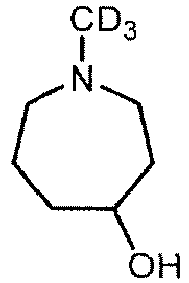
Example 10 

Example 11 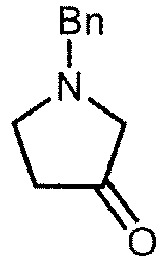

Example 12 

Example 13 

Example 14 

Example 15 

Example 16 

Example 17 

Example 18 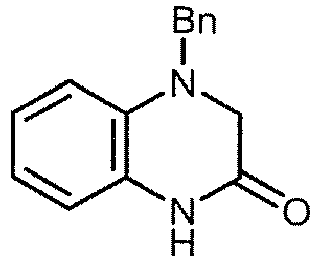

Example 19 

Example 20 

Example 21 

Example 22 

-

- 4-(Chloromethyl)-N-(4-methyl-3-((4-(pyridin-3-yl)pyrimidin-2-yl)amino)phenyl)benzamide (0.43 g) and N-methyl-d3-piperazine (1.33 g, purity: 77 %) were dissolved in MeCN (40 mL), and the solution was heated to reflux for 6 hours. The reaction solution was concentrated to a volume of about 15 mL, and then stirred at 0°C. The precipitated cystral was collected on a filter, and washed with MeCN to give the desired product (370 mg).
- 1H-NMR (DMSO-d 6); 2.23 (3H, s), 2.20 - 2.50 (8H, m), 3.52 (2H, s), 7.21 (1H, d, J = 8.0 Hz) , 7.40 - 7.57 (5H, m), 7.91 (1H, d, J = 8.0 Hz), 8.08 (1H, d, J = 2.0 Hz), 8.48 (1H, dt, J = 2.0, 8.0 Hz), 8.51 (1H, d, J = 4.8 Hz), 8.69 (1H, dd, J = 2.0, 4.8 Hz), 8.99 (1H, s), 9.28 (1H, d, J = 2.0 Hz), 10.18 (1H, s).
-

- The desired product can be prepared from 6-((5-fluoro-4-(4-fluoro-1-isopropyl-2-methyl-1H-benzo[d]imidazol-6-yl)pyrimidin-2-yl)amino)nicotinaldehyde and N-ethyl-d5-piperazine in a manner disclosed in Tetrahedron Letters, 56, 949 (2015).
-

- The desired product can be prepared from 2-chloro-4-(4-fluorophenyl)-5,6,7,8,9,10-hexahydrocycloocta[b]pyridine and N-ethyl-d5-piperazine in a manner disclosed in
US patent 5,021,421 B . -

- The desired product can be prepared from 4-ethoxy-3-(5-methyl-4-oxo-7-propyl-3,4-dihydroimidazo[5,1-f][1,2,4]triazin-2-yl)benzenesulfonyl chloride and N-ethyl-d5-piperazine in a manner disclosed in
WO 1999/024433 . -

- The desired product can be prepared from 2-methyl-10H-benzo[b]thieno[2,3-e][1,4]diazepine-4-amine and N-methyl-d3-piperazine in a manner disclosed in
US patent 5,229,382 B . -

- The desired product can be prepared from (S)-9,10-difluoro-3-methyl-7-oxo-2,3-dihydro-7H-[1,4]oxazino[2,3,4-ij]quinoline-6-carboxylic acid and N-methyl-d3-piperazine in a manner disclosed in Journal of Medicinal Chemistry, 30, 2283 (1987) .
-

- The desired product can be prepared from 7-(3-chloropropoxy)-4-((2,4-dichloro-5-methoxyphenyl)amino)-6-methoxyquinoline-3-carbonitrile and N-methyl-d3-piperazine in a manner disclosed in Journal of Medicinal Chemistry, 44, 3965 (2001).
-

- The desired product can be prepared from 1-benzylpiperidin-4-one and N-methyl-d3-piperazine in a manner disclosed in
JP 2008-050307 A - The desired product can be prepared from 1-(methyl-d3)-4-(piperidin-4-yl)piperazine in a manner disclosed in Journal of Medicinal Chemistry, 59, 4948 (2016).
-

- The desired product can be prepared from 2-(3,5-bis(trifluoromethyl)phenyl)-N-(6-chloro-(4-(o-tolyl)pyridin-3-yl)-N,2-dimethylpropanamide and N-methyl-d3-piperazine in a manner disclosed in
CN 107698500 A . -

- The desired product can be prepared from methyl (Z)-3-(((4-(2-chloro-N-methylacetamide)phenyl)amino)(phenyl)methylene)-2-oxoindoline-6-carboxylate and N-methyl-d3-piperazine in a manner disclosed in Synthetic Communications, 47, 975 (2017) .
-

- The desired product can be prepared from tert-butyl 4-oxopiperidine-1-carboxylate and N-methyl-d3-piperazine in a manner disclosed in
WO2015/177326 . - The desired product can be prepared from 1-(methyl-d3)-4-(piperidin-4-yl)piperazine hydrochloride in a manner disclosed in
WO2010/128659 . -

- 4-(4-Chlorobenzyl)-2-(1-benzyl-azepan-4-yl)phthalazin-1(2H)-one (0.5 g), methyl-d3 4-methylbenzenesulfonate (0.25 g, purity: 92 %), NaI (16 mg), and NaHCO3 (18 mg) were suspended in MeCN (4 ml), and the suspension was stirred at 95°C for 4 hours in a sealed reactor. In addition, the reaction suspension was stirred under open air condition at 50°C for 30 minutes. Then, NH4Cl (18 mg) and purified water (1 mL) were added thereto, and the mixture was stirred at 70°C for additional one hour. To the obtained solution was added 10 % Pd/C (25 mg), and the mixture was stirred under hydrogen atmosphere at one atm pressure at room temperature for 1.5 hours. The reaction mixture was filtered through Celite. To the filtrate was added aqueous ammonia, and the mixture was extracted with AcOEt. The solvent was removed from the extract, and the obtained residue was purified by column chromatography (AcOEt/hexane) to give the desired product (368 mg).
- 1H-NMR (CDCl3) δ; 1.65 - 1.80 (1H, m), 1.90 - 2.15 (4H, m), 2.15 - 2.30 (1H, m), 2.50 - 2.80 (4H, m), 4.26 (2H, s), 5.30 - 5.40 (1H, m), 7.18 - 7.21 (2H, m), 7.25 - 7.27 (2H, m), 7.67 - 7.71 (3H, m), 8.44 - 8.47 (1H, m).
-

- 2-Chloro-(2-ethoxyethyl)benzimidazole (106 mg), 1-(methyl-d3)-1,4-diazepane (83 mg), triethylamine (0.5 mL), and MeCN (0.5 mL) were mixed, and the mixture was heated to reflux for 8 days. To the reaction mixture were added AcOEt and water, and the mixture was extracted with AcOEt. The solvent was removed from the extract, and the obtained residue was purified by column chromatography (AcOEt/MeOH) to give the desired product (84 mg).
- 1H-NMR (CDCl3) δ; 1.15 (3H, t, J = 7.0 Hz), 2.02 (2H, quint, J = 5.8 Hz), 2.70 - 2.80 (4H, m), 3.46 (2H, q, J = 7.0 Hz), 3.62 - 3.71 (4H, m), 3.78 (2H, t, J = 6.1 Hz), 4.18 (2H, t, J = 6.1 Hz), 7.07 - 7.18 (2H, m), 7.22 - 7.27 (1H, m), 7.51 -7.56 (1H, m).
-

- The desired product can be prepared from methyl 2-chloro-5-oxo-5H-benzo[4,5]thiazolo[3,2-a][1,8]naphthyridine-6-carboxylate and 1-(methyl-d3)-1,4-diazepane in a manner disclosed in ACS Medicinal Chemistry Letters, 3, 602 (2012).
- The desired product can be prepared from methyl 2-(4-(methyl-d3)-1,4-diazepan-1-yl)-5-oxo-5H-benzo[4,5]thiazolo[3,2-a] [1,8]naphthyridine-6-carboxylate in a manner disclosed in ACS Medicinal Chemistry Letters, 3, 602 (2012).
-

- 3-((5-Carbamoyl-1-methyl-3-propyl-1H-pyrazol-4-yl)carbamoyl)-4-propoxybenzenesulfonylchloride and 2-(1-(methyl-d3)pyrrolidin-2-yl)ethane-1-amine are mixed, and the mixture is stirred in DCM at room temperature. After the reaction is terminated, aqueous NaHCO3 is added thereto, the mixture is extracted with AcOEt, and the solvent is removed from the extract. To the obtained residue is added tert-butanol, and the mixture is heated to reflux with potassium tert-butoxide. To the reaction solution is added water, and the mixture is extracted with AcOEt. The solvent is removed from the extract to give the desired product.
-

- 5-(Ethylsulfonyl)-2-methoxy-4-nitrobenzoic acid and (1-(ethyl-d5)pyrrolidin-2-yl)methaneamine are mixed in dioxane in the presence of TEA and ethyl chloroformate, and the mixture is stirred at room temperature. After the reaction is terminated, water is added thereto, the mixture is extracted with AcOEt, and the solvent is removed from the extract. To the obtained residue are added EtOH and Raney nickel, and the mixture is stirred under hydrogen atmosphere. The reaction solution is filtrated to remove insoluble matters, and the solvent is removed from the filtrate to give the desired product.
-

- 3-Chloro-3-oxo-2-phenylpropylacetate and (1R,3r,5S)-8-(methyl-d3)-8-azacyclo[3,2,1]octan-3-ol are mixed, and the mixture is stirred with methanesulfonic acid in DCM at room temperature. After the reaction is terminated, aqueous NaHCO3 is added thereto, the mixture is extracted with AcOEt, and the solvent is removed from the extract. To the obtained residue is added MeOH, and the solution is stirred with sodium methoxide at room temperature. To the reaction solution is added water, and the mixture is extracted with AcOEt. The solvent is removed from the extract to give the desired product.
-

- 1H-Indole-3-carboxylic acid and (1R,3r,5S)-8-(methyl-d3)-8-azabicyclo[3,2,1]octan-3-ol are mixed, and the mixture is heated to reflux in chloroform in the presence of p-toluenesulfonic acid. After the reaction is terminated, aqueous NaHCO3 is added thereto, the mixture is extracted with AcOEt, and the solvent is removed from the extract.
-

- A solution of benzyl d-prolinoyl chloride, ethylmagnesium bromide, zinc chloride, and 5-bromoindole in Et2O is stirred at room temperature. After the reaction is terminated, water is added thereto, the mixture is extracted with AcOEt, and the solvent is removed from the extract. To the obtained residue are added aluminium hydride and THF, and the mixture is stirred at room temperature to 60°C. Subsequently, MeOH is added thereto, the solution is filtrated to remove insoluble matters, and the filtrate is concentrated. To the obtained residue are added MeCN followed by phenylvinylsulfone, palladium acetate, tri(o-tolyl)phosphine, and triethylamine, and the mixture is heated to reflux. To the reaction mixture is added water, and the mixture is extracted with AcOEt. The solvent is removed from the extract to give the desired product.
- The desired product can be prepared from (S,E)-3-((1-benzylpyrrolidin-2-yl)methyl)-5-(2-(phenylsulfonyl)vinyl)-1H-indole and methyl-d3 4-methylbenzenesulfonate in a manner disclosed in Reference examples 1 - 5.
-

- A mixture of nornicotine, Na2CO3, and benzyl bromide is stirred in MeOH at room temperature. The solvent is removed from the reaction mixture to give dibenzyl nornicotinium.
- The desired product can be prepared from dibenzyl nornicotinium in a manner disclosed in Reference examples 1 - 5.
-

- (3aR,8aS)-1-Benzyl-5-methoxy-3a,8-dimethyl-1,2,3,3a,8,8a-hexahydropyrrolo[2,3-b]indole (5.0 g), methyl-d3 4-methylbenzenesulfonate (3.37 g), NaHCO3 (272 mg), NaI (243 mg), and MeCN (20 mL) were mixed, and the mixture was stirred at 90°C for 7 hours in a sealed reactor. NH4Cl (260 mg) and water (10 mL) were added thereto, and the mixture was stirred at 70°C for one hour in the sealed reactor. 10 % Pd/C (500 mg) was added thereto, and the reaction mixture was stirred under hydrogen atmosphere at pressure of 0.4 MPa at 40°C for 6 hours. The reaction mixture was filtrated through Celite. To the filtrate were added AcOEt and water, and the solution was basified with 5N aqueous NaOH and extracted with AcOEt. The solvent was removed from the extract, and the obtained residue was purified by column chromatography (AcOEt/hexane) to give the desired product (1.67 g) .
- 1H-NMR (CDCl3) δ; 1.43 (3H, s), 1.91 - 1.97 (2H, m), 2.59 - 2.74 (2H, m), 2.89 (3H, s), 3.75 (3H, s), 4.05 (1H, s), 6.36 (1H, d, J = 8.4 Hz), 6.61 - 6.68 (2H. m).
- (3aR,8aS)-5-Methoxy-3a,8-dimethyl-1-(methyl-d3)-1,2,3,3a,8,8a-hexahydropyrrolo[2,3-b]indole (367 mg) and DCM (6 mL) were mixed, and the mixture was cooled in an ice bath. BBr3 (1.59 mL, 17 % DCM solution) was slowly added dropwise to the cooled solution. The reaction solution was stirred at room temperature for 6 hours, and optionally BBr3 (0.48 mL, 17 % DCM solution) was further added thereto depending on the reaction progress. The solvent was removed from the reaction solution. To the obtained residue were added water and saturated aqueous sodium bicarbonate, and the mixture was extracted with AcOEt. The solvent was removed from the extract, and the obtained residue was purified by column chromatography (AcOEt/MeOH) to give the desired product (163 mg). 1H-NMR (DMSO-d 6) δ; 1.32 (3H, s), 1.68 - 1.86 (2H, m), 2.37 - 2.46 (1H, m), 2.58 - 2.66 (1H, m), 2.75 (3H, s), 3.95 (1H, s), 6.26 (1H, d, J = 8.1 Hz), 6.40 - 6.46 (2H. m), 8.54 (1H, s) .
- (3aR,8aS)-3a,8-Dimethyl-1-(methyl-d3)-1,2,3,3a,8,8a-hexahydropyrrolo[2,3-b]indol-5-ol (143 mg) and THF (13 mL) were mixed, and the mixture was stirred with sodium hydride (2.8 mg) at room temperature for 10 minutes. Phenyl isocyanate (85 µL) was added thereto, and the mixture was stirred at room temperature for 5 hours. The solvent was removed from the reaction solution. To the obtained residue were added water and saturated aqueous sodium bicarbonate, and the mixture was extracted with AcOEt. The solvent was removed from the extract, and the obtained residue was purified by column chromatography (AcOEt/hexane) to give the desired product (146 mg).
- 1H-NMR (DMSO-d 6) 5; 1.36 (3H, s), 1.78 - 1.87 (2H, m), 2.44 - 2.53 (1H, m), 2.61 - 2.67 (1H, m), 2.86 (3H, s), 4.10 (1H, s), 6.39 (1H, d, J = 8.4 Hz), 6.80 (1H, dd, J = 8.4, 2.4 Hz), 6.85 (1H, d, J = 2.4 Hz), 6.99 - 7.05 (1H. m), 7.27 - 7.33 (2H, m), 7.50 (2H, d, J = 7.7 Hz), 10.05 (1H, s).
-

- 1,2,3,4,10,14b-Hexahydrobenzo[c]pyrazino[1,2-a]pyrido[3,2-f]azepine (607 mg), K2CO3 (434 mg), and benzyl bromide (475 mg) were stirred in DMF at room temperature for 3 hours. To the reaction solution was added water, and the mixture was extracted with AcOEt. The solvent was removed from the extract to give the desired product (570 mg).
- 1H-NMR (CDCl3) δ; 2.36 (1H, dt, J = 3.2, 10.8 Hz), 2.52 (1H, t, J = 10.8 Hz), 2.90 - 3.00 (2H, m), 3.43 (1H, d, J = 13.2 Hz), 3.48 (1H, dt, J = 2.8, 12.4 Hz), 3.72 (1H, dt, J = 2.8, 13.2 Hz), 3.86 (2H, s), 4.36 (1H, d, J = 8.0 Hz), 4.52 (1H, d, J = 13.2 Hz), 6.73 (1H, dd, J = 4.8, 7.2 Hz), 7.10 - 7.20 (4H, m), 7.30 - 7.40 (6H, m), 8.16 (1H, d, J = 3.2 Hz).
- 2-Benzyl-1,2,3,4,10,14b-hexahydrobenzo[c]pyrazino[1,2-a]pyrido[3,2-f]azepine (435 mg), methyl-d3 4-methylbenzenesulfonate (297 mg), and NaHCO3 (16 mg) were suspended in MeCN (5 mL), and the suspension was heated to reflux for 4 hours. After the reaction was completed, the reaction solution was cooled to 0°C, and aqueous NH4Cl (31 mg/0.8 mL) was added thereto. The reaction mixture was stirred at 60°C for 3 hours, and then cooled to room temperature. To the obtained solution was added 10 % Pd/C (50 mg), and the mixture was stirred under hydrogen atmosphere at room temperature for 18 hours. The reaction mixture was filtered through Celite, and most of the organic solvent in the filtrate was removed. The obtained residue was purified by column chromatography (AcOEt/hexane) to give the desired product (110 mg) .
- 1H-NMR (CDCl3) δ; 2.50 (1H, td, J = 10.8, 3.2 Hz), 2.63 (1H, t, J = 10.8 Hz), 3.02 (1H, d, J = 11.2 Hz), 3.14 (1H, d, J = 11.2 Hz), 3.42 (1H, d, J = 13.2 Hz), 3.55 (1H, td, J = 2.8, 12.4 Hz), 3.77 (1H, dt, J = 2.8, 13.2 Hz), 4.47 (1H, dd, J = 2.4, 10.4 Hz), 4.50 (1H, d, J = 13.2 Hz), 6.79 (1H, dd, J = 5.2, 7.6 Hz), 7.15 (4H, m), 7.33 (1H, d, J = 8.4 Hz), 8.16 (1H, dd, J = 2.0, 9.2 Hz).
-

- 5-(Benzyl(3,4-dimethoxyphenethyl)amino)-2-(3,4-dimethoxyphenyl)-2-isopropylpentane-nitrile (100 mg), methyl-d3 4-methylbenzenesulfonate (43 mg, purity: 92 %), NaI (2.8 mg) , and NaHCO3 (1.6 mg) were suspended in MeCN (0.5 mL), and the suspension was stirred in a sealed reactor at 95°C for 5 hours and then at room temperature overnight. NH4Cl (3.0 mg) and purified water (0.2 mL) were added thereto, and the mixture was stirred at 60°C for additional 3 hours. To the obtained solution was added 20 % Pd(OH)2/C (5 mg), and the mixture was stirred under hydrogen atmosphere at one atm pressure at room temperature for 16 hours. The reaction mixture was filtered through Celite, and aqueous NaOH was added to the filtrate. The mixture was extracted with AcOEt, and the solvent was removed from the extract. The obtained residue was dissolved in toluene, and a solution of hydrogen chloride in Et2O (0.19 mL) was added thereto. The mixture was stirred at room temperature for one hour, and the precipitated crystal was collected on a filter to give the desired product (60 mg).
- 1H-NMR (CDCl3) δ: 0.79(3H, d, J = 6.4 Hz), 1.10 - 1.18 (1H, m), 1.18 (3H, d, J = 6.4 Hz), 1.49 - 1.65 (1H, m), 1.78 - 1.88 (1H, m), 2.00 - 2.15 (2H, m), 2.28 - 2.41 (2H, m), 2.45 - 2.55 (2H, m), 2.60 - 2.70 (2H, m), 3.85 (3H, s), 3.87 (3H, s), 3.88 (3H, s), 3.88 (3H, s), 6.67 - 6.71 (2H, m), 6.77 - 6.86 (3H, m), 6.88 - 6.93 (1H, m).
- The desired products shown in Table 3 below can prepared from each corresponding starting compound in similar manner to Examples 23 and 26.
Table 3 Example Starting Compound Deuterated alkylating agent Desired Product Example 46 


Example 47 


- Example 48. Preparation of N-ethyl-d 5 piperazine

- Benzyl 4-(4-methoxybenzyl)piperazine-1-carboxylate (10 g), ethyl-d5 4-methylbenzenesulfonate (6.84 g), NaHCO3 (0.49 g), sodium iodide (0.44 g), and MeCN (40 mL) were mixed, and the mixture was stirred at 90°C for 2 days in a sealed reactor. Water (20 mL) and NH4Cl (0.47 g) were added thereto, and the mixture was stirred at 90°C for one hour in the sealed reactor. 10 % Pd/C (1 g) was added to the reaction solution, and the mixture was stirred under hydrogen atmosphere at pressure of 0.4 MPa at 40°C for 4 hours. The reaction solution was filtrated through Celite, and the filtrate was concentrated. To the obtained residue were AcOEt and water, and the solution was basified with 5N aqueous NaOH and extracted with AcOEt. The solvent was removed from the extract to give the desired product (5.06 g).
- 1H-NMR (CDCl3) δ; 2.40 (4H, br s), 3.53 (4H, t, J = 5.1 Hz), 5.13 (2H, s), 7.30 - 7.38 (5H, m) .
- Benzyl 4-(ethyl-d5)piperazine-1-carboxylate (5.06 g), 10 % Pd/C (500 mg), AeOEt (26 mL), and MeOH (6.5 mL) were mixed, and stirred under hydrogen atmosphere at pressure of 0.4 MPa at 50°C for 12 hours. The reaction mixture was filtered through Celite, and the filtrate was concentrated to give the desired product as a mixture with 4-methylanisole (2.09 g, yield 74.5 %).
- 1H-NMR (CDCl3) δ; 2.84 - 2.93 (8H, m) .
- The present invention makes it possible to mono-deuterated-lower-alkylate an amine moiety in high yield and low cost.
Claims (10)
- A method of introducing a mono-deuterated lower-alkyl into a secondary amine in a compound having the secondary amine, comprisingreplacing the hydrogen atom in the secondary amine by an aralkyl,lower-alkylating the obtained tertiary amine with a deuterated-lower-alkylating agent under neutral or basic condition, and theneliminating the aralkyl group.
- The method of claim 1, wherein the secondary amine is not in a piperidine ring.
- The method of claim 1 or 2, wherein the deuterated lower-alkyl is deuterated methyl or deuterated ethyl, and the deuterated-lower-alkylating agent is deuterated-methylating agent or deuterated-ethylating agent.
- The method of any one of claims 1 - 3, wherein the deuterated-lower-alkyl is deuterated methyl, and the deuterated-lower-alkylating agent is methyl-d3 methanesulfonate, methyl-d3 benzenesulfonate, methyl-d3 4-methylbenzenesulfonate, methyl-d3 2-nitrobenzenesulfonate, methyl-d3 4-nitrobenzenesulfonate, dimethyl-d6 sulfate, dimethyl-d6 carbonate, methyl-d3 trifluoromethanesulfonate, bromomethyl-d3, or iodomethyl-d3.
- The method of any one of claims 1 - 3, wherein the deuterated lower-alkyl is deuterated ethyl, and the deuterated-lower-alkylating agent is ethyl-d5 methanesulfonate, ethyl-d5 benzenesulfonate, ethyl-d5 4-methylbenzenesulfonate, ethyl-d5 2-nitrobenzenesulfonate, ethyl-d5 4-nitrobenzenesulfonate, diethyl-d10 sulfate, diethyl-d10 carbonate, ethyl-d5 trifluoromethanesulfonate, bromoethyl-ds, or iodoethyl-ds.
- The method of any one of claims 1 - 5, wherein the aralkyl is benzyl derivative.
- The method of claim 6, wherein the benzyl derivative is benzyl or 4-methoxybenzyl.
- The method of claim 6 or 7, wherein the elimination of the aralkyl group is carried out by hydrogenation.
- The method of any one of claims 1 - 8, wherein the basic condition is adjusted with sodium carbonate, cesium carbonate, potassium carbonate, sodium bicarbonate, potassium bicarbonate, sodium hydride, potassium hydride, sodium hydroxide, potassium hydroxide, sodium tert-butoxide, potassium tert-butoxide, alkyllithium, lithium amide (e.g. lithium diisopropylamide, and lithium hexamethyldisilazide), sodium methoxide, or tert-amine.
- The method of any one of claims 1 - 9, wherein the compound having a secondary amine is selected from the group consisting of piperazine derivative, pyrrolidine derivative, azepane derivative, diazepane derivative, and a chained amine compound.
Applications Claiming Priority (2)
| Application Number | Priority Date | Filing Date | Title |
|---|---|---|---|
| JP2019045857 | 2019-03-13 | ||
| PCT/JP2020/010873 WO2020184670A1 (en) | 2019-03-13 | 2020-03-12 | Method for introducing deuterated lower alkyl into amine moiety of compound containing secondary amine |
Publications (3)
| Publication Number | Publication Date |
|---|---|
| EP3939954A1 true EP3939954A1 (en) | 2022-01-19 |
| EP3939954A4 EP3939954A4 (en) | 2023-01-04 |
| EP3939954B1 EP3939954B1 (en) | 2025-07-23 |
Family
ID=72426645
Family Applications (1)
| Application Number | Title | Priority Date | Filing Date |
|---|---|---|---|
| EP20770660.7A Active EP3939954B1 (en) | 2019-03-13 | 2020-03-12 | Method for introducing deuterated lower alkyl into amine moiety of compound containing secondary amine |
Country Status (7)
| Country | Link |
|---|---|
| EP (1) | EP3939954B1 (en) |
| JP (1) | JP7455810B2 (en) |
| KR (1) | KR102820317B1 (en) |
| CN (1) | CN113518771A (en) |
| CA (1) | CA3132953A1 (en) |
| ES (1) | ES3040728T3 (en) |
| WO (1) | WO2020184670A1 (en) |
Families Citing this family (6)
| Publication number | Priority date | Publication date | Assignee | Title |
|---|---|---|---|---|
| CN116143804B (en) * | 2021-09-01 | 2024-03-29 | 核新生物医药(长春)有限公司 | Tetracyclic quinolone compound, pharmaceutically acceptable salt and application thereof |
| CN115166077A (en) * | 2022-07-01 | 2022-10-11 | 中国水产科学研究院东海水产研究所 | Double internal standard reagent for determination of enrofloxacin residue in aquatic product and detection method |
| CN115919873B (en) * | 2023-03-07 | 2023-09-29 | 信义核新(北京)生物科技有限公司 | Application of compound and salt thereof in cancer treatment medicine |
| CN116059213A (en) * | 2023-03-29 | 2023-05-05 | 信义核新(北京)生物科技有限公司 | Application of a compound and its salt in medicine for treating cancer |
| CN116496295A (en) * | 2023-04-06 | 2023-07-28 | 上海化工研究院有限公司 | A kind of synthetic method of stable isotope labeling levofloxacin |
| WO2025113494A1 (en) * | 2023-11-27 | 2025-06-05 | 浙江径科医药有限公司 | Polycyclic compound and use thereof |
Family Cites Families (14)
| Publication number | Priority date | Publication date | Assignee | Title |
|---|---|---|---|---|
| DE69010232T2 (en) | 1989-03-03 | 1994-12-01 | Dainippon Pharmaceutical Co | 2- (1-piperazinyl) -4-phenylcycloalkane pyridine derivatives, processes for their preparation and pharmaceutical compositions containing them. |
| US5229382A (en) | 1990-04-25 | 1993-07-20 | Lilly Industries Limited | 2-methyl-thieno-benzodiazepine |
| TR200001338T2 (en) | 1997-11-12 | 2000-08-21 | Bayer Aktiengesellschaft | 2-Phenyl-substituted imidazotriazinones |
| JP2008050307A (en) | 2006-08-25 | 2008-03-06 | Koei Chem Co Ltd | Method for producing piperidine compound |
| WO2008100886A1 (en) | 2007-02-12 | 2008-08-21 | Auspex Pharmaceuticals, Inc. | Preparation and use of deuterated udenafil analogues as highly selective pde5 modulators for the treatment of erectile dysfunction |
| AU2008247818B2 (en) | 2007-05-01 | 2011-10-20 | Sun Pharmaceutical Industries, Inc. | Morphinan compounds |
| JP5364159B2 (en) | 2009-05-08 | 2013-12-11 | アステラス製薬株式会社 | Diaminoheterocyclic carboxamide compounds |
| PL3135656T3 (en) | 2011-06-20 | 2019-07-31 | H. Lundbeck A/S | Deuterated 1-piperazino-3-phenyl indanes for treatment of schizophrenia |
| EA032488B1 (en) | 2014-05-23 | 2019-06-28 | Ф. Хоффманн-Ля Рош Аг | COMPOUNDS 5-CHLOR-DIFTLOROMETOXYPHENYL-PYRAZOLOPIRIMIDINE, PRESENTING JANUS KINASE INHIBITORS |
| JP6887430B2 (en) * | 2015-11-27 | 2021-06-16 | チア タイ ティエンチン ファーマシューティカル グループ カンパニー リミテッドChia Tai Tianqing Pharmaceutical Group Co., Ltd. | Deuterated Brigatinib derivatives, pharmaceutical compositions containing such derivatives, and their use. |
| ES2909388T3 (en) * | 2017-09-07 | 2022-05-06 | Otsuka Pharma Co Ltd | Industrial process for the monoalkylation of a piperidine nitrogen in piperidine derivatives with deuterated alkyl |
| CN107698500A (en) | 2017-10-17 | 2018-02-16 | 扬子江药业集团四川海蓉药业有限公司 | A kind of preparation method of Netupitant |
| CN108675959B (en) * | 2018-08-06 | 2022-02-25 | 雅安职业技术学院 | Deuterated enrofloxacin-d5Preparation method of (1) |
| CN110028433B (en) * | 2019-04-26 | 2022-06-28 | 梯尔希(南京)药物研发有限公司 | Preparation method of deuterium-labeled doxapram and metabolite thereof |
-
2020
- 2020-03-12 JP JP2021505135A patent/JP7455810B2/en active Active
- 2020-03-12 EP EP20770660.7A patent/EP3939954B1/en active Active
- 2020-03-12 CN CN202080018369.9A patent/CN113518771A/en active Pending
- 2020-03-12 KR KR1020217032236A patent/KR102820317B1/en active Active
- 2020-03-12 ES ES20770660T patent/ES3040728T3/en active Active
- 2020-03-12 CA CA3132953A patent/CA3132953A1/en active Pending
- 2020-03-12 WO PCT/JP2020/010873 patent/WO2020184670A1/en not_active Ceased
Also Published As
| Publication number | Publication date |
|---|---|
| US20220127206A1 (en) | 2022-04-28 |
| KR20210139317A (en) | 2021-11-22 |
| CN113518771A (en) | 2021-10-19 |
| EP3939954B1 (en) | 2025-07-23 |
| EP3939954A4 (en) | 2023-01-04 |
| KR102820317B1 (en) | 2025-06-16 |
| CA3132953A1 (en) | 2020-09-17 |
| JPWO2020184670A1 (en) | 2020-09-17 |
| ES3040728T3 (en) | 2025-11-04 |
| WO2020184670A1 (en) | 2020-09-17 |
| JP7455810B2 (en) | 2024-03-26 |
Similar Documents
| Publication | Publication Date | Title |
|---|---|---|
| EP3939954B1 (en) | Method for introducing deuterated lower alkyl into amine moiety of compound containing secondary amine | |
| JP7230041B2 (en) | Crystalline salt of B-RAF kinase inhibitor | |
| AU2009224804B2 (en) | 4-aryl-2-anilino-pyrimidines as PLK kinase inhibitors | |
| AU2020255100C1 (en) | N-heteroaromatic amide derivatives for treatment of cancer | |
| CN112574255B (en) | Organic arsine-based CDK inhibitor and preparation method and application thereof | |
| AU2018235139A1 (en) | Compounds useful in the treatment or prevention of a PRMT5-mediated disorder | |
| AU2020202181A1 (en) | Naphthyridine compounds as jak kinase inhibitors | |
| CN120344532A (en) | Bicyclic heterocycles and their use as WRN inhibitors | |
| CZ20032451A3 (en) | Novel spirotricyclic derivatives and their use as phosphodiesterase-7 inhibitors | |
| AU2015407300A1 (en) | 2-Arylamino pyridine, pyridine or triazine derivative, preparation method and use thereof | |
| JP2017510595A (en) | (5,6-dihydro) pyrimido [4,5-e] indolizine | |
| EP2331546A1 (en) | 2-alkyl-6-cycloamino-3-(pyridin-4-yl)imidazo[1,2-ib]-pyridazine derivatives, preparation thereof, and therapeutic application thereof | |
| CN116249690A (en) | Indoline compounds and derivatives as EGFR inhibitors | |
| CN115490699B (en) | A condensed ring compound and its pharmaceutical composition and use | |
| TW202241413A (en) | Pyrazoloquinazoline compound, and preparation method therefor and use thereof | |
| JP5369721B2 (en) | Pyridopyrimidin-4-one derivatives | |
| CN117645598A (en) | Azadi-and multi-membered fused ring compound, and pharmaceutical composition and application thereof | |
| US12630487B2 (en) | Method for introducing deuterated lower alkyl into amine moiety of compound containing secondary amine | |
| US9969735B2 (en) | Process for making tricyclic lactam compounds | |
| EP3558964A1 (en) | 4-amino-2-pyrido-bicyclic pyrimidines and use thereof as topoisomerase ii inhibitors | |
| JP2020512352A (en) | Quinoxaline and pyridopyrazine derivatives as PI3Kβ inhibitors | |
| HK40014855A (en) | Process and intermediates for the preparation of naphthyridine compounds as jak kinase inhibitors | |
| WO2002002569A1 (en) | Substituted thienopyrimidine derivatives and the use thereof for the prophylaxis and therapy of cerebral ischaemia | |
| HK1243069A1 (en) | Process for making tricyclic lactam compounds |
Legal Events
| Date | Code | Title | Description |
|---|---|---|---|
| STAA | Information on the status of an ep patent application or granted ep patent |
Free format text: STATUS: THE INTERNATIONAL PUBLICATION HAS BEEN MADE |
|
| PUAI | Public reference made under article 153(3) epc to a published international application that has entered the european phase |
Free format text: ORIGINAL CODE: 0009012 |
|
| STAA | Information on the status of an ep patent application or granted ep patent |
Free format text: STATUS: REQUEST FOR EXAMINATION WAS MADE |
|
| 17P | Request for examination filed |
Effective date: 20210810 |
|
| AK | Designated contracting states |
Kind code of ref document: A1 Designated state(s): AL AT BE BG CH CY CZ DE DK EE ES FI FR GB GR HR HU IE IS IT LI LT LU LV MC MK MT NL NO PL PT RO RS SE SI SK SM TR |
|
| DAV | Request for validation of the european patent (deleted) | ||
| DAX | Request for extension of the european patent (deleted) | ||
| A4 | Supplementary search report drawn up and despatched |
Effective date: 20221202 |
|
| RIC1 | Information provided on ipc code assigned before grant |
Ipc: C07D 241/44 20060101ALI20221128BHEP Ipc: C07D 241/42 20060101ALI20221128BHEP Ipc: C07D 241/08 20060101ALI20221128BHEP Ipc: C07D 487/10 20060101ALI20221128BHEP Ipc: C07D 487/04 20060101ALI20221128BHEP Ipc: C07D 295/03 20060101ALI20221128BHEP Ipc: C07D 215/20 20060101ALI20221128BHEP Ipc: C07D 209/08 20060101ALI20221128BHEP Ipc: C07B 61/00 20060101ALI20221128BHEP Ipc: C07D 471/14 20060101ALI20221128BHEP Ipc: C07D 471/04 20060101ALI20221128BHEP Ipc: C07D 451/06 20060101ALI20221128BHEP Ipc: C07D 211/74 20060101ALI20221128BHEP Ipc: C07D 211/46 20060101ALI20221128BHEP Ipc: C07D 207/267 20060101ALI20221128BHEP Ipc: C07D 207/09 20060101ALI20221128BHEP Ipc: C07C 253/30 20060101ALI20221128BHEP Ipc: C07B 59/00 20060101AFI20221128BHEP |
|
| GRAP | Despatch of communication of intention to grant a patent |
Free format text: ORIGINAL CODE: EPIDOSNIGR1 |
|
| STAA | Information on the status of an ep patent application or granted ep patent |
Free format text: STATUS: GRANT OF PATENT IS INTENDED |
|
| RIC1 | Information provided on ipc code assigned before grant |
Ipc: C07D 241/44 20060101ALI20241111BHEP Ipc: C07D 241/42 20060101ALI20241111BHEP Ipc: C07D 241/08 20060101ALI20241111BHEP Ipc: C07D 487/10 20060101ALI20241111BHEP Ipc: C07D 487/04 20060101ALI20241111BHEP Ipc: C07D 295/03 20060101ALI20241111BHEP Ipc: C07D 215/20 20060101ALI20241111BHEP Ipc: C07D 209/08 20060101ALI20241111BHEP Ipc: C07B 61/00 20060101ALI20241111BHEP Ipc: C07D 471/14 20060101ALI20241111BHEP Ipc: C07D 471/04 20060101ALI20241111BHEP Ipc: C07D 451/06 20060101ALI20241111BHEP Ipc: C07D 211/74 20060101ALI20241111BHEP Ipc: C07D 211/46 20060101ALI20241111BHEP Ipc: C07D 207/267 20060101ALI20241111BHEP Ipc: C07D 207/09 20060101ALI20241111BHEP Ipc: C07C 253/30 20060101ALI20241111BHEP Ipc: C07B 59/00 20060101AFI20241111BHEP |
|
| INTG | Intention to grant announced |
Effective date: 20241122 |
|
| GRAJ | Information related to disapproval of communication of intention to grant by the applicant or resumption of examination proceedings by the epo deleted |
Free format text: ORIGINAL CODE: EPIDOSDIGR1 |
|
| STAA | Information on the status of an ep patent application or granted ep patent |
Free format text: STATUS: REQUEST FOR EXAMINATION WAS MADE |
|
| P01 | Opt-out of the competence of the unified patent court (upc) registered |
Free format text: CASE NUMBER: APP_6952/2025 Effective date: 20250211 |
|
| GRAP | Despatch of communication of intention to grant a patent |
Free format text: ORIGINAL CODE: EPIDOSNIGR1 |
|
| INTC | Intention to grant announced (deleted) | ||
| STAA | Information on the status of an ep patent application or granted ep patent |
Free format text: STATUS: GRANT OF PATENT IS INTENDED |
|
| INTG | Intention to grant announced |
Effective date: 20250327 |
|
| GRAS | Grant fee paid |
Free format text: ORIGINAL CODE: EPIDOSNIGR3 |
|
| GRAA | (expected) grant |
Free format text: ORIGINAL CODE: 0009210 |
|
| STAA | Information on the status of an ep patent application or granted ep patent |
Free format text: STATUS: THE PATENT HAS BEEN GRANTED |
|
| AK | Designated contracting states |
Kind code of ref document: B1 Designated state(s): AL AT BE BG CH CY CZ DE DK EE ES FI FR GB GR HR HU IE IS IT LI LT LU LV MC MK MT NL NO PL PT RO RS SE SI SK SM TR |
|
| REG | Reference to a national code |
Ref country code: GB Ref legal event code: FG4D |
|
| REG | Reference to a national code |
Ref country code: CH Ref legal event code: EP |
|
| REG | Reference to a national code |
Ref country code: DE Ref legal event code: R096 Ref document number: 602020055053 Country of ref document: DE |
|
| REG | Reference to a national code |
Ref country code: IE Ref legal event code: FG4D |
|
| REG | Reference to a national code |
Ref country code: ES Ref legal event code: FG2A Ref document number: 3040728 Country of ref document: ES Kind code of ref document: T3 Effective date: 20251104 |
|
| REG | Reference to a national code |
Ref country code: NL Ref legal event code: MP Effective date: 20250723 |
|
| PG25 | Lapsed in a contracting state [announced via postgrant information from national office to epo] |
Ref country code: PT Free format text: LAPSE BECAUSE OF FAILURE TO SUBMIT A TRANSLATION OF THE DESCRIPTION OR TO PAY THE FEE WITHIN THE PRESCRIBED TIME-LIMIT Effective date: 20251124 |
|
| PG25 | Lapsed in a contracting state [announced via postgrant information from national office to epo] |
Ref country code: NL Free format text: LAPSE BECAUSE OF FAILURE TO SUBMIT A TRANSLATION OF THE DESCRIPTION OR TO PAY THE FEE WITHIN THE PRESCRIBED TIME-LIMIT Effective date: 20250723 |
|
| REG | Reference to a national code |
Ref country code: AT Ref legal event code: MK05 Ref document number: 1816318 Country of ref document: AT Kind code of ref document: T Effective date: 20250723 |
|
| PG25 | Lapsed in a contracting state [announced via postgrant information from national office to epo] |
Ref country code: IS Free format text: LAPSE BECAUSE OF FAILURE TO SUBMIT A TRANSLATION OF THE DESCRIPTION OR TO PAY THE FEE WITHIN THE PRESCRIBED TIME-LIMIT Effective date: 20251123 |
|
| PG25 | Lapsed in a contracting state [announced via postgrant information from national office to epo] |
Ref country code: NO Free format text: LAPSE BECAUSE OF FAILURE TO SUBMIT A TRANSLATION OF THE DESCRIPTION OR TO PAY THE FEE WITHIN THE PRESCRIBED TIME-LIMIT Effective date: 20251023 |
|
| REG | Reference to a national code |
Ref country code: LT Ref legal event code: MG9D |
|
| PG25 | Lapsed in a contracting state [announced via postgrant information from national office to epo] |
Ref country code: AT Free format text: LAPSE BECAUSE OF FAILURE TO SUBMIT A TRANSLATION OF THE DESCRIPTION OR TO PAY THE FEE WITHIN THE PRESCRIBED TIME-LIMIT Effective date: 20250723 |
|
| PG25 | Lapsed in a contracting state [announced via postgrant information from national office to epo] |
Ref country code: FI Free format text: LAPSE BECAUSE OF FAILURE TO SUBMIT A TRANSLATION OF THE DESCRIPTION OR TO PAY THE FEE WITHIN THE PRESCRIBED TIME-LIMIT Effective date: 20250723 |
|
| PG25 | Lapsed in a contracting state [announced via postgrant information from national office to epo] |
Ref country code: HR Free format text: LAPSE BECAUSE OF FAILURE TO SUBMIT A TRANSLATION OF THE DESCRIPTION OR TO PAY THE FEE WITHIN THE PRESCRIBED TIME-LIMIT Effective date: 20250723 |
|
| PG25 | Lapsed in a contracting state [announced via postgrant information from national office to epo] |
Ref country code: GR Free format text: LAPSE BECAUSE OF FAILURE TO SUBMIT A TRANSLATION OF THE DESCRIPTION OR TO PAY THE FEE WITHIN THE PRESCRIBED TIME-LIMIT Effective date: 20251024 |
|
| PG25 | Lapsed in a contracting state [announced via postgrant information from national office to epo] |
Ref country code: SE Free format text: LAPSE BECAUSE OF FAILURE TO SUBMIT A TRANSLATION OF THE DESCRIPTION OR TO PAY THE FEE WITHIN THE PRESCRIBED TIME-LIMIT Effective date: 20250723 |
|
| PG25 | Lapsed in a contracting state [announced via postgrant information from national office to epo] |
Ref country code: LV Free format text: LAPSE BECAUSE OF FAILURE TO SUBMIT A TRANSLATION OF THE DESCRIPTION OR TO PAY THE FEE WITHIN THE PRESCRIBED TIME-LIMIT Effective date: 20250723 |
|
| PG25 | Lapsed in a contracting state [announced via postgrant information from national office to epo] |
Ref country code: PL Free format text: LAPSE BECAUSE OF FAILURE TO SUBMIT A TRANSLATION OF THE DESCRIPTION OR TO PAY THE FEE WITHIN THE PRESCRIBED TIME-LIMIT Effective date: 20250723 Ref country code: BG Free format text: LAPSE BECAUSE OF FAILURE TO SUBMIT A TRANSLATION OF THE DESCRIPTION OR TO PAY THE FEE WITHIN THE PRESCRIBED TIME-LIMIT Effective date: 20250723 |
|
| PG25 | Lapsed in a contracting state [announced via postgrant information from national office to epo] |
Ref country code: RS Free format text: LAPSE BECAUSE OF FAILURE TO SUBMIT A TRANSLATION OF THE DESCRIPTION OR TO PAY THE FEE WITHIN THE PRESCRIBED TIME-LIMIT Effective date: 20251023 |
|
| PG25 | Lapsed in a contracting state [announced via postgrant information from national office to epo] |
Ref country code: SM Free format text: LAPSE BECAUSE OF FAILURE TO SUBMIT A TRANSLATION OF THE DESCRIPTION OR TO PAY THE FEE WITHIN THE PRESCRIBED TIME-LIMIT Effective date: 20250723 |
|
| PGFP | Annual fee paid to national office [announced via postgrant information from national office to epo] |
Ref country code: GB Payment date: 20260202 Year of fee payment: 7 |
|
| PG25 | Lapsed in a contracting state [announced via postgrant information from national office to epo] |
Ref country code: DK Free format text: LAPSE BECAUSE OF FAILURE TO SUBMIT A TRANSLATION OF THE DESCRIPTION OR TO PAY THE FEE WITHIN THE PRESCRIBED TIME-LIMIT Effective date: 20250723 |
|
| PGFP | Annual fee paid to national office [announced via postgrant information from national office to epo] |
Ref country code: DE Payment date: 20260128 Year of fee payment: 7 |
|
| PGFP | Annual fee paid to national office [announced via postgrant information from national office to epo] |
Ref country code: IT Payment date: 20260220 Year of fee payment: 7 |
|
| PGFP | Annual fee paid to national office [announced via postgrant information from national office to epo] |
Ref country code: FR Payment date: 20260209 Year of fee payment: 7 |
|
| PG25 | Lapsed in a contracting state [announced via postgrant information from national office to epo] |
Ref country code: CZ Free format text: LAPSE BECAUSE OF FAILURE TO SUBMIT A TRANSLATION OF THE DESCRIPTION OR TO PAY THE FEE WITHIN THE PRESCRIBED TIME-LIMIT Effective date: 20250723 |
|
| PG25 | Lapsed in a contracting state [announced via postgrant information from national office to epo] |
Ref country code: SK Free format text: LAPSE BECAUSE OF FAILURE TO SUBMIT A TRANSLATION OF THE DESCRIPTION OR TO PAY THE FEE WITHIN THE PRESCRIBED TIME-LIMIT Effective date: 20250723 Ref country code: EE Free format text: LAPSE BECAUSE OF FAILURE TO SUBMIT A TRANSLATION OF THE DESCRIPTION OR TO PAY THE FEE WITHIN THE PRESCRIBED TIME-LIMIT Effective date: 20250723 |