EP3939734A1 - Weld bead modeling method, device and system for wire-arc additive manufacture - Google Patents
Weld bead modeling method, device and system for wire-arc additive manufacture Download PDFInfo
- Publication number
- EP3939734A1 EP3939734A1 EP20908269.2A EP20908269A EP3939734A1 EP 3939734 A1 EP3939734 A1 EP 3939734A1 EP 20908269 A EP20908269 A EP 20908269A EP 3939734 A1 EP3939734 A1 EP 3939734A1
- Authority
- EP
- European Patent Office
- Prior art keywords
- welding
- welding bead
- process parameters
- wire
- arc
- Prior art date
- Legal status (The legal status is an assumption and is not a legal conclusion. Google has not performed a legal analysis and makes no representation as to the accuracy of the status listed.)
- Withdrawn
Links
Images

Classifications
-
- B—PERFORMING OPERATIONS; TRANSPORTING
- B23—MACHINE TOOLS; METAL-WORKING NOT OTHERWISE PROVIDED FOR
- B23K—SOLDERING OR UNSOLDERING; WELDING; CLADDING OR PLATING BY SOLDERING OR WELDING; CUTTING BY APPLYING HEAT LOCALLY, e.g. FLAME CUTTING; WORKING BY LASER BEAM
- B23K9/00—Arc welding or cutting
- B23K9/04—Welding for other purposes than joining, e.g. built-up welding
-
- B—PERFORMING OPERATIONS; TRANSPORTING
- B23—MACHINE TOOLS; METAL-WORKING NOT OTHERWISE PROVIDED FOR
- B23K—SOLDERING OR UNSOLDERING; WELDING; CLADDING OR PLATING BY SOLDERING OR WELDING; CUTTING BY APPLYING HEAT LOCALLY, e.g. FLAME CUTTING; WORKING BY LASER BEAM
- B23K31/00—Processes relevant to this subclass, specially adapted for particular articles or purposes, but not covered by any single one of main groups B23K1/00 - B23K28/00
- B23K31/006—Processes relevant to this subclass, specially adapted for particular articles or purposes, but not covered by any single one of main groups B23K1/00 - B23K28/00 relating to using of neural networks
-
- B—PERFORMING OPERATIONS; TRANSPORTING
- B23—MACHINE TOOLS; METAL-WORKING NOT OTHERWISE PROVIDED FOR
- B23K—SOLDERING OR UNSOLDERING; WELDING; CLADDING OR PLATING BY SOLDERING OR WELDING; CUTTING BY APPLYING HEAT LOCALLY, e.g. FLAME CUTTING; WORKING BY LASER BEAM
- B23K31/00—Processes relevant to this subclass, specially adapted for particular articles or purposes, but not covered by any single one of main groups B23K1/00 - B23K28/00
- B23K31/12—Processes relevant to this subclass, specially adapted for particular articles or purposes, but not covered by any single one of main groups B23K1/00 - B23K28/00 relating to investigating the properties, e.g. the weldability, of materials
- B23K31/125—Weld quality monitoring
-
- B—PERFORMING OPERATIONS; TRANSPORTING
- B23—MACHINE TOOLS; METAL-WORKING NOT OTHERWISE PROVIDED FOR
- B23K—SOLDERING OR UNSOLDERING; WELDING; CLADDING OR PLATING BY SOLDERING OR WELDING; CUTTING BY APPLYING HEAT LOCALLY, e.g. FLAME CUTTING; WORKING BY LASER BEAM
- B23K9/00—Arc welding or cutting
- B23K9/095—Monitoring or automatic control of welding parameters
- B23K9/0953—Monitoring or automatic control of welding parameters using computing means
-
- B—PERFORMING OPERATIONS; TRANSPORTING
- B23—MACHINE TOOLS; METAL-WORKING NOT OTHERWISE PROVIDED FOR
- B23K—SOLDERING OR UNSOLDERING; WELDING; CLADDING OR PLATING BY SOLDERING OR WELDING; CUTTING BY APPLYING HEAT LOCALLY, e.g. FLAME CUTTING; WORKING BY LASER BEAM
- B23K9/00—Arc welding or cutting
- B23K9/095—Monitoring or automatic control of welding parameters
- B23K9/0956—Monitoring or automatic control of welding parameters using sensing means, e.g. optical
-
- B—PERFORMING OPERATIONS; TRANSPORTING
- B23—MACHINE TOOLS; METAL-WORKING NOT OTHERWISE PROVIDED FOR
- B23K—SOLDERING OR UNSOLDERING; WELDING; CLADDING OR PLATING BY SOLDERING OR WELDING; CUTTING BY APPLYING HEAT LOCALLY, e.g. FLAME CUTTING; WORKING BY LASER BEAM
- B23K9/00—Arc welding or cutting
- B23K9/32—Accessories
-
- B—PERFORMING OPERATIONS; TRANSPORTING
- B33—ADDITIVE MANUFACTURING TECHNOLOGY
- B33Y—ADDITIVE MANUFACTURING, i.e. MANUFACTURING OF THREE-DIMENSIONAL [3D] OBJECTS BY ADDITIVE DEPOSITION, ADDITIVE AGGLOMERATION OR ADDITIVE LAYERING, e.g. BY 3D PRINTING, STEREOLITHOGRAPHY OR SELECTIVE LASER SINTERING
- B33Y30/00—Apparatus for additive manufacturing; Details thereof or accessories therefor
Definitions
- the present disclosure relates to the technical field of wire-arc additive manufacturing, in particular to a welding bead modeling method for wire-arc additive manufacturing, a device therefor and a system therefor.
- Wire-Arc Additive Manufacture uses the arc generated by welding machines such as metal inert-gas welding (MIG), Tungsten inert-gas welding (TIG) and plasma welding power supply (PA) as the heat source.
- MIG metal inert-gas welding
- PA plasma welding power supply
- layers are stacked on the substrate according to the set forming path until the metal parts are nearly net formed.
- the orthogonal experiment method and the response surface method are mainly used to build the conventional welding bead model of wire-arc additive manufacturing.
- the orthogonal experiment method is to study the changing relationship between input parameters and output parameters by designing orthogonal experiments.
- This modeling method has many experiments, and it is easy to have wrong parameters when the experimental method is improper.
- In order to obtain the optimal parameters it usually needs many experiments to reduce the parameter range to achieve the optimal parameters.
- This experimental method usually cannot obtain the mathematical relationship between input parameters and output parameters, and can only study the optimal trend of parameters.
- Another widely used method is a response surface method.
- the relationship model between input parameters and output parameters By building the relationship model between input parameters and output parameters, the relationship expression between input and output is obtained by regression equation.
- this modeling method is more scientific and reliable than the orthogonal experiment method, the number of experiments increases. At the same time, because of its few parameters, the instability or error of the experiment easily leads to larger parameter errors.
- the purpose of the present disclosure is to provide a welding bead modeling method for wire-arc additive manufacturing, a device therefor and a system therefor, in which a deep learning model is used to express the relationship between the forming process parameters and the welding bead shape, and a dynamic parameter method is used in the off-line training process, so that different welding process parameters are used in the same welding bead to obtain multiple sets of experimental data through one processing experiment, avoiding the need to design a set of experiments for each set of experimental parameters.
- Sufficient training data are provided for neural network training modeling under the condition of reducing the number of experiments and experimental cost, and the technical problem that the traditional orthogonal experiment method and the corresponding curved surface method need complex regression equation selection and parameter optimization is solved at the same time.
- the present disclosure provides a welding bead modeling method for wire-arc additive manufacturing, which comprises an off-line training stage and an on-line modeling stage; the off-line training stage comprises the steps of:
- step 1 the welding process parameters and the welding bead profile of the arc starting head and the arc extinguishing tail of the weld are ignored, and only the welding process parameters and the welding bead profile of a welding bead between the arc starting head and the arc extinguishing tail are acquired as valid data for model training in step 2.
- the welding process parameters are dynamically changed from the arc starting point to the arc ending point in sections within the range of a welding bead between the arc starting head and the arc extinguishing tail, so as to obtain a large amount of valid training data through a welding test.
- the welding voltage is automatically adjusted by a welding machine according to the welding current, and the temperature is passively changed with the change of the welding current in the welding process; the three parameters of travelling speed, wire feeding speed and welding current are dynamically and actively changed in a preset way.
- the present disclosure further provides a computer-readable storage medium, wherein a computer program is stored on the computer-readable storage medium, and the computer program, when executed by a processor, implements the welding bead modeling method for wire-arc additive manufacturing described above.
- the present disclosure further provides a welding bead modeling device for wire-arc additive manufacturing, comprising the computer-readable storage medium described above and a processor for calling and processing a computer program stored in the computer-readable storage medium.
- the present disclosure further provides a welding bead modeling system for wire-arc additive manufacturing, comprising an infrared thermal imager, a Hall sensor, a numerical control machine tool, a welding machine, a current sensor, a welding machine control board, a line laser scanner and the device described above;
- the infrared thermal imager is configured to acquire the temperature of the welding bead
- the Hall sensor is configured to acquire the welding voltage
- the numerical control machine tool is configured to control the travelling speed of the welding machine
- the current sensor is configured to acquire the welding current
- the welding machine control board is configured to control the wire feeding speed of the welding machine
- the line laser scanner is configured to scan the welding bead to obtain the welding bead profile.
- the present disclosure discloses the following technical effects.
- the purpose of the present disclosure is to provide a welding bead modeling method for wire-arc additive manufacturing, a device therefor and a system therefor, in which a deep learning model is used to express the relationship between the forming process parameters and the welding bead shape, and a dynamic parameter method is used in the off-line training process, so that different welding process parameters are used in the same welding bead to obtain multiple sets of experimental data through one processing experiment, avoiding the need to design a set of experiments for each set of experimental parameters.
- Sufficient training data are provided for neural network training modeling under the condition of reducing the number of experiments and experimental cost, and the technical problem that the traditional orthogonal experiment method and the corresponding curved surface method need complex regression equation selection and parameter optimization is solved at the same time.
- the present disclosure provides a new method for modeling a welding bead profile, wherein the modeling adopts a deep learning model based on a neural network, and the deep learning model is a valid tool for establishing complex relationships without making any assumptions between multiple inputs and outputs, especially for nonlinear systems.
- the deep learning model is used to represent the relationship between the forming process parameters and the welding bead shape.
- a dynamic parameter method is used in the experimental design, and a numerical control machine tool and a welding machine are utilized, so that different welding process parameters are used in the same welding bead, avoiding the need to design a set of experiments for each set of experimental parameters, reducing experiment times and experiment costs, and providing sufficient training data for neural network modeling.
- the preferred experimental system and modeling system of the present disclosure comprise an infrared thermal imager, a Hall sensor, a numerical control machine tool, a welding machine, a current sensor, a welding machine control board, and a line laser scanner.
- the infrared thermal imager is configured to acquire the temperature of the welding bead
- the Hall sensor is configured to acquire the welding voltage
- the numerical control machine tool is configured to control the travelling speed of the welding machine
- the current sensor is configured to acquire the welding current
- the welding machine control board is configured to control the wire feeding speed of the welding machine
- the line laser scanner is configured to scan the welding bead to obtain the welding bead profile.
- the training and modeling of the weld profile model can be realized based on computer calling a convolution neural network program, which specifically comprises an off-line training stage and an on-line modeling stage
- the off-line training stage comprises the steps of:
- step 1 the welding process parameters and the welding bead profile of the arc starting head and the arc extinguishing tail of the weld are ignored, and only the welding process parameters and the welding bead profile of a welding bead between the arc starting head and the arc extinguishing tail are acquired as valid data for model training in step 2.
- the welding process parameters are dynamically changed from the arc starting point to the arc ending point in sections within the range of a welding bead between the arc starting head and the arc extinguishing tail, so as to obtain a large amount of valid training data through a welding test.
- the dynamic change in sections is to segment the welding bead, and different welding process parameters are set in each welding bead section.
- the welding voltage is automatically adjusted by a welding machine according to the welding current, and the temperature is passively changed with the change of the welding current in the welding process; the three parameters of travelling speed, wire feeding speed and welding current are dynamically and actively changed in a preset way.
- the modeling method in the present disclosure uses a deep learning model, and the deep learning model is used to express the relationship between the forming process parameters and the welding bead shape.
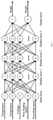
- the deep learning model is preferably a convolutional neural network, which consists of an input layer, three hidden layers and an output layer. Neurons are completely connected between layers, and nonlinear mapping is performed between input parameters and response parameters.
- the forming process parameters are temperature, current, voltage, wire feeding speed and travelling speed, and the width and height of the welding bead are used to describe the shape of the welding bead. Then it is necessary to select training data for the deep learning model.
- the weld geometry of the arc starting point and the arc ending point is usually unstable.
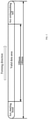
- this embodiment adds an interval of 20mm between both ends on the weld. Only the middle area of the weld (100mm) is valid for data acquisition, as shown in FIG. 3 .
- the length of the whole path is 140mm, and only 100mm is used to ensure the reliability of the acquired data.
- the forming parameters of the WAAM are dynamically changed from the arc starting point to the arc ending point in sections making full use of the length of 100mm.
- the change of the forming parameters will lead to the change of the width and height of the weld.
- the geometric shape information of the formed welding bead is measured by using a line laser sensor, so that the input data (welding parameters) and response data (welding bead profile) can be matched one by one. In this way, a large number of training data of the deep learning model can be obtained.
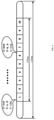
- the welding voltage is modified in such a manner that the welding machine automatically adjusts parameters according to the welding current, and the same temperature is passively changed in the welding process. Therefore, only the three parameters of travelling speed (S, mm/min), wire feeding speed (F, m/min) and welding current (C, A) are dynamically and actively changed, as shown in FIG. 4 .
- Step 1 communication is established between a numerical control machine tool and a welding machine to ensure that process parameters of the welding machine can be changed through numerical control codes, and the traveling speed of the welding machine can be easily obtained directly according to the numerical control codes.
- Step 2 according to FIG. 4 , the experiment is designed by using the dynamic parameter method, and the welding process parameters are constantly changed in the process of walking forward in the same welding bead, and are written into numerical control codes.
- Step 3 the variable parameter numerical control codes in step 2 are used to carry out the experiment.
- a Hall voltage sensor, a Hall current sensor and a welding machine control board are used to acquire voltage, current and wire feeding speed, and the infrared thermal imager is used to acquire welding bead temperature, and then feed the data back to the computer through a high-speed acquisition card. In this process, only the data in the valid data area in FIG. 3 are acquired.
- Step 4 after each welding bead experiment is completed, the line laser sensor in the figure is used to scan the profile of the finished welding bead and extract the welding bead width and the welding bead height of each part. Then, according to FIG. 1 , the height and width of each welding bead in each section correspond to the process parameters of the corresponding section one by one to form training data.
- Step 5 the convolution neural network in FIG. 2 is trained using training data to obtain a welding seam modeling model.
- Step 6 for the actual processing process, welding parameters are acquired according to Step 3 and are input into the welding seam modeling model trained in Step 5, and the welding seam is modeled.
Landscapes
- Engineering & Computer Science (AREA)
- Mechanical Engineering (AREA)
- Physics & Mathematics (AREA)
- Plasma & Fusion (AREA)
- Theoretical Computer Science (AREA)
- Manufacturing & Machinery (AREA)
- Chemical & Material Sciences (AREA)
- Materials Engineering (AREA)
- Evolutionary Computation (AREA)
- Artificial Intelligence (AREA)
- Quality & Reliability (AREA)
- Laser Beam Processing (AREA)
- Arc Welding In General (AREA)
- Arc Welding Control (AREA)
Abstract
Description
- This patent application claims the benefit and priority of Chinese Patent Application filed in China National Intellectual Property Administration on
December 24, 2019 having the Application NO. 201911347776.X - The present disclosure relates to the technical field of wire-arc additive manufacturing, in particular to a welding bead modeling method for wire-arc additive manufacturing, a device therefor and a system therefor.
- Wire-Arc Additive Manufacture (WAAM) uses the arc generated by welding machines such as metal inert-gas welding (MIG), Tungsten inert-gas welding (TIG) and plasma welding power supply (PA) as the heat source. Through the addition of metal wires, under the control of program, layers are stacked on the substrate according to the set forming path until the metal parts are nearly net formed. At present, the orthogonal experiment method and the response surface method are mainly used to build the conventional welding bead model of wire-arc additive manufacturing.
- The orthogonal experiment method is to study the changing relationship between input parameters and output parameters by designing orthogonal experiments. This modeling method has many experiments, and it is easy to have wrong parameters when the experimental method is improper. In order to obtain the optimal parameters, it usually needs many experiments to reduce the parameter range to achieve the optimal parameters. This experimental method usually cannot obtain the mathematical relationship between input parameters and output parameters, and can only study the optimal trend of parameters.
- Another widely used method is a response surface method. By building the relationship model between input parameters and output parameters, the relationship expression between input and output is obtained by regression equation. Although this modeling method is more scientific and reliable than the orthogonal experiment method, the number of experiments increases. At the same time, because of its few parameters, the instability or error of the experiment easily leads to larger parameter errors.
- Based on this, the purpose of the present disclosure is to provide a welding bead modeling method for wire-arc additive manufacturing, a device therefor and a system therefor, in which a deep learning model is used to express the relationship between the forming process parameters and the welding bead shape, and a dynamic parameter method is used in the off-line training process, so that different welding process parameters are used in the same welding bead to obtain multiple sets of experimental data through one processing experiment, avoiding the need to design a set of experiments for each set of experimental parameters. Sufficient training data are provided for neural network training modeling under the condition of reducing the number of experiments and experimental cost, and the technical problem that the traditional orthogonal experiment method and the corresponding curved surface method need complex regression equation selection and parameter optimization is solved at the same time.
- In order to achieve the above purpose, the present disclosure provides a welding bead modeling method for wire-arc additive manufacturing, which comprises an off-line training stage and an on-line modeling stage;
the off-line training stage comprises the steps of: - step 1: dynamic processing and data acquisition
- using a dynamic parameter method, and using different welding process parameters in the same welding bead in the a wire-arc additive manufacturing process to obtain a welding bead with synchronous and dynamic changes in profile along with the dynamic changes of the welding process parameters; wherein the welding process parameters comprise welding bead temperature, welding current, welding voltage, wire feeding speed and travelling speed; in the welding process, acquiring the temperature of the welding bead in real time by an infrared thermal imager;
- using a line laser sensor for scanning to obtain the segmented profile of the welding bead obtained by the dynamic parameter method, and corresponding each welding bead profile to the welding process parameters one by one as training data; wherein the welding bead profile comprises a welding bead height and a welding bead width;
- step 2: model training
- using welding process parameters as the input of neural network, using the welding bead profile corresponding to the input welding process parameters as the output of neural network, and training the neural network, so as to obtain a welding bead modeling model capable of obtaining the corresponding welding bead profile according to the input welding process parameters;
- the online modeling stage comprises the steps of:
step 3, acquiring welding process parameters in real time in the wire-arc additive manufacturing process, and inputting the acquired welding process parameters into the welding bead modeling model obtained by off-line training instep 2 to obtain the welding bead profile. - Preferably, in
step 1, the welding process parameters and the welding bead profile of the arc starting head and the arc extinguishing tail of the weld are ignored, and only the welding process parameters and the welding bead profile of a welding bead between the arc starting head and the arc extinguishing tail are acquired as valid data for model training instep 2. - Preferably, in
step 1, the welding process parameters are dynamically changed from the arc starting point to the arc ending point in sections within the range of a welding bead between the arc starting head and the arc extinguishing tail, so as to obtain a large amount of valid training data through a welding test. - Preferably, in
step 1, the welding voltage is automatically adjusted by a welding machine according to the welding current, and the temperature is passively changed with the change of the welding current in the welding process; the three parameters of travelling speed, wire feeding speed and welding current are dynamically and actively changed in a preset way. - The present disclosure further provides a computer-readable storage medium, wherein a computer program is stored on the computer-readable storage medium, and the computer program, when executed by a processor, implements the welding bead modeling method for wire-arc additive manufacturing described above.
- The present disclosure further provides a welding bead modeling device for wire-arc additive manufacturing, comprising the computer-readable storage medium described above and a processor for calling and processing a computer program stored in the computer-readable storage medium.
- The present disclosure further provides a welding bead modeling system for wire-arc additive manufacturing, comprising an infrared thermal imager, a Hall sensor, a numerical control machine tool, a welding machine, a current sensor, a welding machine control board, a line laser scanner and the device described above;
- wherein the infrared thermal imager is configured to acquire the temperature of the welding bead, the Hall sensor is configured to acquire the welding voltage, the numerical control machine tool is configured to control the travelling speed of the welding machine, the current sensor is configured to acquire the welding current, the welding machine control board is configured to control the wire feeding speed of the welding machine, and the line laser scanner is configured to scan the welding bead to obtain the welding bead profile.
- According to the specific embodiment provided by the present disclosure, the present disclosure discloses the following technical effects.
- (1) In the present disclosure, the complex regression equation selection and parameter optimization of the traditional orthogonal experiment method and the corresponding curved surface method can be avoided by using the neural network to establish the welding bead modeling model between the input parameters and the output parameters of the welding bead. At the same time, the neural network can continuously train and optimize the current model in the later continuous experiment and actual modeling operation, thus obtaining a better deep learning network.
- (2) Because the traditional neural network training needs a large amount of sample data, and a large number of wire-arc additive manufacturing experiments are costly both in time and material, the present disclosure innovatively puts forward a dynamic parameter experiment method to design the experimental process of welding bead data acquisition. The processing parameters dynamically change in sections. A large amount of data of input parameters and output parameters of the welding bead profile can be obtained only through several sets of parameter experiments, thus avoiding the need to design a set of experiments for each set of experimental parameters, reducing the number of experiments and the experimental cost, and greatly shortening the time and threshold of establishing a welding bead model.
- In order to explain the embodiments of the present disclosure or the technical scheme in the prior art more clearly, the drawings needed in the embodiments will be briefly introduced hereinafter. Obviously, the drawings in the following description are only some embodiments of the present disclosure. For those skilled in the art, other drawings can be obtained according to these drawings without paying creative labor.
-
FIG. 1 is a schematic diagram of the overall flow and the system framework according to an embodiment of the present disclosure; -
FIG. 2 is a structural diagram of a convolutional neural network model used in an embodiment of the present disclosure; -
FIG. 3 is a schematic diagram of a welding direction and a welding valid data area according to an embodiment of the present disclosure; -
FIG. 4 is an experimental design idea diagram of a dynamic parameter method according to the embodiment of the present disclosure. - The technical scheme in the embodiments of the present disclosure will be described clearly and completely hereinafter with reference to the drawings in the embodiments of the present disclosure. Obviously, the described embodiments are only some embodiments of the present disclosure, rather than all of the embodiments. Based on the embodiments of the present disclosure, all other embodiments obtained by those skilled in the art without paying creative labor belong to the scope of protection of the present disclosure.
- The purpose of the present disclosure is to provide a welding bead modeling method for wire-arc additive manufacturing, a device therefor and a system therefor, in which a deep learning model is used to express the relationship between the forming process parameters and the welding bead shape, and a dynamic parameter method is used in the off-line training process, so that different welding process parameters are used in the same welding bead to obtain multiple sets of experimental data through one processing experiment, avoiding the need to design a set of experiments for each set of experimental parameters. Sufficient training data are provided for neural network training modeling under the condition of reducing the number of experiments and experimental cost, and the technical problem that the traditional orthogonal experiment method and the corresponding curved surface method need complex regression equation selection and parameter optimization is solved at the same time.
- In order to make the above objects, features and advantages of the present disclosure more obvious and understandable, the present disclosure will be further explained in detail hereinafter with reference to the drawings and specific embodiments.
- The present disclosure provides a new method for modeling a welding bead profile, wherein the modeling adopts a deep learning model based on a neural network, and the deep learning model is a valid tool for establishing complex relationships without making any assumptions between multiple inputs and outputs, especially for nonlinear systems. In the present disclosure, the deep learning model is used to represent the relationship between the forming process parameters and the welding bead shape. According to the present disclosure, a dynamic parameter method is used in the experimental design, and a numerical control machine tool and a welding machine are utilized, so that different welding process parameters are used in the same welding bead, avoiding the need to design a set of experiments for each set of experimental parameters, reducing experiment times and experiment costs, and providing sufficient training data for neural network modeling.
- As shown in
FIG. 1 , the preferred experimental system and modeling system of the present disclosure comprise an infrared thermal imager, a Hall sensor, a numerical control machine tool, a welding machine, a current sensor, a welding machine control board, and a line laser scanner. The infrared thermal imager is configured to acquire the temperature of the welding bead, the Hall sensor is configured to acquire the welding voltage, the numerical control machine tool is configured to control the travelling speed of the welding machine, the current sensor is configured to acquire the welding current, the welding machine control board is configured to control the wire feeding speed of the welding machine, and the line laser scanner is configured to scan the welding bead to obtain the welding bead profile. - The training and modeling of the weld profile model can be realized based on computer calling a convolution neural network program, which specifically comprises an off-line training stage and an on-line modeling stage
- The off-line training stage comprises the steps of:
- step 1: dynamic processing and data acquisition
- using a dynamic parameter method, and using different welding process parameters in the same welding bead in the a wire-arc additive manufacturing process to obtain a welding bead with synchronous and dynamic changes in profile along with the dynamic changes of the welding process parameters; wherein the welding process parameters comprise welding bead temperature, welding current, welding voltage, wire feeding speed and travelling speed; in the welding process, acquiring the temperature of the welding bead in real time by an infrared thermal imager;
- using a line laser sensor for scanning to obtain the segmented profile of the welding bead obtained by the dynamic parameter method, and corresponding each welding bead profile to the welding process parameters one by one as training data; wherein the welding bead profile comprises a welding bead height and a welding bead width;
- step 2: model training
- using welding process parameters as the input of neural network, using the welding bead profile corresponding to the input welding process parameters as the output of neural network, and training the neural network, so as to obtain a welding bead modeling model capable of obtaining the corresponding welding bead profile according to the input welding process parameters;
- the online modeling stage comprises the steps of:
step 3, acquiring welding process parameters in real time in the wire-arc additive manufacturing process, and inputting the acquired welding process parameters into the welding bead modeling model obtained by off-line training instep 2 to obtain the welding bead profile. - Preferably, in
step 1, the welding process parameters and the welding bead profile of the arc starting head and the arc extinguishing tail of the weld are ignored, and only the welding process parameters and the welding bead profile of a welding bead between the arc starting head and the arc extinguishing tail are acquired as valid data for model training instep 2. - Preferably, in
step 1, the welding process parameters are dynamically changed from the arc starting point to the arc ending point in sections within the range of a welding bead between the arc starting head and the arc extinguishing tail, so as to obtain a large amount of valid training data through a welding test. The dynamic change in sections is to segment the welding bead, and different welding process parameters are set in each welding bead section. - Preferably, in
step 1, the welding voltage is automatically adjusted by a welding machine according to the welding current, and the temperature is passively changed with the change of the welding current in the welding process; the three parameters of travelling speed, wire feeding speed and welding current are dynamically and actively changed in a preset way. - The modeling method of the present disclosure is described in detail with a more specific case.
- As shown in
FIG. 2 , the modeling method in the present disclosure uses a deep learning model, and the deep learning model is used to express the relationship between the forming process parameters and the welding bead shape. The deep learning model is preferably a convolutional neural network, which consists of an input layer, three hidden layers and an output layer. Neurons are completely connected between layers, and nonlinear mapping is performed between input parameters and response parameters. The forming process parameters are temperature, current, voltage, wire feeding speed and travelling speed, and the width and height of the welding bead are used to describe the shape of the welding bead. Then it is necessary to select training data for the deep learning model. - In the deposition process of the WAAM, the weld geometry of the arc starting point and the arc ending point is usually unstable. In order to avoid abnormal areas at both ends of the weld, this embodiment adds an interval of 20mm between both ends on the weld. Only the middle area of the weld (100mm) is valid for data acquisition, as shown in
FIG. 3 . In this embodiment, the length of the whole path is 140mm, and only 100mm is used to ensure the reliability of the acquired data. - By using the dynamic parameter experiment (DPE) method proposed by the present disclosure, the forming parameters of the WAAM are dynamically changed from the arc starting point to the arc ending point in sections making full use of the length of 100mm. The change of the forming parameters will lead to the change of the width and height of the weld. After that, the geometric shape information of the formed welding bead is measured by using a line laser sensor, so that the input data (welding parameters) and response data (welding bead profile) can be matched one by one. In this way, a large number of training data of the deep learning model can be obtained.
- In this embodiment, in order to ensure the welding stability, the welding voltage is modified in such a manner that the welding machine automatically adjusts parameters according to the welding current, and the same temperature is passively changed in the welding process. Therefore, only the three parameters of travelling speed (S, mm/min), wire feeding speed (F, m/min) and welding current (C, A) are dynamically and actively changed, as shown in
FIG. 4 . - The operation flow of the system and the experimental method described above is as follows.
- Step 1: communication is established between a numerical control machine tool and a welding machine to ensure that process parameters of the welding machine can be changed through numerical control codes, and the traveling speed of the welding machine can be easily obtained directly according to the numerical control codes.
- Step 2: according to
FIG. 4 , the experiment is designed by using the dynamic parameter method, and the welding process parameters are constantly changed in the process of walking forward in the same welding bead, and are written into numerical control codes. - Step 3: the variable parameter numerical control codes in
step 2 are used to carry out the experiment. During the experiment, a Hall voltage sensor, a Hall current sensor and a welding machine control board are used to acquire voltage, current and wire feeding speed, and the infrared thermal imager is used to acquire welding bead temperature, and then feed the data back to the computer through a high-speed acquisition card. In this process, only the data in the valid data area inFIG. 3 are acquired. - Step 4: after each welding bead experiment is completed, the line laser sensor in the figure is used to scan the profile of the finished welding bead and extract the welding bead width and the welding bead height of each part. Then, according to
FIG. 1 , the height and width of each welding bead in each section correspond to the process parameters of the corresponding section one by one to form training data. - Step 5: the convolution neural network in
FIG. 2 is trained using training data to obtain a welding seam modeling model. - Step 6: for the actual processing process, welding parameters are acquired according to
Step 3 and are input into the welding seam modeling model trained inStep 5, and the welding seam is modeled. - In the present disclosure, a specific example is applied to illustrate the principle and implementation of the present disclosure, and the explanation of the above embodiments is only used to help understand the method and its core idea of the present disclosure. At the same time, according to the idea of the present disclosure, there will be some changes in the specific implementation and application scope for those skilled in the art. To sum up, the contents of this specification should not be construed as limiting the present disclosure.
Claims (7)
- A welding bead modeling method for wire-arc additive manufacturing, wherein the method comprises an off-line training stage and an on-line modeling stage;
the off-line training stage comprises the steps of:step 1: dynamic processing and data acquisitionusing a dynamic parameter method, and using different welding process parameters in the same welding bead in the a wire-arc additive manufacturing process to obtain a welding bead with synchronous and dynamic changes in profile along with the dynamic changes of the welding process parameters; wherein the welding process parameters comprise welding bead temperature, welding current, welding voltage, wire feeding speed and travelling speed; in the welding process, acquiring the temperature of the welding bead in real time by an infrared thermal imager;using a line laser sensor for scanning to obtain the segmented profile of the welding bead obtained by the dynamic parameter method, and corresponding each welding bead profile to the welding process parameters one by one as training data; wherein the welding bead profile comprises a welding bead height and a welding bead width;step 2: model trainingusing welding process parameters as the input of neural network, using the welding bead profile corresponding to the input welding process parameters as the output of neural network, and training the neural network, so as to obtain a welding bead modeling model capable of obtaining the corresponding welding bead profile according to the input welding process parameters;the online modeling stage comprises the steps of:
step 3, acquiring welding process parameters in real time in the wire-arc additive manufacturing process, and inputting the acquired welding process parameters into the welding bead modeling model obtained by off-line training in step 2 to obtain the welding bead profile. - The welding bead modeling method for wire-arc additive manufacturing according to claim 1, wherein in step 1, the welding process parameters and the welding bead profile of the arc starting head and the arc extinguishing tail of the weld are ignored, and only the welding process parameters and the welding bead profile of a welding bead between the arc starting head and the arc extinguishing tail are acquired as valid data for model training in step 2.
- The welding bead modeling method for wire-arc additive manufacturing according to claim 2, wherein in step 1, the welding process parameters are dynamically changed from the arc starting point to the arc ending point in sections within the range of a welding bead between the arc starting head and the arc extinguishing tail, so as to obtain a large amount of valid training data through a welding test.
- The welding bead modeling method for wire-arc additive manufacturing according to any one of claims 1 to 3, wherein in step 1, the welding voltage is automatically adjusted by a welding machine according to the welding current, and the temperature is passively changed with the change of the welding current in the welding process; the three parameters of travelling speed, wire feeding speed and welding current are dynamically and actively changed in a preset way.
- A computer-readable storage medium, wherein a computer program is stored on the computer-readable storage medium, and the computer program, when executed by a processor, implements the method according to any one of claims 1 to 4.
- A welding bead modeling device for wire-arc additive manufacturing, comprising the computer-readable storage medium according to claim 5 and a processor for calling and processing a computer program stored in the computer-readable storage medium.
- A welding bead modeling system for wire-arc additive manufacturing, comprising an infrared thermal imager, a Hall sensor, a numerical control machine tool, a welding machine, a current sensor, a welding machine control board, a line laser scanner and the device according to claim 6;
wherein the infrared thermal imager is configured to acquire the temperature of the welding bead, the Hall sensor is configured to acquire the welding voltage, the numerical control machine tool is configured to control the travelling speed of the welding machine, the current sensor is configured to acquire the welding current, the welding machine control board is configured to control the wire feeding speed of the welding machine, and the line laser scanner is configured to scan the welding bead to obtain the welding bead profile.
Applications Claiming Priority (2)
| Application Number | Priority Date | Filing Date | Title |
|---|---|---|---|
| CN201911347776.XA CN110883403B (en) | 2019-12-24 | 2019-12-24 | A welding bead modeling method, equipment and system for arc additive manufacturing |
| PCT/CN2020/138656 WO2021129671A1 (en) | 2019-12-24 | 2020-12-23 | Weld bead modeling method, device and system for wire-arc additive manufacture |
Publications (2)
| Publication Number | Publication Date |
|---|---|
| EP3939734A1 true EP3939734A1 (en) | 2022-01-19 |
| EP3939734A4 EP3939734A4 (en) | 2023-01-25 |
Family
ID=69753001
Family Applications (1)
| Application Number | Title | Priority Date | Filing Date |
|---|---|---|---|
| EP20908269.2A Withdrawn EP3939734A4 (en) | 2019-12-24 | 2020-12-23 | METHOD FOR MODELING WELDING BEAD, DEVICE AND SYSTEM FOR ARC ADDITIONAL MANUFACTURING |
Country Status (7)
| Country | Link |
|---|---|
| US (1) | US12403540B2 (en) |
| EP (1) | EP3939734A4 (en) |
| JP (1) | JP7136510B2 (en) |
| CN (1) | CN110883403B (en) |
| AU (1) | AU2020410866A1 (en) |
| CA (1) | CA3127257A1 (en) |
| WO (1) | WO2021129671A1 (en) |
Families Citing this family (25)
| Publication number | Priority date | Publication date | Assignee | Title |
|---|---|---|---|---|
| CN110883403B (en) * | 2019-12-24 | 2020-10-30 | 华中科技大学 | A welding bead modeling method, equipment and system for arc additive manufacturing |
| JP7384760B2 (en) * | 2020-07-15 | 2023-11-21 | 株式会社神戸製鋼所 | Machine learning device, additive manufacturing system, machine learning method for welding conditions, method for adjusting welding conditions, and program |
| JP7376434B2 (en) * | 2020-07-20 | 2023-11-08 | 株式会社神戸製鋼所 | Modeling planning support method and modeling planning support device |
| JP7303163B2 (en) * | 2020-07-20 | 2023-07-04 | 株式会社神戸製鋼所 | Defect Occurrence Prediction Method and Defect Occurrence Prediction Apparatus |
| JP7343454B2 (en) * | 2020-07-20 | 2023-09-12 | 株式会社神戸製鋼所 | Machine learning device, additive manufacturing system, machine learning method for welding conditions, method for determining welding conditions, and program |
| JP6912636B1 (en) * | 2020-08-19 | 2021-08-04 | 株式会社神戸製鋼所 | Laminated model manufacturing system, laminated model manufacturing method, and laminated model manufacturing program |
| CN111922548B (en) * | 2020-09-24 | 2021-01-15 | 山东海德智能科技有限公司 | 3D weld scanning system based on weld three-dimensional shape detection |
| CN112916987B (en) * | 2021-02-02 | 2022-02-15 | 北京理工大学 | A method and system for online monitoring and real-time control of arc additive manufacturing |
| CN113210936B (en) * | 2021-04-23 | 2022-05-31 | 张家港华程机车精密制管有限公司 | Welding method and system for straight welded pipe and readable medium |
| CN113569352A (en) * | 2021-07-13 | 2021-10-29 | 华中科技大学 | Additive manufacturing size prediction and process optimization method and system based on machine learning |
| CN113909636B (en) * | 2021-09-30 | 2024-07-05 | 北京博清科技有限公司 | Control method and control device of welding equipment, processor and welding system |
| CN114065419B (en) * | 2021-11-02 | 2024-05-07 | 南京江联焊接技术有限公司 | A variable-thickness slicing method for arc additive manufacturing of large and complex components |
| CN113828947B (en) * | 2021-11-23 | 2022-03-08 | 昆山宝锦激光拼焊有限公司 | A double optimization-based BP neural network laser welding seam forming prediction method |
| WO2023120111A1 (en) * | 2021-12-24 | 2023-06-29 | パナソニックIpマネジメント株式会社 | Appearance inspection device, welding system, and welded portion appearance inspection method |
| CN114101855B (en) * | 2021-12-29 | 2023-02-14 | 福州大学 | Electric arc additive manufacturing and testing method for duplex stainless steel |
| JP7832001B2 (en) * | 2022-02-04 | 2026-03-17 | 株式会社神戸製鋼所 | Control information generation device, control information generation method, welding control device, and control information generation program |
| CN114799415A (en) * | 2022-03-11 | 2022-07-29 | 南京航空航天大学 | Arc additive remanufacturing welding parameter-welding bead size positive and negative neural network prediction model |
| CN114559133B (en) * | 2022-04-27 | 2022-07-29 | 苏芯物联技术(南京)有限公司 | Real-time detection method and system for arc striking continuity of universal welding |
| CN114781093B (en) * | 2022-04-28 | 2024-04-09 | 清华大学 | A method and device for controlling the shape of a weld bead in arc additive manufacturing |
| CN115255555A (en) * | 2022-08-09 | 2022-11-01 | 惠州丰采贵金属制造有限公司 | Welding process |
| CN115519134B (en) * | 2022-11-03 | 2024-04-16 | 西安鑫泰航智能制造有限公司 | Complex structure metal part additive manufacturing method based on zoning dynamic track planning strategy |
| CN115730520A (en) * | 2022-11-24 | 2023-03-03 | 江西科骏实业有限公司 | Shape prediction and virtual simulation method and system for welding seam |
| CN117226325A (en) * | 2023-09-18 | 2023-12-15 | 中国航发航空科技股份有限公司 | Segmented welding method of aerospace engine welding components |
| CN118002962B (en) * | 2024-03-11 | 2026-03-03 | 中船黄埔文冲船舶有限公司 | Automatic welding method for ship body parts |
| CN119870715B (en) * | 2025-03-26 | 2025-07-29 | 中国科学院宁波材料技术与工程研究所 | Method and system for regulating and controlling temperature of laser arc composite welding interface of externally-applied magnetic field |
Family Cites Families (19)
| Publication number | Priority date | Publication date | Assignee | Title |
|---|---|---|---|---|
| US4724302A (en) * | 1987-03-30 | 1988-02-09 | General Electric Company | Bead process control with profiler |
| US5510596A (en) | 1993-04-27 | 1996-04-23 | American Welding Institute | Penetration sensor/controller arc welder |
| JP2004122180A (en) | 2002-10-02 | 2004-04-22 | Nippon Sanso Corp | Welding condition selection device and welding inspection device |
| US20090200282A1 (en) * | 2008-02-08 | 2009-08-13 | Gm Global Technology Operations, Inc. | Weld signature monitoring method and apparatus |
| CN103551709B (en) * | 2013-11-16 | 2015-04-22 | 沈阳工业大学 | Welding joint forming detection device and method for A-TIG welding |
| CN104842042B (en) * | 2015-05-15 | 2016-06-08 | 西安交通大学 | A metal welding rapid prototyping system and method based on CMT |
| CN105033408B (en) * | 2015-05-28 | 2017-05-17 | 西南交通大学 | Double passive vision sensing detecting device in GMA material increase manufacturing and detecting method thereof |
| US11347191B2 (en) * | 2015-07-29 | 2022-05-31 | Illinois Tool Works Inc. | System and method to facilitate welding software as a service |
| JP6126174B2 (en) * | 2015-07-31 | 2017-05-10 | ファナック株式会社 | Machine learning device, arc welding control device, arc welding robot system and welding system |
| JP6636284B2 (en) * | 2015-08-21 | 2020-01-29 | 株式会社ダイヘン | Arc welding quality judgment system |
| CN105478976B (en) * | 2016-01-26 | 2017-10-24 | 清华大学 | Termination MICROBEAM PLASMA WELDING shaping control method based on Dynamic System Identification |
| JP6765229B2 (en) | 2016-06-23 | 2020-10-07 | 株式会社ダイヘン | Bead inspection equipment and bead inspection program |
| JP7021728B2 (en) | 2017-05-12 | 2022-02-17 | 株式会社神戸製鋼所 | Automatic welding system, welding control method, and machine learning model |
| CN107649804B (en) * | 2017-10-17 | 2023-06-23 | 华中科技大学鄂州工业技术研究院 | An Online Detection and Control System of Additive Manufacturing Penetration Depth |
| CN108500498B (en) * | 2018-03-26 | 2020-05-19 | 华中科技大学 | Weld joint forming quality monitoring method |
| CN110524092A (en) * | 2018-05-25 | 2019-12-03 | 南京理工大学 | Non-melting electrode arc hot wire additive manufacturing wire temperature detection and control device and method |
| CN109158729A (en) * | 2018-10-29 | 2019-01-08 | 清华大学 | A kind of longitudinally connected method of welding bead in electric arc increasing material manufacturing |
| CN110472698B (en) * | 2019-08-22 | 2020-05-29 | 四川大学 | A real-time prediction method for metal additive forming penetration based on deep and transfer learning |
| CN110883403B (en) | 2019-12-24 | 2020-10-30 | 华中科技大学 | A welding bead modeling method, equipment and system for arc additive manufacturing |
-
2019
- 2019-12-24 CN CN201911347776.XA patent/CN110883403B/en active Active
-
2020
- 2020-12-23 CA CA3127257A patent/CA3127257A1/en not_active Abandoned
- 2020-12-23 AU AU2020410866A patent/AU2020410866A1/en not_active Abandoned
- 2020-12-23 WO PCT/CN2020/138656 patent/WO2021129671A1/en not_active Ceased
- 2020-12-23 US US17/310,905 patent/US12403540B2/en active Active
- 2020-12-23 JP JP2021531538A patent/JP7136510B2/en active Active
- 2020-12-23 EP EP20908269.2A patent/EP3939734A4/en not_active Withdrawn
Also Published As
| Publication number | Publication date |
|---|---|
| JP2022518882A (en) | 2022-03-17 |
| EP3939734A4 (en) | 2023-01-25 |
| CN110883403A (en) | 2020-03-17 |
| US20220161344A1 (en) | 2022-05-26 |
| WO2021129671A1 (en) | 2021-07-01 |
| US12403540B2 (en) | 2025-09-02 |
| CN110883403B (en) | 2020-10-30 |
| AU2020410866A1 (en) | 2021-08-05 |
| JP7136510B2 (en) | 2022-09-13 |
| CA3127257A1 (en) | 2021-07-01 |
Similar Documents
| Publication | Publication Date | Title |
|---|---|---|
| US12403540B2 (en) | Welding bead modeling method for wire-arc additive manufacturing, device therefor and system therefor | |
| US11084275B2 (en) | Methods and systems for hybrid deposition rate near net shape additive manufacturing | |
| CN112975164B (en) | Laser cutting method and laser cutting platform | |
| CN105345237B (en) | A kind of vertical masonry joint submerged-arc welding automatically controls the device and its process of seam center | |
| US12498699B2 (en) | Machine learning device, additive manufacturing system, machine learning method for welding condition, method for determining welding condition, and a non-transitory computer readable medium | |
| CN104842042B (en) | A metal welding rapid prototyping system and method based on CMT | |
| CN106583974B (en) | One kind quickly seeks a welding system and welding method without programming structure part laser | |
| JP2018075709A (en) | System, and method for manufacture and control of system | |
| EP4166265B1 (en) | System and method for manufacturing an additively manufactured object by welding a filler wire and depositing weld beads ; corresponding program | |
| WO2017223061A1 (en) | Systems and methods for planning paths to guide robots | |
| CN102640067A (en) | Tool path generation method and device | |
| CN115285316B (en) | Ship segment welding deformation dynamic compensation control method based on error accumulation principle | |
| JP5165159B2 (en) | Numerical control programming method, numerical control programming device, program, and numerical control device | |
| CN106527351A (en) | Small-line real-time interpolation method for dynamically determining length of transition curve | |
| CN113118675B (en) | Robot welding system task allocation and path planning method based on mobile platform | |
| CN107598401A (en) | Plasma arc welding (PAW) electric current molten wide control system based on Fuzzy Reasoning Neural Network | |
| Zhao et al. | Hybrid path planning method based on skeleton contour partitioning for robotic additive manufacturing | |
| EP4275832B1 (en) | METHOD FOR PRODUCING A LAMINATION PLAN | |
| JPH10249525A (en) | Method and apparatus for adaptive control of welding conditions | |
| CN118915609A (en) | Laser cutting path optimization method and control system based on improved ACO-DP | |
| CN111069740B (en) | Method and system for flexible control of robot welding process | |
| CN118218723A (en) | A robotic arc additive manufacturing method based on dynamic parameter adjustment | |
| KR102813097B1 (en) | Automatic welding system and automatic welding condition database building method | |
| CN118595588A (en) | Data processing method, device and computer equipment based on friction stir welding | |
| CN121870233A (en) | A method and system for controlling multi-point synchronous welding of steel pipes |
Legal Events
| Date | Code | Title | Description |
|---|---|---|---|
| STAA | Information on the status of an ep patent application or granted ep patent |
Free format text: STATUS: THE INTERNATIONAL PUBLICATION HAS BEEN MADE |
|
| PUAI | Public reference made under article 153(3) epc to a published international application that has entered the european phase |
Free format text: ORIGINAL CODE: 0009012 |
|
| STAA | Information on the status of an ep patent application or granted ep patent |
Free format text: STATUS: REQUEST FOR EXAMINATION WAS MADE |
|
| 17P | Request for examination filed |
Effective date: 20210715 |
|
| AK | Designated contracting states |
Kind code of ref document: A1 Designated state(s): AL AT BE BG CH CY CZ DE DK EE ES FI FR GB GR HR HU IE IS IT LI LT LU LV MC MK MT NL NO PL PT RO RS SE SI SK SM TR |
|
| DAV | Request for validation of the european patent (deleted) | ||
| DAX | Request for extension of the european patent (deleted) | ||
| RIN1 | Information on inventor provided before grant (corrected) |
Inventor name: LI, RUNSHENG Inventor name: ZHOU, SIYU Inventor name: TANG, SHANGYONG Inventor name: WANG, GUILAN Inventor name: ZHANG, HAI'OU |
|
| A4 | Supplementary search report drawn up and despatched |
Effective date: 20230104 |
|
| RIC1 | Information provided on ipc code assigned before grant |
Ipc: B23K 31/12 20060101ALI20221222BHEP Ipc: B23K 31/00 20060101ALI20221222BHEP Ipc: B23K 9/32 20060101ALI20221222BHEP Ipc: B23K 9/04 20060101ALI20221222BHEP Ipc: B23K 9/095 20060101AFI20221222BHEP |
|
| STAA | Information on the status of an ep patent application or granted ep patent |
Free format text: STATUS: EXAMINATION IS IN PROGRESS |
|
| 17Q | First examination report despatched |
Effective date: 20231114 |
|
| STAA | Information on the status of an ep patent application or granted ep patent |
Free format text: STATUS: THE APPLICATION HAS BEEN WITHDRAWN |
|
| 18W | Application withdrawn |
Effective date: 20240314 |