EP3939607A1 - Dengue virus vaccine - Google Patents
Dengue virus vaccine Download PDFInfo
- Publication number
- EP3939607A1 EP3939607A1 EP20770940.3A EP20770940A EP3939607A1 EP 3939607 A1 EP3939607 A1 EP 3939607A1 EP 20770940 A EP20770940 A EP 20770940A EP 3939607 A1 EP3939607 A1 EP 3939607A1
- Authority
- EP
- European Patent Office
- Prior art keywords
- region
- virus
- dengue
- dna
- dengue virus
- Prior art date
- Legal status (The legal status is an assumption and is not a legal conclusion. Google has not performed a legal analysis and makes no representation as to the accuracy of the status listed.)
- Pending
Links
Images






Classifications
-
- C—CHEMISTRY; METALLURGY
- C12—BIOCHEMISTRY; BEER; SPIRITS; WINE; VINEGAR; MICROBIOLOGY; ENZYMOLOGY; MUTATION OR GENETIC ENGINEERING
- C12N—MICROORGANISMS OR ENZYMES; COMPOSITIONS THEREOF; PROPAGATING, PRESERVING, OR MAINTAINING MICROORGANISMS; MUTATION OR GENETIC ENGINEERING; CULTURE MEDIA
- C12N7/00—Viruses; Bacteriophages; Compositions thereof; Preparation or purification thereof
-
- A—HUMAN NECESSITIES
- A61—MEDICAL OR VETERINARY SCIENCE; HYGIENE
- A61K—PREPARATIONS FOR MEDICAL, DENTAL OR TOILETRY PURPOSES
- A61K39/00—Medicinal preparations containing antigens or antibodies
- A61K39/12—Viral antigens
-
- A—HUMAN NECESSITIES
- A61—MEDICAL OR VETERINARY SCIENCE; HYGIENE
- A61P—SPECIFIC THERAPEUTIC ACTIVITY OF CHEMICAL COMPOUNDS OR MEDICINAL PREPARATIONS
- A61P31/00—Antiinfectives, i.e. antibiotics, antiseptics, chemotherapeutics
- A61P31/12—Antivirals
-
- A—HUMAN NECESSITIES
- A61—MEDICAL OR VETERINARY SCIENCE; HYGIENE
- A61P—SPECIFIC THERAPEUTIC ACTIVITY OF CHEMICAL COMPOUNDS OR MEDICINAL PREPARATIONS
- A61P31/00—Antiinfectives, i.e. antibiotics, antiseptics, chemotherapeutics
- A61P31/12—Antivirals
- A61P31/14—Antivirals for RNA viruses
-
- A—HUMAN NECESSITIES
- A61—MEDICAL OR VETERINARY SCIENCE; HYGIENE
- A61P—SPECIFIC THERAPEUTIC ACTIVITY OF CHEMICAL COMPOUNDS OR MEDICINAL PREPARATIONS
- A61P37/00—Drugs for immunological or allergic disorders
- A61P37/02—Immunomodulators
- A61P37/04—Immunostimulants
-
- C—CHEMISTRY; METALLURGY
- C07—ORGANIC CHEMISTRY
- C07K—PEPTIDES
- C07K14/00—Peptides having more than 20 amino acids; Gastrins; Somatostatins; Melanotropins; Derivatives thereof
- C07K14/005—Peptides having more than 20 amino acids; Gastrins; Somatostatins; Melanotropins; Derivatives thereof from viruses
-
- C—CHEMISTRY; METALLURGY
- C12—BIOCHEMISTRY; BEER; SPIRITS; WINE; VINEGAR; MICROBIOLOGY; ENZYMOLOGY; MUTATION OR GENETIC ENGINEERING
- C12N—MICROORGANISMS OR ENZYMES; COMPOSITIONS THEREOF; PROPAGATING, PRESERVING, OR MAINTAINING MICROORGANISMS; MUTATION OR GENETIC ENGINEERING; CULTURE MEDIA
- C12N15/00—Mutation or genetic engineering; DNA or RNA concerning genetic engineering, vectors, e.g. plasmids, or their isolation, preparation or purification; Use of hosts therefor
- C12N15/09—Recombinant DNA-technology
- C12N15/11—DNA or RNA fragments; Modified forms thereof; Non-coding nucleic acids having a biological activity
- C12N15/113—Non-coding nucleic acids modulating the expression of genes, e.g. antisense oligonucleotides; Antisense DNA or RNA; Triplex- forming oligonucleotides; Catalytic nucleic acids, e.g. ribozymes; Nucleic acids used in co-suppression or gene silencing
- C12N15/1131—Non-coding nucleic acids modulating the expression of genes, e.g. antisense oligonucleotides; Antisense DNA or RNA; Triplex- forming oligonucleotides; Catalytic nucleic acids, e.g. ribozymes; Nucleic acids used in co-suppression or gene silencing against viruses
-
- C—CHEMISTRY; METALLURGY
- C12—BIOCHEMISTRY; BEER; SPIRITS; WINE; VINEGAR; MICROBIOLOGY; ENZYMOLOGY; MUTATION OR GENETIC ENGINEERING
- C12N—MICROORGANISMS OR ENZYMES; COMPOSITIONS THEREOF; PROPAGATING, PRESERVING, OR MAINTAINING MICROORGANISMS; MUTATION OR GENETIC ENGINEERING; CULTURE MEDIA
- C12N15/00—Mutation or genetic engineering; DNA or RNA concerning genetic engineering, vectors, e.g. plasmids, or their isolation, preparation or purification; Use of hosts therefor
- C12N15/09—Recombinant DNA-technology
- C12N15/63—Introduction of foreign genetic material using vectors; Vectors; Use of hosts therefor; Regulation of expression
- C12N15/79—Vectors or expression systems specially adapted for eukaryotic hosts
- C12N15/85—Vectors or expression systems specially adapted for eukaryotic hosts for animal cells
- C12N15/86—Viral vectors
-
- A—HUMAN NECESSITIES
- A01—AGRICULTURE; FORESTRY; ANIMAL HUSBANDRY; HUNTING; TRAPPING; FISHING
- A01K—ANIMAL HUSBANDRY; AVICULTURE; APICULTURE; PISCICULTURE; FISHING; REARING OR BREEDING ANIMALS, NOT OTHERWISE PROVIDED FOR; NEW BREEDS OF ANIMALS
- A01K2217/00—Genetically modified animals
- A01K2217/07—Animals genetically altered by homologous recombination
- A01K2217/075—Animals genetically altered by homologous recombination inducing loss of function, i.e. knock out
-
- A—HUMAN NECESSITIES
- A01—AGRICULTURE; FORESTRY; ANIMAL HUSBANDRY; HUNTING; TRAPPING; FISHING
- A01K—ANIMAL HUSBANDRY; AVICULTURE; APICULTURE; PISCICULTURE; FISHING; REARING OR BREEDING ANIMALS, NOT OTHERWISE PROVIDED FOR; NEW BREEDS OF ANIMALS
- A01K2227/00—Animals characterised by species
- A01K2227/10—Mammal
- A01K2227/105—Murine
-
- A—HUMAN NECESSITIES
- A01—AGRICULTURE; FORESTRY; ANIMAL HUSBANDRY; HUNTING; TRAPPING; FISHING
- A01K—ANIMAL HUSBANDRY; AVICULTURE; APICULTURE; PISCICULTURE; FISHING; REARING OR BREEDING ANIMALS, NOT OTHERWISE PROVIDED FOR; NEW BREEDS OF ANIMALS
- A01K2267/00—Animals characterised by purpose
- A01K2267/03—Animal model, e.g. for test or diseases
- A01K2267/0337—Animal models for infectious diseases
-
- A—HUMAN NECESSITIES
- A61—MEDICAL OR VETERINARY SCIENCE; HYGIENE
- A61K—PREPARATIONS FOR MEDICAL, DENTAL OR TOILETRY PURPOSES
- A61K39/00—Medicinal preparations containing antigens or antibodies
- A61K2039/51—Medicinal preparations containing antigens or antibodies comprising whole cells, viruses or DNA/RNA
- A61K2039/525—Virus
- A61K2039/5254—Virus avirulent or attenuated
-
- A—HUMAN NECESSITIES
- A61—MEDICAL OR VETERINARY SCIENCE; HYGIENE
- A61K—PREPARATIONS FOR MEDICAL, DENTAL OR TOILETRY PURPOSES
- A61K39/00—Medicinal preparations containing antigens or antibodies
- A61K2039/51—Medicinal preparations containing antigens or antibodies comprising whole cells, viruses or DNA/RNA
- A61K2039/525—Virus
- A61K2039/5256—Virus expressing foreign proteins
-
- A—HUMAN NECESSITIES
- A61—MEDICAL OR VETERINARY SCIENCE; HYGIENE
- A61K—PREPARATIONS FOR MEDICAL, DENTAL OR TOILETRY PURPOSES
- A61K39/00—Medicinal preparations containing antigens or antibodies
- A61K2039/58—Medicinal preparations containing antigens or antibodies raising an immune response against a target which is not the antigen used for immunisation
-
- C—CHEMISTRY; METALLURGY
- C12—BIOCHEMISTRY; BEER; SPIRITS; WINE; VINEGAR; MICROBIOLOGY; ENZYMOLOGY; MUTATION OR GENETIC ENGINEERING
- C12N—MICROORGANISMS OR ENZYMES; COMPOSITIONS THEREOF; PROPAGATING, PRESERVING, OR MAINTAINING MICROORGANISMS; MUTATION OR GENETIC ENGINEERING; CULTURE MEDIA
- C12N2710/00—MICROORGANISMS OR ENZYMES; COMPOSITIONS THEREOF; PROPAGATING, PRESERVING, OR MAINTAINING MICROORGANISMS; MUTATION OR GENETIC ENGINEERING; CULTURE MEDIA dsDNA viruses
- C12N2710/00011—Details
- C12N2710/24011—Poxviridae
- C12N2710/24111—Orthopoxvirus, e.g. vaccinia virus, variola
- C12N2710/24134—Use of virus or viral component as vaccine, e.g. live-attenuated or inactivated virus, VLP, viral protein
-
- C—CHEMISTRY; METALLURGY
- C12—BIOCHEMISTRY; BEER; SPIRITS; WINE; VINEGAR; MICROBIOLOGY; ENZYMOLOGY; MUTATION OR GENETIC ENGINEERING
- C12N—MICROORGANISMS OR ENZYMES; COMPOSITIONS THEREOF; PROPAGATING, PRESERVING, OR MAINTAINING MICROORGANISMS; MUTATION OR GENETIC ENGINEERING; CULTURE MEDIA
- C12N2710/00—MICROORGANISMS OR ENZYMES; COMPOSITIONS THEREOF; PROPAGATING, PRESERVING, OR MAINTAINING MICROORGANISMS; MUTATION OR GENETIC ENGINEERING; CULTURE MEDIA dsDNA viruses
- C12N2710/00011—Details
- C12N2710/24011—Poxviridae
- C12N2710/24111—Orthopoxvirus, e.g. vaccinia virus, variola
- C12N2710/24141—Use of virus, viral particle or viral elements as a vector
- C12N2710/24143—Use of virus, viral particle or viral elements as a vector viral genome or elements thereof as genetic vector
-
- C—CHEMISTRY; METALLURGY
- C12—BIOCHEMISTRY; BEER; SPIRITS; WINE; VINEGAR; MICROBIOLOGY; ENZYMOLOGY; MUTATION OR GENETIC ENGINEERING
- C12N—MICROORGANISMS OR ENZYMES; COMPOSITIONS THEREOF; PROPAGATING, PRESERVING, OR MAINTAINING MICROORGANISMS; MUTATION OR GENETIC ENGINEERING; CULTURE MEDIA
- C12N2770/00—MICROORGANISMS OR ENZYMES; COMPOSITIONS THEREOF; PROPAGATING, PRESERVING, OR MAINTAINING MICROORGANISMS; MUTATION OR GENETIC ENGINEERING; CULTURE MEDIA ssRNA viruses positive-sense
- C12N2770/00011—Details
- C12N2770/24011—Flaviviridae
- C12N2770/24111—Flavivirus, e.g. yellow fever virus, dengue, JEV
- C12N2770/24122—New viral proteins or individual genes, new structural or functional aspects of known viral proteins or genes
-
- C—CHEMISTRY; METALLURGY
- C12—BIOCHEMISTRY; BEER; SPIRITS; WINE; VINEGAR; MICROBIOLOGY; ENZYMOLOGY; MUTATION OR GENETIC ENGINEERING
- C12N—MICROORGANISMS OR ENZYMES; COMPOSITIONS THEREOF; PROPAGATING, PRESERVING, OR MAINTAINING MICROORGANISMS; MUTATION OR GENETIC ENGINEERING; CULTURE MEDIA
- C12N2770/00—MICROORGANISMS OR ENZYMES; COMPOSITIONS THEREOF; PROPAGATING, PRESERVING, OR MAINTAINING MICROORGANISMS; MUTATION OR GENETIC ENGINEERING; CULTURE MEDIA ssRNA viruses positive-sense
- C12N2770/00011—Details
- C12N2770/24011—Flaviviridae
- C12N2770/24111—Flavivirus, e.g. yellow fever virus, dengue, JEV
- C12N2770/24134—Use of virus or viral component as vaccine, e.g. live-attenuated or inactivated virus, VLP, viral protein
-
- Y—GENERAL TAGGING OF NEW TECHNOLOGICAL DEVELOPMENTS; GENERAL TAGGING OF CROSS-SECTIONAL TECHNOLOGIES SPANNING OVER SEVERAL SECTIONS OF THE IPC; TECHNICAL SUBJECTS COVERED BY FORMER USPC CROSS-REFERENCE ART COLLECTIONS [XRACs] AND DIGESTS
- Y02—TECHNOLOGIES OR APPLICATIONS FOR MITIGATION OR ADAPTATION AGAINST CLIMATE CHANGE
- Y02A—TECHNOLOGIES FOR ADAPTATION TO CLIMATE CHANGE
- Y02A50/00—TECHNOLOGIES FOR ADAPTATION TO CLIMATE CHANGE in human health protection, e.g. against extreme weather
- Y02A50/30—Against vector-borne diseases, e.g. mosquito-borne, fly-borne, tick-borne or waterborne diseases whose impact is exacerbated by climate change
Definitions
- the present invention relates to a recombinant vaccinia virus as a dengue virus vaccine, and the like.
- Dengue viruses are endemic primarily in the tropical areas, and about 400 million people are said to be annually infected with these viruses around the world, of which about 100 million people develop dengue fever.
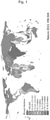
- the dengue transmission area has been expanding ( Figure 1 ), and there was a report of mass infection (over 10,000 people infected) in China (Guangdong).
- Japan national incidence of infection in 2014 has settled, but Japan is exposed to a risk of a constant incidence of infection since the virus is transmitted every year via travelers and the like from the countries where infection is endemic. There have been over 200 imported cases reported since 2010.
- Non-patent document 1 The World Health Organization (WHO), "WHO advises Dengvaxia be used only in people previously infected with dengue", 2017 (URL https://www.who.int/medicines/news/2017/WHO-advises-dengvaxia-used-only-in-people-previously-infected/en/ )
- WHO World Health Organization
- a dengue virus vaccine that can serve as a clinically accessible therapeutic or prophylactic drug, specifically, a dengue virus vaccine or the like that can suppress the risk of developing dengue fever and dengue hemorrhagic fever even when used for vaccinating people who have never been infected with the virus, has been desired.
- the present invention was made in view of the above-described circumstances, and provides the following recombinant vaccinia virus, pharmaceutical composition and the like.
- the present invention provides a recombinant vaccinia virus as a dengue virus vaccine which can serve as a clinically accessible therapeutic or prophylactic drug, a pharmaceutical composition using the same, and the like.
- the recombinant vaccinia virus of the present invention is extremely advantageous in that, even when it is used as a dengue virus vaccine to vaccinate people who have never been infected with the virus, the subsequent risk of developing dengue fever or dengue hemorrhagic fever (in particular, highly severe dengue hemorrhagic fever) can be suppressed (for example, induction of pathology of a severe disease (dengue hemorrhagic fever, etc.) due to an antibody-dependent enhancement (ADE) phenomenon can be suppressed).
- ADE antibody-dependent enhancement
- ADE antibody-dependent enhancement
- the genes of the NS1 region and the NS2-5 region (a region other than the NS1 region; specifically, a region comprising NS2A, NS2B, NS3, NS4A, NS4B and NS5 regions) of the non-structural protein which has no chance of inducing ADE were each inserted into a recombinant vector that is used for preparing a DIs recombinant vaccine.
- These recombinant vectors were used in an attempt to establish recombinant vaccinia viruses (rDIs-DENV2C-NS1 and rDIs-DENV2C-NS25).
- genes coding for the dengue virus (DENV) protein, the gene coding for the capsid (structural) protein region and the genes coding for the non-structural protein region involved in replication have previously been cloned and kept in the forms of plasmids. Therefore, genes contained in a recombinant vaccinia virus of the present invention, namely, genes comprising the DENV non-structural protein region can be obtained by a common genetic engineering technique. For example, nucleic acid synthesis using a DNA synthesizer, which is a generally employed genetic engineering technique, can be employed.
- PCR technique in which a genetic sequence that serves as a template is isolated or synthesized and then primers specific to each gene are designed to amplify the genetic sequence using a PCR device, or a gene amplification technique using a cloning vector can be employed. These techniques can be carried out by those skilled in the art according to " Molecular cloning 4th ed. Cold Spring Harbor Laboratory Press (2012 )” or the like. The resulting PCR product can be purified by a known method.
- DNAs coding for the respective gene regions of DENV can be prepared by performing PCR using the DENV gene inserted into the above-described plasmid as a template and using primers specific to a region of interest (non-structural protein region) of the DENV gene.
- a DNA of a gene coding for a non-structural protein region among all DENV gene regions is used for preparing the recombinant vaccinia virus.
- the non-structural protein region is a region consisting of NS1, NS2A, NS2B, NS3, NS4A, NS4B and NS5 regions.
- the NS1 region and the region other than the NS1 region are separately used.
- DENV-1 there are four serotypes DENV-1, 2, 3 and 4 (serotype 1, serotype 2, serotype 3 and serotype 4).
- DENV-2 can further be grouped into Asian subtype and Cosmopolitan subtype, and therefore there are mainly a total of five types of DENVs.
- the non-structural protein region is a region comprising NS1, NS2A, NS2B, NS3, NS4A, NS4B and NS5 regions.
- a recombinant vaccinia virus of the present invention can be prepared using a cDNA of a non-structural protein region from any type of DENV without limitation, but preferably one derived from DENV-2, more preferably one derived from Cosmopolitan subtype of DENV-2.
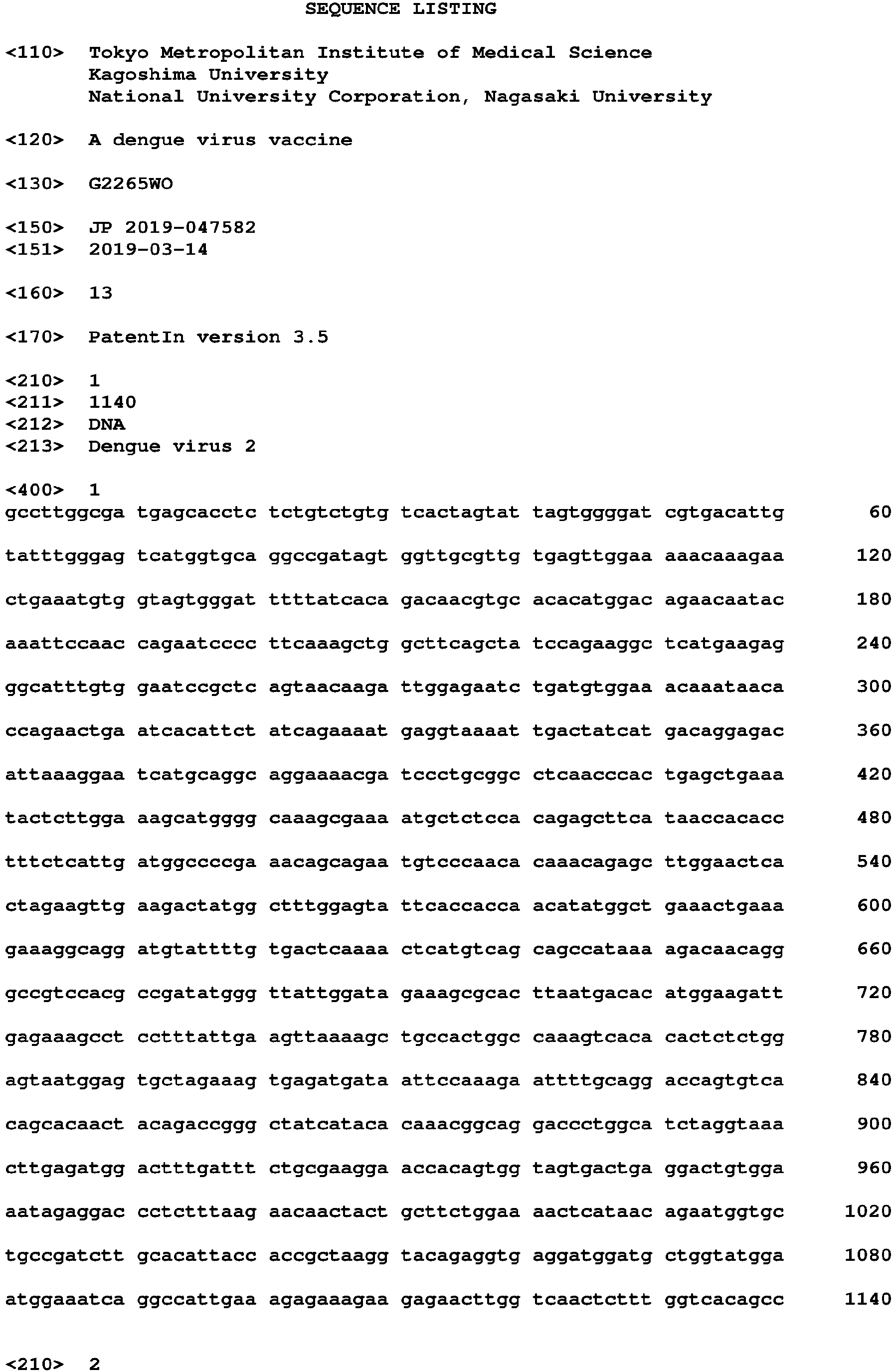
- the nucleotide sequence of the DNA encoding the NS1 region of the non-structural protein region derived from Cosmopolitan subtype of DENV-2 is represented by SEQ ID NO: 1
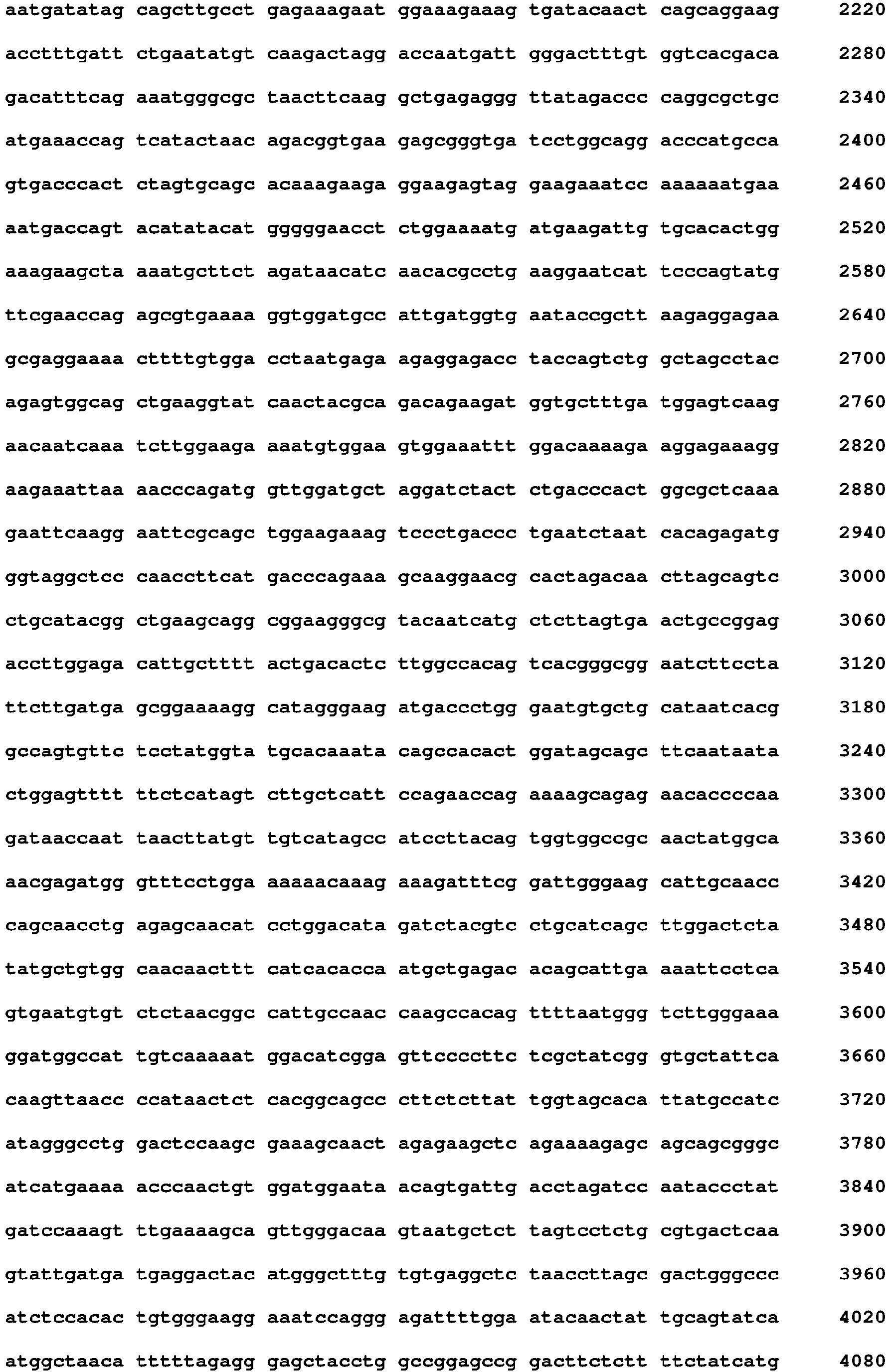
- the nucleotide sequence of the DNA encoding the NS2-5 region thereof is represented by SEQ ID NO:2.
- a mutant DNA of the nucleotide sequence of the DNA encoding the NS2-5 region (DNA encoding a region having mutation in the NS5 part of the NS2-5 region (specifically, mutation that abolishes enzymatic activity of NS5)) is represented by SEQ ID NO:3.
- SEQ ID NOS:1, 2 and 3 the following DNAs can also be used in the present invention.
- DNA which has 80% or higher, 90% or higher, 95% or higher, 98% or higher or 99% or higher identity (homology) with a DNA consisting of a nucleotide sequence complementary to the nucleotide sequence represented by SEQ ID NO:3, and which encodes a non-structural protein from a dengue virus (mutant DNA of a region having mutation in the NS5 part of the NS2-5 region).
- encoding a non-structural protein from a dengue virus means that the DNA encodes a protein that is produced in the cell upon viral proliferation. Furthermore, the above-described gene encoding the non-structural protein comprises the full-length sequence as well as partial sequences thereof.
- the above-described mutant DNA can be obtained by chemical synthesis. Alternatively, it can be obtained from a cDNA library or a genome library by a known hybridization technique such as colony hybridization, plaque hybridization, Southern blotting or the like, using a DNA consisting of the nucleotide sequence represented by SEQ ID NO:1, 2 or 3, or a fragment thereof as a probe.
- a known hybridization technique such as colony hybridization, plaque hybridization, Southern blotting or the like, using a DNA consisting of the nucleotide sequence represented by SEQ ID NO:1, 2 or 3, or a fragment thereof as a probe.
- the stringent conditions in the above-mentioned hybridization may be, for example, conditions of 0.1 x SSC-10 x SSC, 0.1%-1.0% SDS and 20°C-80°C, more specifically, conditions in which prehybridization at 37°C-56°C for 30 minutes or longer is followed by 1-3 times of rinsing in 0.1 x SSC, 0.1% SDS at room temperature for 10-20 minutes.
- conditions of 0.1 x SSC-10 x SSC 0.1%-1.0% SDS and 20°C-80°C
- prehybridization at 37°C-56°C for 30 minutes or longer is followed by 1-3 times of rinsing in 0.1 x SSC, 0.1% SDS at room temperature for 10-20 minutes.
- the recombinant vaccinia virus of the present invention can be prepared, for example, but not exclusively, by inserting a DNA having a nucleotide sequence coding for a non-structural protein region of DENV (a region of interest, NS1 or NS2-5) into an expression vector (plasmid) of interest, and transfecting this plasmid vector into a vaccinia virus that serves as a host.
- this expression vector include, but not limited to, pSMART (registered trademark) vector and the like, and an expression promoter contained in the recombinant vaccinia virus of the present invention may be any expression promoter conventionally used for expression of a vaccinia virus gene (for example, mH5 promoter, etc.).
- Transfection of the plasmid vector into the host can be conducted by employing any known technique.
- the above-described plasmid vector can be transfected into an animal cell which has been infected with an attenuated vaccinia virus DIs strain so as to induce homologous recombination in the genome of vaccinia virus, thereby preparing a recombinant vaccinia virus expressing the region of interest of the DENV non-structural protein.
- the above-mentioned attenuated vaccinia virus DIs strain is a highly attenuated strain lacking host range gene established by one-day egg passage from smallpox vaccine Dairen (Dalian) strain (DIE), which can replicate only in Chick Embryo Fibroblast (CEF) cells, developed by Dr. Isamu Tagaya, the National Institute of Health (currently known as the National Institute of Infectious Disease) ( Tagaya et al. Nature 1961 ). Owing to extensive gene deletion, it cannot replicate in most mammal cells including mice, guinea pigs, rabbits and humans. As a result, safety is assured even when it is used to inoculate an immunocompromised/immunosuppressed patient.
- the prepared recombinant vaccinia virus can be subjected to PCR using the viral genome as a template and primers specific to the gene of the DENV non-structural protein region to confirm introduction of the gene of the non-structural protein region of interest.
- expression of the non-structural protein of interest can be confirmed by Western blotting using an animal cell infected with the prepared recombinant vaccinia virus as a sample.
- the antibody used in Western blotting may be, for example, a commercially available antibody that specifically recognizes the non-structural protein region of interest or an antibody obtained by purifying IgG using Protein G from an antiserum prepared by immunization with a DENV polypeptide.
- the present invention provides a pharmaceutical composition comprising the above-described recombinant vaccinia virus, more specifically, a pharmaceutical composition as a prophylactic or therapeutic drug for a dengue virus infectious disease.
- dengue virus infectious disease include dengue fever, dengue hemorrhagic fever and the like.
- the pharmaceutical composition of the present invention can be introduced into an organism by any known method, for example, an injection such as an intramuscular, intraperitoneal, intradermal or subcutaneous injection, nasal, oral or lung inhalation, or oral administration.
- an injection such as an intramuscular, intraperitoneal, intradermal or subcutaneous injection, nasal, oral or lung inhalation, or oral administration.
- the recombinant vaccinia virus contained in the pharmaceutical composition of the present invention can also be used in combination with an existing antiviral drug (for example, interferon).
- an existing antiviral drug for example, interferon
- the mode of such combinational use is not particularly limited, and the recombinant vaccinia virus of the present invention can be administered simultaneously with the existing antiviral drug, or they may be introduced into an organism by administering one of them and then the other after a certain period of time.
- the pharmaceutical composition of the present invention may be mixed with a known pharmacologically acceptable carrier such as an excipient, a filler, a binder or a lubricant, a buffer, a tonicity-adjusting agent, a chelating agent, a colorant, a preservative, an aroma chemical, a flavoring agent, a sweetener or the like.
- a known pharmacologically acceptable carrier such as an excipient, a filler, a binder or a lubricant, a buffer, a tonicity-adjusting agent, a chelating agent, a colorant, a preservative, an aroma chemical, a flavoring agent, a sweetener or the like.
- the pharmaceutical composition of the present invention can be administered orally or parenterally depending on whether it is in a form of an oral preparation such as a tablet, a capsule, a powdered agent, granules, pills, a liquid agent or a syrup agent, or in a form of a parenteral preparation such as an injection, a topical agent, a suppository or eye drops.
- a parenteral preparation such as an injection, a topical agent, a suppository or eye drops.
- Preferable examples include a local injection such as an intradermal, intramuscular or intraperitoneal injection.
- a daily dosage of the recombinant vaccinia virus is about 1,000-1,000,000,000 PFU (plaque forming units), preferably about 100,000-100,000,000 PFU for oral administration, and about 100-1,000,000,000 PFU (plaque forming units), preferably about 1,000-100,000,000 PFU for parenteral administration.
- the virus can be administered once or in multiple doses a day.
- the recombinant vaccinia virus of the present invention can be used as a vaccine for preventing or treating a dengue virus infectious disease
- the antibody titer or the cellular immune response as a vaccine against the virus is preferably measured in advance.
- the antibody titer against the recombinant vaccinia virus of the present invention or the parent strain DIs strain can be determined by inoculating mice, rabbits or the like with these virus strains, and then collecting the sera with time to determine the ELISA titer, the NanoLuc (registered trademark) titer or the like against DENV protein in the sera. By doing so, gene expression of the dengue virus and presence of immune response in the inoculated individual can be confirmed. In mouse sera inoculated with the recombinant vaccinia virus of the present invention, an increase in the antibody titer against DENV protein was confirmed after a week from the inoculation.
- cellular immune response can be determined by inoculating mice with the recombinant vaccinia virus of the present invention or the parent strain DIs strain, and then isolating the spleen cells from the immunized mice to see if CD4- and CD8-positive cells specific to the DENV non-structural protein have been induced/activated by a FACS or ELISPOT assay.
- a FACS or ELISPOT assay when the spleen cells from the BALB/c mice immunized with the recombinant vaccinia virus of the present invention were co-cultured with target cells expressing any of the non-structural proteins, CD4- and CD8-positive T cells, which were activated in an antigen-specific manner, were detected.
- immunization with the recombinant vaccinia virus of the present invention was found to induce cellular immunity specific to the DENV non-structural proteins in the BALB/c mice.
- the recombinant vaccinia virus prepared by the present inventors was confirmed to induce humoral immunity and cellular immunity against DENV.
- a recombinant vaccinia virus (dengue virus vaccine) according to the present invention has or expected to have an eliminating effect (protective effect against infection owing to immune response) not only against the dengue virus serotype that is primarily and directly targeted by said vaccinia virus but also against dengue virus serotypes other than said serotype (specifically, preferably, against two, three or all (four) kinds of dengue virus serotypes among the four kinds of serotypes) (in other words, it has cross-reactivity).
- the recombinant vaccinia virus according to the present invention is useful as a vaccinia virus (vaccine) which can suppress induction of pathology of a severe disease (dengue hemorrhagic fever, etc.) due to an antibody-dependent enhancement (ADE) phenomenon which has been a particular concern in dengue virus infection.
- vaccinia virus vaccine
- ADE antibody-dependent enhancement
- PCR using the above-described NS-1 region primers was carried out using the following reaction solution composition under the following reaction conditions.
- Template cDNA (DENV-2C cDNA): 1.0 ⁇ L 5 x Q5 DNA polymerase buffer: 5 ⁇ L 2.5 mM dNTP: 2.5 ⁇ L Q5 DNA polymerase (2.0 U/ ⁇ l): 0.5 ⁇ L F primer (10 ⁇ M): 1.25 ⁇ L R primer (10 ⁇ M): 1.25 ⁇ L Sterilized water: 13.5 uL Total: 25 ⁇ L
- Template cDNA (DENV-2C cDNA): 1.0 ⁇ L 5 x Q5 DNA polymerase buffer: 5 ⁇ L 2.5 mM dNTP: 2.5 ⁇ L Q5 DNA polymerase (2.0 U/ ⁇ l): 0.5 ⁇ L F primer (10 ⁇ M): 1.25 ⁇ L R primer (10 ⁇ M): 1.25 ⁇ L Sterilized water: 13.5 uL Total: 25 ⁇ L
- Template DNA (DENV-2C NS25 plasmid): 1.0 ⁇ L 10 x reaction buffer: 2.0 ⁇ L 2.5 mM dNTP: 0.4 ⁇ L F primer (50 ng/ul): 1.0 ⁇ L R primer (50 ng/ul): 1.0 ⁇ L QuickSolution reagent: 0.6 ⁇ L QuickChange Lightning Enzyme: 0.4 ⁇ L Sterilized water: 13.6 uL Total: 20 ⁇ L
- rDIs-DENV2C-NS25 the titer of the NS2-5 region gene-DIs recombinant virus (rDIs-DENV2C-NS25) was found to be low and thus the virus had difficulty in mass proliferation. Therefore, a mutant strain (rDIs-DENV2C-NS25-GND) in which enzymatic activity of dengue virus NS5 was deleted was prepared ( Figure 7 ).
- mice BALB/c and C57BL/6 mice were inoculated with the prepared NS-1 region- or NS2-5 region gene-containing DIs recombinant vaccine to evaluate the immune responses.
- Wild-type mice are poorly infected with a dengue virus and none of their animal models has been found to develop hemorrhagic fever by dengue virus infection.
- An animal model for dengue virus infection is requisite to examine the vaccine effectiveness. Accordingly, marmosets, tree shrews and gene-modified mice were used to evaluate susceptibility to infection and development of pathology.
- mice Wild-type mice are known to be poorly infected with a dengue virus and do not develop dengue fever. Therefore, mice deficient in the receptor for an interferon having an antiviral activity were studied for the possibility of their use as an animal model for infection and development of a disease.
- Type-I and type-II interferon receptor-knockout mice (AG129 mice) challenged with a dengue virus were found to develop a disease and die. These AG129 mice were inoculated with a recombinant vaccinia vaccine containing non-structural protein genes of dengue virus, and further challenged with a dengue virus (serotype 2). The vaccinated group showed excellent protective effect against infection as compared to the non-vaccinated group.
- Tree shrews were inoculated with dengue viruses (serotype 1, serotype 2) to observe the clinical course including blood viral load, incidence of antibody induction and the like for 14 days.
- dengue viruses serotype 1, serotype 2
- ADE antibody-dependent enhancement
- NS-1 region gene-DIs recombinant vaccine rDIs-DENV2C-NS1
- NS2-5 region gene-DIs recombinant vaccine rDIs-DENV2C-NS25
- Type-I and type-II interferon receptor-knockout mice were inoculated in the skin with 1 x 10 8 PFU (single dose) of the mutant strain (rDIs-DENV2C-NS25-GND) of the NS2-5 region gene-DIs recombinant virus (rDIs-DENV2C-NS25) prepared in Example 1. Two weeks later, these mice were challenged with a dengue virus 1 strain (serotype 1; NIID-02-17 strain) (subcutaneous infection) to evaluate a protective effect against infection owing to immune response ( Figure 17A ).
- the recombinant vaccinia virus (dengue virus vaccine) of the present invention has an eliminating effect (a protective effect against infection owing to immune response) even against a dengue virus of a different serotype (preferably, against dengue viruses of all (four) serotypes). Therefore, the present invention is useful as a recombinant vaccinia virus that does not induce pathology of a severe disease (dengue hemorrhagic fever, etc.) due to an antibody-dependent enhancement (ADE) phenomenon which has been a particular concern in dengue virus infection.
- ADE antibody-dependent enhancement
- a recombinant vaccinia virus of the present invention, a pharmaceutical composition using the same, and the like are extremely advantageous in that, even when they are used as a dengue virus vaccine to vaccinate people who have never been infected with the virus, the subsequent risk of developing dengue fever or dengue hemorrhagic fever (in particular, highly severe dengue hemorrhagic fever) can be suppressed (for example, induction of pathology of a severe disease (dengue hemorrhagic fever, etc.) due to an antibody-dependent enhancement (ADE) phenomenon can be suppressed).
- ADE antibody-dependent enhancement
Landscapes
- Health & Medical Sciences (AREA)
- Life Sciences & Earth Sciences (AREA)
- Chemical & Material Sciences (AREA)
- Virology (AREA)
- Organic Chemistry (AREA)
- General Health & Medical Sciences (AREA)
- Genetics & Genomics (AREA)
- Engineering & Computer Science (AREA)
- Medicinal Chemistry (AREA)
- Animal Behavior & Ethology (AREA)
- Veterinary Medicine (AREA)
- Pharmacology & Pharmacy (AREA)
- Public Health (AREA)
- Bioinformatics & Cheminformatics (AREA)
- Molecular Biology (AREA)
- Immunology (AREA)
- Microbiology (AREA)
- Zoology (AREA)
- Biomedical Technology (AREA)
- Wood Science & Technology (AREA)
- General Engineering & Computer Science (AREA)
- Biotechnology (AREA)
- Chemical Kinetics & Catalysis (AREA)
- General Chemical & Material Sciences (AREA)
- Nuclear Medicine, Radiotherapy & Molecular Imaging (AREA)
- Biochemistry (AREA)
- Communicable Diseases (AREA)
- Oncology (AREA)
- Mycology (AREA)
- Epidemiology (AREA)
- Biophysics (AREA)
- Plant Pathology (AREA)
- Physics & Mathematics (AREA)
- Gastroenterology & Hepatology (AREA)
- Proteomics, Peptides & Aminoacids (AREA)
- Medicines Containing Antibodies Or Antigens For Use As Internal Diagnostic Agents (AREA)
- Micro-Organisms Or Cultivation Processes Thereof (AREA)
- Medicines Containing Material From Animals Or Micro-Organisms (AREA)
- Medicines That Contain Protein Lipid Enzymes And Other Medicines (AREA)
Abstract
Description
- The present invention relates to a recombinant vaccinia virus as a dengue virus vaccine, and the like.
- Dengue viruses are endemic primarily in the tropical areas, and about 400 million people are said to be annually infected with these viruses around the world, of which about 100 million people develop dengue fever. The dengue transmission area has been expanding (
Figure 1 ), and there was a report of mass infection (over 10,000 people infected) in China (Guangdong). In Japan, national incidence of infection in 2014 has settled, but Japan is exposed to a risk of a constant incidence of infection since the virus is transmitted every year via travelers and the like from the countries where infection is endemic. There have been over 200 imported cases reported since 2010. - At present, no clinically accessible therapeutic drug has been successfully developed, and only symptomatic treatments are available. Meanwhile, several dengue vaccines are reportedly undergoing clinical trials. Among them, the most successfully developed chimeric yellow fever-tetravalent dengue vaccine from Sanofi Pasteur has been approved in over 10 countries around the world including approval in Mexico in December, 2015 (
Figure 2 ). On 29 November, 2017, however, a report and a warning for use of the chimeric yellow fever-tetravalent dengue vaccine (CYD) from Sanofi Pasteur were issued from the manufacturer and WHO, saying that there is an increased risk of dengue fever or dengue hemorrhagic fever if the vaccine is used for vaccinating people who have never been infected with the virus (Non-patent document 1). - Non-patent document 1: The World Health Organization (WHO), "WHO advises Dengvaxia be used only in people previously infected with dengue", 2017 (URL https://www.who.int/medicines/news/2017/WHO-advises-dengvaxia-used-only-in-people-previously-infected/en/)
- Under such circumstances, development of a dengue virus vaccine that can serve as a clinically accessible therapeutic or prophylactic drug, specifically, a dengue virus vaccine or the like that can suppress the risk of developing dengue fever and dengue hemorrhagic fever even when used for vaccinating people who have never been infected with the virus, has been desired.
- The present invention was made in view of the above-described circumstances, and provides the following recombinant vaccinia virus, pharmaceutical composition and the like.
-
- (1) A recombinant vaccinia virus comprising all or part of a cDNA encoding a non-structural protein from a dengue virus, and an expression promoter.
- (2) The recombinant vaccinia virus according to (1) above, wherein the vaccinia virus is a DIs strain.
- (3) The recombinant vaccinia virus according to either one of (1) and (2) above, wherein the cDNA encoding a non-structural protein is a cDNA encoding a NS1 region of a non-structural protein from a dengue virus.
- (4) The recombinant vaccinia virus according to either one of (1) and (2) above, wherein the cDNA encoding a non-structural protein is a cDNA encoding a region other than the NS1 region of the non-structural protein from the dengue virus.
- (5) The recombinant vaccinia virus according to (4) above, wherein the region other than the NS1 region of the non-structural protein is a region comprising NS2A, NS2B, NS3, NS4A, NS4B and NS5 regions.
- (6) The recombinant vaccinia virus according to any one of (1)-(5) above, wherein the dengue virus is a
dengue virus serotype 2. - (7) The recombinant vaccinia virus according to any one of (1)-(6) above, wherein the cDNA encoding a non-structural protein is DNA of (a)-(f) below:
- (a) DNA comprising the nucleotide sequence represented by SEQ ID NO: 1;
- (b) DNA which has 80% or higher identity with DNA comprising a nucleotide sequence complementary to the nucleotide sequence represented by SEQ ID NO:1, and which codes for a non-structural protein from a dengue virus;
- (c) DNA comprising the nucleotide sequence represented by SEQ ID NO:2;
- (d) DNA which has 80% or higher identity with DNA comprising a nucleotide sequence complementary to the nucleotide sequence represented by SEQ ID NO:2, and which codes for a non-structural protein from a dengue virus;
- (e) DNA comprising the nucleotide sequence represented by SEQ ID NO:3; and
- (f) DNA which has 80% or higher identity with DNA comprising a nucleotide sequence complementary to the nucleotide sequence represented by SEQ ID NO:3, and which codes for a non-structural protein from a dengue virus.
- (8) A pharmaceutical composition comprising the recombinant vaccinia virus according to any one of (1)-(7) above.
- (9) The pharmaceutical composition according to (8) above, which is a prophylactic drug for a dengue virus infectious disease.
- (10) The pharmaceutical composition according to (8) above, which is a therapeutic drug for a dengue virus infectious disease.
- The present invention provides a recombinant vaccinia virus as a dengue virus vaccine which can serve as a clinically accessible therapeutic or prophylactic drug, a pharmaceutical composition using the same, and the like.
- The recombinant vaccinia virus of the present invention is extremely advantageous in that, even when it is used as a dengue virus vaccine to vaccinate people who have never been infected with the virus, the subsequent risk of developing dengue fever or dengue hemorrhagic fever (in particular, highly severe dengue hemorrhagic fever) can be suppressed (for example, induction of pathology of a severe disease (dengue hemorrhagic fever, etc.) due to an antibody-dependent enhancement (ADE) phenomenon can be suppressed).
-
-
Figure 1 : A view showing current distribution of dengue virus infection around the world. -
Figure 2 : A list of dengue vaccines under clinical development. -
Figure 3 : A diagram showing a gene structure of a recombinant vaccinia virus containing dengue virus genes. -
Figure 4 : A diagram showing the kinds of vaccines that can be developed according to the present invention. -
Figure 5 : A diagram showing results from identifying expression of dengue virus NS1 protein. -
Figure 6 : A diagram showing results from identifying expressions of dengue virus NS2B, NS3, NS4A, NS4B and NS5 proteins. -
Figure 7 : A diagram showing that a mutant strain (rDIs-DENV2C-NS25-GND) that has amino acid substitution mutation in the NS5 region was prepared to further enhance the viral titer of rDIs-DENV2C-NS25. -
Figure 8 : A diagram showing that the viral growth rate rose by replacing with the mutant strain rDIs-DENV2C-NS25-GND -
Figure 9 : A diagram showing results of antibody induction by vaccination with the rDIs-DENV2C-NS1 vaccine. -
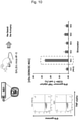
Figure 10 : A diagram showing results of induction of cellular immunity in rDIs-DENV2C-NS1-vaccinated mice. -
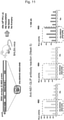
Figure 11 : A diagram showing antibody induction by vaccination with the rDIs-DENV2C-NS25-GND vaccine. -
Figure 12 : A diagram showing results of induction of cellular immunity in rDIs-DENV2C-NS25-vaccinated mice. -
Figure 13 : A diagram showing a method for evaluating the protective effect of vaccination against infection, using AG129 mice. -
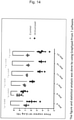
Figure 14 : A diagram showing results from evaluating the protective effect of vaccination against infection, using AG129 mice. -
Figure 15 : A diagram showing results from evaluating the protective effect of vaccination against infection, using AG129 mice. -
Figure 16 : A diagram showing results from evaluating the protective effect of vaccination against infection, using AG129 mice. -
Figure 17: (A) A diagram showing a method for evaluating the protective effect of vaccination against infection (specifically, the effect of eliminating a dengue virus of a serotype different from the serotype directly targeted by the vaccine (protective effect against infection)) using AG129 mice. (B) Charts showing the results from evaluating the protective effect of vaccination against infection (suppression of viral load in the liver and spleen) using said mice. - Hereinafter, the present invention will be described in detail. The scope of the present invention is not limited to these descriptions, and the present invention can be appropriately modified and carried out in a manner different from the example described below without departing from the spirit of the invention. The present specification incorporates all of the specification of
Japanese Patent Application No. 2019-047582 (filed 14 March, 2019 - When a person who has been previously infected with a dengue virus (hereinafter, also referred to as DENV) is infected with a dengue virus belonging to a different serotype, excessive viral production is caused via a phenomenon called antibody-dependent enhancement (hereinafter, ADE) in which the antibody to the previous virus aids the secondary viral infection, leading to development of a severe disease such as dengue hemorrhagic fever. Therefore, a vaccine effective for viruses of the four serotypes, which does not induce these pathologies is needed.
- Since an antibody to the structural protein may induce ADE, the genes of the NS1 region and the NS2-5 region (a region other than the NS1 region; specifically, a region comprising NS2A, NS2B, NS3, NS4A, NS4B and NS5 regions) of the non-structural protein which has no chance of inducing ADE were each inserted into a recombinant vector that is used for preparing a DIs recombinant vaccine. These recombinant vectors were used in an attempt to establish recombinant vaccinia viruses (rDIs-DENV2C-NS1 and rDIs-DENV2C-NS25). Induction of cellular immunity was observed in animals inoculated with the established vaccinia viruses. In addition, when the animals inoculated with these vaccinia viruses as vaccines were challenged with a dengue virus, decrease and suppression of the viral loads were observed in the sera or the organs (liver, spleen, etc.) (
Figures 14 and17 ), showing remarkable protective effects (inhibition) against infection with different dengue virus serotypes (for example,serotype 1, etc.) as well as infection with the homologous serotype, including inhibition of weight loss (Figure 15 ) and increase in survival rate (Figure 16 ). - Thus, the present invention was achieved.
- All of the genes coding for the dengue virus (DENV) protein, the gene coding for the capsid (structural) protein region and the genes coding for the non-structural protein region involved in replication have previously been cloned and kept in the forms of plasmids. Therefore, genes contained in a recombinant vaccinia virus of the present invention, namely, genes comprising the DENV non-structural protein region can be obtained by a common genetic engineering technique. For example, nucleic acid synthesis using a DNA synthesizer, which is a generally employed genetic engineering technique, can be employed. Moreover, a PCR technique in which a genetic sequence that serves as a template is isolated or synthesized and then primers specific to each gene are designed to amplify the genetic sequence using a PCR device, or a gene amplification technique using a cloning vector can be employed. These techniques can be carried out by those skilled in the art according to "Molecular cloning 4th ed. Cold Spring Harbor Laboratory Press (2012)" or the like. The resulting PCR product can be purified by a known method. In a preferred aspect, DNAs coding for the respective gene regions of DENV can be prepared by performing PCR using the DENV gene inserted into the above-described plasmid as a template and using primers specific to a region of interest (non-structural protein region) of the DENV gene.
- According to the present invention, a DNA of a gene coding for a non-structural protein region among all DENV gene regions is used for preparing the recombinant vaccinia virus. The non-structural protein region is a region consisting of NS1, NS2A, NS2B, NS3, NS4A, NS4B and NS5 regions. According to the present invention, the NS1 region and the region other than the NS1 region (namely, a region comprising NS2A, NS2B, NS3, NS4A, NS4B and NS5 regions, i.e., NS2-5 region) are separately used. There are four serotypes DENV-1, 2, 3 and 4 (
serotype 1,serotype 2,serotype 3 and serotype 4). Among them, DENV-2 can further be grouped into Asian subtype and Cosmopolitan subtype, and therefore there are mainly a total of five types of DENVs. As is common to all types of DENVs, the non-structural protein region is a region comprising NS1, NS2A, NS2B, NS3, NS4A, NS4B and NS5 regions. A recombinant vaccinia virus of the present invention can be prepared using a cDNA of a non-structural protein region from any type of DENV without limitation, but preferably one derived from DENV-2, more preferably one derived from Cosmopolitan subtype of DENV-2. - According to the present invention, the nucleotide sequence of the DNA encoding the NS1 region of the non-structural protein region derived from Cosmopolitan subtype of DENV-2 is represented by SEQ ID NO: 1, and the nucleotide sequence of the DNA encoding the NS2-5 region thereof is represented by SEQ ID NO:2. In addition, a mutant DNA of the nucleotide sequence of the DNA encoding the NS2-5 region (DNA encoding a region having mutation in the NS5 part of the NS2-5 region (specifically, mutation that abolishes enzymatic activity of NS5)) is represented by SEQ ID NO:3. Besides the DNAs composed of the nucleotide sequences represented by SEQ ID NOS:1, 2 and 3, the following DNAs can also be used in the present invention.
- A DNA which has 80% or higher, 90% or higher, 95% or higher, 98% or higher or 99% or higher identity (homology) with a DNA consisting of a nucleotide sequence complementary to the nucleotide sequence represented by SEQ ID NO: 1, and which encodes a non-structural protein from a dengue virus (mutant DNA of NS1 region).
- A DNA which has 80% or higher, 90% or higher, 95% or higher, 98% or higher or 99% or higher identity (homology) with a DNA consisting of a nucleotide sequence complementary to the nucleotide sequence represented by SEQ ID NO:2, and which encodes a non-structural protein from a dengue virus (mutant DNA of NS2-5 region).
- DNA which has 80% or higher, 90% or higher, 95% or higher, 98% or higher or 99% or higher identity (homology) with a DNA consisting of a nucleotide sequence complementary to the nucleotide sequence represented by SEQ ID NO:3, and which encodes a non-structural protein from a dengue virus (mutant DNA of a region having mutation in the NS5 part of the NS2-5 region).
- A DNA which hybridizes to a DNA consisting of a nucleotide sequence complementary to the nucleotide sequence represented by SEQ ID NO:1 under stringent conditions, and which encodes a non-structural protein from a dengue virus (mutant DNA of NS1 region).
- A DNA which hybridizes to a DNA consisting of a nucleotide sequence complementary to the nucleotide sequence represented by SEQ ID NO:2 under stringent conditions, and which encodes a non-structural protein from a dengue virus (mutant DNA of NS2-5 region).
- A DNA which hybridizes to a DNA consisting of a nucleotide sequence complementary to the nucleotide sequence represented by SEQ ID NO:3 under stringent conditions, and which encodes a non-structural protein from a dengue virus (mutant DNA of a region having mutation in the NS5 part of the NS2-5 region (specifically, mutation that abolishes enzymatic activity of NS5)).
- Herein, "encoding a non-structural protein from a dengue virus" means that the DNA encodes a protein that is produced in the cell upon viral proliferation. Furthermore, the above-described gene encoding the non-structural protein comprises the full-length sequence as well as partial sequences thereof.
- The above-described mutant DNA can be obtained by chemical synthesis. Alternatively, it can be obtained from a cDNA library or a genome library by a known hybridization technique such as colony hybridization, plaque hybridization, Southern blotting or the like, using a DNA consisting of the nucleotide sequence represented by SEQ ID NO:1, 2 or 3, or a fragment thereof as a probe. Moreover, the stringent conditions in the above-mentioned hybridization may be, for example, conditions of 0.1 x SSC-10 x SSC, 0.1%-1.0% SDS and 20°C-80°C, more specifically, conditions in which prehybridization at 37°C-56°C for 30 minutes or longer is followed by 1-3 times of rinsing in 0.1 x SSC, 0.1% SDS at room temperature for 10-20 minutes. For detailed procedure of the hybridization technique, see "Molecular cloning 4th Ed. Cold Spring Harbor Laboratory Press (2012)" or the like.
- The recombinant vaccinia virus of the present invention can be prepared, for example, but not exclusively, by inserting a DNA having a nucleotide sequence coding for a non-structural protein region of DENV (a region of interest, NS1 or NS2-5) into an expression vector (plasmid) of interest, and transfecting this plasmid vector into a vaccinia virus that serves as a host. Examples of this expression vector include, but not limited to, pSMART (registered trademark) vector and the like, and an expression promoter contained in the recombinant vaccinia virus of the present invention may be any expression promoter conventionally used for expression of a vaccinia virus gene (for example, mH5 promoter, etc.).
- Transfection of the plasmid vector into the host can be conducted by employing any known technique. For example, the above-described plasmid vector can be transfected into an animal cell which has been infected with an attenuated vaccinia virus DIs strain so as to induce homologous recombination in the genome of vaccinia virus, thereby preparing a recombinant vaccinia virus expressing the region of interest of the DENV non-structural protein.
- The above-mentioned attenuated vaccinia virus DIs strain is a highly attenuated strain lacking host range gene established by one-day egg passage from smallpox vaccine Dairen (Dalian) strain (DIE), which can replicate only in Chick Embryo Fibroblast (CEF) cells, developed by Dr. Isamu Tagaya, the National Institute of Health (currently known as the National Institute of Infectious Disease) (Tagaya et al. Nature 1961). Owing to extensive gene deletion, it cannot replicate in most mammal cells including mice, guinea pigs, rabbits and humans. As a result, safety is assured even when it is used to inoculate an immunocompromised/immunosuppressed patient.
- The prepared recombinant vaccinia virus can be subjected to PCR using the viral genome as a template and primers specific to the gene of the DENV non-structural protein region to confirm introduction of the gene of the non-structural protein region of interest.
- In addition, expression of the non-structural protein of interest can be confirmed by Western blotting using an animal cell infected with the prepared recombinant vaccinia virus as a sample. The antibody used in Western blotting may be, for example, a commercially available antibody that specifically recognizes the non-structural protein region of interest or an antibody obtained by purifying IgG using Protein G from an antiserum prepared by immunization with a DENV polypeptide.
- The present invention provides a pharmaceutical composition comprising the above-described recombinant vaccinia virus, more specifically, a pharmaceutical composition as a prophylactic or therapeutic drug for a dengue virus infectious disease. Examples of the dengue virus infectious disease include dengue fever, dengue hemorrhagic fever and the like.
- The pharmaceutical composition of the present invention can be introduced into an organism by any known method, for example, an injection such as an intramuscular, intraperitoneal, intradermal or subcutaneous injection, nasal, oral or lung inhalation, or oral administration. Furthermore, the recombinant vaccinia virus contained in the pharmaceutical composition of the present invention can also be used in combination with an existing antiviral drug (for example, interferon). The mode of such combinational use is not particularly limited, and the recombinant vaccinia virus of the present invention can be administered simultaneously with the existing antiviral drug, or they may be introduced into an organism by administering one of them and then the other after a certain period of time.
- In addition, the pharmaceutical composition of the present invention may be mixed with a known pharmacologically acceptable carrier such as an excipient, a filler, a binder or a lubricant, a buffer, a tonicity-adjusting agent, a chelating agent, a colorant, a preservative, an aroma chemical, a flavoring agent, a sweetener or the like.
- The pharmaceutical composition of the present invention can be administered orally or parenterally depending on whether it is in a form of an oral preparation such as a tablet, a capsule, a powdered agent, granules, pills, a liquid agent or a syrup agent, or in a form of a parenteral preparation such as an injection, a topical agent, a suppository or eye drops. Preferable examples include a local injection such as an intradermal, intramuscular or intraperitoneal injection.
- While a dosage can suitably be selected according to the kind of the active element, the administration route, the administration subject, the age, weight, sex and symptom of the patient as well as other conditions, a daily dosage of the recombinant vaccinia virus is about 1,000-1,000,000,000 PFU (plaque forming units), preferably about 100,000-100,000,000 PFU for oral administration, and about 100-1,000,000,000 PFU (plaque forming units), preferably about 1,000-100,000,000 PFU for parenteral administration. The virus can be administered once or in multiple doses a day.
- Since the recombinant vaccinia virus of the present invention can be used as a vaccine for preventing or treating a dengue virus infectious disease, the antibody titer or the cellular immune response as a vaccine against the virus is preferably measured in advance.
- For example, the antibody titer against the recombinant vaccinia virus of the present invention or the parent strain DIs strain can be determined by inoculating mice, rabbits or the like with these virus strains, and then collecting the sera with time to determine the ELISA titer, the NanoLuc (registered trademark) titer or the like against DENV protein in the sera. By doing so, gene expression of the dengue virus and presence of immune response in the inoculated individual can be confirmed. In mouse sera inoculated with the recombinant vaccinia virus of the present invention, an increase in the antibody titer against DENV protein was confirmed after a week from the inoculation.
- Moreover, cellular immune response can be determined by inoculating mice with the recombinant vaccinia virus of the present invention or the parent strain DIs strain, and then isolating the spleen cells from the immunized mice to see if CD4- and CD8-positive cells specific to the DENV non-structural protein have been induced/activated by a FACS or ELISPOT assay. According to the present invention, when the spleen cells from the BALB/c mice immunized with the recombinant vaccinia virus of the present invention were co-cultured with target cells expressing any of the non-structural proteins, CD4- and CD8-positive T cells, which were activated in an antigen-specific manner, were detected. Thus, immunization with the recombinant vaccinia virus of the present invention was found to induce cellular immunity specific to the DENV non-structural proteins in the BALB/c mice.
- Hence, the recombinant vaccinia virus prepared by the present inventors was confirmed to induce humoral immunity and cellular immunity against DENV.
- Furthermore, a recombinant vaccinia virus (dengue virus vaccine) according to the present invention has or expected to have an eliminating effect (protective effect against infection owing to immune response) not only against the dengue virus serotype that is primarily and directly targeted by said vaccinia virus but also against dengue virus serotypes other than said serotype (specifically, preferably, against two, three or all (four) kinds of dengue virus serotypes among the four kinds of serotypes) (in other words, it has cross-reactivity). The recombinant vaccinia virus according to the present invention is useful as a vaccinia virus (vaccine) which can suppress induction of pathology of a severe disease (dengue hemorrhagic fever, etc.) due to an antibody-dependent enhancement (ADE) phenomenon which has been a particular concern in dengue virus infection.
- Hereinafter, the present invention will be described in more detail by means of examples, although the present invention should not be limited to these examples.
-
- i) Selection of dengue virus strain used for genetic recombination
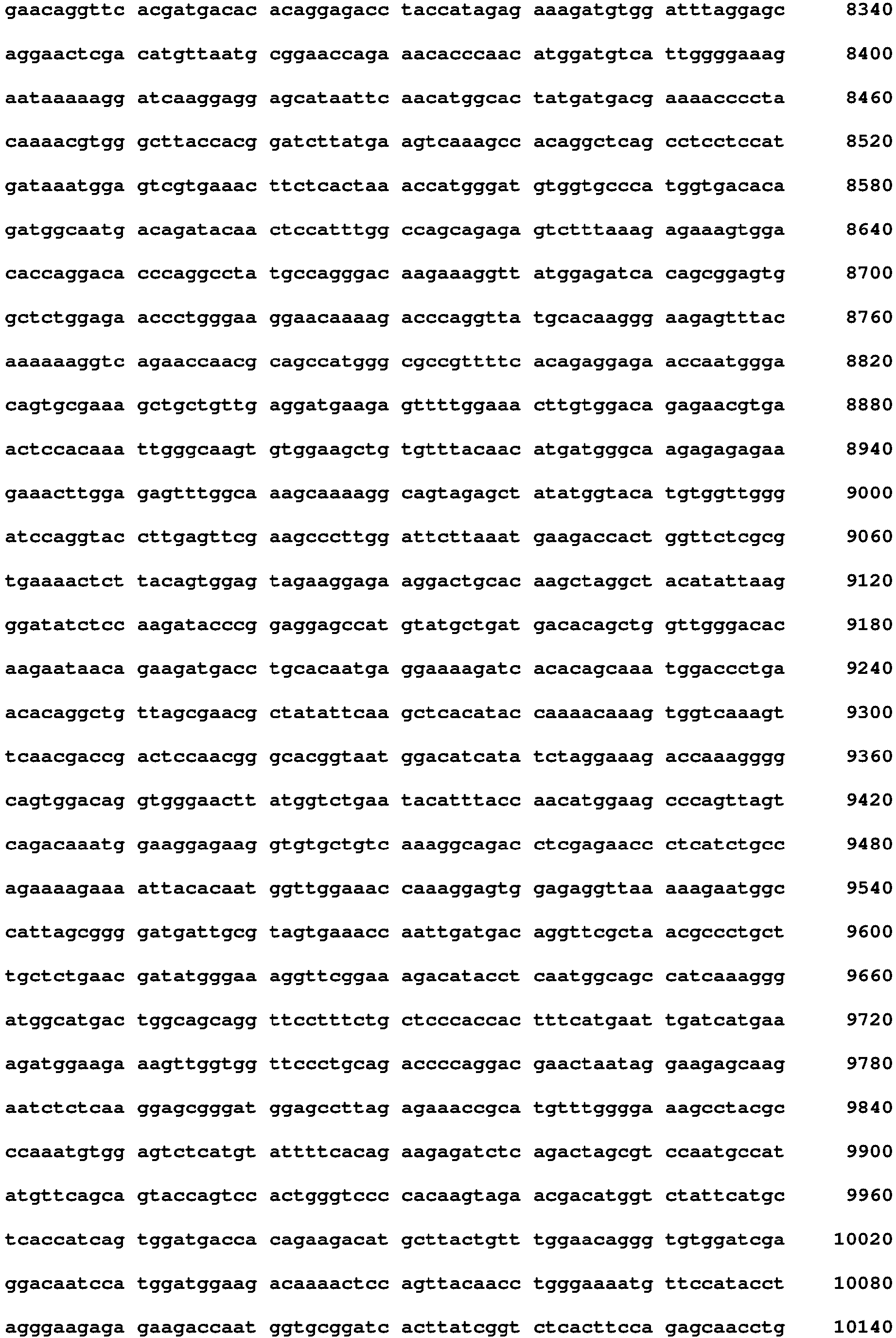
There are four dengue virus serotypes, namely, DENV-1, 2, 3 and 4. Among them, DENV-2 can further be grouped into Asian subtype and Cosmopolitan subtype, and therefore there are mainly a total of five types of DENVs. From results of phylogenetic analysis of the five types of dengue viruses, the gene of the Cosmopolitan subtype strain of the DENV-2 serotype, located near the center of the phylogenetic tree (Dengue-2: Cosmopolitan: o1Sa-054), was selected as the vaccine candidate. The genetic sequence information of the five types of dengue viruses used for the analysis are shown below.- Dengue-1: Genotype-I, M-72, Myanmar 2013 clinical isolate (NCBI GenBank Accession number: KR051912) (SEQ ID NO:10)
- Dengue-2: Asian I, M-82, Myanmar 2013 clinical isolate (NCBI GenBank Accession number: KR051902) (SEQ ID NO:11)
- Dengue-2: Cosmopolitan, o1Sa-054 (genetic sequence information of non-structural NS1 region: SEQ ID NO:1; genetic sequence information of non-structural NS2-5 region: SEQ ID NO:2)
- Dengue-3: Isolate DEL-72 (NCBI GenBank Accession number: GQ466079.1) (SEQ ID NO:12)
- Dengue-4: Strain GZ/9809/2012 (NCBI GenBank Accession number: KC333651.1) (SEQ ID NO:13)
- ii) The gene of the non-structural protein region of DENV-2 Cosmopolitan subtype strain was cloned, and PCR was performed for the genes of the NS-1 and NS2-5 regions using the following "NS-1 region primers" and "NS2-5 region primers." The PCR product was digested with enzymes Sbf-I and AsiSI and inserted into a recombinant plasmid for DIs strain gene, namely, a modified vector of transfer vector pUC/DIs (Koji Ishii et. al, Virology 2001,302, 433-444). Subsequently, the resultant was inserted into a recombinant vector used for preparing a DIs recombinant vaccine (
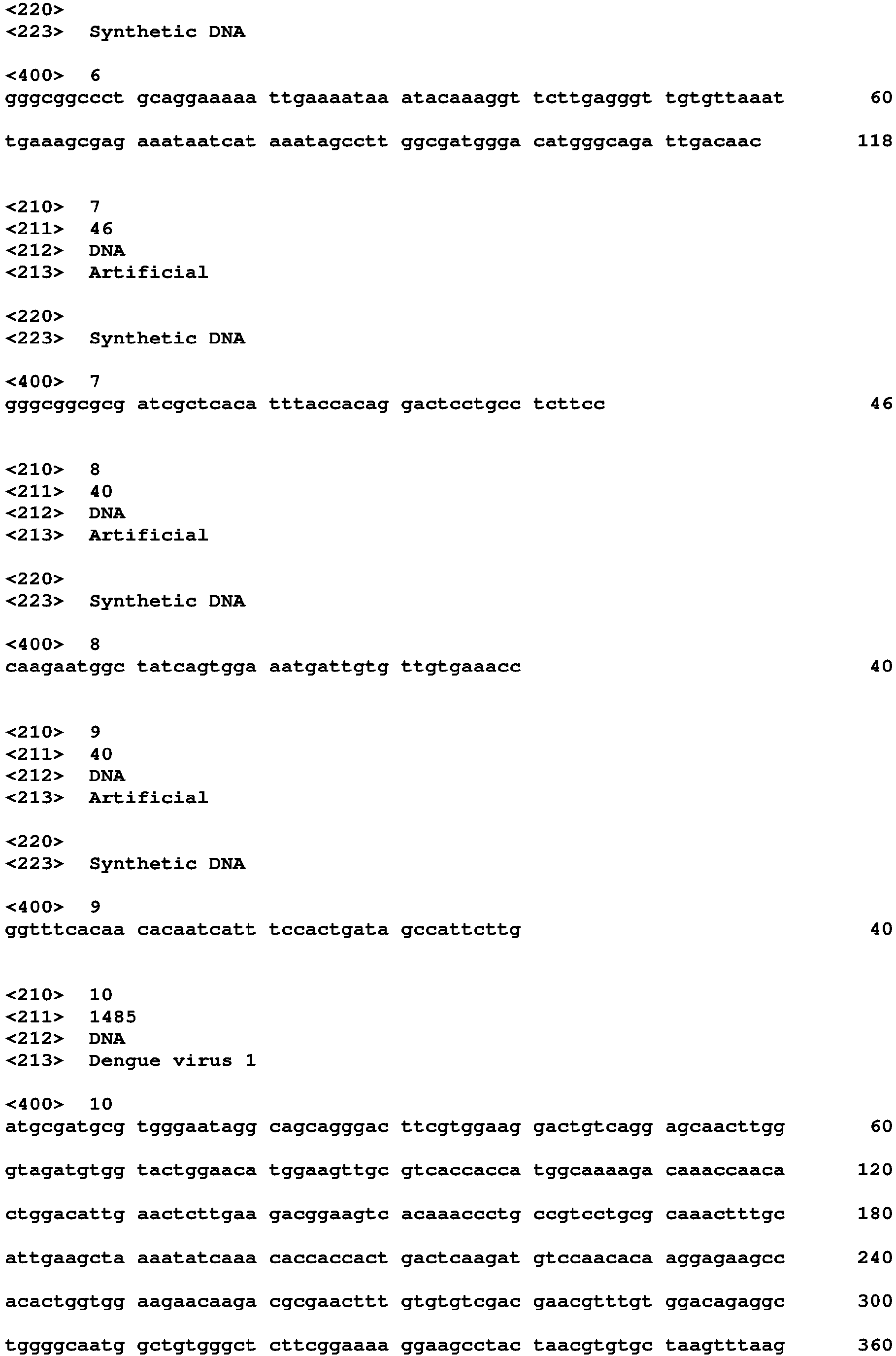
Figure 3 ). A GND mutation was introduced into the NS2-5 region according to the QuikChange protocol (QuikChange; Stratagene) using the following "mutant NS2-5 region primers". The recombinant vector was used to proceed establishment of the recombinant virus (Figure 4 ). After confirming that the genetic sequence had been inserted into the recombinant DIs, expression of the dengue virus protein was confirmed by Western blotting (Figure 5 ,6 ). -
- SbfI-mH5p-NS1-2420-F:

- NS1-SgfI (AsiSI)-3430-R:

-
- SbfI-mH5p-NS2-3474-F:

- Sgfl (AsiSI)-NS5-10224-R: GGGCGGCGCGATCGCTCACATTTACCACAGGACTCCTGCCTCTTCC (SEQ ID NO:7)
-
- DEN2C NS5 GND-F:
5'_CAAGAATGGCTATCAGTGGAaATGATTGTGTTGTGAAACC_3' (SEQ ID NO:8) - DEN2C NS5 GND-R:
5'_GGTTTCACAACACAATCATtTCCACTGATAGCCATTCTTG_3' (SEQ ID NO:9) - PCR using the above-described NS-1 region primers (SEQ ID NOS:4 and 5) was carried out using the following reaction solution composition under the following reaction conditions.
-
Template cDNA (DENV-2C cDNA): 1.0 µL 5 x Q5 DNA polymerase buffer: 5 µL 2.5 mM dNTP: 2.5 µL Q5 DNA polymerase (2.0 U/ µl): 0.5 µL F primer (10 µM): 1.25 µL R primer (10 µM): 1.25 µL Sterilized water: 13.5 uL Total: 25 µL - Total of 35 cycles of "denaturation/separation at 98°C (10 sec) -> annealing at 71°C (15 sec) -> synthesis/extension at 72°C (40 sec)".
- PCR using the above-described NS2-5 region primers (SEQ ID NOS:6 and 7) was carried out using the following reaction solution composition under the following reaction conditions
-
Template cDNA (DENV-2C cDNA): 1.0 µL 5 x Q5 DNA polymerase buffer: 5 µL 2.5 mM dNTP: 2.5 µL Q5 DNA polymerase (2.0 U/ µl): 0.5 µL F primer (10 µM): 1.25 µL R primer (10 µM): 1.25 µL Sterilized water: 13.5 uL Total: 25 µL - Total of 35 cycles of "denaturation/separation at 98°C (10 sec) -> annealing at 72°C (15 sec) -> synthesis/extension at 72°C (40 sec)".
- Furthermore, QuikChange protocol using the above-described mutant NS2-5 region primers (SEQ ID NOS:8 and 9) was carried out using the following kit and reaction solution composition under the following reaction conditions.
- QuickChange Lightning Site-Directed Mutagenesis kit (Stratagene #210518)
-
Template DNA (DENV-2C NS25 plasmid): 1.0 µL 10 x reaction buffer: 2.0 µL 2.5 mM dNTP: 0.4 µL F primer (50 ng/ul): 1.0 µL R primer (50 ng/ul): 1.0 µL QuickSolution reagent: 0.6 µL QuickChange Lightning Enzyme: 0.4 µL Sterilized water: 13.6 uL Total: 20 µL - Total of 18 cycles of "denaturation/separation at 95°C (20 sec) -> annealing at 60°C (10 sec) -> synthesis/extension at 68°C (6 min)".
- iii) The candidate clones for recombinant DIs vaccine containing dengue virus gene were mass-cultured in advance for inoculating animals to examine antibody production and induction of cellular immunity.
- During the process, the titer of the NS2-5 region gene-DIs recombinant virus (rDIs-DENV2C-NS25) was found to be low and thus the virus had difficulty in mass proliferation. Therefore, a mutant strain (rDIs-DENV2C-NS25-GND) in which enzymatic activity of dengue virus NS5 was deleted was prepared (
Figure 7 ). - BALB/c and C57BL/6 mice were inoculated with the prepared NS-1 region- or NS2-5 region gene-containing DIs recombinant vaccine to evaluate the immune responses.
- i) With the NS-1 region gene-DIs recombinant vaccine (rDIs-DENV2C-NS1), high antibody production and induction of cellular immunity were observed in the BALB/c and C57BL/6 mice.
- ii) With the NS2-5 region gene-DIs recombinant vaccine (rDIs-DENV2C-NS25), antibody production against the NS2 region and induction of cellular immunity against the NS3 region were observed. Vaccine dose, number of vaccine doses, schedule and the like are further examined in detail.
- Wild-type mice are poorly infected with a dengue virus and none of their animal models has been found to develop hemorrhagic fever by dengue virus infection. An animal model for dengue virus infection is requisite to examine the vaccine effectiveness. Accordingly, marmosets, tree shrews and gene-modified mice were used to evaluate susceptibility to infection and development of pathology.
- Wild-type mice are known to be poorly infected with a dengue virus and do not develop dengue fever. Therefore, mice deficient in the receptor for an interferon having an antiviral activity were studied for the possibility of their use as an animal model for infection and development of a disease. Type-I and type-II interferon receptor-knockout mice (AG129 mice) challenged with a dengue virus were found to develop a disease and die. These AG129 mice were inoculated with a recombinant vaccinia vaccine containing non-structural protein genes of dengue virus, and further challenged with a dengue virus (serotype 2). The vaccinated group showed excellent protective effect against infection as compared to the non-vaccinated group.
- Marmosets were inoculated with dengue viruses (
serotype 1, serotype 2) to observe the clinical course including blood viral load, incidence of antibody induction and the like for 14 days. - Tree shrews were inoculated with dengue viruses (
serotype 1, serotype 2) to observe the clinical course including blood viral load, incidence of antibody induction and the like for 14 days. -
- (1) A mutant strain in which enzymatic activity of dengue virus NS5 was deleted (rDIs-DENV2C-NS25-GND) was prepared. With the rDIs-DENV2C-NS25-GND recombinant virus, the yield increased 4 times or more (
Figure 8 ). - (2) BALB/c and C57BL/6 mice were inoculated with the prepared DIs recombinant vaccines containing NS-1 region or NS2-5 region gene (rDIs-DENV2C-NS1, rDIs-DENV2C-NS25) to evaluate the immune responses.
- i) With the NS-1 region gene-DIs recombinant vaccine (rDIs-DENV2C-NS1), high antibody production and induction of cellular immunity were observed in the BALB/c and C57BL/6 mice (
Figures 9 and10 ). - ii) With the NS2-5 region gene-DIs recombinant vaccine (rDIs-DENV2C-NS25), antibody production against the NS2 region and induction of cellular immunity against the NS3 region were observed. Vaccine dose, number of vaccine doses, schedule and the like are further examined in detail (
Figures 11 and12 ).
- i) With the NS-1 region gene-DIs recombinant vaccine (rDIs-DENV2C-NS1), high antibody production and induction of cellular immunity were observed in the BALB/c and C57BL/6 mice (
- (3) AG129 mice were inoculated with the NS2-5 region gene-DIs recombinant vaccine (rDIs-DENV2C-NS25-GND) and two weeks later challenged with a dengue virus (serotype 2) to evaluate a protective effect against infection owing to immune response (
Figure 13 ). When the vaccinated animals were challenged with a dengue virus in this manner, decrease in the serum viral load (Figure 14 ) and also noticeable protective effects against infection including inhibition of weight loss and increase in the survival rate were observed (Figures 15 and16 ). - (4) Marmosets were inoculated with dengue viruses (
serotype 1, serotype 2) to observe the clinical course including blood viral load, incidence of antibody induction and the like for 14 days. The virus was detected in the blood for 14 days, and an antibody against the viral particles and an antibody against the NS-1 region were produced, showing susceptibility to infection. Moreover, when marmosets were inoculated with DENV-1, 2, 3 and 4 to observe the clinical course, an anti-dengue virus antibody was produced, showing susceptibility to infection. In addition, all of DENV-1, 2, 3 and 4 were found to be occult blood-positive, showing abnormal findings in the kidneys. These findings show that the protective effect of the vaccines against infection can be evaluated in marmosets. - (5) Tree shrews were inoculated with dengue viruses (
serotype 1, serotype 2) to observe the clinical course including blood viral load, incidence of antibody induction and the like for 14 days. The virus was detected in the blood for 14 days, and an antibody against the viral particles and an antibody against the NS-1 region were produced, showing susceptibility to infection. Tree shrews were inoculated with DENV-1, 2, 3 and 4 to observe the clinical course. All of the individuals produced an antibody against the NS-1 region and thus were found to be susceptible to infection. These findings show that the protective effect of the vaccines against infection can be evaluated in tree shrews. Currently, the dengue virus-DIs recombinant vaccines are used for inoculation to continuously evaluate the protective effect of the vaccines against infection and diseases. - When a primary infection with a dengue virus is followed by a secondary infection with a dengue virus belonging to a different serotype, a phenomenon called antibody-dependent enhancement (ADE), in which the antibody to the first virus aids the secondary viral infection, causes excessive viral production, leading to development of a severe disease such as dengue hemorrhagic fever. Since a vaccine against the dengue virus non-structural protein does not produce an antibody that binds to the viral particles, there is no risk of causing ADE and thus it may be an effective prophylactic vaccine. A NS-1 region gene-DIs recombinant vaccine and a NS2-5 region gene-DIs recombinant vaccine showed antibody production and induction of cellular immunity in mouse experiments. When the vaccinated mice were further challenged with a dengue virus, noticeable virus elimination and protective effect against infection were observed. Therefore, the NS-1 region gene-DIs recombinant vaccine (rDIs-DENV2C-NS1) and the NS2-5 region gene-DIs recombinant vaccine (rDIs-DENV2C-NS25) were shown to be novel effective vaccines that can avoid the risk of ADE induction.
- Type-I and type-II interferon receptor-knockout mice (AG129 mice) were inoculated in the skin with 1 x 10⁸ PFU (single dose) of the mutant strain (rDIs-DENV2C-NS25-GND) of the NS2-5 region gene-DIs recombinant virus (rDIs-DENV2C-NS25) prepared in Example 1. Two weeks later, these mice were challenged with a
dengue virus 1 strain (serotype 1; NIID-02-17 strain) (subcutaneous infection) to evaluate a protective effect against infection owing to immune response (Figure 17A ). - 13-16 days after the above-described infection, the viral loads in the livers and spleens of these mice were measured by quantitative RT-PCR. As a result, the viral load significantly decreased in the rDIs-DENV2C-N25-GND vaccinated group (vaccinated group) (
Figure 17B ). - Hence, inoculation with rDIs-DENV2C-N25-GND was demonstrated to be effective in rapidly eliminating even a dengue virus of a different serotype (serotype 1). Thus, the recombinant vaccinia virus (dengue virus vaccine) of the present invention has an eliminating effect (a protective effect against infection owing to immune response) even against a dengue virus of a different serotype (preferably, against dengue viruses of all (four) serotypes). Therefore, the present invention is useful as a recombinant vaccinia virus that does not induce pathology of a severe disease (dengue hemorrhagic fever, etc.) due to an antibody-dependent enhancement (ADE) phenomenon which has been a particular concern in dengue virus infection.
-
- (1) Jin-Won Youn, Yu-Wen Hu, Nancy Tricoche, Wolfram Pfahler, Mohamed Tarek Shata, Marlene Dreux, François-Loic Cosset, Antonella Folgori, Dong-Hun Lee, Betsy Brotman, and Alfred M. Prince. Evidence for Protection against Chronic Hepatitis C Virus Infection in Chimpanzees by Immunization with Replicating Recombinant Vaccinia Virus. JOURNAL OF VIROLOGY, Nov. 2008, 82 (21): 10896-10905. doi: 10.1128/JVI.01179-08
- (2) FRANÇOIS HABERSETZER, GÉRALDINE HONNET, CHRISTINE BAIN, MARIANNE MAYNARD-MUET, VINCENT LEROY, JEAN-PIERRE ZARSKI, CYRILLE FERAY, THOMAS F. BAUMERT, JEAN-PIERRE BRONOWICKI, MICHEL DOFFOËL, CHRISTIAN TRÉPO, DELPHINE AGATHON, MYEW-LING TOH, MARTINE BAUDIN, JEAN-YVES BONNEFOY, JEAN-MARC LIMACHER, and GENEVIÈVE INCHAUSPÉ. A Poxvirus Vaccine Is Safe, Induces T-Cell Responses, and Decreases Viral Load in Patients With Chronic Hepatitis C. GASTROENTEROLOGY 2011;141:890-899. doi: 10.1053/j.gastro.2011.06.009
- (3). Satoshi Sekiguchi, Kiminori Kimura, Tomoko Chiyo, Takahiro Ohtsuki, Yoshimi Tobita, Yuko Tokunaga, Fumihiko Yasui, Kyoko Tsukiyama-Kohara, Takaji Wakita, Toshiyuki Tanaka, Masayuki Miyasaka, Kyosuke Mizuno, Yukiko Hayashi, Tsunekazu Hishima, Kouji Matsushima and Michinori Kohara. Immunization with a recombinant vaccinia virus that encodes nonstructural proteins of the hepatitis C virus suppresses viral protein levels in mouse liver. PLoS ONE 7(12):e51656 (2012).
- (4) Takeshi Wada, Michinori Kohara and Yasuhiro Yasutomi. DNA vaccine expressing the non-structural proteins of hepatitis C virus diminishes the expression of HCV proteins in a mouse model. Vaccine 31(50):5968-74, doi: 10.1016/j.vaccine.2013.10.037 (2013).
- (5) Takahiro Ohtsuki, Kiminori Kimura, Yuko Tokunaga, Kyoko Tsukiyama-Kohara, Chise Tateno, Yukiko Hayashi, Tsunekazu Hishima, and Michinori Kohara. M2 macrophages play critical roles in progression of inflammatory liver disease in hepatitis C virus transgenic mice. .
- A recombinant vaccinia virus of the present invention, a pharmaceutical composition using the same, and the like are extremely advantageous in that, even when they are used as a dengue virus vaccine to vaccinate people who have never been infected with the virus, the subsequent risk of developing dengue fever or dengue hemorrhagic fever (in particular, highly severe dengue hemorrhagic fever) can be suppressed (for example, induction of pathology of a severe disease (dengue hemorrhagic fever, etc.) due to an antibody-dependent enhancement (ADE) phenomenon can be suppressed).
- Free text:
- SEQ ID NO:3: Modified DNA
- SEQ ID NO:4: Synthetic DNA
- SEQ ID NO:5: Synthetic DNA
- SEQ ID NO:6: Synthetic DNA
- SEQ ID NO:7: Synthetic DNA
- SEQ ID NO:8: Synthetic DNA
- SEQ ID NO:9: Synthetic DNA








Claims (10)
- A recombinant vaccinia virus comprising all or part of a cDNA encoding a non-structural protein from a dengue virus, and an expression promoter.
- The recombinant vaccinia virus according to Claim 1, wherein the vaccinia virus is a DIs strain.
- The recombinant vaccinia virus according to either one of Claims 1 and 2, wherein the cDNA encoding a non-structural protein is a cDNA encoding a NS1 region of a non-structural protein from a dengue virus.
- The recombinant vaccinia virus according to either one of Claims 1 and 2, wherein the cDNA encoding a non-structural protein is a cDNA encoding a region other than the NS1 region of the non-structural protein from the dengue virus.
- The recombinant vaccinia virus according to Claim 4, wherein the region other than the NS1 region of the non-structural protein is a region comprising NS2A, NS2B, NS3, NS4A, NS4B and NS5 regions.
- The recombinant vaccinia virus according to any one of Claims 1-5, wherein the dengue virus is a dengue virus serotype 2.
- The recombinant vaccinia virus according to any one of Claims 1-6, wherein the cDNA encoding a non-structural protein is DNA of (a)-(f) below:(a) DNA comprising the nucleotide sequence represented by SEQ ID NO: 1;(b) DNA which has 80% or higher identity with DNA comprising a nucleotide sequence complementary to the nucleotide sequence represented by SEQ ID NO:1, and which codes for a non-structural protein from a dengue virus;(c) DNA comprising the nucleotide sequence represented by SEQ ID NO:2;(d) DNA which has 80% or higher identity with DNA comprising a nucleotide sequence complementary to the nucleotide sequence represented by SEQ ID NO:2, and which codes for a non-structural protein from a dengue virus;(e) DNA comprising the nucleotide sequence represented by SEQ ID NO:3; and(f) DNA which has 80% or higher identity with DNA comprising a nucleotide sequence complementary to the nucleotide sequence represented by SEQ ID NO:3, and which codes for a non-structural protein from a dengue virus.
- A pharmaceutical composition comprising the recombinant vaccinia virus according to any one of Claims 1-7.
- The pharmaceutical composition according to Claim 8, which is a prophylactic drug for a dengue virus infectious disease.
- The pharmaceutical composition according to Claim 8, which is a therapeutic drug for a dengue virus infectious disease.
Applications Claiming Priority (2)
| Application Number | Priority Date | Filing Date | Title |
|---|---|---|---|
| JP2019047582 | 2019-03-14 | ||
| PCT/JP2020/012569 WO2020184730A1 (en) | 2019-03-14 | 2020-03-13 | Dengue virus vaccine |
Publications (2)
| Publication Number | Publication Date |
|---|---|
| EP3939607A1 true EP3939607A1 (en) | 2022-01-19 |
| EP3939607A4 EP3939607A4 (en) | 2023-01-25 |
Family
ID=72427606
Family Applications (1)
| Application Number | Title | Priority Date | Filing Date |
|---|---|---|---|
| EP20770940.3A Pending EP3939607A4 (en) | 2019-03-14 | 2020-03-13 | DENGUE VIRUS VACCINE |
Country Status (5)
| Country | Link |
|---|---|
| US (1) | US12280099B2 (en) |
| EP (1) | EP3939607A4 (en) |
| JP (1) | JP7554423B2 (en) |
| KR (1) | KR102920141B1 (en) |
| WO (1) | WO2020184730A1 (en) |
Families Citing this family (2)
| Publication number | Priority date | Publication date | Assignee | Title |
|---|---|---|---|---|
| KR102844490B1 (en) * | 2022-12-30 | 2025-08-08 | 전북대학교 산학협력단 | Recombinant antigen mimicking quaternary structural epitope of dengue virus envelope protein and vaccine composition comprising the same as effective component |
| WO2025053097A1 (en) | 2023-09-07 | 2025-03-13 | 国立大学法人 鹿児島大学 | Dengue virus vaccine and dengue virus vaccine kit |
Family Cites Families (7)
| Publication number | Priority date | Publication date | Assignee | Title |
|---|---|---|---|---|
| IL91304A0 (en) | 1988-08-20 | 1990-03-19 | Us Health | Recombinant vaccinia virus for prevention of disease caused by flavivirus |
| EP2345665A3 (en) | 2001-12-04 | 2012-02-15 | Bavarian Nordic A/S | Flavivirus NS1 subunit vaccine |
| WO2003097844A1 (en) | 2002-05-16 | 2003-11-27 | Bavarian Nordic A/S | Expression of genes in modified vaccinia virus ankara by using the cowpox ati promoter |
| JPWO2006013815A1 (en) * | 2004-08-02 | 2008-05-01 | 財団法人ヒューマンサイエンス振興財団 | Recombinant vaccinia virus DIs strain carrying DNA encoding HCV virus protein and use thereof |
| JP5884100B2 (en) | 2011-08-31 | 2016-03-15 | 公益財団法人東京都医学総合研究所 | Recombinant vaccinia virus derived from a DIs strain having a hemagglutinin protein gene derived from a new influenza virus |
| US11111481B2 (en) * | 2015-09-30 | 2021-09-07 | Ramot At Tel-Aviv University Ltd. | Attenuated virus mutated at sites of evolutionarily conserved RNA structure |
| JP6848770B2 (en) | 2017-08-31 | 2021-03-24 | 株式会社オートネットワーク技術研究所 | In-vehicle power control system |
-
2020
- 2020-03-13 US US17/438,178 patent/US12280099B2/en active Active
- 2020-03-13 EP EP20770940.3A patent/EP3939607A4/en active Pending
- 2020-03-13 JP JP2020044530A patent/JP7554423B2/en active Active
- 2020-03-13 WO PCT/JP2020/012569 patent/WO2020184730A1/en not_active Ceased
- 2020-03-13 KR KR1020217032209A patent/KR102920141B1/en active Active
Also Published As
| Publication number | Publication date |
|---|---|
| US12280099B2 (en) | 2025-04-22 |
| KR102920141B1 (en) | 2026-01-29 |
| JP7554423B2 (en) | 2024-09-20 |
| US20220152187A1 (en) | 2022-05-19 |
| KR20210139315A (en) | 2021-11-22 |
| WO2020184730A1 (en) | 2020-09-17 |
| EP3939607A4 (en) | 2023-01-25 |
| JP2020150940A (en) | 2020-09-24 |
Similar Documents
| Publication | Publication Date | Title |
|---|---|---|
| AU2019216724C1 (en) | Compositions and methods for dengue virus chimeric constructs in vaccines | |
| AU2018267542B2 (en) | Compositions And Methods Of Vaccination Against Dengue Virus In Children And Young Adults | |
| US20200030435A1 (en) | Construction of west nile virus and dengue virus chimeras for use in a live virus vaccine to prevent disease caused by west nile virus | |
| US20190194260A1 (en) | Live attenuated zika virus vaccine | |
| US20250057932A1 (en) | Vaccines against infectious diseases caused by positive stranded rna viruses | |
| US12280099B2 (en) | Dengue virus vaccine | |
| Galler et al. | Genetic variability among yellow fever virus 17D substrains | |
| Oh et al. | A purified inactivated vaccine derived from Vero cell-adapted zika virus elicits protection in mice | |
| EP4190902A1 (en) | Recombinant vaccinia virus | |
| EP3219323A1 (en) | Pharmaceutical composition for treatment and/or prevention of hepatitis c | |
| RU2795800C1 (en) | Immunobiological agent for the prevention of diseases caused by tick-borne encephalitis virus based on a recombinant virus of the genus flavivirus | |
| CS9002806A2 (en) | Peptides and polypeptides, vaccines and nucleic acids |
Legal Events
| Date | Code | Title | Description |
|---|---|---|---|
| STAA | Information on the status of an ep patent application or granted ep patent |
Free format text: STATUS: THE INTERNATIONAL PUBLICATION HAS BEEN MADE |
|
| PUAI | Public reference made under article 153(3) epc to a published international application that has entered the european phase |
Free format text: ORIGINAL CODE: 0009012 |
|
| STAA | Information on the status of an ep patent application or granted ep patent |
Free format text: STATUS: REQUEST FOR EXAMINATION WAS MADE |
|
| 17P | Request for examination filed |
Effective date: 20211011 |
|
| AK | Designated contracting states |
Kind code of ref document: A1 Designated state(s): AL AT BE BG CH CY CZ DE DK EE ES FI FR GB GR HR HU IE IS IT LI LT LU LV MC MK MT NL NO PL PT RO RS SE SI SK SM TR |
|
| DAV | Request for validation of the european patent (deleted) | ||
| DAX | Request for extension of the european patent (deleted) | ||
| A4 | Supplementary search report drawn up and despatched |
Effective date: 20230102 |
|
| RIC1 | Information provided on ipc code assigned before grant |
Ipc: C12N 15/863 20060101ALI20221220BHEP Ipc: C12N 15/40 20060101ALI20221220BHEP Ipc: C12N 7/01 20060101ALI20221220BHEP Ipc: A61P 37/04 20060101ALI20221220BHEP Ipc: A61P 31/14 20060101ALI20221220BHEP Ipc: A61K 39/12 20060101AFI20221220BHEP |