EP3937893B1 - Efficient sunscreen compositions with diethylamino hydroxybenzoyl hexyl benzoate and butyl methoxydibenzoylmethane - Google Patents
Efficient sunscreen compositions with diethylamino hydroxybenzoyl hexyl benzoate and butyl methoxydibenzoylmethane Download PDFInfo
- Publication number
- EP3937893B1 EP3937893B1 EP20710519.8A EP20710519A EP3937893B1 EP 3937893 B1 EP3937893 B1 EP 3937893B1 EP 20710519 A EP20710519 A EP 20710519A EP 3937893 B1 EP3937893 B1 EP 3937893B1
- Authority
- EP
- European Patent Office
- Prior art keywords
- sunscreen
- inci
- composition
- daily care
- care composition
- Prior art date
- Legal status (The legal status is an assumption and is not a legal conclusion. Google has not performed a legal analysis and makes no representation as to the accuracy of the status listed.)
- Active
Links
Classifications
-
- A—HUMAN NECESSITIES
- A61—MEDICAL OR VETERINARY SCIENCE; HYGIENE
- A61K—PREPARATIONS FOR MEDICAL, DENTAL OR TOILETRY PURPOSES
- A61K8/00—Cosmetics or similar toiletry preparations
- A61K8/02—Cosmetics or similar toiletry preparations characterised by special physical form
- A61K8/04—Dispersions; Emulsions
- A61K8/046—Aerosols; Foams
-
- A—HUMAN NECESSITIES
- A61—MEDICAL OR VETERINARY SCIENCE; HYGIENE
- A61K—PREPARATIONS FOR MEDICAL, DENTAL OR TOILETRY PURPOSES
- A61K8/00—Cosmetics or similar toiletry preparations
- A61K8/18—Cosmetics or similar toiletry preparations characterised by the composition
- A61K8/30—Cosmetics or similar toiletry preparations characterised by the composition containing organic compounds
- A61K8/33—Cosmetics or similar toiletry preparations characterised by the composition containing organic compounds containing oxygen
- A61K8/35—Ketones, e.g. benzophenone
-
- A—HUMAN NECESSITIES
- A61—MEDICAL OR VETERINARY SCIENCE; HYGIENE
- A61K—PREPARATIONS FOR MEDICAL, DENTAL OR TOILETRY PURPOSES
- A61K8/00—Cosmetics or similar toiletry preparations
- A61K8/18—Cosmetics or similar toiletry preparations characterised by the composition
- A61K8/30—Cosmetics or similar toiletry preparations characterised by the composition containing organic compounds
- A61K8/40—Cosmetics or similar toiletry preparations characterised by the composition containing organic compounds containing nitrogen
- A61K8/41—Amines
- A61K8/415—Aminophenols
-
- A—HUMAN NECESSITIES
- A61—MEDICAL OR VETERINARY SCIENCE; HYGIENE
- A61K—PREPARATIONS FOR MEDICAL, DENTAL OR TOILETRY PURPOSES
- A61K8/00—Cosmetics or similar toiletry preparations
- A61K8/18—Cosmetics or similar toiletry preparations characterised by the composition
- A61K8/30—Cosmetics or similar toiletry preparations characterised by the composition containing organic compounds
- A61K8/49—Cosmetics or similar toiletry preparations characterised by the composition containing organic compounds containing heterocyclic compounds
- A61K8/494—Cosmetics or similar toiletry preparations characterised by the composition containing organic compounds containing heterocyclic compounds with more than one nitrogen as the only hetero atom
- A61K8/4966—Triazines or their condensed derivatives
-
- A—HUMAN NECESSITIES
- A61—MEDICAL OR VETERINARY SCIENCE; HYGIENE
- A61Q—SPECIFIC USE OF COSMETICS OR SIMILAR TOILETRY PREPARATIONS
- A61Q17/00—Barrier preparations; Preparations brought into direct contact with the skin for affording protection against external influences, e.g. sunlight, X-rays or other harmful rays, corrosive materials, bacteria or insect stings
- A61Q17/04—Topical preparations for affording protection against sunlight or other radiation; Topical sun tanning preparations
-
- A—HUMAN NECESSITIES
- A61—MEDICAL OR VETERINARY SCIENCE; HYGIENE
- A61Q—SPECIFIC USE OF COSMETICS OR SIMILAR TOILETRY PREPARATIONS
- A61Q19/00—Preparations for care of the skin
-
- A—HUMAN NECESSITIES
- A61—MEDICAL OR VETERINARY SCIENCE; HYGIENE
- A61K—PREPARATIONS FOR MEDICAL, DENTAL OR TOILETRY PURPOSES
- A61K2800/00—Properties of cosmetic compositions or active ingredients thereof or formulation aids used therein and process related aspects
- A61K2800/20—Chemical, physico-chemical or functional or structural properties of the composition as a whole
- A61K2800/30—Characterized by the absence of a particular group of ingredients
-
- A—HUMAN NECESSITIES
- A61—MEDICAL OR VETERINARY SCIENCE; HYGIENE
- A61K—PREPARATIONS FOR MEDICAL, DENTAL OR TOILETRY PURPOSES
- A61K2800/00—Properties of cosmetic compositions or active ingredients thereof or formulation aids used therein and process related aspects
- A61K2800/80—Process related aspects concerning the preparation of the cosmetic composition or the storage or application thereof
- A61K2800/805—Corresponding aspects not provided for by any of codes A61K2800/81 - A61K2800/95
Definitions
- the present invention relates to sunscreen or daily care compositions comprising diethylamino hydroxybenzoyl hexyl benzoate, butyl methoxydibenzoylmethane, bis-ethylhexyloxyphenol methoxyphenyl triazine, ethylhexyl triazone and/or diethylhexyl-butamidotriazone, wherein the composition is free of methylene bis-benzotriazolyl tetramethylbutylphenol, tris-biphenyl triazine, titanium dioxide, zinc oxide, and benzylidene malonates, as defined herein, and wherein the composition comprises diethylamino hydroxybenzoyl hexyl benzoate and butyl methoxydibenzoylmethane in a ratio of larger or equal to 0.8.
- the present invention relates to the use of said composition to reduce sand adhesion after application of the product on the skin.
- UV radiation causes harmful effects on the human skin. Beside the acute effect of sunburn of the skin, UV radiation is also known to increase the risk of skin cancer. Furthermore, long time exposure to UV-A and UV-B light can cause phototoxic and photo allergenic reactions on the skin and can accelerate skin aging.
- UV-A filter To protect the human skin from UV radiation, various sun protecting UV filters (also referred to as UV absorbers) exist including UV-A filter, UV-B filter and broadband filters. These filters are added to sunscreen or cosmetic compositions.
- the UV filters are either organic or inorganic, particulate or non-particulate compounds, of which all have a high absorption efficacy in the UV-light range.
- UV light can be divided into UV-A radiation and UV-B radiation.
- UV-filters are divided into UV-A and UV-B filters.
- an UV-filter absorbs both, UV-A and UV-B light, it is referred to as a broadband absorber.
- UV-A protection factor which is at least one third of the labelled sun protection factor (SPF), wherein the sun protection factor refers mainly to the UV-B protection.
- nano-particulate UV filter in particular [2,2'-methylene bis[6-(2H-benzotriazol-2-yl)-4-(1,1,3,3-tetramethylbutyl)phenol] (INCI methylene bis-benzotriazolyl tetramethylbutylphenol), 2,4,6-tris(biphenyl-4-yl)-1,3,5-triazine (INCI tris-biphenyl triazine), titanium dioxide, or zinc oxide, provide a broadband protection for the skin over the UV-A and UV-B spectrum, they exhibit also certain disadvantages with regard to dispersability and whitening of the skin.
- the sunscreen or cosmetic composition comprising such an UV filter will show some sensorial disadvantage for the user and may therefore be less applied than sunscreen or cosmetic compositions without nano-particulate UV filter.
- nano-particulate UV filter provide disadvantages with regard to the preparation of clear formulations and the provision in the form of a spray.
- sunscreen or cosmetic compositions which are efficient for UV-A and UV-B protection but free of nano-particulate UV filter, in particular free of the nano-particulate UV filters [2,2'-methylene bis[6-(2H-benzotriazol-2-yl)-4-(1,1,3,3-tetramethylbutyl)phenol] (INCI methylene bis-benzotriazolyl tetramethylbutylphenol), 2,4,6-tris(biphenyl-4-yl)-1,3,5-triazine (INCI tris-biphenyl triazine), titanium dioxide, and zinc oxide.
- nano-particulate UV filters [2,2'-methylene bis[6-(2H-benzotriazol-2-yl)-4-(1,1,3,3-tetramethylbutyl)phenol] (INCI methylene bis-benzotriazolyl tetramethylbutylphenol), 2,4,6-tris(biphenyl-4-yl)-1,3,5-
- UV filter which are frequently under discussion due to their health and environmental concern, although they are approved for being used in sunscreen or cosmetic compositions.
- UV filter under discussion are for example octocrylene, homosalate, ethylhexyl methoxy cinnamate, 4-methylbenzylidene camphor, benzophenone-3 or ethylhexyl salicylate. Therefore, there is a need for sunscreen or cosmetic compositions of the daily use, which are efficient for sun protection but free of UV filter under discussion.
- EP 2 837 407 A2 discloses odor stable, octocrylene free cosmetic compositions comprising one or more UV filter selected from triazine derivatives, titanium dioxide, butyl methoxydibenzoylmethane and / or diethylamino hydroxybenzoyl hexyl benzoate, wherein the composition is free of ethylhexyl salicylate, octocrylene, homomenthylsalicylate and ethylhexyl methoxy cinnamate.
- EP 3 093 008 A1 refers to a sunscreen composition which is free of octocrylene, comprising diethylamino hydroxybenzoyl hexyl benzoate, phenylbenzimidazole sulfonic acid, and one or more salicylates selected from ethylhexyl salicylate and homosalate.
- EP 3 093 007 A1 discloses a cosmetic composition
- a cosmetic composition comprising a UV filter combination of diethylamino hydroxybenzoyl hexyl benzoate, ethylhexyl triazone and one or more salicylates selected from ethylhexyl salicylate and homosalate, wherein the composition may further be free of oxybenzone, octocrylene and 4-methylbenzylidene camphor.
- EP 3 093 006 relates to an alcohol containing, octocrylene free sunscreen composition.
- the cosmetic composition comprises an UV filter combination of diethylamino hydroxybenzoyl hexyl benzoate, ethylhexyl triazone, and bis-ethylhexylphenol methoxyphenyl triazine, wherein the composition comprises one or more alcohols.
- EP 3 195 853 A1 discloses an octocrylene free sunscreen composition, wherein the cosmetic composition comprises an UV filter combination of diethylamino hydroxybenzoyl hexyl benzoate, diethyl butamido triazone and ethylhexyl triazone.
- EP 3 351 236 A1 relates to a cosmetic composition
- a cosmetic composition comprising a UV filter combination of diethylamino hydroxybenzoyl hexyl benzoate, butyl methoxydibenzoylmethane and polyglycerol fatty acid esters, wherein the composition is free of 4-methylbenzylidene camphor, oxybenzone, ethylhexyl methoxycinnamate, isoamyl p-methoxycinnamate and octocrylene.
- WO 2011/003774 describes cosmetic compositions comprising specific benzylidene malonates as a UV filter combined with another UV filter selected from a specific group.
- WO 2011/003774 discloses said UV filter combination for the protection of human and animal hair and skin against UV radiation.
- EP 3 354 253 A2 relates to a process for reducing fabric staining caused by UV filters in cosmetic compositions by using DHHB as an UV filter in said compositions.
- sunscreen or daily care compositions it has been an object of the present invention to provide efficient sunscreen or daily care compositions. It has been another object of the present invention to provide efficient sunscreen or daily care compositions, which perfectly meet the consumer's demands upon and after application of the product. In this connection, it has been another object of the present invention to provide sunscreen or daily care compositions, which are free of certain nano-particulate UV filter. It has been another object of the present invention to provide a sunscreen or daily care composition, which is suitable for use in sunscreen or daily care products in order to be administered to sensitive skin. It has been another object of the present invention to provide a sunscreen or daily care composition, which is suitable for use in sunscreen or daily care products in order to reduce sand adhesion on the skin.
- the sunscreen or daily care composition according to the present invention provides an efficient UV-A and UV-B protection, nevertheless the composition is free of certain nano-particulate UV filter. Furthermore, it has surprisingly been found by the inventors of the present application that the sunscreen or daily care composition according to the present invention is photo stable, applicable to sensitive skin and shows superior performance regarding anti-stickiness of sand when applied to the skin.
- the present invention relates to a sunscreen or daily care composition
- a sunscreen or daily care composition comprising
- the sunscreen or daily care composition comprises (i) hexyl 2-[4-(diethylamino)-2-hydroxybenzoyl]benzoate (INCI diethylamino hydroxybenzoyl hexyl benzoate) and (ii) 1-(4-(1,1-dimethylethyl)phenyl)-3-(4-methoxyphenyl)propane-1,3-dione (INCI butyl methoxydibenzoylmethane) in a ratio of larger or equal to 1.
- the sunscreen or daily care composition comprises (i) hexyl 2-[4-(diethylamino)-2-hydroxybenzoyl]benzoate (INCI diethylamino hydroxybenzoyl hexyl benzoate) and (ii) 1-(4-(1,1-dimethylethyl)phenyl)-3-(4-methoxyphenyl)propane-1,3-dione (INCI butyl methoxydibenzoylmethane) in a ratio of from 1:1 to 10:1, preferably in a ratio of from 1:1 to 5:1, more preferably in a ratio of from 1:1 to 2:1 and even more preferably in a ratio of from 1:1 to 1.5:1.
- the sunscreen or daily care composition does not comprise 2-hydroxy-4-methoxybenzophenone (INCI oxybenzone), ethylhexyl-2-cyano-3,3-diphenyl-acrylate (INCI octocrylene), 2-ethylhexyl-(2E)-3-(4-methoxyphenyl)acrylate (INCI ethylhexyl methoxy cinnamate) and isoamyl-4-methoxycinnamate (INCI isoamyl-p-methoxy cinnamate).
- 2-hydroxy-4-methoxybenzophenone ICI oxybenzone
- ethylhexyl-2-cyano-3,3-diphenyl-acrylate INCI octocrylene
- 2-ethylhexyl-(2E)-3-(4-methoxyphenyl)acrylate INCI ethylhexyl methoxy cinnamate
- the sunscreen or daily care composition is free of parabens.
- the sunscreen or daily care composition is provided in the form of a spray.
- the sunscreen or daily care composition is free of emulsifier.
- the sunscreen or daily care composition is free of phenoxyethanol.
- composition (iii) in the sunscreen or daily care composition (iii) is an oil soluble UV filter or (iii) is 2,4-bis- ⁇ [4-(2-ethyl-hexyloxy)-2-hydroxy]-phenyl ⁇ -6-(4-methoxyphenyl)-1,3,5 triazine (INCI bis-ethylhexyloxyphenol methoxyphenyl triazine) dissolved in a polymer matrix to be dispersible in water.
- the sunscreen or daily care composition comprises hexyl 2-[4-(diethylamino)-2-hydroxybenzoyl]benzoate (INCI diethylamino hydroxybenzoyl hexyl benzoate) in an amount of from 1 % to 10 % by weight, based on the total weight of the composition.
- the sunscreen or daily care composition comprises 1-(4-(1,1-dimethylethyl)phenyl)-3-(4-methoxyphenyl)propane-1,3-dione (INCI butyl methoxydibenzoylmethane) in an amount of from 1 % to 5 % by weight, based on the total weight of the composition.
- the sunscreen or daily care composition comprises 2,4-bis- ⁇ [4-(2-ethyl-hexyloxy)-2-hydroxy]-phenyl ⁇ -6-(4-methoxyphenyl)-1,3,5 triazine (INCI bis-ethylhexyloxyphenol methoxyphenyl triazine) in an amount of from 0.5 % to 5 % by weight, preferably in an amount of from 0.8 % to 3 % by weight, based on the total weight of the composition.
- the sunscreen or daily care composition comprises 4,4',4"-(1,3,5-triazine-2,4,6-triyltriimino)tris-benzoic acid-tris(2-ethylhexyl)ester (INCI ethylhexyl triazone) in an amount of from 0.5 % to 5 % by weight, preferably in an amount of from 0.8 % to 3 % by weight, based on the total weight of the composition.
- the sunscreen or daily care composition comprises 4,4'-[[6-[[4-[[(1,1-dimethylethyl)amino]carbonyl]phenyl]amino]-1,3,5-triazin-2,4-diyl]diimino]bis-benzoic acid-bis(2-ethylhexyl)ester (INCI diethylhexyl-butamidotriazone) in an amount of from 0.5 % to 5 % by weight, preferably in an amount of from 0.8 % to 3 % by weight, based on the total weight of the composition.
- the sunscreen or daily care composition comprises at least one perfume.
- the sunscreen or daily care composition comprises at least one emollient with a polarity index of ⁇ 30 mN/m.
- the present invention relates to the use of a sunscreen or daily care composition to reduce sand adhesion on the skin, wherein the composition comprises
- the sunscreen or daily care composition comprises (i) hexyl 2-[4-(diethylamino)-2-hydroxybenzoyl]benzoate (INCI diethylamino hydroxybenzoyl hexyl benzoate) and (ii) 1-(4-(1,1-dimethylethyl)phenyl)-3-(4-methoxyphenyl)propane-1,3-dione (INCI butyl methoxydibenzoylmethane) in a ratio of larger or equal to 1.
- the sunscreen or daily care composition comprises (i) hexyl 2-[4-(diethylamino)-2-hydroxybenzoyl]benzoate (INCI diethylamino hydroxybenzoyl hexyl benzoate) and (ii) 1-(4-(1,1-dimethylethyl)phenyl)-3-(4-methoxyphenyl)propane-1,3-dione (INCI butyl methoxydibenzoylmethane) in a ratio of from 1:1 to 10:1, preferably in a ratio of from 1:1 to 5:1, more preferably in a ratio of from 1:1 to 2:1 and even more preferably in a ratio of from 1:1 to 1.5:1.
- the sunscreen or daily care composition does not comprise 2-hydroxy-4-methoxybenzophenone (INCI oxybenzone), ethylhexyl-2-cyano-3,3-diphenyl-acrylate (INCI octocrylene), 2-ethylhexyl-(2E)-3-(4-methoxyphenyl)acrylate (INCI ethylhexyl methoxy cinnamate) and isoamyl-4-methoxycinnamate (INCI isoamyl-p-methoxy cinnamate).
- 2-hydroxy-4-methoxybenzophenone ICI oxybenzone
- ethylhexyl-2-cyano-3,3-diphenyl-acrylate INCI octocrylene
- 2-ethylhexyl-(2E)-3-(4-methoxyphenyl)acrylate INCI ethylhexyl methoxy cinnamate
- the sunscreen or daily care composition is free of parabens.
- the sunscreen or daily care composition is provided in the form of a spray.
- the sunscreen or daily care composition is free of emulsifier.
- the sunscreen or daily care composition is free of phenoxyethanol.
- the sunscreen or daily care composition (iii) is an oil soluble UV filter or (iii) is 2,4-bis- ⁇ [4-(2-ethyl-hexyloxy)-2-hydroxy]-phenyl ⁇ -6-(4-methoxyphenyl)-1,3,5 triazine (INCI bis-ethylhexyloxyphenol methoxyphenyl triazine) dissolved in a polymer matrix to be dispersible in water.
- the sunscreen or daily care composition comprises hexyl 2-[4-(diethylamino)-2-hydroxybenzoyl]benzoate (INCI diethylamino hydroxybenzoyl hexyl benzoate) in an amount of from 1 % to 10 % by weight, based on the total weight of the composition.
- the sunscreen or daily care composition comprises 1-(4-(1,1-dimethylethyl)phenyl)-3-(4-methoxyphenyl)propane-1,3-dione (INCI butyl methoxydibenzoylmethane) in an amount of from 1 % to 5 % by weight, based on the total weight of the composition.
- the sunscreen or daily care composition comprises 2,4-bis- ⁇ [4-(2-ethyl-hexyloxy)-2-hydroxy]-phenyl ⁇ -6-(4-methoxyphenyl)-1,3,5 triazine (INCI bis-ethylhexyloxyphenol methoxyphenyl triazine) in an amount of from 0.5 % to 5 % by weight, preferably in an amount of from 0.8 % to 3 % by weight, based on the total weight of the composition.
- the sunscreen or daily care composition comprises 4,4',4"-(1,3,5-triazine-2,4,6-triyltriimino)tris-benzoic acid-tris(2-ethylhexyl)ester (INCI ethylhexyl triazone) in an amount of from 0.5 % to 5 % by weight, preferably in an amount of from 0.8 % to 3 % by weight, based on the total weight of the composition.
- the sunscreen or daily care composition comprises 4,4'-[[6-[[4-[[(1,1-dimethylethyl)amino]carbonyl]phenyl]amino]-1,3,5-triazin-2,4-diyl]diimino]bis-benzoic acid-bis(2-ethylhexyl)ester (INCI diethylhexyl-butamidotriazone) in an amount of from 0.5 % to 5 % by weight, preferably in an amount of from 0.8 % to 3 % by weight, based on the total weight of the composition.
- the sunscreen or daily care composition comprises at least one perfume.
- the sunscreen or daily care composition comprises at least one emollient with a polarity index of ⁇ 30 mN/m.
- the term "free of” means in the context that the composition of the present invention is free of a specific compound or group of compounds, which may be combined under a collective term, that the composition does not comprise said compound or group of compounds in an amount of more than 0.8 % by weight, based on the total weight of the composition. In other words, the composition is substantially free of a specific compound or group of compounds. Furthermore, it is preferred that the composition according to the present invention does not comprise said compounds or group of compounds in an amount of more than 0.5 % by weight, preferably the composition does not comprise said compounds or group of compounds at all. The same definition is applied for the term "does not comprise”.
- the term "free of” or “does not comprise”, in case the composition does not comprise a compound X and a compound Y means that the compositions must be free of both compounds X and Y. In other words, the composition may not contain any compound selected from X and Y.
- sunscreen composition refers to any topical product, which reflects and/or absorbs certain parts of UV radiation.
- sunscreen composition is to be understood as not only including sunscreen compositions, but also any cosmetic compositions that provide UV protection.
- topical product refers to a product that is applied to the skin and can refer, e.g., to sprays, lotions, creams, oils, or gels.
- the sunscreen composition may comprise one or more active agents, e.g., organic or inorganic UV filters, as well as other ingredients or additives, e.g., emulsifiers, emollients, viscosity regulators, stabilizers, preservatives, or fragrances.
- the term "daily care composition” refers to any topical product, which reflects or absorbs certain parts of UV radiation and is used as an everyday care product for the human body, e.g., for face, body or hair.
- the daily care composition may comprise one or more active agents, e.g., organic or inorganic UV filters, as well as other ingredients or additives, e.g., emulsifiers, emollients, viscosity regulators, stabilizers, preservatives, or fragrances.
- UV-filter refers to organic or inorganic compounds, which can absorb and/or reflect UV radiation caused by sunlight. UV-filter can be classified based on their UV protection curve as UV-A, UV-B or broadband filters. In the context of the present application, broadband filters may be listed as UV-A filters, as they also provide UV-A protection. In other words, preferred UV-A filters also include broadband filters.
- Water soluble UV filters have a solubility in water of at least 2 % by weight, preferably at least 3 % by weight, more preferably at least 5 % by weight.
- Oil soluble UV filters have a solubility in common cosmetic oils, such as C 12 -C 15 -alkyl benzoate, dibutyl adipate, diisopropyl sebacate, phenethyl benzoate, or dicaprylyl carbonate of at least 2 % by weight, preferably at least 5 % by weight, more preferably at least 7 % by weight.
- common cosmetic oils such as C 12 -C 15 -alkyl benzoate, dibutyl adipate, diisopropyl sebacate, phenethyl benzoate, or dicaprylyl carbonate of at least 2 % by weight, preferably at least 5 % by weight, more preferably at least 7 % by weight.
- Particulate UV filters can be further divided into organic particulate UV filters and inorganic particulate UV filters. While organic particulate UV filters are based on organic compounds, inorganic particulate UV filters are based on inorganic compounds such as titanium dioxide and zinc oxide. In the sunscreen composition, particulate UV filters will be present in particulate form, as their solubility is less than 0.01 % by weight, preferably less than 0.05 % by weight in the sunscreen composition, i.e. in the water and the cosmetic oils contained therein.
- the particulate UV filters have a particle size D N 50 determined by light scattering of less than 2000 nm, preferably less than 1000 nm, wherein D N 50 refers to the particle size value, where half of the population lies below this value, and half of the population lies above this value, i.e. the median value of the particle size volume distribution.
- nano-particulate UV filters preferably exhibit a D N 50 higher than 60 nm and a D N 90 higher than 90 nm.
- Hexyl 2-[4-(diethylamino)-2-hydroxybenzoyl]benzoate is an oil soluble UV-A filter, which has an absorption maximum at 354 nm. Diethylamino hydroxybenzoyl hexyl benzoate has an excellent photo stability for long-lasting protection of the skin and provides an efficient shielding against UV-A I and UV-A II radiation. It is sold under the trade name Uvinul ® A Plus by BASF.
- 1-(4-(1,1-dimethylethyl)phenyl)-3-(4-methoxyphenyl)propane-1,3-dione is a soluble organic UV-A filter. It absorbs UV-A radiation in the range of from 320 nm to 400 nm with an absorption maximum at 357 nm.
- Tinosorb S has a high contribution to the sun protection factor and the UV-A protection factor already at low concentrations. Tinosorb ® S can be either an oil soluble UV filter or it can be applied in the water phase when dissolved in a polyacrylate matrix. With regard to the latter, it is sold under the trade name Tinosorb ® S Aqua or Tinosorb S Lite Aqua by BASF.
- ethylhexyl triazone 4,4',4"-(1,3,5-triazine-2,4,6-triyltriimino)tris-benzoic acid-tris(2-ethylhexyl)ester
- ethylhexyl triazone is an UV-B absorber with a high efficiency also at low concentrations. It is a highly stable UV-B filter.
- Ethylhexyl triazone is sold under the trade name Uvinul ® T 150 by BASF.
- 4,4'-[[6-[[4-[[(1,1-dimethylethyl)amino]carbonyl]phenyl]amino]-1,3,5-triazin-2,4-diyl]diimino]bis-benzoic acid-bis(2-ethylhexyl)ester is a soluble organic UV-B filter which absorbs in the range of from 280 nm to 320 nm. It has an absorption maximum at 310 nm. Diethylhexyl butamidotriazone is sold by 3V Sigma under the trade name Uvasorb HEB.
- 2,2'-methylene bis[6-(2H-benzotriazol-2-yl)-4-(1,1,3,3-tetramethylbutyl)phenol] is a broadband UV filter, which absorbs UV-B light as well as UV-A light. Furthermore, it is a hybrid UV filter, which absorbs UV light as an organic compound, but also scatters some of the light, since it is a particulate UV filter, which is typically present in the form of micro fine organic particles.
- the particle size D N 50 determined by light scattering is preferably higher than 60 nm and the D N 90 is preferably higher than 110 nm.
- Methylene-bis-benzotriazolyl tetramethylbutylphenol (also referred to as MBBT) is a UV filter belonging to the group of benzotriazole derivatives. It is sold under the tradename Tinosorb ® M by BASF.
- 2,4,6-Tris(biphenyl-4-yl)-1,3,5-triazine also referred to as TBPT
- TBPT 2,4,6-Tris(biphenyl-4-yl)-1,3,5-triazine
- TBPT 2,4,6-Tris(biphenyl-4-yl)-1,3,5-triazine
- Tinosorb ® A2B sold under the tradename Tinosorb ® A2B by BASF. It provides protection in the UV-All and UV-B range with an absorption maximum at 310 nm.
- the particles exhibit a D N 50 higher than 80 nm, and a D N 90 higher than 120 nm. Thus, it can be classified as a nano-particulate UV filter.
- paraben refers to a class of preservatives used in cosmetic and pharmaceutical compositions. They are commonly used due to their bactericidal and fungicidal properties.
- the chemical structure of parabens is based on parahydroxybenzoates or esters of parahydroxybenzoic acid, e.g. methylparaben, ethylparaben, propylparaben, butylparaben or heptyl paraben.
- emollient relates to cosmetic preparations used for protecting, moisturizing and lubricating the skin.
- the word emollient is derived from the Latin word mollire, to soften.
- emollients prevent evaporation of water from the skin by forming an occlusive coating. They can be divided into different groups depending on their polarity index.
- polarity index refers to non-polar or polar oils.
- Non-polar oils are mainly based on hydrocarbons and lack an electronegative element, such as oxygen.
- polar oils contain heteroatoms that differ in electronegativity, which results in a dipole moment.
- such oils are still insoluble in water, i.e. hydrophob.
- the polarity index can be determined by measuring the interfacial tension between the respective oil and water.
- C 12 -C 15 alkyl benzoate refers to esters of benzoic acid with fatty alcohols containing a C 12 -C 15 -alkyl chain.
- C 12 -C 15 alkyl chain is defined as an alkyl chain with C 12 , C 13 , C 14 or C 15 chain length.
- alkyl denotes in each case a straight-chain or branched alkyl group having usually from 1 to 10 carbon atoms, preferably from 1 to 6 carbon atoms, even more preferably from 1 to 4 carbon atoms.
- Exemplified alkyl groups include methyl, ethyl, n-propyl, iso-propyl, n-butyl, 2-butyl, iso-butyl, tert.-butyl, n-pentyl, 1-methylbutyl, 2-methylbutyl, 3-methylbutyl, and 2,2-dimethylpropyl.
- Methyl, ethyl, n-propyl and iso-propyl are particularly preferred.
- polymer matrix is directed to matrices, which consist of multiple polymer chains grouped in a way to entrap, enclose or also dissolve molecules, such as different organic compounds.
- the term "sensitive skin” refers to skin of which the natural barrier function is weakened and has broken due to a trigger.
- a trigger can be for example cold weather, extremely hot water, emulsifier or preservatives, which are often included in sunscreen or daily care compositions.
- SPDF sunscreen protection factor
- the term "sun protection factor (SPF)" as used herein indicates how well the skin is protected by a sunscreen composition mainly from UV-B radiation. In particular, the factor indicates how much longer the protected skin may be exposed to the sun without getting a sunburn in comparison to untreated skin. For example, if a sunscreen composition with an SPF of 15 is evenly applied to the skin of a person usually getting a sunburn after 10 minutes in the sun, the sunscreen allows the skilled person to stay in the sun 15 times longer. In other words, SPF 15 means that 1/15 of the burning UV radiation will reach the skin, assuming sunscreen is applied evenly at a thick dosage of 2 milligrams per square centimeter (mg/cm 2 ).
- UV-A protection factor is at least one third of the labelled sun protection factor (SPF), e.g. if the sunscreen composition has an SPF of 30 the UVA protection factor has to be at least 10.
- administration refers to the application of a sunscreen or daily care composition to the skin of a person.
- the present invention relates in one embodiment to a sunscreen or daily care composition
- a sunscreen or daily care composition comprising
- sunscreen composition In connection with the present invention, the following preferred embodiments regarding the sunscreen composition are relevant.
- the sunscreen or daily care composition comprises
- the sunscreen or daily care composition comprises
- the sunscreen or daily care composition comprises
- composition is further free of benzylidene malonates according to the following preferred structures: wherein
- the sunscreen or daily care composition comprises
- the sunscreen or daily care composition as defined above does not comprise benzylidene malonates.
- the sunscreen or daily care composition comprises hexyl 2-[4-(diethylamino)-2-hydroxybenzoyl]benzoate (INCI diethylamino hydroxybenzoyl hexyl benzoate) and 1-(4-(1,1-dimethylethyl)phenyl)-3-(4-methoxyphenyl)propane-1,3-dione (INCI butyl methoxydibenzoylmethane) in a ratio of larger or equal to 0.8.
- a ratio of larger or equal to 0.8 means that hexyl 2-[4-(diethylamino)-2-hydroxybenzoyl]benzoate (INCI diethylamino hydroxybenzoyl hexyl benzoate) and 1-(4-(1,1-dimethylethyl)phenyl)-3-(4-methoxyphenyl)propane-1,3-dione (INCI butyl methoxydibenzoylmethane) are either present in a ratio of 1:1.2, or that hexyl 2-[4-(diethylamino)-2-hydroxybenzoyl]benzoate (INCI diethylamino hydroxybenzoyl hexyl benzoate) and 1-(4-(1,1-dimethylethyl)phenyl)-3-(4-methoxyphenyl)propane-1,3-dione (INCI butyl methoxydi
- a ratio of larger than 0.8 or 1:1.2 preferably means that diethylamino hydroxybenzoyl hexyl benzoate is present in the sunscreen or daily care composition in the same amount as butyl methoxydibenzoylmethane or in a higher amount as butyl methoxydibenzoylmethane, e.g. in a ratio of from 1:1 to 10:1.
- the composition does not comprise 2,2'-methylene bis[6-(2H-benzotriazol-2-yl)-4-(1,1,3,3-tetramethylbutyl)phenol] (INCI methylene bis-benzotriazolyl tetramethylbutylphenol), 2,4,6-tris(biphenyl-4-yl)-1,3,5-triazine (INCI tris-biphenyl triazine), titanium dioxide, and zinc oxide.
- the composition does not comprise each of the above-defined compounds in an amount of more than 0.8 % by weight respectively, based on the total weight of the composition.
- the composition does not comprise each of the above-mentioned compounds in an amount of more than 0.5 % by weight respectively.
- the sunscreen or daily care composition as defined above does not comprise each of the compounds as defined above at all.
- the sunscreen or daily care composition as defined above further comprises at least one emollient with a polarity index of ⁇ 30mN/m.
- the sunscreen or daily care composition as defined above further comprises at least one emollient with a polarity index of ⁇ 30mN/m selected from
- the sunscreen or daily care composition as defined above further comprises at least one emollient with a polarity index of ⁇ 30mN/m selected from the group consisting of C 12 -C 15 alkyl benzoate, caprylic/capric triglyceride, butylene glycol dicaprylate/dicaprate, propylene glycol dicaprylate/dicaprate, diisopropyl sebacate, octyldodecanol, isopropyl palmitate, isopropyl myristate, dicaprylyl carbonate, phenethyl benzoate, dibutyl adipate, diisopropyl adipate, triethyl citrate and tributyl citrate.
- a polarity index of ⁇ 30mN/m selected from the group consisting of C 12 -C 15 alkyl benzoate, caprylic/capric triglyceride, butylene glycol dicaprylate/dicaprate, prop
- the sunscreen or daily care composition comprises the at least one emollient in an amount of from 1% to 20% by weight, preferably in an amount of from 2% to 15% by weight, based on the total weight of the sunscreen or daily care composition. It is to be understood that these amounts refer to each individual emollient in the sunscreen or daily care composition. Thus, each individual emollient in the sunscreen or daily care composition is preferably present in an amount of from 1% to 20% by weight, preferably in an amount of from 2% to 15% by weight, based on the total weight of the sunscreen or daily care composition.
- the overall amount of emollients may preferably be in the range of from 1% to 35% by weight, preferably from 2% to 25% by weight, based on the total weight of the sunscreen or daily care composition.
- the addition of the at least one emollient with a polarity index of ⁇ 30 mN/m enhances the solubility properties and performance of the UV filters as defined above in an octocrylene free sunscreen or daily care composition.
- ⁇ max the wavelength of maximum absorbance
- the sunscreen or daily care composition according to the first, second and third embodiment as defined above comprises diethylamino hydroxybenzoyl hexyl benzoate (DHHB) and butyl methoxydibenzoylmethane (BMDBM) in a ratio of larger or equal to 1.
- DHHB diethylamino hydroxybenzoyl hexyl benzoate
- BDBM butyl methoxydibenzoylmethane
- the sunscreen or daily composition according to the first, second and third embodiment as defined above comprises diethylamino hydroxybenzoyl hexyl benzoate and butyl methoxydibenzoylmethane in a ratio of from 1:1 to 10:1.
- the composition according to the first, second and third embodiment as defined above comprises diethylamino hydroxybenzoyl hexyl benzoate and butyl methoxydibenzoylmethane in a ratio of from 1:1 to 5:1.
- the sunscreen or daily care composition according to the first, second and third embodiment as defined above comprises diethylamino hydroxybenzoyl hexyl benzoate and butyl methoxydibenzoylmethane in a ratio of from 1:1 to 2:1 and more preferred in a ratio of from 1:1 to 1.5:1.
- the sunscreen or daily care composition according to the first, second and third embodiment as defined above comprises diethylamino hydroxybenzoyl hexyl benzoate and butyl methoxydibenzoylmethane in a ratio of 1:1,1.5:1,1.7:1, 2:1 or 2.5:1.
- DHHB stabilizes the UV filter BMDBM and BEMT.
- BMDBM is a frequently used UV absorber, which tends to isomerize under radiation to build a diketone in the triplet state. This diketone is very likely to undergo photolysis leading to a degradation of BMDBM.
- BMDBM destabilizes the UV filter BEMT. Therefore, stabilizing agents need to be added to compositions comprising BMDBM, for example photo stable UV absorber such as octocrylene are commonly used.
- photo stable UV absorber such as octocrylene are commonly used.
- the sunscreen or daily care composition as defined above does not comprise 2-hydroxy-4-methoxybenzophenone (INCI oxybenzone), ethylhexyl-2-cyano-3,3-diphenyl-acrylate (INCI octocrylene), 2-ethylhexyl-(2E)-3-(4-methoxyphenyl)acrylate (INCI ethylhexyl methoxy cinnamate) and isoamyl-4-methoxycinnamate (INCI isoamyl-p-methoxy cinnamate).
- the sunscreen or daily care composition as defined above is free of parabens.
- parabens are also known by the synonyms parahydroxybenzoate, oxybenzoates, oxybenzoic acid, hydroxybenzoic acid, and hydroxybenzoate, which are also excluded from the sunscreen or daily care composition according to the present invention.
- Possible parabens which are excluded from the sunscreen or daily care composition according to the present invention, are butyl paraben, ethyl paraben, methyl paraben, propyl paraben, isobutyl paraben, isopropyl paraben, sodium paraben, sodium methyl paraben, sodium propyl paraben, potassium paraben and calcium paraben.
- the sunscreen or daily care composition according to the present invention is free of phosphate-based emulsifier, such as potassium cetyl phosphate and C 20-22 -alkyl phosphate.
- the sunscreen or daily care composition as defined above is free of emulsifier.
- emulsifiers typically refers to compounds, which stabilize an emulsion by increasing its kinetic stability. In principle, they consist of a polar or hydrophilic part and a non-polar or hydrophobic part.
- Possible emulsifiers which are excluded from the sunscreen or daily care composition according to the present invention, are for example selected from the group consisting of
- the sunscreen or daily care composition may optionally comprise polymers instead of emulsifiers, which act in the same manner as an emulsifier.
- the sunscreen or daily care composition according to the present invention may include a polymer selected from the group consisting of
- the sunscreen or daily care composition may further comprise polymers.
- the composition may optionally comprise one or more polymers selected from the group as defined above.
- the sunscreen or daily care composition comprises at least one polymer selected from the group as defined above.
- the composition comprises two or more polymers selected from the group as defined above.
- preferred polymers are selected from the group consisting of acrylates/C10-30 alkyl acrylate crosspolymer, acrylates/behenteh-25 methacrylate copolymer, carbomer and sodium polyacrylate.
- the sunscreen or daily care composition is free of phenoxyethanol.
- the sunscreen or daily care composition is free of any nano-particulate UV filter.
- free of any nano-particulate UV filter means that the sunscreen or daily care composition can comprise one or more particulate UV filter, which are not nano-particulate UV filter.
- Nano-particulate UV filter preferably exhibit a D N 50 higher than 60 nm and a D N 90 higher than 90 nm, whereas particulate UV filter have a particle size D N 50 determined by light scattering of less than 2000 nm, preferably less than 1000 nm.
- the sunscreen or daily care composition is free of (RS)-2-ethylhexyl-2-hydroxybenzoate (INCI ethylhexyl salicylate) and 3,3,5-trimethylcyclohexyl salicylate (homosalate).
- the sunscreen or daily care composition is free of inorganic nano-particulate UV filter and/or organic nano-particulate UV filter.
- the sunscreen or daily care composition as defined above according to the present invention is free of the substances as defined above alone or further does not comprise the combinations as outlined below.
- the sunscreen or daily care composition as defined above further is free of
- the sunscreen or daily care composition as defined above is further free of
- the sunscreen or daily care composition as defined above is further free of
- the sunscreen or daily care composition as defined above is further free of
- the sunscreen or daily care composition as defined above is further free of
- the sunscreen or daily care composition as defined above is further free of
- the sunscreen or daily care composition as defined above is further free of
- the sunscreen or daily care composition as defined above is further free of
- the sunscreen or daily care composition as defined above is further free of
- the sunscreen or daily care composition as defined above is further free of
- the sunscreen or daily care composition may be free of other substances or substance combinations than the combinations as listed above, e.g. the sunscreen or daily care composition may be further free of 4-methoxybenzylidene camphor.
- the composition does not comprise the substances as defined above.
- the composition does not comprise each of the above-mentioned substances or combinations thereof in an overall amount of more than 0.8 %, such as 0.7 %, 0.6 % or 0.5 % by weight, based on the total weight of the composition.
- the composition does not comprise each of the above-mentioned substances or combinations thereof in an overall amount of more than 0.5 % by weight.
- the sunscreen or daily care composition does not comprise each of the above-mentioned substances or combinations thereof at all.
- the sunscreen or daily care composition comprises hexyl 2-[4-(diethylamino)-2-hydroxybenzoyl]benzoate (INCI diethylamino hydroxybenzoyl hexyl benzoate) in an amount of from 1 % to 10 % by weight, based on the total weight of the composition.
- the sunscreen or daily care composition comprises hexyl 2-[4-(diethylamino)-2-hydroxybenzoyl]benzoate (INCI diethylamino hydroxybenzoyl hexyl benzoate) in an amount of from 1 % to 8 % by weight, based on the total weight of the sunscreen or daily care composition.
- the sunscreen or daily care composition comprises 1-(4-(1,1-dimethylethyl)phenyl)-3-(4-methoxyphenyl)propane-1,3-dione (INCI butyl methoxydibenzoylmethane) in an amount of from 1 % to 5 % by weight, based on the total weight of the composition.
- diethylamino hydroxybenzoyl hexyl benzoate and butyl methoxydibenzoylmethane are dependent from the ratio as defined above.
- diethylamino hydroxybenzoyl hexyl benzoate and butyl methoxydibenzoylmethane are present in a ratio of 2:1
- preferred amounts of diethylamino hydroxybenzoyl hexyl benzoate are e.g. of from 1% to 10 % by weight and preferred amounts of butyl methoxydibenzoylmethane are e.g.
- the sunscreen or daily composition comprises 2,4-bis- ⁇ [4-(2-ethyl-hexyloxy)-2-hydroxy]-phenyl ⁇ -6-(4-methoxyphenyl)-1,3,5 triazine (INCI bis-ethylhexyloxyphenol methoxyphenyl triazine) in an amount of from 0.5 % to 5 % by weight, preferably in an amount of from 0.8 % to 3 % by weight, based on the total weight of the composition.
- 2,4-bis- ⁇ [4-(2-ethyl-hexyloxy)-2-hydroxy]-phenyl ⁇ -6-(4-methoxyphenyl)-1,3,5 triazine INCI bis-ethylhexyloxyphenol methoxyphenyl triazine
- the sunscreen or daily care composition comprises 4,4',4"-(1,3,5-triazine-2,4,6-triyltriimino)tris-benzoic acid-tris(2-ethylhexyl)ester (INCI ethylhexyl triazone) in an amount of from 0.5 % to 5 % by weight, preferably in an amount of from 0.8 % to 3 % by weight, based on the total weight of the composition.
- the sunscreen or daily care composition comprises 4,4'-[[6-[[4-[[(1,1-dimethylethyl)amino]carbonyl]phenyl]amino]-1,3,5-triazin-2,4-diyl]diimino]bis-benzoic acid-bis(2-ethylhexyl)ester (INCI diethylhexyl-butamidotriazone) in an amount of from 0.5 % to 5 % by weight, preferably in an amount of from 0.8 % to 3 % by weight, based on the total weight of the composition.
- the composition comprises 4,4',4"-(1,3,5-triazine-2,4,6-triyltriimino)tris-benzoic acid-tris(2-ethylhexyl)ester (INCI ethylhexyl triazone) and 4,4'-[[6-[[4-[[(1,1-dimethylethyl)amino]carbonyl]phenyl]amino]-1,3,5-triazin-2,4-diyl]diimino]bis-benzoic acid-bis(2-ethylhexyl)ester (INCI diethylhexyl-butamidotriazone), the compounds are present in the composition in an overall amount of from 0.5 % to 5 % by weight, preferably in an overall amount of from 0.8 % to 3 % by weight, based on the total weight of the composition.
- the sunscreen or daily care composition has a sun protection factor (SPF) of at least 20 and an UVA protection, which is at least one third of the SPF.
- SPF sun protection factor
- UVA protection which is at least one third of the SPF.
- a person skilled in the art is aware that a high sun protection factor of a sunscreen or daily care composition depends on the UV filters present, in particular on the UV-B or broadband UV filters, which are present in the composition and on the respective amount of the UV filters.
- a high sun protection factor of at least 20 can be achieved by the presence of the UV filters diethylamino hydroxybenzoyl hexyl benzoate, butyl methoxydibenzoylmethane, bis-ethylhexyloxyphenol methoxyphenyl triazine, ethylhexyl triazone and/or diethylhexyl-butamidotriazone, although the composition is free of octocrylene and ethylhexyl methoxy cinnamate.
- the sunscreen or daily care composition has an UVA protection factor, which is at least one third of the sun protection factor.
- the total weight of the sunscreen or daily care composition refers to the sunscreen composition as defined above, wherein the sunscreen composition may comprise at least one additive.
- the at least one additive is selected from the group consisting of emollients, viscosity regulators (thickeners), sensory enhancers, adjuvants, preservatives, perfumes and combinations thereof.
- Preferred emollients include
- Preferred thickeners include
- Preferred sensory enhancers include
- Preferred adjuvants include
- Preferred preservatives include
- the sunscreen or daily care composition comprises at least one perfume.
- Preferred perfumes are selected from the group consisting of limonene, citral, linalool, alpha-isomethylionon, geraniol, citronellol, 2-isobutyl-4-hydroxy-4-methyltetrahydropyrane, 2-tert.-pentylcyclohexylacetate, 3-methyl-5-phenyl-1-pentanol, 7-acetyl-1,1,3,4,4,6-hexamethyltetraline, adipine acid diester, alpha-amylcinnamaldehyde, alpha-methylionon, amyl C butylphenylmehtylpropionalcinnamal, amylsalicylate, amylcinnamylalcohol, anisalcohol, benzoin, benzylalcohol, benzylbenzoate, benzylcinnamate, benzylsalicylate, bergamot oil, bitter orange oil, buty
- the sunscreen or daily care composition comprises a UV filter in combination with a perfume, oxidative degeneration is reduced.
- the UV filter DHHB with or without BMDBM in the presence of at least one perfume reduce the oxidative degeneration.
- the sunscreen composition comprises two or more additives, combinations of the additives as defined above are also part of the invention.
- the sunscreen composition may further comprise water.
- the sunscreen composition In case water is present in the sunscreen or daily care composition it is to be understood that it is preferably present in an amount of more than 5 % by weight, based on the total weight of the composition. Further, it is to be understood that in case water is present in the sunscreen composition, the sunscreen composition can be an oil in water emulsion (O/W emulsion), a water in oil emulsion (W/O emulsion), a gel cream or an oil in gel.
- O/W emulsion oil in water emulsion
- W/O emulsion water in oil emulsion
- gel cream or an oil in gel.
- the sunscreen or daily care composition can be provided in different forms, e.g. gels, creams, oils, lotions or in the form of a sprayable product.
- the sunscreen or daily care composition is provided in the form of a cream or a sprayable product.
- the sunscreen or daily care composition as defined above is provided in the form of a sprayable product.
- the term sprayable product refers to any formulation, which can be provided in a sprayable form not depending on the viscosity of the formulation, e.g. creams which can be provided in a sprayable form.
- the present invention relates to the use of a sunscreen or daily care composition as defined above to reduce sand adhesion on the skin.
- sunscreen or daily care compositions can leave a sticky film on the skin after the sunscreen or daily care composition is applied.
- a sticky film leads to a higher adhesion of sand on the skin, which leaves an unpleasant feeling for the consumer.
- the sunscreen or daily care composition as defined above according to the present invention can be used to reduce sand adhesion on the skin.
- the present invention thus relates to the use of a sunscreen or daily care composition as defined above for the administration to sensitive skin.
- the sunscreen or daily care composition is applied to the skin in different forms, e.g. gels, creams, oils, lotions or in the form of a sprayable product.
- the sunscreen or daily care composition is provided in the form of a cream or a spray.
- the sunscreen or daily care composition as defined above is provided in the form of a sprayable product.
- the sunscreen or daily care composition as defined above is applied to sensitive skin.
- sensitive skin is defined as skin of which the natural barrier function is weakened and has broken due to a trigger.
- Possible triggers are cold weather, extremely hot water, emulsifier or preservatives, which are often included in sunscreen or daily care compositions.
- a sunscreen or daily care composition as defined above which is free of emulsifier, is applied.
- these compositions are especially suitable and preferred for the administration to sensitive skin. Therefore, the inventors of the present invention have surprisingly found that emulsifier free, homogeneous and stable sunscreen or daily care composition can be prepared, which are particularly preferred for the administration to sensitive skin.
- the sunscreen or daily care composition is administered on the skin, in particular on sensitive skin, in order to protect the sensitive skin from UV radiation.
- part A The ingredients of part A, as well as the ingredients of part B as provided below in Tables 1.1, 1.2, 1.3 and 1.4 for each tested sunscreen composition were combined and heated to 80 °C respectively, wherein part A was added to part B under stirring and was further homogenized. Subsequently, the sunscreen composition was cooled down to room temperature under stirring. If present, part C was added and the pH of each composition was adjusted to 6.5 - 7.00 with NaOH (30 %).
- the sunscreen and UV filter compositions as defined above are applied on roughened quartz plates (2 ⁇ l/cm 2 ). Plates are irradiated using Atlas CPS device at different duration times:
- the wavelength of maximum absorbance ( ⁇ max) is an indicator to describe the performance of a UV filter molecule. It gives the wavelength at which the absorbance is at maximum.
- the wavelength of maximum absorbance should be close to 359 nm that corresponds to the apex of the PPD (persistent pigment darkening) effectiveness spectrum.
- the PPD effectiveness spectrum corresponds to the multiplication of the PPD (persistent pigment darkening) action spectrum with the light intensity (see ISO 24443).
- UV transmission spectrum of each UV filter - emollient mixture was measured from 290 to 400nm using a UV/Vis spectrophotometer Perkin Elmer Lambda 25. Three stock solutions with a concentration of 1mM of UV filter were prepared for each mixture. Further, three dilutions of each stock solution were prepared resulting in nine measurements in total per UV filter - emollient solution. Then, all solutions were filled in UV transparent quartz cuvette of 1cm optical path-length for UV Transmission measurements.
- UV filter 0,02g of UV filter are added to 2ml of the respective emollient as listed below, previously filled into a 20ml vial with cap.
- the vial is placed in a thermostated water bath (25°C) and the blend is stirred for seven days. If the tested UV-filter is fully soluble, additional filter is added until precipitation is observed. After seven days, the sample is centrifuged for 30 minutes at 13000 rpm. If the supernatant is turbid, it is filtered through a 0.2 ⁇ m non steril Membrex 25 PET filter. Prior to the measurement, the samples were either diluted with a suitable solvent, or, in case of lower concentrations measured without further dilution in quartz cuvettes of 1 cm optical path-length.
- the concentration of UV-filter is then determined with UV/Vis-spectroscopy using a Perkin Elmer Lambda 20 device (according to Method A in Herzog B., Giesinger J., Schnyder M., SOFW Journal, 2013, 139 (7), pages 7-14 .).
- part A The ingredients of part A, as well as the ingredients of part B as provided below in Table 5 for each tested sunscreen composition were combined and heated to 80 °C respectively, wherein part A was added to part B under stirring and was further homogenized. Subsequently, the sunscreen composition was cooled down to room temperature under stirring. Parts C and D were added and the pH of each composition was adjusted to 6.5 - 7.00 with NaOH.
- Comparative Composition 3 and Compositions 7, 8 and 9 have been tested for their performance to prevent or at least minimize sand adhesion on the skin after application of the sunscreen composition.
- the following method has been used: 50 mg of the test formulation was applied on PMMA plates (Helioscreen) with a dimension of 5.0 cm x 5.0 cm by manual application as homogeneous as possible. The plates were placed for 15 minutes in the dark to allow water evaporation and equilibration of the plate to achieve the film formation before further processing. After equilibration period, each single plate was weighted with an analytical balance. The sample was covered with 10g of sand (ref. 1.07711.1000 see sand, Merck KGaA).
- Comparative Composition 3 shows a stronger stickiness to sand than the inventive Compositions 7, 8 and 9.
Landscapes
- Health & Medical Sciences (AREA)
- Life Sciences & Earth Sciences (AREA)
- Veterinary Medicine (AREA)
- Animal Behavior & Ethology (AREA)
- General Health & Medical Sciences (AREA)
- Public Health (AREA)
- Birds (AREA)
- Epidemiology (AREA)
- Dermatology (AREA)
- Emergency Medicine (AREA)
- Chemical & Material Sciences (AREA)
- Dispersion Chemistry (AREA)
- Cosmetics (AREA)
Description
- The present invention relates to sunscreen or daily care compositions comprising diethylamino hydroxybenzoyl hexyl benzoate, butyl methoxydibenzoylmethane, bis-ethylhexyloxyphenol methoxyphenyl triazine, ethylhexyl triazone and/or diethylhexyl-butamidotriazone, wherein the composition is free of methylene bis-benzotriazolyl tetramethylbutylphenol, tris-biphenyl triazine, titanium dioxide, zinc oxide, and benzylidene malonates, as defined herein, and wherein the composition comprises diethylamino hydroxybenzoyl hexyl benzoate and butyl methoxydibenzoylmethane in a ratio of larger or equal to 0.8. The present invention relates to the use of said composition to reduce sand adhesion after application of the product on the skin.
- UV radiation causes harmful effects on the human skin. Beside the acute effect of sunburn of the skin, UV radiation is also known to increase the risk of skin cancer. Furthermore, long time exposure to UV-A and UV-B light can cause phototoxic and photo allergenic reactions on the skin and can accelerate skin aging.
- To protect the human skin from UV radiation, various sun protecting UV filters (also referred to as UV absorbers) exist including UV-A filter, UV-B filter and broadband filters. These filters are added to sunscreen or cosmetic compositions. The UV filters are either organic or inorganic, particulate or non-particulate compounds, of which all have a high absorption efficacy in the UV-light range. In general, UV light can be divided into UV-A radiation and UV-B radiation. Depending on the position of the absorption maxima, UV-filters are divided into UV-A and UV-B filters. In case an UV-filter absorbs both, UV-A and UV-B light, it is referred to as a broadband absorber.
- Since 2006, the EU commission has recommended that all sunscreen or cosmetic compositions should have an UV-A protection factor, which is at least one third of the labelled sun protection factor (SPF), wherein the sun protection factor refers mainly to the UV-B protection.
- However, the UV filters known in the prior art, which are used in sunscreen or cosmetic compositions have certain disadvantages. In particular, it is referred to the disadvantages of nano-particulate UV filter. Although, nano-particulate UV filter, in particular [2,2'-methylene bis[6-(2H-benzotriazol-2-yl)-4-(1,1,3,3-tetramethylbutyl)phenol] (INCI methylene bis-benzotriazolyl tetramethylbutylphenol), 2,4,6-tris(biphenyl-4-yl)-1,3,5-triazine (INCI tris-biphenyl triazine), titanium dioxide, or zinc oxide, provide a broadband protection for the skin over the UV-A and UV-B spectrum, they exhibit also certain disadvantages with regard to dispersability and whitening of the skin. Consequently, the sunscreen or cosmetic composition comprising such an UV filter will show some sensorial disadvantage for the user and may therefore be less applied than sunscreen or cosmetic compositions without nano-particulate UV filter. Furthermore, nano-particulate UV filter provide disadvantages with regard to the preparation of clear formulations and the provision in the form of a spray. Accordingly, there is a need for sunscreen or cosmetic compositions, which are efficient for UV-A and UV-B protection but free of nano-particulate UV filter, in particular free of the nano-particulate UV filters [2,2'-methylene bis[6-(2H-benzotriazol-2-yl)-4-(1,1,3,3-tetramethylbutyl)phenol] (INCI methylene bis-benzotriazolyl tetramethylbutylphenol), 2,4,6-tris(biphenyl-4-yl)-1,3,5-triazine (INCI tris-biphenyl triazine), titanium dioxide, and zinc oxide.
- In addition, a lot of sunscreen or cosmetic compositions contain UV filter, which are frequently under discussion due to their health and environmental concern, although they are approved for being used in sunscreen or cosmetic compositions. UV filter under discussion are for example octocrylene, homosalate, ethylhexyl methoxy cinnamate, 4-methylbenzylidene camphor, benzophenone-3 or ethylhexyl salicylate. Therefore, there is a need for sunscreen or cosmetic compositions of the daily use, which are efficient for sun protection but free of UV filter under discussion.
-
EP 2 837 407 A2 discloses odor stable, octocrylene free cosmetic compositions comprising one or more UV filter selected from triazine derivatives, titanium dioxide, butyl methoxydibenzoylmethane and / or diethylamino hydroxybenzoyl hexyl benzoate, wherein the composition is free of ethylhexyl salicylate, octocrylene, homomenthylsalicylate and ethylhexyl methoxy cinnamate. -
EP 3 093 008 A1 refers to a sunscreen composition which is free of octocrylene, comprising diethylamino hydroxybenzoyl hexyl benzoate, phenylbenzimidazole sulfonic acid, and one or more salicylates selected from ethylhexyl salicylate and homosalate. -
EP 3 093 007 A1 discloses a cosmetic composition comprising a UV filter combination of diethylamino hydroxybenzoyl hexyl benzoate, ethylhexyl triazone and one or more salicylates selected from ethylhexyl salicylate and homosalate, wherein the composition may further be free of oxybenzone, octocrylene and 4-methylbenzylidene camphor. -
EP 3 093 006 relates to an alcohol containing, octocrylene free sunscreen composition. The cosmetic composition comprises an UV filter combination of diethylamino hydroxybenzoyl hexyl benzoate, ethylhexyl triazone, and bis-ethylhexylphenol methoxyphenyl triazine, wherein the composition comprises one or more alcohols. -
EP 3 195 853 A1 discloses an octocrylene free sunscreen composition, wherein the cosmetic composition comprises an UV filter combination of diethylamino hydroxybenzoyl hexyl benzoate, diethyl butamido triazone and ethylhexyl triazone. -
EP 3 351 236 A1 relates to a cosmetic composition comprising a UV filter combination of diethylamino hydroxybenzoyl hexyl benzoate, butyl methoxydibenzoylmethane and polyglycerol fatty acid esters, wherein the composition is free of 4-methylbenzylidene camphor, oxybenzone, ethylhexyl methoxycinnamate, isoamyl p-methoxycinnamate and octocrylene. -
WO 2011/003774 describes cosmetic compositions comprising specific benzylidene malonates as a UV filter combined with another UV filter selected from a specific group. In particular,WO 2011/003774 discloses said UV filter combination for the protection of human and animal hair and skin against UV radiation. -
EP 3 354 253 A2 relates to a process for reducing fabric staining caused by UV filters in cosmetic compositions by using DHHB as an UV filter in said compositions. - Therefore, it has been an object of the present invention to provide efficient sunscreen or daily care compositions. It has been another object of the present invention to provide efficient sunscreen or daily care compositions, which perfectly meet the consumer's demands upon and after application of the product. In this connection, it has been another object of the present invention to provide sunscreen or daily care compositions, which are free of certain nano-particulate UV filter. It has been another object of the present invention to provide a sunscreen or daily care composition, which is suitable for use in sunscreen or daily care products in order to be administered to sensitive skin. It has been another object of the present invention to provide a sunscreen or daily care composition, which is suitable for use in sunscreen or daily care products in order to reduce sand adhesion on the skin.
- It has surprisingly been found that at least one of these objects can be achieved by the sunscreen or daily care composition according to the present invention.
- In particular, the inventors of the present application found that the sunscreen or daily care composition according to the present invention provides an efficient UV-A and UV-B protection, nevertheless the composition is free of certain nano-particulate UV filter. Furthermore, it has surprisingly been found by the inventors of the present application that the sunscreen or daily care composition according to the present invention is photo stable, applicable to sensitive skin and shows superior performance regarding anti-stickiness of sand when applied to the skin.
- Thus, according to one embodiment, the present invention relates to a sunscreen or daily care composition comprising
- (i) hexyl 2-[4-(diethylamino)-2-hydroxybenzoyl]benzoate (INCI diethylamino hydroxybenzoyl hexyl benzoate); and
- (ii) 1-(4-(1,1-dimethylethyl)phenyl)-3-(4-methoxyphenyl)propane-1,3-dione (INCI butyl methoxydibenzoylmethane); and
- (iii) 2,4-bis-{[4-(2-ethyl-hexyloxy)-2-hydroxy]-phenyl}-6-(4-methoxyphenyl)-1,3,5 triazine (INCI bis-ethylhexyloxyphenol methoxyphenyl triazine); and
- (iv) 4,4',4"-(1,3,5-triazine-2,4,6-triyltriimino)tris-benzoic acid-tris(2-ethylhexyl)ester (INCI ethylhexyl triazone) and/or 4,4'-[[6-[[4-[[(1,1-dimethylethyl)amino]carbonyl]phenyl]amino]-1,3,5-triazin-2,4-diyl]diimino]bis-benzoic acid-bis(2-ethylhexyl)ester (INCI diethylhexyl-butamidotriazone),
- wherein the composition is free of 2,2'-methylene bis[6-(2H-benzotriazol-2-yl)-4-(1,1,3,3-tetramethylbutyl)phenol] (INCI methylene bis-benzotriazolyl tetramethylbutylphenol), 2,4,6-tris(biphenyl-4-yl)-1,3,5-triazine (INCI tris-biphenyl triazine), titanium dioxide, zinc oxide and benzylidene malonates according to the following preferred structures:

- R1 is methyl, ethyl, propyl or n-butyl;
- if R1 is methyl, then
- R is tert. butyl or a radical of formula


- R2 and R3 are independently from each other hydrogen or methyl;
- R4 is methyl, ethyl or n-propyl;
- R5 and R6 are independently from each other hydrogen or C1-C3-alkyl;
- if R1 is ethyl, propyl or n-butyl, then
- R is isopropyl;
- and wherein the composition comprises (i) to (ii) in a ratio of larger or equal to 0.8.
- In a preferred embodiment of said composition, the sunscreen or daily care composition comprises (i) hexyl 2-[4-(diethylamino)-2-hydroxybenzoyl]benzoate (INCI diethylamino hydroxybenzoyl hexyl benzoate) and (ii) 1-(4-(1,1-dimethylethyl)phenyl)-3-(4-methoxyphenyl)propane-1,3-dione (INCI butyl methoxydibenzoylmethane) in a ratio of larger or equal to 1.
- In a more preferred embodiment of said composition, the sunscreen or daily care composition comprises (i) hexyl 2-[4-(diethylamino)-2-hydroxybenzoyl]benzoate (INCI diethylamino hydroxybenzoyl hexyl benzoate) and (ii) 1-(4-(1,1-dimethylethyl)phenyl)-3-(4-methoxyphenyl)propane-1,3-dione (INCI butyl methoxydibenzoylmethane) in a ratio of from 1:1 to 10:1, preferably in a ratio of from 1:1 to 5:1, more preferably in a ratio of from 1:1 to 2:1 and even more preferably in a ratio of from 1:1 to 1.5:1.
- In another preferred embodiment of said composition, the sunscreen or daily care composition does not comprise 2-hydroxy-4-methoxybenzophenone (INCI oxybenzone), ethylhexyl-2-cyano-3,3-diphenyl-acrylate (INCI octocrylene), 2-ethylhexyl-(2E)-3-(4-methoxyphenyl)acrylate (INCI ethylhexyl methoxy cinnamate) and isoamyl-4-methoxycinnamate (INCI isoamyl-p-methoxy cinnamate).
- In another preferred embodiment of said composition, the sunscreen or daily care composition is free of parabens.
- In another preferred embodiment of said composition, the sunscreen or daily care composition is provided in the form of a spray.
- In another preferred embodiment of said composition, the sunscreen or daily care composition is free of emulsifier.
- In another preferred embodiment of said composition, the sunscreen or daily care composition is free of phenoxyethanol.
- In another preferred embodiment of said composition, in the sunscreen or daily care composition (iii) is an oil soluble UV filter or (iii) is 2,4-bis-{[4-(2-ethyl-hexyloxy)-2-hydroxy]-phenyl}-6-(4-methoxyphenyl)-1,3,5 triazine (INCI bis-ethylhexyloxyphenol methoxyphenyl triazine) dissolved in a polymer matrix to be dispersible in water.
- In another preferred embodiment of said composition, the sunscreen or daily care composition comprises hexyl 2-[4-(diethylamino)-2-hydroxybenzoyl]benzoate (INCI diethylamino hydroxybenzoyl hexyl benzoate) in an amount of from 1 % to 10 % by weight, based on the total weight of the composition.
- In another preferred embodiment of said composition, the sunscreen or daily care composition comprises 1-(4-(1,1-dimethylethyl)phenyl)-3-(4-methoxyphenyl)propane-1,3-dione (INCI butyl methoxydibenzoylmethane) in an amount of from 1 % to 5 % by weight, based on the total weight of the composition.
- In another preferred embodiment of said composition, the sunscreen or daily care composition comprises 2,4-bis-{[4-(2-ethyl-hexyloxy)-2-hydroxy]-phenyl}-6-(4-methoxyphenyl)-1,3,5 triazine (INCI bis-ethylhexyloxyphenol methoxyphenyl triazine) in an amount of from 0.5 % to 5 % by weight, preferably in an amount of from 0.8 % to 3 % by weight, based on the total weight of the composition.
- In another preferred embodiment of said composition, the sunscreen or daily care composition comprises 4,4',4"-(1,3,5-triazine-2,4,6-triyltriimino)tris-benzoic acid-tris(2-ethylhexyl)ester (INCI ethylhexyl triazone) in an amount of from 0.5 % to 5 % by weight, preferably in an amount of from 0.8 % to 3 % by weight, based on the total weight of the composition.
- In another preferred embodiment of said composition, the sunscreen or daily care composition comprises 4,4'-[[6-[[4-[[(1,1-dimethylethyl)amino]carbonyl]phenyl]amino]-1,3,5-triazin-2,4-diyl]diimino]bis-benzoic acid-bis(2-ethylhexyl)ester (INCI diethylhexyl-butamidotriazone) in an amount of from 0.5 % to 5 % by weight, preferably in an amount of from 0.8 % to 3 % by weight, based on the total weight of the composition.
- In another preferred embodiment of said composition, the sunscreen or daily care composition comprises at least one perfume.
- In another preferred embodiment of said composition, the sunscreen or daily care composition comprises at least one emollient with a polarity index of <30 mN/m.
- In another aspect the present invention relates to the use of a sunscreen or daily care composition to reduce sand adhesion on the skin, wherein the composition comprises
- (i) hexyl 2-[4-(diethylamino)-2-hydroxybenzoyl]benzoate (INCI diethylamino hydroxybenzoyl hexyl benzoate); and
- (ii) 1-(4-(1,1-dimethylethyl)phenyl)-3-(4-methoxyphenyl)propane-1,3-dione (INCI butyl methoxydibenzoylmethane); and
- (iii) 2,4-bis-{[4-(2-ethyl-hexyloxy)-2-hydroxy]-phenyl}-6-(4-methoxyphenyl)-1,3,5 triazine (INCI bis-ethylhexyloxyphenol methoxyphenyl triazine); and
- (iv) 4,4',4"-(1,3,5-triazine-2,4,6-triyltriimino)tris-benzoic acid-tris(2-ethylhexyl)ester (INCI ethylhexyl triazone) and/or 4,4'-[[6-[[4-[[(1,1-dimethylethyl)amino]carbonyl]phenyl]amino]-1,3,5-triazin-2,4-diyl]diimino]bis-benzoic acid-bis(2-ethylhexyl)ester (INCI diethylhexyl-butamidotriazone),
- R1 is methyl, ethyl, propyl or n-butyl;
- if R1 is methyl, then
- R is tert. butyl or a radical of formula

- or a radical of formula

- R2 and R3 are independently from each other hydrogen or methyl;
- R4 is methyl, ethyl or n-propyl;
- R5 and R6 are independently from each other hydrogen or C1-C3-alkyl;
- if R1 is ethyl, propyl or n-butyl, then
- R is isopropyl;
- and wherein the composition comprises (i) to (ii) in a ratio of larger or equal to 0.8.
- In a preferred embodiment of said use, the sunscreen or daily care composition comprises (i) hexyl 2-[4-(diethylamino)-2-hydroxybenzoyl]benzoate (INCI diethylamino hydroxybenzoyl hexyl benzoate) and (ii) 1-(4-(1,1-dimethylethyl)phenyl)-3-(4-methoxyphenyl)propane-1,3-dione (INCI butyl methoxydibenzoylmethane) in a ratio of larger or equal to 1.
- In a more preferred embodiment of said use, the sunscreen or daily care composition comprises (i) hexyl 2-[4-(diethylamino)-2-hydroxybenzoyl]benzoate (INCI diethylamino hydroxybenzoyl hexyl benzoate) and (ii) 1-(4-(1,1-dimethylethyl)phenyl)-3-(4-methoxyphenyl)propane-1,3-dione (INCI butyl methoxydibenzoylmethane) in a ratio of from 1:1 to 10:1, preferably in a ratio of from 1:1 to 5:1, more preferably in a ratio of from 1:1 to 2:1 and even more preferably in a ratio of from 1:1 to 1.5:1.
- In another preferred embodiment of said use, the sunscreen or daily care composition does not comprise 2-hydroxy-4-methoxybenzophenone (INCI oxybenzone), ethylhexyl-2-cyano-3,3-diphenyl-acrylate (INCI octocrylene), 2-ethylhexyl-(2E)-3-(4-methoxyphenyl)acrylate (INCI ethylhexyl methoxy cinnamate) and isoamyl-4-methoxycinnamate (INCI isoamyl-p-methoxy cinnamate).
- In another preferred embodiment of said use, the sunscreen or daily care composition is free of parabens.
- In another preferred embodiment of said use, the sunscreen or daily care composition is provided in the form of a spray.
- In another preferred embodiment of said use, the sunscreen or daily care composition is free of emulsifier.
- In another preferred embodiment of said use, the sunscreen or daily care composition is free of phenoxyethanol.
- In another preferred embodiment of said use, in the sunscreen or daily care composition (iii) is an oil soluble UV filter or (iii) is 2,4-bis-{[4-(2-ethyl-hexyloxy)-2-hydroxy]-phenyl}-6-(4-methoxyphenyl)-1,3,5 triazine (INCI bis-ethylhexyloxyphenol methoxyphenyl triazine) dissolved in a polymer matrix to be dispersible in water.
- In another preferred embodiment of said use, the sunscreen or daily care composition comprises hexyl 2-[4-(diethylamino)-2-hydroxybenzoyl]benzoate (INCI diethylamino hydroxybenzoyl hexyl benzoate) in an amount of from 1 % to 10 % by weight, based on the total weight of the composition.
- In another preferred embodiment of said use, the sunscreen or daily care composition comprises 1-(4-(1,1-dimethylethyl)phenyl)-3-(4-methoxyphenyl)propane-1,3-dione (INCI butyl methoxydibenzoylmethane) in an amount of from 1 % to 5 % by weight, based on the total weight of the composition.
- In another preferred embodiment of said use, the sunscreen or daily care composition comprises 2,4-bis-{[4-(2-ethyl-hexyloxy)-2-hydroxy]-phenyl}-6-(4-methoxyphenyl)-1,3,5 triazine (INCI bis-ethylhexyloxyphenol methoxyphenyl triazine) in an amount of from 0.5 % to 5 % by weight, preferably in an amount of from 0.8 % to 3 % by weight, based on the total weight of the composition.
- In another preferred embodiment of said use, the sunscreen or daily care composition comprises 4,4',4"-(1,3,5-triazine-2,4,6-triyltriimino)tris-benzoic acid-tris(2-ethylhexyl)ester (INCI ethylhexyl triazone) in an amount of from 0.5 % to 5 % by weight, preferably in an amount of from 0.8 % to 3 % by weight, based on the total weight of the composition.
- In another preferred embodiment of said use, the sunscreen or daily care composition comprises 4,4'-[[6-[[4-[[(1,1-dimethylethyl)amino]carbonyl]phenyl]amino]-1,3,5-triazin-2,4-diyl]diimino]bis-benzoic acid-bis(2-ethylhexyl)ester (INCI diethylhexyl-butamidotriazone) in an amount of from 0.5 % to 5 % by weight, preferably in an amount of from 0.8 % to 3 % by weight, based on the total weight of the composition.
- In another preferred embodiment of said use, the sunscreen or daily care composition comprises at least one perfume.
- In another preferred embodiment of said use, the sunscreen or daily care composition comprises at least one emollient with a polarity index of <30 mN/m.
- Before describing preferred embodiments of the present invention in detail, definitions important for understanding the present invention are given.
- As used in this specification and in the appended claims, the singular forms of "a" and "an" also include the respective plurals unless the context clearly dictates otherwise. In the context of the present invention, the terms "about" and "approximately" denote an interval of accuracy that a person skilled in the art will understand to still ensure the technical effect of the feature in question. The term typically indicates a deviation from the indicated numerical value of ±20 %, preferably ±15 %, more preferably ±10 %, and even more preferably ±5 %. It is to be understood that the term "comprising" is not limiting. For the purposes of the present invention, the term "consisting of" is considered to be a preferred embodiment of the term "comprising of". If hereinafter a group is defined to comprise at least a certain number of embodiments, this is meant to also encompass a group, which preferably consists of these embodiments only.
- Furthermore, the terms "first", "second", "third" or "(i)", "(ii)", "(iii)", "(iv)" etc. and the like in the description and in the claims, are used for distinguishing between similar elements and not necessarily for describing a sequential or chronological order. It is to be understood that the terms so used are interchangeable under appropriate circumstances and that the embodiments of the invention described herein are capable of operation in other sequences than described or illustrated herein.
- As used herein the term "free of" means in the context that the composition of the present invention is free of a specific compound or group of compounds, which may be combined under a collective term, that the composition does not comprise said compound or group of compounds in an amount of more than 0.8 % by weight, based on the total weight of the composition. In other words, the composition is substantially free of a specific compound or group of compounds. Furthermore, it is preferred that the composition according to the present invention does not comprise said compounds or group of compounds in an amount of more than 0.5 % by weight, preferably the composition does not comprise said compounds or group of compounds at all. The same definition is applied for the term "does not comprise".
- Furthermore, it is to be understood that the term "free of" or "does not comprise", in case the composition does not comprise a compound X and a compound Y means that the compositions must be free of both compounds X and Y. In other words, the composition may not contain any compound selected from X and Y.
- The term "sunscreen composition" refers to any topical product, which reflects and/or absorbs certain parts of UV radiation. Thus, the term "sunscreen composition" is to be understood as not only including sunscreen compositions, but also any cosmetic compositions that provide UV protection. The term "topical product" refers to a product that is applied to the skin and can refer, e.g., to sprays, lotions, creams, oils, or gels. The sunscreen composition may comprise one or more active agents, e.g., organic or inorganic UV filters, as well as other ingredients or additives, e.g., emulsifiers, emollients, viscosity regulators, stabilizers, preservatives, or fragrances.
- The term "daily care composition" refers to any topical product, which reflects or absorbs certain parts of UV radiation and is used as an everyday care product for the human body, e.g., for face, body or hair. The daily care composition may comprise one or more active agents, e.g., organic or inorganic UV filters, as well as other ingredients or additives, e.g., emulsifiers, emollients, viscosity regulators, stabilizers, preservatives, or fragrances.
- The term "UV-filter" as used herein refers to organic or inorganic compounds, which can absorb and/or reflect UV radiation caused by sunlight. UV-filter can be classified based on their UV protection curve as UV-A, UV-B or broadband filters. In the context of the present application, broadband filters may be listed as UV-A filters, as they also provide UV-A protection. In other words, preferred UV-A filters also include broadband filters.
- Water soluble UV filters have a solubility in water of at least 2 % by weight, preferably at least 3 % by weight, more preferably at least 5 % by weight.
- Oil soluble UV filters have a solubility in common cosmetic oils, such as C12-C15-alkyl benzoate, dibutyl adipate, diisopropyl sebacate, phenethyl benzoate, or dicaprylyl carbonate of at least 2 % by weight, preferably at least 5 % by weight, more preferably at least 7 % by weight.
- Particulate UV filters can be further divided into organic particulate UV filters and inorganic particulate UV filters. While organic particulate UV filters are based on organic compounds, inorganic particulate UV filters are based on inorganic compounds such as titanium dioxide and zinc oxide. In the sunscreen composition, particulate UV filters will be present in particulate form, as their solubility is less than 0.01 % by weight, preferably less than 0.05 % by weight in the sunscreen composition, i.e. in the water and the cosmetic oils contained therein. Preferably, the particulate UV filters have a particle size DN50 determined by light scattering of less than 2000 nm, preferably less than 1000 nm, wherein DN50 refers to the particle size value, where half of the population lies below this value, and half of the population lies above this value, i.e. the median value of the particle size volume distribution.
- In the context of the present invention, it is explicitly referred to nano-particulate UV filter. In this regard, nano-particulate UV filters preferably exhibit a DN 50 higher than 60 nm and a DN90 higher than 90 nm.
- Hexyl 2-[4-(diethylamino)-2-hydroxybenzoyl]benzoate (INCI diethylamino hydroxybenzoyl hexyl benzoate) is an oil soluble UV-A filter, which has an absorption maximum at 354 nm. Diethylamino hydroxybenzoyl hexyl benzoate has an excellent photo stability for long-lasting protection of the skin and provides an efficient shielding against UV-A I and UV-A II radiation. It is sold under the trade name Uvinul® A Plus by BASF.
- 1-(4-(1,1-dimethylethyl)phenyl)-3-(4-methoxyphenyl)propane-1,3-dione (INCI butyl methoxydibenzoylmethane) is a soluble organic UV-A filter. It absorbs UV-A radiation in the range of from 320 nm to 400 nm with an absorption maximum at 357 nm.
- 2,4-bis-{[4-(2-ethyl-hexyloxy)-2-hydroxy]-phenyl}-6-(4-methoxyphenyl)-1,3,5 triazine (INCI bis-ethylhexyloxyphenol methoxyphenyl triazine) is one of the most efficient oil soluble broad band UV filter with an excellent photo stability to provide a long lasting protection of the skin. It is sold by BASF under the trade name Tinosorb® S. Tinosorb S has a high contribution to the sun protection factor and the UV-A protection factor already at low concentrations. Tinosorb® S can be either an oil soluble UV filter or it can be applied in the water phase when dissolved in a polyacrylate matrix. With regard to the latter, it is sold under the trade name Tinosorb® S Aqua or Tinosorb S Lite Aqua by BASF.
- 4,4',4"-(1,3,5-triazine-2,4,6-triyltriimino)tris-benzoic acid-tris(2-ethylhexyl)ester (INCI ethylhexyl triazone) is an UV-B absorber with a high efficiency also at low concentrations. It is a highly stable UV-B filter. Ethylhexyl triazone is sold under the trade name Uvinul® T 150 by BASF. 4,4'-[[6-[[4-[[(1,1-dimethylethyl)amino]carbonyl]phenyl]amino]-1,3,5-triazin-2,4-diyl]diimino]bis-benzoic acid-bis(2-ethylhexyl)ester (INCI diethylhexyl-butamidotriazone) is a soluble organic UV-B filter which absorbs in the range of from 280 nm to 320 nm. It has an absorption maximum at 310 nm. Diethylhexyl butamidotriazone is sold by 3V Sigma under the trade name Uvasorb HEB.
- 2,2'-methylene bis[6-(2H-benzotriazol-2-yl)-4-(1,1,3,3-tetramethylbutyl)phenol] (INCI methylene bis-benzotriazolyl tetramethylbutylphenol) is a broadband UV filter, which absorbs UV-B light as well as UV-A light. Furthermore, it is a hybrid UV filter, which absorbs UV light as an organic compound, but also scatters some of the light, since it is a particulate UV filter, which is typically present in the form of micro fine organic particles. The particle size DN50 determined by light scattering is preferably higher than 60 nm and the DN90 is preferably higher than 110 nm. Thus, it can be classified as a nano-particulate UV filter. Methylene-bis-benzotriazolyl tetramethylbutylphenol (also referred to as MBBT) is a UV filter belonging to the group of benzotriazole derivatives. It is sold under the tradename Tinosorb® M by BASF.
- 2,4,6-Tris(biphenyl-4-yl)-1,3,5-triazine (INCI tris-biphenyl triazine), also referred to as TBPT, is a particulate organic UV filter belonging to the group of triazine derivatives. It is sold under the tradename Tinosorb® A2B by BASF. It provides protection in the UV-All and UV-B range with an absorption maximum at 310 nm. Preferably, the particles exhibit a DN50 higher than 80 nm, and a DN90 higher than 120 nm. Thus, it can be classified as a nano-particulate UV filter.
- The term "paraben" refers to a class of preservatives used in cosmetic and pharmaceutical compositions. They are commonly used due to their bactericidal and fungicidal properties. The chemical structure of parabens is based on parahydroxybenzoates or esters of parahydroxybenzoic acid, e.g. methylparaben, ethylparaben, propylparaben, butylparaben or heptyl paraben.
- The term "emollient" relates to cosmetic preparations used for protecting, moisturizing and lubricating the skin. The word emollient is derived from the Latin word mollire, to soften. In general, emollients prevent evaporation of water from the skin by forming an occlusive coating. They can be divided into different groups depending on their polarity index.
- The term "polarity index" refers to non-polar or polar oils. Non-polar oils are mainly based on hydrocarbons and lack an electronegative element, such as oxygen. In contrast, polar oils contain heteroatoms that differ in electronegativity, which results in a dipole moment. However, such oils are still insoluble in water, i.e. hydrophob. The polarity index can be determined by measuring the interfacial tension between the respective oil and water.
- The term "C12-C15 alkyl benzoate" refers to esters of benzoic acid with fatty alcohols containing a C12-C15-alkyl chain. C12-C15 alkyl chain is defined as an alkyl chain with C12, C13, C14 or C15 chain length.
- The term "alkyl" as used herein denotes in each case a straight-chain or branched alkyl group having usually from 1 to 10 carbon atoms, preferably from 1 to 6 carbon atoms, even more preferably from 1 to 4 carbon atoms. Exemplified alkyl groups include methyl, ethyl, n-propyl, iso-propyl, n-butyl, 2-butyl, iso-butyl, tert.-butyl, n-pentyl, 1-methylbutyl, 2-methylbutyl, 3-methylbutyl, and 2,2-dimethylpropyl. Methyl, ethyl, n-propyl and iso-propyl are particularly preferred.
- The term "dispersible in" as used herein indicates that a certain compound is not soluble in the respective water or oil phase, but finely dispersed in the respective phase.
- The term "polymer matrix" as used herein is directed to matrices, which consist of multiple polymer chains grouped in a way to entrap, enclose or also dissolve molecules, such as different organic compounds.
- The term "sensitive skin" refers to skin of which the natural barrier function is weakened and has broken due to a trigger. A trigger can be for example cold weather, extremely hot water, emulsifier or preservatives, which are often included in sunscreen or daily care compositions. The term "sun protection factor (SPF)" as used herein indicates how well the skin is protected by a sunscreen composition mainly from UV-B radiation. In particular, the factor indicates how much longer the protected skin may be exposed to the sun without getting a sunburn in comparison to untreated skin. For example, if a sunscreen composition with an SPF of 15 is evenly applied to the skin of a person usually getting a sunburn after 10 minutes in the sun, the sunscreen allows the skilled person to stay in the sun 15 times longer. In other words, SPF 15 means that 1/15 of the burning UV radiation will reach the skin, assuming sunscreen is applied evenly at a thick dosage of 2 milligrams per square centimeter (mg/cm2).
- The definition of "broadband" protection (also referred to as broad-spectrum or broad protection) is based on the "critical wavelength". For broadband coverage, UV-B and UV-A protection must be provided. According to the US requirements, a critical wavelength of at least 370 nm is required for achieving broad spectrum protection. Furthermore, it is recommended by the European Commission that all sunscreen or cosmetic compositions should have an UV-A protection factor, which is at least one third of the labelled sun protection factor (SPF), e.g. if the sunscreen composition has an SPF of 30 the UVA protection factor has to be at least 10.
- The term "administration" refers to the application of a sunscreen or daily care composition to the skin of a person.
- Preferred embodiments regarding the sunscreen or daily care composition according to the present application as well as the use of said composition are described hereinafter. It is to be understood that the preferred embodiments of the invention are preferred alone or in combination with each other.
- As indicated above, the present invention relates in one embodiment to a sunscreen or daily care composition comprising
- (i) hexyl 2-[4-(diethylamino)-2-hydroxybenzoyl]benzoate (INCI diethylamino hydroxybenzoyl hexyl benzoate); and
- (ii) 1-(4-(1,1-dimethylethyl)phenyl)-3-(4-methoxyphenyl)propane-1,3-dione (INCI butyl methoxydibenzoylmethane); and
- (iii) 2,4-bis-{[4-(2-ethyl-hexyloxy)-2-hydroxy]-phenyl}-6-(4-methoxyphenyl)-1,3,5 triazine (INCI bis-ethylhexyloxyphenol methoxyphenyl triazine); and
- (iv) 4,4',4"-(1,3,5-triazine-2,4,6-triyltriimino)tris-benzoic acid-tris(2-ethylhexyl)ester (INCI ethylhexyl triazone) and/or 4,4'-[[6-[[4-[[(1,1-dimethylethyl)amino]carbonyl]phenyl]amino]-1,3,5-triazin-2,4-diyl]diimino]bis-benzoic acid-bis(2-ethylhexyl)ester (INCI diethylhexyl-butamidotriazone),
- In connection with the present invention, the following preferred embodiments regarding the sunscreen composition are relevant.
- In a first embodiment of the present invention, the sunscreen or daily care composition comprises
- diethylamino hydroxybenzoyl hexyl benzoate,
- butyl methoxydibenzoylmethane,
- bis-ethylhexyloxyphenol methoxyphenyl triazine, and
- ethylhexyl triazone,
- In a second embodiment of the present invention, the sunscreen or daily care composition comprises
- diethylamino hydroxybenzoyl hexyl benzoate,
- butyl methoxydibenzoylmethane,
- bis-ethylhexyloxyphenol methoxyphenyl triazine, and
- diethylhexyl-butamidotriazone,
- In a third embodiment of the present invention, the sunscreen or daily care composition comprises
- diethylamino hydroxybenzoyl hexyl benzoate,
- butyl methoxydibenzoylmethane,
- bis-ethylhexyloxyphenol methoxyphenyl triazine,
- ethylhexyl triazone, and
- diethylhexyl-butamidotriazone,
- In connection with the above embodiments, it is to be understood that the composition is further free of benzylidene malonates according to the following preferred structures: wherein

- R1 is methyl, ethyl, propyl or n-butyl;
- if R1 is methyl, then
- R is tert. butyl or a radical of formula

- or a radical of formula

- wherein
- R2 and R3 are independently from each other hydrogen or methyl;
- R4 is methyl, ethyl or n-propyl;
- R5 and R6 are independently from each other hydrogen or C1-C3-alkyl;
- if R1 is ethyl, propyl or n-butyl, then
- R is isopropyl.
- Thus, in a particularly preferred embodiment of the present invention, the sunscreen or daily care composition comprises
- (i) hexyl 2-[4-(diethylamino)-2-hydroxybenzoyl]benzoate (INCI diethylamino hydroxybenzoyl hexyl benzoate); and
- (ii) 1-(4-(1,1-dimethylethyl)phenyl)-3-(4-methoxyphenyl)propane-1,3-dione (INCI butyl methoxydibenzoylmethane); and
- (iii) 2,4-bis-{[4-(2-ethyl-hexyloxy)-2-hydroxy]-phenyl}-6-(4-methoxyphenyl)-1,3,5 triazine (INCI bis-ethylhexyloxyphenol methoxyphenyl triazine); and
- (iv) 4,4',4"-(1,3,5-triazine-2,4,6-triyltriimino)tris-benzoic acid-tris(2-ethylhexyl)ester (INCI ethylhexyl triazone) and/or 4,4'-[[6-[[4-[[(1,1-dimethylethyl)amino]carbonyl]phenyl]amino]-1,3,5-triazin-2,4-diyl]diimino]bis-benzoic acid-bis(2-ethylhexyl)ester (INCI diethylhexyl-butamidotriazone),
- wherein the composition is free of 2,2'-methylene bis[6-(2H-benzotriazol-2-yl)-4-(1,1,3,3-tetramethylbutyl)phenol] (INCI methylene bis-benzotriazolyl tetramethylbutylphenol), 2,4,6-tris(biphenyl-4-yl)-1,3,5-triazine (INCI tris-biphenyl triazine), titanium dioxide, zinc oxide and benzylidene malonates according to the following preferred structures:

- R1 is methyl, ethyl, propyl or n-butyl;
- if R1 is methyl, then
- R is tert. butyl or a radical of formula

- or a radical of formula

- wherein
- R2 and R3 are independently from each other hydrogen or methyl;
- R4 is methyl, ethyl or n-propyl;
- R5 and R6 are independently from each other hydrogen or C1-C3-alkyl;
- if R1 is ethyl, propyl or n-butyl, then
- R is isopropyl;
- and wherein the composition comprises (i) to (ii) in a ratio of larger or equal to 0.8.
- In another preferred embodiment of the present invention, the sunscreen or daily care composition as defined above does not comprise benzylidene malonates.
- In connection with the above first, second and third embodiment it is further preferred that the sunscreen or daily care composition comprises hexyl 2-[4-(diethylamino)-2-hydroxybenzoyl]benzoate (INCI diethylamino hydroxybenzoyl hexyl benzoate) and 1-(4-(1,1-dimethylethyl)phenyl)-3-(4-methoxyphenyl)propane-1,3-dione (INCI butyl methoxydibenzoylmethane) in a ratio of larger or equal to 0.8.
- In this connection, it is to be understood that a ratio of larger or equal to 0.8 means that hexyl 2-[4-(diethylamino)-2-hydroxybenzoyl]benzoate (INCI diethylamino hydroxybenzoyl hexyl benzoate) and 1-(4-(1,1-dimethylethyl)phenyl)-3-(4-methoxyphenyl)propane-1,3-dione (INCI butyl methoxydibenzoylmethane) are either present in a ratio of 1:1.2, or that hexyl 2-[4-(diethylamino)-2-hydroxybenzoyl]benzoate (INCI diethylamino hydroxybenzoyl hexyl benzoate) and 1-(4-(1,1-dimethylethyl)phenyl)-3-(4-methoxyphenyl)propane-1,3-dione (INCI butyl methoxydibenzoylmethane) are present in a ratio of larger than 1:1.2. In other words, a ratio of larger than 0.8 or 1:1.2 preferably means that diethylamino hydroxybenzoyl hexyl benzoate is present in the sunscreen or daily care composition in the same amount as butyl methoxydibenzoylmethane or in a higher amount as butyl methoxydibenzoylmethane, e.g. in a ratio of from 1:1 to 10:1.
- Further, in connection with the above embodiments it is to be understood that free of means that the composition does not comprise 2,2'-methylene bis[6-(2H-benzotriazol-2-yl)-4-(1,1,3,3-tetramethylbutyl)phenol] (INCI methylene bis-benzotriazolyl tetramethylbutylphenol), 2,4,6-tris(biphenyl-4-yl)-1,3,5-triazine (INCI tris-biphenyl triazine), titanium dioxide, and zinc oxide. In particular, it is to be understood that the composition does not comprise each of the above-defined compounds in an amount of more than 0.8 % by weight respectively, based on the total weight of the composition. Furthermore, it is to be understood that the composition does not comprise each of the above-mentioned compounds in an amount of more than 0.5 % by weight respectively.
- In a preferred embodiment of the present invention, the sunscreen or daily care composition as defined above does not comprise each of the compounds as defined above at all.
- In one embodiment of the present invention, the sunscreen or daily care composition as defined above further comprises at least one emollient with a polarity index of <30mN/m.
- In a preferred embodiment of the present invention, the sunscreen or daily care composition as defined above further comprises at least one emollient with a polarity index of <30mN/m selected from
- esters of linear or branched fatty acids with linear or branched fatty alcohols;
- esters of aromatic carboxylic acids with linear or branched fatty alcohols;
- di- and tricarboxylic acid esters with linear or branched alcohols;
- esters of hydroxycarboxylic acids with linear or branched fatty alcohols;
- esters of linear or branched fatty acids with polyhydric alcohol;
- mono-, di-, tri-glycerides based on C6-C18 fatty acids;
- Guerbet alcohols.
- In a more preferred embodiment of the present invention, the sunscreen or daily care composition as defined above further comprises at least one emollient with a polarity index of <30mN/m selected from the group consisting of C12-C15 alkyl benzoate, caprylic/capric triglyceride, butylene glycol dicaprylate/dicaprate, propylene glycol dicaprylate/dicaprate, diisopropyl sebacate, octyldodecanol, isopropyl palmitate, isopropyl myristate, dicaprylyl carbonate, phenethyl benzoate, dibutyl adipate, diisopropyl adipate, triethyl citrate and tributyl citrate.
- In a preferred embodiment, the sunscreen or daily care composition comprises the at least one emollient in an amount of from 1% to 20% by weight, preferably in an amount of from 2% to 15% by weight, based on the total weight of the sunscreen or daily care composition. It is to be understood that these amounts refer to each individual emollient in the sunscreen or daily care composition. Thus, each individual emollient in the sunscreen or daily care composition is preferably present in an amount of from 1% to 20% by weight, preferably in an amount of from 2% to 15% by weight, based on the total weight of the sunscreen or daily care composition. If two or more emollients are present in the sunscreen or daily care composition, the overall amount of emollients may preferably be in the range of from 1% to 35% by weight, preferably from 2% to 25% by weight, based on the total weight of the sunscreen or daily care composition.
- In connection with the above preferred embodiments regarding the addition of the at least one emollient with a polarity index of <30 mN/m, it has surprisingly been found by the inventors of the present invention that the addition of at least one emollient as defined above enhances the solubility properties and performance of the UV filters as defined above in an octocrylene free sunscreen or daily care composition. In this connection, it is to be understood that the wavelength of maximum absorbance (λmax) is an indicator to describe the performance of a UV filter molecule. It gives the wavelength at which the absorbance is at maximum.
- The following preferences regarding the ratio of diethylamino hydroxybenzoyl hexyl benzoate and butyl methoxydibenzoylmethane are relevant in connection with the above listed embodiments of the invention.
- In one preferred embodiment of the present invention, the sunscreen or daily care composition according to the first, second and third embodiment as defined above comprises diethylamino hydroxybenzoyl hexyl benzoate (DHHB) and butyl methoxydibenzoylmethane (BMDBM) in a ratio of larger or equal to 1.
- In another preferred embodiment of the present invention, the sunscreen or daily composition according to the first, second and third embodiment as defined above comprises diethylamino hydroxybenzoyl hexyl benzoate and butyl methoxydibenzoylmethane in a ratio of from 1:1 to 10:1. In this regard, it is more preferred that the composition according to the first, second and third embodiment as defined above comprises diethylamino hydroxybenzoyl hexyl benzoate and butyl methoxydibenzoylmethane in a ratio of from 1:1 to 5:1.
- In yet another preferred embodiment of the present invention, the sunscreen or daily care composition according to the first, second and third embodiment as defined above comprises diethylamino hydroxybenzoyl hexyl benzoate and butyl methoxydibenzoylmethane in a ratio of from 1:1 to 2:1 and more preferred in a ratio of from 1:1 to 1.5:1.
- In a particularly preferred embodiment of the present invention, the sunscreen or daily care composition according to the first, second and third embodiment as defined above comprises diethylamino hydroxybenzoyl hexyl benzoate and butyl methoxydibenzoylmethane in a ratio of 1:1,1.5:1,1.7:1, 2:1 or 2.5:1.
- In connection with the above preferred embodiments it is to be understood that the ratios as defined above for diethylamino hydroxybenzoyl hexyl benzoate and butyl methoxydibenzoylmethane are applied independently of any UV filters, which are additionally present in the sunscreen or daily care composition.
- In connection with the above preferred embodiments regarding the sunscreen composition, in particular with regard to the UV filter DHHB, BMDBM and BEMT, it has surprisingly been found by the inventors of the present invention that DHHB stabilizes the UV filter BMDBM and BEMT. A skilled person is aware, that BMDBM is a frequently used UV absorber, which tends to isomerize under radiation to build a diketone in the triplet state. This diketone is very likely to undergo photolysis leading to a degradation of BMDBM. Furthermore, it has been found that the presence of BMDBM destabilizes the UV filter BEMT. Therefore, stabilizing agents need to be added to compositions comprising BMDBM, for example photo stable UV absorber such as octocrylene are commonly used. Thus, it has been a surprising finding by the inventors of the present invention, that BMDBM and BEMT can be stabilized in an octocrylene free sunscreen composition by using the UV filter DHHB.
- The following preferences regarding the absence of specific UV filters or additives in the sunscreen or daily care composition are relevant in connection with the above listed embodiments of the invention.
- In one embodiment of the present invention, the sunscreen or daily care composition as defined above does not comprise 2-hydroxy-4-methoxybenzophenone (INCI oxybenzone), ethylhexyl-2-cyano-3,3-diphenyl-acrylate (INCI octocrylene), 2-ethylhexyl-(2E)-3-(4-methoxyphenyl)acrylate (INCI ethylhexyl methoxy cinnamate) and isoamyl-4-methoxycinnamate (INCI isoamyl-p-methoxy cinnamate).
- In another embodiment of the present invention, the sunscreen or daily care composition as defined above is free of parabens. In this connection, it is to be understood that parabens are also known by the synonyms parahydroxybenzoate, oxybenzoates, oxybenzoic acid, hydroxybenzoic acid, and hydroxybenzoate, which are also excluded from the sunscreen or daily care composition according to the present invention.
- Possible parabens, which are excluded from the sunscreen or daily care composition according to the present invention, are butyl paraben, ethyl paraben, methyl paraben, propyl paraben, isobutyl paraben, isopropyl paraben, sodium paraben, sodium methyl paraben, sodium propyl paraben, potassium paraben and calcium paraben.
- In yet another embodiment of the present invention, the sunscreen or daily care composition according to the present invention is free of phosphate-based emulsifier, such as potassium cetyl phosphate and C20-22-alkyl phosphate.
- In yet another embodiment of the present invention, the sunscreen or daily care composition as defined above is free of emulsifier. In this connection it is to be understood that the term "emulsifiers", which are also known as emulgents, typically refers to compounds, which stabilize an emulsion by increasing its kinetic stability. In principle, they consist of a polar or hydrophilic part and a non-polar or hydrophobic part.
- Possible emulsifiers, which are excluded from the sunscreen or daily care composition according to the present invention, are for example selected from the group consisting of
- glucose derivatives such as cetearyl glucoside, arachidyl glucoside, lauryl glucoside, polyglyceryl-3 methylglucose distearate, methyl glucose sesquistearate;
- sucrose derivative such as sucrose polystearate, sucrose palmitate;
- sorbitol derivatives such as polysorbate-n, PEG-10 sorbitan laurate;
- fatty alcohol polyglycolethers and fatty acid polyglycolethers such as ceteareth-20, beheneth-25, steareth-2, PEG-100 stearate;
- glycerides of fatty acids such as glyceryl stearate, glyceryl oleate;
- glumatic acid derivatives such as sodium stearoyl glutamate;
- sulfosuccinic acid derivatives such as disodium cetearyl sulfosuccinate;
- phosphoric acid derivatives such as potassium cetyl phosphate;
- fatty acid esters of polyglyceryl such as polyglyceryl-3-diisostearate, polyglyceryl-2-dipolyhydroxystearate;
- oxyalkenylated organomodified silicone / polysiloxane / polyalkyl / polyether copolymers and derivatives.
- In connection with the above embodiment, it is to be understood that the sunscreen or daily care composition may optionally comprise polymers instead of emulsifiers, which act in the same manner as an emulsifier. The sunscreen or daily care composition according to the present invention may include a polymer selected from the group consisting of
- acrylates/C10-30 alkyl acrylate crosspolymer;
- ammonium acryloyldimethyltaurate/VP copolymer;
- sodium acryloyldimethyltaurate/VP crosspolymer;
- sodium polyacryloyldimethyltaurate;
- acrylates/behenteh-25 methacrylate copolymer;
- sodium polyacrylate;
- polyacrylate 13;
- polyacrylate crosspolymer-11;
- polyacrylate crosspolymer-6;
- acrylates/vinyl isodecanoate crosspolymer;
- carbomer;
- polyacrylamide; and
- ammonium acryloyldimethyltaurate/carboxyethyl acrylate crosspolymer.
- As indicated above, the sunscreen or daily care composition may further comprise polymers. In this regard, it is to be understood that the composition may optionally comprise one or more polymers selected from the group as defined above.
- In a preferred embodiment of the present invention, the sunscreen or daily care composition comprises at least one polymer selected from the group as defined above. In a more preferred embodiment of the present invention, the composition comprises two or more polymers selected from the group as defined above. In this connection, it is to be understood that preferred polymers are selected from the group consisting of acrylates/C10-30 alkyl acrylate crosspolymer, acrylates/behenteh-25 methacrylate copolymer, carbomer and sodium polyacrylate.
- In yet another embodiment of the present invention, the sunscreen or daily care composition is free of phenoxyethanol.
- In yet another embodiment of the present invention, the sunscreen or daily care composition is free of any nano-particulate UV filter. In this connection, it is to be understood that free of any nano-particulate UV filter means that the sunscreen or daily care composition can comprise one or more particulate UV filter, which are not nano-particulate UV filter. Nano-particulate UV filter preferably exhibit a DN 50 higher than 60 nm and a DN90 higher than 90 nm, whereas particulate UV filter have a particle size DN50 determined by light scattering of less than 2000 nm, preferably less than 1000 nm.
- In yet another embodiment of the present invention, the sunscreen or daily care composition is free of (RS)-2-ethylhexyl-2-hydroxybenzoate (INCI ethylhexyl salicylate) and 3,3,5-trimethylcyclohexyl salicylate (homosalate).
- In another embodiment, the sunscreen or daily care composition is free of inorganic nano-particulate UV filter and/or organic nano-particulate UV filter.
- In connection with the above embodiments, it is to be understood, that the sunscreen or daily care composition as defined above according to the present invention is free of the substances as defined above alone or further does not comprise the combinations as outlined below. Thus, in one preferred embodiment of the present invention, the sunscreen or daily care composition as defined above further is free of
- 2-hydroxy-4-methoxybenzophenone (INCI oxybenzone),
- ethylhexyl-2-cyano-3,3-diphenyl-acrylate (INCI octocrylene),
- 2-ethylhexyl-(2E)-3-(4-methoxyphenyl)acrylate (INCI ethylhexyl methoxy cinnamate), and
- isoamyl-4-methoxycinnamate (INCI isoamyl-p-methoxy cinnamate).
- In another preferred embodiment of the present invention, the sunscreen or daily care composition as defined above is further free of
- 2-hydroxy-4-methoxybenzophenone (INCI oxybenzone),
- ethylhexyl-2-cyano-3,3-diphenyl-acrylate (INCI octocrylene),
- 2-ethylhexyl-(2E)-3-(4-methoxyphenyl)acrylate (INCI ethylhexyl methoxy cinnamate),
- isoamyl-4-methoxycinnamate (INCI isoamyl-p-methoxy cinnamate), and
- parabens.
- In yet another preferred embodiment of the present invention, the sunscreen or daily care composition as defined above is further free of
- 2-hydroxy-4-methoxybenzophenone (INCI oxybenzone),
- ethylhexyl-2-cyano-3,3-diphenyl-acrylate (INCI octocrylene),
- 2-ethylhexyl-(2E)-3-(4-methoxyphenyl)acrylate (INCI ethylhexyl methoxy cinnamate),
- isoamyl-4-methoxycinnamate (INCI isoamyl-p-methoxy cinnamate),
- parabens, and
- emulsifier.
- In yet another preferred embodiment of the present invention, the sunscreen or daily care composition as defined above is further free of
- 2-hydroxy-4-methoxybenzophenone (INCI oxybenzone),
- ethylhexyl-2-cyano-3,3-diphenyl-acrylate (INCI octocrylene),
- 2-ethylhexyl-(2E)-3-(4-methoxyphenyl)acrylate (INCI ethylhexyl methoxy cinnamate),
- isoamyl-4-methoxycinnamate (INCI isoamyl-p-methoxy cinnamate),
- parabens,
- emulsifier, and
- phenoxyethanol.
- In yet another preferred embodiment of the present invention, the sunscreen or daily care composition as defined above is further free of
- 2-hydroxy-4-methoxybenzophenone (INCI oxybenzone),
- ethylhexyl-2-cyano-3,3-diphenyl-acrylate (INCI octocrylene),
- 2-ethylhexyl-(2E)-3-(4-methoxyphenyl)acrylate (INCI ethylhexyl methoxy cinnamate),
- isoamyl-4-methoxycinnamate (INCI isoamyl-p-methoxy cinnamate),
- parabens, and
- phenoxyethanol.
- In yet another preferred embodiment of the present invention, the sunscreen or daily care composition as defined above is further free of
- 2-hydroxy-4-methoxybenzophenone (INCI oxybenzone),
- ethylhexyl-2-cyano-3,3-diphenyl-acrylate (INCI octocrylene),
- 2-ethylhexyl-(2E)-3-(4-methoxyphenyl)acrylate (INCI ethylhexyl methoxy cinnamate),
- isoamyl-4-methoxycinnamate (INCI isoamyl-p-methoxy cinnamate),
- parabens,
- phenoxyethanol, and
- (RS)-2-ethylhexyl-2-hydroxybenzoate (INCI ethylhexyl salicylate) and 3,3,5-trimethylcyclohexyl salicylate (homosalate).
- In yet another preferred embodiment of the present invention, the sunscreen or daily care composition as defined above is further free of
- 2-hydroxy-4-methoxybenzophenone (INCI oxybenzone),
- ethylhexyl-2-cyano-3,3-diphenyl-acrylate (INCI octocrylene),
- 2-ethylhexyl-(2E)-3-(4-methoxyphenyl)acrylate (INCI ethylhexyl methoxy cinnamate),
- isoamyl-4-methoxycinnamate (INCI isoamyl-p-methoxy cinnamate),
- parabens,
- phenoxyethanol, and
- any nano-particulate UV filter.
- In yet another preferred embodiment of the present invention, the sunscreen or daily care composition as defined above is further free of
- 2-hydroxy-4-methoxybenzophenone (INCI oxybenzone),
- ethylhexyl-2-cyano-3,3-diphenyl-acrylate (INCI octocrylene),
- 2-ethylhexyl-(2E)-3-(4-methoxyphenyl)acrylate (INCI ethylhexyl methoxy cinnamate),
- isoamyl-4-methoxycinnamate (INCI isoamyl-p-methoxy cinnamate),
- parabens,
- phenoxyethanol,
- any nano-particulate UV filter, and
- (RS)-2-ethylhexyl-2-hydroxybenzoate (INCI ethylhexyl salicylate) and 3,3,5-trimethylcyclohexyl salicylate (homosalate).
- In yet another preferred embodiment of the present invention, the sunscreen or daily care composition as defined above is further free of
- 2-hydroxy-4-methoxybenzophenone (INCI oxybenzone),
- ethylhexyl-2-cyano-3,3-diphenyl-acrylate (INCI octocrylene),
- 2-ethylhexyl-(2E)-3-(4-methoxyphenyl)acrylate (INCI ethylhexyl methoxy cinnamate),
- isoamyl-4-methoxycinnamate (INCI isoamyl-p-methoxy cinnamate),
- parabens,
- emulsifier,
- phenoxyethanol, and
- any nano-particulate UV filter.
- In yet another preferred embodiment of the present invention, the sunscreen or daily care composition as defined above is further free of
- 2-hydroxy-4-methoxybenzophenone (INCI oxybenzone),
- ethylhexyl-2-cyano-3,3-diphenyl-acrylate (INCI octocrylene),
- 2-ethylhexyl-(2E)-3-(4-methoxyphenyl)acrylate (INCI ethylhexyl methoxy cinnamate),
- isoamyl-4-methoxycinnamate (INCI isoamyl-p-methoxy cinnamate),
- parabens,
- emulsifier,
- phenoxyethanol,
- any nano-particulate UV filter, and
- (RS)-2-ethylhexyl-2-hydroxybenzoate (INCI ethylhexyl salicylate) and 3,3,5-trimethylcyclohexyl salicylate (homosalate).
- In connection with the above preferred embodiments, it is to be understood that the sunscreen or daily care composition may be free of other substances or substance combinations than the combinations as listed above, e.g. the sunscreen or daily care composition may be further free of 4-methoxybenzylidene camphor.
- Further, in connection with the above preferred embodiments, it is to be understood that free of means that the composition does not comprise the substances as defined above. In particular, it is to be understood that the composition does not comprise each of the above-mentioned substances or combinations thereof in an overall amount of more than 0.8 %, such as 0.7 %, 0.6 % or 0.5 % by weight, based on the total weight of the composition. Preferred, it is to be understood that the composition does not comprise each of the above-mentioned substances or combinations thereof in an overall amount of more than 0.5 % by weight. In a more preferred embodiment of the present invention, the sunscreen or daily care composition does not comprise each of the above-mentioned substances or combinations thereof at all.
- The following preferences regarding the amounts of the above defined UV filters or combinations thereof are relevant.
- In one embodiment of the present invention, the sunscreen or daily care composition comprises hexyl 2-[4-(diethylamino)-2-hydroxybenzoyl]benzoate (INCI diethylamino hydroxybenzoyl hexyl benzoate) in an amount of from 1 % to 10 % by weight, based on the total weight of the composition. In a preferred embodiment, the sunscreen or daily care composition comprises hexyl 2-[4-(diethylamino)-2-hydroxybenzoyl]benzoate (INCI diethylamino hydroxybenzoyl hexyl benzoate) in an amount of from 1 % to 8 % by weight, based on the total weight of the sunscreen or daily care composition.
- In another embodiment of the present invention, the sunscreen or daily care composition comprises 1-(4-(1,1-dimethylethyl)phenyl)-3-(4-methoxyphenyl)propane-1,3-dione (INCI butyl methoxydibenzoylmethane) in an amount of from 1 % to 5 % by weight, based on the total weight of the composition.
- In connection with the above embodiments, it is to be understood that the amounts of diethylamino hydroxybenzoyl hexyl benzoate and butyl methoxydibenzoylmethane are dependent from the ratio as defined above. In particular, it is to be understood that if for example diethylamino hydroxybenzoyl hexyl benzoate and butyl methoxydibenzoylmethane are present in a ratio of 2:1, preferred amounts of diethylamino hydroxybenzoyl hexyl benzoate are e.g. of from 1% to 10 % by weight and preferred amounts of butyl methoxydibenzoylmethane are e.g. of from 1 % to 5 % by weight, based on the total weight of the sunscreen or daily care composition. In other words, this means that if the ratio is 2:1, diethylamino hydroxybenzoyl hexyl benzoate is present in an amount of 6 % by weight and butyl methoxydibenzoylmethane is present in amount of 3 % by weight, based on the total weight of the composition. The same applies for the other ratios as defined above.
- In yet another embodiment of the present invention, the sunscreen or daily composition comprises 2,4-bis-{[4-(2-ethyl-hexyloxy)-2-hydroxy]-phenyl}-6-(4-methoxyphenyl)-1,3,5 triazine (INCI bis-ethylhexyloxyphenol methoxyphenyl triazine) in an amount of from 0.5 % to 5 % by weight, preferably in an amount of from 0.8 % to 3 % by weight, based on the total weight of the composition.
- In yet another embodiment of the present invention, the sunscreen or daily care composition comprises 4,4',4"-(1,3,5-triazine-2,4,6-triyltriimino)tris-benzoic acid-tris(2-ethylhexyl)ester (INCI ethylhexyl triazone) in an amount of from 0.5 % to 5 % by weight, preferably in an amount of from 0.8 % to 3 % by weight, based on the total weight of the composition.
- Further, in yet another embodiment of the present invention, the sunscreen or daily care composition comprises 4,4'-[[6-[[4-[[(1,1-dimethylethyl)amino]carbonyl]phenyl]amino]-1,3,5-triazin-2,4-diyl]diimino]bis-benzoic acid-bis(2-ethylhexyl)ester (INCI diethylhexyl-butamidotriazone) in an amount of from 0.5 % to 5 % by weight, preferably in an amount of from 0.8 % to 3 % by weight, based on the total weight of the composition.
- In connection with the above embodiments, it is to be understood that if the composition comprises 4,4',4"-(1,3,5-triazine-2,4,6-triyltriimino)tris-benzoic acid-tris(2-ethylhexyl)ester (INCI ethylhexyl triazone) and 4,4'-[[6-[[4-[[(1,1-dimethylethyl)amino]carbonyl]phenyl]amino]-1,3,5-triazin-2,4-diyl]diimino]bis-benzoic acid-bis(2-ethylhexyl)ester (INCI diethylhexyl-butamidotriazone), the compounds are present in the composition in an overall amount of from 0.5 % to 5 % by weight, preferably in an overall amount of from 0.8 % to 3 % by weight, based on the total weight of the composition.
- In one embodiment of the present invention, the sunscreen or daily care composition has a sun protection factor (SPF) of at least 20 and an UVA protection, which is at least one third of the SPF. A person skilled in the art is aware that a high sun protection factor of a sunscreen or daily care composition depends on the UV filters present, in particular on the UV-B or broadband UV filters, which are present in the composition and on the respective amount of the UV filters. In connection with the sunscreen or daily care composition according to the present invention, it has surprisingly been found that a high sun protection factor of at least 20 can be achieved by the presence of the UV filters diethylamino hydroxybenzoyl hexyl benzoate, butyl methoxydibenzoylmethane, bis-ethylhexyloxyphenol methoxyphenyl triazine, ethylhexyl triazone and/or diethylhexyl-butamidotriazone, although the composition is free of octocrylene and ethylhexyl methoxy cinnamate. Furthermore, in connection with the above embodiment, it is to be understood that the sunscreen or daily care composition has an UVA protection factor, which is at least one third of the sun protection factor.
- Further, in connection with the above embodiments, it is to be understood that the total weight of the sunscreen or daily care composition refers to the sunscreen composition as defined above, wherein the sunscreen composition may comprise at least one additive.
- In one embodiment, the at least one additive is selected from the group consisting of emollients, viscosity regulators (thickeners), sensory enhancers, adjuvants, preservatives, perfumes and combinations thereof.
- Preferred emollients include
- esters of linear or branched fatty acids with linear or branched fatty alcohols such as propylheptyl caprylate, coco caprylate, isopropyl myristate, ethylhexyl palmitate;
- esters of aromatic carboxylic acids with linear or branched fatty alcohols such as C12-C15-alkyl benzoate, ethylhexyl benzoate, phenethyl benzoate;
- dicarboxylic acid esters with linear or branched alcohols such as dibutyl adipate, dicaprylyl carbonate, diisopropyl sebacate;
- esters of hydroxycarboxylic acids with linear or branched fatty alcohols;
- esters of linear or branched fatty acids with polyhydric alcohol such as butylene glycol dicaprylate/dicaprate;
- mono-, di-, tri-glycerides based on C6-C18 fatty acids such as caprylic / capric triglycerides, coco glycerides;
- guerbet alcohols such as octyldodecynol;
- hydrocarbons such as hydrogenated polyisobutene, mineral oil, squalene, isohexadecane;
- ethers such as dicaprylyl ether;
- silicone derivatives (organomodified polysiloxanes) such as dimethylpolysiloxane, cyclic silicones.
- Preferred thickeners include
- fatty alcohols such as cetyl alcohol, cetearyl alcohol, stearyl alcohol;
- fatty acids such as stearic acid;
- fatty acid esters such as myristyl stearate;
- waxes such as beeswax, carnauba wax, microcrystalline wax, ceresin, ozocerite;
- polysaccharides or derivatives such as xanthan gum, guar gum, agar gum, alginates, gellan gum, carraghenan;
- polyacrylates or homopolymers of reticulated acrylic acids or polyacrylamides such as carbomers, acrylate copolymers, acrylate / C10-C30-alkyl acrylate crosspolymer, acrylate / beheneth-25 methacrylate copolymer;
- silicate derivatives such as magnesium silicates;
- cellulose derivatives such as hydroxypropyl cellulose.
- Preferred sensory enhancers include
- polyamide derivatives such as nylon-12;
- polymethyl methacrylates;
- silica;
- mica;
- polymethylsilsesquioxane;
- polyethylene;
- starch derivatives such as aluminum starch octenylsuccinate;
- dimethicone derivatives;
- boron nitride;
- HDI / trimethylol hexyllactone crosspolymer.
- Preferred adjuvants include
- tocopherol derivatives;
- retinol derivatives;
- ascorbic acid derivatives;
- bisabolol;
- allantoin;
- panthenol;
- chelating agents (EDTA, EDDS, EGTA, phytic acid, piroctone olamine);
- ethylhexyl glycerin;
- caprylyl glycol;
- hydroxyacetophenone;
- caprylhydroxymic acid;
- propellants such as propane, butane, isobutene, dimethyl ether;
- styrene / PVP or styrene acrylamide copolymers;
- insect repellants such as butylacetylaminopropionate.
- Preferred preservatives include
- benzyl alcohol;
- zingerone.
- In a preferred embodiment of the present invention, the sunscreen or daily care composition comprises at least one perfume.
- Preferred perfumes are selected from the group consisting of limonene, citral, linalool, alpha-isomethylionon, geraniol, citronellol, 2-isobutyl-4-hydroxy-4-methyltetrahydropyrane, 2-tert.-pentylcyclohexylacetate, 3-methyl-5-phenyl-1-pentanol, 7-acetyl-1,1,3,4,4,6-hexamethyltetraline, adipine acid diester, alpha-amylcinnamaldehyde, alpha-methylionon, amyl C butylphenylmehtylpropionalcinnamal, amylsalicylate, amylcinnamylalcohol, anisalcohol, benzoin, benzylalcohol, benzylbenzoate, benzylcinnamate, benzylsalicylate, bergamot oil, bitter orange oil, butylphenylmethylpropioal, cardamom oil, cedrol, cinnamal, cinnamylalcohol, citronnellylmethylcrotonate, lemon oil, coumarin, diethylsuccinate, ethyllinalool, eugenol, evernia furfuracea extracte, evernia prunastri extracte, farensol, guajak wood oil, hexylcinnamal, hexylcalicylate, hydroxycitronellal, lavender oil, lemon oil, linaylacetate, mandarine oil, menthyl PCA, methylheptenone, nutmeg oil, rosemary oil, sweet orange oil, terpineol, tonka bean oil, triethylcitrate, vanillin and combinations thereof.
- In connection with the at least one perfume present in the sunscreen or daily care composition, it has surprisingly been found that in case the composition comprises a UV filter in combination with a perfume, oxidative degeneration is reduced. In particular, it has surprisingly been found that the UV filter DHHB with or without BMDBM in the presence of at least one perfume reduce the oxidative degeneration.
- In connection with the above preferred embodiments, it is to be understood that if the sunscreen composition comprises two or more additives, combinations of the additives as defined above are also part of the invention.
- In connection with the above preferred and particularly preferred embodiments, it is to be understood that the sunscreen composition may further comprise water.
- In case water is present in the sunscreen or daily care composition it is to be understood that it is preferably present in an amount of more than 5 % by weight, based on the total weight of the composition. Further, it is to be understood that in case water is present in the sunscreen composition, the sunscreen composition can be an oil in water emulsion (O/W emulsion), a water in oil emulsion (W/O emulsion), a gel cream or an oil in gel.
- In one embodiment of the present invention, the sunscreen or daily care composition can be provided in different forms, e.g. gels, creams, oils, lotions or in the form of a sprayable product. In a preferred embodiment of the present invention, the sunscreen or daily care composition is provided in the form of a cream or a sprayable product. In a particularly preferred embodiment of the present invention, the sunscreen or daily care composition as defined above is provided in the form of a sprayable product.
- In connection with the above preferred and particularly preferred embodiments, it is to be understood that depending on the form, in which the sunscreen or daily care composition is provided, further additives are added to the composition. Furthermore, in connection with the above preferred embodiments, it is to be understood that the term sprayable product refers to any formulation, which can be provided in a sprayable form not depending on the viscosity of the formulation, e.g. creams which can be provided in a sprayable form.
- In another aspect, the present invention relates to the use of a sunscreen or daily care composition as defined above to reduce sand adhesion on the skin.
- A person skilled in the art is aware, that sunscreen or daily care compositions can leave a sticky film on the skin after the sunscreen or daily care composition is applied. However, a sticky film leads to a higher adhesion of sand on the skin, which leaves an unpleasant feeling for the consumer.
- Therefore, it has surprisingly been found that the sunscreen or daily care composition as defined above according to the present invention can be used to reduce sand adhesion on the skin.
- In another aspect, the present invention thus relates to the use of a sunscreen or daily care composition as defined above for the administration to sensitive skin.
- In one embodiment of the use of the present invention, the sunscreen or daily care composition is applied to the skin in different forms, e.g. gels, creams, oils, lotions or in the form of a sprayable product.
- In a preferred embodiment of the use of the present invention, the sunscreen or daily care composition is provided in the form of a cream or a spray. In a particularly preferred embodiment of the use of the present invention, the sunscreen or daily care composition as defined above is provided in the form of a sprayable product.
- In a particularly preferred embodiment of the use of the present invention, the sunscreen or daily care composition as defined above is applied to sensitive skin. In this connection, sensitive skin is defined as skin of which the natural barrier function is weakened and has broken due to a trigger. Possible triggers are cold weather, extremely hot water, emulsifier or preservatives, which are often included in sunscreen or daily care compositions.
- Thus, in a preferred embodiment of the use of the present invention, a sunscreen or daily care composition as defined above, which is free of emulsifier, is applied. In this connection, it is to be understood that due to the absence of an emulsifier these compositions are especially suitable and preferred for the administration to sensitive skin. Therefore, the inventors of the present invention have surprisingly found that emulsifier free, homogeneous and stable sunscreen or daily care composition can be prepared, which are particularly preferred for the administration to sensitive skin.
- In connection with the above embodiments, it is to be understood that the sunscreen or daily care composition is administered on the skin, in particular on sensitive skin, in order to protect the sensitive skin from UV radiation.
- The present invention is further illustrated by the following examples.
- The ingredients of part A, as well as the ingredients of part B as provided below in Tables 1.1, 1.2, 1.3 and 1.4 for each tested sunscreen composition were combined and heated to 80 °C respectively, wherein part A was added to part B under stirring and was further homogenized. Subsequently, the sunscreen composition was cooled down to room temperature under stirring. If present, part C was added and the pH of each composition was adjusted to 6.5 - 7.00 with NaOH (30 %).
- All amounts referred to in the following tables refer to the respective amounts in % by weight, based on the total weight of the composition.
-
Table 1.1 Ingredient (Trade Name) Comparative composition 1a Comparative composition 1b Comparative composition 1c Part A Dibutyl adipate (Cetiol B) 15.00 15.00 10.00 C12-C15 alkyl benzoate (Cetiol AB) 10.00 10.00 10.00 Stearyl alcohol (Lanette 18) 2.50 2.50 2.50 Preservative 1.00 1.00 1.00 BMDBM 4.00 4.00 4.00 DHHB (Uvinul A Plus) - - 2.00 BEMT (Tinosorb S) 1.00 1.00 1.00 OCR (Uvinul N539T) 10.00 - - Part B Water qsp 100% qsp 100% qsp 100% Glycerin 2.00 2.00 2.00 Disodium EDTA 0.20 0.20 0.20 Acrylates/Beheneth-25 methacrylate copolymer (Tinovis GTC) 2.00 2.00 2.00 Xanthan Gum (Rheocare XGN) 0.50 0.50 0.50 Table 1.2 Ingredient (Trade Name) Composition 2 Composition 3 Composition 4 Part A Dibutyl adipate (Cetiol B) 15.00 15.00 15.00 C12-C15 alkyl benzoate (Cetiol AB) 10.00 10.00 10.00 Stearyl alcohol (Lanette 18) 2.50 2.50 2.50 Preservative 1.00 1.00 1.00 BMDBM 4.00 4.00 4.00 DHHB (Uvinul A Plus) 4.00 6.00 8.00 BEMT (Tinosorb S) 1.00 1.00 1.00 OCR (Uvinul N539T) - - - Part B Water qsp 100% qsp 100% qsp 100% Glycerin 2.00 2.00 2.00 Disodium EDTA 0.20 0.20 0.20 Acrylates/Beheneth-25 methacrylate copolymer (Tinovis GTC) 2.00 2.00 2.00 Xanthan Gum (Rheocare XGN) 0.50 0.50 0.50 Table 1.3 Ingredient (Trade Name) Composition 5 Part A Dibutyl adipate (Cetiol B) 15.00 C12-C15 alkyl benzoate (Cetiol AB) 10.00 Stearyl alcohol (Lanette 18) 2.50 Preservative 1.00 BMDBM 4.00 DHHB (Uvinul A Plus) 10.00 BEMT (Tinosorb S) 1.00 OCR (Uvinul N539T) - Part B Water qsp 100% Glycerin 2.00 Disodium EDTA 0.20 Acrylates/Beheneth-25 methacrylate copolymer (Tinovis GTC) 2.00 Xanthan Gum (Rheocare XGN) 0.50 Table 1.4 Ingredient (Trade Name) Comparative composition 2a Comparative composition 2b Composition 6 Part A Dibutyl adipate (Cetiol B) 10.00 10.00 10.00 C12-C15 alkyl benzoate (Cetiol AB) 10.00 10.00 10.00 Stearyl alcohol (Lanette 18) 2.50 2.50 2.50 BMDBM 3.00 3.00 3.00 DHHB (Uvinul A Plus) - - 5.00 BEMT (Tinosorb S) 1.00 1.00 1.00 Part B Water qsp 100% qsp 100% qsp 100% Glycerin 2.00 2.00 2.00 Disodium EDTA (EDTA BD) 0.20 0.20 0.20 Acrylates/Beheneth-25 methacrylate copolymer (Tinovis GTC UP) 2.00 2.00 2.00 Xanthan Gum (Rheocare XGN) 0.50 0.50 0.50 Part C MBBT* (Tinosorb M) 5.00 - - *The amount refers to active matter, 5% of MBBT corresponds to 10% of the commercial product Tinosorb M. - The sunscreen and UV filter compositions as defined above are applied on roughened quartz plates (2 µl/cm2). Plates are irradiated using Atlas CPS device at different duration times (MED = Minimal Erythema Dose):
- 0h (0 MED, no irradiation)
- 1h (5 MED),
- 2h (10 MED),
- 4h (20 MED).
- In total, four plates are prepared for each irradiation condition. After irradiation, each plate is rinsed off with tetrahydrofuran. The rinsing solution is further analyzed via HPLC to determine the recovery of BMDBM.
Table 2.1 0 MED 100% 100% 100% Comparative composition 1a Comparative composition 1b Comparative composition 1c 5 MED 98% 58% 62% 10 MED 89% 31% 37% 20 MED 83% 12% 14% Table 2.2 Composition 2 Composition 3 0 MED 100% 100% 5 MED 79% 87% 10 MED 62% 75% 20 MED 33% 52% Table 2.3 Composition 4 Composition 5 0 MED 100% 100% 5 MED 86% 97% 10 MED 73% 77% 20 MED 55% 61% Table 2.4 Comparative composition 2a Comparative composition 2b Composition 6 0 MED 100% 100% 100% 5 MED 68% 55% 82% 10 MED 43% 26% 63% 20 MED 21% 11% 41% - The sunscreen and UV filter compositions as defined above are applied on roughened quartz plates (2 µl/cm2). Plates are irradiated using Atlas CPS device at different duration times:
- 0h (0 MED, no irradiation)
- 1h (5 MED),
- 2h (10 MED),
- 4h (20 MED).
- In total, four plates are prepared for each irradiation condition. After irradiation, each plate is rinsed off with tetrahydrofuran. The rinsing solution is further analyzed via HPLC to determine the recovery of BEMT.
Table 3.1 Comparative composition 1a Comparative composition 1b Comparative composition 1c 0 MED 100% 100% 100% 5 MED 103% 93% 92% 10 MED 98% 86% 89% 20 MED 100% 76% 76% - A person skilled in the art is aware that data above 100 % after irradiation are due to common measurement fluctuations.
Table 3.2 Composition 2 Composition 3 0 MED 100% 100% 5 MED 99% 101% 10 MED 102% 104% 20 MED 95% 102% - A person skilled in the art is aware that data above 100 % after irradiation are due to common measurement fluctuations.
Table 3.3 Composition 4 Composition 5 0 MED 100% 100% 5 MED 98% 106% 10 MED 95% 98% 20 MED 95% 97% - A person skilled in the art is aware that data above 100 % after irradiation are due to common measurement fluctuations.
Table 3.4 Comparative composition 2a Comparative composition 2b Composition 6 0 MED 100% 100% 100% 5 MED 98% 93% 97% 10 MED 92% 84% 92% 20 MED 90% 78% 92% - Interfacial tension of the respective emollients as listed below was measured using a Tensimat Densimat TD2000.
Table 4.1 polarity index [mN/m] polarity index > 30 mN/m (reference emollients) hydrogenated polyisobutene 45 mineral oil 43 cyclopentasiloxane 32 polarity index < 30 mN/m octyldodecanol 25 butylene glycol dicaprylate/dicaprate 22 C12-15 alkyl benzoate 22 caprylic capric triglyceride 21 propylene glycol dicaprylate/dicaprate 20 diisopropyl sebacate 19 phenethyl benzoate 19 dibutyl adipate 14 diisopropyl adipate 12 triethyl citrate 7 tributyl citrate 10 - The wavelength of maximum absorbance (λmax) is an indicator to describe the performance of a UV filter molecule. It gives the wavelength at which the absorbance is at maximum. For a UVA filter, the wavelength of maximum absorbance should be close to 359 nm that corresponds to the apex of the PPD (persistent pigment darkening) effectiveness spectrum. The PPD effectiveness spectrum corresponds to the multiplication of the PPD (persistent pigment darkening) action spectrum with the light intensity (see ISO 24443).
- The UV transmission spectrum of each UV filter - emollient mixture was measured from 290 to 400nm using a UV/Vis spectrophotometer Perkin Elmer Lambda 25. Three stock solutions with a concentration of 1mM of UV filter were prepared for each mixture. Further, three dilutions of each stock solution were prepared resulting in nine measurements in total per UV filter - emollient solution. Then, all solutions were filled in UV transparent quartz cuvette of 1cm optical path-length for UV Transmission measurements.
λmax values of BMDBMTable 4.2 λmax values [nm] (BMDBM) polarity index > 30 mN/m (reference emollients) mineral oil 355 hydrogenated polyisobutene 354 cyclomethicone 350 polarity index < 30 mN/m diisopropyl adipate 357 isopropyl myristate 357 dicaprylyl carbonate 357 dibutyl adipate 358 caprylic capric triglyceride 358 C12-15 alkyl benzoate 359 phenethyl benzoate 362 diisopropyl sebacate 357 octyldodecanol 357 triethyl citrate 359 tributyl citrate 359 λmax values of DHHB Table 4.3 λmax values [nm] (DHHB) polarity index > 30 mN/m (reference emollients) hydrogenated polyisobutene 345 cyclomethicone 345 mineral oil 346 polarity index < 30 mN/m phenethyl benzoate 355 dibutyl adipate 351 C12-15 alkyl benzoate 351 diisopropyl adipate 351 butylene glycol dicaprylate/dicaprate 350 caprylic capric triglyceride 350 diisopropyl sebacate 350 octyldodecanol 349 triethyl citrate 353 tributyl citrate 352 - 0,02g of UV filter are added to 2ml of the respective emollient as listed below, previously filled into a 20ml vial with cap. The vial is placed in a thermostated water bath (25°C) and the blend is stirred for seven days. If the tested UV-filter is fully soluble, additional filter is added until precipitation is observed. After seven days, the sample is centrifuged for 30 minutes at 13000 rpm. If the supernatant is turbid, it is filtered through a 0.2 µm non steril Membrex 25 PET filter. Prior to the measurement, the samples were either diluted with a suitable solvent, or, in case of lower concentrations measured without further dilution in quartz cuvettes of 1 cm optical path-length. The concentration of UV-filter is then determined with UV/Vis-spectroscopy using a Perkin Elmer Lambda 20 device (according to Method A in Herzog B., Giesinger J., Schnyder M., SOFW Journal, 2013, 139 (7), pages 7-14.).
Table 4.4 solubility [%] (BMDBM) polarity index > 30 mN/m (reference emollients) mineral oil <1 hydrogenated polyisobutene <1 cyclomethicone <1 polarity index < 30 mN/m diisopropyl adipate 10 dibutyl adipate 18 caprylic capric trig lyceride 12 C12-15 alkyl benzoate 14 phenethyl benzoate 25 diisopropyl sebacate 16 octyldodecanol 2 triethyl citrate 15 tributyl citrate 18 Table 4.5 solubility [%] (DHHB) polarity index > 30 mN/m (reference emollients) mineral oil <1 hydrogenated polyisobutene <1 cyclomethicone <1 polarity index < 30 mN/m phenethyl benzoate 57 dibutyl adipate 31 C12-15 alkyl benzoate 22 diisopropyl adipate 21 butylene glycol dicaprylate/dicaprate 23 propylene glycol dicaprylate/dicaprate 22 caprylic capric triglyceride 14 diisopropyl sebacate 41 octyldodecanol 2.5 triethyl citrate 29.0 tributyl citrate 29.4 - The ingredients of part A, as well as the ingredients of part B as provided below in Table 5 for each tested sunscreen composition were combined and heated to 80 °C respectively, wherein part A was added to part B under stirring and was further homogenized. Subsequently, the sunscreen composition was cooled down to room temperature under stirring. Parts C and D were added and the pH of each composition was adjusted to 6.5 - 7.00 with NaOH.
Table 5 Ingredient (Trade Name) Comparative Composition 3 Composition 7 Composition 8 Composition 9 Part A Tribehenin PEG-20 esters 5.00 5.00 5.00 5.00 Phenetyl Benzoate 4.00 4.00 4.00 4.00 Tridecyl Trimellitate 3.00 3.00 3.00 3.00 Dimethyl capramide 1.00 1.00 1.00 1.00 Dibutyl adipate 2.00 2.00 2.00 2.00 PPG-2 myristyl ether propionate 2.00 2.00 2.00 2.00 Propanedioic acid, 2-[(4-methoxyphenyl)methylene]-, 1,3-bis(2-methylbutyl) ester 10.00 Bis-ethylhexyloxyphenol Methoxyphenyl Triazine (Tinosorb S) 2.00 4.00 2.00 2.00 Diethylamino Hydroxybenzoyl Hexyl Benzoate (Uvinul A Plus) 4.00 4.00 4.00 4.00 Butyl Methoxydibenzoylmethane 3.00 3.00 3.00 3.00 Ethylhexyl Triazone (Uvinul T 150) 2.00 5.00 4.00 Terephthalylidene Dicamphor Sulfonic Acid 1.00 1.00 1.00 1.00 Drometrizole trisiloxane 1.00 3.00 1.00 1.00 Diethylhexyl Butamino Triazone 4.00 8.00 Part B Aqua qsp 100% qsp 100% qsp 100% qsp 100% Ammonium acryldimethyltaurate/beneth-25 methacrylate crosspolymer 0.50 0.50 0.50 0.50 Sclerotium gum 2.00 2.00 2.00 2.00 Disodium EDTA 0.20 0.20 0.20 0.20 Part C Cyclopentasiloxane (and) Cyclohexasiloxane 4.00 4.00 4.00 4.00 Phenoxyethanol (and) methylparaben (and) ethylparaben (and) butylparaben (and) propylparaben (and) isobutylparaben 1.00 1.00 1.00 1.00 Part D Bis-ethylhexyloxyphenol Methoxyphenyl Triazine (Tinosorb S Lite Aqua) 2.00 2.00 2.00 2.00 - Comparative Composition 3 and Compositions 7, 8 and 9 have been tested for their performance to prevent or at least minimize sand adhesion on the skin after application of the sunscreen composition. The following method has been used:
50 mg of the test formulation was applied on PMMA plates (Helioscreen) with a dimension of 5.0 cm x 5.0 cm by manual application as homogeneous as possible. The plates were placed for 15 minutes in the dark to allow water evaporation and equilibration of the plate to achieve the film formation before further processing. After equilibration period, each single plate was weighted with an analytical balance. The sample was covered with 10g of sand (ref. 1.07711.1000 see sand, Merck KGaA). This amount allows a coverage in excess of the entire PMMA plate. Afterwards, the plate was put from the horizontal position in the vertical position equaling a 90°C turn and kept for 5 seconds in the vertical position. The same step was repeated for each side of the plate. The plate with the remaining stuck sand was weighed again and the amount of stuck sand calculated:
Sand adhered on the plate (g) = plate after sand contact (g) - sunscreen-covered plate (g) - The sand adhesion rates for each composition are as shown in Table 6.
Table 6 Comparative Composition 3 Composition 7 Composition 8 Composition 9 Sand adhesion tests 0.5062 0.5583 0.5169 0.5148 0.5103 0.4889 0.5333 0.5503 0.5204 0.5154 0.5204 0.5291 0.5357 0.5101 0.5009 0.5058 0.5671 0.5694 0.5193 0.5337 0.5377 0.5044 0.5132 0.485 0.5153 0.5301 0.532 0.4931 0.5601 0.5495 0.539 0.516 0.5565 0.5186 0.5304 0.5356 0.5737 0.5479 0.525 0.557 Average sand adhesion 0.538 0.529 0.523 0.522 CI* 0.018 0.019 0.008 0.016 *95% Confidence Interval - Comparative Composition 3 shows a stronger stickiness to sand than the inventive Compositions 7, 8 and 9.

Claims (17)
- A sunscreen or daily care composition comprising(i) hexyl 2-[4-(diethylamino)-2-hydroxybenzoyl]benzoate (INCI diethylamino hydroxybenzoyl hexyl benzoate); and(ii) 1-(4-(1,1-dimethylethyl)phenyl)-3-(4-methoxyphenyl)propane-1,3-dione (INCI butyl methoxydibenzoylmethane); and(iii) 2,4-bis-{[4-(2-ethyl-hexyloxy)-2-hydroxy]-phenyl}-6-(4-methoxyphenyl)-1,3,5 triazine (INCI bis-ethylhexyloxyphenol methoxyphenyl triazine); and(iv) 4,4',4"-(1,3,5-triazine-2,4,6-triyltriimino)tris-benzoic acid-tris(2-ethylhexyl)ester (INCI ethylhexyl triazone) and/or 4,4'-[[6-[[4-[[(1,1-dimethylethyl)amino]carbonyl]phenyl]amino]-1,3,5-triazin-2,4-diyl]diimino]bis-benzoic acid-bis(2-ethylhexyl)ester (INCI diethylhexyl-butamidotriazone),wherein the composition is free of 2,2'-methylene bis[6-(2H-benzotriazol-2-yl)-4-(1,1,3,3-tetramethylbutyl)phenol] (INCI methylene bis-benzotriazolyl tetramethylbutylphenol), 2,4,6-tris(biphenyl-4-yl)-1,3,5-triazine (INCI tris-biphenyl triazine), titanium dioxide, zinc oxide and benzylidine malonates according to the following preferred structures:
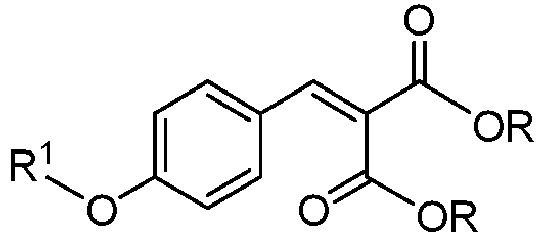 whereinR1 is methyl, ethyl, propyl or n-butyl;if R1 is methyl, thenR is tert. butyl or a radical of formula
 or a radical of formula
 whereinR2 and R3 are independently from each other hydrogen or methyl;R4 is methyl, ethyl or n-propyl;R5 and R6 are independently from each other hydrogen or C1-C3-alkyl;if R1 is ethyl, propyl or n-butyl, thenR is isopropyl; andwherein the composition comprises (i) to (ii) in a ratio of larger or equal to 0.8.
 - The sunscreen or daily care composition according to claim 1, wherein the composition comprises (i) hexyl 2-[4-(diethylamino)-2-hydroxybenzoyl]benzoate (INCI diethylamino hydroxybenzoyl hexyl benzoate) and (ii) 1-(4-(1,1-dimethylethyl)phenyl)-3-(4-methoxyphenyl)propane-1,3-dione (INCI butyl methoxydibenzoylmethane) in a ratio of larger or equal to 1.
- The sunscreen or daily care composition according to claim 1 or 2, wherein the composition comprises (i) hexyl 2-[4-(diethylamino)-2-hydroxybenzoyl]benzoate (INCI diethylamino hydroxybenzoyl hexyl benzoate) and (ii) 1-(4-(1,1-dimethylethyl)phenyl)-3-(4-methoxyphenyl)propane-1 ,3-dione (INCI butyl methoxydibenzoylmethane) in a ratio of from 1:1 to 10:1, preferably in a ratio of from 1:1 to 5:1, more preferably in a ratio of from 1:1 to 2:1 and even more preferably in a ratio of from 1:1 to 1.5:1.
- The sunscreen or daily care composition according to any one of claims 1 to 3, wherein the composition does not comprise 2-hydroxy-4-methoxybenzophenone (INCI oxybenzone), ethylhexyl-2-cyano-3,3-diphenyl-acrylate (INCI octocrylene), 2-ethylhexyl-(2E)-3-(4-methoxyphenyl)acrylate (INCI ethylhexyl methoxy cinnamate) and isoamyl-4-methoxycinnamate (INCI isoamyl-p-methoxy cinnamate).
- The sunscreen or daily care composition according to any one of claims 1 to 4, wherein the composition is free of parabens.
- The sunscreen or daily care composition according to any one of claims 1 to 5, wherein the composition is provided in the form a spray.
- The sunscreen or daily care composition according to any one of claims 1 to 6, wherein the composition is free of emulsifier.
- The sunscreen or daily care composition according to any one of claims 1 to 7, wherein the composition is free of phenoxyethanol.
- The sunscreen or daily care composition according to any one of claims 1 to 8, wherein (iii) is an oil soluble UV filter or wherein (iii) is 2,4-bis-{[4-(2-ethyl-hexyloxy)-2-hydroxy]-phenyl}-6-(4-methoxyphenyl)-1,3,5 triazine (INCI bis-ethylhexyloxyphenol methoxyphenyl triazine) dissolved in a polymer matrix to be dispersible in water.
- The sunscreen or daily care composition according to any of claims 1 to 9, wherein the composition comprises hexyl 2-[4-(diethylamino)-2-hydroxybenzoyl]benzoate (INCI diethylamino hydroxybenzoyl hexyl benzoate) in an amount of from 1 % to 10 % by weight, based on the total weight of the composition.
- The sunscreen or daily care composition according to any of claims 1 to 10, wherein the composition comprises 1-(4-(1,1-dimethylethyl)phenyl)-3-(4-methoxyphenyl)propane-1,3-dione (INCI butyl methoxydibenzoylmethane) in an amount of from 1 % to 5 % by weight, based on the total weight of the composition.
- The sunscreen or daily care composition according to any of claims 1 to 11, wherein the composition comprises 2,4-bis-{[4-(2-ethyl-hexyloxy)-2-hydroxy]-phenyl}-6-(4-methoxyphenyl)-1,3,5 triazine (INCI bis-ethylhexyloxyphenol methoxyphenyl triazine) in an amount of from 0.5 % to 5 % by weight, preferably in an amount of from 0.8 % to 3 % by weight, based on the total weight of the composition.
- The sunscreen or daily care composition according to any one of claims 1 to 12, wherein the composition comprises 4,4',4"-(1,3,5-triazine-2,4,6-triyltriimino)tris-benzoic acid-tris(2-ethylhexyl)ester (INCI ethylhexyl triazone) in an amount of from 0.5 % to 5 % by weight, preferably in an amount of from 0.8 % to 3 % by weight, based on the total weight of the composition.
- The sunscreen or daily care composition according to any one of claims 1 to 13, wherein the composition comprises 4,4'-[[6-[[4-[[(1,1-dimethylethyl)amino]carbonyl]phenyl]amino]-1,3,5-triazin-2,4-diyl]diimino]bis-benzoic acid-bis(2-ethylhexyl)ester (INCI diethylhexyl-butamidotriazone) in an amount of from 0.5 % to 5 % by weight, preferably in an amount of from 0.8 % to 3 % by weight, based on the total weight of the composition.
- The sunscreen or daily care composition according to any one of claims 1 to 14, wherein the composition comprises at least one perfume.
- The sunscreen or daily care composition according to any one of claims 1 to 15, wherein the composition comprises at least one emollient with a polarity index of <30 mN/m.
- Use of a sunscreen or daily care composition as defined in any one of claims 1 to 16 to reduce sand adhesion on the skin.
Applications Claiming Priority (2)
| Application Number | Priority Date | Filing Date | Title |
|---|---|---|---|
| EP19163163 | 2019-03-15 | ||
| PCT/EP2020/056910 WO2020187762A1 (en) | 2019-03-15 | 2020-03-13 | Efficient sunscreen compositions with diethylamino hydroxybenzoyl hexyl benzoate and butyl methoxydibenzoylmethane |
Publications (3)
| Publication Number | Publication Date |
|---|---|
| EP3937893A1 EP3937893A1 (en) | 2022-01-19 |
| EP3937893C0 EP3937893C0 (en) | 2024-09-04 |
| EP3937893B1 true EP3937893B1 (en) | 2024-09-04 |
Family
ID=65817921
Family Applications (1)
| Application Number | Title | Priority Date | Filing Date |
|---|---|---|---|
| EP20710519.8A Active EP3937893B1 (en) | 2019-03-15 | 2020-03-13 | Efficient sunscreen compositions with diethylamino hydroxybenzoyl hexyl benzoate and butyl methoxydibenzoylmethane |
Country Status (8)
| Country | Link |
|---|---|
| US (1) | US20220151890A1 (en) |
| EP (1) | EP3937893B1 (en) |
| JP (1) | JP7551640B2 (en) |
| KR (1) | KR102870201B1 (en) |
| CN (1) | CN113573691A (en) |
| ES (1) | ES2995201T3 (en) |
| PL (1) | PL3937893T3 (en) |
| WO (1) | WO2020187762A1 (en) |
Citations (13)
| Publication number | Priority date | Publication date | Assignee | Title |
|---|---|---|---|---|
| DE19539428A1 (en) | 1995-10-24 | 1997-04-30 | Beiersdorf Ag | Emulsifier-free finely dispersed cosmetic or dermatological preparations of the water-in-oil type |
| EP1310237A2 (en) | 2001-11-09 | 2003-05-14 | Beiersdorf AG | Cosmetic and dermatological sunscreen formulations comprising hydroxybenzophenones and acrylamide polymers |
| EP1310239A1 (en) | 2001-11-09 | 2003-05-14 | Beiersdorf AG | Cosmetical and dermatological sunscreen compositions containing hydroxybenzophenones and pentasodium ethylenediamine tetramethylenephosphonate |
| WO2003039507A1 (en) | 2001-11-09 | 2003-05-15 | Beiersdorf Ag | Cosmetic and dermatological anti-uv formulations containing hydroxybenzophenone and triazine and/or benzotriazol derivatives |
| WO2003039506A2 (en) | 2001-11-09 | 2003-05-15 | Beiersdorf Ag | Cosmetic and dermatological light protection formulations with a content of hydroxybenzophenones and alkylnaphthalates |
| WO2011003774A2 (en) | 2009-07-07 | 2011-01-13 | Basf Se | Uv filter combinations comprising benzylidene malonates |
| WO2015150115A1 (en) | 2014-04-01 | 2015-10-08 | Beiersdorf Ag | Cosmetic preparation for uv-protection based on acrylate |
| EP1323412B1 (en) | 2001-12-07 | 2016-10-19 | L'Oréal | Light screening composition comprising a dibenzoylmethane type screening agent and an amino substituted 2-hydroxybenzophenone derivative |
| EP3093008A1 (en) | 2015-05-13 | 2016-11-16 | Beiersdorf AG | Octocrylene-free sunscreen agent containing diethylaminohydroxybenz oylhexylbenzoate |
| EP3195853A1 (en) | 2016-01-21 | 2017-07-26 | Beiersdorf AG | Octocrylene-free solar protection formulation with diethylamino hydroxybenzoyl hexyl benzoate. |
| EP3231416A1 (en) | 2014-12-09 | 2017-10-18 | Shiseido Company Ltd. | Aerosol cosmetic |
| WO2019020247A1 (en) | 2017-07-24 | 2019-01-31 | Beiersdorf Ag | ACTIVE COMPOUNDS OF N- (4-AMINO-2-METHYLCHINOLIN-6-YL) -2 - ((4-ETHYL PHENOXY) METHYL) BENZAMIDE AND ONE OR MORE COSMETIC OR DERMATOLOGICALLY IMPROPER UV FILTER SUBSTANCES |
| DE102017213230A1 (en) | 2017-08-01 | 2019-02-07 | Beiersdorf Ag | Spherical silicates in cosmetic preparations |
Family Cites Families (11)
| Publication number | Priority date | Publication date | Assignee | Title |
|---|---|---|---|---|
| FR2986154B1 (en) | 2012-01-31 | 2017-08-04 | Pierre Fabre Dermo Cosmetique | NEW PHOTOPROTECTIVE SYSTEM |
| DE102013213170A1 (en) | 2013-07-04 | 2015-01-08 | Beiersdorf Ag | Octocrylene-free, odor-stable sunscreen |
| DE102014201541A1 (en) | 2014-01-29 | 2015-07-30 | Beiersdorf Ag | Octocrylene-free sunscreen with low tack |
| ES3010209T3 (en) * | 2014-07-25 | 2025-04-01 | Basf Se | Sunscreen formulations optimized for the formation of vitamin d |
| DE102015208869A1 (en) | 2015-05-13 | 2016-11-17 | Beiersdorf Ag | Alcohol-containing, octocrylene-free sunscreen |
| DE102015208861A1 (en) | 2015-05-13 | 2016-11-17 | Beiersdorf Ag | Octocrylene-free sunscreen with diethylaminohydroxybenzoylhexylbenzoate |
| JP6143914B2 (en) | 2015-09-30 | 2017-06-07 | 株式会社 資生堂 | Sunscreen cosmetics |
| DE102017200723A1 (en) | 2017-01-18 | 2018-07-19 | Beiersdorf Ag | Octocrylene-free sunscreen with polyglyceryl-10 stearate |
| DE102017201235A1 (en) * | 2017-01-26 | 2018-07-26 | Beiersdorf Ag | Use of dimethylaminohydroxybenzoylhexylbenzoate in cosmetic sunscreens |
| JP7057066B2 (en) | 2017-03-02 | 2022-04-19 | 株式会社 資生堂 | Underwater oil type emulsified sunscreen cosmetics |
| EP3673894A4 (en) | 2017-08-25 | 2021-05-26 | Shiseido Co., Ltd. | Cosmetic |
-
2020
- 2020-03-13 CN CN202080021286.5A patent/CN113573691A/en active Pending
- 2020-03-13 KR KR1020217032658A patent/KR102870201B1/en active Active
- 2020-03-13 WO PCT/EP2020/056910 patent/WO2020187762A1/en not_active Ceased
- 2020-03-13 PL PL20710519.8T patent/PL3937893T3/en unknown
- 2020-03-13 JP JP2021555173A patent/JP7551640B2/en active Active
- 2020-03-13 ES ES20710519T patent/ES2995201T3/en active Active
- 2020-03-13 US US17/439,528 patent/US20220151890A1/en not_active Abandoned
- 2020-03-13 EP EP20710519.8A patent/EP3937893B1/en active Active
Patent Citations (13)
| Publication number | Priority date | Publication date | Assignee | Title |
|---|---|---|---|---|
| DE19539428A1 (en) | 1995-10-24 | 1997-04-30 | Beiersdorf Ag | Emulsifier-free finely dispersed cosmetic or dermatological preparations of the water-in-oil type |
| EP1310237A2 (en) | 2001-11-09 | 2003-05-14 | Beiersdorf AG | Cosmetic and dermatological sunscreen formulations comprising hydroxybenzophenones and acrylamide polymers |
| EP1310239A1 (en) | 2001-11-09 | 2003-05-14 | Beiersdorf AG | Cosmetical and dermatological sunscreen compositions containing hydroxybenzophenones and pentasodium ethylenediamine tetramethylenephosphonate |
| WO2003039507A1 (en) | 2001-11-09 | 2003-05-15 | Beiersdorf Ag | Cosmetic and dermatological anti-uv formulations containing hydroxybenzophenone and triazine and/or benzotriazol derivatives |
| WO2003039506A2 (en) | 2001-11-09 | 2003-05-15 | Beiersdorf Ag | Cosmetic and dermatological light protection formulations with a content of hydroxybenzophenones and alkylnaphthalates |
| EP1323412B1 (en) | 2001-12-07 | 2016-10-19 | L'Oréal | Light screening composition comprising a dibenzoylmethane type screening agent and an amino substituted 2-hydroxybenzophenone derivative |
| WO2011003774A2 (en) | 2009-07-07 | 2011-01-13 | Basf Se | Uv filter combinations comprising benzylidene malonates |
| WO2015150115A1 (en) | 2014-04-01 | 2015-10-08 | Beiersdorf Ag | Cosmetic preparation for uv-protection based on acrylate |
| EP3231416A1 (en) | 2014-12-09 | 2017-10-18 | Shiseido Company Ltd. | Aerosol cosmetic |
| EP3093008A1 (en) | 2015-05-13 | 2016-11-16 | Beiersdorf AG | Octocrylene-free sunscreen agent containing diethylaminohydroxybenz oylhexylbenzoate |
| EP3195853A1 (en) | 2016-01-21 | 2017-07-26 | Beiersdorf AG | Octocrylene-free solar protection formulation with diethylamino hydroxybenzoyl hexyl benzoate. |
| WO2019020247A1 (en) | 2017-07-24 | 2019-01-31 | Beiersdorf Ag | ACTIVE COMPOUNDS OF N- (4-AMINO-2-METHYLCHINOLIN-6-YL) -2 - ((4-ETHYL PHENOXY) METHYL) BENZAMIDE AND ONE OR MORE COSMETIC OR DERMATOLOGICALLY IMPROPER UV FILTER SUBSTANCES |
| DE102017213230A1 (en) | 2017-08-01 | 2019-02-07 | Beiersdorf Ag | Spherical silicates in cosmetic preparations |
Non-Patent Citations (6)
| Title |
|---|
| "Sunscreens: Regulations and Commercial Development (Cosmetic Science and Technology, 28) 3rd Edition", 1 January 2005, TAYLOR & FRANCIS, ISBN: 0824757947, article NADIM SHAATH: "Chapter 13:: The chemistry of ultraviolet filters", pages: 217 - 238, XP009556186 |
| ANONYMOUS: "Diethylamino hydroxybenzoyl hexyl benzoate", WIKIPEDIA, 29 January 2018 (2018-01-29), XP093284497, Retrieved from the Internet <URL:https://en.wikipedia.org/w/index.php?%20title=Diethylamino%20hydroxybenzoyl%20hexyl%20benzoate&oldid=823034890> |
| CHATELAIN E, GABARD B: "PHOTOSTABILIZATION OF BUTYL METHOXYDIBENZOYLMETHANE (AVOBENZONE) AND ETHYLHEXYL METHOXYCINNAMATE BY BIS-ETHYLHEXYLOXYPHENOL METHOXYPHENYL TRIAZINE (TINOSORB S), A NEW UV BROADBAND FILTER", PHOTOCHEMISTRY AND PHOTOBIOLOGY, WILEY-BLACKWELL PUBLISHING, INC., US, vol. 74, no. 03, 1 September 2001 (2001-09-01), US , pages 401 - 406, XP001057313, ISSN: 0031-8655, DOI: 10.1562/0031-8655(2001)0740401POBMAA2.0.CO2 |
| DAMIANI E; BASCHONG W; GRECI L: "UV-Filter combinations under UV-A exposure: Concomitant quantification of over-all spectral stability and molecular integrity", JOURNAL OF PHOTOCHEMISTRY AND PHOTOBIOLOGY B: BIOLOGY, ELSEVIER SCIENCE S.A., BASEL., CH, vol. 87, no. 2, 25 May 2007 (2007-05-25), CH , pages 95 - 104, XP008080551, ISSN: 1011-1344, DOI: 10.1016/j.jphotobiol.2007.03.003 |
| KAWAKAMI CAMILA MARTINS; MáXIMO LEANDRO NéRITON CâNDIDO; FONTANEZI BIANCA BUENO; DA SILVA ROBERTO SANTANA; GASPAR L: "Diethylamino hydroxybenzoyl hexyl benzoate (DHHB) as additive to the UV filter avobenzone in cosmetic sunscreen formulations - Evaluation of the photochemical behavior and photostabilizing effect", EUROPEAN JOURNAL OF PHARMACEUTICAL SCIENCES, ELSEVIER AMSTERDAM, NL, vol. 99, 30 December 2016 (2016-12-30), NL , pages 299 - 309, XP029904310, ISSN: 0928-0987, DOI: 10.1016/j.ejps.2016.12.031 |
| NADIM SHAATH: "Sunscreens - Regulations and Commercial Development, third edition", 1 January 2005, TAYLOR & FRANCIS GROUP, Boca Raton, ISBN: 0-8247-5794-7, article CRAIG A. BONDA: "17 The Photostability of Organic Sunscreen Actives: A Review", pages: 321 - 346, XP009562073 |
Also Published As
| Publication number | Publication date |
|---|---|
| EP3937893A1 (en) | 2022-01-19 |
| ES2995201T3 (en) | 2025-02-07 |
| EP3937893C0 (en) | 2024-09-04 |
| CN113573691A (en) | 2021-10-29 |
| US20220151890A1 (en) | 2022-05-19 |
| JP7551640B2 (en) | 2024-09-17 |
| JP2022526245A (en) | 2022-05-24 |
| KR20210138666A (en) | 2021-11-19 |
| KR102870201B1 (en) | 2025-10-14 |
| PL3937893T3 (en) | 2025-01-27 |
| WO2020187762A1 (en) | 2020-09-24 |
| BR112021016939A2 (en) | 2021-11-03 |
Similar Documents
| Publication | Publication Date | Title |
|---|---|---|
| EP3937896B1 (en) | Sunscreen compositions comprising butyl methoxydibenzoylmethane, triazine derivatives and photostabilizer | |
| US12246082B2 (en) | Efficient sunscreen compositions with diethylamino hydroxybenzoyl hexyl benzoate and butyl methoxydibenzoylmethane free of octocrylene | |
| KR102874243B1 (en) | Effective sunscreen composition comprising diethylamino hydroxybenzoyl hexyl benzoate and organic particulate UV filters | |
| EP4208148A1 (en) | Sunscreen or daily care composition comprising micronized methylene bis-benzotriazolyl tetramethylbutylphenol | |
| EP3937894B1 (en) | Efficient sunscreen compositions with diethylamino hydroxybenzoyl hexyl benzoate, butyl methoxydibenzoylmethane and organic particulate uv filter | |
| KR102870201B1 (en) | Effective sunscreen composition comprising diethylamino hydroxybenzoyl hexyl benzoate and butyl methoxydibenzoylmethane | |
| US20230310290A1 (en) | Sunscreen or daily care composition comprising micronized tris-biphenyl triazine | |
| BR112021016939B1 (en) | SUNSCREEN OR DAILY CARE COMPOSITION, AND USE OF A SUNSCREEN OR DAILY CARE COMPOSITION | |
| BR112021017063B1 (en) | SUNSCREEN OR DAILY CARE COMPOSITION, AND USE OF A SUNSCREEN OR DAILY CARE COMPOSITION |
Legal Events
| Date | Code | Title | Description |
|---|---|---|---|
| STAA | Information on the status of an ep patent application or granted ep patent |
Free format text: STATUS: UNKNOWN |
|
| STAA | Information on the status of an ep patent application or granted ep patent |
Free format text: STATUS: THE INTERNATIONAL PUBLICATION HAS BEEN MADE |
|
| PUAI | Public reference made under article 153(3) epc to a published international application that has entered the european phase |
Free format text: ORIGINAL CODE: 0009012 |
|
| STAA | Information on the status of an ep patent application or granted ep patent |
Free format text: STATUS: REQUEST FOR EXAMINATION WAS MADE |
|
| 17P | Request for examination filed |
Effective date: 20211015 |
|
| AK | Designated contracting states |
Kind code of ref document: A1 Designated state(s): AL AT BE BG CH CY CZ DE DK EE ES FI FR GB GR HR HU IE IS IT LI LT LU LV MC MK MT NL NO PL PT RO RS SE SI SK SM TR |
|
| DAV | Request for validation of the european patent (deleted) | ||
| DAX | Request for extension of the european patent (deleted) | ||
| STAA | Information on the status of an ep patent application or granted ep patent |
Free format text: STATUS: EXAMINATION IS IN PROGRESS |
|
| 17Q | First examination report despatched |
Effective date: 20231116 |
|
| GRAP | Despatch of communication of intention to grant a patent |
Free format text: ORIGINAL CODE: EPIDOSNIGR1 |
|
| STAA | Information on the status of an ep patent application or granted ep patent |
Free format text: STATUS: GRANT OF PATENT IS INTENDED |
|
| INTG | Intention to grant announced |
Effective date: 20240416 |
|
| GRAS | Grant fee paid |
Free format text: ORIGINAL CODE: EPIDOSNIGR3 |
|
| GRAA | (expected) grant |
Free format text: ORIGINAL CODE: 0009210 |
|
| STAA | Information on the status of an ep patent application or granted ep patent |
Free format text: STATUS: THE PATENT HAS BEEN GRANTED |
|
| AK | Designated contracting states |
Kind code of ref document: B1 Designated state(s): AL AT BE BG CH CY CZ DE DK EE ES FI FR GB GR HR HU IE IS IT LI LT LU LV MC MK MT NL NO PL PT RO RS SE SI SK SM TR |
|
| REG | Reference to a national code |
Ref country code: GB Ref legal event code: FG4D |
|
| REG | Reference to a national code |
Ref country code: CH Ref legal event code: EP |
|
| REG | Reference to a national code |
Ref country code: IE Ref legal event code: FG4D |
|
| REG | Reference to a national code |
Ref country code: DE Ref legal event code: R096 Ref document number: 602020037031 Country of ref document: DE |
|
| U01 | Request for unitary effect filed |
Effective date: 20240930 |
|
| U07 | Unitary effect registered |
Designated state(s): AT BE BG DE DK EE FI FR IT LT LU LV MT NL PT RO SE SI Effective date: 20241024 |
|
| U1N | Appointed representative for the unitary patent procedure changed after the registration of the unitary effect |
Representative=s name: BASF IP ASSOCIATION; DE |
|
| PG25 | Lapsed in a contracting state [announced via postgrant information from national office to epo] |
Ref country code: NO Free format text: LAPSE BECAUSE OF FAILURE TO SUBMIT A TRANSLATION OF THE DESCRIPTION OR TO PAY THE FEE WITHIN THE PRESCRIBED TIME-LIMIT Effective date: 20241204 |
|
| PG25 | Lapsed in a contracting state [announced via postgrant information from national office to epo] |
Ref country code: GR Free format text: LAPSE BECAUSE OF FAILURE TO SUBMIT A TRANSLATION OF THE DESCRIPTION OR TO PAY THE FEE WITHIN THE PRESCRIBED TIME-LIMIT Effective date: 20241205 |
|
| PG25 | Lapsed in a contracting state [announced via postgrant information from national office to epo] |
Ref country code: HR Free format text: LAPSE BECAUSE OF FAILURE TO SUBMIT A TRANSLATION OF THE DESCRIPTION OR TO PAY THE FEE WITHIN THE PRESCRIBED TIME-LIMIT Effective date: 20240904 |
|
| PG25 | Lapsed in a contracting state [announced via postgrant information from national office to epo] |
Ref country code: RS Free format text: LAPSE BECAUSE OF FAILURE TO SUBMIT A TRANSLATION OF THE DESCRIPTION OR TO PAY THE FEE WITHIN THE PRESCRIBED TIME-LIMIT Effective date: 20241204 |
|
| PG25 | Lapsed in a contracting state [announced via postgrant information from national office to epo] |
Ref country code: RS Free format text: LAPSE BECAUSE OF FAILURE TO SUBMIT A TRANSLATION OF THE DESCRIPTION OR TO PAY THE FEE WITHIN THE PRESCRIBED TIME-LIMIT Effective date: 20241204 Ref country code: NO Free format text: LAPSE BECAUSE OF FAILURE TO SUBMIT A TRANSLATION OF THE DESCRIPTION OR TO PAY THE FEE WITHIN THE PRESCRIBED TIME-LIMIT Effective date: 20241204 Ref country code: HR Free format text: LAPSE BECAUSE OF FAILURE TO SUBMIT A TRANSLATION OF THE DESCRIPTION OR TO PAY THE FEE WITHIN THE PRESCRIBED TIME-LIMIT Effective date: 20240904 Ref country code: GR Free format text: LAPSE BECAUSE OF FAILURE TO SUBMIT A TRANSLATION OF THE DESCRIPTION OR TO PAY THE FEE WITHIN THE PRESCRIBED TIME-LIMIT Effective date: 20241205 |
|
| REG | Reference to a national code |
Ref country code: ES Ref legal event code: FG2A Ref document number: 2995201 Country of ref document: ES Kind code of ref document: T3 Effective date: 20250207 |
|
| PG25 | Lapsed in a contracting state [announced via postgrant information from national office to epo] |
Ref country code: IS Free format text: LAPSE BECAUSE OF FAILURE TO SUBMIT A TRANSLATION OF THE DESCRIPTION OR TO PAY THE FEE WITHIN THE PRESCRIBED TIME-LIMIT Effective date: 20250104 |
|
| PG25 | Lapsed in a contracting state [announced via postgrant information from national office to epo] |
Ref country code: SM Free format text: LAPSE BECAUSE OF FAILURE TO SUBMIT A TRANSLATION OF THE DESCRIPTION OR TO PAY THE FEE WITHIN THE PRESCRIBED TIME-LIMIT Effective date: 20240904 |
|
| PG25 | Lapsed in a contracting state [announced via postgrant information from national office to epo] |
Ref country code: CZ Free format text: LAPSE BECAUSE OF FAILURE TO SUBMIT A TRANSLATION OF THE DESCRIPTION OR TO PAY THE FEE WITHIN THE PRESCRIBED TIME-LIMIT Effective date: 20240904 |
|
| PG25 | Lapsed in a contracting state [announced via postgrant information from national office to epo] |
Ref country code: SK Free format text: LAPSE BECAUSE OF FAILURE TO SUBMIT A TRANSLATION OF THE DESCRIPTION OR TO PAY THE FEE WITHIN THE PRESCRIBED TIME-LIMIT Effective date: 20240904 |
|
| U20 | Renewal fee for the european patent with unitary effect paid |
Year of fee payment: 6 Effective date: 20250331 |
|
| PLBI | Opposition filed |
Free format text: ORIGINAL CODE: 0009260 |
|
| PLAX | Notice of opposition and request to file observation + time limit sent |
Free format text: ORIGINAL CODE: EPIDOSNOBS2 |
|
| 26 | Opposition filed |
Opponent name: DSM IP ASSETS B.V. Effective date: 20250603 Opponent name: BEIERSDORF AG Effective date: 20250530 |
|
| PG25 | Lapsed in a contracting state [announced via postgrant information from national office to epo] |
Ref country code: MC Free format text: LAPSE BECAUSE OF FAILURE TO SUBMIT A TRANSLATION OF THE DESCRIPTION OR TO PAY THE FEE WITHIN THE PRESCRIBED TIME-LIMIT Effective date: 20240904 |
|
| PLBB | Reply of patent proprietor to notice(s) of opposition received |
Free format text: ORIGINAL CODE: EPIDOSNOBS3 |
|
| PLBP | Opposition withdrawn |
Free format text: ORIGINAL CODE: 0009264 |
|
| REG | Reference to a national code |
Ref country code: CH Ref legal event code: L10 Free format text: ST27 STATUS EVENT CODE: U-0-0-L10-L00 (AS PROVIDED BY THE NATIONAL OFFICE) Effective date: 20251203 |
|
| PG25 | Lapsed in a contracting state [announced via postgrant information from national office to epo] |
Ref country code: IE Free format text: LAPSE BECAUSE OF NON-PAYMENT OF DUE FEES Effective date: 20250313 |
|
| PLBP | Opposition withdrawn |
Free format text: ORIGINAL CODE: 0009264 |
|
| REG | Reference to a national code |
Ref country code: CH Ref legal event code: L10 Free format text: ST27 STATUS EVENT CODE: U-0-0-L10-L00 (AS PROVIDED BY THE NATIONAL OFFICE) Effective date: 20260304 |
|
| REG | Reference to a national code |
Ref country code: CH Ref legal event code: U11 Free format text: ST27 STATUS EVENT CODE: U-0-0-U10-U11 (AS PROVIDED BY THE NATIONAL OFFICE) Effective date: 20260401 |
|
| PGFP | Annual fee paid to national office [announced via postgrant information from national office to epo] |
Ref country code: GB Payment date: 20260319 Year of fee payment: 7 |
|
| PGFP | Annual fee paid to national office [announced via postgrant information from national office to epo] |
Ref country code: PL Payment date: 20260216 Year of fee payment: 7 |
|
| U20 | Renewal fee for the european patent with unitary effect paid |
Year of fee payment: 7 Effective date: 20260331 |
|
| PG25 | Lapsed in a contracting state [announced via postgrant information from national office to epo] |
Ref country code: CY Free format text: LAPSE BECAUSE OF FAILURE TO SUBMIT A TRANSLATION OF THE DESCRIPTION OR TO PAY THE FEE WITHIN THE PRESCRIBED TIME-LIMIT Effective date: 20240904 |
|
| PG25 | Lapsed in a contracting state [announced via postgrant information from national office to epo] |
Ref country code: TR Free format text: LAPSE BECAUSE OF FAILURE TO SUBMIT A TRANSLATION OF THE DESCRIPTION OR TO PAY THE FEE WITHIN THE PRESCRIBED TIME-LIMIT Effective date: 20240904 |
|
| PGFP | Annual fee paid to national office [announced via postgrant information from national office to epo] |
Ref country code: ES Payment date: 20260414 Year of fee payment: 7 |
|
| PLAY | Examination report in opposition despatched + time limit |
Free format text: ORIGINAL CODE: EPIDOSNORE2 |
|
| PGFP | Annual fee paid to national office [announced via postgrant information from national office to epo] |
Ref country code: CH Payment date: 20260401 Year of fee payment: 7 |
|
| PLBC | Reply to examination report in opposition received |
Free format text: ORIGINAL CODE: EPIDOSNORE3 |