EP3937656B1 - Taste-masking formulation for ketone body compounds - Google Patents
Taste-masking formulation for ketone body compounds Download PDFInfo
- Publication number
- EP3937656B1 EP3937656B1 EP20771103.7A EP20771103A EP3937656B1 EP 3937656 B1 EP3937656 B1 EP 3937656B1 EP 20771103 A EP20771103 A EP 20771103A EP 3937656 B1 EP3937656 B1 EP 3937656B1
- Authority
- EP
- European Patent Office
- Prior art keywords
- pbw
- hydroxybutyrate
- ketone body
- formulation
- glyceryl
- Prior art date
- Legal status (The legal status is an assumption and is not a legal conclusion. Google has not performed a legal analysis and makes no representation as to the accuracy of the status listed.)
- Active
Links
Classifications
-
- A—HUMAN NECESSITIES
- A23—FOODS OR FOODSTUFFS; TREATMENT THEREOF, NOT COVERED BY OTHER CLASSES
- A23L—FOODS, FOODSTUFFS OR NON-ALCOHOLIC BEVERAGES, NOT OTHERWISE PROVIDED FOR; PREPARATION OR TREATMENT THEREOF
- A23L2/00—Non-alcoholic beverages; Dry compositions or concentrates therefor; Preparation or treatment thereof
- A23L2/52—Adding ingredients
- A23L2/60—Sweeteners
-
- A—HUMAN NECESSITIES
- A23—FOODS OR FOODSTUFFS; TREATMENT THEREOF, NOT COVERED BY OTHER CLASSES
- A23L—FOODS, FOODSTUFFS OR NON-ALCOHOLIC BEVERAGES, NOT OTHERWISE PROVIDED FOR; PREPARATION OR TREATMENT THEREOF
- A23L27/00—Spices; Flavouring agents or condiments; Artificial sweetening agents; Table salts; Dietetic salt substitutes; Preparation or treatment thereof
-
- A—HUMAN NECESSITIES
- A23—FOODS OR FOODSTUFFS; TREATMENT THEREOF, NOT COVERED BY OTHER CLASSES
- A23L—FOODS, FOODSTUFFS OR NON-ALCOHOLIC BEVERAGES, NOT OTHERWISE PROVIDED FOR; PREPARATION OR TREATMENT THEREOF
- A23L27/00—Spices; Flavouring agents or condiments; Artificial sweetening agents; Table salts; Dietetic salt substitutes; Preparation or treatment thereof
- A23L27/84—Flavour masking or reducing agents
-
- A—HUMAN NECESSITIES
- A23—FOODS OR FOODSTUFFS; TREATMENT THEREOF, NOT COVERED BY OTHER CLASSES
- A23L—FOODS, FOODSTUFFS OR NON-ALCOHOLIC BEVERAGES, NOT OTHERWISE PROVIDED FOR; PREPARATION OR TREATMENT THEREOF
- A23L27/00—Spices; Flavouring agents or condiments; Artificial sweetening agents; Table salts; Dietetic salt substitutes; Preparation or treatment thereof
- A23L27/86—Addition of bitterness inhibitors
-
- A—HUMAN NECESSITIES
- A23—FOODS OR FOODSTUFFS; TREATMENT THEREOF, NOT COVERED BY OTHER CLASSES
- A23L—FOODS, FOODSTUFFS OR NON-ALCOHOLIC BEVERAGES, NOT OTHERWISE PROVIDED FOR; PREPARATION OR TREATMENT THEREOF
- A23L33/00—Modifying nutritive qualities of foods; Dietetic products; Preparation or treatment thereof
- A23L33/10—Modifying nutritive qualities of foods; Dietetic products; Preparation or treatment thereof using additives
Definitions
- the present invention is directed to the field taste-masking of distasteful compounds, in particular of the ketone bodies 3-hydroxybutyric acid and acetoacetic acid in the form of (a) their alkali metal salt(s), (b) esters between molecules of such ketone bodies, (c) esters of such ketone bodies with ketone body progenitors, (d) esters of such ketone bodies with glycerin, and (e) amides of such ketone bodies with appropriate amines for oral consumption by humans and other animals.
- Taste-masking of distasteful oral materials is an old practice particularly in the practice of medicine, particularly with the oral administration of distasteful drugs and plant extracts.
- the basic practice was to add pleasant tasting innocuous materials to help overcome the distasteful medicinal compounds or extracts.
- sweeteners sucgars or honey
- Another practice was to also add natural (and in more modern times, synthetic) flavoring agents. Again, this practice also only worked for a limited number of situations.
- Taste perception is a complex phenomenon involving not only taste receptors in the oral cavity, but also aroma receptors in the oral and nasal cavities as well as mouthfeel perceptions in the oral cavity.
- True complete taste-masking addresses each of these issues where they are otherwise present.
- Taste-masking can act by (a) blocking the various taste-receptors by overwhelming the taste receptors with large amounts of pleasant tasting activating compounds, (b) blocking the various taste receptors by being either a more strongly bonding competitive inhibitor or a non-competitive inhibitor of the various taste receptors, or (c) numbing the various taste receptors for the short period of time when the offensive tasting material is in the mouth.
- this is simply a trial and error approach utilizing the known materials that might act as taste-masking materials.
- a third component of the taste-masking dilemma is the mouthfeel of the offensive-tasting material and the need to mask this aspect when it is present as well.
- a taste-masking formulation which does not address an overly gritty material feel or a slimy material feel, will generate negative reactions in the oral administration of the formulation.
- the taste masking formulation needs to be chemical and physically stable for a commercially reasonable period of time that is sufficient to allow for manufacture of the formulation, storage in the manufacturing facility, distribution through commercial distribution networks, storage at the distribution centers, distribution to the point of sale to the consumer, and adequate shelf life thereafter to allow the consumer to use the formulation in the normal course.
- These additional requirements further limit the ultimate choices made in the taste-masking formulation components selection completely independent of the taste-masking ability of the individual components over the offensive-tasting material.
- WO 2018/118369 relates to a method of management of migraine symptom reduction and/or management and/or prophylaxis using 3-hydroxybutyrate glycerides.
- WO 2017/156446 relates to ketogenic compositions including a beta-hydroxybutyrate mixed salt to induce or sustain ketosis in a subject to which the ketogenic compositions are administered.
- US 9 827 320 relates to a composition with reduced bitterness containing polyquatemium-2, polyquaternium-17 and/or polyquaternium-18.
- An object of the invention is to provide a formulation for an offensive-tasting ketone body material that is palatable for administration to humans via oral administration in amounts greater than 10 grams per dose.
- Another object of the invention is to provide a formulation for an offensive-tasting ketone body material that is palatable for administration to humans via oral administration in amounts sufficient to provide a blood ketone body level in the range of 2-10 mM.
- Yet another object of the invention is to provide an orally administrable palatable formulation of a glyceryl ester of 3-hydroxybutyric acid.
- Still another object of the invention is to provide an orally administrable palatable formulation of the ester glyceryl tris(3-hydroxybutyrate).
- the present invention is directed to an orally palatable formulation according to claim 1.
- the ketone body material that is distasteful is selected from (a) ketone body alkali metal salts, which can be independently the lithium, sodium or potassium salts or mixtures thereof; (b) ketone body esters between a ketone body and an additional ketone body such as, without limitation, 3-(3-hydroxybutyroyl)-O-butyric acid, 3-(acetacetyl)-O-butyric acid, or mixtures thereof; (c) ketone body esters between a ketone body and a ketone body precursor as defined in claim 1, such as, without limitation, 3-butyryl-O-butyric acid, or mixtures thereof; (d) ketone body esters with glycerine such as those set forth in US 7,807,718 , especially the glyceryl-tris(3-hydroxybutyrate) ester (hereinafter "GT(3HB”); or (e) amides between ketone bodies and physiologically acceptable amines such as, without limitation, tri
- the ketone body material is selected from 3-hydroxybutyl-3-hydroxybutyrate, 1,3-butandiol-3-hydroxybutyrate monoester, and those set forth in US 7,807,718 , and most preferably is glyceryl-tris(3-hydroxybutyrate), hereinafter "GT ⁇ HB".
- GT ⁇ HB glyceryl-tris(3-hydroxybutyrate)
- the ketone body compound is present in the final formulation in an amount of 85.0 parts by weight (pbw) to 89.0 pbw, preferably about 85.7 pbw to about 88.3 pbw, more preferably about 87.0 pbw, but more generally can be selected from any range constructed by selecting 2 amounts from about 85.0 pbw, about 85.25 pbw, about 85.5 pbw, about 85.7 pbw, about 85.75 pbw, about 86.0 pbw, about 86.25 pbw, about 86.5 pbw, about 86.75 pbw, about 87.0 pbw, about 87.25 pbw, about 87.5 pbw, about 87.75 pbw, about 88.0 pbw, about 88.23 pbw, about 88.3 pbw, about 88.5 pbw, about 88.75 pbw, and about 89 pbw, and may also
- the flavor component is selected from bitter orange, grape and mixtures thereof and preferably is a natural flavor oil.
- the primary flavor material may be used alone or in a blend with minor amounts of other natural flavors; the primary flavor oil which comprises at least 90% of the flavor oils used, is either orange or grape, preferably in a range selected from 2 values from 90%, 91%, 92%, 93%, 94%, 95%, 96%, 97%, 98%, 99% and 100% of the flavor oils used; more preferably 95% of the total flavor oils used.
- the remainder of the flavor oils are selected from compatible natural flavor oils.
- the total flavor oils used are present in the final formulation in amounts of 0.35 pbw to 0.532 pbw, preferably about 0.395 pbw to about 0.483 pbw, more preferably about 0.439 pbw, but more generally can be selected from any range constructed by selecting 2 amounts from about 0.35 pbw, about 0.356 pbw, about, 0.375 pbw, about 0.395 pbw, about 0.400 pbw, about 0.41 pbw, about 0.42 pbw, about 0.43 pbw, about 0.435 pbw, about 0.439 pbw, about 0.44 pbw about 0.45 pbw, about 0.46 pbw, about 0.47 pbw, about 0.48, 0.483 pbw, about 0.49 pbw, about 0.50 pbw, about 0.51 pbw, about 0.52 pbw, about 0.53 pbw and about 0.532 pbw; and
- the ethanol is preferably 95% ethanol, however, lower concentrations such as 70% ethanol or 50% ethanol (with the balance being water) provided the additional water contributed beyond the 95% ethanol is subtracted from the water component amount below.
- 95% ethanol is being used, it is used in amounts of 0.278 pbw to 0.415 pbw, preferably about 0.309 pbw to about 0.378 pbw, more preferably about 0.343 pbw, but generally may be selected from any range constructed by selecting 2 amounts from about 0.278 pbw, about 0.280 pbw, about 0.290 pbw, about 0.300 pbw, about 0.309 pbw, about 0.310 pbw, about 0.320 pbw, about 0.330 pbw, about 0.40 pbw, about 0.341 pbw, about 0.342 pbw, about 0.343 pbw, about 0.35 pbw, about 0.36 pbw, about 0.37 pb
- ethanol of a lower % such as without limitation 70%
- it is used to give the same pure ethanol content as the above amounts of 95% ethanol would give, and the additional water contributed by the use of the lower % ethanol over and above that contributed by 95% ethanol should be subtracted from the water amounts added as a separate water component below when analyzing a particular formulation for total water content for comparison to the claims. Since the ethanol amounts above and the separately added water below are parts by weight, the contribution of water by the ethanol must be simultaneously subtracted from the ethanol weights and added to the water weights so that true comparisons for infringement determination purposes can be obtained.
- the separately added water component is present in an amount of from 0.381 pbw to 0.569 pbw, preferably about 0.424 pbw to about 0.518 pbw, more preferably, 0.471 pbw; but generally may be selected from any range constructed by selecting 2 amounts from about 0.381 pbw, about 0.39 pbw, about 0.40 pbw, about 0.41 pbw, about 0.42 pbw, about 0.424 pbw, about 0.43 pbw, about 0.44 pbw, about 0.45 pbw, about 0.46 pbw, about 0.47 pbw, about 0.471 pbw, about 0.48 pbw, about 0.49 pbw, about 0.50 pbw, about 0.51 pbw, about 0.518 pbw, about 0.52 pbw, about 0.53 pbw, about 0.54 pbw, about 0.55 pbw, about 0.56 pbw,
- the separately added water amounts above do not include water introduced via the 95% ethanol used in the prior paragraph, and for comparisons for potential infringement issues, total water content will have the water contribution from the 95% ethanol added to these values. If ethanol concentrations of less than 95% are used for the ethanol component, then the water contributed by the ethanol over and above that which would be contributed by 95% ethanol (for providing the same amount of pure ethanol as contained in 95 % ethanol) should be deducted from the amounts above of separately added water.
- the propylene glycol in the present invention comes into the invention in two portions; one is the main solvent of the overall formulation and the second is as a component that is blended with the natural flavor, water, ethanol as a pre-blend.
- the propylene glycol that is preblended with the water, ethanol, and natural flavor oils is present in amounts of the final formulation in the range of 0.102 pbw to 0.151 pbw, preferably about 0.112 pbw to about 0.137 pbw, more preferably about 0.125 pbw; but generally may be selected from any range constructed by selecting 2 amounts from about 0.102 pbw, about 0.110 pbw, about 0.112 pbw, about 0.120 pbw, about 0.122 pbw, about 0.124 pbw, about 0.125 pbw, about 0.126 pbw, about 0.128 pbw, about 0.130 pbw, about 0.133 pbw, about 0.136 pbw, about 0.137, about 0.
- the propylene glycol that is separately added as the main solvent is present in amounts, based on the final formulation, in the range of from 8.3 pbw to 10.925 pbw, preferably about 8.625 pbw to about 10.550 pbw, more preferably about 9.588 pbw; but generally may be selected from any range constructed by selecting 2 amounts from about 8.3 pbw, about 8.320 pbw, about 8.322 pbw, about 8.4 pbw, about 8.5 pbw, about 8.6 pbw, about 8.625 pbw, about 8.629 pbw, about 8.630 pbw, about 8.7 pbw, about 8.8 pbw, about 8.9 pbw, about 8.93 pbw, about 8.935 pbw, about 8.936 pbw, about 8.94 pbw, about 8.95 pbw, about 8.975 pbw, about 9.00pbw, about 9.10 pbw
- the high potency sweetener can be any high potency sweetener, but is preferably sucralose. It is present in the final formulation in an amount of from 1.609 pbw to 2.404 pbw, preferably 1.788 pbw to about 2.185 pbw, more preferably from about 1.788 pbw to about 2.185 pbw, still more preferably about 1.986 pbw; but generally may be selected from any range constructed by selecting 2 amounts from about1.609 pbw, about 1.65 pbw, about 1.70 pbw, about 1.75 pbw, about 1.78 pbw, about 1.788 pbw, about 1.89 pbw, about 1.80 pbw, about 1.85 pbw, about 1.90 pbw, about 1.95 pbw, about 1.96 pbw, about 1.967 pbw, about 1.970 pbw, about 1.980 pbw, about 1.986 pbw, about 1.99
- the bitter masking agent is the compound of claim 27 of US 7,939,671 , also known as 3-(1-((3,5-Dimethylisoxazol-4-yl)methyl)-1H-pyrazol-4-yl)-1-(3-hydroxbenzyl)imidazolidine-2,4-dione having the structure and also known as Senomyx BB68 and Senomyx S6821.
- the bitter masking agent is present in an amount of from 0.039 pbw to 0.058 pbw, preferably about 0.042 pbw to about 0.053 pbw, more preferably about 0.048 pbw; but generally may be selected from any range constructed by selecting 2 amounts from about 0.039 pbw, about 0.040 pbw, about 0.041 pbw, about 0.042 pbw, about 0.043 pbw, about 0.044 pbw, about 0.045 pbw, about 0.046 pbw, about 0.047 pbw, about 0.048 pbw, about 0.049 pbw, about 0.050 pbw, about 0.051 pbw, about 0.052 pbw, about 0.053 pbw, about 0.054 pbw, about 0.055 pbw, about 0.0056 pbw, about 0.057 pbw, and about 0.058 pbw
- the ketone body compound is present in an amount of from 85 pbw to 89 pbw, preferably about 87 pbw, but generally may be selected from any range constructed by selecting 2 amounts from about 85 pbw, 85.25 pbw, about 85.5 pbw, about 85.6 pbw, about 85.7 pbw, about 85.
- the glyceryl esters of the ketone bodies can be those in which 3-hydroxybutyroyl groups esterify 1, 2, or all 3 of the hydroxy groups in a single glycerol molecule.
- 3-hydroxybutyroyl groups esterify 1, 2, or all 3 of the hydroxy groups in a single glycerol molecule.
- the remaining glycerol hydroxy groups can remain unesterified, be esterified by omega-3-fatty acids, omega-6-fatty acids, omega-3,6-fatty acids, medium-chain fatty acids, or mixtures thereof.
- (Medium-chain fatty acids are fatty acids having carbon chains of generally 8, 10, or 12 carbons, such as for example, without limitation, one such medium-chain fatty acid in a purified form is caprylic acid.)
- Each 3-hydroxybutyroyl group in each molecule is independently in either D or L form and the bulk compound being administered can be a mix of any or all of the same (i.e. a mix of compounds having (a) all of the groups in the D form, (b) all of the groups in the L form, (c) some in the D-form and some in the L-form, (d) as well as mixtures of compounds selected from (1) a and b, (2) a and c, and (3) a, b, and c).
- both the D and L forms of the 3-hydroxybutyroyl groups are active, however, the L form is utilized more slowly and thus, it is preferable that the 3-hydroxybutyroyl groups are substantially all or substantially all in the D form. In a particularly preferred embodiment, about 90% to 98%, more preferably about 96% of the 3-hydroxybutyroyl groups are in the D form. Nonetheless, utilization of other amounts of D vs L forms are within the invention and can be selected from 100% D to 100% L and any mixture of D and L forms in any proportions.
- esters having one, two, or 3 (3-hydroxybutyryl) groups with (a) no other esterification or (b) further esterification with an omega fatty acid (either 3-omega, 6-omega, or 3,6-omega or mixtures thereof) or (c) further esterified with a medium-chain fatty acid or mixtures of different medium-chain fatty acids or (d) further esterified with both an omega fatty acid and a medium-chain fatty acid are also contemplated to be within the scope of compounds for use in the present invention.
- a highly preferred embodiment is one in which the compound utilized for the present invention is glyceryl tris(3-hydroxybutyrate); an even more highly preferred compound is glyceryl tris(DL 3-hydroxybutyrate), the DL referring to the bulk compound and not necessarily a mixture in a specific molecule.
- ester When the ester is glyceryl tris(3-hydroxybutyrate), it is generally orally/enterally administered in an amount that is typically in the range of 0.5 g/kg to 2.0 g/kg body weight per day (more specifically 0.5 g/kg, 0.55 g/kg, 0.6 g/kg, 0.65 g/kg, 0.7 g/kg, 0.75 g/kg, 0.8 g/kg, 0.85 g/kg, 0.9 g/kg, 0.95 g/kg, 1 g/kg, 1.1 g/kg, 1.2 g/kg, 1.3 g/kg, 1.4 g/kg, 1.5 g/kg, 1.6 g/kg, 1.7 g/kg, 1.8 g/kg, 1.9 g/kg, or 2 g/kg, as well as amounts intermediary between any of these specifically recited amounts) in 2-3 divided doses, which for a 60 kg female is about 10-40 g/serving (more specifically 10 g/serving,
- each specific value can be the basis for a new range limit as long as the lower limit is in fact less than the upper limit.
- the dosage range is given as "0.5 g/kg to 2.0 g/kg” with a more specific recitation of "0.5 g/kg, 0.55 g/kg, 0.6 g/kg, 0.65 g/kg, 0.7 g/kg, 0.75 g/kg, 0.8 g/kg, 0.85 g/kg, 0.9 g/kg, 0.95 g/kg, 1 g/kg, 1.1 g/kg, 1.2 g/kg, 1.3 g/kg, 1.4 g/kg, 1.5 g/kg, 1.6 g/kg, 1.7 g/kg, 1.8 g/kg, 1.9 g/kg, or 2 g/kg".
- any of the more specific recited amounts may be the lower limit of a new range and any larger specific recited amount may be the upper limit of that new range and each such constructed range shall be deemed as specifically recited in this specification.
- the ranges of 0.5 to 0.6; 0.55 to 1.9, 0.75 to 1.7, 1.8 to 1.9, etc. are all deemed recited herein. The same is applicable to the other parameters relating to dosages based on body weight, serving sizes, etc. as well.
- ester compounds for use in the present invention are administered in amounts that deliver the same amount of 3-hydroxybutyroyl and/or acetoacetate moiety as that when 0.5 g/kg to 2.0 g/kg body weight of the glyceryl tris(3-hydroxybutyrate) is administered orally.
- the focal point is to achieve the appropriate ketone body (3-hydroxybutyroyl level plus acetoacetate level) in the blood of between 2 mM and 10 mM, preferably 4.5 mM to 7 mM, more preferably 5 mM to 7 mM, most preferably 5.5 mM to 7.5 mM.
- the dose can be divided into multiple divided doses of desirable size given multiple times per day or in multiple dosage units given in a single dose (i.e. within a few moments of one another as desired).
- the dose is divided into 2-3 divided doses, spaced apart approximately equally over the course of a 24-hour period, so that twice daily dosing is approximately every 12 hours and thrice daily dosing is approximately every 8 hours.
- 50 g is desired to be administered, it can be done as a single dose of 50 g in a single dosage form or distributed in a food or drink or it can be administered in 1 ⁇ 2 such amounts twice daily, or it can be administered in a dosage form having 1 ⁇ 2 the dose in two dosage units given within a few moments of one another (preferably within a few seconds of one another when a substantially single dosing is desired).
- the intent and objective is to induce a therapeutic hyperketonemia characterized by blood levels of the 3-hydroxybutyroyl group (together with the acetoacetate group) of 2 mM-10 mM, (such as 4.5 mM, 5.0 mM, 5.5 mM, 6.0 mM, 6.5 mM, 7.0 mM or 7.5 mM, and all mM levels between any particular of these explicitly recited amounts is deemed to be explicitly disclosed as well) comparable to those achieved by ketogenic diet or starvation.
- Those of ordinary skill in the art will appreciate other variations on the theme.
- the formulation is assembled by first preparing a pre-blend of the ethanol and water and the small amount of propylene glycol (which small amount is part of the pre-blend as indicated above) and then adding the flavor oil components thereto. Separately, the propylene glycol (that is indicated as the primary solvent is warmed to approximately 50°C. The high potency sweetener is added to the warmed propylene glycol and the bitter masking agent is then added to the warmed solution and mixed until dissolved. The warmed mixture is then allowed to cool to about 25°C. Then the flavor oil component is added and mixed for 5-10 minutes. The resulting mixture is then blended with the ketone compound to result in the final formulation.
- the process of arriving at an appropriate taste-masking formulation is one of trial and error.
- the present inventors tried a multitude of potential candidates without success. Numerous flavorings and media were tried for masking the bitterness of the ketone body compounds without success, whether as simply flavorings added to the ketone alone or by adding the ketone compound to a medium such as juices, soft drinks, puddings, ice creams, etc. without adequate success. Some of these efforts actually resulted in making the taste worse, not better.
- the instant inventors finally found a formulation that met the criteria for having a delivery system that adequately masked the extreme bitterness of the ketone compounds.
- the instant formulation can be administered as is, or added to virtually any desired food or drink as desired, but preferably is consumed as is.
- GT ⁇ HB A preferred formulation of GT ⁇ HB is prepared as set forth in the following TABLE I
- the propylene Glycol is warmed to 50°C and the sucralose is added and dissolved.
- the Senomyx BB68 is added and mixed until dissolved.
- the solution is allowed to cool to 25°C.
- the Flavor Premix is added to the Second Premix resulting in a mixture making up 13% of the final formulation.
- This is then blended with Glyceryl tris (3-hydroxcybutyrate) in an amount of 87 % of the final formulation to result in 100% of the final formulation.
Landscapes
- Life Sciences & Earth Sciences (AREA)
- Polymers & Plastics (AREA)
- Nutrition Science (AREA)
- Chemical & Material Sciences (AREA)
- Engineering & Computer Science (AREA)
- Food Science & Technology (AREA)
- Health & Medical Sciences (AREA)
- Mycology (AREA)
- Medicinal Preparation (AREA)
- Acyclic And Carbocyclic Compounds In Medicinal Compositions (AREA)
- Seasonings (AREA)
- Medicines Containing Plant Substances (AREA)
- Cosmetics (AREA)
- Respiratory Apparatuses And Protective Means (AREA)
Description
- The present invention is directed to the field taste-masking of distasteful compounds, in particular of the ketone bodies 3-hydroxybutyric acid and acetoacetic acid in the form of (a) their alkali metal salt(s), (b) esters between molecules of such ketone bodies, (c) esters of such ketone bodies with ketone body progenitors, (d) esters of such ketone bodies with glycerin, and (e) amides of such ketone bodies with appropriate amines for oral consumption by humans and other animals.
- Taste-masking of distasteful oral materials is an old practice particularly in the practice of medicine, particularly with the oral administration of distasteful drugs and plant extracts. The basic practice was to add pleasant tasting innocuous materials to help overcome the distasteful medicinal compounds or extracts. Typically, one simply added sweeteners (sugars or honey) to the formulation. Unfortunately, this practice was only barely sufficient for only a limited number of situations. Another practice was to also add natural (and in more modern times, synthetic) flavoring agents. Again, this practice also only worked for a limited number of situations.
- Taste perception is a complex phenomenon involving not only taste receptors in the oral cavity, but also aroma receptors in the oral and nasal cavities as well as mouthfeel perceptions in the oral cavity. True complete taste-masking addresses each of these issues where they are otherwise present. Taste-masking can act by (a) blocking the various taste-receptors by overwhelming the taste receptors with large amounts of pleasant tasting activating compounds, (b) blocking the various taste receptors by being either a more strongly bonding competitive inhibitor or a non-competitive inhibitor of the various taste receptors, or (c) numbing the various taste receptors for the short period of time when the offensive tasting material is in the mouth. However, unless one knows the particular pattern of receptors involved in sensing the offensive taste, this is simply a trial and error approach utilizing the known materials that might act as taste-masking materials.
- Further complicating the situation is that taste and smell are intimately connected, and the aromatic aspects of the offensive-tasting material must also be addressed adequately. Again, this involves multiple receptors in the oral and nasal cavity, and is partially dependent upon the volatile nature of one or more components of the offensive-tasting materials, not only per se, but also as those materials interact with other formulation components and their volatility may change when introduced into the oral cavity during administration. Again, without knowing the precise receptor pattern at play, one is left with a completely trial and error approach to selection of the proper taste-masking agent(s) that will adequately address both taste and aroma aspects.
- A third component of the taste-masking dilemma is the mouthfeel of the offensive-tasting material and the need to mask this aspect when it is present as well. A taste-masking formulation which does not address an overly gritty material feel or a slimy material feel, will generate negative reactions in the oral administration of the formulation.
- Efforts at overcoming the above have led to the use of tablets and capsules (into which the offensive material formulation is placed) and the capsule or tablet is swallowed to be dissolved after it leaves the oral cavity. This works well for materials which only require relatively small amounts to be administered at a single time, amounts certainly under 1 gram and typically under 750 mg at a time. A second approach has been to use microencapsulation which can be used over a wide range of active materials, but the microencapsulation typically increases the weight and volume of the total dosage amount considerably so that where multiple grams or more are to be administered at a single dosage, the volume that needs to be consumed is both impracticable and leads to complete non-compliance with the dosage regimen. Thus, these efforts are not available when dosages of the pure offensive-tasting material are in excess of even as small an amount as 2 grams per dose.
- In addition to all of the above, the taste masking formulation needs to be chemical and physically stable for a commercially reasonable period of time that is sufficient to allow for manufacture of the formulation, storage in the manufacturing facility, distribution through commercial distribution networks, storage at the distribution centers, distribution to the point of sale to the consumer, and adequate shelf life thereafter to allow the consumer to use the formulation in the normal course. These additional requirements further limit the ultimate choices made in the taste-masking formulation components selection completely independent of the taste-masking ability of the individual components over the offensive-tasting material.
- In summary, finding an appropriate taste-masking formulation which makes an offensive-tasting material palatable for administration in amounts of greater than 10 grams per dose is truly a trial and error approach.
WO 2018/118369 relates to a method of management of migraine symptom reduction and/or management and/or prophylaxis using 3-hydroxybutyrate glycerides.WO 2017/156446 relates to ketogenic compositions including a beta-hydroxybutyrate mixed salt to induce or sustain ketosis in a subject to which the ketogenic compositions are administered.US 9 827 320 US 2016/376263 relates to bitter taste modifiers such as substituted 1-benzyl-3-(1-(isoxazol-4-ylmethyl)-1H-pyrazol-4-yl)imidazolidine-2,4-diones and compositions comprising the same. - An object of the invention is to provide a formulation for an offensive-tasting ketone body material that is palatable for administration to humans via oral administration in amounts greater than 10 grams per dose.
- Another object of the invention is to provide a formulation for an offensive-tasting ketone body material that is palatable for administration to humans via oral administration in amounts sufficient to provide a blood ketone body level in the range of 2-10 mM.
- Yet another object of the invention is to provide an orally administrable palatable formulation of a glyceryl ester of 3-hydroxybutyric acid.
- Still another object of the invention is to provide an orally administrable palatable formulation of the ester glyceryl tris(3-hydroxybutyrate).
- Even further objects of the invention will become apparent to those of ordinary skill in the art after having benefit of the instant application.
- In brief, the foregoing objects of the invention and others can be obtained by a formulation comprising
- a ketone body material selected from ketone body alkali metal salts, ketone body esters between a ketone body and an additional ketone body, ketone body esters between a ketone body and a ketone body precursor, ketone body esters with glycerine, and amides between ketone bodies and physiologically acceptable amines, wherein the ketone body esters between a ketone body and a ketone body precursor are selected from the group consisting of 3-butyryl-O-butyric acid, 3-hydroxybutyl-3-hydroxybutyrate and 1,3-butandiol-3-hydroxybutyrate monoester; wherein the ketone body material is present in the final formulation in an amount of 85.0 parts by weight (pbw) to 89.0 pbw;
- propylene glycol; wherein the propylene glycol is present in the final formulation in an amount in the range of 8.402 pbw to 11.076 pbw;
- ethanol; wherein the ethanol is present in the final formulation in an amount equivalent to 0.278 pbw to 0.415 pbw of 95% ethanol;
- water; wherein the water is present in the final formulation in an amount of from 0.381 pbw to 0.569 pbw, exclusive of water contributed by the 95% ethanol;
- natural or synthetic flavor selected from bitter orange, grape and mixtures thereof, wherein the total flavor oils are present in the final formulation in an amount of 0.35 pbw to 0.532 pbw;
- a high potency sweetener, but preferably sucralose; wherein the high potency sweetener is present in the final formulation in an amount of from 1.609 pbw to 2.404 pbw; and
- a bitter masking agent which is 3-(1-((3,5-Dimethylisoxazol-4-yl)methyl)-1H-pyrazol-4-yl)-1-(3-hydroxbenzyl)imidazolidine-2,4-dione; wherein the bitter masking agent is present in an amount of from 0.039 pbw to 0.058 pbw.
- The present invention is directed to an orally palatable formulation according to claim 1.
- In all references to the term "comprising" it is intended that the terms "consisting essentially of" and "consisting of" are equally disclosed. Any use of the term "about" shall be construed to mean that the last digit in the immediately following number as in the following non-limiting examples (a) "about 0.54" shall be deemed to cover the range of at least 0.535 to <0.545 and (b) "about 24" shall be construed to mean a range of at least 23.5 to <24.5. For any number preceded by "about", the absolute number shall be deemed to be disclosed as well as in "about 0.54" shall be deemed to be a specific disclosure of "0.54" as well as the range in the prior sentence.
- The ketone body material that is distasteful is selected from (a) ketone body alkali metal salts, which can be independently the lithium, sodium or potassium salts or mixtures thereof; (b) ketone body esters between a ketone body and an additional ketone body such as, without limitation, 3-(3-hydroxybutyroyl)-O-butyric acid, 3-(acetacetyl)-O-butyric acid, or mixtures thereof; (c) ketone body esters between a ketone body and a ketone body precursor as defined in claim 1, such as, without limitation, 3-butyryl-O-butyric acid, or mixtures thereof; (d) ketone body esters with glycerine such as those set forth in
US 7,807,718 , especially the glyceryl-tris(3-hydroxybutyrate) ester (hereinafter "GT(3HB"); or (e) amides between ketone bodies and physiologically acceptable amines such as, without limitation, tris(hydroxymethyl)aminomethane (TRIS). Preferably, the ketone body material is selected from 3-hydroxybutyl-3-hydroxybutyrate, 1,3-butandiol-3-hydroxybutyrate monoester, and those set forth inUS 7,807,718 , and most preferably is glyceryl-tris(3-hydroxybutyrate), hereinafter "GTβHB". The balance of this disclosure will be with reference to GTβHB, but shall be understood (unless the context specifically indicated otherwise) to be applicable to the other ketone body materials set forth above as well. - The ketone body compound is present in the final formulation in an amount of 85.0 parts by weight (pbw) to 89.0 pbw, preferably about 85.7 pbw to about 88.3 pbw, more preferably about 87.0 pbw, but more generally can be selected from any range constructed by selecting 2 amounts from about 85.0 pbw, about 85.25 pbw, about 85.5 pbw, about 85.7 pbw, about 85.75 pbw, about 86.0 pbw, about 86.25 pbw, about 86.5 pbw, about 86.75 pbw, about 87.0 pbw, about 87.25 pbw, about 87.5 pbw, about 87.75 pbw, about 88.0 pbw, about 88.23 pbw, about 88.3 pbw, about 88.5 pbw, about 88.75 pbw, and about 89 pbw, and may also be specifically selected from any of the foregoing specific values.
- The flavor component is selected from bitter orange, grape and mixtures thereof and preferably is a natural flavor oil. The primary flavor material may be used alone or in a blend with minor amounts of other natural flavors; the primary flavor oil which comprises at least 90% of the flavor oils used, is either orange or grape, preferably in a range selected from 2 values from 90%, 91%, 92%, 93%, 94%, 95%, 96%, 97%, 98%, 99% and 100% of the flavor oils used; more preferably 95% of the total flavor oils used. The remainder of the flavor oils are selected from compatible natural flavor oils. The total flavor oils used are present in the final formulation in amounts of 0.35 pbw to 0.532 pbw, preferably about 0.395 pbw to about 0.483 pbw, more preferably about 0.439 pbw, but more generally can be selected from any range constructed by selecting 2 amounts from about 0.35 pbw, about 0.356 pbw, about, 0.375 pbw, about 0.395 pbw, about 0.400 pbw, about 0.41 pbw, about 0.42 pbw, about 0.43 pbw, about 0.435 pbw, about 0.439 pbw, about 0.44 pbw about 0.45 pbw, about 0.46 pbw, about 0.47 pbw, about 0.48, 0.483 pbw, about 0.49 pbw, about 0.50 pbw, about 0.51 pbw, about 0.52 pbw, about 0.53 pbw and about 0.532 pbw; and may also be specifically selected from any of the foregoing specific values.
- The ethanol is preferably 95% ethanol, however, lower concentrations such as 70% ethanol or 50% ethanol (with the balance being water) provided the additional water contributed beyond the 95% ethanol is subtracted from the water component amount below. When 95% ethanol is being used, it is used in amounts of 0.278 pbw to 0.415 pbw, preferably about 0.309 pbw to about 0.378 pbw, more preferably about 0.343 pbw, but generally may be selected from any range constructed by selecting 2 amounts from about 0.278 pbw, about 0.280 pbw, about 0.290 pbw, about 0.300 pbw, about 0.309 pbw, about 0.310 pbw, about 0.320 pbw, about 0.330 pbw, about 0.40 pbw, about 0.341 pbw, about 0.342 pbw, about 0.343 pbw, about 0.35 pbw, about 0.36 pbw, about 0.37 pbw, about 0.378 pbw, 0.380 pbw, about 0.39 pbw, about 0.40 pbw, about 0.41 pbw, and about 0.415 pbw; and may also be specifically selected from any of the foregoing specific values. When ethanol of a lower %, such as without limitation 70% is being used, it is used to give the same pure ethanol content as the above amounts of 95% ethanol would give, and the additional water contributed by the use of the lower % ethanol over and above that contributed by 95% ethanol should be subtracted from the water amounts added as a separate water component below when analyzing a particular formulation for total water content for comparison to the claims. Since the ethanol amounts above and the separately added water below are parts by weight, the contribution of water by the ethanol must be simultaneously subtracted from the ethanol weights and added to the water weights so that true comparisons for infringement determination purposes can be obtained.
- The separately added water component is present in an amount of from 0.381 pbw to 0.569 pbw, preferably about 0.424 pbw to about 0.518 pbw, more preferably, 0.471 pbw; but generally may be selected from any range constructed by selecting 2 amounts from about 0.381 pbw, about 0.39 pbw, about 0.40 pbw, about 0.41 pbw, about 0.42 pbw, about 0.424 pbw, about 0.43 pbw, about 0.44 pbw, about 0.45 pbw, about 0.46 pbw, about 0.47 pbw, about 0.471 pbw, about 0.48 pbw, about 0.49 pbw, about 0.50 pbw, about 0.51 pbw, about 0.518 pbw, about 0.52 pbw, about 0.53 pbw, about 0.54 pbw, about 0.55 pbw, about 0.56 pbw, and about 0.569 pbw, and may also be specifically selected from any of the foregoing specific values. The separately added water amounts above do not include water introduced via the 95% ethanol used in the prior paragraph, and for comparisons for potential infringement issues, total water content will have the water contribution from the 95% ethanol added to these values. If ethanol concentrations of less than 95% are used for the ethanol component, then the water contributed by the ethanol over and above that which would be contributed by 95% ethanol (for providing the same amount of pure ethanol as contained in 95 % ethanol) should be deducted from the amounts above of separately added water.
- The propylene glycol in the present invention comes into the invention in two portions; one is the main solvent of the overall formulation and the second is as a component that is blended with the natural flavor, water, ethanol as a pre-blend. The propylene glycol that is preblended with the water, ethanol, and natural flavor oils is present in amounts of the final formulation in the range of 0.102 pbw to 0.151 pbw, preferably about 0.112 pbw to about 0.137 pbw, more preferably about 0.125 pbw; but generally may be selected from any range constructed by selecting 2 amounts from about 0.102 pbw, about 0.110 pbw, about 0.112 pbw, about 0.120 pbw, about 0.122 pbw, about 0.124 pbw, about 0.125 pbw, about 0.126 pbw, about 0.128 pbw, about 0.130 pbw, about 0.133 pbw, about 0.136 pbw, about 0.137, about 0.138 pbw, about 0.140 pbw, about 0.143 pbw, about 0.146 pbw, about 0.149 pbw, and about 0.151 pbw, and may also be specifically selected from any of the foregoing specific values.
- The propylene glycol that is separately added as the main solvent is present in amounts, based on the final formulation, in the range of from 8.3 pbw to 10.925 pbw, preferably about 8.625 pbw to about 10.550 pbw, more preferably about 9.588 pbw; but generally may be selected from any range constructed by selecting 2 amounts from about 8.3 pbw, about 8.320 pbw, about 8.322 pbw, about 8.4 pbw, about 8.5 pbw, about 8.6 pbw, about 8.625 pbw, about 8.629 pbw, about 8.630 pbw, about 8.7 pbw, about 8.8 pbw, about 8.9 pbw, about 8.93 pbw, about 8.935 pbw, about 8.936 pbw, about 8.94 pbw, about 8.95 pbw, about 8.975 pbw, about 9.00pbw, about 9.10 pbw about 9.20 pbw, about 9.1 pbw, about 9.2 pbw, about 9.24 pbw, about 9.246 pbw, about 9.250 pbw, about 9.3 pbw, about 9.4 pbw, about 9.5 pbw about 9.55 pbw, about 9.575 pbw, about 9.585 pbw about 9.588 pbw, about 9.6 pbw, about 9.7 pbw, about 9.8 pbw, about 9.9 pbw, about 9.91 pbw, about 9.92 pbw, about 9.929 pbw, about 9.93 pbw, about 9.939 pbw, about 9.95 pbw, about 10.00 pbw, about 10.1 pbw, about 10.15 pbw, about 10.16 pbw, about 10.17 pbw, about 10.171 pbw, about 10.175 pbw, about 10.200 pbw, about 10.250 pbw, about 10.500 pbw, about 10.54 pbw, about 10.546 pbw, about 10.55 pbw, about 10.75 pbw, about 10.8 pbw, about 10.9 pbw, about 10.918 pbw, about 10.92 pbw, and about 10.922 pbw, and may also be specifically selected from any of the foregoing specific values. The total propylene glycol in the formulation is the sum of the propylene glycol incorporated in the pre-blend and the propylene glycol added as the main solvent.
- The high potency sweetener can be any high potency sweetener, but is preferably sucralose. It is present in the final formulation in an amount of from 1.609 pbw to 2.404 pbw, preferably 1.788 pbw to about 2.185 pbw, more preferably from about 1.788 pbw to about 2.185 pbw, still more preferably about 1.986 pbw; but generally may be selected from any range constructed by selecting 2 amounts from about1.609 pbw, about 1.65 pbw, about 1.70 pbw, about 1.75 pbw, about 1.78 pbw, about 1.788 pbw, about 1.89 pbw, about 1.80 pbw, about 1.85 pbw, about 1.90 pbw, about 1.95 pbw, about 1.96 pbw, about 1.967 pbw, about 1.970 pbw, about 1.980 pbw, about 1.986 pbw, about 1.99 pbw, about 2.00 pbw, about 2.10 pbw, about 2.15 pbw, about 2.175 pbw, about 2.180 pbw, about 2.185 pbw, about 2.190 pbw, about 2.200 pbw, about 2.05 pbw, about 2.10 pbw, about 2.25 pbw, about 2.30 pbw, about 2.35 pbw, about 2.40 pbw, and about 2.404 pbw; and may also be specifically selected from any of the foregoing specific values.
- The bitter masking agent is the compound of claim 27 of
US 7,939,671 , also known as 3-(1-((3,5-Dimethylisoxazol-4-yl)methyl)-1H-pyrazol-4-yl)-1-(3-hydroxbenzyl)imidazolidine-2,4-dione having the structure
- The ketone body compound is present in an amount of from 85 pbw to 89 pbw, preferably about 87 pbw, but generally may be selected from any range constructed by selecting 2 amounts from about 85 pbw, 85.25 pbw, about 85.5 pbw, about 85.6 pbw, about 85.7 pbw, about 85. 8 pbw, 85.9 pbw, about 86 pbw, about 86.1 pbw, about 86.2 pbw, about 86.3 pbw, about 86.4 pbw, about 86.5 pbw, about 86.6 pbw, about 86.7 pbw, about 86.8 pbw, about 86.9 pbw, about 87.0 pbw, about 87.1 pbw, about 87.2 pbw, about 87.3 pbw, about 87.4 pbw, about 87.5 pbw, about 87.6 pbw, about 87.7 pbw, about 87.8 pbw, about 87.9 pbw about 88.0 pbw, about 88.1 pbw, about 88.2 pbw, and about 88.3 pbw; and may also be specifically selected from any of the foregoing specific values.
- The glyceryl esters of the ketone bodies can be those in which 3-hydroxybutyroyl groups

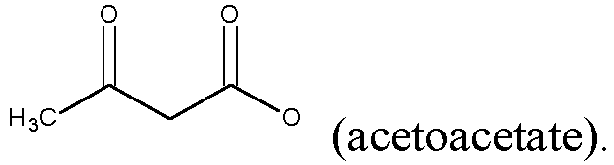
US 7,807,718 . - When the ester is glyceryl tris(3-hydroxybutyrate), it is generally orally/enterally administered in an amount that is typically in the range of 0.5 g/kg to 2.0 g/kg body weight per day (more specifically 0.5 g/kg, 0.55 g/kg, 0.6 g/kg, 0.65 g/kg, 0.7 g/kg, 0.75 g/kg, 0.8 g/kg, 0.85 g/kg, 0.9 g/kg, 0.95 g/kg, 1 g/kg, 1.1 g/kg, 1.2 g/kg, 1.3 g/kg, 1.4 g/kg, 1.5 g/kg, 1.6 g/kg, 1.7 g/kg, 1.8 g/kg, 1.9 g/kg, or 2 g/kg, as well as amounts intermediary between any of these specifically recited amounts) in 2-3 divided doses, which for a 60 kg female is about 10-40 g/serving (more specifically 10 g/serving, 12.5 g/serving, 15 g/serving, 17.5 g/serving, 20 g/serving, 22.5 g/serving, 25 g/serving, 30 g/serving, 35 g/serving, 40 g/serving as well as amounts intermediary between any of these specifically recited amounts) thrice daily (approximately every 8 hours) to about 15-60 g/serving (more specifically 15 g/serving, 17.5 g/serving, 20 g/serving, 22.5 g/serving, 25 g/serving, 27.5 g/serving, 30 g/serving, 35 g/serving, 40 g/serving, 45 g/serving, 50 g/serving, 55 g/serving, or 60 g/serving as well as amounts intermediary between any of these specifically recited amounts) twice daily (approximately every 12 hours) and for a 70 kg male is about 12-47 g/serving (more specifically 12 g/serving, 15 g/serving, 17.5 g/serving, 20 g/serving, 22.5 g/serving, 25 g/serving, 30 g/serving, 35 g/serving, 40 g/serving, 45 g/serving, 47 g/serving, as well as amounts intermediary between any of these specifically recited amounts) thrice (approximately every 8 hours) daily to about 17.5-70 g/serving (more specifically 17.5 g/serving, 20 g/serving, 22.5 g/serving, 25 g/serving, 27.5 g/serving, 30 g/serving, 35 g/serving, 40 g/serving, 45 g/serving, 50 g/serving, 55 g/serving, 60 g/serving, 65 g/serving, 70 g/serving, as well as amounts intermediary between any of these specifically recited amounts) twice (approximately every 12 hours) daily. These doses and serving sizes are intended to result in total ketone body (combined 3-hydroxybutyrate and acetoacetate) blood levels of 2-10 mM (more specifically 2 mM, 2.25 mM, 2.5mM, 2.75 mM, 3 mM, 3.25 mM, 3.5 mM, 4 mM, 4.25 mM, 4.5 mM, 4.6 mM, 4.7 mM, 4.8 mM, 4.9 mM, 5.0 mM, 5.1 mM, 5.2 mM, 5.3 mM, 5.4 mM, 5.5 mM, 5.6 mM, 5.7 mM, 5.8 mM, 5.9 mM, 6.0 mM, 6.1 mM, 6.2 mM, 6.3 mM, 6.4 mM, 6.5 mM, 6.6 mM, 6.7 mM, 6.8 mM, 6.9 mM, 7.0 mM, 7.1 mM, 7.2 mM, 7.3 mM, 7.4 mM, 7.5 mM 7.6 mM, 7.7 mM, 7.8 mM, 7.9 mM, 8.0 mM, 8.25 mM, 8.5 mM, 8.75mM, 9.0 mM, 9.25 mM, 9.5 mM, 9.75 mM, and 10 mM as well as intermediary levels between any of these specifically recited levels and any of these may serve as a lower end of a range or upper end of a range provided the upper end of the range is larger than the lower end of that range) in an average typical subject to whom these compounds are administered. (Acetoacetate is an oxidized form of 3-hydroxybutyrate in which the 3-hydroxy group is replaced by a 3-oxo group
- In the present specification, in any case where a range of values for a particular parameter is given and a more specific recitation of values within such range is given each specific value can be the basis for a new range limit as long as the lower limit is in fact less than the upper limit. By way of example, in the foregoing paragraph, the dosage range is given as "0.5 g/kg to 2.0 g/kg" with a more specific recitation of "0.5 g/kg, 0.55 g/kg, 0.6 g/kg, 0.65 g/kg, 0.7 g/kg, 0.75 g/kg, 0.8 g/kg, 0.85 g/kg, 0.9 g/kg, 0.95 g/kg, 1 g/kg, 1.1 g/kg, 1.2 g/kg, 1.3 g/kg, 1.4 g/kg, 1.5 g/kg, 1.6 g/kg, 1.7 g/kg, 1.8 g/kg, 1.9 g/kg, or 2 g/kg". Based thereon, any of the more specific recited amounts may be the lower limit of a new range and any larger specific recited amount may be the upper limit of that new range and each such constructed range shall be deemed as specifically recited in this specification. As such, by way of example and not limitation, the ranges of 0.5 to 0.6; 0.55 to 1.9, 0.75 to 1.7, 1.8 to 1.9, etc. are all deemed recited herein. The same is applicable to the other parameters relating to dosages based on body weight, serving sizes, etc. as well.
- The ester compounds for use in the present invention are administered in amounts that deliver the same amount of 3-hydroxybutyroyl and/or acetoacetate moiety as that when 0.5 g/kg to 2.0 g/kg body weight of the glyceryl tris(3-hydroxybutyrate) is administered orally. Again, the focal point is to achieve the appropriate ketone body (3-hydroxybutyroyl level plus acetoacetate level) in the blood of between 2 mM and 10 mM, preferably 4.5 mM to 7 mM, more preferably 5 mM to 7 mM, most preferably 5.5 mM to 7.5 mM. In cases where the actual volume or weight of this amount is too cumbersome or undesired to give as a single dose, the dose can be divided into multiple divided doses of desirable size given multiple times per day or in multiple dosage units given in a single dose (i.e. within a few moments of one another as desired). Preferably the dose is divided into 2-3 divided doses, spaced apart approximately equally over the course of a 24-hour period, so that twice daily dosing is approximately every 12 hours and thrice daily dosing is approximately every 8 hours. By way of example, if 50 g is desired to be administered, it can be done as a single dose of 50 g in a single dosage form or distributed in a food or drink or it can be administered in ½ such amounts twice daily, or it can be administered in a dosage form having ½ the dose in two dosage units given within a few moments of one another (preferably within a few seconds of one another when a substantially single dosing is desired). Where multiple dosings per day are desired or multiple dosage units per day at a single dosing are desired, other fractional dosings and multiple dosage units will be known to those of ordinary skill in the art and include without limitation administration of 1/3 the above amounts administered 3 times a day or in three units administered at substantially the same time; 1/4 the above amounts administered 4 times a day or in four units administered at substantially the same time or 2 units twice in a day, etc. The intent and objective is to induce a therapeutic hyperketonemia characterized by blood levels of the 3-hydroxybutyroyl group

- The formulation is assembled by first preparing a pre-blend of the ethanol and water and the small amount of propylene glycol (which small amount is part of the pre-blend as indicated above) and then adding the flavor oil components thereto. Separately, the propylene glycol (that is indicated as the primary solvent is warmed to approximately 50°C. The high potency sweetener is added to the warmed propylene glycol and the bitter masking agent is then added to the warmed solution and mixed until dissolved. The warmed mixture is then allowed to cool to about 25°C. Then the flavor oil component is added and mixed for 5-10 minutes. The resulting mixture is then blended with the ketone compound to result in the final formulation.
- As stated above, the process of arriving at an appropriate taste-masking formulation is one of trial and error. In point of fact, the present inventors tried a multitude of potential candidates without success. Numerous flavorings and media were tried for masking the bitterness of the ketone body compounds without success, whether as simply flavorings added to the ketone alone or by adding the ketone compound to a medium such as juices, soft drinks, puddings, ice creams, etc. without adequate success. Some of these efforts actually resulted in making the taste worse, not better. However, on arrival at the instantly claimed invention, the instant inventors finally found a formulation that met the criteria for having a delivery system that adequately masked the extreme bitterness of the ketone compounds.
- The instant formulation can be administered as is, or added to virtually any desired food or drink as desired, but preferably is consumed as is.
- The following examples exemplify, but do not limit, the present invention.
- A preferred formulation of GTβHB is prepared as set forth in the following TABLE I
-
Flavor Oil 0.439 % (95% Orange oil 5% other natural flavors) Propylene Glycol 0.125 % 95% Ethanol 0.343 % Water 0.471 % Subtotal 1.378 % -
Propylene Glycol 9.588 % Sucralose 1.986% Senomyx BB68 0.048 % Subtotal 11.622 % - The propylene Glycol is warmed to 50°C and the sucralose is added and dissolved. Next, the Senomyx BB68 is added and mixed until dissolved. The solution is allowed to cool to 25°C. Then the Flavor Premix is added to the Second Premix resulting in a mixture making up 13% of the final formulation. This is then blended with Glyceryl tris (3-hydroxcybutyrate) in an amount of 87 % of the final formulation to result in 100% of the final formulation.
Claims (9)
- An orally administrable formulation of distasteful ketone body material comprising:(a) a ketone body material selected from ketone body alkali metal salts, ketone body esters between a ketone body and an additional ketone body, ketone body esters between a ketone body and a ketone body precursor, ketone body esters with glycerin, and amides between ketone bodies and physiologically acceptable amines, wherein the ketone body esters between a ketone body and a ketone body precursor are selected from the group consisting of 3-butyryl-O-butyric acid, 3-hydroxybutyl-3-hydroxybutyrate and 1,3-butandiol-3-hydroxybutyrate monoester; wherein the ketone body material is present in the final formulation in an amount of 85.0 parts by weight (pbw) to 89.0 pbw;(b) propylene glycol; wherein the propylene glycol is present in the final formulation in an amount in the range of 8.402 pbw to 11.076 pbw;(c) ethanol; wherein the ethanol is present in the final formulation in an amount equivalent to 0.278 pbw to 0.415 pbw of 95% ethanol;(d) water; wherein the water is present in the final formulation in an amount of from 0.381 pbw to 0.569 pbw, exclusive of water contributed by the 95% ethanol used in component (c);(e) natural or synthetic flavor selected from bitter orange, grape and mixtures thereof; wherein the total flavor oils are present in the final formulation in an amount of 0.35 pbw to 0.532 pbw;(f) a high potency sweetener; wherein the high potency sweetener is present in the final formulation in an amount of from 1.609 pbw to 2.404 pbw; and(g) a bitter mask agent which is 3-(1-((3,5-Dimethylisoxazol-4-yl)methyl)-1H-pyrazol-4-yl)-1-(3-hydroxbenzyl)imidazolidine-2,4-dione; wherein the bitter masking agent is present in an amount of from 0.039 pbw to 0.058 pbw.
- The formulation of claim 1 wherein said ketone body material is said ester between a ketone body and glycerin.
- The formulation of claim 2 wherein said ketone body material is a glyceryl (3-hydroxybutyrate).
- The formulation of claim 3 wherein said glyceryl (3-hydroxybutyrate) is selected from the group consisting of a glyceryl tris (3-hydroxybutyrate), a glyceryl bis (3-hydroxybutyrate), a glyceryl mono(3-hydroxybutyrate), a glyceryl bis(3-hydroxybutyrate)-mono(3-omega fatty acid ester), a glyceryl bis(3-hydroxybutyrate)-mono(6-omega fatty acid ester), a glyceryl mono(3-hydroxybutyrate)-di(6-omega fatty acid ester), a glyceryl mono(3-hydroxybutyrate)-mono(3-omega fatty acid ester)-mono(6-omega fatty acid ester), a glyceryl bis(3-hydroxybutyrate)-mono(3,6-omega fatty acid ester), a glyceryl mono(3-hydroxybutyrate)-di(3-omega fatty acid ester), a glyceryl mono(3-hydroxybutyrate)-di(3,6-omega fatty acid ester), a glyceryl mono(3-hydroxybutyrate)-mono(3-omega fatty acid ester)-mono(3,6-omega fatty acid ester), a glyceryl mono(3-hydroxybutyrate)-mono(6-omega fatty acid ester)-mono(3,6-omega fatty acid ester) any of the foregoing having one or more of the omega fatty acid or unesterified hydroxyl groups replaced by a medium-chain fatty acid ester group, and mixtures thereof, wherein multiple omega fatty acid groups in a single molecule are the same or different, and wherein multiple medium-chain fatty acid groups in a single molecule are the same or different; and each 3-hydroxybutyrate group is independently selected from D and L forms thereof.
- The formulation of claim 4 wherein said glyceryl (3-hydroxybutyrate) is glyceryl tris (3-hydroxybutyrate) wherein each 3-hydroxybutyrate group is independently in the D or L form and mixtures thereof.
- The formulation of claim 5 wherein the glyceryl tris (3-hydroxybutyrate) is glyceryl tris (DL-3 -hydroxybutyrate).
- The formulation of claim 1 wherein said ketone body material is glyceryl tris(3-hydroxybutyrate).
- The formulation of claim 1 wherein said formulation comprises(a) 86.5 pbw to <87.5 pbw of said ketone body material;(b) 9.6125 pbw to <9.6135 pbw of said propylene glycol;(c) 0.3425 pbw to <0.3435 pbw of said ethanol, wherein said ethanol is 95% ethanol;(d) 0.4705 pbw to <0.4715 pbw of additional water;(e) 0.4385 pbw to < 0.4395 pbw of said natural or synthetic flavor;(f) 1.9855 pbw to <1.9865 pbw of said high potency sweetener, wherein said high potency sweetener is sucralose; and(g) 0.0475 pbw to <0.0485 pbw of said bitter mask agent which is the compound 3-(1-((3,5-Dimethylisoxazol-4-yl)methyl)-1H-pyrazol-4-yl)-1-(3-hydroxbenzyl)imidazolidine-2,4-dione.
- The formulation of claim 1 wherein said formulation consists of(a) 86.5 pbw to <87.5 pbw of said ketone body material;(b) 9.6125 pbw to <9.6135 pbw of said propylene glycol;(c) 0.3425 pbw to <0.3435 pbw of said ethanol, wherein said ethanol is 95% ethanol;(d) 0.4705 pbw to <0.4715 pbw of additional water;(e) 0.4385 pbw to < 1.9865 pbw of said natural or synthetic flavor;(f) 1.9855 pbw to <1.9865 pbw of said high potency sweetener, wherein said high potency sweetener is sucralose; and(g) 0.0475 pbw to <0.0485 pbw of said bitter mask agent which is the compound 3-(1-((3,5-Dimethylisoxazol-4-yl)methyl)-1H-pyrazol-4-yl)-1-(3-hydroxbenzyl)imidazolidine-2,4-dione.
Applications Claiming Priority (2)
| Application Number | Priority Date | Filing Date | Title |
|---|---|---|---|
| US201962818208P | 2019-03-14 | 2019-03-14 | |
| PCT/US2020/019174 WO2020185368A1 (en) | 2019-03-14 | 2020-02-21 | Taste-masking formulation for ketone body compounds |
Publications (4)
| Publication Number | Publication Date |
|---|---|
| EP3937656A1 EP3937656A1 (en) | 2022-01-19 |
| EP3937656A4 EP3937656A4 (en) | 2023-07-26 |
| EP3937656B1 true EP3937656B1 (en) | 2025-04-02 |
| EP3937656C0 EP3937656C0 (en) | 2025-04-02 |
Family
ID=72426308
Family Applications (1)
| Application Number | Title | Priority Date | Filing Date |
|---|---|---|---|
| EP20771103.7A Active EP3937656B1 (en) | 2019-03-14 | 2020-02-21 | Taste-masking formulation for ketone body compounds |
Country Status (11)
| Country | Link |
|---|---|
| US (1) | US12225919B2 (en) |
| EP (1) | EP3937656B1 (en) |
| JP (1) | JP7287709B2 (en) |
| KR (1) | KR102865708B1 (en) |
| CN (1) | CN113543652B (en) |
| BR (1) | BR112021017954A2 (en) |
| CA (1) | CA3097783C (en) |
| IL (1) | IL278422B (en) |
| MX (1) | MX2021010945A (en) |
| MY (1) | MY204412A (en) |
| WO (1) | WO2020185368A1 (en) |
Families Citing this family (1)
| Publication number | Priority date | Publication date | Assignee | Title |
|---|---|---|---|---|
| IT202400014923A1 (en) | 2024-06-28 | 2025-12-28 | Dr Schaer S P A | KETOGENIC FOOD FORMULATION |
Family Cites Families (13)
| Publication number | Priority date | Publication date | Assignee | Title |
|---|---|---|---|---|
| JP2003342223A (en) * | 2002-05-30 | 2003-12-03 | Kanebo Ltd | Inclusion compound and composition containing the same |
| WO2006127934A2 (en) * | 2005-05-23 | 2006-11-30 | Cadbury Adams Usa, Llc | Taste potentiator compositions and edible confectionery and chewing gum products containing same |
| WO2008005818A1 (en) | 2006-06-30 | 2008-01-10 | Stepan Co | Glyceride esters for the treatment of diseases associated with reduced neuronal metabolism of glucose |
| HUE025137T2 (en) | 2007-08-21 | 2016-01-28 | Senomyx Inc | Compounds that inhibit (block) bitter taste in compositions and use thereof |
| BRPI0822206B8 (en) * | 2008-04-25 | 2021-05-25 | Apotex Tech Inc | liquid formulation for deferiprone with a pleasant taste. |
| GB201002983D0 (en) | 2010-02-22 | 2010-04-07 | Tdeltas Ltd | Nutritinal composition |
| US9597287B2 (en) * | 2011-06-08 | 2017-03-21 | LTS Lohmann Therapic-Systeme AG | Edible oral strip or wafer dosage form containing ion exchange resin for taste masking |
| GB201206192D0 (en) * | 2012-04-05 | 2012-05-23 | Tdeltas Ltd | Ketone bodies and ketone body esters and for maintaining or improving muscle power output |
| MX361104B (en) * | 2014-02-27 | 2018-11-27 | Procter & Gamble | Compositions with reduced bitter taste perception. |
| US10292952B2 (en) * | 2016-03-11 | 2019-05-21 | Axcess Global Sciences, Llc | Mixed salt compositions for maintaining or restoring electrolyte balance while producing elevated and sustained ketosis |
| US20160376263A1 (en) * | 2016-07-26 | 2016-12-29 | Senomyx, Inc. | Bitter taste modifiers including substituted 1-benzyl-3-(1-(isoxazol-4-ylmethyl)-1h-pyrazol-4-yl)imidazolidine-2,4-diones and compositions thereof |
| US20180177753A1 (en) | 2016-12-23 | 2018-06-28 | Neuroenergy Ventures, Inc. | Glyceryl 3-hydroxybutyrates for migraine symptom management |
| US20200222353A1 (en) | 2019-01-14 | 2020-07-16 | Christopher David Thompson | Ketone ester and ketone salt compositions and methods for using the same |
-
2020
- 2020-02-21 IL IL278422A patent/IL278422B/en unknown
- 2020-02-21 CA CA3097783A patent/CA3097783C/en active Active
- 2020-02-21 MX MX2021010945A patent/MX2021010945A/en unknown
- 2020-02-21 EP EP20771103.7A patent/EP3937656B1/en active Active
- 2020-02-21 WO PCT/US2020/019174 patent/WO2020185368A1/en not_active Ceased
- 2020-02-21 CN CN202080019751.1A patent/CN113543652B/en active Active
- 2020-02-21 US US17/433,537 patent/US12225919B2/en active Active
- 2020-02-21 MY MYPI2021004813A patent/MY204412A/en unknown
- 2020-02-21 JP JP2021553788A patent/JP7287709B2/en active Active
- 2020-02-21 BR BR112021017954A patent/BR112021017954A2/en not_active Application Discontinuation
- 2020-02-21 KR KR1020217032843A patent/KR102865708B1/en active Active
Also Published As
| Publication number | Publication date |
|---|---|
| US20220338510A2 (en) | 2022-10-27 |
| US12225919B2 (en) | 2025-02-18 |
| EP3937656C0 (en) | 2025-04-02 |
| IL278422A (en) | 2020-12-31 |
| JP7287709B2 (en) | 2023-06-06 |
| IL278422B (en) | 2022-09-01 |
| KR20210141991A (en) | 2021-11-23 |
| EP3937656A1 (en) | 2022-01-19 |
| BR112021017954A2 (en) | 2021-11-16 |
| WO2020185368A1 (en) | 2020-09-17 |
| US20220183327A1 (en) | 2022-06-16 |
| MY204412A (en) | 2024-08-27 |
| CA3097783C (en) | 2023-01-03 |
| EP3937656A4 (en) | 2023-07-26 |
| KR102865708B1 (en) | 2025-09-26 |
| JP2022524152A (en) | 2022-04-27 |
| CN113543652B (en) | 2024-07-05 |
| CA3097783A1 (en) | 2020-09-17 |
| MX2021010945A (en) | 2021-10-13 |
| CN113543652A (en) | 2021-10-22 |
Similar Documents
| Publication | Publication Date | Title |
|---|---|---|
| EP3296284B1 (en) | Non-therapeutical use of hydroxybutyrate ester | |
| JP5681693B2 (en) | Transmucosal administration of pharmaceutical compositions for treating and preventing disorders in animals | |
| AU2007298814B2 (en) | Galenic form for the trans-mucosal delivery of active ingredients | |
| JP2021522203A (en) | Compositions and Methods for Keto Stacking with Beta-Hydroxybutyrate and Acetacetate | |
| AU2018100110A4 (en) | Ubiquinone And Ubiquinol Compositions, And Methods Relating Thereto | |
| KR20020000544A (en) | Chewable soft capsules having improved administration properties and process for producing the same | |
| WO2008122190A1 (en) | The composition comprising l-carnitine or derivatives thereof and its use | |
| US20200390709A1 (en) | Procedure for preparing enteric-coated pellets containing a proton pump inhibitor and multi-particle pharmaceutical compositions containing them | |
| WO2013068371A1 (en) | Soft chewable dosage form compositions of cannabinoid receptor type 1 (cb-1) antagonists | |
| US20240009171A1 (en) | Compositions and methods for delivery of psilocin and prodrugs thereof | |
| CN109223734B (en) | New application of hydroxytyrosol and its derivatives in the preparation of antidepressant products | |
| JP6469261B2 (en) | Millicule formulation containing polyunsaturated free fatty acids | |
| EP1090635B1 (en) | Use of ferulic acid for treating hypertension | |
| JP2008260708A (en) | Oral jelly-like pharmaceutical composition containing benzisoxazole derivative | |
| CN113543652B (en) | Taste masking formulations for ketone body compounds | |
| FR2464715A1 (en) | USE OF GLYCERYLPHOSPHORYL DERIVATIVES IN THERAPY OF DYSLIPEMIA, HEPATITIS AND SIMILAR PATHOLOGICAL CONDITIONS AND PHARMACEUTICAL COMPOSITIONS FOR THERAPY | |
| JP6971060B2 (en) | Pharmaceutical composition | |
| WO2020217258A1 (en) | Bioaccessibile compositions of lipophilic compounds and process thereof | |
| US20230263753A1 (en) | Soft capsule comprising b-hydroxybutyric acid | |
| JP2001048802A (en) | Health supplements effective for diabetes and methods of using the same, and food additives effective for diabetes | |
| JP2008303153A (en) | Herbal medicine | |
| WO2002083703A1 (en) | Composition based on a s-adenosyl-l-methionine polyphosphate and uses of such a polyphosphate | |
| WO2022087171A1 (en) | Formulations for cannabinoid permeation enhancement | |
| US20170087106A1 (en) | Method for supporting gut health | |
| DE102015012685A1 (en) | Method for supporting intestinal health |
Legal Events
| Date | Code | Title | Description |
|---|---|---|---|
| STAA | Information on the status of an ep patent application or granted ep patent |
Free format text: STATUS: THE INTERNATIONAL PUBLICATION HAS BEEN MADE |
|
| PUAI | Public reference made under article 153(3) epc to a published international application that has entered the european phase |
Free format text: ORIGINAL CODE: 0009012 |
|
| STAA | Information on the status of an ep patent application or granted ep patent |
Free format text: STATUS: REQUEST FOR EXAMINATION WAS MADE |
|
| 17P | Request for examination filed |
Effective date: 20210930 |
|
| AK | Designated contracting states |
Kind code of ref document: A1 Designated state(s): AL AT BE BG CH CY CZ DE DK EE ES FI FR GB GR HR HU IE IS IT LI LT LU LV MC MK MT NL NO PL PT RO RS SE SI SK SM TR |
|
| DAV | Request for validation of the european patent (deleted) | ||
| DAX | Request for extension of the european patent (deleted) | ||
| A4 | Supplementary search report drawn up and despatched |
Effective date: 20230623 |
|
| RIC1 | Information provided on ipc code assigned before grant |
Ipc: A23L 33/10 20160101ALI20230619BHEP Ipc: A23L 27/00 20160101ALI20230619BHEP Ipc: A23L 2/60 20060101AFI20230619BHEP |
|
| STAA | Information on the status of an ep patent application or granted ep patent |
Free format text: STATUS: EXAMINATION IS IN PROGRESS |
|
| 17Q | First examination report despatched |
Effective date: 20231214 |
|
| GRAP | Despatch of communication of intention to grant a patent |
Free format text: ORIGINAL CODE: EPIDOSNIGR1 |
|
| STAA | Information on the status of an ep patent application or granted ep patent |
Free format text: STATUS: GRANT OF PATENT IS INTENDED |
|
| INTG | Intention to grant announced |
Effective date: 20241021 |
|
| GRAS | Grant fee paid |
Free format text: ORIGINAL CODE: EPIDOSNIGR3 |
|
| GRAA | (expected) grant |
Free format text: ORIGINAL CODE: 0009210 |
|
| STAA | Information on the status of an ep patent application or granted ep patent |
Free format text: STATUS: THE PATENT HAS BEEN GRANTED |
|
| AK | Designated contracting states |
Kind code of ref document: B1 Designated state(s): AL AT BE BG CH CY CZ DE DK EE ES FI FR GB GR HR HU IE IS IT LI LT LU LV MC MK MT NL NO PL PT RO RS SE SI SK SM TR |
|
| REG | Reference to a national code |
Ref country code: GB Ref legal event code: FG4D |
|
| REG | Reference to a national code |
Ref country code: CH Ref legal event code: EP |
|
| REG | Reference to a national code |
Ref country code: IE Ref legal event code: FG4D |
|
| U01 | Request for unitary effect filed |
Effective date: 20250402 |
|
| U07 | Unitary effect registered |
Designated state(s): AT BE BG DE DK EE FI FR IT LT LU LV MT NL PT RO SE SI Effective date: 20250408 |
|
| PG25 | Lapsed in a contracting state [announced via postgrant information from national office to epo] |
Ref country code: ES Free format text: LAPSE BECAUSE OF FAILURE TO SUBMIT A TRANSLATION OF THE DESCRIPTION OR TO PAY THE FEE WITHIN THE PRESCRIBED TIME-LIMIT Effective date: 20250402 |
|
| PG25 | Lapsed in a contracting state [announced via postgrant information from national office to epo] |
Ref country code: NO Free format text: LAPSE BECAUSE OF FAILURE TO SUBMIT A TRANSLATION OF THE DESCRIPTION OR TO PAY THE FEE WITHIN THE PRESCRIBED TIME-LIMIT Effective date: 20250702 Ref country code: GR Free format text: LAPSE BECAUSE OF FAILURE TO SUBMIT A TRANSLATION OF THE DESCRIPTION OR TO PAY THE FEE WITHIN THE PRESCRIBED TIME-LIMIT Effective date: 20250703 |
|
| PG25 | Lapsed in a contracting state [announced via postgrant information from national office to epo] |
Ref country code: PL Free format text: LAPSE BECAUSE OF FAILURE TO SUBMIT A TRANSLATION OF THE DESCRIPTION OR TO PAY THE FEE WITHIN THE PRESCRIBED TIME-LIMIT Effective date: 20250402 |
|
| PG25 | Lapsed in a contracting state [announced via postgrant information from national office to epo] |
Ref country code: HR Free format text: LAPSE BECAUSE OF FAILURE TO SUBMIT A TRANSLATION OF THE DESCRIPTION OR TO PAY THE FEE WITHIN THE PRESCRIBED TIME-LIMIT Effective date: 20250402 |
|
| PG25 | Lapsed in a contracting state [announced via postgrant information from national office to epo] |
Ref country code: RS Free format text: LAPSE BECAUSE OF FAILURE TO SUBMIT A TRANSLATION OF THE DESCRIPTION OR TO PAY THE FEE WITHIN THE PRESCRIBED TIME-LIMIT Effective date: 20250702 |
|
| PG25 | Lapsed in a contracting state [announced via postgrant information from national office to epo] |
Ref country code: IS Free format text: LAPSE BECAUSE OF FAILURE TO SUBMIT A TRANSLATION OF THE DESCRIPTION OR TO PAY THE FEE WITHIN THE PRESCRIBED TIME-LIMIT Effective date: 20250802 |
|
| PG25 | Lapsed in a contracting state [announced via postgrant information from national office to epo] |
Ref country code: SM Free format text: LAPSE BECAUSE OF FAILURE TO SUBMIT A TRANSLATION OF THE DESCRIPTION OR TO PAY THE FEE WITHIN THE PRESCRIBED TIME-LIMIT Effective date: 20250402 |
|
| PG25 | Lapsed in a contracting state [announced via postgrant information from national office to epo] |
Ref country code: CZ Free format text: LAPSE BECAUSE OF FAILURE TO SUBMIT A TRANSLATION OF THE DESCRIPTION OR TO PAY THE FEE WITHIN THE PRESCRIBED TIME-LIMIT Effective date: 20250402 |
|
| PG25 | Lapsed in a contracting state [announced via postgrant information from national office to epo] |
Ref country code: SK Free format text: LAPSE BECAUSE OF FAILURE TO SUBMIT A TRANSLATION OF THE DESCRIPTION OR TO PAY THE FEE WITHIN THE PRESCRIBED TIME-LIMIT Effective date: 20250402 |
|
| PLBE | No opposition filed within time limit |
Free format text: ORIGINAL CODE: 0009261 |
|
| STAA | Information on the status of an ep patent application or granted ep patent |
Free format text: STATUS: NO OPPOSITION FILED WITHIN TIME LIMIT |
|
| REG | Reference to a national code |
Ref country code: CH Ref legal event code: L10 Free format text: ST27 STATUS EVENT CODE: U-0-0-L10-L00 (AS PROVIDED BY THE NATIONAL OFFICE) Effective date: 20260211 |
|
| REG | Reference to a national code |
Ref country code: CH Ref legal event code: U11 Free format text: ST27 STATUS EVENT CODE: U-0-0-U10-U11 (AS PROVIDED BY THE NATIONAL OFFICE) Effective date: 20260301 |
|
| 26N | No opposition filed |
Effective date: 20260105 |
|
| PGFP | Annual fee paid to national office [announced via postgrant information from national office to epo] |
Ref country code: GB Payment date: 20260224 Year of fee payment: 7 |
|
| PGFP | Annual fee paid to national office [announced via postgrant information from national office to epo] |
Ref country code: CH Payment date: 20260301 Year of fee payment: 7 |
|
| U21 | Renewal fee for the european patent with unitary effect paid with additional fee |
Year of fee payment: 7 Effective date: 20260522 |