EP3937474A1 - Computer-generated speech detection - Google Patents
Computer-generated speech detection Download PDFInfo
- Publication number
- EP3937474A1 EP3937474A1 EP21183539.2A EP21183539A EP3937474A1 EP 3937474 A1 EP3937474 A1 EP 3937474A1 EP 21183539 A EP21183539 A EP 21183539A EP 3937474 A1 EP3937474 A1 EP 3937474A1
- Authority
- EP
- European Patent Office
- Prior art keywords
- voice call
- audio
- computer
- generated
- electronic device
- Prior art date
- Legal status (The legal status is an assumption and is not a legal conclusion. Google has not performed a legal analysis and makes no representation as to the accuracy of the status listed.)
- Granted
Links
Images




Classifications
-
- H—ELECTRICITY
- H04—ELECTRIC COMMUNICATION TECHNIQUE
- H04M—TELEPHONIC COMMUNICATION
- H04M3/00—Automatic or semi-automatic exchanges
- H04M3/22—Arrangements for supervision, monitoring or testing
- H04M3/2281—Call monitoring, e.g. for law enforcement purposes; Call tracing; Detection or prevention of malicious calls
-
- H—ELECTRICITY
- H04—ELECTRIC COMMUNICATION TECHNIQUE
- H04M—TELEPHONIC COMMUNICATION
- H04M3/00—Automatic or semi-automatic exchanges
- H04M3/42—Systems providing special services or facilities to subscribers
- H04M3/436—Arrangements for screening incoming calls, i.e. evaluating the characteristics of a call before deciding whether to answer it
-
- G—PHYSICS
- G10—MUSICAL INSTRUMENTS; ACOUSTICS
- G10L—SPEECH ANALYSIS TECHNIQUES OR SPEECH SYNTHESIS; SPEECH RECOGNITION; SPEECH OR VOICE PROCESSING TECHNIQUES; SPEECH OR AUDIO CODING OR DECODING
- G10L17/00—Speaker identification or verification techniques
- G10L17/26—Recognition of special voice characteristics, e.g. for use in lie detectors; Recognition of animal voices
-
- G—PHYSICS
- G10—MUSICAL INSTRUMENTS; ACOUSTICS
- G10L—SPEECH ANALYSIS TECHNIQUES OR SPEECH SYNTHESIS; SPEECH RECOGNITION; SPEECH OR VOICE PROCESSING TECHNIQUES; SPEECH OR AUDIO CODING OR DECODING
- G10L25/00—Speech or voice analysis techniques not restricted to a single one of groups G10L15/00 - G10L21/00
- G10L25/48—Speech or voice analysis techniques not restricted to a single one of groups G10L15/00 - G10L21/00 specially adapted for particular use
- G10L25/51—Speech or voice analysis techniques not restricted to a single one of groups G10L15/00 - G10L21/00 specially adapted for particular use for comparison or discrimination
-
- G—PHYSICS
- G10—MUSICAL INSTRUMENTS; ACOUSTICS
- G10L—SPEECH ANALYSIS TECHNIQUES OR SPEECH SYNTHESIS; SPEECH RECOGNITION; SPEECH OR VOICE PROCESSING TECHNIQUES; SPEECH OR AUDIO CODING OR DECODING
- G10L25/00—Speech or voice analysis techniques not restricted to a single one of groups G10L15/00 - G10L21/00
- G10L25/78—Detection of presence or absence of voice signals
-
- H—ELECTRICITY
- H04—ELECTRIC COMMUNICATION TECHNIQUE
- H04M—TELEPHONIC COMMUNICATION
- H04M2203/00—Aspects of automatic or semi-automatic exchanges
- H04M2203/20—Aspects of automatic or semi-automatic exchanges related to features of supplementary services
- H04M2203/2027—Live party detection
-
- H—ELECTRICITY
- H04—ELECTRIC COMMUNICATION TECHNIQUE
- H04M—TELEPHONIC COMMUNICATION
- H04M2203/00—Aspects of automatic or semi-automatic exchanges
- H04M2203/60—Aspects of automatic or semi-automatic exchanges related to security aspects in telephonic communication systems
- H04M2203/6054—Biometric subscriber identification
Definitions
- This invention relates to managing incoming voice calls. Particular examples relate to the detection of computer-generated synthetic 'voice' calls to Interactive Voice Response (IVR) platforms using synthetic voice detection techniques.
- IVR Interactive Voice Response
- Synthetic speech is audio data generated by computers and designed to sound to the human ear like a real human voice.
- Robotic speech is computer generated speech which is not designed to sound to the human ear like a real human voice, i.e. it is clearly computer generated or 'robotic' in nature.
- Robocalls are unsolicited computer-generated calls that may be marketing based, fraud based or simply nuisance calls.
- Robocalls are a type of voice call which may use either synthetic or 'robotic' speech. They are a major problem, with a US estimate putting Robocalls at over four billion per month in 2017. Current techniques rely on black-lists of blocked numbers, which become obsolete, and require updating, very quickly; or individual network detection of suspicious numbers which are also largely ineffective as well as being limited to single networks. These techniques are also designed for individual subscribers.
- IVR Interactive Voice Recognition
- IVR platforms allow users to interact with a host system via a telephone keypad or by speech recognition, allowing services to be inquired about through IVR dialogue.
- IVR platforms are designed to handle large volumes of incoming calls as well as having the capability to be used for outgoing calls.
- computer-generated phone calls often referred to as "robocalls" which use an auto-dialler to deliver a pre-recorded message can significantly slow down IVR platforms: a channel is tied up with the robocall, meaning it is unavailable for a genuine caller. Additionally, the robocall, being computer-generated, cannot follow the IVR prompts and therefore cannot choose correct workflow paths, for example, press or speak "one" for Sales.
- a method for managing incoming voice calls comprising:
- the determining whether the audio of the voice call is computer-generated comprises calculating a score indicating a probability that the audio of the voice call is computer-generated; and wherein, when the score indicating the probability that the voice call is computer-generated is greater than a predefined threshold, the voice call is terminated.
- the determining whether the audio of the voice call is computer-generated comprises detecting silence in the audio indicating a human caller.
- the determining whether the audio of the voice call is computer-generated comprises detecting Dual Tone Multi-Frequency, DTMF, tones in the audio indicating a human caller.
- the method further comprises auto-dialling the number of the received voice call to determine whether the call is answered if the voice call is terminated; wherein the call being answered indicates that the voice call was made by a human caller.
- an electronic device configured to:
- the electronic device is further configured to:
- the electronic device is an Interactive Voice Recognition, IVR, platform.
- the electronic device is further configured to open a channel to the server.
- a system comprising:
- the server is further configured to calculate a score indicating a probability that the voice call is computer-generated; and wherein, when the probability that the voice call is computer-generated is greater than a predefined threshold, the electronic device is further configured to terminate the voice call.
- the server is further configured to determine whether the audio of the voice call is computer-generated by detecting silence in the audio; wherein the detection of silence in the audio indicates a human caller.
- the server is further configured to determine whether the audio is computer generated by detecting silence of Dual Tone Multi-Frequency, DTMF, tones in the audio of the voice call; wherein the detection of Dual Tone Multi-Frequency, DTMF, tones in the audio indicates a human caller.
- the server is further configured to auto-dial the number of the received voice call, wherein the call being answered indicates that the voice call was made by a human caller.
- Another aspect of the invention provides a computer program comprising instructions arranged, when executed, to implement a method in accordance with any one of the above-described aspects.
- a further aspect provides machine-readable storage storing such a program.
- Robocalls hereinafter referred to as "computer-generated voice calls" are not only computer-dialled; the actual spoken dialogue of the call is not a human caller speaking but is audio generated by text-to-speech software, hereinafter referred to as computer-generated audio (i.e. synthetic speech or robotic speech).
- the computer-generated audio could be 'robotic' speech, meaning it would be obvious to a human that it is not another human speaking, or it could use advanced synthetic speech tools to sound, to the human ear, like another human being. This latter case is referred to as synthetic speech.
- Certain speech-based algorithms can detect a synthetic voice or a robotic voice from a human voice, even when a human would not be able to discern between the two.
- Synthetic or robotic voices can be detected by analysing frequency spectrum information, as well as detecting indicators of human callers such as silence and Dual Tone Multi-Frequency tones. It is this ability to detect a synthetic or robotic voice that forms the basis of this invention and allows IVR platforms to terminate computer-generated voice calls within seconds, thus quickly freeing valuable channels and avoiding expensive agent handovers.
- a channel is opened to a detection engine and all audio, including silence, of the voice call coming from the caller is streamed to the detection engine.
- Computer-generated calls generally start speaking immediately when they detect a sound from the called party, such as an IVR welcome script, so if computer-generated audio is not detected within a few seconds, the detection engine sends an indication that the voice call is legitimate to the IVR platform; alternatively, if computer-generated audio is detected, the detection engine sends a corresponding indication to the IVR platform which can terminate the voice call.
- a legitimate call made by a human caller may include a period of silence and/or Dual Tone Multi-Frequency (DTMF) tones, both of which may indicate a human caller; and can therefore be used as indicators of computer-generated calls.
- DTMF Dual Tone Multi-Frequency
- the detection engine calculates a score indicating a probability that the audio of the voice call is computer-generated and provides the score to the IVR platform.
- the IVR platform would then terminate the call, provided the received score was above a predefined threshold.
- the detection engine may return a simple classification of the call as being human or computer generated.
- a method of managing incoming voice calls is implemented wherein audio of a voice call is received, it is determined whether the audio of the voice call is computer-generated, and, if it is determined that the audio of the voice call is computer-generated, the voice call is terminated.
- this method may be implemented by an electronic device, a server, or may be shared between an electronic device and a server.
- the method may be wholly carried out by an electronic device or may be wholly carried out by a server, or may be partially carried out by both an electronic device and a server, or the like.
- the electronic device may be an IVR platform or server or may alternatively be a mobile phone or the like, capable of detecting computer-generated voice calls on an individual basis.
- the server may alternatively be a detection engine.
- step S100 audio of a voice call is received.
- the audio of the voice call may be received directly by an electronic device answering the incoming voice call and thereby receiving the audio of the voice call directly.
- a server or the like may answer the incoming voice call and receive the audio of the voice call directly.
- the voice call, and therefore the audio of the voice call may be received by an electronic device which may then stream the audio to a server; equally, the voice call may be received by the server which may stream audio of the voice call to the electronic device. That is, the remaining steps of figure 1 may be performed by the device which receives the voice call or by a separate device to which audio of the voice call is streamed.
- step S120 it is determined whether the audio of the voice call is computer-generated.
- the determination of whether the audio of the voice call is computer-generated may be carried out by the electronic device or by the server.
- the determination of whether the audio of the voice call is computer-generated may comprise the detection of silence in the audio of the voice call; the presence of silence in the audio of the voice call being an indicator of a human caller.
- the determination of whether the audio of the voice call is computer-generated may comprise the detection of Dual Tone Multi-Frequency (DTMF) tones; the presence of DTMF tones being a further indicator of a human caller.
- DTMF Dual Tone Multi-Frequency
- step S140 if it is determined that the audio of the voice call is computer-generated, the voice call is terminated.
- the voice call may be terminated by the device which received the voice call or may be terminated remotely by another device which determines that the audio of the voice call is computer-generated.
- an electronic device may receive the incoming voice call and may stream the audio of the voice call to a server which may perform the determination of whether the audio of the voice call is computer-generated.
- the server may then indicate to the electronic device that the voice call is computer-generated, and the electronic device may then terminate the voice call.
- the server having determined that the voice call is computer-generated, may terminate the voice call directly.
- the electronic device, or the server may receive the incoming voice call, determine whether the audio of the voice call is computer-generated, and terminate the voice call directly (without the involvement of another device in the processing).
- the electronic device of the previous example may be an Interactive Voice Recognition (IVR) platform or the like
- the server may be a detection engine or the like.
- FIG. 2 Another example of this method of managing incoming voice calls is shown in Figure 2 .
- a voice call is received.
- the voice call may be received by an electronic device.
- the voice call may be received by a server or the like.
- a score is calculated which indicates a probability that the audio of the voice call is computer-generated.
- the score may be calculated by the electronic device or, alternatively, may be calculated by the server.
- the server may calculate the score indicating a probability that the audio of the voice call is computer-generated.
- the calculation may comprise the detection of silence in the audio of the voice call.
- the calculation may comprise the detection of Dual Tone Multi-Frequency (DTMF) tones.
- DTMF Dual Tone Multi-Frequency
- step S240 when the score indicating a probability that the audio of the voice call is computer-generated is greater than a predefined threshold, the voice call is terminated.
- the voice call may be terminated by the device which received the voice call or may be terminated remotely by another device which determines that the audio of the voice call is computer-generated.
- the electronic device may receive the incoming voice call and may stream the audio of the voice call to the server which may calculate a score indicating the probability that the audio of the voice call is computer-generated.
- the server may then transmit the score indicating the probability that the voice call is computer-generated to the electronic device which may then terminate the voice call.
- the server having calculated the score, may terminate the voice call directly.
- the electronic device, or the server may receive the incoming voice call and calculate the score indicating the probability of the audio of the voice call being computer-generated, and terminate the voice call directly.
- the electronic device of the previous example may be an Interactive Voice Recognition (IVR) platform or the like
- the server may be a detection engine or the like.
- Figure 3 is a diagram showing a method of managing incoming voice calls as carried out by an electronic device 300 and a server 310.
- the electronic device 300 receives the voice call and, in step S330, the audio of the voice call is transmitted by the electronic device 300 to the server 310.
- the server 310 may receive the voice call and may transmit the audio of the voice call to the electronic device 300.
- the electronic device 300 or the server 310 may receive the voice call and may not transmit the audio of the voice call to another device.
- the server 310 determines whether the audio of the voice call is computer-generated.
- the determination may comprise the detection of silence in the audio of the voice call; the presence of silence in the audio of the voice call being an indicator of a human caller.
- the determination of whether the audio of the voice call is computer-generated may comprise the detection of Dual Tone Multi-Frequency (DTMF) tones; the presence of DTMF tones in the audio being an indicator of a human caller.
- the electronic device 300 may perform the determination of whether the audio of the voice call is computer-generated.
- step S350 the server 310 transmits an indication of whether the audio of the voice call is computer-generated to the electronic device 300.
- the electronic device may determine whether the audio of the voice call is computer-generated and may transmit a corresponding indication to the server 310.
- step S350 may not be carried out at all.
- step S360 the electronic device 300 terminates the voice call if it has been determined that the audio of the voice call is computer-generated.
- the server 310 may terminate the voice call.
- the voice call may be terminated by the device which received the voice call, such as the electronic device, or may be terminated remotely by another device, such as the server, which determines that the audio of the voice call is computer-generated.
- the electronic device 300 may receive the incoming voice call and may stream the audio of the voice call to the server 310 which may perform the determination of whether the audio of the voice call is computer-generated and calculate a score indicating the probability that the audio of the voice call is computer-generated.
- the server 310 may then transmit the score to the electronic device 300 that the voice call is computer-generated and the electronic device 300 may then terminate the voice call.
- the server 310 having calculated the score, may terminate the voice call directly.
- the electronic device 300, or the server 310 may receive the incoming voice call, calculate the score indicating the probability of the audio of the voice call being computer-generated, and terminate the voice call directly.
- the electronic device 300 of the previous example may be an Interactive Voice Recognition (IVR) platform or the like
- the server 310 may be a detection engine or the like.
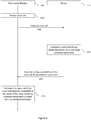
- Figure 4 is a diagram showing an alternative method of managing incoming voice calls as carried out by an electronic device 400 and a server 410.
- the electronic device 400 receives a voice call and transmits audio of the voice call to the server 410 in step S430.
- the server 410 may receive the voice call and may transmit the audio of the voice call to the electronic device 400.
- the electronic device 400 or the server 410 may receive the voice call and may not transmit the audio of the voice call to another device.
- step S440 the server 410 calculates a score indicating a probability of the voice call being computer-generated and, in step S450, transmits the score to the electronic device 400.
- the electronic device 400 or the server 410 may calculate the score and may not transmit the score to another device.
- the calculation may comprise the detection of silence in the audio of the voice call; the presence of silence in the audio of the voice call being an indicator of a human caller.
- the calculation of whether the audio of the voice call is computer-generated may comprise the detection of Dual Tone Multi-Frequency (DTMF) tones; the presence of DTMF tones in the audio of the voice call being an indicator of a human caller.
- the electronic device 400 may perform the calculation of whether the audio of the voice call is computer-generated.
- step S460 the electronic device 400 terminates the voice call if the score received from the server 410 indicating the probability of the audio of the voice call being computer-generated is greater than a predefined threshold.
- the predefined threshold may be defined such that the confidence that the audio of the voice call is computer-generated is very high, thereby minimising the likelihood that the determination is a mistake.
- the server 410 may terminate the voice call if the score indicating the probability of the audio of the voice call being computer-generated is greater than a predefined threshold.
- the score indicating the probability of the audio of the voice call being computer-generated may be used to perform additional measures to ensure human callers are not mistaken as computer-generated voice calls.
- An additional check may include auto-dialling the number of the voice call if the voice call is terminated to check whether the call is answered; the call being answered would indicate a human caller.
- the electronic device of the previous example may be an Interactive Voice Recognition (IVR) platform or the like
- the server may be a detection engine or the like.
- Figure 5 is a system diagram showing the interaction between an electronic device 500, a calling device 520, and a network 510.
- the calling device 520 connects with the network 510, transmitting a voice call, and the network 510 relays the voice call to the electronic device 500, which proceeds to determine whether the audio of the voice call is computer-generated. If it is determined that the voice call is computer-generated, the electronic device 500 terminates the voice call via the network 510, which disconnects the calling device 520.
- the method performed by the electronic device 500 may be carried out by the server 520 or the like.
- Figure 6 is a system diagram showing the interaction between an electronic device 600, a server 620, a calling device 630 and a network 610.
- the network 610 receives an incoming voice call from the calling device 630 and forwards the voice call to the electronic device 600.
- the electronic device 600 receives the incoming voice call via the network 610 and streams the audio of the voice call to the server 620 via the network 610.
- the server 620 determines whether the audio of the voice call is computer-generated and transmits a corresponding indication to the electronic device 600 via the network.
- the server 620 may determine whether the audio of the voice call is computer-generated and calculate a score indicating a probability that the voice call is computer-generated; the server 620 may then send the score to the electronic device 600 via the network 610.
- the electronic device 600 may then terminate the voice call, if it is determined that the audio of the voice call is computer-generated.
- the method performed by the electronic device 600 may be carried out by the server 620 or the like and that the method performed by the server 620 may be carried out by the electronic device 600 or the like.
- embodiments of the present invention can be realized in the form of hardware, software or a combination of hardware and software. Any such software may be stored in the form of volatile or non-volatile storage, for example a storage device like a ROM, whether erasable or rewritable or not, or in the form of memory, for example RAM, memory chips, device or integrated circuits or on an optically or magnetically readable medium, for example a CD, DVD, magnetic disk or magnetic tape or the like. It will be appreciated that the storage devices and storage media are embodiments of machine-readable storage that are suitable for storing a program or programs comprising instructions that, when executed, implement embodiments of the present invention.
- embodiments provide a program comprising code for implementing apparatus or a method as claimed in any one of the claims of this specification and a machine-readable storage storing such a program. Still further, such programs may be conveyed electronically via any medium, for example a communication signal carried over a wired or wireless connection and embodiments suitably encompass the same.
Landscapes
- Engineering & Computer Science (AREA)
- Signal Processing (AREA)
- Health & Medical Sciences (AREA)
- Audiology, Speech & Language Pathology (AREA)
- Human Computer Interaction (AREA)
- Physics & Mathematics (AREA)
- Acoustics & Sound (AREA)
- Multimedia (AREA)
- Computational Linguistics (AREA)
- Computer Security & Cryptography (AREA)
- Technology Law (AREA)
- Telephonic Communication Services (AREA)
Abstract
Description
- This invention relates to managing incoming voice calls. Particular examples relate to the detection of computer-generated synthetic 'voice' calls to Interactive Voice Response (IVR) platforms using synthetic voice detection techniques.
- Synthetic speech is audio data generated by computers and designed to sound to the human ear like a real human voice. Robotic speech is computer generated speech which is not designed to sound to the human ear like a real human voice, i.e. it is clearly computer generated or 'robotic' in nature. Robocalls are unsolicited computer-generated calls that may be marketing based, fraud based or simply nuisance calls. Robocalls are a type of voice call which may use either synthetic or 'robotic' speech. They are a major problem, with a US estimate putting Robocalls at over four billion per month in 2017. Current techniques rely on black-lists of blocked numbers, which become obsolete, and require updating, very quickly; or individual network detection of suspicious numbers which are also largely ineffective as well as being limited to single networks. These techniques are also designed for individual subscribers.
- Interactive Voice Recognition (IVR) platforms allow users to interact with a host system via a telephone keypad or by speech recognition, allowing services to be inquired about through IVR dialogue. IVR platforms are designed to handle large volumes of incoming calls as well as having the capability to be used for outgoing calls. As such, computer-generated phone calls, often referred to as "robocalls" which use an auto-dialler to deliver a pre-recorded message can significantly slow down IVR platforms: a channel is tied up with the robocall, meaning it is unavailable for a genuine caller. Additionally, the robocall, being computer-generated, cannot follow the IVR prompts and therefore cannot choose correct workflow paths, for example, press or speak "one" for Sales. This in turn can lead to the IVR workflow having no choice but to hand the call over to a live agent. This is a problem because occupying a channel has an associated cost and occupying up an agent incurs even greater cost; robocalls waste both money and resources by occupying channels. Another problem is that robocalls skew abandonment rate statistics because automated calls are likely to finish with no result. It is therefore desirable to detect and terminate robocalls quickly, in order to limit the resources of the IVR platform which are used.
- It is an aim of certain embodiments of the invention to solve, mitigate or obviate, at least partly, at least one of the problems and/or disadvantages associated with the prior art. Certain embodiments aim to provide at least one of the advantages described below.
- According to a first aspect, there is provided a method for managing incoming voice calls, the method comprising:
- receiving audio of a voice call;
- determining whether the audio of the voice call is computer-generated; and
- terminating the voice call if it is determined that the audio of the voice call is computer-generated.
- In an embodiment, the determining whether the audio of the voice call is computer-generated comprises calculating a score indicating a probability that the audio of the voice call is computer-generated; and
wherein, when the score indicating the probability that the voice call is computer-generated is greater than a predefined threshold, the voice call is terminated. - In an embodiment, the determining whether the audio of the voice call is computer-generated comprises detecting silence in the audio indicating a human caller.
- In an embodiment, the determining whether the audio of the voice call is computer-generated comprises detecting Dual Tone Multi-Frequency, DTMF, tones in the audio indicating a human caller.
- In an embodiment, the method further comprises auto-dialling the number of the received voice call to determine whether the call is answered if the voice call is terminated;
wherein the call being answered indicates that the voice call was made by a human caller. - According to a second aspect, there is provided an electronic device configured to:
- receive audio of a voice call;
- determine whether the audio of the voice call is computer-generated; and terminate the voice call if it is determined that the audio of the voice call is computer-generated.
- In an embodiment, to determine whether the audio of the voice call is computer-generated the electronic device is further configured to:
- stream the received audio of the voice call to a server; and
- receive an indication of whether the voice call is computer-generated from the server.
- In an embodiment, the electronic device is an Interactive Voice Recognition, IVR, platform.
- In an embodiment, the electronic device is further configured to open a channel to the server.
- According to a third aspect, there is provided a system comprising:
- the electronic device according to the second aspect; and
- a server configured to:
- receive audio of a voice call from the electronic device;
- determine whether the audio of the voice call is computer-generated; and transmit the result of the determination of whether the audio of the voice call is computer-generated to the electronic device.
- In an embodiment, to determine whether the audio of the voice call is computer-generated, the server is further configured to calculate a score indicating a probability that the voice call is computer-generated; and
wherein, when the probability that the voice call is computer-generated is greater than a predefined threshold, the electronic device is further configured to terminate the voice call. - In an embodiment, the server is further configured to determine whether the audio of the voice call is computer-generated by detecting silence in the audio;
wherein the detection of silence in the audio indicates a human caller. - In an embodiment, the server is further configured to determine whether the audio is computer generated by detecting silence of Dual Tone Multi-Frequency, DTMF, tones in the audio of the voice call;
wherein the detection of Dual Tone Multi-Frequency, DTMF, tones in the audio indicates a human caller. - In an embodiment, if the call is terminated, the server is further configured to auto-dial the number of the received voice call, wherein the call being answered indicates that the voice call was made by a human caller.
- Another aspect of the invention provides a computer program comprising instructions arranged, when executed, to implement a method in accordance with any one of the above-described aspects. A further aspect provides machine-readable storage storing such a program.
- Embodiments of the invention are further described hereinafter with reference to the accompanying drawings, in which:
-
Figure 1 is a flowchart showing an example of a method of managing incoming calls; -
Figure 2 is a flowchart showing another example of a method of managing incoming calls by an electronic device; -
Figure 3 is a diagram showing an example of a method of managing incoming calls by a system comprising an electronic device and a server; -
Figure 4 is a diagram showing another example of a method of managing incoming calls by system comprising an electronic device and a server; -
Figure 5 is a system diagram showing an example of an interaction between an electronic device, a calling device, and a network; and -
Figure 6 is a system diagram showing an example of an interaction between an electronic device, a calling device, a server, and a network. - Robocalls, hereinafter referred to as "computer-generated voice calls", are not only computer-dialled; the actual spoken dialogue of the call is not a human caller speaking but is audio generated by text-to-speech software, hereinafter referred to as computer-generated audio (i.e. synthetic speech or robotic speech). The computer-generated audio could be 'robotic' speech, meaning it would be obvious to a human that it is not another human speaking, or it could use advanced synthetic speech tools to sound, to the human ear, like another human being. This latter case is referred to as synthetic speech.
- Certain speech-based algorithms, normally found within voice biometric solutions, can detect a synthetic voice or a robotic voice from a human voice, even when a human would not be able to discern between the two. Synthetic or robotic voices can be detected by analysing frequency spectrum information, as well as detecting indicators of human callers such as silence and Dual Tone Multi-Frequency tones. It is this ability to detect a synthetic or robotic voice that forms the basis of this invention and allows IVR platforms to terminate computer-generated voice calls within seconds, thus quickly freeing valuable channels and avoiding expensive agent handovers.
- To facilitate this, according to one example, upon an IVR answering the inbound voice call, a channel is opened to a detection engine and all audio, including silence, of the voice call coming from the caller is streamed to the detection engine.
- Computer-generated calls generally start speaking immediately when they detect a sound from the called party, such as an IVR welcome script, so if computer-generated audio is not detected within a few seconds, the detection engine sends an indication that the voice call is legitimate to the IVR platform; alternatively, if computer-generated audio is detected, the detection engine sends a corresponding indication to the IVR platform which can terminate the voice call. Additionally, a legitimate call made by a human caller may include a period of silence and/or Dual Tone Multi-Frequency (DTMF) tones, both of which may indicate a human caller; and can therefore be used as indicators of computer-generated calls.
- Where computer-generated audio is detected, the detection engine calculates a score indicating a probability that the audio of the voice call is computer-generated and provides the score to the IVR platform. The IVR platform would then terminate the call, provided the received score was above a predefined threshold. Alternatively, the detection engine may return a simple classification of the call as being human or computer generated.
- Embodiments of the present invention will now be described.
- In an embodiment of the present invention, a method of managing incoming voice calls is implemented wherein audio of a voice call is received, it is determined whether the audio of the voice call is computer-generated, and, if it is determined that the audio of the voice call is computer-generated, the voice call is terminated. It will be appreciated that this method may be implemented by an electronic device, a server, or may be shared between an electronic device and a server. For example, the method may be wholly carried out by an electronic device or may be wholly carried out by a server, or may be partially carried out by both an electronic device and a server, or the like.
- The electronic device may be an IVR platform or server or may alternatively be a mobile phone or the like, capable of detecting computer-generated voice calls on an individual basis. The server may alternatively be a detection engine.
- An example of this method of managing incoming voice calls is shown in
Figure 1 . - In step S100, audio of a voice call is received. The audio of the voice call may be received directly by an electronic device answering the incoming voice call and thereby receiving the audio of the voice call directly. Alternatively, a server or the like may answer the incoming voice call and receive the audio of the voice call directly. Alternatively, the voice call, and therefore the audio of the voice call, may be received by an electronic device which may then stream the audio to a server; equally, the voice call may be received by the server which may stream audio of the voice call to the electronic device. That is, the remaining steps of
figure 1 may be performed by the device which receives the voice call or by a separate device to which audio of the voice call is streamed. - In step S120, it is determined whether the audio of the voice call is computer-generated. The determination of whether the audio of the voice call is computer-generated may be carried out by the electronic device or by the server. The determination of whether the audio of the voice call is computer-generated may comprise the detection of silence in the audio of the voice call; the presence of silence in the audio of the voice call being an indicator of a human caller. Alternatively, or additionally, the determination of whether the audio of the voice call is computer-generated may comprise the detection of Dual Tone Multi-Frequency (DTMF) tones; the presence of DTMF tones being a further indicator of a human caller.
- In step S140, if it is determined that the audio of the voice call is computer-generated, the voice call is terminated. The voice call may be terminated by the device which received the voice call or may be terminated remotely by another device which determines that the audio of the voice call is computer-generated.
- For example, an electronic device may receive the incoming voice call and may stream the audio of the voice call to a server which may perform the determination of whether the audio of the voice call is computer-generated. The server may then indicate to the electronic device that the voice call is computer-generated, and the electronic device may then terminate the voice call. Alternatively, the server, having determined that the voice call is computer-generated, may terminate the voice call directly. Alternatively, the electronic device, or the server, may receive the incoming voice call, determine whether the audio of the voice call is computer-generated, and terminate the voice call directly (without the involvement of another device in the processing).
- It will be appreciated that the electronic device of the previous example may be an Interactive Voice Recognition (IVR) platform or the like, and the server may be a detection engine or the like.
- Another example of this method of managing incoming voice calls is shown in
Figure 2 . - In step S200, a voice call is received. The voice call may be received by an electronic device. Alternatively, the voice call may be received by a server or the like.
- In step S220, a score is calculated which indicates a probability that the audio of the voice call is computer-generated. The score may be calculated by the electronic device or, alternatively, may be calculated by the server. Alternatively, the server may calculate the score indicating a probability that the audio of the voice call is computer-generated. The calculation may comprise the detection of silence in the audio of the voice call. Alternatively, or additionally, the calculation may comprise the detection of Dual Tone Multi-Frequency (DTMF) tones.
- In step S240, when the score indicating a probability that the audio of the voice call is computer-generated is greater than a predefined threshold, the voice call is terminated. The voice call may be terminated by the device which received the voice call or may be terminated remotely by another device which determines that the audio of the voice call is computer-generated.
- For example, the electronic device may receive the incoming voice call and may stream the audio of the voice call to the server which may calculate a score indicating the probability that the audio of the voice call is computer-generated. The server may then transmit the score indicating the probability that the voice call is computer-generated to the electronic device which may then terminate the voice call. Alternatively, the server, having calculated the score, may terminate the voice call directly. Alternatively, the electronic device, or the server, may receive the incoming voice call and calculate the score indicating the probability of the audio of the voice call being computer-generated, and terminate the voice call directly.
- It will be appreciated that the electronic device of the previous example may be an Interactive Voice Recognition (IVR) platform or the like, and the server may be a detection engine or the like.
- It will be appreciated that the above described examples may be carried out by a single device or may be performed using multiple devices.
-
Figure 3 is a diagram showing a method of managing incoming voice calls as carried out by anelectronic device 300 and aserver 310. In step S320, theelectronic device 300 receives the voice call and, in step S330, the audio of the voice call is transmitted by theelectronic device 300 to theserver 310. Alternatively, theserver 310 may receive the voice call and may transmit the audio of the voice call to theelectronic device 300. Alternatively, theelectronic device 300 or theserver 310 may receive the voice call and may not transmit the audio of the voice call to another device. - In step S340, the
server 310 determines whether the audio of the voice call is computer-generated. The determination may comprise the detection of silence in the audio of the voice call; the presence of silence in the audio of the voice call being an indicator of a human caller. Alternatively, or additionally, the determination of whether the audio of the voice call is computer-generated may comprise the detection of Dual Tone Multi-Frequency (DTMF) tones; the presence of DTMF tones in the audio being an indicator of a human caller. Alternatively, theelectronic device 300 may perform the determination of whether the audio of the voice call is computer-generated. - In step S350, the
server 310 transmits an indication of whether the audio of the voice call is computer-generated to theelectronic device 300. Alternatively, the electronic device may determine whether the audio of the voice call is computer-generated and may transmit a corresponding indication to theserver 310. Alternatively, in the case that theelectronic device 300 or theserver 310 has performed all the previous steps of the method, step S350 may not be carried out at all. - In step S360, the
electronic device 300 terminates the voice call if it has been determined that the audio of the voice call is computer-generated. Alternatively, theserver 310 may terminate the voice call. In greater detail, the voice call may be terminated by the device which received the voice call, such as the electronic device, or may be terminated remotely by another device, such as the server, which determines that the audio of the voice call is computer-generated. - For example, the
electronic device 300 may receive the incoming voice call and may stream the audio of the voice call to theserver 310 which may perform the determination of whether the audio of the voice call is computer-generated and calculate a score indicating the probability that the audio of the voice call is computer-generated. Theserver 310 may then transmit the score to theelectronic device 300 that the voice call is computer-generated and theelectronic device 300 may then terminate the voice call. Alternatively, theserver 310, having calculated the score, may terminate the voice call directly. Alternatively, theelectronic device 300, or theserver 310, may receive the incoming voice call, calculate the score indicating the probability of the audio of the voice call being computer-generated, and terminate the voice call directly. - It will be appreciated that the
electronic device 300 of the previous example may be an Interactive Voice Recognition (IVR) platform or the like, and theserver 310 may be a detection engine or the like. -
Figure 4 is a diagram showing an alternative method of managing incoming voice calls as carried out by anelectronic device 400 and aserver 410. In step S420, theelectronic device 400 receives a voice call and transmits audio of the voice call to theserver 410 in step S430. Alternatively, theserver 410 may receive the voice call and may transmit the audio of the voice call to theelectronic device 400. Alternatively, theelectronic device 400 or theserver 410 may receive the voice call and may not transmit the audio of the voice call to another device. - In step S440, the
server 410 calculates a score indicating a probability of the voice call being computer-generated and, in step S450, transmits the score to theelectronic device 400. Alternatively, theelectronic device 400 or theserver 410 may calculate the score and may not transmit the score to another device. - The calculation may comprise the detection of silence in the audio of the voice call; the presence of silence in the audio of the voice call being an indicator of a human caller. Alternatively, or additionally, the calculation of whether the audio of the voice call is computer-generated may comprise the detection of Dual Tone Multi-Frequency (DTMF) tones; the presence of DTMF tones in the audio of the voice call being an indicator of a human caller. Alternatively, the
electronic device 400 may perform the calculation of whether the audio of the voice call is computer-generated. - In step S460, the
electronic device 400 terminates the voice call if the score received from theserver 410 indicating the probability of the audio of the voice call being computer-generated is greater than a predefined threshold. The predefined threshold may be defined such that the confidence that the audio of the voice call is computer-generated is very high, thereby minimising the likelihood that the determination is a mistake. Alternatively, theserver 410 may terminate the voice call if the score indicating the probability of the audio of the voice call being computer-generated is greater than a predefined threshold. Additionally, the score indicating the probability of the audio of the voice call being computer-generated may be used to perform additional measures to ensure human callers are not mistaken as computer-generated voice calls. For example, if the score were approaching the threshold at which it is determined that the audio of the voice call is computer-generated, an additional check may be performed. An additional check may include auto-dialling the number of the voice call if the voice call is terminated to check whether the call is answered; the call being answered would indicate a human caller. - It will be appreciated that the electronic device of the previous example may be an Interactive Voice Recognition (IVR) platform or the like, and the server may be a detection engine or the like.
-
Figure 5 is a system diagram showing the interaction between anelectronic device 500, acalling device 520, and anetwork 510. The callingdevice 520 connects with thenetwork 510, transmitting a voice call, and thenetwork 510 relays the voice call to theelectronic device 500, which proceeds to determine whether the audio of the voice call is computer-generated. If it is determined that the voice call is computer-generated, theelectronic device 500 terminates the voice call via thenetwork 510, which disconnects thecalling device 520. - It will be appreciated that the method performed by the
electronic device 500 may be carried out by theserver 520 or the like. -
Figure 6 is a system diagram showing the interaction between anelectronic device 600, aserver 620, acalling device 630 and anetwork 610. Thenetwork 610 receives an incoming voice call from the callingdevice 630 and forwards the voice call to theelectronic device 600. Theelectronic device 600 receives the incoming voice call via thenetwork 610 and streams the audio of the voice call to theserver 620 via thenetwork 610. Theserver 620 determines whether the audio of the voice call is computer-generated and transmits a corresponding indication to theelectronic device 600 via the network. Alternatively, theserver 620 may determine whether the audio of the voice call is computer-generated and calculate a score indicating a probability that the voice call is computer-generated; theserver 620 may then send the score to theelectronic device 600 via thenetwork 610. Theelectronic device 600 may then terminate the voice call, if it is determined that the audio of the voice call is computer-generated. - It will be appreciated that the method performed by the
electronic device 600 may be carried out by theserver 620 or the like and that the method performed by theserver 620 may be carried out by theelectronic device 600 or the like. - It will be appreciated that embodiments of the present invention can be realized in the form of hardware, software or a combination of hardware and software. Any such software may be stored in the form of volatile or non-volatile storage, for example a storage device like a ROM, whether erasable or rewritable or not, or in the form of memory, for example RAM, memory chips, device or integrated circuits or on an optically or magnetically readable medium, for example a CD, DVD, magnetic disk or magnetic tape or the like. It will be appreciated that the storage devices and storage media are embodiments of machine-readable storage that are suitable for storing a program or programs comprising instructions that, when executed, implement embodiments of the present invention.
- Accordingly, embodiments provide a program comprising code for implementing apparatus or a method as claimed in any one of the claims of this specification and a machine-readable storage storing such a program. Still further, such programs may be conveyed electronically via any medium, for example a communication signal carried over a wired or wireless connection and embodiments suitably encompass the same.
- Throughout the description and claims of this specification, the words "comprise" and "contain" and variations of them mean "including but not limited to", and they are not intended to (and do not) exclude other components, integers or steps. Throughout the description and claims of this specification, the singular encompasses the plural unless the context otherwise requires. In particular, where the indefinite article is used, the specification is to be understood as contemplating plurality as well as singularity, unless the context requires otherwise.
- Features, integers or characteristics described in conjunction with a particular aspect, embodiment or example of the invention are to be understood to be applicable to any other aspect, embodiment or example described herein unless incompatible therewith. All of the features disclosed in this specification (including any accompanying claims, abstract and drawings), and/or all of the steps of any method or process so disclosed, may be combined in any combination, except combinations where at least some of such features and/or steps are mutually exclusive. The invention is not restricted to the details of any foregoing embodiments. The invention extends to any novel one, or any novel combination, of the features disclosed in this specification (including any accompanying claims, abstract and drawings), or to any novel one, or any novel combination, of the steps of any method or process so disclosed. It will be also be appreciated that, throughout the description and claims of this specification, language in the general form of "X for Y" (where Y is some action, activity or step and X is some means for carrying out that action, activity or step) encompasses means X adapted or arranged specifically, but not exclusively, to do Y.
- The reader's attention is directed to all papers and documents which are filed concurrently with or previous to this specification in connection with this application and which are open to public inspection with this specification, and the contents of all such papers and documents are incorporated herein by reference.
Claims (14)
wherein, when the score indicating the probability that the voice call is computer-generated is greater than a predefined threshold, the voice call is terminated.
wherein the call being answered indicates that the voice call was made by a human caller.
wherein, when the probability that the voice call is computer-generated is greater than a predefined threshold, the electronic device is further configured to terminate the voice call.
wherein the detection of silence in the audio indicates a human caller.
wherein the detection of Dual Tone Multi-Frequency, DTMF, tones in the audio indicates a human caller.
wherein the call being answered indicates that the voice call was made by a human caller.
Applications Claiming Priority (1)
| Application Number | Priority Date | Filing Date | Title |
|---|---|---|---|
| GB2010427.9A GB2596821A (en) | 2020-07-07 | 2020-07-07 | Computer-generated speech detection |
Publications (2)
| Publication Number | Publication Date |
|---|---|
| EP3937474A1 true EP3937474A1 (en) | 2022-01-12 |
| EP3937474B1 EP3937474B1 (en) | 2025-03-05 |
Family
ID=72050405
Family Applications (1)
| Application Number | Title | Priority Date | Filing Date |
|---|---|---|---|
| EP21183539.2A Active EP3937474B1 (en) | 2020-07-07 | 2021-07-02 | Computer-generated speech detection |
Country Status (3)
| Country | Link |
|---|---|
| US (1) | US11641419B2 (en) |
| EP (1) | EP3937474B1 (en) |
| GB (1) | GB2596821A (en) |
Cited By (1)
| Publication number | Priority date | Publication date | Assignee | Title |
|---|---|---|---|---|
| US20230386484A1 (en) * | 2022-05-30 | 2023-11-30 | Ribbon Communications Operating Company, Inc. | Methods and apparatus for generating and/or using communications media fingerprints |
Families Citing this family (1)
| Publication number | Priority date | Publication date | Assignee | Title |
|---|---|---|---|---|
| US20250118298A1 (en) * | 2023-10-09 | 2025-04-10 | Hishab Singapore Private Limited | System and method for optimizing a user interaction session within an interactive voice response system |
Citations (4)
| Publication number | Priority date | Publication date | Assignee | Title |
|---|---|---|---|---|
| US20140119527A1 (en) * | 2012-10-26 | 2014-05-01 | Meir Cohen | Determining and Denying Call Completion Based on Detection of Robocall or Unsolicited Advertisement |
| US20150195403A1 (en) * | 2012-10-22 | 2015-07-09 | Mary Elizabeth Goulet | Stopping robocalls |
| US20170013122A1 (en) * | 2015-07-07 | 2017-01-12 | Teltech Systems, Inc. | Call Distribution Techniques |
| US10523814B1 (en) * | 2016-08-22 | 2019-12-31 | Noble Systems Corporation | Robocall management system |
Family Cites Families (27)
| Publication number | Priority date | Publication date | Assignee | Title |
|---|---|---|---|---|
| FR2579356B1 (en) | 1985-03-22 | 1987-05-07 | Cit Alcatel | LOW-THROUGHPUT CODING METHOD OF MULTI-PULSE EXCITATION SIGNAL SPEECH |
| US5548681A (en) | 1991-08-13 | 1996-08-20 | Kabushiki Kaisha Toshiba | Speech dialogue system for realizing improved communication between user and system |
| JP3137805B2 (en) | 1993-05-21 | 2001-02-26 | 三菱電機株式会社 | Audio encoding device, audio decoding device, audio post-processing device, and methods thereof |
| US5436965A (en) * | 1993-11-16 | 1995-07-25 | Automated Systems And Programming, Inc. | Method and system for optimization of telephone contact campaigns |
| AU1465997A (en) | 1995-12-21 | 1997-07-14 | Intel Corporation | Method and apparatus for integrating video, voice and computer data traffic in a single, conferencing system using existing telephone and catv connections |
| US5796791A (en) * | 1996-10-15 | 1998-08-18 | Intervoice Limited Partnership | Network based predictive dialing |
| US20010040887A1 (en) * | 1997-10-09 | 2001-11-15 | Yuri Shtivelman | Apparatus and methods enhancing call routing to and within call-centers |
| US6226614B1 (en) | 1997-05-21 | 2001-05-01 | Nippon Telegraph And Telephone Corporation | Method and apparatus for editing/creating synthetic speech message and recording medium with the method recorded thereon |
| US6285752B1 (en) * | 1997-12-19 | 2001-09-04 | Blake Rice | Automated right-party contact telephone system |
| JP4445178B2 (en) | 2000-01-14 | 2010-04-07 | スイスコム (シュバイツ) アーゲー | Communication system and suitable control unit therefor |
| US6870917B2 (en) | 2001-11-05 | 2005-03-22 | At&T Corp | Methods and systems for call interruption services |
| US7616748B1 (en) * | 2002-11-05 | 2009-11-10 | Telebuyer, Llc | Central call screening system |
| US8150023B2 (en) * | 2005-10-07 | 2012-04-03 | Virtual Hold Technology, Llc | Automated system and method for distinguishing audio signals received in response to placing and outbound call |
| US9484036B2 (en) * | 2013-08-28 | 2016-11-01 | Nuance Communications, Inc. | Method and apparatus for detecting synthesized speech |
| US9386148B2 (en) * | 2013-09-23 | 2016-07-05 | Ooma, Inc. | Identifying and filtering incoming telephone calls to enhance privacy |
| US10055482B2 (en) * | 2014-03-18 | 2018-08-21 | Ntt Docomo Inc. | Knowledge engine for managing massive complex structured data |
| US10313528B2 (en) * | 2014-03-26 | 2019-06-04 | Genband Us Llc | Systems, methods, and computer program products for providing regional survivable calling over a packet network |
| US10277737B2 (en) * | 2015-10-06 | 2019-04-30 | Robert Michael Bensman | Method and apparatus for defeating computer-generated, telemarketing, and robo-calls to phones |
| US9466299B1 (en) * | 2015-11-18 | 2016-10-11 | International Business Machines Corporation | Speech source classification |
| US20180213421A1 (en) | 2017-01-24 | 2018-07-26 | Microsoft Technology Licensing, Llc | Predicting future spectrum utilization |
| US10277745B1 (en) * | 2017-05-30 | 2019-04-30 | Noble Systems Corporation | Answering machine detection for a contact center |
| US10110741B1 (en) * | 2017-07-25 | 2018-10-23 | Teltech Systems, Inc. | Determining and denying call completion based on detection of robocall or telemarketing call |
| KR102127126B1 (en) * | 2018-08-03 | 2020-06-26 | 엘지전자 주식회사 | Voice interpretation device |
| CA3020143A1 (en) * | 2018-10-09 | 2020-04-09 | Telus Communications Inc. | System and method for limiting incoming spam calls |
| US10554821B1 (en) * | 2018-11-09 | 2020-02-04 | Noble Systems Corporation | Identifying and processing neighbor spoofed telephone calls in a VoIP-based telecommunications network |
| US11128753B2 (en) * | 2019-07-30 | 2021-09-21 | At&T Intellectual Property I, L.P. | Intercepting and challenging unwanted phone calls |
| US20230162756A1 (en) * | 2020-04-21 | 2023-05-25 | Soter Technologies, Llc | Systems and methods for improved accuracy of bullying or altercation detection or identification of excessive machine noise |
-
2020
- 2020-07-07 GB GB2010427.9A patent/GB2596821A/en active Pending
-
2021
- 2021-07-01 US US17/365,641 patent/US11641419B2/en active Active
- 2021-07-02 EP EP21183539.2A patent/EP3937474B1/en active Active
Patent Citations (4)
| Publication number | Priority date | Publication date | Assignee | Title |
|---|---|---|---|---|
| US20150195403A1 (en) * | 2012-10-22 | 2015-07-09 | Mary Elizabeth Goulet | Stopping robocalls |
| US20140119527A1 (en) * | 2012-10-26 | 2014-05-01 | Meir Cohen | Determining and Denying Call Completion Based on Detection of Robocall or Unsolicited Advertisement |
| US20170013122A1 (en) * | 2015-07-07 | 2017-01-12 | Teltech Systems, Inc. | Call Distribution Techniques |
| US10523814B1 (en) * | 2016-08-22 | 2019-12-31 | Noble Systems Corporation | Robocall management system |
Cited By (2)
| Publication number | Priority date | Publication date | Assignee | Title |
|---|---|---|---|---|
| US20230386484A1 (en) * | 2022-05-30 | 2023-11-30 | Ribbon Communications Operating Company, Inc. | Methods and apparatus for generating and/or using communications media fingerprints |
| US12586592B2 (en) * | 2022-05-30 | 2026-03-24 | Ribbon Communications Operating Company, Inc. | Methods and apparatus for generating audio fingerprints for calls using power spectral density values |
Also Published As
| Publication number | Publication date |
|---|---|
| US20220014620A1 (en) | 2022-01-13 |
| US11641419B2 (en) | 2023-05-02 |
| GB2596821A (en) | 2022-01-12 |
| EP3937474B1 (en) | 2025-03-05 |
| GB202010427D0 (en) | 2020-08-19 |
Similar Documents
| Publication | Publication Date | Title |
|---|---|---|
| US10110741B1 (en) | Determining and denying call completion based on detection of robocall or telemarketing call | |
| US10601996B1 (en) | Answering machine detection for a contact center | |
| US10523814B1 (en) | Robocall management system | |
| US20140119527A1 (en) | Determining and Denying Call Completion Based on Detection of Robocall or Unsolicited Advertisement | |
| US6459780B1 (en) | Methods and apparatus for providing a called party call disposition options in real time | |
| JP5351787B2 (en) | Communication processing system and program | |
| US8391445B2 (en) | Caller identification using voice recognition | |
| US7386101B2 (en) | System and method for call answer determination for automated calling systems | |
| EP2262212B1 (en) | Caller recognition by voice messaging system | |
| US8117033B2 (en) | System and method for automatic verification of the understandability of speech | |
| US11647113B2 (en) | System and method for limiting incoming spam calls | |
| US20130016819A1 (en) | Method and structure for controlling incoming communication notification | |
| EP2802133B1 (en) | Live person detection in an automated calling system | |
| WO1996008907A2 (en) | Method and system therefor of establishing an acceptance threshold for controlling fraudulent telephone calls | |
| US9596578B1 (en) | Voicemail greeting fingerprint matching to differentiate between human and voicemail greetings | |
| US11641419B2 (en) | Computer-generated speech detection | |
| JP6461371B2 (en) | Incoming terminal state analysis method and apparatus, and program realizing the same | |
| GB2487734A (en) | An Answer Machine Detection (AMD) system using Network Level Binary Matching | |
| US8249226B2 (en) | In-progress voicemail transfer based on identity | |
| CN104601832A (en) | Dialogue system and voice dialogue processing method | |
| US20070121815A1 (en) | Method and system to enable touch-free incoming call handling and touch-free outgoing call origination | |
| US10530928B1 (en) | Answering machine detection (“AMD”) for a contact center by using AMD meta-data | |
| EP1936933A1 (en) | Method of performing call progress analysis, call progress analyzer and caller for handling call progress analysis result | |
| US8229092B2 (en) | Filtering spurious voicemail messages | |
| KR20060077505A (en) | 2-step predictive telephony system |
Legal Events
| Date | Code | Title | Description |
|---|---|---|---|
| PUAI | Public reference made under article 153(3) epc to a published international application that has entered the european phase |
Free format text: ORIGINAL CODE: 0009012 |
|
| STAA | Information on the status of an ep patent application or granted ep patent |
Free format text: STATUS: THE APPLICATION HAS BEEN PUBLISHED |
|
| AK | Designated contracting states |
Kind code of ref document: A1 Designated state(s): AL AT BE BG CH CY CZ DE DK EE ES FI FR GB GR HR HU IE IS IT LI LT LU LV MC MK MT NL NO PL PT RO RS SE SI SK SM TR |
|
| B565 | Issuance of search results under rule 164(2) epc |
Effective date: 20211201 |
|
| STAA | Information on the status of an ep patent application or granted ep patent |
Free format text: STATUS: REQUEST FOR EXAMINATION WAS MADE |
|
| 17P | Request for examination filed |
Effective date: 20220704 |
|
| RBV | Designated contracting states (corrected) |
Designated state(s): AL AT BE BG CH CY CZ DE DK EE ES FI FR GB GR HR HU IE IS IT LI LT LU LV MC MK MT NL NO PL PT RO RS SE SI SK SM TR |
|
| STAA | Information on the status of an ep patent application or granted ep patent |
Free format text: STATUS: EXAMINATION IS IN PROGRESS |
|
| 17Q | First examination report despatched |
Effective date: 20230120 |
|
| GRAP | Despatch of communication of intention to grant a patent |
Free format text: ORIGINAL CODE: EPIDOSNIGR1 |
|
| STAA | Information on the status of an ep patent application or granted ep patent |
Free format text: STATUS: GRANT OF PATENT IS INTENDED |
|
| INTG | Intention to grant announced |
Effective date: 20240924 |
|
| GRAS | Grant fee paid |
Free format text: ORIGINAL CODE: EPIDOSNIGR3 |
|
| GRAA | (expected) grant |
Free format text: ORIGINAL CODE: 0009210 |
|
| STAA | Information on the status of an ep patent application or granted ep patent |
Free format text: STATUS: THE PATENT HAS BEEN GRANTED |
|
| AK | Designated contracting states |
Kind code of ref document: B1 Designated state(s): AL AT BE BG CH CY CZ DE DK EE ES FI FR GB GR HR HU IE IS IT LI LT LU LV MC MK MT NL NO PL PT RO RS SE SI SK SM TR |
|
| REG | Reference to a national code |
Ref country code: GB Ref legal event code: FG4D |
|
| REG | Reference to a national code |
Ref country code: CH Ref legal event code: EP |
|
| REG | Reference to a national code |
Ref country code: IE Ref legal event code: FG4D |
|
| REG | Reference to a national code |
Ref country code: DE Ref legal event code: R096 Ref document number: 602021027034 Country of ref document: DE |
|
| PG25 | Lapsed in a contracting state [announced via postgrant information from national office to epo] |
Ref country code: RS Free format text: LAPSE BECAUSE OF FAILURE TO SUBMIT A TRANSLATION OF THE DESCRIPTION OR TO PAY THE FEE WITHIN THE PRESCRIBED TIME-LIMIT Effective date: 20250605 |
|
| PG25 | Lapsed in a contracting state [announced via postgrant information from national office to epo] |
Ref country code: FI Free format text: LAPSE BECAUSE OF FAILURE TO SUBMIT A TRANSLATION OF THE DESCRIPTION OR TO PAY THE FEE WITHIN THE PRESCRIBED TIME-LIMIT Effective date: 20250305 |
|
| REG | Reference to a national code |
Ref country code: NL Ref legal event code: MP Effective date: 20250305 |
|
| PG25 | Lapsed in a contracting state [announced via postgrant information from national office to epo] |
Ref country code: ES Free format text: LAPSE BECAUSE OF FAILURE TO SUBMIT A TRANSLATION OF THE DESCRIPTION OR TO PAY THE FEE WITHIN THE PRESCRIBED TIME-LIMIT Effective date: 20250305 |
|
| REG | Reference to a national code |
Ref country code: LT Ref legal event code: MG9D |
|
| PG25 | Lapsed in a contracting state [announced via postgrant information from national office to epo] |
Ref country code: NO Free format text: LAPSE BECAUSE OF FAILURE TO SUBMIT A TRANSLATION OF THE DESCRIPTION OR TO PAY THE FEE WITHIN THE PRESCRIBED TIME-LIMIT Effective date: 20250605 |
|
| PG25 | Lapsed in a contracting state [announced via postgrant information from national office to epo] |
Ref country code: HR Free format text: LAPSE BECAUSE OF FAILURE TO SUBMIT A TRANSLATION OF THE DESCRIPTION OR TO PAY THE FEE WITHIN THE PRESCRIBED TIME-LIMIT Effective date: 20250305 |
|
| PG25 | Lapsed in a contracting state [announced via postgrant information from national office to epo] |
Ref country code: LV Free format text: LAPSE BECAUSE OF FAILURE TO SUBMIT A TRANSLATION OF THE DESCRIPTION OR TO PAY THE FEE WITHIN THE PRESCRIBED TIME-LIMIT Effective date: 20250305 |
|
| PG25 | Lapsed in a contracting state [announced via postgrant information from national office to epo] |
Ref country code: GR Free format text: LAPSE BECAUSE OF FAILURE TO SUBMIT A TRANSLATION OF THE DESCRIPTION OR TO PAY THE FEE WITHIN THE PRESCRIBED TIME-LIMIT Effective date: 20250606 Ref country code: BG Free format text: LAPSE BECAUSE OF FAILURE TO SUBMIT A TRANSLATION OF THE DESCRIPTION OR TO PAY THE FEE WITHIN THE PRESCRIBED TIME-LIMIT Effective date: 20250305 |
|
| REG | Reference to a national code |
Ref country code: AT Ref legal event code: MK05 Ref document number: 1774010 Country of ref document: AT Kind code of ref document: T Effective date: 20250305 |
|
| PG25 | Lapsed in a contracting state [announced via postgrant information from national office to epo] |
Ref country code: NL Free format text: LAPSE BECAUSE OF FAILURE TO SUBMIT A TRANSLATION OF THE DESCRIPTION OR TO PAY THE FEE WITHIN THE PRESCRIBED TIME-LIMIT Effective date: 20250305 |
|
| PG25 | Lapsed in a contracting state [announced via postgrant information from national office to epo] |
Ref country code: SE Free format text: LAPSE BECAUSE OF FAILURE TO SUBMIT A TRANSLATION OF THE DESCRIPTION OR TO PAY THE FEE WITHIN THE PRESCRIBED TIME-LIMIT Effective date: 20250305 |
|
| PG25 | Lapsed in a contracting state [announced via postgrant information from national office to epo] |
Ref country code: SM Free format text: LAPSE BECAUSE OF FAILURE TO SUBMIT A TRANSLATION OF THE DESCRIPTION OR TO PAY THE FEE WITHIN THE PRESCRIBED TIME-LIMIT Effective date: 20250305 |
|
| PG25 | Lapsed in a contracting state [announced via postgrant information from national office to epo] |
Ref country code: PT Free format text: LAPSE BECAUSE OF FAILURE TO SUBMIT A TRANSLATION OF THE DESCRIPTION OR TO PAY THE FEE WITHIN THE PRESCRIBED TIME-LIMIT Effective date: 20250707 |
|
| PG25 | Lapsed in a contracting state [announced via postgrant information from national office to epo] |
Ref country code: IT Free format text: LAPSE BECAUSE OF FAILURE TO SUBMIT A TRANSLATION OF THE DESCRIPTION OR TO PAY THE FEE WITHIN THE PRESCRIBED TIME-LIMIT Effective date: 20250305 Ref country code: PL Free format text: LAPSE BECAUSE OF FAILURE TO SUBMIT A TRANSLATION OF THE DESCRIPTION OR TO PAY THE FEE WITHIN THE PRESCRIBED TIME-LIMIT Effective date: 20250305 |
|
| PG25 | Lapsed in a contracting state [announced via postgrant information from national office to epo] |
Ref country code: AT Free format text: LAPSE BECAUSE OF FAILURE TO SUBMIT A TRANSLATION OF THE DESCRIPTION OR TO PAY THE FEE WITHIN THE PRESCRIBED TIME-LIMIT Effective date: 20250305 |
|
| PG25 | Lapsed in a contracting state [announced via postgrant information from national office to epo] |
Ref country code: CZ Free format text: LAPSE BECAUSE OF FAILURE TO SUBMIT A TRANSLATION OF THE DESCRIPTION OR TO PAY THE FEE WITHIN THE PRESCRIBED TIME-LIMIT Effective date: 20250305 Ref country code: EE Free format text: LAPSE BECAUSE OF FAILURE TO SUBMIT A TRANSLATION OF THE DESCRIPTION OR TO PAY THE FEE WITHIN THE PRESCRIBED TIME-LIMIT Effective date: 20250305 |
|
| PG25 | Lapsed in a contracting state [announced via postgrant information from national office to epo] |
Ref country code: RO Free format text: LAPSE BECAUSE OF FAILURE TO SUBMIT A TRANSLATION OF THE DESCRIPTION OR TO PAY THE FEE WITHIN THE PRESCRIBED TIME-LIMIT Effective date: 20250305 |
|
| PG25 | Lapsed in a contracting state [announced via postgrant information from national office to epo] |
Ref country code: SK Free format text: LAPSE BECAUSE OF FAILURE TO SUBMIT A TRANSLATION OF THE DESCRIPTION OR TO PAY THE FEE WITHIN THE PRESCRIBED TIME-LIMIT Effective date: 20250305 |
|
| PG25 | Lapsed in a contracting state [announced via postgrant information from national office to epo] |
Ref country code: IS Free format text: LAPSE BECAUSE OF FAILURE TO SUBMIT A TRANSLATION OF THE DESCRIPTION OR TO PAY THE FEE WITHIN THE PRESCRIBED TIME-LIMIT Effective date: 20250705 |
|
| REG | Reference to a national code |
Ref country code: DE Ref legal event code: R097 Ref document number: 602021027034 Country of ref document: DE |
|
| PLBE | No opposition filed within time limit |
Free format text: ORIGINAL CODE: 0009261 |
|
| STAA | Information on the status of an ep patent application or granted ep patent |
Free format text: STATUS: NO OPPOSITION FILED WITHIN TIME LIMIT |
|
| PG25 | Lapsed in a contracting state [announced via postgrant information from national office to epo] |
Ref country code: DK Free format text: LAPSE BECAUSE OF FAILURE TO SUBMIT A TRANSLATION OF THE DESCRIPTION OR TO PAY THE FEE WITHIN THE PRESCRIBED TIME-LIMIT Effective date: 20250305 |
|
| REG | Reference to a national code |
Ref country code: CH Ref legal event code: L10 Free format text: ST27 STATUS EVENT CODE: U-0-0-L10-L00 (AS PROVIDED BY THE NATIONAL OFFICE) Effective date: 20260114 |
|
| 26N | No opposition filed |
Effective date: 20251208 |
|
| REG | Reference to a national code |
Ref country code: CH Ref legal event code: H13 Free format text: ST27 STATUS EVENT CODE: U-0-0-H10-H13 (AS PROVIDED BY THE NATIONAL OFFICE) Effective date: 20260224 |
|
| PG25 | Lapsed in a contracting state [announced via postgrant information from national office to epo] |
Ref country code: LU Free format text: LAPSE BECAUSE OF NON-PAYMENT OF DUE FEES Effective date: 20250702 |
|
| REG | Reference to a national code |
Ref country code: BE Ref legal event code: MM Effective date: 20250731 |
|
| PGFP | Annual fee paid to national office [announced via postgrant information from national office to epo] |
Ref country code: GB Payment date: 20260128 Year of fee payment: 5 |
|
| PGFP | Annual fee paid to national office [announced via postgrant information from national office to epo] |
Ref country code: DE Payment date: 20260123 Year of fee payment: 5 |
|
| PG25 | Lapsed in a contracting state [announced via postgrant information from national office to epo] |
Ref country code: BE Free format text: LAPSE BECAUSE OF NON-PAYMENT OF DUE FEES Effective date: 20250731 |
|
| PGFP | Annual fee paid to national office [announced via postgrant information from national office to epo] |
Ref country code: FR Payment date: 20260128 Year of fee payment: 5 |
|
| PG25 | Lapsed in a contracting state [announced via postgrant information from national office to epo] |
Ref country code: CH Free format text: LAPSE BECAUSE OF NON-PAYMENT OF DUE FEES Effective date: 20250731 |