EP3937294A1 - Battery pack - Google Patents
Battery pack Download PDFInfo
- Publication number
- EP3937294A1 EP3937294A1 EP20709464.0A EP20709464A EP3937294A1 EP 3937294 A1 EP3937294 A1 EP 3937294A1 EP 20709464 A EP20709464 A EP 20709464A EP 3937294 A1 EP3937294 A1 EP 3937294A1
- Authority
- EP
- European Patent Office
- Prior art keywords
- battery
- thermally conductive
- heat sink
- battery pack
- electrode assembly
- Prior art date
- Legal status (The legal status is an assumption and is not a legal conclusion. Google has not performed a legal analysis and makes no representation as to the accuracy of the status listed.)
- Pending
Links
Images





Classifications
-
- H—ELECTRICITY
- H01—ELECTRIC ELEMENTS
- H01M—PROCESSES OR MEANS, e.g. BATTERIES, FOR THE DIRECT CONVERSION OF CHEMICAL ENERGY INTO ELECTRICAL ENERGY
- H01M10/00—Secondary cells; Manufacture thereof
- H01M10/60—Heating or cooling; Temperature control
- H01M10/61—Types of temperature control
- H01M10/613—Cooling or keeping cold
-
- H—ELECTRICITY
- H01—ELECTRIC ELEMENTS
- H01M—PROCESSES OR MEANS, e.g. BATTERIES, FOR THE DIRECT CONVERSION OF CHEMICAL ENERGY INTO ELECTRICAL ENERGY
- H01M10/00—Secondary cells; Manufacture thereof
- H01M10/60—Heating or cooling; Temperature control
- H01M10/61—Types of temperature control
- H01M10/617—Types of temperature control for achieving uniformity or desired distribution of temperature
-
- H—ELECTRICITY
- H01—ELECTRIC ELEMENTS
- H01M—PROCESSES OR MEANS, e.g. BATTERIES, FOR THE DIRECT CONVERSION OF CHEMICAL ENERGY INTO ELECTRICAL ENERGY
- H01M10/00—Secondary cells; Manufacture thereof
- H01M10/60—Heating or cooling; Temperature control
- H01M10/62—Heating or cooling; Temperature control specially adapted for specific applications
- H01M10/625—Vehicles
-
- H—ELECTRICITY
- H01—ELECTRIC ELEMENTS
- H01M—PROCESSES OR MEANS, e.g. BATTERIES, FOR THE DIRECT CONVERSION OF CHEMICAL ENERGY INTO ELECTRICAL ENERGY
- H01M10/00—Secondary cells; Manufacture thereof
- H01M10/60—Heating or cooling; Temperature control
- H01M10/64—Heating or cooling; Temperature control characterised by the shape of the cells
- H01M10/647—Prismatic or flat cells, e.g. pouch cells
-
- H—ELECTRICITY
- H01—ELECTRIC ELEMENTS
- H01M—PROCESSES OR MEANS, e.g. BATTERIES, FOR THE DIRECT CONVERSION OF CHEMICAL ENERGY INTO ELECTRICAL ENERGY
- H01M10/00—Secondary cells; Manufacture thereof
- H01M10/60—Heating or cooling; Temperature control
- H01M10/65—Means for temperature control structurally associated with the cells
- H01M10/655—Solid structures for heat exchange or heat conduction
- H01M10/6551—Surfaces specially adapted for heat dissipation or radiation, e.g. fins or coatings
-
- H—ELECTRICITY
- H01—ELECTRIC ELEMENTS
- H01M—PROCESSES OR MEANS, e.g. BATTERIES, FOR THE DIRECT CONVERSION OF CHEMICAL ENERGY INTO ELECTRICAL ENERGY
- H01M10/00—Secondary cells; Manufacture thereof
- H01M10/60—Heating or cooling; Temperature control
- H01M10/65—Means for temperature control structurally associated with the cells
- H01M10/655—Solid structures for heat exchange or heat conduction
- H01M10/6554—Rods or plates
- H01M10/6555—Rods or plates arranged between the cells
-
- H—ELECTRICITY
- H01—ELECTRIC ELEMENTS
- H01M—PROCESSES OR MEANS, e.g. BATTERIES, FOR THE DIRECT CONVERSION OF CHEMICAL ENERGY INTO ELECTRICAL ENERGY
- H01M10/00—Secondary cells; Manufacture thereof
- H01M10/60—Heating or cooling; Temperature control
- H01M10/65—Means for temperature control structurally associated with the cells
- H01M10/659—Means for temperature control structurally associated with the cells by heat storage or buffering, e.g. heat capacity or liquid-solid phase changes or transition
-
- H—ELECTRICITY
- H01—ELECTRIC ELEMENTS
- H01M—PROCESSES OR MEANS, e.g. BATTERIES, FOR THE DIRECT CONVERSION OF CHEMICAL ENERGY INTO ELECTRICAL ENERGY
- H01M50/00—Constructional details or processes of manufacture of the non-active parts of electrochemical cells other than fuel cells, e.g. hybrid cells
- H01M50/10—Primary casings; Jackets or wrappings
- H01M50/102—Primary casings; Jackets or wrappings characterised by their shape or physical structure
- H01M50/103—Primary casings; Jackets or wrappings characterised by their shape or physical structure prismatic or rectangular
-
- H—ELECTRICITY
- H01—ELECTRIC ELEMENTS
- H01M—PROCESSES OR MEANS, e.g. BATTERIES, FOR THE DIRECT CONVERSION OF CHEMICAL ENERGY INTO ELECTRICAL ENERGY
- H01M50/00—Constructional details or processes of manufacture of the non-active parts of electrochemical cells other than fuel cells, e.g. hybrid cells
- H01M50/10—Primary casings; Jackets or wrappings
- H01M50/116—Primary casings; Jackets or wrappings characterised by the material
- H01M50/117—Inorganic material
- H01M50/119—Metals
-
- H—ELECTRICITY
- H01—ELECTRIC ELEMENTS
- H01M—PROCESSES OR MEANS, e.g. BATTERIES, FOR THE DIRECT CONVERSION OF CHEMICAL ENERGY INTO ELECTRICAL ENERGY
- H01M50/00—Constructional details or processes of manufacture of the non-active parts of electrochemical cells other than fuel cells, e.g. hybrid cells
- H01M50/20—Mountings; Secondary casings or frames; Racks, modules or packs; Suspension devices; Shock absorbers; Transport or carrying devices; Holders
- H01M50/204—Racks, modules or packs for multiple batteries or multiple cells
- H01M50/207—Racks, modules or packs for multiple batteries or multiple cells characterised by their shape
- H01M50/209—Racks, modules or packs for multiple batteries or multiple cells characterised by their shape adapted for prismatic or rectangular cells
-
- H—ELECTRICITY
- H01—ELECTRIC ELEMENTS
- H01M—PROCESSES OR MEANS, e.g. BATTERIES, FOR THE DIRECT CONVERSION OF CHEMICAL ENERGY INTO ELECTRICAL ENERGY
- H01M50/00—Constructional details or processes of manufacture of the non-active parts of electrochemical cells other than fuel cells, e.g. hybrid cells
- H01M50/20—Mountings; Secondary casings or frames; Racks, modules or packs; Suspension devices; Shock absorbers; Transport or carrying devices; Holders
- H01M50/204—Racks, modules or packs for multiple batteries or multiple cells
- H01M50/207—Racks, modules or packs for multiple batteries or multiple cells characterised by their shape
- H01M50/211—Racks, modules or packs for multiple batteries or multiple cells characterised by their shape adapted for pouch cells
-
- H—ELECTRICITY
- H01—ELECTRIC ELEMENTS
- H01M—PROCESSES OR MEANS, e.g. BATTERIES, FOR THE DIRECT CONVERSION OF CHEMICAL ENERGY INTO ELECTRICAL ENERGY
- H01M50/00—Constructional details or processes of manufacture of the non-active parts of electrochemical cells other than fuel cells, e.g. hybrid cells
- H01M50/20—Mountings; Secondary casings or frames; Racks, modules or packs; Suspension devices; Shock absorbers; Transport or carrying devices; Holders
- H01M50/289—Mountings; Secondary casings or frames; Racks, modules or packs; Suspension devices; Shock absorbers; Transport or carrying devices; Holders characterised by spacing elements or positioning means within frames, racks or packs
- H01M50/291—Mountings; Secondary casings or frames; Racks, modules or packs; Suspension devices; Shock absorbers; Transport or carrying devices; Holders characterised by spacing elements or positioning means within frames, racks or packs characterised by their shape
-
- Y—GENERAL TAGGING OF NEW TECHNOLOGICAL DEVELOPMENTS; GENERAL TAGGING OF CROSS-SECTIONAL TECHNOLOGIES SPANNING OVER SEVERAL SECTIONS OF THE IPC; TECHNICAL SUBJECTS COVERED BY FORMER USPC CROSS-REFERENCE ART COLLECTIONS [XRACs] AND DIGESTS
- Y02—TECHNOLOGIES OR APPLICATIONS FOR MITIGATION OR ADAPTATION AGAINST CLIMATE CHANGE
- Y02E—REDUCTION OF GREENHOUSE GAS [GHG] EMISSIONS, RELATED TO ENERGY GENERATION, TRANSMISSION OR DISTRIBUTION
- Y02E60/00—Enabling technologies; Technologies with a potential or indirect contribution to GHG emissions mitigation
- Y02E60/10—Energy storage using batteries
Definitions
- the present application relates to technical field of batteries, and in particular, to a battery pack.
- temperatures of the electrode assemblies in different locations are different. This is because the electrode assembly at the edge position generates heat, which is accumulated in the electrode assembly at the middle position.
- the electrode assembly at the middle position has a longer heat transfer path than that of the electrode assembly at the edge position, and also has a worse heat dissipation boundary condition.
- the accumulation of heat can be avoided during liquid cooling, by controlling liquid flow or piping arrangement at different locations. For the condition of natural heat dissipation, limited by the single mean of heat dissipation, an effective method for unifying the temperature in the battery pack has not been proposed yet.
- heat-dissipating aluminum sheets are generally applied to all surface of the electrode assemblies in the battery pack, to transfer the heat to a housing of the battery pack.
- the problem of this method is that heat also accumulated in the electrode assembly at the middle position of the battery pack, so that the large temperature difference between the electrode assemblies at different positions cannot be completely solved.
- the temperature difference between the electrode assemblies easily exceeds 5 degrees Celsius, which seriously affects the service life of the battery pack.
- Another way to solve the problem of large temperature difference between electrode assemblies at different positions is to use heat insulation measures to deteriorate the heat dissipation conditions of the electrode assemblies at the edge positions.
- this method will increase the overall temperature of the battery pack.
- the temperature uniformity is improved to some extent, it also raises a problem that the temperature of the battery pack is greatly increased, which also causes a loss of the service life of the battery pack.
- a battery pack is provided by the present application, which may achieve temperature uniformity while keeping the overall temperature.
- a battery pack including a first battery and a second battery stacked together, the second battery being closer to a center of the battery pack than the first battery in a stacking direction of the first battery and the second battery; wherein the first battery includes a first thermally conductive component and a first electrode assembly, the second battery includes a second thermally conductive component and a second electrode assembly, and a thermal conductivity of the second thermally conductive component is not lower than that of the first thermally conductive component.
- the first thermally conductive component comprises a first heat sink
- the second thermally conductive component comprises a second heat sink
- the first battery comprises a plurality of the first heat sinks and a plurality of the first electrode assemblies, and the first heat sink is disposed on at least one surface of each first electrode assembly.
- the second battery comprises a plurality of the second heat sinks and a plurality of the second electrode assemblies, and the second heat sink is disposed on at least one surface of each second electrode assembly.
- the second battery further comprises a thermally conductive plate, and the thermally conductive plate is arranged between adjacent two of the plurality of second electrode assemblies.
- the thermally conductive plate is one of a metal plate, a solid phase change plate, and a thermally conductive gasket.
- the thermally conductive plate contacts a first surface of the second electrode assembly, and a contact area of the thermally conductive plate and the second electrode assembly is greater than or equal to 90% of an area of the first surface.
- the thermally conductive plate and the second heat sink are respectively located on opposite sides of the second electrode assembly.
- a difference between the thermal conductivity of the second thermally conductive component and the thermal conductivity of the first thermally conductive component is not less than 90% of the thermal conductivity of the first thermally conductive component.
- the first thermally conductive component comprises a first heat sink located on a surface of the first battery
- the second thermally conductive component comprises a second heat sink located on a surface of the second battery
- the thermal conductivity of the second heat sink is better than that of the first heat sink
- the second heat sink is made of a same material as the first heat sink, and a thickness of the second heat sink is greater than a thickness of the first heat sink.
- the battery pack further comprises a buffer plate located between adjacent two of the first battery and the second battery or between adjacent two first batteries.
- the temperature of the electrode assembly at the center where heat is accumulated may be reduced. Therefore, uniform temperature between the individual electrode assemblies in the battery pack may be achieved, while keeping the overall temperature of the battery pack being low.
- a battery pack includes a first battery and a second battery, and the first battery and the second battery are stacked. In a stacking direction of the first battery and the second battery, the second battery is closer to a center of the battery pack than the first battery.
- the first battery includes a first thermally conductive component and a first electrode assembly
- the second battery includes a second thermally conductive component and a second electrode assembly
- a thermal conductivity of the second thermally conductive component of the second battery is not lower than that of the first thermally conductive component of the first battery.
- the above technical solution of the present application reduces the electrode assembly temperature at the center where heat is accumulated. Therefore, it is possible to achieve uniform temperature between the individual electrode assemblies in the battery pack while keeping the overall temperature of the battery pack low.
- the battery pack 100 includes a first battery 10 and a second battery 20, and the first battery 10 and the second battery 20 are stacked together. In a stacking direction of the first battery 10 and the second battery 20, the second battery 20 is closer to a center of the battery pack 100 than the first battery 10.
- the first battery 10 includes a first thermally conductive component 12 and a first electrode assembly 14.
- the second battery 20 includes a second thermally conductive component 22 and a second electrode assembly 24.
- the first thermally conductive component 12 includes a first heat sink 122
- the second thermally conductive component 22 includes a second heat sink 222.
- the first battery 10 includes a plurality of first heat sinks 122 and a plurality of first electrode assemblies 14, and the first heat sink 122 is disposed on at least one surface of each of the first electrode assemblies 14.
- the second battery 20 includes a plurality of second heat sinks 222 and a plurality of second electrode assemblies 24, and the second heat sink 222 is disposed on at least one surface of each of the second electrode assemblies 24.
- the structures and the sizes of the first heat sink 122 and the second heat sink 222 may be the same.
- the number of the first battery 10 may be plural, and the number of the second battery 20 may be plural. It should be understood that the number of the first electrode assembly 14 and the second electrode assembly 24 shown in FIG.
- first electrode assembly 14 and the second electrode assembly 24 may be any other suitable number.
- the number of the first battery 10 and the second battery 20 shown in FIG. 1 is merely exemplary, and number of the first battery 10 and the second battery 20 may also be any other suitable number.
- the number of the first battery 10 may be different from the number of the second battery 20.
- the number of the first battery 10 may be the same as the number of the second battery 20.
- the first electrode assembly 14 and the second electrode assembly 24 may be soft-pack batteries or square-shell batteries, which are not limited in this application.
- the thermal conductivity of the second thermally conductive component 22 of the second battery 20 is not less than that of the first thermally conductive component 12 of the first battery 10.
- the difference between the thermal conductivity of the second thermally conductive component 22 and the thermal conductivity of the first thermally conductive component 12 is not less than 90% of the thermal conductivity of the first thermally conductive component 12.
- the thermal conductivity of the first thermally conductive component and the second thermally conductive component may be tested according to the simulation data or the test data, so that the heat dissipation efficiency of the second electrode assembly near the center of the battery pack is the same as that of the first electrode assembly away from the center.
- the heat dissipation efficiency may be expressed as a ratio of the temperature rise of the heat source to the heat generation power of the heat source.
- ⁇ T represents the temperature rise of the heat source relative to the ambient temperature in degree Celsius;
- q represents the heat production power of the heat source in Watt, which is used to characterize how much heat is generated by the heat source per unit time.
- the heat dissipation efficiency of the first electrode assembly 14 and the second electrode assembly 24 are tested, by assuming that the first electrode assembly 14 and the second electrode assembly 24 has good consistency, that is, the heat generation powers of the first electrode assembly 14 and the second electrode assembly 24 are the same, the heat dissipation efficiencies of the first electrode assembly 14 and the second electrode assembly 24 are compared to each other, that is, the temperature rise values of the first electrode assembly 14 and the second electrode assembly 24 are compared to each other.
- the heat dissipation efficiency of the two can be considered to be the same.
- the battery pack 100 further includes a buffer plate 30, and the buffer plate 30 is located between the first battery 10 and the second battery 20.
- the buffer plate 30 may also be located between the plurality of first batteries 10.
- the buffer plate 30 may be made of a material having a cushioning effect such as foam.
- a thermally conductive plate 40 is also disposed between the adjacent two second electrode assemblies 24.
- the thermally conductive plate 40 may be a metal plate.
- the metal plate may be an aluminum plate.
- the thermally conductive plate 40 may be a solid phase change plate.
- the solid phase change plate is a phase change material, which is in a solid state when a phase transition occurs and also has an original form of a sheet shape.
- the thermally conductive plate 40 may be a thermally conductive gasket.
- the thermally conductive gasket may be a thermally conductive gasket containing silicone.
- the thermally conductive plate 40 between the second electrode assemblies 24 By providing the thermally conductive plate 40 between the second electrode assemblies 24, the heat dissipation efficiency of the second electrode assemblies 24 close to the center of the battery pack may be enhanced, so that the temperature of the second electrode assembly 24, in which heat is accumulated, is lowered. Therefore, uniform temperature between the individual electrode assemblies in the battery pack may be achieved, while keeping the overall temperature of the battery pack being low.
- a thickness of the thermally conductive plate may be determined based on simulation or test data, such that the heat dissipation efficiency of the second electrode assembly 24 close to the center of the battery pack is substantially the same as the heat dissipation efficiency of the first electrode assembly 14 at the edge region.
- the buffer plate 30 may also be located between the adjacent two second batteries 20. It should be understood that the arrangement of the thermally conductive plate 40 between the plurality of second electrode assemblies 20 may be varied, the arrangement of the buffer plate 30 between the plurality of first batteries and the plurality of second batteries may also be varied, which are not limited in the present application.
- the thermally conductive plate 40 and the second heat sink 222 are respectively located on opposite sides of the second electrode assembly 24.
- the second heat sink 222 may be bonded to a surface 26 of the second electrode assembly 24.
- the thermally conductive plate 40 contacts a first surface 28 of the second electrode assembly 24, and a contact area of the thermally conductive plate 40 and the second electrode assembly 24 may be greater than or equal to 90% of the area of the first surface 28, so as to ensure a sufficient heat dissipating area of the thermally conductive plate.
- the thermally conductive plate 40 and the second electrode assembly 24 may be bonded and fixed together by a thermally conductive adhesive. That is to say, the second heat sink 222 may be bonded to the surface 26 of the second electrode assembly 24 by the thermally conductive adhesive.
- the thermally conductive adhesive may include a thermally conductive silica gel, one-component thermally conductive paste, and two-component thermally conductive gel, and may be made of a silicone rubber material.
- a highly thermally conductive metal oxide or other highly thermally conductive particles may be filled in the silicone rubber material to simultaneously obtain the elasticity of the silicone rubber and the thermal conductivity of the filled particles.
- a thickness of the thermally conductive adhesive may be set to achieve sufficient bonding strength while minimizing the thermal resistance of the thermally conductive adhesive. In an embodiment, the thickness of the thermally conductive adhesive is greater than 20 ⁇ m and less than 60 ⁇ m, for example 40 ⁇ m.
- the second heat sink 222 is U-shaped, such that the second heat sink 222 may be located on three surfaces of the second electrode assembly 24.
- the structure of the second heat sink 222 may be designed, such that the second heat sink 222 may be located on at least two surfaces of the second electrode assembly 24, such as on two or three surfaces of the second electrode assembly 24. In this way, a sufficient heat dissipation area of the second heat sink 222 may be ensured.
- the first heat sinks 122 are bonded to a surface 16 of the first electrode assembly 14.
- the first heat sink 122 may be bonded to the surface 16 of the first electrode assembly 14 by the thermally conductive adhesive.
- the first heat sink 122 may have a structure as shown in FIG. 4 .
- the first heat sink 122 may be located on at least two surfaces of the first electrode assembly 14.
- the battery pack 200 includes a first battery 10 and a second battery 20, and the first battery 10 and the second battery 20 are stacked together. In a stacking direction of the first battery 10 and the second battery 20, the second battery 20 is closer to a center of the battery pack 200 than the first battery 10.
- the first battery 10 includes a first thermally conductive component 12 and a first electrode assembly 14.
- the second battery 20 includes a second thermally conductive component 22 and a second electrode assembly 24.
- the first thermally conductive component 12 includes a first heat sink 122
- the second thermally conductive component 22 includes a second heat sink 222.
- the first battery 10 includes a plurality of first heat sinks 122 and a plurality of first electrode assemblies 14, and the first heat sink 122 is disposed on at least one surface of each of the first electrode assemblies 14.
- the second battery 20 includes a plurality of second heat sinks 222 and a plurality of second electrode assemblies 24, and the second heat sink 222 is disposed on at least one surface of each of the second electrode assemblies 24.
- the battery pack 200 further includes a buffer plate 30, and the buffer plate 30 may be located between the first battery 10 and the second battery 20. The buffer plate 30 may also be located between the adjacent two second batteries 20.
- a thermal conductivity of the second heat sink 222 is better than that of the first heat sink 122.
- the second heat sink 222 may have the thermal conductivity superior to that of the first heat sink 122 by a variety of implementable methods.
- the heat dissipation efficiency of the second electrode assemblies 24 close to the center of the battery pack may be enhanced, so that the temperature of the second electrode assembly in which heat is accumulated is lowered. Therefore, uniform temperature between the individual electrode assemblies in the battery pack may be achieved, while keeping the overall temperature of the battery pack being low.
- the second heat sink 222 may be made of the same material as that of the first heat sink 122, and the second heat sink 222 has a thickness H2 ,while the first heat sink 122 having a thickness H1.
- the thickness H2 of the second heat sink 222 is greater than the thickness H1 of the first heat sink 122.
- the thickness H1 of the first heat sink 122 may be in a range between 0.2 mm and 0.5 mm, and the thickness H2 of the second heat sink 222 may be in a range between 0.4 mm and 1.0 mm.
- the thickness H1 of the first heat sink 122 is 0.2 mm
- the thickness H2 of the second heat sink 222 is 0.5 mm.
- the thickness H1 of the first heat sink 122 is 0.4 mm
- the thickness H2 of the second heat sink 222 is 0.8 mm.
- the thickness H1 of the first heat sink 122 and the thickness H2 of the second heat sink 222 may also be set according to the temperature rise simulation data and the test data. By differentiating the thicknesses of the first heat sink 122 and the second heat sink 222 from each other by setting the thickness H2 of the second heat sink 222 to be greater than the thickness H1 of the first heat sink 122, the heat dissipation effect of the second electrode assembly close to the center of the battery pack is enhanced, thereby achieving uniform temperature between the respective electrode assemblies in the battery pack.
- battery pack 200 of the second embodiment may be similar to the battery pack 100 of the first embodiment, and are not described herein again.
- FIG. 8 a schematic structural view of the battery pack according to an embodiment of the present application is shown.
- An adapter plate 50 is disposed on a top of the plurality of first batteries 10 and second batteries 20 of the battery pack 300.
- a buffer layer 60 is disposed between the adapter plate 50 and a plurality of first battery 10 and the second battery 20, and the buffer layer 60 may be made of a material such as foam.
- the buffer layer 60 serves as a support for the adapter plate 50 and acts as an insulator between a plurality of electrode assemblies.
- the battery pack 300 may further include a housing connected to the first heat sink 122 and the second heat sink 222, and the housing may be a metal housing.
- a pressure may be applied between the housing and the plurality of first batteries 10 and the second batteries 20 by screws, so that the first heat sink 122 may be tightly contact with an inner surface of the housing.
- a thermally conductive material may be filled between the first heat sink 122 and the second heat sink 222 and the housing.
Landscapes
- Chemical & Material Sciences (AREA)
- Chemical Kinetics & Catalysis (AREA)
- Electrochemistry (AREA)
- General Chemical & Material Sciences (AREA)
- Engineering & Computer Science (AREA)
- Manufacturing & Machinery (AREA)
- Inorganic Chemistry (AREA)
- Secondary Cells (AREA)
- Battery Mounting, Suspending (AREA)
Abstract
Description
- The present application relates to technical field of batteries, and in particular, to a battery pack.
- In a battery pack including a plurality of electrode assemblies connected together, temperatures of the electrode assemblies in different locations are different. This is because the electrode assembly at the edge position generates heat, which is accumulated in the electrode assembly at the middle position. The electrode assembly at the middle position has a longer heat transfer path than that of the electrode assembly at the edge position, and also has a worse heat dissipation boundary condition. The accumulation of heat can be avoided during liquid cooling, by controlling liquid flow or piping arrangement at different locations. For the condition of natural heat dissipation, limited by the single mean of heat dissipation, an effective method for unifying the temperature in the battery pack has not been proposed yet.
- At present, heat-dissipating aluminum sheets are generally applied to all surface of the electrode assemblies in the battery pack, to transfer the heat to a housing of the battery pack. However, the problem of this method is that heat also accumulated in the electrode assembly at the middle position of the battery pack, so that the large temperature difference between the electrode assemblies at different positions cannot be completely solved. For a battery pack having more than 10 electrode assemblies arranged side by side, when discharging at a high rate, the temperature difference between the electrode assemblies easily exceeds 5 degrees Celsius, which seriously affects the service life of the battery pack.
- Another way to solve the problem of large temperature difference between electrode assemblies at different positions is to use heat insulation measures to deteriorate the heat dissipation conditions of the electrode assemblies at the edge positions. However, this method will increase the overall temperature of the battery pack. Although the temperature uniformity is improved to some extent, it also raises a problem that the temperature of the battery pack is greatly increased, which also causes a loss of the service life of the battery pack.
- For the above problems in the related art, a battery pack is provided by the present application, which may achieve temperature uniformity while keeping the overall temperature.
- According to one aspect of present application, a battery pack is provided, including a first battery and a second battery stacked together, the second battery being closer to a center of the battery pack than the first battery in a stacking direction of the first battery and the second battery; wherein the first battery includes a first thermally conductive component and a first electrode assembly, the second battery includes a second thermally conductive component and a second electrode assembly, and a thermal conductivity of the second thermally conductive component is not lower than that of the first thermally conductive component.
- According to some embodiments of the present application, the first thermally conductive component comprises a first heat sink, and the second thermally conductive component comprises a second heat sink; the first battery comprises a plurality of the first heat sinks and a plurality of the first electrode assemblies, and the first heat sink is disposed on at least one surface of each first electrode assembly. And/or, the second battery comprises a plurality of the second heat sinks and a plurality of the second electrode assemblies, and the second heat sink is disposed on at least one surface of each second electrode assembly.
- According to some embodiments of the present application, the second battery further comprises a thermally conductive plate, and the thermally conductive plate is arranged between adjacent two of the plurality of second electrode assemblies.
- According to some embodiments of the present application, the thermally conductive plate is one of a metal plate, a solid phase change plate, and a thermally conductive gasket.
- According to some embodiments of the present application, the thermally conductive plate contacts a first surface of the second electrode assembly, and a contact area of the thermally conductive plate and the second electrode assembly is greater than or equal to 90% of an area of the first surface.
- According to some embodiments of the present application, the thermally conductive plate and the second heat sink are respectively located on opposite sides of the second electrode assembly.
- According to some embodiments of the present application, a difference between the thermal conductivity of the second thermally conductive component and the thermal conductivity of the first thermally conductive component is not less than 90% of the thermal conductivity of the first thermally conductive component.
- According to some embodiments of the present application, the first thermally conductive component comprises a first heat sink located on a surface of the first battery, and the second thermally conductive component comprises a second heat sink located on a surface of the second battery, and the thermal conductivity of the second heat sink is better than that of the first heat sink.
- According to some embodiments of the present application, the second heat sink is made of a same material as the first heat sink, and a thickness of the second heat sink is greater than a thickness of the first heat sink.
- According to some embodiments of the present application, the battery pack further comprises a buffer plate located between adjacent two of the first battery and the second battery or between adjacent two first batteries.
- By differentiating heat dissipation of a second battery near a center of the battery pack from heat dissipation of a first battery away from the center in the above embodiment of the present application, the temperature of the electrode assembly at the center where heat is accumulated may be reduced. Therefore, uniform temperature between the individual electrode assemblies in the battery pack may be achieved, while keeping the overall temperature of the battery pack being low.
- In order to illustrate the technical solutions in the embodiments of the present disclosure or in the prior art more clearly, the drawings which are required to be used in the description of the embodiments of the present disclosure are briefly described below. It is obvious that the drawings described below are only some embodiments of the present disclosure. It is apparent to those of ordinary skill in the art that other drawings may be obtained based on the structures shown in accompanying drawings without inventive effort.
-
FIG. 1 is an exploded view of the battery pack according to a first embodiment of the present application. -
FIG. 2 is a partial enlarged view of a plurality of second batteries of the battery pack according to a first embodiment of the present application. -
FIG. 3 is a partial enlarged view of two adjacent second batteries of the battery pack according to a first embodiment of the present application. -
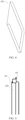
FIG. 4 is a schematic structural view of a second heat sink of the battery pack according to a first embodiment of the present application. -
FIG. 5 is a partial enlarged view of a first battery of the battery pack according to a first embodiment of the present application. -
FIG. 6 is an exploded view of the battery pack according to a second embodiment of the present application. -
FIG. 7A is a schematic structural view of a first heat sink of the battery pack according to a second embodiment of the present application. -
FIG. 7B is a schematic structural view of a second heat sink of the battery pack according to a second embodiment of the present application. -
FIG. 8 is a schematic structural view of the battery pack according to an embodiment of the present application. - The technical schemes of the embodiments of the present disclosure will be clearly and completely described in the following with reference to the accompanying drawings. It is obvious that the embodiments to be described are only a part rather than all of the embodiments of the present disclosure. All other embodiments obtained by persons skilled in the art based on the embodiments of the present disclosure without creative efforts shall fall within the protection scope of the present disclosure. It should be understood that the respective exemplary embodiments in the following description and in the drawings may be combined with each other to form other embodiments not described below; and some of the components may be omitted in different embodiments. In other words, the following description does not limit the present application.
- A battery pack according to an embodiment of the present application includes a first battery and a second battery, and the first battery and the second battery are stacked. In a stacking direction of the first battery and the second battery, the second battery is closer to a center of the battery pack than the first battery. The first battery includes a first thermally conductive component and a first electrode assembly, the second battery includes a second thermally conductive component and a second electrode assembly, and a thermal conductivity of the second thermally conductive component of the second battery is not lower than that of the first thermally conductive component of the first battery. By differential design for heat dissipation through a second battery near a center of the battery pack and a first battery away from the center, the above technical solution of the present application reduces the electrode assembly temperature at the center where heat is accumulated. Therefore, it is possible to achieve uniform temperature between the individual electrode assemblies in the battery pack while keeping the overall temperature of the battery pack low.
- With reference to
FIG. 1 , an exploded view of the battery pack according to a first embodiment of the present application is shown. Thebattery pack 100 includes afirst battery 10 and asecond battery 20, and thefirst battery 10 and thesecond battery 20 are stacked together. In a stacking direction of thefirst battery 10 and thesecond battery 20, thesecond battery 20 is closer to a center of thebattery pack 100 than thefirst battery 10. Thefirst battery 10 includes a first thermallyconductive component 12 and afirst electrode assembly 14. Thesecond battery 20 includes a second thermallyconductive component 22 and asecond electrode assembly 24. The first thermallyconductive component 12 includes afirst heat sink 122, and the second thermallyconductive component 22 includes asecond heat sink 222. Specifically, thefirst battery 10 includes a plurality offirst heat sinks 122 and a plurality offirst electrode assemblies 14, and thefirst heat sink 122 is disposed on at least one surface of each of thefirst electrode assemblies 14. Thesecond battery 20 includes a plurality ofsecond heat sinks 222 and a plurality ofsecond electrode assemblies 24, and thesecond heat sink 222 is disposed on at least one surface of each of thesecond electrode assemblies 24. The structures and the sizes of thefirst heat sink 122 and thesecond heat sink 222 may be the same. The number of thefirst battery 10 may be plural, and the number of thesecond battery 20 may be plural. It should be understood that the number of thefirst electrode assembly 14 and thesecond electrode assembly 24 shown inFIG. 1 is merely exemplary, and number of thefirst electrode assembly 14 and thesecond electrode assembly 24 may be any other suitable number. The number of thefirst battery 10 and thesecond battery 20 shown inFIG. 1 is merely exemplary, and number of thefirst battery 10 and thesecond battery 20 may also be any other suitable number. In an embodiment, the number of thefirst battery 10 may be different from the number of thesecond battery 20. In another embodiment, the number of thefirst battery 10 may be the same as the number of thesecond battery 20. Thefirst electrode assembly 14 and thesecond electrode assembly 24 may be soft-pack batteries or square-shell batteries, which are not limited in this application. - In an embodiment, the thermal conductivity of the second thermally
conductive component 22 of thesecond battery 20 is not less than that of the first thermallyconductive component 12 of thefirst battery 10. The difference between the thermal conductivity of the second thermallyconductive component 22 and the thermal conductivity of the first thermallyconductive component 12 is not less than 90% of the thermal conductivity of the first thermallyconductive component 12. - It should be noted that the thermal conductivity of the first thermally conductive component and the second thermally conductive component may be tested according to the simulation data or the test data, so that the heat dissipation efficiency of the second electrode assembly near the center of the battery pack is the same as that of the first electrode assembly away from the center. Specifically, the heat dissipation efficiency η may be calculated by the following formula:

- That is, the heat dissipation efficiency may be expressed as a ratio of the temperature rise of the heat source to the heat generation power of the heat source. ΔT represents the temperature rise of the heat source relative to the ambient temperature in degree Celsius; q represents the heat production power of the heat source in Watt, which is used to characterize how much heat is generated by the heat source per unit time. When the heat dissipation efficiency of the
first electrode assembly 14 and thesecond electrode assembly 24 are tested, by assuming that thefirst electrode assembly 14 and thesecond electrode assembly 24 has good consistency, that is, the heat generation powers of thefirst electrode assembly 14 and thesecond electrode assembly 24 are the same, the heat dissipation efficiencies of thefirst electrode assembly 14 and thesecond electrode assembly 24 are compared to each other, that is, the temperature rise values of thefirst electrode assembly 14 and thesecond electrode assembly 24 are compared to each other. When the temperature rise of thefirst electrode assembly 14 and thesecond electrode assembly 24 under the respective heat dissipation conditions is the same, the heat dissipation efficiency of the two can be considered to be the same. - Further Referring to
FIG. 1 , thebattery pack 100 further includes abuffer plate 30, and thebuffer plate 30 is located between thefirst battery 10 and thesecond battery 20. In an embodiment, thebuffer plate 30 may also be located between the plurality offirst batteries 10. Thebuffer plate 30 may be made of a material having a cushioning effect such as foam. By providing thebuffer plate 30, an expansion space may be reserved for the first battery and the second battery, while alleviating the problem of heat concentration in the second electrode assembly that is close to the center of the battery pack. - Further, referring to
FIG. 2 , a thermallyconductive plate 40 is also disposed between the adjacent twosecond electrode assemblies 24. In an embodiment, the thermallyconductive plate 40 may be a metal plate. Optionally, the metal plate may be an aluminum plate. In an embodiment, the thermallyconductive plate 40 may be a solid phase change plate. The solid phase change plate is a phase change material, which is in a solid state when a phase transition occurs and also has an original form of a sheet shape. In an embodiment, the thermallyconductive plate 40 may be a thermally conductive gasket. Optionally, the thermally conductive gasket may be a thermally conductive gasket containing silicone. By providing the thermallyconductive plate 40 between thesecond electrode assemblies 24, the heat dissipation efficiency of thesecond electrode assemblies 24 close to the center of the battery pack may be enhanced, so that the temperature of thesecond electrode assembly 24, in which heat is accumulated, is lowered. Therefore, uniform temperature between the individual electrode assemblies in the battery pack may be achieved, while keeping the overall temperature of the battery pack being low. A thickness of the thermally conductive plate may be determined based on simulation or test data, such that the heat dissipation efficiency of thesecond electrode assembly 24 close to the center of the battery pack is substantially the same as the heat dissipation efficiency of thefirst electrode assembly 14 at the edge region. - In addition, the
buffer plate 30 may also be located between the adjacent twosecond batteries 20. It should be understood that the arrangement of the thermallyconductive plate 40 between the plurality ofsecond electrode assemblies 20 may be varied, the arrangement of thebuffer plate 30 between the plurality of first batteries and the plurality of second batteries may also be varied, which are not limited in the present application. - Referring to
FIG. 3 , the thermallyconductive plate 40 and thesecond heat sink 222 are respectively located on opposite sides of thesecond electrode assembly 24. Thesecond heat sink 222 may be bonded to asurface 26 of thesecond electrode assembly 24. The thermallyconductive plate 40 contacts afirst surface 28 of thesecond electrode assembly 24, and a contact area of the thermallyconductive plate 40 and thesecond electrode assembly 24 may be greater than or equal to 90% of the area of thefirst surface 28, so as to ensure a sufficient heat dissipating area of the thermally conductive plate. - The thermally
conductive plate 40 and thesecond electrode assembly 24 may be bonded and fixed together by a thermally conductive adhesive. That is to say, thesecond heat sink 222 may be bonded to thesurface 26 of thesecond electrode assembly 24 by the thermally conductive adhesive. The thermally conductive adhesive may include a thermally conductive silica gel, one-component thermally conductive paste, and two-component thermally conductive gel, and may be made of a silicone rubber material. A highly thermally conductive metal oxide or other highly thermally conductive particles may be filled in the silicone rubber material to simultaneously obtain the elasticity of the silicone rubber and the thermal conductivity of the filled particles. A thickness of the thermally conductive adhesive may be set to achieve sufficient bonding strength while minimizing the thermal resistance of the thermally conductive adhesive. In an embodiment, the thickness of the thermally conductive adhesive is greater than 20 µm and less than 60 µm, for example 40 µm. - Referring to
FIG. 4 , thesecond heat sink 222 is U-shaped, such that thesecond heat sink 222 may be located on three surfaces of thesecond electrode assembly 24. The structure of thesecond heat sink 222 may be designed, such that thesecond heat sink 222 may be located on at least two surfaces of thesecond electrode assembly 24, such as on two or three surfaces of thesecond electrode assembly 24. In this way, a sufficient heat dissipation area of thesecond heat sink 222 may be ensured. - As shown in
FIG. 5 , thefirst heat sinks 122 are bonded to asurface 16 of thefirst electrode assembly 14. Thefirst heat sink 122 may be bonded to thesurface 16 of thefirst electrode assembly 14 by the thermally conductive adhesive. Similarly, in an embodiment, thefirst heat sink 122 may have a structure as shown inFIG. 4 . In some embodiments, thefirst heat sink 122 may be located on at least two surfaces of thefirst electrode assembly 14. - With reference to
FIG. 6 , an exploded view of the battery pack according to a second embodiment of the present application is shown. Thebattery pack 200 includes afirst battery 10 and asecond battery 20, and thefirst battery 10 and thesecond battery 20 are stacked together. In a stacking direction of thefirst battery 10 and thesecond battery 20, thesecond battery 20 is closer to a center of thebattery pack 200 than thefirst battery 10. Thefirst battery 10 includes a first thermallyconductive component 12 and afirst electrode assembly 14. Thesecond battery 20 includes a second thermallyconductive component 22 and asecond electrode assembly 24. The first thermallyconductive component 12 includes afirst heat sink 122, and the second thermallyconductive component 22 includes asecond heat sink 222. Thefirst battery 10 includes a plurality offirst heat sinks 122 and a plurality offirst electrode assemblies 14, and thefirst heat sink 122 is disposed on at least one surface of each of thefirst electrode assemblies 14. Thesecond battery 20 includes a plurality ofsecond heat sinks 222 and a plurality ofsecond electrode assemblies 24, and thesecond heat sink 222 is disposed on at least one surface of each of thesecond electrode assemblies 24. Thebattery pack 200 further includes abuffer plate 30, and thebuffer plate 30 may be located between thefirst battery 10 and thesecond battery 20. Thebuffer plate 30 may also be located between the adjacent twosecond batteries 20. - A thermal conductivity of the
second heat sink 222 is better than that of thefirst heat sink 122. Thesecond heat sink 222 may have the thermal conductivity superior to that of thefirst heat sink 122 by a variety of implementable methods. Thus, the heat dissipation efficiency of thesecond electrode assemblies 24 close to the center of the battery pack may be enhanced, so that the temperature of the second electrode assembly in which heat is accumulated is lowered. Therefore, uniform temperature between the individual electrode assemblies in the battery pack may be achieved, while keeping the overall temperature of the battery pack being low. - As shown in
FIGS. 7A and 7B , thesecond heat sink 222 may be made of the same material as that of thefirst heat sink 122, and thesecond heat sink 222 has a thickness H2 ,while thefirst heat sink 122 having a thickness H1. The thickness H2 of thesecond heat sink 222 is greater than the thickness H1 of thefirst heat sink 122. The thickness H1 of thefirst heat sink 122 may be in a range between 0.2 mm and 0.5 mm, and the thickness H2 of thesecond heat sink 222 may be in a range between 0.4 mm and 1.0 mm. In an embodiment, the thickness H1 of thefirst heat sink 122 is 0.2 mm, and the thickness H2 of thesecond heat sink 222 is 0.5 mm. In another embodiment, the thickness H1 of thefirst heat sink 122 is 0.4 mm, and the thickness H2 of thesecond heat sink 222 is 0.8 mm. The thickness H1 of thefirst heat sink 122 and the thickness H2 of thesecond heat sink 222 may also be set according to the temperature rise simulation data and the test data. By differentiating the thicknesses of thefirst heat sink 122 and thesecond heat sink 222 from each other by setting the thickness H2 of thesecond heat sink 222 to be greater than the thickness H1 of thefirst heat sink 122, the heat dissipation effect of the second electrode assembly close to the center of the battery pack is enhanced, thereby achieving uniform temperature between the respective electrode assemblies in the battery pack. - Other aspects of the
battery pack 200 of the second embodiment may be similar to thebattery pack 100 of the first embodiment, and are not described herein again. - With reference to
FIG. 8 , a schematic structural view of the battery pack according to an embodiment of the present application is shown. Anadapter plate 50 is disposed on a top of the plurality offirst batteries 10 andsecond batteries 20 of thebattery pack 300. Abuffer layer 60 is disposed between theadapter plate 50 and a plurality offirst battery 10 and thesecond battery 20, and thebuffer layer 60 may be made of a material such as foam. Thebuffer layer 60 serves as a support for theadapter plate 50 and acts as an insulator between a plurality of electrode assemblies. - In addition, the
battery pack 300 may further include a housing connected to thefirst heat sink 122 and thesecond heat sink 222, and the housing may be a metal housing. A pressure may be applied between the housing and the plurality offirst batteries 10 and thesecond batteries 20 by screws, so that thefirst heat sink 122 may be tightly contact with an inner surface of the housing. In an embodiment, a thermally conductive material may be filled between thefirst heat sink 122 and thesecond heat sink 222 and the housing. - The foregoing is only preferred exemplary embodiments of the present application and is not intended to be limiting of the present application, and any modifications, equivalent substitutions, improvements and the like within the spirit and principles of the present application are intended to be embraced by the protection range of the present application.
Claims (10)
- A battery pack, characterized in that, the battery pack comprising a first battery and a second battery stacked together, the second battery being closer to a center of the battery pack than the first battery in a stacking direction of the first battery and the second battery;
wherein the first battery comprises a first thermally conductive component and a first electrode assembly, the second battery comprises a second thermally conductive component and a second electrode assembly, and a thermal conductivity of the second thermally conductive component is not lower than that of the first thermally conductive component. - The battery pack according to claim 1, characterized in that, the first thermally conductive component comprises a first heat sink, and the second thermally conductive component comprises a second heat sink; the first battery comprises a plurality of the first heat sinks and a plurality of the first electrode assemblies, and the first heat sink is disposed on at least one surface of each first electrode assembly; and/or
the second battery comprises a plurality of the second heat sinks and a plurality of the second electrode assemblies, and the second heat sink is disposed on at least one surface of each second electrode assembly. - The battery pack according to claim 2, characterized in that, the second battery further comprises a thermally conductive plate, and the thermally conductive plate is arranged between adjacent two of the plurality of second electrode assemblies.
- The battery pack according to claim 3, characterized in that, the thermally conductive plate is one of a metal plate, a solid phase change plate, and a thermally conductive gasket.
- The battery pack according to claim 3, characterized in that, the thermally conductive plate contacts a first surface of the second electrode assembly, and a contact area of the thermally conductive plate and the second electrode assembly is greater than or equal to 90% of an area of the first surface.
- The battery pack according to claim 3, characterized in that, the thermally conductive plate and the second heat sink are respectively located on opposite sides of the second electrode assembly.
- The battery pack according to claim 1, characterized in that, a difference between the thermal conductivity of the second thermally conductive component and the thermal conductivity of the first thermally conductive component is not less than 90% of the thermal conductivity of the first thermally conductive component.
- The battery pack according to claim 1, characterized in that, the first thermally conductive component comprises a first heat sink located on a surface of the first battery, and the second thermally conductive component comprises a second heat sink located on a surface of the second battery, and the thermal conductivity of the second heat sink is better than that of the first heat sink.
- The battery pack according to claim 8, characterized in that, the second heat sink is of the same material as the first heat sink, and a thickness of the second heat sink is greater than a thickness of the first heat sink.
- The battery pack according to claim 1, characterized in that, the battery pack further comprises a buffer plate located between adjacent two of the first battery and the second battery or between adjacent two first batteries.
Applications Claiming Priority (3)
| Application Number | Priority Date | Filing Date | Title |
|---|---|---|---|
| CN201920175872.XU CN209496977U (en) | 2019-01-31 | 2019-01-31 | Battery pack |
| US16/435,549 US11152654B2 (en) | 2019-01-31 | 2019-06-09 | Battery pack |
| PCT/CN2020/073426 WO2020156370A1 (en) | 2019-01-31 | 2020-01-21 | Battery pack |
Publications (2)
| Publication Number | Publication Date |
|---|---|
| EP3937294A1 true EP3937294A1 (en) | 2022-01-12 |
| EP3937294A4 EP3937294A4 (en) | 2023-07-05 |
Family
ID=68157204
Family Applications (1)
| Application Number | Title | Priority Date | Filing Date |
|---|---|---|---|
| EP20709464.0A Pending EP3937294A4 (en) | 2019-01-31 | 2020-01-21 | BATTERY PACK |
Country Status (4)
| Country | Link |
|---|---|
| US (1) | US11152654B2 (en) |
| EP (1) | EP3937294A4 (en) |
| CN (1) | CN209496977U (en) |
| WO (1) | WO2020156370A1 (en) |
Families Citing this family (5)
| Publication number | Priority date | Publication date | Assignee | Title |
|---|---|---|---|---|
| CN209496977U (en) * | 2019-01-31 | 2019-10-15 | 东莞新能源科技有限公司 | Battery pack |
| CN114079096B (en) * | 2020-08-11 | 2024-07-23 | 北京小米移动软件有限公司 | Battery assembly and electronic device |
| US11955667B2 (en) * | 2021-11-15 | 2024-04-09 | Beta Air, Llc | System and method for a battery assembly |
| EP4358208A4 (en) * | 2022-06-17 | 2025-10-01 | Contemporary Amperex Technology Hong Kong Ltd | BATTERY PACK AND ELECTRICAL DEVICE THEREFOR |
| CN120033381A (en) * | 2025-04-24 | 2025-05-23 | 涿州市柯林电子产品有限公司 | A fast-charging battery module with thermal management function |
Family Cites Families (7)
| Publication number | Priority date | Publication date | Assignee | Title |
|---|---|---|---|---|
| JP5535520B2 (en) | 2009-05-21 | 2014-07-02 | 三洋電機株式会社 | Battery system for vehicle |
| US9196938B2 (en) | 2010-07-06 | 2015-11-24 | Samsung Sdi Co., Ltd. | Battery module |
| JP2012248299A (en) * | 2011-05-25 | 2012-12-13 | Sanyo Electric Co Ltd | Battery module, battery system, electric vehicle, mobile object, power storage device and power supply device |
| KR101572836B1 (en) * | 2013-03-04 | 2015-12-01 | 주식회사 엘지화학 | Battery Cell Having Structure of Steps-Formed |
| EP3032607B1 (en) | 2013-08-07 | 2018-05-09 | Hitachi, Ltd. | Battery module |
| WO2017052194A1 (en) * | 2015-09-21 | 2017-03-30 | 주식회사 엘지화학 | Battery module including array of cooling fins having different thicknesses |
| CN209496977U (en) * | 2019-01-31 | 2019-10-15 | 东莞新能源科技有限公司 | Battery pack |
-
2019
- 2019-01-31 CN CN201920175872.XU patent/CN209496977U/en active Active
- 2019-06-09 US US16/435,549 patent/US11152654B2/en active Active
-
2020
- 2020-01-21 WO PCT/CN2020/073426 patent/WO2020156370A1/en not_active Ceased
- 2020-01-21 EP EP20709464.0A patent/EP3937294A4/en active Pending
Also Published As
| Publication number | Publication date |
|---|---|
| CN209496977U (en) | 2019-10-15 |
| US20200251791A1 (en) | 2020-08-06 |
| WO2020156370A1 (en) | 2020-08-06 |
| EP3937294A4 (en) | 2023-07-05 |
| US11152654B2 (en) | 2021-10-19 |
Similar Documents
| Publication | Publication Date | Title |
|---|---|---|
| EP3937294A1 (en) | Battery pack | |
| EP1665448B1 (en) | Polymer batteries having thermal exchange apparatus | |
| JP6982738B2 (en) | Composite sheet and battery pack using it | |
| CN219066945U (en) | Batteries and Consumers | |
| EP3731335A1 (en) | Battery and battery pack | |
| KR20190022486A (en) | An enclosure for a stack assembly comprising a battery cell carrier and a plurality of battery cell carriers | |
| CN216085095U (en) | Battery shell, battery module and battery pack | |
| CN220420683U (en) | Power battery with heat conducting piece | |
| TWI761132B (en) | Energy storage module | |
| CN116404314A (en) | An integrated heat insulation system and battery pack for vehicle batteries | |
| CN220914356U (en) | Cooling components, battery packs and electric devices | |
| CN223390607U (en) | Liquid cooling battery package | |
| CN224054778U (en) | A double-sided heat dissipation module packaging structure for GaN chips | |
| CN219350404U (en) | Battery components and terminal equipment | |
| US12225695B2 (en) | Electrical device | |
| US20250167347A1 (en) | Battery case and battery module | |
| JP7793747B2 (en) | Cooling components, battery packs and electrical equipment | |
| CN221961617U (en) | Battery pack and electricity utilization device | |
| CN220914374U (en) | Heat exchange plate, battery device and electric equipment | |
| JP2017011222A (en) | Semiconductor device | |
| CN221176528U (en) | Battery assembly and electronic equipment with same | |
| CN222852164U (en) | Direct current booster device | |
| CN220627912U (en) | A heat dissipation structure for modular electronic components | |
| CN219677363U (en) | A kind of power battery box and automobile | |
| CN223941834U (en) | High-efficient radiating cylinder battery module |
Legal Events
| Date | Code | Title | Description |
|---|---|---|---|
| STAA | Information on the status of an ep patent application or granted ep patent |
Free format text: STATUS: UNKNOWN |
|
| STAA | Information on the status of an ep patent application or granted ep patent |
Free format text: STATUS: THE INTERNATIONAL PUBLICATION HAS BEEN MADE |
|
| PUAI | Public reference made under article 153(3) epc to a published international application that has entered the european phase |
Free format text: ORIGINAL CODE: 0009012 |
|
| STAA | Information on the status of an ep patent application or granted ep patent |
Free format text: STATUS: REQUEST FOR EXAMINATION WAS MADE |
|
| 17P | Request for examination filed |
Effective date: 20200318 |
|
| AK | Designated contracting states |
Kind code of ref document: A1 Designated state(s): AL AT BE BG CH CY CZ DE DK EE ES FI FR GB GR HR HU IE IS IT LI LT LU LV MC MK MT NL NO PL PT RO RS SE SI SK SM TR |
|
| DAV | Request for validation of the european patent (deleted) | ||
| DAX | Request for extension of the european patent (deleted) | ||
| A4 | Supplementary search report drawn up and despatched |
Effective date: 20230607 |
|
| RIC1 | Information provided on ipc code assigned before grant |
Ipc: H01M 50/119 20210101ALI20230601BHEP Ipc: H01M 50/103 20210101ALI20230601BHEP Ipc: H01M 10/655 20140101ALI20230601BHEP Ipc: H01M 10/617 20140101ALI20230601BHEP Ipc: H01M 10/613 20140101AFI20230601BHEP |
|
| STAA | Information on the status of an ep patent application or granted ep patent |
Free format text: STATUS: EXAMINATION IS IN PROGRESS |
|
| 17Q | First examination report despatched |
Effective date: 20250901 |