EP3937048A1 - Generalizing hierarchy set generation device, generalizing hierarchy set generation method, and program - Google Patents
Generalizing hierarchy set generation device, generalizing hierarchy set generation method, and program Download PDFInfo
- Publication number
- EP3937048A1 EP3937048A1 EP20765606.7A EP20765606A EP3937048A1 EP 3937048 A1 EP3937048 A1 EP 3937048A1 EP 20765606 A EP20765606 A EP 20765606A EP 3937048 A1 EP3937048 A1 EP 3937048A1
- Authority
- EP
- European Patent Office
- Prior art keywords
- generalization
- hierarchy
- target data
- data
- hierarchy set
- Prior art date
- Legal status (The legal status is an assumption and is not a legal conclusion. Google has not performed a legal analysis and makes no representation as to the accuracy of the status listed.)
- Granted
Links
Images







Classifications
-
- G—PHYSICS
- G06—COMPUTING OR CALCULATING; COUNTING
- G06F—ELECTRIC DIGITAL DATA PROCESSING
- G06F21/00—Security arrangements for protecting computers, components thereof, programs or data against unauthorised activity
- G06F21/60—Protecting data
- G06F21/62—Protecting access to data via a platform, e.g. using keys or access control rules
- G06F21/6218—Protecting access to data via a platform, e.g. using keys or access control rules to a system of files or objects, e.g. local or distributed file system or database
- G06F21/6245—Protecting personal data, e.g. for financial or medical purposes
- G06F21/6254—Protecting personal data, e.g. for financial or medical purposes by anonymising data, e.g. decorrelating personal data from the owner's identification
-
- G—PHYSICS
- G06—COMPUTING OR CALCULATING; COUNTING
- G06F—ELECTRIC DIGITAL DATA PROCESSING
- G06F21/00—Security arrangements for protecting computers, components thereof, programs or data against unauthorised activity
- G06F21/60—Protecting data
- G06F21/62—Protecting access to data via a platform, e.g. using keys or access control rules
- G06F21/6218—Protecting access to data via a platform, e.g. using keys or access control rules to a system of files or objects, e.g. local or distributed file system or database
- G06F21/6245—Protecting personal data, e.g. for financial or medical purposes
-
- G—PHYSICS
- G06—COMPUTING OR CALCULATING; COUNTING
- G06F—ELECTRIC DIGITAL DATA PROCESSING
- G06F40/00—Handling natural language data
- G06F40/10—Text processing
- G06F40/103—Formatting, i.e. changing of presentation of documents
Definitions
- the present invention relates to anonymization technology.
- Generalization is one technology for anonymizing personal data, that is, information about individual persons. With generalization technology, it is necessary to define a generalization hierarchy to achieve generalization.
- a generalization hierarchy refers to a hierarchical structure of data that includes 0 or more layers of gradually abstracted intermediate data from the data with the lowest level of abstraction to the data with the highest level of abstraction.
- Fig. 1 illustrates an example of a generalization hierarchy set containing generalization hierarchies as elements. Each row in Fig. 1 respectively expresses a generalization hierarchy. For example, the first row indicates the generalization hierarchy "Apple ⁇ Fruit ⁇ Food ⁇ Food & Drink ⁇ *(ANY)".
- the generalization target data set ⁇ Apple, Orange, Tea, Boots ⁇ a group of generalized data "Food, Food, Drink, Footwear" is obtained, for example.
- the number of items of data included in a generalization hierarchy is referred to as the length of the generalization hierarchy.
- the length of the generalization hierarchy in the first row of Fig. 1 is 5.
- a method of creating a generalization hierarchy so as to reduce information loss that is, the difference between the data before generalization and the data after generalization
- the generalization hierarchy is the one used in privacy protection technology such as k-anonymity described in Non-patent literature 1, for example.
- a generalization hierarchy that reduces information loss, that is, the difference between the data before generalization and the data after generalization refers to a generalization hierarchy in which the generalization hierarchy can be used to keep the meaning and properties of the data after generalization from being largely different from the data before generalization.
- Non-patent literature 2 Methods of creating a generalization hierarchy in the related art can be roughly categorized into “methods using frequency” (Non-patent literature 2) and “methods using frequency and numerical information” (Non-patent literature 2, Non-patent literature 3). Both types of methods create a generalization hierarchy by grouping and abstracting data in order of lowest frequency. For this reason, when used for privacy protection technology like in Non-patent literature 1, privacy can be protected while avoiding the generalization of a relatively large amount of the data, although the results depend on the data. Consequently, with regard to avoiding overgeneralization, there is an effect of reducing information loss.
- the methods of the related art cannot create a generalization hierarchy on the basis of information other than frequency, and may even cause enormous information loss depending on the data.
- the "methods using frequency and numerical information” are a generalization technology suited to sets of generalization target data having numerical meaning, such as age or height.
- the "methods using frequency and numerical information” cannot be applied to sets of generalization target data that cannot be expressed numerically, such as "Apple” and "Orange” in Fig. 1 .
- the "methods using frequency” can be applied to generalization target data sets that do not have numerical meaning, but because only frequency is used, there are concerns that a generalization hierarchy may be created through the grouping of data having conceptual meanings and properties that are largely different from each other. Consequently, generalization through a generalization hierarchy obtained by the "methods using frequency” may create unnatural generalizations in terms of conceptual meaning, depending on the data.
- an object of the present invention is to provide a technology that generates a set of generalization hierarchies that reduces information loss when generalizing any kind of data that does not necessarily have a numerical meaning.
- One aspect of the present invention comprises: a first generation part that generates a first generalization hierarchy set that is a subset of a generalization hierarchy set from a generalization target data set containing generalization target data as elements and the generalization hierarchy set containing generalization hierarchies as elements (in which the generalization hierarchy set contains a generalization hierarchy including any of the generalization target data included in the generalization target data set as at least one element); and a second generation part that generates a second generalization hierarchy set from the generalization target data set and the first generalization hierarchy set, in which, provided that M is an integer equal to or greater than 1 that expresses a maximum value of a length of the generalization hierarchies included in the generalization hierarchy set, the first generalization hierarchy set satisfies a property such that any generalization hierarchy included in the first generalization hierarchy set includes at least one of the generalization target data included in the generalization target data set, for d that satisfies 0 ⁇ d ⁇ D-1, where D is a predetermined integer equal to or
- a caret ( ⁇ ) denotes superscript.
- x y ⁇ z indicates that y z is a superscript of x
- x y ⁇ z indicates that y z is a subscript of x
- an underscore (_) denotes subscript.
- x y_z indicates that y z is a superscript of x
- x y_z indicates that y z is a subscript of x.
- Data to be generalized is referred to as generalization target data.
- a generalization hierarchy an arrangement of data in order of the lowest (or highest) level of abstraction is referred to as a generalization hierarchy.
- the number of items of data included in a generalization hierarchy is referred to as the length of the generalization hierarchy.
- the maximum value of the length of the generalization hierarchy included in a generalization hierarchy set is referred to as the length of the generalization hierarchy set.
- the position of the "*(ANY)" data at the most general level is referred to as the 0th layer
- the position of the data at the next-most general level of abstraction is referred to as the 1st layer, and so on.
- a generalization hierarchy of length M may be said to contain data from the 0th layer to the (M-1)th layer.
- the length of the generalization hierarchy set in Fig. 1 is 5, and in the generalization hierarchy "Apple ⁇ Fruit ⁇ Food ⁇ Food & Drink ⁇ *(ANY)" in the first row, the data in the 2nd layer is "Food", and the data in the 4th layer is "Apple”.
- a generalization target data set containing generalization target data as elements and a generalization hierarchy set containing generalization hierarchies as elements are accepted as inputs, and a generalization hierarchy set that satisfies the following condition is generated and outputted.
- the generalization target data included in the generalization target data set and the data forming the generalization hierarchies included in the generalization hierarchy set may or may not have numerical meaning.
- the generalization hierarchy set generation algorithm includes an extraction algorithm and a formatting algorithm. Also, the extraction algorithm uses a function E.
- the extraction algorithm uses depth-first search (DFS) to generate a generalization hierarchy set containing many shared general concepts of the generalization target data, and the formatting algorithm generates a generalization hierarchy set obtained by formatting the generalization hierarchy set generated by the extraction algorithm into a format suitable for the generalization target data.
- DFS depth-first search
- L is an integer equal to or greater than 1 that expresses the number of items of generalization target data contained in the generalization target data set and a is an array of the generalization target data, a is an L ⁇ 1 array.
- M is an integer equal to or greater than 1 that expresses the length of the generalization hierarchy set
- N is an integer equal to or greater than 1 that expresses the number of generalization hierarchies contained in the generalization hierarchy set
- X is an array of the generalization hierarchies, X is an N ⁇ M array.
- FIG. 4 illustrates a generalization target data set (array a of generalization target data) and a generalization hierarchy set (array X of generalization hierarchies) treated as the inputs of the generalization hierarchy set generation algorithm.
- the generalization hierarchies stored as rows of the array X are assumed to be stored such that lower index number denotes data with a higher level of abstraction and higher index number denotes data with a lower level of abstraction. For this reason, the data "*(ANY)" at the most general level is always stored in the 0th element of each row in the array X. Also, the data contained in a generalization hierarchy is assumed to be stored in order of lowest index number.
- the extraction algorithm accepts the array a, the array X, and the length M as inputs, and outputs an array C of arrays of generalization hierarchies.
- the formatting algorithm accepts the array a, the array C, and the length M as inputs, and outputs an array S of arrays of generalization hierarchies (character strings expressing generalization hierarchies).
- Fig. 5 is an illustration of the output of the generalization hierarchy set generation algorithm, namely the array S that is the output of the formatting algorithm.
- A is a two-dimensional array, and i and j are index numbers of the rows and columns of the array A, the (i, j)th element of the array A is denoted A (i,j) . Also, the ith row of the array A is denoted A (i,:) and the jth column of the array A is denoted A (:,j) .
- A is a two-dimensional array storing generalization hierarchies as rows (an array of generalization hierarchies)
- a function uniq(A (:,j) ) is a function that returns a set of elements obtained by removing duplicate elements and "NULL" elements from the jth column A (:,j) of the array A.
- a function A.add(B) defined with respect to the array A is a function that adds an array B in the case where the array A is an array of arrays, and adds an element B in the case where the array A is an array of elements.
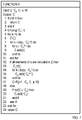
- Figs. 6 to 8 are diagrams illustrating the extraction algorithm, the function E, and the formatting algorithm, respectively. Note that in Fig. 8 , O ⁇ C_p denotes the number of rows in an array ⁇ C p , which is the pth element inside an array C.
- Fig. 6 accepts the array a, the array X, and the length M as inputs, and outputs the array C.
- Fig. 9 is a diagram illustrating the array X, and the shaded parts indicate elements of the array a.
- step 1 of the extraction algorithm the row marked " ⁇ REMOVE" in Fig. 9 is specified, the row is deleted, and an array Y is generated.
- the function E is a function that extracts the set of generalization hierarchies satisfying the following two conditions from the given ⁇ C p , and outputs the result as the array C.
- the generalization hierarchy set contains all elements of the generalization target data set and is therefore treated as ⁇ C Food & Drink , and the function E is called in step 17.
- the generalization hierarchy set contains all elements of the generalization target data set and is therefore treated as ⁇ C Food , and the function E is called in step 17.
- the generalization hierarchy set contains all elements of the generalization target data set and is therefore treated as ⁇ C Fruit , and the function E is called in step 17.
- the generalization hierarchy set does not contain all elements of the generalization target data set, and consequently ⁇ C Food & Drink is added to the array C corresponding to the output set (corresponds to step 20).
- the generalization hierarchy set does not contain all elements of the generalization target data set, and consequently nothing is added to the array C corresponding to the output set.
- u Machinery is set, and by extracting only the generalization hierarchy that contains "Machinery" as the data in the 1st layer, the generalization hierarchy set in Fig. 17 is generated.
- the generalization hierarchy set does not contain all elements of the generalization target data set, and consequently nothing is added to the array C corresponding to the output set.
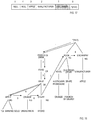
- Fig. 18 uses a tree to represent a generalization hierarchy set, and is an illustration of how the extraction algorithm is executed.
- the numerals 1 to 8 indicate the search sequence. Also, OK and NG appearing beside the generalization hierarchy data treated as nodes indicate whether or not a deeper search is necessary.
- the formatting algorithm in Fig. 8 accepts the array a, the array C, and the length M as inputs, and outputs the array S.
- character strings are used to execute subsequent processes, but arrays may be used instead of character strings to execute subsequent processes. Note that instead of a comma-delimited character string, a character string delimited by any character may also be used.
- Fig. 19 is a diagram illustrating the input of the formatting algorithm (that is, the output of the extraction algorithm).
- the 5th column of the data in Fig. 19 is determined to be unnecessary for the generalization of the inputted generalization target data by steps 19 to 23 of the formatting algorithm, and is therefore removed.
- the data illustrated in Fig. 20 is obtained.
- the 0th row of the data in Fig. 20 is included in the 1st and 2nd rows, and is therefore determined to be unnecessary and is removed by step 25 of the formatting algorithm.
- the 1st and 2nd rows of the data in Fig. 20 contain the same generalization hierarchy, and therefore one of the rows is determined to be unnecessary and is removed by step 25 of the formatting algorithm.
- the data illustrated in Fig. 21 is obtained as the output of the formatting algorithm.
- the array S that is the output of the generalization hierarchy set generation algorithm may be
- the generalization hierarchy set that is one of the inputs into the generalization hierarchy set generation algorithm may be generated using any kind of information insofar as a hierarchical structure of generalization target data can be created.
- a hierarchical structure of generalization target data can be created.
- electronic health records, EC sites, recipe sites, and video sites on the Internet can be used.
- a text corpus (see Reference non-patent literature 2, for example) usable as generalization hierarchy data of general concepts may be used for generation.
- Figs. 24 and 25 will be referenced to describe a generalization hierarchy set generation apparatus 100 that executes the generalization hierarchy set generation algorithm.
- Fig. 24 is a block diagram illustrating a configuration of the generalization hierarchy set generation apparatus 100.
- Fig. 25 is a flowchart illustrating operations by the generalization hierarchy set generation apparatus 100.
- the generalization hierarchy set generation apparatus 100 includes a first generation part 110, a second generation part 120, and a recording part 190.
- the recording part 190 is a component that appropriately records information necessary for the process by the generalization hierarchy set generation apparatus 100.
- the recording part 190 records data that is used in the process by the generalization hierarchy set generation apparatus 100, such as the generalization target data set.
- the first generation part 110 accepts a generalization target data set containing generalization target data as elements and a generalization hierarchy set containing generalization hierarchies as elements (in which the generalization hierarchy set contains a generalization hierarchy including any of the generalization target data included in the generalization target data set as at least one element) as inputs, generates a first generalization hierarchy set that is a subset of the generalization hierarchy set from the generalization target data set and the generalization hierarchy set, and outputs the first generalization hierarchy set.
- the first generation part 110 is a component that executes the extraction algorithm, and the first generalization hierarchy set is a set that satisfies the following two properties.
- M is an integer equal to or greater than 1 that expresses the maximum value of the length of the generalization hierarchies included in the generalization hierarchy set.
- Any generalization hierarchy included in the first generalization hierarchy set includes at least one of the generalization target data included in the generalization target data set.
- the second generation part 120 accepts the generalization target data set and the first generalization hierarchy set generated in S I 10 as inputs, generates a second generalization hierarchy set from the generalization target data set and the first generalization hierarchy set, and outputs the second generalization hierarchy set.
- the second generation part 120 is a component that executes the formatting algorithm, and the second generalization hierarchy set is a set that satisfies the following property.
- D' is a predetermined integer equal to or greater than D and less than or equal to M
- a length of generalization hierarchies included in the second generalization hierarchy set is D'
- data in a (D'-1)th layer of the generalization hierarchies included in the second generalization hierarchy set is an element of the generalization target data set.
- the embodiment of the present invention it is possible to generate a set of generalization hierarchies that reduces information loss when generalizing any kind of data that does not necessarily have a numerical meaning.
- substituting in more general data leads to information loss, but in the embodiment of the present invention, by extracting a generalization hierarchy set containing many shared general concepts of the generalization target data, a generalization hierarchy with reduced information loss is generated.
- An apparatus of the present invention includes, as a single hardware entity for example, an input part connectible to a keyboard or the like, an output part connectible to a liquid crystal display or the like, a communication part connectible to a communication device (for example, a communication cable) capable of communicating externally to the hardware entity, a central processing unit (CPU, which may also be provided with cache memory, registers, and the like), memory such as RAM and ROM, an external storage device such as a hard disk, and a bus that interconnects the input part, output part, communication part, CPU, RAM, ROM, and external storage device so as to allow the exchange of data. Additionally, if necessary, the hardware entity may also be provided with a device (drive) capable of reading and writing to a recording medium such as CD-ROM or the like.
- a general-purpose computer is one example of a physical entity provided with such hardware resources.
- Information such as programs necessary for achieving the functions described above and data necessary for the processing by the programs is stored in the external storage device of the hardware entity (but the information is not limited to be stored in the external storage device, and may also be stored in the ROM acting as a dedicated storage device for loading programs for example).
- information such as data obtained from the processing by the programs is stored appropriately in the RAM, the external storage device, and the like.
- each program and the data necessary for the processing by each program stored in the external storage device are loaded into memory as necessary and interpretively executed/processed by the CPU appropriately.
- the CPU achieves predetermined functions (each of the components referred to as a part or means in the above).
- the present invention is not limited to the embodiment described above, and appropriate modifications are possible within a scope that does not depart from the gist of the present invention. Also, the processes described in the above embodiment not only may be executed in a time series following the order described, but may also be executed in parallel or individually according to the processing capability of the device executing the process, or as needed.
- the processing functions of the hardware entity in the above embodiment are achieved by a computer
- the processing content of the functions that the hardware entity should have are stated by a program.
- the processing functions of the above hardware entity are achieved on the computer.
- the program stating the processing content can be recorded to a computer-readable recording medium.
- the computer-readable recording medium may be any type of medium such as a magnetic recording device, an optical disc, a magneto-optical recording medium, or semiconductor memory, for example.
- a hard disk drive, a flexible disk, or magnetic tape may be used as the magnetic recording device
- a DVD (Digital Versatile Disc), a DVD-RAM (Random Access Memory), a CD-ROM (Compact Disc Read Only Memory), or a CD-R (Recordable)/RW (Rewritable) may be used as the optical disc
- an MO Magneticto-Optical disc
- an EEP-ROM Electrically Erasable and Programmable-Read Only Memory
- the program is distributed by selling, transferring, or lending a portable recording medium such as a DVD or CD-ROM on which the program is recorded, for example.
- the program may also be stored in a storage device of a server computer and distributed by transferring the program from the server computer to another computer over a network.
- the computer that executes such a program first stores the program recorded on the portable recording medium or the program transferred from the server computer in its own storage device, for example. Thereafter, when executing processes, the computer loads the program stored in its own storage device, and executes processes according to the loaded program. Also, as a different mode of executing the program, the computer may be configured to load the program directly from the portable recording medium and execute processes according to the program, and furthermore, the computer may be configured to execute processes according to the received program in succession every time the program is transferred to the computer from the server computer.
- a configuration for executing the processes described above may also be achieved by what is called an ASP (Application Service Provider) type service, in which processing functions are achieved by an execution instruction and a result acquisition only, without transferring the program from the server computer to the computer.
- ASP Application Service Provider
- the program in this mode is assumed to include accompanying information conforming to the program for processing by an electronic computer (such as data that is not direct instructions to the computer, but has properties that stipulate processing by the computer).
- the hardware entity is configured by causing the predetermined program to be executed on the computer, but at least a portion of the processing content may also be achieved with hardware.
Landscapes
- Engineering & Computer Science (AREA)
- Theoretical Computer Science (AREA)
- General Health & Medical Sciences (AREA)
- Health & Medical Sciences (AREA)
- Bioethics (AREA)
- Physics & Mathematics (AREA)
- General Physics & Mathematics (AREA)
- General Engineering & Computer Science (AREA)
- Medical Informatics (AREA)
- Software Systems (AREA)
- Computer Security & Cryptography (AREA)
- Computer Hardware Design (AREA)
- Databases & Information Systems (AREA)
- Artificial Intelligence (AREA)
- Audiology, Speech & Language Pathology (AREA)
- Computational Linguistics (AREA)
- Information Retrieval, Db Structures And Fs Structures Therefor (AREA)
Abstract
Description
- The present invention relates to anonymization technology.
- Generalization (also referred to as abstraction) is one technology for anonymizing personal data, that is, information about individual persons. With generalization technology, it is necessary to define a generalization hierarchy to achieve generalization. Here, a generalization hierarchy refers to a hierarchical structure of data that includes 0 or more layers of gradually abstracted intermediate data from the data with the lowest level of abstraction to the data with the highest level of abstraction.
Fig. 1 illustrates an example of a generalization hierarchy set containing generalization hierarchies as elements. Each row inFig. 1 respectively expresses a generalization hierarchy. For example, the first row indicates the generalization hierarchy "Apple → Fruit → Food → Food & Drink → *(ANY)". In this generalization hierarchy, "Apple" is the data with the lowest level of abstraction, and "Fruit" is the data with the next-lowest level of abstraction after "Apple". Note that "*(ANY)" represents data positioned at the most general level (data with the highest level of abstraction) among all of the data. Also, a set containing data to be generalized (hereinafter also simply referred to as the generalization target data) as elements is referred to as a generalization target data set. For example, {Apple, Orange, Tea, Boots} is a generalization target data set containing "Apple", "Orange", "Tea", and "Boots" as elements. By using the generalization hierarchy set inFig. 1 to generalize the generalization target data set {Apple, Orange, Tea, Boots}, a group of generalized data "Food, Food, Drink, Footwear" is obtained, for example. Also, the number of items of data included in a generalization hierarchy is referred to as the length of the generalization hierarchy. For example, the length of the generalization hierarchy in the first row ofFig. 1 is 5. - In the related art, a method of creating a generalization hierarchy so as to reduce information loss, that is, the difference between the data before generalization and the data after generalization, has been proposed. Here, the generalization hierarchy is the one used in privacy protection technology such as k-anonymity described in Non-patent
literature 1, for example. Also, a generalization hierarchy that reduces information loss, that is, the difference between the data before generalization and the data after generalization, refers to a generalization hierarchy in which the generalization hierarchy can be used to keep the meaning and properties of the data after generalization from being largely different from the data before generalization. Methods of creating a generalization hierarchy in the related art can be roughly categorized into "methods using frequency" (Non-patent literature 2) and "methods using frequency and numerical information" (Non-patentliterature 2, Non-patent literature 3). Both types of methods create a generalization hierarchy by grouping and abstracting data in order of lowest frequency. For this reason, when used for privacy protection technology like in Non-patentliterature 1, privacy can be protected while avoiding the generalization of a relatively large amount of the data, although the results depend on the data. Consequently, with regard to avoiding overgeneralization, there is an effect of reducing information loss. -
- Non-patent literature 1: Latanya Sweeney, "Achieving k-anonymity privacy protection using generalization and suppression", International Journal of Uncertainty, Fuzziness and Knowledge-Based Systems, Vol.10, .
- Non-patent literature 2: Kunihiko Harada and Yoshinori Sato, "k-anonymization Schemes with Automatic Generation of Generalization Trees and Distortion Measuring using Information Entropy", Computer Security (CSEC) Technical Report, 2010-CSEC-50(47), pp.1-7, 2010.
- Non-patent literature 3: K. LeFevre, D.J. DeWitt, R. Ramakrishnan, "Mondrian Multidimensional K-Anonymity", In 22nd International Conference on Data Engineering (ICDE'06), pp.25, 2006.
- However, for data that does not have a numerical meaning, the methods of the related art cannot create a generalization hierarchy on the basis of information other than frequency, and may even cause enormous information loss depending on the data. The "methods using frequency and numerical information" are a generalization technology suited to sets of generalization target data having numerical meaning, such as age or height. However, the "methods using frequency and numerical information" cannot be applied to sets of generalization target data that cannot be expressed numerically, such as "Apple" and "Orange" in
Fig. 1 . Also, the "methods using frequency" can be applied to generalization target data sets that do not have numerical meaning, but because only frequency is used, there are concerns that a generalization hierarchy may be created through the grouping of data having conceptual meanings and properties that are largely different from each other. Consequently, generalization through a generalization hierarchy obtained by the "methods using frequency" may create unnatural generalizations in terms of conceptual meaning, depending on the data. - Note that it is also conceivable to create a generalization hierarchy on the basis of thesauruses (including conceptual classifications, taxonomies, ontologies, and the like) used in fields such as natural language processing, but since most thesauruses are defined only in conceptual (or lexical) parent-child relationships called is-a relationships, if one attempts to create a generalization hierarchy from a thesaurus by simply using is-a relationships, there is a possibility that a contradictory generalization hierarchy will be created. For example, the generalization hierarchy set in
Fig. 3 can be created from the thesaurus inFig. 2 , but the shaded rows inFig. 3 are generalization hierarchies that contain contradictions. In other words, creating a generalization hierarchy for data that does not have a numerical meaning from a thesaurus is not easy, either. - Accordingly, an object of the present invention is to provide a technology that generates a set of generalization hierarchies that reduces information loss when generalizing any kind of data that does not necessarily have a numerical meaning.
- One aspect of the present invention comprises: a first generation part that generates a first generalization hierarchy set that is a subset of a generalization hierarchy set from a generalization target data set containing generalization target data as elements and the generalization hierarchy set containing generalization hierarchies as elements (in which the generalization hierarchy set contains a generalization hierarchy including any of the generalization target data included in the generalization target data set as at least one element); and a second generation part that generates a second generalization hierarchy set from the generalization target data set and the first generalization hierarchy set, in which, provided that M is an integer equal to or greater than 1 that expresses a maximum value of a length of the generalization hierarchies included in the generalization hierarchy set, the first generalization hierarchy set satisfies a property such that any generalization hierarchy included in the first generalization hierarchy set includes at least one of the generalization target data included in the generalization target data set, for d that satisfies 0 ≤ d ≤ D-1, where D is a predetermined integer equal to or greater than 1 and less than or equal to M, the first generalization hierarchy set satisfies a property such that data in a dth layer of generalization hierarchies included in the first generalization hierarchy set is the same data, and a set that contains data from a (D-1)th layer to an (M-1)th layer of the generalization hierarchies included in the first generalization hierarchy set as elements includes the generalization target data set, and provided that D' is a predetermined integer equal to or greater than D and less than or equal to M, the second generalization hierarchy set satisfies a property such that a length of generalization hierarchies included in the second generalization hierarchy set is D', and data in a (D'-1)th layer of the generalization hierarchies included in the second generalization hierarchy set is an element of the generalization target data set.
- According to the present invention, it is possible to generate a set of generalization hierarchies that reduces information loss when generalizing any kind of data that does not necessarily have a numerical meaning.
-
-
Fig. 1 is a diagram illustrating an example of a generalization hierarchy set; -
Fig. 2 is a diagram illustrating an example of a thesaurus; -
Fig. 3 is a diagram illustrating an example of a generalization hierarchy set containing contradictory generalization hierarchies generated from the thesaurus inFig. 2 ; -
Fig. 4 is a diagram illustrating an example of the inputs of a generalization hierarchy set generation algorithm; -
Fig. 5 is a diagram illustrating an example of the output of a generalization hierarchy set generation algorithm; -
Fig. 6 is a diagram illustrating an example of an extraction algorithm; -
Fig. 7 is a diagram illustrating an example of a function E; -
Fig. 8 is a diagram illustrating an example of a formatting algorithm; -
Fig. 9 is a diagram illustrating an example of data obtained through a process of executing the extraction algorithm; -
Fig. 10 is a diagram illustrating an example of data obtained through a process of executing the extraction algorithm; -
Fig. 11 is a diagram illustrating an example of data obtained through a process of executing the extraction algorithm; -
Fig. 12 is a diagram illustrating an example of data obtained through a process of executing the extraction algorithm; -
Fig. 13 is a diagram illustrating an example of data obtained through a process of executing the extraction algorithm; -
Fig. 14 is a diagram illustrating an example of data obtained through a process of executing the extraction algorithm; -
Fig. 15 is a diagram illustrating an example of data obtained through a process of executing the extraction algorithm; -
Fig. 16 is a diagram illustrating an example of data obtained through a process of executing the extraction algorithm; -
Fig. 17 is a diagram illustrating an example of data obtained through a process of executing the extraction algorithm; -
Fig. 18 is a diagram illustrating an example of a search tree that illustrates how the extraction algorithm is executed; -
Fig. 19 is a diagram illustrating an example of the input of the formatting algorithm; -
Fig. 20 is a diagram illustrating an example of data obtained through a process of executing the formatting algorithm; -
Fig. 21 is a diagram illustrating an example of the output of the formatting algorithm; -
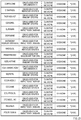
Fig. 22 is a diagram illustrating a generalization target data set treated as the input in a test; -
Fig. 23 is a diagram illustrating a generalization hierarchy set obtained as the output in the test; -
Fig. 24 is a block diagram illustrating an example of a configuration of a generalization hierarchy setgeneration apparatus 100; and -
Fig. 25 is a flowchart illustrating an example of operations by the generalization hierarchy setgeneration apparatus 100. - Hereinafter, an embodiment of the present invention will be described in detail. Note that structural elements having the same function are denoted with the same signs, and duplicate description of such elements is omitted.
- Before describing each embodiment, the notation system used in this specification will be explained.
- A caret (^) denotes superscript. For example, xy^z indicates that yz is a superscript of x, and xy^z indicates that yz is a subscript of x. Also, an underscore (_) denotes subscript. For example, xy_z indicates that yz is a superscript of x, and xy_z indicates that yz is a subscript of x.
- A superscript character "^" or "∼" preceding a certain character x, like ^x or ∼x, should be written directly above "x", but is denoted as ^x or ∼x due to the typographic constraints of the specification.
- First, several terms will be defined. Data to be generalized is referred to as generalization target data. Also, an arrangement of data in order of the lowest (or highest) level of abstraction is referred to as a generalization hierarchy. Also, the number of items of data included in a generalization hierarchy is referred to as the length of the generalization hierarchy. The maximum value of the length of the generalization hierarchy included in a generalization hierarchy set is referred to as the length of the generalization hierarchy set. In a generalization hierarchy, the position of the "*(ANY)" data at the most general level is referred to as the 0th layer, the position of the data at the next-most general level of abstraction is referred to as the 1st layer, and so on. Consequently, a generalization hierarchy of length M may be said to contain data from the 0th layer to the (M-1)th layer. For example, the length of the generalization hierarchy set in
Fig. 1 is 5, and in the generalization hierarchy "Apple → Fruit → Food → Food & Drink → *(ANY)" in the first row, the data in the 2nd layer is "Food", and the data in the 4th layer is "Apple". - Next, the problem will be formulated. Suppose that a generalization target data set containing generalization target data as elements and a generalization hierarchy set containing generalization hierarchies as elements (in which the generalization hierarchy set contains a generalization hierarchy including any of the generalization target data included in the generalization target data set as at least one element) are accepted as inputs, and a generalization hierarchy set that satisfies the following condition is generated and outputted. Note that the generalization target data included in the generalization target data set and the data forming the generalization hierarchies included in the generalization hierarchy set may or may not have numerical meaning.
- (Condition) For any generalization target data included in the generalization target data set, reduce information loss, that is, the difference between the generalization target data and the data obtained by generalizing the generalization target data.
- Hereinafter, a generalization hierarchy set generation algorithm that solves the above problem will be described. The generalization hierarchy set generation algorithm includes an extraction algorithm and a formatting algorithm. Also, the extraction algorithm uses a function E. The extraction algorithm uses depth-first search (DFS) to generate a generalization hierarchy set containing many shared general concepts of the generalization target data, and the formatting algorithm generates a generalization hierarchy set obtained by formatting the generalization hierarchy set generated by the extraction algorithm into a format suitable for the generalization target data.
- First, the notation used to describe the generalization hierarchy set generation algorithm will be described. Note that the indices of the arrays used in the generalization hierarchy set generation algorithm are all assumed to start from 0.
- Provided that L is an integer equal to or greater than 1 that expresses the number of items of generalization target data contained in the generalization target data set and a is an array of the generalization target data, a is an L×1 array. Also, provided that M is an integer equal to or greater than 1 that expresses the length of the generalization hierarchy set, N is an integer equal to or greater than 1 that expresses the number of generalization hierarchies contained in the generalization hierarchy set, and X is an array of the generalization hierarchies, X is an N×M array.
Fig. 4 illustrates a generalization target data set (array a of generalization target data) and a generalization hierarchy set (array X of generalization hierarchies) treated as the inputs of the generalization hierarchy set generation algorithm. The generalization hierarchies stored as rows of the array X are assumed to be stored such that lower index number denotes data with a higher level of abstraction and higher index number denotes data with a lower level of abstraction. For this reason, the data "*(ANY)" at the most general level is always stored in the 0th element of each row in the array X. Also, the data contained in a generalization hierarchy is assumed to be stored in order of lowest index number. Consequently, in the case where the length of a generalization hierarchy is shorter than M, "NULL" indicating that no data exists is stored in any leftover elements up to the index number M - 1. For example, in the 0th row of the array X inFig. 4 , the length of the stored generalization hierarchy "Fruit → Food → Food & Drink → *(ANY)" is 4, and therefore "NULL" is stored in X(0, 4) and X(0, 5). - The extraction algorithm accepts the array a, the array X, and the length M as inputs, and outputs an array C of arrays of generalization hierarchies. Also, the formatting algorithm accepts the array a, the array C, and the length M as inputs, and outputs an array S of arrays of generalization hierarchies (character strings expressing generalization hierarchies).
Fig. 5 is an illustration of the output of the generalization hierarchy set generation algorithm, namely the array S that is the output of the formatting algorithm. - Provided that A is a two-dimensional array, and i and j are index numbers of the rows and columns of the array A, the (i, j)th element of the array A is denoted A(i,j). Also, the ith row of the array A is denoted A(i,:) and the jth column of the array A is denoted A(:,j).
- Provided that A is a two-dimensional array storing generalization hierarchies as rows (an array of generalization hierarchies), a function uniq(A(:,j)) is a function that returns a set of elements obtained by removing duplicate elements and "NULL" elements from the jth column A(:,j) of the array A. Also, a function list(u, A(:,j)) is a function that returns a set of the index numbers i for which the (i, j)th element A(i,j) = u in the array A.
- A function A.add(B) defined with respect to the array A is a function that adds an array B in the case where the array A is an array of arrays, and adds an element B in the case where the array A is an array of elements.
-
Figs. 6 to 8 are diagrams illustrating the extraction algorithm, the function E, and the formatting algorithm, respectively. Note that inFig. 8 , O∼C_p denotes the number of rows in an array ∼Cp, which is the pth element inside an array C. - The extraction algorithm in
Fig. 6 accepts the array a, the array X, and the length M as inputs, and outputs the array C.Fig. 9 is a diagram illustrating the array X, and the shaded parts indicate elements of the array a. Instep 1 of the extraction algorithm, the row marked "← REMOVE" inFig. 9 is specified, the row is deleted, and an array Y is generated. - In
step 2 of the extraction algorithm, the function E is called with j = 1, ∼Cp = Y, C = [], and M = M. Note that the function E is a function that extracts the set of generalization hierarchies satisfying the following two conditions from the given ∼Cp, and outputs the result as the array C. - (Condition 1) The arrangement of concepts from the 0th column to the specified jth column is equal.
- (Condition 2) All elements of the array a (that is, all generalization target data in the generalization target data set) are included.
- In
step 4 of the function E, when j = 1, U = {Food & Drink, Book, Machinery} and u = Food & Drink, and by extracting only the generalization hierarchies that contain "Food & Drink" as the data in the 1st layer, the generalization hierarchy set inFig. 10 is generated. The generalization hierarchy set contains all elements of the generalization target data set and is therefore treated as ∼CFood & Drink, and the function E is called instep 17. - Similarly to the above, in
step 4 of the function E, when j = 2, U = {Food} and u = Food, and by extracting only the generalization hierarchies that contain "Food" as the data in the 2nd layer, the generalization hierarchy set inFig. 11 is generated. The generalization hierarchy set contains all elements of the generalization target data set and is therefore treated as ∼CFood, and the function E is called instep 17. - Similarly to the above, in
step 4 of the function E, when j = 3, U = {Fruit} and u = Fruit, and by extracting only the generalization hierarchies that contain "Fruit" as the data in the 3rd layer, the generalization hierarchy set inFig. 12 is generated. The generalization hierarchy set contains all elements of the generalization target data set and is therefore treated as ∼CFruit, and the function E is called instep 17. - Similarly to the above, in
step 4 of the function E, when j = 4, U = {Apple, Orange, Grape} and u = Apple, and by extracting only the generalization hierarchies that contain "Apple" as the data in the 4th layer, the generalization hierarchy set inFig. 13 is generated. The generalization hierarchy set does not contain all elements of the generalization target data set, and consequently ∼CFood & Drink is added to the array C corresponding to the output set (corresponds to step 20). Similarly, u = Orange is set, and by extracting only the generalization hierarchy that contains "Orange" as the data in the 4th layer, the generalization hierarchy set inFig. 14 is generated. The generalization hierarchy set does not contain all elements of the generalization target data set, and consequently ∼CFood & Drink is added to the array C corresponding to the output set (corresponds to step 20). Also, u = Grape is set, and by extracting only the generalization hierarchy that contains "Grape" as the data in the 4th layer, the generalization hierarchy set inFig. 15 is generated. The generalization hierarchy set does not contain all elements of the generalization target data set, and consequently ∼CFood & Drink is added to the array C corresponding to the output set (corresponds to step 20). - With the above, the process when j = 1 and u = Food & Drink ends.
- Next, j = 1 and u = Book are set, and the process continues. Here, u = Book is set, and by extracting only the generalization hierarchies that contain "Book" as the data in the 1st layer, the generalization hierarchy set in
Fig. 16 is generated. The generalization hierarchy set does not contain all elements of the generalization target data set, and consequently nothing is added to the array C corresponding to the output set. - Next, j = 1 and u = Machinery are set, and the process continues. Here, u = Machinery is set, and by extracting only the generalization hierarchy that contains "Machinery" as the data in the 1st layer, the generalization hierarchy set in
Fig. 17 is generated. The generalization hierarchy set does not contain all elements of the generalization target data set, and consequently nothing is added to the array C corresponding to the output set. - Through the above, the process of the extraction algorithm ends.
-
Fig. 18 uses a tree to represent a generalization hierarchy set, and is an illustration of how the extraction algorithm is executed. Thenumerals 1 to 8 indicate the search sequence. Also, OK and NG appearing beside the generalization hierarchy data treated as nodes indicate whether or not a deeper search is necessary. - The formatting algorithm in
Fig. 8 accepts the array a, the array C, and the length M as inputs, and outputs the array S. In steps 5 to 18, character strings are used to execute subsequent processes, but arrays may be used instead of character strings to execute subsequent processes. Note that instead of a comma-delimited character string, a character string delimited by any character may also be used. -
Fig. 19 is a diagram illustrating the input of the formatting algorithm (that is, the output of the extraction algorithm). The 5th column of the data inFig. 19 is determined to be unnecessary for the generalization of the inputted generalization target data bysteps 19 to 23 of the formatting algorithm, and is therefore removed. As a result, the data illustrated inFig. 20 is obtained. The 0th row of the data inFig. 20 is included in the 1st and 2nd rows, and is therefore determined to be unnecessary and is removed by step 25 of the formatting algorithm. Also, the 1st and 2nd rows of the data inFig. 20 contain the same generalization hierarchy, and therefore one of the rows is determined to be unnecessary and is removed by step 25 of the formatting algorithm. As a result, the data illustrated inFig. 21 is obtained as the output of the formatting algorithm. - Note that the array S that is the output of the generalization hierarchy set generation algorithm may be |S| > 1 in some cases. In such cases, there are two or more elements in the array of generalization hierarchies, or in other words, two or more generalization hierarchy sets are outputted, but the decision about which generalization hierarchy set to use to generalize the generalization target data may be left up to the user.
- Wikipedia (Reference non-patent literature 1) was used to test the generalization hierarchy set generation algorithm. Here, a generalization hierarchy set that is one of the inputs into the generalization hierarchy set generation algorithm was collected and generated from Wikipedia. Specifically, generalization hierarchy sets were generated according to a method of recording the items listed on pages containing "list" in the page title on Wikipedia. As a result, a generalization hierarchy set containing approximately 250,000 generalization hierarchies was obtained. By treating a generalization target data set containing the drug data in
Fig. 22 as the generalization target data and the above generalization hierarchy set as inputs and executing the generalization hierarchy set generation algorithm, the generalization hierarchy set inFig. 23 was obtained as the output. - (Reference non-patent literature 1: Wikipedia, "Welcome to Wikipedia" (in Japanese), [online], [retrieved February 22, 2019], Internet <URL: http://ja.wikipedia.org/wiki/>.
- Note that the generalization hierarchy set that is one of the inputs into the generalization hierarchy set generation algorithm may be generated using any kind of information insofar as a hierarchical structure of generalization target data can be created. For example, electronic health records, EC sites, recipe sites, and video sites on the Internet can be used. Also, a text corpus (see Reference
non-patent literature 2, for example) usable as generalization hierarchy data of general concepts may be used for generation. (Reference non-patent literature 2: National Institute for Japanese Language and Linguistics, Center for Corpus Development, "Word List by Semantic Principles - Revised and Expanded Database" (in Japanese), [online], [retrieved February 22, 2019], Internet <URL: https://pj.ninjal.ac.jp/corpus center/goihyo.html>. - Hereinafter,
Figs. 24 and 25 will be referenced to describe a generalization hierarchy setgeneration apparatus 100 that executes the generalization hierarchy set generation algorithm.Fig. 24 is a block diagram illustrating a configuration of the generalization hierarchy setgeneration apparatus 100.Fig. 25 is a flowchart illustrating operations by the generalization hierarchy setgeneration apparatus 100. As illustrated inFig. 24 , the generalization hierarchy setgeneration apparatus 100 includes afirst generation part 110, asecond generation part 120, and arecording part 190. Therecording part 190 is a component that appropriately records information necessary for the process by the generalization hierarchy setgeneration apparatus 100. Therecording part 190 records data that is used in the process by the generalization hierarchy setgeneration apparatus 100, such as the generalization target data set. - Operations by the generalization hierarchy set
generation apparatus 100 will be described by followingFig. 25 . - In S110, the
first generation part 110 accepts a generalization target data set containing generalization target data as elements and a generalization hierarchy set containing generalization hierarchies as elements (in which the generalization hierarchy set contains a generalization hierarchy including any of the generalization target data included in the generalization target data set as at least one element) as inputs, generates a first generalization hierarchy set that is a subset of the generalization hierarchy set from the generalization target data set and the generalization hierarchy set, and outputs the first generalization hierarchy set. Thefirst generation part 110 is a component that executes the extraction algorithm, and the first generalization hierarchy set is a set that satisfies the following two properties. Here, M is an integer equal to or greater than 1 that expresses the maximum value of the length of the generalization hierarchies included in the generalization hierarchy set. - (Property 1) Any generalization hierarchy included in the first generalization hierarchy set includes at least one of the generalization target data included in the generalization target data set.
- (Property 2) For d that satisfies 0 ≤ d ≤ D-1, where D is a predetermined integer equal to or greater than 1 and less than or equal to M, the data in the dth layer of the generalization hierarchies included in the first generalization hierarchy set is the same data, and a set that contains the data from the (D-1)th layer to the (M-1)th layer of the generalization hierarchies included in the first generalization hierarchy set as elements includes the generalization target data set.
- (Property 1) is derived from
step 1 of the extraction algorithm. Also, (Property 2) is derived fromsteps 12 to 17 of the function E. - In S120, the
second generation part 120 accepts the generalization target data set and the first generalization hierarchy set generated inS I 10 as inputs, generates a second generalization hierarchy set from the generalization target data set and the first generalization hierarchy set, and outputs the second generalization hierarchy set. Thesecond generation part 120 is a component that executes the formatting algorithm, and the second generalization hierarchy set is a set that satisfies the following property. - (Property 3) Provided that D' is a predetermined integer equal to or greater than D and less than or equal to M, a length of generalization hierarchies included in the second generalization hierarchy set is D', and data in a (D'-1)th layer of the generalization hierarchies included in the second generalization hierarchy set is an element of the generalization target data set.
- (Property 3) is derived from
steps 6 to 23 and step 25 of the formatting algorithm. - According to the embodiment of the present invention, it is possible to generate a set of generalization hierarchies that reduces information loss when generalizing any kind of data that does not necessarily have a numerical meaning. Through generalization, substituting in more general data (data with a high level of abstraction) leads to information loss, but in the embodiment of the present invention, by extracting a generalization hierarchy set containing many shared general concepts of the generalization target data, a generalization hierarchy with reduced information loss is generated.
- An apparatus of the present invention includes, as a single hardware entity for example, an input part connectible to a keyboard or the like, an output part connectible to a liquid crystal display or the like, a communication part connectible to a communication device (for example, a communication cable) capable of communicating externally to the hardware entity, a central processing unit (CPU, which may also be provided with cache memory, registers, and the like), memory such as RAM and ROM, an external storage device such as a hard disk, and a bus that interconnects the input part, output part, communication part, CPU, RAM, ROM, and external storage device so as to allow the exchange of data. Additionally, if necessary, the hardware entity may also be provided with a device (drive) capable of reading and writing to a recording medium such as CD-ROM or the like. A general-purpose computer is one example of a physical entity provided with such hardware resources.
- Information such as programs necessary for achieving the functions described above and data necessary for the processing by the programs is stored in the external storage device of the hardware entity (but the information is not limited to be stored in the external storage device, and may also be stored in the ROM acting as a dedicated storage device for loading programs for example). In addition, information such as data obtained from the processing by the programs is stored appropriately in the RAM, the external storage device, and the like.
- In the hardware entity, each program and the data necessary for the processing by each program stored in the external storage device (or the ROM or the like) are loaded into memory as necessary and interpretively executed/processed by the CPU appropriately. As a result, the CPU achieves predetermined functions (each of the components referred to as a part or means in the above).
- The present invention is not limited to the embodiment described above, and appropriate modifications are possible within a scope that does not depart from the gist of the present invention. Also, the processes described in the above embodiment not only may be executed in a time series following the order described, but may also be executed in parallel or individually according to the processing capability of the device executing the process, or as needed.
- As described above, in the case where the processing functions of the hardware entity in the above embodiment (the apparatus of the present invention) are achieved by a computer, the processing content of the functions that the hardware entity should have are stated by a program. Thereafter, by causing the computer to execute the program, the processing functions of the above hardware entity are achieved on the computer.
- The program stating the processing content can be recorded to a computer-readable recording medium. The computer-readable recording medium may be any type of medium such as a magnetic recording device, an optical disc, a magneto-optical recording medium, or semiconductor memory, for example. Specifically, for example, a hard disk drive, a flexible disk, or magnetic tape may be used as the magnetic recording device, a DVD (Digital Versatile Disc), a DVD-RAM (Random Access Memory), a CD-ROM (Compact Disc Read Only Memory), or a CD-R (Recordable)/RW (Rewritable) may be used as the optical disc, an MO (Magneto-Optical disc) may be used as the magneto-optical recording medium, and an EEP-ROM (Electronically Erasable and Programmable-Read Only Memory) may be used as the semiconductor memory.
- Also, the program is distributed by selling, transferring, or lending a portable recording medium such as a DVD or CD-ROM on which the program is recorded, for example. Furthermore, the program may also be stored in a storage device of a server computer and distributed by transferring the program from the server computer to another computer over a network.
- The computer that executes such a program first stores the program recorded on the portable recording medium or the program transferred from the server computer in its own storage device, for example. Thereafter, when executing processes, the computer loads the program stored in its own storage device, and executes processes according to the loaded program. Also, as a different mode of executing the program, the computer may be configured to load the program directly from the portable recording medium and execute processes according to the program, and furthermore, the computer may be configured to execute processes according to the received program in succession every time the program is transferred to the computer from the server computer. Also, a configuration for executing the processes described above may also be achieved by what is called an ASP (Application Service Provider) type service, in which processing functions are achieved by an execution instruction and a result acquisition only, without transferring the program from the server computer to the computer. Note that the program in this mode is assumed to include accompanying information conforming to the program for processing by an electronic computer (such as data that is not direct instructions to the computer, but has properties that stipulate processing by the computer).
- Also, in this mode, the hardware entity is configured by causing the predetermined program to be executed on the computer, but at least a portion of the processing content may also be achieved with hardware.
- The above description of the embodiment of the invention is presented for the purpose of illustration and description. There is no intention to be exhaustive, nor is there any intention to limit the invention to the exact form disclosed. Modifications and variations are possible from the teaching described above. The embodiment has been selected and expressed to provide the best illustration of the principles of the invention and to enable those skilled in the art to utilize the invention in various embodiments and with various modifications applied to suit their contemplated and actual use. All such modifications and variations are within the scope of the invention as set forth by the appended claims, construed according to the breadth fairly and legally given.
Claims (3)
- A generalization hierarchy set generation apparatus comprising:a first generation part that generates a first generalization hierarchy set that is a subset of a generalization hierarchy set from a generalization target data set containing generalization target data as elements and the generalization hierarchy set containing generalization hierarchies as elements (in which the generalization hierarchy set contains a generalization hierarchy including any of the generalization target data included in the generalization target data set as at least one element); anda second generation part that generates a second generalization hierarchy set from the generalization target data set and the first generalization hierarchy set, whereinprovided that M is an integer equal to or greater than 1 that expresses a maximum value of a length of the generalization hierarchies included in the generalization hierarchy set,the first generalization hierarchy set satisfies a property such that any generalization hierarchy included in the first generalization hierarchy set includes at least one of the generalization target data included in the generalization target data set,for d that satisfies 0 ≤ d ≤ D-1, where D is a predetermined integer equal to or greater than 1 and less than or equal to M, the first generalization hierarchy set satisfies a property such that data in a dth layer of generalization hierarchies included in the first generalization hierarchy set is the same data, and a set that contains data from a (D-1)th layer to an (M-1)th layer of the generalization hierarchies included in the first generalization hierarchy set as elements includes the generalization target data set, andprovided that D' is a predetermined integer equal to or greater than D and less than or equal to M, the second generalization hierarchy set satisfies a property such that a length of generalization hierarchies included in the second generalization hierarchy set is D', and data in a (D'-1)th layer of the generalization hierarchies included in the second generalization hierarchy set is an element of the generalization target data set.
- A generalization hierarchy set generation method comprising:a first generating step of a generalization hierarchy set generation apparatus generating a first generalization hierarchy set that is a subset of a generalization hierarchy set from a generalization target data set containing generalization target data as elements and the generalization hierarchy set containing generalization hierarchies as elements (in which the generalization hierarchy set contains a generalization hierarchy including any of the generalization target data included in the generalization target data set as at least one element); anda second generating step of the generalization hierarchy set generation apparatus generating a second generalization hierarchy set from the generalization target data set and the first generalization hierarchy set, whereinprovided that M is an integer equal to or greater than 1 that expresses a maximum value of a length of the generalization hierarchies included in the generalization hierarchy set,the first generalization hierarchy set satisfies a property such that any generalization hierarchy included in the first generalization hierarchy set includes at least one of the generalization target data included in the generalization target data set,for d that satisfies 0 ≤ d ≤ D-1, where D is a predetermined integer equal to or greater than 1 and less than or equal to M, the first generalization hierarchy set satisfies a property such that data in a dth layer of generalization hierarchies included in the first generalization hierarchy set is the same data, and a set that contains data from a (D-1)th layer to an (M-1)th layer of the generalization hierarchies included in the first generalization hierarchy set as elements includes the generalization target data set, andprovided that D' is a predetermined integer equal to or greater than D and less than or equal to M, the second generalization hierarchy set satisfies a property such that a length of generalization hierarchies included in the second generalization hierarchy set is D', and data in a (D'-1)th layer of the generalization hierarchies included in the second generalization hierarchy set is an element of the generalization target data set.
- A program causing a computer to function as the generalization hierarchy set generation apparatus according to Claim 1.
Applications Claiming Priority (2)
| Application Number | Priority Date | Filing Date | Title |
|---|---|---|---|
| JP2019039313 | 2019-03-05 | ||
| PCT/JP2020/007983 WO2020179606A1 (en) | 2019-03-05 | 2020-02-27 | Generalizing hierarchy set generation device, generalizing hierarchy set generation method, and program |
Publications (3)
| Publication Number | Publication Date |
|---|---|
| EP3937048A1 true EP3937048A1 (en) | 2022-01-12 |
| EP3937048A4 EP3937048A4 (en) | 2022-11-23 |
| EP3937048B1 EP3937048B1 (en) | 2023-10-11 |
Family
ID=72337055
Family Applications (1)
| Application Number | Title | Priority Date | Filing Date |
|---|---|---|---|
| EP20765606.7A Active EP3937048B1 (en) | 2019-03-05 | 2020-02-27 | Generalization hierarchy set generation apparatus, generalization hierarchy set generation method, and program |
Country Status (4)
| Country | Link |
|---|---|
| US (1) | US11960626B2 (en) |
| EP (1) | EP3937048B1 (en) |
| JP (1) | JP7425040B2 (en) |
| WO (1) | WO2020179606A1 (en) |
Family Cites Families (9)
| Publication number | Priority date | Publication date | Assignee | Title |
|---|---|---|---|---|
| WO2002084531A2 (en) * | 2001-04-10 | 2002-10-24 | Univ Carnegie Mellon | Systems and methods for deidentifying entries in a data source |
| DK2573699T3 (en) | 2010-05-19 | 2017-07-31 | Hitachi Ltd | Device for de-identification of identity information |
| US9311505B2 (en) * | 2011-09-22 | 2016-04-12 | Noka Technologies Oy | Method and apparatus for providing abstracted user models |
| JP2014229039A (en) * | 2013-05-22 | 2014-12-08 | 株式会社日立製作所 | Privacy protection type data provision system |
| JP6360803B2 (en) * | 2015-03-10 | 2018-07-18 | 富士フイルム株式会社 | Medical data management apparatus, its operating method and operating program |
| US9858426B2 (en) * | 2015-11-03 | 2018-01-02 | Palo Alto Research Center Incorporated | Computer-implemented system and method for automatically identifying attributes for anonymization |
| FR3047586A1 (en) * | 2016-02-09 | 2017-08-11 | Orange | METHOD AND DEVICE FOR ANONYMOUSING DATA STORED IN A DATABASE |
| JP6681799B2 (en) * | 2016-07-13 | 2020-04-15 | Kddi株式会社 | Generating apparatus, method and program for generalized hierarchical tree |
| JP7174377B2 (en) * | 2018-11-26 | 2022-11-17 | 株式会社日立製作所 | Database management system and anonymization processing method |
-
2020
- 2020-02-27 JP JP2021504016A patent/JP7425040B2/en active Active
- 2020-02-27 EP EP20765606.7A patent/EP3937048B1/en active Active
- 2020-02-27 WO PCT/JP2020/007983 patent/WO2020179606A1/en not_active Ceased
- 2020-02-27 US US17/428,648 patent/US11960626B2/en active Active
Also Published As
| Publication number | Publication date |
|---|---|
| JPWO2020179606A1 (en) | 2021-12-09 |
| US11960626B2 (en) | 2024-04-16 |
| EP3937048B1 (en) | 2023-10-11 |
| EP3937048A4 (en) | 2022-11-23 |
| US20220114282A1 (en) | 2022-04-14 |
| JP7425040B2 (en) | 2024-01-30 |
| WO2020179606A1 (en) | 2020-09-10 |
Similar Documents
| Publication | Publication Date | Title |
|---|---|---|
| Zhang et al. | Extracting implicit features in online customer reviews for opinion mining | |
| US10552462B1 (en) | Systems and methods for tokenizing user-annotated names | |
| US8290961B2 (en) | Technique for information retrieval using enhanced latent semantic analysis generating rank approximation matrix by factorizing the weighted morpheme-by-document matrix | |
| US8457950B1 (en) | System and method for coreference resolution | |
| Goyal et al. | Resume data extraction using NLP | |
| JP7497664B2 (en) | Machine learning program, machine learning device, and machine learning method | |
| US11960626B2 (en) | Generalization hierarchy set generation apparatus, generalization hierarchy set generation method, and program | |
| EP2219121A1 (en) | Efficient computation of ontology affinity matrices | |
| Saeed et al. | Usage of the fuzzy Adomian decomposition method for solving some fuzzy fractional partial differential equations | |
| EP3696704B1 (en) | Synthetic data generation apparatus, method for the same, and program | |
| D’Silva et al. | Automatic text summarization of Konkani texts using latent semantic analysis | |
| CN117113385A (en) | Data extraction method and system applied to user information encryption | |
| Su et al. | A Derivative‐Free Liu–Storey Method for Solving Large‐Scale Nonlinear Systems of Equations | |
| CN109445881A (en) | Script operation method, device, electronic equipment and storage medium | |
| Chiu et al. | Random walk on co‐word network: Ranking terms using structural features | |
| Loukachevitch et al. | Thesaurus-based topic models and their evaluation | |
| CN119621977B (en) | Chapter-level event factuality detection method and system | |
| Li et al. | Symmetry breaking in spin‐restricted, open‐shell Hartree–Fock wave functions | |
| Chen et al. | Local perturbation of critical subgraph based social network structural privacy protection | |
| Ramay et al. | Hybrid approach for big data localization and semantic annotation | |
| Chandra et al. | Seismic Assessment of RC Framed Staging of Elevated Water Tanks | |
| Ali et al. | iRAT: Improved Retrieval-Augmented Thinking for Context-Aware Replanning-Based Reasoning | |
| Sethi et al. | Efficient Algorithms for Mining Rare Itemset over Time Variant Transactional Database | |
| Altlnel et al. | A novel higher-order semantic kernel for text classification | |
| Loukachevitch et al. | Adding thesaurus information into probabilistic topic models |
Legal Events
| Date | Code | Title | Description |
|---|---|---|---|
| STAA | Information on the status of an ep patent application or granted ep patent |
Free format text: STATUS: THE INTERNATIONAL PUBLICATION HAS BEEN MADE |
|
| PUAI | Public reference made under article 153(3) epc to a published international application that has entered the european phase |
Free format text: ORIGINAL CODE: 0009012 |
|
| STAA | Information on the status of an ep patent application or granted ep patent |
Free format text: STATUS: REQUEST FOR EXAMINATION WAS MADE |
|
| 17P | Request for examination filed |
Effective date: 20211005 |
|
| AK | Designated contracting states |
Kind code of ref document: A1 Designated state(s): AL AT BE BG CH CY CZ DE DK EE ES FI FR GB GR HR HU IE IS IT LI LT LU LV MC MK MT NL NO PL PT RO RS SE SI SK SM TR |
|
| DAV | Request for validation of the european patent (deleted) | ||
| DAX | Request for extension of the european patent (deleted) | ||
| A4 | Supplementary search report drawn up and despatched |
Effective date: 20221025 |
|
| RIC1 | Information provided on ipc code assigned before grant |
Ipc: G06F 21/62 20130101AFI20221019BHEP |
|
| GRAP | Despatch of communication of intention to grant a patent |
Free format text: ORIGINAL CODE: EPIDOSNIGR1 |
|
| STAA | Information on the status of an ep patent application or granted ep patent |
Free format text: STATUS: GRANT OF PATENT IS INTENDED |
|
| INTG | Intention to grant announced |
Effective date: 20230531 |
|
| GRAS | Grant fee paid |
Free format text: ORIGINAL CODE: EPIDOSNIGR3 |
|
| GRAA | (expected) grant |
Free format text: ORIGINAL CODE: 0009210 |
|
| STAA | Information on the status of an ep patent application or granted ep patent |
Free format text: STATUS: THE PATENT HAS BEEN GRANTED |
|
| AK | Designated contracting states |
Kind code of ref document: B1 Designated state(s): AL AT BE BG CH CY CZ DE DK EE ES FI FR GB GR HR HU IE IS IT LI LT LU LV MC MK MT NL NO PL PT RO RS SE SI SK SM TR |
|
| REG | Reference to a national code |
Ref country code: GB Ref legal event code: FG4D |
|
| REG | Reference to a national code |
Ref country code: CH Ref legal event code: EP |
|
| REG | Reference to a national code |
Ref country code: DE Ref legal event code: R096 Ref document number: 602020019146 Country of ref document: DE |
|
| REG | Reference to a national code |
Ref country code: IE Ref legal event code: FG4D |
|
| REG | Reference to a national code |
Ref country code: LT Ref legal event code: MG9D |
|
| REG | Reference to a national code |
Ref country code: NL Ref legal event code: MP Effective date: 20231011 |
|
| REG | Reference to a national code |
Ref country code: AT Ref legal event code: MK05 Ref document number: 1620932 Country of ref document: AT Kind code of ref document: T Effective date: 20231011 |
|
| PG25 | Lapsed in a contracting state [announced via postgrant information from national office to epo] |
Ref country code: NL Free format text: LAPSE BECAUSE OF FAILURE TO SUBMIT A TRANSLATION OF THE DESCRIPTION OR TO PAY THE FEE WITHIN THE PRESCRIBED TIME-LIMIT Effective date: 20231011 |
|
| PG25 | Lapsed in a contracting state [announced via postgrant information from national office to epo] |
Ref country code: GR Free format text: LAPSE BECAUSE OF FAILURE TO SUBMIT A TRANSLATION OF THE DESCRIPTION OR TO PAY THE FEE WITHIN THE PRESCRIBED TIME-LIMIT Effective date: 20240112 |
|
| PG25 | Lapsed in a contracting state [announced via postgrant information from national office to epo] |
Ref country code: IS Free format text: LAPSE BECAUSE OF FAILURE TO SUBMIT A TRANSLATION OF THE DESCRIPTION OR TO PAY THE FEE WITHIN THE PRESCRIBED TIME-LIMIT Effective date: 20240211 |
|
| PG25 | Lapsed in a contracting state [announced via postgrant information from national office to epo] |
Ref country code: LT Free format text: LAPSE BECAUSE OF FAILURE TO SUBMIT A TRANSLATION OF THE DESCRIPTION OR TO PAY THE FEE WITHIN THE PRESCRIBED TIME-LIMIT Effective date: 20231011 |
|
| PG25 | Lapsed in a contracting state [announced via postgrant information from national office to epo] |
Ref country code: AT Free format text: LAPSE BECAUSE OF FAILURE TO SUBMIT A TRANSLATION OF THE DESCRIPTION OR TO PAY THE FEE WITHIN THE PRESCRIBED TIME-LIMIT Effective date: 20231011 |
|
| PG25 | Lapsed in a contracting state [announced via postgrant information from national office to epo] |
Ref country code: ES Free format text: LAPSE BECAUSE OF FAILURE TO SUBMIT A TRANSLATION OF THE DESCRIPTION OR TO PAY THE FEE WITHIN THE PRESCRIBED TIME-LIMIT Effective date: 20231011 |
|
| PG25 | Lapsed in a contracting state [announced via postgrant information from national office to epo] |
Ref country code: LT Free format text: LAPSE BECAUSE OF FAILURE TO SUBMIT A TRANSLATION OF THE DESCRIPTION OR TO PAY THE FEE WITHIN THE PRESCRIBED TIME-LIMIT Effective date: 20231011 Ref country code: IS Free format text: LAPSE BECAUSE OF FAILURE TO SUBMIT A TRANSLATION OF THE DESCRIPTION OR TO PAY THE FEE WITHIN THE PRESCRIBED TIME-LIMIT Effective date: 20240211 Ref country code: GR Free format text: LAPSE BECAUSE OF FAILURE TO SUBMIT A TRANSLATION OF THE DESCRIPTION OR TO PAY THE FEE WITHIN THE PRESCRIBED TIME-LIMIT Effective date: 20240112 Ref country code: ES Free format text: LAPSE BECAUSE OF FAILURE TO SUBMIT A TRANSLATION OF THE DESCRIPTION OR TO PAY THE FEE WITHIN THE PRESCRIBED TIME-LIMIT Effective date: 20231011 Ref country code: BG Free format text: LAPSE BECAUSE OF FAILURE TO SUBMIT A TRANSLATION OF THE DESCRIPTION OR TO PAY THE FEE WITHIN THE PRESCRIBED TIME-LIMIT Effective date: 20240111 Ref country code: AT Free format text: LAPSE BECAUSE OF FAILURE TO SUBMIT A TRANSLATION OF THE DESCRIPTION OR TO PAY THE FEE WITHIN THE PRESCRIBED TIME-LIMIT Effective date: 20231011 Ref country code: PT Free format text: LAPSE BECAUSE OF FAILURE TO SUBMIT A TRANSLATION OF THE DESCRIPTION OR TO PAY THE FEE WITHIN THE PRESCRIBED TIME-LIMIT Effective date: 20240212 |
|
| PG25 | Lapsed in a contracting state [announced via postgrant information from national office to epo] |
Ref country code: SE Free format text: LAPSE BECAUSE OF FAILURE TO SUBMIT A TRANSLATION OF THE DESCRIPTION OR TO PAY THE FEE WITHIN THE PRESCRIBED TIME-LIMIT Effective date: 20231011 Ref country code: RS Free format text: LAPSE BECAUSE OF FAILURE TO SUBMIT A TRANSLATION OF THE DESCRIPTION OR TO PAY THE FEE WITHIN THE PRESCRIBED TIME-LIMIT Effective date: 20231011 Ref country code: PL Free format text: LAPSE BECAUSE OF FAILURE TO SUBMIT A TRANSLATION OF THE DESCRIPTION OR TO PAY THE FEE WITHIN THE PRESCRIBED TIME-LIMIT Effective date: 20231011 Ref country code: NO Free format text: LAPSE BECAUSE OF FAILURE TO SUBMIT A TRANSLATION OF THE DESCRIPTION OR TO PAY THE FEE WITHIN THE PRESCRIBED TIME-LIMIT Effective date: 20240111 Ref country code: LV Free format text: LAPSE BECAUSE OF FAILURE TO SUBMIT A TRANSLATION OF THE DESCRIPTION OR TO PAY THE FEE WITHIN THE PRESCRIBED TIME-LIMIT Effective date: 20231011 Ref country code: HR Free format text: LAPSE BECAUSE OF FAILURE TO SUBMIT A TRANSLATION OF THE DESCRIPTION OR TO PAY THE FEE WITHIN THE PRESCRIBED TIME-LIMIT Effective date: 20231011 |
|
| PG25 | Lapsed in a contracting state [announced via postgrant information from national office to epo] |
Ref country code: DK Free format text: LAPSE BECAUSE OF FAILURE TO SUBMIT A TRANSLATION OF THE DESCRIPTION OR TO PAY THE FEE WITHIN THE PRESCRIBED TIME-LIMIT Effective date: 20231011 |
|
| REG | Reference to a national code |
Ref country code: DE Ref legal event code: R097 Ref document number: 602020019146 Country of ref document: DE |
|
| PG25 | Lapsed in a contracting state [announced via postgrant information from national office to epo] |
Ref country code: CZ Free format text: LAPSE BECAUSE OF FAILURE TO SUBMIT A TRANSLATION OF THE DESCRIPTION OR TO PAY THE FEE WITHIN THE PRESCRIBED TIME-LIMIT Effective date: 20231011 |
|
| PG25 | Lapsed in a contracting state [announced via postgrant information from national office to epo] |
Ref country code: SK Free format text: LAPSE BECAUSE OF FAILURE TO SUBMIT A TRANSLATION OF THE DESCRIPTION OR TO PAY THE FEE WITHIN THE PRESCRIBED TIME-LIMIT Effective date: 20231011 |
|
| PG25 | Lapsed in a contracting state [announced via postgrant information from national office to epo] |
Ref country code: SM Free format text: LAPSE BECAUSE OF FAILURE TO SUBMIT A TRANSLATION OF THE DESCRIPTION OR TO PAY THE FEE WITHIN THE PRESCRIBED TIME-LIMIT Effective date: 20231011 Ref country code: SK Free format text: LAPSE BECAUSE OF FAILURE TO SUBMIT A TRANSLATION OF THE DESCRIPTION OR TO PAY THE FEE WITHIN THE PRESCRIBED TIME-LIMIT Effective date: 20231011 Ref country code: RO Free format text: LAPSE BECAUSE OF FAILURE TO SUBMIT A TRANSLATION OF THE DESCRIPTION OR TO PAY THE FEE WITHIN THE PRESCRIBED TIME-LIMIT Effective date: 20231011 Ref country code: IT Free format text: LAPSE BECAUSE OF FAILURE TO SUBMIT A TRANSLATION OF THE DESCRIPTION OR TO PAY THE FEE WITHIN THE PRESCRIBED TIME-LIMIT Effective date: 20231011 Ref country code: EE Free format text: LAPSE BECAUSE OF FAILURE TO SUBMIT A TRANSLATION OF THE DESCRIPTION OR TO PAY THE FEE WITHIN THE PRESCRIBED TIME-LIMIT Effective date: 20231011 Ref country code: DK Free format text: LAPSE BECAUSE OF FAILURE TO SUBMIT A TRANSLATION OF THE DESCRIPTION OR TO PAY THE FEE WITHIN THE PRESCRIBED TIME-LIMIT Effective date: 20231011 Ref country code: CZ Free format text: LAPSE BECAUSE OF FAILURE TO SUBMIT A TRANSLATION OF THE DESCRIPTION OR TO PAY THE FEE WITHIN THE PRESCRIBED TIME-LIMIT Effective date: 20231011 |
|
| PLBE | No opposition filed within time limit |
Free format text: ORIGINAL CODE: 0009261 |
|
| STAA | Information on the status of an ep patent application or granted ep patent |
Free format text: STATUS: NO OPPOSITION FILED WITHIN TIME LIMIT |
|
| 26N | No opposition filed |
Effective date: 20240712 |
|
| PG25 | Lapsed in a contracting state [announced via postgrant information from national office to epo] |
Ref country code: MC Free format text: LAPSE BECAUSE OF FAILURE TO SUBMIT A TRANSLATION OF THE DESCRIPTION OR TO PAY THE FEE WITHIN THE PRESCRIBED TIME-LIMIT Effective date: 20231011 |
|
| REG | Reference to a national code |
Ref country code: CH Ref legal event code: PL |
|
| PG25 | Lapsed in a contracting state [announced via postgrant information from national office to epo] |
Ref country code: LU Free format text: LAPSE BECAUSE OF NON-PAYMENT OF DUE FEES Effective date: 20240227 |
|
| PG25 | Lapsed in a contracting state [announced via postgrant information from national office to epo] |
Ref country code: CH Free format text: LAPSE BECAUSE OF NON-PAYMENT OF DUE FEES Effective date: 20240229 |
|
| PG25 | Lapsed in a contracting state [announced via postgrant information from national office to epo] |
Ref country code: SI Free format text: LAPSE BECAUSE OF FAILURE TO SUBMIT A TRANSLATION OF THE DESCRIPTION OR TO PAY THE FEE WITHIN THE PRESCRIBED TIME-LIMIT Effective date: 20231011 |
|
| PG25 | Lapsed in a contracting state [announced via postgrant information from national office to epo] |
Ref country code: SI Free format text: LAPSE BECAUSE OF FAILURE TO SUBMIT A TRANSLATION OF THE DESCRIPTION OR TO PAY THE FEE WITHIN THE PRESCRIBED TIME-LIMIT Effective date: 20231011 Ref country code: LU Free format text: LAPSE BECAUSE OF NON-PAYMENT OF DUE FEES Effective date: 20240227 Ref country code: CH Free format text: LAPSE BECAUSE OF NON-PAYMENT OF DUE FEES Effective date: 20240229 |
|
| REG | Reference to a national code |
Ref country code: BE Ref legal event code: MM Effective date: 20240229 |
|
| PG25 | Lapsed in a contracting state [announced via postgrant information from national office to epo] |
Ref country code: BE Free format text: LAPSE BECAUSE OF NON-PAYMENT OF DUE FEES Effective date: 20240229 |
|
| PG25 | Lapsed in a contracting state [announced via postgrant information from national office to epo] |
Ref country code: IE Free format text: LAPSE BECAUSE OF NON-PAYMENT OF DUE FEES Effective date: 20240227 |
|
| PG25 | Lapsed in a contracting state [announced via postgrant information from national office to epo] |
Ref country code: IE Free format text: LAPSE BECAUSE OF NON-PAYMENT OF DUE FEES Effective date: 20240227 Ref country code: BE Free format text: LAPSE BECAUSE OF NON-PAYMENT OF DUE FEES Effective date: 20240229 |
|
| PG25 | Lapsed in a contracting state [announced via postgrant information from national office to epo] |
Ref country code: CY Free format text: LAPSE BECAUSE OF FAILURE TO SUBMIT A TRANSLATION OF THE DESCRIPTION OR TO PAY THE FEE WITHIN THE PRESCRIBED TIME-LIMIT; INVALID AB INITIO Effective date: 20200227 |
|
| PG25 | Lapsed in a contracting state [announced via postgrant information from national office to epo] |
Ref country code: HU Free format text: LAPSE BECAUSE OF FAILURE TO SUBMIT A TRANSLATION OF THE DESCRIPTION OR TO PAY THE FEE WITHIN THE PRESCRIBED TIME-LIMIT; INVALID AB INITIO Effective date: 20200227 |
|
| PG25 | Lapsed in a contracting state [announced via postgrant information from national office to epo] |
Ref country code: FI Free format text: LAPSE BECAUSE OF FAILURE TO SUBMIT A TRANSLATION OF THE DESCRIPTION OR TO PAY THE FEE WITHIN THE PRESCRIBED TIME-LIMIT Effective date: 20231011 |
|
| PG25 | Lapsed in a contracting state [announced via postgrant information from national office to epo] |
Ref country code: TR Free format text: LAPSE BECAUSE OF FAILURE TO SUBMIT A TRANSLATION OF THE DESCRIPTION OR TO PAY THE FEE WITHIN THE PRESCRIBED TIME-LIMIT Effective date: 20231011 |
|
| REG | Reference to a national code |
Ref country code: DE Ref legal event code: R081 Ref document number: 602020019146 Country of ref document: DE Owner name: NTT, INC., JP Free format text: FORMER OWNER: NIPPON TELEGRAPH AND TELEPHONE CORPORATION, TOKYO, JP Ref country code: DE Ref legal event code: R082 Ref document number: 602020019146 Country of ref document: DE Representative=s name: DENNEMEYER & ASSOCIATES RECHTSANWALTSGESELLSCH, DE |
|
| PGFP | Annual fee paid to national office [announced via postgrant information from national office to epo] |
Ref country code: GB Payment date: 20260220 Year of fee payment: 7 |
|
| PGFP | Annual fee paid to national office [announced via postgrant information from national office to epo] |
Ref country code: DE Payment date: 20260218 Year of fee payment: 7 |
|
| PGFP | Annual fee paid to national office [announced via postgrant information from national office to epo] |
Ref country code: FR Payment date: 20260219 Year of fee payment: 7 |