EP3937021A1 - Method for detecting abnormal behavior in a computer system - Google Patents
Method for detecting abnormal behavior in a computer system Download PDFInfo
- Publication number
- EP3937021A1 EP3937021A1 EP20184823.1A EP20184823A EP3937021A1 EP 3937021 A1 EP3937021 A1 EP 3937021A1 EP 20184823 A EP20184823 A EP 20184823A EP 3937021 A1 EP3937021 A1 EP 3937021A1
- Authority
- EP
- European Patent Office
- Prior art keywords
- image
- metrics
- abnormal behavior
- layer
- computer
- Prior art date
- Legal status (The legal status is an assumption and is not a legal conclusion. Google has not performed a legal analysis and makes no representation as to the accuracy of the status listed.)
- Granted
Links
Images



Classifications
-
- G—PHYSICS
- G06—COMPUTING OR CALCULATING; COUNTING
- G06F—ELECTRIC DIGITAL DATA PROCESSING
- G06F11/00—Error detection; Error correction; Monitoring
- G06F11/22—Detection or location of defective computer hardware by testing during standby operation or during idle time, e.g. start-up testing
- G06F11/2257—Detection or location of defective computer hardware by testing during standby operation or during idle time, e.g. start-up testing using expert systems
-
- G—PHYSICS
- G06—COMPUTING OR CALCULATING; COUNTING
- G06F—ELECTRIC DIGITAL DATA PROCESSING
- G06F11/00—Error detection; Error correction; Monitoring
- G06F11/22—Detection or location of defective computer hardware by testing during standby operation or during idle time, e.g. start-up testing
- G06F11/2263—Detection or location of defective computer hardware by testing during standby operation or during idle time, e.g. start-up testing using neural networks
-
- G—PHYSICS
- G06—COMPUTING OR CALCULATING; COUNTING
- G06F—ELECTRIC DIGITAL DATA PROCESSING
- G06F11/00—Error detection; Error correction; Monitoring
- G06F11/30—Monitoring
- G06F11/3065—Monitoring arrangements determined by the means or processing involved in reporting the monitored data
-
- G—PHYSICS
- G06—COMPUTING OR CALCULATING; COUNTING
- G06F—ELECTRIC DIGITAL DATA PROCESSING
- G06F11/00—Error detection; Error correction; Monitoring
- G06F11/36—Prevention of errors by analysis, debugging or testing of software
- G06F11/3668—Testing of software
- G06F11/3672—Test management
- G06F11/3688—Test management for test execution, e.g. scheduling of test suites
-
- G—PHYSICS
- G06—COMPUTING OR CALCULATING; COUNTING
- G06V—IMAGE OR VIDEO RECOGNITION OR UNDERSTANDING
- G06V10/00—Arrangements for image or video recognition or understanding
- G06V10/40—Extraction of image or video features
- G06V10/56—Extraction of image or video features relating to colour
-
- G—PHYSICS
- G06—COMPUTING OR CALCULATING; COUNTING
- G06V—IMAGE OR VIDEO RECOGNITION OR UNDERSTANDING
- G06V10/00—Arrangements for image or video recognition or understanding
- G06V10/70—Arrangements for image or video recognition or understanding using pattern recognition or machine learning
- G06V10/82—Arrangements for image or video recognition or understanding using pattern recognition or machine learning using neural networks
-
- G—PHYSICS
- G06—COMPUTING OR CALCULATING; COUNTING
- G06F—ELECTRIC DIGITAL DATA PROCESSING
- G06F11/00—Error detection; Error correction; Monitoring
- G06F11/30—Monitoring
- G06F11/3003—Monitoring arrangements specially adapted to the computing system or computing system component being monitored
- G06F11/302—Monitoring arrangements specially adapted to the computing system or computing system component being monitored where the computing system component is a software system
Definitions
- the present invention concerns a method for detecting abnormal behavior in a computer system.
- Anomalies often referred to as outliers, are data points or patterns in data that do not conform to a notion of normal behavior. Anomaly detection, then, is the task of finding those patterns in data that do not adhere to expected norms. The capability to recognize or detect anomalous behavior can provide highly useful insights into the system. Flagging or enacting a planned response when these unusual cases occur can save businesses time, money, and customers.
- a computing system basically works like a queue for example, the instructions go through processor pipeline in a queue, data moves from and to memory and storage subsystem in a queue. Finding out the bottleneck due to abnormal behavior of the system in the queue will improve the performance of the end user applications and improve the reliability of the system for the provider. But, computing systems have become way too complex to perform the bottleneck analysis in a traditional rule or expression-based algorithms.
- Traditional machine learning approaches are sub-optimal when it comes to high dimensional data, because they fail to capture the complex structure in the data. This is where deep learning methods can be leveraged for the task.
- advanced techniques like neural network and fuzzy logic based solutions are used as a black-box technique to classify an outcome or predict an event. The main trade-off is these techniques may predict the event with high accuracy but lacks explainability.
- the traditional rule based prediction techniques become too specific/tightly coupled to a system that they cannot be used widely across the domain.
- the rule based techniques will require higher computational resource and may be a heavyweight tool that can hamper the performance of the running workloads.
- the systems can be as small as an edge server running mission critical workloads to an as complex system as a High performance computing servers running a tight production workload. In both these cases, there is a huge requirement to have a light weight prediction system with higher accuracy. Deep Learning use cases have been widely used for knowledge discovery and Predictive Analytics. There are multiple use cases around where Deep Learning techniques are used to identify/predict anomalies in the system.
- Detecting anomaly in a live/production computing system is very complex as it involves lot of parameters. There are many works till now that has tried to predict performance of an application in a given system and also modeling health of a system in an empirical way.
- White box techniques are good to isolate and study a particular anomaly in the system in one layer and in correlation to one particular device. With white box it is not possible to consider all the monitoring parameters across the entire system. The number of parameters will be enormous which will be highly difficult to analyze using a white box technique or statistical techniques.
- An object of the present invention is to provide a method which able to detect anomalies effectively and in real time.
- Another object of the present invention is to provide a method which is not time consuming.
- a further object of the present invention is to provide a method for managing huge volume of data.
- the invention makes it possible to determine abnormal behavior from a part of or all metrics of one, two or all the three layers.
- the present invention allows the use of a huge amount of metrics to detect the responsible for an anomaly.
- the present invention provides operators with additional capabilities to detect problematic system components and assess the impact of system changes, for example software updates, on application performance. Moreover, this anomalies detection can be used to identify security related issues in any kind of computing system.
- Detecting anomaly in a live/production computing system is very complex as it involves lot of parameters from all the three layers of a system comprising hardware layer, software layer and application layer.
- white box technique which is not suitable for analyzing huge search space
- the present invention concerns the use of black box technique like Deep Learning to overcome analyzing huge search space.
- indicators gathered from the application layer, the software layer and the hardware layer are transformed into an image.
- This transformation allows an image analysis in order to detect anomalies.
- Directly processing all indicators of the computer system to detect anomalies is very complex.
- the present invention is remarkable in that the anomalies detection is based on image processing, that is more efficient, faster and less energy consuming. It is also possible to monitor the entire computing system to address the performance issues.
- the data science model of the invention is a model which can be determined during an offline phase before applying the method according to the invention.
- Data science encompasses data analytics, data mining, machine learning, and several other related disciplines.
- the data science model can be a deep learning or a machine learning pipeline that leads towards a solution automation.
- the present invention makes it possible to look into all the available data from the system as an image and use Deep Learning based anomaly detection techniques to detect performance abnormalities and determine the causing agent.
- the steps of the present invention can be carried out in real time.
- Each image is processed in real time.
- an abnormal behavior in the system can be immediately detected and treated. It is also possible to trigger a treatment only after processing several images.
- the range can be variable in function of the number of metrics collected.
- every image can be stored in a time series database.
- the collected metrics can be a sequence of data collected at regular intervals over a period of time.
- the time series database makes it possible to support the huge volume of time-stamped data collected and to measures changes over time.
- the image can be a bitmap color or grayscale image.
- the image can be a bitmap image in 2D or 3D, color, for example with RGB coding, or grayscale.
- the step of normalizing every metric results in converting each metric value into a value in the range 0 to 255.
- the image can be in 256 colors (one byte).
- the coding may consist in associating to a pixel a value which no longer conveys the effective color of the pixel, but refers to an entry corresponding to this value in for example a look-up table comprising the complete representation of the color considered.
- RGB image for example by combining at least three images, each coming from a layer and associating to a single color among the three colors of the RGB coding.
- some parameters can be captured in all three layers. They can either be combined into a 24 bit RGB image or they can be compressed with XOR or AND operations and can be used as 8 bit image itself.
- the size of the image can be determined in function of the number of metrics collected.
- the non-deterministic input can come from only certain components in the device. Knowing that, it is possible to reduce the very obvious parameters to data intended to be used for creating the image.
- the resolution of the image can be determined in function of the number of metrics collected.
- each normalized metric can be a value of a pixel of the image.
- the normalization step may consist in associated each metric to one pixel of the image, the value of the pixel being determined by means of a transfer function between the metrics space and the range of the image coding.
- the method according to the invention can further comprise a step of self-healing when an abnormal behavior is detected.
- the processing unit may be configured to apply a treatment when an anomaly is detected or to analyze the database for applying a treatment when for example a predefined criterion is reached.
- the metrics can comprise performance and/or security metrics.
- the metrics can be directly sent by the three layers or obtained using computer sensors disposed in the computer system.
- the metrics according to the invention are basic metrics, key performance indicators or other kind of data available for monitoring the performance and/or the security in the computer system.
- the method according to the invention can further comprise a step of identifying a causing agent when an abnormal behavior is detected.
- a causing agent could be a component that caused the abnormal behavior.
- the memory bandwidth can be 10GB/s. Suddenly due to partial RAM bank failure, the memory bandwidth drops to 5 GB/s then the application runtime (metric) has gone up significantly. So here when the memory bandwidth is collected and monitored, it is possible to detect that the causing agent is the hardware malfunction.
- the present invention makes it possible to look into all the available data from the system as an image and use Deep Learning based anomaly detection techniques to detect performance abnormalities and determine the causing agent.
- the processing unit can be integrated in or arranged outside of the computer system.
- the method according to the invention may be executed inside or outside the computer system which is monitored.
- the processing unit can gather metrics directly to the computer system or via a network.
- a computer program comprising instructions which, when the program is executed by a processing unit, cause the processing unit to carry out the steps of the method as described above.
- the invention also concerns a non-transitory computer-readable storage medium encoded with computer-executable instructions which, when executed, perform the method as described above.
- the method and device according to the invention relate to the following materials and processes:
- Embodiments herein include computer-implemented methods, tangible non-transitory computer-readable mediums, and systems.
- the computer-implemented methods may be executed, for example, by a processor that receives instructions from a non-transitory computer-readable storage medium.
- a system described herein may include at least one processor and memory, and the memory may be a non-transitory computer-readable storage medium.
- a non-transitory computer-readable storage medium refers to any type of physical memory on which information or data readable by a processor may be stored. Examples include random access memory (RAM), read-only memory (ROM), volatile memory, nonvolatile memory, hard drives, CD ROMs, DVDs, flash drives, disks, and any other known physical storage medium.
- Singular terms such as “memory” and “computer-readable storage medium,” may additionally refer to multiple structures, such a plurality of memories and/or computer-readable storage mediums.
- a “memory” may comprise any type of computer-readable storage medium unless otherwise specified.
- a computer-readable storage medium may store instructions for execution by a processor, including instructions for causing the processor to perform steps or stages consistent with an embodiment herein. Additionally, one or more computer-readable storage mediums may be utilized in implementing a computer-implemented method.
- the term "computer-readable storage medium” should be understood to include tangible items and exclude carrier waves and transient signals.
- the present invention concerns a method to detect anomalies in a computer system.
- the computer system may be a single computer, a server, several computers, a network of computers, or other electronic apparatus comprising an application layer, a software layer and a hardware layer.
- Figure 1 shows a computer system 1 comprising a server 2, a display 3 and input devices 4 and 5.
- the casing comprises among other components a central processing unit (CPU) 6, a memory 7 coupled to the CPU; and a computer readable storage medium 8 coupled to the CPU, the storage medium containing instructions that are executed by the CPU via the memory to implement the method according to the invention.
- CPU central processing unit
- FIG. 1 shows a computer system 1 comprising a server 2, a display 3 and input devices 4 and 5.
- the casing comprises among other components a central processing unit (CPU) 6, a memory 7 coupled to the CPU; and a computer readable storage medium 8 coupled to the CPU, the storage medium containing instructions that are executed by the CPU via the memory to implement the method according to the invention.
- CPU central processing unit
- memory 7 coupled to the CPU
- a computer readable storage medium 8 coupled to the CPU, the storage medium containing instructions that are executed by the CPU via the memory to implement the method according to the invention.
- the server 2 comprises three layers: an application layer, a software layer and a hardware layer.
- KPI Key Performance Indicators
- OS operating system
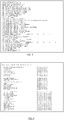
- Figure 3 shows a screenshot of the parameter setting collected from Linux OS. There are 3292 parameters that needs to be observed in the particular system.
- a computing system may have multiple hardware devices like compute device like CPU and memory, storage device, networking (Wifi, Ethernet,%) device and security device etc.
- Each of these hardware may have inbuilt performance monitoring units in the form of hardware counters which captures all the metric related to the particular device.
- These metrics may have a safe operation limits beyond which alarms will be triggered by hardware.
- the operation limits can also be manually set by the expert who can determine the anomaly criteria depending on the requirements.
- These hardware related metrics can be obtained using Linux utility like "perf”, see for example the screenshot on Figure 4 .
- the simplified diagram of Figure 5 illustrates some steps according to the invention.
- the step 9 concerns the collection of Application, Software and Hardware Layer metrics.
- the processing unit manages the collection of metrics which are sent by layers components or obtained through computer sensors.
- each metric is therefore converted to a value included in the RGB range.
- the step 11 of image construction comprise the determination of the image size and/or resolution in function of the number of collected metrics, all metrics have to converted in the image. Then a bitmap RGB image is constructed, each pixel representing one metric. It is possible to consider others types of conversion. For example, one pixel could represent a combination of metrics.
- step 12 the image is saved in a time series database. All successive images are stored in this database.
- a deep learning engine is applied to the image in order to determine if there is an anomaly. It can also be applied at the same time on several images stored in the database.
- Figure 6 is a schematic view illustrating the three layers 14, 15, 16, and the image 17 determined from the layer metrics.
- the deep learning engine is an inference model which can be obtained as follows. Several images can be constructed. Once large amount of images are available under various circumstances DeepLearning techniques is applied for training the anomaly detection model in the system. As an example an autoencoder as described on https://blog.cloudera.com/deep-learning-for-anomaly-detection/ concerns such a deep-learning technique that is used to detect anomaly by using image as input. By training the images offline, we will obtain the inference model which can be used in detecting any abnormalities in the online system. Moreover, if the system has any self-healing techniques, the issue can be addressed without any human intervention else the issue can be escalated to have human intervention.
- the following Figure 7 shows the offline process to build the inference model.
- the offline process comprises a step 18 where images are read from the database.
- the deep learning technique is applied to train and capture the model parameters from the images at step 19. Then, the anomaly detection inference model is generated at step 20.
- the Figure 8 shows the online process using the anomaly detection inference model.
- the online process comprises a step 21 of monitoring and generating bitmap in the live system.
- the anomaly detection inference model is applied at step 22i to know if there is anomaly. If no, go back to step 21. If yes, at step 23, a report to the issue is generated or a self-healing system is used to try solving the issue.
- the present discloses a method to detect the anomaly in the performance and/or security of an application/workload in the system using DeepLearning method.
Landscapes
- Engineering & Computer Science (AREA)
- Theoretical Computer Science (AREA)
- General Engineering & Computer Science (AREA)
- General Physics & Mathematics (AREA)
- Physics & Mathematics (AREA)
- Quality & Reliability (AREA)
- Evolutionary Computation (AREA)
- Computer Hardware Design (AREA)
- Artificial Intelligence (AREA)
- Multimedia (AREA)
- Computer Vision & Pattern Recognition (AREA)
- Software Systems (AREA)
- Medical Informatics (AREA)
- General Health & Medical Sciences (AREA)
- Databases & Information Systems (AREA)
- Computing Systems (AREA)
- Health & Medical Sciences (AREA)
- Image Analysis (AREA)
Abstract
Description
- The present invention concerns a method for detecting abnormal behavior in a computer system.
- Anomalies, often referred to as outliers, are data points or patterns in data that do not conform to a notion of normal behavior. Anomaly detection, then, is the task of finding those patterns in data that do not adhere to expected norms. The capability to recognize or detect anomalous behavior can provide highly useful insights into the system. Flagging or enacting a planned response when these unusual cases occur can save businesses time, money, and customers.
- There is a pressing requirement in the industry for tools and algorithms to detect anomalies in the gathered performance data from the system.
- A computing system basically works like a queue for example, the instructions go through processor pipeline in a queue, data moves from and to memory and storage subsystem in a queue. Finding out the bottleneck due to abnormal behavior of the system in the queue will improve the performance of the end user applications and improve the reliability of the system for the provider. But, computing systems have become way too complex to perform the bottleneck analysis in a traditional rule or expression-based algorithms. Traditional machine learning approaches are sub-optimal when it comes to high dimensional data, because they fail to capture the complex structure in the data. This is where deep learning methods can be leveraged for the task. In many domains, advanced techniques like neural network and fuzzy logic based solutions are used as a black-box technique to classify an outcome or predict an event. The main trade-off is these techniques may predict the event with high accuracy but lacks explainability.
- In the computing system, the traditional rule based prediction techniques become too specific/tightly coupled to a system that they cannot be used widely across the domain. Moreover, the rule based techniques will require higher computational resource and may be a heavyweight tool that can hamper the performance of the running workloads.
- The systems can be as small as an edge server running mission critical workloads to an as complex system as a High performance computing servers running a tight production workload. In both these cases, there is a huge requirement to have a light weight prediction system with higher accuracy. Deep Learning use cases have been widely used for knowledge discovery and Predictive Analytics. There are multiple use cases around where Deep Learning techniques are used to identify/predict anomalies in the system.
- Due to the explainability, performance abnormalities detection is often considered as a rule based anomaly detection problem. Due to its complexity there are pockets of research that are very narrow and look into only one component of the system. For example, anomaly detection in performance due to disk failure/network congestion/ processor heating etc... keeps the focus on only one parameter.
- Detecting anomaly in a live/production computing system is very complex as it involves lot of parameters. There are many works till now that has tried to predict performance of an application in a given system and also modeling health of a system in an empirical way. White box techniques are good to isolate and study a particular anomaly in the system in one layer and in correlation to one particular device. With white box it is not possible to consider all the monitoring parameters across the entire system. The number of parameters will be enormous which will be highly difficult to analyze using a white box technique or statistical techniques.
- The existing solutions do not consider all parameters from the system as it is too complex to solve the problem with rule based technique.
- Existing solutions are all resource and time consuming techniques as they execute whole sequence of rules and are not suitable for real-time detection of the performance anomaly.
- An object of the present invention is to provide a method which able to detect anomalies effectively and in real time.
- Another object of the present invention is to provide a method which is not time consuming.
- A further object of the present invention is to provide a method for managing huge volume of data.
- These and other objects of the present invention are substantially achieved by providing a method of detecting abnormal behavior of a computer system comprising an application layer, a software layer and a hardware layer; the method being carried out by a processing unit and comprising the steps of:
- collecting metrics relating to at least one of application layer, software layer and hardware layer,
- normalizing every metric into a range of an image coding,
- creating an image from at least all normalized metrics, and
- applying a data science model on the created image to detect abnormal behavior.
- The invention makes it possible to determine abnormal behavior from a part of or all metrics of one, two or all the three layers. The present invention allows the use of a huge amount of metrics to detect the responsible for an anomaly.
- The present invention provides operators with additional capabilities to detect problematic system components and assess the impact of system changes, for example software updates, on application performance. Moreover, this anomalies detection can be used to identify security related issues in any kind of computing system.
- Detecting anomaly in a live/production computing system is very complex as it involves lot of parameters from all the three layers of a system comprising hardware layer, software layer and application layer. On contrary to the use of white box technique which is not suitable for analyzing huge search space, the present invention concerns the use of black box technique like Deep Learning to overcome analyzing huge search space.
- With the present invention, indicators gathered from the application layer, the software layer and the hardware layer are transformed into an image. This transformation allows an image analysis in order to detect anomalies. Directly processing all indicators of the computer system to detect anomalies is very complex. The present invention is remarkable in that the anomalies detection is based on image processing, that is more efficient, faster and less energy consuming. It is also possible to monitor the entire computing system to address the performance issues.
- The data science model of the invention is a model which can be determined during an offline phase before applying the method according to the invention. Data science encompasses data analytics, data mining, machine learning, and several other related disciplines.
- According to an embodiment of the invention, the data science model can be a deep learning or a machine learning pipeline that leads towards a solution automation.
- The present invention makes it possible to look into all the available data from the system as an image and use Deep Learning based anomaly detection techniques to detect performance abnormalities and determine the causing agent.
- In particular, the steps of the present invention can be carried out in real time. Each image is processed in real time. Thus, an abnormal behavior in the system can be immediately detected and treated. It is also possible to trigger a treatment only after processing several images.
- According to an embodiment of the invention, the range can be variable in function of the number of metrics collected.
- Such a configuration makes it possible to adapt the storage means and the processing capacities.
- Advantageously, every image can be stored in a time series database. Indeed, the collected metrics can be a sequence of data collected at regular intervals over a period of time. The time series database makes it possible to support the huge volume of time-stamped data collected and to measures changes over time.
- According to an advantageously embodiment of the invention, the image can be a bitmap color or grayscale image.
- The image can be a bitmap image in 2D or 3D, color, for example with RGB coding, or grayscale.
- For example, for a bitmap 2D grayscale image, only the level of light intensity is coded, preferably on one byte (256 values). By convention, the value zero represents black (zero light intensity) and the value 255 white (maximum light intensity). Accordingly, the range of the image coding is 0-255. In this case, the step of normalizing every metric results in converting each metric value into a value in the
range 0 to 255. - In case of color image, the image can be in 256 colors (one byte). The coding may consist in associating to a pixel a value which no longer conveys the effective color of the pixel, but refers to an entry corresponding to this value in for example a look-up table comprising the complete representation of the color considered.
- It is also possible to create a 24-bit RGB image, for example by combining at least three images, each coming from a layer and associating to a single color among the three colors of the RGB coding. For example, some parameters can be captured in all three layers. They can either be combined into a 24 bit RGB image or they can be compressed with XOR or AND operations and can be used as 8 bit image itself.
- Advantageously, during the step of creating the image, the size of the image can be determined in function of the number of metrics collected.
- For example, it is possible to have a predefined size of the image. If the number of metrics is not enough to fill the image, the non-filled pixels could be filled with a predefined value. If the number of metrics exceeds the size of the image, a combination of metrics could be applied or some metrics could be ignored for a next step. It is also possible to only keep useful data from all metrics collected. For example, in a deterministic mission critical system, the non-deterministic input can come from only certain components in the device. Knowing that, it is possible to reduce the very obvious parameters to data intended to be used for creating the image.
- Moreover, during the step of creating the image, the resolution of the image can be determined in function of the number of metrics collected.
- Such a configuration makes it possible to adapt the storage means and the processing capacities.
- According to the invention, each normalized metric can be a value of a pixel of the image. Thus, the normalization step may consist in associated each metric to one pixel of the image, the value of the pixel being determined by means of a transfer function between the metrics space and the range of the image coding.
- In particular, the method according to the invention can further comprise a step of self-healing when an abnormal behavior is detected. The processing unit may be configured to apply a treatment when an anomaly is detected or to analyze the database for applying a treatment when for example a predefined criterion is reached.
- Preferably, the metrics can comprise performance and/or security metrics. The metrics can be directly sent by the three layers or obtained using computer sensors disposed in the computer system.
- The metrics according to the invention are basic metrics, key performance indicators or other kind of data available for monitoring the performance and/or the security in the computer system.
- The method according to the invention can further comprise a step of identifying a causing agent when an abnormal behavior is detected. A causing agent could be a component that caused the abnormal behavior. For example, when an application performs well, the memory bandwidth can be 10GB/s. Suddenly due to partial RAM bank failure, the memory bandwidth drops to 5 GB/s then the application runtime (metric) has gone up significantly. So here when the memory bandwidth is collected and monitored, it is possible to detect that the causing agent is the hardware malfunction.
- The present invention makes it possible to look into all the available data from the system as an image and use Deep Learning based anomaly detection techniques to detect performance abnormalities and determine the causing agent.
- The processing unit can be integrated in or arranged outside of the computer system. Thus, the method according to the invention may be executed inside or outside the computer system which is monitored. The processing unit can gather metrics directly to the computer system or via a network.
- According to another aspect of the invention, it is proposed a computer program comprising instructions which, when the program is executed by a processing unit, cause the processing unit to carry out the steps of the method as described above.
- The invention also concerns a non-transitory computer-readable storage medium encoded with computer-executable instructions which, when executed, perform the method as described above.
- Further advantages and characteristics of the invention will become apparent on examining the detailed description of an embodiment, which is in no way limitative, and the attached drawings, in which:
-
Figure 1 is a schematic diagram of an illustrative a computer system suitable for implementation of a method according to the invention, -
Figure 2 is a screenshot showing some metrics from the application layer, -
Figure 3 is a screenshot showing some metrics from the software layer, -
Figure 4 is a screenshot showing some metrics from the hardware layer, -
Figure 5 is a simplified diagram illustrating some steps of the method according to the invention, -
Figure 6 is an illustrative example of an image obtained from collected metrics through three layers according to the invention, -
Figure 7 is a simplified diagram illustrating some steps for creating a deep learning model in an offline work according to the invention, -
Figure 8 is a simplified diagram illustrating some steps for applying a deep learning model during an online work according to the invention. - While the invention is susceptible to various modifications and alternative forms, specific embodiments thereof are shown by way of example in the drawings and will herein be described in detail. It should be understood, however, that the drawings and detailed description thereto are not intended to limit the invention to the particular form disclosed, but on the contrary, the intention is to cover all modifications, equivalents and alternatives falling within the scope of the present invention as defined by the appended claims.
- Hereinafter, the present invention will be described in detail by explaining exemplary embodiments of the invention with reference to the attached drawings.
- In accordance with the preferred embodiment, the method and device according to the invention relate to the following materials and processes:
- Embodiments herein include computer-implemented methods, tangible non-transitory computer-readable mediums, and systems. The computer-implemented methods may be executed, for example, by a processor that receives instructions from a non-transitory computer-readable storage medium. Similarly, a system described herein may include at least one processor and memory, and the memory may be a non-transitory computer-readable storage medium. As used herein, a non-transitory computer-readable storage medium refers to any type of physical memory on which information or data readable by a processor may be stored. Examples include random access memory (RAM), read-only memory (ROM), volatile memory, nonvolatile memory, hard drives, CD ROMs, DVDs, flash drives, disks, and any other known physical storage medium. Singular terms, such as "memory" and "computer-readable storage medium," may additionally refer to multiple structures, such a plurality of memories and/or computer-readable storage mediums. As referred to herein, a "memory" may comprise any type of computer-readable storage medium unless otherwise specified. A computer-readable storage medium may store instructions for execution by a processor, including instructions for causing the processor to perform steps or stages consistent with an embodiment herein. Additionally, one or more computer-readable storage mediums may be utilized in implementing a computer-implemented method. The term "computer-readable storage medium" should be understood to include tangible items and exclude carrier waves and transient signals.
- The present invention concerns a method to detect anomalies in a computer system. The computer system may be a single computer, a server, several computers, a network of computers, or other electronic apparatus comprising an application layer, a software layer and a hardware layer.
-
Figure 1 shows acomputer system 1 comprising aserver 2, adisplay 3 andinput devices memory 7 coupled to the CPU; and a computerreadable storage medium 8 coupled to the CPU, the storage medium containing instructions that are executed by the CPU via the memory to implement the method according to the invention. - The
server 2 comprises three layers: an application layer, a software layer and a hardware layer. - Concerning the application layer, usually most applications will have some basic metrics or Key Performance Indicators (KPI) that needs to be satisfied for the application to run properly. For example, for a video surveillance system considered at the edge (Edge computing is a concept where computing happens very near to the place it originates from), the system will have a very tight KPI requirement like the camera should capture 100 frames/sec, should be able to store 100 images/sec, should be able to analyze 50 images/sec etc. These metrics comes from the application developer or the domain expert, see for example the screenshot of
Figure 2 . There are also tools in linux "top" that will let a user to understand the system utilized by his application. - Concerning the software layer, operating system (OS) manages all the software that needs to run for the entire application to work seamlessly and OS has lot of sensitive parameters that may completely change the behavior of the application if changed. For example, if there is an intruder who has started some malicious activity or tried changing the sensitive parameter. The collected metrics will show a change in behavior in the software stack. This may or may not affect the application. But, this is an anomaly that has to be detected before it can propagate elsewhere. There are linux tools like "sysctl -a" that can give all the OS sensitive parameters.
Figure 3 shows a screenshot of the parameter setting collected from Linux OS. There are 3292 parameters that needs to be observed in the particular system. - Concerning the hardware Layer, a computing system may have multiple hardware devices like compute device like CPU and memory, storage device, networking (Wifi, Ethernet,...) device and security device etc. Each of these hardware, may have inbuilt performance monitoring units in the form of hardware counters which captures all the metric related to the particular device. These metrics may have a safe operation limits beyond which alarms will be triggered by hardware. On the other hand, the operation limits can also be manually set by the expert who can determine the anomaly criteria depending on the requirements. These hardware related metrics can be obtained using Linux utility like "perf", see for example the screenshot on
Figure 4 . - The simplified diagram of
Figure 5 illustrates some steps according to the invention. Thestep 9 concerns the collection of Application, Software and Hardware Layer metrics. The processing unit manages the collection of metrics which are sent by layers components or obtained through computer sensors. - On
step 10, for each metric, a normalization is performed in the RBG range: each metric is therefore converted to a value included in the RGB range. - The
step 11 of image construction comprise the determination of the image size and/or resolution in function of the number of collected metrics, all metrics have to converted in the image. Then a bitmap RGB image is constructed, each pixel representing one metric. It is possible to consider others types of conversion. For example, one pixel could represent a combination of metrics. - On
step 12, the image is saved in a time series database. All successive images are stored in this database. - On
step 13, for each image, a deep learning engine is applied to the image in order to determine if there is an anomaly. It can also be applied at the same time on several images stored in the database. -
Figure 6 is a schematic view illustrating the three layers 14, 15, 16, and the image 17 determined from the layer metrics. - The deep learning engine is an inference model which can be obtained as follows. Several images can be constructed. Once large amount of images are available under various circumstances DeepLearning techniques is applied for training the anomaly detection model in the system. As an example an autoencoder as described on https://blog.cloudera.com/deep-learning-for-anomaly-detection/ concerns such a deep-learning technique that is used to detect anomaly by using image as input. By training the images offline, we will obtain the inference model which can be used in detecting any abnormalities in the online system. Moreover, if the system has any self-healing techniques, the issue can be addressed without any human intervention else the issue can be escalated to have human intervention. The following
Figure 7 shows the offline process to build the inference model. The offline process comprises a step 18 where images are read from the database. The deep learning technique is applied to train and capture the model parameters from the images at step 19. Then, the anomaly detection inference model is generated atstep 20. - The
Figure 8 shows the online process using the anomaly detection inference model. The online process comprises a step 21 of monitoring and generating bitmap in the live system. The anomaly detection inference model is applied at step 22i to know if there is anomaly. If no, go back to step 21. If yes, at step 23, a report to the issue is generated or a self-healing system is used to try solving the issue. - Accordingly, the present discloses a method to detect the anomaly in the performance and/or security of an application/workload in the system using DeepLearning method.
- Numerous variations and modifications will become apparent to those skilled in the art once the above disclosure is fully appreciated.
Claims (15)
- Method of detecting abnormal behavior of a computer system comprising an application layer, a software layer and a hardware layer; the method being carried out by a processing unit and comprising the steps of:- collecting metrics relating to at least one of application layer, software layer and hardware layer,- normalizing every metric into a range of an image coding,- creating an image from at least all normalized metrics, and- applying a data science model on the created image to detect abnormal behavior.
- Method according to claim 1, wherein the range is variable in function of the number of metrics collected.
- Method according to claim 1 or 2, wherein every image is stored in a time series database.
- Method according to any of preceding claims, wherein the image is a bitmap color or grayscale image.
- Method according to any of preceding claims, wherein during the step of creating the image, the size of the image is determined in function of the number of metrics collected.
- Method according to any of preceding claims, wherein during the step of creating the image, the resolution of the image is determined in function of the number of metrics collected.
- Method according to any of preceding claims, wherein each normalized metric is a value of a pixel of the image.
- Method according to any of preceding claims, wherein the method further comprising a step of self-healing when an abnormal behavior is detected.
- Method according to any of preceding claims, wherein the metrics comprise performance and/or security metrics.
- Method according to any of preceding claims, wherein the method further comprises a step of identifying a causing agent when an abnormal behavior is detected.
- Method according to any of preceding claims, wherein the steps are carried out in real time.
- Method according to any of preceding claims, wherein the processing unit is integrated in or arranged outside of the computer system.
- Method according to any of preceding claims, wherein the data science model is a deep learning or a machine learning pipeline that leads towards a solution automation.
- A computer program comprising instructions which, when the program is executed by a processing unit, cause the processing unit to carry out the steps of the method of one of claims 1 to 13.
- A non-transitory computer-readable storage medium encoded with computer-executable instructions which, when executed, perform the method of one of claims 1 to 13.
Priority Applications (1)
| Application Number | Priority Date | Filing Date | Title |
|---|---|---|---|
| EP20184823.1A EP3937021B1 (en) | 2020-07-08 | 2020-07-08 | Method for detecting abnormal behavior in a computer system |
Applications Claiming Priority (1)
| Application Number | Priority Date | Filing Date | Title |
|---|---|---|---|
| EP20184823.1A EP3937021B1 (en) | 2020-07-08 | 2020-07-08 | Method for detecting abnormal behavior in a computer system |
Publications (2)
| Publication Number | Publication Date |
|---|---|
| EP3937021A1 true EP3937021A1 (en) | 2022-01-12 |
| EP3937021B1 EP3937021B1 (en) | 2025-11-12 |
Family
ID=71574941
Family Applications (1)
| Application Number | Title | Priority Date | Filing Date |
|---|---|---|---|
| EP20184823.1A Active EP3937021B1 (en) | 2020-07-08 | 2020-07-08 | Method for detecting abnormal behavior in a computer system |
Country Status (1)
| Country | Link |
|---|---|
| EP (1) | EP3937021B1 (en) |
Citations (1)
| Publication number | Priority date | Publication date | Assignee | Title |
|---|---|---|---|---|
| CN110830435A (en) * | 2019-08-27 | 2020-02-21 | 国家电网有限公司信息通信分公司 | Method and device for extracting network flow space-time characteristics and detecting abnormity |
-
2020
- 2020-07-08 EP EP20184823.1A patent/EP3937021B1/en active Active
Patent Citations (1)
| Publication number | Priority date | Publication date | Assignee | Title |
|---|---|---|---|---|
| CN110830435A (en) * | 2019-08-27 | 2020-02-21 | 国家电网有限公司信息通信分公司 | Method and device for extracting network flow space-time characteristics and detecting abnormity |
Non-Patent Citations (1)
| Title |
|---|
| VICTOR DIBIA ET AL: "Deep Learning for Anomaly Detection - Cloudera Blog", 28 January 2020 (2020-01-28), XP055755801, Retrieved from the Internet <URL:https://blog.cloudera.com/deep-learning-for-anomaly-detection/> [retrieved on 20201202] * |
Also Published As
| Publication number | Publication date |
|---|---|
| EP3937021B1 (en) | 2025-11-12 |
Similar Documents
| Publication | Publication Date | Title |
|---|---|---|
| CN112272763B (en) | Abnormality detection device, abnormality detection method, and computer-readable storage medium | |
| JP2022500745A (en) | Computer implementation methods, computer program products and systems for anomaly detection and / or predictive maintenance | |
| CA3037326A1 (en) | Sparse neural network based anomaly detection in multi-dimensional time series | |
| CN117235443A (en) | A power operation safety monitoring method and system based on edge AI | |
| JP2023547849A (en) | Method or non-transitory computer-readable medium for automated real-time detection, prediction, and prevention of rare failures in industrial systems using unlabeled sensor data | |
| Fu et al. | A hybrid anomaly detection framework in cloud computing using one-class and two-class support vector machines | |
| CN116192536B (en) | A network intrusion detection method, device, electronic equipment and readable storage medium | |
| CN110943974B (en) | DDoS (distributed denial of service) anomaly detection method and cloud platform host | |
| Mali | IoT-Based Data Acquisition and Machine Learning for Process Optimization | |
| Tang et al. | Automated seismic event detection considering faulty data interference using deep learning and Bayesian fusion | |
| WO2022115419A1 (en) | Method of detecting an anomaly in a system | |
| CN110874601B (en) | Method for recognizing equipment operating state, state recognition model training method and device | |
| US20240401586A1 (en) | Artificial intelligence-driven classification workflow for diagnosis of sucker rod pump operating conditions | |
| CN118864986A (en) | Remote monitoring management method, device, equipment and storage medium for equipment operation | |
| CN117389742B (en) | Edge computing method, device and storage medium for machine vision | |
| EP3937021B1 (en) | Method for detecting abnormal behavior in a computer system | |
| Noetzold et al. | Enhancing infrastructure observability: machine learning for proactive monitoring and anomaly detection | |
| JP7678257B2 (en) | Intelligent anomaly detection device and its control method | |
| WO2025079097A1 (en) | System and method for detecting anomalies in a network | |
| US20250193067A1 (en) | Automated alert rationalization system to increase alert value through correlation of alerts | |
| KR20220156266A (en) | Monitoring service apparatus and method for providing fault prediction of device based on transfer learning | |
| CN114676002A (en) | System operation and maintenance method and device based on PHM technology | |
| CN119179309A (en) | Industrial field automatic monitoring method and system based on cloud edge cooperative detection | |
| US20240259408A1 (en) | Test case-based anomaly detection within a computing environment | |
| CN118195590A (en) | Equipment maintenance method, device, equipment and storage medium |
Legal Events
| Date | Code | Title | Description |
|---|---|---|---|
| PUAI | Public reference made under article 153(3) epc to a published international application that has entered the european phase |
Free format text: ORIGINAL CODE: 0009012 |
|
| STAA | Information on the status of an ep patent application or granted ep patent |
Free format text: STATUS: THE APPLICATION HAS BEEN PUBLISHED |
|
| AK | Designated contracting states |
Kind code of ref document: A1 Designated state(s): AL AT BE BG CH CY CZ DE DK EE ES FI FR GB GR HR HU IE IS IT LI LT LU LV MC MK MT NL NO PL PT RO RS SE SI SK SM TR |
|
| B565 | Issuance of search results under rule 164(2) epc |
Effective date: 20201221 |
|
| RAP1 | Party data changed (applicant data changed or rights of an application transferred) |
Owner name: BULL SAS |
|
| STAA | Information on the status of an ep patent application or granted ep patent |
Free format text: STATUS: REQUEST FOR EXAMINATION WAS MADE |
|
| 17P | Request for examination filed |
Effective date: 20220509 |
|
| RBV | Designated contracting states (corrected) |
Designated state(s): AL AT BE BG CH CY CZ DE DK EE ES FI FR GB GR HR HU IE IS IT LI LT LU LV MC MK MT NL NO PL PT RO RS SE SI SK SM TR |
|
| STAA | Information on the status of an ep patent application or granted ep patent |
Free format text: STATUS: EXAMINATION IS IN PROGRESS |
|
| P01 | Opt-out of the competence of the unified patent court (upc) registered |
Effective date: 20230330 |
|
| 17Q | First examination report despatched |
Effective date: 20230523 |
|
| GRAP | Despatch of communication of intention to grant a patent |
Free format text: ORIGINAL CODE: EPIDOSNIGR1 |
|
| STAA | Information on the status of an ep patent application or granted ep patent |
Free format text: STATUS: GRANT OF PATENT IS INTENDED |
|
| RIC1 | Information provided on ipc code assigned before grant |
Ipc: G06F 11/22 20060101AFI20250707BHEP Ipc: G06F 11/30 20060101ALI20250707BHEP Ipc: G06F 11/3668 20250101ALI20250707BHEP Ipc: G06V 10/56 20220101ALI20250707BHEP Ipc: G06V 10/82 20220101ALI20250707BHEP |
|
| INTG | Intention to grant announced |
Effective date: 20250725 |
|
| GRAS | Grant fee paid |
Free format text: ORIGINAL CODE: EPIDOSNIGR3 |
|
| GRAA | (expected) grant |
Free format text: ORIGINAL CODE: 0009210 |
|
| STAA | Information on the status of an ep patent application or granted ep patent |
Free format text: STATUS: THE PATENT HAS BEEN GRANTED |
|
| AK | Designated contracting states |
Kind code of ref document: B1 Designated state(s): AL AT BE BG CH CY CZ DE DK EE ES FI FR GB GR HR HU IE IS IT LI LT LU LV MC MK MT NL NO PL PT RO RS SE SI SK SM TR |
|
| REG | Reference to a national code |
Ref country code: CH Ref legal event code: F10 Free format text: ST27 STATUS EVENT CODE: U-0-0-F10-F00 (AS PROVIDED BY THE NATIONAL OFFICE) Effective date: 20251112 Ref country code: GB Ref legal event code: FG4D |
|
| REG | Reference to a national code |
Ref country code: IE Ref legal event code: FG4D |
|
| REG | Reference to a national code |
Ref country code: DE Ref legal event code: R096 Ref document number: 602020062018 Country of ref document: DE |
|
| REG | Reference to a national code |
Ref country code: NL Ref legal event code: MP Effective date: 20251112 |
|
| PG25 | Lapsed in a contracting state [announced via postgrant information from national office to epo] |
Ref country code: ES Free format text: LAPSE BECAUSE OF FAILURE TO SUBMIT A TRANSLATION OF THE DESCRIPTION OR TO PAY THE FEE WITHIN THE PRESCRIBED TIME-LIMIT Effective date: 20251112 |
|
| REG | Reference to a national code |
Ref country code: LT Ref legal event code: MG9D |
|
| PG25 | Lapsed in a contracting state [announced via postgrant information from national office to epo] |
Ref country code: NO Free format text: LAPSE BECAUSE OF FAILURE TO SUBMIT A TRANSLATION OF THE DESCRIPTION OR TO PAY THE FEE WITHIN THE PRESCRIBED TIME-LIMIT Effective date: 20260212 |
|
| PG25 | Lapsed in a contracting state [announced via postgrant information from national office to epo] |
Ref country code: AT Free format text: LAPSE BECAUSE OF FAILURE TO SUBMIT A TRANSLATION OF THE DESCRIPTION OR TO PAY THE FEE WITHIN THE PRESCRIBED TIME-LIMIT Effective date: 20251112 Ref country code: FI Free format text: LAPSE BECAUSE OF FAILURE TO SUBMIT A TRANSLATION OF THE DESCRIPTION OR TO PAY THE FEE WITHIN THE PRESCRIBED TIME-LIMIT Effective date: 20251112 Ref country code: HR Free format text: LAPSE BECAUSE OF FAILURE TO SUBMIT A TRANSLATION OF THE DESCRIPTION OR TO PAY THE FEE WITHIN THE PRESCRIBED TIME-LIMIT Effective date: 20251112 |
|
| REG | Reference to a national code |
Ref country code: AT Ref legal event code: MK05 Ref document number: 1857330 Country of ref document: AT Kind code of ref document: T Effective date: 20251112 |
|
| PG25 | Lapsed in a contracting state [announced via postgrant information from national office to epo] |
Ref country code: NL Free format text: LAPSE BECAUSE OF FAILURE TO SUBMIT A TRANSLATION OF THE DESCRIPTION OR TO PAY THE FEE WITHIN THE PRESCRIBED TIME-LIMIT Effective date: 20251112 |
|
| PG25 | Lapsed in a contracting state [announced via postgrant information from national office to epo] |
Ref country code: RS Free format text: LAPSE BECAUSE OF FAILURE TO SUBMIT A TRANSLATION OF THE DESCRIPTION OR TO PAY THE FEE WITHIN THE PRESCRIBED TIME-LIMIT Effective date: 20260212 |
|
| PG25 | Lapsed in a contracting state [announced via postgrant information from national office to epo] |
Ref country code: IS Free format text: LAPSE BECAUSE OF FAILURE TO SUBMIT A TRANSLATION OF THE DESCRIPTION OR TO PAY THE FEE WITHIN THE PRESCRIBED TIME-LIMIT Effective date: 20260312 |
|
| PG25 | Lapsed in a contracting state [announced via postgrant information from national office to epo] |
Ref country code: PT Free format text: LAPSE BECAUSE OF FAILURE TO SUBMIT A TRANSLATION OF THE DESCRIPTION OR TO PAY THE FEE WITHIN THE PRESCRIBED TIME-LIMIT Effective date: 20260312 |
|
| PG25 | Lapsed in a contracting state [announced via postgrant information from national office to epo] |
Ref country code: PL Free format text: LAPSE BECAUSE OF FAILURE TO SUBMIT A TRANSLATION OF THE DESCRIPTION OR TO PAY THE FEE WITHIN THE PRESCRIBED TIME-LIMIT Effective date: 20251112 |
|
| PG25 | Lapsed in a contracting state [announced via postgrant information from national office to epo] |
Ref country code: LV Free format text: LAPSE BECAUSE OF FAILURE TO SUBMIT A TRANSLATION OF THE DESCRIPTION OR TO PAY THE FEE WITHIN THE PRESCRIBED TIME-LIMIT Effective date: 20251112 |
|
| PG25 | Lapsed in a contracting state [announced via postgrant information from national office to epo] |
Ref country code: BG Free format text: LAPSE BECAUSE OF FAILURE TO SUBMIT A TRANSLATION OF THE DESCRIPTION OR TO PAY THE FEE WITHIN THE PRESCRIBED TIME-LIMIT Effective date: 20251112 |