EP3936511A1 - Ruthenium complexes, their optically pure enantiomers and uses thereof - Google Patents
Ruthenium complexes, their optically pure enantiomers and uses thereof Download PDFInfo
- Publication number
- EP3936511A1 EP3936511A1 EP20305787.2A EP20305787A EP3936511A1 EP 3936511 A1 EP3936511 A1 EP 3936511A1 EP 20305787 A EP20305787 A EP 20305787A EP 3936511 A1 EP3936511 A1 EP 3936511A1
- Authority
- EP
- European Patent Office
- Prior art keywords
- group
- alkyl
- aryl
- optionally substituted
- cycloalkyl
- Prior art date
- Legal status (The legal status is an assumption and is not a legal conclusion. Google has not performed a legal analysis and makes no representation as to the accuracy of the status listed.)
- Withdrawn
Links
- 150000003303 ruthenium Chemical class 0.000 title claims description 11
- HBAQYPYDRFILMT-UHFFFAOYSA-N 8-[3-(1-cyclopropylpyrazol-4-yl)-1H-pyrazolo[4,3-d]pyrimidin-5-yl]-3-methyl-3,8-diazabicyclo[3.2.1]octan-2-one Chemical class C1(CC1)N1N=CC(=C1)C1=NNC2=C1N=C(N=C2)N1C2C(N(CC1CC2)C)=O HBAQYPYDRFILMT-UHFFFAOYSA-N 0.000 title description 9
- 239000003054 catalyst Substances 0.000 claims abstract description 18
- 239000012327 Ruthenium complex Substances 0.000 claims abstract description 10
- 238000005865 alkene metathesis reaction Methods 0.000 claims abstract description 7
- 238000002360 preparation method Methods 0.000 claims abstract description 5
- 125000004169 (C1-C6) alkyl group Chemical group 0.000 claims description 249
- 125000000041 C6-C10 aryl group Chemical group 0.000 claims description 122
- 125000001424 substituent group Chemical group 0.000 claims description 92
- 125000003118 aryl group Chemical group 0.000 claims description 70
- 125000001997 phenyl group Chemical group [H]C1=C([H])C([H])=C(*)C([H])=C1[H] 0.000 claims description 68
- 125000001072 heteroaryl group Chemical group 0.000 claims description 60
- 125000005843 halogen group Chemical group 0.000 claims description 59
- 125000000217 alkyl group Chemical group 0.000 claims description 55
- 125000004191 (C1-C6) alkoxy group Chemical group 0.000 claims description 48
- -1 (C1-C6)alcoxy Chemical group 0.000 claims description 41
- 125000004890 (C1-C6) alkylamino group Chemical group 0.000 claims description 36
- 125000000753 cycloalkyl group Chemical group 0.000 claims description 34
- 125000006719 (C6-C10) aryl (C1-C6) alkyl group Chemical group 0.000 claims description 26
- 229910052799 carbon Inorganic materials 0.000 claims description 25
- 239000000203 mixture Substances 0.000 claims description 24
- 229910052736 halogen Inorganic materials 0.000 claims description 23
- 150000002367 halogens Chemical group 0.000 claims description 23
- 125000004104 aryloxy group Chemical group 0.000 claims description 21
- 125000002496 methyl group Chemical group [H]C([H])([H])* 0.000 claims description 21
- 125000000000 cycloalkoxy group Chemical group 0.000 claims description 19
- 125000000008 (C1-C10) alkyl group Chemical group 0.000 claims description 18
- 125000006652 (C3-C12) cycloalkyl group Chemical group 0.000 claims description 18
- 125000005913 (C3-C6) cycloalkyl group Chemical group 0.000 claims description 18
- 125000005553 heteroaryloxy group Chemical group 0.000 claims description 18
- 238000000034 method Methods 0.000 claims description 18
- 125000000449 nitro group Chemical group [O-][N+](*)=O 0.000 claims description 17
- 125000006736 (C6-C20) aryl group Chemical group 0.000 claims description 16
- 125000000592 heterocycloalkyl group Chemical group 0.000 claims description 15
- 125000004432 carbon atom Chemical group C* 0.000 claims description 14
- 125000003178 carboxy group Chemical group [H]OC(*)=O 0.000 claims description 12
- KJTLSVCANCCWHF-UHFFFAOYSA-N Ruthenium Chemical group [Ru] KJTLSVCANCCWHF-UHFFFAOYSA-N 0.000 claims description 10
- 125000005129 aryl carbonyl group Chemical group 0.000 claims description 10
- 125000005161 aryl oxy carbonyl group Chemical group 0.000 claims description 10
- 125000005135 aryl sulfinyl group Chemical group 0.000 claims description 10
- 125000004391 aryl sulfonyl group Chemical group 0.000 claims description 10
- 125000005110 aryl thio group Chemical group 0.000 claims description 10
- 125000004093 cyano group Chemical group *C#N 0.000 claims description 10
- 125000001449 isopropyl group Chemical group [H]C([H])([H])C([H])(*)C([H])([H])[H] 0.000 claims description 10
- 229910052707 ruthenium Inorganic materials 0.000 claims description 10
- 125000004454 (C1-C6) alkoxycarbonyl group Chemical group 0.000 claims description 9
- 125000004738 (C1-C6) alkyl sulfinyl group Chemical group 0.000 claims description 9
- 125000004916 (C1-C6) alkylcarbonyl group Chemical group 0.000 claims description 9
- 125000004739 (C1-C6) alkylsulfonyl group Chemical group 0.000 claims description 9
- 125000006700 (C1-C6) alkylthio group Chemical group 0.000 claims description 9
- 125000005915 C6-C14 aryl group Chemical group 0.000 claims description 9
- 229910003827 NRaRb Inorganic materials 0.000 claims description 9
- 125000003368 amide group Chemical group 0.000 claims description 9
- 150000001449 anionic compounds Chemical class 0.000 claims description 9
- 229910001412 inorganic anion Inorganic materials 0.000 claims description 9
- 229940124530 sulfonamide Drugs 0.000 claims description 9
- 150000003456 sulfonamides Chemical class 0.000 claims description 9
- 238000000926 separation method Methods 0.000 claims description 7
- 238000004296 chiral HPLC Methods 0.000 claims description 6
- 125000001495 ethyl group Chemical group [H]C([H])([H])C([H])([H])* 0.000 claims description 6
- 125000000623 heterocyclic group Chemical group 0.000 claims description 4
- 230000008569 process Effects 0.000 claims description 4
- 125000000113 cyclohexyl group Chemical group [H]C1([H])C([H])([H])C([H])([H])C([H])(*)C([H])([H])C1([H])[H] 0.000 claims description 3
- 125000001624 naphthyl group Chemical group 0.000 claims description 3
- YMWUJEATGCHHMB-UHFFFAOYSA-N Dichloromethane Chemical compound ClCCl YMWUJEATGCHHMB-UHFFFAOYSA-N 0.000 description 25
- HEDRZPFGACZZDS-MICDWDOJSA-N Trichloro(2H)methane Chemical compound [2H]C(Cl)(Cl)Cl HEDRZPFGACZZDS-MICDWDOJSA-N 0.000 description 24
- 239000007787 solid Substances 0.000 description 17
- OFBQJSOFQDEBGM-UHFFFAOYSA-N Pentane Chemical compound CCCCC OFBQJSOFQDEBGM-UHFFFAOYSA-N 0.000 description 16
- 230000015572 biosynthetic process Effects 0.000 description 15
- 238000003786 synthesis reaction Methods 0.000 description 15
- 150000001721 carbon Chemical group 0.000 description 13
- YXFVVABEGXRONW-UHFFFAOYSA-N Toluene Chemical compound CC1=CC=CC=C1 YXFVVABEGXRONW-UHFFFAOYSA-N 0.000 description 12
- 239000000047 product Substances 0.000 description 12
- XKRFYHLGVUSROY-UHFFFAOYSA-N Argon Chemical compound [Ar] XKRFYHLGVUSROY-UHFFFAOYSA-N 0.000 description 10
- 238000006555 catalytic reaction Methods 0.000 description 10
- 239000000243 solution Substances 0.000 description 9
- CSCPPACGZOOCGX-UHFFFAOYSA-N Acetone Chemical compound CC(C)=O CSCPPACGZOOCGX-UHFFFAOYSA-N 0.000 description 8
- RTZKZFJDLAIYFH-UHFFFAOYSA-N Diethyl ether Chemical compound CCOCC RTZKZFJDLAIYFH-UHFFFAOYSA-N 0.000 description 8
- 239000000843 powder Substances 0.000 description 8
- 238000005160 1H NMR spectroscopy Methods 0.000 description 7
- KMKCJXPECJFQPQ-UHFFFAOYSA-L dichloro-[(2-propan-2-yloxyphenyl)methylidene]ruthenium;tricyclohexylphosphane Chemical compound CC(C)OC1=CC=CC=C1C=[Ru](Cl)Cl.C1CCCCC1P(C1CCCCC1)C1CCCCC1 KMKCJXPECJFQPQ-UHFFFAOYSA-L 0.000 description 7
- 125000005842 heteroatom Chemical group 0.000 description 7
- 150000002466 imines Chemical class 0.000 description 7
- 238000001644 13C nuclear magnetic resonance spectroscopy Methods 0.000 description 6
- 125000004122 cyclic group Chemical group 0.000 description 6
- 238000004896 high resolution mass spectrometry Methods 0.000 description 6
- 239000003446 ligand Substances 0.000 description 6
- IUBQJLUDMLPAGT-UHFFFAOYSA-N potassium bis(trimethylsilyl)amide Chemical compound C[Si](C)(C)N([K])[Si](C)(C)C IUBQJLUDMLPAGT-UHFFFAOYSA-N 0.000 description 6
- WKBALTUBRZPIPZ-UHFFFAOYSA-N 2,6-di(propan-2-yl)aniline Chemical compound CC(C)C1=CC=CC(C(C)C)=C1N WKBALTUBRZPIPZ-UHFFFAOYSA-N 0.000 description 5
- 101150034699 Nudt3 gene Proteins 0.000 description 5
- VYPSYNLAJGMNEJ-UHFFFAOYSA-N Silicium dioxide Chemical compound O=[Si]=O VYPSYNLAJGMNEJ-UHFFFAOYSA-N 0.000 description 5
- 229910052786 argon Inorganic materials 0.000 description 5
- 238000006243 chemical reaction Methods 0.000 description 5
- 238000004128 high performance liquid chromatography Methods 0.000 description 5
- 230000003287 optical effect Effects 0.000 description 5
- 125000002924 primary amino group Chemical group [H]N([H])* 0.000 description 5
- 238000013030 3-step procedure Methods 0.000 description 4
- OKKJLVBELUTLKV-MZCSYVLQSA-N Deuterated methanol Chemical compound [2H]OC([2H])([2H])[2H] OKKJLVBELUTLKV-MZCSYVLQSA-N 0.000 description 4
- LFQSCWFLJHTTHZ-UHFFFAOYSA-N Ethanol Chemical compound CCO LFQSCWFLJHTTHZ-UHFFFAOYSA-N 0.000 description 4
- IMNFDUFMRHMDMM-UHFFFAOYSA-N N-Heptane Chemical compound CCCCCCC IMNFDUFMRHMDMM-UHFFFAOYSA-N 0.000 description 4
- 230000029936 alkylation Effects 0.000 description 4
- 238000005804 alkylation reaction Methods 0.000 description 4
- 125000003710 aryl alkyl group Chemical group 0.000 description 4
- 125000004429 atom Chemical group 0.000 description 4
- 238000005686 cross metathesis reaction Methods 0.000 description 4
- VLKZOEOYAKHREP-UHFFFAOYSA-N n-Hexane Chemical class CCCCCC VLKZOEOYAKHREP-UHFFFAOYSA-N 0.000 description 4
- 150000003839 salts Chemical class 0.000 description 4
- 239000002904 solvent Substances 0.000 description 4
- 238000001228 spectrum Methods 0.000 description 4
- 229910052723 transition metal Inorganic materials 0.000 description 4
- 150000003624 transition metals Chemical class 0.000 description 4
- 239000003039 volatile agent Substances 0.000 description 4
- OKTJSMMVPCPJKN-UHFFFAOYSA-N Carbon Chemical compound [C] OKTJSMMVPCPJKN-UHFFFAOYSA-N 0.000 description 3
- HEMHJVSKTPXQMS-UHFFFAOYSA-M Sodium hydroxide Chemical compound [OH-].[Na+] HEMHJVSKTPXQMS-UHFFFAOYSA-M 0.000 description 3
- 125000003545 alkoxy group Chemical group 0.000 description 3
- 125000002102 aryl alkyloxo group Chemical group 0.000 description 3
- 125000004181 carboxyalkyl group Chemical group 0.000 description 3
- 239000000460 chlorine Substances 0.000 description 3
- 150000001875 compounds Chemical class 0.000 description 3
- 238000002519 electronic circular dichroism spectroscopy Methods 0.000 description 3
- 239000003480 eluent Substances 0.000 description 3
- 229910052757 nitrogen Inorganic materials 0.000 description 3
- 238000000746 purification Methods 0.000 description 3
- 150000003254 radicals Chemical class 0.000 description 3
- 238000007142 ring opening reaction Methods 0.000 description 3
- 238000004809 thin layer chromatography Methods 0.000 description 3
- 230000009466 transformation Effects 0.000 description 3
- 238000000844 transformation Methods 0.000 description 3
- XLYOFNOQVPJJNP-UHFFFAOYSA-N water Substances O XLYOFNOQVPJJNP-UHFFFAOYSA-N 0.000 description 3
- 238000004293 19F NMR spectroscopy Methods 0.000 description 2
- QTBSBXVTEAMEQO-UHFFFAOYSA-N Acetic acid Chemical compound CC(O)=O QTBSBXVTEAMEQO-UHFFFAOYSA-N 0.000 description 2
- IJGRMHOSHXDMSA-UHFFFAOYSA-N Atomic nitrogen Chemical compound N#N IJGRMHOSHXDMSA-UHFFFAOYSA-N 0.000 description 2
- HEDRZPFGACZZDS-UHFFFAOYSA-N Chloroform Chemical compound ClC(Cl)Cl HEDRZPFGACZZDS-UHFFFAOYSA-N 0.000 description 2
- DGAQECJNVWCQMB-PUAWFVPOSA-M Ilexoside XXIX Chemical compound C[C@@H]1CC[C@@]2(CC[C@@]3(C(=CC[C@H]4[C@]3(CC[C@@H]5[C@@]4(CC[C@@H](C5(C)C)OS(=O)(=O)[O-])C)C)[C@@H]2[C@]1(C)O)C)C(=O)O[C@H]6[C@@H]([C@H]([C@@H]([C@H](O6)CO)O)O)O.[Na+] DGAQECJNVWCQMB-PUAWFVPOSA-M 0.000 description 2
- CSNNHWWHGAXBCP-UHFFFAOYSA-L Magnesium sulfate Chemical compound [Mg+2].[O-][S+2]([O-])([O-])[O-] CSNNHWWHGAXBCP-UHFFFAOYSA-L 0.000 description 2
- MZRVEZGGRBJDDB-UHFFFAOYSA-N N-Butyllithium Chemical compound [Li]CCCC MZRVEZGGRBJDDB-UHFFFAOYSA-N 0.000 description 2
- WYURNTSHIVDZCO-UHFFFAOYSA-N Tetrahydrofuran Chemical compound C1CCOC1 WYURNTSHIVDZCO-UHFFFAOYSA-N 0.000 description 2
- 238000007295 Wittig olefination reaction Methods 0.000 description 2
- 125000005073 adamantyl group Chemical group C12(CC3CC(CC(C1)C3)C2)* 0.000 description 2
- 150000001299 aldehydes Chemical class 0.000 description 2
- 125000003282 alkyl amino group Chemical group 0.000 description 2
- 125000004414 alkyl thio group Chemical group 0.000 description 2
- 125000003785 benzimidazolyl group Chemical group N1=C(NC2=C1C=CC=C2)* 0.000 description 2
- 125000004196 benzothienyl group Chemical group S1C(=CC2=C1C=CC=C2)* 0.000 description 2
- 125000002619 bicyclic group Chemical group 0.000 description 2
- 229910052794 bromium Inorganic materials 0.000 description 2
- 230000003197 catalytic effect Effects 0.000 description 2
- 229910052801 chlorine Inorganic materials 0.000 description 2
- 238000004587 chromatography analysis Methods 0.000 description 2
- 229910052731 fluorine Inorganic materials 0.000 description 2
- 230000004927 fusion Effects 0.000 description 2
- 125000002183 isoquinolinyl group Chemical group C1(=NC=CC2=CC=CC=C12)* 0.000 description 2
- 125000001786 isothiazolyl group Chemical group 0.000 description 2
- 238000005649 metathesis reaction Methods 0.000 description 2
- 238000000655 nuclear magnetic resonance spectrum Methods 0.000 description 2
- 125000002971 oxazolyl group Chemical group 0.000 description 2
- 125000004043 oxo group Chemical group O=* 0.000 description 2
- 229910052760 oxygen Inorganic materials 0.000 description 2
- BWHMMNNQKKPAPP-UHFFFAOYSA-L potassium carbonate Chemical compound [K+].[K+].[O-]C([O-])=O BWHMMNNQKKPAPP-UHFFFAOYSA-L 0.000 description 2
- 239000002244 precipitate Substances 0.000 description 2
- 238000001556 precipitation Methods 0.000 description 2
- 125000003226 pyrazolyl group Chemical group 0.000 description 2
- 125000002943 quinolinyl group Chemical group N1=C(C=CC2=CC=CC=C12)* 0.000 description 2
- YAYGSLOSTXKUBW-UHFFFAOYSA-N ruthenium(2+) Chemical compound [Ru+2] YAYGSLOSTXKUBW-UHFFFAOYSA-N 0.000 description 2
- SMQUZDBALVYZAC-UHFFFAOYSA-N salicylaldehyde Chemical compound OC1=CC=CC=C1C=O SMQUZDBALVYZAC-UHFFFAOYSA-N 0.000 description 2
- 229920006395 saturated elastomer Polymers 0.000 description 2
- 239000000741 silica gel Substances 0.000 description 2
- 229910002027 silica gel Inorganic materials 0.000 description 2
- 229910052708 sodium Inorganic materials 0.000 description 2
- 239000011734 sodium Substances 0.000 description 2
- 229910052717 sulfur Inorganic materials 0.000 description 2
- 125000000999 tert-butyl group Chemical group [H]C([H])([H])C(*)(C([H])([H])[H])C([H])([H])[H] 0.000 description 2
- 125000003831 tetrazolyl group Chemical group 0.000 description 2
- 125000000335 thiazolyl group Chemical group 0.000 description 2
- 125000001544 thienyl group Chemical group 0.000 description 2
- WLPUWLXVBWGYMZ-UHFFFAOYSA-N tricyclohexylphosphine Chemical compound C1CCCCC1P(C1CCCCC1)C1CCCCC1 WLPUWLXVBWGYMZ-UHFFFAOYSA-N 0.000 description 2
- 125000002023 trifluoromethyl group Chemical group FC(F)(F)* 0.000 description 2
- XNRBLQMJVXSCAJ-UHFFFAOYSA-N (2-chlorophenyl) carbamate Chemical group NC(=O)OC1=CC=CC=C1Cl XNRBLQMJVXSCAJ-UHFFFAOYSA-N 0.000 description 1
- 125000004178 (C1-C4) alkyl group Chemical group 0.000 description 1
- 0 *C1C(*)(*)C(*)N(*)C(*)(*)C1 Chemical compound *C1C(*)(*)C(*)N(*)C(*)(*)C1 0.000 description 1
- 125000004529 1,2,3-triazinyl group Chemical group N1=NN=C(C=C1)* 0.000 description 1
- 125000001399 1,2,3-triazolyl group Chemical group N1N=NC(=C1)* 0.000 description 1
- 125000004514 1,2,4-thiadiazolyl group Chemical group 0.000 description 1
- 125000004530 1,2,4-triazinyl group Chemical group N1=NC(=NC=C1)* 0.000 description 1
- 125000001376 1,2,4-triazolyl group Chemical group N1N=C(N=C1)* 0.000 description 1
- 125000004520 1,3,4-thiadiazolyl group Chemical group 0.000 description 1
- QWECYQJPMOAXMH-UHFFFAOYSA-N 1-(1-bromoethyl)naphthalene Chemical compound C1=CC=C2C(C(Br)C)=CC=CC2=C1 QWECYQJPMOAXMH-UHFFFAOYSA-N 0.000 description 1
- CRRUGYDDEMGVDY-UHFFFAOYSA-N 1-bromoethylbenzene Chemical compound CC(Br)C1=CC=CC=C1 CRRUGYDDEMGVDY-UHFFFAOYSA-N 0.000 description 1
- SXCKVSZTZAMSRS-UHFFFAOYSA-N 1-ethenyl-2-propan-2-yloxybenzene Chemical compound CC(C)OC1=CC=CC=C1C=C SXCKVSZTZAMSRS-UHFFFAOYSA-N 0.000 description 1
- MZZRKEIUNOYYDF-UHFFFAOYSA-N 2,4-dimethylcyclohex-3-ene-1-carbaldehyde Chemical compound CC1C=C(C)CCC1C=O MZZRKEIUNOYYDF-UHFFFAOYSA-N 0.000 description 1
- ZKYVLGNFTZTQTI-UHFFFAOYSA-N 2-ethenyl-4-nitro-1-propan-2-yloxybenzene Chemical compound CC(C)OC1=CC=C([N+]([O-])=O)C=C1C=C ZKYVLGNFTZTQTI-UHFFFAOYSA-N 0.000 description 1
- IHFRMUGEILMHNU-UHFFFAOYSA-N 2-hydroxy-5-nitrobenzaldehyde Chemical compound OC1=CC=C([N+]([O-])=O)C=C1C=O IHFRMUGEILMHNU-UHFFFAOYSA-N 0.000 description 1
- 238000004679 31P NMR spectroscopy Methods 0.000 description 1
- ADLVDYMTBOSDFE-UHFFFAOYSA-N 5-chloro-6-nitroisoindole-1,3-dione Chemical compound C1=C(Cl)C([N+](=O)[O-])=CC2=C1C(=O)NC2=O ADLVDYMTBOSDFE-UHFFFAOYSA-N 0.000 description 1
- ZCYVEMRRCGMTRW-UHFFFAOYSA-N 7553-56-2 Chemical compound [I] ZCYVEMRRCGMTRW-UHFFFAOYSA-N 0.000 description 1
- 229920000856 Amylose Polymers 0.000 description 1
- WKBOTKDWSSQWDR-UHFFFAOYSA-N Bromine atom Chemical compound [Br] WKBOTKDWSSQWDR-UHFFFAOYSA-N 0.000 description 1
- PGYKUXDGASCYHK-UYBNASLDSA-N CC(C)C(CC1)[C@@H](C)CC1(C)/[N+](/c1c(C(C)C)cccc1C(C)C)=C\C Chemical compound CC(C)C(CC1)[C@@H](C)CC1(C)/[N+](/c1c(C(C)C)cccc1C(C)C)=C\C PGYKUXDGASCYHK-UYBNASLDSA-N 0.000 description 1
- 239000004215 Carbon black (E152) Substances 0.000 description 1
- ZAMOUSCENKQFHK-UHFFFAOYSA-N Chlorine atom Chemical compound [Cl] ZAMOUSCENKQFHK-UHFFFAOYSA-N 0.000 description 1
- JNCMHMUGTWEVOZ-UHFFFAOYSA-N F[CH]F Chemical compound F[CH]F JNCMHMUGTWEVOZ-UHFFFAOYSA-N 0.000 description 1
- PXGOKWXKJXAPGV-UHFFFAOYSA-N Fluorine Chemical compound FF PXGOKWXKJXAPGV-UHFFFAOYSA-N 0.000 description 1
- 230000005526 G1 to G0 transition Effects 0.000 description 1
- 238000005481 NMR spectroscopy Methods 0.000 description 1
- MPIMZAKRTOXRAO-UHFFFAOYSA-N N[C]N Chemical class N[C]N MPIMZAKRTOXRAO-UHFFFAOYSA-N 0.000 description 1
- 238000004639 Schlenk technique Methods 0.000 description 1
- 230000035508 accumulation Effects 0.000 description 1
- 238000009825 accumulation Methods 0.000 description 1
- 229960000583 acetic acid Drugs 0.000 description 1
- 125000001931 aliphatic group Chemical group 0.000 description 1
- 125000004453 alkoxycarbonyl group Chemical group 0.000 description 1
- 125000004448 alkyl carbonyl group Chemical group 0.000 description 1
- 150000001350 alkyl halides Chemical class 0.000 description 1
- 125000004644 alkyl sulfinyl group Chemical group 0.000 description 1
- 125000004390 alkyl sulfonyl group Chemical group 0.000 description 1
- 239000004411 aluminium Substances 0.000 description 1
- 229910052782 aluminium Inorganic materials 0.000 description 1
- XAGFODPZIPBFFR-UHFFFAOYSA-N aluminium Chemical compound [Al] XAGFODPZIPBFFR-UHFFFAOYSA-N 0.000 description 1
- 125000005334 azaindolyl group Chemical group N1N=C(C2=CC=CC=C12)* 0.000 description 1
- 125000002785 azepinyl group Chemical group 0.000 description 1
- 125000000499 benzofuranyl group Chemical group O1C(=CC2=C1C=CC=C2)* 0.000 description 1
- 125000004601 benzofurazanyl group Chemical group N1=C2C(=NO1)C(=CC=C2)* 0.000 description 1
- 125000001164 benzothiazolyl group Chemical group S1C(=NC2=C1C=CC=C2)* 0.000 description 1
- 125000003354 benzotriazolyl group Chemical group N1N=NC2=C1C=CC=C2* 0.000 description 1
- 125000004541 benzoxazolyl group Chemical group O1C(=NC2=C1C=CC=C2)* 0.000 description 1
- 125000001797 benzyl group Chemical group [H]C1=C([H])C([H])=C(C([H])=C1[H])C([H])([H])* 0.000 description 1
- 125000006580 bicyclic heterocycloalkyl group Chemical group 0.000 description 1
- GDTBXPJZTBHREO-UHFFFAOYSA-N bromine Substances BrBr GDTBXPJZTBHREO-UHFFFAOYSA-N 0.000 description 1
- 125000000484 butyl group Chemical group [H]C([*])([H])C([H])([H])C([H])([H])C([H])([H])[H] 0.000 description 1
- 125000000609 carbazolyl group Chemical group C1(=CC=CC=2C3=CC=CC=C3NC12)* 0.000 description 1
- 125000002057 carboxymethyl group Chemical group [H]OC(=O)C([H])([H])[*] 0.000 description 1
- 238000012512 characterization method Methods 0.000 description 1
- 239000003153 chemical reaction reagent Substances 0.000 description 1
- 125000000259 cinnolinyl group Chemical group N1=NC(=CC2=CC=CC=C12)* 0.000 description 1
- 238000004440 column chromatography Methods 0.000 description 1
- 238000010668 complexation reaction Methods 0.000 description 1
- 230000008878 coupling Effects 0.000 description 1
- 238000010168 coupling process Methods 0.000 description 1
- 238000005859 coupling reaction Methods 0.000 description 1
- 239000012043 crude product Substances 0.000 description 1
- 125000001995 cyclobutyl group Chemical group [H]C1([H])C([H])([H])C([H])(*)C1([H])[H] 0.000 description 1
- 125000001511 cyclopentyl group Chemical group [H]C1([H])C([H])([H])C([H])([H])C([H])(*)C1([H])[H] 0.000 description 1
- 125000001559 cyclopropyl group Chemical group [H]C1([H])C([H])([H])C1([H])* 0.000 description 1
- IJKVHSBPTUYDLN-UHFFFAOYSA-N dihydroxy(oxo)silane Chemical compound O[Si](O)=O IJKVHSBPTUYDLN-UHFFFAOYSA-N 0.000 description 1
- 125000000532 dioxanyl group Chemical group 0.000 description 1
- 125000005879 dioxolanyl group Chemical group 0.000 description 1
- 230000008034 disappearance Effects 0.000 description 1
- 125000005883 dithianyl group Chemical group 0.000 description 1
- 125000005411 dithiolanyl group Chemical group S1SC(CC1)* 0.000 description 1
- 230000000694 effects Effects 0.000 description 1
- 238000000132 electrospray ionisation Methods 0.000 description 1
- 239000000706 filtrate Substances 0.000 description 1
- 238000001914 filtration Methods 0.000 description 1
- 239000011737 fluorine Substances 0.000 description 1
- 125000003709 fluoroalkyl group Chemical group 0.000 description 1
- 125000003838 furazanyl group Chemical group 0.000 description 1
- 125000002541 furyl group Chemical group 0.000 description 1
- 239000012362 glacial acetic acid Substances 0.000 description 1
- 238000009499 grossing Methods 0.000 description 1
- 125000001188 haloalkyl group Chemical group 0.000 description 1
- 229930195733 hydrocarbon Natural products 0.000 description 1
- 150000002430 hydrocarbons Chemical class 0.000 description 1
- 125000004435 hydrogen atom Chemical group [H]* 0.000 description 1
- UTCSSFWDNNEEBH-UHFFFAOYSA-N imidazo[1,2-a]pyridine Chemical compound C1=CC=CC2=NC=CN21 UTCSSFWDNNEEBH-UHFFFAOYSA-N 0.000 description 1
- 125000002632 imidazolidinyl group Chemical group 0.000 description 1
- 125000002883 imidazolyl group Chemical group 0.000 description 1
- 125000005945 imidazopyridyl group Chemical group 0.000 description 1
- 125000003453 indazolyl group Chemical group N1N=C(C2=C1C=CC=C2)* 0.000 description 1
- 125000003406 indolizinyl group Chemical group C=1(C=CN2C=CC=CC12)* 0.000 description 1
- 125000001041 indolyl group Chemical group 0.000 description 1
- 239000007924 injection Substances 0.000 description 1
- 238000002347 injection Methods 0.000 description 1
- 229940030980 inova Drugs 0.000 description 1
- 229910052740 iodine Inorganic materials 0.000 description 1
- 239000011630 iodine Substances 0.000 description 1
- 125000000959 isobutyl group Chemical group [H]C([H])([H])C([H])(C([H])([H])[H])C([H])([H])* 0.000 description 1
- 125000005956 isoquinolyl group Chemical group 0.000 description 1
- 125000003965 isoxazolidinyl group Chemical group 0.000 description 1
- 125000000842 isoxazolyl group Chemical group 0.000 description 1
- 239000007788 liquid Substances 0.000 description 1
- 229910052943 magnesium sulfate Inorganic materials 0.000 description 1
- 238000004949 mass spectrometry Methods 0.000 description 1
- HZVOZRGWRWCICA-UHFFFAOYSA-N methanediyl Chemical compound [CH2] HZVOZRGWRWCICA-UHFFFAOYSA-N 0.000 description 1
- 230000004048 modification Effects 0.000 description 1
- 238000012986 modification Methods 0.000 description 1
- 125000002950 monocyclic group Chemical group 0.000 description 1
- 125000002757 morpholinyl group Chemical group 0.000 description 1
- 125000004123 n-propyl group Chemical group [H]C([H])([H])C([H])([H])C([H])([H])* 0.000 description 1
- 125000004593 naphthyridinyl group Chemical group N1=C(C=CC2=CC=CN=C12)* 0.000 description 1
- 230000007935 neutral effect Effects 0.000 description 1
- 125000004433 nitrogen atom Chemical group N* 0.000 description 1
- 125000001715 oxadiazolyl group Chemical group 0.000 description 1
- 125000003566 oxetanyl group Chemical group 0.000 description 1
- 239000002245 particle Substances 0.000 description 1
- 125000001147 pentyl group Chemical group C(CCCC)* 0.000 description 1
- 125000004592 phthalazinyl group Chemical group C1(=NN=CC2=CC=CC=C12)* 0.000 description 1
- 125000004193 piperazinyl group Chemical group 0.000 description 1
- 125000003386 piperidinyl group Chemical group 0.000 description 1
- 229910000027 potassium carbonate Inorganic materials 0.000 description 1
- 239000012286 potassium permanganate Substances 0.000 description 1
- 239000012041 precatalyst Substances 0.000 description 1
- 238000012545 processing Methods 0.000 description 1
- 125000001436 propyl group Chemical group [H]C([*])([H])C([H])([H])C([H])([H])[H] 0.000 description 1
- 125000000561 purinyl group Chemical group N1=C(N=C2N=CNC2=C1)* 0.000 description 1
- 125000003373 pyrazinyl group Chemical group 0.000 description 1
- 125000003072 pyrazolidinyl group Chemical group 0.000 description 1
- 125000002098 pyridazinyl group Chemical group 0.000 description 1
- 125000004076 pyridyl group Chemical group 0.000 description 1
- 125000000714 pyrimidinyl group Chemical group 0.000 description 1
- 125000000719 pyrrolidinyl group Chemical group 0.000 description 1
- 125000006085 pyrrolopyridyl group Chemical group 0.000 description 1
- 125000000168 pyrrolyl group Chemical group 0.000 description 1
- 239000010453 quartz Substances 0.000 description 1
- 125000002294 quinazolinyl group Chemical group N1=C(N=CC2=CC=CC=C12)* 0.000 description 1
- 125000001567 quinoxalinyl group Chemical group N1=C(C=NC2=CC=CC=C12)* 0.000 description 1
- 230000005855 radiation Effects 0.000 description 1
- 230000009257 reactivity Effects 0.000 description 1
- 230000009467 reduction Effects 0.000 description 1
- 238000011160 research Methods 0.000 description 1
- 238000012552 review Methods 0.000 description 1
- 238000006798 ring closing metathesis reaction Methods 0.000 description 1
- 229910001495 sodium tetrafluoroborate Inorganic materials 0.000 description 1
- 238000010186 staining Methods 0.000 description 1
- 230000003335 steric effect Effects 0.000 description 1
- 239000000126 substance Substances 0.000 description 1
- 238000006467 substitution reaction Methods 0.000 description 1
- 239000000725 suspension Substances 0.000 description 1
- YLQBMQCUIZJEEH-UHFFFAOYSA-N tetrahydrofuran Natural products C=1C=COC=1 YLQBMQCUIZJEEH-UHFFFAOYSA-N 0.000 description 1
- 125000003718 tetrahydrofuranyl group Chemical group 0.000 description 1
- 125000001412 tetrahydropyranyl group Chemical group 0.000 description 1
- 125000004853 tetrahydropyridinyl group Chemical group N1(CCCC=C1)* 0.000 description 1
- 125000003507 tetrahydrothiofenyl group Chemical group 0.000 description 1
- 125000004632 tetrahydrothiopyranyl group Chemical group S1C(CCCC1)* 0.000 description 1
- 125000001984 thiazolidinyl group Chemical group 0.000 description 1
- 125000004588 thienopyridyl group Chemical group S1C(=CC2=C1C=CC=N2)* 0.000 description 1
- 125000003396 thiol group Chemical class [H]S* 0.000 description 1
- 125000004568 thiomorpholinyl group Chemical group 0.000 description 1
- 238000001269 time-of-flight mass spectrometry Methods 0.000 description 1
- 238000000825 ultraviolet detection Methods 0.000 description 1
- 238000002211 ultraviolet spectrum Methods 0.000 description 1
- 238000005406 washing Methods 0.000 description 1
- 239000003643 water by type Substances 0.000 description 1
- 238000002424 x-ray crystallography Methods 0.000 description 1
Classifications
-
- C—CHEMISTRY; METALLURGY
- C07—ORGANIC CHEMISTRY
- C07F—ACYCLIC, CARBOCYCLIC OR HETEROCYCLIC COMPOUNDS CONTAINING ELEMENTS OTHER THAN CARBON, HYDROGEN, HALOGEN, OXYGEN, NITROGEN, SULFUR, SELENIUM OR TELLURIUM
- C07F15/00—Compounds containing elements of Groups 8, 9, 10 or 18 of the Periodic Table
- C07F15/0006—Compounds containing elements of Groups 8, 9, 10 or 18 of the Periodic Table compounds of the platinum group
- C07F15/0046—Ruthenium compounds
-
- B—PERFORMING OPERATIONS; TRANSPORTING
- B01—PHYSICAL OR CHEMICAL PROCESSES OR APPARATUS IN GENERAL
- B01J—CHEMICAL OR PHYSICAL PROCESSES, e.g. CATALYSIS OR COLLOID CHEMISTRY; THEIR RELEVANT APPARATUS
- B01J31/00—Catalysts comprising hydrides, coordination complexes or organic compounds
- B01J31/16—Catalysts comprising hydrides, coordination complexes or organic compounds containing coordination complexes
- B01J31/22—Organic complexes
- B01J31/2204—Organic complexes the ligands containing oxygen or sulfur as complexing atoms
- B01J31/2208—Oxygen, e.g. acetylacetonates
- B01J31/2226—Anionic ligands, i.e. the overall ligand carries at least one formal negative charge
-
- B—PERFORMING OPERATIONS; TRANSPORTING
- B01—PHYSICAL OR CHEMICAL PROCESSES OR APPARATUS IN GENERAL
- B01J—CHEMICAL OR PHYSICAL PROCESSES, e.g. CATALYSIS OR COLLOID CHEMISTRY; THEIR RELEVANT APPARATUS
- B01J31/00—Catalysts comprising hydrides, coordination complexes or organic compounds
- B01J31/16—Catalysts comprising hydrides, coordination complexes or organic compounds containing coordination complexes
- B01J31/22—Organic complexes
- B01J31/2204—Organic complexes the ligands containing oxygen or sulfur as complexing atoms
- B01J31/226—Sulfur, e.g. thiocarbamates
-
- B—PERFORMING OPERATIONS; TRANSPORTING
- B01—PHYSICAL OR CHEMICAL PROCESSES OR APPARATUS IN GENERAL
- B01J—CHEMICAL OR PHYSICAL PROCESSES, e.g. CATALYSIS OR COLLOID CHEMISTRY; THEIR RELEVANT APPARATUS
- B01J31/00—Catalysts comprising hydrides, coordination complexes or organic compounds
- B01J31/16—Catalysts comprising hydrides, coordination complexes or organic compounds containing coordination complexes
- B01J31/22—Organic complexes
- B01J31/2265—Carbenes or carbynes, i.e.(image)
- B01J31/2278—Complexes comprising two carbene ligands differing from each other, e.g. Grubbs second generation catalysts
-
- B—PERFORMING OPERATIONS; TRANSPORTING
- B01—PHYSICAL OR CHEMICAL PROCESSES OR APPARATUS IN GENERAL
- B01J—CHEMICAL OR PHYSICAL PROCESSES, e.g. CATALYSIS OR COLLOID CHEMISTRY; THEIR RELEVANT APPARATUS
- B01J2231/00—Catalytic reactions performed with catalysts classified in B01J31/00
- B01J2231/50—Redistribution or isomerisation reactions of C-C, C=C or C-C triple bonds
- B01J2231/54—Metathesis reactions, e.g. olefin metathesis
-
- B—PERFORMING OPERATIONS; TRANSPORTING
- B01—PHYSICAL OR CHEMICAL PROCESSES OR APPARATUS IN GENERAL
- B01J—CHEMICAL OR PHYSICAL PROCESSES, e.g. CATALYSIS OR COLLOID CHEMISTRY; THEIR RELEVANT APPARATUS
- B01J2531/00—Additional information regarding catalytic systems classified in B01J31/00
- B01J2531/80—Complexes comprising metals of Group VIII as the central metal
- B01J2531/82—Metals of the platinum group
- B01J2531/821—Ruthenium
Definitions
- the present invention concerns new ruthenium complexes, as well as new optically pure enantiomers of these ruthenium complexes.
- the present invention also relates to preparation methods thereof, and uses thereof as catalysts.
- N -heterocyclic carbenes have become inescapable ligands in transition-metal (TM) catalyzed transformations, in both academic and industrial research environments ( N-Heterocyclic Carbenes: From Laboratory Curiosities to Efficient Synthetic Tools (Eds.: S. D ⁇ ez-González), RSC Catalysis series, RSC Publishing: Cambridge, 2011 ).
- TM transition-metal
- CAAC ligands have been shown by Bertrand, Grubbs and others to afford robust and well-defined CAAC-Ru precatalysts demonstrating remarkable catalytic performances in several metathesis transformations ( Marx, V. M.; Sullivan, A. H.; Melaimi, M.; Virgil, S. C.; Keitz, B. K.; Weinberger, D. S.; Bertrand, G.; Grubbs, R. H. Cyclic Alkyl Amino Carbene (CAAC) Ruthenium Complexes as Remarkably Active Catalysts for Ethenolysis. Angew. Chem., Int. Ed. 2015, 54, 1919-1923 .
- the aim of the present invention is thus to provide new ruthenium complexes, and especially new optically pure ruthenium complexes that could be used for asymmetric catalysis.
- Another aim of the present invention is to provide new optically pure ruthenium complexes to be used as catalysts for example for olefin metathesis.
- Another aim of the present invention is to provide new optically pure ruthenium complexes that could be prepared by a process more economic and faster in comparison with the prior art processes.
- the present invention relates to a ruthenium complex having the following formula (I): wherein:
- the present invention also relates to a ruthenium complex as defined above having the following formula (I): wherein:
- the ruthenium complexes as mentioned above are in the form of optically pure (+) or (-) enantiomers.
- the present invention also relates to an optically pure (+) or (-) enantiomer of a ruthenium complex as defined above, having the following formula (I): wherein:
- the compounds of the invention may also be represented by the following formula:
- R 9 is H.
- n 1
- R 1 is an aryl group, such as phenyl group, optionally substituted with one or several alkyl group(s).
- R 2 and R 3 are selected from alkyl groups, and more preferably are methyl groups.
- R 5 is selected from alkyl groups, and more preferably is a methyl group
- R 4 is selected from the following groups: (C 6 -C 20 )aryl, (C 1 -C 10 )alkyl, and (C 3 -C 12 )cycloalkyl, said aryl group being optionally substituted with at least one substituent chosen from the group consisting of: (C 1 -C 6 )alkyl, optionally substituted with one or several phenyl group(s), (C 6 -C10)aryl(C 1 -C 6 )alkyl, and (C 6 -C 10 )aryl, optionally substituted with one or several substituents, in particular selected in the group consisting of: (C 1 -C 6 )alkylamino, di(C 1 -C 6 )alkylamino, (C 1 -C 6 )alcoxy, and (C 1 -C 6 )alkyl.
- the present invention also relates to an optically pure (+) or (-) enantiomer of a ruthenium complex as defined above, having the following formula (II): wherein:
- the present invention is based on the use of Prep HPLC as a simple and practical tool to obtain optically pure (>99% ee) (R)- and (S)-CAAC-Ru metathesis catalysts in almost quantitative yields, as explained below in the examples.
- the compounds of the invention yield active, but more importantly very selective catalysts for asymmetric ring-opening cross-metathesis (AROCM) reactions.
- AROCM asymmetric ring-opening cross-metathesis
- the present invention also relates to an optically pure (+) or (-) enantiomer of a ruthenium complex as defined above, having the following formula (III): wherein:
- R 1 is a substituted phenyl group.
- R 1 is a phenyl group being substituted with at least one or two substituent(s), said substituents being selected from the group consisting of: (C 1 -C 6 )alkyl groups, such as methyl, ethyl or isopropyl, halogen such as F, and -CH(Ar) 2 , such as -CH(Ph) 2 , Ar being an aryl group.
- R 1 is a phenyl group being substituted with two substituent(s) in ortho position, said substituents being identical or different.
- R 1 groups As preferred R 1 groups, the followings may be mentioned:
- the present invention also relates to enantiomers as defined above having the following formula (IV): wherein:
- a preferred group of enantiomers according to the invention consists of enantiomers as defined above having the following formula (V): wherein:
- R 4 is an alkyl group as defined above, preferably a methyl group
- R 5 is an aryl group as defined above.
- said aryl group is an anthracenyl radical or a (C 6 -C 10 )aryl group, such as a phenyl group, being substituted with at least one, in particular one, two or three, substituent(s), said substituent(s) being selected from the group consisting of: (C 1 -C 6 )alkyl groups, such as methyl or isopropyl, (C 1 -C 6 )alkylamino groups, di(C 1 -C 6 )alkylamino groups, (C 1 -C 6 )alcoxy groups, (C 6 -C 10 )aryl groups such as phenyl, and -CH(Ar) 2 , such as -CH(Ph) 2 , Ar being an aryl group.
- R 5 is a
- R 4 is an aryl group as defined above and R 5 is an alkyl group as defined above, preferably a methyl group.
- said aryl group is an anthracenyl radical or a (C 6 -C 10 )aryl group, such as a phenyl group, being substituted with at least one, in particular one, two or three, substituent(s), said substituent(s) being selected from the group consisting of: (C 1 -C 6 )alkyl groups, such as methyl or isopropyl, (C 1 -C 6 )alkylamino groups, di(C 1 -C 6 )alkylamino groups, (C 1 -C 6 )alcoxy groups, (C 6 -C 10 )aryl groups such as phenyl, and -CH(Ar) 2 , such as -CH(Ph) 2 , Ar being an aryl group.
- R 4 is a
- R 4 is an aryl group as defined above, said aryl group being optionally substituted with at least one substituent as defined hereafter, and R 5 is an alkyl group as defined above, preferably a methyl group.
- R 5 is an aryl group as defined above, said aryl group being optionally substituted with at least one substituent as defined hereafter, and R 4 is an alkyl group as defined above, preferably a methyl group.
- R 4 is an alkyl group as defined above, preferably a methyl group
- R 5 is selected from the group consisting of: (C 1 -C 10 )alkyl, such as tertio-butyl group, and (C 3 -C 12 )cycloalkyl groups.
- R 5 is an alkyl group as defined above, preferably a methyl group
- R 4 is selected from the group consisting of: (C 1 -C 10 )alkyl, such as tertio-butyl group, and (C 3 -C 12 )cycloalkyl groups.
- R 4 As preferred cycloakyl groups for R 4 (or R 5 ), the followings may be mentioned: or adamantyl.
- R 4 is an alkyl group as defined above, preferably a methyl group
- R 5 is an aryl group as defined above, preferably a phenyl group.
- R 5 is an alkyl group as defined above, preferably a methyl group
- R 4 is an aryl group as defined above, preferably a phenyl group.
- R 6 is H.
- a preferred group of enantiomers according to the invention consists of enantiomers as defined above, having the following formula (VI): wherein:
- R 2 is a (C 1 -C 6 )alkyl group, such as methyl.
- R 4 is a (C 1 -C 6 )alkyl group, such as methyl, ethyl, or propyl groups, optionally substituted by a phenyl group.
- R 6 is a (C 1 -C 6 )alkyl group.
- C t -C z means a carbon-based chain which can have from t to z carbon atoms, for example C 1 -C 3 means a carbon-based chain which can have from 1 to 3 carbon atoms.
- halogen means: a fluorine, a chlorine, a bromine or an iodine.
- alkyl group means: a linear or branched, saturated, hydrocarbon-based aliphatic group comprising, unless otherwise mentioned, from 1 to 12 carbon atoms.
- alkyl group means: a linear or branched, saturated, hydrocarbon-based aliphatic group comprising, unless otherwise mentioned, from 1 to 12 carbon atoms.
- cycloalkyl group means: a cyclic carbon-based group comprising, unless otherwise mentioned, from 3 to 12 carbon atoms.
- cyclopropyl, cyclobutyl, cyclopentyl, cyclohexyl, or adamantyl etc. groups By way of examples, mention may be made of cyclopropyl, cyclobutyl, cyclopentyl, cyclohexyl, or adamantyl etc. groups;
- haloalkyl group means: an alkyl group as defined above, in which one or more of the hydrogen atoms is (are) replaced with a halogen atom.
- fluoroalkyls in particular CF 3 or CHF 2 .
- alkoxy group means: an -O-alkyl radical where the alkyl group is as previously defined.
- alkyl group is as previously defined.
- -O-(C 1 -C 4 )alkyl groups and in particular the -O-methyl group, the -O-ethyl group as -O-C 3 alkyl group, the -O-propyl group, the -O-isopropyl group, and as -O-C 4 alkyl group, the -O-butyl, -O-isobutyl or -O-tert-butyl group.
- aryl group means: a cyclic aromatic group comprising between 6 and 10 carbon atoms.
- aryl groups mention may be made of phenyl or naphthyl groups.
- heteroaryl means: a 5- to 10-membered aromatic monocyclic or bicyclic group containing from 1 to 4 heteroatoms selected from O, S or N.
- heteroaryl means: a 5- to 10-membered aromatic monocyclic or bicyclic group containing from 1 to 4 heteroatoms selected from O, S or N.
- heteroaryl comprising 5 to 6 atoms, including 1 to 4 nitrogen atoms
- heterocycloalkyl means: a 4- to 10-membered, saturated or partially unsaturated, monocyclic or bicyclic group comprising from one to three heteroatoms selected from O, S or N; the heterocycloalkyl group may be attached to the rest of the molecule via a carbon atom or via a heteroatom; the term bicyclic heterocycloalkyl includes fused bicycles and spiro-type rings.
- saturated heterocycloalkyl comprising from 5 to 6 atoms
- the substitution(s) may be on one (or more) carbon atom(s) and/or on the heteroatom(s).
- the heterocycloalkyl comprises several substituents, they may be borne by one and the same atom or different atoms.
- alkyl can be substituted with one or more substituents.
- substituents mention may be made of the following groups: amino, hydroxyl, thiol, oxo, halogen, alkyl, alkoxy, alkylthio, alkylamino, aryloxy, arylalkoxy, cyano, trifluoromethyl, carboxy or carboxyalkyl.
- alkylthio means: an -S-alkyl group, the alkyl group being as defined above.
- arylthio means: an -S-aryl group, the aryl group being as defined above.
- alkylamino means: an -NH-alkyl group, the alkyl group being as defined above.
- cycloalkyloxy means: an -O-cycloalkyl group, the cycloalkyl group being as defined above.
- aryloxy means: an -O-aryl group, the aryl group being as defined above.
- (hetero)arylalkoxy means: a (hetero)arylalkoxy- group, the (hetero)aryl and alkoxy groups being as defined above.
- alkylcarbonyl means a -CO-alkyl group, the alkyl group being as defined above.
- alkoxylcarbonyl means a -CO-O-alkyl group, the alkyl group being as defined above.
- arylcarbonyl means a -CO-aryl group, the aryl group being as defined above.
- aryloxycarbonyl means a -CO-aryloxy group, the aryloxy group being as defined above.
- alkylsulfonyl means a -SO 2 -alkyl group, the alkyl group being as defined above.
- arylsulfonyl means a -SO 2 -aryl group, the aryl group being as defined above.
- alkylsulfinyl means a -SO-alkyl group, the alkyl group being as defined above.
- arylsulfinyl means a -SO-aryl group, the aryl group being as defined above.
- carboxyalkyl means: an HOOC-alkyl-group, the alkyl group being as defined above.
- carboxyalkyl groups mention may in particular be made of carboxymethyl or carboxyethyl.
- carboxyl means: a COOH group.
- arylalkyl When an alkyl radical is substituted with an aryl group, the term “arylalkyl” or “aralkyl” radical is used.
- the "arylalkyl” or “aralkyl” radicals are aryl-alkyl- radicals, the aryl and alkyl groups being as defined above.
- arylalkyl radicals mention may in particular be made of the benzyl or phenethyl radicals.
- X 1 and X 2 are halogen atoms, preferably Cl.
- R 1 is a (C 6 -C 10 )aryl group substituted with at least one substituent chosen from the (C 1 -C 6 )alkyl groups, preferably a phenyl group substituted with two alkyl groups, such as isopropyl or ethyl groups.
- R 2 is a (C 1 -C 6 )alkyl group.
- R 2 and R 3 are identical, and are preferably a methyl group.
- R 4 and R 5 are different and selected from the following groups: (C 6 -C 10 )aryl such as phenyl or naphthyl, (C 1 -C 6 )alkyl such as methyl, and (C 3 -C 6 )cycloalkyl such as cyclohexyl, said aryl group being optionally substituted with two substituents selected from the (C 1 -C 6 )alkyl groups.
- R 7 is H or nitro.
- the present invention also relates to an optically pure (+) or (-) enantiomer as defined above, having one of the following formulae:
- the present invention also relates to the use of an optically pure (+) or (-) enantiomer as defined above as a catalyst.
- the present invention also relates to the use of an optically pure (+) or (-) enantiomer as defined above, as a catalyst in asymmetric olefin metathesis.
- the present invention also relates to a process for the preparation of an optically pure (+) or (-) enantiomer, comprising a step of chiral HPLC separation of racemic ruthenium complexes of formula (I).
- said step of chiral HPLC separation is carried out with a HPLC column comprising amylose substituted with chloro-phenylcarbamate as chiral stationary phase.
- BiCAAC-1 was prepared according to the 3-step procedure for BiCAAC synthesis with Trivertal (1 equiv), 2,6-diisopropylaniline (0.9 equiv) and lodomethane (1.2 equiv). The desired product was obtained as a white powder (33% yield).
- BiCAAC-2 was prepared according to the 3-step procedure for BiCAAC synthesis with Trivertal (1 equiv), 2,6-diisopropylaniline (0.9 equiv) and lodopropane (1.2 equiv). The desired product was obtained as a white powder (15% yield).
- BiCAAC-3 was prepared according to the 3-step procedure for BiCAAC synthesis with Trivertal (1 equiv), 2,6-diisopropylaniline (0.9 equiv) and (1-bromoethyl)benzene (1.2 equiv).
- the desired product was obtained as a white powder (% yield, Diastereoisomer mixture, ratio 5:1).
- BiCAAC-4 was prepared according to the 3-step procedure for BiCAAC synthesis with Trivertal (1 equiv), 2,6-diisopropylaniline (0.9 equiv) and 1-(1-bromoethyl)naphthalene (1.2 equiv).
- the desired product was obtained as a white powder (% yield, Diastereoisomer mixture, ratio 3:1).
- BiCAAC-Ru-1 BiCAAC (Me/Me - dipp)-Ru Hoveyda type complex (BiCAAC-Ru-1)
- BiCAAC-Ru-1 was prepared according to the general procedure for the complexes synthesis using BiCAAC-1 (266 mg, 0.67 mmol, 2 equiv), KHMDS (1.33 mL, 0.67 mmol, 2 equiv) and HG1 (200 mg, 0.33 mmol, 1 equiv). The mixture was stirred 30 min. The desired product was obtained as a green solid (177 mg, 86 % yield).
- BiCAAC-Ru-2 BiCAAC (iPr/iPr - dipp)-Ru Hoveyda type complex (BiCAAC-Ru-2) BiCAAC-Ru-2 was prepared according to the general procedure for the complexes synthesis using BiCAAC-2 (20 mg, 0.045 mmol, 2 equiv), KHMDS (90 ⁇ L, 0.045 mmol, 2 equiv) and HG1 (13.6 mg, 0.0226 mmol, 1 equiv). The mixture was stirred 4 h. The desired product was obtained as a green solid (9.9 mg, 65 % yield).
- BiCAAC-Ru-3 was prepared according to the general procedure for the complexes synthesis using BiCAAC-3 (22 mg, 0.045 mmol, 2 equiv), KHMDS (90 ⁇ L, 0.045 mmol, 2 equiv) and HG1 (13.6 mg, 0.0226 mmol, 1 equiv). The mixture was stirred at 40°C. The desired product was obtained as a green solid (mg, yield, diastereoisomer mixture ratio 2:1).
- BiCAAC (Me/Me - dipp)-Ru Grela type complex (BiCAAC-Ru-4)
- BiCAAC-Ru-4 was prepared according to the general procedure for the complexes synthesis using BiCAAC-1 (48 mg, 0.12 mmol, 2 equiv), KHMDS (248 ⁇ L, 0.12 mmol, 2 equiv) and HG1 (40 mg, 0.062 mmol, 1 equiv). The mixture was stirred 30 min. The desired product was obtained as a green solid (9.7 mg, 90% purity, 21 % yield).
Landscapes
- Chemical & Material Sciences (AREA)
- Organic Chemistry (AREA)
- Inorganic Chemistry (AREA)
- Engineering & Computer Science (AREA)
- Materials Engineering (AREA)
- Chemical Kinetics & Catalysis (AREA)
- Catalysts (AREA)
- Organic Low-Molecular-Weight Compounds And Preparation Thereof (AREA)
Abstract
The present invention relates to a ruthenium complex having the following formula (I):as well as the preparation method of said enantiomer, and uses thereof as catalyst, in particular in asymmetric olefin metathesis.
Description
- The present invention concerns new ruthenium complexes, as well as new optically pure enantiomers of these ruthenium complexes. The present invention also relates to preparation methods thereof, and uses thereof as catalysts.
- Since their discovery in early 1960s, N-heterocyclic carbenes (NHCs) have become inescapable ligands in transition-metal (TM) catalyzed transformations, in both academic and industrial research environments (N-Heterocyclic Carbenes: From Laboratory Curiosities to Efficient Synthetic Tools (Eds.: S. Díez-González), RSC Catalysis series, RSC Publishing: Cambridge, 2011). In part, this growing popularity has been attributed to their remarkable aptitude in generating more stable, yet very reactive catalysts. Not surprisingly, chiral variants of diaminocarbenes naturally emerged in early 1990s, and thanks to their unique and highly modular steric environment, they also rapidly became privileged stereo-directing ligands with resounding successes in enantioselective catalysis ((a) Wang, F.; Liu, L.-J.; Wang, W.; Li, S.; Shi, M. Chiral NHC-Metal-Based Asymmetric Catalysis. Coord. Chem. Rev. 2012, 256, 804-853. (b) Janssen-Müller, D.; Schlepphorst, C.; Glorius, F. Privileged Chiral N-Heterocyclic Carbene Ligands for Asymmetric Transition-Metal Catalysis. Chem. Soc. Rev., 2017, 46, 4845-4854).
- Recently however, a new class of chiral carbenes namely chiral cyclic (alkyl)(amino) carbenes (CAACs) arose as a contender to NHCs's dominion over carbene driven enantioselective catalysis ((a) Lavallo, V.; Canac, Y.; Pras̈ang, C.; Donnadieu, B.; Bertrand, G. Stable Cyclic (Alkyl)(Amino)Carbenes as Rigid or Flexible, Bulky, Electron-rich Ligands for Transition-Metal Catalysts: a Quaternary Carbon Atom Makes the Difference. Angew. Chem., Int. Ed. 2005, 44, 5705-5709. For a recent review on CAACs, see: (b) Soleilhavoup, M.; Bertrand, G. Cyclic (Alkyl)(Amino)Carbenes (CAACs): Stable Carbenes on the Rise; Acc. Chem. Res. 2015, 48, 256-266; (c) Melaimi, M., Jazzar, R., Soleilhavoup, M., Bertrand, G. Angew. Chem. Int. Ed., 2017, 56, 10056). In recent years, CAAC ligands have been shown by Bertrand, Grubbs and others to afford robust and well-defined CAAC-Ru precatalysts demonstrating remarkable catalytic performances in several metathesis transformations (Marx, V. M.; Sullivan, A. H.; Melaimi, M.; Virgil, S. C.; Keitz, B. K.; Weinberger, D. S.; Bertrand, G.; Grubbs, R. H. Cyclic Alkyl Amino Carbene (CAAC) Ruthenium Complexes as Remarkably Active Catalysts for Ethenolysis. Angew. Chem., Int. Ed. 2015, 54, 1919-1923. (b) Zhang, J.; Song, S.; Wang, X.; Jiao, J.; Shi, M. Ruthenium-Catalyzed Olefin Metathesis Accelerated by the Steric Effect of the Backbone Substituent in Cyclic (Alkyl)(Amino) Carbenes. Chem. Commun. 2013, 49, 9491-9493. (c) Anderson, D. R.; Lavallo, V.; O'Leary, D. J.; Bertrand, G.; Grubbs, R. H. Synthesis and Reactivity of Olefin Metathesis Catalysts Bearing Cyclic (Alkyl)(Amino)Carbenes. Angew. Chem., Int. Ed. 2007, 46, 7262-7265). Pioneered by Grubbs, Hoveyda and others, a slew of chiral diaminocarbene ligands and catalysts have been reported in recent years, with varying successes in asymmetric ring-opening cross-metathesis (AROCM)(Berlin, J. M.; Goldberg, S. D.; Grubbs, R. H. Highly Active Chiral Ruthenium Catalyst for Asymmetric Cross-Metathesis and Ring-Opening Cross-Metathesis. Angew. Chem. Int. Ed. 2006, 45, 7591-7595) and ring-closing metathesis (ARCM) transformations (Van Veldhuizen, J. J.; Gillingham, D. G.; Garber, S. B.; Kataoka, O.; Hoveyda, A. H. Chiral Ru-Based Complexes for Asymmetric Olefin Metathesis: Enhancement of Catalyst Activity through Steric and Electronic Modifications. J. Am. Chem. Soc. 2003, 125, 12502-12508).
- Nevertheless, as a major drawback, number of these catalysts were obtained following tedious low yielding procedures, and very often only one of the two enantiomers was prepared.
- The aim of the present invention is thus to provide new ruthenium complexes, and especially new optically pure ruthenium complexes that could be used for asymmetric catalysis.
- Another aim of the present invention is to provide new optically pure ruthenium complexes to be used as catalysts for example for olefin metathesis.
- Another aim of the present invention is to provide new optically pure ruthenium complexes that could be prepared by a process more economic and faster in comparison with the prior art processes.
- The present invention relates to a ruthenium complex having the following formula (I):

- R1 is a (C6-C14)aryl group, a (C1-C6)alkyl group or a (C8-C20)cycloalkyl group, said aryl group being optionally substituted with at least one substituent chosen from the group consisting of: halogen, (C6-C10)aryl group, and (C1-C6)alkyl group, said alkyl group being optionally substituted with one or several phenyl group(s);
- R2 is H, a (C6-C10)aryl group or a (C1-C6)alkyl group;
- R3 is a (C1-C6)alkyl group; or R2 and R3 may together form, with the carbon atom carrying them, a (C3-C6)cycloalkyl;
- R4 is selected from the following groups: (C6-C20)aryl, (C1-C10)alkyl, and (C3-C12)cycloalkyl group,
said alkyl group being optionally substituted with at least one substituent chosen from the (C6-C10)aryl groups, and
said aryl group being optionally substituted with at least one substituent chosen from the group consisting of: (C1-C6)alkyl, optionally substituted with one or several phenyl group(s), (C6-C10)aryl(C1-C6)alkyl, and (C6-C10)aryl, optionally substituted with one or several substituents, in particular selected in the group consisting of: (C1-C6)alkylamino, di(C1-C6)alkylamino, (C1-C6)alcoxy, and (C1-C6)alkyl; - R5 is selected from the following groups: (C6-C20)aryl, (C1-C10)alkyl, (C3-C12)cycloalkyl, heteroaryl, (C6-C10)aryl(C1-C6)alkyl, and heteroaryl(C1-C6)alkyl, said aryl group being optionally substituted with at least one substituent chosen from the group consisting of: (C1-C6)alkyl, optionally substituted with one or several phenyl group(s), (C6-C10)aryl(C1-C6)alkyl, and (C6-C10)aryl, optionally substituted with one or several substituents, in particular selected in the group consisting of: (C1-C6)alkylamino, di(C1-C6)alkylamino, (C1-C6)alcoxy, and (C1-C6)alkyl;
with the proviso that R5 is different from R4;
or R4 and R5, taken together with the carbon atom to which they are attached, form a five-, six-, or ten-membered cycloalkyl or heterocyclyl ring; - R6 is H or a (C1-C6)alkyl group;
- n is an integer comprised between 1 and 3, and is preferably 1;
or R3 and R5, taken together with the carbon atom to which they are attached, form a six-, seven- or eight-membered cycloalkyl ring; - A is either a group of formula (1) or a group of formula (2):

- X1 is an halogen atom, a (C1-C6)alkoxy group or a -S-(C6-C10)aryl group;
- X2 is an halogen atom or a (C1-C6)alkoxy group;
or X1 and X2 may form together with the ruthenium atom carrying them a heterocycloalkyl group fused with a phenyl group, said phenyl group being possibly substituted with at least one halogen atom, - R7 is H or is selected from the following groups: nitro, cyano, (C1-C6)alkyl, cycloalkyl, (C1-C6)alkoxy, cycloalkyloxy, (C6-C10)aryl, heteroaryl, (C6-C10)aryloxy, heteroaryloxy, (C1-C6)alkylcarbonyl, arylcarbonyl, (C1-C6)alkoxycarbonyl, aryloxycarbonyl, carboxyl, amido, (C1-C6)alkylsulfonyl, arylsulfonyl, (C1-C6)alkylsulfinyl, arylsulfinyl, (C1-C6)alkylthio, arylthio, sulfonamide, halogen, -NRaRb, -SO2-NRR', and -N(Rc)-C(=O)-Rc,
Ra and Rb being independently selected from H and (C1-C6)alkyl,
R and R' being selected from the following groups: (C1-C6)alkyl, (C6-C10)aryl, heteroaryl, and halo(C1-C6)alkyl,
Rc being H or being selected from the following groups: (C1-C6)alkyl, (C6-C10)aryl, and heteroaryl,
Rd being H or selected from the following groups: (C1-C6)alkyl, halo(C1-C6)alkyl, cycloalkyl, (C6-C10)aryl, heteroaryl, (C1-C6)alkoxy, cycloalkyloxy, (C6-C10)aryloxy, and heteroaryloxy; - R8 is a (C1-C6)alkyl group;
- R10 is a (C1-C6)alkyl group; and
- R9 is H, a (C6-C10)aryl group or a (C1-C6)alkyl group;
- Y- is a non-coordinating inorganic anion, and is preferably PF6 -, SbF6 - or BF4 -,
- The present invention also relates to a ruthenium complex as defined above having the following formula (I):

- R1 is a (C6-C14)aryl group, a (C1-C6)alkyl group or a (C8-C20)cycloalkyl group, said aryl group being optionally substituted with at least one substituent chosen from the group consisting of: halogen, (C6-C10)aryl group, and (C1-C6)alkyl group, said alkyl group being optionally substituted with one or several phenyl group(s);
- R2 is H, a (C6-C10)aryl group or a (C1-C6)alkyl group;
- R4 is selected from the following groups: (C6-C20)aryl, (C1-C10)alkyl, and (C3-C12)cycloalkyl group,
said alkyl group being optionally substituted with at least one substituent chosen from the (C6-C10)aryl groups, and
said aryl group being optionally substituted with at least one substituent chosen from the group consisting of: (C1-C6)alkyl, optionally substituted with one or several phenyl group(s), (C6-C10)aryl(C1-C6)alkyl, and (C6-C10)aryl, optionally substituted with one or several substituents, in particular selected in the group consisting of: (C1-C6)alkylamino, di(C1-C6)alkylamino, (C1-C6)alcoxy, and (C1-C6)alkyl; - R3 and R5, taken together with the carbon atom to which they are attached, form a six-, seven- or eight- membered cycloalkyl ring;
- R6 is H or a (C1-C6)alkyl group;
- n is an integer comprised between 1 and 3, and is preferably 1;
- A is either a group of formula (1) or a group of formula (2):

- X1 is an halogen atom, a (C1-C6)alkoxy group or a -S-(C6-C10)aryl group;
- X2 is an halogen atom or a (C1-C6)alkoxy group;
or X1 and X2 may form together with the ruthenium atom carrying them a heterocycloalkyl group fused with a phenyl group, said phenyl group being possibly substituted with at least one halogen atom, - R7 is H or is selected from the following groups: nitro, cyano, (C1-C6)alkyl, cycloalkyl, (C1-C6)alkoxy, cycloalkyloxy, (C6-C10)aryl, heteroaryl, (C6-C10)aryloxy, heteroaryloxy, (C1-C6)alkylcarbonyl, arylcarbonyl, (C1-C6)alkoxycarbonyl, aryloxycarbonyl, carboxyl, amido, (C1-C6)alkylsulfonyl, arylsulfonyl, (C1-C6)alkylsulfinyl, arylsulfinyl, (C1-C6)alkylthio, arylthio, sulfonamide, halogen, -NRaRb, -SO2-NRR', and -N(Rc)-C(=O)-Rc,
Ra and Rb being independently selected from H and (C1-C6)alkyl,
R and R' being selected from the following groups: (C1-C6)alkyl, (C6-C10)aryl, heteroaryl, and halo(C1-C6)alkyl,
Rc being H or being selected from the following groups: (C1-C6)alkyl, (C6-C10)aryl, and heteroaryl,
Rd being H or selected from the following groups: (C1-C6)alkyl, halo(C1-C6)alkyl, cycloalkyl, (C6-C10)aryl, heteroaryl, (C1-C6)alkoxy, cycloalkyloxy, (C6-C10)aryloxy, and heteroaryloxy; - R8 is a (C1-C6)alkyl group;
- R10 is a (C1-C6)alkyl group; and
- R9 is H, a (C6-C10)aryl group or a (C1-C6)alkyl group;
- Y- is a non-coordinating inorganic anion, and is preferably PF6 -, SbF6 - or BF4 -,
- Preferably, the ruthenium complexes as mentioned above are in the form of optically pure (+) or (-) enantiomers.
- Therefore, the present invention also relates to an optically pure (+) or (-) enantiomer of a ruthenium complex as defined above, having the following formula (I):

- R1 is a (C6-C14)aryl group, a (C1-C6)alkyl group or a (C8-C20)cycloalkyl group, said aryl group being optionally substituted with at least one substituent chosen from the group consisting of: halogen, (C6-C10)aryl group, and (C1-C6)alkyl group, said alkyl group being optionally substituted with one or several phenyl group(s);
- R2 is H, a (C6-C10)aryl group or a (C1-C6)alkyl group;
- R3 is a (C1-C6)alkyl group; or R2 and R3 may together form, with the carbon atom carrying them, a (C3-C6)cycloalkyl;
- R4 is selected from the following groups: (C6-C20)aryl, (C1-C10)alkyl, and (C3-C12)cycloalkyl group,
said alkyl group being optionally substituted with at least one substituent chosen from the (C6-C10)aryl groups, and
said aryl group being optionally substituted with at least one substituent chosen from the group consisting of: (C1-C6)alkyl, optionally substituted with one or several phenyl group(s), (C6-C10)aryl(C1-C6)alkyl, and (C6-C10)aryl, optionally substituted with one or several substituents, in particular selected in the group consisting of: (C1-C6)alkylamino, di(C1-C6)alkylamino, (C1-C6)alcoxy, and (C1-C6)alkyl; - R5 is selected from the following groups: (C6-C20)aryl, (C1-C10)alkyl, (C3-C12)cycloalkyl, heteroaryl, (C6-C10)aryl(C1-C6)alkyl, and heteroaryl(C1-C6)alkyl, said aryl group being optionally substituted with at least one substituent chosen from the group consisting of: (C1-C6)alkyl, optionally substituted with one or several phenyl group(s), (C6-C10)aryl(C1-C6)alkyl, and (C6-C10)aryl, optionally substituted with one or several substituents, in particular selected in the group consisting of: (C1-C6)alkylamino, di(C1-C6)alkylamino, (C1-C6)alcoxy, and (C1-C6)alkyl;
with the proviso that R5 is different from R4;
or R4 and R5, taken together with the carbon atom to which they are attached, form a five-, six-, or ten-membered cycloalkyl or heterocyclyl ring; - R6 is H or a (C1-C6)alkyl group;
- n is an integer comprised between 1 and 3, and is preferably 1;
or R3 and R5, taken together with the carbon atom to which they are attached, form a six-, seven- or eight-membered cycloalkyl ring; - A is either a group of formula (1) or a group of formula (2):

- X1 is an halogen atom, a (C1-C6)alkoxy group or a -S-(C6-C10)aryl group;
- X2 is an halogen atom or a (C1-C6)alkoxy group;
or X1 and X2 may form together with the ruthenium atom carrying them a heterocycloalkyl group fused with a phenyl group, said phenyl group being possibly substituted with at least one halogen atom, - R7 is H or is selected from the following groups: nitro, cyano, (C1-C6)alkyl, cycloalkyl, (C1-C6)alkoxy, cycloalkyloxy, (C6-C10)aryl, heteroaryl, (C6-C10)aryloxy, heteroaryloxy, (C1-C6)alkylcarbonyl, arylcarbonyl, (C1-C6)alkoxycarbonyl, aryloxycarbonyl, carboxyl, amido, (C1-C6)alkylsulfonyl, arylsulfonyl, (C1-C6)alkylsulfinyl, arylsulfinyl, (C1-C6)alkylthio, arylthio, sulfonamide, halogen, -NRaRb, -SO2-NRR', and -N(Rc)-C(=O)-Rc,
Ra and Rb being independently selected from H and (C1-C6)alkyl,
R and R' being selected from the following groups: (C1-C6)alkyl, (C6-C10)aryl, heteroaryl, and halo(C1-C6)alkyl,
Rc being H or being selected from the following groups: (C1-C6)alkyl, (C6-C10)aryl, and heteroaryl,
Rd being H or selected from the following groups: (C1-C6)alkyl, halO(C1-C6)alkyl, cycloalkyl, (C6-C10)aryl, heteroaryl, (C1-C6)alkoxy, cycloalkyloxy, (C6-C10)aryloxy, and heteroaryloxy; - R8 is a (C1-C6)alkyl group;
- R10 is a (C1-C6)alkyl group; and
- R9 is H, a (C6-C10)aryl group or a (C1-C6)alkyl group; and
- Y- is a non-coordinating inorganic anion, and is preferably PF6 -, SbF6 - or BF4 -.
- The compounds of the invention may also be represented by the following formula:

- Preferably, in formula (I), R9 is H.
- Preferably, in formula (I), n=1.
- Preferably, in formula (I), R1 is an aryl group, such as phenyl group, optionally substituted with one or several alkyl group(s).
- Preferably, in formula (I), R2 and R3 are selected from alkyl groups, and more preferably are methyl groups.
- According to an embodiment, in formula (I), R5 is selected from alkyl groups, and more preferably is a methyl group, and R4 is selected from the following groups: (C6-C20)aryl, (C1-C10)alkyl, and (C3-C12)cycloalkyl, said aryl group being optionally substituted with at least one substituent chosen from the group consisting of: (C1-C6)alkyl, optionally substituted with one or several phenyl group(s), (C6-C10)aryl(C1-C6)alkyl, and (C6-C10)aryl, optionally substituted with one or several substituents, in particular selected in the group consisting of: (C1-C6)alkylamino, di(C1-C6)alkylamino, (C1-C6)alcoxy, and (C1-C6)alkyl.
- The present invention also relates to an optically pure (+) or (-) enantiomer of a ruthenium complex as defined above, having the following formula (II):

- R1 is a (C6-C14)aryl group, a (C1-C6)alkyl group or a (C8-C20)cycloalkyl group, said aryl group being optionally substituted with at least one substituent chosen from the group consisting of: halogen, (C6-C10)aryl group, and (C1-C6)alkyl group, said alkyl group being optionally substituted with one or several phenyl group(s);
- R2 is H, a (C6-C10)aryl group or a (C1-C6)alkyl group;
- R4 is selected from the following groups: (C6-C20)aryl, (C1-C10)alkyl, and (C3-C12)cycloalkyl group,
said alkyl group being optionally substituted with at least one substituent chosen from the (C6-C10)aryl groups, and
said aryl group being optionally substituted with at least one substituent chosen from the group consisting of: (C1-C6)alkyl, optionally substituted with one or several phenyl group(s), (C6-C10)aryl(C1-C6)alkyl, and (C6-C10)aryl, optionally substituted with one or several substituents, in particular selected in the group consisting of: (C1-C6)alkylamino, di(C1-C6)alkylamino, (C1-C6)alcoxy, and (C1-C6)alkyl; - R6 is H or a (C1-C6)alkyl group;
- R3 and R5, taken together with the carbon atom to which they are attached, form a six-, or seven- or eight-membered cycloalkyl ring;
- A is either a group of formula (1) or a group of formula (2):

- X1 is an halogen atom, a (C1-C6)alkoxy group or a -S-(C6-C10)aryl group;
- X2 is an halogen atom or a (C1-C6)alkoxy group;
or X1 and X2 may form together with the ruthenium atom carrying them a heterocycloalkyl group fused with a phenyl group, said phenyl group being possibly substituted with at least one halogen atom, - R7 is H or is selected from the following groups: nitro, cyano, (C1-C6)alkyl, cycloalkyl, (C1-C6)alkoxy, cycloalkyloxy, (C6-C10)aryl, heteroaryl, (C6-C10)aryloxy, heteroaryloxy, (C1-C6)alkylcarbonyl, arylcarbonyl, (C1-C6)alkoxycarbonyl, aryloxycarbonyl, carboxyl, amido, (C1-C6)alkylsulfonyl, arylsulfonyl, (C1-C6)alkylsulfinyl, arylsulfinyl, (C1-C6)alkylthio, arylthio, sulfonamide, halogen, -NRaRb, -SO2-NRR', and -N(Rc)-C(=O)-Rc,
Ra and Rb being independently selected from H and (C1-C6)alkyl,
R and R' being selected from the following groups: (C1-C6)alkyl, (C6-C10)aryl, heteroaryl, and halo(C1-C6)alkyl,
Rc being H or being selected from the following groups: (C1-C6)alkyl, (C6-C10)aryl, and heteroaryl,
Rd being H or selected from the following groups: (C1-C6)alkyl, halo(C1-C6)alkyl, cycloalkyl, (C6-C10)aryl, heteroaryl, (C1-C6)alkoxy, cycloalkyloxy, (C6-C10)aryloxy, and heteroaryloxy; - R8 is a (C1-C6)alkyl group;
- R10 is a (C1-C6)alkyl group; and
- R9 is H, a (C6-C10)aryl group or a (C1-C6)alkyl group; and
- Y- is a non-coordinating inorganic anion, and is preferably PF6 -, SbF6 - or BF4 -.
- The present invention is based on the use of PrepHPLC as a simple and practical tool to obtain optically pure (>99% ee) (R)- and (S)-CAAC-Ru metathesis catalysts in almost quantitative yields, as explained below in the examples. The compounds of the invention yield active, but more importantly very selective catalysts for asymmetric ring-opening cross-metathesis (AROCM) reactions.
- The present invention also relates to an optically pure (+) or (-) enantiomer of a ruthenium complex as defined above, having the following formula (III):

- R1 is a (C6-C14)aryl group, a (C1-C6)alkyl group or a (C8-C20)cycloalkyl group, said aryl group being optionally substituted with at least one substituent chosen from the group consisting of: halogen, (C6-C10)aryl group, and (C1-C6)alkyl group, said alkyl group being optionally substituted with one or several phenyl group(s);
- R2 is H, a (C6-C10)aryl group or a (C1-C6)alkyl group;
- R3 is a (C1-C6)alkyl group; or R2 and R3 may together form, with the carbon atom carrying them, a (C3-C6)cycloalkyl;
- R4 is selected from the following groups: (C6-C20)aryl, (C1-C10)alkyl, and (C3-C12)cycloalkyl group,
said alkyl group being optionally substituted with at least one substituent chosen from the (C6-C10)aryl groups, and
said aryl group being optionally substituted with at least one substituent chosen from the group consisting of: (C1-C6)alkyl, optionally substituted with one or several phenyl group(s), (C6-C10)aryl(C1-C6)alkyl, and (C6-C10)aryl, optionally substituted with one or several substituents, in particular selected in the group consisting of: (C1-C6)alkylamino, di(C1-C6)alkylamino, (C1-C6)alcoxy, and (C1-C6)alkyl; - R5 is selected from the following groups: (C6-C20)aryl, (C1-C10)alkyl, (C3-C12)cycloalkyl, heteroaryl, (C6-C10)aryl(C1-C6)alkyl, and heteroaryl(C1-C6)alkyl, said aryl group being optionally substituted with at least one substituent chosen from the group consisting of: (C1-C6)alkyl, optionally substituted with one or several phenyl group(s), (C6-C10)aryl(C1-C6)alkyl, and (C6-C10)aryl, optionally substituted with one or several substituents, in particular selected in the group consisting of: (C1-C6)alkylamino, di(C1-C6)alkylamino, (C1-C6)alcoxy, and (C1-C6)alkyl;
with the proviso that R5 is different from R4; - R6 is H or a (C1-C6)alkyl group;
- A is either a group of formula (1) or a group of formula (2):

- X1 is an halogen atom, a (C1-C6)alkoxy group or a -S-(C6-C10)aryl group;
- X2 is an halogen atom or a (C1-C6)alkoxy group;
or X1 and X2 may form together with the ruthenium atom carrying them a heterocycloalkyl group fused with a phenyl group, said phenyl group being possibly substituted with at least one halogen atom, - R7 is H or is selected from the following groups: nitro, cyano, (C1-C6)alkyl, cycloalkyl, (C1-C6)alkoxy, cycloalkyloxy, (C6-C10)aryl, heteroaryl, (C6-C10)aryloxy, heteroaryloxy, (C1-C6)alkylcarbonyl, arylcarbonyl, (C1-C6)alkoxycarbonyl, aryloxycarbonyl, carboxyl, amido, (C1-C6)alkylsulfonyl, arylsulfonyl, (C1-C6)alkylsulfinyl, arylsulfinyl, (C1-C6)alkylthio, arylthio, sulfonamide, halogen, -NRaRb, -SO2-NRR', and -N(Rc)-C(=O)-Rc,
Ra and Rb being independently selected from H and (C1-C6)alkyl,
R and R' being selected from the following groups: (C1-C6)alkyl, (C6-C10)aryl, heteroaryl, and halo(C1-C6)alkyl,
Rc being H or being selected from the following groups: (C1-C6)alkyl, (C6-C10)aryl, and heteroaryl,
Rd being H or selected from the following groups: (C1-C6)alkyl, halo(C1-C6)alkyl, cycloalkyl, (C6-C10)aryl, heteroaryl, (C1-C6)alkoxy, cycloalkyloxy, (C6-C10)aryloxy, and heteroaryloxy; - R8 is a (C1-C6)alkyl group;
- R10 is a (C1-C6)alkyl group; and
- R9 is H, a (C6-C10)aryl group or a (C1-C6)alkyl group; and
- Y- is a non-coordinating inorganic anion, and is preferably PF6 -, SbF6 - or BF4 -.
- According to an embodiment, in formulae (I), (II), and (III), R1 is a substituted phenyl group. Preferably, in formulae (I), (II), and (III), R1 is a phenyl group being substituted with at least one or two substituent(s), said substituents being selected from the group consisting of: (C1-C6)alkyl groups, such as methyl, ethyl or isopropyl, halogen such as F, and -CH(Ar)2, such as -CH(Ph)2, Ar being an aryl group.
- Preferably, in formulae (I), (II), and (III), R1 is a phenyl group being substituted with two substituent(s) in ortho position, said substituents being identical or different.
- As preferred R1 groups, the followings may be mentioned:
- phenyl groups with two alkyl groups, in particular two identical alkyl groups, such as ethyl or isopropyl, in ortho position;
- wherein Ar is an aryl group as defined above, and preferably a phenyl group, and X is a halogen, preferably being Cl, Br or F;


- The present invention also relates to enantiomers as defined above having the following formula (IV):

- X1 is an halogen atom or a (C1-C6)alkoxy group;
- X2 is an halogen atom or a (C1-C6)alkoxy group;
- R1 is a (C6-C10)aryl group or a (C1-C6)alkyl group, said aryl group being optionally substituted with at least one substituent chosen from group consisting of (C1-C6)alkyl;
- R2 is a (C6-C10)aryl group or a (C1-C6)alkyl group;
- R3 is a (C1-C6)alkyl group;
- R4 is a (C6-C10)aryl group, a (C1-C6)alkyl group or a (C3-C6)cycloalkyl group, said alkyl group being optionally substituted with at least one substituent chosen from the (C6-C10)aryl groups, such as phenyl, and said aryl group being optionally substituted with at least one substituent chosen from the (C1-C6)alkyl groups;
- R5 is selected from the following groups: (C6-C10)aryl, (C1-C6)alkyl, (C3-C6)cycloalkyl, heteroaryl, (C6-C10)aryl(C1-C6)alkyl, and heteroaryl(C1-C6)alkyl, said aryl group being optionally substituted with at least one substituent chosen from group consisting of (C1-C6)alkyl;
with the proviso that R5 is different from R4; - R6 is H or a (C1-C6)alkyl group;
or R3 and R5, taken together with the carbon atom to which they are attached, form a six-membered cycloalkyl ring; - R7 is H, nitro or a (C1-C6)alkyl group; and
- R8 is a (C1-C6)alkyl group.
- A preferred group of enantiomers according to the invention consists of enantiomers as defined above having the following formula (V):

- X1 is an halogen atom or a (C1-C6)alkoxy group;
- X2 is an halogen atom or a (C1-C6)alkoxy group;
- R1 is a (C6-C10)aryl group or a (C1-C6)alkyl group, said aryl group being optionally substituted with at least one substituent chosen from the (C1-C6)alkyl groups;
- R2 is a (C6-C10)aryl group or a (C1-C6)alkyl group, preferably a (C1-C6)alkyl group such as methyl;
- R3 is a (C1-C6)alkyl group;
- R4 is a (C6-C10)aryl group, a (C1-C6)alkyl group or a (C3-C6)cycloalkyl group, said aryl group being optionally substituted with at least one substituent chosen from group consisting of (C1-C6)alkyl;
- R5 is selected from the following groups: (C6-C10)aryl, (C1-C6)alkyl, (C3-C6)cycloalkyl, heteroaryl, (C6-C10)aryl(C1-C6)alkyl, and heteroaryl(C1-C6)alkyl, said aryl group being optionally substituted with at least one substituent chosen from group consisting of (C1-C6)alkyl;
with the proviso that R5 is different from R4; - R6 is H or a (C1-C6)alkyl group;
- R7 is H, nitro or a (C1-C6)alkyl group; and
- R8 is a (C1-C6)alkyl group.
- According to an embodiment, in formula (V), R4 is an alkyl group as defined above, preferably a methyl group, and R5 is an aryl group as defined above. Preferably, said aryl group is an anthracenyl radical or a (C6-C10)aryl group, such as a phenyl group, being substituted with at least one, in particular one, two or three, substituent(s), said substituent(s) being selected from the group consisting of: (C1-C6)alkyl groups, such as methyl or isopropyl, (C1-C6)alkylamino groups, di(C1-C6)alkylamino groups, (C1-C6)alcoxy groups, (C6-C10)aryl groups such as phenyl, and -CH(Ar)2, such as -CH(Ph)2, Ar being an aryl group. Preferably, R5 is a phenyl group being substituted with two substituent(s) in meta position, said substituents being identical or different, preferably identical.
- According to an embodiment, in formulae (V), R4 is an aryl group as defined above and R5 is an alkyl group as defined above, preferably a methyl group. Preferably, said aryl group is an anthracenyl radical or a (C6-C10)aryl group, such as a phenyl group, being substituted with at least one, in particular one, two or three, substituent(s), said substituent(s) being selected from the group consisting of: (C1-C6)alkyl groups, such as methyl or isopropyl, (C1-C6)alkylamino groups, di(C1-C6)alkylamino groups, (C1-C6)alcoxy groups, (C6-C10)aryl groups such as phenyl, and -CH(Ar)2, such as -CH(Ph)2, Ar being an aryl group. Preferably, R4 is a phenyl group being substituted with two substituent(s) in meta position, said substituents being identical or different, preferably identical.
- As preferred aryl groups for R4 (or R5), the followings may be mentioned:


- According to an embodiment, in formulae (V), R4 is an aryl group as defined above, said aryl group being optionally substituted with at least one substituent as defined hereafter, and R5 is an alkyl group as defined above, preferably a methyl group.
- According to an embodiment, in formulae (V), R5 is an aryl group as defined above, said aryl group being optionally substituted with at least one substituent as defined hereafter, and R4 is an alkyl group as defined above, preferably a methyl group.
- According to an embodiment, in formulae (V), R4 is an alkyl group as defined above, preferably a methyl group, and R5 is selected from the group consisting of: (C1-C10)alkyl, such as tertio-butyl group, and (C3-C12)cycloalkyl groups.
- According to an embodiment, in formulae (V), R5 is an alkyl group as defined above, preferably a methyl group, and R4 is selected from the group consisting of: (C1-C10)alkyl, such as tertio-butyl group, and (C3-C12)cycloalkyl groups.
- As preferred cycloakyl groups for R4 (or R5), the followings may be mentioned:
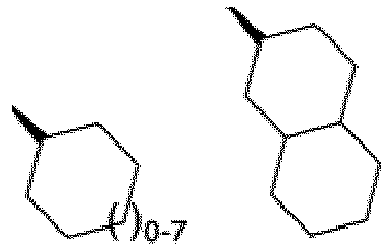
- According to an embodiment, in formula (V), R4 is an alkyl group as defined above, preferably a methyl group, and R5 is an aryl group as defined above, preferably a phenyl group.
- According to an embodiment, in formula (V), R5 is an alkyl group as defined above, preferably a methyl group, and R4 is an aryl group as defined above, preferably a phenyl group.
- Preferably, in formula (V), R6 is H.
- A preferred group of enantiomers according to the invention consists of enantiomers as defined above, having the following formula (VI):

- X1 is an halogen atom or a (C1-C6)alkoxy group;
- X2 is an halogen atom or a (C1-C6)alkoxy group;
- R1 is a (C6-C10)aryl group or a (C1-C6)alkyl group, said aryl group being optionally substituted with at least one substituent chosen from group consisting of (C1-C6)alkyl;
- R2 is a (C6-C10)aryl group or a (C1-C6)alkyl group;
- R4 is a (C6-C10)aryl group, a (C1-C6)alkyl group or a (C3-C6)cycloalkyl group, said alkyl group being optionally substituted with at least one substituent chosen from the (C6-C10)aryl group, preferably phenyl, and said aryl group being optionally substituted with at least one substituent chosen from the (C1-C6)alkyl groups;
- R6 is H or a (C1-C6)alkyl group;
- R7 is H, nitro or a (C1-C6)alkyl group; and
- R8 is a (C1-C6)alkyl group.
- Preferably, in formula (VI), R2 is a (C1-C6)alkyl group, such as methyl.
- Preferably, in formula (VI), R4 is a (C1-C6)alkyl group, such as methyl, ethyl, or propyl groups, optionally substituted by a phenyl group.
- Preferably, in formula (VI), R6 is a (C1-C6)alkyl group.
- In the context of the present invention, the expression "Ct-Cz" means a carbon-based chain which can have from t to z carbon atoms, for example C1-C3 means a carbon-based chain which can have from 1 to 3 carbon atoms.
- According to the invention, the term "halogen" means: a fluorine, a chlorine, a bromine or an iodine.
- According to the invention, the term "alkyl group" means: a linear or branched, saturated, hydrocarbon-based aliphatic group comprising, unless otherwise mentioned, from 1 to 12 carbon atoms. By way of examples, mention may be made of methyl, ethyl, n-propyl, isopropyl, butyl, isobutyl, tert-butyl or pentyl groups;
- According to the invention, the term "cycloalkyl group" means: a cyclic carbon-based group comprising, unless otherwise mentioned, from 3 to 12 carbon atoms. By way of examples, mention may be made of cyclopropyl, cyclobutyl, cyclopentyl, cyclohexyl, or adamantyl etc. groups;
- According to the invention, the term "haloalkyl group" means: an alkyl group as defined above, in which one or more of the hydrogen atoms is (are) replaced with a halogen atom. By way of example, mention may be made of fluoroalkyls, in particular CF3 or CHF2.
- According to the invention, the term "alkoxy group" means: an -O-alkyl radical where the alkyl group is as previously defined. By way of examples, mention may be made of -O-(C1-C4)alkyl groups, and in particular the -O-methyl group, the -O-ethyl group as -O-C3alkyl group, the -O-propyl group, the -O-isopropyl group, and as -O-C4alkyl group, the -O-butyl, -O-isobutyl or -O-tert-butyl group.
- According to the invention, the term "aryl group" means: a cyclic aromatic group comprising between 6 and 10 carbon atoms. By way of examples of aryl groups, mention may be made of phenyl or naphthyl groups.
- According to the invention, the term "heteroaryl" means: a 5- to 10-membered aromatic monocyclic or bicyclic group containing from 1 to 4 heteroatoms selected from O, S or N. By way of examples, mention may be made of imidazolyl, thiazolyl, oxazolyl, furanyl, thiophenyl, pyrazolyl, oxadiazolyl, tetrazolyl, pyridinyl, pyrazinyl, pyrimidinyl, pyridazinyl, indolyl, benzofuranyl, benzothiophenyl, benzoxazolyl, benzimidazolyl, indazolyl, benzothiazolyl, isobenzothiazolyl, benzotriazolyl, quinolinyl and isoquinolinyl groups.
- By way of a heteroaryl comprising 5 to 6 atoms, including 1 to 4 nitrogen atoms, mention may in particular be made of the following representative groups: pyrrolyl, pyrazolyl, 1,2,3-triazolyl, 1,2,4-triazolyl, tetrazolyl and 1,2,3-triazinyl.
- Mention may also be made, by way of heteroaryl, of thiophenyl, oxazolyl, furazanyl, 1,2,4-thiadiazolyl, naphthyridinyl, quinoxalinyl, phthalazinyl, imidazo[1,2-a]pyridine, imidazo[2,1-b]thiazolyl, cinnolinyl, benzofurazanyl, azaindolyl, benzimidazolyl, benzothiophenyl, thienopyridyl, thienopyrimidinyl, pyrrolopyridyl, imidazopyridyl, benzoazaindole, 1,2,4-triazinyl, indolizinyl, isoxazolyl, isoquinolinyl, isothiazolyl, purinyl, quinazolinyl, quinolinyl, isoquinolyl, 1,3,4-thiadiazolyl, thiazolyl, isothiazolyl, carbazolyl, and also the corresponding groups resulting from their fusion or from fusion with the phenyl nucleus.
- According to the invention, the term" heterocycloalkyl" means: a 4- to 10-membered, saturated or partially unsaturated, monocyclic or bicyclic group comprising from one to three heteroatoms selected from O, S or N; the heterocycloalkyl group may be attached to the rest of the molecule via a carbon atom or via a heteroatom; the term bicyclic heterocycloalkyl includes fused bicycles and spiro-type rings.
- By way of saturated heterocycloalkyl comprising from 5 to 6 atoms, mention may be made of oxetanyl, tetrahydrofuranyl, dioxolanyl, pyrrolidinyl, azepinyl, oxazepinyl, pyrazolidinyl, imidazolidinyl, tetrahydrothiophenyl, dithiolanyl, thiazolidinyl, tetrahydropyranyl, tetrahydropyridinyl, dioxanyl, morpholinyl, piperidinyl, piperazinyl, tetrahydrothiopyranyl, dithianyl, thiomorpholinyl or isoxazolidinyl.
- When the heterocycloalkyl is substituted, the substitution(s) may be on one (or more) carbon atom(s) and/or on the heteroatom(s). When the heterocycloalkyl comprises several substituents, they may be borne by one and the same atom or different atoms.
- The abovementioned "alkyl", "cycloalkyl", "aryl", "heteroaryl" and "heterocycloalkyl" radicals can be substituted with one or more substituents. Among these substituents, mention may be made of the following groups: amino, hydroxyl, thiol, oxo, halogen, alkyl, alkoxy, alkylthio, alkylamino, aryloxy, arylalkoxy, cyano, trifluoromethyl, carboxy or carboxyalkyl.
- According to the invention, the term "alkylthio" means: an -S-alkyl group, the alkyl group being as defined above.
- According to the invention, the term "arylthio" means: an -S-aryl group, the aryl group being as defined above.
- According to the invention, the term "alkylamino" means: an -NH-alkyl group, the alkyl group being as defined above.
- According to the invention, the term "cycloalkyloxy" means: an -O-cycloalkyl group, the cycloalkyl group being as defined above.
- According to the invention, the term "aryloxy" means: an -O-aryl group, the aryl group being as defined above.
- According to the invention, the term "(hetero)arylalkoxy" means: a (hetero)arylalkoxy- group, the (hetero)aryl and alkoxy groups being as defined above.
- According to the invention, the term "alkylcarbonyl" means a -CO-alkyl group, the alkyl group being as defined above.
- According to the invention, the term "alkoxylcarbonyl" means a -CO-O-alkyl group, the alkyl group being as defined above.
- According to the invention, the term "arylcarbonyl" means a -CO-aryl group, the aryl group being as defined above.
- According to the invention, the term "aryloxycarbonyl" means a -CO-aryloxy group, the aryloxy group being as defined above.
- According to the invention, the term "alkylsulfonyl" means a -SO2-alkyl group, the alkyl group being as defined above.
- According to the invention, the term "arylsulfonyl" means a -SO2-aryl group, the aryl group being as defined above.
- According to the invention, the term "alkylsulfinyl" means a -SO-alkyl group, the alkyl group being as defined above.
- According to the invention, the term "arylsulfinyl" means a -SO-aryl group, the aryl group being as defined above.
- According to the invention, the term "carboxyalkyl" means: an HOOC-alkyl-group, the alkyl group being as defined above. As examples of carboxyalkyl groups, mention may in particular be made of carboxymethyl or carboxyethyl.
- According to the invention, the term "carboxyl" means: a COOH group.
- According to the invention, the term "oxo" means: "=O".
- When an alkyl radical is substituted with an aryl group, the term "arylalkyl" or "aralkyl" radical is used. The "arylalkyl" or "aralkyl" radicals are aryl-alkyl- radicals, the aryl and alkyl groups being as defined above. Among the arylalkyl radicals, mention may in particular be made of the benzyl or phenethyl radicals.
- According to an embodiment, in formula (IV), (V) or (VI), X1 and X2 are halogen atoms, preferably Cl.
- According to an embodiment, in formula (IV), (V) or (VI), R1 is a (C6-C10)aryl group substituted with at least one substituent chosen from the (C1-C6)alkyl groups, preferably a phenyl group substituted with two alkyl groups, such as isopropyl or ethyl groups.
- According to an embodiment, in formula (IV), (V) or (VI), R2 is a (C1-C6)alkyl group.
- According to an embodiment, in formula (IV) or (V), R2 and R3 are identical, and are preferably a methyl group.
- According to an embodiment, in formula (IV) or (V), R4 and R5 are different and selected from the following groups: (C6-C10)aryl such as phenyl or naphthyl, (C1-C6)alkyl such as methyl, and (C3-C6)cycloalkyl such as cyclohexyl, said aryl group being optionally substituted with two substituents selected from the (C1-C6)alkyl groups.
- According to an embodiment, in formula (IV), (V) or (VI), R7 is H or nitro.
- The present invention also relates to an optically pure (+) or (-) enantiomer as defined above, having one of the following formulae:


- The present invention also relates to the use of an optically pure (+) or (-) enantiomer as defined above as a catalyst.
- The present invention also relates to the use of an optically pure (+) or (-) enantiomer as defined above, as a catalyst in asymmetric olefin metathesis.
- The present invention also relates to a process for the preparation of an optically pure (+) or (-) enantiomer, comprising a step of chiral HPLC separation of racemic ruthenium complexes of formula (I).
- Preferably, said step of chiral HPLC separation is carried out with a HPLC column comprising amylose substituted with chloro-phenylcarbamate as chiral stationary phase.
- All manipulations were carried out in an argon-filled glovebox or using standard Schlenk techniques. Glassware was dried in an oven overnight at 150 °C or flame dried prior to use. Toluene and tetrahydrofuran, used for complex synthesis and catalysis, were purified using MBraun Solvent Purification Systems and freeze-pump-thaw degassed prior to use. Reactions were monitored by thin-layer chromatography (TLC) carried out on aluminium backed silica gel 60 (F254) plates from MERCK (grain-size distribution 60/20 µm); visualised using 254 nm UV light and KMnO4/K2CO3/NaOH in water for staining. Columns chromatography were performed with silica gel (spherical, particle size 40 µm, neutral) purchased from Sigma-Aldrich. The eluents employed are reported as volume (volume percentages).
- NMR: For CAACs salts, NMR spectra were recorded on a Varian INOVA 500 MHz spectrometer. For Ru complexes and catalysis products, multinuclear NMR spectra were recorded on a Bruker ARX400 400 MHz spectrometer. For nucleus other than 1H spectra were recorded with complete proton decoupling. Chemical shifts are reported in parts per million with the solvent resonance as the internal standard. Coupling constants (J) are reported in Hertz (Hz). Multiplicities in 1H NMR are reported using following abbrevations: s = singlet, br s = broad singlet, d = doublet, dd = double doublet, ddd = double double doublet, dt = double triplet, t = triplet, q = quartet, quint = quintet, sept = septet, m = multiplet. When not specified, spectra were recorded at 298 K.
- High Resolution Mass Spectrometry (HRMS): For CAACs salts, HRMS were performed at the UC San Diego Mass Spectrometry Laboratory on an Agilent 6230 Accurate-Mass TOFMS spectrometer using electrospray ionization. (ESI). For Ru complexes and catalysis products HRMS were recorded on a Waters QTof-I spectrometer using ESI at the Centre Regional de Mesures Physiques de l'Ouest (CRMPO), Université de Rennes 1.
- Preparative chiral HPLC: PrepHPLC Chiral separations were performed on an Agilent 1260 Infinity unit (pump G1311C, autosampler G1329B, DAD G1365D and fraction collector G1364C), monitored by Agilent OpenLAB CDS Chemstation LC at Aix Marseille University.

- Optical rotations: Optical rotations for the complexes were measured at Aix Marseille University on a Jasco P-2000 polarimeter with a sodium lamp (589 nm), a halogen lamp (578, 546, 436, 405, 365 and 325 nm), in a 10 cm cell, thermostated at 25°C with a Peltier controlled cell holder. Optical rotations for the catalysis products were measured at Institut des Sciences Chimiques de Rennes on a Jasco P-2000 polarimeter with a sodium lamp (589 nm), in a 1 cm cell, thermostated at 25°C with a Peltier controlled cell holder.
- Electronic Circular Dichroism (ECD) and UV: ECD and UV spectra were measured on a JASCO J-815 spectrometer equipped with a JASCO Peltier cell holder PTC-423 to maintain the temperature at 25.0 ± 0.2°C. A CD quartz cell of 1 mm of optical path length was used. The CD spectrometer was purged with nitrogen before recording each spectrum, which was baseline subtracted. The baseline was always measured for the same solvent and in the same cell as the samples. Acquisition parameters: 0.1 nm as intervals, scanning speed 50 nm/min, band width 2 nm, and 3 accumulations per sample. The spectra are presented without smoothing and further data processing.
- X-Ray crystallography: Intensity data were collected on a D8 VENTURE Bruker AXS diffractometer equipped with a (CMOS) PHOTON 100 detector using MoKα radiation (0.71073 Å) at T = 150 K. Data reduction was performed using the SHELXT program. The structures were resolved using the software SHELXS-97 by the direct methods and refined using SHELXL-2013-4.
-

- The commercially available 2,4-dimethyl-3-cyclohexene carboxaldehyde or trivertal (1 equiv, racemic mixture) was dissolved in DCM (100 mL of DCM for 10 mL of aldehyde) followed by the addition of 2,6-diisopropylaniline (0.9 equiv), anhydrous MgSO4 (in excess) and glacial acetic acid (catalytic amount). The mixture was stirred overnight at room temperature under air. The suspension was filtered, and the volatiles removed under vacuum. The excess of aldehyde was distilled off under vacuum helped by a heat gun. Imine was obtained as a slightly orange liquid and used in the next step without further purification.
-

- In a Schlenk under argon, imine (1 equiv) was dissolved in dry Et2O (150 mL for 20 g of imine) and the solution was cooled down to -78°C. n-Butyl lithium (2.5 M in hexanes, 1.1 equiv) was added and the mixture allowed to warm up to room temperature. After 2 h the mixture was cooled down to -78°C and the corresponding alkyl halide (1.2 equiv) was added. The reaction was slowly warmed up and stirred overnight at room temperature. Volatiles were removed under vacuum leading to a mixture of solid and oily residue. The crude product was well dried under vacuum with a heat gun and was used without further purification.
-

- The corresponding crude mixture of imines and LiX was dissolved in a minimum of dry Et2O under argon. The solution was transferred via canula to a pressure Schlenk of 1L of volume. At 0°C, a solution of HCI 2.0 M in Et2O (2.0 equiv in respect to imine before alkylation) was added. Precipitation of white powder in a yellow solution was observed. The solution was stirred at room temperature for 15 min, then at 120°C overnight, and to finish at 50°C for 1 day. The mixture was cooled down to room temperature and the solid was filtered via canula under argon. Then, it was washed under argon with Et2O (x3). Once the excess of HCI was removed the solid was filtered under air in frit, washed with more Et2O and finally pentane afforded cyclic iminium salt HCl2 - as a white powder. This powder was dissolved in water, filtered to remove some brownish precipitate and NaBF4 (2.0 equiv) was added. Precipitation of white powder was immediately observed. The solution was stirred at room temperature overnight. Filtration and washing of the precipitate with water, Et2O (x3) and pentane afforded cyclic iminium salt BF4 -.
-

- BiCAAC-1 was prepared according to the 3-step procedure for BiCAAC synthesis with Trivertal (1 equiv), 2,6-diisopropylaniline (0.9 equiv) and lodomethane (1.2 equiv). The desired product was obtained as a white powder (33% yield).
1H NMR (300 MHz, CDCl3 ): d (ppm) 9.29 (s, 1H), 7.49 (t, J = 7.8 Hz, 1H), 7.30 (d, J = 7.8 Hz, 1H), 7.30 (d, J = 7.8 Hz, 1H), 2.65 (sept, J = 6.9 Hz, 1H), 2.59 (dd, J = 10.2, 14.1 Hz, 1H), 2.31-2.39 (m, 1H), 2.33 (sept, J = 6.9 Hz, 1H), 2.12-2.26 (m, 2H), 1.84-1.93 (m, 1H), 1.70-1.79 (m, 1H), 1.64 (s, 3H), 1.57-1.62 (m, 1H), 1.33 (d, J = 6.9 Hz, 3H), 1.27 (d, J = 6.9 Hz, 3H), 1.21 (d, , J = 6.9 Hz, 3H), 1.19 (s, 3H), 1.16 (d, J = 6.6 Hz, 3H), 1.04 (d, J = 7.2 Hz, 3H).
13C NMR (125 MHz, CDCl3 ): d (ppm) 194.6, 144.1, 143.6, 135.6, 132.0, 125.9, 125.5, 69.5, 45.3, 43.2, 38.3, 32.8, 32.7, 29.5, 28.8, 24.8, 24.7, 23.5, 22.4, 21.5, 20.2, 18.7.
19F NMR (282 MHz, CDCl3 ): d (ppm) -152.66 (s, 10BF4 -), -152.71 (s, 11BF4 -). HRMS for C22H34N (M+): calc.: 312.2686, found: 312.2684.
- BiCAAC-2 was prepared according to the 3-step procedure for BiCAAC synthesis with Trivertal (1 equiv), 2,6-diisopropylaniline (0.9 equiv) and lodopropane (1.2 equiv). The desired product was obtained as a white powder (15% yield).
1H NMR (300 MHz, CDCl3 ): d (ppm) 9.28 (s, 1H), 7.51 (t, J = 7.8 Hz, 1H), 7.33 (d, J = 7.8 Hz, 1H), 7.32 (d, J = 7.8 Hz, 1H), 2.77 (sept, J = 6.9 Hz, 1H), 2.68 (sept, J = 6.9 Hz, 1H), 2.61-2.65 (m, 2H), 2.27 (sept, J = 6.9 Hz, 1H), 2.23-2.33 (m, 1H), 2.12-2.21 (m, 1H), 1.81-1.92 (m, 1H), 1.66-1.75 (m, 2H), 1.36 (d, J = 6.9 Hz, 3H), 1.29 (d, J = 6.9 Hz, 3H), 1.22 (s, 3H), 1.22 (d, J = 6.9 Hz, 3H), 1.21 (d, J = 7.2 Hz, 3H), 1.16 (d, J = 6.9 Hz, 3H), 1.05 (d, J = 7.2 Hz, 3H), 1.02 (d, J = 6.9 Hz, 3H).
13C NMR (125 MHz, CDCl3 ): d (ppm) 194.5, 143.9, 143.9, 135.8, 132.2, 125.9, 125.9, 69.2, 51.8, 43.5, 35.9, 32.4, 29.9, 29.0, 26.6, 24.8, 24.7, 23.4, 22.5, 22.2, 21.5, 19.6, 19.2, 15.0.
19F NMR (282 MHz, CDCl3 ): d (ppm) -153.58 (s, 10BF4 -), -153.63 (s, 11BF4 -). HRMS for C24H38N (M+): calc.: 340.2999, found: 340.2996. -

- BiCAAC-3 was prepared according to the 3-step procedure for BiCAAC synthesis with Trivertal (1 equiv), 2,6-diisopropylaniline (0.9 equiv) and (1-bromoethyl)benzene (1.2 equiv). The desired product was obtained as a white powder (% yield, Diastereoisomer mixture, ratio 5:1).
1H NMR (500 MHz, CD3OD), major diastereosimer: d (ppm) 9.24 (s, 1H), 7.56 (t, J = 8.0 Hz, 1H), 7.52 (d, J = 7.5 Hz, 2H), 7.48 (d, J = 8.0 Hz, 1H), 7.38 (t, J = 7.5 Hz, 2H), 7.35 (d, J = 8.0 Hz, 1 H), 7.29 (t, J = 7.5 Hz, 1H), 3.79 (sept, J = 7.0 Hz, 1H), 2.82-2.90 (m, 1H), 2.78 (sept, J = 7.0 Hz, 1H), 2.69-2.74 (m, 1H), 2.54-2.59 (m, 1H), 2.27-2.32 (m, 1H), 1.81-1.85 (m, 1H), 1.69-1.76 (m, 3H), 1.50 (d, J = 7.0 Hz, 3H), 1.43 (d, J = 7.0 Hz, 3H), 1.28 (d, J = 7.0 Hz, 3H), 1.21 (d, J = 7.0 Hz, 3H), 1.21 (s, 3H), 1.09 (d, J = 7.0 Hz, 3H), 0.45 (d, J = 7.0 Hz, 3H)
13C NMR (125 MHz, CD3OD), major diastereosimer: d (ppm) 194.1, 145.6, 145.3, 143.1, 137.5, 133.5, 131.3, 130.4, 129.2, 127.3, 127.2, 71.2, 53.1, 44.6, 40.1, 37.1, 34.1, 31.3, 29.8, 25.8, 25.1, 24.4, 23.4, 22.6, 21.8, 20.3, 13.6.
- BiCAAC-4 was prepared according to the 3-step procedure for BiCAAC synthesis with Trivertal (1 equiv), 2,6-diisopropylaniline (0.9 equiv) and 1-(1-bromoethyl)naphthalene (1.2 equiv). The desired product was obtained as a white powder (% yield, Diastereoisomer mixture, ratio 3:1).
1H NMR (500 MHz, CDCl3 ), major diastereosimer: d (ppm) 8.82 (s, 1H), 7.46 (t, J = 7.5 Hz, 1H), 7.38 (d, J = 7.5 Hz, 2H), 7.29-7.33 (m, 5H), 7.21 (t, J = 7.5 Hz, 1H), 7.15 (d, J = 8.0 Hz, 1H), 3.76 (q, J = 7.5 Hz, 1H), 2.80 (sept, J = 7.0 Hz, 1H), 2.75-2.82 (m, 1H), 2.68 (sept, J = 7.0 Hz, 1H), 2.55-2.59 (m, 1H), 2.36-2.42 (m, 1H), 2.07-2.14 (m, 1H), 1.59-1.70 (m, 3H), 1.42 (d, J = 7.5 Hz, 3H), 1.34 (d, J = 7.0 Hz, 3H), 1.20 (d, J = 7.0 Hz, 3H), 1.17 (d, J = 7.0 Hz, 3H), 1.16 (s, 3H), 1.03 (d, J = 7.0 Hz, 3H), 0.31 (d, J = 7.0 Hz, 3H)
13C NMR (125 MHz, CDCl3 ), major diastereosimer: d (ppm) 191.3, 143.9, 143.7, 141.3, 135.8, 132.3, 129.9, 129.9, 129.7, 129.5, 129.5, 128.9, 128.1, 125.8, 125.8, 70.3, 51.6, 43.7, 38.5, 35.6, 32.7, 29.9, 28.5, 25.2, 25.0, 23.7, 23.1, 22.3, 21.3, 20.0, 13.0. - Reagents used for complex synthesis: Synthesized salts were dried at 60°C under high vacuum overnight before complexation. KHMDS (0.5 M in toluene) was purchased from Sigma Aldrich.
- Hoveyda-Grubbs 1st generation (HG1) complex was previously synthesized using the following procedure: In an oven dried Schlenk under Ar, were placed Dichloro(3-phenyl-1H-inden-1-ylidene) bis(tricyclohexylphosphine)ruthenium(II) (M1, purchased from Umicore) complex (2.0 g, 2.2 mmol, 1 equiv) and CuCI (236.0 mg, 2.4 mmol, 1.1 equiv). A solution of 2-isopropoxystyrene (synthesized from salicylaldehyde by alkylation and Wittig olefination following a previously reported procedure)1 (390.0 mg, 2.4 mmol, 1.1 equiv) in DCM (6 mL) was added, then DCM was added to obtain 50 mL solution. The resulting mixture was stirred for 2 h at 40°C. The reaction was monitored by TLC (Pentane:Acetone 9:1) until the complete disappearance of M1. DCM was evaporated under reduced pressure and the solid was taken in Acetone (HPLC grade) and filtered through celite pad until the undesired solid became whitish. Volatiles were removed under vacuum and the obtained solid was dissolved in CHCl3 and filtered off. The filtrate was evaporated and the solid was dissolved in warm Et2O and the catalyst was precipitated with Pentane (3 times). The mixture was filtered off and the brown solid was collected (955 mg, 74% yield). Analytical data were consistent with the previously reported data.

-


- General Procedure: In a glove box, BiCAAC.BF4 (2 equiv) was dissolved in dry and degassed Toluene. KHMDS (0.5 M in toluene, 2 equiv) was added. The mixture was allowed to stirred 20 min at rt. Then, HG1 complex (1 equiv) was then added. The mixture was stirred the indicated time at rt.
- The solvent was removed under vacuum and the product was purified by column chromatography (eluent: Pentane:Acetone 9:1). The solid was then diluted in the minimum amount of DCM and precipitated in pentane.

- BiCAAC-Ru-1 was prepared according to the general procedure for the complexes synthesis using BiCAAC-1 (266 mg, 0.67 mmol, 2 equiv), KHMDS (1.33 mL, 0.67 mmol, 2 equiv) and HG1 (200 mg, 0.33 mmol, 1 equiv). The mixture was stirred 30 min. The desired product was obtained as a green solid (177 mg, 86 % yield).
1H NMR (400 MHz, CDCl3 ): d (ppm) 16.46 (s, 1H), 7.53 (t, J = 7.7 Hz, 1H), 7.43 (ddd, J = 8.4, 6.7, 2.3 Hz, 1H), 7.36 (ddd, J = 9.3, 7.7, 1.6 Hz, 2H), 6.84 (d, J = 8.3 Hz, 1H), 6.79 - 6.69 (m, 2H), 5.06 (sept, J = 6.2 Hz, 1H), 3.02 (sept, J = 6.7 Hz, 1H), 2.82 - 2.70 (m, 4H), 2.43 (ddd, J = 13.2, 11.9, 6.0 Hz, 1H), 2.07 - 1.89 (m, 2H), 1.87 - 1.77 (m, 1H), 1.74 (d, J = 6.1 Hz, 3H), 1.67 (d, J = 6.1 Hz, 3H), 1.65 - 1.51 (m, 2H), 1.43 - 1.50 (m, 1H), 1.25 (d, J = 6.9 Hz, 3H), 1.20 (dd, J = 6.8, 5.8 Hz, 7H), 0.89 (s, 3H), 0.76 (d, J = 6.6 Hz, 3H), 0.62 (d, J = 6.5 Hz, 3H).
13C NMR (101 MHz, CDCl3 ): d (ppm) - BiCAAC (iPr/iPr - dipp)-Ru Hoveyda type complex (BiCAAC-Ru-2)

- BiCAAC (CHMePh/Me - dipp)-Ru Hoveyda type complex (BiCAAC-Ru-3)

1H NMR (400 MHz, CDCl3 ), major diastereoisomer: d (ppm) 16.55 (s, 1H), 7.59-7.64 (m, 1H), 7.51-7.54 (m, 3H), 7.47 (d, J = 8.0 Hz, 1H), 7.44 (d, J = 8.0 Hz, 1H), 7.38 (t, J = 7.0 Hz, 2H), 7.30-7.34 (m, 1H), 7.05-7.09 (m, 1H), 6.92 (d, J = 8.0 Hz, 1H), 6.83-6.86 (m, 1H), 5.12 (sept, J = 6.0 Hz, 1H), 3.17 (sept, J = 6.5 Hz, 1H), 2.88 (sept, J = 6.5 Hz, 1H), 2.39-2.45 (m, 1H), 2.28-2.35 (m, 1H), 2.16-2.20 (m, 1H), 2.07-2.10 (m, 2H), 1.81-1.84 (m, 3H), 1.79-1.81 (m, 6H), 1.68 (d, J = 6.0 Hz, 3H), 1.56 (d, J = 6.5 Hz, 3H), 1.29 (d, J = 6.0 Hz, 3H), 1.28 (d, J = 6.5 Hz, 3H), 1.24 (d, J = 6.0 Hz, 3H), 0.92 (s, 3H), 0.88 (d, J = 6.5 Hz, 3H), 0.71 (d, J = 6.0 Hz, 3H)
13C NMR (101 MHz, CDCl3 ), major diastereoisomer: d (ppm) 264.7, 153.0, 147.3, 147.3, 144.2, 142.5, 137.8, 131.6, 131.4, 129.6, 128.5, 126.8, 125.8, 125.7, 124.3, 122.3, 113.5, 75.0, 66.8, 60.4, 44.2, 35.9, 35.5, 35.3, 33.7, 32.8, 29.9, 27.9, 27.8, 27.6, 27.5, 26.1, 25.7, 24.8, 24.7, 24.5, 24.0, 22.3, 22.3, 21.9, 21.8. - BiCAAC (Me/Me - dipp)-Ru Grela type complex (BiCAAC-Ru-4)

-

- Analytical chiral HPLC separation: Chiralpak IE column with a UV and CD detector at I = 254 nm; flow rate 1 mL/min; eluent: heptane / EtOH / DCM 60/20/20; 1st enantiomer (+)-BiCAAC-Ru-1: Rt = 4.32 min and 2nd enantiomer (-)-BiCAAC-Ru-1: Rt = 5.57 min.
- Semi-preparative separation: The preparative chiral HPLC separation was done on a Chiralpak IE column (250 x 10 mm, 5 µm) with heptane / EtOH / dichloromethane (60/20/20) as mobile phase, flow-rate = 5 mL/min, UV detection at 254 nm with multiple injections (28 times 300 µL, every 3.7 min). From 64 mg of racemic mixture dissolved in 8.5 mL of DCM/Hexanes (65/35), 28 mg of the first eluted enantiomer with ee > 99.5 % ((+)-BiCAAC-Ru-1: 44% yield) and 30 mg of the second eluted enantiomer with ee > 99.5 % ((-)-BiCAAC-Ru-1: 47% yield) were obtained.
-

Claims (15)
- A ruthenium complex having the following formula (I):
 - R1 is a (C6-C14)aryl group, a (C1-C6)alkyl group or a (C8-C20)cycloalkyl group, said aryl group being optionally substituted with at least one substituent chosen from the group consisting of: halogen, (C6-C10)aryl group, and (C1-C6)alkyl group, said alkyl group being optionally substituted with one or several phenyl group(s);- R2 is H, a (C6-C10)aryl group or a (C1-C6)alkyl group;- R3 is a (C1-C6)alkyl group; or R2 and R3 may together form, with the carbon atom carrying them, a (C3-C6)cycloalkyl;- R4 is selected from the following groups: (C6-C20)aryl, (C1-C10)alkyl, and (C3-C12)cycloalkyl group,
said alkyl group being optionally substituted with at least one substituent chosen from the (C6-C10)aryl groups, and
said aryl group being optionally substituted with at least one substituent chosen from the group consisting of: (C1-C6)alkyl, optionally substituted with one or several phenyl group(s), (C6-C10)aryl(C1-C6)alkyl, and (C6-C10)aryl,
optionally substituted with one or several substituents, in particular selected in the group consisting of: (C1-C6)alkylamino, di(C1-C6)alkylamino, (C1-C6)alcoxy,
and (C1-C6)alkyl;- R5 is selected from the following groups: (C6-C20)aryl, (C1-C10)alkyl, (C3-C12)cycloalkyl, heteroaryl, (C6-C10)aryl(C1-C6)alkyl, and heteroaryl(C1-C6)alkyl, said aryl group being optionally substituted with at least one substituent chosen from the group consisting of: (C1-C6)alkyl, optionally substituted with one or several phenyl group(s), (C6-C10)aryl(C1-C6)alkyl, and (C6-C10)aryl, optionally substituted with one or several substituents, in particular selected in the group consisting of: (C1-C6)alkylamino, di(C1-C6)alkylamino, (C1-C6)alcoxy, and (C1-C6)alkyl;
with the proviso that R5 is different from R4;
or R4 and R5, taken together with the carbon atom to which they are attached, form a five-, six-, or ten-membered cycloalkyl or heterocyclyl ring;- R6 is H or a (C1-C6)alkyl group;- n is an integer comprised between 1 and 3, and is preferably 1;
or R3 and R5, taken together with the carbon atom to which they are attached, form a six-, seven- or eight-membered cycloalkyl ring;- A is either a group of formula (1) or a group of formula (2): - X1 is an halogen atom, a (C1-C6)alkoxy group or a -S-(C6-C10)aryl group;- X2 is an halogen atom or a (C1-C6)alkoxy group;
or X1 and X2 may form together with the ruthenium atom carrying them a heterocycloalkyl group fused with a phenyl group, said phenyl group being possibly substituted with at least one halogen atom,- R7 is H or is selected from the following groups: nitro, cyano, (C1-C6)alkyl, cycloalkyl, (C1-C6)alkoxy, cycloalkyloxy, (C6-C10)aryl, heteroaryl, (C6-C10)aryloxy, heteroaryloxy, (C1-C6)alkylcarbonyl, arylcarbonyl, (C1-C6)alkoxycarbonyl, aryloxycarbonyl, carboxyl, amido, (C1-C6)alkylsulfonyl, arylsulfonyl, (C1-C6)alkylsulfinyl, arylsulfinyl, (C1-C6)alkylthio, arylthio, sulfonamide, halogen, -NRaRb, -SO2-NRR', and -N(Rc)-C(=O)-Rc,
Ra and Rb being independently selected from H and (C1-C6)alkyl,
R and R' being selected from the following groups: (C1-C6)alkyl, (C6-C10)aryl, heteroaryl, and halo(C1-C6)alkyl,
Rc being H or being selected from the following groups: (C1-C6)alkyl, (C6-C10)aryl, and heteroaryl,
Rd being H or selected from the following groups: (C1-C6)alkyl, halo(C1-C6)alkyl, cycloalkyl, (C6-C10)aryl, heteroaryl, (C1-C6)alkoxy, cycloalkyloxy, (C6-C10)aryloxy, and heteroaryloxy;- R8 is a (C1-C6)alkyl group;- R10 is a (C1-C6)alkyl group; and- R9 is H, a (C6-C10)aryl group or a (C1-C6)alkyl group;- Y- is a non-coordinating inorganic anion, and is preferably PF6 -, SbF6 - or BF4 -,said complex being in the form of a racemic mixture, or in the form of an optically pure (+) or (-) enantiomer. - An optically pure (+) or (-) enantiomer of a ruthenium complex according to claim 1, having the following formula (I):
 - R1 is a (C6-C14)aryl group, a (C1-C6)alkyl group or a (C8-C20)cycloalkyl group, said aryl group being optionally substituted with at least one substituent chosen from the group consisting of: halogen, (C6-C10)aryl group, and (C1-C6)alkyl group, said alkyl group being optionally substituted with one or several phenyl group(s);- R2 is H, a (C6-C10)aryl group or a (C1-C6)alkyl group;- R3 is a (C1-C6)alkyl group; or R2 and R3 may together form, with the carbon atom carrying them, a (C3-C6)cycloalkyl;- R4 is selected from the following groups: (C6-C20)aryl, (C1-C10)alkyl, and (C3-C12)cycloalkyl group,
said alkyl group being optionally substituted with at least one substituent chosen from the (C6-C10)aryl groups, and
said aryl group being optionally substituted with at least one substituent chosen from the group consisting of: (C1-C6)alkyl, optionally substituted with one or several phenyl group(s), (C6-C10)aryl(C1-C6)alkyl, and (C6-C10)aryl, optionally substituted with one or several substituents, in particular selected in the group consisting of: (C1-C6)alkylamino, di(C1-C6)alkylamino, (C1-C6)alcoxy, and (C1-C6)alkyl;- R5 is selected from the following groups: (C6-C20)aryl, (C1-C10)alkyl, (C3-C12)cycloalkyl, heteroaryl, (C6-C10)aryl(C1-C6)alkyl, and heteroaryl(C1-C6)alkyl, said aryl group being optionally substituted with at least one substituent chosen from the group consisting of: (C1-C6)alkyl, optionally substituted with one or several phenyl group(s), (C6-C10)aryl(C1-C6)alkyl, and (C6-C10)aryl, optionally substituted with one or several substituents, in particular selected in the group consisting of: (C1-C6)alkylamino, di(C1-C6)alkylamino, (C1-C6)alcoxy, and (C1-C6)alkyl;
with the proviso that R5 is different from R4;
or R4 and R5, taken together with the carbon atom to which they are attached, form a five-, six-, or ten-membered cycloalkyl or heterocyclyl ring;- R6 is H or a (C1-C6)alkyl group;- n is an integer comprised between 1 and 3, and is preferably 1;
or R3 and R5, taken together with the carbon atom to which they are attached, form a six-, seven- or eight-membered cycloalkyl ring;- A is either a group of formula (1) or a group of formula (2):wherein: - X1 is an halogen atom, a (C1-C6)alkoxy group or a -S-(C6-C10)aryl group;- X2 is an halogen atom or a (C1-C6)alkoxy group;
or X1 and X2 may form together with the ruthenium atom carrying them a heterocycloalkyl group fused with a phenyl group, said phenyl group being possibly substituted with at least one halogen atom,- R7 is H or is selected from the following groups: nitro, cyano, (C1-C6)alkyl, cycloalkyl, (C1-C6)alkoxy, cycloalkyloxy, (C6-C10)aryl, heteroaryl, (C6-C10)aryloxy, heteroaryloxy, (C1-C6)alkylcarbonyl, arylcarbonyl, (C1-C6)alkoxycarbonyl, aryloxycarbonyl, carboxyl, amido, (C1-C6)alkylsulfonyl,
arylsulfonyl, (C1-C6)alkylsulfinyl, arylsulfinyl, (C1-C6)alkylthio, arylthio, sulfonamide, halogen, -NRaRb, -SO2-NRR', and -N(Rc)-C(=O)-Rc,
Ra and Rb being independently selected from H and (C1-C6)alkyl,
R and R' being selected from the following groups: (C1-C6)alkyl,(C6-C10)aryl, heteroaryl, and halo(C1-C6)alkyl,
Rc being H or being selected from the following groups: (C1-C6)alkyl,(C6-C10)aryl, and heteroaryl,
Rd being H or selected from the following groups: (C1-C6)alkyl,halo(C1-C6)alkyl, cycloalkyl, (C6-C10)aryl, heteroaryl, (C1-C6)alkoxy, cycloalkyloxy, (C6-C10)aryloxy, and heteroaryloxy;- R8 is a (C1-C6)alkyl group;- R10 is a (C1-C6)alkyl group; and- R9 is H, a (C6-C10)aryl group or a (C1-C6)alkyl group; and- Y- is a non-coordinating inorganic anion, and is preferably PF6 -, SbF6 - or BF4 -. - An optically pure (+) or (-) enantiomer of a ruthenium complex according to claim 1, having the following formula (II):
 - R1 is a (C6-C14)aryl group, a (C1-C6)alkyl group or a (C8-C20)cycloalkyl group, said aryl group being optionally substituted with at least one substituent chosen from the group consisting of: halogen, (C6-C10)aryl group, and (C1-C6)alkyl group, said alkyl group being optionally substituted with one or several phenyl group(s);- R2 is H, a (C6-C10)aryl group or a (C1-C6)alkyl group;- R4 is selected from the following groups: (C6-C20)aryl, (C1-C10)alkyl, and (C3-C12)cycloalkyl group,
said alkyl group being optionally substituted with at least one substituent chosen from the (C6-C10)aryl groups, and
said aryl group being optionally substituted with at least one substituent chosen from the group consisting of: (C1-C6)alkyl, optionally substituted with one or several phenyl group(s), (C6-C10)aryl(C1-C6)alkyl, and (C6-C10)aryl, optionally substituted with one or several substituents, in particular selected in the group consisting of: (C1-C6)alkylamino, di(C1-C6)alkylamino, (C1-C6)alcoxy, and (C1-C6)alkyl;- R6 is H or a (C1-C6)alkyl group;- R3 and R5, taken together with the carbon atom to which they are attached, form a six-, or seven- or eight-membered cycloalkyl ring;- A is either a group of formula (1) or a group of formula (2):wherein: - X1 is an halogen atom, a (C1-C6)alkoxy group or a -S-(C6-C10)aryl group;- X2 is an halogen atom or a (C1-C6)alkoxy group;
or X1 and X2 may form together with the ruthenium atom carrying them a heterocycloalkyl group fused with a phenyl group, said phenyl group being possibly substituted with at least one halogen atom,- R7 is H or is selected from the following groups: nitro, cyano, (C1-C6)alkyl, cycloalkyl, (C1-C6)alkoxy, cycloalkyloxy, (C6-C10)aryl, heteroaryl, (C6-C10)aryloxy, heteroaryloxy, (C1-C6)alkylcarbonyl, arylcarbonyl, (C1-C6)alkoxycarbonyl, aryloxycarbonyl, carboxyl, amido, (C1-C6)alkylsulfonyl,
arylsulfonyl, (C1-C6)alkylsulfinyl, arylsulfinyl, (C1-C6)alkylthio, arylthio, sulfonamide, halogen, -NRaRb, -SO2-NRR', and -N(Rc)-C(=O)-Rc,
Ra and Rb being independently selected from H and (C1-C6)alkyl,
R and R' being selected from the following groups: (C1-C6)alkyl, (C6-C10)aryl, heteroaryl, and halo(C1-C6)alkyl,
Rc being H or being selected from the following groups: (C1-C6)alkyl, (C6-C10)aryl, and heteroaryl,
Rd being H or selected from the following groups: (C1-C6)alkyl, halo(C1-C6)alkyl, cycloalkyl, (C6-C10)aryl, heteroaryl, (C1-C6)alkoxy, cycloalkyloxy, (C6-C10)aryloxy, and heteroaryloxy;- R8 is a (C1-C6)alkyl group;- R10 is a (C1-C6)alkyl group; and- R9 is H, a (C6-C10)aryl group or a (C1-C6)alkyl group; and- Y- is a non-coordinating inorganic anion, and is preferably PF6 -, SbF6 - or BF4 -. - An optically pure (+) or (-) enantiomer of a ruthenium complex according to claim 1, having the following formula (III):
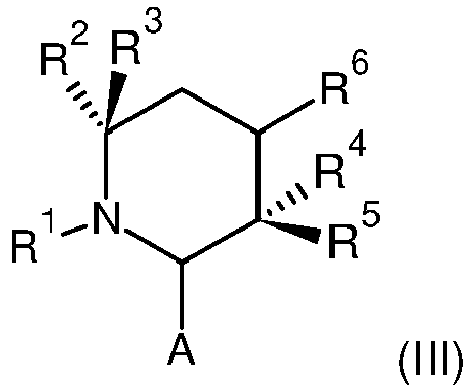 - R1 is a (C6-C14)aryl group, a (C1-C6)alkyl group or a (C8-C20)cycloalkyl group, said aryl group being optionally substituted with at least one substituent chosen from the group consisting of: halogen, (C6-C10)aryl group, and (C1-C6)alkyl group, said alkyl group being optionally substituted with one or several phenyl group(s);- R2 is H, a (C6-C10)aryl group or a (C1-C6)alkyl group;- R3 is a (C1-C6)alkyl group; or R2 and R3 may together form, with the carbon atom carrying them, a (C3-C6)cycloalkyl;- R4 is selected from the following groups: (C6-C20)aryl, (C1-C10)alkyl, and (C3-C12)cycloalkyl group,
said alkyl group being optionally substituted with at least one substituent chosen from the (C6-C10)aryl groups, and
said aryl group being optionally substituted with at least one substituent chosen from the group consisting of: (C1-C6)alkyl,optionally substituted with one or several phenyl group(s), (C6-C10)aryl(C1-C6)alkyl, and (C6-C10)aryl, optionally substituted with one or several substituents, in particular selected in the group consisting of: (C1-C6)alkylamino, di(C1-C6)alkylamino, (C1-C6)alcoxy, and (C1-C6)alkyl;- R5 is selected from the following groups: (C6-C20)aryl, (C1-C10)alkyl, (C3-C12)cycloalkyl, heteroaryl, (C6-C10)aryl(C1-C6)alkyl, and heteroaryl(C1-C6)alkyl, said aryl group being optionally substituted with at least one substituent chosen from the group consisting of: (C1-C6)alkyl, optionally substituted with one or several phenyl group(s), (C6-C10)aryl(C1-C6)alkyl, and (C6-C10)aryl, optionally substituted with one or several substituents, in particular selected in the group consisting of: (C1-C6)alkylamino, di(C1-C6)alkylamino, (C1-C6)alcoxy, and (C1-C6)alkyl;
with the proviso that R5 is different from R4;- R6 is H or a (C1-C6)alkyl group;- A is either a group of formula (1) or a group of formula (2): - X1 is an halogen atom, a (C1-C6)alkoxy group or a -S-(C6-C10)aryl group;- X2 is an halogen atom or a (C1-C6)alkoxy group;
or X1 and X2 may form together with the ruthenium atom carrying them a heterocycloalkyl group fused with a phenyl group, said phenyl group being possibly substituted with at least one halogen atom,- R7 is H or is selected from the following groups: nitro, cyano, (C1-C6)alkyl, cycloalkyl, (C1-C6)alkoxy, cycloalkyloxy, (C6-C10)aryl, heteroaryl, (C6-C10)aryloxy, heteroaryloxy, (C1-C6)alkylcarbonyl, arylcarbonyl, (C1-C6)alkoxycarbonyl, aryloxycarbonyl, carboxyl, amido, (C1-C6)alkylsulfonyl,
arylsulfonyl, (C1-C6)alkylsulfinyl, arylsulfinyl, (C1-C6)alkylthio, arylthio, sulfonamide, halogen, -NRaRb, -SO2-NRR', and -N(Rc)-C(=O)-Rc,
Ra and Rb being independently selected from H and (C1-C6)alkyl,
R and R' being selected from the following groups: (C1-C6)alkyl,(C6-C10)aryl, heteroaryl, and halo(C1-C6)alkyl,
Rc being H or being selected from the following groups: (C1-C6)alkyl, (C6-C10)aryl, and heteroaryl,
Rd being H or selected from the following groups: (C1-C6)alkyl, halo(C1-C6)alkyl, cycloalkyl, (C6-C10)aryl, heteroaryl, (C1-C6)alkoxy, cycloalkyloxy, (C6-C10)aryloxy, and heteroaryloxy;- R8 is a (C1-C6)alkyl group;- R10 is a (C1-C6)alkyl group; and- R9 is H, a (C6-C10)aryl group or a (C1-C6)alkyl group; and- Y- is a non-coordinating inorganic anion, and is preferably PF6 -, SbF6 - or BF4 -. - The enantiomer of any one of claims 2 to 4, having the following formula (IV):
 - X1 is an halogen atom or a (C1-C6)alkoxy group;- X2 is an halogen atom or a (C1-C6)alkoxy group;- R1 is a (C6-C10)aryl group or a (C1-C6)alkyl group, said aryl group being optionally substituted with at least one substituent chosen from group consisting of (C1-C6)alkyl;- R2 is a (C6-C10)aryl group or a (C1-C6)alkyl group;- R3 is a (C1-C6)alkyl group;- R4 is a (C6-C10)aryl group, a (C1-C6)alkyl group or a (C3-C6)cycloalkyl group, said alkyl group being optionally substituted with at least one substituent chosen from the (C6-C10)aryl groups, such as phenyl, and said aryl group being optionally substituted with at least one substituent chosen from the (C1-C6)alkyl groups;- R5 is selected from the following groups: (C6-C10)aryl, (C1-C6)alkyl, (C3-C6)cycloalkyl, heteroaryl, (C6-C10)aryl(C1-C6)alkyl, and heteroaryl(C1-C6)alkyl, said aryl group being optionally substituted with at least one substituent chosen from group consisting of (C1-C6)alkyl;
with the proviso that R5 is different from R4;- R6 is H or a (C1-C6)alkyl group;
or R3 and R5, taken together with the carbon atom to which they are attached, form a six-membered cycloalkyl ring;- R7 is H, nitro or a (C1-C6)alkyl group; and- R8 is a (C1-C6)alkyl group. - The enantiomer of claim 5, having the following formula (V):
 - X1 is an halogen atom or a (C1-C6)alkoxy group;- X2 is an halogen atom or a (C1-C6)alkoxy group;- R1 is a (C6-C10)aryl group or a (C1-C6)alkyl group, said aryl group being optionally substituted with at least one substituent chosen from the (C1-C6)alkyl groups;- R2 is a (C6-C10)aryl group or a (C1-C6)alkyl group;- R3 is a (C1-C6)alkyl group;- R4 is a (C6-C10)aryl group, a (C1-C6)alkyl group or a (C3-C6)cycloalkyl group, said aryl group being optionally substituted with at least one substituent chosen from group consisting of (C1-C6)alkyl;- R5 is selected from the following groups: (C6-C10)aryl, (C1-C6)alkyl, (C3-C6)cycloalkyl, heteroaryl, (C6-C10)aryl(C1-C6)alkyl, and heteroaryl(C1-C6)alkyl, said aryl group being optionally substituted with at least one substituent chosen from group consisting of (C1-C6)alkyl;
with the proviso that R5 is different from R4;- R6 is H or a (C1-C6)alkyl group;- R7 is H, nitro or a (C1-C6)alkyl group; and- R8 is a (C1-C6)alkyl group. - The enantiomer of claim 5, having the following formula (VI):
 - X1 is an halogen atom or a (C1-C6)alkoxy group;- X2 is an halogen atom or a (C1-C6)alkoxy group;- R1 is a (C6-C10)aryl group or a (C1-C6)alkyl group, said aryl group being optionally substituted with at least one substituent chosen from group consisting of (C1-C6)alkyl;- R2 is a (C6-C10)aryl group or a (C1-C6)alkyl group;- R4 is a (C6-C10)aryl group, a (C1-C6)alkyl group or a (C3-C6)cycloalkyl group, said alkyl group being optionally substituted with at least one substituent chosen from the (C6-C10)aryl group, preferably phenyl, and said aryl group being optionally substituted with at least one substituent chosen from the (C1-C6)alkyl groups;- R6 is H or a (C1-C6)alkyl group;- R7 is H, nitro or a (C1-C6)alkyl group; and- R8 is a (C1-C6)alkyl group.
 - The enantiomer of any one of claims 5 to 7, wherein X1 and X2 are halogen atoms, preferably Cl.
- The enantiomer of any one of claims 5 to 8, wherein R1 is a (C6-C10)aryl group substituted with at least one substituent chosen from the (C1-C6)alkyl groups, preferably a phenyl group substituted with two alkyl groups, such as isopropyl or ethyl groups, and/or wherein R2 is a (C1-C6)alkyl group.
- The enantiomer of any one of claims 5, 6, 8 and 9, wherein R2 and R3 are identical, and are preferably a methyl group.
- The enantiomer of any one of claims 5, 6, and 8 to 10, wherein R4 and R5 are different and selected from the following groups: (C6-C10)aryl such as phenyl or naphthyl, (C1-C6)alkyl such as methyl, and (C3-C6)cycloalkyl such as cyclohexyl, said aryl group being optionally substituted with two substituents selected from the (C1-C6)alkyl groups.
- The enantiomer of any one of claims 5 to 12, wherein R7 is H or nitro.
- The enantiomer of any one of claims 2 to 13, having one of the following formulae:


- The use of the complex or enantiomer of any one of claims 1 to 13 as a catalyst, preferably as a catalyst in asymmetric olefin metathesis.
- A process for the preparation of the enantiomer of any one of claims 2 to 13, comprising a step of chiral HPLC separation of racemic ruthenium complexes of formula (I).
Priority Applications (2)
| Application Number | Priority Date | Filing Date | Title |
|---|---|---|---|
| EP20305787.2A EP3936511A1 (en) | 2020-07-08 | 2020-07-08 | Ruthenium complexes, their optically pure enantiomers and uses thereof |
| PCT/EP2021/069049 WO2022008679A1 (en) | 2020-07-08 | 2021-07-08 | Ruthenium complexes, their optically pure enantiomers and uses thereof |
Applications Claiming Priority (1)
| Application Number | Priority Date | Filing Date | Title |
|---|---|---|---|
| EP20305787.2A EP3936511A1 (en) | 2020-07-08 | 2020-07-08 | Ruthenium complexes, their optically pure enantiomers and uses thereof |
Publications (1)
| Publication Number | Publication Date |
|---|---|
| EP3936511A1 true EP3936511A1 (en) | 2022-01-12 |
Family
ID=72885481
Family Applications (1)
| Application Number | Title | Priority Date | Filing Date |
|---|---|---|---|
| EP20305787.2A Withdrawn EP3936511A1 (en) | 2020-07-08 | 2020-07-08 | Ruthenium complexes, their optically pure enantiomers and uses thereof |
Country Status (2)
| Country | Link |
|---|---|
| EP (1) | EP3936511A1 (en) |
| WO (1) | WO2022008679A1 (en) |
Cited By (2)
| Publication number | Priority date | Publication date | Assignee | Title |
|---|---|---|---|---|
| WO2023031335A1 (en) * | 2021-09-01 | 2023-03-09 | Centre National De La Recherche Scientifique | Process for the preparation of optically pure enantiomers of cyclic iminium salts and their use as catalysts |
| WO2023156802A1 (en) * | 2022-02-18 | 2023-08-24 | Pannon Egyetem | Catalyst system and process for the preparation of alpha olefins and alpha olefin-containing products from long-chain paraffins |
Families Citing this family (1)
| Publication number | Priority date | Publication date | Assignee | Title |
|---|---|---|---|---|
| PL3865495T3 (en) * | 2016-11-09 | 2025-01-27 | Verbio Vereinigte Bioenergie Ag | Ruthenium complexes useful for catalyzing metathesis reactions |
Citations (1)
| Publication number | Priority date | Publication date | Assignee | Title |
|---|---|---|---|---|
| WO2020109217A2 (en) * | 2018-11-29 | 2020-06-04 | Umicore Ag & Co. Kg | Metal organic compounds |
-
2020
- 2020-07-08 EP EP20305787.2A patent/EP3936511A1/en not_active Withdrawn
-
2021
- 2021-07-08 WO PCT/EP2021/069049 patent/WO2022008679A1/en not_active Ceased
Patent Citations (1)
| Publication number | Priority date | Publication date | Assignee | Title |
|---|---|---|---|---|
| WO2020109217A2 (en) * | 2018-11-29 | 2020-06-04 | Umicore Ag & Co. Kg | Metal organic compounds |
Non-Patent Citations (12)
| Title |
|---|
| "RSC Catalysis series", 2011, RSC PUBLISHING: CAMBRIDGE, article "N-Heterocyclic Carbenes: From Laboratory Curiosities to Efficient Synthetic Tools" |
| ADRIAN E. SAMKIAN ET AL: "Synthesis and Activity of Six-Membered Cyclic Alkyl Amino Carbene-Ruthenium Olefin Metathesis Catalysts", ORGANOMETALLICS, vol. 39, no. 4, 6 February 2020 (2020-02-06), pages 495 - 499, XP055753121, ISSN: 0276-7333, DOI: 10.1021/acs.organomet.9b00862 * |
| ANDERSON, D. R.LAVALLO, V.O'LEARY, D. J.BERTRAND, G.GRUBBS, R. H.: "Synthesis and Reactivity of Olefin Metathesis Catalysts Bearing Cyclic (Alkyl)(Amino)Carbenes", ANGEW. CHEM., INT. ED., vol. 46, 2007, pages 7262 - 7265, XP002468754, DOI: 10.1002/anie.200702085 |
| BERLIN, J. M.GOLDBERG, S. D.GRUBBS, R. H.: "Highly Active Chiral Ruthenium Catalyst for Asymmetric Cross-Metathesis and Ring-Opening Cross-Metathesis", ANGEW. CHEM. INT. ED., vol. 45, 2006, pages 7591 - 7595, XP002431919, DOI: 10.1002/anie.200602469 |
| JANSSEN-MULLER, D.SCHLEPPHORST, C.GLORIUS, F.: "Privileged Chiral N-Heterocyclic Carbene Ligands for Asymmetric Transition-Metal Catalysis", CHEM. SOC. REV., vol. 46, 2017, pages 4845 - 4854 |
| LAVALLO, V.CANAC, Y.PRASANG, C.DONNADIEU, B.BERTRAND, G.: "Stable Cyclic (Alkyl)(Amino)Carbenes as Rigid or Flexible, Bulky, Electron-rich Ligands for Transition-Metal Catalysts: a Quaternary Carbon Atom Makes the Difference", ANGEW. CHEM., INT. ED., vol. 44, 2005, pages 5705 - 5709, XP002468755, DOI: 10.1002/anie.200501841 |
| MARX, V. M.SULLIVAN, A. H.MELAIMI, M.VIRGIL, S. C.KEITZ, B. K.WEINBERGER, D. S.BERTRAND, G.GRUBBS, R. H.: "Cyclic Alkyl Amino Carbene (CAAC) Ruthenium Complexes as Remarkably Active Catalysts for Ethenolysis", ANGEW. CHEM., INT. ED., vol. 54, 2015, pages 1919 - 1923, XP055302574, DOI: 10.1002/anie.201410797 |
| MELAIMI, M.JAZZAR, R.SOLEILHAVOUP, M.BERTRAND, G., ANGEW. CHEM. INT. ED., vol. 56, 2017, pages 10056 |
| SOLEILHAVOUP, M.BERTRAND, G.: "Cyclic (Alkyl)(Amino)Carbenes (CAACs): Stable Carbenes on the Rise;", ACC. CHEM. RES., vol. 48, 2015, pages 256 - 266 |
| VAN VELDHUIZEN, J. J.GILLINGHAM, D. G.GARBER, S. B.KATAOKA, O.HOVEYDA, A. H.: "Chiral Ru-Based Complexes for Asymmetric Olefin Metathesis: Enhancement of Catalyst Activity through Steric and Electronic Modifications", J. AM. CHEM. SOC., vol. 125, 2003, pages 12502 - 12508, XP002421476, DOI: 10.1021/ja0302228 |
| WANG, F.LIU, L.-J.WANG, W.LI, S.SHI, M.: "Chiral NHC-Metal-Based Asymmetric Catalysis", COORD. CHEM. REV., vol. 256, 2012, pages 804 - 853, XP028906232, DOI: 10.1016/j.ccr.2011.11.013 |
| ZHANG, J.SONG, S.WANG, X.JIAO, J.SHI, M.: "Ruthenium-Catalyzed Olefin Metathesis Accelerated by the Steric Effect of the Backbone Substituent in Cyclic (Alkyl)(Amino) Carbenes", CHEM. COMMUN., vol. 49, 2013, pages 9491 - 9493 |
Cited By (2)
| Publication number | Priority date | Publication date | Assignee | Title |
|---|---|---|---|---|
| WO2023031335A1 (en) * | 2021-09-01 | 2023-03-09 | Centre National De La Recherche Scientifique | Process for the preparation of optically pure enantiomers of cyclic iminium salts and their use as catalysts |
| WO2023156802A1 (en) * | 2022-02-18 | 2023-08-24 | Pannon Egyetem | Catalyst system and process for the preparation of alpha olefins and alpha olefin-containing products from long-chain paraffins |
Also Published As
| Publication number | Publication date |
|---|---|
| WO2022008679A1 (en) | 2022-01-13 |
Similar Documents
| Publication | Publication Date | Title |
|---|---|---|
| Dumas et al. | Investigating the π-Facial Discrimination Phenomenon in the Conjugate Addition of Amines to Chiral Crotonates: A Convenient Basis for the Rational Design of Chiral Auxiliaries | |
| CN110467555B (en) | A kind of axial chiral aryl indole compound and synthetic method thereof | |
| WO2022008679A1 (en) | Ruthenium complexes, their optically pure enantiomers and uses thereof | |
| WO2015149068A1 (en) | Chiral ligand-based metal-organic frameworks for broad-scope asymmetric catalysis | |
| Okamoto et al. | Allylic substitution reactions with Grignard reagents catalyzed by imidazolium and 4, 5-dihydroimidazolium carbene–CuCl complexes | |
| CN114456121B (en) | Synthesis method of 1,2, 4-triazole derivative | |
| Seki et al. | Asymmetric synthesis of isoquinuclidines by Diels–Alder reaction of 1, 2-dihydropyridine utilizing a chiral Lewis acid catalyst | |
| Tian et al. | Asymmetric catalytic carbon–carbon bond formations in a fluorous biphasic system based on perfluoroalkyl-BINOLs | |
| Albert et al. | Optically active palladacycles containing imines derived from 1-(1-naphthyl) ethylamine: new resolving agents for P-chiral phosphines | |
| US12168224B2 (en) | Optically pure enantiomers of ruthenium complexes and uses thereof | |
| CN114524701B (en) | A kind of N-N axis chiral pyrrole derivative and its synthesis method | |
| CN113845550A (en) | A kind of flexible large sterically hindered N-heterocyclic carbene palladium complex containing halogenated benzene ring and preparation method and application thereof | |
| Li et al. | Copper (I)-catalyzed diastereodivergent construction of vicinal P-chiral and C-chiral centers facilitated by dual “soft-soft” interaction | |
| US20110054170A1 (en) | Six-membered N-Heterocyclic Carbene-based catalysts for asymmetric reactions | |
| CN113735867B (en) | A chiral indoloxa seven-membered ring compound and its synthesis method | |
| US9586981B2 (en) | Z-selective metathesis catalysts | |
| CN103408572B (en) | Chiral aminoboronic acid derivative and its preparation method and application | |
| CN111848322B (en) | Axial chiral oxindole-substituted styrene compound and resolution method and application thereof | |
| Albert et al. | Cyclopalladation of Schiff bases from phenylalanine and 2-phenylglicine | |
| CN106008328A (en) | Preparation of alpha,alpha-disubstituted-beta-nitro ester compound containing full-carbon quaternary carbon chiral center and nitrogen aromatic heterocyclic ring and derivatives thereof | |
| CN112920173A (en) | Chiral chroman compound and synthesis method thereof | |
| CN113248422A (en) | Chiral alpha-azaarene quaternary carbon center compound, and preparation method and application thereof | |
| CN116768904A (en) | Chiral tetrahydroindolocarbazole compound and synthesis method thereof | |
| CN116589426A (en) | Method for synthesizing chiral 1, 3-benzoxazine derivative | |
| CN113004109A (en) | Asymmetric synthesis method of chiral alpha-hydroxy-beta-ketonic acid ester compound |
Legal Events
| Date | Code | Title | Description |
|---|---|---|---|
| PUAI | Public reference made under article 153(3) epc to a published international application that has entered the european phase |
Free format text: ORIGINAL CODE: 0009012 |
|
| STAA | Information on the status of an ep patent application or granted ep patent |
Free format text: STATUS: THE APPLICATION HAS BEEN PUBLISHED |
|
| AK | Designated contracting states |
Kind code of ref document: A1 Designated state(s): AL AT BE BG CH CY CZ DE DK EE ES FI FR GB GR HR HU IE IS IT LI LT LU LV MC MK MT NL NO PL PT RO RS SE SI SK SM TR |
|
| B565 | Issuance of search results under rule 164(2) epc |
Effective date: 20201207 |
|
| STAA | Information on the status of an ep patent application or granted ep patent |
Free format text: STATUS: THE APPLICATION IS DEEMED TO BE WITHDRAWN |
|
| 18D | Application deemed to be withdrawn |
Effective date: 20220713 |