EP3934374A1 - Random access method and device, storage medium, terminal, and base station - Google Patents
Random access method and device, storage medium, terminal, and base station Download PDFInfo
- Publication number
- EP3934374A1 EP3934374A1 EP20763627.5A EP20763627A EP3934374A1 EP 3934374 A1 EP3934374 A1 EP 3934374A1 EP 20763627 A EP20763627 A EP 20763627A EP 3934374 A1 EP3934374 A1 EP 3934374A1
- Authority
- EP
- European Patent Office
- Prior art keywords
- message
- rnti
- resource
- random access
- preset
- Prior art date
- Legal status (The legal status is an assumption and is not a legal conclusion. Google has not performed a legal analysis and makes no representation as to the accuracy of the status listed.)
- Granted
Links
Images



Classifications
-
- H—ELECTRICITY
- H04—ELECTRIC COMMUNICATION TECHNIQUE
- H04W—WIRELESS COMMUNICATION NETWORKS
- H04W74/00—Wireless channel access
- H04W74/08—Non-scheduled access, e.g. ALOHA
- H04W74/0833—Random access procedures, e.g. with 4-step access
- H04W74/0841—Random access procedures, e.g. with 4-step access with collision treatment
- H04W74/085—Random access procedures, e.g. with 4-step access with collision treatment collision avoidance
-
- H—ELECTRICITY
- H04—ELECTRIC COMMUNICATION TECHNIQUE
- H04W—WIRELESS COMMUNICATION NETWORKS
- H04W74/00—Wireless channel access
- H04W74/08—Non-scheduled access, e.g. ALOHA
- H04W74/0833—Random access procedures, e.g. with 4-step access
- H04W74/0841—Random access procedures, e.g. with 4-step access with collision treatment
-
- H—ELECTRICITY
- H04—ELECTRIC COMMUNICATION TECHNIQUE
- H04W—WIRELESS COMMUNICATION NETWORKS
- H04W72/00—Local resource management
- H04W72/04—Wireless resource allocation
- H04W72/044—Wireless resource allocation based on the type of the allocated resource
- H04W72/0466—Wireless resource allocation based on the type of the allocated resource the resource being a scrambling code
-
- H—ELECTRICITY
- H04—ELECTRIC COMMUNICATION TECHNIQUE
- H04W—WIRELESS COMMUNICATION NETWORKS
- H04W72/00—Local resource management
- H04W72/12—Wireless traffic scheduling
- H04W72/1263—Mapping of traffic onto schedule, e.g. scheduled allocation or multiplexing of flows
-
- H—ELECTRICITY
- H04—ELECTRIC COMMUNICATION TECHNIQUE
- H04W—WIRELESS COMMUNICATION NETWORKS
- H04W74/00—Wireless channel access
- H04W74/002—Transmission of channel access control information
- H04W74/006—Transmission of channel access control information in the downlink, i.e. towards the terminal
Definitions
- the present disclosure generally relates to communication technology field, and more particularly, to a method and a device for performing a random access process, a storage medium, a terminal and a base station.
- an air interface of a User Equipment may have three different states: Radio Resource Control (RRC) idle state (IDLE for short), RRC inactive state (INACTIVE for short) and RRC connected state (CONNNECTED for short).
- RRC Radio Resource Control
- IDLE for short
- RRC inactive state INACTIVE for short
- CONNNECTED for short
- the UE may initiate a random access process. For example, the UE may initiate a random access process when the UE starts an initial access from the RRC idle state, or when the UE initiates a RRC connection re establishment process, or when the UE needs to perform cell handover, or when the UE which is in the RRC connected state has downlink (DL) data or uplink (UL) data arrived in asynchronous state, or when the UE initiates a state migration from the RRC inactive state, or when the UE establishes time synchronization in a process of adding a secondary cell (Scell), or when the UE requests other system information (OSI), or when the UE performs beam failure recovery, etc.
- Scell secondary cell
- OSI system information
- the random access mechanisms mainly include Contention-Based Random Access (CBRA) and Contention-Free Random Access (CFRA).
- CBRA Contention-Based Random Access
- CFRA Contention-Free Random Access
- a network needs configured dedicated resources in advance (mainly time-frequency resources and code resources for initiating a preamble, which the network may indicate through a parameter random access preamble index (ra-PreambleIndex)). Otherwise, the UE generally uses the CBRA mechanism to perform random access.
- a random access process using the CBRA mechanism mainly includes four steps.
- a latest protocol proposes to complete the random access process using the CBRA mechanism in two steps.
- Embodiments of the present disclosure may achieve to perform a two-step random access process under the CBRA mechanism more reasonably.
- a method for performing a random access including: sending a first message; and receiving a second message through a first resource to complete the random access process, wherein the first resource is used by a single User Equipment (UE) or shared by a plurality of UEs having contention.
- UE User Equipment
- the first resource is associated with a preset Temporary UE Radio Network Temporary Identifier (TU-RNTI), and the receiving a second message through a first resource to complete the random access process includes: receiving the second message through the preset TU-RNTI; based on the second message including a UE Contention Resolution Identity (ID), determining the random access process is completed; or based on the second message not including the UE Contention Resolution ID, determining to fall back to a four-step random access process.
- TU-RNTI Temporary UE Radio Network Temporary Identifier
- the receiving the second message through the preset UT-RNTI includes: monitoring a Physical Downlink Control Channel (PDCCH) scrambled with the preset TU-RNTI to obtain the first resource, and use the first resource to receive the second message.
- PDCCH Physical Downlink Control Channel
- the receiving a second message through a first resource to complete the random access process includes: while receiving the second message through the preset TU-RNTI, receiving the second message through a preset Random Access Radio Network Temporary Identifier (RA-RNTI); and based on the second message being received through any RNTI of the preset TU-RNTI and the preset RA-RNTI, stop receiving the second message on the other RNTI.
- RA-RNTI Random Access Radio Network Temporary Identifier
- receiving the second message through a preset RA-RNTI includes: monitoring the preset TU-RNTI and the preset RA-RNTI within a predefined time window to receive the second message.
- the preset TU-RNTI has a one-to-one correspondence with the second resource used to send the first message.
- the one-to-one correspondence between the preset TU-RNTI and the second resource is predetermined through a protocol or configured through a system message.
- the second resource includes: a resource or a Physical Random Access Channel Occasion (RO) resource used to send a random access preamble in the first message, or a resource used to send a data part in the first message.
- a resource or a Physical Random Access Channel Occasion (RO) resource used to send a random access preamble in the first message or a resource used to send a data part in the first message.
- RO Physical Random Access Channel Occasion
- the second message includes a complete Tracking Area (TA) information and/or a re-allocated Cell Radio Network Temporary Identifier (C-RNTI) information.
- TA Tracking Area
- C-RNTI Cell Radio Network Temporary Identifier
- the complete TA information and/or the re-allocated C-RNTI information is indicated by one or a combination of following informations included in the second message: a downlink C-RNTI Media Access Control (MAC) Control Element (CE), a complete TA command MAC CE, and a Radio Resource Control (RRC) message.
- MAC Media Access Control
- CE Control Element
- RRC Radio Resource Control
- the method before using the first resource to receive the second message, the method further includes: receiving a third message, wherein the third message includes a first indication information and an uplink authorization information; and when the first indication information is a first indicator, the uplink authorization information is determined as a downlink authorization information used to indicate the first resource.
- the third message further includes at least one Temporary Cell Radio Network Temporary Identifier (TC-RNTI), and based on the UE having an allocated C-RNTI, the method further includes: determining whether the TC-RNTI included in the third message is same as the allocated C-RNTI; and based on the TC-RNTI being determined same as the allocated C-RNTI, determining that the random access process is complete.
- TC-RNTI Temporary Cell Radio Network Temporary Identifier
- the using the first resource to receive the second message to complete the random access process includes: using the first resource to receive a scheduling data of the UE.
- the using the first resource to receive the second message to complete the random access process includes: based on the second message including a UE Contention Resolution Identity (ID), determining that the random access process is complete.
- ID UE Contention Resolution Identity
- the third message is a Random Access Response (RAR) message
- the first indication information is carried in a reserved bit of the third message.
- RAR Random Access Response
- the receiving the third message includes: monitoring a PDCCH scrambled by a preset RA-RNTI to receive the third message.
- a device for performing a random access including: a sending module, adapted to send a first message; and a first receiving module, adapted to use a first resource to receive a second message to complete the random access process, wherein the first resource is used by a single User Equipment (UE) or shared by a plurality of UEs having contention.
- UE User Equipment
- a method for performing a random access including: receiving a first message; and using a first resource to send a second message to complete the random access process, wherein the first resource is used by a single User Equipment (UE) or shared by a plurality of UEs having contention.
- UE User Equipment
- the first resource is associated with a preset Temporary UE Radio Network Temporary Identifier (TU-RNTI), and the using a first resource to send a second message to complete the random access process includes: determining the second message according to the first message; and sending the second message through the preset TU-RNTI.
- TU-RNTI Temporary UE Radio Network Temporary Identifier
- the determining the second message according to the first message includes: based on the first message including both a random access preamble and a data part, determining that the second message includes a UE Contention Resolution Identity (ID); or, based on only the random access preamble being received, determining that the second message does not include the UE Contention Resolution ID.
- ID UE Contention Resolution Identity
- the sending the second message through the preset TU-RNTI includes: indicating the first resource on a Physical Downlink Control Channel (PDCCH) scrambled with the preset TU-RNTI, and using the first resource to send the second message.
- PDCCH Physical Downlink Control Channel
- the using the first resource to send the second message to complete the random access process further includes: based on the second message not including the UE Contention Resolution ID, sending the second message through a preset Random Access Radio Network Temporary Identifier (RA-RNTI).
- RA-RNTI Random Access Radio Network Temporary Identifier
- the using a first resource to send a second message to complete the random access process includes: using the preset TU-RNTI or the preset RA-RNTI to send the second message within a predefined time window.
- the preset TU-RNTI has a one-to-one correspondence with the second resource used to send the first message.
- the one-to-one correspondence between the preset TU-RNTI and the second resource is predetermined through a protocol or configured through a system message.
- the second resource includes: a resource or a Physical Random Access Channel Occasion (RO) resource used to send a random access preamble in the first message, or a resource used to send a data part in the first message.
- a resource or a Physical Random Access Channel Occasion (RO) resource used to send a random access preamble in the first message or a resource used to send a data part in the first message.
- RO Physical Random Access Channel Occasion
- the second message includes a complete Tracking Area (TA) information and/or a re-allocated Cell Radio Network Temporary Identifier (C-RNTI) information.
- TA Tracking Area
- C-RNTI Cell Radio Network Temporary Identifier
- the complete TA information and/or the re-allocated C-RNTI information is indicated by one or a combination of following informations included in the second message: a downlink C-RNTI Media Access Control (MAC) Control Element (CE), a complete TA command MAC CE, and a Radio Resource Control (RRC) message.
- MAC Media Access Control
- CE Control Element
- RRC Radio Resource Control
- the method before using the first resource to send the second message, the method further includes: sending a third message, wherein the third message includes a first indication information and an uplink authorization information, and the first indication information is determined according to the first message.
- the determining the first indication information according to the first message includes: based on the first message including both a random access preamble and a data part, determining that the first indication information is a first indicator.
- the third message further includes at least one Temporary Cell Radio Network Temporary Identifier (TC-RNTI), and based on the UE which has sent the first message having an allocated C-RNTI and the first message including both a random access preamble and a data part, the sending the third message includes: determining the allocated C-RNTI as one of the at least one TC-RNTI and sending the allocated C-RNTI.
- TC-RNTI Temporary Cell Radio Network Temporary Identifier
- the sending the second message through the first resource to complete the random access process includes: using the first resource to send a scheduling data of the UE.
- the using the first resource to send the second message to complete the random access process includes: carrying a UE Contention Resolution ID in the second message and using the first resource to send the second message.
- the third message is a Random Access Response (RAR) message
- the first indication information is carried in a reserved bit of the third message.
- RAR Random Access Response
- the sending the third message includes: sending the third message through a PDCCH scrambled by a preset RA-RNTI.
- a device for performing a random access including: a receiving module, adapted to receive a first message; and a first sending module, adapted to use a first resource to send a second message to complete the random access process, wherein the first resource is used by a single User Equipment (UE) or shared by a plurality of UEs having contention.
- UE User Equipment
- a storage medium having computer instructions stored therein is provided, wherein once the computer instructions are executed, the above method is performed.
- a terminal including a memory and a processor
- the memory has computer instructions stored therein, and when the processor executes the computer instructions, the above method is performed.
- a base station including a memory and a processor
- the memory has computer instructions stored therein, and when the processor executes the computer instructions, the above method is performed.
- Embodiments of the present disclosure may provide following advantages.
- a method for performing a random access process including: sending a first message; and using a first resource to receive a second message to complete a random access process, wherein the first resource is used by a single UE, or the first resource is shared by multiple UEs in contention.
- a two-step random access process under the CFRA mechanism can be performed more reasonably.
- the UE in the embodiment may use a specific resource (that is, the first resource) to receive scheduling data, which enables the UE to receive the second message independently, and saves resource overheads of the UE and the network.
- the first resource is associated with a preset Temporary UE Radio Network Temporary Identifier (TU-RNTI), and the receiving a second message through a first resource to complete the random access process includes: receiving the second message through the preset TU-RNTI; based on the second message including a UE Contention Resolution Identity (ID), determining the random access process is completed; or based on the second message not including the UE Contention Resolution ID, determining to fall back to a four-step random access process.
- TU-RNTI Temporary UE Radio Network Temporary Identifier
- the first resource used to receive data may be determined according to the preset TU-RNTI while performing the two-step random access, and an associated RNTI information is not needed to be added to the first message. Therefore, signaling overheads of the UE and the network which are used to indicate a selected C-RNTI to each other can be saved, and resources can be saved.
- the method for performing a random access process further includes: receiving a third message, wherein the third message includes a first indication information and an uplink authorization information; and when the first indication information is a first indicator, the uplink authorization information is determined as a downlink authorization information used to indicate the first resource.
- the subsequent steps may be determined according to the first indication information, which facilitates to reduce the amount of data that the UE needs to analyze and reduce time delay.
- a method for performing a random access process including: receiving a first message; and using a first resource to send a second message to complete the random access process, wherein the first resource is used by a single UE or shared by a plurality of UEs having contention.
- the base station in the embodiments may use a specific resource (that is, the first resource) to send the scheduling datas, which enables the base station to send the second message independently to a specific UE, and saves resource overheads of the UE and the network.
- the first resource is associated with a preset Temporary UE Radio Network Temporary Identifier (TU-RNTI), and the using a first resource to send a second message to complete the random access process includes: determining the second message according to the first message; and sending the second message through the preset TU-RNTI.
- TU-RNTI Temporary UE Radio Network Temporary Identifier
- the first resource used to send the second message can be determined according to the preset TU-RNTI. Therefore, signaling overheads of the UE and the network which are used to indicate a selected C-RNTI to each other can be saved, and resources can be saved.
- the method further includes: sending a third message, wherein the third message includes a first indication information and an uplink authorization information, and the first indication information is determined according to the first message. Therefore, whether the random access process is completed or not can be indicated by the first indication information, which facilitates to reduce the amount of data that the UE needs to analyze and reduce time delay.
- the two-step random access process under the CBRA mechanism has many problems, which may result in high resource overheads of the UE and the network, increased complexity of the UE and poor random access quality.
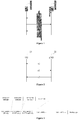
- Figure 1 schematically illustrates a four-step random access process under the CBRA mechanism in prior art
- Figure 2 schematically illustrates a two-step random access process under the CFRA mechanism in prior art.
- a base station (gNB) 22 performs s0 in advance to indicate a dedicated resource for CFRA to a UE 21.
- the dedicated resource may include an allocation information of a random access preamble (a preamble for short), such as time-frequency resources and code resources for the UE21 to initiate the preamble.
- the UE 21 may perform s1 to send the random access preamble through the dedicated resource.
- the base station 22 may perform s2 to send a Random Access Response (RAR) message.
- RAR Random Access Response
- the network will not allocate a dedicated resource for a specific UE for random access. Therefore, the UE and the base station generally use the four-step random access process under the CBRA mechanism shown in Figure 1 to complete random access.
- a UE 11 which generates a random access requirement may perform s1 to send a Message 1 (MSG1 for short). Specifically, the UE 11 may select a Synchronizing Signal Block (SSB) or a Channel State Information Reference Signal (CSI-RS) from SSBs and CSI-RSs which meet the conditions. Then a preamble is selected, and a random access preamble sequence is sent at time-frequency resources corresponding to a Physical Random Access Channel Occasion (RO) which is allowed to initiate.
- SSB Synchronizing Signal Block
- CSI-RS Channel State Information Reference Signal
- the UE 11 may perform s2 to receive a random access response (ie, MSG2) sent by a base station 12. Specifically, the UE 11 may receive a data in the MSG2 by detecting resources indicated by a Physical Downlink Control Channel (PDCCH) scrambled by a Random Access Radio Network Temporary Identifier (RA-RNTI).
- MSG2 a random access response
- UE 11 may receive a data in the MSG2 by detecting resources indicated by a Physical Downlink Control Channel (PDCCH) scrambled by a Random Access Radio Network Temporary Identifier (RA-RNTI).
- PDCCH Physical Downlink Control Channel
- RA-RNTI Random Access Radio Network Temporary Identifier
- the RA-RNTI may be related to a time-frequency position (i.e., RO) of the preamble transmitted when the UE 11performs s1.
- the RA-RNTI may be calculated by a following formula:
- RA-RNTI 1 + s_id + 14 ⁇ t_id + 14 ⁇ 80 ⁇ f_id + 14 ⁇ 80 ⁇ 8 ⁇ ul_carrier_id.
- the s_id refers to an index number of a first Orthogonal Frequency Division Multiplexing (OFDM) symbol of the PRACH
- the t_id refers to an index number of a first time slot of the PRACH in a system frame
- the f id refers to a time domain index number of the PRACH
- the ul_carrier_id refers to an uplink frequency indication used by MSG1, where 0 represents a Normal Uplink (NUL) frequency, and 1 represents a Supplementary Uplink (SUL) frequency.
- the RAR data in MSG2 sent by the corresponding base station 12 may be multiplexed with multiple UEs.
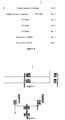
- Figure 3 is a schematic diagram of a Media Access Control Protocol Data Unit (MAC PDU) of a RAR in the random access process shown in Figure 1 in prior art.
- MAC PDU Media Access Control Protocol Data Unit
- RAPID Random Access Preamble Identifier
- the UE11 may search for a corresponding RAPID in a subheader of a MAC subPDU according to the preamble selected for sending the MSG1, so as to determine whether to receive a subsequent MAC RAR information or not.
- FIG 4 is a schematic diagram of a MAC RAR in the random access process shown in Figure 1 .
- R refers to a reserved bit, which is not used in the prior art;
- a Timing Advance Command is used to carry a Timing Advance (TA) information;
- an uplink grant (UL grant) is used to carry a scheduling information corresponding to a message 3 (MSG3) sent by the UE;
- a Temporary Cell Radio Network Temporary Identifier (TC-RNTI) is used for a UE without a Cell Radio Network Temporary Identifier (C-RNTI) to receive a message 4 (MSG4).
- TC-RNTI Temporary Cell Radio Network Temporary Identifier
- the UE 11 may perform s3 to send the MSG3 according to an authorization received in the MSG2.
- the UE 11 may send a C-RNTI MAC Control Element (C-RNTI MAC CE) as shown in Figure 5 . If there is more space, the UE 11 may send other information such as a Buffer Status Report (BSR).
- C-RNTI MAC CE C-RNTI MAC Control Element
- BSR Buffer Status Report
- a Logical Channel Identify may be used to indicate that the MAC sub-PDU includes the corresponding MAC CE.
- the UE 11 may send an RRC Common Control Channel (RRC CCCH) message while performing s3.
- RRC CCCH RRC Common Control Channel
- the RRC CCCH message may include: an RRCSetupRequest message, an RRCResumeRequest message, and the like.
- a part of the information carried in the RRC CCCH may be used as a UE identity for contention resolution.
- the UE 11 may receive the MSG4 by using the PDCCH scrambled with the allocated C-RNTI.
- the scheduled data may be received by a specific UE (i.e. he UE 11). If the MSG4 is received, the UE 11 determines that the contention resolution is successful and the random access process is successful (in other words, the random access process is completed). If the scheduling from the base station 12 is not received within a certain period of time, the UE 11 determines that the contention resolution fails.
- the TC-RNTI obtained in the MSG3 may be used to receive the PDCCH, so as to obtain the MSG4. If the received data carries a MAC CE which includes a UE Contention Resolution Identity, it is determined that the contention resolution is successful.
- the MAC CE may be indicated by a LCID.
- the UE Contention Resolution Identity is the part of the information carried in the RRC CCCH message described above.
- a UE 61 sends a first Message A (MSGA) when performing s1, where the MSGA includes a MSG1 and a MSG3 in the four-step random access process shown in Figure 1 .
- a base station 62 sends a second Message B (MSGB) when performing s2, where the MSGB includes a MSG2 and a MSG4 in the four-step random access process shown in Figure 1 .
- MSGA first Message A
- MSGB second Message B
- the base station 62 replies to a MAC RAR in the four-step random access process.
- the UE 61 falls back to the four-step random access process shown in Figure 1 and continues to send a MSG3.
- Solution 1 Modify the MAC RAR to carry a UE Contention Resolution Identity.
- the RAR information carried by MSGB includes at least one UE Contention Resolution Identity.
- TC-RNTI may be used as the UE Contention Resolution Identity.
- the UE61 still uses RA-RNTI to receive MSGB, and data of multiple UEs are multiplexed in one MAC PDU.
- an UL Grant in the MAC RAR is not needed, which may be used as an information for scheduling a downlink data after the random access process.
- the UE 61 without an allocated C-NRNTI may select a C-RNTI from an RNTI resource pool and send the selected C-RNTI to the base station 62 in the MSGA message part for contention resolution. If the base station 62 receives the MSGA from the UE 61, the C-RNTI is used to scramble the PDCCH to schedule the UE 61. After receiving the PDCCH, the UE61 determines that the contention resolution is successful. The UE 61 with the allocated C-RNTI uses the allocated C-RNTI to receive the MSGB, and if the MSGB is received, the UE61 determines that the contention resolution is successful.
- a method for performing a random access process including: sending a first message; and using a first resource to receive a second message to complete a random access process, wherein the first resource is used by a single UE, or the first resource is shared by multiple UEs in contention.
- a two-step random access process under the CFRA mechanism can be performed more reasonably.
- the UE in the embodiment may use a specific resource (that is, the first resource) to receive scheduling data, which enables the UE to receive the second message independently, and saves resource overheads of the UE and the network.
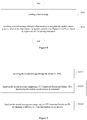
- Fig. 8 schematically illustrates a flow chart of a method for performing a random access process according to an embodiment.
- the method may be applied in a two-step random access process under the CBRA mechanism.
- the method in the embodiment may be executed by a user terminal, such as a UE.
- the method for performing a random access process includes S101 and S102.
- a first resource is used to receive a second message to complete a random access process, wherein the first resource is used by a single UE or shared by multiple UEs in contention.
- the UE in the embodiment may use a specific resource (that is, the first resource) to receive scheduling data, which enables the UE to receive the second message independently, and saves resource overheads of the UE and the network.
- a specific resource that is, the first resource
- the first message may be a MSGA shown in FIG. 6
- the second message may be a MSGB shown in FIG. 6 .
- the first resource may correspond to a preset Temporary UE Radio Network Temporary Identifier (TU-RNTI).
- TU-RNTI Temporary UE Radio Network Temporary Identifier
- the preset TU-RNTI may have a one-to-one correspondence with a second resource used to send the first message.
- the preset TU-RNTI may include a C-RNTI pre-configured by the network.
- the network may pre-define and broadcast the correspondence between the second resource and the preset TU-RNTI.
- the UE determines the first resource which is subsequently used to receive the second message.
- the base station after receiving the first message, the base station, according to the second resource used for transmitting the first message, may determine the TU-RNTI selected by the UE which has sent the first message, and then use the TU-RNTI corresponding to the first resource to send the second message.
- the one-to-one correspondence between the preset TU-RNTI and the second resource may be predetermined through a protocol or configured through a system message.
- the one-to-one correspondence between the preset TU-RNTI and the second resource is configured through a system message.
- the system message may configure an initial value and a range of the preset TU-RNTI and specify the one-to-one correspondence between the preset TU-RNTI and the second resource used in the two-step random access process. For example, if the system message indicates that the preset TU-RNTI has an initial value of 34 and a total number of 8, a UE 51 may determine that the range of the preset TU-RNTI is 34 to 41, so as to reduce the overhead of one-by-one configuration.
- a protocol may be used to reserve a part of RNTI exclusively for the preset TU-RNTI, and to specify that the reserved part of RNTI has a one-to-one correspondence with the second resource used in the two-step random access process.
- a calculation formula may be predefined, and the UE 51 may calculate the preset TU-RNTI according to the calculation formula and the second resource.
- the preset TU-RNTI may be an index value of the preamble used in the two-step random access process, or an index value of a random access occasion list (ra-OccasionList) of a configured RO.
- the second resource may include: a resource or an RO resource used to send a random access preamble in the first message, or a resource used to send a data part of the first message.
- S102 may include the following steps:
- the second message is received through the preset TU-RNTI;
- the UE may monitor the PDCCH scrambled with the preset TU-RNTI to obtain the first resource, and use the first resource to receive the second message.
- the UE in order to prevent the base station from falling back to the four-step random access process because only the preamble in the first message is received, while performing S1021, the UE may also receive the second message through a preset RA-RNTI; and when the second message is received through any RNTI of the preset TU-RNTI and the preset RA-RNTI, the receiving operation on the other RNTI is stopped. Therefore, the problem of monitoring both the two RNTIs in the foregoing Solution 2 may be solved.
- the UE may only monitor the PDCCH scrambled with the preset TU-RNTI, so as to obtain the first resource and use the first resource to receive the second message.
- the random access process is determined to be successful; if the second message does not include any Contention Resolution ID of any UE, it is determined to fall back to the four-step random access process; if the second message includes a Contention Resolution ID of any other UE, the random access process is determined to have failed; and if the PDCCH scrambled with the preset TU-RNTI is not received within a predefined time window, the random access process is determined to have failed. Therefore, the problem of monitoring both the two RNTIs in the foregoing Solution 2 may be solved. Further, the UE may monitor both the preset TU-RNTI and the preset RA-RNTI within the predefined time window, so as to receive the second message.
- the second message may include a complete Tracking Area (TA) information and/or a re-allocated C-RNTI information, so as to protect the base station from updating System Information Block (SIB) or from pre-configuring a defined RNTI information.
- TA Tracking Area
- SIB System Information Block
- the Timing Advance Command in the MSG2 includes 12 bits, but the MAC CE which may be sent to the UE subsequently only carries an adjustment amount based on the complete TA information, where the adjustment amount is about 6 bits.
- the MAC RAR information is not transmitted, so it is necessary to obtain a complete Timing Advance Command of a MAC RAR information as shown in Fig. 4 , which is about 12 bits.
- a new LCID is added to indicate a complete TA command MAC CE.
- the complete TA information and/or the re-allocated C-RNTI information may be indicated by one or a combination of the following informations included in the second message: a downlink C-RNTI MAC CE, a complete TA command MAC CE, and a RRC message.
- the first resource used to receive data may be determined according to the preset TU-RNTI while performing the two-step random access, and an associated RNTI information is not needed to be added to the first message. Therefore, signaling overheads of the UE and the network which are used to indicate a selected C-RNTI to each other can be saved, and resources can be saved.
- the method for performing a random access process may further include: receiving a third message which includes a first indication information and an uplink authorization information; and when the first indication information is a first indicator, the uplink authorization information is determined to be a downlink authorization information used to indicate the first resource.
- the first indicator is adapted to indicate the uplink authorization information as a downlink authorization information.
- the third message may be a RAR message
- the first indication information may be carried by a reserved bit R of the RAR message shown in FIG. 4 .
- the third message may further include at least one TC-RNTI corresponding to the preamble.
- the UE may further compare the TC-RNTI corresponding to the preamble in the third message with the allocated C-RNTI; and when the TC-RNTI corresponding to the preamble in the third message is determined to be same as the allocated C-RNTI, the random access process is determined to be completed.
- S102 may further include: using the first resource to receive the scheduling data of the UE.
- S102 may further include: when the second message includes a UE Contention Resolution ID, the random access process is determined to be completed.
- the subsequent steps may be determined according to the first indication information, which facilitates to reduce the amount of data that the UE needs to analyze and reduce time delay.
- the first indicator is 1
- the UE with an allocated C-RNTI may use the first resource to receive a subsequent scheduling data
- the UE without an allocated C-RNTI may determine the uplink authorization information as a downlink authorization information, and receive a related UE Contention Resolution ID through a first resource corresponding to the downlink authorization information.
- the UE When the first indication information is 0 and the RAR carries the preamble sequence identifier used when the UE sends the MSGA, the UE needs to fall back to the four-step random access process shown in Figure 1 , regardless of whether the UE is allocated with a C-RNTI or not.
- receiving the third message may include: listening to the PDCCH scrambled by the preset RA-RNTI to receive the third message.
- Figure 10 is a schematic structural diagram of a device for performing a random access process according to an embodiment.
- the device 3 for performing a random access process described in the embodiment can be used to execute the methods described in the embodiments in conjunction with Figure 8 and Figure 9 .
- the device 3 for performing a random access process may include: a sending module 31, adapted to send a first message; and a first receiving module 36, adapted to use a first resource to receive a second message to complete a random access process, wherein the first resource is used by a single UE or shared by multiple UEs in contention.
- the first resource is associated with a preset TU-RNTI
- the first receiving module 36 includes: a first receiving sub-module 361, adapted to receive the second message through the preset TU-RNTI; a first determining submodule 362, adapted to, when the second message includes a UE Contention Resolution ID, determine a random access process is completed; and a second determining submodule 363, adapted to, when the second message does not include a UE Contention Resolution ID, determine to fall back to a four-step random access process.
- the first receiving submodule 361 includes: a first monitoring unit 3611, adapted to monitor a PDCCH scrambled using the preset TU-RNTI, obtain the first resource and use the first resource to receive the second message.
- the first receiving module 36 further includes: a second receiving submodule 364, adapted to receive the second message through a preset RA-RNTI while receiving the second message through the preset TU-RNTI; and a stop receiving submodule 365, adapted to, when the second message is received through any RNTI of the preset TU-RNTI and the preset RA-RNTI, stop the receiving operation on the other RNTI.
- a second receiving submodule 364 adapted to receive the second message through a preset RA-RNTI while receiving the second message through the preset TU-RNTI
- a stop receiving submodule 365 adapted to, when the second message is received through any RNTI of the preset TU-RNTI and the preset RA-RNTI, stop the receiving operation on the other RNTI.
- the second receiving submodule 364 includes: a second monitoring unit 3641, adapted to monitor the preset TU-RNTI and the preset RA-RNTI within a predefined time window, so as to receive the second message.
- the preset TU-RNTI may have a one-to-one correspondence with the second resource used to send the first message.
- the one-to-one correspondence between the preset TU-RNTI and the second resource may be predetermined through a protocol or configured through a system message.
- the second resource may be selected from: a resource or an RO resource used to send a random access preamble in the first message, or a resource used to send a data part of the first message.
- the second message includes a complete TA information and/or a reallocated C-RNTI information.
- the complete TA information and/or the reallocated C-RNTI information may be indicated by one or a combination of the following informations included in the second message: a downlink C-RNTI MAC CE, a complete TA command MAC CE, and a RRC message.
- the device 3 for performing a random access process may further include: a second receiving module 32, adapted to receive a third message before using the first resource to receive the second message, wherein the third message includes a first indication information and an uplink authorization information; and a first determining module 33, adapted to, when the first indication information is a first indicator, determine the uplink authorization information as a downlink authorization information which is used to indicate the first resource.
- the third message may further include at least one TC-RNTI.
- the device 3 for performing a random access process may further include: a comparing module 34, adapted to compare the TC-RNTI included in the third message with the allocated C-RNTI of the UE; and a second determining module 35, adapted to, when a result of comparison shows that the TC-RNTI included in the third message is same as the allocated C-RNTI of the UE, determine the random access process is completed.
- the first receiving module 36 includes: a third receiving submodule 366, adapted to use the first resource to receive a scheduling data of the UE.
- the first receiving module 36 may include: a third determining submodule 367, adapted to, when the second message includes a UE Contention Resolution ID, determine that the random access process is completed.
- the third message is a Random Access Response (RAR), and the first indication information is carried by a reserved bit in the third message.
- RAR Random Access Response
- the second receiving module 32 includes: a monitoring submodule 321, adapted to listen to a PDCCH scrambled by the preset RA-RNTI, so as to receive the third message.
- Figure 11 is a flow chart of a method for performing a random access process according to an embodiment.
- the method in the embodiment may be applied to a two-step random access scenario under the CBRA mechanism.
- the method in the embodiment may be executed by a network side, for example, executed by a base station on the network side.
- the method for performing a random access process includes S201 and S202.
- a first resource is used to send a second message to complete the random access process, where the first resource is used by a single UE or shared by multiple UEs in contention.
- the base station in the embodiments may use a specific resource (that is, the first resource) to send the scheduling datas, which enables the base station to send the second message independently to a specific UE, and saves resource overheads of the UE and the network.
- the first resource is associated with a preset TU-RNTI
- the preset TU-RNTI may have a one-to-one correspondence with a second resource used for a UE to send the first message.
- the one-to-one correspondence between the preset TU-RNTI and the second resource may be predetermined through a protocol or configured through a system message.
- the second resource may be selected from: a resource or a RO resource used to send a random access preamble in the first message, or a resource used to send a data part of the first message.
- S202 includes: determining a second message according to the first message; and sending the second message through the preset TU-RNTI. Therefore, signaling overheads which may be used by the UE and the network to indicate a selected C-RNTI to each other are saved, thereby saving resources.
- the base station may determine that the second message includes a UE Contention Resolution ID of the UE which have sent the first message. In other words, the random access process of the UE which have sent the first message is successful.
- the base station when the base station only receives the random access preamble, it is determined that the second message does not include the UE Contention Resolution ID of the UE which have sent the first message. In other words, the UE which have sent the first message needs to fall back to the four-step random access process or the random access process of the UE which have sent the first message fails.
- the base station may indicate the first resource through the PDCCH scrambled by the preset TU-RNTI, and use the first resource to send the second message.
- the second message includes the UE Contention Resolution ID.
- S202 may further include: sending the second message through a preset RA-RNTI.
- S202 may further include: sending the second message within a predefined time window through the preset TU-RNTI or the preset RA-RNTI.
- the second message includes a complete TA information and/or a reallocated C-RNTI information.
- the complete TA information and/or the reallocated C-RNTI information may be indicated by one or a combination of the following informations included in the second message: a downlink C-RNTI MAC CE, a complete TA command MAC CE, and a RRC message.
- the base station may determine the preset TU-RNTI used by the UE according to the second resource associated with the first message.
- the method for performing a random access process may further include: sending a third message, where the third message includes a first indication information and an uplink authorization information, and the first indication information is determined according to the first message. In this way, whether the random access process is completed or not can be indicated based on the first indication information, thereby reducing the amount of data that the UE needs to analyze and reducing time delay.
- the first indication information is determined to be a first indicator.
- the first indicator is used to indicate that the uplink authorization information is to be used as a downlink authorization information.
- the first indication information may not include the first indicator, so as to indicate that the UE needs to fall back to the four-step random access process.
- the first indication information may be carried by a reserved bit R in an MAC RAR message. Assuming that the first indicator is 1, that is, the reserved bit R in the MAC RAR message is used and has a value of 1, it indicates that the random access process is successful; otherwise, when the reserved bit R in the MAC RAR message is used and the value is 0, it indicates that the UE needs to fall back to the four-step random access process.
- the third message may further include at least one TC-RNTI corresponding to the preamble (as shown in FIG. 4 ).
- the base station may send the allocated C-RNTI as a TC-RNTI corresponding to a preamble identifier in the third message. Therefore, the random access process of a UE which has received the third message is determined to be completed.
- S202 includes: using the first resource to send the scheduling data of the UE.
- the base station may carry a UE Contention Resolution ID in the second message and send by using the first resource. Therefore, the random access process of a UE which has received the second message is determined to be completed.
- sending the third message may include: sending the third message on a PDCCH scrambled with a preset RA-RNTI.
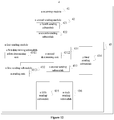
- Figure 12 is a schematic structural diagram of a device for performing a random access process according to an embodiment.
- a device 4 for performing a random access described in the embodiment can be used to execute the method described in the embodiments in conjunction with Figure 11 .
- the device 4 for performing a random access may include: a receiving module 41, adapted to receive a first message; and a first sending module 43, adapted to use a first resource to send a second message to complete a random access process, wherein the first resource is used by a single UE or shared by multiple UEs in contention.
- the first resource may be associated with a preset TU-RNTI
- the first sending module 43 may include: a first determining submodule 431, adapted to determine the second message according to the first message; and a first sending submodule 432, adapted to send the second message through the preset TU-RNTI.
- the first determining submodule 431 may include: a first determining unit 4311, adapted to, when the first message includes both a random access preamble and a data part, determine that the second message includes a UE Contention Resolution ID; and a second determining unit 4312, adapted to, when only the random access preamble is received, determine that the second message does not include the UE Contention Resolution ID.
- the first sending submodule 432 may include: a sending unit 4321, adapted to indicate the first resource on a PDCCH scrambled with the preset TU-RNTI and use the first resource to send the second message.
- the first sending module 43 may further include: a second sending submodule 433, adapted to, when the second message does not include the UE Contention Resolution ID, send the second message through a preset RA-RNTI.
- the first sending module 43 may include: a third sending submodule 434, adapted to send the second message through the preset TU-RNTI or the preset RA-RNTI within a predefined time window.
- the preset TU-RNTI may have a one-to-one correspondence with the second resource used to send the first message.
- the one-to-one correspondence between the preset TU-RNTI and the second resource may be predetermined through a protocol or configured through a system message.
- the second resource may be selected from: a resource or an RO resource used to send a random access preamble in the first message, or a resource used to send a data part of the first message.
- the second message includes a complete TA information and/or a reallocated C-RNTI information.
- the complete TA information and/or the reallocated C-RNTI information may be indicated by one or a combination of the following informations included in the second message: a downlink C-RNTI MAC CE, a complete TA command MAC CE, and a RRC message.
- the device 4 for performing a random access process before using the first resource to send the second message, further includes: a second sending module 42, adapted to send a third message, where the third message includes a first indication information and an uplink authorization information, and the first indication information is determined according to the first message.
- determining the first indication information according to the first message includes: when the first message includes both a random access preamble and a data part, determining that the first indication information is a first indicator.
- the third message may further include at least one TC-RNTI.
- the second sending module 42 may include: a fourth sending submodule 421, adapted to determine the allocated C-RNTI as the at least one TC-RNTI and send the allocated C-RNTI.
- the first sending module 43 may include: a fifth sending submodule 435, adapted to use the first resource to send a scheduling data of the UE.
- the first sending module 43 may include: a sixth sending submodule 436, adapted to carry a UE Contention Resolution ID in the second message and send through the first resource.
- the third message may be a RAR, and the first indication information may be carried in a reserved bit of the third message.
- the second sending module 42 may include: a seventh sending submodule 422, adapted to send the third message on a PDCCH scrambled with a preset RA-RNTI.
- the random access process provided in the embodiments of the present disclosure can execute the two-step random access process under the CBRA mechanism on the basis of the Solution 2 more reasonably.
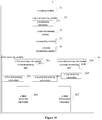
- a UE 51 may perform s1 to send a first message (shown as MSGA in the figure) to a base station 52 through a second resource.
- a corresponding preset TU-RNTI may be configured based on a preamble or RO, or may be configured based on resources for sending a data part of the MSGA.
- the preset TU-RNTI is determined.
- both the UE 51 and the base station 52 that received the first message receive and send messages based on the corresponding preset TU-RNTI.
- the base station 52 may determine the preset TU-RNTI used by the UE 51 for the current random access according to the second resource, and perform s2, so as to use first resource associated with the TU-RNTI to send the second message (shown as MSGB in the figure).
- the second message may be determined according to the first message received by the base station 52. For example, when the base station 52 successfully receives the preamble and the data part of the first message, the second message may include a UE Contention Resolution ID of the UE 51; otherwise, the second message does not include the UE Contention Resolution ID of the UE 51.
- the second message including the UE Contention Resolution ID may be sent through a PDCCH scrambled with the preset TU-RNTI, and the second message not including the UE Contention Resolution ID may be sent through a PDCCH scrambled with a preset RA-RNTI.
- the UE 51 may monitor or blindly detect both the PDCCH scrambled with the preset TU-RNTI and the PDCCH scrambled with the preset RA-RNTI. And once the second message is received on either RNTI and that the second message is sent to the UE 51 may be determined, the UE 51 can actively stop receiving the PDCCH scrambled with the other RNTI, thereby saving resources.
- the UE 51 may only monitor the PDCCH scrambled with the preset TU-RNTI to obtain the indicated first resource, and use the first resource to receive the second message.
- the correspondence between the preset TU-RNTI and the second resource may be configured through a system message.
- the system message may configure an initial value and a range of the preset TU-RNTI and specify a one-to-one correspondence between the preset TU-RNTI and the second resource used in the two-step random access process.
- the system message indicates that the preset TU-RNTI has an initial value of 34 and a total number of 8
- the UE 51 may determine that the range of the preset TU-RNTI is from 34 to 41, so as to reduce the overhead of one-by-one configuration.
- a protocol may be used to reserve a part of RNTI exclusively for the preset TU-RNTI, and to specify that the reserved part of RNTI has a one-to-one correspondence with the second resource used in the two-step random access process.
- a calculation formula may be predefined, and the UE 51 may calculate the preset TU-RNTI according to the calculation formula and the second resource.
- the preset TU-RNTI may be an index value of the preamble used in the two-step random access process, or an index value of a random access occasion list (ra-OccasionList) of a configured RO.
- the base station 52 may send a complete TA information and a re-allocated C-RNTI information in the second message to avoid updating a SIB or a pre-configured RNTI information.
- the method for preforming a random access process provided in the embodiments can execute the two-step random access process under the CBRA mechanism on the basis of the Solution 1 more reasonably.
- the method provided in the embodiments in this scenario focuses on receiving solutions after the UE sends a first message, that is, how a base station carries more instructions to the UE based on an existing message structure of a second message, which facilitates the UE to determine subsequent processing steps more reasonably.
- a base station 72 may determine a second message (shown as MSGB in the figure) according to f the first message, and perform s1 to send the second message. Specifically, no matter what a content of the second message is, the base station 72 uses a PDCCH scrambled with the preset RA-RNTI to send the second message.
- the base station 72 uses a reserved bit in a MAC RAR message of the second message to indicate in this scenario.
- the reserved bit is not used and has a fixed value of 0.
- the reserved bit is located at the forefront of the MAC RAR and may be obtained and decoded by the UE71 earliest.
- a part which carries a first indication information and an uplink authorization information is referred to as a third message in the embodiments described above.
- the first indication information may be carried in the reserved bit.
- the reserved bit is 1; otherwise, the reserved bit is 0.
- the UE 71 determines to fall back to the traditional four-step random access process. In this case, the UE 71 will not continue to decode the second message, thereby reducing the decoding amount of the UE 71.
- the UE 71 may take the uplink authorization information indicated in the MAC RAR message as a downlink authorization information and continue to receive a contention resolution information on the first resource.
- the base station 72 carries a UE Contention Resolution ID of the UE 71 in the second message. If the UE71 continues to decode the second message and obtains the UE Conflict Resolution ID, the two-step random access process is considered to be successful; otherwise, it is considered to have failed.
- the UE 71 may further determine whether the TC-RNTI carried in the subsequent second message is the same as its own C-RNTI or not. If yes, the two-step random access process is successful, and the UE 71 may use the uplink authorization information as the downlink authorization information to receive a scheduling data; and if not, the two-step random access process is determined to be a failure.
- the base station 72 may carry a C-RNTI of the UE 71 as the TC-RNTI in the second message, or use the uplink authorization information indicated in the MAC RAR as the downlink authorization information, so as to send the scheduling data of the UE 71.
- a UE by broadcasting a preset TU-RNTI corresponding to a resource associated with a RO, a preamble or a data, a UE can use the preset TU-RNTI to monitor a PDCCH to obtain a MSGB. And the UE can monitor the PDCCH by using a RA-RNTI and the preset TU-RNTI.
- a LCID can further indicate a downlink C-RNTI MAC CE and reallocate a C-RNTI through the downlink C-RNTI MAC CE; or the LCID can further indicate a complete TA command MAC CE and configure a TA information through the complete TA command MAC CE; or the re-allocated C-RNTI and/or the TA information can be added to a RRC message.
- the uplink authorization information in a MAC RAR can be used as a downlink authorization information for a UE using the two-step RACH, and the UE can use the downlink authorization information to receive a specific message which includes a UE Contention Resolution information.
- a storage medium having computer instructions stored therein is provided, wherein once the computer instructions are executed, the above method as shown in Figures 8, 9 or 11 is performed.
- the storage medium may include a Read Only Memory (ROM), a Random Access Memory (RAM), a magnetic disk, an optical disk or the like.
- the storage medium may include a non-volatile or non-transitory memory or the like.
- a terminal including a memory and a processor
- the memory has computer instructions stored therein, and when the processor executes the computer instructions, the above method as shown in Figures 8 and 9 is performed.
- the terminal is a User Equipment (UE).
- UE User Equipment
- a base station including a memory and a processor
- the memory has computer instructions stored therein, and when the processor executes the computer instructions, the above method as shown in Figure 11 is performed.
- the base station is a gNB.
Landscapes
- Engineering & Computer Science (AREA)
- Computer Networks & Wireless Communication (AREA)
- Signal Processing (AREA)
- Mobile Radio Communication Systems (AREA)
Abstract
Description
- This application claims priority to
Chinese Patent Application No. 201910150391.8, filed on February 28, 2019 - The present disclosure generally relates to communication technology field, and more particularly, to a method and a device for performing a random access process, a storage medium, a terminal and a base station.
- In a 3rd Generation Partnership Project (3GPP) New Radio (NR or 5G) scenario, an air interface of a User Equipment (UE) may have three different states: Radio Resource Control (RRC) idle state (IDLE for short), RRC inactive state (INACTIVE for short) and RRC connected state (CONNNECTED for short).
- When in any of the three states, the UE may initiate a random access process. For example, the UE may initiate a random access process when the UE starts an initial access from the RRC idle state, or when the UE initiates a RRC connection re establishment process, or when the UE needs to perform cell handover, or when the UE which is in the RRC connected state has downlink (DL) data or uplink (UL) data arrived in asynchronous state, or when the UE initiates a state migration from the RRC inactive state, or when the UE establishes time synchronization in a process of adding a secondary cell (Scell), or when the UE requests other system information (OSI), or when the UE performs beam failure recovery, etc.
- The random access mechanisms mainly include Contention-Based Random Access (CBRA) and Contention-Free Random Access (CFRA). In the CFRA mechanism, a network needs configured dedicated resources in advance (mainly time-frequency resources and code resources for initiating a preamble, which the network may indicate through a parameter random access preamble index (ra-PreambleIndex)). Otherwise, the UE generally uses the CBRA mechanism to perform random access.
- Generally speaking, a random access process using the CBRA mechanism mainly includes four steps. In order to accelerate the random access process, reduce time delay and reduce a number of messages, a latest protocol proposes to complete the random access process using the CBRA mechanism in two steps.
- However, there are many shortcomings to complete the random access process using the CBRA mechanism in two steps. On the one hand, resource overheads of the UE and the network side are both increased; and on the other hand, the quality of the random access is poor.
- Embodiments of the present disclosure may achieve to perform a two-step random access process under the CBRA mechanism more reasonably.
- In an embodiment of the present disclosure, a method for performing a random access is provided, including: sending a first message; and receiving a second message through a first resource to complete the random access process, wherein the first resource is used by a single User Equipment (UE) or shared by a plurality of UEs having contention.
- Optionally, the first resource is associated with a preset Temporary UE Radio Network Temporary Identifier (TU-RNTI), and the receiving a second message through a first resource to complete the random access process includes: receiving the second message through the preset TU-RNTI; based on the second message including a UE Contention Resolution Identity (ID), determining the random access process is completed; or based on the second message not including the UE Contention Resolution ID, determining to fall back to a four-step random access process.
- Optionally, the receiving the second message through the preset UT-RNTI includes: monitoring a Physical Downlink Control Channel (PDCCH) scrambled with the preset TU-RNTI to obtain the first resource, and use the first resource to receive the second message.
- Optionally, the receiving a second message through a first resource to complete the random access process includes: while receiving the second message through the preset TU-RNTI, receiving the second message through a preset Random Access Radio Network Temporary Identifier (RA-RNTI); and based on the second message being received through any RNTI of the preset TU-RNTI and the preset RA-RNTI, stop receiving the second message on the other RNTI.
- Optionally, while receiving the second message through the preset TU-RNTI, receiving the second message through a preset RA-RNTI includes: monitoring the preset TU-RNTI and the preset RA-RNTI within a predefined time window to receive the second message.
- Optionally, the preset TU-RNTI has a one-to-one correspondence with the second resource used to send the first message.
- Optionally, the one-to-one correspondence between the preset TU-RNTI and the second resource is predetermined through a protocol or configured through a system message.
- Optionally, the second resource includes: a resource or a Physical Random Access Channel Occasion (RO) resource used to send a random access preamble in the first message, or a resource used to send a data part in the first message.
- Optionally, the second message includes a complete Tracking Area (TA) information and/or a re-allocated Cell Radio Network Temporary Identifier (C-RNTI) information.
- Optionally, the complete TA information and/or the re-allocated C-RNTI information is indicated by one or a combination of following informations included in the second message: a downlink C-RNTI Media Access Control (MAC) Control Element (CE), a complete TA command MAC CE, and a Radio Resource Control (RRC) message.
- Optionally, before using the first resource to receive the second message, the method further includes: receiving a third message, wherein the third message includes a first indication information and an uplink authorization information; and when the first indication information is a first indicator, the uplink authorization information is determined as a downlink authorization information used to indicate the first resource.
- Optionally, the third message further includes at least one Temporary Cell Radio Network Temporary Identifier (TC-RNTI), and based on the UE having an allocated C-RNTI, the method further includes: determining whether the TC-RNTI included in the third message is same as the allocated C-RNTI; and based on the TC-RNTI being determined same as the allocated C-RNTI, determining that the random access process is complete.
- Optionally, the using the first resource to receive the second message to complete the random access process includes: using the first resource to receive a scheduling data of the UE.
- Optionally, based on the UE not having an allocated C-RNTI, the using the first resource to receive the second message to complete the random access process includes: based on the second message including a UE Contention Resolution Identity (ID), determining that the random access process is complete.
- Optionally, the third message is a Random Access Response (RAR) message, and the first indication information is carried in a reserved bit of the third message.
- Optionally, the receiving the third message includes: monitoring a PDCCH scrambled by a preset RA-RNTI to receive the third message.
- In an embodiment of the present disclosure, a device for performing a random access is provided, including: a sending module, adapted to send a first message; and a first receiving module, adapted to use a first resource to receive a second message to complete the random access process, wherein the first resource is used by a single User Equipment (UE) or shared by a plurality of UEs having contention.
- In an embodiment of the present disclosure, a method for performing a random access is provided, including: receiving a first message; and using a first resource to send a second message to complete the random access process, wherein the first resource is used by a single User Equipment (UE) or shared by a plurality of UEs having contention.
- Optionally, the first resource is associated with a preset Temporary UE Radio Network Temporary Identifier (TU-RNTI), and the using a first resource to send a second message to complete the random access process includes: determining the second message according to the first message; and sending the second message through the preset TU-RNTI.
- Optionally, the determining the second message according to the first message includes: based on the first message including both a random access preamble and a data part, determining that the second message includes a UE Contention Resolution Identity (ID); or, based on only the random access preamble being received, determining that the second message does not include the UE Contention Resolution ID.
- Optionally, the sending the second message through the preset TU-RNTI includes: indicating the first resource on a Physical Downlink Control Channel (PDCCH) scrambled with the preset TU-RNTI, and using the first resource to send the second message.
- Optionally, the using the first resource to send the second message to complete the random access process further includes: based on the second message not including the UE Contention Resolution ID, sending the second message through a preset Random Access Radio Network Temporary Identifier (RA-RNTI).
- Optionally, the using a first resource to send a second message to complete the random access process includes: using the preset TU-RNTI or the preset RA-RNTI to send the second message within a predefined time window.
- Optionally, the preset TU-RNTI has a one-to-one correspondence with the second resource used to send the first message.
- Optionally, the one-to-one correspondence between the preset TU-RNTI and the second resource is predetermined through a protocol or configured through a system message.
- Optionally, the second resource includes: a resource or a Physical Random Access Channel Occasion (RO) resource used to send a random access preamble in the first message, or a resource used to send a data part in the first message.
- Optionally, the second message includes a complete Tracking Area (TA) information and/or a re-allocated Cell Radio Network Temporary Identifier (C-RNTI) information.
- Optionally, the complete TA information and/or the re-allocated C-RNTI information is indicated by one or a combination of following informations included in the second message: a downlink C-RNTI Media Access Control (MAC) Control Element (CE), a complete TA command MAC CE, and a Radio Resource Control (RRC) message.
- Optionally, before using the first resource to send the second message, the method further includes: sending a third message, wherein the third message includes a first indication information and an uplink authorization information, and the first indication information is determined according to the first message.
- Optionally, the determining the first indication information according to the first message includes: based on the first message including both a random access preamble and a data part, determining that the first indication information is a first indicator.
- Optionally, the third message further includes at least one Temporary Cell Radio Network Temporary Identifier (TC-RNTI), and based on the UE which has sent the first message having an allocated C-RNTI and the first message including both a random access preamble and a data part, the sending the third message includes: determining the allocated C-RNTI as one of the at least one TC-RNTI and sending the allocated C-RNTI.
- Optionally, the sending the second message through the first resource to complete the random access process includes: using the first resource to send a scheduling data of the UE.
- Optionally, based on the UE which has sent the first message not having an allocated C-RNTI and the first message including both a random access preamble and a data part, the using the first resource to send the second message to complete the random access process includes: carrying a UE Contention Resolution ID in the second message and using the first resource to send the second message.
- Optionally, the third message is a Random Access Response (RAR) message, and the first indication information is carried in a reserved bit of the third message.
- Optionally, the sending the third message includes: sending the third message through a PDCCH scrambled by a preset RA-RNTI.
- In an embodiment of the present disclosure, a device for performing a random access is provided, including: a receiving module, adapted to receive a first message; and a first sending module, adapted to use a first resource to send a second message to complete the random access process, wherein the first resource is used by a single User Equipment (UE) or shared by a plurality of UEs having contention.
- In an embodiment of the present disclosure, a storage medium having computer instructions stored therein is provided, wherein once the computer instructions are executed, the above method is performed.
- In an embodiment of the present disclosure, a terminal including a memory and a processor is provided, wherein the memory has computer instructions stored therein, and when the processor executes the computer instructions, the above method is performed.
- In an embodiment of the present disclosure, a base station including a memory and a processor is provided, wherein the memory has computer instructions stored therein, and when the processor executes the computer instructions, the above method is performed.
- Embodiments of the present disclosure may provide following advantages.
- In embodiments of the present disclosure, for a UE, a method for performing a random access process is provided, including: sending a first message; and using a first resource to receive a second message to complete a random access process, wherein the first resource is used by a single UE, or the first resource is shared by multiple UEs in contention. According to the embodiment, a two-step random access process under the CFRA mechanism can be performed more reasonably. Compared with the prior art in which all UEs need to use a same resource to receive scheduling data, the UE in the embodiment may use a specific resource (that is, the first resource) to receive scheduling data, which enables the UE to receive the second message independently, and saves resource overheads of the UE and the network.
- Further, the first resource is associated with a preset Temporary UE Radio Network Temporary Identifier (TU-RNTI), and the receiving a second message through a first resource to complete the random access process includes: receiving the second message through the preset TU-RNTI; based on the second message including a UE Contention Resolution Identity (ID), determining the random access process is completed; or based on the second message not including the UE Contention Resolution ID, determining to fall back to a four-step random access process. For a UE without an allocated C-RNTI, according to the predetermined association relationship between the preset TU-RNTI and the first resource, the first resource used to receive data may be determined according to the preset TU-RNTI while performing the two-step random access, and an associated RNTI information is not needed to be added to the first message. Therefore, signaling overheads of the UE and the network which are used to indicate a selected C-RNTI to each other can be saved, and resources can be saved.
- Further, before using the first resource to receive the second message, the method for performing a random access process further includes: receiving a third message, wherein the third message includes a first indication information and an uplink authorization information; and when the first indication information is a first indicator, the uplink authorization information is determined as a downlink authorization information used to indicate the first resource. In summary, the subsequent steps may be determined according to the first indication information, which facilitates to reduce the amount of data that the UE needs to analyze and reduce time delay.
- In embodiments of the present disclosure, for a network side, a method for performing a random access process is provided, including: receiving a first message; and using a first resource to send a second message to complete the random access process, wherein the first resource is used by a single UE or shared by a plurality of UEs having contention. According to the embodiments, a two-step random access process under the CBRA mechanism can be realized more reasonably. Compared with the prior art in which scheduling datas of all UEs are sent through a same resource, the base station in the embodiments may use a specific resource (that is, the first resource) to send the scheduling datas, which enables the base station to send the second message independently to a specific UE, and saves resource overheads of the UE and the network.
- Further, the first resource is associated with a preset Temporary UE Radio Network Temporary Identifier (TU-RNTI), and the using a first resource to send a second message to complete the random access process includes: determining the second message according to the first message; and sending the second message through the preset TU-RNTI. For a UE not having an allocated C-RNTI, after receiving the first message from the UE, the first resource used to send the second message can be determined according to the preset TU-RNTI. Therefore, signaling overheads of the UE and the network which are used to indicate a selected C-RNTI to each other can be saved, and resources can be saved.
- Further, before using the first resource to send the second message, the method further includes: sending a third message, wherein the third message includes a first indication information and an uplink authorization information, and the first indication information is determined according to the first message. Therefore, whether the random access process is completed or not can be indicated by the first indication information, which facilitates to reduce the amount of data that the UE needs to analyze and reduce time delay.
-
-
Figure 1 schematically illustrates a four-step random access process under the CBRA mechanism in prior art; -
Figure 2 schematically illustrates a two-step random access process under the CFRA mechanism in prior art; -
Figure 3 is a schematic diagram of a Media Access Control Protocol Data Unit (MAC PDU) of a Random Access Response (RAR) in the random access process shown inFigure 1 in prior art; -
Figure 4 is a schematic diagram of a RAR in the random access process shown inFigure 1 in prior art; -
Figure 5 is a schematic diagram of C-RNTI MAC CE in the random access process shown inFigure 1 in prior art; -
Figure 6 schematically illustrates a signaling interaction diagram of a two-step random access process under the CBRA mechanism in prior art; -
Figure 7 is a schematic diagram of a RAR in the random access process shown inFigure 6 in prior art; -
Figure 8 is a flow chart of a method for performing a random access process according to an embodiment; -
Figure 9 is a flow chart of S102 shown inFigure 8 according to an embodiment; -
Figure 10 is a schematic structural diagram of a device for performing a random access process according to an embodiment; -
Figure 11 is a flow chart of a method for performing a random access process according to another embodiment; -
Figure 12 is a schematic structural diagram of a device for performing a random access process according to another embodiment; -
Figure 13 schematically illustrates a signaling interaction diagram of a typical application scenario according to an embodiment; and -
Figure 14 schematically illustrates a signaling interaction diagram of a typical application scenario according to another embodiment. - In some embodiments, the two-step random access process under the CBRA mechanism has many problems, which may result in high resource overheads of the UE and the network, increased complexity of the UE and poor random access quality.
-
Figure 1 schematically illustrates a four-step random access process under the CBRA mechanism in prior art, andFigure 2 schematically illustrates a two-step random access process under the CFRA mechanism in prior art. - Referring to
Figure 2 , a base station (gNB) 22 performs s0 in advance to indicate a dedicated resource for CFRA to aUE 21. Specifically, the dedicated resource may include an allocation information of a random access preamble (a preamble for short), such as time-frequency resources and code resources for the UE21 to initiate the preamble. - When CFRA needs to be initiated, the
UE 21 may perform s1 to send the random access preamble through the dedicated resource. In response to receiving the random access preamble, the base station 22 may perform s2 to send a Random Access Response (RAR) message. - At this point, the two-step random access process under the CFRA mechanism is completed.
- However, in actual applications, the network will not allocate a dedicated resource for a specific UE for random access. Therefore, the UE and the base station generally use the four-step random access process under the CBRA mechanism shown in
Figure 1 to complete random access. - Referring to
Figure 1 , a UE 11 which generates a random access requirement may perform s1 to send a Message 1 (MSG1 for short). Specifically, the UE 11 may select a Synchronizing Signal Block (SSB) or a Channel State Information Reference Signal (CSI-RS) from SSBs and CSI-RSs which meet the conditions. Then a preamble is selected, and a random access preamble sequence is sent at time-frequency resources corresponding to a Physical Random Access Channel Occasion (RO) which is allowed to initiate. - Further, the UE 11 may perform s2 to receive a random access response (ie, MSG2) sent by a
base station 12. Specifically, the UE 11 may receive a data in the MSG2 by detecting resources indicated by a Physical Downlink Control Channel (PDCCH) scrambled by a Random Access Radio Network Temporary Identifier (RA-RNTI). - Specifically, the RA-RNTI may be related to a time-frequency position (i.e., RO) of the preamble transmitted when the UE 11performs s1. For example, the RA-RNTI may be calculated by a following formula:
- RA-RNTI= 1 + s_id + 14 × t_id + 14 × 80 × f_id + 14 × 80 × 8 × ul_carrier_id.
- Specifically, the s_id refers to an index number of a first Orthogonal Frequency Division Multiplexing (OFDM) symbol of the PRACH, the t_id refers to an index number of a first time slot of the PRACH in a system frame, the f id refers to a time domain index number of the PRACH, and the ul_carrier_id refers to an uplink frequency indication used by MSG1, where 0 represents a Normal Uplink (NUL) frequency, and 1 represents a Supplementary Uplink (SUL) frequency.
- If multiple UEs use a same RO to send multiple preambles thereof, even if different preambles are selected, a same RA-RNTI is used, so the RAR data in MSG2 sent by the
corresponding base station 12 may be multiplexed with multiple UEs. - For example,
Figure 3 is a schematic diagram of a Media Access Control Protocol Data Unit (MAC PDU) of a RAR in the random access process shown inFigure 1 in prior art. As shown inFigure 3 , a Random Access Preamble Identifier (RAPID) corresponds to the index of the preamble. The UE11 may search for a corresponding RAPID in a subheader of a MAC subPDU according to the preamble selected for sending the MSG1, so as to determine whether to receive a subsequent MAC RAR information or not. -
Figure 4 is a schematic diagram of a MAC RAR in the random access process shown inFigure 1 . Specifically, R refers to a reserved bit, which is not used in the prior art; a Timing Advance Command is used to carry a Timing Advance (TA) information; an uplink grant (UL grant) is used to carry a scheduling information corresponding to a message 3 (MSG3) sent by the UE; and a Temporary Cell Radio Network Temporary Identifier (TC-RNTI) is used for a UE without a Cell Radio Network Temporary Identifier (C-RNTI) to receive a message 4 (MSG4). - As described above, in practical applications, since multiple UEs may select a same RO and a same preamble to initiate random access, contention may happen. Therefore, the following two steps (i.e. S3 and S4) need to be performed to resolve contention.
- Further, the UE 11 may perform s3 to send the MSG3 according to an authorization received in the MSG2.
- If the UE 11 has an allocated C-RNTI, the UE 11 may send a C-RNTI MAC Control Element (C-RNTI MAC CE) as shown in
Figure 5 . If there is more space, the UE 11 may send other information such as a Buffer Status Report (BSR). - Specifically, a Logical Channel Identify (LCID) may be used to indicate that the MAC sub-PDU includes the corresponding MAC CE.
- If the UE 11 does not have an allocated C-RNTI, for example, a UE in the idle state or the inactive state may not be allocated a C-RNTI, the UE11 may send an RRC Common Control Channel (RRC CCCH) message while performing s3. The RRC CCCH message may include: an RRCSetupRequest message, an RRCResumeRequest message, and the like. A part of the information carried in the RRC CCCH may be used as a UE identity for contention resolution.
- Further, for the UE 11 with the allocated C-RNTI, in s4, the UE 11 may receive the MSG4 by using the PDCCH scrambled with the allocated C-RNTI. In this case, the scheduled data may be received by a specific UE (i.e. he UE 11). If the MSG4 is received, the UE 11 determines that the contention resolution is successful and the random access process is successful (in other words, the random access process is completed). If the scheduling from the
base station 12 is not received within a certain period of time, the UE 11 determines that the contention resolution fails. - For the UE 11 without an allocated C-RNTI, the TC-RNTI obtained in the MSG3 may be used to receive the PDCCH, so as to obtain the MSG4. If the received data carries a MAC CE which includes a UE Contention Resolution Identity, it is determined that the contention resolution is successful. The MAC CE may be indicated by a LCID. And the UE Contention Resolution Identity is the part of the information carried in the RRC CCCH message described above.
- In a latest protocol, in order to speed up the random access process, reduce time delay and reduce the number of messages, a two-step random access process under the CBRA mechanism is proposed.
- For example, referring to
Figure 6 , a UE 61 sends a first Message A (MSGA) when performing s1, where the MSGA includes a MSG1 and a MSG3 in the four-step random access process shown inFigure 1 . Further, in response to receiving the MSGA, a base station 62 sends a second Message B (MSGB) when performing s2, where the MSGB includes a MSG2 and a MSG4 in the four-step random access process shown inFigure 1 . - If only a preamble information sent by the UE 61 is received, the base station 62 replies to a MAC RAR in the four-step random access process. In response to receiving the reply information, the UE 61 falls back to the four-step random access process shown in
Figure 1 and continues to send a MSG3. - In order to implement the two-step random access process shown in
FIG 6 , two solutions are proposed in the prior art. - Solution 1: Modify the MAC RAR to carry a UE Contention Resolution Identity. For example, referring to
Figure 7 , compared to the RAR information carried by the MSG2 in the four-step random access process shown inFigure 4 , in the two-step random access process shown inFigure 6 , the RAR information carried by MSGB includes at least one UE Contention Resolution Identity. - For the UE 61 with an allocated C-RNTI, TC-RNTI may be used as the UE Contention Resolution Identity.
- In
Solution 1, the UE61 still uses RA-RNTI to receive MSGB, and data of multiple UEs are multiplexed in one MAC PDU. - Further, in this case, an UL Grant in the MAC RAR is not needed, which may be used as an information for scheduling a downlink data after the random access process.
- Solution 2: The UE 61 without an allocated C-NRNTI may select a C-RNTI from an RNTI resource pool and send the selected C-RNTI to the base station 62 in the MSGA message part for contention resolution. If the base station 62 receives the MSGA from the UE 61, the C-RNTI is used to scramble the PDCCH to schedule the UE 61. After receiving the PDCCH, the UE61 determines that the contention resolution is successful. The UE 61 with the allocated C-RNTI uses the allocated C-RNTI to receive the MSGB, and if the MSGB is received, the UE61 determines that the contention resolution is successful.
- In
Solution 2, all UEs need to monitor the data scheduled by using the RA-RNTI within a certain time period, in case the base station 62 only receives the preamble and does not receive the data, in which the base station 62 needs to fall back to the four-step random access process. - Inventors of the present disclosure found that in
Solution 1, multiple UEs are multiplexed in a MSGB, and the MSGB and the multiple UEs cannot be received independently. In addition, a UE needs to analyze the message part of a MAC RAR to determine a length of the information, which has a great impact on the UE. Further, data received using RA-RNTI does not carry a HARQ ID, which cannot be retransmitted. - Inventors of the present disclosure found that in
Solution 2, adding C-RNTI reporting in a MSGA will increase resource overhead of data transmission, and that the base station broadcasts RNTI resource pool will also increase message overhead of a system. In addition, once a UE completes the contention resolution and successfully receives the MSGB, the UE will use the selected C-RNTI, so that the C-RNTI cannot be used by other UEs and the base station needs to update the broadcasting of the RNTI resource pool in real time. In addition, the UE needs to use both the C-RNTI and the RA-RNTI to monitor the PDCCH, which increases the complexity of the UE. - In order to solve the problems described above, for a UE side, a method for performing a random access process is provided in an embodiment of the present disclosure, including: sending a first message; and using a first resource to receive a second message to complete a random access process, wherein the first resource is used by a single UE, or the first resource is shared by multiple UEs in contention. According to the embodiment, a two-step random access process under the CFRA mechanism can be performed more reasonably. Compared with the prior art in which all UEs need to use a same resource to receive scheduling data, the UE in the embodiment may use a specific resource (that is, the first resource) to receive scheduling data, which enables the UE to receive the second message independently, and saves resource overheads of the UE and the network.
- In order to clarify the object, characteristic and advantages of embodiments of the present disclosure, embodiments of present disclosure will be described clearly in detail in conjunction with accompanying drawings.
-
Fig. 8 schematically illustrates a flow chart of a method for performing a random access process according to an embodiment. The method may be applied in a two-step random access process under the CBRA mechanism. The method in the embodiment may be executed by a user terminal, such as a UE. - Referring to
Figure 8 , the method for performing a random access process includes S101 and S102. - In S101, a first message is sent.
- In S102, a first resource is used to receive a second message to complete a random access process, wherein the first resource is used by a single UE or shared by multiple UEs in contention.
- Compared with the prior art in which all UEs need to use a same resource to receive scheduling data, the UE in the embodiment may use a specific resource (that is, the first resource) to receive scheduling data, which enables the UE to receive the second message independently, and saves resource overheads of the UE and the network.
- In an embodiment, the first message may be a MSGA shown in
FIG. 6 , and the second message may be a MSGB shown inFIG. 6 . - In an embodiment, the first resource may correspond to a preset Temporary UE Radio Network Temporary Identifier (TU-RNTI). Further, the preset TU-RNTI may have a one-to-one correspondence with a second resource used to send the first message. Further, the preset TU-RNTI may include a C-RNTI pre-configured by the network.
- In other words, the network may pre-define and broadcast the correspondence between the second resource and the preset TU-RNTI. After selecting the second resource to send the first message, the UE determines the first resource which is subsequently used to receive the second message. Correspondingly, after receiving the first message, the base station, according to the second resource used for transmitting the first message, may determine the TU-RNTI selected by the UE which has sent the first message, and then use the TU-RNTI corresponding to the first resource to send the second message.
- Further, the one-to-one correspondence between the preset TU-RNTI and the second resource may be predetermined through a protocol or configured through a system message.
- In an embodiment, the one-to-one correspondence between the preset TU-RNTI and the second resource is configured through a system message. Specifically, the system message may configure an initial value and a range of the preset TU-RNTI and specify the one-to-one correspondence between the preset TU-RNTI and the second resource used in the two-step random access process. For example, if the system message indicates that the preset TU-RNTI has an initial value of 34 and a total number of 8, a
UE 51 may determine that the range of the preset TU-RNTI is 34 to 41, so as to reduce the overhead of one-by-one configuration. - In another embodiment, a protocol may be used to reserve a part of RNTI exclusively for the preset TU-RNTI, and to specify that the reserved part of RNTI has a one-to-one correspondence with the second resource used in the two-step random access process.
- In another embodiment, a calculation formula may be predefined, and the
UE 51 may calculate the preset TU-RNTI according to the calculation formula and the second resource. For example, the preset TU-RNTI may be an index value of the preamble used in the two-step random access process, or an index value of a random access occasion list (ra-OccasionList) of a configured RO. - Further, the second resource may include: a resource or an RO resource used to send a random access preamble in the first message, or a resource used to send a data part of the first message.
- In an embodiment, referring to
Figure 9 , S102 may include the following steps: - S1021, the second message is received through the preset TU-RNTI;
- In S1022, when the second message includes a UE Contention Resolution ID, it is determined that the random access process is completed; or,
- In S1023, when the second message does not include the UE Contention Resolution ID, it is determined to fall back to the four-step random access process.
- In an embodiment, the UE may monitor the PDCCH scrambled with the preset TU-RNTI to obtain the first resource, and use the first resource to receive the second message.
- In an embodiment, in order to prevent the base station from falling back to the four-step random access process because only the preamble in the first message is received, while performing S1021, the UE may also receive the second message through a preset RA-RNTI; and when the second message is received through any RNTI of the preset TU-RNTI and the preset RA-RNTI, the receiving operation on the other RNTI is stopped. Therefore, the problem of monitoring both the two RNTIs in the foregoing
Solution 2 may be solved. - Further, if the preset TU-RNTI has a one-to-one correspondence with a resource for sending the random access preamble in the first message, the UE may only monitor the PDCCH scrambled with the preset TU-RNTI, so as to obtain the first resource and use the first resource to receive the second message. If the second message includes the Contention Resolution ID of the UE, the random access process is determined to be successful; if the second message does not include any Contention Resolution ID of any UE, it is determined to fall back to the four-step random access process; if the second message includes a Contention Resolution ID of any other UE, the random access process is determined to have failed; and if the PDCCH scrambled with the preset TU-RNTI is not received within a predefined time window, the random access process is determined to have failed. Therefore, the problem of monitoring both the two RNTIs in the foregoing
Solution 2 may be solved. Further, the UE may monitor both the preset TU-RNTI and the preset RA-RNTI within the predefined time window, so as to receive the second message. - In an embodiment, the second message may include a complete Tracking Area (TA) information and/or a re-allocated C-RNTI information, so as to protect the base station from updating System Information Block (SIB) or from pre-configuring a defined RNTI information. In the four-step random access process shown in
Fig. 1 , the Timing Advance Command in the MSG2 includes 12 bits, but the MAC CE which may be sent to the UE subsequently only carries an adjustment amount based on the complete TA information, where the adjustment amount is about 6 bits. In the embodiment, the MAC RAR information is not transmitted, so it is necessary to obtain a complete Timing Advance Command of a MAC RAR information as shown inFig. 4 , which is about 12 bits. - In an embodiment, a new LCID is added to indicate a complete TA command MAC CE. For example, the complete TA information and/or the re-allocated C-RNTI information may be indicated by one or a combination of the following informations included in the second message: a downlink C-RNTI MAC CE, a complete TA command MAC CE, and a RRC message.
- Therefore, according to the embodiments described above, for a UE without an allocated C-RNTI, according to the predetermined corresponding relationship between the preset TU-RNTI and the first resource, the first resource used to receive data may be determined according to the preset TU-RNTI while performing the two-step random access, and an associated RNTI information is not needed to be added to the first message. Therefore, signaling overheads of the UE and the network which are used to indicate a selected C-RNTI to each other can be saved, and resources can be saved.
- In another embodiment, before using the first resource to receive the second message, the method for performing a random access process may further include: receiving a third message which includes a first indication information and an uplink authorization information; and when the first indication information is a first indicator, the uplink authorization information is determined to be a downlink authorization information used to indicate the first resource. Specifically, the first indicator is adapted to indicate the uplink authorization information as a downlink authorization information.
- In an embodiment, the third message may be a RAR message, and the first indication information may be carried by a reserved bit R of the RAR message shown in
FIG. 4 . - In another embodiment, the third message may further include at least one TC-RNTI corresponding to the preamble. When the UE has an assigned C-RNTI, in response to receiving the third message, the UE may further compare the TC-RNTI corresponding to the preamble in the third message with the allocated C-RNTI; and when the TC-RNTI corresponding to the preamble in the third message is determined to be same as the allocated C-RNTI, the random access process is determined to be completed.
- Further, when the random access process is determined to be completed, S102 may further include: using the first resource to receive the scheduling data of the UE.
- When the UE is not allocated with a C-RNTI, S102 may further include: when the second message includes a UE Contention Resolution ID, the random access process is determined to be completed.
- In summary, the subsequent steps may be determined according to the first indication information, which facilitates to reduce the amount of data that the UE needs to analyze and reduce time delay. For example, assuming that the first indicator is 1, when the first indication information is 1, the UE with an allocated C-RNTI may use the first resource to receive a subsequent scheduling data, and the UE without an allocated C-RNTI may determine the uplink authorization information as a downlink authorization information, and receive a related UE Contention Resolution ID through a first resource corresponding to the downlink authorization information. When the first indication information is 0 and the RAR carries the preamble sequence identifier used when the UE sends the MSGA, the UE needs to fall back to the four-step random access process shown in
Figure 1 , regardless of whether the UE is allocated with a C-RNTI or not. - In an embodiment, receiving the third message may include: listening to the PDCCH scrambled by the preset RA-RNTI to receive the third message.
-
Figure 10 is a schematic structural diagram of a device for performing a random access process according to an embodiment. Those skilled in the art can understand that thedevice 3 for performing a random access process described in the embodiment can be used to execute the methods described in the embodiments in conjunction withFigure 8 and Figure 9 . - In an embodiment, the
device 3 for performing a random access process may include: a sendingmodule 31, adapted to send a first message; and afirst receiving module 36, adapted to use a first resource to receive a second message to complete a random access process, wherein the first resource is used by a single UE or shared by multiple UEs in contention. - In an embodiment, the first resource is associated with a preset TU-RNTI, and the
first receiving module 36 includes: a first receivingsub-module 361, adapted to receive the second message through the preset TU-RNTI; a first determiningsubmodule 362, adapted to, when the second message includes a UE Contention Resolution ID, determine a random access process is completed; and a second determiningsubmodule 363, adapted to, when the second message does not include a UE Contention Resolution ID, determine to fall back to a four-step random access process. - In an embodiment, the first receiving
submodule 361 includes: afirst monitoring unit 3611, adapted to monitor a PDCCH scrambled using the preset TU-RNTI, obtain the first resource and use the first resource to receive the second message. - In an embodiment, the
first receiving module 36 further includes: a second receivingsubmodule 364, adapted to receive the second message through a preset RA-RNTI while receiving the second message through the preset TU-RNTI; and astop receiving submodule 365, adapted to, when the second message is received through any RNTI of the preset TU-RNTI and the preset RA-RNTI, stop the receiving operation on the other RNTI. - In an embodiment, the second receiving
submodule 364 includes: asecond monitoring unit 3641, adapted to monitor the preset TU-RNTI and the preset RA-RNTI within a predefined time window, so as to receive the second message. - In an embodiment, the preset TU-RNTI may have a one-to-one correspondence with the second resource used to send the first message.
- In an embodiment, the one-to-one correspondence between the preset TU-RNTI and the second resource may be predetermined through a protocol or configured through a system message.
- In an embodiment, the second resource may be selected from: a resource or an RO resource used to send a random access preamble in the first message, or a resource used to send a data part of the first message.
- In an embodiment, the second message includes a complete TA information and/or a reallocated C-RNTI information.
- In an embodiment, the complete TA information and/or the reallocated C-RNTI information may be indicated by one or a combination of the following informations included in the second message: a downlink C-RNTI MAC CE, a complete TA command MAC CE, and a RRC message.
- In another embodiment, the
device 3 for performing a random access process may further include: asecond receiving module 32, adapted to receive a third message before using the first resource to receive the second message, wherein the third message includes a first indication information and an uplink authorization information; and a first determiningmodule 33, adapted to, when the first indication information is a first indicator, determine the uplink authorization information as a downlink authorization information which is used to indicate the first resource. - In an embodiment, the third message may further include at least one TC-RNTI. When the UE has an allocated C-RNTI, the
device 3 for performing a random access process may further include: a comparingmodule 34, adapted to compare the TC-RNTI included in the third message with the allocated C-RNTI of the UE; and a second determiningmodule 35, adapted to, when a result of comparison shows that the TC-RNTI included in the third message is same as the allocated C-RNTI of the UE, determine the random access process is completed. - In an embodiment, the
first receiving module 36 includes: a third receivingsubmodule 366, adapted to use the first resource to receive a scheduling data of the UE. - In an embodiment, when the UE does not have an allocated C-RNTI, the
first receiving module 36 may include: a third determiningsubmodule 367, adapted to, when the second message includes a UE Contention Resolution ID, determine that the random access process is completed. - In an embodiment, the third message is a Random Access Response (RAR), and the first indication information is carried by a reserved bit in the third message.
- In an embodiment, the
second receiving module 32 includes: amonitoring submodule 321, adapted to listen to a PDCCH scrambled by the preset RA-RNTI, so as to receive the third message. - Principles, detailed implementation and advantages of the
device 3 for performing a random access process can be found in the above descriptions of the method as shown inFigures 8 and 9 , and are not described here. -
Figure 11 is a flow chart of a method for performing a random access process according to an embodiment. The method in the embodiment may be applied to a two-step random access scenario under the CBRA mechanism. The method in the embodiment may be executed by a network side, for example, executed by a base station on the network side. - In an embodiment, referring to
Figure 11 , the method for performing a random access process includes S201 and S202. - In S201, a first message is received.
- In S202, a first resource is used to send a second message to complete the random access process, where the first resource is used by a single UE or shared by multiple UEs in contention.
- Those skilled in the art can understand that S201 and S202 are corresponding to S101 and S102 described in the embodiments in conjunction with
Figure 8 . Principles, detailed implementation and logical steps of the two are complementary. Therefore, for the explanations of the terms involved in the embodiments can be found in the above descriptions of the method as shown inFigure 8 , and are not described here. - In summary, according to the embodiments, a two-step random access process under the CBRA mechanism can be realized more reasonably. Compared with the prior art in which scheduling datas of all UEs are sent through a same resource, the base station in the embodiments may use a specific resource (that is, the first resource) to send the scheduling datas, which enables the base station to send the second message independently to a specific UE, and saves resource overheads of the UE and the network..
- In an embodiment, the first resource is associated with a preset TU-RNTI, and the preset TU-RNTI may have a one-to-one correspondence with a second resource used for a UE to send the first message.
- In an embodiment, the one-to-one correspondence between the preset TU-RNTI and the second resource may be predetermined through a protocol or configured through a system message.
- In an embodiment, the second resource may be selected from: a resource or a RO resource used to send a random access preamble in the first message, or a resource used to send a data part of the first message.
- In an embodiment, S202 includes: determining a second message according to the first message; and sending the second message through the preset TU-RNTI. Therefore, signaling overheads which may be used by the UE and the network to indicate a selected C-RNTI to each other are saved, thereby saving resources.
- For example, when the first message includes both a random access preamble and a data part, the base station may determine that the second message includes a UE Contention Resolution ID of the UE which have sent the first message. In other words, the random access process of the UE which have sent the first message is successful.
- For another example, when the base station only receives the random access preamble, it is determined that the second message does not include the UE Contention Resolution ID of the UE which have sent the first message. In other words, the UE which have sent the first message needs to fall back to the four-step random access process or the random access process of the UE which have sent the first message fails.
- Further, the base station may indicate the first resource through the PDCCH scrambled by the preset TU-RNTI, and use the first resource to send the second message. Optionally, the second message includes the UE Contention Resolution ID.
- In an embodiment, when the second message does not include the UE Contention Resolution ID, S202 may further include: sending the second message through a preset RA-RNTI.
- In an embodiment, S202 may further include: sending the second message within a predefined time window through the preset TU-RNTI or the preset RA-RNTI.
- In an embodiment, the second message includes a complete TA information and/or a reallocated C-RNTI information.
- In an embodiment, the complete TA information and/or the reallocated C-RNTI information may be indicated by one or a combination of the following informations included in the second message: a downlink C-RNTI MAC CE, a complete TA command MAC CE, and a RRC message.
- Therefore, even if the first message sent by the UE does not carry an associated RNTI, the base station may determine the preset TU-RNTI used by the UE according to the second resource associated with the first message.
- In another embodiment, before using the first resource to send the second message, the method for performing a random access process may further include: sending a third message, where the third message includes a first indication information and an uplink authorization information, and the first indication information is determined according to the first message. In this way, whether the random access process is completed or not can be indicated based on the first indication information, thereby reducing the amount of data that the UE needs to analyze and reducing time delay.
- For example, when the first message includes both a random access preamble and a data part, the first indication information is determined to be a first indicator. And the first indicator is used to indicate that the uplink authorization information is to be used as a downlink authorization information.
- For another example, when only the random access preamble is received, it may be determined that the first indication information does not include the first indicator, so as to indicate that the UE needs to fall back to the four-step random access process.
- For example, the first indication information may be carried by a reserved bit R in an MAC RAR message. Assuming that the first indicator is 1, that is, the reserved bit R in the MAC RAR message is used and has a value of 1, it indicates that the random access process is successful; otherwise, when the reserved bit R in the MAC RAR message is used and the value is 0, it indicates that the UE needs to fall back to the four-step random access process.
- In an embodiment, the third message may further include at least one TC-RNTI corresponding to the preamble (as shown in
FIG. 4 ). When the UE which has sent the first message has an allocated C-RNTI and the first message includes both a random access preamble and a data part, the base station may send the allocated C-RNTI as a TC-RNTI corresponding to a preamble identifier in the third message. Therefore, the random access process of a UE which has received the third message is determined to be completed. - Further, S202 includes: using the first resource to send the scheduling data of the UE.
- In another embodiment, when the UE which has sent the first message does not have an allocated C-RNTI, and the first message includes both a random access preamble and a data part, the base station may carry a UE Contention Resolution ID in the second message and send by using the first resource. Therefore, the random access process of a UE which has received the second message is determined to be completed.
- In an embodiment, sending the third message may include: sending the third message on a PDCCH scrambled with a preset RA-RNTI.
-
Figure 12 is a schematic structural diagram of a device for performing a random access process according to an embodiment. Those skilled in the art can understand that adevice 4 for performing a random access described in the embodiment can be used to execute the method described in the embodiments in conjunction withFigure 11 . - In an embodiment, the
device 4 for performing a random access may include: a receivingmodule 41, adapted to receive a first message; and afirst sending module 43, adapted to use a first resource to send a second message to complete a random access process, wherein the first resource is used by a single UE or shared by multiple UEs in contention. - In an embodiment, the first resource may be associated with a preset TU-RNTI, and the
first sending module 43 may include: a first determiningsubmodule 431, adapted to determine the second message according to the first message; and a first sendingsubmodule 432, adapted to send the second message through the preset TU-RNTI. - Further, the first determining
submodule 431 may include: a first determiningunit 4311, adapted to, when the first message includes both a random access preamble and a data part, determine that the second message includes a UE Contention Resolution ID; and a second determiningunit 4312, adapted to, when only the random access preamble is received, determine that the second message does not include the UE Contention Resolution ID. - Further, the first sending
submodule 432 may include: a sendingunit 4321, adapted to indicate the first resource on a PDCCH scrambled with the preset TU-RNTI and use the first resource to send the second message. - In an embodiment, the
first sending module 43 may further include: a second sendingsubmodule 433, adapted to, when the second message does not include the UE Contention Resolution ID, send the second message through a preset RA-RNTI. - In an embodiment, the
first sending module 43 may include: a third sendingsubmodule 434, adapted to send the second message through the preset TU-RNTI or the preset RA-RNTI within a predefined time window. - In an embodiment, the preset TU-RNTI may have a one-to-one correspondence with the second resource used to send the first message.
- In an embodiment, the one-to-one correspondence between the preset TU-RNTI and the second resource may be predetermined through a protocol or configured through a system message.
- In an embodiment, the second resource may be selected from: a resource or an RO resource used to send a random access preamble in the first message, or a resource used to send a data part of the first message.
- In an embodiment, the second message includes a complete TA information and/or a reallocated C-RNTI information.
- In an embodiment, the complete TA information and/or the reallocated C-RNTI information may be indicated by one or a combination of the following informations included in the second message: a downlink C-RNTI MAC CE, a complete TA command MAC CE, and a RRC message.
- In an embodiment, before using the first resource to send the second message, the
device 4 for performing a random access process further includes: asecond sending module 42, adapted to send a third message, where the third message includes a first indication information and an uplink authorization information, and the first indication information is determined according to the first message. - Further, determining the first indication information according to the first message includes: when the first message includes both a random access preamble and a data part, determining that the first indication information is a first indicator.
- In an embodiment, the third message may further include at least one TC-RNTI. When the UE which has sent the first message has an allocated C-RNTI and the first message includes both a random access preamble and a data part, the
second sending module 42 may include: a fourth sendingsubmodule 421, adapted to determine the allocated C-RNTI as the at least one TC-RNTI and send the allocated C-RNTI. - Further, the
first sending module 43 may include: a fifth sendingsubmodule 435, adapted to use the first resource to send a scheduling data of the UE. - In an embodiment, when the UE which has sent the first message does not have an allocated C-RNTI and the first message includes both a random access preamble and a data part, the
first sending module 43 may include: a sixth sendingsubmodule 436, adapted to carry a UE Contention Resolution ID in the second message and send through the first resource. - In an embodiment, the third message may be a RAR, and the first indication information may be carried in a reserved bit of the third message.
- In an embodiment, the
second sending module 42 may include: a seventh sendingsubmodule 422, adapted to send the third message on a PDCCH scrambled with a preset RA-RNTI. - Principles, detailed implementation and advantages of the
device 4 for performing a random access process can be found in the above descriptions of the method as shown inFigure 11 , and are not described here. - In a typical application scenario, for UEs that do not have an allocated C-RNTI, the random access process provided in the embodiments of the present disclosure can execute the two-step random access process under the CBRA mechanism on the basis of the
Solution 2 more reasonably. - In an embodiment, referring to
Figure 13 , aUE 51 may perform s1 to send a first message (shown as MSGA in the figure) to abase station 52 through a second resource. - For example, a corresponding preset TU-RNTI may be configured based on a preamble or RO, or may be configured based on resources for sending a data part of the MSGA. Once the
UE 51 selects the second resource for transmitting the preamble, RO or the data part, the preset TU-RNTI is determined. In a subsequent operation of the scenario, both theUE 51 and thebase station 52 that received the first message receive and send messages based on the corresponding preset TU-RNTI. - In response to receiving the first message, the
base station 52 may determine the preset TU-RNTI used by theUE 51 for the current random access according to the second resource, and perform s2, so as to use first resource associated with the TU-RNTI to send the second message (shown as MSGB in the figure). - In an embodiment, the second message may be determined according to the first message received by the
base station 52. For example, when thebase station 52 successfully receives the preamble and the data part of the first message, the second message may include a UE Contention Resolution ID of theUE 51; otherwise, the second message does not include the UE Contention Resolution ID of theUE 51. - Further, while performing s2, the second message including the UE Contention Resolution ID may be sent through a PDCCH scrambled with the preset TU-RNTI, and the second message not including the UE Contention Resolution ID may be sent through a PDCCH scrambled with a preset RA-RNTI.
- Correspondingly, after sending the first message, the
UE 51 may monitor or blindly detect both the PDCCH scrambled with the preset TU-RNTI and the PDCCH scrambled with the preset RA-RNTI. And once the second message is received on either RNTI and that the second message is sent to theUE 51 may be determined, theUE 51 can actively stop receiving the PDCCH scrambled with the other RNTI, thereby saving resources. - Or, when the preset TU-RNTI has a one-to-one correspondence with the resource for sending the random access preamble in the first message, while performing s2, the
UE 51 may only monitor the PDCCH scrambled with the preset TU-RNTI to obtain the indicated first resource, and use the first resource to receive the second message. - In an embodiment, in the scenario, the correspondence between the preset TU-RNTI and the second resource may be configured through a system message. For example, the system message may configure an initial value and a range of the preset TU-RNTI and specify a one-to-one correspondence between the preset TU-RNTI and the second resource used in the two-step random access process. For example, if the system message indicates that the preset TU-RNTI has an initial value of 34 and a total number of 8, the
UE 51 may determine that the range of the preset TU-RNTI is from 34 to 41, so as to reduce the overhead of one-by-one configuration. - In another embodiment, a protocol may be used to reserve a part of RNTI exclusively for the preset TU-RNTI, and to specify that the reserved part of RNTI has a one-to-one correspondence with the second resource used in the two-step random access process.
- In another embodiment, a calculation formula may be predefined, and the
UE 51 may calculate the preset TU-RNTI according to the calculation formula and the second resource. For example, the preset TU-RNTI may be an index value of the preamble used in the two-step random access process, or an index value of a random access occasion list (ra-OccasionList) of a configured RO. - Further, the
base station 52 may send a complete TA information and a re-allocated C-RNTI information in the second message to avoid updating a SIB or a pre-configured RNTI information. - In another typical application scenario, if the UE only monitors the PDCCH scrambled with a RA-RNTI, the method for preforming a random access process provided in the embodiments can execute the two-step random access process under the CBRA mechanism on the basis of the
Solution 1 more reasonably. - Compared with the scenario shown in
Figure 14 , the method provided in the embodiments in this scenario focuses on receiving solutions after the UE sends a first message, that is, how a base station carries more instructions to the UE based on an existing message structure of a second message, which facilitates the UE to determine subsequent processing steps more reasonably. - In an embodiment, referring to
Figure 14 , after receiving a first message (shown as MSGA in the figure) sent by aUE 71, abase station 72 may determine a second message (shown as MSGB in the figure) according to f the first message, and perform s1 to send the second message. Specifically, no matter what a content of the second message is, thebase station 72 uses a PDCCH scrambled with the preset RA-RNTI to send the second message. - Further, when determining the second message, unlike the scenario shown in
Figure 13 described above, thebase station 72 uses a reserved bit in a MAC RAR message of the second message to indicate in this scenario. In the prior art, the reserved bit is not used and has a fixed value of 0. Specifically, the reserved bit is located at the forefront of the MAC RAR and may be obtained and decoded by the UE71 earliest. For the convenience of description, a part which carries a first indication information and an uplink authorization information is referred to as a third message in the embodiments described above. - Specifically, the first indication information may be carried in the reserved bit. When the
base station 72 receives a preamble and a data part of the first message, the reserved bit is 1; otherwise, the reserved bit is 0. - Further, in response to receiving the MAC RAR message, if the reserved bit in the MAC RAR message is 0, regardless of whether there is an allocated C-RNTI or not, the
UE 71 determines to fall back to the traditional four-step random access process. In this case, theUE 71 will not continue to decode the second message, thereby reducing the decoding amount of theUE 71. - Further, in response to receiving the MAC RAR message, if the reserved bit is 1 and the
UE 71 does not have an allocated C-RNTI, theUE 71 may take the uplink authorization information indicated in the MAC RAR message as a downlink authorization information and continue to receive a contention resolution information on the first resource. Correspondingly, for theUE 71 without an allocated C-RNTI, thebase station 72 carries a UE Contention Resolution ID of theUE 71 in the second message. If the UE71 continues to decode the second message and obtains the UE Conflict Resolution ID, the two-step random access process is considered to be successful; otherwise, it is considered to have failed. - In another embodiment, for a
UE 71 with an allocated C-RNTI, when the reserved bit is 1, theUE 71 may further determine whether the TC-RNTI carried in the subsequent second message is the same as its own C-RNTI or not. If yes, the two-step random access process is successful, and theUE 71 may use the uplink authorization information as the downlink authorization information to receive a scheduling data; and if not, the two-step random access process is determined to be a failure. Correspondingly, for theUE 71 with an allocated C-RNTI, thebase station 72 may carry a C-RNTI of theUE 71 as the TC-RNTI in the second message, or use the uplink authorization information indicated in the MAC RAR as the downlink authorization information, so as to send the scheduling data of theUE 71. - In summary, according to the embodiments, by broadcasting a preset TU-RNTI corresponding to a resource associated with a RO, a preamble or a data, a UE can use the preset TU-RNTI to monitor a PDCCH to obtain a MSGB. And the UE can monitor the PDCCH by using a RA-RNTI and the preset TU-RNTI.
- Further, a LCID can further indicate a downlink C-RNTI MAC CE and reallocate a C-RNTI through the downlink C-RNTI MAC CE; or the LCID can further indicate a complete TA command MAC CE and configure a TA information through the complete TA command MAC CE; or the re-allocated C-RNTI and/or the TA information can be added to a RRC message.
- Further, the uplink authorization information in a MAC RAR can be used as a downlink authorization information for a UE using the two-step RACH, and the UE can use the downlink authorization information to receive a specific message which includes a UE Contention Resolution information.
- In an embodiment of the present disclosure, a storage medium having computer instructions stored therein is provided, wherein once the computer instructions are executed, the above method as shown in
Figures 8, 9 or11 is performed. The storage medium may include a Read Only Memory (ROM), a Random Access Memory (RAM), a magnetic disk, an optical disk or the like. Alternatively, the storage medium may include a non-volatile or non-transitory memory or the like. - In an embodiment of the present disclosure, a terminal including a memory and a processor is provided, wherein the memory has computer instructions stored therein, and when the processor executes the computer instructions, the above method as shown in
Figures 8 and 9 is performed. Optionally, the terminal is a User Equipment (UE). - In an embodiment of the present disclosure, a base station including a memory and a processor is provided, wherein the memory has computer instructions stored therein, and when the processor executes the computer instructions, the above method as shown in
Figure 11 is performed. Optionally, the base station is a gNB. - Although the present disclosure has been disclosed above with reference to preferred embodiments thereof, it should be understood that the disclosure is presented by way of example only, and not limitation. Those skilled in the art can modify and vary the embodiments without departing from the spirit and scope of the present disclosure.
Claims (39)
- A method for performing a random access process, characterized by comprising:sending a first message; andreceiving a second message through a first resource to complete the random access process, wherein the first resource is used by a single User Equipment (UE) or shared by a plurality of UEs having contention.
- The method according to claim 1, characterized in that the first resource is associated with a preset Temporary UE Radio Network Temporary Identifier (TU-RNTI), and said receiving a second message through a first resource to complete the random access process comprises:receiving the second message through the preset TU-RNTI;based on the second message comprising a UE Contention Resolution Identity (ID), determining the random access process is completed; orbased on the second message not comprising the UE Contention Resolution ID, determining to fall back to a four-step random access process.
- The method according to claim 2, characterized in that said receiving the second message through the preset UT-RNTI comprises:
monitoring a Physical Downlink Control Channel (PDCCH) scrambled with the preset TU-RNTI to obtain the first resource, and use the first resource to receive the second message. - The method according to claim 2, characterized in that said receiving a second message through a first resource to complete the random access process comprises:while receiving the second message through the preset TU-RNTI, receiving the second message through a preset Random Access Radio Network Temporary Identifier (RA-RNTI); andbased on the second message being received through any RNTI of the preset TU-RNTI and the preset RA-RNTI, stop receiving the second message on the other RNTI.
- The method according to claim 4, characterized in that while receiving the second message through the preset TU-RNTI, receiving the second message through a preset RA-RNTI comprises:
monitoring the preset TU-RNTI and the preset RA-RNTI within a predefined time window to receive the second message. - The method according to claim 2, characterized in that the preset TU-RNTI has a one-to-one correspondence with the second resource used to send the first message.
- The method according to claim 6, characterized in that the one-to-one correspondence between the preset TU-RNTI and the second resource is predetermined through a protocol or configured through a system message.
- The method according to claim 6, characterized in that the second resource comprises: a resource or a Physical Random Access Channel Occasion (RO) resource used to send a random access preamble in the first message, or a resource used to send a data part in the first message.
- The method according to claim 1, characterized in that the second message comprises a complete Tracking Area (TA) information and/or a re-allocated Cell Radio Network Temporary Identifier (C-RNTI) information.
- The method according to claim 9, characterized in that the complete TA information and/or the re-allocated C-RNTI information is indicated by one or a combination of following informations comprised in the second message: a downlink C-RNTI Media Access Control (MAC) Control Element (CE), a complete TA command MAC CE, and a Radio Resource Control (RRC) message.
- The method according to claim 1, characterized in that before using the first resource to receive the second message, the method further comprises:
receiving a third message, wherein the third message comprises a first indication information and an uplink authorization information; and when the first indication information is a first indicator, the uplink authorization information is determined as a downlink authorization information used to indicate the first resource. - The method according to claim 11, characterized in that the third message further comprises at least one Temporary Cell Radio Network Temporary Identifier (TC-RNTI), and based on the UE having an allocated C-RNTI, the method further comprises:determining whether the TC-RNTI comprised in the third message is same as the allocated C-RNTI; andbased on the TC-RNTI being determined same as the allocated C-RNTI, determining that the random access process is complete.
- The method according to claim 12, characterized in that said using the first resource to receive the second message to complete the random access process comprises:
using the first resource to receive a scheduling data of the UE. - The method according to claim 11, characterized in that based on the UE not having an allocated C-RNTI, said using the first resource to receive the second message to complete the random access process comprises:
based on the second message comprising a UE Contention Resolution Identity (ID), determining that the random access process is complete. - The method according to claim 11, characterized in that the third message is a Random Access Response (RAR) message, and the first indication information is carried in a reserved bit of the third message.
- The method according to claim 11, characterized in that said receiving the third message comprises:
monitoring a PDCCH scrambled by a preset RA-RNTI to receive the third message. - A device for performing a random access process, characterized by comprising:a sending module, adapted to send a first message; anda first receiving module, adapted to use a first resource to receive a second message to complete the random access process, wherein the first resource is used by a single User Equipment (UE) or shared by a plurality of UEs having contention.
- A method for performing a random access process, characterized by comprising:receiving a first message; andusing a first resource to send a second message to complete the random access process, wherein the first resource is used by a single User Equipment (UE) or shared by a plurality of UEs having contention.
- The method according to claim 18, characterized in that the first resource is associated with a preset Temporary UE Radio Network Temporary Identifier (TU-RNTI), and said using a first resource to send a second message to complete the random access process comprises:determining the second message according to the first message; andsending the second message through the preset TU-RNTI.
- The method according to claim 19, characterized in that said determining the second message according to the first message comprises:based on the first message comprising both a random access preamble and a data part, determining that the second message comprises a UE Contention Resolution Identity (ID); or,based on only the random access preamble being received, determining that the second message does not comprise the UE Contention Resolution ID.
- The method according to claim 19, characterized in that said sending the second message through the preset TU-RNTI comprises:
indicating the first resource on a Physical Downlink Control Channel (PDCCH) scrambled with the preset TU-RNTI, and using the first resource to send the second message. - The method according to claim 19, characterized in that said using the first resource to send the second message to complete the random access process further comprises:
based on the second message not comprising the UE Contention Resolution ID, sending the second message through a preset Random Access Radio Network Temporary Identifier (RA-RNTI). - The method according to claim 19, characterized in that said using a first resource to send a second message to complete the random access process comprises:
using the preset TU-RNTI or the preset RA-RNTI to send the second message within a predefined time window. - The method according to claim 19, characterized in that the preset TU-RNTI has a one-to-one correspondence with the second resource used to send the first message.
- The method according to claim 24, characterized in that the one-to-one correspondence between the preset TU-RNTI and the second resource is predetermined through a protocol or configured through a system message.
- The method according to claim 24, characterized in that the second resource comprises: a resource or a Physical Random Access Channel Occasion (RO) resource used to send a random access preamble in the first message, or a resource used to send a data part in the first message.
- The method according to claim 18, characterized in that the second message comprises a complete Tracking Area (TA) information and/or a re-allocated Cell Radio Network Temporary Identifier (C-RNTI) information.
- The method according to claim 27, characterized in that the complete TA information and/or the re-allocated C-RNTI information is indicated by one or a combination of following informations comprised in the second message: a downlink C-RNTI Media Access Control (MAC) Control Element (CE), a complete TA command MAC CE, and a Radio Resource Control (RRC) message.
- The method according to claim 18, characterized in that before using the first resource to send the second message, the method further comprises:
sending a third message, wherein the third message comprises a first indication information and an uplink authorization information, and the first indication information is determined according to the first message. - The method according to claim 29, characterized in that said determining the first indication information according to the first message comprises:
based on the first message comprising both a random access preamble and a data part, determining that the first indication information is a first indicator. - The method according to claim 29, characterized in that the third message further comprises at least one Temporary Cell Radio Network Temporary Identifier (TC-RNTI), and based on the UE which has sent the first message having an allocated C-RNTI and the first message comprising both a random access preamble and a data part, said sending the third message comprises:
determining the allocated C-RNTI as one of the at least one TC-RNTI and sending the allocated C-RNTI. - The method according to claim 31, characterized in that said sending the second message through the first resource to complete the random access process comprises:
using the first resource to send a scheduling data of the UE. - The method according to claim 29, characterized in that based on the UE which has sent the first message not having an allocated C-RNTI and the first message comprising both a random access preamble and a data part, said using the first resource to send the second message to complete the random access process comprises:
carrying a UE Contention Resolution ID in the second message and using the first resource to send the second message. - The method according to claim 29, characterized in that the third message is a Random Access Response (RAR) message, and the first indication information is carried in a reserved bit of the third message.
- The method according to claim 29, characterized in that said sending the third message comprises:
sending the third message through a PDCCH scrambled by a preset RA-RNTI. - A device for performing a random access process, characterized by comprising:a receiving module, adapted to receive a first message; anda first sending module, adapted to use a first resource to send a second message to complete the random access process, wherein the first resource is used by a single User Equipment (UE) or shared by a plurality of UEs having contention.
- A storage medium having computer instructions stored therein, characterized in that once the computer instructions are executed, the method according to any one of claims 1 to 16 or any one of claims 18 to 35 is performed.
- A terminal comprising a memory and a processor, characterized in that the memory has computer instructions stored therein, and when the computer instructions are executed by the processor, the method according to any one of claims 1 to 16 is performed.
- A base station comprising a memory and a processor, characterized in that the memory has computer instructions stored therein, and when the computer instructions are executed by the processor, the method according to any one of claims 18 to 36 is performed.
Applications Claiming Priority (2)
| Application Number | Priority Date | Filing Date | Title |
|---|---|---|---|
| CN201910150391.8A CN111294974B (en) | 2019-02-28 | 2019-02-28 | Random access method and device, storage medium, terminal and base station |
| PCT/CN2020/074694 WO2020173299A1 (en) | 2019-02-28 | 2020-02-11 | Random access method and device, storage medium, terminal, and base station |
Publications (3)
| Publication Number | Publication Date |
|---|---|
| EP3934374A1 true EP3934374A1 (en) | 2022-01-05 |
| EP3934374A4 EP3934374A4 (en) | 2022-04-20 |
| EP3934374B1 EP3934374B1 (en) | 2025-01-08 |
Family
ID=71024164
Family Applications (1)
| Application Number | Title | Priority Date | Filing Date |
|---|---|---|---|
| EP20763627.5A Active EP3934374B1 (en) | 2019-02-28 | 2020-02-11 | Random access method and device, storage medium, terminal, and base station |
Country Status (4)
| Country | Link |
|---|---|
| US (1) | US11856617B2 (en) |
| EP (1) | EP3934374B1 (en) |
| CN (1) | CN111294974B (en) |
| WO (1) | WO2020173299A1 (en) |
Families Citing this family (9)
| Publication number | Priority date | Publication date | Assignee | Title |
|---|---|---|---|---|
| WO2020204681A1 (en) * | 2019-03-29 | 2020-10-08 | 엘지전자 주식회사 | Method for transmitting and receiving signal in wireless communication system and apparatus for supporting same |
| EP3981213A1 (en) * | 2019-06-10 | 2022-04-13 | Telefonaktiebolaget LM Ericsson (publ) | Recovery/fallback after unsuccessful 2-step random access attempt |
| WO2022128100A1 (en) * | 2020-12-17 | 2022-06-23 | Nokia Technologies Oy | Efficient receiving of sensor measurements |
| CN115379585A (en) * | 2021-05-20 | 2022-11-22 | 上海华为技术有限公司 | Solution method of competition conflict, narrow-band Internet of things equipment and network equipment |
| CN114125980B (en) * | 2021-11-29 | 2023-09-19 | 展讯通信(上海)有限公司 | Random access methods, devices, terminal equipment and media |
| US12425461B2 (en) | 2023-03-03 | 2025-09-23 | T-Mobile Usa, Inc. | Enabling a first mobile device associated with a wireless telecommunication network to receive assistance from a second mobile device in a shared web page |
| CN117240418A (en) * | 2022-05-30 | 2023-12-15 | 展讯半导体(南京)有限公司 | An access method, communication device and module equipment |
| US20240422767A1 (en) * | 2023-06-16 | 2024-12-19 | Qualcomm Incorporated | Indicating resource usage |
| CN119893729A (en) * | 2025-01-13 | 2025-04-25 | 深圳传音控股股份有限公司 | Processing method, communication device and storage medium |
Family Cites Families (9)
| Publication number | Priority date | Publication date | Assignee | Title |
|---|---|---|---|---|
| CN102932917B (en) * | 2011-08-08 | 2015-06-10 | 普天信息技术研究院有限公司 | Method for acquiring absolute uplink timing advance (TA) in carrier aggregation scene |
| DE102014001001A1 (en) | 2014-01-29 | 2015-07-30 | Rosen Swiss Ag | Newt and piglet for a newt |
| CN106105366B (en) | 2014-03-11 | 2019-10-18 | Lg 电子株式会社 | Method and device for allocating temporary identifiers to terminals in random access process in wireless communication system |
| CN108322936B (en) * | 2017-01-16 | 2023-06-02 | 中兴通讯股份有限公司 | Method and device for data retransmission |
| US11019544B2 (en) * | 2017-02-02 | 2021-05-25 | Samsung Electronics Co., Ltd. | Method and apparatus for transmitting and receiving data in mobile communication system |
| KR102670024B1 (en) * | 2018-07-30 | 2024-05-29 | 삼성전자주식회사 | Method and apparatus for data communicating in a wireless communication system |
| US11497060B2 (en) * | 2018-10-01 | 2022-11-08 | Mediatek Singapore Pte. Ltd. | Multiplexing, addressing and HARQ for MsgB in two-step RACH in mobile communications |
| US11997720B2 (en) * | 2018-10-26 | 2024-05-28 | Nec Corporation | Radio terminal, radio access network node, and method therefor |
| US11711851B2 (en) * | 2018-11-02 | 2023-07-25 | FG Innovation Company Limited | Two-step random access procedure in next generation wireless networks |
-
2019
- 2019-02-28 CN CN201910150391.8A patent/CN111294974B/en active Active
-
2020
- 2020-02-11 EP EP20763627.5A patent/EP3934374B1/en active Active
- 2020-02-11 WO PCT/CN2020/074694 patent/WO2020173299A1/en not_active Ceased
-
2021
- 2021-08-27 US US17/459,291 patent/US11856617B2/en active Active
Also Published As
| Publication number | Publication date |
|---|---|
| US11856617B2 (en) | 2023-12-26 |
| EP3934374A4 (en) | 2022-04-20 |
| WO2020173299A1 (en) | 2020-09-03 |
| US20210392702A1 (en) | 2021-12-16 |
| CN111294974A (en) | 2020-06-16 |
| EP3934374B1 (en) | 2025-01-08 |
| CN111294974B (en) | 2022-02-22 |
Similar Documents
| Publication | Publication Date | Title |
|---|---|---|
| US11856617B2 (en) | Random access method and device, storage medium, terminal, and base station | |
| US11102825B2 (en) | Method and device for responding to random access | |
| EP3043615B1 (en) | Method, user equipment, and base station for predetermination of resource in random access | |
| US11503643B2 (en) | Random access method and device | |
| US10299217B2 (en) | Method for ensuring parallel data random access and user equipment | |
| CN110300455B (en) | Random access resource indication, random access method, base station, terminal and device | |
| US20080232317A1 (en) | Method and Apparatus for Handling Random Access Procedure in a Wireless Communications System | |
| EP3310113A1 (en) | Random access method and equipment | |
| KR102925953B1 (en) | Random access method and device, memory medium, electronic device | |
| US20160249386A1 (en) | Random Access Method and Related Apparatus | |
| WO2019241978A1 (en) | Transport block size for contention free random access in random access procedure | |
| CN112889338B (en) | Random access in communication systems | |
| CN110536475B (en) | Transmission method, device, terminal, base station, communication system and storage medium | |
| KR102433683B1 (en) | Handling timing conflicts involving random access procedure messages | |
| CN113647186B (en) | Mechanism for falling back from a first random access mode to a second random access mode | |
| CN118120329A (en) | Random access to secondary cells | |
| CN114503771A (en) | Monitoring window termination during random access | |
| WO2025162370A1 (en) | Repetition transmission method, terminal, and network side device | |
| WO2024068644A1 (en) | Methods, communications devices and infrastructure equipment | |
| HK40064237A (en) | Mechanism for first random access mode falling back to second random access mode | |
| HK40064237B (en) | Mechanism for first random access mode falling back to second random access mode |
Legal Events
| Date | Code | Title | Description |
|---|---|---|---|
| STAA | Information on the status of an ep patent application or granted ep patent |
Free format text: STATUS: THE INTERNATIONAL PUBLICATION HAS BEEN MADE |
|
| PUAI | Public reference made under article 153(3) epc to a published international application that has entered the european phase |
Free format text: ORIGINAL CODE: 0009012 |
|
| STAA | Information on the status of an ep patent application or granted ep patent |
Free format text: STATUS: REQUEST FOR EXAMINATION WAS MADE |
|
| 17P | Request for examination filed |
Effective date: 20210923 |
|
| AK | Designated contracting states |
Kind code of ref document: A1 Designated state(s): AL AT BE BG CH CY CZ DE DK EE ES FI FR GB GR HR HU IE IS IT LI LT LU LV MC MK MT NL NO PL PT RO RS SE SI SK SM TR |
|
| A4 | Supplementary search report drawn up and despatched |
Effective date: 20220321 |
|
| RIC1 | Information provided on ipc code assigned before grant |
Ipc: H04W 88/00 20090101AFI20220315BHEP |
|
| DAV | Request for validation of the european patent (deleted) | ||
| DAX | Request for extension of the european patent (deleted) | ||
| GRAP | Despatch of communication of intention to grant a patent |
Free format text: ORIGINAL CODE: EPIDOSNIGR1 |
|
| STAA | Information on the status of an ep patent application or granted ep patent |
Free format text: STATUS: GRANT OF PATENT IS INTENDED |
|
| INTG | Intention to grant announced |
Effective date: 20240808 |
|
| GRAS | Grant fee paid |
Free format text: ORIGINAL CODE: EPIDOSNIGR3 |
|
| GRAA | (expected) grant |
Free format text: ORIGINAL CODE: 0009210 |
|
| STAA | Information on the status of an ep patent application or granted ep patent |
Free format text: STATUS: THE PATENT HAS BEEN GRANTED |
|
| AK | Designated contracting states |
Kind code of ref document: B1 Designated state(s): AL AT BE BG CH CY CZ DE DK EE ES FI FR GB GR HR HU IE IS IT LI LT LU LV MC MK MT NL NO PL PT RO RS SE SI SK SM TR |
|
| REG | Reference to a national code |
Ref country code: GB Ref legal event code: FG4D |
|
| REG | Reference to a national code |
Ref country code: CH Ref legal event code: EP |
|
| REG | Reference to a national code |
Ref country code: DE Ref legal event code: R096 Ref document number: 602020044535 Country of ref document: DE |
|
| REG | Reference to a national code |
Ref country code: IE Ref legal event code: FG4D |
|
| REG | Reference to a national code |
Ref country code: LT Ref legal event code: MG9D |
|
| REG | Reference to a national code |
Ref country code: NL Ref legal event code: MP Effective date: 20250108 |
|
| REG | Reference to a national code |
Ref country code: AT Ref legal event code: MK05 Ref document number: 1759156 Country of ref document: AT Kind code of ref document: T Effective date: 20250108 |
|
| PG25 | Lapsed in a contracting state [announced via postgrant information from national office to epo] |
Ref country code: NL Free format text: LAPSE BECAUSE OF FAILURE TO SUBMIT A TRANSLATION OF THE DESCRIPTION OR TO PAY THE FEE WITHIN THE PRESCRIBED TIME-LIMIT Effective date: 20250108 |
|
| PG25 | Lapsed in a contracting state [announced via postgrant information from national office to epo] |
Ref country code: RS Free format text: LAPSE BECAUSE OF FAILURE TO SUBMIT A TRANSLATION OF THE DESCRIPTION OR TO PAY THE FEE WITHIN THE PRESCRIBED TIME-LIMIT Effective date: 20250408 |
|
| PG25 | Lapsed in a contracting state [announced via postgrant information from national office to epo] |
Ref country code: FI Free format text: LAPSE BECAUSE OF FAILURE TO SUBMIT A TRANSLATION OF THE DESCRIPTION OR TO PAY THE FEE WITHIN THE PRESCRIBED TIME-LIMIT Effective date: 20250108 |
|
| PG25 | Lapsed in a contracting state [announced via postgrant information from national office to epo] |
Ref country code: PL Free format text: LAPSE BECAUSE OF FAILURE TO SUBMIT A TRANSLATION OF THE DESCRIPTION OR TO PAY THE FEE WITHIN THE PRESCRIBED TIME-LIMIT Effective date: 20250108 |
|
| PG25 | Lapsed in a contracting state [announced via postgrant information from national office to epo] |
Ref country code: ES Free format text: LAPSE BECAUSE OF FAILURE TO SUBMIT A TRANSLATION OF THE DESCRIPTION OR TO PAY THE FEE WITHIN THE PRESCRIBED TIME-LIMIT Effective date: 20250108 |
|
| PG25 | Lapsed in a contracting state [announced via postgrant information from national office to epo] |
Ref country code: NO Free format text: LAPSE BECAUSE OF FAILURE TO SUBMIT A TRANSLATION OF THE DESCRIPTION OR TO PAY THE FEE WITHIN THE PRESCRIBED TIME-LIMIT Effective date: 20250408 Ref country code: IS Free format text: LAPSE BECAUSE OF FAILURE TO SUBMIT A TRANSLATION OF THE DESCRIPTION OR TO PAY THE FEE WITHIN THE PRESCRIBED TIME-LIMIT Effective date: 20250508 |
|
| PG25 | Lapsed in a contracting state [announced via postgrant information from national office to epo] |
Ref country code: HR Free format text: LAPSE BECAUSE OF FAILURE TO SUBMIT A TRANSLATION OF THE DESCRIPTION OR TO PAY THE FEE WITHIN THE PRESCRIBED TIME-LIMIT Effective date: 20250108 |
|
| PG25 | Lapsed in a contracting state [announced via postgrant information from national office to epo] |
Ref country code: PT Free format text: LAPSE BECAUSE OF FAILURE TO SUBMIT A TRANSLATION OF THE DESCRIPTION OR TO PAY THE FEE WITHIN THE PRESCRIBED TIME-LIMIT Effective date: 20250508 Ref country code: LV Free format text: LAPSE BECAUSE OF FAILURE TO SUBMIT A TRANSLATION OF THE DESCRIPTION OR TO PAY THE FEE WITHIN THE PRESCRIBED TIME-LIMIT Effective date: 20250108 |
|
| PG25 | Lapsed in a contracting state [announced via postgrant information from national office to epo] |
Ref country code: BG Free format text: LAPSE BECAUSE OF FAILURE TO SUBMIT A TRANSLATION OF THE DESCRIPTION OR TO PAY THE FEE WITHIN THE PRESCRIBED TIME-LIMIT Effective date: 20250108 Ref country code: GR Free format text: LAPSE BECAUSE OF FAILURE TO SUBMIT A TRANSLATION OF THE DESCRIPTION OR TO PAY THE FEE WITHIN THE PRESCRIBED TIME-LIMIT Effective date: 20250409 |
|
| PG25 | Lapsed in a contracting state [announced via postgrant information from national office to epo] |
Ref country code: AT Free format text: LAPSE BECAUSE OF FAILURE TO SUBMIT A TRANSLATION OF THE DESCRIPTION OR TO PAY THE FEE WITHIN THE PRESCRIBED TIME-LIMIT Effective date: 20250108 |
|
| PG25 | Lapsed in a contracting state [announced via postgrant information from national office to epo] |
Ref country code: SE Free format text: LAPSE BECAUSE OF FAILURE TO SUBMIT A TRANSLATION OF THE DESCRIPTION OR TO PAY THE FEE WITHIN THE PRESCRIBED TIME-LIMIT Effective date: 20250108 |
|
| REG | Reference to a national code |
Ref country code: CH Ref legal event code: PL |
|
| PG25 | Lapsed in a contracting state [announced via postgrant information from national office to epo] |
Ref country code: SM Free format text: LAPSE BECAUSE OF FAILURE TO SUBMIT A TRANSLATION OF THE DESCRIPTION OR TO PAY THE FEE WITHIN THE PRESCRIBED TIME-LIMIT Effective date: 20250108 |
|
| REG | Reference to a national code |
Ref country code: DE Ref legal event code: R097 Ref document number: 602020044535 Country of ref document: DE |
|
| PG25 | Lapsed in a contracting state [announced via postgrant information from national office to epo] |
Ref country code: DK Free format text: LAPSE BECAUSE OF FAILURE TO SUBMIT A TRANSLATION OF THE DESCRIPTION OR TO PAY THE FEE WITHIN THE PRESCRIBED TIME-LIMIT Effective date: 20250108 |
|
| PG25 | Lapsed in a contracting state [announced via postgrant information from national office to epo] |
Ref country code: MC Free format text: LAPSE BECAUSE OF FAILURE TO SUBMIT A TRANSLATION OF THE DESCRIPTION OR TO PAY THE FEE WITHIN THE PRESCRIBED TIME-LIMIT Effective date: 20250108 |
|
| PG25 | Lapsed in a contracting state [announced via postgrant information from national office to epo] |
Ref country code: LU Free format text: LAPSE BECAUSE OF NON-PAYMENT OF DUE FEES Effective date: 20250211 |
|
| PG25 | Lapsed in a contracting state [announced via postgrant information from national office to epo] |
Ref country code: CH Free format text: LAPSE BECAUSE OF NON-PAYMENT OF DUE FEES Effective date: 20250228 |
|
| PG25 | Lapsed in a contracting state [announced via postgrant information from national office to epo] |
Ref country code: EE Free format text: LAPSE BECAUSE OF FAILURE TO SUBMIT A TRANSLATION OF THE DESCRIPTION OR TO PAY THE FEE WITHIN THE PRESCRIBED TIME-LIMIT Effective date: 20250108 Ref country code: CZ Free format text: LAPSE BECAUSE OF FAILURE TO SUBMIT A TRANSLATION OF THE DESCRIPTION OR TO PAY THE FEE WITHIN THE PRESCRIBED TIME-LIMIT Effective date: 20250108 |
|
| PG25 | Lapsed in a contracting state [announced via postgrant information from national office to epo] |
Ref country code: RO Free format text: LAPSE BECAUSE OF FAILURE TO SUBMIT A TRANSLATION OF THE DESCRIPTION OR TO PAY THE FEE WITHIN THE PRESCRIBED TIME-LIMIT Effective date: 20250108 |
|
| PG25 | Lapsed in a contracting state [announced via postgrant information from national office to epo] |
Ref country code: SK Free format text: LAPSE BECAUSE OF FAILURE TO SUBMIT A TRANSLATION OF THE DESCRIPTION OR TO PAY THE FEE WITHIN THE PRESCRIBED TIME-LIMIT Effective date: 20250108 |
|
| PLBE | No opposition filed within time limit |
Free format text: ORIGINAL CODE: 0009261 |
|
| STAA | Information on the status of an ep patent application or granted ep patent |
Free format text: STATUS: NO OPPOSITION FILED WITHIN TIME LIMIT |
|
| REG | Reference to a national code |
Ref country code: BE Ref legal event code: MM Effective date: 20250228 |
|
| 26N | No opposition filed |
Effective date: 20251009 |
|
| GBPC | Gb: european patent ceased through non-payment of renewal fee |
Effective date: 20250408 |
|
| PG25 | Lapsed in a contracting state [announced via postgrant information from national office to epo] |
Ref country code: GB Free format text: LAPSE BECAUSE OF NON-PAYMENT OF DUE FEES Effective date: 20250408 |
|
| PG25 | Lapsed in a contracting state [announced via postgrant information from national office to epo] |
Ref country code: FR Free format text: LAPSE BECAUSE OF NON-PAYMENT OF DUE FEES Effective date: 20250308 |
|
| PG25 | Lapsed in a contracting state [announced via postgrant information from national office to epo] |
Ref country code: BE Free format text: LAPSE BECAUSE OF NON-PAYMENT OF DUE FEES Effective date: 20250228 |
|
| PG25 | Lapsed in a contracting state [announced via postgrant information from national office to epo] |
Ref country code: IE Free format text: LAPSE BECAUSE OF NON-PAYMENT OF DUE FEES Effective date: 20250211 |
|
| PG25 | Lapsed in a contracting state [announced via postgrant information from national office to epo] |
Ref country code: IT Free format text: LAPSE BECAUSE OF FAILURE TO SUBMIT A TRANSLATION OF THE DESCRIPTION OR TO PAY THE FEE WITHIN THE PRESCRIBED TIME-LIMIT Effective date: 20250108 |
|
| PGFP | Annual fee paid to national office [announced via postgrant information from national office to epo] |
Ref country code: DE Payment date: 20260217 Year of fee payment: 7 |