EP3934284A1 - Location service control method and communication unit - Google Patents
Location service control method and communication unit Download PDFInfo
- Publication number
- EP3934284A1 EP3934284A1 EP20767271.8A EP20767271A EP3934284A1 EP 3934284 A1 EP3934284 A1 EP 3934284A1 EP 20767271 A EP20767271 A EP 20767271A EP 3934284 A1 EP3934284 A1 EP 3934284A1
- Authority
- EP
- European Patent Office
- Prior art keywords
- terminal
- information
- control information
- location service
- location
- Prior art date
- Legal status (The legal status is an assumption and is not a legal conclusion. Google has not performed a legal analysis and makes no representation as to the accuracy of the status listed.)
- Granted
Links
Images


Classifications
-
- H—ELECTRICITY
- H04—ELECTRIC COMMUNICATION TECHNIQUE
- H04L—TRANSMISSION OF DIGITAL INFORMATION, e.g. TELEGRAPHIC COMMUNICATION
- H04L63/00—Network architectures or network communication protocols for network security
- H04L63/10—Network architectures or network communication protocols for network security for controlling access to devices or network resources
- H04L63/108—Network architectures or network communication protocols for network security for controlling access to devices or network resources when the policy decisions are valid for a limited amount of time
-
- H—ELECTRICITY
- H04—ELECTRIC COMMUNICATION TECHNIQUE
- H04W—WIRELESS COMMUNICATION NETWORKS
- H04W4/00—Services specially adapted for wireless communication networks; Facilities therefor
- H04W4/02—Services making use of location information
- H04W4/025—Services making use of location information using location based information parameters
-
- H—ELECTRICITY
- H04—ELECTRIC COMMUNICATION TECHNIQUE
- H04L—TRANSMISSION OF DIGITAL INFORMATION, e.g. TELEGRAPHIC COMMUNICATION
- H04L67/00—Network arrangements or protocols for supporting network services or applications
- H04L67/2866—Architectures; Arrangements
- H04L67/30—Profiles
- H04L67/303—Terminal profiles
-
- H—ELECTRICITY
- H04—ELECTRIC COMMUNICATION TECHNIQUE
- H04L—TRANSMISSION OF DIGITAL INFORMATION, e.g. TELEGRAPHIC COMMUNICATION
- H04L67/00—Network arrangements or protocols for supporting network services or applications
- H04L67/50—Network services
- H04L67/52—Network services specially adapted for the location of the user terminal
-
- H—ELECTRICITY
- H04—ELECTRIC COMMUNICATION TECHNIQUE
- H04W—WIRELESS COMMUNICATION NETWORKS
- H04W12/00—Security arrangements; Authentication; Protecting privacy or anonymity
- H04W12/02—Protecting privacy or anonymity, e.g. protecting personally identifiable information [PII]
-
- H—ELECTRICITY
- H04—ELECTRIC COMMUNICATION TECHNIQUE
- H04W—WIRELESS COMMUNICATION NETWORKS
- H04W12/00—Security arrangements; Authentication; Protecting privacy or anonymity
- H04W12/30—Security of mobile devices; Security of mobile applications
- H04W12/37—Managing security policies for mobile devices or for controlling mobile applications
-
- H—ELECTRICITY
- H04—ELECTRIC COMMUNICATION TECHNIQUE
- H04W—WIRELESS COMMUNICATION NETWORKS
- H04W12/00—Security arrangements; Authentication; Protecting privacy or anonymity
- H04W12/60—Context-dependent security
- H04W12/63—Location-dependent; Proximity-dependent
-
- H—ELECTRICITY
- H04—ELECTRIC COMMUNICATION TECHNIQUE
- H04W—WIRELESS COMMUNICATION NETWORKS
- H04W4/00—Services specially adapted for wireless communication networks; Facilities therefor
- H04W4/02—Services making use of location information
-
- H—ELECTRICITY
- H04—ELECTRIC COMMUNICATION TECHNIQUE
- H04W—WIRELESS COMMUNICATION NETWORKS
- H04W4/00—Services specially adapted for wireless communication networks; Facilities therefor
- H04W4/02—Services making use of location information
- H04W4/029—Location-based management or tracking services
-
- H—ELECTRICITY
- H04—ELECTRIC COMMUNICATION TECHNIQUE
- H04W—WIRELESS COMMUNICATION NETWORKS
- H04W52/00—Power management, e.g. Transmission Power Control [TPC] or power classes
- H04W52/02—Power saving arrangements
- H04W52/0209—Power saving arrangements in terminal devices
- H04W52/0212—Power saving arrangements in terminal devices managed by the network, e.g. network or access point is leader and terminal is follower
- H04W52/0216—Power saving arrangements in terminal devices managed by the network, e.g. network or access point is leader and terminal is follower using a pre-established activity schedule, e.g. traffic indication frame
-
- H—ELECTRICITY
- H04—ELECTRIC COMMUNICATION TECHNIQUE
- H04W—WIRELESS COMMUNICATION NETWORKS
- H04W52/00—Power management, e.g. Transmission Power Control [TPC] or power classes
- H04W52/02—Power saving arrangements
- H04W52/0209—Power saving arrangements in terminal devices
- H04W52/0225—Power saving arrangements in terminal devices using monitoring of external events, e.g. the presence of a signal
- H04W52/0248—Power saving arrangements in terminal devices using monitoring of external events, e.g. the presence of a signal dependent on the time of the day, e.g. according to expected transmission activity
-
- H—ELECTRICITY
- H04—ELECTRIC COMMUNICATION TECHNIQUE
- H04W—WIRELESS COMMUNICATION NETWORKS
- H04W64/00—Locating users or terminals or network equipment for network management purposes, e.g. mobility management
-
- H—ELECTRICITY
- H04—ELECTRIC COMMUNICATION TECHNIQUE
- H04W—WIRELESS COMMUNICATION NETWORKS
- H04W8/00—Network data management
- H04W8/02—Processing of mobility data, e.g. registration information at HLR [Home Location Register] or VLR [Visitor Location Register]; Transfer of mobility data, e.g. between HLR, VLR or external networks
- H04W8/08—Mobility data transfer
- H04W8/16—Mobility data transfer selectively restricting mobility data tracking
-
- H—ELECTRICITY
- H04—ELECTRIC COMMUNICATION TECHNIQUE
- H04W—WIRELESS COMMUNICATION NETWORKS
- H04W12/00—Security arrangements; Authentication; Protecting privacy or anonymity
- H04W12/06—Authentication
-
- H—ELECTRICITY
- H04—ELECTRIC COMMUNICATION TECHNIQUE
- H04W—WIRELESS COMMUNICATION NETWORKS
- H04W12/00—Security arrangements; Authentication; Protecting privacy or anonymity
- H04W12/60—Context-dependent security
- H04W12/61—Time-dependent
-
- Y—GENERAL TAGGING OF NEW TECHNOLOGICAL DEVELOPMENTS; GENERAL TAGGING OF CROSS-SECTIONAL TECHNOLOGIES SPANNING OVER SEVERAL SECTIONS OF THE IPC; TECHNICAL SUBJECTS COVERED BY FORMER USPC CROSS-REFERENCE ART COLLECTIONS [XRACs] AND DIGESTS
- Y02—TECHNOLOGIES OR APPLICATIONS FOR MITIGATION OR ADAPTATION AGAINST CLIMATE CHANGE
- Y02D—CLIMATE CHANGE MITIGATION TECHNOLOGIES IN INFORMATION AND COMMUNICATION TECHNOLOGIES [ICT], I.E. INFORMATION AND COMMUNICATION TECHNOLOGIES AIMING AT THE REDUCTION OF THEIR OWN ENERGY USE
- Y02D30/00—Reducing energy consumption in communication networks
- Y02D30/70—Reducing energy consumption in communication networks in wireless communication networks
Definitions
- Embodiments of this disclosure relate to the field of communications technologies, and in particular, to a method for location service control and a communications unit.
- a network needs to obtain locations of terminals. For example, based on a location service request of a location service client, the network performs location measurement on the terminal or requests the terminal to perform location measurement.
- a user of the terminal may not want to disclose a location of the user to the location service client. Therefore, the terminal may frequently reject a network request for obtaining the terminal location, resulting in waste of transmission resources occupied by signalling and power consumption of the terminal. It can be learned that there are problems of waste of transmission resources and power consumption in current location services.
- Embodiments of this disclosure provide a method for location service control and a communications unit, so as to resolve the problems of waste of transmission resources and power consumption in current location services.
- an embodiment of this disclosure provides a method for location service control, applied to a first communications unit and including: transmitting information related to a first valid time and/or control information, where the control information is used to control related behavior of obtaining location of a terminal.
- an embodiment of this disclosure provides a method for location service control, applied to a second communications unit and including:
- an embodiment of this disclosure further provides a first communications unit, including: a transmitting module, configured to transmit information related to a first valid time and/or control information, where the control information is used to control related behavior of obtaining location of a terminal.
- an embodiment of this disclosure further provides a second communications unit, including:
- an embodiment of this disclosure further provides a communications unit, including: a processor, a memory, and a program stored in the memory and capable of running on the processor, where when the program is executed by the processor, the steps of the method for location service control on the first communications unit side according to the embodiments of this disclosure are implemented, or the steps of the method for location service control on the second communications unit side according to the embodiments of this disclosure are implemented.
- a communications unit including: a processor, a memory, and a program stored in the memory and capable of running on the processor, where when the program is executed by the processor, the steps of the method for location service control on the first communications unit side according to the embodiments of this disclosure are implemented, or the steps of the method for location service control on the second communications unit side according to the embodiments of this disclosure are implemented.
- an embodiment of this disclosure further provides a computer-readable storage medium, where a computer program is stored in the computer-readable storage medium, and when the computer program is executed by a processor, the steps of the method for location service control on the first communications unit side according to the embodiments of this disclosure are implemented, or the steps of the method for location service control on the second communications unit side according to the embodiments of this disclosure are implemented.
- the information related to the first valid time and/or the control information are transmitted, where the control information is used to control related behavior of obtaining location of the terminal, so as to support the terminal to provide control on location privacy information, and avoid frequent update of location privacy information or frequent enquiry for privacy verification, thereby reducing some insignificant signaling overheads, reducing transmission resources, and reducing power consumption of the terminal.
- the information related to the first valid time is transmitted, to effectively control validity of the control information. This further avoids frequent update of location privacy information or frequent enquiry for privacy verification, or avoids a case in which the terminal location cannot be obtained all the time, thereby improving control effects on obtaining the location of the terminal.
- FIG. 1 is a structural diagram of a control system for location acquisition to which the embodiments of this disclosure are applicable.
- the control system includes a terminal 11, a radio access network (Radio Access Network, RAN) network element 12, a core network (Core Network, CN) network element 13, and at least one location service client 14.
- the terminal 11 may be referred to as UE (User Equipment), for example, may be a terminal-side device such as a mobile phone, a tablet computer (Tablet Personal Computer), a laptop computer (Laptop Computer), a personal digital assistant (personal digital assistant, PDA for short), a mobile Internet device (Mobile Internet Device, MID), or a wearable device (Wearable Device).
- UE User Equipment
- a terminal-side device such as a mobile phone, a tablet computer (Tablet Personal Computer), a laptop computer (Laptop Computer), a personal digital assistant (personal digital assistant, PDA for short), a mobile Internet device (Mobile Internet Device, MID), or a wearable device (Wearable Device).
- the terminal 12 may communicate with the CN network element 13 through the RAN network element 12.
- the location service client 14 may transmit a location service request to the CN network element 13, and the CN network element 13 may respond to or reject the location service request.
- the location service client 14 may be an application function (Application Function, AF), or may be a third-party device and/or software, such as a commercial (commercial) third-party device or a third-party (such as a public security bureau) device and/or software for emergency services.
- AF Application Function
- the terminal 11 the RAN network element 12, the CN network element point 13, and the location service client 14 (which may include the AF) are described in detail by using the following plurality of embodiments.
- a communications unit may include at least one of the following: a communications network element, a terminal, and a location service client.
- the communications network element may include at least one of the following: a core network element and a radio access network element.
- the core network element may include but is not limited to at least one of the following: a core network device, a core network node, a core network function, a core network element, a mobility management entity (Mobility Management Entity, MME), an access mobility management function (Access Management Function, AMF), a session management function (Session Management Function, SMF), a user plane function (User Plane Function, UPF), a serving gateway (serving GW, SGW), a PDN gateway (PDN Gate Way, PDN gateway), a policy control function (Policy Control Function, PCF), a policy and charging rules function unit (Policy and Charging Rules Function, PCRF), a GPRS serving support node (Serving GPRS Support Node, SGSN), a gateway GPRS support node (Gateway GPRS Support Node, GGSN), a unified data management (Unified Data Management, UDM), a Unified Data Repository (Unified Data Repository)
- MME Mobility Management Entity
- the RAN network element may include but is not limited to at least one of the following: a radio access network device, a radio access network node, a radio access network function, a RAN network element, a 3GPP radio access network, a non-3GPP radio access network, a centralized unit (Centralized Unit, CU), a distributed unit (Distributed Unit, DU), a base station, an evolved NodeB (evolved Node B, eNB), a 5G NodeB (gNB), a radio network controller (Radio Network Controller, RNC), a NodeB (NodeB), a non-3GPP interworking function (Non-3GPP Inter Working Function, N3IWF), an access controller (Access Controller, AC) node, an access point (Access Point, AP) device, a wireless local area network (Wireless Local Area Networks, WLAN) node, or an N3IWF.
- a radio access network device a radio access network node, a radio access network function, a
- the base station may be a base transceiver station (Base Transceiver Station, BTS) in a Global System for Mobile Communications (Global System for Mobile communication, GSM) or Code Division Multiple Access (Code Division Multiple Access, CDMA), may be a base station (NodeB) in WCDMA, or may be an evolved NodeB (eNB or e-NodeB, evolutional NodeB) in LTE, or a 5G NodeB (gNB). This is not limited in the embodiments of this disclosure.
- BTS Base Transceiver Station
- GSM Global System for Mobile communication
- CDMA Code Division Multiple Access
- NodeB base station
- eNB evolved NodeB
- gNB 5G NodeB
- the UE is a terminal.
- the terminal may include a relay that supports a terminal function, or a terminal that supports a relay function.
- the terminal may also be referred to as a terminal device or user equipment (User Equipment, UE).
- the terminal may be a terminal-side device such as a mobile phone, a tablet computer (Tablet Personal Computer), a laptop computer (Laptop Computer), a personal digital assistant (Personal Digital Assistant, PDA), a mobile Internet device (Mobile Internet Device, MID), a wearable device (Wearable Device), or an in-vehicle device.
- a specific type of the terminal is not limited in the embodiments of this disclosure.
- control information in this disclosure may be one of the following information:
- the location service request specific to the terminal may be construed as a location service request for obtaining the location of the terminal; and the location service request specific to the terminal may be construed as a location service request for obtaining the location of the terminal.
- control information described herein may also be construed as tendency information of the terminal and/or user about related behavior of obtaining location of the terminal, or may be construed as tendency information of the terminal and/or user about obtaining location of the terminal.
- the location service client described herein may be a source that transmits the location service request, such as an LCS, an AF, a network exposure function (Network Exposure Function, NEF), or a next generation radio access network (Next Generation Radio Access Network, NG RAN) node.
- LCS Location Control System
- AF Network Exposure Function
- NEF Network Exposure Function
- NG RAN Next Generation Radio Access Network
- the location service request may be construed as a request for obtaining the location of the terminal.
- “allow” in this disclosure may also be referred to as enable.
- “Not allow” in this disclosure may also be referred to as one of the following: disable or prohibit.
- all exchanged information between the terminal and the CN network element may be forwarded or transparently transmitted through a radio access network.
- the network element in this specification may represent a network entity and/or a network function.
- a CN network element may represent a core network entity and/or core network function.
- the radio access network node may represent a radio access network entity and/or radio access network function.
- the mobility management unit may represent a mobility management entity/mobility management unit.
- the location service management unit may represent a location service management entity/location service management unit.
- a verification request or verification process for obtaining the location of the terminal may be requesting the terminal to determine whether obtaining the location of the terminal is allowed, for example, may be a verification request for privacy permission of obtaining location of the terminal, or may be a verification request whether obtaining the location of the terminal is allowed based on tendency of the terminal.
- “subsequent” in this specification may mean after the terminal transmits the control information.
- “subsequent” in this specification may mean after the network unit receives the control information.
- FIG. 2 is a flowchart of a method for location service control according to an embodiment of this disclosure, applied to a first communications unit.
- the first communications unit includes but is not limited to at least one of the following: a terminal and an AF. As shown in FIG. 2 , the following steps are included.
- Step 201 Transmit information related to a first valid time and/or control information, where the control information is used to control related behavior of obtaining location of a terminal.
- the information related to the first valid time and/or the control information is information related to the first valid time and/or control information that are related to the terminal.
- Step 201 may be transmitting the information related to the first valid time and the control information, or may be transmitting the control information, where the control information includes the information related to the first valid time.
- control information may include at least one of the following:
- the information related to the first valid time and/or the control information is information per terminal related to the first valid time and/or control information per terminal.
- the control information per terminal may be applied to location service requests from all location service clients or from a plurality of location service clients.
- the information related to the first valid time and/or the control information is information per location service client related to the first valid time and/or control information per location service client.
- the control information may be different, and the first valid time corresponding to the control information may be different.
- control information may include at least one of the following: control information per terminal and control information per location service client.
- control information per terminal may include at least one of the following:
- the information related to the first valid time may be applied to other information than the information related to the first valid time in the control information. That is, first valid information may be information related to a valid time of the other information.
- the other information is the first indication information.
- the first valid information may be information related to a valid time of the first indication information.
- the location service client may be a source that transmits a location service request, such as an LCS, an AF, an NEF, or an NG RAN.
- the location service client to which the control information is applicable may be a list of location service clients to which the control information is applicable. Therefore, the information related to the location service client to which the control information is applicable may be information related to one or more location service clients.
- the location service client for which the control information is not applicable may be a list of location service clients for which the control information is not applicable. Therefore, the information related to the location service client for which the control information is not applicable may be information related to one or more location service clients.
- the location service client to which the control information is applicable may mean that the location service request from the location service client is applicable to the first indication information.
- the location service request from the location service client to which the control information is applicable is not allowed.
- the location service request from the location service client to which the control information is applicable is allowed.
- the location service client for which the control information is not applicable may mean that the location service request from the location service client is not applicable to the first indication information.
- the first indication information indicates that the location service request is not allowed
- a location service request from the location service client for which the control information is not applicable a location service request for which privacy verification is requested from the terminal, or a location service request unknown to be allowed or not is allowed.
- the first indication information indicates that the location service request is allowed
- a location service request from the location service client for which the control information is not applicable a location service request for which privacy verification is requested from the terminal, or a location service request unknown to be allowed or not is not allowed.
- the first indication information may include both indication information that a subsequent location service request specific to the terminal is allowed and indication information that a subsequent location service request for obtaining the location of the terminal is not allowed.
- the two pieces of indication information may correspond to different applicable and/or exceptional location service clients, that is, different information related to location service clients to which the control information is applicable, and/or different information related to location service clients to which the control information is not applicable.
- control information when the control information does not include at least one of the following, the control information is applicable to all location service clients: information about the location service client to which the control information is applicable, and information about the location service client for which the control information is not applicable.
- control information per location service client may include at least one of the following:
- the information related to the first valid time is information related to a valid time for the control information
- the control information is the control information per location service client.
- the information related to the location service client, the information related to the location service client to which the control information is applicable, and/or the information related to the location service client to which the control information is applicable may include at least one of the following: an identifier of the location service client, a name of the identifier of the location service client, a domain name address of the identifier of the location service client, an identifier of a location service client requester, a name of the location service client requester, an IP address of the location service client requester, a port number of a location service client application, and a type of a location request from the location service client.
- filtering of location service clients that are allowed or not allowed to obtain the location of the terminal can be implemented by indicating information related to an applicable location service client. It is easy to learn that the terminal may prohibit excessively frequent location acquisition by setting information related to a location service client that is allowed, information related to a location service client that is not allowed, and so on. For example, based on the type of client, only a location request for an emergency service can be allowed, or only a location request from a location service client that is trusted by a user or preset by the UE is allowed.
- control information may be applicable to all location service clients or part of location service clients.
- control information may be applicable to location service requests from all location service clients.
- the information related to the first valid time includes the information related to the valid time for the control information.
- the information related to the first valid time may further include at least one of the following: information related to a valid time for the control information per terminal, and information related to a valid time for the control information per location service client.
- the first valid time may be an information element different from the control information, or may be included in the control information.
- the information related to the first valid time includes at least one of the following: time period information for the control information and valid duration of the control information, where the time period information for the control information is used to indicate a valid time period for the control information.
- the time period information may also be referred to as valid time period information for the control information.
- the control information may be other information than the information related to the first valid time in the control information.
- control information when the information related to the first valid time does not exit, the control information remains valid all the time.
- the time period information for the control information includes at least one of the following: a start-of-validity time for the control information, an end-of-validity time for the control information, and a loss-of-validity time for the control information.
- the valid time period for the control information may be indicated by at least one of the start-of-validity time for the control information, the end-of-validity time for the control information, and the loss-of-validity time for the control information.
- the valid time period for the control information is between the start-of-validity time for the control information and the end-of-validity time for the control information.
- a time of transmitting or receiving the control information is the start-of-validity time.
- the valid time period for the control information is from the time of transmitting or receiving the control information to the loss-of-validity time for the control information.
- control information becomes invalid or may be deleted.
- timing of the valid duration of the control information may be started from the time of transmitting or receiving the control information.
- the valid duration of the control information elapses, the control information becomes invalid or may be deleted.
- controlling related behavior of obtaining location of the terminal indicates whether the related behavior of obtaining location of the terminal is allowed.
- controlling related behavior of obtaining location of the terminal includes at least one of the following:
- related behavior of obtaining location of the terminal is controlled based on the information related to the first valid time and/or the control information.
- control information and/or the information related to the first valid time are transmitted.
- the predetermined condition may include, but is not limited to, at least one of the following:
- the control information transmitted above may be control information that is generated and/or updated based on an operation input by the user.
- the control information may be privacy information of the user and/or the terminal about obtaining location of the terminal, for example, privacy information of the user and/or the terminal about location service (LCS, location service).
- location service location service
- control information may be generated to prohibit related behavior of obtaining location of the terminal. If the user wants to disclose the location of the terminal subsequently, the control information may be updated to allow related behavior of obtaining location of the terminal.
- control information may be generated intelligently by the terminal. For example, when the terminal has relatively low power (for example, when the terminal enters a power saving mode) or has excessively large measurement overheads to affect other services of the UE, the control information may be generated to prohibit related behavior of obtaining location of the terminal. When the terminal has sufficient power or is idle subsequently, the control information may be updated to allow obtaining the location of the terminal and/or disclosing the location of the terminal to a third party; or vice versa. This is not limitied in this embodiment of this disclosure.
- Step 201 may be transmitting, to the second communications unit, the information related to the first valid time and/or the control information, for example, a non-access stratum (Non-Access Stratum, NAS) message, an LTE positioning protocol (LTE Positioning Protocol, LPP) message, an NR positioning protocol (NR Positioning Protocol, NRPP) message, or a radio resource control (Radio Resource Control, RRC) message.
- NAS Non-Access Stratum
- LTE Positioning Protocol LPP
- NR Positioning Protocol NR Positioning Protocol
- RRC Radio Resource Control
- the information related to the first valid time and/or the control information are transmitted, where the control information is used to control related behavior of obtaining location of the terminal, so as to support the terminal to provide control on location privacy information, and avoid frequent update of location privacy information or frequent enquiry for privacy verification, thereby reducing some insignificant signaling overheads, reducing transmission resources, and reducing power consumption of the terminal.
- the information related to the first valid time is transmitted, to effectively control validity of the control information. This further avoids frequent update of location privacy information or frequent enquiry for privacy verification, or avoids a case in which the terminal location cannot be obtained all the time, thereby improving control effects on obtaining the location of the terminal.
- FIG. 3 is a schematic diagram of another method for location service control according to an embodiment of this disclosure.
- the method is applied to a second communications unit, and the second communications unit includes but is not limited to at least one of the following: a RAN network element, a CN network element (for example AMF, LMF, E-GMLC, GMLC, or AF), a location service client (for example, LCS client (which may be software or hardware) or AF).
- a RAN network element for example AMF, LMF, E-GMLC, GMLC, or AF
- a location service client for example, LCS client (which may be software or hardware) or AF.
- Step 301 Receive information related to a first valid time and/or control information, where the control information is used to control related behavior of obtaining location of a terminal.
- Step 302 Perform, based on the information related to the first valid time and/or the control information, a location service related operation.
- related behavior of obtaining location of the terminal is performed based on the information related to the first valid time and/or the control information.
- the information related to the first valid time includes the information related to the valid time for the control information.
- the information related to the first valid time may further include at least one of the following: information related to a valid time for the control information per terminal, and information related to a valid time for the control information per location service client.
- the first valid time may be an information element different from the control information, or may be included in the control information.
- the control information may be other information than the information related to the first valid time in the control information.
- the information related to the first valid time includes at least one of the following: time period information for the control information and valid duration of the control information, where the time period information for the control information is used to indicate a valid time period for the control information.
- the time period information may also be referred to as valid time period information for the control information.
- the control information may be other information than the information related to the first valid time in the control information.
- control information when the information related to the first valid time does not exit, the control information remains valid all the time.
- the time period information for the control information includes at least one of the following: a start-of-validity time for the control information, an end-of-validity time for the control information, and a loss-of-validity time for the control information.
- the valid time period for the control information may be indicated by at least one of the start-of-validity time for the control information, the end-of-validity time for the control information, and the loss-of-validity time for the control information.
- the valid time period for the control information is between the start-of-validity time for the control information and the end-of-validity time for the control information.
- a time of transmitting or receiving the control information is the start-of-validity time.
- the valid time period for the control information is from the time of transmitting or receiving the control information to the loss-of-validity time for the control information.
- control information becomes invalid or may be deleted.
- timing of the valid duration of the control information may be started from the time of transmitting or receiving the control information.
- the valid duration of the control information elapses, the control information becomes invalid or may be deleted.
- control information is used to control related behavior of obtaining location of the terminal is specifically described in the embodiment of FIG. 2 . Details are not described herein again.
- the location service related operation includes at least one of the following:
- the AMF or NEF after receiving the information related to the first valid time and/or the control information, transmits the information related to the first valid time and/or the control information to the UDM.
- the UDM after receiving the information related to the first valid time and/or the control information, transmits the information related to the first valid time and/or the control information to the UDR.
- the UDR stores the information related to the first valid time and/or the control information.
- the UDR transmits the information related to the first valid time and/or the control information to a subscribed network element (such as NF (for example, GMLC or NEF)).
- a subscribed network element such as NF (for example, GMLC or NEF)
- whether to allow the location service request specific to the UE is determined based on the control information.
- control information is deleted when a valid time for the control information expires or a loss-of-validity time arrives.
- the valid time for the control information expires or the loss-of-validity time arrives, it can be considered that the control information does not exist (for example, there is no privacy information about obtaining location of the UE).
- a privacy verification request in response to the location service request is transmitted to the terminal, requesting the terminal to determine whether to authorize the location service request (for example, LCS service request).
- controlling related behavior of obtaining location of the terminal includes at least one of the following:
- the controlling related behavior of obtaining location of the terminal includes at least one of the following: determining whether the related behavior of obtaining location of the terminal is allowed, executing allowing related behavior of obtaining location of the terminal, and executing prohibiting related behavior of obtaining location of the terminal.
- related behavior of obtaining location of the terminal is controlled based on the information related to the first valid time and/or the control information.
- the executing prohibiting related behavior of obtaining location of the terminal includes but is not limited to at least one of the following:
- the executing allowing related behavior of obtaining location of the terminal includes at least one of the following:
- this embodiment of this disclosure is used as an implementation of the network unit or the location service client corresponding to the embodiment shown in FIG. 2 .
- FIG. 4 is a schematic diagram of another method for location service control according to an embodiment of this disclosure. As shown in FIG. 4 , the following steps are included.
- Step 401 UE transmits, to a core network element (for example, AMF or MME), first information, including control information (also referred to as privacy information for obtaining location of the UE) and/or information related to a first valid time.
- a core network element for example, AMF or MME
- first information including control information (also referred to as privacy information for obtaining location of the UE) and/or information related to a first valid time.
- the UE may transmit the first information to the core network element by using a UE location service privacy setting request in a NAS message, an LPPA message, or an NRPPA message.
- the information related to the first valid time and/or the control information is as described in the embodiment of FIG. 2 .
- Step 402 The AMF transmits the first information to a UDM after receiving the first information.
- the UDM transmits the first information to a UDR, for example, by performing a service operation of UE parameter updating.
- the UDR stores the first information and notifies a subscribed network element.
- Step 403 The core network element (for example, AMF or MME) transmits a response to the UE.
- the response may be a UE location service privacy setting response.
- the second communications unit (LMF, AMF, GMLC, or NEF) performs a location service related operation based on the information related to the first valid time and/or the control information.
- LMF low-latency mobile communications
- AMF Access Management Function
- FIG. 5 is a schematic diagram of another method for location service control according to an embodiment of this disclosure. As shown in FIG. 5 , the following steps are included.
- Step 501 An AF transmits, to an NEF or a UDM, first information, including control information (also referred to as privacy information for obtaining location of the UE) and/or information related to a first valid time.
- control information also referred to as privacy information for obtaining location of the UE
- the AF may transmit the first information to the NEF or UDM by using a UE location service privacy setting request or a parameter configuration update request.
- the information related to the first valid time and/or the control information is as described in the embodiment of FIG. 2 .
- Step 502 The NEF transmits the first information to the UDM after receiving the first information.
- the UDM transmits the first information to a UDR, for example, by performing a service operation of UE parameter updating.
- the UDR stores the first information and notifies a subscribed network element.
- Step 503 The core network element (for example, AMF or MME) transmits a response to the UE.
- the response may be a UE location service privacy setting response or a parameter configuration update response.
- the second communications unit (an LMF, AMF, GMLC, or NEF) performs a location service related operation based on the information related to the first valid time and/or the control information.
- LMF an LMF, AMF, GMLC, or NEF
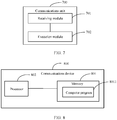
- FIG. 6 is a first structural diagram of a communications unit according to an embodiment of this disclosure.
- the communications unit in this embodiment is the first communications unit in the foregoing method embodiment.
- the communications unit 600 includes: a transmitting module 601, configured to transmit information related to a first valid time and/or control information, where the control information is used to control related behavior of obtaining location of a terminal.
- control information includes at least one of the following: control information per terminal and control information per location service client.
- control information per terminal includes at least one of the following:
- control information includes at least one of the following:
- the information related to the first valid time includes at least one of the following: time period information for the control information and valid duration of the control information, where the time period information for the control information is used to indicate a valid time period for the control information.
- the time period information for the control information includes at least one of the following: a start-of-validity time for the control information, an end-of-validity time for the control information, and a loss-of-validity time for the control information.
- controlling related behavior of obtaining location of a terminal includes at least one of the following:
- the communications unit 600 is capable of implementing the processes implemented by the first communications unit in the method embodiment of this disclosure, with the same beneficial effects achieved. To avoid repetition, details are not described herein again.
- FIG. 7 is a second structural diagram of a communications unit according to an embodiment of this disclosure.
- the communications unit in this embodiment is the second communications unit in the foregoing method embodiment.
- the communications unit 700 includes:
- control information includes at least one of the following: control information per terminal and control information per location service client.
- control information per terminal includes at least one of the following:
- control information includes at least one of the following:
- the information related to the first valid time includes at least one of the following: time period information for the control information and valid duration of the control information, where the time period information for the control information is used to indicate a valid time period for the control information.
- the time period information for the control information includes at least one of the following: a start-of-validity time for the control information, an end-of-validity time for the control information, and a loss-of-validity time for the control information.
- controlling related behavior of obtaining location of a terminal includes at least one of the following:
- the location service related operation includes at least one of the following:
- the communications unit 700 is capable of implementing the processes implemented by the second communications unit in the method embodiment of this disclosure, with the same beneficial effects achieved. To avoid repetition, details are not described herein again.
- FIG. 8 is a third structural diagram of a communications unit according to an embodiment of this disclosure.
- the communications unit 800 includes a memory 801, a processor 802, and a computer program 8011 stored on the memory 801 and capable of running on the processor 802.
- the communications unit 800 acts as the first communications unit in the foregoing method embodiment, the following steps are implemented when the computer program 8011 is executed by the processor 802: transmitting information related to a first valid time and/or control information, where the control information is used to control related behavior of obtaining location of a terminal.
- control information includes at least one of the following: control information per terminal and control information per location service client.
- control information per terminal includes at least one of the following:
- control information includes at least one of the following:
- the information related to the first valid time includes at least one of the following: time period information for the control information and valid duration of the control information, where the time period information for the control information is used to indicate a valid time period for the control information.
- the time period information for the control information includes at least one of the following: a start-of-validity time for the control information, an end-of-validity time for the control information, and a loss-of-validity time for the control information.
- controlling related behavior of obtaining location of a terminal includes at least one of the following:
- control information includes at least one of the following: control information per terminal and control information per location service client.
- control information per terminal includes at least one of the following:
- control information includes at least one of the following:
- the information related to the first valid time includes at least one of the following: time period information for the control information and valid duration of the control information, where the time period information for the control information is used to indicate a valid time period for the control information.
- the time period information for the control information includes at least one of the following: a start-of-validity time for the control information, an end-of-validity time for the control information, and a loss-of-validity time for the control information.
- controlling related behavior of obtaining location of a terminal includes at least one of the following:
- the location service related operation includes at least one of the following:
- the communications unit 800 is capable of implementing each process implemented by the communications unit in the foregoing method embodiments. To avoid repetition, details are not described herein again.
- An embodiment of this disclosure further provides a computer readable storage medium, where a computer program is stored in the computer readable storage medium.
- a computer program is stored in the computer readable storage medium.
- the computer-readable storage medium is, for example, a read-only memory (Read-Only Memory, ROM for short), a random access memory (Random Access Memory, RAM for short), a magnetic disk, or an optical disc.
- the disclosed apparatus and method may be implemented in other manners.
- the described apparatus embodiment is merely an example.
- the unit division is merely logical function division and may be other division in actual implementation.
- a plurality of units or components may be combined or integrated into another system, or some features may be ignored or may not be performed.
- the displayed or discussed mutual couplings or direct couplings or communication connections may be implemented by using some interfaces.
- the indirect couplings or communication connections between the apparatuses or units may be implemented in electronic, mechanical, or other forms.
- the units described as separate parts may or may not be physically separate, and parts displayed as units may or may not be physical units, may be located in one position, or may be distributed on a plurality of network elements. Some or all of the units may be selected based on actual requirements to achieve the objectives of the solutions of the embodiments.
- the software product is stored in a storage medium (for example, a ROM/RAM, a magnetic disk, or an optical disc), and includes several instructions for instructing a terminal (which may be a mobile phone, a computer, a server, an air conditioner, a network device, or the like) to perform the method described in the embodiments of this disclosure.
- a storage medium for example, a ROM/RAM, a magnetic disk, or an optical disc
- a terminal which may be a mobile phone, a computer, a server, an air conditioner, a network device, or the like
Landscapes
- Engineering & Computer Science (AREA)
- Computer Networks & Wireless Communication (AREA)
- Signal Processing (AREA)
- Computer Security & Cryptography (AREA)
- Databases & Information Systems (AREA)
- Computer Hardware Design (AREA)
- Computing Systems (AREA)
- General Engineering & Computer Science (AREA)
- Mobile Radio Communication Systems (AREA)
- Telephonic Communication Services (AREA)
- Selective Calling Equipment (AREA)
Abstract
Description
- This application claims priority to
Chinese Patent Application No. 201910157347.X, filed in China on March 1, 2019 - Embodiments of this disclosure relate to the field of communications technologies, and in particular, to a method for location service control and a communications unit.
- In location services in the related art, a network needs to obtain locations of terminals. For example, based on a location service request of a location service client, the network performs location measurement on the terminal or requests the terminal to perform location measurement. However, in an actual application, a user of the terminal may not want to disclose a location of the user to the location service client. Therefore, the terminal may frequently reject a network request for obtaining the terminal location, resulting in waste of transmission resources occupied by signalling and power consumption of the terminal. It can be learned that there are problems of waste of transmission resources and power consumption in current location services.
- Embodiments of this disclosure provide a method for location service control and a communications unit, so as to resolve the problems of waste of transmission resources and power consumption in current location services.
- According to a first aspect, an embodiment of this disclosure provides a method for location service control, applied to a first communications unit and including:
transmitting information related to a first valid time and/or control information, where the control information is used to control related behavior of obtaining location of a terminal. - According to a second aspect, an embodiment of this disclosure provides a method for location service control, applied to a second communications unit and including:
- receiving information related to a first valid time and/or control information, where the control information is used to control related behavior of obtaining location of a terminal; and
- performing, based on the information related to the first valid time and/or the control information, a location service related operation.
- According to a third aspect, an embodiment of this disclosure further provides a first communications unit, including:
a transmitting module, configured to transmit information related to a first valid time and/or control information, where the control information is used to control related behavior of obtaining location of a terminal. - According to a fourth aspect, an embodiment of this disclosure further provides a second communications unit, including:
- a receiving module, configured to receive information related to a first valid time and/or control information, where the control information is used to control related behavior of obtaining location of a terminal; and
- an execution module, configured to perform, based on the information related to the first valid time and/or the control information, a location service related operation.
- According to a fifth aspect, an embodiment of this disclosure further provides a communications unit, including: a processor, a memory, and a program stored in the memory and capable of running on the processor, where when the program is executed by the processor, the steps of the method for location service control on the first communications unit side according to the embodiments of this disclosure are implemented, or the steps of the method for location service control on the second communications unit side according to the embodiments of this disclosure are implemented.
- According to a sixth aspect, an embodiment of this disclosure further provides a computer-readable storage medium, where a computer program is stored in the computer-readable storage medium, and when the computer program is executed by a processor, the steps of the method for location service control on the first communications unit side according to the embodiments of this disclosure are implemented, or the steps of the method for location service control on the second communications unit side according to the embodiments of this disclosure are implemented.
- In this way, in the embodiments of this disclosure, the information related to the first valid time and/or the control information are transmitted, where the control information is used to control related behavior of obtaining location of the terminal, so as to support the terminal to provide control on location privacy information, and avoid frequent update of location privacy information or frequent enquiry for privacy verification, thereby reducing some insignificant signaling overheads, reducing transmission resources, and reducing power consumption of the terminal. In addition, the information related to the first valid time is transmitted, to effectively control validity of the control information. This further avoids frequent update of location privacy information or frequent enquiry for privacy verification, or avoids a case in which the terminal location cannot be obtained all the time, thereby improving control effects on obtaining the location of the terminal.
- To describe the technical solutions in the embodiments of this disclosure more clearly, the following briefly introduces the accompanying drawings required for describing the embodiments of this disclosure. Apparently, the accompanying drawings in the following description show merely some embodiments of this disclosure, and a person of ordinary skill in the art may still derive other drawings from these accompanying drawings without creative efforts.
-
FIG. 1 is a structural diagram of a control system for location acquisition to which embodiments of this disclosure are applicable; -
FIG. 2 is a flowchart of a method for location service control according to an embodiment of this disclosure; -
FIG. 3 is a flowchart of another method for location service control according to an embodiment of this disclosure; -
FIG. 4 is a schematic diagram of a method for location service control according to an embodiment of this disclosure; -
FIG. 5 is a schematic diagram of another method for location service control according to an embodiment of this disclosure; -
FIG. 6 is a structural diagram of a communications device according to an embodiment of this disclosure; -
FIG. 7 is a structural diagram of another communications device according to an embodiment of this disclosure; and -
FIG. 8 is a structural diagram of another communications device according to an embodiment of this disclosure. - The following clearly and completely describes the technical solutions in the embodiments of this disclosure with reference to the accompanying drawings in the embodiments of this disclosure. Apparently, the described embodiments are some but not all of the embodiments of this disclosure. All other embodiments obtained by a person of ordinary skill in the art based on the embodiments of this disclosure without creative efforts shall fall within the protection scope of this disclosure.
- Referring to
FIG. 1, FIG. 1 is a structural diagram of a control system for location acquisition to which the embodiments of this disclosure are applicable. As shown inFIG. 1 , the control system includes aterminal 11, a radio access network (Radio Access Network, RAN)network element 12, a core network (Core Network, CN)network element 13, and at least onelocation service client 14. Theterminal 11 may be referred to as UE (User Equipment), for example, may be a terminal-side device such as a mobile phone, a tablet computer (Tablet Personal Computer), a laptop computer (Laptop Computer), a personal digital assistant (personal digital assistant, PDA for short), a mobile Internet device (Mobile Internet Device, MID), or a wearable device (Wearable Device). It should be noted that a specific type of theterminal 11 is not limited in the embodiments of this disclosure. - It should be noted that a specific type of the
RAN network element 12 is not limited in the embodiments of this disclosure. Theterminal 12 may communicate with theCN network element 13 through theRAN network element 12. In addition, thelocation service client 14 may transmit a location service request to theCN network element 13, and theCN network element 13 may respond to or reject the location service request. In addition, thelocation service client 14 may be an application function (Application Function, AF), or may be a third-party device and/or software, such as a commercial (commercial) third-party device or a third-party (such as a public security bureau) device and/or software for emergency services. - Specific functions of the
terminal 11, theRAN network element 12, the CNnetwork element point 13, and the location service client 14 (which may include the AF) are described in detail by using the following plurality of embodiments. - In an optional embodiment of this disclosure, a communications unit may include at least one of the following: a communications network element, a terminal, and a location service client.
- In an optional embodiment of this disclosure, the communications network element may include at least one of the following: a core network element and a radio access network element.
- In the embodiments of this disclosure, the core network element (CN network element) may include but is not limited to at least one of the following: a core network device, a core network node, a core network function, a core network element, a mobility management entity (Mobility Management Entity, MME), an access mobility management function (Access Management Function, AMF), a session management function (Session Management Function, SMF), a user plane function (User Plane Function, UPF), a serving gateway (serving GW, SGW), a PDN gateway (PDN Gate Way, PDN gateway), a policy control function (Policy Control Function, PCF), a policy and charging rules function unit (Policy and Charging Rules Function, PCRF), a GPRS serving support node (Serving GPRS Support Node, SGSN), a gateway GPRS support node (Gateway GPRS Support Node, GGSN), a unified data management (Unified Data Management, UDM), a Unified Data Repository (Unified Data Repository, UDR), an application function (Application Function, AF), a location service management function (Location Management Function, LMF), an enhanced serving mobile location center (Enhanced Serving Mobile Location Centre, E-SMLC), a gateway mobile location center (Gateway Mobile Location Centre, GMLC), and a network exposure function (Network Exposure Function, NEF).
- In the embodiments of this disclosure, the RAN network element may include but is not limited to at least one of the following: a radio access network device, a radio access network node, a radio access network function, a RAN network element, a 3GPP radio access network, a non-3GPP radio access network, a centralized unit (Centralized Unit, CU), a distributed unit (Distributed Unit, DU), a base station, an evolved NodeB (evolved Node B, eNB), a 5G NodeB (gNB), a radio network controller (Radio Network Controller, RNC), a NodeB (NodeB), a non-3GPP interworking function (Non-3GPP Inter Working Function, N3IWF), an access controller (Access Controller, AC) node, an access point (Access Point, AP) device, a wireless local area network (Wireless Local Area Networks, WLAN) node, or an N3IWF.
- The base station may be a base transceiver station (Base Transceiver Station, BTS) in a Global System for Mobile Communications (Global System for Mobile communication, GSM) or Code Division Multiple Access (Code Division Multiple Access, CDMA), may be a base station (NodeB) in WCDMA, or may be an evolved NodeB (eNB or e-NodeB, evolutional NodeB) in LTE, or a 5G NodeB (gNB). This is not limited in the embodiments of this disclosure.
- In the embodiments of this disclosure, the UE is a terminal. The terminal may include a relay that supports a terminal function, or a terminal that supports a relay function. The terminal may also be referred to as a terminal device or user equipment (User Equipment, UE). The terminal may be a terminal-side device such as a mobile phone, a tablet computer (Tablet Personal Computer), a laptop computer (Laptop Computer), a personal digital assistant (Personal Digital Assistant, PDA), a mobile Internet device (Mobile Internet Device, MID), a wearable device (Wearable Device), or an in-vehicle device. It should be noted that a specific type of the terminal is not limited in the embodiments of this disclosure.
- In addition, it should be noted that control information in this disclosure may be one of the following information:
- privacy information of a user and/or terminal about obtaining location of the terminal;
- privacy information of the user and/or terminal about location service (LCS, location serving);
- control information about obtaining location of the terminal; and
- control information used for controlling related behavior of obtaining location of the terminal.
- In an optional embodiment of this disclosure, the location service request specific to the terminal may be construed as a location service request for obtaining the location of the terminal; and the location service request specific to the terminal may be construed as a location service request for obtaining the location of the terminal.
- In some implementations, the control information described herein may also be construed as tendency information of the terminal and/or user about related behavior of obtaining location of the terminal, or may be construed as tendency information of the terminal and/or user about obtaining location of the terminal.
- In some implementations, the location service client described herein may be a source that transmits the location service request, such as an LCS, an AF, a network exposure function (Network Exposure Function, NEF), or a next generation radio access network (Next Generation Radio Access Network, NG RAN) node.
- In an optional embodiment of this disclosure, the location service request may be construed as a request for obtaining the location of the terminal. In addition, it should be noted that "allow" in this disclosure may also be referred to as enable. "Not allow" in this disclosure may also be referred to as one of the following: disable or prohibit.
- In addition, in the embodiments of this disclosure, all exchanged information between the terminal and the CN network element may be forwarded or transparently transmitted through a radio access network.
- In addition, the network element in this specification may represent a network entity and/or a network function. A CN network element may represent a core network entity and/or core network function. The radio access network node may represent a radio access network entity and/or radio access network function. The mobility management unit may represent a mobility management entity/mobility management unit. The location service management unit may represent a location service management entity/location service management unit.
- In addition, this disclosure describes that a verification request or verification process for obtaining the location of the terminal may be requesting the terminal to determine whether obtaining the location of the terminal is allowed, for example, may be a verification request for privacy permission of obtaining location of the terminal, or may be a verification request whether obtaining the location of the terminal is allowed based on tendency of the terminal.
- In some implementations, on the terminal side, "subsequent" in this specification may mean after the terminal transmits the control information. In some implementations, on the network unit side, "subsequent" in this specification may mean after the network unit receives the control information.
- Referring to
FIG. 2, FIG. 2 is a flowchart of a method for location service control according to an embodiment of this disclosure, applied to a first communications unit. The first communications unit includes but is not limited to at least one of the following: a terminal and an AF. As shown inFIG. 2 , the following steps are included. - Step 201: Transmit information related to a first valid time and/or control information, where the control information is used to control related behavior of obtaining location of a terminal.
- Specifically, the information related to the first valid time and/or the control information is information related to the first valid time and/or control information that are related to the terminal. Step 201 may be transmitting the information related to the first valid time and the control information, or may be transmitting the control information, where the control information includes the information related to the first valid time.
- Optionally, the control information may include at least one of the following:
- the information related to the first valid time;
- first indication information, where the first indication information indicates at least one of the following: whether related behavior of obtaining location of the terminal is allowed, whether subsequent related behavior of obtaining location of the terminal is allowed, whether a subsequent location service request specific to the terminal is allowed, that a subsequent location service request specific to the terminal is allowed, and that a subsequent location service request specific to the terminal is not allowed; and
- second indication information, where the second indication information indicates at least one of the following: whether the first indication information is applicable to all location service clients; information related to a location service client to which the control information is applicable; and information related to a location service client for which the control information is not applicable.
- In an implementation, the information related to the first valid time and/or the control information is information per terminal related to the first valid time and/or control information per terminal. The control information per terminal may be applied to location service requests from all location service clients or from a plurality of location service clients.
- In another implementation, the information related to the first valid time and/or the control information is information per location service client related to the first valid time and/or control information per location service client. In other words, for different location service clients, the control information may be different, and the first valid time corresponding to the control information may be different.
- In an implementation, the control information may include at least one of the following: control information per terminal and control information per location service client.
- Optionally, the control information per terminal may include at least one of the following:
- the information related to the first valid time;
- first indication information, where the first indication information indicates at least one of the following: whether related behavior of obtaining location of the terminal is allowed, whether subsequent related behavior of obtaining location of the terminal is allowed, whether a subsequent location service request specific to the terminal is allowed, that a subsequent location service request specific to the terminal is allowed, and that a subsequent location service request specific to the terminal is not allowed; and
- second indication information, where the second indication information indicates at least one of the following: whether the first indication information is applicable to all location service clients; information related to a location service client to which the control information is applicable; and information related to a location service client for which the control information is not applicable.
- In a case that the control information includes the information related to the first valid time, the information related to the first valid time may be applied to other information than the information related to the first valid time in the control information. That is, first valid information may be information related to a valid time of the other information. For example, the other information is the first indication information. The first valid information may be information related to a valid time of the first indication information.
- The location service client may be a source that transmits a location service request, such as an LCS, an AF, an NEF, or an NG RAN.
- In addition, the location service client to which the control information is applicable may be a list of location service clients to which the control information is applicable. Therefore, the information related to the location service client to which the control information is applicable may be information related to one or more location service clients.
- In addition, the location service client for which the control information is not applicable may be a list of location service clients for which the control information is not applicable. Therefore, the information related to the location service client for which the control information is not applicable may be information related to one or more location service clients.
- Optionally, the location service client to which the control information is applicable may mean that the location service request from the location service client is applicable to the first indication information. For example, in a case that the first indication information indicates that the location service request is not allowed, the location service request from the location service client to which the control information is applicable is not allowed. For example, in a case that the first indication information indicates that the location service request is allowed, the location service request from the location service client to which the control information is applicable is allowed.
- Optionally, the location service client for which the control information is not applicable may mean that the location service request from the location service client is not applicable to the first indication information. For example, in a case that the first indication information indicates that the location service request is not allowed, a location service request from the location service client for which the control information is not applicable, a location service request for which privacy verification is requested from the terminal, or a location service request unknown to be allowed or not is allowed. For example, in a case that the first indication information indicates that the location service request is allowed, a location service request from the location service client for which the control information is not applicable, a location service request for which privacy verification is requested from the terminal, or a location service request unknown to be allowed or not is not allowed.
- In an implementation, the first indication information may include both indication information that a subsequent location service request specific to the terminal is allowed and indication information that a subsequent location service request for obtaining the location of the terminal is not allowed. The two pieces of indication information may correspond to different applicable and/or exceptional location service clients, that is, different information related to location service clients to which the control information is applicable, and/or different information related to location service clients to which the control information is not applicable.
- In an implementation, when the control information does not include at least one of the following, the control information is applicable to all location service clients: information about the location service client to which the control information is applicable, and information about the location service client for which the control information is not applicable.
- Optionally, the control information per location service client may include at least one of the following:
- information related to a location service client;
- the information related to the first valid time; and
- third indication information, where the third indication information indicates at least one of the following: whether a subsequent location service request specific to the terminal is allowed, where the location service request comes from the location service client.
- In an implementation, the information related to the first valid time is information related to a valid time for the control information, and the control information is the control information per location service client.
- Optionally, the information related to the location service client, the information related to the location service client to which the control information is applicable, and/or the information related to the location service client to which the control information is applicable may include at least one of the following: an identifier of the location service client, a name of the identifier of the location service client, a domain name address of the identifier of the location service client, an identifier of a location service client requester, a name of the location service client requester, an IP address of the location service client requester, a port number of a location service client application, and a type of a location request from the location service client.
- It is easy to understand that filtering of location service clients that are allowed or not allowed to obtain the location of the terminal can be implemented by indicating information related to an applicable location service client. It is easy to learn that the terminal may prohibit excessively frequent location acquisition by setting information related to a location service client that is allowed, information related to a location service client that is not allowed, and so on. For example, based on the type of client, only a location request for an emergency service can be allowed, or only a location request from a location service client that is trusted by a user or preset by the UE is allowed.
- In addition, the control information may be applicable to all location service clients or part of location service clients. In an implementation, when the control information does not include a location service client involved, the control information may be applicable to location service requests from all location service clients.
- In an implementation, the information related to the first valid time includes the information related to the valid time for the control information. The information related to the first valid time may further include at least one of the following: information related to a valid time for the control information per terminal, and information related to a valid time for the control information per location service client. The first valid time may be an information element different from the control information, or may be included in the control information.
- Optionally, the information related to the first valid time includes at least one of the following: time period information for the control information and valid duration of the control information, where the time period information for the control information is used to indicate a valid time period for the control information. The time period information may also be referred to as valid time period information for the control information. The control information may be other information than the information related to the first valid time in the control information.
- In an implementation, when the information related to the first valid time does not exit, the control information remains valid all the time.
- Optionally, the time period information for the control information includes at least one of the following:
a start-of-validity time for the control information, an end-of-validity time for the control information, and a loss-of-validity time for the control information. - That is, the valid time period for the control information may be indicated by at least one of the start-of-validity time for the control information, the end-of-validity time for the control information, and the loss-of-validity time for the control information.
- In an implementation, the valid time period for the control information is between the start-of-validity time for the control information and the end-of-validity time for the control information. When the valid time period information for the control information does not include the start-of-validity time, a time of transmitting or receiving the control information is the start-of-validity time.
- In another implementation, the valid time period for the control information is from the time of transmitting or receiving the control information to the loss-of-validity time for the control information.
- When the valid time period for the control information elapses, the control information becomes invalid or may be deleted.
- In another implementation, timing of the valid duration of the control information may be started from the time of transmitting or receiving the control information. When the valid duration of the control information elapses, the control information becomes invalid or may be deleted.
- In an implementation, the controlling related behavior of obtaining location of the terminal indicates whether the related behavior of obtaining location of the terminal is allowed. Optionally, the controlling related behavior of obtaining location of the terminal includes at least one of the following:
- whether a location service request specific to the terminal is allowed;
- whether a location service request specific to the terminal is allowed, where the location service request comes from a location service client (for example, AF or LCS Client);
- whether to transmit to the terminal a privacy verification request in response to a location service request;
- whether to obtain the location of the terminal;
- whether to trigger the terminal to perform location measurement; and
- whether to transmit an obtained location of the terminal to the location service client.
- In an implementation, when a location service request specific to the terminal is received, related behavior of obtaining location of the terminal is controlled based on the information related to the first valid time and/or the control information.
- In an implementation, when it is determined that a predetermined condition is satisfied, the control information and/or the information related to the first valid time are transmitted.
- The predetermined condition may include, but is not limited to, at least one of the following:
- the control information is generated and/or updated;
- an acquisition request for obtaining the location of the terminal is received;
- a verification request for obtaining the location of the terminal is received;
- a request for obtaining the current control information is received; and
- a request for obtaining the updated control information when the control information is changed is received.
- The control information transmitted above may be control information that is generated and/or updated based on an operation input by the user. The control information may be privacy information of the user and/or the terminal about obtaining location of the terminal, for example, privacy information of the user and/or the terminal about location service (LCS, location service).
- For example, if the user wants to protect location privacy, the control information may be generated to prohibit related behavior of obtaining location of the terminal. If the user wants to disclose the location of the terminal subsequently, the control information may be updated to allow related behavior of obtaining location of the terminal.
- Alternatively, the control information may be generated intelligently by the terminal. For example, when the terminal has relatively low power (for example, when the terminal enters a power saving mode) or has excessively large measurement overheads to affect other services of the UE, the control information may be generated to prohibit related behavior of obtaining location of the terminal. When the terminal has sufficient power or is idle subsequently, the control information may be updated to allow obtaining the location of the terminal and/or disclosing the location of the terminal to a third party; or vice versa. This is not limitied in this embodiment of this disclosure.
- Step 201 may be transmitting, to the second communications unit, the information related to the first valid time and/or the control information, for example, a non-access stratum (Non-Access Stratum, NAS) message, an LTE positioning protocol (LTE Positioning Protocol, LPP) message, an NR positioning protocol (NR Positioning Protocol, NRPP) message, or a radio resource control (Radio Resource Control, RRC) message.
- In this embodiment of this disclosure, the information related to the first valid time and/or the control information are transmitted, where the control information is used to control related behavior of obtaining location of the terminal, so as to support the terminal to provide control on location privacy information, and avoid frequent update of location privacy information or frequent enquiry for privacy verification, thereby reducing some insignificant signaling overheads, reducing transmission resources, and reducing power consumption of the terminal. In addition, the information related to the first valid time is transmitted, to effectively control validity of the control information. This further avoids frequent update of location privacy information or frequent enquiry for privacy verification, or avoids a case in which the terminal location cannot be obtained all the time, thereby improving control effects on obtaining the location of the terminal.
- Referring to
FIG. 3, FIG. 3 is a schematic diagram of another method for location service control according to an embodiment of this disclosure. The method is applied to a second communications unit, and the second communications unit includes but is not limited to at least one of the following: a RAN network element, a CN network element (for example AMF, LMF, E-GMLC, GMLC, or AF), a location service client (for example, LCS client (which may be software or hardware) or AF). As shown inFIG. 4 , the following steps are included. - Step 301: Receive information related to a first valid time and/or control information, where the control information is used to control related behavior of obtaining location of a terminal.
- Step 302: Perform, based on the information related to the first valid time and/or the control information, a location service related operation.
- In an implementation, when a location service request specific to UE is received, related behavior of obtaining location of the terminal is performed based on the information related to the first valid time and/or the control information.
- In an implementation, the information related to the first valid time includes the information related to the valid time for the control information. The information related to the first valid time may further include at least one of the following: information related to a valid time for the control information per terminal, and information related to a valid time for the control information per location service client. The first valid time may be an information element different from the control information, or may be included in the control information. The control information may be other information than the information related to the first valid time in the control information.
- Optionally, the information related to the first valid time includes at least one of the following: time period information for the control information and valid duration of the control information, where the time period information for the control information is used to indicate a valid time period for the control information. The time period information may also be referred to as valid time period information for the control information. The control information may be other information than the information related to the first valid time in the control information.
- In an implementation, when the information related to the first valid time does not exit, the control information remains valid all the time.
- Optionally, the time period information for the control information includes at least one of the following: a start-of-validity time for the control information, an end-of-validity time for the control information, and a loss-of-validity time for the control information.
- That is, the valid time period for the control information may be indicated by at least one of the start-of-validity time for the control information, the end-of-validity time for the control information, and the loss-of-validity time for the control information.
- In an implementation, the valid time period for the control information is between the start-of-validity time for the control information and the end-of-validity time for the control information. When the valid time period information for the control information does not include the start-of-validity time, a time of transmitting or receiving the control information is the start-of-validity time.
- In another implementation, the valid time period for the control information is from the time of transmitting or receiving the control information to the loss-of-validity time for the control information.
- When the valid time period for the control information elapses, the control information becomes invalid or may be deleted.
- In another implementation, timing of the valid duration of the control information may be started from the time of transmitting or receiving the control information. When the valid duration of the control information elapses, the control information becomes invalid or may be deleted.
- That the control information is used to control related behavior of obtaining location of the terminal is specifically described in the embodiment of
FIG. 2 . Details are not described herein again. - Optionally, the location service related operation includes at least one of the following:
- transmitting the information related to the first valid time and/or the control information to another communication network element and/or location service client;
- storing the information related to the first valid time and/or the control information;
- starting a timer based on the information related to the first valid time;
- determining a valid time period for the control information based on the information related to the first valid time;
- during the valid time period for the control information, controlling, based on the control information, related behavior of obtaining location of the terminal;
- deleting the control information when a valid time for the control information expires or a loss-of-validity time arrives; and
- controlling related behavior of obtaining location of the terminal.
- In an implementation, after receiving the information related to the first valid time and/or the control information, the AMF or NEF transmits the information related to the first valid time and/or the control information to the UDM.
- In an implementation, after receiving the information related to the first valid time and/or the control information, the UDM transmits the information related to the first valid time and/or the control information to the UDR.
- In an implementation, the UDR stores the information related to the first valid time and/or the control information.
- In an implementation, the UDR transmits the information related to the first valid time and/or the control information to a subscribed network element (such as NF (for example, GMLC or NEF)).
- In an implementation, within the valid time period for the control information, whether to allow the location service request specific to the UE is determined based on the control information.
- In an implementation, the control information is deleted when a valid time for the control information expires or a loss-of-validity time arrives.
- In an implementation, when the valid time for the control information expires or the loss-of-validity time arrives, it can be considered that the control information does not exist (for example, there is no privacy information about obtaining location of the UE). When a location request for which privacy verification by the terminal is required, a privacy verification request in response to the location service request is transmitted to the terminal, requesting the terminal to determine whether to authorize the location service request (for example, LCS service request).
- Optionally, the controlling related behavior of obtaining location of the terminal includes at least one of the following:
- whether a location service request specific to the terminal is allowed;
- whether a location service request specific to the terminal is allowed, where the location service request comes from a location service client (for example, LCS client (including AF));
- whether to transmit to the terminal a privacy verification request in response to a location service request;
- whether to obtain the location of the terminal;
- whether to trigger the terminal to perform location measurement; and
- whether to transmit an obtained location of the terminal to the location service client.
- In an implementation, the controlling related behavior of obtaining location of the terminal includes at least one of the following: determining whether the related behavior of obtaining location of the terminal is allowed, executing allowing related behavior of obtaining location of the terminal, and executing prohibiting related behavior of obtaining location of the terminal.
- In an implementation, when a location service request specific to the terminal is received, related behavior of obtaining location of the terminal is controlled based on the information related to the first valid time and/or the control information.
- In an implementation, the executing prohibiting related behavior of obtaining location of the terminal includes but is not limited to at least one of the following:
- prohibiting a location service request specific to the terminal;
- prohibiting a location service request specific to the terminal, where the location service request comes from a location service client that is not allowed;
- directly returning a terminal location acquisition failure or rejecting the terminal location request, upon reception of a location request specific to the terminal;
- skipping transmitting, to the terminal, a privacy verification request for obtaining the location of the terminal;
- skipping obtaining the location of the terminal;
- skipping triggering the terminal to perform location measurement; and
- skipping transmitting, to the location service client, an obtained location of the terminal.
- In an implementation, the executing allowing related behavior of obtaining location of the terminal includes at least one of the following:
- allowing location service request specific to the terminal;
- allowing a location service request specific to the terminal, where the location service request comes from a location service client that is allowed;
- transmitting, to the terminal, a privacy verification request for obtaining the location of the terminal;
- obtaining the location of the terminal;
- triggering the terminal to perform location measurement; and
- obtaining the location of the terminal in response to a received location service request specific to the terminal.
- It should be noted that this embodiment of this disclosure is used as an implementation of the network unit or the location service client corresponding to the embodiment shown in
FIG. 2 . For specific implementations, reference may be made to the related description of the embodiment shown inFIG. 2 and the same beneficial effects can be achieved. To avoid repetition, details are not described herein again. - Referring to
FIG. 4, FIG. 4 is a schematic diagram of another method for location service control according to an embodiment of this disclosure. As shown inFIG. 4 , the following steps are included. - Step 401: UE transmits, to a core network element (for example, AMF or MME), first information, including control information (also referred to as privacy information for obtaining location of the UE) and/or information related to a first valid time. Optionally, the UE may transmit the first information to the core network element by using a UE location service privacy setting request in a NAS message, an LPPA message, or an NRPPA message.
- Specifically, the information related to the first valid time and/or the control information is as described in the embodiment of
FIG. 2 . - Step 402: The AMF transmits the first information to a UDM after receiving the first information.
- The UDM transmits the first information to a UDR, for example, by performing a service operation of UE parameter updating.
- The UDR stores the first information and notifies a subscribed network element.
- Step 403: The core network element (for example, AMF or MME) transmits a response to the UE. The response may be a UE location service privacy setting response.
- Subsequently, the second communications unit (LMF, AMF, GMLC, or NEF) performs a location service related operation based on the information related to the first valid time and/or the control information. For details, refer to the description in the embodiment of
FIG. 3 . - Referring to
FIG. 5, FIG. 5 is a schematic diagram of another method for location service control according to an embodiment of this disclosure. As shown inFIG. 5 , the following steps are included. - Step 501: An AF transmits, to an NEF or a UDM, first information, including control information (also referred to as privacy information for obtaining location of the UE) and/or information related to a first valid time. Optionally, the AF may transmit the first information to the NEF or UDM by using a UE location service privacy setting request or a parameter configuration update request.
- Specifically, the information related to the first valid time and/or the control information is as described in the embodiment of
FIG. 2 . - Step 502: The NEF transmits the first information to the UDM after receiving the first information.
- The UDM transmits the first information to a UDR, for example, by performing a service operation of UE parameter updating.
- The UDR stores the first information and notifies a subscribed network element.
- Step 503: The core network element (for example, AMF or MME) transmits a response to the UE. The response may be a UE location service privacy setting response or a parameter configuration update response.
- Subsequently, the second communications unit (an LMF, AMF, GMLC, or NEF) performs a location service related operation based on the information related to the first valid time and/or the control information. For details, refer to the description in the embodiment of
FIG. 3 . - Referring to
FIG. 6, FIG. 6 is a first structural diagram of a communications unit according to an embodiment of this disclosure. The communications unit in this embodiment is the first communications unit in the foregoing method embodiment. As shown inFIG. 6 , thecommunications unit 600 includes:
atransmitting module 601, configured to transmit information related to a first valid time and/or control information, where the control information is used to control related behavior of obtaining location of a terminal. - Optionally, the control information includes at least one of the following:
control information per terminal and control information per location service client. - Optionally, the control information per terminal includes at least one of the following:
- the information related to the first valid time;
- first indication information, where the first indication information indicates at least one of the following: whether the related behavior of obtaining location of the terminal is allowed, whether subsequent related behavior of obtaining location of the terminal is allowed by the terminal, whether a subsequent location service request specific to the terminal is allowed, that a subsequent location service request specific to the terminal is allowed, and that a subsequent location service request specific to the terminal is not allowed; and
- second indication information, where the second indication information indicates at least one of the following: whether the first indication information is applicable to all location service clients; information related to a location service client to which the control information is applicable; and information related to a location service client for which the control information is not applicable;
- and/or,
- the control information per location service client includes at least one of the following:
- information related to a location service client;
- the information related to the first valid time; and
- third indication information, where the third indication information indicates at least one of the following: whether a subsequent location service request specific to the terminal is allowed, where the location service request comes from the location service client.
- Optionally, the control information includes at least one of the following:
- the information related to the first valid time;
- first indication information, where the first indication information indicates at least one of the following: whether the related behavior of obtaining location of the terminal is allowed, whether subsequent related behavior of obtaining location of the terminal is allowed by the terminal, whether a subsequent location service request specific to the terminal is allowed, that a subsequent location service request specific to the terminal is allowed, and that a subsequent location service request specific to the terminal is not allowed; and
- second indication information, where the second indication information indicates at least one of the following: whether the first indication information is applicable to all location service clients; information related to a location service client to which the control information is applicable; and information related to a location service client for which the control information is not applicable.
- Optionally, the information related to the first valid time includes at least one of the following:
time period information for the control information and valid duration of the control information, where the time period information for the control information is used to indicate a valid time period for the control information. - Optionally, the time period information for the control information includes at least one of the following:
a start-of-validity time for the control information, an end-of-validity time for the control information, and a loss-of-validity time for the control information. - Optionally, the controlling related behavior of obtaining location of a terminal includes at least one of the following:
- whether a location service request specific to the terminal is allowed;
- whether a location service request specific to the terminal is allowed, where the location service request comes from a location service client;
- whether to transmit a privacy verification request for a location service request to the terminal;
- whether to obtain the location of the terminal;
- whether to trigger the terminal to perform location measurement; and
- whether to transmit an obtained location of the terminal to the location service client.
- The
communications unit 600 is capable of implementing the processes implemented by the first communications unit in the method embodiment of this disclosure, with the same beneficial effects achieved. To avoid repetition, details are not described herein again. - Referring to
FIG. 7, FIG. 7 is a second structural diagram of a communications unit according to an embodiment of this disclosure. The communications unit in this embodiment is the second communications unit in the foregoing method embodiment. As shown inFIG. 7 , thecommunications unit 700 includes: - a
receiving module 701, configured to receive information related to a first valid time and/or control information, where the control information is used to control related behavior of obtaining location of a terminal; and - an
execution module 702, configured to perform, based on the information related to the first valid time and/or the control information, a location service related operation. - Optionally, the control information includes at least one of the following:
control information per terminal and control information per location service client. - Optionally, the control information per terminal includes at least one of the following:
- the information related to the first valid time;
- first indication information, where the first indication information indicates at least one of the following: whether the related behavior of obtaining location of the terminal is allowed, whether subsequent related behavior of obtaining location of the terminal is allowed by the terminal, whether a subsequent location service request specific to the terminal is allowed, that a subsequent location service request specific to the terminal is allowed, and that a subsequent location service request specific to the terminal is not allowed; and
- second indication information, where the second indication information indicates at least one of the following: whether the first indication information is applicable to all location service clients; information related to a location service client to which the control information is applicable; and information related to a location service client for which the control information is not applicable;
- and/or,
- the control information per location service client includes at least one of the following:
- information related to a location service client;
- the information related to the first valid time; and
- third indication information, where the third indication information indicates at least one of the following: whether a subsequent location service request specific to the terminal is allowed, where the location service request comes from the location service client.
- Optionally, the control information includes at least one of the following:
- the information related to the first valid time;
- first indication information, where the first indication information indicates at least one of the following: whether the related behavior of obtaining location of the terminal is allowed, whether subsequent related behavior of obtaining location of the terminal is allowed by the terminal, whether a subsequent location service request specific to the terminal is allowed, that a subsequent location service request specific to the terminal is allowed, and that a subsequent location service request specific to the terminal is not allowed; and
- second indication information, where the second indication information indicates at least one of the following: whether the first indication information is applicable to all location service clients; information related to a location service client to which the control information is applicable; and information related to a location service client for which the control information is not applicable.
- Optionally, the information related to the first valid time includes at least one of the following:
time period information for the control information and valid duration of the control information, where the time period information for the control information is used to indicate a valid time period for the control information. - Optionally, the time period information for the control information includes at least one of the following:
a start-of-validity time for the control information, an end-of-validity time for the control information, and a loss-of-validity time for the control information. - Optionally, the controlling related behavior of obtaining location of a terminal includes at least one of the following:
- whether a location service request specific to the terminal is allowed;
- whether a location service request specific to the terminal is allowed, where the location service request comes from a location service client;
- whether to transmit to the terminal a privacy verification request in response to a location service request;
- whether to obtain the location of the terminal;
- whether to trigger the terminal to perform location measurement; and
- whether to transmit an obtained location of the terminal to the location service client.
- Optionally, the location service related operation includes at least one of the following:
- transmitting the information related to the first valid time and/or the control information to another communication network element and/or location service client;
- storing the information related to the first valid time and/or the control information;
- starting a timer based on the information related to the first valid time;
- determining a valid time period for the control information based on the information related to the first valid time;
- during the valid time period for the control information, controlling, based on the control information, related behavior of obtaining location of the terminal;
- deleting the control information when a valid time for the control information expires or a loss-of-validity time arrives; and
- controlling related behavior of obtaining location of the terminal.
- The
communications unit 700 is capable of implementing the processes implemented by the second communications unit in the method embodiment of this disclosure, with the same beneficial effects achieved. To avoid repetition, details are not described herein again. - Referring to
FIG. 8, FIG. 8 is a third structural diagram of a communications unit according to an embodiment of this disclosure. As shown inFIG. 8 , thecommunications unit 800 includes amemory 801, aprocessor 802, and acomputer program 8011 stored on thememory 801 and capable of running on theprocessor 802. - When the
communications unit 800 acts as the first communications unit in the foregoing method embodiment, the following steps are implemented when thecomputer program 8011 is executed by the processor 802:
transmitting information related to a first valid time and/or control information, where the control information is used to control related behavior of obtaining location of a terminal. - Optionally, the control information includes at least one of the following:
control information per terminal and control information per location service client. - Optionally, the control information per terminal includes at least one of the following:
- the information related to the first valid time;
- first indication information, where the first indication information indicates at least one of the following: whether the related behavior of obtaining location of the terminal is allowed, whether subsequent related behavior of obtaining location of the terminal is allowed by the terminal, whether a subsequent location service request specific to the terminal is allowed, that a subsequent location service request specific to the terminal is allowed, and that a subsequent location service request specific to the terminal is not allowed; and
- second indication information, where the second indication information indicates at least one of the following: whether the first indication information is applicable to all location service clients; information related to a location service client to which the control information is applicable; and information related to a location service client for which the control information is not applicable;
- and/or,
- the control information per location service client includes at least one of the following:
- information related to a location service client;
- the information related to the first valid time; and
- third indication information, where the third indication information indicates at least one of the following: whether a subsequent location service request specific to the terminal is allowed, where the location service request comes from the location service client.
- Optionally, the control information includes at least one of the following:
- the information related to the first valid time;
- first indication information, where the first indication information indicates at least one of the following: whether the related behavior of obtaining location of the terminal is allowed, whether subsequent related behavior of obtaining location of the terminal is allowed by the terminal, whether a subsequent location service request specific to the terminal is allowed, that a subsequent location service request specific to the terminal is allowed, and that a subsequent location service request specific to the terminal is not allowed; and
- second indication information, where the second indication information indicates at least one of the following: whether the first indication information is applicable to all location service clients; information related to a location service client to which the control information is applicable; and information related to a location service client for which the control information is not applicable.
- Optionally, the information related to the first valid time includes at least one of the following:
time period information for the control information and valid duration of the control information, where the time period information for the control information is used to indicate a valid time period for the control information. - Optionally, the time period information for the control information includes at least one of the following:
a start-of-validity time for the control information, an end-of-validity time for the control information, and a loss-of-validity time for the control information. - Optionally, the controlling related behavior of obtaining location of a terminal includes at least one of the following:
- whether a location service request specific to the terminal is allowed;
- whether a location service request specific to the terminal is allowed, where the location service request comes from a location service client;
- whether to transmit to the terminal a privacy verification request in response to a location service request;
- whether to obtain the location of the terminal;
- whether to trigger the terminal to perform location measurement; and
- whether to transmit an obtained location of the terminal to the location service client.
- When the
communications unit 800 acts as the second communications unit in the foregoing method embodiment, the following steps are implemented when thecomputer program 8011 is executed by the processor 802: - receiving information related to a first valid time and/or control information, where the control information is used to control related behavior of obtaining location of a terminal; and
- performing, based on the information related to the first valid time and/or the control information, a location service related operation.
- Optionally, the control information includes at least one of the following:
control information per terminal and control information per location service client. - Optionally, the control information per terminal includes at least one of the following:
- the information related to the first valid time;
- first indication information, where the first indication information indicates at least one of the following: whether the related behavior of obtaining location of the terminal is allowed, whether subsequent related behavior of obtaining location of the terminal is allowed by the terminal, whether a subsequent location service request specific to the terminal is allowed, that a subsequent location service request specific to the terminal is allowed, and that a subsequent location service request specific to the terminal is not allowed; and
- second indication information, where the second indication information indicates at least one of the following: whether the first indication information is applicable to all location service clients; information related to a location service client to which the control information is applicable; and information related to a location service client for which the control information is not applicable;
- and/or,
- the control information per location service client includes at least one of the following:
- information related to a location service client;
- the information related to the first valid time; and
- third indication information, where the third indication information indicates at least one of the following: whether a subsequent location service request specific to the terminal is allowed, where the location service request comes from the location service client.
- Optionally, the control information includes at least one of the following:
- the information related to the first valid time;
- first indication information, where the first indication information indicates at least one of the following: whether the related behavior of obtaining location of the terminal is allowed, whether subsequent related behavior of obtaining location of the terminal is allowed by the terminal, whether a subsequent location service request specific to the terminal is allowed, that a subsequent location service request specific to the terminal is allowed, and that a subsequent location service request specific to the terminal is not allowed; and
- second indication information, where the second indication information indicates at least one of the following: whether the first indication information is applicable to all location service clients; information related to a location service client to which the control information is applicable; and information related to a location service client for which the control information is not applicable.
- Optionally, the information related to the first valid time includes at least one of the following:
time period information for the control information and valid duration of the control information, where the time period information for the control information is used to indicate a valid time period for the control information. - Optionally, the time period information for the control information includes at least one of the following:
a start-of-validity time for the control information, an end-of-validity time for the control information, and a loss-of-validity time for the control information. - Optionally, the controlling related behavior of obtaining location of a terminal includes at least one of the following:
- whether a location service request specific to the terminal is allowed;
- whether a location service request specific to the terminal is allowed, where the location service request comes from a location service client;
- whether to transmit to the terminal a privacy verification request in response to a location service request;
- whether to obtain the location of the terminal;
- whether to trigger the terminal to perform location measurement; and
- whether to transmit an obtained location of the terminal to the location service client.
- Optionally, the location service related operation includes at least one of the following:
- transmitting the information related to the first valid time and/or the control information to another communication network element and/or location service client;
- storing the information related to the first valid time and/or the control information;
- starting a timer based on the information related to the first valid time;
- determining a valid time period for the control information based on the information related to the first valid time;
- during the valid time period for the control information, controlling, based on the control information, related behavior of obtaining location of the terminal;
- deleting the control information when a valid time for the control information expires or a loss-of-validity time arrives; and
- controlling related behavior of obtaining location of the terminal.
- The
communications unit 800 is capable of implementing each process implemented by the communications unit in the foregoing method embodiments. To avoid repetition, details are not described herein again. - An embodiment of this disclosure further provides a computer readable storage medium, where a computer program is stored in the computer readable storage medium. When the computer program is executed by a processor, the processes of any one of the foregoing embodiments of the method for location service control can be implemented, with the same effects achieved. To avoid repetition, details are not described herein again. The computer-readable storage medium is, for example, a read-only memory (Read-Only Memory, ROM for short), a random access memory (Random Access Memory, RAM for short), a magnetic disk, or an optical disc.
- It should be noted that the terms "include", "comprise", or any of their variants are intended to cover a non-exclusive inclusion, such that a process, a method, an article, or an apparatus that includes a list of elements not only includes those elements but also includes other elements that are not expressly listed, or further includes elements inherent to such process, method, article, or apparatus. In absence of more constraints, an element preceded by "includes a..." does not preclude the existence of other identical elements in the process, method, article, or apparatus that includes the element.
- A person of ordinary skill in the art may be aware that the units and algorithm steps in the examples described with reference to the embodiments disclosed in this specification can be implemented by electronic hardware or a combination of computer software and electronic hardware. Whether the functions are performed by hardware or software depends on particular applications and design constraints of the technical solutions. A person skilled in the art may use different methods to implement the described functions for each particular application, but it should not be considered that the implementation goes beyond the scope of this disclosure.
- It may be clearly understood by a person skilled in the art that, for the purpose of convenient and brief description, for a detailed working process of the foregoing system, apparatus, and unit, reference may be made to a corresponding process in the foregoing method embodiments, and details are not described again herein.
- In the embodiments provided in this application, it should be understood that the disclosed apparatus and method may be implemented in other manners. For example, the described apparatus embodiment is merely an example. For example, the unit division is merely logical function division and may be other division in actual implementation. For example, a plurality of units or components may be combined or integrated into another system, or some features may be ignored or may not be performed. In addition, the displayed or discussed mutual couplings or direct couplings or communication connections may be implemented by using some interfaces. The indirect couplings or communication connections between the apparatuses or units may be implemented in electronic, mechanical, or other forms.
- The units described as separate parts may or may not be physically separate, and parts displayed as units may or may not be physical units, may be located in one position, or may be distributed on a plurality of network elements. Some or all of the units may be selected based on actual requirements to achieve the objectives of the solutions of the embodiments.
- In addition, functional units in the embodiments of this disclosure may be integrated into one processing unit, or each of the units may exist alone physically, or two or more units are integrated into one unit.
- According to the foregoing description of the implementations, a person skilled in the art may clearly understand that the methods in the foregoing embodiments may be implemented by using software in combination with a necessary common hardware platform, and certainly may alternatively be implemented by using hardware. However, in most cases, the former is a preferred implementation. Based on such an understanding, the technical solutions of this disclosure essentially, or the part contributing to the prior art may be implemented in a form of a software product. The software product is stored in a storage medium (for example, a ROM/RAM, a magnetic disk, or an optical disc), and includes several instructions for instructing a terminal (which may be a mobile phone, a computer, a server, an air conditioner, a network device, or the like) to perform the method described in the embodiments of this disclosure.
- The foregoing describes the embodiments of this disclosure with reference to the accompanying drawings. However, this disclosure is not limited to the foregoing specific implementation manners. The foregoing specific implementation manners are merely illustrative rather than restrictive. As instructed by this disclosure, persons of ordinary skill in the art may develop many other manners without departing from principles of this disclosure and the protection scope of the claims, and all such manners fall within the protection scope of this disclosure.
Claims (14)
- A method for location service control, applied to a first communications unit and comprising:
transmitting information related to a first valid time and/or control information, wherein the control information is used to control related behavior of obtaining location of a terminal. - The method according to claim 1, wherein the control information comprises at least one of the following:
control information per terminal and control information per location service client. - The method according to claim 2, wherein the control information per terminal comprises at least one of the following:the information related to the first valid time;first indication information, wherein the first indication information indicates at least one of the following: whether related behavior of obtaining location of the terminal is allowed, whether subsequent related behavior of obtaining location of the terminal is allowed by the terminal, whether a subsequent location service request for the terminal is allowed, that a subsequent location service request for the terminal is allowed, and that a subsequent location service request for the terminal is not allowed; andsecond indication information, wherein the second indication information indicates at least one of the following: whether the first indication information is applicable to all location service clients; information related to a location service client to which the control information is applicable; and information related to a location service client for which the control information is not applicable;and/or,the control information per location service client comprises at least one of the following:information related to a location service client;the information related to the first valid time; andthird indication information, wherein the third indication information indicates at least one of the following: whether a subsequent location service request specific to the terminal is allowed, wherein the location service request comes from the location service client.
- The method according to claim 1, wherein the control information comprises at least one of the following:the information related to the first valid time;first indication information, wherein the first indication information indicates at least one of the following: whether related behavior of obtaining location of the terminal is allowed, whether subsequent related behavior of obtaining location of the terminal is allowed by the terminal, whether a subsequent location service request specific to the terminal is allowed, that a subsequent location service request specific to the terminal is allowed, and that a subsequent location service request specific to the terminal is not allowed; andsecond indication information, wherein the second indication information indicates at least one of the following: whether the first indication information is applicable to all location service clients; information related to a location service client to which the control information is applicable; and information related to a location service client for which the control information is not applicable.
- The method according to any one of claims 1 to 4, wherein the information related to the first valid time comprises:
information related to a valid time for the control information. - The method according to claim 5, wherein the information related to the first valid time comprises at least one of the following:
time period information for the control information and valid duration for the control information, wherein the time period information for the control information is used to indicate a valid time period for the control information. - The method according to claim 6, wherein the time period information for the control information comprises at least one of the following:
a start-of-validity time for the control information, an end-of-validity time for the control information, and a loss-of-validity time for the control information. - The method according to claim 1, wherein the controlling related behavior of obtaining location of a terminal comprises at least one of the following:whether a location service request for the terminal is allowed;whether a location service request for the terminal is allowed, wherein the location service request comes from a location service client;whether to transmit to the terminal a privacy verification request in response to a location service request;whether to obtain the location of the terminal;whether to trigger the terminal to perform location measurement; andwhether to transmit an obtained location of the terminal to the location service client.
- A method for location service control, applied to a second communications unit and comprising:receiving information related to a first valid time and/or control information, wherein the control information is used to control related behavior of obtaining location of a terminal; andperforming, based on the information related to the first valid time and/or the control information, a location service related operation.
- The method according to claim 9, wherein the location service related operation comprises at least one of the following:transmitting the information related to the first valid time and/or the control information to another communication network element and/or location service client;storing the information related to the first valid time and/or the control information;starting a timer based on the information related to the first valid time;determining a valid time period for the control information based on the information related to the first valid time;during the valid time period for the control information, controlling, based on the control information, related behavior of obtaining location of the terminal;deleting the control information when a valid time for the control information expires or a loss-of-validity time arrives; andcontrolling related behavior of obtaining location of the terminal.
- A first communications unit, comprising:
a transmitting module, configured to transmit information related to a first valid time and/or control information, wherein the control information is used to control related behavior of obtaining location of a terminal. - A second communications unit, comprising:a receiving module, configured to receive information related to a first valid time and/or control information, wherein the control information is used to control related behavior of obtaining location of a terminal; andan execution module, configured to perform, based on the information related to the first valid time and/or the control information, a location service related operation.
- A communications unit, comprising a processor, a memory, and a program stored in the memory and capable of running on the processor, wherein when the program is executed by the processor, the steps of the method for location service control according to any one of claims 1 to 8 are implemented, or the steps of the method for location service control according to any one of claims 9 to 10 are implemented.
- A computer-readable storage medium, wherein a program is stored in the computer-readable storage medium, and when the program is executed by a processor, the steps of the method for location service control according to any one of claims 1 to 8 are implemented, or the steps of the method for location service control according to any one of claims 9 to 10 are implemented.
Applications Claiming Priority (2)
| Application Number | Priority Date | Filing Date | Title |
|---|---|---|---|
| CN201910157347.XA CN111447546A (en) | 2019-03-01 | 2019-03-01 | Control method and communication unit for location service |
| PCT/CN2020/077253 WO2020177634A1 (en) | 2019-03-01 | 2020-02-28 | Location service control method and communication unit |
Publications (3)
| Publication Number | Publication Date |
|---|---|
| EP3934284A1 true EP3934284A1 (en) | 2022-01-05 |
| EP3934284A4 EP3934284A4 (en) | 2022-03-30 |
| EP3934284B1 EP3934284B1 (en) | 2024-12-25 |
Family
ID=71652552
Family Applications (1)
| Application Number | Title | Priority Date | Filing Date |
|---|---|---|---|
| EP20767271.8A Active EP3934284B1 (en) | 2019-03-01 | 2020-02-28 | Location service control method and communication unit |
Country Status (10)
| Country | Link |
|---|---|
| US (2) | US12028774B2 (en) |
| EP (1) | EP3934284B1 (en) |
| JP (1) | JP7199564B2 (en) |
| KR (2) | KR102814520B1 (en) |
| CN (2) | CN116916244A (en) |
| BR (1) | BR112021017374A2 (en) |
| ES (1) | ES3006684T3 (en) |
| PH (1) | PH12021552076A1 (en) |
| SG (1) | SG11202109458PA (en) |
| WO (1) | WO2020177634A1 (en) |
Families Citing this family (3)
| Publication number | Priority date | Publication date | Assignee | Title |
|---|---|---|---|---|
| CN115087089A (en) * | 2021-03-10 | 2022-09-20 | 大唐移动通信设备有限公司 | Relative positioning authorization method, device, terminal and target equipment |
| CN113613242B (en) * | 2021-07-21 | 2022-12-09 | 展讯通信(上海)有限公司 | Location privacy setting method and related product |
| CN117795991A (en) * | 2021-08-13 | 2024-03-29 | 中兴通讯股份有限公司 | A method for location services in edge computing |
Family Cites Families (22)
| Publication number | Priority date | Publication date | Assignee | Title |
|---|---|---|---|---|
| JPH0918934A (en) * | 1995-06-29 | 1997-01-17 | Daini Denden Kk | Position registration control method in PHS mobile communication system and public wireless base station incorporating the position registration control function |
| US7088237B2 (en) * | 2003-02-14 | 2006-08-08 | Qualcomm Incorporated | Enhanced user privacy for mobile station location services |
| US7427952B2 (en) * | 2005-04-08 | 2008-09-23 | Trueposition, Inc. | Augmentation of commercial wireless location system (WLS) with moving and/or airborne sensors for enhanced location accuracy and use of real-time overhead imagery for identification of wireless device locations |
| US20070270166A1 (en) * | 2006-05-19 | 2007-11-22 | Karl Georg Hampel | Prioritization of location queries in a location-based services system |
| KR101473758B1 (en) * | 2008-11-28 | 2014-12-17 | 삼성전자주식회사 | A data transmission system for transmitting data via a relay having a plurality of antennas |
| BR112013020009A2 (en) * | 2011-02-07 | 2017-12-12 | Qualcomm Inc | methods, devices, and articles for identifying location servers and authorizing location service-related access using an authorization location server |
| US8738027B2 (en) | 2011-02-07 | 2014-05-27 | Qualcomm Incorporated | Methods and apparatus for identifying and authorizing location servers and location services |
| CN104620125B (en) * | 2012-09-13 | 2017-03-22 | Lg 电子株式会社 | Method and apparatus for calculating location of terminal in wireless communication system |
| CN105284166B (en) * | 2013-06-28 | 2021-03-23 | 苹果公司 | Network assisted device-to-device discovery for peer-to-peer applications |
| EP3041290B1 (en) * | 2013-08-27 | 2019-10-30 | Sony Corporation | Information processing device and information processing method |
| CN103596172A (en) * | 2013-11-25 | 2014-02-19 | 中国联合网络通信集团有限公司 | User information protection method, device and system |
| CN103763768B (en) | 2013-12-24 | 2019-04-19 | 华为技术有限公司 | Positioning method and user equipment |
| US10296838B2 (en) | 2014-01-07 | 2019-05-21 | Sk Techx Co., Ltd. | Apparatus and method for changing alarm information in accordance with weather |
| CN103826237B (en) * | 2014-02-28 | 2018-08-07 | 西安电子科技大学 | A kind of method for building up of the continuously location privacy protection model based on location-based service |
| CN104618896B (en) * | 2015-01-07 | 2018-07-03 | 上海交通大学 | A kind of location-based service method for secret protection and system based on mesh-density |
| CN105208215A (en) * | 2015-10-22 | 2015-12-30 | 小米科技有限责任公司 | Locating control method, device and terminal |
| CN105930738B (en) * | 2016-04-13 | 2018-09-18 | 青岛科技大学 | A kind of location-based personalized internet of things service system privacy of user guard method |
| JP2017194779A (en) * | 2016-04-19 | 2017-10-26 | ソニー株式会社 | Information processing apparatus, information processing method and program |
| US10492133B2 (en) | 2016-09-30 | 2019-11-26 | Cisco Technology, Inc. | System and method to facilitate optimized access network selection |
| US10477340B2 (en) | 2017-07-31 | 2019-11-12 | Qualcomm Incorporated | Methods and systems for on-demand resource allocation for location determination of a mobile device |
| CN107766098A (en) * | 2017-09-26 | 2018-03-06 | 深圳天珑无线科技有限公司 | Using backstage orientation management method, mobile terminal and storage medium |
| CN109379715A (en) * | 2018-10-30 | 2019-02-22 | 深圳市航天华拓科技有限公司 | A positioning method, device and computing device for positioning a terminal |
-
2019
- 2019-03-01 CN CN202311087491.3A patent/CN116916244A/en active Pending
- 2019-03-01 CN CN201910157347.XA patent/CN111447546A/en active Pending
-
2020
- 2020-02-28 WO PCT/CN2020/077253 patent/WO2020177634A1/en not_active Ceased
- 2020-02-28 ES ES20767271T patent/ES3006684T3/en active Active
- 2020-02-28 JP JP2021551932A patent/JP7199564B2/en active Active
- 2020-02-28 KR KR1020247026092A patent/KR102814520B1/en active Active
- 2020-02-28 KR KR1020217029408A patent/KR20210127968A/en not_active Ceased
- 2020-02-28 EP EP20767271.8A patent/EP3934284B1/en active Active
- 2020-02-28 PH PH1/2021/552076A patent/PH12021552076A1/en unknown
- 2020-02-28 SG SG11202109458PA patent/SG11202109458PA/en unknown
- 2020-02-28 BR BR112021017374A patent/BR112021017374A2/en unknown
-
2021
- 2021-08-30 US US17/460,550 patent/US12028774B2/en active Active
-
2024
- 2024-05-29 US US18/677,099 patent/US12452627B2/en active Active
Also Published As
| Publication number | Publication date |
|---|---|
| EP3934284B1 (en) | 2024-12-25 |
| US12028774B2 (en) | 2024-07-02 |
| WO2020177634A1 (en) | 2020-09-10 |
| JP7199564B2 (en) | 2023-01-05 |
| CN111447546A (en) | 2020-07-24 |
| US20210392458A1 (en) | 2021-12-16 |
| US20240314518A1 (en) | 2024-09-19 |
| SG11202109458PA (en) | 2021-09-29 |
| ES3006684T3 (en) | 2025-03-18 |
| JP2022523401A (en) | 2022-04-22 |
| KR20240123408A (en) | 2024-08-13 |
| BR112021017374A2 (en) | 2021-12-21 |
| US12452627B2 (en) | 2025-10-21 |
| PH12021552076A1 (en) | 2022-05-23 |
| CN116916244A (en) | 2023-10-20 |
| EP3934284A4 (en) | 2022-03-30 |
| KR20210127968A (en) | 2021-10-25 |
| KR102814520B1 (en) | 2025-05-29 |
Similar Documents
| Publication | Publication Date | Title |
|---|---|---|
| US12452627B2 (en) | Method for location service control and communications unit | |
| EP3994907B1 (en) | Control methods for handling multiple user identities per ue | |
| EP4040873A1 (en) | Connection processing method and communication device | |
| CN112637928A (en) | Access control method and device | |
| JP2019537866A (en) | User equipment, mobility management node, and communication method thereof | |
| WO2019174444A1 (en) | Paging management method, network data analytics function, and network side device | |
| US11082893B2 (en) | Session migration method and device applied to a UE tracking area update | |
| EP4266774A1 (en) | Information processing method and apparatus, device, and readable storage medium | |
| EP3512223B1 (en) | Session management method and network element | |
| US12609920B2 (en) | Digital twin task authorization method and apparatus, communications device, and readable storage medium | |
| WO2014205621A1 (en) | Overload control method and apparatus | |
| US20240422519A1 (en) | Information processing method and apparatus, communication device, and readable storage medium | |
| HK40058400A (en) | Location service control method and communication unit | |
| HK40058400B (en) | Location service control method and communication unit | |
| US20210250727A1 (en) | Notification information presentation method and apparatus | |
| CN117957879A (en) | Method for network slice admission control based on access type | |
| US20240064702A1 (en) | Information processing method and apparatus, communication device and readable storage medium | |
| EP4290900A1 (en) | Information processing method and apparatus, communication device, and readable storage medium | |
| EP4429291A1 (en) | Information processing method and apparatus, and communication device and readable storage medium | |
| CN114339905B (en) | Information processing method, device, terminal, network side equipment and storage medium | |
| CN114158095A (en) | Information transmission method, device, communication equipment and storage medium | |
| HK40071112A (en) | Connection processing method and communication device | |
| CN116567586A (en) | Information disclosure method and communication device | |
| CN114205919A (en) | Leaving mode determining method and device and communication equipment | |
| WO2018068187A1 (en) | Mobile management method and device |
Legal Events
| Date | Code | Title | Description |
|---|---|---|---|
| STAA | Information on the status of an ep patent application or granted ep patent |
Free format text: STATUS: THE INTERNATIONAL PUBLICATION HAS BEEN MADE |
|
| PUAI | Public reference made under article 153(3) epc to a published international application that has entered the european phase |
Free format text: ORIGINAL CODE: 0009012 |
|
| STAA | Information on the status of an ep patent application or granted ep patent |
Free format text: STATUS: REQUEST FOR EXAMINATION WAS MADE |
|
| 17P | Request for examination filed |
Effective date: 20210929 |
|
| AK | Designated contracting states |
Kind code of ref document: A1 Designated state(s): AL AT BE BG CH CY CZ DE DK EE ES FI FR GB GR HR HU IE IS IT LI LT LU LV MC MK MT NL NO PL PT RO RS SE SI SK SM TR |
|
| A4 | Supplementary search report drawn up and despatched |
Effective date: 20220225 |
|
| RIC1 | Information provided on ipc code assigned before grant |
Ipc: H04W 64/00 20090101ALN20220221BHEP Ipc: H04W 84/04 20090101ALN20220221BHEP Ipc: H04W 8/16 20090101ALN20220221BHEP Ipc: H04L 67/52 20220101ALI20220221BHEP Ipc: H04W 12/37 20210101ALI20220221BHEP Ipc: H04W 12/02 20090101ALI20220221BHEP Ipc: H04W 4/02 20180101AFI20220221BHEP |
|
| REG | Reference to a national code |
Ref country code: HK Ref legal event code: DE Ref document number: 40058400 Country of ref document: HK |
|
| DAV | Request for validation of the european patent (deleted) | ||
| DAX | Request for extension of the european patent (deleted) | ||
| GRAP | Despatch of communication of intention to grant a patent |
Free format text: ORIGINAL CODE: EPIDOSNIGR1 |
|
| STAA | Information on the status of an ep patent application or granted ep patent |
Free format text: STATUS: GRANT OF PATENT IS INTENDED |
|
| INTG | Intention to grant announced |
Effective date: 20240826 |
|
| GRAS | Grant fee paid |
Free format text: ORIGINAL CODE: EPIDOSNIGR3 |
|
| GRAA | (expected) grant |
Free format text: ORIGINAL CODE: 0009210 |
|
| STAA | Information on the status of an ep patent application or granted ep patent |
Free format text: STATUS: THE PATENT HAS BEEN GRANTED |
|
| AK | Designated contracting states |
Kind code of ref document: B1 Designated state(s): AL AT BE BG CH CY CZ DE DK EE ES FI FR GB GR HR HU IE IS IT LI LT LU LV MC MK MT NL NO PL PT RO RS SE SI SK SM TR |
|
| REG | Reference to a national code |
Ref country code: GB Ref legal event code: FG4D |
|
| REG | Reference to a national code |
Ref country code: CH Ref legal event code: EP |
|
| REG | Reference to a national code |
Ref country code: DE Ref legal event code: R096 Ref document number: 602020043699 Country of ref document: DE |
|
| REG | Reference to a national code |
Ref country code: IE Ref legal event code: FG4D |
|
| REG | Reference to a national code |
Ref country code: NL Ref legal event code: FP |
|
| REG | Reference to a national code |
Ref country code: ES Ref legal event code: FG2A Ref document number: 3006684 Country of ref document: ES Kind code of ref document: T3 Effective date: 20250318 |
|
| REG | Reference to a national code |
Ref country code: LT Ref legal event code: MG9D |
|
| PG25 | Lapsed in a contracting state [announced via postgrant information from national office to epo] |
Ref country code: HR Free format text: LAPSE BECAUSE OF FAILURE TO SUBMIT A TRANSLATION OF THE DESCRIPTION OR TO PAY THE FEE WITHIN THE PRESCRIBED TIME-LIMIT Effective date: 20241225 |
|
| PG25 | Lapsed in a contracting state [announced via postgrant information from national office to epo] |
Ref country code: FI Free format text: LAPSE BECAUSE OF FAILURE TO SUBMIT A TRANSLATION OF THE DESCRIPTION OR TO PAY THE FEE WITHIN THE PRESCRIBED TIME-LIMIT Effective date: 20241225 |
|
| PG25 | Lapsed in a contracting state [announced via postgrant information from national office to epo] |
Ref country code: BG Free format text: LAPSE BECAUSE OF FAILURE TO SUBMIT A TRANSLATION OF THE DESCRIPTION OR TO PAY THE FEE WITHIN THE PRESCRIBED TIME-LIMIT Effective date: 20241225 |
|
| PG25 | Lapsed in a contracting state [announced via postgrant information from national office to epo] |
Ref country code: NO Free format text: LAPSE BECAUSE OF FAILURE TO SUBMIT A TRANSLATION OF THE DESCRIPTION OR TO PAY THE FEE WITHIN THE PRESCRIBED TIME-LIMIT Effective date: 20250325 |
|
| PG25 | Lapsed in a contracting state [announced via postgrant information from national office to epo] |
Ref country code: LV Free format text: LAPSE BECAUSE OF FAILURE TO SUBMIT A TRANSLATION OF THE DESCRIPTION OR TO PAY THE FEE WITHIN THE PRESCRIBED TIME-LIMIT Effective date: 20241225 Ref country code: GR Free format text: LAPSE BECAUSE OF FAILURE TO SUBMIT A TRANSLATION OF THE DESCRIPTION OR TO PAY THE FEE WITHIN THE PRESCRIBED TIME-LIMIT Effective date: 20250326 |
|
| PG25 | Lapsed in a contracting state [announced via postgrant information from national office to epo] |
Ref country code: RS Free format text: LAPSE BECAUSE OF FAILURE TO SUBMIT A TRANSLATION OF THE DESCRIPTION OR TO PAY THE FEE WITHIN THE PRESCRIBED TIME-LIMIT Effective date: 20250325 |
|
| REG | Reference to a national code |
Ref country code: AT Ref legal event code: MK05 Ref document number: 1755171 Country of ref document: AT Kind code of ref document: T Effective date: 20241225 |
|
| PG25 | Lapsed in a contracting state [announced via postgrant information from national office to epo] |
Ref country code: SM Free format text: LAPSE BECAUSE OF FAILURE TO SUBMIT A TRANSLATION OF THE DESCRIPTION OR TO PAY THE FEE WITHIN THE PRESCRIBED TIME-LIMIT Effective date: 20241225 |
|
| PG25 | Lapsed in a contracting state [announced via postgrant information from national office to epo] |
Ref country code: PL Free format text: LAPSE BECAUSE OF FAILURE TO SUBMIT A TRANSLATION OF THE DESCRIPTION OR TO PAY THE FEE WITHIN THE PRESCRIBED TIME-LIMIT Effective date: 20241225 |
|
| PG25 | Lapsed in a contracting state [announced via postgrant information from national office to epo] |
Ref country code: IS Free format text: LAPSE BECAUSE OF FAILURE TO SUBMIT A TRANSLATION OF THE DESCRIPTION OR TO PAY THE FEE WITHIN THE PRESCRIBED TIME-LIMIT Effective date: 20250425 |
|
| PG25 | Lapsed in a contracting state [announced via postgrant information from national office to epo] |
Ref country code: PT Free format text: LAPSE BECAUSE OF FAILURE TO SUBMIT A TRANSLATION OF THE DESCRIPTION OR TO PAY THE FEE WITHIN THE PRESCRIBED TIME-LIMIT Effective date: 20250428 |
|
| PG25 | Lapsed in a contracting state [announced via postgrant information from national office to epo] |
Ref country code: EE Free format text: LAPSE BECAUSE OF FAILURE TO SUBMIT A TRANSLATION OF THE DESCRIPTION OR TO PAY THE FEE WITHIN THE PRESCRIBED TIME-LIMIT Effective date: 20241225 |
|
| PG25 | Lapsed in a contracting state [announced via postgrant information from national office to epo] |
Ref country code: AT Free format text: LAPSE BECAUSE OF FAILURE TO SUBMIT A TRANSLATION OF THE DESCRIPTION OR TO PAY THE FEE WITHIN THE PRESCRIBED TIME-LIMIT Effective date: 20241225 Ref country code: RO Free format text: LAPSE BECAUSE OF FAILURE TO SUBMIT A TRANSLATION OF THE DESCRIPTION OR TO PAY THE FEE WITHIN THE PRESCRIBED TIME-LIMIT Effective date: 20241225 |
|
| PG25 | Lapsed in a contracting state [announced via postgrant information from national office to epo] |
Ref country code: SK Free format text: LAPSE BECAUSE OF FAILURE TO SUBMIT A TRANSLATION OF THE DESCRIPTION OR TO PAY THE FEE WITHIN THE PRESCRIBED TIME-LIMIT Effective date: 20241225 |
|
| PG25 | Lapsed in a contracting state [announced via postgrant information from national office to epo] |
Ref country code: CZ Free format text: LAPSE BECAUSE OF FAILURE TO SUBMIT A TRANSLATION OF THE DESCRIPTION OR TO PAY THE FEE WITHIN THE PRESCRIBED TIME-LIMIT Effective date: 20241225 |
|
| PG25 | Lapsed in a contracting state [announced via postgrant information from national office to epo] |
Ref country code: IT Free format text: LAPSE BECAUSE OF FAILURE TO SUBMIT A TRANSLATION OF THE DESCRIPTION OR TO PAY THE FEE WITHIN THE PRESCRIBED TIME-LIMIT Effective date: 20241225 |
|
| PG25 | Lapsed in a contracting state [announced via postgrant information from national office to epo] |
Ref country code: SE Free format text: LAPSE BECAUSE OF FAILURE TO SUBMIT A TRANSLATION OF THE DESCRIPTION OR TO PAY THE FEE WITHIN THE PRESCRIBED TIME-LIMIT Effective date: 20241225 |
|
| PG25 | Lapsed in a contracting state [announced via postgrant information from national office to epo] |
Ref country code: MC Free format text: LAPSE BECAUSE OF FAILURE TO SUBMIT A TRANSLATION OF THE DESCRIPTION OR TO PAY THE FEE WITHIN THE PRESCRIBED TIME-LIMIT Effective date: 20241225 |
|
| REG | Reference to a national code |
Ref country code: DE Ref legal event code: R097 Ref document number: 602020043699 Country of ref document: DE |
|
| REG | Reference to a national code |
Ref country code: CH Ref legal event code: PL |
|
| PG25 | Lapsed in a contracting state [announced via postgrant information from national office to epo] |
Ref country code: DK Free format text: LAPSE BECAUSE OF FAILURE TO SUBMIT A TRANSLATION OF THE DESCRIPTION OR TO PAY THE FEE WITHIN THE PRESCRIBED TIME-LIMIT Effective date: 20241225 |
|
| PG25 | Lapsed in a contracting state [announced via postgrant information from national office to epo] |
Ref country code: LU Free format text: LAPSE BECAUSE OF NON-PAYMENT OF DUE FEES Effective date: 20250228 |
|
| PG25 | Lapsed in a contracting state [announced via postgrant information from national office to epo] |
Ref country code: CH Free format text: LAPSE BECAUSE OF NON-PAYMENT OF DUE FEES Effective date: 20250228 |
|
| PLBE | No opposition filed within time limit |
Free format text: ORIGINAL CODE: 0009261 |
|
| STAA | Information on the status of an ep patent application or granted ep patent |
Free format text: STATUS: NO OPPOSITION FILED WITHIN TIME LIMIT |
|
| 26N | No opposition filed |
Effective date: 20250926 |
|
| REG | Reference to a national code |
Ref country code: BE Ref legal event code: MM Effective date: 20250228 |
|
| PGFP | Annual fee paid to national office [announced via postgrant information from national office to epo] |
Ref country code: FR Payment date: 20251231 Year of fee payment: 7 |
|
| PG25 | Lapsed in a contracting state [announced via postgrant information from national office to epo] |
Ref country code: BE Free format text: LAPSE BECAUSE OF NON-PAYMENT OF DUE FEES Effective date: 20250228 |
|
| PG25 | Lapsed in a contracting state [announced via postgrant information from national office to epo] |
Ref country code: IE Free format text: LAPSE BECAUSE OF NON-PAYMENT OF DUE FEES Effective date: 20250228 |
|
| PGFP | Annual fee paid to national office [announced via postgrant information from national office to epo] |
Ref country code: NL Payment date: 20260106 Year of fee payment: 7 |
|
| PGFP | Annual fee paid to national office [announced via postgrant information from national office to epo] |
Ref country code: GB Payment date: 20260106 Year of fee payment: 7 |
|
| PGFP | Annual fee paid to national office [announced via postgrant information from national office to epo] |
Ref country code: ES Payment date: 20260311 Year of fee payment: 7 |
|
| PGFP | Annual fee paid to national office [announced via postgrant information from national office to epo] |
Ref country code: DE Payment date: 20260102 Year of fee payment: 7 |