EP3934198A1 - Facilitating authentication of routing modules associated with one or more network devices to allow zero touch provisioning - Google Patents
Facilitating authentication of routing modules associated with one or more network devices to allow zero touch provisioning Download PDFInfo
- Publication number
- EP3934198A1 EP3934198A1 EP21158491.7A EP21158491A EP3934198A1 EP 3934198 A1 EP3934198 A1 EP 3934198A1 EP 21158491 A EP21158491 A EP 21158491A EP 3934198 A1 EP3934198 A1 EP 3934198A1
- Authority
- EP
- European Patent Office
- Prior art keywords
- routing module
- network device
- redundant
- bootstrap
- identifier
- Prior art date
- Legal status (The legal status is an assumption and is not a legal conclusion. Google has not performed a legal analysis and makes no representation as to the accuracy of the status listed.)
- Pending
Links
Images




Classifications
-
- H—ELECTRICITY
- H04—ELECTRIC COMMUNICATION TECHNIQUE
- H04L—TRANSMISSION OF DIGITAL INFORMATION, e.g. TELEGRAPHIC COMMUNICATION
- H04L9/00—Cryptographic mechanisms or cryptographic arrangements for secret or secure communications; Network security protocols
- H04L9/32—Cryptographic mechanisms or cryptographic arrangements for secret or secure communications; Network security protocols including means for verifying the identity or authority of a user of the system or for message authentication, e.g. authorization, entity authentication, data integrity or data verification, non-repudiation, key authentication or verification of credentials
- H04L9/3263—Cryptographic mechanisms or cryptographic arrangements for secret or secure communications; Network security protocols including means for verifying the identity or authority of a user of the system or for message authentication, e.g. authorization, entity authentication, data integrity or data verification, non-repudiation, key authentication or verification of credentials involving certificates, e.g. public key certificate [PKC] or attribute certificate [AC]; Public key infrastructure [PKI] arrangements
-
- H—ELECTRICITY
- H04—ELECTRIC COMMUNICATION TECHNIQUE
- H04W—WIRELESS COMMUNICATION NETWORKS
- H04W12/00—Security arrangements; Authentication; Protecting privacy or anonymity
- H04W12/04—Key management, e.g. using generic bootstrapping architecture [GBA]
-
- H—ELECTRICITY
- H04—ELECTRIC COMMUNICATION TECHNIQUE
- H04L—TRANSMISSION OF DIGITAL INFORMATION, e.g. TELEGRAPHIC COMMUNICATION
- H04L9/00—Cryptographic mechanisms or cryptographic arrangements for secret or secure communications; Network security protocols
- H04L9/32—Cryptographic mechanisms or cryptographic arrangements for secret or secure communications; Network security protocols including means for verifying the identity or authority of a user of the system or for message authentication, e.g. authorization, entity authentication, data integrity or data verification, non-repudiation, key authentication or verification of credentials
- H04L9/3263—Cryptographic mechanisms or cryptographic arrangements for secret or secure communications; Network security protocols including means for verifying the identity or authority of a user of the system or for message authentication, e.g. authorization, entity authentication, data integrity or data verification, non-repudiation, key authentication or verification of credentials involving certificates, e.g. public key certificate [PKC] or attribute certificate [AC]; Public key infrastructure [PKI] arrangements
- H04L9/3265—Cryptographic mechanisms or cryptographic arrangements for secret or secure communications; Network security protocols including means for verifying the identity or authority of a user of the system or for message authentication, e.g. authorization, entity authentication, data integrity or data verification, non-repudiation, key authentication or verification of credentials involving certificates, e.g. public key certificate [PKC] or attribute certificate [AC]; Public key infrastructure [PKI] arrangements using certificate chains, trees or paths; Hierarchical trust model
-
- H—ELECTRICITY
- H04—ELECTRIC COMMUNICATION TECHNIQUE
- H04L—TRANSMISSION OF DIGITAL INFORMATION, e.g. TELEGRAPHIC COMMUNICATION
- H04L41/00—Arrangements for maintenance, administration or management of data switching networks, e.g. of packet switching networks
- H04L41/06—Management of faults, events, alarms or notifications
- H04L41/0654—Management of faults, events, alarms or notifications using network fault recovery
- H04L41/0668—Management of faults, events, alarms or notifications using network fault recovery by dynamic selection of recovery network elements, e.g. replacement by the most appropriate element after failure
-
- H—ELECTRICITY
- H04—ELECTRIC COMMUNICATION TECHNIQUE
- H04L—TRANSMISSION OF DIGITAL INFORMATION, e.g. TELEGRAPHIC COMMUNICATION
- H04L45/00—Routing or path finding of packets in data switching networks
- H04L45/22—Alternate routing
-
- H—ELECTRICITY
- H04—ELECTRIC COMMUNICATION TECHNIQUE
- H04L—TRANSMISSION OF DIGITAL INFORMATION, e.g. TELEGRAPHIC COMMUNICATION
- H04L45/00—Routing or path finding of packets in data switching networks
- H04L45/24—Multipath
-
- H—ELECTRICITY
- H04—ELECTRIC COMMUNICATION TECHNIQUE
- H04L—TRANSMISSION OF DIGITAL INFORMATION, e.g. TELEGRAPHIC COMMUNICATION
- H04L63/00—Network architectures or network communication protocols for network security
- H04L63/08—Network architectures or network communication protocols for network security for authentication of entities
- H04L63/0823—Network architectures or network communication protocols for network security for authentication of entities using certificates
-
- H—ELECTRICITY
- H04—ELECTRIC COMMUNICATION TECHNIQUE
- H04L—TRANSMISSION OF DIGITAL INFORMATION, e.g. TELEGRAPHIC COMMUNICATION
- H04L9/00—Cryptographic mechanisms or cryptographic arrangements for secret or secure communications; Network security protocols
- H04L9/32—Cryptographic mechanisms or cryptographic arrangements for secret or secure communications; Network security protocols including means for verifying the identity or authority of a user of the system or for message authentication, e.g. authorization, entity authentication, data integrity or data verification, non-repudiation, key authentication or verification of credentials
- H04L9/3247—Cryptographic mechanisms or cryptographic arrangements for secret or secure communications; Network security protocols including means for verifying the identity or authority of a user of the system or for message authentication, e.g. authorization, entity authentication, data integrity or data verification, non-repudiation, key authentication or verification of credentials involving digital signatures
-
- H—ELECTRICITY
- H04—ELECTRIC COMMUNICATION TECHNIQUE
- H04W—WIRELESS COMMUNICATION NETWORKS
- H04W12/00—Security arrangements; Authentication; Protecting privacy or anonymity
- H04W12/06—Authentication
- H04W12/069—Authentication using certificates or pre-shared keys
-
- G—PHYSICS
- G06—COMPUTING OR CALCULATING; COUNTING
- G06F—ELECTRIC DIGITAL DATA PROCESSING
- G06F21/00—Security arrangements for protecting computers, components thereof, programs or data against unauthorised activity
- G06F21/50—Monitoring users, programs or devices to maintain the integrity of platforms, e.g. of processors, firmware or operating systems
- G06F21/57—Certifying or maintaining trusted computer platforms, e.g. secure boots or power-downs, version controls, system software checks, secure updates or assessing vulnerabilities
-
- H—ELECTRICITY
- H04—ELECTRIC COMMUNICATION TECHNIQUE
- H04L—TRANSMISSION OF DIGITAL INFORMATION, e.g. TELEGRAPHIC COMMUNICATION
- H04L9/00—Cryptographic mechanisms or cryptographic arrangements for secret or secure communications; Network security protocols
- H04L9/50—Cryptographic mechanisms or cryptographic arrangements for secret or secure communications; Network security protocols using hash chains, e.g. blockchains or hash trees
Definitions
- Zero Touch Provisioning is a technique to provision a network device when the network device is booting in a factory-default state. Provisioning may include updating the boot image, establishing an initial configuration, and executing arbitrary scripts to address auxiliary needs. Once provisioned, the network device is able to establish connections with other network devices.
- a virtual chassis is a group of network devices that are connected together to form a single logical network device.
- the group of network devices may be connected via respective virtual chassis interfaces that are configured to transmit virtual chassis specific control traffic between network devices of the group of network devices.
- a method includes receiving, by a primary routing module, a redundant identifier certificate associated with a redundant routing module; establishing, by the primary routing module, a secure connection with the bootstrap device; providing, by the primary routing module and to the bootstrap device via the secure connection, a redundant routing module identifier associated with the redundant routing module; and selectively: receiving, by the primary routing module and from the bootstrap device via the secure connection, an error message indicating that the redundant routing module is unauthorized; or receiving, by the primary routing module and from the bootstrap device via the secure connection, a signed certificate chain associated with a network device that includes the redundant routing module, verifying, by the primary routing module, the signed certificate chain, and verifying, by the primary routing module, the redundant identifier certificate, associated with the redundant routing module, based on verifying the signed certificate chain.
- a network device includes one or more memories; and one or more processors to: receive a redundant identifier certificate associated with a redundant routing module; establish a secure connection with a bootstrap device; provide, to the bootstrap device via the secure connection, a redundant routing module identifier associated with the redundant routing module; and selectively: receive, from the bootstrap device via the secure connection, an error message indicating that the redundant routing module is unauthorized; or receive, from the bootstrap device via the secure connection, a signed certificate chain associated with the redundant routing module, verify the signed certificate chain, and verify the redundant identifier certificate, associated with the redundant routing module, based on verifying the signed certificate chain.
- a computer-readable medium conveying instructions includes one or more instructions that, when executed by one or more processors of a first network device and a second network device that form a virtual chassis, cause the one or more processors to: receive a redundant identifier certificate associated with the second network device; establish a secure connection with a bootstrap device; provide, to the bootstrap device via the secure connection, a redundant routing module identifier associated with the second network device; and selectively: receive, from the bootstrap device via the secure connection, an error message indicating that the second network device is unauthorized; or receive, from the bootstrap device via the secure connection, a signed certificate chain associated with the second network device, verify the signed certificate chain, and verify the redundant identifier certificate, associated with the second network device, based on verifying the signed certificate chain.
- Zero Touch Provisioning may be useful for provisioning network devices upon deployment from a factory-default state.
- Network operators that deploy network devices configured for ZTP may reduce errors in the installation process by allowing the provisioning process to be automated and may reduce costs of manually provisioning the network devices by on-site operators.
- the network device When a network device is coupled to power, the network device may communicate with a bootstrap device to obtain bootstrap information (also referenced as “provisioning information") for provisioning the network device.
- a network device and/or a virtual chassis may include a primary routing module and one or more redundant routing modules.
- ZTP allows a network device that includes the primary routing module to communicate with the bootstrap device to provision the primary routing module with bootstrap information.
- the bootstrap device may communicate with the network device that includes the primary routing module to verify an authenticity of the primary routing module (e.g., authenticate the primary routing module as a verified recipient of the bootstrap information) before providing the bootstrap information to the primary routing module.
- the bootstrap device is not able to directly communicate with the network device(s) that comprise the one or more redundant routing modules to verify an authenticity of the one or more redundant routing modules.
- the primary routing module forwards the bootstrap information to the one or more redundant routing modules to provision the one or more redundant routing modules with the bootstrap information, even though the bootstrap device is not able to verify an authenticity of the one or more redundant routing modules.
- this allows a bad actor to spoof or mimic a redundant routing module, which allows the bad actor to obtain the bootstrap information from the primary routing module.
- the bad actor may target the network device(s) with malicious attacks (e.g., that change or adjust one or more security settings of the network device(s) to compromise the network device(s), such as by stealing virtual private network(VPN) keys associated with the network device(s)).
- malicious attacks e.g., that change or adjust one or more security settings of the network device(s) to compromise the network device(s), such as by stealing virtual private network(VPN) keys associated with the network device(s)
- This may impact a performance of the network device(s), which may cause the network device(s) to waste computing resources (e.g., processing resources, memory resources, networking resources, and/or the like) to identify and/or investigate the malicious attacks and/or rectify any damage that may result from the malicious attacks.
- waste computing resources e.g., processing resources, memory resources, networking resources, and/or the like
- the primary routing module may obtain a redundant identifier certificate associated with a redundant routing module and send a redundant routing module identifier to a bootstrap device.
- the bootstrap device may identify the redundant routing module based on the redundant routing module identifier and determine that the redundant routing module is authorized to receive the bootstrap information.
- the bootstrap device may send a signed certificate chain (e.g., a signed trust anchor certificate) associated with a network device that includes the redundant routing module to the primary routing module.
- the primary routing module may verify the signed certificate chain and may use the signed certificate chain to verify an authenticity of the redundant routing module. Accordingly, after verifying the authenticity of the redundant routing module, the primary routing module may send the bootstrap information to the redundant routing module to allow the redundant routing module to be provisioned with the bootstrap information.
- the primary routing module and/or the bootstrap device facilitate authentication of the one or more redundant routing modules and thereby improve security associated with provisioning the one or more redundant routing modules with bootstrap information. This may reduce a likelihood that any network device associated with the primary routing module and/or the one or more redundant routing modules will be subject to malicious attacks by bad actors (e.g., that attempt to spoof and/or mimic redundant routing modules). This conserves computing resources (e.g., processing resources, memory resources, networking resources, and/or the like) of a network device that would otherwise be expended to identify and/or investigate the malicious attacks and/or rectify any damage that may result from the malicious attacks.
- computing resources e.g., processing resources, memory resources, networking resources, and/or the like
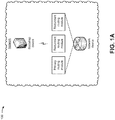
- Figs. 1A-1G are diagrams of one or more example implementations 100 described herein.
- an environment associated with example implementation(s) 100 may include a network device and/or a bootstrap device.
- the network device may include a primary routing module and one or more redundant routing modules.
- a redundant routing module may be associated with a line card or another component of the network device.
- the network device and/or the bootstrap device may be included in a network, such as a cellular network, a local area network (LAN), a core network, an access network, a wide area network (WAN) such as the Internet, a cloud network, and/or the like.
- LAN local area network
- WAN wide area network
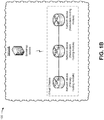
- an environment associated with example implementation(s) 100 may include a virtual chassis (e.g., a representation of a plurality of network devices as a single logical network device) and/or the bootstrap device.
- the virtual chassis may include a primary routing module and one or more redundant routing modules (e.g., distributed across the plurality of network devices that comprise the virtual chassis).
- the plurality of network devices may be connected to each other via one or more connections (e.g., via direct connections, via indirect connections, and/or the like).
- a particular network device e.g., the network device that includes the primary routing module
- the bootstrap device e.g., via a direct connection and/or an indirect connection.
- the plurality of network devices and/or the bootstrap device may be included in a network.
- the bootstrap device may facilitate verifying an authenticity of a primary routing module and one or more redundant routing modules, regardless of whether the primary routing module and the one or more redundant routing modules are included in a single network device or distributed across a plurality of network devices, such as in a virtual chassis. Accordingly, the description provided herein in relation to Figs. 1C-1G applies to the environment described in relation to Fig. 1A as well as the environment described in relation to Fig. 1B .
- a redundant routing module may send a redundant identifier certificate to a primary routing module.
- the redundant routing module and/or the primary routing module may establish a connection (e.g., a communication session) between the redundant routing module and the primary routing module to allow the redundant routing module to send the redundant identifier certificate to the primary routing module.
- the connection may be a secure connection, such as a secure sockets layer (SSL) connection, between the redundant routing module and the primary routing module.
- SSL secure sockets layer
- the redundant routing module may send the redundant identifier certificate to the primary routing module when a network device that includes the redundant routing module is powered on, when the network device that includes the redundant routing module is added to a network, when the network device that includes the redundant routing module is connected to a network device that includes the primary routing module, and/or the like.
- the redundant identifier certificate may include a secure device identifier (DevID) and/or another type of identifier that identifies the redundant routing module.
- the redundant identifier certificate may be issued by a certificate authority (CA) and/or another type of security credential generating device.
- CA certificate authority
- the primary routing module and/or the bootstrap device may establish a secure connection between the primary routing module and the bootstrap device.
- the secure connection may be an SSL connection between the primary routing module and the bootstrap device.
- the bootstrap device may verify an authenticity of the primary routing module based on a primary identifier certificate of the primary routing module.
- the primary identifier certificate may include a DevID or another type of identifier that identifies the primary routing module.
- the primary identifier certificate may be issued by a CA and/or another type of security credential generating device.
- the primary routing module may send the primary identifier certificate to the bootstrap device and the bootstrap device may process the primary identifier certificate (e.g., using a certificate chain, such as a trust anchor certificate chain, associated with the CA) to verify that primary identifier certificate is associated with the primary routing module (e.g., that the primary identifier certificate identifies the primary routing module).
- a certificate chain such as a trust anchor certificate chain, associated with the CA
- the primary routing module may provide a redundant routing module identifier to the bootstrap device.
- the redundant routing module identifier may be the redundant identifier certificate and/or another type of identifier that identifies the redundant routing module (e.g., a serial number, a text string, and/or the like associated with the redundant routing module).
- the primary routing module may send the redundant routing module identifier to the bootstrap device via the secure connection between the primary routing module and the bootstrap device.
- the bootstrap device may determine whether the redundant routing module is authorized (e.g., to receive bootstrap information). In some implementations, the bootstrap device may determine, based on the redundant routing module identifier, whether the redundant routing module is associated with a certificate chain (e.g., a trust anchor certificate chain). For example, the bootstrap device may search, based on the redundant routing module identifier, a data structure (e.g., that is included in the bootstrap device or accessible to the bootstrap device) that includes a plurality of certificate chains to identify a certificate chain associated with the redundant routing module.
- a certificate chain e.g., a trust anchor certificate chain
- the redundant routing module may be associated with a certificate chain when the certificate chain is associated with a network device that includes the redundant routing module.
- the certificate chain may be associated with the network device when the certificate chain is a signed certificate chain (e.g., a signed trust anchor certificate chain) signed by the network device.
- the network device may sign the certificate chain using a private key associated with the network device, using an owner certificate associated with the network device, and/or the like
- the bootstrap device When the bootstrap device successfully identifies a certificate chain associated with the redundant routing module (e.g., identifies a signed certificate chain signed by the network device that includes the redundant routing module), the bootstrap device may determine that the redundant routing module is authorized. The bootstrap device and/or the primary routing module may therefore perform one or more functions described herein in relation to Figs. 1E-1F . Alternatively, when the bootstrap device fails to identify a certificate chain associated with the redundant routing module, the bootstrap device may determine that the redundant routing module is unauthorized. The bootstrap device and/or the primary routing module may therefore perform one or more functions described herein in relation to Fig. 1G .
- the bootstrap device may send the certificate chain associated with the redundant routing module to the primary routing module.
- the bootstrap device may send the signed certificate chain signed by the network device (that includes the redundant routing module) to the primary routing module via the secure connection between the primary routing module and the bootstrap device.
- the primary routing module may verify the signed certificate chain (e.g., determine that the signed certificate chain originated from the network device). For example, the primary routing module may verify a signature of the network device included in the signed certificate chain by using a public key associated with the network device (e.g., to verify that the signed certificate chain was signed using the private key associated with the network device), by using an ownership voucher associated with the network device (e.g., to verify that the signed certificate chain was signed using the owner certificate associated with the network device), and/or the like.
- a public key associated with the network device e.g., to verify that the signed certificate chain was signed using the private key associated with the network device
- an ownership voucher associated with the network device e.g., to verify that the signed certificate chain was signed using the owner certificate associated with the network device
- the primary routing module may verify an authenticity of the redundant routing module.
- the primary routing module may process the redundant identifier certificate using the signed certificate chain to verify that the redundant identifier certificate is associated with the redundant routing module (e.g., that the redundant identifier certificate identifies the redundant routing module).
- the primary routing module may establish a new connection (e.g., a secure connection, such as an SSL connection) with the redundant routing module to re-obtain the redundant identifier certificate to all the primary routing module to verify that the redundant identifier certificate is associated with the redundant routing module.
- the bootstrap device may send bootstrap information associated with a network to the primary routing module (e.g., after the bootstrap device verifies the authenticity of the of the primary routing module).
- the bootstrap device may send the bootstrap information to the primary routing module via the secure connection between the primary routing module and the bootstrap device. In this way, the primary routing module may be provisioned with the bootstrap information.
- the primary routing module may send the bootstrap information to the redundant routing module (e.g., after the primary routing module verifies the authenticity of the redundant routing module).
- the primary routing module may send the bootstrap information to the redundant routing module via the connection between the primary routing module and the redundant routing module. In this way, the redundant routing module may be provisioned with the bootstrap information.
- the primary routing module may perform one or more functions (e.g., one or more routing functions) based on the bootstrap information.
- the primary routing module and/or the redundant routing module may determine that the primary routing module is or is about to become nonoperational.
- the network device that includes the primary routing module may need to perform a reboot procedure to address an operational error, which may cause the primary routing module to go offline for a period of time.
- the primary routing module and/or the redundant routing module may cause the redundant routing module to perform the one or more functions until the primary routing module becomes operational again (e.g., until the network device that includes the primary routing module comes online again).
- the bootstrap device may send (e.g., after determining that the redundant routing module is unauthorized, as described herein in relation to Fig. 1D and reference number 120) an error message indicating that the redundant routing module is unauthorized.
- the bootstrap device may send the error message to the primary routing module via the secure connection between the primary routing module and the bootstrap device. Accordingly, as further shown in Fig.
- the primary routing module (e.g., based on receiving the error message) may prevent verifying the authenticity of the redundant routing module (e.g., may prevent verification of the redundant identifier certificate) based on the error message and/or may prevent the redundant routing module from being provisioned with the bootstrap information.
- Figs. 1A-1G are provided as an example. Other examples may differ from what is described with regard to Figs. 1A-1G .
- the number and arrangement of devices shown in Figs. 1A-1G are provided as an example. In practice, there may be additional devices, fewer devices, different devices, or differently arranged devices than those shown in Figs. 1A-1G .
- two or more devices shown in Figs. 1A-1G may be implemented within a single device, or a single device shown in Figs. 1A-1G may be implemented as multiple, distributed devices.
- a set of devices (e.g., one or more devices) shown in Figs. 1A-1G may perform one or more functions described as being performed by another set of devices shown in Figs. 1A-1G .
- Fig. 2 is a diagram of an example environment 200 in which systems and/or methods described herein may be implemented.
- environment 200 may include a plurality of network devices 210 (e.g., network device 210-1 through network device 210-N, referred to collectively as “network devices 210" and singularly as “network device 210"), a bootstrap device 220, and a network 230.
- Devices of environment 200 may interconnect via wired connections, wireless connections, or a combination of wired and wireless connections.
- Network device 210 includes one or more devices capable of receiving, storing, generating, processing, forwarding, and/or transferring information in a manner described herein.
- network device 210 may include a firewall, a router, a gateway, a switch, a hub, a bridge, a reverse proxy, a server (e.g., a proxy server), a security device, an intrusion detection device, a load balancer, or a similar type of device.
- network device 210 may be a physical device implemented within a housing, such as a chassis.
- network device 210 may be a virtual device implemented by one or more computer devices of a cloud computing environment or a data center.
- network device 210 may include a primary routing module and/or one or more redundant routing modules.
- Bootstrap device 220 includes one or more devices capable of storing, processing, and/or routing information, such as information described herein.
- bootstrap device 220 may include a communication interface that allows bootstrap device 220 to receive information from and/or transmit information to network device 210.
- bootstrap device 220 may be a server device, a DHCP server device, a data storage device, or a similar device.
- bootstrap device 220 may include and/or maintain a data structure that includes a plurality of certificate chains.
- Network 230 includes one or more wired and/or wireless networks.
- network 230 may include a cellular network (e.g., a long-term evolution (LTE) network, a 2G network, a 5G network, a New Radio (NR) network, a code division multiple access (CDMA) network, and/or the like), a public land mobile network (PLMN), a local area network (LAN), a wide area network (WAN), a metropolitan area network (MAN), a telephone network (e.g., the Public Switched Telephone Network (PSTN)), an Ethernet network, a VPN (E.g., a VPLS, an EVPN, a VPWS, an L2VPN, an L4VPN, and/or the like), a private network, an ad hoc network, an intranet, the Internet, a fiber optic-based network, a cloud computing network, or the like, and/or a combination of these or other types of networks.
- LTE long-term evolution
- NR New
- the number and arrangement of devices and networks shown in Fig. 2 are provided as one or more examples. In practice, there may be additional devices, fewer devices and/or networks, different devices and/or networks, or differently arranged devices and/or networks than those shown in Fig. 2 . Furthermore, two or more devices shown in Fig. 2 may be implemented within a single device, or a single device shown in Fig. 2 may be implemented as multiple, distributed devices. Additionally, or alternatively, a set of devices (e.g., one or more devices) of environment 200 may perform one or more functions described as being performed by another set of devices of environment 200.
- Fig. 3 is a diagram of example components of a device 300.
- Device 300 may correspond to network device 210, bootstrap device 220, and/or the like.
- network device 210, bootstrap device 220, and/or the like may include one or more devices 300 and/or one or more components of device 300.
- device 300 may include one or more input components 310-1 through 310-A (A ⁇ 1) (hereinafter referred to collectively as input components 310, and individually as input component 310), a switching component 320, one or more output components 330-1 through 330-B (B ⁇ 1) (hereinafter referred to collectively as output components 330, and individually as output component 330), and a controller 340.
- Input component 310 may be one or more points of attachment for physical links and may be one or more points of entry for incoming traffic, such as packets. Input component 310 may process incoming traffic, such as by performing data link layer encapsulation or decapsulation. In some implementations, input component 310 may transmit and/or receive packets. In some implementations, input component 310 may include an input line card that includes one or more packet processing components (e.g., in the form of integrated circuits), such as one or more interface cards (IFCs), packet forwarding components, line card controller components, input ports, processors, memories, and/or input queues. In some implementations, device 300 may include one or more input components 310.
- packet processing components e.g., in the form of integrated circuits
- IFCs interface cards
- packet forwarding components line card controller components
- input ports e.g., processors, memories, and/or input queues.
- device 300 may include one or more input components 310.
- Switching component 320 may interconnect input components 310 with output components 330.
- switching component 320 may be implemented via one or more crossbars, via busses, and/or with shared memories.
- the shared memories may act as temporary buffers to store packets from input components 310 before the packets are eventually scheduled for delivery to output components 330.
- switching component 320 may enable input components 310, output components 330, and/or controller 340 to communicate with one another.
- Output component 330 may store packets and may schedule packets for transmission on output physical links. Output component 330 may support data link layer encapsulation or decapsulation, and/or a variety of higher-level protocols. In some implementations, output component 330 may transmit packets and/or receive packets. In some implementations, output component 330 may include an output line card that includes one or more packet processing components (e.g., in the form of integrated circuits), such as one or more IFCs, packet forwarding components, line card controller components, output ports, processors, memories, and/or output queues. In some implementations, device 300 may include one or more output components 330. In some implementations, input component 310 and output component 330 may be implemented by the same set of components (e.g., and input/output component may be a combination of input component 310 and output component 330).
- packet processing components e.g., in the form of integrated circuits
- IFCs packet forwarding components
- line card controller components e.g., packet forwarding components
- Controller 340 includes a processor in the form of, for example, a CPU, a GPU, an APU, a microprocessor, a microcontroller, a DSP, an FPGA, an ASIC, and/or another type of processor.
- the processor is implemented in hardware, firmware, or a combination of hardware and software.
- controller 340 may include one or more processors that can be programmed to perform a function.
- controller 340 may include a RAM, a ROM, and/or another type of dynamic or static storage device (e.g., a flash memory, a magnetic memory, an optical memory, etc.) that stores information and/or instructions for use by controller 340.
- a RAM random access memory
- ROM read-only memory
- static storage device e.g., a flash memory, a magnetic memory, an optical memory, etc.
- controller 340 may communicate with other devices, networks, and/or systems connected to device 300 to exchange information regarding network topology. Controller 340 may create routing tables based on the network topology information, may create forwarding tables based on the routing tables, and may forward the forwarding tables to input components 310 and/or output components 330. Input components 310 and/or output components 330 may use the forwarding tables to perform route lookups for incoming and/or outgoing packets.
- Controller 340 may perform one or more processes described herein. Controller 340 may perform these processes in response to executing software instructions conveyed by a computer-readable medium.
- a computer readable medium may be a memory device accessible to the controller and/or a transmission medium providing the instructions to the controller.
- a memory device includes memory space within a single physical storage device or memory space spread across multiple physical storage devices.
- a transmission medium may convey instructions between components of a single computer system and/or between multiple separate computer systems.
- Software instructions may be read into a memory and/or storage component associated with controller 340 from another computer-readable medium or from another device via a communication interface. When executed, software instructions stored in a memory and/or storage component associated with controller 340 may cause controller 340 to perform one or more processes described herein. Additionally, or alternatively, hardwired circuitry may be used in place of or in combination with software instructions to perform one or more processes described herein. Thus, implementations described herein are not limited to any specific combination of hardware circuitry and software.
- device 300 may include additional components, fewer components, different components, or differently arranged components than those shown in Fig. 3 . Additionally, or alternatively, a set of components (e.g., one or more components) of device 300 may perform one or more functions described as being performed by another set of components of device 300.
- a set of components e.g., one or more components
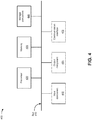
- Fig. 4 is a diagram of example components of a device 400, which may correspond to network device 210, bootstrap device 220, and/or the like.
- network device 210, bootstrap device 220, and/or the like may include one or more devices 400 and/or one or more components of device 400.
- device 400 may include a bus 410, a processor 420, a memory 430, a storage component 440, an input component 450, an output component 460, and a communication interface 470.
- Bus 410 includes a component that enables wired and/or wireless communication among the components of device 400.
- Processor 420 includes a central processing unit, a graphics processing unit, a microprocessor, a controller, a microcontroller, a digital signal processor, a field-programmable gate array, an application-specific integrated circuit, and/or another type of processing component.
- Processor 420 is implemented in hardware, firmware, or a combination of hardware and software.
- processor 420 includes one or more processors capable of being programmed to perform a function.
- Memory 430 includes a random access memory), a read only memory, and/or another type of memory (e.g., a flash memory, a magnetic memory, and/or an optical memory).
- Storage component 440 stores information and/or software related to the operation of device 400.
- storage component 440 may include a hard disk drive, a magnetic disk drive, an optical disk drive, a solid state disk drive, a compact disc, a digital versatile disc, and/or another type of non-transitory computer-readable medium.
- Input component 450 enables device 400 to receive input, such as user input and/or sensed inputs.
- input component 450 may include a touch screen, a keyboard, a keypad, a mouse, a button, a microphone, a switch, a sensor, a global positioning system component, an accelerometer, a gyroscope, an actuator, and/or the like.
- Output component 460 enables device 400 to provide output, such as via a display, a speaker, and/or one or more light-emitting diodes.
- Communication interface 470 enables device 400 to communicate with other devices, such as via a wired connection and/or a wireless connection.
- communication interface 470 may include a receiver, a transmitter, a transceiver, a modem, a network interface card, an antenna, and/or the like.
- Device 400 may perform one or more processes described herein.
- a computer-readable medium e.g., memory 430 and/or storage component 440, and/or a signal carrying information
- Processor 420 may execute the set of instructions to perform one or more processes described herein.
- execution of the set of instructions, by one or more processors 420 causes the one or more processors 420 and/or the device 400 to perform one or more processes described herein.
- hardwired circuitry may be used instead of or in combination with the instructions to perform one or more processes described herein.
- implementations described herein are not limited to any specific combination of hardware circuitry and software.
- Device 400 may include additional components, fewer components, different components, or differently arranged components than those shown in Fig. 4 . Additionally, or alternatively, a set of components (e.g., one or more components) of device 400 may perform one or more functions described as being performed by another set of components of device 400.
- Fig. 5 is a flow chart of an example process 500 associated with facilitating authentication of routing modules associated with one or more network devices to allow zero touch provisioning.
- one or more process blocks of Fig. 5 may be performed by a network device (e.g., network device 210-1).
- one or more process blocks of Fig. 5 may be performed by another device or a group of devices separate from or including the network device, such as another network device (e.g., network device 210-2, network device 210-N, and/or the like), a bootstrap device (e.g., bootstrap device 220), and/or the like.
- another network device e.g., network device 210-2, network device 210-N, and/or the like
- a bootstrap device e.g., bootstrap device 220
- a device 300 such as input component 310, switching component 320, output component 330, controller 340, and/or the like; a device 400, such as processor 420, memory 430, storage component 440, input component 450, output component 460, communication interface 470, and/or the like; and/or the like.
- a device 400 such as processor 420, memory 430, storage component 440, input component 450, output component 460, communication interface 470, and/or the like; and/or the like.
- process 500 may include receiving a redundant identifier certificate associated with a redundant routing module (block 510).
- the network device may receive a redundant identifier certificate associated with a redundant routing module, as described above.
- process 500 may include establishing a secure connection with the bootstrap device (block 520).
- the network device may establish a secure connection with the bootstrap device, as described above.
- process 500 may include providing, to a bootstrap device via the secure connection, the redundant routing module identifier associated with the redundant routing module (block 530).
- the network device may provide, to the bootstrap device via the secure connection, a redundant routing module identifier associated with the redundant routing module, as described above.
- process 500 may include selectively receiving, from the bootstrap device via the secure connection, an error message indicating that the redundant routing module is unauthorized (block 540).
- the network device may selectively receive, from the bootstrap device via the secure connection, an error message indicating that the redundant routing module is unauthorized.
- process 500 may include selectively receiving, from the bootstrap device via the secure connection, a signed certificate chain associated with a network device that includes the redundant routing module, verifying the signed certificate chain, and verifying the redundant identifier certificate, associated with the redundant routing module, based on verifying the signed certificate chain (block 550).
- the network device may selectively receive, from the bootstrap device via the secure connection, a signed certificate chain associated with a network device that includes the redundant routing module, verifying the signed certificate chain, and verifying the redundant identifier certificate, associated with the redundant routing module, based on verifying the signed certificate chain, as described above.
- Process 500 may include additional implementations, such as any single implementation or any combination of implementations described below and/or in connection with one or more other processes described elsewhere herein.
- process 500 includes the redundant routing module from being provisioned with bootstrap information when the error message is received from the bootstrap device.
- process 500 includes sending, after verifying the redundant identifier certificate, bootstrap information to the redundant routing module.
- the primary routing module and the redundant routing module are included in a single network device.
- the primary routing module is associated with a first network device and the redundant routing module is associated with a second network device different than the first network device.
- the signed certificate chain includes a signed trust anchor certificate chain.
- verifying the signed certificate chain comprises verifying a signature of the network device included in the signed certificate chain.
- process 500 may include additional blocks, fewer blocks, different blocks, or differently arranged blocks than those depicted in Fig. 5 . Additionally, or alternatively, two or more of the blocks of process 500 may be performed in parallel.
- Fig. 6 is a flow chart of an example process 600 associated with facilitating authentication of routing modules associated with one or more network devices to allow zero touch provisioning.
- one or more process blocks of Fig. 6 may be performed by a network device (e.g., network device 210-1).
- one or more process blocks of Fig. 6 may be performed by another device or a group of devices separate from or including the network device, such as another network device (e.g., network device 210-2, network device 210-N, and/or the like), a bootstrap device (e.g., bootstrap device 220), and/or the like.
- another network device e.g., network device 210-2, network device 210-N, and/or the like
- a bootstrap device e.g., bootstrap device 220
- a device 300 such as input component 310, switching component 320, output component 330, controller 340, and/or the like; a device 400, such as processor 420, memory 430, storage component 440, input component 450, output component 460, communication interface 470, and/or the like; and/or the like.
- a device 400 such as processor 420, memory 430, storage component 440, input component 450, output component 460, communication interface 470, and/or the like; and/or the like.
- process 600 may include receiving a redundant identifier certificate associated with a redundant routing module (block 610).
- the network device may receive a redundant identifier certificate associated with a redundant routing module, as described above.
- process 600 may include establishing a secure connection with a bootstrap device (block 620).
- the network device may establish a secure connection with a bootstrap device, as described above.
- process 600 may include providing, to the bootstrap device via the secure connection, a redundant routing module identifier associated with the redundant routing module (block 630).
- the network device may provide, to the bootstrap device via the secure connection, a redundant routing module identifier associated with the redundant routing module, as described above.
- process 600 may include selectively receiving, from the bootstrap device via the secure connection, an error message indicating that the redundant routing module is unauthorized (block 640).
- the network device may selectively receive, from the bootstrap device via the secure connection, an error message indicating that the redundant routing module is unauthorized, as described above.
- process 600 may include selectively receiving, from the bootstrap device via the secure connection, a signed certificate chain associated with the redundant routing module, verifying the signed certificate chain, and verifying the redundant identifier certificate, associated with the redundant routing module, based on verifying the signed certificate chain (block 650).
- the network device may selectively receive, from the bootstrap device via the secure connection, a signed certificate chain associated with the redundant routing module, verify the signed certificate chain, and verify the redundant identifier certificate, associated with the redundant routing module, based on verifying the signed certificate chain, as described above.
- Process 600 may include additional implementations, such as any single implementation or any combination of implementations described below and/or in connection with one or more other processes described elsewhere herein.
- the secure connection is a secure sockets layer connection.
- the network device and the redundant routing module are included in a virtual chassis that includes the network device and another network device, wherein the other network device performs functions of the redundant routing module.
- process 600 includes determining, after verifying the redundant identifier certificate, that the network device is nonoperational and causing the redundant routing module to perform functions of the network device until the network device becomes operational.
- the redundant routing module is associated with a line card of the network device.
- the redundant identifier certificate is issued by one of a plurality of certificate authorities.
- process 600 includes verifying the signed certificate chain via an owner certificate and an ownership voucher mechanism.
- process 600 may include additional blocks, fewer blocks, different blocks, or differently arranged blocks than those depicted in Fig. 6 . Additionally, or alternatively, two or more of the blocks of process 600 may be performed in parallel.
- Fig. 7 is a flow chart of an example process 700 associated with facilitating authentication of routing modules associated with one or more network devices to allow zero touch provisioning.
- one or more process blocks of Fig. 7 may be performed by a first network device (e.g., network device 210-1) and/or a second network device (e.g., network device 210-2) that form a virtual chassis.
- one or more process blocks of Fig. 7 may be performed by another device or a group of devices separate from or including the network device, such as another network device (e.g., network device 210-3, network device 210-N, and/or the like), a bootstrap device (e.g., bootstrap device 220), and/or the like.
- another network device e.g., network device 210-3, network device 210-N, and/or the like
- bootstrap device e.g., bootstrap device 220
- one or more process blocks of Fig. 7 may be performed by one or more components of a device 300, such as input component 310, switching component 320, output component 330, controller 340, and/or the like; a device 400, such as processor 420, memory 430, storage component 440, input component 450, output component 460, communication interface 470, and/or the like; and/or the like.
- a device 300 such as input component 310, switching component 320, output component 330, controller 340, and/or the like
- a device 400 such as processor 420, memory 430, storage component 440, input component 450, output component 460, communication interface 470, and/or the like; and/or the like.
- process 700 may include receiving a redundant identifier certificate associated with the second network device (block 710).
- the first network device and/or the second network device may receive a redundant identifier certificate associated with the second network device, as described above.
- process 700 may include establishing a secure connection with a bootstrap device (block 720).
- the first network device and/or the second network device may establish a secure connection with a bootstrap device, as described above.
- process 700 may include providing, to the bootstrap device via the secure connection, a redundant routing module identifier associated with the second network device (block 730).
- the first network device and/or the second network device may provide, to the bootstrap device via the secure connection, a redundant routing module identifier associated with the second network device, as described above.
- process 700 may include selectively receiving, from the bootstrap device via the secure connection, an error message indicating that the second network device is unauthorized (block 740).
- the first network device and/or the second network device may selectively receive, from the bootstrap device via the secure connection, an error message indicating that the second network device is unauthorized, as described above.
- process 700 may include selectively receiving, from the bootstrap device via the secure connection, a signed certificate chain associated with the second network device, verifying the signed certificate chain, and verifying the redundant identifier certificate, associated with the second network device, based on verifying the signed certificate chain (block 750).
- the first network device and/or the second network device may selectively receive, from the bootstrap device via the secure connection, a signed certificate chain associated with the second network device, verify the signed certificate chain, and verify the redundant identifier certificate, associated with the second network device, based on verifying the signed certificate chain, as described above.
- Process 700 may include additional implementations, such as any single implementation or any combination of implementations described below and/or in connection with one or more other processes described elsewhere herein.
- process 700 includes preventing verification of the redundant routing module identifier when the error message is received from the bootstrap device.
- process 700 includes receiving, by the first network device and from the bootstrap device, bootstrap information when the signed certificate chain is received.
- the signed certificate chain includes a signed trust anchor certificate chain.
- verifying the signed certificate chain includes verifying a signature of the second network device included in the signed certificate chain.
- process 700 includes determining, after verifying the redundant identifier certificate, that the first network device is nonoperational; and causing the second network device to perform functions of the first network device until the first network device becomes operational.
- process 700 may include additional blocks, fewer blocks, different blocks, or differently arranged blocks than those depicted in Fig. 7 . Additionally, or alternatively, two or more of the blocks of process 700 may be performed in parallel.
- a network device may receive a redundant identifier certificate associated with a redundant routing module, and may provide, to a bootstrap device, a primary identifier certificate associated with a primary routing module associated with the network device.
- the network device may establish a secure connection with the bootstrap device based on the bootstrap device verifying an authenticity of the primary routing module via the primary identifier certificate.
- the network device may provide, to the bootstrap device via the secure connection, a redundant routing module identifier associated with the redundant routing module and may receive, from the bootstrap device via the secure connection, a signed certificate chain associated with the redundant routing module.
- the network device may verify the signed certificate chain and may verify the redundant identifier certificate, associated with the redundant routing module, based on verifying the signed certificate chain.
- component is intended to be broadly construed as hardware, firmware, or a combination of hardware and software.
- the terms “has,” “have,” “having,” or the like are intended to be open-ended terms. Further, the phrase “based on” is intended to mean “based, at least in part, on” unless explicitly stated otherwise. Also, as used herein, the term “or” is intended to be inclusive when used in a series and may be used interchangeably with “and/or,” unless explicitly stated otherwise (e.g., if used in combination with “either” or “only one of').
Landscapes
- Engineering & Computer Science (AREA)
- Computer Security & Cryptography (AREA)
- Computer Networks & Wireless Communication (AREA)
- Signal Processing (AREA)
- Computer Hardware Design (AREA)
- Computing Systems (AREA)
- General Engineering & Computer Science (AREA)
- Data Exchanges In Wide-Area Networks (AREA)
Abstract
Description
- This application claims priority to Indian Provisional Application No.
202041027789 - Zero Touch Provisioning (ZTP) is a technique to provision a network device when the network device is booting in a factory-default state. Provisioning may include updating the boot image, establishing an initial configuration, and executing arbitrary scripts to address auxiliary needs. Once provisioned, the network device is able to establish connections with other network devices.
- A virtual chassis is a group of network devices that are connected together to form a single logical network device. The group of network devices may be connected via respective virtual chassis interfaces that are configured to transmit virtual chassis specific control traffic between network devices of the group of network devices.
- Particular aspects are set out in the appended independent claims. Various optional embodiments are set out in the dependent claims.
- In some implementations, a method includes receiving, by a primary routing module, a redundant identifier certificate associated with a redundant routing module; establishing, by the primary routing module, a secure connection with the bootstrap device; providing, by the primary routing module and to the bootstrap device via the secure connection, a redundant routing module identifier associated with the redundant routing module; and selectively: receiving, by the primary routing module and from the bootstrap device via the secure connection, an error message indicating that the redundant routing module is unauthorized; or receiving, by the primary routing module and from the bootstrap device via the secure connection, a signed certificate chain associated with a network device that includes the redundant routing module, verifying, by the primary routing module, the signed certificate chain, and verifying, by the primary routing module, the redundant identifier certificate, associated with the redundant routing module, based on verifying the signed certificate chain.
- In some implementations, a network device includes one or more memories; and one or more processors to: receive a redundant identifier certificate associated with a redundant routing module; establish a secure connection with a bootstrap device; provide, to the bootstrap device via the secure connection, a redundant routing module identifier associated with the redundant routing module; and selectively: receive, from the bootstrap device via the secure connection, an error message indicating that the redundant routing module is unauthorized; or receive, from the bootstrap device via the secure connection, a signed certificate chain associated with the redundant routing module, verify the signed certificate chain, and verify the redundant identifier certificate, associated with the redundant routing module, based on verifying the signed certificate chain.
- In some implementations, a computer-readable medium conveying instructions includes one or more instructions that, when executed by one or more processors of a first network device and a second network device that form a virtual chassis, cause the one or more processors to: receive a redundant identifier certificate associated with the second network device; establish a secure connection with a bootstrap device; provide, to the bootstrap device via the secure connection, a redundant routing module identifier associated with the second network device; and selectively: receive, from the bootstrap device via the secure connection, an error message indicating that the second network device is unauthorized; or receive, from the bootstrap device via the secure connection, a signed certificate chain associated with the second network device, verify the signed certificate chain, and verify the redundant identifier certificate, associated with the second network device, based on verifying the signed certificate chain.
-
-
Figs. 1A-1G are diagrams of an example implementation described herein. -
Fig. 2 is a diagram of an example environment in which systems and/or methods described herein may be implemented. -
Figs. 3-4 are diagrams of example components of one or more devices ofFig. 2 . -
Figs. 5-7 are flow charts of example processes relating to facilitating authentication of routing modules associated with one or more network devices to allow zero touch provisioning. - The following detailed description of example implementations refers to the accompanying drawings. The same reference numbers in different drawings may identify the same or similar elements.
- Zero Touch Provisioning (ZTP) may be useful for provisioning network devices upon deployment from a factory-default state. Network operators that deploy network devices configured for ZTP may reduce errors in the installation process by allowing the provisioning process to be automated and may reduce costs of manually provisioning the network devices by on-site operators. When a network device is coupled to power, the network device may communicate with a bootstrap device to obtain bootstrap information (also referenced as "provisioning information") for provisioning the network device.
- In some cases, a network device and/or a virtual chassis (e.g., a group of network devices that are connected together to form a single logical network device) may include a primary routing module and one or more redundant routing modules. ZTP allows a network device that includes the primary routing module to communicate with the bootstrap device to provision the primary routing module with bootstrap information. As part of the ZTP process, the bootstrap device may communicate with the network device that includes the primary routing module to verify an authenticity of the primary routing module (e.g., authenticate the primary routing module as a verified recipient of the bootstrap information) before providing the bootstrap information to the primary routing module.
- However, in many cases, the bootstrap device is not able to directly communicate with the network device(s) that comprise the one or more redundant routing modules to verify an authenticity of the one or more redundant routing modules. In such situations, the primary routing module forwards the bootstrap information to the one or more redundant routing modules to provision the one or more redundant routing modules with the bootstrap information, even though the bootstrap device is not able to verify an authenticity of the one or more redundant routing modules. In some cases, this allows a bad actor to spoof or mimic a redundant routing module, which allows the bad actor to obtain the bootstrap information from the primary routing module. Accordingly, the bad actor may target the network device(s) with malicious attacks (e.g., that change or adjust one or more security settings of the network device(s) to compromise the network device(s), such as by stealing virtual private network(VPN) keys associated with the network device(s)). This may impact a performance of the network device(s), which may cause the network device(s) to waste computing resources (e.g., processing resources, memory resources, networking resources, and/or the like) to identify and/or investigate the malicious attacks and/or rectify any damage that may result from the malicious attacks.
- Some implementations described herein provide a primary routing module that is able to verify an authenticity of one or more redundant routing modules before allowing the redundant routing modules to be provisioned with bootstrap information. In some implementations, the primary routing module may obtain a redundant identifier certificate associated with a redundant routing module and send a redundant routing module identifier to a bootstrap device. The bootstrap device may identify the redundant routing module based on the redundant routing module identifier and determine that the redundant routing module is authorized to receive the bootstrap information. The bootstrap device may send a signed certificate chain (e.g., a signed trust anchor certificate) associated with a network device that includes the redundant routing module to the primary routing module. The primary routing module may verify the signed certificate chain and may use the signed certificate chain to verify an authenticity of the redundant routing module. Accordingly, after verifying the authenticity of the redundant routing module, the primary routing module may send the bootstrap information to the redundant routing module to allow the redundant routing module to be provisioned with the bootstrap information.
- In this way, the primary routing module and/or the bootstrap device facilitate authentication of the one or more redundant routing modules and thereby improve security associated with provisioning the one or more redundant routing modules with bootstrap information. This may reduce a likelihood that any network device associated with the primary routing module and/or the one or more redundant routing modules will be subject to malicious attacks by bad actors (e.g., that attempt to spoof and/or mimic redundant routing modules). This conserves computing resources (e.g., processing resources, memory resources, networking resources, and/or the like) of a network device that would otherwise be expended to identify and/or investigate the malicious attacks and/or rectify any damage that may result from the malicious attacks.
-
Figs. 1A-1G are diagrams of one ormore example implementations 100 described herein. As shown inFig. 1A , an environment associated with example implementation(s) 100 may include a network device and/or a bootstrap device. The network device may include a primary routing module and one or more redundant routing modules. In some implementations, a redundant routing module may be associated with a line card or another component of the network device. The network device and/or the bootstrap device may be included in a network, such as a cellular network, a local area network (LAN), a core network, an access network, a wide area network (WAN) such as the Internet, a cloud network, and/or the like. - As shown in
Fig. 1B , an environment associated with example implementation(s) 100 may include a virtual chassis (e.g., a representation of a plurality of network devices as a single logical network device) and/or the bootstrap device. The virtual chassis may include a primary routing module and one or more redundant routing modules (e.g., distributed across the plurality of network devices that comprise the virtual chassis). In some implementations, the plurality of network devices may be connected to each other via one or more connections (e.g., via direct connections, via indirect connections, and/or the like). Additionally, or alternatively, a particular network device (e.g., the network device that includes the primary routing module) may be connected to the bootstrap device (e.g., via a direct connection and/or an indirect connection). In some implementations, the plurality of network devices and/or the bootstrap device may be included in a network. - As further described herein, the bootstrap device may facilitate verifying an authenticity of a primary routing module and one or more redundant routing modules, regardless of whether the primary routing module and the one or more redundant routing modules are included in a single network device or distributed across a plurality of network devices, such as in a virtual chassis. Accordingly, the description provided herein in relation to
Figs. 1C-1G applies to the environment described in relation toFig. 1A as well as the environment described in relation toFig. 1B . - As shown in
Fig. 1C , and byreference number 105, a redundant routing module may send a redundant identifier certificate to a primary routing module. For example, the redundant routing module and/or the primary routing module may establish a connection (e.g., a communication session) between the redundant routing module and the primary routing module to allow the redundant routing module to send the redundant identifier certificate to the primary routing module. In some implementations, the connection may be a secure connection, such as a secure sockets layer (SSL) connection, between the redundant routing module and the primary routing module. The redundant routing module may send the redundant identifier certificate to the primary routing module when a network device that includes the redundant routing module is powered on, when the network device that includes the redundant routing module is added to a network, when the network device that includes the redundant routing module is connected to a network device that includes the primary routing module, and/or the like. - The redundant identifier certificate may include a secure device identifier (DevID) and/or another type of identifier that identifies the redundant routing module. In some implementations, the redundant identifier certificate may be issued by a certificate authority (CA) and/or another type of security credential generating device.
- As further shown in
Fig. 1C , and byreference number 110, the primary routing module and/or the bootstrap device may establish a secure connection between the primary routing module and the bootstrap device. In some implementations, the secure connection may be an SSL connection between the primary routing module and the bootstrap device. - In some implementations (e.g., as part of establishing a secure connection between the primary routing module and the bootstrap device) the bootstrap device may verify an authenticity of the primary routing module based on a primary identifier certificate of the primary routing module. The primary identifier certificate may include a DevID or another type of identifier that identifies the primary routing module. In some implementations, the primary identifier certificate may be issued by a CA and/or another type of security credential generating device. For example, the primary routing module may send the primary identifier certificate to the bootstrap device and the bootstrap device may process the primary identifier certificate (e.g., using a certificate chain, such as a trust anchor certificate chain, associated with the CA) to verify that primary identifier certificate is associated with the primary routing module (e.g., that the primary identifier certificate identifies the primary routing module).
- As shown in
Fig. 1D , and byreference number 115, the primary routing module may provide a redundant routing module identifier to the bootstrap device. The redundant routing module identifier may be the redundant identifier certificate and/or another type of identifier that identifies the redundant routing module (e.g., a serial number, a text string, and/or the like associated with the redundant routing module). For example, the primary routing module may send the redundant routing module identifier to the bootstrap device via the secure connection between the primary routing module and the bootstrap device. - As further shown in
Fig. 1D , and byreference number 120, the bootstrap device may determine whether the redundant routing module is authorized (e.g., to receive bootstrap information). In some implementations, the bootstrap device may determine, based on the redundant routing module identifier, whether the redundant routing module is associated with a certificate chain (e.g., a trust anchor certificate chain). For example, the bootstrap device may search, based on the redundant routing module identifier, a data structure (e.g., that is included in the bootstrap device or accessible to the bootstrap device) that includes a plurality of certificate chains to identify a certificate chain associated with the redundant routing module. - In some implementations, the redundant routing module may be associated with a certificate chain when the certificate chain is associated with a network device that includes the redundant routing module. In some implementations, the certificate chain may be associated with the network device when the certificate chain is a signed certificate chain (e.g., a signed trust anchor certificate chain) signed by the network device. The network device may sign the certificate chain using a private key associated with the network device, using an owner certificate associated with the network device, and/or the like
- When the bootstrap device successfully identifies a certificate chain associated with the redundant routing module (e.g., identifies a signed certificate chain signed by the network device that includes the redundant routing module), the bootstrap device may determine that the redundant routing module is authorized. The bootstrap device and/or the primary routing module may therefore perform one or more functions described herein in relation to
Figs. 1E-1F . Alternatively, when the bootstrap device fails to identify a certificate chain associated with the redundant routing module, the bootstrap device may determine that the redundant routing module is unauthorized. The bootstrap device and/or the primary routing module may therefore perform one or more functions described herein in relation toFig. 1G . - As shown in
Fig. 1E , and byreference number 125, the bootstrap device may send the certificate chain associated with the redundant routing module to the primary routing module. For example, the bootstrap device may send the signed certificate chain signed by the network device (that includes the redundant routing module) to the primary routing module via the secure connection between the primary routing module and the bootstrap device. - As further shown in
Fig. 1E , and byreference number 130, the primary routing module may verify the signed certificate chain (e.g., determine that the signed certificate chain originated from the network device). For example, the primary routing module may verify a signature of the network device included in the signed certificate chain by using a public key associated with the network device (e.g., to verify that the signed certificate chain was signed using the private key associated with the network device), by using an ownership voucher associated with the network device (e.g., to verify that the signed certificate chain was signed using the owner certificate associated with the network device), and/or the like. - As further shown in
Fig. 1E , and byreference number 135, the primary routing module (e.g., after verifying the signed certificate chain) may verify an authenticity of the redundant routing module. For example, the primary routing module may process the redundant identifier certificate using the signed certificate chain to verify that the redundant identifier certificate is associated with the redundant routing module (e.g., that the redundant identifier certificate identifies the redundant routing module). In some implementations, the primary routing module may establish a new connection (e.g., a secure connection, such as an SSL connection) with the redundant routing module to re-obtain the redundant identifier certificate to all the primary routing module to verify that the redundant identifier certificate is associated with the redundant routing module. - As shown in
Fig. 1F , and byreference number 140, the bootstrap device may send bootstrap information associated with a network to the primary routing module (e.g., after the bootstrap device verifies the authenticity of the of the primary routing module). For example, the bootstrap device may send the bootstrap information to the primary routing module via the secure connection between the primary routing module and the bootstrap device. In this way, the primary routing module may be provisioned with the bootstrap information. - As further shown in
Fig. 1F , and byreference number 145, the primary routing module may send the bootstrap information to the redundant routing module (e.g., after the primary routing module verifies the authenticity of the redundant routing module). For example, the primary routing module may send the bootstrap information to the redundant routing module via the connection between the primary routing module and the redundant routing module. In this way, the redundant routing module may be provisioned with the bootstrap information. - After the primary routing module and the redundant routing module are provisioned with the bootstrap information, the primary routing module may perform one or more functions (e.g., one or more routing functions) based on the bootstrap information. In some implementations, the primary routing module and/or the redundant routing module may determine that the primary routing module is or is about to become nonoperational. For example, the network device that includes the primary routing module may need to perform a reboot procedure to address an operational error, which may cause the primary routing module to go offline for a period of time. Accordingly, the primary routing module and/or the redundant routing module may cause the redundant routing module to perform the one or more functions until the primary routing module becomes operational again (e.g., until the network device that includes the primary routing module comes online again).
- Alternatively, as shown in
Fig. 1G , and byreference number 150, the bootstrap device may send (e.g., after determining that the redundant routing module is unauthorized, as described herein in relation toFig. 1D and reference number 120) an error message indicating that the redundant routing module is unauthorized. For example, the bootstrap device may send the error message to the primary routing module via the secure connection between the primary routing module and the bootstrap device. Accordingly, as further shown inFig. 1G and byreference number 155, the primary routing module (e.g., based on receiving the error message) may prevent verifying the authenticity of the redundant routing module (e.g., may prevent verification of the redundant identifier certificate) based on the error message and/or may prevent the redundant routing module from being provisioned with the bootstrap information. - As indicated above,
Figs. 1A-1G are provided as an example. Other examples may differ from what is described with regard toFigs. 1A-1G . The number and arrangement of devices shown inFigs. 1A-1G are provided as an example. In practice, there may be additional devices, fewer devices, different devices, or differently arranged devices than those shown inFigs. 1A-1G . Furthermore, two or more devices shown inFigs. 1A-1G may be implemented within a single device, or a single device shown inFigs. 1A-1G may be implemented as multiple, distributed devices. Additionally, or alternatively, a set of devices (e.g., one or more devices) shown inFigs. 1A-1G may perform one or more functions described as being performed by another set of devices shown inFigs. 1A-1G . -
Fig. 2 is a diagram of anexample environment 200 in which systems and/or methods described herein may be implemented. As shown inFig. 2 ,environment 200 may include a plurality of network devices 210 (e.g., network device 210-1 through network device 210-N, referred to collectively as "network devices 210" and singularly as "network device 210"), abootstrap device 220, and anetwork 230. Devices ofenvironment 200 may interconnect via wired connections, wireless connections, or a combination of wired and wireless connections. -
Network device 210 includes one or more devices capable of receiving, storing, generating, processing, forwarding, and/or transferring information in a manner described herein. For example,network device 210 may include a firewall, a router, a gateway, a switch, a hub, a bridge, a reverse proxy, a server (e.g., a proxy server), a security device, an intrusion detection device, a load balancer, or a similar type of device. In some implementations,network device 210 may be a physical device implemented within a housing, such as a chassis. In some implementations,network device 210 may be a virtual device implemented by one or more computer devices of a cloud computing environment or a data center. In some implementations,network device 210 may include a primary routing module and/or one or more redundant routing modules. -
Bootstrap device 220 includes one or more devices capable of storing, processing, and/or routing information, such as information described herein. In some implementations,bootstrap device 220 may include a communication interface that allowsbootstrap device 220 to receive information from and/or transmit information tonetwork device 210. In some implementations,bootstrap device 220 may be a server device, a DHCP server device, a data storage device, or a similar device. In some implementations,bootstrap device 220 may include and/or maintain a data structure that includes a plurality of certificate chains. -
Network 230 includes one or more wired and/or wireless networks. For example,network 230 may include a cellular network (e.g., a long-term evolution (LTE) network, a 2G network, a 5G network, a New Radio (NR) network, a code division multiple access (CDMA) network, and/or the like), a public land mobile network (PLMN), a local area network (LAN), a wide area network (WAN), a metropolitan area network (MAN), a telephone network (e.g., the Public Switched Telephone Network (PSTN)), an Ethernet network, a VPN (E.g., a VPLS, an EVPN, a VPWS, an L2VPN, an L4VPN, and/or the like), a private network, an ad hoc network, an intranet, the Internet, a fiber optic-based network, a cloud computing network, or the like, and/or a combination of these or other types of networks. - The number and arrangement of devices and networks shown in
Fig. 2 are provided as one or more examples. In practice, there may be additional devices, fewer devices and/or networks, different devices and/or networks, or differently arranged devices and/or networks than those shown inFig. 2 . Furthermore, two or more devices shown inFig. 2 may be implemented within a single device, or a single device shown inFig. 2 may be implemented as multiple, distributed devices. Additionally, or alternatively, a set of devices (e.g., one or more devices) ofenvironment 200 may perform one or more functions described as being performed by another set of devices ofenvironment 200. -
Fig. 3 is a diagram of example components of adevice 300.Device 300 may correspond tonetwork device 210,bootstrap device 220, and/or the like. In some implementations,network device 210,bootstrap device 220, and/or the like, may include one ormore devices 300 and/or one or more components ofdevice 300. As shown inFig. 3 ,device 300 may include one or more input components 310-1 through 310-A (A ≥ 1) (hereinafter referred to collectively asinput components 310, and individually as input component 310), aswitching component 320, one or more output components 330-1 through 330-B (B ≥ 1) (hereinafter referred to collectively asoutput components 330, and individually as output component 330), and acontroller 340. -
Input component 310 may be one or more points of attachment for physical links and may be one or more points of entry for incoming traffic, such as packets.Input component 310 may process incoming traffic, such as by performing data link layer encapsulation or decapsulation. In some implementations,input component 310 may transmit and/or receive packets. In some implementations,input component 310 may include an input line card that includes one or more packet processing components (e.g., in the form of integrated circuits), such as one or more interface cards (IFCs), packet forwarding components, line card controller components, input ports, processors, memories, and/or input queues. In some implementations,device 300 may include one ormore input components 310. -
Switching component 320 may interconnectinput components 310 withoutput components 330. In some implementations, switchingcomponent 320 may be implemented via one or more crossbars, via busses, and/or with shared memories. The shared memories may act as temporary buffers to store packets frominput components 310 before the packets are eventually scheduled for delivery tooutput components 330. In some implementations, switchingcomponent 320 may enableinput components 310,output components 330, and/orcontroller 340 to communicate with one another. -
Output component 330 may store packets and may schedule packets for transmission on output physical links.Output component 330 may support data link layer encapsulation or decapsulation, and/or a variety of higher-level protocols. In some implementations,output component 330 may transmit packets and/or receive packets. In some implementations,output component 330 may include an output line card that includes one or more packet processing components (e.g., in the form of integrated circuits), such as one or more IFCs, packet forwarding components, line card controller components, output ports, processors, memories, and/or output queues. In some implementations,device 300 may include one ormore output components 330. In some implementations,input component 310 andoutput component 330 may be implemented by the same set of components (e.g., and input/output component may be a combination ofinput component 310 and output component 330). -
Controller 340 includes a processor in the form of, for example, a CPU, a GPU, an APU, a microprocessor, a microcontroller, a DSP, an FPGA, an ASIC, and/or another type of processor. The processor is implemented in hardware, firmware, or a combination of hardware and software. In some implementations,controller 340 may include one or more processors that can be programmed to perform a function. - In some implementations,
controller 340 may include a RAM, a ROM, and/or another type of dynamic or static storage device (e.g., a flash memory, a magnetic memory, an optical memory, etc.) that stores information and/or instructions for use bycontroller 340. - In some implementations,
controller 340 may communicate with other devices, networks, and/or systems connected todevice 300 to exchange information regarding network topology.Controller 340 may create routing tables based on the network topology information, may create forwarding tables based on the routing tables, and may forward the forwarding tables to inputcomponents 310 and/oroutput components 330.Input components 310 and/oroutput components 330 may use the forwarding tables to perform route lookups for incoming and/or outgoing packets. -
Controller 340 may perform one or more processes described herein.Controller 340 may perform these processes in response to executing software instructions conveyed by a computer-readable medium. Such a computer readable medium may be a memory device accessible to the controller and/or a transmission medium providing the instructions to the controller. A memory device includes memory space within a single physical storage device or memory space spread across multiple physical storage devices. A transmission medium may convey instructions between components of a single computer system and/or between multiple separate computer systems. - Software instructions may be read into a memory and/or storage component associated with
controller 340 from another computer-readable medium or from another device via a communication interface. When executed, software instructions stored in a memory and/or storage component associated withcontroller 340 may causecontroller 340 to perform one or more processes described herein. Additionally, or alternatively, hardwired circuitry may be used in place of or in combination with software instructions to perform one or more processes described herein. Thus, implementations described herein are not limited to any specific combination of hardware circuitry and software. - The number and arrangement of components shown in
Fig. 3 are provided as an example. In practice,device 300 may include additional components, fewer components, different components, or differently arranged components than those shown inFig. 3 . Additionally, or alternatively, a set of components (e.g., one or more components) ofdevice 300 may perform one or more functions described as being performed by another set of components ofdevice 300. -
Fig. 4 is a diagram of example components of adevice 400, which may correspond tonetwork device 210,bootstrap device 220, and/or the like. In some implementations,network device 210,bootstrap device 220, and/or the like may include one ormore devices 400 and/or one or more components ofdevice 400. As shown inFig. 4 ,device 400 may include abus 410, aprocessor 420, amemory 430, astorage component 440, aninput component 450, anoutput component 460, and acommunication interface 470. -
Bus 410 includes a component that enables wired and/or wireless communication among the components ofdevice 400.Processor 420 includes a central processing unit, a graphics processing unit, a microprocessor, a controller, a microcontroller, a digital signal processor, a field-programmable gate array, an application-specific integrated circuit, and/or another type of processing component.Processor 420 is implemented in hardware, firmware, or a combination of hardware and software. In some implementations,processor 420 includes one or more processors capable of being programmed to perform a function.Memory 430 includes a random access memory), a read only memory, and/or another type of memory (e.g., a flash memory, a magnetic memory, and/or an optical memory). -
Storage component 440 stores information and/or software related to the operation ofdevice 400. For example,storage component 440 may include a hard disk drive, a magnetic disk drive, an optical disk drive, a solid state disk drive, a compact disc, a digital versatile disc, and/or another type of non-transitory computer-readable medium.Input component 450 enablesdevice 400 to receive input, such as user input and/or sensed inputs. For example,input component 450 may include a touch screen, a keyboard, a keypad, a mouse, a button, a microphone, a switch, a sensor, a global positioning system component, an accelerometer, a gyroscope, an actuator, and/or the like.Output component 460 enablesdevice 400 to provide output, such as via a display, a speaker, and/or one or more light-emitting diodes.Communication interface 470 enablesdevice 400 to communicate with other devices, such as via a wired connection and/or a wireless connection. For example,communication interface 470 may include a receiver, a transmitter, a transceiver, a modem, a network interface card, an antenna, and/or the like. -
Device 400 may perform one or more processes described herein. For example, a computer-readable medium (e.g.,memory 430 and/orstorage component 440, and/or a signal carrying information) may store, convey or otherwise comprise a set of instructions (e.g., one or more instructions, code, software code, program code, and/or the like) for execution byprocessor 420.Processor 420 may execute the set of instructions to perform one or more processes described herein. In some implementations, execution of the set of instructions, by one ormore processors 420, causes the one ormore processors 420 and/or thedevice 400 to perform one or more processes described herein. In some implementations, hardwired circuitry may be used instead of or in combination with the instructions to perform one or more processes described herein. Thus, implementations described herein are not limited to any specific combination of hardware circuitry and software. - The number and arrangement of components shown in
Fig. 4 are provided as an example.Device 400 may include additional components, fewer components, different components, or differently arranged components than those shown inFig. 4 . Additionally, or alternatively, a set of components (e.g., one or more components) ofdevice 400 may perform one or more functions described as being performed by another set of components ofdevice 400. -
Fig. 5 is a flow chart of anexample process 500 associated with facilitating authentication of routing modules associated with one or more network devices to allow zero touch provisioning. In some implementations, one or more process blocks ofFig. 5 may be performed by a network device (e.g., network device 210-1). In some implementations, one or more process blocks ofFig. 5 may be performed by another device or a group of devices separate from or including the network device, such as another network device (e.g., network device 210-2, network device 210-N, and/or the like), a bootstrap device (e.g., bootstrap device 220), and/or the like. Additionally, or alternatively, one or more process blocks ofFig. 5 may be performed by one or more components of adevice 300, such asinput component 310, switchingcomponent 320,output component 330,controller 340, and/or the like; adevice 400, such asprocessor 420,memory 430,storage component 440,input component 450,output component 460,communication interface 470, and/or the like; and/or the like. - As shown in
Fig. 5 ,process 500 may include receiving a redundant identifier certificate associated with a redundant routing module (block 510). For example, the network device may receive a redundant identifier certificate associated with a redundant routing module, as described above. - As further shown in
Fig. 5 ,process 500 may include establishing a secure connection with the bootstrap device (block 520). For example, the network device may establish a secure connection with the bootstrap device, as described above. - As further shown in
Fig. 5 ,process 500 may include providing, to a bootstrap device via the secure connection, the redundant routing module identifier associated with the redundant routing module (block 530). For example, the network device may provide, to the bootstrap device via the secure connection, a redundant routing module identifier associated with the redundant routing module, as described above. - As further shown in
Fig. 5 ,process 500 may include selectively receiving, from the bootstrap device via the secure connection, an error message indicating that the redundant routing module is unauthorized (block 540). For example, the network device may selectively receive, from the bootstrap device via the secure connection, an error message indicating that the redundant routing module is unauthorized. - Alternatively, as further shown in
Fig. 5 ,process 500 may include selectively receiving, from the bootstrap device via the secure connection, a signed certificate chain associated with a network device that includes the redundant routing module, verifying the signed certificate chain, and verifying the redundant identifier certificate, associated with the redundant routing module, based on verifying the signed certificate chain (block 550). For example, the network device may selectively receive, from the bootstrap device via the secure connection, a signed certificate chain associated with a network device that includes the redundant routing module, verifying the signed certificate chain, and verifying the redundant identifier certificate, associated with the redundant routing module, based on verifying the signed certificate chain, as described above. -
Process 500 may include additional implementations, such as any single implementation or any combination of implementations described below and/or in connection with one or more other processes described elsewhere herein. - In a first implementation,
process 500 includes the redundant routing module from being provisioned with bootstrap information when the error message is received from the bootstrap device. - In a second implementation, alone or in combination with the first implementation,
process 500 includes sending, after verifying the redundant identifier certificate, bootstrap information to the redundant routing module. - In a third implementation, alone or in combination with one or more of the first and second implementations, the primary routing module and the redundant routing module are included in a single network device.
- In a fourth implementation, alone or in combination with one or more of the first through third implementations, the primary routing module is associated with a first network device and the redundant routing module is associated with a second network device different than the first network device.
- In a fifth implementation, alone or in combination with one or more of the first through fourth implementations, the signed certificate chain includes a signed trust anchor certificate chain.
- In a sixth implementation, alone or in combination with one or more of the first through fifth implementations, verifying the signed certificate chain comprises verifying a signature of the network device included in the signed certificate chain.
- Although
Fig. 5 shows example blocks ofprocess 500, in some implementations,process 500 may include additional blocks, fewer blocks, different blocks, or differently arranged blocks than those depicted inFig. 5 . Additionally, or alternatively, two or more of the blocks ofprocess 500 may be performed in parallel. -
Fig. 6 is a flow chart of anexample process 600 associated with facilitating authentication of routing modules associated with one or more network devices to allow zero touch provisioning. In some implementations, one or more process blocks ofFig. 6 may be performed by a network device (e.g., network device 210-1). In some implementations, one or more process blocks ofFig. 6 may be performed by another device or a group of devices separate from or including the network device, such as another network device (e.g., network device 210-2, network device 210-N, and/or the like), a bootstrap device (e.g., bootstrap device 220), and/or the like. Additionally, or alternatively, one or more process blocks ofFig. 6 may be performed by one or more components of adevice 300, such asinput component 310, switchingcomponent 320,output component 330,controller 340, and/or the like; adevice 400, such asprocessor 420,memory 430,storage component 440,input component 450,output component 460,communication interface 470, and/or the like; and/or the like. - As shown in
Fig. 6 ,process 600 may include receiving a redundant identifier certificate associated with a redundant routing module (block 610). For example, the network device may receive a redundant identifier certificate associated with a redundant routing module, as described above. - As further shown in
Fig. 6 ,process 600 may include establishing a secure connection with a bootstrap device (block 620). For example, the network device may establish a secure connection with a bootstrap device, as described above. - As further shown in
Fig. 6 ,process 600 may include providing, to the bootstrap device via the secure connection, a redundant routing module identifier associated with the redundant routing module (block 630). For example, the network device may provide, to the bootstrap device via the secure connection, a redundant routing module identifier associated with the redundant routing module, as described above. - As further shown in
Fig. 6 ,process 600 may include selectively receiving, from the bootstrap device via the secure connection, an error message indicating that the redundant routing module is unauthorized (block 640). For example, the network device may selectively receive, from the bootstrap device via the secure connection, an error message indicating that the redundant routing module is unauthorized, as described above. - Alternatively, as further shown in
Fig. 6 ,process 600 may include selectively receiving, from the bootstrap device via the secure connection, a signed certificate chain associated with the redundant routing module, verifying the signed certificate chain, and verifying the redundant identifier certificate, associated with the redundant routing module, based on verifying the signed certificate chain (block 650). For example, the network device may selectively receive, from the bootstrap device via the secure connection, a signed certificate chain associated with the redundant routing module, verify the signed certificate chain, and verify the redundant identifier certificate, associated with the redundant routing module, based on verifying the signed certificate chain, as described above. -
Process 600 may include additional implementations, such as any single implementation or any combination of implementations described below and/or in connection with one or more other processes described elsewhere herein. - In a first implementation, the secure connection is a secure sockets layer connection.
- In a second implementation, alone or in combination with the first implementation, the network device and the redundant routing module are included in a virtual chassis that includes the network device and another network device, wherein the other network device performs functions of the redundant routing module.
- In a third implementation, alone or in combination with one or more of the first and second implementations,
process 600 includes determining, after verifying the redundant identifier certificate, that the network device is nonoperational and causing the redundant routing module to perform functions of the network device until the network device becomes operational. - In a fourth implementation, alone or in combination with one or more of the first through third implementations, the redundant routing module is associated with a line card of the network device.
- In a fifth implementation, alone or in combination with one or more of the first through fourth implementations, the redundant identifier certificate is issued by one of a plurality of certificate authorities.
- In a sixth implementation, alone or in combination with one or more of the first through fifth implementations,
process 600 includes verifying the signed certificate chain via an owner certificate and an ownership voucher mechanism. - Although
Fig. 6 shows example blocks ofprocess 600, in some implementations,process 600 may include additional blocks, fewer blocks, different blocks, or differently arranged blocks than those depicted inFig. 6 . Additionally, or alternatively, two or more of the blocks ofprocess 600 may be performed in parallel. -
Fig. 7 is a flow chart of anexample process 700 associated with facilitating authentication of routing modules associated with one or more network devices to allow zero touch provisioning. In some implementations, one or more process blocks ofFig. 7 may be performed by a first network device (e.g., network device 210-1) and/or a second network device (e.g., network device 210-2) that form a virtual chassis. In some implementations, one or more process blocks ofFig. 7 may be performed by another device or a group of devices separate from or including the network device, such as another network device (e.g., network device 210-3, network device 210-N, and/or the like), a bootstrap device (e.g., bootstrap device 220), and/or the like. Additionally, or alternatively, one or more process blocks ofFig. 7 may be performed by one or more components of adevice 300, such asinput component 310, switchingcomponent 320,output component 330,controller 340, and/or the like; adevice 400, such asprocessor 420,memory 430,storage component 440,input component 450,output component 460,communication interface 470, and/or the like; and/or the like. - As shown in
Fig. 7 ,process 700 may include receiving a redundant identifier certificate associated with the second network device (block 710). For example, the first network device and/or the second network device may receive a redundant identifier certificate associated with the second network device, as described above. - As further shown in
Fig. 7 ,process 700 may include establishing a secure connection with a bootstrap device (block 720). For example, the first network device and/or the second network device may establish a secure connection with a bootstrap device, as described above. - As further shown in
Fig. 7 ,process 700 may include providing, to the bootstrap device via the secure connection, a redundant routing module identifier associated with the second network device (block 730). For example, the first network device and/or the second network device may provide, to the bootstrap device via the secure connection, a redundant routing module identifier associated with the second network device, as described above. - As further shown in
Fig. 7 ,process 700 may include selectively receiving, from the bootstrap device via the secure connection, an error message indicating that the second network device is unauthorized (block 740). For example, the first network device and/or the second network device may selectively receive, from the bootstrap device via the secure connection, an error message indicating that the second network device is unauthorized, as described above. - Alternatively, as further shown in
Fig. 7 ,process 700 may include selectively receiving, from the bootstrap device via the secure connection, a signed certificate chain associated with the second network device, verifying the signed certificate chain, and verifying the redundant identifier certificate, associated with the second network device, based on verifying the signed certificate chain (block 750). For example, the first network device and/or the second network device may selectively receive, from the bootstrap device via the secure connection, a signed certificate chain associated with the second network device, verify the signed certificate chain, and verify the redundant identifier certificate, associated with the second network device, based on verifying the signed certificate chain, as described above. -
Process 700 may include additional implementations, such as any single implementation or any combination of implementations described below and/or in connection with one or more other processes described elsewhere herein. - In a first implementation,
process 700 includes preventing verification of the redundant routing module identifier when the error message is received from the bootstrap device. - In a second implementation, alone or in combination with the first implementation,
process 700 includes receiving, by the first network device and from the bootstrap device, bootstrap information when the signed certificate chain is received. - In a third implementation, alone or in combination with one or more of the first and second implementations, the signed certificate chain includes a signed trust anchor certificate chain.
- In a fourth implementation, alone or in combination with one or more of the first through third implementations, verifying the signed certificate chain includes verifying a signature of the second network device included in the signed certificate chain.
- In a fifth implementation, alone or in combination with one or more of the first through fourth implementations,
process 700 includes determining, after verifying the redundant identifier certificate, that the first network device is nonoperational; and causing the second network device to perform functions of the first network device until the first network device becomes operational. - Although
Fig. 7 shows example blocks ofprocess 700, in some implementations,process 700 may include additional blocks, fewer blocks, different blocks, or differently arranged blocks than those depicted inFig. 7 . Additionally, or alternatively, two or more of the blocks ofprocess 700 may be performed in parallel. - Therefore, from one perspective, there has been described that a network device may receive a redundant identifier certificate associated with a redundant routing module, and may provide, to a bootstrap device, a primary identifier certificate associated with a primary routing module associated with the network device. The network device may establish a secure connection with the bootstrap device based on the bootstrap device verifying an authenticity of the primary routing module via the primary identifier certificate. The network device may provide, to the bootstrap device via the secure connection, a redundant routing module identifier associated with the redundant routing module and may receive, from the bootstrap device via the secure connection, a signed certificate chain associated with the redundant routing module. The network device may verify the signed certificate chain and may verify the redundant identifier certificate, associated with the redundant routing module, based on verifying the signed certificate chain.
- Further examples of the present teachings are set out in the following numbered clauses.
- Clause 1. A method, comprising: receiving, by a primary routing module, a redundant identifier certificate associated with a redundant routing module; establishing, by the primary routing module, a secure connection with the bootstrap device; providing, by the primary routing module and to the bootstrap device via the secure connection, a redundant routing module identifier associated with the redundant routing module; and selectively: receiving, by the primary routing module and from the bootstrap device via the secure connection, an error message indicating that the redundant routing module is unauthorized; or receiving, by the primary routing module and from the bootstrap device via the secure connection, a signed certificate chain associated with a network device that includes the redundant routing module, verifying, by the primary routing module, the signed certificate chain, and verifying, by the primary routing module, the redundant identifier certificate, associated with the redundant routing module, based on verifying the signed certificate chain.
- Clause 2. The method of clause 1, further comprising: preventing the redundant routing module from being provisioned with bootstrap information when the error message is received from the bootstrap device.
- Clause 3. The method of clause 1 or 2, further comprising: sending, after verifying the redundant identifier certificate, bootstrap information to the redundant routing module.
- Clause 4. The method of clause 1, 2 or 3, wherein the primary routing module and the redundant routing module are included in a single network device.
- Clause 5. The method of any of clauses 1 to 4, wherein the primary routing module is associated with a first network device and the redundant routing module is associated with a second network device different than the first network device.
- Clause 6. The method of any preceding clause, wherein the signed certificate chain includes a signed trust anchor certificate chain.
- Clause 7. The method of any preceding clause, wherein verifying the signed certificate chain comprises: verifying a signature of the network device included in the signed certificate chain.
- Clause 8. A network device, comprising: one or more memories; and one or more processors to: receive a redundant identifier certificate associated with a redundant routing module; establish a secure connection with a bootstrap device; provide, to the bootstrap device via the secure connection, a redundant routing module identifier associated with the redundant routing module; and selectively: receive, from the bootstrap device via the secure connection, an error message indicating that the redundant routing module is unauthorized; or receive, from the bootstrap device via the secure connection, a signed certificate chain associated with the redundant routing module, verify the signed certificate chain, and verify the redundant identifier certificate, associated with the redundant routing module, based on verifying the signed certificate chain.
- Clause 9. The network device of clause 8, wherein the secure connection is a secure sockets layer connection.
- Clause 10. The network device of clause 8 or 9, wherein the network device and the redundant routing module are included in a virtual chassis that includes the network device and another network device, wherein the other network device performs functions of the redundant routing module.
- Clause 11. The network device of clause 8, 9 or 10, wherein the one or more processors are further to: determine, after verifying the redundant identifier certificate, that the network device is nonoperational; and cause the redundant routing module to perform functions of the network device until the network device becomes operational.
- Clause 12. The network device of any of clauses 8 to 11, wherein the redundant routing module is associated with a line card of the network device.
- Clause 13. The network device of any of clauses 8 to12, wherein the redundant identifier certificate is issued by one of a plurality of certificate authorities.
- Clause 14. The network device of any of clauses 8 to 12, wherein the one or more processors, when verifying the signed certificate chain, are to: verify the signed certificate chain via an owner certificate and an ownership voucher mechanism.
- Clause 15. A computer-readable medium comprising instructions, the instructions comprising: one or more instructions that, when executed by one or more processors of a first network device and a second network device that form a virtual chassis, cause the one or more processors to: receive a redundant identifier certificate associated with the second network device; establish a secure connection with a bootstrap device; provide, to the bootstrap device via the secure connection, a redundant routing module identifier associated with the second network device; and selectively: receive, from the bootstrap device via the secure connection, an error message indicating that the second network device is unauthorized; or receive, from the bootstrap device via the secure connection, a signed certificate chain associated with the second network device, verify the signed certificate chain, and verify the redundant identifier certificate, associated with the second network device, based on verifying the signed certificate chain.
- Clause 16. The computer-readable medium of clause 15, wherein the one or more instructions, when executed by the one or more processors, further cause the one or more processors to: prevent the second network device from being provisioned with bootstrap information when the error message is received from the bootstrap device.
- Clause 17. The computer-readable medium of clause 15 or 16, wherein the one or more instructions, when executed by the one or more processors, further cause the one or more processors to: receive, by the first network device and from the bootstrap device, bootstrap information when the signed certificate chain is received.
- Clause 18. The computer-readable medium of clause 15, 16 or 17, wherein the signed certificate chain includes a signed trust anchor certificate chain.
- Clause 19. The computer-readable medium of any of clauses 15 to 18, wherein the one or more instructions, that cause the one or more processors to verify the signed certificate chain, cause the one or more processors to: verify a signature of the second network device included in the signed certificate chain.
- Clause 20. The computer-readable medium of any of clauses 15 to 19, wherein the one or more instructions, when executed by the one or more processors, further cause the one or more processors to: determine, after verifying the redundant identifier certificate, that the first network device is nonoperational; and cause the second network device to perform functions of the first network device until the first network device becomes operational.
- The foregoing disclosure provides illustration and description, but is not intended to be exhaustive or to limit the implementations to the precise form disclosed. Modifications and variations may be made in light of the above disclosure or may be acquired from practice of the implementations.
- As used herein, the term "component" is intended to be broadly construed as hardware, firmware, or a combination of hardware and software.
- It will be apparent that systems and/or methods described herein may be implemented in different forms of hardware, firmware, and/or a combination of hardware and software. The actual specialized control hardware or software code used to implement these systems and/or methods is not limiting of the implementations. Thus, the operation and behavior of the systems and/or methods are described herein without reference to specific software code - it being understood that software and hardware can be used to implement the systems and/or methods based on the description herein.
- Even though particular combinations of features are recited in the claims and/or disclosed in the specification, these combinations are not intended to limit the disclosure of various implementations. In fact, many of these features may be combined in ways not specifically recited in the claims and/or disclosed in the specification. Although each dependent claim listed below may directly depend on only one claim, the disclosure of various implementations includes each dependent claim in combination with every other claim in the claim set.
- No element, act, or instruction used herein should be construed as critical or essential unless explicitly described as such. Also, as used herein, the articles "a" and "an" are intended to include one or more items, and may be used interchangeably with "one or more." Further, as used herein, the article "the" is intended to include one or more items referenced in connection with the article "the" and may be used interchangeably with "the one or more." Furthermore, as used herein, the term "set" is intended to include one or more items (e.g., related items, unrelated items, a combination of related and unrelated items, etc.), and may be used interchangeably with "one or more." Where only one item is intended, the phrase "only one" or similar language is used. Also, as used herein, the terms "has," "have," "having," or the like are intended to be open-ended terms. Further, the phrase "based on" is intended to mean "based, at least in part, on" unless explicitly stated otherwise. Also, as used herein, the term "or" is intended to be inclusive when used in a series and may be used interchangeably with "and/or," unless explicitly stated otherwise (e.g., if used in combination with "either" or "only one of').
Claims (15)
- A method, comprising:receiving, by a primary routing module, a redundant identifier certificate associated with a redundant routing module;establishing, by the primary routing module, a secure connection with the bootstrap device;providing, by the primary routing module and to the bootstrap device via the secure connection, a redundant routing module identifier associated with the redundant routing module; andselectively:receiving, by the primary routing module and from the bootstrap device via the secure connection, an error message indicating that the redundant routing module is unauthorized; orreceiving, by the primary routing module and from the bootstrap device via the secure connection, a signed certificate chain associated with a network device that includes the redundant routing module, verifying, by the primary routing module, the signed certificate chain, and verifying, by the primary routing module, the redundant identifier certificate, associated with the redundant routing module, based on verifying the signed certificate chain.
- The method of claim 1, further comprising: preventing the redundant routing module from being provisioned with bootstrap information when the error message is received from the bootstrap device.
- The method of claim 1 or 2, further comprising:
sending, after verifying the redundant identifier certificate, bootstrap information to the redundant routing module. - The method of claim 1, 2 or 3, wherein the primary routing module and the redundant routing module are included in a single network device.
- The method of claim 1, 2 or 3, wherein the primary routing module is associated with a first network device and the redundant routing module is associated with a second network device different than the first network device.
- The method of any preceding claim, wherein the signed certificate chain includes a signed trust anchor certificate chain.
- The method of any preceding claim, wherein verifying the signed certificate chain comprises:
verifying a signature of the network device included in the signed certificate chain. - A network device, comprising:one or more memories; andone or more processors to:receive a redundant identifier certificate associated with a redundant routing module;establish a secure connection with a bootstrap device;provide, to the bootstrap device via the secure connection, a redundant routing module identifier associated with the redundant routing module; andselectively:receive, from the bootstrap device via the secure connection, an error message indicating that the redundant routing module is unauthorized; orreceive, from the bootstrap device via the secure connection, a signed certificate chain associated with the redundant routing module, verify the signed certificate chain, and verify the redundant identifier certificate, associated with the redundant routing module, based on verifying the signed certificate chain.
- The network device of claim 8, wherein the secure connection is a secure sockets layer connection.
- The network device of claim 8 or 9, wherein the network device and the redundant routing module are included in a virtual chassis that includes the network device and another network device,
wherein the other network device performs functions of the redundant routing module. - The network device of claim 8, 9 or 10, wherein the one or more processors are further to:determine, after verifying the redundant identifier certificate, that the network device is nonoperational; andcause the redundant routing module to perform functions of the network device until the network device becomes operational.
- The network device of any of claims 8 to 11, wherein the redundant routing module is associated with a line card of the network device.
- The network device of any of claims 8 to12, wherein the redundant identifier certificate is issued by one of a plurality of certificate authorities.
- The network device of any of claims 8 to 12, wherein the one or more processors, when verifying the signed certificate chain, are to:
verify the signed certificate chain via an owner certificate and an ownership voucher mechanism. - A computer-readable medium comprising instructions that, when executed by one or more processors of a first network device and a second network device that form a virtual chassis, cause the one or more processors to become configured to carry out the method of any of claims 1 to 7, or become configured as the device of any of claims 8 to 14.
Applications Claiming Priority (2)
| Application Number | Priority Date | Filing Date | Title |
|---|---|---|---|
| IN202041027789 | 2020-06-30 | ||
| US17/133,193 US11811951B2 (en) | 2020-06-30 | 2020-12-23 | Facilitating authentication of routing modules associated with one or more network devices to allow zero touch provisioning |
Publications (1)
| Publication Number | Publication Date |
|---|---|
| EP3934198A1 true EP3934198A1 (en) | 2022-01-05 |
Family
ID=74673129
Family Applications (1)
| Application Number | Title | Priority Date | Filing Date |
|---|---|---|---|
| EP21158491.7A Pending EP3934198A1 (en) | 2020-06-30 | 2021-02-22 | Facilitating authentication of routing modules associated with one or more network devices to allow zero touch provisioning |
Country Status (3)
| Country | Link |
|---|---|
| US (1) | US12278912B2 (en) |
| EP (1) | EP3934198A1 (en) |
| CN (1) | CN113872766B (en) |
Families Citing this family (3)
| Publication number | Priority date | Publication date | Assignee | Title |
|---|---|---|---|---|
| US12488126B2 (en) | 2022-10-14 | 2025-12-02 | Dell Products L.P. | Methods for dynamic platform security configuration |
| US12267441B2 (en) * | 2022-10-14 | 2025-04-01 | Dell Products L.P. | System and method for securing operation of data processing systems during and after onboarding |
| US12182236B2 (en) | 2022-10-14 | 2024-12-31 | Dell Products L.P. | Automatic provisioning and onboarding of offline or disconnected machines |
Citations (3)
| Publication number | Priority date | Publication date | Assignee | Title |
|---|---|---|---|---|
| US20140122674A1 (en) * | 2012-10-31 | 2014-05-01 | Aruba Networks, Inc. | Zero touch provisioning |
| US20180063714A1 (en) * | 2015-03-30 | 2018-03-01 | Ruckus Wireless, Inc. | Zero-touch onboarding in a network |
| US20200204538A1 (en) * | 2018-12-20 | 2020-06-25 | Cisco Technology, Inc. | Zero-touch bootstrap of an endpoint without admin pre-provisioning |
Family Cites Families (13)
| Publication number | Priority date | Publication date | Assignee | Title |
|---|---|---|---|---|
| US20020194483A1 (en) * | 2001-02-25 | 2002-12-19 | Storymail, Inc. | System and method for authorization of access to a resource |
| JP4058014B2 (en) * | 2004-04-08 | 2008-03-05 | 株式会社日立製作所 | Packet transfer device |
| KR100681001B1 (en) * | 2004-12-07 | 2007-02-09 | 한국전자통신연구원 | Method and device for forwarding table management in routing system supporting redundancy |
| US8264947B1 (en) * | 2005-06-15 | 2012-09-11 | Barclays Capital, Inc. | Fault tolerant wireless access system and method |
| EP2002670B1 (en) * | 2006-03-31 | 2019-03-27 | Cisco Technology, Inc. | System and method for active geographic redundancy |
| US7895345B2 (en) * | 2007-04-13 | 2011-02-22 | Microsoft Corporation | Distributed routing table architecture and design |
| US20130031371A1 (en) | 2011-07-25 | 2013-01-31 | Alcatel-Lucent Usa Inc. | Software Run-Time Provenance |
| WO2014060013A1 (en) | 2012-10-15 | 2014-04-24 | Nokia Solutions And Networks Oy | Network authentication |
| US9276887B2 (en) * | 2014-03-19 | 2016-03-01 | Symantec Corporation | Systems and methods for managing security certificates through email |
| EP4270233B1 (en) | 2014-09-13 | 2025-04-16 | Advanced Elemental Technologies, Inc. | Methods and systems for secure and reliable identity-based computing |
| US10791118B2 (en) * | 2018-03-29 | 2020-09-29 | Mcafee, Llc | Authenticating network services provided by a network |
| CN111064573B (en) * | 2018-10-16 | 2022-10-11 | 金联汇通信息技术有限公司 | Digital certificate generation method, authentication method and electronic equipment |
| US11811951B2 (en) | 2020-06-30 | 2023-11-07 | Juniper Networks, Inc. | Facilitating authentication of routing modules associated with one or more network devices to allow zero touch provisioning |
-
2021
- 2021-02-22 CN CN202110198347.1A patent/CN113872766B/en active Active
- 2021-02-22 EP EP21158491.7A patent/EP3934198A1/en active Pending
-
2023
- 2023-10-16 US US18/487,514 patent/US12278912B2/en active Active
Patent Citations (3)
| Publication number | Priority date | Publication date | Assignee | Title |
|---|---|---|---|---|
| US20140122674A1 (en) * | 2012-10-31 | 2014-05-01 | Aruba Networks, Inc. | Zero touch provisioning |
| US20180063714A1 (en) * | 2015-03-30 | 2018-03-01 | Ruckus Wireless, Inc. | Zero-touch onboarding in a network |
| US20200204538A1 (en) * | 2018-12-20 | 2020-06-25 | Cisco Technology, Inc. | Zero-touch bootstrap of an endpoint without admin pre-provisioning |
Also Published As
| Publication number | Publication date |
|---|---|
| CN113872766A (en) | 2021-12-31 |
| US12278912B2 (en) | 2025-04-15 |
| CN113872766B (en) | 2025-02-14 |
| US20240064028A1 (en) | 2024-02-22 |
Similar Documents
| Publication | Publication Date | Title |
|---|---|---|
| US11811951B2 (en) | Facilitating authentication of routing modules associated with one or more network devices to allow zero touch provisioning | |
| US12278912B2 (en) | Facilitating authentication of routing modules associated with one or more network devices to allow zero touch provisioning | |
| US12273325B2 (en) | Media access control security (MACsec) enabled links of a link aggregation group (LAG) | |
| US11537406B2 (en) | Automatic formation of a virtual chassis using zero touch provisioning | |
| US10250497B1 (en) | Avoiding false duplicate network address detection in virtual router redundancy protocol (VRRP) scenarios | |
| US11902330B1 (en) | Generating a network security policy based on a user identity associated with malicious behavior | |
| CN110300057B (en) | Method, computer readable medium and provider edge device for agent advertisement | |
| US20190036943A1 (en) | Selective verification of signatures by network nodes | |
| US12192095B2 (en) | Maintaining a set of links associated with a link aggregation group to facilitate provisioning or updating of a customer edge device | |
| US11876800B2 (en) | Monitoring a media access control security session | |
| US11088939B1 (en) | Reducing open shortest path first protocol link flap | |
| CN120238392A (en) | Group-based policy encoding for network virtualization overlays | |
| CN113452543B (en) | Detection of multi-homing misconfiguration | |
| EP4199480A1 (en) | Network management system for dial-out communication sessions | |
| US12166749B2 (en) | Network management system for dial-out communication sessions | |
| EP4195592B1 (en) | Forwarding network traffic associated with a security classification via a routing path associated with the security classification | |
| US11973648B2 (en) | Automatic deactivation and activation of configuration functionalities of a network device that are incompatible with performance of an in-service software upgrade procedure | |
| US10270692B1 (en) | Establishing a connection to multiple network devices using a single internet protocol (IP) address | |
| CN115549937A (en) | Detect and block early delivery of malicious files on the network | |
| US12289203B1 (en) | Controlling downlink interface configuration based on uplink interface network and protocol state | |
| US20240031285A1 (en) | Advertising non-vpn routes with a route distinguisher and a route target | |
| EP4436135A1 (en) | Enabling a bulk release of multiple logins for a server device | |
| US20250267094A1 (en) | Ethernet-tree (e-tree) integrated routing and bridging (irb) with egress link protection | |
| CN111083069A (en) | Targeted allocation of configuration traffic |
Legal Events
| Date | Code | Title | Description |
|---|---|---|---|
| PUAI | Public reference made under article 153(3) epc to a published international application that has entered the european phase |
Free format text: ORIGINAL CODE: 0009012 |
|
| STAA | Information on the status of an ep patent application or granted ep patent |
Free format text: STATUS: THE APPLICATION HAS BEEN PUBLISHED |
|
| AK | Designated contracting states |
Kind code of ref document: A1 Designated state(s): AL AT BE BG CH CY CZ DE DK EE ES FI FR GB GR HR HU IE IS IT LI LT LU LV MC MK MT NL NO PL PT RO RS SE SI SK SM TR |
|
| B565 | Issuance of search results under rule 164(2) epc |
Effective date: 20210702 |
|
| STAA | Information on the status of an ep patent application or granted ep patent |
Free format text: STATUS: REQUEST FOR EXAMINATION WAS MADE |
|
| 17P | Request for examination filed |
Effective date: 20220705 |
|
| RBV | Designated contracting states (corrected) |
Designated state(s): AL AT BE BG CH CY CZ DE DK EE ES FI FR GB GR HR HU IE IS IT LI LT LU LV MC MK MT NL NO PL PT RO RS SE SI SK SM TR |
|
| STAA | Information on the status of an ep patent application or granted ep patent |
Free format text: STATUS: EXAMINATION IS IN PROGRESS |
|
| 17Q | First examination report despatched |
Effective date: 20240220 |