EP3934173A1 - Network slice processing method, system and device, and storage medium - Google Patents
Network slice processing method, system and device, and storage medium Download PDFInfo
- Publication number
- EP3934173A1 EP3934173A1 EP20762495.8A EP20762495A EP3934173A1 EP 3934173 A1 EP3934173 A1 EP 3934173A1 EP 20762495 A EP20762495 A EP 20762495A EP 3934173 A1 EP3934173 A1 EP 3934173A1
- Authority
- EP
- European Patent Office
- Prior art keywords
- slice
- level
- network
- location information
- user location
- Prior art date
- Legal status (The legal status is an assumption and is not a legal conclusion. Google has not performed a legal analysis and makes no representation as to the accuracy of the status listed.)
- Granted
Links
Images





Classifications
-
- H—ELECTRICITY
- H04—ELECTRIC COMMUNICATION TECHNIQUE
- H04L—TRANSMISSION OF DIGITAL INFORMATION, e.g. TELEGRAPHIC COMMUNICATION
- H04L41/00—Arrangements for maintenance, administration or management of data switching networks, e.g. of packet switching networks
- H04L41/50—Network service management, e.g. ensuring proper service fulfilment according to agreements
- H04L41/5003—Managing SLA; Interaction between SLA and QoS
- H04L41/5006—Creating or negotiating SLA contracts, guarantees or penalties
-
- H—ELECTRICITY
- H04—ELECTRIC COMMUNICATION TECHNIQUE
- H04L—TRANSMISSION OF DIGITAL INFORMATION, e.g. TELEGRAPHIC COMMUNICATION
- H04L41/00—Arrangements for maintenance, administration or management of data switching networks, e.g. of packet switching networks
- H04L41/08—Configuration management of networks or network elements
- H04L41/0803—Configuration setting
- H04L41/0806—Configuration setting for initial configuration or provisioning, e.g. plug-and-play
-
- H—ELECTRICITY
- H04—ELECTRIC COMMUNICATION TECHNIQUE
- H04L—TRANSMISSION OF DIGITAL INFORMATION, e.g. TELEGRAPHIC COMMUNICATION
- H04L41/00—Arrangements for maintenance, administration or management of data switching networks, e.g. of packet switching networks
- H04L41/08—Configuration management of networks or network elements
- H04L41/0895—Configuration of virtualised networks or elements, e.g. virtualised network function or OpenFlow elements
-
- H—ELECTRICITY
- H04—ELECTRIC COMMUNICATION TECHNIQUE
- H04L—TRANSMISSION OF DIGITAL INFORMATION, e.g. TELEGRAPHIC COMMUNICATION
- H04L41/00—Arrangements for maintenance, administration or management of data switching networks, e.g. of packet switching networks
- H04L41/40—Arrangements for maintenance, administration or management of data switching networks, e.g. of packet switching networks using virtualisation of network functions or resources, e.g. SDN or NFV entities
-
- H—ELECTRICITY
- H04—ELECTRIC COMMUNICATION TECHNIQUE
- H04L—TRANSMISSION OF DIGITAL INFORMATION, e.g. TELEGRAPHIC COMMUNICATION
- H04L41/00—Arrangements for maintenance, administration or management of data switching networks, e.g. of packet switching networks
- H04L41/50—Network service management, e.g. ensuring proper service fulfilment according to agreements
- H04L41/5003—Managing SLA; Interaction between SLA and QoS
-
- H—ELECTRICITY
- H04—ELECTRIC COMMUNICATION TECHNIQUE
- H04L—TRANSMISSION OF DIGITAL INFORMATION, e.g. TELEGRAPHIC COMMUNICATION
- H04L41/00—Arrangements for maintenance, administration or management of data switching networks, e.g. of packet switching networks
- H04L41/50—Network service management, e.g. ensuring proper service fulfilment according to agreements
- H04L41/5041—Network service management, e.g. ensuring proper service fulfilment according to agreements characterised by the time relationship between creation and deployment of a service
- H04L41/5051—Service on demand, e.g. definition and deployment of services in real time
-
- H—ELECTRICITY
- H04—ELECTRIC COMMUNICATION TECHNIQUE
- H04W—WIRELESS COMMUNICATION NETWORKS
- H04W24/00—Supervisory, monitoring or testing arrangements
- H04W24/02—Arrangements for optimising operational condition
-
- H—ELECTRICITY
- H04—ELECTRIC COMMUNICATION TECHNIQUE
- H04W—WIRELESS COMMUNICATION NETWORKS
- H04W28/00—Network traffic management; Network resource management
- H04W28/02—Traffic management, e.g. flow control or congestion control
- H04W28/0268—Traffic management, e.g. flow control or congestion control using specific QoS parameters for wireless networks, e.g. QoS class identifier [QCI] or guaranteed bit rate [GBR]
-
- H—ELECTRICITY
- H04—ELECTRIC COMMUNICATION TECHNIQUE
- H04W—WIRELESS COMMUNICATION NETWORKS
- H04W28/00—Network traffic management; Network resource management
- H04W28/02—Traffic management, e.g. flow control or congestion control
- H04W28/06—Optimizing the usage of the radio link, e.g. header compression, information sizing, discarding information
Definitions
- This disclosure relates to the field of computer technologies, and in particular, to a network slice processing method, system, and device and a storage medium.
- the network slice technology is an essential basic technology in a network of a fifth-generation (5G) mobile communication technology.
- Network slicing can provide isolated, function-customized and performance-customized, quality-reliable, end-to-end logical private network service to industry clients.
- the quality of a slice in a 5G network can be guaranteed and is achieved mainly through a quality of service (QoS) mechanism.
- QoS quality of service
- the existing QoS mechanism is only for a user equipment (UE) level, or for a data flow level, or for a session level.
- Embodiments of this disclosure provide a network slice processing method, system, and device, and a storage medium, to control slice-level resources, so that a network slice can provide a slice-level service function.
- an embodiment of this disclosure provides a network slice processing method, applicable to a network management system and including:
- an embodiment of this disclosure further provides a network slice processing method, applied to a slice processing device and including:
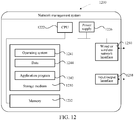
- an embodiment of this disclosure provides a network management system, including a processor and a memory, the memory being configured to store instructions, and the processor being configured to execute the instructions in the memory, so that the network management system performs the method according to any one of the foregoing aspects.
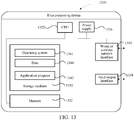
- an embodiment of this disclosure provides a slice processing device, including a processor and a memory, the memory being configured to store instructions, and the processor being configured to execute the instructions in the memory, so that the slice processing device performs the method according to any one of the foregoing aspects.
- an embodiment of this disclosure provides a network slice processing system, including: the network management system according to any one of the foregoing aspects and the slice processing device according to any one of the foregoing aspects.
- an embodiment of this disclosure provides a non-transitory computer-readable storage medium, the computer-readable storage medium storing instructions, the instructions, when running on a computer, causing the computer to perform the method according to the foregoing aspects.
- Embodiments of this disclosure provide a network slice processing method, system, and device, to control slice-level resources, so that a network slice can provide a slice-level service function.
- a network slice processing system 10 provided in the embodiments of this disclosure includes a network management system 11 and a slice processing device 12.
- the network management system 11 may communicate with the slice processing device 12.
- a wired network may be created between the network management system 11 and the slice processing device 12, so that the network management system 11 may transmit data or information to the slice processing device 12.
- a wireless network may be created between the network management system 11 and the slice processing device 12, so that the network management system 11 may transmit data or information to the slice processing device 12.
- the network management system 11 is referred to as NMS for short.
- the network management system 11 is a parameter configuration terminal for network slicing.
- the network management system 11 may set various policies and requirements relevant to the network slice.
- the network management system may include an end-to-end slice management function subsystem 111, an access network management subsystem 112, and a core network management subsystem 113.
- the access network management subsystem 112 may specifically include an access network slice management subsystem.
- the core network management subsystem 113 may specifically include a core network slice management subsystem.
- the slice processing device 12 is a processing terminal for network slicing.
- the slice processing device 12 needs to perform, according to a configuration instruction of the network management system, the various policies and requirements based on the network slice.
- the slice processing device 12 may specifically include at least one of the following devices: an access network device 121 and a core network device 122.
- the end-to-end slice management function subsystem 111 may generate a slice-level quality of service (QoS) parameter.
- the slice-level QoS parameter may include a first QoS parameter and a second QoS parameter. If the first QoS parameter is used for management of the access network device, the end-to-end slice management function subsystem 111 transmits the first QoS parameter to the access network management subsystem 112, for example, to the access network slice management subsystem.
- the access network management subsystem configures the first QoS parameter to the access network device 121.
- the end-to-end slice management function subsystem 111 transmits the second QoS parameter to the core network management subsystem 113, for example, to the core network slice management subsystem.
- the core network management subsystem configures the second QoS parameter to the core network device 122.
- the access network device may include a base station (referred to as gNB for short) in a 5G network, an enhanced base station (referred to as eNB for short) in a 4G network, a centralized unit (CU) or a distributed unit (DU) in a 5G base station, or the like.
- the core network device may include an access and mobility management function (AMF) device, a session management function (SMF) device, or a user plane function (UPF) device.
- AMF access and mobility management function
- SMF session management function
- UPF user plane function
- An embodiment of the network slice processing method in this disclosure may be specifically applicable to a scenario of network slice configuration and execution.
- the method is applicable to a network management system, such as the network management system 11 shown in FIG. 1 , and may include the following steps:
- Step 200 Virtualize functions of a mobile communication network to determine a plurality of isolated logical subnetworks, and use each logical subnetwork as a network slice.
- the network slices refer to a plurality of isolated logical subnetworks virtualized based on the mobile communication network.
- Each end-to-end network slice is formed by sub-slices individually of a wireless network, a transmission network, a core network, and is managed in union by an end-to-end network management system.
- Step 201 The network management system generates a slice-level QoS parameter for each network slice, the slice-level QoS parameter being used by the network management system to instruct a slice processing device to control a first resource corresponding to the network slice.
- the network management system at first generates the slice-level QoS parameter for the network slice.
- the network slice may be a to-be-created network slice, or the network slice refers to an already created network slice.
- the network management system may generate a slice-level QoS parameter for the already created network slice.
- the slice level refers to that a QoS parameter generated by the network management system is set at a network-slice level.
- the slice-level QoS parameter is used by the network management system to instruct the slice processing device to control the first resource corresponding to the network slice.
- the first resource in this embodiment of this disclosure refers to a resource corresponding to the network slice.
- the first resource may include a radio resource and/or a network forwarding resource.
- the radio resource includes but is not limited to a frequency resource and a slot resource.
- the first resource is specifically a radio resource.
- the radio resource may be alternatively referred to as an access network resource.
- the first resource is specifically a network forwarding resource.
- the network management system uses the slice-level QoS parameter to provide a slice-level service function.
- the slice-level QoS parameter is used for the network slice, so that a slice industry more precisely defines requirements, and operators can guarantee a slice-level quality and have a capability of slice-level commercial use.
- the slice-level QoS parameter may include at least one of the following parameters: a slice-level priority parameter, a slice-level total uplink bandwidth, and a slice-level total downlink bandwidth.
- the slice-level priority parameter refers to setting different priorities for different network slices.
- the slice-level total uplink bandwidth refers to a sum of uplink bandwidth at which all users access to the network slice at a geographic location.
- the slice-level total downlink bandwidth refers to a sum of downlink bandwidth at which all users access the network slice at a geographic location.
- the slice-level total uplink bandwidth and the slice-level total downlink bandwidth may be alternatively combined to be referred to as slice-level total uplink and downlink bandwidth.
- the network management system in response to generating the priority parameter, the network management system generates the priority parameter at a slice level, and the same for generating the total uplink and downlink bandwidth.
- the slice-level QoS parameter includes a slice-level priority and the slice-level total uplink and downlink bandwidth.
- the slice-level total uplink and downlink bandwidth may be further divided as a slice-level total uplink bandwidth and a slice-level total downlink bandwidth.
- the slice-level QoS parameter in this embodiment of this disclosure is not limited to the foregoing illustrated slice-level priority and the slice-level total uplink and downlink bandwidth.
- the slice-level QoS parameter may further include other parameters set for a network slice, for example, a slice-level transmission control parameter.
- Step 202 The network management system transmits the slice-level QoS parameter to the slice processing device.
- the network management system may further transmit the slice-level QoS parameter to the slice processing device.
- the network management system may communicate with the slice processing device, so that after the network management system transmits the slice-level QoS parameter to the slice processing device, and the slice processing device receives the slice-level QoS parameter, the slice processing device may further transmit a feedback message to the network management system. Therefore, the network management system may determine, according to the feedback message, whether the slice processing device receives the slice-level QoS parameter successfully.
- the network management system delivers the slice-level QoS parameter to the slice processing device, so that the slice processing device controls the first resource corresponding to the network slice according to the slice-level QoS parameter, thereby implementing slice-level resource scheduling and control of slice-level resources, and enabling the network slice to provide a slice-level service function.
- Step 203 The slice processing device receives the slice-level QoS parameter transmitted by the network management system.
- the network management system may further transmit the slice-level QoS parameter to the slice processing device.
- the network management system may communicate with the slice processing device, so that after the network management system transmits the slice-level QoS parameter to the slice processing device, and the slice processing device receives the slice-level QoS parameter, the slice processing device may further transmit a feedback message to the network management system. Therefore, the network management system may determine, according to the feedback message, whether the slice processing device receives the slice-level QoS parameter successfully.
- Step 204 The slice processing device controls the first resource corresponding to the network slice according to the slice-level QoS parameter.
- the network management system is a parameter configuration terminal for network slicing.
- the network management system may set various policies and requirements relevant to the network slice.
- the slice processing device is a processing terminal for network slicing.
- the slice processing device needs to perform, according to a configuration instruction of the network management system, the various policies and requirements based on the network slice.
- a specific processing procedure of the slice processing device may be described in detail according to a type of the slice processing device and parameter content included in the slice-level QoS parameter. For details, refer to examples and illustrations in subsequent embodiments.
- the network management system delivers the slice-level QoS parameter to the slice processing device, so that the slice processing device controls the first resource corresponding to the network slice according to the slice-level QoS parameter. Therefore, compared with the related art in which the QoS can only be at a session level or a user equipment (UE) level, the slice-level QoS parameter corresponding to the network slice is used for controlling the first resource in this embodiment of this disclosure, thereby implementing slice-level resource scheduling and control of slice-level resources, and enabling the network slice to provide a slice-level service function.
- UE user equipment
- the network management system at first generates the slice-level QoS parameter for the network slice, the slice-level QoS parameter being used by the network management system to instruct the slice processing device to control the first resource corresponding to the network slice. Then the network management system transmits the slice-level QoS parameter to the slice processing device. The slice processing device at first receives the slice-level QoS parameter transmitted by the network management system, and then controls the first resource corresponding to the network slice according to the slice-level QoS parameter.
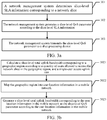
- a network slice processing method performed by a network management system such as the network management system 11 shown in FIG. 1 may specifically include the following steps:
- Step 301 A network management system determines slice-level service-level agreement (SLA) information corresponding to a network slice.
- SLA slice-level service-level agreement
- the network management system at first determines the slice-level SLA information.
- the slice-level SLA information may include various configuration and requirement information required for the network slice.
- the slice-level SLA information may include a plurality of types of configuration parameters of the network slice, which is not limited herein.
- the slice-level SLA information may be transmitted by a slice-triggering server to the network management system.
- the slice-triggering server may be a server on a slice purchaser side or an internal slice-ordering server of an operator.
- the slice-triggering server at first acquires the SLA information formed for the network slice, and then transmits the slice-level SLA information to the network management system.
- Step 302 The network management system generates a slice-level QoS parameter according to the slice-level SLA information.
- the network management system may generate the foregoing slice-level QoS parameter according to the slice-level SLA information, that is, the network management system anatomizes the slice-level SLA information, and analyzes various performance requirements of the network slice, to generate the slice-level QoS parameter.
- the network management system In response to determining the slice-level SLA information, the network management system extracts the following information individually from the slice-level SLA information: a slice-level priority parameter, a quantity of users allowed to access the slice in a geographic region, and a single-user access uplink rate, a single-user access downlink rate, and the like.
- step 302 that the network management system generates the slice-level QoS parameter according to the slice-level SLA information specifically includes the following steps which are shown in FIG. 3b and applicable to a network management system.
- Step 3021 Calculate a slice-level total uplink bandwidth corresponding to the geographic region according to the quantity of users allowed to access the network slice in the geographic region, and the single-user access uplink rate.
- Step 3022 Map the geographic region into user location information in the mobile network.
- the user location information in the mobile network includes information about a tracking area (TA) in which a user is located or information about a cell to which a user accesses.
- TA tracking area
- Step 3023 Generate a slice-level total uplink bandwidth corresponding to the user location information in the mobile network as the slice-level QoS parameter according to the user location information in the mobile network.
- the slice-level total uplink bandwidth corresponding to the geographic region refers to a sum of uplink bandwidth at which all users access the network slice in the geographic region.
- the network management system indirectly determines the slice-level total uplink bandwidth corresponding to the geographic region by multiplying the quantity of users allowed to access the network slice in the geographic region by the single-user access uplink rate.
- the network management system After determining the slice-level total uplink bandwidth corresponding to the geographic region, the network management system generates the slice-level total uplink bandwidth corresponding to the user location information in the mobile network according to the user location information in the mobile network.
- the geographic region refers to a general geographic location information, for example, a specific business region of a district.
- the network management system may map the geographic region into the user location information in the mobile network.
- the user location information in the mobile network includes information about a TA in which a user is located or information about a cell to which a user accesses.
- the network management system maps a first geographic region into first TA information, or first cell information.
- the TA information may include one or more TA identifiers.
- the cell information may include one or more cell identifiers.
- the foregoing step 3023 of generating the slice-level total uplink bandwidth corresponding to the user location information according to the user location information includes the following steps:
- the network management system may determine one or more access network devices according to a correspondence between TA information and an access network device.
- the network management system may determine one or more access network devices according to a correspondence between cell information determined by the mapping and an access network device.
- the network management system may determine one access network device.
- the network management system may determine one or more access network devices.
- the network management system allocates the slice-level total uplink bandwidth corresponding to the geographic region to the plurality of access network devices according to sizes of coverage of the plurality of access network devices. For example, a larger size of coverage of a specific access network device indicates that a higher slice-level total uplink bandwidth is allocated to the access network device by the network management system; and a smaller size of coverage of a specific access network device indicates that a lower slice-level total uplink bandwidth is allocated to the access network device by the network management system.
- a sum of a slice-level total uplink bandwidth allocated to all access network devices equals to the slice-level total uplink bandwidth corresponding to the geographic region.
- the slice processing device is an access network device
- the network management system determining one access network device according to the user location information in the mobile network
- the slice-level total uplink bandwidth corresponding to the user location information in the network equals to the slice-level total uplink bandwidth corresponding to the geographic region.
- the sum of a slice-level total uplink bandwidth allocated to all access network devices equals to the slice-level total uplink bandwidth corresponding to the geographic region.
- step 302 of generating the slice-level QoS parameter according to the slice-level SLA information specifically includes the following steps which are shown in FIG. 3c and applicable to a network management system.
- Step 3024 Calculate a slice-level total downlink bandwidth corresponding to the geographic region according to the quantity of users allowed to access the network slice in the geographic region, and the single-user access downlink rate.
- Step 3025 Map the geographic region into user location information in the mobile network.
- Step 3026 Generate a slice-level total downlink bandwidth corresponding to the user location information as the slice-level QoS parameter according to the user location information.
- the slice-level total downlink bandwidth corresponding to the geographic region refers to a sum of downlink bandwidth at which all users access the network slice in the geographic region.
- the network management system indirectly determines the slice-level total downlink bandwidth corresponding to the geographic region by multiplying the quantity of users allowed to access the network slice in the geographic region by the single-user access downlink rate.
- the network management system After determining the slice-level total downlink bandwidth corresponding to the geographic region, the network management system generates the slice-level total downlink bandwidth corresponding to the user location information in the mobile network according to the user location information in the mobile network.
- the generating a slice-level total downlink bandwidth corresponding to the user location information according to the user location information includes the following steps:
- the network management system may determine one or more core network devices according to a correspondence between TA information and a core network device.
- the network management system may determine one or more core network devices according to a correspondence between cell information determined by the mapping and a core network device.
- the network management system may determine one core network device.
- the network management system may determine one or more core network devices.
- the network management system allocates the slice-level total downlink bandwidth corresponding to the geographic region to the plurality of core network devices according to sizes of ranges served by the plurality of core network devices. For example, a larger range served by a specific core network device indicates a higher slice-level total downlink bandwidth that is allocated to the core network device by the network management system; and a smaller range served by a specific core network device indicates a lower slice-level total downlink bandwidth that is allocated to the core network device by the network management system. A sum of a slice-level total downlink bandwidth allocated to all core network devices equals to the slice-level total downlink bandwidth corresponding to the geographic region.
- the slice-level priority refers to different priorities of different network slices.
- the slice-level QoS parameter in the foregoing embodiments further includes the slice-level priority parameter.
- a network slice corresponding to a slice-level priority is identified by using single network slice selection assistance information (S-NSSAI).
- S-NSSAI single network slice selection assistance information
- a network slice corresponding to the slice-level total uplink bandwidth corresponding to the user location information in the mobile network is identified by using S-NSSAI.
- a network slice corresponding to the slice-level total downlink bandwidth corresponding to the user location information in the mobile network is identified by using S-NSSAI.
- Step 303 The network management system transmits the slice-level QoS parameter to the slice processing device.
- the network management system may further transmit the slice-level QoS parameter to the slice processing device.
- the network management system may communicate with the slice processing device, so that after the network management system transmits the slice-level QoS parameter to the slice processing device, and the slice processing device receives the slice-level QoS parameter, the slice processing device may further transmit a feedback message to the network management system. Therefore, the network management system may determine, according to the feedback message, whether the slice processing device receives the slice-level QoS parameter successfully.
- the network management system delivers the slice-level QoS parameter to the slice processing device, so that the slice processing device controls the first resource corresponding to the network slice according to the slice-level QoS parameter, thereby implementing slice-level resource scheduling and control of slice-level resources, and enabling the network slice to provide a slice-level service function.
- a network slice processing method performed by a network management system such as the network management system 11 shown in FIG. 1 includes the following steps:
- Step 401 The network management system receives a slice creation request transmitted by a slice-triggering server, the slice creation request including a slice-level priority parameter, a slice-level total uplink bandwidth corresponding to a geographic region, and a slice-level total downlink bandwidth corresponding to the geographic region.
- the slice creation request may be transmitted by the slice-triggering server to the network management system.
- the slice-triggering server may be a server on a slice purchaser side or an internal slice-ordering server of an operator.
- the slice-triggering server first acquires the slice creation request formed for the network slice, and then transmits the slice creation request to the network management system.
- the slice creation request carries information such as the slice-level priority parameter, the slice-level total uplink bandwidth in the geographic region, and the slice-level total downlink bandwidth in the geographic region.
- the geographic region refers to a general geographic location information, for example, a specific business region of a district.
- the network management system may map the geographic region into information about an access network device in a mobile network, one or more TAs managed by the access network device, or one or more pieces of cell information managed by the access network device.
- Step 402 The network management system maps the geographic region into user location information in the mobile network.
- the user location information in the mobile network includes information about a TA in which a user is located or information about a cell to which a user accesses.
- Step 403 The network management system generates a slice-level QoS parameter according to the user location information in the mobile network, the slice-level QoS parameter including at least one of the following parameters: the slice-level priority parameter, a slice-level total uplink bandwidth corresponding to the user location information, or the slice-level total downlink bandwidth corresponding to the user location information.
- the network management system After determining the slice-level total uplink bandwidth corresponding to the geographic region, the network management system generates the slice-level total uplink bandwidth corresponding to the user location information in the mobile network according to the user location information in the mobile network. Refer to the foregoing description of step 3023 for a specific generation manner.
- a network slice corresponding to the slice-level total uplink bandwidth corresponding to the user location information in the mobile network is identified by using S-NSSAI.
- S-NSSAI For example, a current slice-level QoS parameter of 100 Mbps/S-NSSAI indicates that total uplink bandwidth corresponding to a network slice identified by using S-NSSAI is 100 Mbps.
- the network management system After determining the slice-level total downlink bandwidth corresponding to the geographic region, the network management system generates the slice-level total downlink bandwidth corresponding to the user location information in the mobile network according to the user location information in the mobile network. Refer to the foregoing description of step 3026 for a specific generation manner.
- a network slice corresponding to the slice-level total downlink bandwidth corresponding to the user location information in the mobile network is identified by using S-NSSAI.
- the network management system after determining the slice-level priority parameter, the slice-level total uplink bandwidth, and the slice-level total downlink bandwidth from the slice creation request, the network management system generates the slice-level QoS parameter according to the foregoing determined parameters.
- Specific parameter content and a message format of the slice-level QoS parameter are not limited herein.
- Step 404 The network management system transmits the slice-level QoS parameter to the slice processing device.
- the network management system may further transmit the slice-level QoS parameter to the slice processing device.
- the network management system may communicate with the slice processing device, so that after the network management system transmits the slice-level QoS parameter to the slice processing device, and the slice processing device receives the slice-level QoS parameter and the slice processing device may further transmit a feedback message to the network management system. Therefore, the network management system may determine, according to the feedback message, whether the slice processing device receives the slice-level QoS parameter successfully.
- the network management system delivers the slice-level QoS parameter to the slice processing device, so that the slice processing device controls the first resource corresponding to the network slice according to the slice-level QoS parameter, thereby implementing slice-level resource scheduling and control of slice-level resources, and enabling the network slice to provide a slice-level service function.
- the foregoing step 303 or step 404 that the network management system transmits the slice-level QoS parameter to the slice processing device includes the following steps:
- the network management system may deliver the slice-level priority and a slice-level total uplink bandwidth corresponding to the user location information to the access network device, so that the access network device may control resources according to the slice-level priority and the slice-level total uplink bandwidth corresponding to the user location information in the mobile network.
- the network management system may further deliver the slice-level priority and the slice-level total downlink bandwidth corresponding to the user location information to the core network device, so that the core network device may control resources according to the slice-level priority and the slice-level total downlink bandwidth corresponding to the user location information in the mobile network.
- slice-level QoS parameter transmitted by the network management system may be different.
- the transmitted slice-level QoS parameter is determined according to a specific application scenario.
- the foregoing step 303 or step 404 that the network management system transmits the slice-level QoS parameter to the slice processing device includes the following steps:
- the slice processing device set may include an existing slice processing device supporting the network slice and a newly-created slice processing device supporting the network slice.
- the slice processing device set may include a newly-created slice processing device and may further include an existing slice processing device. Which one of the slice processing devices is determined as the foregoing first slice processing device is specifically determined according to a scenario.
- the first slice processing device may be a core network device supporting S-NSSAI.
- the slice-level QoS parameter generated by the network management system carries a geographic location.
- the first slice processing device is determined in a mobile network according to the geographic location.
- An example in which the slice processing device is an access network device is used.
- the network management system selects a first access network device from an access network device set according to the user location information in the mobile network carried in the slice-level QoS parameter.
- the access network device set includes an existing access network device supporting the network slice and a newly-created access network device supporting the network slice.
- the slice processing device is a core network device.
- the network management system selects a first core network device from a core network device set according to the user location information in the mobile network carried in the slice-level QoS parameter.
- the core network device set includes an existing core network device supporting the network slice and a newly-created core network device supporting the network slice.
- the slice processing device may specifically include an access network device and a core network device.
- a network slice processing method performed by an access network device such as the access network device 121 shown in FIG. 1 is described in detail at first and may specifically include the following steps: Step 501: The access network device receives a slice-level QoS parameter transmitted by a network management system.
- the network management system may further transmit the slice-level QoS parameter to the access network device.
- the network management system may communicate with the access network device, so that after the network management system transmits the slice-level QoS parameter to the access network device, and the access network device receives the slice-level QoS parameter, the access network device may further transmit a feedback message to the network management system. Therefore, the network management system can determine, according to the feedback message, whether the access network device receives the slice-level QoS parameter successfully.
- Step 502 The access network device determines a slice-level priority parameter and a slice-level total uplink bandwidth corresponding to user location information in a mobile network from the slice-level QoS parameter.
- the network management system may deliver a slice-level priority and the slice-level total uplink bandwidth to the access network device.
- the access network device determines the slice-level priority and the slice-level total uplink bandwidth from the slice-level QoS parameter.
- Step 503 The access network device controls a radio resource according to the slice-level priority parameter and/or the slice-level total uplink bandwidth corresponding to the user location information in the mobile network.
- the access network device may control the resources according to the slice-level priority and the slice-level total uplink bandwidth, or the access network device may control the resources according to the slice-level priority, or the access network device may control the resources according to the slice-level total uplink bandwidth.
- a processing manner for resource control by the access network device may be determined according to an application scenario.
- step 503 that the access network device controls a radio resource according to the slice-level priority parameter and/or the slice-level total uplink bandwidth corresponding to the user location information in the mobile network includes at least one of the following steps:
- the access network device may allocate a maximum access network resource corresponding to the slice according to the slice-level total uplink bandwidth.
- the access network resources of all slices served by the access network device may be greater than or equal to a maximum distributable resource of the access network, that is, some access network resources may be multiplexed by a plurality of slices.
- a multiplexing ratio is determined by the slice-level SLA information and an operation policy of an operator.
- the access network device limits the uplink traffic of all users who get access from the access network device to no greater than the slice-level total uplink bandwidth corresponding to the user location information in the mobile network.
- part or all of radio resources with a low slice priority may be released.
- the released radio resources may be allocated to a network slice with a high slice priority for use.
- a release ratio may be agreed in the slice-level SLA information.
- the access network device may fixedly segment the radio resource into different portions, each portion being an independent radio sub-resource.
- the radio sub-resource is a minimum schedulable resource block segmented according to frequency and time.
- Each portion of the radio sub-resource is allocated to a network slice for use.
- the different portions of radio sub-resources may or may not overlap in different network slices, or a part of radio sub-resources other than non-overlapped radio sub-resources may be specially reserved for a common share by different slices. Therefore, the access network device may control radio resources by using a network slice as granularity, and implement slice-level resource scheduling, so that a network slice can provide a slice-level service function.
- the slice processing device may specifically include an access network device and a core network device.
- a network slice processing method performed by a core network device such as the core network device 122 shown in FIG. 1 is described in detail and may specifically include the following steps: Step 601: The core network device receives a slice-level QoS parameter transmitted by a network management system.
- the network management system may further transmit the slice-level QoS parameter to the core network device.
- the network management system may communicate with the core network device, so that after the network management system transmits the slice-level QoS parameter to the core network device, and the core network device receives the slice-level QoS parameter, the core network device may further transmit a feedback message to the network management system. Therefore, the network management system may determine, according to the feedback message, whether the core network device receives the slice-level QoS parameter successfully.
- Step 602 The core network device determines a slice-level priority parameter and a slice-level total downlink bandwidth corresponding to user location information in a mobile network from the slice-level QoS parameter.
- the network management system may deliver a slice-level priority and a slice-level total downlink bandwidth to the core network device.
- the core network device determines the slice-level priority and the slice-level total downlink bandwidth from the slice-level QoS parameter.
- Step 603 The core network device controls a network forwarding resource according to the slice-level priority parameter and/or the slice-level total downlink bandwidth corresponding to the user location information in the mobile network.
- the core network device may control the resources according to the slice-level priority and the slice-level total downlink bandwidth, or the core network device may control the resources according to the slice-level priority, or the core network device may control the resources according to the slice-level total downlink bandwidth.
- a processing manner for resource control by the core network device may be determined according to an application scenario.
- step 603 that the core network device controls a network forwarding resource according to the slice-level priority parameter and/or the slice-level total downlink bandwidth corresponding to the user location information in the mobile network includes at least one of the following steps:
- the core network device may limit total downlink bandwidth of a slice user in a region specified by the slice-level total downlink bandwidth.
- the core network device may also preferentially forward, according to configuration, downlink data of a user using a slice with a high priority. Therefore, the core network device may control resources by using a network slice as granularity, and implement slice-level resource scheduling, so that a network slice can provide a slice-level service function.
- the core network device in response to the core network device including an AMF device, an SMF device, and a UPF device, that the core network device controls the network forwarding resource according to the slice-level priority parameter and/or the slice-level total downlink bandwidth corresponding to the user location information in the mobile network includes the following steps:
- the AMF device may receive a session establishment request transmitted by the UE.
- the session establishment request may carry the location information of the UE.
- the location information of the UE may be a TA or a cell of the UE in the mobile network.
- the session establishment request may further carry slice selection assistance information.
- the AMF device may select the same SMF device according to the location information of the UE and radio access network (RAN) node information of a requester, that is, selects the same SMF device for users accessing through the user location information corresponding to the slice-level total downlink bandwidth in the mobile network.
- RAN radio access network
- the SMF device After receiving the session management request transmitted by the AMF device, the SMF device selects the same UPF device according to the location information of the UE and the RAN node information of the requester, that is, selects the same UPF device for users accessing through the user location information in the mobile network specified by the slice-level total downlink bandwidth.
- the session management request in this embodiment of this disclosure includes the location information of the UE, and the slice-level total downlink bandwidth in the slice-level QoS parameter corresponds to the user location information in the mobile network. Therefore, through matching of user location information in the mobile network, the same UPF device may be selected for the UE. Thus, the UPF device may perform requirements of the slice-level QoS parameter to perform slice-level management on user data.
- the network management system may transmit the slice-level priority and the slice-level total uplink and downlink bandwidth to the slice processing device.
- This embodiment of this disclosure provides a method for distributing a slice-level QoS parameter during slice creation and a method for scheduling and ensuring the slice-level QoS parameter during slice running.
- a slice industry more precisely defines requirements, and operators can guarantee a slice-level quality and have a capability of slice-level commercial use.
- the access network device, core network device, and network management system involved in this embodiment of this disclosure belong to a mobile network system supporting the features of the network slice.
- the access network device provided in this embodiment of this disclosure includes but is not limited to a 5G access network device.
- the core network device provided in this embodiment of this disclosure includes but is not limited to a 5G core network device.
- the network management system provided in this embodiment of this disclosure includes but is not limited to a 5G network management system.
- the slice-level QoS parameter provided in this embodiment of this disclosure may include: a slice-level priority and slice-level total uplink and downlink bandwidth (or rate). Next, the slice-level QoS parameter is described in detail.
- Priorities of different network slices are defined by using the slice-level priority parameter.
- a mobile network may preferentially schedule resources to a network slice with a high priority for use according to the level of a priority.
- the slice-level total uplink bandwidth refers to total uplink bandwidth (or rate) at which a network slice may serve in a range of a specific geographic region, that is, maximum uplink bandwidth.
- the geographic region may be at a level of a specific access network device, one or more cells of a specific access network device, one or more TAs of a specific access network device.
- the slice-level total downlink bandwidth refers to total downlink bandwidth (or rate) at which a network slice may serve in a range of a specific geographic region, that is, maximum downlink bandwidth.
- the geographic region may be a size of a range served by a specific core network device.
- the embodiments of this disclosure provide a method for distributing a slice-level QoS parameter during slice creation.
- the method for distributing a slice-level QoS parameter during slice creation may be based on a network management system 70 shown in FIG. 7 .
- the network management system 70 may include an end-to-end slice management module 71, an access network slice management module 72, an access network device management module 73, a core network slice management module 74, and a core network device management module 75.
- the end-to-end slice management module 71 is connected to the access network slice management module 72 and the core network slice management module 74 separately.
- the access network slice management module 72 is connected to the access network device management module 73.
- the core network slice management module 74 is connected to the core network device management module 75.
- the network management system 70 can determine slice-level SLA information of an industry client, and convert the slice-level SLA information into a slice-level QoS parameter.
- the slice-level SLA information may alternatively directly include the slice-level QoS parameter.
- the slice-level SLA information defines that uplink bandwidth of a slice in a specific region is 1 gigabit per second (Gbps). Uplink bandwidth at which the parameter is converted into slices in one or more TAs is 1 Gbps.
- the network management system 70 delivers or configures the slice-level QoS parameter to an access network device or a core network device separately, and the slice-level QoS parameter is delivered to the access network device by the access network device management module 73 and is delivered to the core network device by the core network device management module 75.
- the access network device includes a 5G base station (referred to as gNB for short), a 4G enhanced base station (referred to as eNB for short), a CU of a 5G base station, a DU of a 5G base station, or the like.
- the core network device includes a UPF, a PCF, an AMF, or the like.
- the slice-level priority parameter is received by the end-to-end slice management module 71 and delivered by the end-to-end slice management module 71 to the access network slice management module 72, then delivered to the access network device management module 73, and then delivered to the access network device.
- the slice-level priority parameter is delivered by the end-to-end slice management module 71 to the core network slice management module 74, then delivered to the core network device management module 75, and then delivered to the core network device, including a UPF device and the like.
- the end-to-end slice management module 71 receives the slice-level total uplink bandwidth or receives the slice-level SLA information which is converted into the slice-level QoS parameter.
- the slice-level total uplink bandwidth is one type of the slice-level QoS parameter.
- the slice-level total uplink bandwidth is delivered by the end-to-end slice management module 71 to the access network slice management module 72, then delivered to the access network device management module 73, and then delivered to the access network device.
- the end-to-end slice management module 71 receives the slice-level total downlink bandwidth or converts the received slice-level SLA information into the slice-level QoS parameter.
- the slice-level total downlink bandwidth is delivered by the end-to-end slice management module 71 to the core network slice management module 74, then delivered to the core network device management module 75, and then delivered to the core network device, including a UPF, and the like.
- the embodiments of this disclosure further provide a quality assurance method for a slice-level QoS parameter during slice running.
- the method specifically includes a quality assurance mechanism at an access network side and a quality assurance mechanism at a core network side, and may specifically include the following solutions:
- the access network device may perform slice-level access network resource scheduling based on such parameters, including the following process:
- the access network device may allocate a maximum access network resource corresponding to the slice according to the slice-level total uplink bandwidth.
- the access network resources of all slices served by the access network device may be greater than or equal to a maximum distributable resource of the access network, that is, some access network resources may be multiplexed by a plurality of slices.
- a multiplexing ratio is determined by the slice-level SLA information and an operation policy of an operator.
- a client of the slice industry needs to be informed of the maximum uplink bandwidth in response to buying a network slice from an operator.
- the access network device limits the uplink traffic of all users who get access from the access network device to no greater than the slice-level total uplink bandwidth corresponding to the user location information in the mobile network.
- part or all of slice resources with a low slice-level priority parameter may be released for allocation to a slice with a high slice-level priority parameter for use.
- a release ratio may be carried in the slice-level SLA information.
- the core network device may control downlink traffic of a slice based on such parameters, including the following process:
- the UPF device (such as a 5G UPF) may limit total downlink bandwidth of a slice user in a region specified by the slice-level total downlink bandwidth.
- the UPF device may also preferentially forward downlink data of a user using a slice with a high priority.
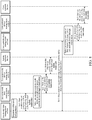
- FIG. 8 is a schematic interaction flowchart in the system architecture shown in FIG. 7 according to an embodiment of this disclosure. The interaction process is described in detail in the following according to the foregoing description of the mechanism. A process of distributing a slice-level QoS parameter during slice creation is described in FIG. 8 .
- a pre-processing is performed on the network management system as follows.
- the end-to-end slice management module receives a slice creation request.
- the slice creation request may be alternatively referred to as a request for an operation of slice instance distribution.
- the slice creation request carries slice-level SLA information or a slice-level QoS parameter.
- the request In response to the request carrying slice-level SLA information, the request carries one or more pieces of the following information: a slice-level priority parameter, a slice-level total uplink bandwidth in a specific geographic region or a quantity of users allowed to access a slice in a specific geographic region and a single-user access uplink rate, and a slice-level total downlink bandwidth in a specific geographic region or a quantity of users allowed to access a slice in a specific geographic region and a single-user access downlink rate.
- the request In response to the request carrying the slice-level QoS parameter, the request carries a slice-level priority parameter, a slice-level total uplink bandwidth in a specific geographic region, a slice-level total downlink bandwidth in a specific geographic region, and the like.
- the foregoing geographic region in the request refers to a general geographic location information, for example, a specific business region of a district.
- the end-to-end slice management module receives the slice-level priority parameter according to the foregoing information, maps the geographic region into user location information in the mobile network, maps the user location information in the mobile network into access network device information, information about one or more TAs managed by the access network device, or information about one or more cells managed by the access network device, and directly determines the slice-level total uplink bandwidth and the slice-level total downlink bandwidth that correspond to the geographic region, or indirectly determines, by multiplying a quantity of users accessing in a specific region by single-user uplink and downlink rates, the slice-level priority parameter and a slice-level total uplink bandwidth and a slice-level total downlink bandwidth that correspond to the user location information in the mobile network.
- Step la-1 The end-to-end slice management module transmits information such as the slice-level priority parameter and the slice-level total uplink bandwidth to the access network slice management module by carrying such information in the slice creation request (or slice distribution request).
- Step la-2 The access network slice management module selects an existing access network device to support a newly-created slice.
- the slice may be identified by using S-NSSAI.
- the S-NSSAI may be generated in the end-to-end slice management module, or an access network device is newly created through a virtualization technology, for example, an access network device is newly created by calling the capacity of management and orchestration (MANO).
- MANO management and orchestration
- the access network slice management module transmits the slice-level priority parameter and the slice-level total uplink bandwidth to the access network device management module by transmitting a slice provision request to the access network device management module.
- Step 1a-3 The access network device management module delivers the slice-level priority parameter and the slice-level total uplink bandwidth to an access network device supporting the S-NSSAI.
- Step 1b-1 The end-to-end slice management module transmits information such as the slice-level priority parameter and the slice-level total downlink bandwidth to the core network slice management module by carrying such information in the slice creation (or distribution) request.
- Step 1b-2 The core network slice management module selects an existing core network slice instance to support a newly-created slice.
- the slice may be identified by using S-NSSAI.
- the S-NSSAI may be generated in the end-to-end slice management module, or a core network device is newly created through the virtualization technology, for example, the core network device is newly created through the capacity of MANO.
- the core network slice management module transmits the slice-level priority parameter and the slice-level total downlink bandwidth to the core network device management module by transmitting a slice provision request to the core network device management module.
- Step 1b-3 The core network device management module delivers the slice-level priority parameter and the slice-level total downlink bandwidth to a core network device supporting newly-created S-NSSAI, the core network device being a device such as an AMF, an SMF, a UPF in the slice.
- Step 1b-1 and step 1a-1 in the foregoing processes may be performed simultaneously by the end-to-end slice management module, or step 1b-1 may be performed after step la-3 is completed, or step 1a-1 may be performed after step 1b-3 is completed.
- the access network slice management module may transmit a response message to the end-to-end slice management module in response to the request in step 1a-1 after step la-2 and step la-3 are completed.
- the request in step 1b-1 may be responded to immediately upon reception, or may be responded to after step 1b-2 and step 1b-3 are completed.
- FIG. 9 is a schematic diagram of a session establishment process according to an embodiment of this disclosure, mainly including the following process: 1. UE transmits a session establishment request to an AMF device, the session establishment request including slice selection assistance information and location information of the UE.
- the UE initiates the session establishment request, the session establishment request carrying S-NSSAI and the location information of the UE.
- the location information of the UE may be a cell identifier or a TA identifier.
- the AMF device creates a session context request, and transmits the session context request to the SMF device.
- the session context request includes the slice selection assistance information and the location information of the UE.
- the AMF device After receiving the request, the AMF device selects the same SMF device according to the location information of the UE and RAN node information of a requester, that is, selects the same SMF device for users accessing through the user location information in the mobile network.
- the SMF device selects the same UPF device for users in the same region based on a geographic region corresponding to a slice-level QoS parameter.
- the SMF device After receiving the request, in addition to communicating with a policy management function device or a user data management function device, the SMF device selects the same UPF device according to the foregoing location information of the UE and the RAN node information of the requester, that is, selects the same UPF device for users accessing through the user location information in the mobile network specified by the slice-level total downlink bandwidth.
- the access network device after receiving the slice-level priority parameter and the slice-level total uplink bandwidth, performs joint scheduling according to the slice-level QoS parameter in combination with QoS parameters of users who get access currently or a stream-level QoS parameter, specifically including but not limited to the following steps:
- the access network device may fixedly segment a radio resource (including but not limited to a frequency resource and a slot resource) into different portions. Each portion is allocated to a slice for use.
- the different portions of radio sub-resources may or may not overlap in different slices, or a part of radio resources other than non-overlapped radio resources may be specially reserved for a common share by different slices.
- the access network device may not fixedly allocate some radio resources (including but not limited to frequency resources and slot resources) to a specific slice for use, but dynamically schedules radio resources to the specific slice for use.
- the access network device may preferentially schedule data of a slice with a high priority according to the slice-level priority parameter.
- the radio resource may preferentially guarantee the data of the slice with a high priority, or the access network device may schedule part of resources of a slice with a low priority to a slice with a high priority for use according to configuration.
- the access network device limits, based on the slice-level total uplink bandwidth, a total uplink rate of users accessing in a region of a network position corresponding to the parameter to no greater than a slice-level total uplink bandwidth corresponding to the user location information in the mobile network.
- That the radio resources are allocated to a specific slice for use herein means that radio data corresponding to the radio resources carries and transmits stream data of a slice user.
- the UPF device processes a data package according to the slice-level priority parameter and the slice-level total downlink bandwidth, specifically including the following process.
- the UPF device may limit total downlink bandwidth of a slice user in a region specified by the slice-level total downlink bandwidth.
- the UPF device may also preferentially forward downlink data of a user using a slice with a high priority according to configuration.
- the network slice technology is an essential technology for serving industry clients in a 5G era. Requirements for a mobile network by current industry clients are relatively broad. In addition to consideration of the dynamism and complexity of the resource, a more specific slice-level network requirement parameter needs to be defined.
- the embodiments of this disclosure define a slice-level QoS parameter and provide a distribution method and a quality assurance method, thereby facilitating better network resource scheduling by a mobile network, meeting requirements of an industry client, and promoting commercialization application of the network slice technology.
- a maximum geographic range of the slice-level total uplink and downlink bandwidth provided by the technical solutions is a size of coverage of a single access network device.
- a new solution is needed.
- the new scenario may be resolved by decomposing into scenarios in which a range is covered by a single access network device.
- a network management system 1000 provided in an embodiment of this disclosure may include: a slice generation module 1001, a parameter generation module 1002, and a transmission module 1003.
- the slice generation module 1001 is configured to virtualize functions of a mobile communication network to determine a plurality of isolated logical subnetworks, and use each logical subnetwork as a network slice.
- the parameter generation module 1002 is configured to generate a slice-level QoS parameter for each network slice, the slice-level QoS parameter being used by the network management system to instruct a slice processing device to control a first resource corresponding to the network slice.
- the transmission module 1003 is configured to transmit the slice-level QoS parameter to the slice processing device.
- the parameter generation module 1002 is specifically configured to determine slice-level SLA information corresponding to the network slice, and generate the slice-level QoS parameter according to the slice-level SLA information.
- the parameter generation module 1002 in response to the slice-level SLA information including a quantity of users allowed to access the network slice in a geographic region, and a single-user access uplink rate, is specifically configured to calculate a slice-level total uplink bandwidth corresponding to the geographic region according to the quantity of users allowed to access the network slice in the geographic region, and the single-user access uplink rate; map the geographic region into user location information in the mobile network; and generate a slice-level total uplink bandwidth corresponding to the user location information as the slice-level QoS parameter according to the user location information.
- the parameter generation module 1002 is specifically configured to determine a plurality of access network devices according to a correspondence between the user location information and the access network devices; and allocate the slice-level total uplink bandwidth corresponding to the geographic region to the plurality of access network devices according to a size of coverage of each access network device, to determine a slice-level total uplink bandwidth corresponding to the each access network device.
- the parameter generation module 1002 in response to the slice-level SLA information including a quantity of users allowed to access the network slice in a geographic region, and a single-user access downlink rate, is specifically configured to calculate a slice-level total downlink bandwidth corresponding to the geographic region according to the quantity of users allowed to access the network slice in the geographic region, and the single-user access downlink rate; map the geographic region into user location information in the mobile network; and generate a slice-level total downlink bandwidth corresponding to the user location information as the slice-level QoS parameter according to the user location information.
- the parameter generation module 1002 is specifically configured to determine a plurality of core network devices according to a correspondence between the user location information and the core network devices; and allocate the slice-level total downlink bandwidth corresponding to the geographic region to the plurality of core network devices according to a size of a range served by each core network device, to determine a slice-level total downlink bandwidth corresponding to the each core network device.
- the parameter generation module 1002 is specifically configured to receive a slice creation request transmitted by a slice-triggering server, the slice creation request including a slice-level priority parameter, a slice-level total uplink bandwidth corresponding to a geographic region, and a slice-level total downlink bandwidth corresponding to the geographic region; map the geographic region into user location information in the mobile network; and generate the slice-level QoS parameter according to the user location information in the mobile network, the slice-level QoS parameter including at least one of the following parameters: the slice-level priority parameter, a slice-level total uplink bandwidth corresponding to the user location information, or the slice-level total downlink bandwidth corresponding to the user location information.
- the user location information in the mobile network includes information about a TA in which a user is located or information about a cell to which a user accesses.
- the transmission module 1003 is specifically configured to transmit, in response to the slice processing device being an access network device and the first resource is a radio resource, the slice-level total uplink bandwidth corresponding to the user location information to the access network device.
- the transmission module 1003 is specifically configured to transmit, in response to the slice processing device being a core network device and the first resource is a network forwarding resource, the slice-level total downlink bandwidth corresponding to the user location information to the core network device.
- the transmission module 1003 is specifically configured to select a first slice processing device from a preset slice processing device set according to user location information in the mobile network carried in the slice-level QoS parameter; and transmit the slice-level QoS parameter to the selected first slice processing device.
- the slice processing device set includes an existing slice processing device supporting the network slice and a newly-created slice processing device supporting the network slice.
- a slice processing device 1100 may include: a receiving module 1101 and a control processing module 1102.
- the receiving module 1101 is configured to receive a slice-level QoS parameter transmitted by a network management system.
- the network management system virtualizes functions of a mobile communication network to determine a plurality of isolated logical subnetworks, uses each logical subnetwork as a network slice, and generates the slice-level QoS parameter for the each network slice.
- the control processing module 1102 is configured to control a first resource corresponding to the network slice according to the slice-level QoS parameter.
- the control processing module 1102 in response to the slice processing device being an access network device, and the first resource is a radio resource, the control processing module 1102 is specifically used by the access network device to determine, from the slice-level QoS parameter, a slice-level priority parameter and a slice-level total uplink bandwidth corresponding to user location information in the mobile network; and the access network device controls the radio resource according to the slice-level priority parameter and/or the slice-level total uplink bandwidth corresponding to the user location information.
- control processing module 1102 is specifically used by the access network device to allocate a maximum radio resource corresponding to the network slice according to the slice-level total uplink bandwidth corresponding to the user location information.
- control processing module 1102 is specifically used by the access network device to limit uplink traffic of all users served by the access network device to no greater than the slice-level total uplink bandwidth corresponding to the user location information.
- control processing module 1102 is specifically used by the access network device to schedule a radio resource corresponding to a network slice with a low priority to a network slice with a high priority according to the slice-level priority parameter.
- the control processing module 1102 in response to the slice processing device being a core network device, and the first resource is a network forwarding resource, is specifically used by the core network device to determine, from the slice-level QoS parameter, a slice-level priority parameter and a slice-level total downlink bandwidth corresponding to user location information in the mobile network; and the core network device controls the network forwarding resource according to the slice-level priority parameter and/or the slice-level total downlink bandwidth corresponding to the user location information.
- control processing module 1102 is specifically configured to limit downlink traffic of all users served by the core network device to no greater than the slice-level total downlink bandwidth corresponding to the user location information.
- control processing module 1102 is specifically configured to preferentially forward, in response to the core network device being shared by a plurality of network slices with different priorities downlink data corresponding to the network slice with a high priority according to the slice-level priority parameter by using the network forwarding resource.
- the control processing module 1102 in response to the core network device including an AMF device, an SMF device, and a UPF device, is specifically configured to receive a session management request transmitted by UE, the session management request including location information of the UE; and select the same SMF device based on the location information of the UE which is the same as the user location information in the mobile network, and the SMF device selects the same UPF device based on the location information of the UE which is the same as the user location information in the mobile network.
- the network management system at first generates the slice-level QoS parameter for the network slice, the slice-level QoS parameter being used by the network management system to instruct the slice processing device to control the first resource corresponding to the network slice. Then the network management system transmits the slice-level QoS parameter to the slice processing device. The slice processing device at first receives the slice-level QoS parameter transmitted by the network management system, and then controls the first resource corresponding to the network slice according to the slice-level QoS parameter. In this embodiment of this disclosure, taking the dynamism and complexity of the resource into consideration, a more specific slice-level QoS parameter is defined.
- the network management system delivers the slice-level QoS parameter to the slice processing device, so that the slice processing device controls the first resource corresponding to the network slice according to the slice-level QoS parameter, thereby implementing slice-level resource scheduling and control of slice-level resources, and enabling the network slice to provide a slice-level service function.
- FIG. 12 is a schematic structural diagram of a network management system according to an embodiment of this disclosure.
- a network management system 1200 may vary greatly due to different configurations or performance, and may include one or more central processing units (CPU) 1222 (for example, one or more processors) and a memory 1232, and one or more storage media 1230 (for example, one or more mass storage devices) that store an application program 1242 or data 1244.
- the memory 1232 and the storage medium 1230 may implement non-transitory storage medium and transient storage or permanent storage.
- the program stored in the storage medium 1230 may include one or more modules (not shown in the figure), and each module may include a series of instructions and operations for the network management system.
- the CPU 1222 may be configured to communicate with the storage medium 1230 to perform the series of instruction operations in the storage medium 1230 in the network management system 1200.
- the network management system 1200 may further include one or more power supplies 1226, one or more wired or wireless network interfaces 1250, one or more input/output interfaces 1258, and/or one or more operating systems 1241, for example, Windows Server TM , Mac OS X TM , Unix TM , Linux TM , or FreeBSD TM .
- Steps of the method performed by the network management system in the foregoing embodiments may be based on the structure of the network management system shown in FIG. 12 .
- FIG. 13 is a schematic structural diagram of a slice processing device according to an embodiment of this disclosure.
- a slice processing device 1300 may vary greatly due to different configurations or performance, and may include one or more CPUs 1322 (for example, one or more processors), a memory 1332, and one or more storage media 1330 (for example, one or more mass storage devices) that store an application program 1342 or data 1344.
- the memory 1332 and the storage medium 1330 may implement non-transitory storage medium and transient storage or permanent storage.
- the program stored in the storage mediums 1330 may include one or more modules (not shown in the figure), and each module may include a series of instruction operations in a slice processing device.
- the CPU 1322 may be configured to communicate with the storage medium 1330 to perform the series of instruction operations in the storage medium 1330 on the slice processing device 1300.
- the slice processing device 1300 may further include one or more power supplies 1326, one or more wired or wireless network interfaces 1350, one or more input/output interfaces 1358, and/or one or more operating systems 1341, for example, Windows Server TM , Mac OS X TM , Unix TM , Linux TM , or FreeBSD TM .
- Steps of the method performed by the slice processing device in the foregoing embodiments may be based on the structure of the slice processing device shown in FIG. 13 .
- the described apparatus embodiment is merely exemplary.
- the units described as separate parts may or may not be physically separate, and parts displayed as units may or may not be physical units, may be located in one position, or may be distributed on multiple network units.
- Some or all of the modules may be selected according to actual needs to achieve the objectives of the solutions of the embodiments.
- connection relationships between modules indicate that the modules have communication connections with each other, which may be specifically implemented as one or more communication buses or signal cables. A person of ordinary skill in the art may understand and implement the embodiments without creative efforts.
- this disclosure may be implemented by software in addition to necessary universal hardware, or by dedicated hardware, including a dedicated integrated circuit, a dedicated CPU, a dedicated memory, a dedicated component, and the like.
- any functions that can be performed by a computer program can be easily implemented by using corresponding hardware.
- a specific hardware structure used to achieve the same function may be of various forms, for example, in a form of an analog circuit, a digital circuit, or a dedicated circuit.
- software program implementation is a better implementation in most cases. Based on such an understanding, the technical solutions of this disclosure essentially, or the part contributing to the related art may be implemented in the form of a software product.
- the computer software product is stored in a readable storage medium, such as a floppy disk, a USB flash drive, a removable hard disk, a read-only memory (ROM), a random access memory (RAM), a magnetic disk, or an optical disc of a computer, and includes several instructions for instructing a computer device (which may be a personal computer, a server, a network device, or the like) to perform the methods described in the embodiments of this disclosure.
- a computer device which may be a personal computer, a server, a network device, or the like
Landscapes
- Engineering & Computer Science (AREA)
- Computer Networks & Wireless Communication (AREA)
- Signal Processing (AREA)
- Mobile Radio Communication Systems (AREA)
- Data Exchanges In Wide-Area Networks (AREA)
Abstract
Description
- This disclosure claims priority to
Chinese Patent Application No. 201910152800.8, entitled "NETWORK SLICE PROCESSING METHOD, DEVICE, AND SYSTEM" and filed with the China National Intellectual Property Administration on February 28, 2019 - This disclosure relates to the field of computer technologies, and in particular, to a network slice processing method, system, and device and a storage medium.
- The network slice technology is an essential basic technology in a network of a fifth-generation (5G) mobile communication technology. Network slicing can provide isolated, function-customized and performance-customized, quality-reliable, end-to-end logical private network service to industry clients.
- Currently, the quality of a slice in a 5G network can be guaranteed and is achieved mainly through a quality of service (QoS) mechanism. However, the existing QoS mechanism is only for a user equipment (UE) level, or for a data flow level, or for a session level.
- Due to limited resources of a wireless air interface, it is difficult for operators to meet requirements of the industry clients for slices. It is difficult for the industry clients to order and use slice services provided by the operators. Consequently, the slices cannot provide service functions to the industry clients.
- Embodiments of this disclosure provide a network slice processing method, system, and device, and a storage medium, to control slice-level resources, so that a network slice can provide a slice-level service function.
- The embodiments of this disclosure provide the following solutions:
- According to one aspect, an embodiment of this disclosure provides a network slice processing method, applicable to a network management system and including:
- virtualizing functions of a mobile communication network to determine a plurality of isolated logical subnetworks, and using each logical subnetwork as a network slice;
- generating a slice-level quality of service (QoS) parameter for each network slice, the slice-level QoS parameter being used by the network management system to instruct a slice processing device to control a first resource corresponding to the network slice; and
- transmitting the slice-level QoS parameter to the slice processing device.
- According to another aspect, an embodiment of this disclosure further provides a network slice processing method, applied to a slice processing device and including:
- receiving a slice-level QoS parameter transmitted by a network management system, the network management system virtualizing functions of a mobile communication network to determine a plurality of isolated logical subnetworks, using each logical subnetwork as a network slice, and generating the slice-level QoS parameter for each network slice; and
- controlling a first resource corresponding to the network slice according to the slice-level QoS parameter.
- According to another aspect, an embodiment of this disclosure provides a network management system, including a processor and a memory, the memory being configured to store instructions, and the processor being configured to execute the instructions in the memory, so that the network management system performs the method according to any one of the foregoing aspects.
- According to another aspect, an embodiment of this disclosure provides a slice processing device, including a processor and a memory, the memory being configured to store instructions, and the processor being configured to execute the instructions in the memory, so that the slice processing device performs the method according to any one of the foregoing aspects.
- According to another aspect, an embodiment of this disclosure provides a network slice processing system, including:
the network management system according to any one of the foregoing aspects and the slice processing device according to any one of the foregoing aspects. - According to another aspect, an embodiment of this disclosure provides a non-transitory computer-readable storage medium, the computer-readable storage medium storing instructions, the instructions, when running on a computer, causing the computer to perform the method according to the foregoing aspects.
- To describe the technical solutions in the embodiments of this disclosure more clearly, the following briefly introduces the accompanying drawings required for describing the embodiments. Apparently, the accompanying drawings in the following description show merely some embodiments of this disclosure, and a person skilled in the art may still derive other drawings from these accompanying drawings.
-
FIG. 1 is a schematic diagram of a composition structure of a network slice processing system according to an embodiment of this disclosure. -
FIG. 2 is a schematic flowchart of interaction between a network management system and a slice processing device according to an embodiment of this disclosure. -
FIG. 3a is a schematic block flowchart of a network slice processing method performed by a network management system according to an embodiment of this disclosure. -
FIG. 3b is a schematic block flowchart of generation of a slice-level QoS parameter performed by a network management system according to an embodiment of this disclosure. -
FIG. 3c is a schematic block flowchart of generation of another slice-level QoS parameter performed by a network management system according to an embodiment of this disclosure. -
FIG. 4 is a schematic block flowchart of another network slice processing method performed by a network management system according to an embodiment of this disclosure. -
FIG. 5 is a schematic block flowchart of a network slice processing method performed by an access network device according to an embodiment of this disclosure. -
FIG. 6 is a schematic block flowchart of another network slice processing method performed by a core network device according to an embodiment of this disclosure. -
FIG. 7 is a schematic architectural diagram of a network management system in an actual scenario according to an embodiment of this disclosure. -
FIG. 8 is a schematic interaction flowchart in the system architecture shown inFIG. 7 according to an embodiment of this disclosure. -
FIG. 9 is a schematic diagram of a session establishment process according to an embodiment of this disclosure. -
FIG. 10 is a schematic structural diagram of modules of a network management system according to an embodiment of this disclosure. -
FIG. 11 is a schematic structural diagram of modules of a slice processing device according to an embodiment of this disclosure. -
FIG. 12 is a schematic structural diagram of modules of another network management system according to an embodiment of this disclosure. -
FIG. 13 is a schematic structural diagram of modules of another slice processing device according to an embodiment of this disclosure. - Embodiments of this disclosure provide a network slice processing method, system, and device, to control slice-level resources, so that a network slice can provide a slice-level service function.
- To make the invention objectives, features, and advantages of this disclosure clearer and more comprehensible, the following clearly and completely describes the technical solutions in the embodiments of this disclosure with reference to the accompanying drawings in the embodiments of this disclosure. Apparently, the embodiments described below are merely some rather than all of the embodiments of this disclosure. All other embodiments determined by a person skilled in the art based on the embodiments of this disclosure shall fall within the protection scope of this disclosure.
- The terms "include", "contain" and any other variants thereof in the specification, claims, and accompanying drawings of this disclosure are intended to cover a non-exclusive inclusion, so that a process, method, system, product, or device that includes a series of units is not necessarily limited to those units, but may include other units not expressly listed or inherent to such a process, method, product, or device.
- At first, the embodiments of this disclosure provide a network slice processing system. Referring to
FIG. 1 , a networkslice processing system 10 provided in the embodiments of this disclosure includes anetwork management system 11 and aslice processing device 12. Thenetwork management system 11 may communicate with theslice processing device 12. For example, a wired network may be created between thenetwork management system 11 and theslice processing device 12, so that thenetwork management system 11 may transmit data or information to theslice processing device 12. In another example, a wireless network may be created between thenetwork management system 11 and theslice processing device 12, so that thenetwork management system 11 may transmit data or information to theslice processing device 12. - In this embodiment of this disclosure, the
network management system 11 is referred to as NMS for short. Thenetwork management system 11 is a parameter configuration terminal for network slicing. Thenetwork management system 11 may set various policies and requirements relevant to the network slice. For example, the network management system may include an end-to-end slicemanagement function subsystem 111, an accessnetwork management subsystem 112, and a corenetwork management subsystem 113. The accessnetwork management subsystem 112 may specifically include an access network slice management subsystem. The corenetwork management subsystem 113 may specifically include a core network slice management subsystem. - The
slice processing device 12 is a processing terminal for network slicing. Theslice processing device 12 needs to perform, according to a configuration instruction of the network management system, the various policies and requirements based on the network slice. Theslice processing device 12 may specifically include at least one of the following devices: anaccess network device 121 and acore network device 122. - For example, the end-to-end slice
management function subsystem 111 may generate a slice-level quality of service (QoS) parameter. The slice-level QoS parameter may include a first QoS parameter and a second QoS parameter. If the first QoS parameter is used for management of the access network device, the end-to-end slicemanagement function subsystem 111 transmits the first QoS parameter to the accessnetwork management subsystem 112, for example, to the access network slice management subsystem. The access network management subsystem configures the first QoS parameter to theaccess network device 121. If the second QoS parameter is used for management of the core network device, the end-to-end slicemanagement function subsystem 111 transmits the second QoS parameter to the corenetwork management subsystem 113, for example, to the core network slice management subsystem. The core network management subsystem configures the second QoS parameter to thecore network device 122. - For example, the access network device may include a base station (referred to as gNB for short) in a 5G network, an enhanced base station (referred to as eNB for short) in a 4G network, a centralized unit (CU) or a distributed unit (DU) in a 5G base station, or the like. The core network device may include an access and mobility management function (AMF) device, a session management function (SMF) device, or a user plane function (UPF) device.
- An embodiment of the network slice processing method in this disclosure may be specifically applicable to a scenario of network slice configuration and execution. Referring to
FIG. 2 , the method is applicable to a network management system, such as thenetwork management system 11 shown inFIG. 1 , and may include the following steps: - Step 200: Virtualize functions of a mobile communication network to determine a plurality of isolated logical subnetworks, and use each logical subnetwork as a network slice.
- In this embodiment of this disclosure, the network slices refer to a plurality of isolated logical subnetworks virtualized based on the mobile communication network. Each end-to-end network slice is formed by sub-slices individually of a wireless network, a transmission network, a core network, and is managed in union by an end-to-end network management system.
- Step 201: The network management system generates a slice-level QoS parameter for each network slice, the slice-level QoS parameter being used by the network management system to instruct a slice processing device to control a first resource corresponding to the network slice.
- In this embodiment of this disclosure, the network management system at first generates the slice-level QoS parameter for the network slice. The network slice may be a to-be-created network slice, or the network slice refers to an already created network slice.
- For example, a slice purchaser needs to modify a network slice purchased before. In this case, the network management system may generate a slice-level QoS parameter for the already created network slice. The slice level refers to that a QoS parameter generated by the network management system is set at a network-slice level. The slice-level QoS parameter is used by the network management system to instruct the slice processing device to control the first resource corresponding to the network slice.
- The first resource in this embodiment of this disclosure refers to a resource corresponding to the network slice. In different implementation scenarios, there may be a plurality of implementations for the first resource. For example, the first resource may include a radio resource and/or a network forwarding resource. The radio resource includes but is not limited to a frequency resource and a slot resource.
- For example, in response to the slice processing device being an access network device, the first resource is specifically a radio resource. The radio resource may be alternatively referred to as an access network resource. In response to the slice processing device being a core network device, the first resource is specifically a network forwarding resource.
- In this embodiment of this disclosure, taking the dynamism and complexity of the resource into consideration, a more specific slice-level QoS parameter is defined. In this embodiment of this disclosure, the network management system generates the slice-level QoS parameter for the network slice, so that the network slice can provide a slice-level service function. For example, in this embodiment of this disclosure, the slice-level QoS parameter is used for the network slice, so that a slice industry more precisely defines requirements, and operators can guarantee a slice-level quality and have a capability of slice-level commercial use.
- In this embodiment of this disclosure, the slice-level QoS parameter may include at least one of the following parameters: a slice-level priority parameter, a slice-level total uplink bandwidth, and a slice-level total downlink bandwidth. The slice-level priority parameter refers to setting different priorities for different network slices. The slice-level total uplink bandwidth refers to a sum of uplink bandwidth at which all users access to the network slice at a geographic location. The slice-level total downlink bandwidth refers to a sum of downlink bandwidth at which all users access the network slice at a geographic location. The slice-level total uplink bandwidth and the slice-level total downlink bandwidth may be alternatively combined to be referred to as slice-level total uplink and downlink bandwidth.
- In this embodiment of this disclosure, in response to generating the priority parameter, the network management system generates the priority parameter at a slice level, and the same for generating the total uplink and downlink bandwidth.
- In this embodiment of this disclosure, the slice-level QoS parameter includes a slice-level priority and the slice-level total uplink and downlink bandwidth. The slice-level total uplink and downlink bandwidth may be further divided as a slice-level total uplink bandwidth and a slice-level total downlink bandwidth. However, the slice-level QoS parameter in this embodiment of this disclosure is not limited to the foregoing illustrated slice-level priority and the slice-level total uplink and downlink bandwidth. The slice-level QoS parameter may further include other parameters set for a network slice, for example, a slice-level transmission control parameter.
- Step 202: The network management system transmits the slice-level QoS parameter to the slice processing device.
- In this embodiment of this disclosure, after the network management system generates the slice-level QoS parameter, the network management system may further transmit the slice-level QoS parameter to the slice processing device. It can be seen from the foregoing description of a connection relationship between the network management system and the slice processing device, the network management system may communicate with the slice processing device, so that after the network management system transmits the slice-level QoS parameter to the slice processing device, and the slice processing device receives the slice-level QoS parameter, the slice processing device may further transmit a feedback message to the network management system. Therefore, the network management system may determine, according to the feedback message, whether the slice processing device receives the slice-level QoS parameter successfully.
- In this embodiment of this disclosure, taking the dynamism and complexity of the resource into consideration, a more specific slice-level QoS parameter is defined. In this embodiment of this disclosure, the network management system delivers the slice-level QoS parameter to the slice processing device, so that the slice processing device controls the first resource corresponding to the network slice according to the slice-level QoS parameter, thereby implementing slice-level resource scheduling and control of slice-level resources, and enabling the network slice to provide a slice-level service function.
- Step 203: The slice processing device receives the slice-level QoS parameter transmitted by the network management system.
- In this embodiment of this disclosure, after the network management system generates the slice-level QoS parameter, the network management system may further transmit the slice-level QoS parameter to the slice processing device. It can be seen from the foregoing description of the connection relationship between the network management system and the slice processing device, the network management system may communicate with the slice processing device, so that after the network management system transmits the slice-level QoS parameter to the slice processing device, and the slice processing device receives the slice-level QoS parameter, the slice processing device may further transmit a feedback message to the network management system. Therefore, the network management system may determine, according to the feedback message, whether the slice processing device receives the slice-level QoS parameter successfully.
- Step 204: The slice processing device controls the first resource corresponding to the network slice according to the slice-level QoS parameter.
- In this embodiment of this disclosure, the network management system is a parameter configuration terminal for network slicing. The network management system may set various policies and requirements relevant to the network slice. The slice processing device is a processing terminal for network slicing. The slice processing device needs to perform, according to a configuration instruction of the network management system, the various policies and requirements based on the network slice. In an actual application, a specific processing procedure of the slice processing device may be described in detail according to a type of the slice processing device and parameter content included in the slice-level QoS parameter. For details, refer to examples and illustrations in subsequent embodiments.
- In this embodiment of this disclosure, taking the dynamism and complexity of the resource into consideration, a more specific slice-level QoS parameter is defined. In this embodiment of this disclosure, the network management system delivers the slice-level QoS parameter to the slice processing device, so that the slice processing device controls the first resource corresponding to the network slice according to the slice-level QoS parameter. Therefore, compared with the related art in which the QoS can only be at a session level or a user equipment (UE) level, the slice-level QoS parameter corresponding to the network slice is used for controlling the first resource in this embodiment of this disclosure, thereby implementing slice-level resource scheduling and control of slice-level resources, and enabling the network slice to provide a slice-level service function.
- It can be seen from the examples and illustrations in the foregoing embodiments that the network management system at first generates the slice-level QoS parameter for the network slice, the slice-level QoS parameter being used by the network management system to instruct the slice processing device to control the first resource corresponding to the network slice. Then the network management system transmits the slice-level QoS parameter to the slice processing device. The slice processing device at first receives the slice-level QoS parameter transmitted by the network management system, and then controls the first resource corresponding to the network slice according to the slice-level QoS parameter.
- Next, the network slice processing method provided in the embodiments of this disclosure is described in detail from a perspective of a network management system and a perspective of a slice processing device. At first, description is made on the network management system side. Referring to
FIG. 3a , a network slice processing method performed by a network management system such as thenetwork management system 11 shown inFIG. 1 may specifically include the following steps: - Step 301: A network management system determines slice-level service-level agreement (SLA) information corresponding to a network slice.
- In this embodiment of this disclosure, the network management system at first determines the slice-level SLA information. The slice-level SLA information may include various configuration and requirement information required for the network slice. The slice-level SLA information may include a plurality of types of configuration parameters of the network slice, which is not limited herein.
- In this embodiment of this disclosure, the slice-level SLA information may be transmitted by a slice-triggering server to the network management system. For example, the slice-triggering server may be a server on a slice purchaser side or an internal slice-ordering server of an operator. The slice-triggering server at first acquires the SLA information formed for the network slice, and then transmits the slice-level SLA information to the network management system.
- Step 302: The network management system generates a slice-level QoS parameter according to the slice-level SLA information.
- In this embodiment of this disclosure, after determining the slice-level SLA information, the network management system may generate the foregoing slice-level QoS parameter according to the slice-level SLA information, that is, the network management system anatomizes the slice-level SLA information, and analyzes various performance requirements of the network slice, to generate the slice-level QoS parameter.
- In response to determining the slice-level SLA information, the network management system extracts the following information individually from the slice-level SLA information: a slice-level priority parameter, a quantity of users allowed to access the slice in a geographic region, and a single-user access uplink rate, a single-user access downlink rate, and the like.
- For example, in some embodiments of this disclosure, in response to the slice-level SLA information including the quantity of users allowed to access the network slice in a geographic region, and the single-user access uplink rate, step 302 that the network management system generates the slice-level QoS parameter according to the slice-level SLA information specifically includes the following steps which are shown in
FIG. 3b and applicable to a network management system. - Step 3021: Calculate a slice-level total uplink bandwidth corresponding to the geographic region according to the quantity of users allowed to access the network slice in the geographic region, and the single-user access uplink rate.
- Step 3022: Map the geographic region into user location information in the mobile network.
- The user location information in the mobile network includes information about a tracking area (TA) in which a user is located or information about a cell to which a user accesses.
- Step 3023: Generate a slice-level total uplink bandwidth corresponding to the user location information in the mobile network as the slice-level QoS parameter according to the user location information in the mobile network.
- The slice-level total uplink bandwidth corresponding to the geographic region refers to a sum of uplink bandwidth at which all users access the network slice in the geographic region. The network management system indirectly determines the slice-level total uplink bandwidth corresponding to the geographic region by multiplying the quantity of users allowed to access the network slice in the geographic region by the single-user access uplink rate.
- After determining the slice-level total uplink bandwidth corresponding to the geographic region, the network management system generates the slice-level total uplink bandwidth corresponding to the user location information in the mobile network according to the user location information in the mobile network.
- The geographic region refers to a general geographic location information, for example, a specific business region of a district. The network management system may map the geographic region into the user location information in the mobile network. The user location information in the mobile network includes information about a TA in which a user is located or information about a cell to which a user accesses. For example, the network management system maps a first geographic region into first TA information, or first cell information. The TA information may include one or more TA identifiers. The cell information may include one or more cell identifiers.
- In an embodiment of this disclosure, the foregoing
step 3023 of generating the slice-level total uplink bandwidth corresponding to the user location information according to the user location information includes the following steps: - determining a plurality of access network devices according to a correspondence between the user location information and the access network devices; and
- allocating the slice-level total uplink bandwidth corresponding to the geographic region to the plurality of access network devices according to a size of coverage of each access network device, to determine a slice-level total uplink bandwidth corresponding to the each access network device.
- For example, the network management system may determine one or more access network devices according to a correspondence between TA information and an access network device. Alternatively, the network management system may determine one or more access network devices according to a correspondence between cell information determined by the mapping and an access network device. In response to the geographic region being mapped into one cell, the network management system may determine one access network device. In response to the geographic region being mapped into a plurality of cells, the network management system may determine one or more access network devices.
- If the network management system determines a plurality of access network devices, the network management system allocates the slice-level total uplink bandwidth corresponding to the geographic region to the plurality of access network devices according to sizes of coverage of the plurality of access network devices. For example, a larger size of coverage of a specific access network device indicates that a higher slice-level total uplink bandwidth is allocated to the access network device by the network management system; and a smaller size of coverage of a specific access network device indicates that a lower slice-level total uplink bandwidth is allocated to the access network device by the network management system. A sum of a slice-level total uplink bandwidth allocated to all access network devices equals to the slice-level total uplink bandwidth corresponding to the geographic region.
- In view of this, an example in which the slice processing device is an access network device is used, and in response to the network management system determining one access network device according to the user location information in the mobile network, the slice-level total uplink bandwidth corresponding to the user location information in the network equals to the slice-level total uplink bandwidth corresponding to the geographic region. In response to the network management system determining a plurality of access network devices according to the user location information in the mobile network, the sum of a slice-level total uplink bandwidth allocated to all access network devices equals to the slice-level total uplink bandwidth corresponding to the geographic region.
- In some other embodiments of this disclosure, in response to the slice-level SLA information including the quantity of users allowed to access the network slice in the geographic region and the single-user access downlink rate, step 302 of generating the slice-level QoS parameter according to the slice-level SLA information specifically includes the following steps which are shown in
FIG. 3c and applicable to a network management system. - Step 3024: Calculate a slice-level total downlink bandwidth corresponding to the geographic region according to the quantity of users allowed to access the network slice in the geographic region, and the single-user access downlink rate.
- Step 3025: Map the geographic region into user location information in the mobile network.
- Step 3026: Generate a slice-level total downlink bandwidth corresponding to the user location information as the slice-level QoS parameter according to the user location information.
- The slice-level total downlink bandwidth corresponding to the geographic region refers to a sum of downlink bandwidth at which all users access the network slice in the geographic region. The network management system indirectly determines the slice-level total downlink bandwidth corresponding to the geographic region by multiplying the quantity of users allowed to access the network slice in the geographic region by the single-user access downlink rate.
- After determining the slice-level total downlink bandwidth corresponding to the geographic region, the network management system generates the slice-level total downlink bandwidth corresponding to the user location information in the mobile network according to the user location information in the mobile network.
- In an embodiment of this disclosure, the generating a slice-level total downlink bandwidth corresponding to the user location information according to the user location information includes the following steps:
- determining a plurality of core network devices according to a correspondence between the user location information and the core network devices; and
- allocating the slice-level total downlink bandwidth corresponding to the geographic region to the plurality of core network devices according to a size of a range served by each core network device, to determine a slice-level total downlink bandwidth corresponding to the each core network device.
- For example, the network management system may determine one or more core network devices according to a correspondence between TA information and a core network device. Alternatively, the network management system may determine one or more core network devices according to a correspondence between cell information determined by the mapping and a core network device. In response to the geographic region being mapped into one cell, the network management system may determine one core network device. In response to the geographic region being mapped into a plurality of cells, the network management system may determine one or more core network devices.
- If the network management system determines a plurality of core network devices, the network management system allocates the slice-level total downlink bandwidth corresponding to the geographic region to the plurality of core network devices according to sizes of ranges served by the plurality of core network devices. For example, a larger range served by a specific core network device indicates a higher slice-level total downlink bandwidth that is allocated to the core network device by the network management system; and a smaller range served by a specific core network device indicates a lower slice-level total downlink bandwidth that is allocated to the core network device by the network management system. A sum of a slice-level total downlink bandwidth allocated to all core network devices equals to the slice-level total downlink bandwidth corresponding to the geographic region.
- Besides, the slice-level priority refers to different priorities of different network slices. In another embodiment of this disclosure, in response to the slice-level SLA information further including a slice-level priority parameter corresponding to the network slice, the slice-level QoS parameter in the foregoing embodiments further includes the slice-level priority parameter.
- A network slice corresponding to a slice-level priority is identified by using single network slice selection assistance information (S-NSSAI). A network slice corresponding to the slice-level total uplink bandwidth corresponding to the user location information in the mobile network is identified by using S-NSSAI. A network slice corresponding to the slice-level total downlink bandwidth corresponding to the user location information in the mobile network is identified by using S-NSSAI.
- Step 303: The network management system transmits the slice-level QoS parameter to the slice processing device.
- In this embodiment of this disclosure, after the network management system generates the slice-level QoS parameter, the network management system may further transmit the slice-level QoS parameter to the slice processing device. It can be seen from the foregoing description of the connection relationship between the network management system and the slice processing device that the network management system may communicate with the slice processing device, so that after the network management system transmits the slice-level QoS parameter to the slice processing device, and the slice processing device receives the slice-level QoS parameter, the slice processing device may further transmit a feedback message to the network management system. Therefore, the network management system may determine, according to the feedback message, whether the slice processing device receives the slice-level QoS parameter successfully.
- It can be seen from the examples and illustrations in the foregoing embodiment that in this embodiment of this disclosure, taking the dynamism and complexity of the resource into consideration, a more specific slice-level QoS parameter is defined. In this embodiment of this disclosure, the network management system delivers the slice-level QoS parameter to the slice processing device, so that the slice processing device controls the first resource corresponding to the network slice according to the slice-level QoS parameter, thereby implementing slice-level resource scheduling and control of slice-level resources, and enabling the network slice to provide a slice-level service function.
- Next, another network slice processing method provided in the embodiments of this disclosure is described on the network management system side. Referring to
FIG. 4 , a network slice processing method performed by a network management system such as thenetwork management system 11 shown inFIG. 1 includes the following steps: - Step 401: The network management system receives a slice creation request transmitted by a slice-triggering server, the slice creation request including a slice-level priority parameter, a slice-level total uplink bandwidth corresponding to a geographic region, and a slice-level total downlink bandwidth corresponding to the geographic region.
- In this embodiment of this disclosure, the slice creation request may be transmitted by the slice-triggering server to the network management system. For example, the slice-triggering server may be a server on a slice purchaser side or an internal slice-ordering server of an operator. The slice-triggering server first acquires the slice creation request formed for the network slice, and then transmits the slice creation request to the network management system.
- In response to the network management system determining the slice creation request, the slice creation request carries information such as the slice-level priority parameter, the slice-level total uplink bandwidth in the geographic region, and the slice-level total downlink bandwidth in the geographic region. The geographic region refers to a general geographic location information, for example, a specific business region of a district. The network management system may map the geographic region into information about an access network device in a mobile network, one or more TAs managed by the access network device, or one or more pieces of cell information managed by the access network device.
- Step 402: The network management system maps the geographic region into user location information in the mobile network.
- The user location information in the mobile network includes information about a TA in which a user is located or information about a cell to which a user accesses.
- Step 403: The network management system generates a slice-level QoS parameter according to the user location information in the mobile network, the slice-level QoS parameter including at least one of the following parameters: the slice-level priority parameter, a slice-level total uplink bandwidth corresponding to the user location information, or the slice-level total downlink bandwidth corresponding to the user location information.
- After determining the slice-level total uplink bandwidth corresponding to the geographic region, the network management system generates the slice-level total uplink bandwidth corresponding to the user location information in the mobile network according to the user location information in the mobile network. Refer to the foregoing description of
step 3023 for a specific generation manner. - A network slice corresponding to the slice-level total uplink bandwidth corresponding to the user location information in the mobile network is identified by using S-NSSAI. For example, a current slice-level QoS parameter of 100 Mbps/S-NSSAI indicates that total uplink bandwidth corresponding to a network slice identified by using S-NSSAI is 100 Mbps.
- Alternatively, after determining the slice-level total downlink bandwidth corresponding to the geographic region, the network management system generates the slice-level total downlink bandwidth corresponding to the user location information in the mobile network according to the user location information in the mobile network. Refer to the foregoing description of
step 3026 for a specific generation manner. - A network slice corresponding to the slice-level total downlink bandwidth corresponding to the user location information in the mobile network is identified by using S-NSSAI.
- In this embodiment of this disclosure, after determining the slice-level priority parameter, the slice-level total uplink bandwidth, and the slice-level total downlink bandwidth from the slice creation request, the network management system generates the slice-level QoS parameter according to the foregoing determined parameters. Specific parameter content and a message format of the slice-level QoS parameter are not limited herein.
- Step 404: The network management system transmits the slice-level QoS parameter to the slice processing device.
- In this embodiment of this disclosure, after the network management system generates the slice-level QoS parameter, the network management system may further transmit the slice-level QoS parameter to the slice processing device. It can be seen from the foregoing description of the connection relationship between the network management system and the slice processing device that the network management system may communicate with the slice processing device, so that after the network management system transmits the slice-level QoS parameter to the slice processing device, and the slice processing device receives the slice-level QoS parameter and the slice processing device may further transmit a feedback message to the network management system. Therefore, the network management system may determine, according to the feedback message, whether the slice processing device receives the slice-level QoS parameter successfully.
- It can be seen from the examples and illustrations in the foregoing embodiment that in this embodiment of this disclosure, taking the dynamism and complexity of the resource into consideration, a more specific slice-level QoS parameter is defined. In this embodiment of this disclosure, the network management system delivers the slice-level QoS parameter to the slice processing device, so that the slice processing device controls the first resource corresponding to the network slice according to the slice-level QoS parameter, thereby implementing slice-level resource scheduling and control of slice-level resources, and enabling the network slice to provide a slice-level service function.
- In some embodiments of this disclosure, the foregoing
step 303 or step 404 that the network management system transmits the slice-level QoS parameter to the slice processing device includes the following steps: - In response to the slice processing device being an access network device, and the first resource is a radio resource, the network management system transmits the slice-level total uplink bandwidth corresponding to the user location information to the access network device; or
- in response to the slice processing device being a core network device, and the first resource is a network forwarding resource, the network management system transmits the slice-level total downlink bandwidth corresponding to the user location information to the core network device.
- In response to the slice-level QoS parameter further including the slice-level priority parameter, the network management system may deliver the slice-level priority and a slice-level total uplink bandwidth corresponding to the user location information to the access network device, so that the access network device may control resources according to the slice-level priority and the slice-level total uplink bandwidth corresponding to the user location information in the mobile network.
- In response to the slice-level QoS parameter further including the slice-level priority parameter, the network management system may further deliver the slice-level priority and the slice-level total downlink bandwidth corresponding to the user location information to the core network device, so that the core network device may control resources according to the slice-level priority and the slice-level total downlink bandwidth corresponding to the user location information in the mobile network.
- For different slice processing devices, specific content of the slice-level QoS parameter transmitted by the network management system may be different. The transmitted slice-level QoS parameter is determined according to a specific application scenario.
- In some embodiments of this disclosure, the foregoing
step 303 or step 404 that the network management system transmits the slice-level QoS parameter to the slice processing device includes the following steps: - The network management system selects a first slice processing device from a preset slice processing device set according to user location information in the mobile network carried in the slice-level QoS parameter; and
- the network management system transmits the slice-level QoS parameter to the selected first slice processing device.
- The slice processing device set may include an existing slice processing device supporting the network slice and a newly-created slice processing device supporting the network slice.
- The slice processing device set may include a newly-created slice processing device and may further include an existing slice processing device. Which one of the slice processing devices is determined as the foregoing first slice processing device is specifically determined according to a scenario. For example, the first slice processing device may be a core network device supporting S-NSSAI.
- For example, the slice-level QoS parameter generated by the network management system carries a geographic location. The first slice processing device is determined in a mobile network according to the geographic location. An example in which the slice processing device is an access network device is used. The network management system selects a first access network device from an access network device set according to the user location information in the mobile network carried in the slice-level QoS parameter. The access network device set includes an existing access network device supporting the network slice and a newly-created access network device supporting the network slice.
- An example in which the slice processing device is a core network device is used. The network management system selects a first core network device from a core network device set according to the user location information in the mobile network carried in the slice-level QoS parameter. The core network device set includes an existing core network device supporting the network slice and a newly-created core network device supporting the network slice.
- Next, the network slice processing method provided in the embodiments of this disclosure is described in detail from the perspective of a slice processing device. The slice processing device may specifically include an access network device and a core network device. Referring to
FIG. 5 , a network slice processing method performed by an access network device such as theaccess network device 121 shown inFIG. 1 is described in detail at first and may specifically include the following steps:
Step 501: The access network device receives a slice-level QoS parameter transmitted by a network management system. - In this embodiment of this disclosure, after the network management system generates the slice-level QoS parameter, the network management system may further transmit the slice-level QoS parameter to the access network device. It can be seen from the foregoing description of the connection relationship between the network management system and the access network device, the network management system may communicate with the access network device, so that after the network management system transmits the slice-level QoS parameter to the access network device, and the access network device receives the slice-level QoS parameter, the access network device may further transmit a feedback message to the network management system. Therefore, the network management system can determine, according to the feedback message, whether the access network device receives the slice-level QoS parameter successfully.
- Step 502: The access network device determines a slice-level priority parameter and a slice-level total uplink bandwidth corresponding to user location information in a mobile network from the slice-level QoS parameter.
- In this embodiment of this disclosure, the network management system may deliver a slice-level priority and the slice-level total uplink bandwidth to the access network device. The access network device determines the slice-level priority and the slice-level total uplink bandwidth from the slice-level QoS parameter.
- Step 503: The access network device controls a radio resource according to the slice-level priority parameter and/or the slice-level total uplink bandwidth corresponding to the user location information in the mobile network.
- In this embodiment of this disclosure, after determining the slice-level priority and the slice-level total uplink bandwidth, the access network device may control the resources according to the slice-level priority and the slice-level total uplink bandwidth, or the access network device may control the resources according to the slice-level priority, or the access network device may control the resources according to the slice-level total uplink bandwidth. Specifically, a processing manner for resource control by the access network device may be determined according to an application scenario.
- In some embodiments of this disclosure, step 503 that the access network device controls a radio resource according to the slice-level priority parameter and/or the slice-level total uplink bandwidth corresponding to the user location information in the mobile network includes at least one of the following steps:
- The access network device allocates a maximum radio resource corresponding to the network slice according to the slice-level total uplink bandwidth; or
- the access network device segments all radio resources of the access network device into a plurality of radio sub-resources according to the slice-level total uplink bandwidth, and allocates the same radio sub-resource to the network slice in response to performing resource allocation each time; or
- the access network device segments all radio resources of the access network device into a plurality of radio sub-resources according to the slice-level total uplink bandwidth, and dynamically allocates a corresponding radio sub-resource from the plurality of radio sub-resources to the network slice in response to performing resource allocation each time; or
- the access network device limits uplink traffic of all users served by the access network device to no greater than the slice-level total uplink bandwidth; or
- the access network device schedules a radio resource corresponding to a network slice with a low priority to a network slice with a high priority according to the slice-level priority parameter.
- For example, the access network device may allocate a maximum access network resource corresponding to the slice according to the slice-level total uplink bandwidth. The access network resources of all slices served by the access network device may be greater than or equal to a maximum distributable resource of the access network, that is, some access network resources may be multiplexed by a plurality of slices. A multiplexing ratio is determined by the slice-level SLA information and an operation policy of an operator.
- In another example, in response to surplus access network resources, the access network device limits the uplink traffic of all users who get access from the access network device to no greater than the slice-level total uplink bandwidth corresponding to the user location information in the mobile network.
- In another example, in response to the access network resource being in short or blocked, part or all of radio resources with a low slice priority may be released. The released radio resources may be allocated to a network slice with a high slice priority for use. A release ratio may be agreed in the slice-level SLA information.
- In another example, the access network device may fixedly segment the radio resource into different portions, each portion being an independent radio sub-resource. The radio sub-resource is a minimum schedulable resource block segmented according to frequency and time. Each portion of the radio sub-resource is allocated to a network slice for use. The different portions of radio sub-resources may or may not overlap in different network slices, or a part of radio sub-resources other than non-overlapped radio sub-resources may be specially reserved for a common share by different slices. Therefore, the access network device may control radio resources by using a network slice as granularity, and implement slice-level resource scheduling, so that a network slice can provide a slice-level service function.
- Next, the network slice processing method provided in the embodiments of this disclosure is described in detail from the perspective of a slice processing device. The slice processing device may specifically include an access network device and a core network device. Referring to
FIG. 6 , next, a network slice processing method performed by a core network device such as thecore network device 122 shown inFIG. 1 is described in detail and may specifically include the following steps:
Step 601: The core network device receives a slice-level QoS parameter transmitted by a network management system. - In this embodiment of this disclosure, after the network management system generates the slice-level QoS parameter, the network management system may further transmit the slice-level QoS parameter to the core network device. It can be seen from the foregoing description of the connection relationship between the network management system and the core network device, the network management system may communicate with the core network device, so that after the network management system transmits the slice-level QoS parameter to the core network device, and the core network device receives the slice-level QoS parameter, the core network device may further transmit a feedback message to the network management system. Therefore, the network management system may determine, according to the feedback message, whether the core network device receives the slice-level QoS parameter successfully.
- Step 602: The core network device determines a slice-level priority parameter and a slice-level total downlink bandwidth corresponding to user location information in a mobile network from the slice-level QoS parameter.
- In this embodiment of this disclosure, the network management system may deliver a slice-level priority and a slice-level total downlink bandwidth to the core network device. The core network device determines the slice-level priority and the slice-level total downlink bandwidth from the slice-level QoS parameter.
- Step 603: The core network device controls a network forwarding resource according to the slice-level priority parameter and/or the slice-level total downlink bandwidth corresponding to the user location information in the mobile network.
- In this embodiment of this disclosure, after determining the slice-level priority and the slice-level total downlink bandwidth, the core network device may control the resources according to the slice-level priority and the slice-level total downlink bandwidth, or the core network device may control the resources according to the slice-level priority, or the core network device may control the resources according to the slice-level total downlink bandwidth. Specifically, a processing manner for resource control by the core network device may be determined according to an application scenario.
- In some embodiments of this disclosure, step 603 that the core network device controls a network forwarding resource according to the slice-level priority parameter and/or the slice-level total downlink bandwidth corresponding to the user location information in the mobile network includes at least one of the following steps:
- The core network device limits downlink traffic of all users served by the core network device to no greater than the slice-level total downlink bandwidth corresponding to the user location information; or
- the core network device preferentially forwards, in response to the core network device being shared by a plurality of network slices with different priorities, downlink data corresponding to a network slice with a high priority according to the slice-level priority parameter by using the network forwarding resource.
- For example, after determining the slice-level priority and the slice-level total downlink bandwidth, the core network device (such as a UPF in a 5G network) may limit total downlink bandwidth of a slice user in a region specified by the slice-level total downlink bandwidth. In response to being shared by a plurality of network slices, the core network device may also preferentially forward, according to configuration, downlink data of a user using a slice with a high priority. Therefore, the core network device may control resources by using a network slice as granularity, and implement slice-level resource scheduling, so that a network slice can provide a slice-level service function.
- In some embodiments of this disclosure, in response to the core network device including an AMF device, an SMF device, and a UPF device, that the core network device controls the network forwarding resource according to the slice-level priority parameter and/or the slice-level total downlink bandwidth corresponding to the user location information in the mobile network includes the following steps:
- The AMF device receives a session management request transmitted by UE, the session management request including location information of the UE; and
- the AMF device selects the same SMF device based on the location information of the UE which is the same as the user location information in the mobile network, and the SMF device selects the same UPF device based on the location information of the UE which is the same as the user location information in the mobile network.
- The AMF device may receive a session establishment request transmitted by the UE. The session establishment request may carry the location information of the UE. For example, the location information of the UE may be a TA or a cell of the UE in the mobile network. Besides, the session establishment request may further carry slice selection assistance information. After receiving the request, for example, the AMF device may select the same SMF device according to the location information of the UE and radio access network (RAN) node information of a requester, that is, selects the same SMF device for users accessing through the user location information corresponding to the slice-level total downlink bandwidth in the mobile network.
- After receiving the session management request transmitted by the AMF device, the SMF device selects the same UPF device according to the location information of the UE and the RAN node information of the requester, that is, selects the same UPF device for users accessing through the user location information in the mobile network specified by the slice-level total downlink bandwidth.
- The session management request in this embodiment of this disclosure includes the location information of the UE, and the slice-level total downlink bandwidth in the slice-level QoS parameter corresponds to the user location information in the mobile network. Therefore, through matching of user location information in the mobile network, the same UPF device may be selected for the UE. Thus, the UPF device may perform requirements of the slice-level QoS parameter to perform slice-level management on user data.
- For better understanding and implementation of the foregoing solutions of this embodiment of this disclosure, a corresponding application scenario is used as an example for a specific description in the following.
- In this embodiment of this disclosure, the network management system may transmit the slice-level priority and the slice-level total uplink and downlink bandwidth to the slice processing device. This embodiment of this disclosure provides a method for distributing a slice-level QoS parameter during slice creation and a method for scheduling and ensuring the slice-level QoS parameter during slice running. In this embodiment of this disclosure, a slice industry more precisely defines requirements, and operators can guarantee a slice-level quality and have a capability of slice-level commercial use.
- The access network device, core network device, and network management system involved in this embodiment of this disclosure belong to a mobile network system supporting the features of the network slice. The access network device provided in this embodiment of this disclosure includes but is not limited to a 5G access network device. The core network device provided in this embodiment of this disclosure includes but is not limited to a 5G core network device. The network management system provided in this embodiment of this disclosure includes but is not limited to a 5G network management system.
- The slice-level QoS parameter provided in this embodiment of this disclosure may include: a slice-level priority and slice-level total uplink and downlink bandwidth (or rate). Next, the slice-level QoS parameter is described in detail.
- Priorities of different network slices are defined by using the slice-level priority parameter. A mobile network may preferentially schedule resources to a network slice with a high priority for use according to the level of a priority.
- The slice-level total uplink bandwidth (or rate) refers to total uplink bandwidth (or rate) at which a network slice may serve in a range of a specific geographic region, that is, maximum uplink bandwidth. The geographic region may be at a level of a specific access network device, one or more cells of a specific access network device, one or more TAs of a specific access network device.
- The slice-level total downlink bandwidth (or rate) refers to total downlink bandwidth (or rate) at which a network slice may serve in a range of a specific geographic region, that is, maximum downlink bandwidth. The geographic region may be a size of a range served by a specific core network device.
- The embodiments of this disclosure provide a method for distributing a slice-level QoS parameter during slice creation. The method for distributing a slice-level QoS parameter during slice creation may be based on a
network management system 70 shown inFIG. 7 . Thenetwork management system 70 may include an end-to-endslice management module 71, an access networkslice management module 72, an access networkdevice management module 73, a core networkslice management module 74, and a core networkdevice management module 75. The end-to-endslice management module 71 is connected to the access networkslice management module 72 and the core networkslice management module 74 separately. The access networkslice management module 72 is connected to the access networkdevice management module 73. The core networkslice management module 74 is connected to the core networkdevice management module 75. - The
network management system 70 can determine slice-level SLA information of an industry client, and convert the slice-level SLA information into a slice-level QoS parameter. The slice-level SLA information may alternatively directly include the slice-level QoS parameter. For example, the slice-level SLA information defines that uplink bandwidth of a slice in a specific region is 1 gigabit per second (Gbps). Uplink bandwidth at which the parameter is converted into slices in one or more TAs is 1 Gbps. - During slice creation, the
network management system 70 delivers or configures the slice-level QoS parameter to an access network device or a core network device separately, and the slice-level QoS parameter is delivered to the access network device by the access networkdevice management module 73 and is delivered to the core network device by the core networkdevice management module 75. The access network device includes a 5G base station (referred to as gNB for short), a 4G enhanced base station (referred to as eNB for short), a CU of a 5G base station, a DU of a 5G base station, or the like. The core network device includes a UPF, a PCF, an AMF, or the like. - For the slice-level priority, the slice-level priority parameter is received by the end-to-end
slice management module 71 and delivered by the end-to-endslice management module 71 to the access networkslice management module 72, then delivered to the access networkdevice management module 73, and then delivered to the access network device. The slice-level priority parameter is delivered by the end-to-endslice management module 71 to the core networkslice management module 74, then delivered to the core networkdevice management module 75, and then delivered to the core network device, including a UPF device and the like. - For the slice-level total uplink bandwidth, the end-to-end
slice management module 71 receives the slice-level total uplink bandwidth or receives the slice-level SLA information which is converted into the slice-level QoS parameter. The slice-level total uplink bandwidth is one type of the slice-level QoS parameter. The slice-level total uplink bandwidth is delivered by the end-to-endslice management module 71 to the access networkslice management module 72, then delivered to the access networkdevice management module 73, and then delivered to the access network device. - For the slice-level total downlink bandwidth, the end-to-end
slice management module 71 receives the slice-level total downlink bandwidth or converts the received slice-level SLA information into the slice-level QoS parameter. The slice-level total downlink bandwidth is delivered by the end-to-endslice management module 71 to the core networkslice management module 74, then delivered to the core networkdevice management module 75, and then delivered to the core network device, including a UPF, and the like. - The embodiments of this disclosure further provide a quality assurance method for a slice-level QoS parameter during slice running. The method specifically includes a quality assurance mechanism at an access network side and a quality assurance mechanism at a core network side, and may specifically include the following solutions:
For an access network device, after determining the slice-level priority parameter and the slice-level total uplink bandwidth, the access network device may perform slice-level access network resource scheduling based on such parameters, including the following process:
The access network device may allocate a maximum access network resource corresponding to the slice according to the slice-level total uplink bandwidth. The access network resources of all slices served by the access network device may be greater than or equal to a maximum distributable resource of the access network, that is, some access network resources may be multiplexed by a plurality of slices. A multiplexing ratio is determined by the slice-level SLA information and an operation policy of an operator. - A client of the slice industry needs to be informed of the maximum uplink bandwidth in response to buying a network slice from an operator. In response to surplus access network resources, the access network device limits the uplink traffic of all users who get access from the access network device to no greater than the slice-level total uplink bandwidth corresponding to the user location information in the mobile network.
- In response to the access network resource being in short or blocked, part or all of slice resources with a low slice-level priority parameter may be released for allocation to a slice with a high slice-level priority parameter for use. A release ratio may be carried in the slice-level SLA information.
- For a core network device, after determining the slice-level priority parameter and the slice-level total downlink bandwidth, the core network device may control downlink traffic of a slice based on such parameters, including the following process:
After determining the slice-level priority parameter and the slice-level total downlink bandwidth, the UPF device (such as a 5G UPF) may limit total downlink bandwidth of a slice user in a region specified by the slice-level total downlink bandwidth. In response to being shared by a plurality of slices, the UPF device may also preferentially forward downlink data of a user using a slice with a high priority. -
FIG. 8 is a schematic interaction flowchart in the system architecture shown inFIG. 7 according to an embodiment of this disclosure. The interaction process is described in detail in the following according to the foregoing description of the mechanism. A process of distributing a slice-level QoS parameter during slice creation is described inFIG. 8 . - At first, a pre-processing is performed on the network management system as follows.
- The end-to-end slice management module receives a slice creation request. The slice creation request may be alternatively referred to as a request for an operation of slice instance distribution. The slice creation request carries slice-level SLA information or a slice-level QoS parameter.
- In response to the request carrying slice-level SLA information, the request carries one or more pieces of the following information: a slice-level priority parameter, a slice-level total uplink bandwidth in a specific geographic region or a quantity of users allowed to access a slice in a specific geographic region and a single-user access uplink rate, and a slice-level total downlink bandwidth in a specific geographic region or a quantity of users allowed to access a slice in a specific geographic region and a single-user access downlink rate.
- In response to the request carrying the slice-level QoS parameter, the request carries a slice-level priority parameter, a slice-level total uplink bandwidth in a specific geographic region, a slice-level total downlink bandwidth in a specific geographic region, and the like.
- The foregoing geographic region in the request refers to a general geographic location information, for example, a specific business region of a district.
- The end-to-end slice management module receives the slice-level priority parameter according to the foregoing information, maps the geographic region into user location information in the mobile network, maps the user location information in the mobile network into access network device information, information about one or more TAs managed by the access network device, or information about one or more cells managed by the access network device, and directly determines the slice-level total uplink bandwidth and the slice-level total downlink bandwidth that correspond to the geographic region, or indirectly determines, by multiplying a quantity of users accessing in a specific region by single-user uplink and downlink rates, the slice-level priority parameter and a slice-level total uplink bandwidth and a slice-level total downlink bandwidth that correspond to the user location information in the mobile network.
- Step la-1: The end-to-end slice management module transmits information such as the slice-level priority parameter and the slice-level total uplink bandwidth to the access network slice management module by carrying such information in the slice creation request (or slice distribution request).
- Step la-2: The access network slice management module selects an existing access network device to support a newly-created slice. The slice may be identified by using S-NSSAI. The S-NSSAI may be generated in the end-to-end slice management module, or an access network device is newly created through a virtualization technology, for example, an access network device is newly created by calling the capacity of management and orchestration (MANO).
- The access network slice management module transmits the slice-level priority parameter and the slice-level total uplink bandwidth to the access network device management module by transmitting a slice provision request to the access network device management module.
-
Step 1a-3: The access network device management module delivers the slice-level priority parameter and the slice-level total uplink bandwidth to an access network device supporting the S-NSSAI. -
Step 1b-1: The end-to-end slice management module transmits information such as the slice-level priority parameter and the slice-level total downlink bandwidth to the core network slice management module by carrying such information in the slice creation (or distribution) request. -
Step 1b-2: The core network slice management module selects an existing core network slice instance to support a newly-created slice. The slice may be identified by using S-NSSAI. The S-NSSAI may be generated in the end-to-end slice management module, or a core network device is newly created through the virtualization technology, for example, the core network device is newly created through the capacity of MANO. - The core network slice management module transmits the slice-level priority parameter and the slice-level total downlink bandwidth to the core network device management module by transmitting a slice provision request to the core network device management module.
-
Step 1b-3: The core network device management module delivers the slice-level priority parameter and the slice-level total downlink bandwidth to a core network device supporting newly-created S-NSSAI, the core network device being a device such as an AMF, an SMF, a UPF in the slice. -
Step 1b-1 and step 1a-1 in the foregoing processes may be performed simultaneously by the end-to-end slice management module, or step 1b-1 may be performed after step la-3 is completed, or step 1a-1 may be performed afterstep 1b-3 is completed. The access network slice management module may transmit a response message to the end-to-end slice management module in response to the request instep 1a-1 after step la-2 and step la-3 are completed. The request instep 1b-1 may be responded to immediately upon reception, or may be responded to afterstep 1b-2 and step 1b-3 are completed. - To support control of total downlink bandwidth and a priority by a core network device (such as a UPF device) of a slice, for a network position specified by the slice-level total downlink bandwidth, the same UPF device (such as a 5G UPF) needs to be selected for users who get access from a location in the network which is specified by the slice-level total downlink bandwidth.
FIG. 9 is a schematic diagram of a session establishment process according to an embodiment of this disclosure, mainly including the following process:
1. UE transmits a session establishment request to an AMF device, the session establishment request including slice selection assistance information and location information of the UE. - The UE initiates the session establishment request, the session establishment request carrying S-NSSAI and the location information of the UE. The location information of the UE may be a cell identifier or a TA identifier.
- 2. The AMF device creates a session context request, and transmits the session context request to the SMF device. The session context request includes the slice selection assistance information and the location information of the UE.
- After receiving the request, the AMF device selects the same SMF device according to the location information of the UE and RAN node information of a requester, that is, selects the same SMF device for users accessing through the user location information in the mobile network.
- 3. The SMF device selects the same UPF device for users in the same region based on a geographic region corresponding to a slice-level QoS parameter.
- After receiving the request, in addition to communicating with a policy management function device or a user data management function device, the SMF device selects the same UPF device according to the foregoing location information of the UE and the RAN node information of the requester, that is, selects the same UPF device for users accessing through the user location information in the mobile network specified by the slice-level total downlink bandwidth.
- After the foregoing three steps are performed, the session establishment process continues to be performed.
- In some embodiments of this disclosure, after receiving the slice-level priority parameter and the slice-level total uplink bandwidth, the access network device performs joint scheduling according to the slice-level QoS parameter in combination with QoS parameters of users who get access currently or a stream-level QoS parameter, specifically including but not limited to the following steps:
The access network device may fixedly segment a radio resource (including but not limited to a frequency resource and a slot resource) into different portions. Each portion is allocated to a slice for use. The different portions of radio sub-resources may or may not overlap in different slices, or a part of radio resources other than non-overlapped radio resources may be specially reserved for a common share by different slices. - The access network device may not fixedly allocate some radio resources (including but not limited to frequency resources and slot resources) to a specific slice for use, but dynamically schedules radio resources to the specific slice for use.
- The access network device may preferentially schedule data of a slice with a high priority according to the slice-level priority parameter. The radio resource may preferentially guarantee the data of the slice with a high priority, or the access network device may schedule part of resources of a slice with a low priority to a slice with a high priority for use according to configuration.
- The access network device limits, based on the slice-level total uplink bandwidth, a total uplink rate of users accessing in a region of a network position corresponding to the parameter to no greater than a slice-level total uplink bandwidth corresponding to the user location information in the mobile network.
- That the radio resources are allocated to a specific slice for use herein means that radio data corresponding to the radio resources carries and transmits stream data of a slice user.
- In some embodiments of this disclosure, the UPF device processes a data package according to the slice-level priority parameter and the slice-level total downlink bandwidth, specifically including the following process.
- After determining the slice-level priority parameter and the slice-level total downlink bandwidth, the UPF device (such as a 5G UPF) may limit total downlink bandwidth of a slice user in a region specified by the slice-level total downlink bandwidth. In response to being shared by a plurality of slices, the UPF device may also preferentially forward downlink data of a user using a slice with a high priority according to configuration.
- It can be seen from the examples and illustrations in the foregoing embodiments that the network slice technology is an essential technology for serving industry clients in a 5G era. Requirements for a mobile network by current industry clients are relatively broad. In addition to consideration of the dynamism and complexity of the resource, a more specific slice-level network requirement parameter needs to be defined. The embodiments of this disclosure define a slice-level QoS parameter and provide a distribution method and a quality assurance method, thereby facilitating better network resource scheduling by a mobile network, meeting requirements of an industry client, and promoting commercialization application of the network slice technology.
- In the foregoing embodiments of this disclosure, a maximum geographic range of the slice-level total uplink and downlink bandwidth provided by the technical solutions is a size of coverage of a single access network device. In response to the geographic region larger than the size of coverage of a single access network device, a new solution is needed. However, the new scenario may be resolved by decomposing into scenarios in which a range is covered by a single access network device.
- To simplify the description, the foregoing method embodiments are described as a series of action combination. However, a person of ordinary skill in the art would understand that this disclosure is not limited to any described sequence of the action, as some steps may adopt other sequences or may be executed simultaneously according to this disclosure. In addition, a person skilled in the art is further to understand that the embodiments described in this specification are all exemplary embodiments, and the involved actions and modules are not necessarily required by this disclosure.
- To better implement the foregoing solutions in the embodiments of this disclosure, related apparatuses for implementing the foregoing solutions are further provided below.
- Referring to
FIG. 10 , anetwork management system 1000 provided in an embodiment of this disclosure may include: aslice generation module 1001, aparameter generation module 1002, and atransmission module 1003. - The
slice generation module 1001 is configured to virtualize functions of a mobile communication network to determine a plurality of isolated logical subnetworks, and use each logical subnetwork as a network slice. - The
parameter generation module 1002 is configured to generate a slice-level QoS parameter for each network slice, the slice-level QoS parameter being used by the network management system to instruct a slice processing device to control a first resource corresponding to the network slice. - The
transmission module 1003 is configured to transmit the slice-level QoS parameter to the slice processing device. - In some embodiments of this disclosure, the
parameter generation module 1002 is specifically configured to determine slice-level SLA information corresponding to the network slice, and generate the slice-level QoS parameter according to the slice-level SLA information. - In some embodiments of this disclosure, in response to the slice-level SLA information including a quantity of users allowed to access the network slice in a geographic region, and a single-user access uplink rate, the
parameter generation module 1002 is specifically configured to calculate a slice-level total uplink bandwidth corresponding to the geographic region according to the quantity of users allowed to access the network slice in the geographic region, and the single-user access uplink rate; map the geographic region into user location information in the mobile network; and generate a slice-level total uplink bandwidth corresponding to the user location information as the slice-level QoS parameter according to the user location information. - In some embodiments of this disclosure, the
parameter generation module 1002 is specifically configured to determine a plurality of access network devices according to a correspondence between the user location information and the access network devices; and allocate the slice-level total uplink bandwidth corresponding to the geographic region to the plurality of access network devices according to a size of coverage of each access network device, to determine a slice-level total uplink bandwidth corresponding to the each access network device. - In some embodiments of this disclosure, in response to the slice-level SLA information including a quantity of users allowed to access the network slice in a geographic region, and a single-user access downlink rate, the
parameter generation module 1002 is specifically configured to calculate a slice-level total downlink bandwidth corresponding to the geographic region according to the quantity of users allowed to access the network slice in the geographic region, and the single-user access downlink rate; map the geographic region into user location information in the mobile network; and generate a slice-level total downlink bandwidth corresponding to the user location information as the slice-level QoS parameter according to the user location information. - In some embodiments of this disclosure, the
parameter generation module 1002 is specifically configured to determine a plurality of core network devices according to a correspondence between the user location information and the core network devices; and allocate the slice-level total downlink bandwidth corresponding to the geographic region to the plurality of core network devices according to a size of a range served by each core network device, to determine a slice-level total downlink bandwidth corresponding to the each core network device. - In some embodiments of this disclosure, the
parameter generation module 1002 is specifically configured to receive a slice creation request transmitted by a slice-triggering server, the slice creation request including a slice-level priority parameter, a slice-level total uplink bandwidth corresponding to a geographic region, and a slice-level total downlink bandwidth corresponding to the geographic region; map the geographic region into user location information in the mobile network; and generate the slice-level QoS parameter according to the user location information in the mobile network, the slice-level QoS parameter including at least one of the following parameters: the slice-level priority parameter, a slice-level total uplink bandwidth corresponding to the user location information, or the slice-level total downlink bandwidth corresponding to the user location information. - In some embodiments of this disclosure, the user location information in the mobile network includes information about a TA in which a user is located or information about a cell to which a user accesses.
- In some embodiments of this disclosure, the
transmission module 1003 is specifically configured to transmit, in response to the slice processing device being an access network device and the first resource is a radio resource, the slice-level total uplink bandwidth corresponding to the user location information to the access network device. - In some embodiments of this disclosure, the
transmission module 1003 is specifically configured to transmit, in response to the slice processing device being a core network device and the first resource is a network forwarding resource, the slice-level total downlink bandwidth corresponding to the user location information to the core network device. - In some embodiments of this disclosure, the
transmission module 1003 is specifically configured to select a first slice processing device from a preset slice processing device set according to user location information in the mobile network carried in the slice-level QoS parameter; and transmit the slice-level QoS parameter to the selected first slice processing device. - In some embodiments of this disclosure, the slice processing device set includes an existing slice processing device supporting the network slice and a newly-created slice processing device supporting the network slice.
- Referring to
FIG. 11 , aslice processing device 1100 provided in an embodiment of this disclosure may include: a receivingmodule 1101 and acontrol processing module 1102. - The
receiving module 1101 is configured to receive a slice-level QoS parameter transmitted by a network management system. The network management system virtualizes functions of a mobile communication network to determine a plurality of isolated logical subnetworks, uses each logical subnetwork as a network slice, and generates the slice-level QoS parameter for the each network slice. - The
control processing module 1102 is configured to control a first resource corresponding to the network slice according to the slice-level QoS parameter. - In some embodiments of this disclosure, in response to the slice processing device being an access network device, and the first resource is a radio resource, the
control processing module 1102 is specifically used by the access network device to determine, from the slice-level QoS parameter, a slice-level priority parameter and a slice-level total uplink bandwidth corresponding to user location information in the mobile network; and the access network device controls the radio resource according to the slice-level priority parameter and/or the slice-level total uplink bandwidth corresponding to the user location information. - In some embodiments of this disclosure, the
control processing module 1102 is specifically used by the access network device to allocate a maximum radio resource corresponding to the network slice according to the slice-level total uplink bandwidth corresponding to the user location information. - In some embodiments of this disclosure, the
control processing module 1102 is specifically used by the access network device to limit uplink traffic of all users served by the access network device to no greater than the slice-level total uplink bandwidth corresponding to the user location information. - In some embodiments of this disclosure, the
control processing module 1102 is specifically used by the access network device to schedule a radio resource corresponding to a network slice with a low priority to a network slice with a high priority according to the slice-level priority parameter. - In some embodiments of this disclosure, in response to the slice processing device being a core network device, and the first resource is a network forwarding resource, the
control processing module 1102 is specifically used by the core network device to determine, from the slice-level QoS parameter, a slice-level priority parameter and a slice-level total downlink bandwidth corresponding to user location information in the mobile network; and the core network device controls the network forwarding resource according to the slice-level priority parameter and/or the slice-level total downlink bandwidth corresponding to the user location information. - In some embodiments of this disclosure, the
control processing module 1102 is specifically configured to limit downlink traffic of all users served by the core network device to no greater than the slice-level total downlink bandwidth corresponding to the user location information. - In some embodiments of this disclosure, the
control processing module 1102 is specifically configured to preferentially forward, in response to the core network device being shared by a plurality of network slices with different priorities downlink data corresponding to the network slice with a high priority according to the slice-level priority parameter by using the network forwarding resource. - In some embodiments of this disclosure, in response to the core network device including an AMF device, an SMF device, and a UPF device, the
control processing module 1102 is specifically configured to receive a session management request transmitted by UE, the session management request including location information of the UE; and select the same SMF device based on the location information of the UE which is the same as the user location information in the mobile network, and the SMF device selects the same UPF device based on the location information of the UE which is the same as the user location information in the mobile network. - It can be seen from the examples and illustrations in the foregoing embodiment that the network management system at first generates the slice-level QoS parameter for the network slice, the slice-level QoS parameter being used by the network management system to instruct the slice processing device to control the first resource corresponding to the network slice. Then the network management system transmits the slice-level QoS parameter to the slice processing device. The slice processing device at first receives the slice-level QoS parameter transmitted by the network management system, and then controls the first resource corresponding to the network slice according to the slice-level QoS parameter. In this embodiment of this disclosure, taking the dynamism and complexity of the resource into consideration, a more specific slice-level QoS parameter is defined. In this embodiment of this disclosure, the network management system delivers the slice-level QoS parameter to the slice processing device, so that the slice processing device controls the first resource corresponding to the network slice according to the slice-level QoS parameter, thereby implementing slice-level resource scheduling and control of slice-level resources, and enabling the network slice to provide a slice-level service function.
-
FIG. 12 is a schematic structural diagram of a network management system according to an embodiment of this disclosure. Anetwork management system 1200 may vary greatly due to different configurations or performance, and may include one or more central processing units (CPU) 1222 (for example, one or more processors) and amemory 1232, and one or more storage media 1230 (for example, one or more mass storage devices) that store anapplication program 1242 ordata 1244. Thememory 1232 and thestorage medium 1230 may implement non-transitory storage medium and transient storage or permanent storage. The program stored in thestorage medium 1230 may include one or more modules (not shown in the figure), and each module may include a series of instructions and operations for the network management system. Still further, theCPU 1222 may be configured to communicate with thestorage medium 1230 to perform the series of instruction operations in thestorage medium 1230 in thenetwork management system 1200. - The
network management system 1200 may further include one ormore power supplies 1226, one or more wired orwireless network interfaces 1250, one or more input/output interfaces 1258, and/or one ormore operating systems 1241, for example, Windows Server™, Mac OS X™, Unix™, Linux™, or FreeBSD™. - Steps of the method performed by the network management system in the foregoing embodiments may be based on the structure of the network management system shown in
FIG. 12 . -
FIG. 13 is a schematic structural diagram of a slice processing device according to an embodiment of this disclosure. Aslice processing device 1300 may vary greatly due to different configurations or performance, and may include one or more CPUs 1322 (for example, one or more processors), amemory 1332, and one or more storage media 1330 (for example, one or more mass storage devices) that store anapplication program 1342 ordata 1344. Thememory 1332 and thestorage medium 1330 may implement non-transitory storage medium and transient storage or permanent storage. The program stored in thestorage mediums 1330 may include one or more modules (not shown in the figure), and each module may include a series of instruction operations in a slice processing device. Still further, theCPU 1322 may be configured to communicate with thestorage medium 1330 to perform the series of instruction operations in thestorage medium 1330 on theslice processing device 1300. - The
slice processing device 1300 may further include one ormore power supplies 1326, one or more wired orwireless network interfaces 1350, one or more input/output interfaces 1358, and/or one ormore operating systems 1341, for example, Windows Server™, Mac OS X™, Unix™, Linux™, or FreeBSD™. - Steps of the method performed by the slice processing device in the foregoing embodiments may be based on the structure of the slice processing device shown in
FIG. 13 . - In addition, the described apparatus embodiment is merely exemplary. The units described as separate parts may or may not be physically separate, and parts displayed as units may or may not be physical units, may be located in one position, or may be distributed on multiple network units. Some or all of the modules may be selected according to actual needs to achieve the objectives of the solutions of the embodiments. In addition, in the accompanying drawings of the apparatus embodiments provided in this disclosure, connection relationships between modules indicate that the modules have communication connections with each other, which may be specifically implemented as one or more communication buses or signal cables. A person of ordinary skill in the art may understand and implement the embodiments without creative efforts.
- Based on the descriptions of the foregoing implementations, a person skilled in the art may clearly understand that this disclosure may be implemented by software in addition to necessary universal hardware, or by dedicated hardware, including a dedicated integrated circuit, a dedicated CPU, a dedicated memory, a dedicated component, and the like. Generally, any functions that can be performed by a computer program can be easily implemented by using corresponding hardware. Moreover, a specific hardware structure used to achieve the same function may be of various forms, for example, in a form of an analog circuit, a digital circuit, or a dedicated circuit. However, for this disclosure, software program implementation is a better implementation in most cases. Based on such an understanding, the technical solutions of this disclosure essentially, or the part contributing to the related art may be implemented in the form of a software product. The computer software product is stored in a readable storage medium, such as a floppy disk, a USB flash drive, a removable hard disk, a read-only memory (ROM), a random access memory (RAM), a magnetic disk, or an optical disc of a computer, and includes several instructions for instructing a computer device (which may be a personal computer, a server, a network device, or the like) to perform the methods described in the embodiments of this disclosure.
- To sum up, the foregoing embodiments are merely intended for describing the technical solutions of this disclosure, but not for limiting this disclosure. Although this disclosure is described in detail with reference to the foregoing embodiments, it is to be understood by a person of ordinary skill in the art that they may still make modifications to the technical solutions described in the foregoing embodiments or make equivalent replacements to some technical features thereof, without departing from the spirit and scope of the technical solutions of the embodiments of this disclosure.
Claims (25)
- A network slice processing method, applicable to a network management system, the method comprising:virtualizing functions of a mobile communication network to determine a plurality of isolated logical subnetworks, and using each logical subnetwork as a network slice;generating a slice-level quality of service, QoS, parameter for each network slice, the slice-level QoS parameter being used by the network management system to instruct a slice processing device to control a first resource corresponding to the network slice; andtransmitting the slice-level QoS parameter to the slice processing device.
- The method according to claim 1, wherein the generating the slice-level QoS parameter for each network slice comprises:determining slice-level service-level agreement, SLA, information corresponding to the network slice; andgenerating the slice-level QoS parameter according to the slice-level SLA information.
- The method according to claim 2, wherein in response to the slice-level SLA information comprising a quantity of users allowed to access the network slice in a geographic region, and a single-user access uplink rate, the generating the slice-level QoS parameter according to the slice-level SLA information comprises:calculating a slice-level total uplink bandwidth corresponding to the geographic region, according to the quantity of users allowed to access the network slice in the geographic region and the single-user access uplink rate;mapping the geographic region into user location information in a mobile network; andgenerating a slice-level total uplink bandwidth corresponding to the user location information as the slice-level QoS parameter according to the user location information.
- The method according to claim 3, wherein the generating the slice-level total uplink bandwidth corresponding to the user location information as the slice-level QoS parameter according to the user location information comprises:determining a plurality of access network devices according to a correspondence between the user location information and the plurality of access network devices;allocating the slice-level total uplink bandwidth corresponding to the geographic region to the plurality of access network devices according to a size of coverage of each access network device, to determine a slice-level total uplink bandwidth corresponding to the each access network device.
- The method according to claim 2, wherein in response to the slice-level SLA information comprising a quantity of users allowed to access the network slice in a geographic region, and a single-user access downlink rate, the generating the slice-level QoS parameter according to the slice-level SLA information comprises:calculating a slice-level total downlink bandwidth corresponding to the geographic region, according to the quantity of users allowed to access the network slice in the geographic region and the single-user access downlink rate;mapping the geographic region into user location information in a mobile network; andgenerating a slice-level total downlink bandwidth corresponding to the user location information as the slice-level QoS parameter according to the user location information.
- The method according to claim 5, wherein the generating the slice-level total downlink bandwidth corresponding to the user location information as the slice-level QoS parameter according to the user location information comprises:determining a plurality of core network devices according to a correspondence between the user location information and the plurality of core network devices;allocating the slice-level total downlink bandwidth corresponding to the geographic region to the plurality of core network devices according to a size of a range served by each core network device, to determine a slice-level total downlink bandwidth corresponding to each core network device.
- The method according to claim 1, wherein the generating the slice-level QoS parameter for each network slice comprises:receiving a slice creation request from a slice-triggering server, the slice creation request comprising a slice-level priority parameter, a slice-level total uplink bandwidth corresponding to a geographic region, and a slice-level total downlink bandwidth corresponding to the geographic region;mapping the geographic region into user location information in a mobile network; andgenerating the slice-level QoS parameter according to the user location information in the mobile network, the slice-level QoS parameter comprising at least one of the slice-level priority parameter, a slice-level total uplink bandwidth corresponding to the user location information, or a slice-level total downlink bandwidth corresponding to the user location information.
- The method according to any one of claims 3 to 7, wherein the user location information in the mobile network comprises information about a tracking area, TA, in which a user equipment is located or information about a cell to which the user equipment accesses.
- The method according to claim 3 or 4, wherein the slice processing device is an access network device and the first resource is a radio resource, and the transmitting the slice-level QoS parameter to the slice processing device comprises:
transmitting the slice-level total uplink bandwidth corresponding to the user location information to the access network device. - The method according to claim 5 or 6, wherein the slice processing device is a core network device and the first resource is a network forwarding resource, and the transmitting the slice-level QoS parameter to the slice processing device comprises:
transmitting the slice-level total downlink bandwidth corresponding to the user location information to the core network device. - The method according to claim 1, wherein the transmitting the slice-level QoS parameter to the slice processing device comprises:selecting a first slice processing device from a preset slice processing device set according to user location information in a mobile network carried in the slice-level QoS parameter; andtransmitting the slice-level QoS parameter to the selected first slice processing device.
- The method according to claim 11, wherein the preset slice processing device set comprises an existing slice processing device supporting the network slice and a newly-created slice processing device supporting the network slice.
- A network slice processing method, applied to a slice processing device, the method comprising:receiving a slice-level quality of service, QoS, parameter from a network management system, the network management system virtualizing functions of a mobile communication network to determine a plurality of isolated logical subnetworks, using each logical subnetwork as a network slice, and generating the slice-level QoS parameter for each network slice; andcontrolling a first resource corresponding to the network slice according to the slice-level QoS parameter.
- The method according to claim 13, wherein the slice processing device is an access network device and the first resource is a radio resource, and the controlling the first resource corresponding to the network slice according to the slice-level QoS parameter comprises:determining, by the access network device, from the slice-level QoS parameter, a slice-level priority parameter and a slice-level total uplink bandwidth corresponding to user location information in a mobile network; andcontrolling, by the access network device, the radio resource according to the slice-level priority parameter and/or the slice-level total uplink bandwidth corresponding to the user location information.
- The method according to claim 14, wherein the controlling, by the access network device, the radio resource according to the slice-level total uplink bandwidth corresponding to the user location information comprises:
allocating, by the access network device, a maximum radio resource corresponding to the network slice according to the slice-level total uplink bandwidth corresponding to the user location information. - The method according to claim 14, wherein the controlling, by the access network device, the radio resource according to the slice-level total uplink bandwidth corresponding to the user location information comprises:
limiting, by the access network device, uplink traffic of all users served by the access network device to no greater than the slice-level total uplink bandwidth corresponding to the user location information. - The method according to claim 14, wherein the controlling, by the access network device, the radio resource according to the slice-level priority parameter comprises:
scheduling, by the access network device, a radio resource corresponding to a network slice with a low priority to a network slice with a high priority according to the slice-level priority parameter. - The method according to claim 13, wherein the slice processing device is a core network device and the first resource is a network forwarding resource, and the controlling the first resource corresponding to the network slice according to the slice-level QoS parameter comprises:determining, by the core network device, from the slice-level QoS parameter, a slice-level priority parameter and a slice-level total downlink bandwidth corresponding to user location information in the mobile network; andcontrolling, by the core network device, the network forwarding resource according to the slice-level priority parameter and/or the slice-level total downlink bandwidth corresponding to the user location information.
- The method according to claim 18, wherein the controlling, by the core network device, the network forwarding resource according to the slice-level total downlink bandwidth corresponding to the user location information comprises:
limiting, by the core network device, downlink traffic of all users served by the core network device to no greater than the slice-level total downlink bandwidth corresponding to the user location information. - The method according to claim 18, wherein the core network device is shared by a plurality of network slices with different priorities, and the controlling, by the core network device, the network forwarding resource according to the slice-level priority parameter comprises:
forwarding, by the core network device, downlink data corresponding to the network slice with a high priority according to the slice-level priority parameter by using the network forwarding resource. - The method according to claim 18, wherein the core network device comprises an access and mobility management function, AMF, device, a session management function, SMF, device, and a user plane function, UPF, device, and the controlling, by the core network device, the network forwarding resource according to the slice-level priority parameter and/or the slice-level total downlink bandwidth corresponding to the user location information comprises:receiving, by the AMF device, a session management request from a user equipment, UE, the session management request comprising location information of the UE;selecting, by the AMF device, a same SMF device based on the location information of the UE which is the same as the user location information in the mobile network, and selecting, by the SMF device, a same UPF device based on the location information of the UE which is the same as the user location information in the mobile network.
- A network management system, comprising a processor and a memory,the memory being configured to store instructions; andthe processor being configured to execute the instructions in the memory, to perform the method according to any one of claims 1 to 12.
- A slice processing device, comprising a processor and a memory,the memory being configured to store instructions; andthe processor being configured to execute the instructions in the memory, to perform the method according to any one of claims 13 to 21.
- A network slice processing system, comprising:
the network management system performing the method according to any one of claims 1 to 12, and the slice processing device performing the method according to any one of claims 13 to 21. - A non-transitory computer-readable storage medium, storing a computer program, the computer program, when executed by a processor, implementing the method according to any one of claims 1 to 21.
Applications Claiming Priority (2)
| Application Number | Priority Date | Filing Date | Title |
|---|---|---|---|
| CN201910152800.8A CN109743213B (en) | 2019-02-28 | 2019-02-28 | Network slice processing method, equipment and system |
| PCT/CN2020/074787 WO2020173300A1 (en) | 2019-02-28 | 2020-02-12 | Network slice processing method, system and device, and storage medium |
Publications (3)
| Publication Number | Publication Date |
|---|---|
| EP3934173A1 true EP3934173A1 (en) | 2022-01-05 |
| EP3934173A4 EP3934173A4 (en) | 2022-04-27 |
| EP3934173B1 EP3934173B1 (en) | 2025-07-16 |
Family
ID=66368934
Family Applications (1)
| Application Number | Title | Priority Date | Filing Date |
|---|---|---|---|
| EP20762495.8A Active EP3934173B1 (en) | 2019-02-28 | 2020-02-12 | Network slice processing method, system and device, and storage medium |
Country Status (5)
| Country | Link |
|---|---|
| US (1) | US11979297B2 (en) |
| EP (1) | EP3934173B1 (en) |
| JP (1) | JP7351914B2 (en) |
| CN (1) | CN109743213B (en) |
| WO (1) | WO2020173300A1 (en) |
Families Citing this family (26)
| Publication number | Priority date | Publication date | Assignee | Title |
|---|---|---|---|---|
| CN109743213B (en) | 2019-02-28 | 2021-08-13 | 腾讯科技(深圳)有限公司 | Network slice processing method, equipment and system |
| CN112087779B (en) * | 2019-06-13 | 2023-05-02 | 中国电信股份有限公司 | Network slice priority management method, device and system and storage medium |
| KR20250136936A (en) * | 2019-07-03 | 2025-09-16 | 지티이 코포레이션 | Method of authorization for network slicing |
| CN110708188B (en) * | 2019-09-19 | 2023-02-17 | 中国联合网络通信集团有限公司 | Method and device for creating network slice based on SLA |
| CN112788704B (en) * | 2019-11-06 | 2022-05-10 | 华为技术有限公司 | Use control method, device and system for network slicing |
| EP4038833A1 (en) | 2019-11-07 | 2022-08-10 | Huawei Technologies Co., Ltd. | Network entities for managing distribution of slice service level agreement information in a communication network |
| CN111278052B (en) * | 2020-01-20 | 2021-09-14 | 重庆大学 | Industrial field data multi-priority scheduling method based on 5G slice |
| CN113285876B (en) * | 2020-02-19 | 2024-04-23 | 中兴通讯股份有限公司 | Routing method, routing device and computer readable storage medium |
| CN113645666B (en) * | 2020-04-27 | 2025-04-29 | 华为技术有限公司 | Flow control method, network device and communication system |
| CN113573368B (en) * | 2020-04-29 | 2024-11-15 | 大唐移动通信设备有限公司 | Information processing method, device, equipment and computer readable storage medium |
| CN111669792B (en) * | 2020-05-22 | 2022-02-18 | 中国联合网络通信集团有限公司 | Cell switching method and device |
| CN113810995B (en) * | 2020-06-12 | 2025-02-18 | 中国电信股份有限公司 | Method, apparatus, network device and computer medium for resource allocation |
| CN114051279B (en) * | 2020-07-23 | 2025-01-17 | 华为技术有限公司 | Service processing method and network equipment |
| CN114071576B (en) * | 2020-07-28 | 2024-09-20 | 中国联合网络通信集团有限公司 | Network slice selection method, system, computer device and storage medium |
| WO2022027166A1 (en) * | 2020-08-03 | 2022-02-10 | Zte Corporation | Cell configuration schemes in wireless communications |
| CN114531730B (en) * | 2020-11-23 | 2025-05-16 | 中国移动通信有限公司研究院 | A transmission channel allocation method, system and storage medium |
| US11252655B1 (en) * | 2020-12-10 | 2022-02-15 | Amazon Technologies, Inc. | Managing assignments of network slices |
| CN112671571B (en) * | 2020-12-16 | 2024-04-16 | 腾讯科技(深圳)有限公司 | Network slice selection method, device, equipment and storage medium |
| US20240306042A1 (en) * | 2021-01-15 | 2024-09-12 | Nokia Solutions And Networks Oy | Fulfillment of service requirements |
| GB2603907B (en) * | 2021-02-17 | 2023-03-22 | Samsung Electronics Co Ltd | Improvements in and relating to localisation in a telecommunication network |
| US12089090B2 (en) | 2021-05-25 | 2024-09-10 | Cisco Technology, Inc. | Configuration and use of allocated bandwidths for predefined service classifications associated with predefined types of a communication resource at a user plane function node |
| US11722928B1 (en) | 2021-07-12 | 2023-08-08 | T-Mobile Innovations Llc | Network slicing in a wireless communication network |
| CN114258154B (en) * | 2021-12-30 | 2023-05-12 | 中国联合网络通信集团有限公司 | Session method, terminal and session function entity equipment |
| CN114584468B (en) * | 2022-02-12 | 2024-08-06 | 国网宁夏电力有限公司电力科学研究院 | Network dynamic slicing method for multidimensional resources |
| TWI899719B (en) * | 2023-11-28 | 2025-10-01 | 中華電信股份有限公司 | System of dynamic resource allocation for ran slicing, method and computer readable medium thereof |
| CN119172815B (en) * | 2024-11-14 | 2025-01-17 | 上海卫星互联网研究院有限公司 | Satellite network deterministic networking arrangement method and system |
Family Cites Families (27)
| Publication number | Priority date | Publication date | Assignee | Title |
|---|---|---|---|---|
| KR100550567B1 (en) * | 2004-03-22 | 2006-02-10 | 엘지전자 주식회사 | Server system for communicating through wireless network and its operation method |
| US8089970B2 (en) * | 2006-12-14 | 2012-01-03 | Ntt Docomo, Inc. | Method and apparatus for managing admission and routing in multi-hop 802.11 networks taking into consideration traffic shaping at intermediate hops |
| US7969886B1 (en) * | 2008-12-15 | 2011-06-28 | Tejas Israel Ltd | Bandwidth allocation for hierarchical telecommunications networks |
| US9049652B2 (en) * | 2009-02-27 | 2015-06-02 | Broadcom Corporation | Method and system for controlling access and utilization of femtocells via a network based service |
| US8959189B2 (en) * | 2012-02-07 | 2015-02-17 | Comtech Ef Data Corp. | Method and system for modeling a network using historical weather information and operation with adaptive coding and modulation (ACM) |
| US10616820B2 (en) * | 2015-08-25 | 2020-04-07 | Lg Electronics Inc. | Base station connecting method and user equipment performing same |
| US11063785B2 (en) * | 2015-09-28 | 2021-07-13 | Intel Corporation | Multipath traffic management |
| US11134487B2 (en) * | 2016-03-31 | 2021-09-28 | Nec Corporation | SDN-based methods and apparatuses for providing TDD radio access network services |
| US10142994B2 (en) * | 2016-04-18 | 2018-11-27 | Electronics And Telecommunications Research Institute | Communication method and apparatus using network slicing |
| EP4709026A2 (en) * | 2016-05-12 | 2026-03-11 | InterDigital Patent Holdings, Inc. | Connecting to virtualized mobile core networks |
| CN107770794B (en) * | 2016-08-15 | 2023-05-09 | 华为技术有限公司 | Network slice configuration method and device |
| EP3520553B1 (en) * | 2016-09-29 | 2023-03-01 | Telefonaktiebolaget LM Ericsson (PUBL) | Quality of service differentiation between network slices |
| CN107889155A (en) * | 2016-09-30 | 2018-04-06 | 中兴通讯股份有限公司 | A kind of management method and device of network section |
| KR102549946B1 (en) * | 2017-01-09 | 2023-06-30 | 삼성전자주식회사 | Method, and associated parameter for routing initial access request message of terminal in mobile communication |
| CN106922002B (en) * | 2017-04-26 | 2020-02-07 | 重庆邮电大学 | Network slice virtual resource allocation method based on internal auction mechanism |
| US20180317134A1 (en) * | 2017-04-28 | 2018-11-01 | Huawei Technologies Co., Ltd. | Nssmf nsmf interaction connecting virtual 5g networks and subnets |
| JP6754734B2 (en) * | 2017-07-11 | 2020-09-16 | 株式会社Nttドコモ | Resource management device in RAN slice and resource management method in RAN slice |
| CN109309939B (en) * | 2017-07-28 | 2020-11-27 | 展讯通信(上海)有限公司 | User terminal and mobility management method thereof, base station and readable storage medium |
| CN109391490B (en) * | 2017-08-08 | 2021-12-03 | 华为技术有限公司 | Network slice management method and device |
| US10956849B2 (en) * | 2017-09-29 | 2021-03-23 | At&T Intellectual Property I, L.P. | Microservice auto-scaling for achieving service level agreements |
| US10433177B2 (en) * | 2017-12-01 | 2019-10-01 | At&T Intellectual Property I, L.P. | Adaptive pairing of a radio access network slice to a core network slice based on device information or service information |
| CN110149665B (en) * | 2018-02-14 | 2021-02-23 | 华为技术有限公司 | Network element selection method and device |
| WO2019197883A1 (en) * | 2018-04-13 | 2019-10-17 | Telefonaktiebolaget Lm Ericsson (Publ) | Methods and systems for performing multi-domain network slice selection and approval |
| US10728954B2 (en) * | 2018-08-07 | 2020-07-28 | At&T Intellectual Property I, L.P. | Automated network design and traffic steering |
| JP2020025210A (en) * | 2018-08-08 | 2020-02-13 | 株式会社Nttドコモ | Resource allocation device and resource allocation method |
| CN111586772B (en) * | 2019-02-18 | 2021-06-22 | 华为技术有限公司 | A communication method and device |
| CN109743213B (en) * | 2019-02-28 | 2021-08-13 | 腾讯科技(深圳)有限公司 | Network slice processing method, equipment and system |
-
2019
- 2019-02-28 CN CN201910152800.8A patent/CN109743213B/en active Active
-
2020
- 2020-02-12 JP JP2021540280A patent/JP7351914B2/en active Active
- 2020-02-12 WO PCT/CN2020/074787 patent/WO2020173300A1/en not_active Ceased
- 2020-02-12 EP EP20762495.8A patent/EP3934173B1/en active Active
-
2021
- 2021-05-20 US US17/325,297 patent/US11979297B2/en active Active
Also Published As
| Publication number | Publication date |
|---|---|
| JP2022521883A (en) | 2022-04-13 |
| EP3934173B1 (en) | 2025-07-16 |
| US20210273861A1 (en) | 2021-09-02 |
| CN109743213B (en) | 2021-08-13 |
| EP3934173A4 (en) | 2022-04-27 |
| WO2020173300A1 (en) | 2020-09-03 |
| CN109743213A (en) | 2019-05-10 |
| US11979297B2 (en) | 2024-05-07 |
| JP7351914B2 (en) | 2023-09-27 |
Similar Documents
| Publication | Publication Date | Title |
|---|---|---|
| US11979297B2 (en) | Network slice processing method, system and device, and storage medium | |
| US11095731B2 (en) | System and methods for generating a slice deployment description for a network slice instance | |
| US11223976B2 (en) | Multiple-slice application delivery based on network slice associations | |
| JP6860697B2 (en) | Communication methods, base stations, and terminal devices | |
| US20230108693A1 (en) | Quality of service management method and apparatus | |
| US11134410B2 (en) | Quality of service (QoS) control in mobile edge computing (MEC) | |
| EP3439359B1 (en) | Method of generating radio access network slice, radio access network, and slice manager | |
| US11445515B2 (en) | Network slice selection based on requested service | |
| CN111770535B (en) | Intent-based network configuration method, device and system | |
| US11039363B2 (en) | Method for controlling radio access resources in a communication network | |
| CN107710832B (en) | System and method for virtualized functions in control plane and data plane | |
| CN109803281B (en) | Network service management method, equipment and system | |
| WO2019165882A1 (en) | Method for acquiring slice information, and relay device | |
| US10993177B2 (en) | Network slice instance creation | |
| EP2916577A1 (en) | Method for generating wireless virtual network, and wireless network control device | |
| US20240334463A1 (en) | Adaptive distributed unit (du) scheduler | |
| WO2020088519A1 (en) | Resource allocation method and communication device | |
| CN119948934A (en) | Wireless communication method, network element and device | |
| CN107969033B (en) | Resource scheduling method and device | |
| WO2021068260A1 (en) | Quality of service adjustment method, apparatus and system | |
| US20260006606A1 (en) | System and method for sdap / qos based proactive scheduling for ul transmission | |
| US20260032051A1 (en) | Delegating virtualization management actions to network functions | |
| JP2024534027A (en) | System and method for integrating standard and non-standard network services - Patents.com | |
| WO2024205915A1 (en) | Methods and apparatuses implementing an adaptive distributed unit (du) scheduler | |
| EP4690890A1 (en) | Methods and apparatuses implementing an adaptive distributed unit (du) scheduler |
Legal Events
| Date | Code | Title | Description |
|---|---|---|---|
| STAA | Information on the status of an ep patent application or granted ep patent |
Free format text: STATUS: THE INTERNATIONAL PUBLICATION HAS BEEN MADE |
|
| PUAI | Public reference made under article 153(3) epc to a published international application that has entered the european phase |
Free format text: ORIGINAL CODE: 0009012 |
|
| STAA | Information on the status of an ep patent application or granted ep patent |
Free format text: STATUS: REQUEST FOR EXAMINATION WAS MADE |
|
| 17P | Request for examination filed |
Effective date: 20210416 |
|
| AK | Designated contracting states |
Kind code of ref document: A1 Designated state(s): AL AT BE BG CH CY CZ DE DK EE ES FI FR GB GR HR HU IE IS IT LI LT LU LV MC MK MT NL NO PL PT RO RS SE SI SK SM TR |
|
| REG | Reference to a national code |
Ref legal event code: R079 Free format text: PREVIOUS MAIN CLASS: H04L0012240000 Ipc: H04L0041500300 Ref country code: DE Ref legal event code: R079 Ref document number: 602020054617 Country of ref document: DE Free format text: PREVIOUS MAIN CLASS: H04L0012240000 Ipc: H04L0041500300 |
|
| A4 | Supplementary search report drawn up and despatched |
Effective date: 20220324 |
|
| RIC1 | Information provided on ipc code assigned before grant |
Ipc: H04L 41/5006 20220101ALI20220319BHEP Ipc: H04L 41/0806 20220101ALI20220319BHEP Ipc: H04L 41/5051 20220101ALI20220319BHEP Ipc: H04L 41/5003 20220101AFI20220319BHEP |
|
| DAV | Request for validation of the european patent (deleted) | ||
| DAX | Request for extension of the european patent (deleted) | ||
| RAP3 | Party data changed (applicant data changed or rights of an application transferred) |
Owner name: TENCENT TECHNOLOGY (SHENZHEN) COMPANY LIMITED |
|
| STAA | Information on the status of an ep patent application or granted ep patent |
Free format text: STATUS: EXAMINATION IS IN PROGRESS |
|
| 17Q | First examination report despatched |
Effective date: 20230223 |
|
| GRAP | Despatch of communication of intention to grant a patent |
Free format text: ORIGINAL CODE: EPIDOSNIGR1 |
|
| STAA | Information on the status of an ep patent application or granted ep patent |
Free format text: STATUS: GRANT OF PATENT IS INTENDED |
|
| INTG | Intention to grant announced |
Effective date: 20250211 |
|
| GRAS | Grant fee paid |
Free format text: ORIGINAL CODE: EPIDOSNIGR3 |
|
| GRAA | (expected) grant |
Free format text: ORIGINAL CODE: 0009210 |
|
| STAA | Information on the status of an ep patent application or granted ep patent |
Free format text: STATUS: THE PATENT HAS BEEN GRANTED |
|
| AK | Designated contracting states |
Kind code of ref document: B1 Designated state(s): AL AT BE BG CH CY CZ DE DK EE ES FI FR GB GR HR HU IE IS IT LI LT LU LV MC MK MT NL NO PL PT RO RS SE SI SK SM TR |
|
| REG | Reference to a national code |
Ref country code: GB Ref legal event code: FG4D |
|
| REG | Reference to a national code |
Ref country code: CH Ref legal event code: EP |
|
| REG | Reference to a national code |
Ref country code: DE Ref legal event code: R096 Ref document number: 602020054617 Country of ref document: DE |
|
| REG | Reference to a national code |
Ref country code: IE Ref legal event code: FG4D |
|
| REG | Reference to a national code |
Ref country code: NL Ref legal event code: MP Effective date: 20250716 |
|
| PG25 | Lapsed in a contracting state [announced via postgrant information from national office to epo] |
Ref country code: PT Free format text: LAPSE BECAUSE OF FAILURE TO SUBMIT A TRANSLATION OF THE DESCRIPTION OR TO PAY THE FEE WITHIN THE PRESCRIBED TIME-LIMIT Effective date: 20251117 |
|
| PG25 | Lapsed in a contracting state [announced via postgrant information from national office to epo] |
Ref country code: NL Free format text: LAPSE BECAUSE OF FAILURE TO SUBMIT A TRANSLATION OF THE DESCRIPTION OR TO PAY THE FEE WITHIN THE PRESCRIBED TIME-LIMIT Effective date: 20250716 |
|
| REG | Reference to a national code |
Ref country code: AT Ref legal event code: MK05 Ref document number: 1815141 Country of ref document: AT Kind code of ref document: T Effective date: 20250716 |
|
| PG25 | Lapsed in a contracting state [announced via postgrant information from national office to epo] |
Ref country code: IS Free format text: LAPSE BECAUSE OF FAILURE TO SUBMIT A TRANSLATION OF THE DESCRIPTION OR TO PAY THE FEE WITHIN THE PRESCRIBED TIME-LIMIT Effective date: 20251116 |
|
| PG25 | Lapsed in a contracting state [announced via postgrant information from national office to epo] |
Ref country code: NO Free format text: LAPSE BECAUSE OF FAILURE TO SUBMIT A TRANSLATION OF THE DESCRIPTION OR TO PAY THE FEE WITHIN THE PRESCRIBED TIME-LIMIT Effective date: 20251016 |
|
| REG | Reference to a national code |
Ref country code: LT Ref legal event code: MG9D |
|
| PG25 | Lapsed in a contracting state [announced via postgrant information from national office to epo] |
Ref country code: AT Free format text: LAPSE BECAUSE OF FAILURE TO SUBMIT A TRANSLATION OF THE DESCRIPTION OR TO PAY THE FEE WITHIN THE PRESCRIBED TIME-LIMIT Effective date: 20250716 |
|
| PG25 | Lapsed in a contracting state [announced via postgrant information from national office to epo] |
Ref country code: FI Free format text: LAPSE BECAUSE OF FAILURE TO SUBMIT A TRANSLATION OF THE DESCRIPTION OR TO PAY THE FEE WITHIN THE PRESCRIBED TIME-LIMIT Effective date: 20250716 |
|
| PG25 | Lapsed in a contracting state [announced via postgrant information from national office to epo] |
Ref country code: HR Free format text: LAPSE BECAUSE OF FAILURE TO SUBMIT A TRANSLATION OF THE DESCRIPTION OR TO PAY THE FEE WITHIN THE PRESCRIBED TIME-LIMIT Effective date: 20250716 |
|
| PG25 | Lapsed in a contracting state [announced via postgrant information from national office to epo] |
Ref country code: GR Free format text: LAPSE BECAUSE OF FAILURE TO SUBMIT A TRANSLATION OF THE DESCRIPTION OR TO PAY THE FEE WITHIN THE PRESCRIBED TIME-LIMIT Effective date: 20251017 |
|
| PG25 | Lapsed in a contracting state [announced via postgrant information from national office to epo] |
Ref country code: SE Free format text: LAPSE BECAUSE OF FAILURE TO SUBMIT A TRANSLATION OF THE DESCRIPTION OR TO PAY THE FEE WITHIN THE PRESCRIBED TIME-LIMIT Effective date: 20250716 |
|
| PG25 | Lapsed in a contracting state [announced via postgrant information from national office to epo] |
Ref country code: LV Free format text: LAPSE BECAUSE OF FAILURE TO SUBMIT A TRANSLATION OF THE DESCRIPTION OR TO PAY THE FEE WITHIN THE PRESCRIBED TIME-LIMIT Effective date: 20250716 |
|
| PG25 | Lapsed in a contracting state [announced via postgrant information from national office to epo] |
Ref country code: BG Free format text: LAPSE BECAUSE OF FAILURE TO SUBMIT A TRANSLATION OF THE DESCRIPTION OR TO PAY THE FEE WITHIN THE PRESCRIBED TIME-LIMIT Effective date: 20250716 Ref country code: PL Free format text: LAPSE BECAUSE OF FAILURE TO SUBMIT A TRANSLATION OF THE DESCRIPTION OR TO PAY THE FEE WITHIN THE PRESCRIBED TIME-LIMIT Effective date: 20250716 |
|
| PG25 | Lapsed in a contracting state [announced via postgrant information from national office to epo] |
Ref country code: RS Free format text: LAPSE BECAUSE OF FAILURE TO SUBMIT A TRANSLATION OF THE DESCRIPTION OR TO PAY THE FEE WITHIN THE PRESCRIBED TIME-LIMIT Effective date: 20251016 |
|
| PG25 | Lapsed in a contracting state [announced via postgrant information from national office to epo] |
Ref country code: ES Free format text: LAPSE BECAUSE OF FAILURE TO SUBMIT A TRANSLATION OF THE DESCRIPTION OR TO PAY THE FEE WITHIN THE PRESCRIBED TIME-LIMIT Effective date: 20250716 |
|
| PG25 | Lapsed in a contracting state [announced via postgrant information from national office to epo] |
Ref country code: SM Free format text: LAPSE BECAUSE OF FAILURE TO SUBMIT A TRANSLATION OF THE DESCRIPTION OR TO PAY THE FEE WITHIN THE PRESCRIBED TIME-LIMIT Effective date: 20250716 |
|
| PGFP | Annual fee paid to national office [announced via postgrant information from national office to epo] |
Ref country code: GB Payment date: 20260219 Year of fee payment: 7 |
|
| PG25 | Lapsed in a contracting state [announced via postgrant information from national office to epo] |
Ref country code: DK Free format text: LAPSE BECAUSE OF FAILURE TO SUBMIT A TRANSLATION OF THE DESCRIPTION OR TO PAY THE FEE WITHIN THE PRESCRIBED TIME-LIMIT Effective date: 20250716 |
|
| PGFP | Annual fee paid to national office [announced via postgrant information from national office to epo] |
Ref country code: DE Payment date: 20260217 Year of fee payment: 7 |
|
| PG25 | Lapsed in a contracting state [announced via postgrant information from national office to epo] |
Ref country code: IT Free format text: LAPSE BECAUSE OF FAILURE TO SUBMIT A TRANSLATION OF THE DESCRIPTION OR TO PAY THE FEE WITHIN THE PRESCRIBED TIME-LIMIT Effective date: 20250716 |
|
| PGFP | Annual fee paid to national office [announced via postgrant information from national office to epo] |
Ref country code: FR Payment date: 20260219 Year of fee payment: 7 |
|
| PG25 | Lapsed in a contracting state [announced via postgrant information from national office to epo] |
Ref country code: CZ Free format text: LAPSE BECAUSE OF FAILURE TO SUBMIT A TRANSLATION OF THE DESCRIPTION OR TO PAY THE FEE WITHIN THE PRESCRIBED TIME-LIMIT Effective date: 20250716 |
|
| PG25 | Lapsed in a contracting state [announced via postgrant information from national office to epo] |
Ref country code: SK Free format text: LAPSE BECAUSE OF FAILURE TO SUBMIT A TRANSLATION OF THE DESCRIPTION OR TO PAY THE FEE WITHIN THE PRESCRIBED TIME-LIMIT Effective date: 20250716 Ref country code: EE Free format text: LAPSE BECAUSE OF FAILURE TO SUBMIT A TRANSLATION OF THE DESCRIPTION OR TO PAY THE FEE WITHIN THE PRESCRIBED TIME-LIMIT Effective date: 20250716 |