EP3932717B1 - Vehicle - Google Patents
Vehicle Download PDFInfo
- Publication number
- EP3932717B1 EP3932717B1 EP21178509.2A EP21178509A EP3932717B1 EP 3932717 B1 EP3932717 B1 EP 3932717B1 EP 21178509 A EP21178509 A EP 21178509A EP 3932717 B1 EP3932717 B1 EP 3932717B1
- Authority
- EP
- European Patent Office
- Prior art keywords
- motor
- engine
- cooling
- path
- vehicle
- Prior art date
- Legal status (The legal status is an assumption and is not a legal conclusion. Google has not performed a legal analysis and makes no representation as to the accuracy of the status listed.)
- Active
Links
Images





Classifications
-
- B—PERFORMING OPERATIONS; TRANSPORTING
- B60—VEHICLES IN GENERAL
- B60K—ARRANGEMENT OR MOUNTING OF PROPULSION UNITS OR OF TRANSMISSIONS IN VEHICLES; ARRANGEMENT OR MOUNTING OF PLURAL DIVERSE PRIME-MOVERS IN VEHICLES; AUXILIARY DRIVES FOR VEHICLES; INSTRUMENTATION OR DASHBOARDS FOR VEHICLES; ARRANGEMENTS IN CONNECTION WITH COOLING, AIR INTAKE, GAS EXHAUST OR FUEL SUPPLY OF PROPULSION UNITS IN VEHICLES
- B60K6/00—Arrangement or mounting of plural diverse prime-movers for mutual or common propulsion, e.g. hybrid propulsion systems comprising electric motors and internal combustion engines
- B60K6/20—Arrangement or mounting of plural diverse prime-movers for mutual or common propulsion, e.g. hybrid propulsion systems comprising electric motors and internal combustion engines the prime-movers consisting of electric motors and internal combustion engines, e.g. HEVs
- B60K6/22—Arrangement or mounting of plural diverse prime-movers for mutual or common propulsion, e.g. hybrid propulsion systems comprising electric motors and internal combustion engines the prime-movers consisting of electric motors and internal combustion engines, e.g. HEVs characterised by apparatus, components or means specially adapted for HEVs
- B60K6/40—Arrangement or mounting of plural diverse prime-movers for mutual or common propulsion, e.g. hybrid propulsion systems comprising electric motors and internal combustion engines the prime-movers consisting of electric motors and internal combustion engines, e.g. HEVs characterised by apparatus, components or means specially adapted for HEVs characterised by the assembly or relative disposition of components
-
- F—MECHANICAL ENGINEERING; LIGHTING; HEATING; WEAPONS; BLASTING
- F01—MACHINES OR ENGINES IN GENERAL; ENGINE PLANTS IN GENERAL; STEAM ENGINES
- F01P—COOLING OF MACHINES OR ENGINES IN GENERAL; COOLING OF INTERNAL-COMBUSTION ENGINES
- F01P3/00—Liquid cooling
- F01P3/20—Cooling circuits not specific to a single part of engine or machine
-
- B—PERFORMING OPERATIONS; TRANSPORTING
- B60—VEHICLES IN GENERAL
- B60K—ARRANGEMENT OR MOUNTING OF PROPULSION UNITS OR OF TRANSMISSIONS IN VEHICLES; ARRANGEMENT OR MOUNTING OF PLURAL DIVERSE PRIME-MOVERS IN VEHICLES; AUXILIARY DRIVES FOR VEHICLES; INSTRUMENTATION OR DASHBOARDS FOR VEHICLES; ARRANGEMENTS IN CONNECTION WITH COOLING, AIR INTAKE, GAS EXHAUST OR FUEL SUPPLY OF PROPULSION UNITS IN VEHICLES
- B60K11/00—Arrangement in connection with cooling of propulsion units
- B60K11/02—Arrangement in connection with cooling of propulsion units with liquid cooling
-
- B—PERFORMING OPERATIONS; TRANSPORTING
- B60—VEHICLES IN GENERAL
- B60K—ARRANGEMENT OR MOUNTING OF PROPULSION UNITS OR OF TRANSMISSIONS IN VEHICLES; ARRANGEMENT OR MOUNTING OF PLURAL DIVERSE PRIME-MOVERS IN VEHICLES; AUXILIARY DRIVES FOR VEHICLES; INSTRUMENTATION OR DASHBOARDS FOR VEHICLES; ARRANGEMENTS IN CONNECTION WITH COOLING, AIR INTAKE, GAS EXHAUST OR FUEL SUPPLY OF PROPULSION UNITS IN VEHICLES
- B60K1/00—Arrangement or mounting of electrical propulsion units
- B60K1/02—Arrangement or mounting of electrical propulsion units comprising more than one electric motor
-
- B—PERFORMING OPERATIONS; TRANSPORTING
- B60—VEHICLES IN GENERAL
- B60K—ARRANGEMENT OR MOUNTING OF PROPULSION UNITS OR OF TRANSMISSIONS IN VEHICLES; ARRANGEMENT OR MOUNTING OF PLURAL DIVERSE PRIME-MOVERS IN VEHICLES; AUXILIARY DRIVES FOR VEHICLES; INSTRUMENTATION OR DASHBOARDS FOR VEHICLES; ARRANGEMENTS IN CONNECTION WITH COOLING, AIR INTAKE, GAS EXHAUST OR FUEL SUPPLY OF PROPULSION UNITS IN VEHICLES
- B60K11/00—Arrangement in connection with cooling of propulsion units
- B60K11/02—Arrangement in connection with cooling of propulsion units with liquid cooling
- B60K11/04—Arrangement or mounting of radiators, radiator shutters, or radiator blinds
-
- B—PERFORMING OPERATIONS; TRANSPORTING
- B60—VEHICLES IN GENERAL
- B60K—ARRANGEMENT OR MOUNTING OF PROPULSION UNITS OR OF TRANSMISSIONS IN VEHICLES; ARRANGEMENT OR MOUNTING OF PLURAL DIVERSE PRIME-MOVERS IN VEHICLES; AUXILIARY DRIVES FOR VEHICLES; INSTRUMENTATION OR DASHBOARDS FOR VEHICLES; ARRANGEMENTS IN CONNECTION WITH COOLING, AIR INTAKE, GAS EXHAUST OR FUEL SUPPLY OF PROPULSION UNITS IN VEHICLES
- B60K6/00—Arrangement or mounting of plural diverse prime-movers for mutual or common propulsion, e.g. hybrid propulsion systems comprising electric motors and internal combustion engines
- B60K6/20—Arrangement or mounting of plural diverse prime-movers for mutual or common propulsion, e.g. hybrid propulsion systems comprising electric motors and internal combustion engines the prime-movers consisting of electric motors and internal combustion engines, e.g. HEVs
- B60K6/22—Arrangement or mounting of plural diverse prime-movers for mutual or common propulsion, e.g. hybrid propulsion systems comprising electric motors and internal combustion engines the prime-movers consisting of electric motors and internal combustion engines, e.g. HEVs characterised by apparatus, components or means specially adapted for HEVs
- B60K6/26—Arrangement or mounting of plural diverse prime-movers for mutual or common propulsion, e.g. hybrid propulsion systems comprising electric motors and internal combustion engines the prime-movers consisting of electric motors and internal combustion engines, e.g. HEVs characterised by apparatus, components or means specially adapted for HEVs characterised by the motors or the generators
-
- B—PERFORMING OPERATIONS; TRANSPORTING
- B60—VEHICLES IN GENERAL
- B60K—ARRANGEMENT OR MOUNTING OF PROPULSION UNITS OR OF TRANSMISSIONS IN VEHICLES; ARRANGEMENT OR MOUNTING OF PLURAL DIVERSE PRIME-MOVERS IN VEHICLES; AUXILIARY DRIVES FOR VEHICLES; INSTRUMENTATION OR DASHBOARDS FOR VEHICLES; ARRANGEMENTS IN CONNECTION WITH COOLING, AIR INTAKE, GAS EXHAUST OR FUEL SUPPLY OF PROPULSION UNITS IN VEHICLES
- B60K6/00—Arrangement or mounting of plural diverse prime-movers for mutual or common propulsion, e.g. hybrid propulsion systems comprising electric motors and internal combustion engines
- B60K6/20—Arrangement or mounting of plural diverse prime-movers for mutual or common propulsion, e.g. hybrid propulsion systems comprising electric motors and internal combustion engines the prime-movers consisting of electric motors and internal combustion engines, e.g. HEVs
- B60K6/42—Arrangement or mounting of plural diverse prime-movers for mutual or common propulsion, e.g. hybrid propulsion systems comprising electric motors and internal combustion engines the prime-movers consisting of electric motors and internal combustion engines, e.g. HEVs characterised by the architecture of the hybrid electric vehicle
- B60K6/46—Series type
-
- F—MECHANICAL ENGINEERING; LIGHTING; HEATING; WEAPONS; BLASTING
- F01—MACHINES OR ENGINES IN GENERAL; ENGINE PLANTS IN GENERAL; STEAM ENGINES
- F01P—COOLING OF MACHINES OR ENGINES IN GENERAL; COOLING OF INTERNAL-COMBUSTION ENGINES
- F01P7/00—Controlling of coolant flow
- F01P7/14—Controlling of coolant flow the coolant being liquid
- F01P7/16—Controlling of coolant flow the coolant being liquid by thermostatic control
- F01P7/165—Controlling of coolant flow the coolant being liquid by thermostatic control characterised by systems with two or more loops
-
- B—PERFORMING OPERATIONS; TRANSPORTING
- B60—VEHICLES IN GENERAL
- B60K—ARRANGEMENT OR MOUNTING OF PROPULSION UNITS OR OF TRANSMISSIONS IN VEHICLES; ARRANGEMENT OR MOUNTING OF PLURAL DIVERSE PRIME-MOVERS IN VEHICLES; AUXILIARY DRIVES FOR VEHICLES; INSTRUMENTATION OR DASHBOARDS FOR VEHICLES; ARRANGEMENTS IN CONNECTION WITH COOLING, AIR INTAKE, GAS EXHAUST OR FUEL SUPPLY OF PROPULSION UNITS IN VEHICLES
- B60K1/00—Arrangement or mounting of electrical propulsion units
- B60K2001/003—Arrangement or mounting of electrical propulsion units with means for cooling the electrical propulsion units
-
- B—PERFORMING OPERATIONS; TRANSPORTING
- B60—VEHICLES IN GENERAL
- B60K—ARRANGEMENT OR MOUNTING OF PROPULSION UNITS OR OF TRANSMISSIONS IN VEHICLES; ARRANGEMENT OR MOUNTING OF PLURAL DIVERSE PRIME-MOVERS IN VEHICLES; AUXILIARY DRIVES FOR VEHICLES; INSTRUMENTATION OR DASHBOARDS FOR VEHICLES; ARRANGEMENTS IN CONNECTION WITH COOLING, AIR INTAKE, GAS EXHAUST OR FUEL SUPPLY OF PROPULSION UNITS IN VEHICLES
- B60K6/00—Arrangement or mounting of plural diverse prime-movers for mutual or common propulsion, e.g. hybrid propulsion systems comprising electric motors and internal combustion engines
- B60K6/20—Arrangement or mounting of plural diverse prime-movers for mutual or common propulsion, e.g. hybrid propulsion systems comprising electric motors and internal combustion engines the prime-movers consisting of electric motors and internal combustion engines, e.g. HEVs
- B60K6/42—Arrangement or mounting of plural diverse prime-movers for mutual or common propulsion, e.g. hybrid propulsion systems comprising electric motors and internal combustion engines the prime-movers consisting of electric motors and internal combustion engines, e.g. HEVs characterised by the architecture of the hybrid electric vehicle
- B60K6/48—Parallel type
- B60K2006/4825—Electric machine connected or connectable to gearbox input shaft
-
- B—PERFORMING OPERATIONS; TRANSPORTING
- B60—VEHICLES IN GENERAL
- B60K—ARRANGEMENT OR MOUNTING OF PROPULSION UNITS OR OF TRANSMISSIONS IN VEHICLES; ARRANGEMENT OR MOUNTING OF PLURAL DIVERSE PRIME-MOVERS IN VEHICLES; AUXILIARY DRIVES FOR VEHICLES; INSTRUMENTATION OR DASHBOARDS FOR VEHICLES; ARRANGEMENTS IN CONNECTION WITH COOLING, AIR INTAKE, GAS EXHAUST OR FUEL SUPPLY OF PROPULSION UNITS IN VEHICLES
- B60K6/00—Arrangement or mounting of plural diverse prime-movers for mutual or common propulsion, e.g. hybrid propulsion systems comprising electric motors and internal combustion engines
- B60K6/20—Arrangement or mounting of plural diverse prime-movers for mutual or common propulsion, e.g. hybrid propulsion systems comprising electric motors and internal combustion engines the prime-movers consisting of electric motors and internal combustion engines, e.g. HEVs
- B60K6/42—Arrangement or mounting of plural diverse prime-movers for mutual or common propulsion, e.g. hybrid propulsion systems comprising electric motors and internal combustion engines the prime-movers consisting of electric motors and internal combustion engines, e.g. HEVs characterised by the architecture of the hybrid electric vehicle
- B60K6/48—Parallel type
-
- B—PERFORMING OPERATIONS; TRANSPORTING
- B60—VEHICLES IN GENERAL
- B60T—VEHICLE BRAKE CONTROL SYSTEMS OR PARTS THEREOF; BRAKE CONTROL SYSTEMS OR PARTS THEREOF, IN GENERAL; ARRANGEMENT OF BRAKING ELEMENTS ON VEHICLES IN GENERAL; PORTABLE DEVICES FOR PREVENTING UNWANTED MOVEMENT OF VEHICLES; VEHICLE MODIFICATIONS TO FACILITATE COOLING OF BRAKES
- B60T2260/00—Interaction of vehicle brake system with other systems
- B60T2260/04—Automatic transmission
-
- B—PERFORMING OPERATIONS; TRANSPORTING
- B60—VEHICLES IN GENERAL
- B60W—CONJOINT CONTROL OF VEHICLE SUB-UNITS OF DIFFERENT TYPE OR DIFFERENT FUNCTION; CONTROL SYSTEMS SPECIALLY ADAPTED FOR HYBRID VEHICLES; ROAD VEHICLE DRIVE CONTROL SYSTEMS FOR PURPOSES NOT RELATED TO THE CONTROL OF A PARTICULAR SUB-UNIT
- B60W2510/00—Input parameters relating to a particular sub-units
- B60W2510/06—Combustion engines, Gas turbines
- B60W2510/0676—Engine temperature
-
- B—PERFORMING OPERATIONS; TRANSPORTING
- B60—VEHICLES IN GENERAL
- B60Y—INDEXING SCHEME RELATING TO ASPECTS CROSS-CUTTING VEHICLE TECHNOLOGY
- B60Y2306/00—Other features of vehicle sub-units
- B60Y2306/05—Cooling
-
- F—MECHANICAL ENGINEERING; LIGHTING; HEATING; WEAPONS; BLASTING
- F01—MACHINES OR ENGINES IN GENERAL; ENGINE PLANTS IN GENERAL; STEAM ENGINES
- F01P—COOLING OF MACHINES OR ENGINES IN GENERAL; COOLING OF INTERNAL-COMBUSTION ENGINES
- F01P7/00—Controlling of coolant flow
- F01P7/14—Controlling of coolant flow the coolant being liquid
- F01P2007/146—Controlling of coolant flow the coolant being liquid using valves
-
- F—MECHANICAL ENGINEERING; LIGHTING; HEATING; WEAPONS; BLASTING
- F01—MACHINES OR ENGINES IN GENERAL; ENGINE PLANTS IN GENERAL; STEAM ENGINES
- F01P—COOLING OF MACHINES OR ENGINES IN GENERAL; COOLING OF INTERNAL-COMBUSTION ENGINES
- F01P2050/00—Applications
- F01P2050/24—Hybrid vehicles
-
- Y—GENERAL TAGGING OF NEW TECHNOLOGICAL DEVELOPMENTS; GENERAL TAGGING OF CROSS-SECTIONAL TECHNOLOGIES SPANNING OVER SEVERAL SECTIONS OF THE IPC; TECHNICAL SUBJECTS COVERED BY FORMER USPC CROSS-REFERENCE ART COLLECTIONS [XRACs] AND DIGESTS
- Y02—TECHNOLOGIES OR APPLICATIONS FOR MITIGATION OR ADAPTATION AGAINST CLIMATE CHANGE
- Y02T—CLIMATE CHANGE MITIGATION TECHNOLOGIES RELATED TO TRANSPORTATION
- Y02T10/00—Road transport of goods or passengers
- Y02T10/60—Other road transportation technologies with climate change mitigation effect
- Y02T10/62—Hybrid vehicles
Definitions
- the present invention relates to a vehicle and, in particular, to a drive unit that has an engine and a motor.
- Patent document 1 an automobile that includes an engine and a motor as drive sources of vehicle travel is disclosed.
- both of the engine and the motor, which are provided as the drive sources of the vehicle travel, are mounted in a front area.
- Patent document 1 can be switched between an engine-drive mode in which the automobile travels by using the engine and a motor-drive mode in which the automobile travels by using the motor.
- a driver selects the motor-drive mode, the automobile is driven by the motor.
- the motor implements a torque assist function at a start of the automobile, and the automobile is driven by the engine at a specified vehicle speed or higher.
- DE 10 2008 037820 A1 relates to a method for heating the engine oil of a diesel engine of a hybrid electric vehicle having an electrical drive system cooled by a liquid cooling circuit.
- the drive unit which includes the engine and the motor, in an area near a center of the vehicle.
- the present invention has been made to meet the demand as described above, and therefore has a purpose of providing a vehicle, vehicle motion performance of which can be improved by downsizing a drive unit having an engine and a motor.
- cooling means for cooling the engine and the motor has to be provided for the drive unit.
- a cooling system for cooling the engine and a cooling system for cooling the motor are separately provided, an increase in size of the drive unit cannot be avoided due to provision of the cooling means.
- the present inventors considered to share the cooling means as the cooling system for cooling the engine and as the cooling system for cooling the motor, so as to downsize the drive unit provided with the cooling means. More specifically, the present inventors considered that, compared to the case where the cooling systems were separately provided, the drive unit provided with the cooling means could be downsized by using a coolant circulation path and an engine oil circulation path provided in the engine cooling system as means for cooling the motor.
- a mounting position of the drive unit in the vehicle can be set to the area near the center of the vehicle, and the vehicle motion performance can be improved.
- the present inventors investigated sharing of the cooling system as described above, the present inventors found possible occurrence of a situation where, when the vehicle kept driven by the motor, the heat of the motor was transferred to the engine via the engine cooling system and increased the temperature of the engine, then a quantity of heat drawn from the motor to the engine was reduced, and consequently, the engine reached the temperature at which the motor could not be cooled sufficiently.
- a vehicle includes: a drive unit that has an engine and a motor, particularly arranged adjacent to each other, and has, as drive modes, an engine-drive mode in which the vehicle travels by the engine and a motor-drive mode in which the vehicle travels by the motor; a first engine cooling path being a path of a first engine refrigerant for cooling the engine; a second engine cooling path being a path of a second engine refrigerant for cooling the engine, having a fan for cooling the second engine refrigerant in such a path, and being a different path from the first engine cooling path; a motor cooling path being a path of a motor refrigerant for cooling the motor and having a first motor cooling path and a second motor cooling path that are different paths from each other; a first heat exchanger by which the first engine refrigerant flowing through the first engine cooling path and the motor refrigerant flowing through the first motor cooling path exchange heat; a second heat exchanger by which the second engine refrigerant flowing through the
- the controller executes switching control of the first switching means such that, in the case where the temperature of the engine is lower than a specified first threshold, the motor is cooled by the first motor cooling path, and in the case where the temperature of the engine is equal to or higher than the first threshold, the motor is cooled by the second motor cooling path.
- the vehicle according to the above aspect includes: the first heat exchanger by which the first engine refrigerant and the motor refrigerant exchanges the heat; and the second heat exchanger by which the second engine refrigerant and the motor refrigerant exchanges the heat, heat generated during driving of the motor can be cooled by using the engine cooling path.
- motor cooling means and engine cooling means are shared. Accordingly, compared to a case where cooling means is separately provided, it is possible to downsize the drive unit provided with the cooling means.
- the drive unit in the case where the drive unit is mounted in a front area of the vehicle, the drive unit can be mounted in a rear portion of the front area (a region near a center of the vehicle), and thus center of gravity of the vehicle can be positioned at or near the center of the vehicle.
- vehicle motion performance can be improved.
- the motor in the motor-drive mode, in the case where the temperature of the engine is lower than the first threshold, the motor is cooled by using the first motor cooling path. That is, in the case where the temperature of the engine is lower than the first threshold, the heat generated by the motor is transferred to the first engine refrigerant in the first engine cooling path by the first heat exchanger, and the motor is thereby cooled.
- the temperature of the engine in the case where the temperature of the engine is lower than the first threshold, it is possible to suppress unnecessary driving of the fan in the second engine cooling path even when the fan receives the heat generated by the motor.
- the motor in the motor-drive mode (during travel of the vehicle by the motor), in the case where the temperature of the engine is equal to or higher than the first threshold, the motor is cooled by using the second motor cooling path. That is, in the case where the temperature of the engine is equal to or higher than the first threshold, the heat generated by the motor is transferred to the second engine refrigerant in the second engine cooling path having the fan by the second heat exchanger, and the motor is thereby cooled.
- a temperature of the motor can be maintained at an appropriate temperature by using the second engine cooling path having the fan.
- the vehicle according to the above aspect further includes: an ebullient cooler having: a path for circulating an ebullient cooling refrigerant, a boiling point of which is lower than that of the motor refrigerant; an ebullient section that is disposed in the middle of the circulation path to exchange the heat between the motor refrigerant and the ebullient cooling refrigerant; and a condensation section that condenses the ebullient cooling refrigerant.
- the ebullient cooling refrigerant may be boiled in the ebullient section, the boiled ebullient cooling refrigerant may be condensed in the condensation section, and the motor may thereby be cooled.
- the heat generated by the motor is also cooled by the ebullient cooler when the temperature of the engine is equal to or higher than the first threshold.
- the motor can be maintained at the appropriate temperature.
- the motor may have a pan for receiving the motor refrigerant in a lower portion thereof, and the ebullient section of the ebullient cooler may be disposed in the pan.
- the adoption of the above configuration is beneficial to maintain the motor at the appropriate temperature by disposing a boiler of the ebullient cooler in the pan even in the case where the temperature of the engine is equal to or higher than the first threshold.
- the ebullient cooler may further include an ebullient cooler fan that is arranged adjacent to the condensation section and cools the condensation section with air.
- the controller may drive the ebullient cooler fan.
- the ebullient cooling refrigerant is effectively cooled by driving the ebullient cooler fan.
- this is further beneficial to maintain the motor at the appropriate temperature.
- the motor cooling path may further have a third motor cooling path that is a path branched from an upstream side in a flow direction of the refrigerant from the first switching means and connected to the motor, particularly without the first heat exchanger and the second heat exchanger being interposed therebetween.
- second switching means may further be provided at a position where the third motor cooling path is branched, and switches between the path to the first switching means and the third motor cooling path.
- the controller may control the second switching means for cooling the motor by the third motor cooling path.
- the motor when the temperature of the engine is increased to the second threshold, the motor is cooled by the third motor cooling path without the first heat exchanger and the second heat exchanger being interposed.
- the temperature of the motor can be maintained at the appropriate temperature by using the ebullient cooler to cool the motor.
- the motor may have a rotor, a stator and a housing that covers an outer side of the rotor and the stator, and the motor refrigerant may be oil and flow from an upper side to a lower side of inside of the housing.
- the oil (the motor refrigerant) flows through the housing of the motor, and the rotor-and-stator accommodated in the housing can thereby directly be cooled by the oil. This is beneficial to maintain the motor at the appropriate temperature during the travel of the vehicle in the motor-drive mode.
- the first engine refrigerant may be engine oil, and/or the second engine refrigerant may be a coolant.
- a temperature of the engine oil can be increased by the heat generated in the motor.
- a temperature of the coolant can be increased by the heat generated in the motor. In this way, while the vehicle travels in the motor-drive mode, the temperature of the engine can be increased. As a result, it is possible to improve engine efficiency at the time when the drive mode is switched to the engine-drive mode.
- F means a front side of the vehicle, a rear side of the vehicle, an upper side of the vehicle, and a lower side of the vehicle.
- a drive unit 10 for driving the vehicle 1 is particularly mounted to a rear portion in a front area 1a.
- the drive unit 10 includes one or more engines 11 to 13 and a motor 14. A detailed structure of the drive unit 10 will be described below.
- a propeller shaft 15 is particularly connected to the drive unit 10.
- the propeller shaft 15 particularly extends rearward at a center in a vehicle width direction of the vehicle 1.
- a rear end of the propeller shaft 15 is particularly connected to a transmission 16.
- a differential gear 17 is particularly connected to the transmission 16.
- Driveshafts 18, 19 are respectively coupled to right and left portions of the differential gear 17 in the vehicle width direction.
- the driveshafts 18, 19 are particularly connected to rear wheels 20, 21, respectively. That is, in the vehicle 1 according to this embodiment, the rear wheels 20, 21 are driven by drive power that is generated by the drive unit 10 mounted in the front area 1a.
- one or more motors 24, 25 are respectively connected to front wheels 22, 23.
- the motors 24, 25 may be so-called in-wheel motors.
- the motors 24, 25 particularly function as assist motors that generate power at a start of the vehicle 1 and transmit the power to the front wheels 22, 23, respectively.
- the motors 24, 25 also function as regenerative brakes, each of which generates electricity during deceleration of the vehicle 1. During the deceleration of the vehicle 1, the electricity generated by the motors 24, 25 is stored in a capacitor 28 and the like.
- a battery 26 and an inverter 27 are also mounted to the vehicle 1.
- the battery 26 is an electricity storage module for supplying the electricity to the motor 14 of the drive unit 10.
- the battery 26 according to this embodiment is a lithium-ion battery, for example.
- the electricity from the battery 26 is supplied to the motor 14 via the inverter 27.
- the vehicle 1 includes, as drive modes of the drive unit 10, an engine-drive mode and a motor-drive mode.
- the engine-drive mode is a mode in which particularly the rear wheels 20, 21 are driven by the drive power output from the engines 11 to 13 and the vehicle 1 thereby travels.
- the motor-drive mode is a mode in which particularly the rear wheels 20, 21 are driven by the drive power output from the motor 14 and the vehicle 1 thereby travels.
- the engines 11 to 13 may be stopped, i.e., fuel injection and/or ignition may be stopped.
- the vehicle 1 is particularly configured that the motor 14 does not generate the drive power at the time of driving in the engine-drive mode and the engines 11 to 13 do not generate the drive power at the time of driving in the motor-drive mode.
- a drive mode control section 29 particularly executes switching control between the engine-drive mode and the motor-drive mode.
- the drive mode control section 29 is particularly configured to include a microprocessor that has a CPU, ROM, RAM, and the like.
- the drive mode control section 29 executes the drive mode control on the basis of an instruction from a driver, a situation of the vehicle 1 (a vehicle speed, acceleration/deceleration, a battery remaining amount), and the like.
- the drive unit 10 is particularly mounted in the rear portion of the front area 1a. More specifically, the drive unit 10 is mounted such that center of gravity Ax10 of the drive unit 10 is located behind rotation center Ax23 of the front wheels 22, 23 (only the front wheel 23 is illustrated in Fig. 2 ). In addition, the drive unit 10 is mounted such that the center of gravity Ax10 thereof is located below the rotation center Ax23 of the front wheels 22, 23.
- the drive unit 10 as a heavy object is made to be compact, and the drive unit 10 is thereby mounted in the rear portion of the front area 1a and in a lower portion having a clearance from a hood 30.
- a position Ax1 of center of gravity of the vehicle 1 can be set to a low position substantially at the center in a longitudinal direction of the vehicle 1.
- each of the engines 11 to 13 provided in the drive unit 10 is particularly a rotary engine having a rotary piston as an example.
- the adoption of the rotary engines as the engines 11 to 13 in the vehicle 1 is beneficial for downsizing of the drive unit 10.
- an oil pan 38 is particularly disposed below the engines 11 to 13.
- the oil pan 38 has a flat shape in which a dimension in a height direction is small in comparison with dimensions in the vehicle longitudinal direction and the vehicle width direction. This is beneficial to suppress a height of the drive unit 10 to be low.
- the oil pan 38 particularly has the flat shape, and thus an accommodation volume of engine oil therein is low. For this reason, the oil pan 38 has a primary purpose of collecting the engine oil that has been distributed to the engines 11 to 13. Thus, an oil tank 35 is particularly provided on a side of the drive unit 10 to store the engine oil collected in the oil pan 38.
- the motor 14 provided in the drive unit 10 is arranged particularly adjacent to a rear side of the engine 13.
- the engines 11 to 13 and the motor 14 particularly have a direct-coupling structure to share an output shaft.
- Two heat exchangers 42, 43 are particularly attached to an outer circumferential surface of the motor 14.
- an ebullient section 44a of an ebullient cooler 44 is particularly attached to the outer circumferential surface of the motor 14.
- the heat exchanger 42 corresponds to a "first heat exchanger”
- the heat exchanger 43 corresponds to a "second heat exchanger”.
- the ebullient cooler 44 particularly has, in addition to the ebullient section 44a, a condensation section 44b, pipes 44c, and an ebullient cooler fan 44d.
- the condensation section 44b is particularly disposed behind the motor 14, and the ebullient cooler fan 44d is particularly arranged adjacent to the condensation section 44b.
- Each of the pipes 44c couples the ebullient section 44a and the condensation section 44b.
- the pipes 44c are particularly filled with an ebullient cooling refrigerant.
- a radiator 31 and an oil cooler 32 are particularly disposed in front of the drive unit 10.
- the radiator 31 is a device for cooling a coolant, a temperature of which has become high by the heat from the engines 11 to 13, and has a radiator fan 31a on a rear side thereof.
- the radiator fan 31a corresponds to a "fan in a second engine cooling path".
- the oil cooler 32 is particularly arranged behind the radiator 31 and is disposed along the radiator 31.
- the oil cooler 32 is particularly smaller in plane size than the radiator 31.
- Pipes 36, 37 particularly connect each of the engines 11 to 13 and the radiator 31.
- a water pump 34 is particularly provided to a connection portion between the pipe 37 and each of the engines 11 to 13.
- Each two of the oil cooler 32, the engines 11 to 13, the oil tank 35, and the oil pan 38 are particularly connected by respective one of pipes 39 to 41 and the like.
- An oil pump 33 is particularly provided to a connection portion between the pipe 41 and each of the engines 11 to 13.
- one or more, particularly two oil control valves 45, 46 are disposed in a rear housing 14a of the motor 14.
- the oil control valve 45 and the oil control valve 46 are particularly disposed in a state of being distributed to right and left sides in a portion above a center portion of the rear housing 14a.
- the oil control valve 45 corresponds to "first switching means”
- the oil control valve 46 corresponds to "second switching means”.
- the coolant circulation path for the engines 11 to 13 is particularly formed to circulate through the radiator 31, each of the engines 11 to 13, and the heat exchanger 43. Further particularly, the coolant that has been cooled by the radiator 31 is introduced from the water pump 34 into a high-pressure water jacket in the front engine 11. Thereafter, the coolant flows from a high-pressure water jacket in the engine 12 through a high-pressure water jacket in the engine 13 and is then introduced into the heat exchanger 43.
- the coolant that has flowed through the heat exchanger 43 particularly circulates through a low-pressure water jacket in the engine 11, a low-pressure water jacket in the engine 12, and a low-pressure water jacket in the engine 13 in this order and returns to the radiator 31.
- the heat exchanger 43 is configured to be able to exchange heat with oil for cooling the motor 14.
- the engine oil circulation path for the engines 11 to 13 is particularly formed to circulate through the oil cooler 32, the heat exchanger 42, the engines 11 to 13, and the oil tank 35. Further particularly, the engine oil that has been cooled by the oil cooler 32 flows from the oil pump 33 through the heat exchanger 42 and is introduced into the engines 11 to 13. The engine oil that has flowed through each of the engines 11 to 13 is particularly collected in the oil pan 38 and is delivered to the oil tank 35.
- the engine oil that has been delivered to the oil tank 35 is temporarily stored in the oil tank 35 and is thereafter delivered to the oil cooler 32.
- the heat exchanger 42 is also configured to be able to exchange heat with the oil for cooling the motor 14.
- the motor 14 particularly includes one or more housings 14a, 14b (only a lateral housing 14b is illustrated in Fig. 8 ), a rotor-stator 14c, and an oil pan 14d.
- Motor cooling oil paths LN22, LN31, LN32 are particularly connected to upper portions of the housings 14a, 14b.
- the motor cooling oil path LN31 corresponds to a "first motor cooling path”
- the motor cooling oil path LN32 corresponds to a "second motor cooling path”
- the motor cooling oil path LN22 corresponds to a "third motor cooling path”.
- the motor cooling oil In the motor-drive mode (during travel of the vehicle in the motor-drive mode), the motor cooling oil particularly flows through any of the motor cooling oil paths LN22, LN31, LN32 to cool the rotor-stator 14c and then flows into the oil pan 14d.
- the oil that has been received by the oil pan 14d is particularly delivered to an oil pump 50 for the motor 14 through a motor cooling oil path LN33.
- a pressure-relief valve 51 is also connected to the motor cooling oil path LN33.
- the oil is particularly delivered from the oil pump 50 to the oil control valve 46 through a motor cooling oil path LN34.
- the oil control valve 46 corresponds to the "second switching means" and is a valve that switches an oil delivery path to one of a motor cooling oil path LN21 and the motor cooling oil path LN22.
- the motor cooling oil path LN21 is particularly connected to the oil control valve 45.
- the oil control valve 45 corresponds to the "first switching means" and is a valve that switches the oil delivery path to one of a motor cooling oil path LN11 and a motor cooling oil path LN12.
- the motor cooling oil path LN11 corresponds to the "first motor cooling path”
- the motor cooling oil path LN12 corresponds to the "second motor cooling path”.
- the motor cooling oil path LN11 is particularly connected to the motor cooling oil path LN31 via the heat exchanger 42.
- the motor cooling oil path LN12 is connected to the motor cooling oil path LN32 via the heat exchanger 43.
- the engine oil that is pumped out of the oil pump 33 particularly flows from an engine cooling oil path LN41 into an engine cooling oil path LN42 via the heat exchanger 42.
- the engine oil that has flowed into the engine cooling oil path LN42 through the heat exchanger 42 is particularly delivered to an eccentric shaft. Then, the engine oil lubricates and cools a rotor.
- some of the engine oil that has been delivered to the engine cooling oil path LN42 is particularly injected into a combustion chamber of each of the engines 11 to 13 to lubricate and cool at least one of the housing, an apex seal, and a side seal.
- the motor cooling oil and the engine oil can exchange the heat. That is, in the motor-drive mode, a temperature of the engine oil can be increased by the heat generated in the motor 14.
- the engines 11 to 13, in each of which fuel is not supplied to the combustion chamber can be warmed. As a result, it is possible to improve engine efficiency at the time when the drive mode is switched to the engine-drive mode.
- each of the engine cooling oil path LN41 and the engine cooling oil path LN42 correspond to a "first engine cooling path”.
- the coolant that has flowed out of the high-pressure water jacket in each of the engines 11 to 13 particularly flows from an engine coolant path LN43 to an engine coolant path LN44 via the heat exchanger 43.
- the coolant that has flowed into the engine coolant path LN44 through the heat exchanger 43 is particularly introduced into the low-pressure water jacket in each of the engines 11 to 13.
- the motor cooling oil and the coolant which flows through each of the water jackets in the engines 11 to 13, can exchange the heat. Also, in this way, in the motor-drive mode, the engines 11 to 13 can be warmed by the heat generated in the motor 14. As a result, it is possible to improve the engine efficiency at the time when the drive mode is switched to the engine-drive mode.
- the ebullient section 44a of the ebullient cooler 44 is disposed in the oil pan 14d of the motor 14.
- an outer coat of the ebullient section 44a is particularly attached to the outer circumferential portion of the motor 14 and can exchange the heat with the oil in the oil pan 14d.
- a refrigerant a refrigerant, a boiling point of which is lower than that of the oil for cooling the motor 14, is particularly used.
- the vehicle 1 also includes a valve control section 52 and an engine coolant temperature sensor 53.
- the engine coolant temperature sensor 53 corresponds to "engine temperature detection means” and is, for example, provided to a pipe 36 between the engine 13 and the radiator 31.
- the valve control section 52 corresponds to a "controller” and is configured to include a microprocessor having a CPU, ROM, RAM, and the like. The valve control section 52 executes the switching control of the oil control valves 45, 46 and drive control of the ebullient cooler fan 44d on the basis of information on an engine coolant temperature from the engine coolant temperature sensor 53.
- the valve control section 52 particularly determines whether the vehicle 1 currently performs the motor-drive mode (step S1). When making a determination in step S1, the valve control section 52 acquires information on the drive mode from the drive mode control section 29. If the valve control section 52 determines that the vehicle 1 currently performs the motor-drive mode (step S1: YES), the valve control section 52 particularly reads an engine coolant temperature T (step S2). The valve control section 52 acquires the engine coolant temperature T from the engine coolant temperature sensor 53.
- the valve control section 52 particularly determines whether the acquired engine coolant temperature T is lower than a preset first threshold T TH1 (step S3).
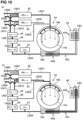
- the first threshold T TH1 is set to 40 °C. If the valve control section 52 determines that the engine coolant temperature T is lower than the first threshold T TH1 (step S3: YES), the valve control section 52 particularly executes the switching control of the oil control valve 46 so as to connect the motor cooling oil path LN34 and the motor cooling oil path LN21 (step S4), and executes the switching control of the oil control valve 45 so as to connect the motor cooling oil path LN21 and the motor cooling oil path LN11 (step S5) .
- step S3 YES
- the motor cooling oil which has been delivered from the oil pump 50, flows through the motor cooling oil paths LN34, LN21, LN11, LN31 and is introduced into the motor 14. Then, the oil exchanges the heat with the engine oil in the heat exchanger 42. In this way, it is possible to increase the temperature of each of the engines 11 to 13, in which the fuel is not supplied to the combustion chamber. Thus, the engines 11 to 13 are warmed while a temperature of the motor 14 is maintained at an appropriate temperature.
- valve control section 52 determines whether the engine coolant temperature T is equal to or higher than the first threshold T TH1 (step S3: NO)
- the valve control section 52 determines whether the engine coolant temperature T is lower than a preset second threshold T TH2 (step S6).
- the second threshold T TH2 is set to 80 °C.
- valve control section 52 determines that the engine coolant temperature T is equal to or higher than the first threshold T TH1 and is lower than the second threshold T TH2 (step S6: YES)
- the valve control section 52 particularly executes the switching control of the oil control valve 46 to connect the motor cooling oil path LN34 and the motor cooling oil path LN21 (step S7), and executes the switching control of the oil control valve 45 to connect the motor cooling oil path LN21 and the motor cooling oil path LN12 (step S8).
- the valve control section 52 actuates the ebullient cooler fan 44d of the ebullient cooler 44 (Step S9).
- step S6 YES
- the motor cooling oil which has been delivered from the oil pump 50, flows through the motor cooling oil paths LN34, LN21, LN12, LN32 and is introduced into the motor 14. Then, the oil exchanges the heat with the coolant for the engines 11 to 13 in the heat exchanger 43.
- the radiator 31 having the radiator fan 31a is provided in the coolant circulation path, the heat that has been transferred from the motor cooling oil to the coolant is cooled with higher efficiently.
- step S6 YES
- the ebullient cooler fan 44d of the ebullient cooler 44 is also actuated.
- the motor 14 can further be cooled. Accordingly, even in the case where the temperature of the motor is increased due to continuous driving of the motor 14 or the like, it is possible to maintain the temperature of the motor 14 at the appropriate temperature by further efficient cooling and to suppress a reduction in a magnetic force of a magnet in the motor 14.
- valve control section 52 determines that the engine coolant temperature T is equal to or higher than the second threshold T TH2 (step S6: NO)
- the valve control section 52 executes the switching control of the oil control valve 46 so as to connect the motor cooling oil path LN34 and the motor cooling oil path LN22 (step S10), and actuates the ebullient cooler fan 44d of the ebullient cooler 44 (step S11).
- step S6 NO
- the motor cooling oil is prevented from flowing through the heat exchangers 42, 43. That is, the motor 14 is cooled by the ebullient cooler 44. This is because it is determined that, since the temperature of each of the engines 11 to 13 has already been increased to a specified temperature or higher, it is difficult to transfer the heat to the engines 11 to 13 via the heat exchangers 42, 43.
- the drive unit 10 which is configured to include the three engines 11 to 13 and the single motor 14, is adopted.
- the present invention is not limited thereto.
- a drive unit configured to include a single engine and a single motor or a drive unit configured to include a plurality of engines and a plurality of motors can be adopted.
- each of the engines 11 to 13 is the rotary engine.
- a reciprocating engine can be adopted for the present invention.
- the drive unit 10 can further made to be compact. This is beneficial to achieve higher vehicle motion performance.
- the oil cooler 32 does not include a cooling fan.
- the oil cooler can include the cooling fan or can be added with a mechanism capable of spraying misty water onto a fin of the oil cooler.
- an FR vehicle is adopted as an example of the vehicle 1.
- the present invention is not limited thereto.
- an RR vehicle in which the drive unit is mounted in a rear portion and transmits the drive power to rear wheels
- an MR vehicle in which the drive unit is mounted to a position behind a driver's seat to transmit the drive power to rear wheels
- an FF vehicle in which the drive unit is mounted to a rear portion of a front area to transmit the drive power to front wheels
- a spool valves is adopted as each of the oil control valves 45, 46.
- the present invention is not limited thereto.
- a poppet valve or a slide valve can be adopted.
Landscapes
- Engineering & Computer Science (AREA)
- Chemical & Material Sciences (AREA)
- Combustion & Propulsion (AREA)
- Mechanical Engineering (AREA)
- Transportation (AREA)
- General Engineering & Computer Science (AREA)
- Hybrid Electric Vehicles (AREA)
- Cooling, Air Intake And Gas Exhaust, And Fuel Tank Arrangements In Propulsion Units (AREA)
- Electric Propulsion And Braking For Vehicles (AREA)
- Arrangement Or Mounting Of Propulsion Units For Vehicles (AREA)
- Lubrication Of Internal Combustion Engines (AREA)
- Motor Or Generator Cooling System (AREA)
Description
- The present invention relates to a vehicle and, in particular, to a drive unit that has an engine and a motor.
- In recent years, for purposes of reducing an environmental load and the like, hybrid vehicles including a motor in addition to an engine as drive sources of vehicle travel have been widespread.
- In
Patent document 1, an automobile that includes an engine and a motor as drive sources of vehicle travel is disclosed. In the automobile disclosed inPatent document 1, both of the engine and the motor, which are provided as the drive sources of the vehicle travel, are mounted in a front area. - The automobile disclosed in
Patent document 1 can be switched between an engine-drive mode in which the automobile travels by using the engine and a motor-drive mode in which the automobile travels by using the motor. When a driver selects the motor-drive mode, the automobile is driven by the motor. - Meanwhile, when the driver selects the engine-drive mode, the motor implements a torque assist function at a start of the automobile, and the automobile is driven by the engine at a specified vehicle speed or higher.
- [Patent document 1]
JP-A-2019-162964 -
DE 10 2008 037820 A1 relates to a method for heating the engine oil of a diesel engine of a hybrid electric vehicle having an electrical drive system cooled by a liquid cooling circuit. - By the way, further improvement in vehicle motion performance has been requested for the hybrid vehicle as described above. When it is attempted to improve the vehicle motion performance, it is beneficial to arrange the drive unit, which includes the engine and the motor, in an area near a center of the vehicle. By arranging the drive unit just as described, the vehicle can easily turn, and the vehicle motion performance can be improved.
- However, since an occupant space is provided in the area near the center of the vehicle, a mounting space for the drive unit is limited therein. Thus, downsizing of the drive unit is required to arrange the drive unit in the area near the center of the vehicle for the purpose of improving the vehicle motion performance.
- The present invention has been made to meet the demand as described above, and therefore has a purpose of providing a vehicle, vehicle motion performance of which can be improved by downsizing a drive unit having an engine and a motor.
- The above problem is solved by the invention as defined in the independent claims.
- Particularly, when the drive unit is driven for travel of the vehicle, the engine and the motor generate heat. Thus, cooling means for cooling the engine and the motor has to be provided for the drive unit. However, in the case where a cooling system for cooling the engine and a cooling system for cooling the motor are separately provided, an increase in size of the drive unit cannot be avoided due to provision of the cooling means.
- In view of the above, as a measure for further improvement in the vehicle motion performance, the present inventors considered to share the cooling means as the cooling system for cooling the engine and as the cooling system for cooling the motor, so as to downsize the drive unit provided with the cooling means. More specifically, the present inventors considered that, compared to the case where the cooling systems were separately provided, the drive unit provided with the cooling means could be downsized by using a coolant circulation path and an engine oil circulation path provided in the engine cooling system as means for cooling the motor.
- Here, when the vehicle is driven by the motor for the travel, engine drive power is low or zero. Thus, a temperature of the engine is relatively low. As a result, in the case where the motor cooling system is connected to the engine cooling system, the engine at the low temperature draws the heat from the motor. For this reason, the present inventors considered that motor cooling performance could be secured even without providing the motor cooling system in addition to the engine cooling system.
- In the case where the drive unit provided with the cooling means can be downsized by sharing the cooling means as the engine cooling system and the motor cooling system, a mounting position of the drive unit in the vehicle can be set to the area near the center of the vehicle, and the vehicle motion performance can be improved.
- However, when the present inventors investigated sharing of the cooling system as described above, the present inventors found possible occurrence of a situation where, when the vehicle kept driven by the motor, the heat of the motor was transferred to the engine via the engine cooling system and increased the temperature of the engine, then a quantity of heat drawn from the motor to the engine was reduced, and consequently, the engine reached the temperature at which the motor could not be cooled sufficiently.
- Thus, a vehicle according to one aspect of the present invention includes: a drive unit that has an engine and a motor, particularly arranged adjacent to each other, and has, as drive modes, an engine-drive mode in which the vehicle travels by the engine and a motor-drive mode in which the vehicle travels by the motor; a first engine cooling path being a path of a first engine refrigerant for cooling the engine; a second engine cooling path being a path of a second engine refrigerant for cooling the engine, having a fan for cooling the second engine refrigerant in such a path, and being a different path from the first engine cooling path; a motor cooling path being a path of a motor refrigerant for cooling the motor and having a first motor cooling path and a second motor cooling path that are different paths from each other; a first heat exchanger by which the first engine refrigerant flowing through the first engine cooling path and the motor refrigerant flowing through the first motor cooling path exchange heat; a second heat exchanger by which the second engine refrigerant flowing through the second engine cooling path and the motor refrigerant flowing through the second motor cooling path exchange the heat; first switching means that switches between the first motor cooling path and the second motor cooling path; engine temperature detection means for detecting a temperature of the engine; and a controller that controls the first switching means on the basis of the temperature of the engine. In the motor-drive mode, the controller executes switching control of the first switching means such that, in the case where the temperature of the engine is lower than a specified first threshold, the motor is cooled by the first motor cooling path, and in the case where the temperature of the engine is equal to or higher than the first threshold, the motor is cooled by the second motor cooling path.
- Since the vehicle according to the above aspect includes: the first heat exchanger by which the first engine refrigerant and the motor refrigerant exchanges the heat; and the second heat exchanger by which the second engine refrigerant and the motor refrigerant exchanges the heat, heat generated during driving of the motor can be cooled by using the engine cooling path. In other words, in the vehicle according to the above aspect, motor cooling means and engine cooling means are shared. Accordingly, compared to a case where cooling means is separately provided, it is possible to downsize the drive unit provided with the cooling means. Accordingly, for example, in the case where the drive unit is mounted in a front area of the vehicle, the drive unit can be mounted in a rear portion of the front area (a region near a center of the vehicle), and thus center of gravity of the vehicle can be positioned at or near the center of the vehicle. In this way, in the vehicle according to the above aspect, vehicle motion performance can be improved.
- In addition, in the vehicle according to the above aspect, in the motor-drive mode, in the case where the temperature of the engine is lower than the first threshold, the motor is cooled by using the first motor cooling path. That is, in the case where the temperature of the engine is lower than the first threshold, the heat generated by the motor is transferred to the first engine refrigerant in the first engine cooling path by the first heat exchanger, and the motor is thereby cooled. Thus, in the case where the temperature of the engine is lower than the first threshold, it is possible to suppress unnecessary driving of the fan in the second engine cooling path even when the fan receives the heat generated by the motor.
- Furthermore, in the vehicle according to the above aspect, in the motor-drive mode (during travel of the vehicle by the motor), in the case where the temperature of the engine is equal to or higher than the first threshold, the motor is cooled by using the second motor cooling path. That is, in the case where the temperature of the engine is equal to or higher than the first threshold, the heat generated by the motor is transferred to the second engine refrigerant in the second engine cooling path having the fan by the second heat exchanger, and the motor is thereby cooled. Thus, in the case where the temperature of the engine is equal to or higher than the first threshold, a temperature of the motor can be maintained at an appropriate temperature by using the second engine cooling path having the fan.
- The vehicle according to the above aspect further includes: an ebullient cooler having: a path for circulating an ebullient cooling refrigerant, a boiling point of which is lower than that of the motor refrigerant; an ebullient section that is disposed in the middle of the circulation path to exchange the heat between the motor refrigerant and the ebullient cooling refrigerant; and a condensation section that condenses the ebullient cooling refrigerant. Particularly, in the case where the temperature of the engine is equal to or higher than the first threshold, the ebullient cooling refrigerant may be boiled in the ebullient section, the boiled ebullient cooling refrigerant may be condensed in the condensation section, and the motor may thereby be cooled.
- In the case where the above configuration is adopted, the heat generated by the motor is also cooled by the ebullient cooler when the temperature of the engine is equal to or higher than the first threshold. Thus, even in the case where the motor is driven to generate high output or is continuously driven for a long time, the motor can be maintained at the appropriate temperature.
- In the vehicle according to the above aspect, the motor may have a pan for receiving the motor refrigerant in a lower portion thereof, and the ebullient section of the ebullient cooler may be disposed in the pan.
- The adoption of the above configuration is beneficial to maintain the motor at the appropriate temperature by disposing a boiler of the ebullient cooler in the pan even in the case where the temperature of the engine is equal to or higher than the first threshold.
- In the vehicle according to the above aspect, the ebullient cooler may further include an ebullient cooler fan that is arranged adjacent to the condensation section and cools the condensation section with air. In the case where the temperature of the engine is equal to or higher than the first threshold, the controller may drive the ebullient cooler fan.
- In the case where the above configuration is adopted, even when the temperature of the engine is equal to or higher than the first threshold, the ebullient cooling refrigerant is effectively cooled by driving the ebullient cooler fan. Thus, this is further beneficial to maintain the motor at the appropriate temperature.
- In the vehicle according to the above aspect, the motor cooling path may further have a third motor cooling path that is a path branched from an upstream side in a flow direction of the refrigerant from the first switching means and connected to the motor, particularly without the first heat exchanger and the second heat exchanger being interposed therebetween. Further particularly, second switching means may further be provided at a position where the third motor cooling path is branched, and switches between the path to the first switching means and the third motor cooling path. Further particularly, and in the motor-drive mode, in the case where the temperature of the engine is equal to or higher than a second threshold that is higher than the first threshold, the controller may control the second switching means for cooling the motor by the third motor cooling path.
- In the case where the above configuration is adopted, when the temperature of the engine is increased to the second threshold, the motor is cooled by the third motor cooling path without the first heat exchanger and the second heat exchanger being interposed. Thus, it is possible to suppress the temperature of the engine from being increased to the temperature that is higher than the second threshold. That is, in the case where the temperature of the engine is equal to or higher than the second threshold, the temperature of the motor can be maintained at the appropriate temperature by using the ebullient cooler to cool the motor.
- In the vehicle according to the above aspect, the motor may have a rotor, a stator and a housing that covers an outer side of the rotor and the stator, and the motor refrigerant may be oil and flow from an upper side to a lower side of inside of the housing.
- When the above configuration is adopted, the oil (the motor refrigerant) flows through the housing of the motor, and the rotor-and-stator accommodated in the housing can thereby directly be cooled by the oil. This is beneficial to maintain the motor at the appropriate temperature during the travel of the vehicle in the motor-drive mode.
- In the vehicle according to the above aspect, the first engine refrigerant may be engine oil, and/or the second engine refrigerant may be a coolant.
- In the case where the above configuration is adopted and the temperature of the engine is lower than the first threshold, a temperature of the engine oil can be increased by the heat generated in the motor. In the case where the temperature of the engine is equal to or higher than the first threshold, a temperature of the coolant can be increased by the heat generated in the motor. In this way, while the vehicle travels in the motor-drive mode, the temperature of the engine can be increased. As a result, it is possible to improve engine efficiency at the time when the drive mode is switched to the engine-drive mode.
- It is possible to improve the vehicle motion performance of the vehicle according to each of the above aspects by downsizing the drive unit having the engine and the motor.
-
- [
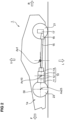
Fig. 1] Fig. 1 is a schematic view illustrating an outline configuration of a vehicle according to an embodiment. - [
Fig. 2] Fig. 2 is a schematic view illustrating a mounting position of a drive unit in the vehicle. - [
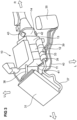
Fig. 3] Fig. 3 is a perspective view illustrating a configuration of the drive unit. - [
Fig. 4] Fig. 4 is a perspective view illustrating the configuration of the drive unit. - [
Fig. 5] Fig. 5 is a perspective view illustrating arrangement of an ebullient cooler in the drive unit. - [
Fig. 6] Fig. 6 is a perspective view illustrating arrangement of an oil control valve. - [
Fig. 7] Fig. 7(a) is a schematic view illustrating a coolant circulation path for engines, andFig. 7(b) is a schematic view illustrating an engine oil circulation path for the engines. - [
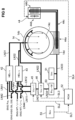
Fig. 8] Fig. 8 is a schematic view illustrating a configuration related to cooling of a motor. - [
Fig. 9] Fig. 9 is a flowchart illustrating a motor cooling control method executed by a valve control section. - [
Fig. 10] Fig. 10(a) is a schematic view illustrating a flow of oil when an engine coolant temperature is lower than a first threshold, andFig. 10(b) is a schematic view illustrating the flow of the oil when the engine coolant temperature is equal to or higher than the first threshold and is lower than a second threshold. - [
Fig. 11] Fig. 11 is a schematic view illustrating the flow of the oil when the engine coolant temperature is equal to or higher than the second threshold. - A description will hereinafter be made on an embodiment of the present invention with reference to the drawings. All of the features as shown in the drawings may not necessarily be essential. The embodiment, which will be described below, merely constitutes an example of the present invention, and the present invention is not limited to the following embodiment in any respect except for an essential configuration thereof.
- In the drawings used in the following description, "F", "R", "U", and "L" respectively indicate a front side of the vehicle, a rear side of the vehicle, an upper side of the vehicle, and a lower side of the vehicle.
- A description will be made on a schematic configuration of a
vehicle 1 according to this embodiment with reference toFig. 1 . - As illustrated in
Fig. 1 , in thevehicle 1, adrive unit 10 for driving thevehicle 1 is particularly mounted to a rear portion in afront area 1a. Thedrive unit 10 includes one ormore engines 11 to 13 and amotor 14. A detailed structure of thedrive unit 10 will be described below. - A
propeller shaft 15 is particularly connected to thedrive unit 10. Thepropeller shaft 15 particularly extends rearward at a center in a vehicle width direction of thevehicle 1. A rear end of thepropeller shaft 15 is particularly connected to atransmission 16. - A
differential gear 17 is particularly connected to thetransmission 16.Driveshafts differential gear 17 in the vehicle width direction. Thedriveshafts rear wheels vehicle 1 according to this embodiment, therear wheels drive unit 10 mounted in thefront area 1a. - Particularly, in the
vehicle 1, one ormore motors front wheels motors motors vehicle 1 and transmit the power to thefront wheels motors vehicle 1. During the deceleration of thevehicle 1, the electricity generated by themotors capacitor 28 and the like. - Particularly, a
battery 26 and aninverter 27 are also mounted to thevehicle 1. Thebattery 26 is an electricity storage module for supplying the electricity to themotor 14 of thedrive unit 10. Thebattery 26 according to this embodiment is a lithium-ion battery, for example. The electricity from thebattery 26 is supplied to themotor 14 via theinverter 27. - Here, the
vehicle 1 according to this embodiment includes, as drive modes of thedrive unit 10, an engine-drive mode and a motor-drive mode. The engine-drive mode is a mode in which particularly therear wheels engines 11 to 13 and thevehicle 1 thereby travels. The motor-drive mode is a mode in which particularly therear wheels motor 14 and thevehicle 1 thereby travels. In the motor-drive mode, theengines 11 to 13 may be stopped, i.e., fuel injection and/or ignition may be stopped. - The
vehicle 1 is particularly configured that themotor 14 does not generate the drive power at the time of driving in the engine-drive mode and theengines 11 to 13 do not generate the drive power at the time of driving in the motor-drive mode. - In the
vehicle 1, a drivemode control section 29 particularly executes switching control between the engine-drive mode and the motor-drive mode. The drivemode control section 29 is particularly configured to include a microprocessor that has a CPU, ROM, RAM, and the like. The drivemode control section 29 executes the drive mode control on the basis of an instruction from a driver, a situation of the vehicle 1 (a vehicle speed, acceleration/deceleration, a battery remaining amount), and the like. - A description will be made on a mounting position of the
drive unit 10 in thevehicle 1 with reference toFig. 2 . - As described above, in the
vehicle 1, thedrive unit 10 is particularly mounted in the rear portion of thefront area 1a. More specifically, thedrive unit 10 is mounted such that center of gravity Ax10 of thedrive unit 10 is located behind rotation center Ax23 of thefront wheels 22, 23 (only thefront wheel 23 is illustrated inFig. 2 ). In addition, thedrive unit 10 is mounted such that the center of gravity Ax10 thereof is located below the rotation center Ax23 of thefront wheels - That is, in the
vehicle 1, thedrive unit 10 as a heavy object is made to be compact, and thedrive unit 10 is thereby mounted in the rear portion of thefront area 1a and in a lower portion having a clearance from ahood 30. In this way, a position Ax1 of center of gravity of thevehicle 1 can be set to a low position substantially at the center in a longitudinal direction of thevehicle 1. - A description will be made on a detailed configuration of the
drive unit 10 and configurations of peripheries thereof with reference toFig. 3 to Fig. 6 . - As illustrated in
Fig. 3 andFig. 4 , each of theengines 11 to 13 provided in thedrive unit 10 is particularly a rotary engine having a rotary piston as an example. The adoption of the rotary engines as theengines 11 to 13 in thevehicle 1 is beneficial for downsizing of thedrive unit 10. - As illustrated in
Fig. 4 , anoil pan 38 is particularly disposed below theengines 11 to 13. Theoil pan 38 has a flat shape in which a dimension in a height direction is small in comparison with dimensions in the vehicle longitudinal direction and the vehicle width direction. This is beneficial to suppress a height of thedrive unit 10 to be low. - As described above, in the
vehicle 1 according to this embodiment, theoil pan 38 particularly has the flat shape, and thus an accommodation volume of engine oil therein is low. For this reason, theoil pan 38 has a primary purpose of collecting the engine oil that has been distributed to theengines 11 to 13. Thus, anoil tank 35 is particularly provided on a side of thedrive unit 10 to store the engine oil collected in theoil pan 38. - As illustrated in
Fig. 3 andFig. 4 , themotor 14 provided in thedrive unit 10 is arranged particularly adjacent to a rear side of theengine 13. Theengines 11 to 13 and themotor 14 particularly have a direct-coupling structure to share an output shaft. Twoheat exchangers motor 14. In addition, as illustrated inFig. 5 , anebullient section 44a of anebullient cooler 44 is particularly attached to the outer circumferential surface of themotor 14. - As will be described in detail later, the
heat exchanger 42 corresponds to a "first heat exchanger", and theheat exchanger 43 corresponds to a "second heat exchanger". - The
ebullient cooler 44 particularly has, in addition to theebullient section 44a, acondensation section 44b,pipes 44c, and an ebullientcooler fan 44d. Thecondensation section 44b is particularly disposed behind themotor 14, and the ebullientcooler fan 44d is particularly arranged adjacent to thecondensation section 44b. Each of thepipes 44c couples theebullient section 44a and thecondensation section 44b. Thepipes 44c are particularly filled with an ebullient cooling refrigerant. - As illustrated in
Fig. 3 andFig. 4 , aradiator 31 and anoil cooler 32 are particularly disposed in front of thedrive unit 10. Theradiator 31 is a device for cooling a coolant, a temperature of which has become high by the heat from theengines 11 to 13, and has aradiator fan 31a on a rear side thereof. Theradiator fan 31a corresponds to a "fan in a second engine cooling path". - The
oil cooler 32 is particularly arranged behind theradiator 31 and is disposed along theradiator 31. Theoil cooler 32 is particularly smaller in plane size than theradiator 31. -
Pipes engines 11 to 13 and theradiator 31. Awater pump 34 is particularly provided to a connection portion between thepipe 37 and each of theengines 11 to 13. - Each two of the
oil cooler 32, theengines 11 to 13, theoil tank 35, and theoil pan 38 are particularly connected by respective one ofpipes 39 to 41 and the like. Anoil pump 33 is particularly provided to a connection portion between thepipe 41 and each of theengines 11 to 13. - As illustrated in
Fig. 6 , one or more, particularly twooil control valves rear housing 14a of themotor 14. Theoil control valve 45 and theoil control valve 46 are particularly disposed in a state of being distributed to right and left sides in a portion above a center portion of therear housing 14a. As will be described in detail later, theoil control valve 45 corresponds to "first switching means", and theoil control valve 46 corresponds to "second switching means". - A description will be made on a coolant circulation path for the
engines 11 to 13 of thedrive unit 10 with reference toFig. 7(a) . - As illustrated in
Fig. 7(a) , the coolant circulation path for theengines 11 to 13 is particularly formed to circulate through theradiator 31, each of theengines 11 to 13, and theheat exchanger 43. Further particularly, the coolant that has been cooled by theradiator 31 is introduced from thewater pump 34 into a high-pressure water jacket in thefront engine 11. Thereafter, the coolant flows from a high-pressure water jacket in theengine 12 through a high-pressure water jacket in theengine 13 and is then introduced into theheat exchanger 43. - The coolant that has flowed through the
heat exchanger 43 particularly circulates through a low-pressure water jacket in theengine 11, a low-pressure water jacket in theengine 12, and a low-pressure water jacket in theengine 13 in this order and returns to theradiator 31. - Particularly, the
heat exchanger 43 is configured to be able to exchange heat with oil for cooling themotor 14. - A description will be made on an engine oil circulation path for the
engines 11 to 13 of thedrive unit 10 with reference toFig. 7(b) . - As illustrated in
Fig. 7(b) , the engine oil circulation path for theengines 11 to 13 is particularly formed to circulate through theoil cooler 32, theheat exchanger 42, theengines 11 to 13, and theoil tank 35. Further particularly, the engine oil that has been cooled by theoil cooler 32 flows from theoil pump 33 through theheat exchanger 42 and is introduced into theengines 11 to 13. The engine oil that has flowed through each of theengines 11 to 13 is particularly collected in theoil pan 38 and is delivered to theoil tank 35. - The engine oil that has been delivered to the
oil tank 35 is temporarily stored in theoil tank 35 and is thereafter delivered to theoil cooler 32. - Particularly, the
heat exchanger 42 is also configured to be able to exchange heat with the oil for cooling themotor 14. - A description will be made on a cooling configuration of the
motor 14 in thedrive unit 10 with reference toFig. 8 . - As illustrated in
Fig. 8 , themotor 14 particularly includes one ormore housings lateral housing 14b is illustrated inFig. 8 ), a rotor-stator 14c, and anoil pan 14d. Motor cooling oil paths LN22, LN31, LN32 are particularly connected to upper portions of thehousings - In the motor-drive mode (during travel of the vehicle in the motor-drive mode), the motor cooling oil particularly flows through any of the motor cooling oil paths LN22, LN31, LN32 to cool the rotor-
stator 14c and then flows into theoil pan 14d. The oil that has been received by theoil pan 14d is particularly delivered to anoil pump 50 for themotor 14 through a motor cooling oil path LN33. A pressure-relief valve 51 is also connected to the motor cooling oil path LN33. - The oil is particularly delivered from the
oil pump 50 to theoil control valve 46 through a motor cooling oil path LN34. As described above, theoil control valve 46 corresponds to the "second switching means" and is a valve that switches an oil delivery path to one of a motor cooling oil path LN21 and the motor cooling oil path LN22. - The motor cooling oil path LN21 is particularly connected to the
oil control valve 45. As described above, theoil control valve 45 corresponds to the "first switching means" and is a valve that switches the oil delivery path to one of a motor cooling oil path LN11 and a motor cooling oil path LN12. - The motor cooling oil path LN11 corresponds to the "first motor cooling path", and the motor cooling oil path LN12 corresponds to the "second motor cooling path". The motor cooling oil path LN11 is particularly connected to the motor cooling oil path LN31 via the
heat exchanger 42. The motor cooling oil path LN12 is connected to the motor cooling oil path LN32 via theheat exchanger 43. - In the engine oil circulation path, the engine oil that is pumped out of the
oil pump 33 particularly flows from an engine cooling oil path LN41 into an engine cooling oil path LN42 via theheat exchanger 42. The engine oil that has flowed into the engine cooling oil path LN42 through theheat exchanger 42 is particularly delivered to an eccentric shaft. Then, the engine oil lubricates and cools a rotor. - In addition, some of the engine oil that has been delivered to the engine cooling oil path LN42 is particularly injected into a combustion chamber of each of the
engines 11 to 13 to lubricate and cool at least one of the housing, an apex seal, and a side seal. - In the
heat exchanger 42, the motor cooling oil and the engine oil can exchange the heat. That is, in the motor-drive mode, a temperature of the engine oil can be increased by the heat generated in themotor 14. Thus, in thevehicle 1, in the motor-drive mode, theengines 11 to 13, in each of which fuel is not supplied to the combustion chamber, can be warmed. As a result, it is possible to improve engine efficiency at the time when the drive mode is switched to the engine-drive mode. - In this embodiment, each of the engine cooling oil path LN41 and the engine cooling oil path LN42 correspond to a "first engine cooling path".
- In the coolant circulation path for the
engines 11 to 13, the coolant that has flowed out of the high-pressure water jacket in each of theengines 11 to 13 particularly flows from an engine coolant path LN43 to an engine coolant path LN44 via theheat exchanger 43. The coolant that has flowed into the engine coolant path LN44 through theheat exchanger 43 is particularly introduced into the low-pressure water jacket in each of theengines 11 to 13. - In the
heat exchanger 43, the motor cooling oil and the coolant, which flows through each of the water jackets in theengines 11 to 13, can exchange the heat. Also, in this way, in the motor-drive mode, theengines 11 to 13 can be warmed by the heat generated in themotor 14. As a result, it is possible to improve the engine efficiency at the time when the drive mode is switched to the engine-drive mode. - The
ebullient section 44a of theebullient cooler 44 is disposed in theoil pan 14d of themotor 14. Here, as it has been described with reference toFig. 5 , an outer coat of theebullient section 44a is particularly attached to the outer circumferential portion of themotor 14 and can exchange the heat with the oil in theoil pan 14d. As the ebullient cooling refrigerant in theebullient cooler 44, a refrigerant, a boiling point of which is lower than that of the oil for cooling themotor 14, is particularly used. - The
vehicle 1 also includes avalve control section 52 and an enginecoolant temperature sensor 53. The enginecoolant temperature sensor 53 corresponds to "engine temperature detection means" and is, for example, provided to apipe 36 between theengine 13 and theradiator 31. Thevalve control section 52 corresponds to a "controller" and is configured to include a microprocessor having a CPU, ROM, RAM, and the like. Thevalve control section 52 executes the switching control of theoil control valves cooler fan 44d on the basis of information on an engine coolant temperature from the enginecoolant temperature sensor 53. - A description will be made on a cooling control method for the
motor 14 that is executed by thevalve control section 52 with reference toFig. 9 to Fig. 11 . - As illustrated in
Fig. 9 , thevalve control section 52 particularly determines whether thevehicle 1 currently performs the motor-drive mode (step S1). When making a determination in step S1, thevalve control section 52 acquires information on the drive mode from the drivemode control section 29. If thevalve control section 52 determines that thevehicle 1 currently performs the motor-drive mode (step S1: YES), thevalve control section 52 particularly reads an engine coolant temperature T (step S2). Thevalve control section 52 acquires the engine coolant temperature T from the enginecoolant temperature sensor 53. - The
valve control section 52 particularly determines whether the acquired engine coolant temperature T is lower than a preset first threshold TTH1 (step S3). In this embodiment, as an example, the first threshold TTH1 is set to 40 °C. If thevalve control section 52 determines that the engine coolant temperature T is lower than the first threshold TTH1 (step S3: YES), thevalve control section 52 particularly executes the switching control of theoil control valve 46 so as to connect the motor cooling oil path LN34 and the motor cooling oil path LN21 (step S4), and executes the switching control of theoil control valve 45 so as to connect the motor cooling oil path LN21 and the motor cooling oil path LN11 (step S5) . - As illustrated in
Fig. 10(a) , if the engine coolant temperature T is lower than the first threshold TTH1 (step S3: YES), the motor cooling oil, which has been delivered from theoil pump 50, flows through the motor cooling oil paths LN34, LN21, LN11, LN31 and is introduced into themotor 14. Then, the oil exchanges the heat with the engine oil in theheat exchanger 42. In this way, it is possible to increase the temperature of each of theengines 11 to 13, in which the fuel is not supplied to the combustion chamber. Thus, theengines 11 to 13 are warmed while a temperature of themotor 14 is maintained at an appropriate temperature. - Referring back to
Fig. 9 , if thevalve control section 52 determines that the engine coolant temperature T is equal to or higher than the first threshold TTH1 (step S3: NO), thevalve control section 52 determines whether the engine coolant temperature T is lower than a preset second threshold TTH2 (step S6). In this embodiment, as an example, the second threshold TTH2 is set to 80 °C. - If the
valve control section 52 determines that the engine coolant temperature T is equal to or higher than the first threshold TTH1 and is lower than the second threshold TTH2 (step S6: YES), thevalve control section 52 particularly executes the switching control of theoil control valve 46 to connect the motor cooling oil path LN34 and the motor cooling oil path LN21 (step S7), and executes the switching control of theoil control valve 45 to connect the motor cooling oil path LN21 and the motor cooling oil path LN12 (step S8). Thevalve control section 52 actuates the ebullientcooler fan 44d of the ebullient cooler 44 (Step S9). - As illustrated in
Fig. 10(b) , if the engine coolant temperature T is equal to or higher than the first threshold TTH1 and is lower than the second threshold TTH2 (step S6: YES), the motor cooling oil, which has been delivered from theoil pump 50, flows through the motor cooling oil paths LN34, LN21, LN12, LN32 and is introduced into themotor 14. Then, the oil exchanges the heat with the coolant for theengines 11 to 13 in theheat exchanger 43. Here, since theradiator 31 having theradiator fan 31a is provided in the coolant circulation path, the heat that has been transferred from the motor cooling oil to the coolant is cooled with higher efficiently. - Furthermore, if the engine coolant temperature T is equal to or higher than the first threshold TTH1 and is lower than the second threshold TTH2 (step S6: YES), the ebullient
cooler fan 44d of theebullient cooler 44 is also actuated. Thus, themotor 14 can further be cooled. Accordingly, even in the case where the temperature of the motor is increased due to continuous driving of themotor 14 or the like, it is possible to maintain the temperature of themotor 14 at the appropriate temperature by further efficient cooling and to suppress a reduction in a magnetic force of a magnet in themotor 14. - Referring back to
Fig. 9 if thevalve control section 52 determines that the engine coolant temperature T is equal to or higher than the second threshold TTH2 (step S6: NO), thevalve control section 52 executes the switching control of theoil control valve 46 so as to connect the motor cooling oil path LN34 and the motor cooling oil path LN22 (step S10), and actuates the ebullientcooler fan 44d of the ebullient cooler 44 (step S11). - As illustrated in
Fig. 11 , if the engine coolant temperature T is equal to or higher than the second threshold TTH2 (step S6: NO), the motor cooling oil is prevented from flowing through theheat exchangers motor 14 is cooled by theebullient cooler 44. This is because it is determined that, since the temperature of each of theengines 11 to 13 has already been increased to a specified temperature or higher, it is difficult to transfer the heat to theengines 11 to 13 via theheat exchangers - In the
vehicle 1 according to the above embodiment, thedrive unit 10, which is configured to include the threeengines 11 to 13 and thesingle motor 14, is adopted. However, the present invention is not limited thereto. For example, a drive unit configured to include a single engine and a single motor or a drive unit configured to include a plurality of engines and a plurality of motors can be adopted. - In the
vehicle 1 according to the above embodiment, each of theengines 11 to 13 is the rotary engine. However, a reciprocating engine can be adopted for the present invention. Here, in thevehicle 1 according to the above embodiment, for which the rotary engine is adopted, thedrive unit 10 can further made to be compact. This is beneficial to achieve higher vehicle motion performance. - In the
vehicle 1 according to the above embodiment, theoil cooler 32 does not include a cooling fan. However, the present invention is not limited thereto. The oil cooler can include the cooling fan or can be added with a mechanism capable of spraying misty water onto a fin of the oil cooler. - In the above embodiment, an FR vehicle is adopted as an example of the
vehicle 1. However, the present invention is not limited thereto. For example, an RR vehicle, in which the drive unit is mounted in a rear portion and transmits the drive power to rear wheels, an MR vehicle, in which the drive unit is mounted to a position behind a driver's seat to transmit the drive power to rear wheels, or further an FF vehicle, in which the drive unit is mounted to a rear portion of a front area to transmit the drive power to front wheels, can be adopted. - In the above embodiment, a spool valves is adopted as each of the
oil control valves -
- 1 vehicle
- 10 drive unit
- 11 to 13 engine
- 14 motor
- 26 battery
- 29 drive mode control section
- 31 radiator
- 31a radiator fan (fan)
- 32 oil cooler
- 42 heat exchanger (first heat exchanger)
- 43 heat exchanger (second heat exchanger)
- 44 ebullient cooler
- 45 oil control valve (first switching means)
- 46 oil control valve (second switching means)
- 52 valve control section (controller)
- 53 engine coolant temperature sensor (engine temperature detection means)
- LN11, LN31 motor cooling oil path (first motor cooling path)
- LN12, LN32 motor cooling oil path (second motor cooling path)
- LN22 motor cooling oil path (third motor cooling path)
- LN21, LN33, LN34 motor cooling oil path
- LN41, LN42 engine cooling oil path (first engine cooling path)
- LN43, LN44 engine coolant path (second engine cooling path)
Claims (15)
- A vehicle (1) comprising:a drive unit (10) that has an engine (11, 12, 13) and a motor (14) and has, as drive modes, an engine-drive mode in which the vehicle (1) travels by the engine (11, 12, 13) and a motor-drive mode in which the vehicle (1) travels by the motor (14);a first engine cooling path (LN41, LN42) being a path of a first engine refrigerant for cooling the engine (11, 12, 13) ;a second engine cooling path (LN43, LN44) being a path of a second engine refrigerant for cooling the engine (11, 12, 13), having a fan (31a) for cooling the second engine refrigerant in the path, and being a different path from the first engine cooling path (LN41, LN42);a motor cooling path being a path of a motor refrigerant for cooling the motor (14) and having a first motor cooling path (LN11, LN31) and a second motor cooling path (LN12, LN32) that are different paths from each other;a second heat exchanger (43) by which the second engine refrigerant flowing through the second engine cooling path (LN43, LN44) and the motor refrigerant flowing through the second motor cooling path (LN12, LN32) exchange the heat;first switching means (45) that switches between the first motor cooling path (LN11, LN31) and the second motor cooling path (LN12, LN32);engine temperature detection means (53) configured to detect a temperature of the engine (11, 12, 13); anda controller (52) configured to control the first switching means (45) on the basis of the temperature of the engine (11, 12, 13);characterized bya first heat exchanger (42) by which the first engine refrigerant flowing through the first engine cooling path (LN41, LN42) and the motor refrigerant flowing through the first motor cooling path (LN11, LN31) exchange heat, whereinin the motor-drive mode, the controller (52) is configured to execute switching control of the first switching means (45) such that, in the case where the temperature of the engine (11, 12, 13) is lower than a specified first threshold, the motor (14) is cooled by the first motor cooling path (LN11, LN31), and in the case where the temperature of the engine (11, 12, 13) is equal to or higher than the first threshold, the motor (14) is cooled by the second motor cooling path (LN12, LN32) .
- The vehicle (1) according to claim 1 further comprising an ebullient cooler (44) having:a path (44c) configured to circulate an ebullient cooling refrigerant, a boiling point of which is lower than that of the motor refrigerant;an ebullient section (44a) that is disposed in the middle of the circulation path to exchange the heat between the motor refrigerant and the ebullient cooling refrigerant; anda condensation section (44b) that condenses the ebullient cooling refrigerant.
- The vehicle (1) according to claim 2, wherein
in the case where the temperature of the engine (11, 12, 13) is equal to or higher than the first threshold, the ebullient cooling refrigerant is boiled in the ebullient section (44a), the boiled ebullient cooling refrigerant is condensed in the condensation section (44b), and the motor (14) is thereby cooled. - The vehicle (1) according to claim 2 or 3, whereinthe motor (14) has a pan (14d) configured to receive the motor refrigerant in a lower portion thereof, andthe ebullient section (44a) of the ebullient cooler (44) is disposed in the pan (14d).
- The vehicle (1) according to any one of the preceding claims 2 to 4, whereinthe ebullient cooler (44) further has an ebullient cooler fan (44d) that is disposed adjacent to the condensation section (44b) and/or configured to cool the condensation section (44b) with air, andin the case where the temperature of the engine (11, 12, 13) is equal to or higher than the first threshold, the controller (52) is configured to drive the ebullient cooler fan (44d) .
- The vehicle (1) according to any one of the preceding claims, wherein
the motor cooling path further has a third motor cooling path (LN22) branched from an upstream side, in a flow direction of the refrigerant, from the first switching means (45) and connected to the motor (14). - The vehicle (1) according to claim 6, wherein
the third motor cooling path (LN22) is connected to the motor (14) without the first heat exchanger (42) and the second heat exchanger (43) being interposed between the first switching means (45) and the motor (14). - The vehicle (1) according to claim 6 or 7, further comprising
second switching means (46) provided at a position where the third motor cooling path (LN22) is branched, and configured to switch between a path to the first switching means (45) and the third motor cooling path (LN22). - The vehicle (1) according to claim 8, wherein
in the motor-drive mode, in the case where the temperature of the engine (11, 12, 13) is equal to or higher than a second threshold that is higher than the first threshold, the controller (52) is configured to control the second switching means (46) to cool the motor (14) by the third motor cooling path (LN22). - The vehicle (1) according to any one of the preceding claims, whereinthe motor (14) has: a rotor; a stator; and a housing (14b) that covers an outer side of the rotor and the stator, andthe motor refrigerant is oil and flows from an upper side to a lower side of inside of the housing (14b).
- The vehicle (1) according to any one of the preceding claims, wherein
the first engine refrigerant is engine oil, and the second engine refrigerant is a coolant. - The vehicle (1) according to any one of the preceding claims, wherein
the engine (11, 12, 13) and the motor (14) are arranged adjacent to each other. - The vehicle (1) according to any one of the preceding claims, wherein
the second engine cooling path (LN43, LN44) includes a radiator (31). - The vehicle (1) according to any one of the preceding claims, wherein
the first engine cooling path (LN41, LN42) includes an oil cooler (32). - A method of controlling a vehicle (1), wherein the vehicle includes a drive unit (10) that has an engine (11, 12, 13) and a motor (14), the method comprising;controlling the engine (11, 12, 13) and the motor (14) in a motor-drive mode in which the vehicle (1) travels by the motor (14); anddetecting a temperature of the engine (11, 12, 13),whereinthe vehicle further includesa first engine cooling path (LN41, LN42) being a path of a first engine refrigerant for cooling the engine (11, 12, 13),a second engine cooling path (LN43, LN44) being a path of a second engine refrigerant for cooling the engine (11, 12, 13), having a fan (31a) for cooling the second engine refrigerant in the path, and being different from the first engine cooling path (LN41, LN42), anda second heat exchanger (43) by which the second engine refrigerant flowing through the second engine cooling path (LN43, LN44) and the motor refrigerant flowing through the second motor cooling path (LN12, LN32) exchange the heat,characterized bycooling the motor (14), in the motor-drive mode, by a first motor cooling path (LN11, LN31) in the case where the temperature of the engine (11, 12, 13) is lower than a specified first threshold; andcooling the motor (14), in the motor-drive mode, by a second motor cooling path (LN12, LN32), which is different from the first motor cooling path (LN11, LN31), in the case where the temperature of the engine (11, 12, 13) is equal to or higher than the first threshold,whereinthe vehicle further includesa first heat exchanger (42) by which the first engine refrigerant flowing through the first engine cooling path (LN41, LN42) and the motor refrigerant flowing through the first motor cooling path (LN11, LN31) exchange heat.
Applications Claiming Priority (1)
| Application Number | Priority Date | Filing Date | Title |
|---|---|---|---|
| JP2020113744A JP7435314B2 (en) | 2020-07-01 | 2020-07-01 | vehicle |
Publications (2)
| Publication Number | Publication Date |
|---|---|
| EP3932717A1 EP3932717A1 (en) | 2022-01-05 |
| EP3932717B1 true EP3932717B1 (en) | 2024-01-31 |
Family
ID=76584305
Family Applications (1)
| Application Number | Title | Priority Date | Filing Date |
|---|---|---|---|
| EP21178509.2A Active EP3932717B1 (en) | 2020-07-01 | 2021-06-09 | Vehicle |
Country Status (4)
| Country | Link |
|---|---|
| US (1) | US11506108B2 (en) |
| EP (1) | EP3932717B1 (en) |
| JP (1) | JP7435314B2 (en) |
| CN (1) | CN113879106B (en) |
Families Citing this family (2)
| Publication number | Priority date | Publication date | Assignee | Title |
|---|---|---|---|---|
| JP7190350B2 (en) * | 2018-12-28 | 2022-12-15 | マーレジャパン株式会社 | Heat exchange system for vehicles |
| US11773962B1 (en) * | 2022-03-28 | 2023-10-03 | Borgwarner Inc. | Electric drive unit with integrated, variable flow, low-pressure oil cooling system |
Family Cites Families (15)
| Publication number | Priority date | Publication date | Assignee | Title |
|---|---|---|---|---|
| JPH0654409A (en) * | 1992-07-29 | 1994-02-25 | Aqueous Res:Kk | Hybrid vehicle |
| JP2004052672A (en) * | 2002-07-19 | 2004-02-19 | Toyota Motor Corp | Hybrid vehicle and control method thereof |
| JP2004346831A (en) * | 2003-05-22 | 2004-12-09 | Denso Corp | Vehicle cooling system |
| JP2005299407A (en) * | 2004-04-07 | 2005-10-27 | Toyota Motor Corp | COOLING SYSTEM, ITS CONTROL METHOD, AND AUTOMOBILE |
| DE102007005391A1 (en) * | 2007-02-03 | 2008-08-07 | Behr Gmbh & Co. Kg | Radiator arrangement for a drive train of a motor vehicle |
| GB0721262D0 (en) * | 2007-10-30 | 2007-12-05 | Ford Global Tech Llc | A method for heating the oil of an engine |
| KR101601050B1 (en) * | 2010-10-06 | 2016-03-22 | 현대자동차주식회사 | Cooling apparatus for vehicle |
| US8763376B2 (en) * | 2011-12-01 | 2014-07-01 | GM Global Technology Operations LLC | Exhaust gas heat recovery system and transmission warmer implementation strategy for a vehicle |
| JP2014206301A (en) * | 2013-04-11 | 2014-10-30 | 株式会社日本自動車部品総合研究所 | Chiller |
| CN106904070B (en) * | 2015-12-21 | 2019-11-26 | 丰田自动车株式会社 | Vehicle cooling device |
| US20180054094A1 (en) * | 2016-08-17 | 2018-02-22 | Atieva, Inc. | Motor Cooling System Utilizing Axial Cooling Channels |
| KR102694362B1 (en) * | 2017-02-21 | 2024-08-12 | 한온시스템 주식회사 | Heat pump system for vehicle |
| JP6867258B2 (en) * | 2017-09-08 | 2021-04-28 | 本田技研工業株式会社 | Vehicle heat exchange systems, vehicle heat exchange methods, and programs |
| JP2019089524A (en) * | 2017-11-17 | 2019-06-13 | アイシン精機株式会社 | Vehicular heat exchange device |
| JP7051048B2 (en) | 2018-03-20 | 2022-04-11 | マツダ株式会社 | Hybrid drive |
-
2020
- 2020-07-01 JP JP2020113744A patent/JP7435314B2/en active Active
-
2021
- 2021-06-09 EP EP21178509.2A patent/EP3932717B1/en active Active
- 2021-06-09 US US17/342,798 patent/US11506108B2/en active Active
- 2021-06-22 CN CN202110688880.6A patent/CN113879106B/en active Active
Also Published As
| Publication number | Publication date |
|---|---|
| EP3932717A1 (en) | 2022-01-05 |
| US20220003143A1 (en) | 2022-01-06 |
| CN113879106A (en) | 2022-01-04 |
| JP2022012141A (en) | 2022-01-17 |
| JP7435314B2 (en) | 2024-02-21 |
| US11506108B2 (en) | 2022-11-22 |
| CN113879106B (en) | 2023-05-02 |
Similar Documents
| Publication | Publication Date | Title |
|---|---|---|
| EP3932730B1 (en) | Vehicle | |
| US10252597B2 (en) | Joint active thermal management system and control logic for hybrid and electric vehicles | |
| EP2205458B1 (en) | Hybrid system control apparatus and hybrid system control method | |
| CN102456937B (en) | Battery module and assembly | |
| CN110171282A (en) | The cooling device of vehicle | |
| EP3932717B1 (en) | Vehicle | |
| US20090114462A1 (en) | Drive device of vehicle | |
| US11555441B2 (en) | Cooling system for hybrid vehicle | |
| CN110552753A (en) | Electric oil pump system | |
| US12252003B2 (en) | Vehicle temperature control system | |
| EP3932712B1 (en) | Vehicle | |
| EP3932713B1 (en) | Vehicle | |
| JP7431630B2 (en) | Electric motor cooling control device | |
| CN120659726A (en) | Electric driving device for vehicle | |
| CN1757534A (en) | Electric vehicle driven by combination of oil-full engine and parallel electric motors | |
| JP2022012128A (en) | vehicle | |
| JP7491090B2 (en) | vehicle | |
| EP3932714B1 (en) | Vehicle | |
| EP4501723A1 (en) | Cooling system for hybrid vehicle | |
| EP4671021A1 (en) | HYBRID ELECTRIC VEHICLE |
Legal Events
| Date | Code | Title | Description |
|---|---|---|---|
| PUAI | Public reference made under article 153(3) epc to a published international application that has entered the european phase |
Free format text: ORIGINAL CODE: 0009012 |
|
| STAA | Information on the status of an ep patent application or granted ep patent |
Free format text: STATUS: THE APPLICATION HAS BEEN PUBLISHED |
|
| AK | Designated contracting states |
Kind code of ref document: A1 Designated state(s): AL AT BE BG CH CY CZ DE DK EE ES FI FR GB GR HR HU IE IS IT LI LT LU LV MC MK MT NL NO PL PT RO RS SE SI SK SM TR |
|
| B565 | Issuance of search results under rule 164(2) epc |
Effective date: 20211022 |
|
| STAA | Information on the status of an ep patent application or granted ep patent |
Free format text: STATUS: REQUEST FOR EXAMINATION WAS MADE |
|
| 17P | Request for examination filed |
Effective date: 20220609 |
|
| RBV | Designated contracting states (corrected) |
Designated state(s): AL AT BE BG CH CY CZ DE DK EE ES FI FR GB GR HR HU IE IS IT LI LT LU LV MC MK MT NL NO PL PT RO RS SE SI SK SM TR |
|
| GRAP | Despatch of communication of intention to grant a patent |
Free format text: ORIGINAL CODE: EPIDOSNIGR1 |
|
| STAA | Information on the status of an ep patent application or granted ep patent |
Free format text: STATUS: GRANT OF PATENT IS INTENDED |
|
| INTG | Intention to grant announced |
Effective date: 20231103 |
|
| GRAS | Grant fee paid |
Free format text: ORIGINAL CODE: EPIDOSNIGR3 |
|
| GRAA | (expected) grant |
Free format text: ORIGINAL CODE: 0009210 |
|
| STAA | Information on the status of an ep patent application or granted ep patent |
Free format text: STATUS: THE PATENT HAS BEEN GRANTED |
|
| AK | Designated contracting states |
Kind code of ref document: B1 Designated state(s): AL AT BE BG CH CY CZ DE DK EE ES FI FR GB GR HR HU IE IS IT LI LT LU LV MC MK MT NL NO PL PT RO RS SE SI SK SM TR |
|
| REG | Reference to a national code |
Ref country code: GB Ref legal event code: FG4D Ref country code: CH Ref legal event code: EP |
|
| REG | Reference to a national code |
Ref country code: DE Ref legal event code: R096 Ref document number: 602021008877 Country of ref document: DE |
|
| REG | Reference to a national code |
Ref country code: IE Ref legal event code: FG4D |
|
| REG | Reference to a national code |
Ref country code: LT Ref legal event code: MG9D |
|
| REG | Reference to a national code |
Ref country code: NL Ref legal event code: MP Effective date: 20240131 |
|
| PG25 | Lapsed in a contracting state [announced via postgrant information from national office to epo] |
Ref country code: IS Free format text: LAPSE BECAUSE OF FAILURE TO SUBMIT A TRANSLATION OF THE DESCRIPTION OR TO PAY THE FEE WITHIN THE PRESCRIBED TIME-LIMIT Effective date: 20240531 |
|
| PG25 | Lapsed in a contracting state [announced via postgrant information from national office to epo] |
Ref country code: LT Free format text: LAPSE BECAUSE OF FAILURE TO SUBMIT A TRANSLATION OF THE DESCRIPTION OR TO PAY THE FEE WITHIN THE PRESCRIBED TIME-LIMIT Effective date: 20240131 |
|
| PG25 | Lapsed in a contracting state [announced via postgrant information from national office to epo] |
Ref country code: GR Free format text: LAPSE BECAUSE OF FAILURE TO SUBMIT A TRANSLATION OF THE DESCRIPTION OR TO PAY THE FEE WITHIN THE PRESCRIBED TIME-LIMIT Effective date: 20240501 |
|
| REG | Reference to a national code |
Ref country code: AT Ref legal event code: MK05 Ref document number: 1653640 Country of ref document: AT Kind code of ref document: T Effective date: 20240131 |
|
| PG25 | Lapsed in a contracting state [announced via postgrant information from national office to epo] |
Ref country code: HR Free format text: LAPSE BECAUSE OF FAILURE TO SUBMIT A TRANSLATION OF THE DESCRIPTION OR TO PAY THE FEE WITHIN THE PRESCRIBED TIME-LIMIT Effective date: 20240131 Ref country code: RS Free format text: LAPSE BECAUSE OF FAILURE TO SUBMIT A TRANSLATION OF THE DESCRIPTION OR TO PAY THE FEE WITHIN THE PRESCRIBED TIME-LIMIT Effective date: 20240430 Ref country code: NL Free format text: LAPSE BECAUSE OF FAILURE TO SUBMIT A TRANSLATION OF THE DESCRIPTION OR TO PAY THE FEE WITHIN THE PRESCRIBED TIME-LIMIT Effective date: 20240131 |
|
| PG25 | Lapsed in a contracting state [announced via postgrant information from national office to epo] |
Ref country code: ES Free format text: LAPSE BECAUSE OF FAILURE TO SUBMIT A TRANSLATION OF THE DESCRIPTION OR TO PAY THE FEE WITHIN THE PRESCRIBED TIME-LIMIT Effective date: 20240131 |
|
| PG25 | Lapsed in a contracting state [announced via postgrant information from national office to epo] |
Ref country code: AT Free format text: LAPSE BECAUSE OF FAILURE TO SUBMIT A TRANSLATION OF THE DESCRIPTION OR TO PAY THE FEE WITHIN THE PRESCRIBED TIME-LIMIT Effective date: 20240131 |
|
| PG25 | Lapsed in a contracting state [announced via postgrant information from national office to epo] |
Ref country code: RS Free format text: LAPSE BECAUSE OF FAILURE TO SUBMIT A TRANSLATION OF THE DESCRIPTION OR TO PAY THE FEE WITHIN THE PRESCRIBED TIME-LIMIT Effective date: 20240430 Ref country code: NO Free format text: LAPSE BECAUSE OF FAILURE TO SUBMIT A TRANSLATION OF THE DESCRIPTION OR TO PAY THE FEE WITHIN THE PRESCRIBED TIME-LIMIT Effective date: 20240430 Ref country code: NL Free format text: LAPSE BECAUSE OF FAILURE TO SUBMIT A TRANSLATION OF THE DESCRIPTION OR TO PAY THE FEE WITHIN THE PRESCRIBED TIME-LIMIT Effective date: 20240131 Ref country code: LT Free format text: LAPSE BECAUSE OF FAILURE TO SUBMIT A TRANSLATION OF THE DESCRIPTION OR TO PAY THE FEE WITHIN THE PRESCRIBED TIME-LIMIT Effective date: 20240131 Ref country code: IS Free format text: LAPSE BECAUSE OF FAILURE TO SUBMIT A TRANSLATION OF THE DESCRIPTION OR TO PAY THE FEE WITHIN THE PRESCRIBED TIME-LIMIT Effective date: 20240531 Ref country code: HR Free format text: LAPSE BECAUSE OF FAILURE TO SUBMIT A TRANSLATION OF THE DESCRIPTION OR TO PAY THE FEE WITHIN THE PRESCRIBED TIME-LIMIT Effective date: 20240131 Ref country code: GR Free format text: LAPSE BECAUSE OF FAILURE TO SUBMIT A TRANSLATION OF THE DESCRIPTION OR TO PAY THE FEE WITHIN THE PRESCRIBED TIME-LIMIT Effective date: 20240501 Ref country code: FI Free format text: LAPSE BECAUSE OF FAILURE TO SUBMIT A TRANSLATION OF THE DESCRIPTION OR TO PAY THE FEE WITHIN THE PRESCRIBED TIME-LIMIT Effective date: 20240131 Ref country code: ES Free format text: LAPSE BECAUSE OF FAILURE TO SUBMIT A TRANSLATION OF THE DESCRIPTION OR TO PAY THE FEE WITHIN THE PRESCRIBED TIME-LIMIT Effective date: 20240131 Ref country code: BG Free format text: LAPSE BECAUSE OF FAILURE TO SUBMIT A TRANSLATION OF THE DESCRIPTION OR TO PAY THE FEE WITHIN THE PRESCRIBED TIME-LIMIT Effective date: 20240131 Ref country code: AT Free format text: LAPSE BECAUSE OF FAILURE TO SUBMIT A TRANSLATION OF THE DESCRIPTION OR TO PAY THE FEE WITHIN THE PRESCRIBED TIME-LIMIT Effective date: 20240131 |
|
| PG25 | Lapsed in a contracting state [announced via postgrant information from national office to epo] |
Ref country code: PT Free format text: LAPSE BECAUSE OF FAILURE TO SUBMIT A TRANSLATION OF THE DESCRIPTION OR TO PAY THE FEE WITHIN THE PRESCRIBED TIME-LIMIT Effective date: 20240531 Ref country code: PL Free format text: LAPSE BECAUSE OF FAILURE TO SUBMIT A TRANSLATION OF THE DESCRIPTION OR TO PAY THE FEE WITHIN THE PRESCRIBED TIME-LIMIT Effective date: 20240131 |
|
| PG25 | Lapsed in a contracting state [announced via postgrant information from national office to epo] |
Ref country code: SE Free format text: LAPSE BECAUSE OF FAILURE TO SUBMIT A TRANSLATION OF THE DESCRIPTION OR TO PAY THE FEE WITHIN THE PRESCRIBED TIME-LIMIT Effective date: 20240131 Ref country code: PT Free format text: LAPSE BECAUSE OF FAILURE TO SUBMIT A TRANSLATION OF THE DESCRIPTION OR TO PAY THE FEE WITHIN THE PRESCRIBED TIME-LIMIT Effective date: 20240531 Ref country code: PL Free format text: LAPSE BECAUSE OF FAILURE TO SUBMIT A TRANSLATION OF THE DESCRIPTION OR TO PAY THE FEE WITHIN THE PRESCRIBED TIME-LIMIT Effective date: 20240131 Ref country code: LV Free format text: LAPSE BECAUSE OF FAILURE TO SUBMIT A TRANSLATION OF THE DESCRIPTION OR TO PAY THE FEE WITHIN THE PRESCRIBED TIME-LIMIT Effective date: 20240131 |
|
| PG25 | Lapsed in a contracting state [announced via postgrant information from national office to epo] |
Ref country code: DK Free format text: LAPSE BECAUSE OF FAILURE TO SUBMIT A TRANSLATION OF THE DESCRIPTION OR TO PAY THE FEE WITHIN THE PRESCRIBED TIME-LIMIT Effective date: 20240131 |
|
| PG25 | Lapsed in a contracting state [announced via postgrant information from national office to epo] |
Ref country code: SM Free format text: LAPSE BECAUSE OF FAILURE TO SUBMIT A TRANSLATION OF THE DESCRIPTION OR TO PAY THE FEE WITHIN THE PRESCRIBED TIME-LIMIT Effective date: 20240131 |
|
| PG25 | Lapsed in a contracting state [announced via postgrant information from national office to epo] |
Ref country code: CZ Free format text: LAPSE BECAUSE OF FAILURE TO SUBMIT A TRANSLATION OF THE DESCRIPTION OR TO PAY THE FEE WITHIN THE PRESCRIBED TIME-LIMIT Effective date: 20240131 Ref country code: EE Free format text: LAPSE BECAUSE OF FAILURE TO SUBMIT A TRANSLATION OF THE DESCRIPTION OR TO PAY THE FEE WITHIN THE PRESCRIBED TIME-LIMIT Effective date: 20240131 |
|
| PG25 | Lapsed in a contracting state [announced via postgrant information from national office to epo] |
Ref country code: SK Free format text: LAPSE BECAUSE OF FAILURE TO SUBMIT A TRANSLATION OF THE DESCRIPTION OR TO PAY THE FEE WITHIN THE PRESCRIBED TIME-LIMIT Effective date: 20240131 |
|
| PG25 | Lapsed in a contracting state [announced via postgrant information from national office to epo] |
Ref country code: SM Free format text: LAPSE BECAUSE OF FAILURE TO SUBMIT A TRANSLATION OF THE DESCRIPTION OR TO PAY THE FEE WITHIN THE PRESCRIBED TIME-LIMIT Effective date: 20240131 Ref country code: SK Free format text: LAPSE BECAUSE OF FAILURE TO SUBMIT A TRANSLATION OF THE DESCRIPTION OR TO PAY THE FEE WITHIN THE PRESCRIBED TIME-LIMIT Effective date: 20240131 Ref country code: RO Free format text: LAPSE BECAUSE OF FAILURE TO SUBMIT A TRANSLATION OF THE DESCRIPTION OR TO PAY THE FEE WITHIN THE PRESCRIBED TIME-LIMIT Effective date: 20240131 Ref country code: EE Free format text: LAPSE BECAUSE OF FAILURE TO SUBMIT A TRANSLATION OF THE DESCRIPTION OR TO PAY THE FEE WITHIN THE PRESCRIBED TIME-LIMIT Effective date: 20240131 Ref country code: DK Free format text: LAPSE BECAUSE OF FAILURE TO SUBMIT A TRANSLATION OF THE DESCRIPTION OR TO PAY THE FEE WITHIN THE PRESCRIBED TIME-LIMIT Effective date: 20240131 Ref country code: CZ Free format text: LAPSE BECAUSE OF FAILURE TO SUBMIT A TRANSLATION OF THE DESCRIPTION OR TO PAY THE FEE WITHIN THE PRESCRIBED TIME-LIMIT Effective date: 20240131 |
|
| REG | Reference to a national code |
Ref country code: DE Ref legal event code: R097 Ref document number: 602021008877 Country of ref document: DE |
|
| PG25 | Lapsed in a contracting state [announced via postgrant information from national office to epo] |
Ref country code: IT Free format text: LAPSE BECAUSE OF FAILURE TO SUBMIT A TRANSLATION OF THE DESCRIPTION OR TO PAY THE FEE WITHIN THE PRESCRIBED TIME-LIMIT Effective date: 20240131 |
|
| PLBE | No opposition filed within time limit |
Free format text: ORIGINAL CODE: 0009261 |
|
| STAA | Information on the status of an ep patent application or granted ep patent |
Free format text: STATUS: NO OPPOSITION FILED WITHIN TIME LIMIT |
|
| PG25 | Lapsed in a contracting state [announced via postgrant information from national office to epo] |
Ref country code: IT Free format text: LAPSE BECAUSE OF FAILURE TO SUBMIT A TRANSLATION OF THE DESCRIPTION OR TO PAY THE FEE WITHIN THE PRESCRIBED TIME-LIMIT Effective date: 20240131 |
|
| 26N | No opposition filed |
Effective date: 20241101 |
|
| PG25 | Lapsed in a contracting state [announced via postgrant information from national office to epo] |
Ref country code: MC Free format text: LAPSE BECAUSE OF FAILURE TO SUBMIT A TRANSLATION OF THE DESCRIPTION OR TO PAY THE FEE WITHIN THE PRESCRIBED TIME-LIMIT Effective date: 20240131 |
|
| REG | Reference to a national code |
Ref country code: CH Ref legal event code: PL |
|
| PG25 | Lapsed in a contracting state [announced via postgrant information from national office to epo] |
Ref country code: LU Free format text: LAPSE BECAUSE OF NON-PAYMENT OF DUE FEES Effective date: 20240609 |
|
| PG25 | Lapsed in a contracting state [announced via postgrant information from national office to epo] |
Ref country code: IE Free format text: LAPSE BECAUSE OF NON-PAYMENT OF DUE FEES Effective date: 20240609 |
|
| PG25 | Lapsed in a contracting state [announced via postgrant information from national office to epo] |
Ref country code: SI Free format text: LAPSE BECAUSE OF FAILURE TO SUBMIT A TRANSLATION OF THE DESCRIPTION OR TO PAY THE FEE WITHIN THE PRESCRIBED TIME-LIMIT Effective date: 20240131 Ref country code: BE Free format text: LAPSE BECAUSE OF NON-PAYMENT OF DUE FEES Effective date: 20240630 Ref country code: CH Free format text: LAPSE BECAUSE OF NON-PAYMENT OF DUE FEES Effective date: 20240630 |
|
| PG25 | Lapsed in a contracting state [announced via postgrant information from national office to epo] |
Ref country code: FR Free format text: LAPSE BECAUSE OF NON-PAYMENT OF DUE FEES Effective date: 20240630 |
|
| REG | Reference to a national code |
Ref country code: BE Ref legal event code: MM Effective date: 20240630 |
|
| PGFP | Annual fee paid to national office [announced via postgrant information from national office to epo] |
Ref country code: DE Payment date: 20250429 Year of fee payment: 5 |
|
| PG25 | Lapsed in a contracting state [announced via postgrant information from national office to epo] |
Ref country code: CY Free format text: LAPSE BECAUSE OF FAILURE TO SUBMIT A TRANSLATION OF THE DESCRIPTION OR TO PAY THE FEE WITHIN THE PRESCRIBED TIME-LIMIT; INVALID AB INITIO Effective date: 20210609 |
|
| GBPC | Gb: european patent ceased through non-payment of renewal fee |
Effective date: 20250609 |
|
| PG25 | Lapsed in a contracting state [announced via postgrant information from national office to epo] |
Ref country code: HU Free format text: LAPSE BECAUSE OF FAILURE TO SUBMIT A TRANSLATION OF THE DESCRIPTION OR TO PAY THE FEE WITHIN THE PRESCRIBED TIME-LIMIT; INVALID AB INITIO Effective date: 20210609 |
|
| PG25 | Lapsed in a contracting state [announced via postgrant information from national office to epo] |
Ref country code: GB Free format text: LAPSE BECAUSE OF NON-PAYMENT OF DUE FEES Effective date: 20250609 |