EP3932203A2 - Biocidal infused composite fabric for cabin interiors - Google Patents
Biocidal infused composite fabric for cabin interiors Download PDFInfo
- Publication number
- EP3932203A2 EP3932203A2 EP21182537.7A EP21182537A EP3932203A2 EP 3932203 A2 EP3932203 A2 EP 3932203A2 EP 21182537 A EP21182537 A EP 21182537A EP 3932203 A2 EP3932203 A2 EP 3932203A2
- Authority
- EP
- European Patent Office
- Prior art keywords
- biocidal
- fabric
- molecules
- composite fabric
- polymer
- Prior art date
- Legal status (The legal status is an assumption and is not a legal conclusion. Google has not performed a legal analysis and makes no representation as to the accuracy of the status listed.)
- Pending
Links
Images



Classifications
-
- D—TEXTILES; PAPER
- D06—TREATMENT OF TEXTILES OR THE LIKE; LAUNDERING; FLEXIBLE MATERIALS NOT OTHERWISE PROVIDED FOR
- D06M—TREATMENT, NOT PROVIDED FOR ELSEWHERE IN CLASS D06, OF FIBRES, THREADS, YARNS, FABRICS, FEATHERS OR FIBROUS GOODS MADE FROM SUCH MATERIALS
- D06M16/00—Biochemical treatment of fibres, threads, yarns, fabrics, or fibrous goods made from such materials, e.g. enzymatic
-
- A—HUMAN NECESSITIES
- A01—AGRICULTURE; FORESTRY; ANIMAL HUSBANDRY; HUNTING; TRAPPING; FISHING
- A01N—PRESERVATION OF BODIES OF HUMANS OR ANIMALS OR PLANTS OR PARTS THEREOF; BIOCIDES, e.g. AS DISINFECTANTS, AS PESTICIDES OR AS HERBICIDES; PEST REPELLANTS OR ATTRACTANTS; PLANT GROWTH REGULATORS
- A01N33/00—Biocides, pest repellants or attractants, or plant growth regulators containing organic nitrogen compounds
- A01N33/02—Amines; Quaternary ammonium compounds
- A01N33/12—Quaternary ammonium compounds
-
- A—HUMAN NECESSITIES
- A01—AGRICULTURE; FORESTRY; ANIMAL HUSBANDRY; HUNTING; TRAPPING; FISHING
- A01N—PRESERVATION OF BODIES OF HUMANS OR ANIMALS OR PLANTS OR PARTS THEREOF; BIOCIDES, e.g. AS DISINFECTANTS, AS PESTICIDES OR AS HERBICIDES; PEST REPELLANTS OR ATTRACTANTS; PLANT GROWTH REGULATORS
- A01N59/00—Biocides, pest repellants or attractants, or plant growth regulators containing elements or inorganic compounds
- A01N59/16—Heavy metals; Compounds thereof
-
- A—HUMAN NECESSITIES
- A01—AGRICULTURE; FORESTRY; ANIMAL HUSBANDRY; HUNTING; TRAPPING; FISHING
- A01N—PRESERVATION OF BODIES OF HUMANS OR ANIMALS OR PLANTS OR PARTS THEREOF; BIOCIDES, e.g. AS DISINFECTANTS, AS PESTICIDES OR AS HERBICIDES; PEST REPELLANTS OR ATTRACTANTS; PLANT GROWTH REGULATORS
- A01N59/00—Biocides, pest repellants or attractants, or plant growth regulators containing elements or inorganic compounds
- A01N59/16—Heavy metals; Compounds thereof
- A01N59/20—Copper
-
- D—TEXTILES; PAPER
- D06—TREATMENT OF TEXTILES OR THE LIKE; LAUNDERING; FLEXIBLE MATERIALS NOT OTHERWISE PROVIDED FOR
- D06M—TREATMENT, NOT PROVIDED FOR ELSEWHERE IN CLASS D06, OF FIBRES, THREADS, YARNS, FABRICS, FEATHERS OR FIBROUS GOODS MADE FROM SUCH MATERIALS
- D06M11/00—Treating fibres, threads, yarns, fabrics or fibrous goods made from such materials, with inorganic substances or complexes thereof; Such treatment combined with mechanical treatment, e.g. mercerising
- D06M11/32—Treating fibres, threads, yarns, fabrics or fibrous goods made from such materials, with inorganic substances or complexes thereof; Such treatment combined with mechanical treatment, e.g. mercerising with oxygen, ozone, ozonides, oxides, hydroxides or percompounds; Salts derived from anions with an amphoteric element-oxygen bond
- D06M11/36—Treating fibres, threads, yarns, fabrics or fibrous goods made from such materials, with inorganic substances or complexes thereof; Such treatment combined with mechanical treatment, e.g. mercerising with oxygen, ozone, ozonides, oxides, hydroxides or percompounds; Salts derived from anions with an amphoteric element-oxygen bond with oxides, hydroxides or mixed oxides; with salts derived from anions with an amphoteric element-oxygen bond
- D06M11/38—Oxides or hydroxides of elements of Groups 1 or 11 of the Periodic Table
- D06M11/42—Oxides or hydroxides of copper, silver or gold
-
- D—TEXTILES; PAPER
- D06—TREATMENT OF TEXTILES OR THE LIKE; LAUNDERING; FLEXIBLE MATERIALS NOT OTHERWISE PROVIDED FOR
- D06M—TREATMENT, NOT PROVIDED FOR ELSEWHERE IN CLASS D06, OF FIBRES, THREADS, YARNS, FABRICS, FEATHERS OR FIBROUS GOODS MADE FROM SUCH MATERIALS
- D06M11/00—Treating fibres, threads, yarns, fabrics or fibrous goods made from such materials, with inorganic substances or complexes thereof; Such treatment combined with mechanical treatment, e.g. mercerising
- D06M11/83—Treating fibres, threads, yarns, fabrics or fibrous goods made from such materials, with inorganic substances or complexes thereof; Such treatment combined with mechanical treatment, e.g. mercerising with metals; with metal-generating compounds, e.g. metal carbonyls; Reduction of metal compounds on textiles
-
- D—TEXTILES; PAPER
- D06—TREATMENT OF TEXTILES OR THE LIKE; LAUNDERING; FLEXIBLE MATERIALS NOT OTHERWISE PROVIDED FOR
- D06M—TREATMENT, NOT PROVIDED FOR ELSEWHERE IN CLASS D06, OF FIBRES, THREADS, YARNS, FABRICS, FEATHERS OR FIBROUS GOODS MADE FROM SUCH MATERIALS
- D06M13/00—Treating fibres, threads, yarns, fabrics or fibrous goods made from such materials, with non-macromolecular organic compounds; Such treatment combined with mechanical treatment
- D06M13/322—Treating fibres, threads, yarns, fabrics or fibrous goods made from such materials, with non-macromolecular organic compounds; Such treatment combined with mechanical treatment with compounds containing nitrogen
- D06M13/325—Amines
- D06M13/332—Di- or polyamines
-
- D—TEXTILES; PAPER
- D06—TREATMENT OF TEXTILES OR THE LIKE; LAUNDERING; FLEXIBLE MATERIALS NOT OTHERWISE PROVIDED FOR
- D06M—TREATMENT, NOT PROVIDED FOR ELSEWHERE IN CLASS D06, OF FIBRES, THREADS, YARNS, FABRICS, FEATHERS OR FIBROUS GOODS MADE FROM SUCH MATERIALS
- D06M13/00—Treating fibres, threads, yarns, fabrics or fibrous goods made from such materials, with non-macromolecular organic compounds; Such treatment combined with mechanical treatment
- D06M13/322—Treating fibres, threads, yarns, fabrics or fibrous goods made from such materials, with non-macromolecular organic compounds; Such treatment combined with mechanical treatment with compounds containing nitrogen
- D06M13/46—Compounds containing quaternary nitrogen atoms
-
- D—TEXTILES; PAPER
- D06—TREATMENT OF TEXTILES OR THE LIKE; LAUNDERING; FLEXIBLE MATERIALS NOT OTHERWISE PROVIDED FOR
- D06M—TREATMENT, NOT PROVIDED FOR ELSEWHERE IN CLASS D06, OF FIBRES, THREADS, YARNS, FABRICS, FEATHERS OR FIBROUS GOODS MADE FROM SUCH MATERIALS
- D06M23/00—Treatment of fibres, threads, yarns, fabrics or fibrous goods made from such materials, characterised by the process
- D06M23/12—Processes in which the treating agent is incorporated in microcapsules
Definitions
- the biocidal microcapsules include microcapsules having a size not less than 1 micron and not more than 100 microns and/or nanocapsules having a size not more than 500 nm.
Landscapes
- Life Sciences & Earth Sciences (AREA)
- Engineering & Computer Science (AREA)
- Textile Engineering (AREA)
- Zoology (AREA)
- Dentistry (AREA)
- Environmental Sciences (AREA)
- Chemical & Material Sciences (AREA)
- Wood Science & Technology (AREA)
- Agronomy & Crop Science (AREA)
- Pest Control & Pesticides (AREA)
- Plant Pathology (AREA)
- Health & Medical Sciences (AREA)
- General Health & Medical Sciences (AREA)
- Inorganic Chemistry (AREA)
- Biochemistry (AREA)
- Microbiology (AREA)
- General Chemical & Material Sciences (AREA)
- Chemical Kinetics & Catalysis (AREA)
- Chemical Or Physical Treatment Of Fibers (AREA)
- Treatments For Attaching Organic Compounds To Fibrous Goods (AREA)
Abstract
Description
- This application claims priority under 35 USC § 365 to prior filed
Indian provisional patent application 202041027803 filed June 30, 2020 202041027803 - The ongoing global COVID-19 pandemic, and the possibility of future pandemics of similar nature and scale, has discouraged air passengers' willingness to travel without assured hygiene protection within aircraft interior cabins, primarily due to the potential for infection via the spread of viruses, bacteria, and other microbes or pathogens from infected persons through different suspected modes such as internal air circulation, interior wall surfaces, upholstery, etc. All these modes are potential vectors for the transmission of pathogens to previously uninfected passengers. It follows that for passengers to fly comfortably, they must fly safely, and feel safe while doing so. Currently most aircraft interior surfaces, as per Technical Standard Orders (TSO), are fashioned of microbial-inert (biostatic) materials, e.g., materials modified only to stop microbial growth, but not necessarily to attack any microbes or pathogens deposited on the surface.
- A biocidal infused fabric installable on an interior cabin surface of an aircraft or other mobile platform is disclosed. In embodiments, the biocidal infused fabric includes a flexible fabric layer wherein component fibers are woven into strands of yarn, the fabric layer woven from the resulting yarn. The fabric is treated (e.g., on an external surface exposed to bacteria, viruses, pathogens, and other microbes) with a polymer coating. Within the polymer coating are dispersed biocidal agents configured for biocidal action against the pathogens or microbes in response to contact with the fabric (e.g., or other external stimuli).
- In some embodiments, the biocidal compounds include microcapsules comprise a shell enclosing one or more biocidal compounds and configured for controlled release thereof in response to contact with the fabric by the pathogens or microbes. In some embodiments, additional biocidal molecules are incorporated into the fibers or strands of the underlying fabric layer and configured to react to contact with the fabric.
- In some embodiments, the fabric layer is woven from yarn wherein the individual fibers are electrospun from liquid polymers or polymer solutions incorporating the biocidal molecules.
- In some embodiments, the liquid polymer or polymer solution is treated with flame-resistant compounds.
- In some embodiments, the biocidal molecules are grafted to the individual strands of the yarn.
- In some embodiments, the polymer coating incorporates polymer chain molecules to which the biocidal molecules are crosslinked.
- In some embodiments, the polymer coating incorporates flame-resistant compounds.
- In some embodiments, the biocidal microcapsules and biocidal molecules include metal salts, metal oxides, polycationics, and/or quaternary ammonium (e.g., "quat") compounds.
- In some embodiments, the biocidal microcapsules include microcapsules having a size not less than 1 micron and not more than 100 microns and/or nanocapsules having a size not more than 500 nm.
- A biocidal infused composite fabric installable on an interior surface of an aircraft cabin is also disclosed. In embodiments, the fabric includes an underlying flexible layer woven from yarn comprising individual fibers and strands and treated (e.g., on an external surface exposed to contact from pathogens and/or microbes) with a positively charged conjugated polymer coating capable of inducing conductive stress within the cells of negatively charged pathogenic or microbial compounds in contact with the external surface.
- In some embodiments, the underlying yarn includes additional biocidal molecules incorporated into its fibers and strands, capable of biocidal action in response to contact by pathogens or microbes.
- In some embodiments, the individual fibers of the underlying yarn are electrospun from liquid polymers or polymer solutions incorporating the biocidal molecules.
- In some embodiments, the liquid polymers or polymer solutions incorporate flame-resistant compounds.
- In some embodiments, the biocidal molecules are grafted to strands or fibers of the underlying yarn.
- In some embodiments, the biocidal microcapsules or molecules incorporate metal salts, metal oxides, polycationics, and/or quaternary ammonium ("quat") compounds.
- This Summary is provided solely as an introduction to subject matter that is fully described in the Detailed Description and Drawings. The Summary should not be considered to describe essential features nor be used to determine the scope of the Claims. Moreover, it is to be understood that both the foregoing Summary and the following Detailed Description are example and explanatory only and are not necessarily restrictive of the subject matter claimed.
- The detailed description is described with reference to the accompanying figures. The use of the same reference numbers in different instances in the description and the figures may indicate similar or identical items. Various embodiments or examples ("examples") of the present disclosure are disclosed in the following detailed description and the accompanying drawings. The drawings are not necessarily to scale. In general, operations of disclosed processes may be performed in an arbitrary order, unless otherwise provided in the claims. In the drawings:
-
FIG. 1 is a block diagram illustrating a passenger cabin incorporating biocidal infused surface fabric according to example embodiments of this disclosure; -
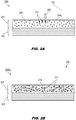
FIG. 2A is a diagrammatic cross section illustrating a biocidal infused surface fabric according to example embodiments of this disclosure; -
FIG. 2B is a diagrammatic cross section illustrating a biocidal infused surface fabric incorporating molecular crosslinking of biocidal compounds according to example embodiments of this disclosure; -
FIG. 3 is an illustration of biocidal treatments for the biocidal infused surface fabric ofFIGS. 2A or 2B ; and -
FIG. 4 is a diagrammatic cross section illustrating a biocidal conductive surface fabric according to example embodiments of this disclosure. - Before explaining one or more embodiments of the disclosure in detail, it is to be understood that the embodiments are not limited in their application to the details of construction and the arrangement of the components or steps or methodologies set forth in the following description or illustrated in the drawings. In the following detailed description of embodiments, numerous specific details may be set forth in order to provide a more thorough understanding of the disclosure. However, it will be apparent to one of ordinary skill in the art having the benefit of the instant disclosure that the embodiments disclosed herein may be practiced without some of these specific details. In other instances, well-known features may not be described in detail to avoid unnecessarily complicating the instant disclosure.
- As used herein a letter following a reference numeral is intended to reference an embodiment of the feature or element that may be similar, but not necessarily identical, to a previously described element or feature bearing the same reference numeral (e.g., 1, 1a, 1b). Such shorthand notations are used for purposes of convenience only and should not be construed to limit the disclosure in any way unless expressly stated to the contrary.
- Further, unless expressly stated to the contrary, "or" refers to an inclusive or and not to an exclusive or. For example, a condition A or B is satisfied by any one of the following: A is true (or present) and B is false (or not present), A is false (or not present) and B is true (or present), and both A and B are true (or present).
- In addition, use of "a" or "an" may be employed to describe elements and components of embodiments disclosed herein. This is done merely for convenience and "a" and "an" are intended to include "one" or "at least one," and the singular also includes the plural unless it is obvious that it is meant otherwise.
- Finally, as used herein any reference to "one embodiment" or "some embodiments" means that a particular element, feature, structure, or characteristic described in connection with the embodiment is included in at least one embodiment disclosed herein. The appearances of the phrase "in some embodiments" in various places in the specification are not necessarily all referring to the same embodiment, and embodiments may include one or more of the features expressly described or inherently present herein, or any combination or sub-combination of two or more such features, along with any other features which may not necessarily be expressly described or inherently present in the instant disclosure.
- Broadly speaking, embodiments of the inventive concepts disclosed herein are directed to surface fabrics for the aircraft or other mobile platforms and interior spaces (e.g., installable as wall or ceiling fabric or as a cover for armrests, headrests, passenger seats) incorporating a biocidal coating configured to attack any microbes deposited on the surface of the fabric. By compromising any deposited microbes, the biocidal coating can prevent the surface fabric from serving as a transmission vector to subsequent uninfected persons making contact with the aircraft surface.
- Referring to
FIG. 1 , anaircraft passenger cabin 100 is shown. However, the inventive concepts disclosed herein may be implemented in other interior spaces or mobile platforms, e.g., ground-based or water-based vehicles. - In embodiments, the
passenger cabin 100 may include various interior surfaces or components fully or partially coverable with fabric for decorative or acoustic purposes. For example, wall surfaces 102,overhead surfaces 104,cabin dividers 106,headrests 108,armrests 110,passenger seats 112, orcarpets 114 may incorporate some sort of fabric surface. Any or all of these surfaces may be subject to physical contact from multiple passengers or cabin crew during the course of a commercial flight; similarly, any or all of these surfaces may encounter the exhalations of passengers or crew. Whether by physical contact or by contact with such exhalations, any or all of these surfaces may serve as a transmission vector for viruses, bacteria, or other microbes carried by one passenger or crewmember and potentially transferrable to another. - Referring to
FIG. 2A , a biocidal infusedcomposite fabric 200 is shown. The biocidal infusedcomposite fabric 200 may include afabric layer 202 and apolymer coating 204 infused withbiocidal microcapsules 206. - In embodiments, the
fabric layer 202 may be a flexible substrate woven from one or more yarns. For example, the yarn/s may incorporate organic or synthetic fibers, or combinations thereof. - In embodiments, the
polymer coating 204 may be a resinous polymer compound to which thebiocidal microcapsules 206 have been applied. For example, thepolymer coating 204 may include, but is not limited to, one or more of a polyolefin, a polyurethane, a polyvinyl, a polycarbonate, and/or any other appropriate type of polymerized plastic compound. Thepolymer coating 204 may be applied to thefabric layer 202 via knife-over-roll coating, padding, dip coating, or any other appropriate method of application. - In embodiments, the
biocidal microcapsules 206 may be dispersed throughout thepolymer coating 204 prior to application of the polymer coating to thefabric layer 202. In some embodiments, thepolymer coating 204 may be applied to thefabric layer 202 and thebiocidal microcapsules 206 subsequently dispersed or impregnated throughout thepolymer coating 204. - In embodiments, the
biocidal microcapsules 206 may incorporate one or more biocidal agents or compounds in solid and/or liquid form. For example, the biocidal microcapsules may incorporate metal salts, metal oxides, quaternary ammonium ("quat") compounds or salts, other polycationic compounds, and/or other like biocidal agents capable of killing or compromising viruses, bacteria, or other microbial compounds in contact with thepolymer coating 204, e.g., via interaction with the cellular membranes and/or damage (e.g., permeability loss, leakage, cell death) to the membrane or to proteins, amino acids, or metabolic processes incorporated therein via inducement of stress. - In embodiments, the
biocidal microcapsules 206 may be configured for controlled release of the incorporated biocidal agents or compounds in response toexternal stimuli 208. For example, eachbiocidal microcapsule 206 may comprise a shell of synthetic polymer or biopolymer materials enclosing a core of solid and/or liquid biocidal compounds for controlled release. The biocidal infusedcomposite fabric 200 may be subjected tostimuli 208 via thepolymer coating 204, e.g., light, heat, or pressure, any of which alone or in combination may be indicative of microbial contact with the polymer coating. In embodiments, theexternal stimuli 208 may trigger the diffusion (210) of biocidal compounds from thebiocidal microcapsules 206 onto theexterior surface 204a of thepolymer coating 204, wherein any microbial substances may be compromised and/or killed by the biocidal compounds. - In some embodiments, the
biocidal microcapsules 206 may be not less than 1 micron (1 µm) and not more than 100 microns (100 µm) in diameter. In some embodiments, thebiocidal microcapsules 206 may include nanocapsules or nanoparticles of similar composition to the biocidal microcapsules described above but smaller in size, e.g., not more than 500 nm in diameter and ideally no more than 100 nm in diameter. - Referring now to
FIG. 2B , the biocidal infusedcomposite fabric 200a may be implemented and may function similarly to the biocidal infusedcomposite fabric 200 ofFIG. 2A , except that with respect to the biocidal infusedcomposite fabric 200a, in some embodiments,biocidal molecules 212 may be crosslinked topolymer chain molecules 214 within thepolymer coating 204 to form intermolecular covalent bridges. For example, thebiocidal molecules 212 may be crosslinked to the polymer chain molecules via amino-based crosslinkers or any other appropriate crosslinking agents. In some embodiments, biocidal action may be associated with (e.g., triggered by) contact by microbes or pathogens with thebiocidal molecules 212 on the surface of the biocidal infusedcomposite fabric 200a, e.g., rather than controlled release of biocidal compounds. In some embodiments, stronger covalent bonds between thebiocidal molecules 212 andpolymer chain molecules 214 may enhance the ability of the biocidal infusedcomposite fabric 200a to retain its biocidal properties even though the biocidal molecules are not encapsulated within biocidal microcapsules (206,FIG. 2A ). - In embodiments, referring also to
FIG. 2A , either or both of thepolymer coating 204 and thefabric layer 202 may be treated with or may include flame-resistant compounds. For example, if the biocidal infusedcomposite fabric 200 is configured for use within an aircraft passenger cabin, the biocidal infused composite fabric may need to meet or exceed regulatory standards for inflammability. In some embodiments, the flame-resistant compounds may include, but are not limited to, halogen-based compounds, phosphorus-based compounds, synergists or other composites, and any other flame-resistant compound compatible with thebiocidal molecules 212 orbiocidal microcapsules 206. - Referring also to
FIG. 3 , thefabric layer 300 may be implemented and may function similarly to thefabric layer 202 ofFIG. 2 , except that thefabric layer 300 may be further infused with additional biocidal capability. - Like the
fabric layer 202, thefabric layer 300 may be woven from one or more yarns, each yarn comprisingindividual strands 302 and each strand comprising severalwoven fibers 304. In embodiments, eachstrand 302 of thefabric layer 300 may incorporate intrinsicbiocidal molecules 306. For example, the composition of thebiocidal molecules 306 may be similar to that of thebiocidal molecules 212 shown byFIGS. 2B , except that thebiocidal molecules 306 may be grafted to, or electrospun with, theindividual fibers 304. For example, thefibers 304 may be electrospun from a liquid polymer or polymer solution incorporating thebiocidal molecules 306, such that the molecules are incorporated into the individual fibers. In some embodiments, thebiocidal molecules 306 may be molecularly crosslinked to apolymer chain matrix 308 within theindividual strands 302 orfibers 304. In some embodiments,individual strands 302 of the yarn may instead be coated with apolymer coating 310 incorporatingbiocidal molecules 306 and/orbiocidal microcapsules 206. - Referring to
FIG. 4 , the biocidal conductivecomposite fabric 400 may be implemented and may function similarly to the biocidal infusedcomposite fabric 200 ofFIG. 2 , except that the biocidal conductivecomposite fabric 400 may incorporate aconjugated polymer coating 402 applied to thefabric layer 202. - In embodiments, the
conjugated polymer coating 402 may incorporate charge transfer complexes or other intrinsically conductive polymers configured to generateelectrostatic charge 404, e.g., between component molecules. For example, theconjugated polymer coating 402 may include, but is not limited to, polyacetylenes, polypyrroles, polythiophenes, polyanilines, or any other appropriate conjugated polymer compounds or composites thereof. In embodiments, theconjugated polymer coating 402 may be applied via, e.g., in situ chemical/oxidative electrochemical polymerization, electroless coating, and/or silk screen printing in addition to/instead of knife-over-roll coating, dip coating, or other coating techniques described above. - In some embodiments, the
conjugated polymer coating 402 may further include metallic nanofillers, e.g., metal salt or oxide (silver, copper) nanoparticles. Theconjugated polymer coating 402 may generate sufficient electropositivity (e.g., via electron donation) to react with negatively charged compounds withinmicrobial cells 406, resulting in permeability loss and/or leakage within the cells (406a) due to induced stress. - In some embodiments, the
fabric layer 202 may additionally incorporatebiocidal microcapsules 206 and/orbiocidal molecules 306 grafted, electrospun, cross-linked topolymer chain matrices 308, or otherwise impregnated into the strands (302,FIG. 3 ) or individual fibers (304,FIG. 3 ) of the yarn from which the fabric layer is woven. - It is to be understood that embodiments of the methods disclosed herein may include one or more of the steps described herein. Further, such steps may be carried out in any desired order and two or more of the steps may be carried out simultaneously with one another. Two or more of the steps disclosed herein may be combined in a single step, and in some embodiments, one or more of the steps may be carried out as two or more sub-steps. Further, other steps or sub-steps may be carried in addition to, or as substitutes to one or more of the steps disclosed herein.
- Although inventive concepts have been described with reference to the embodiments illustrated in the attached drawing figures, equivalents may be employed and substitutions made herein without departing from the scope of the claims. Components illustrated and described herein are merely examples of a system/device and components that may be used to implement embodiments of the inventive concepts and may be replaced with other devices and components without departing from the scope of the claims. Furthermore, any dimensions, degrees, and/or numerical ranges provided herein are to be understood as non-limiting examples unless otherwise specified in the claims.
Claims (15)
- A biocidal infused composite fabric (200, 400) installable on an interior surface of a mobile platform, the fabric comprising:a flexible substrate (202) woven from a yarn comprising a plurality of fibers woven into a plurality of strands, the flexible substrate treated on an external surface with a polymer coating,the polymer coating (204) comprising one or more biocidal compounds configured for biocidal action against one or more pathogens in contact with the fabric.
- The biocidal infused composite fabric of Claim 1, wherein the one or more biocidal compounds comprise:one or more microcapsules (206) disposed within the polymer coating, each microcapsule comprising a shell enclosing the one or more biocidal compounds and configured for controlled release of the one or more biocidal compounds in response to the one or more pathogens;orone or more biocidal molecules (212) attached to at least one of the plurality of fibers or the plurality of strands.
- The biocidal infused composite fabric of Claim 2, wherein each fiber is electrospun from at least one of a liquid polymer or a polymer solution, the liquid polymer or the polymer solution including the one or more biocidal molecules.
- The biocidal infused composite fabric of Claim 3, wherein the liquid polymer or the polymer solution is treated with one or more flame resistant compounds.
- The biocidal infused composite fabric of Claim 2, wherein the one or more biocidal molecules (212) are grafted to each strand of the yarn.
- The biocidal infused composite fabric of any preceding Claim, wherein:the polymer coating comprises one or more polymer chain molecules;andthe one or more biocidal molecules (212) are crosslinked to the one or more polymer chain molecules.
- The fabric of any preceding Claim, wherein the polymer coating includes at least one flame resistant compound.
- The biocidal infused composite fabric of any preceding Claim, wherein the one or more biocidal compounds (212) and the one or more biocidal molecules are selected from a group including: a metal salt, a metal oxide, a polycationic compound, or a quaternary ammonium compound.
- The biocidal infused composite fabric of any preceding Claim, wherein each of the one or more microcapsules (206) is selected from a group including:a microcapsule (20) having a diameter not less than 1 µm and not more than 100 µm;ora nanocapsule having a diameter not more than 500 nm.
- A biocidal infused composite fabric installable on an interior surface of a mobile platform, the fabric comprising:a flexible substrate (202) woven from a yarn comprising a plurality of fibers woven into a plurality of strands,the flexible substrate (202) treated with a positively charged conjugated polymer coating configured to induce a conductive stress within one or more cells associated with negatively charged microbial compounds in contact with the fabric.
- The biocidal infused composite fabric of Claim 10, wherein at least one of each fiber or each strand includes a plurality of biocidal molecules (212) attached thereto, the plurality of biocidal molecules configured for biocidal action against the one or more cells in response to contact with the fabric.
- The biocidal infused composite fabric of Claim 11, wherein each fiber is electrospun from at least one of a liquid polymer or a polymer solution, the liquid polymer or the polymer solution including the plurality of biocidal molecules.
- The biocidal infused composite fabric of Claim 12, wherein the liquid polymer or the polymer solution is treated with one or more flame resistant compounds.
- The biocidal infused composite fabric of Claim 11, wherein each of the plurality of biocidal molecules are grafted to each strand of the yarn.
- The biocidal infused composite fabric of Claim 11, wherein each of the plurality of biocidal molecules are selected from a group including: a metal salt, a metal oxide, a polycationic compound, or a quaternary ammonium compound.
Applications Claiming Priority (2)
| Application Number | Priority Date | Filing Date | Title |
|---|---|---|---|
| IN202041027803 | 2020-06-30 | ||
| US17/351,816 US12378722B2 (en) | 2020-06-30 | 2021-06-18 | Biocidal infused composite fabric for cabin interiors |
Publications (2)
| Publication Number | Publication Date |
|---|---|
| EP3932203A2 true EP3932203A2 (en) | 2022-01-05 |
| EP3932203A3 EP3932203A3 (en) | 2022-05-11 |
Family
ID=76708121
Family Applications (1)
| Application Number | Title | Priority Date | Filing Date |
|---|---|---|---|
| EP21182537.7A Pending EP3932203A3 (en) | 2020-06-30 | 2021-06-29 | Biocidal infused composite fabric for cabin interiors |
Country Status (1)
| Country | Link |
|---|---|
| EP (1) | EP3932203A3 (en) |
Family Cites Families (5)
| Publication number | Priority date | Publication date | Assignee | Title |
|---|---|---|---|---|
| WO2007024972A2 (en) * | 2005-08-22 | 2007-03-01 | Quick-Med Technologies, Inc. | Non-leaching absorbent wound dressing |
| EP1976388A1 (en) * | 2005-04-08 | 2008-10-08 | Ctt Group Inc. | Antimicrobial solution comprising a metallic salt and a surfactant |
| WO2009064767A2 (en) * | 2007-11-12 | 2009-05-22 | Massachusetts Institute Of Technology | Bactericidal nanofibers, and methods of use thereof |
| EP2486184A2 (en) * | 2009-10-09 | 2012-08-15 | Stc.Unm | Materials incorporating antimicrobial polymers |
| EP3071211A1 (en) * | 2013-11-18 | 2016-09-28 | Instructive Color, LLC | Metastable silver nanoparticle composites with color indicating properties |
-
2021
- 2021-06-29 EP EP21182537.7A patent/EP3932203A3/en active Pending
Non-Patent Citations (2)
| Title |
|---|
| BOH B ET AL: "Microencapsulated antimicrobials on non-woven textiles for shoe insoles", XVTH INTERNATIONAL WORKSHOP ON BIOENCAPSULATION, vol. P4, 25 July 2007 (2007-07-25), pages 1 - 4, XP093364691, Retrieved from the Internet <URL:https://bioencapsulation.net/200_meetings/230_contribution_abstracts/2007-09-06_P4-01.pdf> * |
| WANG CHANGQING ET AL: "Research progress of stimulus-responsive antibacterial materials for bone infection", FRONTIERS IN BIOENGINEERING AND BIOTECHNOLOGY, vol. 10, 23 December 2022 (2022-12-23), CH, XP093217544, ISSN: 2296-4185, DOI: 10.3389/fbioe.2022.1069932 * |
Also Published As
| Publication number | Publication date |
|---|---|
| EP3932203A3 (en) | 2022-05-11 |
Similar Documents
| Publication | Publication Date | Title |
|---|---|---|
| US11027501B2 (en) | High lap shear strength, low back face signature UD composite and the process of making | |
| US8993089B2 (en) | Closed cell materials | |
| US9880080B2 (en) | Rigid structural and low back face signature ballistic UD/articles and method of making | |
| JP6243337B2 (en) | Surface-treated yarns and fabrics having improved physical and adhesive properties and manufacturing methods | |
| KR101969437B1 (en) | High performance ballistic composites and method of making | |
| US9023451B2 (en) | Rigid structure UHMWPE UD and composite and the process of making | |
| KR101988016B1 (en) | Low bfs composite and process for making the same | |
| CN102089368B (en) | Substrate coating comprising a complex of an ionic fluoropolymer and surface charged nanoparticles | |
| JPH11505775A (en) | Laminates for retaining organic vapors, aerosols and biological agents | |
| US12378722B2 (en) | Biocidal infused composite fabric for cabin interiors | |
| EP1664161A1 (en) | Two-step method for dipping synthetic fiber | |
| Balagna et al. | Antibacterial nanostructured composite coating on high performance Vectran™ fabric for aerospace structures | |
| WO2022020900A1 (en) | Plasma coating with nanomaterial | |
| US20050130521A1 (en) | Protective laminates | |
| WO2013191474A1 (en) | Sound absorbing and screening material and method for manufacturing same | |
| US20140327957A1 (en) | Closed Cell Materials | |
| US8147936B2 (en) | Composite membrane for chemical and biological protection | |
| DE102009003646A1 (en) | Protective suit and method for its manufacture | |
| Basak et al. | Recent advances in protective textile materials | |
| EP3932203A3 (en) | Biocidal infused composite fabric for cabin interiors | |
| US20140212598A1 (en) | Protection and performance improvements of fabrics through nanotechnology | |
| US20260035797A1 (en) | Plasma coating with particles | |
| MARIN et al. | ADVANCED TECHNOLOGIES IN THE DEVELOPMENT OF ANTIMICROBIAL TEXTILES: A REVIEW | |
| Tomy | NK ON CAMPUS K® IS INSIDE UDENT CENTER. |
Legal Events
| Date | Code | Title | Description |
|---|---|---|---|
| PUAI | Public reference made under article 153(3) epc to a published international application that has entered the european phase |
Free format text: ORIGINAL CODE: 0009012 |
|
| STAA | Information on the status of an ep patent application or granted ep patent |
Free format text: STATUS: THE APPLICATION HAS BEEN PUBLISHED |
|
| AK | Designated contracting states |
Kind code of ref document: A2 Designated state(s): AL AT BE BG CH CY CZ DE DK EE ES FI FR GB GR HR HU IE IS IT LI LT LU LV MC MK MT NL NO PL PT RO RS SE SI SK SM TR |
|
| PUAL | Search report despatched |
Free format text: ORIGINAL CODE: 0009013 |
|
| AK | Designated contracting states |
Kind code of ref document: A3 Designated state(s): AL AT BE BG CH CY CZ DE DK EE ES FI FR GB GR HR HU IE IS IT LI LT LU LV MC MK MT NL NO PL PT RO RS SE SI SK SM TR |
|
| RIC1 | Information provided on ipc code assigned before grant |
Ipc: A01P 1/00 20060101ALI20220406BHEP Ipc: D06M 13/46 20060101ALI20220406BHEP Ipc: D06M 13/332 20060101ALI20220406BHEP Ipc: D06M 11/83 20060101ALI20220406BHEP Ipc: D06M 11/42 20060101ALI20220406BHEP Ipc: A01N 59/20 20060101ALI20220406BHEP Ipc: A01N 59/16 20060101ALI20220406BHEP Ipc: A01N 33/12 20060101AFI20220406BHEP |
|
| STAA | Information on the status of an ep patent application or granted ep patent |
Free format text: STATUS: REQUEST FOR EXAMINATION WAS MADE |
|
| 17P | Request for examination filed |
Effective date: 20221109 |
|
| RBV | Designated contracting states (corrected) |
Designated state(s): AL AT BE BG CH CY CZ DE DK EE ES FI FR GB GR HR HU IE IS IT LI LT LU LV MC MK MT NL NO PL PT RO RS SE SI SK SM TR |
|
| P01 | Opt-out of the competence of the unified patent court (upc) registered |
Effective date: 20230922 |
|
| STAA | Information on the status of an ep patent application or granted ep patent |
Free format text: STATUS: EXAMINATION IS IN PROGRESS |
|
| 17Q | First examination report despatched |
Effective date: 20241029 |