EP3930255A1 - Application-key management system, application-key management device, application-key management method, and computer-readable medium - Google Patents
Application-key management system, application-key management device, application-key management method, and computer-readable medium Download PDFInfo
- Publication number
- EP3930255A1 EP3930255A1 EP21157949.5A EP21157949A EP3930255A1 EP 3930255 A1 EP3930255 A1 EP 3930255A1 EP 21157949 A EP21157949 A EP 21157949A EP 3930255 A1 EP3930255 A1 EP 3930255A1
- Authority
- EP
- European Patent Office
- Prior art keywords
- application
- key
- logical
- management device
- drive
- Prior art date
- Legal status (The legal status is an assumption and is not a legal conclusion. Google has not performed a legal analysis and makes no representation as to the accuracy of the status listed.)
- Pending
Links
- 238000007726 management method Methods 0.000 title description 188
- 238000004891 communication Methods 0.000 claims abstract description 103
- 238000012217 deletion Methods 0.000 claims abstract description 36
- 230000037430 deletion Effects 0.000 claims abstract description 36
- 238000010586 diagram Methods 0.000 description 20
- 238000004590 computer program Methods 0.000 description 16
- 230000006870 function Effects 0.000 description 10
- 238000000034 method Methods 0.000 description 8
- 238000012986 modification Methods 0.000 description 8
- 230000004048 modification Effects 0.000 description 8
- 230000005540 biological transmission Effects 0.000 description 3
- 238000005516 engineering process Methods 0.000 description 3
- 208000032368 Device malfunction Diseases 0.000 description 1
- 230000003247 decreasing effect Effects 0.000 description 1
- 239000013307 optical fiber Substances 0.000 description 1
- 238000012545 processing Methods 0.000 description 1
- 238000011012 sanitization Methods 0.000 description 1
- 238000006467 substitution reaction Methods 0.000 description 1
Images



Classifications
-
- H—ELECTRICITY
- H04—ELECTRIC COMMUNICATION TECHNIQUE
- H04L—TRANSMISSION OF DIGITAL INFORMATION, e.g. TELEGRAPHIC COMMUNICATION
- H04L9/00—Cryptographic mechanisms or cryptographic arrangements for secret or secure communications; Network security protocols
- H04L9/08—Key distribution or management, e.g. generation, sharing or updating, of cryptographic keys or passwords
- H04L9/0816—Key establishment, i.e. cryptographic processes or cryptographic protocols whereby a shared secret becomes available to two or more parties, for subsequent use
- H04L9/0852—Quantum cryptography
-
- H—ELECTRICITY
- H04—ELECTRIC COMMUNICATION TECHNIQUE
- H04L—TRANSMISSION OF DIGITAL INFORMATION, e.g. TELEGRAPHIC COMMUNICATION
- H04L9/00—Cryptographic mechanisms or cryptographic arrangements for secret or secure communications; Network security protocols
- H04L9/08—Key distribution or management, e.g. generation, sharing or updating, of cryptographic keys or passwords
- H04L9/0816—Key establishment, i.e. cryptographic processes or cryptographic protocols whereby a shared secret becomes available to two or more parties, for subsequent use
- H04L9/085—Secret sharing or secret splitting, e.g. threshold schemes
-
- H—ELECTRICITY
- H04—ELECTRIC COMMUNICATION TECHNIQUE
- H04L—TRANSMISSION OF DIGITAL INFORMATION, e.g. TELEGRAPHIC COMMUNICATION
- H04L9/00—Cryptographic mechanisms or cryptographic arrangements for secret or secure communications; Network security protocols
- H04L9/08—Key distribution or management, e.g. generation, sharing or updating, of cryptographic keys or passwords
- H04L9/0894—Escrow, recovery or storing of secret information, e.g. secret key escrow or cryptographic key storage
Definitions
- the present disclosure relates to an application-key management system, an application-key management device, an application-key management method, and a computer-readable medium.
- Quantum cryptographic communication technology is expected to be implemented as a cryptographic technique that cannot be deciphered even if the computing power of a computer is improved.
- an application-key management system includes a plurality of application-key management devices and a comprehensive management device.
- the application-key management devices each include a storage unit, a first communication control module, and a storage control module.
- the storage unit is configured to store an application key in one or more separated logical drives for each sharing destination of the application key shared by quantum cryptographic communication.
- the first communication control module is configured to receive, from the comprehensive management device, a deletion request of specifying a logical drive storing the application key to be deleted among the logical drives.
- the storage control module is configured to delete the application key stored in the logical drive specified by the deletion request.
- FIG. 1 is a diagram illustrating a first example of the basic configuration of the quantum cryptographic communication system according to a first arrangement.
- a quantum cryptographic device 10a (starting node) transmits photons that are the source of a quantum cryptographic key to a quantum cryptographic device 10b (terminal node) via a quantum key distribution (QKD) link.
- the quantum cryptographic device 10a generates a quantum cryptographic key (starting node) based on the transmitted photons
- the quantum cryptographic device 10b generates a quantum cryptographic key (terminal node) based on the received photons.
- the quantum cryptographic key (starting node) and the quantum cryptographic key (terminal node) are shared bit data and are identical.
- the quantum cryptographic device 10a transmits the quantum cryptographic key (starting node) to an application-key management device 20a (starting node), and the quantum cryptographic device 10b transmits the quantum cryptographic key (terminal node) to an application-key management device 20b (terminal node).
- the application key is a cryptographic key used when an application 30a (starting node) encrypts and transmits application data.
- the sharing method is basically as described in non-patent literature of R. Takahashi, Y. Tanizawa, and A. Dixon, "A high-speed key management method for quantum key distribution network" 2019 Eleventh International Conference on Ubiquitous and Future Networks (ICUFN), Zagreb, Croatia, 2019, pp. 437-442 , for example.
- the application-key management device 20a generates an application key by a random number generator and the like.
- the application-key management device 20a performs one time pad (OTP) encryption using a quantum cryptographic key on the application key and generates an OTP-encrypted application key.
- OTP one time pad
- the application-key management device 20a transmits the OTP-encrypted application key to the application-key management device 20b.
- the OTP-encrypted application key is transmitted and received via a transmission path (wired or wireless) corresponding to the QKD link.
- the application-key management device 20b performs OTP decryption using a quantum cryptographic key on the OTP-encrypted application key and decrypts the application key. In this way, the application key is shared by the application-key management devices 20a and 20b.
- the applications 30a and 30b acquire the application key from the application-key management devices 20a and 20b, respectively, at any desired timing. Specifically, after the application 30a retrieves the application key from the application-key management device 20a, the application 30b acquires from the application-key management device 20b the application key identical to the application key acquired by the application 30a.
- the application 30a After the application key is shared by the applications 30a and 30b, when the application 30a transmits application data, the application 30a performs encryption using the application key on the application data and transmits the application data.
- the devices on which the applications 30a and 30b operate are any device such as a smart device, a personal computer, and the like, for example. This is the description of the basic configuration.
- FIG. 1 although the starting node and the terminal node are directly connected, the basic operation is the same even when a relay node is interposed between the starting node and the terminal node.
- FIG. 2 illustrates the configuration in which one relay node is interposed between the starting node and the terminal node.
- FIG. 2 is a diagram illustrating a second example of the basic configuration of the quantum cryptographic communication system of the first arrangement.
- the number of QKD links is two.
- the quantum cryptographic device 10a (starting node) and the quantum cryptographic device 10c (relay node) share a quantum cryptographic key (QKD link 1)
- the quantum cryptographic device 10c (relay node) and the quantum cryptographic device 10b (terminal node) share a quantum cryptographic key (QKD link 2).
- the application-key management device 20a When the application 30a (starting node) and the application 30b (terminal node) share an application key, the application-key management device 20a first encrypts and transmits the application key to an application-key management device 20c, by using the quantum cryptographic key (QKD link 1). Then, the application-key management device 20c encrypts and transmits the application key to the application-key management device 20b, by using the quantum cryptographic key (QKD link 2). The applications 30a and 30b acquire the application key from the application-key management devices 20a and 20b, respectively, at any desired timing. This completes the sharing of the application key between the starting node and the terminal node. The operation of the applications 30a and 30b after sharing the application key is the same as that of FIG. 1 .
- FIG. 3 is a diagram illustrating an example of a device configuration of an application-key management device 20 of the arrangement.
- the application-key management device 20 of the arrangement includes a storage unit 21, a communication control module 22, and a storage control module 23.
- the application-key management device 20 may be connected to a quantum cryptographic communication device 10 or may be built into the quantum cryptographic communication device 10.
- the storage unit 21 stores an application key in one or more logical drives separated for each sharing destination of the application key shared by quantum cryptographic communication.
- the communication control module 22 controls communication performed with other devices. For example, when a failure occurs, the communication control module 22 transmits a failure notification to a comprehensive management device that comprehensively manages logical drives sharing the application keys. Examples of the failure include a case in which the application-key management device 20 malfunctioned, a case in which a disaster occurred at the site where the application-key management device 20 is placed, a case in which the site where the application-key management device 20 is installed was subjected to a cyberattack by a hacker and the like (for example, an unauthorized intrusion or the like), and the like.
- the communication control module 22 receives, from the comprehensive management device, a deletion request in which a logical drive storing the application key to be deleted is specified, for example.
- the storage control module 23 performs storage control of information stored in the storage unit 21. For example, the storage control module 23 deletes the application key stored in the logical drive specified by the deletion request.
- the deletion method of application keys a method according to various guidelines using a data sanitization method including the zero-write method, the random-write method, and the like is taken.
- FIG. 4 is a diagram illustrating a configuration example of logical drives sharing application keys of the arrangement.
- the example in FIG. 4 illustrates a case in which the application-key management devices 20a to 20c are placed at three sites (A site, B site, and C site).
- the application-key management devices 20a to 20c share the application keys by separating logical drives for each site of the sharing destination.
- a D-drive A and an E-drive A are created in the application-key management device 20a.
- a D-drive B and an E-drive B are created in the application-key management device 20b.
- a D-drive C and an E-drive C are created in the application-key management device 20c.
- the application key used at the sites A and B is shared by associating the D-drive A of the application-key management device 20a with the D-drive B of the application-key management device 20b.
- the application key used at the sites A and C is shared by associating the E-drive A of the application-key management device 20a with the D-drive C of the application-key management device 20c.
- the application key used at the sites B and C is shared by associating the E-drive B of the application-key management device 20b with the E-drive C of the application-key management device 20c.
- FIG. 5 is a diagram illustrating an example of the functional configuration of a comprehensive management device 40 of the arrangement.
- the comprehensive management device 40 of the arrangement includes a communication control module 41, an identifying module 42, and a storage unit 43.
- the communication control module 41 controls communication performed with other devices. For example, the communication control module 41 receives a failure notification from the application-key management device 20 for which a failure occurred.
- the identifying module 42 identifies one or more logical drives associated with one or more logical drives of the application-key management device 20 for which the failure occurred.
- the storage unit 43 stores therein correspondence information indicating the combinations of logical drives sharing application keys, and a handling log of the application keys.
- FIG. 6 is a diagram illustrating an example of the information stored in the storage unit 43 of the comprehensive management device 40 of the arrangement.
- the correspondence information includes information on the entire application keys stored in the quantum cryptographic communication system.
- the combination of logical drives sharing an application key and the storage amount of the application key are managed for each application key shared between the sites.
- an application key AB is an application key shared between the site A and the site B
- an application key AC is an application key shared between the site A and the site C
- an application key BC is an application key shared between the site B and the site C.
- the combination of logical drives is a combination of logical drives by which the application key is shared.
- the combination of logical drives by which the application key AB is shared is the D-drive A of the site A with the D-drive B of the site B.
- the storage amount is the amount of application key stored in each logical drive.
- the D-drive A of the site A stores therein an application key of 10G bytes
- the D-drive B of the site B stores therein an application key of 10G bytes.
- the storage amount is acquired as the comprehensive management device 40 is notified from each application-key management device 20, for example.
- the handling log of application keys is a log indicating the handling of application keys stored in the quantum cryptographic communication system.
- the log concerning the handling of the application key AB, the application key AC, and the application key BC is logged.
- the log includes the date and time the event occurred, an event type (erasure event of application key), and a status of execution on the logical drive corresponding thereto (erased all application key) .
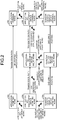
- FIG. 7 is a diagram illustrating an operation example of the application-key management system 100 of the arrangement.
- the communication control module 22 of the application-key management device 20b transmits a failure notification to the comprehensive management device 40 (Step S1).
- the communication control module 41 of the comprehensive management device 40 gives instruction to erase the application keys stored in the site B where the failure occurred and the application keys of the logical drives storing the application keys sharing with the site B where the failure occurred (Step S2).
- the identifying module 42 first identifies the D-drive A of the application-key management device 20a as the logical drive associated with the D-drive B of the application-key management device 20b and identifies the E-drive C of the application-key management device 20c as the logical drive associated with the E-drive B of the application-key management device 20b.
- the communication control module 41 transmits a deletion request in which the D-drive B and the E-drive B are specified to the application-key management device 20b, transmits a deletion request in which the D-drive A is specified to the application-key management device 20a, and transmits a deletion request in which the E-drive C is specified to the application-key management device 20c.
- each of the application-key management devices 20a to 20c that received the instruction of erasing the application keys from the comprehensive management device 40 erases the application key stored in the specified logical drive (Step S3).
- the storage control module 23 of the application-key management device 20a erases the application key in the D-drive A
- the storage control module 23 of the application-key management device 20b erases the application keys in the D-drive B and the E-drive B
- the storage control module 23 of the application-key management device 20c erases the application key in the E-drive C.
- the communication control module 22 of the application-key management device 20a transmits an erasure completion report of the application key in the D-drive A to the comprehensive management device 40
- the communication control module 22 of the application-key management device 20b transmits an erasure completion report of the application keys in the D-drive B and the E-drive B to the comprehensive management device 40
- the communication control module 22 of the application-key management device 20c transmits an erasure completion report of the application key in the E-drive C to the comprehensive management device 40 (Step S4).
- the storage unit 43 of the comprehensive management device 40 stores the handling log of the application keys (Step S5). Specifically, the storage unit 43 stores a log indicating all erasure of the application key AB (erasing all application keys of the site A: D-drive A and the site B: D-drive B) and a log indicating all erasure of the application key BC (erasing all application keys of the site B: E-drive B and the site C: E-drive C).
- the storage unit 21 of the application-key management device 20 stores an application key in one or more logical drives separated for each sharing destination of the application key shared by quantum cryptographic communication.
- the communication control module 22 receives, from the comprehensive management device 40, a deletion request in which a logical drive storing the application key to be deleted is specified. Then, the storage control module 23 deletes the application key stored in the logical drive specified by the deletion request.
- FIG. 8 is a diagram illustrating a configuration example of logical drives of the first modification of the arrangement.
- the number of logical drives storing the application key AB shared between the site A and the site B is two.
- the number of logical drives storing the application key AC shared between the site A and the site C is three.
- the number of logical drives storing the application key BC shared between the site B and the site C is one.
- the application keys may be stored separating the logical drives for each application, or a plurality of logical drives may be used for the storage of the application key for a single application.
- the storage control module 23 of the application-key management device 20 creates a new logical drive as a logical drive to store the application key of the relevant application.
- the number of logical drives is increased such that the number of logical drives storing the application key shared between two sites is the same.
- the storage control module 23 may decrease the number of logical drives storing the application keys. However, as with the increase of logical drives, the number of logical drives is decreased such that the number of logical drives storing the application key shared between two sites is the same.
- the communication control module 22 of the application-key management device 20 notifies the comprehensive management device 40 as needed.
- the identifying module 42 of the comprehensive management device 40 updates the correspondence information (see FIG. 6 ), upon receiving the notification from the application-key management device 20. Furthermore, the identifying module 42 also records in the storage unit 43 the log indicating that the number of logical drives has been changed and the like.
- the comprehensive management device 40 also transmits, to the application-key management device 20 of the sharing destination sharing the application key with the application-key management device 20 for which the number of logical drives has been changed, a request of changing the configuration of logical drives. As a result, the comprehensive management device 40 performs control so that the number of logical drives storing the application key shared between two sites is the same.
- the communication control module 22 of the application-key management device 20 transmits, to the comprehensive management device 40, a logical-drive addition notification indicating the relevant new logical drive and the application-key management device 20 of the sharing destination of the application key stored in the relevant new logical drive.
- the identifying module 42 of the comprehensive management device 40 stores, based on the logical-drive addition notification, the new logical drive in the correspondence information.
- the communication control module 41 transmits, to the application-key management device 20 of the sharing destination, a request of creating a logical drive associated with the new drive.
- the communication control module 22 of the application-key management device 20 transmits, to the comprehensive management device 40, a logical-drive deletion notification indicating that the logical drive sharing the application key has been deleted.
- the identifying module 42 of the comprehensive management device 40 identifies, based on the correspondence information, the application-key management device 20 of the sharing destination having the logical drive sharing the application key stored in the deleted logical drive.
- the communication control module 41 transmits, to the application-key management device 20 of the sharing destination, a deletion request in which the logical drive associated with the deleted logical drive is specified.
- the communication control module 22 of the application-key management device 20 transmits, to the comprehensive management device 40, a logical-drive change notification indicating that the logical drive sharing the application key has been changed.
- the identifying module 42 of the comprehensive management device 40 updates the correspondence information based on the logical-drive change notification and identifies, based on the updated correspondence information, the application-key management device 20 of the sharing destination having the logical drive sharing the application key stored in the changed logical drive. Then, the communication control module 41 notifies the application-key management device 20 of the sharing destination that the logical drive of the sharing destination of the application key has been changed.
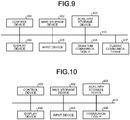
- FIG. 9 is a diagram illustrating an example of the hardware configuration of a principal portion of the quantum cryptographic communication device 10 of the arrangement.
- the quantum cryptographic communication device 10 of the arrangement includes a control device 301, a main storage device 302, an auxiliary storage device 303, a display device 304, an input device 305, a quantum communication interface (IF) 306, and a classic communication IF 307.
- IF quantum communication interface
- the control device 301, the main storage device 302, the auxiliary storage device 303, the display device 304, the input device 305, the quantum communication IF 306, and the classic communication IF 307 are connected via a bus 310.
- the control device 301 executes a computer program that is read out from the auxiliary storage device 303 to the main storage device 302.
- the main storage device 302 is a memory such as a read only memory (ROM), a random access memory (RAM), and the like.
- the auxiliary storage device 303 is a hard disk drive (HDD), a memory card, and the like.
- the display device 304 displays the status and the like of the quantum cryptographic communication device 10.
- the input device 305 receives the input from a user.
- the quantum communication IF 306 is an interface for connecting to a QKD link.
- the classic communication IF 307 is an interface for connecting to a transmission path.
- FIG. 10 is a diagram illustrating an example of the hardware configuration of a principal portion of the application-key management device 20 and the comprehensive management device 40 of the arrangement.
- the application-key management device 20 and the comprehensive management device 40 of the arrangement each include a control device 401, a main storage device 402, an auxiliary storage device 403, a display device 404, an input device 405, and a communication IF 406.
- the control device 401, the main storage device 402, the auxiliary storage device 403, the display device 404, the input device 405, and the communication IF 406 are connected via a bus 410.
- the control device 401 executes a computer program that is read out from the auxiliary storage device 403 to the main storage device 402.
- the main storage device 402 is a memory of a ROM, a RAM, and the like.
- the auxiliary storage device 403 is an HDD, a memory card, and the like.
- the display device 404 displays the status and the like of the application-key management device 20 or the comprehensive management device 40.
- the input device 405 receives the input from a user.
- the communication IF 406 is an interface for connecting to the transmission path.
- the computer programs executed in the quantum cryptographic communication device 10, the application-key management device 20, and the comprehensive management device 40 of the arrangement are recorded in a computer-readable recording medium such as a CD-ROM, a memory card, a CD-R, a digital versatile disc (DVD), and the like in a file of an installable or executable format and provided as a computer program product.
- a computer-readable recording medium such as a CD-ROM, a memory card, a CD-R, a digital versatile disc (DVD), and the like in a file of an installable or executable format and provided as a computer program product.
- the computer programs executed by the quantum cryptographic communication device 10, the application-key management device 20, and the comprehensive management device 40 of the arrangement may be stored in a computer connected to a network such as the Internet, and be provided by downloading via the network.
- the computer programs that the quantum cryptographic communication device 10, the application-key management device 20, and the comprehensive management device 40 of the arrangement execute may be provided, without downloading, via a network such as the Internet.
- the computer programs executed by the quantum cryptographic communication device 10, the application-key management device 20, and the comprehensive management device 40 of the arrangement may be provided by embedding in a ROM or the like in advance.
- the computer program executed in the quantum cryptographic communication device 10 of the arrangement is in a modular configuration including, out of the functional configuration of the quantum cryptographic communication device 10 of the arrangement, the functions that can be implemented by the computer program.
- the functions implemented by the program are loaded onto the main storage device 302, as the control device 301 reads out and executes the computer program from a storage medium such as the auxiliary storage device 303 and the like. That is, the functions implemented by the computer program are generated on the main storage device 302.
- the computer programs executed in the application-key management device 20 and the comprehensive management device 40 of the arrangement each are in a modular configuration including, out of the functional configuration of the application-key management device 20 or the comprehensive management device 40 of the arrangement, the functions that can be implemented by the computer programs.
- the functions implemented by the computer program are loaded onto the main storage device 402, as the control device 401 reads out and executes the computer program from a storage medium such as the auxiliary storage device 403 and the like. That is, the functions implemented by the computer program are generated on the main storage device 402.
- a part or whole of the functions of the quantum cryptographic communication device 10, the application-key management device 20, and the comprehensive management device 40 of the arrangement may be implemented by the hardware such as an integrated circuit (IC) and the like.
- the IC is a processor that executes dedicated processing, for example.
- each processor may implement one out of the various functions or may implement two or more out of the various functions.
- the operation mode of the quantum cryptographic communication device 10, the application-key management device 20, and the comprehensive management device 40 of the arrangement may be in any desired mode.
- the quantum cryptographic communication device 10, the application-key management device 20, and the comprehensive management device 40 of the arrangement may be made to operate as a quantum cryptographic communication system that implements cryptographic communication of a cloud system on a network, for example.
- An application-key management system includes a plurality of application-key management devices and a comprehensive management device.
- the application-key management devices each include a storage unit, a first communication control module, and a storage control module.
- the storage unit is configured to store an application key in one or more separated logical drives for each sharing destination of the application key shared by quantum cryptographic communication.
- the first communication control module is configured to receive, from the comprehensive management device, a deletion request of specifying a logical drive storing the application key to be deleted among the logical drives.
- the storage control module is configured to delete the application key stored in the logical drive specified by the deletion request.
- Example 2 In the application-key management system according to Example 1, when a failure occurs, the first communication control module transmits a failure notification to the comprehensive management device, the comprehensive management device includes a second communication control module and an identifying module.
- the second communication control module is configured to receive the failure notification from a first application-key management device of the plurality of application-key management devices.
- the identifying module is configured to identify one or more second logical drives associated with one or more first logical drives of the first application-key management device.
- the second communication control module transmits, to the first application-key management device, a first deletion request of specifying the one or more first logical drives, and transmits, to one or more second application-key management devices each including a second storage unit having the second logical drives, a second deletion request of specifying the second logical drives.
- Example 3 In the application-key management system according to Example 2, the identifying module identifies, from correspondence information indicating a combination of logical drives sharing the application key, the one or more second logical drives associated with the one or more first logical drives.
- Example 4 In the application-key management system according to Example 3, when a new logical drive is created, the first communication control module transmits, to the comprehensive management device, a logical-drive addition notification indicating the new logical drive and an application-key management device of a sharing destination of an application key stored in the new logical drive.
- the identifying module stores, based on the logical-drive addition notification, the new logical drive in the correspondence information.
- the second communication control module transmits, to the application-key management device of the sharing destination, a request of creating a logical drive associated with the new logical drive.
- Example 5 In the application-key management system according to Example 3, when a logical drive sharing the application key is deleted, the first communication control module transmits, to the comprehensive management device, a logical-drive deletion notification indicating that the logical drive sharing the application key is deleted.
- the identifying module identifies, based on the correspondence information, an application-key management device of the sharing destination having a logical drive sharing the application key stored in the deleted logical drive.
- the second communication control module transmits, to the application-key management device of the sharing destination, a deletion request of specifying the logical drive associated with the deleted logical drive.
- Example 6 In the application-key management system according to Example 3, when a logical drive sharing the application key is changed, the first communication control module transmits, to the comprehensive management device, a logical-drive change notification indicating that the logical drive sharing the application key is changed.
- the identifying module updates the correspondence information based on the logical-drive change notification and identifies, based on the updated correspondence information, an application-key management device of a sharing destination having a logical drive sharing the application key stored in the changed logical drive.
- the second communication control module notifies the application-key management device of the sharing destination that the logical drive of the sharing destination of the application key is changed.
- Example 7 In the application-key management system according to any one of Examples 1 to 6, a number of logical drives storing the shared application key is a same between a sharing destination and a sharing source of the application key.
- An application-key management device includes a storage unit, a first communication control module, and a storage control module.
- the storage unit is configured to store an application key in one or more separated logical drives for each sharing destination of the application key shared by quantum cryptographic communication.
- the first communication control module is configured to receive, from a comprehensive management device, a deletion request of specifying a logical drive storing the application key to be deleted among the logical drives.
- the storage control module is configured to delete the application key stored in the logical drive specified by the deletion request.
- An application-key management method includes: storing, by an application-key management device, an application key in one or more separated logical drives for each sharing destination of the application key shared by quantum cryptographic communication; receiving, by the application-key management device, from a comprehensive management device, a deletion request of specifying a logical drive storing the application key to be deleted among the logical drives; and deleting, by the application-key management device, the application key stored in the logical drive specified by the deletion request.
- a computer-readable medium includes instructions which, when executed by a computer storing an application key in one or more separated logical drives for each sharing destination of the application key shared by quantum cryptographic communication, cause the computer to execute: receiving, from a comprehensive management device, a deletion request of specifying a logical drive storing the application key to be deleted among the logical drives; and deleting the application key stored in the logical drive specified by the deletion request.
Landscapes
- Engineering & Computer Science (AREA)
- Computer Security & Cryptography (AREA)
- Computer Networks & Wireless Communication (AREA)
- Signal Processing (AREA)
- Physics & Mathematics (AREA)
- Electromagnetism (AREA)
- Theoretical Computer Science (AREA)
- Storage Device Security (AREA)
Abstract
According to an arrangement, an application-key management system (100) includes a plurality of application-key management devices (20a, 20b, 20c) and a comprehensive management device (40). The application-key management devices (20a, 20b, 20c) each include a storage unit (21), a first communication control module (22), and a storage control module (23). The storage unit (21) stores an application key in one or more separated logical drives for each sharing destination of the application key shared by quantum cryptographic communication. The first communication control module (22) receives, from the comprehensive management device (40), a deletion request of specifying a logical drive storing the application key to be deleted among the logical drives. The storage control module (23) deletes the application key stored in the logical drive specified by the deletion request.
Description
- The present disclosure relates to an application-key management system, an application-key management device, an application-key management method, and a computer-readable medium.
- The advancement of information communication technology has led to the exchange of diverse data, and ensuring the confidentiality, security, and the like of transmitted information has become a major issue. Quantum cryptographic communication technology is expected to be implemented as a cryptographic technique that cannot be deciphered even if the computing power of a computer is improved.
- With conventional technologies, however, it has been difficult to strictly manage an application key shared by quantum cryptographic communication.
-
-
FIG. 1 is a diagram illustrating a first example of a basic configuration of a quantum cryptographic communication system according to an arrangement; -
FIG. 2 is a diagram illustrating a second example of the basic configuration of the quantum cryptographic communication system of the arrangement; -
FIG. 3 is a diagram illustrating an example of a device configuration of an application-key management device of the arrangement; -
FIG. 4 is a diagram illustrating a configuration example of logical drives sharing application keys of the arrangement; -
FIG. 5 is a diagram illustrating an example of a functional configuration of a comprehensive management device of the arrangement; -
FIG. 6 is a diagram illustrating an example of information stored in a storage unit of the comprehensive management device of the arrangement; -
FIG. 7 is a diagram illustrating an operation example of an application-key management system of the arrangement; -
FIG. 8 is a diagram illustrating a configuration example of logical drives sharing application keys according to a first modification of the arrangement; -
FIG. 9 is a diagram illustrating an example of a hardware configuration of a principal portion of a quantum cryptographic communication device of the arrangement; and -
FIG. 10 is a diagram illustrating an example of a hardware configuration of a principal portion of the application-key management device and the comprehensive management device of the arrangement. - According to an arrangement, an application-key management system includes a plurality of application-key management devices and a comprehensive management device. The application-key management devices each include a storage unit, a first communication control module, and a storage control module. The storage unit is configured to store an application key in one or more separated logical drives for each sharing destination of the application key shared by quantum cryptographic communication. The first communication control module is configured to receive, from the comprehensive management device, a deletion request of specifying a logical drive storing the application key to be deleted among the logical drives. The storage control module is configured to delete the application key stored in the logical drive specified by the deletion request.
- With reference to the accompanying drawings, the following describes in detail an exemplary arrangement of an application-key management system, an application-key management device, an application-key management method, and a computer-readable medium.
- First, examples of a basic configuration of a quantum cryptographic communication system will be described. First Example of Basic Configuration
-
FIG. 1 is a diagram illustrating a first example of the basic configuration of the quantum cryptographic communication system according to a first arrangement. First, a quantumcryptographic device 10a (starting node) transmits photons that are the source of a quantum cryptographic key to a quantumcryptographic device 10b (terminal node) via a quantum key distribution (QKD) link. The quantumcryptographic device 10a generates a quantum cryptographic key (starting node) based on the transmitted photons, and the quantumcryptographic device 10b generates a quantum cryptographic key (terminal node) based on the received photons. The quantum cryptographic key (starting node) and the quantum cryptographic key (terminal node) are shared bit data and are identical. Then, the quantumcryptographic device 10a transmits the quantum cryptographic key (starting node) to an application-key management device 20a (starting node), and the quantumcryptographic device 10b transmits the quantum cryptographic key (terminal node) to an application-key management device 20b (terminal node). - Subsequently, the application-
key management devices application 30a (starting node) encrypts and transmits application data. - A sharing method of application key will be described. The sharing method is basically as described in non-patent literature of R. Takahashi, Y. Tanizawa, and A. Dixon, "A high-speed key management method for quantum key distribution network" 2019 Eleventh International Conference on Ubiquitous and Future Networks (ICUFN), Zagreb, Croatia, 2019, pp. 437-442, for example. First, the application-
key management device 20a generates an application key by a random number generator and the like. Then, the application-key management device 20a performs one time pad (OTP) encryption using a quantum cryptographic key on the application key and generates an OTP-encrypted application key. The application-key management device 20a transmits the OTP-encrypted application key to the application-key management device 20b. The OTP-encrypted application key is transmitted and received via a transmission path (wired or wireless) corresponding to the QKD link. The application-key management device 20b performs OTP decryption using a quantum cryptographic key on the OTP-encrypted application key and decrypts the application key. In this way, the application key is shared by the application-key management devices - The
applications key management devices application 30a retrieves the application key from the application-key management device 20a, theapplication 30b acquires from the application-key management device 20b the application key identical to the application key acquired by theapplication 30a. - After the application key is shared by the
applications application 30a transmits application data, theapplication 30a performs encryption using the application key on the application data and transmits the application data. The devices on which theapplications - In
FIG. 1 , although the starting node and the terminal node are directly connected, the basic operation is the same even when a relay node is interposed between the starting node and the terminal node.FIG. 2 illustrates the configuration in which one relay node is interposed between the starting node and the terminal node. -
FIG. 2 is a diagram illustrating a second example of the basic configuration of the quantum cryptographic communication system of the first arrangement. When one quantumcryptographic device 10c (relay node) is interposed, the number of QKD links (optical fibers) is two. In aQKD link 1, the quantumcryptographic device 10a (starting node) and the quantumcryptographic device 10c (relay node) share a quantum cryptographic key (QKD link 1), and in aQKD link 2, the quantumcryptographic device 10c (relay node) and the quantumcryptographic device 10b (terminal node) share a quantum cryptographic key (QKD link 2). - When the
application 30a (starting node) and theapplication 30b (terminal node) share an application key, the application-key management device 20a first encrypts and transmits the application key to an application-key management device 20c, by using the quantum cryptographic key (QKD link 1). Then, the application-key management device 20c encrypts and transmits the application key to the application-key management device 20b, by using the quantum cryptographic key (QKD link 2). Theapplications key management devices applications FIG. 1 . - Next, the functional configuration of the application-key management device of the arrangement will be described. Example of Functional Configuration
-
FIG. 3 is a diagram illustrating an example of a device configuration of an application-key management device 20 of the arrangement. The application-key management device 20 of the arrangement includes astorage unit 21, acommunication control module 22, and astorage control module 23. The application-key management device 20 may be connected to a quantumcryptographic communication device 10 or may be built into the quantumcryptographic communication device 10. - The
storage unit 21 stores an application key in one or more logical drives separated for each sharing destination of the application key shared by quantum cryptographic communication. - The
communication control module 22 controls communication performed with other devices. For example, when a failure occurs, thecommunication control module 22 transmits a failure notification to a comprehensive management device that comprehensively manages logical drives sharing the application keys. Examples of the failure include a case in which the application-key management device 20 malfunctioned, a case in which a disaster occurred at the site where the application-key management device 20 is placed, a case in which the site where the application-key management device 20 is installed was subjected to a cyberattack by a hacker and the like (for example, an unauthorized intrusion or the like), and the like. - Furthermore, the
communication control module 22 receives, from the comprehensive management device, a deletion request in which a logical drive storing the application key to be deleted is specified, for example. - The
storage control module 23 performs storage control of information stored in thestorage unit 21. For example, thestorage control module 23 deletes the application key stored in the logical drive specified by the deletion request. As for the deletion method of application keys, a method according to various guidelines using a data sanitization method including the zero-write method, the random-write method, and the like is taken. -
FIG. 4 is a diagram illustrating a configuration example of logical drives sharing application keys of the arrangement. The example inFIG. 4 illustrates a case in which the application-key management devices 20a to 20c are placed at three sites (A site, B site, and C site). The application-key management devices 20a to 20c share the application keys by separating logical drives for each site of the sharing destination. - In the application-
key management device 20a, as logical drives to store the application keys, a D-drive A and an E-drive A are created. In the application-key management device 20b, as logical drives to store the application keys, a D-drive B and an E-drive B are created. In the application-key management device 20c, as logical drives to store the application keys, a D-drive C and an E-drive C are created. - The application key used at the sites A and B is shared by associating the D-drive A of the application-
key management device 20a with the D-drive B of the application-key management device 20b. The application key used at the sites A and C is shared by associating the E-drive A of the application-key management device 20a with the D-drive C of the application-key management device 20c. The application key used at the sites B and C is shared by associating the E-drive B of the application-key management device 20b with the E-drive C of the application-key management device 20c. - Next, an example of a functional configuration of the comprehensive management device will be described.
-
FIG. 5 is a diagram illustrating an example of the functional configuration of acomprehensive management device 40 of the arrangement. Thecomprehensive management device 40 of the arrangement includes acommunication control module 41, an identifyingmodule 42, and astorage unit 43. - The
communication control module 41 controls communication performed with other devices. For example, thecommunication control module 41 receives a failure notification from the application-key management device 20 for which a failure occurred. - The identifying
module 42 identifies one or more logical drives associated with one or more logical drives of the application-key management device 20 for which the failure occurred. - The
storage unit 43 stores therein correspondence information indicating the combinations of logical drives sharing application keys, and a handling log of the application keys. -
FIG. 6 is a diagram illustrating an example of the information stored in thestorage unit 43 of thecomprehensive management device 40 of the arrangement. The correspondence information includes information on the entire application keys stored in the quantum cryptographic communication system. In the example of the correspondence information inFIG. 6 , the combination of logical drives sharing an application key and the storage amount of the application key are managed for each application key shared between the sites. - For example, an application key AB is an application key shared between the site A and the site B, an application key AC is an application key shared between the site A and the site C, and an application key BC is an application key shared between the site B and the site C.
- The combination of logical drives is a combination of logical drives by which the application key is shared. For example, the combination of logical drives by which the application key AB is shared is the D-drive A of the site A with the D-drive B of the site B. The same applies to the application key AC and the application key BC.
- The storage amount is the amount of application key stored in each logical drive. In the example in
FIG. 6 , the D-drive A of the site A stores therein an application key of 10G bytes, and the D-drive B of the site B stores therein an application key of 10G bytes. The storage amount is acquired as thecomprehensive management device 40 is notified from each application-key management device 20, for example. - The handling log of application keys is a log indicating the handling of application keys stored in the quantum cryptographic communication system. In the example of the correspondence information in
FIG. 6 , the log concerning the handling of the application key AB, the application key AC, and the application key BC is logged. For example, in the case of erasing all application key AB, the log includes the date and time the event occurred, an event type (erasure event of application key), and a status of execution on the logical drive corresponding thereto (erased all application key) . - Next, an operation example of an application-
key management system 100 in the event of the occurrence of various failures such as cyberattacks, disasters, device malfunctions, and the like at the sites will be described. -
FIG. 7 is a diagram illustrating an operation example of the application-key management system 100 of the arrangement. In the example inFIG. 7 , an example in which a failure occurred on the application-key management device 20b at the site B will be described. First, thecommunication control module 22 of the application-key management device 20b transmits a failure notification to the comprehensive management device 40 (Step S1). - Next, the
communication control module 41 of thecomprehensive management device 40 gives instruction to erase the application keys stored in the site B where the failure occurred and the application keys of the logical drives storing the application keys sharing with the site B where the failure occurred (Step S2). Specifically, the identifyingmodule 42 first identifies the D-drive A of the application-key management device 20a as the logical drive associated with the D-drive B of the application-key management device 20b and identifies the E-drive C of the application-key management device 20c as the logical drive associated with the E-drive B of the application-key management device 20b. Thecommunication control module 41 transmits a deletion request in which the D-drive B and the E-drive B are specified to the application-key management device 20b, transmits a deletion request in which the D-drive A is specified to the application-key management device 20a, and transmits a deletion request in which the E-drive C is specified to the application-key management device 20c. - Next, each of the application-
key management devices 20a to 20c that received the instruction of erasing the application keys from thecomprehensive management device 40 erases the application key stored in the specified logical drive (Step S3). In the example inFIG. 7 , thestorage control module 23 of the application-key management device 20a erases the application key in the D-drive A, thestorage control module 23 of the application-key management device 20b erases the application keys in the D-drive B and the E-drive B, and thestorage control module 23 of the application-key management device 20c erases the application key in the E-drive C. - Then, the
communication control module 22 of the application-key management device 20a transmits an erasure completion report of the application key in the D-drive A to thecomprehensive management device 40, thecommunication control module 22 of the application-key management device 20b transmits an erasure completion report of the application keys in the D-drive B and the E-drive B to thecomprehensive management device 40, and thecommunication control module 22 of the application-key management device 20c transmits an erasure completion report of the application key in the E-drive C to the comprehensive management device 40 (Step S4). - Next, the
storage unit 43 of thecomprehensive management device 40 stores the handling log of the application keys (Step S5). Specifically, thestorage unit 43 stores a log indicating all erasure of the application key AB (erasing all application keys of the site A: D-drive A and the site B: D-drive B) and a log indicating all erasure of the application key BC (erasing all application keys of the site B: E-drive B and the site C: E-drive C). - As in the foregoing, in the application-
key management system 100 of the arrangement, thestorage unit 21 of the application-key management device 20 stores an application key in one or more logical drives separated for each sharing destination of the application key shared by quantum cryptographic communication. Thecommunication control module 22 receives, from thecomprehensive management device 40, a deletion request in which a logical drive storing the application key to be deleted is specified. Then, thestorage control module 23 deletes the application key stored in the logical drive specified by the deletion request. - According to the application-
key management system 100 of the arrangement, this makes it possible to manage the application keys shared by quantum cryptographic communication more strictly. - As for the storage of application keys, although it is conceivable to perform it on a directory basis, the advantages of managing the application keys on a logical drive basis as compared with a case of managing them on a directory basis are conceivable as follows:
First, there is an advantage of being able to reduce the collection amount of handling logs of application keys stored in thecomprehensive management device 40. In the case of handling on a directory basis, there is a need to keep the logs on a per-directory basis, but in the case of a logical drive basis, the amount of log collection can be reduced as it is managed in units larger than that of a directory basis. - Then, there is an advantage of being able to reduce the number of instruction commands concerning the erasure of application keys to transmit from the
comprehensive management device 40 to the application-key management device 20 executed in erasing the application keys. - In the event of various failures such as when a site was subjected to cyberattacks, when the application-
key management device 20 malfunctioned, when a site suffered from a disaster, and the like and of needing to erase the application keys, it needs to erase as soon as possible all application keys of the other sites sharing with the site where the failure occurred. In the case of instructions on a directory basis, when performing the erasure, there is a need to transmit a large number of instruction commands from thecomprehensive management device 40 to the application-key management device 20 as compared with performing it on a logical drive basis. In addition, when erasure completion reports are transmitted from the sharing destination sites, a large amount of report information is transmitted. When transmitting a large number of commands, it leads to a delay in erasure work and is difficult to erase them all promptly. - In particular, if there are a plurality of application-key storage directories in one logical drive and the site of the sharing destination of each application-key storage directory is different from each other, it needs to issue an erasure instruction to each erasure target directory. Although it is possible to reduce the number of instruction commands by devising the structure of the application-key storage directory, it is inevitable that the number of commands increases as compared with performing it on a logical drive basis.
- Meanwhile, when application keys are managed on a logical drive basis like the application-
key management system 100 of the arrangement, as compared with that on a directory basis, the number of commands transmitted can be reduced and the delay in erasure work of the application keys can be reduced. As a result, even in the event of various failures such as when a site was subjected to cyberattacks, when the application-key management device 20 malfunctioned, when a site suffered from a disaster, and the like, the application keys shared by the quantum cryptographic communication can be managed more strictly across the entire security system (the entire network of the quantum cryptographic communication system). - Next, a first modification of the arrangement will be described. In the description of the first modification, the description the same as that of the arrangement will be omitted and portions different from the arrangement will be described. In the above-described arrangement, although the number of logical drives sharing application keys between two sites has been in units of one drive, the application keys may be shared in units of a plurality of logical drives. However, the number of logical drives shared between two sites needs to be the same.
-
FIG. 8 is a diagram illustrating a configuration example of logical drives of the first modification of the arrangement. In the example inFIG. 8 , the number of logical drives storing the application key AB shared between the site A and the site B is two. The number of logical drives storing the application key AC shared between the site A and the site C is three. The number of logical drives storing the application key BC shared between the site B and the site C is one. When the number of logical drives storing the application key that is shared between two sites is multiple, the application keys may be stored separating the logical drives for each application, or a plurality of logical drives may be used for the storage of the application key for a single application. - Next, a second modification of the arrangement will be described. In the description of the second modification, the description the same as that of the arrangement will be omitted and portions different from the arrangement will be described. In the above-described arrangement, the number of logical drives for sharing the application keys for each site has been fixed, but the number of logical drives may be varied depending on the situation.
- For example, when the capacity of a logical drive storing the application key for one application is full or the like, the
storage control module 23 of the application-key management device 20 creates a new logical drive as a logical drive to store the application key of the relevant application. However, the number of logical drives is increased such that the number of logical drives storing the application key shared between two sites is the same. - Not only the increase of logical drives, if the need to use them no longer exists, the
storage control module 23 may decrease the number of logical drives storing the application keys. However, as with the increase of logical drives, the number of logical drives is decreased such that the number of logical drives storing the application key shared between two sites is the same. - When varying the number of logical drives, the
communication control module 22 of the application-key management device 20 notifies thecomprehensive management device 40 as needed. The identifyingmodule 42 of thecomprehensive management device 40 updates the correspondence information (seeFIG. 6 ), upon receiving the notification from the application-key management device 20. Furthermore, the identifyingmodule 42 also records in thestorage unit 43 the log indicating that the number of logical drives has been changed and the like. In addition, thecomprehensive management device 40 also transmits, to the application-key management device 20 of the sharing destination sharing the application key with the application-key management device 20 for which the number of logical drives has been changed, a request of changing the configuration of logical drives. As a result, thecomprehensive management device 40 performs control so that the number of logical drives storing the application key shared between two sites is the same. - Specifically, when a new logical drive is created, for example, the
communication control module 22 of the application-key management device 20 transmits, to thecomprehensive management device 40, a logical-drive addition notification indicating the relevant new logical drive and the application-key management device 20 of the sharing destination of the application key stored in the relevant new logical drive. The identifyingmodule 42 of thecomprehensive management device 40 stores, based on the logical-drive addition notification, the new logical drive in the correspondence information. Then, thecommunication control module 41 transmits, to the application-key management device 20 of the sharing destination, a request of creating a logical drive associated with the new drive. - Furthermore, for example, when a logical drive sharing the application key is deleted, the
communication control module 22 of the application-key management device 20 transmits, to thecomprehensive management device 40, a logical-drive deletion notification indicating that the logical drive sharing the application key has been deleted. The identifyingmodule 42 of thecomprehensive management device 40 identifies, based on the correspondence information, the application-key management device 20 of the sharing destination having the logical drive sharing the application key stored in the deleted logical drive. Thecommunication control module 41 transmits, to the application-key management device 20 of the sharing destination, a deletion request in which the logical drive associated with the deleted logical drive is specified. - Furthermore, for example, when a logical drive sharing the application key is changed (for example, when the D-drive A is changed to an I-drive A, and the like), the
communication control module 22 of the application-key management device 20 transmits, to thecomprehensive management device 40, a logical-drive change notification indicating that the logical drive sharing the application key has been changed. The identifyingmodule 42 of thecomprehensive management device 40 updates the correspondence information based on the logical-drive change notification and identifies, based on the updated correspondence information, the application-key management device 20 of the sharing destination having the logical drive sharing the application key stored in the changed logical drive. Then, thecommunication control module 41 notifies the application-key management device 20 of the sharing destination that the logical drive of the sharing destination of the application key has been changed. - Finally, an example of the hardware configuration of the quantum
cryptographic communication device 10, the application-key management device 20, and thecomprehensive management device 40 of the arrangement will be described. -
FIG. 9 is a diagram illustrating an example of the hardware configuration of a principal portion of the quantumcryptographic communication device 10 of the arrangement. The quantumcryptographic communication device 10 of the arrangement includes acontrol device 301, amain storage device 302, anauxiliary storage device 303, adisplay device 304, aninput device 305, a quantum communication interface (IF) 306, and a classic communication IF 307. - The
control device 301, themain storage device 302, theauxiliary storage device 303, thedisplay device 304, theinput device 305, the quantum communication IF 306, and the classic communication IF 307 are connected via abus 310. - The
control device 301 executes a computer program that is read out from theauxiliary storage device 303 to themain storage device 302. Themain storage device 302 is a memory such as a read only memory (ROM), a random access memory (RAM), and the like. Theauxiliary storage device 303 is a hard disk drive (HDD), a memory card, and the like. - The
display device 304 displays the status and the like of the quantumcryptographic communication device 10. Theinput device 305 receives the input from a user. - The quantum communication IF 306 is an interface for connecting to a QKD link. The classic communication IF 307 is an interface for connecting to a transmission path.
-
FIG. 10 is a diagram illustrating an example of the hardware configuration of a principal portion of the application-key management device 20 and thecomprehensive management device 40 of the arrangement. The application-key management device 20 and thecomprehensive management device 40 of the arrangement each include acontrol device 401, amain storage device 402, anauxiliary storage device 403, adisplay device 404, aninput device 405, and a communication IF 406. - The
control device 401, themain storage device 402, theauxiliary storage device 403, thedisplay device 404, theinput device 405, and the communication IF 406 are connected via abus 410. - The
control device 401 executes a computer program that is read out from theauxiliary storage device 403 to themain storage device 402. Themain storage device 402 is a memory of a ROM, a RAM, and the like. Theauxiliary storage device 403 is an HDD, a memory card, and the like. - The
display device 404 displays the status and the like of the application-key management device 20 or thecomprehensive management device 40. Theinput device 405 receives the input from a user. - The communication IF 406 is an interface for connecting to the transmission path.
- The computer programs executed in the quantum
cryptographic communication device 10, the application-key management device 20, and thecomprehensive management device 40 of the arrangement are recorded in a computer-readable recording medium such as a CD-ROM, a memory card, a CD-R, a digital versatile disc (DVD), and the like in a file of an installable or executable format and provided as a computer program product. - Furthermore, the computer programs executed by the quantum
cryptographic communication device 10, the application-key management device 20, and thecomprehensive management device 40 of the arrangement may be stored in a computer connected to a network such as the Internet, and be provided by downloading via the network. - The computer programs that the quantum
cryptographic communication device 10, the application-key management device 20, and thecomprehensive management device 40 of the arrangement execute may be provided, without downloading, via a network such as the Internet. - The computer programs executed by the quantum
cryptographic communication device 10, the application-key management device 20, and thecomprehensive management device 40 of the arrangement may be provided by embedding in a ROM or the like in advance. - The computer program executed in the quantum
cryptographic communication device 10 of the arrangement is in a modular configuration including, out of the functional configuration of the quantumcryptographic communication device 10 of the arrangement, the functions that can be implemented by the computer program. The functions implemented by the program are loaded onto themain storage device 302, as thecontrol device 301 reads out and executes the computer program from a storage medium such as theauxiliary storage device 303 and the like. That is, the functions implemented by the computer program are generated on themain storage device 302. - Furthermore, the computer programs executed in the application-
key management device 20 and thecomprehensive management device 40 of the arrangement each are in a modular configuration including, out of the functional configuration of the application-key management device 20 or thecomprehensive management device 40 of the arrangement, the functions that can be implemented by the computer programs. The functions implemented by the computer program are loaded onto themain storage device 402, as thecontrol device 401 reads out and executes the computer program from a storage medium such as theauxiliary storage device 403 and the like. That is, the functions implemented by the computer program are generated on themain storage device 402. - A part or whole of the functions of the quantum
cryptographic communication device 10, the application-key management device 20, and thecomprehensive management device 40 of the arrangement may be implemented by the hardware such as an integrated circuit (IC) and the like. The IC is a processor that executes dedicated processing, for example. - When implementing various functions by using a plurality of processors, each processor may implement one out of the various functions or may implement two or more out of the various functions.
- Furthermore, the operation mode of the quantum
cryptographic communication device 10, the application-key management device 20, and thecomprehensive management device 40 of the arrangement may be in any desired mode. The quantumcryptographic communication device 10, the application-key management device 20, and thecomprehensive management device 40 of the arrangement may be made to operate as a quantum cryptographic communication system that implements cryptographic communication of a cloud system on a network, for example. - While certain arrangements have been described, these arrangements have been presented by way of example only, and are not intended to limit the scope of the claims. Indeed, the systems described herein may be embodied in a variety of other forms; furthermore various omissions, substitutions and changes in the form of the systems described herein may be made.
- Example 1. An application-key management system includes a plurality of application-key management devices and a comprehensive management device. The application-key management devices each include a storage unit, a first communication control module, and a storage control module. The storage unit is configured to store an application key in one or more separated logical drives for each sharing destination of the application key shared by quantum cryptographic communication. The first communication control module is configured to receive, from the comprehensive management device, a deletion request of specifying a logical drive storing the application key to be deleted among the logical drives. The storage control module is configured to delete the application key stored in the logical drive specified by the deletion request.
- Example 2. In the application-key management system according to Example 1, when a failure occurs, the first communication control module transmits a failure notification to the comprehensive management device, the comprehensive management device includes a second communication control module and an identifying module. The second communication control module is configured to receive the failure notification from a first application-key management device of the plurality of application-key management devices. The identifying module is configured to identify one or more second logical drives associated with one or more first logical drives of the first application-key management device. The second communication control module transmits, to the first application-key management device, a first deletion request of specifying the one or more first logical drives, and transmits, to one or more second application-key management devices each including a second storage unit having the second logical drives, a second deletion request of specifying the second logical drives.
- Example 3. In the application-key management system according to Example 2, the identifying module identifies, from correspondence information indicating a combination of logical drives sharing the application key, the one or more second logical drives associated with the one or more first logical drives.
- Example 4. In the application-key management system according to Example 3, when a new logical drive is created, the first communication control module transmits, to the comprehensive management device, a logical-drive addition notification indicating the new logical drive and an application-key management device of a sharing destination of an application key stored in the new logical drive. The identifying module stores, based on the logical-drive addition notification, the new logical drive in the correspondence information. The second communication control module transmits, to the application-key management device of the sharing destination, a request of creating a logical drive associated with the new logical drive.
- Example 5. In the application-key management system according to Example 3, when a logical drive sharing the application key is deleted, the first communication control module transmits, to the comprehensive management device, a logical-drive deletion notification indicating that the logical drive sharing the application key is deleted. The identifying module identifies, based on the correspondence information, an application-key management device of the sharing destination having a logical drive sharing the application key stored in the deleted logical drive. The second communication control module transmits, to the application-key management device of the sharing destination, a deletion request of specifying the logical drive associated with the deleted logical drive.
- Example 6. In the application-key management system according to Example 3, when a logical drive sharing the application key is changed, the first communication control module transmits, to the comprehensive management device, a logical-drive change notification indicating that the logical drive sharing the application key is changed. The identifying module updates the correspondence information based on the logical-drive change notification and identifies, based on the updated correspondence information, an application-key management device of a sharing destination having a logical drive sharing the application key stored in the changed logical drive. The second communication control module notifies the application-key management device of the sharing destination that the logical drive of the sharing destination of the application key is changed.
- Example 7. In the application-key management system according to any one of Examples 1 to 6, a number of logical drives storing the shared application key is a same between a sharing destination and a sharing source of the application key.
- Example 8. An application-key management device includes a storage unit, a first communication control module, and a storage control module. The storage unit is configured to store an application key in one or more separated logical drives for each sharing destination of the application key shared by quantum cryptographic communication. The first communication control module is configured to receive, from a comprehensive management device, a deletion request of specifying a logical drive storing the application key to be deleted among the logical drives. The storage control module is configured to delete the application key stored in the logical drive specified by the deletion request.
- Example 9. An application-key management method includes: storing, by an application-key management device, an application key in one or more separated logical drives for each sharing destination of the application key shared by quantum cryptographic communication; receiving, by the application-key management device, from a comprehensive management device, a deletion request of specifying a logical drive storing the application key to be deleted among the logical drives; and deleting, by the application-key management device, the application key stored in the logical drive specified by the deletion request.
- Example 10. A computer-readable medium includes instructions which, when executed by a computer storing an application key in one or more separated logical drives for each sharing destination of the application key shared by quantum cryptographic communication, cause the computer to execute: receiving, from a comprehensive management device, a deletion request of specifying a logical drive storing the application key to be deleted among the logical drives; and deleting the application key stored in the logical drive specified by the deletion request.
Claims (9)
- An application-key management system (100) comprising:a plurality of application-key management devices (20a, 20b, 20c); anda comprehensive management device (40),the application-key management devices (20a, 20b, 20c) each comprising:a storage unit (21) configured to store an application key in one or more separated logical drives for each sharing destination of the application key shared by quantum cryptographic communication;a first communication control module (22) configured to receive, from the comprehensive management device (40), a deletion request of specifying a logical drive storing the application key to be deleted among the logical drives; anda storage control module (23) configured to delete the application key stored in the logical drive specified by the deletion request.
- The application-key management system (100) according to claim 1, wherein
when a failure occurs, the first communication control module transmits a failure notification to the comprehensive management device (40),
the comprehensive management device (40) includes:a second communication control module (41) configured to receive the failure notification from a first application-key management device; andan identifying module (42) configured to identify one or more second logical drives associated with one or more first logical drives of the first application-key management device (20a, 20b, 20c), andthe second communication control module (41) transmits, to the first application-key management device, a first deletion request of specifying the one or more first logical drives, and transmits, to one or more second application-key management devices (20a, 20b, 20c) each including a second storage unit (21) having the second logical drives, a second deletion request of specifying the second logical drives. - The application-key management system (100) according to claim 2, wherein the identifying module (42) identifies, from correspondence information indicating a combination of logical drives sharing the application key, the one or more second logical drives associated with the one or more first logical drives.
- The application-key management system (100) according to claim 3, wherein
when a new logical drive is created, the first communication control module (22) transmits, to the comprehensive management device (40), a logical-drive addition notification indicating the new logical drive and an application-key management device (20a, 20b, 20c) of a sharing destination of an application key stored in the new logical drive,
the identifying module (42) stores, based on the logical-drive addition notification, the new logical drive in the correspondence information, and
the second communication control module (41) transmits, to the application-key management device (20a, 20b, 20c) of the sharing destination, a request of creating a logical drive associated with the new logical drive. - The application-key management system (100) according to claim 3, wherein
when a logical drive sharing the application key is deleted, the first communication control module transmits, to the comprehensive management device (40), a logical-drive deletion notification indicating that the logical drive sharing the application key is deleted,
the identifying module (42) identifies, based on the correspondence information, an application-key management device (20a, 20b, 20c) of the sharing destination having a logical drive sharing the application key stored in the deleted logical drive, and
the second communication control module (41) transmits, to the application-key management device of the sharing destination, a deletion request of specifying the logical drive associated with the deleted logical drive. - The application-key management system (100) according to claim 3, wherein
when a logical drive sharing the application key is changed, the first communication control module (22) transmits, to the comprehensive management device (40), a logical-drive change notification indicating that the logical drive sharing the application key is changed,
the identifying module (42) updates the correspondence information based on the logical-drive change notification and identifies, based on the updated correspondence information, an application-key management device (20a, 20b, 20c) of a sharing destination having a logical drive sharing the application key stored in the changed logical drive, and
the second communication control module (41) notifies the application-key management device (20a, 20b, 20c) of the sharing destination that the logical drive of the sharing destination of the application key is changed. - The application-key management system (100) according to any one of claims 1 to 6, wherein a number of logical drives storing the shared application key is a same between a sharing destination and a sharing source of the application key.
- An application-key management device (20a, 20b, 20c) comprising:a storage unit (21) configured to store an application key in one or more separated logical drives for each sharing destination of the application key shared by quantum cryptographic communication;a first communication control module (22) configured to receive, from a comprehensive management device (40), a deletion request of specifying a logical drive storing the application key to be deleted among the logical drives; anda storage control module (23) configured to delete the application key stored in the logical drive specified by the deletion request.
- A computer-readable medium comprising instructions which, when executed by a computer storing an application key in one or more separated logical drives for each sharing destination of the application key shared by quantum cryptographic communication, cause the computer to execute:receiving, from a comprehensive management device (40), a deletion request of specifying a logical drive storing the application key to be deleted among the logical drives; anddeleting the application key stored in the logical drive specified by the deletion request.
Applications Claiming Priority (1)
| Application Number | Priority Date | Filing Date | Title |
|---|---|---|---|
| JP2020109246A JP7282717B2 (en) | 2020-06-25 | 2020-06-25 | Application key management system, application key management device, application key management method and program |
Publications (1)
| Publication Number | Publication Date |
|---|---|
| EP3930255A1 true EP3930255A1 (en) | 2021-12-29 |
Family
ID=74668757
Family Applications (1)
| Application Number | Title | Priority Date | Filing Date |
|---|---|---|---|
| EP21157949.5A Pending EP3930255A1 (en) | 2020-06-25 | 2021-02-18 | Application-key management system, application-key management device, application-key management method, and computer-readable medium |
Country Status (3)
| Country | Link |
|---|---|
| US (1) | US11764952B2 (en) |
| EP (1) | EP3930255A1 (en) |
| JP (1) | JP7282717B2 (en) |
Families Citing this family (2)
| Publication number | Priority date | Publication date | Assignee | Title |
|---|---|---|---|---|
| JP7717656B2 (en) * | 2022-03-29 | 2025-08-04 | 株式会社東芝 | System and method for monitoring encrypted communication paths |
| JP7714507B2 (en) * | 2022-07-27 | 2025-07-29 | 株式会社東芝 | KM device, QKD system, key management initiation control method and program |
Citations (3)
| Publication number | Priority date | Publication date | Assignee | Title |
|---|---|---|---|---|
| US20150036825A1 (en) * | 2013-08-01 | 2015-02-05 | Kabushiki Kaisha Toshiba | Communication apparatus, computer program product, and communication system |
| CN109194471A (en) * | 2018-09-14 | 2019-01-11 | 北京信息科技大学 | A kind of quantum group cipher key negotiation method towards quantum key distribution network |
| CN110022213A (en) * | 2019-04-24 | 2019-07-16 | 长春大学 | A kind of more level of confidentiality processing methods based on quantum key protection computer data |
Family Cites Families (4)
| Publication number | Priority date | Publication date | Assignee | Title |
|---|---|---|---|---|
| JP6129523B2 (en) * | 2012-11-19 | 2017-05-17 | 株式会社東芝 | Communication apparatus and program |
| JP6478749B2 (en) | 2015-03-24 | 2019-03-06 | 株式会社東芝 | Quantum key distribution apparatus, quantum key distribution system, and quantum key distribution method |
| US10887447B2 (en) * | 2018-10-10 | 2021-01-05 | Amber Solutions, Inc. | Configuration and management of smart nodes with limited user interfaces |
| CN110290002B (en) * | 2019-06-27 | 2023-08-01 | 北京百度网讯科技有限公司 | An updating method, terminal and electronic equipment |
-
2020
- 2020-06-25 JP JP2020109246A patent/JP7282717B2/en active Active
-
2021
- 2021-02-18 EP EP21157949.5A patent/EP3930255A1/en active Pending
- 2021-02-22 US US17/180,913 patent/US11764952B2/en active Active
Patent Citations (3)
| Publication number | Priority date | Publication date | Assignee | Title |
|---|---|---|---|---|
| US20150036825A1 (en) * | 2013-08-01 | 2015-02-05 | Kabushiki Kaisha Toshiba | Communication apparatus, computer program product, and communication system |
| CN109194471A (en) * | 2018-09-14 | 2019-01-11 | 北京信息科技大学 | A kind of quantum group cipher key negotiation method towards quantum key distribution network |
| CN110022213A (en) * | 2019-04-24 | 2019-07-16 | 长春大学 | A kind of more level of confidentiality processing methods based on quantum key protection computer data |
Also Published As
| Publication number | Publication date |
|---|---|
| US20210409202A1 (en) | 2021-12-30 |
| JP2022006778A (en) | 2022-01-13 |
| US11764952B2 (en) | 2023-09-19 |
| JP7282717B2 (en) | 2023-05-29 |
Similar Documents
| Publication | Publication Date | Title |
|---|---|---|
| US11042663B2 (en) | Automatic file encryption | |
| US8494170B2 (en) | Redundant key server encryption environment | |
| EP2755161B1 (en) | Secure online distributed data storage services | |
| JP4342595B1 (en) | Information processing apparatus, information processing system, and encrypted information management method | |
| US8245006B2 (en) | Data storage device and data management method | |
| US11641271B2 (en) | Control method, non-transitory computer-readable storage medium, and information processing apparatus | |
| US20160292431A1 (en) | Management of encryption keys in an application container environment | |
| US9064122B2 (en) | Job processing system, job processing method, and non-transitory computer-readable medium | |
| US8189790B2 (en) | Developing initial and subsequent keyID information from a unique mediaID value | |
| US10284534B1 (en) | Storage system with controller key wrapping of data encryption key in metadata of stored data item | |
| AU2011235075A1 (en) | Systems and methods for securing data in motion | |
| US11764952B2 (en) | Application-key management system, application-key management device, application-key management method, and computer program product | |
| US12206770B2 (en) | Quantum cryptography storage system, distribution control device, and computer program product | |
| EP3568798B1 (en) | Data filing method and system | |
| JP6078688B2 (en) | Data processing system and data processing method | |
| Mishra et al. | Encryption techniques for hadoop distributed file system (hdfs) | |
| CN109684860B (en) | Data encryption method and device based on business relation | |
| JP2021105680A (en) | Data storage system, data storage device, computer program, and data storage method | |
| JP6107286B2 (en) | Distributed storage system, node, data management method, and program | |
| JP2016042341A (en) | Backup system | |
| KR20250042028A (en) | Server data distributed network storage system using distributed blockchain, including host node and main node |
Legal Events
| Date | Code | Title | Description |
|---|---|---|---|
| PUAI | Public reference made under article 153(3) epc to a published international application that has entered the european phase |
Free format text: ORIGINAL CODE: 0009012 |
|
| STAA | Information on the status of an ep patent application or granted ep patent |
Free format text: STATUS: REQUEST FOR EXAMINATION WAS MADE |
|
| 17P | Request for examination filed |
Effective date: 20210218 |
|
| AK | Designated contracting states |
Kind code of ref document: A1 Designated state(s): AL AT BE BG CH CY CZ DE DK EE ES FI FR GB GR HR HU IE IS IT LI LT LU LV MC MK MT NL NO PL PT RO RS SE SI SK SM TR |
|
| B565 | Issuance of search results under rule 164(2) epc |
Effective date: 20210811 |
|
| STAA | Information on the status of an ep patent application or granted ep patent |
Free format text: STATUS: EXAMINATION IS IN PROGRESS |
|
| 17Q | First examination report despatched |
Effective date: 20250205 |