EP3930145B1 - Shielding film, coil assembly, electronic device and wireless charging device - Google Patents
Shielding film, coil assembly, electronic device and wireless charging device Download PDFInfo
- Publication number
- EP3930145B1 EP3930145B1 EP20921137.4A EP20921137A EP3930145B1 EP 3930145 B1 EP3930145 B1 EP 3930145B1 EP 20921137 A EP20921137 A EP 20921137A EP 3930145 B1 EP3930145 B1 EP 3930145B1
- Authority
- EP
- European Patent Office
- Prior art keywords
- film layer
- conductive
- shielding film
- film
- insulating
- Prior art date
- Legal status (The legal status is an assumption and is not a legal conclusion. Google has not performed a legal analysis and makes no representation as to the accuracy of the status listed.)
- Active
Links
Images




Classifications
-
- H—ELECTRICITY
- H01—ELECTRIC ELEMENTS
- H01F—MAGNETS; INDUCTANCES; TRANSFORMERS; SELECTION OF MATERIALS FOR THEIR MAGNETIC PROPERTIES
- H01F27/00—Details of transformers or inductances, in general
- H01F27/28—Coils; Windings; Conductive connections
-
- H—ELECTRICITY
- H01—ELECTRIC ELEMENTS
- H01F—MAGNETS; INDUCTANCES; TRANSFORMERS; SELECTION OF MATERIALS FOR THEIR MAGNETIC PROPERTIES
- H01F27/00—Details of transformers or inductances, in general
- H01F27/28—Coils; Windings; Conductive connections
- H01F27/288—Shielding
- H01F27/2885—Shielding with shields or electrodes
-
- H—ELECTRICITY
- H01—ELECTRIC ELEMENTS
- H01F—MAGNETS; INDUCTANCES; TRANSFORMERS; SELECTION OF MATERIALS FOR THEIR MAGNETIC PROPERTIES
- H01F27/00—Details of transformers or inductances, in general
- H01F27/34—Special means for preventing or reducing unwanted electric or magnetic effects, e.g. no-load losses, reactive currents, harmonics, oscillations, leakage fields
- H01F27/36—Electric or magnetic shields or screens
-
- H—ELECTRICITY
- H01—ELECTRIC ELEMENTS
- H01F—MAGNETS; INDUCTANCES; TRANSFORMERS; SELECTION OF MATERIALS FOR THEIR MAGNETIC PROPERTIES
- H01F27/00—Details of transformers or inductances, in general
- H01F27/34—Special means for preventing or reducing unwanted electric or magnetic effects, e.g. no-load losses, reactive currents, harmonics, oscillations, leakage fields
- H01F27/36—Electric or magnetic shields or screens
- H01F27/363—Electric or magnetic shields or screens made of electrically conductive material
-
- H—ELECTRICITY
- H01—ELECTRIC ELEMENTS
- H01F—MAGNETS; INDUCTANCES; TRANSFORMERS; SELECTION OF MATERIALS FOR THEIR MAGNETIC PROPERTIES
- H01F38/00—Adaptations of transformers or inductances for specific applications or functions
- H01F38/14—Inductive couplings
-
- H—ELECTRICITY
- H02—GENERATION; CONVERSION OR DISTRIBUTION OF ELECTRIC POWER
- H02J—ELECTRIC POWER NETWORKS; CIRCUIT ARRANGEMENTS OR SYSTEMS FOR SUPPLYING OR DISTRIBUTING ELECTRIC POWER; SYSTEMS FOR STORING ELECTRIC ENERGY
- H02J50/00—Circuit arrangements or systems for wireless supply or distribution of electric power
- H02J50/005—Mechanical details of housing or structure aiming to accommodate the power transfer means, e.g. mechanical integration of coils, antennas or transducers into emitting or receiving devices
-
- H—ELECTRICITY
- H02—GENERATION; CONVERSION OR DISTRIBUTION OF ELECTRIC POWER
- H02J—ELECTRIC POWER NETWORKS; CIRCUIT ARRANGEMENTS OR SYSTEMS FOR SUPPLYING OR DISTRIBUTING ELECTRIC POWER; SYSTEMS FOR STORING ELECTRIC ENERGY
- H02J50/00—Circuit arrangements or systems for wireless supply or distribution of electric power
- H02J50/10—Circuit arrangements or systems for wireless supply or distribution of electric power using inductive coupling
-
- H—ELECTRICITY
- H02—GENERATION; CONVERSION OR DISTRIBUTION OF ELECTRIC POWER
- H02J—ELECTRIC POWER NETWORKS; CIRCUIT ARRANGEMENTS OR SYSTEMS FOR SUPPLYING OR DISTRIBUTING ELECTRIC POWER; SYSTEMS FOR STORING ELECTRIC ENERGY
- H02J50/00—Circuit arrangements or systems for wireless supply or distribution of electric power
- H02J50/70—Circuit arrangements or systems for wireless supply or distribution of electric power involving the reduction of electric, magnetic or electromagnetic leakage fields
-
- H—ELECTRICITY
- H02—GENERATION; CONVERSION OR DISTRIBUTION OF ELECTRIC POWER
- H02J—ELECTRIC POWER NETWORKS; CIRCUIT ARRANGEMENTS OR SYSTEMS FOR SUPPLYING OR DISTRIBUTING ELECTRIC POWER; SYSTEMS FOR STORING ELECTRIC ENERGY
- H02J7/00—Circuit arrangements for charging or discharging batteries or for supplying loads from batteries
- H02J7/70—Circuit arrangements for charging or discharging batteries or for supplying loads from batteries characterised by the mechanical construction
Definitions
- This application relates to the field of electromagnetic device technologies, and in particular, to a shielding film, a coil assembly, and a wireless charging device.
- US 2016/345472 A1 discloses a sheet for shielding against electromagnetic waves and a wireless power charging device.
- the sheet for shielding against electromagnetic waves includes a plurality of magnetic layers and an adhesive layer interposed between the plurality of magnetic layers and forming chemical bonds with an adjacent magnetic layer.
- This application provides a shielding film, a coil assembly, and a wireless charging device that can effectively shield a high-frequency electromagnetic signal and effectively conduct a low-frequency electromagnetic signal.
- an embodiment of this application provides a shielding film, including a first film layer.
- the first film layer includes a first conductive part, wherein the first conductive part constitutes a main part of the first film layer, a plurality of first insulating parts are disposed in the first film layer, the plurality of first insulating parts are dispersed in the first conductive part, and the plurality of first insulating parts penetrate the first conductive part in a thickness direction of the first film layer.
- the shielding film further comprises a second film layer, wherein the second film layer comprises a second conductive part, wherein the second insulating part constitutes a main part of the second film layer, a plurality of second conductive parts are disposed in the second film layer, and the plurality of second conductive parts penetrate the second insulating part in a thickness direction of the second film layer.
- the second film layer and the first film layer are disposed in a stacked manner, wherein the first conductive part in the first film layer is disposed corresponding to the second insulating part in the second film layer, and the plurality of first insulating parts in the first film layer are disposed corresponding to the plurality of second conductive parts in the second film layer, wherein the contour of the plurality of first insulating parts is less than the contour of the plurality of second conductive parts.
- a first eddy current is formed in the first film layer, and a loop of the first eddy current is located in the first conductive part, so that the first eddy current has relatively high current intensity.
- a second eddy current is formed in the first film layer, and a loop of the second eddy current passes through the first insulating parts, so that current intensity of the second eddy current can be reduced.
- the shielding film provided in this embodiment of this application can effectively absorb and shield a high-frequency electromagnetic field, and does not attenuate a low-frequency electromagnetic field, thereby achieving an effect of blocking a high-frequency electromagnetic field and conducting a low-frequency electromagnetic field.
- electromagnetic fields generated by the electromagnetic coil include a high-frequency electromagnetic field and a low-frequency electromagnetic field.
- electromagnetic fields with different frequencies eddy current loops formed in the shielding film are different in size.
- the shielding film provided in this embodiment of this application can effectively absorb and shield a high-frequency electromagnetic field, and can well conduct a low-frequency electromagnetic field.
- first conductive parts a quantity of first conductive parts, a quantity of second conductive parts, a structural form of the first film layer, and a manner of forming a conductive unit are varied.
- the first insulating part may be an entire body, and the first conductive part may be a conductor distributed in the first insulating part.
- a plurality of first insulating parts may be disposed, and a plurality of first conductive parts may be disposed.
- the first insulating part may be an insulating material with relatively good structural stability.
- an insulation layer may be disposed on a surface of the first film layer.
- the first insulating part may include an insulating material with good thermal conductivity.
- a thermally conductive insulation layer may be disposed on a surface of the first film layer.
- the first film layer may alternatively be manufactured by using a weaving process.
- a metal wire may be selected as a woven material, and metal wires may be woven into a mesh structure or a linear structure.
- a hollow-out part of the mesh structure may be used as a first insulating part, and metal wires around each first insulating part may form one conductive unit.
- the mesh structure (or the hollow-out part) may be a rectangular structure, a rhombus structure, or the like. This is not specifically limited in this application.
- an insulating material, a thermally conductive insulating material, or the like may be further coated on a surface of the mesh structure, to improve structural strength or heat dissipation performance of the first film layer.
- a metal wire wrapped with an insulation layer or a thermally conductive insulation layer may be selected as a woven material, or an insulating wire wrapped with a conductive layer may be selected as a woven material. This is not specifically limited in this application.
- a relative position relationship between the first film layer and the second film layer may be varied.
- the structures of the first film layer and the second film layer may be the same, the first conductive part in the first film layer may be staggered with the second conductive part in the second film layer, and the first insulating part in the first film layer may be staggered with the second insulating part in the second film layer.
- This may also be understood as a meaning that a projection of the first conductive part in the first film layer on the second film layer does not coincide with the second conductive part, and a projection of the first insulating part in the first film layer on the second film layer does not coincide with the second insulating part.
- the contour of the plurality of first insulating parts is not greater than the contour of the plurality of second conductive parts, or a projection of the second conductive parts on the first film layer covers the first insulating parts
- the coil assembly may be applied to a power supply device, or may be applied to a power receiving device.
- An alternating current is provided in the power supply coil 011, and the power supply coil 011 sends an electromagnetic signal to the outside through electromagnetic induction. After receiving the electromagnetic signal, the power receiving coil 021 converts the electromagnetic signal into a current through electromagnetic induction, to achieve the purpose of wireless charging.
- electromagnetic signals generated by the transmit end generally include a high-frequency electromagnetic signal (such as an electromagnetic signal whose frequency is greater than 100 kHz) and a low-frequency electromagnetic signal (such as an electromagnetic signal whose frequency is not greater than 100 kHz).
- a high-frequency electromagnetic signal such as an electromagnetic signal whose frequency is greater than 100 kHz
- a low-frequency electromagnetic signal such as an electromagnetic signal whose frequency is not greater than 100 kHz.
- electric energy transmission is mainly implemented by using the low-frequency electromagnetic signal, and the high-frequency electromagnetic signal makes little contribution to electric energy transmission.
- high-frequency electromagnetic signals of some frequency bands may further have an adverse effect on an electrical component (such as a processor) or human bodies. Therefore, the high frequency electromagnetic signals need to be suppressed.
- electromagnetic fields generated by the electromagnetic coil include a high-frequency electromagnetic field and a low-frequency electromagnetic field.
- eddy current loops formed in the shielding film are different in size.
- a loop path of an eddy current formed in the shielding film 10 is small.
- a loop path of an eddy current formed in the shielding film 10 is large. Based on the foregoing feature, the shielding film 10 can effectively absorb and shield a high-frequency electromagnetic field, and can well conduct a low-frequency electromagnetic field.
- the conductive part 11 may be made of various materials, for example, may include a metal or an alloy such as copper or aluminum, or may include graphene or carbon fiber.
- the insulating part 12 may also be made of various materials, for example, may include air, polyamide, polycarbonate, tetrafluoroethylene, polytetrafluoroethylene, or a mixture of a plurality of insulating materials.
- a quantity of conductive parts 11, a quantity of insulating parts 12, a structural form of the shielding film 10, and a manner of forming a conductive unit are varied.
- the conductive part 11 may be an entire body, and the insulating part 12 may be a plurality of through-hole structures disposed on the conductive part 11.
- a metal film, conductive paper, carbon fiber felt, or the like may be selected as a substrate, and then a through-hole structure is disposed on the substrate by using a process such as needling or laser etching, to implement preparation of the shielding film 10.
- a minimum region surrounded by a plurality of insulating parts 12 may be used as a conductive unit 100 (only one is indicated in FIG. 2 ).
- a thermally conductive insulation layer may be disposed on a surface of the shielding film 10.
- a material of the thermally conductive insulation layer may include thermally conductive silicone, thermally conductive silica gel, or the like.
- the conductive parts 11 in the shielding film 10 may alternatively be a plurality of mutually independent structures.
- the shielding film 10 includes one insulating part 12 and a plurality of conductive parts 11.
- the plurality of conductive parts 11 are dispersed in the insulating part 12, and each conductive part 11 may be used as one conductive unit.
- an insulating material, a thermally conductive insulating material, or the like may be further coated on a surface of the mesh structure, to improve structural strength or heat dissipation performance of the shielding film 10.
- a metal wire wrapped with an insulation layer or a thermally conductive insulation layer may be selected as a woven material, or an insulating wire wrapped with a conductive layer may be selected as a woven material. This is not specifically limited in this application.
- the shielding film 10 includes a two-layer shielding structure.
- the shielding film 10 includes a first film layer 10a and a second film layer 10b that are disposed in a stacked manner.
- the first film layer 10a includes a first conductive part 11a and a first insulating part 12a, and the first insulating part 12a penetrates the first conductive part 11a in a thickness direction of the first film layer 10a.
- the second film layer 10b includes a second conductive part 11b and a second insulating part 12b, and the second insulating part 12b penetrates the second conductive part 11b in a thickness direction of the second film layer 10b.
- a specific structure or a manufacturing manner of the first film layer 10a may be the same as or different from a structure of the shielding film 10 with a single-layer shielding structure in the foregoing embodiment.
- a specific structure or a manufacturing manner of the second film layer 10b may be the same as or different from a structure of the shielding film 10 with a single-layer shielding structure in the foregoing description. Details are not described herein.
- a relative position relationship between the first film layer 10a and the second film layer 10b may be varied.
- This may also be understood as a meaning that a projection of the first conductive part 11a in the first film layer 10a on the second film layer 10b does not coincide with the second conductive part 11b, and a projection of the first insulating part 12a in the first film layer 10a on the second film layer 10b does not coincide with the second insulating part 12b.
- the contour of the first insulating part 12a is not greater than the contour of the second conductive part 11b.
- the shielding film 10 implements a shielding function, some high-frequency electromagnetic signals pass through the first conductive part 11a in the first film layer 10a to form an eddy magnetic field, to effectively absorb and shield these high-frequency electromagnetic signals.
- Other high-frequency electromagnetic signals pass through the first insulating part 12a in the first film layer 10a, and when these high-frequency electromagnetic signals pass through the second conductive part 11b in the second film layer 10b, an eddy magnetic field is formed, to effectively absorb and shield these high-frequency electromagnetic signals. Therefore, the shielding film 10 can have a good shielding function.
- the shielding film 10 can be conveniently and efficiently applied in various environments in which a high-frequency electromagnetic signal (electromagnetic field) needs to be shielded and a low-frequency electromagnetic signal (electromagnetic field) needs to be effectively transmitted.
- a coil assembly 20 including an inductor coil 21 and any one of the shielding films 10 in the foregoing description.
- the shielding film 10 may be disposed on at least one side of the inductor coil 21, to process or filter an electromagnetic signal generated by the inductor coil 21.
- the coil assembly 20 may further include a power supply circuit.
- the power supply circuit is electrically connected to the inductor coil 21, and is configured to supply an alternating current to the inductor coil 21, so that the inductor coil 21 generates an alternating magnetic field (or an electromagnetic signal), to convert electric energy into electromagnetic energy for wireless power transmission.
- the shielding film 10 may be disposed on one side of the inductor coil 21, to filter a high-frequency electromagnetic signal generated by the inductor coil 21.
- a position relationship between the shielding film 10 and the inductor coil 21 may be varied.
- the coil assembly 21 may be disposed in a power supply device, or may be disposed in a power receiving device.
- the power supply device may be a wireless charger, and the coil assembly 21 may be electrically connected to a power supply circuit in the power supply device, to convert electric energy into electromagnetic energy for wireless power transmission.
- the power receiving device may be a mobile phone, a smartwatch, a tablet computer, or the like.
- the coil assembly 21 may be electrically connected to a power receiving circuit in the power receiving device, to convert electromagnetic energy into electric energy for storage or use.
- the shielding film 10 may alternatively be independently applied to an electronic device.
- a wireless charging device provided in this application includes a housing 31 and at least one electrical component 32 (only one electrical component 32 is shown in FIG. 12 ) located in the housing 31.
- the shielding film 10 may be disposed on at least a part of a periphery of the electrical component 32, to filter a high-frequency electromagnetic signal generated by the electrical component 32, or filter a high-frequency electromagnetic signal from the outside, thereby preventing the high-frequency electromagnetic signal generated by the outside from affecting the electrical component 32.
- the electrical component 32 may be a processor, a memory, or the like, and the shielding film 10 may be disposed only on a part of the periphery of the electrical component 32, or may cover the entire periphery of the electrical component 32.
- the wireless charging device may be a mobile phone, a smartwatch, a power adapter, or the like. This is not specifically limited in this application.
Landscapes
- Engineering & Computer Science (AREA)
- Power Engineering (AREA)
- Computer Networks & Wireless Communication (AREA)
- Physics & Mathematics (AREA)
- Electromagnetism (AREA)
- Shielding Devices Or Components To Electric Or Magnetic Fields (AREA)
Description
- This application relates to the field of electromagnetic device technologies, and in particular, to a shielding film, a coil assembly, and a wireless charging device.
- At present, wireless charging technologies are mainly divided into three categories: magnetic induction wireless charging, magnetic resonance wireless charging, and radio frequency wireless charging. In an existing market, wireless charging based on the magnetic induction wireless charging technology has a high share. With popularization of the wireless charging technologies, many products using the magnetic induction wireless charging technology emerge in the market. For example, the magnetic induction wireless charging technology is widely used in electronic devices such as a wireless charger and a mobile phone to perform charging. However, a charging time (rate) of the mobile phone is always a key issue of user experience. The charging rate of the mobile phone can be improved by improving output power of the wireless charger. However, with an increase of the output power, electromagnetic radiation obviously increases. This reduces safety of the electronic device and use safety of a user, and also affects regulatory certification of the product. In addition, the wireless charging technology relies on an electromagnetic field to transmit energy, and a conventional electromagnetic shielding technology completely blocks transmission of electromagnetic field energy. Therefore, the conventional electromagnetic shielding technology affects normal transmission of electromagnetic energy in the wireless charging product.
-
US 2016/345471 A1 discloses that a sheet for shielding against electromagnetic waves includes a first magnetic material having a plurality of through holes formed in a thickness direction, and a second magnetic material filling the plurality of through holes and blocking a frequency band different from that of electromagnetic waves blocked by the first magnetic material. The shielding sheet has a stacked structure including a plurality of staggered layers of the same type. -
WO 2018/021623 A1 discloses that a complex sheet for wireless charging includes an electromagnetic wave shielding layer configured to shield electromagnetic wave generated in a wireless charging coil; and a graphite layer which is adhered to the electromagnetic wave shielding layer by the electromagnetic wave shielding layer, and includes a plurality of through holes formed therein. -
US 2016/345472 A1 discloses a sheet for shielding against electromagnetic waves and a wireless power charging device. The sheet for shielding against electromagnetic waves includes a plurality of magnetic layers and an adhesive layer interposed between the plurality of magnetic layers and forming chemical bonds with an adjacent magnetic layer. -
US 2015/102892 A1 discloses that a magnetic sheet used in a wireless charging sheet includes a metal sheet layer consisting of a plurality of divided segments; and an insulating material filled in a dividing space between the segments and forms a magnetic path of a magnetic field generated around a coil, is provided. - The present invention is set out in the appended set of claims. This application provides a shielding film, a coil assembly, and a wireless charging device that can effectively shield a high-frequency electromagnetic signal and effectively conduct a low-frequency electromagnetic signal.
- According to one aspect, an embodiment of this application provides a shielding film, including a first film layer. The first film layer includes a first conductive part, wherein the first conductive part constitutes a main part of the first film layer, a plurality of first insulating parts are disposed in the first film layer, the plurality of first insulating parts are dispersed in the first conductive part, and the plurality of first insulating parts penetrate the first conductive part in a thickness direction of the first film layer. The shielding film further comprises a second film layer, wherein the second film layer comprises a second conductive part, wherein the second insulating part constitutes a main part of the second film layer, a plurality of second conductive parts are disposed in the second film layer, and the plurality of second conductive parts penetrate the second insulating part in a thickness direction of the second film layer. The second film layer and the first film layer are disposed in a stacked manner, wherein the first conductive part in the first film layer is disposed corresponding to the second insulating part in the second film layer, and the plurality of first insulating parts in the first film layer are disposed corresponding to the plurality of second conductive parts in the second film layer, wherein the contour of the plurality of first insulating parts is less than the contour of the plurality of second conductive parts.
- Under the influence of a magnetic field of a first electromagnetic field, a first eddy current is formed in the first film layer, and a loop of the first eddy current is located in the first conductive part, so that the first eddy current has relatively high current intensity. Under the influence of a magnetic field of a second electromagnetic field, a second eddy current is formed in the first film layer, and a loop of the second eddy current passes through the first insulating parts, so that current intensity of the second eddy current can be reduced. When a frequency of the first electromagnetic field is greater than a frequency of the second electromagnetic field, a loop area of the first eddy current is less than a loop area of the second eddy current. By using an eddy current loss effect, the shielding film provided in this embodiment of this application can effectively absorb and shield a high-frequency electromagnetic field, and does not attenuate a low-frequency electromagnetic field, thereby achieving an effect of blocking a high-frequency electromagnetic field and conducting a low-frequency electromagnetic field.
- Under the influence of a magnetic field of an electromagnetic field (for example, when there is an electromagnetic coil generating an electromagnetic field on one side of the shielding film), an eddy current is generated in the shielding film. Generally, electromagnetic fields generated by the electromagnetic coil include a high-frequency electromagnetic field and a low-frequency electromagnetic field. In electromagnetic fields with different frequencies, eddy current loops formed in the shielding film are different in size. Specifically, in the high-frequency electromagnetic field, a loop path of an eddy current formed in the shielding film is small. In the low-frequency electromagnetic field, a loop path of an eddy current formed in the shielding film is large. Based on the foregoing feature, the shielding film provided in this embodiment of this application can effectively absorb and shield a high-frequency electromagnetic field, and can well conduct a low-frequency electromagnetic field.
- During specific implementation, the first conductive part may be made of various materials, for example, may include a metal or an alloy such as copper or aluminum, or may include graphene or carbon fiber. The first insulating part may also be made of various materials, for example, may include air, polyamide, polycarbonate, tetrafluoroethylene, polytetrafluoroethylene, or a mixture of a plurality of insulating materials.
- In addition, a quantity of first conductive parts, a quantity of second conductive parts, a structural form of the first film layer, and a manner of forming a conductive unit are varied.
- For example, the first conductive part may be an entire body, and the first insulating part may be a plurality of through-hole structures disposed on the first conductive part. During manufacturing, carbon fiber felt, a metal film, conductive paper, or the like may be selected as a substrate, and then a through-hole structure is disposed on the metal film by using a process such as needling or laser etching, to implement preparation of the first film layer. A minimum region surrounded by a plurality of insulating parts may be used as a conductive unit. For example, a plurality of first insulating parts may be evenly distributed in the first conductive part in a matrix form, and every four first insulating parts may surround one conductive unit.
- In addition, in some examples which are not within the scope of the invention, the first insulating part may be an entire body, and the first conductive part may be a conductor distributed in the first insulating part. Alternatively, in some examples which are not within the scope of the invention, a plurality of first insulating parts may be disposed, and a plurality of first conductive parts may be disposed.
- In addition, to improve structural strength of the first film layer, the first insulating part may be an insulating material with relatively good structural stability. Alternatively, in some implementations, an insulation layer may be disposed on a surface of the first film layer.
- When the shielding film implements a shielding function, there is a current in the first conductive part. Therefore, a temperature of the first conductive part increases. During specific implementation, to improve heat dissipation of the shielding film, the first insulating part may include an insulating material with good thermal conductivity. Alternatively, in some implementations, a thermally conductive insulation layer may be disposed on a surface of the first film layer.
- In addition, the first film layer may alternatively be manufactured by using a weaving process. Specifically, a metal wire may be selected as a woven material, and metal wires may be woven into a mesh structure or a linear structure. A hollow-out part of the mesh structure may be used as a first insulating part, and metal wires around each first insulating part may form one conductive unit. During specific implementation, the mesh structure (or the hollow-out part) may be a rectangular structure, a rhombus structure, or the like. This is not specifically limited in this application. In addition, in some implementations, an insulating material, a thermally conductive insulating material, or the like may be further coated on a surface of the mesh structure, to improve structural strength or heat dissipation performance of the first film layer. In addition, in some implementations, a metal wire wrapped with an insulation layer or a thermally conductive insulation layer may be selected as a woven material, or an insulating wire wrapped with a conductive layer may be selected as a woven material. This is not specifically limited in this application.
- In addition, in some implementations, the shielding film includes a multi-layer film structure. According to the invention, the shielding film includes a first film layer and a second film layer that are disposed in a stacked manner. During specific implementation, a specific structure or a manufacturing manner of the second film layer may be the same as or different from a structure of the first film layer.
- In some implementations, a relative position relationship between the first film layer and the second film layer may be varied. In an example which ist not within the scope of the invention, the structures of the first film layer and the second film layer may be the same, the first conductive part in the first film layer may be staggered with the second conductive part in the second film layer, and the first insulating part in the first film layer may be staggered with the second insulating part in the second film layer. This may also be understood as a meaning that a projection of the first conductive part in the first film layer on the second film layer does not coincide with the second conductive part, and a projection of the first insulating part in the first film layer on the second film layer does not coincide with the second insulating part.
- According to the invention, the first conductive part in the first film layer is disposed corresponding to the second insulating part in the second film layer, and the plurality of first insulating parts in the first film layer are disposed corresponding to the plurality of second conductive parts in the second film layer. In other words, the first film layer and the second film layer are complementary. For example, when the first insulating part in the first film layer is a plurality of through holes disposed on the first conductive part, the second conductive part in the second film layer may be a plurality of conductors distributed on the second insulating part. In some examples, a contour of the second conductive part in the second film layer may be less than, equal to, or greater than a contour of the first insulating part in the first film layer. For example, the first insulating part may be a circular hole structure, the second conductive part may be a circular conductor, and a diameter of the first insulating part may be less than, equal to, or greater than a diameter of the second conductive part.
- According to the invention, to improve shielding performance of the shielding film, the contour of the plurality of first insulating parts is not greater than the contour of the plurality of second conductive parts, or a projection of the second conductive parts on the first film layer covers the first insulating parts
- In some implementations, the shielding film may alternatively include more first film layers or second film layers that are disposed in a stacked manner, and structures of the plurality of film layers may be the same or different. Details are not described herein.
- According to another aspect, an embodiment of this application further provides a coil assembly, including an inductor coil and any one of the foregoing shielding films. The shielding film may be earthed and disposed on at least one side of the inductor coil, to process or filter an electromagnetic signal generated by the inductor coil, or process or filter an electromagnetic signal in an external environment, thereby preventing the electromagnetic signal in the external environment from affecting the inductor coil.
- In specific application, the coil assembly may be applied to a power supply device, or may be applied to a power receiving device.
- For example, when the coil assembly is applied to the power supply device (such as a wireless charger), the coil assembly may further include a power supply circuit. A power supply in the power supply device is electrically connected to the inductor coil by using the power supply circuit, and is configured to supply an alternating current to the inductor coil, so that the inductor coil generates an alternating magnetic field (or an electromagnetic signal), to convert electric energy into electromagnetic energy for wireless power transmission of the electric energy. The shielding film may be disposed on one side of the inductor coil, to filter a high-frequency electromagnetic signal generated by the inductor coil. A low-frequency signal generated by the inductor coil may be transmitted through the shielding film, so that the power receiving device can receive electromagnetic energy generated by the coil assembly (the power supply device).
- When the coil assembly is applied to the power receiving device (such as a mobile phone), the coil assembly may further include a power receiving circuit. A power supply (such as a lithium battery) in the power receiving device may be electrically connected to the inductor coil by using the power receiving circuit. When receiving electromagnetic energy, the inductor coil can convert the electromagnetic energy into electric energy, and the electric energy can flow into the power supply through the power receiving circuit for storage.
- In some implementations, the shielding film may alternatively be independently applied to an electronic device. For example, an electronic device provided in this application includes a housing and an electrical component located in the housing. The shielding film may be disposed on a part of a periphery of the electrical component, to filter a high-frequency electromagnetic signal generated by the electrical component, or filter a high-frequency electromagnetic signal from the outside, thereby preventing the electrical component from being affected. During specific implementation, the electrical component may be a processor, a memory, or the like, and the shielding film may be disposed only on a part of the periphery of the electrical component, or may cover the periphery of the electrical component. In addition, the electronic device may be a mobile phone, a smartwatch, a power adapter, or the like. This is not specifically limited in this application.
-
-
FIG. 1 is a schematic structural diagram of a wireless charger and a mobile phone; -
FIG. 2 is a schematic structural diagram of a shielding film; -
FIG. 3 is a schematic cross-sectional structural diagram of a shielding film; -
FIG. 4 is a schematic cross-sectional structural diagram of another shielding film; -
FIG. 5 is a schematic structural diagram of another shielding film; -
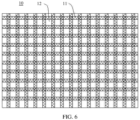
FIG. 6 is a schematic structural diagram of still another shielding film; -
FIG. 7 is a schematic cross-sectional structural diagram of another shielding film; -
FIG. 8 is a schematic cross-sectional structural diagram of another shielding film; -
FIG. 9 is a schematic cross-sectional structural diagram of still another shielding film; -
FIG. 10 is a schematic structural diagram of a coil assembly; -
FIG. 11 is a schematic cross-sectional structural diagram of a coil assembly; -
FIG. 12 is a schematic cross-sectional structural diagram of a wireless charging device. - To make objectives, technical solutions, and advantages of this application clearer, the following further describes this application in detail with reference to the accompanying drawings.
- To facilitate understanding of a shielding film provided in embodiments of this application, the following first describes an application scenario of the shielding film.
- The shielding film provided in the embodiments of this application may be applied to a plurality of types of devices that need to selectively shield an electromagnetic signal. For example, with the development of wireless charging technologies, increasingly more electronic products (such as a mobile phone and a smartwatch) begin to use a wireless charging technology to implement electric power transmission. Implementation of the wireless charging technology mainly relies on an electromagnetic induction principle to implement electric energy transmission. For example, as shown in
FIG. 1 , awireless charger 01 may be used as a transmit end, and amobile phone 02 may be used as a receive end. Apower supply coil 011 may be disposed in thewireless charger 01, and apower receiving coil 021 may be disposed in themobile phone 02. An alternating current is provided in thepower supply coil 011, and thepower supply coil 011 sends an electromagnetic signal to the outside through electromagnetic induction. After receiving the electromagnetic signal, thepower receiving coil 021 converts the electromagnetic signal into a current through electromagnetic induction, to achieve the purpose of wireless charging. - In actual application, electromagnetic signals generated by the transmit end generally include a high-frequency electromagnetic signal (such as an electromagnetic signal whose frequency is greater than 100 kHz) and a low-frequency electromagnetic signal (such as an electromagnetic signal whose frequency is not greater than 100 kHz). In a wireless charging system, electric energy transmission is mainly implemented by using the low-frequency electromagnetic signal, and the high-frequency electromagnetic signal makes little contribution to electric energy transmission. In addition, high-frequency electromagnetic signals of some frequency bands may further have an adverse effect on an electrical component (such as a processor) or human bodies. Therefore, the high frequency electromagnetic signals need to be suppressed.
- In some wireless charging systems, to suppress a high-frequency signal, a power filter may be disposed at the transmit end to filter out a high-frequency alternating current, thereby suppressing a high-frequency electromagnetic signal. Specifically, at the transmit end, a high-frequency electromagnetic signal generated by the power supply coil is generated by a high-frequency alternating current. Therefore, to reduce high-frequency electromagnetic signals generated by the power supply coil, a high-frequency current in the high-frequency alternating current may be filtered out by using the power filter, to suppress the high frequency electromagnetic signals. However, in this manner, due to introduction of the power filter, a volume of the transmit end increases, which is not conducive to miniaturization, lightening, and thinning design of the transmit end, and manufacturing costs also increase.
- In addition, in some implementations, to increase the charging rate, power of transmitting a high-frequency alternating current at the transmit end may be increased. However, because resistance exists in the power filter, an electrical signal flowing through the power filter is obviously suppressed, and energy attenuation is severe. This greatly reduces electromagnetic energy conversion efficiency, which is not conducive to improvement in the charging rate.
- Based on the foregoing problem, the embodiments of this application provide a shielding film that is conducive to improvement in the charging rate, can effectively filter out a high-frequency electromagnetic signal, has low manufacturing costs, and is convenient for miniaturization, lightening, and thinning during manufacturing, and a coil assembly and a wireless charging device that use the shielding film.
- For ease of understanding of the technical solutions in this application, the following specifically describes the shielding film provided in this application with reference to the accompanying drawings and specific implementations.
- Terms used in the following embodiments are merely for the purpose of describing specific embodiments, but are not intended to limit this application. As used in the specification and appended claims of this application, the singular expressions "a", "an", "the above", "the" and "this" are intended to also include expressions such as "one or more", unless the contrary is clearly indicated in its context. It should be further understood that in the following embodiments of this application, "at least one" and "one or more" refer to one, two, or more. The term "and/or" is used to describe an association relationship of an associated object, and indicates that there may be three relationships. For example, A and/or B may represent a case in which only A exists, both A and B exist, and only B exists, where A and B may be singular or plural. The character "/" generally indicates an "or" relationship between the associated objects.
- Reference to "an embodiment", "some embodiments", or the like described in this specification means that one or more embodiments of this application include specific features, structures, or characteristics described in combination with the embodiment. Therefore, statements such as "in an embodiment", "in some embodiments", "in some other embodiments", and "in other embodiments" that appear at different locations in this specification do not necessarily refer to a same embodiment, but means "one or more, but not all embodiments" unless otherwise specifically emphasized. Terms "include", "have", and their variants all mean "including but not limited to", unless otherwise specifically emphasized.
- As shown in
FIG. 2 , a shieldingfilm 10 includes aconductive part 11 and an insulatingpart 12. Referring toFIG. 3 , the insulatingpart 12 penetrates theconductive part 11 in a thickness direction of the shieldingfilm 10. Under the influence of a magnetic field of an electromagnetic field (for example, when there is an electromagnetic coil generating an electromagnetic field on one side of the shielding film 10), an eddy current is generated in the shieldingfilm 10. Specifically, after the shieldingfilm 10 is placed in the electromagnetic field, an induced current is generated in the shielding film, and the induced current forms a loop in the shielding film. Because a path of the loop is similar to an eddy, the current is referred to as an eddy current (eddy current). Generally, electromagnetic fields generated by the electromagnetic coil include a high-frequency electromagnetic field and a low-frequency electromagnetic field. In electromagnetic fields with different frequencies, eddy current loops formed in the shielding film are different in size. Specifically, in the high-frequency electromagnetic field, a loop path of an eddy current formed in the shieldingfilm 10 is small. In the low-frequency electromagnetic field, a loop path of an eddy current formed in the shieldingfilm 10 is large. Based on the foregoing feature, the shieldingfilm 10 can effectively absorb and shield a high-frequency electromagnetic field, and can well conduct a low-frequency electromagnetic field. Specifically, in a high-frequency electromagnetic field (a first electromagnetic field), afirst eddy current 101 is formed in the shieldingfilm 10, and a loop of thefirst eddy current 101 is located in theconductive part 11. In this case, loop impedance is relatively low, and an eddy current loss is high. Therefore, the first electromagnetic field can be effectively absorbed and shielded. In a low-frequency electromagnetic field (a second electromagnetic field), asecond eddy current 102 is formed in the shieldingfilm 10, and a loop of the second eddy current 102 passes through the insulatingpart 12. In this case, loop impedance is relatively high, and an eddy current loss is relatively low. Therefore, no obvious shielding effect is formed on the low-frequency electromagnetic field. - During specific implementation, the
conductive part 11 may be made of various materials, for example, may include a metal or an alloy such as copper or aluminum, or may include graphene or carbon fiber. The insulatingpart 12 may also be made of various materials, for example, may include air, polyamide, polycarbonate, tetrafluoroethylene, polytetrafluoroethylene, or a mixture of a plurality of insulating materials. - In addition, during specific implementation, a quantity of
conductive parts 11, a quantity of insulatingparts 12, a structural form of the shieldingfilm 10, and a manner of forming a conductive unit are varied. - For example, as shown in
FIG. 2 and FIG. 3 , theconductive part 11 may be an entire body, and the insulatingpart 12 may be a plurality of through-hole structures disposed on theconductive part 11. During manufacturing, a metal film, conductive paper, carbon fiber felt, or the like may be selected as a substrate, and then a through-hole structure is disposed on the substrate by using a process such as needling or laser etching, to implement preparation of the shieldingfilm 10. A minimum region surrounded by a plurality of insulatingparts 12 may be used as a conductive unit 100 (only one is indicated inFIG. 2 ). For example, a plurality of insulatingparts 12 may be evenly distributed in the shielding film 10 (the conductive part 11) in a matrix form, and every four insulatingparts 12 may surround oneconductive unit 100. During specific implementation, the through hole may be a circular hole, an elliptical hole, or another polygonal hole structure. In addition, parameters such as a quantity, a size, distribution density, and spacing of the insulating parts 12 (through holes) may be adaptively adjusted based on an actual situation. For example, when a frequency of an electromagnetic field to be shielded is relatively high, the distribution density of the insulatingparts 12 may be appropriately increased, or the size of the insulatingpart 12 may be appropriately reduced. This is not specifically limited in this application. - In addition, in some implementations, an insulating material may be added to the through hole, to improve structural stability and structural performance of the shielding
film 10. For example, the through hole may be filled with insulating glue or another insulating material. - In some other implementations, as shown in
FIG. 4 , aninsulation layer 13 may be further disposed on a surface of the shieldingfilm 10, to improve structural performance of the shieldingfilm 10. During specific implementation, theinsulation layer 13 may be disposed on a lower surface of the shieldingfilm 10, or may be disposed on an upper surface of the shieldingfilm 10, or may be disposed on both the upper and lower surfaces of the shieldingfilm 10. - Alternatively, in some implementations, when there is an eddy current in the
conductive unit 100, theconductive unit 100 heats up. Therefore, to ensure normal working performance of the shieldingfilm 10, a material with relatively high heat resistance may be selected for the insulatingpart 12, to avoid a bad status of the insulatingpart 12 such as degraded insulation performance or a changed physical property (for example, melted) when a temperature is relatively high, thereby ensuring normal shielding performance and structural stability of the shieldingfilm 10. - In some implementations, to improve heat dissipation performance of the shielding
film 10, a thermally conductive insulation layer may be disposed on a surface of the shieldingfilm 10. During specific implementation, a material of the thermally conductive insulation layer may include thermally conductive silicone, thermally conductive silica gel, or the like. - In addition, in some implementations, the
conductive parts 11 in the shieldingfilm 10 may alternatively be a plurality of mutually independent structures. For example, as shown inFIG. 5 , the shieldingfilm 10 includes one insulatingpart 12 and a plurality ofconductive parts 11. The plurality ofconductive parts 11 are dispersed in the insulatingpart 12, and eachconductive part 11 may be used as one conductive unit. - During manufacturing, a plurality of conductive parts 11 (such as metal blocks) may be placed on a platform, and then an insulating coating may be directly sprayed on the platform by using a spraying process, to combine the
conductive parts 11 and the insulatingpart 12. Then, the insulatingpart 12 may be cured by using a process such as ultraviolet curing (Ultraviolet curing, UV), to complete preparation of the shieldingfilm 10. During specific implementation, parameters such as a size and distribution density of theconductive parts 11 may be adaptively adjusted based on an actual situation. For example, when a frequency of an electromagnetic field to be shielded is relatively high, the distribution density of theconductive parts 11 may be appropriately increased. This is not specifically limited in this application. - In some implementations, the shielding
film 10 may alternatively be manufactured by using a weaving process. For example, as shown inFIG. 6 , metal wires may be woven into a mesh structure, a hollow-out part of the mesh structure may be used as an insulatingpart 12, and metal wires around each insulatingpart 12 may form one conductive unit. During specific implementation, the mesh structure (or the hollow-out part) may be a rectangular structure, a rhombus structure, or the like. This is not specifically limited in this application. - In addition, in some implementations, an insulating material, a thermally conductive insulating material, or the like may be further coated on a surface of the mesh structure, to improve structural strength or heat dissipation performance of the shielding
film 10. In addition, in some implementations, a metal wire wrapped with an insulation layer or a thermally conductive insulation layer may be selected as a woven material, or an insulating wire wrapped with a conductive layer may be selected as a woven material. This is not specifically limited in this application. - In addition, according to the invention, the shielding
film 10 is a multi-layer shielding structure, or a plurality of shieldingfilms 10 are disposed in a stacked manner to form ashielding film 10 with a multi-layer shielding structure. - For example, as shown in
FIG. 7 , the shieldingfilm 10 includes a two-layer shielding structure. Specifically, the shieldingfilm 10 includes afirst film layer 10a and asecond film layer 10b that are disposed in a stacked manner. Thefirst film layer 10a includes a firstconductive part 11a and a first insulatingpart 12a, and the first insulatingpart 12a penetrates the firstconductive part 11a in a thickness direction of thefirst film layer 10a. Thesecond film layer 10b includes a secondconductive part 11b and a secondinsulating part 12b, and the second insulatingpart 12b penetrates the secondconductive part 11b in a thickness direction of thesecond film layer 10b. During specific implementation, a specific structure or a manufacturing manner of thefirst film layer 10a may be the same as or different from a structure of the shieldingfilm 10 with a single-layer shielding structure in the foregoing embodiment. A specific structure or a manufacturing manner of thesecond film layer 10b may be the same as or different from a structure of the shieldingfilm 10 with a single-layer shielding structure in the foregoing description. Details are not described herein. - In some implementations, a relative position relationship between the
first film layer 10a and thesecond film layer 10b may be varied. - In an example which is not within the scope of the invention, as shown in
FIG. 7 , the structures of thefirst film layer 10a and thesecond film layer 10b may be the same, the firstconductive part 11a in thefirst film layer 10a may be staggered with the secondconductive part 11b in thesecond film layer 10b, and the first insulatingpart 12a in thefirst film layer 10a may be staggered with the second insulatingpart 12b in thesecond film layer 10b. This may also be understood as a meaning that a projection of the firstconductive part 11a in thefirst film layer 10a on thesecond film layer 10b does not coincide with the secondconductive part 11b, and a projection of the first insulatingpart 12a in thefirst film layer 10a on thesecond film layer 10b does not coincide with the second insulatingpart 12b. - As shown in
FIG. 8 , the firstconductive part 11a in thefirst film layer 10a is disposed corresponding to the second insulatingpart 12b in thesecond film layer 10b, and the first insulatingpart 12a in thefirst film layer 10a is disposed corresponding to the secondconductive part 11b in thesecond film layer 10b. In other words, thefirst film layer 10a and thesecond film layer 10b are complementary. When the first insulatingpart 12a in thefirst film layer 10a is a plurality of through holes disposed on the firstconductive part 11a, the secondconductive part 11b in thesecond film layer 10b is a plurality of conductors distributed on the second insulatingpart 12b. In some examples, a contour of the secondconductive part 11b in thesecond film layer 10b is less than, equal to, or greater than a contour of the first insulatingpart 12a in thefirst film layer 10a. For example, the first insulatingpart 12a may be a circular hole structure, the secondconductive part 11b may be a circular conductor, and a diameter of the first insulatingpart 12a may be less than, equal to, or greater than a diameter of the secondconductive part 11b. - According to the invention, to improve shielding performance of the shielding
film 10, the contour of the first insulatingpart 12a is not greater than the contour of the secondconductive part 11b. Specifically, when the shieldingfilm 10 implements a shielding function, some high-frequency electromagnetic signals pass through the firstconductive part 11a in thefirst film layer 10a to form an eddy magnetic field, to effectively absorb and shield these high-frequency electromagnetic signals. Other high-frequency electromagnetic signals pass through the first insulatingpart 12a in thefirst film layer 10a, and when these high-frequency electromagnetic signals pass through the secondconductive part 11b in thesecond film layer 10b, an eddy magnetic field is formed, to effectively absorb and shield these high-frequency electromagnetic signals. Therefore, the shieldingfilm 10 can have a good shielding function. - In addition, during specific implementation, to prevent the first
conductive part 11a in thefirst film layer 10a from being electrically connected to the secondconductive part 11b in thesecond film layer 10b to affect transmission of a low-frequency electromagnetic signal, as shown inFIG. 9 , in some implementations, aninsulation layer 13 may be disposed between thefirst film layer 10a and thesecond film layer 10b. In addition, in some implementations, to improve heat dissipation performance of the shieldingfilm 10, a thermally conductive insulation layer may be disposed between thefirst film layer 10a and thesecond film layer 10b; or a thermally conductive insulation layer may be disposed on both an upper surface of thefirst film layer 10a and a lower surface of thesecond film layer 10b. - In actual application, the shielding
film 10 can be conveniently and efficiently applied in various environments in which a high-frequency electromagnetic signal (electromagnetic field) needs to be shielded and a low-frequency electromagnetic signal (electromagnetic field) needs to be effectively transmitted. - For example, as shown in
FIG. 10 , it is provided acoil assembly 20, including aninductor coil 21 and any one of the shieldingfilms 10 in the foregoing description. The shieldingfilm 10 may be disposed on at least one side of theinductor coil 21, to process or filter an electromagnetic signal generated by theinductor coil 21. Specifically, thecoil assembly 20 may further include a power supply circuit. The power supply circuit is electrically connected to theinductor coil 21, and is configured to supply an alternating current to theinductor coil 21, so that theinductor coil 21 generates an alternating magnetic field (or an electromagnetic signal), to convert electric energy into electromagnetic energy for wireless power transmission. The shieldingfilm 10 may be disposed on one side of theinductor coil 21, to filter a high-frequency electromagnetic signal generated by theinductor coil 21. - During specific implementation, a position relationship between the shielding
film 10 and theinductor coil 21 may be varied. - For example, as shown in
FIG. 11 , when a right end of theinductor coil 21 is used as an output end, the shieldingfilm 10 may be disposed on a right side of theinductor coil 21. In some implementations, the shieldingfilm 10 may alternatively cover left and right sides or a periphery of theinductor coil 21. - In specific application, the
coil assembly 21 may be disposed in a power supply device, or may be disposed in a power receiving device. - For example, the power supply device may be a wireless charger, and the
coil assembly 21 may be electrically connected to a power supply circuit in the power supply device, to convert electric energy into electromagnetic energy for wireless power transmission. The power receiving device may be a mobile phone, a smartwatch, a tablet computer, or the like. Thecoil assembly 21 may be electrically connected to a power receiving circuit in the power receiving device, to convert electromagnetic energy into electric energy for storage or use. - In addition, in some implementations, the shielding
film 10 may alternatively be independently applied to an electronic device. For example, as shown inFIG. 12 , a wireless charging device provided in this application includes ahousing 31 and at least one electrical component 32 (only oneelectrical component 32 is shown inFIG. 12 ) located in thehousing 31. The shieldingfilm 10 may be disposed on at least a part of a periphery of theelectrical component 32, to filter a high-frequency electromagnetic signal generated by theelectrical component 32, or filter a high-frequency electromagnetic signal from the outside, thereby preventing the high-frequency electromagnetic signal generated by the outside from affecting theelectrical component 32. - During specific implementation, the
electrical component 32 may be a processor, a memory, or the like, and the shieldingfilm 10 may be disposed only on a part of the periphery of theelectrical component 32, or may cover the entire periphery of theelectrical component 32. In addition, the wireless charging device may be a mobile phone, a smartwatch, a power adapter, or the like. This is not specifically limited in this application. - The foregoing descriptions are merely specific implementations of this application, but are not intended to limit the protection scope of this application. Any variation or replacement readily figured out by a person skilled in the art within the technical scope disclosed in this application shall fall within the protection scope of this application. Therefore, the protection scope of this application shall be subject to the protection scope of the claims.
Claims (6)
- A shielding film (10), comprising a first film layer (10a), whereinthe first film layer (10a) comprises a first conductive part (11a);wherein the first conductive part (11a) constitutes a main part of the first film layer, a plurality of first insulating parts (12a) are disposed in the first film layer, the plurality of first insulating parts (12a) are dispersed in the first conductive part (11a), and the plurality of first insulating parts (12a) penetrate the first conductive part (11a) in a thickness direction of the first film layer (10a);wherein the shielding film (10) further comprising a second film layer (10b), whereinthe second film layer comprises a second conductive part (11b);wherein the second insulating part (12b) constitutes a main part of the second film layer (10b), a plurality of second conductive parts (11b) are disposed in the second film layer, and the plurality of second conductive parts (11b) penetrate the second insulating part (12b) in a thickness direction of the second film layer (10b); wherein the second film layer (10b) and the first film layer (10a) are disposed in a stacked manner;wherein the first conductive part (11a) in the first film layer (10a) is disposed corresponding to the second insulating part (12b) in the second film layer (10b), and the plurality of first insulating parts (12a) in the first film layer (10a) are disposed corresponding to the plurality of second conductive parts (11b) in the second film layer (10b);wherein the contour of the plurality of first insulating parts (12a) is less than the contour of the plurality of second conductive parts (11b).
- The shielding film according to claim 1, wherein the first film layer comprises any one of carbon fiber felt, a metal film, conductive paper, and a woven mesh.
- The shielding film according to claim 1 or 2, further comprising a thermally conductive insulation layer, wherein the thermally conductive insulation layer is attached to at least one side surface of the first film layer.
- A coil assembly (20), comprising an inductor coil (21) and the shielding film (10) according to any one of claims 1 to 3, whereinthe shielding film is earthed and disposed on at least one side of the inductor coil; andthe inductor coil is configured to generate a first high-frequency electromagnetic field and a second low-frequency electromagnetic field.
- An electronic device (30), comprising a housing (31) and an electrical component (32) located in the housing, and further comprising the shielding film (10) according to any one of claims 1 to 3, wherein
the shielding film is disposed on at least a part of a periphery of the electrical component. - A wireless charging device, comprising a power supply and the coil assembly (20) according to claim 4, wherein
the power supply is electrically connected to the inductor coil.
Applications Claiming Priority (2)
| Application Number | Priority Date | Filing Date | Title |
|---|---|---|---|
| CN202010128231.6A CN111277053A (en) | 2020-02-28 | 2020-02-28 | A shielding film, coil assembly and wireless charging device |
| PCT/CN2020/109649 WO2021169198A1 (en) | 2020-02-28 | 2020-08-17 | Shielding film, coil assembly and wireless charging device |
Publications (3)
| Publication Number | Publication Date |
|---|---|
| EP3930145A1 EP3930145A1 (en) | 2021-12-29 |
| EP3930145A4 EP3930145A4 (en) | 2022-05-18 |
| EP3930145B1 true EP3930145B1 (en) | 2025-01-01 |
Family
ID=71000477
Family Applications (1)
| Application Number | Title | Priority Date | Filing Date |
|---|---|---|---|
| EP20921137.4A Active EP3930145B1 (en) | 2020-02-28 | 2020-08-17 | Shielding film, coil assembly, electronic device and wireless charging device |
Country Status (4)
| Country | Link |
|---|---|
| US (1) | US12142949B2 (en) |
| EP (1) | EP3930145B1 (en) |
| CN (1) | CN111277053A (en) |
| WO (1) | WO2021169198A1 (en) |
Families Citing this family (4)
| Publication number | Priority date | Publication date | Assignee | Title |
|---|---|---|---|---|
| CN111277053A (en) | 2020-02-28 | 2020-06-12 | 华为技术有限公司 | A shielding film, coil assembly and wireless charging device |
| CN113452160B (en) * | 2020-03-26 | 2024-03-29 | 华为技术有限公司 | Terminal equipment and wireless charging assembly |
| CN114256211B (en) * | 2020-09-25 | 2022-10-18 | 荣耀终端有限公司 | Package, preparation method thereof, terminal and electronic equipment |
| CN120413245A (en) * | 2025-07-07 | 2025-08-01 | 联振电子(深圳)有限公司 | An inductor with improved saturation characteristics |
Citations (2)
| Publication number | Priority date | Publication date | Assignee | Title |
|---|---|---|---|---|
| US20150102892A1 (en) * | 2013-10-14 | 2015-04-16 | Samsung Electro-Mechanics Co., Ltd. | Magnetic sheet, wireless charging sheet and method for manufacturing magnetic sheet |
| US20160345472A1 (en) * | 2015-05-22 | 2016-11-24 | Samsung Electro-Mechanics Co., Ltd. | Sheet for shielding against electromagnetic waves and wireless power charging device |
Family Cites Families (11)
| Publication number | Priority date | Publication date | Assignee | Title |
|---|---|---|---|---|
| US10028420B2 (en) * | 2015-05-22 | 2018-07-17 | Samsung Electro-Mechanics Co., Ltd. | Sheet for shielding against electromagnetic waves and wireless power charging device |
| JP6571282B2 (en) * | 2015-11-23 | 2019-09-04 | アモセンス・カンパニー・リミテッドAmosense Co., Ltd. | Magnetic shielding unit and multi-function composite module including the same |
| KR20180082512A (en) * | 2015-12-08 | 2018-07-18 | 쓰리엠 이노베이티브 프로퍼티즈 컴파니 | Magnetic isolator, method of manufacturing the same, and device including the same |
| CN106061218A (en) * | 2016-06-14 | 2016-10-26 | 苏州大学 | Electromagnetic shielding film and manufacturing method of electromagnetic shielding window |
| KR101727159B1 (en) * | 2016-07-27 | 2017-05-04 | 주식회사 이녹스 | Composite sheet of using wierless charging and fabricationg method the same |
| CN108780696B (en) * | 2016-09-23 | 2021-01-08 | 苹果公司 | Electromagnetic shielding device for wireless power transmission system |
| CN106602735B (en) * | 2016-10-27 | 2019-08-02 | 深圳市元征科技股份有限公司 | Shell and preparation method thereof, electronic device |
| CN108430204B (en) * | 2018-05-11 | 2020-05-12 | 常州格优微磁磁材有限责任公司 | Magnetic isolation material and preparation method and application thereof |
| CN209516750U (en) * | 2018-11-06 | 2019-10-18 | 信维通信(江苏)有限公司 | Shielding piece with air gap |
| CN110112840B (en) * | 2019-06-14 | 2023-10-03 | 青岛大学 | Wireless power transmission magnetic coupler based on composite shielding layer |
| CN111277053A (en) * | 2020-02-28 | 2020-06-12 | 华为技术有限公司 | A shielding film, coil assembly and wireless charging device |
-
2020
- 2020-02-28 CN CN202010128231.6A patent/CN111277053A/en active Pending
- 2020-08-17 EP EP20921137.4A patent/EP3930145B1/en active Active
- 2020-08-17 WO PCT/CN2020/109649 patent/WO2021169198A1/en not_active Ceased
-
2021
- 2021-09-30 US US17/490,150 patent/US12142949B2/en active Active
Patent Citations (2)
| Publication number | Priority date | Publication date | Assignee | Title |
|---|---|---|---|---|
| US20150102892A1 (en) * | 2013-10-14 | 2015-04-16 | Samsung Electro-Mechanics Co., Ltd. | Magnetic sheet, wireless charging sheet and method for manufacturing magnetic sheet |
| US20160345472A1 (en) * | 2015-05-22 | 2016-11-24 | Samsung Electro-Mechanics Co., Ltd. | Sheet for shielding against electromagnetic waves and wireless power charging device |
Also Published As
| Publication number | Publication date |
|---|---|
| EP3930145A1 (en) | 2021-12-29 |
| WO2021169198A1 (en) | 2021-09-02 |
| US20220021246A1 (en) | 2022-01-20 |
| CN111277053A (en) | 2020-06-12 |
| EP3930145A4 (en) | 2022-05-18 |
| US12142949B2 (en) | 2024-11-12 |
Similar Documents
| Publication | Publication Date | Title |
|---|---|---|
| US12142949B2 (en) | Shielding film, coil assembly, and wireless charging device | |
| JP5771250B2 (en) | Wireless charger electric field shield | |
| US5639989A (en) | Shielded electronic component assembly and method for making the same | |
| US20040020674A1 (en) | Composite EMI shield | |
| KR102359198B1 (en) | noise suppression assembly | |
| US10631446B2 (en) | Electromagnetic wave absorber and electronic device | |
| CN105474461A (en) | Method and apparatus for creating a completely microwave absorbing skin | |
| JPH10190237A (en) | Printed circuit board | |
| US12119672B2 (en) | Electromagnetic field transceiver device and wireless charging device | |
| JP2000013081A (en) | Electronic part | |
| JP2001337746A (en) | Method for reducing high frequency emission from computer | |
| TWI482585B (en) | Shielding composite diaphragm | |
| JPWO2003081973A1 (en) | Electromagnetic wave shielding sheet, electromagnetic wave shielding transmission cable, and electromagnetic wave shielding LSI | |
| JP2001266659A (en) | Transmission cable and apparatus using the same | |
| CN210641258U (en) | Electromagnetic shielding composite structure | |
| JP2004214412A (en) | Noise shield plate and printed wiring board | |
| CN218568461U (en) | Cable with shielding structure | |
| CN112863834A (en) | Power factor corrector | |
| CN223230133U (en) | transmission cables | |
| JP4153055B2 (en) | Electromagnetic wave absorbing carbon fiber | |
| CN211982208U (en) | Circuit board | |
| JP4540493B2 (en) | Printed wiring board | |
| WO2026048770A1 (en) | Resin molded body | |
| CN121507356A (en) | A radio frequency coaxial cable and communication system for suppressing common-mode current | |
| JPS62224010A (en) | Noise cut transformer |
Legal Events
| Date | Code | Title | Description |
|---|---|---|---|
| STAA | Information on the status of an ep patent application or granted ep patent |
Free format text: STATUS: THE INTERNATIONAL PUBLICATION HAS BEEN MADE |
|
| PUAI | Public reference made under article 153(3) epc to a published international application that has entered the european phase |
Free format text: ORIGINAL CODE: 0009012 |
|
| STAA | Information on the status of an ep patent application or granted ep patent |
Free format text: STATUS: REQUEST FOR EXAMINATION WAS MADE |
|
| 17P | Request for examination filed |
Effective date: 20210920 |
|
| AK | Designated contracting states |
Kind code of ref document: A1 Designated state(s): AL AT BE BG CH CY CZ DE DK EE ES FI FR GB GR HR HU IE IS IT LI LT LU LV MC MK MT NL NO PL PT RO RS SE SI SK SM TR |
|
| REG | Reference to a national code |
Ref country code: DE Ref legal event code: R079 Free format text: PREVIOUS MAIN CLASS: H02J0050100000 Ipc: H01F0027360000 Ref country code: DE Ref legal event code: R079 Ref document number: 602020044334 Country of ref document: DE Free format text: PREVIOUS MAIN CLASS: H02J0050100000 Ipc: H01F0027360000 |
|
| A4 | Supplementary search report drawn up and despatched |
Effective date: 20220414 |
|
| RIC1 | Information provided on ipc code assigned before grant |
Ipc: H02J 50/70 20160101ALI20220408BHEP Ipc: H02J 50/10 20160101ALI20220408BHEP Ipc: H02J 50/00 20160101ALI20220408BHEP Ipc: H02J 7/00 20060101ALI20220408BHEP Ipc: H01F 38/14 20060101ALI20220408BHEP Ipc: H01F 27/36 20060101AFI20220408BHEP |
|
| STAA | Information on the status of an ep patent application or granted ep patent |
Free format text: STATUS: EXAMINATION IS IN PROGRESS |
|
| 17Q | First examination report despatched |
Effective date: 20220831 |
|
| DAV | Request for validation of the european patent (deleted) | ||
| DAX | Request for extension of the european patent (deleted) | ||
| GRAP | Despatch of communication of intention to grant a patent |
Free format text: ORIGINAL CODE: EPIDOSNIGR1 |
|
| STAA | Information on the status of an ep patent application or granted ep patent |
Free format text: STATUS: GRANT OF PATENT IS INTENDED |
|
| INTG | Intention to grant announced |
Effective date: 20240819 |
|
| GRAS | Grant fee paid |
Free format text: ORIGINAL CODE: EPIDOSNIGR3 |
|
| GRAA | (expected) grant |
Free format text: ORIGINAL CODE: 0009210 |
|
| STAA | Information on the status of an ep patent application or granted ep patent |
Free format text: STATUS: THE PATENT HAS BEEN GRANTED |
|
| AK | Designated contracting states |
Kind code of ref document: B1 Designated state(s): AL AT BE BG CH CY CZ DE DK EE ES FI FR GB GR HR HU IE IS IT LI LT LU LV MC MK MT NL NO PL PT RO RS SE SI SK SM TR |
|
| REG | Reference to a national code |
Ref country code: GB Ref legal event code: FG4D |
|
| REG | Reference to a national code |
Ref country code: DE Ref legal event code: R096 Ref document number: 602020044334 Country of ref document: DE |
|
| REG | Reference to a national code |
Ref country code: CH Ref legal event code: EP |
|
| REG | Reference to a national code |
Ref country code: IE Ref legal event code: FG4D |
|
| REG | Reference to a national code |
Ref country code: LT Ref legal event code: MG9D |
|
| REG | Reference to a national code |
Ref country code: NL Ref legal event code: MP Effective date: 20250101 |
|
| REG | Reference to a national code |
Ref country code: AT Ref legal event code: MK05 Ref document number: 1757178 Country of ref document: AT Kind code of ref document: T Effective date: 20250101 |
|
| PG25 | Lapsed in a contracting state [announced via postgrant information from national office to epo] |
Ref country code: NL Free format text: LAPSE BECAUSE OF FAILURE TO SUBMIT A TRANSLATION OF THE DESCRIPTION OR TO PAY THE FEE WITHIN THE PRESCRIBED TIME-LIMIT Effective date: 20250101 |
|
| PG25 | Lapsed in a contracting state [announced via postgrant information from national office to epo] |
Ref country code: FI Free format text: LAPSE BECAUSE OF FAILURE TO SUBMIT A TRANSLATION OF THE DESCRIPTION OR TO PAY THE FEE WITHIN THE PRESCRIBED TIME-LIMIT Effective date: 20250101 |
|
| PG25 | Lapsed in a contracting state [announced via postgrant information from national office to epo] |
Ref country code: PL Free format text: LAPSE BECAUSE OF FAILURE TO SUBMIT A TRANSLATION OF THE DESCRIPTION OR TO PAY THE FEE WITHIN THE PRESCRIBED TIME-LIMIT Effective date: 20250101 |
|
| PG25 | Lapsed in a contracting state [announced via postgrant information from national office to epo] |
Ref country code: ES Free format text: LAPSE BECAUSE OF FAILURE TO SUBMIT A TRANSLATION OF THE DESCRIPTION OR TO PAY THE FEE WITHIN THE PRESCRIBED TIME-LIMIT Effective date: 20250101 |
|
| PG25 | Lapsed in a contracting state [announced via postgrant information from national office to epo] |
Ref country code: NO Free format text: LAPSE BECAUSE OF FAILURE TO SUBMIT A TRANSLATION OF THE DESCRIPTION OR TO PAY THE FEE WITHIN THE PRESCRIBED TIME-LIMIT Effective date: 20250401 Ref country code: IS Free format text: LAPSE BECAUSE OF FAILURE TO SUBMIT A TRANSLATION OF THE DESCRIPTION OR TO PAY THE FEE WITHIN THE PRESCRIBED TIME-LIMIT Effective date: 20250501 |
|
| PG25 | Lapsed in a contracting state [announced via postgrant information from national office to epo] |
Ref country code: HR Free format text: LAPSE BECAUSE OF FAILURE TO SUBMIT A TRANSLATION OF THE DESCRIPTION OR TO PAY THE FEE WITHIN THE PRESCRIBED TIME-LIMIT Effective date: 20250101 |
|
| PG25 | Lapsed in a contracting state [announced via postgrant information from national office to epo] |
Ref country code: LV Free format text: LAPSE BECAUSE OF FAILURE TO SUBMIT A TRANSLATION OF THE DESCRIPTION OR TO PAY THE FEE WITHIN THE PRESCRIBED TIME-LIMIT Effective date: 20250101 Ref country code: PT Free format text: LAPSE BECAUSE OF FAILURE TO SUBMIT A TRANSLATION OF THE DESCRIPTION OR TO PAY THE FEE WITHIN THE PRESCRIBED TIME-LIMIT Effective date: 20250502 |
|
| PG25 | Lapsed in a contracting state [announced via postgrant information from national office to epo] |
Ref country code: GR Free format text: LAPSE BECAUSE OF FAILURE TO SUBMIT A TRANSLATION OF THE DESCRIPTION OR TO PAY THE FEE WITHIN THE PRESCRIBED TIME-LIMIT Effective date: 20250402 Ref country code: BG Free format text: LAPSE BECAUSE OF FAILURE TO SUBMIT A TRANSLATION OF THE DESCRIPTION OR TO PAY THE FEE WITHIN THE PRESCRIBED TIME-LIMIT Effective date: 20250101 |
|
| PG25 | Lapsed in a contracting state [announced via postgrant information from national office to epo] |
Ref country code: AT Free format text: LAPSE BECAUSE OF FAILURE TO SUBMIT A TRANSLATION OF THE DESCRIPTION OR TO PAY THE FEE WITHIN THE PRESCRIBED TIME-LIMIT Effective date: 20250101 |
|
| PG25 | Lapsed in a contracting state [announced via postgrant information from national office to epo] |
Ref country code: CZ Free format text: LAPSE BECAUSE OF FAILURE TO SUBMIT A TRANSLATION OF THE DESCRIPTION OR TO PAY THE FEE WITHIN THE PRESCRIBED TIME-LIMIT Effective date: 20250101 |
|
| PG25 | Lapsed in a contracting state [announced via postgrant information from national office to epo] |
Ref country code: SE Free format text: LAPSE BECAUSE OF FAILURE TO SUBMIT A TRANSLATION OF THE DESCRIPTION OR TO PAY THE FEE WITHIN THE PRESCRIBED TIME-LIMIT Effective date: 20250101 |
|
| REG | Reference to a national code |
Ref country code: DE Ref legal event code: R097 Ref document number: 602020044334 Country of ref document: DE |
|
| PG25 | Lapsed in a contracting state [announced via postgrant information from national office to epo] |
Ref country code: SM Free format text: LAPSE BECAUSE OF FAILURE TO SUBMIT A TRANSLATION OF THE DESCRIPTION OR TO PAY THE FEE WITHIN THE PRESCRIBED TIME-LIMIT Effective date: 20250101 |
|
| PG25 | Lapsed in a contracting state [announced via postgrant information from national office to epo] |
Ref country code: DK Free format text: LAPSE BECAUSE OF FAILURE TO SUBMIT A TRANSLATION OF THE DESCRIPTION OR TO PAY THE FEE WITHIN THE PRESCRIBED TIME-LIMIT Effective date: 20250101 |
|
| PGFP | Annual fee paid to national office [announced via postgrant information from national office to epo] |
Ref country code: DE Payment date: 20250702 Year of fee payment: 6 |
|
| PG25 | Lapsed in a contracting state [announced via postgrant information from national office to epo] |
Ref country code: IT Free format text: LAPSE BECAUSE OF FAILURE TO SUBMIT A TRANSLATION OF THE DESCRIPTION OR TO PAY THE FEE WITHIN THE PRESCRIBED TIME-LIMIT Effective date: 20250101 |
|
| PG25 | Lapsed in a contracting state [announced via postgrant information from national office to epo] |
Ref country code: EE Free format text: LAPSE BECAUSE OF FAILURE TO SUBMIT A TRANSLATION OF THE DESCRIPTION OR TO PAY THE FEE WITHIN THE PRESCRIBED TIME-LIMIT Effective date: 20250101 |
|
| PG25 | Lapsed in a contracting state [announced via postgrant information from national office to epo] |
Ref country code: RO Free format text: LAPSE BECAUSE OF FAILURE TO SUBMIT A TRANSLATION OF THE DESCRIPTION OR TO PAY THE FEE WITHIN THE PRESCRIBED TIME-LIMIT Effective date: 20250101 |
|
| PG25 | Lapsed in a contracting state [announced via postgrant information from national office to epo] |
Ref country code: SK Free format text: LAPSE BECAUSE OF FAILURE TO SUBMIT A TRANSLATION OF THE DESCRIPTION OR TO PAY THE FEE WITHIN THE PRESCRIBED TIME-LIMIT Effective date: 20250101 |
|
| PLBE | No opposition filed within time limit |
Free format text: ORIGINAL CODE: 0009261 |
|
| STAA | Information on the status of an ep patent application or granted ep patent |
Free format text: STATUS: NO OPPOSITION FILED WITHIN TIME LIMIT |
|
| REG | Reference to a national code |
Ref country code: CH Ref legal event code: L10 Free format text: ST27 STATUS EVENT CODE: U-0-0-L10-L00 (AS PROVIDED BY THE NATIONAL OFFICE) Effective date: 20251112 |
|
| 26N | No opposition filed |
Effective date: 20251002 |
|
| REG | Reference to a national code |
Ref country code: CH Ref legal event code: H13 Free format text: ST27 STATUS EVENT CODE: U-0-0-H10-H13 (AS PROVIDED BY THE NATIONAL OFFICE) Effective date: 20260324 |
|
| PG25 | Lapsed in a contracting state [announced via postgrant information from national office to epo] |
Ref country code: MC Free format text: LAPSE BECAUSE OF FAILURE TO SUBMIT A TRANSLATION OF THE DESCRIPTION OR TO PAY THE FEE WITHIN THE PRESCRIBED TIME-LIMIT Effective date: 20250101 |
|
| PG25 | Lapsed in a contracting state [announced via postgrant information from national office to epo] |
Ref country code: LU Free format text: LAPSE BECAUSE OF NON-PAYMENT OF DUE FEES Effective date: 20250817 |
|
| PG25 | Lapsed in a contracting state [announced via postgrant information from national office to epo] |
Ref country code: CH Free format text: LAPSE BECAUSE OF NON-PAYMENT OF DUE FEES Effective date: 20250831 |