EP3930131A1 - Dc electric power network system, dc/dc converter device, and method for controlling same - Google Patents
Dc electric power network system, dc/dc converter device, and method for controlling same Download PDFInfo
- Publication number
- EP3930131A1 EP3930131A1 EP19915630.8A EP19915630A EP3930131A1 EP 3930131 A1 EP3930131 A1 EP 3930131A1 EP 19915630 A EP19915630 A EP 19915630A EP 3930131 A1 EP3930131 A1 EP 3930131A1
- Authority
- EP
- European Patent Office
- Prior art keywords
- converter
- input
- output terminal
- output
- voltage
- Prior art date
- Legal status (The legal status is an assumption and is not a legal conclusion. Google has not performed a legal analysis and makes no representation as to the accuracy of the status listed.)
- Withdrawn
Links
Images



Classifications
-
- H—ELECTRICITY
- H02—GENERATION; CONVERSION OR DISTRIBUTION OF ELECTRIC POWER
- H02M—APPARATUS FOR CONVERSION BETWEEN AC AND AC, BETWEEN AC AND DC, OR BETWEEN DC AND DC, AND FOR USE WITH MAINS OR SIMILAR POWER SUPPLY SYSTEMS; CONVERSION OF DC OR AC INPUT POWER INTO SURGE OUTPUT POWER; CONTROL OR REGULATION THEREOF
- H02M1/00—Details of apparatus for conversion
- H02M1/0067—Converter structures employing plural converter units, other than for parallel operation of the units on a single load
- H02M1/007—Plural converter units in cascade
-
- H—ELECTRICITY
- H02—GENERATION; CONVERSION OR DISTRIBUTION OF ELECTRIC POWER
- H02J—ELECTRIC POWER NETWORKS; CIRCUIT ARRANGEMENTS OR SYSTEMS FOR SUPPLYING OR DISTRIBUTING ELECTRIC POWER; SYSTEMS FOR STORING ELECTRIC ENERGY
- H02J1/00—Circuit arrangements for DC mains or DC distribution networks
- H02J1/08—Three-wire DC power distribution systems; Systems having more than three wires
- H02J1/082—DC supplies with two or more different DC voltage levels
-
- H—ELECTRICITY
- H02—GENERATION; CONVERSION OR DISTRIBUTION OF ELECTRIC POWER
- H02M—APPARATUS FOR CONVERSION BETWEEN AC AND AC, BETWEEN AC AND DC, OR BETWEEN DC AND DC, AND FOR USE WITH MAINS OR SIMILAR POWER SUPPLY SYSTEMS; CONVERSION OF DC OR AC INPUT POWER INTO SURGE OUTPUT POWER; CONTROL OR REGULATION THEREOF
- H02M1/00—Details of apparatus for conversion
- H02M1/0067—Converter structures employing plural converter units, other than for parallel operation of the units on a single load
- H02M1/008—Plural converter units for generating at two or more independent and non-parallel outputs, e.g. systems with plural point of load switching regulators
-
- H—ELECTRICITY
- H02—GENERATION; CONVERSION OR DISTRIBUTION OF ELECTRIC POWER
- H02M—APPARATUS FOR CONVERSION BETWEEN AC AND AC, BETWEEN AC AND DC, OR BETWEEN DC AND DC, AND FOR USE WITH MAINS OR SIMILAR POWER SUPPLY SYSTEMS; CONVERSION OF DC OR AC INPUT POWER INTO SURGE OUTPUT POWER; CONTROL OR REGULATION THEREOF
- H02M3/00—Conversion of DC power input into DC power output
- H02M3/02—Conversion of DC power input into DC power output without intermediate conversion into AC
- H02M3/04—Conversion of DC power input into DC power output without intermediate conversion into AC by static converters
- H02M3/10—Conversion of DC power input into DC power output without intermediate conversion into AC by static converters using discharge tubes with control electrode or semiconductor devices with control electrode
- H02M3/145—Conversion of DC power input into DC power output without intermediate conversion into AC by static converters using discharge tubes with control electrode or semiconductor devices with control electrode using devices of a triode or transistor type requiring continuous application of a control signal
- H02M3/155—Conversion of DC power input into DC power output without intermediate conversion into AC by static converters using discharge tubes with control electrode or semiconductor devices with control electrode using devices of a triode or transistor type requiring continuous application of a control signal using semiconductor devices only
- H02M3/156—Conversion of DC power input into DC power output without intermediate conversion into AC by static converters using discharge tubes with control electrode or semiconductor devices with control electrode using devices of a triode or transistor type requiring continuous application of a control signal using semiconductor devices only with automatic control of output voltage or current, e.g. switching regulators
- H02M3/158—Conversion of DC power input into DC power output without intermediate conversion into AC by static converters using discharge tubes with control electrode or semiconductor devices with control electrode using devices of a triode or transistor type requiring continuous application of a control signal using semiconductor devices only with automatic control of output voltage or current, e.g. switching regulators including plural semiconductor devices as final control devices for a single load
Definitions
- the present invention relates to a direct-current power network system, a DC-DC converter apparatus, and a control method therefor and is suited for application to, for example, a direct-current power network equipped with a plurality of DC/DC (Direct Current / Direct Current) converter apparatuses.
- DC/DC Direct Current / Direct Current
- a DC-DC converter(s) is/are generally interposed between these flows of the direct-current power in order to absorb an electric potential difference between the connected flows of the direct-current power (for example, see PTL 1).
- the DC-DC converter is electric equipment for transforming the DC voltage to a DC voltage of a different voltage value and is also widely used in, for example, direct-current power networks and electronic equipment.
- DC-DC converters there are: a type capable of increasing or decreasing the voltage of the direct-current power and transferring it only unidirectionally; and a type capable of increasing or decreasing the voltage of the direct-current power and transferring it bidirectionally (bidirectional DC-DC converter).
- a system equipped with a battery such as an EV system usually uses a bidirectional DC-DC converter as a DC-DC converter for charging and discharging the battery.
- the centralized management apparatus needs to sequentially control the individual DC-DC converters within the system on a real-time basis and consider electric power input-output directions for the individual DC-DC converters, so that there have been problems of heavy loads on the centralized management apparatus and cumbersome and complicated control.
- each DC-DC converter cannot be controlled by the centralized management apparatus on a real-time basis and an electric outage may occur.
- the present invention has been devised in consideration of the above-described circumstances and aims at proposing a direct-current power network system, a DC-DC converter apparatus, and a control method therefor which are capable of facilitating the control and have high safety.
- a direct-current power network system including one or a plurality of DC-DC converter apparatuses provided in a network and a centralized management apparatus for centrally managing each of the DC-DC converter apparatuses in the network
- the DC-DC converter apparatus includes: a converter unit that is composed of one DC-DC converter capable of transferring direct-current power bidirectionally or a plurality of DC-DC converters having the same function as that of the DC-DC converter with their one-side input-output terminals coupled to each other; a voltmeter that measures a voltage of each input-output terminal of the converter unit: and a control unit that controls each of the DC-DC converters which constitute the converter unit so that electric power with a constant voltage is input and output from each input-output terminal of the converter unit, wherein the centralized management apparatus designates, for each DC-DC converter apparatus, a target voltage of each input-output terminal of the converter unit for the DC-DC converter apparatus; and wherein
- a DC-DC converter apparatus including: a converter unit that is composed of one DC-DC converter capable of transferring direct-current power bidirectionally or a plurality of DC-DC converters having the same function as that of the DC-DC converter with their one-side input-output terminals coupled to each other; a voltmeter that measures a voltage of each input-output terminal of the converter unit: and a control unit that controls each of the DC-DC converters which constitute the converter unit so that electric power with a constant voltage is input and output from each input-output terminal of the converter unit, wherein the control unit: calculates a voltage difference between a target voltage of the input-output terminal designated by a host apparatus and a voltage of the input-output terminal measured by the voltmeter with respect to each input-output terminal of the converter unit; and controls a size and direction of output electric power of each DC-DC converter on the basis of the calculated voltage difference of each input-output terminal of the converter unit.
- a DC-DC converter apparatus controlling method for a direct-current power network system including one or a plurality of DC-DC converter apparatuses provided in a network and a centralized management apparatus for centrally managing each of the DC-DC converter apparatuses in the network
- the DC-DC converter apparatus includes: a converter unit that is composed of one DC-DC converter capable of transferring direct-current power bidirectionally or a plurality of DC-DC converters having the same function as that of the DC-DC converter with their one-side input-output terminals coupled to each other; a voltmeter that measures a voltage of each input-output terminal of the converter unit: and a control unit that controls each of the DC-DC converters which constitute the converter unit so that electric power with a constant voltage is input and output from each input-output terminal of the converter unit, and wherein the DC-DC converter apparatus controlling method includes: a first step executed by the centralized management apparatus designates, for each DC-DC converter apparatus, a target voltage of each input-
- the host apparatus does not have to control the DC-DC converter apparatus(es) on a real-time basis and it is only necessary to designate, for each DC-DC converter apparatus, the target voltage of each input-output terminal of the DC-DC converter unit; and, therefore, it is possible to facilitate the control of the DC-DC converter apparatus(es) by the host apparatus.
- the DC-DC converter apparatus continues to operate based on the target voltage which is set by the host apparatus; and, therefore, there is no fear that any event which would cause the occurrence of an electric outage due to the DC-DC converter apparatus which does not operate.
- the direct-current power network system, the DC-DC converter apparatus, and the control method therefor which are capable of facilitating the control and have high safety can be implemented according to the present invention.
- a voltage value of one input-output terminal (hereinafter referred to as a "first input-output terminal") 1A side is V A and a voltage value of the other input-output terminal (hereinafter referred to as a "second input-output terminal”) 1B side is V B .
- the bidirectional DC-DC converter 1 is equipped with a constant voltage function (CV function) that keeps the output voltage constant. Moreover, it is assumed that with the bidirectional DC-DC converter 1, V A_s is set to the first input-output terminal 1A side and V B_s is set to the second input-output terminal 1B side as target voltage set values for the CV function (hereinafter referred to as "CV set values").
- CV set values target voltage set values for the CV function
- ⁇ V B V B ⁇ V B _ s
- the bidirectional DC-DC converter 1 can control the size and direction of the electric power P by adjusting the sizes of the CV set values V A_s , V B_s which are set to the first and second input-output terminals 1A, 1B, respectively.
- the value of the electric power P which is output to the second input-output terminal 1B side can be increased by decreasing the CV set value V A_s for the first input-output terminal 1A or increasing the CV set value V B_s for the second input-output terminal 1B; and contrarily, the value of the electric power P which is output to the second input-output terminal 1B side can be decreased by increasing the CV set value V A_s for the first input-output terminal 1A or decreasing the CV set value V B_s for the second input-output terminal 1B.
- the bidirectional DC-DC converter 1 can be operated to output electric power P from the second input-output terminal 1B side by setting the values of the CV set values V A_s , V B_s for the first and second input-output terminals 1A, 1B so that the voltage difference ⁇ V A on the first input-output terminal 1A side becomes larger than the voltage difference ⁇ V B on the second input-output terminal 1B side.
- the bidirectional DC-DC converter 1 can be operated to output electric power P from the first input-output terminal 1A side by setting the values of the CV set values V A_s , V B_s for the first and second input-output terminals 1A, 1B so that the voltage difference ⁇ V A on the first input-output terminal 1A side becomes smaller than the voltage difference ⁇ V B on the second input-output terminal 1B side.
- a direct-current power network according to this embodiment which employs the above-described bidirectional DC-DC converter controlling method will be explained below.
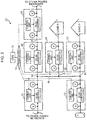
- Fig. 2 illustrates a direct-current power network system 10 according to this embodiment.
- This direct-current power network system 10 is configured such that a plurality of DC-DC converter apparatuses 12, which are connected to each other via an electric power line 11, and an EMS 13, which centrally manages the plurality of DC-DC converter apparatuses 12, are connected to each other via a network 14.
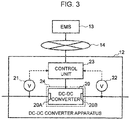
- Each DC-DC converter apparatus 12 is configured, as illustrated in Fig. 3 , by including a DC-DC converter 20 which constitutes a DC-DC converter unit 24, a first voltmeter 21, a second voltmeter 22, and a control unit 23.
- the DC-DC converter 20 is a general-purpose bidirectional DC-DC converter and, under control of the control unit 23, increases or decreases the voltage of the direct-current power on the first input-output terminal 20A side and transfers it to the second input-output terminal 20B side or increases or decreases the voltage of the direct-current power on the second input-output terminal 20B side and transfers it to the first input-output terminal 20A side.
- the first voltmeter 21 is a general-purpose voltmeter connected to the first input-output terminal 20A side of the DC-DC converter 20 and measures a voltage of the first input-output terminal 20A side of the DC-DC converter 20 and outputs a measurement result to the control unit 23.
- the second voltmeter 22 is a voltmeter connected to the second input-output terminal 20B side of the DC-DC converter 20 and measures a voltage of the second input-output terminal 20B side of the DC-DC converter 20 and outputs a measurement result to the control unit 23.
- the control unit 23 is equipped with a constant current function (CC function) that keeps an output current constant, in addition to the CV function that keeps the output voltage from the DC-DC converter 20 constant.
- CC function constant current function
- the CC function is provided in consideration of the safety of the DC-DC converter and is not an indispensable function in this embodiment.
- the control unit 23 controls PWM (Pulse Width Modulation) of the DC-DC converter 20 on the basis of the voltage of the first input-output terminal 20A side of the DC-DC converter 20 measured by the first voltmeter 21, a voltage of the second input-output terminal 20B side of the DC-DC converter 20 measured by the second voltmeter 22, and a control command giveri from the EMS 13 via the network 14.
- PWM Pulse Width Modulation
- the EMS 13 transmits a control command, which designates the CV set value V A_s of the first input-output terminal 20A side of the DC-DC converter 20 and the CV set value V B_s of the second input-output terminal 20B side, and the electric power output constant K respectively, to the control unit 23 as appropriate.
- the control unit 23 internally sets the CV set value V A_s of the first input-output terminal 20A side of the DC-DC converter 20, which is a control target, and the CV set value V B_s of the second input-output terminal 20B side of the DC-DC converter 20, and the electric power output constant K to values designated by the control command and conducts the PWM control of actions of the DC-DC converter 20 on the basis of these internally set values.
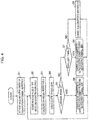
- Fig. 4 illustrates a processing sequence for the above-described control processing executed by the control unit 23. Having received the above-described control command transmitted from the EMS 13, the control unit 23 starts the control processing illustrated in this Fig. 4 and firstly internally sets the respective CV set values V A_s , V B_s of the first input-output terminal 20A side and the second input-output terminal 20B side of the DC-DC converter 20, and the electric power output constant K, which are designated by the control command, respectively as parameter values for controlling the DC-DC converter 20 (S1).
- the control unit 23 acquires a measured value of the voltage of the first input-output terminal 20A side of the DC-DC converter 20 measured by the first voltmeter 21 (hereinafter referred to as a "first voltage measured value V A ”) and a measured value of the voltage of the second input-output terminal 20B side of the DC-DC converter 20 measured by the second voltmeter 22 (hereinafter referred to as a "second voltage measured value V B ”) (S2).
- the control unit 23 calculates the voltage difference ⁇ V A between the CV set value V A_s on the first input-output terminal 20A side of the DC-DC converter 20, which was internally set in step S1, and the input-side voltage measured value V A , which was acquired in step S2, and the voltage difference ⁇ V B between the CV set value V B_s on the second input-output terminal 20B side of the DC-DC converter 20, which was internally set in step S1, and the output-side voltage measured value V B , which was acquired in step S2, respectively, according to the aforementioned Formulas (2) and (3) (S3).
- the control unit 23 calculates the difference D, which is expressed by the following formula, between the voltage difference ⁇ V A of the first input-output terminal 20A side and the voltage difference ⁇ V B of the second input-output terminal 20B side, which were calculated in step S3 (S4); and judges whether the value of the calculated difference D is larger than 0 or not (S5).
- D ⁇ V A ⁇ ⁇ V B
- control unit 23 determines whether the control unit 23 has completed a predefined period of time or a period of time or a period of time or a period of time or a period of time or a period of time or a period of time or a period of time or a period of time or a period of time or a period of time or a period of time or a period of time or a period of time or a period of time or a period of time or aforementioned Formula (1) to the second input-output terminal 20B side (S6), and then returns to step S2. Subsequently, the control unit 23 repeatedly executes the processing in step S2 and subsequent steps.
- step S5 it judges whether the value of the difference D 1 calculated in step S4 is smaller than 0 (S7). Then, if the control unit 23 obtains an affirmative result in this judgment, it conducts the PWM control of the DC-DC converter 20 so as to output the electric power P of the size expressed by the following formula to the first input-output terminal 20A side (S8), and then returns to step S2.
- P K ⁇ ⁇ V B ⁇ ⁇ V A Subsequently, the control unit 23 repeatedly executes the processing in step S2 and subsequent steps.
- control unit 23 if it obtains a negative result in the judgment of step S7, it conducts the PWM control of the DC-DC converter 20 so as to not output the electric power to either the first input-output terminal 20A side or the second input-output terminal 20B side of the DC-DC converter 20 (S9), and then returns to step S2 Subsequently, the control unit 23 repeatedly executes the processing in step S2 and subsequent steps.
- the EMS 13 does not have to sequentially control the respective DC-DC converter apparatuses 12 on a real-time basis and may only have to transmit the control command, which designates the CV set values V A_s , V B_s of the respective input-output terminals 20A, 20B for the DC-DC converter 20, and the electric power output constant K of the DC-DC converter 20, to the DC-DC converter apparatus 12 as appropriate, so that it is possible to reduce the load on the EMS 13.
- the size and direction of the output electric power of the DC-DC converter apparatus 12 can be controlled only by designating the CV set values V A_s , V B_s and the electric power output constant K, so that it is easy to switch the size and direction of the output electric power of the DC-DC converter apparatus 12 and it is possible to facilitate the control of the DC-DC converter apparatus(es) 12 by the EMS 13.
- each DC-DC converter apparatus 12 continues to operate in accordance with the CV set values V A_s , V B_s and the electric power output constant K which are set by the EMS 13; and, therefore, there is no fear that, for example, a power outage attributable to any fault in the EMS 13 or any communication disturbance between the EMS 13 and each DC-DC converter apparatus 12 may occur.
- the direct-current power network system 10 of high safety which can facilitate the control can be constructed according to this embodiment.
- the EMS 13 can control all the DC-DC converter apparatuses 12 individually within the system only by setting the CV set values V A_s , V B_s and the electric power output constant K, respectively, for each DC-DC converter apparatus 12, so that it is also possible to easily add a DC-DC converter apparatus 12 to the system without the necessity to consider any individual differences between the DC-DC converter apparatuses 12. Moreover, since this control is executed based on differences between actual measured values and the set values, setting and maintenance of measurement equipment can be easily performed.
- this direct-current power network system 10 it is also possible to have the advantageous effect of automatically adjusting energy balance only by changing the CV set values V A_s , V B_s and the electric power output constant K of the corresponding DC-DC converter apparatus 12 even when any changes in the load occur in the network and any changes in the electric power occur in association with the load changes.
- This converter unit 30 will be discussed about a case where a voltage of an input-output terminal 30A side of the first bidirectional DC-DC converter 31 which is not connected to the second and third bidirectional DC-DC converters 32, 33 is V 1A , a voltage of an input-output terminal 32A side of the second bidirectional DC-DC converter 32 which is not connected to the first and third bidirectional DC-DC converters 31, 33 is V 2A , and a voltage of an input-output terminal 33A side of the third bidirectional DC-DC converter 33 which is not connected to the first and second bidirectional DC-DC converters 31, 32 is V 3A .
- the input-output terminals 31A, 32A, 33A of these first to third bidirectional DC-DC converters 31 to 33 which are not connected to the other first to third bidirectional DC-DC converters 31 to 33 will be hereinafter referred to as external input-output terminals 31A to 33A, respectively.
- first to third bidirectional DC-DC converters 31 to 33 are equipped with the constant voltage function (the CV function) that keeps the output voltage constant.
- V 1A_s , V 2A_s , V 3A_s are set respectively as target voltages (CV set values) for the CV function to the respective external input-output terminals 31A to 33A of the first to third bidirectional DC-DC converters 31 to 33 and K 1 , K 2 , K 3 are set respectively as electric power output constants of the first to third bidirectional DC-DC converters 31 to 33.
- a voltage difference between the voltage value V 1A and the CV set value V 1A_s of the external input-output terminal 31A side of the first bidirectional DC-DC converter 31 is defined as ⁇ V 1A
- a voltage difference between the voltage value V 2A and the CV set value V 2A_s of the external input-output terminal 32A side of the second bidirectional DC-DC converter 32 is defined as ⁇ V 2A
- a voltage difference between the voltage value V 3A and the CV set value V 3A_s of the external input-output terminal 33A side of the third bidirectional DC-DC converter 33 is defined as AV 3A .
- a direction in which an electric current flows to the external input-output terminal 31A to 33A side is defined as a positive direction.
- the bidirectional DC-DC converter unit 30 illustrated in Fig. 4 can control the sizes and the output directions of the electric power P 1 , P 2 , P 3 which is output from the respective external input-output terminals 31A of 33A of the converter unit 30, respectively, by adjusting the sizes of the CV set value V 1A_s , V 2A_s , V3 A_s which are set respectively to the external input-output terminals 31A to 33A of the first to third bidirectional DC-DC converters 31 to 33.
- the value of the electric power P 2 to be output to the external input-output terminal 32A side of the second DC-DC converter 32 and the value of the electric power P 3 to be output to the external input-output terminal 33A side of the third DC-DC converter 33 can be increased by decreasing the CV set value V 1A_s for the external input-output terminal 31A of the first DC-DC converter 31 or increasing the CV set value V 2A_s for the external input-output terminal 32A of the second DC-DC converter 32 and the CV set value V 3A_s for the external input-output terminal 33A of the third DC-DC converter 33.
- the DC-DC converter unit 30 can be made to operate so as to output the electric power P 1 from the external input-output terminal 31A side of the first DC-DC converter 31 by setting the values of the CV set values V 1A_s to V3 A_s for the external input-output terminals 31A to 33A of the first to third DC-DC converters 31 to 33 so that the voltage difference ⁇ V 1A on the external input-output terminal 31A side of the first DC-DC converter 31 becomes larger than an average value of the respective voltage differences ⁇ V 1A to ⁇ V 3A at the external input-output terminal 31A to 33A sides of the first to third DC-DC converters 31 to 33.
- Fig. 6 illustrates a DC-DC converter apparatus 40 according to the second embodiment which can be applied, instead of the DC-DC converter apparatus 12 according to the aforementioned first embodiment with reference to Fig. 3 , to the direct-current power network system 10 in Fig. 2 .
- This DC-DC converter apparatus 40 is configured by including a converter unit 44, which is composed of first to third DC-DC converters 41, 42, 43, first to third voltmeters 45, 46, 47, a control unit 48, and a converter unit controller 49.
- Each of the first to third DC-DC converters 41 to 43 is a bidirectional DC-DC converter equipped with a CV/CC function (constant voltage / constant current control function).
- Each of the first to third DC-DC converters 41 to 43 under the control of the converter unit controller 49: increases or decreases the voltage of the direct-current power on the external input-output terminal 41A, 42A, 43A side, which is one input-output terminal, and thereby transfers the direct-current power to the other input-output terminal 41B, 42B, 43B side; or increases or decreases the voltage of the direct-current power on the other input-output terminal 41B to 43B side and thereby transfers the direct-current power to the external input terminal 41A to 43A side.
- the first voltmeter 45 is a general-purpose voltmeter connected to the external input-output terminal 41A side of the first DC-DC converter 41 and measures a voltage of the external input-output terminal 41A side of the first DC-DC converter 41 and outputs a measurement result to the control unit 48.
- the second voltmeter 46 is a general-purpose voltmeter connected to the external input-output terminal 42A side of the second DC-DC converter 42 and measures a voltage of the external input-output terminal 42A side of the second DC-DC converter 42 and outputs a measurement result to the control unit 48.
- the third voltmeter 47 is a general-purpose voltmeter connected to the external input-output terminal 43A side of the third DC-DC converter 43 and measures a voltage of the external input-output terminal 43A side of the third DC-DC converter 43 and outputs a measurement result to the control unit 48.
- the control unit 48 is a control apparatus for controlling the first to third DC-DC converters 41 to 43 via the converter unit controller 49 according to the measurement results of the first to third voltmeters 45 to 47 and a control command given, via a network 51, from an EMS 50 which manages all the DC-DC converter apparatuses within the direct-current power network system, in an integrated manner, where this DC-DC converter apparatus 40 exists.
- the EMS 50 transmits the control command, which designates CV set values V 1A_s , V 2A_s , V3 A_s for the external input terminals 41A to 43A of the first to third DC-DC converters 41 to 43 and electric power output constants K 1 , K 2 , K 3 of the first to third DC-DC converters 41 to 43, respectively, to the control unit 48 as appropriate.
- control unit 48 which has received this control command internally sets the respective CV set values V 1A_s to V3 A_s of the external input terminals 41A to 43A of the first to third DC-DC converters 41 to 43, which are control targets, and the electric power output constants K 1 to K 3 of the first to third DC-DC converters 41 to 43 to the values designated by the control command.
- control unit 48 calculates the values of the electric power P 1 to P 3 to be output from the respective external input-output terminal sides 41A to 43A of the first to third bidirectional DC-DC converters 41 to 43 on the basis of these above-mentioned values according to Formulas (6) to (8) and transmits calculation results of these values of the electric power P 1 to P 3 to the converter unit controller 49, respectively.
- the converter unit controller 49 conducts the PWM control of the first to third DC-DC converters 41 to 43 so that the electric power P 1 to P 3 of the sizes respectively designated by the control unit 48 is output from the respective external input-output terminal sides 41A to 43A of the first to third DC-DC converters 41 to 43 as given from the control unit 48.
- Fig. 7 illustrates a processing sequence for the above-described control processing executed by the control unit 48.
- This control processing is started when the control unit 48 receives the aforementioned control command transmitted from the EMS 50. Then, the control unit 48 firstly internally sets the CV set values V 1A_s to V 3A_s for the respective external input-output terminals 41A to 43A of the first to third DC-DC converters 41 to 43 and the electric power output constants K 1 to K 3 of these first to third DC-DC converters 41 to 43, which are designated by the control command, as parameter values when controlling the converter unit 44 (S10).
- the control unit 48 acquires a measured value of the voltage of the external input-output terminal 41A side of the first DC-DC converter 41 measured by the first voltmeter 45 (hereinafter referred to as a "first voltage measured value V 1A "), a measured value of the voltage of the external input-output terminal 42A side of the second DC-DC converter 42 measured by the second voltmeter 46 (hereinafter referred to as a “second voltage measured value V 2A "), and a measured value of the voltage of the external input-output terminal 43A side of the third DC-DC converter 43 measured by the third voltmeter 47 (hereinafter referred to as a "third voltage measured value V 3A "), respectively (S11).
- first voltage measured value V 1A a measured value of the voltage of the external input-output terminal 41A side of the first DC-DC converter 41 measured by the first voltmeter 45
- second voltage measured value V 2A a measured value of the voltage of the external input-output terminal 42A side of the second DC-DC converter 42 measured by
- the control unit 48 calculates the voltage difference ⁇ V 1A between the CV set value V 1A_s for the external input-output terminal 41A side of the first DC-DC converter 41, which was internally set in step S10, and the first voltage measured value V 1A acquired in step S11, the voltage difference ⁇ V 2A between the CV set value V 2A_s for the external input-output terminal 42A side of the second DC-DC converter 42, which was internally set in step S10, and the second voltage measured value V 2B acquired in step S11, and the voltage difference ⁇ V 3A between the CV set value V 3A_s for the external input-output terminal 43A side of the third DC-DC converter 43, which was internally set in step S10, and the third voltage measured value V 3B acquired in step S11, respectively, according to the aforementioned Formulas (9) to (11) (S12).
- control unit 48 calculates the value of the electric power P 1 to be output from the external input-output terminal 41A of the first DC-DC converter 41 on the basis of the electric power output constant K 1 for the first DC-DC converter 41, which was internally set in step S10, and the voltage difference ⁇ V 1A acquired in step S12 and outputs the calculation result to the converter unit controller 49, thereby controlling the actions of the first DC-DC converter 41 via the relevant converter unit controller 49 (S13).
- control unit 48 calculates the value of the electric power P 2 to be output from the external input-output terminal 42A of the second DC-DC converter 42 on the basis of the electric power output constant K 2 for the second DC-DC converter 42, which was internally set in step S10, and the voltage difference ⁇ V 2A acquired in step S12 and outputs the calculation result to the converter unit controller 49, thereby controlling the actions of the second DC-DC converter 42 via the relevant converter unit controller 49 (S14).
- control unit 48 calculates the value of the electric power P 3 to be output from the external input-output terminal 43A of the third DC-DC converter 43 on the basis of the electric power output constant K 3 for the third DC-DC converter 43, which was internally set in step S10, and the voltage difference ⁇ V 3A acquired in step S12 and outputs the calculation result to the converter unit controller 49, thereby controlling the actions of the third DC-DC converter 43 via the relevant converter unit controller 49 (S15).
- control unit 48 returns to step S11 and repeatedly executes the processing from step S11 to step S15 in the same manner as described above.
- Fig. 8 illustrates specific processing content of the control unit 48 in each step from step S13 to step S15.
- D n ⁇ V nA ⁇ ⁇ V 1 A + ⁇ 2 A + ⁇ V 3 A 3
- the converter unit controller 49 conducts the PWM control of the relevant first to third DC-DC converter 41 to 43 to input the designated electric power P n from the external input terminal 41A to 43A of the first to third DC-DC converter 41 to 43 side which is the then control target.
- the converter unit controller 49 conducts the PWM control of the relevant first to third DC-DC converter 41 to 43 to output the designated electric power P n to the external input terminal 41A to 43A of the first to third DC-DC converter 41 to 43 side which is the then control target.
- the control unit 48 issues an instruction to the converter unit controller 49 to stop inputting/outputting the electric power from the external input-output terminal 41A to 43A of the first to third DC-DC converter 41 to 43 which is the then control target (S25); and then terminates the processing in this Fig. 8 and returns to the control processing in Fig. 7 . Consequently, when this occurs, the converter unit controller 49 controls the relevant first to third DC-DC converter 41 to 43 to not input/output the electric power from the external input terminal 41A to 43A of the first to third DC-DC converter 41 to 43 which is the then control target.
- the entire DC-DC converter apparatus 40 can be controlled by controlling the individual DC-DC converters 41 to 43 in the same manner as in the first embodiment, thereby making it possible to obtain advantageous effects similar to those of the first embodiment.
- the aforementioned first and second embodiments have described the case where the DC-DC converters 20, 41 to 43 are bidirectional DC-DC converters; however, the present invention is not limited to this example and the present invention can be also applied to a case where the DC-DC converters 20, 41 to 43 are DC-DC converters capable of transferring the electric power only unidirectionally by increasing or decreasing the voltage.
- a DC-DC converter unit 60 may be configured of a plurality of DC-DC converters 61 1 , 61 2 , and up to 61 n such that their one-side input-output terminals 61 1 B, 61 2 B, and up to 61 n B are connected to each other as illustrated in Fig. 9 .
- the EMS 13 may transmit a control command, which designates CV set values V 1_s , V 2_s , and up to Vn_s for the external input-output terminals (input-output terminal 61 1 A, 61 2 A, and up to 61 n A sides which are not connected to the other DC-DC converters 61 1 to 61 n ) of the respective DC-DC converters 61 1 to 61 n constituting input-output terminals of the DC-DC converter unit 60 of the relevant DC-DC converter apparatus, and electric power output constants K 1 , K 2 , and up to K n of these DC-DC converters 61 1 to 61 n , to each DC-DC converter apparatus as appropriate.
- a control command which designates CV set values V 1_s , V 2_s , and up to Vn_s for the external input-output terminals (input-output terminal 61 1 A, 61 2 A, and up to 61 n A sides which are not connected to the other
- a control unit 62 for the DC-DC converter apparatus may control the respective DC-DC converters 61 1 to 61 n which constitute the DC-DC converter unit 60 as described below in accordance with this control command.
- P k K k ⁇ ⁇ V kA ⁇ ⁇ V 1 A + ⁇ V 2 A + ⁇ + ⁇ V nA n
- the second term in parentheses on the right side of Formula (14) is an average value of the voltage differences ⁇ V 1A , ⁇ V 2A , and so on up to ⁇ V NA of the respective DC-DC converters 61 1 to 61 n which constitute the DC-DC converter unit 60.
- the control unit 62 inputs the electric power P k , which is given according to Formula (14), from the external input-output terminal 61 1 A to 61 n A of the corresponding DC-DC converter 61 1 to 61 n ; if the calculated electric power P k is smaller than 0, the control unit 62 outputs the electric power P k , which is given according to Formula (14), from the relevant external input-output terminal 61 1 A to 61 n A; and if the calculated electric power P k is 0, the control unit 62 controls each DC-DC converter 61 1 to 61 n to stop inputting/outputting the electric power from the external input-output terminal 61 1 A to 61 n A.
- the DC-DC converter apparatus can be controlled in the same manner as in the second embodiment.
- the present invention can be applied to a direct-current power network equipped with a plurality of DC-DC converter apparatuses.
Landscapes
- Engineering & Computer Science (AREA)
- Power Engineering (AREA)
- Dc-Dc Converters (AREA)
- Direct Current Feeding And Distribution (AREA)
- Remote Monitoring And Control Of Power-Distribution Networks (AREA)
Abstract
Description
- The present invention relates to a direct-current power network system, a DC-DC converter apparatus, and a control method therefor and is suited for application to, for example, a direct-current power network equipped with a plurality of DC/DC (Direct Current / Direct Current) converter apparatuses.
- In recent years, opportunities to connect a plurality of direct-current power flows have been increasing with the spread of renewable energy systems represented by photovoltaic power generation systems and EV's (Electric Vehicles) represented by electric cars. When connecting the plurality of direct-current power flows, a DC-DC converter(s) is/are generally interposed between these flows of the direct-current power in order to absorb an electric potential difference between the connected flows of the direct-current power (for example, see PTL 1). The DC-DC converter is electric equipment for transforming the DC voltage to a DC voltage of a different voltage value and is also widely used in, for example, direct-current power networks and electronic equipment.
- Regarding such DC-DC converters, there are: a type capable of increasing or decreasing the voltage of the direct-current power and transferring it only unidirectionally; and a type capable of increasing or decreasing the voltage of the direct-current power and transferring it bidirectionally (bidirectional DC-DC converter). A system equipped with a battery such as an EV system usually uses a bidirectional DC-DC converter as a DC-DC converter for charging and discharging the battery.
- PTL 1:
Japanese Patent Application Laid-Open (Kokai) Publication No. 2017-130991 - Meanwhile, when a direct-current power network system for supplying the direct-current power to load via a plurality of DC-DC converters, control becomes complicated because it becomes necessary to control all these multiple DC-DC converters, but not only in consideration of a single DC-DC converter. Therefore, a centralized management apparatus such as an EMS (Energy Management System) which centrally manages these multiple DC-DC converters is required separately.
- However, when the entire direct-current power network system is to be managed by the centralized management apparatus, the centralized management apparatus needs to sequentially control the individual DC-DC converters within the system on a real-time basis and consider electric power input-output directions for the individual DC-DC converters, so that there have been problems of heavy loads on the centralized management apparatus and cumbersome and complicated control.
- Furthermore, if any failure of the centralized management apparatus or any communication disturbance from the centralized management apparatus to each DC-DC converter has occurred, problems of low safety have also occurred, for example, each DC-DC converter cannot be controlled by the centralized management apparatus on a real-time basis and an electric outage may occur.
- The present invention has been devised in consideration of the above-described circumstances and aims at proposing a direct-current power network system, a DC-DC converter apparatus, and a control method therefor which are capable of facilitating the control and have high safety.
- In order to solve the above-described problems, provided according to the present invention is a direct-current power network system including one or a plurality of DC-DC converter apparatuses provided in a network and a centralized management apparatus for centrally managing each of the DC-DC converter apparatuses in the network, wherein the DC-DC converter apparatus includes: a converter unit that is composed of one DC-DC converter capable of transferring direct-current power bidirectionally or a plurality of DC-DC converters having the same function as that of the DC-DC converter with their one-side input-output terminals coupled to each other; a voltmeter that measures a voltage of each input-output terminal of the converter unit: and a control unit that controls each of the DC-DC converters which constitute the converter unit so that electric power with a constant voltage is input and output from each input-output terminal of the converter unit, wherein the centralized management apparatus designates, for each DC-DC converter apparatus, a target voltage of each input-output terminal of the converter unit for the DC-DC converter apparatus; and wherein the control unit for the DC-DC converter apparatus: calculates a voltage difference between the target voltage of the input-output terminal designated by the centralized management apparatus and a voltage of the input-output terminal measured by the voltmeter with respect to each input-output terminal of the converter unit; and controls a size and direction of output electric power of each DC-DC converter on the basis of the calculated voltage difference of each input-output terminal of the converter unit.
- Furthermore, provided according to the present invention is a DC-DC converter apparatus including: a converter unit that is composed of one DC-DC converter capable of transferring direct-current power bidirectionally or a plurality of DC-DC converters having the same function as that of the DC-DC converter with their one-side input-output terminals coupled to each other; a voltmeter that measures a voltage of each input-output terminal of the converter unit: and a control unit that controls each of the DC-DC converters which constitute the converter unit so that electric power with a constant voltage is input and output from each input-output terminal of the converter unit, wherein the control unit: calculates a voltage difference between a target voltage of the input-output terminal designated by a host apparatus and a voltage of the input-output terminal measured by the voltmeter with respect to each input-output terminal of the converter unit; and controls a size and direction of output electric power of each DC-DC converter on the basis of the calculated voltage difference of each input-output terminal of the converter unit.
- Furthermore, provided according to the present invention is a DC-DC converter apparatus controlling method for a direct-current power network system including one or a plurality of DC-DC converter apparatuses provided in a network and a centralized management apparatus for centrally managing each of the DC-DC converter apparatuses in the network, wherein the DC-DC converter apparatus includes: a converter unit that is composed of one DC-DC converter capable of transferring direct-current power bidirectionally or a plurality of DC-DC converters having the same function as that of the DC-DC converter with their one-side input-output terminals coupled to each other; a voltmeter that measures a voltage of each input-output terminal of the converter unit: and a control unit that controls each of the DC-DC converters which constitute the converter unit so that electric power with a constant voltage is input and output from each input-output terminal of the converter unit, and wherein the DC-DC converter apparatus controlling method includes: a first step executed by the centralized management apparatus designates, for each DC-DC converter apparatus, a target voltage of each input-output terminal of the converter unit for the DC-DC converter apparatus; and a second step executed by the control unit for the DC-DC converter apparatus calculating a voltage difference between the target voltage of the input-output terminal designated by the centralized management apparatus and a voltage of the input-output terminal measured by the voltmeter with respect to each input-output terminal of the converter unit and controlling a size and direction of output electric power of each DC-DC converter on the basis of the calculated voltage difference of each input-output terminal of the converter unit.
- If the direct-current power network system, the DC-DC converter apparatus, and its control method according to the present invention are employed, the host apparatus (the centralized management apparatus) does not have to control the DC-DC converter apparatus(es) on a real-time basis and it is only necessary to designate, for each DC-DC converter apparatus, the target voltage of each input-output terminal of the DC-DC converter unit; and, therefore, it is possible to facilitate the control of the DC-DC converter apparatus(es) by the host apparatus. Furthermore, even if subsequently any fault occurs in the host apparatus or any communication disturbance occurs between the host apparatus and the DC-DC converter apparatus, the DC-DC converter apparatus continues to operate based on the target voltage which is set by the host apparatus; and, therefore, there is no fear that any event which would cause the occurrence of an electric outage due to the DC-DC converter apparatus which does not operate.
- The direct-current power network system, the DC-DC converter apparatus, and the control method therefor which are capable of facilitating the control and have high safety can be implemented according to the present invention.
-
-
Fig. 1 is a block diagram for explaining the principles of a DC-DC converter apparatus according to a first embodiment; -
Fig. 2 is a block diagram illustrating an outline configuration of a direct-current power network system according to the first embodiment; -
Fig. 3 is a block diagram illustrating the configuration of the DC-DC converter apparatus according to the first embodiment; -
Fig. 4 is a flowchart illustrating a processing sequence for control processing executed by a control unit according to the first embodiment; -
Fig. 5 is a block diagram for explaining the principles of a DC-DC converter apparatus according to a second embodiment; -
Fig. 6 is a block diagram illustrating the configuration of the DC-DC converter apparatus according to the second embodiment; -
Fig. 7 is a flowchart illustrating a processing sequence for control processing executed by a control unit according to the second embodiment; -
Fig. 8 is a flowchart illustrating a processing sequence for control processing executed by the control unit according to the second embodiment; and -
Fig. 9 is a block diagram for explaining another embodiment. - An embodiment of the present invention will be explained below in detail with reference to the drawings.
- Referring to
Fig. 1 , with a general-purpose bidirectional DC-DC converter 1 capable of transferring direct-current power bidirectionally, we will discuss a case where a voltage value of one input-output terminal (hereinafter referred to as a "first input-output terminal") 1A side is VA and a voltage value of the other input-output terminal (hereinafter referred to as a "second input-output terminal") 1B side is VB. - Under this circumstance, it is assumed that the bidirectional DC-
DC converter 1 is equipped with a constant voltage function (CV function) that keeps the output voltage constant. Moreover, it is assumed that with the bidirectional DC-DC converter 1, VA_s is set to the first input-output terminal 1A side and VB_s is set to the second input-output terminal 1B side as target voltage set values for the CV function (hereinafter referred to as "CV set values"). - Under this circumstance, assuming that ΔVA represents a voltage difference between the voltage value VA and the CV set value VA_s on the first input-
output terminal 1A side of the bidirectional DC-DC converter 1, ΔVB represents a voltage difference between the voltage value VB and the CV set value VB_s on the second input-output terminal 1B side of the bidirectional DC-DC converter 1, K represents an electric power output constant of the bidirectional DC-DC converter 1, and the direction to transfer the electric power from the first input-output terminal 1A side to the second input-output terminal 1B side of the bidirectional DC-DC converter 1 is a positive direction, the electric power P which is output from the bidirectional DC-DC converter 1 can be expressed by the following formula.
[Math. 1]
- Incidentally, the voltage difference ΔVA in Formula (1) is expressed by the following formula.
[Math. 2]
- The voltage difference ΔVB is expressed by the following formula.
[Math. 3]
- As it is apparent from these Formulas (1) to (3), the bidirectional DC-
DC converter 1 can control the size and direction of the electric power P by adjusting the sizes of the CV set values VA_s, VB_s which are set to the first and second input-output terminals - For example, the value of the electric power P which is output to the second input-
output terminal 1B side can be increased by decreasing the CV set value VA_s for the first input-output terminal 1A or increasing the CV set value VB_s for the second input-output terminal 1B; and contrarily, the value of the electric power P which is output to the second input-output terminal 1B side can be decreased by increasing the CV set value VA_s for the first input-output terminal 1A or decreasing the CV set value VB_s for the second input-output terminal 1B. - Moreover, the bidirectional DC-
DC converter 1 can be operated to output electric power P from the second input-output terminal 1B side by setting the values of the CV set values VA_s, VB_s for the first and second input-output terminals output terminal 1A side becomes larger than the voltage difference ΔVB on the second input-output terminal 1B side. - Contrarily, the bidirectional DC-
DC converter 1 can be operated to output electric power P from the first input-output terminal 1A side by setting the values of the CV set values VA_s, VB_s for the first and second input-output terminals output terminal 1A side becomes smaller than the voltage difference ΔVB on the second input-output terminal 1B side. - A direct-current power network according to this embodiment which employs the above-described bidirectional DC-DC converter controlling method will be explained below.
-
Fig. 2 illustrates a direct-currentpower network system 10 according to this embodiment. This direct-currentpower network system 10 is configured such that a plurality of DC-DC converter apparatuses 12, which are connected to each other via anelectric power line 11, and an EMS 13, which centrally manages the plurality of DC-DC converter apparatuses 12, are connected to each other via anetwork 14. - Each DC-
DC converter apparatus 12 is configured, as illustrated inFig. 3 , by including a DC-DC converter 20 which constitutes a DC-DC converter unit 24, afirst voltmeter 21, asecond voltmeter 22, and acontrol unit 23. - The DC-
DC converter 20 is a general-purpose bidirectional DC-DC converter and, under control of thecontrol unit 23, increases or decreases the voltage of the direct-current power on the first input-output terminal 20A side and transfers it to the second input-output terminal 20B side or increases or decreases the voltage of the direct-current power on the second input-output terminal 20B side and transfers it to the first input-output terminal 20A side. - The
first voltmeter 21 is a general-purpose voltmeter connected to the first input-output terminal 20A side of the DC-DC converter 20 and measures a voltage of the first input-output terminal 20A side of the DC-DC converter 20 and outputs a measurement result to thecontrol unit 23. Moreover, thesecond voltmeter 22 is a voltmeter connected to the second input-output terminal 20B side of the DC-DC converter 20 and measures a voltage of the second input-output terminal 20B side of the DC-DC converter 20 and outputs a measurement result to thecontrol unit 23. - The
control unit 23 is equipped with a constant current function (CC function) that keeps an output current constant, in addition to the CV function that keeps the output voltage from the DC-DC converter 20 constant. However, the CC function is provided in consideration of the safety of the DC-DC converter and is not an indispensable function in this embodiment. - The
control unit 23 controls PWM (Pulse Width Modulation) of the DC-DC converter 20 on the basis of the voltage of the first input-output terminal 20A side of the DC-DC converter 20 measured by thefirst voltmeter 21, a voltage of the second input-output terminal 20B side of the DC-DC converter 20 measured by thesecond voltmeter 22, and a control command giveri from theEMS 13 via thenetwork 14. - Practically, in the case of this embodiment, the
EMS 13 transmits a control command, which designates the CV set value VA_s of the first input-output terminal 20A side of the DC-DC converter 20 and the CV set value VB_s of the second input-output terminal 20B side, and the electric power output constant K respectively, to thecontrol unit 23 as appropriate. - Then, having received this control command, the
control unit 23 internally sets the CV set value VA_s of the first input-output terminal 20A side of the DC-DC converter 20, which is a control target, and the CV set value VB_s of the second input-output terminal 20B side of the DC-DC converter 20, and the electric power output constant K to values designated by the control command and conducts the PWM control of actions of the DC-DC converter 20 on the basis of these internally set values. -
Fig. 4 illustrates a processing sequence for the above-described control processing executed by thecontrol unit 23. Having received the above-described control command transmitted from theEMS 13, thecontrol unit 23 starts the control processing illustrated in thisFig. 4 and firstly internally sets the respective CV set values VA_s, VB_s of the first input-output terminal 20A side and the second input-output terminal 20B side of the DC-DC converter 20, and the electric power output constant K, which are designated by the control command, respectively as parameter values for controlling the DC-DC converter 20 (S1). - Subsequently, the
control unit 23 acquires a measured value of the voltage of the first input-output terminal 20A side of the DC-DC converter 20 measured by the first voltmeter 21 (hereinafter referred to as a "first voltage measured value VA") and a measured value of the voltage of the second input-output terminal 20B side of the DC-DC converter 20 measured by the second voltmeter 22 (hereinafter referred to as a "second voltage measured value VB") (S2). - Then, the
control unit 23 calculates the voltage difference ΔVA between the CV set value VA_s on the first input-output terminal 20A side of the DC-DC converter 20, which was internally set in step S1, and the input-side voltage measured value VA, which was acquired in step S2, and the voltage difference ΔVB between the CV set value VB_s on the second input-output terminal 20B side of the DC-DC converter 20, which was internally set in step S1, and the output-side voltage measured value VB, which was acquired in step S2, respectively, according to the aforementioned Formulas (2) and (3) (S3). - Next, the control unit 23: calculates the difference D, which is expressed by the following formula, between the voltage difference ΔVA of the first input-
output terminal 20A side and the voltage difference ΔVB of the second input-output terminal 20B side, which were calculated in step S3 (S4); and judges whether the value of the calculated difference D is larger than 0 or not (S5).
[Math. 4]
- Then, if the
control unit 23 obtains an affirmative result in this judgment, it conducts the PWM control of the DC-DC converter 20 so as to output electric power P of the size expressed by the aforementioned Formula (1) to the second input-output terminal 20B side (S6), and then returns to step S2. Subsequently, thecontrol unit 23 repeatedly executes the processing in step S2 and subsequent steps. - On the other hand, if the
control unit 23 obtains a negative result in the judgment of step S5, it judges whether the value of the difference D1 calculated in step S4 is smaller than 0 (S7). Then, if thecontrol unit 23 obtains an affirmative result in this judgment, it conducts the PWM control of the DC-DC converter 20 so as to output the electric power P of the size expressed by the following formula to the first input-output terminal 20A side (S8), and then returns to step S2.
[Math. 5]
control unit 23 repeatedly executes the processing in step S2 and subsequent steps. - Moreover, if the
control unit 23 obtains a negative result in the judgment of step S7, it conducts the PWM control of the DC-DC converter 20 so as to not output the electric power to either the first input-output terminal 20A side or the second input-output terminal 20B side of the DC-DC converter 20 (S9), and then returns to step S2 Subsequently, thecontrol unit 23 repeatedly executes the processing in step S2 and subsequent steps. - With the direct-current
power network system 10 according to this embodiment having the above-described configuration, theEMS 13 does not have to sequentially control the respective DC-DC converter apparatuses 12 on a real-time basis and may only have to transmit the control command, which designates the CV set values VA_s, VB_s of the respective input-output terminals DC converter 20, and the electric power output constant K of the DC-DC converter 20, to the DC-DC converter apparatus 12 as appropriate, so that it is possible to reduce the load on theEMS 13. - Moreover, with this direct-current
power network system 10, the size and direction of the output electric power of the DC-DC converter apparatus 12 can be controlled only by designating the CV set values VA_s, VB_s and the electric power output constant K, so that it is easy to switch the size and direction of the output electric power of the DC-DC converter apparatus 12 and it is possible to facilitate the control of the DC-DC converter apparatus(es) 12 by theEMS 13. - Furthermore, regarding this direct-current
power network system 10, for example, even if any fault occurs in theEMS 13 or any communication disturbance occurs between theEMS 13 and each DC-DC converter apparatus 12, each DC-DC converter apparatus 12 continues to operate in accordance with the CV set values VA_s, VB_s and the electric power output constant K which are set by theEMS 13; and, therefore, there is no fear that, for example, a power outage attributable to any fault in theEMS 13 or any communication disturbance between theEMS 13 and each DC-DC converter apparatus 12 may occur. - Consequently, the direct-current
power network system 10 of high safety which can facilitate the control can be constructed according to this embodiment. - Furthermore, with this direct-current
power network system 10, theEMS 13 can control all the DC-DC converter apparatuses 12 individually within the system only by setting the CV set values VA_s, VB_s and the electric power output constant K, respectively, for each DC-DC converter apparatus 12, so that it is also possible to easily add a DC-DC converter apparatus 12 to the system without the necessity to consider any individual differences between the DC-DC converter apparatuses 12. Moreover, since this control is executed based on differences between actual measured values and the set values, setting and maintenance of measurement equipment can be easily performed. - Furthermore, if this direct-current
power network system 10 is employed, it is also possible to have the advantageous effect of automatically adjusting energy balance only by changing the CV set values VA_s, VB_s and the electric power output constant K of the corresponding DC-DC converter apparatus 12 even when any changes in the load occur in the network and any changes in the electric power occur in association with the load changes. - Next, an explanation will be provided about a method for controlling a
converter unit 30 in which first to third bidirectional DC-DC converters - This
converter unit 30 will be discussed about a case where a voltage of an input-output terminal 30A side of the first bidirectional DC-DC converter 31 which is not connected to the second and third bidirectional DC-DC converters output terminal 32A side of the second bidirectional DC-DC converter 32 which is not connected to the first and third bidirectional DC-DC converters output terminal 33A side of the third bidirectional DC-DC converter 33 which is not connected to the first and second bidirectional DC-DC converters output terminals DC converters 31 to 33 which are not connected to the other first to third bidirectional DC-DC converters 31 to 33 will be hereinafter referred to as external input-output terminals 31A to 33A, respectively. - Under this circumstance, it is assumed that such first to third bidirectional DC-
DC converters 31 to 33 are equipped with the constant voltage function (the CV function) that keeps the output voltage constant. Moreover, it is assumed that V1A_s, V2A_s, V3A_s are set respectively as target voltages (CV set values) for the CV function to the respective external input-output terminals 31A to 33A of the first to third bidirectional DC-DC converters 31 to 33 and K1, K2, K3 are set respectively as electric power output constants of the first to third bidirectional DC-DC converters 31 to 33. - Under this circumstance, a voltage difference between the voltage value V1A and the CV set value V1A_s of the external input-
output terminal 31A side of the first bidirectional DC-DC converter 31 is defined as ΔV1A, a voltage difference between the voltage value V2A and the CV set value V2A_s of the external input-output terminal 32A side of the second bidirectional DC-DC converter 32 is defined as ΔV2A, and a voltage difference between the voltage value V3A and the CV set value V3A_s of the external input-output terminal 33A side of the third bidirectional DC-DC converter 33 is defined as AV3A. Moreover, regarding the first to third bidirectional DC-DC converters 31 to 33, a direction in which an electric current flows to the external input-output terminal 31A to 33A side is defined as a positive direction. - In this case, electric power P1 which is output from the external input-
output terminal side 31A of the first bidirectional DC-DC converter 31 can be expressed by the following formula.
[Math. 6]
- Moreover, electric power P2 which is output from the external input-output terminal 21A side of the second bidirectional DC-
DC converter 32 can be expressed by the following formula.
[Math. 7]
- Electric power P3 which is output from the third bidirectional DC-
DC converter 33 can be expressed by the following formula.
[Math. 8]
- Incidentally, the voltage difference ΔV1A in Formulas (6) to (8) is expressed by the following formula.
[Math. 9]
- The voltage difference ΔV2A is expressed by the following formula.
[Math. 10]
- The voltage difference ΔV3A is expressed by the following formula.
[Math. 11]
- As it is apparent from these Formulas (6) to (11), the bidirectional DC-
DC converter unit 30 illustrated inFig. 4 can control the sizes and the output directions of the electric power P1, P2, P3 which is output from the respective external input-output terminals 31A of 33A of theconverter unit 30, respectively, by adjusting the sizes of the CV set value V1A_s, V2A_s, V3A_s which are set respectively to the external input-output terminals 31A to 33A of the first to third bidirectional DC-DC converters 31 to 33. - For example, in a state where the electric power is transferred from the external input-
output terminal 31A side of the first DC-DC converter 31 to the external input-output terminal 32A side of the second DC-DC converter 32 and the external input-output terminal 33A side of the third DC-DC converter 33, the value of the electric power P2 to be output to the external input-output terminal 32A side of the second DC-DC converter 32 and the value of the electric power P3 to be output to the external input-output terminal 33A side of the third DC-DC converter 33 can be increased by decreasing the CV set value V1A_s for the external input-output terminal 31A of the first DC-DC converter 31 or increasing the CV set value V2A_s for the external input-output terminal 32A of the second DC-DC converter 32 and the CV set value V3A_s for the external input-output terminal 33A of the third DC-DC converter 33. - Moreover, the DC-
DC converter unit 30 can be made to operate so as to output the electric power P1 from the external input-output terminal 31A side of the first DC-DC converter 31 by setting the values of the CV set values V1A_s to V3A_s for the external input-output terminals 31A to 33A of the first to third DC-DC converters 31 to 33 so that the voltage difference ΔV1A on the external input-output terminal 31A side of the first DC-DC converter 31 becomes larger than an average value of the respective voltage differences ΔV1A to ΔV3A at the external input-output terminal 31A to 33A sides of the first to third DC-DC converters 31 to 33. -
Fig. 6 illustrates a DC-DC converter apparatus 40 according to the second embodiment which can be applied, instead of the DC-DC converter apparatus 12 according to the aforementioned first embodiment with reference toFig. 3 , to the direct-currentpower network system 10 inFig. 2 . This DC-DC converter apparatus 40 is configured by including aconverter unit 44, which is composed of first to third DC-DC converters third voltmeters control unit 48, and aconverter unit controller 49. - Each of the first to third DC-
DC converters 41 to 43 is a bidirectional DC-DC converter equipped with a CV/CC function (constant voltage / constant current control function). Each of the first to third DC-DC converters 41 to 43 under the control of the converter unit controller 49: increases or decreases the voltage of the direct-current power on the external input-output terminal output terminal output terminal 41B to 43B side and thereby transfers the direct-current power to theexternal input terminal 41A to 43A side. - The
first voltmeter 45 is a general-purpose voltmeter connected to the external input-output terminal 41A side of the first DC-DC converter 41 and measures a voltage of the external input-output terminal 41A side of the first DC-DC converter 41 and outputs a measurement result to thecontrol unit 48. Moreover, thesecond voltmeter 46 is a general-purpose voltmeter connected to the external input-output terminal 42A side of the second DC-DC converter 42 and measures a voltage of the external input-output terminal 42A side of the second DC-DC converter 42 and outputs a measurement result to thecontrol unit 48. Similarly, thethird voltmeter 47 is a general-purpose voltmeter connected to the external input-output terminal 43A side of the third DC-DC converter 43 and measures a voltage of the external input-output terminal 43A side of the third DC-DC converter 43 and outputs a measurement result to thecontrol unit 48. - The
control unit 48 is a control apparatus for controlling the first to third DC-DC converters 41 to 43 via theconverter unit controller 49 according to the measurement results of the first tothird voltmeters 45 to 47 and a control command given, via anetwork 51, from anEMS 50 which manages all the DC-DC converter apparatuses within the direct-current power network system, in an integrated manner, where this DC-DC converter apparatus 40 exists. - Practically, in the case of this embodiment, the
EMS 50 transmits the control command, which designates CV set values V1A_s, V2A_s, V3A_s for theexternal input terminals 41A to 43A of the first to third DC-DC converters 41 to 43 and electric power output constants K1, K2, K3 of the first to third DC-DC converters 41 to 43, respectively, to thecontrol unit 48 as appropriate. - Then, the
control unit 48 which has received this control command internally sets the respective CV set values V1A_s to V3A_s of theexternal input terminals 41A to 43A of the first to third DC-DC converters 41 to 43, which are control targets, and the electric power output constants K1 to K3 of the first to third DC-DC converters 41 to 43 to the values designated by the control command. - Moreover, the
control unit 48 calculates the values of the electric power P1 to P3 to be output from the respective external input-output terminal sides 41A to 43A of the first to third bidirectional DC-DC converters 41 to 43 on the basis of these above-mentioned values according to Formulas (6) to (8) and transmits calculation results of these values of the electric power P1 to P3 to theconverter unit controller 49, respectively. - Moreover, the
converter unit controller 49 conducts the PWM control of the first to third DC-DC converters 41 to 43 so that the electric power P1 to P3 of the sizes respectively designated by thecontrol unit 48 is output from the respective external input-output terminal sides 41A to 43A of the first to third DC-DC converters 41 to 43 as given from thecontrol unit 48. -
Fig. 7 illustrates a processing sequence for the above-described control processing executed by thecontrol unit 48. This control processing is started when thecontrol unit 48 receives the aforementioned control command transmitted from theEMS 50. Then, thecontrol unit 48 firstly internally sets the CV set values V1A_s to V3A_s for the respective external input-output terminals 41A to 43A of the first to third DC-DC converters 41 to 43 and the electric power output constants K1 to K3 of these first to third DC-DC converters 41 to 43, which are designated by the control command, as parameter values when controlling the converter unit 44 (S10). - Subsequently, the
control unit 48 acquires a measured value of the voltage of the external input-output terminal 41A side of the first DC-DC converter 41 measured by the first voltmeter 45 (hereinafter referred to as a "first voltage measured value V1A"), a measured value of the voltage of the external input-output terminal 42A side of the second DC-DC converter 42 measured by the second voltmeter 46 (hereinafter referred to as a "second voltage measured value V2A"), and a measured value of the voltage of the external input-output terminal 43A side of the third DC-DC converter 43 measured by the third voltmeter 47 (hereinafter referred to as a "third voltage measured value V3A"), respectively (S11). - Then, the
control unit 48 calculates the voltage difference ΔV1A between the CV set value V1A_s for the external input-output terminal 41A side of the first DC-DC converter 41, which was internally set in step S10, and the first voltage measured value V1A acquired in step S11, the voltage difference ΔV2A between the CV set value V2A_s for the external input-output terminal 42A side of the second DC-DC converter 42, which was internally set in step S10, and the second voltage measured value V2B acquired in step S11, and the voltage difference ΔV3A between the CV set value V3A_s for the external input-output terminal 43A side of the third DC-DC converter 43, which was internally set in step S10, and the third voltage measured value V3B acquired in step S11, respectively, according to the aforementioned Formulas (9) to (11) (S12). - Next, the
control unit 48 calculates the value of the electric power P1 to be output from the external input-output terminal 41A of the first DC-DC converter 41 on the basis of the electric power output constant K1 for the first DC-DC converter 41, which was internally set in step S10, and the voltage difference ΔV1A acquired in step S12 and outputs the calculation result to theconverter unit controller 49, thereby controlling the actions of the first DC-DC converter 41 via the relevant converter unit controller 49 (S13). - Moreover, the
control unit 48 calculates the value of the electric power P2 to be output from the external input-output terminal 42A of the second DC-DC converter 42 on the basis of the electric power output constant K2 for the second DC-DC converter 42, which was internally set in step S10, and the voltage difference ΔV2A acquired in step S12 and outputs the calculation result to theconverter unit controller 49, thereby controlling the actions of the second DC-DC converter 42 via the relevant converter unit controller 49 (S14). - Furthermore, the
control unit 48 calculates the value of the electric power P3 to be output from the external input-output terminal 43A of the third DC-DC converter 43 on the basis of the electric power output constant K3 for the third DC-DC converter 43, which was internally set in step S10, and the voltage difference ΔV3A acquired in step S12 and outputs the calculation result to theconverter unit controller 49, thereby controlling the actions of the third DC-DC converter 43 via the relevant converter unit controller 49 (S15). - Then, after the completion of the processing in step S15, the
control unit 48 returns to step S11 and repeatedly executes the processing from step S11 to step S15 in the same manner as described above. - Incidentally,
Fig. 8 illustrates specific processing content of thecontrol unit 48 in each step from step S13 to step S15. When thecontrol unit 48 proceeds to step S13, step S14, or step S15 inFig. 7 , it starts the control processing illustrated in thisFig. 8 and firstly calculates the difference Dn between the voltage difference ΔVnA(n=1, 2, 3), which was calculated in step S12 inFig. 7 , of the first to third DC-DC converter 41 to 43, which is then the control target, and an average value of these the voltage differences ΔV1A to ΔV3A according to the following formula (S20).
[Math. 12]
- Subsequently, the
control unit 48 judges whether the value of the difference Dn calculated in step S20 is larger than 0 or not (S21). Then, if thecontrol unit 48 obtains an affirmative result in this judgment, the control unit 48: issues an instruction to theconverter unit controller 49 to input the electric power Pn(n=1, 2, 3) of the size, which is expressed by Formula (6) if the then control target is the first DC-DC converter 41, by Formula (7) if the control target is the second DC-DC converter 42, or by Formula (8) if the control target is the third DC-DC converter 43, from the external input-output terminal 41A to 43A side of that first to third DC-DC converter 41 to 43 (S22); and then terminates the processing in thisFig. 8 and returns to the control processing inFig. 7 . Consequently, when this occurs, theconverter unit controller 49 conducts the PWM control of the relevant first to third DC-DC converter 41 to 43 to input the designated electric power Pn from theexternal input terminal 41A to 43A of the first to third DC-DC converter 41 to 43 side which is the then control target. - On the other hand, if the
control unit 48 obtains a negative result in the judgment of step S21, it judges whether the value of the difference Dn calculated in step S20 is smaller than 0 or not (S23). Then, if thecontrol unit 48 obtains an affirmative result in this judgment, the control unit 48: issues an instruction to theconverter unit controller 49 to output the electric power Pn(n=1, 2, 3) of the size, which is expressed by Formula (6) if the then control target is the first DC-DC converter 41, by Formula (7) if the control target is the second DC-DC converter 42, or by Formula (8) if the control target is the third DC-DC converter 43, from the external input-output terminal 41A to 43A side of that first to third DC-DC converter 41 to 43 (S24); and then terminates the processing in thisFig. 8 and returns to the control processing inFig. 7 . Consequently, when this occurs, theconverter unit controller 49 conducts the PWM control of the relevant first to third DC-DC converter 41 to 43 to output the designated electric power Pn to theexternal input terminal 41A to 43A of the first to third DC-DC converter 41 to 43 side which is the then control target. - On the other hand, if the
control unit 48 obtains a negative result in the judgment of step S23, the control unit 48: issues an instruction to theconverter unit controller 49 to stop inputting/outputting the electric power from the external input-output terminal 41A to 43A of the first to third DC-DC converter 41 to 43 which is the then control target (S25); and then terminates the processing in thisFig. 8 and returns to the control processing inFig. 7 . Consequently, when this occurs, theconverter unit controller 49 controls the relevant first to third DC-DC converter 41 to 43 to not input/output the electric power from theexternal input terminal 41A to 43A of the first to third DC-DC converter 41 to 43 which is the then control target. - If the DC-
DC converter apparatus 40 according to this embodiment described above is employed, even if the DC-DC converter unit 44 is configured of the plurality of the DC-DC converters 41 to 43, the entire DC-DC converter apparatus 40 can be controlled by controlling the individual DC-DC converters 41 to 43 in the same manner as in the first embodiment, thereby making it possible to obtain advantageous effects similar to those of the first embodiment. - Incidentally, the aforementioned first and second embodiments have described the case where the DC-
DC converters DC converters - Moreover, the aforementioned second embodiment has described the case where the DC-
DC converter unit 44 is configured of three DC-DC converters 41 to 43; however, the present invention is not limited to this example and a DC-DC converter unit 60 may be configured of a plurality of DC-DC converters 611, 612, and up to 61n such that their one-side input-output terminals 611B, 612B, and up to 61nB are connected to each other as illustrated inFig. 9 . - In this case, the
EMS 13 may transmit a control command, which designates CV set values V1_s, V2_s, and up to Vn_s for the external input-output terminals (input-output terminal 611A, 612A, and up to 61nA sides which are not connected to the other DC-DC converters 611 to 61n) of the respective DC-DC converters 611 to 61n constituting input-output terminals of the DC-DC converter unit 60 of the relevant DC-DC converter apparatus, and electric power output constants K1, K2, and up to Kn of these DC-DC converters 611 to 61n, to each DC-DC converter apparatus as appropriate. - Moreover, a
control unit 62 for the DC-DC converter apparatus may control the respective DC-DC converters 611 to 61n which constitute the DC-DC converter unit 60 as described below in accordance with this control command. - Specifically speaking, regarding the external input-output terminals 611A to 61nA of the respective DC-DC converters 611 to 61n (the input-output terminals of the DC-DC converter unit 60) which constitute the DC-
DC converter unit 60, thecontrol unit 62 firstly calculates a voltage difference ΔVk(k=1, 2, and up to n) between a voltage value V1A, V2A, and up to VnA measured by a voltmeter 631, 632, and up to 63n connected to the relevant external input-output terminal 611A to 61nA and the CV set value V1_s to Vn_s for that external input-output terminal 611A to 61nA according to the following formula.
[Math. 13]
- Moreover, the
control unit 62 calculates each electric power Pk(k=1, 2, and up to n) to be input/output to each external input-output terminal 611A to 61nA of these DC-DC converters 611 to 61n according to the following formula.
[Math. 14]
- Incidentally, the second term in parentheses on the right side of Formula (14) is an average value of the voltage differences ΔV1A, ΔV2A, and so on up to ΔVNA of the respective DC-DC converters 611 to 61n which constitute the DC-
DC converter unit 60. - Then, if the calculated electric power Pk is larger than 0, the
control unit 62 inputs the electric power Pk, which is given according to Formula (14), from the external input-output terminal 611A to 61nA of the corresponding DC-DC converter 611 to 61n; if the calculated electric power Pk is smaller than 0, thecontrol unit 62 outputs the electric power Pk, which is given according to Formula (14), from the relevant external input-output terminal 611A to 61nA; and if the calculated electric power Pk is 0, thecontrol unit 62 controls each DC-DC converter 611 to 61n to stop inputting/outputting the electric power from the external input-output terminal 611A to 61nA. - As a result, even if the DC-
DC converter unit 60 is configured of four or more DC-DC converters 611 to 61n, the DC-DC converter apparatus can be controlled in the same manner as in the second embodiment. - The present invention can be applied to a direct-current power network equipped with a plurality of DC-DC converter apparatuses.
-
- 1, 20, 31 to 33, 41 to 43, and 611 to 61n: DC-DC converters
- 1A, 1B, 20A, 20B, 31A, 32A, 33A, 41A, 41B, 42A, 42B, 43A, 43B: input-output terminals
- 10: direct-current power network system
- 12, 40: DC-DC converter apparatus
- 13, 50: EMS
- 21, 22, 45 to 47, and 631 to 63n: voltmeters
- 23, 48, 62: control unit
- 24, 44, 60: converter unit
- 49: converter unit controller
- VA, VB, and V1A to VnA: voltage values
- VA_s, VB_s, and V1A_s to VnA_s: CV set values
- K, K1 to Kn: electric power output constants
Claims (12)
- A direct-current power network system including one or a plurality of DC-DC converter apparatuses provided in a network and a centralized management apparatus for centrally managing each of the DC-DC converter apparatuses in the network, wherein the DC-DC converter apparatus includes:a converter unit that is composed of one DC-DC converter capable of transferring direct-current power bidirectionally or a plurality of DC-DC converters having the same function as that of the DC-DC converter with their one-side input-output terminals coupled to each other;a voltmeter that measures a voltage of each input-output terminal of the converter unit: anda control unit that controls each of the DC-DC converters which constitute the converter unit so that electric power with a constant voltage is input and output from each input-output terminal of the converter unit,wherein the centralized management apparatus designates, for each DC-DC converter apparatus, a target voltage of each input-output terminal of the converter unit for the DC-DC converter apparatus; andwherein the control unit for the DC-DC converter apparatus:calculates a voltage difference between the target voltage of the input-output terminal designated by the centralized management apparatus and a voltage of the input-output terminal measured by the voltmeter with respect to each input-output terminal of the converter unit; andcontrols a size and direction of output electric power of each DC-DC converter on the basis of the calculated voltage difference of each input-output terminal of the converter unit.
- The direct-current power network system according to claim 1,
wherein when the converter unit is configured of the one DC-DC converter, the control unit for the DC-DC converter apparatus controls the DC-DC converter so that electric power according to a difference between the voltage difference at one of the input-output terminals and the voltage difference at another one of the input-output terminals of the converter unit is transferred from the one input-output terminal to the other input-output terminal; and when the converter unit is configured of the plurality of the DC-DC converters, the control unit for the DC-DC converter apparatus controls the corresponding DC-DC converter, with respect to each input-output terminal of the converter unit, so that electric power according to a difference between the voltage difference of the relevant input-output terminal and an average value of the voltage differences of the respective input-output terminals of the converter unit is input and output from the relevant input-output terminal. - The direct-current power network system according to claim 2,wherein the centralized management apparatus designates, for each DC-DC converter apparatus, an electric power output constant of each of the DC-DC converters, which constitute the converter unit, in addition to the target voltage of each input-output terminal of the converter unit for the DC-DC converter apparatus; andwherein when the converter unit is configured of the one DC-DC converter, the control unit for the DC-DC converter apparatus controls the DC-DC converter so that the electric power of a size obtained by multiplying the difference between the voltage differences of the respective input-output terminals of the converter unit by the electric power output constant of the corresponding DC-DC converter is transferred from the one input-output terminal to the other input-output terminal.
- The direct-current power network system according to claim 2,wherein the centralized management apparatus designates, for each DC-DC converter apparatus, an electric power output constant of each of the DC-DC converters, which constitute the converter unit, in addition to the target voltage of each input-output terminal of the converter unit for the DC-DC converter apparatus; andwherein when the converter unit is configured of the plurality of the DC-DC converters, the control unit for the DC-DC converter apparatus controls the DC-DC converters, with respect to each input-output terminal of the converter unit, so that the electric power of a size obtained by multiplying the difference between the voltage difference of the relevant input-output terminal and the average value of the voltage differences of the respective input-output terminals of the converter unit by the electric power output constant of the corresponding DC-DC converter is input and output from the relevant input-output terminal.
- A DC-DC converter apparatus comprising:a converter unit that is composed of one DC-DC converter capable of transferring direct-current power bidirectionally or a plurality of DC-DC converters having the same function as that of the DC-DC converter with their one-side input-output terminals coupled to each other; a voltmeter that measures a voltage of each input-output terminal of the converter unit: anda control unit that controls each of the DC-DC converters which constitute the converter unit so that electric power with a constant voltage is input and output from each input-output terminal of the converter unit, wherein the control unit:
calculates a voltage difference between a target voltage of the input-output terminal designated by a host apparatus and a voltage of the input-output terminal measured by the voltmeter with respect to each input-output terminal of the converter unit; and controls a size and direction of output electric power of each DC-DC converter on the basis of the calculated voltage difference of each input-output terminal of the converter unit. - The DC-DC converter apparatus according to claim 5,
wherein when the converter unit is configured of the one DC-DC converter, the control unit controls the DC-DC converter so that electric power according to a difference between the voltage difference at one of the input-output terminals and the voltage difference at another one of the input-output terminals of the converter unit is transferred from the one input-output terminal to the other input-output terminal; and when the converter unit is configured of the plurality of the DC-DC converters, the control unit controls the corresponding DC-DC converter, with respect to each input-output terminal of the converter unit, so that electric power according to a difference between the voltage difference of the relevant input-output terminal and an average value of the voltage differences of the respective input-output terminals of the converter unit is input and output from the relevant input-output terminal. - The DC-DC converter apparatus according to claim 6,wherein the host apparatus designates, for each DC-DC converter apparatus, an electric power output constant of each of the DC-DC converters, which constitute the converter unit, in addition to the target voltage of each input-output terminal of the converter unit for the DC-DC converter apparatus; andwherein when the converter unit is configured of the one DC-DC converter, the control unit controls the DC-DC converter so that the electric power of a size obtained by multiplying the difference between the voltage differences of the respective input-output terminals of the converter unit by the electric power output constant of the corresponding DC-DC converter is transferred from the one input-output terminal to the other input-output terminal.
- The DC-DC converter apparatus according to claim 6,wherein the host apparatus designates, for each DC-DC converter apparatus, an electric power output constant of each of the DC-DC converters, which constitute the converter unit, in addition to the target voltage of each input-output terminal of the converter unit for the DC-DC converter apparatus; andwherein when the converter unit is configured of the plurality of the DC-DC converters, the control unit controls the DC-DC converters, with respect to each input-output terminal of the converter unit, so that the electric power of a size obtained by multiplying the difference between the voltage difference of the relevant input-output terminal and the average value of the voltage differences of the respective input-output terminals of the converter unit by the electric power output constant of the corresponding DC-DC converter is input and output from the relevant input-output terminal.
- A DC-DC converter apparatus controlling method for a direct-current power network system including one or a plurality of DC-DC converter apparatuses provided in a network and a centralized management apparatus for centrally managing each of the DC-DC converter apparatuses in the network, wherein the DC-DC converter apparatus includes:a converter unit that is composed of one DC-DC converter capable of transferring direct-current power bidirectionally or a plurality of DC-DC converters having the same function as that of the DC-DC converter with their one-side input-output terminals coupled to each other;a voltmeter that measures a voltage of each input-output terminal of the converter unit: anda control unit that controls each of the DC-DC converters which constitute the converter unit so that electric power with a constant voltage is input and output from each input-output terminal of the converter unit,the DC-DC converter apparatus controlling method comprising:a first step executed by the centralized management apparatus designates, for each DC-DC converter apparatus, a target voltage of each input-output terminal of the converter unit for the DC-DC converter apparatus; anda second step executed by the control unit for the DC-DC converter apparatus calculating a voltage difference between the target voltage of the input-output terminal designated by the centralized management apparatus and a voltage of the input-output terminal measured by the voltmeter with respect to each input-output terminal of the converter unit and controlling a size and direction of output electric power of each DC-DC converter on the basis of the calculated voltage difference of each input-output terminal of the converter unit.
- The DC-DC converter apparatus controlling method according to claim 9,
wherein in the second step, when the converter unit is configured of the one DC-DC converter, the control unit controls the DC-DC converter so that electric power according to a difference between the voltage difference at one of the input-output terminals and the voltage difference at another one of the input-output terminals of the converter unit is transferred from the one input-output terminal to the other input-output terminal; and when the converter unit is configured of the plurality of the DC-DC converters, the control unit controls the corresponding DC-DC converter, with respect to each input-output terminal of the converter unit, so that electric power according to a difference between the voltage difference of the relevant input-output terminal and an average value of the voltage differences of the respective input-output terminals of the converter unit is input and output from the relevant input-output terminal. - The DC-DC converter apparatus controlling method according to claim 10,
wherein in the first step, the centralized management apparatus designates, for each DC-DC converter apparatus, an electric power output constant of each of the DC-DC converters, which constitute the converter unit, in addition to the target voltage of each input-output terminal of the converter unit for the DC-DC converter apparatus; and wherein in the second step, when the converter unit is configured of the one DC-DC converter, the control unit controls the DC-DC converter so that the electric power of a size obtained by multiplying the difference between the voltage differences of the respective input-output terminals of the converter unit by the electric power output constant of the corresponding DC-DC converter is transferred from the one input-output terminal to the other input-output terminal. - The DC-DC converter apparatus controlling method according to claim 11,wherein in the first step, the centralized management apparatus designates, for each DC-DC converter apparatus, an electric power output constant of each of the DC-DC converters, which constitute the converter unit, in addition to the target voltage of each input-output terminal of the converter unit for the DC-DC converter apparatus; andwherein in the second step, when the converter unit is configured of the plurality of the DC-DC converters, the control unit controls the DC-DC converters, with respect to each input-output terminal of the converter unit, so that the electric power of a size obtained by multiplying the difference between the voltage difference of the relevant input-output terminal and the average value of the voltage differences of the respective input-output terminals of the converter unit by the electric power output constant of the corresponding DC-DC converter is input and output from the relevant input-output terminal.
Applications Claiming Priority (1)
| Application Number | Priority Date | Filing Date | Title |
|---|---|---|---|
| PCT/JP2019/006924 WO2020170459A1 (en) | 2019-02-22 | 2019-02-22 | Dc electric power network system, dc/dc converter device, and method for controlling same |
Publications (2)
| Publication Number | Publication Date |
|---|---|
| EP3930131A1 true EP3930131A1 (en) | 2021-12-29 |
| EP3930131A4 EP3930131A4 (en) | 2022-11-09 |
Family
ID=69568059
Family Applications (1)
| Application Number | Title | Priority Date | Filing Date |
|---|---|---|---|
| EP19915630.8A Withdrawn EP3930131A4 (en) | 2019-02-22 | 2019-02-22 | DC POWER GRID SYSTEM, DC/DC CONVERTER DEVICE AND CONTROL METHOD THEREOF |
Country Status (3)
| Country | Link |
|---|---|
| EP (1) | EP3930131A4 (en) |
| JP (1) | JP6646790B1 (en) |
| WO (1) | WO2020170459A1 (en) |
Families Citing this family (2)
| Publication number | Priority date | Publication date | Assignee | Title |
|---|---|---|---|---|
| EP4456401A4 (en) * | 2021-12-24 | 2026-04-08 | Furukawa Electric Co Ltd | POWER CONVERTER, POWER SUPPLY SYSTEM AND METHOD FOR CONTROLLING THE POWER CONVERTER |
| JP7773416B2 (en) * | 2022-03-24 | 2025-11-19 | 古河電気工業株式会社 | Power Systems and Power Converters |
Family Cites Families (5)
| Publication number | Priority date | Publication date | Assignee | Title |
|---|---|---|---|---|
| JP2009148116A (en) * | 2007-12-17 | 2009-07-02 | Toyota Motor Corp | Vehicle power supply apparatus and control method thereof |
| JP2011147232A (en) * | 2010-01-13 | 2011-07-28 | Sansha Electric Mfg Co Ltd | Dc power supply unit |
| JP5812040B2 (en) * | 2013-05-21 | 2015-11-11 | トヨタ自動車株式会社 | Power converter |
| JP2016018263A (en) * | 2014-07-04 | 2016-02-01 | 日本電信電話株式会社 | Divided power supply system |
| JP6558254B2 (en) | 2016-01-18 | 2019-08-14 | 住友電気工業株式会社 | Power conversion system and control method thereof |
-
2019
- 2019-02-22 JP JP2019515684A patent/JP6646790B1/en active Active
- 2019-02-22 WO PCT/JP2019/006924 patent/WO2020170459A1/en not_active Ceased
- 2019-02-22 EP EP19915630.8A patent/EP3930131A4/en not_active Withdrawn
Also Published As
| Publication number | Publication date |
|---|---|
| JP6646790B1 (en) | 2020-02-14 |
| EP3930131A4 (en) | 2022-11-09 |
| WO2020170459A1 (en) | 2020-08-27 |
| JPWO2020170459A1 (en) | 2021-03-11 |
Similar Documents
| Publication | Publication Date | Title |
|---|---|---|
| EP3748796B1 (en) | Energy internet system | |
| US20230139157A1 (en) | Charging/Discharging Equalization Control Method, Battery Component, and Electricity Consumption System | |
| EP3300207B1 (en) | Power compensation apparatus and method of controlling the same | |
| EP2879262A1 (en) | Distributed power system and operation method | |
| EP4583347A1 (en) | Energy storage system having multiple devices connected in parallel and charging and discharging control method thereof | |
| EP2352216A1 (en) | Power converter | |
| DE102015203367A1 (en) | ISLAND OPERATING SYSTEM | |
| US20160013641A1 (en) | Multi-terminal dc power systems employing autonomous local control methods | |
| CN107276083A (en) | A kind of alterating and direct current network operation control method towards energy internet | |
| EP3930131A1 (en) | Dc electric power network system, dc/dc converter device, and method for controlling same | |
| WO2018230831A1 (en) | Energy storage system | |
| CN119318090A (en) | Communication systems and synchronization technologies for energy storage systems | |
| CN116155068A (en) | Method and system for balancing parallel connected DC/DC converters | |
| JP2018182925A (en) | Power supply system | |
| CN107257160B (en) | DC operation power supply system and control method thereof | |
| Jena et al. | Distributed cooperative control for autonomous hybrid AC/DC microgrid clusters interconnected via back-to-back converter control | |
| CN114026766A (en) | Charging control method, energy storage module and electric equipment | |
| WO2020162553A1 (en) | Charging equipment, and method for controlling charging equipment | |
| EP3352363A1 (en) | Power converter control device | |
| US20250138106A1 (en) | Test system comprising basic converters and boost converter | |
| EP4629461A1 (en) | Power supply system | |
| AU2020442267A1 (en) | Power system | |
| WO2018070037A1 (en) | Power conversion system, power supply system, and power conversion apparatus | |
| EP4050784A1 (en) | Power supply device | |
| RU127959U1 (en) | COMBINED AUTOMATION SYSTEM REDUCED VOLTAGE REDUCTION ON SUBSTATION TIRES AND TRANSFORMER OVERLOAD RESTRICTIONS |
Legal Events
| Date | Code | Title | Description |
|---|---|---|---|
| STAA | Information on the status of an ep patent application or granted ep patent |
Free format text: STATUS: THE INTERNATIONAL PUBLICATION HAS BEEN MADE |
|
| PUAI | Public reference made under article 153(3) epc to a published international application that has entered the european phase |
Free format text: ORIGINAL CODE: 0009012 |
|
| STAA | Information on the status of an ep patent application or granted ep patent |
Free format text: STATUS: REQUEST FOR EXAMINATION WAS MADE |
|
| 17P | Request for examination filed |
Effective date: 20210922 |
|
| AK | Designated contracting states |
Kind code of ref document: A1 Designated state(s): AL AT BE BG CH CY CZ DE DK EE ES FI FR GB GR HR HU IE IS IT LI LT LU LV MC MK MT NL NO PL PT RO RS SE SI SK SM TR |
|
| DAV | Request for validation of the european patent (deleted) | ||
| DAX | Request for extension of the european patent (deleted) | ||
| REG | Reference to a national code |
Ref country code: DE Ref legal event code: R079 Free format text: PREVIOUS MAIN CLASS: H02J0001000000 Ipc: H02J0001080000 |
|
| A4 | Supplementary search report drawn up and despatched |
Effective date: 20221007 |
|
| RIC1 | Information provided on ipc code assigned before grant |
Ipc: H02M 3/158 20060101ALI20220930BHEP Ipc: H02M 1/00 20060101ALI20220930BHEP Ipc: H02J 1/08 20060101AFI20220930BHEP |
|
| RAP1 | Party data changed (applicant data changed or rights of an application transferred) |
Owner name: IKS CO., LTD. |
|
| RIN1 | Information on inventor provided before grant (corrected) |
Inventor name: IMAI, TAKASHI Inventor name: SASAKI, KAZUHITO Inventor name: TAKAYAMA, MITSUMASA Inventor name: HIRAOKA, KOUICHI Inventor name: TSUKISHIMA, TAKAHIRO Inventor name: EMURA, FUMITOSHI |
|
| STAA | Information on the status of an ep patent application or granted ep patent |
Free format text: STATUS: THE APPLICATION HAS BEEN WITHDRAWN |
|
| 18W | Application withdrawn |
Effective date: 20260114 |