EP3930082B1 - Battery module, battery pack and apparatus - Google Patents
Battery module, battery pack and apparatus Download PDFInfo
- Publication number
- EP3930082B1 EP3930082B1 EP20889089.7A EP20889089A EP3930082B1 EP 3930082 B1 EP3930082 B1 EP 3930082B1 EP 20889089 A EP20889089 A EP 20889089A EP 3930082 B1 EP3930082 B1 EP 3930082B1
- Authority
- EP
- European Patent Office
- Prior art keywords
- insulating film
- battery
- metal case
- housing
- column
- Prior art date
- Legal status (The legal status is an assumption and is not a legal conclusion. Google has not performed a legal analysis and makes no representation as to the accuracy of the status listed.)
- Active
Links
Images


Classifications
-
- H—ELECTRICITY
- H01—ELECTRIC ELEMENTS
- H01M—PROCESSES OR MEANS, e.g. BATTERIES, FOR THE DIRECT CONVERSION OF CHEMICAL ENERGY INTO ELECTRICAL ENERGY
- H01M50/00—Constructional details or processes of manufacture of the non-active parts of electrochemical cells other than fuel cells, e.g. hybrid cells
- H01M50/10—Primary casings; Jackets or wrappings
- H01M50/116—Primary casings; Jackets or wrappings characterised by the material
- H01M50/121—Organic material
-
- H—ELECTRICITY
- H01—ELECTRIC ELEMENTS
- H01M—PROCESSES OR MEANS, e.g. BATTERIES, FOR THE DIRECT CONVERSION OF CHEMICAL ENERGY INTO ELECTRICAL ENERGY
- H01M50/00—Constructional details or processes of manufacture of the non-active parts of electrochemical cells other than fuel cells, e.g. hybrid cells
- H01M50/20—Mountings; Secondary casings or frames; Racks, modules or packs; Suspension devices; Shock absorbers; Transport or carrying devices; Holders
- H01M50/204—Racks, modules or packs for multiple batteries or multiple cells
- H01M50/207—Racks, modules or packs for multiple batteries or multiple cells characterised by their shape
- H01M50/209—Racks, modules or packs for multiple batteries or multiple cells characterised by their shape adapted for prismatic or rectangular cells
-
- B—PERFORMING OPERATIONS; TRANSPORTING
- B60—VEHICLES IN GENERAL
- B60K—ARRANGEMENT OR MOUNTING OF PROPULSION UNITS OR OF TRANSMISSIONS IN VEHICLES; ARRANGEMENT OR MOUNTING OF PLURAL DIVERSE PRIME-MOVERS IN VEHICLES; AUXILIARY DRIVES FOR VEHICLES; INSTRUMENTATION OR DASHBOARDS FOR VEHICLES; ARRANGEMENTS IN CONNECTION WITH COOLING, AIR INTAKE, GAS EXHAUST OR FUEL SUPPLY OF PROPULSION UNITS IN VEHICLES
- B60K1/00—Arrangement or mounting of electrical propulsion units
- B60K1/04—Arrangement or mounting of electrical propulsion units of the electric storage means for propulsion
-
- H—ELECTRICITY
- H01—ELECTRIC ELEMENTS
- H01M—PROCESSES OR MEANS, e.g. BATTERIES, FOR THE DIRECT CONVERSION OF CHEMICAL ENERGY INTO ELECTRICAL ENERGY
- H01M10/00—Secondary cells; Manufacture thereof
- H01M10/60—Heating or cooling; Temperature control
- H01M10/65—Means for temperature control structurally associated with the cells
- H01M10/658—Means for temperature control structurally associated with the cells by thermal insulation or shielding
-
- H—ELECTRICITY
- H01—ELECTRIC ELEMENTS
- H01M—PROCESSES OR MEANS, e.g. BATTERIES, FOR THE DIRECT CONVERSION OF CHEMICAL ENERGY INTO ELECTRICAL ENERGY
- H01M50/00—Constructional details or processes of manufacture of the non-active parts of electrochemical cells other than fuel cells, e.g. hybrid cells
- H01M50/10—Primary casings; Jackets or wrappings
- H01M50/102—Primary casings; Jackets or wrappings characterised by their shape or physical structure
- H01M50/103—Primary casings; Jackets or wrappings characterised by their shape or physical structure prismatic or rectangular
-
- H—ELECTRICITY
- H01—ELECTRIC ELEMENTS
- H01M—PROCESSES OR MEANS, e.g. BATTERIES, FOR THE DIRECT CONVERSION OF CHEMICAL ENERGY INTO ELECTRICAL ENERGY
- H01M50/00—Constructional details or processes of manufacture of the non-active parts of electrochemical cells other than fuel cells, e.g. hybrid cells
- H01M50/10—Primary casings; Jackets or wrappings
- H01M50/116—Primary casings; Jackets or wrappings characterised by the material
- H01M50/117—Inorganic material
- H01M50/119—Metals
-
- H—ELECTRICITY
- H01—ELECTRIC ELEMENTS
- H01M—PROCESSES OR MEANS, e.g. BATTERIES, FOR THE DIRECT CONVERSION OF CHEMICAL ENERGY INTO ELECTRICAL ENERGY
- H01M50/00—Constructional details or processes of manufacture of the non-active parts of electrochemical cells other than fuel cells, e.g. hybrid cells
- H01M50/10—Primary casings; Jackets or wrappings
- H01M50/116—Primary casings; Jackets or wrappings characterised by the material
- H01M50/124—Primary casings; Jackets or wrappings characterised by the material having a layered structure
- H01M50/1245—Primary casings; Jackets or wrappings characterised by the material having a layered structure characterised by the external coating on the casing
-
- H—ELECTRICITY
- H01—ELECTRIC ELEMENTS
- H01M—PROCESSES OR MEANS, e.g. BATTERIES, FOR THE DIRECT CONVERSION OF CHEMICAL ENERGY INTO ELECTRICAL ENERGY
- H01M50/00—Constructional details or processes of manufacture of the non-active parts of electrochemical cells other than fuel cells, e.g. hybrid cells
- H01M50/20—Mountings; Secondary casings or frames; Racks, modules or packs; Suspension devices; Shock absorbers; Transport or carrying devices; Holders
- H01M50/289—Mountings; Secondary casings or frames; Racks, modules or packs; Suspension devices; Shock absorbers; Transport or carrying devices; Holders characterised by spacing elements or positioning means within frames, racks or packs
- H01M50/293—Mountings; Secondary casings or frames; Racks, modules or packs; Suspension devices; Shock absorbers; Transport or carrying devices; Holders characterised by spacing elements or positioning means within frames, racks or packs characterised by the material
-
- B—PERFORMING OPERATIONS; TRANSPORTING
- B60—VEHICLES IN GENERAL
- B60K—ARRANGEMENT OR MOUNTING OF PROPULSION UNITS OR OF TRANSMISSIONS IN VEHICLES; ARRANGEMENT OR MOUNTING OF PLURAL DIVERSE PRIME-MOVERS IN VEHICLES; AUXILIARY DRIVES FOR VEHICLES; INSTRUMENTATION OR DASHBOARDS FOR VEHICLES; ARRANGEMENTS IN CONNECTION WITH COOLING, AIR INTAKE, GAS EXHAUST OR FUEL SUPPLY OF PROPULSION UNITS IN VEHICLES
- B60K1/00—Arrangement or mounting of electrical propulsion units
- B60K1/04—Arrangement or mounting of electrical propulsion units of the electric storage means for propulsion
- B60K2001/0405—Arrangement or mounting of electrical propulsion units of the electric storage means for propulsion characterised by their position
- B60K2001/0438—Arrangement under the floor
-
- H—ELECTRICITY
- H01—ELECTRIC ELEMENTS
- H01M—PROCESSES OR MEANS, e.g. BATTERIES, FOR THE DIRECT CONVERSION OF CHEMICAL ENERGY INTO ELECTRICAL ENERGY
- H01M2220/00—Batteries for particular applications
- H01M2220/20—Batteries in motive systems, e.g. vehicle, ship, plane
-
- Y—GENERAL TAGGING OF NEW TECHNOLOGICAL DEVELOPMENTS; GENERAL TAGGING OF CROSS-SECTIONAL TECHNOLOGIES SPANNING OVER SEVERAL SECTIONS OF THE IPC; TECHNICAL SUBJECTS COVERED BY FORMER USPC CROSS-REFERENCE ART COLLECTIONS [XRACs] AND DIGESTS
- Y02—TECHNOLOGIES OR APPLICATIONS FOR MITIGATION OR ADAPTATION AGAINST CLIMATE CHANGE
- Y02E—REDUCTION OF GREENHOUSE GAS [GHG] EMISSIONS, RELATED TO ENERGY GENERATION, TRANSMISSION OR DISTRIBUTION
- Y02E60/00—Enabling technologies; Technologies with a potential or indirect contribution to GHG emissions mitigation
- Y02E60/10—Energy storage using batteries
Definitions
- Implementations of this application relate to the field of energy storage devices, and in particular, to a battery column, a battery module, and an apparatus.
- lithium batteries As a type of important energy storage device, lithium batteries have been widely used in automobiles, energy storage, consumer electronics, and other industries due to its advantages such as high energy density, large capacity, high power, and long life.
- the application end has a growing requirement on performance of lithium batteries
- the manufacturing end has adopted a variety of methods to improve space utilization and energy density of the batteries.
- the current method for grouping multiple cells in a battery column still cannot meet the energy density requirements.
- CN 106 450 406 A describes a battery module comprising a series of cells placed one next to the other along one direction and placed in an external housing.
- An insulating layer is placed between cells and respectively between the first/last cell and the first/second wall of the housing, in contact with the surface of the cells and fixed to the cells' surface by gluing.
- the embodiments of this application provide a battery column, a battery module, and an apparatus, to improve energy density of the battery column.
- the embodiments of this application provide a battery column, including a housing, and first battery cells and second battery cells that are alternately distributed side by side along a first direction in the housing, where each first battery cell includes a first metal case and a first insulating film, the first metal case has two first side surfaces disposed opposite each other along the first direction, and the first insulating film covers at least the two first side surfaces; and each second battery cell includes a second metal case, which is exposed in the housing.
- the first insulating film covers the first side surface, ensuring mutual insulation between the first battery cell and the second battery cell.
- the first battery cells and the second battery cells are alternately arranged side by side along the first direction, which can ensure mutual insulation between all battery cells in the battery column and save space in the housing, improving energy density of the battery column.
- the first metal case further includes two second side surfaces disposed opposite each other along a second direction, where the two second side surfaces are connected between the two first side surfaces, and the first insulating film covers at least part of the two second side surfaces.
- the first insulating film partially covers the two second side surfaces, and the first insulating film covers the second side surface in various ways.
- the first insulating film further includes a first wrapping portion covering at least part of the second side surface.
- the first wrapping portion with a width of 5 mm to 10 mm can meet the safe creepage distance requirements.
- the first metal case further includes a bottom surface connected between the two first side surfaces, and the first insulating film covers at least part of the bottom surface.
- the first insulating film covers the bottom surface in various ways.
- the first insulating film further includes a second wrapping portion covering at least part of the bottom surface.
- an extension width of the second wrapping portion in the first direction is 5 mm to 10 mm, the first insulating film can meet the creepage distance requirements on the bottom surface.
- the first insulating film is made of a material selected from at least one of low density polyethylene (LDPE), high density polyethylene (HDPE), polypropylene (PP), polyethylene PE, polyethylene terephthalate (PET), polycarbonate (PC), and polyarylate.
- LDPE low density polyethylene
- HDPE high density polyethylene
- PP polypropylene
- PE polyethylene
- PET polyethylene terephthalate
- PC polycarbonate
- the first insulating film is made of polyethylene terephthalate, so that the first insulating film has good flexibility and can be wrapped on the first metal case.
- the second metal case and the first insulating film are bonded to each other by using glue.
- the glue is provided between the first insulating film and the second metal case, so that the first insulating film can be bonded to the outside of the second metal case by using glue, making relative positions of the first battery cell and the second battery cell stable.
- the battery column further includes a heat insulation pad, which is disposed between the first battery cell and the second battery cell that are adjacent to each other;
- the heat insulation pad is provided to meet the requirements for heat insulation and also has a particular buffering effect.
- the housing includes two side plates disposed opposite each other along the second direction, the second direction intersects the first direction, the first battery cell and the second battery cell are disposed between the two side plates, the side plate is provided with a second insulating film on an inner surface facing toward the housing, and the second insulating film is an insulating film layer attached on the inner surface of the side plate, or an adhesive layer coated on the inner surface of the side plate; and the second metal case is directly connected to the second insulating film.
- the side plate is provided with the second insulating film on the inner surface facing toward the housing, ensuring mutual insulation between the side plate and the first battery cell and the second battery cell, and further ensuring mutual insulation between the first battery cell, the second battery cell and the housing.
- the housing includes a base plate, where the base plate is provided with a third insulating film on an inner surface facing toward the housing, and the third insulating film is an insulating film layer attached on the inner surface of the base plate, or an adhesive layer coated on the inner surface of the base plate; and the second metal case is directly connected to the third insulating film.
- the base plate is provided with the third insulating film on the inner surface facing toward the housing, ensuring mutual insulation between the base plate and the first battery cell and the second battery cell, and further ensuring mutual insulation between the first battery cell, the second battery cell and the housing.
- an embodiment of this application provides a battery module, including the foregoing battery column.
- the battery module is used to provide electrical energy.
- a drive motor is connected to wheels on a main body of a vehicle through a transmission mechanism to drive the vehicle to move.
- an embodiment of this application provides an apparatus that uses a battery column as a power source, where the battery column is the foregoing battery column.
- the embodiment of this application provides the apparatus that uses the battery column as the power source, where the apparatus may be, but is not limited to, a vehicle, a ship, or an aircraft.
- the battery column includes a housing and first battery cells and second battery cells that are alternately distributed side by side in the housing.
- a first insulating film is disposed on a first metal case of the first battery cell, and covers two first side surfaces.
- the second battery cell includes a second metal case, which is exposed in the housing.
- the first insulating film covers the first side surface, ensuring mutual insulation between the first battery cell and the second battery cell.
- the first battery cells and the second battery cells are alternately arranged side by side along the first direction, ensuring mutual insulation between all battery cells in the battery column.
- the battery cells can still be insulated from each other, and space inside the housing can be saved, thereby improving energy density of the battery column.
- an embodiment of this application first provides a vehicle.
- the vehicle includes a vehicle body 2 and a battery module 1, and the battery module 1 is disposed in the vehicle body 2.
- the vehicle is a new energy vehicle, which may be a battery electric vehicle, or may be a hybrid electric vehicle or an extended-range electric vehicle.
- the vehicle body 2 is provided with a drive motor.
- the drive motor is electrically connected to the battery module 1, and is provided with electrical energy by the battery module 1.
- the drive motor is connected to wheels on the vehicle body 2 through a transmission mechanism to drive the vehicle.
- the battery module 1 may be horizontally disposed at the bottom of the vehicle body 2.
- the battery module 1 can be disposed in various ways.
- the battery module 1 includes a box body 12 and a battery column 11 disposed in the box body 12.
- the box body 12 is not limited in its type and may be a frame-shaped, disk-shaped, or box-shaped box body, or the like. Specifically, the box body 12 may include a lower box body 122 for accommodating the battery column and an upper box body 121 that is engaged to the lower box body 122.
- the battery column 11 can be used in vehicles and other apparatuses.
- An embodiment of this application further provides an apparatus that uses the battery column 11 as a power source, where the apparatus may be, but is not limited to, a vehicle, a ship, or an aircraft.
- FIG. 3 is a schematic structural diagram of a battery column according to an embodiment of the application
- FIG. 4 is a schematic structural diagram of a battery column according to another embodiment of the application
- FIG. 5 is a schematic exploded view of the structure in FIG. 4
- FIG. 6 is a schematic structural diagram of a first battery cell according to an embodiment of this application
- FIG. 7 is a schematic exploded view of the structure in FIG. 6
- FIG. 8 is a schematic structural diagram of a second battery cell according to an embodiment of this application.
- the battery column 11 can be disposed in various ways.
- the battery column 11 includes a housing 300, and first battery cells 100 and second battery cells 200 that are alternately distributed side by side along a first direction (the X direction in FIG. 3 ) in the housing 300, where the first battery cell 100 includes a first metal case 110 and a first insulating film 120, the first metal case 110 has two first side surfaces 111 disposed opposite each other along the first direction, and the first insulating film 120 covers at least the two first side surfaces 111; and the second battery cell 200 includes a second metal case 210, which is exposed in the housing 300.
- the direction in which the first battery cells 100 and the second battery cells 200 are disposed side by side in the battery column 11 is the first direction.
- the first battery cells 100 and the second battery cells 200 are alternately arranged side by side, which means that individual first battery cells 100 and individual second battery cells 200 are alternately arranged side by side along the first direction.
- one first battery cell 100 and one second battery cell 200 form a battery cell group, and two or more battery cell groups are arranged side by side along the first direction.
- the second metal case 210 being exposed in the housing 300 means that no insulating film is coated on the second metal case 210, and the second battery cell 200 is in contact or connection with other components of the battery column 11 directly through the second metal case 210.
- the battery column 11 of the embodiments of this application includes a housing 300, and first battery cells 100 and second battery cells 200 that are alternately distributed side by side in the housing 300.
- the first insulating film 120 is provided on the first metal case 110 of the first battery cell 100, and covers the first side surfaces 111.
- the second battery cell 200 includes the second metal case 210, which is exposed in the housing 300.
- the first insulating film 120 covers the two first side surfaces 111, ensuring mutual insulation between the first battery cell 100 and the second battery cell 200.
- the first battery cells 100 and the second battery cells 200 are alternately arranged side by side along the first direction, ensuring mutual insulation between all battery cells in the battery column 11.
- the battery cells can still be insulated from each other, and space inside the housing 300 can be saved, thereby improving energy density of the battery column 11 and reducing costs.
- the housing 300 can be disposed in various ways.
- the housing 300 includes two end plates 310 disposed opposite each other along the first direction, the first battery cells 100 and the second battery cells 200 are disposed between the two end plates 310, and the end plate 310 is provided with an insulating plate 350 on a side facing toward an inner surface of the housing.
- the end plate 310 is provided with the insulating plate 350 on the side facing toward the inner surface of the housing, which can ensure mutual insulation between the end plate 310 and the first battery cell 100, and/or mutual insulation between the end plate 310 and the second battery cell 200.
- the second metal case 210 is in direct contact with the insulating plate 350, or is directly bonded to the insulating plate 350 by using glue.
- the housing 300 further includes a band 330 surrounding an outer circumference side of the two end plates 310, the first battery cells 100, and the second battery cells 200, and the band 330 is covered with an insulating layer.
- the band 330 is covered with an insulating layer to ensure mutual insulation between the band 330 and the first battery cell 100 and the second battery cell 200, and further ensure mutual insulation between the first battery cell 100, the second battery cell 200 and the housing 300.
- the housing 300 further includes two side plates 320 disposed opposite each other along a second direction (the Y direction in FIG. 3 ), and the first battery cells 100 and the second battery cells 200 are disposed between the two side plates 320.
- the side plate 320 is provided with a second insulating film 321 on an inner surface facing toward an accommodating cavity, and the second metal case 210 is directly connected to the second insulating film 321.
- the side plate 320 is provided with the second insulating film 321 on the inner surface facing toward the housing, which ensures mutual insulation between the side plate 320 and the first battery cell 100 and the second battery cell 200, and further ensures mutual insulation between the first battery cell 100, the second battery cell 200 and the housing 300.
- the two side plates 320 are separately connected between the two end plates 310, so that the two end plates 310 and the two side plates 320 are jointly enclosed to form an accommodating cavity for accommodating the first battery cells 100 and the second battery cells 200.
- the second insulating film 321 can be disposed in various ways.
- the second insulating film 321 may be an insulating film layer attached to the inner surface of the side plate 320, or the second insulating film 321 may be an adhesive layer coated on the inner surface of the side plate 320, provided that the second insulating film 321 can implement the mutual insulation between the side plate 320 and the first battery cell 100 and the second battery cell 200.
- the second metal case 210 may be directly bonded to the second insulating film 321.
- the second metal case 210 may be in direct contact with the second insulating film 321, or the second metal case 210 may be directly bonded to the second insulating film 321 by using glue.
- the housing 300 further includes a base plate 340, the base plate 340 is provided with a third insulating film 341 on an inner surface facing toward the housing, and the second metal case 210 is directly connected to the third insulating film 341.
- the base plate 340 is provided with the third insulating film 341 on the inner surface facing toward the housing, which can ensure mutual insulation between the base plate 340 and the first battery cell 100 and the second battery cell 200, and further ensure mutual insulation between the first battery cell 100, the second battery cell 200 and the housing 300.
- the third insulating film 341 may be disposed in various ways.
- the third insulating film 341 may be an insulating film layer attached to the inner surface of the base plate 340, or the third insulating film 341 may be an adhesive layer coated on the inner surface of the base plate 340, provided that the third insulating film 341 can implement the mutual insulation between the bottom plate 340 and the first battery cell 100 and the second battery cell 200.
- the second metal case 210 may be directly bonded to the third insulating film 341.
- the second metal case 210 may be in direct contact with the third insulating film 341, or the second metal case 210 may be directly bonded to the third insulating film 341 by using glue.
- the first battery cell 100 can be disposed in various ways.
- the first battery cell 100 further includes a first electrode unit 130 located in the first metal case 110 and a first top cover assembly 140 covering an opening of the first metal case 110.
- the second battery cell 200 can be disposed in various ways.
- the second battery cell 200 further includes a second electrode unit 220 located in the second metal case 210 and a second top cover assembly 230 covering an opening of the second metal case 210.
- the first electrode unit 130 and the second electrode unit 220 can be formed by stacking or winding a first electrode plate, a second electrode plate, and a separator located between the first electrode plate and the second electrode plate, where the separator is an insulator sandwiched between the first electrode plate and the second electrode plate.
- the first metal case 110 further includes two second side surfaces 112 disposed opposite each other along a second direction, where the two second side surfaces 112 are connected between the two first side surfaces 111.
- the first metal case 110 further includes a bottom surface 113 disposed opposite an opening thereof, and the bottom surface 113 is connected between the two first side surfaces 111.
- the first insulating film 120 can be disposed in various ways. In some embodiments, the first insulating film 120 covers at least part of the second side surfaces 112.
- the first insulating film 120 covers the second side surfaces 112 in various ways.
- the first insulating film 120 further includes a first wrapping portion 122 that covers at least part of the second side surfaces 112.
- the first wrapping portion 122 can cover any suitable portion on the second side surfaces 112.
- the first insulating film 120 includes a body portion 121 covering the first side surface 111, and the first wrapping portion 122 extends from the body portion 121 to the second side surface 112, that is, the first wrapping portion 122 extends from the first side surface 111 to the second side surface 112, and an extension width of the first wrapping portion 122 in the first direction is 5 mm to 10 mm.
- a width of the first wrapping portion 122 is 5 mm to 10 mm, which can meet the safe creepage distance requirements.
- One, two, or more first wrapping portions 122 can be provided. In some embodiments, four first wrapping portions 122 are provided, with the two first wrapping portions 122 spaced apart along the first direction on each second side surface 112.
- the first insulating film 120 further covers at least part of the bottom surface 113.
- the first insulating film 120 covers the bottom surface 113 in various ways.
- the first insulating film 120 further includes a second wrapping portion 123 that covers at least part of the bottom surface 113.
- the second wrapping portion 123 can cover any suitable position on the bottom surface 113.
- the second wrapping portion 123 extends from the body portion 121 to the bottom surface 113, that is, the second wrapping portion 123 extends from the first side surface 111 to the bottom surface 113, and an extension width of the second wrapping portion 123 in the first direction is 5 mm to 10 mm. In this way, the first insulating film 120 can meet the creepage distance requirements on the bottom surface 113.
- One or two second wrapping portions 123 can be provided.
- two second wrapping portions 123 are provided, which are spaced apart on the bottom surface 113 along the first direction.
- the first insulating film 120 can be made of any suitable material.
- the first insulating film 120 is made of a material selected from at least one of low density polyethylene (LDPE), high density polyethylene (HDPE), polypropylene (PP), polyethylene (PE), polyethylene terephthalate (PET), polycarbonate (PC), and polyarylate.
- LDPE low density polyethylene
- HDPE high density polyethylene
- PP polypropylene
- PE polyethylene
- PET polyethylene terephthalate
- PC polycarbonate
- polyarylate polyarylate
- the first insulating film 120 is made of PET, so that the first insulating film 120 has good flexibility and can be wrapped on the first metal case 110.
- the first insulating film 120 and the first metal case 110 can be connected in various ways.
- the first insulating film 120 is wrapped on the first metal case 110 through thermal deformation.
- a surface of the first insulating film 120 facing toward the first metal case 110 is adhesive, allowing the first insulating film 120 to be bonded to the first metal case 110.
- the first insulating film 120 and the second metal case 210 can be connected in various ways.
- a glue is provided between the first insulating film 120 and the second metal case 210, so that the first insulating film 120 can be bonded to the second metal case 210 by using the glue, making relative positions of the first battery cells 100 and the second battery cells 200 stable.
- the glue can be made of any suitable material.
- the glue can be made of at least one of polyethylene glue, epoxy resin, and hot melt adhesive.
- the battery column 11 further includes a heat insulation pad 400, where the heat insulation pad 400 is disposed between the first battery cell 100 and the second battery cell 200 that are adjacent to each other.
- the heat insulation pad 400 and the first battery cell 100 and/or the second battery cell 200 can be connected in various ways.
- the heat insulation pad 400 is bonded to the first battery cell 100 and/or the second battery cell 200 by using glue.
- the heat insulation pad 400 and the first insulation film 120 are bonded to each other by using the glue, and/or the heat insulation pad 400 is directly bonded to the second metal case 210 by using the glue.
- the heat insulation pad 400 is in contact with the first insulating film 120, and/or the heat insulation pad 400 is in direct contact with the second metal case 210.
- the heat insulation pad 400 can be made of any suitable material.
- the material for making the heat insulation pad 400 is selected from at least one of foam and asbestos, which not only meets the requirements of heat insulation, but also has a particular cushioning effect.
- FIG. 9 is a flowchart of a method for forming a battery column according to an embodiment of this application.
- the battery column 11 is the battery column 11 according to any one of the foregoing embodiments.
- the method for forming the battery column 11 is described as follows.
- Step S101 Package an electrode unit using a metal case and a top cover assembly to form a battery cell.
- Step S102 Make first battery cells and second battery cells.
- Step S102 can be implemented in various ways. For example, a plurality of battery cells are divided into two groups, of which one is wrapped with a first insulating film 120 on the metal case to form the first battery cell 100, where the first insulating film 120 covers at least two first side surfaces 111 of the metal case disposed opposite each other in a first direction, and the other serves as the second battery cell 200.
- the first insulating film 120 can be disposed in various ways.
- the first insulating film 120 further covers at least part of second side surfaces 112 of the metal case disposed opposite each other in a second direction, or the first insulating film 120 further covers at least part of a bottom surface 113 of the metal case.
- Step S103 Alternately dispose the first battery cells and the second battery cells side by side in the housing along the first direction to form a battery column.
- step S101 is first used to form a plurality of battery cells.
- step S102 is used to divide the plurality of battery cells into two groups, of which one is wrapped with the first insulating film 120 on the metal case to form the first battery cell 100, and the other serves as the second battery cell 200.
- the second battery cell 200 does not need to be wrapped with an insulating film, thereby simplifying the production process and improving production efficiency.
- the first insulating film 120 covers at least the first side surfaces 111.
Landscapes
- Chemical & Material Sciences (AREA)
- Chemical Kinetics & Catalysis (AREA)
- Electrochemistry (AREA)
- General Chemical & Material Sciences (AREA)
- Engineering & Computer Science (AREA)
- Manufacturing & Machinery (AREA)
- Inorganic Chemistry (AREA)
- Combustion & Propulsion (AREA)
- Transportation (AREA)
- Mechanical Engineering (AREA)
- Battery Mounting, Suspending (AREA)
Description
- Implementations of this application relate to the field of energy storage devices, and in particular, to a battery column, a battery module, and an apparatus.
- As a type of important energy storage device, lithium batteries have been widely used in automobiles, energy storage, consumer electronics, and other industries due to its advantages such as high energy density, large capacity, high power, and long life. As the application end has a growing requirement on performance of lithium batteries, the manufacturing end has adopted a variety of methods to improve space utilization and energy density of the batteries. However, the current method for grouping multiple cells in a battery column still cannot meet the energy density requirements.
- Therefore, a new battery column, battery module, and apparatus are urgently needed.
-
CN 106 450 406 A describes a battery module comprising a series of cells placed one next to the other along one direction and placed in an external housing. An insulating layer is placed between cells and respectively between the first/last cell and the first/second wall of the housing, in contact with the surface of the cells and fixed to the cells' surface by gluing. - The embodiments of this application provide a battery column, a battery module, and an apparatus, to improve energy density of the battery column.
- According to one aspect, the embodiments of this application provide a battery column, including a housing, and first battery cells and second battery cells that are alternately distributed side by side along a first direction in the housing, where each first battery cell includes a first metal case and a first insulating film, the first metal case has two first side surfaces disposed opposite each other along the first direction, and the first insulating film covers at least the two first side surfaces; and each second battery cell includes a second metal case, which is exposed in the housing.
- The first insulating film covers the first side surface, ensuring mutual insulation between the first battery cell and the second battery cell. The first battery cells and the second battery cells are alternately arranged side by side along the first direction, which can ensure mutual insulation between all battery cells in the battery column and save space in the housing, improving energy density of the battery column.
- According to an aspect of this application, the first metal case further includes two second side surfaces disposed opposite each other along a second direction, where the two second side surfaces are connected between the two first side surfaces, and the first insulating film covers at least part of the two second side surfaces.
- The first insulating film partially covers the two second side surfaces, and the first insulating film covers the second side surface in various ways. In some embodiments, the first insulating film further includes a first wrapping portion covering at least part of the second side surface. The first wrapping portion with a width of 5 mm to 10 mm can meet the safe creepage distance requirements.
- According to an aspect of this application, the first metal case further includes a bottom surface connected between the two first side surfaces, and the first insulating film covers at least part of the bottom surface.
- The first insulating film covers the bottom surface in various ways. In some embodiments, the first insulating film further includes a second wrapping portion covering at least part of the bottom surface. When an extension width of the second wrapping portion in the first direction is 5 mm to 10 mm, the first insulating film can meet the creepage distance requirements on the bottom surface.
- According to an aspect of this application, the first insulating film is made of a material selected from at least one of low density polyethylene (LDPE), high density polyethylene (HDPE), polypropylene (PP), polyethylene PE, polyethylene terephthalate (PET), polycarbonate (PC), and polyarylate.
- The first insulating film is made of polyethylene terephthalate, so that the first insulating film has good flexibility and can be wrapped on the first metal case.
- According to an aspect of this application, the second metal case and the first insulating film are bonded to each other by using glue.
- The glue is provided between the first insulating film and the second metal case, so that the first insulating film can be bonded to the outside of the second metal case by using glue, making relative positions of the first battery cell and the second battery cell stable.
- According to an aspect of this application, the battery column further includes a heat insulation pad, which is disposed between the first battery cell and the second battery cell that are adjacent to each other;
- the heat insulation pad and the second metal case are bonded to each other by using glue; or
- the heat insulation pad is in direct contact with the second metal case.
- The heat insulation pad is provided to meet the requirements for heat insulation and also has a particular buffering effect.
- According to an aspect of this application, the housing includes two side plates disposed opposite each other along the second direction, the second direction intersects the first direction, the first battery cell and the second battery cell are disposed between the two side plates, the side plate is provided with a second insulating film on an inner surface facing toward the housing, and the second insulating film is an insulating film layer attached on the inner surface of the side plate, or an adhesive layer coated on the inner surface of the side plate; and
the second metal case is directly connected to the second insulating film. - The side plate is provided with the second insulating film on the inner surface facing toward the housing, ensuring mutual insulation between the side plate and the first battery cell and the second battery cell, and further ensuring mutual insulation between the first battery cell, the second battery cell and the housing.
- According to an aspect of this application, the housing includes a base plate, where the base plate is provided with a third insulating film on an inner surface facing toward the housing, and the third insulating film is an insulating film layer attached on the inner surface of the base plate, or an adhesive layer coated on the inner surface of the base plate; and
the second metal case is directly connected to the third insulating film. - The base plate is provided with the third insulating film on the inner surface facing toward the housing, ensuring mutual insulation between the base plate and the first battery cell and the second battery cell, and further ensuring mutual insulation between the first battery cell, the second battery cell and the housing.
- According to another aspect, an embodiment of this application provides a battery module, including the foregoing battery column.
- The battery module is used to provide electrical energy. A drive motor is connected to wheels on a main body of a vehicle through a transmission mechanism to drive the vehicle to move.
- According to still another aspect, an embodiment of this application provides an apparatus that uses a battery column as a power source, where the battery column is the foregoing battery column.
- The embodiment of this application provides the apparatus that uses the battery column as the power source, where the apparatus may be, but is not limited to, a vehicle, a ship, or an aircraft.
- The battery column according to the embodiment of this application includes a housing and first battery cells and second battery cells that are alternately distributed side by side in the housing. A first insulating film is disposed on a first metal case of the first battery cell, and covers two first side surfaces. The second battery cell includes a second metal case, which is exposed in the housing. The first insulating film covers the first side surface, ensuring mutual insulation between the first battery cell and the second battery cell. The first battery cells and the second battery cells are alternately arranged side by side along the first direction, ensuring mutual insulation between all battery cells in the battery column. Therefore, in the battery column according to the embodiments of this application, even if no insulating film is provided on the second metal case of the second battery cell, and the second metal case is exposed in the housing, the battery cells can still be insulated from each other, and space inside the housing can be saved, thereby improving energy density of the battery column.
- To describe the technical solutions in the embodiments of this application more clearly, the following briefly describes the accompanying drawings for describing the embodiments. Apparently, the accompanying drawings in the following description show some embodiments of this application, and a person of ordinary skill in the art may still derive other drawings from these accompanying drawings without creative efforts.
- Other features, purposes and advantages of this application will become more apparent by reading the following detailed description of the non-limitative embodiments with reference to the accompanying drawings, where the same or similar reference signs indicate the same or similar features. The invention is defined in the appended claims.
-
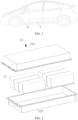
FIG. 1 is a schematic structural diagram of a vehicle according to an embodiment of this application. -
FIG. 2 is a schematic exploded view of a structure of a battery module according to an embodiment of this application. -
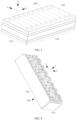
FIG. 3 is a schematic structural diagram of a battery column according to an embodiment of this application. -
FIG. 4 is a schematic structural diagram of a battery column according to another embodiment of this application. -
FIG. 5 is a schematic exploded view of the structure inFIG. 4 . -
FIG. 6 is a schematic structural diagram of a first battery cell according to an embodiment of this application. -
FIG. 7 is a schematic exploded view of the structure inFIG. 6 . -
FIG. 8 is a schematic exploded view of a structure of a second battery cell according to an embodiment of this application. -
FIG. 9 is a flowchart of a method for forming a battery column according to an embodiment of this application. - Reference signs are described as follows:
- 1. battery module; 2. vehicle body;
- 11. battery column; 12. box body; 121. upper box body; 122. lower box body;
- 100. first battery cell; 110. first metal case; 111. first side surface; 112. second side surface; 113. bottom surface; 120. first insulating film; 121. body portion; 122. first wrapping portion; 123. second wrapping portion; 130. first electrode unit; 140. first top cover assembly;
- 200. second battery cell; 210. second metal case; 220. second electrode unit; 230. second top cover assembly;
- 300. housing; 310. end plate; 320. side plate; 321. second insulating film; 330. band; 340. base plate; 341. third insulating film; 350. insulating plate;
- 400. heat insulation pad;
- X. first direction; and
- Y second direction.
- The features and example embodiments of various aspects of this application will be described in detail below. In the following detailed description, many specific details are presented for comprehensive understanding of this application. However, it is obvious to those skilled in the art that this application can be implemented without some of these specific details. The following descriptions of the embodiments are only to provide a better understanding for this application by showing examples of this application. In the accompanying drawings and description below, at least part of the well-known structures and technologies are not shown in order to avoid unnecessary ambiguity to this application; and the size of some structures may be exaggerated for clarity. In addition, the features, structures or characteristics described below may be combined in one or more embodiments in any suitable manner.
- In the descriptions of this application, it should be noted that, unless otherwise specified, "plurality" means more than two; and orientations or position relationships indicated by the terms "up", "down", "left", "right", "inside", "outside", and the like are merely intended to simplify description of this application for a purpose of easy description, rather than indicating or implying that an apparatus or a part must have a particular direction or must be constructed and operated in a particular orientation. Therefore, this shall not be construed as any limitation on this application. In addition, the terms "first" and "second" are merely intended for a purpose of description, and shall not be understood as an indication or implication of relative importance.
- The orientation words shown in the following description are all directions shown in the drawings, and are not limited to the specific structure of the embodiments of this application. In the descriptions of this application, it should be further noted that, unless otherwise specified and defined explicitly, the terms "mounted" and "connected" are to be interpreted broadly, for example, may be fixedly connected, or detachably connected, or integrally connected, and may be directly connected, or indirectly connected. A person of ordinary skill in the art can understand specific meanings of these terms in this application based on specific situations.
- For better understanding of this application, the following describes in detail a battery column, a battery module, and an apparatus of the embodiments of this application with reference to
FIG. 1 to FIG. 9 . - As shown in
FIG. 1 , an embodiment of this application first provides a vehicle. The vehicle includes avehicle body 2 and abattery module 1, and thebattery module 1 is disposed in thevehicle body 2. - The vehicle is a new energy vehicle, which may be a battery electric vehicle, or may be a hybrid electric vehicle or an extended-range electric vehicle. The
vehicle body 2 is provided with a drive motor. The drive motor is electrically connected to thebattery module 1, and is provided with electrical energy by thebattery module 1. The drive motor is connected to wheels on thevehicle body 2 through a transmission mechanism to drive the vehicle. For example, thebattery module 1 may be horizontally disposed at the bottom of thevehicle body 2. - Referring to
FIG. 2 , thebattery module 1 can be disposed in various ways. In some embodiments, thebattery module 1 includes abox body 12 and abattery column 11 disposed in thebox body 12. - One or
more battery columns 11 may be provided, and a plurality ofbattery columns 11 are disposed in a line in thebox body 12. Thebox body 12 is not limited in its type and may be a frame-shaped, disk-shaped, or box-shaped box body, or the like. Specifically, thebox body 12 may include alower box body 122 for accommodating the battery column and anupper box body 121 that is engaged to thelower box body 122. - It can be understood that the
battery column 11 can be used in vehicles and other apparatuses. An embodiment of this application further provides an apparatus that uses thebattery column 11 as a power source, where the apparatus may be, but is not limited to, a vehicle, a ship, or an aircraft. - Referring to
FIG. 3 to FIG. 8 ,FIG. 3 is a schematic structural diagram of a battery column according to an embodiment of the application,FIG. 4 is a schematic structural diagram of a battery column according to another embodiment of the application,FIG. 5 is a schematic exploded view of the structure inFIG. 4 ,FIG. 6 is a schematic structural diagram of a first battery cell according to an embodiment of this application,FIG. 7 is a schematic exploded view of the structure inFIG. 6 , andFIG. 8 is a schematic structural diagram of a second battery cell according to an embodiment of this application. - The
battery column 11 can be disposed in various ways. In some embodiments, thebattery column 11 includes ahousing 300, andfirst battery cells 100 andsecond battery cells 200 that are alternately distributed side by side along a first direction (the X direction inFIG. 3 ) in thehousing 300, where thefirst battery cell 100 includes afirst metal case 110 and a firstinsulating film 120, thefirst metal case 110 has two first side surfaces 111 disposed opposite each other along the first direction, and the first insulatingfilm 120 covers at least the two first side surfaces 111; and thesecond battery cell 200 includes asecond metal case 210, which is exposed in thehousing 300. - The direction in which the
first battery cells 100 and thesecond battery cells 200 are disposed side by side in thebattery column 11 is the first direction. - The
first battery cells 100 and thesecond battery cells 200 are alternately arranged side by side, which means that individualfirst battery cells 100 and individualsecond battery cells 200 are alternately arranged side by side along the first direction. To be specific, onefirst battery cell 100 and onesecond battery cell 200 form a battery cell group, and two or more battery cell groups are arranged side by side along the first direction. - The
second metal case 210 being exposed in thehousing 300 means that no insulating film is coated on thesecond metal case 210, and thesecond battery cell 200 is in contact or connection with other components of thebattery column 11 directly through thesecond metal case 210. - The
battery column 11 of the embodiments of this application includes ahousing 300, andfirst battery cells 100 andsecond battery cells 200 that are alternately distributed side by side in thehousing 300. The firstinsulating film 120 is provided on thefirst metal case 110 of thefirst battery cell 100, and covers the first side surfaces 111. Thesecond battery cell 200 includes thesecond metal case 210, which is exposed in thehousing 300. The firstinsulating film 120 covers the two first side surfaces 111, ensuring mutual insulation between thefirst battery cell 100 and thesecond battery cell 200. Thefirst battery cells 100 and thesecond battery cells 200 are alternately arranged side by side along the first direction, ensuring mutual insulation between all battery cells in thebattery column 11. Therefore, in thebattery column 11 according to the embodiments of this application, even if no insulating film is provided on thesecond metal case 210 of thesecond battery cell 200, and thesecond metal case 210 is exposed in thehousing 300, the battery cells can still be insulated from each other, and space inside thehousing 300 can be saved, thereby improving energy density of thebattery column 11 and reducing costs. - The
housing 300 can be disposed in various ways. In some embodiments, thehousing 300 includes twoend plates 310 disposed opposite each other along the first direction, thefirst battery cells 100 and thesecond battery cells 200 are disposed between the twoend plates 310, and theend plate 310 is provided with an insulatingplate 350 on a side facing toward an inner surface of the housing. - In these embodiments, the
end plate 310 is provided with the insulatingplate 350 on the side facing toward the inner surface of the housing, which can ensure mutual insulation between theend plate 310 and thefirst battery cell 100, and/or mutual insulation between theend plate 310 and thesecond battery cell 200. - When the
second battery cell 200 is located at one end of a plurality offirst battery cells 100 andsecond battery cells 200 that are arranged side by side, thesecond metal case 210 is in direct contact with the insulatingplate 350, or is directly bonded to the insulatingplate 350 by using glue. - In some embodiments, the
housing 300 further includes aband 330 surrounding an outer circumference side of the twoend plates 310, thefirst battery cells 100, and thesecond battery cells 200, and theband 330 is covered with an insulating layer. - In these embodiments, the
band 330 is covered with an insulating layer to ensure mutual insulation between theband 330 and thefirst battery cell 100 and thesecond battery cell 200, and further ensure mutual insulation between thefirst battery cell 100, thesecond battery cell 200 and thehousing 300. - In some other embodiments, the
housing 300 further includes twoside plates 320 disposed opposite each other along a second direction (the Y direction inFIG. 3 ), and thefirst battery cells 100 and thesecond battery cells 200 are disposed between the twoside plates 320. Theside plate 320 is provided with a secondinsulating film 321 on an inner surface facing toward an accommodating cavity, and thesecond metal case 210 is directly connected to the secondinsulating film 321. - In these embodiments, the
side plate 320 is provided with the secondinsulating film 321 on the inner surface facing toward the housing, which ensures mutual insulation between theside plate 320 and thefirst battery cell 100 and thesecond battery cell 200, and further ensures mutual insulation between thefirst battery cell 100, thesecond battery cell 200 and thehousing 300. - The two
side plates 320 are separately connected between the twoend plates 310, so that the twoend plates 310 and the twoside plates 320 are jointly enclosed to form an accommodating cavity for accommodating thefirst battery cells 100 and thesecond battery cells 200. - The second
insulating film 321 can be disposed in various ways. For example, the secondinsulating film 321 may be an insulating film layer attached to the inner surface of theside plate 320, or the secondinsulating film 321 may be an adhesive layer coated on the inner surface of theside plate 320, provided that the secondinsulating film 321 can implement the mutual insulation between theside plate 320 and thefirst battery cell 100 and thesecond battery cell 200. - When the second
insulating film 321 is an adhesive layer, thesecond metal case 210 may be directly bonded to the secondinsulating film 321. When the secondinsulating film 321 is an insulating film layer, thesecond metal case 210 may be in direct contact with the secondinsulating film 321, or thesecond metal case 210 may be directly bonded to the secondinsulating film 321 by using glue. - In still other embodiments, the
housing 300 further includes abase plate 340, thebase plate 340 is provided with a thirdinsulating film 341 on an inner surface facing toward the housing, and thesecond metal case 210 is directly connected to the thirdinsulating film 341. - In these embodiments, the
base plate 340 is provided with the thirdinsulating film 341 on the inner surface facing toward the housing, which can ensure mutual insulation between thebase plate 340 and thefirst battery cell 100 and thesecond battery cell 200, and further ensure mutual insulation between thefirst battery cell 100, thesecond battery cell 200 and thehousing 300. - The third
insulating film 341 may be disposed in various ways. For example, the thirdinsulating film 341 may be an insulating film layer attached to the inner surface of thebase plate 340, or the thirdinsulating film 341 may be an adhesive layer coated on the inner surface of thebase plate 340, provided that the thirdinsulating film 341 can implement the mutual insulation between thebottom plate 340 and thefirst battery cell 100 and thesecond battery cell 200. - When the third
insulating film 341 is an adhesive layer, thesecond metal case 210 may be directly bonded to the thirdinsulating film 341. When the thirdinsulating film 341 is an insulating film layer, thesecond metal case 210 may be in direct contact with the thirdinsulating film 341, or thesecond metal case 210 may be directly bonded to the thirdinsulating film 341 by using glue. - The
first battery cell 100 can be disposed in various ways. In some embodiments, thefirst battery cell 100 further includes afirst electrode unit 130 located in thefirst metal case 110 and a firsttop cover assembly 140 covering an opening of thefirst metal case 110. - The
second battery cell 200 can be disposed in various ways. In some embodiments, thesecond battery cell 200 further includes asecond electrode unit 220 located in thesecond metal case 210 and a secondtop cover assembly 230 covering an opening of thesecond metal case 210. - The
first electrode unit 130 and thesecond electrode unit 220 can be formed by stacking or winding a first electrode plate, a second electrode plate, and a separator located between the first electrode plate and the second electrode plate, where the separator is an insulator sandwiched between the first electrode plate and the second electrode plate. - In some embodiments, the
first metal case 110 further includes two second side surfaces 112 disposed opposite each other along a second direction, where the two second side surfaces 112 are connected between the two first side surfaces 111. Thefirst metal case 110 further includes abottom surface 113 disposed opposite an opening thereof, and thebottom surface 113 is connected between the two first side surfaces 111. - The first
insulating film 120 can be disposed in various ways. In some embodiments, the first insulatingfilm 120 covers at least part of the second side surfaces 112. - The first
insulating film 120 covers the second side surfaces 112 in various ways. In some embodiments, the first insulatingfilm 120 further includes afirst wrapping portion 122 that covers at least part of the second side surfaces 112. Thefirst wrapping portion 122 can cover any suitable portion on the second side surfaces 112. For example, the first insulatingfilm 120 includes abody portion 121 covering thefirst side surface 111, and thefirst wrapping portion 122 extends from thebody portion 121 to thesecond side surface 112, that is, thefirst wrapping portion 122 extends from thefirst side surface 111 to thesecond side surface 112, and an extension width of thefirst wrapping portion 122 in the first direction is 5 mm to 10 mm. - In these embodiments, a width of the
first wrapping portion 122 is 5 mm to 10 mm, which can meet the safe creepage distance requirements. - One, two, or more
first wrapping portions 122 can be provided. In some embodiments, fourfirst wrapping portions 122 are provided, with the twofirst wrapping portions 122 spaced apart along the first direction on eachsecond side surface 112. - In some other embodiments, the first insulating
film 120 further covers at least part of thebottom surface 113. - The first
insulating film 120 covers thebottom surface 113 in various ways. In some embodiments, the first insulatingfilm 120 further includes asecond wrapping portion 123 that covers at least part of thebottom surface 113. Thesecond wrapping portion 123 can cover any suitable position on thebottom surface 113. For example, thesecond wrapping portion 123 extends from thebody portion 121 to thebottom surface 113, that is, thesecond wrapping portion 123 extends from thefirst side surface 111 to thebottom surface 113, and an extension width of thesecond wrapping portion 123 in the first direction is 5 mm to 10 mm. In this way, the first insulatingfilm 120 can meet the creepage distance requirements on thebottom surface 113. - One or two
second wrapping portions 123 can be provided. For example, twosecond wrapping portions 123 are provided, which are spaced apart on thebottom surface 113 along the first direction. - The first
insulating film 120 can be made of any suitable material. For example, the first insulatingfilm 120 is made of a material selected from at least one of low density polyethylene (LDPE), high density polyethylene (HDPE), polypropylene (PP), polyethylene (PE), polyethylene terephthalate (PET), polycarbonate (PC), and polyarylate. In some embodiments, the first insulatingfilm 120 is made of PET, so that the first insulatingfilm 120 has good flexibility and can be wrapped on thefirst metal case 110. - The first
insulating film 120 and thefirst metal case 110 can be connected in various ways. For example, the first insulatingfilm 120 is wrapped on thefirst metal case 110 through thermal deformation. Alternatively, a surface of the first insulatingfilm 120 facing toward thefirst metal case 110 is adhesive, allowing the first insulatingfilm 120 to be bonded to thefirst metal case 110. - The first
insulating film 120 and thesecond metal case 210 can be connected in various ways. For example, a glue is provided between the first insulatingfilm 120 and thesecond metal case 210, so that the first insulatingfilm 120 can be bonded to thesecond metal case 210 by using the glue, making relative positions of thefirst battery cells 100 and thesecond battery cells 200 stable. The glue can be made of any suitable material. For example, the glue can be made of at least one of polyethylene glue, epoxy resin, and hot melt adhesive. - In order to ensure that no heat transfer occurs between the
first battery cell 100 and thesecond battery cell 200, in some embodiments, thebattery column 11 further includes aheat insulation pad 400, where theheat insulation pad 400 is disposed between thefirst battery cell 100 and thesecond battery cell 200 that are adjacent to each other. - The
heat insulation pad 400 and thefirst battery cell 100 and/or thesecond battery cell 200 can be connected in various ways. For example, theheat insulation pad 400 is bonded to thefirst battery cell 100 and/or thesecond battery cell 200 by using glue. To be specific, theheat insulation pad 400 and thefirst insulation film 120 are bonded to each other by using the glue, and/or theheat insulation pad 400 is directly bonded to thesecond metal case 210 by using the glue. - In some other embodiments, the
heat insulation pad 400 is in contact with the first insulatingfilm 120, and/or theheat insulation pad 400 is in direct contact with thesecond metal case 210. - The
heat insulation pad 400 can be made of any suitable material. In some embodiments, the material for making theheat insulation pad 400 is selected from at least one of foam and asbestos, which not only meets the requirements of heat insulation, but also has a particular cushioning effect. - Referring to
FIG. 9, FIG. 9 is a flowchart of a method for forming a battery column according to an embodiment of this application. Thebattery column 11 is thebattery column 11 according to any one of the foregoing embodiments. The method for forming thebattery column 11 is described as follows. - Step S101: Package an electrode unit using a metal case and a top cover assembly to form a battery cell.
- Step S102: Make first battery cells and second battery cells.
- Step S102 can be implemented in various ways. For example, a plurality of battery cells are divided into two groups, of which one is wrapped with a first
insulating film 120 on the metal case to form thefirst battery cell 100, where the first insulatingfilm 120 covers at least two first side surfaces 111 of the metal case disposed opposite each other in a first direction, and the other serves as thesecond battery cell 200. - The first
insulating film 120 can be disposed in various ways. For example, the first insulatingfilm 120 further covers at least part of second side surfaces 112 of the metal case disposed opposite each other in a second direction, or the first insulatingfilm 120 further covers at least part of abottom surface 113 of the metal case. - Step S103: Alternately dispose the first battery cells and the second battery cells side by side in the housing along the first direction to form a battery column.
- In the method for forming the
battery column 11 according to this embodiment of this application, step S101 is first used to form a plurality of battery cells. Then step S102 is used to divide the plurality of battery cells into two groups, of which one is wrapped with the first insulatingfilm 120 on the metal case to form thefirst battery cell 100, and the other serves as thesecond battery cell 200. In step S102, thesecond battery cell 200 does not need to be wrapped with an insulating film, thereby simplifying the production process and improving production efficiency. In addition, the first insulatingfilm 120 covers at least the first side surfaces 111. After thefirst battery cells 100 and thesecond battery cells 200 form thebattery column 11 in step S103, the battery cells can be insulated from each other, space in thehousing 300 can be saved, thereby improving energy density of thebattery column 11. - This application can be implemented in other specific forms without departing from its essential features. Therefore, the current embodiments are regarded as illustrative rather than limitative in all aspects, and the scope of this application is defined by the appended claims rather than the foregoing description, and all changes falling within the meaning of the claims are thus included within the scope of this application.
Claims (10)
- A battery column (11), comprising a housing (300), and first battery cells (100) and second battery cells (200) that are alternately distributed side by side along a first direction (X) in the housing (300), wherein:each first battery cell (100) comprises a first metal case (110) and a first insulating film (120), the first metal case (110) having two first side surfaces (111) disposed opposite each other along the first direction (X), and the first insulating film (120) covering at least the two first side surfaces (111); andeach second battery cell (200) comprises a second metal case (210), which is exposed in the housing (300).
- The battery column (11) according to claim 1, wherein the first metal case (110) further comprises two second side surfaces (112) disposed opposite each other along a second direction (Y), the two second side surfaces (112) are connected between the two first side surfaces (111), and the first insulating film (120) covers at least part of the two second side surfaces (112).
- The battery column (11) according to any one of claims 1 and 2, wherein the first metal case (110) further comprises a bottom surface (113) connected between the two first side surfaces (111), and the first insulating film (120) covers at least part of the bottom surface (113).
- The battery column (11) according to any one of claims 1 to 3, wherein the first insulating film (120) is made of a material selected from at least one of low density polyethylene, high density polyethylene, polypropylene, polyethylene, polyethylene terephthalate, polycarbonate, and polyarylate.
- The battery column (11) according to any one of claims 1 to 4, wherein the second metal case (210) and the first insulating film (120) are directly bonded by using glue.
- The battery column (11) according to any one of claims 1 to 5, further comprising a heat insulation pad (400), wherein the heat insulation pad (400) is disposed between adjacent first and second battery cells (100, 200);the heat insulation pad (400) is directly bonded to the second metal case (210) by using glue; orthe heat insulation pad (400) is in direct contact with the second metal case (210).
- The battery column (11) according to any one of claims 1 to 6, wherein the housing (300) comprises two side plates (320) disposed opposite each other along a or the second direction (Y), the second direction (Y) intersecting with the first direction (X), the first battery cells (100) and the second battery cells (200) are disposed between the two side plates (320), each one of the side plates (320) is provided with a second insulating film (321) on an inner surface facing toward the housing (300), wherein:the second insulating film (321) is an insulating film layer attached to the inner surface of the side plate (320), or an adhesive layer coated on the inner surface of the side plate (320); andthe second metal case (210) is directly connected to the second insulating film (321).
- The battery column (11) according to any one of claims 1 to 7, wherein the housing (300) comprises a base plate (340), and the base plate (340) is provided with a third insulating film (341) on an inner surface facing toward the housing (300), wherein:
the third insulating film (341) is an insulating film layer attached to the inner surface of the base plate (340), or an adhesive layer coated on the inner surface of the base plate (340); and the second metal case (210) is directly connected to the third insulating film (341). - A battery module (1), comprising a battery column (11) according to any one of claims 1 to 8.
- An apparatus using a battery column (11) as a power source, wherein the battery column (11) is the battery column (11) according to any one of claims 1 to 8.
Applications Claiming Priority (2)
| Application Number | Priority Date | Filing Date | Title |
|---|---|---|---|
| CN201922016091.9U CN211265549U (en) | 2019-11-20 | 2019-11-20 | Battery module, battery pack and device |
| PCT/CN2020/128864 WO2021098622A1 (en) | 2019-11-20 | 2020-11-13 | Battery module, battery pack and apparatus |
Publications (3)
| Publication Number | Publication Date |
|---|---|
| EP3930082A1 EP3930082A1 (en) | 2021-12-29 |
| EP3930082A4 EP3930082A4 (en) | 2022-07-27 |
| EP3930082B1 true EP3930082B1 (en) | 2024-05-08 |
Family
ID=71962013
Family Applications (1)
| Application Number | Title | Priority Date | Filing Date |
|---|---|---|---|
| EP20889089.7A Active EP3930082B1 (en) | 2019-11-20 | 2020-11-13 | Battery module, battery pack and apparatus |
Country Status (6)
| Country | Link |
|---|---|
| US (1) | US12119502B2 (en) |
| EP (1) | EP3930082B1 (en) |
| CN (1) | CN211265549U (en) |
| ES (1) | ES2987708T3 (en) |
| HU (1) | HUE067272T2 (en) |
| WO (1) | WO2021098622A1 (en) |
Families Citing this family (9)
| Publication number | Priority date | Publication date | Assignee | Title |
|---|---|---|---|---|
| CN211265549U (en) * | 2019-11-20 | 2020-08-14 | 宁德时代新能源科技股份有限公司 | Battery module, battery pack and device |
| CN112736330B (en) * | 2021-01-06 | 2023-04-04 | 欣旺达电动汽车电池有限公司 | Battery coating method and battery |
| EP4261996B8 (en) * | 2021-01-28 | 2024-10-23 | Contemporary Amperex Technology (Hong Kong) Limited | Insulating film, battery cell, battery and power consumption device |
| JP7396321B2 (en) * | 2021-03-31 | 2023-12-12 | トヨタ自動車株式会社 | Energy storage units and vehicles |
| CN115548563A (en) * | 2022-10-25 | 2022-12-30 | 楚能新能源股份有限公司 | A modular battery box structure, battery and module assembly method |
| CN116365189B (en) * | 2023-05-31 | 2023-08-04 | 深圳海辰储能控制技术有限公司 | Energy storage device and electrical equipment |
| CN116365147A (en) * | 2023-05-31 | 2023-06-30 | 深圳海辰储能控制技术有限公司 | Energy storage battery, energy storage device and electrical equipment |
| WO2024243919A1 (en) * | 2023-05-31 | 2024-12-05 | 深圳海辰储能控制技术有限公司 | Energy storage apparatus and electric device |
| CN223039061U (en) * | 2024-02-29 | 2025-06-27 | 宁德时代新能源科技股份有限公司 | Batteries, electrical equipment and energy storage devices |
Family Cites Families (11)
| Publication number | Priority date | Publication date | Assignee | Title |
|---|---|---|---|---|
| JP2013114954A (en) * | 2011-11-30 | 2013-06-10 | Sanyo Electric Co Ltd | Power supply unit and vehicle and power storage device incorporating the same |
| KR20130142449A (en) * | 2012-06-19 | 2013-12-30 | 삼성에스디아이 주식회사 | Rechargeable battery module |
| US20170250388A1 (en) * | 2014-09-03 | 2017-08-31 | Hitachi Automotive Systems, Ltd. | Prismatic secondary battery |
| US9755214B2 (en) * | 2015-04-23 | 2017-09-05 | Changs Ascending Enterprise Co., Ltd. | Lithium battery cell structure |
| CN106450406A (en) * | 2015-08-07 | 2017-02-22 | 宁德时代新能源科技股份有限公司 | Battery module |
| CN205609583U (en) | 2016-04-22 | 2016-09-28 | 宁德时代新能源科技股份有限公司 | Battery module |
| CN206657824U (en) * | 2017-03-17 | 2017-11-21 | 宁德时代新能源科技股份有限公司 | Battery modules |
| CN109216594B (en) * | 2017-06-30 | 2022-03-15 | 比亚迪股份有限公司 | Battery unit and battery module |
| US11347290B2 (en) * | 2017-08-04 | 2022-05-31 | Dell Products L.P. | Power monitor scaling for an information handling system |
| US11394086B2 (en) * | 2017-09-27 | 2022-07-19 | Kabushiki Kaisha Toshiba | Battery module and connection member |
| CN211265549U (en) * | 2019-11-20 | 2020-08-14 | 宁德时代新能源科技股份有限公司 | Battery module, battery pack and device |
-
2019
- 2019-11-20 CN CN201922016091.9U patent/CN211265549U/en active Active
-
2020
- 2020-11-13 HU HUE20889089A patent/HUE067272T2/en unknown
- 2020-11-13 WO PCT/CN2020/128864 patent/WO2021098622A1/en not_active Ceased
- 2020-11-13 EP EP20889089.7A patent/EP3930082B1/en active Active
- 2020-11-13 US US17/614,367 patent/US12119502B2/en active Active
- 2020-11-13 ES ES20889089T patent/ES2987708T3/en active Active
Also Published As
| Publication number | Publication date |
|---|---|
| WO2021098622A1 (en) | 2021-05-27 |
| US12119502B2 (en) | 2024-10-15 |
| EP3930082A4 (en) | 2022-07-27 |
| ES2987708T3 (en) | 2024-11-15 |
| EP3930082A1 (en) | 2021-12-29 |
| US20220247018A1 (en) | 2022-08-04 |
| HUE067272T2 (en) | 2024-10-28 |
| CN211265549U (en) | 2020-08-14 |
Similar Documents
| Publication | Publication Date | Title |
|---|---|---|
| EP3930082B1 (en) | Battery module, battery pack and apparatus | |
| US12592419B2 (en) | Pouch type case and battery pack including the same | |
| JP6456508B2 (en) | Battery module | |
| JP7048840B2 (en) | Battery module, battery pack containing it and automobile including the battery pack | |
| US9634307B2 (en) | Battery pack | |
| WO2021217966A1 (en) | Electrode assembly, secondary battery, battery pack, and apparatus | |
| EP3007248A1 (en) | Battery module | |
| KR102747107B1 (en) | Secondary Battery And Fabricating Method Thereof | |
| KR20200002349A (en) | Battery Module Having Unit Body | |
| WO2013042612A1 (en) | Film sheath battery and assembled battery | |
| US11114712B2 (en) | Battery module having improved cooling structure | |
| JP7501974B2 (en) | Battery module and battery pack including same | |
| KR20140004835A (en) | Battery pack | |
| JP7580841B2 (en) | Battery module and battery pack including same | |
| KR100896134B1 (en) | Battery having deflected bidirectional electrode terminal and battery module including same | |
| CN113906619B (en) | Power supply device, electric vehicle having same, and power storage device | |
| KR102522505B1 (en) | Supercapacitor module for easy assembly | |
| KR101521776B1 (en) | Battery Module with Bus-Bar for Changing Position of Output Terminal | |
| KR20140019961A (en) | Battery pack | |
| CN222896740U (en) | Battery devices and power-consuming devices | |
| CN219717022U (en) | Battery monomer, battery and power consumption device | |
| CN118679629A (en) | Battery monomer, battery and power consumption device | |
| WO2026007208A1 (en) | Battery and electric apparatus | |
| CN120565768A (en) | Battery cells and secondary batteries | |
| CN122000559A (en) | Battery cells, battery devices and electrical equipment |
Legal Events
| Date | Code | Title | Description |
|---|---|---|---|
| STAA | Information on the status of an ep patent application or granted ep patent |
Free format text: STATUS: THE INTERNATIONAL PUBLICATION HAS BEEN MADE |
|
| PUAI | Public reference made under article 153(3) epc to a published international application that has entered the european phase |
Free format text: ORIGINAL CODE: 0009012 |
|
| STAA | Information on the status of an ep patent application or granted ep patent |
Free format text: STATUS: REQUEST FOR EXAMINATION WAS MADE |
|
| 17P | Request for examination filed |
Effective date: 20210920 |
|
| AK | Designated contracting states |
Kind code of ref document: A1 Designated state(s): AL AT BE BG CH CY CZ DE DK EE ES FI FR GB GR HR HU IE IS IT LI LT LU LV MC MK MT NL NO PL PT RO RS SE SI SK SM TR |
|
| REG | Reference to a national code |
Free format text: PREVIOUS MAIN CLASS: H01M0050100000 Ref country code: DE Ref legal event code: R079 Ref document number: 602020030770 Country of ref document: DE Free format text: PREVIOUS MAIN CLASS: H01M0050100000 Ipc: H01M0050103000 |
|
| A4 | Supplementary search report drawn up and despatched |
Effective date: 20220624 |
|
| RIC1 | Information provided on ipc code assigned before grant |
Ipc: H01M 50/119 20210101ALI20220620BHEP Ipc: H01M 50/293 20210101ALI20220620BHEP Ipc: H01M 50/209 20210101ALI20220620BHEP Ipc: H01M 50/124 20210101ALI20220620BHEP Ipc: H01M 50/121 20210101ALI20220620BHEP Ipc: H01M 10/658 20140101ALI20220620BHEP Ipc: B60K 1/04 20190101ALI20220620BHEP Ipc: H01M 50/202 20210101ALI20220620BHEP Ipc: H01M 50/103 20210101AFI20220620BHEP |
|
| DAV | Request for validation of the european patent (deleted) | ||
| DAX | Request for extension of the european patent (deleted) | ||
| GRAP | Despatch of communication of intention to grant a patent |
Free format text: ORIGINAL CODE: EPIDOSNIGR1 |
|
| STAA | Information on the status of an ep patent application or granted ep patent |
Free format text: STATUS: GRANT OF PATENT IS INTENDED |
|
| INTG | Intention to grant announced |
Effective date: 20240221 |
|
| GRAS | Grant fee paid |
Free format text: ORIGINAL CODE: EPIDOSNIGR3 |
|
| GRAA | (expected) grant |
Free format text: ORIGINAL CODE: 0009210 |
|
| STAA | Information on the status of an ep patent application or granted ep patent |
Free format text: STATUS: THE PATENT HAS BEEN GRANTED |
|
| AK | Designated contracting states |
Kind code of ref document: B1 Designated state(s): AL AT BE BG CH CY CZ DE DK EE ES FI FR GB GR HR HU IE IS IT LI LT LU LV MC MK MT NL NO PL PT RO RS SE SI SK SM TR |
|
| REG | Reference to a national code |
Ref country code: GB Ref legal event code: FG4D |
|
| REG | Reference to a national code |
Ref country code: CH Ref legal event code: EP |
|
| REG | Reference to a national code |
Ref country code: DE Ref legal event code: R096 Ref document number: 602020030770 Country of ref document: DE |
|
| REG | Reference to a national code |
Ref country code: IE Ref legal event code: FG4D |
|
| REG | Reference to a national code |
Ref country code: DE Ref legal event code: R081 Ref document number: 602020030770 Country of ref document: DE Owner name: CONTEMPORARY AMPEREX TECHNOLOGY (HONG KONG) LI, HK Free format text: FORMER OWNER: CONTEMPORARY AMPEREX TECHNOLOGY CO., LIMITED, NINGDE CITY, FUJIAN, CN |
|
| REG | Reference to a national code |
Ref country code: LT Ref legal event code: MG9D |
|
| REG | Reference to a national code |
Ref country code: NL Ref legal event code: MP Effective date: 20240508 |
|
| REG | Reference to a national code |
Ref country code: GB Ref legal event code: 732E Free format text: REGISTERED BETWEEN 20240829 AND 20240904 |
|
| REG | Reference to a national code |
Ref country code: HU Ref legal event code: GB9C Owner name: CONTEMPORARY AMPEREX TECHNOLOGY (HONG KONG) LIMITED, HK Free format text: FORMER OWNER(S): CONTEMPORARY AMPEREX TECHNOLOGY CO., LIMITED, CN Ref country code: HU Ref legal event code: FH1C Free format text: FORMER REPRESENTATIVE(S): DANUBIA SZABADALMI ES JOGI IRODA KFT., HU Representative=s name: DANUBIA SZABADALMI ES JOGI IRODA KFT., HU |
|
| RAP2 | Party data changed (patent owner data changed or rights of a patent transferred) |
Owner name: CONTEMPORARY AMPEREX TECHNOLOGY(HONG KONG) LIMITED |
|
| PG25 | Lapsed in a contracting state [announced via postgrant information from national office to epo] |
Ref country code: IS Free format text: LAPSE BECAUSE OF FAILURE TO SUBMIT A TRANSLATION OF THE DESCRIPTION OR TO PAY THE FEE WITHIN THE PRESCRIBED TIME-LIMIT Effective date: 20240908 |
|
| PG25 | Lapsed in a contracting state [announced via postgrant information from national office to epo] |
Ref country code: BG Free format text: LAPSE BECAUSE OF FAILURE TO SUBMIT A TRANSLATION OF THE DESCRIPTION OR TO PAY THE FEE WITHIN THE PRESCRIBED TIME-LIMIT Effective date: 20240508 |
|
| PG25 | Lapsed in a contracting state [announced via postgrant information from national office to epo] |
Ref country code: FI Free format text: LAPSE BECAUSE OF FAILURE TO SUBMIT A TRANSLATION OF THE DESCRIPTION OR TO PAY THE FEE WITHIN THE PRESCRIBED TIME-LIMIT Effective date: 20240508 Ref country code: HR Free format text: LAPSE BECAUSE OF FAILURE TO SUBMIT A TRANSLATION OF THE DESCRIPTION OR TO PAY THE FEE WITHIN THE PRESCRIBED TIME-LIMIT Effective date: 20240508 |
|
| PG25 | Lapsed in a contracting state [announced via postgrant information from national office to epo] |
Ref country code: GR Free format text: LAPSE BECAUSE OF FAILURE TO SUBMIT A TRANSLATION OF THE DESCRIPTION OR TO PAY THE FEE WITHIN THE PRESCRIBED TIME-LIMIT Effective date: 20240809 |
|
| PG25 | Lapsed in a contracting state [announced via postgrant information from national office to epo] |
Ref country code: PT Free format text: LAPSE BECAUSE OF FAILURE TO SUBMIT A TRANSLATION OF THE DESCRIPTION OR TO PAY THE FEE WITHIN THE PRESCRIBED TIME-LIMIT Effective date: 20240909 |
|
| REG | Reference to a national code |
Ref country code: AT Ref legal event code: MK05 Ref document number: 1685779 Country of ref document: AT Kind code of ref document: T Effective date: 20240508 |
|
| PG25 | Lapsed in a contracting state [announced via postgrant information from national office to epo] |
Ref country code: NL Free format text: LAPSE BECAUSE OF FAILURE TO SUBMIT A TRANSLATION OF THE DESCRIPTION OR TO PAY THE FEE WITHIN THE PRESCRIBED TIME-LIMIT Effective date: 20240508 |
|
| PG25 | Lapsed in a contracting state [announced via postgrant information from national office to epo] |
Ref country code: AT Free format text: LAPSE BECAUSE OF FAILURE TO SUBMIT A TRANSLATION OF THE DESCRIPTION OR TO PAY THE FEE WITHIN THE PRESCRIBED TIME-LIMIT Effective date: 20240508 |
|
| PG25 | Lapsed in a contracting state [announced via postgrant information from national office to epo] |
Ref country code: PL Free format text: LAPSE BECAUSE OF FAILURE TO SUBMIT A TRANSLATION OF THE DESCRIPTION OR TO PAY THE FEE WITHIN THE PRESCRIBED TIME-LIMIT Effective date: 20240508 |
|
| REG | Reference to a national code |
Ref country code: HU Ref legal event code: AG4A Ref document number: E067272 Country of ref document: HU |
|
| PG25 | Lapsed in a contracting state [announced via postgrant information from national office to epo] |
Ref country code: LV Free format text: LAPSE BECAUSE OF FAILURE TO SUBMIT A TRANSLATION OF THE DESCRIPTION OR TO PAY THE FEE WITHIN THE PRESCRIBED TIME-LIMIT Effective date: 20240508 |
|
| PG25 | Lapsed in a contracting state [announced via postgrant information from national office to epo] |
Ref country code: PT Free format text: LAPSE BECAUSE OF FAILURE TO SUBMIT A TRANSLATION OF THE DESCRIPTION OR TO PAY THE FEE WITHIN THE PRESCRIBED TIME-LIMIT Effective date: 20240909 Ref country code: PL Free format text: LAPSE BECAUSE OF FAILURE TO SUBMIT A TRANSLATION OF THE DESCRIPTION OR TO PAY THE FEE WITHIN THE PRESCRIBED TIME-LIMIT Effective date: 20240508 Ref country code: NL Free format text: LAPSE BECAUSE OF FAILURE TO SUBMIT A TRANSLATION OF THE DESCRIPTION OR TO PAY THE FEE WITHIN THE PRESCRIBED TIME-LIMIT Effective date: 20240508 Ref country code: LV Free format text: LAPSE BECAUSE OF FAILURE TO SUBMIT A TRANSLATION OF THE DESCRIPTION OR TO PAY THE FEE WITHIN THE PRESCRIBED TIME-LIMIT Effective date: 20240508 Ref country code: IS Free format text: LAPSE BECAUSE OF FAILURE TO SUBMIT A TRANSLATION OF THE DESCRIPTION OR TO PAY THE FEE WITHIN THE PRESCRIBED TIME-LIMIT Effective date: 20240908 Ref country code: HR Free format text: LAPSE BECAUSE OF FAILURE TO SUBMIT A TRANSLATION OF THE DESCRIPTION OR TO PAY THE FEE WITHIN THE PRESCRIBED TIME-LIMIT Effective date: 20240508 Ref country code: GR Free format text: LAPSE BECAUSE OF FAILURE TO SUBMIT A TRANSLATION OF THE DESCRIPTION OR TO PAY THE FEE WITHIN THE PRESCRIBED TIME-LIMIT Effective date: 20240809 Ref country code: FI Free format text: LAPSE BECAUSE OF FAILURE TO SUBMIT A TRANSLATION OF THE DESCRIPTION OR TO PAY THE FEE WITHIN THE PRESCRIBED TIME-LIMIT Effective date: 20240508 Ref country code: BG Free format text: LAPSE BECAUSE OF FAILURE TO SUBMIT A TRANSLATION OF THE DESCRIPTION OR TO PAY THE FEE WITHIN THE PRESCRIBED TIME-LIMIT Effective date: 20240508 Ref country code: AT Free format text: LAPSE BECAUSE OF FAILURE TO SUBMIT A TRANSLATION OF THE DESCRIPTION OR TO PAY THE FEE WITHIN THE PRESCRIBED TIME-LIMIT Effective date: 20240508 Ref country code: RS Free format text: LAPSE BECAUSE OF FAILURE TO SUBMIT A TRANSLATION OF THE DESCRIPTION OR TO PAY THE FEE WITHIN THE PRESCRIBED TIME-LIMIT Effective date: 20240808 |
|
| REG | Reference to a national code |
Ref country code: ES Ref legal event code: FG2A Ref document number: 2987708 Country of ref document: ES Kind code of ref document: T3 Effective date: 20241115 |
|
| PG25 | Lapsed in a contracting state [announced via postgrant information from national office to epo] |
Ref country code: DK Free format text: LAPSE BECAUSE OF FAILURE TO SUBMIT A TRANSLATION OF THE DESCRIPTION OR TO PAY THE FEE WITHIN THE PRESCRIBED TIME-LIMIT Effective date: 20240508 |
|
| PG25 | Lapsed in a contracting state [announced via postgrant information from national office to epo] |
Ref country code: EE Free format text: LAPSE BECAUSE OF FAILURE TO SUBMIT A TRANSLATION OF THE DESCRIPTION OR TO PAY THE FEE WITHIN THE PRESCRIBED TIME-LIMIT Effective date: 20240508 |
|
| PG25 | Lapsed in a contracting state [announced via postgrant information from national office to epo] |
Ref country code: CZ Free format text: LAPSE BECAUSE OF FAILURE TO SUBMIT A TRANSLATION OF THE DESCRIPTION OR TO PAY THE FEE WITHIN THE PRESCRIBED TIME-LIMIT Effective date: 20240508 |
|
| PG25 | Lapsed in a contracting state [announced via postgrant information from national office to epo] |
Ref country code: SK Free format text: LAPSE BECAUSE OF FAILURE TO SUBMIT A TRANSLATION OF THE DESCRIPTION OR TO PAY THE FEE WITHIN THE PRESCRIBED TIME-LIMIT Effective date: 20240508 Ref country code: RO Free format text: LAPSE BECAUSE OF FAILURE TO SUBMIT A TRANSLATION OF THE DESCRIPTION OR TO PAY THE FEE WITHIN THE PRESCRIBED TIME-LIMIT Effective date: 20240508 |
|
| PG25 | Lapsed in a contracting state [announced via postgrant information from national office to epo] |
Ref country code: SM Free format text: LAPSE BECAUSE OF FAILURE TO SUBMIT A TRANSLATION OF THE DESCRIPTION OR TO PAY THE FEE WITHIN THE PRESCRIBED TIME-LIMIT Effective date: 20240508 |
|
| PG25 | Lapsed in a contracting state [announced via postgrant information from national office to epo] |
Ref country code: SM Free format text: LAPSE BECAUSE OF FAILURE TO SUBMIT A TRANSLATION OF THE DESCRIPTION OR TO PAY THE FEE WITHIN THE PRESCRIBED TIME-LIMIT Effective date: 20240508 Ref country code: SK Free format text: LAPSE BECAUSE OF FAILURE TO SUBMIT A TRANSLATION OF THE DESCRIPTION OR TO PAY THE FEE WITHIN THE PRESCRIBED TIME-LIMIT Effective date: 20240508 Ref country code: RO Free format text: LAPSE BECAUSE OF FAILURE TO SUBMIT A TRANSLATION OF THE DESCRIPTION OR TO PAY THE FEE WITHIN THE PRESCRIBED TIME-LIMIT Effective date: 20240508 Ref country code: EE Free format text: LAPSE BECAUSE OF FAILURE TO SUBMIT A TRANSLATION OF THE DESCRIPTION OR TO PAY THE FEE WITHIN THE PRESCRIBED TIME-LIMIT Effective date: 20240508 Ref country code: DK Free format text: LAPSE BECAUSE OF FAILURE TO SUBMIT A TRANSLATION OF THE DESCRIPTION OR TO PAY THE FEE WITHIN THE PRESCRIBED TIME-LIMIT Effective date: 20240508 Ref country code: CZ Free format text: LAPSE BECAUSE OF FAILURE TO SUBMIT A TRANSLATION OF THE DESCRIPTION OR TO PAY THE FEE WITHIN THE PRESCRIBED TIME-LIMIT Effective date: 20240508 |
|
| PG25 | Lapsed in a contracting state [announced via postgrant information from national office to epo] |
Ref country code: IT Free format text: LAPSE BECAUSE OF FAILURE TO SUBMIT A TRANSLATION OF THE DESCRIPTION OR TO PAY THE FEE WITHIN THE PRESCRIBED TIME-LIMIT Effective date: 20240508 |
|
| REG | Reference to a national code |
Ref country code: DE Ref legal event code: R097 Ref document number: 602020030770 Country of ref document: DE |
|
| PLBE | No opposition filed within time limit |
Free format text: ORIGINAL CODE: 0009261 |
|
| STAA | Information on the status of an ep patent application or granted ep patent |
Free format text: STATUS: NO OPPOSITION FILED WITHIN TIME LIMIT |
|
| 26N | No opposition filed |
Effective date: 20250211 |
|
| PG25 | Lapsed in a contracting state [announced via postgrant information from national office to epo] |
Ref country code: SI Free format text: LAPSE BECAUSE OF FAILURE TO SUBMIT A TRANSLATION OF THE DESCRIPTION OR TO PAY THE FEE WITHIN THE PRESCRIBED TIME-LIMIT Effective date: 20240508 |
|
| REG | Reference to a national code |
Ref country code: CH Ref legal event code: PL |
|
| PG25 | Lapsed in a contracting state [announced via postgrant information from national office to epo] |
Ref country code: MC Free format text: LAPSE BECAUSE OF FAILURE TO SUBMIT A TRANSLATION OF THE DESCRIPTION OR TO PAY THE FEE WITHIN THE PRESCRIBED TIME-LIMIT Effective date: 20240508 |
|
| PG25 | Lapsed in a contracting state [announced via postgrant information from national office to epo] |
Ref country code: LU Free format text: LAPSE BECAUSE OF NON-PAYMENT OF DUE FEES Effective date: 20241113 |
|
| REG | Reference to a national code |
Ref country code: CH Ref legal event code: PL |
|
| PG25 | Lapsed in a contracting state [announced via postgrant information from national office to epo] |
Ref country code: CH Free format text: LAPSE BECAUSE OF NON-PAYMENT OF DUE FEES Effective date: 20241130 |
|
| REG | Reference to a national code |
Ref country code: BE Ref legal event code: MM Effective date: 20241130 |
|
| PG25 | Lapsed in a contracting state [announced via postgrant information from national office to epo] |
Ref country code: SE Free format text: LAPSE BECAUSE OF FAILURE TO SUBMIT A TRANSLATION OF THE DESCRIPTION OR TO PAY THE FEE WITHIN THE PRESCRIBED TIME-LIMIT Effective date: 20240508 |
|
| PG25 | Lapsed in a contracting state [announced via postgrant information from national office to epo] |
Ref country code: BE Free format text: LAPSE BECAUSE OF NON-PAYMENT OF DUE FEES Effective date: 20241130 |
|
| PG25 | Lapsed in a contracting state [announced via postgrant information from national office to epo] |
Ref country code: IE Free format text: LAPSE BECAUSE OF NON-PAYMENT OF DUE FEES Effective date: 20241113 |
|
| PGFP | Annual fee paid to national office [announced via postgrant information from national office to epo] |
Ref country code: HU Payment date: 20251107 Year of fee payment: 6 |
|
| PGFP | Annual fee paid to national office [announced via postgrant information from national office to epo] |
Ref country code: DE Payment date: 20251124 Year of fee payment: 6 |
|
| PGFP | Annual fee paid to national office [announced via postgrant information from national office to epo] |
Ref country code: GB Payment date: 20251126 Year of fee payment: 6 |
|
| PGFP | Annual fee paid to national office [announced via postgrant information from national office to epo] |
Ref country code: NO Payment date: 20251125 Year of fee payment: 6 |
|
| PGFP | Annual fee paid to national office [announced via postgrant information from national office to epo] |
Ref country code: FR Payment date: 20251128 Year of fee payment: 6 |
|
| PGFP | Annual fee paid to national office [announced via postgrant information from national office to epo] |
Ref country code: ES Payment date: 20251202 Year of fee payment: 6 |
|
| PG25 | Lapsed in a contracting state [announced via postgrant information from national office to epo] |
Ref country code: CY Free format text: LAPSE BECAUSE OF FAILURE TO SUBMIT A TRANSLATION OF THE DESCRIPTION OR TO PAY THE FEE WITHIN THE PRESCRIBED TIME-LIMIT; INVALID AB INITIO Effective date: 20201113 |