EP3929916A1 - Computer-implemented method of transcribing an audio stream and transcription mechanism - Google Patents
Computer-implemented method of transcribing an audio stream and transcription mechanism Download PDFInfo
- Publication number
- EP3929916A1 EP3929916A1 EP20182036.2A EP20182036A EP3929916A1 EP 3929916 A1 EP3929916 A1 EP 3929916A1 EP 20182036 A EP20182036 A EP 20182036A EP 3929916 A1 EP3929916 A1 EP 3929916A1
- Authority
- EP
- European Patent Office
- Prior art keywords
- text data
- transcribing
- transcription
- audio stream
- instance
- Prior art date
- Legal status (The legal status is an assumption and is not a legal conclusion. Google has not performed a legal analysis and makes no representation as to the accuracy of the status listed.)
- Granted
Links
Images




Classifications
-
- G—PHYSICS
- G10—MUSICAL INSTRUMENTS; ACOUSTICS
- G10L—SPEECH ANALYSIS TECHNIQUES OR SPEECH SYNTHESIS; SPEECH RECOGNITION; SPEECH OR VOICE PROCESSING TECHNIQUES; SPEECH OR AUDIO CODING OR DECODING
- G10L15/00—Speech recognition
- G10L15/28—Constructional details of speech recognition systems
- G10L15/32—Multiple recognisers used in sequence or in parallel; Score combination systems therefor, e.g. voting systems
-
- G—PHYSICS
- G10—MUSICAL INSTRUMENTS; ACOUSTICS
- G10L—SPEECH ANALYSIS TECHNIQUES OR SPEECH SYNTHESIS; SPEECH RECOGNITION; SPEECH OR VOICE PROCESSING TECHNIQUES; SPEECH OR AUDIO CODING OR DECODING
- G10L15/00—Speech recognition
- G10L15/26—Speech to text systems
-
- G—PHYSICS
- G06—COMPUTING OR CALCULATING; COUNTING
- G06F—ELECTRIC DIGITAL DATA PROCESSING
- G06F18/00—Pattern recognition
- G06F18/20—Analysing
- G06F18/22—Matching criteria, e.g. proximity measures
-
- G—PHYSICS
- G06—COMPUTING OR CALCULATING; COUNTING
- G06V—IMAGE OR VIDEO RECOGNITION OR UNDERSTANDING
- G06V30/00—Character recognition; Recognising digital ink; Document-oriented image-based pattern recognition
- G06V30/10—Character recognition
- G06V30/14—Image acquisition
- G06V30/148—Segmentation of character regions
- G06V30/153—Segmentation of character regions using recognition of characters or words
-
- H—ELECTRICITY
- H04—ELECTRIC COMMUNICATION TECHNIQUE
- H04N—PICTORIAL COMMUNICATION, e.g. TELEVISION
- H04N7/00—Television systems
- H04N7/14—Systems for two-way working
- H04N7/15—Conference systems
Definitions
- the present invention relates to a computer-implemented method of transcribing an audio stream and transcription mechanism implemented in a communication system for carrying out the method of transcribing an audio stream.
- transcription services which convert speech, either in real-time (real-time transcribing services as a first category) or recorded speech data (non real-time transcribing services as a second category), into written form or an electronic text document.
- the first category of transcribing services offers an Application Programming Interface, API, for transcribing an active audio stream, whereas transcription services of the second category offer an API for uploading previously recorded audio files.
- transcribing services may be utilized for the purpose of real-time transcription of audio/video conferences, but just as well for 1-to-1.
- the expectation is that the conversation between the participants of a conference or a call is transcribed in real-time and displayed to the participants with as less delay as possible.
- transcribing services known from prior art which may be used for the above described purposes usually are only able to transcribe short phrases of audio, typically less than a minute, for example, a voice command uttered by a user, as implemented, for example, in Alexa or Siri Digital Assistants, DA.
- the present invention is based on the object to provide a computer-implemented method of transcribing an audio stream and a corresponding transcription mechanism that may use a transcription service that only transcribes audio data for a time period that is shorter than the entire audio stream or recorded speech, but that nevertheless outputs transcribed text of the entire audio stream or recorded speech with high transcription quality.
- This object is solved according to the present invention by a computer-implemented method of transcribing an audio steam having the features according to claim 1, and a corresponding transcription mechanism for carrying out the method having the features according to claim 14.
- Preferred embodiments of the invention are specified in the respective dependent claims
- a computer-implemented method of transcribing an audio stream, in particular, during an audio- and/or video-conference, using a transcription service comprising the steps of
- transcription services may be used that only transcribe audio data of an audio stream for a time period that is shorter than the entire audio stream or recorded speech.
- a high transcription quality can be achieved.
- the method further comprises a step of transcribing the audio stream using a third transcribing instance, the third transcribing instance having a third predetermined transcription size that is smaller than the total length of the audio stream, the third transcribing instance providing a plurality of consecutive third transcribed text data snippets of the audio stream, the size of the third transcribed text data snippets respectively corresponding to the third predetermined transcription size; wherein the third transcribing instance starts transcription of the audio stream at a second point of time with a predetermined delay with respect to the second transcribing instance, wherein the predetermined delay is selected such that each one of the plurality of third text data snippets respectively overlaps at least a portion at which a first transcribed text data snippet of the plurality of the first text data snippets ends and a consecutive first transcribed text data snippet of the plurality of the first text data snippets starts.
- a third transcribing instance which starts with another certain
- the transcription size of the first, second, and third transcription instances is equal.
- the transcription service may be a real-time transcription service, in particular, an Automatic Speech Recognition, ASR, service, which uses real-time transcription instances.
- ASR Automatic Speech Recognition
- the transcription service may also be a non real-time transcription service.
- the method further comprises a step of concatenating the first, second, and third transcribed text data snippets.
- the method further comprises a step of identifying matching text passages in overlapping portions of the first, second, and third transcribed text data snippets.
- the step of identifying matching text passages comprises
- the method further comprises a step of searching the identified at least one word in the third transcribed text data snippet.
- the step of identifying matching text passages comprises
- the step of identifying matching text passages comprises
- the identified matching words and/or text passages are correlated.
- the transcribed audio stream is displayed at a display means.
- a transcription mechanism for a communication system for carrying out a video and/or audio conference with at least two participants is provided, wherein the transcription mechanism is adapted to carry out the method described above.
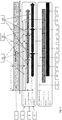
- Fig. 1 schematically illustrates a long time audio stream 1 being transcribed by two transcribing instances according to an embodiment of the invention.
- real-time transcription services are described.
- the same methodology may be applied to non real-time transcription services as well.
- a first transcribing instance 2 and a second transcribing instance 3 are used for transcribing the audio stream 1, wherein the first transcribing instance 2 has a first predetermined transcription size s1 that is smaller than length of the entire audio stream 1 to be transcribed.
- the first transcribing instance 2 provides a plurality of consecutive first transcribed text data snippets t1, t2, t3 of the audio stream 1, whereby the size of the first transcribed text data snippets t1, t2, t3 respectively corresponds to the first predetermined transcription size s1.
- the second transcribing instance 3 has a second predetermined transcription size s2, which in the embodiment shown here is equal to the first predetermined transcription size s1 of the first transcribing instance 2.
- the first and second transcription sizes s1, s2 may vary and are not equal.
- the second transcription size s2 is smaller than the entire audio stream 1 to be transcribed.
- the second transcribing instance 3 provides a further plurality of consecutive second transcribed text data snippets t1', t2' of the audio stream 1, wherein the size of the second transcribed text data snippets t1', t2' respectively corresponds to the second predetermined transcription size s2.
- the first and second transcription instances 2, 3 start transcription with a certain delay so that an overlap results.
- the first transcribing instance 2 starts transcription of the audio stream 1 at a first point of time
- the second transcribing instance 3 starts transcription of the audio stream 1 at a second point of time with a predetermined delay with respect to the first transcribing instance, wherein the predetermined delay is selected such that each one of the plurality of second text data snippets t'1, t'2 respectively overlaps at least a portion at which a first transcribed text data snippet t1 of the plurality of the first text data snippets ends and a consecutive first transcribed text data snippet t2 of the plurality of the first text data snippets starts.
- Fig. 2 schematically illustrates a long time audio stream 1 being transcribed by three transcribing instances according to an embodiment of the invention.
- This embodiment differs from the one shown in Fig. 1 in that additionally, a third transcribing instance 4 is used for transcribing the audio stream 1.
- the third transcribing instance has a third predetermined transcription size s3 that is smaller than the audio stream 1 to be transcribed.
- the third transcribing instance 4 provides a further plurality of consecutive third transcribed text data snippets t1", t2", t3" of the audio stream 1.
- the third transcribing instance 4 starts transcription of the audio stream 1 at a second point of time with a predetermined delay or offset with respect to the second transcribing instance 3 such that each one of the plurality of third text data snippets t1", t2", t3" respectively overlaps at least the portion at which a first transcribed text data snippet of the plurality of the first text data snippets ends and a consecutive first transcribed text data snippet of the plurality of the first text data snippets starts, as already outlined with respect to Fig. 1 .
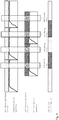
- Fig. 3 illustrates the development of the transcription quality in a typical transcription chunk, for example, a transcription chunk created by the first transcribing instance 2 described with respect to Fig. 1 and Fig. 2 , which has a predetermined transcription size s1 or length or duration. It can be seen that the quality within the separate transcription chunks varies due to eventually cut-off words at the beginning and the end of transcription. Moreover, no context (i.e., context concerning the audio to be described) will be available at the beginning of the transcribing process. Context will be created over time within the transcription engine and the more context is available, the more accurate the transcription will be. Thus, the best quality is achieved in the middle part of a transcription chunk.
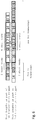
- Fig. 4 illustrates a concatenation procedure of transcription chunks according to an embodiment of the invention.
- the first transcribing instance 2 has provided a first transcription result with a first transcription quality reflected in the first transcribed text data snippet t1, as described with respect to Fig. 3 .
- a transcription chunk consists of areas of lower and higher quality. For the combined, resp. aggregated transcription, only areas of high quality within both transcription chunks are used. This is done by matching text from the "matching area" from the second transcription result with the "matching area” from the first transcription result.
- the matching area is initially defined with fixed starting values, which are iteratively modified to find matching text passages.
- Fig. 5 illustrates a first matching procedure according to an embodiment of the invention.
- This embodiment refers to a word length matching procedure using the first transcription until match found, then the second transcription.
- the transcription engines generally recognize words with a certain minimum length, e.g. 14 characters, with a higher confidence than shorter words. Consequently, the algorithm will start to find those words in the matching area of the first text data snippet 1. If a word of this length is available, it will search for this word in the matching area of the snippet t1. In addition, words with a certain length appear less frequently in typical speech. As a consequence, if a long word is found in both snippets t1, t1', it is very likely that these words can be used to match the snippets.
- Fig. 6 illustrates a second matching procedure according to another embodiment of the invention.
- a matching optimization is achieved by using word patterns, for example, the matching on count of short words between long words.
- word patterns for example, the matching on count of short words between long words.
- This is a variant of the 'optimization by word length' described with respect to Fig. 5 .
- the number of short words can be used as well.
- the method looks for two (or more) long words in the first text data snippet t1 and counts the number of shorter words between the long words. In case both long words and the number of short words in between do match, it is very likely that this word pattern can be used to match both text data snippets t1, t1'.
- Fig. 7 illustrates a third matching procedure according to a further embodiment of the invention, which describes a Matching optimization by word syllables.
- This embodiment applies a method from speech linguistic, concretely, a Porter-Stemmer algorithm. While originally aimed to reduce a word to its word 'base' (stemming), a side effect is the separation of words into its syllables. Even if single words are eventually not the same in both text data snippets t1, t1', the number of syllables most likely will be the same. Concretely, the applied method creates the number of syllables in the first text data snippet t1 and also in the second text data snippet tl'.
- the result is a number representation of the text data snippets like: ...243 1 6 8... Then, the sequence from the first text data snippet t1 will be searched for in the second text data snippet tl'.
- the length of the matching syllable pattern may be modified to improve the results.
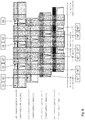
- Fig. 8 illustrates an optimization procedure with four transcription instances 2, 3, 4, 5 according to an embodiment of the invention. It is noted that even if the very same audio stream transcription engines are used for transcription as outlined above, they may produce different results, therefore, by applying the 'matching' methods described above, identical texts in three text data snippets t1, t1', t1", etc. may be found. After this correlation parts of transcripts between those matches can be compared and bad transcriptions can be removed. A part of a transcript text data snippet is regarded as being correct if at least one other text data snippet has the same text at that location (referred to as 'quorum'). In Fig. 8 , the matching areas for four transcription instances 2, 3, 4, 5 are shown.
- each area a quorum of at least two transcriptions is to be found, thus eliminating the transcription with the worst quality.
- Those quorum areas are matched with the matching procedure described above. It is noted that it is not necessary that the whole area matches, but the matching is used to correlate the text data snippets, i.e., move them on the time axis until they match.
- transcription engines from different vendors may be used to achieve the best transcription results as possible.
Landscapes
- Engineering & Computer Science (AREA)
- Multimedia (AREA)
- Physics & Mathematics (AREA)
- Theoretical Computer Science (AREA)
- Acoustics & Sound (AREA)
- Computational Linguistics (AREA)
- Health & Medical Sciences (AREA)
- Audiology, Speech & Language Pathology (AREA)
- Human Computer Interaction (AREA)
- General Physics & Mathematics (AREA)
- Computer Vision & Pattern Recognition (AREA)
- Data Mining & Analysis (AREA)
- Signal Processing (AREA)
- Life Sciences & Earth Sciences (AREA)
- Artificial Intelligence (AREA)
- Bioinformatics & Cheminformatics (AREA)
- Bioinformatics & Computational Biology (AREA)
- Evolutionary Biology (AREA)
- Evolutionary Computation (AREA)
- General Engineering & Computer Science (AREA)
- Telephonic Communication Services (AREA)
Abstract
Description
- The present invention relates to a computer-implemented method of transcribing an audio stream and transcription mechanism implemented in a communication system for carrying out the method of transcribing an audio stream.
- In prior art, transcription services are known which convert speech, either in real-time (real-time transcribing services as a first category) or recorded speech data (non real-time transcribing services as a second category), into written form or an electronic text document. The first category of transcribing services offers an Application Programming Interface, API, for transcribing an active audio stream, whereas transcription services of the second category offer an API for uploading previously recorded audio files.
- For example, such transcribing services may be utilized for the purpose of real-time transcription of audio/video conferences, but just as well for 1-to-1. In this context, the expectation is that the conversation between the participants of a conference or a call is transcribed in real-time and displayed to the participants with as less delay as possible.
- However, the transcribing services known from prior art which may be used for the above described purposes usually are only able to transcribe short phrases of audio, typically less than a minute, for example, a voice command uttered by a user, as implemented, for example, in Alexa or Siri Digital Assistants, DA.
- Therefore, there exists a limit with respect to the transcription size for the length of an audio stream to be transcribed. Thus, if a participant of a conference call talks longer than this limit, for instance as a conference participant is performing a PowerPoint presentation, no transcription will be available for the time exceeding this limit.
- Solutions known from prior art which aim at overcoming the above limitation, for example, stop and restart the transcription service for the audio stream before the transcription service limit is reached, thereby creating chunks of transcriptions. However, this has a very negative effect on the transcription quality, since words at the beginning and the end of the transcription may get cut-off. In addition, since the context of what was said before and after the chunk is not available, this will also result in a quality degradation of the transcription.
- Also, utilizing a non real-time transcribing service for this purpose bears the same disadvantages: The recording has to be interrupted and sent to the transcription service, which asynchronously returns a result for the purpose of getting kind of a real-time feedback to the conference participants. Again, interrupting a recording has a very negative effect on the transcription quality, since words at the beginning and the end of the transcription get cut-off. In addition, since the context of what was said before and after the chunk is not available, this will also result in a quality degradation of the transcription.
- Further, according to prior art, algorithms like silence detection may be applied in order to try to overcome the problem concerning cut-off words in both scenarios, at least to a certain extent, but the quality degradation due to missing context remains. In addition, this mechanism strongly depends on the speaker, the language and the environment, in order to properly detect silence (pauses) in the audio stream. Another issue is the sluggishness of this procedure: Detecting a meaningful phrase of silence, stopping and restarting a transcription service on the audio stream may result in words or phrases not being transcribed.
- Thus, there exists a problem in providing a transcription mechanism that overcomes the above described problems.
- Therefore, the present invention is based on the object to provide a computer-implemented method of transcribing an audio stream and a corresponding transcription mechanism that may use a transcription service that only transcribes audio data for a time period that is shorter than the entire audio stream or recorded speech, but that nevertheless outputs transcribed text of the entire audio stream or recorded speech with high transcription quality. This object is solved according to the present invention by a computer-implemented method of transcribing an audio steam having the features according to
claim 1, and a corresponding transcription mechanism for carrying out the method having the features according toclaim 14. Preferred embodiments of the invention are specified in the respective dependent claims - Accordingly, a computer-implemented method of transcribing an audio stream, in particular, during an audio- and/or video-conference, using a transcription service, is provided the method comprising the steps of
- transcribing the audio stream using a first transcribing instance of the transcription service, the first transcribing instance having a first predetermined transcription size that is smaller than the total length of the audio stream, the first transcribing instance providing a plurality of consecutive first transcribed text data snippets of the audio stream, the size of the first transcribed text data snippets respectively corresponding to the first predetermined transcription size;
- transcribing the audio stream using at least a second transcribing instance, the second transcribing instance having a second predetermined transcription size that is smaller than the length of the audio stream, the second transcribing instance providing a plurality of consecutive second transcribed text data snippets of the audio stream, the size of the second transcribed text data snippets respectively corresponding to the second predetermined transcription size;
- By the inventive method, transcription services may be used that only transcribe audio data of an audio stream for a time period that is shorter than the entire audio stream or recorded speech. However, due to the use of at least two transcribing instances with a certain overlap, a high transcription quality can be achieved.
- According to an embodiment of the invention, the method further comprises a step of transcribing the audio stream using a third transcribing instance, the third transcribing instance having a third predetermined transcription size that is smaller than the total length of the audio stream, the third transcribing instance providing a plurality of consecutive third transcribed text data snippets of the audio stream, the size of the third transcribed text data snippets respectively corresponding to the third predetermined transcription size; wherein the third transcribing instance starts transcription of the audio stream at a second point of time with a predetermined delay with respect to the second transcribing instance, wherein the predetermined delay is selected such that each one of the plurality of third text data snippets respectively overlaps at least a portion at which a first transcribed text data snippet of the plurality of the first text data snippets ends and a consecutive first transcribed text data snippet of the plurality of the first text data snippets starts. By using a third transcribing instance which starts with another certain delay or overlap, the transcription quality may be even further improved.
- According to another embodiment of the invention, the transcription size of the first, second, and third transcription instances is equal.
- Further, the transcription service may be a real-time transcription service, in particular, an Automatic Speech Recognition, ASR, service, which uses real-time transcription instances.
- Alternatively, the transcription service may also be a non real-time transcription service.
- According to another preferred embodiment of the invention, the method further comprises a step of concatenating the first, second, and third transcribed text data snippets.
- According to still another preferred embodiment of the invention, for concatenating the first, second, and third transcribed text data snippets, the method further comprises a step of identifying matching text passages in overlapping portions of the first, second, and third transcribed text data snippets.
- Preferably, the step of identifying matching text passages comprises
- identifying at least one word having a predetermined minimum length, in particular, at least 14 characters, in the first transcribed text data snippet, and
- if the at least one word having the predetermined minimum length is identified in the first transcribed text data snippet, searching the identified at least one word in the second transcribed text data snippet.
- According to another preferred embodiment of the invention, if the at least one word having the predetermined minimum length is identified in the first transcribed text data snippet, the method further comprises a step of searching the identified at least one word in the third transcribed text data snippet.
- Preferably, the step of identifying matching text passages comprises
- identifying at least one word pattern in the first transcribed text data snippet, the at least one word pattern comprising at least two long words with a predetermined number of short words in between the two long words, and
- if the at least one word pattern is identified in the first transcribed text data snippet, searching the identified at least one word pattern in the second transcribed text data snippet, and/or in the third transcribed text data snippet.
- According to still another preferred embodiment of the invention, the step of identifying matching text passages comprises
- identifying at least one syllable pattern according to a Porter-Stemmer algorithm in the first transcribed text data snippet, and
- if the at least one syllable pattern is identified in the first transcribed text data snippet, searching the identified at least one syllable pattern in the second transcribed text data snippet, and/or in the third transcribed text data snippet.
- Preferably, the identified matching words and/or text passages are correlated.
- According to yet another preferred embodiment of the invention, the transcribed audio stream is displayed at a display means.
- According to the present invention, moreover, a transcription mechanism for a communication system for carrying out a video and/or audio conference with at least two participants is provided, wherein the transcription mechanism is adapted to carry out the method described above.
- The invention and embodiments thereof will be described below in further detail in connection with the drawing.
- Fig. 1
- schematically illustrates a long time audio stream being transcribed by two transcribing instances according to an embodiment of the invention;
- Fig. 2
- schematically illustrates a long time audio stream being transcribed by three transcribing instances according to an embodiment of the invention;
- Fig. 3
- illustrates the development of the transcription quality in a typical transcription chunk;
- Fig. 4
- illustrates a concatenation procedure of transcription chunks according to an embodiment of the invention;
- Fig. 5
- illustrates a first matching procedure according to an embodiment of the invention;
- Fig. 6
- illustrates a second matching procedure according to another embodiment of the invention;
- Fig. 7
- illustrates a third matching procedure according to a further embodiment of the invention; and
- Fig. 8
- illustrates an optimization procedure with four transcription instances according to an embodiment of the invention.
-
Fig. 1 schematically illustrates a longtime audio stream 1 being transcribed by two transcribing instances according to an embodiment of the invention. According to the embodiments described in the following, real-time transcription services are described. However, it is noted that the same methodology may be applied to non real-time transcription services as well. Namely, as can be seen inFig. 1 , afirst transcribing instance 2 and asecond transcribing instance 3 are used for transcribing theaudio stream 1, wherein thefirst transcribing instance 2 has a first predetermined transcription size s1 that is smaller than length of theentire audio stream 1 to be transcribed. During the transcription procedure, thefirst transcribing instance 2 provides a plurality of consecutive first transcribed text data snippets t1, t2, t3 of theaudio stream 1, whereby the size of the first transcribed text data snippets t1, t2, t3 respectively corresponds to the first predetermined transcription size s1. - Further, the
second transcribing instance 3 has a second predetermined transcription size s2, which in the embodiment shown here is equal to the first predetermined transcription size s1 of thefirst transcribing instance 2. However, it is also conceivable that the first and second transcription sizes s1, s2 may vary and are not equal. Also, the second transcription size s2 is smaller than theentire audio stream 1 to be transcribed. Thesecond transcribing instance 3 provides a further plurality of consecutive second transcribed text data snippets t1', t2' of theaudio stream 1, wherein the size of the second transcribed text data snippets t1', t2' respectively corresponds to the second predetermined transcription size s2. - As can be seen in the figure, the first and
second transcription instances first transcribing instance 2 starts transcription of theaudio stream 1 at a first point of time and thesecond transcribing instance 3 starts transcription of theaudio stream 1 at a second point of time with a predetermined delay with respect to the first transcribing instance, wherein the predetermined delay is selected such that each one of the plurality of second text data snippets t'1, t'2 respectively overlaps at least a portion at which a first transcribed text data snippet t1 of the plurality of the first text data snippets ends and a consecutive first transcribed text data snippet t2 of the plurality of the first text data snippets starts. -
Fig. 2 schematically illustrates a longtime audio stream 1 being transcribed by three transcribing instances according to an embodiment of the invention. This embodiment differs from the one shown inFig. 1 in that additionally, athird transcribing instance 4 is used for transcribing theaudio stream 1. Also, the third transcribing instance has a third predetermined transcription size s3 that is smaller than theaudio stream 1 to be transcribed. Thethird transcribing instance 4 provides a further plurality of consecutive third transcribed text data snippets t1", t2", t3" of theaudio stream 1. Thethird transcribing instance 4 starts transcription of theaudio stream 1 at a second point of time with a predetermined delay or offset with respect to thesecond transcribing instance 3 such that each one of the plurality of third text data snippets t1", t2", t3" respectively overlaps at least the portion at which a first transcribed text data snippet of the plurality of the first text data snippets ends and a consecutive first transcribed text data snippet of the plurality of the first text data snippets starts, as already outlined with respect toFig. 1 . -
Fig. 3 illustrates the development of the transcription quality in a typical transcription chunk, for example, a transcription chunk created by thefirst transcribing instance 2 described with respect toFig. 1 andFig. 2 , which has a predetermined transcription size s1 or length or duration. It can be seen that the quality within the separate transcription chunks varies due to eventually cut-off words at the beginning and the end of transcription. Moreover, no context (i.e., context concerning the audio to be described) will be available at the beginning of the transcribing process. Context will be created over time within the transcription engine and the more context is available, the more accurate the transcription will be. Thus, the best quality is achieved in the middle part of a transcription chunk. -
Fig. 4 illustrates a concatenation procedure of transcription chunks according to an embodiment of the invention. Namely, according to the embodiment shown here, thefirst transcribing instance 2 has provided a first transcription result with a first transcription quality reflected in the first transcribed text data snippet t1, as described with respect toFig. 3 . The same applies for thesecond transcribing instance 3 that has provided a second transcription result with a second transcription quality reflected in the second transcribed text data snippet tl'. - When concatenating the text data snippets t1, t1', matching text passages need to be identified. As already outlined with respect to
Fig. 3 , since cut-off words occur at the beginning and at the end of a snippet and due to missing context, a transcription chunk consists of areas of lower and higher quality. For the combined, resp. aggregated transcription, only areas of high quality within both transcription chunks are used. This is done by matching text from the "matching area" from the second transcription result with the "matching area" from the first transcription result. The matching area is initially defined with fixed starting values, which are iteratively modified to find matching text passages. -
Fig. 5 illustrates a first matching procedure according to an embodiment of the invention. This embodiment refers to a word length matching procedure using the first transcription until match found, then the second transcription. The transcription engines generally recognize words with a certain minimum length, e.g. 14 characters, with a higher confidence than shorter words. Consequently, the algorithm will start to find those words in the matching area of the firsttext data snippet 1. If a word of this length is available, it will search for this word in the matching area of the snippet t1. In addition, words with a certain length appear less frequently in typical speech. As a consequence, if a long word is found in both snippets t1, t1', it is very likely that these words can be used to match the snippets. -
Fig. 6 illustrates a second matching procedure according to another embodiment of the invention. Here, a matching optimization is achieved by using word patterns, for example, the matching on count of short words between long words. This is a variant of the 'optimization by word length' described with respect toFig. 5 . In addition, it takes into consideration, that eventually a short word is not recognized with the same high confidence as a long word, at least it is recognized as one word. Thus, the number of short words can be used as well. Concretely, the method looks for two (or more) long words in the first text data snippet t1 and counts the number of shorter words between the long words. In case both long words and the number of short words in between do match, it is very likely that this word pattern can be used to match both text data snippets t1, t1'. -
Fig. 7 illustrates a third matching procedure according to a further embodiment of the invention, which describes a Matching optimization by word syllables. This embodiment applies a method from speech linguistic, concretely, a Porter-Stemmer algorithm. While originally aimed to reduce a word to its word 'base' (stemming), a side effect is the separation of words into its syllables. Even if single words are eventually not the same in both text data snippets t1, t1', the number of syllables most likely will be the same. Concretely, the applied method creates the number of syllables in the first text data snippet t1 and also in the second text data snippet tl'. The result is a number representation of the text data snippets like: ...243 1 6 8... Then, the sequence from the first text data snippet t1 will be searched for in the second text data snippet tl'. The length of the matching syllable pattern may be modified to improve the results. - All of the above described matching procedures may also be combined so as to achieve more accurate and reliable results.
-
Fig. 8 illustrates an optimization procedure with fourtranscription instances Fig. 8 , the matching areas for fourtranscription instances - Finally, it is noted that transcription engines from different vendors may be used to achieve the best transcription results as possible.
- Reference numerals
- 1
- Audio stream
- 2
- First transcribing instance
- 3
- Second transcribing instance
- 4
- Third transcribing instance
- 5
- Fourth transcribing instance
Claims (14)
- Computer-implemented method of transcribing an audio stream (1), in particular, during an audio- and/or video-conference, using a transcription service, the method comprising the steps of- transcribing the audio stream (1) using a first transcribing instance (2) of the transcription service, the first transcribing instance (2) having a first predetermined transcription size (s1) that is smaller than the total length of the audio stream (1), the first transcribing instance (2) providing a plurality of consecutive first transcribed text data snippets (t1) of the audio stream (1), the size of the first transcribed text data snippets (t1, t2, t3, tn) respectively corresponding to the first predetermined transcription size (s1);- transcribing the audio stream (1) using at least a second transcribing instance (3), the second transcribing instance (3) having a second predetermined transcription size (s2) that is smaller than the length of the audio stream (1), the second transcribing instance (3) providing a plurality of consecutive second transcribed text data snippets (tl', t2', t3', tn') of the audio stream (1), the size (s2) of the second transcribed text data snippets (t1') respectively corresponding to the second predetermined transcription size (s2);wherein the first transcribing instance (2) starts transcription of the audio stream (1) at a first point of time and the second transcribing instance (3) starts transcription of the audio stream (1) at a second point of time with a predetermined delay with respect to the first transcribing instance (2), wherein the predetermined delay is selected such that each one of the plurality of second text data snippets (tl', t2', t3', tn') respectively overlaps at least a portion at which a first transcribed text data snippet (t1) of the plurality of the first text data snippets ends and a consecutive first transcribed text data snippet (t2) of the plurality of the first text data snippets starts.
- Computer implemented-method according to claim 1, wherein the method further comprises a step of transcribing the audio stream (1) using a third transcribing instance (4), the third transcribing instance (4) having a third predetermined transcription size (s3) that is smaller than the total length of the audio stream (1), the third transcribing instance (4) providing a plurality of consecutive third transcribed text data snippets (t1", t2", t3", tn") of the audio stream (1), the size (s3) of the third transcribed text data snippets (t1", t2", t3", tn") respectively corresponding to the third predetermined transcription size (s3);
wherein the third transcribing instance (4) starts transcription of the audio stream (1) at a second point of time with a predetermined delay with respect to the second transcribing instance (3), wherein the predetermined delay is selected such that each one of the plurality of third text data snippets (t1", t2", t3", tn") respectively overlaps at least a portion at which a first transcribed text data snippet (t1) of the plurality of the first text data snippets ends and a consecutive first transcribed text data snippet (t2) of the plurality of the first text data snippets starts. - Computer-implemented method according to claim 1 or claim 2, wherein the transcription size (s1, s2, s3) of the first, second, and third transcription instances (2, 3, 4) is equal.
- Computer-implemented method according to any one of the preceding claims, wherein the transcription service is a real-time transcription service, in particular, an Automatic Speech Recognition, ASR, service, which uses real-time transcription instances.
- Computer-implemented method according to any one of claims 1 to 3, wherein the transcription service is a non real-time transcription service.
- Computer-implemented method according to any one of the preceding claims, wherein the method further comprises a step of concatenating the first, second, and third transcribed text data snippets (t1, t2, t3, tn, t1', t2', t3', tn', t1", t2", t3", tn").
- Computer-implemented method according to claim 6, wherein for concatenating the first, second, and third transcribed text data snippets (t1, t2, t3, tn, t1', t2', t3', tn', t1", t2", t3", tn"), the method further comprises a step of identifying matching text passages in overlapping portions of the first, second, and third transcribed text data snippets (t1, t2, t3, tn, t1', t2', t3', tn', t1", t2", t3", tn").
- Computer-implemented method according to claim 7, wherein the step of identifying matching text passages comprises- identifying at least one word having a predetermined minimum length, in particular, at least 14 characters, in the first transcribed text data snippet (t1), and- if the at least one word having the predetermined minimum length is identified in the first transcribed text data snippet (t1), searching the identified at least one word in the second transcribed text data snippet (t1').
- Computer-implemented method according to claim 8, wherein if the at least one word having the predetermined minimum length is identified in the first transcribed text data snippet (t1), the method further comprises a step of searching the identified at least one word in the third transcribed text data snippet (t1").
- Computer-implemented method according to claim 7, wherein the step of identifying matching text passages comprises- identifying at least one word pattern in the first transcribed text data snippet (t1), the at least one word pattern comprising at least two long words with a predetermined number of short words in between the two long words, and- if the at least one word pattern is identified in the first transcribed text data snippet (t1), searching the identified at least one word pattern in the second transcribed text data snippet (tl'), and/or in the third transcribed text data snippet (t1").
- Computer-implemented method according to claim 7, wherein the step of identifying matching text passages comprises- identifying at least one syllable pattern according to a Porter-Stemmer algorithm in the first transcribed text data snippet (t1), and- if the at least one syllable pattern is identified in the first transcribed text data snippet (t1), searching the identified at least one syllable pattern in the second transcribed text data snipped (t1'), and/or in the third transcribed text data snippet (t1").
- Computer-implemented method according to any one of claims 7 to 11, wherein the identified matching words and/or text passages are correlated.
- Computer-implemented method according to any one of the preceding claims, wherein the transcribed audio stream (1) is displayed at a display means.
- Transcription mechanism for a communication system for carrying out a video and/or audio conference with at least two participants, wherein the transcription mechanism is adapted to carry out the method according to any one of the preceding claims.
Priority Applications (2)
| Application Number | Priority Date | Filing Date | Title |
|---|---|---|---|
| EP20182036.2A EP3929916B1 (en) | 2020-06-24 | 2020-06-24 | Computer-implemented method of transcribing an audio stream and transcription mechanism |
| US17/354,455 US11594227B2 (en) | 2020-06-24 | 2021-06-22 | Computer-implemented method of transcribing an audio stream and transcription mechanism |
Applications Claiming Priority (1)
| Application Number | Priority Date | Filing Date | Title |
|---|---|---|---|
| EP20182036.2A EP3929916B1 (en) | 2020-06-24 | 2020-06-24 | Computer-implemented method of transcribing an audio stream and transcription mechanism |
Publications (2)
| Publication Number | Publication Date |
|---|---|
| EP3929916A1 true EP3929916A1 (en) | 2021-12-29 |
| EP3929916B1 EP3929916B1 (en) | 2024-04-03 |
Family
ID=71143565
Family Applications (1)
| Application Number | Title | Priority Date | Filing Date |
|---|---|---|---|
| EP20182036.2A Active EP3929916B1 (en) | 2020-06-24 | 2020-06-24 | Computer-implemented method of transcribing an audio stream and transcription mechanism |
Country Status (2)
| Country | Link |
|---|---|
| US (1) | US11594227B2 (en) |
| EP (1) | EP3929916B1 (en) |
Cited By (1)
| Publication number | Priority date | Publication date | Assignee | Title |
|---|---|---|---|---|
| FI20236348A1 (en) * | 2023-12-07 | 2025-06-08 | Elisa Oyj | Computer-implemented method for transcribing audio input |
Families Citing this family (7)
| Publication number | Priority date | Publication date | Assignee | Title |
|---|---|---|---|---|
| US11876632B2 (en) * | 2021-06-06 | 2024-01-16 | Apple Inc. | Audio transcription for electronic conferencing |
| US12614541B2 (en) * | 2022-11-08 | 2026-04-28 | Jpmorgan Chase Bank, N.A. | Systems and methods for machine-learning based multi-lingual pronunciation generation |
| US12412581B2 (en) * | 2023-04-24 | 2025-09-09 | Logitech Europe S.A. | System and method for transcribing audible information |
| US12512100B2 (en) * | 2023-08-22 | 2025-12-30 | Oracle International Corporation | Automated segmentation and transcription of unlabeled audio speech corpus |
| GB2637002A (en) * | 2024-01-02 | 2025-07-09 | Appella Ai Ltd | A method of speech to text transcription |
| WO2025176252A1 (en) * | 2024-02-20 | 2025-08-28 | Radiozeit GmbH | Method and system for the real-time transcription of an audio data stream into text and for the time-synchronous reproduction of the audio data stream and the text |
| US20250337797A1 (en) * | 2024-04-29 | 2025-10-30 | T-Mobile Usa, Inc. | Integrated telecommunications network transcription systems and methods |
Citations (4)
| Publication number | Priority date | Publication date | Assignee | Title |
|---|---|---|---|---|
| US8041565B1 (en) * | 2007-05-04 | 2011-10-18 | Foneweb, Inc. | Precision speech to text conversion |
| US20120016671A1 (en) * | 2010-07-15 | 2012-01-19 | Pawan Jaggi | Tool and method for enhanced human machine collaboration for rapid and accurate transcriptions |
| US10192554B1 (en) * | 2018-02-26 | 2019-01-29 | Sorenson Ip Holdings, Llc | Transcription of communications using multiple speech recognition systems |
| US20200175987A1 (en) * | 2018-12-04 | 2020-06-04 | Sorenson Ip Holdings, Llc | Transcription generation from multiple speech recognition systems |
Family Cites Families (3)
| Publication number | Priority date | Publication date | Assignee | Title |
|---|---|---|---|---|
| US3041565A (en) | 1954-02-23 | 1962-06-26 | Allis Louis Co | Laminated winding core for electromagnetic devices |
| CA2340531C (en) * | 2001-03-12 | 2006-10-10 | Ibm Canada Limited-Ibm Canada Limitee | Document retrieval system and search method using word set and character look-up tables |
| US12482458B2 (en) * | 2014-02-28 | 2025-11-25 | Ultratec, Inc. | Semiautomated relay method and apparatus |
-
2020
- 2020-06-24 EP EP20182036.2A patent/EP3929916B1/en active Active
-
2021
- 2021-06-22 US US17/354,455 patent/US11594227B2/en active Active
Patent Citations (4)
| Publication number | Priority date | Publication date | Assignee | Title |
|---|---|---|---|---|
| US8041565B1 (en) * | 2007-05-04 | 2011-10-18 | Foneweb, Inc. | Precision speech to text conversion |
| US20120016671A1 (en) * | 2010-07-15 | 2012-01-19 | Pawan Jaggi | Tool and method for enhanced human machine collaboration for rapid and accurate transcriptions |
| US10192554B1 (en) * | 2018-02-26 | 2019-01-29 | Sorenson Ip Holdings, Llc | Transcription of communications using multiple speech recognition systems |
| US20200175987A1 (en) * | 2018-12-04 | 2020-06-04 | Sorenson Ip Holdings, Llc | Transcription generation from multiple speech recognition systems |
Cited By (1)
| Publication number | Priority date | Publication date | Assignee | Title |
|---|---|---|---|---|
| FI20236348A1 (en) * | 2023-12-07 | 2025-06-08 | Elisa Oyj | Computer-implemented method for transcribing audio input |
Also Published As
| Publication number | Publication date |
|---|---|
| US11594227B2 (en) | 2023-02-28 |
| US20210407515A1 (en) | 2021-12-30 |
| EP3929916B1 (en) | 2024-04-03 |
Similar Documents
| Publication | Publication Date | Title |
|---|---|---|
| EP3929916B1 (en) | Computer-implemented method of transcribing an audio stream and transcription mechanism | |
| US11380333B2 (en) | System and method of diarization and labeling of audio data | |
| US6442518B1 (en) | Method for refining time alignments of closed captions | |
| US9031839B2 (en) | Conference transcription based on conference data | |
| US6076059A (en) | Method for aligning text with audio signals | |
| US7610199B2 (en) | Method and apparatus for obtaining complete speech signals for speech recognition applications | |
| US6952673B2 (en) | System and method for adapting speech playback speed to typing speed | |
| EP3779971A1 (en) | Method for recording and outputting conversation between multiple parties using voice recognition technology, and device therefor | |
| US20080270134A1 (en) | Hybrid-captioning system | |
| US20080319743A1 (en) | ASR-Aided Transcription with Segmented Feedback Training | |
| JP2005503590A (en) | Correction of text recognized by speech recognition through comparison of speech sequences in recognized text with speech transcription of manually entered correction words | |
| CN112151042A (en) | Voiceprint recognition method, device and system and computer readable storage medium | |
| CN119517038B (en) | Multi-language subtitle generation method based on Whisper and FunASR two-way voice recognition large model | |
| CN1714390B (en) | Speech recognition device and method | |
| US20120116765A1 (en) | Speech processing device, method, and storage medium | |
| US6772116B2 (en) | Method of decoding telegraphic speech | |
| US7430503B1 (en) | Method of combining corpora to achieve consistency in phonetic labeling | |
| Whetten et al. | Evaluating automatic speech recognition and natural language understanding in an incremental setting | |
| Tao et al. | A dynamic alignment algorithm for imperfect speech and transcript | |
| CA2597826C (en) | Method, software and device for uniquely identifying a desired contact in a contacts database based on a single utterance | |
| CN113035171B (en) | Voice recognition processing method and system | |
| US20240144934A1 (en) | Voice Data Generation Method, Voice Data Generation Apparatus And Computer-Readable Recording Medium | |
| Madikeri et al. | Acoustic segmentation using group delay functions and its relevance to spoken keyword spotting | |
| Muhammad et al. | Stuttering-Aware Automatic Speech Recognition for Indonesian Language | |
| FI20236348A1 (en) | Computer-implemented method for transcribing audio input |
Legal Events
| Date | Code | Title | Description |
|---|---|---|---|
| PUAI | Public reference made under article 153(3) epc to a published international application that has entered the european phase |
Free format text: ORIGINAL CODE: 0009012 |
|
| STAA | Information on the status of an ep patent application or granted ep patent |
Free format text: STATUS: THE APPLICATION HAS BEEN PUBLISHED |
|
| AK | Designated contracting states |
Kind code of ref document: A1 Designated state(s): AL AT BE BG CH CY CZ DE DK EE ES FI FR GB GR HR HU IE IS IT LI LT LU LV MC MK MT NL NO PL PT RO RS SE SI SK SM TR |
|
| B565 | Issuance of search results under rule 164(2) epc |
Effective date: 20201123 |
|
| STAA | Information on the status of an ep patent application or granted ep patent |
Free format text: STATUS: REQUEST FOR EXAMINATION WAS MADE |
|
| 17P | Request for examination filed |
Effective date: 20220617 |
|
| RBV | Designated contracting states (corrected) |
Designated state(s): AL AT BE BG CH CY CZ DE DK EE ES FI FR GB GR HR HU IE IS IT LI LT LU LV MC MK MT NL NO PL PT RO RS SE SI SK SM TR |
|
| GRAP | Despatch of communication of intention to grant a patent |
Free format text: ORIGINAL CODE: EPIDOSNIGR1 |
|
| STAA | Information on the status of an ep patent application or granted ep patent |
Free format text: STATUS: GRANT OF PATENT IS INTENDED |
|
| INTG | Intention to grant announced |
Effective date: 20231106 |
|
| GRAS | Grant fee paid |
Free format text: ORIGINAL CODE: EPIDOSNIGR3 |
|
| GRAA | (expected) grant |
Free format text: ORIGINAL CODE: 0009210 |
|
| STAA | Information on the status of an ep patent application or granted ep patent |
Free format text: STATUS: THE PATENT HAS BEEN GRANTED |
|
| AK | Designated contracting states |
Kind code of ref document: B1 Designated state(s): AL AT BE BG CH CY CZ DE DK EE ES FI FR GB GR HR HU IE IS IT LI LT LU LV MC MK MT NL NO PL PT RO RS SE SI SK SM TR |
|
| REG | Reference to a national code |
Ref country code: CH Ref legal event code: EP |
|
| REG | Reference to a national code |
Ref country code: DE Ref legal event code: R096 Ref document number: 602020028208 Country of ref document: DE |
|
| REG | Reference to a national code |
Ref country code: IE Ref legal event code: FG4D |
|
| REG | Reference to a national code |
Ref country code: LT Ref legal event code: MG9D |
|
| REG | Reference to a national code |
Ref country code: NL Ref legal event code: MP Effective date: 20240403 |
|
| REG | Reference to a national code |
Ref country code: AT Ref legal event code: MK05 Ref document number: 1673277 Country of ref document: AT Kind code of ref document: T Effective date: 20240403 |
|
| PG25 | Lapsed in a contracting state [announced via postgrant information from national office to epo] |
Ref country code: NL Free format text: LAPSE BECAUSE OF FAILURE TO SUBMIT A TRANSLATION OF THE DESCRIPTION OR TO PAY THE FEE WITHIN THE PRESCRIBED TIME-LIMIT Effective date: 20240403 |
|
| PG25 | Lapsed in a contracting state [announced via postgrant information from national office to epo] |
Ref country code: NL Free format text: LAPSE BECAUSE OF FAILURE TO SUBMIT A TRANSLATION OF THE DESCRIPTION OR TO PAY THE FEE WITHIN THE PRESCRIBED TIME-LIMIT Effective date: 20240403 |
|
| PG25 | Lapsed in a contracting state [announced via postgrant information from national office to epo] |
Ref country code: IS Free format text: LAPSE BECAUSE OF FAILURE TO SUBMIT A TRANSLATION OF THE DESCRIPTION OR TO PAY THE FEE WITHIN THE PRESCRIBED TIME-LIMIT Effective date: 20240803 |
|
| PG25 | Lapsed in a contracting state [announced via postgrant information from national office to epo] |
Ref country code: BG Free format text: LAPSE BECAUSE OF FAILURE TO SUBMIT A TRANSLATION OF THE DESCRIPTION OR TO PAY THE FEE WITHIN THE PRESCRIBED TIME-LIMIT Effective date: 20240403 |
|
| PG25 | Lapsed in a contracting state [announced via postgrant information from national office to epo] |
Ref country code: FI Free format text: LAPSE BECAUSE OF FAILURE TO SUBMIT A TRANSLATION OF THE DESCRIPTION OR TO PAY THE FEE WITHIN THE PRESCRIBED TIME-LIMIT Effective date: 20240403 Ref country code: HR Free format text: LAPSE BECAUSE OF FAILURE TO SUBMIT A TRANSLATION OF THE DESCRIPTION OR TO PAY THE FEE WITHIN THE PRESCRIBED TIME-LIMIT Effective date: 20240403 |
|
| PG25 | Lapsed in a contracting state [announced via postgrant information from national office to epo] |
Ref country code: GR Free format text: LAPSE BECAUSE OF FAILURE TO SUBMIT A TRANSLATION OF THE DESCRIPTION OR TO PAY THE FEE WITHIN THE PRESCRIBED TIME-LIMIT Effective date: 20240704 |
|
| PG25 | Lapsed in a contracting state [announced via postgrant information from national office to epo] |
Ref country code: PT Free format text: LAPSE BECAUSE OF FAILURE TO SUBMIT A TRANSLATION OF THE DESCRIPTION OR TO PAY THE FEE WITHIN THE PRESCRIBED TIME-LIMIT Effective date: 20240805 |
|
| PG25 | Lapsed in a contracting state [announced via postgrant information from national office to epo] |
Ref country code: ES Free format text: LAPSE BECAUSE OF FAILURE TO SUBMIT A TRANSLATION OF THE DESCRIPTION OR TO PAY THE FEE WITHIN THE PRESCRIBED TIME-LIMIT Effective date: 20240403 |
|
| PG25 | Lapsed in a contracting state [announced via postgrant information from national office to epo] |
Ref country code: CZ Free format text: LAPSE BECAUSE OF FAILURE TO SUBMIT A TRANSLATION OF THE DESCRIPTION OR TO PAY THE FEE WITHIN THE PRESCRIBED TIME-LIMIT Effective date: 20240403 |
|
| PG25 | Lapsed in a contracting state [announced via postgrant information from national office to epo] |
Ref country code: AT Free format text: LAPSE BECAUSE OF FAILURE TO SUBMIT A TRANSLATION OF THE DESCRIPTION OR TO PAY THE FEE WITHIN THE PRESCRIBED TIME-LIMIT Effective date: 20240403 |
|
| PG25 | Lapsed in a contracting state [announced via postgrant information from national office to epo] |
Ref country code: PL Free format text: LAPSE BECAUSE OF FAILURE TO SUBMIT A TRANSLATION OF THE DESCRIPTION OR TO PAY THE FEE WITHIN THE PRESCRIBED TIME-LIMIT Effective date: 20240403 |
|
| PG25 | Lapsed in a contracting state [announced via postgrant information from national office to epo] |
Ref country code: LV Free format text: LAPSE BECAUSE OF FAILURE TO SUBMIT A TRANSLATION OF THE DESCRIPTION OR TO PAY THE FEE WITHIN THE PRESCRIBED TIME-LIMIT Effective date: 20240403 |
|
| PG25 | Lapsed in a contracting state [announced via postgrant information from national office to epo] |
Ref country code: PT Free format text: LAPSE BECAUSE OF FAILURE TO SUBMIT A TRANSLATION OF THE DESCRIPTION OR TO PAY THE FEE WITHIN THE PRESCRIBED TIME-LIMIT Effective date: 20240805 Ref country code: PL Free format text: LAPSE BECAUSE OF FAILURE TO SUBMIT A TRANSLATION OF THE DESCRIPTION OR TO PAY THE FEE WITHIN THE PRESCRIBED TIME-LIMIT Effective date: 20240403 Ref country code: NO Free format text: LAPSE BECAUSE OF FAILURE TO SUBMIT A TRANSLATION OF THE DESCRIPTION OR TO PAY THE FEE WITHIN THE PRESCRIBED TIME-LIMIT Effective date: 20240703 Ref country code: LV Free format text: LAPSE BECAUSE OF FAILURE TO SUBMIT A TRANSLATION OF THE DESCRIPTION OR TO PAY THE FEE WITHIN THE PRESCRIBED TIME-LIMIT Effective date: 20240403 Ref country code: IS Free format text: LAPSE BECAUSE OF FAILURE TO SUBMIT A TRANSLATION OF THE DESCRIPTION OR TO PAY THE FEE WITHIN THE PRESCRIBED TIME-LIMIT Effective date: 20240803 Ref country code: HR Free format text: LAPSE BECAUSE OF FAILURE TO SUBMIT A TRANSLATION OF THE DESCRIPTION OR TO PAY THE FEE WITHIN THE PRESCRIBED TIME-LIMIT Effective date: 20240403 Ref country code: GR Free format text: LAPSE BECAUSE OF FAILURE TO SUBMIT A TRANSLATION OF THE DESCRIPTION OR TO PAY THE FEE WITHIN THE PRESCRIBED TIME-LIMIT Effective date: 20240704 Ref country code: FI Free format text: LAPSE BECAUSE OF FAILURE TO SUBMIT A TRANSLATION OF THE DESCRIPTION OR TO PAY THE FEE WITHIN THE PRESCRIBED TIME-LIMIT Effective date: 20240403 Ref country code: ES Free format text: LAPSE BECAUSE OF FAILURE TO SUBMIT A TRANSLATION OF THE DESCRIPTION OR TO PAY THE FEE WITHIN THE PRESCRIBED TIME-LIMIT Effective date: 20240403 Ref country code: CZ Free format text: LAPSE BECAUSE OF FAILURE TO SUBMIT A TRANSLATION OF THE DESCRIPTION OR TO PAY THE FEE WITHIN THE PRESCRIBED TIME-LIMIT Effective date: 20240403 Ref country code: BG Free format text: LAPSE BECAUSE OF FAILURE TO SUBMIT A TRANSLATION OF THE DESCRIPTION OR TO PAY THE FEE WITHIN THE PRESCRIBED TIME-LIMIT Effective date: 20240403 Ref country code: AT Free format text: LAPSE BECAUSE OF FAILURE TO SUBMIT A TRANSLATION OF THE DESCRIPTION OR TO PAY THE FEE WITHIN THE PRESCRIBED TIME-LIMIT Effective date: 20240403 Ref country code: RS Free format text: LAPSE BECAUSE OF FAILURE TO SUBMIT A TRANSLATION OF THE DESCRIPTION OR TO PAY THE FEE WITHIN THE PRESCRIBED TIME-LIMIT Effective date: 20240703 |
|
| REG | Reference to a national code |
Ref country code: DE Ref legal event code: R081 Ref document number: 602020028208 Country of ref document: DE Owner name: UNIFY BETEILIGUNGSVERWALTUNG GMBH & CO. KG, DE Free format text: FORMER OWNER: UNIFY PATENTE GMBH & CO. KG, 81739 MUENCHEN, DE |
|
| RAP2 | Party data changed (patent owner data changed or rights of a patent transferred) |
Owner name: UNIFY BETEILIGUNGSVERWALTUNG GMBH & CO. KG |
|
| REG | Reference to a national code |
Ref country code: DE Ref legal event code: R097 Ref document number: 602020028208 Country of ref document: DE |
|
| PG25 | Lapsed in a contracting state [announced via postgrant information from national office to epo] |
Ref country code: DK Free format text: LAPSE BECAUSE OF FAILURE TO SUBMIT A TRANSLATION OF THE DESCRIPTION OR TO PAY THE FEE WITHIN THE PRESCRIBED TIME-LIMIT Effective date: 20240403 |
|
| PG25 | Lapsed in a contracting state [announced via postgrant information from national office to epo] |
Ref country code: EE Free format text: LAPSE BECAUSE OF FAILURE TO SUBMIT A TRANSLATION OF THE DESCRIPTION OR TO PAY THE FEE WITHIN THE PRESCRIBED TIME-LIMIT Effective date: 20240403 |
|
| PG25 | Lapsed in a contracting state [announced via postgrant information from national office to epo] |
Ref country code: RO Free format text: LAPSE BECAUSE OF FAILURE TO SUBMIT A TRANSLATION OF THE DESCRIPTION OR TO PAY THE FEE WITHIN THE PRESCRIBED TIME-LIMIT Effective date: 20240403 Ref country code: SK Free format text: LAPSE BECAUSE OF FAILURE TO SUBMIT A TRANSLATION OF THE DESCRIPTION OR TO PAY THE FEE WITHIN THE PRESCRIBED TIME-LIMIT Effective date: 20240403 |
|
| PG25 | Lapsed in a contracting state [announced via postgrant information from national office to epo] |
Ref country code: SM Free format text: LAPSE BECAUSE OF FAILURE TO SUBMIT A TRANSLATION OF THE DESCRIPTION OR TO PAY THE FEE WITHIN THE PRESCRIBED TIME-LIMIT Effective date: 20240403 |
|
| PG25 | Lapsed in a contracting state [announced via postgrant information from national office to epo] |
Ref country code: SM Free format text: LAPSE BECAUSE OF FAILURE TO SUBMIT A TRANSLATION OF THE DESCRIPTION OR TO PAY THE FEE WITHIN THE PRESCRIBED TIME-LIMIT Effective date: 20240403 Ref country code: SK Free format text: LAPSE BECAUSE OF FAILURE TO SUBMIT A TRANSLATION OF THE DESCRIPTION OR TO PAY THE FEE WITHIN THE PRESCRIBED TIME-LIMIT Effective date: 20240403 Ref country code: RO Free format text: LAPSE BECAUSE OF FAILURE TO SUBMIT A TRANSLATION OF THE DESCRIPTION OR TO PAY THE FEE WITHIN THE PRESCRIBED TIME-LIMIT Effective date: 20240403 Ref country code: EE Free format text: LAPSE BECAUSE OF FAILURE TO SUBMIT A TRANSLATION OF THE DESCRIPTION OR TO PAY THE FEE WITHIN THE PRESCRIBED TIME-LIMIT Effective date: 20240403 Ref country code: DK Free format text: LAPSE BECAUSE OF FAILURE TO SUBMIT A TRANSLATION OF THE DESCRIPTION OR TO PAY THE FEE WITHIN THE PRESCRIBED TIME-LIMIT Effective date: 20240403 Ref country code: MC Free format text: LAPSE BECAUSE OF FAILURE TO SUBMIT A TRANSLATION OF THE DESCRIPTION OR TO PAY THE FEE WITHIN THE PRESCRIBED TIME-LIMIT Effective date: 20240403 |
|
| REG | Reference to a national code |
Ref country code: CH Ref legal event code: PL |
|
| PLBE | No opposition filed within time limit |
Free format text: ORIGINAL CODE: 0009261 |
|
| STAA | Information on the status of an ep patent application or granted ep patent |
Free format text: STATUS: NO OPPOSITION FILED WITHIN TIME LIMIT |
|
| PG25 | Lapsed in a contracting state [announced via postgrant information from national office to epo] |
Ref country code: LU Free format text: LAPSE BECAUSE OF NON-PAYMENT OF DUE FEES Effective date: 20240624 |
|
| 26N | No opposition filed |
Effective date: 20250106 |
|
| PG25 | Lapsed in a contracting state [announced via postgrant information from national office to epo] |
Ref country code: IE Free format text: LAPSE BECAUSE OF NON-PAYMENT OF DUE FEES Effective date: 20240624 |
|
| PG25 | Lapsed in a contracting state [announced via postgrant information from national office to epo] |
Ref country code: BE Free format text: LAPSE BECAUSE OF NON-PAYMENT OF DUE FEES Effective date: 20240630 Ref country code: SI Free format text: LAPSE BECAUSE OF FAILURE TO SUBMIT A TRANSLATION OF THE DESCRIPTION OR TO PAY THE FEE WITHIN THE PRESCRIBED TIME-LIMIT Effective date: 20240403 Ref country code: CH Free format text: LAPSE BECAUSE OF NON-PAYMENT OF DUE FEES Effective date: 20240630 |
|
| REG | Reference to a national code |
Ref country code: BE Ref legal event code: MM Effective date: 20240630 |
|
| PG25 | Lapsed in a contracting state [announced via postgrant information from national office to epo] |
Ref country code: SE Free format text: LAPSE BECAUSE OF FAILURE TO SUBMIT A TRANSLATION OF THE DESCRIPTION OR TO PAY THE FEE WITHIN THE PRESCRIBED TIME-LIMIT Effective date: 20240403 |
|
| REG | Reference to a national code |
Ref country code: GB Ref legal event code: 732E Free format text: REGISTERED BETWEEN 20250925 AND 20251001 |
|
| PG25 | Lapsed in a contracting state [announced via postgrant information from national office to epo] |
Ref country code: CY Free format text: LAPSE BECAUSE OF FAILURE TO SUBMIT A TRANSLATION OF THE DESCRIPTION OR TO PAY THE FEE WITHIN THE PRESCRIBED TIME-LIMIT; INVALID AB INITIO Effective date: 20200624 |
|
| PG25 | Lapsed in a contracting state [announced via postgrant information from national office to epo] |
Ref country code: IT Free format text: LAPSE BECAUSE OF FAILURE TO SUBMIT A TRANSLATION OF THE DESCRIPTION OR TO PAY THE FEE WITHIN THE PRESCRIBED TIME-LIMIT Effective date: 20240403 |
|
| PG25 | Lapsed in a contracting state [announced via postgrant information from national office to epo] |
Ref country code: HU Free format text: LAPSE BECAUSE OF FAILURE TO SUBMIT A TRANSLATION OF THE DESCRIPTION OR TO PAY THE FEE WITHIN THE PRESCRIBED TIME-LIMIT; INVALID AB INITIO Effective date: 20200624 |
|
| PG25 | Lapsed in a contracting state [announced via postgrant information from national office to epo] |
Ref country code: TR Free format text: LAPSE BECAUSE OF FAILURE TO SUBMIT A TRANSLATION OF THE DESCRIPTION OR TO PAY THE FEE WITHIN THE PRESCRIBED TIME-LIMIT Effective date: 20240403 |
|
| PG25 | Lapsed in a contracting state [announced via postgrant information from national office to epo] |
Ref country code: LT Free format text: LAPSE BECAUSE OF FAILURE TO SUBMIT A TRANSLATION OF THE DESCRIPTION OR TO PAY THE FEE WITHIN THE PRESCRIBED TIME-LIMIT Effective date: 20240403 |
|
| PGFP | Annual fee paid to national office [announced via postgrant information from national office to epo] |
Ref country code: GB Payment date: 20260408 Year of fee payment: 7 |
|
| PGFP | Annual fee paid to national office [announced via postgrant information from national office to epo] |
Ref country code: DE Payment date: 20260331 Year of fee payment: 7 |
|
| PGFP | Annual fee paid to national office [announced via postgrant information from national office to epo] |
Ref country code: FR Payment date: 20260401 Year of fee payment: 7 |