EP3929817B1 - Signal power management circuits and smart cards including the same - Google Patents
Signal power management circuits and smart cards including the same Download PDFInfo
- Publication number
- EP3929817B1 EP3929817B1 EP21175016.1A EP21175016A EP3929817B1 EP 3929817 B1 EP3929817 B1 EP 3929817B1 EP 21175016 A EP21175016 A EP 21175016A EP 3929817 B1 EP3929817 B1 EP 3929817B1
- Authority
- EP
- European Patent Office
- Prior art keywords
- voltage
- vddu
- signal
- transistor
- rectified voltage
- Prior art date
- Legal status (The legal status is an assumption and is not a legal conclusion. Google has not performed a legal analysis and makes no representation as to the accuracy of the status listed.)
- Active
Links
Images







Classifications
-
- G—PHYSICS
- G06—COMPUTING OR CALCULATING; COUNTING
- G06K—GRAPHICAL DATA READING; PRESENTATION OF DATA; RECORD CARRIERS; HANDLING RECORD CARRIERS
- G06K19/00—Record carriers for use with machines and with at least a part designed to carry digital markings
- G06K19/06—Record carriers for use with machines and with at least a part designed to carry digital markings characterised by the kind of the digital marking, e.g. shape, nature, code
- G06K19/067—Record carriers with conductive marks, printed circuits or semiconductor circuit elements, e.g. credit or identity cards also with resonating or responding marks without active components
- G06K19/07—Record carriers with conductive marks, printed circuits or semiconductor circuit elements, e.g. credit or identity cards also with resonating or responding marks without active components with integrated circuit chips
- G06K19/0701—Record carriers with conductive marks, printed circuits or semiconductor circuit elements, e.g. credit or identity cards also with resonating or responding marks without active components with integrated circuit chips at least one of the integrated circuit chips comprising an arrangement for power management
- G06K19/0707—Record carriers with conductive marks, printed circuits or semiconductor circuit elements, e.g. credit or identity cards also with resonating or responding marks without active components with integrated circuit chips at least one of the integrated circuit chips comprising an arrangement for power management the arrangement being capable of collecting energy from external energy sources, e.g. thermocouples, vibration, electromagnetic radiation
-
- G—PHYSICS
- G06—COMPUTING OR CALCULATING; COUNTING
- G06K—GRAPHICAL DATA READING; PRESENTATION OF DATA; RECORD CARRIERS; HANDLING RECORD CARRIERS
- G06K19/00—Record carriers for use with machines and with at least a part designed to carry digital markings
- G06K19/06—Record carriers for use with machines and with at least a part designed to carry digital markings characterised by the kind of the digital marking, e.g. shape, nature, code
- G06K19/067—Record carriers with conductive marks, printed circuits or semiconductor circuit elements, e.g. credit or identity cards also with resonating or responding marks without active components
- G06K19/07—Record carriers with conductive marks, printed circuits or semiconductor circuit elements, e.g. credit or identity cards also with resonating or responding marks without active components with integrated circuit chips
- G06K19/0701—Record carriers with conductive marks, printed circuits or semiconductor circuit elements, e.g. credit or identity cards also with resonating or responding marks without active components with integrated circuit chips at least one of the integrated circuit chips comprising an arrangement for power management
-
- H—ELECTRICITY
- H02—GENERATION; CONVERSION OR DISTRIBUTION OF ELECTRIC POWER
- H02J—ELECTRIC POWER NETWORKS; CIRCUIT ARRANGEMENTS OR SYSTEMS FOR SUPPLYING OR DISTRIBUTING ELECTRIC POWER; SYSTEMS FOR STORING ELECTRIC ENERGY
- H02J50/00—Circuit arrangements or systems for wireless supply or distribution of electric power
- H02J50/10—Circuit arrangements or systems for wireless supply or distribution of electric power using inductive coupling
- H02J50/12—Circuit arrangements or systems for wireless supply or distribution of electric power using inductive coupling of the resonant type
-
- G—PHYSICS
- G06—COMPUTING OR CALCULATING; COUNTING
- G06K—GRAPHICAL DATA READING; PRESENTATION OF DATA; RECORD CARRIERS; HANDLING RECORD CARRIERS
- G06K19/00—Record carriers for use with machines and with at least a part designed to carry digital markings
- G06K19/06—Record carriers for use with machines and with at least a part designed to carry digital markings characterised by the kind of the digital marking, e.g. shape, nature, code
- G06K19/067—Record carriers with conductive marks, printed circuits or semiconductor circuit elements, e.g. credit or identity cards also with resonating or responding marks without active components
- G06K19/07—Record carriers with conductive marks, printed circuits or semiconductor circuit elements, e.g. credit or identity cards also with resonating or responding marks without active components with integrated circuit chips
- G06K19/0701—Record carriers with conductive marks, printed circuits or semiconductor circuit elements, e.g. credit or identity cards also with resonating or responding marks without active components with integrated circuit chips at least one of the integrated circuit chips comprising an arrangement for power management
- G06K19/0707—Record carriers with conductive marks, printed circuits or semiconductor circuit elements, e.g. credit or identity cards also with resonating or responding marks without active components with integrated circuit chips at least one of the integrated circuit chips comprising an arrangement for power management the arrangement being capable of collecting energy from external energy sources, e.g. thermocouples, vibration, electromagnetic radiation
- G06K19/0708—Record carriers with conductive marks, printed circuits or semiconductor circuit elements, e.g. credit or identity cards also with resonating or responding marks without active components with integrated circuit chips at least one of the integrated circuit chips comprising an arrangement for power management the arrangement being capable of collecting energy from external energy sources, e.g. thermocouples, vibration, electromagnetic radiation the source being electromagnetic or magnetic
- G06K19/0709—Record carriers with conductive marks, printed circuits or semiconductor circuit elements, e.g. credit or identity cards also with resonating or responding marks without active components with integrated circuit chips at least one of the integrated circuit chips comprising an arrangement for power management the arrangement being capable of collecting energy from external energy sources, e.g. thermocouples, vibration, electromagnetic radiation the source being electromagnetic or magnetic the source being an interrogation field
-
- G—PHYSICS
- G06—COMPUTING OR CALCULATING; COUNTING
- G06K—GRAPHICAL DATA READING; PRESENTATION OF DATA; RECORD CARRIERS; HANDLING RECORD CARRIERS
- G06K19/00—Record carriers for use with machines and with at least a part designed to carry digital markings
- G06K19/06—Record carriers for use with machines and with at least a part designed to carry digital markings characterised by the kind of the digital marking, e.g. shape, nature, code
- G06K19/067—Record carriers with conductive marks, printed circuits or semiconductor circuit elements, e.g. credit or identity cards also with resonating or responding marks without active components
- G06K19/07—Record carriers with conductive marks, printed circuits or semiconductor circuit elements, e.g. credit or identity cards also with resonating or responding marks without active components with integrated circuit chips
- G06K19/0716—Record carriers with conductive marks, printed circuits or semiconductor circuit elements, e.g. credit or identity cards also with resonating or responding marks without active components with integrated circuit chips at least one of the integrated circuit chips comprising a sensor or an interface to a sensor
- G06K19/0718—Record carriers with conductive marks, printed circuits or semiconductor circuit elements, e.g. credit or identity cards also with resonating or responding marks without active components with integrated circuit chips at least one of the integrated circuit chips comprising a sensor or an interface to a sensor the sensor being of the biometric kind, e.g. fingerprint sensors
-
- G—PHYSICS
- G06—COMPUTING OR CALCULATING; COUNTING
- G06K—GRAPHICAL DATA READING; PRESENTATION OF DATA; RECORD CARRIERS; HANDLING RECORD CARRIERS
- G06K7/00—Methods or arrangements for sensing record carriers, e.g. for reading patterns
- G06K7/0008—General problems related to the reading of electronic memory record carriers, independent of its reading method, e.g. power transfer
-
- G—PHYSICS
- G06—COMPUTING OR CALCULATING; COUNTING
- G06Q—INFORMATION AND COMMUNICATION TECHNOLOGY [ICT] SPECIALLY ADAPTED FOR ADMINISTRATIVE, COMMERCIAL, FINANCIAL, MANAGERIAL OR SUPERVISORY PURPOSES; SYSTEMS OR METHODS SPECIALLY ADAPTED FOR ADMINISTRATIVE, COMMERCIAL, FINANCIAL, MANAGERIAL OR SUPERVISORY PURPOSES, NOT OTHERWISE PROVIDED FOR
- G06Q20/00—Payment architectures, schemes or protocols
- G06Q20/08—Payment architectures
- G06Q20/20—Point-of-sale [POS] network systems
-
- G—PHYSICS
- G06—COMPUTING OR CALCULATING; COUNTING
- G06Q—INFORMATION AND COMMUNICATION TECHNOLOGY [ICT] SPECIALLY ADAPTED FOR ADMINISTRATIVE, COMMERCIAL, FINANCIAL, MANAGERIAL OR SUPERVISORY PURPOSES; SYSTEMS OR METHODS SPECIALLY ADAPTED FOR ADMINISTRATIVE, COMMERCIAL, FINANCIAL, MANAGERIAL OR SUPERVISORY PURPOSES, NOT OTHERWISE PROVIDED FOR
- G06Q20/00—Payment architectures, schemes or protocols
- G06Q20/30—Payment architectures, schemes or protocols characterised by the use of specific devices or networks
- G06Q20/32—Payment architectures, schemes or protocols characterised by the use of specific devices or networks using wireless devices
- G06Q20/322—Aspects of commerce using mobile devices [M-devices]
-
- H—ELECTRICITY
- H02—GENERATION; CONVERSION OR DISTRIBUTION OF ELECTRIC POWER
- H02J—ELECTRIC POWER NETWORKS; CIRCUIT ARRANGEMENTS OR SYSTEMS FOR SUPPLYING OR DISTRIBUTING ELECTRIC POWER; SYSTEMS FOR STORING ELECTRIC ENERGY
- H02J50/00—Circuit arrangements or systems for wireless supply or distribution of electric power
- H02J50/80—Circuit arrangements or systems for wireless supply or distribution of electric power involving the exchange of data, concerning supply or distribution of electric power, between transmitting devices and receiving devices
-
- H—ELECTRICITY
- H02—GENERATION; CONVERSION OR DISTRIBUTION OF ELECTRIC POWER
- H02M—APPARATUS FOR CONVERSION BETWEEN AC AND AC, BETWEEN AC AND DC, OR BETWEEN DC AND DC, AND FOR USE WITH MAINS OR SIMILAR POWER SUPPLY SYSTEMS; CONVERSION OF DC OR AC INPUT POWER INTO SURGE OUTPUT POWER; CONTROL OR REGULATION THEREOF
- H02M3/00—Conversion of DC power input into DC power output
- H02M3/02—Conversion of DC power input into DC power output without intermediate conversion into AC
- H02M3/04—Conversion of DC power input into DC power output without intermediate conversion into AC by static converters
- H02M3/10—Conversion of DC power input into DC power output without intermediate conversion into AC by static converters using discharge tubes with control electrode or semiconductor devices with control electrode
- H02M3/145—Conversion of DC power input into DC power output without intermediate conversion into AC by static converters using discharge tubes with control electrode or semiconductor devices with control electrode using devices of a triode or transistor type requiring continuous application of a control signal
- H02M3/155—Conversion of DC power input into DC power output without intermediate conversion into AC by static converters using discharge tubes with control electrode or semiconductor devices with control electrode using devices of a triode or transistor type requiring continuous application of a control signal using semiconductor devices only
- H02M3/156—Conversion of DC power input into DC power output without intermediate conversion into AC by static converters using discharge tubes with control electrode or semiconductor devices with control electrode using devices of a triode or transistor type requiring continuous application of a control signal using semiconductor devices only with automatic control of output voltage or current, e.g. switching regulators
- H02M3/158—Conversion of DC power input into DC power output without intermediate conversion into AC by static converters using discharge tubes with control electrode or semiconductor devices with control electrode using devices of a triode or transistor type requiring continuous application of a control signal using semiconductor devices only with automatic control of output voltage or current, e.g. switching regulators including plural semiconductor devices as final control devices for a single load
-
- H—ELECTRICITY
- H04—ELECTRIC COMMUNICATION TECHNIQUE
- H04B—TRANSMISSION
- H04B5/00—Near-field transmission systems, e.g. inductive or capacitive transmission systems
- H04B5/70—Near-field transmission systems, e.g. inductive or capacitive transmission systems specially adapted for specific purposes
- H04B5/77—Near-field transmission systems, e.g. inductive or capacitive transmission systems specially adapted for specific purposes for interrogation
Definitions
- a card reader may recognize a smart card located within a short distance using a radio frequency signal.
- Card readers and smart cards may use a technique for recognizing information in a non-contact manner to exchange information.
- the smart cards may receive power (internal voltage) and signals in methods in which electromagnetic waves are radiated from the card readers. These electromagnetic waves are induced into voltage signals.
- a voltage regulator may be used in a power circuit of the smart card. However, when the voltage regulator is controlled at a high speed in order to process signals at a high speed, current consumption may increase excessively.
- WO 2013/140505 A1 discloses a power supply circuit composed by using a transistor with a metallic oxide or organic semiconductor base.
- a regulator circuit adjusts a power supply voltage (VDD1) on the basis of a monitor signal (MON1) and outputs the adjusted voltage as a power supply voltage (VDD2).
- a regulator circuit (9) adjusts the power supply voltage (VDD2) on the basis of a monitor signal (MON2) and outputs the adjusted voltage as a power supply voltage (VDD3).
- a voltage monitor circuit (10) outputs the monitor signal (MON1) when the power supply voltage (VDD3) is a first voltage and outputs the monitor signal (MON2) when the power supply voltage (VDD3) is a second voltage that is higher than the first voltage.
- the voltage monitor circuit (10) and the regulator circuits are considered as negative feedback circuits for the power supply voltages (VDD2, VDD3), feedback can be carried out under different delay conditions and oscillation can be inhibited. Further, since the monitor signals (MON1, MON2) are activated under different conditions, the power supply voltage (VDD3) can be stably controlled without installing a reference voltage source or the like.
- EP 1 058 376 A2 discloses a semiconductor integrated circuit which obtains a driving power from a carrier onto which data has been piggybacked, the semiconductor integrated circuit being characterized by demodulating data by correctly discriminating it even when the obtained power supply voltage has become overvoltage, and characterized by effectively using the power supplied by the carrier.
- the semiconductor integrated circuit includes: a two-voltage rectifier circuit as a power source circuit; a voltage regulator circuit which exercises a control so that a power with a higher voltage (VDDH) used for demodulating data does not exceed a certain voltage value; a resistor; and a capacitor. With this construction, the voltage input to a regulator circuit as the reference voltage changes in correspondence to the change in voltage VDDH which is caused by the change in amplitude.
- aspects of the present disclosure provide signal power management circuits capable of operating at a high speed while minimizing power consumption.
- aspects of the present disclosure also provide smart cards capable of operating at a high speed while minimizing power consumption.
- FIG. 1 is a diagram illustrating a smart card payment system according to some embodiments.
- a smart card payment system 1 may include a biometric authentication-based smart card 1000, a payment terminal 2000, and a payment server 3000.
- inventive concepts of the present disclosure will be described using an example of a biometric authentication-based smart payment system in which the biometric authentication-based smart card 1000 is used, but the present disclosure and the embodiments thereof are not limited thereto.
- inventive concepts of the present disclosure may be modified and implemented as a smart card payment system in which a smart card that does not have a biometric authentication function is used.
- the biometric authentication-based smart card 1000 (which hereinafter is referred to as a smart card) may output payment method information corresponding to payment request information when the payment request information is output from the payment terminal 2000 in an online or offline sale store.
- the payment terminal 2000 may be a unit for storing deposit information about types, the number, and prices of products sold online/offline and managing sales information for each product.
- the payment terminal 2000 may be a point of sale (POS) terminal in a store
- the payment terminal 2000 may be an online shopping mall system.
- the payment terminal 2000 may be a unit which is installed in an offline sale store and is capable of reading product information from a barcode attached to each product using a reader or the like. That is, the payment terminal 2000 may include, for example, a card reader.
- the product information may include information about a product type, a product code, a sales price, and the like, but the present disclosure and the exemplary embodiments are not limited thereto.
- the payment terminal 2000 may transfer sales-related information to the payment server 3000.
- the sales-related information may include at least one of sales price information, an identification (ID) of the payment terminal 2000, a time when the payment terminal 2000 reads sales price information of a product, a type of operation that the payment terminal 2000 intends to process, domain information about a management server of the payment terminal 2000, and deposit account information about an owner of the payment terminal 2000, as examples.
- the payment method information may include payment account information or payment card information.
- the payment account information may be information related to a bank account of the user and may include, as examples, at least one of a bank account number, an account password, and a security-related authentication number.
- the payment card information may include, as examples, information about at least one of a credit card company that makes payment, a card number, and a card password.
- the payment terminal 2000 may check whether the user read from the smart card 1000 is a registered user on the basis of biometric authentication information read from the smart card 1000.
- the biometric authentication information may be read from the smart card 1000 as part of the payment information.
- payment level information corresponding to a user index of the corresponding user may be transferred to the payment server 3000.
- the payment server 3000 may determine whether to approve payment on the basis of the sales-related information and/or the payment information received from the payment terminal 2000, and may transfer an approval determination result to the payment terminal 2000.
- the payment server 3000 may determine whether to approve payment for the amount according to the sales-related information on the basis of the received payment method information and payment level information.
- the payment server 3000 may be a payment server of a financial institution (a bank, etc.) in which the user has opened a financial account.
- the payment server 3000 may be a payment server of a financial institution (a card company) in which the user has opened a payment card.
- a normal user is a registered user stored in the payment server 3000 and may refer to a user who has a payment account of which an amount or balance that is greater than or equal to the amount requested for payment, or a user who has a payment card in which the amount requested for payment is within a usable limit range (e.g., a user who has a sufficient balance or sufficient credit limit for the requested payment or financial transaction).
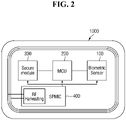
- the smart card 1000 may include a biometric authentication sensor 100, a microcontroller unit (MCU) 200, a security module 300, and a signal power management circuit (SPMIC) 400.
- MCU microcontroller unit
- SPMIC signal power management circuit
- the biometric authentication sensor 100, the MCU 200, the security module 300, and the signal power management circuit 400 may be implemented as a plurality of chips, as illustrated in FIG. 2 , but the present disclosure is not limited thereto.
- FIG. 2 illustrates a case in which each component is implemented as a separate chip but, as another example and in other embodiments, at least two of the biometric authentication sensor 100, the MCU 200, the security module 300, and the signal power management circuit 400 may be implemented as one chip.
- the biometric authentication sensor 100 and the MCU 200 may be implemented as one chip, and the security module 300 and the signal power management circuit 400 may be implemented as separate chips.
- the MCU 200 may receive the raw image or raw signal from the biometric authentication sensor 100, and extract data from the raw signal or raw image. For example, the MCU 200 may extract feature point information from the raw image. The MCU 200 may output the extracted data in one or more forms, such as a matching template including the extracted feature point information, as one example.
- the MCU 200 may use a preset feature point extraction algorithm to extract the feature point information on the basis of geometric features of a fingerprint, such as bifurcations, ridge ends, and shapes of valleys or ridges, and output a matching template.
- the feature point extraction algorithm may be at least one algorithm of various known algorithms.
- the MCU 200 may further perform anti-spoofing to check whether the biometric information is fake information by modifying the raw signal or raw image, such as performing filtering on the raw signal or raw image or the like.
- the MCU 200 may control the overall operation of the biometric authentication sensor 100.
- the first security information may include information about a service related to an application.
- the first security information may include information requiring security, such as user authentication information.
- the user authentication information may be biometric information and may include, for example, information for identifying the user, such as iris information, fingerprint information, blood vessel information, facial information, or the like.
- the security module 300 may be implemented in hardware.
- the security module 300 may be implemented as one chip that integrally supports two or more protocols, although the present disclosure is not limited thereto and the security module 300 may be implemented as a plurality of chips.
- the security module 300 may support communication protocols and/or non-communication protocols.
- the antenna 410 may be formed in a loop antenna structure to communicate with an external card reader.
- the antenna 410 may be formed in a double resonance loop structure for high electromagnetic efficiency.
- the switched capacitor converter 450 may convert the voltage level of the second rectified voltage VDDU to generate a first voltage V1.
- the first voltage V1 may have a voltage level that is lower than a voltage level of the second rectified voltage VDDU.
- the switched capacitor converter 450 may generate the first voltage V1 through a high-speed switching operation.
- An internal capacitor IC may be used to maintain the first rectified voltage VDDU PRE, and an external capacitor EC may be used to maintain the second rectified voltage VDDU.
- the transistor MN1 may be connected to the transistor MP2. In addition, the transistor MN2 and the transistor MN1 may share a gate terminal.
- the transistor MP3 may be connected to the transistor MN2. In addition, the transistor MP4 and the transistor MP3 may share a gate terminal.
- the second rectified voltage VDDU may be applied to source terminals of the transistor MP3 and the transistor MP4.
- a current IS1 flowing through the transistor MP2 may be determined by the voltage VSGMP2 between the source terminal and the gate terminal of the transistor MP2 and by the threshold voltage VTHMP2 of the transistor MP2, the current IS1 flowing through the transistor MP2 may be determined as in Equation 3, below.
- IS 1 ⁇ VSGMP 2 ⁇ VTHMP 2 VDDU _ PRE ⁇ VDDU ⁇ VTHMP 1 ⁇ VTHMP 2
- the current IS1 may be mirrored as a current IS2 and a current IS3 and provided to the demodulator 480 through a current mirror circuit. That is, the signal component of the RF signal RFS may be provided to the demodulator 480 in the form of the current IS3.
- rectified voltages having different DC levels may be generated and used due to a power architecture structure.
- the signal component may be provided to the demodulator 480 without being affected (or by being less affected) by variables other than the difference between the voltage level of the DC component of the first rectified voltage VDDU PRE and the voltage level of the DC component of the second rectified voltage VDDU. Therefore, the reliability of signal transmission may be improved.
- the smart card compared to the configuration in which the current flowing through the power transistor of the pre-regulator is mirrored and the signal component of the RF signal RFS is provided to the demodulator 480, a high-speed operation or higher-speed operation may be possible while minimizing power consumption.
- FIG. 9 is a block diagram of a signal power management circuit according to some embodiments.
- a signal power management circuit 400a might not include a switched capacitor converter 450 (see FIG. 3 ). Accordingly, an LDO regulator 460a may convert a voltage level of a second rectified voltage VDDU to generate a second voltage V2.
- the second voltage V2 may be provided as internal power to the biometric authentication sensor 100, the MCU 200, the security module 300, and the like of FIG. 1 described above.
- the biometric module 4200 may be a unit for reinforcing the security of the smart card 4000.
- the biometric module 4200 may determine whether fingerprint information or other biometric information of a real owner (i.e., a person registered in advance) of the smart card 4000 matches fingerprint information or other biometric information of the card user. When it is determined that the fingerprints match or other biometric information matches, by authenticating that the user is the real owner of the card, the lock of the security module 4400 embedded in the smart card 4000 may be released for a predetermined period of time.
- the biometric module 4200 may automatically turn off the lock after the predetermined period of time to prevent illegal use or unauthorized use of the smart card 4000.
- the security module 4400 may temporarily record the card ID information and may modify or delete the recorded card ID information.
- the security module 4400 records card ID information for one piece of payment method information among a plurality of pieces of payment method information.
- the card ID information may be information corresponding to the payment method information and may include pieces of information used in facilitating an electronic payment, such as card number information, card validity period information, card security information, and the like.
- internal components in the security module 4400 and/or data processed by the security module 4400 may be encrypted based on a random key.
- the security module 4400 may encrypt and store the fingerprint or biometric information of the real card owner (a person registered in advance) and prevent external exposure of the fingerprint or biometric information.
- the security module 4400 may receive the registered fingerprint or biometric information from the authentication processing module 4300 and determine whether to approve the use of the smart card 4000 according to a matching result.
- the authentication processing module 4300 may generate a fingerprint template or other biometric template by processing a raw image or raw data of the fingerprint received from the biometric module 4200.
- the raw image or raw data may include minutiae, such as feature points of the fingerprint, that is, detailed feature points such as ridge ends or bifurcations found in the image of the fingerprint.
- the authentication processing module 4300 may obtain template information of the corresponding fingerprint image, that is, fingerprint information for verification, by detecting the minutiae.
- FIG. 13 is a block diagram of the security module 4400 of FIG. 12 .
- the security CPU 4410 may control the overall operation related to the security of the security module 4400. For example, the security CPU 4410 may match registered fingerprint or other biometric information with fingerprint or other biometric information for verification and determine whether to approve the use of a card in response to a payment request according to a result of the matching.
- the crypto engine 4420 may encrypt or decrypt data which will be transferred or received to or from devices outside the security module 4400 (which are not illustrated in FIG. 13 ).
- the crypto engine 4420 may perform a private key encryption and/or decryption operation on the basis of Advanced Encryption Standard (AES), Data Encryption Standard (DES), Secure Hash Algorithms (SHA), or the like.
- the crypto engine 4420 may include a big number multiplier (e.g., Tornado) necessary for an operation such as error detection of encrypted or decrypted data, for example, Rivest-Shamir-Adleman (RSA)/elliptic curve cryptography (ECC).
- RSA Rivest-Shamir-Adleman
- ECC elliptic curve cryptography
- the PKRAM 4425 is a memory connected to the crypto engine 4420 and may store a public key, and the crypto engine 4420 may encrypt and/or decrypt the data using the public key and the private key.
- the non-volatile memory 4430 may be driven by the memory controller 4435.
- the non-volatile memory 4430 may store code for the security CPU 4410 to operate, initial data, fingerprint information or other biometric information of a registered real user, and the like.
- Data which is read from the non-volatile memory 4430 and output may further include an error correction code (ECC) bit corresponding to the stored data.
- ECC error correction code
- the memory controller 4435 may check an ECC bit of read data to detect an error and correct the detected error.
- the external interface 4440 may receive a command from a host device (e.g., the payment terminal) or transfer data obtained by processing the command to the host device.
- the external interface 4440 may include a plurality of pins, for example, a clock signal pin CLK, a reset signal pin RST, and a data pin SIO.
- the external interface 4440 may be connected with the host device according to the ISO/IEC 7816 standard (or other standard) to communicate with the host device.
- the modem 4460 may receive a command from the host device (e.g., the payment terminal) or transfer data obtained by processing the command to the host device. Unlike the external interface 4440, the modem 4460 may communicate with the host device in a non-contact manner according to the ISO/IEC 14443 standard (or other standard).
- the modem 4460 may be connected to the energy harvesting unit 4490.
- the energy harvesting unit 4490 may be connected to an RF pin connected to the antenna 4010 (see FIG. 11 ).
- the energy harvesting unit 4490 may receive an RF signal through the antenna 4010 and generate power on the basis of the received RF signal.
- the modem 4460 may supply the generated power to the security module 4400 to drive the smart card 4000. That is, in some embodiments, the components described above with reference to FIG. 3 may be implemented in the energy harvesting unit 4490. Alternatively, the components described above with reference to FIG. 3 may be implemented in the energy harvesting unit 4490 and/or the modem 4460.
- the system controller 4450 may perform system control operations, such as clock control, drive reset control, and power supply control of the smart card 4000.
Landscapes
- Engineering & Computer Science (AREA)
- Physics & Mathematics (AREA)
- General Physics & Mathematics (AREA)
- Theoretical Computer Science (AREA)
- Microelectronics & Electronic Packaging (AREA)
- Computer Hardware Design (AREA)
- Business, Economics & Management (AREA)
- Computer Networks & Wireless Communication (AREA)
- Accounting & Taxation (AREA)
- Power Engineering (AREA)
- Electromagnetism (AREA)
- General Business, Economics & Management (AREA)
- Strategic Management (AREA)
- Finance (AREA)
- Artificial Intelligence (AREA)
- Computer Vision & Pattern Recognition (AREA)
- Automation & Control Theory (AREA)
- Signal Processing (AREA)
- Near-Field Transmission Systems (AREA)
Description
- The present disclosure relates to signal power management circuits and to smart cards including the signal power management circuits.
- Smart cards may be referred to as chip cards, integrated circuit (IC) cards, or the like, and may be classified into contact type cards and non-contact type cards according to methods of use. A contact type card may have a contact terminal on the surface of the card to which an external power is applied, receiving the external power through electrical contact (e.g., direct electrical contact). A non-contact type card may receive a power voltage from a radio frequency signal received through a non-contact type terminal such as an antenna. There are also combination type cards that use both contact and non-contact type power supply methods.
- In a non-contact type card system, and in particular in a smart card system, a card reader may recognize a smart card located within a short distance using a radio frequency signal. Card readers and smart cards may use a technique for recognizing information in a non-contact manner to exchange information.
- The smart cards may receive power (internal voltage) and signals in methods in which electromagnetic waves are radiated from the card readers. These electromagnetic waves are induced into voltage signals. In order to receive electromagnetic waves provided from the card reader and stabilize a generated voltage, a voltage regulator may be used in a power circuit of the smart card. However, when the voltage regulator is controlled at a high speed in order to process signals at a high speed, current consumption may increase excessively.
-
US 2012/086282 A1 discloses a smart card including an internal voltage generator, a clock generator, and an internal circuit. The internal voltage generator generates a first internal voltage and a second internal voltage based on an input voltage received through an antenna. A level of the second internal voltage is lower than a level of the first internal voltage. The clock generator receives the first internal voltage and the second internal voltage to generate a clock signal. A frequency of the clock signal is changed according to the level of the first internal voltage. The internal circuit operates based on the clock signal and the second internal voltage. -
WO 2013/140505 A1 discloses a power supply circuit composed by using a transistor with a metallic oxide or organic semiconductor base. A regulator circuit adjusts a power supply voltage (VDD1) on the basis of a monitor signal (MON1) and outputs the adjusted voltage as a power supply voltage (VDD2). A regulator circuit (9) adjusts the power supply voltage (VDD2) on the basis of a monitor signal (MON2) and outputs the adjusted voltage as a power supply voltage (VDD3). A voltage monitor circuit (10) outputs the monitor signal (MON1) when the power supply voltage (VDD3) is a first voltage and outputs the monitor signal (MON2) when the power supply voltage (VDD3) is a second voltage that is higher than the first voltage. When the voltage monitor circuit (10) and the regulator circuits are considered as negative feedback circuits for the power supply voltages (VDD2, VDD3), feedback can be carried out under different delay conditions and oscillation can be inhibited. Further, since the monitor signals (MON1, MON2) are activated under different conditions, the power supply voltage (VDD3) can be stably controlled without installing a reference voltage source or the like. -
EP 1 058 376 A2 - Aspects of the present disclosure provide signal power management circuits capable of operating at a high speed while minimizing power consumption.
- Aspects of the present disclosure also provide smart cards capable of operating at a high speed while minimizing power consumption.
- The scope of the present disclosure is not limited to the above-described objects, and other objects and aspects not explicitly mentioned herein may be clearly understood by those skilled in the art from the following descriptions.
- According to the invention there is provided a signal power management circuit as defined in
claims 1 to 11. - The above and other aspects and features of the present disclosure will become more apparent by describing exemplary embodiments thereof in detail with reference to the attached drawings, in which:
-
FIG. 1 is a diagram illustrating a smart card payment system according to some embodiments of the inventive concepts; -
FIG. 2 is a block diagram of a biometric authentication-based smart card ofFIG. 1 ; -
FIG. 3 is a block diagram of a signal power management circuit ofFIG. 2 ; -
FIG. 4 is an exemplary detailed circuit diagram illustrating an antenna and a rectifier ofFIG. 3 ; -
FIG. 5 is an exemplary detailed circuit diagram illustrating a regulator ofFIG. 3 ; -
FIG. 6 is an exemplary detailed circuit diagram illustrating a signal detector ofFIG. 3 ; -
FIG. 7 is a diagram for describing the operation of the regulator ofFIG. 3 ; -
FIG. 8 is a diagram for describing the operation of the signal detector ofFIG. 3 ; -
FIG. 9 is a block diagram of a signal power management circuit according to some embodiments of the inventive concepts; -
FIG. 10 is a block diagram of a signal power management circuit according to some embodiments of the inventive concepts; -
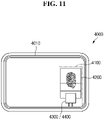
FIG. 11 is a diagram illustrating a biometric authentication-based smart card according to some embodiments of the inventive concepts; -
FIG. 12 is a diagram illustrating a biometric authentication integrated chip applied to the smart card ofFIG. 11 ; and -
FIG. 13 is a block diagram of a security module ofFIG. 12 . - Hereinafter, some embodiments according to the inventive concepts of the present disclosure will be described with reference to the accompanying drawings.
-
FIG. 1 is a diagram illustrating a smart card payment system according to some embodiments. - Referring to
FIG. 1 , a smartcard payment system 1 may include a biometric authentication-basedsmart card 1000, apayment terminal 2000, and apayment server 3000. Hereinafter, the inventive concepts of the present disclosure will be described using an example of a biometric authentication-based smart payment system in which the biometric authentication-basedsmart card 1000 is used, but the present disclosure and the embodiments thereof are not limited thereto. For example, the inventive concepts of the present disclosure may be modified and implemented as a smart card payment system in which a smart card that does not have a biometric authentication function is used. - The biometric authentication-based smart card 1000 (which hereinafter is referred to as a smart card) may output payment method information corresponding to payment request information when the payment request information is output from the
payment terminal 2000 in an online or offline sale store. - The
payment terminal 2000 may be a unit for storing deposit information about types, the number, and prices of products sold online/offline and managing sales information for each product. For example, when the smartcard payment system 1 is in an offline environment, thepayment terminal 2000 may be a point of sale (POS) terminal in a store, and when the smartcard payment system 1 is in an online environment, thepayment terminal 2000 may be an online shopping mall system. - The
payment terminal 2000 may be a unit which is installed in an offline sale store and is capable of reading product information from a barcode attached to each product using a reader or the like. That is, thepayment terminal 2000 may include, for example, a card reader. Here, the product information may include information about a product type, a product code, a sales price, and the like, but the present disclosure and the exemplary embodiments are not limited thereto. - The
payment terminal 2000 may transfer sales-related information to thepayment server 3000. The sales-related information may include at least one of sales price information, an identification (ID) of thepayment terminal 2000, a time when thepayment terminal 2000 reads sales price information of a product, a type of operation that thepayment terminal 2000 intends to process, domain information about a management server of thepayment terminal 2000, and deposit account information about an owner of thepayment terminal 2000, as examples. - Further, the
payment terminal 2000 may transfer to thepayment server 3000 payment information that is read from thesmart card 1000. The payment information may include, as examples, payment level information and payment method information of a user, which are registered in thesmart card 1000. - In some embodiments, the payment method information may include payment account information or payment card information. In some embodiments, the payment account information may be information related to a bank account of the user and may include, as examples, at least one of a bank account number, an account password, and a security-related authentication number. In some embodiments, the payment card information may include, as examples, information about at least one of a credit card company that makes payment, a card number, and a card password.
- Further, in some embodiments the
payment terminal 2000 may check whether the user read from thesmart card 1000 is a registered user on the basis of biometric authentication information read from thesmart card 1000. The biometric authentication information may be read from thesmart card 1000 as part of the payment information. When the user is a registered user, payment level information corresponding to a user index of the corresponding user may be transferred to thepayment server 3000. - The
payment server 3000 may determine whether to approve payment on the basis of the sales-related information and/or the payment information received from thepayment terminal 2000, and may transfer an approval determination result to thepayment terminal 2000. - In some embodiments, based on the payment information, the
payment server 3000 may determine whether to approve payment for the amount according to the sales-related information on the basis of the received payment method information and payment level information. - For example, when the payment information is the payment account information, the
payment server 3000 may be a payment server of a financial institution (a bank, etc.) in which the user has opened a financial account. For example, when the payment information is the payment card information, thepayment server 3000 may be a payment server of a financial institution (a card company) in which the user has opened a payment card. - Here, a normal user is a registered user stored in the
payment server 3000 and may refer to a user who has a payment account of which an amount or balance that is greater than or equal to the amount requested for payment, or a user who has a payment card in which the amount requested for payment is within a usable limit range (e.g., a user who has a sufficient balance or sufficient credit limit for the requested payment or financial transaction). - When it is determined that the user is a normal user, the
payment server 3000 may check the sales price information and/or the ID of thepayment terminal 2000 from the sales-related information, compare the pieces of information to an available payment range of the user obtained from the payment level information, and determine whether to approve the payment. -
FIG. 2 is a block diagram of the biometric authentication-basedsmart card 1000 ofFIG. 1 . - Referring to
FIG. 2 , thesmart card 1000 may include abiometric authentication sensor 100, a microcontroller unit (MCU) 200, asecurity module 300, and a signal power management circuit (SPMIC) 400. - In some embodiments, the
biometric authentication sensor 100, theMCU 200, thesecurity module 300, and the signalpower management circuit 400 may be implemented as a plurality of chips, as illustrated inFIG. 2 , but the present disclosure is not limited thereto. Stated differently,FIG. 2 illustrates a case in which each component is implemented as a separate chip but, as another example and in other embodiments, at least two of thebiometric authentication sensor 100, theMCU 200, thesecurity module 300, and the signalpower management circuit 400 may be implemented as one chip. As another example, thebiometric authentication sensor 100 and theMCU 200 may be implemented as one chip, and thesecurity module 300 and the signalpower management circuit 400 may be implemented as separate chips. As yet another example, thesecurity module 300 and the signalpower management circuit 400 may be implemented as one chip, and thebiometric authentication sensor 100 and theMCU 200 may be implemented as separate chips. As yet another example, thesecurity module 300, the signalpower management circuit 400, and theMCU 200 may be implemented as one chip, and thebiometric authentication sensor 100 may be implemented as a separate chip. Further, in some embodiments, thebiometric authentication sensor 100, theMCU 200, thesecurity module 300, and the signalpower management circuit 400 may be implemented as one chip. - The
biometric authentication sensor 100 may be a sensor (or sensors) that detects biometric information of the user. Here, the biometric information may be, for example, biometric information, such as fingerprint information, footprint information, iris information, facial information, and blood vessel information, or the like. In some embodiments, thebiometric authentication sensor 100 may be or may include a fingerprint sensor. When thebiometric authentication sensor 100 is or includes a fingerprint sensor, the fingerprint sensor may be at least one of an optical fingerprint sensor, a piezoelectric fingerprint sensor, a capacitive fingerprint sensor, an ultrasonic fingerprint sensor, and a thermal fingerprint sensor, as examples. - The
biometric authentication sensor 100 may detect the biometric information of the user, obtain the biometric information as a raw image or raw signal, and transfer the raw image or raw signal to theMCU 200. - The
MCU 200 may receive the raw image or raw signal from thebiometric authentication sensor 100, and extract data from the raw signal or raw image. For example, theMCU 200 may extract feature point information from the raw image. TheMCU 200 may output the extracted data in one or more forms, such as a matching template including the extracted feature point information, as one example. - In some embodiments, when the biometric information is the fingerprint information, the
MCU 200 may use a preset feature point extraction algorithm to extract the feature point information on the basis of geometric features of a fingerprint, such as bifurcations, ridge ends, and shapes of valleys or ridges, and output a matching template. The feature point extraction algorithm may be at least one algorithm of various known algorithms. - In some embodiments, the
MCU 200 may further perform anti-spoofing to check whether the biometric information is fake information by modifying the raw signal or raw image, such as performing filtering on the raw signal or raw image or the like. - In some embodiments, the
MCU 200 may control the overall operation of thebiometric authentication sensor 100. - The
security module 300 may process and store security information requiring security. In some embodiments, thesecurity module 300 may store first security information for information related to an application and/or information related to a financial payment service, and second security information related to an embedded ID service. - In some embodiments, the first security information may include information about a service related to an application. For example, the first security information may include information requiring security, such as user authentication information. The user authentication information may be biometric information and may include, for example, information for identifying the user, such as iris information, fingerprint information, blood vessel information, facial information, or the like.
- In some embodiments, the second security information may include information related to a financial service (e.g., a payment service).
- In some embodiments, the
security module 300 may be implemented in hardware. Thesecurity module 300 may be implemented as one chip that integrally supports two or more protocols, although the present disclosure is not limited thereto and thesecurity module 300 may be implemented as a plurality of chips. Thesecurity module 300 may support communication protocols and/or non-communication protocols. - The signal
power management circuit 400 may generate internal power from a radio frequency (RF) signal received from an external unit (not illustrated inFIG. 2 ), and may provide the generated internal power to a control unit such as theMCU 200 or the like, thebiometric authentication sensor 100, and/or thesecurity module 300. The signalpower management circuit 400 may detect a signal component of the received RF signal, and may provide the detected signal component to the control unit such as theMCU 200 or the like, thebiometric authentication sensor 100, and/or thesecurity module 300. - Hereinafter, aspects of the signal
power management circuit 400 according to some embodiments will be described in more detail with reference toFIGS. 3 to 6 . -
FIG. 3 is a block diagram of the signal power management circuit ofFIG. 2 .FIG. 4 is an exemplary detailed circuit diagram illustrating an antenna and a rectifier ofFIG. 3 .FIG. 5 is an exemplary detailed circuit diagram illustrating a regulator ofFIG. 3 .FIG. 6 is an exemplary detailed circuit diagram illustrating a signal detector ofFIG. 3 . - Referring to
FIG. 3 , the signalpower management circuit 400 may include anantenna 410, arectifier 420, a pre-regulator 430, aregulator 440, a switchedcapacitor converter 450, a low-dropout (LDO)regulator 460, asignal detector 470, and ademodulator 480. - The
antenna 410 may receive an RF signal RFS from an external unit (not illustrated inFIG. 3 ) and/or transmit an RF signal RFS to an external unit. For example, theantenna 410 may transmit and/or receive RF signals RFS in order to communicate with a card reader. When theantenna 410 transmits the RF signal RFS, theantenna 410 may receive a signal from a modulator (not illustrated) and transmit the RF signal RFS to the external unit. - Referring to
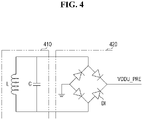
FIGS. 3 and4 , in some embodiments, theantenna 410 may be modeled as a structure in which an inductor L and a capacitor C are connected in parallel. Theantenna 410 may convert the RF signal RFS transmitted from the card reader into an electrical signal in an electromagnetic induction method using the inductor L and the capacitor C. - In some embodiments, the
antenna 410 may be formed in a loop antenna structure to communicate with an external card reader. For example, theantenna 410 may be formed in a double resonance loop structure for high electromagnetic efficiency. - The
rectifier 420 may rectify an alternating current (AC) signal received through theantenna 410 to output a first rectified voltage VDDU PRE. For example, therectifier 420 may include rectifier circuits of a half- or full-wave rectification method. Further, therectifier 420 may include a smoothing circuit for smoothing the rectified voltage. In some embodiments, in order to configure therectifier 420 of the full-wave rectification method, four diodes DI that are bridge-coupled as illustrated inFIG. 4 may be used. However, the rectification method of therectifier 420 is not limited thereto, and the present disclosure is not limited to the explicitly provided rectification method andrectifier 420, and the configuration of therectifier 420 may be modified and implemented. - The AC signal input to both terminals of the
rectifier 420 may be output as the first rectified voltage VDDU PRE, which may be full-wave rectified. - Referring to
FIGS. 3 and5 , the pre-regulator 430 may detect a level change of the first rectified voltage VDDU PRE and perform a regulating operation of constantly maintaining the first rectified voltage VDDU PRE at a predetermined first level. - The pre-regulator 430 may include resistors R1, R2, and R3, a
comparator 432, and a power transistor PM. Although an example of a configuration of the pre-regulator 430 is illustrated inFIG. 5 , the present disclosure and the inventive concepts thereof are not limited thereto. - The resistor R1 and the resistor R2 may be used to divide the first rectified voltage VDDU PRE, resulting in a divided voltage VD.
- The divided voltage VD resulting from the first rectified voltage VDDU PRE divided by the resistor R1 and the resistor R2 may be provided to a first input terminal (-) of the
comparator 432, and a reference voltage Vref may be provided to a second input terminal (+). The reference voltage Vref may determine the above-described first level of the pre-regulator 430. - The resistor R3 may be used to generate a second rectified voltage VDDU using a regulating current, described more fully herein.
- Referring to
FIG. 3 , theregulator 440 may receive an output of the pre-regulator 430 and perform a regulating operation of maintaining the second rectified voltage VDDU at a predetermined second voltage level. - In some embodiments, the
regulator 440 may have a configuration similar to that of the pre-regulator 430 described above, but the present disclosure and the inventive concepts thereof are not limited thereto. - In some embodiments, the second voltage level of the
regulator 440 may be different from a first voltage level of the pre-regulator 430. Specifically, the second voltage level of theregulator 440 may be lower than the first voltage level of the pre-regulator 430. Accordingly, a voltage level of the second rectified voltage VDDU may be lower than a voltage level of the first rectified voltage VDDU PRE. More specifically, a voltage level of a direct current (DC) of the second rectified voltage VDDU may be lower than a voltage level of the first rectified voltage VDDU PRE. - The switched
capacitor converter 450 may convert the voltage level of the second rectified voltage VDDU to generate a first voltage V1. The first voltage V1 may have a voltage level that is lower than a voltage level of the second rectified voltage VDDU. In some embodiments, the switchedcapacitor converter 450 may generate the first voltage V1 through a high-speed switching operation. - When a switching operation of the switched
capacitor converter 450 involves a high-speed switching operation, noise may be generated. The pre-regulator 430 may be configured to block such noise to prevent the noise from being transmitted as an erroneous signal to the external unit (e.g., a card reader) through therectifier 420. - The
LDO regulator 460 may receive the first voltage V1 from the switchedcapacitor converter 450 and may convert the voltage level of the first voltage V1 to generate a second voltage V2. The second voltage V2 may be provided as internal power to thebiometric authentication sensor 100, theMCU 200, thesecurity module 300, and the like ofFIG. 1 described above. A voltage level of the second voltage V2 may be lower than the voltage level of the first voltage V1, but the present disclosure and the inventive concepts thereof are not limited thereto. - An internal capacitor IC may be used to maintain the first rectified voltage VDDU PRE, and an external capacitor EC may be used to maintain the second rectified voltage VDDU.
- Referring to
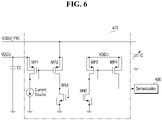
FIGS. 3 and6 , thesignal detector 470 may receive the first rectified voltage VDDU PRE and the second rectified voltage VDDU and may detect a signal component of the RF signal RFS on the basis of a difference between the voltage level of the first rectified voltage VDDU PRE and the voltage level of the second rectified voltage VDDU. More specifically, thesignal detector 480 may detect a signal component of the RF signal RFS on the basis of a difference between the voltage level of the DC component of the first rectified voltage VDDU PRE and the voltage level of the DC component of the second rectified voltage VDDU. - In some embodiments, the
signal detector 470 may include a plurality of transistors MP1, MP2, MP3, MP4, MN1, and MN2. However, embodiments of circuits implementing thesignal detector 470 are not limited thereto, nor are the present disclosure and the inventive concepts thereof. - The second rectified voltage VDDU may be applied to a source terminal of the transistor MP1. In addition, the first rectified voltage VDDU PRE may be applied to a source terminal of the transistor MP2. The transistor MP1 and the transistor MP2 may share a gate terminal.
- The transistor MN1 may be connected to the transistor MP2. In addition, the transistor MN2 and the transistor MN1 may share a gate terminal. The transistor MP3 may be connected to the transistor MN2. In addition, the transistor MP4 and the transistor MP3 may share a gate terminal. The second rectified voltage VDDU may be applied to source terminals of the transistor MP3 and the transistor MP4.
- The transistor MN1 and the transistor MN2 may serve as a first current mirror circuit for mirroring a current flowing through the transistor MP2. Further, the transistor MP3 and the transistor MP4 may serve as a second current mirror circuit for mirroring a current flowing through the first current mirror circuit.
- In some embodiments, the types of the transistors MP1, MP2, MP3, and MP4 may be different from the types of the transistors MN1 and MN2. Specifically, for example, the transistors MP1, MP2, MP3, and MP4 may include p-channel metal-oxide-semiconductor (PMOS) transistors and the transistors MN1 and MN2 may include n-channel metal-oxide-semiconductor (NMOS) transistors, but the present disclosure and the inventive concepts thereof are not limited thereto.
- In some embodiments, the transistor MP1 and the transistor MP2 may be similar transistors. Herein, reference to two transistors as similar transistors may mean that the sizes and threshold voltages thereof are substantially the same. Further, referring to the sizes and threshold voltages of the two transistors MP1 and MP2 as substantially the same is intended to indicate that the two transistors MP1 and MP2 are designed with the same parameters at the time of design, and conceptually accounts for any slight observable differences in the produced transistors according to process variations. In other words, the two transistors MP1 and MP2 are similar transistors because they are regarded as such due to their designs, and slight differences between them as manufactured may be ignored.
- The
demodulator 480 may receive a current from thesignal detector 470 and may restore the signal component of the received RF signal RFS. Thedemodulator 480 may provide the restored signal component SP in the form of an input signal to thebiometric authentication sensor 100, theMCU 200, thesecurity module 300, and the like ofFIG. 1 described above. - Hereinafter, an operation of the signal
power management circuit 400 according to some embodiments will be described with reference toFIGS. 3 ,7 , and8 . -
FIG. 7 is a diagram for describing the operation of the regulator ofFIG. 3 .FIG. 8 is a diagram for describing the operation of the signal detector ofFIG. 3 . - First, referring to
FIGS. 3 and7 , when theantenna 410 receives the RF signal RFS from the external unit (e.g., a card reader), therectifier 420 rectifies the AC signal received through theantenna 410 to output a first rectified voltage VDDU PRE. - The resistors R1 and R2 of the pre-regulator 430 transfer the divided voltage VD obtained by dividing the first rectified voltage VDDU PRE to the first input terminal (-) of the
comparator 432. That is, the first rectified voltage VDDU PRE having a relatively high voltage level may be converted into a divided voltage VD having a relatively low voltage level using the resistors R1 and R2. The converted divided voltage VD may be applied to the first input terminal (-) of thecomparator 432. Accordingly, a level change of the first rectified voltage VDDU PRE is input to the first input terminal (-) of thecomparator 432. - When the voltage level of the divided voltage VD input to the first input terminal (-) is lower than the reference voltage Vref, the
comparator 432 may generate an output voltage having a high level (e.g., a logic high level, H), which may turn the power transistor PM off. Then, a magnitude of a regulating current IR flowing to the ground through the power transistor PM is reduced, and the voltage level of the first rectified voltage VDDU PRE may be increased. - Conversely, when the voltage level of the divided voltage VD input to the first input terminal (-) is higher than the reference voltage Vref, the
comparator 432 generates an output voltage having a low level (e.g., a logic low level, L), which may turn the power transistor PM on. Then, the magnitude of the regulating current IR flowing to the ground through the power transistor PM is increased, and the voltage level of the first rectified voltage VDDU PRE is reduced. The pre-regulator 430 may thus maintain the voltage level of the first rectified voltage VDDU PRE at a relatively constant level through such operation. The voltage level of the first rectified voltage VDDU PRE controlled by the pre-regulator 430 may be defined by the reference voltage Vref. - The second rectified voltage VDDU output from the pre-regulator 430 may be provided to the
regulator 440, and theregulator 440 may maintain the voltage level of the second rectified voltage VDDU through a similar operation as the operation of the pre-regulator 430 described above. - Next, referring to
FIGS. 3 and8 , the first rectified voltage VDDU PRE and the second rectified voltage VDDU may be provided to thesignal detector 470. - A current flowing through the transistor MP1 may be determined by a gate voltage VGMP1 of the transistor MP1. The gate voltage VGMP1 of the transistor MP1 may be determined as in
Equation 1, below.
- In
Equation 1, VTHMP1 may denote a threshold voltage of the transistor MP1. Meanwhile, a voltage VSGMP2 between a source terminal and a gate terminal of the transistor MP2 may be determined as in Equation 2, below.
- Since a current IS1 flowing through the transistor MP2 may be determined by the voltage VSGMP2 between the source terminal and the gate terminal of the transistor MP2 and by the threshold voltage VTHMP2 of the transistor MP2, the current IS1 flowing through the transistor MP2 may be determined as in Equation 3, below.

- As described above, in some embodiments, since the threshold voltage VTHMP1 of the transistor MP1 may be substantially the same as the threshold voltage VTHMP2 of the transistor MP2, the current IS1 may determined by the difference between the voltage level of the first rectified voltage VDDU PRE and the voltage level of the second rectified voltage VDDU. More specifically, the current IS 1 may be determined by the difference between the voltage level of the DC component of the first rectified voltage VDDU PRE and the voltage level of the DC component of the second rectified voltage VDDU.
- In addition, the current IS1 may be mirrored as a current IS2 and a current IS3 and provided to the
demodulator 480 through a current mirror circuit. That is, the signal component of the RF signal RFS may be provided to thedemodulator 480 in the form of the current IS3. - As described above, the signal
power management circuit 400 according to some embodiments may provide the signal component of the RF signal RFS to thedemodulator 480 using the difference between the voltage level of the DC component of the first rectified voltage VDDU PRE and the voltage level of the DC component of the second rectified voltage VDDU. - In a smart card with a finger authentication function, rectified voltages having different DC levels may be generated and used due to a power architecture structure. According to some embodiments, the signal component may be provided to the
demodulator 480 without being affected (or by being less affected) by variables other than the difference between the voltage level of the DC component of the first rectified voltage VDDU PRE and the voltage level of the DC component of the second rectified voltage VDDU. Therefore, the reliability of signal transmission may be improved. - Furthermore, in the smart card according to some embodiments, compared to the configuration in which the current flowing through the power transistor of the pre-regulator is mirrored and the signal component of the RF signal RFS is provided to the
demodulator 480, a high-speed operation or higher-speed operation may be possible while minimizing power consumption. - For example, when the current flowing through the power transistor of the pre-regulator is mirrored and the signal component of the RF signal RFS is provided to the
demodulator 480, a loop delay of the regulator may be added so that some delay is generated when the RF signal is restored. In order to minimize such delay, the regulator should have a high rectification speed. Accordingly, current consumption may be increased for a high-speed operation. However, according to the inventive concepts of the present disclosure, since there may be no loop delay in signal transmission, the regulator does not need to have a high rectification speed. Accordingly, a high-speed operation is possible while minimizing power consumption. -
FIG. 9 is a block diagram of a signal power management circuit according to some embodiments. - Hereinafter, in the interest of brevity, differences from the exemplary embodiments discussed above will be mainly described.
- Referring to
FIG. 9 , a signalpower management circuit 400a according to some embodiments might not include a switched capacitor converter 450 (seeFIG. 3 ). Accordingly, anLDO regulator 460a may convert a voltage level of a second rectified voltage VDDU to generate a second voltage V2. The second voltage V2 may be provided as internal power to thebiometric authentication sensor 100, theMCU 200, thesecurity module 300, and the like ofFIG. 1 described above. - Since a switched capacitor converter 450 (see
FIG. 3 ) that operates at a high speed may be omitted, aregulator 430a may be employed instead of the pre-regulator 430 (seeFIG. 3 ). -
FIG. 10 is a block diagram of a signal power management circuit according to some embodiments. - Hereinafter, in the interest of brevity, differences from the exemplary embodiments discussed above will be mainly described.
- Referring to
FIG. 10 , in a signalpower management circuit 400b according to some embodiments, aregulator 430b may perform a regulating operation of maintaining a second rectified voltage VDDU at a predetermined second voltage level. - A switched
capacitor converter 450b may convert a voltage level of the second rectified voltage VDDU to generate a first voltage V1, and anLDO regulator 460b may receive a first voltage V1 from the switchedcapacitor converter 450b and convert a voltage level of the first voltage V1 to generate a second voltage V2. - A
transmission circuit 470b may receive outputs of the second rectified voltage VDDU and theregulator 430b, and may provide a signal component of an RF signal RFS to ademodulator 480b. In some embodiments, thetransmission circuit 470b may be implemented in a configuration similar to that of the signal detector 470 (seeFIG. 3 ) described above, but the present disclosure and the inventive concepts thereof are not limited thereto. -
FIG. 11 is a diagram illustrating a biometric authentication-based smart card according to some embodiments.FIG. 12 is a diagram illustrating a biometric authentication integrated chip applied to the smart card ofFIG. 11 . - Referring to
FIGS. 11 and12 , a biometric authentication-basedsmart card 4000 may include anantenna 4010 and anintegrated chip 4100. Theintegrated chip 4100 may include abiometric module 4200, anauthentication processing module 4300, and asecurity module 4400 implemented in a single chip. - The
biometric module 4200 may be a unit for reinforcing the security of thesmart card 4000. Thebiometric module 4200 may determine whether fingerprint information or other biometric information of a real owner (i.e., a person registered in advance) of thesmart card 4000 matches fingerprint information or other biometric information of the card user. When it is determined that the fingerprints match or other biometric information matches, by authenticating that the user is the real owner of the card, the lock of thesecurity module 4400 embedded in thesmart card 4000 may be released for a predetermined period of time. Thebiometric module 4200 may automatically turn off the lock after the predetermined period of time to prevent illegal use or unauthorized use of thesmart card 4000. - The
security module 4400 may be an integrated circuit in which card ID information of thesmart card 4000 is recorded and stored. Thesecurity module 4400 may transfer the recorded card ID information to a payment terminal using a contact or non-contact manner so that electronic payment may be performed. - The
security module 4400 may temporarily record the card ID information and may modify or delete the recorded card ID information. Thesecurity module 4400 records card ID information for one piece of payment method information among a plurality of pieces of payment method information. Here, the card ID information may be information corresponding to the payment method information and may include pieces of information used in facilitating an electronic payment, such as card number information, card validity period information, card security information, and the like. - In some embodiments, in order to meet security requirement specifications, internal components in the
security module 4400 and/or data processed by thesecurity module 4400 may be encrypted based on a random key. For example, thesecurity module 4400 may encrypt and store the fingerprint or biometric information of the real card owner (a person registered in advance) and prevent external exposure of the fingerprint or biometric information. - Thereafter, when verification of the fingerprint or biometric information extracted by the
biometric module 4200 is performed due to the use of thesmart card 4000, thesecurity module 4400 may receive the registered fingerprint or biometric information from theauthentication processing module 4300 and determine whether to approve the use of thesmart card 4000 according to a matching result. - The
authentication processing module 4300 may generate a fingerprint template or other biometric template by processing a raw image or raw data of the fingerprint received from thebiometric module 4200. The raw image or raw data may include minutiae, such as feature points of the fingerprint, that is, detailed feature points such as ridge ends or bifurcations found in the image of the fingerprint. In one example, theauthentication processing module 4300 may obtain template information of the corresponding fingerprint image, that is, fingerprint information for verification, by detecting the minutiae. - A peripheral circuit of the
biometric module 4200, theauthentication processing module 4300, and thesecurity module 4400 may be implemented as one integrated chip. -
FIG. 13 is a block diagram of thesecurity module 4400 ofFIG. 12 . - Referring to
FIG. 13 , thesecurity module 4400 may include asecurity CPU 4410, acrypto engine 4420, a Preserved-over-Kexec random-access memory (PKRAM) 4425, anon-volatile memory 4430, amemory controller 4435, anexternal interface 4440, asystem controller 4450, amodem 4460, amemory 4470, amailbox 4480, and anenergy harvesting unit 4490. - The
components 4410 to 4490 may communicate with each other through abus 4401. For example, thebus 4401 may be provided as an advanced high-performance bus (AHB) interface. - The
security CPU 4410 may control the overall operation related to the security of thesecurity module 4400. For example, thesecurity CPU 4410 may match registered fingerprint or other biometric information with fingerprint or other biometric information for verification and determine whether to approve the use of a card in response to a payment request according to a result of the matching. - The
crypto engine 4420 may encrypt or decrypt data which will be transferred or received to or from devices outside the security module 4400 (which are not illustrated inFIG. 13 ). For example, thecrypto engine 4420 may perform a private key encryption and/or decryption operation on the basis of Advanced Encryption Standard (AES), Data Encryption Standard (DES), Secure Hash Algorithms (SHA), or the like. Thecrypto engine 4420 may include a big number multiplier (e.g., Tornado) necessary for an operation such as error detection of encrypted or decrypted data, for example, Rivest-Shamir-Adleman (RSA)/elliptic curve cryptography (ECC). - The
PKRAM 4425 is a memory connected to thecrypto engine 4420 and may store a public key, and thecrypto engine 4420 may encrypt and/or decrypt the data using the public key and the private key. - The
non-volatile memory 4430 may be driven by thememory controller 4435. Thenon-volatile memory 4430 may store code for thesecurity CPU 4410 to operate, initial data, fingerprint information or other biometric information of a registered real user, and the like. Data which is read from thenon-volatile memory 4430 and output may further include an error correction code (ECC) bit corresponding to the stored data. Thememory controller 4435 may check an ECC bit of read data to detect an error and correct the detected error. - The
external interface 4440 may receive a command from a host device (e.g., the payment terminal) or transfer data obtained by processing the command to the host device. Theexternal interface 4440 may include a plurality of pins, for example, a clock signal pin CLK, a reset signal pin RST, and a data pin SIO. Theexternal interface 4440 may be connected with the host device according to the ISO/IEC 7816 standard (or other standard) to communicate with the host device. - The
modem 4460 may receive a command from the host device (e.g., the payment terminal) or transfer data obtained by processing the command to the host device. Unlike theexternal interface 4440, themodem 4460 may communicate with the host device in a non-contact manner according to the ISO/IEC 14443 standard (or other standard). - In some embodiments, the
modem 4460 may include the demodulator 480 (seeFIG. 3 ) described above. - The
modem 4460 may be connected to theenergy harvesting unit 4490. Theenergy harvesting unit 4490 may be connected to an RF pin connected to the antenna 4010 (seeFIG. 11 ). Theenergy harvesting unit 4490 may receive an RF signal through theantenna 4010 and generate power on the basis of the received RF signal. Themodem 4460 may supply the generated power to thesecurity module 4400 to drive thesmart card 4000. That is, in some embodiments, the components described above with reference toFIG. 3 may be implemented in theenergy harvesting unit 4490. Alternatively, the components described above with reference toFIG. 3 may be implemented in theenergy harvesting unit 4490 and/or themodem 4460. - The
system controller 4450 may perform system control operations, such as clock control, drive reset control, and power supply control of thesmart card 4000. - The
memory 4470 may be a working memory that stores data generated during the operation of thesecurity module 4400. For example, thememory 4470 may be a volatile memory such as a random access memory (RAM). Themailbox 4480 may communicate with the authentication processing module 4300 (seeFIG. 12 ). - In concluding the detailed description, those skilled in the art will appreciate that many variations and modifications may be made to the described embodiments without departing from the scope of the claims.
- Therefore, the disclosed preferred embodiments of the disclosure are used in a generic and descriptive sense only and not for purposes of limitation.
Claims (11)
- A signal power management circuit (400) comprising:a rectifier (420) configured to rectify a received radio frequency signal (RFS) and output a first rectified voltage (VDDU PRE);a first regulator (430) configured to maintain the first rectified voltage (VDDU PRE) at a predetermined first voltage level;a second regulator (440) configured to receive an output of the first regulator (430) and maintain a second rectified voltage (VDDU) at a predetermined second voltage level, the first rectified voltage (VDDU PRE) differing from the second rectified voltage (VDDU); anda signal detector (470) configured to receive the first rectified voltage (VDDU PRE) and the second rectified voltage (VDDU) and detect a signal component of the received radio frequency signal based on a difference between the first voltage level of the first rectified voltage (VDDU_PRE) and the second voltage level of the second rectified voltage (VDDU),characterized in that the signal detector (470) includes:a first transistor (MP1) having a first terminal configured to receive the second rectified voltage;a second transistor (MP2) configured to share a gate terminal with the first transistor (MP1) and having a first terminal configured to receive the first rectified voltage (VDDU PRE); anda current mirror circuit configured to mirror a current that flows through the second transistor (MP2) and provide the mirrored current to a demodulator (480).
- The signal power management circuit (400) of claim 1, wherein the first voltage level is a voltage level of a direct current (DC) component of the first rectified voltage (VDDU_PRE), wherein the second voltage level is a voltage level of a DC component of the second rectified voltage (VDDU), and wherein signal detector (470) is configured to detect the signal component of the received radio frequency signal (RFS) based on a difference between the voltage level of the DC component of the first rectified voltage (VDDU_PRE) and the voltage level of a DC component of the second rectified voltage (VDDU).
- The signal power management circuit (400) of claim 1, wherein the second voltage level is lower than the first voltage level.
- The signal power management circuit (400) of claim 1, further comprising:a switched capacitor converter (450) configured to convert the second voltage level of the second rectified voltage (VDDU) and generate a first voltage; anda low-dropout (LDO) regulator (460) configured to convert a voltage level of the first voltage and generate a second voltage.
- The signal power management circuit (400) of claim 4, wherein the first regulator (430) is configured to block noise generated due to operation of the switched capacitor converter (450).
- The signal power management circuit (400) of claim 1, wherein the current mirror circuit includes:a first current mirror circuit configured to first mirror the current that flows through the second transistor (MP2); anda second current mirror circuit configured to second mirror a current that flows through the first current mirror circuit and provide the second mirrored current to the demodulator (480).
- The signal power management circuit (400) of claim 6, wherein the second current mirror circuit includes:a third transistor (MP3) having a first terminal configured to receive the second rectified voltage (VDDU); anda fourth transistor (MP4) configured to share a gate terminal with the third transistor (MP3) and having a first terminal configured to receive the second rectified voltage (VDDU).
- The signal power management circuit (400) of claim 7, wherein the first current mirror circuit includes a fifth transistor (MN1) and a sixth transistor (MN2), and wherein types of the first to fourth transistors are different from types of the fifth and sixth transistors.
- The signal power management circuit (400) of claim 1, wherein a threshold voltage of the first transistor (MP1) equals a threshold voltage of the second transistor (MP2).
- Thesignal power management circuit (400) according to any of claims 1 to 5, whereinthe demodulator (480) is configured to receive the mirrored current and to restore the signal component of the received radio frequency signal (RFS).
- The signal power management circuit (400) of claim 8, wherein the first (MP1), second (MP2), third (MP3), and fourth (MP4) transistors include p-channel metal-oxide-semiconductor (PMOS) transistors, and wherein the fifth (MN1) and sixth (MN2) transistors include n-channel metal-oxide-semiconductor (NMOS) transistors.
Applications Claiming Priority (2)
| Application Number | Priority Date | Filing Date | Title |
|---|---|---|---|
| KR20200076883 | 2020-06-24 | ||
| KR1020210000924A KR102727589B1 (en) | 2020-06-24 | 2021-01-05 | Signal power management circuit and smart card comprising the same |
Publications (2)
| Publication Number | Publication Date |
|---|---|
| EP3929817A1 EP3929817A1 (en) | 2021-12-29 |
| EP3929817B1 true EP3929817B1 (en) | 2022-10-26 |
Family
ID=76059641
Family Applications (1)
| Application Number | Title | Priority Date | Filing Date |
|---|---|---|---|
| EP21175016.1A Active EP3929817B1 (en) | 2020-06-24 | 2021-05-20 | Signal power management circuits and smart cards including the same |
Country Status (3)
| Country | Link |
|---|---|
| US (1) | US11469619B2 (en) |
| EP (1) | EP3929817B1 (en) |
| CN (1) | CN113837343A (en) |
Families Citing this family (1)
| Publication number | Priority date | Publication date | Assignee | Title |
|---|---|---|---|---|
| US12288214B2 (en) * | 2021-01-27 | 2025-04-29 | EMC IP Holding Company LLC | Secure, low-cost, privacy-preserving biometric card |
Family Cites Families (21)
| Publication number | Priority date | Publication date | Assignee | Title |
|---|---|---|---|---|
| US6659352B1 (en) | 1999-06-02 | 2003-12-09 | Matsushita Electric Industrial Co., Ltd. | Semiconductor integrated circuit, a contactless information medium having the semiconductor integrated circuit, and a method of driving the semiconductor integrated circuit |
| US7538673B2 (en) * | 2005-08-26 | 2009-05-26 | Texas Instruments Incorporated | Voltage regulation circuit for RFID systems |
| JP5148504B2 (en) | 2005-12-09 | 2013-02-20 | テゴ,インコーポレイテッド | Multiple radio frequency network node RFID tag |
| KR101685389B1 (en) | 2010-10-08 | 2016-12-20 | 삼성전자주식회사 | Smart card |
| JP2012216034A (en) * | 2011-03-31 | 2012-11-08 | Toshiba Corp | Constant current source circuit |
| US8841890B2 (en) | 2011-06-10 | 2014-09-23 | Cypress Semiconductor Corporation | Shunt regulator circuit having a split output |
| WO2013140505A1 (en) | 2012-03-19 | 2013-09-26 | 株式会社日立製作所 | Semiconductor integrated circuit device |
| US9853694B2 (en) | 2012-03-30 | 2017-12-26 | Analogic Corporation | Contactless communication signal transfer |
| KR102013402B1 (en) * | 2012-08-13 | 2019-08-22 | 삼성전자주식회사 | Radio frequency identification device |
| US11616520B2 (en) | 2012-11-09 | 2023-03-28 | California Institute Of Technology | RF receiver |
| US9368975B2 (en) | 2012-11-30 | 2016-06-14 | Qualcomm Incorporated | High power RF field effect transistor switching using DC biases |
| CN106663968B (en) | 2014-08-19 | 2020-03-03 | 加州理工学院 | Recovery unit for wireless power transfer and method of generating DC power from RF waves |
| CN104200260B (en) * | 2014-08-22 | 2017-02-01 | 合肥宁芯电子科技有限公司 | Demodulator circuit |
| EP3101596B1 (en) * | 2015-06-03 | 2018-04-25 | Nxp B.V. | Adaptive bias tuning |
| KR102321878B1 (en) | 2015-07-17 | 2021-11-04 | 삼성전자주식회사 | Demodulator for near field communication, near field communication device having the same |
| US9927854B2 (en) | 2016-03-08 | 2018-03-27 | Keyssa Systems, Inc. | Power sequencing circuitry and methods for systems using contactless communication units |
| GB201609572D0 (en) * | 2016-06-01 | 2016-07-13 | Zwipe As | Smartcard and method for controlling a smartcard |
| US9762282B1 (en) * | 2017-03-15 | 2017-09-12 | Texas Instruments Deutschland Gmbh | Integrated circuits and transponder circuitry with improved ask demodulation |
| KR20190018323A (en) * | 2017-08-14 | 2019-02-22 | 에스케이하이닉스 주식회사 | Semiconductor memory device and method for operating the same |
| WO2020003103A1 (en) * | 2018-06-25 | 2020-01-02 | Endura Technologies (International) Limited | Combined inductive and switched capacitive power supply conversion |
| DE102021110433A1 (en) * | 2020-06-24 | 2021-12-30 | Samsung Electronics Co., Ltd. | Chip card |
-
2021
- 2021-05-12 US US17/318,129 patent/US11469619B2/en active Active
- 2021-05-20 EP EP21175016.1A patent/EP3929817B1/en active Active
- 2021-06-21 CN CN202110685025.XA patent/CN113837343A/en active Pending
Also Published As
| Publication number | Publication date |
|---|---|
| CN113837343A (en) | 2021-12-24 |
| US11469619B2 (en) | 2022-10-11 |
| US20210408829A1 (en) | 2021-12-30 |
| EP3929817A1 (en) | 2021-12-29 |
Similar Documents
| Publication | Publication Date | Title |
|---|---|---|
| US7819329B2 (en) | Method of activating a fingerprint identification process of a smart card according to a given condition and a device thereof | |
| US10474802B2 (en) | Biometric enrolment authorisation | |
| JP7237367B2 (en) | METHOD OF REGISTERING BIOMETRIC IDENTIFIER ON PAYMENT CARD AND PAYMENT CARD | |
| CN108292335B (en) | Biometric device | |
| US20190220582A1 (en) | Biometrically authorisable device | |
| US10354055B2 (en) | Portable electronic device and system | |
| CN110692056A (en) | Smart card and method for controlling a smart card | |
| KR20190125358A (en) | Smart card | |
| EP3929817B1 (en) | Signal power management circuits and smart cards including the same | |
| US11551048B2 (en) | Smart card | |
| US7083085B1 (en) | Verifying financial services card transactions using tags | |
| WO2016055661A1 (en) | Biometric enrolment authorisation | |
| KR100397382B1 (en) | System of smart card for fingerprinting cognition | |
| KR102938442B1 (en) | Crum chip and smart card | |
| KR102727589B1 (en) | Signal power management circuit and smart card comprising the same | |
| EP3929779B1 (en) | Biometric authentication smart cards | |
| KR102857871B1 (en) | Biometric authentication smart card | |
| KR102918915B1 (en) | Smart card | |
| CN106991465A (en) | A kind of IC-card and its application method with fingerprint recognition authentication function | |
| HK1260471A1 (en) | Incremental enrolment algorithm |
Legal Events
| Date | Code | Title | Description |
|---|---|---|---|
| PUAI | Public reference made under article 153(3) epc to a published international application that has entered the european phase |
Free format text: ORIGINAL CODE: 0009012 |
|
| STAA | Information on the status of an ep patent application or granted ep patent |
Free format text: STATUS: REQUEST FOR EXAMINATION WAS MADE |
|
| STAA | Information on the status of an ep patent application or granted ep patent |
Free format text: STATUS: EXAMINATION IS IN PROGRESS |
|
| 17P | Request for examination filed |
Effective date: 20210520 |
|
| AK | Designated contracting states |
Kind code of ref document: A1 Designated state(s): AL AT BE BG CH CY CZ DE DK EE ES FI FR GB GR HR HU IE IS IT LI LT LU LV MC MK MT NL NO PL PT RO RS SE SI SK SM TR |
|
| B565 | Issuance of search results under rule 164(2) epc |
Effective date: 20211118 |
|
| 17Q | First examination report despatched |
Effective date: 20211201 |
|
| GRAP | Despatch of communication of intention to grant a patent |
Free format text: ORIGINAL CODE: EPIDOSNIGR1 |
|
| STAA | Information on the status of an ep patent application or granted ep patent |
Free format text: STATUS: GRANT OF PATENT IS INTENDED |
|
| INTG | Intention to grant announced |
Effective date: 20220519 |
|
| GRAS | Grant fee paid |
Free format text: ORIGINAL CODE: EPIDOSNIGR3 |
|
| GRAA | (expected) grant |
Free format text: ORIGINAL CODE: 0009210 |
|
| STAA | Information on the status of an ep patent application or granted ep patent |
Free format text: STATUS: THE PATENT HAS BEEN GRANTED |
|
| AK | Designated contracting states |
Kind code of ref document: B1 Designated state(s): AL AT BE BG CH CY CZ DE DK EE ES FI FR GB GR HR HU IE IS IT LI LT LU LV MC MK MT NL NO PL PT RO RS SE SI SK SM TR |
|
| REG | Reference to a national code |
Ref country code: GB Ref legal event code: FG4D |
|
| REG | Reference to a national code |
Ref country code: CH Ref legal event code: EP |
|
| REG | Reference to a national code |
Ref country code: DE Ref legal event code: R096 Ref document number: 602021000634 Country of ref document: DE |
|
| REG | Reference to a national code |
Ref country code: AT Ref legal event code: REF Ref document number: 1527592 Country of ref document: AT Kind code of ref document: T Effective date: 20221115 |
|
| REG | Reference to a national code |
Ref country code: IE Ref legal event code: FG4D |
|
| REG | Reference to a national code |
Ref country code: NL Ref legal event code: FP |
|
| REG | Reference to a national code |
Ref country code: LT Ref legal event code: MG9D |
|
| REG | Reference to a national code |
Ref country code: AT Ref legal event code: MK05 Ref document number: 1527592 Country of ref document: AT Kind code of ref document: T Effective date: 20221026 |
|
| PG25 | Lapsed in a contracting state [announced via postgrant information from national office to epo] |
Ref country code: SE Free format text: LAPSE BECAUSE OF FAILURE TO SUBMIT A TRANSLATION OF THE DESCRIPTION OR TO PAY THE FEE WITHIN THE PRESCRIBED TIME-LIMIT Effective date: 20221026 Ref country code: PT Free format text: LAPSE BECAUSE OF FAILURE TO SUBMIT A TRANSLATION OF THE DESCRIPTION OR TO PAY THE FEE WITHIN THE PRESCRIBED TIME-LIMIT Effective date: 20230227 Ref country code: NO Free format text: LAPSE BECAUSE OF FAILURE TO SUBMIT A TRANSLATION OF THE DESCRIPTION OR TO PAY THE FEE WITHIN THE PRESCRIBED TIME-LIMIT Effective date: 20230126 Ref country code: LT Free format text: LAPSE BECAUSE OF FAILURE TO SUBMIT A TRANSLATION OF THE DESCRIPTION OR TO PAY THE FEE WITHIN THE PRESCRIBED TIME-LIMIT Effective date: 20221026 Ref country code: FI Free format text: LAPSE BECAUSE OF FAILURE TO SUBMIT A TRANSLATION OF THE DESCRIPTION OR TO PAY THE FEE WITHIN THE PRESCRIBED TIME-LIMIT Effective date: 20221026 Ref country code: ES Free format text: LAPSE BECAUSE OF FAILURE TO SUBMIT A TRANSLATION OF THE DESCRIPTION OR TO PAY THE FEE WITHIN THE PRESCRIBED TIME-LIMIT Effective date: 20221026 Ref country code: AT Free format text: LAPSE BECAUSE OF FAILURE TO SUBMIT A TRANSLATION OF THE DESCRIPTION OR TO PAY THE FEE WITHIN THE PRESCRIBED TIME-LIMIT Effective date: 20221026 |
|
| PG25 | Lapsed in a contracting state [announced via postgrant information from national office to epo] |
Ref country code: RS Free format text: LAPSE BECAUSE OF FAILURE TO SUBMIT A TRANSLATION OF THE DESCRIPTION OR TO PAY THE FEE WITHIN THE PRESCRIBED TIME-LIMIT Effective date: 20221026 Ref country code: PL Free format text: LAPSE BECAUSE OF FAILURE TO SUBMIT A TRANSLATION OF THE DESCRIPTION OR TO PAY THE FEE WITHIN THE PRESCRIBED TIME-LIMIT Effective date: 20221026 Ref country code: LV Free format text: LAPSE BECAUSE OF FAILURE TO SUBMIT A TRANSLATION OF THE DESCRIPTION OR TO PAY THE FEE WITHIN THE PRESCRIBED TIME-LIMIT Effective date: 20221026 Ref country code: IS Free format text: LAPSE BECAUSE OF FAILURE TO SUBMIT A TRANSLATION OF THE DESCRIPTION OR TO PAY THE FEE WITHIN THE PRESCRIBED TIME-LIMIT Effective date: 20230226 Ref country code: HR Free format text: LAPSE BECAUSE OF FAILURE TO SUBMIT A TRANSLATION OF THE DESCRIPTION OR TO PAY THE FEE WITHIN THE PRESCRIBED TIME-LIMIT Effective date: 20221026 Ref country code: GR Free format text: LAPSE BECAUSE OF FAILURE TO SUBMIT A TRANSLATION OF THE DESCRIPTION OR TO PAY THE FEE WITHIN THE PRESCRIBED TIME-LIMIT Effective date: 20230127 |
|
| P01 | Opt-out of the competence of the unified patent court (upc) registered |
Effective date: 20230520 |
|
| REG | Reference to a national code |
Ref country code: DE Ref legal event code: R097 Ref document number: 602021000634 Country of ref document: DE |
|
| PG25 | Lapsed in a contracting state [announced via postgrant information from national office to epo] |
Ref country code: SM Free format text: LAPSE BECAUSE OF FAILURE TO SUBMIT A TRANSLATION OF THE DESCRIPTION OR TO PAY THE FEE WITHIN THE PRESCRIBED TIME-LIMIT Effective date: 20221026 Ref country code: RO Free format text: LAPSE BECAUSE OF FAILURE TO SUBMIT A TRANSLATION OF THE DESCRIPTION OR TO PAY THE FEE WITHIN THE PRESCRIBED TIME-LIMIT Effective date: 20221026 Ref country code: EE Free format text: LAPSE BECAUSE OF FAILURE TO SUBMIT A TRANSLATION OF THE DESCRIPTION OR TO PAY THE FEE WITHIN THE PRESCRIBED TIME-LIMIT Effective date: 20221026 Ref country code: DK Free format text: LAPSE BECAUSE OF FAILURE TO SUBMIT A TRANSLATION OF THE DESCRIPTION OR TO PAY THE FEE WITHIN THE PRESCRIBED TIME-LIMIT Effective date: 20221026 Ref country code: CZ Free format text: LAPSE BECAUSE OF FAILURE TO SUBMIT A TRANSLATION OF THE DESCRIPTION OR TO PAY THE FEE WITHIN THE PRESCRIBED TIME-LIMIT Effective date: 20221026 |
|
| PG25 | Lapsed in a contracting state [announced via postgrant information from national office to epo] |
Ref country code: SK Free format text: LAPSE BECAUSE OF FAILURE TO SUBMIT A TRANSLATION OF THE DESCRIPTION OR TO PAY THE FEE WITHIN THE PRESCRIBED TIME-LIMIT Effective date: 20221026 Ref country code: AL Free format text: LAPSE BECAUSE OF FAILURE TO SUBMIT A TRANSLATION OF THE DESCRIPTION OR TO PAY THE FEE WITHIN THE PRESCRIBED TIME-LIMIT Effective date: 20221026 |
|
| PLBE | No opposition filed within time limit |
Free format text: ORIGINAL CODE: 0009261 |
|
| STAA | Information on the status of an ep patent application or granted ep patent |
Free format text: STATUS: NO OPPOSITION FILED WITHIN TIME LIMIT |
|
| 26N | No opposition filed |
Effective date: 20230727 |
|
| PG25 | Lapsed in a contracting state [announced via postgrant information from national office to epo] |
Ref country code: SI Free format text: LAPSE BECAUSE OF FAILURE TO SUBMIT A TRANSLATION OF THE DESCRIPTION OR TO PAY THE FEE WITHIN THE PRESCRIBED TIME-LIMIT Effective date: 20221026 |
|
| PG25 | Lapsed in a contracting state [announced via postgrant information from national office to epo] |
Ref country code: MC Free format text: LAPSE BECAUSE OF FAILURE TO SUBMIT A TRANSLATION OF THE DESCRIPTION OR TO PAY THE FEE WITHIN THE PRESCRIBED TIME-LIMIT Effective date: 20221026 |
|
| REG | Reference to a national code |
Ref country code: BE Ref legal event code: MM Effective date: 20230531 |
|
| PG25 | Lapsed in a contracting state [announced via postgrant information from national office to epo] |
Ref country code: MC Free format text: LAPSE BECAUSE OF FAILURE TO SUBMIT A TRANSLATION OF THE DESCRIPTION OR TO PAY THE FEE WITHIN THE PRESCRIBED TIME-LIMIT Effective date: 20221026 Ref country code: LU Free format text: LAPSE BECAUSE OF NON-PAYMENT OF DUE FEES Effective date: 20230520 |
|
| REG | Reference to a national code |
Ref country code: IE Ref legal event code: MM4A |
|
| PG25 | Lapsed in a contracting state [announced via postgrant information from national office to epo] |
Ref country code: IE Free format text: LAPSE BECAUSE OF NON-PAYMENT OF DUE FEES Effective date: 20230520 |
|
| PG25 | Lapsed in a contracting state [announced via postgrant information from national office to epo] |
Ref country code: IE Free format text: LAPSE BECAUSE OF NON-PAYMENT OF DUE FEES Effective date: 20230520 |
|
| PG25 | Lapsed in a contracting state [announced via postgrant information from national office to epo] |
Ref country code: IT Free format text: LAPSE BECAUSE OF FAILURE TO SUBMIT A TRANSLATION OF THE DESCRIPTION OR TO PAY THE FEE WITHIN THE PRESCRIBED TIME-LIMIT Effective date: 20221026 Ref country code: BE Free format text: LAPSE BECAUSE OF NON-PAYMENT OF DUE FEES Effective date: 20230531 |
|
| PG25 | Lapsed in a contracting state [announced via postgrant information from national office to epo] |
Ref country code: BG Free format text: LAPSE BECAUSE OF FAILURE TO SUBMIT A TRANSLATION OF THE DESCRIPTION OR TO PAY THE FEE WITHIN THE PRESCRIBED TIME-LIMIT Effective date: 20221026 |
|
| PG25 | Lapsed in a contracting state [announced via postgrant information from national office to epo] |
Ref country code: BG Free format text: LAPSE BECAUSE OF FAILURE TO SUBMIT A TRANSLATION OF THE DESCRIPTION OR TO PAY THE FEE WITHIN THE PRESCRIBED TIME-LIMIT Effective date: 20221026 |
|
| REG | Reference to a national code |
Ref country code: CH Ref legal event code: PL |
|
| PG25 | Lapsed in a contracting state [announced via postgrant information from national office to epo] |
Ref country code: CH Free format text: LAPSE BECAUSE OF NON-PAYMENT OF DUE FEES Effective date: 20240531 |
|
| PGFP | Annual fee paid to national office [announced via postgrant information from national office to epo] |
Ref country code: NL Payment date: 20250326 Year of fee payment: 5 |
|
| PGFP | Annual fee paid to national office [announced via postgrant information from national office to epo] |
Ref country code: DE Payment date: 20250325 Year of fee payment: 5 |
|
| PG25 | Lapsed in a contracting state [announced via postgrant information from national office to epo] |
Ref country code: CY Free format text: LAPSE BECAUSE OF FAILURE TO SUBMIT A TRANSLATION OF THE DESCRIPTION OR TO PAY THE FEE WITHIN THE PRESCRIBED TIME-LIMIT; INVALID AB INITIO Effective date: 20210520 |
|
| PG25 | Lapsed in a contracting state [announced via postgrant information from national office to epo] |
Ref country code: HU Free format text: LAPSE BECAUSE OF FAILURE TO SUBMIT A TRANSLATION OF THE DESCRIPTION OR TO PAY THE FEE WITHIN THE PRESCRIBED TIME-LIMIT; INVALID AB INITIO Effective date: 20210520 |
|
| PG25 | Lapsed in a contracting state [announced via postgrant information from national office to epo] |
Ref country code: TR Free format text: LAPSE BECAUSE OF FAILURE TO SUBMIT A TRANSLATION OF THE DESCRIPTION OR TO PAY THE FEE WITHIN THE PRESCRIBED TIME-LIMIT Effective date: 20221026 |
|
| PGFP | Annual fee paid to national office [announced via postgrant information from national office to epo] |
Ref country code: GB Payment date: 20260325 Year of fee payment: 6 |
|
| PGFP | Annual fee paid to national office [announced via postgrant information from national office to epo] |
Ref country code: FR Payment date: 20260323 Year of fee payment: 6 |