EP3929406B1 - De-icing by integral electric heat generation - Google Patents
De-icing by integral electric heat generation Download PDFInfo
- Publication number
- EP3929406B1 EP3929406B1 EP21191560.8A EP21191560A EP3929406B1 EP 3929406 B1 EP3929406 B1 EP 3929406B1 EP 21191560 A EP21191560 A EP 21191560A EP 3929406 B1 EP3929406 B1 EP 3929406B1
- Authority
- EP
- European Patent Office
- Prior art keywords
- fan
- gas turbine
- heating element
- magnet
- turbine engine
- Prior art date
- Legal status (The legal status is an assumption and is not a legal conclusion. Google has not performed a legal analysis and makes no representation as to the accuracy of the status listed.)
- Active
Links
Images



Classifications
-
- F—MECHANICAL ENGINEERING; LIGHTING; HEATING; WEAPONS; BLASTING
- F02—COMBUSTION ENGINES; HOT-GAS OR COMBUSTION-PRODUCT ENGINE PLANTS
- F02C—GAS-TURBINE PLANTS; AIR INTAKES FOR JET-PROPULSION PLANTS; CONTROLLING FUEL SUPPLY IN AIR-BREATHING JET-PROPULSION PLANTS
- F02C7/00—Features, components parts, details or accessories, not provided for in, or of interest apart form groups F02C1/00 - F02C6/00; Air intakes for jet-propulsion plants
- F02C7/04—Air intakes for gas-turbine plants or jet-propulsion plants
- F02C7/047—Heating to prevent icing
-
- F—MECHANICAL ENGINEERING; LIGHTING; HEATING; WEAPONS; BLASTING
- F01—MACHINES OR ENGINES IN GENERAL; ENGINE PLANTS IN GENERAL; STEAM ENGINES
- F01D—NON-POSITIVE DISPLACEMENT MACHINES OR ENGINES, e.g. STEAM TURBINES
- F01D15/00—Adaptations of machines or engines for special use; Combinations of engines with devices driven thereby
- F01D15/10—Adaptations for driving, or combinations with, electric generators
-
- F—MECHANICAL ENGINEERING; LIGHTING; HEATING; WEAPONS; BLASTING
- F01—MACHINES OR ENGINES IN GENERAL; ENGINE PLANTS IN GENERAL; STEAM ENGINES
- F01D—NON-POSITIVE DISPLACEMENT MACHINES OR ENGINES, e.g. STEAM TURBINES
- F01D25/00—Component parts, details, or accessories, not provided for in, or of interest apart from, other groups
- F01D25/02—De-icing means for engines having icing phenomena
-
- F—MECHANICAL ENGINEERING; LIGHTING; HEATING; WEAPONS; BLASTING
- F02—COMBUSTION ENGINES; HOT-GAS OR COMBUSTION-PRODUCT ENGINE PLANTS
- F02C—GAS-TURBINE PLANTS; AIR INTAKES FOR JET-PROPULSION PLANTS; CONTROLLING FUEL SUPPLY IN AIR-BREATHING JET-PROPULSION PLANTS
- F02C7/00—Features, components parts, details or accessories, not provided for in, or of interest apart form groups F02C1/00 - F02C6/00; Air intakes for jet-propulsion plants
- F02C7/32—Arrangement, mounting, or driving, of auxiliaries
-
- F—MECHANICAL ENGINEERING; LIGHTING; HEATING; WEAPONS; BLASTING
- F05—INDEXING SCHEMES RELATING TO ENGINES OR PUMPS IN VARIOUS SUBCLASSES OF CLASSES F01-F04
- F05D—INDEXING SCHEME FOR ASPECTS RELATING TO NON-POSITIVE-DISPLACEMENT MACHINES OR ENGINES, GAS-TURBINES OR JET-PROPULSION PLANTS
- F05D2220/00—Application
- F05D2220/70—Application in combination with
- F05D2220/76—Application in combination with an electrical generator
-
- H—ELECTRICITY
- H02—GENERATION; CONVERSION OR DISTRIBUTION OF ELECTRIC POWER
- H02K—DYNAMO-ELECTRIC MACHINES
- H02K7/00—Arrangements for handling mechanical energy structurally associated with dynamo-electric machines, e.g. structural association with mechanical driving motors or auxiliary dynamo-electric machines
- H02K7/18—Structural association of electric generators with mechanical driving motors, e.g. with turbines
- H02K7/1807—Rotary generators
- H02K7/1823—Rotary generators structurally associated with turbines or similar engines
Definitions
- the present disclosure relates to gas turbine engines, and more particularly, to deicing systems for gas turbine engines.
- Engine de-icing systems commonly employ a thermal source, such as hot air bleed from the engine core, which is applied to the engine inlet to melt or evaporate ice build-up on the external surfaces thereof.
- a thermal source such as hot air bleed from the engine core
- the de-icing systems would bleed a portion of the hot gas stream flowing through the engine and direct it through passages in relation to the elements desiring heat.
- the bled stream then passes through ports into the air stream flowing into the engine.
- This heated stream causes the engine surfaces to be heated and effectively removes or prevents the accumulation of ice.
- these de-icing systems using the hot air bleed effect engine efficiency in that the extraction of air or heated fluid from the motive gas stream passing through the engine reduces the overall efficiency of the engine.
- the efficiency loss occurs because the air is bled from the motive gas stream at a high energy point and reintroduced at a low energy point.
- Mechanisms have been created to operate said de-icing systems on an "as needed" basis, either when ice is detected or suspected; however, such mechanisms add an undesired mechanical complexity to the design of the gas turbine engine.
- electrothermal devices have been used to prevent ice formation and to remove ice from engine components.
- electrothermal de-icers use heating elements that are operatively associated with the area for which de-icing is desired.
- heating elements may be embedded within the surfaces of a nosecone and/or fairings of the fan of a gas turbine engine.
- the system involves a series of heaters operatively associated with regions of a gas turbine engine.
- the system may include one heater at the leading-edge of the nosecone of a gas turbine engine, a second heater located aft of the first heater, and a third heater aft of the second heater. All three heaters are electrically-powered to heat the elements of the nosecone and prevent icing of the structure. Further, these systems may employ different heating levels at the different heaters per a schedule or per temperature sensors. Such examples are further detailed in U.S. Patent Publication No. 2011/0309066 ("Engine Inlet Ice Protection System Having Embedded Variable Watt Density Heaters").
- the de-icing systems When using electrically powered heaters, the de-icing systems generally draw power from the main electrical power source for the aircraft. This can cause an unwanted strain on the power source and also complicate the electrical wiring of the aircraft. Accordingly, it can be seen that an improved engine de-icing system is needed.
- US 2013/039759 A1 and US 2009/289516 A1 disclose counter rotating turbo prop systems with power generation systems including magnets and coil assemblies which produce electric power for a de-icing system.
- US 2012/025676 A1 discloses a power generator embedded within a spinner.
- GB636612A relates to improvements in compressors of gas turbine units.
- GB2425572A relates to a gas turbine starter-generator.
- the present invention provides a system for de-icing a fan of a gas turbine engine according to claim 1. Viewed from another aspect the present invention provides a method for de-icing a fan of a gas turbine engine according to claim 10.
- a gas turbine engine constructed in accordance with the present disclosure is generally referred to by reference numeral 100.
- Such a gas turbine engine 100 can be used for any number of different applications including, but not limited to, generation of aircraft thrust and land-based power.
- the sectional view provided in FIG.1 is included simply to provide a basic understanding of the various sections in a gas turbine engine, and not to limit the invention thereto.
- the present disclosure extends to all types of gas turbine engines used in all types of applications.
- the gas turbine engine 100 may have a fan 110 and a nosecone 115, the fan drawing in ambient air and directing the ambient air to a compressor section 120.
- the incoming air is greatly compressed by the compressor section 120 and directed to a combustor section 130 where it is mixed with fuel and combusted.
- the products of that combustion, in the form of very hot and expanding gases, are directed to a turbine section 140 shown to be downstream of the combustor section 130.
- the turbine section 140 and/or compressor section 120 may each be comprised of a plurality of blades radially extending from a shaft forming rotating sections or rotors.
- a plurality of vanes may radially extend inwardly from a static section or stator, and are intermeshed with the plurality of blades. In so doing, it can be seen that the turbine section 140, compressor section 120, nosecone 115 and fan 110 all revolve around a central engine axis 150.
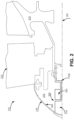
- FIG. 2 illustrates a cross-sectional view of the fan 110 and the nosecone 115 of the gas turbine engine 100 of FIG. 1 .
- the fan 110 may be operatively associated with a fan hub 215.
- Within the nosecone there is an interior cavity 210.
- the de-icing system may include an electrical coil 310, a magnet 320, a first rotating surface 335 (e.g., an interior surface of the nosecone 115), a second surface 330 and a heating element 340.
- the second rotating surface may be operatively associated with a counter-rotating element of the gas turbine engine, wherein the rotation is counter to the first rotating surface 335, and/or the second surface may be operatively associated with a non-rotating element, with respect to the rotation of the first rotating surface 335, of the gas turbine engine.
- the heating element 340 may be embedded within, mounted to, or otherwise be positioned relative to a surface of the nosecone 115 and/or a surface of the fan 110.
- Ice often accumulates on the surfaces of the fan 110 and the nosecone 115 and/or any other surfaces associated with the gas turbine engine 100.
- the gas turbine engine 100 is normally exposed to the air and thusly bears a high likelihood of significant ice accumulation due to various environmental factors (i.e., temperature changes, pressure changes, precipitation, etc.).
- This potential accumulation of ice on the surfaces of gas turbine engine 100 may limit the quantity of air flow to the engine.
- Such reductions in air flow may result in a reduction of power output, efficiency and/or cooling capacity of the gas turbine engine 100.
- the ice that forms on elements of the gas turbine engine 100 may break loose and be ingested by the gas turbine engine 100, potentially causing damage or wear to the gas turbine engine 100.
- Systems and methods for de-icing the fan may be beneficial to extend the life of an engine and/or to improve engine performance.
- FIG. 3 depicts a cross-section of half of the nosecone 115, as divided by the central engine axis 150.
- the nosecone 115 may include an electrical coil 310, a magnet 320, a first rotating surface 335, a second rotating surface 330, a heating element 340, and a seal 350.
- the first rotating surface may be an interior surface of the nosecone 115.
- the electrical coil 310 may be operatively associated with the first rotating surface 335.
- the coil 310 may be embedded within, mounted to, or otherwise be positioned relative to the first rotating surface 335.
- the second rotating surface 330 may be attached to another engine shaft such as a low pressure compressor shaft 331 and may rotate in the opposite direction of the rotation of the first rotating surface 335.
- the magnet 320 may be operatively associated with the second rotating surface 330.
- the magnet 320 may be embedded within, mounted to, or otherwise be positioned relative to the second rotating surface 330.
- the nosecone 115 rotates with the fan as a whole, and the first rotating surface 335 of the fan and the operatively associated electrical coil 310, thusly, rotate with, and in the same direction as, the fan 110.
- the second rotating surface 330 rotates in the opposite direction with respect to the fan 110 and, thusly, the operatively associated magnet 320 rotates in the opposite direction with respect to the electrical coil 310.
- the electrical coil 310 and the magnet 320 are situated in an arrangement wherein the magnet 320 and electrical coil 310 are in close enough proximity for the electrical coil 310 to create a current.
- an electromotive force is created.
- an electrical connection i.e. electrical wires, electrical clamps, etc.
- an electrical load or device i.e. a resistor, a current controller, a heating element 340, etc.
- the electrical energy generated by the association between the electrical coil 310 and the magnet 320 is then used to power the heating element 340.
- the heating element 340 is any electrically powered device used to heat the surfaces of the fan 110.
- the heating element 340 may be a single heating element, it may be a network of heating elements programmed to different heating schedules, or any other arrangement of one or more electrical devices designed to convert electrical energy into thermal energy.
- the heating element 340 is operatively associated with a surface of the nosecone 115, a surface of the fan 110, a surface of an inlet guide vane assembly 212, and/or any surface associated with the gas turbine engine 100.
- the heating element 340 may be embedded within, mounted to, or otherwise be positioned relative to a surface of the nosecone 115, a surface of the fan 110, a surface of an inlet guide vane assembly 212, and/or any surface associated with the gas turbine engine 100.
- the heating levels output by the heating element 340 may be controlled by an optional heating controller 410, which is discussed in greater detail as with respect to FIG. 4 .
- the heat produced by the heating element 340 may be used for, but is not limited to use for, de-icing surfaces of the fan 110, the nosecone 115, theinlet guide vane assembly 112, and/or any other surface associated with the gas turbine engine 100.
- FIG. 3 A first example of the presently disclosed de-icing system 500, which does not form part of the invention, is set forth in FIG. 3 with electrical coil 310 and magnet 320 being axially disposed with respect to each other.
- the electrical coil 310 rotates at a fixed point about the central engine axis 150; whereas, the magnet 320 rotates in the opposite direction radially about the central engine axis 150.
- This arrangement may be used to produce electrical power to power the heating element 340.
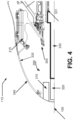
- FIG. 4 A second example of the de-icing system 500, which does not form part of the invention, is set forth in FIG. 4 .
- the system 500 may include the electrical coil 310 and the magnet 320 radially disposed relative to each other.
- the electrical coil 310 rotates about the central engine axis 150 radially; whereas, the magnet 320 rotates in the opposite direction axially about the central engine axis 150.
- This arrangement may be used to produce electrical power to power the heating element 340.
- FIG. 2 illustrates an embodiment of a de-icing system according to the present invetion including a non-rotating forward assembly, such as the inlet guide vane assembly 212, in front of the fan hub 215 and/or in front of any blades associated with the fan hub 215.
- a nosecone 115 may be connected to the stationary inlet guide vane assembly 212.
- the inlet guide vane assembly 212 is connected to a static structure of the aircraft and is configured to remain stationary about the longitudinal axis 150.
- placement of the de-icing apparatus may be as constructed in the manner of the first embodiment described in above with reference to FIG. 3 ; however, the components placed relative to the nosecone 115 are stationary and the relative rotation is the rotation of the fan 110.
- the packaging of the magnet assembly and coil assembly can also be in a radial arrangement as shown in FIG. 4 .
- FIG. 5 A block diagram of an exemplary system 500 for implementing the presently disclosed examples, which do not form part of the invention, for deicing the fan of a gas turbine engine is embodied in FIG. 5 .
- the block diagram includes example electrical coil 310, example counter rotating magnet 320, example heating controller 410, and example heating element 340.
- the rotating electrical coil 310 rotates radially in a direction.
- the counter-rotating magnet 320 rotates in the opposite direction radially with respect to the radial motion of the rotating electrical coil 310.
- the counter rotating magnet 320 and the rotating electrical coil 310 are within close enough proximity to each other for which they are able to produce electrical power.
- the association between the rotating electrical coil 310 and the counter-rotating magnet produces an electromechanical force (EMF) 520.
- EMF electromechanical force
- the EMF 520 is then converted into electrical power because the rotating electrical coil 310 is connected to an electrical element; in this example, the heating controller 410.
- the produced current (I) 530 is the electrical current converted from the EMF 520.
- heating controller 410 receives the produced current 530 and alters the current with respect to powering one or more heating elements and outputs the altered current (I*) 540 to the heating element 340.
- the heating controller is a passive heating controller.
- a passive heating controller may be a thermistor connected in series with the heating element 340.
- An example thermistor may be a type of resistor whose resistance varies significantly with temperature to act as a self-regulator for the heating element 340.
- the heating controller 410 may be an active heating controller.
- An example active heating controller may be a microprocessor configured to control the heat output of the heating element 340.
- the microprocessor may be powered by the electricity produced by the arrangement of the magnets and the electrical coils.
- the microprocessor may control the heat output of the heating elements per a programmed schedule.
- the altered current 540 is then received by the heating element 340, wherein the heating element 340 converts the electrical energy into thermal energy 550.
- the thermal energy 550 then may be purposed to heat the surface of the fan 110, with which the heating element 340 is associated. Heating the surface of the fan 110 and/or the nosecone 115 may be effective in deicing the fan 110 and/or the nosecone 115 and/or heating may function as an ice protection system for the fan 110 and/or the nosecone 115.
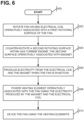
- FIG. 6 An example of the presently disclosed methods for de-icing the fan of a gas turbine engine, which does not form part of the invention, is depicted in flow chart format in FIG. 6 .
- the method begins; this may mean that the gas turbine engine 100 has entered a "starting" phase.
- the nosecone 115 rotates with the fan 110, thusly, the first rotating surface 335 and the operatively associated electrical coil 310 rotate with, and in the same direction as, the fan 110.
- the second rotating surface 330 rotates in the opposite direction of the fan 110.
- the magnet 320 is operatively associated with the second rotating surface 330 and thus, the magnet 320 rotates in the opposite direction of the fan 110, and the electrical coil 310.
- electricity is produced from the electrical coil 310 and the magnet 320.
- an electromotive force is created.
- an electrical connection i.e. electrical wires, electrical clamps, etc.
- an electrical load or device i.e. a resistor, a current controller, a heating element 340, etc.
- the heating element 340 which may be operatively associated with the fan 110 and/or the nosecone 115, is powered by the electrical energy produced by the magnet 320 and the electrical coil 310.
- the heating levels output by the heating element 340 may be controlled by an optional heating controller 410.
- the heat output by the heating element 340 may be used to de-ice the fan 110.
- the technology disclosed herein has industrial applicability in a variety of settings such as, but not limited to, systems and methods for de-icing the fans of gas turbine engines.
- the gas turbine engine may be used in conjunction with an aircraft for generating thrust, or for land-based applications for generating power.
- de-icing systems for a gas turbine engine may be constructed to reduce power usage from other power generators within the aircraft as a whole by generating the electrical energy to power the de-icing system within the fan of the gas turbine engine. This improvement over the prior art may conserve energy and reduce the overall power usage of the de-icing systems of gas turbine engines.
Landscapes
- Engineering & Computer Science (AREA)
- Chemical & Material Sciences (AREA)
- Combustion & Propulsion (AREA)
- Mechanical Engineering (AREA)
- General Engineering & Computer Science (AREA)
- Structures Of Non-Positive Displacement Pumps (AREA)
- Connection Of Motors, Electrical Generators, Mechanical Devices, And The Like (AREA)
Description
- The present disclosure relates to gas turbine engines, and more particularly, to deicing systems for gas turbine engines.
- Operation of aircraft engines in adverse weather conditions or at high altitudes can often lead to ice forming on the exposed surfaces of gas turbine engines. This accumulation of ice on the engine surfaces limits the quantity of air flow to the engine. Such reductions in air flow can result in a reduction of power output, efficiency and/or cooling capacity of the engine. Further, the ice that forms on elements of the gas turbine engine can break loose and be ingested by the engine, potentially causing damage or wear to the engine. Loose ice, airflow inconsistencies, and disturbed airflow can cause performance issues and vibration problems in downstream components of the engine and can also lead to loss of engine efficiency. To combat these issues, most gas turbine engines incorporate a de-icing system to protect the engine components from the undesirable effects of ice accumulation.
- Systems and methods to prevent or remove ice formation on gas turbine engines are well known. Engine de-icing systems commonly employ a thermal source, such as hot air bleed from the engine core, which is applied to the engine inlet to melt or evaporate ice build-up on the external surfaces thereof. In earlier designs, the de-icing systems would bleed a portion of the hot gas stream flowing through the engine and direct it through passages in relation to the elements desiring heat. The bled stream then passes through ports into the air stream flowing into the engine. This heated stream causes the engine surfaces to be heated and effectively removes or prevents the accumulation of ice. However, these de-icing systems using the hot air bleed effect engine efficiency in that the extraction of air or heated fluid from the motive gas stream passing through the engine reduces the overall efficiency of the engine. The efficiency loss occurs because the air is bled from the motive gas stream at a high energy point and reintroduced at a low energy point. Mechanisms have been created to operate said de-icing systems on an "as needed" basis, either when ice is detected or suspected; however, such mechanisms add an undesired mechanical complexity to the design of the gas turbine engine.
- Other methods have also been developed using electrical elements for gas turbine engine de-icing systems. In addition to, or alternatively to, using hot air bleeds, electrothermal devices have been used to prevent ice formation and to remove ice from engine components. Commonly employed electrothermal de-icers use heating elements that are operatively associated with the area for which de-icing is desired. For example, heating elements may be embedded within the surfaces of a nosecone and/or fairings of the fan of a gas turbine engine. In some recent examples of electrical de-icing systems, the system involves a series of heaters operatively associated with regions of a gas turbine engine. For example, the system may include one heater at the leading-edge of the nosecone of a gas turbine engine, a second heater located aft of the first heater, and a third heater aft of the second heater. All three heaters are electrically-powered to heat the elements of the nosecone and prevent icing of the structure. Further, these systems may employ different heating levels at the different heaters per a schedule or per temperature sensors. Such examples are further detailed in
U.S. Patent Publication No. 2011/0309066 ("Engine Inlet Ice Protection System Having Embedded Variable Watt Density Heaters"). - When using electrically powered heaters, the de-icing systems generally draw power from the main electrical power source for the aircraft. This can cause an unwanted strain on the power source and also complicate the electrical wiring of the aircraft. Accordingly, it can be seen that an improved engine de-icing system is needed.
-
US 2013/039759 A1 andUS 2009/289516 A1 disclose counter rotating turbo prop systems with power generation systems including magnets and coil assemblies which produce electric power for a de-icing system.US 2012/025676 A1 discloses a power generator embedded within a spinner.GB636612A GB2425572A - Viewed from one aspect the present invention provides a system for de-icing a fan of a gas turbine engine according to
claim 1. Viewed from another aspect the present invention provides a method for de-icing a fan of a gas turbine engine according to claim 10. - [deleted]
- [deleted]
- [deleted]
- [deleted]
- [deleted]
- [deleted]
- [deleted]
- [deleted]
- [deleted]
- [deleted]
- [deleted]
- [deleted]
- [deleted]
- [deleted]
- [deleted]
- [deleted]
- [deleted]
- [deleted]
- [deleted]
- [deleted]
- [deleted]
-
-
FIG. 1 is a cross-sectional view of a gas turbine engine constructed in accordance with the present disclosure. -
FIG. 2 is a cross-sectional view of a fan and a nosecone of a gas turbine engine with an inlet case constructed in accordance with the present disclosure. -
FIG. 3 is a cross-sectional view of a portion of a nosecone ofFIG. 1 , wherein an electrical coil and magnet are arranged in an axial arrangement. -
FIG. 4 is a cross-sectional view of the nosecone ofFIG. 1 , wherein an electrical coil and a magnet are arranged in a radial arrangement. -
FIG. 5 is a block diagram for an exemplary de-icing method according to the present disclosure. -
FIG. 6 is a flow chart exemplary of a de-icing method according to the present disclosure. - It should be understood that the drawings are not necessarily to scale and that the disclosed embodiments are sometimes illustrated diagrammatically and in partial views. In certain instances, details which are not necessary for an understanding of this disclosure or which render other details difficult to perceive may have been omitted. It should be understood, of course, that this disclosure is not limited to the particular embodiments illustrated herein.
- Referring to the drawings, and with specific reference to
FIG. 1 , a gas turbine engine constructed in accordance with the present disclosure is generally referred to byreference numeral 100. Such agas turbine engine 100 can be used for any number of different applications including, but not limited to, generation of aircraft thrust and land-based power. Moreover, it is to be understood that the sectional view provided inFIG.1 is included simply to provide a basic understanding of the various sections in a gas turbine engine, and not to limit the invention thereto. The present disclosure extends to all types of gas turbine engines used in all types of applications. - The
gas turbine engine 100 may have afan 110 and anosecone 115, the fan drawing in ambient air and directing the ambient air to acompressor section 120. The incoming air is greatly compressed by thecompressor section 120 and directed to acombustor section 130 where it is mixed with fuel and combusted. The products of that combustion, in the form of very hot and expanding gases, are directed to aturbine section 140 shown to be downstream of thecombustor section 130. Theturbine section 140 and/orcompressor section 120 may each be comprised of a plurality of blades radially extending from a shaft forming rotating sections or rotors. A plurality of vanes may radially extend inwardly from a static section or stator, and are intermeshed with the plurality of blades. In so doing, it can be seen that theturbine section 140,compressor section 120,nosecone 115 andfan 110 all revolve around acentral engine axis 150. -
FIG. 2 illustrates a cross-sectional view of thefan 110 and thenosecone 115 of thegas turbine engine 100 ofFIG. 1 . Thefan 110 may be operatively associated with afan hub 215. Within the nosecone, there is aninterior cavity 210. Further, within theinterior cavity 210 of the nosecone, there may be ade-icing system 300. The de-icing system may include anelectrical coil 310, amagnet 320, a first rotating surface 335 (e.g., an interior surface of the nosecone 115), asecond surface 330 and aheating element 340. The second rotating surface may be operatively associated with a counter-rotating element of the gas turbine engine, wherein the rotation is counter to the firstrotating surface 335, and/or the second surface may be operatively associated with a non-rotating element, with respect to the rotation of the firstrotating surface 335, of the gas turbine engine. Theheating element 340 may be embedded within, mounted to, or otherwise be positioned relative to a surface of thenosecone 115 and/or a surface of thefan 110. - Ice often accumulates on the surfaces of the
fan 110 and thenosecone 115 and/or any other surfaces associated with thegas turbine engine 100. Thegas turbine engine 100 is normally exposed to the air and thusly bears a high likelihood of significant ice accumulation due to various environmental factors (i.e., temperature changes, pressure changes, precipitation, etc.). This potential accumulation of ice on the surfaces ofgas turbine engine 100 may limit the quantity of air flow to the engine. Such reductions in air flow may result in a reduction of power output, efficiency and/or cooling capacity of thegas turbine engine 100. Further, the ice that forms on elements of thegas turbine engine 100 may break loose and be ingested by thegas turbine engine 100, potentially causing damage or wear to thegas turbine engine 100. Systems and methods for de-icing the fan may be beneficial to extend the life of an engine and/or to improve engine performance. - The present disclosure greatly improves upon the prior art by providing an electrothermal de-icing system which generates electrical energy through electromagnetic induction to power electrical heating elements. A first example of the presently disclosed
de-icing system 300, which does not form part of the invention, is set forth inFIG. 3. FIG. 3 depicts a cross-section of half of thenosecone 115, as divided by thecentral engine axis 150. Thenosecone 115 may include anelectrical coil 310, amagnet 320, a firstrotating surface 335, a secondrotating surface 330, aheating element 340, and aseal 350. In this example, the first rotating surface may be an interior surface of thenosecone 115. Theelectrical coil 310 may be operatively associated with the firstrotating surface 335. For example, thecoil 310 may be embedded within, mounted to, or otherwise be positioned relative to the firstrotating surface 335. The secondrotating surface 330 may be attached to another engine shaft such as a lowpressure compressor shaft 331 and may rotate in the opposite direction of the rotation of the firstrotating surface 335. Themagnet 320 may be operatively associated with the secondrotating surface 330. For example, themagnet 320 may be embedded within, mounted to, or otherwise be positioned relative to the secondrotating surface 330. - When the
fan 110 is in motion, thenosecone 115 rotates with the fan as a whole, and the firstrotating surface 335 of the fan and the operatively associatedelectrical coil 310, thusly, rotate with, and in the same direction as, thefan 110. Conversely, the secondrotating surface 330 rotates in the opposite direction with respect to thefan 110 and, thusly, the operatively associatedmagnet 320 rotates in the opposite direction with respect to theelectrical coil 310. Theelectrical coil 310 and themagnet 320 are situated in an arrangement wherein themagnet 320 andelectrical coil 310 are in close enough proximity for theelectrical coil 310 to create a current. When theelectrical coil 310 is in motion due to the rotation of thefan 110 and said motion is in opposition to the motion of themagnet 320, an electromotive force is created. If an electrical connection (i.e. electrical wires, electrical clamps, etc.) is connected through an electrical load or device (i.e. a resistor, a current controller, aheating element 340, etc.), then a current will flow, thusly, converting the mechanical energy derived from the motion of the fan into electrical energy. - The electrical energy generated by the association between the
electrical coil 310 and themagnet 320 is then used to power theheating element 340. Theheating element 340 is any electrically powered device used to heat the surfaces of thefan 110. Theheating element 340 may be a single heating element, it may be a network of heating elements programmed to different heating schedules, or any other arrangement of one or more electrical devices designed to convert electrical energy into thermal energy. Theheating element 340 is operatively associated with a surface of thenosecone 115, a surface of thefan 110, a surface of an inletguide vane assembly 212, and/or any surface associated with thegas turbine engine 100. For example, theheating element 340 may be embedded within, mounted to, or otherwise be positioned relative to a surface of thenosecone 115, a surface of thefan 110, a surface of an inletguide vane assembly 212, and/or any surface associated with thegas turbine engine 100. The heating levels output by theheating element 340 may be controlled by anoptional heating controller 410, which is discussed in greater detail as with respect toFIG. 4 . The heat produced by theheating element 340 may be used for, but is not limited to use for, de-icing surfaces of thefan 110, thenosecone 115, theinlet guide vane assembly 112, and/or any other surface associated with thegas turbine engine 100. - A first example of the presently disclosed
de-icing system 500, which does not form part of the invention, is set forth inFIG. 3 withelectrical coil 310 andmagnet 320 being axially disposed with respect to each other. In the axial arrangement, theelectrical coil 310 rotates at a fixed point about thecentral engine axis 150; whereas, themagnet 320 rotates in the opposite direction radially about thecentral engine axis 150. This arrangement may be used to produce electrical power to power theheating element 340. - A second example of the
de-icing system 500, which does not form part of the invention, is set forth inFIG. 4 . As shown, thesystem 500 may include theelectrical coil 310 and themagnet 320 radially disposed relative to each other. In such a radial arrangement, theelectrical coil 310 rotates about thecentral engine axis 150 radially; whereas, themagnet 320 rotates in the opposite direction axially about thecentral engine axis 150. This arrangement may be used to produce electrical power to power theheating element 340. -
FIG. 2 illustrates an embodiment of a de-icing system according to the present invetion including a non-rotating forward assembly, such as the inletguide vane assembly 212, in front of thefan hub 215 and/or in front of any blades associated with thefan hub 215. Anosecone 115 may be connected to the stationary inletguide vane assembly 212. Generally, the inletguide vane assembly 212 is connected to a static structure of the aircraft and is configured to remain stationary about thelongitudinal axis 150. In this exemplary embodiment, placement of the de-icing apparatus may be as constructed in the manner of the first embodiment described in above with reference toFIG. 3 ; however, the components placed relative to thenosecone 115 are stationary and the relative rotation is the rotation of thefan 110. Further, one skilled in the art will recognize that the packaging of the magnet assembly and coil assembly can also be in a radial arrangement as shown inFIG. 4 . - A block diagram of an
exemplary system 500 for implementing the presently disclosed examples, which do not form part of the invention, for deicing the fan of a gas turbine engine is embodied inFIG. 5 . The block diagram includes exampleelectrical coil 310, example counter rotatingmagnet 320,example heating controller 410, andexample heating element 340. The rotatingelectrical coil 310 rotates radially in a direction. Conversely, thecounter-rotating magnet 320 rotates in the opposite direction radially with respect to the radial motion of the rotatingelectrical coil 310. The counterrotating magnet 320 and the rotatingelectrical coil 310 are within close enough proximity to each other for which they are able to produce electrical power. - The association between the rotating
electrical coil 310 and the counter-rotating magnet produces an electromechanical force (EMF) 520. TheEMF 520 is then converted into electrical power because the rotatingelectrical coil 310 is connected to an electrical element; in this example, theheating controller 410. The produced current (I) 530 is the electrical current converted from theEMF 520. - Referring still to
FIG. 5 ,heating controller 410 receives the produced current 530 and alters the current with respect to powering one or more heating elements and outputs the altered current (I*) 540 to theheating element 340. In some examples, the heating controller is a passive heating controller. In one such example, a passive heating controller may be a thermistor connected in series with theheating element 340. An example thermistor may be a type of resistor whose resistance varies significantly with temperature to act as a self-regulator for theheating element 340. In other examples, theheating controller 410 may be an active heating controller. An example active heating controller may be a microprocessor configured to control the heat output of theheating element 340. In such examples, the microprocessor may be powered by the electricity produced by the arrangement of the magnets and the electrical coils. In some further examples, the microprocessor may control the heat output of the heating elements per a programmed schedule. - The altered current 540 is then received by the
heating element 340, wherein theheating element 340 converts the electrical energy intothermal energy 550. Thethermal energy 550 then may be purposed to heat the surface of thefan 110, with which theheating element 340 is associated. Heating the surface of thefan 110 and/or thenosecone 115 may be effective in deicing thefan 110 and/or thenosecone 115 and/or heating may function as an ice protection system for thefan 110 and/or thenosecone 115. - In operation, an example of the presently disclosed methods for de-icing the fan of a gas turbine engine, which does not form part of the invention, is depicted in flow chart format in
FIG. 6 . Atblock 600, the method begins; this may mean that thegas turbine engine 100 has entered a "starting" phase. When thefan 110 rotates, thenosecone 115 rotates with thefan 110, thusly, the firstrotating surface 335 and the operatively associatedelectrical coil 310 rotate with, and in the same direction as, thefan 110. - At
block 604, the secondrotating surface 330 rotates in the opposite direction of thefan 110. Themagnet 320 is operatively associated with the secondrotating surface 330 and thus, themagnet 320 rotates in the opposite direction of thefan 110, and theelectrical coil 310. - At
block 606, electricity is produced from theelectrical coil 310 and themagnet 320. When theelectrical coil 310 is in motion due to the rotation of thefan 110 and such motion is in opposition to the motion of themagnet 320, an electromotive force is created. If an electrical connection (i.e. electrical wires, electrical clamps, etc.) is connected through an electrical load or device (i.e. a resistor, a current controller, aheating element 340, etc.), then a current will flow, thusly, converting the mechanical energy derived from the motion of the fan into electrical energy. - At
block 608, theheating element 340, which may be operatively associated with thefan 110 and/or thenosecone 115, is powered by the electrical energy produced by themagnet 320 and theelectrical coil 310. The heating levels output by theheating element 340 may be controlled by anoptional heating controller 410. - Finally, at
block 610, the heat output by theheating element 340 may be used to de-ice thefan 110. - From the foregoing, it can be seen that the technology disclosed herein has industrial applicability in a variety of settings such as, but not limited to, systems and methods for de-icing the fans of gas turbine engines. The gas turbine engine may be used in conjunction with an aircraft for generating thrust, or for land-based applications for generating power. Using the teachings of the present disclosure, de-icing systems for a gas turbine engine may be constructed to reduce power usage from other power generators within the aircraft as a whole by generating the electrical energy to power the de-icing system within the fan of the gas turbine engine. This improvement over the prior art may conserve energy and reduce the overall power usage of the de-icing systems of gas turbine engines.
- While the present disclosure has been in reference to a gas turbine engine and an aircraft, one skilled in the art will understand that the teachings herein can be used in other applications as well. For example, the disclosed systems and methods for de-icing may be implemented within the rotor of a helicopter, in a similar manner, to de-ice the rotor. It is therefore intended that the scope of the invention not be limited by the embodiments presented herein as the best mode for carrying out the invention, but that the invention will include all embodiments falling within the scope of the claims as well.
Claims (12)
- A system for de-icing a fan of a gas turbine engine, comprising:a fan (110);a nosecone (115) which is configured to remain stationary about a longitudinal axis of the gas turbine engine;an electrical coil (310) mounted to a non-rotating surface (335) of the nosecone (115);a magnet (320) mounted to a rotating surface (330) of the fan, the rotating surface (330) operatively associated with a rotating element of the gas turbine engine such that the rotating surface (330) rotates relative to the non-rotating surface of the nosecone (115) during operation of the fan, the magnet (320) and the electrical coil (310) thereby producing electricity during operation of the fan; anda heating element (340) operatively associated with a surface on the fan, the heating element (340) being powered by the electricity produced by the magnet (320) and the electrical coil (310).
- The system of claim 1, further comprising a heating controller (410) to control output of the heating element (340).
- The system of claim 2, wherein the heating controller (410) is a passive heating controller, or wherein the heating controller (410) is a thermistor connected in series with the heating element (340).
- The system of claim 2, wherein the heating controller (410) is an active heating controller, or wherein the heating controller (410) is a microprocessor configured to control heat output of the heating element (340).
- The system of claim 1, wherein the magnet (320) and the electrical coil (310) are axially disposed relative to each other.
- The system of claim 1, wherein the magnet (320) and the electrical coil (310) are radially disposed.
- A gas turbine engine, comprising:a system for de-icing a fan of the gas turbine engine as in any one of claims 1 to 6;a compressor section (120) downstream of the fan;a combustor section (130) downstream of the compressor section (120); anda turbine section (140) downstream of the combustor section (130).
- The gas turbine engine of claim 7, further comprising a heating controller (410) to control output of the heating element (340), wherein the heating controller (410) is a microprocessor configured to control heat output of the heating element (340), wherein the microprocessor is powered by the electricity produced by the arrangement of the magnet (320) and the electrical coil (310).
- The gas turbine engine of claim 7, further comprising a heating controller (410) to control output of the heating element (340), wherein the heating controller (410) is a microprocessor configured to control heat output of the heating element (340), wherein the microprocessor controls the heat output of the heating element (340) per a programmed schedule.
- A method for de-icing a fan of a gas turbine engine comprising:providing an electrical coil (310) mounted to a non- rotating surface (335) of a nosecone (115);rotating a magnet (320) mounted to a rotating surface (330) of the fan such that the rotating surface (330) rotates relative to the non-rotating surface (335) of the nosecone (115) during operation of the fan (110);producing electricity from the electrical coil (310) and the magnet (320) when the fan is in motion; andpowering a heating element (340) operatively associated with the fan (110) using the electricity produced by the magnet (320) and the electrical coil (310).
- The method of claim 10, further comprising controlling the output of the heating element (340) using a heating controller (410).
- The method of claim 10, further comprising providing a heating controller (410) in the form of a microprocessor controlling the heat output of the heating element (340) per a programmed schedule.
Applications Claiming Priority (3)
| Application Number | Priority Date | Filing Date | Title |
|---|---|---|---|
| US201361791731P | 2013-03-15 | 2013-03-15 | |
| PCT/US2013/075024 WO2014143255A1 (en) | 2013-03-15 | 2013-12-13 | De-icing by integral electric heat generation |
| EP13878508.4A EP2971517B1 (en) | 2013-03-15 | 2013-12-13 | De-icing by integral electric heat generation |
Related Parent Applications (1)
| Application Number | Title | Priority Date | Filing Date |
|---|---|---|---|
| EP13878508.4A Division EP2971517B1 (en) | 2013-03-15 | 2013-12-13 | De-icing by integral electric heat generation |
Publications (2)
| Publication Number | Publication Date |
|---|---|
| EP3929406A1 EP3929406A1 (en) | 2021-12-29 |
| EP3929406B1 true EP3929406B1 (en) | 2024-05-22 |
Family
ID=51537445
Family Applications (2)
| Application Number | Title | Priority Date | Filing Date |
|---|---|---|---|
| EP21191560.8A Active EP3929406B1 (en) | 2013-03-15 | 2013-12-13 | De-icing by integral electric heat generation |
| EP13878508.4A Active EP2971517B1 (en) | 2013-03-15 | 2013-12-13 | De-icing by integral electric heat generation |
Family Applications After (1)
| Application Number | Title | Priority Date | Filing Date |
|---|---|---|---|
| EP13878508.4A Active EP2971517B1 (en) | 2013-03-15 | 2013-12-13 | De-icing by integral electric heat generation |
Country Status (3)
| Country | Link |
|---|---|
| US (2) | US10100732B2 (en) |
| EP (2) | EP3929406B1 (en) |
| WO (1) | WO2014143255A1 (en) |
Families Citing this family (13)
| Publication number | Priority date | Publication date | Assignee | Title |
|---|---|---|---|---|
| EP3929406B1 (en) | 2013-03-15 | 2024-05-22 | RTX Corporation | De-icing by integral electric heat generation |
| DE102014226696A1 (en) * | 2014-12-19 | 2016-06-23 | Rolls-Royce Deutschland Ltd & Co Kg | Pre-compressor device, retrofit kit and aircraft engine |
| WO2016176773A1 (en) | 2015-05-05 | 2016-11-10 | Instrumar Limited | Apparatus and method of monitoring for in-flight aircraft engine ice crystal accretion |
| US9642190B2 (en) * | 2015-05-29 | 2017-05-02 | Philip Jarvinen | Embedded turbofan deicer system |
| BE1024039B1 (en) * | 2016-04-08 | 2017-11-06 | Safran Aero Boosters S.A. | AXIAL TURBOMACHINE COMPRESSOR DEFROSTING DAWN |
| US11261787B2 (en) | 2018-06-22 | 2022-03-01 | General Electric Company | Aircraft anti-icing system |
| US10815885B2 (en) * | 2018-07-26 | 2020-10-27 | Raytheon Technologies Corporation | Anti-ice systems for engine airfoils |
| CN109239382B (en) * | 2018-10-12 | 2020-11-10 | 徐州木泽林建筑工程有限公司 | Utilize magnetic force to promote wind speed measurement appearance for unmanned area of deicing |
| US10690000B1 (en) * | 2019-04-18 | 2020-06-23 | Pratt & Whitney Canada Corp. | Gas turbine engine and method of operating same |
| FR3096080B1 (en) | 2019-05-13 | 2021-05-14 | Safran Aircraft Engines | Turbomachine comprising a system for defrosting the upstream cone, and associated method. |
| US11535386B2 (en) | 2019-06-17 | 2022-12-27 | Pratt & Whitney Canada Corp. | System and method for operating a multi-engine rotorcraft for ice accretion shedding |
| US11021259B1 (en) | 2021-01-07 | 2021-06-01 | Philip Onni Jarvinen | Aircraft exhaust mitigation system and process |
| DE102024122086A1 (en) * | 2024-08-02 | 2026-02-05 | MTU Aero Engines AG | Gas turbine assembly and method for manufacturing, maintaining and/or operating the gas turbine assembly |
Family Cites Families (18)
| Publication number | Priority date | Publication date | Assignee | Title |
|---|---|---|---|---|
| GB636612A (en) * | 1947-06-20 | 1950-05-03 | Ferdinand Basil Greatrex | Improvements in compressors of gas turbine units |
| US2540472A (en) * | 1949-05-02 | 1951-02-06 | A V Roe Canada Ltd | Electrically heated blade and process of manufacture |
| GB2173863B (en) * | 1985-04-17 | 1989-07-19 | Rolls Royce Plc | A propeller module for an aero gas turbine engine |
| GB2264812B (en) * | 1992-03-04 | 1995-07-19 | Dowty Defence & Air Syst | Electrical power generators |
| US5553815A (en) | 1994-04-07 | 1996-09-10 | The B. F. Goodrich Company | De-icer adapted for installment on the inner surface of a structural member |
| US5704567A (en) * | 1995-10-16 | 1998-01-06 | The United States Of America As Represented By The Secretary Of The Army | Blade de-icer for rotary wing aircraft |
| US6753513B2 (en) * | 2002-03-19 | 2004-06-22 | Hamilton Sundstrand | Propeller de-icing system |
| US7131815B2 (en) * | 2003-07-11 | 2006-11-07 | Rolls-Royce Plc | Inlet guide vane |
| US7448199B2 (en) * | 2005-04-29 | 2008-11-11 | General Electric Company | Self powdered missile turbojet |
| US8049147B2 (en) | 2008-03-28 | 2011-11-01 | United Technologies Corporation | Engine inlet ice protection system with power control by zone |
| US7938368B2 (en) * | 2008-04-07 | 2011-05-10 | United Technologies Corporation | Nosecone ice protection system for a gas turbine engine |
| GB0809247D0 (en) | 2008-05-22 | 2008-06-25 | Rolls Royce Plc | An electrical generator arrangement |
| US8063501B2 (en) * | 2009-06-10 | 2011-11-22 | Hamilton Sundstrand Corporation | Gas turbine bleed energy recovery via counter rotating generator |
| US8294316B2 (en) | 2009-07-28 | 2012-10-23 | Rolls-Royce North American Technologies, Inc. | Electrical power generation apparatus for contra-rotating open-rotor aircraft propulsion system |
| US8522522B2 (en) | 2010-07-30 | 2013-09-03 | Hamilton Sundstrand Corporation | Fan embedded power generator |
| US8757972B2 (en) | 2011-08-12 | 2014-06-24 | Hamilton Sundstrand Corporation | De-icing system for modular counter rotating propeller |
| US9221544B2 (en) * | 2011-09-20 | 2015-12-29 | The Boeing Company | Integrated surface thermal management system |
| EP3929406B1 (en) | 2013-03-15 | 2024-05-22 | RTX Corporation | De-icing by integral electric heat generation |
-
2013
- 2013-12-13 EP EP21191560.8A patent/EP3929406B1/en active Active
- 2013-12-13 US US14/765,760 patent/US10100732B2/en active Active
- 2013-12-13 EP EP13878508.4A patent/EP2971517B1/en active Active
- 2013-12-13 WO PCT/US2013/075024 patent/WO2014143255A1/en not_active Ceased
-
2018
- 2018-04-23 US US15/960,132 patent/US10830137B2/en active Active
Also Published As
| Publication number | Publication date |
|---|---|
| US20180238233A1 (en) | 2018-08-23 |
| WO2014143255A1 (en) | 2014-09-18 |
| US10100732B2 (en) | 2018-10-16 |
| US20150377129A1 (en) | 2015-12-31 |
| EP2971517B1 (en) | 2021-08-18 |
| EP2971517A4 (en) | 2016-11-09 |
| US10830137B2 (en) | 2020-11-10 |
| EP3929406A1 (en) | 2021-12-29 |
| EP2971517A1 (en) | 2016-01-20 |
Similar Documents
| Publication | Publication Date | Title |
|---|---|---|
| US10830137B2 (en) | De-icing by integral electric heat generation | |
| EP2412939B1 (en) | Gasturbine engine with fan embedded power generator | |
| CN109204840B (en) | Propulsion system for an aircraft | |
| EP3205841B1 (en) | Bowed rotor prevention system using waste heat and corresponding method | |
| US8464511B1 (en) | Magnetically coupled contra-rotating propulsion stages | |
| EP1785617B1 (en) | Gas turbine engine with power transfer and method | |
| EP3618263B1 (en) | Engine with a permanent magnet electric machine | |
| EP2278672A2 (en) | Electrical cable shroud | |
| US20170298760A1 (en) | Axial Turbine Engine Compressor De-Icing Blade | |
| CN109110135A (en) | Propulsion system for aircraft | |
| EP3444464B1 (en) | System and method for rotating a gas turbine engine during a motoring cycle | |
| CN106930835A (en) | For the method and system that precooler exhaust energy is reclaimed | |
| CA3114460C (en) | Gas turbine engine and method of operating same | |
| CN110481757B (en) | Electric conduit fan | |
| US11261787B2 (en) | Aircraft anti-icing system | |
| CN114109600B (en) | Turbine equipped with an embedded electric motor having a segmented and movable stator | |
| CN115853666A (en) | Turbine engine with variable pitch fan | |
| EP1707753B1 (en) | Eddy current heating for reducing transient thermal stresses in a rotor of a gas turbine engine | |
| EP3869022B1 (en) | After-fan system with electrical motor for gas turbine engines | |
| CN113825897B (en) | Turbine comprising a deicing system for an upstream cone and related method | |
| CN116255245A (en) | Systems and methods for aligning a gearbox of a gas turbine engine |
Legal Events
| Date | Code | Title | Description |
|---|---|---|---|
| PUAI | Public reference made under article 153(3) epc to a published international application that has entered the european phase |
Free format text: ORIGINAL CODE: 0009012 |
|
| STAA | Information on the status of an ep patent application or granted ep patent |
Free format text: STATUS: THE APPLICATION HAS BEEN PUBLISHED |
|
| AC | Divisional application: reference to earlier application |
Ref document number: 2971517 Country of ref document: EP Kind code of ref document: P |
|
| AK | Designated contracting states |
Kind code of ref document: A1 Designated state(s): AL AT BE BG CH CY CZ DE DK EE ES FI FR GB GR HR HU IE IS IT LI LT LU LV MC MK MT NL NO PL PT RO RS SE SI SK SM TR |
|
| B565 | Issuance of search results under rule 164(2) epc |
Effective date: 20211008 |
|
| STAA | Information on the status of an ep patent application or granted ep patent |
Free format text: STATUS: REQUEST FOR EXAMINATION WAS MADE |
|
| 17P | Request for examination filed |
Effective date: 20220629 |
|
| RBV | Designated contracting states (corrected) |
Designated state(s): AL AT BE BG CH CY CZ DE DK EE ES FI FR GB GR HR HU IE IS IT LI LT LU LV MC MK MT NL NO PL PT RO RS SE SI SK SM TR |
|
| RAP3 | Party data changed (applicant data changed or rights of an application transferred) |
Owner name: RTX CORPORATION |
|
| RIC1 | Information provided on ipc code assigned before grant |
Ipc: H02K 7/18 20060101ALI20231027BHEP Ipc: F02C 7/047 20060101ALI20231027BHEP Ipc: F01D 25/02 20060101ALI20231027BHEP Ipc: F01D 15/10 20060101AFI20231027BHEP |
|
| GRAP | Despatch of communication of intention to grant a patent |
Free format text: ORIGINAL CODE: EPIDOSNIGR1 |
|
| STAA | Information on the status of an ep patent application or granted ep patent |
Free format text: STATUS: GRANT OF PATENT IS INTENDED |
|
| INTG | Intention to grant announced |
Effective date: 20240102 |
|
| GRAS | Grant fee paid |
Free format text: ORIGINAL CODE: EPIDOSNIGR3 |
|
| GRAA | (expected) grant |
Free format text: ORIGINAL CODE: 0009210 |
|
| STAA | Information on the status of an ep patent application or granted ep patent |
Free format text: STATUS: THE PATENT HAS BEEN GRANTED |
|
| AC | Divisional application: reference to earlier application |
Ref document number: 2971517 Country of ref document: EP Kind code of ref document: P |
|
| AK | Designated contracting states |
Kind code of ref document: B1 Designated state(s): AL AT BE BG CH CY CZ DE DK EE ES FI FR GB GR HR HU IE IS IT LI LT LU LV MC MK MT NL NO PL PT RO RS SE SI SK SM TR |
|
| REG | Reference to a national code |
Ref country code: GB Ref legal event code: FG4D |
|
| REG | Reference to a national code |
Ref country code: CH Ref legal event code: EP |
|
| REG | Reference to a national code |
Ref country code: DE Ref legal event code: R096 Ref document number: 602013085748 Country of ref document: DE |
|
| REG | Reference to a national code |
Ref country code: IE Ref legal event code: FG4D |
|
| REG | Reference to a national code |
Ref country code: LT Ref legal event code: MG9D |
|
| REG | Reference to a national code |
Ref country code: NL Ref legal event code: MP Effective date: 20240522 |
|
| PG25 | Lapsed in a contracting state [announced via postgrant information from national office to epo] |
Ref country code: IS Free format text: LAPSE BECAUSE OF FAILURE TO SUBMIT A TRANSLATION OF THE DESCRIPTION OR TO PAY THE FEE WITHIN THE PRESCRIBED TIME-LIMIT Effective date: 20240922 |
|
| PG25 | Lapsed in a contracting state [announced via postgrant information from national office to epo] |
Ref country code: BG Free format text: LAPSE BECAUSE OF FAILURE TO SUBMIT A TRANSLATION OF THE DESCRIPTION OR TO PAY THE FEE WITHIN THE PRESCRIBED TIME-LIMIT Effective date: 20240522 |
|
| PG25 | Lapsed in a contracting state [announced via postgrant information from national office to epo] |
Ref country code: HR Free format text: LAPSE BECAUSE OF FAILURE TO SUBMIT A TRANSLATION OF THE DESCRIPTION OR TO PAY THE FEE WITHIN THE PRESCRIBED TIME-LIMIT Effective date: 20240522 Ref country code: FI Free format text: LAPSE BECAUSE OF FAILURE TO SUBMIT A TRANSLATION OF THE DESCRIPTION OR TO PAY THE FEE WITHIN THE PRESCRIBED TIME-LIMIT Effective date: 20240522 |
|
| PG25 | Lapsed in a contracting state [announced via postgrant information from national office to epo] |
Ref country code: GR Free format text: LAPSE BECAUSE OF FAILURE TO SUBMIT A TRANSLATION OF THE DESCRIPTION OR TO PAY THE FEE WITHIN THE PRESCRIBED TIME-LIMIT Effective date: 20240823 |
|
| PG25 | Lapsed in a contracting state [announced via postgrant information from national office to epo] |
Ref country code: PT Free format text: LAPSE BECAUSE OF FAILURE TO SUBMIT A TRANSLATION OF THE DESCRIPTION OR TO PAY THE FEE WITHIN THE PRESCRIBED TIME-LIMIT Effective date: 20240923 |
|
| REG | Reference to a national code |
Ref country code: AT Ref legal event code: MK05 Ref document number: 1688928 Country of ref document: AT Kind code of ref document: T Effective date: 20240522 |
|
| PG25 | Lapsed in a contracting state [announced via postgrant information from national office to epo] |
Ref country code: NL Free format text: LAPSE BECAUSE OF FAILURE TO SUBMIT A TRANSLATION OF THE DESCRIPTION OR TO PAY THE FEE WITHIN THE PRESCRIBED TIME-LIMIT Effective date: 20240522 |
|
| PG25 | Lapsed in a contracting state [announced via postgrant information from national office to epo] |
Ref country code: ES Free format text: LAPSE BECAUSE OF FAILURE TO SUBMIT A TRANSLATION OF THE DESCRIPTION OR TO PAY THE FEE WITHIN THE PRESCRIBED TIME-LIMIT Effective date: 20240522 |
|
| PG25 | Lapsed in a contracting state [announced via postgrant information from national office to epo] |
Ref country code: AT Free format text: LAPSE BECAUSE OF FAILURE TO SUBMIT A TRANSLATION OF THE DESCRIPTION OR TO PAY THE FEE WITHIN THE PRESCRIBED TIME-LIMIT Effective date: 20240522 |
|
| PG25 | Lapsed in a contracting state [announced via postgrant information from national office to epo] |
Ref country code: PL Free format text: LAPSE BECAUSE OF FAILURE TO SUBMIT A TRANSLATION OF THE DESCRIPTION OR TO PAY THE FEE WITHIN THE PRESCRIBED TIME-LIMIT Effective date: 20240522 |
|
| PG25 | Lapsed in a contracting state [announced via postgrant information from national office to epo] |
Ref country code: LV Free format text: LAPSE BECAUSE OF FAILURE TO SUBMIT A TRANSLATION OF THE DESCRIPTION OR TO PAY THE FEE WITHIN THE PRESCRIBED TIME-LIMIT Effective date: 20240522 |
|
| PG25 | Lapsed in a contracting state [announced via postgrant information from national office to epo] |
Ref country code: PT Free format text: LAPSE BECAUSE OF FAILURE TO SUBMIT A TRANSLATION OF THE DESCRIPTION OR TO PAY THE FEE WITHIN THE PRESCRIBED TIME-LIMIT Effective date: 20240923 Ref country code: PL Free format text: LAPSE BECAUSE OF FAILURE TO SUBMIT A TRANSLATION OF THE DESCRIPTION OR TO PAY THE FEE WITHIN THE PRESCRIBED TIME-LIMIT Effective date: 20240522 Ref country code: NO Free format text: LAPSE BECAUSE OF FAILURE TO SUBMIT A TRANSLATION OF THE DESCRIPTION OR TO PAY THE FEE WITHIN THE PRESCRIBED TIME-LIMIT Effective date: 20240822 Ref country code: NL Free format text: LAPSE BECAUSE OF FAILURE TO SUBMIT A TRANSLATION OF THE DESCRIPTION OR TO PAY THE FEE WITHIN THE PRESCRIBED TIME-LIMIT Effective date: 20240522 Ref country code: LV Free format text: LAPSE BECAUSE OF FAILURE TO SUBMIT A TRANSLATION OF THE DESCRIPTION OR TO PAY THE FEE WITHIN THE PRESCRIBED TIME-LIMIT Effective date: 20240522 Ref country code: IS Free format text: LAPSE BECAUSE OF FAILURE TO SUBMIT A TRANSLATION OF THE DESCRIPTION OR TO PAY THE FEE WITHIN THE PRESCRIBED TIME-LIMIT Effective date: 20240922 Ref country code: HR Free format text: LAPSE BECAUSE OF FAILURE TO SUBMIT A TRANSLATION OF THE DESCRIPTION OR TO PAY THE FEE WITHIN THE PRESCRIBED TIME-LIMIT Effective date: 20240522 Ref country code: GR Free format text: LAPSE BECAUSE OF FAILURE TO SUBMIT A TRANSLATION OF THE DESCRIPTION OR TO PAY THE FEE WITHIN THE PRESCRIBED TIME-LIMIT Effective date: 20240823 Ref country code: FI Free format text: LAPSE BECAUSE OF FAILURE TO SUBMIT A TRANSLATION OF THE DESCRIPTION OR TO PAY THE FEE WITHIN THE PRESCRIBED TIME-LIMIT Effective date: 20240522 Ref country code: ES Free format text: LAPSE BECAUSE OF FAILURE TO SUBMIT A TRANSLATION OF THE DESCRIPTION OR TO PAY THE FEE WITHIN THE PRESCRIBED TIME-LIMIT Effective date: 20240522 Ref country code: BG Free format text: LAPSE BECAUSE OF FAILURE TO SUBMIT A TRANSLATION OF THE DESCRIPTION OR TO PAY THE FEE WITHIN THE PRESCRIBED TIME-LIMIT Effective date: 20240522 Ref country code: AT Free format text: LAPSE BECAUSE OF FAILURE TO SUBMIT A TRANSLATION OF THE DESCRIPTION OR TO PAY THE FEE WITHIN THE PRESCRIBED TIME-LIMIT Effective date: 20240522 Ref country code: RS Free format text: LAPSE BECAUSE OF FAILURE TO SUBMIT A TRANSLATION OF THE DESCRIPTION OR TO PAY THE FEE WITHIN THE PRESCRIBED TIME-LIMIT Effective date: 20240822 |
|
| PG25 | Lapsed in a contracting state [announced via postgrant information from national office to epo] |
Ref country code: DK Free format text: LAPSE BECAUSE OF FAILURE TO SUBMIT A TRANSLATION OF THE DESCRIPTION OR TO PAY THE FEE WITHIN THE PRESCRIBED TIME-LIMIT Effective date: 20240522 |
|
| PG25 | Lapsed in a contracting state [announced via postgrant information from national office to epo] |
Ref country code: EE Free format text: LAPSE BECAUSE OF FAILURE TO SUBMIT A TRANSLATION OF THE DESCRIPTION OR TO PAY THE FEE WITHIN THE PRESCRIBED TIME-LIMIT Effective date: 20240522 |
|
| PG25 | Lapsed in a contracting state [announced via postgrant information from national office to epo] |
Ref country code: CZ Free format text: LAPSE BECAUSE OF FAILURE TO SUBMIT A TRANSLATION OF THE DESCRIPTION OR TO PAY THE FEE WITHIN THE PRESCRIBED TIME-LIMIT Effective date: 20240522 |
|
| PG25 | Lapsed in a contracting state [announced via postgrant information from national office to epo] |
Ref country code: RO Free format text: LAPSE BECAUSE OF FAILURE TO SUBMIT A TRANSLATION OF THE DESCRIPTION OR TO PAY THE FEE WITHIN THE PRESCRIBED TIME-LIMIT Effective date: 20240522 Ref country code: SK Free format text: LAPSE BECAUSE OF FAILURE TO SUBMIT A TRANSLATION OF THE DESCRIPTION OR TO PAY THE FEE WITHIN THE PRESCRIBED TIME-LIMIT Effective date: 20240522 |
|
| PG25 | Lapsed in a contracting state [announced via postgrant information from national office to epo] |
Ref country code: SK Free format text: LAPSE BECAUSE OF FAILURE TO SUBMIT A TRANSLATION OF THE DESCRIPTION OR TO PAY THE FEE WITHIN THE PRESCRIBED TIME-LIMIT Effective date: 20240522 Ref country code: RO Free format text: LAPSE BECAUSE OF FAILURE TO SUBMIT A TRANSLATION OF THE DESCRIPTION OR TO PAY THE FEE WITHIN THE PRESCRIBED TIME-LIMIT Effective date: 20240522 Ref country code: EE Free format text: LAPSE BECAUSE OF FAILURE TO SUBMIT A TRANSLATION OF THE DESCRIPTION OR TO PAY THE FEE WITHIN THE PRESCRIBED TIME-LIMIT Effective date: 20240522 Ref country code: DK Free format text: LAPSE BECAUSE OF FAILURE TO SUBMIT A TRANSLATION OF THE DESCRIPTION OR TO PAY THE FEE WITHIN THE PRESCRIBED TIME-LIMIT Effective date: 20240522 Ref country code: CZ Free format text: LAPSE BECAUSE OF FAILURE TO SUBMIT A TRANSLATION OF THE DESCRIPTION OR TO PAY THE FEE WITHIN THE PRESCRIBED TIME-LIMIT Effective date: 20240522 |
|
| PG25 | Lapsed in a contracting state [announced via postgrant information from national office to epo] |
Ref country code: IT Free format text: LAPSE BECAUSE OF FAILURE TO SUBMIT A TRANSLATION OF THE DESCRIPTION OR TO PAY THE FEE WITHIN THE PRESCRIBED TIME-LIMIT Effective date: 20240522 |
|
| REG | Reference to a national code |
Ref country code: DE Ref legal event code: R097 Ref document number: 602013085748 Country of ref document: DE |
|
| PLBE | No opposition filed within time limit |
Free format text: ORIGINAL CODE: 0009261 |
|
| STAA | Information on the status of an ep patent application or granted ep patent |
Free format text: STATUS: NO OPPOSITION FILED WITHIN TIME LIMIT |
|
| PG25 | Lapsed in a contracting state [announced via postgrant information from national office to epo] |
Ref country code: SI Free format text: LAPSE BECAUSE OF FAILURE TO SUBMIT A TRANSLATION OF THE DESCRIPTION OR TO PAY THE FEE WITHIN THE PRESCRIBED TIME-LIMIT Effective date: 20240522 |
|
| 26N | No opposition filed |
Effective date: 20250225 |
|
| PG25 | Lapsed in a contracting state [announced via postgrant information from national office to epo] |
Ref country code: MC Free format text: LAPSE BECAUSE OF FAILURE TO SUBMIT A TRANSLATION OF THE DESCRIPTION OR TO PAY THE FEE WITHIN THE PRESCRIBED TIME-LIMIT Effective date: 20240522 |
|
| REG | Reference to a national code |
Ref country code: CH Ref legal event code: PL |
|
| PG25 | Lapsed in a contracting state [announced via postgrant information from national office to epo] |
Ref country code: LU Free format text: LAPSE BECAUSE OF NON-PAYMENT OF DUE FEES Effective date: 20241213 |
|
| PG25 | Lapsed in a contracting state [announced via postgrant information from national office to epo] |
Ref country code: SE Free format text: LAPSE BECAUSE OF FAILURE TO SUBMIT A TRANSLATION OF THE DESCRIPTION OR TO PAY THE FEE WITHIN THE PRESCRIBED TIME-LIMIT Effective date: 20240522 |
|
| REG | Reference to a national code |
Ref country code: BE Ref legal event code: MM Effective date: 20241231 |
|
| PG25 | Lapsed in a contracting state [announced via postgrant information from national office to epo] |
Ref country code: BE Free format text: LAPSE BECAUSE OF NON-PAYMENT OF DUE FEES Effective date: 20241231 |
|
| PG25 | Lapsed in a contracting state [announced via postgrant information from national office to epo] |
Ref country code: CH Free format text: LAPSE BECAUSE OF NON-PAYMENT OF DUE FEES Effective date: 20241231 |
|
| PG25 | Lapsed in a contracting state [announced via postgrant information from national office to epo] |
Ref country code: IE Free format text: LAPSE BECAUSE OF NON-PAYMENT OF DUE FEES Effective date: 20241213 |
|
| PGFP | Annual fee paid to national office [announced via postgrant information from national office to epo] |
Ref country code: DE Payment date: 20251126 Year of fee payment: 13 |
|
| PGFP | Annual fee paid to national office [announced via postgrant information from national office to epo] |
Ref country code: GB Payment date: 20251119 Year of fee payment: 13 |
|
| PGFP | Annual fee paid to national office [announced via postgrant information from national office to epo] |
Ref country code: FR Payment date: 20251119 Year of fee payment: 13 |
|
| PG25 | Lapsed in a contracting state [announced via postgrant information from national office to epo] |
Ref country code: SM Free format text: LAPSE BECAUSE OF FAILURE TO SUBMIT A TRANSLATION OF THE DESCRIPTION OR TO PAY THE FEE WITHIN THE PRESCRIBED TIME-LIMIT; INVALID AB INITIO Effective date: 20131213 |