EP3929148A1 - Vibrating device for a horse-riding mouthpiece; horse mouthpiece comprising said vibrating device; method to facilitate the putting on the bit of a horse; use of a vibrating device - Google Patents
Vibrating device for a horse-riding mouthpiece; horse mouthpiece comprising said vibrating device; method to facilitate the putting on the bit of a horse; use of a vibrating device Download PDFInfo
- Publication number
- EP3929148A1 EP3929148A1 EP21181880.2A EP21181880A EP3929148A1 EP 3929148 A1 EP3929148 A1 EP 3929148A1 EP 21181880 A EP21181880 A EP 21181880A EP 3929148 A1 EP3929148 A1 EP 3929148A1
- Authority
- EP
- European Patent Office
- Prior art keywords
- horse
- vibrating device
- mouthpiece
- vibrating
- elongated element
- Prior art date
- Legal status (The legal status is an assumption and is not a legal conclusion. Google has not performed a legal analysis and makes no representation as to the accuracy of the status listed.)
- Granted
Links
Images

Classifications
-
- B—PERFORMING OPERATIONS; TRANSPORTING
- B68—SADDLERY; UPHOLSTERY
- B68B—HARNESS; DEVICES USED IN CONNECTION THEREWITH; WHIPS OR THE LIKE
- B68B1/00—Devices in connection with harness, for hitching, reining, training, breaking or quietening horses or other traction animals
- B68B1/04—Bridles; Reins
- B68B1/06—Bits
Definitions
- the present invention relates to a vibrating device for a horse-riding mouthpiece, a mouthpiece comprising said vibrating device, a method to facilitate the putting on the bit of a horse and a use of said vibrating device.
- the present invention relates to a vibrating device for a mouthpiece used for breaking in horses, for working with horses and for managing horses on the bit, for example for clippings, shoeing interventions or veterinary visits.
- Horse-riding mouthpieces have been known since man started to tame horses to use them, for example, as means of transport or to carry out farm work.
- mouthpieces for horses are used for controlling the horse so as to make it move in the desired direction, at a desired speed and with the desired gait, for example walk, trot or gallop.
- a horse-riding mouthpiece comprises an elongated element, which is configured to be placed transversely in the mouth of a horse above the tongue of the horse and can be formed by one single body or by two articulated bodies; and two ring assemblies of different shape, each of which is connected in a jointed manner to a respective end of the elongated element and is configured to hook to a headboard and to reins, which from the outside of the mouth of the horse converge in the hand of the rider.
- the mouthpiece converts the tension applied by a rider on the reins in a more or less intense pressure exerted inside the mouth of the horse, precisely on the bars, multiplying by various times the lever action of the reins, so as to give specific control signals to the horse.
- a drawback of the currently known mouthpieces lies in the fact that, for the correct completion of the putting on the bit operation of the horse, a long training of the horse is necessary since the currently known mouthpieces are often rejected by the horse. In such case, besides expressly manifesting its agitation, the horse does not respond to the control signals given by the rider. Said drawback is particularly widespread among the young or inexperienced horses.
- a purpose of the present invention is to provide a vibrating device for a horse-riding mouthpiece which considerably facilitates the acceptance of the mouthpiece by the horse.
- a vibrating device for a horse-riding mouthpiece is provided; the vibrating device being integrable/applicable in/to said mouthpiece and being configured to be placed in the mouth of a horse.
- the present invention it is possible to stimulate the mastication and the relaxation of the masseter muscles of the horse, indispensable for a correct decontraction of the horse, determining the relaxation and a greater collaboration at work of the horse.
- the mouthpiece is immediately accepted by the horse, which is instantly and lastingly collaborative. Furthermore, the vibration of the vibrating device totally focuses the attention of the horse on the signals given by the rider and any distractions become less important, thus allowing a complete concentration of the horse on the tasks to carry out and reducing the risks of refusals from the horse to the requests of the rider.
- the vibrating device can also be used for giving, by means of the control of the vibrations of the vibrating device, remote control signals to the horse (for example in lungeing), without the need to directly apply a tension on the reins.
- the present vibrating device can be advantageously used both for breaking in and for training young horses, for working with expert horses, and also for managing horses on the bit, for example for clippings, shoeing interventions or veterinary visits.
- a further purpose of the present invention is to provide a mouthpiece for horses which reduces at least in part the drawbacks of the prior art highlighted herein.
- a mouthpiece for horses comprising the vibrating device as previously described and two ring assemblies, each of which is coupled to a respective end of the vibrating device and is configured to couple with a headboard and with reins.
- the present invention it is possible to ensure the immediate acceptance of the mouthpiece by the horse and to effectively control the horse, totally focusing the attention of the horse on the signals given by the rider.
- a further purpose of the present invention is to provide a method for the putting on the bit of a horse which reduces at least in part the drawbacks of the prior art.
- a method to facilitate the putting on the bit of a horse comprising the steps of:
- a further purpose of the present invention is to provide a use of a vibrating device which reduces at least in part the drawbacks of the prior art.
- a use of a vibrating device for operating a vibration of a horse-riding mouthpiece is provided, so as to achieve the advantages indicated above in a simple and cost-effective manner.
- reference numeral 1 indicates, as a whole, a horse-riding mouthpiece, which finds particular application for breaking in horses, for working with horses and for managing horses on the bit, for example for clippings, shoeing interventions or veterinary visits, without thereby limiting the wide range of possible uses thereof.
- the mouthpiece 1 is configured to be placed transversely in the mouth 2 of a horse 3, above the tongue of the horse 3, and is connectable to bridles, not shown in the accompanying Figures, so as to control the movements of the horse 3.
- the mouthpiece 1 comprises a vibrating device 4, which is integrable in the mouthpiece 1 and is configured to be placed in the mouth 2 of a horse 3 ( Figure 1 ), and two ring assemblies 5, each of which is coupled to a respective end of the vibrating device 4 and is configured to couple with one or more bridles, not shown in the accompanying Figures.
- the vibrating device 4 comprises: an elongated element 6, which is configured to be placed in the mouth 2 of a horse 3 ( Figure 1 ); two vibrating means 7, each of which is configured to operate a vibration of the elongated element 6; two batteries 8, each of which is configured to supply the respective vibrating means 7; and two wireless receiving means 9, each of which is configured to receive remote control signals and to control the respective vibrating means 7 as a function of said signals.
- Each vibrating means 7, each battery 8 and each wireless receiving means 9 is carried by the elongated element 6.
- the elongated element 6 comprises a body 10 and a body 11 coupled together by means of a central hinge 12.
- the central hinge 12 is configured to allow the relative rotation between the bodies 10 and 11 along a plurality of different rotation axes passing through the central hinge 12.
- each body 10, 11 is tubular in shape and carries, preferably inside therein, a respective vibrating means 7, a respective battery 8, and a respective wireless receiving means 9.
- the number of the vibrating means 7, of the batteries 8 and of the wireless receiving means 9 described and illustrated herein is merely exemplifying and is not to be understood as limiting the scope of protection of the present invention.
- the elongated element 6 comprises a socket 13 for the connection to a charging device, not shown in the accompanying Figures, for charging the batteries 8.
- the elongated element 6 comprises a socket 13 for each body 10, 11, preferably of the USB type.
- each vibrating means 7 is configured to operate a vibration of the respective body 10, 11 and comprises an electric motor and/or a piezoelectric actuator and/or a magnetostrictive actuator.
- each vibrating means 7 is configured to vibrate at a frequency, with an intensity and with a vibration pattern remotely adjustable by means of a control device 14, such as for example a remote control, or a smartphone/tablet/smartwatch (not shown in the accompanying Figures) on which a software application (so-called “app") is conveniently installed for the remote control of the vibrating means 7.
- a control device 14 such as for example a remote control, or a smartphone/tablet/smartwatch (not shown in the accompanying Figures) on which a software application (so-called “app") is conveniently installed for the remote control of the vibrating means 7.
- control device 14 is a remote control provided with push buttons 15 for activating the vibrating device 4 and adjusting the intensity, the frequency and the vibration pattern of the vibrating device 4.
- each vibrating means 7 is remotely controllable by means of vibration programmes preset and stored in the control device 14.
- said vibration programs can be preset and stored as a function of the peculiarities of a specific specimen of horse or as a function of the particular operating needs requested from the horse, for example as a function of a breaking in work or of a daily work.
- each wireless receiving means 9 is configured to receive radiofrequency signals from the control device 14, in particular signals of Bluetooth or Wi-Fi type.
- each end of the elongated element 6 is coupled in a releasable manner to the respective ring assembly 5 by means of a respective bayonet coupling 16, which allows removing the respective ring assembly 5 and replacing it with a further ring assembly 5.
- each ring assembly 5 comprises a coupling portion 17, configured to couple to the vibrating device 4 by means of the bayonet coupling 16; and a ring 18, which is coupled in a jointed manner to the coupling portion 17 and to which reins and headboard are buckled, not shown in the accompanying Figures.
- each ring assembly 5 can take shapes different from the shape shown in the accompanying Figures.
- each ring assembly 5 can take the shape of any type of mouthpiece currently in commerce.
- each ring assembly 5 can be of the rod or pessoa or pelham type.
- a second embodiment of the mouthpiece 1 wherein the elongated element 6 comprises one single body 19 shaped so as to extend across the mouth 2 of a horse 3 ( Figure 1 ) when in use.
- the vibrating device 4 in accordance with the second embodiment, comprises two vibrating means 7, two batteries 8 and a wireless receiving means 9.
- the vibrating device 4 comprises a different number of vibrating means 7, a different number of batteries 8 and a different number of wireless receiving means 9.
- the vibrating device 4 can comprise only one vibrating means 7, only one battery 8 and only one wireless receiving means 9.
- each end of the elongated element 6 is coupled, by means of the respective bayonet coupling 16, to the coupling portion 17 of the respective ring assembly 5.
- one or more vibrating means 7 are applied in a releasable manner (for example by means of one or more elastic bands, adhesive means, etc.) to a bit of a known mouthpiece.
- bridles are coupled to the ring assemblies 5 and the mouthpiece 1 is placed transversely in the mouth 2 of the horse 3.
- each vibrating means 7 is activated remotely, operating the vibration of the vibrating device 4. Said vibration is remotely modulated by means of the push buttons 15 of the control device 14, which sends control signals of each vibrating means 7 to the respective wireless receiving means 9.
- the frequency, the intensity and the vibration pattern of the vibrating device 4 are adjusted remotely.
- each vibrating means 7 is remotely controlled by means of vibration programmes preset and stored in the control device 14.
- the vibrating device 4 is removed from the ring assemblies 5 and the batteries 8 are charged for a following use of the vibrating device 4 by means of a charging device, not shown in the accompanying Figures, which is connected to the sockets 13.
Landscapes
- Engineering & Computer Science (AREA)
- Mechanical Engineering (AREA)
- Percussion Or Vibration Massage (AREA)
- Toys (AREA)
- Management, Administration, Business Operations System, And Electronic Commerce (AREA)
Abstract
Description
- This patent application claims priority from
Italian patent application no. 102020000015364 filed on 25/06/2020 - The present invention relates to a vibrating device for a horse-riding mouthpiece, a mouthpiece comprising said vibrating device, a method to facilitate the putting on the bit of a horse and a use of said vibrating device.
- In particular, the present invention relates to a vibrating device for a mouthpiece used for breaking in horses, for working with horses and for managing horses on the bit, for example for clippings, shoeing interventions or veterinary visits.
- Horse-riding mouthpieces have been known since man started to tame horses to use them, for example, as means of transport or to carry out farm work.
- Over time, many types of different mouthpieces have been developed, so as to satisfy the different needs for controlling the horse.
- Typically, mouthpieces for horses are used for controlling the horse so as to make it move in the desired direction, at a desired speed and with the desired gait, for example walk, trot or gallop.
- Generally, a horse-riding mouthpiece comprises an elongated element, which is configured to be placed transversely in the mouth of a horse above the tongue of the horse and can be formed by one single body or by two articulated bodies; and two ring assemblies of different shape, each of which is connected in a jointed manner to a respective end of the elongated element and is configured to hook to a headboard and to reins, which from the outside of the mouth of the horse converge in the hand of the rider.
- The mouthpiece converts the tension applied by a rider on the reins in a more or less intense pressure exerted inside the mouth of the horse, precisely on the bars, multiplying by various times the lever action of the reins, so as to give specific control signals to the horse.
- Before being able to control the horse by means of the mouthpiece, it is necessary to carry out the so-called "putting on the bit" operation of the horse. Said operation provides for the relaxation of the muscles of the jaw of the horse, in particular of the masseter muscles, which stimulate the mastication of the horse. Said mastication indicates a general relaxation of the horse and is fundamental for the acceptance of the mouthpiece by the horse. In the presence of said signals indicative of the relaxation, the horse is docile and collaborative in the work and the putting on the bit operation of the horse is to be considered successfully concluded.
- A drawback of the currently known mouthpieces lies in the fact that, for the correct completion of the putting on the bit operation of the horse, a long training of the horse is necessary since the currently known mouthpieces are often rejected by the horse. In such case, besides expressly manifesting its agitation, the horse does not respond to the control signals given by the rider. Said drawback is particularly widespread among the young or inexperienced horses.
- Furthermore, even if the known mouthpieces are accepted by the horse, said mouthpieces are not capable of totally focusing the attention of the horse on the signals given by the rider and on the tasks to carry out. In such circumstances, elements of distraction can agitate the horse and make it nervous causing it to be little collaborative and, in some cases, dangerous for the safety of the rider.
- A purpose of the present invention is to provide a vibrating device for a horse-riding mouthpiece which considerably facilitates the acceptance of the mouthpiece by the horse.
- In accordance with the present invention a vibrating device for a horse-riding mouthpiece is provided; the vibrating device being integrable/applicable in/to said mouthpiece and being configured to be placed in the mouth of a horse.
- Thanks to the present invention, it is possible to stimulate the mastication and the relaxation of the masseter muscles of the horse, indispensable for a correct decontraction of the horse, determining the relaxation and a greater collaboration at work of the horse.
- In this manner, the putting on the bit operation of the horse is strongly facilitated. In other words, the mouthpiece is immediately accepted by the horse, which is instantly and lastingly collaborative. Furthermore, the vibration of the vibrating device totally focuses the attention of the horse on the signals given by the rider and any distractions become less important, thus allowing a complete concentration of the horse on the tasks to carry out and reducing the risks of refusals from the horse to the requests of the rider.
- The vibrating device can also be used for giving, by means of the control of the vibrations of the vibrating device, remote control signals to the horse (for example in lungeing), without the need to directly apply a tension on the reins. The present vibrating device can be advantageously used both for breaking in and for training young horses, for working with expert horses, and also for managing horses on the bit, for example for clippings, shoeing interventions or veterinary visits.
- Such aforementioned advantages are even more apparent when the vibrating device is used with a young or inexperienced horse, or when the horse is controlled by a beginner rider.
- A further purpose of the present invention is to provide a mouthpiece for horses which reduces at least in part the drawbacks of the prior art highlighted herein.
- In accordance with the present invention, a mouthpiece for horses is provided; the mouthpiece comprising the vibrating device as previously described and two ring assemblies, each of which is coupled to a respective end of the vibrating device and is configured to couple with a headboard and with reins.
- Thanks to the present invention, it is possible to ensure the immediate acceptance of the mouthpiece by the horse and to effectively control the horse, totally focusing the attention of the horse on the signals given by the rider.
- A further purpose of the present invention is to provide a method for the putting on the bit of a horse which reduces at least in part the drawbacks of the prior art.
- In accordance with the present invention, a method to facilitate the putting on the bit of a horse is provided; the method comprising the steps of:
- integrating/applying a vibrating device in/to a horse-riding mouthpiece;
- placing the mouthpiece in the mouth of a horse; and
- operating a vibration of the mouthpiece by means of the vibrating device.
- Thanks to the present method, it is possible to considerably facilitate the putting on the bit of a horse, reducing the training time of the horse.
- In other words, it is possible to make the horse immediately relaxed and collaborative. A further purpose of the present invention is to provide a use of a vibrating device which reduces at least in part the drawbacks of the prior art.
- In accordance with the present invention, a use of a vibrating device for operating a vibration of a horse-riding mouthpiece is provided, so as to achieve the advantages indicated above in a simple and cost-effective manner.
- Further characteristics and advantages of the present invention will be apparent from the following description of a non-limiting example embodiment, with reference to the accompanying Figures, wherein:
-
Figure 1 is a perspective view, with parts removed for clarity and parts schematised, of a muzzle of a horse coupled to a horse-riding mouthpiece manufactured in accordance with a first embodiment of the present invention; -
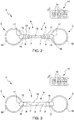
Figure 2 is a plan view, with parts schematised, of the mouthpiece ofFigure 1 ; and -
Figure 3 is a plan view, with parts schematised, of the mouthpiece ofFigure 1 manufactured in accordance with a second embodiment. - With reference to
Figure 1 ,reference numeral 1 indicates, as a whole, a horse-riding mouthpiece, which finds particular application for breaking in horses, for working with horses and for managing horses on the bit, for example for clippings, shoeing interventions or veterinary visits, without thereby limiting the wide range of possible uses thereof. - The
mouthpiece 1 is configured to be placed transversely in themouth 2 of ahorse 3, above the tongue of thehorse 3, and is connectable to bridles, not shown in the accompanying Figures, so as to control the movements of thehorse 3. - With reference to
Figure 2 , a first embodiment of the present invention is shown, wherein themouthpiece 1 comprises avibrating device 4, which is integrable in themouthpiece 1 and is configured to be placed in themouth 2 of a horse 3 (Figure 1 ), and tworing assemblies 5, each of which is coupled to a respective end of thevibrating device 4 and is configured to couple with one or more bridles, not shown in the accompanying Figures. - More specifically, the
vibrating device 4 comprises: anelongated element 6, which is configured to be placed in themouth 2 of a horse 3 (Figure 1 ); two vibrating means 7, each of which is configured to operate a vibration of theelongated element 6; twobatteries 8, each of which is configured to supply therespective vibrating means 7; and twowireless receiving means 9, each of which is configured to receive remote control signals and to control the respective vibrating means 7 as a function of said signals. - Each vibrating means 7, each
battery 8 and eachwireless receiving means 9 is carried by theelongated element 6. - In the case described and illustrated herein, the
elongated element 6 comprises abody 10 and abody 11 coupled together by means of acentral hinge 12. In particular, thecentral hinge 12 is configured to allow the relative rotation between thebodies central hinge 12. - Specifically, each
body respective battery 8, and a respective wireless receiving means 9. - The number of the vibrating means 7, of the
batteries 8 and of thewireless receiving means 9 described and illustrated herein is merely exemplifying and is not to be understood as limiting the scope of protection of the present invention. - Furthermore, the
elongated element 6 comprises asocket 13 for the connection to a charging device, not shown in the accompanying Figures, for charging thebatteries 8. In particular, theelongated element 6 comprises asocket 13 for eachbody - In accordance with a non-limiting embodiment of the present invention, each vibrating
means 7 is configured to operate a vibration of therespective body - More specifically, each vibrating
means 7 is configured to vibrate at a frequency, with an intensity and with a vibration pattern remotely adjustable by means of acontrol device 14, such as for example a remote control, or a smartphone/tablet/smartwatch (not shown in the accompanying Figures) on which a software application (so-called "app") is conveniently installed for the remote control of the vibrating means 7. - In the non-limiting case of the present invention described and illustrated herein, the
control device 14 is a remote control provided withpush buttons 15 for activating the vibratingdevice 4 and adjusting the intensity, the frequency and the vibration pattern of thevibrating device 4. - In accordance with an embodiment, each vibrating means 7 is remotely controllable by means of vibration programmes preset and stored in the
control device 14. In particular, said vibration programs can be preset and stored as a function of the peculiarities of a specific specimen of horse or as a function of the particular operating needs requested from the horse, for example as a function of a breaking in work or of a daily work. - In accordance with a non-limiting embodiment of the present invention, each wireless receiving means 9 is configured to receive radiofrequency signals from the
control device 14, in particular signals of Bluetooth or Wi-Fi type. - In the case described and illustrated herein, each end of the
elongated element 6 is coupled in a releasable manner to therespective ring assembly 5 by means of arespective bayonet coupling 16, which allows removing therespective ring assembly 5 and replacing it with a further ring assembly 5.In particular, eachring assembly 5 comprises acoupling portion 17, configured to couple to the vibratingdevice 4 by means of thebayonet coupling 16; and aring 18, which is coupled in a jointed manner to thecoupling portion 17 and to which reins and headboard are buckled, not shown in the accompanying Figures. - In accordance with variants of the present invention, not shown in the accompanying figures, each
ring assembly 5 can take shapes different from the shape shown in the accompanying Figures. In particular, eachring assembly 5 can take the shape of any type of mouthpiece currently in commerce. By way of example, eachring assembly 5 can be of the rod or pessoa or pelham type. - With reference to
Figure 3 , a second embodiment of themouthpiece 1 is shown, wherein theelongated element 6 comprises onesingle body 19 shaped so as to extend across themouth 2 of a horse 3 (Figure 1 ) when in use. - The vibrating
device 4, in accordance with the second embodiment, comprises two vibratingmeans 7, twobatteries 8 and a wireless receiving means 9. - In accordance with variants of the second embodiment, not shown in the accompanying Figures, the vibrating
device 4 comprises a different number of vibratingmeans 7, a different number ofbatteries 8 and a different number of wireless receiving means 9. In particular, the vibratingdevice 4 can comprise only one vibrating means 7, only onebattery 8 and only one wireless receiving means 9. - In use and with reference to
Figures 2 and 3 , the vibratingdevice 4 is integrated in themouthpiece 1. In particular, each end of theelongated element 6 is coupled, by means of therespective bayonet coupling 16, to thecoupling portion 17 of therespective ring assembly 5. - In accordance with a variant of the present invention, not shown in the accompanying Figures, one or more vibrating means 7 are applied in a releasable manner (for example by means of one or more elastic bands, adhesive means, etc.) to a bit of a known mouthpiece.
- Subsequently, with reference to
Figure 1 , bridles, not shown in the accompanying Figures, are coupled to thering assemblies 5 and themouthpiece 1 is placed transversely in themouth 2 of thehorse 3. - At this point, with reference to
Figures 2 and 3 , each vibrating means 7 is activated remotely, operating the vibration of the vibratingdevice 4. Said vibration is remotely modulated by means of thepush buttons 15 of thecontrol device 14, which sends control signals of each vibrating means 7 to the respective wireless receiving means 9. - In particular, by means of the
control device 14, the frequency, the intensity and the vibration pattern of the vibratingdevice 4 are adjusted remotely. - In accordance with an embodiment, each vibrating means 7 is remotely controlled by means of vibration programmes preset and stored in the
control device 14. - Once finished the work with the horse 3 (
Figure 1 ) or when thebatteries 8 are exhausted, the vibratingdevice 4 is removed from thering assemblies 5 and thebatteries 8 are charged for a following use of the vibratingdevice 4 by means of a charging device, not shown in the accompanying Figures, which is connected to thesockets 13. - It is apparent that variants can be made to the present invention without thereby departing from the scope of protection of the appended claims.
Claims (17)
- A vibrating device for a horse-riding mouthpiece; the vibrating device (4) being integrable/applicable in/to said mouthpiece (1) and being configured to be placed in the mouth (2) of a horse (3).
- The vibrating device as claimed in claim 1, and comprising an elongated element (6), configured to be placed in the mouth (2) of a horse (3); and at least one vibrating means (7), which is carried by the elongated element (6) and is configured to operate a vibration of the elongated element (6).
- The vibrating device as claimed in claim 2, and comprising at least one battery (8), which is carried by the elongated element (6) and is configured to supply the at least one vibrating means (7).
- The vibrating device as claimed in claim 3, wherein the elongated element (6) comprises at least one socket (13) for the connection to a charging device of the at least one battery (8).
- The vibrating device as claimed in any one of claims 2 to 4, and comprising at least one wireless receiving means (9), which is carried by the elongated element (6) and is configured to receive remote control signals and to control the at least one vibrating means (7) as a function of said signals.
- The vibrating device as claimed in any one of claims 2 to 5, wherein the elongated element (6) is tubular in shape and is configured to be placed transversely in the mouth (2) of the horse (3) above the tongue of the horse (3); the at least one vibrating means (7) being placed inside the elongated element (6).
- The vibrating device as claimed in any one of claims 2 to 6, wherein the elongated element (6) comprises a first body (19) shaped so as to extend across the mouth (2) of the horse (3) when in use.
- The vibrating device as claimed in any one of claims 2 to 6, wherein the elongated element (6) comprises a second body (10) and a third body (11) coupled together by means of a central hinge (12).
- The vibrating device as claimed in claim 8, wherein each body (10, 11) carries a respective vibrating means (7).
- The vibrating device as claimed in any one of claims 2 to 9, wherein each vibrating means (7) comprises an electric motor and/or a piezoelectric actuator and/or a magnetostrictive actuator.
- The vibrating device as claimed in any one of claims 2 to 10, wherein each vibrating means (7) is configured to vibrate at a frequency, with an intensity and with a vibration pattern; the frequency and/or the intensity and/or the vibration pattern of each vibrating means (7) are remotely adjustable by means of a control device (14), preferably by means of a remote control or a smartphone or a tablet.
- A horse mouthpiece; the mouthpiece (1) comprising the vibrating device (4) as claimed in any one of the foregoing claims and two ring assemblies (5), each of which is coupled to a respective end of the vibrating device (4) and is configured to couple with a headboard and reins.
- The mouthpiece as claimed in claim 12, wherein the vibrating device (4) is coupled in a releasable manner to the two ring assemblies (5), preferably by means of respective bayonet couplings (16).
- The mouthpiece as claimed in claim 12 or 13, wherein each ring assembly (5) is of the ring or rod or pessoa or pelham type.
- A method to facilitate the putting on the bit of a horse; the method comprising the steps of:- integrating/applying a vibrating device (4) in/to a horse-riding mouthpiece (1);- placing the mouthpiece (1) in the mouth (2) of the horse (3); and- operating a vibration of the mouthpiece (1) by means of the vibrating device (4).
- The method as claimed in claim 15, and comprising the step of remote controlling the vibration of the vibrating device (4).
- Use of a vibrating device (4) to operate a vibration of a horse-riding mouthpiece (1).
Priority Applications (4)
| Application Number | Priority Date | Filing Date | Title |
|---|---|---|---|
| HRP20231420TT HRP20231420T1 (en) | 2020-06-25 | 2021-06-25 | Vibrating device for a horse-riding mouthpiece; horse mouthpiece comprising said vibrating device; method to facilitate the putting on the bit of a horse; use of a vibrating device |
| SM20230386T SMT202300386T1 (en) | 2020-06-25 | 2021-06-25 | Vibrating device for a horse-riding mouthpiece; horse mouthpiece comprising said vibrating device; method to facilitate the putting on the bit of a horse; use of a vibrating device |
| RS20231035A RS64834B1 (en) | 2020-06-25 | 2021-06-25 | Vibrating device for a horse-riding mouthpiece; horse mouthpiece comprising said vibrating device; method to facilitate the putting on the bit of a horse; use of a vibrating device |
| SI202130079T SI3929148T1 (en) | 2020-06-25 | 2021-06-25 | Vibrating device for a horse-riding mouthpiece; horse mouthpiece comprising said vibrating device; method to facilitate the putting on the bit of a horse; use of a vibrating device |
Applications Claiming Priority (1)
| Application Number | Priority Date | Filing Date | Title |
|---|---|---|---|
| IT102020000015364A IT202000015364A1 (en) | 2020-06-25 | 2020-06-25 | VIBRATORY DEVICE FOR A HORSE BITCH, A BIT INCLUDING SUCH VIBRATORY DEVICE, A METHOD FOR FACILITATION OF GETTING INTO THE HAND OF A HORSE AND USE OF SUCH VIBRATORY DEVICE |
Publications (2)
| Publication Number | Publication Date |
|---|---|
| EP3929148A1 true EP3929148A1 (en) | 2021-12-29 |
| EP3929148B1 EP3929148B1 (en) | 2023-08-16 |
Family
ID=72473793
Family Applications (1)
| Application Number | Title | Priority Date | Filing Date |
|---|---|---|---|
| EP21181880.2A Active EP3929148B1 (en) | 2020-06-25 | 2021-06-25 | Vibrating device for a horse-riding mouthpiece; horse mouthpiece comprising said vibrating device; method to facilitate the putting on the bit of a horse; use of a vibrating device |
Country Status (13)
| Country | Link |
|---|---|
| EP (1) | EP3929148B1 (en) |
| DK (1) | DK3929148T3 (en) |
| ES (1) | ES2964847T3 (en) |
| FI (1) | FI3929148T3 (en) |
| HR (1) | HRP20231420T1 (en) |
| HU (1) | HUE064210T2 (en) |
| IT (1) | IT202000015364A1 (en) |
| LT (1) | LT3929148T (en) |
| PL (1) | PL3929148T3 (en) |
| PT (1) | PT3929148T (en) |
| RS (1) | RS64834B1 (en) |
| SI (1) | SI3929148T1 (en) |
| SM (1) | SMT202300386T1 (en) |
Citations (4)
| Publication number | Priority date | Publication date | Assignee | Title |
|---|---|---|---|---|
| GB447356A (en) * | 1935-07-29 | 1936-05-18 | Hilary Russell Woodhouse Wood | Improvements in or relating to bits for horses and like animals |
| US20060000194A1 (en) * | 2004-07-01 | 2006-01-05 | Duncan Timothy T | Electronic animal training device support system |
| DE202009014644U1 (en) * | 2009-10-29 | 2010-08-12 | Grünbeck, Franz | Training device for an improved posture of a horse |
| EP2783673A1 (en) * | 2013-03-27 | 2014-10-01 | Inexpim S.L | Device for vibrational massage of oral muscles of an individual |
-
2020
- 2020-06-25 IT IT102020000015364A patent/IT202000015364A1/en unknown
-
2021
- 2021-06-25 DK DK21181880.2T patent/DK3929148T3/en active
- 2021-06-25 LT LTEP21181880.2T patent/LT3929148T/en unknown
- 2021-06-25 HU HUE21181880A patent/HUE064210T2/en unknown
- 2021-06-25 SI SI202130079T patent/SI3929148T1/en unknown
- 2021-06-25 HR HRP20231420TT patent/HRP20231420T1/en unknown
- 2021-06-25 EP EP21181880.2A patent/EP3929148B1/en active Active
- 2021-06-25 ES ES21181880T patent/ES2964847T3/en active Active
- 2021-06-25 SM SM20230386T patent/SMT202300386T1/en unknown
- 2021-06-25 PL PL21181880.2T patent/PL3929148T3/en unknown
- 2021-06-25 FI FIEP21181880.2T patent/FI3929148T3/en active
- 2021-06-25 RS RS20231035A patent/RS64834B1/en unknown
- 2021-06-25 PT PT211818802T patent/PT3929148T/en unknown
Patent Citations (4)
| Publication number | Priority date | Publication date | Assignee | Title |
|---|---|---|---|---|
| GB447356A (en) * | 1935-07-29 | 1936-05-18 | Hilary Russell Woodhouse Wood | Improvements in or relating to bits for horses and like animals |
| US20060000194A1 (en) * | 2004-07-01 | 2006-01-05 | Duncan Timothy T | Electronic animal training device support system |
| DE202009014644U1 (en) * | 2009-10-29 | 2010-08-12 | Grünbeck, Franz | Training device for an improved posture of a horse |
| EP2783673A1 (en) * | 2013-03-27 | 2014-10-01 | Inexpim S.L | Device for vibrational massage of oral muscles of an individual |
Also Published As
| Publication number | Publication date |
|---|---|
| SMT202300386T1 (en) | 2024-01-10 |
| SI3929148T1 (en) | 2023-12-29 |
| IT202000015364A1 (en) | 2021-12-25 |
| PT3929148T (en) | 2023-11-03 |
| HUE064210T2 (en) | 2024-02-28 |
| RS64834B1 (en) | 2023-12-29 |
| EP3929148B1 (en) | 2023-08-16 |
| DK3929148T3 (en) | 2023-11-20 |
| HRP20231420T1 (en) | 2024-02-16 |
| FI3929148T3 (en) | 2023-11-10 |
| ES2964847T3 (en) | 2024-04-09 |
| PL3929148T3 (en) | 2024-02-26 |
| LT3929148T (en) | 2023-11-27 |
Similar Documents
| Publication | Publication Date | Title |
|---|---|---|
| KR101981768B1 (en) | Animal training transmitter composing detachable finger button | |
| US4472925A (en) | Animal training halter | |
| EP2854518B1 (en) | Dog harness | |
| US3949538A (en) | Animal training halter | |
| EP3929148B1 (en) | Vibrating device for a horse-riding mouthpiece; horse mouthpiece comprising said vibrating device; method to facilitate the putting on the bit of a horse; use of a vibrating device | |
| US4459795A (en) | Bitless harnessing system | |
| US20190230904A1 (en) | Device producing sound when leash tautness is reduced | |
| US6591589B2 (en) | Bitless bridle for governing horses and other animals | |
| US20120311976A1 (en) | Horse training halter | |
| JPS63501681A (en) | Multi-channel wireless control robot mug and monitor | |
| US7124562B2 (en) | Horse-control device | |
| WO2007109439A2 (en) | Improved equine training halter | |
| US8001750B2 (en) | Apparatus, system, and method for guiding an animal | |
| US11528890B1 (en) | Device and method for training animals | |
| US4745733A (en) | Horse tack bit | |
| US10531642B2 (en) | Integrated training collar and method of use | |
| US233631A (en) | Bridle | |
| US2752746A (en) | Hackamore | |
| US1045308A (en) | Horse-controlling device. | |
| US2804740A (en) | Hackamore bridle | |
| CA2522524A1 (en) | Bitless bridle with crossover reinstrap stabilizer | |
| US12291444B2 (en) | Equestrian control device and methods of use | |
| US20250382170A1 (en) | Equestrian control devices and methods of use | |
| US468299A (en) | John atkinson | |
| US325232A (en) | Bridle-bit |
Legal Events
| Date | Code | Title | Description |
|---|---|---|---|
| REG | Reference to a national code |
Ref country code: HR Ref legal event code: TUEP Ref document number: P20231420T Country of ref document: HR |
|
| PUAI | Public reference made under article 153(3) epc to a published international application that has entered the european phase |
Free format text: ORIGINAL CODE: 0009012 |
|
| STAA | Information on the status of an ep patent application or granted ep patent |
Free format text: STATUS: THE APPLICATION HAS BEEN PUBLISHED |
|
| AK | Designated contracting states |
Kind code of ref document: A1 Designated state(s): AL AT BE BG CH CY CZ DE DK EE ES FI FR GB GR HR HU IE IS IT LI LT LU LV MC MK MT NL NO PL PT RO RS SE SI SK SM TR |
|
| B565 | Issuance of search results under rule 164(2) epc |
Effective date: 20211005 |
|
| STAA | Information on the status of an ep patent application or granted ep patent |
Free format text: STATUS: REQUEST FOR EXAMINATION WAS MADE |
|
| RAP1 | Party data changed (applicant data changed or rights of an application transferred) |
Owner name: VBITE S.R.L. |
|
| RIN1 | Information on inventor provided before grant (corrected) |
Inventor name: ASTOLFONI FOSSI, MATTEO |
|
| 17P | Request for examination filed |
Effective date: 20220624 |
|
| RBV | Designated contracting states (corrected) |
Designated state(s): AL AT BE BG CH CY CZ DE DK EE ES FI FR GB GR HR HU IE IS IT LI LT LU LV MC MK MT NL NO PL PT RO RS SE SI SK SM TR |
|
| STAA | Information on the status of an ep patent application or granted ep patent |
Free format text: STATUS: EXAMINATION IS IN PROGRESS |
|
| 17Q | First examination report despatched |
Effective date: 20221212 |
|
| GRAP | Despatch of communication of intention to grant a patent |
Free format text: ORIGINAL CODE: EPIDOSNIGR1 |
|
| STAA | Information on the status of an ep patent application or granted ep patent |
Free format text: STATUS: GRANT OF PATENT IS INTENDED |
|
| INTG | Intention to grant announced |
Effective date: 20230413 |
|
| P01 | Opt-out of the competence of the unified patent court (upc) registered |
Effective date: 20230526 |
|
| GRAS | Grant fee paid |
Free format text: ORIGINAL CODE: EPIDOSNIGR3 |
|
| GRAA | (expected) grant |
Free format text: ORIGINAL CODE: 0009210 |
|
| STAA | Information on the status of an ep patent application or granted ep patent |
Free format text: STATUS: THE PATENT HAS BEEN GRANTED |
|
| AK | Designated contracting states |
Kind code of ref document: B1 Designated state(s): AL AT BE BG CH CY CZ DE DK EE ES FI FR GB GR HR HU IE IS IT LI LT LU LV MC MK MT NL NO PL PT RO RS SE SI SK SM TR |
|
| REG | Reference to a national code |
Ref country code: CH Ref legal event code: EP Ref country code: DE Ref legal event code: R096 Ref document number: 602021004279 Country of ref document: DE |
|
| REG | Reference to a national code |
Ref country code: IE Ref legal event code: FG4D |
|
| REG | Reference to a national code |
Ref country code: PT Ref legal event code: SC4A Ref document number: 3929148 Country of ref document: PT Date of ref document: 20231103 Kind code of ref document: T Free format text: AVAILABILITY OF NATIONAL TRANSLATION Effective date: 20231027 |
|
| REG | Reference to a national code |
Ref country code: FI Ref legal event code: FGE |
|
| REG | Reference to a national code |
Ref country code: DK Ref legal event code: T3 Effective date: 20231116 |
|
| REG | Reference to a national code |
Ref country code: SE Ref legal event code: TRGR |
|
| REG | Reference to a national code |
Ref country code: NL Ref legal event code: FP |
|
| REG | Reference to a national code |
Ref country code: NO Ref legal event code: T2 Effective date: 20230816 |
|
| REG | Reference to a national code |
Ref country code: GR Ref legal event code: EP Ref document number: 20230402160 Country of ref document: GR Effective date: 20231211 |
|
| REG | Reference to a national code |
Ref country code: EE Ref legal event code: FG4A Ref document number: E023806 Country of ref document: EE Effective date: 20231114 |
|
| REG | Reference to a national code |
Ref country code: HR Ref legal event code: T1PR Ref document number: P20231420 Country of ref document: HR |
|
| REG | Reference to a national code |
Ref country code: HU Ref legal event code: AG4A Ref document number: E064210 Country of ref document: HU |
|
| REG | Reference to a national code |
Ref country code: AT Ref legal event code: UEP Ref document number: 1599899 Country of ref document: AT Kind code of ref document: T Effective date: 20230816 |
|
| REG | Reference to a national code |
Ref country code: SK Ref legal event code: T3 Ref document number: E 43336 Country of ref document: SK |
|
| REG | Reference to a national code |
Ref country code: ES Ref legal event code: FG2A Ref document number: 2964847 Country of ref document: ES Kind code of ref document: T3 Effective date: 20240409 |
|
| REG | Reference to a national code |
Ref country code: DE Ref legal event code: R097 Ref document number: 602021004279 Country of ref document: DE |
|
| REG | Reference to a national code |
Ref country code: HR Ref legal event code: ODRP Ref document number: P20231420 Country of ref document: HR Payment date: 20240611 Year of fee payment: 4 |
|
| 26N | No opposition filed |
Effective date: 20240517 |
|
| PGFP | Annual fee paid to national office [announced via postgrant information from national office to epo] |
Ref country code: SM Payment date: 20250623 Year of fee payment: 5 |
|
| REG | Reference to a national code |
Ref country code: HR Ref legal event code: ODRP Ref document number: P20231420 Country of ref document: HR Payment date: 20250611 Year of fee payment: 5 |
|
| PGFP | Annual fee paid to national office [announced via postgrant information from national office to epo] |
Ref country code: MC Payment date: 20250624 Year of fee payment: 5 |
|
| PGFP | Annual fee paid to national office [announced via postgrant information from national office to epo] |
Ref country code: FI Payment date: 20250624 Year of fee payment: 5 |
|
| PGFP | Annual fee paid to national office [announced via postgrant information from national office to epo] |
Ref country code: PL Payment date: 20250610 Year of fee payment: 5 Ref country code: DE Payment date: 20250626 Year of fee payment: 5 |
|
| PGFP | Annual fee paid to national office [announced via postgrant information from national office to epo] |
Ref country code: GB Payment date: 20250617 Year of fee payment: 5 Ref country code: DK Payment date: 20250619 Year of fee payment: 5 |
|
| PGFP | Annual fee paid to national office [announced via postgrant information from national office to epo] |
Ref country code: LT Payment date: 20250610 Year of fee payment: 5 |
|
| PGFP | Annual fee paid to national office [announced via postgrant information from national office to epo] |
Ref country code: IS Payment date: 20250630 Year of fee payment: 5 Ref country code: RS Payment date: 20250611 Year of fee payment: 5 Ref country code: NO Payment date: 20250624 Year of fee payment: 5 |
|
| PGFP | Annual fee paid to national office [announced via postgrant information from national office to epo] |
Ref country code: LU Payment date: 20250624 Year of fee payment: 5 Ref country code: AL Payment date: 20250626 Year of fee payment: 5 Ref country code: NL Payment date: 20250624 Year of fee payment: 5 Ref country code: BE Payment date: 20250624 Year of fee payment: 5 |
|
| PGFP | Annual fee paid to national office [announced via postgrant information from national office to epo] |
Ref country code: HR Payment date: 20250611 Year of fee payment: 5 |
|
| PGFP | Annual fee paid to national office [announced via postgrant information from national office to epo] |
Ref country code: PT Payment date: 20250612 Year of fee payment: 5 Ref country code: LV Payment date: 20250625 Year of fee payment: 5 |
|
| PGFP | Annual fee paid to national office [announced via postgrant information from national office to epo] |
Ref country code: HU Payment date: 20250616 Year of fee payment: 5 Ref country code: FR Payment date: 20250623 Year of fee payment: 5 Ref country code: EE Payment date: 20250627 Year of fee payment: 5 |
|
| PGFP | Annual fee paid to national office [announced via postgrant information from national office to epo] |
Ref country code: MT Payment date: 20250623 Year of fee payment: 5 Ref country code: BG Payment date: 20250625 Year of fee payment: 5 Ref country code: GR Payment date: 20250619 Year of fee payment: 5 |
|
| PGFP | Annual fee paid to national office [announced via postgrant information from national office to epo] |
Ref country code: RO Payment date: 20250611 Year of fee payment: 5 Ref country code: AT Payment date: 20250721 Year of fee payment: 5 |
|
| PGFP | Annual fee paid to national office [announced via postgrant information from national office to epo] |
Ref country code: TR Payment date: 20250611 Year of fee payment: 5 Ref country code: SK Payment date: 20250623 Year of fee payment: 5 |
|
| PGFP | Annual fee paid to national office [announced via postgrant information from national office to epo] |
Ref country code: CZ Payment date: 20250611 Year of fee payment: 5 |
|
| PGFP | Annual fee paid to national office [announced via postgrant information from national office to epo] |
Ref country code: IE Payment date: 20250623 Year of fee payment: 5 |
|
| PGFP | Annual fee paid to national office [announced via postgrant information from national office to epo] |
Ref country code: SI Payment date: 20250612 Year of fee payment: 5 Ref country code: SE Payment date: 20250619 Year of fee payment: 5 |
|
| PGFP | Annual fee paid to national office [announced via postgrant information from national office to epo] |
Ref country code: ES Payment date: 20250714 Year of fee payment: 5 |
|
| PGFP | Annual fee paid to national office [announced via postgrant information from national office to epo] |
Ref country code: IT Payment date: 20250617 Year of fee payment: 5 |
|
| PGFP | Annual fee paid to national office [announced via postgrant information from national office to epo] |
Ref country code: CH Payment date: 20250701 Year of fee payment: 5 |
|
| PGFP | Annual fee paid to national office [announced via postgrant information from national office to epo] |
Ref country code: MK Payment date: 20250611 Year of fee payment: 5 |
|
| PGFP | Annual fee paid to national office [announced via postgrant information from national office to epo] |
Ref country code: CY Payment date: 20250611 Year of fee payment: 5 |