EP3926481A1 - Control device, apparatus control system, control method, and program - Google Patents
Control device, apparatus control system, control method, and program Download PDFInfo
- Publication number
- EP3926481A1 EP3926481A1 EP19920745.7A EP19920745A EP3926481A1 EP 3926481 A1 EP3926481 A1 EP 3926481A1 EP 19920745 A EP19920745 A EP 19920745A EP 3926481 A1 EP3926481 A1 EP 3926481A1
- Authority
- EP
- European Patent Office
- Prior art keywords
- inquiry
- information
- unit
- control
- home electrical
- Prior art date
- Legal status (The legal status is an assumption and is not a legal conclusion. Google has not performed a legal analysis and makes no representation as to the accuracy of the status listed.)
- Granted
Links
Images





Classifications
-
- G—PHYSICS
- G06—COMPUTING OR CALCULATING; COUNTING
- G06F—ELECTRIC DIGITAL DATA PROCESSING
- G06F3/00—Input arrangements for transferring data to be processed into a form capable of being handled by the computer; Output arrangements for transferring data from processing unit to output unit, e.g. interface arrangements
- G06F3/16—Sound input; Sound output
- G06F3/167—Audio in a user interface, e.g. using voice commands for navigating, audio feedback
-
- G—PHYSICS
- G10—MUSICAL INSTRUMENTS; ACOUSTICS
- G10L—SPEECH ANALYSIS TECHNIQUES OR SPEECH SYNTHESIS; SPEECH RECOGNITION; SPEECH OR VOICE PROCESSING TECHNIQUES; SPEECH OR AUDIO CODING OR DECODING
- G10L15/00—Speech recognition
- G10L15/22—Procedures used during a speech recognition process, e.g. man-machine dialogue
-
- G—PHYSICS
- G10—MUSICAL INSTRUMENTS; ACOUSTICS
- G10L—SPEECH ANALYSIS TECHNIQUES OR SPEECH SYNTHESIS; SPEECH RECOGNITION; SPEECH OR VOICE PROCESSING TECHNIQUES; SPEECH OR AUDIO CODING OR DECODING
- G10L15/00—Speech recognition
- G10L15/08—Speech classification or search
- G10L15/16—Speech classification or search using artificial neural networks
-
- G—PHYSICS
- G10—MUSICAL INSTRUMENTS; ACOUSTICS
- G10L—SPEECH ANALYSIS TECHNIQUES OR SPEECH SYNTHESIS; SPEECH RECOGNITION; SPEECH OR VOICE PROCESSING TECHNIQUES; SPEECH OR AUDIO CODING OR DECODING
- G10L15/00—Speech recognition
-
- G—PHYSICS
- G10—MUSICAL INSTRUMENTS; ACOUSTICS
- G10L—SPEECH ANALYSIS TECHNIQUES OR SPEECH SYNTHESIS; SPEECH RECOGNITION; SPEECH OR VOICE PROCESSING TECHNIQUES; SPEECH OR AUDIO CODING OR DECODING
- G10L15/00—Speech recognition
- G10L15/08—Speech classification or search
- G10L2015/088—Word spotting
-
- G—PHYSICS
- G10—MUSICAL INSTRUMENTS; ACOUSTICS
- G10L—SPEECH ANALYSIS TECHNIQUES OR SPEECH SYNTHESIS; SPEECH RECOGNITION; SPEECH OR VOICE PROCESSING TECHNIQUES; SPEECH OR AUDIO CODING OR DECODING
- G10L15/00—Speech recognition
- G10L15/22—Procedures used during a speech recognition process, e.g. man-machine dialogue
- G10L2015/223—Execution procedure of a spoken command
Definitions
- the present invention relates to a control device, an apparatus control system, a control method, and a program.
- AI apparatuses such as mobile terminals and smart speakers that understand and operate the language spoken by humans are becoming widespread in our daily lives.
- the user can operate a home electrical apparatus such as a television by voice without operating a remote controller or the like.
- PTL 1 discloses a mobile terminal device that outputs a voice message asking whether or not to turn on the power of the air conditioner together with a voice such as "hot” or “cold”, based on the temperature detected by a temperature sensor, and transmits a control command for turning on the air conditioner to the air conditioner when the sound of "turn on” is said by the user.
- the technique described in PTL 1 is a method in which a person operates a home electrical apparatus such as an air conditioner by using a dedicated mobile terminal device.
- PTL 1 does not disclose a technique for home electrical apparatuses to utilize AI apparatuses.
- an air conditioner requests information necessary for air conditioning control such as room temperature from a mobile terminal device (AI apparatus) and obtains room temperature information from the mobile terminal device.
- AI apparatus mobile terminal device
- the present invention provides a control device, an apparatus control system, a control method, and a program capable of solving the above-described problems.
- a control device includes an inquiry unit that makes an inquiry to an AI apparatus by outputting voice information using a natural language, and an acquisition unit that acquires, from the AI apparatus, response information about the inquiry.
- the inquiry unit makes the inquiry by using voice information in a non-audible range.
- the inquiry unit makes the inquiry by using ultrasonic waves of 20 kHz or higher.
- control device further includes a voice information recognition unit that recognizes voice information output by the AI apparatus in response to the inquiry, and extracts answer information included in the voice information; and a control unit that controls the home electrical apparatus based on the answer information.
- control device further includes a communication unit that receives a non-verbal response signal output by the AI apparatus in response to the inquiry, and a control unit that controls the home electrical apparatus, based on the response signal.
- the inquiry unit outputs voice information including a predetermined keyword for starting a dialogue with the AI apparatus prior to the inquiry.
- control device further includes a setting reception unit that receives settings for an utterance speed or language of the voice information output by the inquiry unit.
- an apparatus control system includes a home electrical apparatus including the control device and an AI apparatus.
- the control method includes, by a control device for a home electrical apparatus, a step of making an inquiry about information necessary for control to an AI apparatus by outputting voice information using natural language; a step of acquiring, from the AI apparatus, response information about the inquiry; and a step of controlling the home electrical apparatus based on the response information.
- a program causes a computer included in a home electrical apparatus to function as means for making an inquiry to an AI apparatus by outputting voice information using a natural language; and means for acquiring, from the AI apparatus, response information about the inquiry.
- the control device of the home electrical apparatus can autonomously control the home electrical apparatus by utilizing the AI apparatus.
- Fig. 1 is a block diagram illustrating an example of the apparatus control system according to the embodiment of the present invention.
- An apparatus control system 1 includes a home electrical apparatus 10 and an artificial intelligence (AI) apparatus 20.
- the apparatus control system 1 may also include a remote controller (not illustrated) for operating the home electrical apparatus 10.
- the home electrical apparatus 10 is controlled by the home electrical apparatus 10 and the AI apparatus 20 communicating with each other using the natural language spoken by humans.
- the home electrical apparatus 10 is, for example, an air conditioning apparatus such as an air conditioner, a humidifier, a dehumidifier, a stove, and an air purifier.
- the home electrical apparatus 10 may be a television, an audio device, a washing machine, a refrigerator, a rice cooker, or the like.
- the AI apparatus 20 is, for example, a smart speaker, a mobile terminal device equipped with a voice assist system that enables voice recognition, language understanding, and dialogue. Further, the AI apparatus 20 is provided with a communication means, and has a function of connecting to the Internet and acquiring various types of information. In addition, the AI apparatus 20 is equipped with various sensors and can measure information such as temperature, humidity, and acceleration.
- the home electrical apparatus 10 includes a control device 100, a speaker 200, a microphone 210, a sensor 220, and various units such as hardware, actuators, and electric/electronic circuits (not illustrated).
- the control device 100 includes an inquiry unit 110, an information acquisition unit 120, a control unit 130, a communication unit 140, and a setting reception unit 150.
- the inquiry unit 110 requests the AI apparatus 20 for information necessary for controlling the home electrical apparatus 10.
- the inquiry unit 110 includes an inquiry information generation unit 111, and a voice output control unit 112.
- the inquiry information generation unit 111 generates "inquiry information" for inquiring to the AI apparatus 20.
- the inquiry information includes content requesting information necessary for controlling the home electrical apparatus 10. Further, the inquiry information generation unit 111 generates various types of command information (for example, keywords necessary at the start of dialogue) based on the protocol necessary for communicating with the AI apparatus 20. Alternatively, the inquiry information generation unit 111 may generate inquiry information by preparing a plurality of pieces of inquiry information in advance for acquiring information expected to be necessary for control and selecting necessary information from the plurality of pieces of prepared information.
- the voice output control unit 112 performs a control to output the inquiry information generated by the inquiry information generation unit 111 from the speaker 200.
- the voice output control unit 112 sets the frequency of the voice output from the speaker 200 to a predetermined frequency band in the audible range or the non-audible range (for example, 20 kHz or more or less than 20 Hz).
- the voice output control unit 112 sets the language output from the speaker 200 to a predetermined language (English, Japanese, or the like).
- the voice output control unit 112 sets the utterance speed of the natural language output from the speaker 200 to a predetermined speed.
- the voice output control unit 112 outputs voice information based on these settings from the speaker 200.
- the AI apparatus 20 is configured to be able to recognize voice information in the non-audible range and output the voice information in the non-audible range.
- the inquiry information generated by the inquiry information generation unit 111 includes the identification information on the home electrical apparatus 10, or the like, and when the AI apparatus 20 recognizes the voice information including the identification information, the AI apparatus 20 may be configured to respond by outputting the voice information in the non-audible range.
- the AI apparatus 20 may be configured to respond by outputting voice information in the non-audible range, and when the home electrical apparatus 10 makes an inquiry by outputting voice information in the audible range, the AI apparatus 20 may be configured to respond by outputting voice information in the audible range.
- the information acquisition unit 120 acquires information necessary for controlling the home electrical apparatus 10 from the AI apparatus 20 and the sensor 220.
- the information acquisition unit 120 includes a voice information recognition unit 121 and a sensor information acquisition unit 122.
- the voice information recognition unit 121 has a voice recognition function and a language understanding function of a plurality of languages such as Japanese and English.
- the voice information recognition unit 121 acquires the voice information output by the AI apparatus 20 via the microphone 210, and recognizes the content thereof.
- the voice information recognition unit 121 extracts the answer information to the inquiry from the recognized contents, and outputs the answer information to the control unit 130.
- the sensor information acquisition unit 122 acquires the sensor information measured by the sensor 220 included in the home electrical apparatus 10.
- the sensor information acquisition unit 122 outputs, to the control unit 130, the sensor information acquired from the sensor 220.
- the sensor 220 is a general term for sensors included in the home electrical apparatus 10, and may include a plurality of sensors. The type of sensor included in the sensor 220 varies depending on the type of the home electrical apparatus 10.
- the control unit 130 operates the hardware unit, the actuator, the electronic circuit, and the like of the home electrical apparatus 10 based on the information acquired from the information acquisition unit 120, and performs control such that the functions of the home electrical apparatus 10 are exhibited. Further, when the control unit 130 determines that it is necessary to acquire the information necessary for control from the AI apparatus 20, the control unit 130 instructs the inquiry unit 110 to execute an inquiry to the AI apparatus 20.
- the communication unit 140 communicates with the remote controller of the home electrical apparatus 10 and the AI apparatus 20 by infrared communication, Bluetooth (registered trademark), or the like. As will be described later, communication between the home electrical apparatus 10 and the AI apparatus 20 is performed by outputting voice information in natural language from the home electrical apparatus 10 to the AI apparatus 20. On the other hand, from the AI apparatus 20 to the home electrical apparatus 10, it is also possible to transmit a control signal including answer information to the inquiry, in addition to the output of the voice information in natural language.
- the setting reception unit 150 receives settings of a language to be output by the inquiry unit 110 and a language to be understood, a setting for an utterance speed of voice information on the inquiry, and a setting for a frequency band of the voice information, and the like.
- the inquiry unit 110 and the voice information recognition unit 121 generate inquiry information, output and recognize voice information, based on the settings received by the setting reception unit 150.
- the home electrical apparatus 10 and the AI apparatus 20 can communicate without being perceived by the user. Further, by setting the utterance speed to be high, the communication time can be shortened. It should be noted that the user may communicate using voice information in the audible range, according to his/her needs. Further, since these items can be set, it is possible to set such that communication can be performed according to the specifications of the AI apparatus 20.
- Fig. 2 is a diagram illustrating an example of the operation of the apparatus control system according to the embodiment of the present invention.
- the user says a predetermined start keyword to the AI apparatus 20, and then says a voice instructing the start of the home electrical apparatus 10. Then, the AI apparatus 20 transmits a start instruction to the home electrical apparatus 10 (step S11).
- the AI apparatus 20 may instruct the home electrical apparatus 10 to start, by outputting predetermined voice information such as "Start the home electrical apparatus 10" in a predetermined language.
- the AI apparatus 20 may transmit a start instruction signal to the home electrical apparatus 10 via infrared communication or the like.
- the AI apparatus 20 may output voice information by ultrasonic waves in a non-audible region (for example, 20 kHz or more).
- the home electrical apparatus 10 acquires the start instruction output by the AI apparatus 20.
- the microphone 210 acquires the voice information and outputs the voice information to the voice information recognition unit 121.
- the voice information recognition unit 121 recognizes the content of the voice information, extracts the start instruction information, and outputs the start instruction information to the control unit 130.
- the communication unit 140 receives the start instruction signal.
- the communication unit 140 outputs a start instruction signal to the control unit 130.
- the control unit 130 starts the home electrical apparatus 10 (step S12).
- the control unit 130 requests the inquiry unit 110 for information (initial information) necessary for control.
- information initial information
- the control unit 130 requests the inquiry unit 110 for the room temperature and the weather information.
- the inquiry information generation unit 111 first creates a sentence including keywords ("Alexa”, "OK Google", or the like) necessary for starting the dialogue. Further, the inquiry information generation unit 111 generates, following the sentence, for example, a sentence requesting information necessary for control such as "Please tell me the room temperature and weather information" in the set language (step S13).
- the inquiry information generation unit 111 may select the text file or voice file corresponding to the contents of the inquiry this time. For example, the inquiry information generation unit 111 selects a voice file that outputs "Please tell me the room temperature” and a voice file that outputs "Please tell me the weather” in the language for which the setting reception unit 150 receives the setting.
- the inquiry information generation unit 111 outputs the created sentence to the voice output control unit 112. Alternatively, the inquiry information generation unit 111 outputs the selected voice file to the voice output control unit 112.
- the voice output control unit 112 outputs the voice information from the speaker 200, by reading out the sentence acquired from the inquiry information generation unit 111 and playing back the voice file.
- the voice output control unit 112 outputs voice information in the frequency band and utterance speed for which the setting reception unit 150 has received the setting, and makes an inquiry by using voice (step S14).
- the AI apparatus 20 acquires the inquiry information by voice.
- the AI apparatus 20 accesses the Internet and acquires weather information and temperature information.
- the AI apparatus 20 acquires the temperature detected by the temperature sensor included in the AI apparatus 20.
- the AI apparatus 20 responds to an inquiry from the home electrical apparatus 10, by outputting voice information or transmitting a control signal (step S15).
- the home electrical apparatus 10 acquires the information returned from the AI apparatus 20.
- the voice information recognition unit 121 acquires the voice information returned via the microphone 210 and recognizes the content of the response.
- the voice information recognition unit 121 outputs the recognized temperature and weather information to the control unit 130.
- the communication unit 140 receives the control signal.
- the communication unit 140 outputs a control signal to the control unit 130.
- the control unit 130 starts the operation of the home electrical apparatus 10 based on the returned information (step S16).
- the control unit 130 determines whether or not to make an inquiry to the AI apparatus 20 while continuing the operation of the home electrical apparatus 10 (step S17). For example, the control unit 130 determines that inquiries with the same content are made at predetermined time intervals. Alternatively, the control unit 130 determines to make an inquiry, for example, when other type of information is required, based on the information detected by the sensor 220 or the response from the AI apparatus 20. When an inquiry is required (step S17; Yes), the control unit 130 designates the contents to be inquired to the inquiry unit 110 and instructs the AI apparatus 20 to make an inquiry.
- the inquiry information generation unit 111 generates a sentence requesting the information designated by the control unit 130, and selects a voice file for acquiring the designated information.
- the voice output control unit 112 makes a voice inquiry by, for example, outputting voice information in a non-audible range from the speaker 200 by playing back a selected voice file (step S18).
- the AI apparatus 20 acquires the inquiry information by voice.
- the AI apparatus 20 acquires the inquired information from the Internet or the like. Alternatively, the AI apparatus 20 may communicate with another device to acquire the inquired information.
- the AI apparatus 20 responds to an inquiry of the home electrical apparatus 10 by outputting voice information or transmitting a control signal (step S19).
- the control unit 130 determines whether or not to stop the operation of the home electrical apparatus 10, and repeats the processes after step S17 when the operation is not to be stopped (step S1A; No).
- the voice information recognition unit 121 acquires the voice information via the microphone 210 and recognizes the stop instruction.
- the voice information recognition unit 121 outputs stop instruction information to the control unit 130.
- the control unit 130 stops the operation of the home electrical apparatus 10.
- the communication unit 140 receives the stop instruction signal and outputs it to the control unit 130.
- the control unit 130 stops the operation of the home electrical apparatus 10 (step S1B).
- the control device 100 can acquire information necessary for controlling the home electrical apparatus 10 by communicating with the AI apparatus 20.
- the control device 100 can autonomously control the home electrical apparatus 10 by utilizing the AI apparatus 20.
- the function of the AI apparatus 20 smart speaker or the like
- the voice information can be used in a scene where the voice is not desired to be heard, such as at night or in a place where many people gather.
- the AI apparatus 20 since it is considered that the AI apparatus 20 is likely to be disposed near the user, it is possible to sense information necessary for control at a position close to the user and feed it back for the control of the home electrical apparatus 10.
- control based on the humidity at the position where the user is present can be performed.
- control based on the temperature at the position where the user is present can be performed.
- an audio device when an audio device is applied to the home electrical apparatus 10, the audio device can analyze the sound received by the AI apparatus 20 and can perform control such that a better sound reaches the position (user's position) where the AI apparatus 20 is disposed.
- the AI apparatus 20 can connect to the Internet and acquire various types of information, various types of information can be acquired via the AI apparatus 20 without mounting the function of acquiring the information from the Internet on the home electrical apparatus 10.
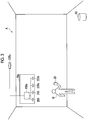
- Fig. 3 is a diagram illustrating an example of an air conditioning control system according to an embodiment of the present invention.
- an air conditioner 10a is provided on the wall on the back side of the room A.
- the AI apparatus 20 is installed on the front side of the room A.
- the user M has a remote controller 30 of the air conditioner 10a.
- the air conditioner 10a includes a control device 100a.
- the control device 100a includes functional units (the inquiry unit 110, the information acquisition unit 120, the control unit 130, the communication unit 140, and the setting reception unit 150) similar to the control device 100.
- the control device 100a is connected to the speaker 200, the microphone 210, the temperature sensor 220a, the humidity sensor 220b, and the motion sensor 220c.
- the temperature sensor 220a and the humidity sensor 220b are provided, for example, near the suction port of the indoor unit of the air conditioner 10a.
- the motion sensor 220c is provided on the ceiling of the room A, for example.
- Fig. 4 is a first flowchart illustrating an example of the operation of the air conditioning control system according to the embodiment of the present invention.
- the user M instructs the AI apparatus 20 to start the air conditioner 10a by operating the remote controller 30 or by giving a voice instruction to the AI apparatus 20.
- the control device 100a acquires the air conditioning start instruction information (step S21). More specifically, the voice information recognition unit 121 of the control device 100a recognizes the voice information output by the AI apparatus 20 and extracts the start instruction information.
- the communication unit 140 receives the start instruction signal transmitted by the remote controller 30. The control unit 130 starts the air conditioner 10a based on the start instruction information.
- the control unit 130 acquires the room temperature from the sensor 220a, the humidity from the sensor 220b, the number of people present in the room A from the sensor 220c, and the like (step S22).
- air conditioning is controlled based on these types of sensor information. For example, control is performed such that the room temperature measured by the sensor 220a becomes the set temperature.
- the air conditioning control is performed using not only the sensor information measured by the sensors 220a to 220c but also the information acquired from the AI apparatus 20.
- the control unit 130 determines whether or not to inquire the AI apparatus 20 for information necessary for control (step S23).
- A For example, the control unit 130 determines that the information from the AI apparatus 20 is necessary as the initial information at the time of start, and determines to make an inquiry to the AI apparatus 20.
- B For example, when the difference between the set temperature and the room temperature acquired from the AI apparatus 20 or the room temperature measured by the sensor 220a is larger than a predetermined threshold value, the control unit 130 may determine to make an inquiry to the AI apparatus 20 every predetermined first time, and when the difference between the two temperatures is equal to or less than the predetermined threshold value, the control unit 130 may determine to make an inquiry to the AI apparatus 20 every predetermined second time set longer than the first time.
- control unit 130 may determine to make an inquiry to the AI apparatus 20 every predetermined third time until the predetermined time elapses from when there is a change in the number of people in the room A measured by the motion sensor 220c, and after the elapse of the predetermined time, the control unit 130 may determine to make an inquiry to the AI apparatus 20 every predetermined fourth time set longer than the third time.
- the control unit 130 instructs the inquiry unit 110 to inquire the AI apparatus 20 for weather information or the like. Then, the inquiry information generation unit 111 generates a sentence including a keyword necessary for starting a dialogue with the AI apparatus 20 and a sentence requesting the room temperature and weather information necessary for air conditioning control in a predetermined language.
- the voice output control unit 112 outputs the generated sentence from the speaker 200 as, for example, voice information of ultrasonic waves of 20 kHz or more.
- the inquiry information generation unit 111 selects a voice file containing voice data requesting room temperature and weather information, and the voice output control unit 112 plays back and outputs the voice file from the speaker 200 as voice information of ultrasonic waves.
- the AI apparatus 20 acquires inquiry information, accesses the Internet, and acquires, for example, hourly weather and temperature prediction information. Further, the AI apparatus 20 acquires the room temperature information measured by the temperature sensor included in the AI apparatus 20. The AI apparatus 20 notifies the air conditioner 10a of the requested information by outputting voice information or transmitting a control signal including weather information and the like.
- the control device 100a acquires the weather information, the temperature (outside temperature), and the room temperature returned from the AI apparatus 20 (step S24).
- the voice information recognition unit 121 recognizes the voice information output by the AI apparatus 20, extracts each piece of information on weather, temperature, and room temperature, and outputs the information to the control unit 130.
- the communication unit 140 receives the control signal including each piece of information on the weather, the temperature, and the room temperature, and outputs the control signal to the control unit 130.
- the control unit 130 executes air conditioning control (step S25).
- the control unit 130 controls the air conditioner 10a by using the acquired weather, temperature, and room temperature information. For example, the control unit 130 performs a defrost operation by using the weather and temperature information. The control of the defrost operation will be described next with reference to Fig. 5 . Further, the control unit 130 controls the room temperature of the room A, by using the room temperature acquired from the AI apparatus 20.
- the AI apparatus 20 is installed near the user M, and it is highly likely that the temperature sensor included in the AI apparatus 20 detects a room temperature closer to the temperature experienced by the user M than the sensor 200a provided in the air conditioner 10a.
- the control unit 130 performs air conditioning control such that, for example, the room temperature acquired from the AI apparatus 20 becomes the set temperature.
- the control unit 130 may perform air conditioning control such that, for example, the weighted average of the room temperature acquired from the AI apparatus 20 and the room temperature measured by the sensor 200a becomes the set temperature.
- the control unit 130 may assume that the AI apparatus 20 is present at a position away from the air conditioner 10a, and perform control so as to change the wind direction and the air volume at a position farther than the present.
- the distance from the air conditioner 10a to the AI apparatus 20 may be estimated based on the voice information received from the AI apparatus 20 and the strength of the control signal, and the wind direction and the air volume may be controlled according to the estimated distance.
- control unit 130 controls the air conditioner 10a based on the sensor information measured by the sensors 220a to 220c.
- the control device 100a determines whether or not to end the operation of the air conditioner 10a (step S26).
- the control device 100a ends the operation of the air conditioner 10a.
- the process from step S22 is repeated.
- the control device 100a acquires the sensor information measured by the sensors 220a to 220c at predetermined time intervals.
- the control device 100a acquires the room temperature information from the AI apparatus 20.
- the control unit 130 continues the air conditioning control such that the temperature calculated based on the room temperature acquired from the AI apparatus 20 and the room temperature measured by the sensor 220a becomes the set temperature.
- the room temperature (temperature measured at a place close to the user's position) for improving comfort can be acquired from the AI apparatus 20 and used for air conditioning control. Further, by simply installing the AI apparatus 20, the air conditioner 10a autonomously communicates with the AI apparatus 20, so that information that cannot be acquired by the air conditioner 10a can be acquired. This makes it possible to achieve more comfortable air conditioning control than before.
- Fig. 5 is a second flowchart illustrating an example of the operation of the air conditioning control system according to the embodiment of the present invention.
- Fig. 5 illustrates a processing example for controlling the start timing of the defrost operation during operation.
- the air conditioner 10a is in the heating operation.
- the defrost operation is set to be executed at predetermined time intervals.
- the control device 100a acquires weather and temperature information from the AI apparatus 20 during the heating operation by the process described with reference to Fig. 4 (step S31).
- the control unit 130 determines whether or not the acquired weather information includes snow (step S32). For example, when the hourly weather prediction information of the day is acquired at the beginning of the day, the control unit 130 determines whether or not the prediction at the current timing is snow. Alternatively, when the current weather information of the area is acquired at predetermined time intervals, the control unit 130 determines whether or not the latest weather information is snow. When the weather is snow (step S32; Yes), the control unit 130 determines to advance the defrost start timing. For example, when the defrost operation is set to be executed every 6 hours, the control unit 130 changes the setting such that the defrost operation is executed every 3 hours, for example.
- the control unit 130 determines whether or not the temperature acquired from the AI apparatus 20 is lower than a predetermined threshold value (step S33). For example, when the hourly temperature prediction information of the day is acquired at the beginning of the day, the control unit 130 determines whether the predicted temperature at the current timing is lower than the threshold value. Alternatively, when the current temperature of the area is acquired at predetermined time intervals, the control unit 130 determines whether the latest temperature is lower than the threshold value. When the temperature is lower than the threshold value (step S33; Yes), the control unit 130 determines to advance the start timing of the defrost operation. The degree to which the start timing of the defrost operation is advanced may be the same as or may be different from in the case of snow.
- step S33 When the temperature is equal to or higher than the threshold value (step S33; No), the control unit 130 does not change the execution timing of the defrost operation.
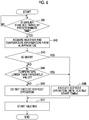
- Fig. 6 is a third flowchart illustrating an example of the operation of the air conditioning control system according to the embodiment of the present invention.
- T2 is, for example, 1 hour.
- the control unit 130 of the control device 100a determines whether or not to perform the defrost operation before the start of the heating operation, to prevent the room temperature of the room A from being unable to be controlled to reach the set temperature at the timing T1 due to a decrease in the efficiency of the heating operation, based on the schedule of the heating operation.
- the control unit 130 executes this determination at a time earlier than the timing T1 by a time T2+ ⁇ ( ⁇ is, for example, 10 minutes). Therefore, the control unit 130 first determines whether or not the current timing has reached a time earlier than the set timing T1 by a predetermined time (time T2+ ⁇ ) (step S41).
- step S41 When the time earlier by the predetermined time has been reached (step S41; Yes), the control unit 130 instructs the inquiry unit 110 to acquire the weather and temperature information from the present to the set timing T1. Based on this instruction, the inquiry unit 110 outputs inquiry information to the AI apparatus 20. The AI apparatus 20 responds to this inquiry. The control unit 130 acquires the weather and temperature information returned by the AI apparatus 20 via the voice information recognition unit 121 or the communication unit 140 (step S42).
- the control unit 130 determines whether or not the acquired weather information includes snow (step S43). When the weather information from the present to the timing T1 includes snow (step S43; Yes), the control unit 130 determines that the defrost operation is executed before the start of the heating operation. The control unit 130 executes the defrost operation until the heating start timing (step S46). That is, the control unit 130 executes the defrost operation for the time ⁇ from the present to a time earlier than the set timing T1 by a time T2. Thus, the room A can be controlled to a desired temperature until the set timing T1, without lowering the efficiency of the heating operation to be started thereafter.
- step S43 the control unit 130 determines whether or not the temperature from the present to the timing T1 acquired from the AI apparatus 20 is lower than a predetermined threshold value (step S44).
- step S44 the control unit 130 starts the defrost operation and executes the defrost operation until the start timing of the heating operation (step S46).
- step S44 When the temperature is equal to or higher than the threshold value (step S44; No), the control unit 130 does not execute the defrost operation (step S45). In this case, the control unit 130 waits until the heating start timing (a time earlier than the timing T1 by the time T2).
- the control unit 130 starts the heating operation (step S47).
- weather and temperature information can be acquired from the AI apparatus 20 and the defrost operation can be executed before snow or low temperature adversely affects the heating operation.
- ⁇ may be set longer, so that the start timing of the heating operation may be earlier in the case of snow or low temperature.
- Fig. 7 is a diagram illustrating an example of a hardware configuration of the apparatus control system according to an embodiment of the present invention.
- a computer 900 includes a CPU 901, a main storage device 902, an auxiliary storage device 903, an input/output interface 904, and a communication interface 905.
- the computer 900 may include a processor such as a micro processing unit (MPU) instead of the CPU 901.
- MPU micro processing unit
- the control devices 100 and 100a described above are mounted on the computer 900.
- Each of the above-described functions is stored in the auxiliary storage device 903 in the form of a program.
- the CPU 901 reads the program from the auxiliary storage device 903, develops the program into the main storage device 902, and executes the above process according to the program. Further, the CPU 901 secures a storage area in the main storage device 902 according to the program. The CPU 901 secures a storage area for storing the data being processed in the auxiliary storage device 903 according to the program.
- a program for achieving all or a part of the functions of the control devices 100 and 100a is recorded on a computer-readable recording medium, and the process by each functional unit may be performed by a computer system reading and executing the program recorded on the recording medium.
- the term "computer system” as used herein includes hardware such as an OS and peripheral devices. Further, the "computer system” includes a homepage providing environment (or a display environment) when a WWW system is used. Further, the "computer-readable recording medium” refers to a portable medium such as a CD, DVD, or USB, or a storage device such as a hard disk built in a computer system.
- this program when this program is delivered to the computer 900 through a communication line, the computer 900 receiving the delivered program may develop the program in the main storage device 902 and execute the above process. Further, the above-described program may achieve a part of the above-described functions, or may further achieve the above-described functions in combination with the program already recorded in the computer system.
- the control device of the home electrical apparatus can autonomously control the home electrical apparatus by utilizing the AI apparatus.
Landscapes
- Engineering & Computer Science (AREA)
- Multimedia (AREA)
- Health & Medical Sciences (AREA)
- Audiology, Speech & Language Pathology (AREA)
- Human Computer Interaction (AREA)
- Physics & Mathematics (AREA)
- Acoustics & Sound (AREA)
- Computational Linguistics (AREA)
- Theoretical Computer Science (AREA)
- Artificial Intelligence (AREA)
- Evolutionary Computation (AREA)
- General Health & Medical Sciences (AREA)
- General Engineering & Computer Science (AREA)
- General Physics & Mathematics (AREA)
- Selective Calling Equipment (AREA)
Abstract
Description
- The present invention relates to a control device, an apparatus control system, a control method, and a program.
- AI apparatuses such as mobile terminals and smart speakers that understand and operate the language spoken by humans are becoming widespread in our daily lives. By using the AI apparatus, the user can operate a home electrical apparatus such as a television by voice without operating a remote controller or the like. For example,
PTL 1 discloses a mobile terminal device that outputs a voice message asking whether or not to turn on the power of the air conditioner together with a voice such as "hot" or "cold", based on the temperature detected by a temperature sensor, and transmits a control command for turning on the air conditioner to the air conditioner when the sound of "turn on" is said by the user. - [PTL 1]
Japanese Unexamined Patent Application Publication No. 2007-135008 - The technique described in
PTL 1 is a method in which a person operates a home electrical apparatus such as an air conditioner by using a dedicated mobile terminal device.PTL 1 does not disclose a technique for home electrical apparatuses to utilize AI apparatuses. For example, it is not disclosed that an air conditioner requests information necessary for air conditioning control such as room temperature from a mobile terminal device (AI apparatus) and obtains room temperature information from the mobile terminal device. Further, in order to enable such control, it is necessary to establish dedicated communication between the AI apparatus and the air conditioner, so it is necessary to request the AI apparatus manufacturer to develop the communication such that the communication can be performed. - The present invention provides a control device, an apparatus control system, a control method, and a program capable of solving the above-described problems.
- According to one aspect of the present invention, a control device includes an inquiry unit that makes an inquiry to an AI apparatus by outputting voice information using a natural language, and an acquisition unit that acquires, from the AI apparatus, response information about the inquiry.
- According to one aspect of the present invention, the inquiry unit makes the inquiry by using voice information in a non-audible range.
- According to one aspect of the present invention, the inquiry unit makes the inquiry by using ultrasonic waves of 20 kHz or higher.
- According to one aspect of the present invention, the control device further includes a voice information recognition unit that recognizes voice information output by the AI apparatus in response to the inquiry, and extracts answer information included in the voice information; and a control unit that controls the home electrical apparatus based on the answer information.
- According to one aspect of the present invention, the control device further includes a communication unit that receives a non-verbal response signal output by the AI apparatus in response to the inquiry, and a control unit that controls the home electrical apparatus, based on the response signal.
- According to one aspect of the present invention, the inquiry unit outputs voice information including a predetermined keyword for starting a dialogue with the AI apparatus prior to the inquiry.
- According to one aspect of the present invention, the control device further includes a setting reception unit that receives settings for an utterance speed or language of the voice information output by the inquiry unit.
- According to one aspect of the present invention, an apparatus control system includes a home electrical apparatus including the control device and an AI apparatus.
- According to one aspect of the present invention, the control method includes, by a control device for a home electrical apparatus, a step of making an inquiry about information necessary for control to an AI apparatus by outputting voice information using natural language; a step of acquiring, from the AI apparatus, response information about the inquiry; and a step of controlling the home electrical apparatus based on the response information.
- According to one aspect of the present invention, a program causes a computer included in a home electrical apparatus to function as means for making an inquiry to an AI apparatus by outputting voice information using a natural language; and means for acquiring, from the AI apparatus, response information about the inquiry.
- According to the control device, the apparatus control system, the control method and the program described above, the control device of the home electrical apparatus can autonomously control the home electrical apparatus by utilizing the AI apparatus.
-
-
Fig. 1 is a block diagram illustrating an example of an apparatus control system according to an embodiment of the present invention. -
Fig. 2 is a diagram illustrating an example of the operation of the apparatus control system according to the embodiment of the present invention. -
Fig. 3 is a diagram illustrating an example of an air conditioning control system according to an embodiment of the present invention. -
Fig. 4 is a first flowchart illustrating an example of the operation of the air conditioning control system according to the embodiment of the present invention. -
Fig. 5 is a second flowchart illustrating an example of the operation of the air conditioning control system according to the embodiment of the present invention. -
Fig. 6 is a third flowchart illustrating an example of the operation of the air conditioning control system according to the embodiment of the present invention. -
Fig. 7 is a diagram illustrating an example of a hardware configuration of the apparatus control system according to the embodiment of the present invention. Description of Embodiments - Hereinafter, an apparatus control system according to an embodiment of the present invention will be described with reference to
Figs. 1 to 7 . -
Fig. 1 is a block diagram illustrating an example of the apparatus control system according to the embodiment of the present invention. - An
apparatus control system 1 includes a homeelectrical apparatus 10 and an artificial intelligence (AI)apparatus 20. Theapparatus control system 1 may also include a remote controller (not illustrated) for operating the homeelectrical apparatus 10. In theapparatus control system 1, the homeelectrical apparatus 10 is controlled by the homeelectrical apparatus 10 and theAI apparatus 20 communicating with each other using the natural language spoken by humans. Here, the homeelectrical apparatus 10 is, for example, an air conditioning apparatus such as an air conditioner, a humidifier, a dehumidifier, a stove, and an air purifier. Alternatively, the homeelectrical apparatus 10 may be a television, an audio device, a washing machine, a refrigerator, a rice cooker, or the like. Further, theAI apparatus 20 is, for example, a smart speaker, a mobile terminal device equipped with a voice assist system that enables voice recognition, language understanding, and dialogue. Further, theAI apparatus 20 is provided with a communication means, and has a function of connecting to the Internet and acquiring various types of information. In addition, theAI apparatus 20 is equipped with various sensors and can measure information such as temperature, humidity, and acceleration. - The home
electrical apparatus 10 includes acontrol device 100, aspeaker 200, amicrophone 210, asensor 220, and various units such as hardware, actuators, and electric/electronic circuits (not illustrated). Thecontrol device 100 includes aninquiry unit 110, aninformation acquisition unit 120, acontrol unit 130, acommunication unit 140, and asetting reception unit 150. - The
inquiry unit 110 requests theAI apparatus 20 for information necessary for controlling the homeelectrical apparatus 10. Theinquiry unit 110 includes an inquiryinformation generation unit 111, and a voiceoutput control unit 112. - The inquiry
information generation unit 111 generates "inquiry information" for inquiring to theAI apparatus 20. The inquiry information includes content requesting information necessary for controlling the homeelectrical apparatus 10. Further, the inquiryinformation generation unit 111 generates various types of command information (for example, keywords necessary at the start of dialogue) based on the protocol necessary for communicating with theAI apparatus 20. Alternatively, the inquiryinformation generation unit 111 may generate inquiry information by preparing a plurality of pieces of inquiry information in advance for acquiring information expected to be necessary for control and selecting necessary information from the plurality of pieces of prepared information. - The voice
output control unit 112 performs a control to output the inquiry information generated by the inquiryinformation generation unit 111 from thespeaker 200. For example, the voiceoutput control unit 112 sets the frequency of the voice output from thespeaker 200 to a predetermined frequency band in the audible range or the non-audible range (for example, 20 kHz or more or less than 20 Hz). For example, the voiceoutput control unit 112 sets the language output from thespeaker 200 to a predetermined language (English, Japanese, or the like). For example, the voiceoutput control unit 112 sets the utterance speed of the natural language output from thespeaker 200 to a predetermined speed. The voiceoutput control unit 112 outputs voice information based on these settings from thespeaker 200. - It is assumed that the
AI apparatus 20 is configured to be able to recognize voice information in the non-audible range and output the voice information in the non-audible range. For example, the inquiry information generated by the inquiryinformation generation unit 111 includes the identification information on the homeelectrical apparatus 10, or the like, and when theAI apparatus 20 recognizes the voice information including the identification information, theAI apparatus 20 may be configured to respond by outputting the voice information in the non-audible range. Alternatively, when voice information in a non-audible range such as ultrasonic waves is output from the homeelectrical apparatus 10, theAI apparatus 20 may be configured to respond by outputting voice information in the non-audible range, and when the homeelectrical apparatus 10 makes an inquiry by outputting voice information in the audible range, theAI apparatus 20 may be configured to respond by outputting voice information in the audible range. - The
information acquisition unit 120 acquires information necessary for controlling the homeelectrical apparatus 10 from theAI apparatus 20 and thesensor 220. Theinformation acquisition unit 120 includes a voiceinformation recognition unit 121 and a sensorinformation acquisition unit 122. - The voice
information recognition unit 121 has a voice recognition function and a language understanding function of a plurality of languages such as Japanese and English. The voiceinformation recognition unit 121 acquires the voice information output by theAI apparatus 20 via themicrophone 210, and recognizes the content thereof. The voiceinformation recognition unit 121 extracts the answer information to the inquiry from the recognized contents, and outputs the answer information to thecontrol unit 130. - The sensor
information acquisition unit 122 acquires the sensor information measured by thesensor 220 included in the homeelectrical apparatus 10. The sensorinformation acquisition unit 122 outputs, to thecontrol unit 130, the sensor information acquired from thesensor 220. Thesensor 220 is a general term for sensors included in the homeelectrical apparatus 10, and may include a plurality of sensors. The type of sensor included in thesensor 220 varies depending on the type of the homeelectrical apparatus 10. - The
control unit 130 operates the hardware unit, the actuator, the electronic circuit, and the like of the homeelectrical apparatus 10 based on the information acquired from theinformation acquisition unit 120, and performs control such that the functions of the homeelectrical apparatus 10 are exhibited. Further, when thecontrol unit 130 determines that it is necessary to acquire the information necessary for control from theAI apparatus 20, thecontrol unit 130 instructs theinquiry unit 110 to execute an inquiry to theAI apparatus 20. - The
communication unit 140 communicates with the remote controller of the homeelectrical apparatus 10 and theAI apparatus 20 by infrared communication, Bluetooth (registered trademark), or the like. As will be described later, communication between the homeelectrical apparatus 10 and theAI apparatus 20 is performed by outputting voice information in natural language from the homeelectrical apparatus 10 to theAI apparatus 20. On the other hand, from theAI apparatus 20 to the homeelectrical apparatus 10, it is also possible to transmit a control signal including answer information to the inquiry, in addition to the output of the voice information in natural language. - The
setting reception unit 150 receives settings of a language to be output by theinquiry unit 110 and a language to be understood, a setting for an utterance speed of voice information on the inquiry, and a setting for a frequency band of the voice information, and the like. Theinquiry unit 110 and the voiceinformation recognition unit 121 generate inquiry information, output and recognize voice information, based on the settings received by thesetting reception unit 150. - For example, by setting the frequency band of voice information to a non-audible range (high frequency or low frequency), the home
electrical apparatus 10 and theAI apparatus 20 can communicate without being perceived by the user. Further, by setting the utterance speed to be high, the communication time can be shortened. It should be noted that the user may communicate using voice information in the audible range, according to his/her needs. Further, since these items can be set, it is possible to set such that communication can be performed according to the specifications of theAI apparatus 20. - Next, the operation of the
apparatus control system 1 will be described. -
Fig. 2 is a diagram illustrating an example of the operation of the apparatus control system according to the embodiment of the present invention. - First, the user says a predetermined start keyword to the
AI apparatus 20, and then says a voice instructing the start of the homeelectrical apparatus 10. Then, theAI apparatus 20 transmits a start instruction to the home electrical apparatus 10 (step S11). TheAI apparatus 20 may instruct the homeelectrical apparatus 10 to start, by outputting predetermined voice information such as "Start the homeelectrical apparatus 10" in a predetermined language. Alternatively, theAI apparatus 20 may transmit a start instruction signal to the homeelectrical apparatus 10 via infrared communication or the like. When instructing the start by voice, theAI apparatus 20 may output voice information by ultrasonic waves in a non-audible region (for example, 20 kHz or more). - The home
electrical apparatus 10 acquires the start instruction output by theAI apparatus 20. When theAI apparatus 20 outputs a start instruction by voice information, themicrophone 210 acquires the voice information and outputs the voice information to the voiceinformation recognition unit 121. The voiceinformation recognition unit 121 recognizes the content of the voice information, extracts the start instruction information, and outputs the start instruction information to thecontrol unit 130. On the other hand, when theAI apparatus 20 transmits a non-verbal start instruction signal, thecommunication unit 140 receives the start instruction signal. Thecommunication unit 140 outputs a start instruction signal to thecontrol unit 130. Thecontrol unit 130 starts the home electrical apparatus 10 (step S12). - Next, the
control unit 130 requests theinquiry unit 110 for information (initial information) necessary for control. For example, when the homeelectrical apparatus 10 is an air conditioning apparatus, thecontrol unit 130 requests theinquiry unit 110 for the room temperature and the weather information. In theinquiry unit 110, the inquiryinformation generation unit 111 first creates a sentence including keywords ("Alexa", "OK Google", or the like) necessary for starting the dialogue. Further, the inquiryinformation generation unit 111 generates, following the sentence, for example, a sentence requesting information necessary for control such as "Please tell me the room temperature and weather information" in the set language (step S13). Alternatively, a plurality of text files in which sentences requesting information necessary for control are stored and voice files for outputting sentences requesting necessary information are prepared in advance, and the inquiryinformation generation unit 111 may select the text file or voice file corresponding to the contents of the inquiry this time. For example, the inquiryinformation generation unit 111 selects a voice file that outputs "Please tell me the room temperature" and a voice file that outputs "Please tell me the weather" in the language for which thesetting reception unit 150 receives the setting. - The inquiry
information generation unit 111 outputs the created sentence to the voiceoutput control unit 112. Alternatively, the inquiryinformation generation unit 111 outputs the selected voice file to the voiceoutput control unit 112. The voiceoutput control unit 112 outputs the voice information from thespeaker 200, by reading out the sentence acquired from the inquiryinformation generation unit 111 and playing back the voice file. The voiceoutput control unit 112 outputs voice information in the frequency band and utterance speed for which thesetting reception unit 150 has received the setting, and makes an inquiry by using voice (step S14). - The
AI apparatus 20 acquires the inquiry information by voice. TheAI apparatus 20 accesses the Internet and acquires weather information and temperature information. Alternatively, theAI apparatus 20 acquires the temperature detected by the temperature sensor included in theAI apparatus 20. TheAI apparatus 20 responds to an inquiry from the homeelectrical apparatus 10, by outputting voice information or transmitting a control signal (step S15). - The home
electrical apparatus 10 acquires the information returned from theAI apparatus 20. When theAI apparatus 20 responds by using voice, the voiceinformation recognition unit 121 acquires the voice information returned via themicrophone 210 and recognizes the content of the response. The voiceinformation recognition unit 121 outputs the recognized temperature and weather information to thecontrol unit 130. On the other hand, when theAI apparatus 20 responds with a non-verbal control signal, thecommunication unit 140 receives the control signal. Thecommunication unit 140 outputs a control signal to thecontrol unit 130. Thecontrol unit 130 starts the operation of the homeelectrical apparatus 10 based on the returned information (step S16). - The
control unit 130 determines whether or not to make an inquiry to theAI apparatus 20 while continuing the operation of the home electrical apparatus 10 (step S17). For example, thecontrol unit 130 determines that inquiries with the same content are made at predetermined time intervals. Alternatively, thecontrol unit 130 determines to make an inquiry, for example, when other type of information is required, based on the information detected by thesensor 220 or the response from theAI apparatus 20. When an inquiry is required (step S17; Yes), thecontrol unit 130 designates the contents to be inquired to theinquiry unit 110 and instructs theAI apparatus 20 to make an inquiry. - The inquiry
information generation unit 111 generates a sentence requesting the information designated by thecontrol unit 130, and selects a voice file for acquiring the designated information. The voiceoutput control unit 112 makes a voice inquiry by, for example, outputting voice information in a non-audible range from thespeaker 200 by playing back a selected voice file (step S18). - The
AI apparatus 20 acquires the inquiry information by voice. TheAI apparatus 20 acquires the inquired information from the Internet or the like. Alternatively, theAI apparatus 20 may communicate with another device to acquire the inquired information. TheAI apparatus 20 responds to an inquiry of the homeelectrical apparatus 10 by outputting voice information or transmitting a control signal (step S19). - The
control unit 130 determines whether or not to stop the operation of the homeelectrical apparatus 10, and repeats the processes after step S17 when the operation is not to be stopped (step S1A; No). - On the other hand, when the stop instruction by voice information is output from the
AI apparatus 20, the voiceinformation recognition unit 121 acquires the voice information via themicrophone 210 and recognizes the stop instruction. The voiceinformation recognition unit 121 outputs stop instruction information to thecontrol unit 130. Thecontrol unit 130 stops the operation of the homeelectrical apparatus 10. Further, when the non-verbal stop instruction signal is transmitted from theAI apparatus 20, thecommunication unit 140 receives the stop instruction signal and outputs it to thecontrol unit 130. Thecontrol unit 130 stops the operation of the home electrical apparatus 10 (step S1B). - According to the present embodiment, the
control device 100 can acquire information necessary for controlling the homeelectrical apparatus 10 by communicating with theAI apparatus 20. Thus, thecontrol device 100 can autonomously control the homeelectrical apparatus 10 by utilizing theAI apparatus 20. Further, since the function of the AI apparatus 20 (smart speaker or the like) having the function of dialogue in natural language is used, it is possible to use the homeelectrical apparatus 10 as if it has an artificial intelligence, without requesting the smart speaker maker for development. Further, by outputting the voice information exchanged between thecontrol device 100 and theAI apparatus 20 in a non-audible range, the voice information can be used in a scene where the voice is not desired to be heard, such as at night or in a place where many people gather. - Further, since it is considered that the
AI apparatus 20 is likely to be disposed near the user, it is possible to sense information necessary for control at a position close to the user and feed it back for the control of the homeelectrical apparatus 10. For example, when theAI apparatus 20 is provided with a humidity sensor and the homeelectrical apparatus 10 is a humidifier or a dehumidifier, control based on the humidity at the position where the user is present can be performed. For example, when theAI apparatus 20 is provided with a temperature sensor and the homeelectrical apparatus 10 is an air conditioner, control based on the temperature at the position where the user is present can be performed. Further, when an audio device is applied to the homeelectrical apparatus 10, the audio device can analyze the sound received by theAI apparatus 20 and can perform control such that a better sound reaches the position (user's position) where theAI apparatus 20 is disposed. - Further, since the
AI apparatus 20 can connect to the Internet and acquire various types of information, various types of information can be acquired via theAI apparatus 20 without mounting the function of acquiring the information from the Internet on the homeelectrical apparatus 10. - Next, the control when the
apparatus control system 1 is applied to the control of the air conditioner will be described with reference toFigs. 3 to 6 . -
Fig. 3 is a diagram illustrating an example of an air conditioning control system according to an embodiment of the present invention. - As illustrated in
Fig. 3 , anair conditioner 10a is provided on the wall on the back side of the room A. TheAI apparatus 20 is installed on the front side of the room A. The user M has aremote controller 30 of theair conditioner 10a. Theair conditioner 10a includes acontrol device 100a. As illustrated inFig. 1 , thecontrol device 100a includes functional units (theinquiry unit 110, theinformation acquisition unit 120, thecontrol unit 130, thecommunication unit 140, and the setting reception unit 150) similar to thecontrol device 100. Further, thecontrol device 100a is connected to thespeaker 200, themicrophone 210, the temperature sensor 220a, thehumidity sensor 220b, and themotion sensor 220c. The temperature sensor 220a and thehumidity sensor 220b are provided, for example, near the suction port of the indoor unit of theair conditioner 10a. Themotion sensor 220c is provided on the ceiling of the room A, for example. -
Fig. 4 is a first flowchart illustrating an example of the operation of the air conditioning control system according to the embodiment of the present invention. - First, the user M instructs the
AI apparatus 20 to start theair conditioner 10a by operating theremote controller 30 or by giving a voice instruction to theAI apparatus 20. In theair conditioner 10a, thecontrol device 100a acquires the air conditioning start instruction information (step S21). More specifically, the voiceinformation recognition unit 121 of thecontrol device 100a recognizes the voice information output by theAI apparatus 20 and extracts the start instruction information. Alternatively, thecommunication unit 140 receives the start instruction signal transmitted by theremote controller 30. Thecontrol unit 130 starts theair conditioner 10a based on the start instruction information. - Next, the
control unit 130 acquires the room temperature from the sensor 220a, the humidity from thesensor 220b, the number of people present in the room A from thesensor 220c, and the like (step S22). In a general air conditioner, air conditioning is controlled based on these types of sensor information. For example, control is performed such that the room temperature measured by the sensor 220a becomes the set temperature. However, in the present embodiment, the air conditioning control is performed using not only the sensor information measured by the sensors 220a to 220c but also the information acquired from theAI apparatus 20. - Therefore, the
control unit 130 determines whether or not to inquire theAI apparatus 20 for information necessary for control (step S23). (A) For example, thecontrol unit 130 determines that the information from theAI apparatus 20 is necessary as the initial information at the time of start, and determines to make an inquiry to theAI apparatus 20. (B) For example, when the difference between the set temperature and the room temperature acquired from theAI apparatus 20 or the room temperature measured by the sensor 220a is larger than a predetermined threshold value, thecontrol unit 130 may determine to make an inquiry to theAI apparatus 20 every predetermined first time, and when the difference between the two temperatures is equal to or less than the predetermined threshold value, thecontrol unit 130 may determine to make an inquiry to theAI apparatus 20 every predetermined second time set longer than the first time. (C) For example, thecontrol unit 130 may determine to make an inquiry to theAI apparatus 20 every predetermined third time until the predetermined time elapses from when there is a change in the number of people in the room A measured by themotion sensor 220c, and after the elapse of the predetermined time, thecontrol unit 130 may determine to make an inquiry to theAI apparatus 20 every predetermined fourth time set longer than the third time. - When it is determined to make an inquiry to the AI apparatus 20 (step S23; Yes), the
control unit 130 instructs theinquiry unit 110 to inquire theAI apparatus 20 for weather information or the like. Then, the inquiryinformation generation unit 111 generates a sentence including a keyword necessary for starting a dialogue with theAI apparatus 20 and a sentence requesting the room temperature and weather information necessary for air conditioning control in a predetermined language. The voiceoutput control unit 112 outputs the generated sentence from thespeaker 200 as, for example, voice information of ultrasonic waves of 20 kHz or more. Alternatively, the inquiryinformation generation unit 111 selects a voice file containing voice data requesting room temperature and weather information, and the voiceoutput control unit 112 plays back and outputs the voice file from thespeaker 200 as voice information of ultrasonic waves. - The
AI apparatus 20 acquires inquiry information, accesses the Internet, and acquires, for example, hourly weather and temperature prediction information. Further, theAI apparatus 20 acquires the room temperature information measured by the temperature sensor included in theAI apparatus 20. TheAI apparatus 20 notifies theair conditioner 10a of the requested information by outputting voice information or transmitting a control signal including weather information and the like. - The
control device 100a acquires the weather information, the temperature (outside temperature), and the room temperature returned from the AI apparatus 20 (step S24). When theAI apparatus 20 outputs voice information, the voiceinformation recognition unit 121 recognizes the voice information output by theAI apparatus 20, extracts each piece of information on weather, temperature, and room temperature, and outputs the information to thecontrol unit 130. When theAI apparatus 20 transmits a non-verbal control signal, thecommunication unit 140 receives the control signal including each piece of information on the weather, the temperature, and the room temperature, and outputs the control signal to thecontrol unit 130. - The
control unit 130 executes air conditioning control (step S25). - For example, when it is determined to make an inquiry to the
AI apparatus 20 in step S23, thecontrol unit 130 controls theair conditioner 10a by using the acquired weather, temperature, and room temperature information. For example, thecontrol unit 130 performs a defrost operation by using the weather and temperature information. The control of the defrost operation will be described next with reference toFig. 5 . Further, thecontrol unit 130 controls the room temperature of the room A, by using the room temperature acquired from theAI apparatus 20. TheAI apparatus 20 is installed near the user M, and it is highly likely that the temperature sensor included in theAI apparatus 20 detects a room temperature closer to the temperature experienced by the user M than the sensor 200a provided in theair conditioner 10a. Therefore, thecontrol unit 130 performs air conditioning control such that, for example, the room temperature acquired from theAI apparatus 20 becomes the set temperature. Alternatively, thecontrol unit 130 may perform air conditioning control such that, for example, the weighted average of the room temperature acquired from theAI apparatus 20 and the room temperature measured by the sensor 200a becomes the set temperature. Further, for example, when the difference between the room temperature acquired from theAI apparatus 20 and the room temperature measured by the sensor 200a is equal to or greater than a predetermined threshold value, thecontrol unit 130 may assume that theAI apparatus 20 is present at a position away from theair conditioner 10a, and perform control so as to change the wind direction and the air volume at a position farther than the present. Alternatively, the distance from theair conditioner 10a to theAI apparatus 20 may be estimated based on the voice information received from theAI apparatus 20 and the strength of the control signal, and the wind direction and the air volume may be controlled according to the estimated distance. - When it is not determined to make an inquiry to the
AI apparatus 20 in step S23, thecontrol unit 130 controls theair conditioner 10a based on the sensor information measured by the sensors 220a to 220c. - Next, the
control device 100a determines whether or not to end the operation of theair conditioner 10a (step S26). When receiving the end instruction from the user, thecontrol device 100a ends the operation of theair conditioner 10a. When the operation is continued (step S26; No), the process from step S22 is repeated. For example, thecontrol device 100a acquires the sensor information measured by the sensors 220a to 220c at predetermined time intervals. Further, when a predetermined condition is satisfied (step S23), thecontrol device 100a acquires the room temperature information from theAI apparatus 20. Thecontrol unit 130 continues the air conditioning control such that the temperature calculated based on the room temperature acquired from theAI apparatus 20 and the room temperature measured by the sensor 220a becomes the set temperature. - According to this embodiment, the room temperature (temperature measured at a place close to the user's position) for improving comfort can be acquired from the
AI apparatus 20 and used for air conditioning control. Further, by simply installing theAI apparatus 20, theair conditioner 10a autonomously communicates with theAI apparatus 20, so that information that cannot be acquired by theair conditioner 10a can be acquired. This makes it possible to achieve more comfortable air conditioning control than before. - Next, the process of controlling the execution of the defrost operation by using the weather and temperature information acquired from the
AI apparatus 20 will be described with reference toFigs. 5 and6 . -
Fig. 5 is a second flowchart illustrating an example of the operation of the air conditioning control system according to the embodiment of the present invention. -
Fig. 5 illustrates a processing example for controlling the start timing of the defrost operation during operation. As a premise, it is assumed that theair conditioner 10a is in the heating operation. Further, it is assumed that the defrost operation is set to be executed at predetermined time intervals. - The
control device 100a acquires weather and temperature information from theAI apparatus 20 during the heating operation by the process described with reference toFig. 4 (step S31). - The
control unit 130 determines whether or not the acquired weather information includes snow (step S32). For example, when the hourly weather prediction information of the day is acquired at the beginning of the day, thecontrol unit 130 determines whether or not the prediction at the current timing is snow. Alternatively, when the current weather information of the area is acquired at predetermined time intervals, thecontrol unit 130 determines whether or not the latest weather information is snow. When the weather is snow (step S32; Yes), thecontrol unit 130 determines to advance the defrost start timing. For example, when the defrost operation is set to be executed every 6 hours, thecontrol unit 130 changes the setting such that the defrost operation is executed every 3 hours, for example. - When the weather is not snow (step S32; No), the
control unit 130 determines whether or not the temperature acquired from theAI apparatus 20 is lower than a predetermined threshold value (step S33). For example, when the hourly temperature prediction information of the day is acquired at the beginning of the day, thecontrol unit 130 determines whether the predicted temperature at the current timing is lower than the threshold value. Alternatively, when the current temperature of the area is acquired at predetermined time intervals, thecontrol unit 130 determines whether the latest temperature is lower than the threshold value. When the temperature is lower than the threshold value (step S33; Yes), thecontrol unit 130 determines to advance the start timing of the defrost operation. The degree to which the start timing of the defrost operation is advanced may be the same as or may be different from in the case of snow. - When the temperature is equal to or higher than the threshold value (step S33; No), the
control unit 130 does not change the execution timing of the defrost operation. - Next, an example of defrost control during scheduled heating operation will be described.
-
Fig. 6 is a third flowchart illustrating an example of the operation of the air conditioning control system according to the embodiment of the present invention. - As a premise, it is assumed that room A is scheduled to reach a predetermined temperature at a timing T1. Normally, the
control unit 130 is set to start the heating operation at a time earlier than the timing T1 by a time T2 (T2 is, for example, 1 hour). - The
control unit 130 of thecontrol device 100a determines whether or not to perform the defrost operation before the start of the heating operation, to prevent the room temperature of the room A from being unable to be controlled to reach the set temperature at the timing T1 due to a decrease in the efficiency of the heating operation, based on the schedule of the heating operation. Thecontrol unit 130 executes this determination at a time earlier than the timing T1 by a time T2+α (α is, for example, 10 minutes). Therefore, thecontrol unit 130 first determines whether or not the current timing has reached a time earlier than the set timing T1 by a predetermined time (time T2+α) (step S41). When the time earlier by the predetermined time has been reached (step S41; Yes), thecontrol unit 130 instructs theinquiry unit 110 to acquire the weather and temperature information from the present to the set timing T1. Based on this instruction, theinquiry unit 110 outputs inquiry information to theAI apparatus 20. TheAI apparatus 20 responds to this inquiry. Thecontrol unit 130 acquires the weather and temperature information returned by theAI apparatus 20 via the voiceinformation recognition unit 121 or the communication unit 140 (step S42). - The
control unit 130 determines whether or not the acquired weather information includes snow (step S43). When the weather information from the present to the timing T1 includes snow (step S43; Yes), thecontrol unit 130 determines that the defrost operation is executed before the start of the heating operation. Thecontrol unit 130 executes the defrost operation until the heating start timing (step S46). That is, thecontrol unit 130 executes the defrost operation for the time α from the present to a time earlier than the set timing T1 by a time T2. Thus, the room A can be controlled to a desired temperature until the set timing T1, without lowering the efficiency of the heating operation to be started thereafter. - When the weather is not snow (step S43; No), the
control unit 130 determines whether or not the temperature from the present to the timing T1 acquired from theAI apparatus 20 is lower than a predetermined threshold value (step S44). When the temperature in this time zone is lower than the threshold value (step S44; Yes), thecontrol unit 130 starts the defrost operation and executes the defrost operation until the start timing of the heating operation (step S46). - When the temperature is equal to or higher than the threshold value (step S44; No), the
control unit 130 does not execute the defrost operation (step S45). In this case, thecontrol unit 130 waits until the heating start timing (a time earlier than the timing T1 by the time T2). - When the heating start timing is reached, the
control unit 130 starts the heating operation (step S47). - According to the controls illustrated in
Figs. 5 and6 , weather and temperature information can be acquired from theAI apparatus 20 and the defrost operation can be executed before snow or low temperature adversely affects the heating operation. - In the process of
Fig. 6 , α may be set longer, so that the start timing of the heating operation may be earlier in the case of snow or low temperature. -
Fig. 7 is a diagram illustrating an example of a hardware configuration of the apparatus control system according to an embodiment of the present invention. - A
computer 900 includes aCPU 901, amain storage device 902, anauxiliary storage device 903, an input/output interface 904, and acommunication interface 905. Thecomputer 900 may include a processor such as a micro processing unit (MPU) instead of theCPU 901. - The
control devices computer 900. Each of the above-described functions is stored in theauxiliary storage device 903 in the form of a program. TheCPU 901 reads the program from theauxiliary storage device 903, develops the program into themain storage device 902, and executes the above process according to the program. Further, theCPU 901 secures a storage area in themain storage device 902 according to the program. TheCPU 901 secures a storage area for storing the data being processed in theauxiliary storage device 903 according to the program. - A program for achieving all or a part of the functions of the
control devices computer 900 through a communication line, thecomputer 900 receiving the delivered program may develop the program in themain storage device 902 and execute the above process. Further, the above-described program may achieve a part of the above-described functions, or may further achieve the above-described functions in combination with the program already recorded in the computer system. - In addition, it is possible to appropriately replace the components in the above-described embodiments with known components without departing from the spirit of the present invention. It should be noted that the technical scope of the present invention is not limited to the above-described embodiments, and various modifications can be made without departing from the spirit of the present invention.
- According to the control device, the apparatus control system, the control method and the program described above, the control device of the home electrical apparatus can autonomously control the home electrical apparatus by utilizing the AI apparatus.
-
- 1
- Apparatus control system
- 10
- Home electrical apparatus
- 10a
- Air conditioner
- 100, 100a
- Control device
- 110
- Inquiry unit
- 111
- Inquiry information generation unit
- 112
- Voice output control unit
- 120
- Information acquisition unit
- 121
- Voice information recognition unit
- 122
- Sensor information acquisition unit
- 130
- Control unit
- 140
- Communication unit
- 150
- Setting reception unit
- 200
- Speaker
- 210
- Microphone
- 220, 220a, 220b, 220c
- Sensor
- 20
- AI apparatus
- 30
- Remote controller
- 900
- Computer
- 901
- CPU
- 902
- Main storage device
- 903
- Auxiliary storage device
- 904
- Input/output interface
- 905
- Communication interface
Claims (10)
- A control device for a home electrical apparatus, comprising:an inquiry unit that makes an inquiry to an AI apparatus by outputting voice information using a natural language; andan acquisition unit that acquires, from the AI apparatus, response information about the inquiry.
- The control device according to claim 1, wherein
the inquiry unit makes the inquiry by using voice information in a non-audible range. - The control device according to claim 1 or 2, wherein
the inquiry unit makes the inquiry by using ultrasonic waves of 20 kHz or higher. - The control device according to any one of claims 1 to 3, further comprising:a voice information recognition unit that recognizes voice information output by the AI apparatus in response to the inquiry, and extracts answer information included in the voice information; anda control unit that controls the home electrical apparatus based on the answer information.
- The control device according to any one of claims 1 to 3, further comprising:a communication unit that receives a non-verbal response signal output by the AI apparatus in response to the inquiry; anda control unit that controls the home electrical apparatus, based on the response signal.
- The control device according to any one of claims 1 to 5, wherein
the inquiry unit outputs voice information including a predetermined keyword for starting a dialogue with the AI apparatus, prior to the inquiry. - The control device according to any one of claims 1 to 6, further comprising:
a setting reception unit that receives settings for an utterance speed or language of the voice information output by the inquiry unit. - An apparatus control system comprising:a home electrical apparatus including the control device according to any one of claims 1 to 7; andan AI apparatus.
- A control method comprising:by a control device for a home electrical apparatus,a step of making an inquiry about information necessary for control to an AI apparatus by outputting voice information using a natural language;a step of acquiring, from the AI apparatus, response information about the inquiry; anda step of controlling the home electrical apparatus based on the response information.
- A program causing
a computer included in a home electrical apparatus to function as:means for making an inquiry to an AI apparatus by outputting voice information using a natural language; andmeans for acquiring, from the AI apparatus, response information about the inquiry.
Applications Claiming Priority (1)
| Application Number | Priority Date | Filing Date | Title |
|---|---|---|---|
| PCT/JP2019/011992 WO2020194367A1 (en) | 2019-03-22 | 2019-03-22 | Control device, apparatus control system, control method, and program |
Publications (4)
| Publication Number | Publication Date |
|---|---|
| EP3926481A1 true EP3926481A1 (en) | 2021-12-22 |
| EP3926481A4 EP3926481A4 (en) | 2022-03-02 |
| EP3926481B1 EP3926481B1 (en) | 2025-07-09 |
| EP3926481C0 EP3926481C0 (en) | 2025-07-09 |
Family
ID=72610364
Family Applications (1)
| Application Number | Title | Priority Date | Filing Date |
|---|---|---|---|
| EP19920745.7A Active EP3926481B1 (en) | 2019-03-22 | 2019-03-22 | Control device, apparatus control system, control method, and program |
Country Status (6)
| Country | Link |
|---|---|
| US (1) | US20220189476A1 (en) |
| EP (1) | EP3926481B1 (en) |
| JP (1) | JP7412414B2 (en) |
| CN (1) | CN113574478B (en) |
| ES (1) | ES3037342T3 (en) |
| WO (1) | WO2020194367A1 (en) |
Families Citing this family (1)
| Publication number | Priority date | Publication date | Assignee | Title |
|---|---|---|---|---|
| JP6966857B2 (en) * | 2017-03-29 | 2021-11-17 | 三菱重工業株式会社 | Operation and maintenance management methods, programs, and operation and maintenance management systems |
Family Cites Families (43)
| Publication number | Priority date | Publication date | Assignee | Title |
|---|---|---|---|---|
| NO981723D0 (en) | 1998-04-16 | 1998-04-16 | Instrutek Holding As | System for monitoring and controlling objects or persons |
| JP2004243504A (en) | 2003-02-17 | 2004-09-02 | Matsushita Electric Works Ltd | Robot, work object capable of providing information to the robot, and personal service robot |
| JP2007135008A (en) | 2005-11-10 | 2007-05-31 | Sony Ericsson Mobilecommunications Japan Inc | Mobile terminal |
| JP2010016739A (en) * | 2008-07-07 | 2010-01-21 | Sony Ericsson Mobile Communications Ab | Transmitter, mobile terminal, and computer program |
| US8825020B2 (en) * | 2012-01-12 | 2014-09-02 | Sensory, Incorporated | Information access and device control using mobile phones and audio in the home environment |
| US9960959B2 (en) * | 2012-06-20 | 2018-05-01 | Michael FLACCO | Methods and systems for transmitting information between electronic devices |
| CN103441874A (en) * | 2013-08-15 | 2013-12-11 | 中山大学深圳研究院 | Intelligent network double-control household equipment system in digital family |
| JP5917463B2 (en) * | 2013-09-02 | 2016-05-18 | シャープ株式会社 | CONTROL DEVICE, CONTROL DEVICE CONTROL METHOD, CONTROL SYSTEM, AND CONTROL PROGRAM |
| JP2015184563A (en) * | 2014-03-25 | 2015-10-22 | シャープ株式会社 | Interactive home appliance system, server device, interactive home appliance, method for home appliance system to perform dialogue, and program for realizing the method on a computer |
| CN103905213B (en) * | 2014-03-27 | 2018-01-12 | 华为技术有限公司 | A kind of idle method, home intelligent equipment and standby system |
| CN105444511B (en) * | 2014-08-29 | 2018-04-10 | 酷派软件技术(深圳)有限公司 | A kind of intelligent temperature control method of refrigerator, device and refrigerator |
| CN104566818B (en) * | 2014-12-26 | 2017-10-31 | 广东美的制冷设备有限公司 | The monitoring method and system of air conditioner temperature stress |
| US9526390B2 (en) * | 2015-01-20 | 2016-12-27 | Lg Electronics Inc. | Robot cleaner |
| US10079012B2 (en) * | 2015-04-21 | 2018-09-18 | Google Llc | Customizing speech-recognition dictionaries in a smart-home environment |
| JP2016207043A (en) * | 2015-04-24 | 2016-12-08 | Line株式会社 | Terminal equipment, settlement server, settlement system, settlement method, and program |
| CN105677635A (en) * | 2015-12-29 | 2016-06-15 | 聚熵信息技术(上海)有限公司 | Method, device and system for natural languages interaction |
| KR102650444B1 (en) * | 2016-02-18 | 2024-03-26 | 삼성전자 주식회사 | Electronic device and method for registering a smart home device in a smart home system |
| CN109074323A (en) * | 2016-03-07 | 2018-12-21 | 索尼公司 | Information processing unit, information processing method and program |
| CN107290970A (en) * | 2016-04-05 | 2017-10-24 | 深圳市优思曼科技有限公司 | A kind of intelligent home control system based on intelligent sound |
| US10109182B1 (en) * | 2016-07-20 | 2018-10-23 | Dsp Group Ltd. | Voice command conversion |
| CN106245270B (en) * | 2016-08-31 | 2019-06-18 | 无锡小天鹅股份有限公司 | Washing machine and its control method and control system |
| CN106500245A (en) * | 2016-10-24 | 2017-03-15 | 美的集团武汉制冷设备有限公司 | Air-conditioner and its control system, method and Intelligent robot for sweeping floor |
| KR101757446B1 (en) * | 2016-11-10 | 2017-07-13 | (주)아스크스토리 | Apparatus for controlling an air-conditioning system using artificial intelligence and a method thereof |
| KR102384641B1 (en) * | 2017-02-20 | 2022-04-08 | 엘지전자 주식회사 | Method for controlling an intelligent system that performs multilingual processing |
| JP7035526B2 (en) | 2017-03-17 | 2022-03-15 | 株式会社リコー | Information processing equipment, programs and information processing methods |
| KR102393418B1 (en) * | 2017-03-30 | 2022-05-03 | 삼성전자주식회사 | Data learning server and method for generating and using thereof |
| DE102017207341A1 (en) * | 2017-05-02 | 2018-11-08 | Henkel Ag & Co. Kgaa | Method for controlling cleaning devices |
| US10902855B2 (en) * | 2017-05-08 | 2021-01-26 | Motorola Mobility Llc | Methods and devices for negotiating performance of control operations with acoustic signals |
| KR101968725B1 (en) * | 2017-05-19 | 2019-04-12 | 네이버 주식회사 | Media selection for providing information corresponding to voice query |
| CN109601017B (en) | 2017-08-02 | 2024-05-03 | 松下知识产权经营株式会社 | Information processing apparatus, voice recognition system, and information processing method |
| CN107490129B (en) * | 2017-08-02 | 2020-10-20 | 青岛海尔空调电子有限公司 | A device control method and device |
| CN107917514A (en) * | 2017-11-08 | 2018-04-17 | 盛世乐居(亚东)智能科技有限公司 | Intelligent sound controls the method and intelligent sound of air purifier |
| CN208227271U (en) * | 2017-12-05 | 2018-12-11 | Tcl通力电子(惠州)有限公司 | Blue-tooth intelligence sound equipment and sound equipment voice interactive system |
| US10455029B2 (en) * | 2017-12-29 | 2019-10-22 | Dish Network L.L.C. | Internet of things (IOT) device discovery platform |
| KR20190102509A (en) * | 2018-02-26 | 2019-09-04 | 삼성전자주식회사 | Method and system for performing voice commands |
| CN109008804A (en) * | 2018-04-28 | 2018-12-18 | 深圳乐动机器人有限公司 | Clean robot information loading method and clean robot |
| KR102472010B1 (en) * | 2018-05-04 | 2022-11-30 | 삼성전자주식회사 | Electronic device and method for executing function of electronic device |
| CN108445889B (en) * | 2018-05-15 | 2021-06-29 | 深圳市无限动力发展有限公司 | Sweeping method and system based on intelligent sound equipment and assisted with sweeping machine |
| KR102025566B1 (en) * | 2018-07-27 | 2019-09-26 | 엘지전자 주식회사 | Home appliance and voice recognition server system using artificial intelligence and method for controlling thereof |
| CN109405171B (en) * | 2018-09-30 | 2021-04-20 | 青岛海尔空调器有限总公司 | Control method and device for air conditioning system |
| US11316709B2 (en) * | 2018-10-08 | 2022-04-26 | Google Llc | Multi-source smart-home device control |
| JP6699764B1 (en) * | 2019-01-16 | 2020-05-27 | 株式会社富士通ゼネラル | Air conditioning system |
| KR102860895B1 (en) * | 2019-02-21 | 2025-09-18 | 삼성전자주식회사 | Electronic apparatus and method for controlling the electronic apparatus |
-
2019
- 2019-03-22 WO PCT/JP2019/011992 patent/WO2020194367A1/en not_active Ceased
- 2019-03-22 JP JP2021508352A patent/JP7412414B2/en active Active
- 2019-03-22 US US17/440,108 patent/US20220189476A1/en active Pending
- 2019-03-22 ES ES19920745T patent/ES3037342T3/en active Active
- 2019-03-22 CN CN201980094186.2A patent/CN113574478B/en active Active
- 2019-03-22 EP EP19920745.7A patent/EP3926481B1/en active Active
Also Published As
| Publication number | Publication date |
|---|---|
| CN113574478A (en) | 2021-10-29 |
| EP3926481A4 (en) | 2022-03-02 |
| ES3037342T3 (en) | 2025-10-01 |
| WO2020194367A1 (en) | 2020-10-01 |
| US20220189476A1 (en) | 2022-06-16 |
| EP3926481B1 (en) | 2025-07-09 |
| JP7412414B2 (en) | 2024-01-12 |
| JPWO2020194367A1 (en) | 2020-10-01 |
| EP3926481C0 (en) | 2025-07-09 |
| CN113574478B (en) | 2024-08-06 |
Similar Documents
| Publication | Publication Date | Title |
|---|---|---|
| US10837667B2 (en) | Devices and methods for interacting with an HVAC controller | |
| US10311870B2 (en) | Computerized device with voice command input capability | |
| KR102025566B1 (en) | Home appliance and voice recognition server system using artificial intelligence and method for controlling thereof | |
| US10185534B2 (en) | Control method, controller, and recording medium | |
| US11145311B2 (en) | Information processing apparatus that transmits a speech signal to a speech recognition server triggered by an activation word other than defined activation words, speech recognition system including the information processing apparatus, and information processing method | |
| CN118347156A (en) | Equipment control system | |
| KR20210094167A (en) | Speaker control method and device | |
| CN107621784A (en) | Intelligent home furnishing control method, apparatus and system | |
| US11100789B2 (en) | Control system, installation equipment, remote controller, control method, and program | |
| JP7372040B2 (en) | Air conditioning control system and control method | |
| EP3926481B1 (en) | Control device, apparatus control system, control method, and program | |
| US20220122600A1 (en) | Information processing device and information processing method | |
| CN114857762A (en) | Method and device for controlling air conditioner and air conditioner | |
| JP2020122585A (en) | Air-conditioning system | |
| JP7036561B2 (en) | Home appliance system | |
| JP2020153635A (en) | Air conditioning system | |
| CN214792145U (en) | Voice control panel of intelligent refrigerator and intelligent refrigerator thereof | |
| JP6748678B2 (en) | Information processing apparatus, information processing system, control program, information processing method | |
| JP7182154B2 (en) | Equipment control system | |
| KR20240049992A (en) | Information processing method, processing system, and processing apparatus for a home appliance |
Legal Events
| Date | Code | Title | Description |
|---|---|---|---|
| STAA | Information on the status of an ep patent application or granted ep patent |
Free format text: STATUS: THE INTERNATIONAL PUBLICATION HAS BEEN MADE |
|
| PUAI | Public reference made under article 153(3) epc to a published international application that has entered the european phase |
Free format text: ORIGINAL CODE: 0009012 |
|
| STAA | Information on the status of an ep patent application or granted ep patent |
Free format text: STATUS: REQUEST FOR EXAMINATION WAS MADE |
|
| 17P | Request for examination filed |
Effective date: 20210917 |
|
| AK | Designated contracting states |
Kind code of ref document: A1 Designated state(s): AL AT BE BG CH CY CZ DE DK EE ES FI FR GB GR HR HU IE IS IT LI LT LU LV MC MK MT NL NO PL PT RO RS SE SI SK SM TR |
|
| A4 | Supplementary search report drawn up and despatched |
Effective date: 20220131 |
|
| RIC1 | Information provided on ipc code assigned before grant |
Ipc: G06F 3/16 20060101ALI20220125BHEP Ipc: G10L 15/00 20130101ALI20220125BHEP Ipc: G06F 13/00 20060101AFI20220125BHEP |
|
| DAV | Request for validation of the european patent (deleted) | ||
| DAX | Request for extension of the european patent (deleted) | ||
| STAA | Information on the status of an ep patent application or granted ep patent |
Free format text: STATUS: EXAMINATION IS IN PROGRESS |
|
| 17Q | First examination report despatched |
Effective date: 20230220 |
|
| GRAP | Despatch of communication of intention to grant a patent |
Free format text: ORIGINAL CODE: EPIDOSNIGR1 |
|
| STAA | Information on the status of an ep patent application or granted ep patent |
Free format text: STATUS: GRANT OF PATENT IS INTENDED |
|
| INTG | Intention to grant announced |
Effective date: 20250206 |
|
| GRAS | Grant fee paid |
Free format text: ORIGINAL CODE: EPIDOSNIGR3 |
|
| GRAA | (expected) grant |
Free format text: ORIGINAL CODE: 0009210 |
|
| STAA | Information on the status of an ep patent application or granted ep patent |
Free format text: STATUS: THE PATENT HAS BEEN GRANTED |
|
| AK | Designated contracting states |
Kind code of ref document: B1 Designated state(s): AL AT BE BG CH CY CZ DE DK EE ES FI FR GB GR HR HU IE IS IT LI LT LU LV MC MK MT NL NO PL PT RO RS SE SI SK SM TR |
|
| REG | Reference to a national code |
Ref country code: GB Ref legal event code: FG4D |
|
| REG | Reference to a national code |
Ref country code: CH Ref legal event code: EP |
|
| REG | Reference to a national code |
Ref country code: IE Ref legal event code: FG4D |
|
| REG | Reference to a national code |
Ref country code: DE Ref legal event code: R096 Ref document number: 602019072480 Country of ref document: DE |
|
| U01 | Request for unitary effect filed |
Effective date: 20250806 |
|
| U07 | Unitary effect registered |
Designated state(s): AT BE BG DE DK EE FI FR IT LT LU LV MT NL PT RO SE SI Effective date: 20250818 |
|
| REG | Reference to a national code |
Ref country code: ES Ref legal event code: FG2A Ref document number: 3037342 Country of ref document: ES Kind code of ref document: T3 Effective date: 20251001 |
|
| PG25 | Lapsed in a contracting state [announced via postgrant information from national office to epo] |
Ref country code: IS Free format text: LAPSE BECAUSE OF FAILURE TO SUBMIT A TRANSLATION OF THE DESCRIPTION OR TO PAY THE FEE WITHIN THE PRESCRIBED TIME-LIMIT Effective date: 20251109 |
|
| PG25 | Lapsed in a contracting state [announced via postgrant information from national office to epo] |
Ref country code: NO Free format text: LAPSE BECAUSE OF FAILURE TO SUBMIT A TRANSLATION OF THE DESCRIPTION OR TO PAY THE FEE WITHIN THE PRESCRIBED TIME-LIMIT Effective date: 20251009 |
|
| PG25 | Lapsed in a contracting state [announced via postgrant information from national office to epo] |
Ref country code: HR Free format text: LAPSE BECAUSE OF FAILURE TO SUBMIT A TRANSLATION OF THE DESCRIPTION OR TO PAY THE FEE WITHIN THE PRESCRIBED TIME-LIMIT Effective date: 20250709 |
|
| PG25 | Lapsed in a contracting state [announced via postgrant information from national office to epo] |
Ref country code: GR Free format text: LAPSE BECAUSE OF FAILURE TO SUBMIT A TRANSLATION OF THE DESCRIPTION OR TO PAY THE FEE WITHIN THE PRESCRIBED TIME-LIMIT Effective date: 20251010 |
|
| PG25 | Lapsed in a contracting state [announced via postgrant information from national office to epo] |
Ref country code: PL Free format text: LAPSE BECAUSE OF FAILURE TO SUBMIT A TRANSLATION OF THE DESCRIPTION OR TO PAY THE FEE WITHIN THE PRESCRIBED TIME-LIMIT Effective date: 20250709 |
|
| PG25 | Lapsed in a contracting state [announced via postgrant information from national office to epo] |
Ref country code: RS Free format text: LAPSE BECAUSE OF FAILURE TO SUBMIT A TRANSLATION OF THE DESCRIPTION OR TO PAY THE FEE WITHIN THE PRESCRIBED TIME-LIMIT Effective date: 20251009 |
|
| U20 | Renewal fee for the european patent with unitary effect paid |
Year of fee payment: 8 Effective date: 20260209 |
|
| PG25 | Lapsed in a contracting state [announced via postgrant information from national office to epo] |
Ref country code: SM Free format text: LAPSE BECAUSE OF FAILURE TO SUBMIT A TRANSLATION OF THE DESCRIPTION OR TO PAY THE FEE WITHIN THE PRESCRIBED TIME-LIMIT Effective date: 20250709 |
|
| PG25 | Lapsed in a contracting state [announced via postgrant information from national office to epo] |
Ref country code: CZ Free format text: LAPSE BECAUSE OF FAILURE TO SUBMIT A TRANSLATION OF THE DESCRIPTION OR TO PAY THE FEE WITHIN THE PRESCRIBED TIME-LIMIT Effective date: 20250709 |
|
| PG25 | Lapsed in a contracting state [announced via postgrant information from national office to epo] |
Ref country code: SK Free format text: LAPSE BECAUSE OF FAILURE TO SUBMIT A TRANSLATION OF THE DESCRIPTION OR TO PAY THE FEE WITHIN THE PRESCRIBED TIME-LIMIT Effective date: 20250709 |
|
| PLBE | No opposition filed within time limit |
Free format text: ORIGINAL CODE: 0009261 |
|
| STAA | Information on the status of an ep patent application or granted ep patent |
Free format text: STATUS: NO OPPOSITION FILED WITHIN TIME LIMIT |