EP3926287B1 - A charge air cooler for fuel engine - Google Patents
A charge air cooler for fuel engine Download PDFInfo
- Publication number
- EP3926287B1 EP3926287B1 EP20180317.8A EP20180317A EP3926287B1 EP 3926287 B1 EP3926287 B1 EP 3926287B1 EP 20180317 A EP20180317 A EP 20180317A EP 3926287 B1 EP3926287 B1 EP 3926287B1
- Authority
- EP
- European Patent Office
- Prior art keywords
- phase
- charge air
- air cooler
- change
- rod
- Prior art date
- Legal status (The legal status is an assumption and is not a legal conclusion. Google has not performed a legal analysis and makes no representation as to the accuracy of the status listed.)
- Active
Links
Images

Classifications
-
- F—MECHANICAL ENGINEERING; LIGHTING; HEATING; WEAPONS; BLASTING
- F02—COMBUSTION ENGINES; HOT-GAS OR COMBUSTION-PRODUCT ENGINE PLANTS
- F02M—SUPPLYING COMBUSTION ENGINES IN GENERAL WITH COMBUSTIBLE MIXTURES OR CONSTITUENTS THEREOF
- F02M31/00—Apparatus for thermally treating combustion-air, fuel, or fuel-air mixture
- F02M31/20—Apparatus for thermally treating combustion-air, fuel, or fuel-air mixture for cooling
-
- F—MECHANICAL ENGINEERING; LIGHTING; HEATING; WEAPONS; BLASTING
- F28—HEAT EXCHANGE IN GENERAL
- F28D—HEAT-EXCHANGE APPARATUS, NOT PROVIDED FOR IN ANOTHER SUBCLASS, IN WHICH THE HEAT-EXCHANGE MEDIA DO NOT COME INTO DIRECT CONTACT
- F28D1/00—Heat-exchange apparatus having stationary conduit assemblies for one heat-exchange medium only, the media being in contact with different sides of the conduit wall, in which the other heat-exchange medium is a large body of fluid, e.g. domestic or motor car radiators
- F28D1/02—Heat-exchange apparatus having stationary conduit assemblies for one heat-exchange medium only, the media being in contact with different sides of the conduit wall, in which the other heat-exchange medium is a large body of fluid, e.g. domestic or motor car radiators with heat-exchange conduits immersed in the body of fluid
- F28D1/04—Heat-exchange apparatus having stationary conduit assemblies for one heat-exchange medium only, the media being in contact with different sides of the conduit wall, in which the other heat-exchange medium is a large body of fluid, e.g. domestic or motor car radiators with heat-exchange conduits immersed in the body of fluid with tubular conduits
- F28D1/053—Heat-exchange apparatus having stationary conduit assemblies for one heat-exchange medium only, the media being in contact with different sides of the conduit wall, in which the other heat-exchange medium is a large body of fluid, e.g. domestic or motor car radiators with heat-exchange conduits immersed in the body of fluid with tubular conduits the conduits being straight
- F28D1/0535—Heat-exchange apparatus having stationary conduit assemblies for one heat-exchange medium only, the media being in contact with different sides of the conduit wall, in which the other heat-exchange medium is a large body of fluid, e.g. domestic or motor car radiators with heat-exchange conduits immersed in the body of fluid with tubular conduits the conduits being straight the conduits having a non-circular cross-section
- F28D1/05366—Assemblies of conduits connected to common headers, e.g. core type radiators
-
- F—MECHANICAL ENGINEERING; LIGHTING; HEATING; WEAPONS; BLASTING
- F02—COMBUSTION ENGINES; HOT-GAS OR COMBUSTION-PRODUCT ENGINE PLANTS
- F02B—INTERNAL-COMBUSTION PISTON ENGINES; COMBUSTION ENGINES IN GENERAL
- F02B29/00—Engines characterised by provision for charging or scavenging not provided for in groups F02B25/00, F02B27/00 or F02B33/00 - F02B39/00; Details thereof
- F02B29/04—Cooling of air intake supply
- F02B29/0406—Layout of the intake air cooling or coolant circuit
- F02B29/0437—Liquid cooled heat exchangers
-
- F—MECHANICAL ENGINEERING; LIGHTING; HEATING; WEAPONS; BLASTING
- F02—COMBUSTION ENGINES; HOT-GAS OR COMBUSTION-PRODUCT ENGINE PLANTS
- F02B—INTERNAL-COMBUSTION PISTON ENGINES; COMBUSTION ENGINES IN GENERAL
- F02B29/00—Engines characterised by provision for charging or scavenging not provided for in groups F02B25/00, F02B27/00 or F02B33/00 - F02B39/00; Details thereof
- F02B29/04—Cooling of air intake supply
- F02B29/045—Constructional details of the heat exchangers, e.g. pipes, plates, ribs, insulation, materials, or manufacturing and assembly
- F02B29/0468—Water separation or drainage means
-
- F—MECHANICAL ENGINEERING; LIGHTING; HEATING; WEAPONS; BLASTING
- F02—COMBUSTION ENGINES; HOT-GAS OR COMBUSTION-PRODUCT ENGINE PLANTS
- F02M—SUPPLYING COMBUSTION ENGINES IN GENERAL WITH COMBUSTIBLE MIXTURES OR CONSTITUENTS THEREOF
- F02M35/00—Combustion-air cleaners, air intakes, intake silencers, or induction systems specially adapted for, or arranged on, internal-combustion engines
- F02M35/02—Air cleaners
- F02M35/08—Air cleaners with means for removing dust, particles or liquids from cleaners; with means for indicating clogging; with by-pass means; Regeneration of cleaners
- F02M35/088—Water, snow or ice proofing; Separation or drainage of water, snow or ice
-
- F—MECHANICAL ENGINEERING; LIGHTING; HEATING; WEAPONS; BLASTING
- F28—HEAT EXCHANGE IN GENERAL
- F28F—DETAILS OF HEAT-EXCHANGE AND HEAT-TRANSFER APPARATUS, OF GENERAL APPLICATION
- F28F17/00—Removing ice or water from heat-exchange apparatus
- F28F17/005—Means for draining condensates from heat exchangers, e.g. from evaporators
-
- F—MECHANICAL ENGINEERING; LIGHTING; HEATING; WEAPONS; BLASTING
- F02—COMBUSTION ENGINES; HOT-GAS OR COMBUSTION-PRODUCT ENGINE PLANTS
- F02B—INTERNAL-COMBUSTION PISTON ENGINES; COMBUSTION ENGINES IN GENERAL
- F02B29/00—Engines characterised by provision for charging or scavenging not provided for in groups F02B25/00, F02B27/00 or F02B33/00 - F02B39/00; Details thereof
- F02B29/04—Cooling of air intake supply
- F02B29/045—Constructional details of the heat exchangers, e.g. pipes, plates, ribs, insulation, materials, or manufacturing and assembly
- F02B29/0456—Air cooled heat exchangers
-
- F—MECHANICAL ENGINEERING; LIGHTING; HEATING; WEAPONS; BLASTING
- F02—COMBUSTION ENGINES; HOT-GAS OR COMBUSTION-PRODUCT ENGINE PLANTS
- F02B—INTERNAL-COMBUSTION PISTON ENGINES; COMBUSTION ENGINES IN GENERAL
- F02B29/00—Engines characterised by provision for charging or scavenging not provided for in groups F02B25/00, F02B27/00 or F02B33/00 - F02B39/00; Details thereof
- F02B29/04—Cooling of air intake supply
- F02B29/045—Constructional details of the heat exchangers, e.g. pipes, plates, ribs, insulation, materials, or manufacturing and assembly
- F02B29/0462—Liquid cooled heat exchangers
-
- F—MECHANICAL ENGINEERING; LIGHTING; HEATING; WEAPONS; BLASTING
- F03—MACHINES OR ENGINES FOR LIQUIDS; WIND, SPRING, OR WEIGHT MOTORS; PRODUCING MECHANICAL POWER OR A REACTIVE PROPULSIVE THRUST, NOT OTHERWISE PROVIDED FOR
- F03G—SPRING, WEIGHT, INERTIA OR LIKE MOTORS; MECHANICAL-POWER PRODUCING DEVICES OR MECHANISMS, NOT OTHERWISE PROVIDED FOR OR USING ENERGY SOURCES NOT OTHERWISE PROVIDED FOR
- F03G7/00—Mechanical-power-producing mechanisms, not otherwise provided for or using energy sources not otherwise provided for
- F03G7/06—Mechanical-power-producing mechanisms, not otherwise provided for or using energy sources not otherwise provided for using expansion or contraction of bodies due to heating, cooling, moistening, drying or the like
- F03G7/061—Mechanical-power-producing mechanisms, not otherwise provided for or using energy sources not otherwise provided for using expansion or contraction of bodies due to heating, cooling, moistening, drying or the like characterised by the actuating element
- F03G7/06112—Mechanical-power-producing mechanisms, not otherwise provided for or using energy sources not otherwise provided for using expansion or contraction of bodies due to heating, cooling, moistening, drying or the like characterised by the actuating element using the thermal expansion or contraction of enclosed fluids
- F03G7/06113—Mechanical-power-producing mechanisms, not otherwise provided for or using energy sources not otherwise provided for using expansion or contraction of bodies due to heating, cooling, moistening, drying or the like characterised by the actuating element using the thermal expansion or contraction of enclosed fluids the fluids subjected to phase change
-
- F—MECHANICAL ENGINEERING; LIGHTING; HEATING; WEAPONS; BLASTING
- F28—HEAT EXCHANGE IN GENERAL
- F28D—HEAT-EXCHANGE APPARATUS, NOT PROVIDED FOR IN ANOTHER SUBCLASS, IN WHICH THE HEAT-EXCHANGE MEDIA DO NOT COME INTO DIRECT CONTACT
- F28D21/00—Heat-exchange apparatus not covered by any of the groups F28D1/00 - F28D20/00
- F28D2021/0019—Other heat exchangers for particular applications; Heat exchange systems not otherwise provided for
- F28D2021/008—Other heat exchangers for particular applications; Heat exchange systems not otherwise provided for for vehicles
- F28D2021/0082—Charged air coolers
-
- F—MECHANICAL ENGINEERING; LIGHTING; HEATING; WEAPONS; BLASTING
- F28—HEAT EXCHANGE IN GENERAL
- F28F—DETAILS OF HEAT-EXCHANGE AND HEAT-TRANSFER APPARATUS, OF GENERAL APPLICATION
- F28F2255/00—Heat exchanger elements made of materials having special features or resulting from particular manufacturing processes
- F28F2255/04—Heat exchanger elements made of materials having special features or resulting from particular manufacturing processes comprising shape memory alloys or bimetallic elements
-
- F—MECHANICAL ENGINEERING; LIGHTING; HEATING; WEAPONS; BLASTING
- F28—HEAT EXCHANGE IN GENERAL
- F28F—DETAILS OF HEAT-EXCHANGE AND HEAT-TRANSFER APPARATUS, OF GENERAL APPLICATION
- F28F2265/00—Safety or protection arrangements; Arrangements for preventing malfunction
- F28F2265/22—Safety or protection arrangements; Arrangements for preventing malfunction for draining
-
- Y—GENERAL TAGGING OF NEW TECHNOLOGICAL DEVELOPMENTS; GENERAL TAGGING OF CROSS-SECTIONAL TECHNOLOGIES SPANNING OVER SEVERAL SECTIONS OF THE IPC; TECHNICAL SUBJECTS COVERED BY FORMER USPC CROSS-REFERENCE ART COLLECTIONS [XRACs] AND DIGESTS
- Y02—TECHNOLOGIES OR APPLICATIONS FOR MITIGATION OR ADAPTATION AGAINST CLIMATE CHANGE
- Y02T—CLIMATE CHANGE MITIGATION TECHNOLOGIES RELATED TO TRANSPORTATION
- Y02T10/00—Road transport of goods or passengers
- Y02T10/10—Internal combustion engine [ICE] based vehicles
- Y02T10/12—Improving ICE efficiencies
Definitions
- the present invention relates to a charge air cooler comprising a drain arrangement for draining condensed matter from the internal space of the charge air cooler.
- the drain arrangement comprises an opening in a bottom portion of the charge air cooler, wherein at least one member is positioned to open and close said opening.
- the present invention relates, more specifically, to a charge air cooler as defined in the preamble of claim 1, and as illustrated in WO2007/069972 .
- the invention can be applied in any motorized vehicle and for example in heavy-duty vehicles, such as trucks, buses and construction equipment.
- the invention is applicable on working machines within the fields of industrial construction machines or construction equipment.
- the invention will be described with respect to a wheel loader, the invention is not restricted to this particular machine, but may also be used in other working machines such as articulated haulers, excavators and backhoe loaders.
- a charge air cooler cools the compressed, hot air from the turbocharger prior to engine inlet entrance. By this cooling, some important advantages, which per se are well known by persons skilled in the art, are achieved. For example, the engine will attain higher power, reduced fuel consumption and reduced emissions.
- This hole will allow drainage of water from the charge air cooler, hence avoiding said problem with gathering of water.
- the provision of a hole is however disadvantageous from several points of view. Firstly, the hole will allow not only water, but also compressed air, to escape the charge air cooler. As can be understood, allowing compressed air to escape the charge air cooler contravenes the basic idea with the charge air cooler, namely to let in a larger air mass through the engine intake. Secondly, there is a major risk that a small hole gets blocked, which of course takes us back to point one, namely the problem with condensed water or ice blocking or ruining the charge air cooler. Thirdly, there are engine-running condition where the pressure in the charge air cooler is lower than the ambient pressure.
- the aim of the present invention is to present a drainage solution that can be used for all markets, that provides a sufficient drainage, reduces the risk of blocking, has a limited risk of sticking in an open or closed position, drains all present water and does not inflict compressed air leakage.
- An object of the invention is to provide a simple and passive drain mechanism for charger air cooler, which is very simple as comprising a minimum of component and passive means not electronically nor electrically control.
- a charge air cooler for fuel engine comprising:
- phase change material for modifying the state of the valve is simple and cheap solution. No electronic nor sensor is needed.
- the actuation device is in an opened state when the phase change material is a first phase and in a closed state when the phase change material is in a second phase, that change phase of the material is at a temperature above 1°.
- the first phase of the change phase material is liquid, that second phase of the change phase material is gaseous.
- the first phase of the change phase material is liquid, that second phase of the change phase material is solid.
- the actuation device comprises a rod, pushed in the opened state by a spring element, and a deformable container filled with the change phase material that pushed the rod in closed state when the change phase material is in the second phase.
- the actuation device comprises a piston mounted between the rod and the deformable container and configured to push the rod in the closed state when the change phase material is in the second phase.
- the deformable container comprises a capsule linked with a diagram by a tube, the diagram is configured to push the rod in closed position when the change phase material is in the second phase.
- the capsule is assembled in a hot area of the heat exchanger.
- FIG. 1 illustrates a charge air cooler 5 comprising a heat exchanger core 10 disposed between an inlet tank 16 and an outlet tank 20.
- the inlet tank 16 includes a hollow interior 17 and a fluid inlet 18 providing fluid communication between the hollow interior 17 of the inlet tank 16 and a turbocharger (not shown) disposed upstream of the inlet tank 16 and used to compress (and hence heat) intake air before the intake air enters the charge air cooler 5.
- the inlet tank 16 may include at least one fluid outlet (not shown) providing fluid communication between the hollow interior 17 of the inlet tank 16.
- the inlet tank may include a plurality of passages (not shown) formed therein for distributing the charge air to a plurality of heat exchanger tubes 8.
- the plurality of heat exchanger tubes 8 extends from the inlet tank to the outlet tank 20 disposed at an opposite end of the heat exchanger core 10.
- the outlet tank may also include a plurality of passages (not shown) corresponding to the plurality of heat exchanger tubes 8 for recombining the charge air as it enters the outlet tank 20.
- the plurality of heat exchanger tubes 8 may be spaced apart to allow a second cooling fluid to flow there between.
- the second cooling fluid might be any fluid having a temperature lower than the intake air flowing through the plurality of heat exchanger tubes.
- the second cooling fluid may for instance be ambient air, recirculation air, water, or any other cooling fluid circulating through any system of an automobile having the charge air cooler 5.
- a plurality of corrugated fins (not showed) or other surface area increasing structures may be formed on an exterior surface of each of the plurality of heat exchanger tubes 8 to facilitate heat transfer between the charge air flowing through the plurality of heat exchanger tubes 8 and the second cooling fluid flowing between the plurality of heat exchanger tubes 8.
- the outlet tank 20 may include at least one fluid inlet (not shown) formed therein providing fluid communication between the plurality of passages formed in the outlet tank 20 and a hollow interior 21 of the outlet tank 20.
- the outlet tank 20 also includes at least one fluid outlet 23 formed therein providing fluid communication between the hollow interior 21 of the outlet tank 20 and an intake portion of an engine (not shown).
- the inlet tank 16 also includes a drain mechanism 50, 60 disposed in a lowermost region of the hollow interior 17 thereof with respect to gravity.
- the drain mechanism may alternatively disposed in a lowermost region of the hollow interior 21 of the outlet tank thereof with respect to gravity
- the drain mechanism 50 comprises a drain port 58 allowing condensates to fall out the charge air cooler 5.
- the drain mechanism 50 also comprises a rod 51 pushed through the drain port 58 in an opened state by a spring element 52.
- the rod 51 may have a first end in a conical shape to close hermetically the drain port 58.
- Rod 51 and spring element 52 form a valve to open or close drain port 58.
- the drain mechanism 50 comprises an actuation device comprising a deformable container 53 filled with a change phase material.
- actuation device comprising a deformable container 53 filled with a change phase material.
- the deformable container 53 comprises a first portion 54 mounted close to one end of the rod 55. This first portion 54 is configured to push de rod 51 in a closed state of the drain port 58 when the volume of the first portion 53 increases due to phase changing.
- the drain mechanism 50 comprise a capsule 55 linked to the first portion 54 by a tube 56.
- the change phase material fills the interior volume of the first portion 54, the capsule 55 and the tube 56.
- the rod 51 in a first phase of the change phase material, the rod 51 is in a closed state of the drain port 58, and in the second phase of the change phase material the rod 51 is in an opened state of the drain port 58. Then, the change phase material is chosen to increase in volume when phase change from second one to the first one.
- the change phase materiel is in liquid form in the second phase and in gaseous form in the first phase. Then, when changing from liquid to gaseous phase, the volume of the phase change material increases. Therefore, the first portion 54 of the drain mechanism 53 inflates and push the rod 51 in closed state.
- the changing phase temperature is chosen in view to put the drain mechanism in closed state when the charge air cooler is in function. "In function" means the engine is started and hot air to be cooled flows through the charge air cooler 5.
- the changing phase temperature should be at minimum above 0°. This will guaranties that the drain mechanism will be always at an opened stated when the ambient temperature would be below 0° and then avoid formation of ice inside the charge air cooler.
- the changing phase temperature is comprised between 1° to 50°.
- the capsule 55 is mounted near the fluid inlet 18, which is the hottest part of the charge air cooler 5.
- the tube 56 is mounted along the hollow interior 17 of the inlet tank 16.
- the drain mechanism may comprise a housing 57, 67 containing at least the rod 51, the spring element 52, the drain port 58 and the first portion 54. The housing is then, for example, screw on the charge air cooler
- Fig. 3 illustrates a second embodiment of a drain mechanism 60 according to the invention.
- This second embodiment also comprises a rod 61, a spring element 62 and a drain port 68 having the same configuration than for the first embodiment described above.
- the actuation device comprise a deformable container 63 fill with a change phase material.
- the deformable container is configured to push the rod 61 against the drain port when the first phase of the change material is in liquid phase.
- the second phase of the change material is solid.
- the actuation device of the drain mechanism could comprise a piston 64 mounted between the rode 61 and the deformable container 63.
- the change phase material could be a paraffin like material. Using such kind of material, volume expansion due to phase change is above 10%.
- hot gas from turbo outlet enter the charge air cooler 5, it heats up the paraffin.
- paraffin melts the volume expansion push a piston that close the drain port 58.
- a spring element 62 push the rod 61 and the piston 64 in the opened state.
- the spring element 52, 62 could be a helicoidal spring or an elastic material or any equivalent material.
Landscapes
- Engineering & Computer Science (AREA)
- Mechanical Engineering (AREA)
- General Engineering & Computer Science (AREA)
- Chemical & Material Sciences (AREA)
- Combustion & Propulsion (AREA)
- Physics & Mathematics (AREA)
- Thermal Sciences (AREA)
- Heat-Exchange Devices With Radiators And Conduit Assemblies (AREA)
Description
- The present invention relates to a charge air cooler comprising a drain arrangement for draining condensed matter from the internal space of the charge air cooler. The drain arrangement comprises an opening in a bottom portion of the charge air cooler, wherein at least one member is positioned to open and close said opening. The present invention relates, more specifically, to a charge air cooler as defined in the preamble of claim 1, and as illustrated in
WO2007/069972 . - The invention can be applied in any motorized vehicle and for example in heavy-duty vehicles, such as trucks, buses and construction equipment.
- Further, the invention is applicable on working machines within the fields of industrial construction machines or construction equipment. Although the invention will be described with respect to a wheel loader, the invention is not restricted to this particular machine, but may also be used in other working machines such as articulated haulers, excavators and backhoe loaders.
- For turbocharged piston engines, it has more or less become industry standard to provide a charge air cooler between the turbocharger and the intake of the engine. A charge air cooler cools the compressed, hot air from the turbocharger prior to engine inlet entrance. By this cooling, some important advantages, which per se are well known by persons skilled in the art, are achieved. For example, the engine will attain higher power, reduced fuel consumption and reduced emissions.
- There are however some problems connected to the use of charge air coolers, the perhaps most severe problem being that water vapour in the compressed air is likely to condense in the charge air cooler. The condensed water will descend to a bottom portion of the charge air cooler, where it might block the path of the air flowing through the charge air cooler.
- The problem with condensed water is even more serious during winter periods in areas where freezing temperatures occur. In freezing temperatures, the condensed water in the charge air cooler may freeze to ice. As is well known, ice tends to expand as compared to water this expansion might ruin confined spaces where the freezing occurs, e.g. the charge air cooler tubes or tank. Furthermore, the ice might block the air path leading from the turbocharger to the engine. As can be understood, the engines running conditions will be severely disturbed if the airflow about to enter the engine is disturbed. To avoid condensed water from gathering in charge air coolers, it is common to drill a small (diameter 1-10 mm) hole in a bottom portion of the charge air cooler. This hole will allow drainage of water from the charge air cooler, hence avoiding said problem with gathering of water. The provision of a hole is however disadvantageous from several points of view. Firstly, the hole will allow not only water, but also compressed air, to escape the charge air cooler. As can be understood, allowing compressed air to escape the charge air cooler contravenes the basic idea with the charge air cooler, namely to let in a larger air mass through the engine intake. Secondly, there is a major risk that a small hole gets blocked, which of course takes us back to point one, namely the problem with condensed water or ice blocking or ruining the charge air cooler. Thirdly, there are engine-running condition where the pressure in the charge air cooler is lower than the ambient pressure. Under such conditions, air will be drawn into the charge air cooler through the small hole. The air passing into the charge air cooler through the small hole has not been filtered, which is the case for other intake air, which increases the risk of dirt or abrasive materials being allowed to enter the engine's sensitive combustion areas.
- Hence, the aim of the present invention is to present a drainage solution that can be used for all markets, that provides a sufficient drainage, reduces the risk of blocking, has a limited risk of sticking in an open or closed position, drains all present water and does not inflict compressed air leakage.
- An object of the invention is to provide a simple and passive drain mechanism for charger air cooler, which is very simple as comprising a minimum of component and passive means not electronically nor electrically control.
- The object is achieved by a charge air cooler for fuel engine comprising:
- a casing having an inlet and an outlet,
- a heat exchanger within the casing between the inlet and the outlet,
- a thermally responsive draining mechanism for draining condensates,
- the draining mechanism being configured to drain condensates when temperature within the charge air cooler is below a defined temperature,
- draining mechanism comprising a drain port,
- a valve arranged on the drain port,
- an actuation device for moving the valve between an opened state and a closed state, wherein the actuation device includes a phase change material.
- Using a phase change material for modifying the state of the valve is simple and cheap solution. No electronic nor sensor is needed.
- According to one embodiment, the actuation device is in an opened state when the phase change material is a first phase and in a closed state when the phase change material is in a second phase, that change phase of the material is at a temperature above 1°.
- Choose a positive changing phase temperature avoids icing inside the air chager cooler
- According to one embodiment, the first phase of the change phase material is liquid, that second phase of the change phase material is gaseous.
- According to one embodiment, the first phase of the change phase material is liquid, that second phase of the change phase material is solid.
- According to one embodiment, the actuation device comprises a rod, pushed in the opened state by a spring element, and a deformable container filled with the change phase material that pushed the rod in closed state when the change phase material is in the second phase.
- According to one embodiment, the actuation device comprises a piston mounted between the rod and the deformable container and configured to push the rod in the closed state when the change phase material is in the second phase.
- According to one embodiment, the deformable container comprises a capsule linked with a diagram by a tube, the diagram is configured to push the rod in closed position when the change phase material is in the second phase.
- According to one embodiment, the capsule is assembled in a hot area of the heat exchanger.
- Further advantages and advantageous features of the invention are disclosed in the following description and in the dependent claims.
- With reference to the appended drawings, below follows a more detailed description of embodiments of the invention cited as examples.
- In the drawings:
-
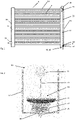
Fig. 1 is a front view a charge air cooler having a drain mechanism according to a first embodiment integrated, -
Fig. 2 is a cross-sectional front elevation view of a first embodiment of the drain mechanism in a close position -
Fig. 3 is a cross-sectional front elevation view of a second embodiment of the drain mechanism in a close position -
FIG. 1 illustrates acharge air cooler 5 comprising aheat exchanger core 10 disposed between aninlet tank 16 and anoutlet tank 20. Theinlet tank 16 includes ahollow interior 17 and afluid inlet 18 providing fluid communication between thehollow interior 17 of theinlet tank 16 and a turbocharger (not shown) disposed upstream of theinlet tank 16 and used to compress (and hence heat) intake air before the intake air enters thecharge air cooler 5. Theinlet tank 16 may include at least one fluid outlet (not shown) providing fluid communication between thehollow interior 17 of theinlet tank 16. The inlet tank may include a plurality of passages (not shown) formed therein for distributing the charge air to a plurality ofheat exchanger tubes 8. - The plurality of
heat exchanger tubes 8 extends from the inlet tank to theoutlet tank 20 disposed at an opposite end of theheat exchanger core 10. In similar fashion, the outlet tank may also include a plurality of passages (not shown) corresponding to the plurality ofheat exchanger tubes 8 for recombining the charge air as it enters theoutlet tank 20. The plurality ofheat exchanger tubes 8 may be spaced apart to allow a second cooling fluid to flow there between. It should be understood that the second cooling fluid might be any fluid having a temperature lower than the intake air flowing through the plurality of heat exchanger tubes. The second cooling fluid may for instance be ambient air, recirculation air, water, or any other cooling fluid circulating through any system of an automobile having thecharge air cooler 5. A plurality of corrugated fins (not showed) or other surface area increasing structures may be formed on an exterior surface of each of the plurality ofheat exchanger tubes 8 to facilitate heat transfer between the charge air flowing through the plurality ofheat exchanger tubes 8 and the second cooling fluid flowing between the plurality ofheat exchanger tubes 8. - The
outlet tank 20 may include at least one fluid inlet (not shown) formed therein providing fluid communication between the plurality of passages formed in theoutlet tank 20 and ahollow interior 21 of theoutlet tank 20. Theoutlet tank 20 also includes at least onefluid outlet 23 formed therein providing fluid communication between thehollow interior 21 of theoutlet tank 20 and an intake portion of an engine (not shown). - The
inlet tank 16 also includes adrain mechanism hollow interior 17 thereof with respect to gravity. The drain mechanism may alternatively disposed in a lowermost region of thehollow interior 21 of the outlet tank thereof with respect to gravity - According to a first embodiment illustrated at
fig 2 , thedrain mechanism 50 comprises adrain port 58 allowing condensates to fall out thecharge air cooler 5. Thedrain mechanism 50 also comprises arod 51 pushed through thedrain port 58 in an opened state by aspring element 52. Therod 51 may have a first end in a conical shape to close hermetically thedrain port 58.Rod 51 andspring element 52 form a valve to open orclose drain port 58. - The
drain mechanism 50 comprises an actuation device comprising adeformable container 53 filled with a change phase material. When changing phase the volume of the change phase material increases or decreases and modifies the shape of the deformable container. Thedeformable container 53 comprises afirst portion 54 mounted close to one end of therod 55. Thisfirst portion 54 is configured to push derod 51 in a closed state of thedrain port 58 when the volume of thefirst portion 53 increases due to phase changing. - The
drain mechanism 50 comprise acapsule 55 linked to thefirst portion 54 by atube 56. The change phase material fills the interior volume of thefirst portion 54, thecapsule 55 and thetube 56. According to the invention, in a first phase of the change phase material, therod 51 is in a closed state of thedrain port 58, and in the second phase of the change phase material therod 51 is in an opened state of thedrain port 58. Then, the change phase material is chosen to increase in volume when phase change from second one to the first one. - As an example, the change phase materiel is in liquid form in the second phase and in gaseous form in the first phase. Then, when changing from liquid to gaseous phase, the volume of the phase change material increases. Therefore, the
first portion 54 of thedrain mechanism 53 inflates and push therod 51 in closed state. - The changing phase temperature is chosen in view to put the drain mechanism in closed state when the charge air cooler is in function. "In function" means the engine is started and hot air to be cooled flows through the
charge air cooler 5. The changing phase temperature should be at minimum above 0°. This will guaranties that the drain mechanism will be always at an opened stated when the ambient temperature would be below 0° and then avoid formation of ice inside the charge air cooler. As an example, the changing phase temperature is comprised between 1° to 50°. - According to the first embodiment, the
capsule 55 is mounted near thefluid inlet 18, which is the hottest part of thecharge air cooler 5. Thetube 56 is mounted along thehollow interior 17 of theinlet tank 16. The drain mechanism may comprise ahousing rod 51, thespring element 52, thedrain port 58 and thefirst portion 54. The housing is then, for example, screw on the charge air cooler -
Fig. 3 illustrates a second embodiment of adrain mechanism 60 according to the invention. This second embodiment also comprises arod 61, aspring element 62 and adrain port 68 having the same configuration than for the first embodiment described above. The actuation device comprise adeformable container 63 fill with a change phase material. The deformable container is configured to push therod 61 against the drain port when the first phase of the change material is in liquid phase. The second phase of the change material is solid. The actuation device of the drain mechanism could comprise apiston 64 mounted between therode 61 and thedeformable container 63. - The change phase material could be a paraffin like material. Using such kind of material, volume expansion due to phase change is above 10%. When hot gas from turbo outlet enter the
charge air cooler 5, it heats up the paraffin. When paraffin melts, the volume expansion push a piston that close thedrain port 58. When paraffin become solid, aspring element 62 push therod 61 and thepiston 64 in the opened state. - The
spring element - It is to be understood that the present invention is not limited to the embodiments described above and illustrated in the drawings; rather, the skilled person will recognize that many changes and modifications may be made within the scope of the appended claims.
Claims (8)
- Charge air cooler (5) for fuel engine comprising:- a casing having an inlet (16) and an outlet (20),- a heat exchanger (10) within the casing between the inlet (16) and the outlet (20),- a thermally responsive draining mechanism (50, 60) for draining condensates,- the draining mechanism (50, 60) being configured to drain condensates when temperature within the charge air cooler (5) is below a defined temperature,- draining mechanism comprising a drain port (58, 68),- a valve (51, 61, 52, 62, 53, 63) arranged on the drain port (58, 68),- an actuation device (53, 63, 64) for moving the valve between an opened state and a closed state,the charge air cooler being characterized in that the actuation device includes a phase change material.
- Charge air cooler according to claim 1 wherein the actuation device (53, 63, 64) is in an opened state when the phase change material is a first phase and in a closed state when the phase change material is in a second phase, that change phase of the material is at a temperature above 1°.
- Charge air cooler according to claim 2 wherein the first phase of the change phase material is liquid, that second phase of the change phase material is gaseous.
- Charge air cooler according to claim 2 wherein the first phase of the change phase material is liquid, that second phase of the change phase material is solid.
- Charge air cooler according to one of claim 2 to 4 wherein the actuation device comprises a rod (51, 61), pushed in the opened state by a spring element (52, 62), and a deformable container (53, 63) filled with the change phase material that pushed the rod (51, 61) in closed state when the change phase material is in the second phase.
- Charge air cooler according to claim 5 wherein the actuation device comprises a piston (64) mounted between the rod (61) and the deformable container (63) and configured to push the rod (61) in the closed state when the change phase material is in the second phase.
- Charge air cooler according to claim 5 wherein the deformable container comprises a capsule (55) linked with a diagram (53) by a tube (56), the diagram (55) is configured to push the rod (51) in closed position when the change phase material is in the second phase.
- Charge air cooler according to claim 7 wherein the capsule (55) is assembled in a hot area of the heat exchanger.
Priority Applications (3)
| Application Number | Priority Date | Filing Date | Title |
|---|---|---|---|
| EP20180317.8A EP3926287B1 (en) | 2020-06-16 | 2020-06-16 | A charge air cooler for fuel engine |
| CN202110643234.8A CN113803152A (en) | 2020-06-16 | 2021-06-09 | Charge air cooler for fuel engine |
| US17/345,777 US11519367B2 (en) | 2020-06-16 | 2021-06-11 | Charge air cooler for fuel engine |
Applications Claiming Priority (1)
| Application Number | Priority Date | Filing Date | Title |
|---|---|---|---|
| EP20180317.8A EP3926287B1 (en) | 2020-06-16 | 2020-06-16 | A charge air cooler for fuel engine |
Publications (2)
| Publication Number | Publication Date |
|---|---|
| EP3926287A1 EP3926287A1 (en) | 2021-12-22 |
| EP3926287B1 true EP3926287B1 (en) | 2022-12-07 |
Family
ID=71105261
Family Applications (1)
| Application Number | Title | Priority Date | Filing Date |
|---|---|---|---|
| EP20180317.8A Active EP3926287B1 (en) | 2020-06-16 | 2020-06-16 | A charge air cooler for fuel engine |
Country Status (3)
| Country | Link |
|---|---|
| US (1) | US11519367B2 (en) |
| EP (1) | EP3926287B1 (en) |
| CN (1) | CN113803152A (en) |
Families Citing this family (2)
| Publication number | Priority date | Publication date | Assignee | Title |
|---|---|---|---|---|
| CN117366853B (en) * | 2023-12-04 | 2024-03-22 | 江苏富通空调净化设备制造有限公司 | Antifreezing surface cooler |
| CN118787977B (en) * | 2024-09-11 | 2024-11-22 | 湖南奔骥环保能源科技有限责任公司 | Box cooler of adjustable cooling path |
Family Cites Families (13)
| Publication number | Priority date | Publication date | Assignee | Title |
|---|---|---|---|---|
| US2636776A (en) * | 1949-07-29 | 1953-04-28 | Antioch College | Pressure operated device |
| JPS61105382A (en) * | 1984-10-30 | 1986-05-23 | Yamatake Honeywell Co Ltd | Antifreezing valve |
| SE528973C2 (en) * | 2005-12-16 | 2007-03-27 | Volvo Lastvagnar Ab | Charge air cooler for turbocharged piston engine, has bimetal tongue placed on external surface of cooler, that is controlled to close and open opening of drain arrangement responsive to temperature changes |
| US8371119B2 (en) * | 2010-09-08 | 2013-02-12 | Caterpillar Inc. | Drain valve for an air intake system of a machine |
| KR101395292B1 (en) * | 2012-04-24 | 2014-05-16 | 한국생산기술연구원 | temperature sensing unit and System for preventing frozen to burst using the same |
| US9638094B2 (en) * | 2014-04-07 | 2017-05-02 | Hanon Systems | Charge air cooler with integrated adjustable drain mechanism |
| CN205225431U (en) * | 2015-12-16 | 2016-05-11 | 广西玉柴机器股份有限公司 | Automatic water discharging device of engine intercooler |
| DE102017214724A1 (en) * | 2016-10-10 | 2018-04-12 | Mahle International Gmbh | Intercooler |
| DE102018209238B4 (en) * | 2018-06-11 | 2021-12-30 | Ford Global Technologies, Llc | Turbocharged internal combustion engine with exhaust gas recirculation and method for operating such an internal combustion engine |
| DE102018215075A1 (en) * | 2018-09-05 | 2020-03-05 | Mahle International Gmbh | Intercooler |
| US10781742B2 (en) * | 2018-12-13 | 2020-09-22 | Fca Us Llc | Condensate drain valve for charge air cooler |
| CN110159910A (en) * | 2019-05-17 | 2019-08-23 | 浙江大学 | A kind of steam trap that marmem drives and hydrophobic control method |
| KR102895443B1 (en) * | 2019-06-26 | 2025-12-04 | 현대자동차주식회사 | Intercooler draining system |
-
2020
- 2020-06-16 EP EP20180317.8A patent/EP3926287B1/en active Active
-
2021
- 2021-06-09 CN CN202110643234.8A patent/CN113803152A/en active Pending
- 2021-06-11 US US17/345,777 patent/US11519367B2/en active Active
Also Published As
| Publication number | Publication date |
|---|---|
| US20210388799A1 (en) | 2021-12-16 |
| EP3926287A1 (en) | 2021-12-22 |
| CN113803152A (en) | 2021-12-17 |
| US11519367B2 (en) | 2022-12-06 |
Similar Documents
| Publication | Publication Date | Title |
|---|---|---|
| DE102016113394B3 (en) | Thermal management system and method of variable cylinder cooling of an internal combustion engine | |
| JP2648639B2 (en) | Cooling system for internal combustion engine | |
| US11519367B2 (en) | Charge air cooler for fuel engine | |
| US5385123A (en) | Segregated cooling chambers for aqueous reverse-flow engine cooling systems | |
| CN1160123A (en) | Cooling circulation return for IC engine | |
| US20070158059A1 (en) | Plug bypass valves and heat exchangers | |
| KR0148160B1 (en) | Temperature control system for internal combustion engine | |
| CN101331300B (en) | Drain valve | |
| US9273572B2 (en) | Oil system for diesel engines that operate in cold environments | |
| US3824802A (en) | Control means for accumulator throttling device | |
| US7832467B2 (en) | Oil cooler | |
| US20110067853A1 (en) | Fluid cooling device for a motor vehicle | |
| US20060032626A1 (en) | Device for heat exchange between flowable media | |
| US9581237B2 (en) | Transmission fluid expansion reservoir | |
| US5111777A (en) | Evaporation cooling system for a liquid-cooled internal-combustion engine | |
| US5381762A (en) | Engine cooling system and radiator therefor | |
| GB2444271A (en) | Thermostat for an engine cooling system | |
| US5353751A (en) | Engine cooling system and radiator therefor | |
| US20100050962A1 (en) | Flexible tongue valve for an oil separation device in the crankcase ventilation of a motor vehicle | |
| CN101251060A (en) | Exhaust heat recovery apparatus | |
| CN208885361U (en) | Crankcase ventilation structure and engine | |
| JP2020051313A (en) | Blow-by gas recirculation device for internal combustion engine | |
| CN214366277U (en) | Heating devices, closed-circuit breathing systems, engines and automobiles | |
| KR101830475B1 (en) | Integrated thermostatic valve and charge air cooler cover assembly | |
| CN204961114U (en) | Anti -freeze structure of empty filter outlet duct PCV mouth of air intake system |
Legal Events
| Date | Code | Title | Description |
|---|---|---|---|
| PUAI | Public reference made under article 153(3) epc to a published international application that has entered the european phase |
Free format text: ORIGINAL CODE: 0009012 |
|
| STAA | Information on the status of an ep patent application or granted ep patent |
Free format text: STATUS: THE APPLICATION HAS BEEN PUBLISHED |
|
| AK | Designated contracting states |
Kind code of ref document: A1 Designated state(s): AL AT BE BG CH CY CZ DE DK EE ES FI FR GB GR HR HU IE IS IT LI LT LU LV MC MK MT NL NO PL PT RO RS SE SI SK SM TR |
|
| B565 | Issuance of search results under rule 164(2) epc |
Effective date: 20201210 |
|
| STAA | Information on the status of an ep patent application or granted ep patent |
Free format text: STATUS: REQUEST FOR EXAMINATION WAS MADE |
|
| 17P | Request for examination filed |
Effective date: 20220620 |
|
| RBV | Designated contracting states (corrected) |
Designated state(s): AL AT BE BG CH CY CZ DE DK EE ES FI FR GB GR HR HU IE IS IT LI LT LU LV MC MK MT NL NO PL PT RO RS SE SI SK SM TR |
|
| GRAP | Despatch of communication of intention to grant a patent |
Free format text: ORIGINAL CODE: EPIDOSNIGR1 |
|
| STAA | Information on the status of an ep patent application or granted ep patent |
Free format text: STATUS: GRANT OF PATENT IS INTENDED |
|
| RIC1 | Information provided on ipc code assigned before grant |
Ipc: F28F 17/00 20060101AFI20220719BHEP |
|
| INTG | Intention to grant announced |
Effective date: 20220811 |
|
| GRAS | Grant fee paid |
Free format text: ORIGINAL CODE: EPIDOSNIGR3 |
|
| GRAA | (expected) grant |
Free format text: ORIGINAL CODE: 0009210 |
|
| STAA | Information on the status of an ep patent application or granted ep patent |
Free format text: STATUS: THE PATENT HAS BEEN GRANTED |
|
| AK | Designated contracting states |
Kind code of ref document: B1 Designated state(s): AL AT BE BG CH CY CZ DE DK EE ES FI FR GB GR HR HU IE IS IT LI LT LU LV MC MK MT NL NO PL PT RO RS SE SI SK SM TR |
|
| REG | Reference to a national code |
Ref country code: GB Ref legal event code: FG4D |
|
| REG | Reference to a national code |
Ref country code: CH Ref legal event code: EP Ref country code: AT Ref legal event code: REF Ref document number: 1536551 Country of ref document: AT Kind code of ref document: T Effective date: 20221215 |
|
| REG | Reference to a national code |
Ref country code: DE Ref legal event code: R096 Ref document number: 602020006732 Country of ref document: DE |
|
| REG | Reference to a national code |
Ref country code: IE Ref legal event code: FG4D |
|
| REG | Reference to a national code |
Ref country code: NL Ref legal event code: FP |
|
| REG | Reference to a national code |
Ref country code: LT Ref legal event code: MG9D |
|
| PG25 | Lapsed in a contracting state [announced via postgrant information from national office to epo] |
Ref country code: SE Free format text: LAPSE BECAUSE OF FAILURE TO SUBMIT A TRANSLATION OF THE DESCRIPTION OR TO PAY THE FEE WITHIN THE PRESCRIBED TIME-LIMIT Effective date: 20221207 Ref country code: NO Free format text: LAPSE BECAUSE OF FAILURE TO SUBMIT A TRANSLATION OF THE DESCRIPTION OR TO PAY THE FEE WITHIN THE PRESCRIBED TIME-LIMIT Effective date: 20230307 Ref country code: LT Free format text: LAPSE BECAUSE OF FAILURE TO SUBMIT A TRANSLATION OF THE DESCRIPTION OR TO PAY THE FEE WITHIN THE PRESCRIBED TIME-LIMIT Effective date: 20221207 Ref country code: FI Free format text: LAPSE BECAUSE OF FAILURE TO SUBMIT A TRANSLATION OF THE DESCRIPTION OR TO PAY THE FEE WITHIN THE PRESCRIBED TIME-LIMIT Effective date: 20221207 Ref country code: ES Free format text: LAPSE BECAUSE OF FAILURE TO SUBMIT A TRANSLATION OF THE DESCRIPTION OR TO PAY THE FEE WITHIN THE PRESCRIBED TIME-LIMIT Effective date: 20221207 |
|
| REG | Reference to a national code |
Ref country code: AT Ref legal event code: MK05 Ref document number: 1536551 Country of ref document: AT Kind code of ref document: T Effective date: 20221207 |
|
| PG25 | Lapsed in a contracting state [announced via postgrant information from national office to epo] |
Ref country code: RS Free format text: LAPSE BECAUSE OF FAILURE TO SUBMIT A TRANSLATION OF THE DESCRIPTION OR TO PAY THE FEE WITHIN THE PRESCRIBED TIME-LIMIT Effective date: 20221207 Ref country code: PL Free format text: LAPSE BECAUSE OF FAILURE TO SUBMIT A TRANSLATION OF THE DESCRIPTION OR TO PAY THE FEE WITHIN THE PRESCRIBED TIME-LIMIT Effective date: 20221207 Ref country code: LV Free format text: LAPSE BECAUSE OF FAILURE TO SUBMIT A TRANSLATION OF THE DESCRIPTION OR TO PAY THE FEE WITHIN THE PRESCRIBED TIME-LIMIT Effective date: 20221207 Ref country code: HR Free format text: LAPSE BECAUSE OF FAILURE TO SUBMIT A TRANSLATION OF THE DESCRIPTION OR TO PAY THE FEE WITHIN THE PRESCRIBED TIME-LIMIT Effective date: 20221207 Ref country code: GR Free format text: LAPSE BECAUSE OF FAILURE TO SUBMIT A TRANSLATION OF THE DESCRIPTION OR TO PAY THE FEE WITHIN THE PRESCRIBED TIME-LIMIT Effective date: 20230308 |
|
| PG25 | Lapsed in a contracting state [announced via postgrant information from national office to epo] |
Ref country code: SM Free format text: LAPSE BECAUSE OF FAILURE TO SUBMIT A TRANSLATION OF THE DESCRIPTION OR TO PAY THE FEE WITHIN THE PRESCRIBED TIME-LIMIT Effective date: 20221207 Ref country code: RO Free format text: LAPSE BECAUSE OF FAILURE TO SUBMIT A TRANSLATION OF THE DESCRIPTION OR TO PAY THE FEE WITHIN THE PRESCRIBED TIME-LIMIT Effective date: 20221207 Ref country code: PT Free format text: LAPSE BECAUSE OF FAILURE TO SUBMIT A TRANSLATION OF THE DESCRIPTION OR TO PAY THE FEE WITHIN THE PRESCRIBED TIME-LIMIT Effective date: 20230410 Ref country code: EE Free format text: LAPSE BECAUSE OF FAILURE TO SUBMIT A TRANSLATION OF THE DESCRIPTION OR TO PAY THE FEE WITHIN THE PRESCRIBED TIME-LIMIT Effective date: 20221207 Ref country code: CZ Free format text: LAPSE BECAUSE OF FAILURE TO SUBMIT A TRANSLATION OF THE DESCRIPTION OR TO PAY THE FEE WITHIN THE PRESCRIBED TIME-LIMIT Effective date: 20221207 Ref country code: AT Free format text: LAPSE BECAUSE OF FAILURE TO SUBMIT A TRANSLATION OF THE DESCRIPTION OR TO PAY THE FEE WITHIN THE PRESCRIBED TIME-LIMIT Effective date: 20221207 |
|
| PG25 | Lapsed in a contracting state [announced via postgrant information from national office to epo] |
Ref country code: SK Free format text: LAPSE BECAUSE OF FAILURE TO SUBMIT A TRANSLATION OF THE DESCRIPTION OR TO PAY THE FEE WITHIN THE PRESCRIBED TIME-LIMIT Effective date: 20221207 Ref country code: IS Free format text: LAPSE BECAUSE OF FAILURE TO SUBMIT A TRANSLATION OF THE DESCRIPTION OR TO PAY THE FEE WITHIN THE PRESCRIBED TIME-LIMIT Effective date: 20230407 Ref country code: AL Free format text: LAPSE BECAUSE OF FAILURE TO SUBMIT A TRANSLATION OF THE DESCRIPTION OR TO PAY THE FEE WITHIN THE PRESCRIBED TIME-LIMIT Effective date: 20221207 |
|
| REG | Reference to a national code |
Ref country code: DE Ref legal event code: R097 Ref document number: 602020006732 Country of ref document: DE |
|
| PLBE | No opposition filed within time limit |
Free format text: ORIGINAL CODE: 0009261 |
|
| STAA | Information on the status of an ep patent application or granted ep patent |
Free format text: STATUS: NO OPPOSITION FILED WITHIN TIME LIMIT |
|
| PG25 | Lapsed in a contracting state [announced via postgrant information from national office to epo] |
Ref country code: DK Free format text: LAPSE BECAUSE OF FAILURE TO SUBMIT A TRANSLATION OF THE DESCRIPTION OR TO PAY THE FEE WITHIN THE PRESCRIBED TIME-LIMIT Effective date: 20221207 |
|
| 26N | No opposition filed |
Effective date: 20230908 |
|
| PG25 | Lapsed in a contracting state [announced via postgrant information from national office to epo] |
Ref country code: SI Free format text: LAPSE BECAUSE OF FAILURE TO SUBMIT A TRANSLATION OF THE DESCRIPTION OR TO PAY THE FEE WITHIN THE PRESCRIBED TIME-LIMIT Effective date: 20221207 |
|
| PG25 | Lapsed in a contracting state [announced via postgrant information from national office to epo] |
Ref country code: MC Free format text: LAPSE BECAUSE OF FAILURE TO SUBMIT A TRANSLATION OF THE DESCRIPTION OR TO PAY THE FEE WITHIN THE PRESCRIBED TIME-LIMIT Effective date: 20221207 |
|
| PG25 | Lapsed in a contracting state [announced via postgrant information from national office to epo] |
Ref country code: MC Free format text: LAPSE BECAUSE OF FAILURE TO SUBMIT A TRANSLATION OF THE DESCRIPTION OR TO PAY THE FEE WITHIN THE PRESCRIBED TIME-LIMIT Effective date: 20221207 |
|
| REG | Reference to a national code |
Ref country code: CH Ref legal event code: PL |
|
| REG | Reference to a national code |
Ref country code: BE Ref legal event code: MM Effective date: 20230630 |
|
| PG25 | Lapsed in a contracting state [announced via postgrant information from national office to epo] |
Ref country code: LU Free format text: LAPSE BECAUSE OF NON-PAYMENT OF DUE FEES Effective date: 20230616 |
|
| REG | Reference to a national code |
Ref country code: IE Ref legal event code: MM4A |
|
| PG25 | Lapsed in a contracting state [announced via postgrant information from national office to epo] |
Ref country code: LU Free format text: LAPSE BECAUSE OF NON-PAYMENT OF DUE FEES Effective date: 20230616 |
|
| PG25 | Lapsed in a contracting state [announced via postgrant information from national office to epo] |
Ref country code: IE Free format text: LAPSE BECAUSE OF NON-PAYMENT OF DUE FEES Effective date: 20230616 |
|
| PG25 | Lapsed in a contracting state [announced via postgrant information from national office to epo] |
Ref country code: IE Free format text: LAPSE BECAUSE OF NON-PAYMENT OF DUE FEES Effective date: 20230616 Ref country code: CH Free format text: LAPSE BECAUSE OF NON-PAYMENT OF DUE FEES Effective date: 20230630 |
|
| PG25 | Lapsed in a contracting state [announced via postgrant information from national office to epo] |
Ref country code: IT Free format text: LAPSE BECAUSE OF FAILURE TO SUBMIT A TRANSLATION OF THE DESCRIPTION OR TO PAY THE FEE WITHIN THE PRESCRIBED TIME-LIMIT Effective date: 20221207 Ref country code: BE Free format text: LAPSE BECAUSE OF NON-PAYMENT OF DUE FEES Effective date: 20230630 |
|
| PGFP | Annual fee paid to national office [announced via postgrant information from national office to epo] |
Ref country code: NL Payment date: 20240625 Year of fee payment: 5 |
|
| PGFP | Annual fee paid to national office [announced via postgrant information from national office to epo] |
Ref country code: FR Payment date: 20240625 Year of fee payment: 5 |
|
| PG25 | Lapsed in a contracting state [announced via postgrant information from national office to epo] |
Ref country code: BG Free format text: LAPSE BECAUSE OF FAILURE TO SUBMIT A TRANSLATION OF THE DESCRIPTION OR TO PAY THE FEE WITHIN THE PRESCRIBED TIME-LIMIT Effective date: 20221207 |
|
| PG25 | Lapsed in a contracting state [announced via postgrant information from national office to epo] |
Ref country code: BG Free format text: LAPSE BECAUSE OF FAILURE TO SUBMIT A TRANSLATION OF THE DESCRIPTION OR TO PAY THE FEE WITHIN THE PRESCRIBED TIME-LIMIT Effective date: 20221207 |
|
| GBPC | Gb: european patent ceased through non-payment of renewal fee |
Effective date: 20240616 |
|
| PG25 | Lapsed in a contracting state [announced via postgrant information from national office to epo] |
Ref country code: GB Free format text: LAPSE BECAUSE OF NON-PAYMENT OF DUE FEES Effective date: 20240616 |
|
| PGFP | Annual fee paid to national office [announced via postgrant information from national office to epo] |
Ref country code: DE Payment date: 20250626 Year of fee payment: 6 |
|
| PG25 | Lapsed in a contracting state [announced via postgrant information from national office to epo] |
Ref country code: CY Free format text: LAPSE BECAUSE OF FAILURE TO SUBMIT A TRANSLATION OF THE DESCRIPTION OR TO PAY THE FEE WITHIN THE PRESCRIBED TIME-LIMIT; INVALID AB INITIO Effective date: 20200616 |
|
| PG25 | Lapsed in a contracting state [announced via postgrant information from national office to epo] |
Ref country code: HU Free format text: LAPSE BECAUSE OF FAILURE TO SUBMIT A TRANSLATION OF THE DESCRIPTION OR TO PAY THE FEE WITHIN THE PRESCRIBED TIME-LIMIT; INVALID AB INITIO Effective date: 20200616 |
|
| PG25 | Lapsed in a contracting state [announced via postgrant information from national office to epo] |
Ref country code: TR Free format text: LAPSE BECAUSE OF FAILURE TO SUBMIT A TRANSLATION OF THE DESCRIPTION OR TO PAY THE FEE WITHIN THE PRESCRIBED TIME-LIMIT Effective date: 20221207 |
|
| REG | Reference to a national code |
Ref country code: NL Ref legal event code: MM Effective date: 20250701 |
|
| PG25 | Lapsed in a contracting state [announced via postgrant information from national office to epo] |
Ref country code: NL Free format text: LAPSE BECAUSE OF NON-PAYMENT OF DUE FEES Effective date: 20250701 |
|
| PG25 | Lapsed in a contracting state [announced via postgrant information from national office to epo] |
Ref country code: FR Free format text: LAPSE BECAUSE OF NON-PAYMENT OF DUE FEES Effective date: 20250630 |