EP3926067B1 - Cid filter and secondary battery comprising the same - Google Patents
Cid filter and secondary battery comprising the same Download PDFInfo
- Publication number
- EP3926067B1 EP3926067B1 EP20821765.3A EP20821765A EP3926067B1 EP 3926067 B1 EP3926067 B1 EP 3926067B1 EP 20821765 A EP20821765 A EP 20821765A EP 3926067 B1 EP3926067 B1 EP 3926067B1
- Authority
- EP
- European Patent Office
- Prior art keywords
- holes
- auxiliary
- main
- cid
- cid filter
- Prior art date
- Legal status (The legal status is an assumption and is not a legal conclusion. Google has not performed a legal analysis and makes no representation as to the accuracy of the status listed.)
- Active
Links
Images



Classifications
-
- C—CHEMISTRY; METALLURGY
- C23—COATING METALLIC MATERIAL; COATING MATERIAL WITH METALLIC MATERIAL; CHEMICAL SURFACE TREATMENT; DIFFUSION TREATMENT OF METALLIC MATERIAL; COATING BY VACUUM EVAPORATION, BY SPUTTERING, BY ION IMPLANTATION OR BY CHEMICAL VAPOUR DEPOSITION, IN GENERAL; INHIBITING CORROSION OF METALLIC MATERIAL OR INCRUSTATION IN GENERAL
- C23C—COATING METALLIC MATERIAL; COATING MATERIAL WITH METALLIC MATERIAL; SURFACE TREATMENT OF METALLIC MATERIAL BY DIFFUSION INTO THE SURFACE, BY CHEMICAL CONVERSION OR SUBSTITUTION; COATING BY VACUUM EVAPORATION, BY SPUTTERING, BY ION IMPLANTATION OR BY CHEMICAL VAPOUR DEPOSITION, IN GENERAL
- C23C2/00—Hot-dipping or immersion processes for applying the coating material in the molten state without affecting the shape; Apparatus therefor
- C23C2/34—Hot-dipping or immersion processes for applying the coating material in the molten state without affecting the shape; Apparatus therefor characterised by the shape of the material to be treated
-
- C—CHEMISTRY; METALLURGY
- C23—COATING METALLIC MATERIAL; COATING MATERIAL WITH METALLIC MATERIAL; CHEMICAL SURFACE TREATMENT; DIFFUSION TREATMENT OF METALLIC MATERIAL; COATING BY VACUUM EVAPORATION, BY SPUTTERING, BY ION IMPLANTATION OR BY CHEMICAL VAPOUR DEPOSITION, IN GENERAL; INHIBITING CORROSION OF METALLIC MATERIAL OR INCRUSTATION IN GENERAL
- C23C—COATING METALLIC MATERIAL; COATING MATERIAL WITH METALLIC MATERIAL; SURFACE TREATMENT OF METALLIC MATERIAL BY DIFFUSION INTO THE SURFACE, BY CHEMICAL CONVERSION OR SUBSTITUTION; COATING BY VACUUM EVAPORATION, BY SPUTTERING, BY ION IMPLANTATION OR BY CHEMICAL VAPOUR DEPOSITION, IN GENERAL
- C23C2/00—Hot-dipping or immersion processes for applying the coating material in the molten state without affecting the shape; Apparatus therefor
- C23C2/04—Hot-dipping or immersion processes for applying the coating material in the molten state without affecting the shape; Apparatus therefor characterised by the coating material
- C23C2/08—Tin or alloys based thereon
-
- H—ELECTRICITY
- H01—ELECTRIC ELEMENTS
- H01M—PROCESSES OR MEANS, e.g. BATTERIES, FOR THE DIRECT CONVERSION OF CHEMICAL ENERGY INTO ELECTRICAL ENERGY
- H01M50/00—Constructional details or processes of manufacture of the non-active parts of electrochemical cells other than fuel cells, e.g. hybrid cells
- H01M50/10—Primary casings; Jackets or wrappings
- H01M50/147—Lids or covers
- H01M50/148—Lids or covers characterised by their shape
- H01M50/152—Lids or covers characterised by their shape for cells having curved cross-section, e.g. round or elliptic
-
- H—ELECTRICITY
- H01—ELECTRIC ELEMENTS
- H01M—PROCESSES OR MEANS, e.g. BATTERIES, FOR THE DIRECT CONVERSION OF CHEMICAL ENERGY INTO ELECTRICAL ENERGY
- H01M50/00—Constructional details or processes of manufacture of the non-active parts of electrochemical cells other than fuel cells, e.g. hybrid cells
- H01M50/10—Primary casings; Jackets or wrappings
- H01M50/183—Sealing members
- H01M50/186—Sealing members characterised by the disposition of the sealing members
-
- H—ELECTRICITY
- H01—ELECTRIC ELEMENTS
- H01M—PROCESSES OR MEANS, e.g. BATTERIES, FOR THE DIRECT CONVERSION OF CHEMICAL ENERGY INTO ELECTRICAL ENERGY
- H01M50/00—Constructional details or processes of manufacture of the non-active parts of electrochemical cells other than fuel cells, e.g. hybrid cells
- H01M50/30—Arrangements for facilitating escape of gases
- H01M50/342—Non-re-sealable arrangements
- H01M50/3425—Non-re-sealable arrangements in the form of rupturable membranes or weakened parts, e.g. pierced with the aid of a sharp member
-
- H—ELECTRICITY
- H01—ELECTRIC ELEMENTS
- H01M—PROCESSES OR MEANS, e.g. BATTERIES, FOR THE DIRECT CONVERSION OF CHEMICAL ENERGY INTO ELECTRICAL ENERGY
- H01M50/00—Constructional details or processes of manufacture of the non-active parts of electrochemical cells other than fuel cells, e.g. hybrid cells
- H01M50/50—Current conducting connections for cells or batteries
- H01M50/531—Electrode connections inside a battery casing
- H01M50/538—Connection of several leads or tabs of wound or folded electrode stacks
-
- H—ELECTRICITY
- H01—ELECTRIC ELEMENTS
- H01M—PROCESSES OR MEANS, e.g. BATTERIES, FOR THE DIRECT CONVERSION OF CHEMICAL ENERGY INTO ELECTRICAL ENERGY
- H01M50/00—Constructional details or processes of manufacture of the non-active parts of electrochemical cells other than fuel cells, e.g. hybrid cells
- H01M50/50—Current conducting connections for cells or batteries
- H01M50/572—Means for preventing undesired use or discharge
- H01M50/574—Devices or arrangements for the interruption of current
- H01M50/578—Devices or arrangements for the interruption of current in response to pressure
-
- H—ELECTRICITY
- H01—ELECTRIC ELEMENTS
- H01M—PROCESSES OR MEANS, e.g. BATTERIES, FOR THE DIRECT CONVERSION OF CHEMICAL ENERGY INTO ELECTRICAL ENERGY
- H01M2200/00—Safety devices for primary or secondary batteries
-
- Y—GENERAL TAGGING OF NEW TECHNOLOGICAL DEVELOPMENTS; GENERAL TAGGING OF CROSS-SECTIONAL TECHNOLOGIES SPANNING OVER SEVERAL SECTIONS OF THE IPC; TECHNICAL SUBJECTS COVERED BY FORMER USPC CROSS-REFERENCE ART COLLECTIONS [XRACs] AND DIGESTS
- Y02—TECHNOLOGIES OR APPLICATIONS FOR MITIGATION OR ADAPTATION AGAINST CLIMATE CHANGE
- Y02E—REDUCTION OF GREENHOUSE GAS [GHG] EMISSIONS, RELATED TO ENERGY GENERATION, TRANSMISSION OR DISTRIBUTION
- Y02E60/00—Enabling technologies; Technologies with a potential or indirect contribution to GHG emissions mitigation
- Y02E60/10—Energy storage using batteries
Definitions
- the present invention relates to a CID filter and a secondary battery comprising the CID filter, and more particularly, to a CID filter having improved safety under an abnormal high-temperature condition and a secondary battery comprising the CID filter.
- Secondary batteries that are repetitively chargeable and dischargeable may be divided into cylindrical type secondary batteries, prismatic type secondary batteries, and pouch type secondary batteries according to their structures and manufacturing methods.
- the cylindrical type secondary battery has a structure in which an electrode assembly is accommodated in a cylindrical can with an upper portion opened, and a top cap is coupled to the upper portion of the cylindrical can.
- the cylindrical type secondary battery is provided with safety devices such as a safety vent and a CID filter.
- safety devices such as a safety vent and a CID filter.
- the problem to be solved by the present invention is to solve a problem of melting a CID gasket by minimizing heat transferred to the CID gasket through a CID filter even if a short circuit occurs in a cylindrical type secondary battery.
- the secondary battery of the present invention comprises: an electrode assembly having a structure in which electrodes and separators are alternately disposed; a battery can configured to accommodate the electrode assembly and having an opened upper portion; a top can coupled to the upper portion of the battery can; a CID filter provided below the top cap; a CID gasket provided in close contact with a side portion of the CID filter; and an electrode tab protruding from the electrode assembly, the electrode tab being electrically connected to the CID filter, wherein the CID filter comprises a body part defining a main body, the body part comprises: a plurality of main though-holes provided along a circumference of the body part and each of which has a first width (W1); and
- auxiliary through-hole having a second width (W2) less than the first width (W1), an area (hereinafter, referred to as a ⁇ first connection area') of the CID filter, which is electrically connected to the electrode tab, leans toward one side with respect to a center of the CID filter, and the auxiliary through-hole is defined between the first connection area and the CID gasket.
- the auxiliary through-hole is defined in a connection area (hereinafter, referred to as a 'second connection area') of the body part configured to connect the man through-holes to each other along a circumferential direction of the body part.
- a connection area hereinafter, referred to as a 'second connection area'
- the auxiliary through-hole is defined in a circular arc of a virtual circle that is centered at a center of the CID filter while crossing the shortest distance between the first connection area and the CID gasket, and the second connection areas, in which the auxiliary through-hole is not defined, among the plurality of second connection areas is not disposed in the circular arc.
- the second connection areas, in which the auxiliary through-hole is defined, among the plurality of second connection areas may be disposed adjacent to each other, and the second connection areas, in which the auxiliary through-hole is not defined, among the plurality of second connection areas may be disposed adjacent to each other.
- a circumference of the body part may have a circular shape, and a middle point of the circular arc may be disposed in a semi-straight line extending outward from the center of the CID filter.
- a central angle of the circular arc ranges of 90 degrees to 180 degrees.
- the first connection area may be disposed at a center of the shortest distance between a center of the CID filter and the CID gasket.
- the circular arc may cross a center of the shortest distance between the first connection area and the CID gasket.
- a CID filter comprising: a body part defining a main body, wherein the body part comprises: a plurality of main though-holes provided along a circumference of the body part and each of which has a first width (W1); and an auxiliary through-hole having a second width (W2) less than the first width (W1), a first point is defined at an area that leans toward one side with respect to a center of the body part, a second point is defined at a circumference of the body part, and the auxiliary through-hole is defined between the first point and the second point, wherein the auxiliary through-hole is defined in a connection area (hereinafter, referred to as a 'second connection area') of the body part configured to connect the main through-holes to each other along a circumferential direction of the body part.
- a connection area hereinafter, referred to as a 'second connection area'
- the plurality of main through-holes may be provided at equal intervals along the circumferential direction of the body part.
- the auxiliary through-hole may be connected to the two main through-holes defined in both sides of the second connection area in which the auxiliary through-hole is defined.
- the auxiliary through-hole may be spaced apart from the two main through-holes defined in both sides of the second connection area in which the auxiliary through-hole is defined.
- the auxiliary through-hole may be provided in plurality in the second connection area in which the auxiliary through-hole is defined.
- total N connection areas may be provided, and the number of second connection areas, in which the auxiliary through-holes are defined, among the total N second connection areas may be N/2 or less (i) when N is an even number and is (N-1)/2 or less (ii) when N is an odd number.
- Total eight main through-holes may be defined, and the number of second connection areas in which the auxiliary through-holes are defined may range of one to four.
- the heat transferred to the CID gasket through the CID filter may be minimized to solve the problem of melting the CID gasket.
- a secondary battery 10 may comprise a battery can 100 having a structure with an upper portion opened.
- the battery can 100 may have a cylindrical shape in a horizontal cross-section. That is, the secondary battery according to the present invention may be a cylindrical type secondary battery.
- a top cap 200 may be disposed on the upper portion of the battery can 100.
- a top cap 200 may be coupled to the upper portion of the battery can 100.
- An electrode assembly 700 may be accommodated in the battery can 100.
- the electrode assembly 700 may have a structure in which electrodes and separators are alternately disposed.
- the electrode assembly 700 may be a jelly-roll type electrode assembly.
- a plurality of main through-holes 410 provided along a circumference of the body part 400a may be defined in the body part 400a of the CID filter 400.
- the main through-hole 410 may have a first width W1.
- the main through-hole 410 may have a circular shape.
- the first width W1 may be a diameter of the main through-hole 410.
- the main through-hole 410 may be provided at equal intervals along the circumference of the body part 400a.
- FIGS. 2 and 3 illustrate a case in which eight main through-holes 410 are provided at equal intervals along a circumferential direction of the body part 400a having the circular shape in the CID filter 400.
- the plurality of main through-holes 410 defined in the body part 400a of the CID filter 400 may be illustrated as being connected to each other by some areas of the body part 400a.
- the plurality of main through-holes 410 may be connected to each other along the circumferential direction of the body part 400a by some areas of the body part 400a.
- the area of the body part 400a of the CID filter, which connects the plurality of main through-holes 410 to each other along the circumferential direction of the body part 400a will be referred to as a ⁇ second connection area'.
- FIGS. 2 and 3 illustrate a case in which eight second connection areas C2 are provided between the main through-holes 410 to correspond to the eight main through-holes 410.
- An auxiliary through-hole 420 having a second width W2 may be defined in the body part 400a of the CID filter 400 according to the present invention.
- the second width W2 may be less than the first width W1. That is, the auxiliary through-hole 420 may have a width less than that of the main through-hole 410.
- the auxiliary through-hole 420 may be defined in the second connection area C2. According to the present invention, since the auxiliary through-hole 420 is defined in the second connection area C2 connecting the main through-holes 410 to each other, the heat transfer may be minimized due to heat conduction between the inside of the CID filter 400 in a central direction and the outside of the CID filter 400 in a circumferential direction.
- the auxiliary through-hole 420 (see FIG. 2 ) of the CID filter 400 may be provided between the first connection area C1 and the CID gasket 600.
- transfer of heat transferred from the first connection area C1 that is, the area on which the CID filter and the electrode tab are electrically connected to each other
- the CID gasket 600 may be minimized to prevent a problem of melting the CID gasket 600 from occurring.
- the auxiliary through-hole 420 may be defined only in the second connection area C2 of a portion of the plurality of second connection areas C2.
- FIG. 2 illustrates a case in which the auxiliary through-hole 420 is defined in each of two second connection areas C2 of the eight second connection areas C2.
- the auxiliary through-hole 420 may be defined in each of four second connection areas C2 of the eight second connection areas C2.
- the auxiliary through-hole 420 may be defined in one or three second connection areas C2 of the eight second connection areas C2. That is, according to the present invention, when the eight main through-holes 410 are defined in the CID filter 400, the number of second connection areas C2 in which the auxiliary through-holes 420 are defined may range of one to four.
- the first connection area C1 may lean toward the one side with respect to the center of the CID filter 400.
- the auxiliary through-hole 420 may be defined in the second connection areas C2, which are disposed at a side to which the first connection area C1 leans, of the eight second connection areas C2.
- the number of second connection areas C2, in which the auxiliary through-holes 420 are defined, according to the number of main through-holes 410 will be described as follows by generalizing the foregoing contents.
- total N second connection areas C2 connecting the plurality of main through-holes 410 to each other may also be provided.
- the number of second connection areas C2, in which the auxiliary through-holes 420 are defined, among the total N second connection areas C2 is
- the second connection areas C2, in which the auxiliary through-holes 420 are defined, among the plurality of second connection areas C2 provided on the CID filter 400 may be disposed adjacent to each other, and the second connection areas C2, in which the auxiliary through-holes 420 are not defined, among the plurality of second connection areas C2 may also be disposed adjacent to each other.
- This may be understood as having a structure in which the second connection areas C2, in which the auxiliary through-holed 420 are defined, among the plurality of second connection areas C2 are continuously disposed along the circumferential direction of the body part 400a, and simultaneously, the second connection areas C2, in which the auxiliary through-holes 420 are not defined, among the plurality of second connection areas C2 are continuously disposed along the circumferential direction of the body part 400a.
- the area in which the auxiliary through-hole 420 is defined is described by introducing the concept of a circular arc of a virtual circle.
- the auxiliary through-hole 420 may be provided to cross the shortest distance between the first connection area C1 and the CID gasket 600.
- the auxiliary through-hole 420 may be defined in the circular arc A of the virtual circle that is centered at the center of the CID filter 400.
- the second connection areas C2, in which the auxiliary through-holes 420 are not defined, among the plurality of second connection areas C2 may not be provided on the circular arc A.
- the virtual circular arc A is defined as a circular arc that is centered at the center of the body part 400a by using centers of the two main through-holes (for example, in FIG. 2 , the main through-holes respectively defined in left and right lower portions of the CID filter) defined in the outermost side among the main through holes 410 adjacent to the second connection areas C2, in which the auxiliary through-holes 420 are defined, as both ends.
- a middle point of the virtual circular arc A is disposed in a semi-straight line extending outward from the center of the CID filter 400.
- a central angle of the virtual circular arc A ranges of 90 degrees to 180 degrees.
- FIG. 2 illustrates a case in which the central angle of the virtual circular arc A is 90 degrees
- FIG. 3 illustrates a case in which the central angle of the virtual circular arc A is 180 degrees.
- the central angle of the virtual circular arc A exceeds 180 degrees, the shape of the CID filter may not be properly maintained because the auxiliary through-holes 420 are provided too much, and durability of the CID filter may be deteriorated.
- the central angle of the virtual circular arc A is less than 90 degrees, the blocking of the heat transfer due to the auxiliary through-holes 420 may not effectively occur.
- the first connection area C1 is disposed at a center of the shortest distance between the center of the CID filter and the CID gasket 600, and the virtual circular arc A crosses a center of the shortest distance between the first connection area C1 and the CID gasket 600.
- the auxiliary through-hole 420 may be connected to two main through-holes 410 defined in both sides of the second connection area C2 in which the auxiliary through-hole 420 is defined. That is, according to an embodiment of the present invention, the auxiliary through-hole 420 and the main through-hole 410 adjacent to the auxiliary through-hole 420 may be connected to each other.
- FIG. 4 is a plan view illustrating an example of a structure of a CID filter according to the present disclosure
- FIG. 5 is a plan view illustrating an example of the structure of the CID filter according to the present disclosure.
- the above descriptions of the structure of the CID filter according to an embodiment of the present invention may be equally applied to descriptions of a structure of a CID filter according to another embodiment of the present invention.
- the structure of the CID filter according to another embodiment of the present invention will be described mainly based on differences from the structure of the CID filter according to an embodiment of the present invention.
- an auxiliary through-hole 420' may be spaced a predetermined distance from two main through-holes 410 defined in both sides of a second connection area C2 in which the auxiliary through-hole 420' is defined. Also, according to the present disclosure, the auxiliary through-hole 420' may be provided in plurality in the second connection area C2 in which the auxiliary through-hole 420' is defined.
- the auxiliary through-hole 420' may have a circular shape.
- a width of the auxiliary through-hole 420' (that is, a second width) may be a diameter of the auxiliary through-hole 420'.
- FIGS. 4 and 5 illustrate a case in which two auxiliary through-holes 420', each of which has the circular shape, are defined in the second connection area C2 in which the auxiliary through-holes 420' is defined.
Landscapes
- Chemical & Material Sciences (AREA)
- Chemical Kinetics & Catalysis (AREA)
- Electrochemistry (AREA)
- General Chemical & Material Sciences (AREA)
- Engineering & Computer Science (AREA)
- Materials Engineering (AREA)
- Mechanical Engineering (AREA)
- Metallurgy (AREA)
- Organic Chemistry (AREA)
- Connection Of Batteries Or Terminals (AREA)
- Sealing Battery Cases Or Jackets (AREA)
- Gas Exhaust Devices For Batteries (AREA)
Description
- The present application claims the benefit of the priority of
Korean Patent Application No. 10-2019-0068935, filed on June 11, 2019 - The present invention relates to a CID filter and a secondary battery comprising the CID filter, and more particularly, to a CID filter having improved safety under an abnormal high-temperature condition and a secondary battery comprising the CID filter.
- Secondary batteries that are repetitively chargeable and dischargeable may be divided into cylindrical type secondary batteries, prismatic type secondary batteries, and pouch type secondary batteries according to their structures and manufacturing methods. In general, among them, the cylindrical type secondary battery has a structure in which an electrode assembly is accommodated in a cylindrical can with an upper portion opened, and a top cap is coupled to the upper portion of the cylindrical can.
- In order to prevent explosion or fire that may occur when a temperature or pressure inside the cylindrical type secondary battery exceeds a certain value, generally, the cylindrical type secondary battery is provided with safety devices such as a safety vent and a CID filter. According to the related art, when the pressure inside the cylindrical type secondary battery exceeds a certain value, current is cut off by breaking the safety vent, and a gas inside the secondary battery is discharged to the outside.
- One of the reasons for the abnormal increase in temperature or pressure inside the cylindrical type secondary battery is a short circuit phenomenon. When the short circuit occurs, heat is generated inside the cylindrical type secondary battery.
- Particularly, a lot of heat is generated in a region in which an electrode tab protruding from an electrode assembly and the CID filter are bonded to each other. According to the related art, the heat generated in the region in which the electrode tab and the CID filter are bonded to each other passes through the CID filter and then is transferred to a CID gasket disposed around the CID filter, and thus, a temperature of the CID gasket increases to cause a problem in which the CID gasket is melted. In this case, even if the safety vent is broken, since the safety vent and the CID filter are reconnected to each other in the circumferential area of the CID filter to prevent the current of the cylindrical type secondary battery from being cut off, the cylindrical type secondary battery is impeded in safety.
KR 2008 0036248 KR 2015 0051518 - Therefore, the problem to be solved by the present invention is to solve a problem of melting a CID gasket by minimizing heat transferred to the CID gasket through a CID filter even if a short circuit occurs in a cylindrical type secondary battery.
- According to one aspect of the present invention for achieving the above object, provided is a secondary battery as defined in the appended set of claims. The secondary battery of the present invention comprises: an electrode assembly having a structure in which electrodes and separators are alternately disposed; a battery can configured to accommodate the electrode assembly and having an opened upper portion; a top can coupled to the upper portion of the battery can; a CID filter provided below the top cap; a CID gasket provided in close contact with a side portion of the CID filter; and an electrode tab protruding from the electrode assembly, the electrode tab being electrically connected to the CID filter, wherein the CID filter comprises a body part defining a main body, the body part comprises: a plurality of main though-holes provided along a circumference of the body part and each of which has a first width (W1); and
- an auxiliary through-hole having a second width (W2) less than the first width (W1), an area (hereinafter, referred to as a `first connection area') of the CID filter, which is electrically connected to the electrode tab, leans toward one side with respect to a center of the CID filter, and the auxiliary through-hole is defined between the first connection area and the CID gasket.
- The auxiliary through-hole is defined in a connection area (hereinafter, referred to as a 'second connection area') of the body part configured to connect the man through-holes to each other along a circumferential direction of the body part.
- The auxiliary through-hole is defined in a circular arc of a virtual circle that is centered at a center of the CID filter while crossing the shortest distance between the first connection area and the CID gasket, and the second connection areas, in which the auxiliary through-hole is not defined, among the plurality of second connection areas is not disposed in the circular arc.
- The second connection areas, in which the auxiliary through-hole is defined, among the plurality of second connection areas may be disposed adjacent to each other, and the second connection areas, in which the auxiliary through-hole is not defined, among the plurality of second connection areas may be disposed adjacent to each other.
- A circumference of the body part may have a circular shape, and a middle point of the circular arc may be disposed in a semi-straight line extending outward from the center of the CID filter.
- A central angle of the circular arc ranges of 90 degrees to 180 degrees.
- The first connection area may be disposed at a center of the shortest distance between a center of the CID filter and the CID gasket.
- The circular arc may cross a center of the shortest distance between the first connection area and the CID gasket.
- According to the present disclosure for achieving the above object, provided is a CID filter comprising: a body part defining a main body, wherein the body part comprises: a plurality of main though-holes provided along a circumference of the body part and each of which has a first width (W1); and an auxiliary through-hole having a second width (W2) less than the first width (W1), a first point is defined at an area that leans toward one side with respect to a center of the body part, a second point is defined at a circumference of the body part, and the auxiliary through-hole is defined between the first point and the second point, wherein the auxiliary through-hole is defined in a connection area (hereinafter, referred to as a 'second connection area') of the body part configured to connect the main through-holes to each other along a circumferential direction of the body part.
- The plurality of main through-holes may be provided at equal intervals along the circumferential direction of the body part.
- The auxiliary through-hole may be connected to the two main through-holes defined in both sides of the second connection area in which the auxiliary through-hole is defined.
- The auxiliary through-hole may be spaced apart from the two main through-holes defined in both sides of the second connection area in which the auxiliary through-hole is defined.
- The auxiliary through-hole may be provided in plurality in the second connection area in which the auxiliary through-hole is defined.
- Since total N main through-holes are defined in the body part, total N connection areas may be provided, and the number of second connection areas, in which the auxiliary through-holes are defined, among the total N second connection areas may be N/2 or less (i) when N is an even number and is (N-1)/2 or less (ii) when N is an odd number.
- Total eight main through-holes may be defined, and the number of second connection areas in which the auxiliary through-holes are defined may range of one to four.
- According to the present invention, even if the short circuit occurs in the cylindrical type secondary battery, the heat transferred to the CID gasket through the CID filter may be minimized to solve the problem of melting the CID gasket.
-
-
FIG. 1 is a side cross-sectional view illustrating a structure of a secondary battery according to the present invention. -
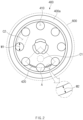
FIG. 2 is a plan view illustrating an example of a structure of a CID filter according to an embodiment of the present invention. -
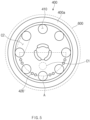
FIG. 3 is a plan view illustrating another example of the structure of the CID filter according to an embodiment of the present invention. -
FIG. 4 is a plan view illustrating an example of a structure of a CID filter according to the present disclosure. -
FIG. 5 is a plan view illustrating an example of the structure of the CID filter according to the present disclosure. - Hereinafter, a secondary battery and a structure of a CID filter according to the present invention will be described with reference to the drawings.
-
FIG. 1 is a side cross-sectional view illustrating a structure of a secondary battery according to the present invention. - As illustrated in
FIG. 1 , asecondary battery 10 according to the present invention may comprise a battery can 100 having a structure with an upper portion opened. The battery can 100 may have a cylindrical shape in a horizontal cross-section. That is, the secondary battery according to the present invention may be a cylindrical type secondary battery. - A
top cap 200 may be disposed on the upper portion of the battery can 100. In more detail, as illustrated inFIG. 1 , atop cap 200 may be coupled to the upper portion of the battery can 100. - A
safety vent 300 may be provided below thetop cap 200. When a pressure inside thesecondary battery 10 exceeds a certain value, thesafety vent 300 may be configured to be broken to cut off the current of thesecondary battery 10 and provide a path through which a gas inside thesecondary battery 10 is discharged to the outside. As illustrated inFIG. 1 , a notch portion having a relatively thin thickness compared to other areas of the safety vent may be provided in thesafety vent 300. - A
CID filter 400 may also be provided below thetop cap 200. In more detail, theCID filter 400 may be provided below thesafety vent 300. As illustrated inFIG. 1 , a central area of theCID filter 400 and a central area of thesafety vent 300 may be bonded to each other. Thus, when a pressure inside thesecondary battery 10 exceeds a certain value, and thus the safety vent is broken to move upward, theCID filter 400 may also move upward to cut off the current of thesecondary battery 10. - A
gasket 500 may be provided in close contact with an inner surface of the battery can 100. As illustrated inFIG. 1 , thegasket 500 may be provided in close contact with circumferential areas of thetop cap 200 and thesafety vent 300. Thegasket 500 may be configured to seal the inside thesecondary battery 10. - The secondary battery according to the present invention may further comprise a
CID gasket 600 that is in close contact with a side portion of theCID filter 400. TheCID gasket 600 is provided to be separated from the above-describedgasket 500 and may be configured to prevent theCID filter 400 and thesafety vent 300 from directly contacting each other on the circumferential area of theCID filter 400. Thus, as illustrated inFIG. 1 , theCID gasket 600 may be provided between theCID filter 400 and thesafety vent 300 at the side portion of theCID filter 400. Each of thegasket 500 and theCID gasket 600 may be made of a material having electrical insulation properties. - An
electrode assembly 700 may be accommodated in the battery can 100. Theelectrode assembly 700 may have a structure in which electrodes and separators are alternately disposed. For example, theelectrode assembly 700 may be a jelly-roll type electrode assembly. - The
electrode assembly 700 may comprise anelectrode tab 700a. As illustrated inFIG. 1 , theelectrode tab 700a may have a structure protruding from theelectrode assembly 700. Also, theelectrode tab 700a may be electrically connected to theCID filter 400. Theelectrode tab 700a and theCID filter 400 may be connected to each other, for example, through welding. In this specification, an area of theCID filter 400, which is electrically connected to theelectrode tab 700a will be referred to as a 'first connection area'. The first connection area C1 may lean toward one side with respect to a center of theCID filter 400.FIG. 1 illustrates a state in which the first connection area C1 leans toward a left side with respect to the center of theCID filter 400. -
FIG. 2 is a plan view illustrating an example of the structure of the CID filter according to an embodiment of the present invention, andFIG. 3 is a plan view illustrating another example of the structure of the CID filter according to an embodiment of the present invention. - As illustrated in
FIGS. 2 and3 , theCID filter 400 according to an embodiment of the present invention may comprise abody part 400a defining a main body. A circumference of thebody part 400a may have a circular shape. - A plurality of main through-
holes 410 provided along a circumference of thebody part 400a may be defined in thebody part 400a of theCID filter 400. As illustrated inFIG. 2 , the main through-hole 410 may have a first width W1. The main through-hole 410 may have a circular shape. When the main through-hole 410 has the circular shape, the first width W1 may be a diameter of the main through-hole 410. Also, the main through-hole 410 may be provided at equal intervals along the circumference of thebody part 400a.FIGS. 2 and3 illustrate a case in which eight main through-holes 410 are provided at equal intervals along a circumferential direction of thebody part 400a having the circular shape in theCID filter 400. - The plurality of main through-
holes 410 defined in thebody part 400a of theCID filter 400 may be illustrated as being connected to each other by some areas of thebody part 400a. In more detail, the plurality of main through-holes 410 may be connected to each other along the circumferential direction of thebody part 400a by some areas of thebody part 400a. In this specification, the area of thebody part 400a of the CID filter, which connects the plurality of main through-holes 410 to each other along the circumferential direction of thebody part 400a, will be referred to as a `second connection area'.FIGS. 2 and3 illustrate a case in which eight second connection areas C2 are provided between the main through-holes 410 to correspond to the eight main through-holes 410. - An auxiliary through-
hole 420 having a second width W2 may be defined in thebody part 400a of theCID filter 400 according to the present invention. Here, the second width W2 may be less than the first width W1. That is, the auxiliary through-hole 420 may have a width less than that of the main through-hole 410. - Subsequently, referring to
FIG. 2 , in theCID filter 400 according to the present invention, the auxiliary through-hole 420 may be defined in the second connection area C2. According to the present invention, since the auxiliary through-hole 420 is defined in the second connection area C2 connecting the main through-holes 410 to each other, the heat transfer may be minimized due to heat conduction between the inside of theCID filter 400 in a central direction and the outside of theCID filter 400 in a circumferential direction. - Referring to
FIG. 1 based on the above contents, in thesecondary battery 10 according to the present invention, the auxiliary through-hole 420 (seeFIG. 2 ) of theCID filter 400 may be provided between the first connection area C1 and theCID gasket 600. Thus, according to the present invention, transfer of heat transferred from the first connection area C1 (that is, the area on which the CID filter and the electrode tab are electrically connected to each other), which generate a lot of heat in thesecondary battery 10, to theCID gasket 600 may be minimized to prevent a problem of melting theCID gasket 600 from occurring. - The above feature of the present invention with respect to the auxiliary through-
hole 420 may be understood as allowing the auxiliary through-hole 430 to block the shortest path of the heat transfer between a first point and a second point by providing the auxiliary through-hole 420 between the virtual first point disposed on an area that leans toward one side with respect to the center of thebody part 400a and the virtual second point disposed around thebody part 400a. - Subsequently, referring to
FIG. 2 , the auxiliary through-hole 420 according to the present invention may be defined only in the second connection area C2 of a portion of the plurality of second connection areas C2.FIG. 2 illustrates a case in which the auxiliary through-hole 420 is defined in each of two second connection areas C2 of the eight second connection areas C2. However, as illustrated inFIG. 3 , the auxiliary through-hole 420 may be defined in each of four second connection areas C2 of the eight second connection areas C2. Alternatively, the auxiliary through-hole 420 may be defined in one or three second connection areas C2 of the eight second connection areas C2. That is, according to the present invention, when the eight main through-holes 410 are defined in theCID filter 400, the number of second connection areas C2 in which the auxiliary through-holes 420 are defined may range of one to four. - As described above, the first connection area C1 may lean toward the one side with respect to the center of the
CID filter 400. Here, as illustrated inFIGS. 2 and3 , the auxiliary through-hole 420 may be defined in the second connection areas C2, which are disposed at a side to which the first connection area C1 leans, of the eight second connection areas C2. - The
CID gasket 600 may be easily melted in thesecondary battery 10, particularly, on an area on which the first connection area C1, in which a lot of heat is generated, is relatively close to theCID gasket 600. Thus, the structure in which the second connection areas C2 are disposed adjacent to the area, on which the first connection area C1 leans, of the plurality of second connection areas C2 provided on theCID filter 400. - The number of second connection areas C2, in which the auxiliary through-
holes 420 are defined, according to the number of main through-holes 410 will be described as follows by generalizing the foregoing contents. - When total N main through-
holes 410 are defined in thebody part 400a, total N second connection areas C2 connecting the plurality of main through-holes 410 to each other may also be provided. Here, the number of second connection areas C2, in which the auxiliary through-holes 420 are defined, among the total N second connection areas C2 is - (i) N/2 or less when N is an even number and
- (ii) (N-1)/2 or less when N is an odd number.
- Also, as illustrated in
FIGS. 2 and3 , according to the present invention, the second connection areas C2, in which the auxiliary through-holes 420 are defined, among the plurality of second connection areas C2 provided on theCID filter 400 may be disposed adjacent to each other, and the second connection areas C2, in which the auxiliary through-holes 420 are not defined, among the plurality of second connection areas C2 may also be disposed adjacent to each other. This may be understood as having a structure in which the second connection areas C2, in which the auxiliary through-holed 420 are defined, among the plurality of second connection areas C2 are continuously disposed along the circumferential direction of thebody part 400a, and simultaneously, the second connection areas C2, in which the auxiliary through-holes 420 are not defined, among the plurality of second connection areas C2 are continuously disposed along the circumferential direction of thebody part 400a. - In the
CID filter 400 according to the present invention, the area in which the auxiliary through-hole 420 is defined is described by introducing the concept of a circular arc of a virtual circle. - That is, referring to
FIGS. 1 to 3 , the auxiliary through-hole 420 may be provided to cross the shortest distance between the first connection area C1 and theCID gasket 600. For this, the auxiliary through-hole 420 may be defined in the circular arc A of the virtual circle that is centered at the center of theCID filter 400. Also, the second connection areas C2, in which the auxiliary through-holes 420 are not defined, among the plurality of second connection areas C2 may not be provided on the circular arc A. - When the second connection areas C2, in which the auxiliary through-
holes 420 is defined, among the plurality of second connection areas C2 provided on theCID filter 400 are disposed adjacent to each other, the virtual circular arc A is defined as a circular arc that is centered at the center of thebody part 400a by using centers of the two main through-holes (for example, inFIG. 2 , the main through-holes respectively defined in left and right lower portions of the CID filter) defined in the outermost side among the main throughholes 410 adjacent to the second connection areas C2, in which the auxiliary through-holes 420 are defined, as both ends. - As described above, since the circumference of the
body part 400a has the circular shape, a middle point of the virtual circular arc A is disposed in a semi-straight line extending outward from the center of theCID filter 400. - Also, a central angle of the virtual circular arc A ranges of 90 degrees to 180 degrees.
FIG. 2 illustrates a case in which the central angle of the virtual circular arc A is 90 degrees, andFIG. 3 illustrates a case in which the central angle of the virtual circular arc A is 180 degrees. When the central angle of the virtual circular arc A exceeds 180 degrees, the shape of the CID filter may not be properly maintained because the auxiliary through-holes 420 are provided too much, and durability of the CID filter may be deteriorated. When the central angle of the virtual circular arc A is less than 90 degrees, the blocking of the heat transfer due to the auxiliary through-holes 420 may not effectively occur. - Subsequently, referring to
FIGS. 1 to 3 , the first connection area C1 is disposed at a center of the shortest distance between the center of the CID filter and theCID gasket 600, and the virtual circular arc A crosses a center of the shortest distance between the first connection area C1 and theCID gasket 600. - As illustrated in
FIGS. 2 and3 , according to an embodiment of the present invention, the auxiliary through-hole 420 may be connected to two main through-holes 410 defined in both sides of the second connection area C2 in which the auxiliary through-hole 420 is defined. That is, according to an embodiment of the present invention, the auxiliary through-hole 420 and the main through-hole 410 adjacent to the auxiliary through-hole 420 may be connected to each other. -
FIG. 4 is a plan view illustrating an example of a structure of a CID filter according to the present disclosure, andFIG. 5 is a plan view illustrating an example of the structure of the CID filter according to the present disclosure. - Within a range that does not contradict each other, the above descriptions of the structure of the CID filter according to an embodiment of the present invention may be equally applied to descriptions of a structure of a CID filter according to another embodiment of the present invention. Hereinafter, the structure of the CID filter according to another embodiment of the present invention will be described mainly based on differences from the structure of the CID filter according to an embodiment of the present invention.
- Unlike the forgoing embodiment of the present invention, according to the present disclosure, an auxiliary through-hole 420' may be spaced a predetermined distance from two main through-
holes 410 defined in both sides of a second connection area C2 in which the auxiliary through-hole 420' is defined. Also, according to the present disclosure, the auxiliary through-hole 420' may be provided in plurality in the second connection area C2 in which the auxiliary through-hole 420' is defined. - According to the present disclosure, the auxiliary through-hole 420' may have a circular shape. When the auxiliary through-hole 420' has the circular shape, a width of the auxiliary through-hole 420' (that is, a second width) may be a diameter of the auxiliary through-hole 420'.
-
FIGS. 4 and5 illustrate a case in which two auxiliary through-holes 420', each of which has the circular shape, are defined in the second connection area C2 in which the auxiliary through-holes 420' is defined. - While the embodiments of the present invention have been described with reference to the specific embodiments, it will be apparent to those skilled in the art that various changes and modifications may be made without departing from the scope of the invention as defined in the following claims.
Claims (5)
- A cylindrical secondary battery comprising:an electrode assembly having a structure in which electrodes and separators are alternately disposed;a battery can (100) configured to accommodate the electrode assembly and having an opened upper portion;a top cap (200) coupled to the upper portion of the battery can;a CID filter (400) comprising:a body part (400a) defining a main body,wherein the body part (400a) comprises:a plurality of main through-holes (410) provided along a circumference of the body part (400a) which has a circular shape and each of which has a first width (W1); andan auxiliary through-hole (420) having a second width (W2) less than the first width (W1),a first connection area (C1) of the CID filter (400) is disposed at a center of the shortest distance between the center of the CID filter and a circumference of the body part (400a), and leans toward one side with respect to a center of the CID filter (400),a second connection area (C2) of the CID filter (400) is defined as an area configured to connect the main through-holes (410) to each other along a circumferential direction of the body part (400a),characterized in that:the auxiliary through-hole (420) is formed in the second connection area (C2) in a circular arc (A) of a virtual circle that is centered at the center of the CID filter and crosses a center of the shortest distance between the first connection area (C1) and the circumference of the body part (400a),wherein said arc (A) is defined using centers of two main through-holes defined in the outermost side among the main through holes (410) adjacent to the second connection areas (C2), in which the auxiliary through-holes (420) are defined, as both ends,and the central angle of the virtual circular arc (A) ranges from 90 degrees to 180 degrees, andthe second connection areas (C2), in which the auxiliary through-holes (420) are not defined, among the plurality of second connection areas (C2) are not provided on the circular arc A,a CID gasket (600) provided in close contact with a side portion of the CID filter (400); andan electrode tab protruding from the electrode assembly, the electrode tab (700a) being electrically connected to the first connection area (C1) of the CID filter (400).
- The cylindrical secondary battery of claim 1, wherein the plurality of main through-holes (410) are provided at equal intervals along the circumferential direction of the body part (400a).
- The cylindrical secondary battery of claim 1, wherein the auxiliary through-hole (420) is connected to the two main through-holes defined in both sides of the second connection area (C2) in which the auxiliary through-hole (420) is defined.
- The cylindrical secondary battery of claim 2, wherein, since total N main through-holes (410) are defined in the body part (400a), total N connection areas are provided, and
the number of second connection areas (C2), in which the auxiliary through-holes (420) are defined, among the total N second connection areas (C2) is N/2 or less (i) when N is an even number and is (N-1) /2 or less (ii) when N is an odd number. - The cylindrical secondary battery claim 2, wherein total eight main through-holes are defined, and
the number of second connection areas (C2) in which the auxiliary through-holes (420) are defined ranges of one to four.
Applications Claiming Priority (2)
| Application Number | Priority Date | Filing Date | Title |
|---|---|---|---|
| KR1020190068935A KR102609417B1 (en) | 2019-06-11 | 2019-06-11 | CID filter and secondary battery including the same |
| PCT/KR2020/004434 WO2020251147A1 (en) | 2019-06-11 | 2020-03-31 | Cid filter and secondary battery including cid filter |
Publications (3)
| Publication Number | Publication Date |
|---|---|
| EP3926067A1 EP3926067A1 (en) | 2021-12-22 |
| EP3926067A4 EP3926067A4 (en) | 2022-06-29 |
| EP3926067B1 true EP3926067B1 (en) | 2024-12-04 |
Family
ID=73781047
Family Applications (1)
| Application Number | Title | Priority Date | Filing Date |
|---|---|---|---|
| EP20821765.3A Active EP3926067B1 (en) | 2019-06-11 | 2020-03-31 | Cid filter and secondary battery comprising the same |
Country Status (9)
| Country | Link |
|---|---|
| US (2) | US12334598B2 (en) |
| EP (1) | EP3926067B1 (en) |
| JP (2) | JP7193204B2 (en) |
| KR (1) | KR102609417B1 (en) |
| CN (1) | CN113631749B (en) |
| ES (1) | ES2999660T3 (en) |
| HU (1) | HUE069551T2 (en) |
| PL (1) | PL3926067T3 (en) |
| WO (1) | WO2020251147A1 (en) |
Family Cites Families (14)
| Publication number | Priority date | Publication date | Assignee | Title |
|---|---|---|---|---|
| US5750277A (en) | 1996-04-10 | 1998-05-12 | Texas Instruments Incorporated | Current interrupter for electrochemical cells |
| KR20000009698A (en) | 1998-07-28 | 2000-02-15 | 손욱 | Current breaker of secondary battery |
| KR20000006381U (en) | 1998-09-15 | 2000-04-15 | 전주범 | Assembly structure of shield case and shield plate |
| KR100659840B1 (en) * | 2005-04-01 | 2006-12-19 | 삼성에스디아이 주식회사 | Cylindrical secondary battery |
| KR100997043B1 (en) * | 2006-10-23 | 2010-11-29 | 주식회사 엘지화학 | Cap assembly with improved safety by leakage leakage and cylindrical secondary battery containing same |
| KR20110029061A (en) * | 2009-09-14 | 2011-03-22 | 주식회사 엘지화학 | Secondary battery |
| KR101062685B1 (en) | 2009-09-30 | 2011-09-06 | 주식회사 엘지화학 | Double sealed cap assembly, and cylindrical secondary battery having the same |
| CN104067416B (en) | 2012-01-27 | 2016-08-17 | 丰田自动车株式会社 | Enclosed-type battery |
| KR101826879B1 (en) * | 2013-11-04 | 2018-02-07 | 주식회사 엘지화학 | Current interrupting device and Secondary battery using the same |
| WO2016067510A1 (en) | 2014-10-31 | 2016-05-06 | 三洋電機株式会社 | Battery |
| KR101947477B1 (en) * | 2015-07-21 | 2019-02-13 | 주식회사 엘지화학 | Cap Assembly of Improved Safety and Cylindrical Secondary Battery Comprising the Same |
| KR102668193B1 (en) | 2016-01-04 | 2024-05-23 | 삼성에스디아이 주식회사 | Cap assembly and secondary battery including the same |
| KR20180018279A (en) | 2016-08-11 | 2018-02-21 | 신흥에스이씨주식회사 | Cap assembly of excellent electrical safety for a secondary battery and the battery inclusive of the same |
| KR102069175B1 (en) * | 2017-01-06 | 2020-01-22 | 주식회사 엘지화학 | Cap Assembly for Cylindrical Secondary Battery Comprising Current Interrupt Device Coated with Insulating Material on Outer Circumference Surface |
-
2019
- 2019-06-11 KR KR1020190068935A patent/KR102609417B1/en active Active
-
2020
- 2020-03-31 JP JP2021542116A patent/JP7193204B2/en active Active
- 2020-03-31 PL PL20821765.3T patent/PL3926067T3/en unknown
- 2020-03-31 ES ES20821765T patent/ES2999660T3/en active Active
- 2020-03-31 WO PCT/KR2020/004434 patent/WO2020251147A1/en not_active Ceased
- 2020-03-31 CN CN202080015722.8A patent/CN113631749B/en active Active
- 2020-03-31 HU HUE20821765A patent/HUE069551T2/en unknown
- 2020-03-31 EP EP20821765.3A patent/EP3926067B1/en active Active
- 2020-03-31 US US17/438,297 patent/US12334598B2/en active Active
-
2022
- 2022-12-05 JP JP2022194372A patent/JP7444364B2/en active Active
-
2025
- 2025-05-20 US US19/213,658 patent/US20250279559A1/en active Pending
Also Published As
| Publication number | Publication date |
|---|---|
| JP7193204B2 (en) | 2022-12-20 |
| ES2999660T3 (en) | 2025-02-26 |
| US20250279559A1 (en) | 2025-09-04 |
| EP3926067A4 (en) | 2022-06-29 |
| PL3926067T3 (en) | 2025-03-24 |
| CN113631749B (en) | 2023-09-15 |
| US20220190450A1 (en) | 2022-06-16 |
| JP2023025197A (en) | 2023-02-21 |
| EP3926067A1 (en) | 2021-12-22 |
| KR102609417B1 (en) | 2023-12-04 |
| US12334598B2 (en) | 2025-06-17 |
| HUE069551T2 (en) | 2025-03-28 |
| JP2022518737A (en) | 2022-03-16 |
| CN113631749A (en) | 2021-11-09 |
| KR20200141857A (en) | 2020-12-21 |
| WO2020251147A1 (en) | 2020-12-17 |
| JP7444364B2 (en) | 2024-03-06 |
Similar Documents
| Publication | Publication Date | Title |
|---|---|---|
| CN106558680B (en) | Electrode assembly and secondary battery including the same | |
| EP2963703B1 (en) | Secondary battery | |
| EP2911220B1 (en) | Cap assembly and secondary battery including the same | |
| KR102194984B1 (en) | Rechargeable battery | |
| EP3509133B1 (en) | Vent for secondary battery top cover, top cover assembly, secondary battery and vehicle | |
| US10586963B2 (en) | Secondary battery | |
| US9065112B2 (en) | Secondary battery module with short-circuit protector | |
| KR102618120B1 (en) | Secondary battery | |
| EP3926067B1 (en) | Cid filter and secondary battery comprising the same | |
| CN116325328B (en) | Cylindrical secondary battery | |
| US11031661B2 (en) | Secondary battery and method for manufacturing the same | |
| US20240243423A1 (en) | Cylindrical secondary battery | |
| US12308398B2 (en) | Secondary battery and battery pack including the same | |
| US20250219209A1 (en) | Cylindrical secondary battery | |
| US20260121261A1 (en) | Battery, and Battery Pack and Vehicle Including Same | |
| KR20090081175A (en) | Secondary battery | |
| KR100696828B1 (en) | Lithium secondary battery | |
| US10784494B2 (en) | Secondary battery | |
| KR20250151730A (en) | Secondary battery |
Legal Events
| Date | Code | Title | Description |
|---|---|---|---|
| STAA | Information on the status of an ep patent application or granted ep patent |
Free format text: STATUS: THE INTERNATIONAL PUBLICATION HAS BEEN MADE |
|
| PUAI | Public reference made under article 153(3) epc to a published international application that has entered the european phase |
Free format text: ORIGINAL CODE: 0009012 |
|
| STAA | Information on the status of an ep patent application or granted ep patent |
Free format text: STATUS: REQUEST FOR EXAMINATION WAS MADE |
|
| 17P | Request for examination filed |
Effective date: 20210914 |
|
| AK | Designated contracting states |
Kind code of ref document: A1 Designated state(s): AL AT BE BG CH CY CZ DE DK EE ES FI FR GB GR HR HU IE IS IT LI LT LU LV MC MK MT NL NO PL PT RO RS SE SI SK SM TR |
|
| RAP3 | Party data changed (applicant data changed or rights of an application transferred) |
Owner name: LG ENERGY SOLUTION, LTD. |
|
| REG | Reference to a national code |
Ref legal event code: R079 Free format text: PREVIOUS MAIN CLASS: C23C0002340000 Ref country code: DE Ref legal event code: R079 Ref document number: 602020042650 Country of ref document: DE Free format text: PREVIOUS MAIN CLASS: C23C0002340000 Ipc: H01M0050152000 |
|
| A4 | Supplementary search report drawn up and despatched |
Effective date: 20220531 |
|
| RIC1 | Information provided on ipc code assigned before grant |
Ipc: H01M 50/578 20210101ALI20220524BHEP Ipc: H01M 50/538 20210101ALI20220524BHEP Ipc: H01M 50/342 20210101ALI20220524BHEP Ipc: H01M 50/186 20210101ALI20220524BHEP Ipc: H01M 50/152 20210101AFI20220524BHEP |
|
| DAV | Request for validation of the european patent (deleted) | ||
| DAX | Request for extension of the european patent (deleted) | ||
| STAA | Information on the status of an ep patent application or granted ep patent |
Free format text: STATUS: EXAMINATION IS IN PROGRESS |
|
| 17Q | First examination report despatched |
Effective date: 20231005 |
|
| GRAP | Despatch of communication of intention to grant a patent |
Free format text: ORIGINAL CODE: EPIDOSNIGR1 |
|
| STAA | Information on the status of an ep patent application or granted ep patent |
Free format text: STATUS: GRANT OF PATENT IS INTENDED |
|
| INTG | Intention to grant announced |
Effective date: 20240924 |
|
| GRAS | Grant fee paid |
Free format text: ORIGINAL CODE: EPIDOSNIGR3 |
|
| GRAA | (expected) grant |
Free format text: ORIGINAL CODE: 0009210 |
|
| STAA | Information on the status of an ep patent application or granted ep patent |
Free format text: STATUS: THE PATENT HAS BEEN GRANTED |
|
| P01 | Opt-out of the competence of the unified patent court (upc) registered |
Free format text: CASE NUMBER: APP_56677/2024 Effective date: 20241017 |
|
| AK | Designated contracting states |
Kind code of ref document: B1 Designated state(s): AL AT BE BG CH CY CZ DE DK EE ES FI FR GB GR HR HU IE IS IT LI LT LU LV MC MK MT NL NO PL PT RO RS SE SI SK SM TR |
|
| REG | Reference to a national code |
Ref country code: CH Ref legal event code: EP |
|
| REG | Reference to a national code |
Ref country code: DE Ref legal event code: R096 Ref document number: 602020042650 Country of ref document: DE |
|
| REG | Reference to a national code |
Ref country code: IE Ref legal event code: FG4D |
|
| REG | Reference to a national code |
Ref country code: NL Ref legal event code: FP |
|
| REG | Reference to a national code |
Ref country code: SE Ref legal event code: TRGR |
|
| REG | Reference to a national code |
Ref country code: ES Ref legal event code: FG2A Ref document number: 2999660 Country of ref document: ES Kind code of ref document: T3 Effective date: 20250226 |
|
| REG | Reference to a national code |
Ref country code: LT Ref legal event code: MG9D |
|
| REG | Reference to a national code |
Ref country code: HU Ref legal event code: AG4A Ref document number: E069551 Country of ref document: HU |
|
| PG25 | Lapsed in a contracting state [announced via postgrant information from national office to epo] |
Ref country code: HR Free format text: LAPSE BECAUSE OF FAILURE TO SUBMIT A TRANSLATION OF THE DESCRIPTION OR TO PAY THE FEE WITHIN THE PRESCRIBED TIME-LIMIT Effective date: 20241204 |
|
| PG25 | Lapsed in a contracting state [announced via postgrant information from national office to epo] |
Ref country code: FI Free format text: LAPSE BECAUSE OF FAILURE TO SUBMIT A TRANSLATION OF THE DESCRIPTION OR TO PAY THE FEE WITHIN THE PRESCRIBED TIME-LIMIT Effective date: 20241204 |
|
| PG25 | Lapsed in a contracting state [announced via postgrant information from national office to epo] |
Ref country code: BG Free format text: LAPSE BECAUSE OF FAILURE TO SUBMIT A TRANSLATION OF THE DESCRIPTION OR TO PAY THE FEE WITHIN THE PRESCRIBED TIME-LIMIT Effective date: 20241204 |
|
| PG25 | Lapsed in a contracting state [announced via postgrant information from national office to epo] |
Ref country code: NO Free format text: LAPSE BECAUSE OF FAILURE TO SUBMIT A TRANSLATION OF THE DESCRIPTION OR TO PAY THE FEE WITHIN THE PRESCRIBED TIME-LIMIT Effective date: 20250304 |
|
| PG25 | Lapsed in a contracting state [announced via postgrant information from national office to epo] |
Ref country code: LV Free format text: LAPSE BECAUSE OF FAILURE TO SUBMIT A TRANSLATION OF THE DESCRIPTION OR TO PAY THE FEE WITHIN THE PRESCRIBED TIME-LIMIT Effective date: 20241204 Ref country code: GR Free format text: LAPSE BECAUSE OF FAILURE TO SUBMIT A TRANSLATION OF THE DESCRIPTION OR TO PAY THE FEE WITHIN THE PRESCRIBED TIME-LIMIT Effective date: 20250305 |
|
| PG25 | Lapsed in a contracting state [announced via postgrant information from national office to epo] |
Ref country code: RS Free format text: LAPSE BECAUSE OF FAILURE TO SUBMIT A TRANSLATION OF THE DESCRIPTION OR TO PAY THE FEE WITHIN THE PRESCRIBED TIME-LIMIT Effective date: 20250304 |
|
| REG | Reference to a national code |
Ref country code: AT Ref legal event code: MK05 Ref document number: 1749163 Country of ref document: AT Kind code of ref document: T Effective date: 20241204 |
|
| PG25 | Lapsed in a contracting state [announced via postgrant information from national office to epo] |
Ref country code: SM Free format text: LAPSE BECAUSE OF FAILURE TO SUBMIT A TRANSLATION OF THE DESCRIPTION OR TO PAY THE FEE WITHIN THE PRESCRIBED TIME-LIMIT Effective date: 20241204 |
|
| PGFP | Annual fee paid to national office [announced via postgrant information from national office to epo] |
Ref country code: ES Payment date: 20250408 Year of fee payment: 6 |
|
| PG25 | Lapsed in a contracting state [announced via postgrant information from national office to epo] |
Ref country code: IS Free format text: LAPSE BECAUSE OF FAILURE TO SUBMIT A TRANSLATION OF THE DESCRIPTION OR TO PAY THE FEE WITHIN THE PRESCRIBED TIME-LIMIT Effective date: 20250404 |
|
| PG25 | Lapsed in a contracting state [announced via postgrant information from national office to epo] |
Ref country code: PT Free format text: LAPSE BECAUSE OF FAILURE TO SUBMIT A TRANSLATION OF THE DESCRIPTION OR TO PAY THE FEE WITHIN THE PRESCRIBED TIME-LIMIT Effective date: 20250404 |
|
| PG25 | Lapsed in a contracting state [announced via postgrant information from national office to epo] |
Ref country code: EE Free format text: LAPSE BECAUSE OF FAILURE TO SUBMIT A TRANSLATION OF THE DESCRIPTION OR TO PAY THE FEE WITHIN THE PRESCRIBED TIME-LIMIT Effective date: 20241204 |
|
| PG25 | Lapsed in a contracting state [announced via postgrant information from national office to epo] |
Ref country code: AT Free format text: LAPSE BECAUSE OF FAILURE TO SUBMIT A TRANSLATION OF THE DESCRIPTION OR TO PAY THE FEE WITHIN THE PRESCRIBED TIME-LIMIT Effective date: 20241204 Ref country code: RO Free format text: LAPSE BECAUSE OF FAILURE TO SUBMIT A TRANSLATION OF THE DESCRIPTION OR TO PAY THE FEE WITHIN THE PRESCRIBED TIME-LIMIT Effective date: 20241204 |
|
| PG25 | Lapsed in a contracting state [announced via postgrant information from national office to epo] |
Ref country code: SK Free format text: LAPSE BECAUSE OF FAILURE TO SUBMIT A TRANSLATION OF THE DESCRIPTION OR TO PAY THE FEE WITHIN THE PRESCRIBED TIME-LIMIT Effective date: 20241204 |
|
| PG25 | Lapsed in a contracting state [announced via postgrant information from national office to epo] |
Ref country code: CZ Free format text: LAPSE BECAUSE OF FAILURE TO SUBMIT A TRANSLATION OF THE DESCRIPTION OR TO PAY THE FEE WITHIN THE PRESCRIBED TIME-LIMIT Effective date: 20241204 |
|
| REG | Reference to a national code |
Ref country code: DE Ref legal event code: R097 Ref document number: 602020042650 Country of ref document: DE |
|
| PG25 | Lapsed in a contracting state [announced via postgrant information from national office to epo] |
Ref country code: DK Free format text: LAPSE BECAUSE OF FAILURE TO SUBMIT A TRANSLATION OF THE DESCRIPTION OR TO PAY THE FEE WITHIN THE PRESCRIBED TIME-LIMIT Effective date: 20241204 |
|
| PLBE | No opposition filed within time limit |
Free format text: ORIGINAL CODE: 0009261 |
|
| STAA | Information on the status of an ep patent application or granted ep patent |
Free format text: STATUS: NO OPPOSITION FILED WITHIN TIME LIMIT |
|
| PG25 | Lapsed in a contracting state [announced via postgrant information from national office to epo] |
Ref country code: MC Free format text: LAPSE BECAUSE OF FAILURE TO SUBMIT A TRANSLATION OF THE DESCRIPTION OR TO PAY THE FEE WITHIN THE PRESCRIBED TIME-LIMIT Effective date: 20241204 |
|
| REG | Reference to a national code |
Ref country code: CH Ref legal event code: L10 Free format text: ST27 STATUS EVENT CODE: U-0-0-L10-L00 (AS PROVIDED BY THE NATIONAL OFFICE) Effective date: 20251015 |
|
| REG | Reference to a national code |
Ref country code: CH Ref legal event code: H13 Free format text: ST27 STATUS EVENT CODE: U-0-0-H10-H13 (AS PROVIDED BY THE NATIONAL OFFICE) Effective date: 20251024 |
|
| 26N | No opposition filed |
Effective date: 20250905 |
|
| PG25 | Lapsed in a contracting state [announced via postgrant information from national office to epo] |
Ref country code: LU Free format text: LAPSE BECAUSE OF NON-PAYMENT OF DUE FEES Effective date: 20250331 |
|
| PG25 | Lapsed in a contracting state [announced via postgrant information from national office to epo] |
Ref country code: CH Free format text: LAPSE BECAUSE OF NON-PAYMENT OF DUE FEES Effective date: 20250331 |
|
| PG25 | Lapsed in a contracting state [announced via postgrant information from national office to epo] |
Ref country code: IE Free format text: LAPSE BECAUSE OF NON-PAYMENT OF DUE FEES Effective date: 20250331 |
|
| PGFP | Annual fee paid to national office [announced via postgrant information from national office to epo] |
Ref country code: NL Payment date: 20260220 Year of fee payment: 7 |
|
| PGFP | Annual fee paid to national office [announced via postgrant information from national office to epo] |
Ref country code: SE Payment date: 20260223 Year of fee payment: 7 |
|
| PGFP | Annual fee paid to national office [announced via postgrant information from national office to epo] |
Ref country code: GB Payment date: 20260224 Year of fee payment: 7 |
|
| PGFP | Annual fee paid to national office [announced via postgrant information from national office to epo] |
Ref country code: DE Payment date: 20260220 Year of fee payment: 7 |
|
| PGFP | Annual fee paid to national office [announced via postgrant information from national office to epo] |
Ref country code: BE Payment date: 20260220 Year of fee payment: 7 Ref country code: IT Payment date: 20260223 Year of fee payment: 7 |
|
| PGFP | Annual fee paid to national office [announced via postgrant information from national office to epo] |
Ref country code: HU Payment date: 20260310 Year of fee payment: 7 |
|
| PGFP | Annual fee paid to national office [announced via postgrant information from national office to epo] |
Ref country code: FR Payment date: 20260224 Year of fee payment: 7 |
|
| PGFP | Annual fee paid to national office [announced via postgrant information from national office to epo] |
Ref country code: TR Payment date: 20260226 Year of fee payment: 7 |
|
| PGFP | Annual fee paid to national office [announced via postgrant information from national office to epo] |
Ref country code: PL Payment date: 20260223 Year of fee payment: 7 |