EP3923571A1 - Systems and methods for multi-layered frame-compatible video delivery - Google Patents
Systems and methods for multi-layered frame-compatible video delivery Download PDFInfo
- Publication number
- EP3923571A1 EP3923571A1 EP21184193.7A EP21184193A EP3923571A1 EP 3923571 A1 EP3923571 A1 EP 3923571A1 EP 21184193 A EP21184193 A EP 21184193A EP 3923571 A1 EP3923571 A1 EP 3923571A1
- Authority
- EP
- European Patent Office
- Prior art keywords
- frame
- base layer
- enhancement layer
- enhancement
- compatible
- Prior art date
- Legal status (The legal status is an assumption and is not a legal conclusion. Google has not performed a legal analysis and makes no representation as to the accuracy of the status listed.)
- Granted
Links
Images







Classifications
-
- H—ELECTRICITY
- H04—ELECTRIC COMMUNICATION TECHNIQUE
- H04N—PICTORIAL COMMUNICATION, e.g. TELEVISION
- H04N13/00—Stereoscopic video systems; Multi-view video systems; Details thereof
- H04N13/10—Processing, recording or transmission of stereoscopic or multi-view image signals
- H04N13/106—Processing image signals
- H04N13/161—Encoding, multiplexing or demultiplexing different image signal components
-
- H—ELECTRICITY
- H04—ELECTRIC COMMUNICATION TECHNIQUE
- H04N—PICTORIAL COMMUNICATION, e.g. TELEVISION
- H04N19/00—Methods or arrangements for coding, decoding, compressing or decompressing digital video signals
- H04N19/50—Methods or arrangements for coding, decoding, compressing or decompressing digital video signals using predictive coding
- H04N19/597—Methods or arrangements for coding, decoding, compressing or decompressing digital video signals using predictive coding specially adapted for multi-view video sequence encoding
-
- H—ELECTRICITY
- H04—ELECTRIC COMMUNICATION TECHNIQUE
- H04N—PICTORIAL COMMUNICATION, e.g. TELEVISION
- H04N13/00—Stereoscopic video systems; Multi-view video systems; Details thereof
- H04N13/10—Processing, recording or transmission of stereoscopic or multi-view image signals
- H04N13/106—Processing image signals
- H04N13/128—Adjusting depth or disparity
-
- H—ELECTRICITY
- H04—ELECTRIC COMMUNICATION TECHNIQUE
- H04N—PICTORIAL COMMUNICATION, e.g. TELEVISION
- H04N13/00—Stereoscopic video systems; Multi-view video systems; Details thereof
- H04N13/10—Processing, recording or transmission of stereoscopic or multi-view image signals
- H04N13/106—Processing image signals
- H04N13/139—Format conversion, e.g. of frame-rate or size
-
- H—ELECTRICITY
- H04—ELECTRIC COMMUNICATION TECHNIQUE
- H04N—PICTORIAL COMMUNICATION, e.g. TELEVISION
- H04N19/00—Methods or arrangements for coding, decoding, compressing or decompressing digital video signals
- H04N19/10—Methods or arrangements for coding, decoding, compressing or decompressing digital video signals using adaptive coding
-
- H—ELECTRICITY
- H04—ELECTRIC COMMUNICATION TECHNIQUE
- H04N—PICTORIAL COMMUNICATION, e.g. TELEVISION
- H04N19/00—Methods or arrangements for coding, decoding, compressing or decompressing digital video signals
- H04N19/10—Methods or arrangements for coding, decoding, compressing or decompressing digital video signals using adaptive coding
- H04N19/102—Methods or arrangements for coding, decoding, compressing or decompressing digital video signals using adaptive coding characterised by the element, parameter or selection affected or controlled by the adaptive coding
- H04N19/117—Filters, e.g. for pre-processing or post-processing
-
- H—ELECTRICITY
- H04—ELECTRIC COMMUNICATION TECHNIQUE
- H04N—PICTORIAL COMMUNICATION, e.g. TELEVISION
- H04N19/00—Methods or arrangements for coding, decoding, compressing or decompressing digital video signals
- H04N19/10—Methods or arrangements for coding, decoding, compressing or decompressing digital video signals using adaptive coding
- H04N19/169—Methods or arrangements for coding, decoding, compressing or decompressing digital video signals using adaptive coding characterised by the coding unit, i.e. the structural portion or semantic portion of the video signal being the object or the subject of the adaptive coding
- H04N19/187—Methods or arrangements for coding, decoding, compressing or decompressing digital video signals using adaptive coding characterised by the coding unit, i.e. the structural portion or semantic portion of the video signal being the object or the subject of the adaptive coding the unit being a scalable video layer
-
- H—ELECTRICITY
- H04—ELECTRIC COMMUNICATION TECHNIQUE
- H04N—PICTORIAL COMMUNICATION, e.g. TELEVISION
- H04N19/00—Methods or arrangements for coding, decoding, compressing or decompressing digital video signals
- H04N19/30—Methods or arrangements for coding, decoding, compressing or decompressing digital video signals using hierarchical techniques, e.g. scalability
- H04N19/33—Methods or arrangements for coding, decoding, compressing or decompressing digital video signals using hierarchical techniques, e.g. scalability in the spatial domain
-
- H—ELECTRICITY
- H04—ELECTRIC COMMUNICATION TECHNIQUE
- H04N—PICTORIAL COMMUNICATION, e.g. TELEVISION
- H04N19/00—Methods or arrangements for coding, decoding, compressing or decompressing digital video signals
- H04N19/30—Methods or arrangements for coding, decoding, compressing or decompressing digital video signals using hierarchical techniques, e.g. scalability
- H04N19/34—Scalability techniques involving progressive bit-plane based encoding of the enhancement layer, e.g. fine granular scalability [FGS]
-
- H—ELECTRICITY
- H04—ELECTRIC COMMUNICATION TECHNIQUE
- H04N—PICTORIAL COMMUNICATION, e.g. TELEVISION
- H04N19/00—Methods or arrangements for coding, decoding, compressing or decompressing digital video signals
- H04N19/44—Decoders specially adapted therefor, e.g. video decoders which are asymmetric with respect to the encoder
-
- H—ELECTRICITY
- H04—ELECTRIC COMMUNICATION TECHNIQUE
- H04N—PICTORIAL COMMUNICATION, e.g. TELEVISION
- H04N19/00—Methods or arrangements for coding, decoding, compressing or decompressing digital video signals
- H04N19/60—Methods or arrangements for coding, decoding, compressing or decompressing digital video signals using transform coding
- H04N19/61—Methods or arrangements for coding, decoding, compressing or decompressing digital video signals using transform coding in combination with predictive coding
Definitions
- a first base layer if decoded, may provide a version of the image sequence at 15 frames per second (fps), while a second enhancement layer, if decoded, can provide, in conjunction with the already decoded base layer, the same image sequence at 30 fps.
- the Stereo High Profile utilizes a base layer that is compliant with the High Profile of Annex A of H.264/AVC and which compresses one of the views (usually the left) that is termed the base view.
- An enhancement layer then compresses the other view, which is termed the dependent view.
- the base layer is on its own a valid H.264/AVC bitstream, and is independently decodable from the enhancement layer, the same may not be, and usually it is not, true for the enhancement layer.
- the enhancement layer can utilize as motion-compensated prediction references decoded pictures from the base layer.
- the dependent view may benefit from inter-view prediction and compression may improve considerably for scenes with high inter-view correlation (i.e. low stereo disparity).
- the MVC extension approach attempts to tackle the problem of increased bandwidth by exploiting stereoscopic disparity.
- a similar RPU (2034, 2064) takes as input the decoded base layer picture from the picture buffer (2004) of the base layer (2002), processes it to the original (full) resolution to derive a full resolution frame (2036, 2066) for the given category and then adds this frame (2036, 2066) to the frame (2038, 2068) already decoded in the enhancement layer reference picture buffer (2040, 2070) to yield the final reconstructed frame (2042, 2072) for the given data category.
Landscapes
- Engineering & Computer Science (AREA)
- Multimedia (AREA)
- Signal Processing (AREA)
- Compression Or Coding Systems Of Tv Signals (AREA)
- Testing, Inspecting, Measuring Of Stereoscopic Televisions And Televisions (AREA)
Abstract
Description
- This application is a European divisional application of Euro-
PCT patent application EP 11738373.7 - This application claims priority to
United States Provisional Patent Application No. 61/366,512 filed on July 21, 2010 - The present disclosure relates to image processing and video compression. More particularly, an embodiment of the present invention relates to encoding and decoding systems and methods for multi-layered frame-compatible video delivery.
- Recently, there has been considerable interest and traction in the industry towards stereoscopic (3D) video delivery. High grossing movies have brought 3D stereoscopic video into the mainstream, while major sports events are also being produced and broadcast in 3D. Animated movies, in particular, are increasingly being generated and rendered in stereoscopic format.
- While though there is already a sufficiently large installed base of 3D-capable cinema screens, the same is not true for
consumer 3D applications. Efforts in this space are still in their infancy, but several industry parties are investing considerable effort into the development and marketing ofconsumer 3D-capable displays [Reference 1]. - Stereoscopic display technology and stereoscopic content creation are issues that have to be properly addressed to ensure sufficiently high quality of experience. The delivery of 3D content is equally critical. Content delivery comprises several components, including compression. Stereoscopic delivery is challenging because a stereoscopic delivery system handles twice as much information as a 2D delivery system does. Furthermore, the computational and memory throughput requirements increase considerably as well.
- In general, there are two main distribution channels through which stereoscopic content can be delivered to the consumer: fixed media, such as Blu-Ray discs, and streaming solutions where the content is delivered primarily to a set-top box and secondarily to a PC.
- The majority of the currently deployed Blu-Ray players and set-top boxes support only codecs such as those based on the profiles of Annex A of the ITU-T/ISO/IEC H.264/14496-10 [Reference 2] state-of-the-art video coding standard (also known as MPEG-4 Part 10 AVC) and the SMPTE VC-1 standard [Reference 3].
- Each of these codec solutions enables a service provider to deliver a single HD image sequence at 1920x1080-pixel resolution. However, to deliver stereoscopic content involves transmitting information for two sequences, a left and a right one. A straightforward approach is to encode two separate bitstreams, one for each view, an approach also known as simulcast.
- First, simulcast or similar approaches have low compression efficiency. They also use high bandwidth to maintain an acceptable level of quality. This is because the left and right view sequences are coded independently even though they are correlated.
- Second, the two separate bitstreams are de-multiplexed and decoded in parallel in two properly synchronized decoders. To implement such decoders, one may use two existing off-the-shelf decoders. In addition, parallel decoding fits Graphics Processing Unit architectures.
- Codecs that support multiple layers may provide high compression efficiency for stereoscopic video while at the same time maintaining backwards compatibility.
- Multi-layer or scalable bitstreams are composed of multiple layers that are characterized by pre-defined dependency relationships. One or more of those layers are so-called base layers that are decoded before any other layer and are independently decodable.
- Other layers are usually known as enhancement layers since their function is to improve the content obtained by parsing and decoding the base layer or layers. These enhancement layers are also dependent layers in that they depend on the base layers. The enhancement layers use some kind of inter-layer prediction, and often one or more of the enhancement layers may also be dependent on the decoding of other higher priority enhancement layers. Thus, decoding may also be terminated at one of the intermediate layers.
- Multi-layer or scalable bitstreams enable scalability in terms of quality/signal-to-noise ratio (SNR), spatial resolution, and/or temporal resolution, and/or even availability of additional views. For example, using codecs based on Annex A profiles of H.264/MPEG-4 Part 10, VC-1, or VP8, one may produce bitstreams that are temporally scalable.
- A first base layer, if decoded, may provide a version of the image sequence at 15 frames per second (fps), while a second enhancement layer, if decoded, can provide, in conjunction with the already decoded base layer, the same image sequence at 30 fps.
- SNR and spatial scalability are also possible. For example, when adopting Scalable Video Coding (SVC) extension of the H.264/MPEG-4 Part 10 AVC video coding standard (Annex G), the base layer (coded under Annex A) generates a coarse quality version of the image sequence. The enhancement layer or layers may provide additional increments in terms of visual quality. Similarly, the base layer may provide a low resolution version of the image sequence. The resolution may be improved by decoding additional enhancement layers, spatial or/and temporal. Scalable or multi-layered bitstreams are also useful for providing multi-view scalability.
- The Stereo High Profile of the Multi View Coding (MVC) extension (Annex H) of H.264/AVC was recently finalized and has been adopted as the video codec for the next generation of Blu-Ray discs (Blu-
Ray 3D) that feature stereoscopic content. This coding approach attempts to address, to some extent, the high bit rate requirements of a stereoscopic video stream. - The Stereo High Profile utilizes a base layer that is compliant with the High Profile of Annex A of H.264/AVC and which compresses one of the views (usually the left) that is termed the base view. An enhancement layer then compresses the other view, which is termed the dependent view. While the base layer is on its own a valid H.264/AVC bitstream, and is independently decodable from the enhancement layer, the same may not be, and usually it is not, true for the enhancement layer. This is because the enhancement layer can utilize as motion-compensated prediction references decoded pictures from the base layer. As a result, the dependent view (enhancement layer) may benefit from inter-view prediction and compression may improve considerably for scenes with high inter-view correlation (i.e. low stereo disparity). Hence, the MVC extension approach attempts to tackle the problem of increased bandwidth by exploiting stereoscopic disparity.
- However, such an approach might not provide compatibility with the existing deployed set-top box and Blu-Ray player infrastructure. Even though an existing H.264 decoder may be able to decode and display the base view, it will simply discard and ignore the dependent (right) view. As a result, existing decoders do not provide the capability to decode and display 3D content encoded using MVC. Hence, while MVC retains 2D compatibility, MVC does not deliver 3D content in legacy devices. The lack of backwards compatibility is an additional barrier towards rapid adoption of
consumer 3D stereoscopic video. - The accompanying drawings, which are incorporated into and constitute a part of this specification, illustrate one or more embodiments of the present disclosure and, together with the description of example embodiments, serve to explain the principles and implementations of the disclosure.
-
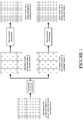
FIGURE 1 depicts a checkerboard interleaved arrangement for the delivery of stereoscopic material. -
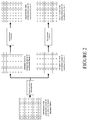
FIGURE 2 depicts a horizontal sampling/column interleaved arrangement for the delivery of stereoscopic material -
FIGURE 3 depicts a vertical sampling/row interleaved arrangement for the delivery of stereoscopic material. -
FIGURE 4 depicts a horizontal sampling/side by side arrangement for the delivery of stereoscopic material. -
FIGURE 5 depicts a vertical sampling/over-under arrangement for the delivery of stereoscopic material. -
FIGURE 6 depicts a quincunx sampling/side by side arrangement for the delivery of stereoscopic material. -
FIGURE 7 depicts a frame-compatible full-resolution 3D stereoscopic scalable video encoding system with reference processing for inter-layer prediction. -
FIGURE 8 depicts a frame-compatible full-resolution 3D stereoscopic scalable video decoding system with reference processing for inter-layer prediction. -
FIGURE 9 depicts a scalable video coding system with a reference processing unit for inter-layer prediction. -
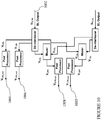
FIGURE 10 depicts a reconstruction module for a frame-compatible full-resolution two-layer delivery system. -
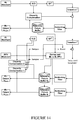
FIGURE 11 depicts a multi-layer resolution-scalable 3D stereo video encoder, where the enhancement layer maintains two reference picture buffers, each one at enhancement resolution and performs motion/disparity compensation in some reduced resolution (frame-compatible), in accordance with an embodiment of the present disclosure. -
FIGURE 12 depicts a multi-layer resolution-scalable 3D stereo video decoder, where the enhancement layer maintains two reference picture buffers, each one at enhancement resolution and performs motion/disparity compensation in some reduced resolution (frame-compatible), in accordance with an embodiment of the present disclosure. -
FIGURE 13 depicts a multi-layer resolution-scalable 3D stereo video encoder, where the enhancement layer maintains two reference picture buffers, each one at enhancement resolution and performs motion/disparity compensation at enhancement resolution, in accordance with an embodiment of the present disclosure. -
FIGURE 14 depicts a multi-layer resolution-scalable 3D stereo video decoder, where the enhancement layer maintains two reference picture buffers, each one at enhancement resolution and performs motion/disparity compensation at enhancement resolution, in accordance with an embodiment of the present disclosure. -
FIGURE 15 depicts a multi-layer resolution-scalable video encoder, where the base layer codes a frame-compatible version of the data and the two enhancement layers code each one of the enhancement resolution data categories (each view for 3D stereoscopic video delivery), in accordance with an embodiment of the present disclosure. -
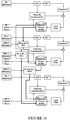
FIGURE 16 depicts a multi-layer resolution-scalable video decoder, where the base layer codes a frame-compatible version of the data and the two enhancement layers code each one of the enhancement resolution data categories (each view for 3D stereoscopic video delivery), in accordance with an embodiment of the present disclosure. -
FIGURE 17 depicts a multi-layer resolution-scalable 3D stereo video encoder, where the enhancement layer encodes residuals and maintains two reference picture buffers, each one at enhancement resolution and performs motion/disparity compensation in some reduced resolution (frame-compatible), in accordance with an embodiment of the present disclosure. -
FIGURE 18 depicts a multi-layer resolution-scalable 3D stereo video decoder, where the enhancement layer encodes residuals and maintains two reference picture buffers, each one at enhancement resolution and performs motion/disparity compensation in some reduced resolution (frame-compatible), in accordance with an embodiment of the present disclosure. -
FIGURE 19 depicts a multi-layer resolution-scalable video encoder where the base layer codes a frame-compatible version of the data and the two enhancement layers code residuals for each one of the enhancement resolution data categories (each view for 3D stereoscopic video delivery), in accordance with an embodiment of the present disclosure. -
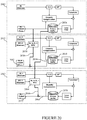
FIGURE 20 depicts a multi-layer resolution-scalable video decoder where the base layer codes a frame-compatible version of the data and the two enhancement layers code residuals for each one of the enhancement resolution data categories (each view for 3D stereoscopic video delivery), in accordance with an embodiment of the present disclosure. - According to a first aspect of the present disclosure, an encoding method for multi-layered frame-compatible video delivery is provided, said encoding method comprising: a) base layer processing images or video frames of multiple data categories through a base layer, comprising: i) providing a base layer frame-compatible representation of the images or video frames of the multiple data categories; and b) enhancement layer processing the images or video frames of multiple data categories through one or more enhancement layers, comprising: i) providing a enhancement layer frame-compatible representation of the images or video frames of the multiple data categories; ii) maintaining at least one enhancement layer reference picture buffer; iii) reference processing at least one dependency on the base layer or a different enhancement layer; and iv) performing motion or disparity compensation, wherein each of said one or more enhancement layer processes all the multiple data categories.
- According to a second aspect of the present disclosure, an encoding method for multi-layered frame-compatible video delivery is provided, said encoding method comprising: a) base layer processing images or video frames of multiple data categories through a base layer, comprising: i) providing a base layer frame-compatible representation of the images or video frames of the multiple data categories; an b) enhancement layer processing the images or video frames of multiple data categories through one or more enhancement layers, wherein each of the multiple data categories is processed separately in a separate enhancement layer, each of the one or more enhancement layers comprising: i) providing an enhancement layer representation of images or videos for one of the multiple data categories; ii) maintaining a enhancement layer reference picture buffer in each enhancement layer; iii) reference processing at least one dependency on the base layer or a different enhancement layer; and iv) performing motion or disparity compensation.
- According to a third aspect of the present disclosure, a decoding method for multi-layered frame-compatible video delivery is provided, said decoding method comprising: a) base layer processing a plurality of base layer bitstream signals through a base layer, comprising: i) providing at least one frame-compatible base layer decode image or video frame; and b) enhancement layer processing a plurality of enhancement bitstream signals through one or more enhancement layers, comprising: i) providing at least one enhancement layer-decoded image or video frame for multiple data categories; ii) maintaining at least one enhancement layer reference picture buffer; iii) reference processing at least one dependency on the base layer or a different enhancement layer; and iv) performing disparity compensation, wherein all the multiple data categories are decoded and processed in the same enhancement layer.
- According to a fourth aspect of the present disclosure, a decoding method for multi-layered frame-compatible video delivery is provided, said decoding method comprising: a) base layer processing a plurality of base layer bitstream signals through a base layer through a base layer, comprising: i) providing at least one frame-compatible base layer decode image or video frame; and b) enhancement layer processing a plurality of enhancement bitstream signals through one or more enhancement layers for multiple data categories through one or more enhancement layers, wherein each of the multiple data categories is processed separately in a separate enhancement layer, each of the one or more enhancement layers comprising: i) providing at least one enhancement layer-decoded image or video frame for one of the multiple data categories; ii) maintaining at least one enhancement layer reference picture buffer; iii) reference processing at least one dependency on the base layer or a different enhancement layer; and iv) performing disparity compensation, wherein all the multiple data categories are decoded and processed in the same enhancement layer.
- In light of the existing codecs' lack of backwards compatibility, exploiting the installed base of set-top boxes, Blu-Ray players, and high definition TV sets may speed up the
consumer 3D deployment. Most display manufacturers are offering high definition TV sets that support 3D stereoscopic display. These TV sets include models of all majors display technologies: LCD, plasma, and DLP [Reference 1]. The key is to provide the display with content that contains both views but still fits within the confines of a single frame, while still utilizing existing and deployed codecs such as VC-1 and H.264/AVC. Such an approach is the so-called frame-compatible approach, which formats the stereo content so that it fits within a single picture or frame. The size of the frame-compatible representation needs not be the same with that of the original view frames. - Similarly to the MVC extension of H.264, Dolby's stereoscopic 3D consumer delivery system [Reference 4] features a base and an enhancement layer. In contrast to the MVC approach, the views may be multiplexed into both layers in order to provide consumers with a base layer that is frame compatible by carrying sub-sampled versions of both views and an enhancement layer that when combined with the base layer results to full resolution reconstruction of both views.
- A backward-compatible 3D video delivery system may deliver 3D video to homes or other venues through existing or legacy 2D video hardware and systems. Frame compatible 3D video systems provide such a backwards compatible delivery architecture. In that case, a layered approach can be used in which the base layer provides a low resolution version of the left and right eye arranged in a "frame-compatible" format. Frame-compatible formats include side-by-side, over-under, and quincunx/checkerboard interleaved.
FIGURES 1-6 show some indicative examples. Furthermore, an additional pre-processing stage may be present that predicts the enhancement layer frame given the base layer decoded frame prior to using it as a motion-compensated reference for prediction of the enhancement layer.FIGURES 7 and8 show an encoder and a decoder for the system disclosed in [Reference 4], respectively. - Even a non-frame-compatible coding arrangement such as that of MVC can also be enhanced with a pre-processor (for example, a reference processing unit (RPU)/predictor) that improves the reference taken from the base view before using it as a reference for prediction of the dependent view. This architecture is also disclosed in [Reference 4] and is illustrated in
Figure 9 . - The frame-compatible techniques of [Reference 4] ensure a frame-compatible base layer. Through the use of the pre-processor/RPU element, these techniques reduce the overhead in realizing full-resolution reconstruction of the stereoscopic views.
FIGURE 10 shows the process of full-resolution reconstruction. - Based on the availability of the enhancement layer, there are several methods to obtain the final reconstructed views. Some of the methods can consider encoding of actual pixel data in the enhancement layer, or may consider coding residual data or in general different from the base layer (e.g. high frequencies vs. low frequencies) data that, if combined in a certain form, can enable a higher quality/resolution representation of the reconstructed signal. Any resolution could be used for these methods, e.g. some of these methods can be at half resolution, while some of them can be at full resolution or even lower, higher, or somewhere in between. Embodiments of the present disclosure may be directed at any resolution. They can be interpolated from the frame compatible output of the base layer (VFC, BL(1002) of
FIGURE 10 ) and optionally post-processed to yield V0,BL,out (1004) and V1,BL,out (1006). Alternatively, they can be multiplexed with the proper samples of the enhancement layer to yield a higher representation reconstruction V0,FR,out (1008) and V1,FR,out (1010) of each view. The resulting reconstructed views in both cases may have the same resolution. However, in the second case one encodes information for all samples, while, in the first case, half of the information of the reconstructed views is obtained by interpolation with intelligent algorithms, as disclosed in [Reference 4]. FromFIGURE 10 one may observe that, following the decoding of the base and enhancement layers, additional and potentially memory-intensive and bandwidth-intensive operations are used in order to derive the final full-resolution reconstructed views. - The present disclosure provides techniques that enable frame compatible 3D video systems to achieve
full resolution 3D delivery. The present disclosure also provides methods to improve the internal prediction accuracy in the enhancement layers by performing motion and stereo disparity compensation in some higher representation/resolution sample domains. Such domains may have higher spatial or frequency resolution than the samples in the frame-compatible representation. In some embodiments, these domains may have resolution equal to the full-resolution, that is, the original resolution of the frames for each category before those frames are filtered, sampled, and multiplexed into the frame-compatible representation. Additional methods for processing of data that are compressed by these arrangements can be found in [Reference 5]. Throughout the specification, the term "data category," or "category," refers to a group of data. Different data categories may refer to different groups of data that may or may not have inter-group relation. For embodiments of the present disclosure related to 3D or stereoscopic image or video delivery, the term "data category," or "category," refers to a single view for 3D images or videos. -
FIGURE 11 shows a multi-layer resolution-scalable 3D stereo video encoder where the enhancement layer maintains two reference picture buffers, each one at enhancement resolution and performs motion/disparity compensation in some reduced resolution (e.g. half horizontal or vertical resolution), in accordance with an embodiment of the present disclosure.FIGURE 12 shows a decoder corresponding to the encoder shown inFIGURE 11 , in accordance with the embodiment of the present disclosure. According to this embodiment, a multiple-layer codec is provided for compression of a video sequence that consists of frames belonging to multiple data categories for a given time instance. - According to this embodiment of the present disclosure, the base layer (1102) of
FIGURE 11 provides a frame-compatible representation of multiple data categories. Frame-compatible representation here refers to sampling and multiplexing the different data categories into a single frame. This single frame may not have the same size as that of the frames comprising the original categories. According to a further embodiment of the present disclosure, the base layer (1102) ofFIGURE 11 may be implemented and encoded using any available or future video codecs, such as H.264/AVC, VP8, and VC-1. - With continued reference to
FIGURE 11 , before sending the data to the base layer encoder (1104), the data is sampled with samplers (1106) and multiplexed with a multiplexer (1108). In a further embodiment, sampling may also comprise filtering. Furthermore, filtering can be asymmetric among the different data categories. For example, in still further embodiments, one category may be filtered and sampled such that less than half of the information (e.g. frequency content) is retained. And another category may be filtered and sampled such that more than half of the information is retained.FIGURES 1-6 show indicative sampling and multiplexing arrangements for two categories of image data. - According to the embodiment shown in
FIGURE 11 , an additional enhancement layer (1152) is provided. According to other embodiments, the number of the additional enhancement layers depends on the number of categories of the frame data and the data already sampled and interleaved within the base layer. The data that is sampled and interleaved in an enhancement layer is selected such that, when combined with the data already in the base layer, the sampled and interleaved data leads to an efficient representation and reconstruction of data of most categories. According to the embodiment shown inFIGURE 11 , which involves two categories of data, one enhancement layer (1152) is used to code all the original data. According to this embodiment, the base layer (1102) could carry half the samples of each category and the enhancement layer (1152) could provide the other missing half samples of each data category. - According to a further embodiment of the present disclosure, the base layer compresses one third of the samples of one category and the rest two thirds are stored in the enhancement layer. The opposite is also possible. Similarly, as with the base layer, the data content of each category in an enhancement layer may not be the same as that of another data category. This may be realized by using different type of filtering or different number and arrangement of samples (e.g. quincunx vs. row-based sub-sampling). According to this embodiment, the sampling operation derives samples for the enhancement layer processing, and the sampling operation may include filtering of these samples.
- According to the embodiment shown in
FIGURE 11 , the enhancement layer (1152) adopts a hybrid video coding model that can be found in modern video codecs, such as VC-1 and H.264/AVC. The input data are predicted either from neighboring samples in the same picture or frame (using intra prediction) or from samples from past decoded frames (inter prediction) that belong to the same layer and are buffered as motion-compensated prediction references within a so-called reference picture buffer. Inter-layer prediction is also possible if decoded information from lower priority layers (such as the base layer) is available to the enhancement layer. One way to have access to such information is by considering decoded pictures from the lower priority layer as references for motion compensation. After prediction, the prediction residuals (1154) undergo transform (1156) and quantization (1158) and the quantized coefficients are then coded using entropy coding (1160). The enhancement layer (1252) of the decoder shown inFIGURE 12 reverses this process. - Unlike the base layer (1102) of
FIGURE 11 , which has a single reference picture buffer (1110) that contains past decoded pictures/frames, the enhancement layers (1152) maintain multiple internal reference picture buffers (1162), one for each data category. In the embodiment ofFigure 11 , the generation of the reference pictures that are stored in those buffers is accomplished through the use of a de-multiplexer and RPU processor (1164). The de-multiplexer and RPU processor (1164) process the sum of the prediction residual and the predicted frame (obtained through intra or inter prediction). - The de-multiplexer (1164) of
FIGURE 11 performs also up-sampling and interpolation of missing samples for each category. Each reference picture buffer (1162) contains only frames belonging to the same data category. The buffers (1162) store images or frames at a higher resolution than the resolution of the samples being input to the enhancement layer (1102), or optionally at the enhancement-resolution. In addition, the resolutions used to store frames in each reference picture buffer may differ from each other. One buffer may store pictures at one resolution, while a second picture buffer may store pictures at another resolution. Prior to performing disparity compensation (i.e. motion compensation or intra prediction) (1168), the selected references from each reference picture buffer (1162) are down-sampled with samplers (1170) and multiplexed with a multiplexer (1172) to generate a single reference picture that may now be formatted in a frame-compatible arrangement. According to a further embodiment, the down-sampling and multiplexing operation into the frame-compatible format may include more sophisticated operations such as linear or non-linear combinations of the two references into the final frame-compatible reference picture. According to a still further embodiment, the resolution of the frames in the internal buffers may match the enhancement resolution. - According to the embodiment shown in
FIGURE 11 , inter prediction within the enhancement layer (1152) takes place after sampling (1170) and multiplexing (1172) the reference pictures provided from the internal multiple (optionally, enhancement resolution) reference picture buffers. Inter prediction thus takes place in a "frame-compatible" domain, though not necessarily in the same domain as that of the base layer. According to a further embodiment for stereoscopic video, the base layer frame compatible format may comprise the even columns from the left view and the odd columns from the right view, while at the enhancement layer the frame compatible format may comprise the odd columns from the left view and the even columns from the right view. Similar arrangements are also possible for other interleaving arrangements such as over-under, side-by-side, etc. Proper arrangement methods are so selected that the combination of the samples coded in the frame-compatible base layer picture and the samples coded in the enhancement layer or enhancement layers should yield enhancement-resolution reconstructions of the data categories. Such a technique may be extended to any number of layer or views, in accordance with another embodiment of the present disclosure. In addition, the inter prediction process comprises estimating a set of motion parameters for each enhancement layer, which are coded and transmitted to the decoder. - According to the embodiment shown in
FIGURE 11 , the enhancement layer reference picture buffers (1162) contain pictures that are not limited to de-multiplexed and up-sampled (1164) decoded pictures of the enhancement layer (1152). A base-layer-to-enhancement-layer reference processing unit (RPU)/pre-processor module (BL-to-EL RPU) (1166) takes as input frame-compatible decoded pictures from the reference picture buffer (1110) of the base layer (1102), and then de-multiplexes and up-samples the frame data to estimate the higher representation (optionally enhancement-resolution) frames belonging to different data categories. - According to a further embodiment, the BL-to-EL RPU (1166) process may comprise filtering, upscaling, interpolation of missing samples, and recovery or estimation of frequency content. Recovery or estimation of frequency content is used when, for example, the base layer codes low frequencies and the enhancement layer codes high frequencies. These BL-to-EL RPU (1166) processed images are then placed and used as additional motion-compensated prediction references in the higher representation (optionally enhancement-resolution) reference picture buffers (1162) of the enhancement layer (1152). The BL-to-EL RPU module (1166) at the encoder generates information of the prediction/up-sampling process and communicates this information ("RPU bitstream") (1174) to the identical BL-to-EL RPU (1254) of
FIGURE 12 , which is located at the decoder module shown inFIGURE 12 . In this way, the encoder prediction operation may be duplicated at the decoder. Interpolation and prediction using this RPU module may comprise techniques that are disclosed in [Reference 6]. - According to a further embodiment of the present disclosure, the internal buffers store frames at the enhancement resolution, and the decoder reconstructs internally and stores in the reference picture buffers the enhancement resolution frames for each data category. As a result, this embodiment does not use, for the purposes of display of the enhancement resolution data, the processing module of
FIGURE 10 . Instead, in accordance with this embodiment, the enhancement resolution reconstructed frames may be extracted and displayed directly from the reference picture buffers of the enhancement layer. According to another embodiment of the present disclosure, the enhancement resolutions for each category are not equal. In this embodiment, the encoder and the decoder rescales the pictures in the buffers of the enhancement layer to some common enhancement resolution. - In an additional embodiment, the frame coded in the base layer may have the same size as that of the frames belonging to each category. In an additional embodiment, the reference picture buffers in the enhancement layers contain frames at the resolution of the original frames (full resolution).
- According to an embodiment of the present disclosure, the frame-compatible domain, in which motion compensation is applied, may be identical to that of the base layer. In a further embodiment, the base layer may be interleaved in a side-by-side format, and the enhancement layer also codes a frame interleaved in the same side-by-side format.
- According to an embodiment of the present disclosure, the base layer frame compatible format may comprise the even columns from the first view and the odd columns from the second view, while at the enhancement layer the frame compatible format may comprise the odd columns from the first view and the even columns from the second view.
- According to an embodiment of the present disclosure, the layers may code frames at different spatial resolutions, in which case one could build a system with spatial scalability. According to a further embodiment, the codec system has a side-by-side frame-compatible base layer at 1280x720 and an enhancement layer that can reconstruct both views at 1920x1080. In this embodiment, the BL-to-EL RPU first de-multiplexes the frame-compatible data into separate categories and then may perform one of the following operations. In one scheme, the BL-to-EL RPU first interpolates the missing samples of that category and then rescales the resulting frame (1280x720) to the intended spatial resolution (1920x1080) before storing that resulting frame in the corresponding reference picture buffer in the enhancement layer. In a second scheme, the available and de-multiplexed samples are rescaled from a lower resolution to a higher resolution, for example, from 640x720 to 960x1080. Then, an additional interpolation operation determines the missing columns, and optionally also filters the existing samples to derive the full resolution frame.
- According to an embodiment of the present disclosure, the multiple reference picture buffers in the enhancement layer may be controlled through memory management control operations (MMCO), such as those disclosed in [Reference 2]. MMCO operations control how reference pictures are added and removed from the buffers. According to a further embodiment, MMCO operations are transmitted for the enhancement layer. In this embodiment, either the sets of MMCOs for each reference picture buffer are the same, or one set of MMCO operations is signaled. This applies to both of the reference picture buffers. As a result, the operation of the picture buffers remains synchronized. A still further embodiment may use similar approaches for reference picture list modification/reordering signaling, including, but not limited to, the methods disclosed in [Reference 2].
- The signaling information controls generation of the lists of the reference pictures in the buffers. These lists are then used in motion-compensated prediction. According to a further embodiment, the modification information is identical for the reference picture lists of each data category. In a still further embodiment, a single set of modification information is transmitted and will be applied to all the lists in the enhancement layer. According to further embodiments of the present disclosure, similar approaches are used in codecs utilizing signaling that controls the content of the reference picture buffers and signaling that controls the initialization and modification of its reference picture lists.
- According to an embodiment of the present disclosure, the de-multiplexer and up-sampler RPU that derives the single-category frames at enhancement resolution before being stored into the reference picture buffers may be implemented as a reference processing unit as disclosed in [Reference 6].
- According to another embodiment of the present disclosure, the base layer may code a representation with a first range of frequency content, while the additional enhancement layers may provide a second range of frequency content. Their output may be combined at the decoder to provide a better representation of the original data categories.
-
FIGURE 13 shows a multi-layer resolution-scalable 3D stereo video encoder where the enhancement layer maintains two reference picture buffers, each one at enhancement resolution and performs motion/disparity compensation at enhancement resolution, in accordance with an embodiment of the present disclosure.FIGURE 14 shows a decoder corresponding to the encoder shown inFIGURE 13 , in accordance with the embodiment of the present disclosure. - The embodiment shown in
FIGURES 13 and14 is similar to the embodiment shown inFIGURES 11 and12 . But, different from the embodiment shown inFIGURES 11 and12 , the samplers (1354) and the multiplexer (1356), according to the embodiment shown inFIGURE 13 , are placed after disparity compensation modules (1358). There are in fact as many disparity compensation modules (1358) as there are data categories. According to the embodiment shown inFIGURE 13 , which is for stereoscopic video delivery, there are two disparity compensation modules (1358), one for each view. After disparity compensation is performed on each higher-representation reference, the resulting frames are passed on to the samplers (1354) that perform a down-sampling process that may be preceded and/or succeeded by filtering (in the case of two views it will retain half of the samples). The down-sampled data from each data category are then fed to the multiplexer (1356), which generates a frame-compatible picture (1360). This frame-compatible picture (1360) is then used as the prediction to which the prediction residuals (1362) are added within the enhancement layer hybrid video coding loop. - According to the embodiment shown in
FIGURE 13 , the disparity compensation module (1358) has more samples available (higher-representation pictures) and may be able to produce better predictors. In addition, the disparity compensation module may have more spatially accurate partitions in motion compensation. For example, when the side-by-side format is used, a partition size of 4x4 in a frame compatible reference picture is equivalent with a partition size of 8x4 in the full resolution picture. Similarly a partition of 16x16 is effectively a 32x16 partition in the full resolution picture. As a result, the disparity compensation module (1358) would have larger and more accurate partitions, in this embodiment. - According to the embodiment shown in
FIGURE 13 , disparity estimation and compensation may be performed multiple times (e.g. twice) at the enhancement layer and thus increase system complexity. In addition, the benefits gained by the increased spatial accuracy for motion compensation are contingent on how the higher-representation reference pictures were up-sampled from the frame-compatible picture obtained by adding the prediction residual to the frame-compatible prediction picture VFC,PRED (1362) ofFIGURE 13 . Also, according to this embodiment, the enhancement layer compresses twice the amount of motion vector information. According to a further embodiment, the reference picture buffers adopt the enhancement resolution, and the final reconstruction of each data category is performed as part of the generation of the references that are stored in the reference picture buffers of the enhancement layer. Consequently, this embodiment does not further process the output of the base and enhancement layers, unlike the decoder shown inFIGURE 10 . - According to a further embodiment of the present disclosure, the multi-layer codec may consider spatial scalability, similarly to our additional embodiment for the first method. A still further embodiment, similarly to the embodiment shown in
FIGURES 11 and12 , provides the reference picture list modification and MMCO operations signaled to the decoder. - According to a further embodiment of the present disclosure, since there is sufficient correlation in motion parameters used in the multiple disparity/motion estimators and compensation modules, these motion parameters are selected to enable efficient prediction of parameters of one module from parameters from the other. In a still further embodiment, the motion parameters are selected to be identical and for each enhancement layer, only one set of parameters are sent. In another embodiment, a set of parameters for each module is signaled. Motion parameter prediction may also use information from neighboring or collocated parameters that are signaled from higher priority disparity estimation/compensation modules.
- According to a further embodiment of the present disclosure, the frame coded in the base layer may have the same size as that of the frames belonging to each category. According to another embodiment, the reference picture buffers in the enhancement layers contain frames at the resolution of the original frames (full resolution). According to still another embodiment, the de-multiplexer and up-sampler that derives the single-category frames at enhancement resolution before being stored into the reference picture buffers may be implemented as a reference processing unit as disclosed in [Reference 6]. In still another embodiment, the base layer may code a representation with a first range of frequency content, while the additional enhancement layers may provide a second range of frequency content. Their output may be combined at the decoder to provide a better representation of the original data categories.
-
FIGURE 15 shows a multi-layer resolution-scalable video encoder, where the base layer (1502) encodes a frame-compatible version of the data and the two multiple enhancement layers (1532, 1562) encode each of the two enhancement resolution data categories (each view for the case of 3D stereoscopic video delivery), in accordance with an embodiment of the present disclosure.FIGURE 16 shows a corresponding decoder, in accordance with the embodiment of the present disclosure. - According to the embodiment shown in
FIGURE 15 , the architecture for the base layer (1502) is identical to that of the embodiments shown inFIGURES 11-14 . According to the embodiment shown inFIGURE 15 , the base layer (1502) may encode a frame-compatible version of the multiple data categories. In this embodiment, an enhancement layer (1532, 1562) is provided for each data category. Each enhancement layer (1532, 1562) provides an enhancement resolution reconstruction of each data category, in accordance with a further embodiment for stereoscopic video delivery. According to this embodiment, each enhancement layer (1532, 1562) contains a single reference picture buffer (1534, 1564) and uses an architecture very similar to that of the base layer (1502). In this embodiment, the enhancement layers (1532, 1562) receive directly the enhancement (e.g. full) resolution frame of each category. In contrast, according to the embodiment shown inFIGURES 11-14 , the input to the enhancement layers consists of frame-compatible representations of all data categories. - According to the embodiment shown in
FIGURE 15 , the reference picture buffer (1534, 1564) of each layer (1532, 1562) stores references that may be used for motion-compensated prediction (1536, 1566). These references include past decoded frames of that same layer. According to a further embodiment, additional references in the enhancement layers (1532, 1562) may be inserted from the base layer (1502), as done with the MVC extension of H.264. In this embodiment, before being inserted, these references are processed with the RPU/pre-processor (1538, 1568) to derive processed references that correspond to the frames stored in the target reference picture buffer. According to a further embodiment for the stereoscopic video delivery, the base layer frame-compatible picture is de-multiplexed into samples belonging to different categories. The samples are then up-sampled within the RPU/preprocessor (1538, 1568) to enhancement (e.g. full) resolution before being stored in the reference pictures buffers (1534, 1564) of each enhancement layer (1532, 1562). According to this embodiment, the prediction, interpolation, and up-sampling processes within the RPU/preprocessor (1538, 1568) may adopt techniques disclosed in [Reference 6]. - According to the embodiment shown in
FIGURE 15 , separate RPUs (1538, 1568) may be implemented to produce each reference that will be stored in each of the enhancement layers' reference picture buffers (1534, 1564). According to another embodiment, a single module may be provided to jointly optimize and perform de-multiplexing and up-sampling of the base layer decoded frame-compatible picture into multiple full reference pictures, one for each enhancement layer. - According to another embodiment of the present disclosure, additional dependencies for the enhancement layer apart from the one to the base layer are provided. In this embodiment, an enhancement layer may depend on parsing and decoding another enhancement layer. With the continued reference to
FIGURE 15 , the decoding process of enhancement layer 1 (1562) may also depend on enhancement layer 0 (1532), apart from the base layer (1502). Pictures (1572) stored in the reference picture buffer (1534) of enhancement layer 0 (1532) for display are fed into an additional RPU/preprocessor module (1570). The additional RPU/preprocessor (1570) processes the fed references inputs (1572) to be similar to the format of enhancement layer 1 (1562). The processed results (1574) are then stored into the reference picture buffer (1564) of enhancement layer 1 (1562) and are available for motion-compensated prediction (1566). According to a further embodiment for stereoscopic video delivery, each enhancement layer codes one of the views, and the RPU would process one view using motion and spatial processing in order to produce a reference picture that is closer to another view. According to still further embodiments, motion processing could include higher-order motion models such as the affine and perspective motion model. - According to a further embodiment, the multi-layer codec may consider spatial scalability, similarly to the embodiments shown in
FIGURES 11-14 . In this embodiment, the preprocessor modules (for example, 1538 and 1568 ofFIGURE 15 ) that perform prediction of the enhancement layers from the base layer will also comprise rescaling to the target layer resolution. The preprocessor module that predicts one enhancement layer from a second enhancement layer (for example, 1570 ofFIGURE 15 ) may also comprise rescaling if the enhancement layers do not have the same spatial resolution. -
FIGURE 17 shows a multi-layer resolution-scalable 3D stereo video encoder, where the enhancement layer encodes residuals and maintains two reference picture buffers, each one at enhancement resolution and performs motion/disparity compensation in some reduced resolution (frame-compatible), in accordance with an embodiment of the present disclosure.FIGURE 18 shows a corresponding decoder, in accordance with the embodiment of the present disclosure. - According to the embodiment shown in
FIGURE 17 , a base layer (1702) codes a frame-compatible signal, which can be further improved (in terms of resolution or spatial frequency content, among others) when decoding the one or more enhancement layers (1752) and combining them with the output of the base layer (1702). According to this embodiment, the enhancement layer (1752) encodes a filtered, sampled, and multiplexed residual (1754) [Reference 7] that is a result of subtracting a prediction (1756) of the original full resolution data category frame. This prediction (1756) is a result of using an RPU processor (1758) that has as input decoded pictures (1760) from the frame-compatible base layer (1702) and outputs predictions (1756) of the original frame categories at the original (full) resolutions. In a further embodiment, the RPU (1758) may use techniques such as those disclosed in [Reference 6], including filtering, interpolation, rescaling, etc. According to the embodiment shown inFIGURE 17 , the internal picture buffers (1762) of the enhancement layer (1752) does not receive processed references from the base layer buffer (1704) via an RPU. - At the decoder shown in
FIGURE 18 , a similar RPU (1854) takes as input the decoded base layer picture from the picture buffer (1804) of the base layer (1802), processes it to the original (full) resolution to derive full resolution frames (1856) for each category and then adds those frames (1856) to the frames (1858) already decoded in the enhancement layer reference picture buffers (1860) to yield the final reconstructed frame (1862) for each data category. - All the further embodiments according to the embodiment shown in
FIGURES 11 and12 that do not conflict with the differences between the embodiment shown inFIGURES 11 and12 and the embodiment shown inFIGURES 17 and18 apply also to further embodiment according to the embodiment shown inFIGURES 17 and18 . According to a further embodiment, the resolutions of the base layer and that of the enhancement layers and the internal reference picture buffers of the enhancement layers may be different. - In a further embodiment according to the embodiment shown in
FIGURES 17 and18 , the enhancement layer provides multiple disparity compensation modules, one for each reference picture buffer of each data category, similarly to the embodiment shown inFIGURES 13 and14 . All applicable further embodiments according to the embodiment shown inFIGURE 13 and14 apply here as well. -
FIGURE 19 shows a multi-layer resolution-scalable video encoder, where the base layer codes a frame-compatible version of the data and the two enhancement layers code residuals for each of the enhancement resolution data categories (each view for 3D stereoscopic video delivery), in accordance with an embodiment of the present disclosure.FIGURE 20 shows a corresponding decoder, in accordance with the embodiment of the present disclosure. - According to the embodiment shown in
FIGURE 19 , the enhancement layers (1932, 1962) adopt residual coding, similar to the embodiment shown inFIGURES 17 and18 . According to this embodiment, each enhancement layer (1932, 1962) corresponds to each data category and encodes a residual (1934, 1964) [Reference 7] that is a result of subtracting a prediction (1936, 1966) of the original full resolution data category frame. This prediction is a result of using an RPU processor (1938, 1968) for each enhancement layer (1932, 1962) that has as input decoded pictures from the frame-compatible base layer (1902) and outputs predictions (1936, 1966) of the original frame categories at the original (full) resolution of the given layer. According to a further embodiment, the RPU (1938, 1968) may use techniques such as those disclosed in [Reference 6], including filtering, interpolation, rescaling, etc. According to the embodiment shown inFIGURE 19 , the internal picture buffer (1940, 1970) of the enhancement layer (1932, 1962) does not receive processed references from the base layer buffer (1904) via an RPU. - At the decoder shown in
FIGURE 20 , for each enhancement layer (2032, 2062), a similar RPU (2034, 2064) takes as input the decoded base layer picture from the picture buffer (2004) of the base layer (2002), processes it to the original (full) resolution to derive a full resolution frame (2036, 2066) for the given category and then adds this frame (2036, 2066) to the frame (2038, 2068) already decoded in the enhancement layer reference picture buffer (2040, 2070) to yield the final reconstructed frame (2042, 2072) for the given data category. - All the further embodiments according to the embodiment shown in
FIGURES 15 and16 that do not conflict with the differences between the embodiment shown inFIGURES 15 and16 and the embodiment shown inFIGURES 19 and20 apply also to further embodiment according to the embodiment shown inFIGURES 19 and20 . According to a further embodiment, the resolutions of the base layer and that of the enhancement layers and the internal reference picture buffers of the enhancement layers may be different. And, the resolutions of each enhancement layer may differ. - The methods and systems described in the present disclosure may be implemented in hardware, software, firmware or combination thereof. Features described as blocks, modules or components may be implemented together (e.g., in a logic device such as an integrated logic device) or separately (e.g., as separate connected logic devices). The software portion of the methods of the present disclosure may comprise a computer-readable medium which comprises instructions that, when executed, perform, at least in part, the described methods. The computer-readable medium may comprise, for example, a random access memory (RAM) and/or a read-only memory (ROM). The instructions may be executed by a processor (e.g., a digital signal processor (DSP), an application specific integrated circuit (ASIC), or a field programmable logic array (FPGA)).
- Thus, embodiments of the present invention have been described, which relate to one or more of the example embodiments that are enumerated ordinally, directly below.
- Accordingly, the invention may be embodied in any of the forms described herein, including, but not limited to the following Enumerated Example Embodiments (A-EEEs and B-EEEs) which described structure, features, and functionality of some portions of the present invention:
- A-EEE1. A encoding method for multi-layered frame-compatible video delivery, comprising:
- a) base layer processing images or video frames of multiple data categories through a base layer, comprising:
- i) providing a base layer frame-compatible representation of the images or video frames of the multiple data categories; and
- b) enhancement layer processing the images or video frames of multiple data categories through one or more enhancement layers, comprising:
- i) providing a enhancement layer frame-compatible representation of the images or video frames of the multiple data categories;
- ii) maintaining at least one enhancement layer reference picture buffer;
- iii) reference processing at least one dependency on the base layer or a different enhancement layer; and
- iv) performing motion or disparity compensation,
- a) base layer processing images or video frames of multiple data categories through a base layer, comprising:
- A-EEE2. The encoding method according to
A-EEE 1, wherein the multiple data categories comprise multiple views for stereoscopic images or videos. - A-EEE3. The encoding method according to
A-EEE
frames of the multiple data categories comprises:
base layer sampling and base layer multiplexing the images or video frames of multiple data categories into a single frame. - A-EEE4. The encoding method according to any one of A-EEE 1-3, wherein the base layer processing conforms to one of a plurality of existing video codecs.
- A-EEE5. The encoding method according A-EEE 4, wherein the plurality of existing video codecs comprise H.264/AVC, VP8, and VC-1.
- A-EEE6. The encoding method according to any one of A-EEE 3-5, wherein the sampling of the base layer processing comprises symmetric or asymmetric filtering of the images or video frames of the multiple data categories.
- A-EEE7. The encoding method according to any one of A-EEE 3-6, wherein the base layer sampling comprises horizontal sampling, vertical sampling, or quincunx sampling.
- A-EEE8. The encoding method according to any one of A-EEE 3-7, wherein the base layer multiplexing uses any one frame-compatible packing arrangement of checkerboard interleaved arrangement, column interleaved arrangement, row interleaved arrangement, side by side arrangement, and over-under arrangement.
- A-EEE9. The encoding method according to any one of A-EEE 2-8, wherein the base layer processing further comprises processing equal or unequal amount of samples of the images or video frames of the multiple views.
- A-EEE10. The encoding method according to any one of A-EEE 2-9, wherein the enhancement layer processing adopts a hybrid video coding model, said hybrid video coding model conforming to any one of a plurality of existing codecs.
- A-EEE11. The encoding method according to A-EEE 10, wherein the plurality of existing codecs comprise VC-1 and H.264/AVC.
- A-EEE12. The encoding method according to any one of A-EEE 2-11, wherein the enhancement layer processing further comprises:
- generating at least one reference image or video frame by predicting at least one predicted image from samples in the same image or frame or from samples from past decoded frames in the same enhancement layer, and
- storing the at least one reference image or video frame in the at least one enhancement layer reference picture buffer.
- A-EEE13. The encoding method according to A-EEE 12, where the generation of the at least one reference image or video frame further comprises de-multiplexing and reference processing the sum of at least one prediction residual image and the at least one predicted image.
- A-EEE14. The encoding method according to A-EEE 13, wherein the de-multiplexing further comprises upsampling and interpolating the sum of the at least one prediction residual image and the at least one predicted image.
- A-EEE15. The encoding method according to any one of A-EEE 2-14, wherein one of the at least one enhancement layer reference picture buffer stores images or video frames at different resolutions from the rest of the at least one enhancement layer reference picture buffer.
- A-EEE16. The encoding method according to any one of A-EEE 1-15, wherein the enhancement layer processing further comprises:
- selecting at least one reference image from the at least one enhancement layer reference picture buffer for each of the multiple data categories;
- enhancement layer sampling and enhancement layer multiplexing the selected at least one reference image into at least one frame-compatible image; and
- performing disparity compensation or inter prediction based on the at least one frame-compatible image.
- A-EEE17. The encoding method according to A-EEE 16, wherein
the enhancement layer sampling of the selected at least one reference image comprises any one of horizontal sampling, vertical sampling, or quincunx sampling; and
the enhancement layer multiplexing of the selected at least one reference image uses any one frame-compatible packing arrangement of checkerboard interleaved arrangement, column interleaved arrangement, row interleaved arrangement, side by side arrangement, and over-under arrangement. - A-EEE18. The encoding method according to A-EEE 16 or 17, wherein the enhancement layer processing further comprises:
- base layer to enhancement layer (BL-to-EL) processing at least one base layer decoded frame compatible image from a reference buffer in the base layer; and
- storing the BL-to-EL processed at least one base layer decoded frame compatible image in the at least one enhancement layer reference picture buffer.
- A-EEE19. The encoding method according to A-EEE 18, wherein the BL-to-EL processing comprises reference processing, de-multiplexing and up-sampling the at least one base layer decoded frame compatible image.
- A-EEE20. The encoding method according to A-EEE 19, wherein the BL-to-EL processing further comprises: filtering, upscaling, and interpolating the at least one base layer decoded frame compatible image.
- A-EEE21. The encoding method according to any one of A-EEE 18-20, wherein the enhancement layer processing further comprises providing information regarding the BL-to-EL processing to a corresponding decoder.
- A-EEE22. The encoding method according to any one of A-EEE 1-21, wherein the at least one enhancement layer reference picture buffer store images at an identical or different enhancement resolution for each one of the multiple data categories.
- A-EEE23. The encoding method according to any one of A-EEE 1-22, wherein the at least one enhancement layer reference picture buffer store images at same resolution as original input images.
- A-EEE24. The encoding method according to any one of A-EEE 1-23, wherein the base layer multiplexing and the enhancement layer multiplexing use the same frame-compatible packing arrangement.
- A-EEE25. The encoding method according to any one of A-EEE 18-24, wherein the base layer processing and the enhancement layer processing process images at different spatial resolutions.
- A-EEE26. The encoding method according to A-EEE 25, wherein the BL-to-EL processing comprises:
- de-multiplexing the at least one base layer decoded frame compatible image;
- interpolating the de-multiplexed at least one base layer decoded frame compatible image; and
- rescaling the interpolated, de-multiplexed at least one base layer decoded frame compatible image to a target spatial resolution.
- A-EEE27. The encoding method according to A-EEE 25, wherein the BL-to-EL processing comprises:
- de-multiplexing the at least one base layer decoded frame compatible image;
- rescaling the de-multiplexed at least one base layer decoded frame compatible image to a different spatial resolution; and
- interpolating the de-multiplexed, rescaled at least one base layer decoded frame compatible image to a target spatial resolution.
- A-EEE28. The encoding method according to A-EEE 27, further comprising filtering de-multiplexed, rescaled at least one base layer decoded frame compatible image to a target spatial resolution.
- A-EEE29. The encoding method according to any one of A-EEE 1-28, wherein the enhancement layer processing further comprises controlling the at least one enhancement layer reference picture buffer through memory management control operations (MMCOs). A-EEE30. The encoding method according to A-EEE 29, wherein each of the at least one enhancement layer reference picture buffer is synchronized according to one or more sets of MMCOs.
- A-EEE31. The encoding method according to A-EEE 29 or A-EEE 30, wherein the enhancement layer processing further comprises providing information regarding the MMCOs to a corresponding decoder.
- A-EEE32. The encoding method according to any one of A-EEE 1-31, wherein the base layer processing encodes image contents in a first range of frequencies and the enhancement layer processing encodes image contents in a second range of frequencies.
- A-EEE33. The encoding method according to any one of A-EEE
1-15, wherein the enhancement layer processing further comprises:- selecting at least one reference image from the at least one enhancement layer reference picture buffer for each of the multiple data categories;
- obtaining at least one compensated image for each of the multiple data categories by performing disparity compensation or inter prediction based on the at least one reference image; and
- enhancement layer sampling and enhancement layer multiplexing the at least one compensated image into at least one frame-compatible image.
- A-EEE34. The encoding method according to A-EEE 33, wherein the enhancement layer processing further comprises controlling the at least one enhancement layer reference picture buffer through memory management control operations (MMCOs).
- A-EEE35. The encoding method according to A-EEE 34, wherein the enhancement layer processing further comprises providing information regarding the MMCOs to a corresponding decoder.
- A-EEE36. The encoding method according to any one of A-EEE 33-35, wherein the at least one enhancement layer reference picture buffer store images at an identical or different enhancement resolution for each of the multiple data categories.
- A-EEE37. The encoding method according to any one of A-EEE 33-36, wherein the at least one enhancement layer reference picture buffer store images at same resolution as original input images.
- A-EEE38. The encoding method according to any one of A-EEE 33-37, wherein the base layer processing encodes image contents in a first range of frequencies and the enhancement layer processing encodes image contents in a second range of frequencies.
- A-EEE39. An encoding method for multi-layered frame-compatible video delivery, comprising:
- a) base layer processing images or video frames of multiple data categories through a base layer, comprising:
- i) providing a base layer frame-compatible representation of the images or video frames of the multiple data categories; and
- b) enhancement layer processing the images or video frames of multiple data categories through one or more enhancement layers, wherein each of the multiple data categories is processed separately in a separate enhancement layer, each of the one or more enhancement layers comprising:
- i) providing an enhancement layer representation of images or videos for one of the multiple data categories;
- ii) maintaining a enhancement layer reference picture buffer in each enhancement layer;
- iii) reference processing at least one dependency on the base layer or a different enhancement layer; and
- iv) performing motion or disparity compensation.
- a) base layer processing images or video frames of multiple data categories through a base layer, comprising:
- A-EEE40. The encoding method according to A-EEE 39, wherein the multiple data categories comprise multiple views for stereoscopic images or videos.
- A-EEE41. The encoding method according to A-EEE 39 or 40, wherein the providing of a base layer frame-compatible representation of the images or video frames of multiple data categories comprising:
base layer sampling and base layer multiplexing the images or video frames of multiple data categories into a single frame. - A-EEE42. The encoding method according to any one of A-EEE 39-41, wherein the base layer processing conform to one of a plurality of existing video codecs.
- A-EEE43. The encoding method according to A-EEE 42, wherein the plurality of existing video codecs comprise H.264/AVC, VP8, and VC-1.
- A-EEE44. The encoding method according to any one of A-EEE 41-43, wherein the sampling of the base layer processing comprises symmetric or asymmetric filtering of the images or video frames of multiple data categories.
- A-EEE45. The encoding method according to any one of A-EEE 41-44, wherein the base layer sampling comprises horizontal sampling, vertical sampling, or quincunx sampling.
- A-EEE46. The encoding method according to any one of A-EEE 41-45, wherein the base layer multiplexing uses any one frame-compatible packing arrangement of checkerboard interleaved arrangement, column interleaved arrangement, row interleaved arrangement, side by side arrangement, and over-under arrangement.
- A-EEE47. The encoding method according to any one of A-EEE 40-46, wherein the base layer processing further comprises processing equal or unequal amount of samples of the images or video frames of the multiple views.
- A-EEE48. The encoding method according to any one of A-EEE 40-47, wherein the encoding layer processing adopts a hybrid video coding model, said hybrid video coding model conforming to any one of a plurality of existing codecs.
- A-EEE49. The encoding method according to A-EEE 48, wherein the plurality of existing codecs comprise VC-1 and H.264/AVC.
- A-EEE50. The encoding method according to any one of A-EEE 39-49, wherein the performing of motion or disparity compensation is based on at least one image stored in the enhancement layer reference picture buffer.
- A-EEE51. The encoding method according to any one of A-EEE 39-49, wherein the enhancement layer processing further comprises:
- base layer to enhancement layer (BL-to-EL) processing at least one base layer decoded frame compatible image from a reference buffer in the base layer; and
- storing the BL-to-EL processed at least one base layer decoded frame compatible image in the at least one enhancement layer reference picture buffer.
- A-EEE52. The encoding method according to A-EEE 51, wherein the BL-to-EL processing comprises reference processing, de-multiplexing and up-sampling the at least one base layer decoded frame compatible image.
- A-EEE53. The encoding method according to A-EEE 52, wherein the BL-to-EL processing of each of the one or more enhancement layers is handled by a single processing unit that jointly performs and optimizes the reference processing, de-multiplexing and up-sampling of the at least one base layer decoded frame compatible image.
- A-EEE54. The encoding method according to any one of A-EEE 39-53, wherein the enhancement layer processing further comprises:
- enhancement layer to enhancement layer (EL-to-EL) processing at least one reference image stored in an enhance layer reference picture buffer in a different enhancement layer; and
- storing the EL-to-EL processed at least one enhancement layer reference image in the at least one enhancement layer reference picture buffer thereof.
- A-EEE55. The encoding method according to any one of A-EEE 51-54, wherein the BL-to-EL processing further comprises rescaling the BL-to-EL processed at least one base layer decoded frame compatible image to a target spatial resolution.
- A-EEE56. The encoding method according to A-EEE 54 or 55, wherein the EL-to-EL processing further comprises rescaling the EL-to-EL processed at least one enhancement layer reference image to a target spatial resolution.
- A-EEE57. The encoding method according to
A-EEE 1, wherein the providing of the enhancement layer frame-compatible representation of the images or video frames of the multiple data categories comprises:
filtering, sampling and multiplexing difference images of original full resolution images of the multiple data categories and at least one base layer to enhancement layer (BL-to-EL) prediction. - A-EEE58. The encoding method according to A-EEE 57, wherein the at least one BL-to-EL prediction is obtained by de-multiplexing and reference processing at least one frame-compatible decoded picture from the base layer.
- A-EEE59. The encoding method according to A-EEE 58, wherein the de-multiplexing and reference processing further comprises filtering, interpolation, or rescaling.
- A-EEE60. The encoding method according to A-EEE 57, wherein the motion or disparity compensation is performed for each of the multiple data categories.
- A-EEE61. The encoding method according to A-EEE 39, wherein the providing of the enhancement layer representation of images or videos for one of the multiple data categories comprises obtaining at least one difference image of at least one original full resolution image for the one of the multiple data categories and at least one base layer to enhancement layer (BL-to-EL) prediction.
- A-EEE62. The encoding method according to A-EEE 61, wherein the at least one BL-to-EL prediction is obtained by de-multiplexing and reference processing at least one frame-compatible decoded picture from the base layer.
- A-EEE63. The encoding method according to A-EEE 62, wherein the de-multiplexing and reference processing further comprises filtering, interpolation, or rescaling.
- A-EEE64. A decoding method for multi-layered frame-compatible video delivery, comprising:
- a) base layer processing a plurality of base layer bitstream signals through a base layer, comprising:
- i) providing at least one frame-compatible base layer decode image or video frame; and
- b) enhancement layer processing a plurality of enhancement bitstream signals through one or more enhancement layers, comprising:
- i) providing at least one enhancement layer-decoded image or video frame for multiple data categories;
- ii) maintaining at least one enhancement layer reference picture buffer;
- iii) reference processing at least one dependency on the base layer or a different enhancement layer; and
- iv) performing disparity compensation,
- a) base layer processing a plurality of base layer bitstream signals through a base layer, comprising:
- A-EEE65. The decoding method according to A-EEE 64, wherein the multiple data categories comprise multiple views for stereoscopic images or videos.
- A-EEE66. The decoding method according to A-EEE 64 or 65, wherein the base layer processing conforms to one of a plurality of existing video codecs.
- A-EEE67. The decoding method according A-EEE 66, wherein the plurality of existing video codecs comprise H.264/AVC, VP8, and VC-1.
- A-EEE68. The decoding method according to any one of A-EEE 64-67, wherein the enhance layer processing adopts a hybrid video coding model, said hybrid video coding model conforming to any one of a plurality of existing codecs.
- A-EEE69. The decoding method according to A-EEE 68, wherein the plurality of existing codecs comprise VC-1 and H.264/AVC.
- A-EEE70. The decoding method according to any one of A-EEE 64-69, wherein the enhancement layer processing further comprises:
- generating at least one reference image or video frame by predicting at least one predicted image from samples in the same image or frame or from samples from past decoded frames in the same enhancement layer, and
- storing the at least one reference image or video frame in the at least one enhancement layer reference picture buffer.
- A-EEE71. The decoding method according to A-EEE 70, where the generation of the at least one reference image or video frame further comprises de-multiplexing and reference processing the sum of at least one image decoded from the plurality of enhancement layer bitstream signals and the at least one predicted image.
- A-EEE72. The decoding method according to A-EEE 71, wherein the de-multiplexing further comprises upsampling and interpolating the sum of the at least one prediction residual image and the at least one predicted image.
- A-EEE73. The decoding method according to any one of A-EEE 65-72, wherein one of the at least one enhancement layer reference picture buffer stores images or video frames at different resolutions from the rest of the at least one enhancement layer reference picture buffer.
- A-EEE74. The decoding method according to any one of A-EEE 64-73, wherein the enhancement layer processing further comprises:
- selecting at least one reference image from the at least one enhancement layer reference picture buffer for each of the multiple data categories;
- enhancement layer sampling and enhancement layer multiplexing the selected at least one reference image into at least one frame-compatible image; and
- performing disparity compensation or inter prediction based on the at least one frame-compatible image.
- A-EEE75. The decoding method according to A-EEE 73 or 74, wherein the enhancement layer processing further comprises:
- base layer to enhancement layer (BL-to-EL) processing at least one base layer decoded frame compatible image from a reference buffer in the base layer; and
- storing the BL-to-EL processed at least one base layer decoded frame compatible image in the at least one enhancement layer reference picture buffer.
- A-EEE76. The decoding method according to A-EEE 75, wherein the BL-to-EL processing comprises reference processing, de-multiplexing and up-sampling the at least one base layer decoded frame compatible image.
- A-EEE77. The decoding method according to A-EEE 76, wherein the BL-to-EL processing further comprises: filtering, upscaling, and interpolating the at least one base layer decoded frame compatible image.
- A-EEE78. The decoding method according to any one of A-EEE 75-77, wherein the enhancement layer processing further comprises receiving information regarding the BL-to-EL processing from a corresponding encoder.
- A-EEE79. The decoding method according to any one of A-EEE 75-78, wherein the base layer processing and the enhancement layer processing process images at different spatial resolutions.
- A-EEE80. The decoding method according to A-EEE 79, wherein the BL-to-EL processing comprises:
- de-multiplexing the at least one base layer decoded frame compatible image;
- interpolating the de-multiplexed at least one base layer decoded frame compatible image; and
- rescaling the interpolated, de-multiplexed at least one base layer decoded frame compatible image to a target spatial resolution.
- A-EEE81. The decoding method according to A-EEE 79, wherein the BL-to-EL processing comprises:
- de-multiplexing the at least one base layer decoded frame compatible image;
- rescaling the de-multiplexed at least one base layer decoded frame compatible image to a different spatial resolution; and
- interpolating the de-multiplexed, rescaled at least one base layer decoded frame compatible image to a target spatial resolution.
- A-EEE82. The decoding method according to A-EEE 81, further comprising filtering de-multiplexed, rescaled at least one base layer decoded frame compatible image to a target spatial resolution.
- A-EEE83. The decoding method according to any one of A-EEE 64-82, wherein the enhancement layer processing further comprises controlling the at least one enhancement layer reference picture buffer through memory management control operations (MMCOs). A-EEE84. The decoding method according to A-EEE 83, wherein each of the at least one enhancement layer reference picture buffer is synchronized according to one or more sets of MMCOs.
- A-EEE85. The decoding method according to A-EEE 83 or 84, wherein the enhancement layer processing further comprises receiving information regarding the MMCOs from a corresponding encoder.
- A-EEE86. The decoding method according to any one of A-EEE 64-67, wherein the enhancement layer processing further comprises:
- selecting at least one reference image from the at least one enhancement layer reference picture buffer for each of the multiple data categories;
- obtaining at least one compensated image for each of the multiple data categories by performing disparity compensation or inter prediction based on the at least one reference image; and
- enhancement layer sampling and enhancement layer multiplexing the at least one compensated image into at least one frame-compatible image.
- A-EEE87. The decoding method according to A-EEE 86, wherein the enhancement layer processing further comprises controlling the at least one enhancement layer reference picture buffer through memory management control operations (MMCOs).
- A-EEE88. The decoding method according to A-EEE 87, wherein the enhancement layer processing further comprises receiving information regarding the MMCOs from a corresponding encoder.
- A-EEE89. A decoding method for multi-layered frame-compatible video delivery, comprising:
- a) base layer processing a plurality of base layer bitstream signals through a base layer through a base layer, comprising:
- i) providing at least one frame-compatible base layer decode image or video frame; and
- b) enhancement layer processing a plurality of enhancement bitstream signals through one or more enhancement layers for multiple data categories through one or more enhancement layers, wherein each of the multiple data categories is processed separately in a separate enhancement layer, each of the one or more enhancement layers comprising:
- i) providing at least one enhancement layer-decoded image or video frame for one of the multiple data categories;
- ii) maintaining at least one enhancement layer reference picture buffer;
- iii) reference processing at least one dependency on the base layer or a different enhancement layer; and
- iv) performing disparity compensation, wherein all the multiple data categories are decoded and processed in the same enhancement layer.
- a) base layer processing a plurality of base layer bitstream signals through a base layer through a base layer, comprising:
- A-EEE90. The decoding method according to A-EEE 89, wherein the multiple data categories comprise multiple views for stereoscopic images or videos.
- A-EEE91. The decoding method according to A-EEE 89 or 90, wherein the base layer processing conforms to one of a plurality of existing video codecs.
- A-EEE92. The decoding method according to A-EEE 91, wherein the plurality of existing video codecs comprise H.264/AVC, VP8, and VC-1.
- A-EEE93. The decoding method according to any one of A-EEE 89-92, wherein the encoding layer processing adopts a hybrid video coding model, said hybrid video coding model conforming to any one of a plurality of existing codecs.
- A-EEE94. The decoding method according to A-EEE 93, wherein the plurality of existing codecs comprise VC-1 and H.264/AVC.
- A-EEE95. The decoding method according to any one of A-EEE 89-94, wherein the performing of motion or disparity compensation is based on at least one image stored in the enhancement layer reference picture buffer.
- A-EEE96. The decoding method according to any one of A-EEE 89-95, wherein the enhancement layer processing further comprises:
- base layer to enhancement layer (BL-to-EL) processing at least one base layer decoded frame compatible image from a reference buffer in the base layer; and
- storing the BL-to-EL processed at least one base layer decoded frame compatible image in the at least one enhancement layer reference picture buffer.
- A-EEE97. The decoding method according to A-EEE 96, wherein the BL-to-EL processing comprises reference processing, de-multiplexing and up-sampling the at least one base layer decoded frame compatible image.
- A-EEE98. The decoding method according to A-EEE 97, wherein the BL-to-EL processing of each of the one or more enhancement layers is handled by a single processing unit that jointly performs and optimizes the reference processing, de-multiplexing and up-sampling of the at least one base layer decoded frame compatible image.
- A-EEE99. The decoding method according to any one of A-EEE 89-98, wherein the enhancement layer processing further comprises:
- enhancement layer to enhancement layer (EL-to-EL) processing at least one reference image stored in an enhance layer reference picture buffer in a different enhancement layer; and
- storing the EL-to-EL processed at least one enhancement layer reference image in the at least one enhancement layer reference picture buffer hereof.
- A-EEE100. The decoding method according to any one of A-EEE 89-99, wherein the BL-to-EL processing further comprises rescaling the BL-to-EL processed at least one base layer decoded frame compatible image to a target spatial resolution.
- A-EEE101. The decoding method according to A-EEE 99 or 100, wherein the EL-to-EL processing further comprises rescaling the EL-to-EL processed at least one enhancement layer reference image to a target spatial resolution.
- A-EEE102. The decoding method according to A-EEE 89, wherein the providing of the at least one enhancement layer-decoded image or video frame for multiple data categories comprises:
adding reference images stored in the at least one enhancement layer reference picture buffer to at least one base layer to enhancement layer (BL-to-EL) prediction. - A-EEE103. The decoding method according to A-EEE 102, wherein the at least one BL-to-EL prediction is obtained by de-multiplexing and reference processing at least one frame-compatible decoded picture stored in a reference picture buffer of the base layer.
- A-EEE104. The decoding method according to A-EEE 102, wherein the disparity compensation is performed for each of the multiple data categories.
- A-EEE105. The decoding method according to A-EEE 89, wherein the providing of the at least one enhancement layer decoded images or video frames for one of the multiple data categories comprises adding reference images stored in the at least one enhancement layer reference picture buffer to at least one base layer to enhancement layer (BL-to-EL) prediction.
- 106. The decoding method according to A-EEE 105, wherein the at least one BL-to-EL prediction is obtained by de-multiplexing and reference processing at least one frame-compatible decoded picture stored in a reference picture buffer of the base layer. A-EEE107. The decoding method according to A-EEE 106, wherein the de-multiplexing and reference processing further comprises filtering, interpolation, or rescaling.
- A-EEE108. An encoder for encoding at least one image or video frame according to the method recited in one or more of A-EEE 1-63, and 117.
- A-EEE109. An apparatus for encoding at least one image or video frame according to the method recited in one or more of A-EEE 1-63, and 117.
- A-EEE110. A system for encoding at least one image or video frame according to the method recited in one or more of A-EEE 1-63, and 117.
- A-EEE111. A decoder for decoding at least one image or video frame according to the method recited in one or more of A-EEE 64-107, and 118.
- A-EEE112. An apparatus for decoding at least one image or video frame according to the method recited in one or more of A-EEE 64-107, and 118.
- A-EEE113. A system for decoding at least one image or video frame according to the method recited in one or more of A-EEE 64-107, and 118.
- A-EEE114. A computer-readable medium containing a set of instructions that causes a computer to perform the method recited in one or more of A-EEE 1-107, 117, and 118.
- A-EEE 115. Use of the method recited in one or more of A-EEE 1-63, and 117 to encode at least one image or video frame.
- A-EEE 116. Use of the method recited in one or more of A-EEE 64-107, and 118 to decode at least one image or video frame.
- A-EEE117. The encoding method according to any one of A-EEE 1-38, wherein the at least one enhancement layer reference picture buffer comprise at least two enhancement layer reference buffers.
- A-EEE118. The decoding method according to any one of A-EEE 64-88, wherein the at least one enhancement layer reference picture buffer comprise at least two enhancement layer reference buffers.
- B-EEE1. An encoding method for multi-layered frame-compatible video delivery, comprising:
- a) base layer processing images or video frames of multiple data categories through a base layer, comprising:
- i) providing a base layer frame-compatible representation of the images or video frames of the multiple data categories; and
- b) enhancement layer processing the images or video frames of multiple data categories through one or more enhancement layers, comprising:
- i) providing a enhancement layer frame-compatible representation of the images or video frames of the multiple data categories;
- ii) maintaining at least one enhancement layer reference picture buffer;
- iii) reference processing at least one dependency on the base layer or a different enhancement layer; and
- iv) performing motion or disparity compensation,
- a) base layer processing images or video frames of multiple data categories through a base layer, comprising:
- B-EEE2. An encoding method for multi-layered frame-compatible video delivery, comprising:
- a) base layer processing images or video frames of multiple data categories through a base layer, comprising:
- i) providing a base layer frame-compatible representation of the images or video frames of the multiple data categories; and
- b) enhancement layer processing the images or video frames of multiple data categories through one or more enhancement layers, wherein each of the multiple data categories is processed separately in a separate enhancement layer, each of the one or more enhancement layers comprising:
- i) providing an enhancement layer representation of images or videos for one of the multiple data categories;
- ii) maintaining a enhancement layer reference picture buffer in each enhancement layer;
- iii) reference processing at least one dependency on the base layer or a different enhancement layer; and
- iv) performing motion or disparity compensation.
- a) base layer processing images or video frames of multiple data categories through a base layer, comprising:
- B-EEE3. A decoding method for multi-layered frame-compatible video delivery, comprising:
- a) base layer processing a plurality of base layer bitstream signals through a base layer, comprising:
- i) providing at least one frame-compatible base layer decode image or video frame; and
- b) enhancement layer processing a plurality of enhancement bitstream signals through one or more enhancement layers, comprising:
- i) providing at least one enhancement layer-decoded image or video frame for multiple data categories;
- ii) maintaining at least one enhancement layer reference picture buffer;
- iii) reference processing at least one dependency on the base layer or a different enhancement layer; and
- iv) performing disparity compensation,
- a) base layer processing a plurality of base layer bitstream signals through a base layer, comprising:
- B-EEE4. A decoding method for multi-layered frame-compatible video delivery, comprising:
- a) base layer processing a plurality of base layer bitstream signals through a base
layer through a base layer, comprising:- i) providing at least one frame-compatible base layer decode image or video frame; and
- b) enhancement layer processing a plurality of enhancement bitstream signals through one or more enhancement layers for multiple data categories through one or more enhancement layers, wherein each of the multiple data categories is processed separately in a separate enhancement layer, each of the one or more enhancement layers comprising:
- i) providing at least one enhancement layer-decoded image or video frame for one of the multiple data categories;
- ii) maintaining at least one enhancement layer reference picture buffer;
- iii) reference processing at least one dependency on the base layer or a different enhancement layer; and
- iv) performing disparity compensation, wherein all the multiple data categories are decoded and processed in the same enhancement layer.
- a) base layer processing a plurality of base layer bitstream signals through a base
- B-EEE5. The method as recited in any of B-EEEs 1-4, inclusive, wherein the multiple data categories comprise multiple views for stereoscopic images or videos.
- B-EEE6. The method as recited in one or more of B-
EEEs 1, B-EEE 2 or B-EEE 3, inclusive, wherein the providing of the base layer frame-compatible representation of the images or video frames of the multiple data categories comprises:
base layer sampling and base layer multiplexing the images or video frames of multiple data categories into a single frame. - B-EEE7. The method as recited in B-EEE 6 wherein the sampling of the base layer processing comprises symmetric or asymmetric filtering of the images or video frames of the multiple data categories.
- B-EEE8. The method as recited in B-EEE 6, wherein the base layer sampling comprises horizontal sampling, vertical sampling, or quincunx sampling.
- B-EEE9. The method as recited in B-EEE 6, wherein the base layer multiplexing uses any one frame-compatible packing arrangement of checkerboard interleaved arrangement, column interleaved arrangement, row interleaved arrangement, side by side arrangement, and over-under arrangement.
- B-EEE10. The method as recited in B-EEE 5, wherein the base layer processing further comprises processing equal or unequal amount of samples of the images or video frames of the multiple views.
- BEEE11. The method as recited in one or more of B-
EEEs 1, B-EEE 2 or B-EEE 3, inclusive, wherein the enhancement layer processing further comprises:- generating at least one reference image or video frame by predicting at least one predicted image from samples in the same image or frame or from samples from past decoded frames in the same enhancement layer, and
- storing the at least one reference image or video frame in the at least one enhancement layer reference picture buffer.
- B-EEE12. The method as recited in B-EEE 11, wherein the generation of the at least one reference image or video frame further comprises de-multiplexing and reference processing the sum of at least one prediction residual image and the at least one predicted image.
- B-EEE13. The method as recited in B-EEE 12, wherein the de-multiplexing further comprises upsampling and interpolating the sum of the at least one prediction residual image and the at least one predicted image.
- B-EEE14. The method as recited in B-EEE 13, wherein one of the at least one enhancement layer reference picture buffer stores images or video frames at different resolutions from the rest of the at least one enhancement layer reference picture buffer.
- B-EEE15. The method as recited in one or more of B-
EEEs 1 or B-EEE 3, inclusive, wherein the enhancement layer processing further comprises:- selecting at least one reference image from the at least one enhancement layer reference picture buffer for each of the multiple data categories;
- enhancement layer sampling and enhancement layer multiplexing the selected at least one reference image into at least one frame-compatible image; and
- performing disparity compensation or inter prediction based on the at least one frame-compatible image.
- B-EEE16. The method as recited in one or more of B-
EEEs 1, B-EEE 2 or B-EEE 3, inclusive, wherein the enhancement layer processing further comprises:- base layer to enhancement layer (BL-to-EL) processing at least one base layer decoded frame compatible image from a reference buffer in the base layer; and
- storing the BL-to-EL processed at least one base layer decoded frame compatible image in the at least one enhancement layer reference picture buffer.
- B-EEE17. The method as recited in B-EEE 16, wherein the BL-to-EL processing comprises one or more of:
- reference processing, de-multiplexing and up-sampling the at least one base layer decoded frame compatible image; or
- filtering, upscaling, and interpolating the at least one base layer decoded frame compatible image.
- B-EEE 18. A video encoder comprising:
- at least one processor; and
- a computer readable storage medium that comprises instructions tangibly stored therewith, which when executed by the at least one processor, cause, program, configure or control the processor to perform at least one of the method steps as recited in one or more of B-
EEE 1, B-EEE 2, or any of B-EEEs 5-17, inclusive.
- B-EEE19. A video decoder, comprising:
- at least one processor; and
- a computer readable storage medium that comprises instructions tangibly stored therewith, which when executed by the at least one processor, cause, program, configure or control the processor to perform at least one of the method steps as recited in one or more of B-EEE 3, B-EEE 4, or any of B-EEEs 5-17, inclusive.
- B-EEE20. A video apparatus, comprising:
- at least one processor; and
- a computer readable storage medium that comprises instructions tangibly stored therewith, which when executed by the at least one processor, cause, program, configure or control the processor to:
- perform, execute or control at least one of the method steps as recited in one or more of B-EEEs 1-17, inclusive;
- program, control or configure the video encoder as recited in B-EEE 18; or
- program, control or configure the video decoder as recited in B-EEE 19.
- B-EEE21. A computer, comprising:
- at least one processor; and
- a computer readable storage medium that comprises instructions tangibly stored therewith, which when executed by the at least one processor, cause, program, configure or control the processor to:
- perform, execute or control at least one of the method steps as recited in one or more of B-EEEs 1-17, inclusive;
- program, control or configure the video encoder as recited in B-EEE 18;
- program, control or configure the video decoder as recited in B-EEE 19; or
- program, control or configure the video apparatus as recited in B-EEE 20.
- B-EEE22. A system, comprising:
- means for performing, executing, causing, or controlling at least one of the method steps as recited in one or more of B-EEEs 1-17, inclusive;
- mans for programming, controlling or configuring the video encoder as recited in B-EEE 18;
- means for programming, controlling or configuring the video decoder as recited in B-EEE 19;
- means for programming, controlling or configuring the video apparatus as recited in B-EEE 20; or
- means for programming, controlling or configuring the computer as recited in B-EEE 20.
- B-EEE23. A computer readable storage medium product, comprising instructions encoded tangibly therewith, which when executed by one or more processors, cause the processors to:
- perform, execute or control at least one of the method steps as recited in one or more of B-EEEs 1-17, inclusive;
- program, control or configure the video encoder as recited in B-EEE 18;
- program, control or configure the video decoder as recited in B-EEE 19; or program, control or configure the video apparatus as recited in B-EEE 20;
- program, control or configure the video apparatus as recited in B-EEE 20;
- program, control or configure the computer as recited in B-EEE 20; or
- program, control or configure the system as recited in B-EEE 21.
- All patents and publications mentioned in the specification may be indicative of the levels of skill of those skilled in the art to which the disclosure pertains. All references cited in this disclosure are incorporated by reference to the same extent as if each reference had been incorporated by reference in its entirety individually.
- The examples set forth above are provided to give those of ordinary skill in the art a complete disclosure and description of how to make and use the embodiments of the systems and methods for multi-layered frame-compatible video delivery of the disclosure, and are not intended to limit the scope of what the inventors regard as their disclosure. Modifications of the above-described modes for carrying out the disclosure may be used by persons of skill in the art, and are intended to be within the scope of the following claims. All patents and publications mentioned in the specification may be indicative of the levels of skill of those skilled in the art to which the disclosure pertains. All references cited in this disclosure are incorporated by reference to the same extent as if each reference had been incorporated by reference in its entirety individually.
- It is to be understood that the disclosure is not limited to particular methods or systems, which can, of course, vary. It is also to be understood that the terminology used herein is for the purpose of describing particular embodiments only, and is not intended to be limiting. As used in this specification and the appended claims, the singular forms "a," "an," and "the" include plural referents unless the content clearly dictates otherwise. The term "plurality" includes two or more referents unless the content clearly dictates otherwise. Unless defined otherwise, all technical and scientific terms used herein have the same meaning as commonly understood by one of ordinary skill in the art to which the disclosure pertains.
- A number of embodiments of the disclosure have been described. Nevertheless, it will be understood that various modifications may be made without departing from the spirit and scope of the present disclosure. Accordingly, other embodiments are within the scope of the following claims.
-
- [1] D.C. Hutchison, "Introducing DLP 3-D TV",
- [2] Advanced video coding for generic audiovisual services, http://www.itu.int/rec/recommendation.asp?type=folders&lang=e&parent=T-REC-H.264, March 2010.
- [3] SMPTE 421M, "VC-1 Compressed Video Bitstream Format and Decoding Process", April 2006.
- [4] A. Tourapis, P. Pahalawatta, A. Leontaris, K. Stec, and W. Husak, "Encoding and Decoding Architecture for Format Compatible 3D Video Delivery,"
U.S. Provisional Patent Application No. 61/223,027, July 2009 - [5] A. Leontaris, A. Tourapis, and P. Pahalawatta, "Enhancement Methods for Sampled and Multiplexed Image and Video Data,"
U.S. Provisional Patent Application No. 61/365,743, July 2010 - [6] A. Tourapis, A. Leontaris, P. Pahalawatta, and K. Stec, "Directed Interpolation/Post-processing methods for video encoded data,"
U.S. Provisional Patent Application No. 61/170,995, April 2009 - [7] P. Pahalawatta, A. Tourapis, W. Husak, "Systems and Methods for Multi-Layered Image and Video Delivery Using Reference Processing Signals",
U.S. Provisional Patent Application No. 61/362,661, July 2010
Claims (9)
- A video apparatus for multi-layered frame-compatible video delivery, comprising at least one processor configured for:a) base layer processing a base layer bitstream signal through a base layer, wherein the base layer bitstream signal encodes images or video frames of multiple views in a frame-compatible representation, the base layer processing comprising:storing past decoded frame-compatible reference pictures for the base layer; anddecoding the base layer bitstream signal to create a frame-compatible base layer decode image or video frame by performing disparity compensation at frame-compatible level using the past decoded frame-compatible reference pictures for the base layer;b) enhancement layer processing a plurality of enhancement layer bitstream signals through one or more enhancement layers for multiple views through one or more enhancement layers, wherein each of the multiple views is processed separately in a separate enhancement layer, wherein an enhancement layer bitstream signal encodes images or video frames of a view in an enhancement layer representation having a higher spatial resolution than the same view encoded in the base layer frame-compatible representation, the enhancement layer processing for each of the one or more enhancement layers comprising:providing decoded reference pictures for the respective enhancement layer to retrieve decoded reference pictures for the view;de-multiplexing past decoded frame-compatible reference pictures for the base layer to retrieve decoded reference pictures for the view;storing the decoded reference pictures for the view in an enhancement layer reference picture buffer corresponding to the view; anddecoding the enhancement layer bitstream signal corresponding to the respective enhancement layer to create an enhancement layer decode image or video frame for the view by performing motion or disparity compensation using the reference pictures stored in the enhancement layer reference picture buffer corresponding to the view.
- The video apparatus of claim 1,
wherein the multiple views comprise multiple views for stereoscopic images or videos. - The video apparatus of claim 1, wherein the enhancement layer processing further comprises:generating at least one reference image or video frame by predicting at least one predicted image from samples in the same image or frame or from samples from past decoded frames in the same enhancement layer, and by de-multiplexing and reference processing the sum of at least one prediction residual image and the at least one predicted image, andstoring the at least one reference image or video frame in the at least one enhancement layer reference picture buffer.
- A video apparatus for multi-layered frame-compatible video delivery, comprising at least one processor configured for:a) base layer (1502) processing images or video frames of multiple views through a base layer, comprising:multiplexing the multiple views in the base layer to create a base layer frame-compatible representation of the images or video frames of the multiple views;storing past decoded frame-compatible reference pictures for the base layer; andencoding the base layer frame-compatible representation into a base layer bitstream signal by performing disparity compensation at frame-compatible level using the past decoded frame-compatible reference pictures for the base layer;b) enhancement layer (1532, 1562) processing the images or video frames of multiple views through one or more enhancement layers, wherein each of the multiple views is processed separately in a separate enhancement layer, the enhancement layer (1532, 1562) processing for each of the one or more enhancement layers comprising:providing an enhancement layer representation of images or videos for a view of the multiple views corresponding to the respective enhancement layer, the enhancement layer representation of the view having a higher spatial resolution than the same view encoded in the base layer frame-compatible representation;providing decoded reference pictures for the respective enhancement layer to retrieve decoded reference pictures for the view;de-multiplexing past decoded frame-compatible reference pictures for the base layer to retrieve decoded reference pictures for the view;storing the decoded reference pictures for the view in an enhancement layer reference picture buffer (1534, 1564) corresponding to the view; andencoding the enhancement layer into an enhancement layer bitstream signal by performing motion or disparity compensation (1536, 1566) using the reference pictures stored in the enhancement layer reference picture buffer (1534, 1564) corresponding to the view.
- The video apparatus of claim 4, wherein the multiple views comprise multiple views for stereoscopic images or videos.
- The video apparatus of claim 4, wherein the enhancement layer processing further comprises:generating at least one reference image or video frame by predicting at least one predicted image from samples in the same image or frame or from samples from past decoded frames in the same enhancement layer, and by de-multiplexing and reference processing the sum of at least one prediction residual image and the at least one predicted image, andstoring the at least one reference image or video frame in the at least one enhancement layer reference picture buffer.
- The video apparatus of claim 4, wherein the multiplexing the multiple views in the base layer to create the base layer frame-compatible representation of the images or video frames of the multiple views comprises:base layer sampling and base layer multiplexing the images or video frames of multiple views into a single frame,wherein the base layer sampling comprises horizontal sampling and the base layer multiplexing uses side by side arrangement.
- The video apparatus of claim 7, wherein the base layer frame-compatible representation comprises even columns from a first view of the multiple views and odd columns from a second view of the multiple views.
- A bitstream for multi-layered frame-compatible video delivery, comprising a base layer bitstream signal and one or more enhancement layer bitstream signals generated by the video apparatus according to any one of the claims 4-8.
Applications Claiming Priority (3)
| Application Number | Priority Date | Filing Date | Title |
|---|---|---|---|
| US36651210P | 2010-07-21 | 2010-07-21 | |
| EP11738373.7A EP2596637B1 (en) | 2010-07-21 | 2011-07-20 | Systems and methods for multi-layered frame-compatible video delivery |
| PCT/US2011/044757 WO2012012584A1 (en) | 2010-07-21 | 2011-07-20 | Systems and methods for multi-layered frame-compatible video delivery |
Related Parent Applications (1)
| Application Number | Title | Priority Date | Filing Date |
|---|---|---|---|
| EP11738373.7A Division EP2596637B1 (en) | 2010-07-21 | 2011-07-20 | Systems and methods for multi-layered frame-compatible video delivery |
Publications (2)
| Publication Number | Publication Date |
|---|---|
| EP3923571A1 true EP3923571A1 (en) | 2021-12-15 |
| EP3923571B1 EP3923571B1 (en) | 2023-07-19 |
Family
ID=44629252
Family Applications (2)
| Application Number | Title | Priority Date | Filing Date |
|---|---|---|---|
| EP11738373.7A Active EP2596637B1 (en) | 2010-07-21 | 2011-07-20 | Systems and methods for multi-layered frame-compatible video delivery |
| EP21184193.7A Active EP3923571B1 (en) | 2010-07-21 | 2011-07-20 | Systems and methods for multi-layered frame-compatible video delivery |
Family Applications Before (1)
| Application Number | Title | Priority Date | Filing Date |
|---|---|---|---|
| EP11738373.7A Active EP2596637B1 (en) | 2010-07-21 | 2011-07-20 | Systems and methods for multi-layered frame-compatible video delivery |
Country Status (9)
| Country | Link |
|---|---|
| US (4) | US8619852B2 (en) |
| EP (2) | EP2596637B1 (en) |
| JP (6) | JP5749340B2 (en) |
| CN (5) | CN105847780B (en) |
| ES (1) | ES2885250T3 (en) |
| HK (1) | HK1226569B (en) |
| HU (1) | HUE055506T2 (en) |
| PL (1) | PL2596637T3 (en) |
| WO (1) | WO2012012584A1 (en) |
Families Citing this family (59)
| Publication number | Priority date | Publication date | Assignee | Title |
|---|---|---|---|---|
| JP4962525B2 (en) * | 2009-04-08 | 2012-06-27 | ソニー株式会社 | REPRODUCTION DEVICE, REPRODUCTION METHOD, AND PROGRAM |
| WO2012012584A1 (en) * | 2010-07-21 | 2012-01-26 | Dolby Laboratories Licensing Corporation | Systems and methods for multi-layered frame-compatible video delivery |
| EP2613537A4 (en) * | 2010-09-03 | 2014-08-06 | Sony Corp | DEVICE AND ENCODING METHOD, AND DEVICE, AND DECODING METHOD |
| JPWO2012029886A1 (en) * | 2010-09-03 | 2013-10-31 | ソニー株式会社 | Encoding apparatus, encoding method, decoding apparatus, and decoding method |
| EP2622857A1 (en) | 2010-10-01 | 2013-08-07 | Dolby Laboratories Licensing Corporation | Optimized filter selection for reference picture processing |
| US8902976B2 (en) | 2011-07-08 | 2014-12-02 | Dolby Laboratories Licensing Corporation | Hybrid encoding and decoding methods for single and multiple layered video coding systems |
| US9282343B2 (en) | 2011-08-31 | 2016-03-08 | Dolby Laboratories Licensing Corporation | Multiview and bitdepth scalable video delivery |
| CN103814572B (en) | 2011-09-16 | 2017-02-22 | 杜比实验室特许公司 | Frame-compatible full resolution stereoscopic 3D compression and decompression |
| TWI595770B (en) | 2011-09-29 | 2017-08-11 | 杜比實驗室特許公司 | Frame-compatible full-resolution stereoscopic 3d video delivery with symmetric picture resolution and quality |
| US8923403B2 (en) | 2011-09-29 | 2014-12-30 | Dolby Laboratories Licensing Corporation | Dual-layer frame-compatible full-resolution stereoscopic 3D video delivery |
| US9014263B2 (en) | 2011-12-17 | 2015-04-21 | Dolby Laboratories Licensing Corporation | Multi-layer interlace frame-compatible enhanced resolution video delivery |
| EP3917140B1 (en) * | 2012-01-19 | 2023-07-19 | VID SCALE, Inc. | Method and apparatus for signaling and construction of video coding reference picture lists |
| EP2826245A1 (en) | 2012-03-12 | 2015-01-21 | Dolby Laboratories Licensing Corporation | 3d visual dynamic range coding |
| US9357197B2 (en) * | 2012-05-24 | 2016-05-31 | Dolby Laboratories Licensing Corporation | Multi-layer backwards-compatible video delivery for enhanced dynamic range and enhanced resolution formats |
| TWI521940B (en) * | 2012-06-14 | 2016-02-11 | 杜比實驗室特許公司 | Depth map delivery formats for stereoscopic and auto-stereoscopic displays |
| US9838688B2 (en) | 2012-06-22 | 2017-12-05 | Mediatek Inc. | Method and apparatus of adaptive intra prediction for inter-layer and inter-view coding |
| CN102883120B (en) * | 2012-07-24 | 2016-07-20 | 冠捷显示科技(厦门)有限公司 | A kind of double; two picture image display device and control method |
| US20140092972A1 (en) * | 2012-09-29 | 2014-04-03 | Kiran Mukesh Misra | Picture processing in scalable video systems |
| JP2014082541A (en) * | 2012-10-12 | 2014-05-08 | National Institute Of Information & Communication Technology | Method, program and apparatus for reducing data size of multiple images including information similar to each other |
| WO2014088306A2 (en) * | 2012-12-04 | 2014-06-12 | 인텔렉추얼 디스커버리 주식회사 | Video encoding and decoding method and device using said method |
| US9942545B2 (en) | 2013-01-03 | 2018-04-10 | Texas Instruments Incorporated | Methods and apparatus for indicating picture buffer size for coded scalable video |
| WO2014168890A1 (en) | 2013-04-08 | 2014-10-16 | General Instrument Corporation | Individual buffer management in video coding |
| PL2987325T3 (en) * | 2013-04-15 | 2019-04-30 | V Nova Int Ltd | Hybrid backward-compatible signal encoding and decoding |
| US9509999B2 (en) * | 2013-06-11 | 2016-11-29 | Qualcomm Incorporated | Inter-layer prediction types in multi-layer video coding |
| US9756335B2 (en) * | 2013-07-02 | 2017-09-05 | Qualcomm Incorporated | Optimizations on inter-layer prediction signalling for multi-layer video coding |
| US9813736B2 (en) * | 2013-09-27 | 2017-11-07 | Qualcomm Incorporated | Inter-view dependency type in MV-HEVC |
| US10068311B2 (en) | 2014-04-05 | 2018-09-04 | Sony Interacive Entertainment LLC | Varying effective resolution by screen location by changing active color sample count within multiple render targets |
| US11302054B2 (en) | 2014-04-05 | 2022-04-12 | Sony Interactive Entertainment Europe Limited | Varying effective resolution by screen location by changing active color sample count within multiple render targets |
| WO2015154004A1 (en) | 2014-04-05 | 2015-10-08 | Sony Computer Entertainment America Llc | Method for efficient re-rendering objects to vary viewports and under varying rendering and rasterization parameters |
| US10783696B2 (en) | 2014-04-05 | 2020-09-22 | Sony Interactive Entertainment LLC | Gradient adjustment for texture mapping to non-orthonormal grid |
| US9710881B2 (en) | 2014-04-05 | 2017-07-18 | Sony Interactive Entertainment America Llc | Varying effective resolution by screen location by altering rasterization parameters |
| US9710957B2 (en) | 2014-04-05 | 2017-07-18 | Sony Interactive Entertainment America Llc | Graphics processing enhancement by tracking object and/or primitive identifiers |
| US9495790B2 (en) * | 2014-04-05 | 2016-11-15 | Sony Interactive Entertainment America Llc | Gradient adjustment for texture mapping to non-orthonormal grid |
| US9865074B2 (en) | 2014-04-05 | 2018-01-09 | Sony Interactive Entertainment America Llc | Method for efficient construction of high resolution display buffers |
| US9836816B2 (en) | 2014-04-05 | 2017-12-05 | Sony Interactive Entertainment America Llc | Varying effective resolution by screen location in graphics processing by approximating projection of vertices onto curved viewport |
| US9652882B2 (en) | 2014-04-05 | 2017-05-16 | Sony Interactive Entertainment America Llc | Gradient adjustment for texture mapping for multiple render targets with resolution that varies by screen location |
| CA2942287C (en) | 2014-05-09 | 2019-01-15 | Electronics And Telecommunications Research Institute | Signal multiplexing apparatus using layered division multiplexing and signal multiplexing method |
| WO2015170819A1 (en) * | 2014-05-09 | 2015-11-12 | 한국전자통신연구원 | Signal multiplexing apparatus using layered division multiplexing and signal multiplexing method |
| EP3146721A1 (en) | 2014-05-21 | 2017-03-29 | ARRIS Enterprises LLC | Individual buffer management in transport of scalable video |
| WO2015179596A1 (en) | 2014-05-21 | 2015-11-26 | Arris Enterprises, Inc. | Individual buffer management in transport of scalable video |
| WO2017043504A1 (en) * | 2015-09-10 | 2017-03-16 | ソニー株式会社 | Transmission device, transmission method, reception device, and reception method |
| US20170230612A1 (en) * | 2016-02-04 | 2017-08-10 | Shane Ray Thielen | Adaptive resolution encoding for streaming data |
| FI20165547A1 (en) * | 2016-06-30 | 2018-12-31 | Nokia Technologies Oy | Apparatus, method and computer program for video encoding and video decoding |
| WO2018041244A1 (en) * | 2016-09-02 | 2018-03-08 | Mediatek Inc. | Incremental quality delivery and compositing processing |
| CN106803958B (en) * | 2017-01-12 | 2019-12-27 | 同济大学 | Digital-analog hybrid video transmission method based on superposition modulation coding |
| US10999583B2 (en) * | 2018-09-14 | 2021-05-04 | Apple Inc. | Scalability of multi-directional video streaming |
| SG11202107959WA (en) | 2019-02-02 | 2021-08-30 | Beijing Bytedance Network Technology Co Ltd | Buffer management for intra block copy in video coding |
| WO2020156540A1 (en) | 2019-02-02 | 2020-08-06 | Beijing Bytedance Network Technology Co., Ltd. | Buffer management for intra block copy in video coding |
| CN113519158B (en) | 2019-03-01 | 2024-06-18 | 北京字节跳动网络技术有限公司 | Block vector representation for intra-block copying in video codecs |
| JP7405861B2 (en) | 2019-03-01 | 2023-12-26 | 北京字節跳動網絡技術有限公司 | Direction-based prediction for intra block copy in video coding |
| KR20210125506A (en) | 2019-03-04 | 2021-10-18 | 베이징 바이트댄스 네트워크 테크놀로지 컴퍼니, 리미티드 | Buffer management for intra-block copying in video coding |
| US11341715B2 (en) | 2019-03-07 | 2022-05-24 | Alibaba Group Holding Limited | Video reconstruction method, system, device, and computer readable storage medium |
| CA3146016C (en) | 2019-07-06 | 2024-05-07 | Beijing Bytedance Network Technology Co., Ltd. | Virtual prediction buffer for intra block copy in video coding |
| JP7359934B2 (en) | 2019-07-10 | 2023-10-11 | 北京字節跳動網絡技術有限公司 | Sample identification for intra block copying in video coding |
| CN117579816A (en) | 2019-07-11 | 2024-02-20 | 北京字节跳动网络技术有限公司 | Bitstream consistency constraints for intra-block replication in video codecs |
| US12184825B2 (en) | 2021-11-26 | 2024-12-31 | Electronics And Telecommunications Research Institute | Apparatus and method for transmitting and receiving additional information for 3D image |
| US11928452B2 (en) * | 2022-02-03 | 2024-03-12 | Red Hat, Inc. | Reducing the size of image files usable for deploying software in computing environments |
| CN116489461A (en) * | 2023-05-12 | 2023-07-25 | 成都索贝数码科技股份有限公司 | A method and device for transmitting 8K ultra-high-definition video layered coding data |
| US20250020749A1 (en) * | 2023-07-11 | 2025-01-16 | The General Hospital Corporation | System and method for rigid motion correction in magnetic resonance imaging |
Citations (2)
| Publication number | Priority date | Publication date | Assignee | Title |
|---|---|---|---|---|
| WO2007047736A2 (en) * | 2005-10-19 | 2007-04-26 | Thomson Licensing | Multi-view video coding using scalable video coding |
| EP2596637B1 (en) * | 2010-07-21 | 2021-08-04 | Dolby Laboratories Licensing Corporation | Systems and methods for multi-layered frame-compatible video delivery |
Family Cites Families (41)
| Publication number | Priority date | Publication date | Assignee | Title |
|---|---|---|---|---|
| EP0330279B1 (en) | 1988-02-23 | 1993-11-24 | Laboratoires D'electronique Philips | Device for the space-time sub-sampling of digital video signals representative of a sequence of interlaced or sequential pictures, system for the transmission of high definition television pictures including such a device, and broadcasting and receiving stages for such a system |
| JPH042276A (en) | 1990-04-19 | 1992-01-07 | Fuji Photo Film Co Ltd | Picture signal compression coding device |
| JP3517455B2 (en) | 1994-09-30 | 2004-04-12 | キヤノン株式会社 | Image coding method and apparatus |
| US5612735A (en) * | 1995-05-26 | 1997-03-18 | Luncent Technologies Inc. | Digital 3D/stereoscopic video compression technique utilizing two disparity estimates |
| US6111596A (en) * | 1995-12-29 | 2000-08-29 | Lucent Technologies Inc. | Gain and offset correction for efficient stereoscopic coding and improved display |
| US6055012A (en) * | 1995-12-29 | 2000-04-25 | Lucent Technologies Inc. | Digital multi-view video compression with complexity and compatibility constraints |
| US6792152B1 (en) | 1998-03-05 | 2004-09-14 | Matsushita Electric Industrial Co., Ltd. | Image coding method, image coding/decoding method, image coder, or image recording/reproducing apparatus |
| US6925120B2 (en) * | 2001-09-24 | 2005-08-02 | Mitsubishi Electric Research Labs, Inc. | Transcoder for scalable multi-layer constant quality video bitstreams |
| KR100481732B1 (en) * | 2002-04-20 | 2005-04-11 | 전자부품연구원 | Apparatus for encoding of multi view moving picture |
| JP4104895B2 (en) * | 2002-04-25 | 2008-06-18 | シャープ株式会社 | Stereo image encoding device and stereo image decoding device |
| US20060023782A1 (en) * | 2004-07-27 | 2006-02-02 | Microsoft Corporation | System and method for off-line multi-view video compression |
| US7671894B2 (en) * | 2004-12-17 | 2010-03-02 | Mitsubishi Electric Research Laboratories, Inc. | Method and system for processing multiview videos for view synthesis using skip and direct modes |
| KR100667830B1 (en) * | 2005-11-05 | 2007-01-11 | 삼성전자주식회사 | Method and apparatus for encoding multiview video |
| US7956930B2 (en) | 2006-01-06 | 2011-06-07 | Microsoft Corporation | Resampling and picture resizing operations for multi-resolution video coding and decoding |
| KR101378185B1 (en) | 2006-07-11 | 2014-03-26 | 톰슨 라이센싱 | Methods and apparatus using virtual reference pictures |
| EP2632163A3 (en) * | 2006-07-20 | 2013-11-27 | Thomson Licensing | Method and apparatus for signaling view scalability in multi-view video coding |
| WO2008051041A1 (en) * | 2006-10-25 | 2008-05-02 | Electronics And Telecommunications Research Institute | Multi-view video scalable coding and decoding |
| LT2887671T (en) | 2007-04-12 | 2018-07-25 | Dolby International Ab | Tiling in video encoding and decoding |
| CN102017147B (en) * | 2007-04-18 | 2014-01-29 | 因维萨热技术公司 | Materials, systems and methods for optoelectronic devices |
| US8373744B2 (en) | 2007-06-07 | 2013-02-12 | Reald Inc. | Stereoplexing for video and film applications |
| US8487982B2 (en) | 2007-06-07 | 2013-07-16 | Reald Inc. | Stereoplexing for film and video applications |
| KR100962696B1 (en) * | 2007-06-07 | 2010-06-11 | 주식회사 이시티 | Construction method of encoded stereoscopic video data file |
| KR101094441B1 (en) * | 2007-06-20 | 2011-12-20 | 한국전자통신연구원 | Transmission method, transmission device, reception method and reception device of digital broadcast signal |
| KR20090004659A (en) * | 2007-07-02 | 2009-01-12 | 엘지전자 주식회사 | Digital broadcasting system and data processing method |
| CN101855908B (en) * | 2007-10-15 | 2012-11-21 | 高通股份有限公司 | Improved enhancement layer coding for scalable video coding |
| CN101868970B (en) * | 2007-10-19 | 2015-01-21 | 三星电子株式会社 | Method of recording three-dimensional image data |
| CN101420609B (en) * | 2007-10-24 | 2010-08-25 | 华为终端有限公司 | Video encoding, decoding method and video encoder, decoder |
| KR101506217B1 (en) * | 2008-01-31 | 2015-03-26 | 삼성전자주식회사 | A method and apparatus for generating a stereoscopic image data stream for reproducing a partial data section of a stereoscopic image, and a method and an apparatus for reproducing a partial data section of a stereoscopic image |
| KR101617842B1 (en) * | 2008-04-25 | 2016-05-18 | 톰슨 라이센싱 | Multi-view video coding with disparity estimation based on depth information |
| CN106507117B (en) * | 2008-07-20 | 2020-01-21 | 杜比实验室特许公司 | Method and apparatus for encoder optimization of stereoscopic video transmission system |
| JP5235035B2 (en) * | 2008-09-23 | 2013-07-10 | ドルビー ラボラトリーズ ライセンシング コーポレイション | Encoding structure and decoding structure of checkerboard multiplexed image data |
| US8605782B2 (en) * | 2008-12-25 | 2013-12-10 | Dolby Laboratories Licensing Corporation | Reconstruction of de-interleaved views, using adaptive interpolation based on disparity between the views for up-sampling |
| KR101676059B1 (en) * | 2009-01-26 | 2016-11-14 | 톰슨 라이센싱 | Frame packing for video coding |
| EP2420068A4 (en) * | 2009-04-13 | 2012-08-08 | Reald Inc | Encoding, decoding, and distributing enhanced resolution stereoscopic video |
| WO2010123862A1 (en) * | 2009-04-20 | 2010-10-28 | Dolby Laboratories Licensing Corporation | Adaptive interpolation filters for multi-layered video delivery |
| CN105791861B (en) | 2009-04-20 | 2018-12-04 | 杜比实验室特许公司 | Orient interpolation and Data Post |
| WO2010126227A2 (en) * | 2009-04-27 | 2010-11-04 | Lg Electronics Inc. | Broadcast receiver and 3d video data processing method thereof |
| WO2011005624A1 (en) | 2009-07-04 | 2011-01-13 | Dolby Laboratories Licensing Corporation | Encoding and decoding architectures for format compatible 3d video delivery |
| CN103155568B (en) * | 2010-07-08 | 2016-07-27 | 杜比实验室特许公司 | For using reference process signal to carry out the system and method for multi-layer image and transmission of video |
| WO2012012444A2 (en) | 2010-07-19 | 2012-01-26 | Dolby Laboratories Licensing Corporation | Enhancement methods for sampled and multiplexed image and video data |
| US9674519B2 (en) * | 2012-11-09 | 2017-06-06 | Qualcomm Incorporated | MPEG frame compatible video coding |
-
2011
- 2011-07-20 WO PCT/US2011/044757 patent/WO2012012584A1/en not_active Ceased
- 2011-07-20 CN CN201610224073.8A patent/CN105847780B/en active Active
- 2011-07-20 CN CN201610224266.3A patent/CN105847781B/en active Active
- 2011-07-20 EP EP11738373.7A patent/EP2596637B1/en active Active
- 2011-07-20 PL PL11738373T patent/PL2596637T3/en unknown
- 2011-07-20 US US13/811,363 patent/US8619852B2/en active Active
- 2011-07-20 ES ES11738373T patent/ES2885250T3/en active Active
- 2011-07-20 EP EP21184193.7A patent/EP3923571B1/en active Active
- 2011-07-20 JP JP2013520851A patent/JP5749340B2/en active Active
- 2011-07-20 CN CN201180035724.4A patent/CN103026706B/en active Active
- 2011-07-20 HU HUE11738373A patent/HUE055506T2/en unknown
- 2011-07-20 CN CN201610224697.XA patent/CN105812827B/en active Active
- 2011-07-20 CN CN201610224724.3A patent/CN105812828B/en active Active
-
2013
- 2013-12-30 US US14/144,001 patent/US9479772B2/en active Active
-
2014
- 2014-06-04 JP JP2014115437A patent/JP5875634B2/en not_active Expired - Fee Related
-
2015
- 2015-05-13 JP JP2015098198A patent/JP6113782B2/en active Active
- 2015-11-10 JP JP2015220361A patent/JP6175473B2/en active Active
-
2016
- 2016-04-15 JP JP2016081931A patent/JP6175534B2/en active Active
- 2016-04-15 JP JP2016081932A patent/JP6175535B2/en active Active
- 2016-09-07 US US15/258,856 patent/US10142611B2/en active Active
- 2016-12-23 HK HK16114647.0A patent/HK1226569B/en unknown
-
2018
- 2018-10-24 US US16/169,981 patent/US11044454B2/en active Active
Patent Citations (2)
| Publication number | Priority date | Publication date | Assignee | Title |
|---|---|---|---|---|
| WO2007047736A2 (en) * | 2005-10-19 | 2007-04-26 | Thomson Licensing | Multi-view video coding using scalable video coding |
| EP2596637B1 (en) * | 2010-07-21 | 2021-08-04 | Dolby Laboratories Licensing Corporation | Systems and methods for multi-layered frame-compatible video delivery |
Non-Patent Citations (9)
| Title |
|---|
| "VC-1 Compressed Video Bitstream Format and Decoding Process", SMPTE 421M, April 2006 (2006-04-01) |
| ADVANCED VIDEO CODING FOR GENERIC AUDIOVISUAL SERVICES, March 2010 (2010-03-01), Retrieved from the Internet <URL:http://www.itu.int/rec/recommendation.asp?type=folders&lang=e&parent=T-REC-H.264> |
| ALEXANDROS TOURAPIS ET AL: "System Specification and Software of a Frame Compatible Full Resolution 3D Video Coding System", 93. MPEG MEETING; 26-7-2010 - 30-7-2010; GENEVA; (MOTION PICTURE EXPERT GROUP OR ISO/IEC JTC1/SC29/WG11),, no. M17926, 30 July 2010 (2010-07-30), XP030046516 * |
| ALEXIS MICHAEL TOURAPIS ET AL: "A Frame Compatible System for 3D Delivery", 93. MPEG MEETING; 26-7-2010 - 30-7-2010; GENEVA; (MOTION PICTURE EXPERT GROUP OR ISO/IEC JTC1/SC29/WG11),, no. M17925, 30 July 2010 (2010-07-30), XP030046515 * |
| D.C. HUTCHISON, INTRODUCING DLP 3-D TV, Retrieved from the Internet <URL:http://www.dlp.com/downloads/IntroducingDLP3DHDTVWhitepaper.pdf> |
| OHM J-R: "Advances in Scalable Video Coding", PROCEEDINGS OF THE IEEE, IEEE. NEW YORK, US, vol. 93, no. 1, 1 January 2005 (2005-01-01), pages 42 - 56, XP011123852, ISSN: 0018-9219, DOI: 10.1109/JPROC.2004.839611 * |
| PANDIT P ET AL: "H.264/AVC extension for MVC using SEI message", no. JVT-X061, 29 June 2007 (2007-06-29), pages 1 - 14, XP002506970, Retrieved from the Internet <URL:http://www.so-good.ca/beverages_original.cfm> * |
| WALT HUSAK: "STEREOSCOPIC DELIVERY OF 3D CONTENT TO THE HOME", 2010 SPRING TECHNICAL FORUM, 11 May 2010 (2010-05-11), pages 10 - 19, XP055241087 * |
| YANG LEI ET AL: "An improved multiview stereo video FGS scalable scheme", 3DTV CONFERENCE: THE TRUE VISION - CAPTURE, TRANSMISSION AND DISPLAY OF 3D VIDEO, 2009, IEEE, PISCATAWAY, NJ, USA, 4 May 2009 (2009-05-04), pages 1 - 4, XP031471566, ISBN: 978-1-4244-4317-8 * |
Also Published As
Similar Documents
| Publication | Publication Date | Title |
|---|---|---|
| US11044454B2 (en) | Systems and methods for multi-layered frame compatible video delivery | |
| HK1226569A1 (en) | Decoding method for multi-layered frame-compatible video delivery | |
| EP2752000B1 (en) | Multiview and bitdepth scalable video delivery | |
| HK1184298A (en) | Systems and methods for multi-layered frame-compatible video delivery | |
| HK1184298B (en) | Systems and methods for multi-layered frame-compatible video delivery | |
| HK1227198B (en) | Decoding method for multi-layered frame-compatible video delivery | |
| HK1227199B (en) | Decoding method for multi-layered frame-compatible video delivery | |
| HK1227198A1 (en) | Decoding method for multi-layered frame-compatible video delivery | |
| HK1227199A1 (en) | Decoding method for multi-layered frame-compatible video delivery | |
| HK1226568B (en) | Decoding method for multi-layered frame-compatible video delivery |
Legal Events
| Date | Code | Title | Description |
|---|---|---|---|
| PUAI | Public reference made under article 153(3) epc to a published international application that has entered the european phase |
Free format text: ORIGINAL CODE: 0009012 |
|
| STAA | Information on the status of an ep patent application or granted ep patent |
Free format text: STATUS: THE APPLICATION HAS BEEN PUBLISHED |
|
| AC | Divisional application: reference to earlier application |
Ref document number: 2596637 Country of ref document: EP Kind code of ref document: P |
|
| AK | Designated contracting states |
Kind code of ref document: A1 Designated state(s): AL AT BE BG CH CY CZ DE DK EE ES FI FR GB GR HR HU IE IS IT LI LT LU LV MC MK MT NL NO PL PT RO RS SE SI SK SM TR |
|
| B565 | Issuance of search results under rule 164(2) epc |
Effective date: 20211117 |
|
| STAA | Information on the status of an ep patent application or granted ep patent |
Free format text: STATUS: REQUEST FOR EXAMINATION WAS MADE |
|
| 17P | Request for examination filed |
Effective date: 20220615 |
|
| RBV | Designated contracting states (corrected) |
Designated state(s): AL AT BE BG CH CY CZ DE DK EE ES FI FR GB GR HR HU IE IS IT LI LT LU LV MC MK MT NL NO PL PT RO RS SE SI SK SM TR |
|
| RAP3 | Party data changed (applicant data changed or rights of an application transferred) |
Owner name: DOLBY LABORATORIES LICENSING CORPORATION |
|
| RIC1 | Information provided on ipc code assigned before grant |
Ipc: H04N 19/61 20140101ALI20230301BHEP Ipc: H04N 19/597 20140101ALI20230301BHEP Ipc: H04N 19/33 20140101ALI20230301BHEP Ipc: H04N 19/187 20140101ALI20230301BHEP Ipc: H04N 19/117 20140101ALI20230301BHEP Ipc: H04N 13/161 20180101ALI20230301BHEP Ipc: H04N 13/139 20180101AFI20230301BHEP |
|
| GRAP | Despatch of communication of intention to grant a patent |
Free format text: ORIGINAL CODE: EPIDOSNIGR1 |
|
| STAA | Information on the status of an ep patent application or granted ep patent |
Free format text: STATUS: GRANT OF PATENT IS INTENDED |
|
| INTG | Intention to grant announced |
Effective date: 20230412 |
|
| GRAS | Grant fee paid |
Free format text: ORIGINAL CODE: EPIDOSNIGR3 |
|
| P01 | Opt-out of the competence of the unified patent court (upc) registered |
Effective date: 20230417 |
|
| GRAA | (expected) grant |
Free format text: ORIGINAL CODE: 0009210 |
|
| STAA | Information on the status of an ep patent application or granted ep patent |
Free format text: STATUS: THE PATENT HAS BEEN GRANTED |
|
| AC | Divisional application: reference to earlier application |
Ref document number: 2596637 Country of ref document: EP Kind code of ref document: P |
|
| AK | Designated contracting states |
Kind code of ref document: B1 Designated state(s): AL AT BE BG CH CY CZ DE DK EE ES FI FR GB GR HR HU IE IS IT LI LT LU LV MC MK MT NL NO PL PT RO RS SE SI SK SM TR |
|
| REG | Reference to a national code |
Ref country code: GB Ref legal event code: FG4D |
|
| REG | Reference to a national code |
Ref country code: CH Ref legal event code: EP |
|
| REG | Reference to a national code |
Ref country code: DE Ref legal event code: R096 Ref document number: 602011074097 Country of ref document: DE |
|
| REG | Reference to a national code |
Ref country code: IE Ref legal event code: FG4D |
|
| REG | Reference to a national code |
Ref country code: LT Ref legal event code: MG9D |
|
| REG | Reference to a national code |
Ref country code: NL Ref legal event code: MP Effective date: 20230719 |
|
| REG | Reference to a national code |
Ref country code: AT Ref legal event code: MK05 Ref document number: 1590640 Country of ref document: AT Kind code of ref document: T Effective date: 20230719 |
|
| PG25 | Lapsed in a contracting state [announced via postgrant information from national office to epo] |
Ref country code: NL Free format text: LAPSE BECAUSE OF FAILURE TO SUBMIT A TRANSLATION OF THE DESCRIPTION OR TO PAY THE FEE WITHIN THE PRESCRIBED TIME-LIMIT Effective date: 20230719 |
|
| PG25 | Lapsed in a contracting state [announced via postgrant information from national office to epo] |
Ref country code: GR Free format text: LAPSE BECAUSE OF FAILURE TO SUBMIT A TRANSLATION OF THE DESCRIPTION OR TO PAY THE FEE WITHIN THE PRESCRIBED TIME-LIMIT Effective date: 20231020 |
|
| PG25 | Lapsed in a contracting state [announced via postgrant information from national office to epo] |
Ref country code: IS Free format text: LAPSE BECAUSE OF FAILURE TO SUBMIT A TRANSLATION OF THE DESCRIPTION OR TO PAY THE FEE WITHIN THE PRESCRIBED TIME-LIMIT Effective date: 20231119 |
|
| PG25 | Lapsed in a contracting state [announced via postgrant information from national office to epo] |
Ref country code: SE Free format text: LAPSE BECAUSE OF FAILURE TO SUBMIT A TRANSLATION OF THE DESCRIPTION OR TO PAY THE FEE WITHIN THE PRESCRIBED TIME-LIMIT Effective date: 20230719 Ref country code: RS Free format text: LAPSE BECAUSE OF FAILURE TO SUBMIT A TRANSLATION OF THE DESCRIPTION OR TO PAY THE FEE WITHIN THE PRESCRIBED TIME-LIMIT Effective date: 20230719 Ref country code: PT Free format text: LAPSE BECAUSE OF FAILURE TO SUBMIT A TRANSLATION OF THE DESCRIPTION OR TO PAY THE FEE WITHIN THE PRESCRIBED TIME-LIMIT Effective date: 20231120 Ref country code: NO Free format text: LAPSE BECAUSE OF FAILURE TO SUBMIT A TRANSLATION OF THE DESCRIPTION OR TO PAY THE FEE WITHIN THE PRESCRIBED TIME-LIMIT Effective date: 20231019 Ref country code: LV Free format text: LAPSE BECAUSE OF FAILURE TO SUBMIT A TRANSLATION OF THE DESCRIPTION OR TO PAY THE FEE WITHIN THE PRESCRIBED TIME-LIMIT Effective date: 20230719 Ref country code: LT Free format text: LAPSE BECAUSE OF FAILURE TO SUBMIT A TRANSLATION OF THE DESCRIPTION OR TO PAY THE FEE WITHIN THE PRESCRIBED TIME-LIMIT Effective date: 20230719 Ref country code: IS Free format text: LAPSE BECAUSE OF FAILURE TO SUBMIT A TRANSLATION OF THE DESCRIPTION OR TO PAY THE FEE WITHIN THE PRESCRIBED TIME-LIMIT Effective date: 20231119 Ref country code: HR Free format text: LAPSE BECAUSE OF FAILURE TO SUBMIT A TRANSLATION OF THE DESCRIPTION OR TO PAY THE FEE WITHIN THE PRESCRIBED TIME-LIMIT Effective date: 20230719 Ref country code: GR Free format text: LAPSE BECAUSE OF FAILURE TO SUBMIT A TRANSLATION OF THE DESCRIPTION OR TO PAY THE FEE WITHIN THE PRESCRIBED TIME-LIMIT Effective date: 20231020 Ref country code: FI Free format text: LAPSE BECAUSE OF FAILURE TO SUBMIT A TRANSLATION OF THE DESCRIPTION OR TO PAY THE FEE WITHIN THE PRESCRIBED TIME-LIMIT Effective date: 20230719 Ref country code: AT Free format text: LAPSE BECAUSE OF FAILURE TO SUBMIT A TRANSLATION OF THE DESCRIPTION OR TO PAY THE FEE WITHIN THE PRESCRIBED TIME-LIMIT Effective date: 20230719 |
|
| PG25 | Lapsed in a contracting state [announced via postgrant information from national office to epo] |
Ref country code: PL Free format text: LAPSE BECAUSE OF FAILURE TO SUBMIT A TRANSLATION OF THE DESCRIPTION OR TO PAY THE FEE WITHIN THE PRESCRIBED TIME-LIMIT Effective date: 20230719 |
|
| REG | Reference to a national code |
Ref country code: CH Ref legal event code: PL |
|
| REG | Reference to a national code |
Ref country code: BE Ref legal event code: MM Effective date: 20230731 |
|
| PG25 | Lapsed in a contracting state [announced via postgrant information from national office to epo] |
Ref country code: LU Free format text: LAPSE BECAUSE OF NON-PAYMENT OF DUE FEES Effective date: 20230720 |
|
| PG25 | Lapsed in a contracting state [announced via postgrant information from national office to epo] |
Ref country code: LU Free format text: LAPSE BECAUSE OF NON-PAYMENT OF DUE FEES Effective date: 20230720 |
|
| REG | Reference to a national code |
Ref country code: DE Ref legal event code: R097 Ref document number: 602011074097 Country of ref document: DE |
|
| REG | Reference to a national code |
Ref country code: IE Ref legal event code: MM4A |
|
| PG25 | Lapsed in a contracting state [announced via postgrant information from national office to epo] |
Ref country code: ES Free format text: LAPSE BECAUSE OF FAILURE TO SUBMIT A TRANSLATION OF THE DESCRIPTION OR TO PAY THE FEE WITHIN THE PRESCRIBED TIME-LIMIT Effective date: 20230719 |
|
| PG25 | Lapsed in a contracting state [announced via postgrant information from national office to epo] |
Ref country code: SM Free format text: LAPSE BECAUSE OF FAILURE TO SUBMIT A TRANSLATION OF THE DESCRIPTION OR TO PAY THE FEE WITHIN THE PRESCRIBED TIME-LIMIT Effective date: 20230719 Ref country code: RO Free format text: LAPSE BECAUSE OF FAILURE TO SUBMIT A TRANSLATION OF THE DESCRIPTION OR TO PAY THE FEE WITHIN THE PRESCRIBED TIME-LIMIT Effective date: 20230719 Ref country code: ES Free format text: LAPSE BECAUSE OF FAILURE TO SUBMIT A TRANSLATION OF THE DESCRIPTION OR TO PAY THE FEE WITHIN THE PRESCRIBED TIME-LIMIT Effective date: 20230719 Ref country code: EE Free format text: LAPSE BECAUSE OF FAILURE TO SUBMIT A TRANSLATION OF THE DESCRIPTION OR TO PAY THE FEE WITHIN THE PRESCRIBED TIME-LIMIT Effective date: 20230719 Ref country code: DK Free format text: LAPSE BECAUSE OF FAILURE TO SUBMIT A TRANSLATION OF THE DESCRIPTION OR TO PAY THE FEE WITHIN THE PRESCRIBED TIME-LIMIT Effective date: 20230719 Ref country code: CZ Free format text: LAPSE BECAUSE OF FAILURE TO SUBMIT A TRANSLATION OF THE DESCRIPTION OR TO PAY THE FEE WITHIN THE PRESCRIBED TIME-LIMIT Effective date: 20230719 Ref country code: CH Free format text: LAPSE BECAUSE OF NON-PAYMENT OF DUE FEES Effective date: 20230731 Ref country code: SK Free format text: LAPSE BECAUSE OF FAILURE TO SUBMIT A TRANSLATION OF THE DESCRIPTION OR TO PAY THE FEE WITHIN THE PRESCRIBED TIME-LIMIT Effective date: 20230719 Ref country code: MC Free format text: LAPSE BECAUSE OF FAILURE TO SUBMIT A TRANSLATION OF THE DESCRIPTION OR TO PAY THE FEE WITHIN THE PRESCRIBED TIME-LIMIT Effective date: 20230719 |
|
| PLBE | No opposition filed within time limit |
Free format text: ORIGINAL CODE: 0009261 |
|
| STAA | Information on the status of an ep patent application or granted ep patent |
Free format text: STATUS: NO OPPOSITION FILED WITHIN TIME LIMIT |
|
| PG25 | Lapsed in a contracting state [announced via postgrant information from national office to epo] |
Ref country code: IT Free format text: LAPSE BECAUSE OF FAILURE TO SUBMIT A TRANSLATION OF THE DESCRIPTION OR TO PAY THE FEE WITHIN THE PRESCRIBED TIME-LIMIT Effective date: 20230719 Ref country code: BE Free format text: LAPSE BECAUSE OF NON-PAYMENT OF DUE FEES Effective date: 20230731 |
|
| 26N | No opposition filed |
Effective date: 20240422 |
|
| PG25 | Lapsed in a contracting state [announced via postgrant information from national office to epo] |
Ref country code: IE Free format text: LAPSE BECAUSE OF NON-PAYMENT OF DUE FEES Effective date: 20230720 |
|
| PG25 | Lapsed in a contracting state [announced via postgrant information from national office to epo] |
Ref country code: IE Free format text: LAPSE BECAUSE OF NON-PAYMENT OF DUE FEES Effective date: 20230720 Ref country code: SI Free format text: LAPSE BECAUSE OF FAILURE TO SUBMIT A TRANSLATION OF THE DESCRIPTION OR TO PAY THE FEE WITHIN THE PRESCRIBED TIME-LIMIT Effective date: 20230719 |
|
| PG25 | Lapsed in a contracting state [announced via postgrant information from national office to epo] |
Ref country code: BG Free format text: LAPSE BECAUSE OF FAILURE TO SUBMIT A TRANSLATION OF THE DESCRIPTION OR TO PAY THE FEE WITHIN THE PRESCRIBED TIME-LIMIT Effective date: 20230719 |
|
| PG25 | Lapsed in a contracting state [announced via postgrant information from national office to epo] |
Ref country code: BG Free format text: LAPSE BECAUSE OF FAILURE TO SUBMIT A TRANSLATION OF THE DESCRIPTION OR TO PAY THE FEE WITHIN THE PRESCRIBED TIME-LIMIT Effective date: 20230719 |
|
| PG25 | Lapsed in a contracting state [announced via postgrant information from national office to epo] |
Ref country code: CY Free format text: LAPSE BECAUSE OF FAILURE TO SUBMIT A TRANSLATION OF THE DESCRIPTION OR TO PAY THE FEE WITHIN THE PRESCRIBED TIME-LIMIT; INVALID AB INITIO Effective date: 20110720 |
|
| PG25 | Lapsed in a contracting state [announced via postgrant information from national office to epo] |
Ref country code: HU Free format text: LAPSE BECAUSE OF FAILURE TO SUBMIT A TRANSLATION OF THE DESCRIPTION OR TO PAY THE FEE WITHIN THE PRESCRIBED TIME-LIMIT; INVALID AB INITIO Effective date: 20110720 |
|
| PGFP | Annual fee paid to national office [announced via postgrant information from national office to epo] |
Ref country code: DE Payment date: 20250620 Year of fee payment: 15 |
|
| PG25 | Lapsed in a contracting state [announced via postgrant information from national office to epo] |
Ref country code: TR Free format text: LAPSE BECAUSE OF FAILURE TO SUBMIT A TRANSLATION OF THE DESCRIPTION OR TO PAY THE FEE WITHIN THE PRESCRIBED TIME-LIMIT Effective date: 20230719 |
|
| PGFP | Annual fee paid to national office [announced via postgrant information from national office to epo] |
Ref country code: GB Payment date: 20260618 Year of fee payment: 16 |
|
| PGFP | Annual fee paid to national office [announced via postgrant information from national office to epo] |
Ref country code: FR Payment date: 20260619 Year of fee payment: 16 |