EP3923407B1 - Battery module, battery pack, power consumption apparatus, and failure processing method - Google Patents
Battery module, battery pack, power consumption apparatus, and failure processing method Download PDFInfo
- Publication number
- EP3923407B1 EP3923407B1 EP20922481.5A EP20922481A EP3923407B1 EP 3923407 B1 EP3923407 B1 EP 3923407B1 EP 20922481 A EP20922481 A EP 20922481A EP 3923407 B1 EP3923407 B1 EP 3923407B1
- Authority
- EP
- European Patent Office
- Prior art keywords
- connecting plate
- conductive component
- battery
- battery module
- mating
- Prior art date
- Legal status (The legal status is an assumption and is not a legal conclusion. Google has not performed a legal analysis and makes no representation as to the accuracy of the status listed.)
- Active
Links
Images





Classifications
-
- H—ELECTRICITY
- H01—ELECTRIC ELEMENTS
- H01M—PROCESSES OR MEANS, e.g. BATTERIES, FOR THE DIRECT CONVERSION OF CHEMICAL ENERGY INTO ELECTRICAL ENERGY
- H01M50/00—Constructional details or processes of manufacture of the non-active parts of electrochemical cells other than fuel cells, e.g. hybrid cells
- H01M50/50—Current conducting connections for cells or batteries
- H01M50/502—Interconnectors for connecting terminals of adjacent batteries; Interconnectors for connecting cells outside a battery casing
- H01M50/509—Interconnectors for connecting terminals of adjacent batteries; Interconnectors for connecting cells outside a battery casing characterised by the type of connection, e.g. mixed connections
- H01M50/51—Connection only in series
-
- H—ELECTRICITY
- H01—ELECTRIC ELEMENTS
- H01M—PROCESSES OR MEANS, e.g. BATTERIES, FOR THE DIRECT CONVERSION OF CHEMICAL ENERGY INTO ELECTRICAL ENERGY
- H01M10/00—Secondary cells; Manufacture thereof
- H01M10/42—Methods or arrangements for servicing or maintenance of secondary cells or secondary half-cells
- H01M10/4207—Methods or arrangements for servicing or maintenance of secondary cells or secondary half-cells for several batteries or cells simultaneously or sequentially
-
- H—ELECTRICITY
- H01—ELECTRIC ELEMENTS
- H01M—PROCESSES OR MEANS, e.g. BATTERIES, FOR THE DIRECT CONVERSION OF CHEMICAL ENERGY INTO ELECTRICAL ENERGY
- H01M50/00—Constructional details or processes of manufacture of the non-active parts of electrochemical cells other than fuel cells, e.g. hybrid cells
- H01M50/20—Mountings; Secondary casings or frames; Racks, modules or packs; Suspension devices; Shock absorbers; Transport or carrying devices; Holders
- H01M50/204—Racks, modules or packs for multiple batteries or multiple cells
-
- H—ELECTRICITY
- H01—ELECTRIC ELEMENTS
- H01M—PROCESSES OR MEANS, e.g. BATTERIES, FOR THE DIRECT CONVERSION OF CHEMICAL ENERGY INTO ELECTRICAL ENERGY
- H01M50/00—Constructional details or processes of manufacture of the non-active parts of electrochemical cells other than fuel cells, e.g. hybrid cells
- H01M50/20—Mountings; Secondary casings or frames; Racks, modules or packs; Suspension devices; Shock absorbers; Transport or carrying devices; Holders
- H01M50/204—Racks, modules or packs for multiple batteries or multiple cells
- H01M50/207—Racks, modules or packs for multiple batteries or multiple cells characterised by their shape
- H01M50/209—Racks, modules or packs for multiple batteries or multiple cells characterised by their shape adapted for prismatic or rectangular cells
-
- H—ELECTRICITY
- H01—ELECTRIC ELEMENTS
- H01M—PROCESSES OR MEANS, e.g. BATTERIES, FOR THE DIRECT CONVERSION OF CHEMICAL ENERGY INTO ELECTRICAL ENERGY
- H01M50/00—Constructional details or processes of manufacture of the non-active parts of electrochemical cells other than fuel cells, e.g. hybrid cells
- H01M50/20—Mountings; Secondary casings or frames; Racks, modules or packs; Suspension devices; Shock absorbers; Transport or carrying devices; Holders
- H01M50/249—Mountings; Secondary casings or frames; Racks, modules or packs; Suspension devices; Shock absorbers; Transport or carrying devices; Holders specially adapted for aircraft or vehicles, e.g. cars or trains
-
- H—ELECTRICITY
- H01—ELECTRIC ELEMENTS
- H01M—PROCESSES OR MEANS, e.g. BATTERIES, FOR THE DIRECT CONVERSION OF CHEMICAL ENERGY INTO ELECTRICAL ENERGY
- H01M50/00—Constructional details or processes of manufacture of the non-active parts of electrochemical cells other than fuel cells, e.g. hybrid cells
- H01M50/50—Current conducting connections for cells or batteries
- H01M50/502—Interconnectors for connecting terminals of adjacent batteries; Interconnectors for connecting cells outside a battery casing
- H01M50/503—Interconnectors for connecting terminals of adjacent batteries; Interconnectors for connecting cells outside a battery casing characterised by the shape of the interconnectors
-
- H—ELECTRICITY
- H01—ELECTRIC ELEMENTS
- H01M—PROCESSES OR MEANS, e.g. BATTERIES, FOR THE DIRECT CONVERSION OF CHEMICAL ENERGY INTO ELECTRICAL ENERGY
- H01M50/00—Constructional details or processes of manufacture of the non-active parts of electrochemical cells other than fuel cells, e.g. hybrid cells
- H01M50/50—Current conducting connections for cells or batteries
- H01M50/502—Interconnectors for connecting terminals of adjacent batteries; Interconnectors for connecting cells outside a battery casing
- H01M50/505—Interconnectors for connecting terminals of adjacent batteries; Interconnectors for connecting cells outside a battery casing comprising a single busbar
-
- H—ELECTRICITY
- H01—ELECTRIC ELEMENTS
- H01M—PROCESSES OR MEANS, e.g. BATTERIES, FOR THE DIRECT CONVERSION OF CHEMICAL ENERGY INTO ELECTRICAL ENERGY
- H01M50/00—Constructional details or processes of manufacture of the non-active parts of electrochemical cells other than fuel cells, e.g. hybrid cells
- H01M50/50—Current conducting connections for cells or batteries
- H01M50/572—Means for preventing undesired use or discharge
- H01M50/574—Devices or arrangements for the interruption of current
-
- H—ELECTRICITY
- H01—ELECTRIC ELEMENTS
- H01M—PROCESSES OR MEANS, e.g. BATTERIES, FOR THE DIRECT CONVERSION OF CHEMICAL ENERGY INTO ELECTRICAL ENERGY
- H01M2220/00—Batteries for particular applications
- H01M2220/20—Batteries in motive systems, e.g. vehicle, ship, plane
-
- Y—GENERAL TAGGING OF NEW TECHNOLOGICAL DEVELOPMENTS; GENERAL TAGGING OF CROSS-SECTIONAL TECHNOLOGIES SPANNING OVER SEVERAL SECTIONS OF THE IPC; TECHNICAL SUBJECTS COVERED BY FORMER USPC CROSS-REFERENCE ART COLLECTIONS [XRACs] AND DIGESTS
- Y02—TECHNOLOGIES OR APPLICATIONS FOR MITIGATION OR ADAPTATION AGAINST CLIMATE CHANGE
- Y02E—REDUCTION OF GREENHOUSE GAS [GHG] EMISSIONS, RELATED TO ENERGY GENERATION, TRANSMISSION OR DISTRIBUTION
- Y02E60/00—Enabling technologies; Technologies with a potential or indirect contribution to GHG emissions mitigation
- Y02E60/10—Energy storage using batteries
Definitions
- Embodiments of this application relate to the technical field of an energy storage device, and in particular, to a battery module, a battery group, a power consumption device, and a failure handling method.
- a battery module includes a plurality of battery units stacked against each other, and the plurality of battery units are electrically connected, so that the battery module outputs electric energy and supplies power to a power consumption device.
- the battery module outputs electric energy and supplies power to a power consumption device.
- EP3846281A1 relates to a battery module, a battery pack, an apparatus, and a failure handling method.
- the battery module includes: a plurality of battery units configured to be serial-connected, where the plurality of battery units include a failed battery unit and at least one non-failed battery unit after the battery module fails; and a conductive part, configured to be electrically connected to the at least one non-failed battery unit, and make a current bypass an electrode assembly of the failed battery unit so that the battery module resumes working.
- EP3916904A1 relates to a battery module, a battery pack, an apparatus, and a failure treatment method.
- the battery module includes: a plurality of battery cells, configured to be connected in series, where after the battery module fails, the plurality of battery cells include a failed battery cell and at least one non-failed battery cell adjacent to the failed battery cell; and a first connecting piece, configured to connect the failed battery cell to the at least one non-failed battery cell, where the first connecting piece includes a first connecting portion and a conductive portion connected to the first connecting portion, the first connecting portion is configured to be electrically connected to an enclosure of the failed battery cell, and the conductive portion is configured to be electrically connected to the at least one non-failed battery cell, so as to restore the battery module to work.
- the battery module there is no need to add another component, and only a corresponding operation is performed on an original connecting piece of the battery module.
- EP2768069 A1 and EP1414129 A2 also disclose similar battery modules and failure handling methods.
- This application provides a battery module, a battery group, a power consumption device, and a failure handling method, which could simplify a maintenance process of the battery module, reduce maintenance cost, and improve working efficiency of the battery module
- the invention is defined in the appended claims.
- a first aspect of embodiments of this application provides a battery module.
- the battery module includes:
- the conductive component is connected to the top cover of the failed battery unit; and the first connecting plate is connected to the failed battery unit, so as to be able to remove the failed battery unit from the circuit of the battery module, so that the failed battery unit no longer participates in the charging and discharging process of the battery module. That is to say, the failed battery unit does not affect the circuit of the battery module, and the failed battery unit is completely out of the circuit, improving the safety of the battery module.
- the recessed portion capable of be mating with the mating portion is provided, so as to be able to further improve the connection reliability between the first connecting plate and the conductive component.
- the mating portion extends toward the other of the first connecting plate and the conductive component, and the mating portion can clamp the one of the first connecting plate and the conductive component with the other to realize the connection between the first connecting plate and the conductive component.
- the mating portion is configured to plug-connect with the other of the first connecting plate and the conductive component to realize the connection between the first connecting plate and the conductive component.
- the recessed portion is a through hole, and at least part of the mating portion can extend toward the other of the first connecting plate and the conductive component through the through hole, so that the mating portion can clamp one of the first connecting plate and the conductive component with the other of the first connecting plate and the conductive component to realize the connection between the first connecting plate and the conductive component.
- the recessed portion is a through hole, and part of the mating portion can plug-connect the through hole to realize the connection between the first connecting plate and the conductive component.
- the conductive component is provided with one or more of mating portions and the mating portions are used for mating with the first connecting plate to realize the connection between the first connecting plate and the conductive component.
- the mating portions are used for mating with the first connecting plate, so as to realize the electrical connection between the top cover of the failed battery unit and the first connecting plate through the conducting component, so that the battery module resumes working.
- the conductive component is connected to the top cover of the failed battery unit through a connecting portion.
- a second aspect of embodiments of this application provides a battery group, the battery group includes:
- a third aspect of embodiments of this application provides a power consumption device, including: the above-mentioned battery group, which is configured to provide electrical energy.
- a fourth aspect of embodiments of this application provides a failure handling method, processing a failed battery unit, the failed battery unit being connected to a first connecting plate, one of the first connecting plate and a conductive component being provided with a mating portion, the failure handling method including:
- the mating portion extends toward the other of the first connecting plate and the conductive component and when mating the mating portion to other of the first connecting plate and the conductive component, the failure handling method includes: clamping the one of the first connecting plate and the conductive component through the other of the first connecting plate and the conductive component and the mating portion to realize the connection between the first connecting plate and the conductive component.
- the failure processing method when mating the mating portion to the other of the first connecting plate and the conductive component, includes: plug-connecting the mating portion and the other of the first connecting plate and the conductive component to realize the connection between the first connecting plate and the conductive component.
- the recessed portion is a through hole and when mating the recessed portion with the mating portion, the failure handling method includes: extending at least part of the mating portion toward the other of the first connecting plate and the conductive component through the through hole so that the mating portion clamp the one of the first connecting plate and the conductive component with the other of the first connecting plate and the conductive component to realize the connection between the first connecting plate and the conductive component.
- the recessed portion is a through hole and when mating the recessed portion with the mating portion, the failure handling method includes: at least part of the mating portion being plug-connected to the through hole to realize the connection between the first connecting plate and the conductive component.
- the conductive component further includes a connecting portion for connecting the conductive component with the failed battery unit
- the failure handling method includes: connecting the connecting portion to the top cover of the failed battery unit through conducting material.
- the conductive component is connected to the top cover of the failed battery unit, and the first connecting plate is connected to the failed battery unit so that the failed battery unit can be removed from the circuit of the battery module.
- the failed battery unit no longer participates in the charging and discharging process of the battery module, that is, the failed battery unit does not affect the circuit of the battery module, and the failed battery unit is not in the circuit at all, which improves the safety of the battery module.
- only simple connection is required through the conductive component, and the entire battery module does not need to be replaced.
- the conductive component and the first connecting plate can be connected through a mating portion, thereby improving the reliability of the connection between the conductive component and the first connecting plate.
- the conductive component and the first connecting plate are connected by a mechanical connection, and the two do not need to be welded to prevent excessively high temperature from damaging the components of the battery module during the welding process, and improve the life of the battery module.
- An embodiment of this application provides a power consumption device that uses a battery unit as a power supply, a battery group, and a battery module.
- the power consumption device may be a mobile device such as a vehicle, a ship, or a small aircraft.
- the power consumption device includes a power source, and the power source is used to provide a driving force for the electrical apparatus.
- the power source may be configured as a battery module that provides electrical energy to the power consumption device.
- the driving force of the power consumption device may be sole electric energy, or may include electric energy and other types of energy (such as mechanical energy).
- the power source may be a battery module (or a battery group).
- the power consumption device may also be an energy storage device such as a battery cabinet.
- the battery cabinet may include a plurality of battery modules (or battery groups), so that the battery cabinet can output electric energy. Therefore, any power consumption device that can use a battery unit as a power supply shall fall within the protection scope of this application.
- a power consumption device D in an embodiment of this application may be a new energy vehicle.
- the new energy vehicle may be a battery electric vehicle, or may be a hybrid electric vehicle or a rangeextended electric vehicle or the like.
- the vehicle may include a battery group M and a vehicle body.
- the battery group M is disposed in the vehicle body.
- a driving motor is further disposed in the vehicle body, and the driving motor is electrically connected to the battery group M.
- the battery group M provides electrical energy.
- the driving motor is connected to wheels of the vehicle body through a transmission mechanism to drive the vehicle to run.
- the battery group M may be horizontally disposed at a bottom of the vehicle body.
- the battery group M includes a box body M1 and a battery module M2 in an embodiment of this application.
- the box body M1 has an accommodation cavity M13.
- the battery module M2 is accommodated in the accommodation chamber M13.
- the battery module M2 may be one or more in number.
- a plurality of battery modules M2 are arranged in the accommodation chamber M13.
- the box body M1 is not limited in terms of type, and may be a frame-shaped box body, a disk-shaped box body, or a container-shaped box body.
- the box body M1 may include a lower box body M12 accommodating the battery module M2 and an upper box body M11 engaging with the lower box body M12.
- a length direction X, a width direction Y, and a height direction Z mentioned herein are defined with reference to a battery unit.
- the length direction X means a thickness direction of the battery unit.
- the width direction Y means a width direction of the battery unit, and the width direction Y and the length direction X are perpendicular (approximately perpendicular) to each other and located on a same plane.
- the height direction Z means an extension direction of electrode terminals in the battery unit.
- the length direction X, the width direction Y, and the height direction Z are perpendicular (approximately perpendicular) to each other. That is, the height direction Z is perpendicular to a plane formed by the width direction Y and the length direction X.
- the battery module includes a plurality of battery units and a frame structure configured to fix the battery units.
- the plurality of battery units may be stacked on each other along the length direction X.
- the frame structure may include end plates. The end plates are respectively located at two ends of the battery units along the length direction X, and are used to limit movement of the battery units along the length direction X.
- the frame structure may further include side plates. The two side plates are respectively located on two sides of the battery units along the width direction Y, and the side plates are connected to the end plates to form the frame structure.
- the frame structure may have no side plate, and the battery units are connected by a first binding strap or by both a first binding strap and a second binding strap after being stacked.
- the battery group may include a box body and a plurality of battery units.
- the box body has an accommodation chamber.
- the plurality of battery units is located in the accommodation chamber, and may be connected to the box body.
- the battery units may be bonded to an inner wall of the box body through a structural adhesive.
- each battery unit is continuously charged and discharged, and the battery unit has a problem (such as abnormal capacity attenuation), which causes the battery unit to fail to work normally. Therefore, in this application, a battery unit which can't work normally with failure is defined as a failed battery unit and a battery unit which can work normally without failure is defined as a non-failed battery unit.
- a battery unit which can't work normally with failure is defined as a failed battery unit
- a battery unit which can work normally without failure is defined as a non-failed battery unit.
- its circuit fails and cannot supply power normally, that is, the battery module or battery group fails.
- an embodiment of the present application solves the technical problem by removing the failed battery unit from the circuit of the battery module and forming the circuit again.
- the battery unit mentioned in the embodiment of the present application may include the following two circumstances.
- the battery unit in the embodiment of this application when the battery module is formed by serial-connecting a plurality of battery units, the battery unit in the embodiment of this application may be a single battery unit.
- the failed battery unit may be one of failed battery cells.
- the battery module in the embodiment of this application when the battery module includes at least one parallel assembly formed by parallelconnecting two or more battery cells, the battery unit in the embodiment of this application may be a parallel assembly.
- the failed battery unit is one of the parallel assemblies, and the parallel assembly includes at least one failed battery cell.
- the battery unit mentioned in the embodiment of this application may be a pouch-type cell, or may be a prismatic cell or a cylindrical cell or the like.
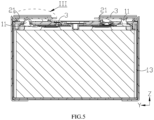
- the embodiment of this application provides the battery module M2, as shown in FIG.3 , the battery module M2 can work normally.
- the battery module M2 includes a plurality of battery units 1, each battery unit 1 includes a top cover 12 and an electrode terminal 11, and the electrode terminal 11 includes a first electrode terminal 111 and a second electrode terminal 112 with opposite polarities, and the electrode terminal 11 is disposed on the top cover 12 of the battery unit 1.
- the battery module M2 further includes connecting plates 2.
- the connecting plates 2 are connected to the electrode terminals 11 of the plurality of battery units 1 to connect the plurality of battery units 1 in series.
- the failed battery module M2 includes a plurality of non-failed battery units 14 and at least one failed battery unit 13.
- the connecting plate 12 of the battery module M2 includes a first connecting plate 21 and a second connecting plate 22.
- the first connecting plate 21 is used to connect to the failed battery unit 13 and the non-failed battery unit 14, and the second connecting plate 22 is used to connect to two non-failed battery units 14.
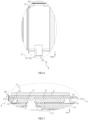
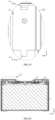
- the battery module M2 also includes a conductive component 3, which is a component capable of conducting electricity to achieve electrical connection, where the conductive component 3 is used to connect with the top cover 12 of the failed battery unit 13 and is used to connect to the first connecting plate 21 so that the top cover 12 of the failed battery unit 13 and the first connecting plate 21 can be electrically connected through the conductive component 3.And after connection, the failed battery unit 13 can be short-circuited, so that the battery module M2 can resume working, where, resume working means that the battery module M2 can be charged or discharged normally.
- a conductive component 3 is a component capable of conducting electricity to achieve electrical connection
- the above handling method is consistent with handling methods in most fields, in which the failed part or structure is replaced to make the overall structure resume working. Therefore, at repair service points in most fields, samples of parts that are vulnerable to failure are stored, and simple test devices are made readily available. If a part that is not vulnerable to failure fails, or, if a part that is not easy to store or place fails, the repair service point needs to call the part from the manufacturer to be able to replace or repair the part. If a complicated repair method is required, the repair service point has to request technical support from corresponding technicians of the manufacturer.
- battery units account for a large proportion of the failed parts of the battery group.
- the battery units are not suitable for being stored for a long time because: 1. currently battery units have many models differing in size, capacity, chemical system, structure, and the like; 2. self-discharge occurs when the battery units are stored for a long time, and a capacity balance between a positive electrode terminal and a negative electrode terminal of a battery unit will be gradually broken and the imbalance will deepen over time; and 3. during long-term storage, irreversible capacity losses will also accumulate due to a decomposition reaction of the electrolyte.
- storage conditions of the battery units are demanding. With adverse environmental factors, the self-discharge of the battery units may accelerate.
- the operator will replace a failed battery module in the battery group (the failed battery module means a battery module containing a failed battery unit).
- the failed battery module means a battery module containing a failed battery unit.
- This method implements repair quickly.
- a battery module includes a plurality of battery units. In rare circumstances, all battery units in a battery module fail. In normal circumstances, the battery module cannot work normally if just a small number of battery units in a battery module fail (for example, only one battery unit fails). In this case, replacing the entire battery module causes a waste of resources.
- a new replaced battery module will have a considerable problem in battery balancing.
- a capacity of the battery group will attenuate, and the capacity differs between the new battery module and an old battery module after the replacement.
- the capacity of the battery group depends on the battery module of the lowest capacity. Therefore, the new replacement battery module does not work well in the structure.
- the old battery module is always fully charged and fully discharged, thereby speeding up ending of a service life of the old battery module.
- an internal resistance of the old battery module is higher than that of the new replacement battery module, and the same current flows through the old battery module and the new replacement battery module.
- the old battery module with a higher internal resistance generates more heat. That is, the battery unit in the old battery module has a higher temperature, and deteriorates at a higher speed, thereby further increasing the internal resistance of the old battery module. Therefore, the increase of the internal resistance and the rise of temperature of the battery unit form a pair of negative feedback, and accelerate the deterioration of the battery unit that has a high internal resistance.
- both a short circuit and an open circuit depict a circuit fault.
- the short circuit is mainly used to realize fuse blowout, or used for a load of other test devices.
- no one adds a conductive component into the corresponding structure to short-circuit the failed battery unit because this practice is simply considered problematic and unable to achieve goals.
- short-circuiting one of the battery units in the entire battery module ensures normal use of the battery group without causing a high volatility in capacity.
- the failed battery unit 13 is short-circuited by the conductive component 3, so that the failed battery unit 13 can no longer participate in the circuit of the battery module M2, that is, the failed battery unit 13 does not affect the battery module M2.
- the circuit improves the safety of the battery module M2.
- only simple connection is required through the conductive component 3, without a need to replace the entire battery module M2.
- the vehicle can be directly repaired at the repair service point without returning the entire vehicle to the manufacturer or without replacing with a new battery group M, thereby improving repair efficiency of the battery module M2 and simplifying a maintenance process and reducing maintenance cost.
- the handling method in this embodiment has advantages of convenient operation and high efficiency.
- the above-mentioned connecting plate includes a first connecting plate 21, where the first connecting plate 21 is a connecting plate connected to the failed battery unit 13, and the connecting plates which are connected to the first electrode terminal 111 and the second electrode terminal 112 of the failed battery unit 13 are the first connecting plates. Meanwhile, the two first connecting plates 21 are connected to the top cover 12 of the failed battery unit 13 through the conductive component 3 so as to short-circuit the first electrode terminal 111 and the second electrode terminal 112 of the failed battery unit 13.
- the solution specifically includes: (1) the first connecting plate 21 is provided with a mating portion 4 for mating with the conductive component 3; (2) the conductive component 3 is provided with a mating portion 4, and the mating portion 4 is used for mating with the first connecting plate 21; (3) the first connecting plate 21 and the conductive component 3 are both provided with a mating portion 4, where the mating portion 4 provided on the first connecting plate 21 is used for mating with the conductive component 3, and the mating portion 4 provided on the conductive component 3 is used for mating with the first connecting plate 21.
- the solution of the embodiment of the present application can be any one of the above three solutions, and the above three solutions can all realize the connection between the conductive component 3 and the first connecting plate 21. Meanwhile, since the conductive component 3 is still connected to the top cover 12 of the failed battery unit, so that the connection between the top cover 12 of the failed battery unit and the first connecting plate 21 can be realized through the conductive component 3, so that the battery module can resume working.
- the mating portion 4 extends toward the other of the first connecting plate 21 and the conductive component 3, and the mating portion 4 can clamp the one of the first connecting plate 21 and the conductive component 3 with the other of the first connecting plate 21 and the conductive component 3 to realize the connection between the first connecting plate 21 and the conductive component 3.
- the first connecting plate 21 and the conductive component 3 are specifically clamp-connected by the mating portion 4.
- the above three solutions are: (1) the mating portion 4 provided on the first connecting plate 21 extends toward the direction of the conductive component 3 so that the mating portion 4 and the first connecting plate 21 clamp the conductive component 3; (2) the mating portion 4 provided on the conductive component 3 extends toward the direction of the first connecting plate 21 so that the mating portion 4 and the conductive component 3 clamp the first connecting plate 21; (3) the mating portion 4 provided on the first connecting plate 21 extends toward the direction of the conductive component 3 so that the mating portion 4 and the first connecting plate 21 clamp the conductive component 3, and meanwhile the mating portion 4 provided on the conductive component 3 extends toward the direction of the first connecting plate 21 so that the mating portion 4 and the conductive component 3 clamp the first connecting plate 21.
- the connection area of the two is relatively large, so that the reliability of the mechanical connection between the two can be improved.
- the above solution (3) can further improve the reliability of the connection between the first connecting plate 21 and the conductive component 3.
- the conductive component 3 is provided with the above-mentioned mating portion 4, and at least part of the mating portion 4 extends below the first connecting plate 2 so that the first connecting plate 2 is clamped by the conductive component 3 and the mating portion 4.
- At least one of the first connecting plate 21 and the conductive component 3 is further provided with a recessed portion 5, where the recessed portion 5 is used for mating with the mating portion 4 to realize the connection between the first connecting plate 21 and the conductive component 3.
- the above three solutions are: (1) the first connecting plate 21 is provided with a mating portion 4, and the conductive component 3 is provided with a recessed portion 5, and the mating portion 4 is used to mate with the recessed portion 5; (2) the conductive component 3 is provided with a mating portion 4, and the first connecting plate 21 is provided with a recessed portion 5, and the mating portion 4 is used to mate with the recessed portion 5; (3) both of the first connecting plate 21 and the conductive component 3 are both provided with a mating portion 4 and a recessed portion 5, where the mating portion 4 and the recessed portion 5 are provided correspondingly, so that the first connecting plate 21 and the conductive component 3 are connected through the mating portion 4 and the recessed portion 5 which are correspondingly provided.
- the two can also be clamp-connected or plug-connected.
- the recessed portion 5 is provided to mate with the mating portion 4, such that the reliability of the connection between the first connecting plate 21 and the conductive component 3 can be further improved.
- the conductive component 3 is provided with the above-mentioned mating portion 4.
- the first connecting plate 2 is provided with a recessed portion 5. At least part of the mating portion 4 extends below the first connecting plate 21, and the mating portion 4 can mate with the recessed portion 5. Therefore, in this embodiment, in addition to the clamping connection between the first connecting plate 21 and the conductive component 3, the mating portion 4 of the conductive component 3 also mates with the recessed portion 5 of the first connecting plate 21 to limit the relative movement of the conductive component 3 and the first connecting plate 21, so as to further improve the connection reliability between the conductive component 3 and the first connecting plate 21.
- the mating portion 4 may specifically include a limiting hook 41 and an extension portion 42.
- the two ends of the extension portion 42 are connected with the limiting hook 41 and the conductive component 3, and the extension portion 42 makes the limiting hook 41 extend below the first connecting plate 21 so as to clamp the first connecting plate 21 through the conductive component 3 and the limiting hook 41.
- the recessed portion 5 provided in the first connecting plate 21 may specifically be a through hole 51, and a part of the limiting hook 41 can also extend into the through hole 51, so that the side wall 511 of the through hole 51 can limit movement of the limiting hook 41 to realize the connection between the mating portion 4 and the recessed portion 5.
- the conductive component 3 in the embodiment of the present application may further include a connecting portion 31 and a transition portion 32.
- the connecting portion 31 is used to electrically connect the top cover 12 of the failed battery unit 13.
- the transition portion 32 connects the conductive component 3 and the connecting portion 31. Since the connecting portion 31 is used to connect to the top cover 12, there is a height difference between the connecting portion 31 and the conductive component 3 along the height direction Z of the battery unit. When the transition portion 32 connects both of the connecting portion 31 and the conductive component 3, the transition portion 32 extends substantially along the height direction Z of the battery unit.
- the connecting portion 31 and the top cover 12 are specifically connected by conductive material.
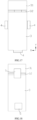
- the conductive component 3 may specifically have the structure shown in FIGS.8-10
- the first connecting plate 21 may specifically have the structure shown in FIG. 11 , combined with the structure shown in FIGS. 7-11
- the conductive component 3 may include the mating portion 4 and the mating portion 4 may specifically include a limiting hook 41 and an extension portion 42, and the mating portion 4 may be disposed at an end of the conductive component 3.
- the conductive component 3 may further include a connecting portion 31 and a transition portion 32, and the connecting portion 31 is used to connect with the top cover of the failed battery unit.
- the conductive component 3 is further provided with a recessed portion 5 and the recessed portion 5 may specifically be a through hole 51.
- the through hole 51 may be provided at an end away from the mating portion 4.
- the through hole 51 is provided in the connecting portion 31 and the extension portion 32.
- the first connecting plate 21 mating with the above-mentioned conductive component is provided with a recessed portion 5.
- the recessed portion 5 may specifically be a through hole 51, and the above-mentioned mating portion can be plug-connected to the through hole 51.
- the through hole 51 is disposed close to the end of the first connecting plate 21, and after the limiting hook of the conductive component extends below the first connecting plate 21, it can mate with the through hole 51.
- the first connecting plate 21 is also provided with a mating portion 4, which may specifically be a bump 43. And during the process of with the the conductive component with the first connecting plate 21, the bump 43 can pass through the through hole of the conductive component, so as to realize the cooperation between the bump 43 and the through hole.
- the above-mentioned connecting plate may further include a bending portion 23, which is bent relative to the first connecting plate 21 along the height direction Z of the battery unit.
- the bending portion 23 can be deformed along the thickness direction X of the battery module, thereby buffering the tensile force received by the connecting plate and improving the life of the connecting plate.
- the structure of the above-mentioned conductive component is not limited to this.
- the mating portion 4 of the conductive component 3 may not be disposed at the end of the conductive component 3.
- the mating portion 4 can extend below the first connecting plate 21 through the through hole 51.
- at least part of the limiting hook 41 of the mating portion 4 is located in the through hole 51, and the limiting hook 41 and the conductive component 3 clamp the first connecting plate 21 together.
- the conductive component 3 may be provided with a plurality of mating portions 4, and each of the mating portions 4 can be mated with the first connecting plate to realize the connection between the conductive component 3 and the first connecting plate, where each of the structure of the mating portions 4 may be the same or different as long as the connection with the first connecting plate can be realized.
- each of the mating portions 4 of the conductive component 3 can extend below the first connecting plate, so that each of the mating portions 4 can clamp the first connecting plate through the conductive component 3.
- the conductive component 3 is provided with two mating portions 4, and the structure of the two mating portions 4 may be the same. Both mating portions include an extension portion 42 and a limiting hook 41, where the extension portion 42 is used to realize that the limiting hook 41 extends toward the bottom of the first connecting plate, and the limiting hook 41 is used to clamp the first connecting plate through the conductive component 3.
- the two mating portions 4 in this embodiment can be arranged oppositely.
- the mating portion 4 when the mating portion 4 is provided on the conductive component 3, it is not necessary to process the mating portion 4 on the first connecting plate, thereby simplifying the structure of the first connecting plate.
- the operation of processing the mating portion 4 can be performed outside the battery module. The impact on the components of the battery module is small, thereby realizing the connection between the conductive component 3 and the first connecting plate and simplifying the maintenance process.
- the first connecting plate 21 mating with FIG.13 and FIG.14 may have a structure as shown in FIG.15 .
- the first connecting plate 21 is provided with two recessed portions 5, and the two recessed portions 5 may be through holes. 51.
- the two mating portions 4 respectively extend from the corresponding through holes 51 below the first connecting plate 21, so that the first connecting plate 21 is clamped between two mating portion 4 and the conductive component 3.
- at least part of the limiting hook 41 of the mating portion 4 can also be located in the through hole 51 so as to further limit the relative movement of the limiting hook 41 and the first connecting plate 21.
- the mating portion is used for clamping the other of the first connecting plate and the conductive component, so as to realize the connection between the first connecting plate and the conductive component.
- the first connecting plate and the conductive component are clamp-connected by a mating portion.
- the above three solutions are as follows: (1) the mating portion provided on the first connecting plate is clamped with the conductive component so as to realize the connection between the first connecting plate and the conductive component through the mating portion; (2) the mating portion provided on the conductive component is clamped with the first connecting plate so as to realize the connection between the first connecting plate and the conductive component through the mating portion; (3) the mating portion provided on the first connecting plate is clamped with the conductive component, and the mating portion provided on the conductive component is clamped with the first connecting plate so as to realize the connection between the first connecting plate and the conductive component through the mating portion.
- the two when the first connecting plate is clamp-connected with the conductive component, the two have a simple structure and the reliability of the mechanical connections between the two is high. Further, the above solution (3) can further increase the connection reliability between the first connecting plate and the conductive component.
- the first connecting plate 21 is provided with a plurality of mating portions 4, each of which is arranged at intervals and can be clamped with the conductive component.
- the conductive component 3 is provided with a plurality of mating portions 4, each mating portion 4 is arranged at intervals and can be directly clamped with the first connecting plate. And the structures of each mating portion 4 may be the same or different.
- the mating portion 4 when the mating portion 4 is provided on the conductive component 3, it is not necessary to process the mating portion 4 on the first connecting plate, thereby simplifying the structure of the first connecting plate.
- the operation of processing the mating portion 4 can be performed outside the battery module. The impact on the components of the battery module is small, thereby realizing the connection between the conductive component 3 and the first connecting plate and simplifying the maintenance process.
- At least one of the first connecting plate and the conductive component is further provided with a recessed portion, where the recessed portion is used for clamping with the corresponding mating portion so as to realize the connection between the first connecting plate and the conductive component.
- the above three solutions are as follows: (1) the first connecting plate is provided with a mating portion and the conductive component is provided with a recessed portion, where the mating portion is used for clamping with the recessed portion; (2) the conductive component 3 is provided with mating portion and the first connecting plate is provided with a recessed portion, where the mating portion is used for clamping with the recessed portion; (3) Both the first connecting plate and the conductive component are provided with a mating portion and a recessed portion, where the mating portion and the recessed portion are arranged correspondingly, so that the first connecting plate and the conductive component are clamped through the mating portion and the recessed portion which are correspondingly provided.
- the recessed portion is provided to clamp with the mating portion, such that the reliability of the connection between the first connecting plate and the conductive component can be further improved.
- the conductive component 3 may be provided with two recessed portions 5, where the recessed portion 5 may specifically be a through hole 51 and the through hole 51 is used to clamp with the mating portion provided on the first connecting plate.
- the structure of the first connecting plate 21 and the second connecting plate 22 may be the same, that is, each connecting plate in the battery module has the same structure.
- each connecting plate 2 of the battery module can be used to mate with the conductive component. Therefore, when performing maintenance, only the corresponding conductive component needs to be connected to the connecting plate 2 and connected to the top cover of the battery unit, which has the advantage of convenient operation.
- the structures of the first connecting plate 21 and the second connecting plate 22 are the same.
- each connecting plate 2 in the battery module may be provided with a mating portion 4 and a recessed portion 5, where the mating portion 4 and the recessed portion 5 are used to connect to the mating portion and the recessed portion of the conductive component.
- the mating portion 4 of the connecting plate 2 and the top cover 12 when connected to the electrode terminal 11 of the battery unit, the mating portion 4 of the connecting plate 2 and the top cover 12 have a predetermined distance along the height direction Z of the battery unit, thereby preventing short-circuiting the connecting plate 2 and the top cover 12.
- each connecting plate in the battery module may be a common plate structure on the market, that is, each connecting plate may not be provided with a mating portion and a recessed portion.
- the connecting plate connected to the battery unit is replaced with a first connecting plate provided with a mating portion and/or a recessed portion (the structure of the first connecting plate is as described in any of the above embodiments), and the specific replacement solution is: the connecting plate connected to the failed battery unit is removed from the battery module, and the first connecting plate is connected to the electrode terminal of the failed battery unit, and then the first connecting plate is connected to the top cover of the failed battery unit through a conductive component to realize the failure processing of the failed battery unit to make the battery module resume working.
- the structures of the first connecting plate and the second connecting plate are different.
- the embodiment of the present application also provides a failure handling method, which is used for processing the failed battery unit 13 in the battery module.
- the battery module M2 includes a connecting plate 2 for connecting with the electrode terminal 11 of the battery unit 1, and the connecting plate connected with the failed battery unit 13 is the first connecting plate 21.
- the failure processing method includes:
- connecting the top cover 12 of the failed battery unit 13 and the first connecting plate 21 through the conductive component 3 can achieve the purpose of short-circuiting the failed battery unit 13 and make the battery module resume working.
- the conductive component 3 and the first connecting plate 21 are mechanically connected to improve the life of the battery module.
- steps S1 and S2 do not have a strict sequence, that is, step S1 can be performed firstly and then step S2 can be performed, or step S2 can be performed firstly and then step S1 can be performed, or steps S1 and S2 can be performed simultaneously.
- steps S1 and S2 there may be other steps between steps S1 and S2, as long as the above-mentioned purpose can be achieved.
- the mating portion 4 extends toward the other of the first connecting plate 21 and the conductive component 3.
- the above step S2 may specifically include: S21: clamping one of the first connecting plate 21 and the conductive component 3 through mating portion 4 and the other, so as to realize the connection between the first connecting plate 21 and the conductive component 3.
- connection area of the two is relatively large, so that the reliability of the mechanical connection between the two can be improved.
- the step S21 may specifically include: S211: mating the recessed portion 5 with the mating portion 4 to realize the connection between the first connecting plate 21 and the conductive component 3.
- step S211 specifically is: S211a: extending the mating portion 4 toward the other of the first connecting plate 21 and the conductive component 3, so that the other of the first connecting plate 21 and the conductive component 3 can be clamped with one of the first connecting plate 21 and the conductive component 3 through the mating portion 4, and during the clamping process, the mating portion 4 provided in the one of the first connecting plate 21 and the conductive component 3 is mating with the recessed portion 5 provided in the other of the first connecting plate 21 and the conductive component 3.
- the recessed portion 5 is provided to mate with the mating portion 4, such that the reliability of the connection between the first connecting plate 21 and the conductive component 3 can be further improved.
- the aforementioned recessed portion 5 may be a through hole 51.
- the above-mentioned step S211 may specifically include: S211b: extending at least part of the mating portion 4 toward the other of the first connecting plate 21 and the conductive component 3 through the through hole 51, so that the mating portion 4 and the other of the first connecting plate 21 and the conductive component 3 clamp the one of the first connecting plate 21 and the conductive component 3, and the mating portion 4 plug-connects the through hole 51, so as to realize the connection between the first connecting plate 21 and the conductive component 3.
- the above step S2 may specifically include: S22: clamping the mating portion 4 with the other of the first connecting plate 21 and the conductive component 3 to realize the connection between the first connecting plate 21 and the conductive component 3.
- the step S22 may specifically include: S221: clamping the recessed portion 5 with the mating portion 4 to realize the connection between the first connecting plate 21 and the conductive component 3.
- the reliability of the clamping connection between the first connecting plate 21 and the conductive component 3 can be further improved by providing the recessed portion 5 which can clamp with the mating portion 4.
- the aforementioned recessed portion 5 may be a through hole 51.
- the aforementioned step S221 may specifically include: S221a: clamping at least part of the mating portion 4 with the through hole 51 to realize the connection between the first connecting plate 21 and the conductive component 3.
- the connecting plate 2 may include the mating portion 4 and/or the recessed portion 5.
- the battery module M2 fails, only connecting the conductive component 3 that can mate with the connecting plate 2 is required (corresponding recessed portion 5 mates with mating portion 4), which can cause less maintenance processes.
- the connecting plate 2 may be a common plate structure on the market, which doesn't include the mating portion 4 and the recessed portion 5.
- the connecting plate connected to the failed battery unit 13 is removed firstly (for example, cutting off the connection between the connecting plate and the electrode terminal), and replace it with the first connecting plate 21 (including the mating portion 4 and/or the recessed portion 5).
- the first connecting plate 21 is connected to the electrode terminal 11 of the failed battery unit13, and then the first connecting plate 21 is connected to the top cover 12 of the failed battery unit 13 through the conductive component 3.
- the conductive component 3 and the first connecting sheet 21 are connected through the above-mentioned mating portion 4.
- the structure of the connecting plate 2 in the battery module M2 is relatively simple, and it is not necessary that all the connecting plates are provided with the structure which include the mating portion 4 and/or the recessed portion 5, thereby saving cost.
- the conductive component 3 may further include a connecting portion 31.
- the above step S1 may specifically include: S11: connecting the connecting portion 31 and the top cover 12 of the failed battery unit 13 through conductive material.
- the connecting portion 31 and the top cover 12 can be welded, or connected by conductive adhesive, or connected by pouring molten tin, aluminum, or other metals.
- the solder is located in the preset gap between the connecting portion 31 and the top cover 12, thereby the two are connected and the two can be conductive.
- the conductive adhesive is located in the preset gap between the connecting portion 31 and the top cover 12, thereby the two are connected and the two can be conductive.
- the molten metal is located in the preset gap between the connecting portion 31 and the top cover 12 after cooling, thereby the two are connected and the two can be conductive.
- the connecting portion 31 of the conductive component 3 and the top cover 12 are connected by conductive adhesive, the electrical and mechanical connection between the conductive component 3 and the top cover 12 can be realized, and the connection is facilitated by conductive adhesive, which can avoid the battery unit damage caused by welding.
- the battery module loses its function due to the existence of a failed battery unit, firstly determine the position of the failed battery unit in the battery module, then clean the top cover of the failed battery unit, and clean the connecting plate connected to the failed battery unit. After the cleaning is completed, conductive material is arranged on the top cover, and the above-mentioned connecting plate and the top cover are connected through a conductive component to achieve the purpose of short-circuiting the electrode assembly of the failed battery unit and reconnect the circuit of the battery module.
Landscapes
- Chemical & Material Sciences (AREA)
- Chemical Kinetics & Catalysis (AREA)
- Electrochemistry (AREA)
- General Chemical & Material Sciences (AREA)
- Engineering & Computer Science (AREA)
- Manufacturing & Machinery (AREA)
- Aviation & Aerospace Engineering (AREA)
- Battery Mounting, Suspending (AREA)
Description
- Embodiments of this application relate to the technical field of an energy storage device, and in particular, to a battery module, a battery group, a power consumption device, and a failure handling method.
- A battery module includes a plurality of battery units stacked against each other, and the plurality of battery units are electrically connected, so that the battery module outputs electric energy and supplies power to a power consumption device. When any one of battery units fails, an entire circuit of the battery module fails, thereby making the battery module unable to work normally.
-
EP3846281A1 relates to a battery module, a battery pack, an apparatus, and a failure handling method. The battery module includes: a plurality of battery units configured to be serial-connected, where the plurality of battery units include a failed battery unit and at least one non-failed battery unit after the battery module fails; and a conductive part, configured to be electrically connected to the at least one non-failed battery unit, and make a current bypass an electrode assembly of the failed battery unit so that the battery module resumes working. -
EP3916904A1 relates to a battery module, a battery pack, an apparatus, and a failure treatment method. The battery module includes: a plurality of battery cells, configured to be connected in series, where after the battery module fails, the plurality of battery cells include a failed battery cell and at least one non-failed battery cell adjacent to the failed battery cell; and a first connecting piece, configured to connect the failed battery cell to the at least one non-failed battery cell, where the first connecting piece includes a first connecting portion and a conductive portion connected to the first connecting portion, the first connecting portion is configured to be electrically connected to an enclosure of the failed battery cell, and the conductive portion is configured to be electrically connected to the at least one non-failed battery cell, so as to restore the battery module to work. In the battery module, there is no need to add another component, and only a corresponding operation is performed on an original connecting piece of the battery module.EP2768069 A1 andEP1414129 A2 also disclose similar battery modules and failure handling methods. - This application provides a battery module, a battery group, a power consumption device, and a failure handling method, which could simplify a maintenance process of the battery module, reduce maintenance cost, and improve working efficiency of the battery module The invention is defined in the appended claims.
- A first aspect of embodiments of this application provides a battery module. The battery module includes:
- a plurality of battery units, where each of the plurality of battery units includes a top cover, and the plurality of battery units further include a failed battery unit after thebattery module fails;
- a connecting plate, configured to connect the plurality of battery units in series, and included a first connecting plate which is connected to the failed battery unit;
- a conductive component, where the conductive component is configured to be electrically connected to a top cover of the failed battery unit;
- where at least one of the first connecting plate and the conductive component is provided with a mating portion configured to be mated with the other of the first connecting plate and the conductive component, so as to realize the electrical connection between the top cover of the failed battery unit and the first connecting plate through the conductive component, so that the battery module resumes working;
- the at least one of the first connecting plate and the conductive component is provided with a recessed portion which is used for mating with the corresponding mating portion to realize the connection between the first connecting plate and the conductive component.
- The conductive component is connected to the top cover of the failed battery unit; and the first connecting plate is connected to the failed battery unit, so as to be able to remove the failed battery unit from the circuit of the battery module, so that the failed battery unit no longer participates in the charging and discharging process of the battery module. That is to say, the failed battery unit does not affect the circuit of the battery module, and the failed battery unit is completely out of the circuit, improving the safety of the battery module.
- The recessed portion capable of be mating with the mating portion is provided, so as to be able to further improve the connection reliability between the first connecting plate and the conductive component.
- In a possible design, the mating portion extends toward the other of the first connecting plate and the conductive component, and the mating portion can clamp the one of the first connecting plate and the conductive component with the other to realize the connection between the first connecting plate and the conductive component.
- In a possible design, the mating portion is configured to plug-connect with the other of the first connecting plate and the conductive component to realize the connection between the first connecting plate and the conductive component.
- In a possible design, the recessed portion is a through hole, and at least part of the mating portion can extend toward the other of the first connecting plate and the conductive component through the through hole, so that the mating portion can clamp one of the first connecting plate and the conductive component with the other of the first connecting plate and the conductive component to realize the connection between the first connecting plate and the conductive component.
- In a possible design, the recessed portion is a through hole, and part of the mating portion can plug-connect the through hole to realize the connection between the first connecting plate and the conductive component.
- In a possible design, the conductive component is provided with one or more of mating portions and the mating portions are used for mating with the first connecting plate to realize the connection between the first connecting plate and the conductive component.
- The mating portions are used for mating with the first connecting plate, so as to realize the electrical connection between the top cover of the failed battery unit and the first connecting plate through the conducting component, so that the battery module resumes working.
- In a possible design, the conductive component is connected to the top cover of the failed battery unit through a connecting portion.
- A second aspect of embodiments of this application provides a battery group, the battery group includes:
- a box body, where the box body forms an accommodating chamber;
- a battery module, where the battery module is the above-mentioned battery module;
- where, the battery module is located in the accommodating chamber.
- A third aspect of embodiments of this application provides a power consumption device, including: the above-mentioned battery group, which is configured to provide electrical energy.
- A fourth aspect of embodiments of this application provides a failure handling method, processing a failed battery unit, the failed battery unit being connected to a first connecting plate, one of the first connecting plate and a conductive component being provided with a mating portion, the failure handling method including:
- electrically connecting the conductive component to a top cover of the failed battery unit;
- mating the mating portion to the other of the first connecting plate and the conductive component, so as to realize the connection between the top cover of the failed battery unit and the first connecting plate through the conductive component, so that the battery module resumes working;
- the one of the first connecting plate and the conductive component is provided with a recessed portion, when mating the mating portion with the other of the first connecting plate and the conductive component, the failure processing method includes:
mating the recessed portion with the mating portion to realize the connection between the first connecting plate and the conductive component. - In a possible design, the mating portion extends toward the other of the first connecting plate and the conductive component and when mating the mating portion to other of the first connecting plate and the conductive component, the failure handling method includes:
clamping the one of the first connecting plate and the conductive component through the other of the first connecting plate and the conductive component and the mating portion to realize the connection between the first connecting plate and the conductive component. - In a possible design, when mating the mating portion to the other of the first connecting plate and the conductive component, the failure processing method includes:
plug-connecting the mating portion and the other of the first connecting plate and the conductive component to realize the connection between the first connecting plate and the conductive component. - In a possible design, the recessed portion is a through hole and when mating the recessed portion with the mating portion, the failure handling method includes:
extending at least part of the mating portion toward the other of the first connecting plate and the conductive component through the through hole so that the mating portion clamp the one of the first connecting plate and the conductive component with the other of the first connecting plate and the conductive component to realize the connection between the first connecting plate and the conductive component. - In a possible design, the recessed portion is a through hole and when mating the recessed portion with the mating portion, the failure handling method includes:
at least part of the mating portion being plug-connected to the through hole to realize the connection between the first connecting plate and the conductive component. - In a possible design, the conductive component further includes a connecting portion for connecting the conductive component with the failed battery unit, the failure handling method includes:
connecting the connecting portion to the top cover of the failed battery unit through conducting material. - In this embodiment, the conductive component is connected to the top cover of the failed battery unit, and the first connecting plate is connected to the failed battery unit so that the failed battery unit can be removed from the circuit of the battery module. The failed battery unit no longer participates in the charging and discharging process of the battery module, that is, the failed battery unit does not affect the circuit of the battery module, and the failed battery unit is not in the circuit at all, which improves the safety of the battery module. In addition, in this embodiment, during the processing of the failed battery unit, only simple connection is required through the conductive component, and the entire battery module does not need to be replaced.
- In some embodiments, the conductive component and the first connecting plate can be connected through a mating portion, thereby improving the reliability of the connection between the conductive component and the first connecting plate. And the conductive component and the first connecting plate are connected by a mechanical connection, and the two do not need to be welded to prevent excessively high temperature from damaging the components of the battery module during the welding process, and improve the life of the battery module.
- Understandably, the above general description and the following detailed description are only exemplary without limiting this application.
- In order to more clearly illustrate the technical solutions of the embodiments of this application, the following will briefly introduce the drawings required for describing the embodiments of the present application. Apparently, the drawings in the following description show only some embodiments of the present application, and a person skilled in the art may still derive other drawings from the drawings without creative efforts.
-
FIG. 1 is a schematic structural diagram of a device provided by an embodiment of this application according to a specific embodiment. -
FIG.2 is a schematic diagram of the structure of the battery group inFIG.1 according to a specific embodiment. -
FIG.3 is a top view of the battery module inFIG.2 in a specific embodiment. -
FIG.4 is a top view of the battery module inFIG.3 with a failed battery unit. -
FIG.5 is a cross-sectional view taken along line B-B ofFIG.4 . -
FIG.6 is a partially enlarged view of part II inFIG.4 . -
FIG.7 is a partially enlarged view of part III inFIG.5 . -
FIG.8 is a schematic structural diagram of the conductive component inFIG.7 according to a first specific embodiment. -
FIG.9 is a side view ofFIG.8 . -
FIG. 10 is a top view ofFIG.8 . -
FIG. 11 is a schematic structural diagram of the first connecting plate inFIG.7 according to a first specific embodiment. -
FIG. 12 is a schematic structural diagram of the conductive component inFIG.7 in a second specific embodiment. -
FIG. 13 is a schematic structural diagram of the conductive component inFIG.7 according to a third specific embodiment. -
FIG. 14 is a side view ofFIG. 13 . -
FIG. 15 is a schematic structural diagram of the first connecting plate inFIG.7 according to a second specific embodiment. -
FIG. 16 is a schematic structural diagram of the first connecting plate inFIG.7 according to a third specific embodiment. -
FIG. 17 is a schematic structural diagram of the conductive component inFIG.7 according to a fourth specific embodiment. -
FIG. 18 is a schematic diagram of the structure of the conductive component inFIG.7 according to a fifth specific embodiment. -
FIG. 19 is a partially enlarged view of part I inFIG.3 . -
FIG.20 is a cross-sectional view taken along the line A-A ofFIG.3 . -
FIG.21 is a partially enlarged view of part IV inFIG.20 . - In the drawings, the drawings are not drawn to scale.
- The drawings here are incorporated into the specification and constitute a part of the specification, show embodiments that conform to the application, and are used together with the specification to explain the principle of the application.
- For better understanding of the technical solutions of this application, the following describes embodiments of this application in detail with reference to accompanying drawings.
- The terms used in the embodiments of this application are intended only for describing specific embodiments rather than for limiting this application. Unless otherwise expressly indicated in the context, the words "a", "the", and "this" that precedes a singular noun in the embodiments and claims of this application are intended to include the plural form of the noun.
- Understandably, the term "and/or" used herein only describes an association relationship between associated objects and indicates existence of three relationships. For example, "A and/or B" may indicate existence of A alone, coexistence of A and B, and existence of B alone. In addition, the character "/" in the present application generally indicates that the associated objects before and after the character are in an "or" relation.
- It needs to be noted that localizers such as "on", "above", "under", "below", "left", and "right" used in the embodiments of this application are described from a perspective shown in the accompanying drawings, and shall not be understood as a limitation on the embodiments of this application. In addition, understandably, depending on the context, one element described as being connected "on" or "under" another element not only means that the element may be directly connected "on" or "under" the other element, but also means that the element may be indirectly connected "on" or "under" the other element through an intermediate element.
- The orientation words appearing in the following description are all directions shown in the drawings, and do not limit the specific structure of this application. In the description of the present application, it should also be noted that, unless specified or limited otherwise, the terms 'mounted', 'connecting', and 'connected' should be understood broadly, and may be, for example, fixed connections, detachable connections, or integral connections, and may also be direct connections or indirect connections through intervening structures. The specific meanings of the described terms in this application can be understood by a person skilled in the art according to specific situations.
- An embodiment of this application provides a power consumption device that uses a battery unit as a power supply, a battery group, and a battery module. The power consumption device may be a mobile device such as a vehicle, a ship, or a small aircraft. The power consumption device includes a power source, and the power source is used to provide a driving force for the electrical apparatus. The power source may be configured as a battery module that provides electrical energy to the power consumption device. The driving force of the power consumption device may be sole electric energy, or may include electric energy and other types of energy (such as mechanical energy). The power source may be a battery module (or a battery group). In addition, the power consumption device may also be an energy storage device such as a battery cabinet. The battery cabinet may include a plurality of battery modules (or battery groups), so that the battery cabinet can output electric energy. Therefore, any power consumption device that can use a battery unit as a power supply shall fall within the protection scope of this application.
- As shown in
FIG. 1 , using a vehicle as an example, a power consumption device D in an embodiment of this application may be a new energy vehicle. The new energy vehicle may be a battery electric vehicle, or may be a hybrid electric vehicle or a rangeextended electric vehicle or the like. The vehicle may include a battery group M and a vehicle body. The battery group M is disposed in the vehicle body. A driving motor is further disposed in the vehicle body, and the driving motor is electrically connected to the battery group M. The battery group M provides electrical energy. The driving motor is connected to wheels of the vehicle body through a transmission mechanism to drive the vehicle to run. Specifically, the battery group M may be horizontally disposed at a bottom of the vehicle body. - As shown in
FIG.2 , the battery group M includes a box body M1 and a battery module M2 in an embodiment of this application. The box body M1 has an accommodation cavity M13. The battery module M2 is accommodated in the accommodation chamber M13. The battery module M2 may be one or more in number. A plurality of battery modules M2 are arranged in the accommodation chamber M13. The box body M1 is not limited in terms of type, and may be a frame-shaped box body, a disk-shaped box body, or a container-shaped box body. Specifically, as shown inFIG.2 , the box body M1 may include a lower box body M12 accommodating the battery module M2 and an upper box body M11 engaging with the lower box body M12. - It needs to be noted that a length direction X, a width direction Y, and a height direction Z mentioned herein are defined with reference to a battery unit. The length direction X means a thickness direction of the battery unit. The width direction Y means a width direction of the battery unit, and the width direction Y and the length direction X are perpendicular (approximately perpendicular) to each other and located on a same plane. The height direction Z means an extension direction of electrode terminals in the battery unit. In the battery module, the length direction X, the width direction Y, and the height direction Z are perpendicular (approximately perpendicular) to each other. That is, the height direction Z is perpendicular to a plane formed by the width direction Y and the length direction X.
- The battery module includes a plurality of battery units and a frame structure configured to fix the battery units. The plurality of battery units may be stacked on each other along the length direction X. The frame structure may include end plates. The end plates are respectively located at two ends of the battery units along the length direction X, and are used to limit movement of the battery units along the length direction X. At the same time, in a specific embodiment, the frame structure may further include side plates. The two side plates are respectively located on two sides of the battery units along the width direction Y, and the side plates are connected to the end plates to form the frame structure. In another embodiment, the frame structure may have no side plate, and the battery units are connected by a first binding strap or by both a first binding strap and a second binding strap after being stacked. The end plates and the binding strap form the frame structure. In addition, in a specific embodiment, the battery group may include a box body and a plurality of battery units. The box body has an accommodation chamber. The plurality of battery units is located in the accommodation chamber, and may be connected to the box body. Specifically, the battery units may be bonded to an inner wall of the box body through a structural adhesive.
- During the working process of the battery module, each battery unit is continuously charged and discharged, and the battery unit has a problem (such as abnormal capacity attenuation), which causes the battery unit to fail to work normally. Therefore, in this application, a battery unit which can't work normally with failure is defined as a failed battery unit and a battery unit which can work normally without failure is defined as a non-failed battery unit. At this time, due to the existence of one or more failed battery units in the battery module or battery group, its circuit fails and cannot supply power normally, that is, the battery module or battery group fails. In order to solve this technical problem, an embodiment of the present application solves the technical problem by removing the failed battery unit from the circuit of the battery module and forming the circuit again.
- It should be noted that the battery unit mentioned in the embodiment of the present application may include the following two circumstances. In a first circumstance, when the battery module is formed by serial-connecting a plurality of battery units, the battery unit in the embodiment of this application may be a single battery unit. Correspondingly, the failed battery unit may be one of failed battery cells. In a second circumstance, when the battery module includes at least one parallel assembly formed by parallelconnecting two or more battery cells, the battery unit in the embodiment of this application may be a parallel assembly. Correspondingly, the failed battery unit is one of the parallel assemblies, and the parallel assembly includes at least one failed battery cell.
- In addition, the battery unit mentioned in the embodiment of this application may be a pouch-type cell, or may be a prismatic cell or a cylindrical cell or the like.
- To solve the above technical problem, the embodiment of this application provides the battery module M2, as shown in
FIG.3 , the battery module M2 can work normally. The battery module M2 includes a plurality ofbattery units 1, eachbattery unit 1 includes atop cover 12 and anelectrode terminal 11, and theelectrode terminal 11 includes afirst electrode terminal 111 and asecond electrode terminal 112 with opposite polarities, and theelectrode terminal 11 is disposed on thetop cover 12 of thebattery unit 1. Meanwhile, the battery module M2 further includes connectingplates 2. The connectingplates 2 are connected to theelectrode terminals 11 of the plurality ofbattery units 1 to connect the plurality ofbattery units 1 in series. - When the battery module M2 in the embodiment of the present application fails, as shown in
FIG.4 , the failed battery module M2 includes a plurality ofnon-failed battery units 14 and at least one failedbattery unit 13. At this time, the connectingplate 12 of the battery module M2 includes a first connectingplate 21 and a second connectingplate 22. The first connectingplate 21 is used to connect to the failedbattery unit 13 and thenon-failed battery unit 14, and the second connectingplate 22 is used to connect to twonon-failed battery units 14. Meanwhile, the battery module M2 also includes aconductive component 3, which is a component capable of conducting electricity to achieve electrical connection, where theconductive component 3 is used to connect with thetop cover 12 of the failedbattery unit 13 and is used to connect to the first connectingplate 21 so that thetop cover 12 of the failedbattery unit 13 and the first connectingplate 21 can be electrically connected through the conductive component 3.And after connection, the failedbattery unit 13 can be short-circuited, so that the battery module M2 can resume working, where, resume working means that the battery module M2 can be charged or discharged normally. - In existing designs, when a battery unit in the battery group fails, people may think of replacing the failed battery unit, or, in order to improve repair efficiency, think of replacing and repairing the entire battery module. Consequently, in a repair process, the failed battery group (the battery group containing the failed battery unit) needs to be returned to a manufacturer, and the manufacturer needs to match a corresponding battery unit or battery module. Alternatively, a model of the corresponding battery unit or battery module needs to be sent to the manufacturer. This process consumes a lot of time for waiting, and is not conducive to optimization of resources.
- The above handling method is consistent with handling methods in most fields, in which the failed part or structure is replaced to make the overall structure resume working. Therefore, at repair service points in most fields, samples of parts that are vulnerable to failure are stored, and simple test devices are made readily available. If a part that is not vulnerable to failure fails, or, if a part that is not easy to store or place fails, the repair service point needs to call the part from the manufacturer to be able to replace or repair the part. If a complicated repair method is required, the repair service point has to request technical support from corresponding technicians of the manufacturer.
- In the battery field, battery units account for a large proportion of the failed parts of the battery group. However, there are many difficulties in storing samples of the battery units. In addition, the battery units are not suitable for being stored for a long time because: 1. currently battery units have many models differing in size, capacity, chemical system, structure, and the like; 2. self-discharge occurs when the battery units are stored for a long time, and a capacity balance between a positive electrode terminal and a negative electrode terminal of a battery unit will be gradually broken and the imbalance will deepen over time; and 3. during long-term storage, irreversible capacity losses will also accumulate due to a decomposition reaction of the electrolyte. In addition, storage conditions of the battery units are demanding. With adverse environmental factors, the self-discharge of the battery units may accelerate.
- Even if all battery units are of the same structure without involving the problem of models, parameters such as a capacity and a self-discharge speed of a battery unit need to be measured again if the battery unit needs to be put into use after being stored for a long time. However, at general repair service points, such test conditions are lacking, and operators lack professional analysis capabilities. Without retesting the battery unit, normal working of a repaired battery group cannot be ensured. In addition, with the problem of battery models, each repair service point not only needs to reserve battery units of different models, but also need to be equipped with related test devices and corresponding technicians. Therefore, it is difficult for the repair service point to implement the repair method of replacing the battery unit.
- Therefore, in order to improve repair efficiency of the battery group, the operator will replace a failed battery module in the battery group (the failed battery module means a battery module containing a failed battery unit). This method implements repair quickly. However, a battery module includes a plurality of battery units. In rare circumstances, all battery units in a battery module fail. In normal circumstances, the battery module cannot work normally if just a small number of battery units in a battery module fail (for example, only one battery unit fails). In this case, replacing the entire battery module causes a waste of resources.
- Moreover, a new replaced battery module will have a considerable problem in battery balancing. When a battery group is in normal use, a capacity of the battery group will attenuate, and the capacity differs between the new battery module and an old battery module after the replacement. According to the Buckets Effect, the capacity of the battery group depends on the battery module of the lowest capacity. Therefore, the new replacement battery module does not work well in the structure. Further, due to capacity attenuation, the old battery module is always fully charged and fully discharged, thereby speeding up ending of a service life of the old battery module. In addition, an internal resistance of the old battery module is higher than that of the new replacement battery module, and the same current flows through the old battery module and the new replacement battery module. In this case, the old battery module with a higher internal resistance generates more heat. That is, the battery unit in the old battery module has a higher temperature, and deteriorates at a higher speed, thereby further increasing the internal resistance of the old battery module. Therefore, the increase of the internal resistance and the rise of temperature of the battery unit form a pair of negative feedback, and accelerate the deterioration of the battery unit that has a high internal resistance.
- On the other hand, for a circuit of a power consumption device, both a short circuit and an open circuit depict a circuit fault. Currently, the short circuit is mainly used to realize fuse blowout, or used for a load of other test devices. However, no one adds a conductive component into the corresponding structure to short-circuit the failed battery unit because this practice is simply considered problematic and unable to achieve goals. However, short-circuiting one of the battery units in the entire battery module ensures normal use of the battery group without causing a high volatility in capacity.
- In this embodiment, as shown in
FIG.4 , the failedbattery unit 13 is short-circuited by theconductive component 3, so that the failedbattery unit 13 can no longer participate in the circuit of the battery module M2, that is, the failedbattery unit 13 does not affect the battery module M2. The circuit improves the safety of the battery module M2. Moreover, in this embodiment, only simple connection is required through theconductive component 3, without a need to replace the entire battery module M2. When the battery module M2 is applied to a vehicle, the vehicle can be directly repaired at the repair service point without returning the entire vehicle to the manufacturer or without replacing with a new battery group M, thereby improving repair efficiency of the battery module M2 and simplifying a maintenance process and reducing maintenance cost. In addition, after the above operations are performed, only a small number of failedbattery units 13 in the battery module M2 do not participate in formation of the circuit. It ensures the battery module M2 and the battery group to work normally without causing a significant decrease in the battery capacity of the battery module M2. - In addition, in the battery group, for a structure in which the battery unit is directly bonded to an accommodation chamber of a box body through a binder, when a battery unit fails, it is not easy to perform an operation of removing the failed battery unit from the accommodation chamber. Therefore, the handling method in this embodiment has advantages of convenient operation and high efficiency.
- Where, as shown in
FIG.5 , the above-mentioned connecting plate includes a first connectingplate 21, where the first connectingplate 21 is a connecting plate connected to the failedbattery unit 13, and the connecting plates which are connected to thefirst electrode terminal 111 and thesecond electrode terminal 112 of the failedbattery unit 13 are the first connecting plates. Meanwhile, the two first connectingplates 21 are connected to thetop cover 12 of the failedbattery unit 13 through theconductive component 3 so as to short-circuit thefirst electrode terminal 111 and thesecond electrode terminal 112 of the failedbattery unit 13. - Specifically, as shown in
FIG.6 , at least one of the first connectingplate 21 and theconductive component 3 is provided with amating portion 4, and themating portion 4 is used to mate with the other of the first connectingplate 21 and theconductive component 3. More specifically, the solution specifically includes: (1) the first connectingplate 21 is provided with amating portion 4 for mating with theconductive component 3; (2) theconductive component 3 is provided with amating portion 4, and themating portion 4 is used for mating with the first connectingplate 21; (3) the first connectingplate 21 and theconductive component 3 are both provided with amating portion 4, where themating portion 4 provided on the first connectingplate 21 is used for mating with theconductive component 3, and themating portion 4 provided on theconductive component 3 is used for mating with the first connectingplate 21. - It should be noted that the solution of the embodiment of the present application can be any one of the above three solutions, and the above three solutions can all realize the connection between the
conductive component 3 and the first connectingplate 21. Meanwhile, since theconductive component 3 is still connected to thetop cover 12 of the failed battery unit, so that the connection between thetop cover 12 of the failed battery unit and the first connectingplate 21 can be realized through theconductive component 3, so that the battery module can resume working. - In a specific embodiment, as shown in
FIG.7 , themating portion 4 extends toward the other of the first connectingplate 21 and theconductive component 3, and themating portion 4 can clamp the one of the first connectingplate 21 and theconductive component 3 with the other of the first connectingplate 21 and theconductive component 3 to realize the connection between the first connectingplate 21 and theconductive component 3. - In this embodiment, the first connecting
plate 21 and theconductive component 3 are specifically clamp-connected by themating portion 4. Based on this, the above three solutions are: (1) themating portion 4 provided on the first connectingplate 21 extends toward the direction of theconductive component 3 so that themating portion 4 and the first connectingplate 21 clamp theconductive component 3; (2) themating portion 4 provided on theconductive component 3 extends toward the direction of the first connectingplate 21 so that themating portion 4 and theconductive component 3 clamp the first connectingplate 21; (3) themating portion 4 provided on the first connectingplate 21 extends toward the direction of theconductive component 3 so that themating portion 4 and the first connectingplate 21 clamp theconductive component 3, and meanwhile themating portion 4 provided on theconductive component 3 extends toward the direction of the first connectingplate 21 so that themating portion 4 and theconductive component 3 clamp the first connectingplate 21. - In this embodiment, when the first connecting
plate 21 and theconductive component 3 are clamp-connected, the connection area of the two is relatively large, so that the reliability of the mechanical connection between the two can be improved. In addition, the above solution (3) can further improve the reliability of the connection between the first connectingplate 21 and theconductive component 3. - In the embodiment shown in
FIG.7 , theconductive component 3 is provided with the above-mentionedmating portion 4, and at least part of themating portion 4 extends below the first connectingplate 2 so that the first connectingplate 2 is clamped by theconductive component 3 and themating portion 4. - Further, at least one of the first connecting
plate 21 and theconductive component 3 is further provided with a recessedportion 5, where the recessedportion 5 is used for mating with themating portion 4 to realize the connection between the first connectingplate 21 and theconductive component 3. - In this embodiment, the above three solutions are: (1) the first connecting
plate 21 is provided with amating portion 4, and theconductive component 3 is provided with a recessedportion 5, and themating portion 4 is used to mate with the recessedportion 5; (2) theconductive component 3 is provided with amating portion 4, and the first connectingplate 21 is provided with a recessedportion 5, and themating portion 4 is used to mate with the recessedportion 5; (3) both of the first connectingplate 21 and theconductive component 3 are both provided with amating portion 4 and a recessedportion 5, where themating portion 4 and the recessedportion 5 are provided correspondingly, so that the first connectingplate 21 and theconductive component 3 are connected through themating portion 4 and the recessedportion 5 which are correspondingly provided. - In addition, in this embodiment, between the first connecting
plate 21 and theconductive component 3, in addition to mate through themating portion 4 and the recessedportion 5, the two can also be clamp-connected or plug-connected. - In this embodiment, the recessed
portion 5 is provided to mate with themating portion 4, such that the reliability of the connection between the first connectingplate 21 and theconductive component 3 can be further improved. - More specifically, in the embodiment shown in
FIG.7 , theconductive component 3 is provided with the above-mentionedmating portion 4. Meanwhile, the first connectingplate 2 is provided with a recessedportion 5. At least part of themating portion 4 extends below the first connectingplate 21, and themating portion 4 can mate with the recessedportion 5. Therefore, in this embodiment, in addition to the clamping connection between the first connectingplate 21 and theconductive component 3, themating portion 4 of theconductive component 3 also mates with the recessedportion 5 of the first connectingplate 21 to limit the relative movement of theconductive component 3 and the first connectingplate 21, so as to further improve the connection reliability between theconductive component 3 and the first connectingplate 21. - Where, as shown in
FIG.7 , themating portion 4 may specifically include a limitinghook 41 and anextension portion 42. The two ends of theextension portion 42 are connected with the limitinghook 41 and theconductive component 3, and theextension portion 42 makes the limitinghook 41 extend below the first connectingplate 21 so as to clamp the first connectingplate 21 through theconductive component 3 and the limitinghook 41. Meanwhile, the recessedportion 5 provided in the first connectingplate 21 may specifically be a throughhole 51, and a part of the limitinghook 41 can also extend into the throughhole 51, so that theside wall 511 of the throughhole 51 can limit movement of the limitinghook 41 to realize the connection between themating portion 4 and the recessedportion 5. - On the other hand, as shown in
FIG.7 , theconductive component 3 in the embodiment of the present application may further include a connectingportion 31 and a transition portion 32.The connectingportion 31 is used to electrically connect thetop cover 12 of the failedbattery unit 13. Thetransition portion 32 connects theconductive component 3 and the connectingportion 31. Since the connectingportion 31 is used to connect to thetop cover 12, there is a height difference between the connectingportion 31 and theconductive component 3 along the height direction Z of the battery unit. When thetransition portion 32 connects both of the connectingportion 31 and theconductive component 3, thetransition portion 32 extends substantially along the height direction Z of the battery unit. Where, the connectingportion 31 and thetop cover 12 are specifically connected by conductive material. - In the embodiment shown in
FIG.7 , theconductive component 3 may specifically have the structure shown inFIGS.8-10 , and the first connectingplate 21 may specifically have the structure shown inFIG. 11 , combined with the structure shown inFIGS. 7-11 , in a specific embodiment, theconductive component 3 may include themating portion 4 and themating portion 4 may specifically include a limitinghook 41 and anextension portion 42, and themating portion 4 may be disposed at an end of theconductive component 3. Meanwhile, theconductive component 3 may further include a connectingportion 31 and atransition portion 32, and the connectingportion 31 is used to connect with the top cover of the failed battery unit. - In addition, in the embodiment shown in
FIG.8 , theconductive component 3 is further provided with a recessedportion 5 and the recessedportion 5 may specifically be a throughhole 51. The throughhole 51 may be provided at an end away from themating portion 4. In the embodiment shown inFIG.8 , the throughhole 51 is provided in the connectingportion 31 and theextension portion 32. - Correspondingly, in the embodiment shown in
FIG. 11 , the first connectingplate 21 mating with the above-mentioned conductive component is provided with a recessedportion 5. The recessedportion 5 may specifically be a throughhole 51, and the above-mentioned mating portion can be plug-connected to the throughhole 51. In the embodiment shown inFIG. 11 , the throughhole 51 is disposed close to the end of the first connectingplate 21, and after the limiting hook of the conductive component extends below the first connectingplate 21, it can mate with the throughhole 51. Meanwhile, the first connectingplate 21 is also provided with amating portion 4, which may specifically be abump 43. And during the process of with the the conductive component with the first connectingplate 21, thebump 43 can pass through the through hole of the conductive component, so as to realize the cooperation between thebump 43 and the through hole. - In addition, as shown in
FIG. 11 , the above-mentioned connecting plate may further include a bendingportion 23, which is bent relative to the first connectingplate 21 along the height direction Z of the battery unit. When vibration occurs in the working process of the battery module, the bendingportion 23 can be deformed along the thickness direction X of the battery module, thereby buffering the tensile force received by the connecting plate and improving the life of the connecting plate. - It should be noted that the structure of the above-mentioned conductive component is not limited to this. In the embodiment shown in
FIG.12 , themating portion 4 of theconductive component 3 may not be disposed at the end of theconductive component 3. When theconductive component 3 mates with the first connectingplate 21 shown inFIG. 11 , themating portion 4 can extend below the first connectingplate 21 through the throughhole 51. At this time, at least part of the limitinghook 41 of themating portion 4 is located in the throughhole 51, and the limitinghook 41 and theconductive component 3 clamp the first connectingplate 21 together. - In another specific embodiment, there may be a plurality of the above-mentioned
mating portions 4, and the plurality ofmating portions 4 are arranged at intervals. As shown inFIG. 13 andFIG. 14 , theconductive component 3 may be provided with a plurality ofmating portions 4, and each of themating portions 4 can be mated with the first connecting plate to realize the connection between theconductive component 3 and the first connecting plate, where each of the structure of themating portions 4 may be the same or different as long as the connection with the first connecting plate can be realized. - Specifically, each of the
mating portions 4 of theconductive component 3 can extend below the first connecting plate, so that each of themating portions 4 can clamp the first connecting plate through theconductive component 3. In the embodiment shown inFIG. 13 andFIG.14 , theconductive component 3 is provided with twomating portions 4, and the structure of the twomating portions 4 may be the same. Both mating portions include anextension portion 42 and a limitinghook 41, where theextension portion 42 is used to realize that the limitinghook 41 extends toward the bottom of the first connecting plate, and the limitinghook 41 is used to clamp the first connecting plate through theconductive component 3. In addition, the twomating portions 4 in this embodiment can be arranged oppositely. - In this embodiment, when the
mating portion 4 is provided on theconductive component 3, it is not necessary to process themating portion 4 on the first connecting plate, thereby simplifying the structure of the first connecting plate. The operation of processing themating portion 4 can be performed outside the battery module. The impact on the components of the battery module is small, thereby realizing the connection between theconductive component 3 and the first connecting plate and simplifying the maintenance process. - More specifically, the first connecting
plate 21 mating withFIG.13 andFIG.14 may have a structure as shown inFIG.15 . The first connectingplate 21 is provided with two recessedportions 5, and the two recessedportions 5 may be through holes. 51. When the first connectingplate 21 is mated with theconductive component 3 shown inFIG. 13 andFIG. 14 , the twomating portions 4 respectively extend from the corresponding throughholes 51 below the first connectingplate 21, so that the first connectingplate 21 is clamped between twomating portion 4 and theconductive component 3. Meanwhile, at least part of the limitinghook 41 of themating portion 4 can also be located in the throughhole 51 so as to further limit the relative movement of the limitinghook 41 and the first connectingplate 21. - In another possible design, the mating portion is used for clamping the other of the first connecting plate and the conductive component, so as to realize the connection between the first connecting plate and the conductive component.
- In this embodiment, the first connecting plate and the conductive component are clamp-connected by a mating portion. Based on this, the above three solutions are as follows: (1) the mating portion provided on the first connecting plate is clamped with the conductive component so as to realize the connection between the first connecting plate and the conductive component through the mating portion; (2) the mating portion provided on the conductive component is clamped with the first connecting plate so as to realize the connection between the first connecting plate and the conductive component through the mating portion; (3) the mating portion provided on the first connecting plate is clamped with the conductive component, and the mating portion provided on the conductive component is clamped with the first connecting plate so as to realize the connection between the first connecting plate and the conductive component through the mating portion.
- In this embodiment, when the first connecting plate is clamp-connected with the conductive component, the two have a simple structure and the reliability of the mechanical connections between the two is high. Further, the above solution (3) can further increase the connection reliability between the first connecting plate and the conductive component.
- As shown in
FIG. 16 , the first connectingplate 21 is provided with a plurality ofmating portions 4, each of which is arranged at intervals and can be clamped with the conductive component. - As shown in
FIG. 17 , theconductive component 3 is provided with a plurality ofmating portions 4, eachmating portion 4 is arranged at intervals and can be directly clamped with the first connecting plate. And the structures of eachmating portion 4 may be the same or different. - In this embodiment, when the
mating portion 4 is provided on theconductive component 3, it is not necessary to process themating portion 4 on the first connecting plate, thereby simplifying the structure of the first connecting plate. The operation of processing themating portion 4 can be performed outside the battery module. The impact on the components of the battery module is small, thereby realizing the connection between theconductive component 3 and the first connecting plate and simplifying the maintenance process. - Further, at least one of the first connecting plate and the conductive component is further provided with a recessed portion, where the recessed portion is used for clamping with the corresponding mating portion so as to realize the connection between the first connecting plate and the conductive component.
- In this embodiment, the above three solutions are as follows: (1) the first connecting plate is provided with a mating portion and the conductive component is provided with a recessed portion, where the mating portion is used for clamping with the recessed portion; (2) the
conductive component 3 is provided with mating portion and the first connecting plate is provided with a recessed portion, where the mating portion is used for clamping with the recessed portion; (3) Both the first connecting plate and the conductive component are provided with a mating portion and a recessed portion, where the mating portion and the recessed portion are arranged correspondingly, so that the first connecting plate and the conductive component are clamped through the mating portion and the recessed portion which are correspondingly provided. - In this embodiment, the recessed portion is provided to clamp with the mating portion, such that the reliability of the connection between the first connecting plate and the conductive component can be further improved.
- In another specific embodiment, as shown in
FIG.18 , theconductive component 3 may be provided with two recessedportions 5, where the recessedportion 5 may specifically be a throughhole 51 and the throughhole 51 is used to clamp with the mating portion provided on the first connecting plate. - In the above embodiments, as shown in
FIG.19 , in the battery module, the structure of the first connectingplate 21 and the second connectingplate 22 may be the same, that is, each connecting plate in the battery module has the same structure. When the battery module fails, each connectingplate 2 of the battery module can be used to mate with the conductive component. Therefore, when performing maintenance, only the corresponding conductive component needs to be connected to the connectingplate 2 and connected to the top cover of the battery unit, which has the advantage of convenient operation. At this time, in the battery module after failure treatment, the structures of the first connectingplate 21 and the second connectingplate 22 are the same. - For example, in the embodiment shown in
FIG. 19 , each connectingplate 2 in the battery module may be provided with amating portion 4 and a recessedportion 5, where themating portion 4 and the recessedportion 5 are used to connect to the mating portion and the recessed portion of the conductive component. Specifically, as shown inFIG.21 , when connected to theelectrode terminal 11 of the battery unit, themating portion 4 of the connectingplate 2 and thetop cover 12 have a predetermined distance along the height direction Z of the battery unit, thereby preventing short-circuiting the connectingplate 2 and thetop cover 12. - In another specific embodiment, each connecting plate in the battery module may be a common plate structure on the market, that is, each connecting plate may not be provided with a mating portion and a recessed portion. When the battery module fails, the connecting plate connected to the battery unit is replaced with a first connecting plate provided with a mating portion and/or a recessed portion (the structure of the first connecting plate is as described in any of the above embodiments), and the specific replacement solution is: the connecting plate connected to the failed battery unit is removed from the battery module, and the first connecting plate is connected to the electrode terminal of the failed battery unit, and then the first connecting plate is connected to the top cover of the failed battery unit through a conductive component to realize the failure processing of the failed battery unit to make the battery module resume working. At this time, in the battery module after failure treatment, the structures of the first connecting plate and the second connecting plate are different.
- In addition, the embodiment of the present application also provides a failure handling method, which is used for processing the failed
battery unit 13 in the battery module. Where, as shown inFIG.4 , the battery module M2 includes a connectingplate 2 for connecting with theelectrode terminal 11 of thebattery unit 1, and the connecting plate connected with the failedbattery unit 13 is the first connectingplate 21. As shown inFIG.7 , one of the first connectingplate 21 and theconductive component 3 is provided with amating portion 4. Based on the above structure, the failure processing method includes: - S1: connecting the
conductive component 3 with thetop cover 12 of the failedbattery unit 13; - S2: mating the
mating portion 4 with the other of the first connectingplate 21 and theconductive component 3 to realize the connection between thetop cover 12 of the failedbattery unit 13 and the first connectingplate 21 through theconductive component 3, so that the battery module can resume working. - In this embodiment, connecting the
top cover 12 of the failedbattery unit 13 and the first connectingplate 21 through theconductive component 3 can achieve the purpose of short-circuiting the failedbattery unit 13 and make the battery module resume working. In addition, theconductive component 3 and the first connectingplate 21 are mechanically connected to improve the life of the battery module. - Where, it should be noted that the above steps S1 and S2 do not have a strict sequence, that is, step S1 can be performed firstly and then step S2 can be performed, or step S2 can be performed firstly and then step S1 can be performed, or steps S1 and S2 can be performed simultaneously. In addition, there may be other steps between steps S1 and S2, as long as the above-mentioned purpose can be achieved.
- In a possible design, the
mating portion 4 extends toward the other of the first connectingplate 21 and theconductive component 3. At this time, the above step S2 may specifically include:
S21: clamping one of the first connectingplate 21 and theconductive component 3 throughmating portion 4 and the other, so as to realize the connection between the first connectingplate 21 and theconductive component 3. - In this embodiment, when the first connecting
plate 21 and theconductive component 3 are clamp-connected, the connection area of the two is relatively large, so that the reliability of the mechanical connection between the two can be improved. - Specifically, at least one of the first connecting
plate 21 and theconductive component 3 is further provided with a recessedportion 5. Based on this, the step S21 may specifically include:
S211: mating the recessedportion 5 with themating portion 4 to realize the connection between the first connectingplate 21 and theconductive component 3. - More specifically, when the first connecting
plate 21 and theconductive component 3 are clamp-connected, the above step S211 specifically is:
S211a: extending themating portion 4 toward the other of the first connectingplate 21 and theconductive component 3, so that the other of the first connectingplate 21 and theconductive component 3 can be clamped with one of the first connectingplate 21 and theconductive component 3 through themating portion 4, and during the clamping process, themating portion 4 provided in the one of the first connectingplate 21 and theconductive component 3 is mating with the recessedportion 5 provided in the other of the first connectingplate 21 and theconductive component 3. - In this embodiment, the recessed
portion 5 is provided to mate with themating portion 4, such that the reliability of the connection between the first connectingplate 21 and theconductive component 3 can be further improved. - In a specific embodiment, the aforementioned recessed
portion 5 may be a throughhole 51. Based on this, the above-mentioned step S211 may specifically include:
S211b: extending at least part of themating portion 4 toward the other of the first connectingplate 21 and theconductive component 3 through the throughhole 51, so that themating portion 4 and the other of the first connectingplate 21 and theconductive component 3 clamp the one of the first connectingplate 21 and theconductive component 3, and themating portion 4 plug-connects the throughhole 51, so as to realize the connection between the first connectingplate 21 and theconductive component 3. - In another possible design, the above step S2 may specifically include:
S22: clamping themating portion 4 with the other of the first connectingplate 21 and theconductive component 3 to realize the connection between the first connectingplate 21 and theconductive component 3. - In this embodiment, when the first connecting
plate 21 and theconductive component 31 are clamped, the structure of the two is simple, and the reliability of the mechanical connection between the two is high. - Specifically, at least one of the first connecting
plate 21 and theconductive component 3 is further provided with a recessedportion 5. Based on this, the step S22 may specifically include:
S221: clamping the recessedportion 5 with themating portion 4 to realize the connection between the first connectingplate 21 and theconductive component 3. - In this embodiment, the reliability of the clamping connection between the first connecting
plate 21 and theconductive component 3 can be further improved by providing the recessedportion 5 which can clamp with themating portion 4. - More specifically, the aforementioned recessed
portion 5 may be a throughhole 51. Based on this, the aforementioned step S221 may specifically include:
S221a: clamping at least part of themating portion 4 with the throughhole 51 to realize the connection between the first connectingplate 21 and theconductive component 3. - In the above embodiments, when the battery module M2 doesn't fail, the connecting
plate 2 may include themating portion 4 and/or the recessedportion 5. When the battery module M2 fails, only connecting theconductive component 3 that can mate with the connectingplate 2 is required (corresponding recessedportion 5 mates with mating portion 4), which can cause less maintenance processes. - In another specific embodiment, when the battery module M2 doesn't fail, the connecting
plate 2 may be a common plate structure on the market, which doesn't include themating portion 4 and the recessedportion 5. When the battery module M2 fails, the connecting plate connected to the failedbattery unit 13 is removed firstly (for example, cutting off the connection between the connecting plate and the electrode terminal), and replace it with the first connecting plate 21 (including themating portion 4 and/or the recessed portion 5). The first connectingplate 21 is connected to theelectrode terminal 11 of the failed battery unit13, and then the first connectingplate 21 is connected to thetop cover 12 of the failedbattery unit 13 through theconductive component 3. During the connection process, theconductive component 3 and the first connectingsheet 21 are connected through the above-mentionedmating portion 4. - In this embodiment, the structure of the connecting
plate 2 in the battery module M2 is relatively simple, and it is not necessary that all the connecting plates are provided with the structure which include themating portion 4 and/or the recessedportion 5, thereby saving cost. - In the above embodiments, the
conductive component 3 may further include a connectingportion 31. Based on this, the above step S1 may specifically include:
S11: connecting the connectingportion 31 and thetop cover 12 of the failedbattery unit 13 through conductive material. - For example, the connecting
portion 31 and thetop cover 12 can be welded, or connected by conductive adhesive, or connected by pouring molten tin, aluminum, or other metals. When the two are welded, the solder is located in the preset gap between the connectingportion 31 and thetop cover 12, thereby the two are connected and the two can be conductive. When the two are connected by conductive adhesive, the conductive adhesive is located in the preset gap between the connectingportion 31 and thetop cover 12, thereby the two are connected and the two can be conductive. When the two are connected by molten metal, the molten metal is located in the preset gap between the connectingportion 31 and thetop cover 12 after cooling, thereby the two are connected and the two can be conductive. - In this embodiment, when the connecting
portion 31 of theconductive component 3 and thetop cover 12 are connected by conductive adhesive, the electrical and mechanical connection between theconductive component 3 and thetop cover 12 can be realized, and the connection is facilitated by conductive adhesive, which can avoid the battery unit damage caused by welding. - In addition, when the battery module loses its function due to the existence of a failed battery unit, firstly determine the position of the failed battery unit in the battery module, then clean the top cover of the failed battery unit, and clean the connecting plate connected to the failed battery unit. After the cleaning is completed, conductive material is arranged on the top cover, and the above-mentioned connecting plate and the top cover are connected through a conductive component to achieve the purpose of short-circuiting the electrode assembly of the failed battery unit and reconnect the circuit of the battery module.
Claims (13)
- A battery module (M2), comprising:a plurality of battery units (1) configured to be serially-connected, wherein the plurality of battery units (1) comprises a failed battery unit (13) and at least one non-failed battery unit (14) adj acent to the failed battery unit (13) after the battery module (M2) fails;a first connecting plate (21) configured to connect the failed battery unit (13) to the at least one non-failed battery unit (14); anda conductive component (3) configured to be electrically connected to a top cover (12) of the failed battery unit (13);wherein at least one of the first connecting plate (21) and the conductive component (3) is provided with a mating portion (4) configured to be connected to the other of the first connecting plate (21) and the conductive component (3) so that the battery module (M2) resumes working;wherein one of the first connecting plate (21) and the conductive component (3) is provided with the mating portion (4), and the other of the first connecting plate (21) and the conductive component (3) is provided with a recessed portion (5) configured to be connected to the corresponding mating portion (4) in a mating manner.
- The battery module (M2) according to claim 1, wherein the first connecting plate (21) and the conductive component (3) are clamp-connected or plug-connected through the mating portion (4).
- The battery module (M2) according to claim 1, wherein the recessed portion (5) is a through hole (51) and the mating portion (4) is plug-connected to the through hole (51).
- The battery module (M2) according to any one of claims 1 to 3, wherein a plurality of mating portions (4) are provided, and the plurality of mating portions (4) are arranged at intervals.
- The battery module (M2) according to any one of claims 1 to 4, wherein the mating portion (4) comprises a limiting hook (41).
- The battery module (M2) according to claim 5, wherein the mating portion (4) further comprises an extension portion (42) connecting at least one of the first connecting plate (21) and the conductive component (3) to the limiting hook (41).
- The battery module (M2) according to any one of claims 1 to 6, wherein the conductive component (3) is connected to the top cover (12) of the failed battery unit (13) through a connecting portion (31).
- A battery group (M), comprising:the battery module (M2) according to any one of claims 1 to 7; anda box body (M1) configured to accommodate the battery module (M2).
- A power consumption device (D), comprising: the battery group (M) according to claim 8, the battery group (M) being configured to provide electrical energy.
- A failure handling method for processing a failed battery unit (13), wherein the failed battery unit (13) is connected to a first connecting plate (21), one of the first connecting plate (21) and a conductive component (3) is provided with a mating portion (4), and the failure handling method comprises:electrically connecting the conductive component (3) to a top cover (12) of the failed battery unit (13);connecting the mating portion (4) to the other of the first connecting plate (21) and the conductive component (3) so that the battery module (M2) resumes working;wherein one of the first connecting plate (21) and the conductive component (3) is provided with the mating portion (4) and the other of the first connecting plate (21) and the conductive component (3) is provided with a recessed portion (5), and when connecting the mating portion (4) to the other of the first connecting plate (21) and the conductive component (3), the failure handling method comprises:
mating the recessed portion (5) with the mating portion (4). - The failure handling method according to claim 10, wherein when connecting the mating portion (4) to the other of the first connecting plate (21) and the conductive component (3), the failure handling method comprises:
clamp-connecting or plug-connecting the first connecting plate (21) and the conductive component (3) through the mating portion (4). - The failure handling method according to claim 10, wherein the recessed portion (5) is a through hole (51), and when mating the recessed portion (5) with the mating portion (4), the failure handling method comprises:
plug-connecting the mating portion (4) to the through hole (51). - The failure handling method according to any one of claims 10 to 12, wherein the conductive component (3) further comprises a connecting portion (31), and when connecting the conductive component (3) to the top cover (12) of the failed battery unit (13), the failure handling method comprises:
connecting the connecting portion (31) to the top cover (12) of the failed battery unit (13) through conducting material.
Applications Claiming Priority (2)
| Application Number | Priority Date | Filing Date | Title |
|---|---|---|---|
| CN202010265750.7A CN112332036B (en) | 2020-04-03 | 2020-04-03 | Battery module, battery pack, device and failure processing method |
| PCT/CN2020/135945 WO2021196729A1 (en) | 2020-04-03 | 2020-12-11 | Battery module, battery pack, power consumption apparatus, and failure processing method |
Publications (5)
| Publication Number | Publication Date |
|---|---|
| EP3923407A1 EP3923407A1 (en) | 2021-12-15 |
| EP3923407A4 EP3923407A4 (en) | 2022-09-14 |
| EP3923407C0 EP3923407C0 (en) | 2024-09-25 |
| EP3923407B1 true EP3923407B1 (en) | 2024-09-25 |
| EP3923407B8 EP3923407B8 (en) | 2024-10-30 |
Family
ID=74302984
Family Applications (1)
| Application Number | Title | Priority Date | Filing Date |
|---|---|---|---|
| EP20922481.5A Active EP3923407B8 (en) | 2020-04-03 | 2020-12-11 | Battery module, battery pack, power consumption apparatus, and failure processing method |
Country Status (5)
| Country | Link |
|---|---|
| US (1) | US12444811B2 (en) |
| EP (1) | EP3923407B8 (en) |
| CN (1) | CN112332036B (en) |
| HU (1) | HUE069123T2 (en) |
| WO (1) | WO2021196729A1 (en) |
Family Cites Families (22)
| Publication number | Priority date | Publication date | Assignee | Title |
|---|---|---|---|---|
| US6046514A (en) * | 1997-07-25 | 2000-04-04 | 3M Innovative Properties Company | Bypass apparatus and method for series connected energy storage devices |
| JP2008140628A (en) * | 2006-11-30 | 2008-06-19 | Sanyo Electric Co Ltd | Battery pack and its manufacturing method |
| KR101041153B1 (en) | 2009-03-04 | 2011-06-13 | 에스비리모티브 주식회사 | Secondary Battery and Its Module |
| US8580423B2 (en) * | 2009-10-22 | 2013-11-12 | Samsung Sdi Co., Ltd. | Bus bar holder and battery pack including the same |
| KR101730959B1 (en) * | 2011-10-04 | 2017-04-28 | 삼성에스디아이 주식회사 | Battery pack having sealing member |
| CN202395111U (en) * | 2011-11-28 | 2012-08-22 | 上海比亚迪有限公司 | Power battery pack |
| JP2013161681A (en) * | 2012-02-06 | 2013-08-19 | Toshiba Corp | Secondary battery device |
| CN202839812U (en) * | 2012-08-28 | 2013-03-27 | 惠州比亚迪电池有限公司 | Integrated component of power connection and signal collection |
| CN103872710A (en) * | 2012-12-11 | 2014-06-18 | 苏州宝时得电动工具有限公司 | Battery management system and electric tool |
| US20140227567A1 (en) * | 2013-02-14 | 2014-08-14 | Samsung Sdi Co., Ltd. | Battery module |
| JP6380420B2 (en) * | 2016-02-04 | 2018-08-29 | トヨタ自動車株式会社 | Secondary battery and battery pack |
| US10326118B2 (en) * | 2016-05-18 | 2019-06-18 | Bosch Battery Systems GmbH | Battery module including cover assembly |
| CN105870366B (en) | 2016-06-07 | 2019-03-15 | 宁德时代新能源科技股份有限公司 | Power battery top cap and power battery |
| CN109216641B (en) * | 2017-06-30 | 2020-10-23 | 比亚迪股份有限公司 | Battery Protection Cover Assemblies, Power Batteries and Electric Vehicles |
| EP3506383B1 (en) * | 2017-12-28 | 2020-02-12 | Samsung SDI Co., Ltd. | Battery module |
| CN110752340B (en) * | 2018-07-23 | 2021-02-09 | 宁德时代新能源科技股份有限公司 | Sampling components and battery modules |
| CN109037569A (en) * | 2018-07-26 | 2018-12-18 | 东莞市中质电子科技有限公司 | A kind of new energy battery modules electric connection structure |
| FR3085803B1 (en) * | 2018-09-12 | 2020-10-09 | Commissariat Energie Atomique | ACCUMULATOR BATTERY PACK, INCLUDING MAGNETIC SHUNTS ACTIONABLE ON REQUEST FOR THE ELECTRIC SWITCHING OF ONE OR MORE OF THE ACCUMULATORS |
| CN209447908U (en) * | 2018-12-29 | 2019-09-27 | 宁德时代新能源科技股份有限公司 | A kind of battery module |
| CN112310570B (en) * | 2019-10-31 | 2022-03-25 | 宁德时代新能源科技股份有限公司 | Battery module, battery pack, device, and failure processing method for target battery cell |
| KR20250004378A (en) | 2019-10-31 | 2025-01-07 | 컨템포러리 엠퍼렉스 테크놀로지 (홍콩) 리미티드 | Battery module, battery pack, device and failure processing method |
| KR102819724B1 (en) | 2020-04-03 | 2025-06-12 | 컨템포러리 엠퍼렉스 테크놀로지 (홍콩) 리미티드 | Battery modules, battery packs, devices and fault handling methods |
-
2020
- 2020-04-03 CN CN202010265750.7A patent/CN112332036B/en active Active
- 2020-12-11 EP EP20922481.5A patent/EP3923407B8/en active Active
- 2020-12-11 WO PCT/CN2020/135945 patent/WO2021196729A1/en not_active Ceased
- 2020-12-11 HU HUE20922481A patent/HUE069123T2/en unknown
-
2021
- 2021-12-30 US US17/565,911 patent/US12444811B2/en active Active
Also Published As
| Publication number | Publication date |
|---|---|
| EP3923407A4 (en) | 2022-09-14 |
| CN112332036A (en) | 2021-02-05 |
| US20220123440A1 (en) | 2022-04-21 |
| US12444811B2 (en) | 2025-10-14 |
| EP3923407A1 (en) | 2021-12-15 |
| EP3923407C0 (en) | 2024-09-25 |
| WO2021196729A1 (en) | 2021-10-07 |
| HUE069123T2 (en) | 2025-02-28 |
| EP3923407B8 (en) | 2024-10-30 |
| CN112332036B (en) | 2023-04-07 |
Similar Documents
| Publication | Publication Date | Title |
|---|---|---|
| EP3926749B1 (en) | Battery module, battery pack, device, and failure processing method | |
| EP3282515B1 (en) | Battery module, battery pack comprising battery module, and vehicle comprising battery pack | |
| US12183956B2 (en) | Battery module, battery pack, apparatus, and failure handling method | |
| EP3916904B1 (en) | Battery module, battery pack, apparatus and failure treatment method | |
| US9680138B2 (en) | Battery pack | |
| EP3930083B1 (en) | Battery module, device, and failure treatment method for failed battery cell | |
| US11799142B2 (en) | Battery module, device, and failure handling method for failed battery cell | |
| EP3923407B1 (en) | Battery module, battery pack, power consumption apparatus, and failure processing method | |
| EP3926748B1 (en) | Method for processing failed battery unit, battery module, battery pack, and device | |
| KR20170134270A (en) | Battery pack for electric vehicle with excellent vibration-resistance | |
| EP4123817B1 (en) | Fixing member, battery and method for manufacturing battery | |
| KR20180045097A (en) | Battery pack |
Legal Events
| Date | Code | Title | Description |
|---|---|---|---|
| STAA | Information on the status of an ep patent application or granted ep patent |
Free format text: STATUS: UNKNOWN |
|
| STAA | Information on the status of an ep patent application or granted ep patent |
Free format text: STATUS: THE INTERNATIONAL PUBLICATION HAS BEEN MADE |
|
| PUAI | Public reference made under article 153(3) epc to a published international application that has entered the european phase |
Free format text: ORIGINAL CODE: 0009012 |
|
| STAA | Information on the status of an ep patent application or granted ep patent |
Free format text: STATUS: REQUEST FOR EXAMINATION WAS MADE |
|
| 17P | Request for examination filed |
Effective date: 20210908 |
|
| AK | Designated contracting states |
Kind code of ref document: A1 Designated state(s): AL AT BE BG CH CY CZ DE DK EE ES FI FR GB GR HR HU IE IS IT LI LT LU LV MC MK MT NL NO PL PT RO RS SE SI SK SM TR |
|
| A4 | Supplementary search report drawn up and despatched |
Effective date: 20220812 |
|
| RIC1 | Information provided on ipc code assigned before grant |
Ipc: H01M 10/42 20060101ALI20220808BHEP Ipc: H01M 50/503 20210101ALI20220808BHEP Ipc: H01M 50/517 20210101ALI20220808BHEP Ipc: H01M 50/51 20210101AFI20220808BHEP |
|
| DAV | Request for validation of the european patent (deleted) | ||
| DAX | Request for extension of the european patent (deleted) | ||
| STAA | Information on the status of an ep patent application or granted ep patent |
Free format text: STATUS: EXAMINATION IS IN PROGRESS |
|
| 17Q | First examination report despatched |
Effective date: 20231222 |
|
| GRAP | Despatch of communication of intention to grant a patent |
Free format text: ORIGINAL CODE: EPIDOSNIGR1 |
|
| STAA | Information on the status of an ep patent application or granted ep patent |
Free format text: STATUS: GRANT OF PATENT IS INTENDED |
|
| INTG | Intention to grant announced |
Effective date: 20240711 |
|
| GRAS | Grant fee paid |
Free format text: ORIGINAL CODE: EPIDOSNIGR3 |
|
| GRAA | (expected) grant |
Free format text: ORIGINAL CODE: 0009210 |
|
| STAA | Information on the status of an ep patent application or granted ep patent |
Free format text: STATUS: THE PATENT HAS BEEN GRANTED |
|
| GRAT | Correction requested after decision to grant or after decision to maintain patent in amended form |
Free format text: ORIGINAL CODE: EPIDOSNCDEC |
|
| REG | Reference to a national code |
Ref country code: DE Ref legal event code: R081 Ref document number: 602020038521 Country of ref document: DE Owner name: CONTEMPORARY AMPEREX TECHNOLOGY (HONG KONG) LI, HK Free format text: FORMER OWNER: CONTEMPORARY AMPEREX TECHNOLOGY CO., LIMITED, NINGDE, FUJIAN, CN |
|
| AK | Designated contracting states |
Kind code of ref document: B1 Designated state(s): AL AT BE BG CH CY CZ DE DK EE ES FI FR GB GR HR HU IE IS IT LI LT LU LV MC MK MT NL NO PL PT RO RS SE SI SK SM TR |
|
| RAP3 | Party data changed (applicant data changed or rights of an application transferred) |
Owner name: CONTEMPORARY AMPEREX TECHNOLOGY CO., LIMITED |
|
| REG | Reference to a national code |
Ref country code: GB Ref legal event code: FG4D |
|
| REG | Reference to a national code |
Ref country code: CH Ref legal event code: EP |
|
| RAP2 | Party data changed (patent owner data changed or rights of a patent transferred) |
Owner name: CONTEMPORARY AMPEREX TECHNOLOGY(HONG KONG) LIMITED |
|
| REG | Reference to a national code |
Ref country code: DE Ref legal event code: R096 Ref document number: 602020038521 Country of ref document: DE |
|
| REG | Reference to a national code |
Ref country code: CH Ref legal event code: PK Free format text: BERICHTIGUNG B8 |
|
| REG | Reference to a national code |
Ref country code: IE Ref legal event code: FG4D |
|
| U01 | Request for unitary effect filed |
Effective date: 20241018 |
|
| U07 | Unitary effect registered |
Designated state(s): AT BE BG DE DK EE FI FR IT LT LU LV MT NL PT RO SE SI Effective date: 20241104 |
|
| PG25 | Lapsed in a contracting state [announced via postgrant information from national office to epo] |
Ref country code: NO Free format text: LAPSE BECAUSE OF FAILURE TO SUBMIT A TRANSLATION OF THE DESCRIPTION OR TO PAY THE FEE WITHIN THE PRESCRIBED TIME-LIMIT Effective date: 20241225 |
|
| PG25 | Lapsed in a contracting state [announced via postgrant information from national office to epo] |
Ref country code: GR Free format text: LAPSE BECAUSE OF FAILURE TO SUBMIT A TRANSLATION OF THE DESCRIPTION OR TO PAY THE FEE WITHIN THE PRESCRIBED TIME-LIMIT Effective date: 20241226 |
|
| U20 | Renewal fee for the european patent with unitary effect paid |
Year of fee payment: 5 Effective date: 20241213 |
|
| PG25 | Lapsed in a contracting state [announced via postgrant information from national office to epo] |
Ref country code: RS Free format text: LAPSE BECAUSE OF FAILURE TO SUBMIT A TRANSLATION OF THE DESCRIPTION OR TO PAY THE FEE WITHIN THE PRESCRIBED TIME-LIMIT Effective date: 20241225 |
|
| PG25 | Lapsed in a contracting state [announced via postgrant information from national office to epo] |
Ref country code: RS Free format text: LAPSE BECAUSE OF FAILURE TO SUBMIT A TRANSLATION OF THE DESCRIPTION OR TO PAY THE FEE WITHIN THE PRESCRIBED TIME-LIMIT Effective date: 20241225 Ref country code: NO Free format text: LAPSE BECAUSE OF FAILURE TO SUBMIT A TRANSLATION OF THE DESCRIPTION OR TO PAY THE FEE WITHIN THE PRESCRIBED TIME-LIMIT Effective date: 20241225 Ref country code: GR Free format text: LAPSE BECAUSE OF FAILURE TO SUBMIT A TRANSLATION OF THE DESCRIPTION OR TO PAY THE FEE WITHIN THE PRESCRIBED TIME-LIMIT Effective date: 20241226 |
|
| REG | Reference to a national code |
Ref country code: HU Ref legal event code: AG4A Ref document number: E069123 Country of ref document: HU |
|
| PG25 | Lapsed in a contracting state [announced via postgrant information from national office to epo] |
Ref country code: IS Free format text: LAPSE BECAUSE OF FAILURE TO SUBMIT A TRANSLATION OF THE DESCRIPTION OR TO PAY THE FEE WITHIN THE PRESCRIBED TIME-LIMIT Effective date: 20250125 |
|
| PG25 | Lapsed in a contracting state [announced via postgrant information from national office to epo] |
Ref country code: SM Free format text: LAPSE BECAUSE OF FAILURE TO SUBMIT A TRANSLATION OF THE DESCRIPTION OR TO PAY THE FEE WITHIN THE PRESCRIBED TIME-LIMIT Effective date: 20240925 |
|
| PG25 | Lapsed in a contracting state [announced via postgrant information from national office to epo] |
Ref country code: ES Free format text: LAPSE BECAUSE OF FAILURE TO SUBMIT A TRANSLATION OF THE DESCRIPTION OR TO PAY THE FEE WITHIN THE PRESCRIBED TIME-LIMIT Effective date: 20240925 |
|
| PG25 | Lapsed in a contracting state [announced via postgrant information from national office to epo] |
Ref country code: CZ Free format text: LAPSE BECAUSE OF FAILURE TO SUBMIT A TRANSLATION OF THE DESCRIPTION OR TO PAY THE FEE WITHIN THE PRESCRIBED TIME-LIMIT Effective date: 20240925 Ref country code: PL Free format text: LAPSE BECAUSE OF FAILURE TO SUBMIT A TRANSLATION OF THE DESCRIPTION OR TO PAY THE FEE WITHIN THE PRESCRIBED TIME-LIMIT Effective date: 20240925 |
|
| PG25 | Lapsed in a contracting state [announced via postgrant information from national office to epo] |
Ref country code: SK Free format text: LAPSE BECAUSE OF FAILURE TO SUBMIT A TRANSLATION OF THE DESCRIPTION OR TO PAY THE FEE WITHIN THE PRESCRIBED TIME-LIMIT Effective date: 20240925 |
|
| PG25 | Lapsed in a contracting state [announced via postgrant information from national office to epo] |
Ref country code: MC Free format text: LAPSE BECAUSE OF FAILURE TO SUBMIT A TRANSLATION OF THE DESCRIPTION OR TO PAY THE FEE WITHIN THE PRESCRIBED TIME-LIMIT Effective date: 20240925 |
|
| REG | Reference to a national code |
Ref country code: CH Ref legal event code: PL |
|
| PLBE | No opposition filed within time limit |
Free format text: ORIGINAL CODE: 0009261 |
|
| STAA | Information on the status of an ep patent application or granted ep patent |
Free format text: STATUS: NO OPPOSITION FILED WITHIN TIME LIMIT |
|
| 26N | No opposition filed |
Effective date: 20250626 |
|
| PG25 | Lapsed in a contracting state [announced via postgrant information from national office to epo] |
Ref country code: CH Free format text: LAPSE BECAUSE OF NON-PAYMENT OF DUE FEES Effective date: 20241231 |
|
| PG25 | Lapsed in a contracting state [announced via postgrant information from national office to epo] |
Ref country code: IE Free format text: LAPSE BECAUSE OF NON-PAYMENT OF DUE FEES Effective date: 20241211 |
|
| PGFP | Annual fee paid to national office [announced via postgrant information from national office to epo] |
Ref country code: GB Payment date: 20251211 Year of fee payment: 6 |
|
| PG25 | Lapsed in a contracting state [announced via postgrant information from national office to epo] |
Ref country code: HR Free format text: LAPSE BECAUSE OF FAILURE TO SUBMIT A TRANSLATION OF THE DESCRIPTION OR TO PAY THE FEE WITHIN THE PRESCRIBED TIME-LIMIT Effective date: 20240925 |
|
| PGFP | Annual fee paid to national office [announced via postgrant information from national office to epo] |
Ref country code: HU Payment date: 20251209 Year of fee payment: 6 |
|
| U20 | Renewal fee for the european patent with unitary effect paid |
Year of fee payment: 6 Effective date: 20251217 |