EP3923206A1 - A method and system for fine-grained information extraction and annotation using semantic attribute paths - Google Patents
A method and system for fine-grained information extraction and annotation using semantic attribute paths Download PDFInfo
- Publication number
- EP3923206A1 EP3923206A1 EP20305634.6A EP20305634A EP3923206A1 EP 3923206 A1 EP3923206 A1 EP 3923206A1 EP 20305634 A EP20305634 A EP 20305634A EP 3923206 A1 EP3923206 A1 EP 3923206A1
- Authority
- EP
- European Patent Office
- Prior art keywords
- tokens
- semantic attribute
- paths
- annotation
- span
- Prior art date
- Legal status (The legal status is an assumption and is not a legal conclusion. Google has not performed a legal analysis and makes no representation as to the accuracy of the status listed.)
- Ceased
Links
Images





Classifications
-
- G—PHYSICS
- G06—COMPUTING OR CALCULATING; COUNTING
- G06N—COMPUTING ARRANGEMENTS BASED ON SPECIFIC COMPUTATIONAL MODELS
- G06N3/00—Computing arrangements based on biological models
- G06N3/02—Neural networks
- G06N3/08—Learning methods
-
- G—PHYSICS
- G06—COMPUTING OR CALCULATING; COUNTING
- G06F—ELECTRIC DIGITAL DATA PROCESSING
- G06F16/00—Information retrieval; Database structures therefor; File system structures therefor
- G06F16/20—Information retrieval; Database structures therefor; File system structures therefor of structured data, e.g. relational data
- G06F16/24—Querying
- G06F16/245—Query processing
- G06F16/2457—Query processing with adaptation to user needs
- G06F16/24578—Query processing with adaptation to user needs using ranking
-
- G—PHYSICS
- G06—COMPUTING OR CALCULATING; COUNTING
- G06F—ELECTRIC DIGITAL DATA PROCESSING
- G06F16/00—Information retrieval; Database structures therefor; File system structures therefor
- G06F16/20—Information retrieval; Database structures therefor; File system structures therefor of structured data, e.g. relational data
- G06F16/28—Databases characterised by their database models, e.g. relational or object models
- G06F16/284—Relational databases
- G06F16/285—Clustering or classification
-
- G—PHYSICS
- G06—COMPUTING OR CALCULATING; COUNTING
- G06F—ELECTRIC DIGITAL DATA PROCESSING
- G06F40/00—Handling natural language data
- G06F40/20—Natural language analysis
- G06F40/279—Recognition of textual entities
- G06F40/284—Lexical analysis, e.g. tokenisation or collocates
-
- G—PHYSICS
- G06—COMPUTING OR CALCULATING; COUNTING
- G06F—ELECTRIC DIGITAL DATA PROCESSING
- G06F40/00—Handling natural language data
- G06F40/30—Semantic analysis
-
- G—PHYSICS
- G06—COMPUTING OR CALCULATING; COUNTING
- G06N—COMPUTING ARRANGEMENTS BASED ON SPECIFIC COMPUTATIONAL MODELS
- G06N3/00—Computing arrangements based on biological models
- G06N3/02—Neural networks
- G06N3/04—Architecture, e.g. interconnection topology
-
- G—PHYSICS
- G06—COMPUTING OR CALCULATING; COUNTING
- G06N—COMPUTING ARRANGEMENTS BASED ON SPECIFIC COMPUTATIONAL MODELS
- G06N3/00—Computing arrangements based on biological models
- G06N3/02—Neural networks
- G06N3/04—Architecture, e.g. interconnection topology
- G06N3/0499—Feedforward networks
-
- G—PHYSICS
- G06—COMPUTING OR CALCULATING; COUNTING
- G06N—COMPUTING ARRANGEMENTS BASED ON SPECIFIC COMPUTATIONAL MODELS
- G06N3/00—Computing arrangements based on biological models
- G06N3/02—Neural networks
- G06N3/08—Learning methods
- G06N3/0895—Weakly supervised learning, e.g. semi-supervised or self-supervised learning
-
- G—PHYSICS
- G06—COMPUTING OR CALCULATING; COUNTING
- G06N—COMPUTING ARRANGEMENTS BASED ON SPECIFIC COMPUTATIONAL MODELS
- G06N3/00—Computing arrangements based on biological models
- G06N3/02—Neural networks
- G06N3/08—Learning methods
- G06N3/09—Supervised learning
-
- G—PHYSICS
- G06—COMPUTING OR CALCULATING; COUNTING
- G06F—ELECTRIC DIGITAL DATA PROCESSING
- G06F3/00—Input arrangements for transferring data to be processed into a form capable of being handled by the computer; Output arrangements for transferring data from processing unit to output unit, e.g. interface arrangements
- G06F3/01—Input arrangements or combined input and output arrangements for interaction between user and computer
- G06F3/048—Interaction techniques based on graphical user interfaces [GUI]
- G06F3/0484—Interaction techniques based on graphical user interfaces [GUI] for the control of specific functions or operations, e.g. selecting or manipulating an object, an image or a displayed text element, setting a parameter value or selecting a range
- G06F3/04842—Selection of displayed objects or displayed text elements
Definitions
- Entity and relation extraction comprises extracting entity mentions, identifying the entities' types, and indicating their semantic relation in sentences.
- Tools and methods of the prior art for entity and relation extraction require a human annotator to select spans of two entities that are involved in a relation, assign entity labels to the selected spans, create a link between the two spans, and assign a relation label to the link.
- Sequence labelling which is a type of pattern recognition, involves assignment of respective categorical labels to tokens of a sequence of tokens.
- categorical labels belong to a fine-grained taxonomy, the problem becomes a multi-label classification task.
- Multi-label classification has been treated in the state of the art for annotating complex but static taxonomies with hierarchical relationships such as "is-a", “has”, “part-of”.
- Such methods of hierarchical multi-label classification have been applied for classification of biological entities and text or image content classification
- Gjorgji Madjarov et al "An extensive experimental comparison of methods for multi-label learning", Pattern Recogn., 45(9): 3084-3104 , 202
- Wei Huang et al “Hierarchical multi-label text classification: An attention-based recurrent network approach", in Proceedings of the 28th ACM International Conference on Information and Knowledge Management, CIKM '19, pages 1051-1060 ; Isaac Triguero and Celine Vens: “Labelling strategies for hierarchical multi-label classification techniques", Pattern Recognition, 56: 170-183, 2016 ).
- Brat Pontus Stenetorp et al: "Brat: A web-based tool for NLP-assisted text annotation", in Proceedings of the Demonstrations at the 13th Conference of the European Chapter of the Association for Computational Linguistics, EACL '12, pages 102-107 ), Oyster ( Hamed Tayebikhorami et al: “Oyster: A tool for fine-grained ontological annotations in free-text", in Proceedings of Information Retrieval Technology - 11th Asia Information Retrieval Societies Conference, pages 440-446, 2015 ), and Prodigy (https://prodi.gy).
- Brat relies on fully manual annotation by a user.
- Brat cannot handle implicit relation annotation and cannot deal with multiple heritage of semantic classes.
- annotation with a complex ontology involves a high number of labels in the annotation manual, making use of Brat very cumbersome.
- Oyster allows annotations to be defined with respect to named entities defined in a reference knowledge resource and also features a mechanism to automatically suggest annotations to the users, using a prefix-based search algorithm that helps to speed up the mapping of entities from the reference knowledge resource.
- Oyster also fails to cover complex relations involving multi-inheritance.
- Prodigy allows training of a machine learning model concurrently with the annotation process, thereby supporting the user in the annotation process by proposing annotations. Only when the machine learning model cannot determine the annotation with sufficient accuracy is the user requested to provide a selection from proposed annotations. However, Prodigy also does not allow annotation of implicit relations. Furthermore, the web interface of Prodigy does not support a large number of labels, and when default annotation patterns are created with seed tokens and/or rule based patterns, the user interface requires the user to validate or invalidate or pass each annotation for which the mentioned token is a seed token, making the annotation process very burdensome.
- a further alternative approach for relation extraction is distant supervision that relies on knowledge bases such as Wikipedia.
- Distant supervision combines the benefits of semi-supervised and unsupervised relation extraction approaches.
- this approach is not applicable to contexts where corresponding knowledge bases do not exist.
- inherent noise introduced by mapping the knowledge-based relations to texts make distant supervision techniques less accurate than supervised techniques.
- a semantic attribute path corresponds to the path in an ontology such that the context-free entity type is the last node of the path.
- the text and the span selection is sent to an automatic span tagger of a class-based neural model and a path-scoring algorithm that returns an ordered list of semantic attribute paths with respective scores.
- the semantic attribute path with the highest score is proposed as the correct label to the annotator.
- the annotator can correct it by selecting an alternative semantic attribute path from a dropdown menu that contains obtained semantic attribute paths sorted according to their scores. At any time the annotator can select the option of retraining the class-based neural model using all annotated text examples, so that the system improves successively at scoring the semantic attribute paths, further reducing the burden of the task because predictions of semantic attribute paths improve.
- a method of pre-training an artificial neural network for use in fine-grained information extraction comprises assigning seed tokens for each class of a predefined ontology, computing a similarity of all seed tokens assigned to the classes with vocabulary tokens in a vocabulary of pre-trained word vectors, and selecting a number of least similar vocabulary tokens as negative tokens.
- the method then comprises creating artificial texts by combining the seed tokens with tokens sampled from the list of negative tokens, and employing the classes of the seed tokens as annotations of the artificial texts for training an artificial neural network.
- the method may further comprise optimizing the number of least similar vocabulary tokens.
- the predefined ontology contains a first number of top classes and a second number of semantic classes.
- an annotation method for semi-automatic creation of annotated machine learning training data employing an artificial neural network pre-trained according to the previous method may comprise receiving a sequence of tokens and a span selection, the span selection comprising one or more tokens from the sequence of tokens, and computing, by the artificial neural network, class probabilities for each token of the sequence of tokens, the class probabilities for a token corresponding to a probability for the token to fall under respective classes of the predefined ontology.
- the annotation method further comprises computing scores for semantic attribute paths of the span selection, the scores for the semantic attribute paths being based on the class probabilities, wherein the semantic attribute paths correspond to paths in the predefined ontology, and displaying a list of semantic attribute paths for the span selection, the list of semantic attribute paths ranking semantic attribute paths by the respective score.
- the annotation method also comprises receiving a user selection of a semantic attribute path from the list of semantic attribute paths, and storing the sequence of tokens and the selected semantic attribute path for the span selection in the annotated machine learning training data.
- the annotation method may further comprise re-training the artificial neural network employing the stored machine learning training data.
- computing the scores for semantic attribute paths of the span selection is based on the class probabilities for the tokens of the span selection and on the class probabilities of tokens surrounding the tokens of the span selection
- receiving the user selection of a semantic attribute path comprises receiving a user input indicating acceptance of a semantic attribute path ranked highest in the list of semantic attribute paths or receiving a selection of an alternative semantic attribute path from the list of semantic attribute paths.
- Receiving the user input indicating acceptance of the semantic attribute path ranked highest may comprise receiving another span selection.
- the sequence of tokens corresponds to a user-generated comment, such as a user-generated comment relating to a point of interest.
- the user-generated comment may relate to retailers.
- an annotation assistant for semi-automatic creation of annotated machine learning training data.
- the annotation assistant may comprise a graphical annotation interface for displaying a sequence of tokens to be annotated, wherein the graphical annotation interface is configured to allow a span selection by a user, and an automatic span tagger.
- the automatic span tagger may comprise an artificial neural network configured to assign class probabilities to each token of the sequence of tokens, wherein the class probabilities correspond to classes of a predefined ontology.
- the automatic span tagger may further comprise a path-scoring algorithm configured to compute scored semantic attribute paths for the span selection based on the class probabilities, the class probabilities for a token corresponding to a probability for the token to fall under respective classes of the predefined ontology.
- the graphical annotation interface may further be configured for displaying the scored semantic attribute paths, and for receiving the selection among the scored semantic attribute paths from the user.
- the annotation assistant may further comprise storage for storing the sequence of tokens and a selected semantic attribute path for the span selection as annotated machine learning data.
- the graphical annotation interface may comprise a train button to initiate re-training of the artificial neural network employing the stored machine learning training data.
- the path-scoring algorithm is configured to compute the scored semantic attribute paths for the span selection based on class probabilities by employing the class probabilities of the tokens in the span selection and the class probabilities of tokens surrounding the tokens of the span selection as optimal paths in the predefined ontology.
- the artificial neural network is a multi-label classification artificial neural network trained for classifying spans of texts into the classes.
- fine-grained information extraction is modelled as a sequence labelling problem, where labels are semantic attribute paths.
- the semantic attribute paths are assigned to entity mentions, i.e. spans of tokens, and thereby annotate the entities as values of semantic properties and attributes.
- the semantic attribute path of an entity describes the hierarchy of properties and attributes associated explicitly or implicitly to this entity in the context of the input text.
- each entity of a text is annotated with a full semantic path between entities, starting from a basic entity type of an ontology up to a highest-level entity type of the ontology.
- the ontology is a pre-defined graph of classes, typically comprising a set of top classes and a set of semantic classes.
- the ontology may be adapted specifically to the context of the texts to be analyzed. An example of an ontology will be explained below with reference to Fig. 6 .
- a semantic attribute path corresponds to a path from a top class to a lowest class in an ontology.
- the semantic attribute paths not only provide entity type labels for spans but also reflect roles of the spans in potential relations.
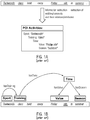
- Figures 1A shows relation and entity extraction for an example sentence.
- Figure 1A shows the spans "Taekwondo class", “Friday nite” and “summer” as underlined.
- Relation and entity extraction corresponds to recognizing the token “Taekwondo” as an instance of a sport, the token “class” as falling under training, and “Friday nite” and “summer” as value and season, respectively, of a time entity.
- Figure 1B illustrates, for the same example sentence, relations between the selected spans in the example.
- the class Sport for the span "Taekwondo" has the semantic class Training as a child class, which is the entity type of the span "class”.
- the semantic class Training has the semantic class Time as a child class, which is the entity type of the span "Friday nite in summer”.
- the semantic class Time has child classes Value and Season, where Value is the entity type of the span "Friday nite" and Season is the entity type of the span "in summer”.
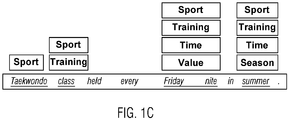
- FIG 1C illustrates the relaxation of the task of relation and entity extraction, as disclosed in the present invention.
- each span is labeled with a semantic attribute path, without explicitly annotating relations between the spans.
- relations between the spans are implicit in the hierarchy of the semantic attribute paths. Accordingly, for the same example sentence as in Figures 1A and 1B , "Taekwondo" is labeled as having the semantic attribute path of Sport, the span "class”, having the semantic type Training, is labeled as Sport. Training, and the span "Friday nite” as Sport. Training. Time. Value.
- the span "in summer” is labeled as Sport. Training. Time.Season, because Season is the entity type of the span "summer".
- the semantic attribute path of the token "summer” therefore means that summer is a time entity with the attribute Season, which in turn is the Time of a training entity, which is a Training for a Sport.
- the path can be understood as meaning that there is a Sport which has an attribute of type Training, which has an attribute of type Time, which has an attribute of type Season whose value is the span "summer”.
- No explicit relation between the entities is included in this model, so that the span "class” is not explicitly attached to the span "Taekwondo", which implies that this model allows for the representation of implicit relations.
- Figure 2 illustrates components of an annotation assistant 20 for efficiently creating annotated machine learning training data.
- Existing annotation tools such as brat or Prodigy are not suitable for the annotation method as proposed, because the number of distinct semantic paths is much larger than normal label sets of named entity recognition.
- Annotation assistant 20 comprises graphical annotation interface 22, which provides a user interface to a user.
- Graphical annotation interface 22 displays an input sentence in a text window 222 as a sequence of tokens to be annotated.
- a user may employ graphical annotation interface 22 to select a span 224 comprising one or more tokens from the text.
- the span selection and the sequence of tokens is sent to automatic span tagger 24 comprising artificial neural network 242 and optimal path algorithm 244.
- Automatic span tagger 24 may extract token vectors from the sentence employing the embedding of pre-trained tokens.
- Artificial neural network 242 employs the sequence of tokens and pre-trained token vectors to assign class probabilities to each token. The class probabilities score the probability that a token falls under a respective class from the predefined ontology.
- the artificial neural network is a multi-label multi-class classification neural network.
- the artificial neural network is configured to classify tokens in a plurality of classes corresponding to semantic attribute paths, and may assign multiple possible semantic attribute paths to each token.
- Span selection 224 is sent to optimal path algorithm 244 which also receives the class probabilities of the tokens from multi-label classifier 242.
- Optimal path algorithm 244 computes potential semantic attribute paths for the span, along with scores for each potential semantic attribute path.
- Optimal path algorithm 244 takes into account the combination of class probabilities of the tokens in the span to infer the most likely semantic attribute paths as the most likely paths over the classes of the ontology, given the class probabilities.
- Optimal path algorithm 244 can be implemented with well-known path search and scoring algorithms.
- Optimal path algorithm 244 may also take the class probabilities of tokens surrounding the span into account. Taking into account the class probabilities of tokens surrounding the span may comprise selecting a number n of tokens before and after the span to be taken into account. Mean vectors of probabilities for the tokens may be calculated to yield mean vectors for the tokens within the span and mean vectors for the surrounding tokens. Further, a contextualized vector for the span may be computed from the mean vectors for the tokens within the span and a weighted sum of the mean vectors of the surrounding tokens with a distance-based weight decay to ensure that the closest tokens have higher contributions. The contextualized vector for the span may be supplied to optimal path algorithm 244 to compute scored semantic attributed paths taking into account class probabilities of tokens surrounding the span.
- Optimal path algorithm 244 returns an ordered list of semantic attribute paths and respective scores to graphical annotation interface 22.
- Graphical annotation interface 22 displays the ordered list of semantic attribute paths ordered by respective scores as graphical element 226.
- Graphical element 226 allows a user to select one of the semantic attribute paths.
- Graphical element 226 may display a top-ranked semantic attribute path as a default semantic attribute path that is selected without user intervention, i.e. when the user passes the step of selecting one of the semantic attribute paths.
- Graphical element 226 may display alternative semantic attribute path ranked lower than the top-ranked semantic attribute path in a list, such as a scroll-down list that displays a number of highest ranked semantic attribute path and has a scroll bar that can be activated to move the displayed semantic attribute path towards lower ranked semantic attribute paths.
- graphical element 226 may comprise a drop-down menu that can be accessed by selecting an icon adjacent to the displayed top-ranked semantic attribute path.
- Method 300 corresponds to bootstrapping the model in a lightly supervised way by employing seed tokens for each class of the ontology.
- the seed tokens are used to construct a training set of synthetic sentences for the multi-label classifier that scores all possible classes locally.
- Method 300 employs a predefined annotation scheme relying on a predefined ontology, and a vocabulary of pre-trained token vectors.
- the ontology is defined which defines the semantic attribute paths of the annotation scheme.
- each individual class such as the classes Sport, Training, Time, Season, in the example discussed above, is assigned a number of seed tokens, corresponding to tokens that should be classified as falling under the class. In embodiments, an average of five seed tokens per class is employed.
- the "Training” class can have the seed tokens “Coaching”, “Training” and "Lessons”.
- a similarity of all the seed tokens with the tokens in the vocabulary is computed.
- a set comprising a number k of tokens least similar to the set of seed tokens according to the computed similarity is chosen as a set of negative tokens.
- the similarity of tokens in the vocabulary with the set of seeds for all the classes is measured by a cosine similarity.
- the number k is a hyperparameter of the disclosed approach.
- Method 300 further comprises creating 308 artificial texts by combining the seed tokens with tokens sampled from the list of negative tokens.
- method 300 comprises training 310 multi-label classifier 242 of the automatic span tagger 24 with the artificial sentences as training data.
- Training 310 multi-label classifier 242 comprises supervised training whereby for seed tokens in the artificial sentences the respective class for which the token has been selected as a seed token forms an annotation.
- Method 300 may also include adjusting the number k of least similar tokens. The number k may be adjusted empirically by manually inspecting the negative tokens that have highest similarity scores with the seed tokens. If the negative tokens that have highest similarity scores with the seed tokens include tokens that should not be counted as negative tokens, the number k is decreased.
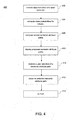
- Figure 4 illustrates method 400 for annotation of text employing an annotation assistant.
- Method 400 comprises receiving 402 an input sentence and a span selection comprising tokens from the input sentence.
- a user selects a span using a pointing device, such as a mouse, and as soon as the pointing device is actuated, the sentence and the selected span are sent to automatic span tagger 24.
- a pointing device such as a mouse
- Method 400 comprises computing 404 class probabilities for the tokens in the input sentence.
- computing the class probabilities is performed by multi-label classifier 242.
- Method 400 further comprises computing 406 scored semantic attribute paths for the selected span from combining the class probabilities for tokens generated in step 404.
- the class probabilities yielded from step 404 correspond to a local prediction within the predefined ontology, which are combined in step 406 to score semantic attribute paths.
- class probabilities of tokens surrounding the tokens of the span selection may be taken into account.
- the scored semantic attribute paths obtained as the result of step 406 may be displayed to the user in step 408.
- the semantic attribute paths are displayed as a list of semantic attribute paths ordered by the score of the respective semantic attribute paths.
- the list is displayed as a down menu of graphical annotation interface 22 allowing the user to scroll down to lower-ranked semantic attribute paths.
- Method 400 may further comprise receiving 410 a user selection from among the scored semantic attribute paths.
- graphical annotation interface 22 displays the semantic attribute path with the highest score as a default choice of a semantic attribute path for the currently selected span. If the user deems the displayed semantic attribute path correct, the user may proceed to select the next span, thereby implicitly sending the automatic span tagger the message that the proposed semantic attribute path is correct.
- receiving 410 the user selection from among the scored semantic attribute paths comprises receiving a user selection of an alternative semantic attribute path. If the user deems the proposed semantic attribute path with highest score not correct, the user can select another semantic attribute path from the list of displayed semantic attribute paths. For example, the user may select an alternative semantic attribute path from a list of semantic attribute paths displayed in graphical annotation interface 22, or scroll down the list and select one of the semantic attribute paths ranked lower. System 20 then saves the sentence, the span and the selected semantic attribute path in storage 26, adding them to previously obtained training data.
- Method 400 may further comprise reconstructing an unlabeled graph reflecting the relations between the annotated spans of a sentence to allow further processing of the training data in machine learning tools for natural language processing.
- Graphical annotation interface 22 may have a train button 228.
- multi-label classifier 242 is re-trained 414 using all training data stored in storage 26 generated by the method 400 so far.
- automatic span tagger 24 is provided with additional training data that train multi-label classifier 242 for improved prediction accuracy.
- the scores predicted by automatic span tagger 24 improve, so that more and more frequently the correct semantic attribute path is weighted highest and is displayed as the proposed semantic attribute path. This allows for a further increase in the efficiency of the annotation process, because the user interaction beyond span selection is only required if the proposed semantic attribute path is not appropriate.
- Methods 300 and 400 may be applied to providing search and sentiment analysis for points of interest.
- the disclosed systems and methods may be advantageously employed for providing information relating to a POI to users, such providing of information being described, for example, in US Patent Application Serial No. 16/790048, filed February 13, 2020 , entitled "Method and System for Providing Information to a User Relating to a Point-of-Interest".
- methods 300 and 400 may be applied to generate a POI search system that automatically selects pieces of useful POI information from users reviews, groups them into semantic categories, and makes them directly accessible to users when they search for and select POIs.
- Methods 300 and 400 may also be applied in fine-grained information extraction systems for event detection, database/knowledge base completion, social media analytics, biomedical or scientific relationship extraction.
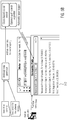
- Figures 5A and 5B illustrate interaction of an annotator with graphical annotation interface 22.
- Figures 5A and 5B also illustrate interaction of graphical annotation interface 22 with automatic span tagger 24 and components for training automatic span tagger 24.
- artificial data generator 506 is employed to create artificial examples for initial training of the automatic span tagger 24. Artificial data generator 506 may create artificial sentences by combining tokens from the seed tokens 504 with tokens sampled from respective negative tokens.
- an annotator can employ the automatic span tagger to generate annotated data.
- the annotator may select a span from a displayed sentence, for example from a sentence displayed by graphical annotation interface 22.
- the span is sent to automatic span tagger 24, which returns scored predictions for semantic attribute paths.
- the annotator selects the span "Monday” and the automatic span tagger returns the semantic attribute path Recreation&Sport.Time.Value which is displayed as a top-ranked semantic attribute path 510 in graphical annotation interface 22.
- about 42% of the proposed semantic attribute paths were correct even in the initial annotation phase, when the system has only been bootstrapped as explained above with reference to Figure 3 and not yet trained with real sentences.
- Figure 5B illustrates an annotator correcting the proposed semantic attribute path.
- Graphical annotation interface 22 displays a menu 512, which may be a dropdown menu 512 as displayed in Figure 5B , with alternative semantic attribute paths ranked by respective scores.
- the annotator can select one of the alternative semantic attribute paths from the menu and thereby correct the proposed semantic attribute path.
- the correct one was among the first four alternative semantic attribute paths.
- Fig. 7 which comprises server 700 and one or more client devices 702 that communicate over a network 704 which may be wireless and/or wired, such as the Internet, for data exchange.
- Server 700 and the client devices 702 each include processor 712 and memory 713, such as a hard disk.
- Client devices 702 may be any devices that communicate with server 700, including autonomous vehicle 702b, robot 702c, computer 702d, or cell phone 702e. More precisely, in an embodiment, the system according to the embodiments of Figs. 1 and 2 may be implemented by server 700.
- Server 700 may provide automatic span tagger 24 and storage 26 may be included in storage 712a.
- Client device 702 may provide graphical annotation interface 22, which may interact with automatic span tagger 24 on server 700 to allow an annotator to provide annotations to storage 712a as described above with reference to Figures 4 , 5A , and 5B .
- Server 700 may, upon receiving a re-train command from client device 702, re-train automatic span tagger 24 employing the annotations stored in storage 712a.
- the embodiments described above may be implemented in hardware or in software.
- the implementation can be performed using a non-transitory storage medium such as a computer-readable storage medium, for example a floppy disc, a DVD, a Blu-Ray, a CD, a ROM, a PROM, an EPROM, an EEPROM or a FLASH memory.
- a computer-readable storage medium for example a floppy disc, a DVD, a Blu-Ray, a CD, a ROM, a PROM, an EPROM, an EEPROM or a FLASH memory.
- Such computer-readable media can be any available media that can be accessed by a general-purpose or special-purpose computer system.
- embodiments can be implemented as computer program products with a program code or computer-executable instructions, the program code or computer-executable instructions being operative for performing one of the methods when the computer program product runs on a computer.
- the program code or the computer-executable instructions may, for example, be stored on a computer-readable storage medium.
- a storage medium (or a data carrier, or a computer-readable medium) comprises, stored thereon, the computer program or the computer-executable instructions for performing one of the methods described herein when it is performed by a processor.
- POIs Points of Interest
- the employed ontology contains 8 top classes of Visitor, Visit, WhatToWear, WhatToBring, ShowAndExhibition, Recreation&Sport, Food&Drinks, Offering, and 42 semantic classes, so that the annotation scheme contained 185 semantic attribute paths.
- Figure 6 illustrates the ontology employed. As is evident, the ontology does not correspond to a tree graph, as nodes "Payment” 602 and “Time” 604 have multiple parents. Node “Payment” 602 has the parents “Offering” 606, “Food & Drinks” 608, “Recreation&Sport” 610, "Visit” 612, and “ShowAndExhibition” 614. Table 1 # Trained docs Method Prec. @1 Prec. @3 Prec. @5 Prec.
- the performance of the proposed method and system is the capacity of the system to assist annotators by proposing appropriate labels.
- automatic tests of its performance were done.
- Performance of the method was measured by the ability of the system to rank the correct label among the displayed semantic attribute paths. The method is compared with an approach of randomly proposing semantic attribute paths and with an approach of proposing the most frequently used semantic attribute paths.
- Table 1 describes the results of experiments conducted.
- the column “Prec. @1” reports the frequency with which the correct semantic attribute path is proposed as the top-ranked semantic attribute path
- the columns “Prec. @3", “Prec. @5", “Prec. @10”, “Prec. @20” analogously report the frequency with which the annotation assistant lists the correct semantic attribute path among the top 3, top 5, top 10 and top 20 semantic attribute paths, respectively.
- the frequency based method already reaches a plateau of around 23% with a training size of 100, while the method disclosed here constantly and considerably increases precision with training size.
- the disclosed method reaches a precision of around 68%, so that for two-thirds of spans the correct semantic attribute path is proposed.
- the figure of 80% for the times when the right semantic attribute path is among the five highest ranked proposed semantic attribute paths represents a very effective assistance to the user, because he or she does not have to scroll down in the displayed menu, as illustrated in Figure 5B , but rather can select the appropriate semantic attribute path with a single gesture.
- the present disclosure proposes a relaxation of the task of relation and entity extraction allowing for a significant reduction in the burdens of the annotation task.
- the present disclosure further describes an annotation assistant with a graphical annotation interface that supports annotators in rapidly annotating sentences with semantic attribute paths.
Landscapes
- Engineering & Computer Science (AREA)
- Theoretical Computer Science (AREA)
- Physics & Mathematics (AREA)
- General Physics & Mathematics (AREA)
- General Engineering & Computer Science (AREA)
- Computational Linguistics (AREA)
- General Health & Medical Sciences (AREA)
- Health & Medical Sciences (AREA)
- Artificial Intelligence (AREA)
- Data Mining & Analysis (AREA)
- Biomedical Technology (AREA)
- Molecular Biology (AREA)
- Computing Systems (AREA)
- Evolutionary Computation (AREA)
- Biophysics (AREA)
- Mathematical Physics (AREA)
- Software Systems (AREA)
- Life Sciences & Earth Sciences (AREA)
- Databases & Information Systems (AREA)
- Audiology, Speech & Language Pathology (AREA)
- Machine Translation (AREA)
- User Interface Of Digital Computer (AREA)
Abstract
Description
- Many recent advances in natural language processing require large amounts of labeled data only obtainable by manual entity and relation extraction from texts. Entity and relation extraction comprises extracting entity mentions, identifying the entities' types, and indicating their semantic relation in sentences.
- Tools and methods of the prior art for entity and relation extraction require a human annotator to select spans of two entities that are involved in a relation, assign entity labels to the selected spans, create a link between the two spans, and assign a relation label to the link.
- Because entity and relation extraction according to the prior art is a rather burdensome process, annotated machine learning data for relation extraction is expensive, hampering widespread use of rich relationship extraction systems. A further limitation of state of the art relation extraction systems is that implicit relations cannot be handled. In an implicit relation, only one member of a span is explicitly mentioned in the text. For example, in the sentence "ask for Tara, she's the best", relating to a gym, the token "Tara" should be extracted as the name of an instructor for a sports class, even though the sentence does not mention any sports class.
- The solution of the present invention relies on sequence labelling of entities with full semantic attribute paths that indicate the contextual semantic role of the entities. Sequence labelling, which is a type of pattern recognition, involves assignment of respective categorical labels to tokens of a sequence of tokens. When the categorical labels belong to a fine-grained taxonomy, the problem becomes a multi-label classification task.
- Multi-label classification has been treated in the state of the art for annotating complex but static taxonomies with hierarchical relationships such as "is-a", "has", "part-of". Such methods of hierarchical multi-label classification have been applied for classification of biological entities and text or image content classification (Gjorgji Madjarov et al: "An extensive experimental comparison of methods for multi-label learning", Pattern Recogn., 45(9): 3084-3104, 202; Wei Huang et al: "Hierarchical multi-label text classification: An attention-based recurrent network approach", in Proceedings of the 28th ACM International Conference on Information and Knowledge Management, CIKM '19, pages 1051-1060; Isaac Triguero and Celine Vens: "Labelling strategies for hierarchical multi-label classification techniques", Pattern Recognition, 56: 170-183, 2016).
- However, in the prior art, multi-label classification methods have not been applied for hierarchies with multiple inheritance between classes. In addition, the prior art does not apply multi-label classification methods to derive categorical labels from the textual context of tokens.
- To support users in the task of entity and relation extraction from texts, several tools have been implemented, such as Brat (Pontus Stenetorp et al: "Brat: A web-based tool for NLP-assisted text annotation", in Proceedings of the Demonstrations at the 13th Conference of the European Chapter of the Association for Computational Linguistics, EACL '12, pages 102-107), Oyster (Hamed Tayebikhorami et al: "Oyster: A tool for fine-grained ontological annotations in free-text", in Proceedings of Information Retrieval Technology - 11th Asia Information Retrieval Societies Conference, pages 440-446, 2015), and Prodigy (https://prodi.gy).
- Brat relies on fully manual annotation by a user. However, Brat cannot handle implicit relation annotation and cannot deal with multiple heritage of semantic classes. In addition, annotation with a complex ontology involves a high number of labels in the annotation manual, making use of Brat very cumbersome. Oyster allows annotations to be defined with respect to named entities defined in a reference knowledge resource and also features a mechanism to automatically suggest annotations to the users, using a prefix-based search algorithm that helps to speed up the mapping of entities from the reference knowledge resource. However, Oyster also fails to cover complex relations involving multi-inheritance.
- Prodigy allows training of a machine learning model concurrently with the annotation process, thereby supporting the user in the annotation process by proposing annotations. Only when the machine learning model cannot determine the annotation with sufficient accuracy is the user requested to provide a selection from proposed annotations. However, Prodigy also does not allow annotation of implicit relations. Furthermore, the web interface of Prodigy does not support a large number of labels, and when default annotation patterns are created with seed tokens and/or rule based patterns, the user interface requires the user to validate or invalidate or pass each annotation for which the mentioned token is a seed token, making the annotation process very burdensome.
- Yet another approach to information extraction is unsupervised information extraction that involves extracting entities and relations between them without employing labeled data. Open information extraction (Michele Banko et al, "Open information extraction from the web", in Proceedings of the 20th International Joint Conference on Artificial Intelligence, pages 2670-2676, 2007) is capable of identifying relational patterns and instances automatically without predefined target relations. However, these methods typically yield sub-optimal results which are hard to interpret.
- A further alternative approach for relation extraction is distant supervision that relies on knowledge bases such as Wikipedia. Distant supervision combines the benefits of semi-supervised and unsupervised relation extraction approaches. However, this approach is not applicable to contexts where corresponding knowledge bases do not exist. In addition, inherent noise introduced by mapping the knowledge-based relations to texts make distant supervision techniques less accurate than supervised techniques.
- In this disclosure, a method of relation and entity extraction employing semantic attribute paths is proposed. A semantic attribute path corresponds to the path in an ontology such that the context-free entity type is the last node of the path. The systems and methods described greatly reduce the effort and expense of annotation of textual examples for natural language processing, because only the selection of spans remains as a fully manual task.
- According to the disclosed method, as soon as the annotator actuates a pointing device, such as a mouse employed for selecting a span, the text and the span selection is sent to an automatic span tagger of a class-based neural model and a path-scoring algorithm that returns an ordered list of semantic attribute paths with respective scores. The semantic attribute path with the highest score is proposed as the correct label to the annotator.
- If the proposed semantic attribute path label is incorrect, the annotator can correct it by selecting an alternative semantic attribute path from a dropdown menu that contains obtained semantic attribute paths sorted according to their scores. At any time the annotator can select the option of retraining the class-based neural model using all annotated text examples, so that the system improves successively at scoring the semantic attribute paths, further reducing the burden of the task because predictions of semantic attribute paths improve.
- According to an embodiment of the invention, a method of pre-training an artificial neural network for use in fine-grained information extraction is disclosed. The method comprises assigning seed tokens for each class of a predefined ontology, computing a similarity of all seed tokens assigned to the classes with vocabulary tokens in a vocabulary of pre-trained word vectors, and selecting a number of least similar vocabulary tokens as negative tokens. The method then comprises creating artificial texts by combining the seed tokens with tokens sampled from the list of negative tokens, and employing the classes of the seed tokens as annotations of the artificial texts for training an artificial neural network.
- The method may further comprise optimizing the number of least similar vocabulary tokens. In embodiments, the predefined ontology contains a first number of top classes and a second number of semantic classes.
- According to another aspect, an annotation method for semi-automatic creation of annotated machine learning training data employing an artificial neural network pre-trained according to the previous method is provided. The annotation method may comprise receiving a sequence of tokens and a span selection, the span selection comprising one or more tokens from the sequence of tokens, and computing, by the artificial neural network, class probabilities for each token of the sequence of tokens, the class probabilities for a token corresponding to a probability for the token to fall under respective classes of the predefined ontology. The annotation method further comprises computing scores for semantic attribute paths of the span selection, the scores for the semantic attribute paths being based on the class probabilities, wherein the semantic attribute paths correspond to paths in the predefined ontology, and displaying a list of semantic attribute paths for the span selection, the list of semantic attribute paths ranking semantic attribute paths by the respective score. The annotation method also comprises receiving a user selection of a semantic attribute path from the list of semantic attribute paths, and storing the sequence of tokens and the selected semantic attribute path for the span selection in the annotated machine learning training data.
- The annotation method may further comprise re-training the artificial neural network employing the stored machine learning training data.
- According to an embodiment, computing the scores for semantic attribute paths of the span selection is based on the class probabilities for the tokens of the span selection and on the class probabilities of tokens surrounding the tokens of the span selection
- According to another embodiment, receiving the user selection of a semantic attribute path comprises receiving a user input indicating acceptance of a semantic attribute path ranked highest in the list of semantic attribute paths or receiving a selection of an alternative semantic attribute path from the list of semantic attribute paths. Receiving the user input indicating acceptance of the semantic attribute path ranked highest may comprise receiving another span selection.
- In embodiments, the sequence of tokens corresponds to a user-generated comment, such as a user-generated comment relating to a point of interest. In embodiments, the user-generated comment may relate to retailers.
- According to another aspect, an annotation assistant for semi-automatic creation of annotated machine learning training data is disclosed. The annotation assistant may comprise a graphical annotation interface for displaying a sequence of tokens to be annotated, wherein the graphical annotation interface is configured to allow a span selection by a user, and an automatic span tagger. The automatic span tagger may comprise an artificial neural network configured to assign class probabilities to each token of the sequence of tokens, wherein the class probabilities correspond to classes of a predefined ontology. The automatic span tagger may further comprise a path-scoring algorithm configured to compute scored semantic attribute paths for the span selection based on the class probabilities, the class probabilities for a token corresponding to a probability for the token to fall under respective classes of the predefined ontology. The graphical annotation interface may further be configured for displaying the scored semantic attribute paths, and for receiving the selection among the scored semantic attribute paths from the user. The annotation assistant may further comprise storage for storing the sequence of tokens and a selected semantic attribute path for the span selection as annotated machine learning data.
- In embodiments, the graphical annotation interface may comprise a train button to initiate re-training of the artificial neural network employing the stored machine learning training data.
- According to another aspect, the path-scoring algorithm is configured to compute the scored semantic attribute paths for the span selection based on class probabilities by employing the class probabilities of the tokens in the span selection and the class probabilities of tokens surrounding the tokens of the span selection as optimal paths in the predefined ontology.
- In embodiments, the artificial neural network is a multi-label classification artificial neural network trained for classifying spans of texts into the classes.
- The accompanying drawings are incorporated into the specification for the purpose of explaining the principles of the embodiments. The drawings are not to be construed as limiting the invention to only the illustrated and described embodiments or to how they can be made and used. Further features and advantages will become apparent from the following and, more particularly, from the description of the embodiments as illustrated in the accompanying drawings, wherein:
-
Figure 1A illustrates entity and relation extraction in an example; -
Figure 1B illustrates a relation graph corresponding to the entity and relation extraction ofFig. 1A ; -
Figure 1C illustrates a representation of the relation graph ofFig. 1B as semantic attribute paths for spans in the example sentence; -
Figure 2 illustrates a block diagram of components of an annotation assistant for efficient semi-automatic annotation of data with semantic attribute paths; -
Figure 3 illustrates a flow diagram of a method for pre-training an automatic span tagger; -
Figure 4 illustrates a flow diagram of a method for efficient semi-automatic annotation of data with semantic attribute paths; -
Figure 5A illustrates user interaction with a graphical annotation interface to select a span from a sentence; -
Figure 5B illustrates user interaction with a graphical annotation interface to select a semantic attribute path for a span; -
Figure 6 shows an example ontology employed for fine-grain information extraction from user generated comments on places of interest; and -
Figure 7 illustrates an example computing environment in which the disclosed methods may be performed. - In this disclosure, methods and systems for fine-grained information extraction are described that reduce the manual annotation burden and allow annotation employing implicit relations. In the solution as proposed, fine-grained information extraction is modelled as a sequence labelling problem, where labels are semantic attribute paths. The semantic attribute paths are assigned to entity mentions, i.e. spans of tokens, and thereby annotate the entities as values of semantic properties and attributes. The semantic attribute path of an entity describes the hierarchy of properties and attributes associated explicitly or implicitly to this entity in the context of the input text.
- According to the proposed solution, each entity of a text is annotated with a full semantic path between entities, starting from a basic entity type of an ontology up to a highest-level entity type of the ontology. The ontology is a pre-defined graph of classes, typically comprising a set of top classes and a set of semantic classes. The ontology may be adapted specifically to the context of the texts to be analyzed. An example of an ontology will be explained below with reference to
Fig. 6 . A semantic attribute path corresponds to a path from a top class to a lowest class in an ontology. Hence, the semantic attribute paths not only provide entity type labels for spans but also reflect roles of the spans in potential relations. -
Figures 1A shows relation and entity extraction for an example sentence.Figure 1A shows the spans "Taekwondo class", "Friday nite" and "summer" as underlined. Relation and entity extraction corresponds to recognizing the token "Taekwondo" as an instance of a sport, the token "class" as falling under training, and "Friday nite" and "summer" as value and season, respectively, of a time entity. -
Figure 1B illustrates, for the same example sentence, relations between the selected spans in the example. The class Sport for the span "Taekwondo" has the semantic class Training as a child class, which is the entity type of the span "class". The semantic class Training has the semantic class Time as a child class, which is the entity type of the span "Friday nite in summer". The semantic class Time has child classes Value and Season, where Value is the entity type of the span "Friday nite" and Season is the entity type of the span "in summer". -
Figure 1C illustrates the relaxation of the task of relation and entity extraction, as disclosed in the present invention. In this approach, each span is labeled with a semantic attribute path, without explicitly annotating relations between the spans. However, relations between the spans are implicit in the hierarchy of the semantic attribute paths. Accordingly, for the same example sentence as inFigures 1A and 1B , "Taekwondo" is labeled as having the semantic attribute path of Sport, the span "class", having the semantic type Training, is labeled as Sport. Training, and the span "Friday nite" as Sport. Training. Time. Value. - Analogously, the span "in summer" is labeled as Sport. Training. Time.Season, because Season is the entity type of the span "summer". The semantic attribute path of the token "summer" therefore means that summer is a time entity with the attribute Season, which in turn is the Time of a training entity, which is a Training for a Sport. In reverse direction, the path can be understood as meaning that there is a Sport which has an attribute of type Training, which has an attribute of type Time, which has an attribute of type Season whose value is the span "summer". No explicit relation between the entities is included in this model, so that the span "class" is not explicitly attached to the span "Taekwondo", which implies that this model allows for the representation of implicit relations.
- With the disclosed approach of employing semantic attribute paths, annotation effort is significantly reduced because only spans and not relations are annotated. Furthermore, assigning labels to a selected spans can be performed semi-automatically. Hence, only the span of selection remains a task requiring fully manual intervention.
-
Figure 2 illustrates components of an annotation assistant 20 for efficiently creating annotated machine learning training data. Existing annotation tools such as brat or Prodigy are not suitable for the annotation method as proposed, because the number of distinct semantic paths is much larger than normal label sets of named entity recognition. - Annotation assistant 20 comprises
graphical annotation interface 22, which provides a user interface to a user.Graphical annotation interface 22 displays an input sentence in atext window 222 as a sequence of tokens to be annotated. A user may employgraphical annotation interface 22 to select aspan 224 comprising one or more tokens from the text. - Upon selection of a span, the span selection and the sequence of tokens is sent to
automatic span tagger 24 comprising artificialneural network 242 andoptimal path algorithm 244.Automatic span tagger 24 may extract token vectors from the sentence employing the embedding of pre-trained tokens. Artificialneural network 242 employs the sequence of tokens and pre-trained token vectors to assign class probabilities to each token. The class probabilities score the probability that a token falls under a respective class from the predefined ontology. In embodiments, the artificial neural network is a multi-label multi-class classification neural network. The artificial neural network is configured to classify tokens in a plurality of classes corresponding to semantic attribute paths, and may assign multiple possible semantic attribute paths to each token. -
Span selection 224 is sent tooptimal path algorithm 244 which also receives the class probabilities of the tokens frommulti-label classifier 242.Optimal path algorithm 244 computes potential semantic attribute paths for the span, along with scores for each potential semantic attribute path.Optimal path algorithm 244 takes into account the combination of class probabilities of the tokens in the span to infer the most likely semantic attribute paths as the most likely paths over the classes of the ontology, given the class probabilities.Optimal path algorithm 244 can be implemented with well-known path search and scoring algorithms. -
Optimal path algorithm 244 may also take the class probabilities of tokens surrounding the span into account. Taking into account the class probabilities of tokens surrounding the span may comprise selecting a number n of tokens before and after the span to be taken into account. Mean vectors of probabilities for the tokens may be calculated to yield mean vectors for the tokens within the span and mean vectors for the surrounding tokens. Further, a contextualized vector for the span may be computed from the mean vectors for the tokens within the span and a weighted sum of the mean vectors of the surrounding tokens with a distance-based weight decay to ensure that the closest tokens have higher contributions. The contextualized vector for the span may be supplied tooptimal path algorithm 244 to compute scored semantic attributed paths taking into account class probabilities of tokens surrounding the span. -
Optimal path algorithm 244 returns an ordered list of semantic attribute paths and respective scores tographical annotation interface 22.Graphical annotation interface 22 displays the ordered list of semantic attribute paths ordered by respective scores asgraphical element 226.Graphical element 226 allows a user to select one of the semantic attribute paths.Graphical element 226 may display a top-ranked semantic attribute path as a default semantic attribute path that is selected without user intervention, i.e. when the user passes the step of selecting one of the semantic attribute paths.Graphical element 226 may display alternative semantic attribute path ranked lower than the top-ranked semantic attribute path in a list, such as a scroll-down list that displays a number of highest ranked semantic attribute path and has a scroll bar that can be activated to move the displayed semantic attribute path towards lower ranked semantic attribute paths. In other embodiments,graphical element 226 may comprise a drop-down menu that can be accessed by selecting an icon adjacent to the displayed top-ranked semantic attribute path. - To initially train
automatic span tagger 24,method 300, illustrated inFigure 3 , may be employed.Method 300 corresponds to bootstrapping the model in a lightly supervised way by employing seed tokens for each class of the ontology. The seed tokens are used to construct a training set of synthetic sentences for the multi-label classifier that scores all possible classes locally. -
Method 300 employs a predefined annotation scheme relying on a predefined ontology, and a vocabulary of pre-trained token vectors. Instep 302, the ontology is defined which defines the semantic attribute paths of the annotation scheme. - In
step 304, each individual class, such as the classes Sport, Training, Time, Season, in the example discussed above, is assigned a number of seed tokens, corresponding to tokens that should be classified as falling under the class. In embodiments, an average of five seed tokens per class is employed. As an example, the "Training" class can have the seed tokens "Coaching", "Training" and "Lessons". - In step 306 a similarity of all the seed tokens with the tokens in the vocabulary is computed. A set comprising a number k of tokens least similar to the set of seed tokens according to the computed similarity is chosen as a set of negative tokens. In embodiments, the similarity of tokens in the vocabulary with the set of seeds for all the classes is measured by a cosine similarity. The number k is a hyperparameter of the disclosed approach.
-
Method 300 further comprises creating 308 artificial texts by combining the seed tokens with tokens sampled from the list of negative tokens. - Finally,
method 300 comprisestraining 310multi-label classifier 242 of theautomatic span tagger 24 with the artificial sentences as training data.Training 310multi-label classifier 242 comprises supervised training whereby for seed tokens in the artificial sentences the respective class for which the token has been selected as a seed token forms an annotation.Method 300 may also include adjusting the number k of least similar tokens. The number k may be adjusted empirically by manually inspecting the negative tokens that have highest similarity scores with the seed tokens. If the negative tokens that have highest similarity scores with the seed tokens include tokens that should not be counted as negative tokens, the number k is decreased. -
Figure 4 illustratesmethod 400 for annotation of text employing an annotation assistant.Method 400 comprises receiving 402 an input sentence and a span selection comprising tokens from the input sentence. In embodiments, a user selects a span using a pointing device, such as a mouse, and as soon as the pointing device is actuated, the sentence and the selected span are sent toautomatic span tagger 24. -
Method 400 comprises computing 404 class probabilities for the tokens in the input sentence. In embodiments, computing the class probabilities is performed bymulti-label classifier 242. -
Method 400 further comprises computing 406 scored semantic attribute paths for the selected span from combining the class probabilities for tokens generated instep 404. The class probabilities yielded fromstep 404 correspond to a local prediction within the predefined ontology, which are combined instep 406 to score semantic attribute paths. In embodiments, class probabilities of tokens surrounding the tokens of the span selection may be taken into account. - The scored semantic attribute paths obtained as the result of
step 406 may be displayed to the user instep 408. In embodiments, the semantic attribute paths are displayed as a list of semantic attribute paths ordered by the score of the respective semantic attribute paths. In embodiments, the list is displayed as a down menu ofgraphical annotation interface 22 allowing the user to scroll down to lower-ranked semantic attribute paths. -
Method 400 may further comprise receiving 410 a user selection from among the scored semantic attribute paths. In embodiments,graphical annotation interface 22 displays the semantic attribute path with the highest score as a default choice of a semantic attribute path for the currently selected span. If the user deems the displayed semantic attribute path correct, the user may proceed to select the next span, thereby implicitly sending the automatic span tagger the message that the proposed semantic attribute path is correct. - Alternatively, receiving 410 the user selection from among the scored semantic attribute paths comprises receiving a user selection of an alternative semantic attribute path. If the user deems the proposed semantic attribute path with highest score not correct, the user can select another semantic attribute path from the list of displayed semantic attribute paths. For example, the user may select an alternative semantic attribute path from a list of semantic attribute paths displayed in
graphical annotation interface 22, or scroll down the list and select one of the semantic attribute paths ranked lower. System 20 then saves the sentence, the span and the selected semantic attribute path instorage 26, adding them to previously obtained training data. -
Method 400 may further comprise reconstructing an unlabeled graph reflecting the relations between the annotated spans of a sentence to allow further processing of the training data in machine learning tools for natural language processing. -
Graphical annotation interface 22 may have atrain button 228. In response to a user clicking ontrain button 228,multi-label classifier 242 is re-trained 414 using all training data stored instorage 26 generated by themethod 400 so far. Thereby,automatic span tagger 24 is provided with additional training data that trainmulti-label classifier 242 for improved prediction accuracy. As a result, the scores predicted byautomatic span tagger 24 improve, so that more and more frequently the correct semantic attribute path is weighted highest and is displayed as the proposed semantic attribute path. This allows for a further increase in the efficiency of the annotation process, because the user interaction beyond span selection is only required if the proposed semantic attribute path is not appropriate. -
Methods US Patent Application Serial No. 16/790048, filed February 13, 2020 methods Methods -
Figures 5A and5B illustrate interaction of an annotator withgraphical annotation interface 22.Figures 5A and5B also illustrate interaction ofgraphical annotation interface 22 withautomatic span tagger 24 and components for trainingautomatic span tagger 24. - After having defined
annotation scheme 502, and having determinedseed tokens 504 for the classes of the schema as described above in themethod 300,artificial data generator 506 is employed to create artificial examples for initial training of theautomatic span tagger 24.Artificial data generator 506 may create artificial sentences by combining tokens from theseed tokens 504 with tokens sampled from respective negative tokens. - After initial training has been completed, an annotator can employ the automatic span tagger to generate annotated data. The annotator may select a span from a displayed sentence, for example from a sentence displayed by
graphical annotation interface 22. As soon as the annotator actuates a pointing device employed to select a span, the span is sent toautomatic span tagger 24, which returns scored predictions for semantic attribute paths. In the example displayed inFigure 5A , the annotator selects the span "Monday" and the automatic span tagger returns the semantic attribute path Recreation&Sport.Time.Value which is displayed as a top-rankedsemantic attribute path 510 ingraphical annotation interface 22. In experiments such as those described in the following section, about 42% of the proposed semantic attribute paths were correct even in the initial annotation phase, when the system has only been bootstrapped as explained above with reference toFigure 3 and not yet trained with real sentences. -
Figure 5B illustrates an annotator correcting the proposed semantic attribute path.Graphical annotation interface 22 displays amenu 512, which may be adropdown menu 512 as displayed inFigure 5B , with alternative semantic attribute paths ranked by respective scores. The annotator can select one of the alternative semantic attribute paths from the menu and thereby correct the proposed semantic attribute path. In experiments such as those described in the following section, in most cases in which the proposed semantic attribute path is not the correct one, the correct one was among the first four alternative semantic attribute paths. - The above-mentioned systems, methods and embodiments may be implemented within an architecture such as that illustrated in
Fig. 7 , which comprisesserver 700 and one or more client devices 702 that communicate over anetwork 704 which may be wireless and/or wired, such as the Internet, for data exchange.Server 700 and the client devices 702 each include processor 712 and memory 713, such as a hard disk. Client devices 702 may be any devices that communicate withserver 700, includingautonomous vehicle 702b,robot 702c,computer 702d, orcell phone 702e. More precisely, in an embodiment, the system according to the embodiments ofFigs. 1 and2 may be implemented byserver 700.Server 700 may provideautomatic span tagger 24 andstorage 26 may be included instorage 712a. Client device 702 may providegraphical annotation interface 22, which may interact withautomatic span tagger 24 onserver 700 to allow an annotator to provide annotations tostorage 712a as described above with reference toFigures 4 ,5A , and5B .Server 700 may, upon receiving a re-train command from client device 702, re-trainautomatic span tagger 24 employing the annotations stored instorage 712a. - The embodiments described above may be implemented in hardware or in software. The implementation can be performed using a non-transitory storage medium such as a computer-readable storage medium, for example a floppy disc, a DVD, a Blu-Ray, a CD, a ROM, a PROM, an EPROM, an EEPROM or a FLASH memory. Such computer-readable media can be any available media that can be accessed by a general-purpose or special-purpose computer system.
- Generally, embodiments can be implemented as computer program products with a program code or computer-executable instructions, the program code or computer-executable instructions being operative for performing one of the methods when the computer program product runs on a computer. The program code or the computer-executable instructions may, for example, be stored on a computer-readable storage medium.
- In an embodiment, a storage medium (or a data carrier, or a computer-readable medium) comprises, stored thereon, the computer program or the computer-executable instructions for performing one of the methods described herein when it is performed by a processor.
- The described method and system were implemented employing user free-text comments from the recommendation provider Foursquare, containing useful information from user reviews or comments about Points of Interest (POls). User comments on POIs can be very relevant e.g. for travelers, as they cover various aspects outside the scope of travel guides. The huge number of free-text comments, if they could be processed, could effectively complement POI databases.
- The employed user comments from Foursquare range over a wide range of POI types, and thus the annotation scheme covers a large number of semantic classes, attributes and relations. For training, testing and development, 12000 Foursquare comments were employed, concentrating on the POI categories of Food, Arts& Entertainment and Outdoors & Recreation.
- The employed ontology contains 8 top classes of Visitor, Visit, WhatToWear, WhatToBring, ShowAndExhibition, Recreation&Sport, Food&Drinks, Offering, and 42 semantic classes, so that the annotation scheme contained 185 semantic attribute paths.
Figure 6 illustrates the ontology employed. As is evident, the ontology does not correspond to a tree graph, as nodes "Payment" 602 and "Time" 604 have multiple parents. Node "Payment" 602 has the parents "Offering" 606, "Food & Drinks" 608, "Recreation&Sport" 610, "Visit" 612, and "ShowAndExhibition" 614.Table 1 # Trained docs Method Prec. @1 Prec. @3 Prec. @5 Prec. @10 Prec. @20 0 Random 0.0010 0.0117 0.0119 0.1030 0.1253 Freq. 0.0000 0.0002 0.0048 0.0152 0.0344 Ours 0.4242 0.5561 0.6029 0.6393 0.6748 100 Random 0.0010 0.0114 0.0116 0.1025 0.1246 Freq. 0.2342 0.3900 0.4877 0.6473 0.7569 Ours 0.5178 0.6328 0.6637 0.7110 0.7534 300 Random 0.0011 0.0118 0.0119 0.1018 0.1241 Freq. 0.2313 0.3859 0.4976 0.6428 0.7722 Ours 0.5461 0.6799 0.7182 0.7649 0.8040 500 Random 0012 0.0119 0.0121 0.1020 0.1255 Freq. 0.2329 0.3868 0.4971 0.6407 0.7821 Ours 0.5911 0.6993 0.7367 0.7829 0.8148 1000 Random 0.0012 0.0121 0.0123 0.1029 0.1256 Freq. 0.2332 0.3872 0.4969 0.6393 0.7826 Ours 0.6379 0.7455 0.7781 0.8165 0.8465 2000 Random 0.0005 0.0134 0.0134 0.1049 0.1313 Freq. 0.2357 0.3872 0.5007 0.6402 0.7925 Ours 0.6828 0.7791 0.8016 0.8395 0.8711 - In experiments, the performance of the proposed method and system is the capacity of the system to assist annotators by proposing appropriate labels. To establish the usefulness of the proposed method, automatic tests of its performance were done. Performance of the method was measured by the ability of the system to rank the correct label among the displayed semantic attribute paths. The method is compared with an approach of randomly proposing semantic attribute paths and with an approach of proposing the most frequently used semantic attribute paths.
- Table 1 describes the results of experiments conducted. The column "Prec. @1" reports the frequency with which the correct semantic attribute path is proposed as the top-ranked semantic attribute path, while the columns "Prec. @3", "Prec. @5", "Prec. @10", "Prec. @20" analogously report the frequency with which the annotation assistant lists the correct semantic attribute path among the top 3, top 5, top 10 and top 20 semantic attribute paths, respectively. The lines labeled with "Random" report results from the method of randomly proposing semantic attribute paths and the lines labeled with "Freq." report results of the method based on proposing semantic attribute paths based on frequency. These performance measures have been computed for increasing training data size (# Trained docs), corresponding to the number of annotated sentences, from 0 to 2000, to assess the effect of training size on the performance.
- As can be inferred from the results of Table 1, the frequency based method already reaches a plateau of around 23% with a training size of 100, while the method disclosed here constantly and considerably increases precision with training size. With 2,000 annotated sentences, the disclosed method reaches a precision of around 68%, so that for two-thirds of spans the correct semantic attribute path is proposed. In addition, the figure of 80% for the times when the right semantic attribute path is among the five highest ranked proposed semantic attribute paths, represents a very effective assistance to the user, because he or she does not have to scroll down in the displayed menu, as illustrated in
Figure 5B , but rather can select the appropriate semantic attribute path with a single gesture. - Hence, the present disclosure proposes a relaxation of the task of relation and entity extraction allowing for a significant reduction in the burdens of the annotation task. The present disclosure further describes an annotation assistant with a graphical annotation interface that supports annotators in rapidly annotating sentences with semantic attribute paths.
Claims (15)
- A method (300) of pre-training an artificial neural network for use in fine-grained information extraction, the method comprising:assigning (304) seed tokens for each class of a predefined ontology;computing a similarity of all seed tokens assigned to the classes with vocabulary tokens in a vocabulary of pre-trained word vectors, and selecting (306) a number (k) of least similar vocabulary tokens as negative tokens;creating (308) artificial texts by combining the seed tokens with tokens sampled from the list of negative tokens; andemploying the classes of the seed tokens as annotations of the artificial texts for training (310) an artificial neural network.
- The method (300) of claim 1, further comprising optimizing the number (k) of least similar vocabulary tokens.
- The method (300) of claim 1 or claim 2, wherein the predefined ontology contains a first number of top classes and a second number of semantic classes.
- An annotation method (400) for semi-automatic creation of annotated machine learning training data employing an artificial neural network pre-trained according to the method of one of claims 1 to 3, the annotation method comprising:receiving (402) a sequence of tokens and a span selection, the span selection comprising one or more tokens from the sequence of tokens;computing (404), by the artificial neural network, class probabilities for each token of the sequence of tokens, the class probabilities for a token corresponding to probabilities for the token to fall under respective classes of the predefined ontology;computing (406) scores for semantic attribute paths of the span selection, the scores for the semantic attribute paths being based on the class probabilities, wherein the semantic attribute paths correspond to paths in the predefined ontology;displaying (408) a list of semantic attribute paths for the span selection, the list of semantic attribute paths ranking semantic attribute paths by the respective score;receiving (410) a user selection of a semantic attribute path from the list of semantic attribute paths; andstoring (412) the sequence of tokens and the selected semantic attribute path for the span selection in the annotated machine learning training data.
- The annotation method (400) of claim 4, further comprising re-training (414) the artificial neural network employing the stored machine learning training data.
- The annotation method (400) of claim 4 or claim 5, wherein computing (406) the scores for semantic attribute paths of the span selection is based on the class probabilities for the tokens of the span selection and on the class probabilities of tokens surrounding the tokens of the span selection.
- The annotation method (400) of one of claims 4 to 6, wherein receiving (410) the user selection of a semantic attribute path comprises receiving a user input indicating acceptance of a semantic attribute path ranked highest in the list of semantic attribute paths or receiving a selection of an alternative semantic attribute path from the list of semantic attribute paths.
- The annotation method (400) of claim 7, wherein receiving the user input indicating acceptance of the semantic attribute path ranked highest comprises receiving another span selection.
- The annotation method (400) of one of claims 4 to 8, wherein the sequence of tokens corresponds to a user generated comment.
- The annotation method (400) of claim 9, wherein the user generated comment relates to a point of interest.
- The annotation method (400) of claim 9, wherein the user generated comment relates to a retailer.
- An annotation assistant (20) for semi-automatic creation of annotated machine learning training data, the annotation assistant (20) comprising:a graphical annotation interface (22) for displaying a sequence of tokens to be annotated, wherein the graphical annotation interface (22) is configured for allowing a span selection (224) by a user;an automatic span tagger (24) comprising:an artificial neural network (242) configured to assign class probabilities to each token of the sequence of tokens, the class probabilities for a token corresponding to probabilities for the token to fall under respective classes of the predefined ontology; anda path-scoring algorithm (244) configured to compute scores for semantic attribute paths of the span selection, the scores for the semantic attribute paths being based on the class probabilities, wherein the semantic attribute paths correspond to paths in the predefined ontology; andstorage (26) for storing the sequence of tokens and a selected semantic attribute path for the span selection (224) as annotated machine learning data,wherein the graphical annotation interface (22) is further configured for displaying the scored semantic attribute paths, and for receiving the selection among the scored semantic attribute paths from the user.
- The annotation assistant (20) of claim 12, wherein the graphical annotation interface comprises a train button to initiate re-training of the artificial neural network employing the stored machine learning training data.
- The annotation assistant (20) of claim 12 or claim 13, wherein the path-scoring algorithm (244) is configured to compute the scored semantic attribute paths for the span selection based on the class probabilities by employing the class probabilities of the tokens in the span selection and the class probabilities of tokens surrounding the tokens of the span selection as optimal paths in the predefined ontology.
- The annotation assistant (20) of one of claims 12 to 14, wherein the artificial neural network (242) is a multi-label multi-class classification neural network trained for classifying spans of texts into the classes.
Priority Applications (2)
| Application Number | Priority Date | Filing Date | Title |
|---|---|---|---|
| EP20305634.6A EP3923206A1 (en) | 2020-06-10 | 2020-06-10 | A method and system for fine-grained information extraction and annotation using semantic attribute paths |
| US17/234,011 US12282847B2 (en) | 2020-06-10 | 2021-04-19 | Method and system for extraction and annotation using semantic attribute paths |
Applications Claiming Priority (1)
| Application Number | Priority Date | Filing Date | Title |
|---|---|---|---|
| EP20305634.6A EP3923206A1 (en) | 2020-06-10 | 2020-06-10 | A method and system for fine-grained information extraction and annotation using semantic attribute paths |
Publications (1)
| Publication Number | Publication Date |
|---|---|
| EP3923206A1 true EP3923206A1 (en) | 2021-12-15 |
Family
ID=71579530
Family Applications (1)
| Application Number | Title | Priority Date | Filing Date |
|---|---|---|---|
| EP20305634.6A Ceased EP3923206A1 (en) | 2020-06-10 | 2020-06-10 | A method and system for fine-grained information extraction and annotation using semantic attribute paths |
Country Status (2)
| Country | Link |
|---|---|
| US (1) | US12282847B2 (en) |
| EP (1) | EP3923206A1 (en) |
Families Citing this family (5)
| Publication number | Priority date | Publication date | Assignee | Title |
|---|---|---|---|---|
| US11797580B2 (en) * | 2021-12-20 | 2023-10-24 | Microsoft Technology Licensing, Llc | Connection nature between nodes in graph structure |
| USD1099112S1 (en) * | 2022-04-22 | 2025-10-21 | Salesforce, Inc. | Display screen or portion thereof with graphical user interface |
| USD1099113S1 (en) * | 2022-04-22 | 2025-10-21 | Salesforce, Inc. | Display screen or portion thereof with graphical user interface |
| US12314289B2 (en) * | 2023-03-17 | 2025-05-27 | Citibank, N.A. | Aggregating data ingested from disparate sources for processing using machine learning models |
| CN116737842B (en) * | 2023-05-16 | 2025-07-15 | 北京海卓飞网络科技有限公司 | Entity relationship display method and device, electronic equipment and computer storage medium |
Family Cites Families (1)
| Publication number | Priority date | Publication date | Assignee | Title |
|---|---|---|---|---|
| US11774264B2 (en) | 2020-02-13 | 2023-10-03 | Naver Corporation | Method and system for providing information to a user relating to a point-of-interest |
-
2020
- 2020-06-10 EP EP20305634.6A patent/EP3923206A1/en not_active Ceased
-
2021
- 2021-04-19 US US17/234,011 patent/US12282847B2/en active Active
Non-Patent Citations (7)
| Title |
|---|
| GJORGJI MADJAROV ET AL.: "An extensive experimental comparison of methods for multi-label learning", PATTERN RECOGN., vol. 45, no. 9, pages 3084 - 3104, XP028510469, DOI: 10.1016/j.patcog.2012.03.004 |
| HAMED TAYEBIKHORAMI ET AL.: "Oyster: A tool for fine-grained ontological annotations in free-text", PROCEEDINGS OF INFORMATION RETRIEVAL TECHNOLOGY - 11TH ASIA INFORMATION RETRIEVAL SOCIETIES CONFERENCE, 2015, pages 440 - 446 |
| ISAAC TRIGUEROCELINE VENS: "Labelling strategies for hierarchical multi-label classification techniques", PATTERN RECOGNITION, vol. 56, 2016, pages 170 - 183, XP029500047, DOI: 10.1016/j.patcog.2016.02.017 |
| MICHELE BANKO ET AL.: "Open information extraction from the web", PROCEEDINGS OF THE 20TH INTERNATIONAL JOINT CONFERENCE ON ARTIFICIAL INTELLIGENCE, 2007, pages 2670 - 2676 |
| PHILIP GRAFF ET AL: "SkyNet: an efficient and robust neural network training tool for machine learning in astronomy", MONTHLY NOTICES OF THE ROYAL ASTRONOMICAL SOCIETY., vol. 441, no. 2, 12 May 2014 (2014-05-12), GB, pages 1741 - 1759, XP055741541, ISSN: 0035-8711, DOI: 10.1093/mnras/stu642 * |
| PONTUS STENETORP ET AL.: "Brat: A web-based tool for NLP-assisted text annotation", PROCEEDINGS OF THE DEMONSTRATIONS AT THE 13TH CONFERENCE OF THE EUROPEAN CHAPTER OF THE ASSOCIATION FOR COMPUTATIONAL LINGUISTICS, EACL '12, pages 102 - 107 |
| WEI HUANG ET AL.: "Hierarchical multi-label text classification: An attention-based recurrent network approach", PROCEEDINGS OF THE 28TH ACM INTERNATIONAL CONFERENCE ON INFORMATION AND KNOWLEDGE MANAGEMENT, CIKM '19, pages 1051 - 1060 |
Also Published As
| Publication number | Publication date |
|---|---|
| US12282847B2 (en) | 2025-04-22 |
| US20210390395A1 (en) | 2021-12-16 |
Similar Documents
| Publication | Publication Date | Title |
|---|---|---|
| CN111708873B (en) | Intelligent question and answer method, device, computer equipment and storage medium | |
| US12282847B2 (en) | Method and system for extraction and annotation using semantic attribute paths | |
| CN118585658B (en) | AI-based safety declaration training knowledge graph and data management method and system | |
| EP3905142A1 (en) | Abstractive multi-document summarization through self-supervision and control | |
| Kandhro et al. | Sentiment analysis of students’ comment using long-short term model | |
| CN114238653B (en) | A method for constructing, completing and intelligently answering knowledge graphs for programming education | |
| US20080168056A1 (en) | On-line iterative multistage search engine with text categorization and supervised learning | |
| US20210374681A1 (en) | System and method for providing job recommendations based on users' latent skills | |
| Liu et al. | PrimeNet: A framework for commonsense knowledge representation and reasoning based on conceptual primitives | |
| CN110968708A (en) | A method and system for labeling attributes of educational information resources | |
| CN112926308B (en) | Methods, devices, equipment, storage media and program products for matching text | |
| Doss et al. | Learning analytics model for predictive analysis of learners behavior for an indigenous MOOC platform (tadakhul system) in Oman | |
| Atapattu et al. | Automated extraction of semantic concepts from semi-structured data: Supporting computer-based education through the analysis of lecture notes | |
| Swathi et al. | Optimizing question answering systems in education: Addressing domain-specific challenges | |
| CN116502713B (en) | A knowledge tracking method based on weighted meta-path to enhance topic similarity embedding | |
| Zaidan et al. | Machine learning with annotator rationales to reduce annotation cost | |
| CN117216617A (en) | Text classification model training method, device, computer equipment and storage medium | |
| Hauschild | Examining the effect of word embeddings and preprocessing methods on fake news detection | |
| Dayarathne et al. | Centralized and labeled academic journal library using machine learning & deep learning approaches | |
| Lee et al. | Out-of-Category Document Identification Using Target-Category Names as Weak Supervision | |
| Zhang et al. | Chinese medical question answer matching with stack-cnn | |
| Ahmed et al. | Automatically temporal labeled data generation using positional lexicon expansion for focus time estimation of news articles | |
| Jazuli et al. | Enhancing Aspect-Based Sentiment Analysis in Student Reviews Using Bidirectional Autoencoder and Index Generator Algorithm | |
| CN112861536A (en) | Research learning ability portrayal method, device, computing equipment and storage medium | |
| Sinhababu et al. | Medical information retrieval and interpretation: a question-answer based interaction Model |
Legal Events
| Date | Code | Title | Description |
|---|---|---|---|
| PUAI | Public reference made under article 153(3) epc to a published international application that has entered the european phase |
Free format text: ORIGINAL CODE: 0009012 |
|
| STAA | Information on the status of an ep patent application or granted ep patent |
Free format text: STATUS: THE APPLICATION HAS BEEN PUBLISHED |
|
| AK | Designated contracting states |
Kind code of ref document: A1 Designated state(s): AL AT BE BG CH CY CZ DE DK EE ES FI FR GB GR HR HU IE IS IT LI LT LU LV MC MK MT NL NO PL PT RO RS SE SI SK SM TR |
|
| B565 | Issuance of search results under rule 164(2) epc |
Effective date: 20201030 |
|
| STAA | Information on the status of an ep patent application or granted ep patent |
Free format text: STATUS: REQUEST FOR EXAMINATION WAS MADE |
|
| 17P | Request for examination filed |
Effective date: 20220608 |
|
| RBV | Designated contracting states (corrected) |
Designated state(s): AL AT BE BG CH CY CZ DE DK EE ES FI FR GB GR HR HU IE IS IT LI LT LU LV MC MK MT NL NO PL PT RO RS SE SI SK SM TR |
|
| STAA | Information on the status of an ep patent application or granted ep patent |
Free format text: STATUS: THE APPLICATION HAS BEEN REFUSED |
|
| 18R | Application refused |
Effective date: 20250401 |