EP3923141A1 - Method and apparatus for storing autonomous driving test data, electronic device, storage medium and computer program product - Google Patents
Method and apparatus for storing autonomous driving test data, electronic device, storage medium and computer program product Download PDFInfo
- Publication number
- EP3923141A1 EP3923141A1 EP21165824.0A EP21165824A EP3923141A1 EP 3923141 A1 EP3923141 A1 EP 3923141A1 EP 21165824 A EP21165824 A EP 21165824A EP 3923141 A1 EP3923141 A1 EP 3923141A1
- Authority
- EP
- European Patent Office
- Prior art keywords
- data
- preset
- task
- task type
- test
- Prior art date
- Legal status (The legal status is an assumption and is not a legal conclusion. Google has not performed a legal analysis and makes no representation as to the accuracy of the status listed.)
- Ceased
Links
Images


Classifications
-
- G—PHYSICS
- G07—CHECKING-DEVICES
- G07C—TIME OR ATTENDANCE REGISTERS; REGISTERING OR INDICATING THE WORKING OF MACHINES; GENERATING RANDOM NUMBERS; VOTING OR LOTTERY APPARATUS; ARRANGEMENTS, SYSTEMS OR APPARATUS FOR CHECKING NOT PROVIDED FOR ELSEWHERE
- G07C5/00—Registering or indicating the working of vehicles
- G07C5/008—Registering or indicating the working of vehicles communicating information to a remotely located station
-
- B—PERFORMING OPERATIONS; TRANSPORTING
- B60—VEHICLES IN GENERAL
- B60W—CONJOINT CONTROL OF VEHICLE SUB-UNITS OF DIFFERENT TYPE OR DIFFERENT FUNCTION; CONTROL SYSTEMS SPECIALLY ADAPTED FOR HYBRID VEHICLES; ROAD VEHICLE DRIVE CONTROL SYSTEMS FOR PURPOSES NOT RELATED TO THE CONTROL OF A PARTICULAR SUB-UNIT
- B60W60/00—Drive control systems specially adapted for autonomous road vehicles
- B60W60/001—Planning or execution of driving tasks
- B60W60/0011—Planning or execution of driving tasks involving control alternatives for a single driving scenario, e.g. planning several paths to avoid obstacles
-
- G—PHYSICS
- G07—CHECKING-DEVICES
- G07C—TIME OR ATTENDANCE REGISTERS; REGISTERING OR INDICATING THE WORKING OF MACHINES; GENERATING RANDOM NUMBERS; VOTING OR LOTTERY APPARATUS; ARRANGEMENTS, SYSTEMS OR APPARATUS FOR CHECKING NOT PROVIDED FOR ELSEWHERE
- G07C5/00—Registering or indicating the working of vehicles
- G07C5/08—Registering or indicating performance data other than driving, working, idle, or waiting time, with or without registering driving, working, idle or waiting time
- G07C5/0841—Registering performance data
- G07C5/0875—Registering performance data using magnetic data carriers
-
- G—PHYSICS
- G06—COMPUTING OR CALCULATING; COUNTING
- G06F—ELECTRIC DIGITAL DATA PROCESSING
- G06F11/00—Error detection; Error correction; Monitoring
- G06F11/30—Monitoring
- G06F11/3003—Monitoring arrangements specially adapted to the computing system or computing system component being monitored
- G06F11/3013—Monitoring arrangements specially adapted to the computing system or computing system component being monitored where the computing system is an embedded system, i.e. a combination of hardware and software dedicated to perform a certain function in mobile devices, printers, automotive or aircraft systems
-
- G—PHYSICS
- G06—COMPUTING OR CALCULATING; COUNTING
- G06F—ELECTRIC DIGITAL DATA PROCESSING
- G06F11/00—Error detection; Error correction; Monitoring
- G06F11/30—Monitoring
- G06F11/34—Recording or statistical evaluation of computer activity, e.g. of down time, of input/output operation ; Recording or statistical evaluation of user activity, e.g. usability assessment
- G06F11/3466—Performance evaluation by tracing or monitoring
- G06F11/3476—Data logging
-
- G—PHYSICS
- G06—COMPUTING OR CALCULATING; COUNTING
- G06F—ELECTRIC DIGITAL DATA PROCESSING
- G06F11/00—Error detection; Error correction; Monitoring
- G06F11/36—Prevention of errors by analysis, debugging or testing of software
- G06F11/3668—Testing of software
- G06F11/3672—Test management
- G06F11/3688—Test management for test execution, e.g. scheduling of test suites
-
- G—PHYSICS
- G06—COMPUTING OR CALCULATING; COUNTING
- G06F—ELECTRIC DIGITAL DATA PROCESSING
- G06F17/00—Digital computing or data processing equipment or methods, specially adapted for specific functions
- G06F17/40—Data acquisition and logging
-
- G—PHYSICS
- G06—COMPUTING OR CALCULATING; COUNTING
- G06F—ELECTRIC DIGITAL DATA PROCESSING
- G06F9/00—Arrangements for program control, e.g. control units
- G06F9/06—Arrangements for program control, e.g. control units using stored programs, i.e. using an internal store of processing equipment to receive or retain programs
- G06F9/46—Multiprogramming arrangements
- G06F9/50—Allocation of resources, e.g. of the central processing unit [CPU]
- G06F9/5061—Partitioning or combining of resources
- G06F9/5077—Logical partitioning of resources; Management or configuration of virtualized resources
-
- G—PHYSICS
- G07—CHECKING-DEVICES
- G07C—TIME OR ATTENDANCE REGISTERS; REGISTERING OR INDICATING THE WORKING OF MACHINES; GENERATING RANDOM NUMBERS; VOTING OR LOTTERY APPARATUS; ARRANGEMENTS, SYSTEMS OR APPARATUS FOR CHECKING NOT PROVIDED FOR ELSEWHERE
- G07C5/00—Registering or indicating the working of vehicles
- G07C5/08—Registering or indicating performance data other than driving, working, idle, or waiting time, with or without registering driving, working, idle or waiting time
- G07C5/0808—Diagnosing performance data
-
- G—PHYSICS
- G07—CHECKING-DEVICES
- G07C—TIME OR ATTENDANCE REGISTERS; REGISTERING OR INDICATING THE WORKING OF MACHINES; GENERATING RANDOM NUMBERS; VOTING OR LOTTERY APPARATUS; ARRANGEMENTS, SYSTEMS OR APPARATUS FOR CHECKING NOT PROVIDED FOR ELSEWHERE
- G07C5/00—Registering or indicating the working of vehicles
- G07C5/08—Registering or indicating performance data other than driving, working, idle, or waiting time, with or without registering driving, working, idle or waiting time
- G07C5/0841—Registering performance data
-
- G—PHYSICS
- G07—CHECKING-DEVICES
- G07C—TIME OR ATTENDANCE REGISTERS; REGISTERING OR INDICATING THE WORKING OF MACHINES; GENERATING RANDOM NUMBERS; VOTING OR LOTTERY APPARATUS; ARRANGEMENTS, SYSTEMS OR APPARATUS FOR CHECKING NOT PROVIDED FOR ELSEWHERE
- G07C5/00—Registering or indicating the working of vehicles
- G07C5/08—Registering or indicating performance data other than driving, working, idle, or waiting time, with or without registering driving, working, idle or waiting time
- G07C5/0841—Registering performance data
- G07C5/085—Registering performance data using electronic data carriers
-
- G—PHYSICS
- G06—COMPUTING OR CALCULATING; COUNTING
- G06F—ELECTRIC DIGITAL DATA PROCESSING
- G06F11/00—Error detection; Error correction; Monitoring
- G06F11/30—Monitoring
- G06F11/3065—Monitoring arrangements determined by the means or processing involved in reporting the monitored data
Definitions
- Embodiments of the present disclosure relate to the field of computer technology, specifically to the field of autonomous driving, and more specifically to a method and apparatus for storing autonomous driving test data, an electronic device, a computer readable storage medium and a computer program product.
- the information data dropped to the disks is mainly used for problem reproduction in off-line environments, bug positioning and troubleshooting, and acquisition of high-precision maps.
- the accumulated data may also be used for simulation.
- the test tasks of the autonomous vehicles may be divided into many different task types.
- the current test method uses the same method of dropping data to disks for different test task types, and a large amount of repeated data irrelevant to the test tasks is acquired accordingly, which wastes disk resources, is also not conducive to extracting data relevant to the test tasks by developers and testers from a large amount of disk drop data, and increases the time cost of the test.
- a method and apparatus for storing autonomous driving test data, an electronic device, a computer readable storage medium and a computer program product are provided.
- an embodiment of the present disclosure provides a method for storing autonomous driving test data, the method including: acquiring a task type of a test task of an autonomous vehicle; receiving message data acquired in a test of the autonomous vehicle and corresponding to the task type, and writing the message data into a data queue; creating a log file corresponding to the task type, writing the message data corresponding to the task type in the data queue into the log file, and transferring the log file and a file name of the log file to the data queue; acquiring preset disk drop scenario information corresponding to the task type of the test task of the autonomous vehicle, the preset disk drop scenario information representing a time of triggering disk drop storage of data; and adding, according to the preset disk drop scenario information corresponding to the task type of the test task of the autonomous vehicle, an unclearable mark to the log file in the data queue having data acquisition time consistent with the time of triggering disk drop storage of data.
- an embodiment of the present disclosure provides an apparatus for storing autonomous driving test data, the apparatus including: a first acquiring unit, configured to acquire a task type of a test task of an autonomous vehicle; a receiving unit, configured to receive message data acquired in a test of the autonomous vehicle and corresponding to the task type, and write the message data into a data queue; a writing unit, configured to create a log file corresponding to the task type, write the message data corresponding to the task type in the data queue into the log file, and transfer the log file and a file name of the log file to the data queue; a second acquiring unit, configured to acquire preset disk drop scenario information corresponding to the task type of the test task of the autonomous vehicle, the preset disk drop scenario information representing a time of triggering disk drop storage of data; and a marking unit, configured to add, according to the preset disk drop scenario information corresponding to the task type of the test task of the autonomous vehicle, an unclearable mark to the log file in the data queue having data acquisition time consistent with the time of triggering disk
- an embodiment of the present disclosure provides an electronic device, the device electronic including: at least one processor; and a memory communicatively connected with the at least one processor, the memory storing instructions executable by the at least one processor, and the instructions, when executed by the at least one processor, causing the at least one processor to perform the method according to the first aspect.
- an embodiment of the present disclosure provides a non-transitory computer readable storage medium storing computer instructions, the computer instructions being used to cause a computer to perform the method according to the first aspect.
- an embodiment of the present disclosure provides a computer program product including a computer program, where the computer program, when executed by a processor, implements the method according to the first aspect.
- the technology according to embodiments of the present disclosure solves the problems that the existing method for storing data acquires a large amount of repeated data irrelevant to the test tasks, which wastes disk resources, is also not conducive to extracting data relevant to the test tasks by developers and testers from a large amount of disk drop data, and increases the time cost of the test.
- Fig. 1 shows an example system architecture 100 in which a method for storing data or an apparatus for storing data according to embodiments of the present disclosure may be implemented.
- the system architecture 100 may include an autonomous vehicle 101, a network 102 and a server 103.
- the network 102 serves as a medium providing a communication link between the autonomous vehicle 101 and the server 103.
- the network 102 may include various types of connections, such as wired or wireless communication links, or optical fiber cables.
- the autonomous vehicle 101 may interact with the server 103 through the network 102 to receive or send signals.
- the autonomous vehicle 101 may be installed with various electronic apparatuses, such as a camera, a sensor, a lidar, a navigation apparatus, an autonomous vehicle controller, an anti-lock braking systems, and a braking force distribution system.
- the autonomous vehicle 101 may be various autonomous vehicles, including but not limited to a large bus, a tractor, a city bus, a medium bus, a large truck, a compact car, a small automatic transmission car, an autonomous vehicle or other intelligent autonomous vehicles.
- the server 103 may be a server providing various services, for example, a backend server providing data storage support for the autonomous device 101.
- the backend server may receive test message data sent by the autonomous vehicle 101, and then store the information according to the preset disk drop scenario information corresponding to the task type of the test task of the autonomous vehicle.
- the method for storing autonomous driving test data is generally executed by the server 103. Accordingly, the apparatus for storing autonomous driving test data is generally provided in the server 103.
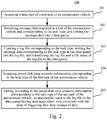
- a flow 200 of a method for storing autonomous driving test data according to an embodiment of the present disclosure is shown.
- the method for storing data in this embodiment includes the following steps.
- Step 201 acquiring a task type of a test task of an autonomous vehicle.
- the executing body (for example, the server 103 shown in Fig. 1 ) of the method for storing data may acquire the task type of the test task of the autonomous vehicle.
- the executing body may acquire the task type of the test task of the autonomous vehicle from another electronic device, or may acquire the task type of the test task of the autonomous vehicle locally from the executing body.
- the executing body may receive the task type selected by a user through a visual operation platform.
- the task type of the test task of the autonomous vehicle includes: a module test task, a road test and road running task, a map acquisition task, or the like.
- the task type of the module test task may be further subdivided in a plurality of levels according to different modules, such as a positioning task, a perception task, and a decision-making and control task.
- Step 202 receiving message data acquired in a test of the autonomous vehicle and corresponding to the task type, and writing the message data into a data queue.
- the executing body may receive the message data acquired in the test of the autonomous vehicle and corresponding to the task type, and write the message data into the data queue.
- the message data includes vehicle state data, vehicle control instruction data, data acquired by a sensor such as a positioning apparatus, a radar, or a camera.
- the data queue is preset by the executing body.
- the road test and road running task corresponds to road test data and road running data acquired
- the positioning task corresponds to data acquired by a positioning sensor
- the perception task corresponds to data acquired by a perception sensor
- the map acquisition task corresponds to data acquired by a camera and a lidar.
- the data queue is a container used to store message data during the transmission of the message data, and may be a common data queue, such as ActiveMQ, RabbitMQ, Kafka, or RocketMQ, which is not specially limited in embodiments of the present disclosure.
- Step 203 creating a log file corresponding to the task type, writing the message data corresponding to the task type in the data queue into the log file, and transferring the log file and a file name of the log file to the data queue.
- the executing body creates the log file corresponding to the task type, writes the message data corresponding to the task type in the data queue into the log file, and transfers the log file and the file name of the log file to the data queue.
- the log file is created and named according to the acquired task type of the test task of the autonomous vehicle, for example, a module test task file, a road test and road running task file, a map acquisition task file, a positioning task file, a perception task file, a decision-making and control task file, or the like is created; then, the data queue is searched for the message data corresponding to the task type, and the message data corresponding to the task type is written into the corresponding log file; and finally, the message data in the log file and the file name of the log file are transferred back to the data queue.
- the data queue is searched for the message data corresponding to the task type, and the message data corresponding to the task type is written into the corresponding log file; and finally, the message data in the log file and the file name of the log file are transferred back to the data queue.
- the log file corresponding to the task type is created, the message data corresponding to the task type in the data queue is written into the log file, and a data acquisition time is transferred to the data queue.
- Step 204 acquiring preset disk drop scenario information corresponding to the task type of the test task of the autonomous vehicle.
- the executing body after acquiring the task type of the test task of the autonomous vehicle, the executing body further acquires the preset disk drop scenario information corresponding to the task type of the test task of the autonomous vehicle.
- the preset disk drop scenario information includes a time of triggering disk drop storage of data.
- the preset disk drop scenario information includes whole-course disk drop, autonomous driving disk drop, and event trigger disk drop.
- the event trigger disk drop refers to a disk drop scenario triggered by a preset event.
- the preset event may include entry and exit of autonomous driving, emergency braking, emergency steering, and manually submitted events. When these events are triggered, data within a period of time before and after the trigger time is logged.
- the corresponding relationship between the task type and the preset disk drop scenario information may be pre-configured.
- Step 205 adding, according to the preset disk drop scenario information corresponding to the task type of the test task of the autonomous vehicle, an unclearable mark to the log file in the data queue having data acquisition time consistent with the time of triggering disk drop storage of data.
- the executing body adds, according to the time of triggering disk drop storage of data in the preset disk drop scenario information corresponding to the task type of the test task of the autonomous vehicle, the unclearable mark to the log file in the data queue having the data acquisition time consistent with the time of triggering disk drop storage of data. That is, it can be determined whether the acquisition time of data in the log file in the data queue is consistent with the time of triggering disk drop storage of data in the preset disk drop scenario information, and if the acquisition time of data in the log file in the data queue is consistent with the time of triggering disk drop storage of data in the preset disk drop scenario information, then the unclearable mark is added to the log file.
- the preset disk drop scenario corresponding to the task type of the test task of the autonomous vehicle is an emergency braking event.
- the emergency braking event is triggered, data within five minutes before and after the trigger time of the emergency braking event is logged, that is, the time of triggering disk drop storage of data includes five minutes before and after the trigger time of the emergency braking event. Therefore, the executing body adds, according to the time of triggering disk drop storage of data, the unclearable mark to the log file in the data queue having data acquisition time consistent with the time of triggering disk drop storage of data.
- the method further includes: polling the data and files in the data queue, and clearing the message data and the files having no unclearable mark in the data queue.
- the clearing thread of the executing body may periodically poll the data and files in the data queue, and clear the message data and the files having no unclearable mark in the data queue. In this way, the data irrelevant to the test task in the data queue can be cleared in time, and only the data with unclearable marks is retained, so that the tester can quickly acquire the data relevant to the test task.
- the method for storing data can store the data of the autonomous vehicle by using the task type of the test task of the autonomous vehicle and the corresponding disk drop scenario information, and can clear useless and repeated data, thereby saving disk resources.
- a flow 300 of a method for storing data according to another embodiment of the present disclosure is shown.
- the method for storing autonomous driving test data of this embodiment may include the following steps.
- Step 301 sending, according to a user's configuration operation of correspondingly associating a preset task type with preset disk drop scenario information, a corresponding relationship between the preset task type and the preset disk drop scenario information to a cloud for storing.
- the executing body sends, according to the configuration operation of correspondingly associating the preset task type with the preset disk drop scenario information by the user, the corresponding relationship between the preset task type and the preset disk drop scenario information to the cloud for storing.
- the configuration operation of correspondingly associating the preset task type with the preset disk drop scenario information may be customized and completed by a person skilled in the art. The flexible configuration of the association relationship between the test task and the disk drop scenario is thus achieved, so that the method of this embodiment can be applied to various test tasks.
- the person skilled in the art customizes that the module test corresponds to autonomous driving disk drop, the road test and road running task corresponds to event trigger disk drop, and the map acquisition task corresponding to whole-course disk drop.
- the executing body pushes a data partitioning strategy to the user, for the user to select a preset task type of a preset test task according to test requirement information of the preset test task and the data required to be acquired for different task types.
- the data partitioning strategy includes message data of an autonomous vehicle required to be acquired under each task type, and the data partitioning strategy is determined according to the test task of the autonomous vehicle. Using the preset data partitioning strategy can help the user quickly complete the configuration of the association relationship between the task type and the disk drop scenario.
- At least one piece of candidate disk drop scenario information that matches the task type is read from the cloud and pushed to the user; and the candidate disk drop scenario information selected by the user is used as the preset disk drop scenario information corresponding to the preset task type.
- Pre-configuring the matching relationship between various task types and candidate disk drop scenario information can reduce the difficulty of user configuration and improve configuration efficiency.
- the matching relationship between the task types in the cloud and at least one candidate disk drop scenario can be automatically extracted from the historical test process and saved, which can provide a rich and accurate matching relationship for the user to refer when configuring.
- the preset task type is correspondingly associated with the preset disk drop scenario information, only required message data under the preset disk drop scenario is acquired.
- Step 302 acquiring a task type of a test task of an autonomous vehicle.
- the executing body (for example, the server 103 shown in Fig. 1 ) of the method for storing data may acquire the task type of the test task of the autonomous vehicle.
- the executing body may acquire the task type of the test task of the autonomous vehicle from another electronic device, or may acquire the task type of the test task of the autonomous vehicle locally from the executing body.
- the executing body may receive the task type selected by the user through a visual operation platform.
- Step 303 reading, from the cloud, preset disk drop scenario information corresponding to the task type of the test task of the autonomous vehicle.
- the executing body reads, from the cloud, the preset disk drop scenario information corresponding to the task type of the test task of the autonomous vehicle.
- Step 304 receiving message data acquired in a test of the autonomous vehicle and corresponding to the task type, and writing the message data into a data queue.
- Step 305 creating a log file corresponding to the task type, writing the message data corresponding to the task type in the data queue into the log file, and transferring the log file and a file name of the log file to the data queue.
- steps 304 and 305 are substantially consistent with the operations of steps 202 and 203 in the embodiment shown in Fig. 2 , so details are not described herein again.
- Step 306 adding, according to the preset disk drop scenario information corresponding to the task type of the test task of the autonomous vehicle, an unclearable mark to the log file in the data queue having data acquisition time consistent with the time of triggering disk drop storage of data.
- step 306 is substantially consistent with the operation of step 205 in the embodiment shown in Fig. 2 , so details are not described herein again.
- the method further includes: polling the data and files in the data queue, and clearing the message data and the files having no unclearable mark in the data queue.
- the clearing thread of the executing body polls the data and files in the data queue, and clears the message data and the files having no unclearable mark in the data queue.
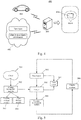
- Fig. 4 is a schematic diagram of an application scenario of the embodiment shown in Fig. 3 .
- a server 403 acquires, from a cloud 402, a task type of a test task of an autonomous vehicle 401 and preset disk drop scenario information corresponding to the task type of the test task of the autonomous vehicle 401. Then, the server 403 receives message data acquired in a test of the autonomous vehicle 401 and corresponding to the task type, and writes the message data into a data queue.
- the server 403 creates a log file 404 corresponding to the task type, writes the message data corresponding to the task type in the data queue into the log file 404, and transfers the log file 404 and a file name of the log file 404 to the data queue.
- the server 403 adds, according to the preset disk drop scenario information corresponding to the task type of the test task of the autonomous vehicle 401, an unclearable mark to the log file 404 in the data queue having data acquisition time consistent with the time of triggering disk drop storage of data; and polls the data and files in the data queue, and clears the message data and the files having no unclearable mark in the data queue.
- the method for storing data can store the data of the autonomous vehicle by using the task type of the test task of the autonomous vehicle and the corresponding disk drop scenario information, and can clear useless and repeated data, thereby shortening test time and saving disk resources.
- Fig. 5 is a schematic diagram of a backend implementation of a method for storing autonomous driving test data according to an embodiment of the present disclosure.
- a strategy management module 502 acquires a data partitioning strategy from a cloud 501, and the strategy management module 502 calls a logging strategy module 503 to write a task type, and calls an event strategy module 504 to write a disk drop scenario corresponding to the test task; and a data logger 505 receives message data called back from a control machine 506, writes the message data into a data queue 507, and then informs a logger 508 to read the message data.
- the message data is test data acquired during the test.
- the logger 508 detects the task type by calling the logging strategy module 503, creates a log file corresponding to the task type, writes the message data corresponding to the task type in the data queue 507 into the log file, and transfers the log file and a file name of the log file to the data queue 507.
- the logger 508 acquires the disk drop scenario corresponding to the task type; and informs, according to the disk drop scenario corresponding to the task type, a logging management module 509 to add an unclearable mark to the log file in the data queue 507 having data acquisition time consistent with the time of triggering disk drop storage of data.
- an embodiment of the present disclosure provides an apparatus for storing autonomous driving test data.
- the embodiment of the apparatus may correspond to the embodiment of the method shown in Fig. 2 , and the apparatus may be applied to various electronic devices.
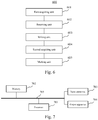
- an apparatus 600 for storing autonomous driving test data in this embodiment includes: a first acquiring unit 601, a receiving unit 602, a writing unit 603, a second acquiring unit 604, and a marking unit 605.
- the first acquiring unit 601 is configured to acquire a task type of a test task of an autonomous vehicle; the receiving unit 602 is configured to receive message data acquired in a test of the autonomous vehicle and corresponding to the task type, and write the message data into a data queue; the writing unit 603 is configured to create a log file corresponding to the task type, write the message data corresponding to the task type in the data queue into the log file, and transfer the log file and a file name of the log file to the data queue; the second acquiring unit 604 is configured to acquire preset disk drop scenario information corresponding to the task type of the test task of the autonomous vehicle, the preset disk drop scenario information representing a time of triggering disk drop storage of data; and the marking unit 605 is configured to add, according to the preset disk drop scenario information corresponding to the task type of the test task of the autonomous vehicle, an unclearable mark to the log file in the data queue having data acquisition time consistent with the time of triggering disk drop storage of data.
- the apparatus for storing autonomous driving test data further includes: a clearing unit (not shown), configured to poll the data and files in the data queue, and clear the message data and the files having no unclearable mark in the data queue.
- a clearing unit (not shown), configured to poll the data and files in the data queue, and clear the message data and the files having no unclearable mark in the data queue.
- the apparatus for storing autonomous driving test data further includes: an association configuration unit (not shown), configured to send, according to a user's configuration operation of correspondingly associating a preset task type with the preset disk drop scenario information, a corresponding relationship between the preset task type and the preset disk drop scenario information to a cloud for storing; and the second acquiring unit is further configured to: read, from the cloud, the preset disk drop scenario information corresponding to the task type of the test task of the autonomous vehicle.
- the association configuration unit may further include an information processing module and a preset disk drop scenario information determination module not shown in Fig. 6 .
- the information processing module is configured to read, according to the preset task type of a preset test task selected by the user, at least one piece of candidate disk drop scenario information that matches the preset task type from the cloud and push the candidate disk drop scenario information to the user; and the preset disk drop scenario information determination module is configured to use the candidate disk drop scenario information selected by the user as the preset disk drop scenario information corresponding to the preset task type.
- the information processing module further includes: a strategy push submodule (not shown), configured to push a data partitioning strategy to the user, for the user to select the preset task type of the preset test task according to test requirement information of the preset test task and the data required to be acquired for different task types, where the data partitioning strategy includes the message data of the autonomous vehicle required to be acquired under each task type.
- a strategy push submodule (not shown), configured to push a data partitioning strategy to the user, for the user to select the preset task type of the preset test task according to test requirement information of the preset test task and the data required to be acquired for different task types, where the data partitioning strategy includes the message data of the autonomous vehicle required to be acquired under each task type.
- the present disclosure further provides an electronic device and a readable storage medium.
- Fig. 7 shows a block diagram of an electronic device for storing autonomous driving test data according to an embodiment of the present disclosure.
- the electronic device is intended to represent various forms of digital computers, such as a laptop computer, a desktop computer, a workstation, a personal digital assistant, a server, a blade server, a mainframe computer, and other suitable computers.
- the electronic device may also represent various forms of mobile apparatuses, such as a personal digital processor, a cellular phone, a smart phone, a wearable device, and other similar computing apparatuses.
- the components shown herein, their connections and relationships, and their functions are merely examples, and are not intended to limit the implementation of the present disclosure described and/or required herein.
- the electronic device includes: one or more processors 701, a memory 702, and interfaces for connecting various components, including high-speed interfaces and low-speed interfaces.
- the various components are connected to each other by different buses 705, and can be installed on a common motherboard or installed in other ways as required.
- the processor may process instructions executed in the electronic device, including instructions stored in or on the memory to display graphical information of a GUI on an external input/output apparatus (such as a display device coupled to an interface) .
- a plurality of processors and/or a plurality of buses may be used with a plurality of memories if necessary.
- a plurality of electronic devices may be connected, and each device provides some necessary operations (for example, as a server array, a group of blade servers, or a multi-processor system).
- One processor 701 is taken as an example in Fig. 7 .
- the memory 702 is a non-transitory computer readable storage medium provided by the present disclosure.
- the memory stores instructions executable by at least one processor, causing the at least one processor to execute the method for storing data according to embodiments of the present disclosure.
- the non-transitory computer readable storage medium of embodiments of the present disclosure stores computer instructions, and the computer instructions are used for a computer to execute the method for storing data according to embodiments of the present disclosure.
- the memory 702 may be used to store non-transitory software programs, non-transitory computer-executable programs and modules, such as program instructions/modules (for example, the first acquiring unit 601, the receiving unit 603, the writing unit 603, the second acquiring unit 604 and the marking unit 605 shown in Fig. 6 ) corresponding to the method for storing data according to embodiments of the present disclosure.
- the processor 701 executes various functional applications and data processing of the server by running the non-transitory software programs, instructions and modules stored in the memory 702, that is, implements the method for storing data according to embodiments of the method.
- the memory 702 may include a program storage area and a data storage area, where the program storage area may store an operating system and an application program required by at least one function; and the data storage area may store data created by the electronic device for storing data.
- the memory 702 may include a high-speed random access memory, and may also include a non-transitory memory, such as at least one magnetic disk storage device, a flash memory device, or other non-transitory solid-state storage devices.
- the memory 702 may optionally include memories remotely configured with respect to the processor 701, and these remote memories may be connected to the electronic device for storing data through a network. Examples of the network include, but are not limited to, the Internet, an intranet, a local area network, a mobile communications network, or a combination thereof.
- the electronic device for the method for storing autonomous driving test data may further include: an input apparatus 703 and an output apparatus 704.
- the processor 701, the memory 702, the input apparatus 703, and the output apparatus 704 may be connected by a bus 705 or other means, exemplified by the bus 705 in Fig. 7 .
- the input apparatus 703 may receive input digital or character information, and generate key signal inputs related to the user settings and function control of the electronic device for storing data, such as a touch screen, a keypad, a mouse, a trackpad, a touchpad, an indicating arm, one or more mouse buttons, a trackball, a joystick and other input apparatuses.
- the output apparatus 704 may include a display device, an auxiliary lighting apparatus (for example, LED) and a tactile feedback apparatus (for example, a vibration motor) .
- the display device may include, but is not limited to, a liquid crystal display (LCD), a light emitting diode (LED) display, and a plasma display. In some embodiments, the display device may be a touch screen.
- Various implementations of the systems and techniques described herein may be implemented in a digital electronic circuit system, an integrated circuit system, an application specific integrated circuit (ASIC), computer hardware, firmware, software, and/or combinations thereof. These various implementations may include the implementation in one or more computer programs.
- the one or more computer programs may be executed and/or interpreted on a programmable system including at least one programmable processor, and the programmable processor may be a dedicated or general-purpose programmable processor, may receive data and instructions from a storage system, at least one input apparatus and at least one output apparatus, and transmit the data and the instructions to the storage system, the at least one input apparatus and the at least one output apparatus.
- a computer having a display apparatus (e.g., a cathode ray tube (CRT)) or an LCD monitor) for displaying information to the user, and a keyboard and a pointing apparatus (e.g., a mouse or a track ball) by which the user may provide the input to the computer.
- a display apparatus e.g., a cathode ray tube (CRT)
- LCD monitor for displaying information to the user
- a keyboard and a pointing apparatus e.g., a mouse or a track ball
- Other kinds of apparatuses may also be used to provide the interaction with the user.
- a feedback provided to the user may be any form of sensory feedback (e.g., a visual feedback, an auditory feedback, or a tactile feedback); and an input from the user may be received in any form, including acoustic, speech, or tactile input.
- the systems and techniques described here may be implemented in a computing system (e.g., as a data server) that includes a backend part, implemented in a computing system (e.g., an application server) that includes a middleware part, implemented in a computing system (e.g., a user computer having a graphical user interface or a Web browser through which the user may interact with an implementation of the systems and techniques described here) that includes a frontend part, or implemented in a computing system that includes any combination of the backend part, the middleware part or the frontend part.
- the parts of the system may be interconnected by any form or medium of digital data communication (e.g., a communication network) . Examples of the communication network include a local area network (LAN), a wide area network (WAN) and Internet.
- the computer system may include a client and a server.
- the client and the server are generally remote from each other and typically interact through the communication network.
- the relationship between the client and the server is generated through computer programs running on the respective computers and having a client-server relationship to each other.
- the present disclosure further provides a computer program product including a computer program, where the computer program, when executed by a processor, implements the method for storing autonomous driving test data.
- the data of the autonomous vehicle can be stored by using the task type of the test task of the autonomous vehicle and the corresponding disk drop scenario information, and useless and repeated data can be cleared, thereby shortening test time and saving disk resources.
Landscapes
- Engineering & Computer Science (AREA)
- Physics & Mathematics (AREA)
- General Physics & Mathematics (AREA)
- Theoretical Computer Science (AREA)
- General Engineering & Computer Science (AREA)
- Software Systems (AREA)
- Computer Hardware Design (AREA)
- Quality & Reliability (AREA)
- Computing Systems (AREA)
- Mathematical Physics (AREA)
- Automation & Control Theory (AREA)
- Human Computer Interaction (AREA)
- Transportation (AREA)
- Mechanical Engineering (AREA)
- Databases & Information Systems (AREA)
- Data Mining & Analysis (AREA)
- Traffic Control Systems (AREA)
- Debugging And Monitoring (AREA)
Abstract
Description
- Embodiments of the present disclosure relate to the field of computer technology, specifically to the field of autonomous driving, and more specifically to a method and apparatus for storing autonomous driving test data, an electronic device, a computer readable storage medium and a computer program product.
- Vehicle state data of autonomous vehicles during driving, and information data acquired by various positioning apparatuses, radars, cameras and other sensors need to be logged in time and stored to disks. The information data dropped to the disks is mainly used for problem reproduction in off-line environments, bug positioning and troubleshooting, and acquisition of high-precision maps. The accumulated data may also be used for simulation.
- According to different scenarios of test tasks of autonomous vehicles or different types of acquired data, the test tasks of the autonomous vehicles may be divided into many different task types. The current test method uses the same method of dropping data to disks for different test task types, and a large amount of repeated data irrelevant to the test tasks is acquired accordingly, which wastes disk resources, is also not conducive to extracting data relevant to the test tasks by developers and testers from a large amount of disk drop data, and increases the time cost of the test.
- A method and apparatus for storing autonomous driving test data, an electronic device, a computer readable storage medium and a computer program product are provided.
- In a first aspect, an embodiment of the present disclosure provides a method for storing autonomous driving test data, the method including: acquiring a task type of a test task of an autonomous vehicle; receiving message data acquired in a test of the autonomous vehicle and corresponding to the task type, and writing the message data into a data queue; creating a log file corresponding to the task type, writing the message data corresponding to the task type in the data queue into the log file, and transferring the log file and a file name of the log file to the data queue; acquiring preset disk drop scenario information corresponding to the task type of the test task of the autonomous vehicle, the preset disk drop scenario information representing a time of triggering disk drop storage of data; and adding, according to the preset disk drop scenario information corresponding to the task type of the test task of the autonomous vehicle, an unclearable mark to the log file in the data queue having data acquisition time consistent with the time of triggering disk drop storage of data.
- In a second aspect, an embodiment of the present disclosure provides an apparatus for storing autonomous driving test data, the apparatus including: a first acquiring unit, configured to acquire a task type of a test task of an autonomous vehicle; a receiving unit, configured to receive message data acquired in a test of the autonomous vehicle and corresponding to the task type, and write the message data into a data queue; a writing unit, configured to create a log file corresponding to the task type, write the message data corresponding to the task type in the data queue into the log file, and transfer the log file and a file name of the log file to the data queue; a second acquiring unit, configured to acquire preset disk drop scenario information corresponding to the task type of the test task of the autonomous vehicle, the preset disk drop scenario information representing a time of triggering disk drop storage of data; and a marking unit, configured to add, according to the preset disk drop scenario information corresponding to the task type of the test task of the autonomous vehicle, an unclearable mark to the log file in the data queue having data acquisition time consistent with the time of triggering disk drop storage of data.
- In a third aspect, an embodiment of the present disclosure provides an electronic device, the device electronic including: at least one processor; and a memory communicatively connected with the at least one processor, the memory storing instructions executable by the at least one processor, and the instructions, when executed by the at least one processor, causing the at least one processor to perform the method according to the first aspect.
- In a fourth aspect, an embodiment of the present disclosure provides a non-transitory computer readable storage medium storing computer instructions, the computer instructions being used to cause a computer to perform the method according to the first aspect.
- In a fifth aspect, an embodiment of the present disclosure provides a computer program product including a computer program, where the computer program, when executed by a processor, implements the method according to the first aspect.
- The technology according to embodiments of the present disclosure solves the problems that the existing method for storing data acquires a large amount of repeated data irrelevant to the test tasks, which wastes disk resources, is also not conducive to extracting data relevant to the test tasks by developers and testers from a large amount of disk drop data, and increases the time cost of the test.
- It should be understood that the content described in this section is neither intended to identify key or important features of embodiments of the present disclosure, nor intended to limit the scope of the present disclosure. Other features of the present disclosure will become readily understood in conjunction with the following description.
- The accompanying drawings are used to better understand the solution and do not constitute limitations to the present disclosure.
-
Fig. 1 is a diagram of an example system architecture in which embodiments of the present disclosure may be implemented; -
Fig. 2 is a flowchart of a method for storing autonomous driving test data according to an embodiment of the present disclosure; -
Fig. 3 is a flowchart of a method for storing autonomous driving test data according to another embodiment of the present disclosure; -
Fig. 4 is a schematic diagram of an application scenario of an embodiment shown inFig. 3 ; -
Fig. 5 is a schematic diagram of a backend implementation of a method for storing autonomous driving test data according to an embodiment of the present disclosure; -
Fig. 6 is a schematic structural diagram of an apparatus for storing autonomous driving test data for implementing embodiments of the present disclosure; and -
Fig. 7 is a block diagram of an electronic device for implementing the method for storing autonomous driving test data according to embodiments of the present disclosure. - Example embodiments of the present disclosure are described below with reference to the accompanying drawings, including various details of embodiments of the present disclosure to contribute to understanding, which should be considered merely as examples. Therefore, those of ordinary skills in the art should realize that various alterations and modifications can be made to embodiments described here without departing from the scope and spirit of the present disclosure. Similarly, for clarity and conciseness, descriptions of well-known functions and structures are omitted in the following description.
- It should also be noted that some embodiments in the present disclosure and some features in the disclosure may be combined with each other on a non-conflict basis. Features of the present disclosure will be described below in detail with reference to the accompanying drawings and in combination with embodiments.
-
Fig. 1 shows anexample system architecture 100 in which a method for storing data or an apparatus for storing data according to embodiments of the present disclosure may be implemented. - As shown in
Fig. 1 , thesystem architecture 100 may include anautonomous vehicle 101, anetwork 102 and aserver 103. Thenetwork 102 serves as a medium providing a communication link between theautonomous vehicle 101 and theserver 103. Thenetwork 102 may include various types of connections, such as wired or wireless communication links, or optical fiber cables. - The
autonomous vehicle 101 may interact with theserver 103 through thenetwork 102 to receive or send signals. Theautonomous vehicle 101 may be installed with various electronic apparatuses, such as a camera, a sensor, a lidar, a navigation apparatus, an autonomous vehicle controller, an anti-lock braking systems, and a braking force distribution system. - The
autonomous vehicle 101 may be various autonomous vehicles, including but not limited to a large bus, a tractor, a city bus, a medium bus, a large truck, a compact car, a small automatic transmission car, an autonomous vehicle or other intelligent autonomous vehicles. - The
server 103 may be a server providing various services, for example, a backend server providing data storage support for theautonomous device 101. The backend server may receive test message data sent by theautonomous vehicle 101, and then store the information according to the preset disk drop scenario information corresponding to the task type of the test task of the autonomous vehicle. - It should be noted that the method for storing autonomous driving test data according to embodiments of the present disclosure is generally executed by the
server 103. Accordingly, the apparatus for storing autonomous driving test data is generally provided in theserver 103. - It should be understood that numbers of the autonomous vehicle, the network and the server in
Fig. 1 are merely illustrative. According to implementation needs, there may be any number of autonomous vehicles, networks and servers. - Continuing to referring to
Fig. 2 , aflow 200 of a method for storing autonomous driving test data according to an embodiment of the present disclosure is shown. The method for storing data in this embodiment includes the following steps. - Step 201: acquiring a task type of a test task of an autonomous vehicle.
- In this embodiment, the executing body (for example, the
server 103 shown inFig. 1 ) of the method for storing data may acquire the task type of the test task of the autonomous vehicle. The executing body may acquire the task type of the test task of the autonomous vehicle from another electronic device, or may acquire the task type of the test task of the autonomous vehicle locally from the executing body. The executing body may receive the task type selected by a user through a visual operation platform. - The task type of the test task of the autonomous vehicle includes: a module test task, a road test and road running task, a map acquisition task, or the like. The task type of the module test task may be further subdivided in a plurality of levels according to different modules, such as a positioning task, a perception task, and a decision-making and control task.
- Step 202: receiving message data acquired in a test of the autonomous vehicle and corresponding to the task type, and writing the message data into a data queue.
- In this embodiment, after acquiring the task type of the test task of the autonomous vehicle, the executing body may receive the message data acquired in the test of the autonomous vehicle and corresponding to the task type, and write the message data into the data queue. The message data includes vehicle state data, vehicle control instruction data, data acquired by a sensor such as a positioning apparatus, a radar, or a camera. The data queue is preset by the executing body.
- Different task types correspond to different message data. For example, the road test and road running task corresponds to road test data and road running data acquired, the positioning task corresponds to data acquired by a positioning sensor, the perception task corresponds to data acquired by a perception sensor, and the map acquisition task corresponds to data acquired by a camera and a lidar.
- The data queue is a container used to store message data during the transmission of the message data, and may be a common data queue, such as ActiveMQ, RabbitMQ, Kafka, or RocketMQ, which is not specially limited in embodiments of the present disclosure.
- Step 203: creating a log file corresponding to the task type, writing the message data corresponding to the task type in the data queue into the log file, and transferring the log file and a file name of the log file to the data queue.
- In this embodiment, the executing body creates the log file corresponding to the task type, writes the message data corresponding to the task type in the data queue into the log file, and transfers the log file and the file name of the log file to the data queue.
- Specifically, first, the log file is created and named according to the acquired task type of the test task of the autonomous vehicle, for example, a module test task file, a road test and road running task file, a map acquisition task file, a positioning task file, a perception task file, a decision-making and control task file, or the like is created; then, the data queue is searched for the message data corresponding to the task type, and the message data corresponding to the task type is written into the corresponding log file; and finally, the message data in the log file and the file name of the log file are transferred back to the data queue.
- Further, the log file corresponding to the task type is created, the message data corresponding to the task type in the data queue is written into the log file, and a data acquisition time is transferred to the data queue.
- Step 204: acquiring preset disk drop scenario information corresponding to the task type of the test task of the autonomous vehicle.
- In this embodiment, after acquiring the task type of the test task of the autonomous vehicle, the executing body further acquires the preset disk drop scenario information corresponding to the task type of the test task of the autonomous vehicle. The preset disk drop scenario information includes a time of triggering disk drop storage of data. The preset disk drop scenario information includes whole-course disk drop, autonomous driving disk drop, and event trigger disk drop. The event trigger disk drop refers to a disk drop scenario triggered by a preset event. The preset event may include entry and exit of autonomous driving, emergency braking, emergency steering, and manually submitted events. When these events are triggered, data within a period of time before and after the trigger time is logged. The corresponding relationship between the task type and the preset disk drop scenario information may be pre-configured.
- Step 205: adding, according to the preset disk drop scenario information corresponding to the task type of the test task of the autonomous vehicle, an unclearable mark to the log file in the data queue having data acquisition time consistent with the time of triggering disk drop storage of data.
- In this embodiment, the executing body adds, according to the time of triggering disk drop storage of data in the preset disk drop scenario information corresponding to the task type of the test task of the autonomous vehicle, the unclearable mark to the log file in the data queue having the data acquisition time consistent with the time of triggering disk drop storage of data. That is, it can be determined whether the acquisition time of data in the log file in the data queue is consistent with the time of triggering disk drop storage of data in the preset disk drop scenario information, and if the acquisition time of data in the log file in the data queue is consistent with the time of triggering disk drop storage of data in the preset disk drop scenario information, then the unclearable mark is added to the log file.
- Optionally, it can be determined whether the time point of writing the message data into the log file in the data queue is consistent with the time point of triggering disk drop storage of data in the preset disk drop scenario information, and if the time point of writing the message data into the log file in the data queue is consistent with the time point of triggering disk drop storage of data in the preset disk drop scenario information, then the unclearable mark is added to the log file.
- For example, the preset disk drop scenario corresponding to the task type of the test task of the autonomous vehicle is an emergency braking event. When the emergency braking event is triggered, data within five minutes before and after the trigger time of the emergency braking event is logged, that is, the time of triggering disk drop storage of data includes five minutes before and after the trigger time of the emergency braking event. Therefore, the executing body adds, according to the time of triggering disk drop storage of data, the unclearable mark to the log file in the data queue having data acquisition time consistent with the time of triggering disk drop storage of data.
- In some optional implementations of this embodiment, after
step 205, the method further includes: polling the data and files in the data queue, and clearing the message data and the files having no unclearable mark in the data queue. - In this embodiment, the clearing thread of the executing body may periodically poll the data and files in the data queue, and clear the message data and the files having no unclearable mark in the data queue. In this way, the data irrelevant to the test task in the data queue can be cleared in time, and only the data with unclearable marks is retained, so that the tester can quickly acquire the data relevant to the test task.
- The method for storing data according to embodiments of the present disclosure can store the data of the autonomous vehicle by using the task type of the test task of the autonomous vehicle and the corresponding disk drop scenario information, and can clear useless and repeated data, thereby saving disk resources.
- Continuing to referring to
Fig. 3 , aflow 300 of a method for storing data according to another embodiment of the present disclosure is shown. As shown inFig. 3 , the method for storing autonomous driving test data of this embodiment may include the following steps. - Step 301: sending, according to a user's configuration operation of correspondingly associating a preset task type with preset disk drop scenario information, a corresponding relationship between the preset task type and the preset disk drop scenario information to a cloud for storing.
- In this embodiment, the executing body sends, according to the configuration operation of correspondingly associating the preset task type with the preset disk drop scenario information by the user, the corresponding relationship between the preset task type and the preset disk drop scenario information to the cloud for storing. The configuration operation of correspondingly associating the preset task type with the preset disk drop scenario information may be customized and completed by a person skilled in the art. The flexible configuration of the association relationship between the test task and the disk drop scenario is thus achieved, so that the method of this embodiment can be applied to various test tasks.
- For example, the person skilled in the art customizes that the module test corresponds to autonomous driving disk drop, the road test and road running task corresponds to event trigger disk drop, and the map acquisition task corresponding to whole-course disk drop.
- In some optional implementations of this embodiment, first, the executing body pushes a data partitioning strategy to the user, for the user to select a preset task type of a preset test task according to test requirement information of the preset test task and the data required to be acquired for different task types. The data partitioning strategy includes message data of an autonomous vehicle required to be acquired under each task type, and the data partitioning strategy is determined according to the test task of the autonomous vehicle. Using the preset data partitioning strategy can help the user quickly complete the configuration of the association relationship between the task type and the disk drop scenario.
- Then, according to the preset task type of the preset test task selected by the user, at least one piece of candidate disk drop scenario information that matches the task type is read from the cloud and pushed to the user; and the candidate disk drop scenario information selected by the user is used as the preset disk drop scenario information corresponding to the preset task type. Pre-configuring the matching relationship between various task types and candidate disk drop scenario information can reduce the difficulty of user configuration and improve configuration efficiency. In addition, the matching relationship between the task types in the cloud and at least one candidate disk drop scenario can be automatically extracted from the historical test process and saved, which can provide a rich and accurate matching relationship for the user to refer when configuring.
- Finally, the corresponding relationship between the preset task type and the preset disk drop scenario information is sent to the cloud for storing.
- In this embodiment, since the preset task type is correspondingly associated with the preset disk drop scenario information, only required message data under the preset disk drop scenario is acquired.
- Step 302: acquiring a task type of a test task of an autonomous vehicle.
- In this embodiment, the executing body (for example, the
server 103 shown inFig. 1 ) of the method for storing data may acquire the task type of the test task of the autonomous vehicle. The executing body may acquire the task type of the test task of the autonomous vehicle from another electronic device, or may acquire the task type of the test task of the autonomous vehicle locally from the executing body. The executing body may receive the task type selected by the user through a visual operation platform. - Step 303: reading, from the cloud, preset disk drop scenario information corresponding to the task type of the test task of the autonomous vehicle.
- In this embodiment, specifically, based on the corresponding relationship between the preset task type and the preset disk drop scenario information stored in the cloud, the executing body reads, from the cloud, the preset disk drop scenario information corresponding to the task type of the test task of the autonomous vehicle.
- Step 304: receiving message data acquired in a test of the autonomous vehicle and corresponding to the task type, and writing the message data into a data queue.
- Step 305: creating a log file corresponding to the task type, writing the message data corresponding to the task type in the data queue into the log file, and transferring the log file and a file name of the log file to the data queue.
- In this embodiment, the specific operations of
steps steps Fig. 2 , so details are not described herein again. - Step 306: adding, according to the preset disk drop scenario information corresponding to the task type of the test task of the autonomous vehicle, an unclearable mark to the log file in the data queue having data acquisition time consistent with the time of triggering disk drop storage of data.
- In this embodiment, the specific operation of
step 306 is substantially consistent with the operation ofstep 205 in the embodiment shown inFig. 2 , so details are not described herein again. - In some optional implementations of this embodiment, after
step 306, the method further includes: polling the data and files in the data queue, and clearing the message data and the files having no unclearable mark in the data queue. - In this embodiment, the clearing thread of the executing body polls the data and files in the data queue, and clears the message data and the files having no unclearable mark in the data queue.
- Continuing to referring to
Fig. 4, Fig. 4 is a schematic diagram of an application scenario of the embodiment shown inFig. 3 . In the application scenario ofFig. 4 , first, aserver 403 acquires, from acloud 402, a task type of a test task of anautonomous vehicle 401 and preset disk drop scenario information corresponding to the task type of the test task of theautonomous vehicle 401. Then, theserver 403 receives message data acquired in a test of theautonomous vehicle 401 and corresponding to the task type, and writes the message data into a data queue. Then, theserver 403 creates alog file 404 corresponding to the task type, writes the message data corresponding to the task type in the data queue into thelog file 404, and transfers thelog file 404 and a file name of thelog file 404 to the data queue. Finally, theserver 403 adds, according to the preset disk drop scenario information corresponding to the task type of the test task of theautonomous vehicle 401, an unclearable mark to thelog file 404 in the data queue having data acquisition time consistent with the time of triggering disk drop storage of data; and polls the data and files in the data queue, and clears the message data and the files having no unclearable mark in the data queue. - The method for storing data according to embodiments of the present disclosure can store the data of the autonomous vehicle by using the task type of the test task of the autonomous vehicle and the corresponding disk drop scenario information, and can clear useless and repeated data, thereby shortening test time and saving disk resources.
- Continuing to referring to
Fig. 5, Fig. 5 is a schematic diagram of a backend implementation of a method for storing autonomous driving test data according to an embodiment of the present disclosure. Astrategy management module 502 acquires a data partitioning strategy from acloud 501, and thestrategy management module 502 calls alogging strategy module 503 to write a task type, and calls anevent strategy module 504 to write a disk drop scenario corresponding to the test task; and adata logger 505 receives message data called back from acontrol machine 506, writes the message data into adata queue 507, and then informs alogger 508 to read the message data. Here, the message data is test data acquired during the test. Thelogger 508 detects the task type by calling thelogging strategy module 503, creates a log file corresponding to the task type, writes the message data corresponding to the task type in thedata queue 507 into the log file, and transfers the log file and a file name of the log file to thedata queue 507. Thelogger 508 acquires the disk drop scenario corresponding to the task type; and informs, according to the disk drop scenario corresponding to the task type, alogging management module 509 to add an unclearable mark to the log file in thedata queue 507 having data acquisition time consistent with the time of triggering disk drop storage of data. - Further referring to
Fig. 6 , as an implementation of the methods shown in the above figures, an embodiment of the present disclosure provides an apparatus for storing autonomous driving test data. The embodiment of the apparatus may correspond to the embodiment of the method shown inFig. 2 , and the apparatus may be applied to various electronic devices. - As shown in
Fig. 6 , anapparatus 600 for storing autonomous driving test data in this embodiment includes: a first acquiringunit 601, a receivingunit 602, awriting unit 603, a second acquiringunit 604, and amarking unit 605. - The first acquiring
unit 601 is configured to acquire a task type of a test task of an autonomous vehicle; the receivingunit 602 is configured to receive message data acquired in a test of the autonomous vehicle and corresponding to the task type, and write the message data into a data queue; thewriting unit 603 is configured to create a log file corresponding to the task type, write the message data corresponding to the task type in the data queue into the log file, and transfer the log file and a file name of the log file to the data queue; the second acquiringunit 604 is configured to acquire preset disk drop scenario information corresponding to the task type of the test task of the autonomous vehicle, the preset disk drop scenario information representing a time of triggering disk drop storage of data; and the markingunit 605 is configured to add, according to the preset disk drop scenario information corresponding to the task type of the test task of the autonomous vehicle, an unclearable mark to the log file in the data queue having data acquisition time consistent with the time of triggering disk drop storage of data. - In some optional implementations of this embodiment, the apparatus for storing autonomous driving test data further includes: a clearing unit (not shown), configured to poll the data and files in the data queue, and clear the message data and the files having no unclearable mark in the data queue.
- In some optional implementations of this embodiment, the apparatus for storing autonomous driving test data further includes: an association configuration unit (not shown), configured to send, according to a user's configuration operation of correspondingly associating a preset task type with the preset disk drop scenario information, a corresponding relationship between the preset task type and the preset disk drop scenario information to a cloud for storing; and the second acquiring unit is further configured to: read, from the cloud, the preset disk drop scenario information corresponding to the task type of the test task of the autonomous vehicle.
- In some optional implementations of this embodiment, the association configuration unit may further include an information processing module and a preset disk drop scenario information determination module not shown in
Fig. 6 . - The information processing module is configured to read, according to the preset task type of a preset test task selected by the user, at least one piece of candidate disk drop scenario information that matches the preset task type from the cloud and push the candidate disk drop scenario information to the user; and the preset disk drop scenario information determination module is configured to use the candidate disk drop scenario information selected by the user as the preset disk drop scenario information corresponding to the preset task type.
- In some optional implementations of this embodiment, the information processing module further includes: a strategy push submodule (not shown), configured to push a data partitioning strategy to the user, for the user to select the preset task type of the preset test task according to test requirement information of the preset test task and the data required to be acquired for different task types, where the data partitioning strategy includes the message data of the autonomous vehicle required to be acquired under each task type.
- According to embodiments of the present disclosure, the present disclosure further provides an electronic device and a readable storage medium.
-
Fig. 7 shows a block diagram of an electronic device for storing autonomous driving test data according to an embodiment of the present disclosure. The electronic device is intended to represent various forms of digital computers, such as a laptop computer, a desktop computer, a workstation, a personal digital assistant, a server, a blade server, a mainframe computer, and other suitable computers. The electronic device may also represent various forms of mobile apparatuses, such as a personal digital processor, a cellular phone, a smart phone, a wearable device, and other similar computing apparatuses. The components shown herein, their connections and relationships, and their functions are merely examples, and are not intended to limit the implementation of the present disclosure described and/or required herein. - As shown in
Fig. 7 , the electronic device includes: one ormore processors 701, amemory 702, and interfaces for connecting various components, including high-speed interfaces and low-speed interfaces. The various components are connected to each other bydifferent buses 705, and can be installed on a common motherboard or installed in other ways as required. The processor may process instructions executed in the electronic device, including instructions stored in or on the memory to display graphical information of a GUI on an external input/output apparatus (such as a display device coupled to an interface) . In other implementations, a plurality of processors and/or a plurality of buses may be used with a plurality of memories if necessary. Similarly, a plurality of electronic devices may be connected, and each device provides some necessary operations (for example, as a server array, a group of blade servers, or a multi-processor system). Oneprocessor 701 is taken as an example inFig. 7 . - The
memory 702 is a non-transitory computer readable storage medium provided by the present disclosure. The memory stores instructions executable by at least one processor, causing the at least one processor to execute the method for storing data according to embodiments of the present disclosure. The non-transitory computer readable storage medium of embodiments of the present disclosure stores computer instructions, and the computer instructions are used for a computer to execute the method for storing data according to embodiments of the present disclosure. - As a non-transitory computer readable storage medium, the
memory 702 may be used to store non-transitory software programs, non-transitory computer-executable programs and modules, such as program instructions/modules (for example, the first acquiringunit 601, the receivingunit 603, thewriting unit 603, the second acquiringunit 604 and the markingunit 605 shown inFig. 6 ) corresponding to the method for storing data according to embodiments of the present disclosure. Theprocessor 701 executes various functional applications and data processing of the server by running the non-transitory software programs, instructions and modules stored in thememory 702, that is, implements the method for storing data according to embodiments of the method. - The
memory 702 may include a program storage area and a data storage area, where the program storage area may store an operating system and an application program required by at least one function; and the data storage area may store data created by the electronic device for storing data. In addition, thememory 702 may include a high-speed random access memory, and may also include a non-transitory memory, such as at least one magnetic disk storage device, a flash memory device, or other non-transitory solid-state storage devices. In some embodiments, thememory 702 may optionally include memories remotely configured with respect to theprocessor 701, and these remote memories may be connected to the electronic device for storing data through a network. Examples of the network include, but are not limited to, the Internet, an intranet, a local area network, a mobile communications network, or a combination thereof. - The electronic device for the method for storing autonomous driving test data may further include: an
input apparatus 703 and anoutput apparatus 704. Theprocessor 701, thememory 702, theinput apparatus 703, and theoutput apparatus 704 may be connected by abus 705 or other means, exemplified by thebus 705 inFig. 7 . - The
input apparatus 703 may receive input digital or character information, and generate key signal inputs related to the user settings and function control of the electronic device for storing data, such as a touch screen, a keypad, a mouse, a trackpad, a touchpad, an indicating arm, one or more mouse buttons, a trackball, a joystick and other input apparatuses. Theoutput apparatus 704 may include a display device, an auxiliary lighting apparatus (for example, LED) and a tactile feedback apparatus (for example, a vibration motor) . The display device may include, but is not limited to, a liquid crystal display (LCD), a light emitting diode (LED) display, and a plasma display. In some embodiments, the display device may be a touch screen. - Various implementations of the systems and techniques described herein may be implemented in a digital electronic circuit system, an integrated circuit system, an application specific integrated circuit (ASIC), computer hardware, firmware, software, and/or combinations thereof. These various implementations may include the implementation in one or more computer programs. The one or more computer programs may be executed and/or interpreted on a programmable system including at least one programmable processor, and the programmable processor may be a dedicated or general-purpose programmable processor, may receive data and instructions from a storage system, at least one input apparatus and at least one output apparatus, and transmit the data and the instructions to the storage system, the at least one input apparatus and the at least one output apparatus.
- These computing programs, also referred to as programs, software, software applications or codes, include a machine instruction of the programmable processor, and may be implemented using a high-level procedural and/or an object-oriented programming language, and/or an assembly/machine language. As used herein, the terms "machine readable medium" and "computer readable medium" refer to any computer program product, device and/or apparatus (e.g., a magnetic disk, an optical disk, a storage device and a programmable logic device (PLD)) used to provide a machine instruction and/or data to the programmable processor, and include a machine readable medium that receives the machine instruction as a machine readable signal. The term "machine readable signal" refers to any signal used to provide the machine instruction and/or data to the programmable processor.
- To provide an interaction with a user, the systems and techniques described here may be implemented on a computer having a display apparatus (e.g., a cathode ray tube (CRT)) or an LCD monitor) for displaying information to the user, and a keyboard and a pointing apparatus (e.g., a mouse or a track ball) by which the user may provide the input to the computer. Other kinds of apparatuses may also be used to provide the interaction with the user. For example, a feedback provided to the user may be any form of sensory feedback (e.g., a visual feedback, an auditory feedback, or a tactile feedback); and an input from the user may be received in any form, including acoustic, speech, or tactile input.
- The systems and techniques described here may be implemented in a computing system (e.g., as a data server) that includes a backend part, implemented in a computing system (e.g., an application server) that includes a middleware part, implemented in a computing system (e.g., a user computer having a graphical user interface or a Web browser through which the user may interact with an implementation of the systems and techniques described here) that includes a frontend part, or implemented in a computing system that includes any combination of the backend part, the middleware part or the frontend part. The parts of the system may be interconnected by any form or medium of digital data communication (e.g., a communication network) . Examples of the communication network include a local area network (LAN), a wide area network (WAN) and Internet.
- The computer system may include a client and a server. The client and the server are generally remote from each other and typically interact through the communication network. The relationship between the client and the server is generated through computer programs running on the respective computers and having a client-server relationship to each other.
- According to an embodiment of the present disclosure, the present disclosure further provides a computer program product including a computer program, where the computer program, when executed by a processor, implements the method for storing autonomous driving test data.
- According to the technical solutions of embodiments of the present disclosure, the data of the autonomous vehicle can be stored by using the task type of the test task of the autonomous vehicle and the corresponding disk drop scenario information, and useless and repeated data can be cleared, thereby shortening test time and saving disk resources.
- It should be understood that the various forms of processes shown above can be used to reorder, add, or delete steps. For example, the steps disclosed in embodiments of the present disclosure can be executed in parallel, sequentially, or in different orders, as long as the desired results of the technical solutions disclosed in embodiments of the present disclosure can be achieved. This is not limited herein.
- The above specific implementations do not constitute a limitation to the protection scope of the present disclosure. It should be understood by those skilled in the art that various modifications, combinations, sub-combinations, and replacements may be made according to the design requirements and other factors. Any modification, equivalent replacement, improvement, and the like made within the spirit and principle of the present disclosure should be included within the protection scope of the present disclosure.
Claims (9)
- A method for storing autonomous driving test data, comprising:acquiring a task type of a test task of an autonomous vehicle;receiving message data acquired in a test of the autonomous vehicle and corresponding to the task type, and writing the message data into a data queue;creating a log file corresponding to the task type, writing the message data corresponding to the task type in the data queue into the log file, and transferring the log file and a file name of the log file to the data queue;acquiring preset disk drop scenario information corresponding to the task type of the test task of the autonomous vehicle, the preset disk drop scenario information representing a time of triggering disk drop storage of data; andadding, according to the preset disk drop scenario information corresponding to the task type of the test task of the autonomous vehicle, an unclearable mark to the log file in the data queue having data acquisition time consistent with the time of triggering disk drop storage of data.
- The method according to claim 1, wherein the method further comprises:
polling the data and files in the data queue, and clearing the message data and the files having no unclearable mark in the data queue. - The method according to claim 1 or 2, wherein the method further comprises:sending, according to a user's configuration operation of correspondingly associating a preset task type with the preset disk drop scenario information, a corresponding relationship between the preset task type and the preset disk drop scenario information to a cloud for storing; andthe acquiring the preset disk drop scenario information corresponding to the task type of the test task of the autonomous vehicle comprises:
reading, from the cloud, the preset disk drop scenario information corresponding to the task type of the test task of the autonomous vehicle. - The method according to claim 3, wherein the sending, according to the user's configuration operation of correspondingly associating the preset task type with the preset disk drop scenario information, the corresponding relationship between the preset task type and the preset disk drop scenario information to the cloud for storing comprises:reading, according to the preset task type of a preset test task selected by the user, at least one piece of candidate disk drop scenario information that matches the preset task type from the cloud and pushing the candidate disk drop scenario information to the user; andusing the candidate disk drop scenario information selected by the user as the preset disk drop scenario information corresponding to the preset task type.
- The method according to claim 4, wherein the method further comprises:
pushing a data partitioning strategy to the user, for the user to select the preset task type of the preset test task according to test requirement information of the preset test task and the data required to be acquired for different task types, wherein the data partitioning strategy comprises the message data of the autonomous vehicle required to be acquired under each task type. - An apparatus (600) for storing autonomous driving test data, comprising a plurality of modules (601, 602, 603, 604, 605) configured to implement the method according to any one of claims 1-5.
- An electronic device, comprising:at least one processor (701); anda memory (702) communicatively connected with the at least one processor (701);the memory (702) storing instructions executable by the at least one processor (701), and the instructions, when executed by the at least one processor (701), causing the at least one processor (701) to perform the method according to any one of claims 1-5.
- A non-transitory computer readable storage medium (702) storing computer instructions, the computer instructions being used to cause a computer to perform the method according to any one of claims 1-5.
- A computer program product comprising a computer program, the computer program, when executed by a processor (701), implementing the method according to any one of claims 1-5.
Applications Claiming Priority (1)
| Application Number | Priority Date | Filing Date | Title |
|---|---|---|---|
| CN202010524870.4A CN111667605B (en) | 2020-06-10 | 2020-06-10 | Automatic driving test data storage method and device and electronic equipment |
Publications (1)
| Publication Number | Publication Date |
|---|---|
| EP3923141A1 true EP3923141A1 (en) | 2021-12-15 |
Family
ID=72386647
Family Applications (1)
| Application Number | Title | Priority Date | Filing Date |
|---|---|---|---|
| EP21165824.0A Ceased EP3923141A1 (en) | 2020-06-10 | 2021-03-30 | Method and apparatus for storing autonomous driving test data, electronic device, storage medium and computer program product |
Country Status (5)
| Country | Link |
|---|---|
| US (1) | US11814077B2 (en) |
| EP (1) | EP3923141A1 (en) |
| JP (1) | JP7268077B2 (en) |
| KR (1) | KR102525502B1 (en) |
| CN (1) | CN111667605B (en) |
Cited By (1)
| Publication number | Priority date | Publication date | Assignee | Title |
|---|---|---|---|---|
| CN117194549A (en) * | 2023-11-07 | 2023-12-08 | 上海柯林布瑞信息技术有限公司 | Data transmission method and device based on task data configuration |
Families Citing this family (30)
| Publication number | Priority date | Publication date | Assignee | Title |
|---|---|---|---|---|
| US11755469B2 (en) * | 2020-09-24 | 2023-09-12 | Argo AI, LLC | System for executing structured tests across a fleet of autonomous vehicles |
| CN114906160B (en) * | 2021-02-07 | 2026-02-03 | 北京原创世代科技有限公司 | Vehicle control and task processing method, device, computing equipment and system |
| CN115129232A (en) * | 2021-03-26 | 2022-09-30 | 华为技术有限公司 | Storage method and device |
| CN113176995B (en) * | 2021-04-28 | 2024-03-19 | 平安银行股份有限公司 | Interface testing method, device, equipment and medium based on testing scene |
| CN113377079B (en) * | 2021-05-28 | 2022-06-28 | 东风柳州汽车有限公司 | Test sample car mileage management system and method |
| KR102923158B1 (en) * | 2021-06-22 | 2026-02-05 | 현대자동차주식회사 | Apparatus for extracting driving data of autonomous driving vehicle, system having the same and method thereof |
| CN113360399A (en) * | 2021-06-29 | 2021-09-07 | 北京理工大学深圳汽车研究院(电动车辆国家工程实验室深圳研究院) | Real vehicle debugging system and device for automatic driving system and storage medium |
| CN113626317B (en) * | 2021-07-28 | 2023-09-05 | 的卢技术有限公司 | Automatic driving software debugging system, method, medium and equipment |
| CN113923208B (en) * | 2021-09-29 | 2023-07-18 | 北京轻舟智航科技有限公司 | A processing method for downloading massive drive test data |
| CN113986493B (en) * | 2021-10-26 | 2023-11-14 | 阿波罗智能技术(北京)有限公司 | Service use request processing method, related device and computer program product |
| CN116030545B (en) * | 2021-10-26 | 2024-12-27 | 北京智行者科技股份有限公司 | Data acquisition method and system |
| CN113778723B (en) * | 2021-11-11 | 2022-02-22 | 中汽数据(天津)有限公司 | Data playback method, electronic device and readable storage medium |
| CN114328054A (en) * | 2021-12-29 | 2022-04-12 | 湖北三江航天红峰控制有限公司 | Test data storage method |
| US12038870B2 (en) * | 2022-02-24 | 2024-07-16 | GM Global Technology Operations LLC | System and apparatus for on-demand, feature focused data collection in autonomous vehicles and autonomous driving systems |
| CN114785771B (en) * | 2022-04-13 | 2024-04-16 | 深圳元戎启行科技有限公司 | Automatic driving data uploading method and device, computer equipment and storage medium |
| CN114925114B (en) * | 2022-05-18 | 2025-09-16 | 阿波罗智联(北京)科技有限公司 | Scene data mining method and device, electronic equipment and storage medium |
| CN115065647B (en) * | 2022-06-20 | 2024-04-16 | 中银金融科技有限公司 | Data calculation method and device and electronic equipment |
| CN115098554A (en) * | 2022-07-21 | 2022-09-23 | 北京主线科技有限公司 | Vehicle automatic driving data processing method and device, electronic equipment and storage medium |
| CN115597610A (en) * | 2022-09-29 | 2023-01-13 | 阿波罗智联(北京)科技有限公司(Cn) | Data acquisition control method and device, electronic equipment and storage medium |
| CN115979673A (en) * | 2023-02-02 | 2023-04-18 | 吉林大学 | Vehicle testing method, device, system and medium based on changeable road markings |
| CN115842819B (en) * | 2023-02-22 | 2023-05-23 | 禾多科技(北京)有限公司 | Automatic driving system test data downloading method, device and equipment |
| CN116431717B (en) * | 2023-03-07 | 2025-11-14 | 深圳元戎启行科技有限公司 | Methods, systems, and related equipment for offline reproduction of autonomous driving systems |
| CN116383653A (en) * | 2023-03-31 | 2023-07-04 | 安徽蔚来智驾科技有限公司 | Sampling method, performance evaluation method, device and vehicle for autonomous driving data |
| CN116382239A (en) * | 2023-04-03 | 2023-07-04 | 东风悦享科技有限公司 | A big data-based automatic driving simulation test method, system and storage medium |
| CN116527724A (en) * | 2023-04-26 | 2023-08-01 | 中国第一汽车股份有限公司 | Automatic test method and system for vehicle message and vehicle |
| CN116929790A (en) * | 2023-07-17 | 2023-10-24 | 上海安吉星信息服务有限公司 | Data acquisition task management method and device, electronic equipment and readable storage medium |
| CN116609093B (en) * | 2023-07-21 | 2023-10-03 | 中汽院智能网联汽车检测中心(湖南)有限公司 | Intelligent driving safety test system and method based on maintenance operation |
| CN117289868B (en) * | 2023-09-27 | 2025-09-12 | 杭州博盾习言科技有限公司 | Cold data migration method, acquisition method, device, medium and electronic equipment |
| WO2026076717A1 (en) * | 2024-10-12 | 2026-04-16 | 深圳引望智能技术有限公司 | Data processing method and apparatus, and vehicle |
| CN119135681A (en) * | 2024-11-08 | 2024-12-13 | 北京集度科技有限公司 | Method, device, electronic device, vehicle and program product for uploading collected data |
Citations (3)
| Publication number | Priority date | Publication date | Assignee | Title |
|---|---|---|---|---|
| CN107545616A (en) * | 2017-07-28 | 2018-01-05 | 驭势(上海)汽车科技有限公司 | Data record method and device |
| CN111145382A (en) * | 2019-11-27 | 2020-05-12 | 苏州智加科技有限公司 | A method and device for processing log data of an automatic driving system |
| CN111178454A (en) * | 2020-01-03 | 2020-05-19 | 北京汽车集团有限公司 | Labeling method of autonomous driving data, cloud control platform and storage medium |
Family Cites Families (16)
| Publication number | Priority date | Publication date | Assignee | Title |
|---|---|---|---|---|
| CN106406760B (en) * | 2016-09-14 | 2019-05-28 | 郑州云海信息技术有限公司 | Direct correcting and eleting codes optimization method and system based on cloud storage |
| CN107885648B (en) * | 2016-09-29 | 2020-09-29 | 北京京东尚科信息技术有限公司 | Method and device for generating test report |
| US10190298B2 (en) * | 2016-10-05 | 2019-01-29 | Press-Cision Co. | Pressure testing device and related methods |
| US10453345B2 (en) * | 2017-01-30 | 2019-10-22 | International Business Machines Corporation | Autonomous presentation of a self-driving vehicle |
| US10118628B2 (en) * | 2017-02-21 | 2018-11-06 | Allstate Insurance Company | Data processing system for guidance, control, and testing autonomous vehicle features and driver response |
| US10431023B1 (en) * | 2017-08-21 | 2019-10-01 | Uber Technologies, Inc. | Systems and methods to test an autonomous vehicle |
| EP3710902B1 (en) * | 2017-11-14 | 2024-03-27 | Gulfstream Aerospace Corporation | Conversion between calibrated airspeed and true airspeed in trajectory modeling |
| CN110322587B (en) * | 2018-03-28 | 2021-02-05 | 广州汽车集团股份有限公司 | Evaluation recording method, device and equipment in driving process and storage medium |
| CN108961462A (en) * | 2018-07-24 | 2018-12-07 | 重庆长安汽车股份有限公司 | Data recording equipment, system and the vehicle of duty are sentenced for automatic Pilot people's vehicle accident |
| US11087049B2 (en) * | 2018-11-27 | 2021-08-10 | Hitachi, Ltd. | Online self-driving car virtual test and development system |
| CN109614054B (en) * | 2018-12-20 | 2019-12-13 | 广州鼎甲计算机科技有限公司 | Data reading method and system |
| CN110322592A (en) * | 2019-07-24 | 2019-10-11 | 重庆长安汽车股份有限公司 | A kind of vehicle mounted data recorder, vehicle-mounted data recording method and automobile |
| CN110460653B (en) * | 2019-07-30 | 2022-08-30 | 北京百度网讯科技有限公司 | Method and device for automatically transmitting vehicle data |
| CN110473310B (en) * | 2019-08-26 | 2022-04-12 | 爱驰汽车有限公司 | Automobile driving data recording method, system, equipment and storage medium |
| CN111028384B (en) * | 2019-12-12 | 2021-09-28 | 苏州智加科技有限公司 | Intelligent fault classification method and system for automatic driving vehicle |
| US11755469B2 (en) * | 2020-09-24 | 2023-09-12 | Argo AI, LLC | System for executing structured tests across a fleet of autonomous vehicles |
-
2020
- 2020-06-10 CN CN202010524870.4A patent/CN111667605B/en active Active
-
2021
- 2021-03-29 US US17/215,643 patent/US11814077B2/en active Active
- 2021-03-30 EP EP21165824.0A patent/EP3923141A1/en not_active Ceased
- 2021-03-31 JP JP2021060846A patent/JP7268077B2/en active Active
- 2021-03-31 KR KR1020210042163A patent/KR102525502B1/en active Active
Patent Citations (3)
| Publication number | Priority date | Publication date | Assignee | Title |
|---|---|---|---|---|
| CN107545616A (en) * | 2017-07-28 | 2018-01-05 | 驭势(上海)汽车科技有限公司 | Data record method and device |
| CN111145382A (en) * | 2019-11-27 | 2020-05-12 | 苏州智加科技有限公司 | A method and device for processing log data of an automatic driving system |
| CN111178454A (en) * | 2020-01-03 | 2020-05-19 | 北京汽车集团有限公司 | Labeling method of autonomous driving data, cloud control platform and storage medium |
Cited By (2)
| Publication number | Priority date | Publication date | Assignee | Title |
|---|---|---|---|---|
| CN117194549A (en) * | 2023-11-07 | 2023-12-08 | 上海柯林布瑞信息技术有限公司 | Data transmission method and device based on task data configuration |
| CN117194549B (en) * | 2023-11-07 | 2024-01-26 | 上海柯林布瑞信息技术有限公司 | Data transmission method and device based on task data configuration |
Also Published As
| Publication number | Publication date |
|---|---|
| US11814077B2 (en) | 2023-11-14 |
| KR102525502B1 (en) | 2023-04-24 |
| CN111667605B (en) | 2022-07-19 |
| US20210229699A1 (en) | 2021-07-29 |
| JP7268077B2 (en) | 2023-05-02 |
| JP2022000750A (en) | 2022-01-04 |
| CN111667605A (en) | 2020-09-15 |
| KR20210042866A (en) | 2021-04-20 |
Similar Documents
| Publication | Publication Date | Title |
|---|---|---|
| US11814077B2 (en) | Method and apparatus for storing autonomous driving test data and electronic device | |
| CN111666189B (en) | Method and system for declaratively visually configuring Prometheus monitoring alarm | |
| JP7009456B2 (en) | Graph generation for distributed event processing systems | |
| US7673029B2 (en) | Grid automation bus to integrate management frameworks for dynamic grid management | |
| CN111694857B (en) | Methods, devices, electronic equipment and computer-readable media for storing resource data | |
| US11468769B2 (en) | Method for detecting vehicle queue length | |
| US11580073B2 (en) | Multidirectional synchronization of cloud application data | |
| CN114930356A (en) | Supplementing Artificial Intelligence (AI)/Machine Learning (ML) models via action centers, AI/ML model retraining hardware control, and AI/ML model setup management | |
| US20230014025A1 (en) | Method and device for processing service using request, and computer readable storage medium | |
| CN114035864A (en) | Interface processing method, interface processing device, electronic device and storage medium | |
| US11636778B2 (en) | Correction of software coding projects | |
| CN117149406A (en) | Resource scheduling method, device, system, computer equipment and storage medium | |
| EP3919868B1 (en) | Method and apparatus for outputting signal light information | |
| CN113535533B (en) | Method, apparatus, device and storage medium for testing code | |
| CN112162842A (en) | Method, apparatus, electronic device and readable storage medium for revocation request | |
| CN111708644A (en) | Virtual world management method and system for autonomous driving simulation | |
| CN112711602A (en) | Running method and device of storage process, database system and storage medium | |
| US11709691B2 (en) | Software user assistance through image processing | |
| CN114115189B (en) | Method and device for analyzing sensor data and vehicle | |
| CN115658830A (en) | High-precision map drawing method, device, equipment and storage medium | |
| CN115509850A (en) | Log processing method, device, equipment, storage medium and computer program | |
| US10977210B2 (en) | Methods for implementing an administration and testing tool | |
| CN116069744A (en) | Data processing method, device, equipment, storage medium and product | |
| CN117010022B (en) | Data access control method and device, terminal equipment and storage medium | |
| CN119127274A (en) | Project source code release control method, system, device and computer-readable storage medium based on continuous integration and continuous release |
Legal Events
| Date | Code | Title | Description |
|---|---|---|---|
| PUAI | Public reference made under article 153(3) epc to a published international application that has entered the european phase |
Free format text: ORIGINAL CODE: 0009012 |
|
| STAA | Information on the status of an ep patent application or granted ep patent |
Free format text: STATUS: REQUEST FOR EXAMINATION WAS MADE |
|
| 17P | Request for examination filed |
Effective date: 20210330 |
|
| AK | Designated contracting states |
Kind code of ref document: A1 Designated state(s): AL AT BE BG CH CY CZ DE DK EE ES FI FR GB GR HR HU IE IS IT LI LT LU LV MC MK MT NL NO PL PT RO RS SE SI SK SM TR |
|
| B565 | Issuance of search results under rule 164(2) epc |
Effective date: 20211007 |
|
| STAA | Information on the status of an ep patent application or granted ep patent |
Free format text: STATUS: EXAMINATION IS IN PROGRESS |
|
| 17Q | First examination report despatched |
Effective date: 20220921 |
|
| STAA | Information on the status of an ep patent application or granted ep patent |
Free format text: STATUS: THE APPLICATION HAS BEEN REFUSED |
|
| 18R | Application refused |
Effective date: 20231124 |