EP3923099A1 - A method and an apparatus for enabling access to process data of a food production plant - Google Patents
A method and an apparatus for enabling access to process data of a food production plant Download PDFInfo
- Publication number
- EP3923099A1 EP3923099A1 EP21176639.9A EP21176639A EP3923099A1 EP 3923099 A1 EP3923099 A1 EP 3923099A1 EP 21176639 A EP21176639 A EP 21176639A EP 3923099 A1 EP3923099 A1 EP 3923099A1
- Authority
- EP
- European Patent Office
- Prior art keywords
- data model
- data
- api
- properties
- food production
- Prior art date
- Legal status (The legal status is an assumption and is not a legal conclusion. Google has not performed a legal analysis and makes no representation as to the accuracy of the status listed.)
- Granted
Links
Images

Classifications
-
- G—PHYSICS
- G05—CONTROLLING; REGULATING
- G05B—CONTROL OR REGULATING SYSTEMS IN GENERAL; FUNCTIONAL ELEMENTS OF SUCH SYSTEMS; MONITORING OR TESTING ARRANGEMENTS FOR SUCH SYSTEMS OR ELEMENTS
- G05B19/00—Program-control systems
- G05B19/02—Program-control systems electric
- G05B19/418—Total factory control, i.e. centrally controlling a plurality of machines, e.g. direct or distributed numerical control [DNC], flexible manufacturing systems [FMS], integrated manufacturing systems [IMS] or computer integrated manufacturing [CIM]
- G05B19/41885—Total factory control, i.e. centrally controlling a plurality of machines, e.g. direct or distributed numerical control [DNC], flexible manufacturing systems [FMS], integrated manufacturing systems [IMS] or computer integrated manufacturing [CIM] characterised by modeling, simulation of the manufacturing system
-
- G—PHYSICS
- G05—CONTROLLING; REGULATING
- G05B—CONTROL OR REGULATING SYSTEMS IN GENERAL; FUNCTIONAL ELEMENTS OF SUCH SYSTEMS; MONITORING OR TESTING ARRANGEMENTS FOR SUCH SYSTEMS OR ELEMENTS
- G05B19/00—Program-control systems
- G05B19/02—Program-control systems electric
- G05B19/418—Total factory control, i.e. centrally controlling a plurality of machines, e.g. direct or distributed numerical control [DNC], flexible manufacturing systems [FMS], integrated manufacturing systems [IMS] or computer integrated manufacturing [CIM]
- G05B19/4183—Total factory control, i.e. centrally controlling a plurality of machines, e.g. direct or distributed numerical control [DNC], flexible manufacturing systems [FMS], integrated manufacturing systems [IMS] or computer integrated manufacturing [CIM] characterised by data acquisition, e.g. workpiece identification
-
- G—PHYSICS
- G06—COMPUTING OR CALCULATING; COUNTING
- G06F—ELECTRIC DIGITAL DATA PROCESSING
- G06F8/00—Arrangements for software engineering
- G06F8/30—Creation or generation of source code
- G06F8/31—Programming languages or programming paradigms
- G06F8/315—Object-oriented languages
-
- G—PHYSICS
- G06—COMPUTING OR CALCULATING; COUNTING
- G06F—ELECTRIC DIGITAL DATA PROCESSING
- G06F9/00—Arrangements for program control, e.g. control units
- G06F9/06—Arrangements for program control, e.g. control units using stored programs, i.e. using an internal store of processing equipment to receive or retain programs
- G06F9/46—Multiprogramming arrangements
- G06F9/54—Interprogram communication
- G06F9/541—Interprogram communication via adapters, e.g. between incompatible applications
-
- Y—GENERAL TAGGING OF NEW TECHNOLOGICAL DEVELOPMENTS; GENERAL TAGGING OF CROSS-SECTIONAL TECHNOLOGIES SPANNING OVER SEVERAL SECTIONS OF THE IPC; TECHNICAL SUBJECTS COVERED BY FORMER USPC CROSS-REFERENCE ART COLLECTIONS [XRACs] AND DIGESTS
- Y02—TECHNOLOGIES OR APPLICATIONS FOR MITIGATION OR ADAPTATION AGAINST CLIMATE CHANGE
- Y02P—CLIMATE CHANGE MITIGATION TECHNOLOGIES IN THE PRODUCTION OR PROCESSING OF GOODS
- Y02P90/00—Enabling technologies with a potential contribution to greenhouse gas [GHG] emissions mitigation
- Y02P90/02—Total factory control, e.g. smart factories, flexible manufacturing systems [FMS] or integrated manufacturing systems [IMS]
Definitions
- the invention relates to software technology within the food processing industry. More particularly, it is related to methods and apparatuses for enabling access to process data of a food production plant.
- SCADA supervisory control and data acquisition
- HMI human-machine interface
- a digital model also referred to as data model
- the properties are transformed into data model properties based upon which the data model is built.
- a software used in the central server for transforming the properties to the data model properties are made to support the different types of control systems.
- the API may be built to comprise most or all information needed for an HMI developer when developing an HMI application. For instance, with the suggested approach, smart search functions can provide available alternatives during development.
- a method for enabling access to process data of a food production plant controlled by a control system comprising receiving, by a central server, properties of the food production plant from the control system, generating a data model based on the properties, said data model comprising data model properties, wherein the data model is control system type independent, transmitting the data model properties to an application programming interface (API) tool, receiving adapted data model properties from the API tool, updating the data model based on the adapted data model properties, receiving, by the central server, plant design data from a plant design tool, generating an API based on the data model and the plant design data, and transmitting the API to a monitoring device, thereby providing for that the monitoring device is enabled to receive the process data from the food production plant.
- API application programming interface
- the data model may be formed based on the properties from the control system and by doing so the control system dependency can be avoided, providing for that amount time needed for setting up a new installation can be reduced, and since less customization is needed, a risk of errors during installation can also be reduced.
- the API may be made to fit the needs and thereby avoiding high engineering costs.
- information from several sources may be combined when forming the API, which provides for that a risk that the HMI developer, or other person using the API, is lacking information can be reduced.
- process data should be understood to include both parameter values, such as temperature, flow rate, turbulence etc. gathered by sensors in different parts of the plant, as well as configuration data, that is, how the plant or part of the plant is currently configured to operate, e.g. which tanks that are used for holding product and which tanks that are cleaned.
- the configuration data can be retrieved from e.g. valves, control units, such as PLCs, or the control system. In this way, it is made possible to create HMI applications in which both configuration data and/or parameter values are included and presented on a screen. It is also possible to receive user input via the HMI application that can be used for changing the parameter values and/or the configuration data.
- the API may provide for that the monitoring device is configured to receive the process data directly from at least one sensor of the food production plant.
- the control system may not support switching time for a valve and by not supporting this, the information cannot reach the HMI engineer.
- the process data may be retrieved directly from the sensors, i.e. by bypassing the control system, the HMI engineer are not restricted by limitations in the control system.
- information on the sensors may be retrieved via the plant design data and/or via the API tool.
- the process data can be sensor data inaccessible to the control system.
- the control system may be a supervisory control and data acquisition (SCADA) system.
- SCADA supervisory control and data acquisition
- the monitoring device may be a human-machine interface (HMI) device.
- HMI human-machine interface
- the data model may be control system programming language independent.
- the step of generating the API based on the adapted data model properties may comprise the sub-steps of generating source code, compiling the source code into a binary file.
- the step of generating the API based on the adapted data model properties may comprise the sub-step of generating API documentation.
- a central server for enabling access to process data of a food production plant controlled by a control system
- the central server is communicatively connected to the food production plant via the control system, to an API tool, to a plant design tool and to a monitoring device
- said central sever comprising a memory, a processor and a transceiver, said transceiver being configured to receive properties of the food production plant from the control system, transmit the data model properties to the API tool, receive adapted properties from the API tool, receive plant design data from the plant design tool, transmit the API to the monitoring device, said processor and memory being configured to execute a data model generation function configured to generate a data model based on the properties, said data model comprising data model properties, wherein the data model is control system type independent, a data model update function configured to update the data model based on the adapted data model properties, an API generation function configured to generate the API based on the data model and the plant design data.
- the API may provide for that the monitoring device is configured to receive the process data directly from sensors in the production plant.
- the process data may be sensor data inaccessible to the control system.
- the control system may be a supervisory control and data acquisition (SCADA) system.
- SCADA supervisory control and data acquisition
- the monitoring device may be a human-machine interface (HMI) device.
- HMI human-machine interface
- a food production plant comprising a number of food production units, a control system communicatively connected to sensors in the food production units, a central server according to the second aspect, an API tool configured to generate adapted data model properties based on the data model properties, a plant design tool configured to provide plant design data, and a monitoring device configured to receive process data from the sensors in the food production units, wherein a software of the monitoring device is configured by using the API.
- a computer program comprising instructions for implementing a method according to a first aspect.
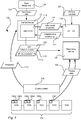
- Fig.1 illustrates an overview of a food production plant 100 by way of example.
- a food production line 102 comprising a number of food production units 104a-e is provided.
- the food production plant 100 may also comprise a number of lines or a network of food production units 104a-e connected to each other via valve batteries.
- the food production units 104a-e can comprise programmable logic controllers (PLCs) and a number of sensors 106a-f. As illustrated, several sensors may be provided in one and the same food production unit and there may also be food production units without sensors. In this context, the food production units should be given a broad meaning and may also include e.g. pipes, valves or packaging equipment.
- PLCs programmable logic controllers
- sensors may be provided in one and the same food production unit and there may also be food production units without sensors.
- the food production units should be given a broad meaning and may also include e.g. pipes, valves or packaging equipment.
- the food production units 104a-e can be controlled by a control system 108 that is communicatively connected to the food production units 104a-e. Via the control system 108, properties 110 of the food production plant 100, or more specifically the food production units 104a-e, can be provided to a central server 112.
- the central server 112 is herein illustrated as a part of the food production plant.
- the central server can however also be shared between multiple food production plants. In the case of a shared central server, information between the different food production plants can be shared.
- a data model 114 can be formed.
- the data model can be seen as a digital model of the food production plant 100, that is the food production units 104a-e.
- the data model may be control system type independent, that is, software configured for creating the data model based on the properties can be made to translate different programming languages, different architecture etc into a common format.
- the properties can also be so called input-output (IO) properties, also referred to as parameters.
- IO input-output
- Data model properties 116 may be transferred from the central server 112 to an application programming tool (API) tool 118.
- the API tool 118 may be separated from the central server 112, but it may also share the same hardware as the central server in full or in part.
- An advantage with the API tool 118 is that the data model properties 116 may be adapted in accordance with needs and requirements related to how an API to be developed is intended to be used. These needs and requirements may be reflected in API tool input data 120 that is input to the API tool 118. This input may be provided by a user via a user interface.
- adapted data model properties 122 can be formed and transmitted back to the central server 112.
- the API tool input data 120 may be sent to the central server directly such that the adapted data model properties can be formed in the central server.
- plant design data 123 can be received by the central server 112.
- the plant design data 123 can be provided from a plant design tool 124, which may be a tool used by process engineers for designing the food production plant 100.
- the plant design data 123 may be provided before the data model properties are transmitted to the API tool, and hence the plant design data 123 may be reflected in the data model properties 116 transmitted to the API tool 118.
- an API 125 may be formed.
- the API 125 may comprise software modules 127 and API documentation 127, that is, text data describing the software modules, both being automatically generated in the central server 112.
- the API 125 can be provided to a monitoring device 128 such that e.g. HMI applications can be developed in which process data 130 from the food production plant 100 is used.
- a monitoring device such as a touch display
- the monitoring device can be personal computer using a spreadsheet-based software, such as Microsoft Excel TM , in which the process data 130 is continuously being monitored.
- the process data 130 may be provided to the monitoring device 130 via the control system or directly from one or several of the sensors 106a-f to the monitoring device.
- An advantage of having the option to by-pass the control system is that in case the control system 108 does not support that the process data 130, or part of the process data 130, is sent via the control system 108, this can still be possible when having the possibility to by-pass.
- Fig. 2 is a flow chart 200 illustrating a method for enabling access to the process data 130 of the food production plant 100 controlled by a control system 108.
- a first step 202 the properties 110 of the food production plant 100 can be received.
- the data model 114 can be generated based on the properties 110.
- the data model 114 may comprise the data model properties 116 and the data model 114 may be control system type independent.
- the data model properties 116 can be transmitted to the API tool 118.
- the adapted data model properties 122 can be received from the API tool 118.
- the data model 114 can be updated based on the adapted data model properties 122.
- the plant design data 123 from the plant design tool 124 can be received by the central server 112.
- the API 125 can be generated based on the data model 114 and the plant design data 123.
- the API 125 can be transmitted to the monitoring device 128, thereby providing for that the monitoring device 128 is enabled to receive the process data 130 from the food production plant 100.
- the seventh step 214 may comprise a ninth step 218 in which source code is generated, and a tenth step 220 in which the source code can be compiled into a binary file.
- API documentation can be generated.
- Fig. 3 illustrates the central server 112 in further detail.
- the central server 112 may comprise a memory 300, a processor 302 and a transceiver 304.
- the transceiver 304 may be configured to receive the properties 110 of the food production plant 100 from the control system 108, transmit the data model properties 116 to the API tool 118, receive the adapted properties 122 from the API tool 118, receive the plant design data 123 from the plant design tool 124, and transmit the API 125 to the monitoring device 128.
- the processor 302 and the memory 300 can be configured to execute a data model generation function 306 configured to generate a data model based on the properties 110, a data model update function 308 configured to update the data model 114 based on the adapted data model properties 122, an API generation function 310 configured to generate the API 125 based on the data model 114 and the plant design data 123.
- a data model generation function 306 configured to generate a data model based on the properties 110
- a data model update function 308 configured to update the data model 114 based on the adapted data model properties 122
- an API generation function 310 configured to generate the API 125 based on the data model 114 and the plant design data 123.
Landscapes
- Engineering & Computer Science (AREA)
- General Engineering & Computer Science (AREA)
- Manufacturing & Machinery (AREA)
- Physics & Mathematics (AREA)
- General Physics & Mathematics (AREA)
- Software Systems (AREA)
- Theoretical Computer Science (AREA)
- Quality & Reliability (AREA)
- Automation & Control Theory (AREA)
- Computing Systems (AREA)
- Management, Administration, Business Operations System, And Electronic Commerce (AREA)
Abstract
Description
- The invention relates to software technology within the food processing industry. More particularly, it is related to methods and apparatuses for enabling access to process data of a food production plant.
- Today, within the food production industry, systems, such as supervisory control and data acquisition (SCADA) systems, are often used to control the equipment of the food production plant. For a SCADA system to run and control the plant, it is dependent on data describing all equipment and their corresponding properties. For instance, for a tank, properties such as volume, inlets, outlets and valves connected to these are often needed to use the SCADA systems.
- Many plants rely on the same type of equipment but with different setups and with customizations specific to a single plant. Because of these differences, a data model representing the plant is required to be customized for each plant which in turn yields high engineering costs. This engineering costs also increase due to that there are several different types of control systems resulting in that control system adaptations often are necessary.
- The general solution to this problem today is to make database models that reflect the customizations needed for a specific installation. The engineer would then write scripts to retrieve this data targeting a unique database scheme. This process is however time consuming and also increases the risk of bugs being introduced.
- It is an object of the invention to at least partly overcome one or more of the above-identified limitations of the prior art. In particular, it is an object to provide a method for enabling cost-efficient and easier data retrieval from a food production plant by dynamically generating an API without altering the control system of the food production plant.
- It has been realized that by automatically generating an API, a higher accessibility of process data can be achieved. This may be beneficial to for instance human-machine interface (HMI) developers when they develop a monitoring system of the food processing plant.
- To provide for that different types of control systems can be managed efficiently, it has been realized that a digital model, also referred to as data model, may be formed based on properties of the food production plant retrieved via the control system. To avoid a control system type dependency, the properties are transformed into data model properties based upon which the data model is built. Thus, if using a central server for hosting the data model, it is enough that a software used in the central server for transforming the properties to the data model properties are made to support the different types of control systems.
- Further, it has also been realized that by combining the data model properties, which originates from the properties from the food production plant, with plant design data, that is, information related to a process design of the production plant often made by a processing engineer, the API may be built to comprise most or all information needed for an HMI developer when developing an HMI application. For instance, with the suggested approach, smart search functions can provide available alternatives during development.
- According to a first aspect it is provided a method for enabling access to process data of a food production plant controlled by a control system, said method comprising
receiving, by a central server, properties of the food production plant from the control system,
generating a data model based on the properties, said data model comprising data model properties, wherein the data model is control system type independent,
transmitting the data model properties to an application programming interface (API) tool,
receiving adapted data model properties from the API tool,
updating the data model based on the adapted data model properties,
receiving, by the central server, plant design data from a plant design tool,
generating an API based on the data model and the plant design data, and
transmitting the API to a monitoring device, thereby providing for that the monitoring device is enabled to receive the process data from the food production plant. - As explained above, by having the central server, the data model may be formed based on the properties from the control system and by doing so the control system dependency can be avoided, providing for that amount time needed for setting up a new installation can be reduced, and since less customization is needed, a risk of errors during installation can also be reduced.
- By providing a possibility to adapt the data model properties, a dynamic approach is achieved. Put differently, the API may be made to fit the needs and thereby avoiding high engineering costs.
- Further, by including the plant design data, information from several sources may be combined when forming the API, which provides for that a risk that the HMI developer, or other person using the API, is lacking information can be reduced.
- Herein the term "process data" should be understood to include both parameter values, such as temperature, flow rate, turbulence etc. gathered by sensors in different parts of the plant, as well as configuration data, that is, how the plant or part of the plant is currently configured to operate, e.g. which tanks that are used for holding product and which tanks that are cleaned. The configuration data can be retrieved from e.g. valves, control units, such as PLCs, or the control system. In this way, it is made possible to create HMI applications in which both configuration data and/or parameter values are included and presented on a screen. It is also possible to receive user input via the HMI application that can be used for changing the parameter values and/or the configuration data.
- The API may provide for that the monitoring device is configured to receive the process data directly from at least one sensor of the food production plant.
- If all process data is to be sent via the control system, there is a risk that information made available via the sensors in the food production plant does not reach the HMI developer. For instance, the control system may not support switching time for a valve and by not supporting this, the information cannot reach the HMI engineer. However, if the process data may be retrieved directly from the sensors, i.e. by bypassing the control system, the HMI engineer are not restricted by limitations in the control system. To provide for that the process data can be retrieved directly from the sensors, information on the sensors may be retrieved via the plant design data and/or via the API tool.
- The process data can be sensor data inaccessible to the control system.
- The control system may be a supervisory control and data acquisition (SCADA) system.
- The monitoring device may be a human-machine interface (HMI) device.
- The data model may be control system programming language independent.
- The step of generating the API based on the adapted data model properties may comprise the sub-steps of
generating source code,
compiling the source code into a binary file. - The step of generating the API based on the adapted data model properties may comprise the sub-step of
generating API documentation. - According to a second aspect it is provided a central server for enabling access to process data of a food production plant controlled by a control system, wherein the central server is communicatively connected to the food production plant via the control system, to an API tool, to a plant design tool and to a monitoring device, said central sever comprising a memory, a processor and a transceiver,
said transceiver being configured to
receive properties of the food production plant from the control system,
transmit the data model properties to the API tool,
receive adapted properties from the API tool,
receive plant design data from the plant design tool,
transmit the API to the monitoring device,
said processor and memory being configured to execute
a data model generation function configured to generate a data model based on the properties, said data model comprising data model properties, wherein the data model is control system type independent,
a data model update function configured to update the data model based on the adapted data model properties,
an API generation function configured to generate the API based on the data model and the plant design data. - The API may provide for that the monitoring device is configured to receive the process data directly from sensors in the production plant.
- The process data may be sensor data inaccessible to the control system.
- The control system may be a supervisory control and data acquisition (SCADA) system.
- The monitoring device may be a human-machine interface (HMI) device.
- According to a third aspect it is provided a food production plant comprising
a number of food production units,
a control system communicatively connected to sensors in the food production units,
a central server according to the second aspect,
an API tool configured to generate adapted data model properties based on the data model properties,
a plant design tool configured to provide plant design data, and
a monitoring device configured to receive process data from the sensors in the food production units, wherein a software of the monitoring device is configured by using the API. - According to a fourth aspect it is provided a computer program comprising instructions for implementing a method according to a first aspect.
- Still other objectives, features, aspects and advantages of the invention will appear from the following detailed description as well as from the drawings.
- Embodiments of the invention will now be described, by way of example, with reference to the accompanying schematic drawings, in which
-
Fig. 1 is a schematic view of a food production plant comprising a control system, a central server and a monitoring device. -
Fig. 2 is a flowchart illustrating the steps of a method for enabling access to process data of the food production plant. -
Fig. 3 illustrates the central server in further detail. -
Fig.1 illustrates an overview of afood production plant 100 by way of example. In this example, afood production line 102 comprising a number offood production units 104a-e is provided. However, even though not illustrated, thefood production plant 100 may also comprise a number of lines or a network offood production units 104a-e connected to each other via valve batteries. - The
food production units 104a-e can comprise programmable logic controllers (PLCs) and a number ofsensors 106a-f. As illustrated, several sensors may be provided in one and the same food production unit and there may also be food production units without sensors. In this context, the food production units should be given a broad meaning and may also include e.g. pipes, valves or packaging equipment. - The
food production units 104a-e can be controlled by acontrol system 108 that is communicatively connected to thefood production units 104a-e. Via thecontrol system 108,properties 110 of thefood production plant 100, or more specifically thefood production units 104a-e, can be provided to acentral server 112. - The
central server 112 is herein illustrated as a part of the food production plant. The central server can however also be shared between multiple food production plants. In the case of a shared central server, information between the different food production plants can be shared. - Based on the
properties 110, adata model 114 can be formed. The data model can be seen as a digital model of thefood production plant 100, that is thefood production units 104a-e. To provide for increased efficiency, the data model may be control system type independent, that is, software configured for creating the data model based on the properties can be made to translate different programming languages, different architecture etc into a common format. The properties can also be so called input-output (IO) properties, also referred to as parameters. -
Data model properties 116, being part of thedata model 114, may be transferred from thecentral server 112 to an application programming tool (API)tool 118. TheAPI tool 118 may be separated from thecentral server 112, but it may also share the same hardware as the central server in full or in part. An advantage with theAPI tool 118 is that thedata model properties 116 may be adapted in accordance with needs and requirements related to how an API to be developed is intended to be used. These needs and requirements may be reflected in APItool input data 120 that is input to theAPI tool 118. This input may be provided by a user via a user interface. - Based on the API
tool input data 120, adapteddata model properties 122 can be formed and transmitted back to thecentral server 112. However, as an alternative, the APItool input data 120 may be sent to the central server directly such that the adapted data model properties can be formed in the central server. - In addition to the adapted
data model properties 122,plant design data 123 can be received by thecentral server 112. Theplant design data 123 can be provided from aplant design tool 124, which may be a tool used by process engineers for designing thefood production plant 100. Theplant design data 123 may be provided before the data model properties are transmitted to the API tool, and hence theplant design data 123 may be reflected in thedata model properties 116 transmitted to theAPI tool 118. - Using both the adapted
data model properties 122 and theplant design data 123, anAPI 125 may be formed. TheAPI 125 may comprisesoftware modules 127 andAPI documentation 127, that is, text data describing the software modules, both being automatically generated in thecentral server 112. - The
API 125 can be provided to amonitoring device 128 such that e.g. HMI applications can be developed in which processdata 130 from thefood production plant 100 is used. In addition to being an HMI device, such as a touch display, the monitoring device can be personal computer using a spreadsheet-based software, such as Microsoft Excel™, in which theprocess data 130 is continuously being monitored. - As illustrated, the
process data 130 may be provided to themonitoring device 130 via the control system or directly from one or several of thesensors 106a-f to the monitoring device. An advantage of having the option to by-pass the control system is that in case thecontrol system 108 does not support that theprocess data 130, or part of theprocess data 130, is sent via thecontrol system 108, this can still be possible when having the possibility to by-pass. -
Fig. 2 is aflow chart 200 illustrating a method for enabling access to theprocess data 130 of thefood production plant 100 controlled by acontrol system 108. - In a
first step 202, theproperties 110 of thefood production plant 100 can be received. - In a
second step 204, thedata model 114 can be generated based on theproperties 110. Thedata model 114 may comprise thedata model properties 116 and thedata model 114 may be control system type independent. - In a
third step 206, thedata model properties 116 can be transmitted to theAPI tool 118. - In a
fourth step 208, the adapteddata model properties 122 can be received from theAPI tool 118. - In a
fifth step 210, thedata model 114 can be updated based on the adapteddata model properties 122. - In a
sixth step 212, theplant design data 123 from theplant design tool 124 can be received by thecentral server 112. - In a
seventh step 214, theAPI 125 can be generated based on thedata model 114 and theplant design data 123. - In an
eighth step 216, theAPI 125 can be transmitted to themonitoring device 128, thereby providing for that themonitoring device 128 is enabled to receive theprocess data 130 from thefood production plant 100. - Optionally, the
seventh step 214 may comprise aninth step 218 in which source code is generated, and atenth step 220 in which the source code can be compiled into a binary file. - Optionally, in an
eleventh step 222, which may be a sub-step of theseventh step 214, API documentation can be generated. - Even though described in a certain order, the steps may be performed in other orders as well.
-
Fig. 3 illustrates thecentral server 112 in further detail. As illustrated, thecentral server 112 may comprise amemory 300, aprocessor 302 and atransceiver 304. - The
transceiver 304 may be configured to receive theproperties 110 of thefood production plant 100 from thecontrol system 108, transmit thedata model properties 116 to theAPI tool 118, receive the adaptedproperties 122 from theAPI tool 118, receive theplant design data 123 from theplant design tool 124, and transmit theAPI 125 to themonitoring device 128. - The
processor 302 and thememory 300 can be configured to execute a datamodel generation function 306 configured to generate a data model based on theproperties 110, a datamodel update function 308 configured to update thedata model 114 based on the adapteddata model properties 122, anAPI generation function 310 configured to generate theAPI 125 based on thedata model 114 and theplant design data 123. - From the description above follows that, although various embodiments of the invention have been described and shown, the invention is not restricted thereto, but may also be embodied in other ways within the scope of the subject-matter defined in the following claims.
Claims (15)
- A method (200) for enabling access to process data (130) of a food production plant (100) controlled by a control system (108), said method comprising
receiving (202), by a central server (112), properties (110) of the food production plant (100) from the control system (108),
generating (204) a data model (114) based on the properties (110), said data model (114) comprising data model properties (116), wherein the data model (114) is control system type independent,
transmitting (206) the data model properties (116) to an application programming interface (API) tool (118),
receiving (208) adapted data model properties (122) from the API tool (118), updating (210) the data model (114) based on the adapted data model properties (122),
receiving (212), by the central server (112), plant design data (123) from a plant design tool (124),
generating (214) an API (125) based on the data model (114) and the plant design data (123), and
transmitting (216) the API (125) to a monitoring device (128), thereby providing for that the monitoring device (128) is enabled to receive the process data (130) from the food production plant (100). - The method according to claim 1, wherein the API (125) provides for that the monitoring device (128) is configured to receive the process data (130) directly from at least one sensor (106a-f) of the food production plant (100).
- The method according to claim 2, wherein the process data (130) is sensor data inaccessible to the control system (108).
- The method according to any one of the preceding claims, wherein the control system (108) is a supervisory control and data acquisition (SCADA) system.
- The method according to any one of the preceding claims, wherein the monitoring device (130) is a human-machine interface (HMI) device.
- The method according to any one of the preceding claims, wherein the data model (114) is control system programming language independent.
- The method according to any one of the preceding claims, wherein the step of generating (214) the API (125) based on the adapted data model properties (122) comprises the sub-steps of
generating (218) source code,
compiling (220) the source code into a binary file. - The method according to any one of the preceding claims, wherein the step of generating (214) the API (125) based on the adapted data model properties (122) comprises the sub-step of
generating (222) API documentation (127). - A central server (112) for enabling access to process data (130) of a food production plant (100) controlled by a control system (108), wherein the central server (112) is communicatively connected to the food production plant (100) via the control system (108), to an API tool (118), to a plant design tool (124) and to a monitoring device (128), said central sever (112) comprising a memory (300), a processor (302) and a transceiver (304),
said transceiver (304) being configured to
receive properties (110) of the food production plant (100) from the control system (108),
transmit the data model properties (116) to the API tool (118),
receive adapted properties from the API tool (118),
receive plant design data (123) from the plant design tool (124),
transmit the API (125) to the monitoring device (128),
said processor (302) and memory (300) being configured to execute
a data model generation function (306) configured to generate a data model based on the properties (110), said data model (114) comprising data model properties (116), wherein the data model (114) is control system type independent,
a data model update function (308) configured to update the data model (114) based on the adapted data model properties (122),
an API generation function (310) configured to generate the API (125) based on the data model (114) and the plant design data (123). - The central server according to claim 9, wherein the API (125) provides for that the monitoring device (128) is configured to receive the process data (130) directly from sensors (106a-f) in the food production plant (100).
- The central server according to claim 9 or 10, wherein the process data (130) is sensor data inaccessible to the control system (108).
- The central server according to any one of the claims 9 to 11, wherein the control system (108) is a supervisory control and data acquisition (SCADA) system.
- The central server according to any one of the claims 9 to 12, wherein the monitoring device (128) is a human-machine interface (HMI) device.
- A food production plant (100) comprising
a number of food production units (104a-e),
a control system (108) communicatively connected to sensors (106a-f) in the food production units (104a-e),
a central server (112) according to any one of the claims 9 to 13,
an API tool (118) configured to generate adapted data model properties (122) based on the data model properties (116),
a plant design tool (124) configured to provide plant design data (123), and
a monitoring device (128) configured to receive process data (130) from the sensors (106a-f) in the food production units (104a-e), wherein a software of the monitoring device (130) is configured by using the API (125). - A computer program comprising instructions for implementing a method of any one of the claims 1 to 8.
Applications Claiming Priority (1)
| Application Number | Priority Date | Filing Date | Title |
|---|---|---|---|
| EP20179799 | 2020-06-12 |
Publications (2)
| Publication Number | Publication Date |
|---|---|
| EP3923099A1 true EP3923099A1 (en) | 2021-12-15 |
| EP3923099B1 EP3923099B1 (en) | 2023-10-25 |
Family
ID=71094222
Family Applications (1)
| Application Number | Title | Priority Date | Filing Date |
|---|---|---|---|
| EP21176639.9A Active EP3923099B1 (en) | 2020-06-12 | 2021-05-28 | A method and an apparatus for enabling access to process data of a food production plant |
Country Status (4)
| Country | Link |
|---|---|
| US (1) | US20230221712A1 (en) |
| EP (1) | EP3923099B1 (en) |
| CN (1) | CN115516393B (en) |
| WO (1) | WO2021249795A1 (en) |
Citations (3)
| Publication number | Priority date | Publication date | Assignee | Title |
|---|---|---|---|---|
| US20160062739A1 (en) * | 2014-08-29 | 2016-03-03 | Accenture Global Service Limited | Service extraction and application composition |
| US20170192407A1 (en) * | 2015-12-30 | 2017-07-06 | General Electric Company | Method and apparatus for enabling model driven navigation |
| US20200125076A1 (en) * | 2018-10-18 | 2020-04-23 | Greensmith Energy Management Systems, Inc. | Apparatus, device and computer implemented method for automatic generation of scada slave interface |
Family Cites Families (6)
| Publication number | Priority date | Publication date | Assignee | Title |
|---|---|---|---|---|
| US8086664B2 (en) * | 2001-09-24 | 2011-12-27 | Siemens Industry, Inc. | Method and apparatus for programming programmable controllers and generating configuration data from a centralized server |
| ITCO20120008A1 (en) * | 2012-03-01 | 2013-09-02 | Nuovo Pignone Srl | METHOD AND SYSTEM FOR MONITORING THE CONDITION OF A GROUP OF PLANTS |
| US10054912B2 (en) * | 2015-10-19 | 2018-08-21 | General Electric Company | Method and apparatus for auto synchronizing control system data structures with model composition |
| CN108718345A (en) * | 2018-09-05 | 2018-10-30 | 电子科技大学 | A kind of digitlization workshop industrial data Network Transmitting system |
| CN110086853B (en) * | 2019-03-28 | 2021-08-06 | 浙江明度智控科技有限公司 | Industrial Internet of things information visualization method, server and storage medium |
| US11269694B2 (en) * | 2020-03-03 | 2022-03-08 | The Toronto-Dominion Bank | Automated API code generation |
-
2021
- 2021-05-28 WO PCT/EP2021/064408 patent/WO2021249795A1/en not_active Ceased
- 2021-05-28 CN CN202180033911.2A patent/CN115516393B/en active Active
- 2021-05-28 EP EP21176639.9A patent/EP3923099B1/en active Active
- 2021-05-28 US US18/000,924 patent/US20230221712A1/en active Pending
Patent Citations (3)
| Publication number | Priority date | Publication date | Assignee | Title |
|---|---|---|---|---|
| US20160062739A1 (en) * | 2014-08-29 | 2016-03-03 | Accenture Global Service Limited | Service extraction and application composition |
| US20170192407A1 (en) * | 2015-12-30 | 2017-07-06 | General Electric Company | Method and apparatus for enabling model driven navigation |
| US20200125076A1 (en) * | 2018-10-18 | 2020-04-23 | Greensmith Energy Management Systems, Inc. | Apparatus, device and computer implemented method for automatic generation of scada slave interface |
Also Published As
| Publication number | Publication date |
|---|---|
| BR112022021038A2 (en) | 2022-12-20 |
| WO2021249795A1 (en) | 2021-12-16 |
| CN115516393B (en) | 2024-07-16 |
| EP3923099B1 (en) | 2023-10-25 |
| CN115516393A (en) | 2022-12-23 |
| US20230221712A1 (en) | 2023-07-13 |
Similar Documents
| Publication | Publication Date | Title |
|---|---|---|
| US7600234B2 (en) | Method for launching applications | |
| US9983559B2 (en) | Updating and utilizing dynamic process simulation in an operating process environment | |
| US7822495B2 (en) | Custom function blocks for use with process control systems | |
| JP5603316B2 (en) | User interface method, system and method for facilitating process plant configuration | |
| EP2169547B1 (en) | Compilation model for programmable logic controllers (PLC). | |
| US20150106826A1 (en) | Apparatus for servicing at least one field device of automation technology | |
| EP3671571A1 (en) | A method and system for generating an artificial intelligence model | |
| JP2006516057A5 (en) | ||
| CN107664988A (en) | The factory's composer system configured with integrated simulation and control system | |
| EP4137937B1 (en) | Industrial automation project library cross sharing | |
| EP3809214B1 (en) | Method for configuring an interface device and interface device thereby | |
| EP4328683A1 (en) | Method and system for generating user recommendations to aid generation of an engineering project | |
| US20240264832A1 (en) | Industrial automation system topology with point to point business rule integration | |
| KR20230150289A (en) | Edge computing devices that process plant process data | |
| EP3923099B1 (en) | A method and an apparatus for enabling access to process data of a food production plant | |
| US20250138789A1 (en) | System and method for device profile creation in an integrated development environment | |
| AU2024202948B2 (en) | Human machine interface for providing information to an operator of an industrial production facility | |
| EP4336282A1 (en) | A method for connecting a web socket session with an object instance with automation device association | |
| EP4307105A1 (en) | Extensible profiles for industrial control modules | |
| US20220138369A1 (en) | Method for Automatically Interpreting a Piping Diagram | |
| CN115702413A (en) | Method for creating and executing a control program for controlling an automation system and automation system | |
| EP4377787B1 (en) | Method and system for generating engineering programs which are compatible with a specific engineering environment | |
| BR112022021038B1 (en) | METHOD AND CENTRAL SERVER FOR ALLOWING ACCESS TO PROCESSUAL DATA OF A FOOD PRODUCTION FACILITY, FOOD PRODUCTION FACILITY, AND, COMPUTER READABLE MEDIA | |
| WO2022190418A1 (en) | Development assitance device, development assitance method, and development assitance program | |
| Bregulla et al. | Model of a Production Stand Used for Digital Factory Purposes |
Legal Events
| Date | Code | Title | Description |
|---|---|---|---|
| PUAI | Public reference made under article 153(3) epc to a published international application that has entered the european phase |
Free format text: ORIGINAL CODE: 0009012 |
|
| STAA | Information on the status of an ep patent application or granted ep patent |
Free format text: STATUS: THE APPLICATION HAS BEEN PUBLISHED |
|
| AK | Designated contracting states |
Kind code of ref document: A1 Designated state(s): AL AT BE BG CH CY CZ DE DK EE ES FI FR GB GR HR HU IE IS IT LI LT LU LV MC MK MT NL NO PL PT RO RS SE SI SK SM TR |
|
| B565 | Issuance of search results under rule 164(2) epc |
Effective date: 20211011 |
|
| STAA | Information on the status of an ep patent application or granted ep patent |
Free format text: STATUS: REQUEST FOR EXAMINATION WAS MADE |
|
| 17P | Request for examination filed |
Effective date: 20220615 |
|
| RBV | Designated contracting states (corrected) |
Designated state(s): AL AT BE BG CH CY CZ DE DK EE ES FI FR GB GR HR HU IE IS IT LI LT LU LV MC MK MT NL NO PL PT RO RS SE SI SK SM TR |
|
| GRAP | Despatch of communication of intention to grant a patent |
Free format text: ORIGINAL CODE: EPIDOSNIGR1 |
|
| STAA | Information on the status of an ep patent application or granted ep patent |
Free format text: STATUS: GRANT OF PATENT IS INTENDED |
|
| RIC1 | Information provided on ipc code assigned before grant |
Ipc: G06F 8/30 20180101ALI20230418BHEP Ipc: G06F 9/54 20060101ALI20230418BHEP Ipc: G06F 8/36 20180101ALI20230418BHEP Ipc: G05B 19/418 20060101AFI20230418BHEP |
|
| INTG | Intention to grant announced |
Effective date: 20230512 |
|
| GRAS | Grant fee paid |
Free format text: ORIGINAL CODE: EPIDOSNIGR3 |
|
| GRAA | (expected) grant |
Free format text: ORIGINAL CODE: 0009210 |
|
| STAA | Information on the status of an ep patent application or granted ep patent |
Free format text: STATUS: THE PATENT HAS BEEN GRANTED |
|
| AK | Designated contracting states |
Kind code of ref document: B1 Designated state(s): AL AT BE BG CH CY CZ DE DK EE ES FI FR GB GR HR HU IE IS IT LI LT LU LV MC MK MT NL NO PL PT RO RS SE SI SK SM TR |
|
| REG | Reference to a national code |
Ref country code: GB Ref legal event code: FG4D |
|
| REG | Reference to a national code |
Ref country code: CH Ref legal event code: EP |
|
| REG | Reference to a national code |
Ref country code: DE Ref legal event code: R096 Ref document number: 602021006135 Country of ref document: DE |
|
| REG | Reference to a national code |
Ref country code: IE Ref legal event code: FG4D |
|
| P01 | Opt-out of the competence of the unified patent court (upc) registered |
Effective date: 20231026 |
|
| REG | Reference to a national code |
Ref country code: LT Ref legal event code: MG9D |
|
| REG | Reference to a national code |
Ref country code: AT Ref legal event code: MK05 Ref document number: 1625296 Country of ref document: AT Kind code of ref document: T Effective date: 20231025 |
|
| PG25 | Lapsed in a contracting state [announced via postgrant information from national office to epo] |
Ref country code: NL Free format text: LAPSE BECAUSE OF FAILURE TO SUBMIT A TRANSLATION OF THE DESCRIPTION OR TO PAY THE FEE WITHIN THE PRESCRIBED TIME-LIMIT Effective date: 20231025 |
|
| PG25 | Lapsed in a contracting state [announced via postgrant information from national office to epo] |
Ref country code: GR Free format text: LAPSE BECAUSE OF FAILURE TO SUBMIT A TRANSLATION OF THE DESCRIPTION OR TO PAY THE FEE WITHIN THE PRESCRIBED TIME-LIMIT Effective date: 20240126 |
|
| PG25 | Lapsed in a contracting state [announced via postgrant information from national office to epo] |
Ref country code: IS Free format text: LAPSE BECAUSE OF FAILURE TO SUBMIT A TRANSLATION OF THE DESCRIPTION OR TO PAY THE FEE WITHIN THE PRESCRIBED TIME-LIMIT Effective date: 20240225 |
|
| PG25 | Lapsed in a contracting state [announced via postgrant information from national office to epo] |
Ref country code: LT Free format text: LAPSE BECAUSE OF FAILURE TO SUBMIT A TRANSLATION OF THE DESCRIPTION OR TO PAY THE FEE WITHIN THE PRESCRIBED TIME-LIMIT Effective date: 20231025 |
|
| PG25 | Lapsed in a contracting state [announced via postgrant information from national office to epo] |
Ref country code: AT Free format text: LAPSE BECAUSE OF FAILURE TO SUBMIT A TRANSLATION OF THE DESCRIPTION OR TO PAY THE FEE WITHIN THE PRESCRIBED TIME-LIMIT Effective date: 20231025 |
|
| PG25 | Lapsed in a contracting state [announced via postgrant information from national office to epo] |
Ref country code: ES Free format text: LAPSE BECAUSE OF FAILURE TO SUBMIT A TRANSLATION OF THE DESCRIPTION OR TO PAY THE FEE WITHIN THE PRESCRIBED TIME-LIMIT Effective date: 20231025 |
|
| PG25 | Lapsed in a contracting state [announced via postgrant information from national office to epo] |
Ref country code: LT Free format text: LAPSE BECAUSE OF FAILURE TO SUBMIT A TRANSLATION OF THE DESCRIPTION OR TO PAY THE FEE WITHIN THE PRESCRIBED TIME-LIMIT Effective date: 20231025 Ref country code: IS Free format text: LAPSE BECAUSE OF FAILURE TO SUBMIT A TRANSLATION OF THE DESCRIPTION OR TO PAY THE FEE WITHIN THE PRESCRIBED TIME-LIMIT Effective date: 20240225 Ref country code: GR Free format text: LAPSE BECAUSE OF FAILURE TO SUBMIT A TRANSLATION OF THE DESCRIPTION OR TO PAY THE FEE WITHIN THE PRESCRIBED TIME-LIMIT Effective date: 20240126 Ref country code: ES Free format text: LAPSE BECAUSE OF FAILURE TO SUBMIT A TRANSLATION OF THE DESCRIPTION OR TO PAY THE FEE WITHIN THE PRESCRIBED TIME-LIMIT Effective date: 20231025 Ref country code: BG Free format text: LAPSE BECAUSE OF FAILURE TO SUBMIT A TRANSLATION OF THE DESCRIPTION OR TO PAY THE FEE WITHIN THE PRESCRIBED TIME-LIMIT Effective date: 20240125 Ref country code: AT Free format text: LAPSE BECAUSE OF FAILURE TO SUBMIT A TRANSLATION OF THE DESCRIPTION OR TO PAY THE FEE WITHIN THE PRESCRIBED TIME-LIMIT Effective date: 20231025 Ref country code: PT Free format text: LAPSE BECAUSE OF FAILURE TO SUBMIT A TRANSLATION OF THE DESCRIPTION OR TO PAY THE FEE WITHIN THE PRESCRIBED TIME-LIMIT Effective date: 20240226 |
|
| PG25 | Lapsed in a contracting state [announced via postgrant information from national office to epo] |
Ref country code: SE Free format text: LAPSE BECAUSE OF FAILURE TO SUBMIT A TRANSLATION OF THE DESCRIPTION OR TO PAY THE FEE WITHIN THE PRESCRIBED TIME-LIMIT Effective date: 20231025 Ref country code: RS Free format text: LAPSE BECAUSE OF FAILURE TO SUBMIT A TRANSLATION OF THE DESCRIPTION OR TO PAY THE FEE WITHIN THE PRESCRIBED TIME-LIMIT Effective date: 20231025 Ref country code: PL Free format text: LAPSE BECAUSE OF FAILURE TO SUBMIT A TRANSLATION OF THE DESCRIPTION OR TO PAY THE FEE WITHIN THE PRESCRIBED TIME-LIMIT Effective date: 20231025 Ref country code: NO Free format text: LAPSE BECAUSE OF FAILURE TO SUBMIT A TRANSLATION OF THE DESCRIPTION OR TO PAY THE FEE WITHIN THE PRESCRIBED TIME-LIMIT Effective date: 20240125 Ref country code: LV Free format text: LAPSE BECAUSE OF FAILURE TO SUBMIT A TRANSLATION OF THE DESCRIPTION OR TO PAY THE FEE WITHIN THE PRESCRIBED TIME-LIMIT Effective date: 20231025 Ref country code: HR Free format text: LAPSE BECAUSE OF FAILURE TO SUBMIT A TRANSLATION OF THE DESCRIPTION OR TO PAY THE FEE WITHIN THE PRESCRIBED TIME-LIMIT Effective date: 20231025 |
|
| PG25 | Lapsed in a contracting state [announced via postgrant information from national office to epo] |
Ref country code: DK Free format text: LAPSE BECAUSE OF FAILURE TO SUBMIT A TRANSLATION OF THE DESCRIPTION OR TO PAY THE FEE WITHIN THE PRESCRIBED TIME-LIMIT Effective date: 20231025 |
|
| PG25 | Lapsed in a contracting state [announced via postgrant information from national office to epo] |
Ref country code: CZ Free format text: LAPSE BECAUSE OF FAILURE TO SUBMIT A TRANSLATION OF THE DESCRIPTION OR TO PAY THE FEE WITHIN THE PRESCRIBED TIME-LIMIT Effective date: 20231025 |
|
| REG | Reference to a national code |
Ref country code: DE Ref legal event code: R097 Ref document number: 602021006135 Country of ref document: DE |
|
| PG25 | Lapsed in a contracting state [announced via postgrant information from national office to epo] |
Ref country code: SK Free format text: LAPSE BECAUSE OF FAILURE TO SUBMIT A TRANSLATION OF THE DESCRIPTION OR TO PAY THE FEE WITHIN THE PRESCRIBED TIME-LIMIT Effective date: 20231025 |
|
| PG25 | Lapsed in a contracting state [announced via postgrant information from national office to epo] |
Ref country code: SM Free format text: LAPSE BECAUSE OF FAILURE TO SUBMIT A TRANSLATION OF THE DESCRIPTION OR TO PAY THE FEE WITHIN THE PRESCRIBED TIME-LIMIT Effective date: 20231025 Ref country code: SK Free format text: LAPSE BECAUSE OF FAILURE TO SUBMIT A TRANSLATION OF THE DESCRIPTION OR TO PAY THE FEE WITHIN THE PRESCRIBED TIME-LIMIT Effective date: 20231025 Ref country code: RO Free format text: LAPSE BECAUSE OF FAILURE TO SUBMIT A TRANSLATION OF THE DESCRIPTION OR TO PAY THE FEE WITHIN THE PRESCRIBED TIME-LIMIT Effective date: 20231025 Ref country code: EE Free format text: LAPSE BECAUSE OF FAILURE TO SUBMIT A TRANSLATION OF THE DESCRIPTION OR TO PAY THE FEE WITHIN THE PRESCRIBED TIME-LIMIT Effective date: 20231025 Ref country code: DK Free format text: LAPSE BECAUSE OF FAILURE TO SUBMIT A TRANSLATION OF THE DESCRIPTION OR TO PAY THE FEE WITHIN THE PRESCRIBED TIME-LIMIT Effective date: 20231025 Ref country code: CZ Free format text: LAPSE BECAUSE OF FAILURE TO SUBMIT A TRANSLATION OF THE DESCRIPTION OR TO PAY THE FEE WITHIN THE PRESCRIBED TIME-LIMIT Effective date: 20231025 |
|
| PLBE | No opposition filed within time limit |
Free format text: ORIGINAL CODE: 0009261 |
|
| STAA | Information on the status of an ep patent application or granted ep patent |
Free format text: STATUS: NO OPPOSITION FILED WITHIN TIME LIMIT |
|
| 26N | No opposition filed |
Effective date: 20240726 |
|
| PG25 | Lapsed in a contracting state [announced via postgrant information from national office to epo] |
Ref country code: SI Free format text: LAPSE BECAUSE OF FAILURE TO SUBMIT A TRANSLATION OF THE DESCRIPTION OR TO PAY THE FEE WITHIN THE PRESCRIBED TIME-LIMIT Effective date: 20231025 |
|
| PG25 | Lapsed in a contracting state [announced via postgrant information from national office to epo] |
Ref country code: SI Free format text: LAPSE BECAUSE OF FAILURE TO SUBMIT A TRANSLATION OF THE DESCRIPTION OR TO PAY THE FEE WITHIN THE PRESCRIBED TIME-LIMIT Effective date: 20231025 |
|
| REG | Reference to a national code |
Ref country code: CH Ref legal event code: PL |
|
| PG25 | Lapsed in a contracting state [announced via postgrant information from national office to epo] |
Ref country code: MC Free format text: LAPSE BECAUSE OF FAILURE TO SUBMIT A TRANSLATION OF THE DESCRIPTION OR TO PAY THE FEE WITHIN THE PRESCRIBED TIME-LIMIT Effective date: 20231025 |
|
| PG25 | Lapsed in a contracting state [announced via postgrant information from national office to epo] |
Ref country code: LU Free format text: LAPSE BECAUSE OF NON-PAYMENT OF DUE FEES Effective date: 20240528 |
|
| PG25 | Lapsed in a contracting state [announced via postgrant information from national office to epo] |
Ref country code: MC Free format text: LAPSE BECAUSE OF FAILURE TO SUBMIT A TRANSLATION OF THE DESCRIPTION OR TO PAY THE FEE WITHIN THE PRESCRIBED TIME-LIMIT Effective date: 20231025 Ref country code: LU Free format text: LAPSE BECAUSE OF NON-PAYMENT OF DUE FEES Effective date: 20240528 Ref country code: CH Free format text: LAPSE BECAUSE OF NON-PAYMENT OF DUE FEES Effective date: 20240531 |
|
| REG | Reference to a national code |
Ref country code: BE Ref legal event code: MM Effective date: 20240531 |
|
| PG25 | Lapsed in a contracting state [announced via postgrant information from national office to epo] |
Ref country code: IE Free format text: LAPSE BECAUSE OF NON-PAYMENT OF DUE FEES Effective date: 20240528 |
|
| PG25 | Lapsed in a contracting state [announced via postgrant information from national office to epo] |
Ref country code: BE Free format text: LAPSE BECAUSE OF NON-PAYMENT OF DUE FEES Effective date: 20240531 |
|
| PG25 | Lapsed in a contracting state [announced via postgrant information from national office to epo] |
Ref country code: FR Free format text: LAPSE BECAUSE OF NON-PAYMENT OF DUE FEES Effective date: 20240531 |
|
| PGFP | Annual fee paid to national office [announced via postgrant information from national office to epo] |
Ref country code: DE Payment date: 20250528 Year of fee payment: 5 |
|
| PGFP | Annual fee paid to national office [announced via postgrant information from national office to epo] |
Ref country code: IT Payment date: 20250522 Year of fee payment: 5 |
|
| PG25 | Lapsed in a contracting state [announced via postgrant information from national office to epo] |
Ref country code: CY Free format text: LAPSE BECAUSE OF FAILURE TO SUBMIT A TRANSLATION OF THE DESCRIPTION OR TO PAY THE FEE WITHIN THE PRESCRIBED TIME-LIMIT; INVALID AB INITIO Effective date: 20210528 |
|
| PG25 | Lapsed in a contracting state [announced via postgrant information from national office to epo] |
Ref country code: FI Free format text: LAPSE BECAUSE OF FAILURE TO SUBMIT A TRANSLATION OF THE DESCRIPTION OR TO PAY THE FEE WITHIN THE PRESCRIBED TIME-LIMIT Effective date: 20231025 |
|
| GBPC | Gb: european patent ceased through non-payment of renewal fee |
Effective date: 20250528 |
|
| PG25 | Lapsed in a contracting state [announced via postgrant information from national office to epo] |
Ref country code: HU Free format text: LAPSE BECAUSE OF FAILURE TO SUBMIT A TRANSLATION OF THE DESCRIPTION OR TO PAY THE FEE WITHIN THE PRESCRIBED TIME-LIMIT; INVALID AB INITIO Effective date: 20210528 |
|
| PG25 | Lapsed in a contracting state [announced via postgrant information from national office to epo] |
Ref country code: GB Free format text: LAPSE BECAUSE OF NON-PAYMENT OF DUE FEES Effective date: 20250528 |