EP3922987A1 - Acetone gas sensor using nb-doped wo3 and fabrication method thereof - Google Patents
Acetone gas sensor using nb-doped wo3 and fabrication method thereof Download PDFInfo
- Publication number
- EP3922987A1 EP3922987A1 EP21174697.9A EP21174697A EP3922987A1 EP 3922987 A1 EP3922987 A1 EP 3922987A1 EP 21174697 A EP21174697 A EP 21174697A EP 3922987 A1 EP3922987 A1 EP 3922987A1
- Authority
- EP
- European Patent Office
- Prior art keywords
- gas
- doped
- nanostructure
- acetone
- forming
- Prior art date
- Legal status (The legal status is an assumption and is not a legal conclusion. Google has not performed a legal analysis and makes no representation as to the accuracy of the status listed.)
- Granted
Links
Images





Classifications
-
- G—PHYSICS
- G01—MEASURING; TESTING
- G01N—INVESTIGATING OR ANALYSING MATERIALS BY DETERMINING THEIR CHEMICAL OR PHYSICAL PROPERTIES
- G01N27/00—Investigating or analysing materials by the use of electric, electrochemical, or magnetic means
- G01N27/02—Investigating or analysing materials by the use of electric, electrochemical, or magnetic means by investigating impedance
- G01N27/04—Investigating or analysing materials by the use of electric, electrochemical, or magnetic means by investigating impedance by investigating resistance
- G01N27/12—Investigating or analysing materials by the use of electric, electrochemical, or magnetic means by investigating impedance by investigating resistance of a solid body in dependence upon absorption of a fluid; of a solid body in dependence upon reaction with a fluid, for detecting components in the fluid
- G01N27/125—Composition of the body, e.g. the composition of its sensitive layer
- G01N27/127—Composition of the body, e.g. the composition of its sensitive layer comprising nanoparticles
-
- G—PHYSICS
- G01—MEASURING; TESTING
- G01N—INVESTIGATING OR ANALYSING MATERIALS BY DETERMINING THEIR CHEMICAL OR PHYSICAL PROPERTIES
- G01N27/00—Investigating or analysing materials by the use of electric, electrochemical, or magnetic means
- G01N27/26—Investigating or analysing materials by the use of electric, electrochemical, or magnetic means by investigating electrochemical variables; by using electrolysis or electrophoresis
- G01N27/28—Electrolytic cell components
- G01N27/30—Electrodes, e.g. test electrodes; Half-cells
-
- G—PHYSICS
- G01—MEASURING; TESTING
- G01N—INVESTIGATING OR ANALYSING MATERIALS BY DETERMINING THEIR CHEMICAL OR PHYSICAL PROPERTIES
- G01N23/00—Investigating or analysing materials by the use of wave or particle radiation, e.g. X-rays or neutrons, not covered by groups G01N3/00 – G01N17/00, G01N21/00 or G01N22/00
- G01N23/20—Investigating or analysing materials by the use of wave or particle radiation, e.g. X-rays or neutrons, not covered by groups G01N3/00 – G01N17/00, G01N21/00 or G01N22/00 by using diffraction of the radiation by the materials, e.g. for investigating crystal structure; by using scattering of the radiation by the materials, e.g. for investigating non-crystalline materials; by using reflection of the radiation by the materials
- G01N23/20091—Measuring the energy-dispersion spectrum [EDS] of diffracted radiation
-
- G—PHYSICS
- G01—MEASURING; TESTING
- G01N—INVESTIGATING OR ANALYSING MATERIALS BY DETERMINING THEIR CHEMICAL OR PHYSICAL PROPERTIES
- G01N27/00—Investigating or analysing materials by the use of electric, electrochemical, or magnetic means
- G01N27/02—Investigating or analysing materials by the use of electric, electrochemical, or magnetic means by investigating impedance
- G01N27/04—Investigating or analysing materials by the use of electric, electrochemical, or magnetic means by investigating impedance by investigating resistance
- G01N27/12—Investigating or analysing materials by the use of electric, electrochemical, or magnetic means by investigating impedance by investigating resistance of a solid body in dependence upon absorption of a fluid; of a solid body in dependence upon reaction with a fluid, for detecting components in the fluid
-
- G—PHYSICS
- G01—MEASURING; TESTING
- G01N—INVESTIGATING OR ANALYSING MATERIALS BY DETERMINING THEIR CHEMICAL OR PHYSICAL PROPERTIES
- G01N33/00—Investigating or analysing materials by specific methods not covered by groups G01N1/00 - G01N31/00
- G01N33/0004—Gaseous mixtures, e.g. polluted air
- G01N33/0009—General constructional details of gas analysers, e.g. portable test equipment
- G01N33/0027—General constructional details of gas analysers, e.g. portable test equipment concerning the detector
- G01N33/0036—General constructional details of gas analysers, e.g. portable test equipment concerning the detector specially adapted to detect a particular component
- G01N33/0047—Organic compounds
-
- B—PERFORMING OPERATIONS; TRANSPORTING
- B82—NANOTECHNOLOGY
- B82Y—SPECIFIC USES OR APPLICATIONS OF NANOSTRUCTURES; MEASUREMENT OR ANALYSIS OF NANOSTRUCTURES; MANUFACTURE OR TREATMENT OF NANOSTRUCTURES
- B82Y15/00—Nanotechnology for interacting, sensing or actuating, e.g. quantum dots as markers in protein assays or molecular motors
-
- Y—GENERAL TAGGING OF NEW TECHNOLOGICAL DEVELOPMENTS; GENERAL TAGGING OF CROSS-SECTIONAL TECHNOLOGIES SPANNING OVER SEVERAL SECTIONS OF THE IPC; TECHNICAL SUBJECTS COVERED BY FORMER USPC CROSS-REFERENCE ART COLLECTIONS [XRACs] AND DIGESTS
- Y02—TECHNOLOGIES OR APPLICATIONS FOR MITIGATION OR ADAPTATION AGAINST CLIMATE CHANGE
- Y02A—TECHNOLOGIES FOR ADAPTATION TO CLIMATE CHANGE
- Y02A50/00—TECHNOLOGIES FOR ADAPTATION TO CLIMATE CHANGE in human health protection, e.g. against extreme weather
- Y02A50/20—Air quality improvement or preservation, e.g. vehicle emission control or emission reduction by using catalytic converters
Definitions
- the forming of the gas sensitizing layer may include mixing the Nb-doped WO 3 nanostructure with an organic binder, and applying the mixed solution on a substrate, and removing a solvent by heat treatment.
- Nb/(Nb+W) concentration ratio of Nb/(Nb+W) was calculated to be 0.1, 0.185g of WO 3 spherical structure, 0.0242g of ammonium niobate(V) oxalate hydrate [C 4 H 4 NNbO 9 .xH 2 O, 99,99%, Sigma-Aldrich, USA], and 0.48g of urea [NH 2 CONH 2 , Junsei, 99.0%, Japan] were added to 100 mL distilled water and were stirred at 80 °C for 8 hours.
Landscapes
- Chemical & Material Sciences (AREA)
- Health & Medical Sciences (AREA)
- Life Sciences & Earth Sciences (AREA)
- Immunology (AREA)
- Pathology (AREA)
- Physics & Mathematics (AREA)
- Analytical Chemistry (AREA)
- Biochemistry (AREA)
- General Health & Medical Sciences (AREA)
- General Physics & Mathematics (AREA)
- Chemical Kinetics & Catalysis (AREA)
- Electrochemistry (AREA)
- Engineering & Computer Science (AREA)
- Dispersion Chemistry (AREA)
- Crystallography & Structural Chemistry (AREA)
- Molecular Biology (AREA)
- Combustion & Propulsion (AREA)
- Food Science & Technology (AREA)
- Medicinal Chemistry (AREA)
- Nanotechnology (AREA)
- Investigating Or Analyzing Materials By The Use Of Fluid Adsorption Or Reactions (AREA)
Abstract
Description
- A claim for priority is made to
Korean Patent Application No. 10-2020-0071502 filed on JUN. 12, 2020 - Embodiments of the inventive concept described herein relate to an acetone gas sensor using Nb-doped WO3 and a fabrication method thereof.
- The present invention is derived from a study(Detailed task number: 2020R1A2C300893311, Research management institution: Korea Research Foundation, Project Title: Development of low molecular weight gas high selectivity detection sensor and high efficiency photoelectrode for water decomposition through functional oxide-MOF heterojunction design, Organizer: Korea University Industry, Research Period: 2020.03.01 ∼ 2025.02.28, Contribution Rate: 1) conducted as part of a 'Mid-sized researcher support project (Type 2)' of the ICT in Korea. There is no property interest of the Korean government in any aspect of this invention.
- An oxide semiconductor type gas sensor has various advantages such as high sensitivity, fast response speed, high reliability, economical price, and ease of integration into mobile and small devices, thereby being used in a variety of applications such as explosive gas detection, driver drinking measurement, industrial hazardous gas detection, food freshness evaluation, vehicle interior and indoor/outdoor environmental gas monitoring. With the recent advancement of the industry, the development of the 4th industrial revolution, and increasing interest in human health and environmental pollution, a demand for gas sensors such as indoor and outdoor hazardous environment gas detection sensor, non-invasive disease diagnosis gas sensor, ultra-compact artificial olfactory sensor mounted on mobile devices increases rapidly. In particular, for new applications of gas sensors, a demand for gas sensors exhibiting high sensitivity and high selective detection characteristics greatly increases.
- When a disease progresses, a gas that comes out of human breath as a metabolic process is called a biomarker gas, and non-invasive disease diagnosis is possible through detection and concentration of the biomarker gas. Representative biomarker gases include hydrogen, ammonia, toluene, and carbon monoxide, and additionally, ethanol is included in human breath. Acetone is a biomarker gas that occurs in excess in breathing of people with
type 1 diabetes. In particular, detection of exhaled acetone is a very important task for an effective test of insulin-dependent diabetic ketoacidosis, which occurs in excess of ketones due to insufficient insulin. In addition, in the breath of people on a ketogenic diet, who use a diet of low carbohydrate and high fat consumption, acetone is measured in excess, and body fat decomposition rate and a ketogenic diet effect may be found from the measured acetone concentration. - Considering that a person's expiration is more than 80% relative humidity, there is a need for a sensitive material capable sensing low concentration acetone gas in highly sensitive and selective manner in a high humidity atmosphere. However, there is a need for a sensitive material capable of selectively detecting acetone, because most of the oxide semiconductor gas sensors currently used show similar sensitivity to other biomarker gases, or high sensitivity only to highly reactive gases such as ethanol. Further, the oxide semiconductor type gas sensor decreases gas sensitivity in a humid atmosphere, and thus it is a very difficult technical task to detect a low concentration of acetone in a high humidity atmosphere with high sensitivity.
- Embodiments of the inventive concept provide a gas sensor for selective detection of acetone gas capable of highly sensitive and selectively detecting acetone among gases from human breath.
- Embodiments of the inventive concept provide a method of manufacturing a gas sensor including changing a composition of a substance constituting a gas sensitizing layer and selectively reacting to acetone in a humidity atmosphere.
- Meanwhile, the technical problems to be achieved in the inventive concept are not limited to the technical problems mentioned above, and other technical problems not mentioned will be clearly understood by those of ordinary skill in the art from the following description.
- According to an exemplary embodiment, a gas sensor selective detection of acetone gas includes a gas sensitizing layer formed of an Nb-doped WO3 nanostructure. A concentration ratio (Nb/W) of niobium (Nb) and tungsten (WO3) in the gas sensitizing layer may be 2at% to 50at%.
- In addition, the Nb-doped WO3 nanostructure may have a ε-phase peak during an X-Ray Diffraction (XRD) analysis.
- In addition, in the gas sensitizing layer, the Nb-doped WO3 nanostructure may have a spherical or oval structure.
- According to an exemplary embodiment, a method of manufacturing a gas sensor for selective detection of acetone gas includes forming an Nb-doped WO3 nanostructure and forming a gas sensitizing layer of the Nb-doped WO3 nanostructure. The forming of the Nb-doped WO3 nanostructure may include preparing a mixed solution containing niobium (Nb) and tungsten oxide (WO3) so that a concentration ratio (Nb/W) of niobium (Nb) and tungsten (W) is 2 at% to 50 at%, forming a Nb-doped WO3 precursor with the mixed solution through ultrasonic spray pyrolysis, and heating the Nb-doped WO3 precursor to form the Nb-doped WO3 nanostructure.
- In addition, the of the Nb-doped WO3 nanostructure formed in the forming of the Nb-doped WO3 nanostructure may have a spherical structure.
- In addition, in the preparing of the mixed solution, the mixed solution may further include dextrin.
- In addition, the Nb-doped WO3 nanostructure formed in the forming of the Nb-doped WO3 nanostructure may have an oval structure.
- In addition, the Nb-doped WO3 nanostructure formed in the forming of the Nb-doped WO3 nanostructure may have a ε-phase peak when analyzed by an X-Ray Diffraction (XRD).
- In addition, the forming of the gas sensitizing layer may include mixing the Nb-doped WO3 nanostructure with an organic binder, and applying the mixed solution on a substrate, and removing a solvent by heat treatment.
- In addition, the applying of the mixed solution on the substrate may be performed by at least one of printing, brushing, blade coating, dispensing, and micropipette dropping.
- The above and other objects and features will become apparent from the following description with reference to the following figures, wherein like reference numerals refer to like parts throughout the various figures unless otherwise specified, and wherein:
-
FIGS. 1 and 2 are cross-sectional views schematically illustrating a gas sensor according to the inventive concept; -
FIG. 3 illustrates a flow chart illustrating a method of manufacturing a gas sensor according to an embodiment of the inventive concept; -
FIG. 4 illustrates SEM images of spherical nanostructures according to Comparative Examples and Examples of the inventive concept; -
FIG. 5 illustrates SEM images of oval nanostructures according to Comparative Examples and Examples of the inventive concept; -
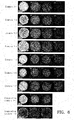
FIG. 6 illustrates TEM images and elemental analysis images of nanostructures according to Comparative Examples and Examples of the inventive concept; -
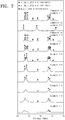
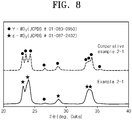
FIGS. 7 and8 illustrate graphs illustrating results of X-ray diffraction analysis of nanostructures according to Comparative Examples and Examples of the inventive concept; -
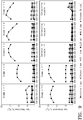
FIG. 9 illustrates graphs of gas responses to 1 ppm acetone, 1 ppm ethanol, 1 ppm carbon monoxide, 20 ppm hydrogen, 5 ppm ammonia and 50 ppb toluene at an operating temperature of 300 °C to 450 °C in gas sensors according to Comparative Examples and Examples of the inventive concept; -
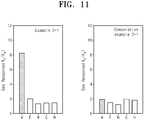
FIGS. 10 and11 illustrate graphs of gas responses to 1 ppm acetone, 1 ppm ethanol, 1 ppm carbon monoxide, and 1ppm hydrogen at an operating temperature of 375 °C in gas sensors according to Comparative Examples and Examples of the inventive concept; -
FIG. 12 illustrates graphs of characteristics results for acetone gas concentrations (0.25 to 1 ppm) of gas sensors according to Example 1-3 of the inventive concept at an operating temperature of 375 °C; and -
FIG. 13 illustrates graphs of characteristics results for repetitive acetone gas (1 ppm) of gas sensors according to Example 1-3 of the inventive concept at an operating temperature of 375 °C. - Hereinafter, an embodiment of the inventive concept will be described in more detail with reference to the accompanying drawings. Embodiments of the inventive concept may be modified in various forms, and it should not be construed that the scope of the inventive concept is limited to the following examples. This embodiment is provided to more completely describe the inventive concept to those with average knowledge in the art. Therefore, a shape of an element in the drawings has been exaggerated to emphasize a clearer description.
- A configuration of the inventive concept for clarifying the solution to the problem to be solved by the inventive concept will be described in detail with reference to the accompanying drawings based on a preferred embodiment of the inventive concept, and in assigning reference numbers to elements of the drawings, the same reference numbers were assigned to the same elements even when they are on different drawings. It should be noted in advance that components of other drawings may be cited if necessary when describing the drawings.
- A gas sensor according to the inventive concept is a gas sensor including a gas sensitizing layer formed of tungsten oxide doped with niobium. Prior to the inventive concept, that niobium-doped tungsten oxide has a low gas sensitivity to interference gases such as ethanol, ammonia, hydrogen, carbon monoxide, toluene, or the like, and has a high gas sensitivity to acetone with high sensitivity and high selectivity, is unknown, and is uses and effects that are first found in the inventive concept.
- In addition, the gas sensor according to the inventive concept is capable of performing non-invasive disease diagnosis through detection and concentration of biomarker gas from human breath in a simple and economical way because the gas sensor is a nanostructure sensitive material and is capable of selectively detecting acetone.
-
FIGS. 1 and 2 are cross-sectional views schematically illustrating a gas sensor according to the inventive concept. - However, a structure of the gas sensor according to the inventive concept is not limited thereto, and any gas sensor including a gas sensitizing layer formed of tungsten oxide doped with niobium corresponds to the inventive concept.
- The gas sensor illustrated in
FIG. 1 is a structure in whichelectrodes layer 120, respectively. - The gas sensor illustrated in
FIG. 2 includes a structure, in which amicroheater 150 is formed on a lower surface of asubstrate 140, and twoelectrodes substrate 140, and a gas sensitizinglayer 170 is formed thereon. The gas sensitizinglayers FIGS. 1 and 2 are all formed of tungsten oxide doped with niobium, and the amount of niobium may be adjusted when necessary. - Meanwhile, in the gas sensor according to the inventive concept, it is preferable that a thickness of each of the gas
sensitizing layers - Here, when the thickness of the gas sensitizing
layers layers - In the inventive concept, niobium is replaced inside a tungsten oxide lattice by using a high solubility of tungsten oxide to niobium, to change a phase of tungsten oxide from a γ phase stable at room temperature to a ε phase stable at low temperature, thereby implementing a sensitizing material with ferroelectricity.
- Here, unlike an interference gas, acetone having a relatively large dipole moment is better attracted by a dipole-dipole interaction, thereby improving gas sensitizing characteristics with a high sensitivity and high selectivity.
- In the inventive concept, when a concentration ratio of niobium (Nb) and tungsten (W) is less than 2at% and when a concentration ratio exceeds 50at%, high sensitivity and high selectivity to acetone may not be secured.
- Here, when a concentration ratio is lower than 2at%, sensitivity to acetone is low and selectivity of acetone to other gases is not secured. When a concentration ratio exceeds 50at%, selectivity of acetone to other gases is decreased and resistance of material becomes high (more than 1GΩ at 375 °C) as Nb goes into excess. That is, it is unsuitable to actual applications because more expensive equipment is required to measure this.
- In the inventive concept, when niobium is added to a tungsten oxide sensitizing material having various structures, sensitivity and selectivity to acetone gas may be increased several times or more with high stability, regardless of the structure.
- According to the inventive concept, the concentration of niobium may be adjusted and niobium having the adjusted concentration may be added to the tungsten oxide sensitizing material having various structures, thereby changing the particle phase of tungsten.
- Meanwhile, the gas sensor may obtain a high selectivity to react only acetone gas. It is confirmed that the manufactured high sensitizing oxide semiconductor gas sensor may contribute to commercialization of gas sensors due to excellent long-term stability and selectivity.
-
FIG. 3 illustrates a flow chart illustrating a method of manufacturing a gas sensor according to an embodiment of the inventive concept. - First, after adding niobium and tungsten to distilled water and stirring them, a mixed solution for spraying is prepared (operation S10).
- Here, a concentration ratio of niobium (Nb) and tungsten (W) contained in 100 mL of distilled water is preferably 2at% to 50at%.
- Here, when the concentration ratio of niobium (Nb) and tungsten (W) is less than 2at% and when the concentration ratio exceeds 50at%, high sensitivity and high selectivity to acetone, and measurable sensor resistance may not be simultaneously secured.
- When the concentration ratio is lower than 2at%, the sensitivity to acetone is also low and selectivity of acetone to other gases is not secured. When the concentration ratio exceeds 50at%, the selectivity of acetone to other gases is decreased and resistance of material becomes high (more than 1GΩ at 375 °C) as Nb goes into excess. That is, it is unsuitable to actual applications because more expensive equipment is required to measure this.
- Next, the mixed solution is subjected to ultrasonic spray pyrolysis to form a precursor, and the precursor is heat-treated to form a nanostructure (operation S20).
- The nanostructure is formed through a process using the mixed solution containing niobium and tungsten. For example, the mixed solution may be sprayed through ultrasonic waves and then thermally decomposed by passing through a quartz tube, to form an Nb-doped WO3 nanostructure.
- This operation may include a process of generating fine droplets by spraying the mixed solution and introducing the fine droplets into the reactor to synthesize and recover powder. A size of each of the fine droplets may be adjusted by a pressure inside a spray device, a concentration of a spray solution, a viscosity of the spray solution, and the like. By heating in a reactor, most of the solvent contained in the fine droplets is volatilized, and a polymer precursor, oxide, and a metal catalyst precursor component remain.
- A gas sensitizing layer is formed using the nanostructure (operation S30) to fabricate the gas sensor (operation S40).
- Hereinafter, referring to Table 1 and
FIGS. 4 to 13 , by using an ultrasonic spray pyrolysis method, gas sensors of Examples including a nanostructure manufactured by adjusting a doping concentration ratio of niobium (Nb) and tungsten (W), and gas sensors of Comparative Examples will be compared and described.[Table 1] Particle structure Concentration ratio (at%) (Nb/(Nb+W)) Synthetic method Example 1-1 Spherical shape 2 ultrasonic spray pyrolysis (Nb+W) Example 1-2 Spherical shape 5 ultrasonic spray pyrolysis (Nb+W) Example 1-3 Spherical shape 10 ultrasonic spray pyrolysis (Nb+W) Example 1-4 Spherical shape 15 ultrasonic spray pyrolysis (Nb+W) Example 1-5 Spherical shape 20 ultrasonic spray pyrolysis (Nb+W) Example 1-6 Spherical shape 30 ultrasonic spray pyrolysis (Nb+W) Example 1-7 Spherical shape 40 ultrasonic spray pyrolysis (Nb+W) Comparative Example 1-1 Spherical shape 0( Nb 0%)ultrasonic spray pyrolysis (Nb+W) Comparative Example 1-2 Spherical shape 100( Nb 100%)ultrasonic spray pyrolysis (Nb+W) Comparative Example 1-3 Spherical shape 10 after ultrasonic spray pyrolysis (W alone), Nb addition liquid reaction Example 2-1 Egg yolk 10 ultrasonic spray pyrolysis (Nb+W) Comparative Example 2-1 Egg yolk 0( Nb 0%)ultrasonic spray pyrolysis (Nb+W) - As a concentration ratio of Nb/(Nb+W) was calculated to be 0.02, 2.41 g of ammonium metatungstate hydrate [(NH4)6H2W12O40.xH2O, 99.99%, Sigma-Aldrich, USA] and 0.06 g of ammonium niobate(V) oxalate hydrate [C4H4NNbO9.xH2O, 99,99%, Sigma-Aldrich, USA] were added to 100 mL distilled water and were stirred until all the reagents were dissolved, thereby preparing a spray solution.
- The prepared spray solution is ultrasonic sprayed in the air at a flow rate of 10 L·min-1 while passing through a furnace (900 °C) connected to a spray outlet, thereby preparing a precursor.
- Then, the prepared precursor was heat-treated at 600 °C for 2 hours, to form an Nb-doped WO3 spherical structure. The obtained heat-treated Nb-doped WO3 structure powder was mixed with an organic binder, and a gas sensitizing layer was applied on an alumina substrate with two electrodes. Here, coating was used in a sense that includes various methods such as printing, brushing, blade coating, dispensing, and micro pipette dropping.
- Then, heat treatment at 450 °C for 2 hours was performed to remove a solvent, thereby forming a gas sensor. The manufactured gas sensor was placed inside a gas sensing chamber composed of a quartz tube, and pure air or mixed gas was alternately injected to measure the change in resistance of the gas sensor in real time. After mixing gases to an appropriate concentration through MFC in advance, the gases were rapidly injected using a 4-way valve to change the gas concentration inside the gas sensing chamber. The total flow rate inside the gas sensing chamber was fixed at 200 sccm, and thus a temperature of the gas sensor was maintained even with rapid changes in gas concentration.
- As a concentration ratio of Nb/(Nb+W) was calculated to be 0.05, 2.34 g of ammonium metatungstate hydrate [(NH4)6H2W12O40.xH2O, 99.99%, Sigma-Aldrich, USA] and 0.15 g of ammonium niobate(V) oxalate hydrate [C4H4NNbO9.xH2O, 99,99%, Sigma-Aldrich, USA] were added to 100 mL distilled water and were stirred until all the reagents were dissolved, thereby preparing a spray solution. The prepared spray solution is ultrasonic sprayed in the air at a flow rate of 10 L·min-1 while passing through a furnace (900 °C) connected to a spray outlet, thereby preparing a precursor.
- Then, the prepared precursor was heat-treated at 600 °C for 2 hours, to form an Nb-doped WO3 spherical structure.
- Then, the method of manufacturing the sensor and the gas sensitization measurement were the same as in Example 1-1.
- As a concentration ratio of Nb/(Nb+W) was calculated to be 0.1, 2.22 g of ammonium metatungstate hydrate [(NH4)6H2W12O40.xH2O, 99.99%, Sigma-Aldrich, USA] and 0.30 g of ammonium niobate(V) oxalate hydrate [C4H4NNbO9.xH2O, 99,99%, Sigma-Aldrich, USA] were added to 100 mL distilled water and were stirred until all the reagents were dissolved, thereby preparing a spray solution.
- The prepared spray solution is ultrasonic sprayed in the air at a flow rate of 10 L·min-1 while passing through a furnace (900 °C) connected to a spray outlet, thereby preparing a precursor. Then, the prepared precursor was heat-treated at 600 °C for 2 hours, to form an Nb-doped WO3 spherical structure.
- Then, the method of manufacturing the sensor and the gas sensitization measurement were the same as in Example 1-1.
- As a concentration ratio of Nb/(Nb+W) was calculated to be 0.15, 2.09 g of ammonium metatungstate hydrate [(NH4)6H2W12O40.xH2O, 99.99%, Sigma-Aldrich, USA] and 0.45 g of ammonium niobate(V) oxalate hydrate [C4H4NNbO9.xH2O, 99,99%, Sigma-Aldrich, USA] were added to 100 mL distilled water and were stirred until all the reagents were dissolved, thereby preparing a spray solution.
- The prepared spray solution is ultrasonic sprayed in the air at a flow rate of 10 L·min-1 while passing through a furnace (900 °C) connected to a spray outlet, thereby preparing a precursor.
- Then, the prepared precursor was heat-treated at 600 °C for 2 hours, to form an Nb-doped WO3 spherical structure.
- Then, the method of manufacturing the sensor and the gas sensitization measurement were the same as in Example 1-1.
- As a concentration ratio of Nb/(Nb+W) was calculated to be 0.2, 1.97 g of ammonium metatungstate hydrate [(NH4)6H2W12O40.xH2O, 99.99%, Sigma-Aldrich, USA] and 0.61 g of ammonium niobate(V) oxalate hydrate [C4H4NNbO9.xH2O, 99,99%, Sigma-Aldrich, USA] were added to 100 mL distilled water and were stirred until all the reagents were dissolved, thereby preparing a spray solution.
- The prepared spray solution is ultrasonic sprayed in the air at a flow rate of 10 L·min-1 while passing through a furnace (900 °C) connected to a spray outlet, thereby preparing a precursor.
- Then, the prepared precursor was heat-treated at 600 °C for 2 hours, to form an Nb-doped WO3 spherical structure.
- Then, the method of manufacturing the sensor and the gas sensitization measurement were the same as in Example 1-1.
- As a concentration ratio of Nb/(Nb+W) was calculated to be 0.3, 1.72 g of ammonium metatungstate hydrate [(NH4)6H2W12O40.xH2O, 99.99%, Sigma-Aldrich, USA] and 0.9 g of ammonium niobate(V) oxalate hydrate [C4H4NNbO9.xH2O, 99,99%, Sigma-Aldrich, USA] were added to 100 mL distilled water and were stirred until all the reagents were dissolved, thereby preparing a spray solution.
- The prepared spray solution is ultrasonic sprayed in the air at a flow rate of 10 L·min-1 while passing through a furnace (900 °C) connected to a spray outlet, thereby preparing a precursor.
- Then, the prepared precursor was heat-treated at 600 °C for 2 hours, to form an Nb-doped WO3 spherical structure.
- Then, the method of manufacturing the sensor and the gas sensitization measurement were the same as in Example 1-1.
- As a concentration ratio of Nb/(Nb+W) was calculated to be 0.4, 1.47 g of ammonium metatungstate hydrate [(NH4)6H2W12O40.xH2O, 99.99%, Sigma-Aldrich, USA] and 1.21 g of ammonium niobate(V) oxalate hydrate [C4H4NNbO9.xH2O, 99,99%, Sigma-Aldrich, USA] were added to 100 mL distilled water and were stirred until all the reagents were dissolved, thereby preparing a spray solution.
- The prepared spray solution is ultrasonic sprayed in the air at a flow rate of 10 L·min-1 while passing through a furnace (900 °C) connected to a spray outlet, thereby preparing a precursor.
- Then, the prepared precursor was heat-treated at 600 °C for 2 hours, to form an Nb-doped WO3 spherical structure.
- Then, the method of manufacturing the sensor and the gas sensitization measurement were the same as in Example 1-1.
- 2.46 g of ammonium metatungstate hydrate [(NH4)6H2W12O40·xH2O, 99.99%, Sigma-Aldrich, USA] was added to 100 mL distilled water and stirred until all the reagents were dissolved to prepare a spray solution.
- The prepared spray solution is ultrasonic sprayed in the air at a flow rate of 10 L·min-1 while passing through a furnace (900 °C) connected to a spray outlet, thereby preparing a precursor.
- Then, the prepared precursor was heat-treated at 600 °C for 2 hours, to form a WO3 spherical structure.
- Then, the method of manufacturing the sensor and the gas sensitization measurement were the same as in Example 1-1.
- 3.03 g of ammonium metatungstate hydrate [(NH4)6H2W12O40·xH2O, 99.99%, Sigma-Aldrich, USA] was added to 100 mL distilled water and stirred until all the reagents were dissolved to prepare a spray solution.
- The prepared spray solution is ultrasonic sprayed in the air at a flow rate of 10 L·min-1 while passing through a furnace (900 °C) connected to a spray outlet, thereby preparing a precursor.
- Then, the prepared precursor was heat-treated at 600 °C for 2 hours, to form a WO3 spherical structure.
- Then, the method of manufacturing the sensor and the gas sensitization measurement were the same as in Example 1-1.
- 2.46 g of ammonium metatungstate hydrate [(NH4)6H2W12O40·xH2O, 99.99%, Sigma-Aldrich, USA] was added to 100 mL distilled water and stirred until all the reagents were dissolved to prepare a spray solution.
- The prepared spray solution is ultrasonic sprayed in the air at a flow rate of 10 L·min-1 while passing through a furnace (900 °C) connected to a spray outlet, thereby preparing a precursor. Then, the prepared precursor was heat-treated at 600 °C for 2 hours, to form a WO3 spherical structure.
- As a concentration ratio of Nb/(Nb+W) was calculated to be 0.1, 0.185g of WO3 spherical structure, 0.0242g of ammonium niobate(V) oxalate hydrate [C4H4NNbO9.xH2O, 99,99%, Sigma-Aldrich, USA], and 0.48g of urea [NH2CONH2, Junsei, 99.0%, Japan] were added to 100 mL distilled water and were stirred at 80 °C for 8 hours.
- Then, the prepared precursor was heat-treated at 600 °C for 2 hours, to form an Nb-doped WO3 spherical structure. Then, the method of manufacturing the sensor and the gas sensitization measurement were the same as in Example 1-1.
- As a concentration ratio of Nb/(Nb+W) was calculated to be 0.1, 2.22 g of ammonium metatungstate hydrate [(NH4)6H2W12O40.xH2O, 99.99%, Sigma-Aldrich, USA], 0.30 g of ammonium niobate(V) oxalate hydrate [C4H4NNbO9.xH2O, 99,99%, Sigma-Aldrich, USA], and 1.5 g of dextrin [(C6H10O5)x.xH2O, Junsei, 99.0%, Korea] were added to 100 mL distilled water and were stirred until all the reagents were dissolved, thereby preparing a spray solution.
- The prepared spray solution is ultrasonic sprayed in the air at a flow rate of 10 L·min-1 while passing through a furnace (400 °C) connected to a spray outlet, thereby preparing a precursor.
- Then, the prepared precursor was heat-treated at 600 °C for 2 hours, to form an Nb-doped WO3 oval structure.
- Then, the method of manufacturing the sensor and the gas sensitization measurement were the same as in Example 1-1.
- 2.46 g of ammonium metatungstate hydrate [(NH4)6H2W12O40.xH2O, 99.99%, Sigma-Aldrich, USA] and 1.5 g of dextrin [(C6H10O5)x.xH2O, Samchun, Korea] were added to 100 mL distilled water and were stirred until all the reagents were dissolved, thereby preparing a spray solution.
- The prepared spray solution is ultrasonic sprayed in the air at a flow rate of 10 L·min-1 while passing through a furnace (400 °C) connected to a spray outlet, thereby preparing a precursor.
- Then, the prepared precursor was heat-treated at 600 °C for 2 hours, to form a WO3 oval structure.
- Then, the method of manufacturing the sensor and the gas sensitization measurement were the same as in Example 1-1.
-
FIG. 4 illustrates SEM images of spherical nanostructures according to Comparative Examples and Examples of the inventive concept,FIG. 5 illustrates SEM images of oval nanostructures according to Comparative Examples and Examples of the inventive concept, andFIG. 6 illustrates TEM images and elemental analysis images of nanostructures according to Comparative Examples and Examples of the inventive concept. - Referring to
FIGS. 4 and5 , it may be seen that structures manufactured have spherical structures and oval structures according to Examples and Comparative Examples. - Here, in Example 2-1 and Comparative Example 2-1, when spray pyrolysis was performed through dextrin, combustion occurred several times at high temperature, thereby generating the oval structures.
- In addition, referring to
FIG. 6 , it was confirmed that the nanostructures of Example 1-2, Example1-3, Example1-4, Example 1-5, and Comparative Example 1-1 have spherical structures with full interiors. As a result of element analysis, it was confirmed that Nb was uniformly distributed throughout the structures in the Nb-doped WO3 spherical structures. In addition, it was confirmed that the amount of Nb capable being observed on the structure surfaces increased as the concentration of Nb added increases. -
FIGS. 7 and8 illustrate graphs illustrating results of X-ray diffraction analysis of nanostructures according to Comparative Examples and Examples of the inventive concept. - First, referring to
FIG. 7 , in the X-ray diffraction analysis result, it may be confirmed that only a WO3 γ phase, which was a stable phase at room temperature, existed in Comparative Examples 1-1 and 1-3 in which Nb was not added. It may be confirmed that only Nb2O5 was present in Comparative Example 1-2. However, when Nb was added to the spray solution, it may be confirmed that the ferroelectric WO3 ε phase existed. - It may be seen that when spray pyrolysis was carried out, the Nb and W components were uniformly mixed on a molecular basis, and thus the added Nb mostly replaced W and entered the lattice, resulting in the phase change due to lattice distortion.
- In addition, referring to
FIG. 8 , it may be seen from the results of X-ray diffraction analysis that Comparative Example 2-1, to which Nb was not added, had only the WO3 γ phase, which is a stable phase at room temperature. - However, it may be seen that the ferroelectric WO3 ε phase was mixed with the γ phase in Example 2-1 in which Nb was added to the spray solution phase. It may be seen that the added Nb mostly replaced W and entered the lattice, resulting in the phase change due to lattice distortion.
- Hereinafter, results of gas sensors manufactured using fine powders synthesized according to Examples and Comparative Examples, as described above, measured at a total of five temperatures of 300 °C, 325 °C, 350 °C, 375 °C and 400 °C will be described.
- When a resistance of the sensor became constant in the air in a humidity atmosphere with a relative humidity of 80, the atmosphere was changed to a gas to be tested (acetone, ethanol, ammonia, hydrogen, carbon monoxide, toluene), and when a resistance became constant in the gas, the change in resistance was measured by changing the atmosphere to air again. All of the synthesized sensitizing materials exhibited the characteristics of an n-type oxide semiconductor with a decrease in resistance to a reducing gas. Therefore, the gas sensitivity was defined as S=Ra/Rg (S: gas sensitivity, Ra: element resistance in air, Rg: element resistance in gas). After manufacturing a sensor using the synthesized powder, the gas sensitivity was measured and the sensitivity was compared with other gases to calculate the selectivity.
- After manufacturing the sensor using the synthesized fine powder, the gas sensitivity was measured, and the selectivity was calculated by comparing the sensitivity of the other gases.
-
FIG. 9 illustrates graphs of gas responses to 1 ppm acetone, 1 ppm ethanol, 1 ppm carbon monoxide, 20 ppm hydrogen, 5 ppm ammonia and 50 ppb toluene at an operating temperature of 300 °C to 450 °C in gas sensors according to Comparative Examples and Examples of the inventive concept. - Referring to
FIG. 9 , when a relative humidity is 80% at operatingtemperatures acetone 1 ppm,ethanol 1 ppm,carbon monoxide 1 ppm, 20 ppm of hydrogen, 5 ppm of ammonia, and 50 ppb of toluene are shown, respectively. - A concentration of each biomarker gas was set with reference to a representative concentration from an exhaled air of a person suffering from a disease. In Comparative Example 1-1 to which Nb was not added and Comparative Example 1-2 of pure Nb2O5, the sensitivity to the biomarker gas was very small and there was no selectivity to acetone.
- In addition, it was confirmed that the sensitivity to the biomarker gas was very small and there was no selectivity to acetone in Comparative Example 1-3 in which the ε phase was not present because Nb was added through the liquid phase process.
- However, in Example 1-1, Example 1-2, Example 1-3, Example 1-4, Example 1-5, Example 1-6, and Example 1-7 doped with Nb, it was confirmed that the sensitivity of acetone increased significantly and the sensitivity to other interference gases remained similar.
- In particular, in Example 1-3, the sensitivity of acetone at an operating temperature of 375 °C was 16, and the selectivity (=Sacetone/Sinterference gas) was 6.4. That is, the sensitivity of acetone was increased by about 7 times compared to the 2.4 sensitivity of acetone of Comparative Example 1-1 having the pure WO3, and the selectivity was increased by about 8 times.
- This is because, when Nb having a pentavalent valence was doped into WO3, oxygen vacancy was generated, and the lattice was distorted, thereby causing the phase change from the γ phase stable at the room temperature to the ferroelectric ε phase, it was shown that the sensitivity to acetone, which had a large dipole moment, was significantly increased compared to other interfering gases.
- It was shown that Nb doping had a very good effect in increasing the sensitivity and selectivity of acetone of the sensor.
-
FIGS. 10 and11 illustrate graphs of gas responses to 1 ppm acetone, 1 ppm ethanol, 1 ppm carbon monoxide, and 1ppm hydrogen at an operating temperature of 375 °C in gas sensors according to Comparative Examples and Examples of the inventive concept. - First, referring to
FIG. 10 , when the relative humidity was 80% at an operating temperature of 375° C, gas sensitivity of Example 1-1, Example 1-2, Example 1-3, Example 1-4, Example 1-5, Example 1-6, Example 1-7, Comparative Example 1-1, Comparative Example 1-2, and Comparative Example 1-3 to 1 ppm of acetone, 1 ppm of ethanol, 1 ppm of ammonia, 1 ppm of carbon monoxide, and 1 ppm of hydrogen were illustrated. - It may be seen selectively sensitizing characteristics of Example 1-1, Example 1-2, Example 1-3, Example 1-4, Example 1-5, Example 1-6, and Example 1-7 to acetone. It may be seen that the highest acetone sensitive characteristics were illustrated in Example 1-3.
- Meanwhile, in Comparative Example 1-1, which was pure WO3 to which Nb was not added, and in Comparative Example 1-2, which was pure Nb2O5 to which W was not added, in Comparative Example 1-3 in which Nb was added as a subsequent process, there was no selectivity and low sensitivity to acetone.
- That is, in Examples in which the spray pyrolysis solution was prepared by stirring the W precursor and the Nb precursor, the W and Nb components were mixed in a molecular unit to obtain the desired phase ε phase, and thus high sensitivity and high selectivity for acetone could be obtained. However, because Comparative Example 1-1, Comparative Example 1-2, and Comparative Example 1-3 were the materials without ferroelectricity, it may be confirmed that the selectivity and sensitivity to acetone are small.
- Further,
FIG. 11 illustrates the gas sensitivity to 1 ppm of acetone, 1 ppm of ethanol, 1 ppm of ammonia, 1 ppm of carbon monoxide, and 1 ppm of hydrogen of Example 2-1 and Comparative Example 2-1 when the relative humidity is 80% at an operating temperature of 375° C. - Here, Example 2-1 exhibited sensitizing characteristics for acetone, and Comparative Example 2-1 exhibited no selectivity and very low sensitivity for acetone.
- It may be seen that a sensitizing layer exhibiting ferroelectricity is synthesized due to the phase change occurring when Nb is substituted for WO3, and sensitivity is improved due to attraction between the sensitizing layer and acetone.
-
FIG. 12 illustrates graphs of characteristics results for acetone gas concentrations (0.25 to 1 ppm) of gas sensors according to Example 1-3 of the inventive concept at an operating temperature of 375 °C andFIG. 13 illustrates graphs of characteristics results for repetitive acetone gas (1 ppm) of gas sensors according to Example 1-3 of the inventive concept at an operating temperature of 375 °C. - First,
FIG. 12 illustrates a result of gas sensitizing characteristics and a lower limit of detection calculated therethrough depending on acetone gas concentrations (0.25 to1 ppm) of Example 1-3 when a relative humidity is 80% at an operating temperature of 375° C. It was confirmed that Example 1-3 exhibited high sensitivity even in a humidity atmosphere, and the calculated lower limit of detection was 14 ppb, indicating relatively high sensitivity even at low concentrations. - In addition,
FIG. 13 illustrates the results of the repetitive acetone gas (1 ppm) sensitizing characteristics of Example 1-3 when the operating temperature was 375 °C and the relative humidity was 80%. It may be seen that the sensor of Example 1-3 exhibited stable acetone detection characteristics even for repeated measurements of acetone several times and long-term (>20 day) sensor measurements, thereby ensuring reliability. - Accordingly, in the conventional oxide semiconductor type gas sensor, it is difficult to distinguish acetone and other reducing gases by sensitivity, and there is a problem that sensitivity to most gases is lowered, especially in the high humidity atmosphere. Meanwhile, the sensor of the inventive concept may detect acetone with high sensitivity and high selectivity even in the high humidity atmosphere by adjusting the amount of Nb added, and it is possible to measure acetone at the low concentration enough to detect the efficiency of disease diagnosis and ketogenic diet.
- According to an embodiment of the inventive concept, the gas sensor using Nb-doped WO3, may exhibit the low gas sensitivity to the interference gases such as ethanol, ammonia, hydrogen, carbon monoxide, and toluene, and may exhibit the high gas sensitivity and high selectivity to acetone.
- Meanwhile, the addition of niobium in the gas sensor changes the phase of tungsten oxide from the stable γ phase at room temperature to the stable ε phase at low temperature to implement the sensitive material having ferroelectricity. Here, unlike the interference gas, acetone having the relatively large dipole moment may be more attracted by the dipole-dipole interaction, and thus acetone may be detected with high sensibility and high selectivity.
- Meanwhile, the effects obtainable in the inventive concept are not limited to the above-mentioned effects, and it will understand other effects not mentioned are obvious to those of ordinary skill in the art from the following description.
- While the inventive concept has been described with reference to exemplary embodiments, it will be apparent to those skilled in the art that various changes and modifications may be made without departing from the spirit and scope of the inventive concept. Therefore, it should be understood that the above embodiments are not limiting, but illustrative.
Claims (12)
- A gas sensor for selective detection of acetone gas, the gas sensor comprising:a gas sensitizing layer formed of an Nb-doped WO3 nanostructure,wherein a concentration ratio (Nb/W) of niobium (Nb) and tungsten (WO3) in the gas sensitizing layer is 2at% to 50at%.
- The gas sensor of claim 1, wherein the Nb-doped WO3 nanostructure has a ε-phase peak during an X-Ray Diffraction (XRD) analysis.
- The gas sensor of claim 1, wherein, in the gas sensitizing layer, the Nb-doped WO3 nanostructure has a spherical or oval structure.
- A method of manufacturing a gas sensor for selective detection of acetone gas, the method comprising:forming a Nb-doped WO3 nanostructure; andforming a gas sensitizing layer of the Nb-doped WO3 nanostructure,wherein the forming of the Nb-doped WO3 nanostructure includes:preparing a mixed solution containing niobium (Nb) and tungsten oxide (WO3) so that a concentration ratio (Nb/W) of niobium (Nb) and tungsten (W) is 2 at% to 50 at%,forming a Nb-doped WO3 precursor with the mixed solution through ultrasonic spray pyrolysis, andheating the Nb-doped WO3 precursor to form the Nb-doped WO3 nanostructure.
- The method of claim 4, wherein the of the Nb-doped WO3 nanostructure formed in the forming of the Nb-doped WO3 nanostructure has a spherical structure.
- The method of claim 4, wherein, in the preparing of the mixed solution, the mixed solution further includes dextrin.
- The method of claim 6, wherein the Nb-doped WO3 nanostructure formed in the forming of the Nb-doped WO3 nanostructure has an oval structure.
- The method of claim 4, wherein the Nb-doped WO3 nanostructure formed in the forming of the Nb-doped WO3 nanostructure has a ε-phase peak when analyzed by an X-Ray Diffraction (XRD).
- The method of claim 4, wherein the forming of the gas sensitizing layer includes:mixing the Nb-doped WO3 nanostructure with an organic binder, and applying the mixed solution on a substrate, andremoving a solvent by heat treatment.
- The method of claim 9, wherein the applying of the mixed solution on the substrate is performed by at least one of printing, brushing, blade coating, dispensing, and micropipette dropping.
- A gas sensitizing layer for selective detection of acetone gas, the gas sensitizing layer comprising:an Nb-doped WO3 nanostructure,wherein a concentration ratio (Nb/W) of niobium (Nb) and tungsten (WO3) is 2 at% to 50 at%.
- The gas sensitizing layer of claim 11, wherein the Nb-doped WO3 nanostructure has a ε-phase peak during an X-Ray Diffraction (XRD) analysis.
Applications Claiming Priority (1)
| Application Number | Priority Date | Filing Date | Title |
|---|---|---|---|
| KR1020200071502A KR102474884B1 (en) | 2020-06-12 | 2020-06-12 | Acetone gas sensor using Nb-doped WO3 and fabrication method thereof |
Publications (2)
| Publication Number | Publication Date |
|---|---|
| EP3922987A1 true EP3922987A1 (en) | 2021-12-15 |
| EP3922987B1 EP3922987B1 (en) | 2025-08-27 |
Family
ID=76011802
Family Applications (1)
| Application Number | Title | Priority Date | Filing Date |
|---|---|---|---|
| EP21174697.9A Active EP3922987B1 (en) | 2020-06-12 | 2021-05-19 | Acetone gas sensor using nb-doped wo3 and fabrication method thereof |
Country Status (2)
| Country | Link |
|---|---|
| EP (1) | EP3922987B1 (en) |
| KR (1) | KR102474884B1 (en) |
Cited By (1)
| Publication number | Priority date | Publication date | Assignee | Title |
|---|---|---|---|---|
| CN116352100A (en) * | 2023-05-31 | 2023-06-30 | 赣州海盛钨业股份有限公司 | Production process of high-performance doped tungsten bar |
Families Citing this family (1)
| Publication number | Priority date | Publication date | Assignee | Title |
|---|---|---|---|---|
| KR102588019B1 (en) * | 2022-05-09 | 2023-10-19 | 고려대학교 산학협력단 | Acetone gas sensor using Ti-doped WO3 and fabrication method thereof |
Citations (2)
| Publication number | Priority date | Publication date | Assignee | Title |
|---|---|---|---|---|
| KR101766334B1 (en) * | 2016-05-27 | 2017-08-09 | 한국과학기술원 | Metal oxide nanofibers with mechanically stable adhesion property, fabrication method for preparing the same, and gas sensor comprising the same |
| KR20200071502A (en) | 2018-12-11 | 2020-06-19 | (주)바이오트코리아 | A module device for cell loading |
Family Cites Families (3)
| Publication number | Priority date | Publication date | Assignee | Title |
|---|---|---|---|---|
| KR20180015369A (en) * | 2016-08-03 | 2018-02-13 | 고려대학교 산학협력단 | Highly reliable complex for detecting gas having independence againt humidity, method for preparing the complex, gas sensor comprising the complex, and method for preparing the gas sensor |
| KR101943084B1 (en) * | 2016-11-01 | 2019-01-29 | 한국전자통신연구원 | Manufacturing method of gas sensor |
| KR102097051B1 (en) * | 2018-05-30 | 2020-04-03 | 고려대학교 산학협력단 | Gas Detection Complex, Method for Manufacturing the Complex, Gas Sensor Including the Complex and Method for Manufacturing the Sensor |
-
2020
- 2020-06-12 KR KR1020200071502A patent/KR102474884B1/en active Active
-
2021
- 2021-05-19 EP EP21174697.9A patent/EP3922987B1/en active Active
Patent Citations (2)
| Publication number | Priority date | Publication date | Assignee | Title |
|---|---|---|---|---|
| KR101766334B1 (en) * | 2016-05-27 | 2017-08-09 | 한국과학기술원 | Metal oxide nanofibers with mechanically stable adhesion property, fabrication method for preparing the same, and gas sensor comprising the same |
| KR20200071502A (en) | 2018-12-11 | 2020-06-19 | (주)바이오트코리아 | A module device for cell loading |
Non-Patent Citations (7)
| Title |
|---|
| CHOI HUN JI ET AL: "Highly selective, sensitive, and rapidly responding acetone sensor using ferroelectric [epsilon]-WO3 spheres doped with Nb for monitoring ketogenic diet efficiency", SENSORS AND ACTUATORS B: CHEMICAL, ELSEVIER BV, NL, vol. 338, 19 March 2021 (2021-03-19), XP086541165, ISSN: 0925-4005, [retrieved on 20210319], DOI: 10.1016/J.SNB.2021.129823 * |
| GAURY J. ET AL: "Characterization of Nb-doped WO3 thin films produced by Electrostatic Spray Deposition", THIN SOLID FILMS, vol. 534, 31 January 2013 (2013-01-31), AMSTERDAM, NL, pages 32 - 39, XP055842294, ISSN: 0040-6090, DOI: 10.1016/j.tsf.2013.01.080 * |
| KIM BO-YOUNG ET AL: "Dual Role of Multiroom-Structured Sn-Doped NiO Microspheres for Ultrasensitive and Highly Selective Detection of Xylene", APPLIED MATERIALS & INTERFACES, vol. 10, no. 19, 16 May 2018 (2018-05-16), US, pages 16605 - 16612, XP055843029, ISSN: 1944-8244, Retrieved from the Internet <URL:https://pubs.acs.org/doi/pdf/10.1021/acsami.8b02412> DOI: 10.1021/acsami.8b02412 * |
| LIAO WEN LING: "Processing and Characterization of [epsilon]-WO3 Processed by Flame Spray Pyrolysis", MASTER THESIS, 31 December 2014 (2014-12-31), XP055842851, Retrieved from the Internet <URL:https://ir.stonybrook.edu/xmlui/bitstream/handle/11401/76328/Liao_grad.sunysb_0771M_12158.pdf?sequence=1> [retrieved on 20210920] * |
| SUVARNA R BATHE ET AL: "Influence of Nb doping on the electrochromic properties of WO3 films", JOURNAL OF PHYSICS D: APPLIED PHYSICS, INSTITUTE OF PHYSICS PUBLISHING LTD, GB, vol. 40, no. 23, 7 December 2007 (2007-12-07), pages 7423 - 7431, XP020126807, ISSN: 0022-3727 * |
| YAN AIHUA ET AL: "An efficient method to modulate the structure, morphology and properties of WO3through niobium doping", JOURNAL OF ALLOYS AND COMPOUNDS, ELSEVIER SEQUOIA, LAUSANNE, CH, vol. 610, 6 May 2014 (2014-05-06), pages 132 - 137, XP028874454, ISSN: 0925-8388, DOI: 10.1016/J.JALLCOM.2014.04.188 * |
| ZAPPA DARIO: "The Influence of Nb on the Synthesis of WO3 Nanowires and the Effects on Hydrogen Sensing Performance", SENSORS, vol. 19, no. 10, 20 May 2019 (2019-05-20), pages 2332, XP055842288, DOI: 10.3390/s19102332 * |
Cited By (2)
| Publication number | Priority date | Publication date | Assignee | Title |
|---|---|---|---|---|
| CN116352100A (en) * | 2023-05-31 | 2023-06-30 | 赣州海盛钨业股份有限公司 | Production process of high-performance doped tungsten bar |
| CN116352100B (en) * | 2023-05-31 | 2023-07-28 | 赣州海盛钨业股份有限公司 | Production process of high-performance doped tungsten bar |
Also Published As
| Publication number | Publication date |
|---|---|
| EP3922987B1 (en) | 2025-08-27 |
| KR20210154466A (en) | 2021-12-21 |
| KR102474884B1 (en) | 2022-12-05 |
Similar Documents
| Publication | Publication Date | Title |
|---|---|---|
| Pandeeswari et al. | Nanostructured α-MoO3 thin film as a highly selective TMA sensor | |
| Guo et al. | Fe2O3 nanomaterials derived from Prussian blue with excellent H2S sensing properties | |
| Choi et al. | Aluminum-doped TiO2 nano-powders for gas sensors | |
| Kruefu et al. | Ultra-sensitive H2S sensors based on hydrothermal/impregnation-made Ru-functionalized WO3 nanorods | |
| Natkaeo et al. | Highly selective sub–10 ppm H2S gas sensors based on Ag-doped CaCu3Ti4O12 films | |
| Salunkhe et al. | Liquefied petroleum gas (LPG) sensing properties of nanocrystalline CdO thin films prepared by chemical route: effect of molarities of precursor solution | |
| Zhao et al. | An enhanced triethylamine response by incorporating mesoporous CuO into nanosheet-assembled Co3O4 microtubes | |
| Pavelko et al. | Comparative study of nanocrystalline SnO2 materials for gas sensor application: Thermal stability and catalytic activity | |
| Siemons et al. | Preparation and gas sensing properties of nanocrystalline La-doped CoTiO3 | |
| Sovizi et al. | A chemiresistor sensor modified with lanthanum oxide nanoparticles as a highly sensitive and selective sensor for dimethylamine at room temperature | |
| Qiu et al. | Enhanced, stable, humidity-tolerant xylene sensing using ordered macroporous NiO/ZrO2 nanocomposites | |
| Vinothkumar et al. | Construction of Sr@ Mn 3 O 4/GO nanocomposite: a synergistic electrocatalyst for nitrofurantoin detection in biological and environmental samples | |
| Ambedkar et al. | Ocimum sanctum leaf extract-assisted green synthesis of Pd-doped CuO nanoparticles for highly sensitive and selective NO2 gas sensors | |
| Kneer et al. | Manipulating the gas–surface interaction between copper (II) oxide and mono-nitrogen oxides using temperature | |
| Meng et al. | Heterostructures constructed by NiMoO4 functionalized 2D MoO3 nanosheets for ultrasensitive trimethylamine detection with ppb level detection | |
| Fu | Silver sulfide-based sensor for the selective determination of ammonia at room temperature | |
| US20170350871A1 (en) | Highly sensitive and selective gas sensing material to methylbenzene, methods for preparing the gas sensing material and gas sensor including the gas sensing material | |
| Juang et al. | Dispersed and spherically assembled porous NiO nanosheets for low concentration ammonia gas sensing applications | |
| Zamani et al. | Detection of amines with chromium-doped WO3 mesoporous material | |
| US12188890B2 (en) | Gas detection complex and method for producing same, gas sensor comprising gas detection complex and method for manufacturing same | |
| EP3922987B1 (en) | Acetone gas sensor using nb-doped wo3 and fabrication method thereof | |
| TWI220455B (en) | Method for preparing tungsten trioxide precursor and hydrogen sulfide gas sensor fabricated using the same | |
| Abozeid et al. | Development of nano-WO 3 doped with NiO for wireless gas sensors | |
| CN107449805B (en) | Acetone-sensitive zinc cobaltate nano multi-shell yolk-shell membrane | |
| KR101806742B1 (en) | p-xylene sensors using NiO/NiMoO4 nano composites and faberication method thereof |
Legal Events
| Date | Code | Title | Description |
|---|---|---|---|
| PUAI | Public reference made under article 153(3) epc to a published international application that has entered the european phase |
Free format text: ORIGINAL CODE: 0009012 |
|
| STAA | Information on the status of an ep patent application or granted ep patent |
Free format text: STATUS: REQUEST FOR EXAMINATION WAS MADE |
|
| 17P | Request for examination filed |
Effective date: 20210519 |
|
| AK | Designated contracting states |
Kind code of ref document: A1 Designated state(s): AL AT BE BG CH CY CZ DE DK EE ES FI FR GB GR HR HU IE IS IT LI LT LU LV MC MK MT NL NO PL PT RO RS SE SI SK SM TR |
|
| B565 | Issuance of search results under rule 164(2) epc |
Effective date: 20211020 |
|
| RBV | Designated contracting states (corrected) |
Designated state(s): AL AT BE BG CH CY CZ DE DK EE ES FI FR GB GR HR HU IE IS IT LI LT LU LV MC MK MT NL NO PL PT RO RS SE SI SK SM TR |
|
| P01 | Opt-out of the competence of the unified patent court (upc) registered |
Effective date: 20230529 |
|
| STAA | Information on the status of an ep patent application or granted ep patent |
Free format text: STATUS: EXAMINATION IS IN PROGRESS |
|
| 17Q | First examination report despatched |
Effective date: 20240219 |
|
| GRAP | Despatch of communication of intention to grant a patent |
Free format text: ORIGINAL CODE: EPIDOSNIGR1 |
|
| STAA | Information on the status of an ep patent application or granted ep patent |
Free format text: STATUS: GRANT OF PATENT IS INTENDED |
|
| INTG | Intention to grant announced |
Effective date: 20250407 |
|
| GRAS | Grant fee paid |
Free format text: ORIGINAL CODE: EPIDOSNIGR3 |
|
| GRAA | (expected) grant |
Free format text: ORIGINAL CODE: 0009210 |
|
| STAA | Information on the status of an ep patent application or granted ep patent |
Free format text: STATUS: THE PATENT HAS BEEN GRANTED |
|
| AK | Designated contracting states |
Kind code of ref document: B1 Designated state(s): AL AT BE BG CH CY CZ DE DK EE ES FI FR GB GR HR HU IE IS IT LI LT LU LV MC MK MT NL NO PL PT RO RS SE SI SK SM TR |
|
| REG | Reference to a national code |
Ref country code: CH Ref legal event code: EP |
|
| REG | Reference to a national code |
Ref country code: DE Ref legal event code: R096 Ref document number: 602021036998 Country of ref document: DE |
|
| REG | Reference to a national code |
Ref country code: IE Ref legal event code: FG4D |
|
| REG | Reference to a national code |
Ref country code: NL Ref legal event code: MP Effective date: 20250827 |
|
| PG25 | Lapsed in a contracting state [announced via postgrant information from national office to epo] |
Ref country code: IS Free format text: LAPSE BECAUSE OF FAILURE TO SUBMIT A TRANSLATION OF THE DESCRIPTION OR TO PAY THE FEE WITHIN THE PRESCRIBED TIME-LIMIT Effective date: 20251227 |
|
| PG25 | Lapsed in a contracting state [announced via postgrant information from national office to epo] |
Ref country code: NO Free format text: LAPSE BECAUSE OF FAILURE TO SUBMIT A TRANSLATION OF THE DESCRIPTION OR TO PAY THE FEE WITHIN THE PRESCRIBED TIME-LIMIT Effective date: 20251127 |
|
| REG | Reference to a national code |
Ref country code: LT Ref legal event code: MG9D |
|
| PG25 | Lapsed in a contracting state [announced via postgrant information from national office to epo] |
Ref country code: PT Free format text: LAPSE BECAUSE OF FAILURE TO SUBMIT A TRANSLATION OF THE DESCRIPTION OR TO PAY THE FEE WITHIN THE PRESCRIBED TIME-LIMIT Effective date: 20251229 |
|
| PG25 | Lapsed in a contracting state [announced via postgrant information from national office to epo] |
Ref country code: FI Free format text: LAPSE BECAUSE OF FAILURE TO SUBMIT A TRANSLATION OF THE DESCRIPTION OR TO PAY THE FEE WITHIN THE PRESCRIBED TIME-LIMIT Effective date: 20250827 |
|
| PG25 | Lapsed in a contracting state [announced via postgrant information from national office to epo] |
Ref country code: HR Free format text: LAPSE BECAUSE OF FAILURE TO SUBMIT A TRANSLATION OF THE DESCRIPTION OR TO PAY THE FEE WITHIN THE PRESCRIBED TIME-LIMIT Effective date: 20250827 Ref country code: NL Free format text: LAPSE BECAUSE OF FAILURE TO SUBMIT A TRANSLATION OF THE DESCRIPTION OR TO PAY THE FEE WITHIN THE PRESCRIBED TIME-LIMIT Effective date: 20250827 |
|
| PG25 | Lapsed in a contracting state [announced via postgrant information from national office to epo] |
Ref country code: GR Free format text: LAPSE BECAUSE OF FAILURE TO SUBMIT A TRANSLATION OF THE DESCRIPTION OR TO PAY THE FEE WITHIN THE PRESCRIBED TIME-LIMIT Effective date: 20251128 |
|
| PG25 | Lapsed in a contracting state [announced via postgrant information from national office to epo] |
Ref country code: SE Free format text: LAPSE BECAUSE OF FAILURE TO SUBMIT A TRANSLATION OF THE DESCRIPTION OR TO PAY THE FEE WITHIN THE PRESCRIBED TIME-LIMIT Effective date: 20250827 |
|
| PG25 | Lapsed in a contracting state [announced via postgrant information from national office to epo] |
Ref country code: LV Free format text: LAPSE BECAUSE OF FAILURE TO SUBMIT A TRANSLATION OF THE DESCRIPTION OR TO PAY THE FEE WITHIN THE PRESCRIBED TIME-LIMIT Effective date: 20250827 |
|
| PG25 | Lapsed in a contracting state [announced via postgrant information from national office to epo] |
Ref country code: BG Free format text: LAPSE BECAUSE OF FAILURE TO SUBMIT A TRANSLATION OF THE DESCRIPTION OR TO PAY THE FEE WITHIN THE PRESCRIBED TIME-LIMIT Effective date: 20250827 Ref country code: PL Free format text: LAPSE BECAUSE OF FAILURE TO SUBMIT A TRANSLATION OF THE DESCRIPTION OR TO PAY THE FEE WITHIN THE PRESCRIBED TIME-LIMIT Effective date: 20250827 |
|
| PG25 | Lapsed in a contracting state [announced via postgrant information from national office to epo] |
Ref country code: RS Free format text: LAPSE BECAUSE OF FAILURE TO SUBMIT A TRANSLATION OF THE DESCRIPTION OR TO PAY THE FEE WITHIN THE PRESCRIBED TIME-LIMIT Effective date: 20251127 |
|
| PG25 | Lapsed in a contracting state [announced via postgrant information from national office to epo] |
Ref country code: ES Free format text: LAPSE BECAUSE OF FAILURE TO SUBMIT A TRANSLATION OF THE DESCRIPTION OR TO PAY THE FEE WITHIN THE PRESCRIBED TIME-LIMIT Effective date: 20250827 |
|
| REG | Reference to a national code |
Ref country code: AT Ref legal event code: MK05 Ref document number: 1830450 Country of ref document: AT Kind code of ref document: T Effective date: 20250827 |
|
| PG25 | Lapsed in a contracting state [announced via postgrant information from national office to epo] |
Ref country code: SM Free format text: LAPSE BECAUSE OF FAILURE TO SUBMIT A TRANSLATION OF THE DESCRIPTION OR TO PAY THE FEE WITHIN THE PRESCRIBED TIME-LIMIT Effective date: 20250827 |
|
| PG25 | Lapsed in a contracting state [announced via postgrant information from national office to epo] |
Ref country code: DK Free format text: LAPSE BECAUSE OF FAILURE TO SUBMIT A TRANSLATION OF THE DESCRIPTION OR TO PAY THE FEE WITHIN THE PRESCRIBED TIME-LIMIT Effective date: 20250827 |
|
| PG25 | Lapsed in a contracting state [announced via postgrant information from national office to epo] |
Ref country code: AT Free format text: LAPSE BECAUSE OF FAILURE TO SUBMIT A TRANSLATION OF THE DESCRIPTION OR TO PAY THE FEE WITHIN THE PRESCRIBED TIME-LIMIT Effective date: 20250827 |
|
| PG25 | Lapsed in a contracting state [announced via postgrant information from national office to epo] |
Ref country code: IT Free format text: LAPSE BECAUSE OF FAILURE TO SUBMIT A TRANSLATION OF THE DESCRIPTION OR TO PAY THE FEE WITHIN THE PRESCRIBED TIME-LIMIT Effective date: 20250827 |
|
| PG25 | Lapsed in a contracting state [announced via postgrant information from national office to epo] |
Ref country code: CZ Free format text: LAPSE BECAUSE OF FAILURE TO SUBMIT A TRANSLATION OF THE DESCRIPTION OR TO PAY THE FEE WITHIN THE PRESCRIBED TIME-LIMIT Effective date: 20250827 |
|
| PG25 | Lapsed in a contracting state [announced via postgrant information from national office to epo] |
Ref country code: SK Free format text: LAPSE BECAUSE OF FAILURE TO SUBMIT A TRANSLATION OF THE DESCRIPTION OR TO PAY THE FEE WITHIN THE PRESCRIBED TIME-LIMIT Effective date: 20250827 Ref country code: EE Free format text: LAPSE BECAUSE OF FAILURE TO SUBMIT A TRANSLATION OF THE DESCRIPTION OR TO PAY THE FEE WITHIN THE PRESCRIBED TIME-LIMIT Effective date: 20250827 |